

Awards
Prémio José Craveirinha de Literatura
Prémio Craveirinha
Description
Origin and Purpose of the Prize
The José Craveirinha Literature Prize is one of the most important literary distinctions in Mozambique, created in honor of one of the country's greatest poets and writers, José Craveirinha. This prize aims not only to celebrate Craveirinha's work and legacy but also to encourage and recognize contemporary Mozambican literary production, promoting the Portuguese language as a vehicle for cultural and artistic expression.
Institution and Objectives
Established by the Mozambican Writers Association (AEMO), the prize's main objective is to distinguish unpublished or published literary works that demonstrate artistic quality, originality, social and cultural relevance, and contribute to the enrichment of Mozambican and Lusophone literature. The prize's frequency has varied over the years, but its realization is always awaited with great anticipation by the literary community and the public in general.
Evaluation Criteria and Categories
Evaluation criteria generally include the quality of writing, thematic depth, stylistic innovation, message relevance, and cultural impact of the work. The prize covers various literary categories, such as poetry, short stories, novels, novellas, and sometimes essays, depending on the edition and the guidelines established by AEMO. The selection of winners is made by a jury composed of personalities of recognized merit in the field of literature, literary criticism, and academia, ensuring impartiality and rigor in the choice of award-winning works.
Cultural and Social Impact
The relevance of the José Craveirinha Literature Prize transcends the mere awarding of a prize. It acts as a catalyst for the promotion of reading and writing in Mozambique, giving visibility to emerging and established authors, and stimulating debate on the social, political, and cultural issues that shape Mozambican identity. The awarding of works that address themes such as the country's history, the struggles for independence, the complexities of contemporary life, cultural traditions, and development challenges, gives the prize a fundamental role in preserving and projecting Mozambican collective memory and cultural diversity.
Legacy of José Craveirinha
Throughout its editions, the prize has been a stage for discovering talent and consecrating names that have become references in African literature in Portuguese. The award ceremony is a significant cultural event, bringing together writers, academics, government representatives, diplomats, and literature lovers, strengthening the bonds between creators and society. The figure of José Craveirinha, a poet who masterfully captured the soul and voice of his people, serves as a constant inspiration for writers seeking, through words, to build a more just and culturally rich future for Mozambique. His work, marked by expressive force, social criticism, and love for his land, is a beacon guiding new generations of literati.
Winners

Juvenal Bucuane

Juvenal Bucuane is a name associated with contemporary Mozambican poetry, with a body of work that stands out for its reflection on identity, the human condition, and social realities. His writing explores the sonority of language and the depth of emotions, inviting the reader to immerse themselves in universes of great sensitivity. Bucuane's poetry is recognized for its ability to transition between the personal and the universal, using accessible yet meaningful language. His poetic compositions often address themes such as love, saudade (longing), hope, and the search for a greater meaning in existence, marking his presence in the literary landscape of Mozambique.

Marcelo Panguana

Mia Couto
Mia Couto is a Mozambican writer, whose works explore the complex reality of post-independence Mozambique, blending the real with the fantastic, myth, and African orality. His poetic prose and engaging narratives address themes such as war, reconciliation, cultural identity, and ancestral wisdom, making him one of the most important authors of contemporary Lusophone literature. Internationally recognized, Mia Couto plays a crucial role in the literary representation of Mozambique.

Fátima Mendonça

Luís Bernardo Honwana

Lília Momplé

Calane da Silva

Aldino Muianga

Ungulani Ba Ka Khosa

João Paulo Borges Coelho
João Paulo Borges Coelho

Armando Artur
Part of 'Generation Charrua' (geração Charrua), a group of writers named after the literary magazine Charrua.
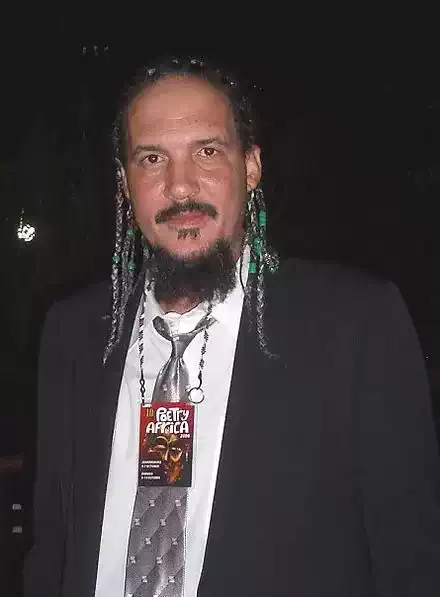
Eduardo White
Eduardo White is a poet recognized for his work that oscillates between lyricism and reflection on existence. His poetry, often marked by an evocative and imagistic language, explores universal themes such as time, memory, and the search for meaning. His writing demonstrates a deep sensitivity to the complexities of the human condition, addressing them with a singular poetic voice.
