

Quotes in this theme
Society and the World
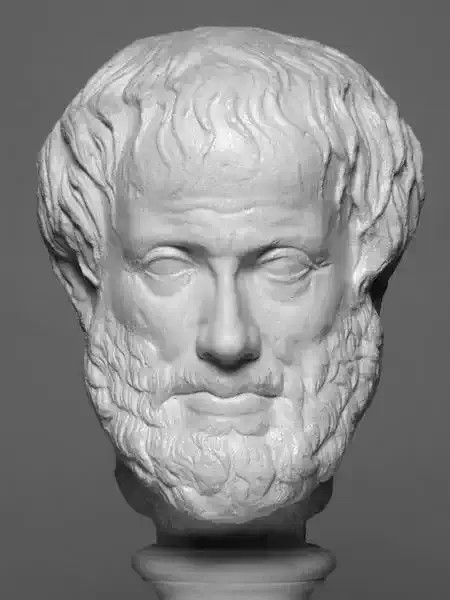
Aristóteles
Those who excel in virtue have the best right of all to rebel, but then they are of all men the least inclined to do so.
10
Aristóteles
But if nothing but soul, or in soul mind, is qualified to count, it is impossible for there to be time unless there is soul, but only that of which time is an attribute, i.e. if change can exist without soul.
18
Aristóteles
We become just by performing just action, temperate by performing temperate actions, brave by performing brave action.
10
Aristóteles
It is clearly better that property should be private, but the use of it common; and the special business of the legislator is to create in men this benevolent disposition.
11
Aristóteles
It is clearly better that property should be private, but the use of it common; and the special business of the legislator is to create in men this benevolent disposition.
11
Aristóteles
The generality of men are naturally apt to be swayed by fear rather than reverence, and to refrain from evil rather because of the punishment that it brings than because of its own foulness.
16
Aristóteles
Excellence, then, is a state concerned with choice, lying in a mean, relative to us, this being determined by reason and in the way in which the man of practical wisdom would determine it.
14
Aristóteles
The moral virtues, then, are produced in us neither by nature nor against nature. Nature, indeed, prepares in us the ground for their reception, but their complete formation is the product of habit.
11
Aristóteles
In making a speech one must study three points: first, the means of producing persuasion; second, the language; third the proper arrangement of the various parts of the speech.
10
Aristóteles
Every art and every inquiry, and similarly every action and choice, is thought to aim at some good; and for this reason the good has rightly been declared to be that at which all things aim.
14