

Quotes in this theme
Society and the World
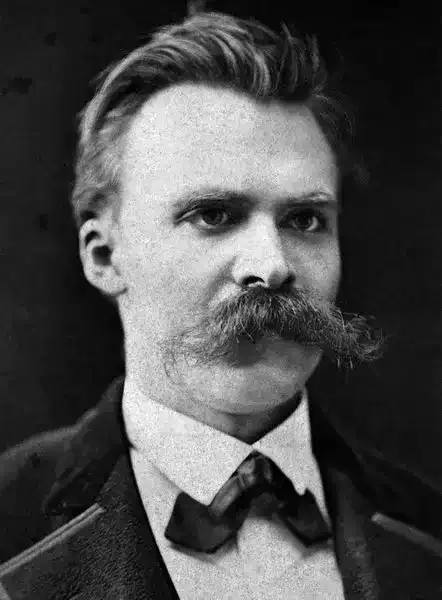
Friedrich Nietzsche
The good men of every age are those who go to the roots of the old thoughts and bear fruit with them.
18
Friedrich Nietzsche
This is the hardest of all: to close the open hand out of love, and keep modest as a giver.
15
Friedrich Nietzsche
Every culture that has lost myth has lost, by the same token, its natural healthy creativity. Only a horizon ringed about with myths can unify a culture. The forces of imagination and the Apollonian dream are saved only by myth from indiscriminate rambling. The images of myth must be the daemonic guardians, ubiquitous but unnoticed, presiding over the growth of the child's mind and interpreting to the mature man his life and struggles.
16
Friedrich Nietzsche
This is the age of the individual and there is no reason to believe that this focus of mankind is likely to change in the foreseeable future. Hence, the mission is to put individualism inside a wide context and to give it meaning and a sense of direction; to empower it – but authentically this time.
21
Friedrich Nietzsche
You have your way. I have my way. As for the right way, the correct way, and the only way, it does not exist.
20
Friedrich Nietzsche
Equality before the enemy -that is the main condition to fight a fair duel. Where you have contempt, you cannot wage war; where you are in command, where you can see someone beneath you, you should not wage war.
14
Friedrich Nietzsche
Dante, I think, committed a crude blunder when, with a terror-inspiring ingenuity, he placed above the gateway of his hell the inscription, 'I too was created by eternal love'--at any rate, there would be more justification for placing above the gateway to the Christian Paradise...the inscription 'I too was created by eternal hate'...
27
Friedrich Nietzsche
The power of gradually losing all feeling of strangeness or astonishment, and finally being pleased at anything, is called the historical sense or historical culture.
20
Friedrich Nietzsche
The power of gradually losing all feeling of strangeness or astonishment, and finally being pleased at anything, is called the historical sense or historical culture.
20
Friedrich Nietzsche
The craving for equality can express itself either as a desire to pull everyone down to our own level (by belittling them, excluding them, tripping them up) or as a desire to raise ourselves up along with everyone else (by acknowledging them, helping them, and rejoicing in their success).
16
Friedrich Nietzsche
A man who wills commands something within himself that renders obedience, or that he believes renders obedience.
17
Friedrich Nietzsche
A man who wills commands something within himself that renders obedience, or that he believes renders obedience.
17
Friedrich Nietzsche
One must shed the bad taste of wanting to agree with many. "Good" is no longer good when one's neighbor mouths it. And how should there be a "common good"! The term contradicts itself: whatever can be common always has little value. In the end it must be as it is and always has been: great things remain for the great, abysses for the profound, nuances and shudders for the refined, and, in brief, all that is rare for the rare.
18
Friedrich Nietzsche
Nietzsche says very clearly all the way through his career that if you want to define human nature the first thing you must say is that human beings insist on value--we see the world through value colored eyes. We do not know how to look at things neutrally, value-free. So, it's not a question of giving up all values, it's simply a question of which values.
19
Friedrich Nietzsche
All things are subject to interpretation. Whichever interpretation prevails at a given time is a function of power and not truth.
27
Friedrich Nietzsche
Physician, heal thyself: then wilt thou also heal thy patient. Let it be his best cure to see with his eyes him who maketh himself whole.
16
Friedrich Nietzsche
Where solitude endeth, there beginneth the market-place; and where the market-place beginneth, there beginneth also the noise of the great actors, and the buzzing of the poison-flies.
21
Friedrich Nietzsche
Solitude is a virtue for us, since it is a sublime inclination and impulse to cleanliness which shows that contact between people, “society”, inevitably makes things unclean. Somewhere, sometime, every community makes people—“base.
24
Friedrich Nietzsche
But I need solitude--which is to say, recovery, return to myself, the breath of a free, light, playful air.
18