

Poems in this topic
Relationships and Family
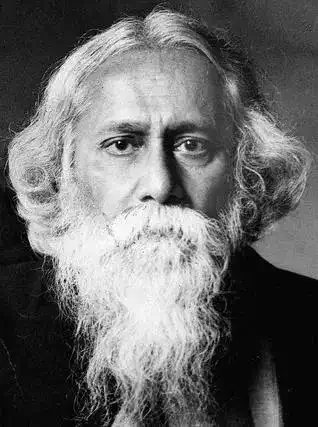
Rabindranath Tagore
Lover's Gifts XXXIX: There Is a Looker-On
Lover's Gifts XXXIX: There Is a Looker-On
There is a looker-on who sits behind my eyes. I seems he has seen
things in ages and worlds beyond memory's shore, and those
forgotten sights glisten on the grass and shiver on the leaves. He
has seen under new veils the face of the one beloved, in twilight
hours of many a nameless star. Therefore his sky seems to ache with
the pain of countless meetings and partings, and a longing pervades
this spring breeze, -the longing that is full of the whisper of
ages without beginning.
480
Rabindranath Tagore
Lover's Gifts XVI: She Dwelt Here by the Pool
Lover's Gifts XVI: She Dwelt Here by the Pool
She dwelt here by the pool with its landing-stairs in ruins. Many
an evening she had watched the moon made dizzy by the shaking of
bamboo leaves, and on many a rainy day the smell of the wet earth
had come to her over the young shoots of rice.
Her pet name is known here among those date-palm groves and
in the courtyards where girls sit and talk while stitching their
winter quilts. The water in this pool keeps in its depth the memory
of her swimming limbs, and her wet feet had left their marks, day
after day, on the footpath leading to the village.
The women who come to-day with their vessels to the water have
all seen her smile over simple jests, and the old peasant, taking
his bullocks to their bath, used to stop at her door every day to
greet her.
Many a sailing-boat passes by this village; many a traveller
takes rest beneath that banyan tree; the ferry-boat crosses to
yonder ford carrying crowds to the market; but they never notice
this spot by the village road, near the pool with its ruined
landing-stairs,-where dwelt she whom I love.
513
Rabindranath Tagore
Lover's Gifts XLVII: The Road Is
Lover's Gifts XLVII: The Road Is
The road is my wedded companion. She speaks to me under my feet all
day, she sings to my dreams all night.
My meeting with her had no beginning, it begins endlessly at
each daybreak, renewing its summer in fresh flowers and songs, and
her every new kiss is the first kiss to me.
The road and I are lovers. I change my dress for her night
after night, leaving the tattered cumber of the old in the wayside
inns when the day dawns.
444
Rabindranath Tagore
Lover's Gifts XLIII: Dying, You Have Left Behind
Lover's Gifts XLIII: Dying, You Have Left Behind
Dying, you have left behind you the great sadness of the Eternal
in my life. You have painted my thought's horizon with the sunset
colours of your departure, leaving a track of tears across the
earth to love's heaven. Clasped in your dear arms, life and death
united in me in a marriage bond.
I think I can see you watching there in the balcony with your
lamp lighted, where the end and the beginning of all things meet.
My world went hence through the doors that you opened-you holding
the cup of death to my lips, filling it with life from your own.
359
Rabindranath Tagore
Lover's Gifts XIII: Last Night in the Garden
Lover's Gifts XIII: Last Night in the Garden
Last night in the garden I offered you my youth's foaming wine. You
lifted the cup to your lips, you shut your eyes and smiled while
I raised your veil, unbound your tresses, drawing down upon my
breast your face sweet with its silence, last night when the moon's
dream overflowed the world of slumber.
To-day in the dew-cooled calm of the dawn you are walking to
God's temple, bathed and robed in white, with a basketful of
flowers in your hand. I stand aside in the shade under the tree,
with my head bent, in the calm of the dawn by the lonely road to
the temple.
535
Rabindranath Tagore
Lover's Gifts V: I Would Ask For Still More
Lover's Gifts V: I Would Ask For Still More
I would ask for still more, if I had the sky with all its stars,
and the world with its endless riches; but I would be content with
the smallest corner of this earth if only she were mine.
I would ask for still more, if I had the sky with all its stars,
and the world with its endless riches; but I would be content with
the smallest corner of this earth if only she were mine.
523
Rabindranath Tagore
Lover's Gifts IV: She Is Near to My Heart
Lover's Gifts IV: She Is Near to My Heart
She is near to my heart as the meadow-flower to the earth; she is
sweet to me as sleep is to tired limbs. My love for her is my life
flowing in its fullness, like a river in autumn flood, running with
serene abandonment. My songs are one with my love, like the murmur
of a stream, that sings with all its waves and current.
562
Rabindranath Tagore
Little Of Me
Little Of Me
Let only that little be left of me
whereby I may name thee my all.
Let only that little be left of my will
whereby I may feel thee on every side,
and come to thee in everything,
and offer to thee my love every moment.
Let only that little be left of me
whereby I may never hide thee.
Let only that little of my fetters be left
whereby I am bound with thy will,
and thy purpose is carried out in my life---and that is the fetter of thy love.
Let only that little be left of me
whereby I may name thee my all.
Let only that little be left of my will
whereby I may feel thee on every side,
and come to thee in everything,
and offer to thee my love every moment.
Let only that little be left of me
whereby I may never hide thee.
Let only that little of my fetters be left
whereby I am bound with thy will,
and thy purpose is carried out in my life---and that is the fetter of thy love.
453
Rabindranath Tagore
Innermost One
Innermost One
He it is, the innermost one,
who awakens my being with his deep hidden touches.
He it is who puts his enchantment upon these eyes
and joyfully plays on the chords of my heart
in varied cadence of pleasure and pain.
He it is who weaves the web of this maya
in evanescent hues of gold and silver, blue and green,
and lets peep out through the folds his feet,
at whose touch I forget myself.
Days come and ages pass,
and it is ever he who moves my heart in many a name,
in many a guise, in many a rapture of joy and of sorrow.
638
Rabindranath Tagore
I Found A Few Old Letters
I Found A Few Old Letters
XIV
I found a few old letters of mine carefully hidden in thy box—a few small toys for thy
memory to play with. With a timorous heart thou didst try to steal these trifles from
the turbulent stream of time which washes away planets and stars, and didst say,
“These are only mine!” Alas, there is no one now who can claim them—who is able to
pay their price; yet they are still here. Is there no love in this world to rescue thee
from utter loss, even like this love of thine that saved these letters with such fond
care?
O woman, thou camest for a moment to my side and touched me with the great
mystery of the woman that there is in the heart of creation—she who ever gives back
to God his own outflow of sweetness; who is the eternal love and beauty and youth;
who dances in bubbling streams and sings in the morning light; who with heaving
waves suckles the thirsty earth and whose mercy melts in rain; in whom the eternal
one breaks in two in joy that can contain itself no more and overflows in the pain of
love.
477
Rabindranath Tagore
Defamation
Defamation
Whey are those tears in your eyes, my child?
How horrid of them to be always scolding you for nothing!
You have stained your fingers and face with ink while writingis
that why they call you dirty?
O, fie! Would they dare to call the full moon dirty because
it has smudged its face with ink?
For every little trifle they blame you, my child. They are
ready to find fault for nothing.
You tore your clothes while playing-is that why they call you
untidy?
O, fie! What would they call an autumn morning that smiles
through its ragged clouds?
Take no heed of what they say to you, my child.
They make a long list of your misdeeds.
Everybody knows how you love sweet things-is that why they
call you greedy?
O, fie! What then would they call us who love you?
597
Rabindranath Tagore
Colored Toys
Colored Toys
When I bring to you colored toys, my child,
I understand why there is such a play of colors on clouds, on water,
and why flowers are painted in tints
---when I give colored toys to you, my child.
When I sing to make you dance
I truly now why there is music in leaves,
and why waves send their chorus of voices to the heart of the listening earth
---when I sing to make you dance.
When I bring sweet things to your greedy hands
I know why there is honey in the cup of the flowers
and why fruits are secretly filled with sweet juice
---when I bring sweet things to your greedy hands.
When I kiss your face to make you smile, my darling,
I surely understand what pleasure streams from the sky in morning light,
and what delight that is that is which the summer breeze brings to my body
---when I kiss you to make you smile.
585
Rabindranath Tagore
Baby's Way
Baby's Way
If baby only wanted to, he could fly up to heaven this moment.
It is not for nothing that he does not leave us.
He loves to rest his head on mother's bosom, and cannot ever
bear to lose sight of her.
Baby know all manner of wise words, though few on earth can
understand their meaning.
It is not for nothing that he never wants to speak.
The one thing he wants is to learn mother's words from
mother's lips. That is why he looks so innocent.
Baby had a heap of gold and pearls, yet he came like a beggar
on to this earth.
It is not for nothing he came in such a disguise.
This dear little naked mendicant pretends to be utterly
helpless, so that he may beg for mother's wealth of love.
Baby was so free from every tie in the land of the tiny
crescent moon.
It was not for nothing he gave up his freedom.
He knows that there is room for endless joy in mother's little
corner of a heart, and it is sweeter far than liberty to be caught
and pressed in her dear arms.
Baby never knew how to cry. He dwelt in the land of perfect
bliss.
It is not for nothing he has chosen to shed tears.
Though with the smile of his dear face he draws mother's
yearning heart to him, yet his little cries over tiny troubles
weave the double bond of pity and love.
658
Rabindranath Tagore
At The Last Watch
At The Last Watch
Pity, in place of love,
That pettiest of gifts,
Is but a sugar-coating over neglect.
Any passerby can make a gift of it
To a street beggar,
Only to forget the moment the first corner is turned.
I had not hoped for anything more that day.
You left during the last watch of night.
I had hoped you would say goodbye,
Just say 'Adieu' before going away,
What you had said another day,
What I shall never hear again.
In their place, just that one word,
Bound by the thin fabric of a little compassion
Would even that have been too much for you to bear?
When I first awoke from sleep
My heart fluttered with fear
Lest the time had been over.
I rushed out of bed.
The distant church clock chimed half past twelve
I sat waiting near the door of my room
Resting my head against it,
Facing the porch through which you would come out.
Even that tiniest of chances
Was snatched away by fate from hapless me;
I fell asleep
Shortly before you left.
Perhaps you cast a sidelong glance
At my reclining body
Like a broken boat left high and dry.
Perhaps you walked away with care
Lest you wake me up.
Awaking with a start I knew at once
That my vigil had been wasted
I realised, what was to go went away in a moment,
What was to stay behind stayed on
For all time.
Silence everywhere
Like that of a birds' nest bereft of birds
On the bough of a songless tree.
With the lifeless light of the waning moon was now blended
The pallor of dawn
Spreading itself over the greyness of my empty life.
I walked towards your bedroom
For no reason.
Outside the door
Burnt a smoky lantern covered with soot,
The porch smelt of the smouldering wick.
Over the abandoned bed the flaps of the rolled-up mosquito-net
Fluttered a little in the breeze.
Seen in the sky outside through the window
Was the morning star,
Witness of all sleepless people
Bereft of hope.
Suddenly I found you had left behind by mistake
Your gold-mounted ivory walking stick.
If there were time, I thought,
You might come back from the station to look for it,
But not because
You had not seen me before going away.
679
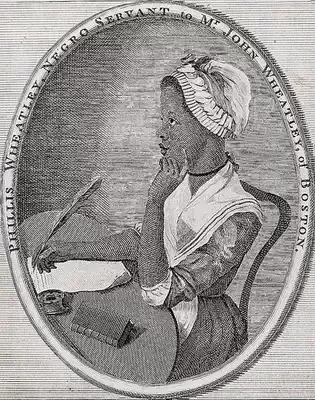
Phillis Wheatley
To A Lady On Her Remarkable Preservation In A Hurrican In North-Carolina
To A Lady On Her Remarkable Preservation In A Hurrican In North-Carolina
THOUGH thou did'st hear the tempest from afar,
And felt'st the horrors of the wat'ry war,
To me unknown, yet on this peaceful shore
Methinks I hear the storm tumultuous roar,
And how stern Boreas with impetuous hand
Compell'd the Nereids to usurp the land.
Reluctant rose the daughters of the main,
And slow ascending glided o'er the plain,
Till AEolus in his rapid chariot drove
In gloomy grandeur from the vault above:
Furious he comes. His winged sons obey
Their frantic sire, and madden all the sea.
The billows rave, the wind's fierce tyrant roars,
And with his thund'ring terrors shakes the shores:
Broken by waves the vessel's frame is rent,
And strows with planks the wat'ry element.
But thee, Maria, a kind Nereid's shield
Preserv'd from sinking, and thy form upheld:
And sure some heav'nly oracle design'd
At that dread crisis to instruct thy mind
Things of eternal consequence to weigh,
And to thine heart just feelings to convey
Of things above, and of the future doom,
And what the births of the dread world to come.
From tossing seas I welcome thee to land.
"Resign her, Nereid," 'twas thy God's command.
Thy spouse late buried, as thy fears conceiv'd,
Again returns, thy fears are all reliev'd:
Thy daughter blooming with superior grace
Again thou see'st, again thine arms embrace;
O come, and joyful show thy spouse his heir,
And what the blessings of maternal care!
265
Phillis Wheatley
To A Lady And Her Children, On The Death Of Her Son And Their Brother
To A Lady And Her Children, On The Death Of Her Son And Their Brother
O'ERWHELMING sorrow now demands my song:
From death the overwhelming sorrow sprung.
What flowing tears? What hearts with grief opprest?
What sighs on sighs heave the fond parent's breast?
The brother weeps, the hapless sisters join
Th' increasing woe, and swell the crystal brine;
The poor, who once his gen'rous bounty fed,
Droop, and bewail their benefactor dead.
In death the friend, the kind companion lies,
And in one death what various comfort dies!
Th' unhappy mother sees the sanguine rill
Forget to flow, and nature's wheels stand still,
But see from earth his spirit far remov'd,
And know no grief recals your best-belov'd:
He, upon pinions swifter than the wind,
Has left mortality's sad scenes behind
For joys to this terrestial state unknown,
And glories richer than the monarch's crown.
Of virtue's steady course the prize behold!
What blissful wonders to his mind unfold!
But of celestial joys I sing in vain:
Attempt not, muse, the too advent'rous strain.
No more in briny show'rs, ye friends around,
Or bathe his clay, or waste them on the ground:
Still do you weep, still wish for his return?
How cruel thus to wish, and thus to mourn?
No more for him the streams of sorrow pour,
But haste to join him on the heav'nly shore,
On harps of gold to tune immortal lays,
And to your God immortal anthems raise.
307
Phillis Wheatley
On The Death Of J. C. An Infant
On The Death Of J. C. An Infant
NO more the flow'ry scenes of pleasure rife,
Nor charming prospects greet the mental eyes,
No more with joy we view that lovely face
Smiling, disportive, flush'd with ev'ry grace.
The tear of sorrow flows from ev'ry eye,
Groans answer groans, and sighs to sighs reply;
What sudden pangs shot thro' each aching heart,
When, Death, thy messenger dispatch'd his dart?
Thy dread attendants, all-destroying Pow'r,
Hurried the infant to his mortal hour.
Could'st thou unpitying close those radiant eyes?
Or fail'd his artless beauties to surprise?
Could not his innocence thy stroke controul,
Thy purpose shake, and soften all thy soul?
The blooming babe, with shades of Death o'erspread,
No more shall smile, no more shall raise its head,
But, like a branch that from the tree is torn,
Falls prostrate, wither'd, languid, and forlorn.
"Where flies my James?" 'tis thus I seem to hear
The parent ask, "Some angel tell me where
"He wings his passage thro' the yielding air?"
Methinks a cherub bending from the skies
Observes the question, and serene replies,
"In heav'ns high palaces your babe appears:
"Prepare to meet him, and dismiss your tears."
Shall not th' intelligence your grief restrain,
And turn the mournful to the cheerful strain?
Cease your complaints, suspend each rising sigh,
Cease to accuse the Ruler of the sky.
Parents, no more indulge the falling tear:
Let Faith to heav'n's refulgent domes repair,
There see your infant, like a seraph glow:
What charms celestial in his numbers flow
Melodious, while the foul-enchanting strain
Dwells on his tongue, and fills th' ethereal plain?
Enough--for ever cease your murm'ring breath;
Not as a foe, but friend converse with Death,
Since to the port of happiness unknown
He brought that treasure which you call your own.
The gift of heav'n intrusted to your hand
Cheerful resign at the divine command:
Not at your bar must sov'reign Wisdom stand.
239
Phillis Wheatley
On The Death Of A Young Lady Of Five Years Of Age
On The Death Of A Young Lady Of Five Years Of Age
FROM dark abodes to fair etherial light
Th' enraptur'd innocent has wing'd her flight;
On the kind bosom of eternal love
She finds unknown beatitude above.
This known, ye parents, nor her loss deplore,
She feels the iron hand of pain no more;
The dispensations of unerring grace,
Should turn your sorrows into grateful praise;
Let then no tears for her henceforward flow,
No more distress'd in our dark vale below,
Her morning sun, which rose divinely bright,
Was quickly mantled with the gloom of night;
But hear in heav'n's blest bow'rs your Nancy fair,
And learn to imitate her language there.
"Thou, Lord, whom I behold with glory crown'd,
"By what sweet name, and in what tuneful sound
"Wilt thou be prais'd? Seraphic pow'rs are faint
"Infinite love and majesty to paint.
"To thee let all their graceful voices raise,
"And saints and angels join their songs of praise."
Perfect in bliss she from her heav'nly home
Looks down, and smiling beckons you to come;
Why then, fond parents, why these fruitless groans?
Restrain your tears, and cease your plaintive moans.
Freed from a world of sin, and snares, and pain,
Why would you wish your daughter back again?
No--bow resign'd. Let hope your grief control,
And check the rising tumult of the soul.
Calm in the prosperous, and adverse day,
Adore the God who gives and takes away;
Eye him in all, his holy name revere,
Upright your actions, and your hearts sincere,
Till having sail'd through life's tempestuous sea,
And from its rocks, and boist'rous billows free,
Yourselves, safe landed on the blissful shore,
Shall join your happy babe to part no more.
399
Phillis Wheatley
Ode To Neptune
Ode To Neptune
On Mrs. W-----'s Voyage to England.
I.
WHILE raging tempests shake the shore,
While AElus' thunders round us roar,
And sweep impetuous o'er the plain
Be still, O tyrant of the main;
Nor let thy brow contracted frowns betray,
While my Susanna skims the wat'ry way.
II.
The Pow'r propitious hears the lay,
The blue-ey'd daughters of the sea
With sweeter cadence glide along,
And Thames responsive joins the song.
Pleas'd with their notes Sol sheds benign his ray,
And double radiance decks the face of day.
III.
To court thee to Britannia's arms
Serene the climes and mild the sky,
Her region boasts unnumber'd charms,
Thy welcome smiles in ev'ry eye.
Thy promise, Neptune keep, record my pray'r,
Not give my wishes to the empty air.
271
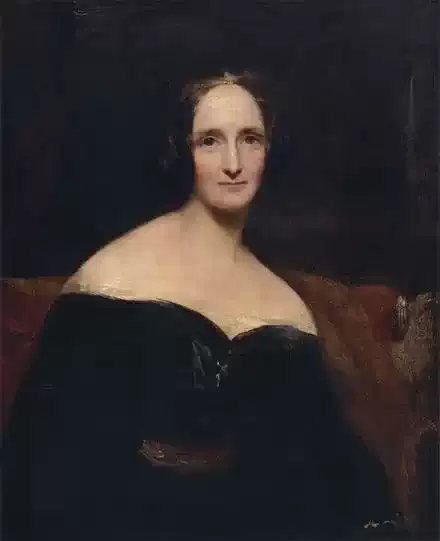
Percy Bysshe Shelley
To...
To...
One word is too often profaned
For me to profane it,
One feeling too falsely disdained
For thee to disdain it;
One hope is too like despair
For prudence to smother,
And pity from thee more dear
Than that from another.
I can give not what men call love,
But wilt thou accept not
The worship the heart lifts above
And the heavens reject not,--
The desire of the moth for the star,
Of the night for the morrow,
The devotion to something afar
From the sphere of our sorrow?
458
Percy Bysshe Shelley
To Wordsworth
To Wordsworth
Poet of Nature, thou hast wept to know
That things depart which never may return:
Childhood and youth, friendship and love's first glow,
Have fled like sweet dreams, leaving thee to mourn.
These common woes I feel. One loss is mine
Which thou too feel'st, yet I alone deplore.
Thou wert as a lone star, whose light did shine
On some frail bark in winter's midnight roar:
Thou hast like to a rock-built refuge stood
Above the blind and battling multitude:
In honoured poverty thy voice did weave
Songs consecrate to truth and liberty,--
Deserting these, thou leavest me to grieve,
Thus having been, that thou shouldst cease to be.
497
Percy Bysshe Shelley
To Jane
To Jane
The keen stars were twinkling
And the fair moon was rising among them,
Dear Jane:
The guitar was tinkling,
But the notes were not sweet till you sung them
Again.
As the moon's soft splendor
O'er the faint cold starlight of heaven
Is thrown,
So your voice most tender
To the strings without soul had then given
Its own.
The stars will awaken,
Though the moon sleep a full hour later,
Tonight;
No leaf will be shaken
Whilst the dews of your melody scatter
Delight.
Though the sound overpowers,
Sing again, with your dear voice revealing
A tone
Of some world far from ours
Where music and moonlight and feeling
Are one.
504
Percy Bysshe Shelley
To ----
To ----
ONE word is too often profaned
For me to profane it;
One feeling too falsely disdain'd
For thee to disdain it;
One hope is too like despair
For prudence to smother;
And pity from thee more dear
Than that from another.
I can give not what men call love:
But wilt thou accept not
The worship the heart lifts above
And the heavens reject not,
The desire of the moth for the star,
Of the night for the morrow,
The devotion to something afar
From the sphere of our sorrow?
474