

Poems in this topic
Emotions and Feelings
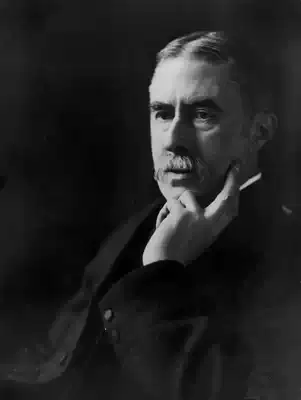
Alfred Edward Housman
Tis Time, I Think, By Wenlock Town
Tis Time, I Think, By Wenlock Town
'Tis time, I think, by Wenlock town
The golden broom should blow;
The hawthorn sprinkled up and down
Should charge the land with snow.
Spring will not wait the loiterer's time
Who keeps so long away;
So others wear the broom and climb
The hedgerows heaped with may.
Oh tarnish late on Wenlock Edge,
Gold that I never see;
Lie long, high snowdrifts in the hedge
That will not shower on me.
'Tis time, I think, by Wenlock town
The golden broom should blow;
The hawthorn sprinkled up and down
Should charge the land with snow.
Spring will not wait the loiterer's time
Who keeps so long away;
So others wear the broom and climb
The hedgerows heaped with may.
Oh tarnish late on Wenlock Edge,
Gold that I never see;
Lie long, high snowdrifts in the hedge
That will not shower on me.
431
Alfred Edward Housman
Think No More, Lad
Think No More, Lad
Think no more, lad; laugh, be jolly:
Why should men make haste to die?
Empty heads and tongues a-talking
Make the rough road easy walking,
And the feather pate of folly
Bears the falling sky.
Oh, 'tis jesting, dancing, drinking
Spins the heavy world around.
If young hearts were not so clever,
Oh, they would be young for ever:
Think no more; 'tis only thinking
Lays lads underground.
Think no more, lad; laugh, be jolly:
Why should men make haste to die?
Empty heads and tongues a-talking
Make the rough road easy walking,
And the feather pate of folly
Bears the falling sky.
Oh, 'tis jesting, dancing, drinking
Spins the heavy world around.
If young hearts were not so clever,
Oh, they would be young for ever:
Think no more; 'tis only thinking
Lays lads underground.
490
Alfred Edward Housman
Think No More, Lad
Think No More, Lad
Think no more, lad; laugh, be jolly:
Why should men make haste to die?
Empty heads and tongues a-talking
Make the rough road easy walking,
And the feather pate of folly
Bears the falling sky.
Oh, 'tis jesting, dancing, drinking
Spins the heavy world around.
If young hearts were not so clever,
Oh, they would be young for ever:
Think no more; 'tis only thinking
Lays lads underground.
Think no more, lad; laugh, be jolly:
Why should men make haste to die?
Empty heads and tongues a-talking
Make the rough road easy walking,
And the feather pate of folly
Bears the falling sky.
Oh, 'tis jesting, dancing, drinking
Spins the heavy world around.
If young hearts were not so clever,
Oh, they would be young for ever:
Think no more; 'tis only thinking
Lays lads underground.
490
Alfred Edward Housman
The Winds Out of the West Land Blow
The Winds Out of the West Land Blow
The winds out of the west land blow,
My friends have breathed them there;
Warm with the blood of lads I know
Comes east the sighing air.
It fanned their temples, filled their lungs,
Scattered their forelocks free;
My friends made words of it with tongues
That talk no more to me.
Their voices, dying as they fly,
Thick on the wind are sown;
The names of men blow soundless by,
My fellows' and my own.
Oh lads, at home I heard you plain,
But here your speech is still,
And down the sighing wind in vain
You hollo from the hill.
The wind and I, we both were there,
But neither long abode;
Now through the friendless world we fare
And sigh upon the road.
The winds out of the west land blow,
My friends have breathed them there;
Warm with the blood of lads I know
Comes east the sighing air.
It fanned their temples, filled their lungs,
Scattered their forelocks free;
My friends made words of it with tongues
That talk no more to me.
Their voices, dying as they fly,
Thick on the wind are sown;
The names of men blow soundless by,
My fellows' and my own.
Oh lads, at home I heard you plain,
But here your speech is still,
And down the sighing wind in vain
You hollo from the hill.
The wind and I, we both were there,
But neither long abode;
Now through the friendless world we fare
And sigh upon the road.
491
Alfred Edward Housman
The Winds Out of the West Land Blow
The Winds Out of the West Land Blow
The winds out of the west land blow,
My friends have breathed them there;
Warm with the blood of lads I know
Comes east the sighing air.
It fanned their temples, filled their lungs,
Scattered their forelocks free;
My friends made words of it with tongues
That talk no more to me.
Their voices, dying as they fly,
Thick on the wind are sown;
The names of men blow soundless by,
My fellows' and my own.
Oh lads, at home I heard you plain,
But here your speech is still,
And down the sighing wind in vain
You hollo from the hill.
The wind and I, we both were there,
But neither long abode;
Now through the friendless world we fare
And sigh upon the road.
The winds out of the west land blow,
My friends have breathed them there;
Warm with the blood of lads I know
Comes east the sighing air.
It fanned their temples, filled their lungs,
Scattered their forelocks free;
My friends made words of it with tongues
That talk no more to me.
Their voices, dying as they fly,
Thick on the wind are sown;
The names of men blow soundless by,
My fellows' and my own.
Oh lads, at home I heard you plain,
But here your speech is still,
And down the sighing wind in vain
You hollo from the hill.
The wind and I, we both were there,
But neither long abode;
Now through the friendless world we fare
And sigh upon the road.
491
Alfred Edward Housman
The Winds Out of the West Land Blow
The Winds Out of the West Land Blow
The winds out of the west land blow,
My friends have breathed them there;
Warm with the blood of lads I know
Comes east the sighing air.
It fanned their temples, filled their lungs,
Scattered their forelocks free;
My friends made words of it with tongues
That talk no more to me.
Their voices, dying as they fly,
Thick on the wind are sown;
The names of men blow soundless by,
My fellows' and my own.
Oh lads, at home I heard you plain,
But here your speech is still,
And down the sighing wind in vain
You hollo from the hill.
The wind and I, we both were there,
But neither long abode;
Now through the friendless world we fare
And sigh upon the road.
The winds out of the west land blow,
My friends have breathed them there;
Warm with the blood of lads I know
Comes east the sighing air.
It fanned their temples, filled their lungs,
Scattered their forelocks free;
My friends made words of it with tongues
That talk no more to me.
Their voices, dying as they fly,
Thick on the wind are sown;
The names of men blow soundless by,
My fellows' and my own.
Oh lads, at home I heard you plain,
But here your speech is still,
And down the sighing wind in vain
You hollo from the hill.
The wind and I, we both were there,
But neither long abode;
Now through the friendless world we fare
And sigh upon the road.
491
Alfred Edward Housman
The True Lover
The True Lover
The lad came to the door at night,
When lovers crown their vows,
And whistled soft and out of sight
In shadow of the boughs.
"I shall not vex you with my face
Henceforth, my love, for aye;
So take me in your arms a space
Before the cast is grey.
"When I from hence away am past
I shall not find a bride,
And you shall be the first and last
I ever lay beside."
She heard and went and knew not why;
Her heart to his she laid;
Light was the air beneath the sky
But dark under the shade.
"Oh do you breathe, lad, that your breast
Seems not to rise and fall,
And here upon my bosom prest
There beats no heart at all?"
"Oh loud, my girl, it once would knock,
You should have felt it then;
But since for you I stopped the clock
It never goes again."
"Oh lad, what is it, lad, that drips
Wet from your neck on mine?
What is it falling on my lips,
My lad, that tastes of brine?"
"Oh like enough 'tis blood, my dear,
For when the knife was slit,
The throat across from ear to ear
'Twill bleed because of it."
Under the stars the air was light
But dark below the boughs,
The still air of the speechless night,
When lovers crown their vows.
The lad came to the door at night,
When lovers crown their vows,
And whistled soft and out of sight
In shadow of the boughs.
"I shall not vex you with my face
Henceforth, my love, for aye;
So take me in your arms a space
Before the cast is grey.
"When I from hence away am past
I shall not find a bride,
And you shall be the first and last
I ever lay beside."
She heard and went and knew not why;
Her heart to his she laid;
Light was the air beneath the sky
But dark under the shade.
"Oh do you breathe, lad, that your breast
Seems not to rise and fall,
And here upon my bosom prest
There beats no heart at all?"
"Oh loud, my girl, it once would knock,
You should have felt it then;
But since for you I stopped the clock
It never goes again."
"Oh lad, what is it, lad, that drips
Wet from your neck on mine?
What is it falling on my lips,
My lad, that tastes of brine?"
"Oh like enough 'tis blood, my dear,
For when the knife was slit,
The throat across from ear to ear
'Twill bleed because of it."
Under the stars the air was light
But dark below the boughs,
The still air of the speechless night,
When lovers crown their vows.
475
Alfred Edward Housman
The rainy Pleiads wester
The rainy Pleiads wester
The rainy Pleiads wester,
Orion plunges prone,
The stroke of midnight ceases
And I lie down alone.
The rainy Pleiads wester,
And seek beyond the sea
The head that I shall dream of
That will not dream of me.
The rainy Pleiads wester,
Orion plunges prone,
The stroke of midnight ceases
And I lie down alone.
The rainy Pleiads wester,
And seek beyond the sea
The head that I shall dream of
That will not dream of me.
460
Alfred Edward Housman
The Merry Guide
The Merry Guide
Once in the wind of morning
I ranged the thymy wold;
The world-wide air was azure
And all the brooks ran gold.
There through the dews beside me
Behold a youth that trod,
With feathered cap on forehead,
And poised a golden rod.
With mien to match the morning
And gay delightful guise
And friendly brows and laughter
He looked me in the eyes.
Oh whence, I asked, and whither?
He smiled and would not say.
And looked at me and beckoned,
And laughed and led the way.
And with kind looks and laughter
And nought to say beside,
We two went on together,
I and my happy guide.
Across the glittering pastures
And empty upland still
And solitude of shepherds
High in the folded hill,
By hanging woods and hamlets
That gaze through orchards down
On many a windmill turning
And far-discovered town,
With gay regards of promise
And sure unslackened stride
And smiles and nothing spoken
Led on my merry guide.
By blowing realms of woodland
With sunstruck vanes afield
And cloud-led shadows sailing
About the windy weald,
By valley-guarded granges
And silver waters wide,
Content at heart I followed
With my delightful guide.
And like the cloudy shadows
Across the country blown
We two fare on for ever,
But not we two alone.
With the great gale we journey
That breathes from gardens thinned,
Borne in the drift of blossoms
Whose petals throng the wind;
Buoyed on the heaven-ward whisper
Of dancing leaflets whirled
From all the woods that autumn
Bereaves in all the world.
And midst the fluttering legion
Of all that ever died
I follow, and before us
Goes the delightful guide,
With lips that brim with laughter
But never once respond,
And feet that fly on feathers,
And serpent-circled wand.
Once in the wind of morning
I ranged the thymy wold;
The world-wide air was azure
And all the brooks ran gold.
There through the dews beside me
Behold a youth that trod,
With feathered cap on forehead,
And poised a golden rod.
With mien to match the morning
And gay delightful guise
And friendly brows and laughter
He looked me in the eyes.
Oh whence, I asked, and whither?
He smiled and would not say.
And looked at me and beckoned,
And laughed and led the way.
And with kind looks and laughter
And nought to say beside,
We two went on together,
I and my happy guide.
Across the glittering pastures
And empty upland still
And solitude of shepherds
High in the folded hill,
By hanging woods and hamlets
That gaze through orchards down
On many a windmill turning
And far-discovered town,
With gay regards of promise
And sure unslackened stride
And smiles and nothing spoken
Led on my merry guide.
By blowing realms of woodland
With sunstruck vanes afield
And cloud-led shadows sailing
About the windy weald,
By valley-guarded granges
And silver waters wide,
Content at heart I followed
With my delightful guide.
And like the cloudy shadows
Across the country blown
We two fare on for ever,
But not we two alone.
With the great gale we journey
That breathes from gardens thinned,
Borne in the drift of blossoms
Whose petals throng the wind;
Buoyed on the heaven-ward whisper
Of dancing leaflets whirled
From all the woods that autumn
Bereaves in all the world.
And midst the fluttering legion
Of all that ever died
I follow, and before us
Goes the delightful guide,
With lips that brim with laughter
But never once respond,
And feet that fly on feathers,
And serpent-circled wand.
523
Alfred Edward Housman
The Isle of Portland
The Isle of Portland
The star-filled seas are smooth to-night
From France to England strown;
Black towers above the Portland light
The felon-quarried stone.
On yonder island, not to rise,
Never to stir forth free,
Far from his folk a dead lad lies
That once was friends with me.
Lie you easy, dream you light,
And sleep you fast for aye;
And luckier may you find the night
Than ever you found the day.
The star-filled seas are smooth to-night
From France to England strown;
Black towers above the Portland light
The felon-quarried stone.
On yonder island, not to rise,
Never to stir forth free,
Far from his folk a dead lad lies
That once was friends with me.
Lie you easy, dream you light,
And sleep you fast for aye;
And luckier may you find the night
Than ever you found the day.
522
Alfred Edward Housman
The Grizzly Bear
The Grizzly Bear
The Grizzly Bear is huge and wild
It has devoured the little child.
The little child is unaware
It has been eaten by the bear.
The Grizzly Bear is huge and wild
It has devoured the little child.
The little child is unaware
It has been eaten by the bear.
387
Alfred Edward Housman
The Carpenter's Son
The Carpenter's Son
"Here the hangman stops his cart:
Now the best of friends must part.
Fare you well, for ill fare I:
Live, lads, and I will die.
"Oh, at home had I but stayed
'Prenticed to my father's trade,
Had I stuck to plane and adze,
I had not been lost, my lads.
"Then I might have built perhaps
Gallows-trees for other chaps,
Never dangled on my own,
Had I left but ill alone.
"Now, you see, they hang me high,
And the people passing by
Stop to shake their fists and curse;
So 'tis come from ill to worse.
"Here hang I, and right and left
Two poor fellows hang for theft:
All the same's the luck we prove,
Though the midmost hangs for love.
"Comrades all, that stand and gaze,
Walk henceforth in other ways;
See my neck and save your own:
Comrades all, leave ill alone.
"Make some day a decent end,
Shrewder fellows than your friend.
Fare you well, for ill fare I:
Live lads, and I will die."
"Here the hangman stops his cart:
Now the best of friends must part.
Fare you well, for ill fare I:
Live, lads, and I will die.
"Oh, at home had I but stayed
'Prenticed to my father's trade,
Had I stuck to plane and adze,
I had not been lost, my lads.
"Then I might have built perhaps
Gallows-trees for other chaps,
Never dangled on my own,
Had I left but ill alone.
"Now, you see, they hang me high,
And the people passing by
Stop to shake their fists and curse;
So 'tis come from ill to worse.
"Here hang I, and right and left
Two poor fellows hang for theft:
All the same's the luck we prove,
Though the midmost hangs for love.
"Comrades all, that stand and gaze,
Walk henceforth in other ways;
See my neck and save your own:
Comrades all, leave ill alone.
"Make some day a decent end,
Shrewder fellows than your friend.
Fare you well, for ill fare I:
Live lads, and I will die."
484
Alfred Edward Housman
The Carpenter's Son
The Carpenter's Son
"Here the hangman stops his cart:
Now the best of friends must part.
Fare you well, for ill fare I:
Live, lads, and I will die.
"Oh, at home had I but stayed
'Prenticed to my father's trade,
Had I stuck to plane and adze,
I had not been lost, my lads.
"Then I might have built perhaps
Gallows-trees for other chaps,
Never dangled on my own,
Had I left but ill alone.
"Now, you see, they hang me high,
And the people passing by
Stop to shake their fists and curse;
So 'tis come from ill to worse.
"Here hang I, and right and left
Two poor fellows hang for theft:
All the same's the luck we prove,
Though the midmost hangs for love.
"Comrades all, that stand and gaze,
Walk henceforth in other ways;
See my neck and save your own:
Comrades all, leave ill alone.
"Make some day a decent end,
Shrewder fellows than your friend.
Fare you well, for ill fare I:
Live lads, and I will die."
"Here the hangman stops his cart:
Now the best of friends must part.
Fare you well, for ill fare I:
Live, lads, and I will die.
"Oh, at home had I but stayed
'Prenticed to my father's trade,
Had I stuck to plane and adze,
I had not been lost, my lads.
"Then I might have built perhaps
Gallows-trees for other chaps,
Never dangled on my own,
Had I left but ill alone.
"Now, you see, they hang me high,
And the people passing by
Stop to shake their fists and curse;
So 'tis come from ill to worse.
"Here hang I, and right and left
Two poor fellows hang for theft:
All the same's the luck we prove,
Though the midmost hangs for love.
"Comrades all, that stand and gaze,
Walk henceforth in other ways;
See my neck and save your own:
Comrades all, leave ill alone.
"Make some day a decent end,
Shrewder fellows than your friend.
Fare you well, for ill fare I:
Live lads, and I will die."
484
Alfred Edward Housman
The Day of Battle
The Day of Battle
"Far I hear the bugle blow
To call me where I would not go,
And the guns begin the song,
'Soldier, fly or stay for long.'
"Comrade, if to turn and fly
Made a soldier never die,
Fly I would, for who would not?
'Tis sure no pleasure to be shot.
"But since the man that runs away
Lives to die another day,
And cowards' funerals, when they come,
Are not wept so well at home,
"Therefore, though the best is bad,
Stand and do the best, my lad;
Stand and fight and see your slain,
And take the bullet in your brain."
"Far I hear the bugle blow
To call me where I would not go,
And the guns begin the song,
'Soldier, fly or stay for long.'
"Comrade, if to turn and fly
Made a soldier never die,
Fly I would, for who would not?
'Tis sure no pleasure to be shot.
"But since the man that runs away
Lives to die another day,
And cowards' funerals, when they come,
Are not wept so well at home,
"Therefore, though the best is bad,
Stand and do the best, my lad;
Stand and fight and see your slain,
And take the bullet in your brain."
456
Alfred Edward Housman
Shot? So Quick, So Clean an Ending?
Shot? So Quick, So Clean an Ending?
Shot? so quick, so clean an ending?
Oh that was right, lad, that was brave:
Yours was not an ill for mending,
'Twas best to take it to the grave.
Oh you had forethought, you could reason,
And saw your road and where it led,
And early wise and brave in season
Put the pistol to your head.
Oh soon, and better so than later
After long disgrace and scorn,
You shot dead the household traitor,
The soul that should not have been born.
Right you guessed the rising morrow
And scorned to tread the mire you must:
Dust's your wages, son of sorrow,
But men may come to worse than dust.
Souls undone, undoing others,--
Long time since the tale began.
You would not live to wrong your brothers:
Oh lad, you died as fits a man.
Now to your grave shall friend and stranger
With ruth and some with envy come:
Undishonoured, clear of danger,
Clean of guilt, pass hence and home.
Turn safe to rest, no dreams, no waking;
And here, man, here's the wreath I've made:
'Tis not a gift that's worth the taking,
But wear it and it will not fade.
Shot? so quick, so clean an ending?
Oh that was right, lad, that was brave:
Yours was not an ill for mending,
'Twas best to take it to the grave.
Oh you had forethought, you could reason,
And saw your road and where it led,
And early wise and brave in season
Put the pistol to your head.
Oh soon, and better so than later
After long disgrace and scorn,
You shot dead the household traitor,
The soul that should not have been born.
Right you guessed the rising morrow
And scorned to tread the mire you must:
Dust's your wages, son of sorrow,
But men may come to worse than dust.
Souls undone, undoing others,--
Long time since the tale began.
You would not live to wrong your brothers:
Oh lad, you died as fits a man.
Now to your grave shall friend and stranger
With ruth and some with envy come:
Undishonoured, clear of danger,
Clean of guilt, pass hence and home.
Turn safe to rest, no dreams, no waking;
And here, man, here's the wreath I've made:
'Tis not a gift that's worth the taking,
But wear it and it will not fade.
459
Alfred Edward Housman
Shot? So Quick, So Clean an Ending?
Shot? So Quick, So Clean an Ending?
Shot? so quick, so clean an ending?
Oh that was right, lad, that was brave:
Yours was not an ill for mending,
'Twas best to take it to the grave.
Oh you had forethought, you could reason,
And saw your road and where it led,
And early wise and brave in season
Put the pistol to your head.
Oh soon, and better so than later
After long disgrace and scorn,
You shot dead the household traitor,
The soul that should not have been born.
Right you guessed the rising morrow
And scorned to tread the mire you must:
Dust's your wages, son of sorrow,
But men may come to worse than dust.
Souls undone, undoing others,--
Long time since the tale began.
You would not live to wrong your brothers:
Oh lad, you died as fits a man.
Now to your grave shall friend and stranger
With ruth and some with envy come:
Undishonoured, clear of danger,
Clean of guilt, pass hence and home.
Turn safe to rest, no dreams, no waking;
And here, man, here's the wreath I've made:
'Tis not a gift that's worth the taking,
But wear it and it will not fade.
Shot? so quick, so clean an ending?
Oh that was right, lad, that was brave:
Yours was not an ill for mending,
'Twas best to take it to the grave.
Oh you had forethought, you could reason,
And saw your road and where it led,
And early wise and brave in season
Put the pistol to your head.
Oh soon, and better so than later
After long disgrace and scorn,
You shot dead the household traitor,
The soul that should not have been born.
Right you guessed the rising morrow
And scorned to tread the mire you must:
Dust's your wages, son of sorrow,
But men may come to worse than dust.
Souls undone, undoing others,--
Long time since the tale began.
You would not live to wrong your brothers:
Oh lad, you died as fits a man.
Now to your grave shall friend and stranger
With ruth and some with envy come:
Undishonoured, clear of danger,
Clean of guilt, pass hence and home.
Turn safe to rest, no dreams, no waking;
And here, man, here's the wreath I've made:
'Tis not a gift that's worth the taking,
But wear it and it will not fade.
459
Alfred Edward Housman
Tell me not here, it needs not saying
Tell me not here, it needs not saying
Tell me not here, it needs not saying,
What tune the enchantress plays
In aftermaths of soft September
Or under blanching mays,
For she and I were long acquainted
And I knew all her ways.
On russet floors, by waters idle,
The pine lets fall its cone;
The cuckoo shouts all day at nothing
In leafy dells alone;
And traveller’s joy beguiles in autumn
Hearts that have lost their own.
On acres of the seeded grasses
The changing burnish heaves;
Or marshalled under moons of harvest
Stand still all night the sheaves;
Or beeches strip in storms for winter
And stain the wind with leaves.
Posses, as I possessed a season,
The countries I resign,
Where over elmy plains the highway
Would mount the hills and shine,
And full of shade the pillared forest
Would murmur and be mine.
For nature, heartless, witless nature,
Will neither care nor know
What stranger’s feet may find the meadow
And trespass there and go,
Nor ask amid the dews of morning
If they are mine or no.
Tell me not here, it needs not saying,
What tune the enchantress plays
In aftermaths of soft September
Or under blanching mays,
For she and I were long acquainted
And I knew all her ways.
On russet floors, by waters idle,
The pine lets fall its cone;
The cuckoo shouts all day at nothing
In leafy dells alone;
And traveller’s joy beguiles in autumn
Hearts that have lost their own.
On acres of the seeded grasses
The changing burnish heaves;
Or marshalled under moons of harvest
Stand still all night the sheaves;
Or beeches strip in storms for winter
And stain the wind with leaves.
Posses, as I possessed a season,
The countries I resign,
Where over elmy plains the highway
Would mount the hills and shine,
And full of shade the pillared forest
Would murmur and be mine.
For nature, heartless, witless nature,
Will neither care nor know
What stranger’s feet may find the meadow
And trespass there and go,
Nor ask amid the dews of morning
If they are mine or no.
557
Alfred Edward Housman
On Your Midnight Pallet Lying
On Your Midnight Pallet Lying
On your midnight pallet lying,
Listen, and undo the door:
Lads that waste the light in sighing
In the dark should sigh no more;
Night should ease a lover's sorrow;
Therefore, since I go to-morrow,
Pity me before.
In the land to which I travel,
The far dwelling, let me say--
Once, if here the couch is gravel,
In a kinder bed I lay,
And the breast the darnel smothers
Rested once upon another's
When it was not clay.
On your midnight pallet lying,
Listen, and undo the door:
Lads that waste the light in sighing
In the dark should sigh no more;
Night should ease a lover's sorrow;
Therefore, since I go to-morrow,
Pity me before.
In the land to which I travel,
The far dwelling, let me say--
Once, if here the couch is gravel,
In a kinder bed I lay,
And the breast the darnel smothers
Rested once upon another's
When it was not clay.
484
Alfred Edward Housman
On the Idle Hill of Summer
On the Idle Hill of Summer
On the idle hill of summer,
Sleepy with the flow of streams,
Far I hear the steady drummer
Drumming like a noise in dreams.
Far and near and low and louder
On the roads of earth go by,
Dear to friends and food for powder,
Soldiers marching, all to die.
East and west on fields forgotten
Bleach the bones of comrades slain,
Lovely lads and dead and rotten;
None that go return again.
Far the calling bugles hollo,
High the screaming fife replies,
Gay the files of scarlet follow:
Woman bore me, I will rise.
On the idle hill of summer,
Sleepy with the flow of streams,
Far I hear the steady drummer
Drumming like a noise in dreams.
Far and near and low and louder
On the roads of earth go by,
Dear to friends and food for powder,
Soldiers marching, all to die.
East and west on fields forgotten
Bleach the bones of comrades slain,
Lovely lads and dead and rotten;
None that go return again.
Far the calling bugles hollo,
High the screaming fife replies,
Gay the files of scarlet follow:
Woman bore me, I will rise.
447
Alfred Edward Housman
Oh Who Is That Young Sinner
Oh Who Is That Young Sinner
Oh who is that young sinner with the handcuffs on his wrists?
And what has he been after that they groan and shake their fists?
And wherefore is he wearing such a conscience-stricken air?
Oh they're taking him to prison for the color of his hair.
'Tis a shame to human nature, such a head of hair as his;
In the good old time 'twas hanging for the color that it is;
Though hanging isn't bad enough and flaying would be fair
For the nameless and abominable color of his hair.
Oh a deal of pains he's taken and a pretty price he's paid
To hide his poll or dye it of a mentionable shade;
But they've pulled the beggar's hat off for the world to see and stare,
And they're taking him to justice for the color of his hair.
Now 'tis oakum for his fingers and the treadmill for his feet,
And the quarry-gang on Portland in the cold and in the heat,
And between his spells of labor in the time he has to spare
He can curse the God that made him for the color of his hair.
Oh who is that young sinner with the handcuffs on his wrists?
And what has he been after that they groan and shake their fists?
And wherefore is he wearing such a conscience-stricken air?
Oh they're taking him to prison for the color of his hair.
'Tis a shame to human nature, such a head of hair as his;
In the good old time 'twas hanging for the color that it is;
Though hanging isn't bad enough and flaying would be fair
For the nameless and abominable color of his hair.
Oh a deal of pains he's taken and a pretty price he's paid
To hide his poll or dye it of a mentionable shade;
But they've pulled the beggar's hat off for the world to see and stare,
And they're taking him to justice for the color of his hair.
Now 'tis oakum for his fingers and the treadmill for his feet,
And the quarry-gang on Portland in the cold and in the heat,
And between his spells of labor in the time he has to spare
He can curse the God that made him for the color of his hair.
471
Alfred Edward Housman
Oh Who Is That Young Sinner
Oh Who Is That Young Sinner
Oh who is that young sinner with the handcuffs on his wrists?
And what has he been after that they groan and shake their fists?
And wherefore is he wearing such a conscience-stricken air?
Oh they're taking him to prison for the color of his hair.
'Tis a shame to human nature, such a head of hair as his;
In the good old time 'twas hanging for the color that it is;
Though hanging isn't bad enough and flaying would be fair
For the nameless and abominable color of his hair.
Oh a deal of pains he's taken and a pretty price he's paid
To hide his poll or dye it of a mentionable shade;
But they've pulled the beggar's hat off for the world to see and stare,
And they're taking him to justice for the color of his hair.
Now 'tis oakum for his fingers and the treadmill for his feet,
And the quarry-gang on Portland in the cold and in the heat,
And between his spells of labor in the time he has to spare
He can curse the God that made him for the color of his hair.
Oh who is that young sinner with the handcuffs on his wrists?
And what has he been after that they groan and shake their fists?
And wherefore is he wearing such a conscience-stricken air?
Oh they're taking him to prison for the color of his hair.
'Tis a shame to human nature, such a head of hair as his;
In the good old time 'twas hanging for the color that it is;
Though hanging isn't bad enough and flaying would be fair
For the nameless and abominable color of his hair.
Oh a deal of pains he's taken and a pretty price he's paid
To hide his poll or dye it of a mentionable shade;
But they've pulled the beggar's hat off for the world to see and stare,
And they're taking him to justice for the color of his hair.
Now 'tis oakum for his fingers and the treadmill for his feet,
And the quarry-gang on Portland in the cold and in the heat,
And between his spells of labor in the time he has to spare
He can curse the God that made him for the color of his hair.
471
Alfred Edward Housman
Oh fair enough are sky and plain
Oh fair enough are sky and plain
Oh fair enough are sky and plain,
But I know fairer far:
Those are as beautiful again
That in the water are;
The pools and rivers wash so clean
The trees and clouds and air,
The like on earth was never seen,
And oh that I were there.
These are the thoughts I often think
As I stand gazing down
In act upon the cressy brink
To strip and dive and drown;
But in the golden-sanded brooks
And azure meres I spy
A silly lad that longs and looks
And wishes he were I.
Oh fair enough are sky and plain,
But I know fairer far:
Those are as beautiful again
That in the water are;
The pools and rivers wash so clean
The trees and clouds and air,
The like on earth was never seen,
And oh that I were there.
These are the thoughts I often think
As I stand gazing down
In act upon the cressy brink
To strip and dive and drown;
But in the golden-sanded brooks
And azure meres I spy
A silly lad that longs and looks
And wishes he were I.
473
Alfred Edward Housman
Now Hollow Fires Burn Out to Black
Now Hollow Fires Burn Out to Black
Now hollow fires burn out to black,
And lights are guttering low:
Square your shoulders, lift your pack,
And leave your friends and go.
Oh never fear, man, nought's to dread,
Look not to left nor right:
In all the endless road you tread
There's nothing but the night.
Now hollow fires burn out to black,
And lights are guttering low:
Square your shoulders, lift your pack,
And leave your friends and go.
Oh never fear, man, nought's to dread,
Look not to left nor right:
In all the endless road you tread
There's nothing but the night.
402
Alfred Edward Housman
Loitering with a Vacant Eye
Loitering with a Vacant Eye
Loitering with a vacant eye
Along the Grecian gallery,
And brooding on my heavy ill,
I met a statue standing still.
Still in marble stone stood he,
And stedfastly he looked at me.
"Well met," I thought the look would say,
"We both were fashioned far away;
We neither knew, when we were young,
These Londoners we live among."
Still he stood and eyed me hard,
An earnest and a grave regard:
"What, lad, drooping with your lot?
I too would be where I am not.
I too survey that endless line
Of men whose thoughts are not as mine.
Years, ere you stood up from rest,
On my neck the collar prest;
Years, when you lay down your ill,
I shall stand and bear it still.
Courage, lad, 'tis not for long:
Stand, quit you like stone, be strong."
So I thought his look would say;
And light on me my trouble lay,
And I stept out in flesh and bone
Manful like the man of stone.
Loitering with a vacant eye
Along the Grecian gallery,
And brooding on my heavy ill,
I met a statue standing still.
Still in marble stone stood he,
And stedfastly he looked at me.
"Well met," I thought the look would say,
"We both were fashioned far away;
We neither knew, when we were young,
These Londoners we live among."
Still he stood and eyed me hard,
An earnest and a grave regard:
"What, lad, drooping with your lot?
I too would be where I am not.
I too survey that endless line
Of men whose thoughts are not as mine.
Years, ere you stood up from rest,
On my neck the collar prest;
Years, when you lay down your ill,
I shall stand and bear it still.
Courage, lad, 'tis not for long:
Stand, quit you like stone, be strong."
So I thought his look would say;
And light on me my trouble lay,
And I stept out in flesh and bone
Manful like the man of stone.
470