

Poems in this topic
Life and Existence
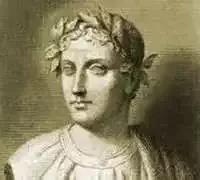
Horácio
BkIII:XXVII Europa
BkIII:XXVII Europa
Let the wicked be led by omens of screeching
from owls, by pregnant dogs, or a grey-she wolf,
hurrying down from Lanuvian meadows,
or a fox with young:
May a snake disturb the journey they’ve started,
terrifying the ponies like an arrow
flashing across the road: but I far-seeing
augur, with prayer
for him whom I’m fearful for, out of the east
I’ll call up the ominous raven, before
the bird that divines the imminent showers
seeks standing water.
Galatea, wherever you choose to live
may you be happy, and live in thought of me:
no woodpecker on your left, or errant crow
to bar your going.
But see, with what storms flickering Orion
is setting. I know how the Adriatic’s
black gulf can be, and how the bright westerly
wind commits its sins.
Let the wives and children of our enemy
feel the blind force of the rising southerly,
and the thunder of the dark waters, the shores
trembling at the blow.
So, Europa entrusted her snow-white form
to the bull’s deceit, and the brave girl grew pale,
at the sea alive with monsters, the dangers
of the deep ocean.
Leaving the meadow, where, lost among flowers,
she was weaving a garland owed to the Nymphs,
now, in the luminous night, she saw nothing
but water and stars.
As soon as she reached the shores of Crete, mighty
with its hundred cities, she cried: ‘O father,
I’ve lost the name of daughter, my piety
conquered by fury.
Where have I come from, where am I going? One
death is too few for a virgin’s sin. Am I
awake, weeping a vile act, or free from guilt,
mocked by a phantom,
that fleeing, false, from the ivory gate brings
only a dream? Is it not better to pick
fresh flowers than to go travelling over
the breadths of the sea?
If anyone now could deliver that foul
beast to my anger, I’d attempt to wound it
with steel, and shatter the horns of that monster,
the one I once loved.
I’m shameless, I’ve abandoned my country’s gods,
I’m shameless, I keep Orcus waiting. O if
one of the gods can hear, I wish I might walk
naked with lions!
Before vile leanness hollows my lovely cheeks,
and the juices ebb in this tender victim,
while I am still beautiful, I’ll seek to be
food for the tigers.
My absent father urges me on: ‘Why wait
to die, worthless Europa? Happily you
can hang by the neck from this ash-tree: use
the sash that’s with you.
Or if cliffs and the sharpened rocks attract you,
as a means of death, put your trust in the speed
of the wind, unless you’d rather be carding
some mistress’s wool,
you, of royal blood, be handed over, as
concubine to a barbarous queen.’ She moaned:
Venus was laughing, treacherously, with her
son, his bow unstrung.
When she’d toyed enough with her, she said: ‘Refrain
from anger and burning passion, when the bull,
you hate, yields you his horns again, so that you
can start to wound them.
Don’t you know you’re invincible Jupiter’s
wife. Stop your sobbing, and learn to carry your
good fortune well: a continent of the Earth
will be named for you.
283
Horácio
BkIII:XXII To Diana
BkIII:XXII To Diana
Virgin protectress of the mountain and the grove,
who, called on three times, hears young girls, labouring
through childbirth, and rescues them from dying, O
triple formed goddess,
may it be yours, this pine-tree above my farm,
so that I may, happily, through passing years,
offer it the blood of a boar, that’s trying
its first sidelong thrusts.
248
Horácio
BkIII:XV Too Old
BkIII:XV Too Old
O, dear wife of poor Ibycus,
put an end to your wickedness, at last, and all
of your infamous goings-on:
now you are nearer the season for dying,
stop playing about with the girls,
and scattering a mist over shining stars.
What fits Pholoe is not quite
fitting for you, Chloris: while your daughter’s more
suited to storming the houses of lovers,
like a Bacchante stirred by the beating drum.
Her love for Nothus forces her
to gambol like a lascivious she-goat:
the wool that’s shorn near to noble
Luceria’s fitting for you, sad old thing,
not the dark red flower of the rose,
nor the lyre, nor the wine-jars drained to their dregs
274
Horácio
BkIII:XIV Augustus Returns
BkIII:XIV Augustus Returns
O citizens, conquering Caesar is home
from the Spanish shores, who, like Hercules, now
was said to be seeking that laurel, that’s bought
at the price of death.
May his wife rejoice in a matchless husband,
having sacrificed to true gods, appear now
with our famous leader’s sister, and, all dressed
in holy ribbons,
the mothers of virgins and youths, now safe and
sound. And you, O you boys and you young girls who
are still without husbands, spare us any of
your ill-omened words
This day will be a true holiday for me,
and banish dark care: I’ll not fear civil war,
nor sudden death by violence, while Caesar has
command of the earth.
Go, now, you boys, seek out perfumes and garlands
and a jar that’s old as the Marsian War,
if any of them have managed to escape
Spartacus’s eyes.
And tell that graceful Neaera to hurry
and fasten all her perfumed hair in a knot:
if her hateful doorkeeper causes
delay, come away.
My greying hair softens a spirit eager
for arguments and passionate fights:
I’d not have endured it in my hot youth, while
Plancus was Consul.
265
Horácio
BkIII:XII Neobule, to Herself
BkIII:XII Neobule, to Herself
Girls are wretched who can’t allow free play to love, or drown their cares
with sweet wine, those who, terrified, go around in fear of a tongue
lashing from one of their uncles.
Neobule, Cytherea’s winged boy snatches your wool stuff away
and your work, your devotion to busy Minerva, whenever
shining Liparean Hebrus,
that lover of yours, has bathed his oiled shoulders in Tiber’s waters,
even better a horseman than Bellerephon, never beaten
through slowness of fists or of feet,
clever too at spearing the deer, as they pour, in a startled herd,
across the wide open spaces, and quick to come at the wild boar
as it lurks in the dense thicket.
270
Horácio
BkIII:V No Surrender
BkIII:V No Surrender
We believe thunderous Jupiter rules the sky:
Augustus is considered a god on earth,
for adding the Britons, and likewise
the weight of the Persians to our empire.
Didn’t Crassus’ soldiers live in vile marriage
with barbarian wives, and (because of our
Senate and its perverse ways!) grow old,
in the service of their hostile fathers.
Marsians, Apulians ruled by a Mede,
forgetting their shields, Roman names, and togas,
and eternal Vesta, though Jove’s shrines
and the city of Rome remained unharmed?
Regulus’s far-seeing mind warned of this,
when he objected to shameful surrender,
and considered from its example
harm would come to the following age,
unless captured men were killed without pity.
‘I’ve seen standards and weapons,’ he said,
‘taken bloodlessly from our soldiers,
hung there in the Carthaginian shrines,
I’ve seen the arms of our freemen twisted
behind their backs, enemy gates wide open,
and the fields that our warfare ravaged
being freely cultivated again.
Do you think that our soldiers ransomed for gold,
will fight more fiercely next time! You’ll add
harm to shame: the wool that’s dyed purple
never regains the colour that vanished,
and true courage, when once departed, never
cares to return to an inferior heart.
When a doe that’s set free, from the thick
hunting nets, turns to fight, then he’ll be brave
who trusts himself to treacherous enemies
and he’ll crush Carthage, in a second battle,
who’s felt the chains on his fettered wrists,
without a struggle, afraid of dying.
He’s one who, not knowing how life should be lived,
confuses war with peace. O, shame! O mighty
Carthage, made mightier now because
of Italy’s disgraceful decadence.’
It’s said he set aside his wife’s chaste kisses,
and his little ones, as of less importance,
and, grimly, he set his manly face
to the soil, until he might be able
to strengthen the Senate’s wavering purpose,
by making of himself an example no
other man had made, and hurrying,
among grieving friends, to noble exile.
Yet he knew what the barbarous torturer
was preparing for him. Still he pushed aside
the kinsmen who were blocking his way,
and the people who delayed his going,
as if, with some case decided, and leaving
all that tedious business of his clients,
he headed for Venafrum’s meadows,
or Lacedaemonian Tarentum.
313
Horácio
BkII:XX Poetic Immortality
BkII:XX Poetic Immortality
A poet of dual form, I won’t be carried
through the flowing air on weak or mundane wings,
nor will I linger down here on earth,
for any length of time: beyond envy,
I’ll leave the cities behind. It’s not I, born
of poor parents, it’s not I, who hear your voice,
beloved Maecenas, I who’ll die,
or be encircled by Stygian waters.
Even now the rough skin is settling around
my ankles, and now above them I’ve become
a snow-white swan, and soft feathers are
emerging over my arms and shoulders.
Soon, a melodious bird, and more famous
than Icarus, Daedalus’ son, I’ll visit
Bosphorus’ loud shores, Gaetulian
Syrtes, and the Hyperborean plains.
Colchis will know me, so will the Scythians,
who pretend to show no fear of Italian
troops, and the Geloni: Spain will learn
from me, the expert, and those who drink Rhone.
No dirges at my insubstantial funeral,
no elegies, and no unseemly grieving:
suppress all the clamour, not for me
the superfluous honour of a tomb.
253
Horácio
BkII:XVII We’ll Go Together
BkII:XVII We’ll Go Together
Why do you stifle me with your complaining?
It’s neither the gods’ idea nor mine to die
before you, Maecenas, you’re the great
glory, and pillar of my existence.
Ah, if some premature blow snatches away
half of my spirit, why should the rest remain,
no longer as loved, nor surviving
entire? That day shall lead us to ruin
together. I’m not making some treacherous
promise: whenever you lead the way, let’s go,
let’s go, prepared as friends to set out,
you and I, to try the final journey.
No Chimaera’s fiery breath will ever tear
me from you, or if he should rise against me
hundred handed Gyas: that’s the will
of all-powerful Justice and the Fates.
Whether Libra or fearful Scorpio shone
more powerfully on me at my natal hour,
or Capricorn, which is the ruler
of the waters that flow round Italy,
our stars were mutually aspected in their
marvellous way. Jupiter’s protection shone,
brighter for you than baleful Saturn,
and rescued you, and held back the rapid
wings of Fate, that day when the people crowding
the theatre, three times broke into wild applause:
I’d have received the trunk of a tree
on my head, if Faunus, the guardian
of Mercurial poets, hadn’t warded off
the blow with his hand. So remember to make
due offering: you build a votive shrine:
I’ll come and sacrifice a humble lamb.
186
Horácio
BkII:XIV Eheu Fugaces
BkII:XIV Eheu Fugaces
Oh how the years fly, Postumus, Postumus,
they’re slipping away, virtue brings no respite
from the wrinkles that furrow our brow,
impending old age, Death the invincible:
not even, my friend, if with three hundred bulls
every day, you appease pitiless Pluto,
jailor of three-bodied Geryon,
who imprisons Tityos by the sad
stream, that every one of us must sail over,
whoever we are that enjoy earth’s riches,
whether we’re wealthy, or whether we are
the most destitute of humble farmers.
In vain we’ll escape from bloodiest warfare,
from the breakers’ roar in the Adriatic,
in vain, on the autumn seas, we’ll fear
the southerly that shatters our bodies:
We’re destined to gaze at Cocytus, winding,
dark languid river: the infamous daughters
of Danaus: and at Sisyphus,
son of Aeolus, condemned to long toil.
We’re destined to leave earth, home, our loving wife,
nor will a single tree, that you planted here,
follow you, it’s briefly-known master,
except for the much-detested cypress.
A worthier heir will drink your Caecuban,
that cellar a hundred keys are protecting,
and stain the street with a vintage wine,
finer than those at the Pontiff’s table.
287
Horácio
BkII:X The Golden Mean
BkII:X The Golden Mean
You’ll live more virtuously, my Murena,
by not setting out to sea, while you’re in dread
of the storm, or hugging fatal shores
too closely, either.
Whoever takes delight in the golden mean,
safely avoids the squalor of a shabby house,
and, soberly, avoids the regal palace
that incites envy.
The tall pine’s more often shaken by the wind,
and it’s a high tower that falls with a louder
crash, while the mountainous summits are places
where lightning strikes.
The heart that is well prepared for any fate
hopes in adversity, fears prosperity.
Though Jupiter brings us all the unlovely
winters: he also
takes them away again. If there’s trouble now
it won’t always be so: sometimes Apollo
rouses the sleeping Muse with his lyre, when he’s
not flexing his bow.
Appear brave and resolute in difficult
times: and yet be wise and take in all your sails
when they’re swollen by too powerful
a following wind.
298
Horácio
BkII:VII A Friend Home From the Wars
BkII:VII A Friend Home From the Wars
O Pompey, often led, with me, by Brutus,
the head of our army, into great danger,
who’s sent you back, as a citizen,
to your country’s gods and Italy’s sky,
Pompey, the very dearest of my comrades,
with whom I’ve often drawn out the lingering
day in wine, my hair wreathed, and glistening
with perfumed balsam, of Syrian nard?
I was there at Philippi, with you, in that
headlong flight, sadly leaving my shield behind,
when shattered Virtue, and what threatened
from an ignoble purpose, fell to earth.
While in my fear Mercury dragged me, swiftly,
through the hostile ranks in a thickening cloud:
the wave was drawing you back to war,
carried once more by the troubled waters.
So grant Jupiter the feast he’s owed, and stretch
your limbs, wearied by long campaigning, under
my laurel boughs, and don’t spare the jars
that were destined to be opened by you.
Fill the smooth cups with Massic oblivion,
pour out the perfume from generous dishes,
Who’ll hurry to weave the wreathes for us
of dew-wet parsley or pliant myrtle?
Who’ll throw high Venus at dice and so become
the master of drink? I’ll rage as insanely
as any Thracian: It’s sweet to me
to revel when a friend is home again.
253
Horácio
BkII:II Money
BkII:II Money
Crispus, silver concealed in the greedy earth
has no colour, and you are an enemy
to all such metal unless, indeed, it gleams
from sensible use.
Proculeius will be famous in distant
ages for his generous feelings towards
his brothers: enduring fame will carry him
on its tireless wings.
You may rule a wider kingdom by taming
a greedy spirit, than by joining Spain
to far-off Libya, while Carthaginians
on both sides, serve one.
A fatal dropsy grows worse with indulgence,
the patient can’t rid himself of thirst unless
his veins are free of illness, and his pale flesh
of watery languor.
Though Phraates is back on the Armenian
throne, Virtue, differing from the rabble, excludes
him from the blessed, and instructs the people
not to misuse words,
instead conferring power, and security
of rule, and lasting laurels, on him alone
who can pass by enormous piles of treasure
without looking back.
259
Horácio
BkI:XXXIV Fortune’s Changes
BkI:XXXIV Fortune’s Changes
Once I wandered, an expert in crazy wisdom,
a scant and infrequent adorer of gods,
now I’m forced to set sail and return,
to go back to the paths I abandoned.
For Jupiter, Father of all of the gods,
who generally splits the clouds with his lightning,
flashing away, drove thundering horses,
and his swift chariot, through the clear sky,
till the dull earth, and the wandering rivers,
and Styx, and dread Taenarus’ hateful headland,
and Atlas’s mountain-summits shook.
The god has the power to replace the highest
with the lowest, bring down the famous, and raise
the obscure to the heights. And greedy Fortune
with her shrill whirring, carries away
the crown and delights in setting it, there.
237
Horácio
BkI:XXIV A Lament For Quintilius
BkI:XXIV A Lament For Quintilius
What limit, or restraint, should we show at the loss
of so dear a life? Melpomene, teach me, Muse,
a song of mourning, you, whom the Father granted
a clear voice, the sound of the lyre.
Does endless sleep lie heavy on Quintilius,
now? When will Honour, and unswerving Loyalty,
that is sister to Justice, and our naked Truth,
ever discover his equal?
Many are the good men who weep for his dying,
none of them, Virgil, weep more profusely than you.
Piously, you ask the gods for him, alas, in vain:
not so was he given to us.
Even if you played on the Thracian lyre, listened
to by the trees, more sweetly than Orpheus could,
would life then return, to that empty phantom,
once Mercury, with fearsome wand,
who won’t simply re-open the gates of Fate
at our bidding, has gathered him to the dark throng?
It is hard: but patience makes more tolerable
whatever wrong’s to be righted.
240
Horácio
BkI:XV Nereus’ Prophecy of Troy
BkI:XV Nereus’ Prophecy of Troy
While Paris, the traitorous shepherd, her guest,
bore Helen over the waves, in a ship from Troy,
Nereus, the sea-god, checked the swift breeze
with an unwelcome calm, to tell
their harsh fate: ‘You’re taking a bird of ill-omen,
back home, whom the Greeks, new armed, will look for again,
having sworn to destroy the marriage your planning
and the empire of old Priam.
Ah, what sweated labour for men and for horses
draws near! What disaster you bring for the Trojan
people! Athene’s already prepared her helm,
breastplate, chariot, and fury.
Uselessly daring, through Venus’ protection,
you’ll comb your hair and pluck at the peace-loving lyre,
make the music for songs that please girls: uselessly
you’ll hide, in the depths of your room,
from the heavy spears, from the arrows of Cretan
reeds, and the noise of the battle, and swift-footed
Ajax quick to follow: yet, ah too late, you’ll bathe
your adulterous hair in the dust!
Have you thought of Ulysses, the bane of your race,
have you even considered Pylian Nestor?
Teucer of Salamis presses you fearlessly,
Sthenelus, skilful in warfare,
and if it’s a question of handling the horses
he’s no mean charioteer. And Meriones
you’ll know him too. See fierce Tydides, his father’s
braver, he’s raging to find you.
As the deer sees the wolf there, over the valley,
and forgets its pastures, a coward, you’ll flee him,
breathing hard, as you run, with your head thrown high,
not as you promised your mistress.
The anger of Achilles’ armies may delay
the day of destruction for Troy and its women:
but after so many winters the fires of Greece
will burn the Dardanian houses.’
191
Horácio
BkI:XIV The Ship of State
BkI:XIV The Ship of State
O ship the fresh tide carries back to sea again.
Where are you going! Quickly, run for harbour.
Can’t you see how your sides
have been stripped bare of oars,
how your shattered masts and yards are groaning loudly
in the swift south-westerly, and bare of rigging,
your hull can scarce tolerate
the overpowering waters?
You haven’t a single sail that’s still intact now,
no gods, that people call to when they’re in trouble.
Though you’re built of Pontic pine,
a child of those famous forests,
though you can boast of your race, and an idle name:
the fearful sailor puts no faith in gaudy keels.
You must beware of being
merely a plaything of the winds.
You, who not long ago were troubling weariness
to me, and now are my passion and anxious care,
avoid the glistening seas
between the shining Cyclades.
308
Horácio
BkI:X To Mercury
BkI:X To Mercury
Mercury, eloquent grandson of Atlas,
I’ll sing of you, who wise with your training, shaped
the uncivilised ways of our new-born race,
with language, and grace
in the ways of wrestling, you the messenger
of Jove and the gods, and the curved lyre’s father,
skilful in hiding whatever pleases you,
with playful deceit.
While he tried to scare you, with his threatening voice,
unless you returned the cattle you’d stolen,
and so craftily, Apollo was laughing
missing his quiver.
And indeed, with your guidance, Priam carrying
rich gifts left Troy, escaped the proud Atridae,
Thessalian fires, and the menacing camp
threatening Ilium.
You bring virtuous souls to the happy shores,
controlling the bodiless crowds with your wand
of gold, pleasing to the gods of the heavens
and the gods below.
271
Horácio
BkI:IV Spring
BkI:IV Spring
Fierce winter slackens its grip: it’s spring and the west wind’s sweet change:
the ropes are hauling dry hulls towards the shore,
The flock no longer enjoys the fold, or the ploughman the fire,
no more are the meadows white with hoary frost.
Now Cytherean Venus leads out her dancers, under the pendant moon,
and the lovely Graces have joined with the Nymphs,
treading the earth on tripping feet, while Vulcan, all on fire, visits
the tremendous Cyclopean forges.
Now its right to garland our gleaming heads, with green myrtle or flowers,
whatever the unfrozen earth now bears:
now it’s right to sacrifice to Faunus, in groves that are filled with shadow,
whether he asks a lamb, or prefers a kid.
Pale death knocks with impartial foot, at the door of the poor man’s cottage,
and at the prince’s gate. O Sestus, my friend,
the span of brief life prevents us from ever depending on distant hope.
Soon the night will crush you, the fabled spirits,
and Pluto’s bodiless halls: where once you’ve passed inside you’ll no longer
be allotted the lordship of wine by dice,
or marvel at Lycidas, so tender, for whom, already, the boys
are burning, and soon the girls will grow hotter.
302
Horácio
BkI:II To Augustus
BkI:II To Augustus
The Father’s sent enough dread hail
and snow to earth already, striking
sacred hills with fiery hand,
to scare the city,
and scare the people, lest again
we know Pyrrha’s age of pain
when Proteus his sea-herds drove
across high mountains,
and fishes lodged in all the elms,
that used to be the haunt of doves,
and the trembling roe-deer swam
the whelming waters.
We saw the yellow Tiber’s waves
hurled backwards from the Tuscan shore,
toppling Numa’s Regia and
the shrine of Vesta,
far too fierce now, the fond river,
in his revenge of wronged Ilia,
drowning the whole left bank, deep,
without permission.
Our children, fewer for their father’s
vices, will hear metal sharpened
that’s better destined for the Persians,
and of battles too.
Which gods shall the people call on
when the Empire falls in ruins?
With what prayer shall the virgins
tire heedless Vesta?
Whom will Jupiter assign to
expiate our sins? We pray you,
come, cloud veiling your bright shoulders,
far-sighted Apollo:
or laughing Venus Erycina,
if you will, whom Cupid circles,
or you, if you see your children
neglected, Leader,
you sated from the long campaign,
who love the war-shouts and the helmets,
and the Moor’s cruel face among his
blood-stained enemies.
Or you, winged son of kindly Maia,
changing shape on earth to human
form, and ready to be named as
Caesar’s avenger:
Don’t rush back to the sky, stay long
among the people of Quirinus,
no swifter breeze take you away,
unhappy with our
sins: here to delight in triumphs,
in being called our prince and father,
making sure the Medes are punished,
lead us, O Caesar.
263