

Poems in this topic
Life and Existence

Robert Louis Stevenson
Air Of Diabelli's
Air Of Diabelli's
CALL it to mind, O my love.
Dear were your eyes as the day,
Bright as the day and the sky;
Like the stream of gold and the sky above,
Dear were your eyes in the grey.
We have lived, my love, O, we have lived, my love!
Now along the silent river, azure
Through the sky's inverted image,
Softly swam the boat that bore our love,
Swiftly ran the shallow of our love
Through the heaven's inverted image,
In the reedy mazes round the river.
See along the silent river,
See of old the lover's shallop steer.
Berried brake and reedy island,
Heaven below and only heaven above.
Through the sky's inverted image
Swiftly swam the boat that bore our love.
Berried brake and reedy island,
Mirrored flower and shallop gliding by.
All the earth and all the sky were ours,
Silent sat the wafted lovers,
Bound with grain and watched by all the sky,
Hand to hand and eye to . . . eye.
Days of April, airs of Eden,
Call to mind how bright the vanished angel hours,
Golden hours of evening,
When our boat drew homeward filled with flowers.
O darling, call them to mind; love the past, my love.
Days of April, airs of Eden.
How the glory died through golden hours,
And the shining moon arising;
How the boat drew homeward filled with flowers.
Age and winter close us slowly in.
Level river, cloudless heaven,
Islanded reed mazes, silver weirs;
How the silent boat with silver
Threads the inverted forest as she goes,
Broke the trembling green of mirrored trees.
O, remember, and remember
How the berries hung in garlands.
Still in the river see the shallop floats.
Hark! Chimes the falling oar.
Still in the mind
Hark to the song of the past!
Dream, and they pass in their dreams.
Those that loved of yore, O those that loved of yore!
Hark through the stillness, O darling, hark!
Through it all the ear of the mind
Knows the boat of love. Hark!
Chimes the falling oar.
O half in vain they grew old.
Now the halcyon days are over,
Age and winter close us slowly round,
And these sounds at fall of even
Dim the sight and muffle all the sound.
And at the married fireside, sleep of soul and sleep of fancy,
Joan and Darby.
Silence of the world without a sound;
And beside the winter faggot
Joan and Darby sit and dose and dream and wake -
Dream they hear the flowing, singing river,
See the berries in the island brake;
Dream they hear the weir,
See the gliding shallop mar the stream.
Hark! in your dreams do you hear?
Snow has filled the drifted forest;
Ice has bound the . . . stream.
Frost has bound our flowing river;
Snow has whitened all our island brake.
Berried brake and reedy island,
Heaven below and only heaven above azure
Through the sky's inverted image
Safely swam the boat that bore our love.
Dear were your eyes as the day,
Bright ran the stream, bright hung the sky above.
Days of April, airs of Eden.
How the glory died through golden hours,
And the shining moon arising,
How the boat drew homeward filled with flowers.
Bright were your eyes in the night:
We have lived, my love;
O, we have loved, my love.
Now the . . . days are over,
Age and winter close us slowly round.
Vainly time departs, and vainly
Age and winter come and close us round.
Hark the river's long continuous sound.
Hear the river ripples in the reeds.
Lo, in dreams they see their shallop
Run the lilies down and drown the weeds
Mid the sound of crackling faggots.
So in dreams the new created
Happy past returns, to-day recedes,
And they hear once more,
From the old years,
Yesterday returns, to-day recedes,
And they hear with aged hearing warbles
Love's own river ripple in the weeds.
And again the lover's shallop;
Lo, the shallop sheds the streaming weeds;
And afar in foreign countries
In the ears of aged lovers.
And again in winter evens
Starred with lilies . . . with stirring weeds.
In these ears of aged lovers
Love's own river ripples in the reeds.
368
Robert Louis Stevenson
Ad Se Ipsum
Ad Se Ipsum
DEAR sir, good-morrow! Five years back,
When you first girded for this arduous track,
And under various whimsical pretexts
Endowed another with your damned defects,
Could you have dreamed in your despondent vein
That the kind God would make your path so plain?
Non nobis, domine! O, may He still
Support my stumbling footsteps on the hill!
402
Robert Louis Stevenson
Ad Piscatorem
Ad Piscatorem
FOR these are sacred fishes all
Who know that lord that is the lord of all;
Come to the brim and nose the friendly hand
That sways and can beshadow all the land.
Nor only so, but have their names, and come
When they are summoned by the Lord of Rome.
Here once his line an impious Lybian threw;
And as with tremulous reed his prey he drew,
Straight, the light failed him.
He groped, nor found the prey that he had ta'en.
Now as a warning to the fisher clan
Beside the lake he sits, a beggarman.
Thou, then, while still thine innocence is pure,
Flee swiftly, nor presume to set thy lure;
Respect these fishes, for their friends are great;
And in the waters empty all thy bait.
341
Robert Louis Stevenson
A Good Play
A Good Play
We built a ship upon the stairs
All made of the back-bedroom chairs,
And filled it full of soft pillows
To go a-sailing on the billows.
We took a saw and several nails,
And water in the nursery pails;
And Tom said, "Let us also take
An apple and a slice of cake;"--
Which was enough for Tom and me
To go a-sailing on, till tea.
We sailed along for days and days,
And had the very best of plays;
But Tom fell out and hurt his knee,
So there was no one left but me.
430
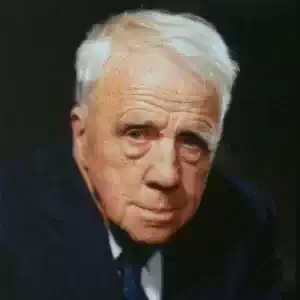
Robert Frost
To The Thawing Wind
To The Thawing Wind
Come with rain. O loud Southwester! Bring the singer, bring the nester; Give the
buried flower a dream; make the settled snowbank steam; Find the brown beneath the
white; But whate'er you do tonight, bath my window, make it flow, Melt it as the ice
will go; Melt the glass and leave the sticks Like a hermit's crucifix; Burst into my
narrow stall; Swing the picture on the wall; Run the rattling pages o'er; Scatter poems
on the floor; Turn the poet out of door.
530
Robert Frost
They Were Welcome To Their Belief
They Were Welcome To Their Belief
Grief may have thought it was grief.
Care may have thought it was care.
They were welcome to their belief,
The overimportant pair.
No, it took all the snows that clung
To the low roof over his bed,
Beginning when he was young,
To induce the one snow on his head.
But whenever the roof camme white
The head in the dark below
Was a shade less the color of night,
A shade more the color of snow.
Grief may have thought it was grief.
Care may have thought it was care.
But neither one was the thief
Of his raven color of hair.
Grief may have thought it was grief.
Care may have thought it was care.
They were welcome to their belief,
The overimportant pair.
No, it took all the snows that clung
To the low roof over his bed,
Beginning when he was young,
To induce the one snow on his head.
But whenever the roof camme white
The head in the dark below
Was a shade less the color of night,
A shade more the color of snow.
Grief may have thought it was grief.
Care may have thought it was care.
But neither one was the thief
Of his raven color of hair.
475
Robert Frost
The Vantage Point
The Vantage Point
If tires of trees I seek again mankind, Well I know where to hie me--in the dawn, To a
slope where the cattle keep the lawn. There amid loggin juniper reclined, Myself
unseen, I see in white defined Far off the homes of men, and farther still, The graves
of men on an opposing hill, Living or dead, whichever are to mind. And if by noon I
have too much of these, I have but to turn on my arm, and lo, The sun-burned hillside
sets my face aglow, My breathing shakes the bluet like a breeze, I smell the earth, I
smell the bruisèd plant, I look into the crater of the ant.
519
Robert Frost
The Soldier
The Soldier
He is that fallen lance that lies as hurled,
That lies unlifted now, come dew, come rust,
But still lies pointed as it ploughed the dust.
If we who sight along it round the world,
See nothing worthy to have been its mark,
It is because like men we look too near,
Forgetting that as fitted to the sphere,
Our missiles always make too short an arc.
They fall, they rip the grass, they intersect
The curve of earth, and striking, break their own;
They make us cringe for metal-point on stone.
But this we know, the obstacle that checked
And tripped the body, shot the spirit on
Further than target ever showed or shone.
514
Robert Frost
The Span Of Life
The Span Of Life
The old dog barks backwards without getting up.
I can remember when he was a pup.
Anonymous submission.
The old dog barks backwards without getting up.
I can remember when he was a pup.
Anonymous submission.
385
Robert Frost
The Span Of Life
The Span Of Life
The old dog barks backwards without getting up.
I can remember when he was a pup.
Anonymous submission.
The old dog barks backwards without getting up.
I can remember when he was a pup.
Anonymous submission.
385
Robert Frost
The Road Not Taken
The Road Not Taken
Two roads diverged in a yellow wood,
And sorry I could not travel both
And be one traveler, long I stood
And looked down one as far as I could
To where it bent in the undergrowth;
Then took the other, just as fair,
And having perhaps the better claim
Because it was grassy and wanted wear,
Though as for that the passing there
Had worn them really about the same,
And both that morning equally lay
In leaves no step had trodden black.
Oh, I marked the first for another day!
Yet knowing how way leads on to way
I doubted if I should ever come back.
I shall be telling this with a sigh
Somewhere ages and ages hence:
Two roads diverged in a wood, and I,
I took the one less traveled by,
And that has made all the difference.
503
Robert Frost
The Secret Sits
The Secret Sits
We dance round in a ring and suppose,
But the Secret sits in the middle and knows.
We dance round in a ring and suppose,
But the Secret sits in the middle and knows.
445
Robert Frost
The Oven Bird
The Oven Bird
There is a singer eveyone has heard,
Loud, a mid-summer and a mid-wood bird,
Who makes the solid tree trunks sound again.
He says that leaves are old and that for flowers
Mid-summer is to spring as one to ten.
He says the early petal-fall is past,
When pear and cherry bloom went down in showers
On sunny days a moment overcast;
And comes that other fall we name the fall.
He says the highway dust is over all.
The bird would cease and be as other birds
But that he knows in singing not to sing.
The question that he frames in all but words
Is what to make of a diminished thing.
489
Robert Frost
The Lockless Door
The Lockless Door
It went many years,
But at last came a knock,
And I thought of the door
With no lock to lock.
I blew out the light,
I tip-toed the floor,
And raised both hands
In prayer to the door.
But the knock came again
My window was wide;
I climbed on the sill
And descended outside.
Back over the sill
I bade a "Come in"
To whoever the knock
At the door may have been.
So at a knock
I emptied my cage
To hide in the world
And alter with age.
517
Robert Frost
The Hill Wife
The Hill Wife
It was too lonely for her there,
And too wild,
And since there were but two of them,
And no child.
And work was little in the house,
She was free,
And followed where he furrowed field,
Or felled log.
She rested on a log and tossed
The fresh chips,
With a song only to herself
On her lips.
And once she went to break a bough
Of black alder.
She strayed so far she scarcely heard
When he called her -
And didn't answer - didn't speak -
Or return.
She stood, and then she ran and hid
In the fern.
He never found her, though he looked
Everywhere,
And he asked at her mother's house
Was she there.
Sudden and swift and light as that
The ties gave,
And he learned of finalities
Besides the grave.
492
Robert Frost
The Bear
The Bear
The bear puts both arms around the tree above her
And draws it down as if it were a lover
And its chokecherries lips to kiss good-by,
Then lets it snap back upright in the sky.
Her next step rocks a boulder on the wall
(She's making her cross-country in the fall).
Her great weight creaks the barbed wire in its staples
As she flings over and off down through the maples,
Leaving on one wire tooth a lock of hair.
Such is the uncaged progress of the bear.
The world has room to make a bear feel free;
The universe seems cramped to you and me.
Man acts more like the poor bear in a cage,
That all day fights a nervous inward rage,
His mood rejecting all his mind suggests.
He paces back and forth and never rests
The me-nail click and shuffle of his feet,
The telescope at one end of his beat,
And at the other end the microscope,
Two instruments of nearly equal hope,
And in conjunction giving quite a spread.
Or if he rests from scientific tread,
'Tis only to sit back and sway his head
Through ninety-odd degrees of arc, it seems,
Between two metaphysical extremes.
He sits back on his fundamental butt
With lifted snout and eyes (if any) shut
(He almost looks religious but he's not),
And back and forth he sways from cheek to cheek,
At one extreme agreeing with one Greek
At the other agreeing with another Greek
Which may be thought, but only so to speak.
A baggy figure, equally pathetic
When sedentary and when peripatetic.
528
Robert Frost
Stars
Stars
How countlessly they congregate
O'er our tumultuous snow,
Which flows in shapes as tall as trees
When wintry winds do blow!--
As if with keenness for our fate,
Our faltering few steps on
To white rest, and a place of rest
Invisible at dawn,--
And yet with neither love nor hate,
Those stars like some snow-white
Minerva's snow-white marble eyes
Without the gift of sight.
509