

Poems in this topic
Society and the World
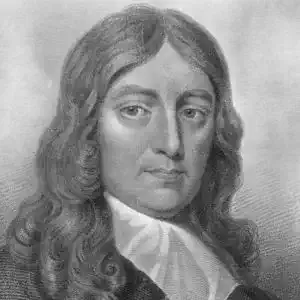
John Milton
Sonnet XVI: Cromwell, our chief of men
Sonnet XVI: Cromwell, our chief of men
To the Lord General Cromwell
On the Proposals of Certain Ministers of the Committee
for the Propagation of the Gospel
Cromwell, our chief of men, who through a cloud
Not of war only, but detractions rude,
Guided by faith and matchless fortitude,
To peace and truth thy glorious way hast ploughed,
And on the neck of crowned Fortune proud
Hast reared God's trophies, and his work pursued,
While Darwen stream with blood of Scots imbrued,
And Dunbar field resounds thy praises loud,
And Worcester's laureate wreath. Yet much remains
To conquer still; peace hath her victories
No less renowned than war: new foes arise,
Threat'ning to bind our souls with secular chains:
Help us to save free conscience from the paw
Of hireling wolves, whose gospel is their maw.
To the Lord General Cromwell
On the Proposals of Certain Ministers of the Committee
for the Propagation of the Gospel
Cromwell, our chief of men, who through a cloud
Not of war only, but detractions rude,
Guided by faith and matchless fortitude,
To peace and truth thy glorious way hast ploughed,
And on the neck of crowned Fortune proud
Hast reared God's trophies, and his work pursued,
While Darwen stream with blood of Scots imbrued,
And Dunbar field resounds thy praises loud,
And Worcester's laureate wreath. Yet much remains
To conquer still; peace hath her victories
No less renowned than war: new foes arise,
Threat'ning to bind our souls with secular chains:
Help us to save free conscience from the paw
Of hireling wolves, whose gospel is their maw.
551
John Milton
Sonnet XVI: Cromwell, our chief of men
Sonnet XVI: Cromwell, our chief of men
To the Lord General Cromwell
On the Proposals of Certain Ministers of the Committee
for the Propagation of the Gospel
Cromwell, our chief of men, who through a cloud
Not of war only, but detractions rude,
Guided by faith and matchless fortitude,
To peace and truth thy glorious way hast ploughed,
And on the neck of crowned Fortune proud
Hast reared God's trophies, and his work pursued,
While Darwen stream with blood of Scots imbrued,
And Dunbar field resounds thy praises loud,
And Worcester's laureate wreath. Yet much remains
To conquer still; peace hath her victories
No less renowned than war: new foes arise,
Threat'ning to bind our souls with secular chains:
Help us to save free conscience from the paw
Of hireling wolves, whose gospel is their maw.
To the Lord General Cromwell
On the Proposals of Certain Ministers of the Committee
for the Propagation of the Gospel
Cromwell, our chief of men, who through a cloud
Not of war only, but detractions rude,
Guided by faith and matchless fortitude,
To peace and truth thy glorious way hast ploughed,
And on the neck of crowned Fortune proud
Hast reared God's trophies, and his work pursued,
While Darwen stream with blood of Scots imbrued,
And Dunbar field resounds thy praises loud,
And Worcester's laureate wreath. Yet much remains
To conquer still; peace hath her victories
No less renowned than war: new foes arise,
Threat'ning to bind our souls with secular chains:
Help us to save free conscience from the paw
Of hireling wolves, whose gospel is their maw.
551
John Milton
Sonnet 22
Sonnet 22
XXII
Cyriac, this three years' day these eyes, though clear,
To outward view, of blemish or of spot,
Bereft of light, their seeing have forgot;
Nor to their idle orbs doth sight appear
Of sun, or moon, or star, throughout the year,
Or man, or woman. Yet I argue not
Against Heav'n's hand or will, nor bate a jot
Of heart or hope; but still bear up and steer
Right onward. What supports me, dost thou ask?
The conscience, Friend, t' have lost them overplied
In liberty's defence, my noble task,
Of which all Europe rings from side to side.
This thought might lead me through the world's vain mask
Content, though blind, had I no better guide.
XXII
Cyriac, this three years' day these eyes, though clear,
To outward view, of blemish or of spot,
Bereft of light, their seeing have forgot;
Nor to their idle orbs doth sight appear
Of sun, or moon, or star, throughout the year,
Or man, or woman. Yet I argue not
Against Heav'n's hand or will, nor bate a jot
Of heart or hope; but still bear up and steer
Right onward. What supports me, dost thou ask?
The conscience, Friend, t' have lost them overplied
In liberty's defence, my noble task,
Of which all Europe rings from side to side.
This thought might lead me through the world's vain mask
Content, though blind, had I no better guide.
548
John Milton
Sonnet 18
Sonnet 18
XVIII
Cyriack, whose Grandsire on the Royal Bench
Of Brittish Themis, with no mean applause
Pronounc't and in his volumes taught our Lawes,
Which others at their Barr so often wrench:
To day deep thoughts resolve with me to drench
In mirth, that after no repenting drawes;
Let Euclid rest and Archimedes pause,
And what the Swede intend, and what the French.
To measure life, learn thou betimes, and know
Toward solid good what leads the nearest way;
For other things mild Heav'n a time ordains,
And disapproves that care, though wise in show,
That with superfluous burden loads the day,
And when God sends a cheerful hour, refrains.
XVIII
Cyriack, whose Grandsire on the Royal Bench
Of Brittish Themis, with no mean applause
Pronounc't and in his volumes taught our Lawes,
Which others at their Barr so often wrench:
To day deep thoughts resolve with me to drench
In mirth, that after no repenting drawes;
Let Euclid rest and Archimedes pause,
And what the Swede intend, and what the French.
To measure life, learn thou betimes, and know
Toward solid good what leads the nearest way;
For other things mild Heav'n a time ordains,
And disapproves that care, though wise in show,
That with superfluous burden loads the day,
And when God sends a cheerful hour, refrains.
541
John Milton
Sonnet 10
Sonnet 10
X
Daughter to that good Earl, once President
Of Englands Counsel, and her Treasury,
Who liv'd in both, unstain'd with gold or fee,
And left them both, more in himself content,
Till the sad breaking of that Parlament
Broke him, as that dishonest victory
At Chaeronea, fatal to liberty
Kil'd with report that Old man eloquent,
Though later born, then to have known the dayes
Wherin your Father flourisht, yet by you
Madam, me thinks I see him living yet;
So well your words his noble vertues praise,
That all both judge you to relate them true,
And to possess them, Honour'd Margaret.
Note: Camb. autograph supplies title, To the Lady Margaret
Ley.
X
Daughter to that good Earl, once President
Of Englands Counsel, and her Treasury,
Who liv'd in both, unstain'd with gold or fee,
And left them both, more in himself content,
Till the sad breaking of that Parlament
Broke him, as that dishonest victory
At Chaeronea, fatal to liberty
Kil'd with report that Old man eloquent,
Though later born, then to have known the dayes
Wherin your Father flourisht, yet by you
Madam, me thinks I see him living yet;
So well your words his noble vertues praise,
That all both judge you to relate them true,
And to possess them, Honour'd Margaret.
Note: Camb. autograph supplies title, To the Lady Margaret
Ley.
518
John Milton
Sonnet 12
Sonnet 12
XII. On the same.
I did but prompt the age to quit their cloggs
By the known rules of antient libertie,
When strait a barbarous noise environs me
Of Owles and Cuckoes, Asses, Apes and Doggs.
As when those Hinds that were transform'd to Froggs
Raild at Latona's twin-born progenie
Which after held the Sun and Moon in fee.
But this is got by casting Pearl to Hoggs;
That bawle for freedom in their senceless mood,
And still revolt when truth would set them free.
Licence they mean when they cry libertie;
For who loves that, must first be wise and good;
But from that mark how far they roave we see
For all this wast of wealth, and loss of blood.
XII. On the same.
I did but prompt the age to quit their cloggs
By the known rules of antient libertie,
When strait a barbarous noise environs me
Of Owles and Cuckoes, Asses, Apes and Doggs.
As when those Hinds that were transform'd to Froggs
Raild at Latona's twin-born progenie
Which after held the Sun and Moon in fee.
But this is got by casting Pearl to Hoggs;
That bawle for freedom in their senceless mood,
And still revolt when truth would set them free.
Licence they mean when they cry libertie;
For who loves that, must first be wise and good;
But from that mark how far they roave we see
For all this wast of wealth, and loss of blood.
504
John Milton
Sonnet 12
Sonnet 12
XII. On the same.
I did but prompt the age to quit their cloggs
By the known rules of antient libertie,
When strait a barbarous noise environs me
Of Owles and Cuckoes, Asses, Apes and Doggs.
As when those Hinds that were transform'd to Froggs
Raild at Latona's twin-born progenie
Which after held the Sun and Moon in fee.
But this is got by casting Pearl to Hoggs;
That bawle for freedom in their senceless mood,
And still revolt when truth would set them free.
Licence they mean when they cry libertie;
For who loves that, must first be wise and good;
But from that mark how far they roave we see
For all this wast of wealth, and loss of blood.
XII. On the same.
I did but prompt the age to quit their cloggs
By the known rules of antient libertie,
When strait a barbarous noise environs me
Of Owles and Cuckoes, Asses, Apes and Doggs.
As when those Hinds that were transform'd to Froggs
Raild at Latona's twin-born progenie
Which after held the Sun and Moon in fee.
But this is got by casting Pearl to Hoggs;
That bawle for freedom in their senceless mood,
And still revolt when truth would set them free.
Licence they mean when they cry libertie;
For who loves that, must first be wise and good;
But from that mark how far they roave we see
For all this wast of wealth, and loss of blood.
504
John Milton
Sonnet 12
Sonnet 12
XII. On the same.
I did but prompt the age to quit their cloggs
By the known rules of antient libertie,
When strait a barbarous noise environs me
Of Owles and Cuckoes, Asses, Apes and Doggs.
As when those Hinds that were transform'd to Froggs
Raild at Latona's twin-born progenie
Which after held the Sun and Moon in fee.
But this is got by casting Pearl to Hoggs;
That bawle for freedom in their senceless mood,
And still revolt when truth would set them free.
Licence they mean when they cry libertie;
For who loves that, must first be wise and good;
But from that mark how far they roave we see
For all this wast of wealth, and loss of blood.
XII. On the same.
I did but prompt the age to quit their cloggs
By the known rules of antient libertie,
When strait a barbarous noise environs me
Of Owles and Cuckoes, Asses, Apes and Doggs.
As when those Hinds that were transform'd to Froggs
Raild at Latona's twin-born progenie
Which after held the Sun and Moon in fee.
But this is got by casting Pearl to Hoggs;
That bawle for freedom in their senceless mood,
And still revolt when truth would set them free.
Licence they mean when they cry libertie;
For who loves that, must first be wise and good;
But from that mark how far they roave we see
For all this wast of wealth, and loss of blood.
504
John Milton
Sonnet 12
Sonnet 12
XII. On the same.
I did but prompt the age to quit their cloggs
By the known rules of antient libertie,
When strait a barbarous noise environs me
Of Owles and Cuckoes, Asses, Apes and Doggs.
As when those Hinds that were transform'd to Froggs
Raild at Latona's twin-born progenie
Which after held the Sun and Moon in fee.
But this is got by casting Pearl to Hoggs;
That bawle for freedom in their senceless mood,
And still revolt when truth would set them free.
Licence they mean when they cry libertie;
For who loves that, must first be wise and good;
But from that mark how far they roave we see
For all this wast of wealth, and loss of blood.
XII. On the same.
I did but prompt the age to quit their cloggs
By the known rules of antient libertie,
When strait a barbarous noise environs me
Of Owles and Cuckoes, Asses, Apes and Doggs.
As when those Hinds that were transform'd to Froggs
Raild at Latona's twin-born progenie
Which after held the Sun and Moon in fee.
But this is got by casting Pearl to Hoggs;
That bawle for freedom in their senceless mood,
And still revolt when truth would set them free.
Licence they mean when they cry libertie;
For who loves that, must first be wise and good;
But from that mark how far they roave we see
For all this wast of wealth, and loss of blood.
504
John Milton
Sonnet 08
Sonnet 08
VIII
Captain or Colonel, or Knight in Arms,
Whose chance on these defenceless dores may sease,
If ever deed of honour did thee please,
Guard them, and him within protect from harms,
He can requite thee, for he knows the charms
That call Fame on such gentle acts as these,
And he can spred thy Name o're Lands and Seas,
What ever clime the Suns bright circle warms.
Lift not thy spear against the Muses Bowre,
The great Emathian Conqueror bid spare
The house of Pindarus, when Temple and Towre
Went to the ground: And the repeated air
Of sad Electra's Poet had the power
To save th' Athenian Walls from ruine bare.
Notes:
Camb. autograph supplies title, When the assault was intended
to the city.
3 If deed of honour did thee ever please, 1673.
VIII
Captain or Colonel, or Knight in Arms,
Whose chance on these defenceless dores may sease,
If ever deed of honour did thee please,
Guard them, and him within protect from harms,
He can requite thee, for he knows the charms
That call Fame on such gentle acts as these,
And he can spred thy Name o're Lands and Seas,
What ever clime the Suns bright circle warms.
Lift not thy spear against the Muses Bowre,
The great Emathian Conqueror bid spare
The house of Pindarus, when Temple and Towre
Went to the ground: And the repeated air
Of sad Electra's Poet had the power
To save th' Athenian Walls from ruine bare.
Notes:
Camb. autograph supplies title, When the assault was intended
to the city.
3 If deed of honour did thee ever please, 1673.
546
John Milton
Sonnet 03
Sonnet 03
III
Qual in colle aspro, al imbrunir di sera
L'avezza giovinetta pastorella
Va bagnando l'herbetta strana e bella
Che mal si spande a disusata spera
Fuor di sua natia alma primavera,
Cosi Amor meco insu la lingua snella
Desta il fior novo di strania favella,
Mentre io di te, vezzosamente altera,
Canto, dal mio buon popol non inteso
E'l bel Tamigi cangio col bel Arno
Amor lo volse, ed io a l'altrui peso
Seppi ch' Amor cosa mai volse indarno.
Deh! foss' il mio cuor lento e'l duro seno
A chi pianta dal ciel si buon terreno.
III
Qual in colle aspro, al imbrunir di sera
L'avezza giovinetta pastorella
Va bagnando l'herbetta strana e bella
Che mal si spande a disusata spera
Fuor di sua natia alma primavera,
Cosi Amor meco insu la lingua snella
Desta il fior novo di strania favella,
Mentre io di te, vezzosamente altera,
Canto, dal mio buon popol non inteso
E'l bel Tamigi cangio col bel Arno
Amor lo volse, ed io a l'altrui peso
Seppi ch' Amor cosa mai volse indarno.
Deh! foss' il mio cuor lento e'l duro seno
A chi pianta dal ciel si buon terreno.
391
John Milton
Samson Agonistes (excerpts)
Samson Agonistes (excerpts)
[Samson's Opening Speech]
A little onward lend thy guiding hand
To these dark steps, a little further on;
For yonder bank hath choice of sun or shade,
There I am wont to sit, when any chance
Relieves me from my task of servile toil,
Daily in the common prison else enjoin'd me,
Where I a prisoner chain'd, scarce freely draw
The air imprison'd also, close and damp,
Unwholesome draught: but here I feel amends,
The breath of Heav'n fresh-blowing, pure and sweet,
With day-spring born; here leave me to respire.
This day a solemn feast the people hold
To Dagon, their sea-idol, and forbid
Laborious works; unwillingly this rest
Their superstition yields me; hence with leave
Retiring from the popular noise, I seek
This unfrequented place to find some ease;
Ease to the body some, none to the mind
From restless thoughts, that like a deadly swarm
Of hornets arm'd, no sooner found alone,
But rush upon me thronging, and present
Times past, what once I was, and what am now.
O wherefore was my birth from Heaven foretold
Twice by an angel, who at last in sight
Of both my parents all in flames ascended
From off the altar, where an off'ring burn'd,
As in a fiery column charioting
His godlike presence, and from some great act
Of benefit reveal'd to Abraham's race?
Why was my breeding order'd and prescrib'd
As of a person separate to God,
Design'd for great exploits; if I must die
Betray'd, captiv'd, and both my eyes put out,
Made of my enemies the scorn and gaze;
To grind in brazen fetters under task
With this Heav'n-gifted strength? O glorious strength
Put to the labour of a beast, debas'd
Lower than bondslave! Promise was that I
Should Israel from Philistian yoke deliver;
Ask for this great deliverer now, and find him
Eyeless in Gaza at the mill with slaves,
Himself in bonds under Philistian yoke.
Yet stay, let me not rashly call in doubt
Divine prediction; what if all foretold
Had been fulfill'd but through mine own default,
Whom have I to complain of but myself?
Who this high gift of strength committed to me,
In what part lodg'd, how easily bereft me,
Under the seal of silence could not keep,
But weakly to a woman must reveal it
O'ercome with importunity and tears.
O impotence of mind, in body strong!
But what is strength without a double share
Of wisdom? vast, unwieldy, burdensome,
Proudly secure, yet liable to fall
By weakest subtleties, not made to rule,
But to subserve where wisdom bears command.
God, when he gave me strength, to show withal
How slight the gift was, hung it in my hair.
But peace, I must not quarrel with the will
Of highest dispensation, which herein
Haply had ends above my reach to know:
Suffices that to me strength is my bane,
And proves the source of all my miseries;
So many, and so huge, that each apart
Would ask a life to wail, but chief of all,
O loss of sight, of thee I most complain!
Blind among enemies, O worse than chains,
Dungeon, or beggary, or decrepit age!
Light, the prime work of God, to me is extinct,
And all her various objects of delight
Annull'd, which might in part my grief have eas'd,
Inferior to the vilest now become
Of man or worm; the vilest here excel me:
They creep, yet see, I, dark in light, expos'd
To daily fraud, contempt, abuse, and wrong,
Within doors, or without, still as a fool,
In power of others, never in my own;
Scarce half I seem to live, dead more than half.
O dark, dark, dark, amid the blaze of noon,
Irrecoverably dark, total eclipse
Without all hope of day!
O first created Beam, and thou great Word,
"Let there be light, and light was over all,"
Why am I thus bereav'd thy prime decree?
The sun to me is dark
And silent as the moon,
When she deserts the night,
Hid in her vacant interlunar cave.
Since light so necessary is to life,
And almost life itself, if it be true
That light is in the soul,
She all in every part, why was the sight
To such a tender ball as th' eye confin'd?
So obvious and so easy to be quench'd,
And not as feeling through all parts diffus'd,
That she might look at will through every pore?
Then had I not been thus exil'd from light,
As in the land of darkness, yet in light,
To live a life half dead, a living death,
And buried; but O yet more miserable!
Myself my sepulchre, a moving grave;
Buried, yet not exempt
By privilege of death and burial
From worst of other evils, pains and wrongs;
But made hereby obnoxious more
To all the miseries of life,
Life in captivity
Among inhuman foes.
But who are these? for with joint pace I hear
The tread of many feet steering this way;
Perhaps my enemies who come to stare
At my affliction, and perhaps to insult,
Their daily practice to afflict me more.
...
[Chorus, Manoah, Samson]
CHORUS.
Just are the ways of God,
And justifiable to men;
Unless there be who think not God at all:
If any be, they walk obscure;
For of such doctrine never was there school,
But the heart of the fool,
And no man therein doctor but himself.
Yet more there be who doubt his ways not just,
As to his own edicts found contradicting,
Then give the reins to wand'ring thought,
Regardless of his glory's diminution;
Till by their own perplexities involv'd
They ravel more, still less resolv'd,
But never find self-satisfying solution.
As if they would confine th' interminable,
And tie him to his own prescript,
Who made our laws to bind us, not himself,
And hath full right to exempt
Whom so it pleases him by choice
From national obstriction, without taint
Of sin, or legal debt;
For with his own laws he can best dispense.
He would not else, who never wanted means,
Nor in respect of the enemy just cause
To set his people free,
Have prompted this heroic Nazarite,
Against his vow of strictest purity,
To seek in marriage that fallacious bride,
Unclean, unchaste.
Down, Reason, then; at least vain reasonings down;
Though Reason here aver
That moral verdit quits her of unclean:
Unchaste was subsequent, her stain, not his.
But see, here comes thy reverend sire,
With careful step, locks white as down,
Old Manoa: advise
Forthwith how thou ought'st to receive him.
SAMSON.
Ay me, another inward grief awak'd,
With mention of that name renews th' assault.
MANOA.
Brethren and men of Dan, for such ye seem,
Though in this uncouth place; if old respect,
As I suppose, towards your once gloried friend,
My son, now captive, hither hath inform'd
Your younger feet, while mine cast back with age
Came lagging after; say if he be here.
CHORUS.
As signal now in low dejected state,
As erst in highest, behold him where he lies.
MANOA.
O miserable change! is this the man,
That invincible Samson, far renown'd,
The dread of Israel's foes, who with a strength
Equivalent to angels' walk'd their streets,
None offering fight; who single combatant
Duell'd their armies rank'd in proud array,
Himself an army, now unequal match
To save himself against a coward arm'd
At one spear's length. O ever failing trust
In mortal strength! and oh, what not in man
Deceivable and vain! Nay what thing good
Pray'd for, but often proves our woe, our bane?
I pray'd for children, and thought barrenness
In wedlock a reproach; I gain'd a son,
And such a son as all men hail'd me happy;
Who would be now a father in my stead?
O wherefore did God grant me my request,
And as a blessing with such pomp adorn'd?
Why are his gifts desirable, to tempt
Our earnest prayers, then giv'n with solemn hand
As graces, draw a scorpion's tail behind?
For this did the Angel twice descend? for this
Ordain'd thy nurture holy, as of a plant;
Select, and sacred, glorious for a while,
The miracle of men: then in an hour
Ensnar'd, assaulted, overcome, led bound,
Thy foes' derision, captive, poor, and blind,
Into a dungeon thrust, to work with slaves?
Alas! methinks whom God hath chosen once
To worthiest deeds, if he through frailty err
He should not so o'erwhelm, and as a thrall
Subject him to so foul indignities,
Be it but for honour's sake of former deeds.
...
[Chorus, Manoh, Samson, Dalilah]
SAMSON.
His pardon I implore; but as for life,
To what end should I seek it? when in strength
All mortals I excell'd, and great in hopes
With youthful courage and magnanimous thoughts
Of birth from Heav'n foretold and high exploits,
Full of divine instinct, after some proof
Of acts indeed heroic, far beyond
The sons of Anak, famous now and blaz'd,
Fearless of danger, like a petty god
I walk'd about, admir'd of all, and dreaded
On hostile ground, none daring my affront.
Then swoll'n with pride into the snare I fell
Of fair fallacious looks, venereal trains,
Softn'd with pleasure and voluptuous life;
At length to lay my head and hallow'd pledge
Of all my strength in the lascivious lap
Of a deceitful concubine who shore me
Like a tame wether, all my precious fleece,
Then turn'd me out ridiculous, despoil'd,
Shav'n, and disarm'd among my enemies.
CHORUS.
Desire of wine and all delicious drinks,
Which many a famous warrior overturns,
Thou couldst repress, nor did the dancing ruby
Sparkling out-pour'd, the flavour, or the smell,
Or taste that cheers the heart of gods and men,
Allure thee from the cool crystalline stream.
SAMSON.
Wherever fountain or fresh current flow'd
Against the eastern ray, translucent, pure,
With touch ætherial of Heav'n's fiery rod
I drank, from the clear milky juice allaying
Thirst, and refresh'd; nor envied them the grape
Whose heads that turbulent liquor fills with fumes.
CHORUS.
O madness, to think use of strongest wines
And strongest drinks our chief support of health,
When God with these forbidd'n made choice to rear
His mighty champion, strong above compare,
Whose drink was only from the liquid brook.
SAMSON.
But what avail'd this temperance, not complete
Against another object more enticing?
What boots it at one gate to make defence,
And at another to let in the foe,
Effeminately vanquish'd? by which means,
Now blind, disheartn'd, sham'd, dishonour'd, quell'd,
To what can I be useful, wherein serve
My nation, and the work from Heav'n impos'd,
But to sit idle on the household hearth,
A burdenous drone; to visitants a gaze,
Or pitied object, these redundant locks
Robustious to no purpose clust'ring down,
Vain monument of strength; till length of years
And sedentary numbness craze my limbs
To a contemptible old age obscure?
Here rather let me drudge and earn my bread,
Till vermin or the draff of servile food
Consume me, and oft-invocated death
Hast'n the welcome end of all my pains.
MANOA.
Wilt thou then serve the Philistines with that gift
Which was expressly giv'n thee to annoy them?
Better at home lie bed-rid, not only idle,
Inglorious, unemploy'd, with age out-worn.
But God, who caus'd a fountain at thy prayer
From the dry ground to spring, thy thirst to allay
After the brunt of battle, can as easy
Cause light again within thy eyes to spring,
Wherewith to serve him better than thou hast;
And I persuade me so; why else this strength
Miraculous yet remaining in those locks?
His might continues in thee not for naught,
Nor shall his wondrous gifts be frustrate thus.
SAMSON.
All otherwise to me my thoughts portend,
That these dark orbs no more shall treat with light,
Nor th' other light of life continue long,
But yield to double darkness nigh at hand:
So much I feel my genial spirits droop,
My hopes all flat; Nature within me seems
In all her functions weary of herself;
My race of glory run, and race of shame,
And I shall shortly be with them that rest.
MANOA.
Believe not these suggestions which proceed
From anguish of the mind and humours black,
That mingle with thy fancy. I however
Must not omit a father's timely care
To prosecute the means of thy deliverance
By ransom or how else: meanwhile be calm,
And healing words from these thy friends admit.
SAMSON.
O that torment should not be confin'd
To the body's wounds and sores,
With maladies innumerable
In heart, head, breast, and reins;
But must secret passage find
To th' inmost mind,
There exercise all his fierce accidents,
And on her purest spirits prey,
As on entrails, joints, and limbs,
With answerable pains, but more intense,
Though void of corporal sense.
My griefs not only pain me
As a ling'ring disease,
But finding no redress, ferment and rage,
Nor less than wounds immedicable
Rankle, and fester, and gangrene,
To black mortification.
Thoughts, my tormentors, arm'd with deadly stings
Mangle my apprehensive tenderest parts,
Exasperate, exulcerate, and raise
Dire inflammation which no cooling herb
Or med'cinal liquor can assuage,
Nor breath of vernal air from snowy Alp.
Sleep hath forsook and giv'n me o'er
To death's benumbing opium as my only cure;
Thence faintings, swoonings of despair,
And sense of Heav'n's desertion.
I was his nursling once and choice delight,
His destin'd from the womb,
Promis'd by heavenly message twice descending.
Under his special eye
Abstemious I grew up and thriv'd amain;
He led me on to mightiest deeds
Above the nerve of mortal arm
Against the uncircumcis'd, our enemies;
But now hath cast me off as never known,
And to those cruel enemies,
Whom I by his appointment had provok'd,
Left me all helpless with th' irreparable loss
Of sight, reserv'd alive to be repeated
The subject of their cruelty, or scorn.
Nor am I in the list of them that hope;
Hopeless are all my evils, all remediless;
This one prayer yet remains, might I be heard,
No long petition, speedy death,
The close of all my miseries, and the balm.
CHORUS.
Many are the sayings of the wise
In ancient and in modern books enroll'd,
Extolling patience as the truest fortitude;
And to the bearing well of all calamities,
All chances incident to man's frail life
Consolatories writ
With studied argument, and much persuasion sought,
Lenient of grief and anxious thought;
But with th' afflicted in his pangs their sound
Little prevails, or rather seems a tune
Harsh, and of dissonant mood from his complaint,
Unless he feel within
Some source of consolation from above;
Secret refreshings, that repair his strength,
And fainting spirits uphold.
God of our Fathers, what is man!
That thou towards him with hand so various,
Or might I say contrarious,
Temper'st thy providence through his short course:
Not evenly, as thou rul'st
The Angelic orders and inferior creatures mute,
Irrational and brute.
Nor do I name of men the common rout,
That wand'ring loose about
Grow up and perish, as the summer fly,
Heads without name no more remember'd;
But such as thou has solemnly elected,
With gifts and graces eminently adorn'd
To some great work, thy glory,
And people's safety, which in part they effect:
Yet toward these thus dignifi'd, thou oft
Amidst their highth of noon,
Changest thy countenance, and thy hand with no regard
Of highest favours past
From thee on them, or them to thee of service.
Nor only dost degrade them, or remit
To life obscur'd, which were a fair dismission,
But throw'st them lower than thou didst exalt them high,
Unseemly falls in human eye,
Too grievous for the trespass or omission,
Oft leav'st them to the hostile sword
Of heathen and profane, their carcasses
To dogs and fowls a prey, or else captiv'd:
Or to the unjust tribunals, under change of times,
And condemnation of the ingrateful multitude.
If these they scape, perhaps in poverty
With sickness and disease thou bow'st them down,
Painful diseases and deform'd,
In crude old age;
Though not disordinate, yet causeless suff'ring
The punishment of dissolute days: in fine,
Just or unjust, alike seem miserable,
For oft alike both come to evil end.
So deal not with this once thy glorious champion,
The image of thy strength, and mighty minister.
What do I beg? how hast thou dealt already?
Behold him in this state calamitous, and turn
His labours, for thou canst, to peaceful end.
But who is this, what thing of sea or land?
Female of sex it seems,
That so bedeck'd, ornate, and gay,
Comes this way sailing
Like a stately ship
Of Tarsus, bound for th' isles
Of Javan or Gadire
With all her bravery on, and tackle trim,
Sails fill'd, and streamers waving,
Courted by all the winds that hold them play,
An amber scent of odorous perfume
Her harbinger, a damsel train behind;
Some rich Philistian matron she may seem,
And now at nearer view, no other certain
Than Dalila thy wife.
SAMSON.
My wife! my traitress! let her not come near me.
CHORUS.
Yet on she moves, now stands and eyes thee fix'd,
About t' have spoke, but now, with head declin'd
Like a fair flower surcharg'd with dew, she weeps,
And words address'd seem into tears dissolv'd,
Wetting the borders of her silk'n veil;
But now again she makes address to speak.
DALILAH.
With doubtful feet and wavering resolution
I came, still dreading thy displeasure, Samson,
Which to have merited, without excuse,
I cannot but acknowledge; yet if tears
May expiate (though the fact more evil drew
In the perverse event than I foresaw)
My penance hath not slack'n'd, though my pardon
No way assur'd. But conjugal affection
Prevailing over fear, and timorous doubt
Hath led me on desirous to behold
Once more thy face, and know of thy estate.
If aught in my ability may serve
To light'n what thou suffer'st, and appease
Thy mind with what amends is in my power,
Though late, yet in some part to recompense
My rash but more unfortunate misdeed.
SAMSON.
Out, out hyena! these are thy wonted arts,
And arts of every woman false like thee,
To break all faith, all vows, deceive, betray,
Then as repentant to submit, beseech,
And reconcilement move with feign'd remorse,
Confess, and promise wonders in her change,
Not truly penitent, but chief to try
Her husband, how far urg'd his patience bears,
His virtue or weakness which way to assail:
Then with more cautious and instructed skill
Again transgresses, and again submits;
That wisest and best men, full oft beguil'd,
With goodness principl'd not to reject
The penitent, but ever to forgive,
Are drawn to wear out miserable days,
Entangl'd with a pois'nous bosom-snake,
If not by quick destruction soon cut off
As I by thee, to ages an example.
...
[Chorus, Harapha, Samson]
CHORUS.
Look now for no enchanting voice, nor fear
The bait of honied words; a rougher tongue
Draws hitherward, I know him by his stride,
The giant Harapha of Gath, his look
Haughty as is his pile high-built and proud.
Comes he in peace? What wind hath blown him hither
I less conjecture than when first I saw
The sumptuous Dalila floating this way:
His habit carries peace, his brow defiance.
SAMSON.
Or peace or not, alike to me he comes.
CHORUS.
His fraught we soon shall know, he now arrives.
HARAPHA.
I come not Samson, to condole thy chance,
As these perhaps, yet wish it had not been,
Though for no friendly intent. I am of Gath;
Men call me Harapha, of stock renown'd
As Og, or Anak, and the Emims old
That Kiriathaim held: thou knowst me now
If thou at all art known. Much I have heard
Of thy prodigious might and feats perform'd
Incredible to me, in this displeas'd,
That I was never present on the place
Of those encounters, where we might have tri'd
Each other's force in camp or listed field;
And now am come to see of whom such noise
Hath walk'd about, and each limb to survey,
If thy appearance answer loud report.
SAMSON.
The way to know were not to see but taste.
HARAPHA.
Dost thou already single me; I thought
Gyves and the mill had tam'd thee? O that fortune
Had brought me to the field where thou art fam'd
To have wrought such wonders with an ass's jaw;
I should have forc'd thee soon wish other arms,
Or left thy carcase where the ass lay thrown:
So had the glory of prowess been recover'd
To Palestine, won by a Philistine
From the unforeskinn'd race, of whom thou bear'st
The highest name for valiant acts; that honour
Certain to have won by mortal duel from thee,
I lose, prevented by thy eyes put out.
SAMSON.
Boast not of what thou would'st have done, but do
What then thou would'st, thou seest it in thy hand.
HARAPHA.
To combat with a blind man I disdain,
And thou hast need much washing to be touch'd.
SAMSON.
Such usage as your honourable lords
Afford me, assassinated and betray'd,
Who durst not with their whole united powers
In fight withstand me single and unarm'd,
Nor in the house with chamber ambushes
Close-banded durst attack me, no not sleeping,
Till they had hir'd a woman with their gold,
Breaking her marriage faith to circumvent me.
Therefore without feign'd shifts let be assign'd
Some narrow place enclos'd, where sight may give thee,
Or rather flight, no great advantage on me;
Then put on all thy gorgeous arms, thy helmet
And brigandine of brass, thy broad habergeon,
Vant-brass and greaves, and gauntlet, add thy spear,
A weaver's beam, and seven-times-folded shield:
I only with an oak'n staff will meet thee,
And raise such outcries on thy clatter'd iron,
Which long shall not withhold me from thy head,
That in a little time, while breath remains thee,
Thou oft shalt wish thyself at Gath to boast
Again in safety what thou would'st have done
To Samson, but shalt never see Gath more.
HARAPHA.
Thou durst not thus disparage glorious arms
Which greatest heroes have in battle worn,
Their ornament and safety, had not spells
And black enchantments, some magician's art
Arm'd thee or charm'd thee strong, which thou from Heaven
Feign'dst at thy birth was giv'n thee in thy hair,
Where strength can least abide, though all thy hairs
Were bristles rang'd like those that ridge the back
Of chaf'd wild boars, or ruffl'd porcupines.
SAMSON.
I know no spells, use no forbidden arts;
My trust is in the living God who gave me
At my nativity this strength, diffus'd
No less through all my sinews, joints and bones,
Than thine, while I preserv'd these locks unshorn,
The pledge of my unviolated vow.
For proof hereof, if Dagon be thy god,
Go to his temple, invocate his aid
With solemnest devotion, spread before him
How highly it concerns his glory now
To frustrate and dissolve these magic spells,
Which I to be the power of Israel's God
Avow, and challenge Dagon to the test,
Offering to combat thee his champion bold,
With th' utmost of his godhead seconded:
Then thou shalt see, or rather to thy sorrow
Soon feel, whose God is strongest, thine or mine.
HARAPHA.
Presume not on thy God, whate'er he be,
Thee he regards not, owns not, hath cut off
Quite from his people, and delivered up
Into thy enemies' hand, permitted them
To put out both thine eyes, and fetter'd send thee
Into the common prison, there to grind
Among the slaves and asses thy comrades,
As good for nothing else, no better service
With those thy boist'rous locks, no worthy match
For valour to assail, nor by the sword
Of noble warrior, so to stain his honour,
But by the barber's razor best subdu'd.
SAMSON.
All these indignities, for such they are
From thine, these evils I deserve and more,
Acknowledge them from God inflicted on me
Justly, yet despair not of his final pardon
Whose ear is ever open; and his eye
Gracious to re-admit the suppliant;
In confidence whereof I once again
Defy thee to the trial of mortal fight,
By combat to decide whose god is God,
Thine or whom I with Israel's sons adore.
HARAPHA.
Fair honour that thou dost thy God, in trusting
He will accept thee to defend his cause,
A murtherer, a revolter, and a robber.
SAMSON.
Tongue-doughty giant, how dost thou prove me
these?
HARAPHA.
Is not thy nation subject to our lords?
Their magistrates confess'd it, when they took thee
As a league-breaker and deliver'd bound
Into our hands: for had'st thou not committed
Notorious murder on those thirty men
At Askalon, who never did thee harm,
Then like a robber stripp'dst them of their robes?
The Philistines, when thou hadst broke the league,
Went up with armed powers thee only seeking,
To others did no violence nor spoil.
SAMSON.
Among the daughters of the Philistines
I chose a wife, which argu'd me no foe;
And in your city held my nuptial feast:
But your ill-meaning politician lords,
Under pretence of bridal friends and guests,
Appointed to await me thirty spies,
Who threat'ning cruel death, constrain'd the bride
To wring from me and tell to them my secret,
That solv'd the riddle which I had propos'd.
When I perceiv'd all set on enmity,
As on my enemies, wherever chanc'd,
I us'd hostility, and took their spoil
To pay my underminers in their coin.
My nation was subjected to your lords?
It was the force of conquest; force with force
Is well ejected when the conquer'd can.
But I a private person, whom my country
As a league-breaker gave up bound, presum'd
Single rebellion and did hostile acts.
I was no private but a person rais'd
With strength sufficient and command from Heav'n
To free my country; if their servile minds
Me their deliverer sent would not receive,
But to their masters gave me up for nought,
Th' unworthier they; whence to this day they serve.
I was to do my part from Heav'n assign'd,
And had perform'd it if my known offence
Had not disabl'd me, not all your force:
These shifts refuted, answer thy appellant,
Though by his blindness maim'd for high attempts,
Who now defies thee thrice to single fight,
As a petty enterprise of small enforce.
HARAPHA.
With thee, a man condemn'd, a slave enroll'd,
Due by the law to capital punishment?
To fight with thee no man of arms will deign.
SAMSON.
Cam'st thou for this, vain boaster, to survey me,
To descant on my strength, and give thy verdit?
Come nearer, part not hence so slight inform'd;
But take good heed my hand survey not thee.
HARAPHA.
O Baal-zebub! can my ears unus'd
Hear these dishonours, and not render death?
SAMSON.
No man withholds thee, nothing from thy hand
Fear I incurable; bring up thy van,
My heels are fetter'd, but my fist is free.
HARAPHA.
This insolence other kind of answer fits.
SAMSON.
Go baffl'd coward, lest I run upon thee,
Though in these chains, bulk without spirit vast,
And with one buffet lay thy structure low,
Or swing thee in the air, then dash thee down
To the hazard of thy brains and shatter'd sides.
HARAPHA.
By Astaroth, ere long thou shalt lament
These braveries, in irons loaden on thee.
CHORUS.
His giantship is gone somewhat crestfall'n,
Stalking with less unconsci'nable strides,
And lower looks, but in a sultry chafe.
SAMSON.
I dread him not, nor all his giant-brood,
Though fame divulge him father of five sons
All of gigantic size, Goliah chief.
CHORUS.
He will directly to the lords, I fear,
And with malicious counsel stir them up
Some way or other yet further to afflict thee.
SAMSON.
He must allege some cause, and offer'd fight
Will not dare mention, lest a question rise
Whether he durst accept the offer or not,
And that he durst not plain enough appear'd.
Much more affliction than already felt
They cannot well impose, nor I sustain;
If they intend advantage of my labours,
The work of many hands, which earns my keeping
With no small profit daily to my owners.
But come what will, my deadliest foe will prove
My speediest friend, by death to rid me hence,
The worst that he can give, to me the best.
Yet so it may fall out, because their end
Is hate, not help to me, it may with mine
Draw their own ruin who attempt the deed.
CHORUS.
Oh how comely it is and how reviving
To the spirits of just men long oppress'd,
When God into the hands of their deliverer
Puts invincible might
To quell the mighty of the Earth, th' oppressor,
The brute and boist'rous force of violent men,
Hardy and industrious to support
Tyrannic power, but raging to pursue
The righteous and all such as honour truth;
He all their ammunition
And feats of war defeats
With plain heroic magnitude of mind
And celestial vigour arm'd;
Their armouries and magazines contemns,
Renders them useless, while
With winged expedition
Swift as the lightning glance he executes
His errand on the wicked, who surpris'd
Lose their defence distracted and amaz'd.
But patience is more oft the exercise
Of saints, the trial of their fortitude,
Making them each his own deliverer,
And victor over all
That tyranny or fortune can inflict.
Either of these is in thy lot,
Samson, with might endu'd
Above the sons of men; but sight bereav'd
May chance to number thee with those
Whom patience finally must crown.
This idol's day hath been to thee no day of rest,
Labouring thy mind
More than the working day thy hands;
And yet perhaps more trouble is behind,
For I descry this way
Some other tending; in his hand
A sceptre or quaint staff he bears,
Comes on amain, speed in his look.
By his habit I discern him now
A public officer, and now at hand.
His message will be short and voluble.
OFFICER.
Ebrews, the pris'ner Samson here I seek.
CHORUS.
His manacles remark him, there he sits.
OFFICER.
Samson, to thee our lords thus bid me say;
This day to Dagon is a solemn feast,
With sacrifices, triumph, pomp, and games;
Thy strength they know surpassing human rate,
And now some public proof thereof require
To honour this great feast, and great assembly;
Rise therefore with all speed and come along,
Where I will see thee heart'n'd and fresh clad
To appear as fits before th' illustrious lords.
SAMSON.
Thou knowst I am an Ebrew, therefore tell them,
Our law forbids at their religious rites
My presence; for that cause I cannot come.
OFFICER.
This answer, be assur'd, will not content them.
SAMSON.
Have they not sword-players, and ev'ry sort
Of gymnic artists, wrestlers, riders, runners,
Jugglers and dancers, antics, mummers, mimics,
But they must pick me out with shackles tir'd,
And over-labour'd at their public mill,
To make them sport with blind activity?
Do they not seek occasion of new quarrels
On my refusal to distress me more,
Or make a game of my calamities?
Return the way thou cam'st; I will not come.
OFFICER.
Regard thyself, this will offend them highly.
SAMSON.
Myself? my conscience and internal peace.
Can they think me so broken, so debas'd
With corporal servitude, that my mind ever
Will condescend to such absurd commands?
Although their drudge, to be their fool or jester,
And in my midst of sorrow and heart-grief
To shew them feats, and play before their god
The worst of all indignities, yet on me
Join'd with extreme contempt? I will not come.
OFFICER.
My message was impos'd on me with speed,
Brooks no delay: is this thy resolution?
SAMSON.
So take it with what speed thy message needs.
OFFICER.
I am sorry what this stoutness will produce.
SAMSON.
Perhaps thou shalt have cause to sorrow indeed.
CHORUS.
Consider, Samson; matters now are strain'd
Up to the highth, whether to hold or break;
He's gone, and who knows how he may report
Thy words by adding fuel to the flame?
Expect another message more imperious,
More lordly thund'ring than thou well wilt bear.
SAMSON.
Shall I abuse this consecrated gift
Of strength, again returning with my hair
After my great transgression, so requite
Favour renew'd, and add a greater sin
By prostituting holy things to idols;
A Nazarite in place abominable
Vaunting my strength in honour to their Dagon?
Besides, how vile, contemptible, ridiculous,
What act more execrably unclean, profane?
CHORUS.
Yet with this strength thou serv'st the Philistines,
Idolatrous, uncircumcis'd, unclean.
SAMSON.
Not in their idol worship, but by labour
Honest and lawful to deserve my food
Of those who have me in their civil power.
CHORUS.
Where the heart joins not, outward acts defile not.
SAMSON.
Where outward force constrains, the sentence holds;
But who constrains me to the temple of Dagon,
Not dragging? the Philistian lords command.
Commands are no constraints. If I obey them,
I do it freely; venturing to displease
God for the fear of man, and man prefer,
Set God behind: which in his jealousy
Shall never, unrepented, find forgiveness.
Yet that he may dispense with me or thee
Present in temples at idolatrous rites
For some important cause, thou needst not doubt.
CHORUS.
How thou wilt here come off surmounts my reach.
SAMSON.
Be of good courage, I begin to feel
Some rousing motions in me which dispose
To something extraordinary my thoughts.
I with this messenger will go along,
Nothing to do, be sure, that may dishonour
Our law, or stain my vow of Nazarite.
If there be aught of presage in the mind,
This day will be remarkable in my life
By some great act, or of my days the last.
CHORUS.
In time thou hast resolv'd, the man returns.
OFFICER.
Samson, this second message from our lords
To thee I am bid say. Art thou our slave,
Our captive, at the public mill our drudge,
And dar'st thou at our sending and command
Dispute thy coming? come without delay;
Or we shall find such engines to assail
And hamper thee, as thou shalt come of force,
Though thou wert firmlier fast'nd than a rock.
SAMSON.
I could be well content to try their art,
Which to no few of them would prove pernicious;
Yet knowing their advantages too many,
Because they shall not trail me through their streets
Like a wild beast, I am content to go.
Masters' commands come with a power resistless
To such as owe them absolute subjection;
And for a life who will not change his purpose?
(So mutable are all the ways of men)
Yet this be sure, in nothing to comply
Scandalous or forbidden in our law.
OFFICER.
I praise thy resolution, doff these links:
By this compiance thou wilt win the lords
To favour, and perhaps to set thee free.
SAMSON.
Brethren farewell, your company along
I will not wish, lest it perhaps offend them
To see me girt with friends; and how the sight
Of me as of a common enemy,
So dreaded once, may now exasperate them
I know not. Lords are lordliest in their wine;
And the well-feasted priest then soonest fir'd
With zeal, if aught religion seem concern'd:
No less the people on their holy-days
Impetuous, insolent, unquenchable;
Happ'n what may, of me expect to hear
Nothing dishonourable, impure, unworthy
Our God, our law, my nation, or myself;
The last of me or no I cannot warrant.
...
[Messenger, Manoah, Chorus]
MESSENGER.
Occasions drew me early to this city,
And as the gates I enter'd with sun-rise,
The morning trumpets festival proclaim'd
Through each high street: little I had dispatch'd
When all abroad was rumour'd that this day
Samson should be brought forth to shew the people
Proof of his mighty strength in feats and games;
I sorrow'd at his captive state, but minded
Not to be absent at that spectacle.
The building was a spacious theatre
Half round on two main pillars vaulted high,
With seats where all the lords and each degree
Of sort, might sit in order to behold,
The other side was op'n, where the throng
On banks and scaffolds under sky might stand;
I among these aloof obscurely stood.
The feast and noon grew high, and sacrifice
Had fill'd their hearts with mirth, high cheer, and wine,
When to their sports they turn'd. Immediately
Was Samson as a public servant brought,
In their state livery clad; before him pipes
And timbrels, on each side went armed guards,
Both horse and foot before him and behind,
Archers, and slingers, cataphracts and spears.
At sight of him the people with a shout
Rifted the air clamouring their god with praise,
Who had made their dreadful enemy their thrall.
He patient but undaunted, where they led him
Came to the place, and what was set before him
Which without help of eye, might be assay'd,
To heave, pull, draw, or break, he still perform'd
All with incredible, stupendous force,
None daring to appear antagonist.
At length for intermission sake they led him
Between the pillars; he his guide requested
(For so from such as nearer stood we heard)
As over-tir'd to let him lean a while
With both his arms on those two massy pillars
That to the arched roof gave main support.
He unsuspicious led him; which when Samson
Felt in his arms, with head a while inclin'd,
And eyes fast fix'd he stood, as one who pray'd,
Or some great matter in his mind revolv'd.
At last with head erect thus cried aloud,
"Hitherto, Lords, what your commands impos'd
I have perform'd, as reason was, obeying,
Not without wonder or delight beheld.
Now of my own accord such other trial
I mean to show you of my strength, yet greater,
As with amaze shall strike all who behold."
This utter'd, straining all his nerves he bow'd,
As with the force of winds and waters pent,
When mountains tremble, those two massy pillars
With horrible convulsion to and fro;
He tugg'd, he shook, till down they came and drew
The whole roof after them, with burst of thunder
Upon the heads of all who sate beneath,
Lords, ladies, captains, counsellors, or priests,
Their choice nobility and flower, not only
Of this but each Philistian city round,
Met from all parts to solemnize this feast.
Samson with these immix'd, inevitably
Pull'd down the same destruction on himself;
The vulgar only scap'd who stood without.
CHORUS.
O dearly-bought revenge, yet glorious!
Living or dying thou hast fulfill'd
The work for which thou wast foretold
To Israel, and now ly'st victorious
Among thy slain self-kill'd,
Not willingly, but tangl'd in the fold
Of dire necessity, whose law in death conjoin'd
Thee with thy slaughter'd foes in number more
Than all thy life had slain before.
SEMICHORUS.
While their hearts were jocund and sublime,
Drunk with idolatry, drunk with wine,
And fat regorg'd of bulls and goats,
Chaunting their idol, and preferring
Before our living Dread who dwells
In Silo his bright sanctuary:
Among them he a spirit of phrenzy sent,
Who hurt their minds,
And urg'd them on with mad desire
To call in haste for their destroyer;
They only set on sport and play
Unweetingly importun'd
Their own destruction to come speedy upon them.
So fond are mortal men
Fall'n into wrath divine,
As their own ruin on themselves to invite,
Insensate left, or to sense reprobate,
And with blindness internal struck.
SEMICHORUS.
But he, though blind of sight,
Despis'd and thought extinguish'd quite,
With inward eyes illuminated
His fiery virtue rous'd
From under ashes into sudden flame,
And as an ev'ning dragon came,
Assailant on the perched roosts,
And nests in order rang'd
Of tame villatic fowl; but as an eagle
His cloudless thunder bolted on their heads.
So virtue giv'n for lost,
Depress'd, and overthrown, as seem'd,
Like that self-begott'n bird
In the Arabian woods embost,
That no second knows nor third,
And lay erewhile a holocaust,
From out her ashy womb now teem'd,
Revives, reflourishes, then vigorous most
When most unactive deem'd,
And though her body die, her fame survives,
A secular bird, ages of lives.
MANOA.
Come, come, no time for lamentation now,
Nor much more cause: Samson hath quit himself
Like Samson, and heroicly hath finish'd
A life heroic, on his enemies
Fully reveng'd; hath left them years of mourning,
And lamentation to the sons of Caphtor
Through all Philistian bounds; to Israel
Honour hath left, and freedom, let but them
Find courage to lay hold on this occasion;
To himself and father's house eternal fame;
And which is best and happiest yet, all this
With God not parted from him, as was fear'd,
But favouring and assisting to the end.
Nothing is here for tears, nothing to wail
Or knock the breast, no weakness, no contempt,
Dispraise, or blame, nothing but well and fair,
And what may quiet us in a death so noble.
Let us go find the body where it lies
Soak'd in his enemies' blood, and from the stream
With layers pure and cleansing herbs wash off
The clotted gore. I with what speed the while
(Gaza is not in plight to say us nay)
Will send for all my kindred, all my friends
To fetch him hence and solemnly attend
With silent obsequy and funeral train
Home to his father's house. There will I build him
A monument, and plant it round with shade
Of laurel ever green, and branching palm,
With all his trophies hung, and acts enroll'd
In copious legend, or sweet lyric song.
Thither shall all the valiant youth resort,
And from his memory inflame their breasts
To matchless valour, and adventures high;
The virgins also shall on feastful days
Visit his tomb with flowers, only bewailing
His lot unfortunate in nuptial choice,
From whence captivity and loss of eyes.
CHORUS.
All is best, though we oft doubt,
What th' unsearchable dispose
Of Highest Wisdom brings about,
And ever best found in the close.
Oft he seems to hide his face,
But unexpectedly returns
And to his faithful champion hath in place
Bore witness gloriously; whence Gaza mourns
And all that band them to resist
His uncontrollable intent.
His servants he with new acquist
Of true experience from this great event
With peace and consolation hath dismist,
And calm of mind, all passion spent.
[Samson's Opening Speech]
A little onward lend thy guiding hand
To these dark steps, a little further on;
For yonder bank hath choice of sun or shade,
There I am wont to sit, when any chance
Relieves me from my task of servile toil,
Daily in the common prison else enjoin'd me,
Where I a prisoner chain'd, scarce freely draw
The air imprison'd also, close and damp,
Unwholesome draught: but here I feel amends,
The breath of Heav'n fresh-blowing, pure and sweet,
With day-spring born; here leave me to respire.
This day a solemn feast the people hold
To Dagon, their sea-idol, and forbid
Laborious works; unwillingly this rest
Their superstition yields me; hence with leave
Retiring from the popular noise, I seek
This unfrequented place to find some ease;
Ease to the body some, none to the mind
From restless thoughts, that like a deadly swarm
Of hornets arm'd, no sooner found alone,
But rush upon me thronging, and present
Times past, what once I was, and what am now.
O wherefore was my birth from Heaven foretold
Twice by an angel, who at last in sight
Of both my parents all in flames ascended
From off the altar, where an off'ring burn'd,
As in a fiery column charioting
His godlike presence, and from some great act
Of benefit reveal'd to Abraham's race?
Why was my breeding order'd and prescrib'd
As of a person separate to God,
Design'd for great exploits; if I must die
Betray'd, captiv'd, and both my eyes put out,
Made of my enemies the scorn and gaze;
To grind in brazen fetters under task
With this Heav'n-gifted strength? O glorious strength
Put to the labour of a beast, debas'd
Lower than bondslave! Promise was that I
Should Israel from Philistian yoke deliver;
Ask for this great deliverer now, and find him
Eyeless in Gaza at the mill with slaves,
Himself in bonds under Philistian yoke.
Yet stay, let me not rashly call in doubt
Divine prediction; what if all foretold
Had been fulfill'd but through mine own default,
Whom have I to complain of but myself?
Who this high gift of strength committed to me,
In what part lodg'd, how easily bereft me,
Under the seal of silence could not keep,
But weakly to a woman must reveal it
O'ercome with importunity and tears.
O impotence of mind, in body strong!
But what is strength without a double share
Of wisdom? vast, unwieldy, burdensome,
Proudly secure, yet liable to fall
By weakest subtleties, not made to rule,
But to subserve where wisdom bears command.
God, when he gave me strength, to show withal
How slight the gift was, hung it in my hair.
But peace, I must not quarrel with the will
Of highest dispensation, which herein
Haply had ends above my reach to know:
Suffices that to me strength is my bane,
And proves the source of all my miseries;
So many, and so huge, that each apart
Would ask a life to wail, but chief of all,
O loss of sight, of thee I most complain!
Blind among enemies, O worse than chains,
Dungeon, or beggary, or decrepit age!
Light, the prime work of God, to me is extinct,
And all her various objects of delight
Annull'd, which might in part my grief have eas'd,
Inferior to the vilest now become
Of man or worm; the vilest here excel me:
They creep, yet see, I, dark in light, expos'd
To daily fraud, contempt, abuse, and wrong,
Within doors, or without, still as a fool,
In power of others, never in my own;
Scarce half I seem to live, dead more than half.
O dark, dark, dark, amid the blaze of noon,
Irrecoverably dark, total eclipse
Without all hope of day!
O first created Beam, and thou great Word,
"Let there be light, and light was over all,"
Why am I thus bereav'd thy prime decree?
The sun to me is dark
And silent as the moon,
When she deserts the night,
Hid in her vacant interlunar cave.
Since light so necessary is to life,
And almost life itself, if it be true
That light is in the soul,
She all in every part, why was the sight
To such a tender ball as th' eye confin'd?
So obvious and so easy to be quench'd,
And not as feeling through all parts diffus'd,
That she might look at will through every pore?
Then had I not been thus exil'd from light,
As in the land of darkness, yet in light,
To live a life half dead, a living death,
And buried; but O yet more miserable!
Myself my sepulchre, a moving grave;
Buried, yet not exempt
By privilege of death and burial
From worst of other evils, pains and wrongs;
But made hereby obnoxious more
To all the miseries of life,
Life in captivity
Among inhuman foes.
But who are these? for with joint pace I hear
The tread of many feet steering this way;
Perhaps my enemies who come to stare
At my affliction, and perhaps to insult,
Their daily practice to afflict me more.
...
[Chorus, Manoah, Samson]
CHORUS.
Just are the ways of God,
And justifiable to men;
Unless there be who think not God at all:
If any be, they walk obscure;
For of such doctrine never was there school,
But the heart of the fool,
And no man therein doctor but himself.
Yet more there be who doubt his ways not just,
As to his own edicts found contradicting,
Then give the reins to wand'ring thought,
Regardless of his glory's diminution;
Till by their own perplexities involv'd
They ravel more, still less resolv'd,
But never find self-satisfying solution.
As if they would confine th' interminable,
And tie him to his own prescript,
Who made our laws to bind us, not himself,
And hath full right to exempt
Whom so it pleases him by choice
From national obstriction, without taint
Of sin, or legal debt;
For with his own laws he can best dispense.
He would not else, who never wanted means,
Nor in respect of the enemy just cause
To set his people free,
Have prompted this heroic Nazarite,
Against his vow of strictest purity,
To seek in marriage that fallacious bride,
Unclean, unchaste.
Down, Reason, then; at least vain reasonings down;
Though Reason here aver
That moral verdit quits her of unclean:
Unchaste was subsequent, her stain, not his.
But see, here comes thy reverend sire,
With careful step, locks white as down,
Old Manoa: advise
Forthwith how thou ought'st to receive him.
SAMSON.
Ay me, another inward grief awak'd,
With mention of that name renews th' assault.
MANOA.
Brethren and men of Dan, for such ye seem,
Though in this uncouth place; if old respect,
As I suppose, towards your once gloried friend,
My son, now captive, hither hath inform'd
Your younger feet, while mine cast back with age
Came lagging after; say if he be here.
CHORUS.
As signal now in low dejected state,
As erst in highest, behold him where he lies.
MANOA.
O miserable change! is this the man,
That invincible Samson, far renown'd,
The dread of Israel's foes, who with a strength
Equivalent to angels' walk'd their streets,
None offering fight; who single combatant
Duell'd their armies rank'd in proud array,
Himself an army, now unequal match
To save himself against a coward arm'd
At one spear's length. O ever failing trust
In mortal strength! and oh, what not in man
Deceivable and vain! Nay what thing good
Pray'd for, but often proves our woe, our bane?
I pray'd for children, and thought barrenness
In wedlock a reproach; I gain'd a son,
And such a son as all men hail'd me happy;
Who would be now a father in my stead?
O wherefore did God grant me my request,
And as a blessing with such pomp adorn'd?
Why are his gifts desirable, to tempt
Our earnest prayers, then giv'n with solemn hand
As graces, draw a scorpion's tail behind?
For this did the Angel twice descend? for this
Ordain'd thy nurture holy, as of a plant;
Select, and sacred, glorious for a while,
The miracle of men: then in an hour
Ensnar'd, assaulted, overcome, led bound,
Thy foes' derision, captive, poor, and blind,
Into a dungeon thrust, to work with slaves?
Alas! methinks whom God hath chosen once
To worthiest deeds, if he through frailty err
He should not so o'erwhelm, and as a thrall
Subject him to so foul indignities,
Be it but for honour's sake of former deeds.
...
[Chorus, Manoh, Samson, Dalilah]
SAMSON.
His pardon I implore; but as for life,
To what end should I seek it? when in strength
All mortals I excell'd, and great in hopes
With youthful courage and magnanimous thoughts
Of birth from Heav'n foretold and high exploits,
Full of divine instinct, after some proof
Of acts indeed heroic, far beyond
The sons of Anak, famous now and blaz'd,
Fearless of danger, like a petty god
I walk'd about, admir'd of all, and dreaded
On hostile ground, none daring my affront.
Then swoll'n with pride into the snare I fell
Of fair fallacious looks, venereal trains,
Softn'd with pleasure and voluptuous life;
At length to lay my head and hallow'd pledge
Of all my strength in the lascivious lap
Of a deceitful concubine who shore me
Like a tame wether, all my precious fleece,
Then turn'd me out ridiculous, despoil'd,
Shav'n, and disarm'd among my enemies.
CHORUS.
Desire of wine and all delicious drinks,
Which many a famous warrior overturns,
Thou couldst repress, nor did the dancing ruby
Sparkling out-pour'd, the flavour, or the smell,
Or taste that cheers the heart of gods and men,
Allure thee from the cool crystalline stream.
SAMSON.
Wherever fountain or fresh current flow'd
Against the eastern ray, translucent, pure,
With touch ætherial of Heav'n's fiery rod
I drank, from the clear milky juice allaying
Thirst, and refresh'd; nor envied them the grape
Whose heads that turbulent liquor fills with fumes.
CHORUS.
O madness, to think use of strongest wines
And strongest drinks our chief support of health,
When God with these forbidd'n made choice to rear
His mighty champion, strong above compare,
Whose drink was only from the liquid brook.
SAMSON.
But what avail'd this temperance, not complete
Against another object more enticing?
What boots it at one gate to make defence,
And at another to let in the foe,
Effeminately vanquish'd? by which means,
Now blind, disheartn'd, sham'd, dishonour'd, quell'd,
To what can I be useful, wherein serve
My nation, and the work from Heav'n impos'd,
But to sit idle on the household hearth,
A burdenous drone; to visitants a gaze,
Or pitied object, these redundant locks
Robustious to no purpose clust'ring down,
Vain monument of strength; till length of years
And sedentary numbness craze my limbs
To a contemptible old age obscure?
Here rather let me drudge and earn my bread,
Till vermin or the draff of servile food
Consume me, and oft-invocated death
Hast'n the welcome end of all my pains.
MANOA.
Wilt thou then serve the Philistines with that gift
Which was expressly giv'n thee to annoy them?
Better at home lie bed-rid, not only idle,
Inglorious, unemploy'd, with age out-worn.
But God, who caus'd a fountain at thy prayer
From the dry ground to spring, thy thirst to allay
After the brunt of battle, can as easy
Cause light again within thy eyes to spring,
Wherewith to serve him better than thou hast;
And I persuade me so; why else this strength
Miraculous yet remaining in those locks?
His might continues in thee not for naught,
Nor shall his wondrous gifts be frustrate thus.
SAMSON.
All otherwise to me my thoughts portend,
That these dark orbs no more shall treat with light,
Nor th' other light of life continue long,
But yield to double darkness nigh at hand:
So much I feel my genial spirits droop,
My hopes all flat; Nature within me seems
In all her functions weary of herself;
My race of glory run, and race of shame,
And I shall shortly be with them that rest.
MANOA.
Believe not these suggestions which proceed
From anguish of the mind and humours black,
That mingle with thy fancy. I however
Must not omit a father's timely care
To prosecute the means of thy deliverance
By ransom or how else: meanwhile be calm,
And healing words from these thy friends admit.
SAMSON.
O that torment should not be confin'd
To the body's wounds and sores,
With maladies innumerable
In heart, head, breast, and reins;
But must secret passage find
To th' inmost mind,
There exercise all his fierce accidents,
And on her purest spirits prey,
As on entrails, joints, and limbs,
With answerable pains, but more intense,
Though void of corporal sense.
My griefs not only pain me
As a ling'ring disease,
But finding no redress, ferment and rage,
Nor less than wounds immedicable
Rankle, and fester, and gangrene,
To black mortification.
Thoughts, my tormentors, arm'd with deadly stings
Mangle my apprehensive tenderest parts,
Exasperate, exulcerate, and raise
Dire inflammation which no cooling herb
Or med'cinal liquor can assuage,
Nor breath of vernal air from snowy Alp.
Sleep hath forsook and giv'n me o'er
To death's benumbing opium as my only cure;
Thence faintings, swoonings of despair,
And sense of Heav'n's desertion.
I was his nursling once and choice delight,
His destin'd from the womb,
Promis'd by heavenly message twice descending.
Under his special eye
Abstemious I grew up and thriv'd amain;
He led me on to mightiest deeds
Above the nerve of mortal arm
Against the uncircumcis'd, our enemies;
But now hath cast me off as never known,
And to those cruel enemies,
Whom I by his appointment had provok'd,
Left me all helpless with th' irreparable loss
Of sight, reserv'd alive to be repeated
The subject of their cruelty, or scorn.
Nor am I in the list of them that hope;
Hopeless are all my evils, all remediless;
This one prayer yet remains, might I be heard,
No long petition, speedy death,
The close of all my miseries, and the balm.
CHORUS.
Many are the sayings of the wise
In ancient and in modern books enroll'd,
Extolling patience as the truest fortitude;
And to the bearing well of all calamities,
All chances incident to man's frail life
Consolatories writ
With studied argument, and much persuasion sought,
Lenient of grief and anxious thought;
But with th' afflicted in his pangs their sound
Little prevails, or rather seems a tune
Harsh, and of dissonant mood from his complaint,
Unless he feel within
Some source of consolation from above;
Secret refreshings, that repair his strength,
And fainting spirits uphold.
God of our Fathers, what is man!
That thou towards him with hand so various,
Or might I say contrarious,
Temper'st thy providence through his short course:
Not evenly, as thou rul'st
The Angelic orders and inferior creatures mute,
Irrational and brute.
Nor do I name of men the common rout,
That wand'ring loose about
Grow up and perish, as the summer fly,
Heads without name no more remember'd;
But such as thou has solemnly elected,
With gifts and graces eminently adorn'd
To some great work, thy glory,
And people's safety, which in part they effect:
Yet toward these thus dignifi'd, thou oft
Amidst their highth of noon,
Changest thy countenance, and thy hand with no regard
Of highest favours past
From thee on them, or them to thee of service.
Nor only dost degrade them, or remit
To life obscur'd, which were a fair dismission,
But throw'st them lower than thou didst exalt them high,
Unseemly falls in human eye,
Too grievous for the trespass or omission,
Oft leav'st them to the hostile sword
Of heathen and profane, their carcasses
To dogs and fowls a prey, or else captiv'd:
Or to the unjust tribunals, under change of times,
And condemnation of the ingrateful multitude.
If these they scape, perhaps in poverty
With sickness and disease thou bow'st them down,
Painful diseases and deform'd,
In crude old age;
Though not disordinate, yet causeless suff'ring
The punishment of dissolute days: in fine,
Just or unjust, alike seem miserable,
For oft alike both come to evil end.
So deal not with this once thy glorious champion,
The image of thy strength, and mighty minister.
What do I beg? how hast thou dealt already?
Behold him in this state calamitous, and turn
His labours, for thou canst, to peaceful end.
But who is this, what thing of sea or land?
Female of sex it seems,
That so bedeck'd, ornate, and gay,
Comes this way sailing
Like a stately ship
Of Tarsus, bound for th' isles
Of Javan or Gadire
With all her bravery on, and tackle trim,
Sails fill'd, and streamers waving,
Courted by all the winds that hold them play,
An amber scent of odorous perfume
Her harbinger, a damsel train behind;
Some rich Philistian matron she may seem,
And now at nearer view, no other certain
Than Dalila thy wife.
SAMSON.
My wife! my traitress! let her not come near me.
CHORUS.
Yet on she moves, now stands and eyes thee fix'd,
About t' have spoke, but now, with head declin'd
Like a fair flower surcharg'd with dew, she weeps,
And words address'd seem into tears dissolv'd,
Wetting the borders of her silk'n veil;
But now again she makes address to speak.
DALILAH.
With doubtful feet and wavering resolution
I came, still dreading thy displeasure, Samson,
Which to have merited, without excuse,
I cannot but acknowledge; yet if tears
May expiate (though the fact more evil drew
In the perverse event than I foresaw)
My penance hath not slack'n'd, though my pardon
No way assur'd. But conjugal affection
Prevailing over fear, and timorous doubt
Hath led me on desirous to behold
Once more thy face, and know of thy estate.
If aught in my ability may serve
To light'n what thou suffer'st, and appease
Thy mind with what amends is in my power,
Though late, yet in some part to recompense
My rash but more unfortunate misdeed.
SAMSON.
Out, out hyena! these are thy wonted arts,
And arts of every woman false like thee,
To break all faith, all vows, deceive, betray,
Then as repentant to submit, beseech,
And reconcilement move with feign'd remorse,
Confess, and promise wonders in her change,
Not truly penitent, but chief to try
Her husband, how far urg'd his patience bears,
His virtue or weakness which way to assail:
Then with more cautious and instructed skill
Again transgresses, and again submits;
That wisest and best men, full oft beguil'd,
With goodness principl'd not to reject
The penitent, but ever to forgive,
Are drawn to wear out miserable days,
Entangl'd with a pois'nous bosom-snake,
If not by quick destruction soon cut off
As I by thee, to ages an example.
...
[Chorus, Harapha, Samson]
CHORUS.
Look now for no enchanting voice, nor fear
The bait of honied words; a rougher tongue
Draws hitherward, I know him by his stride,
The giant Harapha of Gath, his look
Haughty as is his pile high-built and proud.
Comes he in peace? What wind hath blown him hither
I less conjecture than when first I saw
The sumptuous Dalila floating this way:
His habit carries peace, his brow defiance.
SAMSON.
Or peace or not, alike to me he comes.
CHORUS.
His fraught we soon shall know, he now arrives.
HARAPHA.
I come not Samson, to condole thy chance,
As these perhaps, yet wish it had not been,
Though for no friendly intent. I am of Gath;
Men call me Harapha, of stock renown'd
As Og, or Anak, and the Emims old
That Kiriathaim held: thou knowst me now
If thou at all art known. Much I have heard
Of thy prodigious might and feats perform'd
Incredible to me, in this displeas'd,
That I was never present on the place
Of those encounters, where we might have tri'd
Each other's force in camp or listed field;
And now am come to see of whom such noise
Hath walk'd about, and each limb to survey,
If thy appearance answer loud report.
SAMSON.
The way to know were not to see but taste.
HARAPHA.
Dost thou already single me; I thought
Gyves and the mill had tam'd thee? O that fortune
Had brought me to the field where thou art fam'd
To have wrought such wonders with an ass's jaw;
I should have forc'd thee soon wish other arms,
Or left thy carcase where the ass lay thrown:
So had the glory of prowess been recover'd
To Palestine, won by a Philistine
From the unforeskinn'd race, of whom thou bear'st
The highest name for valiant acts; that honour
Certain to have won by mortal duel from thee,
I lose, prevented by thy eyes put out.
SAMSON.
Boast not of what thou would'st have done, but do
What then thou would'st, thou seest it in thy hand.
HARAPHA.
To combat with a blind man I disdain,
And thou hast need much washing to be touch'd.
SAMSON.
Such usage as your honourable lords
Afford me, assassinated and betray'd,
Who durst not with their whole united powers
In fight withstand me single and unarm'd,
Nor in the house with chamber ambushes
Close-banded durst attack me, no not sleeping,
Till they had hir'd a woman with their gold,
Breaking her marriage faith to circumvent me.
Therefore without feign'd shifts let be assign'd
Some narrow place enclos'd, where sight may give thee,
Or rather flight, no great advantage on me;
Then put on all thy gorgeous arms, thy helmet
And brigandine of brass, thy broad habergeon,
Vant-brass and greaves, and gauntlet, add thy spear,
A weaver's beam, and seven-times-folded shield:
I only with an oak'n staff will meet thee,
And raise such outcries on thy clatter'd iron,
Which long shall not withhold me from thy head,
That in a little time, while breath remains thee,
Thou oft shalt wish thyself at Gath to boast
Again in safety what thou would'st have done
To Samson, but shalt never see Gath more.
HARAPHA.
Thou durst not thus disparage glorious arms
Which greatest heroes have in battle worn,
Their ornament and safety, had not spells
And black enchantments, some magician's art
Arm'd thee or charm'd thee strong, which thou from Heaven
Feign'dst at thy birth was giv'n thee in thy hair,
Where strength can least abide, though all thy hairs
Were bristles rang'd like those that ridge the back
Of chaf'd wild boars, or ruffl'd porcupines.
SAMSON.
I know no spells, use no forbidden arts;
My trust is in the living God who gave me
At my nativity this strength, diffus'd
No less through all my sinews, joints and bones,
Than thine, while I preserv'd these locks unshorn,
The pledge of my unviolated vow.
For proof hereof, if Dagon be thy god,
Go to his temple, invocate his aid
With solemnest devotion, spread before him
How highly it concerns his glory now
To frustrate and dissolve these magic spells,
Which I to be the power of Israel's God
Avow, and challenge Dagon to the test,
Offering to combat thee his champion bold,
With th' utmost of his godhead seconded:
Then thou shalt see, or rather to thy sorrow
Soon feel, whose God is strongest, thine or mine.
HARAPHA.
Presume not on thy God, whate'er he be,
Thee he regards not, owns not, hath cut off
Quite from his people, and delivered up
Into thy enemies' hand, permitted them
To put out both thine eyes, and fetter'd send thee
Into the common prison, there to grind
Among the slaves and asses thy comrades,
As good for nothing else, no better service
With those thy boist'rous locks, no worthy match
For valour to assail, nor by the sword
Of noble warrior, so to stain his honour,
But by the barber's razor best subdu'd.
SAMSON.
All these indignities, for such they are
From thine, these evils I deserve and more,
Acknowledge them from God inflicted on me
Justly, yet despair not of his final pardon
Whose ear is ever open; and his eye
Gracious to re-admit the suppliant;
In confidence whereof I once again
Defy thee to the trial of mortal fight,
By combat to decide whose god is God,
Thine or whom I with Israel's sons adore.
HARAPHA.
Fair honour that thou dost thy God, in trusting
He will accept thee to defend his cause,
A murtherer, a revolter, and a robber.
SAMSON.
Tongue-doughty giant, how dost thou prove me
these?
HARAPHA.
Is not thy nation subject to our lords?
Their magistrates confess'd it, when they took thee
As a league-breaker and deliver'd bound
Into our hands: for had'st thou not committed
Notorious murder on those thirty men
At Askalon, who never did thee harm,
Then like a robber stripp'dst them of their robes?
The Philistines, when thou hadst broke the league,
Went up with armed powers thee only seeking,
To others did no violence nor spoil.
SAMSON.
Among the daughters of the Philistines
I chose a wife, which argu'd me no foe;
And in your city held my nuptial feast:
But your ill-meaning politician lords,
Under pretence of bridal friends and guests,
Appointed to await me thirty spies,
Who threat'ning cruel death, constrain'd the bride
To wring from me and tell to them my secret,
That solv'd the riddle which I had propos'd.
When I perceiv'd all set on enmity,
As on my enemies, wherever chanc'd,
I us'd hostility, and took their spoil
To pay my underminers in their coin.
My nation was subjected to your lords?
It was the force of conquest; force with force
Is well ejected when the conquer'd can.
But I a private person, whom my country
As a league-breaker gave up bound, presum'd
Single rebellion and did hostile acts.
I was no private but a person rais'd
With strength sufficient and command from Heav'n
To free my country; if their servile minds
Me their deliverer sent would not receive,
But to their masters gave me up for nought,
Th' unworthier they; whence to this day they serve.
I was to do my part from Heav'n assign'd,
And had perform'd it if my known offence
Had not disabl'd me, not all your force:
These shifts refuted, answer thy appellant,
Though by his blindness maim'd for high attempts,
Who now defies thee thrice to single fight,
As a petty enterprise of small enforce.
HARAPHA.
With thee, a man condemn'd, a slave enroll'd,
Due by the law to capital punishment?
To fight with thee no man of arms will deign.
SAMSON.
Cam'st thou for this, vain boaster, to survey me,
To descant on my strength, and give thy verdit?
Come nearer, part not hence so slight inform'd;
But take good heed my hand survey not thee.
HARAPHA.
O Baal-zebub! can my ears unus'd
Hear these dishonours, and not render death?
SAMSON.
No man withholds thee, nothing from thy hand
Fear I incurable; bring up thy van,
My heels are fetter'd, but my fist is free.
HARAPHA.
This insolence other kind of answer fits.
SAMSON.
Go baffl'd coward, lest I run upon thee,
Though in these chains, bulk without spirit vast,
And with one buffet lay thy structure low,
Or swing thee in the air, then dash thee down
To the hazard of thy brains and shatter'd sides.
HARAPHA.
By Astaroth, ere long thou shalt lament
These braveries, in irons loaden on thee.
CHORUS.
His giantship is gone somewhat crestfall'n,
Stalking with less unconsci'nable strides,
And lower looks, but in a sultry chafe.
SAMSON.
I dread him not, nor all his giant-brood,
Though fame divulge him father of five sons
All of gigantic size, Goliah chief.
CHORUS.
He will directly to the lords, I fear,
And with malicious counsel stir them up
Some way or other yet further to afflict thee.
SAMSON.
He must allege some cause, and offer'd fight
Will not dare mention, lest a question rise
Whether he durst accept the offer or not,
And that he durst not plain enough appear'd.
Much more affliction than already felt
They cannot well impose, nor I sustain;
If they intend advantage of my labours,
The work of many hands, which earns my keeping
With no small profit daily to my owners.
But come what will, my deadliest foe will prove
My speediest friend, by death to rid me hence,
The worst that he can give, to me the best.
Yet so it may fall out, because their end
Is hate, not help to me, it may with mine
Draw their own ruin who attempt the deed.
CHORUS.
Oh how comely it is and how reviving
To the spirits of just men long oppress'd,
When God into the hands of their deliverer
Puts invincible might
To quell the mighty of the Earth, th' oppressor,
The brute and boist'rous force of violent men,
Hardy and industrious to support
Tyrannic power, but raging to pursue
The righteous and all such as honour truth;
He all their ammunition
And feats of war defeats
With plain heroic magnitude of mind
And celestial vigour arm'd;
Their armouries and magazines contemns,
Renders them useless, while
With winged expedition
Swift as the lightning glance he executes
His errand on the wicked, who surpris'd
Lose their defence distracted and amaz'd.
But patience is more oft the exercise
Of saints, the trial of their fortitude,
Making them each his own deliverer,
And victor over all
That tyranny or fortune can inflict.
Either of these is in thy lot,
Samson, with might endu'd
Above the sons of men; but sight bereav'd
May chance to number thee with those
Whom patience finally must crown.
This idol's day hath been to thee no day of rest,
Labouring thy mind
More than the working day thy hands;
And yet perhaps more trouble is behind,
For I descry this way
Some other tending; in his hand
A sceptre or quaint staff he bears,
Comes on amain, speed in his look.
By his habit I discern him now
A public officer, and now at hand.
His message will be short and voluble.
OFFICER.
Ebrews, the pris'ner Samson here I seek.
CHORUS.
His manacles remark him, there he sits.
OFFICER.
Samson, to thee our lords thus bid me say;
This day to Dagon is a solemn feast,
With sacrifices, triumph, pomp, and games;
Thy strength they know surpassing human rate,
And now some public proof thereof require
To honour this great feast, and great assembly;
Rise therefore with all speed and come along,
Where I will see thee heart'n'd and fresh clad
To appear as fits before th' illustrious lords.
SAMSON.
Thou knowst I am an Ebrew, therefore tell them,
Our law forbids at their religious rites
My presence; for that cause I cannot come.
OFFICER.
This answer, be assur'd, will not content them.
SAMSON.
Have they not sword-players, and ev'ry sort
Of gymnic artists, wrestlers, riders, runners,
Jugglers and dancers, antics, mummers, mimics,
But they must pick me out with shackles tir'd,
And over-labour'd at their public mill,
To make them sport with blind activity?
Do they not seek occasion of new quarrels
On my refusal to distress me more,
Or make a game of my calamities?
Return the way thou cam'st; I will not come.
OFFICER.
Regard thyself, this will offend them highly.
SAMSON.
Myself? my conscience and internal peace.
Can they think me so broken, so debas'd
With corporal servitude, that my mind ever
Will condescend to such absurd commands?
Although their drudge, to be their fool or jester,
And in my midst of sorrow and heart-grief
To shew them feats, and play before their god
The worst of all indignities, yet on me
Join'd with extreme contempt? I will not come.
OFFICER.
My message was impos'd on me with speed,
Brooks no delay: is this thy resolution?
SAMSON.
So take it with what speed thy message needs.
OFFICER.
I am sorry what this stoutness will produce.
SAMSON.
Perhaps thou shalt have cause to sorrow indeed.
CHORUS.
Consider, Samson; matters now are strain'd
Up to the highth, whether to hold or break;
He's gone, and who knows how he may report
Thy words by adding fuel to the flame?
Expect another message more imperious,
More lordly thund'ring than thou well wilt bear.
SAMSON.
Shall I abuse this consecrated gift
Of strength, again returning with my hair
After my great transgression, so requite
Favour renew'd, and add a greater sin
By prostituting holy things to idols;
A Nazarite in place abominable
Vaunting my strength in honour to their Dagon?
Besides, how vile, contemptible, ridiculous,
What act more execrably unclean, profane?
CHORUS.
Yet with this strength thou serv'st the Philistines,
Idolatrous, uncircumcis'd, unclean.
SAMSON.
Not in their idol worship, but by labour
Honest and lawful to deserve my food
Of those who have me in their civil power.
CHORUS.
Where the heart joins not, outward acts defile not.
SAMSON.
Where outward force constrains, the sentence holds;
But who constrains me to the temple of Dagon,
Not dragging? the Philistian lords command.
Commands are no constraints. If I obey them,
I do it freely; venturing to displease
God for the fear of man, and man prefer,
Set God behind: which in his jealousy
Shall never, unrepented, find forgiveness.
Yet that he may dispense with me or thee
Present in temples at idolatrous rites
For some important cause, thou needst not doubt.
CHORUS.
How thou wilt here come off surmounts my reach.
SAMSON.
Be of good courage, I begin to feel
Some rousing motions in me which dispose
To something extraordinary my thoughts.
I with this messenger will go along,
Nothing to do, be sure, that may dishonour
Our law, or stain my vow of Nazarite.
If there be aught of presage in the mind,
This day will be remarkable in my life
By some great act, or of my days the last.
CHORUS.
In time thou hast resolv'd, the man returns.
OFFICER.
Samson, this second message from our lords
To thee I am bid say. Art thou our slave,
Our captive, at the public mill our drudge,
And dar'st thou at our sending and command
Dispute thy coming? come without delay;
Or we shall find such engines to assail
And hamper thee, as thou shalt come of force,
Though thou wert firmlier fast'nd than a rock.
SAMSON.
I could be well content to try their art,
Which to no few of them would prove pernicious;
Yet knowing their advantages too many,
Because they shall not trail me through their streets
Like a wild beast, I am content to go.
Masters' commands come with a power resistless
To such as owe them absolute subjection;
And for a life who will not change his purpose?
(So mutable are all the ways of men)
Yet this be sure, in nothing to comply
Scandalous or forbidden in our law.
OFFICER.
I praise thy resolution, doff these links:
By this compiance thou wilt win the lords
To favour, and perhaps to set thee free.
SAMSON.
Brethren farewell, your company along
I will not wish, lest it perhaps offend them
To see me girt with friends; and how the sight
Of me as of a common enemy,
So dreaded once, may now exasperate them
I know not. Lords are lordliest in their wine;
And the well-feasted priest then soonest fir'd
With zeal, if aught religion seem concern'd:
No less the people on their holy-days
Impetuous, insolent, unquenchable;
Happ'n what may, of me expect to hear
Nothing dishonourable, impure, unworthy
Our God, our law, my nation, or myself;
The last of me or no I cannot warrant.
...
[Messenger, Manoah, Chorus]
MESSENGER.
Occasions drew me early to this city,
And as the gates I enter'd with sun-rise,
The morning trumpets festival proclaim'd
Through each high street: little I had dispatch'd
When all abroad was rumour'd that this day
Samson should be brought forth to shew the people
Proof of his mighty strength in feats and games;
I sorrow'd at his captive state, but minded
Not to be absent at that spectacle.
The building was a spacious theatre
Half round on two main pillars vaulted high,
With seats where all the lords and each degree
Of sort, might sit in order to behold,
The other side was op'n, where the throng
On banks and scaffolds under sky might stand;
I among these aloof obscurely stood.
The feast and noon grew high, and sacrifice
Had fill'd their hearts with mirth, high cheer, and wine,
When to their sports they turn'd. Immediately
Was Samson as a public servant brought,
In their state livery clad; before him pipes
And timbrels, on each side went armed guards,
Both horse and foot before him and behind,
Archers, and slingers, cataphracts and spears.
At sight of him the people with a shout
Rifted the air clamouring their god with praise,
Who had made their dreadful enemy their thrall.
He patient but undaunted, where they led him
Came to the place, and what was set before him
Which without help of eye, might be assay'd,
To heave, pull, draw, or break, he still perform'd
All with incredible, stupendous force,
None daring to appear antagonist.
At length for intermission sake they led him
Between the pillars; he his guide requested
(For so from such as nearer stood we heard)
As over-tir'd to let him lean a while
With both his arms on those two massy pillars
That to the arched roof gave main support.
He unsuspicious led him; which when Samson
Felt in his arms, with head a while inclin'd,
And eyes fast fix'd he stood, as one who pray'd,
Or some great matter in his mind revolv'd.
At last with head erect thus cried aloud,
"Hitherto, Lords, what your commands impos'd
I have perform'd, as reason was, obeying,
Not without wonder or delight beheld.
Now of my own accord such other trial
I mean to show you of my strength, yet greater,
As with amaze shall strike all who behold."
This utter'd, straining all his nerves he bow'd,
As with the force of winds and waters pent,
When mountains tremble, those two massy pillars
With horrible convulsion to and fro;
He tugg'd, he shook, till down they came and drew
The whole roof after them, with burst of thunder
Upon the heads of all who sate beneath,
Lords, ladies, captains, counsellors, or priests,
Their choice nobility and flower, not only
Of this but each Philistian city round,
Met from all parts to solemnize this feast.
Samson with these immix'd, inevitably
Pull'd down the same destruction on himself;
The vulgar only scap'd who stood without.
CHORUS.
O dearly-bought revenge, yet glorious!
Living or dying thou hast fulfill'd
The work for which thou wast foretold
To Israel, and now ly'st victorious
Among thy slain self-kill'd,
Not willingly, but tangl'd in the fold
Of dire necessity, whose law in death conjoin'd
Thee with thy slaughter'd foes in number more
Than all thy life had slain before.
SEMICHORUS.
While their hearts were jocund and sublime,
Drunk with idolatry, drunk with wine,
And fat regorg'd of bulls and goats,
Chaunting their idol, and preferring
Before our living Dread who dwells
In Silo his bright sanctuary:
Among them he a spirit of phrenzy sent,
Who hurt their minds,
And urg'd them on with mad desire
To call in haste for their destroyer;
They only set on sport and play
Unweetingly importun'd
Their own destruction to come speedy upon them.
So fond are mortal men
Fall'n into wrath divine,
As their own ruin on themselves to invite,
Insensate left, or to sense reprobate,
And with blindness internal struck.
SEMICHORUS.
But he, though blind of sight,
Despis'd and thought extinguish'd quite,
With inward eyes illuminated
His fiery virtue rous'd
From under ashes into sudden flame,
And as an ev'ning dragon came,
Assailant on the perched roosts,
And nests in order rang'd
Of tame villatic fowl; but as an eagle
His cloudless thunder bolted on their heads.
So virtue giv'n for lost,
Depress'd, and overthrown, as seem'd,
Like that self-begott'n bird
In the Arabian woods embost,
That no second knows nor third,
And lay erewhile a holocaust,
From out her ashy womb now teem'd,
Revives, reflourishes, then vigorous most
When most unactive deem'd,
And though her body die, her fame survives,
A secular bird, ages of lives.
MANOA.
Come, come, no time for lamentation now,
Nor much more cause: Samson hath quit himself
Like Samson, and heroicly hath finish'd
A life heroic, on his enemies
Fully reveng'd; hath left them years of mourning,
And lamentation to the sons of Caphtor
Through all Philistian bounds; to Israel
Honour hath left, and freedom, let but them
Find courage to lay hold on this occasion;
To himself and father's house eternal fame;
And which is best and happiest yet, all this
With God not parted from him, as was fear'd,
But favouring and assisting to the end.
Nothing is here for tears, nothing to wail
Or knock the breast, no weakness, no contempt,
Dispraise, or blame, nothing but well and fair,
And what may quiet us in a death so noble.
Let us go find the body where it lies
Soak'd in his enemies' blood, and from the stream
With layers pure and cleansing herbs wash off
The clotted gore. I with what speed the while
(Gaza is not in plight to say us nay)
Will send for all my kindred, all my friends
To fetch him hence and solemnly attend
With silent obsequy and funeral train
Home to his father's house. There will I build him
A monument, and plant it round with shade
Of laurel ever green, and branching palm,
With all his trophies hung, and acts enroll'd
In copious legend, or sweet lyric song.
Thither shall all the valiant youth resort,
And from his memory inflame their breasts
To matchless valour, and adventures high;
The virgins also shall on feastful days
Visit his tomb with flowers, only bewailing
His lot unfortunate in nuptial choice,
From whence captivity and loss of eyes.
CHORUS.
All is best, though we oft doubt,
What th' unsearchable dispose
Of Highest Wisdom brings about,
And ever best found in the close.
Oft he seems to hide his face,
But unexpectedly returns
And to his faithful champion hath in place
Bore witness gloriously; whence Gaza mourns
And all that band them to resist
His uncontrollable intent.
His servants he with new acquist
Of true experience from this great event
With peace and consolation hath dismist,
And calm of mind, all passion spent.
796
John Milton
Psalm CXXXVI
Psalm CXXXVI
Let us with a gladsome mind
Praise the Lord for he is kind;
For his mercies aye endure,
Ever faithful, ever sure.
Let us blaze his Name abroad,
For of gods he is the God;
For his, &c.
O let us his praises tell,
That doth the wrathful tyrants quell;
For his, &c.
That with his miracles doth make
Amazèd Heaven and Earth to shake;
For his, &c.
That by his wisdom did create
The painted heavens so full of state;
For his, &c.
That did the solid Earth ordain
To rise above the watery plain;
For his, &c.
That by his all-commanding might,
Did fill the new-made world with light;
For his, &c.
And caused the golden-tressèd Sun
All the day long his course to run;
For his, &c.
The hornèd Moon to shine by night
Amongst her spangled sisters bright;
For his, &c.
He, with his thunder-clasping hand,
Smote the first-born of Egypt land;
For his, &c.
And, in despite of Pharao fell,
He brought from thence his Israel;
For his, &c.
The ruddy waves he cleft in twain
Of the Erythræan main;
For his, &c.
The floods stood still, like walls of glass,
While the Hebrew bands did pass;
For his, &c.
But full soon they did devour
The tawny King with all his power;
For his, &c.
His chosen people he did bless
In the wasteful Wilderness;
For his, &c.
In bloody battail he brought down
Kings of prowess and renown;
For his, &c.
He foiled bold Seon and his host,
That ruled the Amorrean coast;
For his, &c.
And large-limbed Og he did subdue,
With all his over-hardy crew;
For his, &c.
And to his servant Israel
He gave their land, therein to dwell;
For his, &c.
He hath, with a piteous eye,
Beheld us in our misery;
For his, &c.
And freed us from the slavery
Of the invading enemy;
For his, &c.
All living creatures he doth feed,
And with full hand supplies their need;
For his, &c.
Let us, therefore, warble forth
His mighty majesty and worth;
For his, &c.
That his mansion hath on high,
Above the reach of mortal eye;
For his, &c.
Let us with a gladsome mind
Praise the Lord for he is kind;
For his mercies aye endure,
Ever faithful, ever sure.
Let us blaze his Name abroad,
For of gods he is the God;
For his, &c.
O let us his praises tell,
That doth the wrathful tyrants quell;
For his, &c.
That with his miracles doth make
Amazèd Heaven and Earth to shake;
For his, &c.
That by his wisdom did create
The painted heavens so full of state;
For his, &c.
That did the solid Earth ordain
To rise above the watery plain;
For his, &c.
That by his all-commanding might,
Did fill the new-made world with light;
For his, &c.
And caused the golden-tressèd Sun
All the day long his course to run;
For his, &c.
The hornèd Moon to shine by night
Amongst her spangled sisters bright;
For his, &c.
He, with his thunder-clasping hand,
Smote the first-born of Egypt land;
For his, &c.
And, in despite of Pharao fell,
He brought from thence his Israel;
For his, &c.
The ruddy waves he cleft in twain
Of the Erythræan main;
For his, &c.
The floods stood still, like walls of glass,
While the Hebrew bands did pass;
For his, &c.
But full soon they did devour
The tawny King with all his power;
For his, &c.
His chosen people he did bless
In the wasteful Wilderness;
For his, &c.
In bloody battail he brought down
Kings of prowess and renown;
For his, &c.
He foiled bold Seon and his host,
That ruled the Amorrean coast;
For his, &c.
And large-limbed Og he did subdue,
With all his over-hardy crew;
For his, &c.
And to his servant Israel
He gave their land, therein to dwell;
For his, &c.
He hath, with a piteous eye,
Beheld us in our misery;
For his, &c.
And freed us from the slavery
Of the invading enemy;
For his, &c.
All living creatures he doth feed,
And with full hand supplies their need;
For his, &c.
Let us, therefore, warble forth
His mighty majesty and worth;
For his, &c.
That his mansion hath on high,
Above the reach of mortal eye;
For his, &c.
627
John Milton
Psalm CXXXVI
Psalm CXXXVI
Let us with a gladsome mind
Praise the Lord for he is kind;
For his mercies aye endure,
Ever faithful, ever sure.
Let us blaze his Name abroad,
For of gods he is the God;
For his, &c.
O let us his praises tell,
That doth the wrathful tyrants quell;
For his, &c.
That with his miracles doth make
Amazèd Heaven and Earth to shake;
For his, &c.
That by his wisdom did create
The painted heavens so full of state;
For his, &c.
That did the solid Earth ordain
To rise above the watery plain;
For his, &c.
That by his all-commanding might,
Did fill the new-made world with light;
For his, &c.
And caused the golden-tressèd Sun
All the day long his course to run;
For his, &c.
The hornèd Moon to shine by night
Amongst her spangled sisters bright;
For his, &c.
He, with his thunder-clasping hand,
Smote the first-born of Egypt land;
For his, &c.
And, in despite of Pharao fell,
He brought from thence his Israel;
For his, &c.
The ruddy waves he cleft in twain
Of the Erythræan main;
For his, &c.
The floods stood still, like walls of glass,
While the Hebrew bands did pass;
For his, &c.
But full soon they did devour
The tawny King with all his power;
For his, &c.
His chosen people he did bless
In the wasteful Wilderness;
For his, &c.
In bloody battail he brought down
Kings of prowess and renown;
For his, &c.
He foiled bold Seon and his host,
That ruled the Amorrean coast;
For his, &c.
And large-limbed Og he did subdue,
With all his over-hardy crew;
For his, &c.
And to his servant Israel
He gave their land, therein to dwell;
For his, &c.
He hath, with a piteous eye,
Beheld us in our misery;
For his, &c.
And freed us from the slavery
Of the invading enemy;
For his, &c.
All living creatures he doth feed,
And with full hand supplies their need;
For his, &c.
Let us, therefore, warble forth
His mighty majesty and worth;
For his, &c.
That his mansion hath on high,
Above the reach of mortal eye;
For his, &c.
Let us with a gladsome mind
Praise the Lord for he is kind;
For his mercies aye endure,
Ever faithful, ever sure.
Let us blaze his Name abroad,
For of gods he is the God;
For his, &c.
O let us his praises tell,
That doth the wrathful tyrants quell;
For his, &c.
That with his miracles doth make
Amazèd Heaven and Earth to shake;
For his, &c.
That by his wisdom did create
The painted heavens so full of state;
For his, &c.
That did the solid Earth ordain
To rise above the watery plain;
For his, &c.
That by his all-commanding might,
Did fill the new-made world with light;
For his, &c.
And caused the golden-tressèd Sun
All the day long his course to run;
For his, &c.
The hornèd Moon to shine by night
Amongst her spangled sisters bright;
For his, &c.
He, with his thunder-clasping hand,
Smote the first-born of Egypt land;
For his, &c.
And, in despite of Pharao fell,
He brought from thence his Israel;
For his, &c.
The ruddy waves he cleft in twain
Of the Erythræan main;
For his, &c.
The floods stood still, like walls of glass,
While the Hebrew bands did pass;
For his, &c.
But full soon they did devour
The tawny King with all his power;
For his, &c.
His chosen people he did bless
In the wasteful Wilderness;
For his, &c.
In bloody battail he brought down
Kings of prowess and renown;
For his, &c.
He foiled bold Seon and his host,
That ruled the Amorrean coast;
For his, &c.
And large-limbed Og he did subdue,
With all his over-hardy crew;
For his, &c.
And to his servant Israel
He gave their land, therein to dwell;
For his, &c.
He hath, with a piteous eye,
Beheld us in our misery;
For his, &c.
And freed us from the slavery
Of the invading enemy;
For his, &c.
All living creatures he doth feed,
And with full hand supplies their need;
For his, &c.
Let us, therefore, warble forth
His mighty majesty and worth;
For his, &c.
That his mansion hath on high,
Above the reach of mortal eye;
For his, &c.
627
John Milton
Psalm 87
Psalm 87
Among the holy Mountains high
Is his foundation fast,
There Seated in his Sanctuary,
His Temple there is plac't.
Sions fair Gates the Lord loves more
Then all the dwellings faire
Of Jacobs Land, though there be store,
And all within his care.
City of God, most glorious things
Of thee abroad are spoke;
I mention Egypt, where proud Kings
Did our forefathers yoke,
I mention Babel to my friends,
Philistia full of scorn,
And Tyre with Ethiops utmost ends,
Lo this man there was born:
But twise that praise shall in our ear
Be said of Sion last
This and this man was born in her,
High God shall fix her fast.
The Lord shall write it in a Scrowle
That ne're shall be out-worn
When he the Nations doth enrowle
That this man there was born.
Both they who sing, and they who dance
With sacred Songs are there,
In thee fresh brooks, and soft streams glance
And all my fountains clear.
Among the holy Mountains high
Is his foundation fast,
There Seated in his Sanctuary,
His Temple there is plac't.
Sions fair Gates the Lord loves more
Then all the dwellings faire
Of Jacobs Land, though there be store,
And all within his care.
City of God, most glorious things
Of thee abroad are spoke;
I mention Egypt, where proud Kings
Did our forefathers yoke,
I mention Babel to my friends,
Philistia full of scorn,
And Tyre with Ethiops utmost ends,
Lo this man there was born:
But twise that praise shall in our ear
Be said of Sion last
This and this man was born in her,
High God shall fix her fast.
The Lord shall write it in a Scrowle
That ne're shall be out-worn
When he the Nations doth enrowle
That this man there was born.
Both they who sing, and they who dance
With sacred Songs are there,
In thee fresh brooks, and soft streams glance
And all my fountains clear.
543
John Milton
Psalm 83
Psalm 83
Be not thou silent now at length
O God hold not thy peace,
Sit not thou still O God of strength
We cry and do not cease.
For lo thy furious foes now *swell
And *storm outrageously, *Jehemajun.
And they that hate thee proud and fill
Exalt their heads full hie.
Against thy people they *contrive *Jagnarimu.
*Their Plots and Counsels deep, *Sod.
*Them to ensnare they chiefly strive *Jithjagnatsu gnal.
*Whom thou dost hide and keep. *Tsephuneca.
Come let us cut them off say they,
Till they no Nation be
That Israels name for ever may
Be lost in memory.
For they consult *with all their might, *Lev jachdau.
And all as one in mind
Themselves against thee they unite
And in firm union bind.
The tents of Edom, and the brood
Of scornful Ishmael,
Moab, with them of Hagars blood
That in the Desart dwell,
Gebal and Ammon there conspire,
And hateful Amalec,
The Philistims, and they of Tyre
Whose bounds the sea doth check.
With them great Asshur also bands
And doth confirm the knot,
All these have lent their armed hands
To aid the Sons of Lot.
Do to them as to Midian bold
That wasted all the Coast.
To Sisera, and as is told
Thou didst to Jabins hoast,
When at the brook of Kishon old
They were repulst and slain,
At Endor quite cut off, and rowl'd
As dung upon the plain.
As Zeb and Oreb evil sped
So let their Princes speed
As Zeba, and Zalmunna bled
So let their Princes bleed.
For they amidst their pride have said
By right now shall we seize
Gods houses, and will now invade
*Their stately Palaces. *Neoth Elohim bears both.
My God, oh make them as a wheel
No quiet let them find,
Giddy and restless let them reel
Like stubble from the wind.
As when an aged wood takes fire
Which on a sudden straies,
The greedy flame runs hier and hier
Till all the mountains blaze,
So with thy whirlwind them pursue,
And with thy tempest chase;
*And till they *yield thee honour due,
Lord fill with shame their face.
*They seek thy
Name. Heb.
Asham'd and troubl'd let them be,
Troubl'd and sham'd for ever,
Ever confounded, and so die
With shame, and scape it never.
Then shall they know that thou whose name
Jehova is alone,
Art the most high, and thou the same
O're all the earth art one.
Be not thou silent now at length
O God hold not thy peace,
Sit not thou still O God of strength
We cry and do not cease.
For lo thy furious foes now *swell
And *storm outrageously, *Jehemajun.
And they that hate thee proud and fill
Exalt their heads full hie.
Against thy people they *contrive *Jagnarimu.
*Their Plots and Counsels deep, *Sod.
*Them to ensnare they chiefly strive *Jithjagnatsu gnal.
*Whom thou dost hide and keep. *Tsephuneca.
Come let us cut them off say they,
Till they no Nation be
That Israels name for ever may
Be lost in memory.
For they consult *with all their might, *Lev jachdau.
And all as one in mind
Themselves against thee they unite
And in firm union bind.
The tents of Edom, and the brood
Of scornful Ishmael,
Moab, with them of Hagars blood
That in the Desart dwell,
Gebal and Ammon there conspire,
And hateful Amalec,
The Philistims, and they of Tyre
Whose bounds the sea doth check.
With them great Asshur also bands
And doth confirm the knot,
All these have lent their armed hands
To aid the Sons of Lot.
Do to them as to Midian bold
That wasted all the Coast.
To Sisera, and as is told
Thou didst to Jabins hoast,
When at the brook of Kishon old
They were repulst and slain,
At Endor quite cut off, and rowl'd
As dung upon the plain.
As Zeb and Oreb evil sped
So let their Princes speed
As Zeba, and Zalmunna bled
So let their Princes bleed.
For they amidst their pride have said
By right now shall we seize
Gods houses, and will now invade
*Their stately Palaces. *Neoth Elohim bears both.
My God, oh make them as a wheel
No quiet let them find,
Giddy and restless let them reel
Like stubble from the wind.
As when an aged wood takes fire
Which on a sudden straies,
The greedy flame runs hier and hier
Till all the mountains blaze,
So with thy whirlwind them pursue,
And with thy tempest chase;
*And till they *yield thee honour due,
Lord fill with shame their face.
*They seek thy
Name. Heb.
Asham'd and troubl'd let them be,
Troubl'd and sham'd for ever,
Ever confounded, and so die
With shame, and scape it never.
Then shall they know that thou whose name
Jehova is alone,
Art the most high, and thou the same
O're all the earth art one.
531
John Milton
Psalm 83
Psalm 83
Be not thou silent now at length
O God hold not thy peace,
Sit not thou still O God of strength
We cry and do not cease.
For lo thy furious foes now *swell
And *storm outrageously, *Jehemajun.
And they that hate thee proud and fill
Exalt their heads full hie.
Against thy people they *contrive *Jagnarimu.
*Their Plots and Counsels deep, *Sod.
*Them to ensnare they chiefly strive *Jithjagnatsu gnal.
*Whom thou dost hide and keep. *Tsephuneca.
Come let us cut them off say they,
Till they no Nation be
That Israels name for ever may
Be lost in memory.
For they consult *with all their might, *Lev jachdau.
And all as one in mind
Themselves against thee they unite
And in firm union bind.
The tents of Edom, and the brood
Of scornful Ishmael,
Moab, with them of Hagars blood
That in the Desart dwell,
Gebal and Ammon there conspire,
And hateful Amalec,
The Philistims, and they of Tyre
Whose bounds the sea doth check.
With them great Asshur also bands
And doth confirm the knot,
All these have lent their armed hands
To aid the Sons of Lot.
Do to them as to Midian bold
That wasted all the Coast.
To Sisera, and as is told
Thou didst to Jabins hoast,
When at the brook of Kishon old
They were repulst and slain,
At Endor quite cut off, and rowl'd
As dung upon the plain.
As Zeb and Oreb evil sped
So let their Princes speed
As Zeba, and Zalmunna bled
So let their Princes bleed.
For they amidst their pride have said
By right now shall we seize
Gods houses, and will now invade
*Their stately Palaces. *Neoth Elohim bears both.
My God, oh make them as a wheel
No quiet let them find,
Giddy and restless let them reel
Like stubble from the wind.
As when an aged wood takes fire
Which on a sudden straies,
The greedy flame runs hier and hier
Till all the mountains blaze,
So with thy whirlwind them pursue,
And with thy tempest chase;
*And till they *yield thee honour due,
Lord fill with shame their face.
*They seek thy
Name. Heb.
Asham'd and troubl'd let them be,
Troubl'd and sham'd for ever,
Ever confounded, and so die
With shame, and scape it never.
Then shall they know that thou whose name
Jehova is alone,
Art the most high, and thou the same
O're all the earth art one.
Be not thou silent now at length
O God hold not thy peace,
Sit not thou still O God of strength
We cry and do not cease.
For lo thy furious foes now *swell
And *storm outrageously, *Jehemajun.
And they that hate thee proud and fill
Exalt their heads full hie.
Against thy people they *contrive *Jagnarimu.
*Their Plots and Counsels deep, *Sod.
*Them to ensnare they chiefly strive *Jithjagnatsu gnal.
*Whom thou dost hide and keep. *Tsephuneca.
Come let us cut them off say they,
Till they no Nation be
That Israels name for ever may
Be lost in memory.
For they consult *with all their might, *Lev jachdau.
And all as one in mind
Themselves against thee they unite
And in firm union bind.
The tents of Edom, and the brood
Of scornful Ishmael,
Moab, with them of Hagars blood
That in the Desart dwell,
Gebal and Ammon there conspire,
And hateful Amalec,
The Philistims, and they of Tyre
Whose bounds the sea doth check.
With them great Asshur also bands
And doth confirm the knot,
All these have lent their armed hands
To aid the Sons of Lot.
Do to them as to Midian bold
That wasted all the Coast.
To Sisera, and as is told
Thou didst to Jabins hoast,
When at the brook of Kishon old
They were repulst and slain,
At Endor quite cut off, and rowl'd
As dung upon the plain.
As Zeb and Oreb evil sped
So let their Princes speed
As Zeba, and Zalmunna bled
So let their Princes bleed.
For they amidst their pride have said
By right now shall we seize
Gods houses, and will now invade
*Their stately Palaces. *Neoth Elohim bears both.
My God, oh make them as a wheel
No quiet let them find,
Giddy and restless let them reel
Like stubble from the wind.
As when an aged wood takes fire
Which on a sudden straies,
The greedy flame runs hier and hier
Till all the mountains blaze,
So with thy whirlwind them pursue,
And with thy tempest chase;
*And till they *yield thee honour due,
Lord fill with shame their face.
*They seek thy
Name. Heb.
Asham'd and troubl'd let them be,
Troubl'd and sham'd for ever,
Ever confounded, and so die
With shame, and scape it never.
Then shall they know that thou whose name
Jehova is alone,
Art the most high, and thou the same
O're all the earth art one.
531
John Milton
Psalm 81
Psalm 81
To God our strength sing loud, and clear,
Sing loud to God our King,
To Jacobs God, that all may hear
Loud acclamations ring.
Prepare a Hymn, prepare a Song
The Timbrel hither bring
The cheerfull Psaltry bring along
And Harp with pleasant string.
Blow, as is wont, in the new Moon
With Trumpets lofty sound,
Th'appointed time, the day wheron
Our solemn Feast comes round.
This was a Statute giv'n of old
For Israel to observe
A Law of Jacobs God, to hold
From whence they might not swerve.
This he a Testimony ordain'd
In Joseph, not to change,
When as he pass'd through Aegypt land;
The Tongue I heard, was strange.
From burden, and from slavish toyle
I set his shoulder free;
His hands from pots, and mirie soyle
Deliver'd were by me.
When trouble did thee sore assaile,
On me then didst thou call,
And I to free thee did not faile,
And led thee out of thrall.
I answer'd thee in *thunder deep *Be Sether ragnam.
With clouds encompass'd round;
I tri'd thee at the water steep
Of Meriba renown'd.
Hear O my people, heark'n well,
I testifie to thee
Thou antient flock of Israel,
If thou wilt list to mee,
Through out the land of thy abode
No alien God shall be
Nor shalt thou to a forein God
In honour bend thy knee.
I am the Lord thy God which brought
Thee out of Aegypt land
Ask large enough, and I, besought,
Will grant thy full demand.
And yet my people would not hear,
Nor hearken to my voice;
And Israel whom I lov'd so dear
Mislik'd me for his choice.
Then did I leave them to their will
And to their wandring mind;
Their own conceits they follow'd still
Their own devises blind
O that my people would be wise
To serve me all their daies,
And O that Israel would advise
To walk my righteous waies.
Then would I soon bring down their foes
That now so proudly rise,
And turn my hand against all those
That are their enemies.
Who hate the Lord should then be fain
To bow to him and bend,
But they, His should remain,
Their time should have no end.
And he would free them from the shock
With flower of finest wheat,
And satisfie them from the rock
With Honey for their Meat.
To God our strength sing loud, and clear,
Sing loud to God our King,
To Jacobs God, that all may hear
Loud acclamations ring.
Prepare a Hymn, prepare a Song
The Timbrel hither bring
The cheerfull Psaltry bring along
And Harp with pleasant string.
Blow, as is wont, in the new Moon
With Trumpets lofty sound,
Th'appointed time, the day wheron
Our solemn Feast comes round.
This was a Statute giv'n of old
For Israel to observe
A Law of Jacobs God, to hold
From whence they might not swerve.
This he a Testimony ordain'd
In Joseph, not to change,
When as he pass'd through Aegypt land;
The Tongue I heard, was strange.
From burden, and from slavish toyle
I set his shoulder free;
His hands from pots, and mirie soyle
Deliver'd were by me.
When trouble did thee sore assaile,
On me then didst thou call,
And I to free thee did not faile,
And led thee out of thrall.
I answer'd thee in *thunder deep *Be Sether ragnam.
With clouds encompass'd round;
I tri'd thee at the water steep
Of Meriba renown'd.
Hear O my people, heark'n well,
I testifie to thee
Thou antient flock of Israel,
If thou wilt list to mee,
Through out the land of thy abode
No alien God shall be
Nor shalt thou to a forein God
In honour bend thy knee.
I am the Lord thy God which brought
Thee out of Aegypt land
Ask large enough, and I, besought,
Will grant thy full demand.
And yet my people would not hear,
Nor hearken to my voice;
And Israel whom I lov'd so dear
Mislik'd me for his choice.
Then did I leave them to their will
And to their wandring mind;
Their own conceits they follow'd still
Their own devises blind
O that my people would be wise
To serve me all their daies,
And O that Israel would advise
To walk my righteous waies.
Then would I soon bring down their foes
That now so proudly rise,
And turn my hand against all those
That are their enemies.
Who hate the Lord should then be fain
To bow to him and bend,
But they, His should remain,
Their time should have no end.
And he would free them from the shock
With flower of finest wheat,
And satisfie them from the rock
With Honey for their Meat.
533
John Milton
Psalm 02
Psalm 02
Done Aug. 8. 1653. Terzetti.
Why do the Gentiles tumult, and the Nations
Muse a vain thing, the Kings of th'earth upstand
With power, and Princes in their Congregations
Lay deep their plots together through each Land,
Against the Lord and his Messiah dear.
Let us break off; say they, by strength of hand
Their bonds, and cast from us, no more to wear,
Their twisted cords: he who in Heaven doth dwell
Shall laugh, the Lord shall scoff them, then severe
Speak to them in his wrath, and in his fell
And fierce ire trouble them; but I saith hee
Anointed have my King (though ye rebell)
On Sion my holi' hill. A firm decree
I will declare; the Lord to me hath say'd
Thou art my Son I have begotten thee
This day, ask of me, and the grant is made;
As thy possession I on thee bestow
Th'Heathen, and as thy conquest to be sway'd
Earths utmost bounds: them shalt thou bring full low
With Iron Sceptir bruis'd, and them disperse
Like to a potters vessel shiver'd so.
And now be wise at length ye Kings averse
Be taught ye Judges of the earth; with fear
Jehovah serve and let your joy converse
With trembling; Kiss the Son least he appear
In anger and ye perish in the way
If once his wrath take fire like fuel sere.
Happy all those who have in him their stay.
Done Aug. 8. 1653. Terzetti.
Why do the Gentiles tumult, and the Nations
Muse a vain thing, the Kings of th'earth upstand
With power, and Princes in their Congregations
Lay deep their plots together through each Land,
Against the Lord and his Messiah dear.
Let us break off; say they, by strength of hand
Their bonds, and cast from us, no more to wear,
Their twisted cords: he who in Heaven doth dwell
Shall laugh, the Lord shall scoff them, then severe
Speak to them in his wrath, and in his fell
And fierce ire trouble them; but I saith hee
Anointed have my King (though ye rebell)
On Sion my holi' hill. A firm decree
I will declare; the Lord to me hath say'd
Thou art my Son I have begotten thee
This day, ask of me, and the grant is made;
As thy possession I on thee bestow
Th'Heathen, and as thy conquest to be sway'd
Earths utmost bounds: them shalt thou bring full low
With Iron Sceptir bruis'd, and them disperse
Like to a potters vessel shiver'd so.
And now be wise at length ye Kings averse
Be taught ye Judges of the earth; with fear
Jehovah serve and let your joy converse
With trembling; Kiss the Son least he appear
In anger and ye perish in the way
If once his wrath take fire like fuel sere.
Happy all those who have in him their stay.
547
John Milton
Psalm 02
Psalm 02
Done Aug. 8. 1653. Terzetti.
Why do the Gentiles tumult, and the Nations
Muse a vain thing, the Kings of th'earth upstand
With power, and Princes in their Congregations
Lay deep their plots together through each Land,
Against the Lord and his Messiah dear.
Let us break off; say they, by strength of hand
Their bonds, and cast from us, no more to wear,
Their twisted cords: he who in Heaven doth dwell
Shall laugh, the Lord shall scoff them, then severe
Speak to them in his wrath, and in his fell
And fierce ire trouble them; but I saith hee
Anointed have my King (though ye rebell)
On Sion my holi' hill. A firm decree
I will declare; the Lord to me hath say'd
Thou art my Son I have begotten thee
This day, ask of me, and the grant is made;
As thy possession I on thee bestow
Th'Heathen, and as thy conquest to be sway'd
Earths utmost bounds: them shalt thou bring full low
With Iron Sceptir bruis'd, and them disperse
Like to a potters vessel shiver'd so.
And now be wise at length ye Kings averse
Be taught ye Judges of the earth; with fear
Jehovah serve and let your joy converse
With trembling; Kiss the Son least he appear
In anger and ye perish in the way
If once his wrath take fire like fuel sere.
Happy all those who have in him their stay.
Done Aug. 8. 1653. Terzetti.
Why do the Gentiles tumult, and the Nations
Muse a vain thing, the Kings of th'earth upstand
With power, and Princes in their Congregations
Lay deep their plots together through each Land,
Against the Lord and his Messiah dear.
Let us break off; say they, by strength of hand
Their bonds, and cast from us, no more to wear,
Their twisted cords: he who in Heaven doth dwell
Shall laugh, the Lord shall scoff them, then severe
Speak to them in his wrath, and in his fell
And fierce ire trouble them; but I saith hee
Anointed have my King (though ye rebell)
On Sion my holi' hill. A firm decree
I will declare; the Lord to me hath say'd
Thou art my Son I have begotten thee
This day, ask of me, and the grant is made;
As thy possession I on thee bestow
Th'Heathen, and as thy conquest to be sway'd
Earths utmost bounds: them shalt thou bring full low
With Iron Sceptir bruis'd, and them disperse
Like to a potters vessel shiver'd so.
And now be wise at length ye Kings averse
Be taught ye Judges of the earth; with fear
Jehovah serve and let your joy converse
With trembling; Kiss the Son least he appear
In anger and ye perish in the way
If once his wrath take fire like fuel sere.
Happy all those who have in him their stay.
547
John Milton
Paradise Regained: The Third Book
Paradise Regained: The Third Book
So spake the Son of God; and Satan stood
A while as mute, confounded what to say,
What to reply, confuted and convinced
Of his weak arguing and fallacious drift;
At length, collecting all his serpent wiles,
With soothing words renewed, him thus accosts:
"I see thou know'st what is of use to know,
What best to say canst say, to do canst do;
Thy actions to thy words accord; thy words
To thy large heart give utterance due; thy heart
Contains of good, wise, just, the perfet shape.
Should kings and nations from thy mouth consult,
Thy counsel would be as the oracle
Urim and Thummim, those oraculous gems
On Aaron's breast, or tongue of Seers old
Infallible; or, wert thou sought to deeds
That might require the array of war, thy skill
Of conduct would be such that all the world
Could not sustain thy prowess, or subsist
In battle, though against thy few in arms.
These godlike virtues wherefore dost thou hide?
Affecting private life, or more obscure
In savage wilderness, wherefore deprive
All Earth her wonder at thy acts, thyself
The fame and glory-glory, the reward
That sole excites to high attempts the flame
Of most erected spirits, most tempered pure
AEthereal, who all pleasures else despise,
All treasures and all gain esteem as dross,
And dignities and powers, all but the highest?
Thy years are ripe, and over-ripe. The son
Of Macedonian Philip had ere these
Won Asia, and the throne of Cyrus held
At his dispose; young Scipio had brought down
The Carthaginian pride; young Pompey quelled
The Pontic king, and in triumph had rode.
Yet years, and to ripe years judgment mature,
Quench not the thirst of glory, but augment.
Great Julius, whom now all the world admires,
The more he grew in years, the more inflamed
With glory, wept that he had lived so long
Ingloroious. But thou yet art not too late."
To whom our Saviour calmly thus replied:"
Thou neither dost persuade me to seek wealth
For empire's sake, nor empire to affect
For glory's sake, by all thy argument.
For what is glory but the blaze of fame,
The people's praise, if always praise unmixed?
And what the people but a herd confused,
A miscellaneous rabble, who extol
Things vulgar, and, well weighed, scarce worth the praise?
They praise and they admire they know not what,
And know not whom, but as one leads the other;
And what delight to be by such extolled,
To live upon their tongues, and be their talk?
Of whom to be dispraised were no small praise-
His lot who dares be singularly good.
The intelligent among them and the wise
Are few, and glory scarce of few is raised.
This is true glory and renown-when God,
Looking on the Earth, with approbation marks
The just man, and divulges him through Heaven
To all his Angels, who with true applause
Recount his praises. Thus he did to Job,
When, to extend his fame through Heaven and Earth,
As thou to thy reproach may'st well remember,
He asked thee, 'Hast thou seen my servant Job?'
Famous he was in Heaven; on Earth less known,
Where glory is false glory, attributed
To things not glorious, men not worthy of fame.
They err who count it glorious to subdue
By conquest far and wide, to overrun
Large countries, and in field great battles win,
Great cities by assault. What do these worthies
But rob and spoil, burn, slaughter, and enslave
Peaceable nations, neighbouring or remote,
Made captive, yet deserving freedom more
Than those their conquerors, who leave behind
Nothing but ruin wheresoe'er they rove,
And all the flourishing works of peace destroy;
Then swell with pride, and must be titled Gods,
Great benefactors of mankind, Deliverers,
Worshipped with temple, priest, and sacrifice?
One is the son of Jove, of Mars the other;
Till conqueror Death discover them scarce men,
Rowling in brutish vices, and deformed,
Violent or shameful death their due reward.
But, if there be in glory aught of good;
It may be means far different be attained,
Without ambition, war, or violence-
By deeds of peace, by wisdom eminent,
By patience, temperance. I mention still
Him whom thy wrongs, with saintly patience borne,
Made famous in a land and times obscure;
Who names not now with honour patient Job?
Poor Socrates, (who next more memorable?)
By what he taught and suffered for so doing,
For truth's sake suffering death unjust, lives now
Equal in fame to proudest conquerors.
Yet, if for fame and glory aught be done,
Aught suffered-if young African for fame
His wasted country freed from Punic rage-
The deed becomes unpraised, the man at least,
And loses, though but verbal, his reward.
Shall I seek glory, then, as vain men seek,
Oft not deserved? I seek not mine, but His
Who sent me, and thereby witness whence I am."
To whom the Tempter, murmuring, thus replied:"
Think not so slight of glory, therein least
Resembling thy great Father. He seeks glory,
And for his glory all things made, all things
Orders and governs; nor content in Heaven,
By all his Angels glorified, requires
Glory from men, from all men, good or bad,
Wise or unwise, no difference, no exemption.
Above all sacrifice, or hallowed gift,
Glory he requires, and glory he receives,
Promiscuous from all nations, Jew, or Greek,
Or Barbarous, nor exception hath declared;
From us, his foes pronounced, glory he exacts."
To whom our Saviour fervently replied:
"And reason; since his Word all things produced,
Though chiefly not for glory as prime end,
But to shew forth his goodness, and impart
His good communicable to every soul
Freely; of whom what could He less expect
Than glory and benediction-that is, thanks-
The slightest, easiest, readiest recompense
From them who could return him nothing else,
And, not returning that, would likeliest render
Contempt instead, dishonour, obloquy?
Hard recompense, unsuitable return
For so much good, so much beneficience!
But why should man seek glory, who of his own
Hath nothing, and to whom nothing belongs
But condemnation, ignominy, and shame-
Who, for so many benefits received,
Turned recreant to God, ingrate and false,
And so of all true good himself despoiled;
Yet, sacrilegious, to himself would take
That which to God alone of right belongs?
Yet so much bounty is in God, such grace,
That who advances his glory, not their own,
Them he himself to glory will advance."
So spake the Son of God; and here again
Satan had not to answer, but stood struck
With guilt of his own sin-for he himself,
Insatiable of glory, had lost all;
Yet of another plea bethought him soon:
"Of glory, as thou wilt," said he, "so deem;
Worth or not worth the seeking, let it pass.
But to a Kingdom thou art born-ordained
To sit upon thy father David's throne,
By mother's side thy father, though thy right
Be now in powerful hands, that will not part
Easily from possession won with arms.
Judaea now and all the Promised Land,
Reduced a province under Roman yoke,
Obeys Tiberius, nor is always ruled
With temperate sway: oft have they violated
The Temple, oft the Law, with foul affronts,
Abominations rather, as did once
Antiochus. And think'st thou to regain
Thy right by sitting still, or thus retiring?
So did not Machabeus. He indeed
Retired unto the Desert, but with arms;
And o'er a mighty king so oft prevailed
That by strong hand his family obtained,
Though priests, the crown, and David's throne usurped,
With Modin and her suburbs once content.
If kingdom move thee not, let move thee zeal
And duty-zeal and duty are not slow,
But on Occasion's forelock watchful wait:
They themselves rather are occasion best-
Zeal of thy Father's house, duty to free
Thy country from her heathen servitude.
So shalt thou best fulfil, best verify,
The Prophets old, who sung thy endless reign-
The happier reign the sooner it begins.
Rein then; what canst thou better do the while?"
To whom our Saviour answer thus returned:"
All things are best fulfilled in their due time;
And time there is for all things, Truth hath said.
If of my reign Prophetic Writ hath told
That it shall never end, so, when begin
The Father in his purpose hath decreed-
He in whose hand all times and seasons rowl.
What if he hath decreed that I shall first
Be tried in humble state, and things adverse,
By tribulations, injuries, insults,
Contempts, and scorns, and snares, and violence,
Suffering, abstaining, quietly expecting
Without distrust or doubt, that He may know
What I can suffer, how obey? Who best
Can suffer best can do, best reign who first
Well hath obeyed-just trial ere I merit
My exaltation without change or end.
But what concerns it thee when I begin
My everlasting Kingdom? Why art thou
Solicitous? What moves thy inquisition?
Know'st thou not that my rising is thy fall,
And my promotion will be thy destruction?"
To whom the Tempter, inly racked, replied:"
Let that come when it comes. All hope is lost
Of my reception into grace; what worse?
For where no hope is left is left no fear.
If there be worse, the expectation more
Of worse torments me than the feeling can.
I would be at the worst; worst is my port,
My harbour, and my ultimate repose,
The end I would attain, my final good.
My error was my error, and my crime
My crime; whatever, for itself condemned,
And will alike be punished, whether thou
Reign or reign not-though to that gentle brow
Willingly I could fly, and hope thy reign,
From that placid aspect and meek regard,
Rather than aggravate my evil state,
Would stand between me and thy Father's ire
(Whose ire I dread more than the fire of Hell)
A shelter and a kind of shading cool
Interposition, as a summer's cloud.
If I, then, to the worst that can be haste,
Why move thy feet so slow to what is best?
Happiest, both to thyself and all the world,
That thou, who worthiest art, shouldst be their King!
Perhaps thou linger'st in deep thoughts detained
Of the enterprise so hazardous and high!
No wonder; for, though in thee be united
What of perfection can in Man be found,
Or human nature can receive, consider
Thy life hath yet been private, most part spent
At home, scarce viewed the Galilean towns,
And once a year Jerusalem, few days'
Short sojourn; and what thence couldst thou observe?
The world thou hast not seen, much less her glory,
Empires, and monarchs, and their radiant courts-
Best school of best experience, quickest in sight
In all things that to greatest actions lead.
The wisest, unexperienced, will be ever
Timorous, and loth, with novice modesty
(As he who, seeking asses, found a kingdom)
Irresolute, unhardy, unadventrous.
But I will bring thee where thou soon shalt quit
Those rudiments, and see before thine eyes
The monarchies of the Earth, their pomp and state-
Sufficient introduction to inform
Thee, of thyself so apt, in regal arts,
And regal mysteries; that thou may'st know
How best their opposition to withstand."
With that (such power was given him then), he took
The Son of God up to a mountain high.
It was a mountain at whose verdant feet
A spacious plain outstretched in circuit wide
Lay pleasant; from his side two rivers flowed,
The one winding, the other straight, and left between
Fair champaign, with less rivers interveined,
Then meeting joined their tribute to the sea.
Fertil of corn the glebe, of oil, and wine;
With herds the pasture thronged, with flocks the hills;
Huge cities and high-towered, that well might seem
The seats of mightiest monarchs; and so large
The prospect was that here and there was room
For barren desert, fountainless and dry.
To this high mountain-top the Tempter brought
Our Saviour, and new train of words began:"
Well have we speeded, and o'er hill and dale,
Forest, and field, and flood, temples and towers,
Cut shorter many a league. Here thou behold'st
Assyria, and her empire's ancient bounds,
Araxes and the Caspian lake; thence on
As far as Indus east, Euphrates west,
And oft beyond; to south the Persian bay,
And, inaccessible, the Arabian drouth:
Here, Nineveh, of length within her wall
Several days' journey, built by Ninus old,
Of that first golden monarchy the seat,
And seat of Salmanassar, whose success
Israel in long captivity still mourns;
There Babylon, the wonder of all tongues,
As ancient, but rebuilt by him who twice
Judah and all thy father David's house
Led captive, and Jerusalem laid waste,
Till Cyrus set them free; Persepolis,
His city, there thou seest, and Bactra there;
Ecbatana her structure vast there shews,
And Hecatompylos her hunderd gates;
There Susa by Choaspes, amber stream,
The drink of none but kings; of later fame,
Built by Emathian or by Parthian hands,
The great Seleucia, Nisibis, and there
Artaxata, Teredon, Ctesiphon,
Turning with easy eye, thou may'st behold.
All these the Parthian (now some ages past
By great Arsaces led, who founded first
That empire) under his dominion holds,
From the luxurious kings of Antioch won.
And just in time thou com'st to have a view
Of his great power; for now the Parthian king
In Ctesiphon hath gathered all his host
Against the Scythian, whose incursions wild
Have wasted Sogdiana; to her aid
He marches now in haste. See, though from far,
His thousands, in what martial equipage
They issue forth, steel bows and shafts their arms,
Of equal dread in flight or in pursuit-
All horsemen, in which fight they most excel;
See how in warlike muster they appear,
In rhombs, and wedges, and half-moons, and wings."
He looked, and saw what numbers numberless
The city gates outpoured, light-armed troops
In coats of mail and military pride.
In mail their horses clad, yet fleet and strong,
Prauncing their riders bore, the flower and choice
Of many provinces from bound to bound-
From Arachosia, from Candaor east,
And Margiana, to the Hyrcanian cliffs
Of Caucasus, and dark Iberian dales;
From Atropatia, and the neighbouring plains
Of Adiabene, Media, and the south
Of Susiana, to Balsara's haven.
He saw them in their forms of battle ranged,
How quick they wheeled, and flying behind them shot
Sharp sleet of arrowy showers against the face
Of their pursuers, and overcame by flight;
The field all iron cast a gleaming brown.
Nor wanted clouds of foot, nor, on each horn,
Cuirassiers all in steel for standing fight,
Chariots, or elephants indorsed with towers
Of archers; nor of labouring pioners
A multitude, with spades and axes armed,
To lay hills plain, fell woods, or valleys fill,
Or where plain was raise hill, or overlay
With bridges rivers proud, as with a yoke:
Mules after these, camels and dromedaries,
And waggons fraught with utensils of war.
Such forces met not, nor so wide a camp,
When Agrican, with all his northern powers,
Besieged Albracea, as romances tell,
The city of Gallaphrone, from thence to win
The fairest of her sex, Angelica,
His daughter, sought by many prowest knights,
Both Paynim and the peers of Charlemane.
Such and so numerous was their chivalry;
At sight whereof the Fiend yet more presumed,
And to our Saviour thus his words renewed:"
That thou may'st know I seek not to engage
Thy virtue, and not every way secure
On no slight grounds thy safety, hear and mark
To what end I have brought thee hither, and shew
All this fair sight. Thy kingdom, though foretold
By Prophet or by Angel, unless thou
Endeavour, as thy father David did,
Thou never shalt obtain: prediction still
In all things, and all men, supposes means;
Without means used, what it predicts revokes.
But say thou wert possessed of David's throne
By free consent of all, none opposite,
Samaritan or Jew; how couldst thou hope
Long to enjoy it quiet and secure
Between two such enclosing enemies,
Roman and Parthian? Therefore one of these
Thou must make sure thy own: the Parthian first,
By my advice, as nearer, and of late
Found able by invasion to annoy
Thy country, and captive lead away her kings,
Antigonus and old Hyrcanus, bound,
Maugre the Roman. It shall be my task
To render thee the Parthian at dispose,
Choose which thou wilt, by conquest or by league.
By him thou shalt regain, without him not,
That which alone can truly reinstall thee
In David's royal seat, his true successor-
Deliverance of thy brethren, those Ten Tribes
Whose offspring in his territory yet serve
In Habor, and among the Medes dispersed:
The sons of Jacob, two of Joseph, lost
Thus long from Israel, serving, as of old
Their fathers in the land of Egypt served,
This offer sets before thee to deliver.
These if from servitude thou shalt restore
To their inheritance, then, nor till then,
Thou on the throne of David in full glory,
From Egypt to Euphrates and beyond,
Shalt reign, and Rome or Caesar not need fear."
To whom our Saviour answered thus, unmoved:
"Much ostentation vain of fleshly arm
And fragile arms, much instrument of war,
Long in preparing, soon to nothing brought,
Before mine eyes thou hast set, and in my ear
Vented much policy, and projects deep
Of enemies, of aids, battles, and leagues,
Plausible to the world, to me worth naught.
Means I must use, thou say'st; prediction else
Will unpredict, and fail me of the throne!
My time, I told thee (and that time for thee
Were better farthest off), is not yet come.
When that comes, think not thou to find me slack
On my part aught endeavouring, or to need
Thy politic maxims, or that cumbersome
Luggage of war there shewn me-argument
Of human weakness rather than of strength.
My brethren, as thou call'st them, those Ten Tribes,
I must deliver, if I mean to reign
David's true heir, and his full sceptre sway
To just extent over all Israel's sons!
But whence to thee this zeal? Where was it then
For Israel, or for David, or his throne,
When thou stood'st up his tempter to the pride
Of numbering Israel-which cost the lives
of threescore and ten thousand Israelites
By three days' pestilence? Such was thy zeal
To Israel then, the same that now to me.
As for those captive tribes, themselves were they
Who wrought their own captivity, fell off
From God to worship calves, the deities
Of Egypt, Baal next and Ashtaroth,
And all the idolatries of heathen round,
Besides their other worse than heathenish crimes;
Nor in the land of their captivity
Humbled themselves, or penitent besought
The God of their forefathers, but so died
Impenitent, and left a race behind
Like to themselves, distinguishable scarce
From Gentiles, but by circumcision vain,
And God with idols in their worship joined.
Should I of these the liberty regard,
Who, freed, as to their ancient patrimony,
Unhumbled, unrepentant, unreformed,
Headlong would follow, and to their gods perhaps
Of Bethel and of Dan? No; let them serve
Their enemies who serve idols with God.
Yet He at length, time to himself best known,
Remembering Abraham, by some wondrous call
May bring them back, repentant and sincere,
And at their passing cleave the Assyrian flood,
While to their native land with joy they haste,
As the Red Sea and Jordan once he cleft,
When to the Promised Land their fathers passed.
To his due time and providence I leave them."
So spake Israel's true King, and to the Fiend
Made answer meet, that made void all his wiles.
So fares it when with truth falsehood contends.
So spake the Son of God; and Satan stood
A while as mute, confounded what to say,
What to reply, confuted and convinced
Of his weak arguing and fallacious drift;
At length, collecting all his serpent wiles,
With soothing words renewed, him thus accosts:
"I see thou know'st what is of use to know,
What best to say canst say, to do canst do;
Thy actions to thy words accord; thy words
To thy large heart give utterance due; thy heart
Contains of good, wise, just, the perfet shape.
Should kings and nations from thy mouth consult,
Thy counsel would be as the oracle
Urim and Thummim, those oraculous gems
On Aaron's breast, or tongue of Seers old
Infallible; or, wert thou sought to deeds
That might require the array of war, thy skill
Of conduct would be such that all the world
Could not sustain thy prowess, or subsist
In battle, though against thy few in arms.
These godlike virtues wherefore dost thou hide?
Affecting private life, or more obscure
In savage wilderness, wherefore deprive
All Earth her wonder at thy acts, thyself
The fame and glory-glory, the reward
That sole excites to high attempts the flame
Of most erected spirits, most tempered pure
AEthereal, who all pleasures else despise,
All treasures and all gain esteem as dross,
And dignities and powers, all but the highest?
Thy years are ripe, and over-ripe. The son
Of Macedonian Philip had ere these
Won Asia, and the throne of Cyrus held
At his dispose; young Scipio had brought down
The Carthaginian pride; young Pompey quelled
The Pontic king, and in triumph had rode.
Yet years, and to ripe years judgment mature,
Quench not the thirst of glory, but augment.
Great Julius, whom now all the world admires,
The more he grew in years, the more inflamed
With glory, wept that he had lived so long
Ingloroious. But thou yet art not too late."
To whom our Saviour calmly thus replied:"
Thou neither dost persuade me to seek wealth
For empire's sake, nor empire to affect
For glory's sake, by all thy argument.
For what is glory but the blaze of fame,
The people's praise, if always praise unmixed?
And what the people but a herd confused,
A miscellaneous rabble, who extol
Things vulgar, and, well weighed, scarce worth the praise?
They praise and they admire they know not what,
And know not whom, but as one leads the other;
And what delight to be by such extolled,
To live upon their tongues, and be their talk?
Of whom to be dispraised were no small praise-
His lot who dares be singularly good.
The intelligent among them and the wise
Are few, and glory scarce of few is raised.
This is true glory and renown-when God,
Looking on the Earth, with approbation marks
The just man, and divulges him through Heaven
To all his Angels, who with true applause
Recount his praises. Thus he did to Job,
When, to extend his fame through Heaven and Earth,
As thou to thy reproach may'st well remember,
He asked thee, 'Hast thou seen my servant Job?'
Famous he was in Heaven; on Earth less known,
Where glory is false glory, attributed
To things not glorious, men not worthy of fame.
They err who count it glorious to subdue
By conquest far and wide, to overrun
Large countries, and in field great battles win,
Great cities by assault. What do these worthies
But rob and spoil, burn, slaughter, and enslave
Peaceable nations, neighbouring or remote,
Made captive, yet deserving freedom more
Than those their conquerors, who leave behind
Nothing but ruin wheresoe'er they rove,
And all the flourishing works of peace destroy;
Then swell with pride, and must be titled Gods,
Great benefactors of mankind, Deliverers,
Worshipped with temple, priest, and sacrifice?
One is the son of Jove, of Mars the other;
Till conqueror Death discover them scarce men,
Rowling in brutish vices, and deformed,
Violent or shameful death their due reward.
But, if there be in glory aught of good;
It may be means far different be attained,
Without ambition, war, or violence-
By deeds of peace, by wisdom eminent,
By patience, temperance. I mention still
Him whom thy wrongs, with saintly patience borne,
Made famous in a land and times obscure;
Who names not now with honour patient Job?
Poor Socrates, (who next more memorable?)
By what he taught and suffered for so doing,
For truth's sake suffering death unjust, lives now
Equal in fame to proudest conquerors.
Yet, if for fame and glory aught be done,
Aught suffered-if young African for fame
His wasted country freed from Punic rage-
The deed becomes unpraised, the man at least,
And loses, though but verbal, his reward.
Shall I seek glory, then, as vain men seek,
Oft not deserved? I seek not mine, but His
Who sent me, and thereby witness whence I am."
To whom the Tempter, murmuring, thus replied:"
Think not so slight of glory, therein least
Resembling thy great Father. He seeks glory,
And for his glory all things made, all things
Orders and governs; nor content in Heaven,
By all his Angels glorified, requires
Glory from men, from all men, good or bad,
Wise or unwise, no difference, no exemption.
Above all sacrifice, or hallowed gift,
Glory he requires, and glory he receives,
Promiscuous from all nations, Jew, or Greek,
Or Barbarous, nor exception hath declared;
From us, his foes pronounced, glory he exacts."
To whom our Saviour fervently replied:
"And reason; since his Word all things produced,
Though chiefly not for glory as prime end,
But to shew forth his goodness, and impart
His good communicable to every soul
Freely; of whom what could He less expect
Than glory and benediction-that is, thanks-
The slightest, easiest, readiest recompense
From them who could return him nothing else,
And, not returning that, would likeliest render
Contempt instead, dishonour, obloquy?
Hard recompense, unsuitable return
For so much good, so much beneficience!
But why should man seek glory, who of his own
Hath nothing, and to whom nothing belongs
But condemnation, ignominy, and shame-
Who, for so many benefits received,
Turned recreant to God, ingrate and false,
And so of all true good himself despoiled;
Yet, sacrilegious, to himself would take
That which to God alone of right belongs?
Yet so much bounty is in God, such grace,
That who advances his glory, not their own,
Them he himself to glory will advance."
So spake the Son of God; and here again
Satan had not to answer, but stood struck
With guilt of his own sin-for he himself,
Insatiable of glory, had lost all;
Yet of another plea bethought him soon:
"Of glory, as thou wilt," said he, "so deem;
Worth or not worth the seeking, let it pass.
But to a Kingdom thou art born-ordained
To sit upon thy father David's throne,
By mother's side thy father, though thy right
Be now in powerful hands, that will not part
Easily from possession won with arms.
Judaea now and all the Promised Land,
Reduced a province under Roman yoke,
Obeys Tiberius, nor is always ruled
With temperate sway: oft have they violated
The Temple, oft the Law, with foul affronts,
Abominations rather, as did once
Antiochus. And think'st thou to regain
Thy right by sitting still, or thus retiring?
So did not Machabeus. He indeed
Retired unto the Desert, but with arms;
And o'er a mighty king so oft prevailed
That by strong hand his family obtained,
Though priests, the crown, and David's throne usurped,
With Modin and her suburbs once content.
If kingdom move thee not, let move thee zeal
And duty-zeal and duty are not slow,
But on Occasion's forelock watchful wait:
They themselves rather are occasion best-
Zeal of thy Father's house, duty to free
Thy country from her heathen servitude.
So shalt thou best fulfil, best verify,
The Prophets old, who sung thy endless reign-
The happier reign the sooner it begins.
Rein then; what canst thou better do the while?"
To whom our Saviour answer thus returned:"
All things are best fulfilled in their due time;
And time there is for all things, Truth hath said.
If of my reign Prophetic Writ hath told
That it shall never end, so, when begin
The Father in his purpose hath decreed-
He in whose hand all times and seasons rowl.
What if he hath decreed that I shall first
Be tried in humble state, and things adverse,
By tribulations, injuries, insults,
Contempts, and scorns, and snares, and violence,
Suffering, abstaining, quietly expecting
Without distrust or doubt, that He may know
What I can suffer, how obey? Who best
Can suffer best can do, best reign who first
Well hath obeyed-just trial ere I merit
My exaltation without change or end.
But what concerns it thee when I begin
My everlasting Kingdom? Why art thou
Solicitous? What moves thy inquisition?
Know'st thou not that my rising is thy fall,
And my promotion will be thy destruction?"
To whom the Tempter, inly racked, replied:"
Let that come when it comes. All hope is lost
Of my reception into grace; what worse?
For where no hope is left is left no fear.
If there be worse, the expectation more
Of worse torments me than the feeling can.
I would be at the worst; worst is my port,
My harbour, and my ultimate repose,
The end I would attain, my final good.
My error was my error, and my crime
My crime; whatever, for itself condemned,
And will alike be punished, whether thou
Reign or reign not-though to that gentle brow
Willingly I could fly, and hope thy reign,
From that placid aspect and meek regard,
Rather than aggravate my evil state,
Would stand between me and thy Father's ire
(Whose ire I dread more than the fire of Hell)
A shelter and a kind of shading cool
Interposition, as a summer's cloud.
If I, then, to the worst that can be haste,
Why move thy feet so slow to what is best?
Happiest, both to thyself and all the world,
That thou, who worthiest art, shouldst be their King!
Perhaps thou linger'st in deep thoughts detained
Of the enterprise so hazardous and high!
No wonder; for, though in thee be united
What of perfection can in Man be found,
Or human nature can receive, consider
Thy life hath yet been private, most part spent
At home, scarce viewed the Galilean towns,
And once a year Jerusalem, few days'
Short sojourn; and what thence couldst thou observe?
The world thou hast not seen, much less her glory,
Empires, and monarchs, and their radiant courts-
Best school of best experience, quickest in sight
In all things that to greatest actions lead.
The wisest, unexperienced, will be ever
Timorous, and loth, with novice modesty
(As he who, seeking asses, found a kingdom)
Irresolute, unhardy, unadventrous.
But I will bring thee where thou soon shalt quit
Those rudiments, and see before thine eyes
The monarchies of the Earth, their pomp and state-
Sufficient introduction to inform
Thee, of thyself so apt, in regal arts,
And regal mysteries; that thou may'st know
How best their opposition to withstand."
With that (such power was given him then), he took
The Son of God up to a mountain high.
It was a mountain at whose verdant feet
A spacious plain outstretched in circuit wide
Lay pleasant; from his side two rivers flowed,
The one winding, the other straight, and left between
Fair champaign, with less rivers interveined,
Then meeting joined their tribute to the sea.
Fertil of corn the glebe, of oil, and wine;
With herds the pasture thronged, with flocks the hills;
Huge cities and high-towered, that well might seem
The seats of mightiest monarchs; and so large
The prospect was that here and there was room
For barren desert, fountainless and dry.
To this high mountain-top the Tempter brought
Our Saviour, and new train of words began:"
Well have we speeded, and o'er hill and dale,
Forest, and field, and flood, temples and towers,
Cut shorter many a league. Here thou behold'st
Assyria, and her empire's ancient bounds,
Araxes and the Caspian lake; thence on
As far as Indus east, Euphrates west,
And oft beyond; to south the Persian bay,
And, inaccessible, the Arabian drouth:
Here, Nineveh, of length within her wall
Several days' journey, built by Ninus old,
Of that first golden monarchy the seat,
And seat of Salmanassar, whose success
Israel in long captivity still mourns;
There Babylon, the wonder of all tongues,
As ancient, but rebuilt by him who twice
Judah and all thy father David's house
Led captive, and Jerusalem laid waste,
Till Cyrus set them free; Persepolis,
His city, there thou seest, and Bactra there;
Ecbatana her structure vast there shews,
And Hecatompylos her hunderd gates;
There Susa by Choaspes, amber stream,
The drink of none but kings; of later fame,
Built by Emathian or by Parthian hands,
The great Seleucia, Nisibis, and there
Artaxata, Teredon, Ctesiphon,
Turning with easy eye, thou may'st behold.
All these the Parthian (now some ages past
By great Arsaces led, who founded first
That empire) under his dominion holds,
From the luxurious kings of Antioch won.
And just in time thou com'st to have a view
Of his great power; for now the Parthian king
In Ctesiphon hath gathered all his host
Against the Scythian, whose incursions wild
Have wasted Sogdiana; to her aid
He marches now in haste. See, though from far,
His thousands, in what martial equipage
They issue forth, steel bows and shafts their arms,
Of equal dread in flight or in pursuit-
All horsemen, in which fight they most excel;
See how in warlike muster they appear,
In rhombs, and wedges, and half-moons, and wings."
He looked, and saw what numbers numberless
The city gates outpoured, light-armed troops
In coats of mail and military pride.
In mail their horses clad, yet fleet and strong,
Prauncing their riders bore, the flower and choice
Of many provinces from bound to bound-
From Arachosia, from Candaor east,
And Margiana, to the Hyrcanian cliffs
Of Caucasus, and dark Iberian dales;
From Atropatia, and the neighbouring plains
Of Adiabene, Media, and the south
Of Susiana, to Balsara's haven.
He saw them in their forms of battle ranged,
How quick they wheeled, and flying behind them shot
Sharp sleet of arrowy showers against the face
Of their pursuers, and overcame by flight;
The field all iron cast a gleaming brown.
Nor wanted clouds of foot, nor, on each horn,
Cuirassiers all in steel for standing fight,
Chariots, or elephants indorsed with towers
Of archers; nor of labouring pioners
A multitude, with spades and axes armed,
To lay hills plain, fell woods, or valleys fill,
Or where plain was raise hill, or overlay
With bridges rivers proud, as with a yoke:
Mules after these, camels and dromedaries,
And waggons fraught with utensils of war.
Such forces met not, nor so wide a camp,
When Agrican, with all his northern powers,
Besieged Albracea, as romances tell,
The city of Gallaphrone, from thence to win
The fairest of her sex, Angelica,
His daughter, sought by many prowest knights,
Both Paynim and the peers of Charlemane.
Such and so numerous was their chivalry;
At sight whereof the Fiend yet more presumed,
And to our Saviour thus his words renewed:"
That thou may'st know I seek not to engage
Thy virtue, and not every way secure
On no slight grounds thy safety, hear and mark
To what end I have brought thee hither, and shew
All this fair sight. Thy kingdom, though foretold
By Prophet or by Angel, unless thou
Endeavour, as thy father David did,
Thou never shalt obtain: prediction still
In all things, and all men, supposes means;
Without means used, what it predicts revokes.
But say thou wert possessed of David's throne
By free consent of all, none opposite,
Samaritan or Jew; how couldst thou hope
Long to enjoy it quiet and secure
Between two such enclosing enemies,
Roman and Parthian? Therefore one of these
Thou must make sure thy own: the Parthian first,
By my advice, as nearer, and of late
Found able by invasion to annoy
Thy country, and captive lead away her kings,
Antigonus and old Hyrcanus, bound,
Maugre the Roman. It shall be my task
To render thee the Parthian at dispose,
Choose which thou wilt, by conquest or by league.
By him thou shalt regain, without him not,
That which alone can truly reinstall thee
In David's royal seat, his true successor-
Deliverance of thy brethren, those Ten Tribes
Whose offspring in his territory yet serve
In Habor, and among the Medes dispersed:
The sons of Jacob, two of Joseph, lost
Thus long from Israel, serving, as of old
Their fathers in the land of Egypt served,
This offer sets before thee to deliver.
These if from servitude thou shalt restore
To their inheritance, then, nor till then,
Thou on the throne of David in full glory,
From Egypt to Euphrates and beyond,
Shalt reign, and Rome or Caesar not need fear."
To whom our Saviour answered thus, unmoved:
"Much ostentation vain of fleshly arm
And fragile arms, much instrument of war,
Long in preparing, soon to nothing brought,
Before mine eyes thou hast set, and in my ear
Vented much policy, and projects deep
Of enemies, of aids, battles, and leagues,
Plausible to the world, to me worth naught.
Means I must use, thou say'st; prediction else
Will unpredict, and fail me of the throne!
My time, I told thee (and that time for thee
Were better farthest off), is not yet come.
When that comes, think not thou to find me slack
On my part aught endeavouring, or to need
Thy politic maxims, or that cumbersome
Luggage of war there shewn me-argument
Of human weakness rather than of strength.
My brethren, as thou call'st them, those Ten Tribes,
I must deliver, if I mean to reign
David's true heir, and his full sceptre sway
To just extent over all Israel's sons!
But whence to thee this zeal? Where was it then
For Israel, or for David, or his throne,
When thou stood'st up his tempter to the pride
Of numbering Israel-which cost the lives
of threescore and ten thousand Israelites
By three days' pestilence? Such was thy zeal
To Israel then, the same that now to me.
As for those captive tribes, themselves were they
Who wrought their own captivity, fell off
From God to worship calves, the deities
Of Egypt, Baal next and Ashtaroth,
And all the idolatries of heathen round,
Besides their other worse than heathenish crimes;
Nor in the land of their captivity
Humbled themselves, or penitent besought
The God of their forefathers, but so died
Impenitent, and left a race behind
Like to themselves, distinguishable scarce
From Gentiles, but by circumcision vain,
And God with idols in their worship joined.
Should I of these the liberty regard,
Who, freed, as to their ancient patrimony,
Unhumbled, unrepentant, unreformed,
Headlong would follow, and to their gods perhaps
Of Bethel and of Dan? No; let them serve
Their enemies who serve idols with God.
Yet He at length, time to himself best known,
Remembering Abraham, by some wondrous call
May bring them back, repentant and sincere,
And at their passing cleave the Assyrian flood,
While to their native land with joy they haste,
As the Red Sea and Jordan once he cleft,
When to the Promised Land their fathers passed.
To his due time and providence I leave them."
So spake Israel's true King, and to the Fiend
Made answer meet, that made void all his wiles.
So fares it when with truth falsehood contends.
551
John Milton
Paradise Regained: The Third Book
Paradise Regained: The Third Book
So spake the Son of God; and Satan stood
A while as mute, confounded what to say,
What to reply, confuted and convinced
Of his weak arguing and fallacious drift;
At length, collecting all his serpent wiles,
With soothing words renewed, him thus accosts:
"I see thou know'st what is of use to know,
What best to say canst say, to do canst do;
Thy actions to thy words accord; thy words
To thy large heart give utterance due; thy heart
Contains of good, wise, just, the perfet shape.
Should kings and nations from thy mouth consult,
Thy counsel would be as the oracle
Urim and Thummim, those oraculous gems
On Aaron's breast, or tongue of Seers old
Infallible; or, wert thou sought to deeds
That might require the array of war, thy skill
Of conduct would be such that all the world
Could not sustain thy prowess, or subsist
In battle, though against thy few in arms.
These godlike virtues wherefore dost thou hide?
Affecting private life, or more obscure
In savage wilderness, wherefore deprive
All Earth her wonder at thy acts, thyself
The fame and glory-glory, the reward
That sole excites to high attempts the flame
Of most erected spirits, most tempered pure
AEthereal, who all pleasures else despise,
All treasures and all gain esteem as dross,
And dignities and powers, all but the highest?
Thy years are ripe, and over-ripe. The son
Of Macedonian Philip had ere these
Won Asia, and the throne of Cyrus held
At his dispose; young Scipio had brought down
The Carthaginian pride; young Pompey quelled
The Pontic king, and in triumph had rode.
Yet years, and to ripe years judgment mature,
Quench not the thirst of glory, but augment.
Great Julius, whom now all the world admires,
The more he grew in years, the more inflamed
With glory, wept that he had lived so long
Ingloroious. But thou yet art not too late."
To whom our Saviour calmly thus replied:"
Thou neither dost persuade me to seek wealth
For empire's sake, nor empire to affect
For glory's sake, by all thy argument.
For what is glory but the blaze of fame,
The people's praise, if always praise unmixed?
And what the people but a herd confused,
A miscellaneous rabble, who extol
Things vulgar, and, well weighed, scarce worth the praise?
They praise and they admire they know not what,
And know not whom, but as one leads the other;
And what delight to be by such extolled,
To live upon their tongues, and be their talk?
Of whom to be dispraised were no small praise-
His lot who dares be singularly good.
The intelligent among them and the wise
Are few, and glory scarce of few is raised.
This is true glory and renown-when God,
Looking on the Earth, with approbation marks
The just man, and divulges him through Heaven
To all his Angels, who with true applause
Recount his praises. Thus he did to Job,
When, to extend his fame through Heaven and Earth,
As thou to thy reproach may'st well remember,
He asked thee, 'Hast thou seen my servant Job?'
Famous he was in Heaven; on Earth less known,
Where glory is false glory, attributed
To things not glorious, men not worthy of fame.
They err who count it glorious to subdue
By conquest far and wide, to overrun
Large countries, and in field great battles win,
Great cities by assault. What do these worthies
But rob and spoil, burn, slaughter, and enslave
Peaceable nations, neighbouring or remote,
Made captive, yet deserving freedom more
Than those their conquerors, who leave behind
Nothing but ruin wheresoe'er they rove,
And all the flourishing works of peace destroy;
Then swell with pride, and must be titled Gods,
Great benefactors of mankind, Deliverers,
Worshipped with temple, priest, and sacrifice?
One is the son of Jove, of Mars the other;
Till conqueror Death discover them scarce men,
Rowling in brutish vices, and deformed,
Violent or shameful death their due reward.
But, if there be in glory aught of good;
It may be means far different be attained,
Without ambition, war, or violence-
By deeds of peace, by wisdom eminent,
By patience, temperance. I mention still
Him whom thy wrongs, with saintly patience borne,
Made famous in a land and times obscure;
Who names not now with honour patient Job?
Poor Socrates, (who next more memorable?)
By what he taught and suffered for so doing,
For truth's sake suffering death unjust, lives now
Equal in fame to proudest conquerors.
Yet, if for fame and glory aught be done,
Aught suffered-if young African for fame
His wasted country freed from Punic rage-
The deed becomes unpraised, the man at least,
And loses, though but verbal, his reward.
Shall I seek glory, then, as vain men seek,
Oft not deserved? I seek not mine, but His
Who sent me, and thereby witness whence I am."
To whom the Tempter, murmuring, thus replied:"
Think not so slight of glory, therein least
Resembling thy great Father. He seeks glory,
And for his glory all things made, all things
Orders and governs; nor content in Heaven,
By all his Angels glorified, requires
Glory from men, from all men, good or bad,
Wise or unwise, no difference, no exemption.
Above all sacrifice, or hallowed gift,
Glory he requires, and glory he receives,
Promiscuous from all nations, Jew, or Greek,
Or Barbarous, nor exception hath declared;
From us, his foes pronounced, glory he exacts."
To whom our Saviour fervently replied:
"And reason; since his Word all things produced,
Though chiefly not for glory as prime end,
But to shew forth his goodness, and impart
His good communicable to every soul
Freely; of whom what could He less expect
Than glory and benediction-that is, thanks-
The slightest, easiest, readiest recompense
From them who could return him nothing else,
And, not returning that, would likeliest render
Contempt instead, dishonour, obloquy?
Hard recompense, unsuitable return
For so much good, so much beneficience!
But why should man seek glory, who of his own
Hath nothing, and to whom nothing belongs
But condemnation, ignominy, and shame-
Who, for so many benefits received,
Turned recreant to God, ingrate and false,
And so of all true good himself despoiled;
Yet, sacrilegious, to himself would take
That which to God alone of right belongs?
Yet so much bounty is in God, such grace,
That who advances his glory, not their own,
Them he himself to glory will advance."
So spake the Son of God; and here again
Satan had not to answer, but stood struck
With guilt of his own sin-for he himself,
Insatiable of glory, had lost all;
Yet of another plea bethought him soon:
"Of glory, as thou wilt," said he, "so deem;
Worth or not worth the seeking, let it pass.
But to a Kingdom thou art born-ordained
To sit upon thy father David's throne,
By mother's side thy father, though thy right
Be now in powerful hands, that will not part
Easily from possession won with arms.
Judaea now and all the Promised Land,
Reduced a province under Roman yoke,
Obeys Tiberius, nor is always ruled
With temperate sway: oft have they violated
The Temple, oft the Law, with foul affronts,
Abominations rather, as did once
Antiochus. And think'st thou to regain
Thy right by sitting still, or thus retiring?
So did not Machabeus. He indeed
Retired unto the Desert, but with arms;
And o'er a mighty king so oft prevailed
That by strong hand his family obtained,
Though priests, the crown, and David's throne usurped,
With Modin and her suburbs once content.
If kingdom move thee not, let move thee zeal
And duty-zeal and duty are not slow,
But on Occasion's forelock watchful wait:
They themselves rather are occasion best-
Zeal of thy Father's house, duty to free
Thy country from her heathen servitude.
So shalt thou best fulfil, best verify,
The Prophets old, who sung thy endless reign-
The happier reign the sooner it begins.
Rein then; what canst thou better do the while?"
To whom our Saviour answer thus returned:"
All things are best fulfilled in their due time;
And time there is for all things, Truth hath said.
If of my reign Prophetic Writ hath told
That it shall never end, so, when begin
The Father in his purpose hath decreed-
He in whose hand all times and seasons rowl.
What if he hath decreed that I shall first
Be tried in humble state, and things adverse,
By tribulations, injuries, insults,
Contempts, and scorns, and snares, and violence,
Suffering, abstaining, quietly expecting
Without distrust or doubt, that He may know
What I can suffer, how obey? Who best
Can suffer best can do, best reign who first
Well hath obeyed-just trial ere I merit
My exaltation without change or end.
But what concerns it thee when I begin
My everlasting Kingdom? Why art thou
Solicitous? What moves thy inquisition?
Know'st thou not that my rising is thy fall,
And my promotion will be thy destruction?"
To whom the Tempter, inly racked, replied:"
Let that come when it comes. All hope is lost
Of my reception into grace; what worse?
For where no hope is left is left no fear.
If there be worse, the expectation more
Of worse torments me than the feeling can.
I would be at the worst; worst is my port,
My harbour, and my ultimate repose,
The end I would attain, my final good.
My error was my error, and my crime
My crime; whatever, for itself condemned,
And will alike be punished, whether thou
Reign or reign not-though to that gentle brow
Willingly I could fly, and hope thy reign,
From that placid aspect and meek regard,
Rather than aggravate my evil state,
Would stand between me and thy Father's ire
(Whose ire I dread more than the fire of Hell)
A shelter and a kind of shading cool
Interposition, as a summer's cloud.
If I, then, to the worst that can be haste,
Why move thy feet so slow to what is best?
Happiest, both to thyself and all the world,
That thou, who worthiest art, shouldst be their King!
Perhaps thou linger'st in deep thoughts detained
Of the enterprise so hazardous and high!
No wonder; for, though in thee be united
What of perfection can in Man be found,
Or human nature can receive, consider
Thy life hath yet been private, most part spent
At home, scarce viewed the Galilean towns,
And once a year Jerusalem, few days'
Short sojourn; and what thence couldst thou observe?
The world thou hast not seen, much less her glory,
Empires, and monarchs, and their radiant courts-
Best school of best experience, quickest in sight
In all things that to greatest actions lead.
The wisest, unexperienced, will be ever
Timorous, and loth, with novice modesty
(As he who, seeking asses, found a kingdom)
Irresolute, unhardy, unadventrous.
But I will bring thee where thou soon shalt quit
Those rudiments, and see before thine eyes
The monarchies of the Earth, their pomp and state-
Sufficient introduction to inform
Thee, of thyself so apt, in regal arts,
And regal mysteries; that thou may'st know
How best their opposition to withstand."
With that (such power was given him then), he took
The Son of God up to a mountain high.
It was a mountain at whose verdant feet
A spacious plain outstretched in circuit wide
Lay pleasant; from his side two rivers flowed,
The one winding, the other straight, and left between
Fair champaign, with less rivers interveined,
Then meeting joined their tribute to the sea.
Fertil of corn the glebe, of oil, and wine;
With herds the pasture thronged, with flocks the hills;
Huge cities and high-towered, that well might seem
The seats of mightiest monarchs; and so large
The prospect was that here and there was room
For barren desert, fountainless and dry.
To this high mountain-top the Tempter brought
Our Saviour, and new train of words began:"
Well have we speeded, and o'er hill and dale,
Forest, and field, and flood, temples and towers,
Cut shorter many a league. Here thou behold'st
Assyria, and her empire's ancient bounds,
Araxes and the Caspian lake; thence on
As far as Indus east, Euphrates west,
And oft beyond; to south the Persian bay,
And, inaccessible, the Arabian drouth:
Here, Nineveh, of length within her wall
Several days' journey, built by Ninus old,
Of that first golden monarchy the seat,
And seat of Salmanassar, whose success
Israel in long captivity still mourns;
There Babylon, the wonder of all tongues,
As ancient, but rebuilt by him who twice
Judah and all thy father David's house
Led captive, and Jerusalem laid waste,
Till Cyrus set them free; Persepolis,
His city, there thou seest, and Bactra there;
Ecbatana her structure vast there shews,
And Hecatompylos her hunderd gates;
There Susa by Choaspes, amber stream,
The drink of none but kings; of later fame,
Built by Emathian or by Parthian hands,
The great Seleucia, Nisibis, and there
Artaxata, Teredon, Ctesiphon,
Turning with easy eye, thou may'st behold.
All these the Parthian (now some ages past
By great Arsaces led, who founded first
That empire) under his dominion holds,
From the luxurious kings of Antioch won.
And just in time thou com'st to have a view
Of his great power; for now the Parthian king
In Ctesiphon hath gathered all his host
Against the Scythian, whose incursions wild
Have wasted Sogdiana; to her aid
He marches now in haste. See, though from far,
His thousands, in what martial equipage
They issue forth, steel bows and shafts their arms,
Of equal dread in flight or in pursuit-
All horsemen, in which fight they most excel;
See how in warlike muster they appear,
In rhombs, and wedges, and half-moons, and wings."
He looked, and saw what numbers numberless
The city gates outpoured, light-armed troops
In coats of mail and military pride.
In mail their horses clad, yet fleet and strong,
Prauncing their riders bore, the flower and choice
Of many provinces from bound to bound-
From Arachosia, from Candaor east,
And Margiana, to the Hyrcanian cliffs
Of Caucasus, and dark Iberian dales;
From Atropatia, and the neighbouring plains
Of Adiabene, Media, and the south
Of Susiana, to Balsara's haven.
He saw them in their forms of battle ranged,
How quick they wheeled, and flying behind them shot
Sharp sleet of arrowy showers against the face
Of their pursuers, and overcame by flight;
The field all iron cast a gleaming brown.
Nor wanted clouds of foot, nor, on each horn,
Cuirassiers all in steel for standing fight,
Chariots, or elephants indorsed with towers
Of archers; nor of labouring pioners
A multitude, with spades and axes armed,
To lay hills plain, fell woods, or valleys fill,
Or where plain was raise hill, or overlay
With bridges rivers proud, as with a yoke:
Mules after these, camels and dromedaries,
And waggons fraught with utensils of war.
Such forces met not, nor so wide a camp,
When Agrican, with all his northern powers,
Besieged Albracea, as romances tell,
The city of Gallaphrone, from thence to win
The fairest of her sex, Angelica,
His daughter, sought by many prowest knights,
Both Paynim and the peers of Charlemane.
Such and so numerous was their chivalry;
At sight whereof the Fiend yet more presumed,
And to our Saviour thus his words renewed:"
That thou may'st know I seek not to engage
Thy virtue, and not every way secure
On no slight grounds thy safety, hear and mark
To what end I have brought thee hither, and shew
All this fair sight. Thy kingdom, though foretold
By Prophet or by Angel, unless thou
Endeavour, as thy father David did,
Thou never shalt obtain: prediction still
In all things, and all men, supposes means;
Without means used, what it predicts revokes.
But say thou wert possessed of David's throne
By free consent of all, none opposite,
Samaritan or Jew; how couldst thou hope
Long to enjoy it quiet and secure
Between two such enclosing enemies,
Roman and Parthian? Therefore one of these
Thou must make sure thy own: the Parthian first,
By my advice, as nearer, and of late
Found able by invasion to annoy
Thy country, and captive lead away her kings,
Antigonus and old Hyrcanus, bound,
Maugre the Roman. It shall be my task
To render thee the Parthian at dispose,
Choose which thou wilt, by conquest or by league.
By him thou shalt regain, without him not,
That which alone can truly reinstall thee
In David's royal seat, his true successor-
Deliverance of thy brethren, those Ten Tribes
Whose offspring in his territory yet serve
In Habor, and among the Medes dispersed:
The sons of Jacob, two of Joseph, lost
Thus long from Israel, serving, as of old
Their fathers in the land of Egypt served,
This offer sets before thee to deliver.
These if from servitude thou shalt restore
To their inheritance, then, nor till then,
Thou on the throne of David in full glory,
From Egypt to Euphrates and beyond,
Shalt reign, and Rome or Caesar not need fear."
To whom our Saviour answered thus, unmoved:
"Much ostentation vain of fleshly arm
And fragile arms, much instrument of war,
Long in preparing, soon to nothing brought,
Before mine eyes thou hast set, and in my ear
Vented much policy, and projects deep
Of enemies, of aids, battles, and leagues,
Plausible to the world, to me worth naught.
Means I must use, thou say'st; prediction else
Will unpredict, and fail me of the throne!
My time, I told thee (and that time for thee
Were better farthest off), is not yet come.
When that comes, think not thou to find me slack
On my part aught endeavouring, or to need
Thy politic maxims, or that cumbersome
Luggage of war there shewn me-argument
Of human weakness rather than of strength.
My brethren, as thou call'st them, those Ten Tribes,
I must deliver, if I mean to reign
David's true heir, and his full sceptre sway
To just extent over all Israel's sons!
But whence to thee this zeal? Where was it then
For Israel, or for David, or his throne,
When thou stood'st up his tempter to the pride
Of numbering Israel-which cost the lives
of threescore and ten thousand Israelites
By three days' pestilence? Such was thy zeal
To Israel then, the same that now to me.
As for those captive tribes, themselves were they
Who wrought their own captivity, fell off
From God to worship calves, the deities
Of Egypt, Baal next and Ashtaroth,
And all the idolatries of heathen round,
Besides their other worse than heathenish crimes;
Nor in the land of their captivity
Humbled themselves, or penitent besought
The God of their forefathers, but so died
Impenitent, and left a race behind
Like to themselves, distinguishable scarce
From Gentiles, but by circumcision vain,
And God with idols in their worship joined.
Should I of these the liberty regard,
Who, freed, as to their ancient patrimony,
Unhumbled, unrepentant, unreformed,
Headlong would follow, and to their gods perhaps
Of Bethel and of Dan? No; let them serve
Their enemies who serve idols with God.
Yet He at length, time to himself best known,
Remembering Abraham, by some wondrous call
May bring them back, repentant and sincere,
And at their passing cleave the Assyrian flood,
While to their native land with joy they haste,
As the Red Sea and Jordan once he cleft,
When to the Promised Land their fathers passed.
To his due time and providence I leave them."
So spake Israel's true King, and to the Fiend
Made answer meet, that made void all his wiles.
So fares it when with truth falsehood contends.
So spake the Son of God; and Satan stood
A while as mute, confounded what to say,
What to reply, confuted and convinced
Of his weak arguing and fallacious drift;
At length, collecting all his serpent wiles,
With soothing words renewed, him thus accosts:
"I see thou know'st what is of use to know,
What best to say canst say, to do canst do;
Thy actions to thy words accord; thy words
To thy large heart give utterance due; thy heart
Contains of good, wise, just, the perfet shape.
Should kings and nations from thy mouth consult,
Thy counsel would be as the oracle
Urim and Thummim, those oraculous gems
On Aaron's breast, or tongue of Seers old
Infallible; or, wert thou sought to deeds
That might require the array of war, thy skill
Of conduct would be such that all the world
Could not sustain thy prowess, or subsist
In battle, though against thy few in arms.
These godlike virtues wherefore dost thou hide?
Affecting private life, or more obscure
In savage wilderness, wherefore deprive
All Earth her wonder at thy acts, thyself
The fame and glory-glory, the reward
That sole excites to high attempts the flame
Of most erected spirits, most tempered pure
AEthereal, who all pleasures else despise,
All treasures and all gain esteem as dross,
And dignities and powers, all but the highest?
Thy years are ripe, and over-ripe. The son
Of Macedonian Philip had ere these
Won Asia, and the throne of Cyrus held
At his dispose; young Scipio had brought down
The Carthaginian pride; young Pompey quelled
The Pontic king, and in triumph had rode.
Yet years, and to ripe years judgment mature,
Quench not the thirst of glory, but augment.
Great Julius, whom now all the world admires,
The more he grew in years, the more inflamed
With glory, wept that he had lived so long
Ingloroious. But thou yet art not too late."
To whom our Saviour calmly thus replied:"
Thou neither dost persuade me to seek wealth
For empire's sake, nor empire to affect
For glory's sake, by all thy argument.
For what is glory but the blaze of fame,
The people's praise, if always praise unmixed?
And what the people but a herd confused,
A miscellaneous rabble, who extol
Things vulgar, and, well weighed, scarce worth the praise?
They praise and they admire they know not what,
And know not whom, but as one leads the other;
And what delight to be by such extolled,
To live upon their tongues, and be their talk?
Of whom to be dispraised were no small praise-
His lot who dares be singularly good.
The intelligent among them and the wise
Are few, and glory scarce of few is raised.
This is true glory and renown-when God,
Looking on the Earth, with approbation marks
The just man, and divulges him through Heaven
To all his Angels, who with true applause
Recount his praises. Thus he did to Job,
When, to extend his fame through Heaven and Earth,
As thou to thy reproach may'st well remember,
He asked thee, 'Hast thou seen my servant Job?'
Famous he was in Heaven; on Earth less known,
Where glory is false glory, attributed
To things not glorious, men not worthy of fame.
They err who count it glorious to subdue
By conquest far and wide, to overrun
Large countries, and in field great battles win,
Great cities by assault. What do these worthies
But rob and spoil, burn, slaughter, and enslave
Peaceable nations, neighbouring or remote,
Made captive, yet deserving freedom more
Than those their conquerors, who leave behind
Nothing but ruin wheresoe'er they rove,
And all the flourishing works of peace destroy;
Then swell with pride, and must be titled Gods,
Great benefactors of mankind, Deliverers,
Worshipped with temple, priest, and sacrifice?
One is the son of Jove, of Mars the other;
Till conqueror Death discover them scarce men,
Rowling in brutish vices, and deformed,
Violent or shameful death their due reward.
But, if there be in glory aught of good;
It may be means far different be attained,
Without ambition, war, or violence-
By deeds of peace, by wisdom eminent,
By patience, temperance. I mention still
Him whom thy wrongs, with saintly patience borne,
Made famous in a land and times obscure;
Who names not now with honour patient Job?
Poor Socrates, (who next more memorable?)
By what he taught and suffered for so doing,
For truth's sake suffering death unjust, lives now
Equal in fame to proudest conquerors.
Yet, if for fame and glory aught be done,
Aught suffered-if young African for fame
His wasted country freed from Punic rage-
The deed becomes unpraised, the man at least,
And loses, though but verbal, his reward.
Shall I seek glory, then, as vain men seek,
Oft not deserved? I seek not mine, but His
Who sent me, and thereby witness whence I am."
To whom the Tempter, murmuring, thus replied:"
Think not so slight of glory, therein least
Resembling thy great Father. He seeks glory,
And for his glory all things made, all things
Orders and governs; nor content in Heaven,
By all his Angels glorified, requires
Glory from men, from all men, good or bad,
Wise or unwise, no difference, no exemption.
Above all sacrifice, or hallowed gift,
Glory he requires, and glory he receives,
Promiscuous from all nations, Jew, or Greek,
Or Barbarous, nor exception hath declared;
From us, his foes pronounced, glory he exacts."
To whom our Saviour fervently replied:
"And reason; since his Word all things produced,
Though chiefly not for glory as prime end,
But to shew forth his goodness, and impart
His good communicable to every soul
Freely; of whom what could He less expect
Than glory and benediction-that is, thanks-
The slightest, easiest, readiest recompense
From them who could return him nothing else,
And, not returning that, would likeliest render
Contempt instead, dishonour, obloquy?
Hard recompense, unsuitable return
For so much good, so much beneficience!
But why should man seek glory, who of his own
Hath nothing, and to whom nothing belongs
But condemnation, ignominy, and shame-
Who, for so many benefits received,
Turned recreant to God, ingrate and false,
And so of all true good himself despoiled;
Yet, sacrilegious, to himself would take
That which to God alone of right belongs?
Yet so much bounty is in God, such grace,
That who advances his glory, not their own,
Them he himself to glory will advance."
So spake the Son of God; and here again
Satan had not to answer, but stood struck
With guilt of his own sin-for he himself,
Insatiable of glory, had lost all;
Yet of another plea bethought him soon:
"Of glory, as thou wilt," said he, "so deem;
Worth or not worth the seeking, let it pass.
But to a Kingdom thou art born-ordained
To sit upon thy father David's throne,
By mother's side thy father, though thy right
Be now in powerful hands, that will not part
Easily from possession won with arms.
Judaea now and all the Promised Land,
Reduced a province under Roman yoke,
Obeys Tiberius, nor is always ruled
With temperate sway: oft have they violated
The Temple, oft the Law, with foul affronts,
Abominations rather, as did once
Antiochus. And think'st thou to regain
Thy right by sitting still, or thus retiring?
So did not Machabeus. He indeed
Retired unto the Desert, but with arms;
And o'er a mighty king so oft prevailed
That by strong hand his family obtained,
Though priests, the crown, and David's throne usurped,
With Modin and her suburbs once content.
If kingdom move thee not, let move thee zeal
And duty-zeal and duty are not slow,
But on Occasion's forelock watchful wait:
They themselves rather are occasion best-
Zeal of thy Father's house, duty to free
Thy country from her heathen servitude.
So shalt thou best fulfil, best verify,
The Prophets old, who sung thy endless reign-
The happier reign the sooner it begins.
Rein then; what canst thou better do the while?"
To whom our Saviour answer thus returned:"
All things are best fulfilled in their due time;
And time there is for all things, Truth hath said.
If of my reign Prophetic Writ hath told
That it shall never end, so, when begin
The Father in his purpose hath decreed-
He in whose hand all times and seasons rowl.
What if he hath decreed that I shall first
Be tried in humble state, and things adverse,
By tribulations, injuries, insults,
Contempts, and scorns, and snares, and violence,
Suffering, abstaining, quietly expecting
Without distrust or doubt, that He may know
What I can suffer, how obey? Who best
Can suffer best can do, best reign who first
Well hath obeyed-just trial ere I merit
My exaltation without change or end.
But what concerns it thee when I begin
My everlasting Kingdom? Why art thou
Solicitous? What moves thy inquisition?
Know'st thou not that my rising is thy fall,
And my promotion will be thy destruction?"
To whom the Tempter, inly racked, replied:"
Let that come when it comes. All hope is lost
Of my reception into grace; what worse?
For where no hope is left is left no fear.
If there be worse, the expectation more
Of worse torments me than the feeling can.
I would be at the worst; worst is my port,
My harbour, and my ultimate repose,
The end I would attain, my final good.
My error was my error, and my crime
My crime; whatever, for itself condemned,
And will alike be punished, whether thou
Reign or reign not-though to that gentle brow
Willingly I could fly, and hope thy reign,
From that placid aspect and meek regard,
Rather than aggravate my evil state,
Would stand between me and thy Father's ire
(Whose ire I dread more than the fire of Hell)
A shelter and a kind of shading cool
Interposition, as a summer's cloud.
If I, then, to the worst that can be haste,
Why move thy feet so slow to what is best?
Happiest, both to thyself and all the world,
That thou, who worthiest art, shouldst be their King!
Perhaps thou linger'st in deep thoughts detained
Of the enterprise so hazardous and high!
No wonder; for, though in thee be united
What of perfection can in Man be found,
Or human nature can receive, consider
Thy life hath yet been private, most part spent
At home, scarce viewed the Galilean towns,
And once a year Jerusalem, few days'
Short sojourn; and what thence couldst thou observe?
The world thou hast not seen, much less her glory,
Empires, and monarchs, and their radiant courts-
Best school of best experience, quickest in sight
In all things that to greatest actions lead.
The wisest, unexperienced, will be ever
Timorous, and loth, with novice modesty
(As he who, seeking asses, found a kingdom)
Irresolute, unhardy, unadventrous.
But I will bring thee where thou soon shalt quit
Those rudiments, and see before thine eyes
The monarchies of the Earth, their pomp and state-
Sufficient introduction to inform
Thee, of thyself so apt, in regal arts,
And regal mysteries; that thou may'st know
How best their opposition to withstand."
With that (such power was given him then), he took
The Son of God up to a mountain high.
It was a mountain at whose verdant feet
A spacious plain outstretched in circuit wide
Lay pleasant; from his side two rivers flowed,
The one winding, the other straight, and left between
Fair champaign, with less rivers interveined,
Then meeting joined their tribute to the sea.
Fertil of corn the glebe, of oil, and wine;
With herds the pasture thronged, with flocks the hills;
Huge cities and high-towered, that well might seem
The seats of mightiest monarchs; and so large
The prospect was that here and there was room
For barren desert, fountainless and dry.
To this high mountain-top the Tempter brought
Our Saviour, and new train of words began:"
Well have we speeded, and o'er hill and dale,
Forest, and field, and flood, temples and towers,
Cut shorter many a league. Here thou behold'st
Assyria, and her empire's ancient bounds,
Araxes and the Caspian lake; thence on
As far as Indus east, Euphrates west,
And oft beyond; to south the Persian bay,
And, inaccessible, the Arabian drouth:
Here, Nineveh, of length within her wall
Several days' journey, built by Ninus old,
Of that first golden monarchy the seat,
And seat of Salmanassar, whose success
Israel in long captivity still mourns;
There Babylon, the wonder of all tongues,
As ancient, but rebuilt by him who twice
Judah and all thy father David's house
Led captive, and Jerusalem laid waste,
Till Cyrus set them free; Persepolis,
His city, there thou seest, and Bactra there;
Ecbatana her structure vast there shews,
And Hecatompylos her hunderd gates;
There Susa by Choaspes, amber stream,
The drink of none but kings; of later fame,
Built by Emathian or by Parthian hands,
The great Seleucia, Nisibis, and there
Artaxata, Teredon, Ctesiphon,
Turning with easy eye, thou may'st behold.
All these the Parthian (now some ages past
By great Arsaces led, who founded first
That empire) under his dominion holds,
From the luxurious kings of Antioch won.
And just in time thou com'st to have a view
Of his great power; for now the Parthian king
In Ctesiphon hath gathered all his host
Against the Scythian, whose incursions wild
Have wasted Sogdiana; to her aid
He marches now in haste. See, though from far,
His thousands, in what martial equipage
They issue forth, steel bows and shafts their arms,
Of equal dread in flight or in pursuit-
All horsemen, in which fight they most excel;
See how in warlike muster they appear,
In rhombs, and wedges, and half-moons, and wings."
He looked, and saw what numbers numberless
The city gates outpoured, light-armed troops
In coats of mail and military pride.
In mail their horses clad, yet fleet and strong,
Prauncing their riders bore, the flower and choice
Of many provinces from bound to bound-
From Arachosia, from Candaor east,
And Margiana, to the Hyrcanian cliffs
Of Caucasus, and dark Iberian dales;
From Atropatia, and the neighbouring plains
Of Adiabene, Media, and the south
Of Susiana, to Balsara's haven.
He saw them in their forms of battle ranged,
How quick they wheeled, and flying behind them shot
Sharp sleet of arrowy showers against the face
Of their pursuers, and overcame by flight;
The field all iron cast a gleaming brown.
Nor wanted clouds of foot, nor, on each horn,
Cuirassiers all in steel for standing fight,
Chariots, or elephants indorsed with towers
Of archers; nor of labouring pioners
A multitude, with spades and axes armed,
To lay hills plain, fell woods, or valleys fill,
Or where plain was raise hill, or overlay
With bridges rivers proud, as with a yoke:
Mules after these, camels and dromedaries,
And waggons fraught with utensils of war.
Such forces met not, nor so wide a camp,
When Agrican, with all his northern powers,
Besieged Albracea, as romances tell,
The city of Gallaphrone, from thence to win
The fairest of her sex, Angelica,
His daughter, sought by many prowest knights,
Both Paynim and the peers of Charlemane.
Such and so numerous was their chivalry;
At sight whereof the Fiend yet more presumed,
And to our Saviour thus his words renewed:"
That thou may'st know I seek not to engage
Thy virtue, and not every way secure
On no slight grounds thy safety, hear and mark
To what end I have brought thee hither, and shew
All this fair sight. Thy kingdom, though foretold
By Prophet or by Angel, unless thou
Endeavour, as thy father David did,
Thou never shalt obtain: prediction still
In all things, and all men, supposes means;
Without means used, what it predicts revokes.
But say thou wert possessed of David's throne
By free consent of all, none opposite,
Samaritan or Jew; how couldst thou hope
Long to enjoy it quiet and secure
Between two such enclosing enemies,
Roman and Parthian? Therefore one of these
Thou must make sure thy own: the Parthian first,
By my advice, as nearer, and of late
Found able by invasion to annoy
Thy country, and captive lead away her kings,
Antigonus and old Hyrcanus, bound,
Maugre the Roman. It shall be my task
To render thee the Parthian at dispose,
Choose which thou wilt, by conquest or by league.
By him thou shalt regain, without him not,
That which alone can truly reinstall thee
In David's royal seat, his true successor-
Deliverance of thy brethren, those Ten Tribes
Whose offspring in his territory yet serve
In Habor, and among the Medes dispersed:
The sons of Jacob, two of Joseph, lost
Thus long from Israel, serving, as of old
Their fathers in the land of Egypt served,
This offer sets before thee to deliver.
These if from servitude thou shalt restore
To their inheritance, then, nor till then,
Thou on the throne of David in full glory,
From Egypt to Euphrates and beyond,
Shalt reign, and Rome or Caesar not need fear."
To whom our Saviour answered thus, unmoved:
"Much ostentation vain of fleshly arm
And fragile arms, much instrument of war,
Long in preparing, soon to nothing brought,
Before mine eyes thou hast set, and in my ear
Vented much policy, and projects deep
Of enemies, of aids, battles, and leagues,
Plausible to the world, to me worth naught.
Means I must use, thou say'st; prediction else
Will unpredict, and fail me of the throne!
My time, I told thee (and that time for thee
Were better farthest off), is not yet come.
When that comes, think not thou to find me slack
On my part aught endeavouring, or to need
Thy politic maxims, or that cumbersome
Luggage of war there shewn me-argument
Of human weakness rather than of strength.
My brethren, as thou call'st them, those Ten Tribes,
I must deliver, if I mean to reign
David's true heir, and his full sceptre sway
To just extent over all Israel's sons!
But whence to thee this zeal? Where was it then
For Israel, or for David, or his throne,
When thou stood'st up his tempter to the pride
Of numbering Israel-which cost the lives
of threescore and ten thousand Israelites
By three days' pestilence? Such was thy zeal
To Israel then, the same that now to me.
As for those captive tribes, themselves were they
Who wrought their own captivity, fell off
From God to worship calves, the deities
Of Egypt, Baal next and Ashtaroth,
And all the idolatries of heathen round,
Besides their other worse than heathenish crimes;
Nor in the land of their captivity
Humbled themselves, or penitent besought
The God of their forefathers, but so died
Impenitent, and left a race behind
Like to themselves, distinguishable scarce
From Gentiles, but by circumcision vain,
And God with idols in their worship joined.
Should I of these the liberty regard,
Who, freed, as to their ancient patrimony,
Unhumbled, unrepentant, unreformed,
Headlong would follow, and to their gods perhaps
Of Bethel and of Dan? No; let them serve
Their enemies who serve idols with God.
Yet He at length, time to himself best known,
Remembering Abraham, by some wondrous call
May bring them back, repentant and sincere,
And at their passing cleave the Assyrian flood,
While to their native land with joy they haste,
As the Red Sea and Jordan once he cleft,
When to the Promised Land their fathers passed.
To his due time and providence I leave them."
So spake Israel's true King, and to the Fiend
Made answer meet, that made void all his wiles.
So fares it when with truth falsehood contends.
551
John Milton
Paradise Regained: The Fourth Book
Paradise Regained: The Fourth Book
Perplexed and troubled at his bad success
The Tempter stood, nor had what to reply,
Discovered in his fraud, thrown from his hope
So oft, and the persuasive rhetoric
That sleeked his tongue, and won so much on Eve,
So little here, nay lost. But Eve was Eve;
This far his over-match, who, self-deceived
And rash, beforehand had no better weighed
The strength he was to cope with, or his own.
But-as a man who had been matchless held
In cunning, over-reached where least he thought,
To salve his credit, and for very spite,
Still will be tempting him who foils him still,
And never cease, though to his shame the more;
Or as a swarm of flies in vintage-time,
About the wine-press where sweet must is poured,
Beat off, returns as oft with humming sound;
Or surging waves against a solid rock,
Though all to shivers dashed, the assault renew,
(Vain battery!) and in froth or bubbles end-
So Satan, whom repulse upon repulse
Met ever, and to shameful silence brought,
Yet gives not o'er, though desperate of success,
And his vain importunity pursues.
He brought our Saviour to the western side
Of that high mountain, whence he might behold
Another plain, long, but in breadth not wide,
Washed by the southern sea, and on the north
To equal length backed with a ridge of hills
That screened the fruits of the earth and seats of men
From cold Septentrion blasts; thence in the midst
Divided by a river, off whose banks
On each side an Imperial City stood,
With towers and temples proudly elevate
On seven small hills, with palaces adorned,
Porches and theatres, baths, aqueducts,
Statues and trophies, and triumphal arcs,
Gardens and groves, presented to his eyes
Above the highth of mountains interposed-
By what strange parallax, or optic skill
Of vision, multiplied through air, or glass
Of telescope, were curious to enquire.
And now the Tempter thus his silence broke:"
The city which thou seest no other deem
Than great and glorious Rome, Queen of the Earth
So far renowned, and with the spoils enriched
Of nations. There the Capitol thou seest,
Above the rest lifting his stately head
On the Tarpeian rock, her citadel
Impregnable; and there Mount Palatine,
The imperial palace, compass huge, and high
The structure, skill of noblest architects,
With gilded battlements, conspicuous far,
Turrets, and terraces, and glittering spires.
Many a fair edifice besides, more like
Houses of gods-so well I have disposed
My aerie microscope-thou may'st behold,
Outside and inside both, pillars and roofs
Carved work, the hand of famed artificers
In cedar, marble, ivory, or gold.
Thence to the gates cast round thine eye, and see
What conflux issuing forth, or entering in:
Praetors, proconsuls to their provinces
Hasting, or on return, in robes of state;
Lictors and rods, the ensigns of their power;
Legions and cohorts, turms of horse and wings;
Or embassies from regions far remote,
In various habits, on the Appian road,
Or on the AEmilian-some from farthest south,
Syene, and where the shadow both way falls,
Meroe, Nilotic isle, and, more to west,
The realm of Bocchus to the Blackmoor sea;
From the Asian kings (and Parthian among these),
From India and the Golden Chersoness,
And utmost Indian isle Taprobane,
Dusk faces with white silken turbants wreathed;
From Gallia, Gades, and the British west;
Germans, and Scythians, and Sarmatians north
Beyond Danubius to the Tauric pool.
All nations now to Rome obedience pay-
To Rome's great Emperor, whose wide domain,
In ample territory, wealth and power,
Civility of manners, arts and arms,
And long renown, thou justly may'st prefer
Before the Parthian. These two thrones except,
The rest are barbarous, and scarce worth the sight,
Shared among petty kings too far removed;
These having shewn thee, I have shewn thee all
The kingdoms of the world, and all their glory.
This Emperor hath no son, and now is old,
Old and lascivious, and from Rome retired
To Capreae, an island small but strong
On the Campanian shore, with purpose there
His horrid lusts in private to enjoy;
Committing to a wicked favourite
All public cares, and yet of him suspicious;
Hated of all, and hating. With what ease,
Endued with regal virtues as thou art,
Appearing, and beginning noble deeds,
Might'st thou expel this monster from his throne,
Now made a sty, and, in his place ascending,
A victor-people free from servile yoke!
And with my help thou may'st; to me the power
Is given, and by that right I give it thee.
Aim, therefore, at no less than all the world;
Aim at the highest; without the highest attained,
Will be for thee no sitting, or not long,
On David's throne, be prophesied what will."
To whom the Son of God, unmoved, replied:
"Nor doth this grandeur and majestic shew
Of luxury, though called magnificence,
More than of arms before, allure mine eye,
Much less my mind; though thou should'st add to tell
Their sumptuous gluttonies, and gorgeous feasts
On citron tables or Atlantic stone
(For I have also heard, perhaps have read),
Their wines of Setia, Cales, and Falerne,
Chios and Crete, and how they quaff in gold,
Crystal, and myrrhine cups, imbossed with gems
And studs of pearl-to me should'st tell, who thirst
And hunger still. Then embassies thou shew'st
From nations far and nigh! What honour that,
But tedious waste of time, to sit and hear
So many hollow compliments and lies,
Outlandish flatteries? Then proceed'st to talk
Of the Emperor, how easily subdued,
How gloriously. I shall, thou say'st, expel
A brutish monster: what if I withal
Expel a Devil who first made him such?
Let his tormentor, Conscience, find him out;
For him I was not sent, nor yet to free
That people, victor once, now vile and base,
Deservedly made vassal-who, once just,
Frugal, and mild, and temperate, conquered well,
But govern ill the nations under yoke,
Peeling their provinces, exhausted all
By lust and rapine; first ambitious grown
Of triumph, that insulting vanity;
Then cruel, by their sports to blood inured
Of fighting beasts, and men to beasts exposed;
Luxurious by their wealth, and greedier still,
And from the daily Scene effeminate.
What wise and valiant man would seek to free
These, thus degenerate, by themselves enslaved,
Or could of inward slaves make outward free?
Know, therefore, when my season comes to sit
On David's throne, it shall be like a tree
Spreading and overshadowing all the earth,
Or as a stone that shall to pieces dash
All monarchies besides throughout the world;
And of my Kingdom there shall be no end.
Means there shall be to this; but what the means
Is not for thee to know, nor me to tell."
To whom the Tempter, impudent, replied:
"I see all offers made by me how slight
Thou valuest, because offered, and reject'st.
Nothing will please the difficult and nice,
Or nothing more than still to contradict.
On the other side know also thou that I
On what I offer set as high esteem,
Nor what I part with mean to give for naught,
All these, which in a moment thou behold'st,
The kingdoms of the world, to thee I give
(For, given to me, I give to whom I please),
No trifle; yet with this reserve, not else-
On this condition, if thou wilt fall down,
And worship me as thy superior Lord
(Easily done), and hold them all of me;
For what can less so great a gift deserve?"
Whom thus our Saviour answered with disdain:"
I never liked thy talk, thy offers less;
Now both abhor, since thou hast dared to utter
The abominable terms, impious condition.
But I endure the time, till which expired
Thou hast permission on me. It is written,
The first of all commandments, 'Thou shalt worship
The Lord thy God, and only Him shalt serve.'
And dar'st thou to the Son of God propound
To worship thee, accursed? now more accursed
For this attempt, bolder than that on Eve,
And more blasphemous; which expect to rue.
The kingdoms of the world to thee were given!
Permitted rather, and by thee usurped;
Other donation none thou canst produce.
If given, by whom but by the King of kings,
God over all supreme? If given to thee,
By thee how fairly is the Giver now
Repaid! But gratitude in thee is lost
Long since. Wert thou so void of fear or shame
As offer them to me, the Son of God-
To me my own, on such abhorred pact,
That I fall down and worship thee as God?
Get thee behind me! Plain thou now appear'st
That Evil One, Satan for ever damned."
To whom the Fiend, with fear abashed, replied:"
Be not so sore offended, Son of God-
Though Sons of God both Angels are and Men-
If I, to try whether in higher sort
Than these thou bear'st that title, have proposed
What both from Men and Angels I receive,
Tetrarchs of Fire, Air, Flood, and on the Earth
Nations besides from all the quartered winds-
God of this World invoked, and World beneath.
Who then thou art, whose coming is foretold
To me most fatal, me it most concerns.
The trial hath indamaged thee no way,
Rather more honour left and more esteem;
Me naught advantaged, missing what I aimed.
Therefore let pass, as they are transitory,
The kingdoms of this world; I shall no more
Advise thee; gain them as thou canst, or not.
And thou thyself seem'st otherwise inclined
Than to a worldly crown, addicted more
To contemplation and profound dispute;
As by that early action may be judged,
When, slipping from thy mother's eye, thou went'st
Alone into the Temple, there wast found
Among the gravest Rabbies, disputant
On points and questions fitting Moses' chair,
Teaching, not taught. The childhood shews the man,
As morning shews the day. Be famous, then,
By wisdom; as thy empire must extend,
So let extend thy mind o'er all the world
In knowledge; all things in it comprehend.
All knowledge is not couched in Moses' law,
The Pentateuch, or what the Prophets wrote;
The Gentiles also know, and write, and teach
To admiration, led by Nature's light;
And with the Gentiles much thou must converse,
Ruling them by persuasion, as thou mean'st.
Without their learning, how wilt thou with them,
Or they with thee, hold conversation meet?
How wilt thou reason with them, how refute
Their idolisms, traditions, paradoxes?
Error by his own arms is best evinced.
Look once more, ere we leave this specular mount,
Westward, much nearer by south-west; behold
Where on the AEgean shore a city stands,
Built nobly, pure the air and light the soil-
Athens, the eye of Greece, mother of arts
And Eloquence, native to famous wits
Or hospitable, in her sweet recess,
City or suburban, studious walks and shades.
See there the olive-grove of Academe,
Plato's retirement, where the Attic bird
Trills her thick-warbled notes the summer long;
There, flowery hill, Hymettus, with the sound
Of bees' industrious murmur, oft invites
To studious musing; there Ilissus rowls
His whispering stream. Within the walls then view
The schools of ancient sages-his who bred
Great Alexander to subdue the world,
Lyceum there; and painted Stoa next.
There thou shalt hear and learn the secret power
Of harmony, in tones and numbers hit
By voice or hand, and various-measured verse,
AEolian charms and Dorian lyric odes,
And his who gave them breath, but higher sung,
Blind Melesigenes, thence Homer called,
Whose poem Phoebus challenged for his own.
Thence what the lofty grave Tragedians taught
In chorus or iambic, teachers best
Of moral prudence, with delight received
In brief sententious precepts, while they treat
Of fate, and chance, and change in human life,
High actions and high passions best describing.
Thence to the famous Orators repair,
Those ancient whose resistless eloquence
Wielded at will that fierce democraty,
Shook the Arsenal, and fulmined over Greece
To Macedon and Artaxerxes' throne.
To sage Philosophy next lend thine ear,
From heaven descended to the low-roofed house
Of Socrates-see there his tenement-
Whom, well inspired, the Oracle pronounced
Wisest of men; from whose mouth issued forth
Mellifluous streams, that watered all the schools
Of Academics old and new, with those
Surnamed Peripatetics, and the sect
Epicurean, and the Stoic severe.
These here revolve, or, as thou likest, at home,
Till time mature thee to a kingdom's weight;
These rules will render thee a king complete
Within thyself, much more with empire joined."
To whom our Saviour sagely thus replied:"
Think not but that I know these things; or, think
I know them not, not therefore am I short
Of knowing what I ought. He who receives
Light from above, from the Fountain of Light,
No other doctrine needs, though granted true;
But these are false, or little else but dreams,
Conjectures, fancies, built on nothing firm.
The first and wisest of them all professed
To know this only, that he nothing knew;
The next to fabling fell and smooth conceits;
A third sort doubted all things, though plain sense;
Others in virtue placed felicity,
But virtue joined with riches and long life;
In corporal pleasure he, and careless ease;
The Stoic last in philosophic pride,
By him called virtue, and his virtuous man,
Wise, perfect in himself, and all possessing,
Equal to God, oft shames not to prefer,
As fearing God nor man, contemning all
Wealth, pleasure, pain or torment, death and life-
Which, when he lists, he leaves, or boasts he can;
For all his tedious talk is but vain boast,
Or subtle shifts conviction to evade.
Alas! what can they teach, and not mislead,
Ignorant of themselves, of God much more,
And how the World began, and how Man fell,
Degraded by himself, on grace depending?
Much of the Soul they talk, but all awry;
And in themselves seek virtue; and to themselves
All glory arrogate, to God give none;
Rather accuse him under usual names,
Fortune and Fate, as one regardless quite
Of mortal things. Who, therefore, seeks in these
True wisdom finds her not, or, by delusion
Far worse, her false resemblance only meets,
An empty cloud. However, many books,
Wise men have said, are wearisome; who reads
Incessantly, and to his reading brings not
A spirit and judgment equal or superior,
(And what he brings what needs he elsewhere seek?)
Uncertain and unsettled still remains,
Deep-versed in books and shallow in himself,
Crude or intoxicate, collecting toys
And trifles for choice matters, worth a sponge,
As children gathering pebbles on the shore.
Or, if I would delight my private hours
With music or with poem, where so soon
As in our native language can I find
That solace? All our Law and Story strewed
With hymns, our Psalms with artful terms inscribed,
Our Hebrew songs and harps, in Babylon
That pleased so well our victor's ear, declare
That rather Greece from us these arts derived-
Ill imitated while they loudest sing
The vices of their deities, and their own,
In fable, hymn, or song, so personating
Their gods ridiculous, and themselves past shame.
Remove their swelling epithetes, thick-laid
As varnish on a harlot's cheek, the rest,
Thin-sown with aught of profit or delight,
Will far be found unworthy to compare
With Sion's songs, to all true tastes excelling,
Where God is praised aright and godlike men,
The Holiest of Holies and his Saints
(Such are from God inspired, not such from thee);
Unless where moral virtue is expressed
By light of Nature, not in all quite lost.
Their orators thou then extoll'st as those
The top of eloquence-statists indeed,
And lovers of their country, as may seem;
But herein to our Prophets far beneath,
As men divinely taught, and better teaching
The solid rules of civil government,
In their majestic, unaffected style,
Than all the oratory of Greece and Rome.
In them is plainest taught, and easiest learnt,
What makes a nation happy, and keeps it so,
What ruins kingdoms, and lays cities flat;
These only, with our Law, best form a king."
So spake the Son of God; but Satan, now
Quite at a loss (for all his darts were spent),
Thus to our Saviour, with stern brow, replied:
"Since neither wealth nor honour, arms nor arts,
Kingdom nor empire, pleases thee, nor aught
By me proposed in life contemplative
Or active, tended on by glory or fame,
What dost thou in this world? The Wilderness
For thee is fittest place: I found thee there,
And thither will return thee. Yet remember
What I foretell thee; soon thou shalt have cause
To wish thou never hadst rejected, thus
Nicely or cautiously, my offered aid,
Which would have set thee in short time with ease
On David's throne, or throne of all the world,
Now at full age, fulness of time, thy season,
When prophecies of thee are best fulfilled.
Now, contrary-if I read aught in heaven,
Or heaven write aught of fate-by what the stars
Voluminous, or single characters
In their conjunction met, give me to spell,
Sorrows and labours, opposition, hate,
Attends thee; scorns, reproaches, injuries,
Violence and stripes, and, lastly, cruel death.
A kingdom they portend thee, but what kingdom,
Real or allegoric, I discern not;
Nor when: eternal sure-as without end,
Without beginning; for no date prefixed
Directs me in the starry rubric set."
So saying, he took (for still he knew his power
Not yet expired), and to the Wilderness
Brought back, the Son of God, and left him there,
Feigning to disappear. Darkness now rose,
As daylight sunk, and brought in louring Night,
Her shadowy offspring, unsubstantial both,
Privation mere of light and absent day.
Our Saviour, meek, and with untroubled mind
After hisaerie jaunt, though hurried sore,
Hungry and cold, betook him to his rest,
Wherever, under some concourse of shades,
Whose branching arms thick intertwined might shield
From dews and damps of night his sheltered head;
But, sheltered, slept in vain; for at his head
The Tempter watched, and soon with ugly dreams
Disturbed his sleep. And either tropic now
'Gan thunder, and both ends of heaven; the clouds
From many a horrid rift abortive poured
Fierce rain with lightning mixed, water with fire,
In ruin reconciled; nor slept the winds
Within their stony caves, but rushed abroad
From the four hinges of the world, and fell
On the vexed wilderness, whose tallest pines,
Though rooted deep as high, and sturdiest oaks,
Bowed their stiff necks, loaden with stormy blasts,
Or torn up sheer. Ill wast thou shrouded then,
O patient Son of God, yet only stood'st
Unshaken! Nor yet staid the terror there:
Infernal ghosts and hellish furies round
Environed thee; some howled, some yelled, some shrieked,
Some bent at thee their fiery darts, while thou
Sat'st unappalled in calm and sinless peace.
Thus passed the night so foul, till Morning fair
Came forth with pilgrim steps, in amice grey,
Who with her radiant finger stilled the roar
Of thunder, chased the clouds, and laid the winds,
And griesly spectres, which the Fiend had raised
To tempt the Son of God with terrors dire.
And now the sun with more effectual beams
Had cheered the face of earth, and dried the wet
From drooping plant, or dropping tree; the birds,
Who all things now behold more fresh and green,
After a night of storm so ruinous,
Cleared up their choicest notes in bush and spray,
To gratulate the sweet return of morn.
Nor yet, amidst this joy and brightest morn,
Was absent, after all his mischief done,
The Prince of Darkness; glad would also seem
Of this fair change, and to our Saviour came;
Yet with no new device (they all were spent),
Rather by this his last affront resolved,
Desperate of better course, to vent his rage
And mad despite to be so oft repelled.
Him walking on a sunny hill he found,
Backed on the north and west by a thick wood;
Out of the wood he starts in wonted shape,
And in a careless mood thus to him said:"
Fair morning yet betides thee, Son of God,
After a dismal night. I heard the wrack,
As earth and sky would mingle; but myself
Was distant; and these flaws, though mortals fear them,
As dangerous to the pillared frame of Heaven,
Or to the Earth's dark basis underneath,
Are to the main as inconsiderable
And harmless, if not wholesome, as a sneeze
To man's less universe, and soon are gone.
Yet, as being ofttimes noxious where they light
On man, beast, plant, wasteful and turbulent,
Like turbulencies in the affairs of men,
Over whose heads they roar, and seem to point,
They oft fore-signify and threaten ill.
This tempest at this desert most was bent;
Of men at thee, for only thou here dwell'st.
Did I not tell thee, if thou didst reject
The perfect season offered with my aid
To win thy destined seat, but wilt prolong
All to the push of fate, pursue thy way
Of gaining David's throne no man knows when
(For both the when and how is nowhere told),
Thou shalt be what thou art ordained, no doubt;
For Angels have proclaimed it, but concealing
The time and means? Each act is rightliest done
Not when it must, but when it may be best.
If thou observe not this, be sure to find
What I foretold thee-many a hard assay
Of dangers, and adversities, and pains,
Ere thou of Israel's sceptre get fast hold;
Whereof this ominous night that closed thee round,
So many terrors, voices, prodigies,
May warn thee, as a sure foregoing sign."
So talked he, while the Son of God went on,
And staid not, but in brief him answered thus:
"Me worse than wet thou find'st not; other harm
Those terrors which thou speak'st of did me none.
I never feared they could, though noising loud
And threatening nigh: what they can do as signs
Betokening or ill-boding I contemn
As false portents, not sent from God, but thee;
Who, knowing I shall reign past thy preventing,
Obtrud'st thy offered aid, that I, accepting,
At least might seem to hold all power of thee,
Ambitious Spirit! and would'st be thought my God;
And storm'st, refused, thinking to terrify
Me to thy will! Desist (thou art discerned,
And toil'st in vain), nor me in vain molest."
To whom the Fiend, now swoln with rage, replied:"
Then hear, O Son of David, virgin-born!
For Son of God to me is yet in doubt.
Of the Messiah I have heard foretold
By all the Prophets; of thy birth, at length
Announced by Gabriel, with the first I knew,
And of the angelic song in Bethlehem field,
On thy birth-night, that sung thee Saviour born.
From that time seldom have I ceased to eye
Thy infancy, thy childhood, and thy youth,
Thy manhood last, though yet in private bred;
Till, at the ford of Jordan, whither all
Flocked to the Baptist, I among the rest
(Though not to be baptized), by voice from Heaven
Heard thee pronounced the Son of God beloved.
Thenceforth I thought thee worth my nearer view
And narrower scrutiny, that I might learn
In what degree or meaning thou art called
The Son of God, which bears no single sense.
The Son of God I also am, or was;
And, if I was, I am; relation stands:
All men are Sons of God; yet thee I thought
In some respect far higher so declared.
Therefore I watched thy footsteps from that hour,
And followed thee still on to this waste wild,
Where, by all best conjectures, I collect
Thou art to be my fatal enemy.
Good reason, then, if I beforehand seek
To understand my adversary, who
And what he is; his wisdom, power, intent;
By parle or composition, truce or league,
To win him, or win from him what I can.
And opportunity I here have had
To try thee, sift thee, and confess have found thee
Proof against all temptation, as a rock
Of adamant and as a centre, firm
To the utmost of mere man both wise and good,
Not more; for honours, riches, kingdoms, glory,
Have been before contemned, and may again.
Therefore, to know what more thou art than man,
Worth naming the Son of God by voice from Heaven,
Another method I must now begin."
So saying, he caught him up, and, without wing
Of hippogrif, bore through the air sublime,
Over the wilderness and o'er the plain,
Till underneath them fair Jerusalem,
The Holy City, lifted high her towers,
And higher yet the glorious Temple reared
Her pile, far off appearing like a mount
Of alablaster, topt with golden spires:
There, on the highest pinnacle, he set
The Son of God, and added thus in scorn:
"There stand, if thou wilt stand; to stand upright
Will ask thee skill. I to thy Father's house
Have brought thee, and highest placed: highest is best.
Now shew thy progeny; if not to stand,
Cast thyself down. Safely, if Son of God;
For it is written, 'He will give command
Concerning thee to his Angels; in their hands
They shall uplift thee, lest at any time
Thou chance to dash thy foot against a stone.'"
To whom thus Jesus: "Also it is written,
'Tempt not the Lord thy God.'" He said, and stood;
But Satan, smitten with amazement, fell.
As when Earth's son, Antaeus (to compare
Small things with greatest), in Irassa strove
With Jove's Alcides, and, oft foiled, still rose,
Receiving from his mother Earth new strength,
Fresh from his fall, and fiercer grapple joined,
Throttled at length in the air expired and fell,
So, after many a foil, the Tempter proud,
Renewing fresh assaults, amidst his pride
Fell whence he stood to see his victor fall;
And, as that Theban monster that proposed
Her riddle, and him who solved it not devoured,
That once found out and solved, for grief and spite
Cast herself headlong from the Ismenian steep,
So, strook with dread and anguish, fell the Fiend,
And to his crew, that sat consulting, brought
Joyless triumphals of his hoped success,
Ruin, and desperation, and dismay,
Who durst so proudly tempt the Son of God.
So Satan fell; and straight a fiery globe
Of Angels on full sail of wing flew nigh,
Who on their plumy vans received Him soft
From his uneasy station, and upbore,
As on a floating couch, through the blithe air;
Then, in a flowery valley, set him down
On a green bank, and set before him spread
A table of celestial food, divine
Ambrosial fruits fetched from the Tree of Life,
And from the Fount of Life ambrosial drink,
That soon refreshed him wearied, and repaired
What hunger, if aught hunger, had impaired,
Or thirst; and, as he fed, Angelic quires
Sung heavenly anthems of his victory
Over temptation and the Tempter proud:
"True Image of the Father, whether throned
In the bosom of bliss, and light of light
Conceiving, or, remote from Heaven, enshrined
In fleshly tabernacle and human form,
Wandering the wilderness-whatever place,
Habit, or state, or motion, still expressing
The Son of God, with Godlike force endued
Against the attempter of thy Father's throne
And thief of Paradise! Him long of old
Thou didst debel, and down from Heaven cast
With all his army; now thou hast avenged
Supplanted Adam, and, by vanquishing
Temptation, hast regained lost Paradise,
And frustrated the conquest fraudulent.
He never more henceforth will dare set foot
In paradise to tempt; his snares are broke.
For, though that seat of earthly bliss be failed,
A fairer Paradise is founded now
For Adam and his chosen sons, whom thou,
A Saviour, art come down to reinstall;
Where they shall dwell secure, when time shall be,
Of tempter and temptation without fear.
But thou, Infernal Serpent! shalt not long
Rule in the clouds. Like an autumnal star,
Or lightning, thou shalt fall from Heaven, trod down
Under his feet. For proof, ere this thou feel'st
Thy wound (yet not thy last and deadliest wound)
By this repulse received, and hold'st in Hell
No triumph; in all her gates Abaddon rues
Thy bold attempt. Hereafter learn with awe
To dread the Son of God. He, all unarmed,
Shall chase thee, with the terror of his voice,
From thy demoniac holds, possession foul-
Thee and thy legions; yelling they shall fly,
And beg to hide them in a herd of swine,
Lest he command them down into the Deep,
Bound, and to torment sent before their time.
Hail, Son of the Most High, heir of both Worlds,
Queller of Satan! On thy glorious work
Now enter, and begin to save Mankind."
Thus they the Son of God, our Saviour meek,
Sung victor, and, from heavenly feast refreshed,
Brought on his way with joy. He, unobserved,
Home to his mother's house private returned.
THE END
Perplexed and troubled at his bad success
The Tempter stood, nor had what to reply,
Discovered in his fraud, thrown from his hope
So oft, and the persuasive rhetoric
That sleeked his tongue, and won so much on Eve,
So little here, nay lost. But Eve was Eve;
This far his over-match, who, self-deceived
And rash, beforehand had no better weighed
The strength he was to cope with, or his own.
But-as a man who had been matchless held
In cunning, over-reached where least he thought,
To salve his credit, and for very spite,
Still will be tempting him who foils him still,
And never cease, though to his shame the more;
Or as a swarm of flies in vintage-time,
About the wine-press where sweet must is poured,
Beat off, returns as oft with humming sound;
Or surging waves against a solid rock,
Though all to shivers dashed, the assault renew,
(Vain battery!) and in froth or bubbles end-
So Satan, whom repulse upon repulse
Met ever, and to shameful silence brought,
Yet gives not o'er, though desperate of success,
And his vain importunity pursues.
He brought our Saviour to the western side
Of that high mountain, whence he might behold
Another plain, long, but in breadth not wide,
Washed by the southern sea, and on the north
To equal length backed with a ridge of hills
That screened the fruits of the earth and seats of men
From cold Septentrion blasts; thence in the midst
Divided by a river, off whose banks
On each side an Imperial City stood,
With towers and temples proudly elevate
On seven small hills, with palaces adorned,
Porches and theatres, baths, aqueducts,
Statues and trophies, and triumphal arcs,
Gardens and groves, presented to his eyes
Above the highth of mountains interposed-
By what strange parallax, or optic skill
Of vision, multiplied through air, or glass
Of telescope, were curious to enquire.
And now the Tempter thus his silence broke:"
The city which thou seest no other deem
Than great and glorious Rome, Queen of the Earth
So far renowned, and with the spoils enriched
Of nations. There the Capitol thou seest,
Above the rest lifting his stately head
On the Tarpeian rock, her citadel
Impregnable; and there Mount Palatine,
The imperial palace, compass huge, and high
The structure, skill of noblest architects,
With gilded battlements, conspicuous far,
Turrets, and terraces, and glittering spires.
Many a fair edifice besides, more like
Houses of gods-so well I have disposed
My aerie microscope-thou may'st behold,
Outside and inside both, pillars and roofs
Carved work, the hand of famed artificers
In cedar, marble, ivory, or gold.
Thence to the gates cast round thine eye, and see
What conflux issuing forth, or entering in:
Praetors, proconsuls to their provinces
Hasting, or on return, in robes of state;
Lictors and rods, the ensigns of their power;
Legions and cohorts, turms of horse and wings;
Or embassies from regions far remote,
In various habits, on the Appian road,
Or on the AEmilian-some from farthest south,
Syene, and where the shadow both way falls,
Meroe, Nilotic isle, and, more to west,
The realm of Bocchus to the Blackmoor sea;
From the Asian kings (and Parthian among these),
From India and the Golden Chersoness,
And utmost Indian isle Taprobane,
Dusk faces with white silken turbants wreathed;
From Gallia, Gades, and the British west;
Germans, and Scythians, and Sarmatians north
Beyond Danubius to the Tauric pool.
All nations now to Rome obedience pay-
To Rome's great Emperor, whose wide domain,
In ample territory, wealth and power,
Civility of manners, arts and arms,
And long renown, thou justly may'st prefer
Before the Parthian. These two thrones except,
The rest are barbarous, and scarce worth the sight,
Shared among petty kings too far removed;
These having shewn thee, I have shewn thee all
The kingdoms of the world, and all their glory.
This Emperor hath no son, and now is old,
Old and lascivious, and from Rome retired
To Capreae, an island small but strong
On the Campanian shore, with purpose there
His horrid lusts in private to enjoy;
Committing to a wicked favourite
All public cares, and yet of him suspicious;
Hated of all, and hating. With what ease,
Endued with regal virtues as thou art,
Appearing, and beginning noble deeds,
Might'st thou expel this monster from his throne,
Now made a sty, and, in his place ascending,
A victor-people free from servile yoke!
And with my help thou may'st; to me the power
Is given, and by that right I give it thee.
Aim, therefore, at no less than all the world;
Aim at the highest; without the highest attained,
Will be for thee no sitting, or not long,
On David's throne, be prophesied what will."
To whom the Son of God, unmoved, replied:
"Nor doth this grandeur and majestic shew
Of luxury, though called magnificence,
More than of arms before, allure mine eye,
Much less my mind; though thou should'st add to tell
Their sumptuous gluttonies, and gorgeous feasts
On citron tables or Atlantic stone
(For I have also heard, perhaps have read),
Their wines of Setia, Cales, and Falerne,
Chios and Crete, and how they quaff in gold,
Crystal, and myrrhine cups, imbossed with gems
And studs of pearl-to me should'st tell, who thirst
And hunger still. Then embassies thou shew'st
From nations far and nigh! What honour that,
But tedious waste of time, to sit and hear
So many hollow compliments and lies,
Outlandish flatteries? Then proceed'st to talk
Of the Emperor, how easily subdued,
How gloriously. I shall, thou say'st, expel
A brutish monster: what if I withal
Expel a Devil who first made him such?
Let his tormentor, Conscience, find him out;
For him I was not sent, nor yet to free
That people, victor once, now vile and base,
Deservedly made vassal-who, once just,
Frugal, and mild, and temperate, conquered well,
But govern ill the nations under yoke,
Peeling their provinces, exhausted all
By lust and rapine; first ambitious grown
Of triumph, that insulting vanity;
Then cruel, by their sports to blood inured
Of fighting beasts, and men to beasts exposed;
Luxurious by their wealth, and greedier still,
And from the daily Scene effeminate.
What wise and valiant man would seek to free
These, thus degenerate, by themselves enslaved,
Or could of inward slaves make outward free?
Know, therefore, when my season comes to sit
On David's throne, it shall be like a tree
Spreading and overshadowing all the earth,
Or as a stone that shall to pieces dash
All monarchies besides throughout the world;
And of my Kingdom there shall be no end.
Means there shall be to this; but what the means
Is not for thee to know, nor me to tell."
To whom the Tempter, impudent, replied:
"I see all offers made by me how slight
Thou valuest, because offered, and reject'st.
Nothing will please the difficult and nice,
Or nothing more than still to contradict.
On the other side know also thou that I
On what I offer set as high esteem,
Nor what I part with mean to give for naught,
All these, which in a moment thou behold'st,
The kingdoms of the world, to thee I give
(For, given to me, I give to whom I please),
No trifle; yet with this reserve, not else-
On this condition, if thou wilt fall down,
And worship me as thy superior Lord
(Easily done), and hold them all of me;
For what can less so great a gift deserve?"
Whom thus our Saviour answered with disdain:"
I never liked thy talk, thy offers less;
Now both abhor, since thou hast dared to utter
The abominable terms, impious condition.
But I endure the time, till which expired
Thou hast permission on me. It is written,
The first of all commandments, 'Thou shalt worship
The Lord thy God, and only Him shalt serve.'
And dar'st thou to the Son of God propound
To worship thee, accursed? now more accursed
For this attempt, bolder than that on Eve,
And more blasphemous; which expect to rue.
The kingdoms of the world to thee were given!
Permitted rather, and by thee usurped;
Other donation none thou canst produce.
If given, by whom but by the King of kings,
God over all supreme? If given to thee,
By thee how fairly is the Giver now
Repaid! But gratitude in thee is lost
Long since. Wert thou so void of fear or shame
As offer them to me, the Son of God-
To me my own, on such abhorred pact,
That I fall down and worship thee as God?
Get thee behind me! Plain thou now appear'st
That Evil One, Satan for ever damned."
To whom the Fiend, with fear abashed, replied:"
Be not so sore offended, Son of God-
Though Sons of God both Angels are and Men-
If I, to try whether in higher sort
Than these thou bear'st that title, have proposed
What both from Men and Angels I receive,
Tetrarchs of Fire, Air, Flood, and on the Earth
Nations besides from all the quartered winds-
God of this World invoked, and World beneath.
Who then thou art, whose coming is foretold
To me most fatal, me it most concerns.
The trial hath indamaged thee no way,
Rather more honour left and more esteem;
Me naught advantaged, missing what I aimed.
Therefore let pass, as they are transitory,
The kingdoms of this world; I shall no more
Advise thee; gain them as thou canst, or not.
And thou thyself seem'st otherwise inclined
Than to a worldly crown, addicted more
To contemplation and profound dispute;
As by that early action may be judged,
When, slipping from thy mother's eye, thou went'st
Alone into the Temple, there wast found
Among the gravest Rabbies, disputant
On points and questions fitting Moses' chair,
Teaching, not taught. The childhood shews the man,
As morning shews the day. Be famous, then,
By wisdom; as thy empire must extend,
So let extend thy mind o'er all the world
In knowledge; all things in it comprehend.
All knowledge is not couched in Moses' law,
The Pentateuch, or what the Prophets wrote;
The Gentiles also know, and write, and teach
To admiration, led by Nature's light;
And with the Gentiles much thou must converse,
Ruling them by persuasion, as thou mean'st.
Without their learning, how wilt thou with them,
Or they with thee, hold conversation meet?
How wilt thou reason with them, how refute
Their idolisms, traditions, paradoxes?
Error by his own arms is best evinced.
Look once more, ere we leave this specular mount,
Westward, much nearer by south-west; behold
Where on the AEgean shore a city stands,
Built nobly, pure the air and light the soil-
Athens, the eye of Greece, mother of arts
And Eloquence, native to famous wits
Or hospitable, in her sweet recess,
City or suburban, studious walks and shades.
See there the olive-grove of Academe,
Plato's retirement, where the Attic bird
Trills her thick-warbled notes the summer long;
There, flowery hill, Hymettus, with the sound
Of bees' industrious murmur, oft invites
To studious musing; there Ilissus rowls
His whispering stream. Within the walls then view
The schools of ancient sages-his who bred
Great Alexander to subdue the world,
Lyceum there; and painted Stoa next.
There thou shalt hear and learn the secret power
Of harmony, in tones and numbers hit
By voice or hand, and various-measured verse,
AEolian charms and Dorian lyric odes,
And his who gave them breath, but higher sung,
Blind Melesigenes, thence Homer called,
Whose poem Phoebus challenged for his own.
Thence what the lofty grave Tragedians taught
In chorus or iambic, teachers best
Of moral prudence, with delight received
In brief sententious precepts, while they treat
Of fate, and chance, and change in human life,
High actions and high passions best describing.
Thence to the famous Orators repair,
Those ancient whose resistless eloquence
Wielded at will that fierce democraty,
Shook the Arsenal, and fulmined over Greece
To Macedon and Artaxerxes' throne.
To sage Philosophy next lend thine ear,
From heaven descended to the low-roofed house
Of Socrates-see there his tenement-
Whom, well inspired, the Oracle pronounced
Wisest of men; from whose mouth issued forth
Mellifluous streams, that watered all the schools
Of Academics old and new, with those
Surnamed Peripatetics, and the sect
Epicurean, and the Stoic severe.
These here revolve, or, as thou likest, at home,
Till time mature thee to a kingdom's weight;
These rules will render thee a king complete
Within thyself, much more with empire joined."
To whom our Saviour sagely thus replied:"
Think not but that I know these things; or, think
I know them not, not therefore am I short
Of knowing what I ought. He who receives
Light from above, from the Fountain of Light,
No other doctrine needs, though granted true;
But these are false, or little else but dreams,
Conjectures, fancies, built on nothing firm.
The first and wisest of them all professed
To know this only, that he nothing knew;
The next to fabling fell and smooth conceits;
A third sort doubted all things, though plain sense;
Others in virtue placed felicity,
But virtue joined with riches and long life;
In corporal pleasure he, and careless ease;
The Stoic last in philosophic pride,
By him called virtue, and his virtuous man,
Wise, perfect in himself, and all possessing,
Equal to God, oft shames not to prefer,
As fearing God nor man, contemning all
Wealth, pleasure, pain or torment, death and life-
Which, when he lists, he leaves, or boasts he can;
For all his tedious talk is but vain boast,
Or subtle shifts conviction to evade.
Alas! what can they teach, and not mislead,
Ignorant of themselves, of God much more,
And how the World began, and how Man fell,
Degraded by himself, on grace depending?
Much of the Soul they talk, but all awry;
And in themselves seek virtue; and to themselves
All glory arrogate, to God give none;
Rather accuse him under usual names,
Fortune and Fate, as one regardless quite
Of mortal things. Who, therefore, seeks in these
True wisdom finds her not, or, by delusion
Far worse, her false resemblance only meets,
An empty cloud. However, many books,
Wise men have said, are wearisome; who reads
Incessantly, and to his reading brings not
A spirit and judgment equal or superior,
(And what he brings what needs he elsewhere seek?)
Uncertain and unsettled still remains,
Deep-versed in books and shallow in himself,
Crude or intoxicate, collecting toys
And trifles for choice matters, worth a sponge,
As children gathering pebbles on the shore.
Or, if I would delight my private hours
With music or with poem, where so soon
As in our native language can I find
That solace? All our Law and Story strewed
With hymns, our Psalms with artful terms inscribed,
Our Hebrew songs and harps, in Babylon
That pleased so well our victor's ear, declare
That rather Greece from us these arts derived-
Ill imitated while they loudest sing
The vices of their deities, and their own,
In fable, hymn, or song, so personating
Their gods ridiculous, and themselves past shame.
Remove their swelling epithetes, thick-laid
As varnish on a harlot's cheek, the rest,
Thin-sown with aught of profit or delight,
Will far be found unworthy to compare
With Sion's songs, to all true tastes excelling,
Where God is praised aright and godlike men,
The Holiest of Holies and his Saints
(Such are from God inspired, not such from thee);
Unless where moral virtue is expressed
By light of Nature, not in all quite lost.
Their orators thou then extoll'st as those
The top of eloquence-statists indeed,
And lovers of their country, as may seem;
But herein to our Prophets far beneath,
As men divinely taught, and better teaching
The solid rules of civil government,
In their majestic, unaffected style,
Than all the oratory of Greece and Rome.
In them is plainest taught, and easiest learnt,
What makes a nation happy, and keeps it so,
What ruins kingdoms, and lays cities flat;
These only, with our Law, best form a king."
So spake the Son of God; but Satan, now
Quite at a loss (for all his darts were spent),
Thus to our Saviour, with stern brow, replied:
"Since neither wealth nor honour, arms nor arts,
Kingdom nor empire, pleases thee, nor aught
By me proposed in life contemplative
Or active, tended on by glory or fame,
What dost thou in this world? The Wilderness
For thee is fittest place: I found thee there,
And thither will return thee. Yet remember
What I foretell thee; soon thou shalt have cause
To wish thou never hadst rejected, thus
Nicely or cautiously, my offered aid,
Which would have set thee in short time with ease
On David's throne, or throne of all the world,
Now at full age, fulness of time, thy season,
When prophecies of thee are best fulfilled.
Now, contrary-if I read aught in heaven,
Or heaven write aught of fate-by what the stars
Voluminous, or single characters
In their conjunction met, give me to spell,
Sorrows and labours, opposition, hate,
Attends thee; scorns, reproaches, injuries,
Violence and stripes, and, lastly, cruel death.
A kingdom they portend thee, but what kingdom,
Real or allegoric, I discern not;
Nor when: eternal sure-as without end,
Without beginning; for no date prefixed
Directs me in the starry rubric set."
So saying, he took (for still he knew his power
Not yet expired), and to the Wilderness
Brought back, the Son of God, and left him there,
Feigning to disappear. Darkness now rose,
As daylight sunk, and brought in louring Night,
Her shadowy offspring, unsubstantial both,
Privation mere of light and absent day.
Our Saviour, meek, and with untroubled mind
After hisaerie jaunt, though hurried sore,
Hungry and cold, betook him to his rest,
Wherever, under some concourse of shades,
Whose branching arms thick intertwined might shield
From dews and damps of night his sheltered head;
But, sheltered, slept in vain; for at his head
The Tempter watched, and soon with ugly dreams
Disturbed his sleep. And either tropic now
'Gan thunder, and both ends of heaven; the clouds
From many a horrid rift abortive poured
Fierce rain with lightning mixed, water with fire,
In ruin reconciled; nor slept the winds
Within their stony caves, but rushed abroad
From the four hinges of the world, and fell
On the vexed wilderness, whose tallest pines,
Though rooted deep as high, and sturdiest oaks,
Bowed their stiff necks, loaden with stormy blasts,
Or torn up sheer. Ill wast thou shrouded then,
O patient Son of God, yet only stood'st
Unshaken! Nor yet staid the terror there:
Infernal ghosts and hellish furies round
Environed thee; some howled, some yelled, some shrieked,
Some bent at thee their fiery darts, while thou
Sat'st unappalled in calm and sinless peace.
Thus passed the night so foul, till Morning fair
Came forth with pilgrim steps, in amice grey,
Who with her radiant finger stilled the roar
Of thunder, chased the clouds, and laid the winds,
And griesly spectres, which the Fiend had raised
To tempt the Son of God with terrors dire.
And now the sun with more effectual beams
Had cheered the face of earth, and dried the wet
From drooping plant, or dropping tree; the birds,
Who all things now behold more fresh and green,
After a night of storm so ruinous,
Cleared up their choicest notes in bush and spray,
To gratulate the sweet return of morn.
Nor yet, amidst this joy and brightest morn,
Was absent, after all his mischief done,
The Prince of Darkness; glad would also seem
Of this fair change, and to our Saviour came;
Yet with no new device (they all were spent),
Rather by this his last affront resolved,
Desperate of better course, to vent his rage
And mad despite to be so oft repelled.
Him walking on a sunny hill he found,
Backed on the north and west by a thick wood;
Out of the wood he starts in wonted shape,
And in a careless mood thus to him said:"
Fair morning yet betides thee, Son of God,
After a dismal night. I heard the wrack,
As earth and sky would mingle; but myself
Was distant; and these flaws, though mortals fear them,
As dangerous to the pillared frame of Heaven,
Or to the Earth's dark basis underneath,
Are to the main as inconsiderable
And harmless, if not wholesome, as a sneeze
To man's less universe, and soon are gone.
Yet, as being ofttimes noxious where they light
On man, beast, plant, wasteful and turbulent,
Like turbulencies in the affairs of men,
Over whose heads they roar, and seem to point,
They oft fore-signify and threaten ill.
This tempest at this desert most was bent;
Of men at thee, for only thou here dwell'st.
Did I not tell thee, if thou didst reject
The perfect season offered with my aid
To win thy destined seat, but wilt prolong
All to the push of fate, pursue thy way
Of gaining David's throne no man knows when
(For both the when and how is nowhere told),
Thou shalt be what thou art ordained, no doubt;
For Angels have proclaimed it, but concealing
The time and means? Each act is rightliest done
Not when it must, but when it may be best.
If thou observe not this, be sure to find
What I foretold thee-many a hard assay
Of dangers, and adversities, and pains,
Ere thou of Israel's sceptre get fast hold;
Whereof this ominous night that closed thee round,
So many terrors, voices, prodigies,
May warn thee, as a sure foregoing sign."
So talked he, while the Son of God went on,
And staid not, but in brief him answered thus:
"Me worse than wet thou find'st not; other harm
Those terrors which thou speak'st of did me none.
I never feared they could, though noising loud
And threatening nigh: what they can do as signs
Betokening or ill-boding I contemn
As false portents, not sent from God, but thee;
Who, knowing I shall reign past thy preventing,
Obtrud'st thy offered aid, that I, accepting,
At least might seem to hold all power of thee,
Ambitious Spirit! and would'st be thought my God;
And storm'st, refused, thinking to terrify
Me to thy will! Desist (thou art discerned,
And toil'st in vain), nor me in vain molest."
To whom the Fiend, now swoln with rage, replied:"
Then hear, O Son of David, virgin-born!
For Son of God to me is yet in doubt.
Of the Messiah I have heard foretold
By all the Prophets; of thy birth, at length
Announced by Gabriel, with the first I knew,
And of the angelic song in Bethlehem field,
On thy birth-night, that sung thee Saviour born.
From that time seldom have I ceased to eye
Thy infancy, thy childhood, and thy youth,
Thy manhood last, though yet in private bred;
Till, at the ford of Jordan, whither all
Flocked to the Baptist, I among the rest
(Though not to be baptized), by voice from Heaven
Heard thee pronounced the Son of God beloved.
Thenceforth I thought thee worth my nearer view
And narrower scrutiny, that I might learn
In what degree or meaning thou art called
The Son of God, which bears no single sense.
The Son of God I also am, or was;
And, if I was, I am; relation stands:
All men are Sons of God; yet thee I thought
In some respect far higher so declared.
Therefore I watched thy footsteps from that hour,
And followed thee still on to this waste wild,
Where, by all best conjectures, I collect
Thou art to be my fatal enemy.
Good reason, then, if I beforehand seek
To understand my adversary, who
And what he is; his wisdom, power, intent;
By parle or composition, truce or league,
To win him, or win from him what I can.
And opportunity I here have had
To try thee, sift thee, and confess have found thee
Proof against all temptation, as a rock
Of adamant and as a centre, firm
To the utmost of mere man both wise and good,
Not more; for honours, riches, kingdoms, glory,
Have been before contemned, and may again.
Therefore, to know what more thou art than man,
Worth naming the Son of God by voice from Heaven,
Another method I must now begin."
So saying, he caught him up, and, without wing
Of hippogrif, bore through the air sublime,
Over the wilderness and o'er the plain,
Till underneath them fair Jerusalem,
The Holy City, lifted high her towers,
And higher yet the glorious Temple reared
Her pile, far off appearing like a mount
Of alablaster, topt with golden spires:
There, on the highest pinnacle, he set
The Son of God, and added thus in scorn:
"There stand, if thou wilt stand; to stand upright
Will ask thee skill. I to thy Father's house
Have brought thee, and highest placed: highest is best.
Now shew thy progeny; if not to stand,
Cast thyself down. Safely, if Son of God;
For it is written, 'He will give command
Concerning thee to his Angels; in their hands
They shall uplift thee, lest at any time
Thou chance to dash thy foot against a stone.'"
To whom thus Jesus: "Also it is written,
'Tempt not the Lord thy God.'" He said, and stood;
But Satan, smitten with amazement, fell.
As when Earth's son, Antaeus (to compare
Small things with greatest), in Irassa strove
With Jove's Alcides, and, oft foiled, still rose,
Receiving from his mother Earth new strength,
Fresh from his fall, and fiercer grapple joined,
Throttled at length in the air expired and fell,
So, after many a foil, the Tempter proud,
Renewing fresh assaults, amidst his pride
Fell whence he stood to see his victor fall;
And, as that Theban monster that proposed
Her riddle, and him who solved it not devoured,
That once found out and solved, for grief and spite
Cast herself headlong from the Ismenian steep,
So, strook with dread and anguish, fell the Fiend,
And to his crew, that sat consulting, brought
Joyless triumphals of his hoped success,
Ruin, and desperation, and dismay,
Who durst so proudly tempt the Son of God.
So Satan fell; and straight a fiery globe
Of Angels on full sail of wing flew nigh,
Who on their plumy vans received Him soft
From his uneasy station, and upbore,
As on a floating couch, through the blithe air;
Then, in a flowery valley, set him down
On a green bank, and set before him spread
A table of celestial food, divine
Ambrosial fruits fetched from the Tree of Life,
And from the Fount of Life ambrosial drink,
That soon refreshed him wearied, and repaired
What hunger, if aught hunger, had impaired,
Or thirst; and, as he fed, Angelic quires
Sung heavenly anthems of his victory
Over temptation and the Tempter proud:
"True Image of the Father, whether throned
In the bosom of bliss, and light of light
Conceiving, or, remote from Heaven, enshrined
In fleshly tabernacle and human form,
Wandering the wilderness-whatever place,
Habit, or state, or motion, still expressing
The Son of God, with Godlike force endued
Against the attempter of thy Father's throne
And thief of Paradise! Him long of old
Thou didst debel, and down from Heaven cast
With all his army; now thou hast avenged
Supplanted Adam, and, by vanquishing
Temptation, hast regained lost Paradise,
And frustrated the conquest fraudulent.
He never more henceforth will dare set foot
In paradise to tempt; his snares are broke.
For, though that seat of earthly bliss be failed,
A fairer Paradise is founded now
For Adam and his chosen sons, whom thou,
A Saviour, art come down to reinstall;
Where they shall dwell secure, when time shall be,
Of tempter and temptation without fear.
But thou, Infernal Serpent! shalt not long
Rule in the clouds. Like an autumnal star,
Or lightning, thou shalt fall from Heaven, trod down
Under his feet. For proof, ere this thou feel'st
Thy wound (yet not thy last and deadliest wound)
By this repulse received, and hold'st in Hell
No triumph; in all her gates Abaddon rues
Thy bold attempt. Hereafter learn with awe
To dread the Son of God. He, all unarmed,
Shall chase thee, with the terror of his voice,
From thy demoniac holds, possession foul-
Thee and thy legions; yelling they shall fly,
And beg to hide them in a herd of swine,
Lest he command them down into the Deep,
Bound, and to torment sent before their time.
Hail, Son of the Most High, heir of both Worlds,
Queller of Satan! On thy glorious work
Now enter, and begin to save Mankind."
Thus they the Son of God, our Saviour meek,
Sung victor, and, from heavenly feast refreshed,
Brought on his way with joy. He, unobserved,
Home to his mother's house private returned.
THE END
597
John Milton
Paradise Regained: The Fourth Book
Paradise Regained: The Fourth Book
Perplexed and troubled at his bad success
The Tempter stood, nor had what to reply,
Discovered in his fraud, thrown from his hope
So oft, and the persuasive rhetoric
That sleeked his tongue, and won so much on Eve,
So little here, nay lost. But Eve was Eve;
This far his over-match, who, self-deceived
And rash, beforehand had no better weighed
The strength he was to cope with, or his own.
But-as a man who had been matchless held
In cunning, over-reached where least he thought,
To salve his credit, and for very spite,
Still will be tempting him who foils him still,
And never cease, though to his shame the more;
Or as a swarm of flies in vintage-time,
About the wine-press where sweet must is poured,
Beat off, returns as oft with humming sound;
Or surging waves against a solid rock,
Though all to shivers dashed, the assault renew,
(Vain battery!) and in froth or bubbles end-
So Satan, whom repulse upon repulse
Met ever, and to shameful silence brought,
Yet gives not o'er, though desperate of success,
And his vain importunity pursues.
He brought our Saviour to the western side
Of that high mountain, whence he might behold
Another plain, long, but in breadth not wide,
Washed by the southern sea, and on the north
To equal length backed with a ridge of hills
That screened the fruits of the earth and seats of men
From cold Septentrion blasts; thence in the midst
Divided by a river, off whose banks
On each side an Imperial City stood,
With towers and temples proudly elevate
On seven small hills, with palaces adorned,
Porches and theatres, baths, aqueducts,
Statues and trophies, and triumphal arcs,
Gardens and groves, presented to his eyes
Above the highth of mountains interposed-
By what strange parallax, or optic skill
Of vision, multiplied through air, or glass
Of telescope, were curious to enquire.
And now the Tempter thus his silence broke:"
The city which thou seest no other deem
Than great and glorious Rome, Queen of the Earth
So far renowned, and with the spoils enriched
Of nations. There the Capitol thou seest,
Above the rest lifting his stately head
On the Tarpeian rock, her citadel
Impregnable; and there Mount Palatine,
The imperial palace, compass huge, and high
The structure, skill of noblest architects,
With gilded battlements, conspicuous far,
Turrets, and terraces, and glittering spires.
Many a fair edifice besides, more like
Houses of gods-so well I have disposed
My aerie microscope-thou may'st behold,
Outside and inside both, pillars and roofs
Carved work, the hand of famed artificers
In cedar, marble, ivory, or gold.
Thence to the gates cast round thine eye, and see
What conflux issuing forth, or entering in:
Praetors, proconsuls to their provinces
Hasting, or on return, in robes of state;
Lictors and rods, the ensigns of their power;
Legions and cohorts, turms of horse and wings;
Or embassies from regions far remote,
In various habits, on the Appian road,
Or on the AEmilian-some from farthest south,
Syene, and where the shadow both way falls,
Meroe, Nilotic isle, and, more to west,
The realm of Bocchus to the Blackmoor sea;
From the Asian kings (and Parthian among these),
From India and the Golden Chersoness,
And utmost Indian isle Taprobane,
Dusk faces with white silken turbants wreathed;
From Gallia, Gades, and the British west;
Germans, and Scythians, and Sarmatians north
Beyond Danubius to the Tauric pool.
All nations now to Rome obedience pay-
To Rome's great Emperor, whose wide domain,
In ample territory, wealth and power,
Civility of manners, arts and arms,
And long renown, thou justly may'st prefer
Before the Parthian. These two thrones except,
The rest are barbarous, and scarce worth the sight,
Shared among petty kings too far removed;
These having shewn thee, I have shewn thee all
The kingdoms of the world, and all their glory.
This Emperor hath no son, and now is old,
Old and lascivious, and from Rome retired
To Capreae, an island small but strong
On the Campanian shore, with purpose there
His horrid lusts in private to enjoy;
Committing to a wicked favourite
All public cares, and yet of him suspicious;
Hated of all, and hating. With what ease,
Endued with regal virtues as thou art,
Appearing, and beginning noble deeds,
Might'st thou expel this monster from his throne,
Now made a sty, and, in his place ascending,
A victor-people free from servile yoke!
And with my help thou may'st; to me the power
Is given, and by that right I give it thee.
Aim, therefore, at no less than all the world;
Aim at the highest; without the highest attained,
Will be for thee no sitting, or not long,
On David's throne, be prophesied what will."
To whom the Son of God, unmoved, replied:
"Nor doth this grandeur and majestic shew
Of luxury, though called magnificence,
More than of arms before, allure mine eye,
Much less my mind; though thou should'st add to tell
Their sumptuous gluttonies, and gorgeous feasts
On citron tables or Atlantic stone
(For I have also heard, perhaps have read),
Their wines of Setia, Cales, and Falerne,
Chios and Crete, and how they quaff in gold,
Crystal, and myrrhine cups, imbossed with gems
And studs of pearl-to me should'st tell, who thirst
And hunger still. Then embassies thou shew'st
From nations far and nigh! What honour that,
But tedious waste of time, to sit and hear
So many hollow compliments and lies,
Outlandish flatteries? Then proceed'st to talk
Of the Emperor, how easily subdued,
How gloriously. I shall, thou say'st, expel
A brutish monster: what if I withal
Expel a Devil who first made him such?
Let his tormentor, Conscience, find him out;
For him I was not sent, nor yet to free
That people, victor once, now vile and base,
Deservedly made vassal-who, once just,
Frugal, and mild, and temperate, conquered well,
But govern ill the nations under yoke,
Peeling their provinces, exhausted all
By lust and rapine; first ambitious grown
Of triumph, that insulting vanity;
Then cruel, by their sports to blood inured
Of fighting beasts, and men to beasts exposed;
Luxurious by their wealth, and greedier still,
And from the daily Scene effeminate.
What wise and valiant man would seek to free
These, thus degenerate, by themselves enslaved,
Or could of inward slaves make outward free?
Know, therefore, when my season comes to sit
On David's throne, it shall be like a tree
Spreading and overshadowing all the earth,
Or as a stone that shall to pieces dash
All monarchies besides throughout the world;
And of my Kingdom there shall be no end.
Means there shall be to this; but what the means
Is not for thee to know, nor me to tell."
To whom the Tempter, impudent, replied:
"I see all offers made by me how slight
Thou valuest, because offered, and reject'st.
Nothing will please the difficult and nice,
Or nothing more than still to contradict.
On the other side know also thou that I
On what I offer set as high esteem,
Nor what I part with mean to give for naught,
All these, which in a moment thou behold'st,
The kingdoms of the world, to thee I give
(For, given to me, I give to whom I please),
No trifle; yet with this reserve, not else-
On this condition, if thou wilt fall down,
And worship me as thy superior Lord
(Easily done), and hold them all of me;
For what can less so great a gift deserve?"
Whom thus our Saviour answered with disdain:"
I never liked thy talk, thy offers less;
Now both abhor, since thou hast dared to utter
The abominable terms, impious condition.
But I endure the time, till which expired
Thou hast permission on me. It is written,
The first of all commandments, 'Thou shalt worship
The Lord thy God, and only Him shalt serve.'
And dar'st thou to the Son of God propound
To worship thee, accursed? now more accursed
For this attempt, bolder than that on Eve,
And more blasphemous; which expect to rue.
The kingdoms of the world to thee were given!
Permitted rather, and by thee usurped;
Other donation none thou canst produce.
If given, by whom but by the King of kings,
God over all supreme? If given to thee,
By thee how fairly is the Giver now
Repaid! But gratitude in thee is lost
Long since. Wert thou so void of fear or shame
As offer them to me, the Son of God-
To me my own, on such abhorred pact,
That I fall down and worship thee as God?
Get thee behind me! Plain thou now appear'st
That Evil One, Satan for ever damned."
To whom the Fiend, with fear abashed, replied:"
Be not so sore offended, Son of God-
Though Sons of God both Angels are and Men-
If I, to try whether in higher sort
Than these thou bear'st that title, have proposed
What both from Men and Angels I receive,
Tetrarchs of Fire, Air, Flood, and on the Earth
Nations besides from all the quartered winds-
God of this World invoked, and World beneath.
Who then thou art, whose coming is foretold
To me most fatal, me it most concerns.
The trial hath indamaged thee no way,
Rather more honour left and more esteem;
Me naught advantaged, missing what I aimed.
Therefore let pass, as they are transitory,
The kingdoms of this world; I shall no more
Advise thee; gain them as thou canst, or not.
And thou thyself seem'st otherwise inclined
Than to a worldly crown, addicted more
To contemplation and profound dispute;
As by that early action may be judged,
When, slipping from thy mother's eye, thou went'st
Alone into the Temple, there wast found
Among the gravest Rabbies, disputant
On points and questions fitting Moses' chair,
Teaching, not taught. The childhood shews the man,
As morning shews the day. Be famous, then,
By wisdom; as thy empire must extend,
So let extend thy mind o'er all the world
In knowledge; all things in it comprehend.
All knowledge is not couched in Moses' law,
The Pentateuch, or what the Prophets wrote;
The Gentiles also know, and write, and teach
To admiration, led by Nature's light;
And with the Gentiles much thou must converse,
Ruling them by persuasion, as thou mean'st.
Without their learning, how wilt thou with them,
Or they with thee, hold conversation meet?
How wilt thou reason with them, how refute
Their idolisms, traditions, paradoxes?
Error by his own arms is best evinced.
Look once more, ere we leave this specular mount,
Westward, much nearer by south-west; behold
Where on the AEgean shore a city stands,
Built nobly, pure the air and light the soil-
Athens, the eye of Greece, mother of arts
And Eloquence, native to famous wits
Or hospitable, in her sweet recess,
City or suburban, studious walks and shades.
See there the olive-grove of Academe,
Plato's retirement, where the Attic bird
Trills her thick-warbled notes the summer long;
There, flowery hill, Hymettus, with the sound
Of bees' industrious murmur, oft invites
To studious musing; there Ilissus rowls
His whispering stream. Within the walls then view
The schools of ancient sages-his who bred
Great Alexander to subdue the world,
Lyceum there; and painted Stoa next.
There thou shalt hear and learn the secret power
Of harmony, in tones and numbers hit
By voice or hand, and various-measured verse,
AEolian charms and Dorian lyric odes,
And his who gave them breath, but higher sung,
Blind Melesigenes, thence Homer called,
Whose poem Phoebus challenged for his own.
Thence what the lofty grave Tragedians taught
In chorus or iambic, teachers best
Of moral prudence, with delight received
In brief sententious precepts, while they treat
Of fate, and chance, and change in human life,
High actions and high passions best describing.
Thence to the famous Orators repair,
Those ancient whose resistless eloquence
Wielded at will that fierce democraty,
Shook the Arsenal, and fulmined over Greece
To Macedon and Artaxerxes' throne.
To sage Philosophy next lend thine ear,
From heaven descended to the low-roofed house
Of Socrates-see there his tenement-
Whom, well inspired, the Oracle pronounced
Wisest of men; from whose mouth issued forth
Mellifluous streams, that watered all the schools
Of Academics old and new, with those
Surnamed Peripatetics, and the sect
Epicurean, and the Stoic severe.
These here revolve, or, as thou likest, at home,
Till time mature thee to a kingdom's weight;
These rules will render thee a king complete
Within thyself, much more with empire joined."
To whom our Saviour sagely thus replied:"
Think not but that I know these things; or, think
I know them not, not therefore am I short
Of knowing what I ought. He who receives
Light from above, from the Fountain of Light,
No other doctrine needs, though granted true;
But these are false, or little else but dreams,
Conjectures, fancies, built on nothing firm.
The first and wisest of them all professed
To know this only, that he nothing knew;
The next to fabling fell and smooth conceits;
A third sort doubted all things, though plain sense;
Others in virtue placed felicity,
But virtue joined with riches and long life;
In corporal pleasure he, and careless ease;
The Stoic last in philosophic pride,
By him called virtue, and his virtuous man,
Wise, perfect in himself, and all possessing,
Equal to God, oft shames not to prefer,
As fearing God nor man, contemning all
Wealth, pleasure, pain or torment, death and life-
Which, when he lists, he leaves, or boasts he can;
For all his tedious talk is but vain boast,
Or subtle shifts conviction to evade.
Alas! what can they teach, and not mislead,
Ignorant of themselves, of God much more,
And how the World began, and how Man fell,
Degraded by himself, on grace depending?
Much of the Soul they talk, but all awry;
And in themselves seek virtue; and to themselves
All glory arrogate, to God give none;
Rather accuse him under usual names,
Fortune and Fate, as one regardless quite
Of mortal things. Who, therefore, seeks in these
True wisdom finds her not, or, by delusion
Far worse, her false resemblance only meets,
An empty cloud. However, many books,
Wise men have said, are wearisome; who reads
Incessantly, and to his reading brings not
A spirit and judgment equal or superior,
(And what he brings what needs he elsewhere seek?)
Uncertain and unsettled still remains,
Deep-versed in books and shallow in himself,
Crude or intoxicate, collecting toys
And trifles for choice matters, worth a sponge,
As children gathering pebbles on the shore.
Or, if I would delight my private hours
With music or with poem, where so soon
As in our native language can I find
That solace? All our Law and Story strewed
With hymns, our Psalms with artful terms inscribed,
Our Hebrew songs and harps, in Babylon
That pleased so well our victor's ear, declare
That rather Greece from us these arts derived-
Ill imitated while they loudest sing
The vices of their deities, and their own,
In fable, hymn, or song, so personating
Their gods ridiculous, and themselves past shame.
Remove their swelling epithetes, thick-laid
As varnish on a harlot's cheek, the rest,
Thin-sown with aught of profit or delight,
Will far be found unworthy to compare
With Sion's songs, to all true tastes excelling,
Where God is praised aright and godlike men,
The Holiest of Holies and his Saints
(Such are from God inspired, not such from thee);
Unless where moral virtue is expressed
By light of Nature, not in all quite lost.
Their orators thou then extoll'st as those
The top of eloquence-statists indeed,
And lovers of their country, as may seem;
But herein to our Prophets far beneath,
As men divinely taught, and better teaching
The solid rules of civil government,
In their majestic, unaffected style,
Than all the oratory of Greece and Rome.
In them is plainest taught, and easiest learnt,
What makes a nation happy, and keeps it so,
What ruins kingdoms, and lays cities flat;
These only, with our Law, best form a king."
So spake the Son of God; but Satan, now
Quite at a loss (for all his darts were spent),
Thus to our Saviour, with stern brow, replied:
"Since neither wealth nor honour, arms nor arts,
Kingdom nor empire, pleases thee, nor aught
By me proposed in life contemplative
Or active, tended on by glory or fame,
What dost thou in this world? The Wilderness
For thee is fittest place: I found thee there,
And thither will return thee. Yet remember
What I foretell thee; soon thou shalt have cause
To wish thou never hadst rejected, thus
Nicely or cautiously, my offered aid,
Which would have set thee in short time with ease
On David's throne, or throne of all the world,
Now at full age, fulness of time, thy season,
When prophecies of thee are best fulfilled.
Now, contrary-if I read aught in heaven,
Or heaven write aught of fate-by what the stars
Voluminous, or single characters
In their conjunction met, give me to spell,
Sorrows and labours, opposition, hate,
Attends thee; scorns, reproaches, injuries,
Violence and stripes, and, lastly, cruel death.
A kingdom they portend thee, but what kingdom,
Real or allegoric, I discern not;
Nor when: eternal sure-as without end,
Without beginning; for no date prefixed
Directs me in the starry rubric set."
So saying, he took (for still he knew his power
Not yet expired), and to the Wilderness
Brought back, the Son of God, and left him there,
Feigning to disappear. Darkness now rose,
As daylight sunk, and brought in louring Night,
Her shadowy offspring, unsubstantial both,
Privation mere of light and absent day.
Our Saviour, meek, and with untroubled mind
After hisaerie jaunt, though hurried sore,
Hungry and cold, betook him to his rest,
Wherever, under some concourse of shades,
Whose branching arms thick intertwined might shield
From dews and damps of night his sheltered head;
But, sheltered, slept in vain; for at his head
The Tempter watched, and soon with ugly dreams
Disturbed his sleep. And either tropic now
'Gan thunder, and both ends of heaven; the clouds
From many a horrid rift abortive poured
Fierce rain with lightning mixed, water with fire,
In ruin reconciled; nor slept the winds
Within their stony caves, but rushed abroad
From the four hinges of the world, and fell
On the vexed wilderness, whose tallest pines,
Though rooted deep as high, and sturdiest oaks,
Bowed their stiff necks, loaden with stormy blasts,
Or torn up sheer. Ill wast thou shrouded then,
O patient Son of God, yet only stood'st
Unshaken! Nor yet staid the terror there:
Infernal ghosts and hellish furies round
Environed thee; some howled, some yelled, some shrieked,
Some bent at thee their fiery darts, while thou
Sat'st unappalled in calm and sinless peace.
Thus passed the night so foul, till Morning fair
Came forth with pilgrim steps, in amice grey,
Who with her radiant finger stilled the roar
Of thunder, chased the clouds, and laid the winds,
And griesly spectres, which the Fiend had raised
To tempt the Son of God with terrors dire.
And now the sun with more effectual beams
Had cheered the face of earth, and dried the wet
From drooping plant, or dropping tree; the birds,
Who all things now behold more fresh and green,
After a night of storm so ruinous,
Cleared up their choicest notes in bush and spray,
To gratulate the sweet return of morn.
Nor yet, amidst this joy and brightest morn,
Was absent, after all his mischief done,
The Prince of Darkness; glad would also seem
Of this fair change, and to our Saviour came;
Yet with no new device (they all were spent),
Rather by this his last affront resolved,
Desperate of better course, to vent his rage
And mad despite to be so oft repelled.
Him walking on a sunny hill he found,
Backed on the north and west by a thick wood;
Out of the wood he starts in wonted shape,
And in a careless mood thus to him said:"
Fair morning yet betides thee, Son of God,
After a dismal night. I heard the wrack,
As earth and sky would mingle; but myself
Was distant; and these flaws, though mortals fear them,
As dangerous to the pillared frame of Heaven,
Or to the Earth's dark basis underneath,
Are to the main as inconsiderable
And harmless, if not wholesome, as a sneeze
To man's less universe, and soon are gone.
Yet, as being ofttimes noxious where they light
On man, beast, plant, wasteful and turbulent,
Like turbulencies in the affairs of men,
Over whose heads they roar, and seem to point,
They oft fore-signify and threaten ill.
This tempest at this desert most was bent;
Of men at thee, for only thou here dwell'st.
Did I not tell thee, if thou didst reject
The perfect season offered with my aid
To win thy destined seat, but wilt prolong
All to the push of fate, pursue thy way
Of gaining David's throne no man knows when
(For both the when and how is nowhere told),
Thou shalt be what thou art ordained, no doubt;
For Angels have proclaimed it, but concealing
The time and means? Each act is rightliest done
Not when it must, but when it may be best.
If thou observe not this, be sure to find
What I foretold thee-many a hard assay
Of dangers, and adversities, and pains,
Ere thou of Israel's sceptre get fast hold;
Whereof this ominous night that closed thee round,
So many terrors, voices, prodigies,
May warn thee, as a sure foregoing sign."
So talked he, while the Son of God went on,
And staid not, but in brief him answered thus:
"Me worse than wet thou find'st not; other harm
Those terrors which thou speak'st of did me none.
I never feared they could, though noising loud
And threatening nigh: what they can do as signs
Betokening or ill-boding I contemn
As false portents, not sent from God, but thee;
Who, knowing I shall reign past thy preventing,
Obtrud'st thy offered aid, that I, accepting,
At least might seem to hold all power of thee,
Ambitious Spirit! and would'st be thought my God;
And storm'st, refused, thinking to terrify
Me to thy will! Desist (thou art discerned,
And toil'st in vain), nor me in vain molest."
To whom the Fiend, now swoln with rage, replied:"
Then hear, O Son of David, virgin-born!
For Son of God to me is yet in doubt.
Of the Messiah I have heard foretold
By all the Prophets; of thy birth, at length
Announced by Gabriel, with the first I knew,
And of the angelic song in Bethlehem field,
On thy birth-night, that sung thee Saviour born.
From that time seldom have I ceased to eye
Thy infancy, thy childhood, and thy youth,
Thy manhood last, though yet in private bred;
Till, at the ford of Jordan, whither all
Flocked to the Baptist, I among the rest
(Though not to be baptized), by voice from Heaven
Heard thee pronounced the Son of God beloved.
Thenceforth I thought thee worth my nearer view
And narrower scrutiny, that I might learn
In what degree or meaning thou art called
The Son of God, which bears no single sense.
The Son of God I also am, or was;
And, if I was, I am; relation stands:
All men are Sons of God; yet thee I thought
In some respect far higher so declared.
Therefore I watched thy footsteps from that hour,
And followed thee still on to this waste wild,
Where, by all best conjectures, I collect
Thou art to be my fatal enemy.
Good reason, then, if I beforehand seek
To understand my adversary, who
And what he is; his wisdom, power, intent;
By parle or composition, truce or league,
To win him, or win from him what I can.
And opportunity I here have had
To try thee, sift thee, and confess have found thee
Proof against all temptation, as a rock
Of adamant and as a centre, firm
To the utmost of mere man both wise and good,
Not more; for honours, riches, kingdoms, glory,
Have been before contemned, and may again.
Therefore, to know what more thou art than man,
Worth naming the Son of God by voice from Heaven,
Another method I must now begin."
So saying, he caught him up, and, without wing
Of hippogrif, bore through the air sublime,
Over the wilderness and o'er the plain,
Till underneath them fair Jerusalem,
The Holy City, lifted high her towers,
And higher yet the glorious Temple reared
Her pile, far off appearing like a mount
Of alablaster, topt with golden spires:
There, on the highest pinnacle, he set
The Son of God, and added thus in scorn:
"There stand, if thou wilt stand; to stand upright
Will ask thee skill. I to thy Father's house
Have brought thee, and highest placed: highest is best.
Now shew thy progeny; if not to stand,
Cast thyself down. Safely, if Son of God;
For it is written, 'He will give command
Concerning thee to his Angels; in their hands
They shall uplift thee, lest at any time
Thou chance to dash thy foot against a stone.'"
To whom thus Jesus: "Also it is written,
'Tempt not the Lord thy God.'" He said, and stood;
But Satan, smitten with amazement, fell.
As when Earth's son, Antaeus (to compare
Small things with greatest), in Irassa strove
With Jove's Alcides, and, oft foiled, still rose,
Receiving from his mother Earth new strength,
Fresh from his fall, and fiercer grapple joined,
Throttled at length in the air expired and fell,
So, after many a foil, the Tempter proud,
Renewing fresh assaults, amidst his pride
Fell whence he stood to see his victor fall;
And, as that Theban monster that proposed
Her riddle, and him who solved it not devoured,
That once found out and solved, for grief and spite
Cast herself headlong from the Ismenian steep,
So, strook with dread and anguish, fell the Fiend,
And to his crew, that sat consulting, brought
Joyless triumphals of his hoped success,
Ruin, and desperation, and dismay,
Who durst so proudly tempt the Son of God.
So Satan fell; and straight a fiery globe
Of Angels on full sail of wing flew nigh,
Who on their plumy vans received Him soft
From his uneasy station, and upbore,
As on a floating couch, through the blithe air;
Then, in a flowery valley, set him down
On a green bank, and set before him spread
A table of celestial food, divine
Ambrosial fruits fetched from the Tree of Life,
And from the Fount of Life ambrosial drink,
That soon refreshed him wearied, and repaired
What hunger, if aught hunger, had impaired,
Or thirst; and, as he fed, Angelic quires
Sung heavenly anthems of his victory
Over temptation and the Tempter proud:
"True Image of the Father, whether throned
In the bosom of bliss, and light of light
Conceiving, or, remote from Heaven, enshrined
In fleshly tabernacle and human form,
Wandering the wilderness-whatever place,
Habit, or state, or motion, still expressing
The Son of God, with Godlike force endued
Against the attempter of thy Father's throne
And thief of Paradise! Him long of old
Thou didst debel, and down from Heaven cast
With all his army; now thou hast avenged
Supplanted Adam, and, by vanquishing
Temptation, hast regained lost Paradise,
And frustrated the conquest fraudulent.
He never more henceforth will dare set foot
In paradise to tempt; his snares are broke.
For, though that seat of earthly bliss be failed,
A fairer Paradise is founded now
For Adam and his chosen sons, whom thou,
A Saviour, art come down to reinstall;
Where they shall dwell secure, when time shall be,
Of tempter and temptation without fear.
But thou, Infernal Serpent! shalt not long
Rule in the clouds. Like an autumnal star,
Or lightning, thou shalt fall from Heaven, trod down
Under his feet. For proof, ere this thou feel'st
Thy wound (yet not thy last and deadliest wound)
By this repulse received, and hold'st in Hell
No triumph; in all her gates Abaddon rues
Thy bold attempt. Hereafter learn with awe
To dread the Son of God. He, all unarmed,
Shall chase thee, with the terror of his voice,
From thy demoniac holds, possession foul-
Thee and thy legions; yelling they shall fly,
And beg to hide them in a herd of swine,
Lest he command them down into the Deep,
Bound, and to torment sent before their time.
Hail, Son of the Most High, heir of both Worlds,
Queller of Satan! On thy glorious work
Now enter, and begin to save Mankind."
Thus they the Son of God, our Saviour meek,
Sung victor, and, from heavenly feast refreshed,
Brought on his way with joy. He, unobserved,
Home to his mother's house private returned.
THE END
Perplexed and troubled at his bad success
The Tempter stood, nor had what to reply,
Discovered in his fraud, thrown from his hope
So oft, and the persuasive rhetoric
That sleeked his tongue, and won so much on Eve,
So little here, nay lost. But Eve was Eve;
This far his over-match, who, self-deceived
And rash, beforehand had no better weighed
The strength he was to cope with, or his own.
But-as a man who had been matchless held
In cunning, over-reached where least he thought,
To salve his credit, and for very spite,
Still will be tempting him who foils him still,
And never cease, though to his shame the more;
Or as a swarm of flies in vintage-time,
About the wine-press where sweet must is poured,
Beat off, returns as oft with humming sound;
Or surging waves against a solid rock,
Though all to shivers dashed, the assault renew,
(Vain battery!) and in froth or bubbles end-
So Satan, whom repulse upon repulse
Met ever, and to shameful silence brought,
Yet gives not o'er, though desperate of success,
And his vain importunity pursues.
He brought our Saviour to the western side
Of that high mountain, whence he might behold
Another plain, long, but in breadth not wide,
Washed by the southern sea, and on the north
To equal length backed with a ridge of hills
That screened the fruits of the earth and seats of men
From cold Septentrion blasts; thence in the midst
Divided by a river, off whose banks
On each side an Imperial City stood,
With towers and temples proudly elevate
On seven small hills, with palaces adorned,
Porches and theatres, baths, aqueducts,
Statues and trophies, and triumphal arcs,
Gardens and groves, presented to his eyes
Above the highth of mountains interposed-
By what strange parallax, or optic skill
Of vision, multiplied through air, or glass
Of telescope, were curious to enquire.
And now the Tempter thus his silence broke:"
The city which thou seest no other deem
Than great and glorious Rome, Queen of the Earth
So far renowned, and with the spoils enriched
Of nations. There the Capitol thou seest,
Above the rest lifting his stately head
On the Tarpeian rock, her citadel
Impregnable; and there Mount Palatine,
The imperial palace, compass huge, and high
The structure, skill of noblest architects,
With gilded battlements, conspicuous far,
Turrets, and terraces, and glittering spires.
Many a fair edifice besides, more like
Houses of gods-so well I have disposed
My aerie microscope-thou may'st behold,
Outside and inside both, pillars and roofs
Carved work, the hand of famed artificers
In cedar, marble, ivory, or gold.
Thence to the gates cast round thine eye, and see
What conflux issuing forth, or entering in:
Praetors, proconsuls to their provinces
Hasting, or on return, in robes of state;
Lictors and rods, the ensigns of their power;
Legions and cohorts, turms of horse and wings;
Or embassies from regions far remote,
In various habits, on the Appian road,
Or on the AEmilian-some from farthest south,
Syene, and where the shadow both way falls,
Meroe, Nilotic isle, and, more to west,
The realm of Bocchus to the Blackmoor sea;
From the Asian kings (and Parthian among these),
From India and the Golden Chersoness,
And utmost Indian isle Taprobane,
Dusk faces with white silken turbants wreathed;
From Gallia, Gades, and the British west;
Germans, and Scythians, and Sarmatians north
Beyond Danubius to the Tauric pool.
All nations now to Rome obedience pay-
To Rome's great Emperor, whose wide domain,
In ample territory, wealth and power,
Civility of manners, arts and arms,
And long renown, thou justly may'st prefer
Before the Parthian. These two thrones except,
The rest are barbarous, and scarce worth the sight,
Shared among petty kings too far removed;
These having shewn thee, I have shewn thee all
The kingdoms of the world, and all their glory.
This Emperor hath no son, and now is old,
Old and lascivious, and from Rome retired
To Capreae, an island small but strong
On the Campanian shore, with purpose there
His horrid lusts in private to enjoy;
Committing to a wicked favourite
All public cares, and yet of him suspicious;
Hated of all, and hating. With what ease,
Endued with regal virtues as thou art,
Appearing, and beginning noble deeds,
Might'st thou expel this monster from his throne,
Now made a sty, and, in his place ascending,
A victor-people free from servile yoke!
And with my help thou may'st; to me the power
Is given, and by that right I give it thee.
Aim, therefore, at no less than all the world;
Aim at the highest; without the highest attained,
Will be for thee no sitting, or not long,
On David's throne, be prophesied what will."
To whom the Son of God, unmoved, replied:
"Nor doth this grandeur and majestic shew
Of luxury, though called magnificence,
More than of arms before, allure mine eye,
Much less my mind; though thou should'st add to tell
Their sumptuous gluttonies, and gorgeous feasts
On citron tables or Atlantic stone
(For I have also heard, perhaps have read),
Their wines of Setia, Cales, and Falerne,
Chios and Crete, and how they quaff in gold,
Crystal, and myrrhine cups, imbossed with gems
And studs of pearl-to me should'st tell, who thirst
And hunger still. Then embassies thou shew'st
From nations far and nigh! What honour that,
But tedious waste of time, to sit and hear
So many hollow compliments and lies,
Outlandish flatteries? Then proceed'st to talk
Of the Emperor, how easily subdued,
How gloriously. I shall, thou say'st, expel
A brutish monster: what if I withal
Expel a Devil who first made him such?
Let his tormentor, Conscience, find him out;
For him I was not sent, nor yet to free
That people, victor once, now vile and base,
Deservedly made vassal-who, once just,
Frugal, and mild, and temperate, conquered well,
But govern ill the nations under yoke,
Peeling their provinces, exhausted all
By lust and rapine; first ambitious grown
Of triumph, that insulting vanity;
Then cruel, by their sports to blood inured
Of fighting beasts, and men to beasts exposed;
Luxurious by their wealth, and greedier still,
And from the daily Scene effeminate.
What wise and valiant man would seek to free
These, thus degenerate, by themselves enslaved,
Or could of inward slaves make outward free?
Know, therefore, when my season comes to sit
On David's throne, it shall be like a tree
Spreading and overshadowing all the earth,
Or as a stone that shall to pieces dash
All monarchies besides throughout the world;
And of my Kingdom there shall be no end.
Means there shall be to this; but what the means
Is not for thee to know, nor me to tell."
To whom the Tempter, impudent, replied:
"I see all offers made by me how slight
Thou valuest, because offered, and reject'st.
Nothing will please the difficult and nice,
Or nothing more than still to contradict.
On the other side know also thou that I
On what I offer set as high esteem,
Nor what I part with mean to give for naught,
All these, which in a moment thou behold'st,
The kingdoms of the world, to thee I give
(For, given to me, I give to whom I please),
No trifle; yet with this reserve, not else-
On this condition, if thou wilt fall down,
And worship me as thy superior Lord
(Easily done), and hold them all of me;
For what can less so great a gift deserve?"
Whom thus our Saviour answered with disdain:"
I never liked thy talk, thy offers less;
Now both abhor, since thou hast dared to utter
The abominable terms, impious condition.
But I endure the time, till which expired
Thou hast permission on me. It is written,
The first of all commandments, 'Thou shalt worship
The Lord thy God, and only Him shalt serve.'
And dar'st thou to the Son of God propound
To worship thee, accursed? now more accursed
For this attempt, bolder than that on Eve,
And more blasphemous; which expect to rue.
The kingdoms of the world to thee were given!
Permitted rather, and by thee usurped;
Other donation none thou canst produce.
If given, by whom but by the King of kings,
God over all supreme? If given to thee,
By thee how fairly is the Giver now
Repaid! But gratitude in thee is lost
Long since. Wert thou so void of fear or shame
As offer them to me, the Son of God-
To me my own, on such abhorred pact,
That I fall down and worship thee as God?
Get thee behind me! Plain thou now appear'st
That Evil One, Satan for ever damned."
To whom the Fiend, with fear abashed, replied:"
Be not so sore offended, Son of God-
Though Sons of God both Angels are and Men-
If I, to try whether in higher sort
Than these thou bear'st that title, have proposed
What both from Men and Angels I receive,
Tetrarchs of Fire, Air, Flood, and on the Earth
Nations besides from all the quartered winds-
God of this World invoked, and World beneath.
Who then thou art, whose coming is foretold
To me most fatal, me it most concerns.
The trial hath indamaged thee no way,
Rather more honour left and more esteem;
Me naught advantaged, missing what I aimed.
Therefore let pass, as they are transitory,
The kingdoms of this world; I shall no more
Advise thee; gain them as thou canst, or not.
And thou thyself seem'st otherwise inclined
Than to a worldly crown, addicted more
To contemplation and profound dispute;
As by that early action may be judged,
When, slipping from thy mother's eye, thou went'st
Alone into the Temple, there wast found
Among the gravest Rabbies, disputant
On points and questions fitting Moses' chair,
Teaching, not taught. The childhood shews the man,
As morning shews the day. Be famous, then,
By wisdom; as thy empire must extend,
So let extend thy mind o'er all the world
In knowledge; all things in it comprehend.
All knowledge is not couched in Moses' law,
The Pentateuch, or what the Prophets wrote;
The Gentiles also know, and write, and teach
To admiration, led by Nature's light;
And with the Gentiles much thou must converse,
Ruling them by persuasion, as thou mean'st.
Without their learning, how wilt thou with them,
Or they with thee, hold conversation meet?
How wilt thou reason with them, how refute
Their idolisms, traditions, paradoxes?
Error by his own arms is best evinced.
Look once more, ere we leave this specular mount,
Westward, much nearer by south-west; behold
Where on the AEgean shore a city stands,
Built nobly, pure the air and light the soil-
Athens, the eye of Greece, mother of arts
And Eloquence, native to famous wits
Or hospitable, in her sweet recess,
City or suburban, studious walks and shades.
See there the olive-grove of Academe,
Plato's retirement, where the Attic bird
Trills her thick-warbled notes the summer long;
There, flowery hill, Hymettus, with the sound
Of bees' industrious murmur, oft invites
To studious musing; there Ilissus rowls
His whispering stream. Within the walls then view
The schools of ancient sages-his who bred
Great Alexander to subdue the world,
Lyceum there; and painted Stoa next.
There thou shalt hear and learn the secret power
Of harmony, in tones and numbers hit
By voice or hand, and various-measured verse,
AEolian charms and Dorian lyric odes,
And his who gave them breath, but higher sung,
Blind Melesigenes, thence Homer called,
Whose poem Phoebus challenged for his own.
Thence what the lofty grave Tragedians taught
In chorus or iambic, teachers best
Of moral prudence, with delight received
In brief sententious precepts, while they treat
Of fate, and chance, and change in human life,
High actions and high passions best describing.
Thence to the famous Orators repair,
Those ancient whose resistless eloquence
Wielded at will that fierce democraty,
Shook the Arsenal, and fulmined over Greece
To Macedon and Artaxerxes' throne.
To sage Philosophy next lend thine ear,
From heaven descended to the low-roofed house
Of Socrates-see there his tenement-
Whom, well inspired, the Oracle pronounced
Wisest of men; from whose mouth issued forth
Mellifluous streams, that watered all the schools
Of Academics old and new, with those
Surnamed Peripatetics, and the sect
Epicurean, and the Stoic severe.
These here revolve, or, as thou likest, at home,
Till time mature thee to a kingdom's weight;
These rules will render thee a king complete
Within thyself, much more with empire joined."
To whom our Saviour sagely thus replied:"
Think not but that I know these things; or, think
I know them not, not therefore am I short
Of knowing what I ought. He who receives
Light from above, from the Fountain of Light,
No other doctrine needs, though granted true;
But these are false, or little else but dreams,
Conjectures, fancies, built on nothing firm.
The first and wisest of them all professed
To know this only, that he nothing knew;
The next to fabling fell and smooth conceits;
A third sort doubted all things, though plain sense;
Others in virtue placed felicity,
But virtue joined with riches and long life;
In corporal pleasure he, and careless ease;
The Stoic last in philosophic pride,
By him called virtue, and his virtuous man,
Wise, perfect in himself, and all possessing,
Equal to God, oft shames not to prefer,
As fearing God nor man, contemning all
Wealth, pleasure, pain or torment, death and life-
Which, when he lists, he leaves, or boasts he can;
For all his tedious talk is but vain boast,
Or subtle shifts conviction to evade.
Alas! what can they teach, and not mislead,
Ignorant of themselves, of God much more,
And how the World began, and how Man fell,
Degraded by himself, on grace depending?
Much of the Soul they talk, but all awry;
And in themselves seek virtue; and to themselves
All glory arrogate, to God give none;
Rather accuse him under usual names,
Fortune and Fate, as one regardless quite
Of mortal things. Who, therefore, seeks in these
True wisdom finds her not, or, by delusion
Far worse, her false resemblance only meets,
An empty cloud. However, many books,
Wise men have said, are wearisome; who reads
Incessantly, and to his reading brings not
A spirit and judgment equal or superior,
(And what he brings what needs he elsewhere seek?)
Uncertain and unsettled still remains,
Deep-versed in books and shallow in himself,
Crude or intoxicate, collecting toys
And trifles for choice matters, worth a sponge,
As children gathering pebbles on the shore.
Or, if I would delight my private hours
With music or with poem, where so soon
As in our native language can I find
That solace? All our Law and Story strewed
With hymns, our Psalms with artful terms inscribed,
Our Hebrew songs and harps, in Babylon
That pleased so well our victor's ear, declare
That rather Greece from us these arts derived-
Ill imitated while they loudest sing
The vices of their deities, and their own,
In fable, hymn, or song, so personating
Their gods ridiculous, and themselves past shame.
Remove their swelling epithetes, thick-laid
As varnish on a harlot's cheek, the rest,
Thin-sown with aught of profit or delight,
Will far be found unworthy to compare
With Sion's songs, to all true tastes excelling,
Where God is praised aright and godlike men,
The Holiest of Holies and his Saints
(Such are from God inspired, not such from thee);
Unless where moral virtue is expressed
By light of Nature, not in all quite lost.
Their orators thou then extoll'st as those
The top of eloquence-statists indeed,
And lovers of their country, as may seem;
But herein to our Prophets far beneath,
As men divinely taught, and better teaching
The solid rules of civil government,
In their majestic, unaffected style,
Than all the oratory of Greece and Rome.
In them is plainest taught, and easiest learnt,
What makes a nation happy, and keeps it so,
What ruins kingdoms, and lays cities flat;
These only, with our Law, best form a king."
So spake the Son of God; but Satan, now
Quite at a loss (for all his darts were spent),
Thus to our Saviour, with stern brow, replied:
"Since neither wealth nor honour, arms nor arts,
Kingdom nor empire, pleases thee, nor aught
By me proposed in life contemplative
Or active, tended on by glory or fame,
What dost thou in this world? The Wilderness
For thee is fittest place: I found thee there,
And thither will return thee. Yet remember
What I foretell thee; soon thou shalt have cause
To wish thou never hadst rejected, thus
Nicely or cautiously, my offered aid,
Which would have set thee in short time with ease
On David's throne, or throne of all the world,
Now at full age, fulness of time, thy season,
When prophecies of thee are best fulfilled.
Now, contrary-if I read aught in heaven,
Or heaven write aught of fate-by what the stars
Voluminous, or single characters
In their conjunction met, give me to spell,
Sorrows and labours, opposition, hate,
Attends thee; scorns, reproaches, injuries,
Violence and stripes, and, lastly, cruel death.
A kingdom they portend thee, but what kingdom,
Real or allegoric, I discern not;
Nor when: eternal sure-as without end,
Without beginning; for no date prefixed
Directs me in the starry rubric set."
So saying, he took (for still he knew his power
Not yet expired), and to the Wilderness
Brought back, the Son of God, and left him there,
Feigning to disappear. Darkness now rose,
As daylight sunk, and brought in louring Night,
Her shadowy offspring, unsubstantial both,
Privation mere of light and absent day.
Our Saviour, meek, and with untroubled mind
After hisaerie jaunt, though hurried sore,
Hungry and cold, betook him to his rest,
Wherever, under some concourse of shades,
Whose branching arms thick intertwined might shield
From dews and damps of night his sheltered head;
But, sheltered, slept in vain; for at his head
The Tempter watched, and soon with ugly dreams
Disturbed his sleep. And either tropic now
'Gan thunder, and both ends of heaven; the clouds
From many a horrid rift abortive poured
Fierce rain with lightning mixed, water with fire,
In ruin reconciled; nor slept the winds
Within their stony caves, but rushed abroad
From the four hinges of the world, and fell
On the vexed wilderness, whose tallest pines,
Though rooted deep as high, and sturdiest oaks,
Bowed their stiff necks, loaden with stormy blasts,
Or torn up sheer. Ill wast thou shrouded then,
O patient Son of God, yet only stood'st
Unshaken! Nor yet staid the terror there:
Infernal ghosts and hellish furies round
Environed thee; some howled, some yelled, some shrieked,
Some bent at thee their fiery darts, while thou
Sat'st unappalled in calm and sinless peace.
Thus passed the night so foul, till Morning fair
Came forth with pilgrim steps, in amice grey,
Who with her radiant finger stilled the roar
Of thunder, chased the clouds, and laid the winds,
And griesly spectres, which the Fiend had raised
To tempt the Son of God with terrors dire.
And now the sun with more effectual beams
Had cheered the face of earth, and dried the wet
From drooping plant, or dropping tree; the birds,
Who all things now behold more fresh and green,
After a night of storm so ruinous,
Cleared up their choicest notes in bush and spray,
To gratulate the sweet return of morn.
Nor yet, amidst this joy and brightest morn,
Was absent, after all his mischief done,
The Prince of Darkness; glad would also seem
Of this fair change, and to our Saviour came;
Yet with no new device (they all were spent),
Rather by this his last affront resolved,
Desperate of better course, to vent his rage
And mad despite to be so oft repelled.
Him walking on a sunny hill he found,
Backed on the north and west by a thick wood;
Out of the wood he starts in wonted shape,
And in a careless mood thus to him said:"
Fair morning yet betides thee, Son of God,
After a dismal night. I heard the wrack,
As earth and sky would mingle; but myself
Was distant; and these flaws, though mortals fear them,
As dangerous to the pillared frame of Heaven,
Or to the Earth's dark basis underneath,
Are to the main as inconsiderable
And harmless, if not wholesome, as a sneeze
To man's less universe, and soon are gone.
Yet, as being ofttimes noxious where they light
On man, beast, plant, wasteful and turbulent,
Like turbulencies in the affairs of men,
Over whose heads they roar, and seem to point,
They oft fore-signify and threaten ill.
This tempest at this desert most was bent;
Of men at thee, for only thou here dwell'st.
Did I not tell thee, if thou didst reject
The perfect season offered with my aid
To win thy destined seat, but wilt prolong
All to the push of fate, pursue thy way
Of gaining David's throne no man knows when
(For both the when and how is nowhere told),
Thou shalt be what thou art ordained, no doubt;
For Angels have proclaimed it, but concealing
The time and means? Each act is rightliest done
Not when it must, but when it may be best.
If thou observe not this, be sure to find
What I foretold thee-many a hard assay
Of dangers, and adversities, and pains,
Ere thou of Israel's sceptre get fast hold;
Whereof this ominous night that closed thee round,
So many terrors, voices, prodigies,
May warn thee, as a sure foregoing sign."
So talked he, while the Son of God went on,
And staid not, but in brief him answered thus:
"Me worse than wet thou find'st not; other harm
Those terrors which thou speak'st of did me none.
I never feared they could, though noising loud
And threatening nigh: what they can do as signs
Betokening or ill-boding I contemn
As false portents, not sent from God, but thee;
Who, knowing I shall reign past thy preventing,
Obtrud'st thy offered aid, that I, accepting,
At least might seem to hold all power of thee,
Ambitious Spirit! and would'st be thought my God;
And storm'st, refused, thinking to terrify
Me to thy will! Desist (thou art discerned,
And toil'st in vain), nor me in vain molest."
To whom the Fiend, now swoln with rage, replied:"
Then hear, O Son of David, virgin-born!
For Son of God to me is yet in doubt.
Of the Messiah I have heard foretold
By all the Prophets; of thy birth, at length
Announced by Gabriel, with the first I knew,
And of the angelic song in Bethlehem field,
On thy birth-night, that sung thee Saviour born.
From that time seldom have I ceased to eye
Thy infancy, thy childhood, and thy youth,
Thy manhood last, though yet in private bred;
Till, at the ford of Jordan, whither all
Flocked to the Baptist, I among the rest
(Though not to be baptized), by voice from Heaven
Heard thee pronounced the Son of God beloved.
Thenceforth I thought thee worth my nearer view
And narrower scrutiny, that I might learn
In what degree or meaning thou art called
The Son of God, which bears no single sense.
The Son of God I also am, or was;
And, if I was, I am; relation stands:
All men are Sons of God; yet thee I thought
In some respect far higher so declared.
Therefore I watched thy footsteps from that hour,
And followed thee still on to this waste wild,
Where, by all best conjectures, I collect
Thou art to be my fatal enemy.
Good reason, then, if I beforehand seek
To understand my adversary, who
And what he is; his wisdom, power, intent;
By parle or composition, truce or league,
To win him, or win from him what I can.
And opportunity I here have had
To try thee, sift thee, and confess have found thee
Proof against all temptation, as a rock
Of adamant and as a centre, firm
To the utmost of mere man both wise and good,
Not more; for honours, riches, kingdoms, glory,
Have been before contemned, and may again.
Therefore, to know what more thou art than man,
Worth naming the Son of God by voice from Heaven,
Another method I must now begin."
So saying, he caught him up, and, without wing
Of hippogrif, bore through the air sublime,
Over the wilderness and o'er the plain,
Till underneath them fair Jerusalem,
The Holy City, lifted high her towers,
And higher yet the glorious Temple reared
Her pile, far off appearing like a mount
Of alablaster, topt with golden spires:
There, on the highest pinnacle, he set
The Son of God, and added thus in scorn:
"There stand, if thou wilt stand; to stand upright
Will ask thee skill. I to thy Father's house
Have brought thee, and highest placed: highest is best.
Now shew thy progeny; if not to stand,
Cast thyself down. Safely, if Son of God;
For it is written, 'He will give command
Concerning thee to his Angels; in their hands
They shall uplift thee, lest at any time
Thou chance to dash thy foot against a stone.'"
To whom thus Jesus: "Also it is written,
'Tempt not the Lord thy God.'" He said, and stood;
But Satan, smitten with amazement, fell.
As when Earth's son, Antaeus (to compare
Small things with greatest), in Irassa strove
With Jove's Alcides, and, oft foiled, still rose,
Receiving from his mother Earth new strength,
Fresh from his fall, and fiercer grapple joined,
Throttled at length in the air expired and fell,
So, after many a foil, the Tempter proud,
Renewing fresh assaults, amidst his pride
Fell whence he stood to see his victor fall;
And, as that Theban monster that proposed
Her riddle, and him who solved it not devoured,
That once found out and solved, for grief and spite
Cast herself headlong from the Ismenian steep,
So, strook with dread and anguish, fell the Fiend,
And to his crew, that sat consulting, brought
Joyless triumphals of his hoped success,
Ruin, and desperation, and dismay,
Who durst so proudly tempt the Son of God.
So Satan fell; and straight a fiery globe
Of Angels on full sail of wing flew nigh,
Who on their plumy vans received Him soft
From his uneasy station, and upbore,
As on a floating couch, through the blithe air;
Then, in a flowery valley, set him down
On a green bank, and set before him spread
A table of celestial food, divine
Ambrosial fruits fetched from the Tree of Life,
And from the Fount of Life ambrosial drink,
That soon refreshed him wearied, and repaired
What hunger, if aught hunger, had impaired,
Or thirst; and, as he fed, Angelic quires
Sung heavenly anthems of his victory
Over temptation and the Tempter proud:
"True Image of the Father, whether throned
In the bosom of bliss, and light of light
Conceiving, or, remote from Heaven, enshrined
In fleshly tabernacle and human form,
Wandering the wilderness-whatever place,
Habit, or state, or motion, still expressing
The Son of God, with Godlike force endued
Against the attempter of thy Father's throne
And thief of Paradise! Him long of old
Thou didst debel, and down from Heaven cast
With all his army; now thou hast avenged
Supplanted Adam, and, by vanquishing
Temptation, hast regained lost Paradise,
And frustrated the conquest fraudulent.
He never more henceforth will dare set foot
In paradise to tempt; his snares are broke.
For, though that seat of earthly bliss be failed,
A fairer Paradise is founded now
For Adam and his chosen sons, whom thou,
A Saviour, art come down to reinstall;
Where they shall dwell secure, when time shall be,
Of tempter and temptation without fear.
But thou, Infernal Serpent! shalt not long
Rule in the clouds. Like an autumnal star,
Or lightning, thou shalt fall from Heaven, trod down
Under his feet. For proof, ere this thou feel'st
Thy wound (yet not thy last and deadliest wound)
By this repulse received, and hold'st in Hell
No triumph; in all her gates Abaddon rues
Thy bold attempt. Hereafter learn with awe
To dread the Son of God. He, all unarmed,
Shall chase thee, with the terror of his voice,
From thy demoniac holds, possession foul-
Thee and thy legions; yelling they shall fly,
And beg to hide them in a herd of swine,
Lest he command them down into the Deep,
Bound, and to torment sent before their time.
Hail, Son of the Most High, heir of both Worlds,
Queller of Satan! On thy glorious work
Now enter, and begin to save Mankind."
Thus they the Son of God, our Saviour meek,
Sung victor, and, from heavenly feast refreshed,
Brought on his way with joy. He, unobserved,
Home to his mother's house private returned.
THE END
597