

Poems in this topic
Society and the World
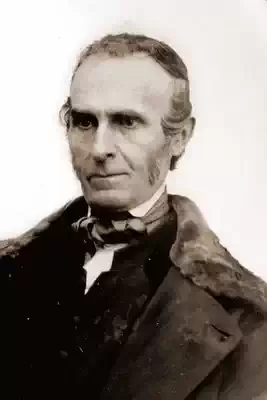
John Greenleaf Whittier
Moloch In State Street
Moloch In State Street
THE moon has set: while yet the dawn
Breaks cold and gray,
Between the midnight and the morn
Bear off your prey!
On, swift and still! the conscious street
Is panged and stirred;
Tread light! that fall of serried feet
The dead have heard!
The first drawn blood of Freedom's veins
Gushed where ye tread;
Lo! through the dusk the martyr-stains
Blush darkly red!
Beneath the slowly waning stars
And whitening day,
What stern and awful presence bars
That sacred way?
What faces frown upon ye, dark
With shame and pain?
Come these from Plymouth's Pilgrim bark?
Is that young Vane?
Who, dimly beckoning, speed ye on
With mocking cheer?
Lo! spectral Andros, Hutchinson,
And Gage are here!
For ready mart or favoring blast
Through Moloch's fire,
Flesh of his flesh, unsparing, passed
The Tyrian sire.
Ye make that ancient sacrifice
Of Man to Gain,
Your traffic thrives, where freedom dies,
Beneath the chain.
Ye sow to-day; your harvest, scorn
And hate, is near;
How think ye freemen, mountain-born,
The tale will hear?
Thank God! our mother State can yet
Her fame retrieve;
To you and to your children let
The scandal cleave.
Chain Hall and Pulpit, Court and Press,
Make gods of gold;
Let honor, truth, and manliness
Like wares be sold.
Your hoards are great, your walls are strong,
But God is just;
The gilded chambers built by wrong
Invite the rust.
What! know ye not the gains of Crime
Are dust and dross;
Its ventures on the waves of time
Foredoomed to loss!
And still the Pilgrim State remains
What she hath been;
Her inland hills, her seaward plains,
Still nurture men!
Nor wholly lost the fallen mart;
Her olden blood
Through many a free and generous heart
Still pours its flood.
That brave old blood, quick-flowing yet,
Shall know no check,
Till a free people's foot is set
On Slavery's neck.
Even now, the peal of bell and gun,
And hills aflame,
Tell of the first great triumph won
In Freedom's name.
The long night dies: the welcome gray
Of dawn we see;
Speed up the heavens thy perfect day,
God of the free!
THE moon has set: while yet the dawn
Breaks cold and gray,
Between the midnight and the morn
Bear off your prey!
On, swift and still! the conscious street
Is panged and stirred;
Tread light! that fall of serried feet
The dead have heard!
The first drawn blood of Freedom's veins
Gushed where ye tread;
Lo! through the dusk the martyr-stains
Blush darkly red!
Beneath the slowly waning stars
And whitening day,
What stern and awful presence bars
That sacred way?
What faces frown upon ye, dark
With shame and pain?
Come these from Plymouth's Pilgrim bark?
Is that young Vane?
Who, dimly beckoning, speed ye on
With mocking cheer?
Lo! spectral Andros, Hutchinson,
And Gage are here!
For ready mart or favoring blast
Through Moloch's fire,
Flesh of his flesh, unsparing, passed
The Tyrian sire.
Ye make that ancient sacrifice
Of Man to Gain,
Your traffic thrives, where freedom dies,
Beneath the chain.
Ye sow to-day; your harvest, scorn
And hate, is near;
How think ye freemen, mountain-born,
The tale will hear?
Thank God! our mother State can yet
Her fame retrieve;
To you and to your children let
The scandal cleave.
Chain Hall and Pulpit, Court and Press,
Make gods of gold;
Let honor, truth, and manliness
Like wares be sold.
Your hoards are great, your walls are strong,
But God is just;
The gilded chambers built by wrong
Invite the rust.
What! know ye not the gains of Crime
Are dust and dross;
Its ventures on the waves of time
Foredoomed to loss!
And still the Pilgrim State remains
What she hath been;
Her inland hills, her seaward plains,
Still nurture men!
Nor wholly lost the fallen mart;
Her olden blood
Through many a free and generous heart
Still pours its flood.
That brave old blood, quick-flowing yet,
Shall know no check,
Till a free people's foot is set
On Slavery's neck.
Even now, the peal of bell and gun,
And hills aflame,
Tell of the first great triumph won
In Freedom's name.
The long night dies: the welcome gray
Of dawn we see;
Speed up the heavens thy perfect day,
God of the free!
375
John Greenleaf Whittier
Moloch In State Street
Moloch In State Street
THE moon has set: while yet the dawn
Breaks cold and gray,
Between the midnight and the morn
Bear off your prey!
On, swift and still! the conscious street
Is panged and stirred;
Tread light! that fall of serried feet
The dead have heard!
The first drawn blood of Freedom's veins
Gushed where ye tread;
Lo! through the dusk the martyr-stains
Blush darkly red!
Beneath the slowly waning stars
And whitening day,
What stern and awful presence bars
That sacred way?
What faces frown upon ye, dark
With shame and pain?
Come these from Plymouth's Pilgrim bark?
Is that young Vane?
Who, dimly beckoning, speed ye on
With mocking cheer?
Lo! spectral Andros, Hutchinson,
And Gage are here!
For ready mart or favoring blast
Through Moloch's fire,
Flesh of his flesh, unsparing, passed
The Tyrian sire.
Ye make that ancient sacrifice
Of Man to Gain,
Your traffic thrives, where freedom dies,
Beneath the chain.
Ye sow to-day; your harvest, scorn
And hate, is near;
How think ye freemen, mountain-born,
The tale will hear?
Thank God! our mother State can yet
Her fame retrieve;
To you and to your children let
The scandal cleave.
Chain Hall and Pulpit, Court and Press,
Make gods of gold;
Let honor, truth, and manliness
Like wares be sold.
Your hoards are great, your walls are strong,
But God is just;
The gilded chambers built by wrong
Invite the rust.
What! know ye not the gains of Crime
Are dust and dross;
Its ventures on the waves of time
Foredoomed to loss!
And still the Pilgrim State remains
What she hath been;
Her inland hills, her seaward plains,
Still nurture men!
Nor wholly lost the fallen mart;
Her olden blood
Through many a free and generous heart
Still pours its flood.
That brave old blood, quick-flowing yet,
Shall know no check,
Till a free people's foot is set
On Slavery's neck.
Even now, the peal of bell and gun,
And hills aflame,
Tell of the first great triumph won
In Freedom's name.
The long night dies: the welcome gray
Of dawn we see;
Speed up the heavens thy perfect day,
God of the free!
THE moon has set: while yet the dawn
Breaks cold and gray,
Between the midnight and the morn
Bear off your prey!
On, swift and still! the conscious street
Is panged and stirred;
Tread light! that fall of serried feet
The dead have heard!
The first drawn blood of Freedom's veins
Gushed where ye tread;
Lo! through the dusk the martyr-stains
Blush darkly red!
Beneath the slowly waning stars
And whitening day,
What stern and awful presence bars
That sacred way?
What faces frown upon ye, dark
With shame and pain?
Come these from Plymouth's Pilgrim bark?
Is that young Vane?
Who, dimly beckoning, speed ye on
With mocking cheer?
Lo! spectral Andros, Hutchinson,
And Gage are here!
For ready mart or favoring blast
Through Moloch's fire,
Flesh of his flesh, unsparing, passed
The Tyrian sire.
Ye make that ancient sacrifice
Of Man to Gain,
Your traffic thrives, where freedom dies,
Beneath the chain.
Ye sow to-day; your harvest, scorn
And hate, is near;
How think ye freemen, mountain-born,
The tale will hear?
Thank God! our mother State can yet
Her fame retrieve;
To you and to your children let
The scandal cleave.
Chain Hall and Pulpit, Court and Press,
Make gods of gold;
Let honor, truth, and manliness
Like wares be sold.
Your hoards are great, your walls are strong,
But God is just;
The gilded chambers built by wrong
Invite the rust.
What! know ye not the gains of Crime
Are dust and dross;
Its ventures on the waves of time
Foredoomed to loss!
And still the Pilgrim State remains
What she hath been;
Her inland hills, her seaward plains,
Still nurture men!
Nor wholly lost the fallen mart;
Her olden blood
Through many a free and generous heart
Still pours its flood.
That brave old blood, quick-flowing yet,
Shall know no check,
Till a free people's foot is set
On Slavery's neck.
Even now, the peal of bell and gun,
And hills aflame,
Tell of the first great triumph won
In Freedom's name.
The long night dies: the welcome gray
Of dawn we see;
Speed up the heavens thy perfect day,
God of the free!
375
John Greenleaf Whittier
Mithridates At Chios
Mithridates At Chios
KNOW'ST thou, O slave-cursed land!
How, when the Chian's cup of guilt
Was full to overflow, there came
God's justice in the sword of flame
That, red with slaughter to its hilt,
Blazed in the Cappadocian victor's hand?
The heavens are still and far;
But, not unheard of awful Jove,
The sighing of the island slave
Was answered, when the Ægean wave
The keels of Mithridates clove,
And the vines shrivelled in the breath of war.
'Robbers of Chios! hark,'
The victor cried, 'to Heaven's decree!
Pluck your last cluster from the vine,
Drain your last cup of Chian wine;
Slaves of your slaves, your doom shall be,
In Colchian mines by Phasis rolling dark.'
Then rose the long lament
From the hoar sea-god's dusky caves:
The priestess rent her hair and cried,
'Woe! woe! The gods are sleepless-eyed!'
And, chained and scourged, the slaves of slaves,
The lords of Chios into exile went.
'The gods at last pay well,'
So Hellas sang her taunting song,
'The fisher in his net is caught,
The Chian hath his master bought;'
And isle from isle, with laughter long,
Took up and sped the mocking parable.
Once more the slow, dumb years
Bring their avenging cycle round,
And, more than Hellas taught of old,
Our wiser lesson shall be told,
Of slaves uprising, freedom-crowned,
To break, not wield, the scourge wet with their blood and tears.
KNOW'ST thou, O slave-cursed land!
How, when the Chian's cup of guilt
Was full to overflow, there came
God's justice in the sword of flame
That, red with slaughter to its hilt,
Blazed in the Cappadocian victor's hand?
The heavens are still and far;
But, not unheard of awful Jove,
The sighing of the island slave
Was answered, when the Ægean wave
The keels of Mithridates clove,
And the vines shrivelled in the breath of war.
'Robbers of Chios! hark,'
The victor cried, 'to Heaven's decree!
Pluck your last cluster from the vine,
Drain your last cup of Chian wine;
Slaves of your slaves, your doom shall be,
In Colchian mines by Phasis rolling dark.'
Then rose the long lament
From the hoar sea-god's dusky caves:
The priestess rent her hair and cried,
'Woe! woe! The gods are sleepless-eyed!'
And, chained and scourged, the slaves of slaves,
The lords of Chios into exile went.
'The gods at last pay well,'
So Hellas sang her taunting song,
'The fisher in his net is caught,
The Chian hath his master bought;'
And isle from isle, with laughter long,
Took up and sped the mocking parable.
Once more the slow, dumb years
Bring their avenging cycle round,
And, more than Hellas taught of old,
Our wiser lesson shall be told,
Of slaves uprising, freedom-crowned,
To break, not wield, the scourge wet with their blood and tears.
312
John Greenleaf Whittier
Mithridates At Chios
Mithridates At Chios
KNOW'ST thou, O slave-cursed land!
How, when the Chian's cup of guilt
Was full to overflow, there came
God's justice in the sword of flame
That, red with slaughter to its hilt,
Blazed in the Cappadocian victor's hand?
The heavens are still and far;
But, not unheard of awful Jove,
The sighing of the island slave
Was answered, when the Ægean wave
The keels of Mithridates clove,
And the vines shrivelled in the breath of war.
'Robbers of Chios! hark,'
The victor cried, 'to Heaven's decree!
Pluck your last cluster from the vine,
Drain your last cup of Chian wine;
Slaves of your slaves, your doom shall be,
In Colchian mines by Phasis rolling dark.'
Then rose the long lament
From the hoar sea-god's dusky caves:
The priestess rent her hair and cried,
'Woe! woe! The gods are sleepless-eyed!'
And, chained and scourged, the slaves of slaves,
The lords of Chios into exile went.
'The gods at last pay well,'
So Hellas sang her taunting song,
'The fisher in his net is caught,
The Chian hath his master bought;'
And isle from isle, with laughter long,
Took up and sped the mocking parable.
Once more the slow, dumb years
Bring their avenging cycle round,
And, more than Hellas taught of old,
Our wiser lesson shall be told,
Of slaves uprising, freedom-crowned,
To break, not wield, the scourge wet with their blood and tears.
KNOW'ST thou, O slave-cursed land!
How, when the Chian's cup of guilt
Was full to overflow, there came
God's justice in the sword of flame
That, red with slaughter to its hilt,
Blazed in the Cappadocian victor's hand?
The heavens are still and far;
But, not unheard of awful Jove,
The sighing of the island slave
Was answered, when the Ægean wave
The keels of Mithridates clove,
And the vines shrivelled in the breath of war.
'Robbers of Chios! hark,'
The victor cried, 'to Heaven's decree!
Pluck your last cluster from the vine,
Drain your last cup of Chian wine;
Slaves of your slaves, your doom shall be,
In Colchian mines by Phasis rolling dark.'
Then rose the long lament
From the hoar sea-god's dusky caves:
The priestess rent her hair and cried,
'Woe! woe! The gods are sleepless-eyed!'
And, chained and scourged, the slaves of slaves,
The lords of Chios into exile went.
'The gods at last pay well,'
So Hellas sang her taunting song,
'The fisher in his net is caught,
The Chian hath his master bought;'
And isle from isle, with laughter long,
Took up and sped the mocking parable.
Once more the slow, dumb years
Bring their avenging cycle round,
And, more than Hellas taught of old,
Our wiser lesson shall be told,
Of slaves uprising, freedom-crowned,
To break, not wield, the scourge wet with their blood and tears.
312
John Greenleaf Whittier
Mithridates At Chios
Mithridates At Chios
KNOW'ST thou, O slave-cursed land!
How, when the Chian's cup of guilt
Was full to overflow, there came
God's justice in the sword of flame
That, red with slaughter to its hilt,
Blazed in the Cappadocian victor's hand?
The heavens are still and far;
But, not unheard of awful Jove,
The sighing of the island slave
Was answered, when the Ægean wave
The keels of Mithridates clove,
And the vines shrivelled in the breath of war.
'Robbers of Chios! hark,'
The victor cried, 'to Heaven's decree!
Pluck your last cluster from the vine,
Drain your last cup of Chian wine;
Slaves of your slaves, your doom shall be,
In Colchian mines by Phasis rolling dark.'
Then rose the long lament
From the hoar sea-god's dusky caves:
The priestess rent her hair and cried,
'Woe! woe! The gods are sleepless-eyed!'
And, chained and scourged, the slaves of slaves,
The lords of Chios into exile went.
'The gods at last pay well,'
So Hellas sang her taunting song,
'The fisher in his net is caught,
The Chian hath his master bought;'
And isle from isle, with laughter long,
Took up and sped the mocking parable.
Once more the slow, dumb years
Bring their avenging cycle round,
And, more than Hellas taught of old,
Our wiser lesson shall be told,
Of slaves uprising, freedom-crowned,
To break, not wield, the scourge wet with their blood and tears.
KNOW'ST thou, O slave-cursed land!
How, when the Chian's cup of guilt
Was full to overflow, there came
God's justice in the sword of flame
That, red with slaughter to its hilt,
Blazed in the Cappadocian victor's hand?
The heavens are still and far;
But, not unheard of awful Jove,
The sighing of the island slave
Was answered, when the Ægean wave
The keels of Mithridates clove,
And the vines shrivelled in the breath of war.
'Robbers of Chios! hark,'
The victor cried, 'to Heaven's decree!
Pluck your last cluster from the vine,
Drain your last cup of Chian wine;
Slaves of your slaves, your doom shall be,
In Colchian mines by Phasis rolling dark.'
Then rose the long lament
From the hoar sea-god's dusky caves:
The priestess rent her hair and cried,
'Woe! woe! The gods are sleepless-eyed!'
And, chained and scourged, the slaves of slaves,
The lords of Chios into exile went.
'The gods at last pay well,'
So Hellas sang her taunting song,
'The fisher in his net is caught,
The Chian hath his master bought;'
And isle from isle, with laughter long,
Took up and sped the mocking parable.
Once more the slow, dumb years
Bring their avenging cycle round,
And, more than Hellas taught of old,
Our wiser lesson shall be told,
Of slaves uprising, freedom-crowned,
To break, not wield, the scourge wet with their blood and tears.
312
John Greenleaf Whittier
Mithridates At Chios
Mithridates At Chios
KNOW'ST thou, O slave-cursed land!
How, when the Chian's cup of guilt
Was full to overflow, there came
God's justice in the sword of flame
That, red with slaughter to its hilt,
Blazed in the Cappadocian victor's hand?
The heavens are still and far;
But, not unheard of awful Jove,
The sighing of the island slave
Was answered, when the Ægean wave
The keels of Mithridates clove,
And the vines shrivelled in the breath of war.
'Robbers of Chios! hark,'
The victor cried, 'to Heaven's decree!
Pluck your last cluster from the vine,
Drain your last cup of Chian wine;
Slaves of your slaves, your doom shall be,
In Colchian mines by Phasis rolling dark.'
Then rose the long lament
From the hoar sea-god's dusky caves:
The priestess rent her hair and cried,
'Woe! woe! The gods are sleepless-eyed!'
And, chained and scourged, the slaves of slaves,
The lords of Chios into exile went.
'The gods at last pay well,'
So Hellas sang her taunting song,
'The fisher in his net is caught,
The Chian hath his master bought;'
And isle from isle, with laughter long,
Took up and sped the mocking parable.
Once more the slow, dumb years
Bring their avenging cycle round,
And, more than Hellas taught of old,
Our wiser lesson shall be told,
Of slaves uprising, freedom-crowned,
To break, not wield, the scourge wet with their blood and tears.
KNOW'ST thou, O slave-cursed land!
How, when the Chian's cup of guilt
Was full to overflow, there came
God's justice in the sword of flame
That, red with slaughter to its hilt,
Blazed in the Cappadocian victor's hand?
The heavens are still and far;
But, not unheard of awful Jove,
The sighing of the island slave
Was answered, when the Ægean wave
The keels of Mithridates clove,
And the vines shrivelled in the breath of war.
'Robbers of Chios! hark,'
The victor cried, 'to Heaven's decree!
Pluck your last cluster from the vine,
Drain your last cup of Chian wine;
Slaves of your slaves, your doom shall be,
In Colchian mines by Phasis rolling dark.'
Then rose the long lament
From the hoar sea-god's dusky caves:
The priestess rent her hair and cried,
'Woe! woe! The gods are sleepless-eyed!'
And, chained and scourged, the slaves of slaves,
The lords of Chios into exile went.
'The gods at last pay well,'
So Hellas sang her taunting song,
'The fisher in his net is caught,
The Chian hath his master bought;'
And isle from isle, with laughter long,
Took up and sped the mocking parable.
Once more the slow, dumb years
Bring their avenging cycle round,
And, more than Hellas taught of old,
Our wiser lesson shall be told,
Of slaves uprising, freedom-crowned,
To break, not wield, the scourge wet with their blood and tears.
312
John Greenleaf Whittier
Massachusetts To Virginia
Massachusetts To Virginia
The blast from Freedom's Northern hills, upon its Southern way,
Bears greeting to Virginia from Massachusetts Bay:
No word of haughty challenging, nor battle bugle's peal,
Nor steady tread of marching files, nor clang of horsemen's steel,
No trains of deep-mouthed cannon along our highways go;
Around our silent arsenals untrodden lies the snow;
And to the land-breeze of our ports, upon their errands far,
A thousand sails of commerce swell, but none are spread for war.
We hear thy threats, Virginia! thy stormy words and high
Swell harshly on the Southern winds which melt along our sky;
Yet not one brown, hard hand foregoes its honest labor here,
No hewer of our mountain oaks suspends his axe in fear.
Wild are the waves which lash the reefs along St. George's bank;
Cold on the shores of Labrador the fog lies white and dank;
Through storm, and wave, and blinding mist, stout are the hearts which man
The fishing-smacks of Marblehead, the sea-boats of Cape Ann.
The cold north light and wintry sun glare on their icy forms,
Bent grimly o'er their straining lines or wrestling with the storms;
Free as the winds they drive before, rough as the waves they roam,
They laugh to scorn the slaver's threat against their rocky home.
What means the Old Dominion? Hath she forgot the day
When o'er her conquered valleys swept the Briton's steel array?
How, side by side with sons of hers, the Massachusetts men
Encountered Tarleton's charge of fire, and stout Cornwallis, then?
Forgets she how the Bay State, in answer to the call
Of her old House of Burgesses, spoke out from Faneuil Hall?
When, echoing back her Henry's cry, came pulsing on each breath
Of Northern winds the thrilling sounds of 'Liberty or Death!'
What asks the Old Dominion? If now her sons have proved
False to their fathers' memory, false to the faith they loved;
If she can scoff at Freedom, and its great charter spurn,
Must we of Massachusetts from truth and duty turn?
We hunt your bondmen, flying from Slavery's hateful hell;
Our voices, at your bidding, take up the bloodhound's yell;
We gather, at your summons, above our fathers' graves,
From Freedom's holy altar-horns to tear your wretched slaves!
Thank God! not yet so vilely can Massachusetts bow;
The spirit of her early time is with her even now;
Dream not because her Pilgrim blood moves slow and calm and cool,
She thus can stoop her chainless neck, a sister's slave and tool!
All that a sister State should do, all that a free State may,
Heart, hand, and purse we proffer, as in our early day;
But that one dark loathsome burden ye must stagger with alone,
And reap the bitter harvest which ye yourselves have sown!
Hold, while ye may, your struggling slaves, and burden God's free air
With woman's shriek beneath the lash, and manhood's wild despair;
Cling closer to the 'cleaving curse' that writes upon your plains
The blasting of Almighty wrath against a land of chains.
Still shame your gallant ancestry, the cavaliers of old,
By watching round the shambles where human flesh is sold;
Gloat o'er the new-born child, and count his market value, when
The maddened mother's cry of woe shall pierce the slaver's den!
Lower than plummet soundeth, sink the Virginia name;
Plant, if ye will, your fathers' graves with rankest weeds of shame;
Be, if ye will, the scandal of God's fair universe;
We wash our hands forever of your sin and shame and curse.
A voice from lips whereon the coal from Freedom's shrine hath been,
Thrilled, as but yesterday, the hearts of Berkshire's mountain men:
The echoes of that solemn voice are sadly lingering still
In all our sunny valleys, on every wind-swept hill.
And when the prowling man-thief came hunting for his prey
Beneath the very shadow of Bunker's shaft of gray,
How, through the free lips of the son, the father's warning spoke;
How, from its bonds of trade and sect, the Pilgrim city broke!
A hundred thousand right arms were lifted up on high,
A hundred thousand voices sent back their loud reply;
Through the thronged towns of Essex the startling summons rang,
And up from bench and loom and wheel her young mechanics sprang!
The voice of free, broad Middlesex, of thousands as of one,
The shaft of Bunker calling to that Lexington;
From Norfolk's ancient villages, from Plymouth's rocky bound
To where Nantucket feels the arms of ocean close to her round;
From rich and rural Worcester, where through the calm repose
Of cultured vales and fringing woods the gentle Nashua flows,
To where Wachuset's wintry blasts the mountain larches stir,
Swelled up to Heaven the thrilling cry of 'God save Latimer!'
And sandy Barnstable rose up, wet with the salt sea spray;
And Bristol sent her answering shout down Narragansett Bay!
Along the broad Connecticut old Hampden felt the thrill,
And the cheer of Hampshire's woodmen swept down from Holyoke Hill.
The voice of Massachusetts! Of her free sons and daughters,
Deep calling unto deep aloud, the sound of many waters!
Against the burden of that voice what tyrant power shall stand?
No fetters in the Bay State! No slave upon her land!
Look to it well, Virginians! In calmness we have borne,
In answer to our faith and trust, your insult and your scorn;
You've spurned our kindest counsels; you've hunted for our lives;
And shaken round our hearths and homes your manacles and gyves!
We wage no war, we lift no arm, we fling no torch within
The fire-damps of the quaking mine beneath your soil of sin;
We leave ye with your bondmen, to wrestle, while ye can,
With the strong upward tendencies and God-like soul of man!
But for us and for our children, the vow which we have given
For freedom and humanity is registered in heaven;
No slave-hunt in our borders, - no pirate on our strand!
No fetters in the Bay State, - no slave upon our land!
The blast from Freedom's Northern hills, upon its Southern way,
Bears greeting to Virginia from Massachusetts Bay:
No word of haughty challenging, nor battle bugle's peal,
Nor steady tread of marching files, nor clang of horsemen's steel,
No trains of deep-mouthed cannon along our highways go;
Around our silent arsenals untrodden lies the snow;
And to the land-breeze of our ports, upon their errands far,
A thousand sails of commerce swell, but none are spread for war.
We hear thy threats, Virginia! thy stormy words and high
Swell harshly on the Southern winds which melt along our sky;
Yet not one brown, hard hand foregoes its honest labor here,
No hewer of our mountain oaks suspends his axe in fear.
Wild are the waves which lash the reefs along St. George's bank;
Cold on the shores of Labrador the fog lies white and dank;
Through storm, and wave, and blinding mist, stout are the hearts which man
The fishing-smacks of Marblehead, the sea-boats of Cape Ann.
The cold north light and wintry sun glare on their icy forms,
Bent grimly o'er their straining lines or wrestling with the storms;
Free as the winds they drive before, rough as the waves they roam,
They laugh to scorn the slaver's threat against their rocky home.
What means the Old Dominion? Hath she forgot the day
When o'er her conquered valleys swept the Briton's steel array?
How, side by side with sons of hers, the Massachusetts men
Encountered Tarleton's charge of fire, and stout Cornwallis, then?
Forgets she how the Bay State, in answer to the call
Of her old House of Burgesses, spoke out from Faneuil Hall?
When, echoing back her Henry's cry, came pulsing on each breath
Of Northern winds the thrilling sounds of 'Liberty or Death!'
What asks the Old Dominion? If now her sons have proved
False to their fathers' memory, false to the faith they loved;
If she can scoff at Freedom, and its great charter spurn,
Must we of Massachusetts from truth and duty turn?
We hunt your bondmen, flying from Slavery's hateful hell;
Our voices, at your bidding, take up the bloodhound's yell;
We gather, at your summons, above our fathers' graves,
From Freedom's holy altar-horns to tear your wretched slaves!
Thank God! not yet so vilely can Massachusetts bow;
The spirit of her early time is with her even now;
Dream not because her Pilgrim blood moves slow and calm and cool,
She thus can stoop her chainless neck, a sister's slave and tool!
All that a sister State should do, all that a free State may,
Heart, hand, and purse we proffer, as in our early day;
But that one dark loathsome burden ye must stagger with alone,
And reap the bitter harvest which ye yourselves have sown!
Hold, while ye may, your struggling slaves, and burden God's free air
With woman's shriek beneath the lash, and manhood's wild despair;
Cling closer to the 'cleaving curse' that writes upon your plains
The blasting of Almighty wrath against a land of chains.
Still shame your gallant ancestry, the cavaliers of old,
By watching round the shambles where human flesh is sold;
Gloat o'er the new-born child, and count his market value, when
The maddened mother's cry of woe shall pierce the slaver's den!
Lower than plummet soundeth, sink the Virginia name;
Plant, if ye will, your fathers' graves with rankest weeds of shame;
Be, if ye will, the scandal of God's fair universe;
We wash our hands forever of your sin and shame and curse.
A voice from lips whereon the coal from Freedom's shrine hath been,
Thrilled, as but yesterday, the hearts of Berkshire's mountain men:
The echoes of that solemn voice are sadly lingering still
In all our sunny valleys, on every wind-swept hill.
And when the prowling man-thief came hunting for his prey
Beneath the very shadow of Bunker's shaft of gray,
How, through the free lips of the son, the father's warning spoke;
How, from its bonds of trade and sect, the Pilgrim city broke!
A hundred thousand right arms were lifted up on high,
A hundred thousand voices sent back their loud reply;
Through the thronged towns of Essex the startling summons rang,
And up from bench and loom and wheel her young mechanics sprang!
The voice of free, broad Middlesex, of thousands as of one,
The shaft of Bunker calling to that Lexington;
From Norfolk's ancient villages, from Plymouth's rocky bound
To where Nantucket feels the arms of ocean close to her round;
From rich and rural Worcester, where through the calm repose
Of cultured vales and fringing woods the gentle Nashua flows,
To where Wachuset's wintry blasts the mountain larches stir,
Swelled up to Heaven the thrilling cry of 'God save Latimer!'
And sandy Barnstable rose up, wet with the salt sea spray;
And Bristol sent her answering shout down Narragansett Bay!
Along the broad Connecticut old Hampden felt the thrill,
And the cheer of Hampshire's woodmen swept down from Holyoke Hill.
The voice of Massachusetts! Of her free sons and daughters,
Deep calling unto deep aloud, the sound of many waters!
Against the burden of that voice what tyrant power shall stand?
No fetters in the Bay State! No slave upon her land!
Look to it well, Virginians! In calmness we have borne,
In answer to our faith and trust, your insult and your scorn;
You've spurned our kindest counsels; you've hunted for our lives;
And shaken round our hearths and homes your manacles and gyves!
We wage no war, we lift no arm, we fling no torch within
The fire-damps of the quaking mine beneath your soil of sin;
We leave ye with your bondmen, to wrestle, while ye can,
With the strong upward tendencies and God-like soul of man!
But for us and for our children, the vow which we have given
For freedom and humanity is registered in heaven;
No slave-hunt in our borders, - no pirate on our strand!
No fetters in the Bay State, - no slave upon our land!
301
John Greenleaf Whittier
Massachusetts To Virginia
Massachusetts To Virginia
The blast from Freedom's Northern hills, upon its Southern way,
Bears greeting to Virginia from Massachusetts Bay:
No word of haughty challenging, nor battle bugle's peal,
Nor steady tread of marching files, nor clang of horsemen's steel,
No trains of deep-mouthed cannon along our highways go;
Around our silent arsenals untrodden lies the snow;
And to the land-breeze of our ports, upon their errands far,
A thousand sails of commerce swell, but none are spread for war.
We hear thy threats, Virginia! thy stormy words and high
Swell harshly on the Southern winds which melt along our sky;
Yet not one brown, hard hand foregoes its honest labor here,
No hewer of our mountain oaks suspends his axe in fear.
Wild are the waves which lash the reefs along St. George's bank;
Cold on the shores of Labrador the fog lies white and dank;
Through storm, and wave, and blinding mist, stout are the hearts which man
The fishing-smacks of Marblehead, the sea-boats of Cape Ann.
The cold north light and wintry sun glare on their icy forms,
Bent grimly o'er their straining lines or wrestling with the storms;
Free as the winds they drive before, rough as the waves they roam,
They laugh to scorn the slaver's threat against their rocky home.
What means the Old Dominion? Hath she forgot the day
When o'er her conquered valleys swept the Briton's steel array?
How, side by side with sons of hers, the Massachusetts men
Encountered Tarleton's charge of fire, and stout Cornwallis, then?
Forgets she how the Bay State, in answer to the call
Of her old House of Burgesses, spoke out from Faneuil Hall?
When, echoing back her Henry's cry, came pulsing on each breath
Of Northern winds the thrilling sounds of 'Liberty or Death!'
What asks the Old Dominion? If now her sons have proved
False to their fathers' memory, false to the faith they loved;
If she can scoff at Freedom, and its great charter spurn,
Must we of Massachusetts from truth and duty turn?
We hunt your bondmen, flying from Slavery's hateful hell;
Our voices, at your bidding, take up the bloodhound's yell;
We gather, at your summons, above our fathers' graves,
From Freedom's holy altar-horns to tear your wretched slaves!
Thank God! not yet so vilely can Massachusetts bow;
The spirit of her early time is with her even now;
Dream not because her Pilgrim blood moves slow and calm and cool,
She thus can stoop her chainless neck, a sister's slave and tool!
All that a sister State should do, all that a free State may,
Heart, hand, and purse we proffer, as in our early day;
But that one dark loathsome burden ye must stagger with alone,
And reap the bitter harvest which ye yourselves have sown!
Hold, while ye may, your struggling slaves, and burden God's free air
With woman's shriek beneath the lash, and manhood's wild despair;
Cling closer to the 'cleaving curse' that writes upon your plains
The blasting of Almighty wrath against a land of chains.
Still shame your gallant ancestry, the cavaliers of old,
By watching round the shambles where human flesh is sold;
Gloat o'er the new-born child, and count his market value, when
The maddened mother's cry of woe shall pierce the slaver's den!
Lower than plummet soundeth, sink the Virginia name;
Plant, if ye will, your fathers' graves with rankest weeds of shame;
Be, if ye will, the scandal of God's fair universe;
We wash our hands forever of your sin and shame and curse.
A voice from lips whereon the coal from Freedom's shrine hath been,
Thrilled, as but yesterday, the hearts of Berkshire's mountain men:
The echoes of that solemn voice are sadly lingering still
In all our sunny valleys, on every wind-swept hill.
And when the prowling man-thief came hunting for his prey
Beneath the very shadow of Bunker's shaft of gray,
How, through the free lips of the son, the father's warning spoke;
How, from its bonds of trade and sect, the Pilgrim city broke!
A hundred thousand right arms were lifted up on high,
A hundred thousand voices sent back their loud reply;
Through the thronged towns of Essex the startling summons rang,
And up from bench and loom and wheel her young mechanics sprang!
The voice of free, broad Middlesex, of thousands as of one,
The shaft of Bunker calling to that Lexington;
From Norfolk's ancient villages, from Plymouth's rocky bound
To where Nantucket feels the arms of ocean close to her round;
From rich and rural Worcester, where through the calm repose
Of cultured vales and fringing woods the gentle Nashua flows,
To where Wachuset's wintry blasts the mountain larches stir,
Swelled up to Heaven the thrilling cry of 'God save Latimer!'
And sandy Barnstable rose up, wet with the salt sea spray;
And Bristol sent her answering shout down Narragansett Bay!
Along the broad Connecticut old Hampden felt the thrill,
And the cheer of Hampshire's woodmen swept down from Holyoke Hill.
The voice of Massachusetts! Of her free sons and daughters,
Deep calling unto deep aloud, the sound of many waters!
Against the burden of that voice what tyrant power shall stand?
No fetters in the Bay State! No slave upon her land!
Look to it well, Virginians! In calmness we have borne,
In answer to our faith and trust, your insult and your scorn;
You've spurned our kindest counsels; you've hunted for our lives;
And shaken round our hearths and homes your manacles and gyves!
We wage no war, we lift no arm, we fling no torch within
The fire-damps of the quaking mine beneath your soil of sin;
We leave ye with your bondmen, to wrestle, while ye can,
With the strong upward tendencies and God-like soul of man!
But for us and for our children, the vow which we have given
For freedom and humanity is registered in heaven;
No slave-hunt in our borders, - no pirate on our strand!
No fetters in the Bay State, - no slave upon our land!
The blast from Freedom's Northern hills, upon its Southern way,
Bears greeting to Virginia from Massachusetts Bay:
No word of haughty challenging, nor battle bugle's peal,
Nor steady tread of marching files, nor clang of horsemen's steel,
No trains of deep-mouthed cannon along our highways go;
Around our silent arsenals untrodden lies the snow;
And to the land-breeze of our ports, upon their errands far,
A thousand sails of commerce swell, but none are spread for war.
We hear thy threats, Virginia! thy stormy words and high
Swell harshly on the Southern winds which melt along our sky;
Yet not one brown, hard hand foregoes its honest labor here,
No hewer of our mountain oaks suspends his axe in fear.
Wild are the waves which lash the reefs along St. George's bank;
Cold on the shores of Labrador the fog lies white and dank;
Through storm, and wave, and blinding mist, stout are the hearts which man
The fishing-smacks of Marblehead, the sea-boats of Cape Ann.
The cold north light and wintry sun glare on their icy forms,
Bent grimly o'er their straining lines or wrestling with the storms;
Free as the winds they drive before, rough as the waves they roam,
They laugh to scorn the slaver's threat against their rocky home.
What means the Old Dominion? Hath she forgot the day
When o'er her conquered valleys swept the Briton's steel array?
How, side by side with sons of hers, the Massachusetts men
Encountered Tarleton's charge of fire, and stout Cornwallis, then?
Forgets she how the Bay State, in answer to the call
Of her old House of Burgesses, spoke out from Faneuil Hall?
When, echoing back her Henry's cry, came pulsing on each breath
Of Northern winds the thrilling sounds of 'Liberty or Death!'
What asks the Old Dominion? If now her sons have proved
False to their fathers' memory, false to the faith they loved;
If she can scoff at Freedom, and its great charter spurn,
Must we of Massachusetts from truth and duty turn?
We hunt your bondmen, flying from Slavery's hateful hell;
Our voices, at your bidding, take up the bloodhound's yell;
We gather, at your summons, above our fathers' graves,
From Freedom's holy altar-horns to tear your wretched slaves!
Thank God! not yet so vilely can Massachusetts bow;
The spirit of her early time is with her even now;
Dream not because her Pilgrim blood moves slow and calm and cool,
She thus can stoop her chainless neck, a sister's slave and tool!
All that a sister State should do, all that a free State may,
Heart, hand, and purse we proffer, as in our early day;
But that one dark loathsome burden ye must stagger with alone,
And reap the bitter harvest which ye yourselves have sown!
Hold, while ye may, your struggling slaves, and burden God's free air
With woman's shriek beneath the lash, and manhood's wild despair;
Cling closer to the 'cleaving curse' that writes upon your plains
The blasting of Almighty wrath against a land of chains.
Still shame your gallant ancestry, the cavaliers of old,
By watching round the shambles where human flesh is sold;
Gloat o'er the new-born child, and count his market value, when
The maddened mother's cry of woe shall pierce the slaver's den!
Lower than plummet soundeth, sink the Virginia name;
Plant, if ye will, your fathers' graves with rankest weeds of shame;
Be, if ye will, the scandal of God's fair universe;
We wash our hands forever of your sin and shame and curse.
A voice from lips whereon the coal from Freedom's shrine hath been,
Thrilled, as but yesterday, the hearts of Berkshire's mountain men:
The echoes of that solemn voice are sadly lingering still
In all our sunny valleys, on every wind-swept hill.
And when the prowling man-thief came hunting for his prey
Beneath the very shadow of Bunker's shaft of gray,
How, through the free lips of the son, the father's warning spoke;
How, from its bonds of trade and sect, the Pilgrim city broke!
A hundred thousand right arms were lifted up on high,
A hundred thousand voices sent back their loud reply;
Through the thronged towns of Essex the startling summons rang,
And up from bench and loom and wheel her young mechanics sprang!
The voice of free, broad Middlesex, of thousands as of one,
The shaft of Bunker calling to that Lexington;
From Norfolk's ancient villages, from Plymouth's rocky bound
To where Nantucket feels the arms of ocean close to her round;
From rich and rural Worcester, where through the calm repose
Of cultured vales and fringing woods the gentle Nashua flows,
To where Wachuset's wintry blasts the mountain larches stir,
Swelled up to Heaven the thrilling cry of 'God save Latimer!'
And sandy Barnstable rose up, wet with the salt sea spray;
And Bristol sent her answering shout down Narragansett Bay!
Along the broad Connecticut old Hampden felt the thrill,
And the cheer of Hampshire's woodmen swept down from Holyoke Hill.
The voice of Massachusetts! Of her free sons and daughters,
Deep calling unto deep aloud, the sound of many waters!
Against the burden of that voice what tyrant power shall stand?
No fetters in the Bay State! No slave upon her land!
Look to it well, Virginians! In calmness we have borne,
In answer to our faith and trust, your insult and your scorn;
You've spurned our kindest counsels; you've hunted for our lives;
And shaken round our hearths and homes your manacles and gyves!
We wage no war, we lift no arm, we fling no torch within
The fire-damps of the quaking mine beneath your soil of sin;
We leave ye with your bondmen, to wrestle, while ye can,
With the strong upward tendencies and God-like soul of man!
But for us and for our children, the vow which we have given
For freedom and humanity is registered in heaven;
No slave-hunt in our borders, - no pirate on our strand!
No fetters in the Bay State, - no slave upon our land!
301
John Greenleaf Whittier
Massachusetts To Virginia
Massachusetts To Virginia
The blast from Freedom's Northern hills, upon its Southern way,
Bears greeting to Virginia from Massachusetts Bay:
No word of haughty challenging, nor battle bugle's peal,
Nor steady tread of marching files, nor clang of horsemen's steel,
No trains of deep-mouthed cannon along our highways go;
Around our silent arsenals untrodden lies the snow;
And to the land-breeze of our ports, upon their errands far,
A thousand sails of commerce swell, but none are spread for war.
We hear thy threats, Virginia! thy stormy words and high
Swell harshly on the Southern winds which melt along our sky;
Yet not one brown, hard hand foregoes its honest labor here,
No hewer of our mountain oaks suspends his axe in fear.
Wild are the waves which lash the reefs along St. George's bank;
Cold on the shores of Labrador the fog lies white and dank;
Through storm, and wave, and blinding mist, stout are the hearts which man
The fishing-smacks of Marblehead, the sea-boats of Cape Ann.
The cold north light and wintry sun glare on their icy forms,
Bent grimly o'er their straining lines or wrestling with the storms;
Free as the winds they drive before, rough as the waves they roam,
They laugh to scorn the slaver's threat against their rocky home.
What means the Old Dominion? Hath she forgot the day
When o'er her conquered valleys swept the Briton's steel array?
How, side by side with sons of hers, the Massachusetts men
Encountered Tarleton's charge of fire, and stout Cornwallis, then?
Forgets she how the Bay State, in answer to the call
Of her old House of Burgesses, spoke out from Faneuil Hall?
When, echoing back her Henry's cry, came pulsing on each breath
Of Northern winds the thrilling sounds of 'Liberty or Death!'
What asks the Old Dominion? If now her sons have proved
False to their fathers' memory, false to the faith they loved;
If she can scoff at Freedom, and its great charter spurn,
Must we of Massachusetts from truth and duty turn?
We hunt your bondmen, flying from Slavery's hateful hell;
Our voices, at your bidding, take up the bloodhound's yell;
We gather, at your summons, above our fathers' graves,
From Freedom's holy altar-horns to tear your wretched slaves!
Thank God! not yet so vilely can Massachusetts bow;
The spirit of her early time is with her even now;
Dream not because her Pilgrim blood moves slow and calm and cool,
She thus can stoop her chainless neck, a sister's slave and tool!
All that a sister State should do, all that a free State may,
Heart, hand, and purse we proffer, as in our early day;
But that one dark loathsome burden ye must stagger with alone,
And reap the bitter harvest which ye yourselves have sown!
Hold, while ye may, your struggling slaves, and burden God's free air
With woman's shriek beneath the lash, and manhood's wild despair;
Cling closer to the 'cleaving curse' that writes upon your plains
The blasting of Almighty wrath against a land of chains.
Still shame your gallant ancestry, the cavaliers of old,
By watching round the shambles where human flesh is sold;
Gloat o'er the new-born child, and count his market value, when
The maddened mother's cry of woe shall pierce the slaver's den!
Lower than plummet soundeth, sink the Virginia name;
Plant, if ye will, your fathers' graves with rankest weeds of shame;
Be, if ye will, the scandal of God's fair universe;
We wash our hands forever of your sin and shame and curse.
A voice from lips whereon the coal from Freedom's shrine hath been,
Thrilled, as but yesterday, the hearts of Berkshire's mountain men:
The echoes of that solemn voice are sadly lingering still
In all our sunny valleys, on every wind-swept hill.
And when the prowling man-thief came hunting for his prey
Beneath the very shadow of Bunker's shaft of gray,
How, through the free lips of the son, the father's warning spoke;
How, from its bonds of trade and sect, the Pilgrim city broke!
A hundred thousand right arms were lifted up on high,
A hundred thousand voices sent back their loud reply;
Through the thronged towns of Essex the startling summons rang,
And up from bench and loom and wheel her young mechanics sprang!
The voice of free, broad Middlesex, of thousands as of one,
The shaft of Bunker calling to that Lexington;
From Norfolk's ancient villages, from Plymouth's rocky bound
To where Nantucket feels the arms of ocean close to her round;
From rich and rural Worcester, where through the calm repose
Of cultured vales and fringing woods the gentle Nashua flows,
To where Wachuset's wintry blasts the mountain larches stir,
Swelled up to Heaven the thrilling cry of 'God save Latimer!'
And sandy Barnstable rose up, wet with the salt sea spray;
And Bristol sent her answering shout down Narragansett Bay!
Along the broad Connecticut old Hampden felt the thrill,
And the cheer of Hampshire's woodmen swept down from Holyoke Hill.
The voice of Massachusetts! Of her free sons and daughters,
Deep calling unto deep aloud, the sound of many waters!
Against the burden of that voice what tyrant power shall stand?
No fetters in the Bay State! No slave upon her land!
Look to it well, Virginians! In calmness we have borne,
In answer to our faith and trust, your insult and your scorn;
You've spurned our kindest counsels; you've hunted for our lives;
And shaken round our hearths and homes your manacles and gyves!
We wage no war, we lift no arm, we fling no torch within
The fire-damps of the quaking mine beneath your soil of sin;
We leave ye with your bondmen, to wrestle, while ye can,
With the strong upward tendencies and God-like soul of man!
But for us and for our children, the vow which we have given
For freedom and humanity is registered in heaven;
No slave-hunt in our borders, - no pirate on our strand!
No fetters in the Bay State, - no slave upon our land!
The blast from Freedom's Northern hills, upon its Southern way,
Bears greeting to Virginia from Massachusetts Bay:
No word of haughty challenging, nor battle bugle's peal,
Nor steady tread of marching files, nor clang of horsemen's steel,
No trains of deep-mouthed cannon along our highways go;
Around our silent arsenals untrodden lies the snow;
And to the land-breeze of our ports, upon their errands far,
A thousand sails of commerce swell, but none are spread for war.
We hear thy threats, Virginia! thy stormy words and high
Swell harshly on the Southern winds which melt along our sky;
Yet not one brown, hard hand foregoes its honest labor here,
No hewer of our mountain oaks suspends his axe in fear.
Wild are the waves which lash the reefs along St. George's bank;
Cold on the shores of Labrador the fog lies white and dank;
Through storm, and wave, and blinding mist, stout are the hearts which man
The fishing-smacks of Marblehead, the sea-boats of Cape Ann.
The cold north light and wintry sun glare on their icy forms,
Bent grimly o'er their straining lines or wrestling with the storms;
Free as the winds they drive before, rough as the waves they roam,
They laugh to scorn the slaver's threat against their rocky home.
What means the Old Dominion? Hath she forgot the day
When o'er her conquered valleys swept the Briton's steel array?
How, side by side with sons of hers, the Massachusetts men
Encountered Tarleton's charge of fire, and stout Cornwallis, then?
Forgets she how the Bay State, in answer to the call
Of her old House of Burgesses, spoke out from Faneuil Hall?
When, echoing back her Henry's cry, came pulsing on each breath
Of Northern winds the thrilling sounds of 'Liberty or Death!'
What asks the Old Dominion? If now her sons have proved
False to their fathers' memory, false to the faith they loved;
If she can scoff at Freedom, and its great charter spurn,
Must we of Massachusetts from truth and duty turn?
We hunt your bondmen, flying from Slavery's hateful hell;
Our voices, at your bidding, take up the bloodhound's yell;
We gather, at your summons, above our fathers' graves,
From Freedom's holy altar-horns to tear your wretched slaves!
Thank God! not yet so vilely can Massachusetts bow;
The spirit of her early time is with her even now;
Dream not because her Pilgrim blood moves slow and calm and cool,
She thus can stoop her chainless neck, a sister's slave and tool!
All that a sister State should do, all that a free State may,
Heart, hand, and purse we proffer, as in our early day;
But that one dark loathsome burden ye must stagger with alone,
And reap the bitter harvest which ye yourselves have sown!
Hold, while ye may, your struggling slaves, and burden God's free air
With woman's shriek beneath the lash, and manhood's wild despair;
Cling closer to the 'cleaving curse' that writes upon your plains
The blasting of Almighty wrath against a land of chains.
Still shame your gallant ancestry, the cavaliers of old,
By watching round the shambles where human flesh is sold;
Gloat o'er the new-born child, and count his market value, when
The maddened mother's cry of woe shall pierce the slaver's den!
Lower than plummet soundeth, sink the Virginia name;
Plant, if ye will, your fathers' graves with rankest weeds of shame;
Be, if ye will, the scandal of God's fair universe;
We wash our hands forever of your sin and shame and curse.
A voice from lips whereon the coal from Freedom's shrine hath been,
Thrilled, as but yesterday, the hearts of Berkshire's mountain men:
The echoes of that solemn voice are sadly lingering still
In all our sunny valleys, on every wind-swept hill.
And when the prowling man-thief came hunting for his prey
Beneath the very shadow of Bunker's shaft of gray,
How, through the free lips of the son, the father's warning spoke;
How, from its bonds of trade and sect, the Pilgrim city broke!
A hundred thousand right arms were lifted up on high,
A hundred thousand voices sent back their loud reply;
Through the thronged towns of Essex the startling summons rang,
And up from bench and loom and wheel her young mechanics sprang!
The voice of free, broad Middlesex, of thousands as of one,
The shaft of Bunker calling to that Lexington;
From Norfolk's ancient villages, from Plymouth's rocky bound
To where Nantucket feels the arms of ocean close to her round;
From rich and rural Worcester, where through the calm repose
Of cultured vales and fringing woods the gentle Nashua flows,
To where Wachuset's wintry blasts the mountain larches stir,
Swelled up to Heaven the thrilling cry of 'God save Latimer!'
And sandy Barnstable rose up, wet with the salt sea spray;
And Bristol sent her answering shout down Narragansett Bay!
Along the broad Connecticut old Hampden felt the thrill,
And the cheer of Hampshire's woodmen swept down from Holyoke Hill.
The voice of Massachusetts! Of her free sons and daughters,
Deep calling unto deep aloud, the sound of many waters!
Against the burden of that voice what tyrant power shall stand?
No fetters in the Bay State! No slave upon her land!
Look to it well, Virginians! In calmness we have borne,
In answer to our faith and trust, your insult and your scorn;
You've spurned our kindest counsels; you've hunted for our lives;
And shaken round our hearths and homes your manacles and gyves!
We wage no war, we lift no arm, we fling no torch within
The fire-damps of the quaking mine beneath your soil of sin;
We leave ye with your bondmen, to wrestle, while ye can,
With the strong upward tendencies and God-like soul of man!
But for us and for our children, the vow which we have given
For freedom and humanity is registered in heaven;
No slave-hunt in our borders, - no pirate on our strand!
No fetters in the Bay State, - no slave upon our land!
301
John Greenleaf Whittier
Massachusetts To Virginia
Massachusetts To Virginia
The blast from Freedom's Northern hills, upon its Southern way,
Bears greeting to Virginia from Massachusetts Bay:
No word of haughty challenging, nor battle bugle's peal,
Nor steady tread of marching files, nor clang of horsemen's steel,
No trains of deep-mouthed cannon along our highways go;
Around our silent arsenals untrodden lies the snow;
And to the land-breeze of our ports, upon their errands far,
A thousand sails of commerce swell, but none are spread for war.
We hear thy threats, Virginia! thy stormy words and high
Swell harshly on the Southern winds which melt along our sky;
Yet not one brown, hard hand foregoes its honest labor here,
No hewer of our mountain oaks suspends his axe in fear.
Wild are the waves which lash the reefs along St. George's bank;
Cold on the shores of Labrador the fog lies white and dank;
Through storm, and wave, and blinding mist, stout are the hearts which man
The fishing-smacks of Marblehead, the sea-boats of Cape Ann.
The cold north light and wintry sun glare on their icy forms,
Bent grimly o'er their straining lines or wrestling with the storms;
Free as the winds they drive before, rough as the waves they roam,
They laugh to scorn the slaver's threat against their rocky home.
What means the Old Dominion? Hath she forgot the day
When o'er her conquered valleys swept the Briton's steel array?
How, side by side with sons of hers, the Massachusetts men
Encountered Tarleton's charge of fire, and stout Cornwallis, then?
Forgets she how the Bay State, in answer to the call
Of her old House of Burgesses, spoke out from Faneuil Hall?
When, echoing back her Henry's cry, came pulsing on each breath
Of Northern winds the thrilling sounds of 'Liberty or Death!'
What asks the Old Dominion? If now her sons have proved
False to their fathers' memory, false to the faith they loved;
If she can scoff at Freedom, and its great charter spurn,
Must we of Massachusetts from truth and duty turn?
We hunt your bondmen, flying from Slavery's hateful hell;
Our voices, at your bidding, take up the bloodhound's yell;
We gather, at your summons, above our fathers' graves,
From Freedom's holy altar-horns to tear your wretched slaves!
Thank God! not yet so vilely can Massachusetts bow;
The spirit of her early time is with her even now;
Dream not because her Pilgrim blood moves slow and calm and cool,
She thus can stoop her chainless neck, a sister's slave and tool!
All that a sister State should do, all that a free State may,
Heart, hand, and purse we proffer, as in our early day;
But that one dark loathsome burden ye must stagger with alone,
And reap the bitter harvest which ye yourselves have sown!
Hold, while ye may, your struggling slaves, and burden God's free air
With woman's shriek beneath the lash, and manhood's wild despair;
Cling closer to the 'cleaving curse' that writes upon your plains
The blasting of Almighty wrath against a land of chains.
Still shame your gallant ancestry, the cavaliers of old,
By watching round the shambles where human flesh is sold;
Gloat o'er the new-born child, and count his market value, when
The maddened mother's cry of woe shall pierce the slaver's den!
Lower than plummet soundeth, sink the Virginia name;
Plant, if ye will, your fathers' graves with rankest weeds of shame;
Be, if ye will, the scandal of God's fair universe;
We wash our hands forever of your sin and shame and curse.
A voice from lips whereon the coal from Freedom's shrine hath been,
Thrilled, as but yesterday, the hearts of Berkshire's mountain men:
The echoes of that solemn voice are sadly lingering still
In all our sunny valleys, on every wind-swept hill.
And when the prowling man-thief came hunting for his prey
Beneath the very shadow of Bunker's shaft of gray,
How, through the free lips of the son, the father's warning spoke;
How, from its bonds of trade and sect, the Pilgrim city broke!
A hundred thousand right arms were lifted up on high,
A hundred thousand voices sent back their loud reply;
Through the thronged towns of Essex the startling summons rang,
And up from bench and loom and wheel her young mechanics sprang!
The voice of free, broad Middlesex, of thousands as of one,
The shaft of Bunker calling to that Lexington;
From Norfolk's ancient villages, from Plymouth's rocky bound
To where Nantucket feels the arms of ocean close to her round;
From rich and rural Worcester, where through the calm repose
Of cultured vales and fringing woods the gentle Nashua flows,
To where Wachuset's wintry blasts the mountain larches stir,
Swelled up to Heaven the thrilling cry of 'God save Latimer!'
And sandy Barnstable rose up, wet with the salt sea spray;
And Bristol sent her answering shout down Narragansett Bay!
Along the broad Connecticut old Hampden felt the thrill,
And the cheer of Hampshire's woodmen swept down from Holyoke Hill.
The voice of Massachusetts! Of her free sons and daughters,
Deep calling unto deep aloud, the sound of many waters!
Against the burden of that voice what tyrant power shall stand?
No fetters in the Bay State! No slave upon her land!
Look to it well, Virginians! In calmness we have borne,
In answer to our faith and trust, your insult and your scorn;
You've spurned our kindest counsels; you've hunted for our lives;
And shaken round our hearths and homes your manacles and gyves!
We wage no war, we lift no arm, we fling no torch within
The fire-damps of the quaking mine beneath your soil of sin;
We leave ye with your bondmen, to wrestle, while ye can,
With the strong upward tendencies and God-like soul of man!
But for us and for our children, the vow which we have given
For freedom and humanity is registered in heaven;
No slave-hunt in our borders, - no pirate on our strand!
No fetters in the Bay State, - no slave upon our land!
The blast from Freedom's Northern hills, upon its Southern way,
Bears greeting to Virginia from Massachusetts Bay:
No word of haughty challenging, nor battle bugle's peal,
Nor steady tread of marching files, nor clang of horsemen's steel,
No trains of deep-mouthed cannon along our highways go;
Around our silent arsenals untrodden lies the snow;
And to the land-breeze of our ports, upon their errands far,
A thousand sails of commerce swell, but none are spread for war.
We hear thy threats, Virginia! thy stormy words and high
Swell harshly on the Southern winds which melt along our sky;
Yet not one brown, hard hand foregoes its honest labor here,
No hewer of our mountain oaks suspends his axe in fear.
Wild are the waves which lash the reefs along St. George's bank;
Cold on the shores of Labrador the fog lies white and dank;
Through storm, and wave, and blinding mist, stout are the hearts which man
The fishing-smacks of Marblehead, the sea-boats of Cape Ann.
The cold north light and wintry sun glare on their icy forms,
Bent grimly o'er their straining lines or wrestling with the storms;
Free as the winds they drive before, rough as the waves they roam,
They laugh to scorn the slaver's threat against their rocky home.
What means the Old Dominion? Hath she forgot the day
When o'er her conquered valleys swept the Briton's steel array?
How, side by side with sons of hers, the Massachusetts men
Encountered Tarleton's charge of fire, and stout Cornwallis, then?
Forgets she how the Bay State, in answer to the call
Of her old House of Burgesses, spoke out from Faneuil Hall?
When, echoing back her Henry's cry, came pulsing on each breath
Of Northern winds the thrilling sounds of 'Liberty or Death!'
What asks the Old Dominion? If now her sons have proved
False to their fathers' memory, false to the faith they loved;
If she can scoff at Freedom, and its great charter spurn,
Must we of Massachusetts from truth and duty turn?
We hunt your bondmen, flying from Slavery's hateful hell;
Our voices, at your bidding, take up the bloodhound's yell;
We gather, at your summons, above our fathers' graves,
From Freedom's holy altar-horns to tear your wretched slaves!
Thank God! not yet so vilely can Massachusetts bow;
The spirit of her early time is with her even now;
Dream not because her Pilgrim blood moves slow and calm and cool,
She thus can stoop her chainless neck, a sister's slave and tool!
All that a sister State should do, all that a free State may,
Heart, hand, and purse we proffer, as in our early day;
But that one dark loathsome burden ye must stagger with alone,
And reap the bitter harvest which ye yourselves have sown!
Hold, while ye may, your struggling slaves, and burden God's free air
With woman's shriek beneath the lash, and manhood's wild despair;
Cling closer to the 'cleaving curse' that writes upon your plains
The blasting of Almighty wrath against a land of chains.
Still shame your gallant ancestry, the cavaliers of old,
By watching round the shambles where human flesh is sold;
Gloat o'er the new-born child, and count his market value, when
The maddened mother's cry of woe shall pierce the slaver's den!
Lower than plummet soundeth, sink the Virginia name;
Plant, if ye will, your fathers' graves with rankest weeds of shame;
Be, if ye will, the scandal of God's fair universe;
We wash our hands forever of your sin and shame and curse.
A voice from lips whereon the coal from Freedom's shrine hath been,
Thrilled, as but yesterday, the hearts of Berkshire's mountain men:
The echoes of that solemn voice are sadly lingering still
In all our sunny valleys, on every wind-swept hill.
And when the prowling man-thief came hunting for his prey
Beneath the very shadow of Bunker's shaft of gray,
How, through the free lips of the son, the father's warning spoke;
How, from its bonds of trade and sect, the Pilgrim city broke!
A hundred thousand right arms were lifted up on high,
A hundred thousand voices sent back their loud reply;
Through the thronged towns of Essex the startling summons rang,
And up from bench and loom and wheel her young mechanics sprang!
The voice of free, broad Middlesex, of thousands as of one,
The shaft of Bunker calling to that Lexington;
From Norfolk's ancient villages, from Plymouth's rocky bound
To where Nantucket feels the arms of ocean close to her round;
From rich and rural Worcester, where through the calm repose
Of cultured vales and fringing woods the gentle Nashua flows,
To where Wachuset's wintry blasts the mountain larches stir,
Swelled up to Heaven the thrilling cry of 'God save Latimer!'
And sandy Barnstable rose up, wet with the salt sea spray;
And Bristol sent her answering shout down Narragansett Bay!
Along the broad Connecticut old Hampden felt the thrill,
And the cheer of Hampshire's woodmen swept down from Holyoke Hill.
The voice of Massachusetts! Of her free sons and daughters,
Deep calling unto deep aloud, the sound of many waters!
Against the burden of that voice what tyrant power shall stand?
No fetters in the Bay State! No slave upon her land!
Look to it well, Virginians! In calmness we have borne,
In answer to our faith and trust, your insult and your scorn;
You've spurned our kindest counsels; you've hunted for our lives;
And shaken round our hearths and homes your manacles and gyves!
We wage no war, we lift no arm, we fling no torch within
The fire-damps of the quaking mine beneath your soil of sin;
We leave ye with your bondmen, to wrestle, while ye can,
With the strong upward tendencies and God-like soul of man!
But for us and for our children, the vow which we have given
For freedom and humanity is registered in heaven;
No slave-hunt in our borders, - no pirate on our strand!
No fetters in the Bay State, - no slave upon our land!
301
John Greenleaf Whittier
Lines On The Portrait Of A Celebrated Publisher
Lines On The Portrait Of A Celebrated Publisher
A MOONY breadth of virgin face,
By thought unviolated;
A patient mouth, to take from scorn
The hook with bank-notes baited!
Its self-complacent sleekness shows
How thrift goes with the fawner;
An unctuous unconcern of all
Which nice folks call dishonor!
A pleasant print to peddle out
In lands of rice and cotton;
The model of that face in dough
Would make the artist's fortune.
For Fame to thee has come unsought,
While others vainly woo her,
In proof how mean a thing can make
A great man of its doer.
To whom shall men thyself compare,
Since common models fail 'em,
Save classic goose of ancient Rome,
Or sacred ass of Balaam?
The gabble of that wakeful goose
Saved Rome from sack of Brennus;
The braying of the prophet's ass
Betrayed the angel's menace!
So when Guy Fawkes, in petticoats,
And azure-tinted hose on,
Was twisting from thy love-lorn sheets
The slow-match of explosion —
An earthquake blast that would have tossed
The Union as a feather,
Thy instinct saved a perilled land
And perilled purse together.
Just think of Carolina's sage
Sent whirling like a Dervis,
Of Quattlebum in middle air
Performing strange drill-service!
Doomed like Assyria's lord of old,
Who fell before the Jewess,
Or sad Abimelech, to sigh,
'Alas! a woman slew us!'
Thou saw'st beneath a fair disguise
The danger darkly lurking,
And maiden bodice dreaded more
Than warrior's steel-wrought jerkin.
How keen to scent the hidden plot!
How prompt wert thou to balk it,
With patriot zeal and pedler thrift,
For country and for pocket!
Thy likeness here is doubtless well,
But higher honor's due it;
On auction-block and negro-jail
Admiring eyes should view it.
Or, hung aloft, it well might grace
The nation's senate-chamber —
A greedy Northern bottle-fly
Preserved in Slavery's amber!
A MOONY breadth of virgin face,
By thought unviolated;
A patient mouth, to take from scorn
The hook with bank-notes baited!
Its self-complacent sleekness shows
How thrift goes with the fawner;
An unctuous unconcern of all
Which nice folks call dishonor!
A pleasant print to peddle out
In lands of rice and cotton;
The model of that face in dough
Would make the artist's fortune.
For Fame to thee has come unsought,
While others vainly woo her,
In proof how mean a thing can make
A great man of its doer.
To whom shall men thyself compare,
Since common models fail 'em,
Save classic goose of ancient Rome,
Or sacred ass of Balaam?
The gabble of that wakeful goose
Saved Rome from sack of Brennus;
The braying of the prophet's ass
Betrayed the angel's menace!
So when Guy Fawkes, in petticoats,
And azure-tinted hose on,
Was twisting from thy love-lorn sheets
The slow-match of explosion —
An earthquake blast that would have tossed
The Union as a feather,
Thy instinct saved a perilled land
And perilled purse together.
Just think of Carolina's sage
Sent whirling like a Dervis,
Of Quattlebum in middle air
Performing strange drill-service!
Doomed like Assyria's lord of old,
Who fell before the Jewess,
Or sad Abimelech, to sigh,
'Alas! a woman slew us!'
Thou saw'st beneath a fair disguise
The danger darkly lurking,
And maiden bodice dreaded more
Than warrior's steel-wrought jerkin.
How keen to scent the hidden plot!
How prompt wert thou to balk it,
With patriot zeal and pedler thrift,
For country and for pocket!
Thy likeness here is doubtless well,
But higher honor's due it;
On auction-block and negro-jail
Admiring eyes should view it.
Or, hung aloft, it well might grace
The nation's senate-chamber —
A greedy Northern bottle-fly
Preserved in Slavery's amber!
262
John Greenleaf Whittier
Lines On The Portrait Of A Celebrated Publisher
Lines On The Portrait Of A Celebrated Publisher
A MOONY breadth of virgin face,
By thought unviolated;
A patient mouth, to take from scorn
The hook with bank-notes baited!
Its self-complacent sleekness shows
How thrift goes with the fawner;
An unctuous unconcern of all
Which nice folks call dishonor!
A pleasant print to peddle out
In lands of rice and cotton;
The model of that face in dough
Would make the artist's fortune.
For Fame to thee has come unsought,
While others vainly woo her,
In proof how mean a thing can make
A great man of its doer.
To whom shall men thyself compare,
Since common models fail 'em,
Save classic goose of ancient Rome,
Or sacred ass of Balaam?
The gabble of that wakeful goose
Saved Rome from sack of Brennus;
The braying of the prophet's ass
Betrayed the angel's menace!
So when Guy Fawkes, in petticoats,
And azure-tinted hose on,
Was twisting from thy love-lorn sheets
The slow-match of explosion —
An earthquake blast that would have tossed
The Union as a feather,
Thy instinct saved a perilled land
And perilled purse together.
Just think of Carolina's sage
Sent whirling like a Dervis,
Of Quattlebum in middle air
Performing strange drill-service!
Doomed like Assyria's lord of old,
Who fell before the Jewess,
Or sad Abimelech, to sigh,
'Alas! a woman slew us!'
Thou saw'st beneath a fair disguise
The danger darkly lurking,
And maiden bodice dreaded more
Than warrior's steel-wrought jerkin.
How keen to scent the hidden plot!
How prompt wert thou to balk it,
With patriot zeal and pedler thrift,
For country and for pocket!
Thy likeness here is doubtless well,
But higher honor's due it;
On auction-block and negro-jail
Admiring eyes should view it.
Or, hung aloft, it well might grace
The nation's senate-chamber —
A greedy Northern bottle-fly
Preserved in Slavery's amber!
A MOONY breadth of virgin face,
By thought unviolated;
A patient mouth, to take from scorn
The hook with bank-notes baited!
Its self-complacent sleekness shows
How thrift goes with the fawner;
An unctuous unconcern of all
Which nice folks call dishonor!
A pleasant print to peddle out
In lands of rice and cotton;
The model of that face in dough
Would make the artist's fortune.
For Fame to thee has come unsought,
While others vainly woo her,
In proof how mean a thing can make
A great man of its doer.
To whom shall men thyself compare,
Since common models fail 'em,
Save classic goose of ancient Rome,
Or sacred ass of Balaam?
The gabble of that wakeful goose
Saved Rome from sack of Brennus;
The braying of the prophet's ass
Betrayed the angel's menace!
So when Guy Fawkes, in petticoats,
And azure-tinted hose on,
Was twisting from thy love-lorn sheets
The slow-match of explosion —
An earthquake blast that would have tossed
The Union as a feather,
Thy instinct saved a perilled land
And perilled purse together.
Just think of Carolina's sage
Sent whirling like a Dervis,
Of Quattlebum in middle air
Performing strange drill-service!
Doomed like Assyria's lord of old,
Who fell before the Jewess,
Or sad Abimelech, to sigh,
'Alas! a woman slew us!'
Thou saw'st beneath a fair disguise
The danger darkly lurking,
And maiden bodice dreaded more
Than warrior's steel-wrought jerkin.
How keen to scent the hidden plot!
How prompt wert thou to balk it,
With patriot zeal and pedler thrift,
For country and for pocket!
Thy likeness here is doubtless well,
But higher honor's due it;
On auction-block and negro-jail
Admiring eyes should view it.
Or, hung aloft, it well might grace
The nation's senate-chamber —
A greedy Northern bottle-fly
Preserved in Slavery's amber!
262
John Greenleaf Whittier
Lines On The Portrait Of A Celebrated Publisher
Lines On The Portrait Of A Celebrated Publisher
A MOONY breadth of virgin face,
By thought unviolated;
A patient mouth, to take from scorn
The hook with bank-notes baited!
Its self-complacent sleekness shows
How thrift goes with the fawner;
An unctuous unconcern of all
Which nice folks call dishonor!
A pleasant print to peddle out
In lands of rice and cotton;
The model of that face in dough
Would make the artist's fortune.
For Fame to thee has come unsought,
While others vainly woo her,
In proof how mean a thing can make
A great man of its doer.
To whom shall men thyself compare,
Since common models fail 'em,
Save classic goose of ancient Rome,
Or sacred ass of Balaam?
The gabble of that wakeful goose
Saved Rome from sack of Brennus;
The braying of the prophet's ass
Betrayed the angel's menace!
So when Guy Fawkes, in petticoats,
And azure-tinted hose on,
Was twisting from thy love-lorn sheets
The slow-match of explosion —
An earthquake blast that would have tossed
The Union as a feather,
Thy instinct saved a perilled land
And perilled purse together.
Just think of Carolina's sage
Sent whirling like a Dervis,
Of Quattlebum in middle air
Performing strange drill-service!
Doomed like Assyria's lord of old,
Who fell before the Jewess,
Or sad Abimelech, to sigh,
'Alas! a woman slew us!'
Thou saw'st beneath a fair disguise
The danger darkly lurking,
And maiden bodice dreaded more
Than warrior's steel-wrought jerkin.
How keen to scent the hidden plot!
How prompt wert thou to balk it,
With patriot zeal and pedler thrift,
For country and for pocket!
Thy likeness here is doubtless well,
But higher honor's due it;
On auction-block and negro-jail
Admiring eyes should view it.
Or, hung aloft, it well might grace
The nation's senate-chamber —
A greedy Northern bottle-fly
Preserved in Slavery's amber!
A MOONY breadth of virgin face,
By thought unviolated;
A patient mouth, to take from scorn
The hook with bank-notes baited!
Its self-complacent sleekness shows
How thrift goes with the fawner;
An unctuous unconcern of all
Which nice folks call dishonor!
A pleasant print to peddle out
In lands of rice and cotton;
The model of that face in dough
Would make the artist's fortune.
For Fame to thee has come unsought,
While others vainly woo her,
In proof how mean a thing can make
A great man of its doer.
To whom shall men thyself compare,
Since common models fail 'em,
Save classic goose of ancient Rome,
Or sacred ass of Balaam?
The gabble of that wakeful goose
Saved Rome from sack of Brennus;
The braying of the prophet's ass
Betrayed the angel's menace!
So when Guy Fawkes, in petticoats,
And azure-tinted hose on,
Was twisting from thy love-lorn sheets
The slow-match of explosion —
An earthquake blast that would have tossed
The Union as a feather,
Thy instinct saved a perilled land
And perilled purse together.
Just think of Carolina's sage
Sent whirling like a Dervis,
Of Quattlebum in middle air
Performing strange drill-service!
Doomed like Assyria's lord of old,
Who fell before the Jewess,
Or sad Abimelech, to sigh,
'Alas! a woman slew us!'
Thou saw'st beneath a fair disguise
The danger darkly lurking,
And maiden bodice dreaded more
Than warrior's steel-wrought jerkin.
How keen to scent the hidden plot!
How prompt wert thou to balk it,
With patriot zeal and pedler thrift,
For country and for pocket!
Thy likeness here is doubtless well,
But higher honor's due it;
On auction-block and negro-jail
Admiring eyes should view it.
Or, hung aloft, it well might grace
The nation's senate-chamber —
A greedy Northern bottle-fly
Preserved in Slavery's amber!
262
John Greenleaf Whittier
Lines on A Fly-Leaf
Lines on A Fly-Leaf
I need not ask thee, for my sake,
To read a book which well may make
Its way by native force of wit
Without my manual sign to it.
Its piquant writer needs from me
No gravely masculine guaranty,
And well might laugh her merriest laugh
At broken spears in her behalf;
Yet, spite of all the critics tell,
I frankly own I like her well.
It may be that she wields a pen
Too sharply nibbed for thin-skinned men,
That her keen arrows search and try
The armor joints of dignity,
And, though alone for error meant,
Sing through the air irreverent.
I blame her not, the young athlete
Who plants her woman's tiny feet,
And dares the chances of debate
Where bearded men might hesitate,
Who, deeply earnest, seeing well
The ludicrous and laughable,
Mingling in eloquent excess
Her anger and her tenderness,
And, chiding with a half-caress,
Strives, less for her own sex than ours,
With principalities and powers,
And points us upward to the clear
Sunned heights of her new atmosphere.
Heaven mend her faults!--I will not pause
To weigh and doubt and peck at flaws,
Or waste my pity when some fool
Provokes her measureless ridicule.
Strong-minded is she? Better so
Than dulness set for sale or show,
A household folly, capped and belled
In fashion's dance of puppets held,
Or poor pretence of womanhood,
Whose formal, flavorless platitude
Is warranted from all offence
Of robust meaning's violence.
Give me the wine of thought whose head
Sparkles along the page I read,-Electric
words in which I find
The tonic of the northwest wind;
The wisdom which itself allies
To sweet and pure humanities,
Where scorn of meanness, hate of wrong,
Are underlaid by love as strong;
The genial play of mirth that lights
Grave themes of thought, as when, on nights
Of summer-time, the harmless blaze
Of thunderless heat-lightning plays,
And tree and hill-top resting dim
And doubtful on the sky's vague rim,
Touched by that soft and lambent gleam,
Start sharply outlined from their dream.
Talk not to me of woman's sphere,
Nor point with Scripture texts a sneer,
Nor wrong the manliest saint of all
By doubt, if he were here, that Paul
Would own the heroines who have lent
Grace to truth's stern arbitrament,
Foregone the praise to woman sweet,
And cast their crowns at Duty's feet;
Like her, who by her strong Appeal
Made Fashion weep and Mammon feel,
Who, earliest summoned to withstand
The color-madness of the land,
Counted her life-long losses gain,
And made her own her sisters' pain;
Or her who, in her greenwood shade,
Heard the sharp call that Freedom made,
And, answering, struck from Sappho's lyre
Of love the Tyrtman carmen's fire
Or that young girl,--Domremy's maid
Revived a nobler cause to aid,-Shaking
from warning finger-tips
The doom of her apocalypse;
Or her, who world-wide entrance gave
To the log-cabin of the slave,
Made all his want and sorrow known,
And all earth's languages his own.
I need not ask thee, for my sake,
To read a book which well may make
Its way by native force of wit
Without my manual sign to it.
Its piquant writer needs from me
No gravely masculine guaranty,
And well might laugh her merriest laugh
At broken spears in her behalf;
Yet, spite of all the critics tell,
I frankly own I like her well.
It may be that she wields a pen
Too sharply nibbed for thin-skinned men,
That her keen arrows search and try
The armor joints of dignity,
And, though alone for error meant,
Sing through the air irreverent.
I blame her not, the young athlete
Who plants her woman's tiny feet,
And dares the chances of debate
Where bearded men might hesitate,
Who, deeply earnest, seeing well
The ludicrous and laughable,
Mingling in eloquent excess
Her anger and her tenderness,
And, chiding with a half-caress,
Strives, less for her own sex than ours,
With principalities and powers,
And points us upward to the clear
Sunned heights of her new atmosphere.
Heaven mend her faults!--I will not pause
To weigh and doubt and peck at flaws,
Or waste my pity when some fool
Provokes her measureless ridicule.
Strong-minded is she? Better so
Than dulness set for sale or show,
A household folly, capped and belled
In fashion's dance of puppets held,
Or poor pretence of womanhood,
Whose formal, flavorless platitude
Is warranted from all offence
Of robust meaning's violence.
Give me the wine of thought whose head
Sparkles along the page I read,-Electric
words in which I find
The tonic of the northwest wind;
The wisdom which itself allies
To sweet and pure humanities,
Where scorn of meanness, hate of wrong,
Are underlaid by love as strong;
The genial play of mirth that lights
Grave themes of thought, as when, on nights
Of summer-time, the harmless blaze
Of thunderless heat-lightning plays,
And tree and hill-top resting dim
And doubtful on the sky's vague rim,
Touched by that soft and lambent gleam,
Start sharply outlined from their dream.
Talk not to me of woman's sphere,
Nor point with Scripture texts a sneer,
Nor wrong the manliest saint of all
By doubt, if he were here, that Paul
Would own the heroines who have lent
Grace to truth's stern arbitrament,
Foregone the praise to woman sweet,
And cast their crowns at Duty's feet;
Like her, who by her strong Appeal
Made Fashion weep and Mammon feel,
Who, earliest summoned to withstand
The color-madness of the land,
Counted her life-long losses gain,
And made her own her sisters' pain;
Or her who, in her greenwood shade,
Heard the sharp call that Freedom made,
And, answering, struck from Sappho's lyre
Of love the Tyrtman carmen's fire
Or that young girl,--Domremy's maid
Revived a nobler cause to aid,-Shaking
from warning finger-tips
The doom of her apocalypse;
Or her, who world-wide entrance gave
To the log-cabin of the slave,
Made all his want and sorrow known,
And all earth's languages his own.
306
John Greenleaf Whittier
Lines on A Fly-Leaf
Lines on A Fly-Leaf
I need not ask thee, for my sake,
To read a book which well may make
Its way by native force of wit
Without my manual sign to it.
Its piquant writer needs from me
No gravely masculine guaranty,
And well might laugh her merriest laugh
At broken spears in her behalf;
Yet, spite of all the critics tell,
I frankly own I like her well.
It may be that she wields a pen
Too sharply nibbed for thin-skinned men,
That her keen arrows search and try
The armor joints of dignity,
And, though alone for error meant,
Sing through the air irreverent.
I blame her not, the young athlete
Who plants her woman's tiny feet,
And dares the chances of debate
Where bearded men might hesitate,
Who, deeply earnest, seeing well
The ludicrous and laughable,
Mingling in eloquent excess
Her anger and her tenderness,
And, chiding with a half-caress,
Strives, less for her own sex than ours,
With principalities and powers,
And points us upward to the clear
Sunned heights of her new atmosphere.
Heaven mend her faults!--I will not pause
To weigh and doubt and peck at flaws,
Or waste my pity when some fool
Provokes her measureless ridicule.
Strong-minded is she? Better so
Than dulness set for sale or show,
A household folly, capped and belled
In fashion's dance of puppets held,
Or poor pretence of womanhood,
Whose formal, flavorless platitude
Is warranted from all offence
Of robust meaning's violence.
Give me the wine of thought whose head
Sparkles along the page I read,-Electric
words in which I find
The tonic of the northwest wind;
The wisdom which itself allies
To sweet and pure humanities,
Where scorn of meanness, hate of wrong,
Are underlaid by love as strong;
The genial play of mirth that lights
Grave themes of thought, as when, on nights
Of summer-time, the harmless blaze
Of thunderless heat-lightning plays,
And tree and hill-top resting dim
And doubtful on the sky's vague rim,
Touched by that soft and lambent gleam,
Start sharply outlined from their dream.
Talk not to me of woman's sphere,
Nor point with Scripture texts a sneer,
Nor wrong the manliest saint of all
By doubt, if he were here, that Paul
Would own the heroines who have lent
Grace to truth's stern arbitrament,
Foregone the praise to woman sweet,
And cast their crowns at Duty's feet;
Like her, who by her strong Appeal
Made Fashion weep and Mammon feel,
Who, earliest summoned to withstand
The color-madness of the land,
Counted her life-long losses gain,
And made her own her sisters' pain;
Or her who, in her greenwood shade,
Heard the sharp call that Freedom made,
And, answering, struck from Sappho's lyre
Of love the Tyrtman carmen's fire
Or that young girl,--Domremy's maid
Revived a nobler cause to aid,-Shaking
from warning finger-tips
The doom of her apocalypse;
Or her, who world-wide entrance gave
To the log-cabin of the slave,
Made all his want and sorrow known,
And all earth's languages his own.
I need not ask thee, for my sake,
To read a book which well may make
Its way by native force of wit
Without my manual sign to it.
Its piquant writer needs from me
No gravely masculine guaranty,
And well might laugh her merriest laugh
At broken spears in her behalf;
Yet, spite of all the critics tell,
I frankly own I like her well.
It may be that she wields a pen
Too sharply nibbed for thin-skinned men,
That her keen arrows search and try
The armor joints of dignity,
And, though alone for error meant,
Sing through the air irreverent.
I blame her not, the young athlete
Who plants her woman's tiny feet,
And dares the chances of debate
Where bearded men might hesitate,
Who, deeply earnest, seeing well
The ludicrous and laughable,
Mingling in eloquent excess
Her anger and her tenderness,
And, chiding with a half-caress,
Strives, less for her own sex than ours,
With principalities and powers,
And points us upward to the clear
Sunned heights of her new atmosphere.
Heaven mend her faults!--I will not pause
To weigh and doubt and peck at flaws,
Or waste my pity when some fool
Provokes her measureless ridicule.
Strong-minded is she? Better so
Than dulness set for sale or show,
A household folly, capped and belled
In fashion's dance of puppets held,
Or poor pretence of womanhood,
Whose formal, flavorless platitude
Is warranted from all offence
Of robust meaning's violence.
Give me the wine of thought whose head
Sparkles along the page I read,-Electric
words in which I find
The tonic of the northwest wind;
The wisdom which itself allies
To sweet and pure humanities,
Where scorn of meanness, hate of wrong,
Are underlaid by love as strong;
The genial play of mirth that lights
Grave themes of thought, as when, on nights
Of summer-time, the harmless blaze
Of thunderless heat-lightning plays,
And tree and hill-top resting dim
And doubtful on the sky's vague rim,
Touched by that soft and lambent gleam,
Start sharply outlined from their dream.
Talk not to me of woman's sphere,
Nor point with Scripture texts a sneer,
Nor wrong the manliest saint of all
By doubt, if he were here, that Paul
Would own the heroines who have lent
Grace to truth's stern arbitrament,
Foregone the praise to woman sweet,
And cast their crowns at Duty's feet;
Like her, who by her strong Appeal
Made Fashion weep and Mammon feel,
Who, earliest summoned to withstand
The color-madness of the land,
Counted her life-long losses gain,
And made her own her sisters' pain;
Or her who, in her greenwood shade,
Heard the sharp call that Freedom made,
And, answering, struck from Sappho's lyre
Of love the Tyrtman carmen's fire
Or that young girl,--Domremy's maid
Revived a nobler cause to aid,-Shaking
from warning finger-tips
The doom of her apocalypse;
Or her, who world-wide entrance gave
To the log-cabin of the slave,
Made all his want and sorrow known,
And all earth's languages his own.
306
John Greenleaf Whittier
Lexington
Lexington
1775.
No Berserk thirst of blood had they,
No battle-joy was theirs, who set
Against the alien bayonet
Their homespun breasts in that old day.
Their feet had trodden peaceful, ways;
They loved not strife, they dreaded pain;
They saw not, what to us is plain,
That God would make man's wrath his praise.
No seers were they, but simple men;
Its vast results the future hid
The meaning of the work they did
Was strange and dark and doubtful then.
Swift as their summons came they left
The plough mid-furrow standing still,
The half-ground corn grist in the mill,
The spade in earth, the axe in cleft.
They went where duty seemed to call,
They scarcely asked the reason why;
They only knew they could but die,
And death was not the worst of all!
Of man for man the sacrifice,
All that was theirs to give, they gave.
The flowers that blossomed from their grave
Have sown themselves beneath all skies.
Their death-shot shook the feudal tower,
And shattered slavery's chain as well;
On the sky's dome, as on a bell,
Its echo struck the world's great hour.
That fateful echo is not dumb
The nations listening to its sound
Wait, from a century's vantage-ground,
The holier triumphs yet to come,-
The bridal time of Law and Love,
The gladness of the world's release,
When, war-sick, at the feet of Peace
The hawk shall nestle with the dove!-
The golden age of brotherhood
Unknown to other rivalries
Than of the mild humanities,
And gracious interchange of good,
When closer strand shall lean to strand,
Till meet, beneath saluting flags,
The eagle of our mountain-crags,
The lion of our Motherland!
1775.
No Berserk thirst of blood had they,
No battle-joy was theirs, who set
Against the alien bayonet
Their homespun breasts in that old day.
Their feet had trodden peaceful, ways;
They loved not strife, they dreaded pain;
They saw not, what to us is plain,
That God would make man's wrath his praise.
No seers were they, but simple men;
Its vast results the future hid
The meaning of the work they did
Was strange and dark and doubtful then.
Swift as their summons came they left
The plough mid-furrow standing still,
The half-ground corn grist in the mill,
The spade in earth, the axe in cleft.
They went where duty seemed to call,
They scarcely asked the reason why;
They only knew they could but die,
And death was not the worst of all!
Of man for man the sacrifice,
All that was theirs to give, they gave.
The flowers that blossomed from their grave
Have sown themselves beneath all skies.
Their death-shot shook the feudal tower,
And shattered slavery's chain as well;
On the sky's dome, as on a bell,
Its echo struck the world's great hour.
That fateful echo is not dumb
The nations listening to its sound
Wait, from a century's vantage-ground,
The holier triumphs yet to come,-
The bridal time of Law and Love,
The gladness of the world's release,
When, war-sick, at the feet of Peace
The hawk shall nestle with the dove!-
The golden age of brotherhood
Unknown to other rivalries
Than of the mild humanities,
And gracious interchange of good,
When closer strand shall lean to strand,
Till meet, beneath saluting flags,
The eagle of our mountain-crags,
The lion of our Motherland!
540
John Greenleaf Whittier
Lexington
Lexington
1775.
No Berserk thirst of blood had they,
No battle-joy was theirs, who set
Against the alien bayonet
Their homespun breasts in that old day.
Their feet had trodden peaceful, ways;
They loved not strife, they dreaded pain;
They saw not, what to us is plain,
That God would make man's wrath his praise.
No seers were they, but simple men;
Its vast results the future hid
The meaning of the work they did
Was strange and dark and doubtful then.
Swift as their summons came they left
The plough mid-furrow standing still,
The half-ground corn grist in the mill,
The spade in earth, the axe in cleft.
They went where duty seemed to call,
They scarcely asked the reason why;
They only knew they could but die,
And death was not the worst of all!
Of man for man the sacrifice,
All that was theirs to give, they gave.
The flowers that blossomed from their grave
Have sown themselves beneath all skies.
Their death-shot shook the feudal tower,
And shattered slavery's chain as well;
On the sky's dome, as on a bell,
Its echo struck the world's great hour.
That fateful echo is not dumb
The nations listening to its sound
Wait, from a century's vantage-ground,
The holier triumphs yet to come,-
The bridal time of Law and Love,
The gladness of the world's release,
When, war-sick, at the feet of Peace
The hawk shall nestle with the dove!-
The golden age of brotherhood
Unknown to other rivalries
Than of the mild humanities,
And gracious interchange of good,
When closer strand shall lean to strand,
Till meet, beneath saluting flags,
The eagle of our mountain-crags,
The lion of our Motherland!
1775.
No Berserk thirst of blood had they,
No battle-joy was theirs, who set
Against the alien bayonet
Their homespun breasts in that old day.
Their feet had trodden peaceful, ways;
They loved not strife, they dreaded pain;
They saw not, what to us is plain,
That God would make man's wrath his praise.
No seers were they, but simple men;
Its vast results the future hid
The meaning of the work they did
Was strange and dark and doubtful then.
Swift as their summons came they left
The plough mid-furrow standing still,
The half-ground corn grist in the mill,
The spade in earth, the axe in cleft.
They went where duty seemed to call,
They scarcely asked the reason why;
They only knew they could but die,
And death was not the worst of all!
Of man for man the sacrifice,
All that was theirs to give, they gave.
The flowers that blossomed from their grave
Have sown themselves beneath all skies.
Their death-shot shook the feudal tower,
And shattered slavery's chain as well;
On the sky's dome, as on a bell,
Its echo struck the world's great hour.
That fateful echo is not dumb
The nations listening to its sound
Wait, from a century's vantage-ground,
The holier triumphs yet to come,-
The bridal time of Law and Love,
The gladness of the world's release,
When, war-sick, at the feet of Peace
The hawk shall nestle with the dove!-
The golden age of brotherhood
Unknown to other rivalries
Than of the mild humanities,
And gracious interchange of good,
When closer strand shall lean to strand,
Till meet, beneath saluting flags,
The eagle of our mountain-crags,
The lion of our Motherland!
540
John Greenleaf Whittier
Lexington
Lexington
1775.
No Berserk thirst of blood had they,
No battle-joy was theirs, who set
Against the alien bayonet
Their homespun breasts in that old day.
Their feet had trodden peaceful, ways;
They loved not strife, they dreaded pain;
They saw not, what to us is plain,
That God would make man's wrath his praise.
No seers were they, but simple men;
Its vast results the future hid
The meaning of the work they did
Was strange and dark and doubtful then.
Swift as their summons came they left
The plough mid-furrow standing still,
The half-ground corn grist in the mill,
The spade in earth, the axe in cleft.
They went where duty seemed to call,
They scarcely asked the reason why;
They only knew they could but die,
And death was not the worst of all!
Of man for man the sacrifice,
All that was theirs to give, they gave.
The flowers that blossomed from their grave
Have sown themselves beneath all skies.
Their death-shot shook the feudal tower,
And shattered slavery's chain as well;
On the sky's dome, as on a bell,
Its echo struck the world's great hour.
That fateful echo is not dumb
The nations listening to its sound
Wait, from a century's vantage-ground,
The holier triumphs yet to come,-
The bridal time of Law and Love,
The gladness of the world's release,
When, war-sick, at the feet of Peace
The hawk shall nestle with the dove!-
The golden age of brotherhood
Unknown to other rivalries
Than of the mild humanities,
And gracious interchange of good,
When closer strand shall lean to strand,
Till meet, beneath saluting flags,
The eagle of our mountain-crags,
The lion of our Motherland!
1775.
No Berserk thirst of blood had they,
No battle-joy was theirs, who set
Against the alien bayonet
Their homespun breasts in that old day.
Their feet had trodden peaceful, ways;
They loved not strife, they dreaded pain;
They saw not, what to us is plain,
That God would make man's wrath his praise.
No seers were they, but simple men;
Its vast results the future hid
The meaning of the work they did
Was strange and dark and doubtful then.
Swift as their summons came they left
The plough mid-furrow standing still,
The half-ground corn grist in the mill,
The spade in earth, the axe in cleft.
They went where duty seemed to call,
They scarcely asked the reason why;
They only knew they could but die,
And death was not the worst of all!
Of man for man the sacrifice,
All that was theirs to give, they gave.
The flowers that blossomed from their grave
Have sown themselves beneath all skies.
Their death-shot shook the feudal tower,
And shattered slavery's chain as well;
On the sky's dome, as on a bell,
Its echo struck the world's great hour.
That fateful echo is not dumb
The nations listening to its sound
Wait, from a century's vantage-ground,
The holier triumphs yet to come,-
The bridal time of Law and Love,
The gladness of the world's release,
When, war-sick, at the feet of Peace
The hawk shall nestle with the dove!-
The golden age of brotherhood
Unknown to other rivalries
Than of the mild humanities,
And gracious interchange of good,
When closer strand shall lean to strand,
Till meet, beneath saluting flags,
The eagle of our mountain-crags,
The lion of our Motherland!
540
John Greenleaf Whittier
Lexington
Lexington
1775.
No Berserk thirst of blood had they,
No battle-joy was theirs, who set
Against the alien bayonet
Their homespun breasts in that old day.
Their feet had trodden peaceful, ways;
They loved not strife, they dreaded pain;
They saw not, what to us is plain,
That God would make man's wrath his praise.
No seers were they, but simple men;
Its vast results the future hid
The meaning of the work they did
Was strange and dark and doubtful then.
Swift as their summons came they left
The plough mid-furrow standing still,
The half-ground corn grist in the mill,
The spade in earth, the axe in cleft.
They went where duty seemed to call,
They scarcely asked the reason why;
They only knew they could but die,
And death was not the worst of all!
Of man for man the sacrifice,
All that was theirs to give, they gave.
The flowers that blossomed from their grave
Have sown themselves beneath all skies.
Their death-shot shook the feudal tower,
And shattered slavery's chain as well;
On the sky's dome, as on a bell,
Its echo struck the world's great hour.
That fateful echo is not dumb
The nations listening to its sound
Wait, from a century's vantage-ground,
The holier triumphs yet to come,-
The bridal time of Law and Love,
The gladness of the world's release,
When, war-sick, at the feet of Peace
The hawk shall nestle with the dove!-
The golden age of brotherhood
Unknown to other rivalries
Than of the mild humanities,
And gracious interchange of good,
When closer strand shall lean to strand,
Till meet, beneath saluting flags,
The eagle of our mountain-crags,
The lion of our Motherland!
1775.
No Berserk thirst of blood had they,
No battle-joy was theirs, who set
Against the alien bayonet
Their homespun breasts in that old day.
Their feet had trodden peaceful, ways;
They loved not strife, they dreaded pain;
They saw not, what to us is plain,
That God would make man's wrath his praise.
No seers were they, but simple men;
Its vast results the future hid
The meaning of the work they did
Was strange and dark and doubtful then.
Swift as their summons came they left
The plough mid-furrow standing still,
The half-ground corn grist in the mill,
The spade in earth, the axe in cleft.
They went where duty seemed to call,
They scarcely asked the reason why;
They only knew they could but die,
And death was not the worst of all!
Of man for man the sacrifice,
All that was theirs to give, they gave.
The flowers that blossomed from their grave
Have sown themselves beneath all skies.
Their death-shot shook the feudal tower,
And shattered slavery's chain as well;
On the sky's dome, as on a bell,
Its echo struck the world's great hour.
That fateful echo is not dumb
The nations listening to its sound
Wait, from a century's vantage-ground,
The holier triumphs yet to come,-
The bridal time of Law and Love,
The gladness of the world's release,
When, war-sick, at the feet of Peace
The hawk shall nestle with the dove!-
The golden age of brotherhood
Unknown to other rivalries
Than of the mild humanities,
And gracious interchange of good,
When closer strand shall lean to strand,
Till meet, beneath saluting flags,
The eagle of our mountain-crags,
The lion of our Motherland!
540
John Greenleaf Whittier
Laying Up Treasure
Laying Up Treasure
From the Mahabharata.
Before the Ender comes, whose charioteer
Is swift or slow Disease, lay up each year
Thy harvests of well-doing, wealth that kings
Nor thieves can take away. When all the things
Thou tallest thine, goods, pleasures, honors fall,
Thou in thy virtue shalt survive them all.
From the Mahabharata.
Before the Ender comes, whose charioteer
Is swift or slow Disease, lay up each year
Thy harvests of well-doing, wealth that kings
Nor thieves can take away. When all the things
Thou tallest thine, goods, pleasures, honors fall,
Thou in thy virtue shalt survive them all.
253
John Greenleaf Whittier
Leggett’s Monument
Leggett’s Monument
Yes, pile the marble o'er him! It is well
That ye who mocked him in his long stern strife,
And planted in the pathway of his life
The ploughshares of your hatred hot from hell,
Who clamored down the bold reformer when
He pleaded for his captive fellow-men,
Who spurned him in the market-place, and sought
Within thy walls, St. Tammany, to bind
In party chains the free and honest thought,
The angel utterance of an upright mind,
Well is it now that o'er his grave ye raise
The stony tribute of your tardy praise,
For not alone that pile shall tell to Fame
Of the brave heart beneath, but of the builders' shame!
Yes, pile the marble o'er him! It is well
That ye who mocked him in his long stern strife,
And planted in the pathway of his life
The ploughshares of your hatred hot from hell,
Who clamored down the bold reformer when
He pleaded for his captive fellow-men,
Who spurned him in the market-place, and sought
Within thy walls, St. Tammany, to bind
In party chains the free and honest thought,
The angel utterance of an upright mind,
Well is it now that o'er his grave ye raise
The stony tribute of your tardy praise,
For not alone that pile shall tell to Fame
Of the brave heart beneath, but of the builders' shame!
220
John Greenleaf Whittier
Leggett’s Monument
Leggett’s Monument
Yes, pile the marble o'er him! It is well
That ye who mocked him in his long stern strife,
And planted in the pathway of his life
The ploughshares of your hatred hot from hell,
Who clamored down the bold reformer when
He pleaded for his captive fellow-men,
Who spurned him in the market-place, and sought
Within thy walls, St. Tammany, to bind
In party chains the free and honest thought,
The angel utterance of an upright mind,
Well is it now that o'er his grave ye raise
The stony tribute of your tardy praise,
For not alone that pile shall tell to Fame
Of the brave heart beneath, but of the builders' shame!
Yes, pile the marble o'er him! It is well
That ye who mocked him in his long stern strife,
And planted in the pathway of his life
The ploughshares of your hatred hot from hell,
Who clamored down the bold reformer when
He pleaded for his captive fellow-men,
Who spurned him in the market-place, and sought
Within thy walls, St. Tammany, to bind
In party chains the free and honest thought,
The angel utterance of an upright mind,
Well is it now that o'er his grave ye raise
The stony tribute of your tardy praise,
For not alone that pile shall tell to Fame
Of the brave heart beneath, but of the builders' shame!
220
John Greenleaf Whittier
Leggett’s Monument
Leggett’s Monument
Yes, pile the marble o'er him! It is well
That ye who mocked him in his long stern strife,
And planted in the pathway of his life
The ploughshares of your hatred hot from hell,
Who clamored down the bold reformer when
He pleaded for his captive fellow-men,
Who spurned him in the market-place, and sought
Within thy walls, St. Tammany, to bind
In party chains the free and honest thought,
The angel utterance of an upright mind,
Well is it now that o'er his grave ye raise
The stony tribute of your tardy praise,
For not alone that pile shall tell to Fame
Of the brave heart beneath, but of the builders' shame!
Yes, pile the marble o'er him! It is well
That ye who mocked him in his long stern strife,
And planted in the pathway of his life
The ploughshares of your hatred hot from hell,
Who clamored down the bold reformer when
He pleaded for his captive fellow-men,
Who spurned him in the market-place, and sought
Within thy walls, St. Tammany, to bind
In party chains the free and honest thought,
The angel utterance of an upright mind,
Well is it now that o'er his grave ye raise
The stony tribute of your tardy praise,
For not alone that pile shall tell to Fame
Of the brave heart beneath, but of the builders' shame!
220
John Greenleaf Whittier
Kossuth
Kossuth
Type of two mighty continents!--combining
The strength of Europe with the warmth and glow
Of Asian song and prophecy,--the shining
Of Orient splendors over Northern snow!
Who shall receive him? Who, unblushing, speak
Welcome to him, who, while he strove to break
The Austrian yoke from Magyar necks, smote off
At the same blow the fetters of the serf,
Rearing the altar of his Fatherland
On the firm base of freedom, and thereby
Lifting to Heaven a patriot's stainless hand,
Mocked not the God of Justice with a lie!
Who shall be Freedom's mouthpiece? Who shall give
Her welcoming cheer to the great fugitive?
Not he who, all her sacred trusts betraying,
Is scourging back to slavery's hell of pain
The swarthy Kossuths of our land again!
Not he whose utterance now from lips designed
The bugle-march of Liberty to wind,
And call her hosts beneath the breaking light,
The keen reveille of her morn of fight,
Is but the hoarse note of the blood-hound's baying,
The wolf's long howl behind the bondman's flight!
Oh for the tongue of him who lies at rest
In Quincy's shade of patrimonial trees,
Last of the Puritan tribunes and the best,
To lend a voice to Freedom's sympathies,
And hail the coming of the noblest guest
The Old World's wrong has given the New World of the West!
Type of two mighty continents!--combining
The strength of Europe with the warmth and glow
Of Asian song and prophecy,--the shining
Of Orient splendors over Northern snow!
Who shall receive him? Who, unblushing, speak
Welcome to him, who, while he strove to break
The Austrian yoke from Magyar necks, smote off
At the same blow the fetters of the serf,
Rearing the altar of his Fatherland
On the firm base of freedom, and thereby
Lifting to Heaven a patriot's stainless hand,
Mocked not the God of Justice with a lie!
Who shall be Freedom's mouthpiece? Who shall give
Her welcoming cheer to the great fugitive?
Not he who, all her sacred trusts betraying,
Is scourging back to slavery's hell of pain
The swarthy Kossuths of our land again!
Not he whose utterance now from lips designed
The bugle-march of Liberty to wind,
And call her hosts beneath the breaking light,
The keen reveille of her morn of fight,
Is but the hoarse note of the blood-hound's baying,
The wolf's long howl behind the bondman's flight!
Oh for the tongue of him who lies at rest
In Quincy's shade of patrimonial trees,
Last of the Puritan tribunes and the best,
To lend a voice to Freedom's sympathies,
And hail the coming of the noblest guest
The Old World's wrong has given the New World of the West!
363