

Poems in this topic
Society and the World

Henry Lawson
A Study in the 'Nood'
A Study in the 'Nood'
He was bare—we don’t want to be rude—
(His condition was owing to drink)
They say his condition was nood,
Which amounts to the same thing, we think
(We mean his condition, we think,
’Twas a naked condition, or nood,
Which amounts to the same thing, we think)
Uncovered he lay on the grass
That shrivelled and shrunk; and he stayed
Three hot summer days, while the glass
Was one hundred and ten in the shade.
(We nearly remarked that he laid,
But that was bad grammar we thought—
It does sound bucolic, we think
It smacks of the barnyard—
Of farming—of pullets in short.)
Unheeded he lay on the dirt;
Beside him a part of his dress,
A tattered and threadbare old shirt
Was raised as a flag of distress.
(On a stick, like a flag of distress—
Reversed—we mean that the tail-end was up
half-mast—on a stick—an evident flag of distress.)
Perhaps in his dreams he persood
Bright visions of heav’nly bliss;
And artists who study the nood
Never saw such a study as this.
The ‘luggage’ went by and the guard
Looked out and his eyes fell on Grice—
We fancy he looked at him hard,
We think that he looked at him twice.
They say (if the telegram’s true)
When he woke up he wondered (good Lord!)
‘Why the engine-man didn’t heave to—
‘Why the train didn’t take him aboard.’
And now, by the case of poor Grice,
We think that a daily express
Should travel with sunshades and ice,
And a lookout for flags of distress.
He was bare—we don’t want to be rude—
(His condition was owing to drink)
They say his condition was nood,
Which amounts to the same thing, we think
(We mean his condition, we think,
’Twas a naked condition, or nood,
Which amounts to the same thing, we think)
Uncovered he lay on the grass
That shrivelled and shrunk; and he stayed
Three hot summer days, while the glass
Was one hundred and ten in the shade.
(We nearly remarked that he laid,
But that was bad grammar we thought—
It does sound bucolic, we think
It smacks of the barnyard—
Of farming—of pullets in short.)
Unheeded he lay on the dirt;
Beside him a part of his dress,
A tattered and threadbare old shirt
Was raised as a flag of distress.
(On a stick, like a flag of distress—
Reversed—we mean that the tail-end was up
half-mast—on a stick—an evident flag of distress.)
Perhaps in his dreams he persood
Bright visions of heav’nly bliss;
And artists who study the nood
Never saw such a study as this.
The ‘luggage’ went by and the guard
Looked out and his eyes fell on Grice—
We fancy he looked at him hard,
We think that he looked at him twice.
They say (if the telegram’s true)
When he woke up he wondered (good Lord!)
‘Why the engine-man didn’t heave to—
‘Why the train didn’t take him aboard.’
And now, by the case of poor Grice,
We think that a daily express
Should travel with sunshades and ice,
And a lookout for flags of distress.
292
Henry Lawson
A Study in the 'Nood'
A Study in the 'Nood'
He was bare—we don’t want to be rude—
(His condition was owing to drink)
They say his condition was nood,
Which amounts to the same thing, we think
(We mean his condition, we think,
’Twas a naked condition, or nood,
Which amounts to the same thing, we think)
Uncovered he lay on the grass
That shrivelled and shrunk; and he stayed
Three hot summer days, while the glass
Was one hundred and ten in the shade.
(We nearly remarked that he laid,
But that was bad grammar we thought—
It does sound bucolic, we think
It smacks of the barnyard—
Of farming—of pullets in short.)
Unheeded he lay on the dirt;
Beside him a part of his dress,
A tattered and threadbare old shirt
Was raised as a flag of distress.
(On a stick, like a flag of distress—
Reversed—we mean that the tail-end was up
half-mast—on a stick—an evident flag of distress.)
Perhaps in his dreams he persood
Bright visions of heav’nly bliss;
And artists who study the nood
Never saw such a study as this.
The ‘luggage’ went by and the guard
Looked out and his eyes fell on Grice—
We fancy he looked at him hard,
We think that he looked at him twice.
They say (if the telegram’s true)
When he woke up he wondered (good Lord!)
‘Why the engine-man didn’t heave to—
‘Why the train didn’t take him aboard.’
And now, by the case of poor Grice,
We think that a daily express
Should travel with sunshades and ice,
And a lookout for flags of distress.
He was bare—we don’t want to be rude—
(His condition was owing to drink)
They say his condition was nood,
Which amounts to the same thing, we think
(We mean his condition, we think,
’Twas a naked condition, or nood,
Which amounts to the same thing, we think)
Uncovered he lay on the grass
That shrivelled and shrunk; and he stayed
Three hot summer days, while the glass
Was one hundred and ten in the shade.
(We nearly remarked that he laid,
But that was bad grammar we thought—
It does sound bucolic, we think
It smacks of the barnyard—
Of farming—of pullets in short.)
Unheeded he lay on the dirt;
Beside him a part of his dress,
A tattered and threadbare old shirt
Was raised as a flag of distress.
(On a stick, like a flag of distress—
Reversed—we mean that the tail-end was up
half-mast—on a stick—an evident flag of distress.)
Perhaps in his dreams he persood
Bright visions of heav’nly bliss;
And artists who study the nood
Never saw such a study as this.
The ‘luggage’ went by and the guard
Looked out and his eyes fell on Grice—
We fancy he looked at him hard,
We think that he looked at him twice.
They say (if the telegram’s true)
When he woke up he wondered (good Lord!)
‘Why the engine-man didn’t heave to—
‘Why the train didn’t take him aboard.’
And now, by the case of poor Grice,
We think that a daily express
Should travel with sunshades and ice,
And a lookout for flags of distress.
292
Henry Lawson
A Prouder Man Than You
A Prouder Man Than You
If you fancy that your people came of better stock than mine,
If you hint of higher breeding by a word or by a sign,
If you're proud because of fortune or the clever things you do --
Then I'll play no second fiddle: I'm a prouder man than you!
If you think that your profession has the more gentility,
And that you are condescending to be seen along with me;
If you notice that I'm shabby while your clothes are spruce and new --
You have only got to hint it: I'm a prouder man than you!
If you have a swell companion when you see me on the street,
And you think that I'm too common for your toney friend to meet,
So that I, in passing closely, fail to come within your view --
Then be blind to me for ever: I'm a prouder man than you!
If your character be blameless, if your outward past be clean,
While 'tis known my antecedents are not what they should have been,
Do not risk contamination, save your name whate'er you do -`
Birds o' feather fly together': I'm a prouder bird than you!
Keep your patronage for others! Gold and station cannot hide
Friendship that can laugh at fortune, friendship that can conquer pride!
Offer this as to an equal -- let me see that you are true,
And my wall of pride is shattered: I am not so proud as you!
If you fancy that your people came of better stock than mine,
If you hint of higher breeding by a word or by a sign,
If you're proud because of fortune or the clever things you do --
Then I'll play no second fiddle: I'm a prouder man than you!
If you think that your profession has the more gentility,
And that you are condescending to be seen along with me;
If you notice that I'm shabby while your clothes are spruce and new --
You have only got to hint it: I'm a prouder man than you!
If you have a swell companion when you see me on the street,
And you think that I'm too common for your toney friend to meet,
So that I, in passing closely, fail to come within your view --
Then be blind to me for ever: I'm a prouder man than you!
If your character be blameless, if your outward past be clean,
While 'tis known my antecedents are not what they should have been,
Do not risk contamination, save your name whate'er you do -`
Birds o' feather fly together': I'm a prouder bird than you!
Keep your patronage for others! Gold and station cannot hide
Friendship that can laugh at fortune, friendship that can conquer pride!
Offer this as to an equal -- let me see that you are true,
And my wall of pride is shattered: I am not so proud as you!
290
Henry Lawson
A Mixed Battle Song
A Mixed Battle Song
Lo! the Boar’s tail is salted, and the Kangaroo’s exalted,
And his right eye is extinguished by a man-o’-warsman’s cap;
He is flying round the fences where the Southern Sea commences,
And he’s very much excited for a quiet sort of chap.
For his ships have had a scrap and they’ve marked it on the map
Where the H.M.A.S. Sydney dropped across a German trap.
So the Kangaroo’s a-chasing of his Blessed Self, and racing
From Cape York right round to Leeuwin, from the coast to Nevertire;
And of him need be no more said, save that to the tail aforesaid
Is the Blue Australian Ensign firmly fixed with copper wire.
(When he’s filled the map with white men there’ll be little to desire.)
I was sulky, I was moody (I’m inclined to being broody)
When the news appeared in Sydney, bringing joy and bringing tears,
(There’s an undertone of sorrow that you’ll understand to-morrow)
And I felt a something in me that had not been there for years.
Though I lean in the direction of most absolute Protection
(And of wheat on the selection)
And, considering Congestion and the hopeless unemployed,
I’d a notion (but I hid it) that, the way the Emden did it,
’Twould be better for Australia if her “commerce” was destroyed.
You may say that war’s a curse, but the peace curse may be worse,
When it’s lasted till it’s rotten—rotten from the inmost core,
To the mouldy skin which we are, in the land we call the freer—
And I almost feel inclined to call for “Three Cheers for the War!”
For I think, when all is over, from Magellan’s Straits to Dover,
Things will be a great deal better than they ever were before.
But, since “Peace” and “Right” are squalling, I’ll content myself with calling
For three rousers—like the ringing cheers we used to give of yore—
For the Emden!
For the Sydney!
And their gallant crews and captains—both of whom we’ve met before!
And, for Kaiser William’s nevvy, we shall venture three cheers more!
Cheers that go to end a war.
Lo! the Boar’s tail is salted, and the Kangaroo’s exalted,
And his right eye is extinguished by a man-o’-warsman’s cap;
He is flying round the fences where the Southern Sea commences,
And he’s very much excited for a quiet sort of chap.
For his ships have had a scrap and they’ve marked it on the map
Where the H.M.A.S. Sydney dropped across a German trap.
So the Kangaroo’s a-chasing of his Blessed Self, and racing
From Cape York right round to Leeuwin, from the coast to Nevertire;
And of him need be no more said, save that to the tail aforesaid
Is the Blue Australian Ensign firmly fixed with copper wire.
(When he’s filled the map with white men there’ll be little to desire.)
I was sulky, I was moody (I’m inclined to being broody)
When the news appeared in Sydney, bringing joy and bringing tears,
(There’s an undertone of sorrow that you’ll understand to-morrow)
And I felt a something in me that had not been there for years.
Though I lean in the direction of most absolute Protection
(And of wheat on the selection)
And, considering Congestion and the hopeless unemployed,
I’d a notion (but I hid it) that, the way the Emden did it,
’Twould be better for Australia if her “commerce” was destroyed.
You may say that war’s a curse, but the peace curse may be worse,
When it’s lasted till it’s rotten—rotten from the inmost core,
To the mouldy skin which we are, in the land we call the freer—
And I almost feel inclined to call for “Three Cheers for the War!”
For I think, when all is over, from Magellan’s Straits to Dover,
Things will be a great deal better than they ever were before.
But, since “Peace” and “Right” are squalling, I’ll content myself with calling
For three rousers—like the ringing cheers we used to give of yore—
For the Emden!
For the Sydney!
And their gallant crews and captains—both of whom we’ve met before!
And, for Kaiser William’s nevvy, we shall venture three cheers more!
Cheers that go to end a war.
272
Henry Lawson
A Mixed Battle Song
A Mixed Battle Song
Lo! the Boar’s tail is salted, and the Kangaroo’s exalted,
And his right eye is extinguished by a man-o’-warsman’s cap;
He is flying round the fences where the Southern Sea commences,
And he’s very much excited for a quiet sort of chap.
For his ships have had a scrap and they’ve marked it on the map
Where the H.M.A.S. Sydney dropped across a German trap.
So the Kangaroo’s a-chasing of his Blessed Self, and racing
From Cape York right round to Leeuwin, from the coast to Nevertire;
And of him need be no more said, save that to the tail aforesaid
Is the Blue Australian Ensign firmly fixed with copper wire.
(When he’s filled the map with white men there’ll be little to desire.)
I was sulky, I was moody (I’m inclined to being broody)
When the news appeared in Sydney, bringing joy and bringing tears,
(There’s an undertone of sorrow that you’ll understand to-morrow)
And I felt a something in me that had not been there for years.
Though I lean in the direction of most absolute Protection
(And of wheat on the selection)
And, considering Congestion and the hopeless unemployed,
I’d a notion (but I hid it) that, the way the Emden did it,
’Twould be better for Australia if her “commerce” was destroyed.
You may say that war’s a curse, but the peace curse may be worse,
When it’s lasted till it’s rotten—rotten from the inmost core,
To the mouldy skin which we are, in the land we call the freer—
And I almost feel inclined to call for “Three Cheers for the War!”
For I think, when all is over, from Magellan’s Straits to Dover,
Things will be a great deal better than they ever were before.
But, since “Peace” and “Right” are squalling, I’ll content myself with calling
For three rousers—like the ringing cheers we used to give of yore—
For the Emden!
For the Sydney!
And their gallant crews and captains—both of whom we’ve met before!
And, for Kaiser William’s nevvy, we shall venture three cheers more!
Cheers that go to end a war.
Lo! the Boar’s tail is salted, and the Kangaroo’s exalted,
And his right eye is extinguished by a man-o’-warsman’s cap;
He is flying round the fences where the Southern Sea commences,
And he’s very much excited for a quiet sort of chap.
For his ships have had a scrap and they’ve marked it on the map
Where the H.M.A.S. Sydney dropped across a German trap.
So the Kangaroo’s a-chasing of his Blessed Self, and racing
From Cape York right round to Leeuwin, from the coast to Nevertire;
And of him need be no more said, save that to the tail aforesaid
Is the Blue Australian Ensign firmly fixed with copper wire.
(When he’s filled the map with white men there’ll be little to desire.)
I was sulky, I was moody (I’m inclined to being broody)
When the news appeared in Sydney, bringing joy and bringing tears,
(There’s an undertone of sorrow that you’ll understand to-morrow)
And I felt a something in me that had not been there for years.
Though I lean in the direction of most absolute Protection
(And of wheat on the selection)
And, considering Congestion and the hopeless unemployed,
I’d a notion (but I hid it) that, the way the Emden did it,
’Twould be better for Australia if her “commerce” was destroyed.
You may say that war’s a curse, but the peace curse may be worse,
When it’s lasted till it’s rotten—rotten from the inmost core,
To the mouldy skin which we are, in the land we call the freer—
And I almost feel inclined to call for “Three Cheers for the War!”
For I think, when all is over, from Magellan’s Straits to Dover,
Things will be a great deal better than they ever were before.
But, since “Peace” and “Right” are squalling, I’ll content myself with calling
For three rousers—like the ringing cheers we used to give of yore—
For the Emden!
For the Sydney!
And their gallant crews and captains—both of whom we’ve met before!
And, for Kaiser William’s nevvy, we shall venture three cheers more!
Cheers that go to end a war.
272
Henry Lawson
A Mixed Battle Song
A Mixed Battle Song
Lo! the Boar’s tail is salted, and the Kangaroo’s exalted,
And his right eye is extinguished by a man-o’-warsman’s cap;
He is flying round the fences where the Southern Sea commences,
And he’s very much excited for a quiet sort of chap.
For his ships have had a scrap and they’ve marked it on the map
Where the H.M.A.S. Sydney dropped across a German trap.
So the Kangaroo’s a-chasing of his Blessed Self, and racing
From Cape York right round to Leeuwin, from the coast to Nevertire;
And of him need be no more said, save that to the tail aforesaid
Is the Blue Australian Ensign firmly fixed with copper wire.
(When he’s filled the map with white men there’ll be little to desire.)
I was sulky, I was moody (I’m inclined to being broody)
When the news appeared in Sydney, bringing joy and bringing tears,
(There’s an undertone of sorrow that you’ll understand to-morrow)
And I felt a something in me that had not been there for years.
Though I lean in the direction of most absolute Protection
(And of wheat on the selection)
And, considering Congestion and the hopeless unemployed,
I’d a notion (but I hid it) that, the way the Emden did it,
’Twould be better for Australia if her “commerce” was destroyed.
You may say that war’s a curse, but the peace curse may be worse,
When it’s lasted till it’s rotten—rotten from the inmost core,
To the mouldy skin which we are, in the land we call the freer—
And I almost feel inclined to call for “Three Cheers for the War!”
For I think, when all is over, from Magellan’s Straits to Dover,
Things will be a great deal better than they ever were before.
But, since “Peace” and “Right” are squalling, I’ll content myself with calling
For three rousers—like the ringing cheers we used to give of yore—
For the Emden!
For the Sydney!
And their gallant crews and captains—both of whom we’ve met before!
And, for Kaiser William’s nevvy, we shall venture three cheers more!
Cheers that go to end a war.
Lo! the Boar’s tail is salted, and the Kangaroo’s exalted,
And his right eye is extinguished by a man-o’-warsman’s cap;
He is flying round the fences where the Southern Sea commences,
And he’s very much excited for a quiet sort of chap.
For his ships have had a scrap and they’ve marked it on the map
Where the H.M.A.S. Sydney dropped across a German trap.
So the Kangaroo’s a-chasing of his Blessed Self, and racing
From Cape York right round to Leeuwin, from the coast to Nevertire;
And of him need be no more said, save that to the tail aforesaid
Is the Blue Australian Ensign firmly fixed with copper wire.
(When he’s filled the map with white men there’ll be little to desire.)
I was sulky, I was moody (I’m inclined to being broody)
When the news appeared in Sydney, bringing joy and bringing tears,
(There’s an undertone of sorrow that you’ll understand to-morrow)
And I felt a something in me that had not been there for years.
Though I lean in the direction of most absolute Protection
(And of wheat on the selection)
And, considering Congestion and the hopeless unemployed,
I’d a notion (but I hid it) that, the way the Emden did it,
’Twould be better for Australia if her “commerce” was destroyed.
You may say that war’s a curse, but the peace curse may be worse,
When it’s lasted till it’s rotten—rotten from the inmost core,
To the mouldy skin which we are, in the land we call the freer—
And I almost feel inclined to call for “Three Cheers for the War!”
For I think, when all is over, from Magellan’s Straits to Dover,
Things will be a great deal better than they ever were before.
But, since “Peace” and “Right” are squalling, I’ll content myself with calling
For three rousers—like the ringing cheers we used to give of yore—
For the Emden!
For the Sydney!
And their gallant crews and captains—both of whom we’ve met before!
And, for Kaiser William’s nevvy, we shall venture three cheers more!
Cheers that go to end a war.
272
Henry Lawson
A Fantasy of War
A Fantasy of War
From Australia
.
OH, tell me, God of Battles! Oh, say what is to come!
The King is in his trenches, the millionaire at home;
The Kaiser with his toiling troops, the Czar is at the front.
Oh! Tell me, God of Battles! Who bears the battle’s brunt?
The Queen knits socks for soldiers, the Empress does the same,
And know no more than peasant girls which nation is to blame.
The wounded live to fight again, or live to slave for bread;
The Slain have graves above the Slain—the Dead are with the Dead.
The widowed young shall wed or not, the widowed old remain—
And all the nations of the world prepare for war again!
But ere that time shall be, O God, say what shall here befall!
Ten millions at the battle fronts, and we’re five millions all!
The world You made was wide, O God, the world we made is small.
We toiled not as our fathers toiled, for
Sport was all our boast;
And so we built our cities, Lord, like warts, upon the coast.
From Europe
.
The seer stood on the mountain side, the witch was in her cave;
The gipsy with his caravan, the sailor on the wave;
The sophist in his easy chair, with ne’er a soul to save,
The factory slaves went forth to slave, the peasant to the field;
The women worked in winter there for one-tenth of the yield;
The village Granny nursed their babes to give them time to slave;
The child was in the cradle, and the grandsire in his grave.
The rich man slumbered in his chair, full fed with wine and meat;
The lady in her carriage sat, the harlot walked the street
With paint upon her cheek and neck, through winter’s snow and sleet.
We saw the pride of Wealth go mad, and Misery increase—
And still the God of Gods was dumb and all the world was Peace!
The wizard on the mountain side, he drew a rasping breath,
For he was old and near to life, as he was near to death;
And he looked out and saw the star they saw at Nazareth.
“Two thousand years have passed,” he said. “A thousand years,” he said.
“A hundred years have passed,” he said, “and, lo! the star is red!
The time has come at last,” he said, and bowed his hoary head.
He laid him on the mountain-side—and so the seer was dead.
And so the Eastern Star was red, and it was red indeed—
We saw the Red Star in the South, but we took little heed.
(The Prophet in his garret starved or drank himself to death.)
The witch was mumbling in her hole before the dawn was grey;
The witch she took a crooked stick and prodded in the clay;
She doddered round and mumbled round as is the beldame’s way.
“Four children shall be born,” she said, “four children at a birth;
Four children of a peasant brood—and what shall come on earth?
Four of the poorest peasantry that Europe knows,” she said,
“And all the nations of the world shall count their gory dead!”
The babes are born in Italy—and all the world is red!
The Ship
The world You gave was wide, O Lord, and wars were far away!
The goal was just as near, O Lord, to-morrow or to-day!
The tree You grew was stout and sound to carve the plank and keel.
(And when the darkness hid the sky Your hand was on the wheel.)
The pine You grew was straight and tall to fashion spar and mast.
Our sails and gear from flax and hemp were stout and firm and fast.
You gave the metal from the mine and taught the carpenter
To fasten plank and rib and beam, and sheath and iron her.
The world You made was wide, O Lord, with signs on sea and sky;
And all the stars were true, O Lord, you gave to steer her by.
More graceful than the albatross upon the morning breeze.
Ah me! she was the fairest thing that ever sailed the seas;
And when the madness of mankind burns out at last in war,
The world may yet behold the day she’ll sail the seas once more.
We were not satisfied, O Lord, we were not satisfied;
We stole Your electricity to fortify our pride!
You gave the horse to draw our loads, You gave the horse to ride;
But we must fly above the Alps and race beneath the tide.
We searched in sacred places for the things we did not need;
Your anger shook our cities down—and yet we took no heed.
We robbed the water and the air to give us “energy,”
As we’d exhaust Thy secret store of electricity.
The day may come—and such a day!—when we shall need all three.
And lest Thou shouldst not understand our various ways and whys,
We cut Thy trees for paper, Lord, where-on to print our lies.
We sent the grand Titanic forth, for pleasure, gold and show;
And all her skeletons of wealth and jewels lie below.
For fame or curiosity, for pride, and greed, or trade,
We sought to know all things and make all things that Thou hast made!
From Pole to Pole we sought to speak, and Heaven’s powers employ—
Our cruisers feverishly seek such language to destroy.
We shaped all things for war, and now the Sister Nations wade
Knee-deep in white man’s blood to wreck all things that we have made!
For in the rottenness of Peace—worse than this bitter strife!—
We murdered the Humanity and Poetry of Life.
The Bells and the Child
.
The gongs are in the temple—the bells are in the tower;
The “tom-tom” in the jungle and the town clock tells the hour;
And all Thy feathered kind at morn have testified Thy power.
Did ever statesman save a land or science save a soul?—
Did ever Tower of Babel stand or war-drums cease to roll?—
Or wedding-bells to ring, O Lord—or requiems to toll?
Did ever child in cradle laid—born of a healthy race—
Cease for an hour, all unafraid, to testify Thy grace?
That shook its rattle from its bed in its proud father’s face?
Cathedral bells must cease awhile, because of Pride and Sin,
That never failed a wedding-morn that hailed a king and queen,
Or failed to peal for victory that brave men died to win.
(Or failed to ring the Old Year out and ring the New Year in.)
The world You made was wide, O God!—O God, ’tis narrow now—
And all its ways must run with blood, for we knew more than Thou!
And millions perish at the guns or rot beside the plough,
For we knew more than Thou.
From Australia
.
OH, tell me, God of Battles! Oh, say what is to come!
The King is in his trenches, the millionaire at home;
The Kaiser with his toiling troops, the Czar is at the front.
Oh! Tell me, God of Battles! Who bears the battle’s brunt?
The Queen knits socks for soldiers, the Empress does the same,
And know no more than peasant girls which nation is to blame.
The wounded live to fight again, or live to slave for bread;
The Slain have graves above the Slain—the Dead are with the Dead.
The widowed young shall wed or not, the widowed old remain—
And all the nations of the world prepare for war again!
But ere that time shall be, O God, say what shall here befall!
Ten millions at the battle fronts, and we’re five millions all!
The world You made was wide, O God, the world we made is small.
We toiled not as our fathers toiled, for
Sport was all our boast;
And so we built our cities, Lord, like warts, upon the coast.
From Europe
.
The seer stood on the mountain side, the witch was in her cave;
The gipsy with his caravan, the sailor on the wave;
The sophist in his easy chair, with ne’er a soul to save,
The factory slaves went forth to slave, the peasant to the field;
The women worked in winter there for one-tenth of the yield;
The village Granny nursed their babes to give them time to slave;
The child was in the cradle, and the grandsire in his grave.
The rich man slumbered in his chair, full fed with wine and meat;
The lady in her carriage sat, the harlot walked the street
With paint upon her cheek and neck, through winter’s snow and sleet.
We saw the pride of Wealth go mad, and Misery increase—
And still the God of Gods was dumb and all the world was Peace!
The wizard on the mountain side, he drew a rasping breath,
For he was old and near to life, as he was near to death;
And he looked out and saw the star they saw at Nazareth.
“Two thousand years have passed,” he said. “A thousand years,” he said.
“A hundred years have passed,” he said, “and, lo! the star is red!
The time has come at last,” he said, and bowed his hoary head.
He laid him on the mountain-side—and so the seer was dead.
And so the Eastern Star was red, and it was red indeed—
We saw the Red Star in the South, but we took little heed.
(The Prophet in his garret starved or drank himself to death.)
The witch was mumbling in her hole before the dawn was grey;
The witch she took a crooked stick and prodded in the clay;
She doddered round and mumbled round as is the beldame’s way.
“Four children shall be born,” she said, “four children at a birth;
Four children of a peasant brood—and what shall come on earth?
Four of the poorest peasantry that Europe knows,” she said,
“And all the nations of the world shall count their gory dead!”
The babes are born in Italy—and all the world is red!
The Ship
The world You gave was wide, O Lord, and wars were far away!
The goal was just as near, O Lord, to-morrow or to-day!
The tree You grew was stout and sound to carve the plank and keel.
(And when the darkness hid the sky Your hand was on the wheel.)
The pine You grew was straight and tall to fashion spar and mast.
Our sails and gear from flax and hemp were stout and firm and fast.
You gave the metal from the mine and taught the carpenter
To fasten plank and rib and beam, and sheath and iron her.
The world You made was wide, O Lord, with signs on sea and sky;
And all the stars were true, O Lord, you gave to steer her by.
More graceful than the albatross upon the morning breeze.
Ah me! she was the fairest thing that ever sailed the seas;
And when the madness of mankind burns out at last in war,
The world may yet behold the day she’ll sail the seas once more.
We were not satisfied, O Lord, we were not satisfied;
We stole Your electricity to fortify our pride!
You gave the horse to draw our loads, You gave the horse to ride;
But we must fly above the Alps and race beneath the tide.
We searched in sacred places for the things we did not need;
Your anger shook our cities down—and yet we took no heed.
We robbed the water and the air to give us “energy,”
As we’d exhaust Thy secret store of electricity.
The day may come—and such a day!—when we shall need all three.
And lest Thou shouldst not understand our various ways and whys,
We cut Thy trees for paper, Lord, where-on to print our lies.
We sent the grand Titanic forth, for pleasure, gold and show;
And all her skeletons of wealth and jewels lie below.
For fame or curiosity, for pride, and greed, or trade,
We sought to know all things and make all things that Thou hast made!
From Pole to Pole we sought to speak, and Heaven’s powers employ—
Our cruisers feverishly seek such language to destroy.
We shaped all things for war, and now the Sister Nations wade
Knee-deep in white man’s blood to wreck all things that we have made!
For in the rottenness of Peace—worse than this bitter strife!—
We murdered the Humanity and Poetry of Life.
The Bells and the Child
.
The gongs are in the temple—the bells are in the tower;
The “tom-tom” in the jungle and the town clock tells the hour;
And all Thy feathered kind at morn have testified Thy power.
Did ever statesman save a land or science save a soul?—
Did ever Tower of Babel stand or war-drums cease to roll?—
Or wedding-bells to ring, O Lord—or requiems to toll?
Did ever child in cradle laid—born of a healthy race—
Cease for an hour, all unafraid, to testify Thy grace?
That shook its rattle from its bed in its proud father’s face?
Cathedral bells must cease awhile, because of Pride and Sin,
That never failed a wedding-morn that hailed a king and queen,
Or failed to peal for victory that brave men died to win.
(Or failed to ring the Old Year out and ring the New Year in.)
The world You made was wide, O God!—O God, ’tis narrow now—
And all its ways must run with blood, for we knew more than Thou!
And millions perish at the guns or rot beside the plough,
For we knew more than Thou.
288
Henry Lawson
A Fantasy of War
A Fantasy of War
From Australia
.
OH, tell me, God of Battles! Oh, say what is to come!
The King is in his trenches, the millionaire at home;
The Kaiser with his toiling troops, the Czar is at the front.
Oh! Tell me, God of Battles! Who bears the battle’s brunt?
The Queen knits socks for soldiers, the Empress does the same,
And know no more than peasant girls which nation is to blame.
The wounded live to fight again, or live to slave for bread;
The Slain have graves above the Slain—the Dead are with the Dead.
The widowed young shall wed or not, the widowed old remain—
And all the nations of the world prepare for war again!
But ere that time shall be, O God, say what shall here befall!
Ten millions at the battle fronts, and we’re five millions all!
The world You made was wide, O God, the world we made is small.
We toiled not as our fathers toiled, for
Sport was all our boast;
And so we built our cities, Lord, like warts, upon the coast.
From Europe
.
The seer stood on the mountain side, the witch was in her cave;
The gipsy with his caravan, the sailor on the wave;
The sophist in his easy chair, with ne’er a soul to save,
The factory slaves went forth to slave, the peasant to the field;
The women worked in winter there for one-tenth of the yield;
The village Granny nursed their babes to give them time to slave;
The child was in the cradle, and the grandsire in his grave.
The rich man slumbered in his chair, full fed with wine and meat;
The lady in her carriage sat, the harlot walked the street
With paint upon her cheek and neck, through winter’s snow and sleet.
We saw the pride of Wealth go mad, and Misery increase—
And still the God of Gods was dumb and all the world was Peace!
The wizard on the mountain side, he drew a rasping breath,
For he was old and near to life, as he was near to death;
And he looked out and saw the star they saw at Nazareth.
“Two thousand years have passed,” he said. “A thousand years,” he said.
“A hundred years have passed,” he said, “and, lo! the star is red!
The time has come at last,” he said, and bowed his hoary head.
He laid him on the mountain-side—and so the seer was dead.
And so the Eastern Star was red, and it was red indeed—
We saw the Red Star in the South, but we took little heed.
(The Prophet in his garret starved or drank himself to death.)
The witch was mumbling in her hole before the dawn was grey;
The witch she took a crooked stick and prodded in the clay;
She doddered round and mumbled round as is the beldame’s way.
“Four children shall be born,” she said, “four children at a birth;
Four children of a peasant brood—and what shall come on earth?
Four of the poorest peasantry that Europe knows,” she said,
“And all the nations of the world shall count their gory dead!”
The babes are born in Italy—and all the world is red!
The Ship
The world You gave was wide, O Lord, and wars were far away!
The goal was just as near, O Lord, to-morrow or to-day!
The tree You grew was stout and sound to carve the plank and keel.
(And when the darkness hid the sky Your hand was on the wheel.)
The pine You grew was straight and tall to fashion spar and mast.
Our sails and gear from flax and hemp were stout and firm and fast.
You gave the metal from the mine and taught the carpenter
To fasten plank and rib and beam, and sheath and iron her.
The world You made was wide, O Lord, with signs on sea and sky;
And all the stars were true, O Lord, you gave to steer her by.
More graceful than the albatross upon the morning breeze.
Ah me! she was the fairest thing that ever sailed the seas;
And when the madness of mankind burns out at last in war,
The world may yet behold the day she’ll sail the seas once more.
We were not satisfied, O Lord, we were not satisfied;
We stole Your electricity to fortify our pride!
You gave the horse to draw our loads, You gave the horse to ride;
But we must fly above the Alps and race beneath the tide.
We searched in sacred places for the things we did not need;
Your anger shook our cities down—and yet we took no heed.
We robbed the water and the air to give us “energy,”
As we’d exhaust Thy secret store of electricity.
The day may come—and such a day!—when we shall need all three.
And lest Thou shouldst not understand our various ways and whys,
We cut Thy trees for paper, Lord, where-on to print our lies.
We sent the grand Titanic forth, for pleasure, gold and show;
And all her skeletons of wealth and jewels lie below.
For fame or curiosity, for pride, and greed, or trade,
We sought to know all things and make all things that Thou hast made!
From Pole to Pole we sought to speak, and Heaven’s powers employ—
Our cruisers feverishly seek such language to destroy.
We shaped all things for war, and now the Sister Nations wade
Knee-deep in white man’s blood to wreck all things that we have made!
For in the rottenness of Peace—worse than this bitter strife!—
We murdered the Humanity and Poetry of Life.
The Bells and the Child
.
The gongs are in the temple—the bells are in the tower;
The “tom-tom” in the jungle and the town clock tells the hour;
And all Thy feathered kind at morn have testified Thy power.
Did ever statesman save a land or science save a soul?—
Did ever Tower of Babel stand or war-drums cease to roll?—
Or wedding-bells to ring, O Lord—or requiems to toll?
Did ever child in cradle laid—born of a healthy race—
Cease for an hour, all unafraid, to testify Thy grace?
That shook its rattle from its bed in its proud father’s face?
Cathedral bells must cease awhile, because of Pride and Sin,
That never failed a wedding-morn that hailed a king and queen,
Or failed to peal for victory that brave men died to win.
(Or failed to ring the Old Year out and ring the New Year in.)
The world You made was wide, O God!—O God, ’tis narrow now—
And all its ways must run with blood, for we knew more than Thou!
And millions perish at the guns or rot beside the plough,
For we knew more than Thou.
From Australia
.
OH, tell me, God of Battles! Oh, say what is to come!
The King is in his trenches, the millionaire at home;
The Kaiser with his toiling troops, the Czar is at the front.
Oh! Tell me, God of Battles! Who bears the battle’s brunt?
The Queen knits socks for soldiers, the Empress does the same,
And know no more than peasant girls which nation is to blame.
The wounded live to fight again, or live to slave for bread;
The Slain have graves above the Slain—the Dead are with the Dead.
The widowed young shall wed or not, the widowed old remain—
And all the nations of the world prepare for war again!
But ere that time shall be, O God, say what shall here befall!
Ten millions at the battle fronts, and we’re five millions all!
The world You made was wide, O God, the world we made is small.
We toiled not as our fathers toiled, for
Sport was all our boast;
And so we built our cities, Lord, like warts, upon the coast.
From Europe
.
The seer stood on the mountain side, the witch was in her cave;
The gipsy with his caravan, the sailor on the wave;
The sophist in his easy chair, with ne’er a soul to save,
The factory slaves went forth to slave, the peasant to the field;
The women worked in winter there for one-tenth of the yield;
The village Granny nursed their babes to give them time to slave;
The child was in the cradle, and the grandsire in his grave.
The rich man slumbered in his chair, full fed with wine and meat;
The lady in her carriage sat, the harlot walked the street
With paint upon her cheek and neck, through winter’s snow and sleet.
We saw the pride of Wealth go mad, and Misery increase—
And still the God of Gods was dumb and all the world was Peace!
The wizard on the mountain side, he drew a rasping breath,
For he was old and near to life, as he was near to death;
And he looked out and saw the star they saw at Nazareth.
“Two thousand years have passed,” he said. “A thousand years,” he said.
“A hundred years have passed,” he said, “and, lo! the star is red!
The time has come at last,” he said, and bowed his hoary head.
He laid him on the mountain-side—and so the seer was dead.
And so the Eastern Star was red, and it was red indeed—
We saw the Red Star in the South, but we took little heed.
(The Prophet in his garret starved or drank himself to death.)
The witch was mumbling in her hole before the dawn was grey;
The witch she took a crooked stick and prodded in the clay;
She doddered round and mumbled round as is the beldame’s way.
“Four children shall be born,” she said, “four children at a birth;
Four children of a peasant brood—and what shall come on earth?
Four of the poorest peasantry that Europe knows,” she said,
“And all the nations of the world shall count their gory dead!”
The babes are born in Italy—and all the world is red!
The Ship
The world You gave was wide, O Lord, and wars were far away!
The goal was just as near, O Lord, to-morrow or to-day!
The tree You grew was stout and sound to carve the plank and keel.
(And when the darkness hid the sky Your hand was on the wheel.)
The pine You grew was straight and tall to fashion spar and mast.
Our sails and gear from flax and hemp were stout and firm and fast.
You gave the metal from the mine and taught the carpenter
To fasten plank and rib and beam, and sheath and iron her.
The world You made was wide, O Lord, with signs on sea and sky;
And all the stars were true, O Lord, you gave to steer her by.
More graceful than the albatross upon the morning breeze.
Ah me! she was the fairest thing that ever sailed the seas;
And when the madness of mankind burns out at last in war,
The world may yet behold the day she’ll sail the seas once more.
We were not satisfied, O Lord, we were not satisfied;
We stole Your electricity to fortify our pride!
You gave the horse to draw our loads, You gave the horse to ride;
But we must fly above the Alps and race beneath the tide.
We searched in sacred places for the things we did not need;
Your anger shook our cities down—and yet we took no heed.
We robbed the water and the air to give us “energy,”
As we’d exhaust Thy secret store of electricity.
The day may come—and such a day!—when we shall need all three.
And lest Thou shouldst not understand our various ways and whys,
We cut Thy trees for paper, Lord, where-on to print our lies.
We sent the grand Titanic forth, for pleasure, gold and show;
And all her skeletons of wealth and jewels lie below.
For fame or curiosity, for pride, and greed, or trade,
We sought to know all things and make all things that Thou hast made!
From Pole to Pole we sought to speak, and Heaven’s powers employ—
Our cruisers feverishly seek such language to destroy.
We shaped all things for war, and now the Sister Nations wade
Knee-deep in white man’s blood to wreck all things that we have made!
For in the rottenness of Peace—worse than this bitter strife!—
We murdered the Humanity and Poetry of Life.
The Bells and the Child
.
The gongs are in the temple—the bells are in the tower;
The “tom-tom” in the jungle and the town clock tells the hour;
And all Thy feathered kind at morn have testified Thy power.
Did ever statesman save a land or science save a soul?—
Did ever Tower of Babel stand or war-drums cease to roll?—
Or wedding-bells to ring, O Lord—or requiems to toll?
Did ever child in cradle laid—born of a healthy race—
Cease for an hour, all unafraid, to testify Thy grace?
That shook its rattle from its bed in its proud father’s face?
Cathedral bells must cease awhile, because of Pride and Sin,
That never failed a wedding-morn that hailed a king and queen,
Or failed to peal for victory that brave men died to win.
(Or failed to ring the Old Year out and ring the New Year in.)
The world You made was wide, O God!—O God, ’tis narrow now—
And all its ways must run with blood, for we knew more than Thou!
And millions perish at the guns or rot beside the plough,
For we knew more than Thou.
288
Henry Lawson
A Fantasy of War
A Fantasy of War
From Australia
.
OH, tell me, God of Battles! Oh, say what is to come!
The King is in his trenches, the millionaire at home;
The Kaiser with his toiling troops, the Czar is at the front.
Oh! Tell me, God of Battles! Who bears the battle’s brunt?
The Queen knits socks for soldiers, the Empress does the same,
And know no more than peasant girls which nation is to blame.
The wounded live to fight again, or live to slave for bread;
The Slain have graves above the Slain—the Dead are with the Dead.
The widowed young shall wed or not, the widowed old remain—
And all the nations of the world prepare for war again!
But ere that time shall be, O God, say what shall here befall!
Ten millions at the battle fronts, and we’re five millions all!
The world You made was wide, O God, the world we made is small.
We toiled not as our fathers toiled, for
Sport was all our boast;
And so we built our cities, Lord, like warts, upon the coast.
From Europe
.
The seer stood on the mountain side, the witch was in her cave;
The gipsy with his caravan, the sailor on the wave;
The sophist in his easy chair, with ne’er a soul to save,
The factory slaves went forth to slave, the peasant to the field;
The women worked in winter there for one-tenth of the yield;
The village Granny nursed their babes to give them time to slave;
The child was in the cradle, and the grandsire in his grave.
The rich man slumbered in his chair, full fed with wine and meat;
The lady in her carriage sat, the harlot walked the street
With paint upon her cheek and neck, through winter’s snow and sleet.
We saw the pride of Wealth go mad, and Misery increase—
And still the God of Gods was dumb and all the world was Peace!
The wizard on the mountain side, he drew a rasping breath,
For he was old and near to life, as he was near to death;
And he looked out and saw the star they saw at Nazareth.
“Two thousand years have passed,” he said. “A thousand years,” he said.
“A hundred years have passed,” he said, “and, lo! the star is red!
The time has come at last,” he said, and bowed his hoary head.
He laid him on the mountain-side—and so the seer was dead.
And so the Eastern Star was red, and it was red indeed—
We saw the Red Star in the South, but we took little heed.
(The Prophet in his garret starved or drank himself to death.)
The witch was mumbling in her hole before the dawn was grey;
The witch she took a crooked stick and prodded in the clay;
She doddered round and mumbled round as is the beldame’s way.
“Four children shall be born,” she said, “four children at a birth;
Four children of a peasant brood—and what shall come on earth?
Four of the poorest peasantry that Europe knows,” she said,
“And all the nations of the world shall count their gory dead!”
The babes are born in Italy—and all the world is red!
The Ship
The world You gave was wide, O Lord, and wars were far away!
The goal was just as near, O Lord, to-morrow or to-day!
The tree You grew was stout and sound to carve the plank and keel.
(And when the darkness hid the sky Your hand was on the wheel.)
The pine You grew was straight and tall to fashion spar and mast.
Our sails and gear from flax and hemp were stout and firm and fast.
You gave the metal from the mine and taught the carpenter
To fasten plank and rib and beam, and sheath and iron her.
The world You made was wide, O Lord, with signs on sea and sky;
And all the stars were true, O Lord, you gave to steer her by.
More graceful than the albatross upon the morning breeze.
Ah me! she was the fairest thing that ever sailed the seas;
And when the madness of mankind burns out at last in war,
The world may yet behold the day she’ll sail the seas once more.
We were not satisfied, O Lord, we were not satisfied;
We stole Your electricity to fortify our pride!
You gave the horse to draw our loads, You gave the horse to ride;
But we must fly above the Alps and race beneath the tide.
We searched in sacred places for the things we did not need;
Your anger shook our cities down—and yet we took no heed.
We robbed the water and the air to give us “energy,”
As we’d exhaust Thy secret store of electricity.
The day may come—and such a day!—when we shall need all three.
And lest Thou shouldst not understand our various ways and whys,
We cut Thy trees for paper, Lord, where-on to print our lies.
We sent the grand Titanic forth, for pleasure, gold and show;
And all her skeletons of wealth and jewels lie below.
For fame or curiosity, for pride, and greed, or trade,
We sought to know all things and make all things that Thou hast made!
From Pole to Pole we sought to speak, and Heaven’s powers employ—
Our cruisers feverishly seek such language to destroy.
We shaped all things for war, and now the Sister Nations wade
Knee-deep in white man’s blood to wreck all things that we have made!
For in the rottenness of Peace—worse than this bitter strife!—
We murdered the Humanity and Poetry of Life.
The Bells and the Child
.
The gongs are in the temple—the bells are in the tower;
The “tom-tom” in the jungle and the town clock tells the hour;
And all Thy feathered kind at morn have testified Thy power.
Did ever statesman save a land or science save a soul?—
Did ever Tower of Babel stand or war-drums cease to roll?—
Or wedding-bells to ring, O Lord—or requiems to toll?
Did ever child in cradle laid—born of a healthy race—
Cease for an hour, all unafraid, to testify Thy grace?
That shook its rattle from its bed in its proud father’s face?
Cathedral bells must cease awhile, because of Pride and Sin,
That never failed a wedding-morn that hailed a king and queen,
Or failed to peal for victory that brave men died to win.
(Or failed to ring the Old Year out and ring the New Year in.)
The world You made was wide, O God!—O God, ’tis narrow now—
And all its ways must run with blood, for we knew more than Thou!
And millions perish at the guns or rot beside the plough,
For we knew more than Thou.
From Australia
.
OH, tell me, God of Battles! Oh, say what is to come!
The King is in his trenches, the millionaire at home;
The Kaiser with his toiling troops, the Czar is at the front.
Oh! Tell me, God of Battles! Who bears the battle’s brunt?
The Queen knits socks for soldiers, the Empress does the same,
And know no more than peasant girls which nation is to blame.
The wounded live to fight again, or live to slave for bread;
The Slain have graves above the Slain—the Dead are with the Dead.
The widowed young shall wed or not, the widowed old remain—
And all the nations of the world prepare for war again!
But ere that time shall be, O God, say what shall here befall!
Ten millions at the battle fronts, and we’re five millions all!
The world You made was wide, O God, the world we made is small.
We toiled not as our fathers toiled, for
Sport was all our boast;
And so we built our cities, Lord, like warts, upon the coast.
From Europe
.
The seer stood on the mountain side, the witch was in her cave;
The gipsy with his caravan, the sailor on the wave;
The sophist in his easy chair, with ne’er a soul to save,
The factory slaves went forth to slave, the peasant to the field;
The women worked in winter there for one-tenth of the yield;
The village Granny nursed their babes to give them time to slave;
The child was in the cradle, and the grandsire in his grave.
The rich man slumbered in his chair, full fed with wine and meat;
The lady in her carriage sat, the harlot walked the street
With paint upon her cheek and neck, through winter’s snow and sleet.
We saw the pride of Wealth go mad, and Misery increase—
And still the God of Gods was dumb and all the world was Peace!
The wizard on the mountain side, he drew a rasping breath,
For he was old and near to life, as he was near to death;
And he looked out and saw the star they saw at Nazareth.
“Two thousand years have passed,” he said. “A thousand years,” he said.
“A hundred years have passed,” he said, “and, lo! the star is red!
The time has come at last,” he said, and bowed his hoary head.
He laid him on the mountain-side—and so the seer was dead.
And so the Eastern Star was red, and it was red indeed—
We saw the Red Star in the South, but we took little heed.
(The Prophet in his garret starved or drank himself to death.)
The witch was mumbling in her hole before the dawn was grey;
The witch she took a crooked stick and prodded in the clay;
She doddered round and mumbled round as is the beldame’s way.
“Four children shall be born,” she said, “four children at a birth;
Four children of a peasant brood—and what shall come on earth?
Four of the poorest peasantry that Europe knows,” she said,
“And all the nations of the world shall count their gory dead!”
The babes are born in Italy—and all the world is red!
The Ship
The world You gave was wide, O Lord, and wars were far away!
The goal was just as near, O Lord, to-morrow or to-day!
The tree You grew was stout and sound to carve the plank and keel.
(And when the darkness hid the sky Your hand was on the wheel.)
The pine You grew was straight and tall to fashion spar and mast.
Our sails and gear from flax and hemp were stout and firm and fast.
You gave the metal from the mine and taught the carpenter
To fasten plank and rib and beam, and sheath and iron her.
The world You made was wide, O Lord, with signs on sea and sky;
And all the stars were true, O Lord, you gave to steer her by.
More graceful than the albatross upon the morning breeze.
Ah me! she was the fairest thing that ever sailed the seas;
And when the madness of mankind burns out at last in war,
The world may yet behold the day she’ll sail the seas once more.
We were not satisfied, O Lord, we were not satisfied;
We stole Your electricity to fortify our pride!
You gave the horse to draw our loads, You gave the horse to ride;
But we must fly above the Alps and race beneath the tide.
We searched in sacred places for the things we did not need;
Your anger shook our cities down—and yet we took no heed.
We robbed the water and the air to give us “energy,”
As we’d exhaust Thy secret store of electricity.
The day may come—and such a day!—when we shall need all three.
And lest Thou shouldst not understand our various ways and whys,
We cut Thy trees for paper, Lord, where-on to print our lies.
We sent the grand Titanic forth, for pleasure, gold and show;
And all her skeletons of wealth and jewels lie below.
For fame or curiosity, for pride, and greed, or trade,
We sought to know all things and make all things that Thou hast made!
From Pole to Pole we sought to speak, and Heaven’s powers employ—
Our cruisers feverishly seek such language to destroy.
We shaped all things for war, and now the Sister Nations wade
Knee-deep in white man’s blood to wreck all things that we have made!
For in the rottenness of Peace—worse than this bitter strife!—
We murdered the Humanity and Poetry of Life.
The Bells and the Child
.
The gongs are in the temple—the bells are in the tower;
The “tom-tom” in the jungle and the town clock tells the hour;
And all Thy feathered kind at morn have testified Thy power.
Did ever statesman save a land or science save a soul?—
Did ever Tower of Babel stand or war-drums cease to roll?—
Or wedding-bells to ring, O Lord—or requiems to toll?
Did ever child in cradle laid—born of a healthy race—
Cease for an hour, all unafraid, to testify Thy grace?
That shook its rattle from its bed in its proud father’s face?
Cathedral bells must cease awhile, because of Pride and Sin,
That never failed a wedding-morn that hailed a king and queen,
Or failed to peal for victory that brave men died to win.
(Or failed to ring the Old Year out and ring the New Year in.)
The world You made was wide, O God!—O God, ’tis narrow now—
And all its ways must run with blood, for we knew more than Thou!
And millions perish at the guns or rot beside the plough,
For we knew more than Thou.
288
Henry Lawson
A Fantasy of War
A Fantasy of War
From Australia
.
OH, tell me, God of Battles! Oh, say what is to come!
The King is in his trenches, the millionaire at home;
The Kaiser with his toiling troops, the Czar is at the front.
Oh! Tell me, God of Battles! Who bears the battle’s brunt?
The Queen knits socks for soldiers, the Empress does the same,
And know no more than peasant girls which nation is to blame.
The wounded live to fight again, or live to slave for bread;
The Slain have graves above the Slain—the Dead are with the Dead.
The widowed young shall wed or not, the widowed old remain—
And all the nations of the world prepare for war again!
But ere that time shall be, O God, say what shall here befall!
Ten millions at the battle fronts, and we’re five millions all!
The world You made was wide, O God, the world we made is small.
We toiled not as our fathers toiled, for
Sport was all our boast;
And so we built our cities, Lord, like warts, upon the coast.
From Europe
.
The seer stood on the mountain side, the witch was in her cave;
The gipsy with his caravan, the sailor on the wave;
The sophist in his easy chair, with ne’er a soul to save,
The factory slaves went forth to slave, the peasant to the field;
The women worked in winter there for one-tenth of the yield;
The village Granny nursed their babes to give them time to slave;
The child was in the cradle, and the grandsire in his grave.
The rich man slumbered in his chair, full fed with wine and meat;
The lady in her carriage sat, the harlot walked the street
With paint upon her cheek and neck, through winter’s snow and sleet.
We saw the pride of Wealth go mad, and Misery increase—
And still the God of Gods was dumb and all the world was Peace!
The wizard on the mountain side, he drew a rasping breath,
For he was old and near to life, as he was near to death;
And he looked out and saw the star they saw at Nazareth.
“Two thousand years have passed,” he said. “A thousand years,” he said.
“A hundred years have passed,” he said, “and, lo! the star is red!
The time has come at last,” he said, and bowed his hoary head.
He laid him on the mountain-side—and so the seer was dead.
And so the Eastern Star was red, and it was red indeed—
We saw the Red Star in the South, but we took little heed.
(The Prophet in his garret starved or drank himself to death.)
The witch was mumbling in her hole before the dawn was grey;
The witch she took a crooked stick and prodded in the clay;
She doddered round and mumbled round as is the beldame’s way.
“Four children shall be born,” she said, “four children at a birth;
Four children of a peasant brood—and what shall come on earth?
Four of the poorest peasantry that Europe knows,” she said,
“And all the nations of the world shall count their gory dead!”
The babes are born in Italy—and all the world is red!
The Ship
The world You gave was wide, O Lord, and wars were far away!
The goal was just as near, O Lord, to-morrow or to-day!
The tree You grew was stout and sound to carve the plank and keel.
(And when the darkness hid the sky Your hand was on the wheel.)
The pine You grew was straight and tall to fashion spar and mast.
Our sails and gear from flax and hemp were stout and firm and fast.
You gave the metal from the mine and taught the carpenter
To fasten plank and rib and beam, and sheath and iron her.
The world You made was wide, O Lord, with signs on sea and sky;
And all the stars were true, O Lord, you gave to steer her by.
More graceful than the albatross upon the morning breeze.
Ah me! she was the fairest thing that ever sailed the seas;
And when the madness of mankind burns out at last in war,
The world may yet behold the day she’ll sail the seas once more.
We were not satisfied, O Lord, we were not satisfied;
We stole Your electricity to fortify our pride!
You gave the horse to draw our loads, You gave the horse to ride;
But we must fly above the Alps and race beneath the tide.
We searched in sacred places for the things we did not need;
Your anger shook our cities down—and yet we took no heed.
We robbed the water and the air to give us “energy,”
As we’d exhaust Thy secret store of electricity.
The day may come—and such a day!—when we shall need all three.
And lest Thou shouldst not understand our various ways and whys,
We cut Thy trees for paper, Lord, where-on to print our lies.
We sent the grand Titanic forth, for pleasure, gold and show;
And all her skeletons of wealth and jewels lie below.
For fame or curiosity, for pride, and greed, or trade,
We sought to know all things and make all things that Thou hast made!
From Pole to Pole we sought to speak, and Heaven’s powers employ—
Our cruisers feverishly seek such language to destroy.
We shaped all things for war, and now the Sister Nations wade
Knee-deep in white man’s blood to wreck all things that we have made!
For in the rottenness of Peace—worse than this bitter strife!—
We murdered the Humanity and Poetry of Life.
The Bells and the Child
.
The gongs are in the temple—the bells are in the tower;
The “tom-tom” in the jungle and the town clock tells the hour;
And all Thy feathered kind at morn have testified Thy power.
Did ever statesman save a land or science save a soul?—
Did ever Tower of Babel stand or war-drums cease to roll?—
Or wedding-bells to ring, O Lord—or requiems to toll?
Did ever child in cradle laid—born of a healthy race—
Cease for an hour, all unafraid, to testify Thy grace?
That shook its rattle from its bed in its proud father’s face?
Cathedral bells must cease awhile, because of Pride and Sin,
That never failed a wedding-morn that hailed a king and queen,
Or failed to peal for victory that brave men died to win.
(Or failed to ring the Old Year out and ring the New Year in.)
The world You made was wide, O God!—O God, ’tis narrow now—
And all its ways must run with blood, for we knew more than Thou!
And millions perish at the guns or rot beside the plough,
For we knew more than Thou.
From Australia
.
OH, tell me, God of Battles! Oh, say what is to come!
The King is in his trenches, the millionaire at home;
The Kaiser with his toiling troops, the Czar is at the front.
Oh! Tell me, God of Battles! Who bears the battle’s brunt?
The Queen knits socks for soldiers, the Empress does the same,
And know no more than peasant girls which nation is to blame.
The wounded live to fight again, or live to slave for bread;
The Slain have graves above the Slain—the Dead are with the Dead.
The widowed young shall wed or not, the widowed old remain—
And all the nations of the world prepare for war again!
But ere that time shall be, O God, say what shall here befall!
Ten millions at the battle fronts, and we’re five millions all!
The world You made was wide, O God, the world we made is small.
We toiled not as our fathers toiled, for
Sport was all our boast;
And so we built our cities, Lord, like warts, upon the coast.
From Europe
.
The seer stood on the mountain side, the witch was in her cave;
The gipsy with his caravan, the sailor on the wave;
The sophist in his easy chair, with ne’er a soul to save,
The factory slaves went forth to slave, the peasant to the field;
The women worked in winter there for one-tenth of the yield;
The village Granny nursed their babes to give them time to slave;
The child was in the cradle, and the grandsire in his grave.
The rich man slumbered in his chair, full fed with wine and meat;
The lady in her carriage sat, the harlot walked the street
With paint upon her cheek and neck, through winter’s snow and sleet.
We saw the pride of Wealth go mad, and Misery increase—
And still the God of Gods was dumb and all the world was Peace!
The wizard on the mountain side, he drew a rasping breath,
For he was old and near to life, as he was near to death;
And he looked out and saw the star they saw at Nazareth.
“Two thousand years have passed,” he said. “A thousand years,” he said.
“A hundred years have passed,” he said, “and, lo! the star is red!
The time has come at last,” he said, and bowed his hoary head.
He laid him on the mountain-side—and so the seer was dead.
And so the Eastern Star was red, and it was red indeed—
We saw the Red Star in the South, but we took little heed.
(The Prophet in his garret starved or drank himself to death.)
The witch was mumbling in her hole before the dawn was grey;
The witch she took a crooked stick and prodded in the clay;
She doddered round and mumbled round as is the beldame’s way.
“Four children shall be born,” she said, “four children at a birth;
Four children of a peasant brood—and what shall come on earth?
Four of the poorest peasantry that Europe knows,” she said,
“And all the nations of the world shall count their gory dead!”
The babes are born in Italy—and all the world is red!
The Ship
The world You gave was wide, O Lord, and wars were far away!
The goal was just as near, O Lord, to-morrow or to-day!
The tree You grew was stout and sound to carve the plank and keel.
(And when the darkness hid the sky Your hand was on the wheel.)
The pine You grew was straight and tall to fashion spar and mast.
Our sails and gear from flax and hemp were stout and firm and fast.
You gave the metal from the mine and taught the carpenter
To fasten plank and rib and beam, and sheath and iron her.
The world You made was wide, O Lord, with signs on sea and sky;
And all the stars were true, O Lord, you gave to steer her by.
More graceful than the albatross upon the morning breeze.
Ah me! she was the fairest thing that ever sailed the seas;
And when the madness of mankind burns out at last in war,
The world may yet behold the day she’ll sail the seas once more.
We were not satisfied, O Lord, we were not satisfied;
We stole Your electricity to fortify our pride!
You gave the horse to draw our loads, You gave the horse to ride;
But we must fly above the Alps and race beneath the tide.
We searched in sacred places for the things we did not need;
Your anger shook our cities down—and yet we took no heed.
We robbed the water and the air to give us “energy,”
As we’d exhaust Thy secret store of electricity.
The day may come—and such a day!—when we shall need all three.
And lest Thou shouldst not understand our various ways and whys,
We cut Thy trees for paper, Lord, where-on to print our lies.
We sent the grand Titanic forth, for pleasure, gold and show;
And all her skeletons of wealth and jewels lie below.
For fame or curiosity, for pride, and greed, or trade,
We sought to know all things and make all things that Thou hast made!
From Pole to Pole we sought to speak, and Heaven’s powers employ—
Our cruisers feverishly seek such language to destroy.
We shaped all things for war, and now the Sister Nations wade
Knee-deep in white man’s blood to wreck all things that we have made!
For in the rottenness of Peace—worse than this bitter strife!—
We murdered the Humanity and Poetry of Life.
The Bells and the Child
.
The gongs are in the temple—the bells are in the tower;
The “tom-tom” in the jungle and the town clock tells the hour;
And all Thy feathered kind at morn have testified Thy power.
Did ever statesman save a land or science save a soul?—
Did ever Tower of Babel stand or war-drums cease to roll?—
Or wedding-bells to ring, O Lord—or requiems to toll?
Did ever child in cradle laid—born of a healthy race—
Cease for an hour, all unafraid, to testify Thy grace?
That shook its rattle from its bed in its proud father’s face?
Cathedral bells must cease awhile, because of Pride and Sin,
That never failed a wedding-morn that hailed a king and queen,
Or failed to peal for victory that brave men died to win.
(Or failed to ring the Old Year out and ring the New Year in.)
The world You made was wide, O God!—O God, ’tis narrow now—
And all its ways must run with blood, for we knew more than Thou!
And millions perish at the guns or rot beside the plough,
For we knew more than Thou.
288
Henry Lawson
A Fantasy of War
A Fantasy of War
From Australia
.
OH, tell me, God of Battles! Oh, say what is to come!
The King is in his trenches, the millionaire at home;
The Kaiser with his toiling troops, the Czar is at the front.
Oh! Tell me, God of Battles! Who bears the battle’s brunt?
The Queen knits socks for soldiers, the Empress does the same,
And know no more than peasant girls which nation is to blame.
The wounded live to fight again, or live to slave for bread;
The Slain have graves above the Slain—the Dead are with the Dead.
The widowed young shall wed or not, the widowed old remain—
And all the nations of the world prepare for war again!
But ere that time shall be, O God, say what shall here befall!
Ten millions at the battle fronts, and we’re five millions all!
The world You made was wide, O God, the world we made is small.
We toiled not as our fathers toiled, for
Sport was all our boast;
And so we built our cities, Lord, like warts, upon the coast.
From Europe
.
The seer stood on the mountain side, the witch was in her cave;
The gipsy with his caravan, the sailor on the wave;
The sophist in his easy chair, with ne’er a soul to save,
The factory slaves went forth to slave, the peasant to the field;
The women worked in winter there for one-tenth of the yield;
The village Granny nursed their babes to give them time to slave;
The child was in the cradle, and the grandsire in his grave.
The rich man slumbered in his chair, full fed with wine and meat;
The lady in her carriage sat, the harlot walked the street
With paint upon her cheek and neck, through winter’s snow and sleet.
We saw the pride of Wealth go mad, and Misery increase—
And still the God of Gods was dumb and all the world was Peace!
The wizard on the mountain side, he drew a rasping breath,
For he was old and near to life, as he was near to death;
And he looked out and saw the star they saw at Nazareth.
“Two thousand years have passed,” he said. “A thousand years,” he said.
“A hundred years have passed,” he said, “and, lo! the star is red!
The time has come at last,” he said, and bowed his hoary head.
He laid him on the mountain-side—and so the seer was dead.
And so the Eastern Star was red, and it was red indeed—
We saw the Red Star in the South, but we took little heed.
(The Prophet in his garret starved or drank himself to death.)
The witch was mumbling in her hole before the dawn was grey;
The witch she took a crooked stick and prodded in the clay;
She doddered round and mumbled round as is the beldame’s way.
“Four children shall be born,” she said, “four children at a birth;
Four children of a peasant brood—and what shall come on earth?
Four of the poorest peasantry that Europe knows,” she said,
“And all the nations of the world shall count their gory dead!”
The babes are born in Italy—and all the world is red!
The Ship
The world You gave was wide, O Lord, and wars were far away!
The goal was just as near, O Lord, to-morrow or to-day!
The tree You grew was stout and sound to carve the plank and keel.
(And when the darkness hid the sky Your hand was on the wheel.)
The pine You grew was straight and tall to fashion spar and mast.
Our sails and gear from flax and hemp were stout and firm and fast.
You gave the metal from the mine and taught the carpenter
To fasten plank and rib and beam, and sheath and iron her.
The world You made was wide, O Lord, with signs on sea and sky;
And all the stars were true, O Lord, you gave to steer her by.
More graceful than the albatross upon the morning breeze.
Ah me! she was the fairest thing that ever sailed the seas;
And when the madness of mankind burns out at last in war,
The world may yet behold the day she’ll sail the seas once more.
We were not satisfied, O Lord, we were not satisfied;
We stole Your electricity to fortify our pride!
You gave the horse to draw our loads, You gave the horse to ride;
But we must fly above the Alps and race beneath the tide.
We searched in sacred places for the things we did not need;
Your anger shook our cities down—and yet we took no heed.
We robbed the water and the air to give us “energy,”
As we’d exhaust Thy secret store of electricity.
The day may come—and such a day!—when we shall need all three.
And lest Thou shouldst not understand our various ways and whys,
We cut Thy trees for paper, Lord, where-on to print our lies.
We sent the grand Titanic forth, for pleasure, gold and show;
And all her skeletons of wealth and jewels lie below.
For fame or curiosity, for pride, and greed, or trade,
We sought to know all things and make all things that Thou hast made!
From Pole to Pole we sought to speak, and Heaven’s powers employ—
Our cruisers feverishly seek such language to destroy.
We shaped all things for war, and now the Sister Nations wade
Knee-deep in white man’s blood to wreck all things that we have made!
For in the rottenness of Peace—worse than this bitter strife!—
We murdered the Humanity and Poetry of Life.
The Bells and the Child
.
The gongs are in the temple—the bells are in the tower;
The “tom-tom” in the jungle and the town clock tells the hour;
And all Thy feathered kind at morn have testified Thy power.
Did ever statesman save a land or science save a soul?—
Did ever Tower of Babel stand or war-drums cease to roll?—
Or wedding-bells to ring, O Lord—or requiems to toll?
Did ever child in cradle laid—born of a healthy race—
Cease for an hour, all unafraid, to testify Thy grace?
That shook its rattle from its bed in its proud father’s face?
Cathedral bells must cease awhile, because of Pride and Sin,
That never failed a wedding-morn that hailed a king and queen,
Or failed to peal for victory that brave men died to win.
(Or failed to ring the Old Year out and ring the New Year in.)
The world You made was wide, O God!—O God, ’tis narrow now—
And all its ways must run with blood, for we knew more than Thou!
And millions perish at the guns or rot beside the plough,
For we knew more than Thou.
From Australia
.
OH, tell me, God of Battles! Oh, say what is to come!
The King is in his trenches, the millionaire at home;
The Kaiser with his toiling troops, the Czar is at the front.
Oh! Tell me, God of Battles! Who bears the battle’s brunt?
The Queen knits socks for soldiers, the Empress does the same,
And know no more than peasant girls which nation is to blame.
The wounded live to fight again, or live to slave for bread;
The Slain have graves above the Slain—the Dead are with the Dead.
The widowed young shall wed or not, the widowed old remain—
And all the nations of the world prepare for war again!
But ere that time shall be, O God, say what shall here befall!
Ten millions at the battle fronts, and we’re five millions all!
The world You made was wide, O God, the world we made is small.
We toiled not as our fathers toiled, for
Sport was all our boast;
And so we built our cities, Lord, like warts, upon the coast.
From Europe
.
The seer stood on the mountain side, the witch was in her cave;
The gipsy with his caravan, the sailor on the wave;
The sophist in his easy chair, with ne’er a soul to save,
The factory slaves went forth to slave, the peasant to the field;
The women worked in winter there for one-tenth of the yield;
The village Granny nursed their babes to give them time to slave;
The child was in the cradle, and the grandsire in his grave.
The rich man slumbered in his chair, full fed with wine and meat;
The lady in her carriage sat, the harlot walked the street
With paint upon her cheek and neck, through winter’s snow and sleet.
We saw the pride of Wealth go mad, and Misery increase—
And still the God of Gods was dumb and all the world was Peace!
The wizard on the mountain side, he drew a rasping breath,
For he was old and near to life, as he was near to death;
And he looked out and saw the star they saw at Nazareth.
“Two thousand years have passed,” he said. “A thousand years,” he said.
“A hundred years have passed,” he said, “and, lo! the star is red!
The time has come at last,” he said, and bowed his hoary head.
He laid him on the mountain-side—and so the seer was dead.
And so the Eastern Star was red, and it was red indeed—
We saw the Red Star in the South, but we took little heed.
(The Prophet in his garret starved or drank himself to death.)
The witch was mumbling in her hole before the dawn was grey;
The witch she took a crooked stick and prodded in the clay;
She doddered round and mumbled round as is the beldame’s way.
“Four children shall be born,” she said, “four children at a birth;
Four children of a peasant brood—and what shall come on earth?
Four of the poorest peasantry that Europe knows,” she said,
“And all the nations of the world shall count their gory dead!”
The babes are born in Italy—and all the world is red!
The Ship
The world You gave was wide, O Lord, and wars were far away!
The goal was just as near, O Lord, to-morrow or to-day!
The tree You grew was stout and sound to carve the plank and keel.
(And when the darkness hid the sky Your hand was on the wheel.)
The pine You grew was straight and tall to fashion spar and mast.
Our sails and gear from flax and hemp were stout and firm and fast.
You gave the metal from the mine and taught the carpenter
To fasten plank and rib and beam, and sheath and iron her.
The world You made was wide, O Lord, with signs on sea and sky;
And all the stars were true, O Lord, you gave to steer her by.
More graceful than the albatross upon the morning breeze.
Ah me! she was the fairest thing that ever sailed the seas;
And when the madness of mankind burns out at last in war,
The world may yet behold the day she’ll sail the seas once more.
We were not satisfied, O Lord, we were not satisfied;
We stole Your electricity to fortify our pride!
You gave the horse to draw our loads, You gave the horse to ride;
But we must fly above the Alps and race beneath the tide.
We searched in sacred places for the things we did not need;
Your anger shook our cities down—and yet we took no heed.
We robbed the water and the air to give us “energy,”
As we’d exhaust Thy secret store of electricity.
The day may come—and such a day!—when we shall need all three.
And lest Thou shouldst not understand our various ways and whys,
We cut Thy trees for paper, Lord, where-on to print our lies.
We sent the grand Titanic forth, for pleasure, gold and show;
And all her skeletons of wealth and jewels lie below.
For fame or curiosity, for pride, and greed, or trade,
We sought to know all things and make all things that Thou hast made!
From Pole to Pole we sought to speak, and Heaven’s powers employ—
Our cruisers feverishly seek such language to destroy.
We shaped all things for war, and now the Sister Nations wade
Knee-deep in white man’s blood to wreck all things that we have made!
For in the rottenness of Peace—worse than this bitter strife!—
We murdered the Humanity and Poetry of Life.
The Bells and the Child
.
The gongs are in the temple—the bells are in the tower;
The “tom-tom” in the jungle and the town clock tells the hour;
And all Thy feathered kind at morn have testified Thy power.
Did ever statesman save a land or science save a soul?—
Did ever Tower of Babel stand or war-drums cease to roll?—
Or wedding-bells to ring, O Lord—or requiems to toll?
Did ever child in cradle laid—born of a healthy race—
Cease for an hour, all unafraid, to testify Thy grace?
That shook its rattle from its bed in its proud father’s face?
Cathedral bells must cease awhile, because of Pride and Sin,
That never failed a wedding-morn that hailed a king and queen,
Or failed to peal for victory that brave men died to win.
(Or failed to ring the Old Year out and ring the New Year in.)
The world You made was wide, O God!—O God, ’tis narrow now—
And all its ways must run with blood, for we knew more than Thou!
And millions perish at the guns or rot beside the plough,
For we knew more than Thou.
288
Henry Lawson
A Bush Girl
A Bush Girl
She's milking in the rain and dark,
As did her mother in the past.
The wretched shed of poles and bark,
Rent by the wind, is leaking fast.
She sees the “home-roof” black and low,
Where, balefully, the hut-fire gleams—
And, like her mother, long ago,
She has her dreams; she has her dreams.
The daybreak haunts the dreary scene,
The brooding ridge, the blue-grey bush,
The “yard” where all her years have been,
Is ankle-deep in dung and slush;
She shivers as the hour drags on,
Her threadbare dress of sackcloth seems—
But, like her mother, years agone,
She has her dreams; she has her dreams.
The sullen “breakfast” where they cut
The blackened “junk.” The lowering face,
As though a crime were in the hut,
As though a curse was on the place;
The muttered question and reply,
The tread that shakes the rotting beams,
The nagging mother, thin and dry—
God help the girl! She has her dreams.
Then for “th’ separator” start,
Most wretched hour in all her life,
With “horse” and harness, dress and cart,
No Chinaman would give his “wife”;
Her heart is sick for light and love,
Her face is often fair and sweet,
And her intelligence above
The minds of all she’s like to meet.
She reads, by slush-lamp light, may be,
When she has dragged her dreary round,
And dreams of cities by the sea
(Where butter’s up, so much the pound),
Of different men from those she knows,
Of shining tides and broad, bright streams;
Of theatres and city shows,
And her release! She has her dreams.
Could I gain her a little rest,
A little light, if but for one,
I think that it would be the best
Of any good I may have done.
But, after all, the paths we go
Are not so glorious as they seem,
And—if t’will help her heart to know—
I’ve had my dream. ’Twas but a dream.
She's milking in the rain and dark,
As did her mother in the past.
The wretched shed of poles and bark,
Rent by the wind, is leaking fast.
She sees the “home-roof” black and low,
Where, balefully, the hut-fire gleams—
And, like her mother, long ago,
She has her dreams; she has her dreams.
The daybreak haunts the dreary scene,
The brooding ridge, the blue-grey bush,
The “yard” where all her years have been,
Is ankle-deep in dung and slush;
She shivers as the hour drags on,
Her threadbare dress of sackcloth seems—
But, like her mother, years agone,
She has her dreams; she has her dreams.
The sullen “breakfast” where they cut
The blackened “junk.” The lowering face,
As though a crime were in the hut,
As though a curse was on the place;
The muttered question and reply,
The tread that shakes the rotting beams,
The nagging mother, thin and dry—
God help the girl! She has her dreams.
Then for “th’ separator” start,
Most wretched hour in all her life,
With “horse” and harness, dress and cart,
No Chinaman would give his “wife”;
Her heart is sick for light and love,
Her face is often fair and sweet,
And her intelligence above
The minds of all she’s like to meet.
She reads, by slush-lamp light, may be,
When she has dragged her dreary round,
And dreams of cities by the sea
(Where butter’s up, so much the pound),
Of different men from those she knows,
Of shining tides and broad, bright streams;
Of theatres and city shows,
And her release! She has her dreams.
Could I gain her a little rest,
A little light, if but for one,
I think that it would be the best
Of any good I may have done.
But, after all, the paths we go
Are not so glorious as they seem,
And—if t’will help her heart to know—
I’ve had my dream. ’Twas but a dream.
274
Henry Lawson
A Derry on a Cove
A Derry on a Cove
’Twas in the felon’s dock he stood, his eyes were black and blue;
His voice with grief was broken, and his nose was broken, too;
He muttered, as that broken nose he wiped upon his cap—
‘It’s orfal when the p’leece has got a derry on a chap.
‘I am a honest workin’ cove, as any bloke can see,
‘It’s just because the p’leece has got a derry, sir, on me;
‘Oh, yes, the legal gents can grin, I say it ain’t no joke—
‘It’s cruel when the p’leece has got a derry on a bloke.’
‘Why don’t you go to work?’ he said (he muttered, ‘Why don’t you?’).
‘Yer honer knows as well as me there ain’t no work to do.
‘And when I try to find a job I’m shaddered by a trap—
‘It’s awful when the p’leece has got a derry on a chap.’
I sigh’d and shed a tearlet for that noble nature marred,
But, ah! the Bench was rough on him, and gave him six months’ hard.
He only said, ‘Beyond the grave you’ll cop it hot, by Jove!
‘There ain’t no angel p’leece to get a derry on a cove.’
’Twas in the felon’s dock he stood, his eyes were black and blue;
His voice with grief was broken, and his nose was broken, too;
He muttered, as that broken nose he wiped upon his cap—
‘It’s orfal when the p’leece has got a derry on a chap.
‘I am a honest workin’ cove, as any bloke can see,
‘It’s just because the p’leece has got a derry, sir, on me;
‘Oh, yes, the legal gents can grin, I say it ain’t no joke—
‘It’s cruel when the p’leece has got a derry on a bloke.’
‘Why don’t you go to work?’ he said (he muttered, ‘Why don’t you?’).
‘Yer honer knows as well as me there ain’t no work to do.
‘And when I try to find a job I’m shaddered by a trap—
‘It’s awful when the p’leece has got a derry on a chap.’
I sigh’d and shed a tearlet for that noble nature marred,
But, ah! the Bench was rough on him, and gave him six months’ hard.
He only said, ‘Beyond the grave you’ll cop it hot, by Jove!
‘There ain’t no angel p’leece to get a derry on a cove.’
291
Henry Lawson
A Derry on a Cove
A Derry on a Cove
’Twas in the felon’s dock he stood, his eyes were black and blue;
His voice with grief was broken, and his nose was broken, too;
He muttered, as that broken nose he wiped upon his cap—
‘It’s orfal when the p’leece has got a derry on a chap.
‘I am a honest workin’ cove, as any bloke can see,
‘It’s just because the p’leece has got a derry, sir, on me;
‘Oh, yes, the legal gents can grin, I say it ain’t no joke—
‘It’s cruel when the p’leece has got a derry on a bloke.’
‘Why don’t you go to work?’ he said (he muttered, ‘Why don’t you?’).
‘Yer honer knows as well as me there ain’t no work to do.
‘And when I try to find a job I’m shaddered by a trap—
‘It’s awful when the p’leece has got a derry on a chap.’
I sigh’d and shed a tearlet for that noble nature marred,
But, ah! the Bench was rough on him, and gave him six months’ hard.
He only said, ‘Beyond the grave you’ll cop it hot, by Jove!
‘There ain’t no angel p’leece to get a derry on a cove.’
’Twas in the felon’s dock he stood, his eyes were black and blue;
His voice with grief was broken, and his nose was broken, too;
He muttered, as that broken nose he wiped upon his cap—
‘It’s orfal when the p’leece has got a derry on a chap.
‘I am a honest workin’ cove, as any bloke can see,
‘It’s just because the p’leece has got a derry, sir, on me;
‘Oh, yes, the legal gents can grin, I say it ain’t no joke—
‘It’s cruel when the p’leece has got a derry on a bloke.’
‘Why don’t you go to work?’ he said (he muttered, ‘Why don’t you?’).
‘Yer honer knows as well as me there ain’t no work to do.
‘And when I try to find a job I’m shaddered by a trap—
‘It’s awful when the p’leece has got a derry on a chap.’
I sigh’d and shed a tearlet for that noble nature marred,
But, ah! the Bench was rough on him, and gave him six months’ hard.
He only said, ‘Beyond the grave you’ll cop it hot, by Jove!
‘There ain’t no angel p’leece to get a derry on a cove.’
291
Henry Lawson
A Derry on a Cove
A Derry on a Cove
’Twas in the felon’s dock he stood, his eyes were black and blue;
His voice with grief was broken, and his nose was broken, too;
He muttered, as that broken nose he wiped upon his cap—
‘It’s orfal when the p’leece has got a derry on a chap.
‘I am a honest workin’ cove, as any bloke can see,
‘It’s just because the p’leece has got a derry, sir, on me;
‘Oh, yes, the legal gents can grin, I say it ain’t no joke—
‘It’s cruel when the p’leece has got a derry on a bloke.’
‘Why don’t you go to work?’ he said (he muttered, ‘Why don’t you?’).
‘Yer honer knows as well as me there ain’t no work to do.
‘And when I try to find a job I’m shaddered by a trap—
‘It’s awful when the p’leece has got a derry on a chap.’
I sigh’d and shed a tearlet for that noble nature marred,
But, ah! the Bench was rough on him, and gave him six months’ hard.
He only said, ‘Beyond the grave you’ll cop it hot, by Jove!
‘There ain’t no angel p’leece to get a derry on a cove.’
’Twas in the felon’s dock he stood, his eyes were black and blue;
His voice with grief was broken, and his nose was broken, too;
He muttered, as that broken nose he wiped upon his cap—
‘It’s orfal when the p’leece has got a derry on a chap.
‘I am a honest workin’ cove, as any bloke can see,
‘It’s just because the p’leece has got a derry, sir, on me;
‘Oh, yes, the legal gents can grin, I say it ain’t no joke—
‘It’s cruel when the p’leece has got a derry on a bloke.’
‘Why don’t you go to work?’ he said (he muttered, ‘Why don’t you?’).
‘Yer honer knows as well as me there ain’t no work to do.
‘And when I try to find a job I’m shaddered by a trap—
‘It’s awful when the p’leece has got a derry on a chap.’
I sigh’d and shed a tearlet for that noble nature marred,
But, ah! the Bench was rough on him, and gave him six months’ hard.
He only said, ‘Beyond the grave you’ll cop it hot, by Jove!
‘There ain’t no angel p’leece to get a derry on a cove.’
291
Henry Lawson
For there's a swellin' in my heart -- a tightness in my throat --
For there's a swellin' in my heart -- a tightness in my throat --
We are for'ard when there's trouble! We are for'ard when there's graft!
But the men who never battle always seem to travel aft;
With their dressin'-cases, aft,
With their swell pyjamas, aft --
Yes! the idle and the careless, they have ease an' comfort, aft.
I feel so low an' wretched, as I mooch about the deck,
That I'm ripe for jumpin' over -- an' I wish there was a wreck!
We are driven to New Zealand to be shot out over there --
Scarce a shillin' in our pockets, nor a decent rag to wear,
With the everlastin' worry lest we don't get into graft --
There is little left to land for if you cannot travel aft;
No anxiety abaft,
They have stuff to land with, aft --
Oh, there's little left to land for if you cannot travel aft;
But it's grand at sea this mornin', an' Creation almost speaks,
Sailin' past the Bay of Islands with its pinnacles an' peaks,
With the sunny haze all round us an' the white-caps on the blue,
An' the orphan rocks an' breakers -- Oh, it's glorious sailin' through!
To the south a distant steamer, to the west a coastin' craft,
An' we see the beauty for'ard, better than if we were aft;
Spite of op'ra-glasses, aft;
But, ah well, they're brothers aft --
Nature seems to draw us closer -- bring us nearer fore-'n'-aft.
What's the use of bein' bitter? What's the use of gettin' mad?
What's the use of bein' narrer just because yer luck is bad?
What's the blessed use of frettin' like a child that wants the moon?
There is broken hearts an' trouble in the gilded first saloon!
We are used to bein' shabby -- we have got no overdraft --
We can laugh at troubles for'ard that they couldn't laugh at aft;
Spite o' pride an' tone abaft
(Keepin' up appearance, aft)
There's anxiety an' worry in the breezy cabins aft.
But the curse o' class distinctions from our shoulders shall be hurled,
An' the influence of woman revolutionize the world;
There'll be higher education for the toilin' starvin' clown,
An' the rich an' educated shall be educated down;
An' we all will meet amidships on this stout old earthly craft,
An' there won't be any friction 'twixt the classes fore-'n'-aft.
We'll be brothers, fore-'n'-aft!
Yes, an' sisters, fore-'n'-aft!
When the people work together, and there ain't no fore-'n'-aft.
We are for'ard when there's trouble! We are for'ard when there's graft!
But the men who never battle always seem to travel aft;
With their dressin'-cases, aft,
With their swell pyjamas, aft --
Yes! the idle and the careless, they have ease an' comfort, aft.
I feel so low an' wretched, as I mooch about the deck,
That I'm ripe for jumpin' over -- an' I wish there was a wreck!
We are driven to New Zealand to be shot out over there --
Scarce a shillin' in our pockets, nor a decent rag to wear,
With the everlastin' worry lest we don't get into graft --
There is little left to land for if you cannot travel aft;
No anxiety abaft,
They have stuff to land with, aft --
Oh, there's little left to land for if you cannot travel aft;
But it's grand at sea this mornin', an' Creation almost speaks,
Sailin' past the Bay of Islands with its pinnacles an' peaks,
With the sunny haze all round us an' the white-caps on the blue,
An' the orphan rocks an' breakers -- Oh, it's glorious sailin' through!
To the south a distant steamer, to the west a coastin' craft,
An' we see the beauty for'ard, better than if we were aft;
Spite of op'ra-glasses, aft;
But, ah well, they're brothers aft --
Nature seems to draw us closer -- bring us nearer fore-'n'-aft.
What's the use of bein' bitter? What's the use of gettin' mad?
What's the use of bein' narrer just because yer luck is bad?
What's the blessed use of frettin' like a child that wants the moon?
There is broken hearts an' trouble in the gilded first saloon!
We are used to bein' shabby -- we have got no overdraft --
We can laugh at troubles for'ard that they couldn't laugh at aft;
Spite o' pride an' tone abaft
(Keepin' up appearance, aft)
There's anxiety an' worry in the breezy cabins aft.
But the curse o' class distinctions from our shoulders shall be hurled,
An' the influence of woman revolutionize the world;
There'll be higher education for the toilin' starvin' clown,
An' the rich an' educated shall be educated down;
An' we all will meet amidships on this stout old earthly craft,
An' there won't be any friction 'twixt the classes fore-'n'-aft.
We'll be brothers, fore-'n'-aft!
Yes, an' sisters, fore-'n'-aft!
When the people work together, and there ain't no fore-'n'-aft.
199
Henry Lawson
For there's a swellin' in my heart -- a tightness in my throat --
For there's a swellin' in my heart -- a tightness in my throat --
We are for'ard when there's trouble! We are for'ard when there's graft!
But the men who never battle always seem to travel aft;
With their dressin'-cases, aft,
With their swell pyjamas, aft --
Yes! the idle and the careless, they have ease an' comfort, aft.
I feel so low an' wretched, as I mooch about the deck,
That I'm ripe for jumpin' over -- an' I wish there was a wreck!
We are driven to New Zealand to be shot out over there --
Scarce a shillin' in our pockets, nor a decent rag to wear,
With the everlastin' worry lest we don't get into graft --
There is little left to land for if you cannot travel aft;
No anxiety abaft,
They have stuff to land with, aft --
Oh, there's little left to land for if you cannot travel aft;
But it's grand at sea this mornin', an' Creation almost speaks,
Sailin' past the Bay of Islands with its pinnacles an' peaks,
With the sunny haze all round us an' the white-caps on the blue,
An' the orphan rocks an' breakers -- Oh, it's glorious sailin' through!
To the south a distant steamer, to the west a coastin' craft,
An' we see the beauty for'ard, better than if we were aft;
Spite of op'ra-glasses, aft;
But, ah well, they're brothers aft --
Nature seems to draw us closer -- bring us nearer fore-'n'-aft.
What's the use of bein' bitter? What's the use of gettin' mad?
What's the use of bein' narrer just because yer luck is bad?
What's the blessed use of frettin' like a child that wants the moon?
There is broken hearts an' trouble in the gilded first saloon!
We are used to bein' shabby -- we have got no overdraft --
We can laugh at troubles for'ard that they couldn't laugh at aft;
Spite o' pride an' tone abaft
(Keepin' up appearance, aft)
There's anxiety an' worry in the breezy cabins aft.
But the curse o' class distinctions from our shoulders shall be hurled,
An' the influence of woman revolutionize the world;
There'll be higher education for the toilin' starvin' clown,
An' the rich an' educated shall be educated down;
An' we all will meet amidships on this stout old earthly craft,
An' there won't be any friction 'twixt the classes fore-'n'-aft.
We'll be brothers, fore-'n'-aft!
Yes, an' sisters, fore-'n'-aft!
When the people work together, and there ain't no fore-'n'-aft.
We are for'ard when there's trouble! We are for'ard when there's graft!
But the men who never battle always seem to travel aft;
With their dressin'-cases, aft,
With their swell pyjamas, aft --
Yes! the idle and the careless, they have ease an' comfort, aft.
I feel so low an' wretched, as I mooch about the deck,
That I'm ripe for jumpin' over -- an' I wish there was a wreck!
We are driven to New Zealand to be shot out over there --
Scarce a shillin' in our pockets, nor a decent rag to wear,
With the everlastin' worry lest we don't get into graft --
There is little left to land for if you cannot travel aft;
No anxiety abaft,
They have stuff to land with, aft --
Oh, there's little left to land for if you cannot travel aft;
But it's grand at sea this mornin', an' Creation almost speaks,
Sailin' past the Bay of Islands with its pinnacles an' peaks,
With the sunny haze all round us an' the white-caps on the blue,
An' the orphan rocks an' breakers -- Oh, it's glorious sailin' through!
To the south a distant steamer, to the west a coastin' craft,
An' we see the beauty for'ard, better than if we were aft;
Spite of op'ra-glasses, aft;
But, ah well, they're brothers aft --
Nature seems to draw us closer -- bring us nearer fore-'n'-aft.
What's the use of bein' bitter? What's the use of gettin' mad?
What's the use of bein' narrer just because yer luck is bad?
What's the blessed use of frettin' like a child that wants the moon?
There is broken hearts an' trouble in the gilded first saloon!
We are used to bein' shabby -- we have got no overdraft --
We can laugh at troubles for'ard that they couldn't laugh at aft;
Spite o' pride an' tone abaft
(Keepin' up appearance, aft)
There's anxiety an' worry in the breezy cabins aft.
But the curse o' class distinctions from our shoulders shall be hurled,
An' the influence of woman revolutionize the world;
There'll be higher education for the toilin' starvin' clown,
An' the rich an' educated shall be educated down;
An' we all will meet amidships on this stout old earthly craft,
An' there won't be any friction 'twixt the classes fore-'n'-aft.
We'll be brothers, fore-'n'-aft!
Yes, an' sisters, fore-'n'-aft!
When the people work together, and there ain't no fore-'n'-aft.
199
Henry Lawson
For there's a swellin' in my heart -- a tightness in my throat --
For there's a swellin' in my heart -- a tightness in my throat --
We are for'ard when there's trouble! We are for'ard when there's graft!
But the men who never battle always seem to travel aft;
With their dressin'-cases, aft,
With their swell pyjamas, aft --
Yes! the idle and the careless, they have ease an' comfort, aft.
I feel so low an' wretched, as I mooch about the deck,
That I'm ripe for jumpin' over -- an' I wish there was a wreck!
We are driven to New Zealand to be shot out over there --
Scarce a shillin' in our pockets, nor a decent rag to wear,
With the everlastin' worry lest we don't get into graft --
There is little left to land for if you cannot travel aft;
No anxiety abaft,
They have stuff to land with, aft --
Oh, there's little left to land for if you cannot travel aft;
But it's grand at sea this mornin', an' Creation almost speaks,
Sailin' past the Bay of Islands with its pinnacles an' peaks,
With the sunny haze all round us an' the white-caps on the blue,
An' the orphan rocks an' breakers -- Oh, it's glorious sailin' through!
To the south a distant steamer, to the west a coastin' craft,
An' we see the beauty for'ard, better than if we were aft;
Spite of op'ra-glasses, aft;
But, ah well, they're brothers aft --
Nature seems to draw us closer -- bring us nearer fore-'n'-aft.
What's the use of bein' bitter? What's the use of gettin' mad?
What's the use of bein' narrer just because yer luck is bad?
What's the blessed use of frettin' like a child that wants the moon?
There is broken hearts an' trouble in the gilded first saloon!
We are used to bein' shabby -- we have got no overdraft --
We can laugh at troubles for'ard that they couldn't laugh at aft;
Spite o' pride an' tone abaft
(Keepin' up appearance, aft)
There's anxiety an' worry in the breezy cabins aft.
But the curse o' class distinctions from our shoulders shall be hurled,
An' the influence of woman revolutionize the world;
There'll be higher education for the toilin' starvin' clown,
An' the rich an' educated shall be educated down;
An' we all will meet amidships on this stout old earthly craft,
An' there won't be any friction 'twixt the classes fore-'n'-aft.
We'll be brothers, fore-'n'-aft!
Yes, an' sisters, fore-'n'-aft!
When the people work together, and there ain't no fore-'n'-aft.
We are for'ard when there's trouble! We are for'ard when there's graft!
But the men who never battle always seem to travel aft;
With their dressin'-cases, aft,
With their swell pyjamas, aft --
Yes! the idle and the careless, they have ease an' comfort, aft.
I feel so low an' wretched, as I mooch about the deck,
That I'm ripe for jumpin' over -- an' I wish there was a wreck!
We are driven to New Zealand to be shot out over there --
Scarce a shillin' in our pockets, nor a decent rag to wear,
With the everlastin' worry lest we don't get into graft --
There is little left to land for if you cannot travel aft;
No anxiety abaft,
They have stuff to land with, aft --
Oh, there's little left to land for if you cannot travel aft;
But it's grand at sea this mornin', an' Creation almost speaks,
Sailin' past the Bay of Islands with its pinnacles an' peaks,
With the sunny haze all round us an' the white-caps on the blue,
An' the orphan rocks an' breakers -- Oh, it's glorious sailin' through!
To the south a distant steamer, to the west a coastin' craft,
An' we see the beauty for'ard, better than if we were aft;
Spite of op'ra-glasses, aft;
But, ah well, they're brothers aft --
Nature seems to draw us closer -- bring us nearer fore-'n'-aft.
What's the use of bein' bitter? What's the use of gettin' mad?
What's the use of bein' narrer just because yer luck is bad?
What's the blessed use of frettin' like a child that wants the moon?
There is broken hearts an' trouble in the gilded first saloon!
We are used to bein' shabby -- we have got no overdraft --
We can laugh at troubles for'ard that they couldn't laugh at aft;
Spite o' pride an' tone abaft
(Keepin' up appearance, aft)
There's anxiety an' worry in the breezy cabins aft.
But the curse o' class distinctions from our shoulders shall be hurled,
An' the influence of woman revolutionize the world;
There'll be higher education for the toilin' starvin' clown,
An' the rich an' educated shall be educated down;
An' we all will meet amidships on this stout old earthly craft,
An' there won't be any friction 'twixt the classes fore-'n'-aft.
We'll be brothers, fore-'n'-aft!
Yes, an' sisters, fore-'n'-aft!
When the people work together, and there ain't no fore-'n'-aft.
199
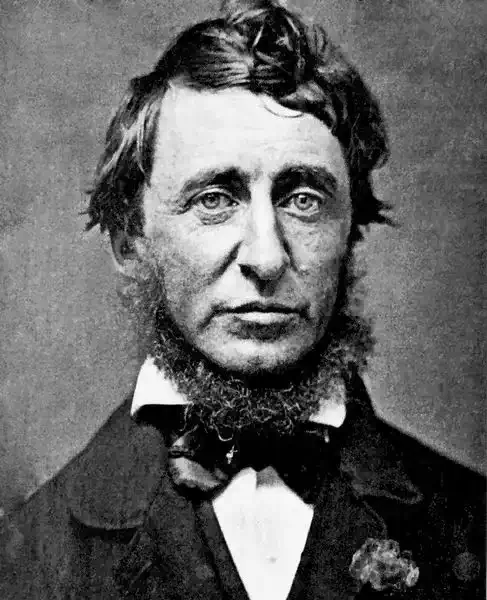
Henry David Thoreau
Tall Ambrosia
Tall Ambrosia
Among the signs of autumn I perceive
The Roman wormwood (called by learned men
Ambrosia elatior, food for gods,—
For to impartial science the humblest weed
Is as immortal once as the proudest flower—)
Sprinkles its yellow dust over my shoes
As I cross the now neglected garden.
—We trample under foot the food of gods
And spill their nectar in each dropp of dew—
My honest shoes, fast friends that never stray
Far from my couch, thus powdered, countryfied,
Bearing many a mile the marks of their adventure,
At the post-house disgrace the Gallic gloss
Of those well dressed ones who no morning dew
Nor Roman wormwood ever have been through,
Who never walk but are transported rather—
For what old crime of theirs I do not gather.
Among the signs of autumn I perceive
The Roman wormwood (called by learned men
Ambrosia elatior, food for gods,—
For to impartial science the humblest weed
Is as immortal once as the proudest flower—)
Sprinkles its yellow dust over my shoes
As I cross the now neglected garden.
—We trample under foot the food of gods
And spill their nectar in each dropp of dew—
My honest shoes, fast friends that never stray
Far from my couch, thus powdered, countryfied,
Bearing many a mile the marks of their adventure,
At the post-house disgrace the Gallic gloss
Of those well dressed ones who no morning dew
Nor Roman wormwood ever have been through,
Who never walk but are transported rather—
For what old crime of theirs I do not gather.
220
Henry David Thoreau
Pray to What Earth Does This Sweet Cold Belong
Pray to What Earth Does This Sweet Cold Belong
Pray to what earth does this sweet cold belong,
Which asks no duties and no conscience?
The moon goes up by leaps, her cheerful path
In some far summer stratum of the sky,
While stars with their cold shine bedot her way.
The fields gleam mildly back upon the sky,
And far and near upon the leafless shrubs
The snow dust still emits a silver light.
Under the hedge, where drift banks are their screen,
The titmice now pursue their downy dreams,
As often in the sweltering summer nights
The bee doth drop asleep in the flower cup,
When evening overtakes him with his load.
By the brooksides, in the still, genial night,
The more adventurous wanderer may hear
The crystals shoot and form, and winter slow
Increase his rule by gentlest summer means.
Pray to what earth does this sweet cold belong,
Which asks no duties and no conscience?
The moon goes up by leaps, her cheerful path
In some far summer stratum of the sky,
While stars with their cold shine bedot her way.
The fields gleam mildly back upon the sky,
And far and near upon the leafless shrubs
The snow dust still emits a silver light.
Under the hedge, where drift banks are their screen,
The titmice now pursue their downy dreams,
As often in the sweltering summer nights
The bee doth drop asleep in the flower cup,
When evening overtakes him with his load.
By the brooksides, in the still, genial night,
The more adventurous wanderer may hear
The crystals shoot and form, and winter slow
Increase his rule by gentlest summer means.
182
Henry David Thoreau
Rumors from an Aeolian Harp
Rumors from an Aeolian Harp
There is a vale which none hath seen,
Where foot of man has never been,
Such as here lives with toil and strife,
An anxious and a sinful life.
There every virtue has its birth,
Ere it descends upon the earth,
And thither every deed returns,
Which in the generous bosom burns.
There love is warm, and youth is young,
And poetry is yet unsung.
For Virtue still adventures there,
And freely breathes her native air.
And ever, if you hearken well,
You still may hear its vesper bell,
And tread of high-souled men go by,
Their thoughts conversing with the sky.
There is a vale which none hath seen,
Where foot of man has never been,
Such as here lives with toil and strife,
An anxious and a sinful life.
There every virtue has its birth,
Ere it descends upon the earth,
And thither every deed returns,
Which in the generous bosom burns.
There love is warm, and youth is young,
And poetry is yet unsung.
For Virtue still adventures there,
And freely breathes her native air.
And ever, if you hearken well,
You still may hear its vesper bell,
And tread of high-souled men go by,
Their thoughts conversing with the sky.
318
Henry David Thoreau
Nature
Nature
O Nature! I do not aspire
To be the highest in thy choir, -
To be a meteor in thy sky,
Or comet that may range on high;
Only a zephyr that may blow
Among the reeds by the river low;
Give me thy most privy place
Where to run my airy race.
In some withdrawn, unpublic mead
Let me sigh upon a reed,
Or in the woods, with leafy din,
Whisper the still evening in:
Some still work give me to do, -
Only - be it near to you!
For I'd rather be thy child
And pupil, in the forest wild,
Than be the king of men elsewhere,
And most sovereign slave of care;
To have one moment of thy dawn,
Than share the city's year forlorn.
O Nature! I do not aspire
To be the highest in thy choir, -
To be a meteor in thy sky,
Or comet that may range on high;
Only a zephyr that may blow
Among the reeds by the river low;
Give me thy most privy place
Where to run my airy race.
In some withdrawn, unpublic mead
Let me sigh upon a reed,
Or in the woods, with leafy din,
Whisper the still evening in:
Some still work give me to do, -
Only - be it near to you!
For I'd rather be thy child
And pupil, in the forest wild,
Than be the king of men elsewhere,
And most sovereign slave of care;
To have one moment of thy dawn,
Than share the city's year forlorn.
232
Henry David Thoreau
Mist
Mist
Low-anchored cloud,
Newfoundland air,
Fountain head and source of rivers,
Dew-cloth, dream drapery,
And napkin spread by fays;
Drifting meadow of the air,
Where bloom the dasied banks and violets,
And in whose fenny labyrinth
The bittern booms and heron wades;
Spirit of the lake and seas and rivers,
Bear only purfumes and the scent
Of healing herbs to just men's fields!
Low-anchored cloud,
Newfoundland air,
Fountain head and source of rivers,
Dew-cloth, dream drapery,
And napkin spread by fays;
Drifting meadow of the air,
Where bloom the dasied banks and violets,
And in whose fenny labyrinth
The bittern booms and heron wades;
Spirit of the lake and seas and rivers,
Bear only purfumes and the scent
Of healing herbs to just men's fields!
236
Henry David Thoreau
Light-Winged Smoke
Light-Winged Smoke
LIGHT-WINGED Smoke, Icarian bird,
Melting thy pinions in thy upward flight,
Lark without song, and the messenger of dawn,
Circling above the hamlets as thy nest;
Or else, departing dream, and shadowy form
Of midnight vision, gathering up thy skirts;
By night star-veiling, and by day
Darkening the light and blotting out the sun;
Go thou my incense upward from this hearth,
And ask the gods to pardon this clear flame.
LIGHT-WINGED Smoke, Icarian bird,
Melting thy pinions in thy upward flight,
Lark without song, and the messenger of dawn,
Circling above the hamlets as thy nest;
Or else, departing dream, and shadowy form
Of midnight vision, gathering up thy skirts;
By night star-veiling, and by day
Darkening the light and blotting out the sun;
Go thou my incense upward from this hearth,
And ask the gods to pardon this clear flame.
281