

Poems in this topic
Society and the World
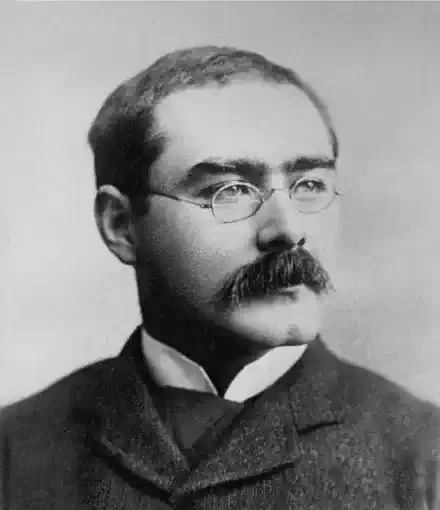
Rudyard Kipling
The Song of the Old Guard
The Song of the Old Guard
Know this, my brethren, Heaven is clear
And all the clouds are gone--
The Proper Sort shall flourish now,
Good times are coming on"--
The evil that was threatened late
To all of our degree
Hath passed in discord and debate,
And,Hey then up go we!
A common people strove in vain
To shame us unto toil,
But they are spent and we remain,
And we shall share the spoil
According to our several needs
As Beauty shall decree,
As Age ordains or Birth concedes,
And, Hey then up go we!
And they that with accursed zeal
Our Service would amend,
Shall own the odds and come to heel
Ere worse befall their end:
For though no naked word be wrote
Yet plainly shall they see
What pinneth Orders on their coat,
And, Hey then up go we!
Our doorways that, in time of fear,
We opened overwide
Shall softly close from year to year
Till all be purified;
For though no fluttering fan be heard .
Nor chaff be seen to flee--
The Lord shall winnow the Lord's Preferred--
And, Hey then up go we!
Our altars which the heathen brake
Shall rankly smoke anew,
And anise, mint and cummin take
Their dread and sovereign due,
Whereby the buttons of our trade
Shall soon restored be
With curious work in gilt and braid,
And, Hey then up go we!
Then come, my brethren, and prepare
The candlesticks and bells,
The scarlet, brass, and badger's hair
Wherein our Honour dwells,
And straitly fence and strictly keep
The Ark's integrity
Till Armageddon break our sleep . . .
And, Hey then go we!
Know this, my brethren, Heaven is clear
And all the clouds are gone--
The Proper Sort shall flourish now,
Good times are coming on"--
The evil that was threatened late
To all of our degree
Hath passed in discord and debate,
And,Hey then up go we!
A common people strove in vain
To shame us unto toil,
But they are spent and we remain,
And we shall share the spoil
According to our several needs
As Beauty shall decree,
As Age ordains or Birth concedes,
And, Hey then up go we!
And they that with accursed zeal
Our Service would amend,
Shall own the odds and come to heel
Ere worse befall their end:
For though no naked word be wrote
Yet plainly shall they see
What pinneth Orders on their coat,
And, Hey then up go we!
Our doorways that, in time of fear,
We opened overwide
Shall softly close from year to year
Till all be purified;
For though no fluttering fan be heard .
Nor chaff be seen to flee--
The Lord shall winnow the Lord's Preferred--
And, Hey then up go we!
Our altars which the heathen brake
Shall rankly smoke anew,
And anise, mint and cummin take
Their dread and sovereign due,
Whereby the buttons of our trade
Shall soon restored be
With curious work in gilt and braid,
And, Hey then up go we!
Then come, my brethren, and prepare
The candlesticks and bells,
The scarlet, brass, and badger's hair
Wherein our Honour dwells,
And straitly fence and strictly keep
The Ark's integrity
Till Armageddon break our sleep . . .
And, Hey then go we!
431
Rudyard Kipling
The Song of the Old Guard
The Song of the Old Guard
Know this, my brethren, Heaven is clear
And all the clouds are gone--
The Proper Sort shall flourish now,
Good times are coming on"--
The evil that was threatened late
To all of our degree
Hath passed in discord and debate,
And,Hey then up go we!
A common people strove in vain
To shame us unto toil,
But they are spent and we remain,
And we shall share the spoil
According to our several needs
As Beauty shall decree,
As Age ordains or Birth concedes,
And, Hey then up go we!
And they that with accursed zeal
Our Service would amend,
Shall own the odds and come to heel
Ere worse befall their end:
For though no naked word be wrote
Yet plainly shall they see
What pinneth Orders on their coat,
And, Hey then up go we!
Our doorways that, in time of fear,
We opened overwide
Shall softly close from year to year
Till all be purified;
For though no fluttering fan be heard .
Nor chaff be seen to flee--
The Lord shall winnow the Lord's Preferred--
And, Hey then up go we!
Our altars which the heathen brake
Shall rankly smoke anew,
And anise, mint and cummin take
Their dread and sovereign due,
Whereby the buttons of our trade
Shall soon restored be
With curious work in gilt and braid,
And, Hey then up go we!
Then come, my brethren, and prepare
The candlesticks and bells,
The scarlet, brass, and badger's hair
Wherein our Honour dwells,
And straitly fence and strictly keep
The Ark's integrity
Till Armageddon break our sleep . . .
And, Hey then go we!
Know this, my brethren, Heaven is clear
And all the clouds are gone--
The Proper Sort shall flourish now,
Good times are coming on"--
The evil that was threatened late
To all of our degree
Hath passed in discord and debate,
And,Hey then up go we!
A common people strove in vain
To shame us unto toil,
But they are spent and we remain,
And we shall share the spoil
According to our several needs
As Beauty shall decree,
As Age ordains or Birth concedes,
And, Hey then up go we!
And they that with accursed zeal
Our Service would amend,
Shall own the odds and come to heel
Ere worse befall their end:
For though no naked word be wrote
Yet plainly shall they see
What pinneth Orders on their coat,
And, Hey then up go we!
Our doorways that, in time of fear,
We opened overwide
Shall softly close from year to year
Till all be purified;
For though no fluttering fan be heard .
Nor chaff be seen to flee--
The Lord shall winnow the Lord's Preferred--
And, Hey then up go we!
Our altars which the heathen brake
Shall rankly smoke anew,
And anise, mint and cummin take
Their dread and sovereign due,
Whereby the buttons of our trade
Shall soon restored be
With curious work in gilt and braid,
And, Hey then up go we!
Then come, my brethren, and prepare
The candlesticks and bells,
The scarlet, brass, and badger's hair
Wherein our Honour dwells,
And straitly fence and strictly keep
The Ark's integrity
Till Armageddon break our sleep . . .
And, Hey then go we!
431
Rudyard Kipling
The Song of Diego Valdez
The Song of Diego Valdez
The God of Fair Beginnings
Hath prospered here my hand --
The cargoes of my lading,
And the keels of my command.
For out of many ventures
That sailed with hope as high,
My own have made the better trade,
And Admiral am I.
To me my King's much honour,
To me my people's love --
To me the pride of Princes
And power all pride above;
To me the shouting cities,
To me the mob's refrain: --
"Who knows not noble Valdez
"Hath never heard of Spain."
But I remember comrades --
Old playmates on new seas --
Whenas we traded orpiment
Among the savages --
A thousand leagues to south'ard
And thirty years removed --
They knew nor noble Valdez,
But me they knew and loved.
Then they that found good liquor,
They drank it not alone,
And they that found fair plunder,
They told us every one,
About our chosen islands
Or secret shoals between,
When, weary from far voyage,
We gathered to careen.
Were burned our breaming-fagots
All pale along the shore:
There rose our worn pavilions --
A sail above an oar:
As flashed each yeaming anchor
Through mellow seas afire,
So swift our careless captains
Rowed each to his desire.
Where lay our loosened harness?
Where turned our naked feet?
Whose tavern 'mid the palm-trees?
What quenchings of what heat?
Oh, fountain in the desert!
Oh, cistern in the waste!
Oh, bread we ate in secret!
Oh, cup we spilled in haste!
The youth new-taught of longing,
The widow curbed and wan,
The goodwife proud at season,
And the maid aware of man --
All souls unslaked, consuming,
Defrauded in delays,
Desire not more their quittance
Than I those forfeit days!
I dreamed to wait my pleasure
Unchanged my spring would bide:
Wherefore, to wait my pleasure,
I put my spring aside
Till, first in face of Fortune,
And last in mazed disdain,
I made Diego Valdez
High Admiral of Spain.
Then walked no wind 'neath Heaven
Nor surge that did not aid --
I dared extreme occasion,
Nor ever one betrayed.
They wrought a deeper treason --
(Led seas that served my needs!)
They sold Diego Valdez
To bondage of great deeds.
The tempest flung me seaward,
And pinned and bade me hold
The course I might not alter --
And men esteemed me bold!
The calms embayed my quarry,
The fog-wreath sealed his eyes;
The dawn-wind brought my topsails --
And men esteemed me wise!
Yet, 'spite my tyrant triumphs,
Bewildered, dispossessed --
My dream held I beore me
My vision of my rest;
But, crowned by Fleet and People,
And bound by King and Pope --
Stands here Diego Valdez
To rob me of my hope.
No prayer of mine shall move him.
No word of his set free
The Lord of Sixty Pennants
And the Steward of the Sea.
His will can loose ten thousand
To seek their loves again --
But not Diego Valdez,
High Admiral of Spain.
There walks no wind 'neath Heaven
Nor wave that shall restore
The old careening riot
And the clamorous, crowded shore --
The fountain in the desert,
The cistern in the waste,
The bread we ate in secret,
The cup we spilled in haste.
Now call I to my Captains --
For council fly the sign --
Now leap their zealous galleys,
Twelve-oared, across the brine.
To me the straiter prison,
To me the heavier chain --
To me Diego Valdez,
High Admiral of Spain!
The God of Fair Beginnings
Hath prospered here my hand --
The cargoes of my lading,
And the keels of my command.
For out of many ventures
That sailed with hope as high,
My own have made the better trade,
And Admiral am I.
To me my King's much honour,
To me my people's love --
To me the pride of Princes
And power all pride above;
To me the shouting cities,
To me the mob's refrain: --
"Who knows not noble Valdez
"Hath never heard of Spain."
But I remember comrades --
Old playmates on new seas --
Whenas we traded orpiment
Among the savages --
A thousand leagues to south'ard
And thirty years removed --
They knew nor noble Valdez,
But me they knew and loved.
Then they that found good liquor,
They drank it not alone,
And they that found fair plunder,
They told us every one,
About our chosen islands
Or secret shoals between,
When, weary from far voyage,
We gathered to careen.
Were burned our breaming-fagots
All pale along the shore:
There rose our worn pavilions --
A sail above an oar:
As flashed each yeaming anchor
Through mellow seas afire,
So swift our careless captains
Rowed each to his desire.
Where lay our loosened harness?
Where turned our naked feet?
Whose tavern 'mid the palm-trees?
What quenchings of what heat?
Oh, fountain in the desert!
Oh, cistern in the waste!
Oh, bread we ate in secret!
Oh, cup we spilled in haste!
The youth new-taught of longing,
The widow curbed and wan,
The goodwife proud at season,
And the maid aware of man --
All souls unslaked, consuming,
Defrauded in delays,
Desire not more their quittance
Than I those forfeit days!
I dreamed to wait my pleasure
Unchanged my spring would bide:
Wherefore, to wait my pleasure,
I put my spring aside
Till, first in face of Fortune,
And last in mazed disdain,
I made Diego Valdez
High Admiral of Spain.
Then walked no wind 'neath Heaven
Nor surge that did not aid --
I dared extreme occasion,
Nor ever one betrayed.
They wrought a deeper treason --
(Led seas that served my needs!)
They sold Diego Valdez
To bondage of great deeds.
The tempest flung me seaward,
And pinned and bade me hold
The course I might not alter --
And men esteemed me bold!
The calms embayed my quarry,
The fog-wreath sealed his eyes;
The dawn-wind brought my topsails --
And men esteemed me wise!
Yet, 'spite my tyrant triumphs,
Bewildered, dispossessed --
My dream held I beore me
My vision of my rest;
But, crowned by Fleet and People,
And bound by King and Pope --
Stands here Diego Valdez
To rob me of my hope.
No prayer of mine shall move him.
No word of his set free
The Lord of Sixty Pennants
And the Steward of the Sea.
His will can loose ten thousand
To seek their loves again --
But not Diego Valdez,
High Admiral of Spain.
There walks no wind 'neath Heaven
Nor wave that shall restore
The old careening riot
And the clamorous, crowded shore --
The fountain in the desert,
The cistern in the waste,
The bread we ate in secret,
The cup we spilled in haste.
Now call I to my Captains --
For council fly the sign --
Now leap their zealous galleys,
Twelve-oared, across the brine.
To me the straiter prison,
To me the heavier chain --
To me Diego Valdez,
High Admiral of Spain!
633
Rudyard Kipling
The Song OF The Cities
The Song OF The Cities
BOMBAY
Royal and Dower-royal, I the Queen
Fronting thy richest sea with richer hands --
A thousand mills roar through me where I glean
All races from all lands.
CALCUTTA
Me the Sea-captain loved, the River built,
Wealth sought and Kings adventured life to hold.
Hail, England! I am Asia -- Power on silt,
Death in my hands, but Gold!
MADRAS
Clive kissed me on the mouth and eyes and brow,
Wonderful kisses, so that I became
Crowned above Queens -- a withered beldame now,
Brooding on ancient fame.
RANGOON
Hail, Mother! Do they call me rich in trade?
Little care I, but hear the shorn priest drone,
And watch my silk-clad lovers, man by maid,
Laugh 'neath my Shwe Dagon.
SINGAPORE
Hail, Mother! East and West must seek my aid
Ere the spent gear may dare the ports afar.
The second doorway of the wide world's trade
Is mine to loose or bar.
HONG-KONG
Hail, Mother! Hold me fast; my Praya sleeps
Under innumerable keels to-day.
Yet guard (and landward), or to-morrow sweeps
Thy war-ships down the bay!
HALIFAX
Into the mist my guardian prows put forth,
Behind the mist my virgin ramparts lie,
The Warden of the Honour of the North,
Sleepless and veiled am I!
QUEBEC AND MONTREAL
Peace is our portion. Yet a whisper rose,
Foolish and causeless, half in jest, half hate.
Now wake we and remember mighty blows,
And, fearing no man, wait!
VICTORIA
From East to West the circling word has passed,
Till West is East beside our land-locked blue;
From East to West the tested chain holds fast,
The well-forged link rings true!
CAPE TOWN
Hail! Snatched and bartered oft from hand to hand,
I dream my dream, by rock and heath and pine,
Of Empire to the northward. Ay, one land
From Lion's Head to Line!
MELBOURNE
Greeting! Nor fear nor favour won us place,
Got between greed of gold and dread of drouth,
Loud-voiced and reckless as the wild tide-race
That whips our harbour-mouth!
SYDNEY
Greeting! My birth-stain have I turned to good;
Forcing strong wills perverse to steadfastness:
The first flush of the tropics in my blood,
And at my feet Success!
BRISBANE
The northern stirp beneath the southern skies --
I build a Nation for an Empire's need,
Suffer a little, and my land shall rise,
Queen over lands indeed!
HOBART
Man's love first found me; man's hate made me Hell;
For my babes' sake I cleansed those infamies.
Earnest for leave to live and labour well,
God flung me peace and ease.
AUCKLAND
Last, loneliest, loveliest, exquisite, apart --
On us, on us the unswerving season smiles,
Who wonder 'mid our fern why men depart
To seek the Happy Isles!
BOMBAY
Royal and Dower-royal, I the Queen
Fronting thy richest sea with richer hands --
A thousand mills roar through me where I glean
All races from all lands.
CALCUTTA
Me the Sea-captain loved, the River built,
Wealth sought and Kings adventured life to hold.
Hail, England! I am Asia -- Power on silt,
Death in my hands, but Gold!
MADRAS
Clive kissed me on the mouth and eyes and brow,
Wonderful kisses, so that I became
Crowned above Queens -- a withered beldame now,
Brooding on ancient fame.
RANGOON
Hail, Mother! Do they call me rich in trade?
Little care I, but hear the shorn priest drone,
And watch my silk-clad lovers, man by maid,
Laugh 'neath my Shwe Dagon.
SINGAPORE
Hail, Mother! East and West must seek my aid
Ere the spent gear may dare the ports afar.
The second doorway of the wide world's trade
Is mine to loose or bar.
HONG-KONG
Hail, Mother! Hold me fast; my Praya sleeps
Under innumerable keels to-day.
Yet guard (and landward), or to-morrow sweeps
Thy war-ships down the bay!
HALIFAX
Into the mist my guardian prows put forth,
Behind the mist my virgin ramparts lie,
The Warden of the Honour of the North,
Sleepless and veiled am I!
QUEBEC AND MONTREAL
Peace is our portion. Yet a whisper rose,
Foolish and causeless, half in jest, half hate.
Now wake we and remember mighty blows,
And, fearing no man, wait!
VICTORIA
From East to West the circling word has passed,
Till West is East beside our land-locked blue;
From East to West the tested chain holds fast,
The well-forged link rings true!
CAPE TOWN
Hail! Snatched and bartered oft from hand to hand,
I dream my dream, by rock and heath and pine,
Of Empire to the northward. Ay, one land
From Lion's Head to Line!
MELBOURNE
Greeting! Nor fear nor favour won us place,
Got between greed of gold and dread of drouth,
Loud-voiced and reckless as the wild tide-race
That whips our harbour-mouth!
SYDNEY
Greeting! My birth-stain have I turned to good;
Forcing strong wills perverse to steadfastness:
The first flush of the tropics in my blood,
And at my feet Success!
BRISBANE
The northern stirp beneath the southern skies --
I build a Nation for an Empire's need,
Suffer a little, and my land shall rise,
Queen over lands indeed!
HOBART
Man's love first found me; man's hate made me Hell;
For my babes' sake I cleansed those infamies.
Earnest for leave to live and labour well,
God flung me peace and ease.
AUCKLAND
Last, loneliest, loveliest, exquisite, apart --
On us, on us the unswerving season smiles,
Who wonder 'mid our fern why men depart
To seek the Happy Isles!
642
Rudyard Kipling
The Song OF The Cities
The Song OF The Cities
BOMBAY
Royal and Dower-royal, I the Queen
Fronting thy richest sea with richer hands --
A thousand mills roar through me where I glean
All races from all lands.
CALCUTTA
Me the Sea-captain loved, the River built,
Wealth sought and Kings adventured life to hold.
Hail, England! I am Asia -- Power on silt,
Death in my hands, but Gold!
MADRAS
Clive kissed me on the mouth and eyes and brow,
Wonderful kisses, so that I became
Crowned above Queens -- a withered beldame now,
Brooding on ancient fame.
RANGOON
Hail, Mother! Do they call me rich in trade?
Little care I, but hear the shorn priest drone,
And watch my silk-clad lovers, man by maid,
Laugh 'neath my Shwe Dagon.
SINGAPORE
Hail, Mother! East and West must seek my aid
Ere the spent gear may dare the ports afar.
The second doorway of the wide world's trade
Is mine to loose or bar.
HONG-KONG
Hail, Mother! Hold me fast; my Praya sleeps
Under innumerable keels to-day.
Yet guard (and landward), or to-morrow sweeps
Thy war-ships down the bay!
HALIFAX
Into the mist my guardian prows put forth,
Behind the mist my virgin ramparts lie,
The Warden of the Honour of the North,
Sleepless and veiled am I!
QUEBEC AND MONTREAL
Peace is our portion. Yet a whisper rose,
Foolish and causeless, half in jest, half hate.
Now wake we and remember mighty blows,
And, fearing no man, wait!
VICTORIA
From East to West the circling word has passed,
Till West is East beside our land-locked blue;
From East to West the tested chain holds fast,
The well-forged link rings true!
CAPE TOWN
Hail! Snatched and bartered oft from hand to hand,
I dream my dream, by rock and heath and pine,
Of Empire to the northward. Ay, one land
From Lion's Head to Line!
MELBOURNE
Greeting! Nor fear nor favour won us place,
Got between greed of gold and dread of drouth,
Loud-voiced and reckless as the wild tide-race
That whips our harbour-mouth!
SYDNEY
Greeting! My birth-stain have I turned to good;
Forcing strong wills perverse to steadfastness:
The first flush of the tropics in my blood,
And at my feet Success!
BRISBANE
The northern stirp beneath the southern skies --
I build a Nation for an Empire's need,
Suffer a little, and my land shall rise,
Queen over lands indeed!
HOBART
Man's love first found me; man's hate made me Hell;
For my babes' sake I cleansed those infamies.
Earnest for leave to live and labour well,
God flung me peace and ease.
AUCKLAND
Last, loneliest, loveliest, exquisite, apart --
On us, on us the unswerving season smiles,
Who wonder 'mid our fern why men depart
To seek the Happy Isles!
BOMBAY
Royal and Dower-royal, I the Queen
Fronting thy richest sea with richer hands --
A thousand mills roar through me where I glean
All races from all lands.
CALCUTTA
Me the Sea-captain loved, the River built,
Wealth sought and Kings adventured life to hold.
Hail, England! I am Asia -- Power on silt,
Death in my hands, but Gold!
MADRAS
Clive kissed me on the mouth and eyes and brow,
Wonderful kisses, so that I became
Crowned above Queens -- a withered beldame now,
Brooding on ancient fame.
RANGOON
Hail, Mother! Do they call me rich in trade?
Little care I, but hear the shorn priest drone,
And watch my silk-clad lovers, man by maid,
Laugh 'neath my Shwe Dagon.
SINGAPORE
Hail, Mother! East and West must seek my aid
Ere the spent gear may dare the ports afar.
The second doorway of the wide world's trade
Is mine to loose or bar.
HONG-KONG
Hail, Mother! Hold me fast; my Praya sleeps
Under innumerable keels to-day.
Yet guard (and landward), or to-morrow sweeps
Thy war-ships down the bay!
HALIFAX
Into the mist my guardian prows put forth,
Behind the mist my virgin ramparts lie,
The Warden of the Honour of the North,
Sleepless and veiled am I!
QUEBEC AND MONTREAL
Peace is our portion. Yet a whisper rose,
Foolish and causeless, half in jest, half hate.
Now wake we and remember mighty blows,
And, fearing no man, wait!
VICTORIA
From East to West the circling word has passed,
Till West is East beside our land-locked blue;
From East to West the tested chain holds fast,
The well-forged link rings true!
CAPE TOWN
Hail! Snatched and bartered oft from hand to hand,
I dream my dream, by rock and heath and pine,
Of Empire to the northward. Ay, one land
From Lion's Head to Line!
MELBOURNE
Greeting! Nor fear nor favour won us place,
Got between greed of gold and dread of drouth,
Loud-voiced and reckless as the wild tide-race
That whips our harbour-mouth!
SYDNEY
Greeting! My birth-stain have I turned to good;
Forcing strong wills perverse to steadfastness:
The first flush of the tropics in my blood,
And at my feet Success!
BRISBANE
The northern stirp beneath the southern skies --
I build a Nation for an Empire's need,
Suffer a little, and my land shall rise,
Queen over lands indeed!
HOBART
Man's love first found me; man's hate made me Hell;
For my babes' sake I cleansed those infamies.
Earnest for leave to live and labour well,
God flung me peace and ease.
AUCKLAND
Last, loneliest, loveliest, exquisite, apart --
On us, on us the unswerving season smiles,
Who wonder 'mid our fern why men depart
To seek the Happy Isles!
642
Rudyard Kipling
The Song OF The Cities
The Song OF The Cities
BOMBAY
Royal and Dower-royal, I the Queen
Fronting thy richest sea with richer hands --
A thousand mills roar through me where I glean
All races from all lands.
CALCUTTA
Me the Sea-captain loved, the River built,
Wealth sought and Kings adventured life to hold.
Hail, England! I am Asia -- Power on silt,
Death in my hands, but Gold!
MADRAS
Clive kissed me on the mouth and eyes and brow,
Wonderful kisses, so that I became
Crowned above Queens -- a withered beldame now,
Brooding on ancient fame.
RANGOON
Hail, Mother! Do they call me rich in trade?
Little care I, but hear the shorn priest drone,
And watch my silk-clad lovers, man by maid,
Laugh 'neath my Shwe Dagon.
SINGAPORE
Hail, Mother! East and West must seek my aid
Ere the spent gear may dare the ports afar.
The second doorway of the wide world's trade
Is mine to loose or bar.
HONG-KONG
Hail, Mother! Hold me fast; my Praya sleeps
Under innumerable keels to-day.
Yet guard (and landward), or to-morrow sweeps
Thy war-ships down the bay!
HALIFAX
Into the mist my guardian prows put forth,
Behind the mist my virgin ramparts lie,
The Warden of the Honour of the North,
Sleepless and veiled am I!
QUEBEC AND MONTREAL
Peace is our portion. Yet a whisper rose,
Foolish and causeless, half in jest, half hate.
Now wake we and remember mighty blows,
And, fearing no man, wait!
VICTORIA
From East to West the circling word has passed,
Till West is East beside our land-locked blue;
From East to West the tested chain holds fast,
The well-forged link rings true!
CAPE TOWN
Hail! Snatched and bartered oft from hand to hand,
I dream my dream, by rock and heath and pine,
Of Empire to the northward. Ay, one land
From Lion's Head to Line!
MELBOURNE
Greeting! Nor fear nor favour won us place,
Got between greed of gold and dread of drouth,
Loud-voiced and reckless as the wild tide-race
That whips our harbour-mouth!
SYDNEY
Greeting! My birth-stain have I turned to good;
Forcing strong wills perverse to steadfastness:
The first flush of the tropics in my blood,
And at my feet Success!
BRISBANE
The northern stirp beneath the southern skies --
I build a Nation for an Empire's need,
Suffer a little, and my land shall rise,
Queen over lands indeed!
HOBART
Man's love first found me; man's hate made me Hell;
For my babes' sake I cleansed those infamies.
Earnest for leave to live and labour well,
God flung me peace and ease.
AUCKLAND
Last, loneliest, loveliest, exquisite, apart --
On us, on us the unswerving season smiles,
Who wonder 'mid our fern why men depart
To seek the Happy Isles!
BOMBAY
Royal and Dower-royal, I the Queen
Fronting thy richest sea with richer hands --
A thousand mills roar through me where I glean
All races from all lands.
CALCUTTA
Me the Sea-captain loved, the River built,
Wealth sought and Kings adventured life to hold.
Hail, England! I am Asia -- Power on silt,
Death in my hands, but Gold!
MADRAS
Clive kissed me on the mouth and eyes and brow,
Wonderful kisses, so that I became
Crowned above Queens -- a withered beldame now,
Brooding on ancient fame.
RANGOON
Hail, Mother! Do they call me rich in trade?
Little care I, but hear the shorn priest drone,
And watch my silk-clad lovers, man by maid,
Laugh 'neath my Shwe Dagon.
SINGAPORE
Hail, Mother! East and West must seek my aid
Ere the spent gear may dare the ports afar.
The second doorway of the wide world's trade
Is mine to loose or bar.
HONG-KONG
Hail, Mother! Hold me fast; my Praya sleeps
Under innumerable keels to-day.
Yet guard (and landward), or to-morrow sweeps
Thy war-ships down the bay!
HALIFAX
Into the mist my guardian prows put forth,
Behind the mist my virgin ramparts lie,
The Warden of the Honour of the North,
Sleepless and veiled am I!
QUEBEC AND MONTREAL
Peace is our portion. Yet a whisper rose,
Foolish and causeless, half in jest, half hate.
Now wake we and remember mighty blows,
And, fearing no man, wait!
VICTORIA
From East to West the circling word has passed,
Till West is East beside our land-locked blue;
From East to West the tested chain holds fast,
The well-forged link rings true!
CAPE TOWN
Hail! Snatched and bartered oft from hand to hand,
I dream my dream, by rock and heath and pine,
Of Empire to the northward. Ay, one land
From Lion's Head to Line!
MELBOURNE
Greeting! Nor fear nor favour won us place,
Got between greed of gold and dread of drouth,
Loud-voiced and reckless as the wild tide-race
That whips our harbour-mouth!
SYDNEY
Greeting! My birth-stain have I turned to good;
Forcing strong wills perverse to steadfastness:
The first flush of the tropics in my blood,
And at my feet Success!
BRISBANE
The northern stirp beneath the southern skies --
I build a Nation for an Empire's need,
Suffer a little, and my land shall rise,
Queen over lands indeed!
HOBART
Man's love first found me; man's hate made me Hell;
For my babes' sake I cleansed those infamies.
Earnest for leave to live and labour well,
God flung me peace and ease.
AUCKLAND
Last, loneliest, loveliest, exquisite, apart --
On us, on us the unswerving season smiles,
Who wonder 'mid our fern why men depart
To seek the Happy Isles!
642
Rudyard Kipling
The Song OF The Cities
The Song OF The Cities
BOMBAY
Royal and Dower-royal, I the Queen
Fronting thy richest sea with richer hands --
A thousand mills roar through me where I glean
All races from all lands.
CALCUTTA
Me the Sea-captain loved, the River built,
Wealth sought and Kings adventured life to hold.
Hail, England! I am Asia -- Power on silt,
Death in my hands, but Gold!
MADRAS
Clive kissed me on the mouth and eyes and brow,
Wonderful kisses, so that I became
Crowned above Queens -- a withered beldame now,
Brooding on ancient fame.
RANGOON
Hail, Mother! Do they call me rich in trade?
Little care I, but hear the shorn priest drone,
And watch my silk-clad lovers, man by maid,
Laugh 'neath my Shwe Dagon.
SINGAPORE
Hail, Mother! East and West must seek my aid
Ere the spent gear may dare the ports afar.
The second doorway of the wide world's trade
Is mine to loose or bar.
HONG-KONG
Hail, Mother! Hold me fast; my Praya sleeps
Under innumerable keels to-day.
Yet guard (and landward), or to-morrow sweeps
Thy war-ships down the bay!
HALIFAX
Into the mist my guardian prows put forth,
Behind the mist my virgin ramparts lie,
The Warden of the Honour of the North,
Sleepless and veiled am I!
QUEBEC AND MONTREAL
Peace is our portion. Yet a whisper rose,
Foolish and causeless, half in jest, half hate.
Now wake we and remember mighty blows,
And, fearing no man, wait!
VICTORIA
From East to West the circling word has passed,
Till West is East beside our land-locked blue;
From East to West the tested chain holds fast,
The well-forged link rings true!
CAPE TOWN
Hail! Snatched and bartered oft from hand to hand,
I dream my dream, by rock and heath and pine,
Of Empire to the northward. Ay, one land
From Lion's Head to Line!
MELBOURNE
Greeting! Nor fear nor favour won us place,
Got between greed of gold and dread of drouth,
Loud-voiced and reckless as the wild tide-race
That whips our harbour-mouth!
SYDNEY
Greeting! My birth-stain have I turned to good;
Forcing strong wills perverse to steadfastness:
The first flush of the tropics in my blood,
And at my feet Success!
BRISBANE
The northern stirp beneath the southern skies --
I build a Nation for an Empire's need,
Suffer a little, and my land shall rise,
Queen over lands indeed!
HOBART
Man's love first found me; man's hate made me Hell;
For my babes' sake I cleansed those infamies.
Earnest for leave to live and labour well,
God flung me peace and ease.
AUCKLAND
Last, loneliest, loveliest, exquisite, apart --
On us, on us the unswerving season smiles,
Who wonder 'mid our fern why men depart
To seek the Happy Isles!
BOMBAY
Royal and Dower-royal, I the Queen
Fronting thy richest sea with richer hands --
A thousand mills roar through me where I glean
All races from all lands.
CALCUTTA
Me the Sea-captain loved, the River built,
Wealth sought and Kings adventured life to hold.
Hail, England! I am Asia -- Power on silt,
Death in my hands, but Gold!
MADRAS
Clive kissed me on the mouth and eyes and brow,
Wonderful kisses, so that I became
Crowned above Queens -- a withered beldame now,
Brooding on ancient fame.
RANGOON
Hail, Mother! Do they call me rich in trade?
Little care I, but hear the shorn priest drone,
And watch my silk-clad lovers, man by maid,
Laugh 'neath my Shwe Dagon.
SINGAPORE
Hail, Mother! East and West must seek my aid
Ere the spent gear may dare the ports afar.
The second doorway of the wide world's trade
Is mine to loose or bar.
HONG-KONG
Hail, Mother! Hold me fast; my Praya sleeps
Under innumerable keels to-day.
Yet guard (and landward), or to-morrow sweeps
Thy war-ships down the bay!
HALIFAX
Into the mist my guardian prows put forth,
Behind the mist my virgin ramparts lie,
The Warden of the Honour of the North,
Sleepless and veiled am I!
QUEBEC AND MONTREAL
Peace is our portion. Yet a whisper rose,
Foolish and causeless, half in jest, half hate.
Now wake we and remember mighty blows,
And, fearing no man, wait!
VICTORIA
From East to West the circling word has passed,
Till West is East beside our land-locked blue;
From East to West the tested chain holds fast,
The well-forged link rings true!
CAPE TOWN
Hail! Snatched and bartered oft from hand to hand,
I dream my dream, by rock and heath and pine,
Of Empire to the northward. Ay, one land
From Lion's Head to Line!
MELBOURNE
Greeting! Nor fear nor favour won us place,
Got between greed of gold and dread of drouth,
Loud-voiced and reckless as the wild tide-race
That whips our harbour-mouth!
SYDNEY
Greeting! My birth-stain have I turned to good;
Forcing strong wills perverse to steadfastness:
The first flush of the tropics in my blood,
And at my feet Success!
BRISBANE
The northern stirp beneath the southern skies --
I build a Nation for an Empire's need,
Suffer a little, and my land shall rise,
Queen over lands indeed!
HOBART
Man's love first found me; man's hate made me Hell;
For my babes' sake I cleansed those infamies.
Earnest for leave to live and labour well,
God flung me peace and ease.
AUCKLAND
Last, loneliest, loveliest, exquisite, apart --
On us, on us the unswerving season smiles,
Who wonder 'mid our fern why men depart
To seek the Happy Isles!
642
Rudyard Kipling
The Ship That Found Herself
The Ship That Found Herself
We now, held in captivity,
Spring to our bondage nor grieve--
See now, how it is blesseder,
Brothers, to give than receive!
Keep trust, wherefore we were made,
Paying the debt that we owe;
For a clean thrust, and the shear of the blade,
Will carry us where would go.
We now, held in captivity,
Spring to our bondage nor grieve--
See now, how it is blesseder,
Brothers, to give than receive!
Keep trust, wherefore we were made,
Paying the debt that we owe;
For a clean thrust, and the shear of the blade,
Will carry us where would go.
377
Rudyard Kipling
The Sing-Song of Old Man Kangaroo
The Sing-Song of Old Man Kangaroo
This is the mouth-filling song of the race that was run by a Boomer.
Run in a single burst--only event of its kind--
Started by Big God Nqong from Warrigaborrigarooma,
Old Man Kangaroo first, Yellow-Dog Dingo behind.
Kangaroo bounded away, his back-legs working like pistons--
Bounded from morning till dark, twenty-five feet at a bound.
Yellow-Dog Dingo lay like a yellow cloud in the distance--
Much too busy to bark. My! but they covered the ground!
Nobody knows where they went, or followed the track that they flew in,
For that Continent hadn't been given a name.
They ran thirty degrees from Torres Straits to Leeuwin
(Look at the Atlas, please then they ran back as they came.
S'posing you could trot from Adelaide to the Pacific
For an afternoon's run -- half what these gentlemen did--
You would feel rather hot, but your legs would develop terrific,
Yes, my importunate son, you'd be a Marvellous Kid!
This is the mouth-filling song of the race that was run by a Boomer.
Run in a single burst--only event of its kind--
Started by Big God Nqong from Warrigaborrigarooma,
Old Man Kangaroo first, Yellow-Dog Dingo behind.
Kangaroo bounded away, his back-legs working like pistons--
Bounded from morning till dark, twenty-five feet at a bound.
Yellow-Dog Dingo lay like a yellow cloud in the distance--
Much too busy to bark. My! but they covered the ground!
Nobody knows where they went, or followed the track that they flew in,
For that Continent hadn't been given a name.
They ran thirty degrees from Torres Straits to Leeuwin
(Look at the Atlas, please then they ran back as they came.
S'posing you could trot from Adelaide to the Pacific
For an afternoon's run -- half what these gentlemen did--
You would feel rather hot, but your legs would develop terrific,
Yes, my importunate son, you'd be a Marvellous Kid!
666
Rudyard Kipling
The Servant When He Reigneth
The Servant When He Reigneth
For three things the earth is disquieted, and for four which it cannot bear. For a
servant when he reigneth, and a fool when he is filled with meat; for an odious woman
when she is married, and an handmaid that is heir to her mistress. -- Prov. XXX.
--.
Three things make earth unquiet
And four she cannot brook
The godly Agur counted them
And put them in a book --
Those Four Tremendous Curses
With which mankind is cursed;
But a Servant when He Reigneth
Old Agur entered first.
An Handmaid that is Mistress
We need not call upon.
A Fool when he is full of Meat
Will fall asleep anon.
An Odious Woman Married
May bear a babe and mend;
But a Servant when He Reigneth
Is Confusion to the end.
His feet are swift to tumult,
His hands are slow to toil,
His ears are deaf to reason,
His lips are loud in broil.
He knows no use for power
Except to show his might.
He gives no heed to judgment
Unless it prove him right.
Because he served a master
Before his Kingship came,
And hid in all disaster
Behind his master's name,
So, when his Folly opens
The unnecessary hells,
A Servant when He Reigneth
Throws the blame on some one else.
His vows are lightly spoken,
His faith is hard to bind,
His trust is easy boken,
He fears his fellow-kind.
The nearest mob will move him
To break the pledge he gave --
Oh, a Servant when he Reigneth
Is more than ever slave!
For three things the earth is disquieted, and for four which it cannot bear. For a
servant when he reigneth, and a fool when he is filled with meat; for an odious woman
when she is married, and an handmaid that is heir to her mistress. -- Prov. XXX.
--.
Three things make earth unquiet
And four she cannot brook
The godly Agur counted them
And put them in a book --
Those Four Tremendous Curses
With which mankind is cursed;
But a Servant when He Reigneth
Old Agur entered first.
An Handmaid that is Mistress
We need not call upon.
A Fool when he is full of Meat
Will fall asleep anon.
An Odious Woman Married
May bear a babe and mend;
But a Servant when He Reigneth
Is Confusion to the end.
His feet are swift to tumult,
His hands are slow to toil,
His ears are deaf to reason,
His lips are loud in broil.
He knows no use for power
Except to show his might.
He gives no heed to judgment
Unless it prove him right.
Because he served a master
Before his Kingship came,
And hid in all disaster
Behind his master's name,
So, when his Folly opens
The unnecessary hells,
A Servant when He Reigneth
Throws the blame on some one else.
His vows are lightly spoken,
His faith is hard to bind,
His trust is easy boken,
He fears his fellow-kind.
The nearest mob will move him
To break the pledge he gave --
Oh, a Servant when he Reigneth
Is more than ever slave!
439
Rudyard Kipling
The Servant When He Reigneth
The Servant When He Reigneth
For three things the earth is disquieted, and for four which it cannot bear. For a
servant when he reigneth, and a fool when he is filled with meat; for an odious woman
when she is married, and an handmaid that is heir to her mistress. -- Prov. XXX.
--.
Three things make earth unquiet
And four she cannot brook
The godly Agur counted them
And put them in a book --
Those Four Tremendous Curses
With which mankind is cursed;
But a Servant when He Reigneth
Old Agur entered first.
An Handmaid that is Mistress
We need not call upon.
A Fool when he is full of Meat
Will fall asleep anon.
An Odious Woman Married
May bear a babe and mend;
But a Servant when He Reigneth
Is Confusion to the end.
His feet are swift to tumult,
His hands are slow to toil,
His ears are deaf to reason,
His lips are loud in broil.
He knows no use for power
Except to show his might.
He gives no heed to judgment
Unless it prove him right.
Because he served a master
Before his Kingship came,
And hid in all disaster
Behind his master's name,
So, when his Folly opens
The unnecessary hells,
A Servant when He Reigneth
Throws the blame on some one else.
His vows are lightly spoken,
His faith is hard to bind,
His trust is easy boken,
He fears his fellow-kind.
The nearest mob will move him
To break the pledge he gave --
Oh, a Servant when he Reigneth
Is more than ever slave!
For three things the earth is disquieted, and for four which it cannot bear. For a
servant when he reigneth, and a fool when he is filled with meat; for an odious woman
when she is married, and an handmaid that is heir to her mistress. -- Prov. XXX.
--.
Three things make earth unquiet
And four she cannot brook
The godly Agur counted them
And put them in a book --
Those Four Tremendous Curses
With which mankind is cursed;
But a Servant when He Reigneth
Old Agur entered first.
An Handmaid that is Mistress
We need not call upon.
A Fool when he is full of Meat
Will fall asleep anon.
An Odious Woman Married
May bear a babe and mend;
But a Servant when He Reigneth
Is Confusion to the end.
His feet are swift to tumult,
His hands are slow to toil,
His ears are deaf to reason,
His lips are loud in broil.
He knows no use for power
Except to show his might.
He gives no heed to judgment
Unless it prove him right.
Because he served a master
Before his Kingship came,
And hid in all disaster
Behind his master's name,
So, when his Folly opens
The unnecessary hells,
A Servant when He Reigneth
Throws the blame on some one else.
His vows are lightly spoken,
His faith is hard to bind,
His trust is easy boken,
He fears his fellow-kind.
The nearest mob will move him
To break the pledge he gave --
Oh, a Servant when he Reigneth
Is more than ever slave!
439
Rudyard Kipling
The Secret of the Machines
The Secret of the Machines
Modern Machinery
We were taken from the ore-bed and the mine,
We were melted in the furnace and the pit--
We were cast and wrought and hammered to design,
We were cut and filed and tooled and gauged to fit.
Some water, coal, and oil is all we ask,
And a thousandth of an inch to give us play:
And now, if you will set us to our task,
We will serve you four and twenty hours a day!
We can pull and haul and push and lift and drive,
We can print and plough and weave and heat and light,
We can run and race and swim and fly and dive,
We can see and hear and count and read and write!
Would you call a friend from half across the world?
If you'll let us have his name and town and state,
You shall see and hear your cracking question hurled
Across the arch of heaven while you wait.
Has he answered? Does he need you at his side-
You can start this very evening if you choose
And take the Western Ocean in the stride
O seventy thousand horses and some screws!
The boat-express is waiting your command!
You will find the Mauritania at the quay,
Till her captain turns the lever 'neath his hand,
And the monstrouos nine-decked city goes to sea.
Do you wish to make the mountains bare their head
And lay their new-cut forests at your feet?
Do you want to turn a river in its bed,
Or plant a barren wilderness with wheat?
Shall we pipe aloft and bring you water down
From the never-failing cisterns of the snows,
To work the mills and tramways in your town,
And irrigate your orchards as it flows?
It is easy! Give us dynamite and drills!
Watch the iron-shouldered rocks lie down and quake,
As the thirsty desert-level floods and fills,
And the valley we have dammed becomes a lake.
But remember, please, the Law by which we live,
We are not built to comprehend a lie,
We can neither love nor pity nor forgive.
If you make a slip in handling us you die!
We are greater than the Peoples or the Kings-
Be humble, as you crawl beneath our rods!--
Our touch can alter all created things,
We are everything on earth--except The Gods!
Though our smoke may hide the Heavens from your eyes,
It will vanish and the stars will shine again,
Because, for all our power and weight and size,
We are nothing more than children of your brain!
Modern Machinery
We were taken from the ore-bed and the mine,
We were melted in the furnace and the pit--
We were cast and wrought and hammered to design,
We were cut and filed and tooled and gauged to fit.
Some water, coal, and oil is all we ask,
And a thousandth of an inch to give us play:
And now, if you will set us to our task,
We will serve you four and twenty hours a day!
We can pull and haul and push and lift and drive,
We can print and plough and weave and heat and light,
We can run and race and swim and fly and dive,
We can see and hear and count and read and write!
Would you call a friend from half across the world?
If you'll let us have his name and town and state,
You shall see and hear your cracking question hurled
Across the arch of heaven while you wait.
Has he answered? Does he need you at his side-
You can start this very evening if you choose
And take the Western Ocean in the stride
O seventy thousand horses and some screws!
The boat-express is waiting your command!
You will find the Mauritania at the quay,
Till her captain turns the lever 'neath his hand,
And the monstrouos nine-decked city goes to sea.
Do you wish to make the mountains bare their head
And lay their new-cut forests at your feet?
Do you want to turn a river in its bed,
Or plant a barren wilderness with wheat?
Shall we pipe aloft and bring you water down
From the never-failing cisterns of the snows,
To work the mills and tramways in your town,
And irrigate your orchards as it flows?
It is easy! Give us dynamite and drills!
Watch the iron-shouldered rocks lie down and quake,
As the thirsty desert-level floods and fills,
And the valley we have dammed becomes a lake.
But remember, please, the Law by which we live,
We are not built to comprehend a lie,
We can neither love nor pity nor forgive.
If you make a slip in handling us you die!
We are greater than the Peoples or the Kings-
Be humble, as you crawl beneath our rods!--
Our touch can alter all created things,
We are everything on earth--except The Gods!
Though our smoke may hide the Heavens from your eyes,
It will vanish and the stars will shine again,
Because, for all our power and weight and size,
We are nothing more than children of your brain!
809
Rudyard Kipling
The Secret of the Machines
The Secret of the Machines
Modern Machinery
We were taken from the ore-bed and the mine,
We were melted in the furnace and the pit--
We were cast and wrought and hammered to design,
We were cut and filed and tooled and gauged to fit.
Some water, coal, and oil is all we ask,
And a thousandth of an inch to give us play:
And now, if you will set us to our task,
We will serve you four and twenty hours a day!
We can pull and haul and push and lift and drive,
We can print and plough and weave and heat and light,
We can run and race and swim and fly and dive,
We can see and hear and count and read and write!
Would you call a friend from half across the world?
If you'll let us have his name and town and state,
You shall see and hear your cracking question hurled
Across the arch of heaven while you wait.
Has he answered? Does he need you at his side-
You can start this very evening if you choose
And take the Western Ocean in the stride
O seventy thousand horses and some screws!
The boat-express is waiting your command!
You will find the Mauritania at the quay,
Till her captain turns the lever 'neath his hand,
And the monstrouos nine-decked city goes to sea.
Do you wish to make the mountains bare their head
And lay their new-cut forests at your feet?
Do you want to turn a river in its bed,
Or plant a barren wilderness with wheat?
Shall we pipe aloft and bring you water down
From the never-failing cisterns of the snows,
To work the mills and tramways in your town,
And irrigate your orchards as it flows?
It is easy! Give us dynamite and drills!
Watch the iron-shouldered rocks lie down and quake,
As the thirsty desert-level floods and fills,
And the valley we have dammed becomes a lake.
But remember, please, the Law by which we live,
We are not built to comprehend a lie,
We can neither love nor pity nor forgive.
If you make a slip in handling us you die!
We are greater than the Peoples or the Kings-
Be humble, as you crawl beneath our rods!--
Our touch can alter all created things,
We are everything on earth--except The Gods!
Though our smoke may hide the Heavens from your eyes,
It will vanish and the stars will shine again,
Because, for all our power and weight and size,
We are nothing more than children of your brain!
Modern Machinery
We were taken from the ore-bed and the mine,
We were melted in the furnace and the pit--
We were cast and wrought and hammered to design,
We were cut and filed and tooled and gauged to fit.
Some water, coal, and oil is all we ask,
And a thousandth of an inch to give us play:
And now, if you will set us to our task,
We will serve you four and twenty hours a day!
We can pull and haul and push and lift and drive,
We can print and plough and weave and heat and light,
We can run and race and swim and fly and dive,
We can see and hear and count and read and write!
Would you call a friend from half across the world?
If you'll let us have his name and town and state,
You shall see and hear your cracking question hurled
Across the arch of heaven while you wait.
Has he answered? Does he need you at his side-
You can start this very evening if you choose
And take the Western Ocean in the stride
O seventy thousand horses and some screws!
The boat-express is waiting your command!
You will find the Mauritania at the quay,
Till her captain turns the lever 'neath his hand,
And the monstrouos nine-decked city goes to sea.
Do you wish to make the mountains bare their head
And lay their new-cut forests at your feet?
Do you want to turn a river in its bed,
Or plant a barren wilderness with wheat?
Shall we pipe aloft and bring you water down
From the never-failing cisterns of the snows,
To work the mills and tramways in your town,
And irrigate your orchards as it flows?
It is easy! Give us dynamite and drills!
Watch the iron-shouldered rocks lie down and quake,
As the thirsty desert-level floods and fills,
And the valley we have dammed becomes a lake.
But remember, please, the Law by which we live,
We are not built to comprehend a lie,
We can neither love nor pity nor forgive.
If you make a slip in handling us you die!
We are greater than the Peoples or the Kings-
Be humble, as you crawl beneath our rods!--
Our touch can alter all created things,
We are everything on earth--except The Gods!
Though our smoke may hide the Heavens from your eyes,
It will vanish and the stars will shine again,
Because, for all our power and weight and size,
We are nothing more than children of your brain!
809
Rudyard Kipling
The Second Voyage
The Second Voyage
We've sent our little Cupids all ashore --
They were frightened, they were tired, they were cold:
Our sails of silk and purple go to store,
And we've cut away our mast of beaten gold
(Foul weather!)
Oh 'tis hemp and singing pine for to stand against the brine,
But Love he is our master as of old!
The sea has shorn our galleries away,
The salt has soiled our gilding past remede;
Our paint is flaked and blistered by the spray,
Our sides are half a fathom furred in weed
(Foul weather!)
And the Doves of Venus fled and the petrels came instead,
But Love he was our master at our need!
'Was Youth would keep no vigil at the bow,
'Was Pleasure at the helm too drunk to steer --
We've shipped three able quartermasters now.
Men call them Custom, Reverence, and Fear
(Foul weather!)
They are old and scarred and plain, but we'll run no risk again
From any Port o' Paphos mutineer!
We seek no more the tempest for delight,
We skirt no more the indraught and the shoal --
We ask no more of any day or night
Than to come with least adventure to our goal
(Foul weather!)
What we find we needs must brook, but we do not go to look,
Nor tempt the Lord our God that saved us whole.
Yet, caring so, not overmuch we care
To brace and trim for every foolish blast,
If the squall be pleased to seep us unaware,
He may bellow off to leeward like the last
(Foul weather!)
We will blame it on the deep (for the watch must have their sleep),
And Love can come and wake us when 'tis past.
Oh launch them down with music from the beach,
Oh warp them out with garlands from the quays --
Most resolute -- a damsel unto each --
New prows that seek the old Hesperides!
(Foul weather!)
Though we know their voyage is vain, yet we see our path again
In the saffroned bridesails scenting all the seas!
(Foul weather!)
We've sent our little Cupids all ashore --
They were frightened, they were tired, they were cold:
Our sails of silk and purple go to store,
And we've cut away our mast of beaten gold
(Foul weather!)
Oh 'tis hemp and singing pine for to stand against the brine,
But Love he is our master as of old!
The sea has shorn our galleries away,
The salt has soiled our gilding past remede;
Our paint is flaked and blistered by the spray,
Our sides are half a fathom furred in weed
(Foul weather!)
And the Doves of Venus fled and the petrels came instead,
But Love he was our master at our need!
'Was Youth would keep no vigil at the bow,
'Was Pleasure at the helm too drunk to steer --
We've shipped three able quartermasters now.
Men call them Custom, Reverence, and Fear
(Foul weather!)
They are old and scarred and plain, but we'll run no risk again
From any Port o' Paphos mutineer!
We seek no more the tempest for delight,
We skirt no more the indraught and the shoal --
We ask no more of any day or night
Than to come with least adventure to our goal
(Foul weather!)
What we find we needs must brook, but we do not go to look,
Nor tempt the Lord our God that saved us whole.
Yet, caring so, not overmuch we care
To brace and trim for every foolish blast,
If the squall be pleased to seep us unaware,
He may bellow off to leeward like the last
(Foul weather!)
We will blame it on the deep (for the watch must have their sleep),
And Love can come and wake us when 'tis past.
Oh launch them down with music from the beach,
Oh warp them out with garlands from the quays --
Most resolute -- a damsel unto each --
New prows that seek the old Hesperides!
(Foul weather!)
Though we know their voyage is vain, yet we see our path again
In the saffroned bridesails scenting all the seas!
(Foul weather!)
467
Rudyard Kipling
The Run of the Downs
The Run of the Downs
The Weald is good, the Downs are best---
I'll give you the run of 'em, East to West.
Beachy Head and Winddoor Hill,
They were once and they are still.
Firle Mount Caburn and Mount Harry
Go back as far as sums 'l carry.
Ditchling Beacon and Chanctonbury Ring
They have looked on many a thing,
And what those two have missed between 'em
I reckon Truleigh Hill has seen 'em.
Highden, Bignor and Duncton Down
Knew Old England before the Crown.
Linch Down, Treyford and Sunwood
Knew Old England before the Flood;
And when you end on the Hampshire side--
Butser's old as Time and Tide.
The Downs are sheep, the Weald is corn,
You be glad you are Sussex born!
The Weald is good, the Downs are best---
I'll give you the run of 'em, East to West.
Beachy Head and Winddoor Hill,
They were once and they are still.
Firle Mount Caburn and Mount Harry
Go back as far as sums 'l carry.
Ditchling Beacon and Chanctonbury Ring
They have looked on many a thing,
And what those two have missed between 'em
I reckon Truleigh Hill has seen 'em.
Highden, Bignor and Duncton Down
Knew Old England before the Crown.
Linch Down, Treyford and Sunwood
Knew Old England before the Flood;
And when you end on the Hampshire side--
Butser's old as Time and Tide.
The Downs are sheep, the Weald is corn,
You be glad you are Sussex born!
393
Rudyard Kipling
The Rupaiyat of Omar Kal'vin
The Rupaiyat of Omar Kal'vin
Allowing for the difference 'twixt prose and rhymed exaggeration, this ought to
reproduce the sense of what Sir A-- told the nation sometime ago, when the
Government struck from our incomes two per cent.
Now the New Year, reviving last Year's Debt,
The Thoughtful Fisher casteth wide his Net;
So I with begging Dish and ready Tongue
Assail all Men for all that I can get.
Imports indeed are gone with all their Dues --
Lo! Salt a Lever that I dare not use,
Nor may I ask the Tillers in Bengal --
Surely my Kith and Kin will not refuse!
Pay -- and I promise by the Dust of Spring,
Retrenchment. If my promises can bring
Comfort, Ye have Them now a thousandfold --
By Allah! I will promise Anything!
Indeed, indeed, Retrenchment oft before
I swore -- but did I mean it when I swore?
And then, and then, We wandered to the Hills,
And so the Little Less became Much More.
Whether a Boileaugunge or Babylon,
I know not how the wretched Thing is done,
The Items of Receipt grow surely small;
The Items of Expense mount one by one.
I cannot help it. What have I to do
With One and Five, or Four, or Three, or Two?
Let Scribes spit Blood and Sulphur as they please,
Or Statesmen call me foolish -- Heed not you.
Behold, I promise -- Anything You will.
Behold, I greet you with an empty Till --
Ah! Fellow-Sinners, of your Charity
Seek not the Reason of the Dearth, but fill.
For if I sinned and fell, where lies the Gain
Of Knowledge? Would it ease you of your Pain
To know the tangled Threads of Revenue,
I ravel deeper in a hopeless Skein?
"Who hath not Prudence" -- what was it I said,
Of Her who paints her Eyes and tires Her Head,
And gibes and mocks and People in the Street,
And fawns upon them for Her thriftless Bread?
Accursed is She of Eve's daughters -- She
Hath cast off Prudence, and Her End shall be
Destruction . . . Brethren, of your Bounty
Some portion of your daily Bread to Me.
Allowing for the difference 'twixt prose and rhymed exaggeration, this ought to
reproduce the sense of what Sir A-- told the nation sometime ago, when the
Government struck from our incomes two per cent.
Now the New Year, reviving last Year's Debt,
The Thoughtful Fisher casteth wide his Net;
So I with begging Dish and ready Tongue
Assail all Men for all that I can get.
Imports indeed are gone with all their Dues --
Lo! Salt a Lever that I dare not use,
Nor may I ask the Tillers in Bengal --
Surely my Kith and Kin will not refuse!
Pay -- and I promise by the Dust of Spring,
Retrenchment. If my promises can bring
Comfort, Ye have Them now a thousandfold --
By Allah! I will promise Anything!
Indeed, indeed, Retrenchment oft before
I swore -- but did I mean it when I swore?
And then, and then, We wandered to the Hills,
And so the Little Less became Much More.
Whether a Boileaugunge or Babylon,
I know not how the wretched Thing is done,
The Items of Receipt grow surely small;
The Items of Expense mount one by one.
I cannot help it. What have I to do
With One and Five, or Four, or Three, or Two?
Let Scribes spit Blood and Sulphur as they please,
Or Statesmen call me foolish -- Heed not you.
Behold, I promise -- Anything You will.
Behold, I greet you with an empty Till --
Ah! Fellow-Sinners, of your Charity
Seek not the Reason of the Dearth, but fill.
For if I sinned and fell, where lies the Gain
Of Knowledge? Would it ease you of your Pain
To know the tangled Threads of Revenue,
I ravel deeper in a hopeless Skein?
"Who hath not Prudence" -- what was it I said,
Of Her who paints her Eyes and tires Her Head,
And gibes and mocks and People in the Street,
And fawns upon them for Her thriftless Bread?
Accursed is She of Eve's daughters -- She
Hath cast off Prudence, and Her End shall be
Destruction . . . Brethren, of your Bounty
Some portion of your daily Bread to Me.
469
Rudyard Kipling
The Rupaiyat of Omar Kal'vin
The Rupaiyat of Omar Kal'vin
Allowing for the difference 'twixt prose and rhymed exaggeration, this ought to
reproduce the sense of what Sir A-- told the nation sometime ago, when the
Government struck from our incomes two per cent.
Now the New Year, reviving last Year's Debt,
The Thoughtful Fisher casteth wide his Net;
So I with begging Dish and ready Tongue
Assail all Men for all that I can get.
Imports indeed are gone with all their Dues --
Lo! Salt a Lever that I dare not use,
Nor may I ask the Tillers in Bengal --
Surely my Kith and Kin will not refuse!
Pay -- and I promise by the Dust of Spring,
Retrenchment. If my promises can bring
Comfort, Ye have Them now a thousandfold --
By Allah! I will promise Anything!
Indeed, indeed, Retrenchment oft before
I swore -- but did I mean it when I swore?
And then, and then, We wandered to the Hills,
And so the Little Less became Much More.
Whether a Boileaugunge or Babylon,
I know not how the wretched Thing is done,
The Items of Receipt grow surely small;
The Items of Expense mount one by one.
I cannot help it. What have I to do
With One and Five, or Four, or Three, or Two?
Let Scribes spit Blood and Sulphur as they please,
Or Statesmen call me foolish -- Heed not you.
Behold, I promise -- Anything You will.
Behold, I greet you with an empty Till --
Ah! Fellow-Sinners, of your Charity
Seek not the Reason of the Dearth, but fill.
For if I sinned and fell, where lies the Gain
Of Knowledge? Would it ease you of your Pain
To know the tangled Threads of Revenue,
I ravel deeper in a hopeless Skein?
"Who hath not Prudence" -- what was it I said,
Of Her who paints her Eyes and tires Her Head,
And gibes and mocks and People in the Street,
And fawns upon them for Her thriftless Bread?
Accursed is She of Eve's daughters -- She
Hath cast off Prudence, and Her End shall be
Destruction . . . Brethren, of your Bounty
Some portion of your daily Bread to Me.
Allowing for the difference 'twixt prose and rhymed exaggeration, this ought to
reproduce the sense of what Sir A-- told the nation sometime ago, when the
Government struck from our incomes two per cent.
Now the New Year, reviving last Year's Debt,
The Thoughtful Fisher casteth wide his Net;
So I with begging Dish and ready Tongue
Assail all Men for all that I can get.
Imports indeed are gone with all their Dues --
Lo! Salt a Lever that I dare not use,
Nor may I ask the Tillers in Bengal --
Surely my Kith and Kin will not refuse!
Pay -- and I promise by the Dust of Spring,
Retrenchment. If my promises can bring
Comfort, Ye have Them now a thousandfold --
By Allah! I will promise Anything!
Indeed, indeed, Retrenchment oft before
I swore -- but did I mean it when I swore?
And then, and then, We wandered to the Hills,
And so the Little Less became Much More.
Whether a Boileaugunge or Babylon,
I know not how the wretched Thing is done,
The Items of Receipt grow surely small;
The Items of Expense mount one by one.
I cannot help it. What have I to do
With One and Five, or Four, or Three, or Two?
Let Scribes spit Blood and Sulphur as they please,
Or Statesmen call me foolish -- Heed not you.
Behold, I promise -- Anything You will.
Behold, I greet you with an empty Till --
Ah! Fellow-Sinners, of your Charity
Seek not the Reason of the Dearth, but fill.
For if I sinned and fell, where lies the Gain
Of Knowledge? Would it ease you of your Pain
To know the tangled Threads of Revenue,
I ravel deeper in a hopeless Skein?
"Who hath not Prudence" -- what was it I said,
Of Her who paints her Eyes and tires Her Head,
And gibes and mocks and People in the Street,
And fawns upon them for Her thriftless Bread?
Accursed is She of Eve's daughters -- She
Hath cast off Prudence, and Her End shall be
Destruction . . . Brethren, of your Bounty
Some portion of your daily Bread to Me.
469
Rudyard Kipling
The Rout of the White Hussars
The Rout of the White Hussars
It was not in the open fight
We threw away the sword,
But in the lonely watching
In the darkness by the ford.
The waters lapped, the night-wind blew,
Full-armed the Fear was born and grew,
And we were flying ere we knew
From panic in the night.
It was not in the open fight
We threw away the sword,
But in the lonely watching
In the darkness by the ford.
The waters lapped, the night-wind blew,
Full-armed the Fear was born and grew,
And we were flying ere we knew
From panic in the night.
447
Rudyard Kipling
The Return
The Return
Peace is declared, and I return
To 'Ackneystadt, but not the same;
Things 'ave transpired which made me learn
The size and meanin' of the game.
I did no more than others did,
I don't know where the change began;
I started as a average kid,
I finished as a thinkin' man.
If England was what England seems
An' not the England of our dreams,
But only putty, brass, an' paint,
'Ow quick we'd drop 'er! But she ain't!
Before my gappin' mouth could speak
I 'eard it in my comrade's tone;
I saw it on my neighbour's cheek
Before I felt it flush my own.
An' last it come to me--not pride,
Nor yet conceit, but on the 'ole
(If such a term may be applied),
The makin's of a bloomin' soul.
Rivers at night that cluck an' jeer,
Plains which the moonshine turns to sea,
Mountains that never let you near,
An' stars to all eternity;
An' the quick-breathin' dark that fills
The 'ollows of the wilderness,
When the wind worries through the 'ills--
These may 'ave taught me more or less.
Towns without people, ten times took,
An' ten times left an' burned at last;
An' starvin' dogs that come to look
For owners when a column passed;
An' quiet, 'omesick talks between
Men, met by night, you never knew
Until--'is face--by shellfire seen--
Once--an' struck off. They taught me, too.
The day's lay-out--the mornin' sun
Beneath your 'at-brim as you sight;
The dinner-'ush from noon till one,
An' the full roar that lasts till night;
An' the pore dead that look so old
An' was so young an hour ago,
An' legs tied down before they're cold--
These are the things which make you know.
Also Time runnin' into years--
A thousand Places left be'ind--
An' Men from both two 'emispheres
Discussin' things of every kind;
So much more near than I 'ad known,
So much more great than I 'ad guessed--
An' me, like all the rest, alone--
But reachin' out to all the rest!
So 'ath it come to me--not pride,
Nor yet conceit, but on the 'ole
(If such a term may be applied),
The makin's of a bloomin' soul.
But now, discharged, I fall away
To do with little things again....
Gawd, 'oo knows all I cannot say,
Look after me in Thamesfontein!
If England was what England seems
An' not the England of our dreams,
But only putty, brass, an' paint,
'Ow quick we'd chuck 'er! But she ain't!
Peace is declared, and I return
To 'Ackneystadt, but not the same;
Things 'ave transpired which made me learn
The size and meanin' of the game.
I did no more than others did,
I don't know where the change began;
I started as a average kid,
I finished as a thinkin' man.
If England was what England seems
An' not the England of our dreams,
But only putty, brass, an' paint,
'Ow quick we'd drop 'er! But she ain't!
Before my gappin' mouth could speak
I 'eard it in my comrade's tone;
I saw it on my neighbour's cheek
Before I felt it flush my own.
An' last it come to me--not pride,
Nor yet conceit, but on the 'ole
(If such a term may be applied),
The makin's of a bloomin' soul.
Rivers at night that cluck an' jeer,
Plains which the moonshine turns to sea,
Mountains that never let you near,
An' stars to all eternity;
An' the quick-breathin' dark that fills
The 'ollows of the wilderness,
When the wind worries through the 'ills--
These may 'ave taught me more or less.
Towns without people, ten times took,
An' ten times left an' burned at last;
An' starvin' dogs that come to look
For owners when a column passed;
An' quiet, 'omesick talks between
Men, met by night, you never knew
Until--'is face--by shellfire seen--
Once--an' struck off. They taught me, too.
The day's lay-out--the mornin' sun
Beneath your 'at-brim as you sight;
The dinner-'ush from noon till one,
An' the full roar that lasts till night;
An' the pore dead that look so old
An' was so young an hour ago,
An' legs tied down before they're cold--
These are the things which make you know.
Also Time runnin' into years--
A thousand Places left be'ind--
An' Men from both two 'emispheres
Discussin' things of every kind;
So much more near than I 'ad known,
So much more great than I 'ad guessed--
An' me, like all the rest, alone--
But reachin' out to all the rest!
So 'ath it come to me--not pride,
Nor yet conceit, but on the 'ole
(If such a term may be applied),
The makin's of a bloomin' soul.
But now, discharged, I fall away
To do with little things again....
Gawd, 'oo knows all I cannot say,
Look after me in Thamesfontein!
If England was what England seems
An' not the England of our dreams,
But only putty, brass, an' paint,
'Ow quick we'd chuck 'er! But she ain't!
462
Rudyard Kipling
The Return
The Return
Peace is declared, and I return
To 'Ackneystadt, but not the same;
Things 'ave transpired which made me learn
The size and meanin' of the game.
I did no more than others did,
I don't know where the change began;
I started as a average kid,
I finished as a thinkin' man.
If England was what England seems
An' not the England of our dreams,
But only putty, brass, an' paint,
'Ow quick we'd drop 'er! But she ain't!
Before my gappin' mouth could speak
I 'eard it in my comrade's tone;
I saw it on my neighbour's cheek
Before I felt it flush my own.
An' last it come to me--not pride,
Nor yet conceit, but on the 'ole
(If such a term may be applied),
The makin's of a bloomin' soul.
Rivers at night that cluck an' jeer,
Plains which the moonshine turns to sea,
Mountains that never let you near,
An' stars to all eternity;
An' the quick-breathin' dark that fills
The 'ollows of the wilderness,
When the wind worries through the 'ills--
These may 'ave taught me more or less.
Towns without people, ten times took,
An' ten times left an' burned at last;
An' starvin' dogs that come to look
For owners when a column passed;
An' quiet, 'omesick talks between
Men, met by night, you never knew
Until--'is face--by shellfire seen--
Once--an' struck off. They taught me, too.
The day's lay-out--the mornin' sun
Beneath your 'at-brim as you sight;
The dinner-'ush from noon till one,
An' the full roar that lasts till night;
An' the pore dead that look so old
An' was so young an hour ago,
An' legs tied down before they're cold--
These are the things which make you know.
Also Time runnin' into years--
A thousand Places left be'ind--
An' Men from both two 'emispheres
Discussin' things of every kind;
So much more near than I 'ad known,
So much more great than I 'ad guessed--
An' me, like all the rest, alone--
But reachin' out to all the rest!
So 'ath it come to me--not pride,
Nor yet conceit, but on the 'ole
(If such a term may be applied),
The makin's of a bloomin' soul.
But now, discharged, I fall away
To do with little things again....
Gawd, 'oo knows all I cannot say,
Look after me in Thamesfontein!
If England was what England seems
An' not the England of our dreams,
But only putty, brass, an' paint,
'Ow quick we'd chuck 'er! But she ain't!
Peace is declared, and I return
To 'Ackneystadt, but not the same;
Things 'ave transpired which made me learn
The size and meanin' of the game.
I did no more than others did,
I don't know where the change began;
I started as a average kid,
I finished as a thinkin' man.
If England was what England seems
An' not the England of our dreams,
But only putty, brass, an' paint,
'Ow quick we'd drop 'er! But she ain't!
Before my gappin' mouth could speak
I 'eard it in my comrade's tone;
I saw it on my neighbour's cheek
Before I felt it flush my own.
An' last it come to me--not pride,
Nor yet conceit, but on the 'ole
(If such a term may be applied),
The makin's of a bloomin' soul.
Rivers at night that cluck an' jeer,
Plains which the moonshine turns to sea,
Mountains that never let you near,
An' stars to all eternity;
An' the quick-breathin' dark that fills
The 'ollows of the wilderness,
When the wind worries through the 'ills--
These may 'ave taught me more or less.
Towns without people, ten times took,
An' ten times left an' burned at last;
An' starvin' dogs that come to look
For owners when a column passed;
An' quiet, 'omesick talks between
Men, met by night, you never knew
Until--'is face--by shellfire seen--
Once--an' struck off. They taught me, too.
The day's lay-out--the mornin' sun
Beneath your 'at-brim as you sight;
The dinner-'ush from noon till one,
An' the full roar that lasts till night;
An' the pore dead that look so old
An' was so young an hour ago,
An' legs tied down before they're cold--
These are the things which make you know.
Also Time runnin' into years--
A thousand Places left be'ind--
An' Men from both two 'emispheres
Discussin' things of every kind;
So much more near than I 'ad known,
So much more great than I 'ad guessed--
An' me, like all the rest, alone--
But reachin' out to all the rest!
So 'ath it come to me--not pride,
Nor yet conceit, but on the 'ole
(If such a term may be applied),
The makin's of a bloomin' soul.
But now, discharged, I fall away
To do with little things again....
Gawd, 'oo knows all I cannot say,
Look after me in Thamesfontein!
If England was what England seems
An' not the England of our dreams,
But only putty, brass, an' paint,
'Ow quick we'd chuck 'er! But she ain't!
462
Rudyard Kipling
The Rhyme Of The Three Captains
The Rhyme Of The Three Captains
. . . At the close of a winter day,
Their anchors down, by London town, the Three Great Captains lay;
And one was Admiral of the North from Solway Firth to Skye,
And one was Lord of the Wessex coast and all the lands thereby,
And one was Master of the Thames from Limehouse to Blackwall,
And he was Captain of the Fleet -- the bravest of them all.
Their good guns guarded their great gray sides
that were thirty foot in the sheer,
When there came a certain trading-brig with news of a privateer.
Her rigging was rough with the clotted drift that drives in a Northern breeze,
Her sides were clogged with the lazy weed that spawns in the Eastern seas.
Light she rode in the rude tide-rip, to left and right she rolled,
And the skipper sat on the scuttle-butt and stared at an empty hold.
"I ha' paid Port dues for your Law," quoth he, "and where is the Law ye boast
If I sail unscathed from a heathen port to be robbed on a Christian coast?
Ye have smoked the hives of the Laccadives as we burn the lice in a bunk,
We tack not now to a Gallang prow or a plunging Pei-ho junk;
I had no fear but the seas were clear as far as a sail might fare
Till I met with a lime-washed Yankee brig that rode off Finisterre.
There were canvas blinds to his bow-gun ports to screen the weight he bore,
And the signals ran for a merchantman from Sandy Hook to the Nore.
He would not fly the Rovers' flag -- the bloody or the black,
But now he floated the Gridiron and now he flaunted the Jack.
He spoke of the Law as he crimped my crew -- he swore it was only a loan;
But when I would ask for my own again, he swore it was none of my own.
He has taken my little parrakeets that nest beneath the Line,
He has stripped my rails of the shaddock-frails and the green unripened pine;
He has taken my bale of dammer and spice I won beyond the seas,
He has taken my grinning heathen gods -- and what should he want o' these?
My foremast would not mend his boom, my deckhouse patch his boats;
He has whittled the two, this Yank Yahoo, to peddle for shoe-peg oats.
I could not fight for the failing light and a rough beam-sea beside,
But I hulled him once for a clumsy crimp and twice because he lied.
Had I had guns (as I had goods) to work my Christian harm,
I had run him up from his quarter-deck to trade with his own yard-arm;
I had nailed his ears to my capstan-head, and ripped them off with a saw,
And soused them in the bilgewater, and served them to him raw;
I had flung him blind in a rudderless boat to rot in the rocking dark,
I had towed him aft of his own craft, a bait for his brother shark;
I had lapped him round with cocoa husk, and drenched him with the oil,
And lashed him fast to his own mast to blaze above my spoil;
I had stripped his hide for my hammock-side,
and tasselled his beard i' the mesh,
And spitted his crew on the live bamboo
that grows through the gangrened flesh;
I had hove him down by the mangroves brown,
where the mud-reef sucks and draws,
Moored by the heel to his own keel to wait for the land-crab's claws!
He is lazar within and lime without, ye can nose him far enow,
For he carries the taint of a musky ship -- the reek of the slaver's dhow!"
The skipper looked at the tiering guns and the bulwarks tall and cold,
And the Captains Three full courteously peered down at the gutted hold,
And the Captains Three called courteously from deck to scuttle-butt: --
"Good Sir, we ha' dealt with that merchantman or ever your teeth were cut.
Your words be words of a lawless race, and the Law it standeth thus:
He comes of a race that have never a Law, and he never has boarded us.
We ha' sold him canvas and rope and spar -- we know that his price is fair,
And we know that he weeps for the lack of a Law as he rides off Finisterre.
And since he is damned for a gallows-thief by you and better than you,
We hold it meet that the English fleet should know that we hold him true."
The skipper called to the tall taffrail: -- "And what is that to me?
Did ever you hear of a Yankee brig that rifled a Seventy-three?
Do I loom so large from your quarter-deck that I lift like a ship o' the Line?
He has learned to run from a shotted gun and harry such craft as mine.
There is never a Law on the Cocos Keys to hold a white man in,
But we do not steal the niggers' meal, for that is a nigger's sin.
Must he have his Law as a quid to chaw, or laid in brass on his wheel?
Does he steal with tears when he buccaneers?
'Fore Gad, then, why does he steal?"
The skipper bit on a deep-sea word, and the word it was not sweet,
For he could see the Captains Three had signalled to the Fleet.
But three and two, in white and blue, the whimpering flags began: --
"We have heard a tale of a -- foreign sail, but he is a merchantman."
The skipper peered beneath his palm and swore by the Great Horn Spoon: --
"'Fore Gad, the Chaplain of the Fleet would bless my picaroon!"
By two and three the flags blew free to lash the laughing air: --
"We have sold our spars to the merchantman -- we know that his price is fair."
The skipper winked his Western eye, and swore by a China storm: --
"They ha' rigged him a Joseph's jury-coat to keep his honour warm."
The halliards twanged against the tops, the bunting bellied broad,
The skipper spat in the empty hold and mourned for a wasted cord.
Masthead -- masthead, the signal sped by the line o' the British craft;
The skipper called to his Lascar crew, and put her about and laughed: --
"It's mainsail haul, my bully boys all -- we'll out to the seas again --
Ere they set us to paint their pirate saint, or scrub at his grapnel-chain.
It's fore-sheet free, with her head to the sea,
and the swing of the unbought brine --
We'll make no sport in an English court till we come as a ship o' the Line:
Till we come as a ship o' the Line, my lads, of thirty foot in the sheer,
Lifting again from the outer main with news of a privateer;
Flying his pluck at our mizzen-truck for weft of Admiralty,
Heaving his head for our dipsey-lead in sign that we keep the sea.
Then fore-sheet home as she lifts to the foam -- we stand on the outward tack,
We are paid in the coin of the white man's trade --
the bezant is hard, ay, and black.
The frigate-bird shall carry my word to the Kling and the Orang-Laut
How a man may sail from a heathen coast to be robbed in a Christian port;
How a man may be robbed in Christian port while Three Great Captains there
Shall dip their flag to a slaver's rag -- to show that his trade is fair!"
. . . At the close of a winter day,
Their anchors down, by London town, the Three Great Captains lay;
And one was Admiral of the North from Solway Firth to Skye,
And one was Lord of the Wessex coast and all the lands thereby,
And one was Master of the Thames from Limehouse to Blackwall,
And he was Captain of the Fleet -- the bravest of them all.
Their good guns guarded their great gray sides
that were thirty foot in the sheer,
When there came a certain trading-brig with news of a privateer.
Her rigging was rough with the clotted drift that drives in a Northern breeze,
Her sides were clogged with the lazy weed that spawns in the Eastern seas.
Light she rode in the rude tide-rip, to left and right she rolled,
And the skipper sat on the scuttle-butt and stared at an empty hold.
"I ha' paid Port dues for your Law," quoth he, "and where is the Law ye boast
If I sail unscathed from a heathen port to be robbed on a Christian coast?
Ye have smoked the hives of the Laccadives as we burn the lice in a bunk,
We tack not now to a Gallang prow or a plunging Pei-ho junk;
I had no fear but the seas were clear as far as a sail might fare
Till I met with a lime-washed Yankee brig that rode off Finisterre.
There were canvas blinds to his bow-gun ports to screen the weight he bore,
And the signals ran for a merchantman from Sandy Hook to the Nore.
He would not fly the Rovers' flag -- the bloody or the black,
But now he floated the Gridiron and now he flaunted the Jack.
He spoke of the Law as he crimped my crew -- he swore it was only a loan;
But when I would ask for my own again, he swore it was none of my own.
He has taken my little parrakeets that nest beneath the Line,
He has stripped my rails of the shaddock-frails and the green unripened pine;
He has taken my bale of dammer and spice I won beyond the seas,
He has taken my grinning heathen gods -- and what should he want o' these?
My foremast would not mend his boom, my deckhouse patch his boats;
He has whittled the two, this Yank Yahoo, to peddle for shoe-peg oats.
I could not fight for the failing light and a rough beam-sea beside,
But I hulled him once for a clumsy crimp and twice because he lied.
Had I had guns (as I had goods) to work my Christian harm,
I had run him up from his quarter-deck to trade with his own yard-arm;
I had nailed his ears to my capstan-head, and ripped them off with a saw,
And soused them in the bilgewater, and served them to him raw;
I had flung him blind in a rudderless boat to rot in the rocking dark,
I had towed him aft of his own craft, a bait for his brother shark;
I had lapped him round with cocoa husk, and drenched him with the oil,
And lashed him fast to his own mast to blaze above my spoil;
I had stripped his hide for my hammock-side,
and tasselled his beard i' the mesh,
And spitted his crew on the live bamboo
that grows through the gangrened flesh;
I had hove him down by the mangroves brown,
where the mud-reef sucks and draws,
Moored by the heel to his own keel to wait for the land-crab's claws!
He is lazar within and lime without, ye can nose him far enow,
For he carries the taint of a musky ship -- the reek of the slaver's dhow!"
The skipper looked at the tiering guns and the bulwarks tall and cold,
And the Captains Three full courteously peered down at the gutted hold,
And the Captains Three called courteously from deck to scuttle-butt: --
"Good Sir, we ha' dealt with that merchantman or ever your teeth were cut.
Your words be words of a lawless race, and the Law it standeth thus:
He comes of a race that have never a Law, and he never has boarded us.
We ha' sold him canvas and rope and spar -- we know that his price is fair,
And we know that he weeps for the lack of a Law as he rides off Finisterre.
And since he is damned for a gallows-thief by you and better than you,
We hold it meet that the English fleet should know that we hold him true."
The skipper called to the tall taffrail: -- "And what is that to me?
Did ever you hear of a Yankee brig that rifled a Seventy-three?
Do I loom so large from your quarter-deck that I lift like a ship o' the Line?
He has learned to run from a shotted gun and harry such craft as mine.
There is never a Law on the Cocos Keys to hold a white man in,
But we do not steal the niggers' meal, for that is a nigger's sin.
Must he have his Law as a quid to chaw, or laid in brass on his wheel?
Does he steal with tears when he buccaneers?
'Fore Gad, then, why does he steal?"
The skipper bit on a deep-sea word, and the word it was not sweet,
For he could see the Captains Three had signalled to the Fleet.
But three and two, in white and blue, the whimpering flags began: --
"We have heard a tale of a -- foreign sail, but he is a merchantman."
The skipper peered beneath his palm and swore by the Great Horn Spoon: --
"'Fore Gad, the Chaplain of the Fleet would bless my picaroon!"
By two and three the flags blew free to lash the laughing air: --
"We have sold our spars to the merchantman -- we know that his price is fair."
The skipper winked his Western eye, and swore by a China storm: --
"They ha' rigged him a Joseph's jury-coat to keep his honour warm."
The halliards twanged against the tops, the bunting bellied broad,
The skipper spat in the empty hold and mourned for a wasted cord.
Masthead -- masthead, the signal sped by the line o' the British craft;
The skipper called to his Lascar crew, and put her about and laughed: --
"It's mainsail haul, my bully boys all -- we'll out to the seas again --
Ere they set us to paint their pirate saint, or scrub at his grapnel-chain.
It's fore-sheet free, with her head to the sea,
and the swing of the unbought brine --
We'll make no sport in an English court till we come as a ship o' the Line:
Till we come as a ship o' the Line, my lads, of thirty foot in the sheer,
Lifting again from the outer main with news of a privateer;
Flying his pluck at our mizzen-truck for weft of Admiralty,
Heaving his head for our dipsey-lead in sign that we keep the sea.
Then fore-sheet home as she lifts to the foam -- we stand on the outward tack,
We are paid in the coin of the white man's trade --
the bezant is hard, ay, and black.
The frigate-bird shall carry my word to the Kling and the Orang-Laut
How a man may sail from a heathen coast to be robbed in a Christian port;
How a man may be robbed in Christian port while Three Great Captains there
Shall dip their flag to a slaver's rag -- to show that his trade is fair!"
433
Rudyard Kipling
The Rhyme Of The Three Captains
The Rhyme Of The Three Captains
. . . At the close of a winter day,
Their anchors down, by London town, the Three Great Captains lay;
And one was Admiral of the North from Solway Firth to Skye,
And one was Lord of the Wessex coast and all the lands thereby,
And one was Master of the Thames from Limehouse to Blackwall,
And he was Captain of the Fleet -- the bravest of them all.
Their good guns guarded their great gray sides
that were thirty foot in the sheer,
When there came a certain trading-brig with news of a privateer.
Her rigging was rough with the clotted drift that drives in a Northern breeze,
Her sides were clogged with the lazy weed that spawns in the Eastern seas.
Light she rode in the rude tide-rip, to left and right she rolled,
And the skipper sat on the scuttle-butt and stared at an empty hold.
"I ha' paid Port dues for your Law," quoth he, "and where is the Law ye boast
If I sail unscathed from a heathen port to be robbed on a Christian coast?
Ye have smoked the hives of the Laccadives as we burn the lice in a bunk,
We tack not now to a Gallang prow or a plunging Pei-ho junk;
I had no fear but the seas were clear as far as a sail might fare
Till I met with a lime-washed Yankee brig that rode off Finisterre.
There were canvas blinds to his bow-gun ports to screen the weight he bore,
And the signals ran for a merchantman from Sandy Hook to the Nore.
He would not fly the Rovers' flag -- the bloody or the black,
But now he floated the Gridiron and now he flaunted the Jack.
He spoke of the Law as he crimped my crew -- he swore it was only a loan;
But when I would ask for my own again, he swore it was none of my own.
He has taken my little parrakeets that nest beneath the Line,
He has stripped my rails of the shaddock-frails and the green unripened pine;
He has taken my bale of dammer and spice I won beyond the seas,
He has taken my grinning heathen gods -- and what should he want o' these?
My foremast would not mend his boom, my deckhouse patch his boats;
He has whittled the two, this Yank Yahoo, to peddle for shoe-peg oats.
I could not fight for the failing light and a rough beam-sea beside,
But I hulled him once for a clumsy crimp and twice because he lied.
Had I had guns (as I had goods) to work my Christian harm,
I had run him up from his quarter-deck to trade with his own yard-arm;
I had nailed his ears to my capstan-head, and ripped them off with a saw,
And soused them in the bilgewater, and served them to him raw;
I had flung him blind in a rudderless boat to rot in the rocking dark,
I had towed him aft of his own craft, a bait for his brother shark;
I had lapped him round with cocoa husk, and drenched him with the oil,
And lashed him fast to his own mast to blaze above my spoil;
I had stripped his hide for my hammock-side,
and tasselled his beard i' the mesh,
And spitted his crew on the live bamboo
that grows through the gangrened flesh;
I had hove him down by the mangroves brown,
where the mud-reef sucks and draws,
Moored by the heel to his own keel to wait for the land-crab's claws!
He is lazar within and lime without, ye can nose him far enow,
For he carries the taint of a musky ship -- the reek of the slaver's dhow!"
The skipper looked at the tiering guns and the bulwarks tall and cold,
And the Captains Three full courteously peered down at the gutted hold,
And the Captains Three called courteously from deck to scuttle-butt: --
"Good Sir, we ha' dealt with that merchantman or ever your teeth were cut.
Your words be words of a lawless race, and the Law it standeth thus:
He comes of a race that have never a Law, and he never has boarded us.
We ha' sold him canvas and rope and spar -- we know that his price is fair,
And we know that he weeps for the lack of a Law as he rides off Finisterre.
And since he is damned for a gallows-thief by you and better than you,
We hold it meet that the English fleet should know that we hold him true."
The skipper called to the tall taffrail: -- "And what is that to me?
Did ever you hear of a Yankee brig that rifled a Seventy-three?
Do I loom so large from your quarter-deck that I lift like a ship o' the Line?
He has learned to run from a shotted gun and harry such craft as mine.
There is never a Law on the Cocos Keys to hold a white man in,
But we do not steal the niggers' meal, for that is a nigger's sin.
Must he have his Law as a quid to chaw, or laid in brass on his wheel?
Does he steal with tears when he buccaneers?
'Fore Gad, then, why does he steal?"
The skipper bit on a deep-sea word, and the word it was not sweet,
For he could see the Captains Three had signalled to the Fleet.
But three and two, in white and blue, the whimpering flags began: --
"We have heard a tale of a -- foreign sail, but he is a merchantman."
The skipper peered beneath his palm and swore by the Great Horn Spoon: --
"'Fore Gad, the Chaplain of the Fleet would bless my picaroon!"
By two and three the flags blew free to lash the laughing air: --
"We have sold our spars to the merchantman -- we know that his price is fair."
The skipper winked his Western eye, and swore by a China storm: --
"They ha' rigged him a Joseph's jury-coat to keep his honour warm."
The halliards twanged against the tops, the bunting bellied broad,
The skipper spat in the empty hold and mourned for a wasted cord.
Masthead -- masthead, the signal sped by the line o' the British craft;
The skipper called to his Lascar crew, and put her about and laughed: --
"It's mainsail haul, my bully boys all -- we'll out to the seas again --
Ere they set us to paint their pirate saint, or scrub at his grapnel-chain.
It's fore-sheet free, with her head to the sea,
and the swing of the unbought brine --
We'll make no sport in an English court till we come as a ship o' the Line:
Till we come as a ship o' the Line, my lads, of thirty foot in the sheer,
Lifting again from the outer main with news of a privateer;
Flying his pluck at our mizzen-truck for weft of Admiralty,
Heaving his head for our dipsey-lead in sign that we keep the sea.
Then fore-sheet home as she lifts to the foam -- we stand on the outward tack,
We are paid in the coin of the white man's trade --
the bezant is hard, ay, and black.
The frigate-bird shall carry my word to the Kling and the Orang-Laut
How a man may sail from a heathen coast to be robbed in a Christian port;
How a man may be robbed in Christian port while Three Great Captains there
Shall dip their flag to a slaver's rag -- to show that his trade is fair!"
. . . At the close of a winter day,
Their anchors down, by London town, the Three Great Captains lay;
And one was Admiral of the North from Solway Firth to Skye,
And one was Lord of the Wessex coast and all the lands thereby,
And one was Master of the Thames from Limehouse to Blackwall,
And he was Captain of the Fleet -- the bravest of them all.
Their good guns guarded their great gray sides
that were thirty foot in the sheer,
When there came a certain trading-brig with news of a privateer.
Her rigging was rough with the clotted drift that drives in a Northern breeze,
Her sides were clogged with the lazy weed that spawns in the Eastern seas.
Light she rode in the rude tide-rip, to left and right she rolled,
And the skipper sat on the scuttle-butt and stared at an empty hold.
"I ha' paid Port dues for your Law," quoth he, "and where is the Law ye boast
If I sail unscathed from a heathen port to be robbed on a Christian coast?
Ye have smoked the hives of the Laccadives as we burn the lice in a bunk,
We tack not now to a Gallang prow or a plunging Pei-ho junk;
I had no fear but the seas were clear as far as a sail might fare
Till I met with a lime-washed Yankee brig that rode off Finisterre.
There were canvas blinds to his bow-gun ports to screen the weight he bore,
And the signals ran for a merchantman from Sandy Hook to the Nore.
He would not fly the Rovers' flag -- the bloody or the black,
But now he floated the Gridiron and now he flaunted the Jack.
He spoke of the Law as he crimped my crew -- he swore it was only a loan;
But when I would ask for my own again, he swore it was none of my own.
He has taken my little parrakeets that nest beneath the Line,
He has stripped my rails of the shaddock-frails and the green unripened pine;
He has taken my bale of dammer and spice I won beyond the seas,
He has taken my grinning heathen gods -- and what should he want o' these?
My foremast would not mend his boom, my deckhouse patch his boats;
He has whittled the two, this Yank Yahoo, to peddle for shoe-peg oats.
I could not fight for the failing light and a rough beam-sea beside,
But I hulled him once for a clumsy crimp and twice because he lied.
Had I had guns (as I had goods) to work my Christian harm,
I had run him up from his quarter-deck to trade with his own yard-arm;
I had nailed his ears to my capstan-head, and ripped them off with a saw,
And soused them in the bilgewater, and served them to him raw;
I had flung him blind in a rudderless boat to rot in the rocking dark,
I had towed him aft of his own craft, a bait for his brother shark;
I had lapped him round with cocoa husk, and drenched him with the oil,
And lashed him fast to his own mast to blaze above my spoil;
I had stripped his hide for my hammock-side,
and tasselled his beard i' the mesh,
And spitted his crew on the live bamboo
that grows through the gangrened flesh;
I had hove him down by the mangroves brown,
where the mud-reef sucks and draws,
Moored by the heel to his own keel to wait for the land-crab's claws!
He is lazar within and lime without, ye can nose him far enow,
For he carries the taint of a musky ship -- the reek of the slaver's dhow!"
The skipper looked at the tiering guns and the bulwarks tall and cold,
And the Captains Three full courteously peered down at the gutted hold,
And the Captains Three called courteously from deck to scuttle-butt: --
"Good Sir, we ha' dealt with that merchantman or ever your teeth were cut.
Your words be words of a lawless race, and the Law it standeth thus:
He comes of a race that have never a Law, and he never has boarded us.
We ha' sold him canvas and rope and spar -- we know that his price is fair,
And we know that he weeps for the lack of a Law as he rides off Finisterre.
And since he is damned for a gallows-thief by you and better than you,
We hold it meet that the English fleet should know that we hold him true."
The skipper called to the tall taffrail: -- "And what is that to me?
Did ever you hear of a Yankee brig that rifled a Seventy-three?
Do I loom so large from your quarter-deck that I lift like a ship o' the Line?
He has learned to run from a shotted gun and harry such craft as mine.
There is never a Law on the Cocos Keys to hold a white man in,
But we do not steal the niggers' meal, for that is a nigger's sin.
Must he have his Law as a quid to chaw, or laid in brass on his wheel?
Does he steal with tears when he buccaneers?
'Fore Gad, then, why does he steal?"
The skipper bit on a deep-sea word, and the word it was not sweet,
For he could see the Captains Three had signalled to the Fleet.
But three and two, in white and blue, the whimpering flags began: --
"We have heard a tale of a -- foreign sail, but he is a merchantman."
The skipper peered beneath his palm and swore by the Great Horn Spoon: --
"'Fore Gad, the Chaplain of the Fleet would bless my picaroon!"
By two and three the flags blew free to lash the laughing air: --
"We have sold our spars to the merchantman -- we know that his price is fair."
The skipper winked his Western eye, and swore by a China storm: --
"They ha' rigged him a Joseph's jury-coat to keep his honour warm."
The halliards twanged against the tops, the bunting bellied broad,
The skipper spat in the empty hold and mourned for a wasted cord.
Masthead -- masthead, the signal sped by the line o' the British craft;
The skipper called to his Lascar crew, and put her about and laughed: --
"It's mainsail haul, my bully boys all -- we'll out to the seas again --
Ere they set us to paint their pirate saint, or scrub at his grapnel-chain.
It's fore-sheet free, with her head to the sea,
and the swing of the unbought brine --
We'll make no sport in an English court till we come as a ship o' the Line:
Till we come as a ship o' the Line, my lads, of thirty foot in the sheer,
Lifting again from the outer main with news of a privateer;
Flying his pluck at our mizzen-truck for weft of Admiralty,
Heaving his head for our dipsey-lead in sign that we keep the sea.
Then fore-sheet home as she lifts to the foam -- we stand on the outward tack,
We are paid in the coin of the white man's trade --
the bezant is hard, ay, and black.
The frigate-bird shall carry my word to the Kling and the Orang-Laut
How a man may sail from a heathen coast to be robbed in a Christian port;
How a man may be robbed in Christian port while Three Great Captains there
Shall dip their flag to a slaver's rag -- to show that his trade is fair!"
433
Rudyard Kipling
The Reeds of Runnymede
The Reeds of Runnymede
Magna Charta, June ,
At Runnymede, At Runnymede,
What say the reeds at Runnymede?
The lissom reeds that give and take,
That bend so far, but never break,
They keep the sleepy Thames awake
With tales of John at Runnymede.
At Runnymede, at Runnymede,
Oh, hear the reeds at Runnymede:--
"You mustn't sell, delay, deny,
A freeman's right or liberty.
It makes the stubborn Englishry,
We saw 'em roused at Runnymede!
"When through our ranks the Barons came,
With little thought of praise or blame,
But resolute to pay a game,
They lumbered up to Runnymede;
And there they launched in solid time
The first attack on Right Divine--
The curt, uncompromising 'Sign!'
That settled John at Runnymede.
"At Runnymede, at Runnymede,
Your rights were won at Runnymede!
No freeman shall be fined or bound,
Or dispossessed or freehold ground,
Except by lawful judgment found
And passed upon him by his peers.
Forget not, after all these years,
The Charter Signed at Runnymede."
And still when Mob or Monarch lays
Too rude hand on English ways,
The whisper wakes, the shudder plays,
Across the reeds at Runnymede.
And Tames, that knows the moods of kings,
And crowds and priests and suchlike things,
Rolls deep and dreadful as he brings
Their warning down from Runnymede!
Magna Charta, June ,
At Runnymede, At Runnymede,
What say the reeds at Runnymede?
The lissom reeds that give and take,
That bend so far, but never break,
They keep the sleepy Thames awake
With tales of John at Runnymede.
At Runnymede, at Runnymede,
Oh, hear the reeds at Runnymede:--
"You mustn't sell, delay, deny,
A freeman's right or liberty.
It makes the stubborn Englishry,
We saw 'em roused at Runnymede!
"When through our ranks the Barons came,
With little thought of praise or blame,
But resolute to pay a game,
They lumbered up to Runnymede;
And there they launched in solid time
The first attack on Right Divine--
The curt, uncompromising 'Sign!'
That settled John at Runnymede.
"At Runnymede, at Runnymede,
Your rights were won at Runnymede!
No freeman shall be fined or bound,
Or dispossessed or freehold ground,
Except by lawful judgment found
And passed upon him by his peers.
Forget not, after all these years,
The Charter Signed at Runnymede."
And still when Mob or Monarch lays
Too rude hand on English ways,
The whisper wakes, the shudder plays,
Across the reeds at Runnymede.
And Tames, that knows the moods of kings,
And crowds and priests and suchlike things,
Rolls deep and dreadful as he brings
Their warning down from Runnymede!
531
Rudyard Kipling
The Reeds of Runnymede
The Reeds of Runnymede
Magna Charta, June ,
At Runnymede, At Runnymede,
What say the reeds at Runnymede?
The lissom reeds that give and take,
That bend so far, but never break,
They keep the sleepy Thames awake
With tales of John at Runnymede.
At Runnymede, at Runnymede,
Oh, hear the reeds at Runnymede:--
"You mustn't sell, delay, deny,
A freeman's right or liberty.
It makes the stubborn Englishry,
We saw 'em roused at Runnymede!
"When through our ranks the Barons came,
With little thought of praise or blame,
But resolute to pay a game,
They lumbered up to Runnymede;
And there they launched in solid time
The first attack on Right Divine--
The curt, uncompromising 'Sign!'
That settled John at Runnymede.
"At Runnymede, at Runnymede,
Your rights were won at Runnymede!
No freeman shall be fined or bound,
Or dispossessed or freehold ground,
Except by lawful judgment found
And passed upon him by his peers.
Forget not, after all these years,
The Charter Signed at Runnymede."
And still when Mob or Monarch lays
Too rude hand on English ways,
The whisper wakes, the shudder plays,
Across the reeds at Runnymede.
And Tames, that knows the moods of kings,
And crowds and priests and suchlike things,
Rolls deep and dreadful as he brings
Their warning down from Runnymede!
Magna Charta, June ,
At Runnymede, At Runnymede,
What say the reeds at Runnymede?
The lissom reeds that give and take,
That bend so far, but never break,
They keep the sleepy Thames awake
With tales of John at Runnymede.
At Runnymede, at Runnymede,
Oh, hear the reeds at Runnymede:--
"You mustn't sell, delay, deny,
A freeman's right or liberty.
It makes the stubborn Englishry,
We saw 'em roused at Runnymede!
"When through our ranks the Barons came,
With little thought of praise or blame,
But resolute to pay a game,
They lumbered up to Runnymede;
And there they launched in solid time
The first attack on Right Divine--
The curt, uncompromising 'Sign!'
That settled John at Runnymede.
"At Runnymede, at Runnymede,
Your rights were won at Runnymede!
No freeman shall be fined or bound,
Or dispossessed or freehold ground,
Except by lawful judgment found
And passed upon him by his peers.
Forget not, after all these years,
The Charter Signed at Runnymede."
And still when Mob or Monarch lays
Too rude hand on English ways,
The whisper wakes, the shudder plays,
Across the reeds at Runnymede.
And Tames, that knows the moods of kings,
And crowds and priests and suchlike things,
Rolls deep and dreadful as he brings
Their warning down from Runnymede!
531