

Poems in this topic
Society and the World
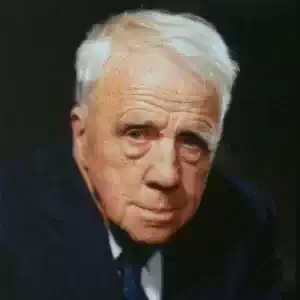
Robert Frost
The Exposed Nest
The Exposed Nest
You were forever finding some new play.
So when I saw you down on hands and knees
I the meadow, busy with the new-cut hay,
Trying, I thought, to set it up on end,
I went to show you how to make it stay,
If that was your idea, against the breeze,
And, if you asked me, even help pretend
To make it root again and grow afresh.
But 'twas no make-believe with you today,
Nor was the grass itself your real concern,
Though I found your hand full of wilted fern,
Steel-bright June-grass, and blackening heads of clovers.
'Twas a nest full of young birds on the ground
The cutter-bar had just gone champing over
(Miraculously without tasking flesh)
And left defenseless to the heat and light.
You wanted to restore them to their right
Of something interposed between their sight
And too much world at once--could means be found.
The way the nest-full every time we stirred
Stood up to us as to a mother-bird
Whose coming home has been too long deferred,
Made me ask would the mother-bird return
And care for them in such a change of scene
And might out meddling make her more afraid.
That was a thing we could not wait to learn.
We saw the risk we took in doing good,
But dared not spare to do the best we could
Though harm should come of it; so built the screen
You had begun, and gave them back their shade.
All this to prove we cared. Why is there then
No more to tell? We turned to other things.
I haven't any memory--have you?--
Of ever coming to the place again
To see if the birds lived the first night through,
And so at last to learn to use their wings.
486
Robert Frost
The Aim Was Song
The Aim Was Song
Before man to blow to right
The wind once blew itself untaught,
And did its loudest day and night
In any rough place where it caught.
Man came to tell it what was wrong:
It hadn't found the place to blow;
It blew too hard - the aim was song.
And listen - how it ought to go!
He took a little in his mouth,
And held it long enough for north
To be converted into south,
And then by measure blew it forth.
By measure. It was word and note,
The wind the wind had meant to be -
A little through the lips and throat.
The aim was song - the wind could see.
509
Robert Frost
The Bear
The Bear
The bear puts both arms around the tree above her
And draws it down as if it were a lover
And its chokecherries lips to kiss good-by,
Then lets it snap back upright in the sky.
Her next step rocks a boulder on the wall
(She's making her cross-country in the fall).
Her great weight creaks the barbed wire in its staples
As she flings over and off down through the maples,
Leaving on one wire tooth a lock of hair.
Such is the uncaged progress of the bear.
The world has room to make a bear feel free;
The universe seems cramped to you and me.
Man acts more like the poor bear in a cage,
That all day fights a nervous inward rage,
His mood rejecting all his mind suggests.
He paces back and forth and never rests
The me-nail click and shuffle of his feet,
The telescope at one end of his beat,
And at the other end the microscope,
Two instruments of nearly equal hope,
And in conjunction giving quite a spread.
Or if he rests from scientific tread,
'Tis only to sit back and sway his head
Through ninety-odd degrees of arc, it seems,
Between two metaphysical extremes.
He sits back on his fundamental butt
With lifted snout and eyes (if any) shut
(He almost looks religious but he's not),
And back and forth he sways from cheek to cheek,
At one extreme agreeing with one Greek
At the other agreeing with another Greek
Which may be thought, but only so to speak.
A baggy figure, equally pathetic
When sedentary and when peripatetic.
528
Robert Frost
Reluctance
Reluctance
Out through the fields and the woods And over the walls I have wended; I have
climbed the hills of view And looked at the world, and descended; I have come by the
highway home, And lo, it is ended. The leaves are all dead on the group, Save those
that the oak is keeping To ravel them one by one And let them go scraping and
creeping Out over the crusted snow, When others are sleeping. And the dead leaves
lie huddled and still, No longer blown hither and thither; The last long aster is gone;
The flowers of the witch-hazel wither; The heart is still aching to seek, But the feel
question 'Whither?' Ah, when to the heart of man Was it ever less than a treason To
go with the drift of things, To yield with a grace to reason, And bow and accept the end
Of a love or a season?
460
Robert Frost
Plowmen
Plowmen
A plow, they say, to plow the snow.
They cannot mean to plant it, no --
Unless in bitterness to mock
At having cultivated rock.
A plow, they say, to plow the snow.
They cannot mean to plant it, no --
Unless in bitterness to mock
At having cultivated rock.
430
Robert Frost
Plowmen
Plowmen
A plow, they say, to plow the snow.
They cannot mean to plant it, no --
Unless in bitterness to mock
At having cultivated rock.
A plow, they say, to plow the snow.
They cannot mean to plant it, no --
Unless in bitterness to mock
At having cultivated rock.
430
Robert Frost
Out, out--
Out, out--
The buzz-saw snarled and rattled in the yard
And made dust and dropped stove-length sticks of wood,
Sweet-scented stuff when the breeze drew across it.
And from there those that lifted eyes could count
Five mountain ranges one behind the other
Under the sunset far into Vermont.
And the saw snarled and rattled, snarled and rattled,
As it ran light, or had to bear a load.
And nothing happened: day was all but done.
Call it a day, I wish they might have said
To please the boy by giving him the half hour
That a boy counts so much when saved from work.
His sister stood beside them in her apron
To tell them "Supper." At the word, the saw,
As if to prove saws knew what supper meant,
Leaped out at the boy's hand, or seemed to leap--
He must have given the hand. However it was,
Neither refused the meeting. But the hand!
The boy's first outcry was a rueful laugh,
As he swung toward them holding up the hand
Half in appeal, but half as if to keep
The life from spilling. Then the boy saw all--
Since he was old enough to know, big boy
Doing a man's work, though a child at heart--
He saw all spoiled. "Don't let him cut my hand off--
The doctor, when he comes. Don't let him, sister!"
So. But the hand was gone already.
The doctor put him in the dark of ether.
He lay and puffed his lips out with his breath.
And then--the watcher at his pulse took fright.
No one believed. They listened at his heart.
Little--less--nothing!--and that ended it.
No more to build on there. And they, since they
Were not the one dead, turned to their affairs.
489
Robert Frost
On Looking Up by Chance at the Constellations
On Looking Up by Chance at the Constellations
You'll wait a long, long time for anything much
To happen in heaven beyond the floats of cloud
And the Northern Lights that run like tingling nerves.
The sun and moon get crossed, but they never touch,
Nor strike out fire from each other nor crash out loud.
The planets seem to interfere in their curves -
But nothing ever happens, no harm is done.
We may as well go patiently on with our life,
And look elsewhere than to stars and moon and sun
For the shocks and changes we need to keep us sane.
It is true the longest drout will end in rain,
The longest peace in China will end in strife.
Still it wouldn't reward the watcher to stay awake
In hopes of seeing the calm of heaven break
On his particular time and personal sight.
That calm seems certainly safe to last to-night.
470
Robert Frost
Mowing
Mowing
There was never a sound beside the wood but one,
And that was my long scythe whispering to the ground.
What was it it whispered? I knew not well myself;
Perhaps it was something about the heat of the sun,
Something, perhaps, about the lack of sound--
And that was why it whispered and did not speak.
It was no dream of the gift of idle hours,
Or easy gold at the hand of fay or elf:
Anything more than the truth would have seemed too weak
To the earnest love that laid the swale in rows,
Not without feeble-pointed spikes of flowers
(Pale orchises), and scared a bright green snake.
The fact is the sweetest dream that labour knows.
My long scythe whispered and left the hay to make.
826
Robert Frost
For once, then Something
For once, then Something
Others taught me with having knelt at well-curbs
Always wrong to the light, so never seeing
Deeper down in the well than where the water
Gives me back in a shining surface picture
Me myself in the summer heaven godlike
Looking out of a wreath of fern and cloud puffs.
Once, when trying with chin against a well-curb,
I discerned, as I thought, beyond the picture,
Through the picture, a something white, uncertain,
Something more of the depths--and then I lost it.
Water came to rebuke the too clear water.
One drop fell from a fern, and lo, a ripple
Shook whatever it was lay there at bottom,
Blurred it, blotted it out. What was that whiteness?
Truth? A pebble of quartz? For once, then, something.
438
Robert Frost
Birches
Birches
When I see birches bend to left and right
Across the lines of straighter darker trees,
I like to think some boy's been swinging them.
But swinging doesn't bend them down to stay.
Ice-storms do that. Often you must have seen them
Loaded with ice a sunny winter morning
After a rain. They click upon themselves
As the breeze rises, and turn many-coloured
As the stir cracks and crazes their enamel.
Soon the sun's warmth makes them shed crystal shells
Shattering and avalanching on the snow-crust
Such heaps of broken glass to sweep away
You'd think the inner dome of heaven had fallen.
They are dragged to the withered bracken by the load,
And they seem not to break; though once they are bowed
So low for long, they never right themselves:
You may see their trunks arching in the woods
Years afterwards, trailing their leaves on the ground,
Like girls on hands and knees that throw their hair
Before them over their heads to dry in the sun.
But I was going to say when Truth broke in
With all her matter-of-fact about the ice-storm,
I should prefer to have some boy bend them
As he went out and in to fetch the cows--
Some boy too far from town to learn baseball,
Whose only play was what he found himself,
Summer or winter, and could play alone.
One by one he subdued his father's trees
By riding them down over and over again
Until he took the stiffness out of them,
And not one but hung limp, not one was left
For him to conquer. He learned all there was
To learn about not launching out too soon
And so not carrying the tree away
Clear to the ground. He always kept his poise
To the top branches, climbing carefully
With the same pains you use to fill a cup
Up to the brim, and even above the brim.
Then he flung outward, feet first, with a swish,
Kicking his way down through the air to the ground.
So was I once myself a swinger of birches.
And so I dream of going back to be.
It's when I'm weary of considerations,
And life is too much like a pathless wood
Where your face burns and tickles with the cobwebs
Broken across it, and one eye is weeping
From a twig's having lashed across it open.
I'd like to get away from earth awhile
And then come back to it and begin over.
May no fate willfully misunderstand me
And half grant what I wish and snatch me away
Not to return. Earth's the right place for love:
I don't know where it's likely to go better.
I'd like to go by climbing a birch tree
And climb black branches up a snow-white trunk
Toward heaven, till the tree could bear no more,
But dipped its top and set me down again.
That would be good both going and coming back.
One could do worse than be a swinger of birches.
434
Robert Frost
After Apple-Picking
After Apple-Picking
My long two-pointed ladder's sticking through a tree
Toward heaven still,
And there's a barrel that I didn't fill
Beside it, and there may be two or three
Apples I didn't pick upon some bough.
But I am done with apple-picking now.
Essence of winter sleep is on the night,
The scent of apples: I am drowsing off.
I cannot rub the strangeness from my sight
I got from looking through a pane of glass
I skimmed this morning from the drinking trough
And held against the world of hoary grass.
It melted, and I let it fall and break.
But I was well
Upon my way to sleep before it fell,
And I could tell
What form my dreaming was about to take.
Magnified apples appear and disappear,
Stem end and blossom end,
And every fleck of russet showing clear.
My instep arch not only keeps the ache,
It keeps the pressure of a ladder-round.
I feel the ladder sway as the boughs bend.
And I keep hearing from the cellar bin
The rumbling sound
Of load on load of apples coming in.
For I have had too much
Of apple-picking: I am overtired
Of the great harvest I myself desired.
There were ten thousand thousand fruit to touch,
Cherish in hand, lift down, and not let fall.
For all
That struck the earth,
No matter if not bruised or spiked with stubble,
Went surely to the cider-apple heap
As of no worth.
One can see what will trouble
This sleep of mine, whatever sleep it is.
Were he not gone,
The woodchuck could say whether it's like his
Long sleep, as I describe its coming on,
Or just some human sleep.
476
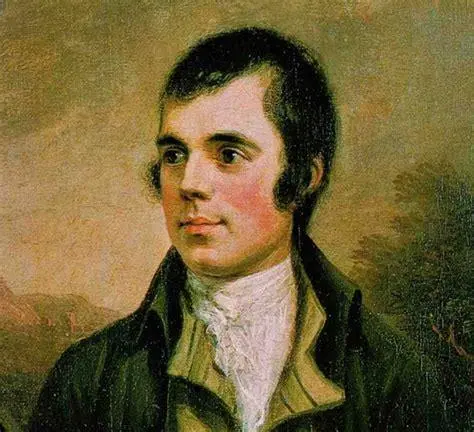
Robert Burns
Tragic Fragment
Tragic Fragment
All devil as I am-a damned wretch,
A hardened, stubborn, unrepenting villain,
Still my heart melts at human wretchedness;
And with sincere but unavailing sighs
I view the helpless children of distress:
With tears indignant I behold the oppressor
Rejoicing in the honest man's destruction,
Whose unsubmitting heart was all his crime. -
Ev'n you, ye hapless crew! I pity you;
Ye, whom the seeming good think sin to pity;
Ye poor, despised, abandoned vagabonds,
Whom Vice, as usual, has turn'd o'er to ruin.
Oh! but for friends and interposing Heaven,
I had been driven forth like you forlorn,
The most detested, worthless wretch among you!
O injured God! Thy goodness has endow'd me
With talents passing most of my compeers,
Which I in just proportion have abused-
As far surpassing other common villains
As Thou in natural parts has given me more.
243
Robert Burns
Tibbie Dunbar
Tibbie Dunbar
O, wilt thou go wi' me,
Sweet Tibbie Dunbar?
O, wilt thou go wi' me,
Sweet Tibbie Dunbar?
Wilt thou ride on a horse,
Or be drawn in a car,
Or walk by my side,
O sweet Tibbie Dunbar?
I care na thy daddie,
His lands and his money,
I care na thy kin
Sae high and sae lordly;
But say thou wilt ha'e me
For better for waur—
And come in thy coatie,
Sweet Tibbie Dunbar!
O, wilt thou go wi' me,
Sweet Tibbie Dunbar?
O, wilt thou go wi' me,
Sweet Tibbie Dunbar?
Wilt thou ride on a horse,
Or be drawn in a car,
Or walk by my side,
O sweet Tibbie Dunbar?
I care na thy daddie,
His lands and his money,
I care na thy kin
Sae high and sae lordly;
But say thou wilt ha'e me
For better for waur—
And come in thy coatie,
Sweet Tibbie Dunbar!
243
Robert Burns
The Tarbolton Lasses
The Tarbolton Lasses
If ye gae up to yon hill-tap,
Ye'll there see bonie Peggy;
She kens her father is a laird,
And she forsooth's a leddy.
There Sophy tight, a lassie bright,
Besides a handsome fortune:
Wha canna win her in a night,
Has little art in courtin'.
Gae down by Faile, and taste the ale,
And tak a look o' Mysie;
She's dour and din, a deil within,
But aiblins she may please ye.
If she be shy, her sister try,
Ye'll maybe fancy Jenny;
If ye'll dispense wi' want o' sense-
She kens hersel she's bonie.
As ye gae up by yon hillside,
Speir in for bonie Bessy;
She'll gie ye a beck, and bid ye light,
And handsomely address ye.
There's few sae bonie, nane sae guid,
In a' King George' dominion;
If ye should doubt the truth o' this-
It's Bessy's ain opinion!
273
Robert Burns
The Wounded Hare
The Wounded Hare
Inhuman man! curse on thy barb'rous art,
And blasted by thy murder-aiming eye;
May never pity soothe thee with a sigh,
Nor never pleasure glad thy cruel heart!
Go live, poor wanderer of the wood and field,
The bitter little of life that remains!
No more the thickening brakes and verdant plains
To thee shall home, or food, or pastime yield.
Seek, mangled wretch, some place of wonted rest,
No more of rest, but now of dying bed!
The sheltering rushes whistling o'er thy head,
The cold earth with thy bloody bosom Crest.
Oft as by winding Nith I, musing, wait
The sober eve, or hail the cheerful dawn,
I'll miss thee sporting o'er the dewy lawn,
And curse the ruffian's aim, and mourn thy hapless fate.
296
Robert Burns
The Gloomy Night Is Gath'ring Fast
The Gloomy Night Is Gath'ring Fast
The gloomy night is gath'ring fast,
Loud roars the wild inconstant blast;
Yon murky cloud is filled with rain,
I see it driving o'er the plain;
The hunter now has left the moor,
The scatt'red coveys meet secure;
While here I wander, prest with care,
Along the lonely banks of Ayr.
The Autumn mourns her rip'ning corn
By early Winter's ravage torn;
Across her placid, azure sky,
She sees the scowling tempest fly;
Chill runs my blood to hear it rave:
I think upon the stormy wave,
Where many a danger I must dare,
Far from the bonie banks of Ayr.
'Tis not the surging billows' roar,
'Tis not the fatal, deadly shore;
Tho' death inev'ry shape appear,
The wretched have no more to fear:
But round my heart the ties are bound,
That heart transpierc'd with many a wound;
These bleed afresh, those ties I tear,
To leave the bonie banks of Ayr.
Farewell, old Coila's hills and dales,
Her heathy moors and winding vales;
The scenes where wretched Fancy roves,
Pursuing past, unhappy loves!
Farewell my friends! Farewell my foes!
My peace with these, my love with those--
The bursting tears my heart declare,
Farewell, my bonie banks of Ayr.
254
Robert Burns
The Lass That Made the Bed to Me
The Lass That Made the Bed to Me
When Januar' wind was blawing cauld,
As to the north I took my way,
The mirksome night did me enfauld,
I knew na whare to lodge till day:
By my gude luck a maid I met,
Just in the middle o' my care,
And Kindly she did me invite
To walk into a chamber fair.
I bow'd fu' low unto this maid,
And thank'd her for her courtesie;
I bow'd fu' low unto this maid,
An bade her make a bed to me;
She made the bed baith large and wide,
Wi' twa white hands she spread it doun;
She put the cup to her rosy lips,
And drank - "Young man, now sleep ye soun'."
Chorus - The bonie lass made the bed to me,
The braw lass made the bed to me,
I'll ne'er forget till the day I die,
The lass that made the bed to me.
She snatch'd the candle in her hand,
And frae my chamber went wi' speed;
But I call'd her quickly back again,
To lay some mair below my head:
A cod she laid below my head,
And served me with due respect,
And, to salute her wi' a kis,
I put my arms about her neck.
Chorus: -...
"Haud aff your hands, young man! she said,
"And dinna sae uncivil be;
Gif ye hae ony luve for me,
O wrang ma my virginitie."
Her hair was like the links o' gowd,
Her teeth were like the ivorie,
Her cheeks like lilies dipt in wine,
The lass that made the bed to me.
Chorus: -...
Her bosom was the driven snaw,
Twa drifted heaps sae fair to see;
Her limbs the polish'd marble stane,
The lass that made the bed to me.
I kiss'd her o'er and o'er again,
And aye she wist na what to say:
I laid her 'tween me and the wa';
The lassie thocht na lang till day.
Chorus: -...
Upon the morrow when we raise,
I thank'd her for her courtesie;
But aye she blush'd and aye she sigh'd,
And said, "Alas, ye've ruin'd me."
I clasp'd her waist, and kiss'd her syne,
While the tear stood twinklin' in her e'e;
I said, "My lassie, dinna cry,
For ye aye shall make the bed to me."
Chorus: - ...
She took her mither's holland sheets,
An' made them a' in sarks to me;
Blythe and merry may she be,
The lass that made the bed to me.
Chorus: -...
278
Robert Burns
The Death and Dying Words of Poor Mailie
The Death and Dying Words of Poor Mailie
The Author's Only Pet Yowe
An Unco Mournfu' Tale
As Mailie, an' her lambs thegither,
Was ae day nibbling on the tether,
Upon her cloot she coost a hitch,
An owre she warsl'd in the ditch:
There, groaning, dying, she did lie,
When Hughoc he cam doytin by.
Wi' glowrin een, and lifted han's
Poor Hughoc like a statue stan's;
He saw her days were near-hand ended,
But, wae's my heart! he could na mend it!
He gaped wide, but naething spak,
At length poor Mailie silence brak.
"O thou, whase lamentable face
Appears to mourn my woefu' case!
My dying words attentive hear,
An' bear them to my Master dear.
"Tell him, if e'er again he keep
As muckle gear as buy a sheep -
O, bid him never tie them mair,
Wi' wicked strings o' hemp or hair!
But ca' them out to park or hill,
An' let them wander at their will:
So may his flock increase, an' grow
To scores o' lambs, an' packs o' woo'!
"Tell him, he was a Master kin',
An' aye was guid to me an' mine;
An now my dying charge I gie him,
My helpless lambs, I trust them wi' him.
"O, bid him save their harmless lives,
Frae dogs, an' tods, an' butchers' knives!
But gie them guid cow-milk their fill,
Till they be fit to fend themsel';
An' tent them duly, e'en an' morn,
Wi' taets o' hay an' ripps o' corn.
"An' may they never learn the gates,
Of ither vile, wanrestfu' pets -
To slink thro' slaps, an' reave an' steal
At stacks o' pease, or stocks o' kail!
So may they, like their great forbears,
For mony a year come thro' the shears:
So wives will gie them bits o' bread,
An bairns greet for them when they're dead.
"My poor toop-lamb, my son an' heir,
O, bid him breed him up wi' care!
An' if he live to be a beast,
To pit some havins in his breast!
An' warn him - what I winna name -
To stay content wi' yowes at hame;
An' no to rin an' wear his cloots,
Like ither meseless, graceless brutes.
"An' neist, my yowie, silly thing,
Gude keep thee frae a tether string!
O, may thou ne'er forgather up,
Wi' ony blastit, moorland toop;
But aye keep mind to moop an' mell,
Wi' sheep o' credit like thysel'!
"And now, my bairns, wi' my last breath,
I lea'e my blessin wi' you baith:
An' when you think upo' your mither,
Mind to be kind to ane anither.
"Now, honest Hughoc, dinna fail,
To tell my master a' my tale;
An' bid him burn this cursed tether,
An' for thy pains thou'se get my blather."
This said, poor Mailie turn'd her head,
An' closed her een amang the dead!
274
Robert Burns
The Battle Of Sherramuir
The Battle Of Sherramuir
"O cam ye here the fight to shun,
Or herd the sheep wi' me, man?
Or were ye at the Sherra-moor,
Or did the battle see, man?"
"I saw the battle, sair and teugh
And reekin-red ran monie a sheugh;
My heart, for fear, gae sough for sough,
To hear the thuds, and see the cluds
O clans frae woods in tartan duds
Wha glaum'd at icingdoms three, man.
"The red-coat lads wi' black cockauds,
To meet them were na slaw, man;
They rush'd and push'd, and bluid outgush'd,
And monie a bouk did fa', man!
The great Argyle led on his files,
I wat they glanc'd for twenty miles;
They hough'd the clans like nine-pin kyles,
They hack'd and hash'd, while braid-swords clashed,
And thro they dash'd, and hew'd and smash'd,
Till fey men died awa, man.
"But had ye seen the philibegs,
And skyrin tartan trews, man;
When in the teeth they daur'd our Whigs,
And Covenant trueblues, man!
In lines extended lang and large,
When baig'nets o'erpower'd the targe,
And thousands hasten'd to the charge,
Wi' Highland wrath and frac the sheath
Drew blades o' death, till, out o' breath.
They fled like frightened dows, man!"
"O, how Deil, Tam, can that be true?
The chase gaed frae the north, man!
I saw mysel, they did pursue
The horseman back to Forth, man:
And at Dunblane, in my ain sight,
They took the brig wi a' their might
And straught to Stirling wing'd their flight;
But, cursed lot! the gates were shut,
And monie a huntit poor red-coat,
For fear amaist did swarf, man!"
My sister Kate came up the gate
Wi' crowdie unto me, man:
She swoor she saw some rebels run
To Perth and to Dundee, man!
Their left-hand general had nae skill;
The Angus lads had nae good will
That day their neebors' bluid to spill;
For fear, by foes, that they should lose
Their cogs o brose; they scar'd at blows,
And hameward fast did flee, man.
"They've lost some gallant gentlemen,
Amang the Highland clans, man!
I fear my Lord Panmure is slain,
Or in his en'mies' hands, man.
Now wad ye sing this double flight,
Some fell for wrang, and some for right,
But monie bade the world guid-night;
Say, pell and mell, wi' muskets' knell
How Tories feil, and Whigs to Hell
Flew off in frightened bands, man!"
286