

Poems in this topic
Nature and Elements
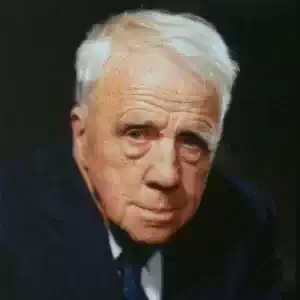
Robert Frost
Evening In A Sugar Orchard
Evening In A Sugar Orchard
From where I lingered in a lull in march
outside the sugar-house one night for choice,
I called the fireman with a careful voice
And bade him leave the pan and stoke the arch:
'O fireman, give the fire another stoke,
And send more sparks up chimney with the smoke.'
I thought a few might tangle, as they did,
Among bare maple boughs, and in the rare
Hill atmosphere not cease to glow,
And so be added to the moon up there.
The moon, though slight, was moon enough to show
On every tree a bucket with a lid,
And on black ground a bear-skin rug of snow.
The sparks made no attempt to be the moon.
They were content to figure in the trees
As Leo, Orion, and the Pleiades.
And that was what the boughs were full of soon.
571
Robert Frost
Devotion
Devotion
The heart can think of no devotion
Greater than being shore to ocean -
Holding the curve of one position,
Counting an endless repetition.
The heart can think of no devotion
Greater than being shore to ocean -
Holding the curve of one position,
Counting an endless repetition.
492
Robert Frost
But outer Space
But outer Space
But outer Space,
At least this far,
For all the fuss
Of the populace
Stays more popular
Than populous
But outer Space,
At least this far,
For all the fuss
Of the populace
Stays more popular
Than populous
442
Robert Frost
Asking for Roses
Asking for Roses
A house that lacks, seemingly, mistress and master,
With doors that none but the wind ever closes,
Its floor all littered with glass and with plaster;
It stands in a garden of old-fashioned roses.
I pass by that way in the gloaming with Mary;
'I wonder,' I say, 'who the owner of those is.'
'Oh, no one you know,' she answers me airy,
'But one we must ask if we want any roses.'
So we must join hands in the dew coming coldly
There in the hush of the wood that reposes,
And turn and go up to the open door boldly,
And knock to the echoes as beggars for roses.
'Pray, are you within there, Mistress Who-were-you?'
'Tis Mary that speaks and our errand discloses.
'Pray, are you within there? Bestir you, bestir you!
'Tis summer again; there's two come for roses.
'A word with you, that of the singer recalling--
Old Herrick: a saying that every maid knows is
A flower unplucked is but left to the falling,
And nothing is gained by not gathering roses.'
We do not loosen our hands' intertwining
(Not caring so very much what she supposes),
There when she comes on us mistily shining
And grants us by silence the boon of her roses.
475
Robert Frost
Acquainted with the Night
Acquainted with the Night
I have been one acquainted with the night.
I have walked out in rain -- and back in rain.
I have outwalked the furthest city light.
I have looked down the saddest city lane.
I have passed by the watchman on his beat
And dropped my eyes, unwilling to explain.
I have stood still and stopped the sound of feet
When far away an interrupted cry
Came over houses from another street,
But not to call me back or say good-bye;
And further still at an unearthly height,
A luminary clock against the sky
Proclaimed the time was neither wrong nor right.
I have been one acquainted with the night.
I have been one acquainted with the night.
I have walked out in rain -- and back in rain.
I have outwalked the furthest city light.
I have looked down the saddest city lane.
I have passed by the watchman on his beat
And dropped my eyes, unwilling to explain.
I have stood still and stopped the sound of feet
When far away an interrupted cry
Came over houses from another street,
But not to call me back or say good-bye;
And further still at an unearthly height,
A luminary clock against the sky
Proclaimed the time was neither wrong nor right.
I have been one acquainted with the night.
497
Robert Frost
A Line-Storm Song
A Line-Storm Song
The line-storm clouds fly tattered and swift,
The road is forlorn all day,
Where a myriad snowy quartz stones lift,
And the hoof-prints vanish away.
The roadside flowers, too wet for the bee,
Expend their bloom in vain.
Come over the hills and far with me,
And be my love in the rain.
The birds have less to say for themselves
In the wood-world’s torn despair
Than now these numberless years the elves,
Although they are no less there:
All song of the woods is crushed like some
Wild, easily shattered rose.
Come, be my love in the wet woods; come,
Where the boughs rain when it blows.
There is the gale to urge behind
And bruit our singing down,
And the shallow waters aflutter with wind
From which to gather your gown.
What matter if we go clear to the west,
And come not through dry-shod?
For wilding brooch shall wet your breast
The rain-fresh goldenrod.
Oh, never this whelming east wind swells
But it seems like the sea’s return
To the ancient lands where it left the shells
Before the age of the fern;
And it seems like the time when after doubt
Our love came back amain.
Oh, come forth into the storm and rout
And be my love in the rain.
778
Robert Frost
In White: Frost's Early Version Of Design
"In White": Frost's Early Version Of Design
A dented spider like a snow drop white
On a white Heal-all, holding up a moth
Like a white piece of lifeless satin cloth -
Saw ever curious eye so strange a sight? -
Portent in little, assorted death and blight
Like the ingredients of a witches' broth? -
The beady spider, the flower like a froth,
And the moth carried like a paper kite.
What had that flower to do with being white,
The blue prunella every child's delight.
What brought the kindred spider to that height?
(Make we no thesis of the miller's plight.)
What but design of darkness and of night?
Design, design! Do I use the word aright?
Anonymous submission.
380
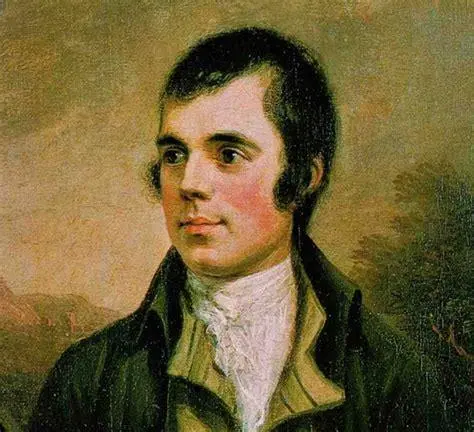
Robert Burns
Winter: A Dirge
Winter: A Dirge
The wintry west extends his blast,
And hail and rain does blaw;
Or the stormy north sends driving forth
The blinding sleet and snaw:
While, tumbling brown, the burn comes down,
And roars frae bank to brae;
And bird and beast in covert rest,
And pass the heartless day.
"The sweeping blast, the sky o'ercast,"
The joyless winter day
Let others fear, to me more dear
Than all the pride of May:
The tempest's howl, it soothes my soul,
My griefs it seems to join;
The leafless trees my fancy please,
Their fate resembles mine!
Thou Power Supreme, whose mighty scheme
These woes of mine fulfil,
Here firm I rest; they must be best,
Because they are Thy will!
Then all I want-O do Thou grant
This one request of mine!-
Since to enjoy Thou dost deny,
Assist me to resign.
290
Robert Burns
To a Mountain Daisy
To a Mountain Daisy
Wee, modest, crimson-tippèd flow'r,
Thou's met me in an evil hour;
For I maun crush amang the stoure
Thy slender stem:
To spare thee now is past my pow'r,
Thou bonie gem.
Alas! it's no thy neibor sweet,
The bonie lark, companion meet,
Bending thee 'mang the dewy weet
Wi' spreck'd breast,
When upward-springing, blythe, to greet
The purpling east.
Cauld blew the bitter-biting north
Upon thy early, humble birth;
Yet cheerfully thou glinted forth
Amid the storm,
Scarce rear'd above the parent-earth
Thy tender form.
The flaunting flowers our gardens yield
High shelt'ring woods an' wa's maun shield:
But thou, beneath the random bield
O' clod or stane,
Adorns the histie stibble-field
Unseen, alane.
There, in thy scanty mantle clad,
Thy snawie-bosom sun-ward spread,
Thou lifts thy unassuming head
In humble guise;
But now the share uptears thy bed,
And low thou lies!
Such is the fate of artless maid,
Sweet flow'ret of the rural shade!
By love's simplicity betray'd
And guileless trust;
Till she, like thee, all soil'd, is laid
Low i' the dust.
Such is the fate of simple bard,
On life's rough ocean luckless starr'd!
Unskilful he to note the card
Of prudent lore,
Till billows rage and gales blow hard,
And whelm him o'er!
Such fate to suffering Worth is giv'n,
Who long with wants and woes has striv'n,
By human pride or cunning driv'n
To mis'ry's brink;
Till, wrench'd of ev'ry stay but Heav'n,
He ruin'd sink!
Ev'n thou who mourn'st the Daisy's fate,
That fate is thine--no distant date;
Stern Ruin's ploughshare drives elate,
Full on thy bloom,
Till crush'd beneath the furrow's weight
Shall be thy doom.
313
Robert Burns
To a Mouse, on Turning Up Her Nest With the Plough
To a Mouse, on Turning Up Her Nest With the Plough
Wee, sleeket, cowrin, tim'rous beastie,
Oh, what a panic's in thy breastie!
Thou need na start awa sae hasty
Wi' bickerin brattle!
I wad be laith to rin an' chase thee
Wi' murd'ring pattle!
I'm truly sorry man's dominion
Has broken Nature's social union,
An' justifies that ill opinion
Which makes thee startle
At me, thy poor earth-born companion,
An' fellow-mortal!
I doubt na, whyles, but thou may thieve:
What then? poor beastie, thou maun live!
A daimen icker in a thrave
'S a sma' request;
I'll get a blessin wi' the lave,
An' never miss 't!
Thy wee bit housie, too, in ruin!
Its silly wa's the win's are strewin!
An' naething, now, to big a new ane,
O' foggage green!
An' bleak December's winds ensuin
Baith snell an' keen!
Thou saw the fields laid bare an' wast,
An' weary winter comin fast,
An' cozie here beneath the blast
Thou thought to dwell,
Till crash! the cruel coulter past
Out thro' thy cell.
That wee bit heap o' leaves an' stibble
Has cost thee monie a weary nibble!
Now thou's turn'd out for a' thy trouble,
But house or hald,
To thole the winter's sleety dribble
An' cranreuch cauld!
But, Mousie, thou art no thy lane
In proving foresight may be vain:
The best laid schemes o' mice an' men
Gang aft agley,
An' lea'e us nought but grief an' pain
For promis'd joy.
Still thou art blest, compar'd wi' me!
The present only toucheth thee:
But, och! I backward cast my e'e
On prospects drear!
An' forward, tho' I canna see,
I guess an' fear!
290
Robert Burns
To A Louse
To A Louse
On Seeing One on a Lady's Bonnet at Church
Ha! whare ye gaun' ye crowlin ferlie?
Your impudence protects you sairly;
I canna say but ye strunt rarely
Owre gauze and lace,
Tho faith! I fear ye dine but sparely
On sic a place.
Ye ugly, creepin, blastit wonner,
Detested, shunn'd by saunt an sinner,
How daur ye set your fit upon her---
Sae fine a lady!
Gae somewhere else and seek your dinner
On some poor body.
Swith! in some beggar's hauffet squattle;
There ye may creep, and sprawl, and sprattle;
Wi' ither kindred, jumping cattle;
In shoals and nations;
Whare horn nor bane ne'er daur unsettle
Your thick plantations.
Now haud you there! ye're out o' sight,
Below the fatt'rils, snug an tight,
Na, faith ye yet! ye'll no be right,
Till ye've got on it---
The vera tapmost, tow'rin height
O' Miss's bonnet.
My sooth! right bauld ye set your nose out,
As plump an grey as onie grozet:
O for some rank, mercurial rozet,
Or fell, red smeddum,
I'd gie you sic a hearty dose o't,
Wad dress your droddum!
I wad na been surpris'd to spy
You on an auld wife's flainen toy
Or aiblins some bit duddie boy,
On's wyliecoat;
But Miss's fine Lunardi! fye!
How daur ye do't?
O Jeany, dinna toss your head,
An set your beauties a' abread!
Ye little ken what cursed speed
The blastie's makin!
Thae winks an finger-ends, I dread,
Are notice takin!
O wad some Power the giftie gie us
To see oursels as ithers see us!
It wad frae monie a blunder free us
An foolish notion:
What airs in dress an gait wad lea'es us,
An ev'n devotion!
352
Robert Burns
The Wounded Hare
The Wounded Hare
Inhuman man! curse on thy barb'rous art,
And blasted by thy murder-aiming eye;
May never pity soothe thee with a sigh,
Nor never pleasure glad thy cruel heart!
Go live, poor wanderer of the wood and field,
The bitter little of life that remains!
No more the thickening brakes and verdant plains
To thee shall home, or food, or pastime yield.
Seek, mangled wretch, some place of wonted rest,
No more of rest, but now of dying bed!
The sheltering rushes whistling o'er thy head,
The cold earth with thy bloody bosom Crest.
Oft as by winding Nith I, musing, wait
The sober eve, or hail the cheerful dawn,
I'll miss thee sporting o'er the dewy lawn,
And curse the ruffian's aim, and mourn thy hapless fate.
296
Robert Burns
The Death and Dying Words of Poor Mailie
The Death and Dying Words of Poor Mailie
The Author's Only Pet Yowe
An Unco Mournfu' Tale
As Mailie, an' her lambs thegither,
Was ae day nibbling on the tether,
Upon her cloot she coost a hitch,
An owre she warsl'd in the ditch:
There, groaning, dying, she did lie,
When Hughoc he cam doytin by.
Wi' glowrin een, and lifted han's
Poor Hughoc like a statue stan's;
He saw her days were near-hand ended,
But, wae's my heart! he could na mend it!
He gaped wide, but naething spak,
At length poor Mailie silence brak.
"O thou, whase lamentable face
Appears to mourn my woefu' case!
My dying words attentive hear,
An' bear them to my Master dear.
"Tell him, if e'er again he keep
As muckle gear as buy a sheep -
O, bid him never tie them mair,
Wi' wicked strings o' hemp or hair!
But ca' them out to park or hill,
An' let them wander at their will:
So may his flock increase, an' grow
To scores o' lambs, an' packs o' woo'!
"Tell him, he was a Master kin',
An' aye was guid to me an' mine;
An now my dying charge I gie him,
My helpless lambs, I trust them wi' him.
"O, bid him save their harmless lives,
Frae dogs, an' tods, an' butchers' knives!
But gie them guid cow-milk their fill,
Till they be fit to fend themsel';
An' tent them duly, e'en an' morn,
Wi' taets o' hay an' ripps o' corn.
"An' may they never learn the gates,
Of ither vile, wanrestfu' pets -
To slink thro' slaps, an' reave an' steal
At stacks o' pease, or stocks o' kail!
So may they, like their great forbears,
For mony a year come thro' the shears:
So wives will gie them bits o' bread,
An bairns greet for them when they're dead.
"My poor toop-lamb, my son an' heir,
O, bid him breed him up wi' care!
An' if he live to be a beast,
To pit some havins in his breast!
An' warn him - what I winna name -
To stay content wi' yowes at hame;
An' no to rin an' wear his cloots,
Like ither meseless, graceless brutes.
"An' neist, my yowie, silly thing,
Gude keep thee frae a tether string!
O, may thou ne'er forgather up,
Wi' ony blastit, moorland toop;
But aye keep mind to moop an' mell,
Wi' sheep o' credit like thysel'!
"And now, my bairns, wi' my last breath,
I lea'e my blessin wi' you baith:
An' when you think upo' your mither,
Mind to be kind to ane anither.
"Now, honest Hughoc, dinna fail,
To tell my master a' my tale;
An' bid him burn this cursed tether,
An' for thy pains thou'se get my blather."
This said, poor Mailie turn'd her head,
An' closed her een amang the dead!
274
Robert Burns
The Auld Farmer's New-Year-Morning Salutation to His Auld Mare , Maggie
The Auld Farmer's New-Year-Morning Salutation to His Auld Mare , Maggie
A Guide New-year I wish thee, Maggie!
Hae, there's a ripp to thy auld baggie:
Tho' thou's howe-backit now, an' knaggie,
I've seen the day
There could hae gaen like ony staggie,
Out-owre the lay.
Tho' now thou's dowie, stiff an' crazy,
An' thy auld hide as white's a daisie,
I've seen the dappl't, sleek an' glaizie,
A bonie gray:
He should been tight that daur't to raize thee,
Ance in a day.
Thou ance was i' the foremost rank,
A filly buirdly, steeve an' swank;
An' set weel down a shapely shank,
As e'er tread yird;
An' could hae flown out-owre a stank,
Like ony bird.
It's now some nine-an'-twenty year,
Sin' thou was my guid-father's mear;
He gied me thee, o' tocher clear,
An' fifty mark;
Tho' it was sma', 'twas weel-won gear,
An' thou was stark.
When first I gaed to woo my Jenny,
Ye then was trotting wi' your minnie:
Tho' ye was trickie, slee, an funnie,
Ye ne'er was donsie;
But hamely, tawie, quiet, an' cannie,
An' unco sonsie.
That day, ye pranc'd wi' muckle pride,
When ye bure hame my bonie bride:
An' sweet an' gracefu' she did ride,
Wi' maiden air!
Kyle-Stewart I could bragged wide
For sic a pair.
Tho' now ye dow but hoyte and hobble,
An' wintle like a saumont coble,
That day, ye was a jinker noble,
For heels an' win'!
An' ran them till they a' did wauble,
Far, far, behin'!
When thou an' I were young an' skeigh
An' stable-meals at fairs were dreigh,
How thou wad prance, and snore, an' skreigh
An' tak the road!
Town's-bodies ran, an' stood abeigh,
An' ca't thee mad.
When thou was corn't, an' I was mellow,
We took the road aye like a swallow:
At brooses thou had ne'er a fellow,
For pith an' speed;
But ev'ry tail thou pay't them hollow,
Whare'er thou gaed.
The sma', droop-rumpl't, hunter cattle
Might aiblins waurt thee for a brattle;
But sax Scotch mile, thou try't their mettle,
An' gar't them whaizle:
Nae whip nor spur, but just a wattle
O' saugh or hazel.
Thou was a noble fittie-lan',
As e'er in tug or tow was drawn!
Aft thee an' I, in aught hours' gaun,
In guid March-weather,
Hae turn'd sax rood beside our han',
For days thegither.
Thou never braing't, an' fetch't, an' fliskit;
But thy auld tail thou wad hae whiskit,
An' spread abreed thy weel-fill'd brisket,
Wi' pith an' power;
Till sprittie knowes wad rair't an' riskit
An' slypet owre.
When frosts lay lang, an' snaws were deep,
An' threaten'd labour back to keep,
I gied thy cog a wee bit heap
Aboon the timmer:
I ken'd my Maggie wad na sleep,
For that, or simmer.
In cart or car thou never reestit;
The steyest brae thou wad hae fac't it;
Thou never lap, an' sten't, and breastit,
Then stood to blaw;
But just thy step a wee thing hastit,
Thou snoov't awa.
My pleugh is now thy bairn-time a',
Four gallant brutes as e'er did draw;
Forbye sax mae I've sell't awa,
That thou hast nurst:
They drew me thretteen pund an' twa,
The vera warst.
Mony a sair daurk we twa hae wrought,
An' wi' the weary warl' fought!
An' mony an anxious day, I thought
We wad be beat!
Yet here to crazy age we're brought,
Wi' something yet.
An' think na', my auld trusty servan',
That now perhaps thou's less deservin,
An' thy auld days may end in starvin;
For my last fow,
A heapit stimpart, I'll reserve ane
Laid by for you.
We've worn to crazy years thegither;
We'll toyte about wi' ane anither;
Wi' tentie care I'll flit thy tether
To some hain'd rig,
Whare ye may nobly rax your leather,
Wi' sma' fatigue.
340
Robert Burns
Rigs O' Barley, The
Rigs O' Barley, The
It was upon a Lammas night,
When corn rigs are bonnie,
Beneath the moon's unclouded light,
I held away to Annie:
The time flew by wi' tentless heed
Till 'tween the late and early,
Wi' sma' persuasion, she agreed
To see me thro' the barley.
Corn rigs, an' barley rigs,
An' corn rigs are bonnie:
I'll ne'er forget that happy night,
Amang the rigs wi' Annie.
The sky was blue, the wind was still,
The moon was shining clearly:
I set her down, wi' right good will,
Amang the rigs o' barley:
I ken't her heart was a' my ain:
I lov'd her most sincerely;
I kiss'd her owre and owre again,
Amang the rigs o' barley.
Corn rigs...
I lock'd her in my fond embrace;
Her heart was beating rarely:
My blessings on that happy place,
Amang the rigs o' barley!
But by the moon and stars so bright,
That shone that hour so clearly!
She aye shall bless that happy night,
Amang the rigs o' barley.
Corn rigs...
I ha'e been blythe wi' comrades dear;
I ha'e been merry drinkin';
I ha'e been joyfu' gatherin' gear;
I ha'e been happy thinkin':
But a' the pleasures e'er I saw,
Tho' three times doubled fairly,
That happy night was worth then a',
Amang the rigs o' barley.
Corn rigs...
299
Robert Burns
Poor Mailie's Elegy
Poor Mailie's Elegy
Lament in rhyme, lament in prose,
Wi' saut tears tricklin down your nose;
Our bardie's fate is at a close,
Past a' remead!
The last, sad cape-stane o' his woes;
Poor Mailie's dead!
It's no the loss o' warl's gear,
That could sae bitter draw the tear,
Or mak our bardie, dowie, wear
The mourning weed:
He's lost a friend an' neebor dear
In Mailie dead.
Thro' a' the town she trotted by him;
A lang half-mile she could descry him;
Wi kindly bleat, when she did spy him,
She ran wi' speed:
A friend mair faithfu' ne'er cam nigh him,
Than Mailie dead.
I wat she was a sheep o' sense,
An' could behave hersel' wi' mense:
I'll say't, she never brak a fence,
Thro' thievish greed.
Our bardie, lanely, keeps the spence
Sin' Mailie's dead.
Or, if he wanders up the howe,
Her livin image in her yowe
Comes bleating till him, owre the knowe,
For bits o' bread;
An' down the briny pearls rowe
For Mailie dead.
She was nae get o' moorland tips,
Wi' tauted ket, an' hairy hips;
For her forbears were brought in ships,
Frae 'yont the Tweed.
A bonier fleesh ne'er cross'd the clips
Than Mailie's dead.
Wae worth the man wha first did shape
That vile, wanchancie thing - a raip!
It maks guid fellows girn an' gape,
Wi' chokin dread;
An' Robin's bonnet wave wi' crape
For Mailie dead.
O, a' ye bards on bonie Doon!
An' wha on Ayr your chanters tune!
Come, join the melancholious croon
O' Robin's reed!
His heart will never get aboon -
His Mailie's dead!
242
Robert Burns
Peggy
Peggy
Now westlin winds and slaught'ring guns
Bring autumn's pleasant weather;
And the moorcock springs, on whirring wings,
Amang the blooming heather;
Now waving grain, wide o'er the plain,
Delights the weary farmer;
And the moon shines bright, when I rove at night.
To muse upou my charmer.
The partridge loves the fruitful fells;
The plover loves the mountains;
The woodcock haunts tbe lonely dell;
The soaring hern the fountains:
Thro' lofty groves the cushat roves,
The path of man to shun it;
The hazel bush o'erhangs the thrush,
The spreading thorn the linnet.
Thus ev'ry kind their pleasure find,
The savage and the tender;
Some social join, and leagues combine
Some solitary wander:
Avaunt, away, the cruel sway!
Tyrannic man's dominion;
The sportsman's joy, the murd'ring cry,
The flutt'ring, gory pinion!
But Peggy dear, the evening's clear,
Thick flies the skimming swallow;
The sky is blue, the fields in view,
All fading-green and yellow:
Come let us stray our gladsome way,
And view the charms of nature;
The rustling corn, the fruited thorn,
And every happy creature.
We'll gently walk, and sweetly talk,
Till the silent moon shine clearly;
I'll grasp thy waist, and, fondly prest,
Swear how I love thee dearly:
Not vernal show'rs to budding flow'rs,
Not autumn to the farmer,
So dear can be as thou to me,
My fair, my lovely charmer!
My Love is Like a Red, Red Rose
O, my luve is like a red, red rose,
That's newly sprung in June.
O, my love is like a melodie,
That's sweetly play'd in tune.
As fair thou art, my bonnie lass,
So deep in luve am I,
And I will luve thee still, my dear,
Till a' the seas gang dry.
Till a' the seas gang dry, my dear,
And the rocks melt wi' the sun!
And I will luve thee still, my dear,
While the sands of life shall run.
And fare the weel, my only luve!
And fare the well awhile!
And I will come again, my love.
Tho' it were ten thousand mile!
360
Robert Burns
Lines on the Fall of Fyers Near Loch Ness
Lines on the Fall of Fyers Near Loch Ness
Among the heathy hills and ragged woods
The roaring Fyers pours his mossy floods;
Till full he dashes on the rocky mounds,
Where, thro' a shapeless breach, his stream resounds.
As high in air the bursting torrents flow,
As deep recoiling surges foam below,
Prone down the rock the whitening sheet descends,
And viewless Echo's ear, astonished, rends.
Dim-seen, through rising mists and ceaseless show'rs,
The hoary cavern, wide surrounding, lours:
Still thro' the gap the struggling river toils,
And still, below, the horrid cauldron boils -
292
Robert Burns
Auld Farmer's New-Year-Morning Salutation to His Auld Mare, Maggie On
Auld Farmer's New-Year-Morning Salutation to His Auld Mare, Maggie On
giving her the accustomed ripp of corn to hansel in the New-Year, The
A Guide New-year I wish thee, Maggie!
Hae, there's a ripp to thy auld baggie:
Tho' thou's howe-backit now, an' knaggie,
I've seen the day
There could hae gaen like ony staggie,
Out-owre the lay.
Tho' now thou's dowie, stiff an' crazy,
An' thy auld hide as white's a daisie,
I've seen the dappl't, sleek an' glaizie,
A bonie gray:
He should been tight that daur't to raize thee,
Ance in a day.
Thou ance was i' the foremost rank,
A filly buirdly, steeve an' swank;
An' set weel down a shapely shank,
As e'er tread yird;
An' could hae flown out-owre a stank,
Like ony bird.
It's now some nine-an'-twenty year,
Sin' thou was my guid-father's mear;
He gied me thee, o' tocher clear,
An' fifty mark;
Tho' it was sma', 'twas weel-won gear,
An' thou was stark.
When first I gaed to woo my Jenny,
Ye then was trotting wi' your minnie:
Tho' ye was trickie, slee, an funnie,
Ye ne'er was donsie;
But hamely, tawie, quiet, an' cannie,
An' unco sonsie.
That day, ye pranc'd wi' muckle pride,
When ye bure hame my bonie bride:
An' sweet an' gracefu' she did ride,
Wi' maiden air!
Kyle-Stewart I could bragged wide
For sic a pair.
Tho' now ye dow but hoyte and hobble,
An' wintle like a saumont coble,
That day, ye was a jinker noble,
For heels an' win'!
An' ran them till they a' did wauble,
Far, far, behin'!
When thou an' I were young an' skeigh
An' stable-meals at fairs were dreigh,
How thou wad prance, and snore, an' skreigh
An' tak the road!
Town's-bodies ran, an' stood abeigh,
An' ca't thee mad.
When thou was corn't, an' I was mellow,
We took the road aye like a swallow:
At brooses thou had ne'er a fellow,
For pith an' speed;
But ev'ry tail thou pay't them hollow,
Whare'er thou gaed.
The sma', droop-rumpl't, hunter cattle
Might aiblins waurt thee for a brattle;
But sax Scotch mile, thou try't their mettle,
An' gar't them whaizle:
Nae whip nor spur, but just a wattle
O' saugh or hazel.
Thou was a noble fittie-lan',
As e'er in tug or tow was drawn!
Aft thee an' I, in aught hours' gaun,
In guid March-weather,
Hae turn'd sax rood beside our han',
For days thegither.
Thou never braing't, an' fetch't, an' fliskit;
But thy auld tail thou wad hae whiskit,
An' spread abreed thy weel-fill'd brisket,
Wi' pith an' power;
Till sprittie knowes wad rair't an' riskit
An' slypet owre.
When frosts lay lang, an' snaws were deep,
An' threaten'd labour back to keep,
I gied thy cog a wee bit heap
Aboon the timmer:
I ken'd my Maggie wad na sleep,
For that, or simmer.
In cart or car thou never reestit;
The steyest brae thou wad hae fac't it;
Thou never lap, an' sten't, and breastit,
Then stood to blaw;
But just thy step a wee thing hastit,
Thou snoov't awa.
My pleugh is now thy bairn-time a',
Four gallant brutes as e'er did draw;
Forbye sax mae I've sell't awa,
That thou hast nurst:
They drew me thretteen pund an' twa,
The vera warst.
Mony a sair daurk we twa hae wrought,
An' wi' the weary warl' fought!
An' mony an anxious day, I thought
We wad be beat!
Yet here to crazy age we're brought,
Wi' something yet.
An' think na', my auld trusty servan',
That now perhaps thou's less deservin,
An' thy auld days may end in starvin;
For my last fow,
A heapit stimpart, I'll reserve ane
Laid by for you.
We've worn to crazy years thegither;
We'll toyte about wi' ane anither;
Wi' tentie care I'll flit thy tether
To some hain'd rig,
Whare ye may nobly rax your leather,
Wi' sma' fatigue.
314

Robert Browning
Up At A Villa--- Down In The City
Up At A Villa--- Down In The City
AS DISTINGUISHED BY AN ITALIAN PERSON OF QUALITY.)
I.
Had I but plenty of money, money enough and to spare,
The house for me, no doubt, were a house in the city-square;
Ah, such a life, such a life, as one leads at the window there!
II.
Something to see, by Bacchus, something to hear, at least!
There, the whole day long, one's life is a perfect feast;
While up at a villa one lives, I maintain it, no more than a beast.
III.
Well now, look at our villa! stuck like the horn of a bull
Just on a mountain-edge as bare as the creature's skull,
Save a mere shag of a bush with hardly a leaf to pull!
---I scratch my own, sometimes, to see if the hair's turned wool.
IV.
But the city, oh the city---the square with the houses! Why?
They are stone-faced, white as a curd, there's something to take the eye!
Houses in four straight lines, not a single front awry;
You watch who crosses and gossips, who saunters, who hurries by;
Green blinds, as a matter of course, to draw when the sun gets high;
And the shops with fanciful signs which are painted properly.
V.
What of a villa? Though winter be over in March by rights,
'Tis May perhaps ere the snow shall have withered well off the heights:
You've the brown ploughed land before, where the oxen steam and wheeze,
And the hills over-smoked behind by the faint grey olive-trees.
VI.
Is it better in May, I ask you? You've summer all at once;
In a day he leaps complete with a few strong April suns.
'Mid the sharp short emerald wheat, scarce risen three fingers well,
The wild tulip, at end of its tube, blows out its great red bell
Like a thin clear bubble of blood, for the children to pick and sell.
VII.
Is it ever hot in the square? There's a fountain to spout and splash!
In the shade it sings and springs; in the shine such foam-bows flash
On the horses with curling fish-tails, that prance and paddle and pash
Round the lady atop in her conch---fifty gazers do not abash,
Though all that she wears is some weeds round her waist in a sort of sash.
VIII.
All the year at the villa, nothing to see though you linger,
Except yon cypress that points like a death's lean lifted forefinger.
Some think fireflies pretty, when they mix i' the corn and mingle,
Or thrid the stinking hemp till the stalks of it seem a-tingle.
Late August or early September, the stunning cicala is shrill,
And the bees keep their tiresome whine round the resinous firs on the hill.
Enough of the seasons,---I spare you the months of the fever and chill.
IX.
Ere you open your eyes in the city, the blessed church-bells begin:
No sooner the bells leave off than the diligence rattles in:
You get the pick of the news, and it costs you never a pin.
By-and-by there's the travelling doctor gives pills, lets blood, draws teeth;
Or the Pulcinello-trumpet breaks up the market beneath.
At the post-office such a scene-picture---the new play, piping hot!
And a notice how, only this morning, three liberal thieves were shot.
Above it, behold the Archbishop's most fatherly of rebukes,
And beneath, with his crown and his lion, some little new law of the Duke's!
Or a sonnet with flowery marge, to the Reverend Don So-and-so
Who is Dante, Boccaccio, Petrarca, Saint Jerome and Cicero,
``And moreover,'' (the sonnet goes rhyming,) ``the skirts of Saint Paul has reached,
``Having preached us those six Lent-lectures more unctuous than ever he preached.''
Noon strikes,---here sweeps the procession! our Lady borne smiling and smart
With a pink gauze gown all spangles, and seven swords stuck in her heart!
_Bang-whang-whang_ goes the drum, _tootle-to-tootle_ the fife;
No keeping one's haunches still: it's the greatest pleasure in life.
X.
But bless you, it's dear---it's dear! fowls, wine, at double the rate.
They have clapped a new tax upon salt, and what oil pays passing the gate
It's a horror to think of. And so, the villa for me, not the city!
Beggars can scarcely be choosers: but still---ah, the pity, the pity!
Look, two and two go the priests, then the monks with cowls and sandals,
And the penitents dressed in white shirts, a-holding the yellow candles;
One' he carries a flag up straight, and another a cross with handles,
And the Duke's guard brings up the rear, for the better prevention of scandals:
_Bang-whang-whang_ goes the drum, _tootle-te-tootle_ the fife.
Oh, a day in the city-square, there is no such pleasure in life!
307
Robert Browning
Thus the Mayne glideth
Thus the Mayne glideth
THUS the Mayne glideth
Where my Love abideth;
Sleep 's no softer: it proceeds
On through lawns, on through meads,
On and on, whate'er befall,
Meandering and musical,
Though the niggard pasturage
Bears not on its shaven ledge
Aught but weeds and waving grasses
To view the river as it passes,
Save here and there a scanty patch
Of primroses too faint to catch
A weary bee.... And scarce it pushes
Its gentle way through strangling rushes
Where the glossy kingfisher
Flutters when noon-heats are near,
Glad the shelving banks to shun,
Red and steaming in the sun,
Where the shrew-mouse with pale throat
Burrows, and the speckled stoat;
Where the quick sandpipers flit
In and out the marl and grit
That seems to breed them, brown as they:
Naught disturbs its quiet way,
Save some lazy stork that springs,
Trailing it with legs and wings,
Whom the shy fox from the hill
Rouses, creep he ne'er so still.
351