

Poems in this topic
Others
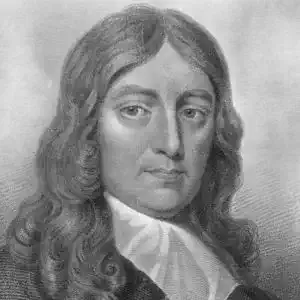
John Milton
An Epitaph on the Admirable Dramatic Poet W. Shakespeare
An Epitaph on the Admirable Dramatic Poet W. Shakespeare
What needs my Shakespeare for his honored bones
The labor of an age in piled stones?
Or that his hallowed reliques should be hid
Under a star-ypointing pyramid?
Dear son of Memory, great heir of Fame,
What need'st thou such weak witness of thy name?
Thou in our wonder and astonishment
Hast built thy self a livelong monument.
For whilst, to th' shame of slow-endeavoring art,
Thy easy numbers flow, and that each heart
Hath from the leaves of thy unvalued book
Those Delphic lines with deep impression took,
Then thou, our fancy of itself bereaving,
Dost make us marble with too much conceiving,
And so sepulchred in such pomp dost lie
That kings for such a tomb would wish to die.
521

John Keats
Written on a Summer Evening
Written on a Summer Evening
The church bells toll a melancholy round,
Calling the people to some other prayers,
Some other gloominess, more dreadful cares,
More harkening to the sermon's horrid sound.
Surely the mind of man is closely bound
In some blind spell: seeing that each one tears
Himself from fireside joys and Lydian airs,
And converse high of those with glory crowned.
Still, still they toll, and I should feel a damp,
A chill as from a tomb, did I not know
That they are dying like an outburnt lamp, -
That 'tis their sighing, wailing, ere they go
Into oblivion -that fresh flowers will grow,
And many glories of immortal stamp.
449
John Keats
Written on a Blank Space
Written on a Blank Space
This pleasant tale is like a little copse:
The honied lines so freshly interlace,
To keep the reader in so sweet a place,
So that he here and there full-hearted stops;
And oftentimes he feels the dewy drops
Come cool and suddenly against his face,
And, by the wandering melody, may trace
Which way the tender-legged linnet hops.
Oh! what a power has white Simplicity!
What mighty power has this gentle story!
I, that do ever feel athirst for glory,
Could at this moment be content to lie
Meekly upon the grass, as those whose sobbings
Were heard of none beside the mournful robins.
410
John Keats
Written Before Re-Reading King Lear
Written Before Re-Reading King Lear
O golden-tongued Romance with serene lute!
Fair plumed Syren! Queen of far away!
Leave melodizing on this wintry day,
Shut up thine olden pages, and be mute.
Adieu! for once again the fierce dispute
Betwixt damnation and impassioned clay
Must I burn through; once more humbly assay
The bitter-sweet of this Shakespearian fruit.
Chief Poet! and ye clouds of Albion,
Begetters of our deep eternal theme,
When through the old oak Forest I am gone,
Let me not wander in a barren dream,
But when I am consumed in the Fire,
Give me new Phoenix wings to fly at my desire.
463
John Keats
Why did I laugh tonight? No voice will tell
Why did I laugh tonight? No voice will tell
Why did I laugh tonight? No voice will tell
No God, no demon of severe response
Deigns to reply from heaven or from hell
Then to my human heart I turn at once:
Heart, thou and I are here, sad and alone,
Say, why did I laugh? O mortal pain!
O darkness! darkness! Forever must I moan
To question heaven and hell and heart in vain?
Why did I laugh? I know this being's lease
My fancy to it's utmost blisses spreads
Yet would I on this very midnight cease
And all the world's gaudy ensigns see in shreds
Verse, fame and beauty are intense indeed
But death intenser, death is life's high meed.
476
John Keats
When I Have Fears
When I Have Fears
When I have fears that I may cease to be
Before my pen has glean'd my teeming brain,
Before high-piled books, in charactery,
Hold like rich garners the full ripen'd grain;
When I behold, upon the night's starr'd face,
Huge cloudy symbols of a high romance,
And think that I may never live to trace
Their shadows, with the magic hand of chance;
And when I feel, fair creature of an hour,
That I shall never look upon thee more,
Never have relish in the faery power
Of unreflecting love;--then on the shore
Of the wide world I stand alone, and think
Till love and fame to nothingness do sink.
495
John Keats
Two Sonnets. To Haydon, With A Sonnet Written On Seeing The Elgin Marbles
Two Sonnets. To Haydon, With A Sonnet Written On Seeing The Elgin Marbles
I.
Haydon! forgive me that I cannot speak
Definitively of these mighty things;
Forgive me, that I have not eagle's wings,
That what I want I know not where to seek,
And think that I would not be over-meek,
In rolling out upfollowed thunderings,
Even to the steep of Heliconian springs,
Were I of ample strength for such a freak.
Think, too, that all these numbers should be thine;
Whose else? In this who touch thy vesture's hem?
For, when men stared at what was most divine
With brainless idiotism and o'erwise phlegm,
Thou hadst beheld the full Hesperian shine
Of their star in the east, and gone to worship them.
II. On Seeing The Elgin Marbles.
My spirit is too weak - mortality
Weighs heavily upon me like unwilling sleep,
And each imagined pinnacle and steep
Of godlike hardship tells me I must die
Like a sick eagle looking at the sky.
Yet 'tis a gentle luxury to weep
That I have not the cloudy winds to keep,
Fresh for the opening of the morning's eye.
Such dim-conceived glories of the brain
Bring round the heart an undescribable feud;
So do these wonders a most dizzy pain,
That mingles Grecian grandeur with the rude
Wasting of old Time -- with a billowy main --
A sun -- a shadow of a magnitude.
453
John Keats
To-
To-
Had I a man's fair form, then might my sighs
Be echoed swiftly through that ivory shell,
Thine ear, and find thy gentle heart; so well
Would passion arm me for the enterprise:
But ah! I am no knight whose foeman dies;
No cuirass glistens on my bosom's swell;
I am no happy shepherd of the dell
Whose lips have trembled with a maiden's eyes.
Yet must I dote upon thee,-call thee sweet,
Sweeter by far than Hybla's honied roses
When steeped in dew rich to intoxication.
Ah! I will taste that dew, for me 'tis meet,
And when the moon her pallid face discloses,
I'll gather some by spells, and incantation.
371
John Keats
To The Ladies Who Saw Me Crowned
To The Ladies Who Saw Me Crowned
WHAT is there in the universal Earth
More lovely than a Wreath from the bay tree?
Haply a Halo round the Moon a glee
Circling from three sweet pair of Lips in Mirth;
And haply you will say the dewy birth
Of morning Roses ripplings tenderly
Spread by the Halcyon's breast upon the Sea
But these Comparisons are nothing worth
Then is there nothing in the world so fair?
The silvery tears of April? Youth of May?
Or June that breathes out life for butterflies?
No none of these can from my favourite bear
Away the Palm yet shall it ever pay
Due Reverence to your most sovereign eyes.
435
John Keats
To one who has been long in city pent
To one who has been long in city pent
To one who has been long in city pent,
'Tis very sweet to look into the fair
And open face of heaven,--to breathe a prayer
Full in the smile of the blue firmament.
Who is more happy, when, with heart's content,
Fatigued he sinks into some pleasant lair
Of wavy grass, and reads a debonair
And gentle tale of love and languishment?
Returning home at evening, with an ear
Catching the notes of Philomel,--an eye
Watching the sailing cloudlet's bright career,
He mourns that day so soon has glided by:
E'en like the passage of an angel's tear
That falls through the clear ether silently.
423
John Keats
To Solitude
To Solitude
O Solitude! if I must with thee dwell,
Let it not be among the jumbled heap
Of murky buildings; climb with me the steep, -
Nature's observatory -- whence the dell,
Its flowery slopes, its river's crystal swell,
May seem a span; let me thy vigils keep
'Mongst boughs pavilion'd, where the deer's swift leap
Startles the wild bee from the foxglove bell.
But though I'll gladly trace these scenes with thee,
Yet the sweet converse of an innocent mind,
Whose words are images of thoughts refin'd,
Is my soul's pleasure; and it sure must be
Almost the highest bliss of human-kind,
When to thy haunts two kindred spirits flee.
473
John Keats
To John Hamilton Reynolds
To John Hamilton Reynolds
O that a week could be an age, and we
Felt parting and warm meeting every week,
Then one poor year a thousand years would be,
The flush of welcome ever on the cheek:
So could we live long life in little space,
So time itself would be annihilate,
So a day's journey in oblivious haze
To serve ourjoys would lengthen and dilate.
O to arrive each Monday morn from Ind!
To land each Tuesday from the rich Levant!
In little time a host of joys to bind,
And keep our souls in one eternal pant!
This morn, my friend, and yester-evening taught
Me how to harbour such a happy thought.
456
John Keats
To My Brother George
To My Brother George
Many the wonders I this day have seen:
The sun, when first he kissed away the tears
That filled the eyes of Morn;-the laurelled peers
Who from the feathery gold of evening lean;-
The ocean with its vastness, its blue green,
Its ships, its rocks, its caves, its hopes, its fears,
Its voice mysterious, which whoso hears
Must think on what will be, and what has been.
E'en now, dear George, while this for you I write,
Cynthia is from her silken curtains peeping
So scantly, that it seems her bridal night,
And she her half-discovered revels keeping.
But what, without the social thought of thee,
Would be the wonders of the sky and sea?
479
John Keats
To Homer
To Homer
Standing aloof in giant ignorance,
Of thee I hear and of the Cyclades,
As one who sits ashore and longs perchance
To visit dolphin-coral in deep seas.
So thou wast blind;--but then the veil was rent,
For Jove uncurtain'd Heaven to let thee live,
And Neptune made for thee a spumy tent,
And Pan made sing for thee his forest-hive;
Aye on the shores of darkness there is light,
And precipices show untrodden green,
There is a budding morrow in midnight,
There is a triple sight in blindness keen;
Such seeing hadst thou, as it once befel
To Dian, Queen of Earth, and Heaven, and Hell.
476
John Keats
To Homer
To Homer
Standing aloof in giant ignorance,
Of thee I hear and of the Cyclades,
As one who sits ashore and longs perchance
To visit dolphin-coral in deep seas.
So thou wast blind;--but then the veil was rent,
For Jove uncurtain'd Heaven to let thee live,
And Neptune made for thee a spumy tent,
And Pan made sing for thee his forest-hive;
Aye on the shores of darkness there is light,
And precipices show untrodden green,
There is a budding morrow in midnight,
There is a triple sight in blindness keen;
Such seeing hadst thou, as it once befel
To Dian, Queen of Earth, and Heaven, and Hell.
476