
Ethics and Morality

Rudyard Kipling
The Portent
Horace, BK. V. Ode .
Oh, late withdrawn from human-kind
And following dreams we never knew!
Varus, what dream has Fate assigned
To trouble you?
Such virtue as commends of law
Of Virtue to the vulgar horde
Suffices not. You needs must draw
A righteous sword;
And, flagrant in well-doing, smite
The priests of Bacchus at their fane,
Lest any worshipper invite
The God again.
Whence public strife and naked crime
And-deadlier than the cup you shun--
A people schooled to mock, in time,
All law--not one.
Cease, then, to fashion State-made sin,
Nor give thy children cause to doubt
That Virtue springs from Iron within--
Not lead without.
474
Rudyard Kipling
Poseidon's Law
When the robust and Brass-bound Man commissioned first for sea
His fragile raft, Poseidon laughed, and "Mariner," said he,
"Behold, a Law immutable I lay on thee and thine,
That never shall ye act or tell a falsehood at my shrine.
"Let Zeus adjudge your landward kin whose votive meal and sale
At easy-cheated altars win oblivion for the fault,
But you the unhoodwinked wave shall test--the immediate gulf condemn--
Except ye owe the Fates a jest, be slow to jest with them.
Ye shall not clear by Greekly speech, nor cozen from your path
The twinkling shoal, the leeward beach, or Hadria's white-lipped wrath;
Nor tempt with painted cloth for wood my fraud-avenging hosts;
Nor make at all, or all make good, your bulwarks and your boasts.
Now and henceforward serve unshod, through wet and wakeful shifts,
A present and oppressive God, but take, to aid, my gifts--
The wide and windward-opening eye, the large and lavish hand,
The soul that cannot tell a lie--except upon the land!"
In dromond and in catafract--wet, wakeful, windward-eyed--
He kept Poseidon's Law intact (his ship and freight beside),
But, once discharged the dromond's hold, the bireme beached once more,
Splendaciously mendacious rolled the Brass-bound Man ashore....
The thranite now and thalamite are pressures low and high,
And where three hundred blades bit white the twin-propellers ply.
The God that hailed, the keel that sailed are changed beyond recall,
But the robust and Brass-bound Man he is not changed at all!
From Punt returned, from Phormio's Fleet, from Javan and Gadire,
He strongly occupies the seat about the tavern fire,
And, moist with much Falernian or smoked Massilian juice,
Revenges there the Brass-bound Man his long-enforced truce!
475
Rudyard Kipling
The Ballad Of The King's Mercy
Abdhur Rahman, the Durani Chief, of him is the story told.
His mercy fills the Khyber hills -- his grace is manifold;
He has taken toll of the North and the South --
his glory reacheth far,
And they tell the tale of his charity from Balkh to Kandahar.
Before the old Peshawur Gate, where Kurd and Kaffir meet,
The Governor of Kabul dealt the Justice of the Street,
And that was strait as running noose and swift as plunging knife,
Tho' he who held the longer purse might hold the longer life.
There was a hound of Hindustan had struck a Euzufzai,
Wherefore they spat upon his face and led him out to die.
It chanced the King went forth that hour when throat was bared to knife;
The Kaffir grovelled under-hoof and clamoured for his life.
Then said the King: "Have hope, O friend! Yea, Death disgraced is hard;
Much honour shall be thine"; and called the Captain of the Guard,
Yar Khan, a bastard of the Blood, so city-babble saith,
And he was honoured of the King -- the which is salt to Death;
And he was son of Daoud Shah, the Reiver of the Plains,
And blood of old Durani Lords ran fire in his veins;
And 'twas to tame an Afghan pride nor Hell nor Heaven could bind,
The King would make him butcher to a yelping cur of Hind.
"Strike!" said the King. "King's blood art thou --
his death shall be his pride!"
Then louder, that the crowd might catch: "Fear not -- his arms are tied!"
Yar Khan drew clear the Khyber knife, and struck, and sheathed again.
"O man, thy will is done," quoth he; "a King this dog hath slain."
Abdhur Rahman, the Durani Chief, to the North and the South is sold.
The North and the South shall open their mouth
to a Ghilzai flag unrolled,
When the big guns speak to the Khyber peak, and his dog-Heratis fly:
Ye have heard the song -- How long? How long?
Wolves of the Abazai!
That night before the watch was set, when all the streets were clear,
The Governor of Kabul spoke: "My King, hast thou no fear?
Thou knowest -- thou hast heard," -- his speech died at his master's face.
And grimly said the Afghan King: "I rule the Afghan race.
My path is mine -- see thou to thine -- to-night upon thy bed
Think who there be in Kabul now that clamour for thy head."
That night when all the gates were shut to City and to throne,
Within a little garden-house the King lay down alone.
Before the sinking of the moon, which is the Night of Night,
Yar Khan came softly to the King to make his honour white.
The children of the town had mocked beneath his horse's hoofs,
The harlots of the town had hailed him "butcher!" from their roofs.
But as he groped against the wall, two hands upon him fell,
The King behind his shoulder spake: "Dead man, thou dost not well!
'Tis ill to jest with Kings by day and seek a boon by night;
And that thou bearest in thy hand is all too sharp to write.
But three days hence, if God be good, and if thy strength remain,
Thou shalt demand one boon of me and bless me in thy pain.
For I am merciful to all, and most of all to thee.
My butcher of the shambles, rest -- no knife hast thou for me!"
Abdhur Rahman, the Durani Chief,
holds hard by the South and the North;
But the Ghilzai knows, ere the melting snows,
when the swollen banks break forth,
When the red-coats crawl to the sungar wall,
and his Usbeg lances fail:
Ye have heard the song -- How long? How long?
Wolves of the Zuka Kheyl!
They stoned him in the rubbish-field when dawn was in the sky,
According to the written word, "See that he do not die."
They stoned him till the stones were piled above him on the plain,
And those the labouring limbs displaced they tumbled back again.
One watched beside the dreary mound that veiled the battered thing,
And him the King with laughter called the Herald of the King.
It was upon the second night, the night of Ramazan,
The watcher leaning earthward heard the message of Yar Khan.
From shattered breast through shrivelled lips broke forth the rattling breath,
"Creature of God, deliver me from agony of Death."
They sought the King among his girls, and risked their lives thereby:
"Protector of the Pitiful, give orders that he die!"
"Bid him endure until the day," a lagging answer came;
"The night is short, and he can pray and learn to bless my name."
Before the dawn three times he spoke, and on the day once more:
"Creature of God, deliver me, and bless the King therefor!"
They shot him at the morning prayer, to ease him of his pain,
And when he heard the matchlocks clink, he blessed the King again.
Which thing the singers made a song for all the world to sing,
So that the Outer Seas may know the mercy of the King.
Abdhur Rahman, the Durani Chief, of him is the story told,
He has opened his mouth to the North and the South,
they have stuffed his mouth with gold.
Ye know the truth of his tender ruth -- and sweet his favours are:
Ye have heard the song -- How long? How long?
from Balkh to Kandahar.
476

Ella Wheeler Wilcox
The Stevedores
We are the army stevedores, lusty and virile and strong,
We are given the hardest work of the war, and the hours are long.
We handle the heavy boxes, and shovel the dirty coal;
While soldiers and sailors work in the light, we burrow below like a mole.
But somebody has to do this work, or the soldiers could not fight!
And whatever work is given a man, is good if he does it right.
We are the army stevedores, and we are volunteers.
We did not wait for the draft to come, to put aside our fears;
We flung them away on the winds of fate, at the very first call of our land,
And each of us offered a willing heart and the strength of a brawny hand.
We are the army stevedores, and work as we must and may,
The cross of honour will never be ours to proudly wear away.
But the men at the Front could never be there,
And the battles could not be won,
If the stevedores stopped in their dull routine
And left their work undone.
Somebody has to do this work, be glad that it isn't you!
We are the army stevedores-give us our due!
474

Ezra Pound
Monumentum Aere, Etc.
You say that I take a good deal upon myself;
That I strut in the robes of assumption.
In a few years no one will remember the buffo,
No one will remember the trivial parts of me,
The comic detail will be absent.
As for you, you will rot in the earth,
And it is doubtful if even your manure will be rich
enough
To keep grass
Over your grave.
That I strut in the robes of assumption.
In a few years no one will remember the buffo,
No one will remember the trivial parts of me,
The comic detail will be absent.
As for you, you will rot in the earth,
And it is doubtful if even your manure will be rich
enough
To keep grass
Over your grave.
476
Rudyard Kipling
Mesopotamia
They shall not return to us, the resolute, the young,
The eager and whole-hearted whom we gave:
But the men who left them thriftily to die in their own dung,
Shall they come with years and honour to the grave?
They shall not return to us; the strong men coldly slain
In sight of help denied from day to day:
But the men who edged their agonies and chid them in their pain,
Are they too strong and wise to put away?
Our dead shall not return to us while Day and Night divide--
Never while the bars of sunset hold.
But the idle-minded overlings who quibbled while they died,
Shall they thrust for high employments as of old?
Shall we only threaten and be angry for an hour:
When the storm is ended shall we find
How softly but how swiftly they have sidled back to power
By the favour and contrivance of their kind?
Even while they soothe us, while they promise large amends,
Even while they make a show of fear,
Do they call upon their debtors, and take counsel with their
friends,
To conform and re-establish each career?
Their lives cannot repay us--their death could not undo--
The shame that they have laid upon our race.
But the slothfulness that wasted and the arrogance that slew,
Shell we leave it unabated in its place?
472

John Keats
To A Friend Who Sent Me Some Roses
As late I rambled in the happy fields,
What time the skylark shakes the tremulous dew
From his lush clover covert;-when anew
Adventurous knights take up their dinted shields;
I saw the sweetest flower wild nature yields,
A fresh-blown musk-rose; 'twas the first that threw
Its sweets upon the summer: graceful it grew
As is the wand that Queen Titania wields.
And, as I feasted on its fragrancy,
I thought the garden-rose it far excelled;
But when, O Wells! thy roses came to me,
My sense with their deliciousness was spelled:
Soft voices had they, that with tender plea
Whispered of peace, and truth, and friendliness unquelled.
472

Lord Byron
Epitaph For William Pitt
With death doom'd to grapple,
Beneath this cold slab, he
Who lied in the Chapel
Now lies in the Abbey.
Beneath this cold slab, he
Who lied in the Chapel
Now lies in the Abbey.
470

Claude Mckay
Rest in Peace
No more for you the city's thorny ways,
The ugly corners of the Negro belt;
The miseries and pains of these harsh days
By you will never, never again be felt.
No more, if still you wander, will you meet
With nights of unabating bitterness;
They cannot reach you in your safe retreat,
The city's hate, the city's prejudice!
'Twas sudden--but your menial task is done,
The dawn now breaks on you, the dark is over,
The sea is crossed, the longed-for port is won;
Farewell, oh, fare you well! my friend and lover.
472
Rudyard Kipling
L'envoi To Life's Handicap
My new-cut ashlar takes the light
Where crimson-blank the windows flare;
By my own work, before the night,
Great Overseer I make my prayer.
If there be good in that I wrought,
Thy hand compelled it, Master, Thine;
Where I have failed to meet Thy thought
I know, through Thee, the blame is mine.
One instant's toil to Thee denied
Stands all Eternity's offence,
Of that I did with Thee to guide
To Thee, through Thee, be excellence.
Who, lest all thought of Eden fade,
Bring'st Eden to the craftsman's brain,
Godlike to muse o'er his own trade
And Manlike stand with God again.
The depth and dream of my desire,
The bitter paths wherein I stray,
Thou knowest Who hast made the Fire,
Thou knowest Who hast made the Clay!
One stone the more swings to her place
In that dread Temple of Thy Worth --
It is enough that through Thy grace
I saw naught common on Thy earth.
Take not that vision from my ken;
Oh whatsoe'er may spoil or speed,
Help me to need no aid from men
That I may help such men as need!
470
Ella Wheeler Wilcox
Karma
I
We cannot choose our sorrows. One there was
Who, reverent of soul, and strong with trust,
Cried, 'God, though Thou shouldst bow me to the dust,
Yet will I praise thy everlasting laws.
Beggared, my faith would never halt or pause,
But sing Thy glory, feasting on a crust.
Only one boon, one precious boon I must
Demand of Thee, O opulent great Cause.
Let Love stay with me, constant to the end,
Though fame pass by and poverty pursue.'
With freighted hold her life ship onward sailed;
The world gave wealth, and pleasure, and a friend,
Unmarred by envy, and whose heart was true.
But ere the sun reached midday, Love had failed.
II
Then from the depths, in bitterness she cried,
'Hell is on earth, and heaven is but a dream;
And human life a troubled aimless stream;
And God is nowhere. Would God so deride
A loving creature's faith?' A voice replied,
'The stream flows onward to the Source Supreme,
Where things that ARE replace the things that SEEM,
And where the deeds of all past lives abide.
Once at thy door Love languished and was spurned.
Who sorrow plants, must garner sorrow's sheaf.
No prayers can change the seedling in the sod.
By thine own heart Love's anguish must be learned.
Pass on, and know, as one made wise by grief,
That in thyself dwells heaven and hell and God.'
470
Rudyard Kipling
Romulus and Remus
Canadian
Oh, little did the Wolf-Child care--
When first he planned his home,
What City should arise and bear
The weight and state of Rome.
A shiftless, westward-wandering tramp,
Checked by the Tiber flood,
He reared a wall around his camp
Of uninspired mud.
But when his brother leaped the Wall
And mocked its height and make,
He guessed the future of it all
And slew him for its sake.
Swift was the blow--swift as the thought
Which showed him in that hour
How unbelief may bring to naught
The early steps of Power.
Foreseeing Time's imperilled hopes
Of Glory, Grace, and Love--
All singers, Caesars, artists, Popes--
Would fail if Remus throve,
He sent his brother to the Gods,
And, when the fit was o'er,
Went on collecting turves and clods
To build the Wall once more!
472
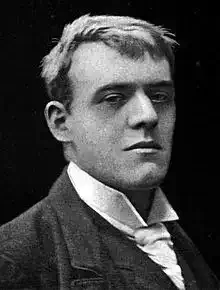
Hilaire Belloc
Courtesy
Of Courtesy, it is much less
Than Courage of Heart or Holiness,
Yet in my Walks it seems to me
That the Grace of God is in Courtesy.
On Monks I did in Storrington fall,
They took me straight into their Hall;
I saw Three Pictures on a wall,
And Courtesy was in them all.
The first the Annunciation;
The second the Visitation;
The third the Consolation,
Of God that was Our Lady's Son.
The first was of St. Gabriel;
On Wings a-flame from Heaven he fell;
And as he went upon one knee
He shone with Heavenly Courtesy.
Our Lady out of Nazareth rode -
It was Her month of heavy load;
Yet was her face both great and kind,
For Courtesy was in Her Mind.
The third it was our Little Lord,
Whom all the Kings in arms adored;
He was so small you could not see
His large intent of Courtesy.
Our Lord, that was Our Lady's Son,
Go bless you, People, one by one;
My Rhyme is written, my work is done.
471
Hilaire Belloc
Godolphin Horne
Who was cursed with the Sin of Pride, and Became a Boot-Black.
Godolphin Horne was Nobly Born;
He held the Human Race in Scorn,
And lived with all his Sisters where
His father lived, in Berkeley Square.
And oh! The Lad was Deathly Proud!
He never shook your Hand or Bowed,
But merely smirked and nodded thus:
How perfectly ridiculous!
Alas! That such Affected Tricks
Should flourish in a Child of Six!
(For such was Young Godolphin's age).
Just then, the Court required a Page,
Whereat the Lord High Chamberlain
(The Kindest and the Best of Men),
He went good-naturedly and took
A perfectly enormous Book
Called People Qualified to Be
Attendant on His Majesty,
And murmured, as he scanned the list
(To see that no one should be missed),
"There's William Coutts has got the Flu,
And Billy Higgs would never do,
And Guy de Vere is far too young,
And ... wasn't D'Alton's father hung?
And as for Alexander Byng!-...
I think I know the kind of thing,
A Churchman, cleanly, nobly born,
Come, let us say Godolphin Horne?"
But hardly had he said the word
When Murmurs of Dissent were heard.
The King of Iceland's Eldest Son
Said, "Thank you! I am taking none!"
The Aged Duchess of Athlone
Remarked, in her sub-acid tone,
"I doubt if He is what we need!"
With which the Bishops all agreed;
And even Lady Mary Flood
(So kind, and oh! So really good)
Said, "No! He wouldn't do at all,
He'd make us feel a lot too small."
The Chamberlain said, "Well, well, well!
No doubt you're right. One cannot tell!"
He took his Gold and Diamond Pen
And scratched Godolphin out again.
So now Godolphin is the Boy
Who Blacks the Boots at the Savoy.
473

Robert Browning
Andrea del Sarto
But do not let us quarrel any more,
No, my Lucrezia; bear with me for once:
Sit down and all shall happen as you wish.
You turn your face, but does it bring your heart?
I'll work then for your friend's friend, never fear,
Treat his own subject after his own way,
Fix his own time, accept too his own price,
And shut the money into this small hand
When next it takes mine. Will it? tenderly?
Oh, I'll content him,--but to-morrow, Love!
I often am much wearier than you think,
This evening more than usual, and it seems
As if--forgive now--should you let me sit
Here by the window with your hand in mine
And look a half-hour forth on Fiesole,
Both of one mind, as married people use,
Quietly, quietly the evening through,
I might get up to-morrow to my work
Cheerful and fresh as ever. Let us try.
To-morrow, how you shall be glad for this!
Your soft hand is a woman of itself,
And mine the man's bared breast she curls inside.
Don't count the time lost, neither; you must serve
For each of the five pictures we require:
It saves a model. So! keep looking so--
My serpentining beauty, rounds on rounds!
--How could you ever prick those perfect ears,
Even to put the pearl there! oh, so sweet--
My face, my moon, my everybody's moon,
Which everybody looks on and calls his,
And, I suppose, is looked on by in turn,
While she looks--no one's: very dear, no less.
You smile? why, there's my picture ready made,
There's what we painters call our harmony!
A common greyness silvers everything,--
All in a twilight, you and I alike
--You, at the point of your first pride in me
(That's gone you know),--but I, at every point;
My youth, my hope, my art, being all toned down
To yonder sober pleasant Fiesole.
There's the bell clinking from the chapel-top;
That length of convent-wall across the way
Holds the trees safer, huddled more inside;
The last monk leaves the garden; days decrease,
And autumn grows, autumn in everything.
Eh? the whole seems to fall into a shape
As if I saw alike my work and self
And all that I was born to be and do,
A twilight-piece. Love, we are in God's hand.
How strange now, looks the life he makes us lead;
So free we seem, so fettered fast we are!
I feel he laid the fetter: let it lie!
This chamber for example--turn your head--
All that's behind us! You don't understand
Nor care to understand about my art,
But you can hear at least when people speak:
And that cartoon, the second from the door
--It is the thing, Love! so such things should be--
Behold Madonna!--I am bold to say.
I can do with my pencil what I know,
What I see, what at bottom of my heart
I wish for, if I ever wish so deep--
Do easily, too--when I say, perfectly,
I do not boast, perhaps: yourself are judge,
Who listened to the Legate's talk last week,
And just as much they used to say in France.
At any rate 'tis easy, all of it!
No sketches first, no studies, that's long past:
I do what many dream of, all their lives,
--Dream? strive to do, and agonize to do,
And fail in doing. I could count twenty such
On twice your fingers, and not leave this town,
Who strive--you don't know how the others strive
To paint a little thing like that you smeared
Carelessly passing with your robes afloat,--
Yet do much less, so much less, Someone says,
(I know his name, no matter)--so much less!
Well, less is more, Lucrezia: I am judged.
There burns a truer light of God in them,
In their vexed beating stuffed and stopped-up brain,
Heart, or whate'er else, than goes on to prompt
This low-pulsed forthright craftsman's hand of mine.
Their works drop groundward, but themselves, I know,
Reach many a time a heaven that's shut to me,
Enter and take their place there sure enough,
Though they come back and cannot tell the world.
My works are nearer heaven, but I sit here.
The sudden blood of these men! at a word--
Praise them, it boils, or blame them, it boils too.
I, painting from myself and to myself,
Know what I do, am unmoved by men's blame
Or their praise either. Somebody remarks
Morello's outline there is wrongly traced,
His hue mistaken; what of that? or else,
Rightly traced and well ordered; what of that?
Speak as they please, what does the mountain care?
Ah, but a man's reach should exceed his grasp,
Or what's a heaven for? All is silver-grey,
Placid and perfect with my art: the worse!
I know both what I want and what might gain,
And yet how profitless to know, to sigh
"Had I been two, another and myself,
"Our head would have o'erlooked the world!" No doubt.
Yonder's a work now, of that famous youth
The Urbinate who died five years ago.
('Tis copied, George Vasari sent it me.)
Well, I can fancy how he did it all,
Pouring his soul, with kings and popes to see,
Reaching, that heaven might so replenish him,
Above and through his art--for it gives way;
That arm is wrongly put--and there again--
A fault to pardon in the drawing's lines,
Its body, so to speak: its soul is right,
He means right--that, a child may understand.
Still, what an arm! and I could alter it:
But all the play, the insight and the stretch--
(Out of me, out of me! And wherefore out?
Had you enjoined them on me, given me soul,
We might have risen to Rafael, I and you!
Nay, Love, you did give all I asked, I think--
More than I merit, yes, by many times.
But had you--oh, with the same perfect brow,
And perfect eyes, and more than perfect mouth,
And the low voice my soul hears, as a bird
The fowler's pipe, and follows to the snare --
Had you, with these the same, but brought a mind!
Some women do so. Had the mouth there urged
"God and the glory! never care for gain.
"The present by the future, what is that?
"Live for fame, side by side with Agnolo!
"Rafael is waiting: up to God, all three!"
I might have done it for you. So it seems:
Perhaps not. All is as God over-rules.
Beside, incentives come from the soul's self;
The rest avail not. Why do I need you?
What wife had Rafael, or has Agnolo?
In this world, who can do a thing, will not;
And who would do it, cannot, I perceive:
Yet the will's somewhat--somewhat, too, the power--
And thus we half-men struggle. At the end,
God, I conclude, compensates, punishes.
'Tis safer for me, if the award be strict,
That I am something underrated here,
Poor this long while, despised, to speak the truth.
I dared not, do you know, leave home all day,
For fear of chancing on the Paris lords.
The best is when they pass and look aside;
But they speak sometimes; I must bear it all.
Well may they speak! That Francis, that first time,
And that long festal year at Fontainebleau!
I surely then could sometimes leave the ground,
Put on the glory, Rafael's daily wear,
In that humane great monarch's golden look,--
One finger in his beard or twisted curl
Over his mouth's good mark that made the smile,
One arm about my shoulder, round my neck,
The jingle of his gold chain in my ear,
I painting proudly with his breath on me,
All his court round him, seeing with his eyes,
Such frank French eyes, and such a fire of souls
Profuse, my hand kept plying by those hearts,--
And, best of all, this, this, this face beyond,
This in the background, waiting on my work,
To crown the issue with a last reward!
A good time, was it not, my kingly days?
And had you not grown restless... but I know--
'Tis done and past: 'twas right, my instinct said:
Too live the life grew, golden and not grey,
And I'm the weak-eyed bat no sun should tempt
Out of the grange whose four walls make his world.
How could it end in any other way?
You called me, and I came home to your heart.
The triumph was--to reach and stay there; since
I reached it ere the triumph, what is lost?
Let my hands frame your face in your hair's gold,
You beautiful Lucrezia that are mine!
"Rafael did this, Andrea painted that;
"The Roman's is the better when you pray,
"But still the other's Virgin was his wife--"
Men will excuse me. I am glad to judge
Both pictures in your presence; clearer grows
My better fortune, I resolve to think.
For, do you know, Lucrezia, as God lives,
Said one day Agnolo, his very self,
To Rafael . . . I have known it all these years . . .
(When the young man was flaming out his thoughts
Upon a palace-wall for Rome to see,
Too lifted up in heart because of it)
"Friend, there's a certain sorry little scrub
"Goes up and down our Florence, none cares how,
"Who, were he set to plan and execute
"As you are, pricked on by your popes and kings,
"Would bring the sweat into that brow of yours!"
To Rafael's!--And indeed the arm is wrong.
I hardly dare . . . yet, only you to see,
Give the chalk here--quick, thus, the line should go!
Ay, but the soul! he's Rafael! rub it out!
Still, all I care for, if he spoke the truth,
(What he? why, who but Michel Agnolo?
Do you forget already words like those?)
If really there was such a chance, so lost,--
Is, whether you're--not grateful--but more pleased.
Well, let me think so. And you smile indeed!
This hour has been an hour! Another smile?
If you would sit thus by me every night
I should work better, do you comprehend?
I mean that I should earn more, give you more.
See, it is settled dusk now; there's a star;
Morello's gone, the watch-lights show the wall,
The cue-owls speak the name we call them by.
Come from the window, love,--come in, at last,
Inside the melancholy little house
We built to be so gay with. God is just.
King Francis may forgive me: oft at nights
When I look up from painting, eyes tired out,
The walls become illumined, brick from brick
Distinct, instead of mortar, fierce bright gold,
That gold of his I did cement them with!
Let us but love each other. Must you go?
That Cousin here again? he waits outside?
Must see you--you, and not with me? Those loans?
More gaming debts to pay? you smiled for that?
Well, let smiles buy me! have you more to spend?
While hand and eye and something of a heart
Are left me, work's my ware, and what's it worth?
I'll pay my fancy. Only let me sit
The grey remainder of the evening out,
Idle, you call it, and muse perfectly
How I could paint, were I but back in France,
One picture, just one more--the Virgin's face,
Not yours this time! I want you at my side
To hear them--that is, Michel Agnolo--
Judge all I do and tell you of its worth.
Will you? To-morrow, satisfy your friend.
I take the subjects for his corridor,
Finish the portrait out of hand--there, there,
And throw him in another thing or two
If he demurs; the whole should prove enough
To pay for this same Cousin's freak. Beside,
What's better and what's all I care about,
Get you the thirteen scudi for the ruff!
Love, does that please you? Ah, but what does he,
The Cousin! what does he to please you more?
I am grown peaceful as old age to-night.
I regret little, I would change still less.
Since there my past life lies, why alter it?
The very wrong to Francis!--it is true
I took his coin, was tempted and complied,
And built this house and sinned, and all is said.
My father and my mother died of want.
Well, had I riches of my own? you see
How one gets rich! Let each one bear his lot.
They were born poor, lived poor, and poor they died:
And I have laboured somewhat in my time
And not been paid profusely. Some good son
Paint my two hundred pictures--let him try!
No doubt, there's something strikes a balance. Yes,
You loved me quite enough. it seems to-night.
This must suffice me here. What would one have?
In heaven, perhaps, new chances, one more chance--
Four great walls in the New Jerusalem,
Meted on each side by the angel's reed,
For Leonard, Rafael, Agnolo and me
To cover--the three first without a wife,
While I have mine! So--still they overcome
Because there's still Lucrezia,--as I choose.
Again the Cousin's whistle! Go, my Love.
473
Lord Byron
Inscription On The Monument Of A Newfoundland Dog
When some proud son of man returns to earth,
Unknown to glory, but upheld by birth,
The sculptor's art exhausts the pomp of woe,
And storied urns record who rest below:
When all is done, upon the tomb is seen,
Not what he was, but what he should have been:
But the poor dog, in life the firmest friend,
The first to welcome, foremost to defend,
Whose honest heart, is still his master's own,
Who labours, fights, lives, breathes for him alone,
Unhonour'd falls, unnoticed all his worth,
Denied in heaven the soul he held on earth,
While man, vain insect! hopes to be forgiven,
And claims himself a sole exclusive heaven.
Oh man! thou feeble tenant of an hour,
Debased by slavery, or corrupt by power,
Who knows thee well must quit thee with disgust,
Degraded mass of animated dust!
Thy love is lust, thy friendship all a cheat,
Thy smiles hypocrisy, thy words deceit!
By nature vile, ennobled but by name,
Each kindred brute might bid thee blush for shame.
Ye! who perchance behold this simple urn,
Pass onit
honours none you wish to mourn:
To mark a friend's remains these stones arise;
I never knew but one,and
here he lies.
470

William Butler Yeats
The People
'WHAT have I earned for all that work,' I said,
'For all that I have done at my own charge?
The daily spite of this unmannerly town,
Where who has served the most is most defaned,
The reputation of his lifetime lost
Between the night and morning. I might have lived,
And you know well how great the longing has been,
Where every day my footfall Should have lit
In the green shadow of Ferrara wall;
Or climbed among the images of the past --
The unperturbed and courtly images --
Evening and morning, the steep street of Urbino
To where the Duchess and her people talked
The stately midnight through until they stood
In their great window looking at the dawn;
I might have had no friend that could not mix
Courtesy and passion into one like those
That saw the wicks grow yellow in the dawn;
I might have used the one substantial right
My trade allows: chosen my company,
And chosen what scenery had pleased me best.
Thereon my phoenix answered in reproof,
'The drunkards, pilferers of public funds,
All the dishonest crowd I had driven away,
When my luck changed and they dared meet my face,
Crawled from obscurity, and set upon me
Those I had served and some that I had fed;
Yet never have I, now nor any time,
Complained of the people.'
All I could reply
Was: 'You, that have not lived in thought but deed,
Can have the purity of a natural force,
But I, whose virtues are the definitions
Of the analytic mind, can neither close
The eye of the mind nor keep my tongue from speech.'
And yet, because my heart leaped at her words,
I was abashed, and now they come to mind
After nine years, I sink my head abashed.
467
Rudyard Kipling
The Burden
One grief on me is laid
Each day of every year,
Wherein no soul can aid,
Whereof no soul can hear:
Whereto no end is seen
Except to grieve again--
Ah, Mary Magdalene,
Where is there greater pain?
To dream on dear disgrace
Each hour of every day--
To bring no honest face
To aught I do or say:
To lie from morn till e'en--
To know my lies are vain--
Ah, Mary Magdalene,
Where can be greater pain?
To watch my steadfast fear
Attend mine every way
Each day of every year--
Each hour of every day:
To burn, and chill between--
To quake and rage again--
Ah, Mary Magdalene,
Where shall be greater pain:
One grave to me was given--
To guard till Judgment Day--
But God looked down from Heaven
And rolled the Stone away!
One day of all my years--
One hour of that one day--
His Angel saw my tears
And rolled the Stone away!
466
Ezra Pound
Song Of The Six Hundred M.P.'S
‘We are 'ere met together
in this momentous hower,
Ter lick th' bankers' dirty boots
an' keep the Bank in power.’
We are 'ere met together
ter grind the same old axes
And keep the people in its place
a'payin' us the taxes.
We are six hundred beefy men
(but mostly gas and suet)
An’ every year we meet to let
some other feller do it.'
I see their 'igh 'ats on the seats
an' them sprawling on the benches
And thinks about a Rowton 'ouse
and a lot of small street stenches.
'O Britain, muvver of parliaments,
'ave you seen yer larst sweet litter?
Could yeh swap th' brains of orl this lot
fer 'arft a pint o' bitter?'
‘I couldn't,' she sez, ‘an' I aint tried,
They're me own,' she sez to me,
‘As footlin' a lot as was ever spawned
to defend democracy.'
469

Dorothy Parker
The Veteran
When I was young and bold and strong,
Oh, right was right, and wrong was wrong!
My plume on high, my flag unfurled,
I rode away to right the world.
"Come out, you dogs, and fight!" said I,
And wept there was but once to die.
But I am old; and good and bad
Are woven in a crazy plaid.
I sit and say, "The world is so;
And he is wise who lets it go.
A battle lost, a battle won-
The difference is small, my son."
Inertia rides and riddles me;
The which is called Philosophy.
466
William Butler Yeats
Wisdom
THE true faith discovered was
When painted panel, statuary.
Glass-mosaic, window-glass,
Amended what was told awry
By some peasant gospeller;
Swept the Sawdust from the floor
Of that working-carpenter.
Miracle had its playtime where
In damask clothed and on a seat
Chryselephantine, cedar-boarded,
His majestic Mother sat
Stitching at a purple hoarded
That He might be nobly breeched
In starry towers of Babylon
Noah's freshet never reached.
King Abundance got Him on
Innocence; and Wisdom He.
That cognomen sounded best
Considering what wild infancy
Drove horror from His Mother's breast.
466
Ella Wheeler Wilcox
Ernestness
The hurry of the times affects us so
In this swift rushing hour, we crowd and press
And thrust each other backward as we go,
And do not pause to lay sufficient stress
Upon that good, strong, true word, Earnestness.
In our impetuous haste, could we but know
Its full, deep meaning, its vast import, oh,
Then might we grasp the secret of success!
In that receding age when men were great,
The bone and sinew of their purpose lay
In this one word. God likes an earnest soul—
Too earnest to be eager. Soon or late
It leaves the spent horde breathless by the way,
And stands serene, triumphant at the goal.
469
Lord Byron
Epitaph
Posterity will ne'er survey
A nobler grave than this:
Here lie the bones of Castlereagh:
Stop, traveler
A nobler grave than this:
Here lie the bones of Castlereagh:
Stop, traveler
469
Ella Wheeler Wilcox
The Two Glasses
There sat two glasses, filled to the brim,
On a rich man's table, rim to rim.
One was ruddy and red as blood,
And one was clear as the crystal flood.
Said the glass of wine to his paler brother,
"Let us tell tales of the past to each other;
I can tell of banquet, and revel, and mirth,
Where I was a king, for I ruled in might;
For the proudest and grandest souls on earth
Fell under my touch, as though struck with blight.
From the heads of kings I have torn the crown;
From the heights of fame I have hurled men down.
I have blasted many an honored name;
I have taken virtue and given shame;
I have tempted the youth with a sip, a taste,
That has made his future a barren waste.
Far greater than any king am I,
Or than any army beneath the sky.
I have made the arm of the driver fail,
And sent the train from the iron rail.
I have made good ships go down at sea,
And the shrieks of the lost were sweet to me.
Fame, strength, wealth, genius before me fall;
Ho, ho! pale brother," said the wine,
"Can you boast of deeds as great as mine?"
Said the water-glass: "I cannot boast
Of a king dethroned, or a murdered host,
But I can tell of hearts that were sad
By my crystal drops made bright and glad;
Of thirsts I have quenched, and brows I have laved;
Of hands I have cooled, and souls I have saved.
I have leaped through the valley, dashed down the mountain,
Slept in the sunshine, and dripped from the fountain.
I have burst my cloud-fetters, and dropped from the sky,
And everywhere gladdened the prospect and eye;
I have eased the hot forehead of fever and pain;
I have made the parched meadows grow fertile with grain.
I can tell of the powerful wheel of the mill,
That ground out the flower, and turned at my will.
I can tell of manhood debased by you,
That I have uplifted and crowned anew;
I cheer, I help, I strengthen and aid;
I gladden the heart of man and maid;
I set the wine-chained captive free,
And all are better for knowing me."
These are the tales they told each other,
The glass of wine and its paler brother,
As they sat together, filled to the brim,
On a rich man's table, rim to rim.
On a rich man's table, rim to rim.
One was ruddy and red as blood,
And one was clear as the crystal flood.
Said the glass of wine to his paler brother,
"Let us tell tales of the past to each other;
I can tell of banquet, and revel, and mirth,
Where I was a king, for I ruled in might;
For the proudest and grandest souls on earth
Fell under my touch, as though struck with blight.
From the heads of kings I have torn the crown;
From the heights of fame I have hurled men down.
I have blasted many an honored name;
I have taken virtue and given shame;
I have tempted the youth with a sip, a taste,
That has made his future a barren waste.
Far greater than any king am I,
Or than any army beneath the sky.
I have made the arm of the driver fail,
And sent the train from the iron rail.
I have made good ships go down at sea,
And the shrieks of the lost were sweet to me.
Fame, strength, wealth, genius before me fall;
Ho, ho! pale brother," said the wine,
"Can you boast of deeds as great as mine?"
Said the water-glass: "I cannot boast
Of a king dethroned, or a murdered host,
But I can tell of hearts that were sad
By my crystal drops made bright and glad;
Of thirsts I have quenched, and brows I have laved;
Of hands I have cooled, and souls I have saved.
I have leaped through the valley, dashed down the mountain,
Slept in the sunshine, and dripped from the fountain.
I have burst my cloud-fetters, and dropped from the sky,
And everywhere gladdened the prospect and eye;
I have eased the hot forehead of fever and pain;
I have made the parched meadows grow fertile with grain.
I can tell of the powerful wheel of the mill,
That ground out the flower, and turned at my will.
I can tell of manhood debased by you,
That I have uplifted and crowned anew;
I cheer, I help, I strengthen and aid;
I gladden the heart of man and maid;
I set the wine-chained captive free,
And all are better for knowing me."
These are the tales they told each other,
The glass of wine and its paler brother,
As they sat together, filled to the brim,
On a rich man's table, rim to rim.
468