
Home and Household

Robert W. Service
The Man From Eldorado
He's the man from Eldorado, and he's just arrived in town,
In moccasins and oily buckskin shirt.
He's gaunt as any Indian, and pretty nigh as brown;
He's greasy, and he smells of sweat and dirt.
He sports a crop of whiskers that would shame a healthy hog;
Hard work has racked his joints and stooped his back;
He slops along the sidewalk followed by his yellow dog,
But he's got a bunch of gold-dust in his sack.
He seems a little wistful as he blinks at all the lights,
And maybe he is thinking of his claim
And the dark and dwarfish cabin where he lay and dreamed at nights,
(Thank God, he'll never see the place again!)
Where he lived on tinned tomatoes, beef embalmed and sourdough bread,
On rusty beans and bacon furred with mould;
His stomach's out of kilter and his system full of lead,
But it's over, and his poke is full of gold.
He has panted at the windlass, he has loaded in the drift,
He has pounded at the face of oozy clay;
He has taxed himself to sickness, dark and damp and double shift,
He has labored like a demon night and day.
And now, praise God, it's over, and he seems to breathe again
Of new-mown hay, the warm, wet, friendly loam;
He sees a snowy orchard in a green and dimpling plain,
And a little vine-clad cottage, and it's--Home.
II
He's the man from Eldorado, and he's had a bite and sup,
And he's met in with a drouthy friend or two;
He's cached away his gold-dust, but he's sort of bucking up,
So he's kept enough to-night to see him through.
His eye is bright and genial, his tongue no longer lags;
`His heart is brimming o'er with joy and mirth;
He may be far from savory, he may be clad in rags,
`But to-night he feels as if he owns the earth.
Says he: "Boys, here is where the shaggy North and I will shake;
I thought I'd never manage to get free.
I kept on making misses; but at last I've got my stake;
There's no more thawing frozen muck for me.
I am going to God's Country, where I'll live the simple life;
I'll buy a bit of land and make a start;
I'll carve a little homestead, and I'll win a little wife,
And raise ten little kids to cheer my heart."
They signified their sympathy by crowding to the bar;
They bellied up three deep and drank his health.
He shed a radiant smile around and smoked a rank cigar;
They wished him honor, happiness and wealth.
They drank unto his wife to be--that unsuspecting maid;
They drank unto his children half a score;
And when they got through drinking very tenderly they laid
The man from Eldorado on the floor.
III
He's the man from Eldorado, and he's only starting in
To cultivate a thousand-dollar jag.
His poke is full of gold-dust and his heart is full of sin,
And he's dancing with a girl called Muckluck Mag.
She's as light as any fairy; she's as pretty as a peach;
She's mistress of the witchcraft to beguile;
There's sunshine in her manner, there is music in her speech,
And there's concentrated honey in her smile.
Oh, the fever of the dance-hall and the glitter and the shine,
The beauty, and the jewels, and the whirl,
The madness of the music, the rapture of the wine,
The languorous allurement of a girl!
She is like a lost madonna; he is gaunt, unkempt and grim;
But she fondles him and gazes in his eyes;
Her kisses seek his heavy lips, and soon it seems to him
He has staked a little claim in Paradise.
"Who's for a juicy two-step?" cries the master of the floor;
The music throbs with soft, seductive beat.
There's glitter, gilt and gladness; there are pretty girls galore;
There's a woolly man with moccasins on feet.
They know they've got him going; he is buying wine for all;
They crowd around as buzzards at a feast,
Then when his poke is empty they boost him from the hall,
And spurn him in the gutter like a beast.
He's the man from Eldorado, and he's painting red the town;
Behind he leaves a trail of yellow dust;
In a whirl of senseless riot he is ramping up and down;
There's nothing checks his madness and his lust.
And soon the word is passed around--it travels like a flame;
They fight to clutch his hand and call him friend,
The chevaliers of lost repute, the dames of sorry fame;
Then comes the grim awakening--the end.
IV
He's the man from Eldorado, and he gives a grand affair;
There's feasting, dancing, wine without restraint.
The smooth Beau Brummels of the bar, the faro men, are there;
The tinhorns and purveyors of red paint;
The sleek and painted women, their predacious eyes aglow-Sure
Klondike City never saw the like;
Then Muckluck Mag proposed the toast, "The giver of the show,
The livest sport that ever hit the pike."
The "live one" rises to his feet; he stammers to reply-And
then there comes before his muddled brain
A vision of green vastitudes beneath an April sky,
And clover pastures drenched with silver rain.
He knows that it can never be, that he is down and out;
Life leers at him with foul and fetid breath;
And then amid the revelry, the song and cheer and shout,
He suddenly grows grim and cold as death.
He grips the table tensely, and he says: "Dear friends of mine,
I've let you dip your fingers in my purse;
I've crammed you at my table, and I've drowned you in my wine,
And I've little left to give you but--my curse.
I've failed supremely in my plans; it's rather late to whine;
My poke is mighty weasened up and small.
I thank you each for coming here; the happiness is mine-And
now, you thieves and harlots, take it all."
He twists the thong from off his poke; he swings it o'er his head;
The nuggets fall around their feet like grain.
They rattle over roof and wall; they scatter, roll and spread;
The dust is like a shower of golden rain.
The guests a moment stand aghast, then grovel on the floor;
They fight, and snarl, and claw, like beasts of prey;
And then, as everybody grabbed and everybody swore,
The man from Eldorado slipped away.
V
He's the man from Eldorado, and they found him stiff and dead,
Half covered by the freezing ooze and dirt.
A clotted Colt was in his hand, a hole was in his head,
And he wore an old and oily buckskin shirt.
His eyes were fixed and horrible, as one who hails the end;
The frost had set him rigid as a log;
And there, half lying on his breast, his last and only friend,
There crouched and whined a mangy yellow dog.
223

Emily Dickinson
What is—
What is—"Paradise"—
Who live there—
Are they "Farmers"—
Do they "hoe"—
Do they know that this is "Amherst"—
And that I—am coming—too—
Do they wear "new shoes"—in "Eden"—
Is it always pleasant—there—
Won't they scold us—when we're homesick—
Or tell God—how cross we are—
You are sure there's such a person
As "a Father"—in the sky—
So if I get lost—there—ever—
Or do what the Nurse calls "die"—
I shan't walk the "Jasper"—barefoot—
Ransomed folks—won't laugh at me—
Maybe—"Eden" a'n't so lonesome
As New England used to be!
220
Robert W. Service
I Have Some Friends
I have some friends, some worthy friends,
And worthy friends are rare:
These carpet slippers on my feet,
That padded leather chair;
This old and shabby dressing-gown,
So well the worse of wear.
I have some friends, some honest friends,
And honest friends are few;
My pipe of briar, my open fire,
A book that's not too new;
My bed so warm, the nights of storm
I love to listen to.
I have some friends, some good, good friends,
Who faithful are to me:
My wrestling partner when I rise,
The big and burly sea;
My little boat that's riding there
So saucy and so free.
I have some friends, some golden friends,
Whose worth will not decline:
A tawny Irish terrier, a purple shading pine,
A little red-roofed cottage that
So proudly I call mine.
All other friends may come and go,
All other friendships fail;
But these, the friends I've worked to win,
Oh, they will never stale;
And comfort me till Time shall write
The finish to my tale.
221

John Greenleaf Whittier
Hymn For The House Of Worship At Georgetown, Erected In Memory Of A Mother
Thou dwellest not, O Lord of all
In temples which thy children raise;
Our work to thine is mean and small,
And brief to thy eternal days.
Forgive the weakness and the pride,
If marred thereby our gift may be,
For love, at least, has sanctified
The altar that we rear to thee.
The heart and not the hand has wrought
From sunken base to tower above
The image of a tender thought,
The memory of a deathless love!
And though should never sound of speech
Or organ echo from its wall,
Its stones would pious lessons teach,
Its shade in benedictions fall.
Here should the dove of peace be found,
And blessings and not curses given;
Nor strife profane, nor hatred wound,
The mingled loves of earth and heaven.
Thou, who didst soothe with dying breath
The dear one watching by Thy cross,
Forgetful of the pains of death
In sorrow for her mighty loss,
In memory of that tender claim,
O Mother-born, the offering take,
And make it worthy of Thy name,
And bless it for a mother's sake!
215
Robert W. Service
The Little Old Log Cabin
When a man gits on his uppers in a hard-pan sort of town,
An' he ain't got nothin' comin' an' he can't afford ter eat,
An' he's in a fix for lodgin' an' he wanders up an' down,
An' you'd fancy he'd been boozin', he's so locoed 'bout the feet;
When he's feelin' sneakin' sorry an' his belt is hangin' slack,
An' his face is peaked an' gray-like an' his heart gits down an' whines,
Then he's apt ter git a-thinkin' an' a-wishin' he was back
In the little ol' log cabin in the shadder of the pines.
When he's on the blazin' desert an' his canteen's sprung a leak,
An' he's all alone an' crazy an' he's crawlin' like a snail,
An' his tongue's so black an' swollen that it hurts him fer to speak,
An' he gouges down fer water an' the raven's on his trail;
When he's done with care and cursin' an' he feels more like to cry,
An' he sees ol' Death a-grinnin' an' he thinks upon his crimes,
Then he's like ter hev' a vision, as he settles down ter die,
Of the little ol' log cabin an' the roses an' the vines.
Oh, the little ol' log cabin, it's a solemn shinin' mark,
When a feller gits ter sinnin' an' a-goin' ter the wall,
An' folks don't understand him an' he's gropin' in the dark,
An' he's sick of bein' cursed at an' he's longin' fer his call!
When the sun of life's a-sinkin' you can see it 'way above,
On the hill from out the shadder in a glory 'gin the sky,
An' your mother's voice is callin', an' her arms are stretched in love,
An' somehow you're glad you're goin', an' you ain't a-scared to die;
When you'll be like a kid again an' nestle to her breast,
An' never leave its shelter, an' forget, an' love, an' rest.
216
Robert W. Service
The Hearth-Stone
The leaves are sick and jaundiced, they
Drift down the air;
December's sky is sodden grey,
Dark with despair;
A bleary dawn will light anon
A world of care.
My name is cut into a stone,
No care have I;
The letters drool, as I alone
Forgotten lie:
With weed my grave is overgrown,
None cometh nigh.
A hundred hollow years will speed
As I decay;
And I'll be comrade to the weed,
Kin to the clay;
Until some hind in homing-need
Will pass my way.
Until some lover seeking hearth
With joy will see
My nameless stone sunk in the earth
And it will be
The ruddy birth of childish mirth,
And elder glee.
And none will dream it bore my name
Decades ago;
A scribbling fool of little fame,
Who loved life so . . .
Well, flesh is grass and Time must pass,-Heigh
ho! Heigh ho!
215

William Wordsworth
To M.H.
Our walk was far among the ancient trees:
There was no road, nor any woodman's path;
But a thick umbrage--checking the wild growth
Of weed and sapling, along soft green turf
Beneath the branches--of itself had made
A track, that brought us to a slip of lawn,
And a small bed of water in the woods.
All round this pool both flocks and herds might drink
On its firm margin, even as from a well,
Or some stone-basin which the herdsman's hand
Had shaped for their refreshment; nor did sun,
Or wind from any quarter, ever come,
But as a blessing to this calm recess,
This glade of water and this one green field.
The spot was made by Nature for herself;
The travellers know it not, and 'twill remain
Unknown to them; but it is beautiful;
And if a man should plant his cottage near,
Should sleep beneath the shelter of its trees,
And blend its waters with his daily meal,
He would so love it, that in his death-hour
Its image would survive among his thoughts:
And therefore, my sweet MARY, this still Nook,
With all its beeches, we have named from You!
208

Henry Lawson
Bush Hay
The stamp of Scotland is on his face,
But he sailed to the South a lad,
And he does not think of the black bleak hills
And the bitter hard youth he had;
He thinks of a nearer and dearer past
In the bright land far away,
When the teams went up and the teams came down,
In the days when they made bush hay.
The fare was rough and the bush was grim
In the “years of his pilgrimage”,
But he gained the strength that is still with him
In his hale, late middle age.
He thinks of the girl at the halfway inn
They use as a barn to-day—
Oh, she was a dumpling and he was thin
In the days when they made bush hay.
The ration teams to the Bathurst Plains
Were often a fortnight full.
And they branched all ways in the early days
And back to the port with wool.
They watched for the lights of old Cobb & Co.
That flashed to the West away,
When drivers drove six on a twelve-mile stage
In the days when they made bush hay.
He has made enough, and he’s sold his claim,
And he goes by the morning train,
From the gold-field town in the sultry West
To his home by the sea again,
Where a bustling old body’s expecting him
Whose hair is scarcely grey,
And she was the girl of the halfway house
In the days when they made bush hay.
209
Emily Dickinson
Away from Home are some and I—
Away from Home are some and I—
An Emigrant to be
In a Metropolis of Homes
Is easy, possibly—
The Habit of a Foreign Sky
We—difficult—acquire
As Children, who remain in Face
The more their Feet retire.
An Emigrant to be
In a Metropolis of Homes
Is easy, possibly—
The Habit of a Foreign Sky
We—difficult—acquire
As Children, who remain in Face
The more their Feet retire.
207

Jonathan Swift
On An Ill-Managed House
LET me thy properties explain:
A rotten cabin dropping rain:
Chimneys, with scorn rejecting smoke;
Stools, tables, chairs, and bedsteads broke.
Here elements have lost their uses,
Air ripens not, nor earth produces:
In vain we make poor Sheelah toil,
Fire will not roast, nor water boil.
Through all the valleys, hills, and plains,
The Goddess Want, in triumph reigns:
And her chief officers of state,
Sloth, Dirt, and Theft, around her wait.
202
Robert W. Service
My Hour
Day after day behold me plying
My pen within an office drear;
The dullest dog, till homeward hieing,
Then lo! I reign a king of cheer.
A throne have I of padded leather,
A little court of kiddies three,
A wife who smiles whate'er the weather,
A feast of muffins, jam and tea.
The table cleared, a romping battle,
A fairy tale, a "Children, bed,"
A kiss, a hug, a hush of prattle
(God save each little drowsy head!)
A cozy chat with wife a-sewing,
A silver lining clouds that low'r,
Then she too goes, and with her going,
I come again into my Hour.
I poke the fire, I snugly settle,
My pipe I prime with proper care;
The water's purring in the kettle,
Rum, lemon, sugar, all are there.
And now the honest grog is steaming,
And now the trusty briar's aglow:
Alas! in smoking, drinking, dreaming,
How sadly swift the moments go!
Oh, golden hour! 'twixt love and duty,
All others I to others give;
But you are mine to yield to Beauty,
To glean Romance, to greatly live.
For in my easy-chair reclining . . .
I feel the sting of ocean spray;
And yonder wondrously are shining
The Magic Isles of Far Away.
Beyond the comber's crashing thunder
Strange beaches flash into my ken;
On jetties heaped head-high with plunder
I dance and dice with sailor-men.
Strange stars swarm down to burn above me,
Strange shadows haunt, strange voices greet;
Strange women lure and laugh and love me,
And fling their bastards at my feet.
Oh, I would wish the wide world over,
In ports of passion and unrest,
To drink and drain, a tarry rover
With dragons tattooed on my chest,
With haunted eyes that hold red glories
Of foaming seas and crashing shores,
With lips that tell the strangest stories
Of sunken ships and gold moidores;
Till sick of storm and strife and slaughter,
Some ghostly night when hides the moon,
I slip into the milk-warm water
And softly swim the stale lagoon.
Then through some jungle python-haunted,
Or plumed morass, or woodland wild,
I win my way with heart undaunted,
And all the wonder of a child.
The pathless plains shall swoon around me,
The forests frown, the floods appall;
The mountains tiptoe to confound me,
The rivers roar to speed my fall.
Wild dooms shall daunt, and dawns be gory,
And Death shall sit beside my knee;
Till after terror, torment, glory,
I win again the sea, the sea. . . .
Oh, anguish sweet! Oh, triumph splendid!
Oh, dreams adieu! my pipe is dead.
My glass is dry, my Hour is ended,
It's time indeed I stole to bed.
How peacefully the house is sleeping!
Ah! why should I strange fortunes plan?
To guard the dear ones in my keeping -That's
task enough for any man.
So through dim seas I'll ne'er go spoiling;
The red Tortugas never roam;
Please God! I'll keep the pot a-boiling,
And make at least a happy home.
My children's path shall gleam with roses,
Their grace abound, their joy increase.
And so my Hour divinely closes
With tender thoughts of praise and peace.
200
Robert W. Service
Finale
Here is this vale of sweet abiding,
My ultimate and dulcet home,
That gently dreams above the chiding
of restless and impatient foam;
Beyond the hazards of hell weather,
The harceling of wind and sea,
With timbers morticed tight together
My old hulk havens happily.
The dawn exultantly discloses
My lawn lit with mimosa gold;
The joy of January roses
Is with me when rich lands are cold;
Serene with bells of beauty chiming,
This dream domain to be belongs,
By sweet conspiracy of rhyming,
And virtue of some idle songs.
I thank the gracious Lord of Living
Who gave me power and will to write:
May I be worthy of His giving
And win to merit in His sight. . . .
O merciful and mighty Master,
Though I have faltered in the past,
Your scribe I be. . . . Despite disaster
Let me be faithful to the last.
195
Robert W. Service
Susie
My daughter Susie, aged two,
Apes me in every way,
For as my household chores I do
With brooms she loves to play.
A scrubbing brush to her is dear;
Ah! Though my soul it vex,
My bunch of cuteness has, I fear,
Kitchen complex.
My dream was that she might go far,
And play or sing or dance;
Aye, even be a movie star
Of glamour and romance.
But no more with such hope I think,
For now her fondest wish is
To draw a chair up to the sink
And wash the dishes.
Yet when you put it to a test
In ups and downs of life,
A maiden's mission may be best
To make a good house-wife;
To bake, to cook, to knit, to lave:
And so I pray that Sue
Will keep a happy hearth and have
A baby too.
193

Homero
The Odyssey: Book 14
Ulysses now left the haven, and took the rough track up through
the wooded country and over the crest of the mountain till he
reached the place where Minerva had said that he would find the
swineherd, who was the most thrifty servant he had. He found him
sitting in front of his hut, which was by the yards that he had
built on a site which could be seen from far. He had made them
spacious and fair to see, with a free ran for the pigs all round them;
he had built them during his master's absence, of stones which he
had gathered out of the ground, without saying anything to Penelope or
Laertes, and he had fenced them on top with thorn bushes. Outside
the yard he had run a strong fence of oaken posts, split, and set
pretty close together, while inside lie had built twelve sties near
one another for the sows to lie in. There were fifty pigs wallowing in
each sty, all of them breeding sows; but the boars slept outside and
were much fewer in number, for the suitors kept on eating them, and
die swineherd had to send them the best he had continually. There were
three hundred and sixty boar pigs, and the herdsman's four hounds,
which were as fierce as wolves, slept always with them. The
swineherd was at that moment cutting out a pair of sandals from a good
stout ox hide. Three of his men were out herding the pigs in one place
or another, and he had sent the fourth to town with a boar that he had
been forced to send the suitors that they might sacrifice it and
have their fill of meat.
When the hounds saw Ulysses they set up a furious barking and flew
at him, but Ulysses was cunning enough to sit down and loose his
hold of the stick that he had in his hand: still, he would have been
torn by them in his own homestead had not the swineherd dropped his ox
hide, rushed full speed through the gate of the yard and driven the
dogs off by shouting and throwing stones at them. Then he said to
Ulysses, "Old man, the dogs were likely to have made short work of
you, and then you would have got me into trouble. The gods have
given me quite enough worries without that, for I have lost the best
of masters, and am in continual grief on his account. I have to attend
swine for other people to eat, while he, if he yet lives to see the
light of day, is starving in some distant land. But come inside, and
when you have had your fill of bread and wine, tell me where you
come from, and all about your misfortunes."
On this the swineherd led the way into the hut and bade him sit
down. He strewed a good thick bed of rushes upon the floor, and on the
top of this he threw the shaggy chamois skin- a great thick one- on
which he used to sleep by night. Ulysses was pleased at being made
thus welcome, and said "May Jove, sir, and the rest of the gods
grant you your heart's desire in return for the kind way in which
you have received me."
To this you answered, O swineherd Eumaeus, "Stranger, though a still
poorer man should come here, it would not be right for me to insult
him, for all strangers and beggars are from Jove. You must take what
you can get and be thankful, for servants live in fear when they
have young lords for their masters; and this is my misfortune now, for
heaven has hindered the return of him who would have been always
good to me and given me something of my own- a house, a piece of land,
a good looking wife, and all else that a liberal master allows a
servant who has worked hard for him, and whose labour the gods have
prospered as they have mine in the situation which I hold. If my
master had grown old here he would have done great things by me, but
he is gone, and I wish that Helen's whole race were utterly destroyed,
for she has been the death of many a good man. It was this matter that
took my master to Ilius, the land of noble steeds, to fight the
Trojans in the cause of kin Agamemnon."
As he spoke he bound his girdle round him and went to the sties
where the young sucking pigs were penned. He picked out two which he
brought back with him and sacrificed. He singed them, cut them up, and
spitted on them; when the meat was cooked he brought it all in and set
it before Ulysses, hot and still on the spit, whereon Ulysses
sprinkled it over with white barley meal. The swineherd then mixed
wine in a bowl of ivy-wood, and taking a seat opposite Ulysses told
him to begin.
"Fall to, stranger," said he, "on a dish of servant's pork. The
fat pigs have to go to the suitors, who eat them up without shame or
scruple; but the blessed gods love not such shameful doings, and
respect those who do what is lawful and right. Even the fierce
free-booters who go raiding on other people's land, and Jove gives
them their spoil- even they, when they have filled their ships and got
home again live conscience-stricken, and look fearfully for judgement;
but some god seems to have told these people that Ulysses is dead
and gone; they will not, therefore, go back to their own homes and
make their offers of marriage in the usual way, but waste his estate
by force, without fear or stint. Not a day or night comes out of
heaven, but they sacrifice not one victim nor two only, and they
take the run of his wine, for he was exceedingly rich. No other
great man either in Ithaca or on the mainland is as rich as he was; he
had as much as twenty men put together. I will tell you what he had.
There are twelve herds of cattle upon the mainland, and as many flocks
of sheep, there are also twelve droves of pigs, while his own men
and hired strangers feed him twelve widely spreading herds of goats.
Here in Ithaca he runs even large flocks of goats on the far end of
the island, and they are in the charge of excellent goatherds. Each
one of these sends the suitors the best goat in the flock every day.
As for myself, I am in charge of the pigs that you see here, and I
have to keep picking out the best I have and sending it to them."
This was his story, but Ulysses went on eating and drinking
ravenously without a word, brooding his revenge. When he had eaten
enough and was satisfied, the swineherd took the bowl from which he
usually drank, filled it with wine, and gave it to Ulysses, who was
pleased, and said as he took it in his hands, "My friend, who was this
master of yours that bought you and paid for you, so rich and so
powerful as you tell me? You say he perished in the cause of King
Agamemnon; tell me who he was, in case I may have met with such a
person. Jove and the other gods know, but I may be able to give you
news of him, for I have travelled much."
Eumaeus answered, "Old man, no traveller who comes here with news
will get Ulysses' wife and son to believe his story. Nevertheless,
tramps in want of a lodging keep coming with their mouths full of
lies, and not a word of truth; every one who finds his way to Ithaca
goes to my mistress and tells her falsehoods, whereon she takes them
in, makes much of them, and asks them all manner of questions,
crying all the time as women will when they have lost their
husbands. And you too, old man, for a shirt and a cloak would
doubtless make up a very pretty story. But the wolves and birds of
prey have long since torn Ulysses to pieces, or the fishes of the
sea have eaten him, and his bones are lying buried deep in sand upon
some foreign shore; he is dead and gone, and a bad business it is
for all his friends- for me especially; go where I may I shall never
find so good a master, not even if I were to go home to my mother
and father where I was bred and born. I do not so much care,
however, about my parents now, though I should dearly like to see them
again in my own country; it is the loss of Ulysses that grieves me
most; I cannot speak of him without reverence though he is here no
longer, for he was very fond of me, and took such care of me that
whereever he may be I shall always honour his memory."
"My friend," replied Ulysses, "you are very positive, and very
hard of belief about your master's coming home again, nevertheless I
will not merely say, but will swear, that he is coming. Do not give me
anything for my news till he has actually come, you may then give me a
shirt and cloak of good wear if you will. I am in great want, but I
will not take anything at all till then, for I hate a man, even as I
hate hell fire, who lets his poverty tempt him into lying. I swear
by king Jove, by the rites of hospitality, and by that hearth of
Ulysses to which I have now come, that all will surely happen as I
have said it will. Ulysses will return in this self same year; with
the end of this moon and the beginning of the next he will be here
to do vengeance on all those who are ill treating his wife and son."
To this you answered, O swineherd Eumaeus, "Old man, you will
neither get paid for bringing good news, nor will Ulysses ever come
home; drink you wine in peace, and let us talk about something else.
Do not keep on reminding me of all this; it always pains me when any
one speaks about my honoured master. As for your oath we will let it
alone, but I only wish he may come, as do Penelope, his old father
Laertes, and his son Telemachus. I am terribly unhappy too about
this same boy of his; he was running up fast into manhood, and bade
fare to be no worse man, face and figure, than his father, but some
one, either god or man, has been unsettling his mind, so he has gone
off to Pylos to try and get news of his father, and the suitors are
lying in wait for him as he is coming home, in the hope of leaving the
house of Arceisius without a name in Ithaca. But let us say no more
about him, and leave him to be taken, or else to escape if the son
of Saturn holds his hand over him to protect him. And now, old man,
tell me your own story; tell me also, for I want to know, who you
are and where you come from. Tell me of your town and parents, what
manner of ship you came in, how crew brought you to Ithaca, and from
what country they professed to come- for you cannot have come by
land."
And Ulysses answered, "I will tell you all about it. If there were
meat and wine enough, and we could stay here in the hut with nothing
to do but to eat and drink while the others go to their work, I
could easily talk on for a whole twelve months without ever
finishing the story of the sorrows with which it has pleased heaven to
visit me.
"I am by birth a Cretan; my father was a well-to-do man, who had
many sons born in marriage, whereas I was the son of a slave whom he
had purchased for a concubine; nevertheless, my father Castor son of
Hylax (whose lineage I claim, and who was held in the highest honour
among the Cretans for his wealth, prosperity, and the valour of his
sons) put me on the same level with my brothers who had been born in
wedlock. When, however, death took him to the house of Hades, his sons
divided his estate and cast lots for their shares, but to me they gave
a holding and little else; nevertheless, my valour enabled me to marry
into a rich family, for I was not given to bragging, or shirking on
the field of battle. It is all over now; still, if you look at the
straw you can see what the ear was, for I have had trouble enough
and to spare. Mars and Minerva made me doughty in war; when I had
picked my men to surprise the enemy with an ambuscade I never gave
death so much as a thought, but was the first to leap forward and
spear all whom I could overtake. Such was I in battle, but I did not
care about farm work, nor the frugal home life of those who would
bring up children. My delight was in ships, fighting, javelins, and
arrows- things that most men shudder to think of; but one man likes
one thing and another another, and this was what I was most
naturally inclined to. Before the Achaeans went to Troy, nine times
was I in command of men and ships on foreign service, and I amassed
much wealth. I had my pick of the spoil in the first instance, and
much more was allotted to me later on.
"My house grew apace and I became a great man among the Cretans, but
when Jove counselled that terrible expedition, in which so many
perished, the people required me and Idomeneus to lead their ships
to Troy, and there was no way out of it, for they insisted on our
doing so. There we fought for nine whole years, but in the tenth we
sacked the city of Priam and sailed home again as heaven dispersed us.
Then it was that Jove devised evil against me. I spent but one month
happily with my children, wife, and property, and then I conceived the
idea of making a descent on Egypt, so I fitted out a fine fleet and
manned it. I had nine ships, and the people flocked to fill them.
For six days I and my men made feast, and I found them many victims
both for sacrifice to the gods and for themselves, but on the
seventh day we went on board and set sail from Crete with a fair North
wind behind us though we were going down a river. Nothing went ill
with any of our ships, and we had no sickness on board, but sat
where we were and let the ships go as the wind and steersmen took
them. On the fifth day we reached the river Aegyptus; there I
stationed my ships in the river, bidding my men stay by them and
keep guard over them while I sent out scouts to reconnoitre from every
point of vantage.
"But the men disobeyed my orders, took to their own devices, and
ravaged the land of the Egyptians, killing the men, and taking their
wives and children captive. The alarm was soon carried to the city,
and when they heard the war cry, the people came out at daybreak
till the plain was filled with horsemen and foot soldiers and with the
gleam of armour. Then Jove spread panic among my men, and they would
no longer face the enemy, for they found themselves surrounded. The
Egyptians killed many of us, and took the rest alive to do forced
labour for them. Jove, however, put it in my mind to do thus- and I
wish I had died then and there in Egypt instead, for there was much
sorrow in store for me- I took off my helmet and shield and dropped my
spear from my hand; then I went straight up to the king's chariot,
clasped his knees and kissed them, whereon he spared my life, bade
me get into his chariot, and took me weeping to his own home. Many
made at me with their ashen spears and tried to kil me in their
fury, but the king protected me, for he feared the wrath of Jove the
protector of strangers, who punishes those who do evil.
"I stayed there for seven years and got together much money among
the Egyptians, for they all gave me something; but when it was now
going on for eight years there came a certain Phoenician, a cunning
rascal, who had already committed all sorts of villainy, and this
man talked me over into going with him to Phoenicia, where his house
and his possessions lay. I stayed there for a whole twelve months, but
at the end of that time when months and days had gone by till the same
season had come round again, he set me on board a ship bound for
Libya, on a pretence that I was to take a cargo along with him to that
place, but really that he might sell me as a slave and take the
money I fetched. I suspected his intention, but went on board with
him, for I could not help it.
"The ship ran before a fresh North wind till we had reached the
sea that lies between Crete and Libya; there, however, Jove counselled
their destruction, for as soon as we were well out from Crete and
could see nothing but sea and sky, he raised a black cloud over our
ship and the sea grew dark beneath it. Then Jove let fly with his
thunderbolts and the ship went round and round and was filled with
fire and brimstone as the lightning struck it. The men fell all into
the sea; they were carried about in the water round the ship looking
like so many sea-gulls, but the god presently deprived them of all
chance of getting home again. I was all dismayed; Jove, however,
sent the ship's mast within my reach, which saved my life, for I clung
to it, and drifted before the fury of the gale. Nine days did I
drift but in the darkness of the tenth night a great wave bore me on
to the Thesprotian coast. There Pheidon king of the Thesprotians
entertained me hospitably without charging me anything at all for
his son found me when I was nearly dead with cold and fatigue, whereon
he raised me by the hand, took me to his father's house and gave me
clothes to wear.
"There it was that I heard news of Ulysses, for the king told me
he had entertained him, and shown him much hospitality while he was on
his homeward journey. He showed me also the treasure of gold, and
wrought iron that Ulysses had got together. There was enough to keep
his family for ten generations, so much had he left in the house of
king Pheidon. But the king said Ulysses had gone to Dodona that he
might learn Jove's mind from the god's high oak tree, and know whether
after so long an absence he should return to Ithaca openly, or in
secret. Moreover the king swore in my presence, making drink-offerings
in his own house as he did so, that the ship was by the water side,
and the crew found, that should take him to his own country. He sent
me off however before Ulysses returned, for there happened to be a
Thesprotian ship sailing for the wheat-growing island of Dulichium,
and he told those in charge of her to be sure and take me safely to
King Acastus.
"These men hatched a plot against me that would have reduced me to
the very extreme of misery, for when the ship had got some way out
from land they resolved on selling me as a slave. They stripped me
of the shirt and cloak that I was wearing, and gave me instead the
tattered old clouts in which you now see me; then, towards
nightfall, they reached the tilled lands of Ithaca, and there they
bound me with a strong rope fast in the ship, while they went on shore
to get supper by the sea side. But the gods soon undid my bonds for
me, and having drawn my rags over my head I slid down the rudder
into the sea, where I struck out and swam till I was well clear of
them, and came ashore near a thick wood in which I lay concealed. They
were very angry at my having escaped and went searching about for
me, till at last they thought it was no further use and went back to
their ship. The gods, having hidden me thus easily, then took me to
a good man's door- for it seems that I am not to die yet awhile."
To this you answered, O swineherd Eumaeus, "Poor unhappy stranger, I
have found the story of your misfortunes extremely interesting, but
that part about Ulysses is not right; and you will never get me to
believe it. Why should a man like you go about telling lies in this
way? I know all about the return of my master. The gods one and all of
them detest him, or they would have taken him before Troy, or let
him die with friends around him when the days of his fighting were
done; for then the Achaeans would have built a mound over his ashes
and his son would have been heir to his renown, but now the storm
winds have spirited him away we know not whither.
"As for me I live out of the way here with the pigs, and never go to
the town unless when Penelope sends for me on the arrival of some news
about Ulysses. Then they all sit round and ask questions, both those
who grieve over the king's absence, and those who rejoice at it
because they can eat up his property without paying for it. For my own
part I have never cared about asking anyone else since the time when I
was taken in by an Aetolian, who had killed a man and come a long
way till at last he reached my station, and I was very kind to him. He
said he had seen Ulysses with Idomeneus among the Cretans, refitting
his ships which had been damaged in a gale. He said Ulysses would
return in the following summer or autumn with his men, and that he
would bring back much wealth. And now you, you unfortunate old man,
since fate has brought you to my door, do not try to flatter me in
this way with vain hopes. It is not for any such reason that I shall
treat you kindly, but only out of respect for Jove the god of
hospitality, as fearing him and pitying you."
Ulysses answered, "I see that you are of an unbelieving mind; I have
given you my oath, and yet you will not credit me; let us then make
a bargain, and call all the gods in heaven to witness it. If your
master comes home, give me a cloak and shirt of good wear, and send me
to Dulichium where I want to go; but if he does not come as I say he
will, set your men on to me, and tell them to throw me from yonder
precepice, as a warning to tramps not to go about the country
telling lies."
"And a pretty figure I should cut then," replied Eumaeus, both now
and hereafter, if I were to kill you after receiving you into my hut
and showing you hospitality. I should have to say my prayers in good
earnest if I did; but it is just supper time and I hope my men will
come in directly, that we may cook something savoury for supper."
Thus did they converse, and presently the swineherds came up with
the pigs, which were then shut up for the night in their sties, and
a tremendous squealing they made as they were being driven into
them. But Eumaeus called to his men and said, "Bring in the best pig
you have, that I may sacrifice for this stranger, and we will take
toll of him ourselves. We have had trouble enough this long time
feeding pigs, while others reap the fruit of our labour."
On this he began chopping firewood, while the others brought in a
fine fat five year old boar pig, and set it at the altar. Eumaeus
did not forget the gods, for he was a man of good principles, so the
first thing he did was to cut bristles from the pig's face and throw
them into the fire, praying to all the gods as he did so that
Ulysses might return home again. Then he clubbed the pig with a billet
of oak which he had kept back when he was chopping the firewood, and
stunned it, while the others slaughtered and singed it. Then they
cut it up, and Eumaeus began by putting raw pieces from each joint
on to some of the fat; these he sprinkled with barley meal, and laid
upon the embers; they cut the rest of the meat up small, put the
pieces upon the spits and roasted them till they were done; when
they had taken them off the spits they threw them on to the dresser in
a heap. The swineherd, who was a most equitable man, then stood up
to give every one his share. He made seven portions; one of these he
set apart for Mercury the son of Maia and the nymphs, praying to
them as he did so; the others he dealt out to the men man by man. He
gave Ulysses some slices cut lengthways down the loin as a mark of
especial honour, and Ulysses was much pleased. "I hope, Eumaeus," said
he, "that Jove will be as well disposed towards you as I am, for the
respect you are showing to an outcast like myself."
To this you answered, O swineherd Eumaeus, "Eat, my good fellow, and
enjoy your supper, such as it is. God grants this, and withholds that,
just as he thinks right, for he can do whatever he chooses."
As he spoke he cut off the first piece and offered it as a burnt
sacrifice to the immortal gods; then he made them a drink-offering,
put the cup in the hands of Ulysses, and sat down to his own
portion. Mesaulius brought them their bread; the swineherd had
bought this man on his own account from among the Taphians during
his master's absence, and had paid for him with his own money
without saying anything either to his mistress or Laertes. They then
laid their hands upon the good things that were before them, and
when they had had enough to eat and drink, Mesaulius took away what
was left of the bread, and they all went to bed after having made a
hearty supper.
Now the night came on stormy and very dark, for there was no moon.
It poured without ceasing, and the wind blew strong from the West,
which is a wet quarter, so Ulysses thought he would see whether
Eumaeus, in the excellent care he took of him, would take off his
own cloak and give it him, or make one of his men give him one.
"Listen to me," said he, "Eumaeus and the rest of you; when I have
said a prayer I will tell you something. It is the wine that makes
me talk in this way; wine will make even a wise man fall to singing;
it will make him chuckle and dance and say many a word that he had
better leave unspoken; still, as I have begun, I will go on. Would
that I were still young and strong as when we got up an ambuscade
before Troy. Menelaus and Ulysses were the leaders, but I was in
command also, for the other two would have it so. When we had come
up to the wall of the city we crouched down beneath our armour and lay
there under cover of the reeds and thick brush-wood that grew about
the swamp. It came on to freeze with a North wind blowing; the snow
fell small and fine like hoar frost, and our shields were coated thick
with rime. The others had all got cloaks and shirts, and slept
comfortably enough with their shields about their shoulders, but I had
carelessly left my cloak behind me, not thinking that I should be
too cold, and had gone off in nothing but my shirt and shield. When
the night was two-thirds through and the stars had shifted their their
places, I nudged Ulysses who was close to me with my elbow, and he
at once gave me his ear.
"'Ulysses,' said I, 'this cold will be the death of me, for I have
no cloak; some god fooled me into setting off with nothing on but my
shirt, and I do not know what to do.'
"Ulysses, who was as crafty as he was valiant, hit upon the
following plan:
"'Keep still,' said he in a low voice, 'or the others will hear
you.' Then he raised his head on his elbow.
"'My friends,' said he, 'I have had a dream from heaven in my sleep.
We are a long way from the ships; I wish some one would go down and
tell Agamemnon to send us up more men at once.'
"On this Thoas son of Andraemon threw off his cloak and set out
running to the ships, whereon I took the cloak and lay in it
comfortably enough till morning. Would that I were still young and
strong as I was in those days, for then some one of you swineherds
would give me a cloak both out of good will and for the respect due to
a brave soldier; but now people look down upon me because my clothes
are shabby."
And Eumaeus answered, "Old man, you have told us an excellent story,
and have said nothing so far but what is quite satisfactory; for the
present, therefore, you shall want neither clothing nor anything
else that a stranger in distress may reasonably expect, but
to-morrow morning you have to shake your own old rags about your
body again, for we have not many spare cloaks nor shirts up here,
but every man has only one. When Ulysses' son comes home again he will
give you both cloak and shirt, and send you wherever you may want to
go."
With this he got up and made a bed for Ulysses by throwing some
goatskins and sheepskins on the ground in front of the fire. Here
Ulysses lay down, and Eumaeus covered him over with a great heavy
cloak that he kept for a change in case of extraordinarily bad
weather.
Thus did Ulysses sleep, and the young men slept beside him. But
the swineherd did not like sleeping away from his pigs, so he got
ready to go and Ulysses was glad to see that he looked after his
property during his master's absence. First he slung his sword over
his brawny shoulders and put on a thick cloak to keep out the wind. He
also took the skin of a large and well fed goat, and a javelin in case
of attack from men or dogs. Thus equipped he went to his rest where
the pigs were camping under an overhanging rock that gave them shelter
from the North wind.
Translated by Samuel Butler
181
Emily Dickinson
Where Thou art—that—is Home
Where Thou art—that—is Home—
Cashmere—or Calvary—the same—
Degree—or Shame—
I scarce esteem Location's Name—
So I may Come—
What Thou dost—is Delight—
Bondage as Play—be sweet—
Imprisonment—Content—
And Sentence—Sacrament—
Just We two—meet—
Where Thou art not—is Woe—
Tho' Bands of Spices—row—
What Thou dost not—Despair—
Tho' Gabriel—praise me—Sire—
180

Joyce Kilmer
Roofs
(For Amelia Josephine Burr)
The road is wide and the stars are out
and the breath of the night is sweet,
And this is the time when wanderlust should seize upon my feet.
But I'm glad to turn from the open road and the starlight on my face,
And to leave the splendour of out-of-doors for a human dwelling place.
I never have seen a vagabond who really liked to roam
All up and down the streets of the world and not to have a home:
The tramp who slept in your barn last night and left at break of day
Will wander only until he finds another place to stay.
A gypsy-man will sleep in his cart with canvas overhead;
Or else he'll go into his tent when it is time for bed.
He'll sit on the grass and take his ease so long as the sun is high,
But when it is dark he wants a roof to keep away the sky.
If you call a gypsy a vagabond, I think you do him wrong,
For he never goes a-travelling but he takes his home along.
And the only reason a road is good, as every wanderer knows,
Is just because of the homes, the homes, the homes to which it goes.
They say that life is a highway and its milestones are the years,
And now and then there's a toll-gate where you buy your way with tears.
It's a rough road and a steep road and it stretches broad and far,
But at last it leads to a golden Town where golden Houses are.
160
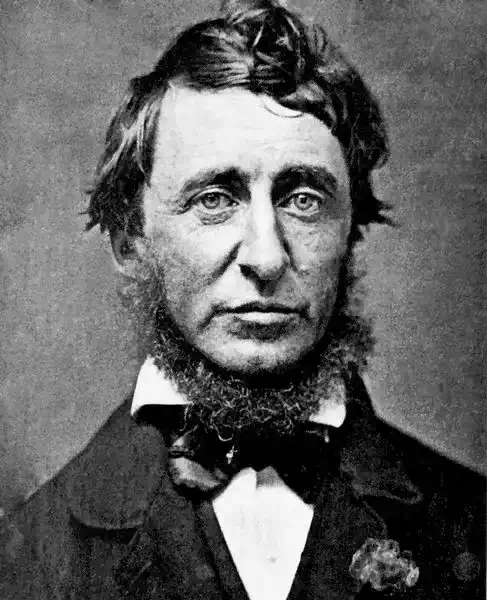
Henry David Thoreau
They Who Prepare My Evening Meal Below
They who prepare my evening meal below
Carelessly hit the kettle as they go
With tongs or shovel,
And ringing round and round,
Out of this hovel
It makes an eastern temple by the sound.
At first I thought a cow bell right at hand
Mid birches sounded o'er the open land,
Where I plucked flowers
Many years ago,
Spending midsummer hours
With such secure delight they hardly seemed to flow.
162
Robert W. Service
Schizophrenic
Each morning as I catch my bus,
A-fearing I'll be late,
I think: there are in all of us
Two folks quite separate;
As one I greet the office staff
With grim, official mien;
The other's when I belly-laugh,
And Home Sweet Home's the scene.
I've half a hundred men to boss,
And take my job to heart;
You'll never find me at a loss,
So well I play my part.
My voice is hard, my eye is cold,
My mouth is grimly set;
They all consider me, I'm told,
A "bloody martinet."
But when I reach my home at night
I'm happy as a boy;
My kiddies kiss me with delight,
And dance a jig of joy.
I slip into my oldest cloths,
My lines of care uncrease;
I mow the lawn, unhook the hose,
And glow with garden peace.
It's then I wonder which I am,
the boss with hard-boiled eye,
Or just the gay don't care-a-damn
Go-lucky garden guy?
Am I the starchy front who rants
As round his weight he throws,
or just old Pop with patchy pants,
Who sings and sniffs a rose?
155
Joyce Kilmer
The Apartment House
Severe against the pleasant arc of sky
The great stone box is cruelly displayed.
The street becomes more dreary from its shade,
And vagrant breezes touch its walls and die.
Here sullen convicts in their chains might lie,
Or slaves toil dumbly at some dreary trade.
How worse than folly is their labor made
Who cleft the rocks that this might rise on high!
Yet, as I look, I see a woman's face
Gleam from a window far above the street.
This is a house of homes, a sacred place,
By human passion made divinely sweet.
How all the building thrills with sudden grace
Beneath the magic of Love's golden feet!
135
Joyce Kilmer
The House with Nobody in It
Whenever I walk to Suffern along the Erie track
I go by a poor old farmhouse with its shingles broken and black.
I suppose I've passed it a hundred times, but I always stop for a minute
And look at the house, the tragic house, the house with nobody in it.
I never have seen a haunted house, but I hear there are such things;
That they hold the talk of spirits, their mirth and sorrowings.
I know this house isn't haunted, and I wish it were, I do;
For it wouldn't be so lonely if it had a ghost or two.
This house on the road to Suffern needs a dozen panes of glass,
And somebody ought to weed the walk and take a scythe to the grass.
It needs new paint and shingles, and the vines should be trimmed and tied;
But what it needs the most of all is some people living inside.
If I had a lot of money and all my debts were paid
I'd put a gang of men to work with brush and saw and spade.
I'd buy that place and fix it up the way it used to be
And I'd find some people who wanted a home and give it to them free.
Now, a new house standing empty, with staring window and door,
Looks idle, perhaps, and foolish, like a hat on its block in the store.
But there's nothing mournful about it; it cannot be sad and lone
For the lack of something within it that it has never known.
But a house that has done what a house should do,
a house that has sheltered life,
That has put its loving wooden arms around a man and his wife,
A house that has echoed a baby's laugh and held up his stumbling feet,
Is the saddest sight, when it's left alone, that ever your eyes could meet.
So whenever I go to Suffern along the Erie track
I never go by the empty house without stopping and looking back,
Yet it hurts me to look at the crumbling roof and the shutters fallen apart,
For I can't help thinking the poor old house is a house with a broken heart.
142
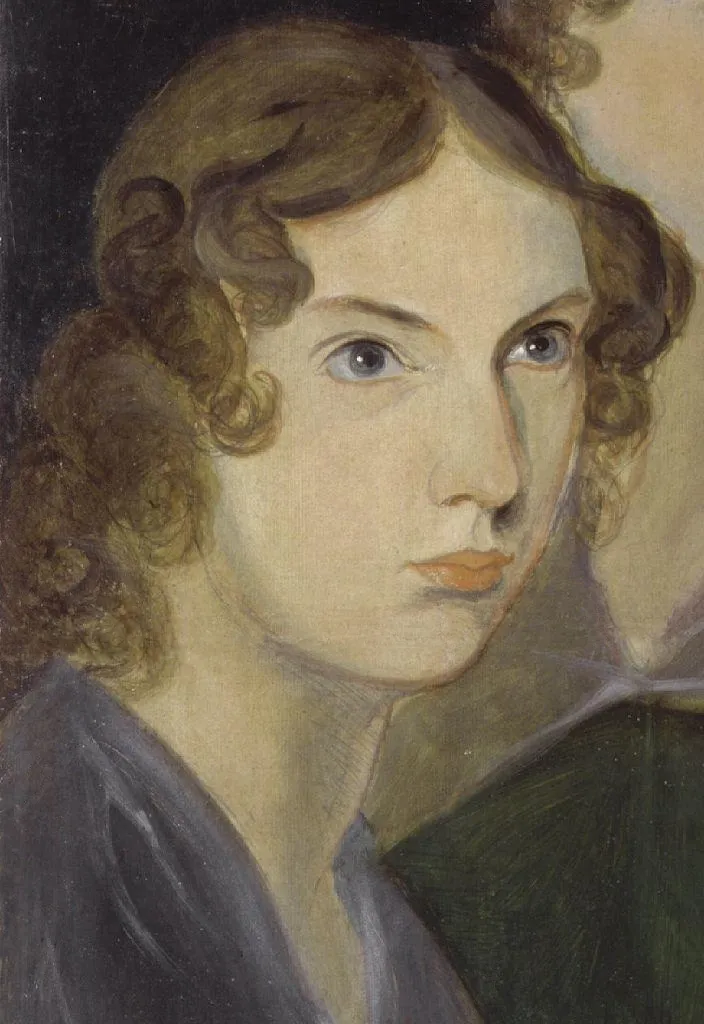
Anne Brontë
Lines Written at Thorp Green
That summer sun, whose genial glow
Now cheers my drooping spirit so
Must cold and distant be,
And only light our northern clime
With feeble ray, before the time
I long so much to see.
And this soft whispering breeze that now
So gently cools my fevered brow,
This too, alas, must turn To
a wild blast whose icy dart
Pierces and chills me to the heart,
Before I cease to mourn.
And these bright flowers I love so well,
Verbena, rose and sweet bluebell,
Must droop and die away.
Those thick green leaves with all their shade
And rustling music, they must fade
And every one decay.
But if the sunny summer time
And woods and meadows in their prime
Are sweet to them that roam Far
sweeter is the winter bare
With long dark nights and landscapes drear
To them that are at Home!
98
Anne Brontë
The Consolation
Though bleak these woods and damp the ground
With fallen leaves so thickly strewn,
And cold the wind that wanders round
With wild and melancholy moan,
There is a friendly roof I know
Might shield me from the wintry blast;
There is a fire whose ruddy glow
Will cheer me for my wanderings past.
And so, though still where'er I roam
Cold stranger glances meet my eye,
Though when my spirit sinks in woe
Unheeded swells the unbidden sigh,
Though solitude endured too long
Bids youthful joys too soon decay,
Makes mirth a stranger to my tongue
And overclouds my noon of day,
When kindly thoughts that would have way
Flow back discouraged to my breast
I know there is, though far away
A home where heart and soul may rest.
Warm hands are there that clasped in mine
The warmer heart will not belie,
While mirth and truth and friendship shine
In smiling lip and earnest eye.
The ice that gathers round my heart
May there be thawed; and sweetly then
The joys of youth that now depart
Will come to cheer my soul again.
Though far I roam, this thought shall be
My hope, my comfort everywhere;
While such a home remains to me
My heart shall never know despair.
Hespera Caverndel
97
Anne Brontë
Home
How brightly glistening in the sun
The woodland ivy plays!
While yonder beeches from their barks
Reflect his silver rays.
That sun surveys a lovely scene
From softly smiling skies;
And wildly through unnumbered trees
The wind of winter sighs:
Now loud, it thunders o'er my head,
And now in distance dies.
But give me back my barren hills
Where colder breezes rise;
Where scarce the scattered, stunted trees
Can yield an answering swell,
But where a wilderness of heath
Returns the sound as well.
For yonder garden, fair and wide,
With groves of evergreen,
Long winding walks, and borders trim,
And velvet lawns between;
Restore to me that little spot,
With grey walls compassed round,
Where knotted grass neglected lies,
And weeds usurp the ground.
Though all around this mansion high
Invites the foot to roam,
And though its halls are fair within Oh,
give me back my HOME!
Acton
93
Anne Brontë
Monday Night May 11th 1846 / Domestic Peace
Why should such gloomy silence reign;
And why is all the house so drear,
When neither danger, sickness, pain,
Nor death, nor want have entered here?
We are as many as we were
That other night, when all were gay,
And full of hope, and free from care;
Yet, is there something gone away.
The moon without as pure and calm
Is shining as that night she shone;
but now, to us she brings no balm,
For something from our hearts is gone.
Something whose absence leaves a void,
A cheerless want in every heart.
Each feels the bliss of all destroyed
And mourns the change but
each apart.
The fire is burning in the grate
As redly as it used to burn,
But still the hearth is desolate
Till Mirth and Love with Peace return.
'Twas Peace that flowed from heart to heart
With looks and smiles that spoke of Heaven,
And gave us language to impart
The blissful thoughts itself had given.
Sweet child of Heaven, and joy of earth!
O, when will Man thy value learn?
We rudely drove thee from our hearth,
And vainly sigh for thy return.
3