
Sky, Stars and Universe

Emily Dickinson
The Brain—is wider than the Sky
The Brain—is wider than the Sky—
For—put them side by side—
The one the other will contain
With ease—and You—beside—
The Brain is deeper than the sea—
For—hold them—Blue to Blue—
The one the other will absorb—
As Sponges—Buckets—do—
The Brain is just the weight of God—
For—Heft them—Pound for Pound—
And they will differ—if they do—
As Syllable from Sound—
470

Walt Whitman
Year Of Meteors, 1859 '60
YEAR of meteors! brooding year!
I would bind in words retrospective, some of your deeds and signs;
I would sing your contest for the 19th Presidentiad;
I would sing how an old man, tall, with white hair, mounted the
scaffold in Virginia;
(I was at hand--silent I stood, with teeth shut close--I watch'd;
I stood very near you, old man, when cool and indifferent, but
trembling with age and your unheal'd wounds, you mounted the
scaffold;)
--I would sing in my copious song your census returns of The States,
The tables of population and products--I would sing of your ships and
their cargoes,
The proud black ships of Manhattan, arriving, some fill'd with
immigrants, some from the isthmus with cargoes of gold;
Songs thereof would I sing--to all that hitherward comes would I
welcome give;
And you would I sing, fair stripling! welcome to you from me, sweet
boy of England!
Remember you surging Manhattan's crowds, as you pass'd with your
cortege of nobles?
There in the crowds stood I, and singled you out with attachment;
I know not why, but I loved you... (and so go forth little song,
Far over sea speed like an arrow, carrying my love all folded,
And find in his palace the youth I love, and drop these lines at his
feet;)
--Nor forget I to sing of the wonder, the ship as she swam up my bay,
Well-shaped and stately the Great Eastern swam up my bay, she was
feet long,
Her, moving swiftly, surrounded by myriads of small craft, I forget
not to sing;
--Nor the comet that came unannounced out of the north, flaring in
heaven;
Nor the strange huge meteor procession, dazzling and clear, shooting
over our heads,
(A moment, a moment long, it sail'd its balls of unearthly light over
our heads,
Then departed, dropt in the night, and was gone;)
--Of such, and fitful as they, I sing--with gleams from them would I
gleam and patch these chants;
Your chants, O year all mottled with evil and good! year of
forebodings! year of the youth I love!
Year of comets and meteors transient and strange!--lo! even here, one
equally transient and strange!
As I flit through you hastily, soon to fall and be gone, what is this
book,
What am I myself but one of your meteors?
471

Robert Frost
On Looking Up by Chance at the Constellations
You'll wait a long, long time for anything much
To happen in heaven beyond the floats of cloud
And the Northern Lights that run like tingling nerves.
The sun and moon get crossed, but they never touch,
Nor strike out fire from each other nor crash out loud.
The planets seem to interfere in their curves -
But nothing ever happens, no harm is done.
We may as well go patiently on with our life,
And look elsewhere than to stars and moon and sun
For the shocks and changes we need to keep us sane.
It is true the longest drout will end in rain,
The longest peace in China will end in strife.
Still it wouldn't reward the watcher to stay awake
In hopes of seeing the calm of heaven break
On his particular time and personal sight.
That calm seems certainly safe to last to-night.
471
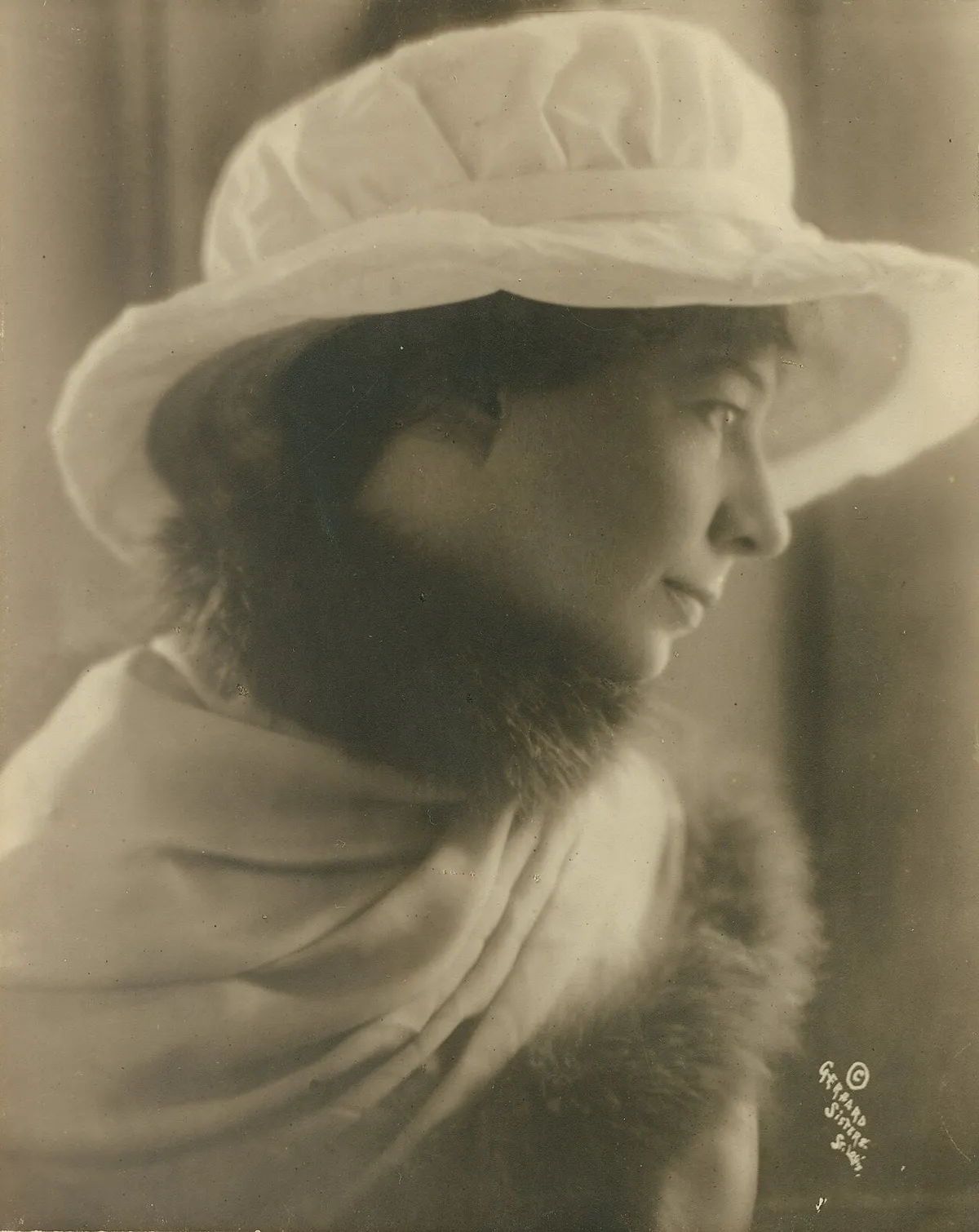
Sara Teasdale
To-nigh
The moon is a curving flower of gold,
The sky is still and blue;
The moon was made for the sky to hold,
And I for you.
The moon is a flower without a stem,
The sky is luminous;
Eternity was made for them,
To-night for us.
The sky is still and blue;
The moon was made for the sky to hold,
And I for you.
The moon is a flower without a stem,
The sky is luminous;
Eternity was made for them,
To-night for us.
468
Robert Frost
Fragmentary Blue
Why make so much of fragmentary blue
In here and there a bird, or butterfly,
Or flower, or wearing-stone, or open eye,
When heaven presents in sheets the solid hue?
Since earth is earth, perhaps, not heaven (as yet)--
Though some savants make earth include the sky;
And blue so far above us comes so high,
It only gives our wish for blue a whet.
466

William Blake
To Morning
O holy virgin! clad in purest white,
Unlock heav'n's golden gates, and issue forth;
Awake the dawn that sleeps in heaven; let light
Rise from the chambers of the east, and bring
The honey'd dew that cometh on waking day.
O radiant morning, salute the sun
Rous'd like a huntsman to the chase, and with
Thy buskin'd feet appear upon our hills.
455
Safo
Awed by her splendor
Awed by her splendor
stars near the lovely
moon cover their own
bright faces
when she
is roundest and lights
earth with her silver
stars near the lovely
moon cover their own
bright faces
when she
is roundest and lights
earth with her silver
447
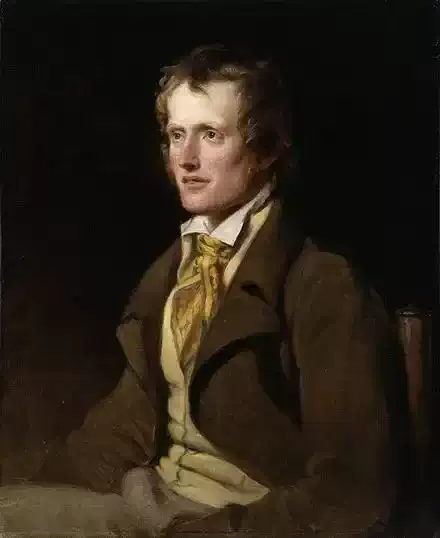
John Clare
Autumn
The thistledown's flying, though the winds are all still,
On the green grass now lying, now mounting the hill,
The spring from the fountain now boils like a pot;
Through stones past the counting it bubbles red-hot.
The ground parched and cracked is like overbaked bread,
The greensward all wracked is, bents dried up and dead.
The fallow fields glitter like water indeed,
And gossamers twitter, flung from weed unto weed.
Hill-tops like hot iron glitter bright in the sun,
And the rivers we're eying burn to gold as they run;
Burning hot is the ground, liquid gold is the air;
Whoever looks round sees Eternity there.
444
William Blake
Milton: The Sky is an Immortal Tent Built by the Sons of Los
The sky is an immortal tent built by the Sons of Los:
And every space that a man views around his dwelling-place
Standing on his own roof or in his garden on a mount
Of twenty-five cubits in height, such space is his universe:
And on its verge the sun rises and sets, the clouds bow
To meet the flat earth and the sea in such an order'd space:
The starry heavens reach no further, but here bend and set
On all sides, and the two Poles turn on their valves of gold:
And if he moves his dwelling-place, his heavens also move
Where'er he goes, and all his neighbourhood bewail his loss.
Such are the spaces called Earth and such its dimension.
As to that false appearance which appears to the reasoner
As of a globe rolling through voidness, it is a delusion of Ulro.
The microscope knows not of this nor the telescope: they alter
The ratio of the spectator's organs, but leave objects untouch'd.
For every space larger than a red globule of Man's blood
Is visionary, and is created by the Hammer of Los;
And every space smaller than a globule of Man's blood opens
Into Eternity of which this vegetable Earth is but a shadow.
The red globule is the unwearied sun by Los created
To measure time and space to mortal men every morning
444
Robert Frost
But outer Space
But outer Space,
At least this far,
For all the fuss
Of the populace
Stays more popular
Than populous
At least this far,
For all the fuss
Of the populace
Stays more popular
Than populous
442
Emily Dickinson
The Angle of a Landscape
The Angle of a Landscape-
That every time I wake-
Between my Curtain and the Wall
Upon an ample Crack-
Like a Venetian-waiting-
Accosts my open eye-
Is just a Bough of Apples-
Held slanting, in the Sky-
The Pattern of a Chimney-
The Forehead of a HillSometimes-
a Vane's Forefinger-
But that's-Occasional-
The Seasons-shift-my Picture-
Upon my Emerald Bough,
I wake-to find no-EmeraldsThen-
Diamonds-which the Snow
From Polar Caskets-fetched me-
The Chimney-and the Hill-
And just the Steeple's finger
These-
never stir at all-
427
Walt Whitman
Vicouac On A Mountain Side
I SEE before me now, a traveling army halting;
Below, a fertile valley spread, with barns, and the orchards of
summer;
Behind, the terraced sides of a mountain, abrupt in places, rising
high;
Broken, with rocks, with clinging cedars, with tall shapes, dingily
seen;
The numerous camp-fires scatter'd near and far, some away up on the
mountain;
The shadowy forms of men and horses, looming, large-sized flickering;
And over all, the sky--the sky! far, far out of reach, studded,
breaking out, the eternal stars.
425
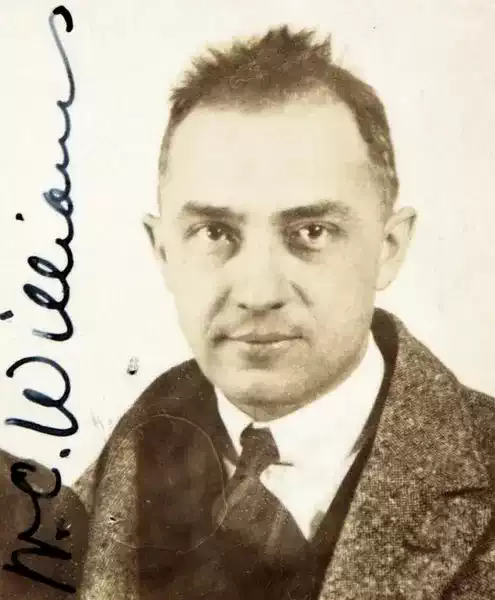
William Carlos Williams
Peace on Earth
The Archer is wake!
The Swan is flying!
Gold against blue
An Arrow is lying.
There is hunting in heaven--
Sleep safe till tomorrow.
The Bears are abroad!
The Eagle is screaming!
Gold against blue
Their eyes are gleaming!
Sleep!
Sleep safe till tomorrow.
The Sisters lie
With their arms intertwining;
Gold against blue
Their hair is shining!
The Serpent writhes!
Orion is listening!
Gold against blue
His sword is glistening!
Sleep!
There is hunting in heaven--
Sleep safe till tomorrow.
425

Johann Wolfgang von Goethe
From Faust - IV. Chorus Of Spirits
VANISH, dark clouds on high,
Offspring of night!
Let a more radiant beam
Through the blue ether gleam,
Charming the sight!
Would the dark clouds on high
Melt into air!
Stars glimmer tenderly,
Planets more fair
Shed their soft light.
Spirits of heav'nly birth,
Fairer than sons of earth,
Quivering emotions true
Hover above;
Yearning affections, too,
In their train move.
See how the spirit-band,
By the soft breezes fann'd,
Covers the smiling land,--
Covers the leafy grove,
Where happy lovers rove,
Deep in a dream of love,
True love that never dies!
Bowers on bowers rise,
Soft tendrils twine;
While from the press escapes,
Born of the juicy grapes,
Foaming, the wine;
And as the current flows
O'er the bright stones it goes,--
Leaving the hilly lands
Far, far behind,--
Into a sea expands,
Loving to wind
Round the green mountain's base;
And the glad-winged race,
Rapture sip in,
As they the sunny light,
And the fair islands bright,
Hasten to win,
That on the billows play
With sweet deceptive ray,
Where in glad choral song
Shout the exulting throng;
Where on the verdant plain
Dancers we see,
Spreading themselves amain
Over the lea.
Some boldly climbing are
O'er the steep brake,
Others are floating far
O'er the smooth lake.
All for a purpose move,
All with life teem,
While the sweet stars above
Blissfully gleam.
423
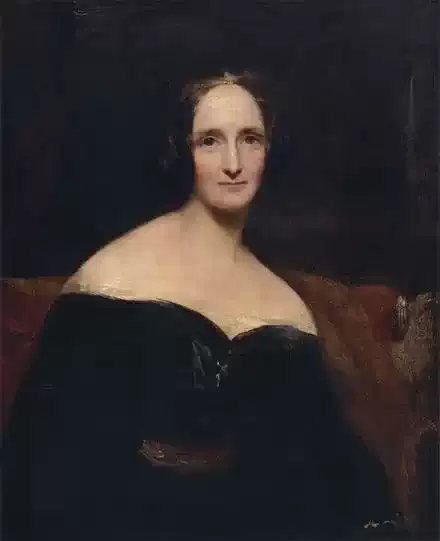
Percy Bysshe Shelley
Queen Mab: Part VI (excerpts)
"Throughout these infinite orbs of mingling light,
Of which yon earth is one, is wide diffus'd
A Spirit of activity and life,
That knows no term, cessation, or decay;
That fades not when the lamp of earthly life,
Extinguish'd in the dampness of the grave,
Awhile there slumbers, more than when the babe
In the dim newness of its being feels
The impulses of sublunary things,
And all is wonder to unpractis'd sense:
But, active, steadfast and eternal, still
Guides the fierce whirlwind, in the tempest roars,
Cheers in the day, breathes in the balmy groves,
Strengthens in health, and poisons in disease;
And in the storm of change, that ceaselessly
Rolls round the eternal universe and shakes
Its undecaying battlement, presides,
Apportioning with irresistible law
The place each spring of its machine shall fill;
So that when waves on waves tumultuous heap
Confusion to the clouds, and fiercely driven
Heaven's lightnings scorch the uprooted ocean-fords,
Whilst, to the eye of shipwreck'd mariner,
Lone sitting on the bare and shuddering rock,
All seems unlink'd contingency and chance,
No atom of this turbulence fulfils
A vague and unnecessitated task,
Or acts but as it must and ought to act.
Even the minutest molecule of light,
That in an April sunbeam's fleeting glow
Fulfils its destin'd, though invisible work,
The universal Spirit guides; nor less,
When merciless ambition, or mad zeal,
Has led two hosts of dupes to battlefield,
That, blind, they there may dig each other's graves,
And call the sad work glory, does it rule
All passions: not a thought, a will, an act,
No working of the tyrant's moody mind,
Nor one misgiving of the slaves who boast
Their servitude to hide the shame they feel,
Nor the events enchaining every will,
That from the depths of unrecorded time
Have drawn all-influencing virtue, pass
Unrecogniz'd or unforeseen by thee,
Soul of the Universe! eternal spring
Of life and death, of happiness and woe,
Of all that chequers the phantasmal scene
That floats before our eyes in wavering light,
Which gleams but on the darkness of our prison,
Whose chains and massy walls
We feel, but cannot see.
"Spirit of Nature! all-sufficing Power,
Necessity! thou mother of the world!
Unlike the God of human error, thou
Requir'st no prayers or praises; the caprice
Of man's weak will belongs no more to thee
Than do the changeful passions of his breast
To thy unvarying harmony: the slave,
Whose horrible lusts spread misery o'er the world,
And the good man, who lifts with virtuous pride
His being in the sight of happiness
That springs from his own works; the poison-tree,
Beneath whose shade all life is wither'd up,
And the fair oak, whose leafy dome affords
A temple where the vows of happy love
Are register'd, are equal in thy sight:
No love, no hate thou cherishest; revenge
And favouritism, and worst desire of fame
Thou know'st not: all that the wide world contains
Are but thy passive instruments, and thou
Regard'st them all with an impartial eye,
Whose joy or pain thy nature cannot feel,
Because thou hast not human sense,
Because thou art not human mind.
"Yes! when the sweeping storm of time
Has sung its death-dirge o'er the ruin'd fanes
And broken altars of the almighty Fiend
Whose name usurps thy honours, and the blood
Through centuries clotted there has floated down
The tainted flood of ages, shalt thou live
Unchangeable! A shrine is rais'd to thee,
Which, nor the tempest-breath of time,
Nor the interminable flood
Over earth's slight pageant rolling,
Availeth to destroy--
The sensitive extension of the world.
That wondrous and eternal fane,
Where pain and pleasure, good and evil join,
To do the will of strong necessity,
And life, in multitudinous shapes,
Still pressing forward where no term can be,
Like hungry and unresting flame
Curls round the eternal columns of its strength."
414

Carl Sandburg
Summer Stars
Bend low again, night of summer stars.
So near you are, sky of summer stars,
So near, a long-arm man can pick off stars,
Pick off what he wants in the sky bowl,
So near you are, summer stars,
So near, strumming, strumming,
So lazy and hum-strumming.
So near you are, sky of summer stars,
So near, a long-arm man can pick off stars,
Pick off what he wants in the sky bowl,
So near you are, summer stars,
So near, strumming, strumming,
So lazy and hum-strumming.
411
Emily Dickinson
She sweeps with many-colored brooms
She sweeps with many-colored brooms,
And leaves the shreds behind;
Oh, housewife in the evening west,
Come back, and dust the pond!
You dropped a purple ravelling in,
You dropped an amber thread;
And now you've littered all the East
With duds of emerald!
And still she plies her spotted brooms,
And still the aprons fly,
Till brooms fade softly into stars --
And then I come away.
374
Johann Wolfgang von Goethe
From Faust - II. Prologue In Heaven
THE ARCHANGELS' SONG.
RAPHAEL.
THE sun still chaunts, as in old time,
With brother-spheres in choral song,
And with his thunder-march sublime
Moves his predestined course along.
Strength find the angels in his sight,
Though he by none may fathomed be;
Still glorious is each work of might
As when first form'd in majesty.
GABRIEL.
And swift and swift, in wondrous guise,
Revolves the earth in splendour bright,
The radiant hues of Paradise
Alternating with deepest night.
From out the gulf against the rock,
In spreading billows foams the ocean,--
And cliff and sea with mighty shock,
The spheres whirl round in endless motion.
MICHAEL.
And storms in emulation growl
From land to sea, from sea to land,
And fashion, as they wildly howl,
A circling, wonder-working band.
Destructive flames in mad career
Precede Thy thunders on their way;
Yet, Lord, Thy messengers revere
The soft mutations of Thy day.
THE THREE.
Strength find the angels in Thy sight,
Though none may hope to fathom Thee;
Still glorious are Thy works of might,
As when first form'd in majesty.
371

Mao Tsé-Tung
Three Short Poems
Mountains!
I whip my swift horse, glued to my saddle.
I turn my head startled,
The sky is three foot three above me!
Mountains!
Like great waves surging in a crashing sea,
Like a thousand stallions
In full gallop in the heat of battle.
Mountains!
Piercing the blue of heaven, your barbs unblunted!
The skies would fall
But for your strength supporting.
358
Carl Sandburg
Child Moon
The child's wonder
At the old moon
Comes back nightly.
She points her finger
To the far silent yellow thing
Shining through the branches
Filtering on the leaves a golden sand,
Crying with her little tongue, “See the moon!”
And in her bed fading to sleep
With babblings of the moon on her little mouth.
At the old moon
Comes back nightly.
She points her finger
To the far silent yellow thing
Shining through the branches
Filtering on the leaves a golden sand,
Crying with her little tongue, “See the moon!”
And in her bed fading to sleep
With babblings of the moon on her little mouth.
350
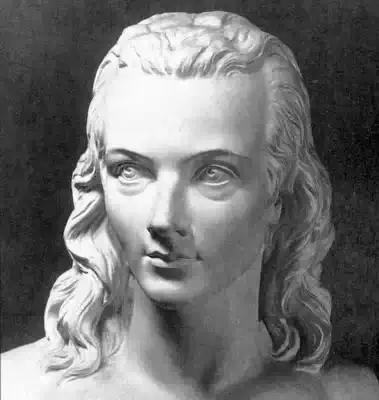
Novalis
Hymns to the Night
Now I know when will come the last morning -- when the Light no more scares away
Night and Love -- when sleep shall be without waking, and but one continuous dream. I
feel in me a celestial exhaustion. Long and weariful was my pilgrimage to the holy
grave, and crushing was the cross. The crystal wave, which, imperceptible to the
ordinary sense, springs in the dark bosom of the mound against whose foot breaks the
flood of the world, he who has tasted it, he who has stood on the mountain frontier of
the world, and looked across into the new land, into the abode of the Night -- truly he
turns not again into the tumult of the world, into the land where dwells the Light in
ceaseless unrest.
On those heights he builds for himself tabernacles -- tabernacles of peace, there longs
and loves and gazes across, until the welcomest of all hours draws him down into the
waters of the spring -- afloat above remains what is earthly, and is swept back in
storms, but what became holy by the touch of love, runs free through hidden ways to
the region beyond, where, like fragrances, it mingles with love asleep.
Still wakest thou, cheerful Light, that weary man to his labor -- and into me pourest
joyous life -- but thou wilest me not away from Memory's moss-grown monument.
Gladly will I stir busy hands, everywhere behold where thou hast need of me -- praise
the lustre of thy splendor -- pursue unwearied the lovely harmonies of thy skilled
handicraft -- gladly contemplate the clever pace of thy mighty, luminous clock --
explore the balance of the forces and the laws of the wondrous play of countless worlds
and their seasons. But true to the Night remains my secret heart, and to creative Love,
her daughter. Canst thou show me a heart eternally true? has thy sun friendly eyes
that know me? do thy stars lay hold of my longing hand? and return me the tender
pressure and the caressing word? was it thou did adorn them with colors and a
flickering outline -- or was it she who gave to thy jewels a higher, a dearer weight?
What delight, what pleasure offers thy life, to outweigh the transports of Death? Wears
not everything that inspires us the color of the Night? She sustains thee mother-like,
and to her thou owest all thy glory. Thou wouldst vanish into thyself -- in boundless
space thou wouldst dissolve, if she did not hold thee fast, if she swaddled thee not, so
that thou grewest warm, and flaming, begot the universe. Truly I was, before thou
wast -- the mother sent me with my brothers and sisters to inhabit thy world, to hallow
it with love that it might be an ever-present memorial -- to plant it with flowers
unfading. As yet they have not ripened, these thoughts divine -- as yet is there small
trace of our coming revelation -- One day thy clock will point to the end of time, and
then thou shalt be as one of us, and shalt, full of ardent longing, be extinguished and
die. I feel in me the close of thy activity -- heavenly freedom, and blessed return. With
wild pangs I recognize thy distance from our home, thy resistance against the ancient,
glorious heaven. Thy rage and thy raving are in vain. Unscorchable stands the cross --
victory-banner of our breed.
Over I journey
And for each pain
A pleasant sting only
Shall one day remain.
Yet in a few moments
Then free am I,
And intoxicated
In Love's lap lie.
Life everlasting
Lifts, wave-like, at me,
I gaze from its summit
Down after thee.
Your lustre must vanish
Yon mound underneath --
A shadow will bring thee
Thy cooling wreath.
Oh draw at my heart, love,
Draw till I'm gone,
That, fallen asleep, I
Still may love on.
I feel the flow of
Death's youth-giving flood
To balsam and ether
Transform my blood --
I live all the daytime
In faith and in might
And in holy fire
I die every night.
348
Emily Dickinson
Bring me the sunset in a cup
Bring me the sunset in a cup,
Reckon the morning's flagons up
And say how many Dew,
Tell me how far the morning leaps-
Tell me what time the weaver sleeps
Who spun the breadth of blue!
Write me how many notes there be
In the new Robin's ecstasy
Among astonished boughs-
How many trips the Tortoise makes-
How many cups the Bee partakes,
The Debauchee of Dews!
Also, who laid the Rainbow's piers,
Also, who leads the docile spheres
By withes of supple blue?
Whose fingers string the stalactite-
Who counts the wampum of the night
To see that none is due?
Who built this little Alban House
And shut the windows down so close
My spirit cannot see?
Who'll let me out some gala day
With implements to fly away,
Passing Pomposity?
348
Emily Dickinson
Heaven-is what I cannot reach!
"Heaven"-is what I cannot reach!
The Apple on the Tree-
Provided it do hopeless-hang
That-"
Heaven" is-to Me!
The Color, on the Cruising Cloud-
The interdicted Land-
Behind the Hill-the House behind
There-
Paradise-is found!
Her teasing Purples-Afternoons-
The credulous-decoy
Enamored-
of the Conjuror-
That spurned us-Yesterday!
The Apple on the Tree-
Provided it do hopeless-hang
That-"
Heaven" is-to Me!
The Color, on the Cruising Cloud-
The interdicted Land-
Behind the Hill-the House behind
There-
Paradise-is found!
Her teasing Purples-Afternoons-
The credulous-decoy
Enamored-
of the Conjuror-
That spurned us-Yesterday!
332

William Butler Yeats
He Tells Of The Perfect Beauty
O CLOUD-PALE eyelids, dream-dimmed eyes,
The poets labouring all their days
To build a perfect beauty in rhyme
Are overthrown by a woman's gaze
And by the unlabouring brood of the skies:
And therefore my heart will bow, when dew
Is dropping sleep, until God burn time,
Before the unlabouring stars and you.
The poets labouring all their days
To build a perfect beauty in rhyme
Are overthrown by a woman's gaze
And by the unlabouring brood of the skies:
And therefore my heart will bow, when dew
Is dropping sleep, until God burn time,
Before the unlabouring stars and you.
334