

Poems in this topic
Pain and Despair
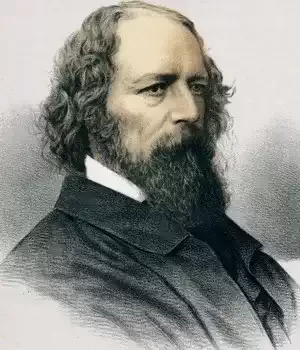
Alfred Lord Tennyson
Lucretius
Lucretius
Lucilla, wedded to Lucretius, found
Her master cold; for when the morning flush
Of passion and the first embrace had died
Between them, tho' he loved her none the less,
Yet often when the woman heard his foot
Return from pacings in the field, and ran
To greet him with a kiss, the master took
Small notice, or austerely, for his mind
Half buried in some weightier argument,
Or fancy-borne perhaps upon the rise
And long roll of the hexameter -- he past
To turn and ponder those three hundred scrolls
Left by the Teacher, whom he held divine.
She brook'd it not, but wrathful, petulant
Dreaming some rival, sought and found a witch
Who brew'd the philtre which had power, they said
To lead an errant passion home again.
And this, at times, she mingled with his drink,
And this destroy'd him; for the wicked broth
Confused the chemic labor of the blood,
And tickling the brute brain within the man's
Made havoc among those tender cells, and check'd
His power to shape. He loathed himself, and once
After a tempest woke upon a morn
That mock'd him with returning calm, and cried:
"Storm in the night! for thrice I heard the rain
Rushing; and once the flash of a thunderbolt -Methought
I never saw so fierce a fork -Struck
out the streaming mountain-side, and show'd
A riotous confluence of watercourses
Blanching and billowing in a hollow of it,
Where all but yester-eve was dusty-dry.
"Storm, and what dreams, ye holy Gods, what dreams!
For thrice I waken'd after dreams. Perchance
We do but recollect the dreams that come
Just ere the waking. Terrible: for it seem'd
A void was made in Nature, all her bonds
Crack'd; and I saw the flaring atom-streams
And torrents of her myriad universe,
Ruining along the illimitable inane,
Fly on to clash together again, and make
Another and another frame of things
For ever. That was mine, my dream, I knew it -Of
and belonging to me, as the dog
With inward yelp and restless forefoot plies
His function of the woodland; but the next!
I thought that all the blood by Sylla shed
Came driving rainlike down again on earth,
And where it dash'd the reddening meadow, sprang
No dragon warriors from Cadmean teeth,
For these I thought my dream would show to me,
But girls, Hetairai, curious in their art,
Hired animalisms, vile as those that made
The mulberry-faced Dictator's orgies worse
Than aught they fable of the quiet Gods.
And hands they mixt, and yell'd and round me drove
In narrowing circles till I yell'd again
Half-suffocated, and sprang up, and saw -Was
it the first beam of my latest day?
"Then, then, from utter gloom stood out the
The breasts of Helen, and hoveringly a sword
Now over and now under, now direct,
Pointed itself to pierce, but sank down shamed
At all that beauty; and as I stared, a fire,
The fire that left a roofless Ilion,
Shot out of them, and scorch'd me that I woke.
"Is this thy vengeance, holy Venus, thine,
Because I would not one of thine own doves,
Not even a rose, were offered to thee? thine,
Forgetful how my rich proemion makes
Thy glory fly along the Italian field,
In lays that will outlast thy deity?
"Deity? nay, thy worshippers. My tongue
Trips, or I speak profanely. Which of these
Angers thee most, or angers thee at all?
Not if thou be'st of those who, far aloof
From envy, hate and pity, and spite and scorn,
Live the great life which all our greatest fain
Would follow, centred in eternal calm.
"Nay, if thou canst,
Goddess, like ourselves
Touch, and be touch'd, then would I cry to thee
To kiss thy Mavors, roll thy tender arms
Round him, and keep him from the lust of blood
That makes a steaming slaughter-house of Rome.
"Ay, but I meant not thee; I meant riot her
Whom all the pines of Ida shook to see
Slide from that quiet heaven of hers, and tempt
The Trojan, while his neatherds were abroad
Nor her that o'er her wounded hunter wept
Her deity false in human-amorous tears;
Nor whom her beardless apple-arbiter
Decided fairest. Rather, O ye Gods,
Poet-like, as the great Sicilian called
Calliope to grace his golden verse -Ay,
and this Kypris also -- did I take
That popular name of thine to shadow forth
The all-generating powers and genial heat
Of Nature, when she strikes thro' the thick blood
Of cattle, and light is large, and lambs are glad
Nosing the mother's udder, and the bird
Makes his heart voice amid the blaze of flowers;
Which things appear the work of mighty Gods.
"The Gods! and if I go my work is left
Unfinish'd -- if I go. The Gods, who haunt
The lucid interspace of world and world,
Where never creeps a cloud, or moves a wind,
Nor ever falls the least white star of mow
Nor ever lowest roll of thunder moans,
Nor sound of human sorrow mounts to mar
Their sacred everlasting calm! and such,
Not all so fine, nor so divine a calm
Not such, nor all unlike it, man may gain
Letting his own life go. The Gods, the Godsl
If all be atoms, how then should the Gods
Being atomic not be dissoluble,
Not follow the great law? My master held
That Gods there are, for all men so believe.
I prest my footsteps into his, and meant
Surely to lead my Memmius in a train
Of fiowery clauses onward to the proof
That Gods there are, and deathless. Meant? I meant?
I have forgotten what I meant, my mind
Stumbles, and all my faculties are lamed.
"Look where another of our Gods, the Sun
Apollo, Delius, or of older use
All-seeing Hyperion -- what you will -Has
mounted yonder; since he never sware,
Except his wrath were wreak'd on wretched man,
That he would only shine among the dead
Hereafter -- tales! for never yet on earth
Could dead flesh creep, or bits of roasting ox
Moan round the spit -- nor knows he what he sees;
King of the East altho' he seem, and girt
With song and flame and fragrance, slowly lifts
His golden feet on those empurpled stairs
That climb into the windy halls of heaven
And here he glances on an eye new-born,
And gets for greeting but a wail of pain;
And here he stays upon a freezing orb
That fain would gaze upon him to the last;
And here upon a yellow eyelid fallen
And closed by those who mourn a friend in vain,
Not thankful that his troubles are no more.
And me, altho' his fire is on my face
Blinding, he sees not, nor at all can tell
Whether I mean this day to end myself.
Or lend an ear to Plato where he says,
That men like soldiers may not quit the post
Allotted by the Gods. But he that holds
The Gods are careless, wherefore need he care
Greatly for them, nor rather plunge at once,
Being troubled, wholly out of sight, and sink
Past earthquake -- ay, and gout and stone, that break
Body toward death, and palsy, death-in-life,
And wretched age -- and worst disease of all,
These prodigies of myriad nakednesses,
And twisted shapes of lust, unspeakable,
Abominable, strangers at my hearth
Not welcome, harpies miring every dish,
The phantom husks of something foully done,
And fleeting thro' the boundless universe,
And blasting the long quiet of my breast
With animal heat and dire insanity?
"How should the mind, except it loved them, clasp
These idols to herself? or do they fly
Now thinner, and now thicker, like the flakes
In a fall of snow, and so press in, perforce
Of multitude, as crowds that in an hour
Of civic tumult jam the doors, and bear
The keepers down, and throng, their rags and the
The basest, far into that council-hall
Where sit the best and stateliest of the land?
³Can I not fling this horror off me again,
Seeing with how great ease Nature can smile
Balmier and nobler from her bath of storm,
At random ravage? and how easily
The mountain there has cast his cloudy slough,
Now towering o'er him in serenest air,
A mountain o'er a mountain, -- ay, and within
All hollow as the hopes and fears of men?
"But who was he that in the garden snared
Picus and Faunus, rustic Gods? a tale
To laugh at -- more to laugh at in myself -For
look! what is it? there? yon arbutus
Totters; a noiseless riot underneath
Strikes through the wood, sets all the tops quivering -- ;
The mountain quickens into Nymph and Faun,
And here an Oread -- how the sun delights
To glance and shift about her slippery sides,
And rosy knees and supple roundedness,
And budded bosom-peaks -- who this way runs
Before the rest! -- a satyr, a satyr, see,
Follows; but him I proved impossible
Twy-natured is no nature. Yet he draws
Nearer and nearer, and I scan him now
Beastlier than any phantom of his kind
That ever butted his rough brother-brute
For lust or lusty blood or provender.
I hate, abhor, spit, sicken at him; and she
Loathes him as well; such a precipitate heel,
Fledged as it were with Mercury's ankle-wing,
Whirls her to me -- ;but will she fling herself
Shameless upon me? Catch her, goatfoot! nay,
Hide, hide them, million-myrtled wilderness,
And cavern-shadowing laurels, hide! do I wish -What?
-- ;that the bush were leafless? or to whelm
All of them in one massacre? O ye Gods
I know you careless, yet, behold, to you
From childly wont and ancient use I call -I
thought I lived securely as yourselves -No
lewdness, narrowing envy, monkey-spite,
No madness of ambition, avarice, none;
No larger feast than under plane or pine
With neighbors laid along the grass, to take
Only such cups as left us friendly-warm,
Affirming each his own philosophy
Nothing to mar the sober majesties
Of settled, sweet, Epicurean life.
But now it seems some unseen monster lays
His vast and filthy hands upon my will,
Wrenching it backward into his, and spoils
My bliss in being; and it was not great,
For save when shutting reasons up in rhythm,
Or Heliconian honey in living words,
To make a truth less harsh, I often grew
Tired of so much within our little life
Or of so little in our little life -Poor
little life that toddles half an hour
Crown'd with a flower or two, and there an end -And
since the nobler pleasure seems to fade,
Why should I, beastlike as I find myself,
Not manlike end myself? -- our privilege -- ;
What beast has heart to do it? And what man
What Roman would be dragg'd in triumph thus?
Not I; not he, who bears one name with her
Whose death-blow struck the dateless doom of kings,
When, brooking not the Tarquin in her veins,
She made her blood in sight of Collatine
And all his peers, flushing the guiltless air,
Spout from the maiden fountain in her heart.
And from it sprang the Commonwealth, which breaks
As I am breaking now!
"And therefore now
Let her, that is the womb and tomb of all
Great Nature, take, and forcing far apart
Those blind beginnings that have made me man,
Dash them anew together at her will
Thro' all her cycles -- into man once more,
Or beast or bird or fish, or opulent flower.
But till this cosmic order everywhere
Shatter'd into one earthquake m one day
Cracks all to pieces, -- and that hour perhaps
Is not so far when momentary man
Shall seem no more a something to himself,
But he, his hopes and hates, his homes and fanes
And even his bones long laid within the grave,
The very sides of the grave itself shall pass,
Vanishing, atom and void, atom and void,
Into the unseen for ever, -- till that hour,
My golden work in which I told a truth
That stays the rolling Ixionian wheel,
And numbs the Fury's ringlet-snake, and plucks
The mortal soul from out immortal hell
Shall stand. Ay, surely; then it fails at last
And perishes as I must, for O Thou
Passionless bride, divine Tranquillity,
Yearn'd after by the wisest of the wise
Who fail to find thee, being as thou art
Without one pleasure and without one pain,
Howbeit I know thou surely must be mine
Or soon or late, yet out of season, thus
I woo thee roughly, for thou carest not
How roughly men may woo thee so they win -- ;
Thus -- thus -- the soul flies out and dies in the air
With that he drove the knife into his side.
She heard him raging, heard him fall, ran in,
Beat breast, tore hair, cried out upon herself
As having fail'd in duty to him, shriek'd
That she but meant to win him back, fell on him
Clasp'd, kiss'd him, wail'd. He answer'd, "Care not thou!
Thy duty? What is duty? Fare thee well!"
Lucilla, wedded to Lucretius, found
Her master cold; for when the morning flush
Of passion and the first embrace had died
Between them, tho' he loved her none the less,
Yet often when the woman heard his foot
Return from pacings in the field, and ran
To greet him with a kiss, the master took
Small notice, or austerely, for his mind
Half buried in some weightier argument,
Or fancy-borne perhaps upon the rise
And long roll of the hexameter -- he past
To turn and ponder those three hundred scrolls
Left by the Teacher, whom he held divine.
She brook'd it not, but wrathful, petulant
Dreaming some rival, sought and found a witch
Who brew'd the philtre which had power, they said
To lead an errant passion home again.
And this, at times, she mingled with his drink,
And this destroy'd him; for the wicked broth
Confused the chemic labor of the blood,
And tickling the brute brain within the man's
Made havoc among those tender cells, and check'd
His power to shape. He loathed himself, and once
After a tempest woke upon a morn
That mock'd him with returning calm, and cried:
"Storm in the night! for thrice I heard the rain
Rushing; and once the flash of a thunderbolt -Methought
I never saw so fierce a fork -Struck
out the streaming mountain-side, and show'd
A riotous confluence of watercourses
Blanching and billowing in a hollow of it,
Where all but yester-eve was dusty-dry.
"Storm, and what dreams, ye holy Gods, what dreams!
For thrice I waken'd after dreams. Perchance
We do but recollect the dreams that come
Just ere the waking. Terrible: for it seem'd
A void was made in Nature, all her bonds
Crack'd; and I saw the flaring atom-streams
And torrents of her myriad universe,
Ruining along the illimitable inane,
Fly on to clash together again, and make
Another and another frame of things
For ever. That was mine, my dream, I knew it -Of
and belonging to me, as the dog
With inward yelp and restless forefoot plies
His function of the woodland; but the next!
I thought that all the blood by Sylla shed
Came driving rainlike down again on earth,
And where it dash'd the reddening meadow, sprang
No dragon warriors from Cadmean teeth,
For these I thought my dream would show to me,
But girls, Hetairai, curious in their art,
Hired animalisms, vile as those that made
The mulberry-faced Dictator's orgies worse
Than aught they fable of the quiet Gods.
And hands they mixt, and yell'd and round me drove
In narrowing circles till I yell'd again
Half-suffocated, and sprang up, and saw -Was
it the first beam of my latest day?
"Then, then, from utter gloom stood out the
The breasts of Helen, and hoveringly a sword
Now over and now under, now direct,
Pointed itself to pierce, but sank down shamed
At all that beauty; and as I stared, a fire,
The fire that left a roofless Ilion,
Shot out of them, and scorch'd me that I woke.
"Is this thy vengeance, holy Venus, thine,
Because I would not one of thine own doves,
Not even a rose, were offered to thee? thine,
Forgetful how my rich proemion makes
Thy glory fly along the Italian field,
In lays that will outlast thy deity?
"Deity? nay, thy worshippers. My tongue
Trips, or I speak profanely. Which of these
Angers thee most, or angers thee at all?
Not if thou be'st of those who, far aloof
From envy, hate and pity, and spite and scorn,
Live the great life which all our greatest fain
Would follow, centred in eternal calm.
"Nay, if thou canst,
Goddess, like ourselves
Touch, and be touch'd, then would I cry to thee
To kiss thy Mavors, roll thy tender arms
Round him, and keep him from the lust of blood
That makes a steaming slaughter-house of Rome.
"Ay, but I meant not thee; I meant riot her
Whom all the pines of Ida shook to see
Slide from that quiet heaven of hers, and tempt
The Trojan, while his neatherds were abroad
Nor her that o'er her wounded hunter wept
Her deity false in human-amorous tears;
Nor whom her beardless apple-arbiter
Decided fairest. Rather, O ye Gods,
Poet-like, as the great Sicilian called
Calliope to grace his golden verse -Ay,
and this Kypris also -- did I take
That popular name of thine to shadow forth
The all-generating powers and genial heat
Of Nature, when she strikes thro' the thick blood
Of cattle, and light is large, and lambs are glad
Nosing the mother's udder, and the bird
Makes his heart voice amid the blaze of flowers;
Which things appear the work of mighty Gods.
"The Gods! and if I go my work is left
Unfinish'd -- if I go. The Gods, who haunt
The lucid interspace of world and world,
Where never creeps a cloud, or moves a wind,
Nor ever falls the least white star of mow
Nor ever lowest roll of thunder moans,
Nor sound of human sorrow mounts to mar
Their sacred everlasting calm! and such,
Not all so fine, nor so divine a calm
Not such, nor all unlike it, man may gain
Letting his own life go. The Gods, the Godsl
If all be atoms, how then should the Gods
Being atomic not be dissoluble,
Not follow the great law? My master held
That Gods there are, for all men so believe.
I prest my footsteps into his, and meant
Surely to lead my Memmius in a train
Of fiowery clauses onward to the proof
That Gods there are, and deathless. Meant? I meant?
I have forgotten what I meant, my mind
Stumbles, and all my faculties are lamed.
"Look where another of our Gods, the Sun
Apollo, Delius, or of older use
All-seeing Hyperion -- what you will -Has
mounted yonder; since he never sware,
Except his wrath were wreak'd on wretched man,
That he would only shine among the dead
Hereafter -- tales! for never yet on earth
Could dead flesh creep, or bits of roasting ox
Moan round the spit -- nor knows he what he sees;
King of the East altho' he seem, and girt
With song and flame and fragrance, slowly lifts
His golden feet on those empurpled stairs
That climb into the windy halls of heaven
And here he glances on an eye new-born,
And gets for greeting but a wail of pain;
And here he stays upon a freezing orb
That fain would gaze upon him to the last;
And here upon a yellow eyelid fallen
And closed by those who mourn a friend in vain,
Not thankful that his troubles are no more.
And me, altho' his fire is on my face
Blinding, he sees not, nor at all can tell
Whether I mean this day to end myself.
Or lend an ear to Plato where he says,
That men like soldiers may not quit the post
Allotted by the Gods. But he that holds
The Gods are careless, wherefore need he care
Greatly for them, nor rather plunge at once,
Being troubled, wholly out of sight, and sink
Past earthquake -- ay, and gout and stone, that break
Body toward death, and palsy, death-in-life,
And wretched age -- and worst disease of all,
These prodigies of myriad nakednesses,
And twisted shapes of lust, unspeakable,
Abominable, strangers at my hearth
Not welcome, harpies miring every dish,
The phantom husks of something foully done,
And fleeting thro' the boundless universe,
And blasting the long quiet of my breast
With animal heat and dire insanity?
"How should the mind, except it loved them, clasp
These idols to herself? or do they fly
Now thinner, and now thicker, like the flakes
In a fall of snow, and so press in, perforce
Of multitude, as crowds that in an hour
Of civic tumult jam the doors, and bear
The keepers down, and throng, their rags and the
The basest, far into that council-hall
Where sit the best and stateliest of the land?
³Can I not fling this horror off me again,
Seeing with how great ease Nature can smile
Balmier and nobler from her bath of storm,
At random ravage? and how easily
The mountain there has cast his cloudy slough,
Now towering o'er him in serenest air,
A mountain o'er a mountain, -- ay, and within
All hollow as the hopes and fears of men?
"But who was he that in the garden snared
Picus and Faunus, rustic Gods? a tale
To laugh at -- more to laugh at in myself -For
look! what is it? there? yon arbutus
Totters; a noiseless riot underneath
Strikes through the wood, sets all the tops quivering -- ;
The mountain quickens into Nymph and Faun,
And here an Oread -- how the sun delights
To glance and shift about her slippery sides,
And rosy knees and supple roundedness,
And budded bosom-peaks -- who this way runs
Before the rest! -- a satyr, a satyr, see,
Follows; but him I proved impossible
Twy-natured is no nature. Yet he draws
Nearer and nearer, and I scan him now
Beastlier than any phantom of his kind
That ever butted his rough brother-brute
For lust or lusty blood or provender.
I hate, abhor, spit, sicken at him; and she
Loathes him as well; such a precipitate heel,
Fledged as it were with Mercury's ankle-wing,
Whirls her to me -- ;but will she fling herself
Shameless upon me? Catch her, goatfoot! nay,
Hide, hide them, million-myrtled wilderness,
And cavern-shadowing laurels, hide! do I wish -What?
-- ;that the bush were leafless? or to whelm
All of them in one massacre? O ye Gods
I know you careless, yet, behold, to you
From childly wont and ancient use I call -I
thought I lived securely as yourselves -No
lewdness, narrowing envy, monkey-spite,
No madness of ambition, avarice, none;
No larger feast than under plane or pine
With neighbors laid along the grass, to take
Only such cups as left us friendly-warm,
Affirming each his own philosophy
Nothing to mar the sober majesties
Of settled, sweet, Epicurean life.
But now it seems some unseen monster lays
His vast and filthy hands upon my will,
Wrenching it backward into his, and spoils
My bliss in being; and it was not great,
For save when shutting reasons up in rhythm,
Or Heliconian honey in living words,
To make a truth less harsh, I often grew
Tired of so much within our little life
Or of so little in our little life -Poor
little life that toddles half an hour
Crown'd with a flower or two, and there an end -And
since the nobler pleasure seems to fade,
Why should I, beastlike as I find myself,
Not manlike end myself? -- our privilege -- ;
What beast has heart to do it? And what man
What Roman would be dragg'd in triumph thus?
Not I; not he, who bears one name with her
Whose death-blow struck the dateless doom of kings,
When, brooking not the Tarquin in her veins,
She made her blood in sight of Collatine
And all his peers, flushing the guiltless air,
Spout from the maiden fountain in her heart.
And from it sprang the Commonwealth, which breaks
As I am breaking now!
"And therefore now
Let her, that is the womb and tomb of all
Great Nature, take, and forcing far apart
Those blind beginnings that have made me man,
Dash them anew together at her will
Thro' all her cycles -- into man once more,
Or beast or bird or fish, or opulent flower.
But till this cosmic order everywhere
Shatter'd into one earthquake m one day
Cracks all to pieces, -- and that hour perhaps
Is not so far when momentary man
Shall seem no more a something to himself,
But he, his hopes and hates, his homes and fanes
And even his bones long laid within the grave,
The very sides of the grave itself shall pass,
Vanishing, atom and void, atom and void,
Into the unseen for ever, -- till that hour,
My golden work in which I told a truth
That stays the rolling Ixionian wheel,
And numbs the Fury's ringlet-snake, and plucks
The mortal soul from out immortal hell
Shall stand. Ay, surely; then it fails at last
And perishes as I must, for O Thou
Passionless bride, divine Tranquillity,
Yearn'd after by the wisest of the wise
Who fail to find thee, being as thou art
Without one pleasure and without one pain,
Howbeit I know thou surely must be mine
Or soon or late, yet out of season, thus
I woo thee roughly, for thou carest not
How roughly men may woo thee so they win -- ;
Thus -- thus -- the soul flies out and dies in the air
With that he drove the knife into his side.
She heard him raging, heard him fall, ran in,
Beat breast, tore hair, cried out upon herself
As having fail'd in duty to him, shriek'd
That she but meant to win him back, fell on him
Clasp'd, kiss'd him, wail'd. He answer'd, "Care not thou!
Thy duty? What is duty? Fare thee well!"
509
Alfred Lord Tennyson
In Memoriam A. H. H.: 72. Risest thou thus, dim dawn, again
In Memoriam A. H. H.: 72. Risest thou thus, dim dawn, again
Risest thou thus, dim dawn, again,
And howlest, issuing out of night,
With blasts that blow the poplar white,
And lash with storm the streaming pane?
Day, when my crown'd estate begun
To pine in that reverse of doom,
Which sicken'd every living bloom,
And blurr'd the splendour of the sun;
Who usherest in the dolorous hour
With thy quick tears that make the rose
Pull sideways, and the daisy close
Her crimson fringes to the shower;
Who might'st have heaved a windless flame
Up the deep East, or, whispering, play'd
A chequer-work of beam and shade
Along the hills, yet look'd the same.
As wan, as chill, as wild as now;
Day, mark'd as with some hideous crime,
When the dark hand struck down thro' time,
And cancell'd nature's best: but thou,
Lift as thou may'st thy burthen'd brows
Thro' clouds that drench the morning star,
And whirl the ungarner'd sheaf afar,
And sow the sky with flying boughs,
And up thy vault with roaring sound
Climb thy thick noon, disastrous day;
Touch thy dull goal of joyless gray,
And hide thy shame beneath the ground.
Risest thou thus, dim dawn, again,
And howlest, issuing out of night,
With blasts that blow the poplar white,
And lash with storm the streaming pane?
Day, when my crown'd estate begun
To pine in that reverse of doom,
Which sicken'd every living bloom,
And blurr'd the splendour of the sun;
Who usherest in the dolorous hour
With thy quick tears that make the rose
Pull sideways, and the daisy close
Her crimson fringes to the shower;
Who might'st have heaved a windless flame
Up the deep East, or, whispering, play'd
A chequer-work of beam and shade
Along the hills, yet look'd the same.
As wan, as chill, as wild as now;
Day, mark'd as with some hideous crime,
When the dark hand struck down thro' time,
And cancell'd nature's best: but thou,
Lift as thou may'st thy burthen'd brows
Thro' clouds that drench the morning star,
And whirl the ungarner'd sheaf afar,
And sow the sky with flying boughs,
And up thy vault with roaring sound
Climb thy thick noon, disastrous day;
Touch thy dull goal of joyless gray,
And hide thy shame beneath the ground.
461
Alfred Lord Tennyson
In Memoriam A. H. H.: 56. So careful of the type? but no
In Memoriam A. H. H.: 56. So careful of the type? but no
"So careful of the type?" but no.
From scarped cliff and quarried stone
She cries, "A thousand types are gone:
I care for nothing, all shall go.
"Thou makest thine appeal to me:
I bring to life, I bring to death:
The spirit does but mean the breath:
I know no more." And he, shall he,
Man, her last work, who seem'd so fair,
Such splendid purpose in his eyes,
Who roll'd the psalm to wintry skies,
Who built him fanes of fruitless prayer,
Who trusted God was love indeed
And love Creation's final law-Tho'
Nature, red in tooth and claw
With ravine, shriek'd against his creed-
Who loved, who suffer'd countless ills,
Who battled for the True, the Just,
Be blown about the desert dust,
Or seal'd within the iron hills?
No more? A monster then, a dream,
A discord. Dragons of the prime,
That tare each other in their slime,
Were mellow music match'd with him.
O life as futile, then, as frail!
O for thy voice to soothe and bless!
What hope of answer, or redress?
Behind the veil, behind the veil.
"So careful of the type?" but no.
From scarped cliff and quarried stone
She cries, "A thousand types are gone:
I care for nothing, all shall go.
"Thou makest thine appeal to me:
I bring to life, I bring to death:
The spirit does but mean the breath:
I know no more." And he, shall he,
Man, her last work, who seem'd so fair,
Such splendid purpose in his eyes,
Who roll'd the psalm to wintry skies,
Who built him fanes of fruitless prayer,
Who trusted God was love indeed
And love Creation's final law-Tho'
Nature, red in tooth and claw
With ravine, shriek'd against his creed-
Who loved, who suffer'd countless ills,
Who battled for the True, the Just,
Be blown about the desert dust,
Or seal'd within the iron hills?
No more? A monster then, a dream,
A discord. Dragons of the prime,
That tare each other in their slime,
Were mellow music match'd with him.
O life as futile, then, as frail!
O for thy voice to soothe and bless!
What hope of answer, or redress?
Behind the veil, behind the veil.
444
Alfred Lord Tennyson
In Memoriam A. H. H. Obiit MDCCCXXXIII: 3. O Sorrow, cruel
In Memoriam A. H. H. Obiit MDCCCXXXIII: 3. O Sorrow, cruel
O Sorrow, cruel fellowship,
O Priestess in the vaults of Death,
O sweet and bitter in a breath,
What whispers from thy lying lip?
"The stars," she whispers, "blindly run;
A web is wov'n across the sky;
From out waste places comes a cry,
And murmurs from the dying sun:
"And all the phantom, Nature, stands-With
all the music in her tone,
A hollow echo of my own,-
A hollow form with empty hands."
And shall I take a thing so blind,
Embrace her as my natural good;
Or crush her, like a vice of blood,
Upon the threshold of the mind?
O Sorrow, cruel fellowship,
O Priestess in the vaults of Death,
O sweet and bitter in a breath,
What whispers from thy lying lip?
"The stars," she whispers, "blindly run;
A web is wov'n across the sky;
From out waste places comes a cry,
And murmurs from the dying sun:
"And all the phantom, Nature, stands-With
all the music in her tone,
A hollow echo of my own,-
A hollow form with empty hands."
And shall I take a thing so blind,
Embrace her as my natural good;
Or crush her, like a vice of blood,
Upon the threshold of the mind?
410
Alfred Lord Tennyson
In Memoriam 3: O Sorrow, Cruel Fellowship
In Memoriam 3: O Sorrow, Cruel Fellowship
O Sorrow, cruel fellowship,
O Priestess in the vaults of Death,
O sweet and bitter in a breath,
What whispers from thy lying lip?
"The stars," she whispers, "blindly run;
A web is wov'n across the sky;
From out waste places comes a cry,
And murmurs from the dying sun:
"And all the phantom, Nature, stands--
With all the music in her tone,
A hollow echo of my own,--
A hollow form with empty hands."
And shall I take a thing so blind,
Embrace her as my natural good;
Or crush her, like a vice of blood,
Upon the threshold of the mind?
O Sorrow, cruel fellowship,
O Priestess in the vaults of Death,
O sweet and bitter in a breath,
What whispers from thy lying lip?
"The stars," she whispers, "blindly run;
A web is wov'n across the sky;
From out waste places comes a cry,
And murmurs from the dying sun:
"And all the phantom, Nature, stands--
With all the music in her tone,
A hollow echo of my own,--
A hollow form with empty hands."
And shall I take a thing so blind,
Embrace her as my natural good;
Or crush her, like a vice of blood,
Upon the threshold of the mind?
383
Alfred Lord Tennyson
Come not when I am dead
Come not when I am dead
Come not, when I am dead,
To drop thy foolish tears upon my grave,
To trample round my fallen head,
And vex the unhappy dust thou wouldst not save.
There let the wind sweep and the plover cry;
But thou, go by.
Child, if it were thine error or thy crime
I care no longer, being all unblest:
Wed whom thou wilt, but I am sick of Time,
And I desire to rest.
Pass on, weak heart, and leave to where I lie:
Go by, go by.
Come not, when I am dead,
To drop thy foolish tears upon my grave,
To trample round my fallen head,
And vex the unhappy dust thou wouldst not save.
There let the wind sweep and the plover cry;
But thou, go by.
Child, if it were thine error or thy crime
I care no longer, being all unblest:
Wed whom thou wilt, but I am sick of Time,
And I desire to rest.
Pass on, weak heart, and leave to where I lie:
Go by, go by.
448
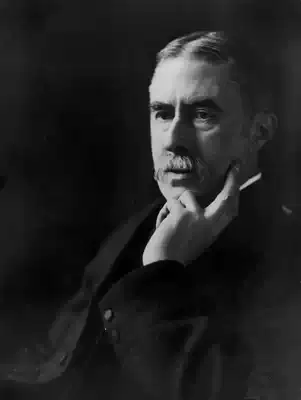
Alfred Edward Housman
The True Lover
The True Lover
The lad came to the door at night,
When lovers crown their vows,
And whistled soft and out of sight
In shadow of the boughs.
"I shall not vex you with my face
Henceforth, my love, for aye;
So take me in your arms a space
Before the cast is grey.
"When I from hence away am past
I shall not find a bride,
And you shall be the first and last
I ever lay beside."
She heard and went and knew not why;
Her heart to his she laid;
Light was the air beneath the sky
But dark under the shade.
"Oh do you breathe, lad, that your breast
Seems not to rise and fall,
And here upon my bosom prest
There beats no heart at all?"
"Oh loud, my girl, it once would knock,
You should have felt it then;
But since for you I stopped the clock
It never goes again."
"Oh lad, what is it, lad, that drips
Wet from your neck on mine?
What is it falling on my lips,
My lad, that tastes of brine?"
"Oh like enough 'tis blood, my dear,
For when the knife was slit,
The throat across from ear to ear
'Twill bleed because of it."
Under the stars the air was light
But dark below the boughs,
The still air of the speechless night,
When lovers crown their vows.
The lad came to the door at night,
When lovers crown their vows,
And whistled soft and out of sight
In shadow of the boughs.
"I shall not vex you with my face
Henceforth, my love, for aye;
So take me in your arms a space
Before the cast is grey.
"When I from hence away am past
I shall not find a bride,
And you shall be the first and last
I ever lay beside."
She heard and went and knew not why;
Her heart to his she laid;
Light was the air beneath the sky
But dark under the shade.
"Oh do you breathe, lad, that your breast
Seems not to rise and fall,
And here upon my bosom prest
There beats no heart at all?"
"Oh loud, my girl, it once would knock,
You should have felt it then;
But since for you I stopped the clock
It never goes again."
"Oh lad, what is it, lad, that drips
Wet from your neck on mine?
What is it falling on my lips,
My lad, that tastes of brine?"
"Oh like enough 'tis blood, my dear,
For when the knife was slit,
The throat across from ear to ear
'Twill bleed because of it."
Under the stars the air was light
But dark below the boughs,
The still air of the speechless night,
When lovers crown their vows.
476
Alfred Edward Housman
The rainy Pleiads wester
The rainy Pleiads wester
The rainy Pleiads wester,
Orion plunges prone,
The stroke of midnight ceases
And I lie down alone.
The rainy Pleiads wester,
And seek beyond the sea
The head that I shall dream of
That will not dream of me.
The rainy Pleiads wester,
Orion plunges prone,
The stroke of midnight ceases
And I lie down alone.
The rainy Pleiads wester,
And seek beyond the sea
The head that I shall dream of
That will not dream of me.
461
Alfred Edward Housman
The Grizzly Bear
The Grizzly Bear
The Grizzly Bear is huge and wild
It has devoured the little child.
The little child is unaware
It has been eaten by the bear.
The Grizzly Bear is huge and wild
It has devoured the little child.
The little child is unaware
It has been eaten by the bear.
388
Alfred Edward Housman
The Carpenter's Son
The Carpenter's Son
"Here the hangman stops his cart:
Now the best of friends must part.
Fare you well, for ill fare I:
Live, lads, and I will die.
"Oh, at home had I but stayed
'Prenticed to my father's trade,
Had I stuck to plane and adze,
I had not been lost, my lads.
"Then I might have built perhaps
Gallows-trees for other chaps,
Never dangled on my own,
Had I left but ill alone.
"Now, you see, they hang me high,
And the people passing by
Stop to shake their fists and curse;
So 'tis come from ill to worse.
"Here hang I, and right and left
Two poor fellows hang for theft:
All the same's the luck we prove,
Though the midmost hangs for love.
"Comrades all, that stand and gaze,
Walk henceforth in other ways;
See my neck and save your own:
Comrades all, leave ill alone.
"Make some day a decent end,
Shrewder fellows than your friend.
Fare you well, for ill fare I:
Live lads, and I will die."
"Here the hangman stops his cart:
Now the best of friends must part.
Fare you well, for ill fare I:
Live, lads, and I will die.
"Oh, at home had I but stayed
'Prenticed to my father's trade,
Had I stuck to plane and adze,
I had not been lost, my lads.
"Then I might have built perhaps
Gallows-trees for other chaps,
Never dangled on my own,
Had I left but ill alone.
"Now, you see, they hang me high,
And the people passing by
Stop to shake their fists and curse;
So 'tis come from ill to worse.
"Here hang I, and right and left
Two poor fellows hang for theft:
All the same's the luck we prove,
Though the midmost hangs for love.
"Comrades all, that stand and gaze,
Walk henceforth in other ways;
See my neck and save your own:
Comrades all, leave ill alone.
"Make some day a decent end,
Shrewder fellows than your friend.
Fare you well, for ill fare I:
Live lads, and I will die."
487
Alfred Edward Housman
Shot? So Quick, So Clean an Ending?
Shot? So Quick, So Clean an Ending?
Shot? so quick, so clean an ending?
Oh that was right, lad, that was brave:
Yours was not an ill for mending,
'Twas best to take it to the grave.
Oh you had forethought, you could reason,
And saw your road and where it led,
And early wise and brave in season
Put the pistol to your head.
Oh soon, and better so than later
After long disgrace and scorn,
You shot dead the household traitor,
The soul that should not have been born.
Right you guessed the rising morrow
And scorned to tread the mire you must:
Dust's your wages, son of sorrow,
But men may come to worse than dust.
Souls undone, undoing others,--
Long time since the tale began.
You would not live to wrong your brothers:
Oh lad, you died as fits a man.
Now to your grave shall friend and stranger
With ruth and some with envy come:
Undishonoured, clear of danger,
Clean of guilt, pass hence and home.
Turn safe to rest, no dreams, no waking;
And here, man, here's the wreath I've made:
'Tis not a gift that's worth the taking,
But wear it and it will not fade.
Shot? so quick, so clean an ending?
Oh that was right, lad, that was brave:
Yours was not an ill for mending,
'Twas best to take it to the grave.
Oh you had forethought, you could reason,
And saw your road and where it led,
And early wise and brave in season
Put the pistol to your head.
Oh soon, and better so than later
After long disgrace and scorn,
You shot dead the household traitor,
The soul that should not have been born.
Right you guessed the rising morrow
And scorned to tread the mire you must:
Dust's your wages, son of sorrow,
But men may come to worse than dust.
Souls undone, undoing others,--
Long time since the tale began.
You would not live to wrong your brothers:
Oh lad, you died as fits a man.
Now to your grave shall friend and stranger
With ruth and some with envy come:
Undishonoured, clear of danger,
Clean of guilt, pass hence and home.
Turn safe to rest, no dreams, no waking;
And here, man, here's the wreath I've made:
'Tis not a gift that's worth the taking,
But wear it and it will not fade.
463
Alfred Edward Housman
Be Still, My Soul, Be Still
Be Still, My Soul, Be Still
Be still, my soul, be still; the arms you bear are brittle,
Earth and high heaven are fixt of old and founded strong.
Think rather,-- call to thought, if now you grieve a little,
The days when we had rest, O soul, for they were long.
Men loved unkindness then, but lightless in the quarry
I slept and saw not; tears fell down, I did not mourn;
Sweat ran and blood sprang out and I was never sorry:
Then it was well with me, in days ere I was born.
Now, and I muse for why and never find the reason,
I pace the earth, and drink the air, and feel the sun.
Be still, be still, my soul; it is but for a season:
Let us endure an hour and see injustice done.
Ay, look: high heaven and earth ail from the prime foundation;
All thoughts to rive the heart are here, and all are vain:
Horror and scorn and hate and fear and indignation--
Oh why did I awake? when shall I sleep again?
Be still, my soul, be still; the arms you bear are brittle,
Earth and high heaven are fixt of old and founded strong.
Think rather,-- call to thought, if now you grieve a little,
The days when we had rest, O soul, for they were long.
Men loved unkindness then, but lightless in the quarry
I slept and saw not; tears fell down, I did not mourn;
Sweat ran and blood sprang out and I was never sorry:
Then it was well with me, in days ere I was born.
Now, and I muse for why and never find the reason,
I pace the earth, and drink the air, and feel the sun.
Be still, be still, my soul; it is but for a season:
Let us endure an hour and see injustice done.
Ay, look: high heaven and earth ail from the prime foundation;
All thoughts to rive the heart are here, and all are vain:
Horror and scorn and hate and fear and indignation--
Oh why did I awake? when shall I sleep again?
443
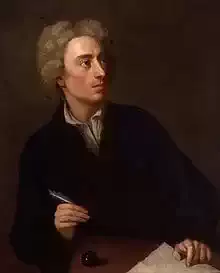
Alexander Pope
Weeping
Weeping
While Celia's Tears make sorrow bright,
Proud Grief sits swelling in her eyes;
The Sun, next those the fairest light,
Thus from the Ocean first did rise:
And thus thro' Mists we see the Sun,
Which else we durst not gaze upon.
These silver drops, like morning dew,
Foretell the fervour of the day:
So from one Cloud soft show'rs we view,
And blasting lightnings burst away.
The Stars that fall from Celia's eye
Declare our Doom in drawing nigh.
The Baby in that sunny Sphere
So like a Phaeton appears,
That Heav'n, the threaten'd World to spare,
Thought fit to drown him in her tears;
Else might th' ambitious Nymph aspire,
To set, like him, Heav'n too on fire.
While Celia's Tears make sorrow bright,
Proud Grief sits swelling in her eyes;
The Sun, next those the fairest light,
Thus from the Ocean first did rise:
And thus thro' Mists we see the Sun,
Which else we durst not gaze upon.
These silver drops, like morning dew,
Foretell the fervour of the day:
So from one Cloud soft show'rs we view,
And blasting lightnings burst away.
The Stars that fall from Celia's eye
Declare our Doom in drawing nigh.
The Baby in that sunny Sphere
So like a Phaeton appears,
That Heav'n, the threaten'd World to spare,
Thought fit to drown him in her tears;
Else might th' ambitious Nymph aspire,
To set, like him, Heav'n too on fire.
396
Alexander Pope
The Dying Christian to His Soul
The Dying Christian to His Soul
Vital spark of heav’nly flame!
Quit, O quit this mortal frame:
Trembling, hoping, ling’ring, flying,
O the pain, the bliss of dying!
Cease, fond Nature, cease thy strife,
And let me languish into life.
Hark! they whisper; angels say,
Sister Spirit, come away!
What is this absorbs me quite?
Steals my senses, shuts my sight,
Drowns my spirits, draws my breath?
Tell me, my soul, can this be death?
The world recedes; it disappears!
Heav’n opens on my eyes! my ears
With sounds seraphic ring!
Lend, lend your wings! I mount! I fly!
O Grave! where is thy victory?
O Death! where is thy sting?
Vital spark of heav’nly flame!
Quit, O quit this mortal frame:
Trembling, hoping, ling’ring, flying,
O the pain, the bliss of dying!
Cease, fond Nature, cease thy strife,
And let me languish into life.
Hark! they whisper; angels say,
Sister Spirit, come away!
What is this absorbs me quite?
Steals my senses, shuts my sight,
Drowns my spirits, draws my breath?
Tell me, my soul, can this be death?
The world recedes; it disappears!
Heav’n opens on my eyes! my ears
With sounds seraphic ring!
Lend, lend your wings! I mount! I fly!
O Grave! where is thy victory?
O Death! where is thy sting?
336
Alexander Pope
Prayer of St. Francis Xavier
Prayer of St. Francis Xavier
Thou art my God, sole object of my love;
Not for the hope of endless joys above;
Nor for the fear of endless pains below,
Which they who love thee not must undergo.
For me, and such as me, thou deign'st to bear
An ignominious cross, the nails, the spear:
A thorny crown transpierc'd thy sacred brow,
While bloody sweats from ev'ry member flow.
For me in tortures thou resignd'st thy breath,
Embrac'd me on the cross, and sav'd me by thy death.
And can these sufferings fail my heart to move?
What but thyself can now deserve my love?
Such as then was, and is, thy love to me,
Such is, and shall be still, my love to thee -
To thee, Redeemer! mercy's sacred spring!
My God, my Father, Maker, and my King!
Thou art my God, sole object of my love;
Not for the hope of endless joys above;
Nor for the fear of endless pains below,
Which they who love thee not must undergo.
For me, and such as me, thou deign'st to bear
An ignominious cross, the nails, the spear:
A thorny crown transpierc'd thy sacred brow,
While bloody sweats from ev'ry member flow.
For me in tortures thou resignd'st thy breath,
Embrac'd me on the cross, and sav'd me by thy death.
And can these sufferings fail my heart to move?
What but thyself can now deserve my love?
Such as then was, and is, thy love to me,
Such is, and shall be still, my love to thee -
To thee, Redeemer! mercy's sacred spring!
My God, my Father, Maker, and my King!
365
Alexander Pope
Ode on St. Cecilia's Day
Ode on St. Cecilia's Day
I.
Descend ye Nine! descend and sing;
The breathing instruments inspire,
Wake into voice each silent string,
And sweep the sounding lyre!
In a sadly-pleasing strain
Let the warbling lute complain:
Let the loud trumpet sound,
'Till the roofs all around
The shrill echo's rebound:
While in more lengthen'd notes and slow,
The deep, majestic, solemn organs blow.
Hark! the numbers, soft and clear,
Gently steal upon the ear;
Now louder, and yet louder rise,
And fill with spreading sounds the skies;
Exulting in triumph now swell the bold notes,
In broken air, trembling, the wild music floats;
'Till, by degrees, remote and small,
The strains decay,
And melt away,
In a dying, dying fall.
II.
By Music, minds an equal temper know,
Nor swell too high, nor sink too low.
If in the breast tumultuous joys arise,
Music her soft, assuasive voice applies;
Or when the soul is press'd with cares,
Exalts her in enlivening airs.
Warriors she fires with animated sounds;
Pours balm into the bleeding lover's wounds:
Melancholy lifts her head,
Morpheus rouzes from his bed,
Sloth unfolds her arms and wakes,
List'ning Envy drops her snakes;
Intestine war no more our Passions wage,
And giddy Factions hear away their rage.
III.
But when our Country's cause provokes to Arms,
How martial music ev'ry bosom warms!
So when the first bold vessel dar'd the seas,
High on the stern the Thracian rais'd his strain,
While Argo saw her kindred trees
Descend from Pelion to the main.
Transported demi-gods stood round,
And men grew heroes at the sound,
Enflam'd with glory's charms:
Each chief his sev'nfold shield display'd,
And half unsheath'd the shining blade:
And seas, and rocks, and skies rebound
To arms, to arms, to arms!
IV.
But when thro' all th'infernal bounds
Which flaming Phlegeton surrounds,
Love, strong as Death, the Poet led
To the pale nations of the dead,
What sounds were heard,
What scenes appear'd,
O'er all the dreary coasts!
Dreadful gleams,
Dismal screams,
Fires that glow,
Shrieks of woe,
Sullen moans,
Hollow groans,
And cries of tortur'd ghosts!
But hark! he strikes the golden lyre;
And see! the tortur'd ghosts respire,
See, shady forms advance!
Thy stone, O Sysiphus, stands still,
Ixion rests upon his wheel,
And the pale spectres dance!
The Furies sink upon their iron beds,
And snakes uncurl'd hang list'ning round their heads.
V.
By the streams that ever flow,
By the fragrant winds that blow
O'er th' Elysian flow'rs,
By those happy souls who dwell
In yellow meads of Asphodel,
Or Amaranthine bow'rs,
By the hero's armed shades,
Glitt'ring thro' the gloomy glades,
By the youths that dy'd for love,
Wand'ring in the myrtle grove,
Restore, restore Eurydice to life;
Oh take the husband, or return the wife!
He sung, and hell consented
To hear the Poet's pray'r;
Stern Proserpine relented,
And gave him back the fair.
Thus song could prevail
O'er death and o'er hell,
A conquest how hard and how glorious?
Tho' fate had fast bound her
With Styx nine times round her,
Yet music and love were victorious.
VI.
But soon, too soon, the lover turns his eyes:
Again she falls, again she dies, she dies!
How wilt thou now the fatal sisters move?
No crime was thine, if 'tis no crime to love.
Now under hanging mountains,
Beside the falls of fountains,
Or where Hebrus wanders,
Rolling in Maeanders,
All alone,
Unheard, unknown,
He makes his moan;
And calls her ghost,
For ever, ever, ever lost!
Now with Furies surrounded,
Despairing, confounded,
He trembles, he glows,
Amidst Rhodope's snows:
See, wild as the winds, o'er the desart he flies;
Hark! Haemus resounds with the Bacchanals cries
-Ah see, he dies!
Yet ev'n in death Eurydice he sung,
Eurydice still trembled on his tongue,
Eurydice the woods,
Eurydice the floods,
Eurydice the rocks, and hollow mountains rung.
VII.
Music the fiercest grief can charm,
And fate's severest rage disarm:
Music can soften pain to ease,
And make despair and madness please:
Our joys below it can improve,
And antedate the bliss above.
This the divine Cecilia found,
And to her Maker's praise confin'd the sound.
When the full organ joins the tuneful quire,
Th'immortal pow'rs incline their ear;
Borne on the swelling notes our souls aspire,
While solemn airs improve the sacred fire;
And Angels lean from heav'n to hear.
Of Orpheus now no more let Poets tell,
To bright Cecilia greater pow'r is giv'n;
His numbers rais'd a shade from hell,
Hers lift the soul to heav'n.
I.
Descend ye Nine! descend and sing;
The breathing instruments inspire,
Wake into voice each silent string,
And sweep the sounding lyre!
In a sadly-pleasing strain
Let the warbling lute complain:
Let the loud trumpet sound,
'Till the roofs all around
The shrill echo's rebound:
While in more lengthen'd notes and slow,
The deep, majestic, solemn organs blow.
Hark! the numbers, soft and clear,
Gently steal upon the ear;
Now louder, and yet louder rise,
And fill with spreading sounds the skies;
Exulting in triumph now swell the bold notes,
In broken air, trembling, the wild music floats;
'Till, by degrees, remote and small,
The strains decay,
And melt away,
In a dying, dying fall.
II.
By Music, minds an equal temper know,
Nor swell too high, nor sink too low.
If in the breast tumultuous joys arise,
Music her soft, assuasive voice applies;
Or when the soul is press'd with cares,
Exalts her in enlivening airs.
Warriors she fires with animated sounds;
Pours balm into the bleeding lover's wounds:
Melancholy lifts her head,
Morpheus rouzes from his bed,
Sloth unfolds her arms and wakes,
List'ning Envy drops her snakes;
Intestine war no more our Passions wage,
And giddy Factions hear away their rage.
III.
But when our Country's cause provokes to Arms,
How martial music ev'ry bosom warms!
So when the first bold vessel dar'd the seas,
High on the stern the Thracian rais'd his strain,
While Argo saw her kindred trees
Descend from Pelion to the main.
Transported demi-gods stood round,
And men grew heroes at the sound,
Enflam'd with glory's charms:
Each chief his sev'nfold shield display'd,
And half unsheath'd the shining blade:
And seas, and rocks, and skies rebound
To arms, to arms, to arms!
IV.
But when thro' all th'infernal bounds
Which flaming Phlegeton surrounds,
Love, strong as Death, the Poet led
To the pale nations of the dead,
What sounds were heard,
What scenes appear'd,
O'er all the dreary coasts!
Dreadful gleams,
Dismal screams,
Fires that glow,
Shrieks of woe,
Sullen moans,
Hollow groans,
And cries of tortur'd ghosts!
But hark! he strikes the golden lyre;
And see! the tortur'd ghosts respire,
See, shady forms advance!
Thy stone, O Sysiphus, stands still,
Ixion rests upon his wheel,
And the pale spectres dance!
The Furies sink upon their iron beds,
And snakes uncurl'd hang list'ning round their heads.
V.
By the streams that ever flow,
By the fragrant winds that blow
O'er th' Elysian flow'rs,
By those happy souls who dwell
In yellow meads of Asphodel,
Or Amaranthine bow'rs,
By the hero's armed shades,
Glitt'ring thro' the gloomy glades,
By the youths that dy'd for love,
Wand'ring in the myrtle grove,
Restore, restore Eurydice to life;
Oh take the husband, or return the wife!
He sung, and hell consented
To hear the Poet's pray'r;
Stern Proserpine relented,
And gave him back the fair.
Thus song could prevail
O'er death and o'er hell,
A conquest how hard and how glorious?
Tho' fate had fast bound her
With Styx nine times round her,
Yet music and love were victorious.
VI.
But soon, too soon, the lover turns his eyes:
Again she falls, again she dies, she dies!
How wilt thou now the fatal sisters move?
No crime was thine, if 'tis no crime to love.
Now under hanging mountains,
Beside the falls of fountains,
Or where Hebrus wanders,
Rolling in Maeanders,
All alone,
Unheard, unknown,
He makes his moan;
And calls her ghost,
For ever, ever, ever lost!
Now with Furies surrounded,
Despairing, confounded,
He trembles, he glows,
Amidst Rhodope's snows:
See, wild as the winds, o'er the desart he flies;
Hark! Haemus resounds with the Bacchanals cries
-Ah see, he dies!
Yet ev'n in death Eurydice he sung,
Eurydice still trembled on his tongue,
Eurydice the woods,
Eurydice the floods,
Eurydice the rocks, and hollow mountains rung.
VII.
Music the fiercest grief can charm,
And fate's severest rage disarm:
Music can soften pain to ease,
And make despair and madness please:
Our joys below it can improve,
And antedate the bliss above.
This the divine Cecilia found,
And to her Maker's praise confin'd the sound.
When the full organ joins the tuneful quire,
Th'immortal pow'rs incline their ear;
Borne on the swelling notes our souls aspire,
While solemn airs improve the sacred fire;
And Angels lean from heav'n to hear.
Of Orpheus now no more let Poets tell,
To bright Cecilia greater pow'r is giv'n;
His numbers rais'd a shade from hell,
Hers lift the soul to heav'n.
448
Previous
Page 41