
War and Peace

Ella Wheeler Wilcox
Ten Thousand Men A Day
All the world was wearying,
All the world was sad;
Everything was shadow-filled;
Things were going bad.
Then a rumour stirred all hearts
As a wind stirs trees-
Ten thousand men a day
Coming over seas!
Soon we saw them marching by-
God! what a sight!-
Shoulders back, and heads erect,
Faces full of light.
Smiling like a morn in May,
Moving like a breeze,
Ten thousand men a day
Coming over seas.
Weary soldiers worn with war
Lifted up their eyes,
Shadows seemed to lift a bit,
Dawn was in the skies.
Hope sprang to troubled hearts,
Strength to tired knees:
Ten thousand men a day
Were coming over seas.
France and England swarmed with them,
Khaki-clad and young,
Filled with all the joy of life-
Into line they swung.
Waning valour rose anew
At the sight of these
Ten thousand men a day
Coming over seas.
Still they come-and still they come
In their strength and pride.
Victory with radiant mien
Marches on beside.
Victory is here to stay,
Every heart agrees,
With ten thousand men a day
Coming over seas.
473
Ella Wheeler Wilcox
The Stevedores
We are the army stevedores, lusty and virile and strong,
We are given the hardest work of the war, and the hours are long.
We handle the heavy boxes, and shovel the dirty coal;
While soldiers and sailors work in the light, we burrow below like a mole.
But somebody has to do this work, or the soldiers could not fight!
And whatever work is given a man, is good if he does it right.
We are the army stevedores, and we are volunteers.
We did not wait for the draft to come, to put aside our fears;
We flung them away on the winds of fate, at the very first call of our land,
And each of us offered a willing heart and the strength of a brawny hand.
We are the army stevedores, and work as we must and may,
The cross of honour will never be ours to proudly wear away.
But the men at the Front could never be there,
And the battles could not be won,
If the stevedores stopped in their dull routine
And left their work undone.
Somebody has to do this work, be glad that it isn't you!
We are the army stevedores-give us our due!
474

Rudyard Kipling
Mesopotamia
They shall not return to us, the resolute, the young,
The eager and whole-hearted whom we gave:
But the men who left them thriftily to die in their own dung,
Shall they come with years and honour to the grave?
They shall not return to us; the strong men coldly slain
In sight of help denied from day to day:
But the men who edged their agonies and chid them in their pain,
Are they too strong and wise to put away?
Our dead shall not return to us while Day and Night divide--
Never while the bars of sunset hold.
But the idle-minded overlings who quibbled while they died,
Shall they thrust for high employments as of old?
Shall we only threaten and be angry for an hour:
When the storm is ended shall we find
How softly but how swiftly they have sidled back to power
By the favour and contrivance of their kind?
Even while they soothe us, while they promise large amends,
Even while they make a show of fear,
Do they call upon their debtors, and take counsel with their
friends,
To conform and re-establish each career?
Their lives cannot repay us--their death could not undo--
The shame that they have laid upon our race.
But the slothfulness that wasted and the arrogance that slew,
Shell we leave it unabated in its place?
472

Walt Whitman
The Artilleryman's Vision
WHILE my wife at my side lies slumbering, and the wars are over long,
And my head on the pillow rests at home, and the vacant midnight
passes,
And through the stillness, through the dark, I hear, just hear, the
breath of my infant,
There in the room, as I wake from sleep, this vision presses upon me:
The engagement opens there and then, in fantasy unreal;
The skirmishers begin--they crawl cautiously ahead--I hear the
irregular snap! snap!
I hear the sounds of the different missiles--the short t-h-t! t-h-t!
of the rifle balls;
I see the shells exploding, leaving small white clouds--I hear the
great shells shrieking as they pass;
The grape, like the hum and whirr of wind through the trees, (quick,
tumultuous, now the contest rages!)
All the scenes at the batteries themselves rise in detail before me
again;
The crashing and smoking--the pride of the men in their pieces;
The chief gunner ranges and sights his piece, and selects a fuse of
the right time;
After firing, I see him lean aside, and look eagerly off to note the
effect;
--Elsewhere I hear the cry of a regiment charging--(the young colonel
leads himself this time, with brandish'd sword;)
I see the gaps cut by the enemy's volleys, (quickly fill'd up, no
delay;)
I breathe the suffocating smoke--then the flat clouds hover low,
concealing all;
Now a strange lull comes for a few seconds, not a shot fired on
either side;
Then resumed, the chaos louder than ever, with eager calls, and
orders of officers;
While from some distant part of the field the wind wafts to my ears a
shout of applause, (some special success;)
And ever the sound of the cannon, far or near, (rousing, even in
dreams, a devilish exultation, and all the old mad joy, in the
depths of my soul;)
And ever the hastening of infantry shifting positions--batteries,
cavalry, moving hither and thither;
(The falling, dying, I heed not--the wounded, dripping and red, I
heed not--some to the rear are hobbling;)
Grime, heat, rush--aid-de-camps galloping by, or on a full run;
With the patter of small arms, the warning s-s-t of the rifles,
(these in my vision I hear or see,)
And bombs busting in air, and at night the vari-color'd rockets.
473
Walt Whitman
By The Bivouac's Fitful Flame
BY the bivouac's fitful flame,
A procession winding around me, solemn and sweet and slow;--but first
I note,
The tents of the sleeping army, the fields' and woods' dim outline,
The darkness, lit by spots of kindled fire--the silence;
Like a phantom far or near an occasional figure moving;
The shrubs and trees, (as I lift my eyes they seem to be stealthily
watching me;)
While wind in procession thoughts, O tender and wondrous thoughts,
Of life and death--of home and the past and loved, and of those that
are far away;
A solemn and slow procession there as I sit on the ground,
By the bivouac's fitful flame.
466

William Butler Yeats
The Rose Of Battle
ROSE of all Roses, Rose of all the World!
The tall thought-woven sails, that flap unfurled
Above the tide of hours, trouble the air,
And God's bell buoyed to be the water's care;
While hushed from fear, or loud with hope, a band
With blown, spray-dabbled hair gather at hand,
Turn if you may from battles never done,
I call, as they go by me one by one,
Danger no refuge holds, and war no peace,
For him who hears love sing and never cease,
Beside her clean-swept hearth, her quiet shade:
But gather all for whom no love hath made
A woven silence, or but came to cast
A song into the air, and singing passed
To smile on the pale dawn; and gather you
Who have sougft more than is in rain or dew,
Or in the sun and moon, or on the earth,
Or sighs amid the wandering, starry mirth,
Or comes in laughter from the sea's sad lips,
And wage God's battles in the long grey ships.
The sad, the lonely, the insatiable,
To these Old Night shall all her mystery tell;
God's bell has claimed them by the little cry
Of their sad hearts, that may not live nor die.
Rose of all Roses, Rose of all the World!
You, too, have come where the dim tides are hurled
Upon the wharves of sorrow, and heard ring
The bell that calls us on; the sweet far thing.
Beauty grown sad with its eternity
Made you of us, and of the dim grey sea.
Our long ships loose thought-woven sails and wait,
For God has bid them share an equal fate;
And when at last, defeated in His wars,
They have gone down under the same white stars,
We shall no longer hear the little cry
Of our sad hearts, that may not live nor die.
470
Walt Whitman
Hush'd Be the Camps Today
Hush'd be the camps today,
And soldiers let us drape our war-worn weapons,
And each with musing soul retire to celebrate,
Our dear commander's death.
No more for him life's stormy conflicts,
Nor victory, nor defeat--no more time's dark events,
Charging like ceaseless clouds across the sky.
But sing poet in our name,
Sing of the love we bore him--because you, dweller in camps, know it truly.
As they invault the coffin there,
Sing--as they close the doors of earth upon him--one verse,
For the heavy hearts of soldiers.
468
Rudyard Kipling
Soldier, Soldier
"Soldier, soldier come from the wars,
Why don't you march with my true love?"
"We're fresh from off the ship an' 'e's maybe give the slip,
An' you'd best go look for a new love."
New love! True love!
Best go look for a new love,
The dead they cannot rise, an' you'd better dry your eyes,
An' you'd best go look for a new love.
"Soldier, soldier come from the wars,
What did you see o' my true love?"
"I seed 'im serve the Queen in a suit o' rifle-green,
An' you'd best go look for a new love."
"Soldier, soldier come from the wars,
Did ye see no more o' my true love?"
"I seed 'im runnin' by when the shots begun to fly --
But you'd best go look for a new love."
"Soldier, soldier come from the wars,
Did aught take 'arm to my true love?"
"I couldn't see the fight, for the smoke it lay so white --
An' you'd best go look for a new love."
"Soldier, soldier come from the wars,
I'll up an' tend to my true love!"
"'E's lying on the dead with a bullet through 'is 'ead,
An' you'd best go look for a new love."
"Soldier, soldier come from the wars,
I'll down an' die with my true love!"
"The pit we dug'll 'ide 'im an' the twenty men beside 'im --
An' you'd best go look for a new love."
"Soldier, soldier come from the wars,
Do you bring no sign from my true love?"
"I bring a lock of 'air that 'e allus used to wear,
An' you'd best go look for a new love."
"Soldier, soldier come from the wars,
O then I know it's true I've lost my true love!"
"An' I tell you truth again -- when you've lost the feel o' pain
You'd best take me for your true love."
True love! New love!
Best take 'im for a new love,
The dead they cannot rise, an' you'd better dry your eyes,
An' you'd best take 'im for your true love.
468

Ezra Pound
Poem
(Abbreviated from the conversation with Mr. T E H.
Over the flat slope of St Eloi
A wide wall of sandbags.
Night,
In the silence desultory men
Pottering over small fires, cleaning their mess-tins:
To and fro, from the lines,
Men walk as on Piccadilly,
Making paths in the dark,
Through scattered dead horses,
Over a dead Belgian’s body.
The Germans have rockets. The English have no rockets,
Behind the lines, cannon, hidden, lying back miles.
Before the line, chaos.
My mind is a corridor. The minds about me are
corridors.
Nothing suggests itself. There is nothing to do but keep on.
464
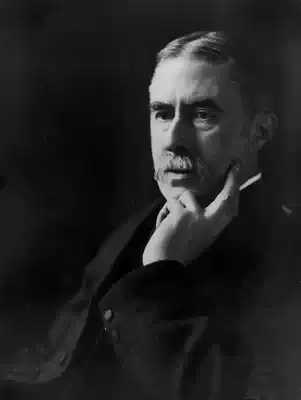
Alfred Edward Housman
From Clee to heaven the beacon burns
From Clee to heaven the beacon burns,
The shires have seen it plain,
From north and south the sign returns
And beacons burn again.
Look left, look right, the hills are bright,
The dales are light between,
Because 'tis fifty years to-night
That God has saved the Queen.
Now, when the flame they watch not towers
About the soil they trod,
Lads, we'll remember friends of ours
Who shared the work with God.
To skies that knit their heartstrings right,
To fields that bred them brave,
The saviours come not home to-night:
Themselves they could not save.
It dawns in Asia, tombstones show
And Shropshire names are read;
And the Nile spills his overflow
Beside the Severn's dead.
We pledge in peace by farm and town
The Queen they served in war,
And fire the beacons up and down
The land they perished for.
"God save the Queen" we living sing,
From height to height 'tis heard;
And with the rest your voices ring,
Lads of the Fifty-third.
Oh, God will save her, fear you not:
Be you the men you've been,
Get you the sons your fathers got,
And God will save the Queen.
465
Rudyard Kipling
The Return
Peace is declared, and I return
To 'Ackneystadt, but not the same;
Things 'ave transpired which made me learn
The size and meanin' of the game.
I did no more than others did,
I don't know where the change began;
I started as a average kid,
I finished as a thinkin' man.
If England was what England seems
An' not the England of our dreams,
But only putty, brass, an' paint,
'Ow quick we'd drop 'er! But she ain't!
Before my gappin' mouth could speak
I 'eard it in my comrade's tone;
I saw it on my neighbour's cheek
Before I felt it flush my own.
An' last it come to me--not pride,
Nor yet conceit, but on the 'ole
(If such a term may be applied),
The makin's of a bloomin' soul.
Rivers at night that cluck an' jeer,
Plains which the moonshine turns to sea,
Mountains that never let you near,
An' stars to all eternity;
An' the quick-breathin' dark that fills
The 'ollows of the wilderness,
When the wind worries through the 'ills--
These may 'ave taught me more or less.
Towns without people, ten times took,
An' ten times left an' burned at last;
An' starvin' dogs that come to look
For owners when a column passed;
An' quiet, 'omesick talks between
Men, met by night, you never knew
Until--'is face--by shellfire seen--
Once--an' struck off. They taught me, too.
The day's lay-out--the mornin' sun
Beneath your 'at-brim as you sight;
The dinner-'ush from noon till one,
An' the full roar that lasts till night;
An' the pore dead that look so old
An' was so young an hour ago,
An' legs tied down before they're cold--
These are the things which make you know.
Also Time runnin' into years--
A thousand Places left be'ind--
An' Men from both two 'emispheres
Discussin' things of every kind;
So much more near than I 'ad known,
So much more great than I 'ad guessed--
An' me, like all the rest, alone--
But reachin' out to all the rest!
So 'ath it come to me--not pride,
Nor yet conceit, but on the 'ole
(If such a term may be applied),
The makin's of a bloomin' soul.
But now, discharged, I fall away
To do with little things again....
Gawd, 'oo knows all I cannot say,
Look after me in Thamesfontein!
If England was what England seems
An' not the England of our dreams,
But only putty, brass, an' paint,
'Ow quick we'd chuck 'er! But she ain't!
462
Rudyard Kipling
Russia to the Pacifists
God rest you, peaceful gentlemen, let nothing you dismay,
But--leave your sports a little while--the dead are borne
this way!
Armies dead and Cities dead, past all count or care.
God rest you, merry gentlemen, what portent see you there?
Singing:--Break ground for a wearied host
That have no ground to keep.
Give them the rest that they covet most . . .
And who shall next to sleep, good sirs,
In such a trench to sleep?
God rest you, peaceful gentlemen, but give us leave to pass.
We go to dig a nation's grave as great as England was.
For this Kingdom and this Glory and this Power and this Pride
Three hundred years it flourished--in three hundred days it
died.
Singing:--Pour oil for a frozen throng,
That lie about the ways.
Give them the warmth they have lacked so
long . . .
And what shall be next to blaze, good sirs,
On such a pyre to blaze?
God rest you, thoughtful gentlemen, and send your sleep is light!
Remains of this dominion no shadow, sound, or sight,
Except the sound of weeping and the sight of burning fire,
And the shadow of a people that is trampled into mire.
Singing:--Break bread for a starving folk
That perish in the field.
Give them their food as they take the yoke . . .
And who shall be next to yield, good sirs,
For such a bribe to yield?
God rest you merry gentlemen, and keep you in your mirth!
Was ever Kingdom turned so soon to ashes, blood and earth?
'Twixt the summer and the snow-seeding-time and frost--
Arms and victual, hope and counsel, name and country lost!
Singing:--Let down by the foot and the head--
Shovel and smooth it all !
So do we bury a Nation dead . . .
And who shall be next to fall, good sirs,
With your good help to fall?
465
Walt Whitman
Spirit Whose Work Is Done
SPIRIT whose work is done! spirit of dreadful hours!
Ere, departing, fade from my eyes your forests of bayonets;
Spirit of gloomiest fears and doubts, (yet onward ever unfaltering
pressing;)
Spirit of many a solemn day, and many a savage scene! Electric
spirit!
That with muttering voice, through the war now closed, like a
tireless phantom flitted,
Rousing the land with breath of flame, while you beat and beat the
drum;
--Now, as the sound of the drum, hollow and harsh to the last,
reverberates round me;
As your ranks, your immortal ranks, return, return from the battles;
While the muskets of the young men yet lean over their shoulders;
While I look on the bayonets bristling over their shoulders;
While those slanted bayonets, whole forests of them, appearing in the
distance, approach and pass on, returning homeward,
Moving with steady motion, swaying to and fro, to the right and left,
Evenly, lightly rising and falling, as the steps keep time;
--Spirit of hours I knew, all hectic red one day, but pale as death
next day;
Touch my mouth, ere you depart--press my lips close!
Leave me your pulses of rage! bequeath them to me! fill me with
currents convulsive!
Let them scorch and blister out of my chants, when you are gone;
Let them identify you to the future, in these songs.
461
Walt Whitman
ARM’D year! year of the struggle!
No dainty rhymes or sentimental love verses for you, terrible year!
Not you as some pale poetling, seated at a desk, lisping cadenzas
piano;
But as a strong man, erect, clothed in blue clothes, advancing,
carrying a rifle on your shoulder,
With well-gristled body and sunburnt face and hands–with a knife in
the belt at your side,
As I heard you shouting loud–your sonorous voice ringing across the
continent;
Your masculine voice, O year, as rising amid the great cities,
Amid the men of Manhattan I saw you, as one of the workmen, the
dwellers in Manhattan;
Or with large steps crossing the prairies out of Illinois and
Indiana,
Rapidly crossing the West with springy gait, and descending the
Alleghanies;
Or down from the great lakes, or in Pennsylvania, or on deck along
the Ohio river;
Or southward along the Tennessee or Cumberland rivers, or at
Chattanooga on the mountain top,
Saw I your gait and saw I your sinewy limbs, clothed in blue, bearing
weapons, robust year;
Heard your determin’d voice, launch’d forth again and again;
Year that suddenly sang by the mouths of the round-lipp’d cannon,
I repeat you, hurrying, crashing, sad, distracted year.
461
Alfred Edward Housman
The Day of Battle
"Far I hear the bugle blow
To call me where I would not go,
And the guns begin the song,
'Soldier, fly or stay for long.'
"Comrade, if to turn and fly
Made a soldier never die,
Fly I would, for who would not?
'Tis sure no pleasure to be shot.
"But since the man that runs away
Lives to die another day,
And cowards' funerals, when they come,
Are not wept so well at home,
"Therefore, though the best is bad,
Stand and do the best, my lad;
Stand and fight and see your slain,
And take the bullet in your brain."
461

Wilfred Owen
The Send-off
Down the close, darkening lanes they sang their way
To the siding-shed,
And lined the train with faces grimly gay.
Their breasts were stuck all white with wreath and spray
As men's are, dead.
Dull porters watched them, and a casual tramp
Stood staring hard,
Sorry to miss them from the upland camp.
Then, unmoved, signals nodded, and a lamp
Winked to the guard.
So secretly, like wrongs hushed-up, they went.
They were not ours:
We never heard to which front these were sent.
Nor there if they yet mock what women meant
Who gave them flowers.
Shall they return to beatings of great bells
In wild trainloads?
A few, a few, too few for drums and yells,
May creep back, silent, to still village wells
Up half-known roads.
456
Walt Whitman
As Toilsome I Wander'd
AS TOILSOME I wander'd Virginia's woods,
To the music of rustling leaves, kick'd by my feet, (for 'twas
autumn,)
I mark'd at the foot of a tree the grave of a soldier,
Mortally wounded he, and buried on the retreat, (easily all could I
understand;)
The halt of a mid-day hour, when up! no time to lose--yet this sign
left,
On a tablet scrawl'd and nail'd on the tree by the grave,
Bold, cautious, true, and my loving comrade.
Long, long I muse, then on my way go wandering;
Many a changeful season to follow, and many a scene of life;
Yet at times through changeful season and scene, abrupt, alone, or in
the crowded street,
Comes before me the unknown soldier's grave--comes the inscription
rude in Virginia's woods,
Bold, cautious, true, and my loving comrade.
452
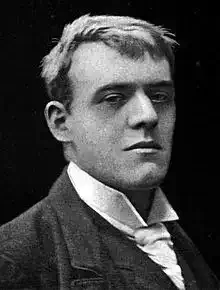
Hilaire Belloc
[Month of] September
I, from a window where the Meuse is wide,
Looked eastward out to the September night;
The men that in the hopeless battle died
Rose, and deployed, and stationed for the fight;
A brumal army, vague and ordered large
For mile on mile by some pale general,-
I saw them lean by companies to the charge,
But no man living heard the bugle-call.
And fading still, and pointing to their scars,
They fled in lessening clouds, where gray and high
Dawn lay along the heaven in misty bars;
But watching from that eastern casement, I
Saw the Republic splendid in the sky,
And round her terrible head the morning stars.
451
Hilaire Belloc
[Month of) July
The Kings come riding back from the Crusade,
The purple Kings and all their mounted men;
They fill the street with clamorous cavalcade;
The Kings have broken down the Saracen.
Singing a great song of the eastern wars,
In crimson ships across the sea they came,
With crimson sails and diamonded dark oars,
That made the Mediterranean flash with flame.
And reading how, in that far month, the ranks
Formed on the edge of the desert, armoured all,
I wish to God that I had been with them
When the first Norman leapt upon the wall,
And Godfrey led the foremost of the Franks,
And young Lord Raymond stormed Jerusalem.
454
Walt Whitman
In Midnight Sleep
IN midnight sleep, of many a face of anguish,
Of the look at first of the mortally wounded--of that indescribable
look;
Of the dead on their backs, with arms extended wide,
I dream, I dream, I dream.
Of scenes of nature, fields and mountains;
Of skies, so beauteous after a storm--and at night the moon so
unearthly bright,
Shining sweetly, shining down, where we dig the trenches and gather
the heaps,
I dream, I dream, I dream.
Long, long have they pass'd--faces and trenches and fields;
Where through the carnage I moved with a callous composure--or away
from the fallen,
Onward I sped at the time--But now of their forms at night,
I dream, I dream, I dream.
454
Walt Whitman
Ashes Of Soldiers
Again a verse for sake of you,
You soldiers in the ranks--you Volunteers,
Who bravely fighting, silent fell,
To fill unmention'd graves.
ASHES of soldiers!
As I muse, retrospective, murmuring a chant in thought,
Lo! the war resumes--again to my sense your shapes,
And again the advance of armies.
Noiseless as mists and vapors,
From their graves in the trenches ascending,
From the cemeteries all through Virginia and Tennessee,
From every point of the compass, out of the countless unnamed graves,
In wafted clouds, in myraids large, or squads of twos or threes, or
single ones, they come,
And silently gather round me.
Now sound no note, O trumpeters!
Not at the head of my cavalry, parading on spirited horses,
With sabres drawn and glist'ning, and carbines by their thighs--(ah,
my brave horsemen!
My handsome, tan-faced horsemen! what life, what joy and pride,
With all the perils, were yours!)
Nor you drummers--neither at reveille, at dawn,
Nor the long roll alarming the camp--nor even the muffled beat for a
burial;
Nothing from you, this time, O drummers, bearing my warlike drums.
But aside from these, and the marts of wealth, and the crowded
promenade,
Admitting around me comrades close, unseen by the rest, and
voiceless,
The slain elate and alive again--the dust and debris alive,
I chant this chant of my silent soul, in the name of all dead
soldiers.
Faces so pale, with wondrous eyes, very dear, gather closer yet;
Draw close, but speak not.
Phantoms of countless lost!
Invisible to the rest, henceforth become my companions!
Follow me ever! desert me not, while I live.
Sweet are the blooming cheeks of the living! sweet are the musical
voices sounding!
But sweet, ah sweet, are the dead, with their silent eyes.
Dearest comrades! all is over and long gone;
But love is not over--and what love, O comrades!
Perfume from battle-fields rising--up from foetor arising.
Perfume therefore my chant, O love! immortal Love!
Give me to bathe the memories of all dead soldiers,
Shroud them, embalm them, cover them all over with tender pride!
Perfume all! make all wholesome!
Make these ashes to nourish and blossom,
O love! O chant! solve all, fructify all with the last chemistry.
Give me exhaustless--make me a fountain,
That I exhale love from me wherever I go, like a moist perennial dew,
For the ashes of all dead soldiers.
454
Walt Whitman
Come Up From The Fields, Father
Come up from the fields, father, here's a letter from our Pete;
And come to the front door, mother-here's a letter from thy dear
son.
Lo, 'tis autumn;
Lo, where the trees, deeper green, yellower and redder,
Cool and sweeten Ohio's villages, with leaves fluttering in the
moderate wind;
Where apples ripe in the orchards hang, and grapes on the trellis'd
vines;
(Smell you the smell of the grapes on the vines?
Smell you the buckwheat, where the bees were lately buzzing?)
Above all, lo, the sky, so calm, so transparent after the rain, and
with wondrous clouds;
Below, too, all calm, all vital and beautiful-and the farm prospers
well.
Down in the fields all prospers well;
But now from the fields come, father-come at the daughter's call;
And come to the entry, mother-to the front door come, right away.
Fast as she can she hurries-something ominous-her steps trembling;
She does not tarry to smoothe her hair, nor adjust her cap.
Open the envelope quickly;
O this is not our son's writing, yet his name is sign'd;
O a strange hand writes for our dear son-O stricken mother's soul!
All swims before her eyes-flashes with black-she catches the main
words only;
Sentences broken-gun-shot wound in the breast, cavalry skirmish,
taken to hospital,
At present low, but will soon be better.
Ah, now, the single figure to me,
Amid all teeming and wealthy Ohio, with all its cities and farms,
Sickly white in the face, and dull in the head, very faint,
By the jamb of a door leans.
Grieve not so, dear mother, (the just-grown daughter speaks through
her sobs;
The little sisters huddle around, speechless and dismay'd ;)
See, dearest mother, the letter says Pete will soon be better.
Alas, poor boy, he will never be better, (nor may-be needs to be
better, that brave and simple soul ;)
While they stand at home at the door, he is dead already;
The only son is dead.
But the mother needs to be better;
She, with thin form, presently drest in black;
By day her meals untouch'd-then at night fitfully sleeping, often
waking,
In the midnight waking, weeping, longing with one deep longing,
O that she might withdraw unnoticed-silent from life, escape and
withdraw,
To follow, to seek, to be with her dear dead son.
454
Walt Whitman
From Far Dakota's Canons
FROM far Dakota's cañons,
Lands of the wild ravine, the dusky Sioux, the lonesome stretch, the
silence,
Haply to-day a mournful wail, haply a trumpet-note for heroes.
The battle-bulletin,
The Indian ambuscade, the craft, the fatal environment,
The cavalry companies fighting to the last in sternest heroism,
In the midst of their little circle, with their slaughter'd horses
for breastworks,
The fall of Custer and all his officers and men.
Continues yet the old, old legend of our race,
The loftiest of life upheld by death,
The ancient banner perfectly maintain'd,
O lesson opportune, O how I welcome thee!
As sitting in dark days,
Lone, sulky, through the time's thick murk looking in vain for light,
for hope,
From unsuspected parts a fierce and momentary proof,
(The sun there at the centre though conceal'd,
Electric life forever at the centre,)
Breaks forth a lightning flash.
Thou of the tawny flowing hair in battle,
I erewhile saw, with erect head, pressing ever in front, bearing a
bright sword in thy hand,
Now ending well in death the splendid fever of thy deeds,
(I bring no dirge for it or thee, I bring a glad triumphal sonnet,)
Desperate and glorious, aye in defeat most desperate, most glorious,
After thy many battles in which never yielding up a gun or a color
Leaving behind thee a memory sweet to soldiers,
Thou yieldest up thyself.
449
Ella Wheeler Wilcox
The Khaki Boys Who Were Not At The Front
Oh! it is not just the men who face the guns,
Not the fighters at the Front alone, to-day
Who will bring the longed-for close to the bloody fray, for those
Could not carry on that fray without the ones
Who are working at war's problems far away.
You are all our splendid heroes in the strife,
And we class you with the warriors maimed and scarred,
Though you never have been near enough the battle din to hear,
While you laboured in the dull routine of life
In your khaki suits with sleeves that are not barred.
You have offered up yourselves to save the world;
You have felt the abnegation of the Christ:
And whatever work you do is a noble work and true;
Though it be not done with banners all unfurled,
You will find it has, in sight of God, sufficed.
While you carry back no medals when you go,
Not without you had the fighters borne war's brunt:
So just lift your heads uncowed, for your country will be proud
And its lasting love and honour will bestow
On the khaki boys who were not at the Front.
450