
Politics and Power

Lord Byron
On The Death Of Mr. Fox
The following iiliberal impromptu appeared in a morning papaer:
'Our nation's foes lament on Fox's death,
But bless the hour when PITT resign'd his breath:
These feelings wide, let sense and truth unclue,
We give the palm where Justice points its due.'
To which the author of these pieces sent the following reply :
Oh factious viper! whose envenom'd tooth
Would mangle still the dead, perverting truth;
What though our 'nation's foes' lament the fate
With generous' feeling, of the good and great'
Shall dastard tongues essay to blast the name
Of him whose meed exists in endless fame?
When PITT expired in plenitude of power,
Though Ilisuccess obscured his dying hour,
Pity her dewy wings before him spread,
For noble spirits 'war not with the dead:'
His friends, in tears, a last sad requiem gave,
As all his errors slumber'd in the grave;
He sunk, an Atlas bending 'neath the weight
Of cares o'erwhelmlng our conflicting state:
When, lo! a Hercules in FOX appear'd
Who for a time the ruin'd fabric rear'd:
He, too, is fall'n, who Britain's loss supplied,
With him our fast reviving hopes have died;
Not one great people only raise his urn,
All Europe's farextended
regions mourn.
'These feelings wide, let sense and truth unclue,
To give the palm where Justice points its due;'
Yet let not canker'd Calumny assail,
Or round our statesman wind her gloomy veil.
FOX o'er whose corse a mourning world must weep,
Whose dear remains in honour'd marble sleep;
For whom, at last, e'en hostile nations groan,
While friends and foes alike his talents own;
FOX shall in Britain's future annals shine,
Nor e'en to PITT the patriot's palm resign;
Which Envy, wearing Candour's sacred mask,
For PITT, and PITT alone, has dared to ask.
457
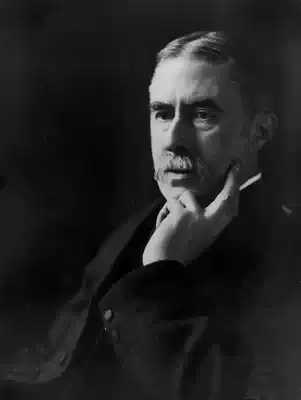
Alfred Edward Housman
The Laws of God, The Laws of Man
The laws of God, the laws of man,
He may keep that will and can;
Not I: let God and man decree
Laws for themselves and not for me;
And if my ways are not as theirs
Let them mind their own affairs.
Their deeds I judge and much condemn,
Yet when did I make laws for them?
Please yourselves, say I, and they
Need only look the other way.
But no, they will not; they must still
Wrest their neighbor to their will,
And make me dance as they desire
With jail and gallows and hell-fire.
And how am I to face the odds
Of man's bedevilment and God's?
I, a stranger and afraid
In a world I never made.
They will be master, right or wrong;
Though both are foolish, both are strong.
And since, my soul, we cannot fly
To Saturn nor to Mercury,
Keep we must, if keep we can,
These foreign laws of God and man.
453
Lord Byron
Epigram, On The Braziers' Company Having Resolved To Present An Address To Queen Caroline
The braziers, it seems, are preparing to pass
An address, and present it themselves all in brass,
A
superfluous pageantfor,
by the Lord Harry!
They'll find where they're going much more than they carry.
An address, and present it themselves all in brass,
A
superfluous pageantfor,
by the Lord Harry!
They'll find where they're going much more than they carry.
454
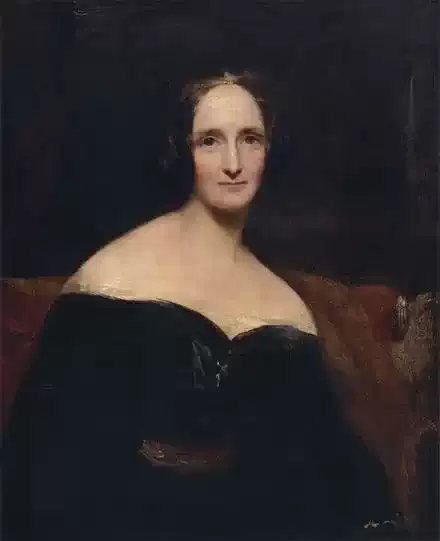
Percy Bysshe Shelley
To The Men Of England
Men of England, wherefore plough
For the lords who lay ye low?
Wherefore weave with toil and care
The rich robes your tyrants wear?
Wherefore feed and clothe and save,
From the cradle to the grave,
Those ungrateful drones who would
Drain your sweat -- nay, drink your blood?
Wherefore, Bees of England, forge
Many a weapon, chain, and scourge,
That these stingless drones may spoil
The forced produce of your toil?
Have ye leisure, comfort, calm,
Shelter, food, love's gentle balm?
Or what is it ye buy so dear
With your pain and with your fear?
The seed ye sow another reaps;
The wealth ye find another keeps;
The robes ye weave another wears;
The arms ye forge another bears.
Sow seed, -- but let no tyrant reap;
Find wealth, -- let no imposter heap;
Weave robes, -- let not the idle wear;
Forge arms, in your defence to bear.
Shrink to your cellars, holes, and cells;
In halls ye deck another dwells.
Why shake the chains ye wrought? Ye see
The steel ye tempered glance on ye.
With plough and spade and hoe and loom,
Trace your grave, and build your tomb,
And weave your winding-sheet, till fair
England be your sepulchre!
449
Lord Byron
Windsor Poetics : Lines Composed On The Occasion Of His Royal Highness The
Prince Regent Being Seen Standing Between The Coffins Of Henry VIII And
Charles I, In The Royal Vault At Windsor
Famed for contemptuous breach of sacred ties,
By headless Charles see heartless Henry lies;
Between them stands another sceptred thing
It
moves, it reignsin
all but name, a king:
Charles to his people, Henry to his wife,
In
him the double tyrant starts to life:
Justice and death have mix'd their dust in vain,
Each royal vampire wakes to life again.
Ah, what can tombs avail!since
these disgorge
The blood and dust of bothto
mould a George.
446
Henry Van Dyke
The Vain King
In robes of Tyrian blue the King was drest,
A jewelled collar shone upon his breast,
A giant ruby glittered in his crown -----
Lord of rich lands and many a splendid town.
In him the glories of an ancient line
Of sober kings, who ruled by right divine,
Were centred; and to him with loyal awe
The people looked for leadership and law.
Ten thousand knights, the safeguard of the land,
Lay like a single sword within his hand;
A hundred courts, with power of life and death,
Proclaimed decrees justice by his breath;
And all the sacred growths that men had known
Of order and of rule upheld his throne.
Proud was the King: yet not with such a heart
As fits a man to play a royal part.
Not his the pride that honours as a trust
The right to rule, the duty to be just:
Not his the dignity that bends to bear
The monarch's yoke, the master's load of care,
And labours like the peasant at his gate,
To serve the people and protect the State.
Another pride was his, and other joys:
To him the crown and sceptre were but toys,
With which he played at glory's idle game,
To please himself and win the wreaths of fame.
The throne his fathers held from age to age
Built for King Martin to diplay at will,
His mighty strength and universal skill.
No conscious child, that, spoiled with praising, tries
At every step to win admiring eyes, ----
No favourite mountebank, whose acting draws
From gaping crowds loud thunder of applause,
Was vainer than the King: his only thirst
Was to be hailed, in every race, the first.
When tournament was held, in knightly guise
The King would ride the lists and win the prize;
When music charmed the court, with golden lyre
The King would take the stage and lead the choir;
In hunting, his the lance to slay the boar;
In hawking, see his falcon highest soar;
In painting, he would wield the master's brush;
In high debate, -----"the King is speaking! Hush!"
Thus, with a restless heart, in every field
He sought renown, and found his subjects yield
As if he were a demi-god revealed.
But while he played the petty games of life
His kingdom fell a prey to inward strife;
Corruption through the court unheeded crept,
And on the seat of honour justice slept.
The strong trod down the weak; the helpless poor
Groaned under burdens grievous to endure.
The nation's wealth was spent in vain display,
And weakness wore the nation's heart away.
Yet think not Earth is blind to human woes ---
Man has more friends and helpers than he knows;
And when a patient people are oppressed,
The land that bore them feels it in her breast.
Spirits of field and flood, of heath and hill,
Are grieved and angry at the spreading ill;
The trees complain together in the night,
Voices of wrath are heard along the height,
And secret vows are sworn, by stream and strand,
To bring the tyrant low and liberate the land.
But little recked the pampered King of these;
He heard no voice but such as praise and please.
Flattered and fooled, victor in every sport,
One day he wandered idly with his court
Beside the river, seeking to devise
New ways to show his skill to wondering eyes.
There in the stream a patient fisher stood,
And cast his line across the rippling flood.
His silver spoil lay near him on the green:
"Such fish," the courtiers cried, "were never seen!"
"Three salmon larger than a cloth-yard shaft--"
This man must be the master of his craft!"
"An easy art!" the jealous King replied:
"Myself could learn it better, if I tried,
"And catch a hundred larger fish a week--"
Wilt thou accept the challenge, fellow? Speak!"
The fisher turned, came near, and bent his knee:
"'Tis not for kings to strive with such as me;
"Yet if the King commands it, I obey.
"But one condition of the strife I pray:
"The fisherman who brings the least to land
"Shall do whate'er the other may command."
Loud laughed the King: "A foolish fisher thou!
"For I shall win and rule thee then as now."
So to Prince John, a sober soul, sedate
And slow, King Martin left the helm of state,
While to the novel game with eager zest
He all his time and all his powers addrest.
Sure such a sight was never seen before!
For robed and crowned the monarch trod the shore;
His golden hooks were decked with feathers fine,
His jewelled reel ran out a silken line.
With kingly strokes he flogged the crystal stream,
Far-off the salmon saw his tackle gleam;
Careless of kings, they eyed with calm disdain
The gaudy lure, and Martin fished in vain.
On Friday, when the week was almost spent,
He scanned his empty creel with discontent,
Called for a net, and cast it far and wide,
And drew --- a thousand minnows from the tide!
Then came the fisher to conclude the match,
And at the monarch's feet spread out his catch ---
A hundred salmon, greater than before --"
I win!" he cried: "the King must pay the score."
Then Martin, angry, threw his tackle down:
"Rather than lose this game I'd lose me crown!"
"Nay, thou has lost them both," the fisher said;
And as he spoke a wondrous light was shed
Around his form; he dropped his garments mean,
And in his place the River-god was seen.
"Thy vanity hast brought thee in my power,
"And thou shalt pay the forfeit at this hour:
"For thou hast shown thyself a royal fool,
"Too proud to angle, and too vain to rule.
"Eager to win in every trivial strife, --"
Go! Thou shalt fish for minnows all thy life!"
Wrathful, the King the scornful sentence heard;
He strove to answer, but he only chirr-r-ed:
His Tyrian robe was changed to wings of blue,
His crown became a crest, --- away he flew!
And still, along the reaches of the stream,
The vain King-fisher flits, an azure gleam, ---
You see his ruby crest, you hear his jealous scream.
440

Ezra Pound
The Bellaires
The good Bellaires
Do not understand the conduct of this world's affairs.
In fact they understood them so badly
That they have had to cross the Channel.
Nine lawyers, four counsels, five judges and three
proctors of the King,
Together with the respective wives, husbands, sisters
and heterogeneous connections of the good Bellaires,
Met to discuss their affairs;
But the good Bellaires have so little understood their
affairs
That now there is no one at all
Who can understand any affair of theirs. Yet
Fourteen hunters still eat in the stables of
The good Squire Bellaire;
But these may not suffer attainder,
For they may not belong to the good Squire Bellaire
But to his wife.
On the contrary, if they do not belong to his wife,
He will plead
A 'freedom from attainder'
For twelve horses and also for twelve boarhounds
From Charles the Fourth;
And a further freedom for the remainder
Of horses, from Henry the Fourth.
But the judges,
Being free of mediaeval scholarship,
Will pay no attention to this,
And there will be only the more confusion,
Replevin, estoppel, espavin and what not.
Nine lawyers, four counsels, etc.,
Met to discuss their affairs,
But the sole result was bills
From lawyers to whom no one was indebted,
And even the lawyers
Were uncertain who was supposed to be indebted to
them.
Wherefore the good Squire Bellaire
Resides now at Agde and Biaucaire,
To Carcassonne, Pui, and Alais
He fareth from day to day,
Or takes the sea air
Between Marseilles
And Beziers.
And for all this I have considerable regret,
For the good Bellaires
Are very charming people.
439
Ezra Pound
Alf’s Fifth Bit
The pomps of butchery, financial power,
Told 'em to die in war, and then to save,
Then cut their saving to the half or lower;
When will this system lie down in its grave?
The pomps of Fleet St., festering year on year,
Hid truth and lied, and lied and hid the facts.
The pimps of Whitehall ever more in fear,
Hid health statistics, dodged the Labour Acts.
All drew their pay, and as the pay grew less,
The money rotten and more rotten yet,
Hid more statistics, more feared to confess
C.3, C.4, 'twere better to forget
How many weak of mind, how much tuberculosis
Filled the back alleys and the back to back houses.
'The medical report this week discloses . . .'
'Time for that question!' Front Bench interposes.
Time for that question? and the time is NOW.
Who ate the profits, and who locked 'em in
The unsafe safe, wherein all rots, and no man can say how
What was the nation's, now by Norman's kin
Is one day blown up large, the next, ducked in?
436

Walt Whitman
Walt Whitman's Caution
TO The States, or any one of them, or any city of The States,
Resist much, obey little;
Once unquestioning obedience, once fully enslaved;
Once fully enslaved, no nation, state, city, of this earth, ever
afterward resumes its liberty.
Resist much, obey little;
Once unquestioning obedience, once fully enslaved;
Once fully enslaved, no nation, state, city, of this earth, ever
afterward resumes its liberty.
435
Ezra Pound
Alf’s Ninth Bit
Listen, my children, and you shall hear
The midnight activities of Whats-his Name,
Scarcely a general now known to fame
Can tell you of that famous day and year.
When feeble Mr. Asquith, getting old,
The destinies of England were almost sold
To a Welsh shifter with an ogling eye,
And Whats-his-name attained nobility.
The Dashing Rupert of the pulping trade,
Rough from the virgin forests inviolate,
Thus rose in Albion, and tickled the State
And where he once set foot, right there he stayed.
Old 'Erb was doting, so the rumour ran,
Ahd Rupert ran the rumour round in wheels,
And David's harp let out heart-rending squeals:
'Find us a harpist ! ! DAVID is the man!!'
Dave was the man to sell the shot and shell,
And Basil was the Greek that rode around
On sea and land, with all convenience found
To sell, to sell, to sell, that's it, to SELL
Destroyers, bombs and spitting mitrailleuses.
He used to lunch with Balfour in those days
And if the papers seldom sang his praise,
The simple Britons never knew he was,
Until a narsty German told them so.
Listen, my children, and you shall hear
Of things that happened very long ago,
And scarcely heed one word of what you hear.
Bury it all, bury it all well deep,
And let the blighters start it all over again.
They'll trick you again and again, as you sleep;
But you shall know that these were the men,
435

Rudyard Kipling
Public Waste
Walpole talks of "a man and his price."
List to a ditty queer --
The sale of a Deputy-Acting-Vice-
Resident-Engineer,
Bought like a bullock, hoof and hide,
By the Little Tin Gods on the Mountain Side.
By the Laws of the Family Circle 'tis written in letters of brass
That only a Colonel from Chatham can manage the Railways of State,
Because of the gold on his breeks, and the subjects wherein he must pass;
Because in all matters that deal not with Railways his knowledge is great.
Now Exeter Battleby Tring had laboured from boyhood to eld
On the Lines of the East and the West, and eke of the North and South;
Many Lines had he built and surveyed -- important the posts which he held;
And the Lords of the Iron Horse were dumb when he opened his mouth.
Black as the raven his garb, and his heresies jettier still --
Hinting that Railways required lifetimes of study and knowledge --
Never clanked sword by his side -- Vauban he knew not nor drill --
Nor was his name on the list of the men who had passed through the "College."
Wherefore the Little Tin Gods harried their little tin souls,
Seeing he came not from Chatham, jingled no spurs at his heels,
Knowing that, nevertheless, was he first on the Government rolls
For the billet of "Railway Instructor to Little Tin Gods on Wheels."
Letters not seldom they wrote him, "having the honour to state,"
It would be better for all men if he were laid on the shelf.
Much would accrue to his bank-book, an he consented to wait
Until the Little Tin Gods built him a berth for himself,
"Special, well paid, and exempt from the Law of the Fifty and Five,
Even to Ninety and Nine" -- these were the terms of the pact:
Thus did the Little Tin Gods (lon may Their Highnesses thrive!)
Silence his mouth with rupees, keeping their Circle intact;
Appointing a Colonel from Chatham who managed the Bhamo State Line
(The wich was on mile and one furlong -- a guaranteed twenty-inch gauge),
So Exeter Battleby Tring consented his claims to resign,
And died, on four thousand a month, in the ninetieth year of his age!
437
Rudyard Kipling
The Song of the Old Guard
Know this, my brethren, Heaven is clear
And all the clouds are gone--
The Proper Sort shall flourish now,
Good times are coming on"--
The evil that was threatened late
To all of our degree
Hath passed in discord and debate,
And,Hey then up go we!
A common people strove in vain
To shame us unto toil,
But they are spent and we remain,
And we shall share the spoil
According to our several needs
As Beauty shall decree,
As Age ordains or Birth concedes,
And, Hey then up go we!
And they that with accursed zeal
Our Service would amend,
Shall own the odds and come to heel
Ere worse befall their end:
For though no naked word be wrote
Yet plainly shall they see
What pinneth Orders on their coat,
And, Hey then up go we!
Our doorways that, in time of fear,
We opened overwide
Shall softly close from year to year
Till all be purified;
For though no fluttering fan be heard .
Nor chaff be seen to flee--
The Lord shall winnow the Lord's Preferred--
And, Hey then up go we!
Our altars which the heathen brake
Shall rankly smoke anew,
And anise, mint and cummin take
Their dread and sovereign due,
Whereby the buttons of our trade
Shall soon restored be
With curious work in gilt and braid,
And, Hey then up go we!
Then come, my brethren, and prepare
The candlesticks and bells,
The scarlet, brass, and badger's hair
Wherein our Honour dwells,
And straitly fence and strictly keep
The Ark's integrity
Till Armageddon break our sleep . . .
And, Hey then go we!
431

Johann Wolfgang von Goethe
From Iphigenia In Tauris
ACT IV. SCENE 5.
SONG OF THE FATES.
The deities dread!
The mastery hold they
In hands all-eternal,
And use them, unquestioned,
What manner they like.
Let him fear them doubly,
Whom they have uplifted!
On cliffs and on clouds, oh,
Round tables all-golden,
he seats are made ready.
When rises contention,
The guests are humid downwards
With shame and dishonor
To deep depths of midnight,
And vainly await they,
Bound fast in the darkness,
A just condemnation.
But they remain ever
In firmness unshaken
Round tables all-golden.
On stride they from mountain
To mountain far distant:
From out the abysses'
Dark jaws, the breath rises
Of torment-choked Titans
Up tow'rds them, like incense
In light clouds ascending.
The rulers immortal
Avert from whole peoples
Their blessing-fraught glances,
And shun, in the children,
To trace the once cherish'd,
Still, eloquent features
Their ancestors wore.
Thus chanted the Parae;
The old man, the banish'd,
In gloomy vault lying,
Their song overheareth,
Sons, grandsons remembereth,
And shaketh his head.
416

John Milton
To My Lord Fairfax
Fairfax, whose Name in Arms through Europe rings,
And fills all Mouths with Envy or with Praise,
And all her Jealous Monarchs with Amaze.
And Rumours loud which daunt remotest Kings,
Thy firm unshaken Valour ever brings
Victory home, while new Rebellions raise
Their Hydra-heads, and the false North displays
Her broken League to Imp her Serpent Wings:
O yet! a Nobler task awaits thy Hand,
For what can War, but Acts of War still breed
Till injur'd Truth from Violence be freed;
And publick Faith be rescu'd from the Brand
Of publick Fraud; in vain doth Valour bleed,
While Avarice and Rapine shares the Land.
414
Walt Whitman
To Thee, Old Cause!
TO thee, old Cause!
Thou peerless, passionate, good cause!
Thou stern, remorseless, sweet Idea!
Deathless throughout the ages, races, lands!
After a strange, sad war--great war for thee,
(I think all war through time was really fought, and ever will be
really fought, for thee;)
These chants for thee--the eternal march of thee.
Thou orb of many orbs!
Thou seething principle! Thou well-kept, latent germ! Thou centre!
Around the idea of thee the strange sad war revolving,
With all its angry and vehement play of causes,
(With yet unknown results to come, for thrice a thousand years,)
These recitatives for thee--my Book and the War are one,
Merged in its spirit I and mine--as the contest hinged on thee,
As a wheel on its axis turns, this Book, unwitting to itself,
Around the Idea of thee.
415
Rudyard Kipling
James I
-
The child of Mary Queen of Scots,
A shifty mother's shiftless son,
Bred up among intrigues and plots,
Learned in all things, wise in none.
Ungainly, babbling, wasteful, weak,
Shrewd, clever, cowardly, pedantic,
The sight of steel would blanch his cheek,
The smell of baccy drive him frantic.
He was the author of his line--
He wrote that witches should be burnt;
He wrote that monarchs were divine,
And left a son who--proved they weren't!
411

William Butler Yeats
On Hearing That The Students Of Our New University Have Joined
Where, where but here have pride and Truth,
That long to give themselves for wage,
To shake their wicked sides at youth
Restraining reckless middle-age?
That long to give themselves for wage,
To shake their wicked sides at youth
Restraining reckless middle-age?
412
William Butler Yeats
The Winding Stair And Other Poems
IN MEMORY OF EVA GORE-BOOTH AND CON MARKIEWICZ
THE light of evening, Lissadell,
Great windows open to the south,
Two girls in silk kimonos, both
Beautiful, one a gazelle.
But a raving autumn shears
Blossom from the summer's wreath;
The older is condemned to death,
Pardoned, drags out lonely years
Conspiring among the ignorant.
I know not what the younger dreams --
Some vague Utopia -- and she seems,
When withered old and skeleton-gaunt,
An image of such politics.
Many a time I think to seek
One or the other out and speak
Of that old Georgian mansion, mix
pictures of the mind, recall
That table and the talk of youth,
Two girls in silk kimonos, both
Beautiful, one a gazelle.
Dear shadows, now you know it all,
All the folly of a fight
With a common wrong or right.
The innocent and the beautiful.
Have no enemy but time;
Arise and bid me strike a match
And strike another till time catch;
Should the conflagration climb,
Run till all the sages know.
We the great gazebo built,
They convicted us of guilt;
Bid me strike a match and blow.
408
William Butler Yeats
Come Gather Round Me, Parnellites
COME gather round me, Parnellites,
And praise our chosen man;
Stand upright on your legs awhile,
Stand upright while you can,
For soon we lie where he is laid,
And he is underground;
Come fill up all those glasses
And pass the bottle round.
And here's a cogent reason,
And I have many more,
He fought the might of England
And saved the Irish poor,
Whatever good a farmer's got
He brought it all to pass;
And here's another reason,
That parnell loved a lass.
And here's a final reason,
He was of such a kind
Every man that sings a song
Keeps Parnell in his mind.
For Parnell was a proud man,
No prouder trod the ground,
And a proud man's a lovely man,
So pass the bottle round.
The Bishops and the party
That tragic story made,
A husband that had sold hiS wife
And after that betrayed;
But stories that live longest
Are sung above the glass,
And Parnell loved his countrey
And parnell loved his lass.
407

Ella Wheeler Wilcox
The Falling Of Thrones
Above the din of commerce, above the clamor and rattle
Of labor disputing with riches, of Anarchists' threats and groans,
Above the hurry and hustle and roar of that bloodless battle,
Where men are fighting for riches. I hear the falling of thrones.
I see no savage host, I hear no martial drumming,
But down in the dust at our feet lie the useless crowns of kings;
And the mighty spirit of Progress is steadily coming, coming,
And the flag of one republic abroad to the world he flings.
The Universal Republic, where worth, not birth, is royal;
Where the lowliest born may climb on a self-made ladder to fame;
Where the highest and proudest born, if he be not true and loyal,
Shall find no masking title to cover and gild his shame.
Not with the bellow of guns and not with sabres whetting,
But with growing minds of men is waged this swordless fray;
While over the dim horizon the sun of royalty, setting,
Lights, with a dying splendor, the humblest toiler's way.
405
William Butler Yeats
A Model For The Laureate
ON thrones from China to Peru
All sorts of kings have sat
That men and women of all sorts
proclaimed both good and great;
And what's the odds if such as these
For reason of the State
Should keep their lovers waiting,
Keep their lovers waiting?
Some boast of beggar-kings and kings
Of rascals black and white
That rule because a strong right arm
Puts all men in a fright,
And drunk or sober live at ease
Where none gainsay their right,
And keep their lovers waiting,
Keep their lovers waiting.
The Muse is mute when public men
Applaud a modern throne:
Those cheers that can be bought or sold,
That office fools have run,
That waxen seal, that signature.
For things like these what decent man
Would keep his lover waiting,
Keep his lover waiting?
405

Alfred Lord Tennyson
Beautiful City
Beautiful city
Beautiful city, the centre and crater of European confusion,
O you with your passionate shriek for the rights of an equal
humanity,
How often your Re-volution has proven but E-volution
Roll’d again back on itself in the tides of a civic insanity!
Beautiful city, the centre and crater of European confusion,
O you with your passionate shriek for the rights of an equal
humanity,
How often your Re-volution has proven but E-volution
Roll’d again back on itself in the tides of a civic insanity!
399

Carl Sandburg
A Million Young Work Men
A million young workmen straight and strong lay stiff on the grass and roads,
And the million are now under soil and their rottening flesh will in the years feed roots
of blood-red roses.
Yes, this million of young workmen slaughtered one another and never saw their red
hands.
And oh, it would have been a great job of killing and a new and beautiful thing under
the sun if the million knew why they hacked and tore each other to death.
The kings are grinning, the Kaiser and the czar—they are alive riding in leather-seated
motor cars, and they have their women and roses for ease, and they eat fresh-poached
eggs for breakfast, new butter on toast, sitting in tall water-tight houses reading the
news of war.
I dreamed a million ghosts of the young workmen rose in their shirts all soaked in
crimson … and yelled:
God damn the grinning kings, God damn the kaiser and the czar.
399
Lord Byron
Thoughts Suggested By A College Examination
High in the midst, surrounded by his peers,
MAGNUS his ample front sublime up rears:
Placed on his chair of state, he seems a god.
While Sophs and Freshmen tremble at his nod.
As all around sit wrapt in speechless gloom,
His voice in thunder shakes the sounding dome;
Denouncing dire reproach to luckless fools,
Unskill'd to plod in mathematic rules.
Happy the youth in Euclid's axiorn tried,
Though littie versed in any art beside;
Who, scarcely skill'd an English line tc pen,
Scans Attic metres with a critic's ken.
What, though he knows not how his fathers bled,
When civil discord piled the fields with dead,
When Edward bade his conquering bands advance
Or Henry trampled on the crest of France.
Though marvelling at the name of Magna Charta,
Yet well he recollects the laws of Sparta;
Can tell what edicts sage Lycurgus made,
While Blackstone's on the shelf neglected laid;
Of Grecian dramas vaunts the deathless fame,
Of Avon's bard remembering scarce the name.
Such is the youth whose scientific pate
Classhonours,
medals, fellowships, await
Or even, perhaps, the declamation prize
If to such glorious height he lifts his eyes.
But lo! no common orator can hope
The envied silver cup within his scope.
Not that our heads much eloquence require,
Th' ATHENIAN'S glowing style, or Tully's fire.
A manner clear or warm is useless, since
We do not try by speaking to convince.
Be other orators of pleasing proud,
We
speak to please ourselves, not move the crowd:
Our gravity prefers the muttering tone,
A proper mixture of the squeak and groan:
No borrow'd grace of action must he seen;
The slightest motion would displease the Dean;
Whilst everv staring graduate would prate
Against what he could never imitate.
The man who hopes t' obtain the promised cup
Must in one posture stand, and ne'er look up;
Nor stop, but rattle over every word No
matter what, so it can not be heard.
Thus let him hurry on, nor think to rest:
Who speaks the fastest's sure to speak the best;
Who utters most within the shortest space
May safely hope to win the wordy race.
The sons of science these, who, thus repaid,
Linger in ease in Granta's sluggish shade;
Where on Cam's sedgy banks supine they lie,
Unknown, unhonour'd live, unweptfor
die:
Dull as the pictures which adorn their halls,
They think all learning fix'd within their walls:
In manners rude, in foolish forms precise,
All modern arts affecting to despise;
Yet prizing Bentley's, Brunck's, or Porson's note,
More than the verse on which the critic wrote:
Vain as their honours, heavy as their ale,
Sad as their wit, and tedious as their tale;
To friendship dead, though not untaught to feel
When Self and Church demand a bigot zeal.
With eager haste they court the lord of power,
Whether 'tis Pitt or Petty rules the hour;
To him, with suppliant smiles, they bend the head,
While distant mitres to their eyes are spread.
But should a storm o'erwhelm him with disgrace,
They'd fly to seek the next who fill'd his place.
Such are the men who learning's treasures guard!
Such is their practice, such is their reward!
This much, at least, we may presume to say The
premium can't exceed the price they pay.
400