
Animals and Nature

Robert W. Service
Grey Gull
'Twas on an iron, icy day
I saw a pirate gull down-plane,
And hover in a wistful way
Nigh where my chickens picked their grain.
An outcast gull, so grey and old,
Withered of leg I watched it hop,
By hunger goaded and by cold,
To where each fowl full-filled its crop.
They hospitably welcomed it,
And at the food rack gave it place;
It ate and ate, it preened a bit,
By way way of gratitude and grace.
It parleyed with my barnyard cock,
Then resolutely winged away;
But I am fey in feather talk,
And this is what I heard it say:
"I know that you and all your tribe
Are shielded warm and fenced from fear;
With food and comfort you would bribe
My weary wings to linger here.
An outlaw scarred and leather-lean,
I battle with the winds of woe:
You think me scaly and unclean...
And yet my soul you do not know,
"I storm the golden gates of day,
I wing the silver lanes of night;
I plumb the deep for finny prey,
On wave I sleep in tempest height.
Conceived was I by sea and sky,
Their elements are fused in me;
Of brigand birds that float and fly
I am the freest of the free.
"From peak to plain, from palm to pine
I coast creation at my will;
The chartless solitudes are mine,
And no one seeks to do me ill.
Until some cauldron of the sea
Shall gulp for me and I shall cease...
Oh I have lived enormously
And I shall have prodigious peace."
With yellow bill and beady eye
This spoke, I think, that old grey gull;
And as I watched it Southward fly
Life seemed to be a-sudden dull.
For I have often held this thought -
If I could change this mouldy me,
By heaven! I would choose the lot,
Of all the gypsy birds, to be
A gull that spans the spacious sea.
208
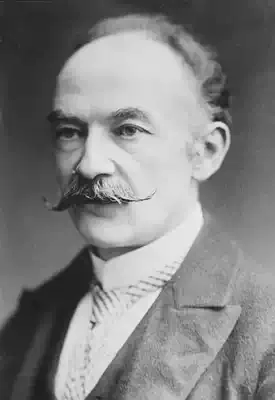
Thomas Hardy
The Caged Thrush Freed and Home Again (Villanelle)
"Men know but little more than we,
Who count us least of things terrene,
How happy days are made to be!
"Of such strange tidings what think ye,
O birds in brown that peck and preen?
Men know but little more than we!
"When I was borne from yonder tree
In bonds to them, I hoped to glean
How happy days are made to be,
"And want and wailing turned to glee;
Alas, despite their mighty mien
Men know but little more than we!
"They cannot change the Frost's decree,
They cannot keep the skies serene;
How happy days are made to be
"Eludes great Man's sagacity
No less than ours, O tribes in treen!
Men know but little more than we
How happy days are made to be."
210

Emily Dickinson
I'm sorry for the Dead—Today
I'm sorry for the Dead—Today—
It's such congenial times
Old Neighbors have at fences—
It's time o' year for Hay.
And Broad—Sunburned Acquaintance
Discourse between the Toil—
And laugh, a homely species
That makes the Fences smile—
It seems so straight to lie away
From all of the noise of Fields—
The Busy Carts—the fragrant Cocks—
The Mower's Metre—Steals—
A Trouble lest they're homesick—
Those Farmers—and their Wives—
Set separate from the Farming—
And all the Neighbors' lives—
A Wonder if the Sepulchre
Don't feel a lonesome way—
When Men—and Boys—and Carts—and June,
Go down the Fields to "Hay"—
210

Christina Rossetti
My Dream
Hear now a curious dream I dreamed last night
Each word whereof is weighed and sifted truth.
I stood beside Euphrates while it swelled
Like overflowing Jordan in its youth:
It waxed and coloured sensibly to sight;
Till out of myriad pregnant waves there welled
Young crocodiles, a gaunt blunt-featured crew,
Fresh-hatched perhaps and daubed with birthday dew.
The rest if I should tell, I fear my friend
My closest friend would deem the facts untrue;
And therefore it were wisely left untold;
Yet if you will, why, hear it to the end.
Each crocodile was girt with massive gold
And polished stones that with their wearers grew:
But one there was who waxed beyond the rest,
Wore kinglier girdle and a kingly crown,
Whilst crowns and orbs and sceptres starred his breast.
All gleamed compact and green with scale on scale,
But special burnishment adorned his mail
And special terror weighed upon his frown;
His punier brethren quaked before his tail,
Broad as a rafter, potent as a flail.
So he grew lord and master of his kin:
But who shall tell the tale of all their woes?
An execrable appetite arose,
He battened on them, crunched, and sucked them in.
He knew no law, he feared no binding law,
But ground them with inexorable jaw:
The luscious fat distilled upon his chin,
Exuded from his nostrils and his eyes,
While still like hungry death he fed his maw;
Till every minor crocodile being dead
And buried too, himself gorged to the full,
He slept with breath oppressed and unstrung claw.
Oh marvel passing strange which next I saw:
In sleep he dwindled to the common size,
And all the empire faded from his coat.
Then from far off a winged vessel came,
Swift as a swallow, subtle as a flame:
I know not what it bore of freight or host,
But white it was as an avenging ghost.
It levelled strong Euphrates in its course;
Supreme yet weightless as an idle mote
It seemed to tame the waters without force
Till not a murmur swelled or billow beat:
Lo, as the purple shadow swept the sands,
The prudent crocodile rose on his feet
And shed appropriate tears and wrung his hands.
What can it mean? you ask. I answer not
For meaning, but myself must echo, What?
And tell it as I saw it on the spot.
209

Henry Lawson
Dan Wasn’t Thrown from His Horse
THEY SAY he was thrown and run over,
But that is sheer nonsense, of course:
I taught him to ride when a kiddy,
And Dan wasn’t thrown from his horse.
The horse that Dan rode was a devil—
The kind of a brute I despise,
With nasty white eyelashes fringing
A pair of red, sinister eyes.
And a queerly-shaped spot on his forehead,
Where I put a conical ball
The day that he murdered Dan Denver,
The pluckiest rider of all.
’Twas after the races were over
And Duggan (a Talbragar man)
And two of the Denvers, and Barney
Were trying a gallop with Dan.
Dan’s horse on a sudden got vicious,
And reared up an’ plunged in the race,
Then threw back his head, hitting Dan like
A sledge-hammer, full in the face.
Dan stopped and got down, stood a moment,
Then fell to the ground like a stone,
And died about ten minutes after;
But they’re liars who say he was thrown.
206
Thomas Hardy
Birds at Winter Nightfall (Triolet)
Around the house the flakes fly faster,
And all the berries now are gone
From holly and cotoneaster
Around the house. The flakes fly!--faster
Shutting indoors that crumb-outcaster
We used to see upon the lawn
Around the house. The flakes fly faster,
And all the berries now are gone!
And all the berries now are gone
From holly and cotoneaster
Around the house. The flakes fly!--faster
Shutting indoors that crumb-outcaster
We used to see upon the lawn
Around the house. The flakes fly faster,
And all the berries now are gone!
205
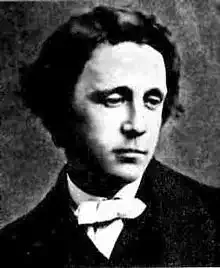
Lewis Carroll
Lays of Sorrow
The day was wet, the rain fell souse
Like jars of strawberry jam, [1] a
sound was heard in the old henhouse,
A beating of a hammer.
Of stalwart form, and visage warm,
Two youths were seen within it,
Splitting up an old tree into perches for their poultry
At a hundred strokes [2] a minute.
The work is done, the hen has taken
Possession of her nest and eggs,
Without a thought of eggs and bacon, [3]
(Or I am very much mistaken happy)
She turns over each shell,
To be sure that all's well,
Looks into the straw
To see there's no flaw,
Goes once round the house, [4]
Half afraid of a mouse,
Then sinks calmly to rest
On the top of her nest,
First doubling up each of her legs.
Time rolled away, and so did every shell,
"Small by degrees and beautifully less,"
As the large mother with a powerful spell [5]
Forced each in turn its contents to express, [6]
But ah! "imperfect is expression,"
Some poet said, I don't care who,
If you want to know you must go elsewhere,
One fact I can tell, if you're willing to hear,
He never attended a Parliament Session,
For I'm certain that if he had ever been there,
Full quickly would he have changed his ideas,
With the hissings, the hootings, the groans and the cheers.
And as to his name it is pretty clear
That it wasn't me and it wasn't you!
And so it fell upon a day,
(That is, it never rose again)
A chick was found upon the hay,
Its little life had ebbed away.
No longer frolicsome and gay,
No longer could it run or play.
"And must we, chicken, must we part?"
Its master [7] cried with bursting heart,
And voice of agony and pain.
So one, whose ticket's marked "Return", [8]
When to the lonely roadside station
He flies in fear and perturbation,
Thinks of his homethe
hissing urn
Then
runs with flying hat and hair,
And, entering, finds to his despair
He's missed the very last train. [9]
Too long it were to tell of each conjecture
Of chicken suicide, and poultry victim,
The deadly frown, the stern and dreary lecture,
The timid guess, "perhaps some needle pricked him!"
The din of voice, the words both loud and many,
The sob, the tear, the sigh that none could smother,
Till all agreed "a shilling to a penny
It killed itself, and we acquit the mother!"
Scarce was the verdict spoken,
When that still calm was broken,
A childish form hath burst into the throng;
With tears and looks of sadness,
That bring no news of gladness,
But tell too surely something hath gone wrong!
"The sight I have come upon
The stoutest heart [10] would sicken,
That nasty hen has been and gone
And killed another chicken!"
203
Lewis Carroll
Fit the First: ( Hunting of the Snark )
The Landing
"Just the place for a Snark!" the Bellman cried,
As he landed his crew with care;
Supporting each man on the top of the tide
By a finger entwined in his hair.
"Just the place for a Snark! I have said it twice:
That alone should encourage the crew.
Just the place for a Snark! I have said it thrice:
What I tell you three times is true."
The crew was complete: it included a BootsA
maker of Bonnets and HoodsA
Barrister, brought to arrange their disputes
And
a Broker, to value their goods.
A Billiardmarker,
whose skill was immense,
Might perhaps have won more than his share
But
a Banker, engaged at enormous expense,
Had the whole of their cash in his care.
There was also a Beaver, that paced on the deck,
Or would sit making lace in the bow:
And had often (the Bellman said) saved them from wreck
Though none of the sailors knew how.
There was one who was famed for the number of things
He forgot when he entered the ship:
His umbrella, his watch, all his jewels and rings,
And the clothes he had bought for the trip.
He had fortytwo
boxes, all carefully packed,
With his name painted clearly on each:
But, since he omitted to mention the fact,
They were all left behind on the beach.
The loss of his clothes hardly mattered, because
He had seven coats on when he came,
With three pair of bootsbut
the worst of is was,
He had wholly forgotten his name.
He would answer to "Hi!" or to any loud cry,
Such as "Fry me!" or "Fritter my wig!"
To "Whatyoumaycallum!"
or "Whatwashisname!"
But especially "Thingumajig!"
While, for those who preferred a more forcible word,
He had different names from these:
His intimate friends called him "Candleends",
And his enemies "Toastedcheese"
"His form is ungainlyhis
intellect small"
(So the Bellman would often remark)"
But his courage is perfect! And that, after all,
Is the thing that one needs with a Snark."
He would joke with hyaenas, returning their stare
With an impudent wag of the head:
And he once went a walk, pawinpaw,
with a bear,
"Just to keep up its spirits," he said.
He came as a Baker: but owned, when too late
And
it drove the poor Bellman halfmad
He
could only bake Bridecakefor
which, I may state,
No materials were to be had.
The last of the crew needs especial remark,
Though he looked an incredible dunce:
He had just one ideabut,
that one being "Snark",
The good Bellman engaged him at once.
He came as a Butcher: but gravely declared,
When the ship had been sailing a week,
He could only kill Beavers. The Bellman looked scared,
And was almost too frightened to speak:
But at length he explained, in a tremulous tone,
There was only one Beaver on board;
And that was a tame one he had of his own,
Whose death would be deeply deplored.
The Beaver, who happened to hear the remark,
Protested, with tears in its eyes,
That not even the rapture of hunting the Snark
Could atone for that dismal surprise!
It strongly advised that the Butcher should be
Conveyed in a separate ship:
But the Bellman declared that would never agree
With the plans he had made for the trip:
Navigation was always a difficult art,
Though with only one ship and one bell:
And he feared he must really decline, for his part,
Undertaking another as well.
The Beaver's best course was, no doubt, to procure
A secondhand
daggerproof
coat
So
the baker advised itand
next, to insure
Its life in some Office of note:
This the Baker suggested, and offered for hire
(On moderate terms), or for sale,
Two excellent Policies, one Against Fire
And one Against Damage From Hail.
Yet still, ever after that sorrowful day,
Whenever the Butcher was by,
The Beaver kept looking the opposite way,
And appeared unaccountably shy.
204
Emily Dickinson
Would you like summer? Taste of ours
Would you like summer? Taste of ours.
Spices? Buy here!
Ill! We have berries, for the parching!
Weary! Furloughs of down!
Perplexed! Estates of violet trouble ne'er looked on!
Captive! We bring reprieve of roses!
Fainting! Flasks of air!
Even for Death, a fairy medicine.
But, which is it, sir?
Spices? Buy here!
Ill! We have berries, for the parching!
Weary! Furloughs of down!
Perplexed! Estates of violet trouble ne'er looked on!
Captive! We bring reprieve of roses!
Fainting! Flasks of air!
Even for Death, a fairy medicine.
But, which is it, sir?
204
Robert W. Service
My Dog's My Boss
Each day when it's anighing three
Old Dick looks at the clock,
Then proudly brings my stick to me
To mind me of our walk.
And in his doggy rapture he
Does everything but talk.
But since I lack his zip and zest
My old bones often tire;
And so I ventured to suggest
Today we hug the fire.
But with what wailing he expressed
The death of his desire!
He gazed at me with eyes of woe
As if to say: 'Old boy,
You mustn't lose your grip, you know,
Let us with laughing joy,
On heath and hill six miles or so
Our legs and lungs employ.'
And then his bark was stilled to a sigh
He flopped upon the floor;
But such a soft old mug am I
I threw awide the door;
So gaily, though the wind was high
We hiked across the moor.
203
Christina Rossetti
Brownie, Brownie, Let Down Your Milk
Brownie, Brownie, let down your milk
White as swansdown and smooth as silk,
Fresh as dew and pure as snow:
For I know where the cowslips blow,
And you shall have a cowslip wreath
No sweeter scented than your breath.
White as swansdown and smooth as silk,
Fresh as dew and pure as snow:
For I know where the cowslips blow,
And you shall have a cowslip wreath
No sweeter scented than your breath.
203
Robert W. Service
Captivity
O meadow lark, so wild and free,
It cannot be, it cannot be,
That men to merchandise your spell
Do close you in a wicker hell!
O hedgerow thrush so mad with glee,
it cannot be, it cannot be,
They rape you from your hawthorn foam
To make a cell of steel your home!
O blackbird in the orchard tree,
In cannot be, it cannot be,
That devils in a narrow cage
Would prison your melodic rage!
O you who live for liberty,
Can you believe that it can be,
That we of freedom's faith destroy
In dungeons, innocence and joy?
O decent folk who read this page,
If you should own a bird in cage,
Throw wide the door, - God gave it wings:
Then hear how in your heart it sings!
202

Joyce Kilmer
Trees
I think that I shall never see
A poem as lovely as a tree.
A tree whose hungry mouth is prest
Against the earth's sweet flowing breast;
A tree that looks at God all day,
And lifts her leafy arms to pray;
A tree that may in Summer wear
A nest of robins in her hair;
Upon whose bosom snow has lain;
Who intimately lives with rain.
Poems are made by fools like me,
But only God can make a tree.
202
Thomas Hardy
Weathers
This is the weather the cuckoo likes,
And so do I;
When showers betumble the chestnut spikes,
And nestlings fly;
And the little brown nightingale bills his best,
And they sit outside at 'The Traveller's Rest,'
And maids come forth sprig-muslin drest,
And citizens dream of the south and west,
And so do I.
This is the weather the shepherd shuns,
And so do I;
When beeches drip in browns and duns,
And thresh and ply;
And hill-hid tides throb, throe on throe,
And meadow rivulets overflow,
And drops on gate bars hang in a row,
And rooks in families homeward go,
And so do I.
And so do I;
When showers betumble the chestnut spikes,
And nestlings fly;
And the little brown nightingale bills his best,
And they sit outside at 'The Traveller's Rest,'
And maids come forth sprig-muslin drest,
And citizens dream of the south and west,
And so do I.
This is the weather the shepherd shuns,
And so do I;
When beeches drip in browns and duns,
And thresh and ply;
And hill-hid tides throb, throe on throe,
And meadow rivulets overflow,
And drops on gate bars hang in a row,
And rooks in families homeward go,
And so do I.
197

William Wordsworth
Animal Tranquility and Decay
The little hedgerow birds,
That peck along the roads, regard him not.
He travels on, and in his face, his step,
His gait, is one expression: every limb,
His look and bending figure, all bespeak
A man who does not move with pain, but moves
With thought.--He is insensibly subdued
To settled quiet: he is one by whom
All effort seems forgotten; one to whom
Long patience hath such mild composure given,
That patience now doth seem a thing of which
He hath no need. He is by nature led
To peace so perfect that the young behold
With envy, what the Old Man hardly feels.
199
Henry Lawson
When the Ladies Come to the Shearing Shed
‘The ladies are coming,’ the super says
To the shearers sweltering there,
And ‘the ladies’ means in the shearing shed:
‘Don’t cut ’em too bad. Don’t swear.’
The ghost of a pause in the shed’s rough heart,
And lower is bowed each head;
And nothing is heard, save a whispered word,
And the roar of the shearing-shed.
The tall, shy rouser has lost his wits,
And his limbs are all astray;
He leaves a fleece on the shearing-board,
And his broom in the shearer’s way.
There’s a curse in store for that jackaroo
As down by the wall he slants—
And the ringer bends with his legs askew
And wishes he’d ‘patched them pants.’
They are girls from the city. (Our hearts rebel
As we squint at their dainty feet.)
And they gush and say in a girly way
That ‘the dear little lambs’ are ‘sweet.’
And Bill, the ringer, who’d scorn the use
Of a childish word like ‘damn,’
Would give a pound that his tongue were loose
As he tackles a lively lamb.
Swift thoughts of homes in the coastal towns—
Or rivers and waving grass—
And a weight on our hearts that we cannot define
That comes as the ladies pass.
But the rouser ventures a nervous dig
In the ribs of the next to him;
And Barcoo says to his pen-mate: ‘Twig
‘The style of the last un, Jim.’
Jim Moonlight gives her a careless glance—
Then he catches his breath with pain—
His strong hand shakes and the sunlights dance
As he bends to his work again.
But he’s well disguised in a bristling beard,
Bronzed skin, and his shearer’s dress;
And whatever Jim Moonlight hoped or feared
Were hard for his mates to guess.
Jim Moonlight, wiping his broad, white brow,
Explains, with a doleful smile:
‘A stitch in the side,’ and ‘he’s all right now’—
But he leans on the beam awhile,
And gazes out in the blazing noon
On the clearing, brown and bare—
She has come and gone, like a breath of June,
In December’s heat and glare.
The bushmen are big rough boys at the best,
With hearts of a larger growth;
But they hide those hearts with a brutal jest,
And the pain with a reckless oath.
Though the Bills and Jims of the bush-bard sing
Of their life loves, lost or dead,
The love of a girl is a sacred thing
Not voiced in a shearing-shed.
196
William Wordsworth
A Whirl-Blast from Behind the Hill
A Whirl-Blast from behind the hill
Rushed o'er the wood with startling sound;
Then--all at once the air was still,
And showers of hailstones pattered round.
Where leafless oaks towered high above,
I sat within an undergrove
Of tallest hollies, tall and green;
A fairer bower was never seen.
From year to year the spacious floor
With withered leaves is covered o'er,
And all the year the bower is green.
But see! where'er the hailstones drop
The withered leaves all skip and hop;
There's not a breeze--no breath of air--
Yet here, and there, and everywhere
Along the floor, beneath the shade
By those embowering hollies made,
The leaves in myriads jump and spring,
As if with pipes and music rare
Some Robin Good-fellow were there,
And all those leaves, in festive glee,
Were dancing to the minstrelsy.
201

Anonymous
Nell Flaherty’s Drake
MY NAME it is Nell, right candid I tell,
And I live near a dell I ne’er will deny,
I had a large drake, the truth for to spake,
My grandfather left me when going to die;
He was merry and sound, and would weigh twenty pound,
The universe round would I rove for his sake.
Bad luck to the robber, be he drunken or sober,
That murdered Nell Flaherty’s beautiful drake.
His neck it was green, and rare to be seen,
He was fit for a queen of the highest degree.
His body so white, it would you delight,
He was fat, plump, and heavy, and brisk as a bee.
This dear little fellow, his legs they were yellow,
He could fly like a swallow, or swim like a hake,
But some wicked habbage, to grease his white cabbage,
Has murdered Nell Flaherty’s beautiful drake!
May his pig never grunt, may his cat never hunt,
That a ghost may him haunt in the dark of the night.
May his hens never lay, may his horse never neigh,
May his goat fly away like an old paper kite;
May his duck never quack, may his goose be turned black
And pull down his stack with her long yellow beak.
May the scurvy and itch never part from the britch
Of the wretch that murdered Nell Flaherty’s drake!
May his rooster ne’er crow, may his bellows not blow,
Nor potatoes to grow—may he never have none—
May his cradle not rock, may his chest have no lock,
May his wife have no frock for to shade her backbone.
That the bugs and the fleas may this wicked wretch tease,
And a piercing north breeze make him tremble and shake.
May a four-years’-old bug build a nest in the lug
Of the monster that murdered Nell Flaherty’s drake.
May his pipe never smoke, may his tea-pot be broke,
And to add to the joke may his kettle not boil;
May he be poorly fed till the hour he is dead.
May he always be fed on lobscouse and fish oil.
May he swell with the gout till his grinders fall out,
May he roar, howl, and shout with a horrid toothache,
May his temple wear horns and his toes carry corns,
The wretch that murdered Nell Flaherty’s drake.
May his dog yelp and howl with both hunger and cold,
May his wife always scold till his brains go astray.
May the curse of each hag, that ever carried a bag,
Light down on the wag till his head it turns gray.
May monkeys still bite him, and mad dogs affright him,
And every one slight him, asleep or awake.
May wasps ever gnaw him, and jackdaws ever claw him,
The monster that murdered Nell Flaherty’s drake.
But the only good news I have to diffuse,
Is of Peter Hughes and Paddy McCade,
And crooked Ned Manson, and big-nosed Bob Hanson,
Each one had a grandson of my beautiful drake.
Oh! my bird he has dozens of nephews and cousins,
And one I must have, or my heart it will break.
To keep my mind easy, or else I’ll run crazy,
And so ends the song of my beautiful drake.
199
Christina Rossetti
Where Innocent Bright-Eyed Daisies Are
Where innocent bright-eyed daisies are,
With blades of grass between,
Each daisy stands up like a star
Out of a sky of green.
With blades of grass between,
Each daisy stands up like a star
Out of a sky of green.
198
Robert W. Service
Why Do Birds Sing?
Let poets piece prismatic words,
Give me the jewelled joy of birds!
What ecstasy moves them to sing?
Is it the lyric glee of Spring,
The dewy rapture of the rose?
Is it the worship born in those
Who are of Nature's self a part,
The adoration of the heart?
Is it the mating mood in them
That makes each crystal note a gem?
Oh mocking bird and nightingale,
Oh mavis, lark and robin - hail!
Tell me what perfect passion glows
In your inspired arpeggios?
A thrush is thrilling as I write
Its obligato of delight;
And in its fervour, as in mine,
I fathom tenderness divine,
And pity those of earthy ear
Who cannot hear . . . who cannot hear.
Let poets pattern pretty words:
For lovely largesse - bless you, Birds!
198
Christina Rossetti
Dancing On The Hill-Tops
Dancing on the hill-tops,
Singing in the valleys,
Laughing with the echoes,
Merry little Alice.
Playing games with lambkins
In the flowering valleys,
Gathering pretty posies,
Helpful little Alice.
If her father's cottage
Turned into a palace,
And he owned the hill-tops
And the flowering valleys,
She’d be none the happier,
Happy little Alice.
200
Robert W. Service
The Great Recall
I've wearied of so many things
Adored in youthful days;
Music no more my spirit wings,
E'en when Master play.
For stage and screen I have no heart,
Great paintings leave me cold;
Alas! I've lost the love of Art
That raptured me of old.
Only my love of books is left,
Yet that begins to pall;
And if of it I am bereft,
I'll read no more at all.
Then when I am too frail to walk
I'll sit out in the sun,
And there with Nature I will talk . . .
Last friend and dearest one.
For Nature's all in all to me;
My other loves are vain;
Her bosom brought me forth and she
Will take me back again.
So I will let her have her way,
For I've a feeling odd,
Whatever wiser men may say,
That she herself is GOD.
192
