
Soul

Wilfred Owen
A Terre
(Being the philosophy of many Soldiers.)
Sit on the bed; I'm blind, and three parts shell,
Be careful; can't shake hands now; never shall.
Both arms have mutinied against me -- brutes.
My fingers fidget like ten idle brats.
I tried to peg out soldierly -- no use!
One dies of war like any old disease.
This bandage feels like pennies on my eyes.
I have my medals? -- Discs to make eyes close.
My glorious ribbons? -- Ripped from my own back
In scarlet shreds. (That's for your poetry book.)
A short life and a merry one, my brick!
We used to say we'd hate to live dead old, --
Yet now . . . I'd willingly be puffy, bald,
And patriotic. Buffers catch from boys
At least the jokes hurled at them. I suppose
Little I'd ever teach a son, but hitting,
Shooting, war, hunting, all the arts of hurting.
Well, that's what I learnt, -- that, and making money.
Your fifty years ahead seem none too many?
Tell me how long I've got? God! For one year
To help myself to nothing more than air!
One Spring! Is one too good to spare, too long?
Spring wind would work its own way to my lung,
And grow me legs as quick as lilac-shoots.
My servant's lamed, but listen how he shouts!
When I'm lugged out, he'll still be good for that.
Here in this mummy-case, you know, I've thought
How well I might have swept his floors for ever,
I'd ask no night off when the bustle's over,
Enjoying so the dirt. Who's prejudiced
Against a grimed hand when his own's quite dust,
Less live than specks that in the sun-shafts turn,
Less warm than dust that mixes with arms' tan?
I'd love to be a sweep, now, black as Town,
Yes, or a muckman. Must I be his load?
O Life, Life, let me breathe, -- a dug-out rat!
Not worse than ours the existences rats lead --
Nosing along at night down some safe vat,
They find a shell-proof home before they rot.
Dead men may envy living mites in cheese,
Or good germs even. Microbes have their joys,
And subdivide, and never come to death,
Certainly flowers have the easiest time on earth.
"I shall be one with nature, herb, and stone."
Shelley would tell me. Shelley would be stunned;
The dullest Tommy hugs that fancy now.
"Pushing up daisies," is their creed, you know.
To grain, then, go my fat, to buds my sap,
For all the usefulness there is in soap.
D'you think the Boche will ever stew man-soup?
Some day, no doubt, if . . .
Friend, be very sure
I shall be better off with plants that share
More peaceably the meadow and the shower.
Soft rains will touch me, -- as they could touch once,
And nothing but the sun shall make me ware.
Your guns may crash around me. I'll not hear;
Or, if I wince, I shall not know I wince.
Don't take my soul's poor comfort for your jest.
Soldiers may grow a soul when turned to fronds,
But here the thing's best left at home with friends.
My soul's a little grief, grappling your chest,
To climb your throat on sobs; easily chased
On other sighs and wiped by fresher winds.
Carry my crying spirit till it's weaned
To do without what blood remained these wounds.
Read more →
187

Emily Dickinson
Nature and God—I neither knew
Nature and God—I neither knew
Yet Both so well knew me
They startled, like Executors
Of My identity.
Yet Neither told—that I could learn—
My Secret as secure
As Herschel's private interest
Or Mercury's affair—
Read more →
175

Robert W. Service
The Record
Fearing that she might go one day
With some fine fellow of her choice,
I called her from her childish play,
And made a record of her voice.
And now that she is truly gone,
I hear it sweet and crystal clear
From out my wheezy gramophone:
"I love you, Daddy dear."
Indeed it's true she went away,
But Oh she went all, all alone;
Into the dark she went for aye,
Poor little mite! ere girlhood grown.
Ah that I could with her have gone!
But this is all I have to show -
A ghost voice on a gramophone:
"Dear Dad, I love you so."
The saddest part of loss 'tis said,
Is that time tempers our regret;
But that is treason to the dead I'll
not forget, I'll not forget.
Sole souvenir of golden years,
'Twas best to break this disc in two,
And spare myself a spate of tears . . .
But this I cannot do.
So I will play it every day,
And it will seem that she is near,
And once again I'll hear her say:
I love you so, Oh Daddy dear."
And then her kiss - a stab of woe.
The record ends . . . I breathe a plea:
"Oh God, speed me to where I know
Wee lass, you wait for me."
Read more →
178
Wilfred Owen
The Show
My soul looked down from a vague height with Death,
As unremembering how I rose or why,
And saw a sad land, weak with sweats of dearth,
Gray, cratered like the moon with hollow woe,
And fitted with great pocks and scabs of plaques.
Across its beard, that horror of harsh wire,
There moved thin caterpillars, slowly uncoiled.
It seemed they pushed themselves to be as plugs
Of ditches, where they writhed and shrivelled, killed.
By them had slimy paths been trailed and scraped
Round myriad warts that might be little hills.
From gloom's last dregs these long-strung creatures crept,
And vanished out of dawn down hidden holes.
(And smell came up from those foul openings
As out of mouths, or deep wounds deepening.)
On dithering feet upgathered, more and more,
Brown strings towards strings of gray, with bristling spines,
All migrants from green fields, intent on mire.
Those that were gray, of more abundant spawns,
Ramped on the rest and ate them and were eaten.
I saw their bitten backs curve, loop, and straighten,
I watched those agonies curl, lift, and flatten.
Whereat, in terror what that sight might mean,
I reeled and shivered earthward like a feather.
And Death fell with me, like a deepening moan.
And He, picking a manner of worm, which half had hid
Its bruises in the earth, but crawled no further,
Showed me its feet, the feet of many men,
And the fresh-severed head of it, my head.
Read more →
176

Joyce Kilmer
Dave Lilly
There's a brook on the side of Greylock that used to be full of trout,
But there's nothing there now but minnows; they say it is all fished out.
I fished there many a Summer day some twenty years ago,
And I never quit without getting a mess of a dozen or so.
There was a man, Dave Lilly, who lived on the North Adams road,
And he spent all his time fishing, while his neighbors reaped and sowed.
He was the luckiest fisherman in the Berkshire hills, I think.
And when he didn't go fishing he'd sit in the tavern and drink.
Well, Dave is dead and buried and nobody cares very much;
They have no use in Greylock for drunkards and loafers and such.
But I always liked Dave Lilly, he was pleasant as you could wish;
He was shiftless and good-for-nothing, but he certainly could fish.
The other night I was walking up the hill from Williamstown
And I came to the brook I mentioned,
and I stopped on the bridge and sat down.
I looked at the blackened water with its little flecks of white
And I heard it ripple and whisper in the still of the Summer night.
And after I'd been there a minute it seemed to me I could feel
The presence of someone near me, and I heard the hum of a reel.
And the water was churned and broken, and something was brought to land
By a twist and flirt of a shadowy rod in a deft and shadowy hand.
I scrambled down to the brookside and hunted all about;
There wasn't a sign of a fisherman; there wasn't a sign of a trout.
But I heard somebody chuckle behind the hollow oak
And I got a whiff of tobacco like Lilly used to smoke.
It's fifteen years, they tell me, since anyone fished that brook;
And there's nothing in it but minnows that nibble the bait off your hook.
But before the sun has risen and after the moon has set
I know that it's full of ghostly trout for Lilly's ghost to get.
I guess I'll go to the tavern and get a bottle of rye
And leave it down by the hollow oak, where Lilly's ghost went by.
I meant to go up on the hillside and try to find his grave
And put some flowers on it -- but this will be better for Dave.
Read more →
180
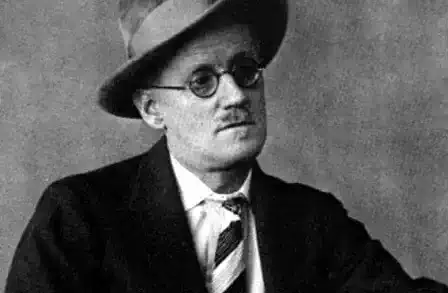
James Joyce
Now, O Now in This Brown Land
Now, O now, in this brown land
Where Love did so sweet music make
We two shall wander, hand in hand,
Forbearing for old friendship' sake,
Nor grieve because our love was gay
Which now is ended in this way.
A rogue in red and yellow dress
Is knocking, knocking at the tree;
And all around our loneliness
The wind is whistling merrily.
The leaves -- - they do not sigh at all
When the year takes them in the fall.
Now, O now, we hear no more
The vilanelle and roundelay!
Yet will we kiss, sweetheart, before
We take sad leave at close of day.
Grieve not, sweetheart, for anything -- -
The year, the year is gathering.
Read more →
181
Emily Dickinson
Where Thou art—that—is Home
Where Thou art—that—is Home—
Cashmere—or Calvary—the same—
Degree—or Shame—
I scarce esteem Location's Name—
So I may Come—
What Thou dost—is Delight—
Bondage as Play—be sweet—
Imprisonment—Content—
And Sentence—Sacrament—
Just We two—meet—
Where Thou art not—is Woe—
Tho' Bands of Spices—row—
What Thou dost not—Despair—
Tho' Gabriel—praise me—Sire—
Read more →
180
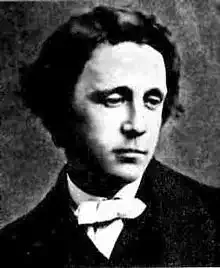
Lewis Carroll
Phantasmagoria CANTO IV ( Hys Nouryture )
"OH, when I was a little Ghost,
A merry time had we!
Each seated on his favourite post,
We chumped and chawed the buttered toast
They gave us for our tea."
"That story is in print!" I cried.
"Don't say it's not, because
It's known as well as Bradshaw's Guide!"
(The Ghost uneasily replied
He hardly thought it was).
"It's not in Nursery Rhymes? And yet
I almost think it is '
Three little Ghosteses' were set
'On posteses,' you know, and ate
Their 'buttered toasteses.'
"I have the book; so if you doubt it "
I turned to search the shelf.
"Don't stir!" he cried. "We'll do without it:
I now remember all about it;
I wrote the thing myself.
"It came out in a 'Monthly,' or
At least my agent said it did:
Some literary swell, who saw
It, thought it seemed adapted for
The Magazine he edited.
"My father was a Brownie, Sir;
My mother was a Fairy.
The notion had occurred to her,
The children would be happier,
If they were taught to vary.
"The notion soon became a craze;
And, when it once began, she
Brought us all out in different ways One
was a Pixy, two were Fays,
Another was a Banshee;
"The Fetch and Kelpie went to school
And gave a lot of trouble;
Next came a Poltergeist and Ghoul,
And then two Trolls (which broke the rule),
A Goblin, and a Double
"(If that's a snuffbox
on the shelf,"
He added with a yawn,
"I'll take a pinch) next
came an Elf,
And then a Phantom (that's myself),
And last, a Leprechaun.
"One day, some Spectres chanced to call,
Dressed in the usual white:
I stood and watched them in the hall,
And couldn't make them out at all,
They seemed so strange a sight.
"I wondered what on earth they were,
That looked all head and sack;
But Mother told me not to stare,
And then she twitched me by the hair,
And punched me in the back.
"Since then I've often wished that I
Had been a Spectre born.
But what's the use?" (He heaved a sigh.)
"THEY are the ghostnobility,
And look on US with scorn.
"My phantomlife
was soon begun:
When I was barely six,
I went out with an older one And
just at first I thought it fun,
And learned a lot of tricks.
"I've haunted dungeons, castles, towers Wherever
I was sent:
I've often sat and howled for hours,
Drenched to the skin with driving showers,
Upon a battlement.
"It's quite oldfashioned
now to groan
When you begin to speak:
This is the newest thing in tone "
And here (it chilled me to the bone)
He gave an AWFUL squeak.
"Perhaps," he added, "to YOUR ear
That sounds an easy thing?
Try it yourself, my little dear!
It took ME something like a year,
With constant practising.
"And when you've learned to squeak, my man,
And caught the double sob,
You're pretty much where you began:
Just try and gibber if you can!
That's something LIKE a job!
"I'VE tried it, and can only say
I'm sure you couldn't do it, e
ven if you practised night and day,
Unless you have a turn that way,
And natural ingenuity.
"Shakspeare I think it is who treats
Of Ghosts, in days of old,
Who 'gibbered in the Roman streets,'
Dressed, if you recollect, in sheets They
must have found it cold.
"I've often spent ten pounds on stuff,
In dressing as a Double;
But, though it answers as a puff,
It never has effect enough
To make it worth the trouble.
"Long bills soon quenched the little thirst
I had for being funny.
The settingup
is always worst:
Such heaps of things you want at first,
One must be made of money!
"For instance, take a Haunted Tower,
With skull, crossbones,
and sheet;
Blue lights to burn (say) two an hour,
Condensing lens of extra power,
And set of chains complete:
"What with the things you have to hire The
fitting on the robe And
testing all the coloured fire The
outfit of itself would tire
The patience of a Job!
"And then they're so fastidious,
The HauntedHouse
Committee:
I've often known them make a fuss
Because a Ghost was French, or Russ,
Or even from the City!
"Some dialects are objected to For
one, the IRISH brogue is:
And then, for all you have to do,
One pound a week they offer you,
And find yourself in Bogies!
Read more →
179
Robert W. Service
Old Bob
I guess folks think I'm mighty dumb
Since Jack and Jim and Joe
Have hit the trail to Kingdom Come
And left me here below:
Since Death, the bastard, bowled them out,
And left me faced with--Doubt.
My pals have all passed out on me
And I am by my lone;
Old Bill was last, and now I see
His name cut on a stone;
A marble slab, but not as fine
As I have picked for mine.
I nurse and curse rheumatic pain
As on the porch I sit;
With nothing special in my brain
I rock and smoke and spit:
When one is nearing to the end
One sorely needs a friend.
My Pals have gone,--in God's good earth
I guess they're packed up snug,
And since I have no guts for mirth
I zipper to my mug:
The question that I ponder on
Is--where the heck they've gone?
Read more →
175
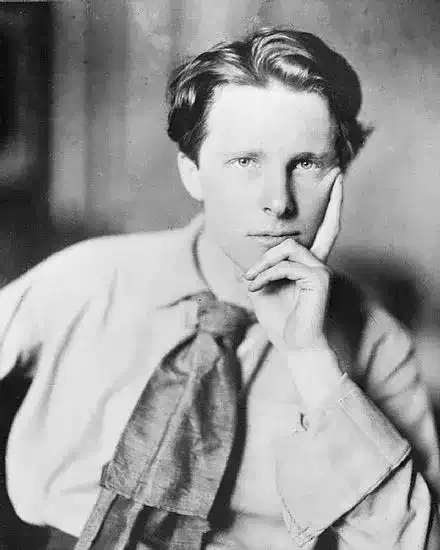
Rupert Brooke
Sleeping Out: Full Moon
They sleep within. . . .
I cower to the earth, I waking, I only.
High and cold thou dreamest, O queen, high-dreaming and lonely.
We have slept too long, who can hardly win
The white one flame, and the night-long crying;
The viewless passers; the world's low sighing
With desire, with yearning,
To the fire unburning,
To the heatless fire, to the flameless ecstasy! . . .
Helpless I lie.
And around me the feet of thy watchers tread.
There is a rumour and a radiance of wings above my head,
An intolerable radiance of wings. . . .
All the earth grows fire,
White lips of desire
Brushing cool on the forehead, croon slumbrous things.
Earth fades; and the air is thrilled with ways,
Dewy paths full of comfort. And radiant bands,
The gracious presence of friendly hands,
Help the blind one, the glad one, who stumbles and strays,
Stretching wavering hands, up, up, through the praise
Of a myriad silver trumpets, through cries,
To all glory, to all gladness, to the infinite height,
To the gracious, the unmoving, the mother eyes,
And the laughter, and the lips, of light.
Read more →
180
James Joyce
Lean Out of the Window
Lean out of the window,
Goldenhair,
I hear you singing
A merry air.
My book was closed,
I read no more,
Watching the fire dance
On the floor.
I have left my book,
I have left my room,
For I heard you singing
Through the gloom.
Singing and singing
A merry air,
Lean out of the window,
Goldenhair.
Read more →
179
Wilfred Owen
Conscious
His fingers wake, and flutter up the bed.
His eyes come open with a pull of will,
Helped by the yellow may-flowers by his head.
A blind-cord drawls across the window-sill . . .
How smooth the floor of the ward is! what a rug!
And who's that talking, somewhere out of sight?
Why are they laughing? What's inside that jug?
"Nurse! Doctor!" "Yes; all right, all right."
But sudden dusk bewilders all the air --
There seems no time to want a drink of water.
Nurse looks so far away. And everywhere
Music and roses burnt through crimson slaughter.
Cold; cold; he's cold; and yet so hot:
And there's no light to see the voices by --
No time to dream, and ask -- he knows not what.
Read more →
175
Lewis Carroll
Photography Extraordinary
The MilkandWater
School
Alas! she would not hear my prayer!
Yet it were rash to tear my hair;
Disfigured, I should be less fair.
She was unwise, I may say blind;
Once she was lovingly inclined;
Some circumstance has changed her mind.
The StrongMinded
or MatterofFact
School
Well! so my offer was no go!
She might do worse, I told her so;
She was a fool to answer "No".
However, things are as they stood;
Nor would I have her if I could,
For there are plenty more as good.
The Spasmodic or German School
Firebrands and Daggers! hope hath fled!
To atoms dash the doubly dead!
My brain is firemy
heart is lead!
Her soul is flint, and what am I?
Scorch'd by her fierce, relentless eye,
Nothingness is my destiny!
Read more →
179
Emily Dickinson
I live with Him—I see His face
I live with Him—I see His face—
I go no more away
For Visitor—or Sundown—
Death's single privacy
The Only One—forestalling Mine—
And that—by Right that He
Presents a Claim invisible—
No wedlock—granted Me—
I live with Him—I hear His Voice—
I stand alive—Today—
To witness to the Certainty
Of Immortality—
Taught Me—by Time—the lower Way—
Conviction—Every day—
That Life like This—is stopless—
Be Judgment—what it may—
Read more →
176
James Joyce
He Who Hath Glory Lost
He who hath glory lost, nor hath
Found any soul to fellow his,
Among his foes in scorn and wrath
Holding to ancient nobleness,
That high unconsortable one ---
His love is his companion.
Read more →
175
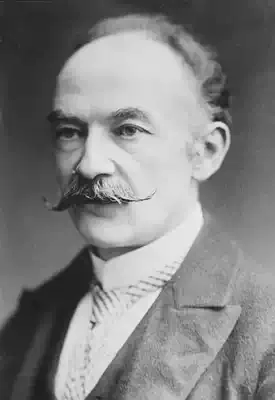
Thomas Hardy
The Tenant-For-Life
The sun said, watching my watering-pot
"Some morn you'll pass away;
These flowers and plants I parch up hot -
Who'll water them that day?
"Those banks and beds whose shape your eye
Has planned in line so true,
New hands will change, unreasoning why
Such shape seemed best to you.
"Within your house will strangers sit,
And wonder how first it came;
They'll talk of their schemes for improving it,
And will not mention your name.
"They'll care not how, or when, or at what
You sighed, laughed, suffered here,
Though you feel more in an hour of the spot
Than they will feel in a year
"As I look on at you here, now,
Shall I look on at these;
But as to our old times, avow
No knowledge--hold my peace! . . .
"O friend, it matters not, I say;
Bethink ye, I have shined
On nobler ones than you, and they
Are dead men out of mind!"
Read more →
169
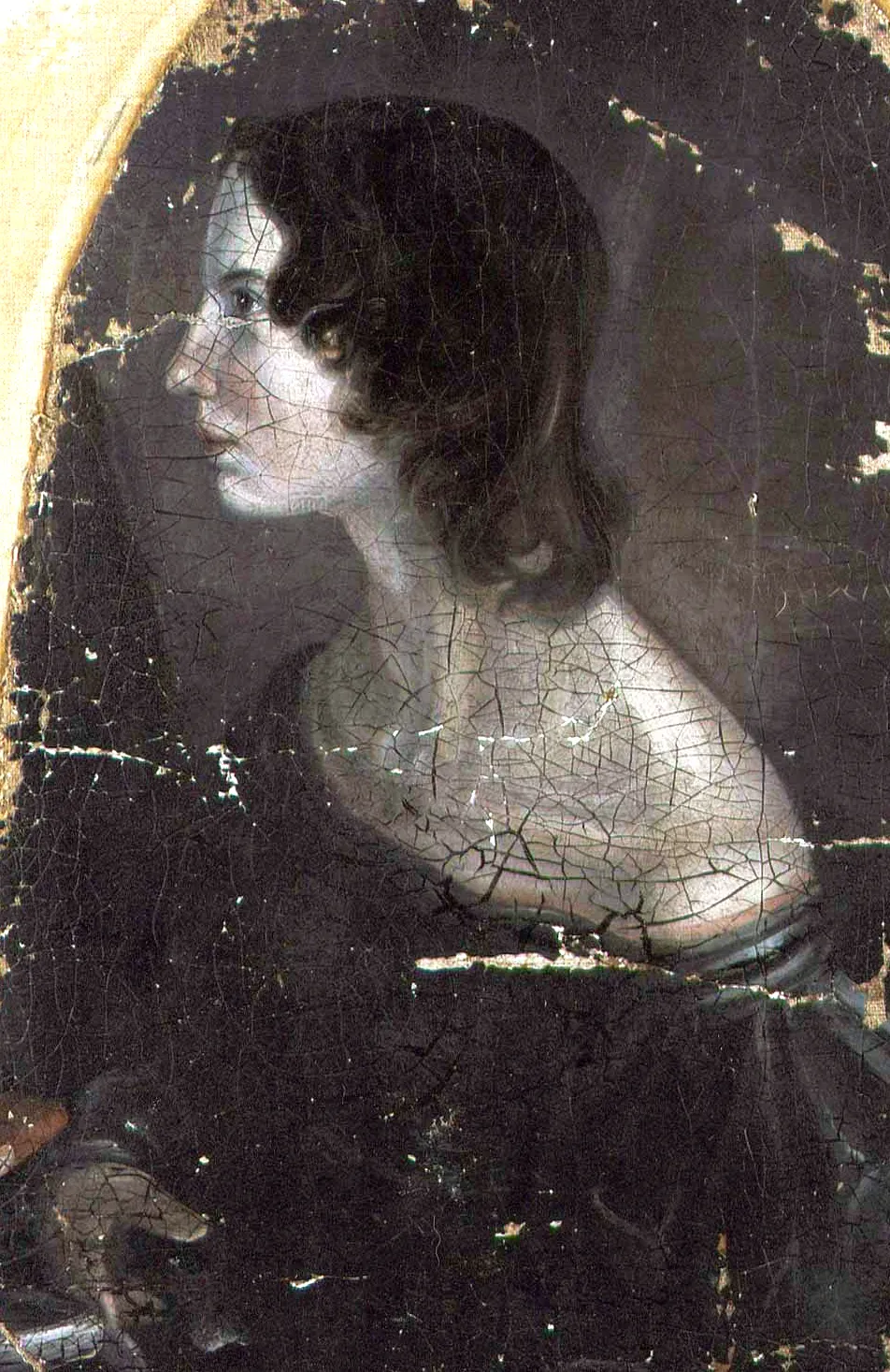
Emily Jane Brontë
Stanzas
I'll not weep that thou art going to leave me,
There's nothing lovely here;
And doubly will the dark world grieve me,
While thy heart suffers there.
I'll not weep, because the summer's glory
Must always end in gloom;
And, follow out the happiest story -
It closes with a tomb!
And I am weary of the anguish
Increasing winters bear;
Weary to watch the spirit languish
Through years of dead despair.
So, if a tear, when thou art dying,
Should haply fall from me,
It is but that my soul is sighing,
To go and rest with thee.
Read more →
171
Emily Dickinson
Robbed by Death—but that was easy
Robbed by Death—but that was easy—
To the failing Eye
I could hold the latest Glowing—
Robbed by Liberty
For Her Jugular Defences—
This, too, I endured—
Hint of Glory—it afforded—
For the Brave Beloved—
Fraud of Distance—Fraud of Danger,
Fraud of Death—to bear—
It is Bounty—to Suspense's
Vague Calamity—
Stalking our entire Possession
On a Hair's result—
Then—seesawing—coolly—on it—
Trying if it split—
Read more →
162
James Joyce
O Sweetheart, Hear You
O Sweetheart, hear you
Your lover's tale;
A man shall have sorrow
When friends him fail.
For he shall know then
Friends be untrue
And a little ashes
Their words come to.
But one unto him
Will softly move
And softly woo him
In ways of love.
His hand is under
Her smooth round breast;
So he who has sorrow
Shall have rest.
Read more →
162
Emily Dickinson
It is easy to work when the soul is at play
It is easy to work when the soul is at play-
But when the soul is in pain-
The hearing him put his playthings up
Makes work difficult-then-
It is simple, to ache in the Bone, or the Rind-
But Gimlets-among the nerve-
Mangle daintier-terribler-
Like a Panter in the Glove-
Read more →
170
Emily Jane Brontë
If grief for grief can touch thee
If grief for grief can touch thee,
If answering woe for woe,
If any truth can melt thee
Come to me now!
I cannot be more lonely,
More drear I cannot be!
My worn heart beats so wildly
'Twill break for thee--
And when the world despises--
When Heaven repels my prayer--
Will not mine angel comfort?
Mine idol hear?
Yes, by the tears I'm poured,
By all my hours of pain
O I shall surely win thee,
Beloved, again!
Read more →
172
Robert W. Service
Ernie Pyle
I wish I had a simple style
In writing verse,
As in his prose had Ernie Pyle,
So true and terse;
Springing so forthright from the heart
With guileless art.
I wish I could put back a dram
As Ernie could;
I wish that I could cuss and damn
As soldier should;
And fain with every verse would I
Ernie outvie.
Alas! I cannot claim his high
Humanity;
Nor emulate his pungent, dry
Profanity;
Nor share his love of common folk
Who bear life's yolk.
Oh Ernie, who on earth I knew
In war and wine,
Though frail of fame, in soul how you
Were pure and fine!
I'm proud that once when we were plastered
You called me 'bastard.'
Read more →
170
Robert W. Service
The Home-Coming
My boy's come back; he's here at last;
He came home on a special train.
My longing and my ache are past,
My only son is back again.
He's home with music, flags and flowers;
With peace and joy my heart's abrim;
He got here in the morning hours
With half the town to welcome him.
To hush my grief, night after night,
How I have digged my pillow deep,
And it would be the morning light
Before I sobbed myself to sleep.
And how I used to stare and stare
Across the harbour's yeasty foam,
Thinking he's fighting far out there . . .
But now with bells my boy's come home.
There's Mrs. Burke, she has her Ted,
But less the sight of his two eyes;
And Mrs. Smith - you know her Fred -
They took his legs off at the thighs.
How can these women happy be,
For all their bravery of talk,
One with a son who cannot see,
One with a boy who'll never walk.
I should be happier than they;
My lad came back without a scar,
And all the folks are proud they say,
To greet their hero of the war.
So in the gentle eventide
I'll give God thanks my Bert's come home. . . .
As peacefully I sit beside
His tiny mound of new-turned loam.
Read more →
173

Siegfried Sassoon
Slumber-Song
Sleep; and my song shall build about your bed
A paradise of dimness. You shall feel
The folding of tired wings; and peace will dwell
Throned in your silence: and one hour shall hold
Summer, and midnight, and immensity
Lulled to forgetfulness. For, where you dream,
The stately gloom of foliage shall embower
Your slumbering thought with tapestries of blue.
And there shall be no memory of the sky,
Nor sunlight with its cruelty of swords.
But, to your soul that sinks from deep to deep
Through drowned and glimmering colour, Time shall be
Only slow rhythmic swaying; and your breath;
And roses in the darkness; and my love.
Read more →
156