

Poems in this theme
Science and Reason
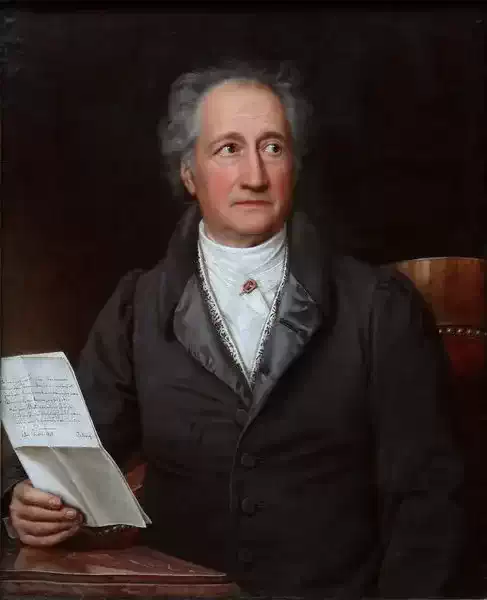
Johann Wolfgang von Goethe
A Legacy
A Legacy
No living atom comes at last to naught!
Active in each is still the eternal Thought:
Hold fast to Being if thou wouldst be blest.
Being is without end; for changeless laws
Bind that from which the All its glory draws
Of living treasures endlessly possessed.
Unto the wise of old this truth was known,
Such wisdom knit their noble souls in one;
Then hold thou still the lore of ancient days!
To that high power thou ow'st it, son of man,
By whose decree the earth its circuit ran
And all the planets went their various ways.
Then inward turn at once thy searching eyes;
Thence shalt thou see the central truth arise
From which no lofty soul goes e'er astray;
There shalt thou miss no needful guiding sign-
For conscience lives, and still its light divine
Shall be the sun of all thy moral day.
Next shalt thou trust thy senses' evidence,
And fear from them no treacherous offence
While the mind's watchful eye thy road commands:
With lively pleasure contemplate the scene
And roam securely, teachable, serene,
At will throughout a world of fruitful lands.
Enjoy in moderation all life gives:
Where it rejoices in each thing that lives
Let reason be thy guide and make thee see.
Then shall the distant past be present still,
The future, ere it comes, thy vision fill-
Each single moment touch eternity.
Then at the last shalt thou achieve thy quest,
And in one final, firm conviction rest:
What bears for thee true fruit alone is true.
Prove all things, watch the movement of the world
As down the various ways its tribes are whirled;
Take thou thy stand among the chosen few.
Thus hath it been of old; in solitude
The artist shaped what thing to him seemed good,
The wise man hearkened to his own soul's voice.
Thus also shalt thou find thy greatest bliss;
To lead where the elect shall follow-this
And this alone is worth a hero's choice.
No living atom comes at last to naught!
Active in each is still the eternal Thought:
Hold fast to Being if thou wouldst be blest.
Being is without end; for changeless laws
Bind that from which the All its glory draws
Of living treasures endlessly possessed.
Unto the wise of old this truth was known,
Such wisdom knit their noble souls in one;
Then hold thou still the lore of ancient days!
To that high power thou ow'st it, son of man,
By whose decree the earth its circuit ran
And all the planets went their various ways.
Then inward turn at once thy searching eyes;
Thence shalt thou see the central truth arise
From which no lofty soul goes e'er astray;
There shalt thou miss no needful guiding sign-
For conscience lives, and still its light divine
Shall be the sun of all thy moral day.
Next shalt thou trust thy senses' evidence,
And fear from them no treacherous offence
While the mind's watchful eye thy road commands:
With lively pleasure contemplate the scene
And roam securely, teachable, serene,
At will throughout a world of fruitful lands.
Enjoy in moderation all life gives:
Where it rejoices in each thing that lives
Let reason be thy guide and make thee see.
Then shall the distant past be present still,
The future, ere it comes, thy vision fill-
Each single moment touch eternity.
Then at the last shalt thou achieve thy quest,
And in one final, firm conviction rest:
What bears for thee true fruit alone is true.
Prove all things, watch the movement of the world
As down the various ways its tribes are whirled;
Take thou thy stand among the chosen few.
Thus hath it been of old; in solitude
The artist shaped what thing to him seemed good,
The wise man hearkened to his own soul's voice.
Thus also shalt thou find thy greatest bliss;
To lead where the elect shall follow-this
And this alone is worth a hero's choice.
464
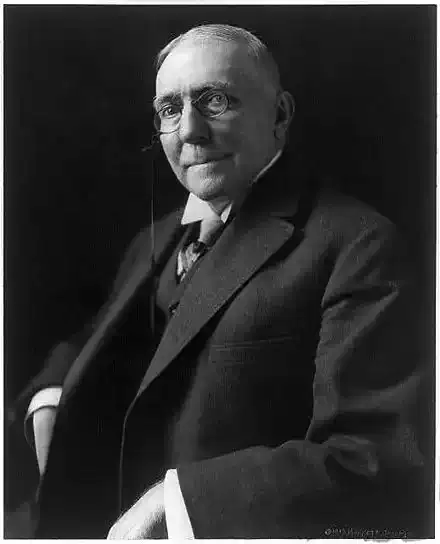
James Whitcomb Riley
A Man Of Many Parts
A Man Of Many Parts
It was a man of many parts,
Who in his coffer mind
Had stored the Classics and the Arts
And Sciences combined;
The purest gems of poesy
Came flashing from his pen--
The wholesome truths of History
He gave his fellow men.
He knew the stars from 'Dog' to Mars;
And he could tell you, too,
Their distances--as though the cars
Had often checked him through--
And time 'twould take to reach the sun,
Or by the 'Milky Way,'
Drop in upon the moon, or run
The homeward trip, or stay.
With Logic at his fingers' ends,
Theology in mind,
He often entertained his friends
Until they died resigned;
And with inquiring mind intent
Upon Alchemic arts
A dynamite experiment-.
. . . . . .
A man of many parts!
It was a man of many parts,
Who in his coffer mind
Had stored the Classics and the Arts
And Sciences combined;
The purest gems of poesy
Came flashing from his pen--
The wholesome truths of History
He gave his fellow men.
He knew the stars from 'Dog' to Mars;
And he could tell you, too,
Their distances--as though the cars
Had often checked him through--
And time 'twould take to reach the sun,
Or by the 'Milky Way,'
Drop in upon the moon, or run
The homeward trip, or stay.
With Logic at his fingers' ends,
Theology in mind,
He often entertained his friends
Until they died resigned;
And with inquiring mind intent
Upon Alchemic arts
A dynamite experiment-.
. . . . . .
A man of many parts!
291
Hilaire Belloc
The Microbe
The Microbe
The Microbe is so very small
You cannot make him out at all,
But many sanguine people hope
To see him through a microscope.
His jointed tongue that lies beneath
A hundred curious rows of teeth;
His seven tufted tails with lots
Of lovely pink and purple spots,
On each of which a pattern stands,
Composed of forty separate bands;
His eyebrows of a tender green;
All these have never yet been seen--
But Scientists, who ought to know,
Assure us that they must be so....
Oh! let us never, never doubt
What nobody is sure about!
The Microbe is so very small
You cannot make him out at all,
But many sanguine people hope
To see him through a microscope.
His jointed tongue that lies beneath
A hundred curious rows of teeth;
His seven tufted tails with lots
Of lovely pink and purple spots,
On each of which a pattern stands,
Composed of forty separate bands;
His eyebrows of a tender green;
All these have never yet been seen--
But Scientists, who ought to know,
Assure us that they must be so....
Oh! let us never, never doubt
What nobody is sure about!
474
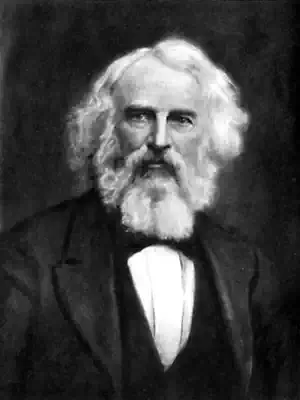
Henry Wadsworth Longfellow
The Fiftieth Birthday Of Agassiz. (Birds Of Passage. Flight The First)
The Fiftieth Birthday Of Agassiz. (Birds Of Passage. Flight The First)
It was fifty years ago
In the pleasant month of May,
In the beautiful Pays de Vaud,
A child in its cradle lay.
And Nature, the old nurse, took
The child upon her knee,
Saying: 'Here is a story-book
Thy Father has written for thee.'
'Come, wander with me,' she said,
'Into regions yet untrod;
And read what is still unread
In the manuscripts of God.'
And he wandered away and away
With Nature, the dear old nurse,
Who sang to him night and day
The rhymes of the universe.
And whenever the way seemed long,
Or his heart began to fail,
She would sing a more wonderful song,
Or tell a more marvellous tale.
So she keeps him still a child,
And will not let him go,
Though at times his heart beats wild
For the beautiful Pays de Vaud;
Though at times he hears in his dreams
The Ranz des Vaches of old,
And the rush of mountain streams
From glaciers clear and cold;
And the mother at home says, 'Hark!
For his voice I listen and yearn;
It is growing late and dark,
And my boy does not return!'
It was fifty years ago
In the pleasant month of May,
In the beautiful Pays de Vaud,
A child in its cradle lay.
And Nature, the old nurse, took
The child upon her knee,
Saying: 'Here is a story-book
Thy Father has written for thee.'
'Come, wander with me,' she said,
'Into regions yet untrod;
And read what is still unread
In the manuscripts of God.'
And he wandered away and away
With Nature, the dear old nurse,
Who sang to him night and day
The rhymes of the universe.
And whenever the way seemed long,
Or his heart began to fail,
She would sing a more wonderful song,
Or tell a more marvellous tale.
So she keeps him still a child,
And will not let him go,
Though at times his heart beats wild
For the beautiful Pays de Vaud;
Though at times he hears in his dreams
The Ranz des Vaches of old,
And the rush of mountain streams
From glaciers clear and cold;
And the mother at home says, 'Hark!
For his voice I listen and yearn;
It is growing late and dark,
And my boy does not return!'
312

Henry Lawson
For Australia
For Australia
Now, with the wars of the world begun, they'll listen to you and me,
Now while the frightened nations run to the arms of democracy,
Now, when our blathering fools are scared, and the years have proved us right –
All unprovided and unprepared, the Outpost of the White!
"Get the people – no matter how," that is the way they rave,
Could a million paupers aid us now, or a tinpot squadron save?
The "loyal" drivel, the blatant boast are as shames that used to be –
Our fight shall be a fight for the coast, with the future for the sea!
We must turn our face to the only track that will take us through the worst –
Cable to charter that we lack, guns and cartridges first,
New machines that will make machines till our factories are complete –
Block the shoddy and Brummagem, pay them with wool and wheat.
Build to-morrow the foundry shed ['tis a task we dare not shirk],
Lay the runs and the engine-bed, and get the gear to work.
Have no fear when we raise the steam in the hurried factory –
We are not lacking in the brains that teem with originality.
Have no fear for the way is clear – we'll shackle the hands of greed –
Every lad is an engineer in his country's hour of need;
Many are brilliant, swift to learn, quick at invention too,
Born inventors whose young hearts burn to show what the South can do!
To show what the South can do, done well, and more than the North can do.
They'll make us the cartridge and make the shell, and the gun to carry true,
Give us the gear and the South is strong - and the docks shall yield us more;
The national arm like the national song comes with the first great war.
Books of science from every land, volumes on gunnery,
Practical teachers we have at hand, masters of chemistry.
Clear young heads that will sift and think in spite of authorities,
And brains that shall leap from invention's brink at the clash of factories.
Still be noble in peace or war, raise the national spirit high;
And this be our watchword for evermore: "For Australia – till we die!"
Now, with the wars of the world begun, they'll listen to you and me,
Now while the frightened nations run to the arms of democracy,
Now, when our blathering fools are scared, and the years have proved us right –
All unprovided and unprepared, the Outpost of the White!
"Get the people – no matter how," that is the way they rave,
Could a million paupers aid us now, or a tinpot squadron save?
The "loyal" drivel, the blatant boast are as shames that used to be –
Our fight shall be a fight for the coast, with the future for the sea!
We must turn our face to the only track that will take us through the worst –
Cable to charter that we lack, guns and cartridges first,
New machines that will make machines till our factories are complete –
Block the shoddy and Brummagem, pay them with wool and wheat.
Build to-morrow the foundry shed ['tis a task we dare not shirk],
Lay the runs and the engine-bed, and get the gear to work.
Have no fear when we raise the steam in the hurried factory –
We are not lacking in the brains that teem with originality.
Have no fear for the way is clear – we'll shackle the hands of greed –
Every lad is an engineer in his country's hour of need;
Many are brilliant, swift to learn, quick at invention too,
Born inventors whose young hearts burn to show what the South can do!
To show what the South can do, done well, and more than the North can do.
They'll make us the cartridge and make the shell, and the gun to carry true,
Give us the gear and the South is strong - and the docks shall yield us more;
The national arm like the national song comes with the first great war.
Books of science from every land, volumes on gunnery,
Practical teachers we have at hand, masters of chemistry.
Clear young heads that will sift and think in spite of authorities,
And brains that shall leap from invention's brink at the clash of factories.
Still be noble in peace or war, raise the national spirit high;
And this be our watchword for evermore: "For Australia – till we die!"
245
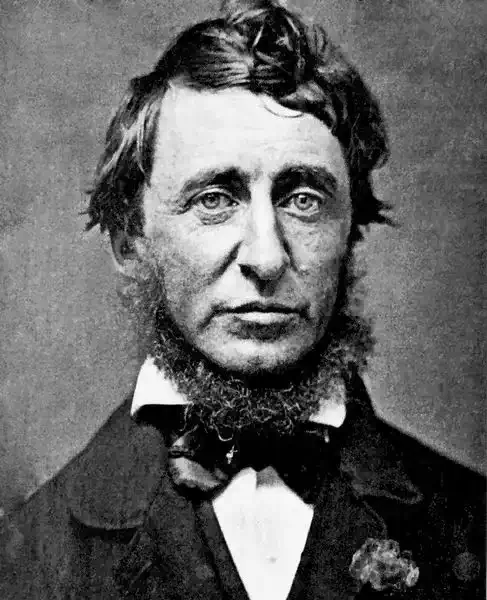
Henry David Thoreau
Tall Ambrosia
Tall Ambrosia
Among the signs of autumn I perceive
The Roman wormwood (called by learned men
Ambrosia elatior, food for gods,—
For to impartial science the humblest weed
Is as immortal once as the proudest flower—)
Sprinkles its yellow dust over my shoes
As I cross the now neglected garden.
—We trample under foot the food of gods
And spill their nectar in each dropp of dew—
My honest shoes, fast friends that never stray
Far from my couch, thus powdered, countryfied,
Bearing many a mile the marks of their adventure,
At the post-house disgrace the Gallic gloss
Of those well dressed ones who no morning dew
Nor Roman wormwood ever have been through,
Who never walk but are transported rather—
For what old crime of theirs I do not gather.
Among the signs of autumn I perceive
The Roman wormwood (called by learned men
Ambrosia elatior, food for gods,—
For to impartial science the humblest weed
Is as immortal once as the proudest flower—)
Sprinkles its yellow dust over my shoes
As I cross the now neglected garden.
—We trample under foot the food of gods
And spill their nectar in each dropp of dew—
My honest shoes, fast friends that never stray
Far from my couch, thus powdered, countryfied,
Bearing many a mile the marks of their adventure,
At the post-house disgrace the Gallic gloss
Of those well dressed ones who no morning dew
Nor Roman wormwood ever have been through,
Who never walk but are transported rather—
For what old crime of theirs I do not gather.
201

Gwendolyn Brooks
Garbageman: The Man With The Orderly Mind
Garbageman: The Man With The Orderly Mind
What do you think of us in fuzzy endeavor, you whose directions are
sterling, whose lunge is straight?
Can you make a reason, how can you pardon us who memorize the rules and never
score?
Who memorize the rules from your own text but never quite transfer them to the
game,
Who never quite receive the whistling ball, who gawk, begin to absorb the crowd's own
roar.
Is earnest enough, may earnest attract or lead to light;
Is light enough, if hands in clumsy frenzy, flimsy whimsically, enlist;
Is light enough when this bewilderment crying against the dark shuts down the
shades?
Dilute confusion. Find and explode our mist.
What do you think of us in fuzzy endeavor, you whose directions are
sterling, whose lunge is straight?
Can you make a reason, how can you pardon us who memorize the rules and never
score?
Who memorize the rules from your own text but never quite transfer them to the
game,
Who never quite receive the whistling ball, who gawk, begin to absorb the crowd's own
roar.
Is earnest enough, may earnest attract or lead to light;
Is light enough, if hands in clumsy frenzy, flimsy whimsically, enlist;
Is light enough when this bewilderment crying against the dark shuts down the
shades?
Dilute confusion. Find and explode our mist.
216
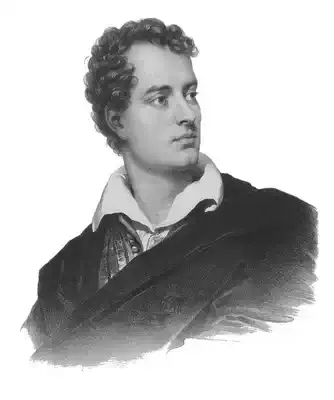
Lord Byron
The Adieu
The Adieu
Written Under The Impression That The Author Would Soon Die.
Adieu, thou Hill! where early joy
Spread roses o'er my brow;
Where Science seeks each loitering boy
With knowledge to endow.
Adieu, my youthful friends or foes,
Partners of former bliss or woes;
No more through Ida's paths we stray;
Soon must I share the gloomy cell,
Whose ever‑slumbering inmates dwell
Unconscious of the day.
Adieu, ye hoary Regal Fanes,
Ye spires of Granta's vale,
Where Learning robed in sable reigns,
And Melancholy pale.
Ye comrades of the jovial hour,
Ye tenants of the classic bower,
On Cama's verdant margin placed,
Adieu! while memory still is mine,
For, offerings on Oblivion's shrine,
These scenes must be effaced.
Adieu, ye mountains of the clime
Where grew my youthful years;
Where Loch na Garr in snows sublime
His giant summit rears.
Why did my childhood wander forth
From you, ye regions of the North,
With sons of pride to roam?
Why did I quit my Highland cave,
Mar's dusky heath, and Dee's clear wave,
To seek a Sotheron home!
Hall of my Sires! a long farewellYet
why to thee adieu?
Thy vaults will echo back my knell,
Thy towers my tomb will view:
The faltering tongue which sung thy fall,
And former glories of thy Hall,
Forgets its wonted simple noteBut
yet the Lyre retains the strings,
And sometimes, on Æolian wings,
In dying strains may float.
Fields which surround yon rustic cot,
While yet I linger here,
Adieu! you are not now forgot,
To retrospection dear.
Streamlet! along whose rippling surge
My youthful limbs were wont to urge,
At noontide heat, their pliant course;
Plunging with ardour from the shore,
Thy springs will lave these limbs no more,
Deprived of active force.
And shall I here forget the scene,
Still nearest to my breast?
Rocks rise and rivers roll between
The spot which passion blest;
Yet, Mary, all thy beauties seem
Fresh as in Love's bewitching dream,
To me in smiles display'd;
Till slow disease resigns his prey
To Death, the parent of decay,
Thine image cannot fade.
And thou, my Friend! whose gentle love
Yet thrills my bosom's chords,
How much thy friendship was above
Description's power of words!
Still near my breast thy gift I wear
Which sparkled once with Feeling's tear,
Of Love the pure, the sacred gem;
Our souls were equal, and our lot
In that dear moment quite forgot;
Let Pride alone condemn!
All, all is dark and cheerless now!
No smile of Love's deceit
Can warm my veins with wonted glow,
Can bid Life's pulses beat:
Not e'en the hope of future fame
Can wake my faint, exhausted frame,
Or crown with fancied wreaths my head.
Mine is a short inglorious race,To
humble in the dust my face,
And mingle with the dead.
Oh Fame! thou goddess of my heart;
On him who gains thy praise,
Pointless must fall the Spectre's dart,
Consumed in Glory's blaze;
But me she beckons from the earth,
My name obscure, unmark'd my birth,
My life a short and vulgar dream:
Lost in the dull, ignoble crowd,
My hopes recline within a shroud,
My fate is Lathe's stream.
When I repose beneath the sod,
Unheeded in the clay,
Where once my playful footsteps trod,
Where now my head must lay,
The weed of Pity will be shed
In dewdrops
o'er my narrow bed,
By nightly skies, and storms alone;
No mortal eye will deign to steep
With tears the dark sepulchral deep
Which hides a name unknown.
Forget this world, my restless sprite,
Turn, turn thy thoughts to Heaven:
There must thou soon direct thy flight,
If errors are forgiven.
To bigots and to sects unknown,
Bow down beneath the Almighty's Throne;
To Him address thy trembling prayer:
He, who is merciful and just,
Will not reject a child of dust,
Although his meanest care.
Father of Light! to Thee I call;
My soul is dark within:
Thou who canst mark the sparrow's fall,
Avert the death of sin.
Thou, who canst guide the wandering star,
Who calm'st the elemental war,
Whose mantle is yon boundless sky,
My thoughts, my words, my crimes forgive:
And, since I soon must cease to live,
Instruct me how to die.
Written Under The Impression That The Author Would Soon Die.
Adieu, thou Hill! where early joy
Spread roses o'er my brow;
Where Science seeks each loitering boy
With knowledge to endow.
Adieu, my youthful friends or foes,
Partners of former bliss or woes;
No more through Ida's paths we stray;
Soon must I share the gloomy cell,
Whose ever‑slumbering inmates dwell
Unconscious of the day.
Adieu, ye hoary Regal Fanes,
Ye spires of Granta's vale,
Where Learning robed in sable reigns,
And Melancholy pale.
Ye comrades of the jovial hour,
Ye tenants of the classic bower,
On Cama's verdant margin placed,
Adieu! while memory still is mine,
For, offerings on Oblivion's shrine,
These scenes must be effaced.
Adieu, ye mountains of the clime
Where grew my youthful years;
Where Loch na Garr in snows sublime
His giant summit rears.
Why did my childhood wander forth
From you, ye regions of the North,
With sons of pride to roam?
Why did I quit my Highland cave,
Mar's dusky heath, and Dee's clear wave,
To seek a Sotheron home!
Hall of my Sires! a long farewellYet
why to thee adieu?
Thy vaults will echo back my knell,
Thy towers my tomb will view:
The faltering tongue which sung thy fall,
And former glories of thy Hall,
Forgets its wonted simple noteBut
yet the Lyre retains the strings,
And sometimes, on Æolian wings,
In dying strains may float.
Fields which surround yon rustic cot,
While yet I linger here,
Adieu! you are not now forgot,
To retrospection dear.
Streamlet! along whose rippling surge
My youthful limbs were wont to urge,
At noontide heat, their pliant course;
Plunging with ardour from the shore,
Thy springs will lave these limbs no more,
Deprived of active force.
And shall I here forget the scene,
Still nearest to my breast?
Rocks rise and rivers roll between
The spot which passion blest;
Yet, Mary, all thy beauties seem
Fresh as in Love's bewitching dream,
To me in smiles display'd;
Till slow disease resigns his prey
To Death, the parent of decay,
Thine image cannot fade.
And thou, my Friend! whose gentle love
Yet thrills my bosom's chords,
How much thy friendship was above
Description's power of words!
Still near my breast thy gift I wear
Which sparkled once with Feeling's tear,
Of Love the pure, the sacred gem;
Our souls were equal, and our lot
In that dear moment quite forgot;
Let Pride alone condemn!
All, all is dark and cheerless now!
No smile of Love's deceit
Can warm my veins with wonted glow,
Can bid Life's pulses beat:
Not e'en the hope of future fame
Can wake my faint, exhausted frame,
Or crown with fancied wreaths my head.
Mine is a short inglorious race,To
humble in the dust my face,
And mingle with the dead.
Oh Fame! thou goddess of my heart;
On him who gains thy praise,
Pointless must fall the Spectre's dart,
Consumed in Glory's blaze;
But me she beckons from the earth,
My name obscure, unmark'd my birth,
My life a short and vulgar dream:
Lost in the dull, ignoble crowd,
My hopes recline within a shroud,
My fate is Lathe's stream.
When I repose beneath the sod,
Unheeded in the clay,
Where once my playful footsteps trod,
Where now my head must lay,
The weed of Pity will be shed
In dewdrops
o'er my narrow bed,
By nightly skies, and storms alone;
No mortal eye will deign to steep
With tears the dark sepulchral deep
Which hides a name unknown.
Forget this world, my restless sprite,
Turn, turn thy thoughts to Heaven:
There must thou soon direct thy flight,
If errors are forgiven.
To bigots and to sects unknown,
Bow down beneath the Almighty's Throne;
To Him address thy trembling prayer:
He, who is merciful and just,
Will not reject a child of dust,
Although his meanest care.
Father of Light! to Thee I call;
My soul is dark within:
Thou who canst mark the sparrow's fall,
Avert the death of sin.
Thou, who canst guide the wandering star,
Who calm'st the elemental war,
Whose mantle is yon boundless sky,
My thoughts, my words, my crimes forgive:
And, since I soon must cease to live,
Instruct me how to die.
495
Lord Byron
English Bards and Scotch Reviewers (excerpt)
English Bards and Scotch Reviewers (excerpt)
Time was, ere yet in these degenerate days
Ignoble themes obtain'd mistaken praise,
When sense and wit with poesy allied,
No fabl'd graces, flourish'd side by side;
From the same fount their inspiration drew,
And, rear'd by taste, bloom'd fairer as they grew.
Then, in this happy isle, a Pope's pure strain
Sought the rapt soul to charm, nor sought in vain;
A polish'd nation's praise aspir'd to claim,
And rais'd the people's, as the poet's fame.
Like him great Dryden pour'd the tide of song,
In stream less smooth, indeed, yet doubly strong.
Then Congreve's scenes could cheer, or Otway's melt
For nature then an English audience felt.
But why these names, or greater still, retrace,
When all to feebler bards resign their place?
Yet to such times our lingering looks are cast,
When taste and reason with those times are past.
Now look around, and turn each trifling page,
Survey the precious works that please the age;
This truth at least let satire's self allow,
No dearth of bards can be complain'd of now.
The loaded press beneath her labour groans,
And printers' devils shake their weary bones;
While Southey's epics cram the creaking shelves,
And Little's lyrics shine in hotpress'd
twelves.
Thus saith the Preacher: "Nought beneath the sun
Is new"; yet still from change to change we run:
What varied wonders tempt us as they pass!
The cowpox,
tractors, galvanism and gas,
In turns appear, to make the vulgar stare,
Till the swoln bubble burstsand
all is air!
Nor less new schools of Poetry arise,
Where dull pretenders grapple for the prize:
O'er taste awhile these pseudobards
prevail;
Each country bookclub
bows the knee to Baal,
And, hurling lawful genius from the throne,
Erects a shrine and idol of its own;
Some leaden calfbut
whom it matters not,
From soaring Southey down to grovelling Stott.
Behold! in various throngs the scribbling crew,
For notice eager, pass in long review:
Each spurs his jaded Pegasus apace,
And rhyme and blank maintain an equal race;
Sonnets on sonnets crowd, and ode on ode;
And tales of terror jostle on the road;
Immeasurable measures move along;
For simpering folly loves a varied song,
To strange mysterious dulness still the friend,
Admires the strain she cannot comprehend.
Thus Lays of Minstrelsmay
they be the last!
On halfstrung
harps whine mournful to the blast.
While mountain spirits prate to river sprites,
That dames may listen to the sound at nights;
And goblin brats, of Gilpin Horner's brood,
Decoy young bordernobles
through the wood,
And skip at every step, Lord knows how high,
And frighten foolish babes, the Lord knows why;
While highborn
ladies in their magic cell,
Forbidding knights to read who cannot spell,
Despatch a courier to a wizard's grave,
And fight with honest men to shield a knave.
Next view in state, proud prancing on his roan,
The goldencrested
haughty Marmion,
Now forging scrolls, now foremost in the fight,
Not quite a felon, yet but half a knight,
The gibbet or the field prepar'd to grace;
A mighty mixture of the great and base.
And think'st thou, Scott! by vain conceit perchance,
On public taste to foist thy stale romance,
Though Murray with his Miller may combine
To yield thy muse just halfacrown
per line?
No! when the sons of song descend to trade,
Their bays are sear, their former laurels fade.
Let such forego the poet's sacred name,
Who rack their brains for lucre, not for fame:
Still for stern Mammon may they toil in vain!
And sadly gaze on gold they cannot gain!
Such be their meed, such still the just reward
Of prostituted muse and hireling bard!
For this we spurn Apollo's venal son,
And bid a long "good night to Marmion."
These are the themes that claim our plaudits now;
These are the bards to whom the muse must bow;
While Milton, Dryden, Pope, alike forgot,
Resign their hallow'd bays to Walter Scott.
The time has been, when yet the muse was young,
When Homer swept the lyre, and Maro sung,
An epic scarce ten centuries could claim,
While awestruck
nations hail'd the magic name;
The work of each immortal bard appears
The single wonder of a thousand years.
Empires have moulder'd from the face of earth,
Tongues have expir'd with those who gave them birth,
Without the glory such a strain can give,
As even in ruin bids the language live.
Not so with us, though minor bards, content
On one great work a life of labour spent:
With eagle pinion soaring to the skies,
Behold the balladmonger
Southey rise!
To him let Camoëns, Milton, Tasso yield,
Whose annual strains, like armies, take the field.
First in the ranks see Joan of Arc advance,
The scourge of England and the boast of France!
Though burnt by wicked Bedford for a witch,
Behold her statue plac'd in glory's niche;
Her fetters burst, and just releas'd from prison,
A virgin phoenix from her ashes risen.
Next see tremendous Thalaba come on,
Arabia's monstrous, wild and wondrous son:
Domdaniel's dread destroyer, who o'erthrew
More mad magicians than the world e'er knew.
Immortal hero! all thy foes o'ercome,
For ever reignthe
rival of Tom Thumb!
Since startled metre fled before thy face,
Well wert thou doom'd the last of all thy race!
Well might triumphant genii bear thee hence,
Illustrious conqueror of common sense!
Now, last and greatest, Madoc spreads his sails,
Cacique in Mexico, and prince in Wales;
Tells us strange tales, as other travellers do,
More old than Mandeville's, and not so true.
Oh Southey! Southey! cease thy varied song!
A bard may chant too often and too long:
As thou art strong in verse, in mercy, spare!
A fourth, alas! were more than we could bear.
But if, in spite of all the world can say,
Thou still wilt verseward plod thy weary way;
If still in Berkley ballads most uncivil,
Thou wilt devote old women to the devil,
The babe unborn thy dread intent may rue:
"God help thee," Southey, and thy readers too.
Next comes the dull disciple of thy school,
That mild apostate from poetic rule,
The simple Wordsworth, framer of a lay
As soft as evening in his favourite May,
Who warns his friend "to shake off toil and trouble,
And quit his books, for fear of growing double";
Who, both by precept and example, shows
That prose is verse, and verse is merely prose;
Convincing all, by demonstration plain,
Poetic souls delight in prose insane;
And Christmas stories tortur'd into rhyme
Contain the essence of the true sublime.
Thus, when he tells the tale of Betty Foy,
The idiot mother of "an idiot boy";
A moonstruck,
silly lad, who lost his way,
And, like his bard, confounded night with day;
So close on each pathetic part he dwells,
And each adventure so sublimely tells,
That all who view the "idiot in his glory"
Conceive the bard the hero of the story.
Shall gentle Coleridge pass unnotic'd here,
To turgid ode and tumid stanza dear?
Though themes of innocence amuse him best,
Yet still obscurity's a welcome guest.
If Inspiration should her aid refuse
To him who takes a pixy for a muse,
Yet none in lofty numbers can surpass
The bard who soars to elegize an ass.
So well the subject suits his noble mind,
He brays the laureat of the longear'd
kind.
Time was, ere yet in these degenerate days
Ignoble themes obtain'd mistaken praise,
When sense and wit with poesy allied,
No fabl'd graces, flourish'd side by side;
From the same fount their inspiration drew,
And, rear'd by taste, bloom'd fairer as they grew.
Then, in this happy isle, a Pope's pure strain
Sought the rapt soul to charm, nor sought in vain;
A polish'd nation's praise aspir'd to claim,
And rais'd the people's, as the poet's fame.
Like him great Dryden pour'd the tide of song,
In stream less smooth, indeed, yet doubly strong.
Then Congreve's scenes could cheer, or Otway's melt
For nature then an English audience felt.
But why these names, or greater still, retrace,
When all to feebler bards resign their place?
Yet to such times our lingering looks are cast,
When taste and reason with those times are past.
Now look around, and turn each trifling page,
Survey the precious works that please the age;
This truth at least let satire's self allow,
No dearth of bards can be complain'd of now.
The loaded press beneath her labour groans,
And printers' devils shake their weary bones;
While Southey's epics cram the creaking shelves,
And Little's lyrics shine in hotpress'd
twelves.
Thus saith the Preacher: "Nought beneath the sun
Is new"; yet still from change to change we run:
What varied wonders tempt us as they pass!
The cowpox,
tractors, galvanism and gas,
In turns appear, to make the vulgar stare,
Till the swoln bubble burstsand
all is air!
Nor less new schools of Poetry arise,
Where dull pretenders grapple for the prize:
O'er taste awhile these pseudobards
prevail;
Each country bookclub
bows the knee to Baal,
And, hurling lawful genius from the throne,
Erects a shrine and idol of its own;
Some leaden calfbut
whom it matters not,
From soaring Southey down to grovelling Stott.
Behold! in various throngs the scribbling crew,
For notice eager, pass in long review:
Each spurs his jaded Pegasus apace,
And rhyme and blank maintain an equal race;
Sonnets on sonnets crowd, and ode on ode;
And tales of terror jostle on the road;
Immeasurable measures move along;
For simpering folly loves a varied song,
To strange mysterious dulness still the friend,
Admires the strain she cannot comprehend.
Thus Lays of Minstrelsmay
they be the last!
On halfstrung
harps whine mournful to the blast.
While mountain spirits prate to river sprites,
That dames may listen to the sound at nights;
And goblin brats, of Gilpin Horner's brood,
Decoy young bordernobles
through the wood,
And skip at every step, Lord knows how high,
And frighten foolish babes, the Lord knows why;
While highborn
ladies in their magic cell,
Forbidding knights to read who cannot spell,
Despatch a courier to a wizard's grave,
And fight with honest men to shield a knave.
Next view in state, proud prancing on his roan,
The goldencrested
haughty Marmion,
Now forging scrolls, now foremost in the fight,
Not quite a felon, yet but half a knight,
The gibbet or the field prepar'd to grace;
A mighty mixture of the great and base.
And think'st thou, Scott! by vain conceit perchance,
On public taste to foist thy stale romance,
Though Murray with his Miller may combine
To yield thy muse just halfacrown
per line?
No! when the sons of song descend to trade,
Their bays are sear, their former laurels fade.
Let such forego the poet's sacred name,
Who rack their brains for lucre, not for fame:
Still for stern Mammon may they toil in vain!
And sadly gaze on gold they cannot gain!
Such be their meed, such still the just reward
Of prostituted muse and hireling bard!
For this we spurn Apollo's venal son,
And bid a long "good night to Marmion."
These are the themes that claim our plaudits now;
These are the bards to whom the muse must bow;
While Milton, Dryden, Pope, alike forgot,
Resign their hallow'd bays to Walter Scott.
The time has been, when yet the muse was young,
When Homer swept the lyre, and Maro sung,
An epic scarce ten centuries could claim,
While awestruck
nations hail'd the magic name;
The work of each immortal bard appears
The single wonder of a thousand years.
Empires have moulder'd from the face of earth,
Tongues have expir'd with those who gave them birth,
Without the glory such a strain can give,
As even in ruin bids the language live.
Not so with us, though minor bards, content
On one great work a life of labour spent:
With eagle pinion soaring to the skies,
Behold the balladmonger
Southey rise!
To him let Camoëns, Milton, Tasso yield,
Whose annual strains, like armies, take the field.
First in the ranks see Joan of Arc advance,
The scourge of England and the boast of France!
Though burnt by wicked Bedford for a witch,
Behold her statue plac'd in glory's niche;
Her fetters burst, and just releas'd from prison,
A virgin phoenix from her ashes risen.
Next see tremendous Thalaba come on,
Arabia's monstrous, wild and wondrous son:
Domdaniel's dread destroyer, who o'erthrew
More mad magicians than the world e'er knew.
Immortal hero! all thy foes o'ercome,
For ever reignthe
rival of Tom Thumb!
Since startled metre fled before thy face,
Well wert thou doom'd the last of all thy race!
Well might triumphant genii bear thee hence,
Illustrious conqueror of common sense!
Now, last and greatest, Madoc spreads his sails,
Cacique in Mexico, and prince in Wales;
Tells us strange tales, as other travellers do,
More old than Mandeville's, and not so true.
Oh Southey! Southey! cease thy varied song!
A bard may chant too often and too long:
As thou art strong in verse, in mercy, spare!
A fourth, alas! were more than we could bear.
But if, in spite of all the world can say,
Thou still wilt verseward plod thy weary way;
If still in Berkley ballads most uncivil,
Thou wilt devote old women to the devil,
The babe unborn thy dread intent may rue:
"God help thee," Southey, and thy readers too.
Next comes the dull disciple of thy school,
That mild apostate from poetic rule,
The simple Wordsworth, framer of a lay
As soft as evening in his favourite May,
Who warns his friend "to shake off toil and trouble,
And quit his books, for fear of growing double";
Who, both by precept and example, shows
That prose is verse, and verse is merely prose;
Convincing all, by demonstration plain,
Poetic souls delight in prose insane;
And Christmas stories tortur'd into rhyme
Contain the essence of the true sublime.
Thus, when he tells the tale of Betty Foy,
The idiot mother of "an idiot boy";
A moonstruck,
silly lad, who lost his way,
And, like his bard, confounded night with day;
So close on each pathetic part he dwells,
And each adventure so sublimely tells,
That all who view the "idiot in his glory"
Conceive the bard the hero of the story.
Shall gentle Coleridge pass unnotic'd here,
To turgid ode and tumid stanza dear?
Though themes of innocence amuse him best,
Yet still obscurity's a welcome guest.
If Inspiration should her aid refuse
To him who takes a pixy for a muse,
Yet none in lofty numbers can surpass
The bard who soars to elegize an ass.
So well the subject suits his noble mind,
He brays the laureat of the longear'd
kind.
552
Lord Byron
Don Juan: Canto The Tenth
Don Juan: Canto The Tenth
When Newton saw an apple fall, he found
In that slight startle from his contemplation'
Tis said (for I 'll not answer above ground
For any sage's creed or calculation)A
mode of proving that the earth turn'd round
In a most natural whirl, called 'gravitation;'
And this is the sole mortal who could grapple,
Since Adam, with a fall or with an apple.
Man fell with apples, and with apples rose,
If this be true; for we must deem the mode
In which Sir Isaac Newton could disclose
Through the then unpaved stars the turnpike road,
A thing to counterbalance human woes:
For ever since immortal man hath glow'd
With all kinds of mechanics, and full soon
Steamengines
will conduct him to the moon.
And wherefore this exordium?Why,
just now,
In taking up this paltry sheet of paper,
My bosom underwent a glorious glow,
And my internal spirit cut a caper:
And though so much inferior, as I know,
To those who, by the dint of glass and vapour,
Discover stars and sail in the wind's eye,
I wish to do as much by poesy.
In the wind's eye I have sail'd, and sail; but for
The stars, I own my telescope is dim:
But at least I have shunn'd the common shore,
And leaving land far out of sight, would skim
The ocean of eternity: the roar
Of breakers has not daunted my slight, trim,
But still seaworthy
skiff; and she may float
Where ships have founder'd, as doth many a boat.
We left our hero, Juan, in the bloom
Of favouritism, but not yet in the blush;
And far be it from my Muses to presume
(For I have more than one Muse at a push)
To follow him beyond the drawingroom:
It is enough that Fortune found him flush
Of youth, and vigour, beauty, and those things
Which for an instant clip enjoyment's wings.
But soon they grow again and leave their nest.
'Oh!' saith the Psalmist, 'that I had a dove's
Pinions to flee away, and be at rest!'
And who that recollects young years and loves,Though
hoary now, and with a withering breast,
And palsied fancy, which no longer roves
Beyond its dimm'd eye's sphere,but
would much rather
Sigh like his son, than cough like his grandfather?
But sighs subside, and tears (even widows') shrink,
Like Arno in the summer, to a shallow,
So narrow as to shame their wintry brink,
Which threatens inundations deep and yellow!
Such difference doth a few months make. You 'd think
Grief a rich field which never would lie fallow;
No more it doth, its ploughs but change their boys,
Who furrow some new soil to sow for joys.
But coughs will come when sighs departand
now
And then before sighs cease; for oft the one
Will bring the other, ere the lakelike
brow
Is ruffled by a wrinkle, or the sun
Of life reach'd ten o'clock: and while a glow,
Hectic and brief as summer's day nigh done,
O'erspreads the cheek which seems too pure for clay,
Thousands blaze, love, hope, die,how
happy they!
But Juan was not meant to die so soon.
We left him in the focus of such glory
As may be won by favour of the moon
Or ladies' fanciesrather
transitory
Perhaps; but who would scorn the month of June,
Because December, with his breath so hoary,
Must come? Much rather should he court the ray,
To hoard up warmth against a wintry day.
Besides, he had some qualities which fix
Middleaged
ladies even more than young:
The former know what's what; while newfledged
chicks
Know little more of love than what is sung
In rhymes, or dreamt (for fancy will play tricks)
In visions of those skies from whence Love sprung.
Some reckon women by their suns or years,
I rather think the moon should date the dears.
And why? because she's changeable and chaste.
I know no other reason, whatsoe'er
Suspicious people, who find fault in haste,
May choose to tax me with; which is not fair,
Nor flattering to 'their temper or their taste,'
As my friend Jeffrey writes with such an air:
However, I forgive him, and I trust
He will forgive himself;if
not, I must.
Old enemies who have become new friends
Should so continue'
tis a point of honour;
And I know nothing which could make amends
For a return to hatred: I would shun her
Like garlic, howsoever she extends
Her hundred arms and legs, and fain outrun her.
Old flames, new wives, become our bitterest foesConverted
foes should scorn to join with those.
This were the worst desertion:renegadoes,
Even shuffling Southey, that incarnate lie,
Would scarcely join again the 'reformadoes,'
Whom he forsook to fill the laureate's sty:
And honest men from Iceland to Barbadoes,
Whether in Caledon or Italy,
Should not veer round with every breath, nor seize
To pain, the moment when you cease to please.
The lawyer and the critic but behold
The baser sides of literature and life,
And nought remains unseen, but much untold,
By those who scour those double vales of strife.
While common men grow ignorantly old,
The lawyer's brief is like the surgeon's knife,
Dissecting the whole inside of a question,
And with it all the process of digestion.
A legal broom's a moral chimneysweeper,
And that's the reason he himself's so dirty;
The endless soot bestows a tint far deeper
Than can be hid by altering his shirt; he
Retains the sable stains of the dark creeper,
At least some twentynine
do out of thirty,
In all their habits;not
so you, I own;
As Caesar wore his robe you wear your gown.
And all our little feuds, at least all mine,
Dear Jefferson, once my most redoubted foe
(As far as rhyme and criticism combine
To make such puppets of us things below),
Are over: Here's a health to 'Auld Lang Syne!'
I do not know you, and may never know
Your facebut
you have acted on the whole
Most nobly, and I own it from my soul.
And when I use the phrase of 'Auld Lang Syne!'
'Tis not address'd to youthe
more 's the pity
For me, for I would rather take my wine
With you, than aught (save Scott) in your proud city.
But somehow,it
may seem a schoolboy's whine,
And yet I seek not to be grand nor witty,
But I am half a Scot by birth, and bred
A whole one, and my heart flies to my head,
As 'Auld Lang Syne' brings Scotland, one and all,
Scotch plaids, Scotch snoods, the blue hills, and clear streams,
The Dee, the Don, Balgounie's brig's black wall,
All my boy feelings, all my gentler dreams
Of what I then dreamt, clothed in their own pall,
Like Banquo's offspring;floating
past me seems
My childhood in this childishness of mine:
I care not'
tis a glimpse of 'Auld Lang Syne.'
And though, as you remember, in a fit
Of wrath and rhyme, when juvenile and curly,
I rail'd at Scots to show my wrath and wit,
Which must be own'd was sensitive and surly,
Yet 't is in vain such sallies to permit,
They cannot quench young feelings fresh and early:
I 'scotch'd not kill'd' the Scotchman in my blood,
And love the land of 'mountain and of flood.'
Don Juan, who was real, or ideal,For
both are much the same, since what men think
Exists when the once thinkers are less real
Than what they thought, for mind can never sink,
And 'gainst the body makes a strong appeal;
And yet 'tis very puzzling on the brink
Of what is call'd eternity, to stare,
And know no more of what is here, than there;
Don Juan grew a very polish'd RussianHow
we won't mention, why we need not say:
Few youthful minds can stand the strong concussion
Of any slight temptation in their way;
But his just now were spread as is a cushion
Smooth'd for a monarch's seat of honour; gay
Damsels, and dances, revels, ready money,
Made ice seem paradise, and winter sunny.
The favour of the empress was agreeable;
And though the duty wax'd a little hard,
Young people at his time of life should be able
To come off handsomely in that regard.
He was now growing up like a green tree, able
For love, war, or ambition, which reward
Their luckier votaries, till old age's tedium
Make some prefer the circulating medium.
About this time, as might have been anticipated,
Seduced by youth and dangerous examples,
Don Juan grew, I fear, a little dissipated;
Which is a sad thing, and not only tramples
On our fresh feelings, butas
being participated
With all kinds of incorrigible samples
Of frail humanitymust
make us selfish,
And shut our souls up in us like a shellfish.
This we pass over. We will also pass
The usual progress of intrigues between
Unequal matches, such as are, alas!
A young lieutenant's with a not old queen,
But one who is not so youthful as she was
In all the royalty of sweet seventeen.
Sovereigns may sway materials, but not matter,
And Death, the sovereign's sovereign, though the great
Gracchus of all mortality, who levels
With his Agrarian laws the high estate
Of him who feasts, and fights, and roars, and revels,
To one small grassgrown
patch (which must await
Corruption for its crop) with the poor devils
Who never had a foot of land till now,Death's
a reformer, all men must allow.
He lived (not Death, but Juan) in a hurry
Of waste, and haste, and glare, and gloss, and glitter,
In this gay clime of bearskins
black and furryWhich
(though I hate to say a thing that 's bitter)
Peep out sometimes, when things are in a flurry,
Through all the 'purple and fine linen,' fitter
For Babylon's than Russia's royal harlotAnd
neutralize her outward show of scarlet.
And this same state we won't describe: we would
Perhaps from hearsay, or from recollection;
But getting nigh grim Dante's 'obscure wood,'
That horrid equinox, that hateful section
Of human years, that halfway
house, that rude
Hut, whence wise travellers drive with circumspection
Life's sad posthorses
o'er the dreary frontier
Of age, and looking back to youth, give one tear;
I won't describe,that
is, if I can help
Description; and I won't reflect,that
is,
If I can stave off thought, whichas
a whelp
Clings to its teatsticks
to me through the abyss
Of this odd labyrinth; or as the kelp
Holds by the rock; or as a lover's kiss
Drains its first draught of lips:but,
as I said,
I won't philosophise, and will be read.
Juan, instead of courting courts, was courted,A
thing which happens rarely: this he owed
Much to his youth, and much to his reported
Valour; much also to the blood he show'd,
Like a racehorse;
much to each dress he sported,
Which set the beauty off in which he glow'd,
As purple clouds befringe the sun; but most
He owed to an old woman and his post.
He wrote to Spain:and
all his near relations,
Perceiving fie was in a handsome way
Of getting on himself, and finding stations
For cousins also, answer'd the same day.
Several prepared themselves for emigrations;
And eating ices, were o'erheard to say,
That with the addition of a slight pelisse,
Madrid's and Moscow's climes were of a piece.
His mother, Donna Inez, finding, too,
That in the lieu of drawing on his banker,
Where his assets were waxing rather few,
He had brought his spending to a handsome anchor,Replied,
'that she was glad to see him through
Those pleasures after which wild youth will hanker;
As the sole sign of man's being in his senses
Is, learning to reduce his past expenses.
'She also recommended him to God,
And no less to God's Son, as well as Mother,
Warn'd him against Greek worship, which looks odd
In Catholic eyes; but told him, too, to smother
Outward dislike, which don't look well abroad;
Inform'd him that he had a little brother
Born in a second wedlock; and above
All, praised the empress's maternal love.
'She could not too much give her approbation
Unto an empress, who preferr'd young men
Whose age, and what was better still, whose nation
And climate, stopp'd all scandal (now and then):At
home it might have given her some vexation;
But where thermometers sunk down to ten,
Or five, or one, or zero, she could never
Believe that virtue thaw'd before the river.'
Oh for a fortyparson
power to chant
Thy praise, Hypocrisy! Oh for a hymn
Loud as the virtues thou dost loudly vaunt,
Not practise! Oh for trumps of cherubim!
Or the eartrumpet
of my good old aunt,
Who, though her spectacles at last grew dim,
Drew quiet consolation through its hint,
When she no more could read the pious print.
She was no hypocrite at least, poor soul,
But went to heaven in as sincere a way
As any body on the elected roll,
Which portions out upon the judgment day
Heaven's freeholds, in a sort of doomsday scroll,
Such as the conqueror William did repay
His knights with, lotting others' properties
Into some sixty thousand new knights' fees.
I can't complain, whose ancestors are there,
Erneis, Radulphuseightandforty
manors
(If that my memory doth not greatly err)
Were their reward for following Billy's banners:
And though I can't help thinking 'twas scarce fair
To strip the Saxons of their hydes, like tanners;
Yet as they founded churches with the produce,
You'll deem, no doubt, they put it to a good use.
The gentle Juan flourish'd, though at times
He felt like other plants called sensitive,
Which shrink from touch, as monarchs do from rhymes,
Save such as Southey can afford to give.
Perhaps he long'd in bitter frosts for climes
In which the Neva's ice would cease to live
Before Mayday:
perhaps, despite his duty,
In royalty's vast arms he sigh d for beauty:
Perhapsbut,
sans perhaps, we need not seek
For causes young or old: the cankerworm
Will feed upon the fairest, freshest cheek,
As well as further drain the wither'd form:
Care, like a housekeeper, brings every week
His bills in, and however we may storm,
They must be paid: though six days smoothly run,
The seventh will bring blue devils or a dun.
I don't know how it was, but he grew sick:
The empress was alarm'd, and her physician
(The same who physick'd Peter) found the tick
Of his fierce pulse betoken a condition
Which augur'd of the dead, however quick
Itself, and show'd a feverish disposition;
At which the whole court was extremely troubled,
The sovereign shock'd, and all his medicines doubled.
Low were the whispers, manifold the rumours:
Some said he had been poison'd by Potemkin;
Others talk'd learnedly of certain tumours,
Exhaustion, or disorders of the same kin;
Some said 'twas a concoction of the humours,
Which with the blood too readily will claim kin;
Others again were ready to maintain,
''Twas only the fatigue of last campaign.'
But here is one prescription out of many:
'Sodae sulphat. 3vj. 3fs. Mannae optim.
Aq. fervent. f. 3ifs. 3ij. tinct. Sennae
Haustus' (And here the surgeon came and cupp'd him)
'Rx Pulv Com gr. iij. Ipecacuanhae'
(With more beside if Juan had not stopp'd 'em).
'Bolus Potassae Sulphuret. sumendus,
Et haustus ter in die capiendus.'
This is the way physicians mend or end us,
Secundum artem: but although we sneer
In healthwhen
ill, we call them to attend us,
Without the least propensity to jeer:
While that 'hiatus maxime deflendus'
To be fill'd up by spade or mattock's near,
Instead of gliding graciously down Lethe,
We tease mild Baillie, or soft Abernethy.
Juan demurr'd at this first notice to
Quit; and though death had threaten'd an ejection,
His youth and constitution bore him through,
And sent the doctors in a new direction.
But still his state was delicate: the hue
Of health but flicker'd with a faint reflection
Along his wasted cheek, and seem'd to gravel
The facultywho
said that he must travel.
The climate was too cold, they said, for him,
Meridianborn,
to bloom in. This opinion
Made the chaste Catherine look a little grim,
Who did not like at first to lose her minion:
But when she saw his dazzling eye wax dim,
And drooping like an eagle's with clipt pinion,
She then resolved to send him on a mission,
But in a style becoming his condition.
There was just then a kind of a discussion,
A sort of treaty or negotiation
Between the British cabinet and Russian,
Maintain'd with all the due prevarication
With which great states such things are apt to push on;
Something about the Baltic's navigation,
Hides, trainoil,
tallow, and the rights of Thetis,
Which Britons deem their 'uti possidetis.'
So Catherine, who had a handsome way
Of fitting out her favourites, conferr'd
This secret charge on Juan, to display
At once her royal splendour, and reward
His services. He kiss'd hands the next day,
Received instructions how to play his card,
Was laden with all kinds of gifts and honours,
Which show'd what great discernment was the donor's.
But she was lucky, and luck 's all. Your queens
Are generally prosperous in reigning;
Which puzzles us to know what Fortune means.
But to continue: though her years were waning
Her climacteric teased her like her teens;
And though her dignity brook'd no complaining,
So much did Juan's setting off distress her,
She could not find at first a fit successor.
But time, the comforter, will come at last;
And fourandtwenty
hours, and twice that number
Of candidates requesting to be placed,
Made Catherine taste next night a quiet slumber:Not
that she meant to fix again in haste,
Nor did she find the quantity encumber,
But always choosing with deliberation,
Kept the place open for their emulation.
While this high post of honour's in abeyance,
For one or two days, reader, we request
You'll mount with our young hero the conveyance
Which wafted him from Petersburgh: the best
Barouche, which had the glory to display once
The fair czarina's autocratic crest,
When, a new lphigene, she went to Tauris,
Was given to her favourite, and now bore his.
A bulldog,
and a bullfinch, and an ermine,
All private favourites of Don Juan;for
(Let deeper sages the true cause determine)
He had a kind of inclination, or
Weakness, for what most people deem mere vermin,
Live animals: an old maid of threescore
For cats and birds more penchant ne'er display'd,
Although he was not old, nor even a maid;
The animals aforesaid occupied
Their station: there were valets, secretaries,
In other vehicles; but at his side
Sat little Leila, who survived the parries
He made 'gainst Cossacque sabres, in the wide
Slaughter of Ismail. Though my wild Muse varies
Her note, she don't forget the infant girl
Whom he preserved, a pure and living pearl
Poor little thing! She was as fair as docile,
And with that gentle, serious character,
As rare in living beings as a fossile
Man, 'midst thy mouldy mammoths, 'grand Cuvier!'
Ill fitted was her ignorance to jostle
With this o'erwhelming world, where all must err:
But she was yet but ten years old, and therefore
Was tranquil, though she knew not why or wherefore.
Don Juan loved her, and she loved him, as
Nor brother, father, sister, daughter love.
I cannot tell exactly what it was;
He was not yet quite old enough to prove
Parental feelings, and the other class,
Call'd brotherly affection, could not move
His bosom,for
he never had a sister:
Ah! if he had, how much he would have miss'd her!
And still less was it sensual; for besides
That he was not an ancient debauchee
(Who like sour fruit, to stir their veins' salt tides,
As acids rouse a dormant alkali),
Although ('twill happen as our planet guides)
His youth was not the chastest that might be,
There was the purest Platonism at bottom
Of all his feelingsonly
he forgot 'em.
Just now there was no peril of temptation;
He loved the infant orphan he had saved,
As patriots (now and then) may love a nation;
His pride, too, felt that she was not enslaved
Owing to him;as
also her salvation
Through his means and the church's might be paved.
But one thing's odd, which here must be inserted,
The little Turk refused to be converted.
'Twas strange enough she should retain the impression
Through such a scene of change, and dread, and slaughter;
But though three bishops told her the transgression,
She show'd a great dislike to holy water:
She also had no passion for confession;
Perhaps she had nothing to confess:no
matter,
Whate'er the cause, the church made little of itShe
still held out that Mahomet was a prophet.
In fact, the only Christian she could bear
Was Juan; whom she seem'd to have selected
In place of what her home and friends once were.
He naturally loved what he protected:
And thus they form'd a rather curious pair,
A guardian green in years, a ward connected
In neither clime, time, blood, with her defender;
And yet this want of ties made theirs more tender.
They journey'd on through Poland and through Warsaw,
Famous for mines of salt and yokes of iron:
Through Courland also, which that famous farce saw
Which gave her dukes the graceless name of 'Biron.'
'Tis the same landscape which the modern Mars saw,
Who march'd to Moscow, led by Fame, the siren!
To lose by one month's frost some twenty years
Of conquest, and his guard of grenadiers.
Let this not seem an anticlimax:
'
Oh!
My guard! my old guard exclaim'd!' exclaim'd that god of day.
Think of the Thunderer's falling down below
Carotidarterycutting
Castlereagh!
Alas, that glory should be chill'd by snow!
But should we wish to warm us on our way
Through Poland, there is Kosciusko's name
Might scatter fire through ice, like Hecla's flame.
From Poland they came on through Prussia Proper,
And Konigsberg the capital, whose vaunt,
Besides some veins of iron, lead, or copper,
Has lately been the great Professor Kant.
Juan, who cared not a tobaccostopper
About philosophy, pursued his jaunt
To Germany, whose somewhat tardy millions
Have princes who spur more than their postilions.
And thence through Berlin, Dresden, and the like,
Until he reach'd the castellated Rhine:Ye
glorious Gothic scenes! how much ye strike
All phantasies, not even excepting mine;
A grey wall, a green ruin, rusty pike,
Make my soul pass the equinoctial line
Between the present and past worlds, and hover
Upon their airy confine, halfseasover.
But Juan posted on through Manheim, Bonn,
Which Drachenfels frowns over like a spectre
Of the good feudal times forever gone,
On which I have not time just now to lecture.
From thence he was drawn onwards to Cologne,
A city which presents to the inspector
Eleven thousand maidenheads of bone,
The greatest number flesh hath ever known.
From thence to Holland's Hague and Helvoetsluys,
That waterland
of Dutchmen and of ditches,
Where juniper expresses its best juice,
The poor man's sparkling substitute for riches.
Senates and sages have condemn'd its useBut
to deny the mob a cordial, which is
Too often all the clothing, meat, or fuel,
Good government has left them, seems but cruel.
Here he embark'd, and with a flowing sail
Went bounding for the island of the free,
Towards which the impatient wind blew half a gale;
High dash'd the spray, the bows dipp'd in the sea,
And seasick
passengers turn'd somewhat pale;
But Juan, season'd, as he well might be,
By former voyages, stood to watch the skiffs
Which pass'd, or catch the first glimpse of the cliffs.
At length they rose, like a white wall along
The blue sea's border; and I Don Juan feltWhat
even young strangers feel a little strong
At the first sight of Albion's chalky beltA
kind of pride that he should be among
Those haughty shopkeepers, who sternly dealt
Their goods and edicts out from pole to pole,
And made the very billows pay them toll.
I've no great cause to love that spot of earth,
Which holds what might have been the noblest nation;
But though I owe it little but my birth,
I feel a mix'd regret and veneration
For its decaying fame and former worth.
Seven years (the usual term of transportation)
Of absence lay one's old resentments level,
When a man's country 's going to the devil.
Alas! could she but fully, truly, know
How her great name is now throughout abhorr'd:
How eager all the earth is for the blow
Which shall lay bare her bosom to the sword;
How all the nations deem her their worst foe,
That worse than worst of foes, the once adored
False friend, who held out freedom to mankind,
And now would chain them, to the very mind:
Would she be proud, or boast herself the free,
Who is but first of slaves? The nations are
In prison,but
the gaoler, what is he?
No less a victim to the bolt and bar.
Is the poor privilege to turn the key
Upon the captive, freedom? He's as far
From the enjoyment of the earth and air
Who watches o'er the chain, as they who wear.
Don Juan now saw Albion's earliest beauties,
Thy cliffs, dear Dover! harbour, and hotel;
Thy customhouse,
with all its delicate duties;
Thy waiters running mucks at every bell;
Thy packets, all whose passengers are booties
To those who upon land or water dwell;
And last, not least, to strangers uninstructed,
Thy long, long bills, whence nothing is deducted.
Juan, though careless, young, and magnifique,
And rich in rubles, diamonds, cash, and credit,
Who did not limit much his bills per week,
Yet stared at this a little, though he paid it
(His Maggior Duomo, a smart, subtle Greek,
Before him summ'd the awful scroll and read it);
But doubtless as the air, though seldom sunny,
Is free, the respiration's worth the money.
On with the horses! Off to Canterbury!
Tramp, tramp o'er pebble, and splash, splash through puddle;
Hurrah! how swiftly speeds the post so merry!
Not like slow Germany, wherein they muddle
Along the road, as if they went to bury
Their fare; and also pause besides, to fuddle
With 'schnapps'sad
dogs! whom 'Hundsfot,' or 'Verflucter,'
Affect no more than lightning a conductor.
Now there is nothing gives a man such spirits,
Leavening his blood as cayenne doth a curry,
As going at full speedno
matter where its
Direction be, so 'tis but in a hurry,
And merely for the sake of its own merits;
For the less cause there is for all this flurry,
The greater is the pleasure in arriving
At the great end of travelwhich
is driving.
They saw at Canterbury the cathedral;
Black Edward's helm, and Becket's bloody stone,
Were pointed out as usual by the bedral,
In the same quaint, uninterested tone:There's
glory again for you, gentle reader! All
Ends in a rusty casque and dubious bone,
Halfsolved
into these sodas or magnesias;
Which form that bitter draught, the human species.
The effect on Juan was of course sublime:
He breathed a thousand Cressys, as he saw
That casque, which never stoop'd except to Time.
Even the bold Churchman's tomb excited awe,
Who died in the then great attempt to climb
O'er kings, who now at least must talk of law
Before they butcher. Little Leila gazed,
And ask'd why such a structure had been raised:
And being told it was 'God's house,' she said
He was well lodged, but only wonder'd how
He suffer'd Infidels in his homestead,
The cruel Nazarenes, who had laid low
His holy temples in the lands which bred
The True Believers:and
her infant brow
Was bent with grief that Mahomet should resign
A mosque so noble, flung like pearls to swine.
Oh! oh! through meadows managed like a garden,
A paradise of hops and high production;
For after years of travel by a bard in
Countries of greater heat, but lesser suction,
A green field is a sight which makes him pardon
The absence of that more sublime construction,
Which mixes up vines, olives, precipices,
Glaciers, volcanos, oranges, and ices.
And when I think upon a pot of beerBut
I won't weep!and
so drive on, postilions!
As the smart boys spurr'd fast in their career,
Juan admired these highways of free millions;
A country in all senses the most dear
To foreigner or native, save some silly ones,
Who 'kick against the pricks' just at this juncture,
And for their pains get only a fresh puncture.
What a delightful thing's a turnpike road!
So smooth, so level, such a mode of shaving
The earth, as scarce the eagle in the broad
Air can accomplish, with his wide wings waving.
Had such been cut in Phaeton's time, the god
Had told his son to satisfy his craving
With the York mail;but
onward as we roll,
'Surgit amari aliquid'the
toll
Alas, how deeply painful is all payment!
Take lives, take wives, take aught except men's purses:
As Machiavel shows those in purple raiment,
Such is the shortest way to general curses.
They hate a murderer much less than a claimant
On that sweet ore which every body nurses;Kill
a man's family, and he may brook it,
But keep your hands out of his breeches' pocket.
So said the Florentine: ye monarchs, hearken
To your instructor. Juan now was borne,
Just as the day began to wane and darken,
O'er the high hill, which looks with pride or scorn
Toward the great city.Ye
who have a spark in
Your veins of Cockney spirit, smile or mourn
According as you take things well or ill;Bold
Britons, we are now on Shooter's Hill!
The sun went down, the smoke rose up, as from
A halfunquench'd
volcano, o'er a space
Which well beseem'd the 'Devil's drawingroom,'
As some have qualified that wondrous place:
But Juan felt, though not approaching home,
As one who, though he were not of the race,
Revered the soil, of those true sons the mother,
Who butcher'd half the earth, and bullied t'other.
A mighty mass of brick, and smoke, and shipping,
Dirty and dusky, but as wide as eye
Could reach, with here and there a sail just skipping
In sight, then lost amidst the forestry
Of masts; a wilderness of steeples peeping
On tiptoe through their seacoal
canopy;
A huge, dun cupola, like a foolscap crown
On a fool's headand
there is London Town!
But Juan saw not this: each wreath of smoke
Appear'd to him but as the magic vapour
Of some alchymic furnace, from whence broke
The wealth of worlds (a wealth of tax and paper):
The gloomy clouds, which o'er it as a yoke
Are bow'd, and put the sun out like a taper,
Were nothing but the natural atmosphere,
Extremely wholesome, though but rarely clear.
He pausedand
so will I; as doth a crew
Before they give their broadside. By and by,
My gentle countrymen, we will renew
Our old acquaintance; and at least I 'll try
To tell you truths you will not take as true,
Because they are so;a
male Mrs. Fry,
With a soft besom will I sweep your halls,
And brush a web or two from off the walls.
Oh Mrs. Fry! Why go to Newgate? Why
Preach to poor rogues? And wherefore not begin
With Carlton, or with other houses? Try
Your head at harden'd and imperial sin.
To mend the people 's an absurdity,
A jargon, a mere philanthropic din,
Unless you make their betters better:Fy!
I thought you had more religion, Mrs. Fry.
Teach them the decencies of good threescore;
Cure them of tours, hussar and highland dresses;
Tell them that youth once gone returns no more,
That hired huzzas redeem no land's distresses;
Tell them Sir William Curtis is a bore,
Too dull even for the dullest of excesses,
The witless Falstaff of a hoary Hal,
A fool whose bells have ceased to ring at all.
Tell them, though it may be perhaps too late,
On life's worn confine, jaded, bloated, sated,
To set up vain pretence of being great,
'T is not so to be good; and be it stated,
The worthiest kings have ever loved least state;
And tell themBut
you won't, and I have prated
Just now enough; but by and by I'll prattle
Like Roland's horn in Roncesvalles' battle.
When Newton saw an apple fall, he found
In that slight startle from his contemplation'
Tis said (for I 'll not answer above ground
For any sage's creed or calculation)A
mode of proving that the earth turn'd round
In a most natural whirl, called 'gravitation;'
And this is the sole mortal who could grapple,
Since Adam, with a fall or with an apple.
Man fell with apples, and with apples rose,
If this be true; for we must deem the mode
In which Sir Isaac Newton could disclose
Through the then unpaved stars the turnpike road,
A thing to counterbalance human woes:
For ever since immortal man hath glow'd
With all kinds of mechanics, and full soon
Steamengines
will conduct him to the moon.
And wherefore this exordium?Why,
just now,
In taking up this paltry sheet of paper,
My bosom underwent a glorious glow,
And my internal spirit cut a caper:
And though so much inferior, as I know,
To those who, by the dint of glass and vapour,
Discover stars and sail in the wind's eye,
I wish to do as much by poesy.
In the wind's eye I have sail'd, and sail; but for
The stars, I own my telescope is dim:
But at least I have shunn'd the common shore,
And leaving land far out of sight, would skim
The ocean of eternity: the roar
Of breakers has not daunted my slight, trim,
But still seaworthy
skiff; and she may float
Where ships have founder'd, as doth many a boat.
We left our hero, Juan, in the bloom
Of favouritism, but not yet in the blush;
And far be it from my Muses to presume
(For I have more than one Muse at a push)
To follow him beyond the drawingroom:
It is enough that Fortune found him flush
Of youth, and vigour, beauty, and those things
Which for an instant clip enjoyment's wings.
But soon they grow again and leave their nest.
'Oh!' saith the Psalmist, 'that I had a dove's
Pinions to flee away, and be at rest!'
And who that recollects young years and loves,Though
hoary now, and with a withering breast,
And palsied fancy, which no longer roves
Beyond its dimm'd eye's sphere,but
would much rather
Sigh like his son, than cough like his grandfather?
But sighs subside, and tears (even widows') shrink,
Like Arno in the summer, to a shallow,
So narrow as to shame their wintry brink,
Which threatens inundations deep and yellow!
Such difference doth a few months make. You 'd think
Grief a rich field which never would lie fallow;
No more it doth, its ploughs but change their boys,
Who furrow some new soil to sow for joys.
But coughs will come when sighs departand
now
And then before sighs cease; for oft the one
Will bring the other, ere the lakelike
brow
Is ruffled by a wrinkle, or the sun
Of life reach'd ten o'clock: and while a glow,
Hectic and brief as summer's day nigh done,
O'erspreads the cheek which seems too pure for clay,
Thousands blaze, love, hope, die,how
happy they!
But Juan was not meant to die so soon.
We left him in the focus of such glory
As may be won by favour of the moon
Or ladies' fanciesrather
transitory
Perhaps; but who would scorn the month of June,
Because December, with his breath so hoary,
Must come? Much rather should he court the ray,
To hoard up warmth against a wintry day.
Besides, he had some qualities which fix
Middleaged
ladies even more than young:
The former know what's what; while newfledged
chicks
Know little more of love than what is sung
In rhymes, or dreamt (for fancy will play tricks)
In visions of those skies from whence Love sprung.
Some reckon women by their suns or years,
I rather think the moon should date the dears.
And why? because she's changeable and chaste.
I know no other reason, whatsoe'er
Suspicious people, who find fault in haste,
May choose to tax me with; which is not fair,
Nor flattering to 'their temper or their taste,'
As my friend Jeffrey writes with such an air:
However, I forgive him, and I trust
He will forgive himself;if
not, I must.
Old enemies who have become new friends
Should so continue'
tis a point of honour;
And I know nothing which could make amends
For a return to hatred: I would shun her
Like garlic, howsoever she extends
Her hundred arms and legs, and fain outrun her.
Old flames, new wives, become our bitterest foesConverted
foes should scorn to join with those.
This were the worst desertion:renegadoes,
Even shuffling Southey, that incarnate lie,
Would scarcely join again the 'reformadoes,'
Whom he forsook to fill the laureate's sty:
And honest men from Iceland to Barbadoes,
Whether in Caledon or Italy,
Should not veer round with every breath, nor seize
To pain, the moment when you cease to please.
The lawyer and the critic but behold
The baser sides of literature and life,
And nought remains unseen, but much untold,
By those who scour those double vales of strife.
While common men grow ignorantly old,
The lawyer's brief is like the surgeon's knife,
Dissecting the whole inside of a question,
And with it all the process of digestion.
A legal broom's a moral chimneysweeper,
And that's the reason he himself's so dirty;
The endless soot bestows a tint far deeper
Than can be hid by altering his shirt; he
Retains the sable stains of the dark creeper,
At least some twentynine
do out of thirty,
In all their habits;not
so you, I own;
As Caesar wore his robe you wear your gown.
And all our little feuds, at least all mine,
Dear Jefferson, once my most redoubted foe
(As far as rhyme and criticism combine
To make such puppets of us things below),
Are over: Here's a health to 'Auld Lang Syne!'
I do not know you, and may never know
Your facebut
you have acted on the whole
Most nobly, and I own it from my soul.
And when I use the phrase of 'Auld Lang Syne!'
'Tis not address'd to youthe
more 's the pity
For me, for I would rather take my wine
With you, than aught (save Scott) in your proud city.
But somehow,it
may seem a schoolboy's whine,
And yet I seek not to be grand nor witty,
But I am half a Scot by birth, and bred
A whole one, and my heart flies to my head,
As 'Auld Lang Syne' brings Scotland, one and all,
Scotch plaids, Scotch snoods, the blue hills, and clear streams,
The Dee, the Don, Balgounie's brig's black wall,
All my boy feelings, all my gentler dreams
Of what I then dreamt, clothed in their own pall,
Like Banquo's offspring;floating
past me seems
My childhood in this childishness of mine:
I care not'
tis a glimpse of 'Auld Lang Syne.'
And though, as you remember, in a fit
Of wrath and rhyme, when juvenile and curly,
I rail'd at Scots to show my wrath and wit,
Which must be own'd was sensitive and surly,
Yet 't is in vain such sallies to permit,
They cannot quench young feelings fresh and early:
I 'scotch'd not kill'd' the Scotchman in my blood,
And love the land of 'mountain and of flood.'
Don Juan, who was real, or ideal,For
both are much the same, since what men think
Exists when the once thinkers are less real
Than what they thought, for mind can never sink,
And 'gainst the body makes a strong appeal;
And yet 'tis very puzzling on the brink
Of what is call'd eternity, to stare,
And know no more of what is here, than there;
Don Juan grew a very polish'd RussianHow
we won't mention, why we need not say:
Few youthful minds can stand the strong concussion
Of any slight temptation in their way;
But his just now were spread as is a cushion
Smooth'd for a monarch's seat of honour; gay
Damsels, and dances, revels, ready money,
Made ice seem paradise, and winter sunny.
The favour of the empress was agreeable;
And though the duty wax'd a little hard,
Young people at his time of life should be able
To come off handsomely in that regard.
He was now growing up like a green tree, able
For love, war, or ambition, which reward
Their luckier votaries, till old age's tedium
Make some prefer the circulating medium.
About this time, as might have been anticipated,
Seduced by youth and dangerous examples,
Don Juan grew, I fear, a little dissipated;
Which is a sad thing, and not only tramples
On our fresh feelings, butas
being participated
With all kinds of incorrigible samples
Of frail humanitymust
make us selfish,
And shut our souls up in us like a shellfish.
This we pass over. We will also pass
The usual progress of intrigues between
Unequal matches, such as are, alas!
A young lieutenant's with a not old queen,
But one who is not so youthful as she was
In all the royalty of sweet seventeen.
Sovereigns may sway materials, but not matter,
And Death, the sovereign's sovereign, though the great
Gracchus of all mortality, who levels
With his Agrarian laws the high estate
Of him who feasts, and fights, and roars, and revels,
To one small grassgrown
patch (which must await
Corruption for its crop) with the poor devils
Who never had a foot of land till now,Death's
a reformer, all men must allow.
He lived (not Death, but Juan) in a hurry
Of waste, and haste, and glare, and gloss, and glitter,
In this gay clime of bearskins
black and furryWhich
(though I hate to say a thing that 's bitter)
Peep out sometimes, when things are in a flurry,
Through all the 'purple and fine linen,' fitter
For Babylon's than Russia's royal harlotAnd
neutralize her outward show of scarlet.
And this same state we won't describe: we would
Perhaps from hearsay, or from recollection;
But getting nigh grim Dante's 'obscure wood,'
That horrid equinox, that hateful section
Of human years, that halfway
house, that rude
Hut, whence wise travellers drive with circumspection
Life's sad posthorses
o'er the dreary frontier
Of age, and looking back to youth, give one tear;
I won't describe,that
is, if I can help
Description; and I won't reflect,that
is,
If I can stave off thought, whichas
a whelp
Clings to its teatsticks
to me through the abyss
Of this odd labyrinth; or as the kelp
Holds by the rock; or as a lover's kiss
Drains its first draught of lips:but,
as I said,
I won't philosophise, and will be read.
Juan, instead of courting courts, was courted,A
thing which happens rarely: this he owed
Much to his youth, and much to his reported
Valour; much also to the blood he show'd,
Like a racehorse;
much to each dress he sported,
Which set the beauty off in which he glow'd,
As purple clouds befringe the sun; but most
He owed to an old woman and his post.
He wrote to Spain:and
all his near relations,
Perceiving fie was in a handsome way
Of getting on himself, and finding stations
For cousins also, answer'd the same day.
Several prepared themselves for emigrations;
And eating ices, were o'erheard to say,
That with the addition of a slight pelisse,
Madrid's and Moscow's climes were of a piece.
His mother, Donna Inez, finding, too,
That in the lieu of drawing on his banker,
Where his assets were waxing rather few,
He had brought his spending to a handsome anchor,Replied,
'that she was glad to see him through
Those pleasures after which wild youth will hanker;
As the sole sign of man's being in his senses
Is, learning to reduce his past expenses.
'She also recommended him to God,
And no less to God's Son, as well as Mother,
Warn'd him against Greek worship, which looks odd
In Catholic eyes; but told him, too, to smother
Outward dislike, which don't look well abroad;
Inform'd him that he had a little brother
Born in a second wedlock; and above
All, praised the empress's maternal love.
'She could not too much give her approbation
Unto an empress, who preferr'd young men
Whose age, and what was better still, whose nation
And climate, stopp'd all scandal (now and then):At
home it might have given her some vexation;
But where thermometers sunk down to ten,
Or five, or one, or zero, she could never
Believe that virtue thaw'd before the river.'
Oh for a fortyparson
power to chant
Thy praise, Hypocrisy! Oh for a hymn
Loud as the virtues thou dost loudly vaunt,
Not practise! Oh for trumps of cherubim!
Or the eartrumpet
of my good old aunt,
Who, though her spectacles at last grew dim,
Drew quiet consolation through its hint,
When she no more could read the pious print.
She was no hypocrite at least, poor soul,
But went to heaven in as sincere a way
As any body on the elected roll,
Which portions out upon the judgment day
Heaven's freeholds, in a sort of doomsday scroll,
Such as the conqueror William did repay
His knights with, lotting others' properties
Into some sixty thousand new knights' fees.
I can't complain, whose ancestors are there,
Erneis, Radulphuseightandforty
manors
(If that my memory doth not greatly err)
Were their reward for following Billy's banners:
And though I can't help thinking 'twas scarce fair
To strip the Saxons of their hydes, like tanners;
Yet as they founded churches with the produce,
You'll deem, no doubt, they put it to a good use.
The gentle Juan flourish'd, though at times
He felt like other plants called sensitive,
Which shrink from touch, as monarchs do from rhymes,
Save such as Southey can afford to give.
Perhaps he long'd in bitter frosts for climes
In which the Neva's ice would cease to live
Before Mayday:
perhaps, despite his duty,
In royalty's vast arms he sigh d for beauty:
Perhapsbut,
sans perhaps, we need not seek
For causes young or old: the cankerworm
Will feed upon the fairest, freshest cheek,
As well as further drain the wither'd form:
Care, like a housekeeper, brings every week
His bills in, and however we may storm,
They must be paid: though six days smoothly run,
The seventh will bring blue devils or a dun.
I don't know how it was, but he grew sick:
The empress was alarm'd, and her physician
(The same who physick'd Peter) found the tick
Of his fierce pulse betoken a condition
Which augur'd of the dead, however quick
Itself, and show'd a feverish disposition;
At which the whole court was extremely troubled,
The sovereign shock'd, and all his medicines doubled.
Low were the whispers, manifold the rumours:
Some said he had been poison'd by Potemkin;
Others talk'd learnedly of certain tumours,
Exhaustion, or disorders of the same kin;
Some said 'twas a concoction of the humours,
Which with the blood too readily will claim kin;
Others again were ready to maintain,
''Twas only the fatigue of last campaign.'
But here is one prescription out of many:
'Sodae sulphat. 3vj. 3fs. Mannae optim.
Aq. fervent. f. 3ifs. 3ij. tinct. Sennae
Haustus' (And here the surgeon came and cupp'd him)
'Rx Pulv Com gr. iij. Ipecacuanhae'
(With more beside if Juan had not stopp'd 'em).
'Bolus Potassae Sulphuret. sumendus,
Et haustus ter in die capiendus.'
This is the way physicians mend or end us,
Secundum artem: but although we sneer
In healthwhen
ill, we call them to attend us,
Without the least propensity to jeer:
While that 'hiatus maxime deflendus'
To be fill'd up by spade or mattock's near,
Instead of gliding graciously down Lethe,
We tease mild Baillie, or soft Abernethy.
Juan demurr'd at this first notice to
Quit; and though death had threaten'd an ejection,
His youth and constitution bore him through,
And sent the doctors in a new direction.
But still his state was delicate: the hue
Of health but flicker'd with a faint reflection
Along his wasted cheek, and seem'd to gravel
The facultywho
said that he must travel.
The climate was too cold, they said, for him,
Meridianborn,
to bloom in. This opinion
Made the chaste Catherine look a little grim,
Who did not like at first to lose her minion:
But when she saw his dazzling eye wax dim,
And drooping like an eagle's with clipt pinion,
She then resolved to send him on a mission,
But in a style becoming his condition.
There was just then a kind of a discussion,
A sort of treaty or negotiation
Between the British cabinet and Russian,
Maintain'd with all the due prevarication
With which great states such things are apt to push on;
Something about the Baltic's navigation,
Hides, trainoil,
tallow, and the rights of Thetis,
Which Britons deem their 'uti possidetis.'
So Catherine, who had a handsome way
Of fitting out her favourites, conferr'd
This secret charge on Juan, to display
At once her royal splendour, and reward
His services. He kiss'd hands the next day,
Received instructions how to play his card,
Was laden with all kinds of gifts and honours,
Which show'd what great discernment was the donor's.
But she was lucky, and luck 's all. Your queens
Are generally prosperous in reigning;
Which puzzles us to know what Fortune means.
But to continue: though her years were waning
Her climacteric teased her like her teens;
And though her dignity brook'd no complaining,
So much did Juan's setting off distress her,
She could not find at first a fit successor.
But time, the comforter, will come at last;
And fourandtwenty
hours, and twice that number
Of candidates requesting to be placed,
Made Catherine taste next night a quiet slumber:Not
that she meant to fix again in haste,
Nor did she find the quantity encumber,
But always choosing with deliberation,
Kept the place open for their emulation.
While this high post of honour's in abeyance,
For one or two days, reader, we request
You'll mount with our young hero the conveyance
Which wafted him from Petersburgh: the best
Barouche, which had the glory to display once
The fair czarina's autocratic crest,
When, a new lphigene, she went to Tauris,
Was given to her favourite, and now bore his.
A bulldog,
and a bullfinch, and an ermine,
All private favourites of Don Juan;for
(Let deeper sages the true cause determine)
He had a kind of inclination, or
Weakness, for what most people deem mere vermin,
Live animals: an old maid of threescore
For cats and birds more penchant ne'er display'd,
Although he was not old, nor even a maid;
The animals aforesaid occupied
Their station: there were valets, secretaries,
In other vehicles; but at his side
Sat little Leila, who survived the parries
He made 'gainst Cossacque sabres, in the wide
Slaughter of Ismail. Though my wild Muse varies
Her note, she don't forget the infant girl
Whom he preserved, a pure and living pearl
Poor little thing! She was as fair as docile,
And with that gentle, serious character,
As rare in living beings as a fossile
Man, 'midst thy mouldy mammoths, 'grand Cuvier!'
Ill fitted was her ignorance to jostle
With this o'erwhelming world, where all must err:
But she was yet but ten years old, and therefore
Was tranquil, though she knew not why or wherefore.
Don Juan loved her, and she loved him, as
Nor brother, father, sister, daughter love.
I cannot tell exactly what it was;
He was not yet quite old enough to prove
Parental feelings, and the other class,
Call'd brotherly affection, could not move
His bosom,for
he never had a sister:
Ah! if he had, how much he would have miss'd her!
And still less was it sensual; for besides
That he was not an ancient debauchee
(Who like sour fruit, to stir their veins' salt tides,
As acids rouse a dormant alkali),
Although ('twill happen as our planet guides)
His youth was not the chastest that might be,
There was the purest Platonism at bottom
Of all his feelingsonly
he forgot 'em.
Just now there was no peril of temptation;
He loved the infant orphan he had saved,
As patriots (now and then) may love a nation;
His pride, too, felt that she was not enslaved
Owing to him;as
also her salvation
Through his means and the church's might be paved.
But one thing's odd, which here must be inserted,
The little Turk refused to be converted.
'Twas strange enough she should retain the impression
Through such a scene of change, and dread, and slaughter;
But though three bishops told her the transgression,
She show'd a great dislike to holy water:
She also had no passion for confession;
Perhaps she had nothing to confess:no
matter,
Whate'er the cause, the church made little of itShe
still held out that Mahomet was a prophet.
In fact, the only Christian she could bear
Was Juan; whom she seem'd to have selected
In place of what her home and friends once were.
He naturally loved what he protected:
And thus they form'd a rather curious pair,
A guardian green in years, a ward connected
In neither clime, time, blood, with her defender;
And yet this want of ties made theirs more tender.
They journey'd on through Poland and through Warsaw,
Famous for mines of salt and yokes of iron:
Through Courland also, which that famous farce saw
Which gave her dukes the graceless name of 'Biron.'
'Tis the same landscape which the modern Mars saw,
Who march'd to Moscow, led by Fame, the siren!
To lose by one month's frost some twenty years
Of conquest, and his guard of grenadiers.
Let this not seem an anticlimax:
'
Oh!
My guard! my old guard exclaim'd!' exclaim'd that god of day.
Think of the Thunderer's falling down below
Carotidarterycutting
Castlereagh!
Alas, that glory should be chill'd by snow!
But should we wish to warm us on our way
Through Poland, there is Kosciusko's name
Might scatter fire through ice, like Hecla's flame.
From Poland they came on through Prussia Proper,
And Konigsberg the capital, whose vaunt,
Besides some veins of iron, lead, or copper,
Has lately been the great Professor Kant.
Juan, who cared not a tobaccostopper
About philosophy, pursued his jaunt
To Germany, whose somewhat tardy millions
Have princes who spur more than their postilions.
And thence through Berlin, Dresden, and the like,
Until he reach'd the castellated Rhine:Ye
glorious Gothic scenes! how much ye strike
All phantasies, not even excepting mine;
A grey wall, a green ruin, rusty pike,
Make my soul pass the equinoctial line
Between the present and past worlds, and hover
Upon their airy confine, halfseasover.
But Juan posted on through Manheim, Bonn,
Which Drachenfels frowns over like a spectre
Of the good feudal times forever gone,
On which I have not time just now to lecture.
From thence he was drawn onwards to Cologne,
A city which presents to the inspector
Eleven thousand maidenheads of bone,
The greatest number flesh hath ever known.
From thence to Holland's Hague and Helvoetsluys,
That waterland
of Dutchmen and of ditches,
Where juniper expresses its best juice,
The poor man's sparkling substitute for riches.
Senates and sages have condemn'd its useBut
to deny the mob a cordial, which is
Too often all the clothing, meat, or fuel,
Good government has left them, seems but cruel.
Here he embark'd, and with a flowing sail
Went bounding for the island of the free,
Towards which the impatient wind blew half a gale;
High dash'd the spray, the bows dipp'd in the sea,
And seasick
passengers turn'd somewhat pale;
But Juan, season'd, as he well might be,
By former voyages, stood to watch the skiffs
Which pass'd, or catch the first glimpse of the cliffs.
At length they rose, like a white wall along
The blue sea's border; and I Don Juan feltWhat
even young strangers feel a little strong
At the first sight of Albion's chalky beltA
kind of pride that he should be among
Those haughty shopkeepers, who sternly dealt
Their goods and edicts out from pole to pole,
And made the very billows pay them toll.
I've no great cause to love that spot of earth,
Which holds what might have been the noblest nation;
But though I owe it little but my birth,
I feel a mix'd regret and veneration
For its decaying fame and former worth.
Seven years (the usual term of transportation)
Of absence lay one's old resentments level,
When a man's country 's going to the devil.
Alas! could she but fully, truly, know
How her great name is now throughout abhorr'd:
How eager all the earth is for the blow
Which shall lay bare her bosom to the sword;
How all the nations deem her their worst foe,
That worse than worst of foes, the once adored
False friend, who held out freedom to mankind,
And now would chain them, to the very mind:
Would she be proud, or boast herself the free,
Who is but first of slaves? The nations are
In prison,but
the gaoler, what is he?
No less a victim to the bolt and bar.
Is the poor privilege to turn the key
Upon the captive, freedom? He's as far
From the enjoyment of the earth and air
Who watches o'er the chain, as they who wear.
Don Juan now saw Albion's earliest beauties,
Thy cliffs, dear Dover! harbour, and hotel;
Thy customhouse,
with all its delicate duties;
Thy waiters running mucks at every bell;
Thy packets, all whose passengers are booties
To those who upon land or water dwell;
And last, not least, to strangers uninstructed,
Thy long, long bills, whence nothing is deducted.
Juan, though careless, young, and magnifique,
And rich in rubles, diamonds, cash, and credit,
Who did not limit much his bills per week,
Yet stared at this a little, though he paid it
(His Maggior Duomo, a smart, subtle Greek,
Before him summ'd the awful scroll and read it);
But doubtless as the air, though seldom sunny,
Is free, the respiration's worth the money.
On with the horses! Off to Canterbury!
Tramp, tramp o'er pebble, and splash, splash through puddle;
Hurrah! how swiftly speeds the post so merry!
Not like slow Germany, wherein they muddle
Along the road, as if they went to bury
Their fare; and also pause besides, to fuddle
With 'schnapps'sad
dogs! whom 'Hundsfot,' or 'Verflucter,'
Affect no more than lightning a conductor.
Now there is nothing gives a man such spirits,
Leavening his blood as cayenne doth a curry,
As going at full speedno
matter where its
Direction be, so 'tis but in a hurry,
And merely for the sake of its own merits;
For the less cause there is for all this flurry,
The greater is the pleasure in arriving
At the great end of travelwhich
is driving.
They saw at Canterbury the cathedral;
Black Edward's helm, and Becket's bloody stone,
Were pointed out as usual by the bedral,
In the same quaint, uninterested tone:There's
glory again for you, gentle reader! All
Ends in a rusty casque and dubious bone,
Halfsolved
into these sodas or magnesias;
Which form that bitter draught, the human species.
The effect on Juan was of course sublime:
He breathed a thousand Cressys, as he saw
That casque, which never stoop'd except to Time.
Even the bold Churchman's tomb excited awe,
Who died in the then great attempt to climb
O'er kings, who now at least must talk of law
Before they butcher. Little Leila gazed,
And ask'd why such a structure had been raised:
And being told it was 'God's house,' she said
He was well lodged, but only wonder'd how
He suffer'd Infidels in his homestead,
The cruel Nazarenes, who had laid low
His holy temples in the lands which bred
The True Believers:and
her infant brow
Was bent with grief that Mahomet should resign
A mosque so noble, flung like pearls to swine.
Oh! oh! through meadows managed like a garden,
A paradise of hops and high production;
For after years of travel by a bard in
Countries of greater heat, but lesser suction,
A green field is a sight which makes him pardon
The absence of that more sublime construction,
Which mixes up vines, olives, precipices,
Glaciers, volcanos, oranges, and ices.
And when I think upon a pot of beerBut
I won't weep!and
so drive on, postilions!
As the smart boys spurr'd fast in their career,
Juan admired these highways of free millions;
A country in all senses the most dear
To foreigner or native, save some silly ones,
Who 'kick against the pricks' just at this juncture,
And for their pains get only a fresh puncture.
What a delightful thing's a turnpike road!
So smooth, so level, such a mode of shaving
The earth, as scarce the eagle in the broad
Air can accomplish, with his wide wings waving.
Had such been cut in Phaeton's time, the god
Had told his son to satisfy his craving
With the York mail;but
onward as we roll,
'Surgit amari aliquid'the
toll
Alas, how deeply painful is all payment!
Take lives, take wives, take aught except men's purses:
As Machiavel shows those in purple raiment,
Such is the shortest way to general curses.
They hate a murderer much less than a claimant
On that sweet ore which every body nurses;Kill
a man's family, and he may brook it,
But keep your hands out of his breeches' pocket.
So said the Florentine: ye monarchs, hearken
To your instructor. Juan now was borne,
Just as the day began to wane and darken,
O'er the high hill, which looks with pride or scorn
Toward the great city.Ye
who have a spark in
Your veins of Cockney spirit, smile or mourn
According as you take things well or ill;Bold
Britons, we are now on Shooter's Hill!
The sun went down, the smoke rose up, as from
A halfunquench'd
volcano, o'er a space
Which well beseem'd the 'Devil's drawingroom,'
As some have qualified that wondrous place:
But Juan felt, though not approaching home,
As one who, though he were not of the race,
Revered the soil, of those true sons the mother,
Who butcher'd half the earth, and bullied t'other.
A mighty mass of brick, and smoke, and shipping,
Dirty and dusky, but as wide as eye
Could reach, with here and there a sail just skipping
In sight, then lost amidst the forestry
Of masts; a wilderness of steeples peeping
On tiptoe through their seacoal
canopy;
A huge, dun cupola, like a foolscap crown
On a fool's headand
there is London Town!
But Juan saw not this: each wreath of smoke
Appear'd to him but as the magic vapour
Of some alchymic furnace, from whence broke
The wealth of worlds (a wealth of tax and paper):
The gloomy clouds, which o'er it as a yoke
Are bow'd, and put the sun out like a taper,
Were nothing but the natural atmosphere,
Extremely wholesome, though but rarely clear.
He pausedand
so will I; as doth a crew
Before they give their broadside. By and by,
My gentle countrymen, we will renew
Our old acquaintance; and at least I 'll try
To tell you truths you will not take as true,
Because they are so;a
male Mrs. Fry,
With a soft besom will I sweep your halls,
And brush a web or two from off the walls.
Oh Mrs. Fry! Why go to Newgate? Why
Preach to poor rogues? And wherefore not begin
With Carlton, or with other houses? Try
Your head at harden'd and imperial sin.
To mend the people 's an absurdity,
A jargon, a mere philanthropic din,
Unless you make their betters better:Fy!
I thought you had more religion, Mrs. Fry.
Teach them the decencies of good threescore;
Cure them of tours, hussar and highland dresses;
Tell them that youth once gone returns no more,
That hired huzzas redeem no land's distresses;
Tell them Sir William Curtis is a bore,
Too dull even for the dullest of excesses,
The witless Falstaff of a hoary Hal,
A fool whose bells have ceased to ring at all.
Tell them, though it may be perhaps too late,
On life's worn confine, jaded, bloated, sated,
To set up vain pretence of being great,
'T is not so to be good; and be it stated,
The worthiest kings have ever loved least state;
And tell themBut
you won't, and I have prated
Just now enough; but by and by I'll prattle
Like Roland's horn in Roncesvalles' battle.
458
Lord Byron
Don Juan: Canto The Seventeenth
Don Juan: Canto The Seventeenth
The world is full of orphans: firstly, those
Who are so in the strict sense of the phrase
(But many a lonely tree the loftier grows
Than others crowded in the forest's maze);
The next are such as are not doomed to lose
Their tender parents in their budding days,
But merely their parental tenderness,
Which leaves them orphans of the heart no less.
The next are 'only children', as they are styled,
Who grow up children only, since the old saw
Pronounces that an 'only' 's a spoilt child.
But not to go too far, I hold it law
That where their education, harsh or mild,
'Transgresses the great bounds of love or awe,
The sufferers, be't in heart or intellect,
Whate'er the cause are orphans in effect.
But to return unto the stricter rule
(As far as words make rules), our common notion
Of orphans paints at once a parish school,
A halfstarved
babe, a wreck upon life's ocean,
A human (what the Italians nickname) 'mule',
A theme for pity or some worse emotion;
Yet, if examined, it might be admitted
The wealthiest orphans are to be more pitied.
Too soon they are parents to themselves; for what
Are tutors, guardians, and so forth, compared
With Nature's genial genitors, so that
A child of Chancery, that Star Chamber ward
(I'll take the likeness I can first come at),
Is like a duckling by Dame Partlett reared
And frights, especially if 'tis a daughter,
The old hen by running headlong to the water.
There is a commonplace book argument,
Which glibly glides from every vulgar tongue
When any dare a new light to present:
'If you are right, then everybody's wrong.'
Suppose the converse of this precedent
So often urged, so loudly and so long:
'If you are wrong, then everybody's right.'
Was ever everybody yet so quite?
Therefore I would solicit free discussion
Upon all points, no matter what or whose,
Because as ages upon ages push on,
The last is apt the former to accuse
Of pillowing its head on a pincushion,
Heedless of pricks because it was obtuse.
What was a paradox becomes a truth or
A something like it, as bear witness Luther.
The sacraments have been reduced to two
And witches unto none, though somewhat late
Since burning aged women (save a few,
Not witches, only bitches, who create
Mischief in families, as some know or knew,
Should still be singed, but slightly let me state)
Has been declared an act of inurbanity,
Malgé Sir Matthew Hale's great humanity.
Great Galileo was debarred the sun,
Because he fixed it, and to stop his talking
How earth could round the solar orbit run,
Found his own legs embargoed from mere walking.
The man was well nigh dead, ere men begun
To think his skull had not some need of caulking,
But now it seems he's right, his notion just,
No doubt a consolation to his dust.
Pythagoras, Locke, Socrates but
pages
Might be filled up, as vainly as before,
With the sad usage of all sorts of sages,
Who in his lifetime each was deemed a bore.
The loftiest minds outrun their tardy ages;
This they must bear with and perhaps much more.
The wise man's sure when he no more can share it, he
Will have a firm post~obit on posterity.
If such doom waits each intellectual giant,
We little people in our lesser way
To life's small rubs should surely be more pliant,
And so for one will I, as well I may.
Would that I were less bilious but
oh fie on't!
Just as I make my mind up everyday
To be a totus teres stoic, sage,
The wind shifts and I fly into a rage.
Temperate I am, yet never had a temper;
Modest I am, yet with some slight assurance;
Changeable too, yet somehow idem semper;
Patient, but not enamoured of endurance;
Cheerful, but sometimes rather apt to whimper;
Mild, but at times a sort of Hercules furens;
So that I almost think that the same skin
For one without has two or three within.
Our hero was in canto the sixteenth
Left in a tender moonlight situation,
Such as enables man to show his strength
Moral or physical On this occasion
Whether his virtue triumphed, or at length
His vice for
he was of a kindling nation Is
more than I shall venture to describe,
Unless some beauty with a kiss should bribe.
I leave the thing a problem, like all things.
The morning came, and breakfast, tea and toast,
Of which most men partake, but no one sings.
The company, whose birth, wealth, worth have cost
My trembling lyre already several strings,
Assembled with our hostess and mine host.
The guests dropped in, the last but one, Her Grace,
The latest, Juan with his virgin face.
Which best is to encounter, ghost or none,
'Twere difficult to say, but Juan looked
As if he had combated with more than one,
Being wan and worn, with eyes that hardly brooked
The light that through the Gothic windows shone.
Her Grace too had a sort of air rebuked,
Seemed pale and shivered, as if she had kept
A vigil or dreamt rather more than slept.
The world is full of orphans: firstly, those
Who are so in the strict sense of the phrase
(But many a lonely tree the loftier grows
Than others crowded in the forest's maze);
The next are such as are not doomed to lose
Their tender parents in their budding days,
But merely their parental tenderness,
Which leaves them orphans of the heart no less.
The next are 'only children', as they are styled,
Who grow up children only, since the old saw
Pronounces that an 'only' 's a spoilt child.
But not to go too far, I hold it law
That where their education, harsh or mild,
'Transgresses the great bounds of love or awe,
The sufferers, be't in heart or intellect,
Whate'er the cause are orphans in effect.
But to return unto the stricter rule
(As far as words make rules), our common notion
Of orphans paints at once a parish school,
A halfstarved
babe, a wreck upon life's ocean,
A human (what the Italians nickname) 'mule',
A theme for pity or some worse emotion;
Yet, if examined, it might be admitted
The wealthiest orphans are to be more pitied.
Too soon they are parents to themselves; for what
Are tutors, guardians, and so forth, compared
With Nature's genial genitors, so that
A child of Chancery, that Star Chamber ward
(I'll take the likeness I can first come at),
Is like a duckling by Dame Partlett reared
And frights, especially if 'tis a daughter,
The old hen by running headlong to the water.
There is a commonplace book argument,
Which glibly glides from every vulgar tongue
When any dare a new light to present:
'If you are right, then everybody's wrong.'
Suppose the converse of this precedent
So often urged, so loudly and so long:
'If you are wrong, then everybody's right.'
Was ever everybody yet so quite?
Therefore I would solicit free discussion
Upon all points, no matter what or whose,
Because as ages upon ages push on,
The last is apt the former to accuse
Of pillowing its head on a pincushion,
Heedless of pricks because it was obtuse.
What was a paradox becomes a truth or
A something like it, as bear witness Luther.
The sacraments have been reduced to two
And witches unto none, though somewhat late
Since burning aged women (save a few,
Not witches, only bitches, who create
Mischief in families, as some know or knew,
Should still be singed, but slightly let me state)
Has been declared an act of inurbanity,
Malgé Sir Matthew Hale's great humanity.
Great Galileo was debarred the sun,
Because he fixed it, and to stop his talking
How earth could round the solar orbit run,
Found his own legs embargoed from mere walking.
The man was well nigh dead, ere men begun
To think his skull had not some need of caulking,
But now it seems he's right, his notion just,
No doubt a consolation to his dust.
Pythagoras, Locke, Socrates but
pages
Might be filled up, as vainly as before,
With the sad usage of all sorts of sages,
Who in his lifetime each was deemed a bore.
The loftiest minds outrun their tardy ages;
This they must bear with and perhaps much more.
The wise man's sure when he no more can share it, he
Will have a firm post~obit on posterity.
If such doom waits each intellectual giant,
We little people in our lesser way
To life's small rubs should surely be more pliant,
And so for one will I, as well I may.
Would that I were less bilious but
oh fie on't!
Just as I make my mind up everyday
To be a totus teres stoic, sage,
The wind shifts and I fly into a rage.
Temperate I am, yet never had a temper;
Modest I am, yet with some slight assurance;
Changeable too, yet somehow idem semper;
Patient, but not enamoured of endurance;
Cheerful, but sometimes rather apt to whimper;
Mild, but at times a sort of Hercules furens;
So that I almost think that the same skin
For one without has two or three within.
Our hero was in canto the sixteenth
Left in a tender moonlight situation,
Such as enables man to show his strength
Moral or physical On this occasion
Whether his virtue triumphed, or at length
His vice for
he was of a kindling nation Is
more than I shall venture to describe,
Unless some beauty with a kiss should bribe.
I leave the thing a problem, like all things.
The morning came, and breakfast, tea and toast,
Of which most men partake, but no one sings.
The company, whose birth, wealth, worth have cost
My trembling lyre already several strings,
Assembled with our hostess and mine host.
The guests dropped in, the last but one, Her Grace,
The latest, Juan with his virgin face.
Which best is to encounter, ghost or none,
'Twere difficult to say, but Juan looked
As if he had combated with more than one,
Being wan and worn, with eyes that hardly brooked
The light that through the Gothic windows shone.
Her Grace too had a sort of air rebuked,
Seemed pale and shivered, as if she had kept
A vigil or dreamt rather more than slept.
511
Lord Byron
Don Juan: Canto the Eleventh
Don Juan: Canto the Eleventh
I
When Bishop Berkeley said "there was no matter,"
And proved it'
twas no matter what he sald:
They say his system 'tis in vain to batter,
Too subtle for the airiest human head;
And yet who can believe it! I would shatter
Gladly all matters down to stone or lead,
Or adamant, to find the World a spirit,
And wear my head, denying that I wear it.II
What a sublime discovery 'twas to make the
Universe universal egotism,
That all's idealall
ourselves: I'll stake the
World (be it what you will) that that's no schism.
Oh Doubt!if
thou be'st Doubt, for which some take thee,
But which I doubt extremelythou
sole prism
Of the Truth's rays, spoil not my draught of spirit!
Heaven's brandy, though our brain can hardly bear it.III
For ever and anon comes Indigestion
(Not the most "dainty Ariel") and perplexes
Our soarings with another sort of question:
And that which after all my spirit vexes,
Is, that I find no spot where Man can rest eye on,
Without confusion of the sorts and sexes,
Of beings, stars, and this unriddled wonder,
The World, which at the worst's a glorious blunderIV
If it be chanceor,
if it be according
To the Old Text, still better: lest it should
Turn out so, we'll say nothing 'gainst the wording,
As several people think such hazards rude.
They're right; our days are too brief for affording
Space to dispute what no one ever could
Decide, and everybody one day will
Know very clearlyor
at least lie still.V
And therefore will I leave off metaphysical
Discussion, which is neither here nor there:
If I agree that what is, is; then this I call
Being quite perspicuous and extremely fair.
The truth is, I've grown lately rather phthisical:
I don't know what the reason isthe
air
Perhaps; but as I suffer from the shocks
Of illness, I grow much more orthodox.VI
The first attack at once prov'd the Divinity
(But that I never doubted, nor the Devil);
The next, the Virgin's mystical virginity;
The third, the usual Origin of Evil;
The fourth at once establish'd the whole Trinity
On so uncontrovertible a level,
That I devoutly wish'd the three were four
On purpose to believe so much the more.VII
To our theme.The
man who has stood on the Acropolis,
And look'd down over Attica; or he
Who has sail'd where picturesque Constantinople is,
Or seen Timbuctoo, or hath taken tea
In smalley'd
China's crockeryware
metropolis,
Or sat amidst the bricks of Nineveh,
May not think much of London's first appearanceBut
ask him what he thinks of it a year hence!VIII
Don Juan had got out on Shooter's Hill;
Sunset the time, the place the same declivity
Which looks along that vale of good and ill
Where London streets ferment in full activity,
While everything around was calm and still,
Except the creak of wheels, which on their pivot he
Heard, and that beelike,
bubbling, busy hum
Of cities, that boil over with their scumIX
I say, Don Juan, wrapp'd in contemplation,
Walk'd on behind his carriage, o'er the summit,
And lost in wonder of so great a nation,
Gave way to't, since he could not overcome it.
"And here," he cried, "is Freedom's chosen station;
Here peals the People's voice nor can entomb it
Racks, prisons, inquisitions; resurrection
Awaits it, each new meeting or election.X
"Here are chaste wives, pure lives; her people pay
But what they please; and if that things be dear,
'Tis only that they love to throw away
Their cash, to show how much they have ayear.
Here laws are all inviolate; none lay
Traps for the traveller; every highway's clear;
Here"he
was interrupted by a knife,
With"
Damn your eyes! your money or your life!"XI
These freeborn
sounds proceeded from four pads
In ambush laid, who had perceiv'd him loiter
Behind his carriage; and, like handy lads,
Had seiz'd the lucky hour to reconnoitre,
In which the heedless gentleman who gads
Upon the road, unless he prove a fighter
May find himself within that isle of riches
Expos'd to lose his life as well as breeches.XII
Juan, who did not understand a word
Of English, save their shibboleth, "God damn!"
And even that he had so rarely heard,
He sometimes thought 'twas only their Salam,"
Or "God be with you!"and
'tis not absurd
To think so, for half English as I am
(To my misfortune) never can I say
I heard them wish "God with you," save that wayXIII
Juan yet quickly understood their gesture,
And being somewhat choleric and sudden,
Drew forth a pocket pistol from his vesture,
And fired it into one assailant's pudding,
Who fell, as rolls an ox o'er in his pasture,
And roar'd out, as he writh'd his native mud in,
Unto his nearest follower or henchman,
"Oh Jack! I'm floor'd by that ere bloody Frenchman!"XIV
On which Jack and his train set off at speed,
And Juan's suite, late scatter'd at a distance,
Came up, all marvelling at such a deed,
And offering, as usual, late assistance.
Juan, who saw the moon's late minion bleed
As if his veins would pour out his existence,
Stood calling out for bandages and lint,
And wish'd he had been less hasty with his flint.XV
"Perhaps,"thought he,"it is the country's wont
To welcome foreigners in this way: now
I recollect some innkeepers who don't
Differ, except in robbing with a bow,
In lieu of a bare blade and brazen front.
But what is to be done? I can't allow
The fellow to lie groaning on the road:
So take him up, I'll help you with the load."XVI
But ere they could perform this pious duty,
The dying man cried, "Hold! I've got my gruel!
Oh! for a glass of max ! We've miss'd our bootyLet
me die where I am!" And as the fuel
Of life shrunk in his heart, and thick and sooty
The drops fell from his deathwound,
and he drew ill
His breath, he from his swelling throat untied
A kerchief, crying "Give Sal that!"and
died.XVII
The cravat stain'd with bloody drops fell down
Before Don Juan's feet: he could not tell
Exactly why it was before him thrown,
Nor what the meaning of the man's farewell.
Poor Tom was once a kiddy upon town,
A thorough varmint, and a real swell,
Full flash, all fancy, until fairly diddled,
His pockets first and then his body riddled.XVIII
Don Juan, having done the best he could
In all the circumstances of the case,
As soon as "Crowner's 'quest" allow'd, pursu'd
His travels to the capital apace;
Esteeming it a little hard he should
In twelve hours' time, and very little space,
Have been oblig'd to slay a freeborn
native
In selfdefence:
this made him meditative.XIX
He from the world had cut off a great man,
Who in his time had made heroic bustle.
Who in a row like Tom could lead the van,
Booze in the ken, or at the spellken hustle?
Who queer a flat? Who (spite of Bowstreet's ban)
On the high tobyspice
so flash the muzzle?
Who on a lark, with blackeyed
Sal (his blowing),
So prime, so swell, so nutty, and so knowing?XX
But Tom's no moreand
so no more of Tom.
Heroes must die; and by God's blessing 'tis
Not long before the most of them go home.
Hail! Thamis, hail! Upon thy verge it is
That Juan's chariot, rolling like a drum
In thunder, holds the way it can't well miss,
Through Kennington and all the other "tons,"
Which make us wish ourselves in town at once;XXI
Through Groves, so called as being void of trees,
(Like lucus from no light); through prospects nam'd
Mount Pleasant, as containing nought to please,
Nor much to climb; through little boxes fram'd
Of bricks, to let the dust in at your ease,
With "To be let," upon their doors proclaim'd;
Through "Rows" most modestly call'd "Paradise,"
Which Eve might quit without much sacrifice;XXII
Through coaches, drays, chok'd turnpikes, and a whirl
Of wheels, and roar of voices, and confusion;
Here taverns wooing to a pint of "purl,"
There mails fast flying off like a delusion;
There barbers' blocks with periwigs in curl
In windows; here the lamplighter's infusion
Slowly distill'd into the glimmering glass
(For in those days we had not got to gas);XXIII
Through this, and much, and more, is the approach
Of travellers to mighty Babylon:
Whether they come by horse, or chaise, or coach,
With slight exceptions, all the ways seem one.
I could say more, but do not choose to encroach
Upon the guidebook's
privilege. The sun
Had set some time, and night was on the ridge
Of twilight, as the party cross'd the bridge.XXIV
That's rather fine, the gentle sound of ThamisWho
vindicates a moment, too, his streamThough
hardly heard through multifarious "damme's":
The lamps of Westminster's more regular gleam,
The breadth of pavement, and yon shrine where Fame is
A spectral residentwhose
pallid beam
In shape of moonshine hovers o'er the pileMake
this a sacred part of Albion's Isle.XXV
The Druid's groves are goneso
much the better:
Stonehenge is notbut
what the devil is it?But
Bedlam still exists with its sage fetter,
That madmen may not bite you on a visit;
The Bench too seats or suits full many a debtor;
The Mansion House too (though some people quiz it)
To me appears a stiff yet grand erection;
But then the Abbey's worth the whole collection.XXVI
The line of lights too, up to Charing Cross,
Pall Mall, and so forth, have a coruscation
Like gold as in comparison to dross,
Match'd with the Continent's illumination,
Whose cities Night by no means deigns to gloss.
The French were not yet a lamplighting
nation,
And when they grew soon
their newfound
lantern,
Instead of wicks, they made a wicked man turn.XXVII
A row of Gentlemen along the streets
Suspended may illuminate mankind,
As also bonfires made of country seats;
But the old way is best for the purblind:
The other looks like phosphorus on sheets,
A sort of [lang l]ignis fatuus[lang e] to the mind,
Which, though 'tis certain to perplex and frighten,
Must burn more mildly ere it can enlighten.XXVIII
But London's so well lit, that if Diogenes
Could recommence to hunt his honest man
And found him not amidst the various progenies
Of this enormous city's spreading spawn,
'Twere not for want of lamps to aid his dodging his
Yet undiscover'd treasure. What I can,
I've done to find the same throughout life's journey,
But see the World is only one attorney.XXIX
Over the stones still rattling, up Pall Mall,
Through crowds and carriages, but waxing thinner
As thunder'd knockers broke the long seal'd spell
Of doors 'gainst duns, and to an early dinner
Admitted a small party as night fell,
Don Juan, our young diplomatic sinner,
Pursu'd his path, and drove past some hotels,
St. James's Palace, and St. James's "Hells."XXX
They reach'd the hotel: forth stream'd from the front door
A tide of wellclad
waiters, and around
The mob stood, and as usual several score
Of those pedestrian Paphians who abound
In decent London when the daylight's o'er;
Commodious but immoral, they are found
Useful, like Malthus, in promoting marriage:
But Juan now is stepping from his carriageXXXI
Into one of the sweetest of hotels,
Especially for foreignersand
mostly
For those whom favour or whom fortune swells,
And cannot find a bill's small items costly.
There many an envoy either dwelt or dwells
(The den of many a diplomatic lost lie),
Until to some conspicuous square they pass,
And blazon o'er the door their names in brass.XXXII
Juan, whose was a delicate commission,
Private, though publicly important, bore
No title to point out with due precision
The exact affair on which he was sent o'er.
'Twas merely known, that on a secret mission
A foreigner of rank had grac'd our shore,
Young, handsome and accomplish'd, who was said
(In whispers) to have turn'd his Sovereign's head.XXXIII
Some rumour also of some strange adventures
Had gone before him, and his wars and loves;
And as romantic heads are pretty painters,
And, above all, an Englishwoman's roves
Into the excursive, breaking the indentures
Of sober reason, wheresoe'er it moves,
He found himself extremely in the fashion,
Which serves our thinking people for a passion.XXXIV
I don't mean that they are passionless, but quite
The contrary; but then 'tis in the head;
Yet as the consequences are as bright
As if they acted with the heart instead,
What after all can signify the site
Of ladies' lucubrations? So they lead
In safety to the place for which you start,
What matters if the road be head or heart?XXXV
Juan presented in the proper place,
To proper placement, every Russ credential;
And was receiv'd with all the due grimace
By those who govern in the mood potential,
Who, seeing a handsome stripling with smooth face,
Thought (what in state affairs is most essential)
That they as easily might do the youngster,
As hawks may pounce upon a woodland songster.XXXVI
They err'd, as aged men will do; but by
And by we'll talk of that; and if we don't,
'T will be because our notion is not high
Of politicians and their double front,
Who live by lies, yet dare not boldly lie:
Now, what I love in women is, they won't
Or can't do otherwise than lie, but do it
So well, the very truth seems falsehood to it.XXXVII
And, after all, what is a lie? 'Tis but
The truth in masquerade; and I defy
Historians, heroes, lawyers, priests, to put
A fact without some leaven of a lie.
The very shadow of true Truth would shut
Up annals, revelations, poesy,
And prophecyexcept
it should be dated
Some years before the incidents related.XXXVIII
Prais'd be all liars and all lies! Who now
Can tax my mild Muse with misanthropy?
She rings the World's "Te Deum," and her brow
Blushes for those who will not: but to sigh
Is idle; let us like most others bow,
Kiss hands, feet, any part of Majesty,
After the good example of "Green Erin,"
Whose shamrock now seems rather worse for wearing.XXXIX
Don Juan was presented, and his dress
And mien excited general admiration;
I don't know which was more admir'd or less:
One monstrous diamond drew much observation,
Which Catherine in a moment of "ivresse"
(In love or brandy's fervent fermentation)
Bestow'd upon him, as the public learn'd;
And, to say truth, it had been fairly earn'd.XL
Besides the ministers and underlings,
Who must be courteous to the accredited
Diplomatists of rather wavering kings,
Until their royal riddle's fully read,
The very clerksthose
somewhat dirty springs
Of Office, or the House of Office, fed
By foul corruption into streamseven
they
Were hardly rude enough to earn their pay.XLI
And insolence no doubt is what they are
Employ'd for, since it is their daily labour,
In the dear offices of peace or war;
And should you doubt, pray ask of your next neighbour,
When for a passport, or some other bar
To freedom, he applied (a grief and a bore),
If he found not this spawn of taxborn
riches,
Like lapdogs,
the least civil sons of b{}{
}{
}{
}{
}
s.XLII
But Juan was receiv'd with much "empressement" These
phrases of refinement I must borrow
From our next neighbours' land, where, like a chessman,
There is a move set down for joy or sorrow,
Not only in mere talking, but the press. Man
In islands is, it seems, downright and thorough,
More than on continentsas
if the sea
(See Billingsgate) made even the tongue more free.XLIII
And yet the British "Damme" 's rather Attic,
Your continental oaths are but incontinent,
And turn on things which no aristocratic
Spirit would name, and therefore even I won't anent
This subject quote; as it would be schismatic
In politesse, and have a sound affronting in 't;
But "Damme" 's quite ethereal, though too daringPlatonic
blasphemy, the soul of swearing.XLIV
For downright rudeness, ye may stay at home;
For true or false politeness (and scarce that
Now) you may cross the blue deep and white foam:
The first the emblem (rarely though) of what
You leave behind, the next of much you come
To meet. However, 'tis no time to chat
On general topics: poems must confine
Themselves to Unity, like this of mine.XLV
In the great worldwhich,
being interpreted,
Meaneth the West or worst end of a city,
And about twice two thousand people bred
By no means to be very wise or witty,
But to sit up while others lie in bed,
And look down on the Universe with pityJuan,
as an inveterate patrician,
Was well receiv'd by persons of condition.XLVI
He was a bachelor, which is a matter
Of import both to virgin and to bride,
The former's hymeneal hopes to flatter;
And (should she not hold fast by love or pride)
'Tis also of some momemt to the latter:
A rib's a thorn in a wed gallant's side,
Requires decorum, and is apt to double
The horrid sinand
what's still worse the trouble.XLVII
But Juan was a bachelorof
arts,
And parts, and hearts: he danc'd and sung, and had
An air as sentimental as Mozart's
Softest of melodies; and could be sad
Or cheerful, without any "flaws or starts,"
Just at the proper time; and though a lad,
Had seen the worldwhich
is a curious sight,
And very much unlike what people write.XLVIII
Fair virgins blush'd upon him; wedded dames
Bloom'd also in less transitory hues;
For both commodities dwell by the Thames
The painting and the painted; Youth, Ceruse,
Against his heart preferr'd their usual claims,
Such as no gentleman can quite refuse;
Daughters admir'd his dress, and pious mothers
Inquir'd his income, and if he had brothers.XLIX
The milliners who furnish "drapery Misses"
Throughout the season, upon speculation
Of payment ere the Honeymoon's last kisses
Have wan'd into a crescent's coruscation,
Thought such an opportunity as this is,
Of a rich foreigner's initiation,
Not to be overlook'dand
gave such credit,
That future bridegrooms swore, and sigh'd, and paid it.L
The Blues, that tender tribe, who sigh o'er sonnets,
And with the pages of the last Review
Line the interior of their heads or bonnets,
Advanc'd in all their azure's highest hue:
They talk'd bad French or Spanish, and upon its
Late authors ask'd him for a hint or two;
And which was softest, Russian or Castilian?
And whether in his travels he saw Ilion?LI
Juan, who was a little superficial,
And not in literature a great Drawcansir,
Examin'd by this learned and especial
Jury of matrons, scarce knew what to answer:
His duties warlike, loving or official,
His steady application as a dancer,
Had kept him from the brink of Hippocrene,
Which now he found was blue instead of green.LII
However, he replied at hazard, with
A modest confidence and calm assurance,
Which lent his learned lucubrations pith,
And pass'd for arguments of good endurance.
That prodigy, Miss Araminta Smith
(Who at sixteen translated "Hercules Furens"
Into as furious English), with her best look,
Set down his sayings in her commonplace
book.LIII
Juan knew several languagesas
well
He mightand
brought them up with skill, in time
To save his fame with each accomplish'd belle,
Who still regretted that he did not rhyme.
There wanted but this requisite to swell
His qualities (with them) into sublime:
Lady FitzFrisky,
and Miss M{ae}via Mannish,
Both long'd extremely to be sung in Spanish.LIV
However, he did pretty well, and was
Admitted as an aspirant to all
The coteries, and, as in Banquo's glass,
At great assemblies or in parties small,
He saw ten thousand living authors pass,
That being about their average numeral;
Also the eighty "greatest living poets,"
As every paltry magazine can show it's .LV
In twice five years the "greatest living poet,"
Like to the champion in the fisty ring,
Is call'd on to support his claim, or show it,
Although 'tis an imaginary thing,
Even Ialbeit
I'm sure I did not know it,
Nor sought of foolscap subjects to be kingWas
reckon'd, a considerable time,
The grand Napoleon of the realms of rhyme.LVI
But Juan was my Moscow, and Faliero
My Leipsic, and my Mont Saint Jean seem Cain:
"La Belle Alliance" of dunces down at zero,
Now that the Lion's fall'n, may rise again,
But I will fall at least as fell my hero;
Nor reign at all, or as a monarch reign;
Or to some lonely isle of jailors go,
With turncoat Southey for my turnkey Lowe.LVII
Sir Walter reign'd before me; Moore and Campbell
Before and after; but now grown more holy,
The Muses upon Sion's hill must ramble
With poets almost clergymen, or wholly;
And Pegasus has a psalmodic amble
Beneath the very Reverend Rowley Powley,
Who shoes the glorious animal with stilts,
A modern Ancient Pistol"
by the hilts!"LVIII
Still he excels that artificial hard
Labourer in the same vineyard, though the vine
Yields him but vinegar for his rewardThat
neutralis'd dull Dorus of the Nine;
That swarthy Sporus, neither man nor bard;
That ox of verse, who ploughs for every line:
Cambyses' roaring Romans beat at least
The howling Hebrews of Cybele's priest.LIX
Then there's my gentle Euphues, who, they say,
Sets up for being a sort of moral me ;
He'll find it rather difficult some day
To turn out both, or either, it may be.
Some persons think that Coleridge hath the sway;
And Wordsworth has supporters, two or three;
And that deepmouth'd
Boeotian "Savage Landor"
Has taken for a swan rogue Southey's gander.LX
John Keats, who was kill'd off by one critique,
Just as he really promis'd something great,
If not intelligible, without Greek
Contriv'd to talk about the gods of late,
Much as they might have been suppos'd to speak.
Poor fellow! His was an untoward fate;
'Tis strange the mind, that very fiery particle,
Should let itself be snuff'd out by an article.LXI
The list grows long of live and dead pretenders
To that which none will gainor
none will know
The conqueror at least; who, ere Time renders
His last award, will have the long grass grow
Above his burntout
brain, and sapless cinders.
If I might augur, I should rate but low
Their chances; they're too numerous, like the thirty
Mock tyrants, when Rome's annals wax'd but dirty.LXII
This is the literary lower empire,
Where the pr{ae}torian bands take up the matter;
A "dreadful trade," like his who "gathers samphire,"
The insolent soldiery to soothe and flatter,
With the same feelings as you'd coax a vampire,
Now, were I once at home, and in good satire,
I'd try conclusions with those Janizaries,
And show them what an intellectual war is.LXIII
I think I know a trick or two, would turn
Their flanks; but it is hardly worth my while,
With such small gear to give myself concern:
Indeed I've not the necessary bile;
My natural temper's really aught but stern,
And even my Muse's worst reproof's a smile;
And then she drops a brief and modern curtsy,
And glides away, assur'd she never hurts ye.LXIV
My Juan, whom I left in deadly peril
Amongst live poets and blue ladies, pass'd
With some small profit through that field so sterile,
Being tir'd in time, and, neither least nor last,
Left it before he had been treated very ill;
And henceforth found himself more gaily class'd
Amongst the higher spirits of the day,
The sun's true son, no vapour, but a ray.LXV
His morns he pass'd in businesswhich
dissected,
Was, like all business, a laborious nothing
That leads to lassitude, the most infected
And CentaurNessus
garb of mortal clothing,
And on our sofas makes us lie dejected,
And talk in tender horrors of our loathing
All kinds of toil, save for our country's goodWhich
grows no better, though 'tis time it should.LXVI
His afternoons he pass'd in visits, luncheons,
Lounging and boxing; and the twilight hour
In riding round those vegetable puncheons
Call'd "Parks," where there is neither fruit nor flower
Enough to gratify a bee's slight munchings;
But after all it is the only "bower"
(In Moore's phrase) where the fashionable fair
Can form a slight acquaintance with fresh air.LXVII
Then dress, then dinner, then awakes the world!
Then glare the lamps, then whirl the wheels, then roar
Through street and square fast flashing chariots hurl'd
Like harness'd meteors; then along the floor
Chalk mimics painting; then festoons are twirl'd;
Then roll the brazen thunders of the door,
Which opens to the thousand happy few
An earthly Paradise of "Or Molu."LXVIII
There stands the noble hostess, nor shall sink
With the threethousandth
curtsy; there the waltz,
The only dance which teaches girls to think,
Makes one in love even with its very faults.
Saloon, room, hall, o'erflow beyond their brink,
And long the latest of arrivals halts,
'Midst royal dukes and dames condemn'd to climb,
And gain an inch of staircase at a time.LXIX
Thrice happy he who, after a survey
Of the good company, can win a corner,
A door that's in or boudoir out of the way,
Where he may fix himself like small "Jack Horner,"
And let the Babel round run as it may,
And look on as a mourner, or a scorner,
Or an approver, or a mere spectator,
Yawning a little as the night grows later.LXX
But this won't do, save by and by; and he
Who, like Don Juan, takes an active share
Must steer with care through all that glittering sea
Of gems and plumes and pearls and silks, to where
He deems it is his proper place to be;
Dissolving in the waltz to some soft air,
Or proudlier prancing with mercurial skill,
Where Science marshals forth her own quadrille.LXXI
Or, if he dance not, but hath higher views
Upon an heiress or his neighbour's bride,
Let him take care that that which he pursues
Is not at once too palpably descried.
Full many an eager gentleman oft rues
His haste; impatience is a blundering guide
Amongst a people famous for reflection,
Who like to play the fool with circumspection.LXXII
But, if you can contrive, get next at supper;
Or, if forestalled, get opposite and ogle:
Oh, ye ambrosial moments! always upper
In mind, a sort of sentimental bogle,
Which sits for ever upon Memory's crupper,
The ghost of vanish'd pleasures once in vogue! Ill
Can tender souls relate the rise and fall
Of hopes and fears which shake a single ball.LXXIII
But these precautionary hints can touch
Only the common run, who must pursue,
And watch and ward; whose plans a word too much
Or little overturns; and not the few
Or many (for the number's sometimes such)
Whom a good mien, especially if new,
Or fame, or name, for wit, war, sense or nonsense,
Permits whate'er they please, or did not long since.LXXIV
Our hero, as a hero young and handsome,
Noble, rich, celebrated, and a stranger,
Like other slaves of course must pay his ransom
Before he can escape from so much danger
As will environ a conspicuous man. Some
Talk about poetry, and "rack and manger,"
And ugliness, disease, as toil and troubleI
wish they knew the life of a young noble.LXXV
They are young, but know not youthit
is anticipated;
Handsome but wasted, rich without a sou;
Their vigour in a thousand arms is dissipated;
Their cash comes from , their wealth goes to a Jew;
Both senates see their nightly votes participated
Between the tyrant's and the tribunes' crew;
And having voted, din'd, drunk, gam'd and whor'd,
The family vault receives another lord.LXXVI
"Where is the World," cries Young, "at eighty ? Where
The World in which a man was born?" Alas!
Where is the world of eight years past? 'Twas there I
look for it'
tis gone, a Globe of Glass!
Crack'd, shiver'd, vanish'd, scarcely gaz'd on, ere
A silent change dissolves the glittering mass.
Statesmen, chiefs, orators, queens, patriots, kings,
And dandiesall
are gone on the wind's wings.LXXVII
Where is Napoleon the Grand? God knows:
Where little Castlereagh? The devil can tell:
Where Grattan, Curran, Sheridan, all those
Who bound the Bar or Senate in their spell?
Where is the unhappy Queen, with all her woes?
And where the Daughter, whom the Isles lov'd well?
Where are those martyr'd saints the Five per Cents?
And whereoh,
where the devil are the Rents?LXXVIII
Where's Brummell? Dish'd. Where's Long Pole Wellesley? Diddled.
Where's Whitbread? Romilly? Where's George the Third?
Where is his will? (That's not so soon unriddled.)
And where is "Fum" the Fourth, our "royal bird"?
Gone down, it seems, to Scotland to be fiddled
Unto by Sawney's violin, we have heard:
"Caw me, caw thee"for
six months hath been hatching
This scene of royal itch and loyal scratching.LXXIX
Where is Lord This? And where my Lady That?
The Honourable Mistresses and Misses?
Some laid aside like an old Opera hat,
Married, unmarried, and remarried (this is
An evolution oft perform'd of late).
Where are the Dublin shoutsand
London hisses?
Where are the Grenvilles? Turn'd as usual. Where
My friends the Whigs? Exactly where they were.LXXX
Where are the Lady Carolines and Franceses?
Divorc'd or doing thereanent. Ye annals
So brilliant, where the list of routs and dances is,
Thou Morning Post, sole record of the panels
Broken in carriages, and all the phantasies
Of fashion, say what streams now fill those channels?
Some die, some fly, some languish on the Continent,
Because the times have hardly left them one tenant.LXXXI
Some who once set their caps at cautious dukes,
Have taken up at length with younger brothers:
Some heiresses have bit at sharpers' hooks:
Some maids have been made wives, some merely mothers:
Others have lost their fresh and fairy looks:
In short, the list of alterations bothers.
There's little strange in this, but something strange is
The unusual quickness of these common changes.LXXXII
Talk not of seventy years as age! in seven
I have seen more changes, down from monarchs to
The humblest individuals under heaven,
Than might suffice a moderate century through.
I knew that nought was lasting, but now even
Change grows too changeable, without being new:
Nought's permanent among the human race,
Except the Whigs not getting into place.LXXXIII
I have seen Napoleon, who seem'd quite a Jupiter,
Shrink to a Saturn. I have seen a Duke
(No matter which) turn politician stupider,
If that can well be, than his wooden look.
But it is time that I should hoist my "blue Peter,"
And sail for a new theme: I have seenand
shook
To see itthe
King hiss'd, and then caress'd;
But don't pretend to settle which was best.LXXXIV
I have seen the Landholders without a rapI
have seen Joanna SouthcoteI
have seen
The House of Commons turn'd to a taxtrapI
have seen that sad affair of the late QueenI
have seen crowns worn instead of a fool's cap
I have seen a Congress doing all that's meanI
have seen some nations, like o'erloaded asses,
Kick off their burthensmeaning
the high classes.LXXXV
I have seen small poets, and great prosers, and
Interminablenot
eternal speakersI
have seen the funds at war with house and landI
have seen the country gentlemen turn squeakers
I have seen the people ridden o'er like sand
By slaves on horsebackI
have seen malt liquors
Exchang'd for "thin potations" by John BullI
have seen John half detect himself a fool.LXXXVI
But "carpe diem," Juan, "carpe, carpe!"
Tomorrow
sees another race as gay
And transient, and devour'd by the same harpy.
"Life's a poor player"then
"play out the play,
Ye villains!" and above all keep a sharp eye
Much less on what you do than what you say:
Be hypocritical, be cautious, be
Not what you seem , but always what you see .LXXXVII
But how shall I relate in other cantos
Of what befell our hero in the land,
Which 'tis the common cry and lie to vaunt as
A moral country? But I hold my handFor
I disdain to write an Atalantis;
But 'tis as well at once to understand,
You are not a moral people, and you know it,
Without the aid of too sincere a poet.LXXXVIII
What Juan saw and underwent shall be
My topic, with of course the due restriction
Which is requir'd by proper courtesy;
And recollect the work is only fiction,
And that I sing of neither mine nor me,
Though every scribe, in some slight turn of diction,
Will hint allusions never meant . Ne'er doubt
This when
I speak, I don't hint , but speak out .LXXXIX
Whether he married with the third or fourth
Offspring of some sage husbandhunting
countess,
Or whether with some virgin of more worth
(I mean in Fortune's matrimonial bounties),
He took to regularly peopling Earth,
Of which your lawful, awful wedlock fount isOr
whether he was taken in for damages,
For being too excursive in his homagesXC
Is yet within the unread events of time.
Thus far, go forth, thou Lay, which I will back
Against the same given quantity of rhyme,
For being as much the subject of attack
As ever yet was any work sublime,
By those who love to say that white is black.
So much the better!I
may stand alone,
But would not change my free thoughts for a throne.
I
When Bishop Berkeley said "there was no matter,"
And proved it'
twas no matter what he sald:
They say his system 'tis in vain to batter,
Too subtle for the airiest human head;
And yet who can believe it! I would shatter
Gladly all matters down to stone or lead,
Or adamant, to find the World a spirit,
And wear my head, denying that I wear it.II
What a sublime discovery 'twas to make the
Universe universal egotism,
That all's idealall
ourselves: I'll stake the
World (be it what you will) that that's no schism.
Oh Doubt!if
thou be'st Doubt, for which some take thee,
But which I doubt extremelythou
sole prism
Of the Truth's rays, spoil not my draught of spirit!
Heaven's brandy, though our brain can hardly bear it.III
For ever and anon comes Indigestion
(Not the most "dainty Ariel") and perplexes
Our soarings with another sort of question:
And that which after all my spirit vexes,
Is, that I find no spot where Man can rest eye on,
Without confusion of the sorts and sexes,
Of beings, stars, and this unriddled wonder,
The World, which at the worst's a glorious blunderIV
If it be chanceor,
if it be according
To the Old Text, still better: lest it should
Turn out so, we'll say nothing 'gainst the wording,
As several people think such hazards rude.
They're right; our days are too brief for affording
Space to dispute what no one ever could
Decide, and everybody one day will
Know very clearlyor
at least lie still.V
And therefore will I leave off metaphysical
Discussion, which is neither here nor there:
If I agree that what is, is; then this I call
Being quite perspicuous and extremely fair.
The truth is, I've grown lately rather phthisical:
I don't know what the reason isthe
air
Perhaps; but as I suffer from the shocks
Of illness, I grow much more orthodox.VI
The first attack at once prov'd the Divinity
(But that I never doubted, nor the Devil);
The next, the Virgin's mystical virginity;
The third, the usual Origin of Evil;
The fourth at once establish'd the whole Trinity
On so uncontrovertible a level,
That I devoutly wish'd the three were four
On purpose to believe so much the more.VII
To our theme.The
man who has stood on the Acropolis,
And look'd down over Attica; or he
Who has sail'd where picturesque Constantinople is,
Or seen Timbuctoo, or hath taken tea
In smalley'd
China's crockeryware
metropolis,
Or sat amidst the bricks of Nineveh,
May not think much of London's first appearanceBut
ask him what he thinks of it a year hence!VIII
Don Juan had got out on Shooter's Hill;
Sunset the time, the place the same declivity
Which looks along that vale of good and ill
Where London streets ferment in full activity,
While everything around was calm and still,
Except the creak of wheels, which on their pivot he
Heard, and that beelike,
bubbling, busy hum
Of cities, that boil over with their scumIX
I say, Don Juan, wrapp'd in contemplation,
Walk'd on behind his carriage, o'er the summit,
And lost in wonder of so great a nation,
Gave way to't, since he could not overcome it.
"And here," he cried, "is Freedom's chosen station;
Here peals the People's voice nor can entomb it
Racks, prisons, inquisitions; resurrection
Awaits it, each new meeting or election.X
"Here are chaste wives, pure lives; her people pay
But what they please; and if that things be dear,
'Tis only that they love to throw away
Their cash, to show how much they have ayear.
Here laws are all inviolate; none lay
Traps for the traveller; every highway's clear;
Here"he
was interrupted by a knife,
With"
Damn your eyes! your money or your life!"XI
These freeborn
sounds proceeded from four pads
In ambush laid, who had perceiv'd him loiter
Behind his carriage; and, like handy lads,
Had seiz'd the lucky hour to reconnoitre,
In which the heedless gentleman who gads
Upon the road, unless he prove a fighter
May find himself within that isle of riches
Expos'd to lose his life as well as breeches.XII
Juan, who did not understand a word
Of English, save their shibboleth, "God damn!"
And even that he had so rarely heard,
He sometimes thought 'twas only their Salam,"
Or "God be with you!"and
'tis not absurd
To think so, for half English as I am
(To my misfortune) never can I say
I heard them wish "God with you," save that wayXIII
Juan yet quickly understood their gesture,
And being somewhat choleric and sudden,
Drew forth a pocket pistol from his vesture,
And fired it into one assailant's pudding,
Who fell, as rolls an ox o'er in his pasture,
And roar'd out, as he writh'd his native mud in,
Unto his nearest follower or henchman,
"Oh Jack! I'm floor'd by that ere bloody Frenchman!"XIV
On which Jack and his train set off at speed,
And Juan's suite, late scatter'd at a distance,
Came up, all marvelling at such a deed,
And offering, as usual, late assistance.
Juan, who saw the moon's late minion bleed
As if his veins would pour out his existence,
Stood calling out for bandages and lint,
And wish'd he had been less hasty with his flint.XV
"Perhaps,"thought he,"it is the country's wont
To welcome foreigners in this way: now
I recollect some innkeepers who don't
Differ, except in robbing with a bow,
In lieu of a bare blade and brazen front.
But what is to be done? I can't allow
The fellow to lie groaning on the road:
So take him up, I'll help you with the load."XVI
But ere they could perform this pious duty,
The dying man cried, "Hold! I've got my gruel!
Oh! for a glass of max ! We've miss'd our bootyLet
me die where I am!" And as the fuel
Of life shrunk in his heart, and thick and sooty
The drops fell from his deathwound,
and he drew ill
His breath, he from his swelling throat untied
A kerchief, crying "Give Sal that!"and
died.XVII
The cravat stain'd with bloody drops fell down
Before Don Juan's feet: he could not tell
Exactly why it was before him thrown,
Nor what the meaning of the man's farewell.
Poor Tom was once a kiddy upon town,
A thorough varmint, and a real swell,
Full flash, all fancy, until fairly diddled,
His pockets first and then his body riddled.XVIII
Don Juan, having done the best he could
In all the circumstances of the case,
As soon as "Crowner's 'quest" allow'd, pursu'd
His travels to the capital apace;
Esteeming it a little hard he should
In twelve hours' time, and very little space,
Have been oblig'd to slay a freeborn
native
In selfdefence:
this made him meditative.XIX
He from the world had cut off a great man,
Who in his time had made heroic bustle.
Who in a row like Tom could lead the van,
Booze in the ken, or at the spellken hustle?
Who queer a flat? Who (spite of Bowstreet's ban)
On the high tobyspice
so flash the muzzle?
Who on a lark, with blackeyed
Sal (his blowing),
So prime, so swell, so nutty, and so knowing?XX
But Tom's no moreand
so no more of Tom.
Heroes must die; and by God's blessing 'tis
Not long before the most of them go home.
Hail! Thamis, hail! Upon thy verge it is
That Juan's chariot, rolling like a drum
In thunder, holds the way it can't well miss,
Through Kennington and all the other "tons,"
Which make us wish ourselves in town at once;XXI
Through Groves, so called as being void of trees,
(Like lucus from no light); through prospects nam'd
Mount Pleasant, as containing nought to please,
Nor much to climb; through little boxes fram'd
Of bricks, to let the dust in at your ease,
With "To be let," upon their doors proclaim'd;
Through "Rows" most modestly call'd "Paradise,"
Which Eve might quit without much sacrifice;XXII
Through coaches, drays, chok'd turnpikes, and a whirl
Of wheels, and roar of voices, and confusion;
Here taverns wooing to a pint of "purl,"
There mails fast flying off like a delusion;
There barbers' blocks with periwigs in curl
In windows; here the lamplighter's infusion
Slowly distill'd into the glimmering glass
(For in those days we had not got to gas);XXIII
Through this, and much, and more, is the approach
Of travellers to mighty Babylon:
Whether they come by horse, or chaise, or coach,
With slight exceptions, all the ways seem one.
I could say more, but do not choose to encroach
Upon the guidebook's
privilege. The sun
Had set some time, and night was on the ridge
Of twilight, as the party cross'd the bridge.XXIV
That's rather fine, the gentle sound of ThamisWho
vindicates a moment, too, his streamThough
hardly heard through multifarious "damme's":
The lamps of Westminster's more regular gleam,
The breadth of pavement, and yon shrine where Fame is
A spectral residentwhose
pallid beam
In shape of moonshine hovers o'er the pileMake
this a sacred part of Albion's Isle.XXV
The Druid's groves are goneso
much the better:
Stonehenge is notbut
what the devil is it?But
Bedlam still exists with its sage fetter,
That madmen may not bite you on a visit;
The Bench too seats or suits full many a debtor;
The Mansion House too (though some people quiz it)
To me appears a stiff yet grand erection;
But then the Abbey's worth the whole collection.XXVI
The line of lights too, up to Charing Cross,
Pall Mall, and so forth, have a coruscation
Like gold as in comparison to dross,
Match'd with the Continent's illumination,
Whose cities Night by no means deigns to gloss.
The French were not yet a lamplighting
nation,
And when they grew soon
their newfound
lantern,
Instead of wicks, they made a wicked man turn.XXVII
A row of Gentlemen along the streets
Suspended may illuminate mankind,
As also bonfires made of country seats;
But the old way is best for the purblind:
The other looks like phosphorus on sheets,
A sort of [lang l]ignis fatuus[lang e] to the mind,
Which, though 'tis certain to perplex and frighten,
Must burn more mildly ere it can enlighten.XXVIII
But London's so well lit, that if Diogenes
Could recommence to hunt his honest man
And found him not amidst the various progenies
Of this enormous city's spreading spawn,
'Twere not for want of lamps to aid his dodging his
Yet undiscover'd treasure. What I can,
I've done to find the same throughout life's journey,
But see the World is only one attorney.XXIX
Over the stones still rattling, up Pall Mall,
Through crowds and carriages, but waxing thinner
As thunder'd knockers broke the long seal'd spell
Of doors 'gainst duns, and to an early dinner
Admitted a small party as night fell,
Don Juan, our young diplomatic sinner,
Pursu'd his path, and drove past some hotels,
St. James's Palace, and St. James's "Hells."XXX
They reach'd the hotel: forth stream'd from the front door
A tide of wellclad
waiters, and around
The mob stood, and as usual several score
Of those pedestrian Paphians who abound
In decent London when the daylight's o'er;
Commodious but immoral, they are found
Useful, like Malthus, in promoting marriage:
But Juan now is stepping from his carriageXXXI
Into one of the sweetest of hotels,
Especially for foreignersand
mostly
For those whom favour or whom fortune swells,
And cannot find a bill's small items costly.
There many an envoy either dwelt or dwells
(The den of many a diplomatic lost lie),
Until to some conspicuous square they pass,
And blazon o'er the door their names in brass.XXXII
Juan, whose was a delicate commission,
Private, though publicly important, bore
No title to point out with due precision
The exact affair on which he was sent o'er.
'Twas merely known, that on a secret mission
A foreigner of rank had grac'd our shore,
Young, handsome and accomplish'd, who was said
(In whispers) to have turn'd his Sovereign's head.XXXIII
Some rumour also of some strange adventures
Had gone before him, and his wars and loves;
And as romantic heads are pretty painters,
And, above all, an Englishwoman's roves
Into the excursive, breaking the indentures
Of sober reason, wheresoe'er it moves,
He found himself extremely in the fashion,
Which serves our thinking people for a passion.XXXIV
I don't mean that they are passionless, but quite
The contrary; but then 'tis in the head;
Yet as the consequences are as bright
As if they acted with the heart instead,
What after all can signify the site
Of ladies' lucubrations? So they lead
In safety to the place for which you start,
What matters if the road be head or heart?XXXV
Juan presented in the proper place,
To proper placement, every Russ credential;
And was receiv'd with all the due grimace
By those who govern in the mood potential,
Who, seeing a handsome stripling with smooth face,
Thought (what in state affairs is most essential)
That they as easily might do the youngster,
As hawks may pounce upon a woodland songster.XXXVI
They err'd, as aged men will do; but by
And by we'll talk of that; and if we don't,
'T will be because our notion is not high
Of politicians and their double front,
Who live by lies, yet dare not boldly lie:
Now, what I love in women is, they won't
Or can't do otherwise than lie, but do it
So well, the very truth seems falsehood to it.XXXVII
And, after all, what is a lie? 'Tis but
The truth in masquerade; and I defy
Historians, heroes, lawyers, priests, to put
A fact without some leaven of a lie.
The very shadow of true Truth would shut
Up annals, revelations, poesy,
And prophecyexcept
it should be dated
Some years before the incidents related.XXXVIII
Prais'd be all liars and all lies! Who now
Can tax my mild Muse with misanthropy?
She rings the World's "Te Deum," and her brow
Blushes for those who will not: but to sigh
Is idle; let us like most others bow,
Kiss hands, feet, any part of Majesty,
After the good example of "Green Erin,"
Whose shamrock now seems rather worse for wearing.XXXIX
Don Juan was presented, and his dress
And mien excited general admiration;
I don't know which was more admir'd or less:
One monstrous diamond drew much observation,
Which Catherine in a moment of "ivresse"
(In love or brandy's fervent fermentation)
Bestow'd upon him, as the public learn'd;
And, to say truth, it had been fairly earn'd.XL
Besides the ministers and underlings,
Who must be courteous to the accredited
Diplomatists of rather wavering kings,
Until their royal riddle's fully read,
The very clerksthose
somewhat dirty springs
Of Office, or the House of Office, fed
By foul corruption into streamseven
they
Were hardly rude enough to earn their pay.XLI
And insolence no doubt is what they are
Employ'd for, since it is their daily labour,
In the dear offices of peace or war;
And should you doubt, pray ask of your next neighbour,
When for a passport, or some other bar
To freedom, he applied (a grief and a bore),
If he found not this spawn of taxborn
riches,
Like lapdogs,
the least civil sons of b{}{
}{
}{
}{
}
s.XLII
But Juan was receiv'd with much "empressement" These
phrases of refinement I must borrow
From our next neighbours' land, where, like a chessman,
There is a move set down for joy or sorrow,
Not only in mere talking, but the press. Man
In islands is, it seems, downright and thorough,
More than on continentsas
if the sea
(See Billingsgate) made even the tongue more free.XLIII
And yet the British "Damme" 's rather Attic,
Your continental oaths are but incontinent,
And turn on things which no aristocratic
Spirit would name, and therefore even I won't anent
This subject quote; as it would be schismatic
In politesse, and have a sound affronting in 't;
But "Damme" 's quite ethereal, though too daringPlatonic
blasphemy, the soul of swearing.XLIV
For downright rudeness, ye may stay at home;
For true or false politeness (and scarce that
Now) you may cross the blue deep and white foam:
The first the emblem (rarely though) of what
You leave behind, the next of much you come
To meet. However, 'tis no time to chat
On general topics: poems must confine
Themselves to Unity, like this of mine.XLV
In the great worldwhich,
being interpreted,
Meaneth the West or worst end of a city,
And about twice two thousand people bred
By no means to be very wise or witty,
But to sit up while others lie in bed,
And look down on the Universe with pityJuan,
as an inveterate patrician,
Was well receiv'd by persons of condition.XLVI
He was a bachelor, which is a matter
Of import both to virgin and to bride,
The former's hymeneal hopes to flatter;
And (should she not hold fast by love or pride)
'Tis also of some momemt to the latter:
A rib's a thorn in a wed gallant's side,
Requires decorum, and is apt to double
The horrid sinand
what's still worse the trouble.XLVII
But Juan was a bachelorof
arts,
And parts, and hearts: he danc'd and sung, and had
An air as sentimental as Mozart's
Softest of melodies; and could be sad
Or cheerful, without any "flaws or starts,"
Just at the proper time; and though a lad,
Had seen the worldwhich
is a curious sight,
And very much unlike what people write.XLVIII
Fair virgins blush'd upon him; wedded dames
Bloom'd also in less transitory hues;
For both commodities dwell by the Thames
The painting and the painted; Youth, Ceruse,
Against his heart preferr'd their usual claims,
Such as no gentleman can quite refuse;
Daughters admir'd his dress, and pious mothers
Inquir'd his income, and if he had brothers.XLIX
The milliners who furnish "drapery Misses"
Throughout the season, upon speculation
Of payment ere the Honeymoon's last kisses
Have wan'd into a crescent's coruscation,
Thought such an opportunity as this is,
Of a rich foreigner's initiation,
Not to be overlook'dand
gave such credit,
That future bridegrooms swore, and sigh'd, and paid it.L
The Blues, that tender tribe, who sigh o'er sonnets,
And with the pages of the last Review
Line the interior of their heads or bonnets,
Advanc'd in all their azure's highest hue:
They talk'd bad French or Spanish, and upon its
Late authors ask'd him for a hint or two;
And which was softest, Russian or Castilian?
And whether in his travels he saw Ilion?LI
Juan, who was a little superficial,
And not in literature a great Drawcansir,
Examin'd by this learned and especial
Jury of matrons, scarce knew what to answer:
His duties warlike, loving or official,
His steady application as a dancer,
Had kept him from the brink of Hippocrene,
Which now he found was blue instead of green.LII
However, he replied at hazard, with
A modest confidence and calm assurance,
Which lent his learned lucubrations pith,
And pass'd for arguments of good endurance.
That prodigy, Miss Araminta Smith
(Who at sixteen translated "Hercules Furens"
Into as furious English), with her best look,
Set down his sayings in her commonplace
book.LIII
Juan knew several languagesas
well
He mightand
brought them up with skill, in time
To save his fame with each accomplish'd belle,
Who still regretted that he did not rhyme.
There wanted but this requisite to swell
His qualities (with them) into sublime:
Lady FitzFrisky,
and Miss M{ae}via Mannish,
Both long'd extremely to be sung in Spanish.LIV
However, he did pretty well, and was
Admitted as an aspirant to all
The coteries, and, as in Banquo's glass,
At great assemblies or in parties small,
He saw ten thousand living authors pass,
That being about their average numeral;
Also the eighty "greatest living poets,"
As every paltry magazine can show it's .LV
In twice five years the "greatest living poet,"
Like to the champion in the fisty ring,
Is call'd on to support his claim, or show it,
Although 'tis an imaginary thing,
Even Ialbeit
I'm sure I did not know it,
Nor sought of foolscap subjects to be kingWas
reckon'd, a considerable time,
The grand Napoleon of the realms of rhyme.LVI
But Juan was my Moscow, and Faliero
My Leipsic, and my Mont Saint Jean seem Cain:
"La Belle Alliance" of dunces down at zero,
Now that the Lion's fall'n, may rise again,
But I will fall at least as fell my hero;
Nor reign at all, or as a monarch reign;
Or to some lonely isle of jailors go,
With turncoat Southey for my turnkey Lowe.LVII
Sir Walter reign'd before me; Moore and Campbell
Before and after; but now grown more holy,
The Muses upon Sion's hill must ramble
With poets almost clergymen, or wholly;
And Pegasus has a psalmodic amble
Beneath the very Reverend Rowley Powley,
Who shoes the glorious animal with stilts,
A modern Ancient Pistol"
by the hilts!"LVIII
Still he excels that artificial hard
Labourer in the same vineyard, though the vine
Yields him but vinegar for his rewardThat
neutralis'd dull Dorus of the Nine;
That swarthy Sporus, neither man nor bard;
That ox of verse, who ploughs for every line:
Cambyses' roaring Romans beat at least
The howling Hebrews of Cybele's priest.LIX
Then there's my gentle Euphues, who, they say,
Sets up for being a sort of moral me ;
He'll find it rather difficult some day
To turn out both, or either, it may be.
Some persons think that Coleridge hath the sway;
And Wordsworth has supporters, two or three;
And that deepmouth'd
Boeotian "Savage Landor"
Has taken for a swan rogue Southey's gander.LX
John Keats, who was kill'd off by one critique,
Just as he really promis'd something great,
If not intelligible, without Greek
Contriv'd to talk about the gods of late,
Much as they might have been suppos'd to speak.
Poor fellow! His was an untoward fate;
'Tis strange the mind, that very fiery particle,
Should let itself be snuff'd out by an article.LXI
The list grows long of live and dead pretenders
To that which none will gainor
none will know
The conqueror at least; who, ere Time renders
His last award, will have the long grass grow
Above his burntout
brain, and sapless cinders.
If I might augur, I should rate but low
Their chances; they're too numerous, like the thirty
Mock tyrants, when Rome's annals wax'd but dirty.LXII
This is the literary lower empire,
Where the pr{ae}torian bands take up the matter;
A "dreadful trade," like his who "gathers samphire,"
The insolent soldiery to soothe and flatter,
With the same feelings as you'd coax a vampire,
Now, were I once at home, and in good satire,
I'd try conclusions with those Janizaries,
And show them what an intellectual war is.LXIII
I think I know a trick or two, would turn
Their flanks; but it is hardly worth my while,
With such small gear to give myself concern:
Indeed I've not the necessary bile;
My natural temper's really aught but stern,
And even my Muse's worst reproof's a smile;
And then she drops a brief and modern curtsy,
And glides away, assur'd she never hurts ye.LXIV
My Juan, whom I left in deadly peril
Amongst live poets and blue ladies, pass'd
With some small profit through that field so sterile,
Being tir'd in time, and, neither least nor last,
Left it before he had been treated very ill;
And henceforth found himself more gaily class'd
Amongst the higher spirits of the day,
The sun's true son, no vapour, but a ray.LXV
His morns he pass'd in businesswhich
dissected,
Was, like all business, a laborious nothing
That leads to lassitude, the most infected
And CentaurNessus
garb of mortal clothing,
And on our sofas makes us lie dejected,
And talk in tender horrors of our loathing
All kinds of toil, save for our country's goodWhich
grows no better, though 'tis time it should.LXVI
His afternoons he pass'd in visits, luncheons,
Lounging and boxing; and the twilight hour
In riding round those vegetable puncheons
Call'd "Parks," where there is neither fruit nor flower
Enough to gratify a bee's slight munchings;
But after all it is the only "bower"
(In Moore's phrase) where the fashionable fair
Can form a slight acquaintance with fresh air.LXVII
Then dress, then dinner, then awakes the world!
Then glare the lamps, then whirl the wheels, then roar
Through street and square fast flashing chariots hurl'd
Like harness'd meteors; then along the floor
Chalk mimics painting; then festoons are twirl'd;
Then roll the brazen thunders of the door,
Which opens to the thousand happy few
An earthly Paradise of "Or Molu."LXVIII
There stands the noble hostess, nor shall sink
With the threethousandth
curtsy; there the waltz,
The only dance which teaches girls to think,
Makes one in love even with its very faults.
Saloon, room, hall, o'erflow beyond their brink,
And long the latest of arrivals halts,
'Midst royal dukes and dames condemn'd to climb,
And gain an inch of staircase at a time.LXIX
Thrice happy he who, after a survey
Of the good company, can win a corner,
A door that's in or boudoir out of the way,
Where he may fix himself like small "Jack Horner,"
And let the Babel round run as it may,
And look on as a mourner, or a scorner,
Or an approver, or a mere spectator,
Yawning a little as the night grows later.LXX
But this won't do, save by and by; and he
Who, like Don Juan, takes an active share
Must steer with care through all that glittering sea
Of gems and plumes and pearls and silks, to where
He deems it is his proper place to be;
Dissolving in the waltz to some soft air,
Or proudlier prancing with mercurial skill,
Where Science marshals forth her own quadrille.LXXI
Or, if he dance not, but hath higher views
Upon an heiress or his neighbour's bride,
Let him take care that that which he pursues
Is not at once too palpably descried.
Full many an eager gentleman oft rues
His haste; impatience is a blundering guide
Amongst a people famous for reflection,
Who like to play the fool with circumspection.LXXII
But, if you can contrive, get next at supper;
Or, if forestalled, get opposite and ogle:
Oh, ye ambrosial moments! always upper
In mind, a sort of sentimental bogle,
Which sits for ever upon Memory's crupper,
The ghost of vanish'd pleasures once in vogue! Ill
Can tender souls relate the rise and fall
Of hopes and fears which shake a single ball.LXXIII
But these precautionary hints can touch
Only the common run, who must pursue,
And watch and ward; whose plans a word too much
Or little overturns; and not the few
Or many (for the number's sometimes such)
Whom a good mien, especially if new,
Or fame, or name, for wit, war, sense or nonsense,
Permits whate'er they please, or did not long since.LXXIV
Our hero, as a hero young and handsome,
Noble, rich, celebrated, and a stranger,
Like other slaves of course must pay his ransom
Before he can escape from so much danger
As will environ a conspicuous man. Some
Talk about poetry, and "rack and manger,"
And ugliness, disease, as toil and troubleI
wish they knew the life of a young noble.LXXV
They are young, but know not youthit
is anticipated;
Handsome but wasted, rich without a sou;
Their vigour in a thousand arms is dissipated;
Their cash comes from , their wealth goes to a Jew;
Both senates see their nightly votes participated
Between the tyrant's and the tribunes' crew;
And having voted, din'd, drunk, gam'd and whor'd,
The family vault receives another lord.LXXVI
"Where is the World," cries Young, "at eighty ? Where
The World in which a man was born?" Alas!
Where is the world of eight years past? 'Twas there I
look for it'
tis gone, a Globe of Glass!
Crack'd, shiver'd, vanish'd, scarcely gaz'd on, ere
A silent change dissolves the glittering mass.
Statesmen, chiefs, orators, queens, patriots, kings,
And dandiesall
are gone on the wind's wings.LXXVII
Where is Napoleon the Grand? God knows:
Where little Castlereagh? The devil can tell:
Where Grattan, Curran, Sheridan, all those
Who bound the Bar or Senate in their spell?
Where is the unhappy Queen, with all her woes?
And where the Daughter, whom the Isles lov'd well?
Where are those martyr'd saints the Five per Cents?
And whereoh,
where the devil are the Rents?LXXVIII
Where's Brummell? Dish'd. Where's Long Pole Wellesley? Diddled.
Where's Whitbread? Romilly? Where's George the Third?
Where is his will? (That's not so soon unriddled.)
And where is "Fum" the Fourth, our "royal bird"?
Gone down, it seems, to Scotland to be fiddled
Unto by Sawney's violin, we have heard:
"Caw me, caw thee"for
six months hath been hatching
This scene of royal itch and loyal scratching.LXXIX
Where is Lord This? And where my Lady That?
The Honourable Mistresses and Misses?
Some laid aside like an old Opera hat,
Married, unmarried, and remarried (this is
An evolution oft perform'd of late).
Where are the Dublin shoutsand
London hisses?
Where are the Grenvilles? Turn'd as usual. Where
My friends the Whigs? Exactly where they were.LXXX
Where are the Lady Carolines and Franceses?
Divorc'd or doing thereanent. Ye annals
So brilliant, where the list of routs and dances is,
Thou Morning Post, sole record of the panels
Broken in carriages, and all the phantasies
Of fashion, say what streams now fill those channels?
Some die, some fly, some languish on the Continent,
Because the times have hardly left them one tenant.LXXXI
Some who once set their caps at cautious dukes,
Have taken up at length with younger brothers:
Some heiresses have bit at sharpers' hooks:
Some maids have been made wives, some merely mothers:
Others have lost their fresh and fairy looks:
In short, the list of alterations bothers.
There's little strange in this, but something strange is
The unusual quickness of these common changes.LXXXII
Talk not of seventy years as age! in seven
I have seen more changes, down from monarchs to
The humblest individuals under heaven,
Than might suffice a moderate century through.
I knew that nought was lasting, but now even
Change grows too changeable, without being new:
Nought's permanent among the human race,
Except the Whigs not getting into place.LXXXIII
I have seen Napoleon, who seem'd quite a Jupiter,
Shrink to a Saturn. I have seen a Duke
(No matter which) turn politician stupider,
If that can well be, than his wooden look.
But it is time that I should hoist my "blue Peter,"
And sail for a new theme: I have seenand
shook
To see itthe
King hiss'd, and then caress'd;
But don't pretend to settle which was best.LXXXIV
I have seen the Landholders without a rapI
have seen Joanna SouthcoteI
have seen
The House of Commons turn'd to a taxtrapI
have seen that sad affair of the late QueenI
have seen crowns worn instead of a fool's cap
I have seen a Congress doing all that's meanI
have seen some nations, like o'erloaded asses,
Kick off their burthensmeaning
the high classes.LXXXV
I have seen small poets, and great prosers, and
Interminablenot
eternal speakersI
have seen the funds at war with house and landI
have seen the country gentlemen turn squeakers
I have seen the people ridden o'er like sand
By slaves on horsebackI
have seen malt liquors
Exchang'd for "thin potations" by John BullI
have seen John half detect himself a fool.LXXXVI
But "carpe diem," Juan, "carpe, carpe!"
Tomorrow
sees another race as gay
And transient, and devour'd by the same harpy.
"Life's a poor player"then
"play out the play,
Ye villains!" and above all keep a sharp eye
Much less on what you do than what you say:
Be hypocritical, be cautious, be
Not what you seem , but always what you see .LXXXVII
But how shall I relate in other cantos
Of what befell our hero in the land,
Which 'tis the common cry and lie to vaunt as
A moral country? But I hold my handFor
I disdain to write an Atalantis;
But 'tis as well at once to understand,
You are not a moral people, and you know it,
Without the aid of too sincere a poet.LXXXVIII
What Juan saw and underwent shall be
My topic, with of course the due restriction
Which is requir'd by proper courtesy;
And recollect the work is only fiction,
And that I sing of neither mine nor me,
Though every scribe, in some slight turn of diction,
Will hint allusions never meant . Ne'er doubt
This when
I speak, I don't hint , but speak out .LXXXIX
Whether he married with the third or fourth
Offspring of some sage husbandhunting
countess,
Or whether with some virgin of more worth
(I mean in Fortune's matrimonial bounties),
He took to regularly peopling Earth,
Of which your lawful, awful wedlock fount isOr
whether he was taken in for damages,
For being too excursive in his homagesXC
Is yet within the unread events of time.
Thus far, go forth, thou Lay, which I will back
Against the same given quantity of rhyme,
For being as much the subject of attack
As ever yet was any work sublime,
By those who love to say that white is black.
So much the better!I
may stand alone,
But would not change my free thoughts for a throne.
580
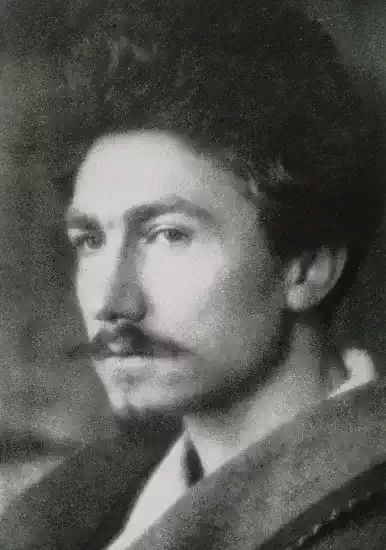
Ezra Pound
The Logical Conclusion
The Logical Conclusion
When earth's last thesis is copied
From the theses that went before,
When idea from fact has departed
And bare-boned factlets shall bore,
When all joy shall have fled from study
And scholarship reign supreme;
When truth shall 'baaa' on the hill crests
And no one shall dare to dream;
When all the good poems have been buried
With comment annoted in full
And art shall bow down in homage
To scholarship's zinc-plated bull,
When there shall be nothing to research
But the notes of annoted notes,
And Baalam's ass shall inquire
The price of imported oats;
Then no one shall tell him the answer
For each shall know the one fact
That lies in the special ass-ignment
From which he is making his tract.
So the ass shall sigh uninstructed
While each in his separate book
Shall grind for the love of grinding
And only the devil shall look.
Against the 'germanic' system of graduate study and insane specialization in the
Inanities.
When earth's last thesis is copied
From the theses that went before,
When idea from fact has departed
And bare-boned factlets shall bore,
When all joy shall have fled from study
And scholarship reign supreme;
When truth shall 'baaa' on the hill crests
And no one shall dare to dream;
When all the good poems have been buried
With comment annoted in full
And art shall bow down in homage
To scholarship's zinc-plated bull,
When there shall be nothing to research
But the notes of annoted notes,
And Baalam's ass shall inquire
The price of imported oats;
Then no one shall tell him the answer
For each shall know the one fact
That lies in the special ass-ignment
From which he is making his tract.
So the ass shall sigh uninstructed
While each in his separate book
Shall grind for the love of grinding
And only the devil shall look.
Against the 'germanic' system of graduate study and insane specialization in the
Inanities.
470
Ezra Pound
Statement of Being
Statement of Being
I am a grave poetic hen
That lays poetic eggs
And to enhance my temperament
A little quiet begs.
We make the yolk philosophy,
True beauty the albumen.
And then gum on a shell of form
To make the screed sound human.
I am a grave poetic hen
That lays poetic eggs
And to enhance my temperament
A little quiet begs.
We make the yolk philosophy,
True beauty the albumen.
And then gum on a shell of form
To make the screed sound human.
315
Ezra Pound
Meditatio
Meditatio
When I carefully consider the curious habits of dogs
I am compelled to conclude
That man is the superior animal.
When I consider the curious habits of man
I confess, my friend, I am puzzled.
When I carefully consider the curious habits of dogs
I am compelled to conclude
That man is the superior animal.
When I consider the curious habits of man
I confess, my friend, I am puzzled.
503
Ezra Pound
Canto III
Canto III
Another's a half-cracked fellow—John Heydon,
Worker of miracles, dealer in levitation,
In thoughts upon pure form, in alchemy,
Seer of pretty visions ('servant of God and secretary of nature');
Full of plaintive charm, like Botticelli's,
With half-transparent forms, lacking the vigor of gods.
Thus Heydon, in a trance, at Bulverton,
Had such a sight:
Decked all in green, with sleeves of yellow silk
Slit to the elbow, slashed with various purples.
Her eyes were green as glass, her foot was leaf-like.
She was adorned with choicest emeralds,
And promised him the way of holy wisdom.
'Pretty green bank,' began the half-lost poem.
Take the old way, say I met John Heydon,
Sought out the place,
Lay on the bank, was 'plungèd deep in swevyn;'
And saw the company—Layamon, Chaucer—
Pass each in his appropriate robes;
Conversed with each, observed the varying fashion.
And then comes Heydon.
'I have seen John Heydon.'
Let us hear John Heydon!
'Omniformis
Omnis intellectus est'—thus he begins, by spouting half of Psellus.
(Then comes a note, my assiduous commentator:
Not Psellus De Daemonibus, but Porphyry's Chances,
In the thirteenth chapter, that 'every intellect is omni-form.')
Magnifico Lorenzo used the dodge,
Says that he met Ficino
In some Wordsworthian, false-pastoral manner,
And that they walked along, stopped at a well-head,
And heard deep platitudes about contentment
From some old codger with an endless beard.
'A daemon is not a particular intellect,
But is a substance differed from intellect,'
Breaks in Ficino,
'Placed in the latitude or locus of souls'—
That's out of Proclus, take your pick of them.
Valla, more earth and sounder rhetoric—
Prefacing praise to his Pope Nicholas:
'A man of parts, skilled in the subtlest sciences;
A patron of the arts, of poetry; and of a fine discernment.'
Then comes a catalogue, his jewels of conversation.
No, you've not read your Elegantiae—
A dull book?—shook the church.
The prefaces, cut clear and hard:
'Know then the Roman speech, a sacrament,'
Spread for the nations, eucharist of wisdom,
Bread of the liberal arts.
Ha! Sir Blancatz,
Sordello would have your heart to give to all the princes;
Valla, the heart of Rome,
Sustaining speech, set out before the people.
'Nec bonus Christianus ac bonus
Tullianus.'
Marius, Du Bellay, wept for the buildings,
Baldassar Castiglione saw Raphael
'Lead back the soul into its dead, waste dwelling,'
Corpore laniato; and Lorenzo Valla,
'Broken in middle life? bent to submission?—
Took a fat living from the Papacy'
(That's in Villari, but Burckhardt's statement is different)—
'More than the Roman city, the Roman speech'
(Holds fast its part among the ever-living).
'Not by the eagles only was Rome measured.'
'Wherever the Roman speech was, there was Rome,'
Wherever the speech crept, there was mastery
Spoke with the law's voice while your Greek, logicians...
More Greeks than one! Doughty's 'divine Homeros'
Came before sophistry. Justinopolitan
Uncatalogued Andreas Divus,
Gave him in Latin, 1538 in my edition, the rest uncertain,
Caught up his cadence, word and syllable:
'Down to the ships we went, set mast and sail,
Black keel and beasts for bloody sacrifice,
Weeping we went.'
I've strained my ear for -ensa, -ombra, and -ensa
And cracked my wit on delicate canzoni—
Here's but rough meaning:
'And then went down to the ship, set keel to breakers,
Forth on the godly sea;
We set up mast and sail on the swarthy ship,
Sheep bore we aboard her, and our bodies also
Heavy with weeping. And winds from sternward
Bore us out onward with bellying canvas—
Circe's this craft, the trim-coifed goddess.
Then sat we amidships, wind jamming the tiller.
Thus with stretched sail
We went over sea till day's end:
Sun to his slumber, shadows o'er all the ocean.
Came we then to the bounds of deepest water,
To the Kimmerian lands and peopled cities
Covered with close-webbed mist, unpiercèd ever
With glitter of sun-rays,
Nor with stars stretched, nor looking back from heaven,
Swartest night stretched over wretched men there.
Thither we in that ship, unladed sheep there,
The ocean flowing backward, came we through to the place
Aforesaid by Circe.
Here did they rites, Perimedes and Eurylochus,
And drawing sword from my hip
I dug the ell-square pitkin, poured we libations unto each the dead,
First mead and then sweet wine,
Water mixed with white flour.
Then prayed I many a prayer to the sickly death's-heads
As set in Ithaca, sterile bulls of the best,
For sacrifice, heaping the pyre with goods.
Sheep, to Tiresias only,
Black, and a bell sheep;
Dark blood flowed in the fosse.
Souls out of Erebus, cadaverous dead
Of brides, of youths, and of many passing old,
Virgins tender, souls stained with recent tears,
Many men mauled with bronze lance-heads,
Battle spoil, bearing yet dreary arms:
These many crowded about me,
With shouting, pallor upon me, cried to my men for more beasts;
Slaughtered the herds—sheep slain of bronze,
Poured ointment, cried to the gods,
To Pluto the strong, and praised Proserpine.
Unsheathed the narrow steel,
I sat to keep off the impetuous, impotent dead
Till I should hear Tiresias.
But first Elpenor came, our friend Elpenor,
Unburied, cast on the wide earth—
Limbs that we left in the house of Circe,
Unwept, unwrapped in sepulchre, since toils urged other,
Pitiful spirit—and I cried in hurried speech:
'Elpenor, how art thou come to this dark coast?
Cam'st thou afoot, outstripping seamen?' And he in heavy speech:
'Ill fate and abundant wine! I slept in Circe's ingle,
Going down the long ladder unguarded, I fell against the buttress,
Shattered the nape-nerve, the soul sought Avernus.
But thou, O King, I bid remember me, unwept, unburied!
Heap up mine arms, be tomb by the sea-board, and inscribed,
A man of no fortune and with a name to come;
And set my oar up, that I swung 'mid fellows.'
Came then another ghost, whom I beat off, Anticlea,
And then Tiresias, Theban,
Holding his golden wand, knew me and spoke first:
'Man of ill hour, why come a second time,
Leaving the sunlight, facing the sunless dead and this joyless region?
Stand from the fosse, move back, leave me my bloody bever,
And I will speak you true speeches.'
'And I stepped back,
Sheathing the yellow sword. Dark blood he drank then
And spoke: 'Lustrous Odysseus, shalt
Return through spiteful Neptune, over dark seas,
Lose all companions.' Foretold me the ways and the signs.
Came then Anticlea, to whom I answered:
'Fate drives me on through these deeps; I sought Tiresias.'
I told her news of Troy, and thrice her shadow
Faded in my embrace.
Then had I news of many faded women—
Tyro, Alcmena, Chloris—
Heard out their tales by that dark fosse, and sailed
By sirens and thence outward and away,
And unto Circe buried Elpenor's corpse.'
Lie quiet, Divus.
In Officina Wechli, Paris,
M. D. three X's, Eight, with Aldus on the Frogs,
And a certain Cretan's
Hymni Deorum:
(The thin clear Tuscan stuff
Gives way before the florid mellow phrase.)
Take we the Goddess, Venus:
Venerandam,
Aurean coronam habentem, pulchram,
Cypri munimenta sortita est, maritime,
Light on the foam, breathed on by zephyrs,
And air-tending hours. Mirthful, orichalci
, with golden
Girdles and breast bands.
Thou with dark eye-lids,
Bearing the golden bough of Argicida.
Another's a half-cracked fellow—John Heydon,
Worker of miracles, dealer in levitation,
In thoughts upon pure form, in alchemy,
Seer of pretty visions ('servant of God and secretary of nature');
Full of plaintive charm, like Botticelli's,
With half-transparent forms, lacking the vigor of gods.
Thus Heydon, in a trance, at Bulverton,
Had such a sight:
Decked all in green, with sleeves of yellow silk
Slit to the elbow, slashed with various purples.
Her eyes were green as glass, her foot was leaf-like.
She was adorned with choicest emeralds,
And promised him the way of holy wisdom.
'Pretty green bank,' began the half-lost poem.
Take the old way, say I met John Heydon,
Sought out the place,
Lay on the bank, was 'plungèd deep in swevyn;'
And saw the company—Layamon, Chaucer—
Pass each in his appropriate robes;
Conversed with each, observed the varying fashion.
And then comes Heydon.
'I have seen John Heydon.'
Let us hear John Heydon!
'Omniformis
Omnis intellectus est'—thus he begins, by spouting half of Psellus.
(Then comes a note, my assiduous commentator:
Not Psellus De Daemonibus, but Porphyry's Chances,
In the thirteenth chapter, that 'every intellect is omni-form.')
Magnifico Lorenzo used the dodge,
Says that he met Ficino
In some Wordsworthian, false-pastoral manner,
And that they walked along, stopped at a well-head,
And heard deep platitudes about contentment
From some old codger with an endless beard.
'A daemon is not a particular intellect,
But is a substance differed from intellect,'
Breaks in Ficino,
'Placed in the latitude or locus of souls'—
That's out of Proclus, take your pick of them.
Valla, more earth and sounder rhetoric—
Prefacing praise to his Pope Nicholas:
'A man of parts, skilled in the subtlest sciences;
A patron of the arts, of poetry; and of a fine discernment.'
Then comes a catalogue, his jewels of conversation.
No, you've not read your Elegantiae—
A dull book?—shook the church.
The prefaces, cut clear and hard:
'Know then the Roman speech, a sacrament,'
Spread for the nations, eucharist of wisdom,
Bread of the liberal arts.
Ha! Sir Blancatz,
Sordello would have your heart to give to all the princes;
Valla, the heart of Rome,
Sustaining speech, set out before the people.
'Nec bonus Christianus ac bonus
Tullianus.'
Marius, Du Bellay, wept for the buildings,
Baldassar Castiglione saw Raphael
'Lead back the soul into its dead, waste dwelling,'
Corpore laniato; and Lorenzo Valla,
'Broken in middle life? bent to submission?—
Took a fat living from the Papacy'
(That's in Villari, but Burckhardt's statement is different)—
'More than the Roman city, the Roman speech'
(Holds fast its part among the ever-living).
'Not by the eagles only was Rome measured.'
'Wherever the Roman speech was, there was Rome,'
Wherever the speech crept, there was mastery
Spoke with the law's voice while your Greek, logicians...
More Greeks than one! Doughty's 'divine Homeros'
Came before sophistry. Justinopolitan
Uncatalogued Andreas Divus,
Gave him in Latin, 1538 in my edition, the rest uncertain,
Caught up his cadence, word and syllable:
'Down to the ships we went, set mast and sail,
Black keel and beasts for bloody sacrifice,
Weeping we went.'
I've strained my ear for -ensa, -ombra, and -ensa
And cracked my wit on delicate canzoni—
Here's but rough meaning:
'And then went down to the ship, set keel to breakers,
Forth on the godly sea;
We set up mast and sail on the swarthy ship,
Sheep bore we aboard her, and our bodies also
Heavy with weeping. And winds from sternward
Bore us out onward with bellying canvas—
Circe's this craft, the trim-coifed goddess.
Then sat we amidships, wind jamming the tiller.
Thus with stretched sail
We went over sea till day's end:
Sun to his slumber, shadows o'er all the ocean.
Came we then to the bounds of deepest water,
To the Kimmerian lands and peopled cities
Covered with close-webbed mist, unpiercèd ever
With glitter of sun-rays,
Nor with stars stretched, nor looking back from heaven,
Swartest night stretched over wretched men there.
Thither we in that ship, unladed sheep there,
The ocean flowing backward, came we through to the place
Aforesaid by Circe.
Here did they rites, Perimedes and Eurylochus,
And drawing sword from my hip
I dug the ell-square pitkin, poured we libations unto each the dead,
First mead and then sweet wine,
Water mixed with white flour.
Then prayed I many a prayer to the sickly death's-heads
As set in Ithaca, sterile bulls of the best,
For sacrifice, heaping the pyre with goods.
Sheep, to Tiresias only,
Black, and a bell sheep;
Dark blood flowed in the fosse.
Souls out of Erebus, cadaverous dead
Of brides, of youths, and of many passing old,
Virgins tender, souls stained with recent tears,
Many men mauled with bronze lance-heads,
Battle spoil, bearing yet dreary arms:
These many crowded about me,
With shouting, pallor upon me, cried to my men for more beasts;
Slaughtered the herds—sheep slain of bronze,
Poured ointment, cried to the gods,
To Pluto the strong, and praised Proserpine.
Unsheathed the narrow steel,
I sat to keep off the impetuous, impotent dead
Till I should hear Tiresias.
But first Elpenor came, our friend Elpenor,
Unburied, cast on the wide earth—
Limbs that we left in the house of Circe,
Unwept, unwrapped in sepulchre, since toils urged other,
Pitiful spirit—and I cried in hurried speech:
'Elpenor, how art thou come to this dark coast?
Cam'st thou afoot, outstripping seamen?' And he in heavy speech:
'Ill fate and abundant wine! I slept in Circe's ingle,
Going down the long ladder unguarded, I fell against the buttress,
Shattered the nape-nerve, the soul sought Avernus.
But thou, O King, I bid remember me, unwept, unburied!
Heap up mine arms, be tomb by the sea-board, and inscribed,
A man of no fortune and with a name to come;
And set my oar up, that I swung 'mid fellows.'
Came then another ghost, whom I beat off, Anticlea,
And then Tiresias, Theban,
Holding his golden wand, knew me and spoke first:
'Man of ill hour, why come a second time,
Leaving the sunlight, facing the sunless dead and this joyless region?
Stand from the fosse, move back, leave me my bloody bever,
And I will speak you true speeches.'
'And I stepped back,
Sheathing the yellow sword. Dark blood he drank then
And spoke: 'Lustrous Odysseus, shalt
Return through spiteful Neptune, over dark seas,
Lose all companions.' Foretold me the ways and the signs.
Came then Anticlea, to whom I answered:
'Fate drives me on through these deeps; I sought Tiresias.'
I told her news of Troy, and thrice her shadow
Faded in my embrace.
Then had I news of many faded women—
Tyro, Alcmena, Chloris—
Heard out their tales by that dark fosse, and sailed
By sirens and thence outward and away,
And unto Circe buried Elpenor's corpse.'
Lie quiet, Divus.
In Officina Wechli, Paris,
M. D. three X's, Eight, with Aldus on the Frogs,
And a certain Cretan's
Hymni Deorum:
(The thin clear Tuscan stuff
Gives way before the florid mellow phrase.)
Take we the Goddess, Venus:
Venerandam,
Aurean coronam habentem, pulchram,
Cypri munimenta sortita est, maritime,
Light on the foam, breathed on by zephyrs,
And air-tending hours. Mirthful, orichalci
, with golden
Girdles and breast bands.
Thou with dark eye-lids,
Bearing the golden bough of Argicida.
539

Emily Jane Brontë
How Clear She Shines
How Clear She Shines
How clear she shines! How quietly
I lie beneath her guardian light;
While heaven and earth are whispering me,
" Tomorrow, wake, but, dream to-night."
Yes, Fancy, come, my Fairy love!
These throbbing temples softly kiss;
And bend my lonely couch above
And bring me rest, and bring me bliss.
The world is going; dark world, adieu!
Grim world, conceal thee till the day;
The heart, thou canst not all subdue,
Must still resist, if thou delay!
Thy love I will not, will not share;
Thy hatred only wakes a smile;
Thy griefs may wound - thy wrongs may tear,
But, oh, thy lies shall ne'er beguile!
While gazing on the stars that glow
Above me, in that stormless sea,
I long to hope that all the woe
Creation knows, is held in thee!
And, this shall be my dream to-night;
I'll think the heaven of glorious spheres
Is rolling on its course of light
In endless bliss, through endless years;
I'll think, there's not one world above,
Far as these straining eyes can see,
Where Wisdom ever laughed at Love,
Or Virtue crouched to Infamy;
Where, writhing 'neath the strokes of Fate,
The mangled wretch was forced to smile;
To match his patience 'gainst her hate,
His heart rebellious all the while.
Where Pleasure still will lead to wrong,
And helpless Reason warn in vain;
And Truth is weak, and Treachery strong;
And Joy the surest path to Pain;
And Peace, the lethargy of Grief;
And Hope, a phantom of the soul;
And Life, a labour, void and brief;
And Death, the despot of the whole!
How clear she shines! How quietly
I lie beneath her guardian light;
While heaven and earth are whispering me,
" Tomorrow, wake, but, dream to-night."
Yes, Fancy, come, my Fairy love!
These throbbing temples softly kiss;
And bend my lonely couch above
And bring me rest, and bring me bliss.
The world is going; dark world, adieu!
Grim world, conceal thee till the day;
The heart, thou canst not all subdue,
Must still resist, if thou delay!
Thy love I will not, will not share;
Thy hatred only wakes a smile;
Thy griefs may wound - thy wrongs may tear,
But, oh, thy lies shall ne'er beguile!
While gazing on the stars that glow
Above me, in that stormless sea,
I long to hope that all the woe
Creation knows, is held in thee!
And, this shall be my dream to-night;
I'll think the heaven of glorious spheres
Is rolling on its course of light
In endless bliss, through endless years;
I'll think, there's not one world above,
Far as these straining eyes can see,
Where Wisdom ever laughed at Love,
Or Virtue crouched to Infamy;
Where, writhing 'neath the strokes of Fate,
The mangled wretch was forced to smile;
To match his patience 'gainst her hate,
His heart rebellious all the while.
Where Pleasure still will lead to wrong,
And helpless Reason warn in vain;
And Truth is weak, and Treachery strong;
And Joy the surest path to Pain;
And Peace, the lethargy of Grief;
And Hope, a phantom of the soul;
And Life, a labour, void and brief;
And Death, the despot of the whole!
207
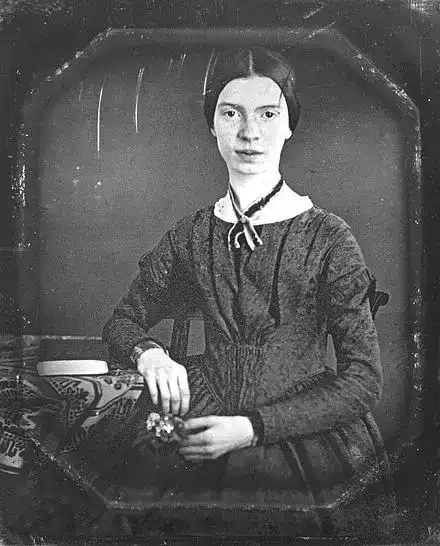
Emily Dickinson
The Zeroes—taught us—Phosphorous
The Zeroes—taught us—Phosphorous
689
The Zeroes—taught us—Phosphorous—
We learned to like the Fire
By playing Glaciers—when a Boy—
And Tinder—guessed—by power
Of Opposite—to balance Odd—
If White—a Red—must be!
Paralysis—our Primer—dumb—
Unto Vitality!
689
The Zeroes—taught us—Phosphorous—
We learned to like the Fire
By playing Glaciers—when a Boy—
And Tinder—guessed—by power
Of Opposite—to balance Odd—
If White—a Red—must be!
Paralysis—our Primer—dumb—
Unto Vitality!
230
Emily Dickinson
The Skies can't keep their secret!
The Skies can't keep their secret!
191
The Skies can't keep their secret!
They tell it to the Hills-
The Hills just tell the Orchards-
And they-the Daffodils!
A Bird-by chance-that goes that way-
Soft overhears the whole-
If I should bribe the little Bird-
Who knows but she would tell?
I think I won't-howeverIt's
finer-not to know-
If Summer were an Axiom-
What sorcery had Snow?
So keep your secret-Father!
I would not-if I could,
Know what the Sapphire Fellows, do,
In your new-fashioned world!
191
The Skies can't keep their secret!
They tell it to the Hills-
The Hills just tell the Orchards-
And they-the Daffodils!
A Bird-by chance-that goes that way-
Soft overhears the whole-
If I should bribe the little Bird-
Who knows but she would tell?
I think I won't-howeverIt's
finer-not to know-
If Summer were an Axiom-
What sorcery had Snow?
So keep your secret-Father!
I would not-if I could,
Know what the Sapphire Fellows, do,
In your new-fashioned world!
300
Emily Dickinson
The rainbow never tells me
The rainbow never tells me
97
The rainbow never tells me
That gust and storm are by,
Yet is she more convincing
Than Philosophy.
My flowers turn from Forums-
Yet eloquent declare
What Cato couldn't prove me
Except the birds were here!
97
The rainbow never tells me
That gust and storm are by,
Yet is she more convincing
Than Philosophy.
My flowers turn from Forums-
Yet eloquent declare
What Cato couldn't prove me
Except the birds were here!
293
Emily Dickinson
The Brain—is wider than the Sky
The Brain—is wider than the Sky
632
The Brain—is wider than the Sky—
For—put them side by side—
The one the other will contain
With ease—and You—beside—
The Brain is deeper than the sea—
For—hold them—Blue to Blue—
The one the other will absorb—
As Sponges—Buckets—do—
The Brain is just the weight of God—
For—Heft them—Pound for Pound—
And they will differ—if they do—
As Syllable from Sound—
632
The Brain—is wider than the Sky—
For—put them side by side—
The one the other will contain
With ease—and You—beside—
The Brain is deeper than the sea—
For—hold them—Blue to Blue—
The one the other will absorb—
As Sponges—Buckets—do—
The Brain is just the weight of God—
For—Heft them—Pound for Pound—
And they will differ—if they do—
As Syllable from Sound—
200
Emily Dickinson
The Brain-is wider than the Sky
The Brain-is wider than the Sky
632
The Brain-is wider than the SkyFor-
put them side by side-
The one the other will contain
With ease-and You-beside-
The Brain is deeper than the seaFor-
hold them-Blue to Blue-
The one the other will absorb-
As Sponges-Buckets-do-
The Brain is just the weight of GodFor-
Heft them-Pound for Pound-
And they will differ-if they do-
As Syllable from Sound-
632
The Brain-is wider than the SkyFor-
put them side by side-
The one the other will contain
With ease-and You-beside-
The Brain is deeper than the seaFor-
hold them-Blue to Blue-
The one the other will absorb-
As Sponges-Buckets-do-
The Brain is just the weight of GodFor-
Heft them-Pound for Pound-
And they will differ-if they do-
As Syllable from Sound-
237
Emily Dickinson
Knows how to forget!
Knows how to forget!
433
Knows how to forget!
But could It teach it?
Easiest of Arts, they say
When one learn how
Dull Hearts have died
In the Acquisition
Sacrificed for Science
Is common, though, now-
I went to School
But was not wiser
Globe did not teach it
Nor Logarithm Show
"How to forget"!
Say-some-Philosopher!
Ah, to be erudite
Enough to know!
Is it in a Book?
So, I could buy it-
Is it like a Planet?
Telescopes would know-
If it be invention
It must have a Patent.
Rabbi of the Wise Book
Don't you know?
433
Knows how to forget!
But could It teach it?
Easiest of Arts, they say
When one learn how
Dull Hearts have died
In the Acquisition
Sacrificed for Science
Is common, though, now-
I went to School
But was not wiser
Globe did not teach it
Nor Logarithm Show
"How to forget"!
Say-some-Philosopher!
Ah, to be erudite
Enough to know!
Is it in a Book?
So, I could buy it-
Is it like a Planet?
Telescopes would know-
If it be invention
It must have a Patent.
Rabbi of the Wise Book
Don't you know?
315
Emily Dickinson
It troubled me as once I was
It troubled me as once I was
600
It troubled me as once I was-
For I was once a Child-
Concluding how an Atom-fell-
And yet the Heavens-held-
The Heavens weighed the most-by far-
Yet Blue-and solid-stood-
Without a Bolt-that I could prove-
Would Giants-understand?
Life set me larger-problems-
Some I shall keep-to solve
Till Algebra is easier-
Or simpler proved-above
Then-too-be comprehended-
What sorer-puzzled me-
Why Heaven did not break away-
And tumble-Blue-on me-
600
It troubled me as once I was-
For I was once a Child-
Concluding how an Atom-fell-
And yet the Heavens-held-
The Heavens weighed the most-by far-
Yet Blue-and solid-stood-
Without a Bolt-that I could prove-
Would Giants-understand?
Life set me larger-problems-
Some I shall keep-to solve
Till Algebra is easier-
Or simpler proved-above
Then-too-be comprehended-
What sorer-puzzled me-
Why Heaven did not break away-
And tumble-Blue-on me-
286