

Poems in this theme
Art

Robert W. Service
Apollo Belvedere
Apollo Belvedere
A-sitttin' on a cracker box an' spittin' in the stove,
I took a sudden notion that I'd kindo' like to rove;
An' so I bought a ticket, jest as easy as could be,
From Pumpkinville in Idaho to Rome in Italy;
An' found myself in seven days of mostly atmosphere
A-starin' at a statoo called Appoller Belvydeer.
Now I'm a rum-soaked sinner, an' religion ain't my plan,
Yet, I was flabbergasted by that gol-darned Vattyican;
An' when I seed Saint Peter's dome, all I could do was swear,
The which I reckon after all may be a form o' prayer;
Abut as I sought amid them sights bewildered to steer,
The king-pin was the one they called Appoller Belvydeer.
Say, I ain't got no culture an' I don't know any art,
But that there statoo got me, standin' in its room apart,
In an alcove draped wi' velvet, lookin' everlastin' bright,
Like the vision o' a poet, full o' beauty, grace an' light;
An' though I know them kind o' words sound sissy in the ear,
It's jest how I was struck by that Appoller Belvydeer.
I've gazed at them depictions in the glossy magazines,
Uv modern Art an' darned if I can make out what it means:
Will any jerk to-day outstand a thousand years of test?
Why, them old Pagans make us look like pikers at the best.
An' maybe, too, their minds was jest as luminous and clear
As that immortal statoo o' Appoller Belvydeer.
An' all yer march o' progress an' machinery as' such,
I wonder if, when all is said, they add up to so much?
An' were not these old fellers in their sweet an' simple way
Serener souled an' happier than we poor mugs to-day?
They have us licked, I thought, an' stood wi' mingled gloom an' cheer
Before that starry statoo o' Appoller Belvydeer.
So I'll go back to Pumpkinville an' to my humble home,
An' dream o' all the sights I saw in everlastin' Rome;
But I will never speak a word o' that enchanted land
That taks you bang into the Past - folks wouldn't understand;
An' midmost in my memories I'll cherish close an' dear
That bit o' frozen music, that Appoller Belvydeer.
A-sitttin' on a cracker box an' spittin' in the stove,
I took a sudden notion that I'd kindo' like to rove;
An' so I bought a ticket, jest as easy as could be,
From Pumpkinville in Idaho to Rome in Italy;
An' found myself in seven days of mostly atmosphere
A-starin' at a statoo called Appoller Belvydeer.
Now I'm a rum-soaked sinner, an' religion ain't my plan,
Yet, I was flabbergasted by that gol-darned Vattyican;
An' when I seed Saint Peter's dome, all I could do was swear,
The which I reckon after all may be a form o' prayer;
Abut as I sought amid them sights bewildered to steer,
The king-pin was the one they called Appoller Belvydeer.
Say, I ain't got no culture an' I don't know any art,
But that there statoo got me, standin' in its room apart,
In an alcove draped wi' velvet, lookin' everlastin' bright,
Like the vision o' a poet, full o' beauty, grace an' light;
An' though I know them kind o' words sound sissy in the ear,
It's jest how I was struck by that Appoller Belvydeer.
I've gazed at them depictions in the glossy magazines,
Uv modern Art an' darned if I can make out what it means:
Will any jerk to-day outstand a thousand years of test?
Why, them old Pagans make us look like pikers at the best.
An' maybe, too, their minds was jest as luminous and clear
As that immortal statoo o' Appoller Belvydeer.
An' all yer march o' progress an' machinery as' such,
I wonder if, when all is said, they add up to so much?
An' were not these old fellers in their sweet an' simple way
Serener souled an' happier than we poor mugs to-day?
They have us licked, I thought, an' stood wi' mingled gloom an' cheer
Before that starry statoo o' Appoller Belvydeer.
So I'll go back to Pumpkinville an' to my humble home,
An' dream o' all the sights I saw in everlastin' Rome;
But I will never speak a word o' that enchanted land
That taks you bang into the Past - folks wouldn't understand;
An' midmost in my memories I'll cherish close an' dear
That bit o' frozen music, that Appoller Belvydeer.
232
Robert W. Service
Amateur Poet
Amateur Poet
You see that sheaf of slender books
Upon the topmost shelf,
At which no browser ever looks,
Because they're by . . . myself;
They're neatly bound in navy blue,
But no one ever heeds;
Their print is clear and candid too,
Yet no one ever reads.
Poor wistful books! How much they cost
To me in time and gold!
I count them now as labour lost,
For none I ever sold;
No copy could I give away,
For all my friends would shrink,
And look at me as if to say:
"What waste of printer's ink!"
And as I gaze at them on high,
Although my eyes are sad,
I cannot help but breathe a sigh
To think what joy I had -
What ecstasy as I would seek
To make my rhyme come right,
And find at last the phrase unique
Flash fulgent in my sight.
Maybe that rapture was my gain
Far more than cheap success;
So I'll forget my striving vain,
And blot out bitterness.
Oh records of my radiant youth,
No broken heart I'll rue,
For all my best of love and truth
Is there, alive in you.
You see that sheaf of slender books
Upon the topmost shelf,
At which no browser ever looks,
Because they're by . . . myself;
They're neatly bound in navy blue,
But no one ever heeds;
Their print is clear and candid too,
Yet no one ever reads.
Poor wistful books! How much they cost
To me in time and gold!
I count them now as labour lost,
For none I ever sold;
No copy could I give away,
For all my friends would shrink,
And look at me as if to say:
"What waste of printer's ink!"
And as I gaze at them on high,
Although my eyes are sad,
I cannot help but breathe a sigh
To think what joy I had -
What ecstasy as I would seek
To make my rhyme come right,
And find at last the phrase unique
Flash fulgent in my sight.
Maybe that rapture was my gain
Far more than cheap success;
So I'll forget my striving vain,
And blot out bitterness.
Oh records of my radiant youth,
No broken heart I'll rue,
For all my best of love and truth
Is there, alive in you.
266
Robert W. Service
A Verseman's Apology
A Verseman's Apology
Alas! I am only a rhymer,
I don't know the meaning of Art;
But I learned in my little school primer
To love Eugene Field and Bret Harte.
I hailed Hoosier Ryley with pleasure,
To John Hay I took off my hat;
These fellows were right to my measure,
And I've never gone higher than that.
The Classics! Well, most of them bore me,
The Moderns I don't understand;
But I keep Burns, my kinsman before me,
And Kipling, my friend, is at hand.
They taught me my trade as I know it,
Yet though at their feet I have sat,
For God-sake don't call me a poet,
For I've never been guilty of that.
A rhyme-rustler, rugged and shameless,
A Bab Balladeer on the loose;
Of saccarine sonnets I'm blameless,
My model has been - Mother Goose.
And I fancy my grave-digger griping
As he gives my last lodging a pat:
"This guy wrote McGrew;
'Twas the best he could do" . . .
So I'll go to my maker with that.
Alas! I am only a rhymer,
I don't know the meaning of Art;
But I learned in my little school primer
To love Eugene Field and Bret Harte.
I hailed Hoosier Ryley with pleasure,
To John Hay I took off my hat;
These fellows were right to my measure,
And I've never gone higher than that.
The Classics! Well, most of them bore me,
The Moderns I don't understand;
But I keep Burns, my kinsman before me,
And Kipling, my friend, is at hand.
They taught me my trade as I know it,
Yet though at their feet I have sat,
For God-sake don't call me a poet,
For I've never been guilty of that.
A rhyme-rustler, rugged and shameless,
A Bab Balladeer on the loose;
Of saccarine sonnets I'm blameless,
My model has been - Mother Goose.
And I fancy my grave-digger griping
As he gives my last lodging a pat:
"This guy wrote McGrew;
'Twas the best he could do" . . .
So I'll go to my maker with that.
272
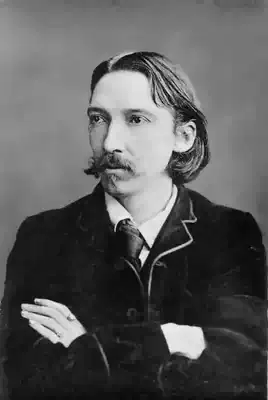
Robert Louis Stevenson
To the Muse
To the Muse
Resign the rhapsody, the dream,
To men of larger reach;
Be ours the quest of a plain theme,
The piety of speech.
As monkish scribes from morning break
Toiled till the close of light,
Nor thought a day too long to make
One line or letter bright:
We also with an ardent mind,
Time, wealth, and fame forgot,
Our glory in our patience find
And skim, and skim the pot:
Till last, when round the house we hear
The evensong of birds,
One corner of blue heaven appear
In our clear well of words.
Leave, leave it then, muse of my heart!
Sans finish and sans frame,
Leave unadorned by needless art
The picture as it came.
Resign the rhapsody, the dream,
To men of larger reach;
Be ours the quest of a plain theme,
The piety of speech.
As monkish scribes from morning break
Toiled till the close of light,
Nor thought a day too long to make
One line or letter bright:
We also with an ardent mind,
Time, wealth, and fame forgot,
Our glory in our patience find
And skim, and skim the pot:
Till last, when round the house we hear
The evensong of birds,
One corner of blue heaven appear
In our clear well of words.
Leave, leave it then, muse of my heart!
Sans finish and sans frame,
Leave unadorned by needless art
The picture as it came.
325
Robert Louis Stevenson
To Sydney
To Sydney
NOT thine where marble-still and white
Old statues share the tempered light
And mock the uneven modern flight,
But in the stream
Of daily sorrow and delight
To seek a theme.
I too, O friend, have steeled my heart
Boldly to choose the better part,
To leave the beaten ways of art,
And wholly free
To dare, beyond the scanty chart,
The deeper sea.
All vain restrictions left behind,
Frail bark! I loose my anchored mind
And large, before the prosperous wind
Desert the strand -
A new Columbus sworn to find
The morning land.
Nor too ambitious, friend. To thee
I own my weakness. Not for me
To sing the enfranchised nations' glee,
Or count the cost
Of warships foundered far at sea
And battles lost.
High on the far-seen, sunny hills,
Morning-content my bosom fills;
Well-pleased, I trace the wandering rills
And learn their birth.
Far off, the clash of sovereign wills
May shake the earth.
The nimble circuit of the wheel,
The uncertain poise of merchant weal,
Heaven of famine, fire and steel
When nations fall;
These, heedful, from afar I feel -
I mark them all.
But not, my friend, not these I sing,
My voice shall fill a narrower ring.
Tired souls, that flag upon the wing,
I seek to cheer:
Brave wines to strengthen hope I bring,
Life's cantineer!
Some song that shall be suppling oil
To weary muscles strained with toil,
Shall hearten for the daily moil,
Or widely read
Make sweet for him that tills the soil
His daily bread.
Such songs in my flushed hours I dream
(High thought) instead of armour gleam
Or warrior cantos ream by ream
To load the shelves -
Songs with a lilt of words, that seem
To sing themselves.
NOT thine where marble-still and white
Old statues share the tempered light
And mock the uneven modern flight,
But in the stream
Of daily sorrow and delight
To seek a theme.
I too, O friend, have steeled my heart
Boldly to choose the better part,
To leave the beaten ways of art,
And wholly free
To dare, beyond the scanty chart,
The deeper sea.
All vain restrictions left behind,
Frail bark! I loose my anchored mind
And large, before the prosperous wind
Desert the strand -
A new Columbus sworn to find
The morning land.
Nor too ambitious, friend. To thee
I own my weakness. Not for me
To sing the enfranchised nations' glee,
Or count the cost
Of warships foundered far at sea
And battles lost.
High on the far-seen, sunny hills,
Morning-content my bosom fills;
Well-pleased, I trace the wandering rills
And learn their birth.
Far off, the clash of sovereign wills
May shake the earth.
The nimble circuit of the wheel,
The uncertain poise of merchant weal,
Heaven of famine, fire and steel
When nations fall;
These, heedful, from afar I feel -
I mark them all.
But not, my friend, not these I sing,
My voice shall fill a narrower ring.
Tired souls, that flag upon the wing,
I seek to cheer:
Brave wines to strengthen hope I bring,
Life's cantineer!
Some song that shall be suppling oil
To weary muscles strained with toil,
Shall hearten for the daily moil,
Or widely read
Make sweet for him that tills the soil
His daily bread.
Such songs in my flushed hours I dream
(High thought) instead of armour gleam
Or warrior cantos ream by ream
To load the shelves -
Songs with a lilt of words, that seem
To sing themselves.
422
Robert Louis Stevenson
Thou Strainest Through The Mountain Fern
Thou Strainest Through The Mountain Fern
THOU strainest through the mountain fern,
A most exiguously thin Burn.
For all thy foam, for all thy din,
Thee shall the pallid lake inurn,
With well-a-day for Mr. Swin-Burne!
Take then this quarto in thy fin
And, O thou stoker huge and stern,
The whole affair, outside and in,
Burn!
But save the true poetic kin,
The works of Mr. Robert Burn'
And William Wordsworth upon Tin-Tern!
THOU strainest through the mountain fern,
A most exiguously thin Burn.
For all thy foam, for all thy din,
Thee shall the pallid lake inurn,
With well-a-day for Mr. Swin-Burne!
Take then this quarto in thy fin
And, O thou stoker huge and stern,
The whole affair, outside and in,
Burn!
But save the true poetic kin,
The works of Mr. Robert Burn'
And William Wordsworth upon Tin-Tern!
211
Robert Louis Stevenson
Still I Love To Rhyme
Still I Love To Rhyme
STILL I love to rhyme, and still more, rhyming, to wander
Far from the commoner way;
Old-time trills and falls by the brook-side still do I ponder,
Dreaming to-morrow to-day.
Come here, come, revive me, Sun-God, teach me, Apollo,
Measures descanted before;
Since I ancient verses, I emulous follow,
Prints in the marbles of yore.
Still strange, strange, they sound in old-young raiment invested,
Songs for the brain to forget -
Young song-birds elate to grave old temples benested
Piping and chirruping yet.
Thoughts? No thought has yet unskilled attempted to flutter
Trammelled so vilely in verse;
He who writes but aims at fame and his bread and his butter,
Won with a groan and a curse.
STILL I love to rhyme, and still more, rhyming, to wander
Far from the commoner way;
Old-time trills and falls by the brook-side still do I ponder,
Dreaming to-morrow to-day.
Come here, come, revive me, Sun-God, teach me, Apollo,
Measures descanted before;
Since I ancient verses, I emulous follow,
Prints in the marbles of yore.
Still strange, strange, they sound in old-young raiment invested,
Songs for the brain to forget -
Young song-birds elate to grave old temples benested
Piping and chirruping yet.
Thoughts? No thought has yet unskilled attempted to flutter
Trammelled so vilely in verse;
He who writes but aims at fame and his bread and his butter,
Won with a groan and a curse.
331
Robert Louis Stevenson
frag
frag
Tall as a guardsman, pale as the east at dawn,
Who strides in strange apparel on the lawn?
Rails for his breakfast? routs his vassals out
(Like boys escaped from school) with song and shout?
Kind and unkind, his Maker's final freak,
Part we deride the child, part dread the antique!
See where his gang, like frogs, among the dew
Crouch at their duty, an unquiet crew;
Adjust their staring kilts; and their swift eyes
Turn still to him who sits to supervise.
He in the midst, perched on a fallen tree,
Eyes them at labour; and, guitar on knee,
Now ministers alarm, now scatters joy,
Now twangs a halting chord, now tweaks a boy.
Thorough in all, my resolute vizier
Plays both the despot and the volunteer,
Exacts with fines obedience to my laws,
And for his music, too, exacts applause.
Tall as a guardsman, pale as the east at dawn,
Who strides in strange apparel on the lawn?
Rails for his breakfast? routs his vassals out
(Like boys escaped from school) with song and shout?
Kind and unkind, his Maker's final freak,
Part we deride the child, part dread the antique!
See where his gang, like frogs, among the dew
Crouch at their duty, an unquiet crew;
Adjust their staring kilts; and their swift eyes
Turn still to him who sits to supervise.
He in the midst, perched on a fallen tree,
Eyes them at labour; and, guitar on knee,
Now ministers alarm, now scatters joy,
Now twangs a halting chord, now tweaks a boy.
Thorough in all, my resolute vizier
Plays both the despot and the volunteer,
Exacts with fines obedience to my laws,
And for his music, too, exacts applause.
379
Robert Louis Stevenson
For Richmond's Garden Wall
For Richmond's Garden Wall
WHEN Thomas set this tablet here,
Time laughed at the vain chanticleer;
And ere the moss had dimmed the stone,
Time had defaced that garrison.
Now I in turn keep watch and ward
In my red house, in my walled yard
Of sunflowers, sitting here at ease
With friends and my bright canvases.
But hark, and you may hear quite plain
Time's chuckled laughter in the lane.
WHEN Thomas set this tablet here,
Time laughed at the vain chanticleer;
And ere the moss had dimmed the stone,
Time had defaced that garrison.
Now I in turn keep watch and ward
In my red house, in my walled yard
Of sunflowers, sitting here at ease
With friends and my bright canvases.
But hark, and you may hear quite plain
Time's chuckled laughter in the lane.
319
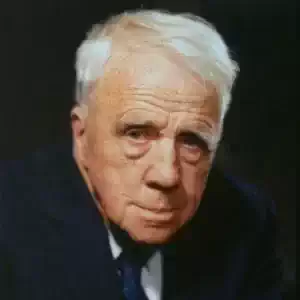
Robert Frost
The Aim Was Song
The Aim Was Song
Before man to blow to right
The wind once blew itself untaught,
And did its loudest day and night
In any rough place where it caught.
Man came to tell it what was wrong:
It hadn't found the place to blow;
It blew too hard - the aim was song.
And listen - how it ought to go!
He took a little in his mouth,
And held it long enough for north
To be converted into south,
And then by measure blew it forth.
By measure. It was word and note,
The wind the wind had meant to be -
A little through the lips and throat.
The aim was song - the wind could see.
Before man to blow to right
The wind once blew itself untaught,
And did its loudest day and night
In any rough place where it caught.
Man came to tell it what was wrong:
It hadn't found the place to blow;
It blew too hard - the aim was song.
And listen - how it ought to go!
He took a little in his mouth,
And held it long enough for north
To be converted into south,
And then by measure blew it forth.
By measure. It was word and note,
The wind the wind had meant to be -
A little through the lips and throat.
The aim was song - the wind could see.
485
Robert Frost
In White: Frost's Early Version Of Design
"In White": Frost's Early Version Of Design
A dented spider like a snow drop white
On a white Heal-all, holding up a moth
Like a white piece of lifeless satin cloth -
Saw ever curious eye so strange a sight? -
Portent in little, assorted death and blight
Like the ingredients of a witches' broth? -
The beady spider, the flower like a froth,
And the moth carried like a paper kite.
What had that flower to do with being white,
The blue prunella every child's delight.
What brought the kindred spider to that height?
(Make we no thesis of the miller's plight.)
What but design of darkness and of night?
Design, design! Do I use the word aright?
Anonymous submission.
A dented spider like a snow drop white
On a white Heal-all, holding up a moth
Like a white piece of lifeless satin cloth -
Saw ever curious eye so strange a sight? -
Portent in little, assorted death and blight
Like the ingredients of a witches' broth? -
The beady spider, the flower like a froth,
And the moth carried like a paper kite.
What had that flower to do with being white,
The blue prunella every child's delight.
What brought the kindred spider to that height?
(Make we no thesis of the miller's plight.)
What but design of darkness and of night?
Design, design! Do I use the word aright?
Anonymous submission.
369

Robert Browning
Women And Roses
Women And Roses
I.
I dream of a red-rose tree.
And which of its roses three
Is the dearest rose to me?
II.
Round and round, like a dance of snow
In a dazzling drift, as its guardians, go
Floating the women faded for ages,
Sculptured in stone, on the poet's pages.
Then follow women fresh and gay,
Living and loving and loved to-day.
Last, in the rear, flee the multitude of maidens,
Beauties yet unborn. And all, to one cadence,
They circle their rose on my rose tree.
III.
Dear rose, thy term is reached,
Thy leaf hangs loose and bleached:
Bees pass it unimpeached.
IV.
Stay then, stoop, since I cannot climb,
You, great shapes of the antique time!
How shall I fix you, fire you, freeze you,
Break my heart at your feet to please you?
Oh, to possess and be possessed!
Hearts that beat 'neath each pallid breast!
Once but of love, the poesy, the passion,
Drink but once and die!---In vain, the same fashion,
They circle their rose on my rose tree.
V.
Dear rose, thy joy's undimmed,
Thy cup is ruby-rimmed,
Thy cup's heart nectar-brimmed.
VI.
Deep, as drops from a statue's plinth
The bee sucked in by the hyacinth,
So will I bury me while burning,
Quench like him at a plunge my yearning,
Eyes in your eyes, lips on your lips!
Fold me fast where the cincture slips,
Prison all my soul in eternities of pleasure,
Girdle me for once! But no---the old measure,
They circle their rose on my rose tree.
VII.
Dear rose without a thorn,
Thy bud's the babe unborn:
First streak of a new morn.
VIII.
Wings, lend wings for the cold, the clear!
What is far conquers what is near.
Roses will bloom nor want beholders,
Sprung from the dust where our flesh moulders.
What shall arrive with the cycle's change?
A novel grace and a beauty strange.
I will make an Eve, be the artist that began her,
Shaped her to his mind!---Alas! in like manner
They circle their rose on my rose tree.
I.
I dream of a red-rose tree.
And which of its roses three
Is the dearest rose to me?
II.
Round and round, like a dance of snow
In a dazzling drift, as its guardians, go
Floating the women faded for ages,
Sculptured in stone, on the poet's pages.
Then follow women fresh and gay,
Living and loving and loved to-day.
Last, in the rear, flee the multitude of maidens,
Beauties yet unborn. And all, to one cadence,
They circle their rose on my rose tree.
III.
Dear rose, thy term is reached,
Thy leaf hangs loose and bleached:
Bees pass it unimpeached.
IV.
Stay then, stoop, since I cannot climb,
You, great shapes of the antique time!
How shall I fix you, fire you, freeze you,
Break my heart at your feet to please you?
Oh, to possess and be possessed!
Hearts that beat 'neath each pallid breast!
Once but of love, the poesy, the passion,
Drink but once and die!---In vain, the same fashion,
They circle their rose on my rose tree.
V.
Dear rose, thy joy's undimmed,
Thy cup is ruby-rimmed,
Thy cup's heart nectar-brimmed.
VI.
Deep, as drops from a statue's plinth
The bee sucked in by the hyacinth,
So will I bury me while burning,
Quench like him at a plunge my yearning,
Eyes in your eyes, lips on your lips!
Fold me fast where the cincture slips,
Prison all my soul in eternities of pleasure,
Girdle me for once! But no---the old measure,
They circle their rose on my rose tree.
VII.
Dear rose without a thorn,
Thy bud's the babe unborn:
First streak of a new morn.
VIII.
Wings, lend wings for the cold, the clear!
What is far conquers what is near.
Roses will bloom nor want beholders,
Sprung from the dust where our flesh moulders.
What shall arrive with the cycle's change?
A novel grace and a beauty strange.
I will make an Eve, be the artist that began her,
Shaped her to his mind!---Alas! in like manner
They circle their rose on my rose tree.
392
Robert Browning
Popularity
Popularity
I.
Stand still, true poet that you are!
I know you; let me try and draw you.
Some night you'll fail us: when afar
You rise, remember one man saw you,
Knew you, and named a star!
II.
My star, God's glow-worm! Why extend
That loving hand of his which leads you
Yet locks you safe from end to end
Of this dark world, unless he needs you,
just saves your light to spend?
III.
His clenched hand shall unclose at last,
I know, and let out all the beauty:
My poet holds the future fast,
Accepts the coming ages' duty,
Their present for this past.
IV.
That day, the earth's feast-master's brow
Shall clear, to God the chalice raising;
``Others give best at first, but thou
``Forever set'st our table praising,
``Keep'st the good wine till now!''
V.
Meantime, I'll draw you as you stand,
With few or none to watch and wonder:
I'll say---a fisher, on the sand
By Tyre the old, with ocean-plunder,
A netful, brought to land.
VI.
Who has not heard how Tyrian shells
Enclosed the blue, that dye of dyes
Whereof one drop worked miracles,
And coloured like Astarte's<*> eyes
Raw silk the merchant sells?
VII.
And each bystander of them all
Could criticize, and quote tradition
How depths of blue sublimed some pall
---To get which, pricked a king's ambition
Worth sceptre, crown and ball.
VIII.
Yet there's the dye, in that rough mesh,
The sea has only just o'erwhispered!
Live whelks, each lip's beard dripping fresh,
As if they still the water's lisp heard
Through foam the rock-weeds thresh.
IX.
Enough to furnish Solomon
Such hangings for his cedar-house,
That, when gold-robed he took the throne
In that abyss of blue, the Spouse
Might swear his presence shone
X.
Most like the centre-spike of gold
Which burns deep in the blue-bell's womb,
What time, with ardours manifold,
The bee goes singing to her groom,
Drunken and overbold.
XI.
Mere conchs! not fit for warp or woof!
Till cunning come to pound and squeeze
And clarify,---refine to proof
The liquor filtered by degrees,
While the world stands aloof.
XII.
And there's the extract, flasked and fine,
And priced and saleable at last!
And Hobbs, Nobbs, Stokes and Nokes combine
To paint the future from the past,
Put blue into their line.
XIII.
Hobbs hints blue,---Straight he turtle eats:
Nobbs prints blue,---claret crowns his cup:
Nokes outdares Stokes in azure feats,---
Both gorge. Who fished the murex<*> up?
What porridge had John Keats?
* The Syrian Venus.
* Molluscs from which the famous Tyrian
* purple dye was obtained.
I.
Stand still, true poet that you are!
I know you; let me try and draw you.
Some night you'll fail us: when afar
You rise, remember one man saw you,
Knew you, and named a star!
II.
My star, God's glow-worm! Why extend
That loving hand of his which leads you
Yet locks you safe from end to end
Of this dark world, unless he needs you,
just saves your light to spend?
III.
His clenched hand shall unclose at last,
I know, and let out all the beauty:
My poet holds the future fast,
Accepts the coming ages' duty,
Their present for this past.
IV.
That day, the earth's feast-master's brow
Shall clear, to God the chalice raising;
``Others give best at first, but thou
``Forever set'st our table praising,
``Keep'st the good wine till now!''
V.
Meantime, I'll draw you as you stand,
With few or none to watch and wonder:
I'll say---a fisher, on the sand
By Tyre the old, with ocean-plunder,
A netful, brought to land.
VI.
Who has not heard how Tyrian shells
Enclosed the blue, that dye of dyes
Whereof one drop worked miracles,
And coloured like Astarte's<*> eyes
Raw silk the merchant sells?
VII.
And each bystander of them all
Could criticize, and quote tradition
How depths of blue sublimed some pall
---To get which, pricked a king's ambition
Worth sceptre, crown and ball.
VIII.
Yet there's the dye, in that rough mesh,
The sea has only just o'erwhispered!
Live whelks, each lip's beard dripping fresh,
As if they still the water's lisp heard
Through foam the rock-weeds thresh.
IX.
Enough to furnish Solomon
Such hangings for his cedar-house,
That, when gold-robed he took the throne
In that abyss of blue, the Spouse
Might swear his presence shone
X.
Most like the centre-spike of gold
Which burns deep in the blue-bell's womb,
What time, with ardours manifold,
The bee goes singing to her groom,
Drunken and overbold.
XI.
Mere conchs! not fit for warp or woof!
Till cunning come to pound and squeeze
And clarify,---refine to proof
The liquor filtered by degrees,
While the world stands aloof.
XII.
And there's the extract, flasked and fine,
And priced and saleable at last!
And Hobbs, Nobbs, Stokes and Nokes combine
To paint the future from the past,
Put blue into their line.
XIII.
Hobbs hints blue,---Straight he turtle eats:
Nobbs prints blue,---claret crowns his cup:
Nokes outdares Stokes in azure feats,---
Both gorge. Who fished the murex<*> up?
What porridge had John Keats?
* The Syrian Venus.
* Molluscs from which the famous Tyrian
* purple dye was obtained.
343
Robert Browning
One Way Of Love
One Way Of Love
.
All June I bound the rose in sheaves.
Now, rose by rose, I strip the leaves
And strew them where Pauline may pass.
She will not turn aside? Alas!
Let them lie. Suppose they die?
The chance was they might take her eye.
II.
How many a month I strove to suit
These stubborn fingers to the lute!
To-day I venture all I know.
She will not hear my music? So!
Break the string; fold music's wing:
Suppose Pauline had bade me sing!
III.
My whole life long I learned to love.
This hour my utmost art I prove
And speak my passion---heaven or hell?
She will not give me heaven? 'Tis well!
Lose who may---I still can say,
Those who win heaven, blest are they!
.
All June I bound the rose in sheaves.
Now, rose by rose, I strip the leaves
And strew them where Pauline may pass.
She will not turn aside? Alas!
Let them lie. Suppose they die?
The chance was they might take her eye.
II.
How many a month I strove to suit
These stubborn fingers to the lute!
To-day I venture all I know.
She will not hear my music? So!
Break the string; fold music's wing:
Suppose Pauline had bade me sing!
III.
My whole life long I learned to love.
This hour my utmost art I prove
And speak my passion---heaven or hell?
She will not give me heaven? 'Tis well!
Lose who may---I still can say,
Those who win heaven, blest are they!
302
Robert Browning
Fra Lippo Lippi
Fra Lippo Lippi
I am poor brother Lippo, by your leave!
You need not clap your torches to my face.
Zooks, what's to blame? you think you see a monk!
What, 'tis past midnight, and you go the rounds,
And here you catch me at an alley's end
Where sportive ladies leave their doors ajar?
The Carmine's my cloister: hunt it up,
Do,--harry out, if you must show your zeal,
Whatever rat, there, haps on his wrong hole,
And nip each softling of a wee white mouse,
Weke, weke, that's crept to keep him company!
Aha, you know your betters! Then, you'll take
Your hand away that's fiddling on my throat,
And please to know me likewise. Who am I?
Why, one, sir, who is lodging with a friend
Three streets off--he's a certain . . . how d'ye call?
Master--a ...Cosimo of the Medici,
I' the house that caps the corner. Boh! you were best!
Remember and tell me, the day you're hanged,
How you affected such a gullet's-gripe!
But you, sir, it concerns you that your knaves
Pick up a manner nor discredit you:
Zooks, are we pilchards, that they sweep the streets
And count fair price what comes into their net?
He's Judas to a tittle, that man is!
Just such a face! Why, sir, you make amends.
Lord, I'm not angry! Bid your hang-dogs go
Drink out this quarter-florin to the health
Of the munificent House that harbours me
(And many more beside, lads! more beside!)
And all's come square again. I'd like his face--
His, elbowing on his comrade in the door
With the pike and lantern,--for the slave that holds
John Baptist's head a-dangle by the hair
With one hand ("Look you, now," as who should say)
And his weapon in the other, yet unwiped!
It's not your chance to have a bit of chalk,
A wood-coal or the like? or you should see!
Yes, I'm the painter, since you style me so.
What, brother Lippo's doings, up and down,
You know them and they take you? like enough!
I saw the proper twinkle in your eye--
'Tell you, I liked your looks at very first.
Let's sit and set things straight now, hip to haunch.
Here's spring come, and the nights one makes up bands
To roam the town and sing out carnival,
And I've been three weeks shut within my mew,
A-painting for the great man, saints and saints
And saints again. I could not paint all night--
Ouf! I leaned out of window for fresh air.
There came a hurry of feet and little feet,
A sweep of lute strings, laughs, and whifts of song, --
Flower o' the broom,
Take away love, and our earth is a tomb!
Flower o' the quince,
I let Lisa go, and what good in life since?
Flower o' the thyme--and so on. Round they went.
Scarce had they turned the corner when a titter
Like the skipping of rabbits by moonlight,--three slim shapes,
And a face that looked up . . . zooks, sir, flesh and blood,
That's all I'm made of! Into shreds it went,
Curtain and counterpane and coverlet,
All the bed-furniture--a dozen knots,
There was a ladder! Down I let myself,
Hands and feet, scrambling somehow, and so dropped,
And after them. I came up with the fun
Hard by Saint Laurence, hail fellow, well met,--
Flower o' the rose,
If I've been merry, what matter who knows?
And so as I was stealing back again
To get to bed and have a bit of sleep
Ere I rise up to-morrow and go work
On Jerome knocking at his poor old breast
With his great round stone to subdue the flesh,
You snap me of the sudden. Ah, I see!
Though your eye twinkles still, you shake your head--
Mine's shaved--a monk, you say--the sting 's in that!
If Master Cosimo announced himself,
Mum's the word naturally; but a monk!
Come, what am I a beast for? tell us, now!
I was a baby when my mother died
And father died and left me in the street.
I starved there, God knows how, a year or two
On fig-skins, melon-parings, rinds and shucks,
Refuse and rubbish. One fine frosty day,
My stomach being empty as your hat,
The wind doubled me up and down I went.
Old Aunt Lapaccia trussed me with one hand,
(Its fellow was a stinger as I knew)
And so along the wall, over the bridge,
By the straight cut to the convent. Six words there,
While I stood munching my first bread that month:
"So, boy, you're minded," quoth the good fat father
Wiping his own mouth, 'twas refection-time,--
"To quit this very miserable world?
Will you renounce" . . . "the mouthful of bread?" thought I;
By no means! Brief, they made a monk of me;
I did renounce the world, its pride and greed,
Palace, farm, villa, shop, and banking-house,
Trash, such as these poor devils of Medici
Have given their hearts to--all at eight years old.
Well, sir, I found in time, you may be sure,
'T#was not for nothing--the good bellyful,
The warm serge and the rope that goes all round,
And day-long blessed idleness beside!
"Let's see what the urchin's fit for"--that came next.
Not overmuch their way, I must confess.
Such a to-do! They tried me with their books:
Lord, they'd have taught me Latin in pure waste!
Flower o' the clove.
All the Latin I construe is, "amo" I love!
But, mind you, when a boy starves in the streets
Eight years together, as my fortune was,
Watching folk's faces to know who will fling
The bit of half-stripped grape-bunch he desires,
And who will curse or kick him for his pains,--
Which gentleman processional and fine,
Holding a candle to the Sacrament,
Will wink and let him lift a plate and catch
The droppings of the wax to sell again,
Or holla for the Eight and have him whipped,--
How say I?--nay, which dog bites, which lets drop
His bone from the heap of offal in the street,--
Why, soul and sense of him grow sharp alike,
He learns the look of things, and none the less
For admonition from the hunger-pinch.
I had a store of such remarks, be sure,
Which, after I found leisure, turned to use.
I drew men's faces on my copy-books,
Scrawled them within the antiphonary's marge,
Joined legs and arms to the long music-notes,
Found eyes and nose and chin for A's and B's,
And made a string of pictures of the world
Betwixt the ins and outs of verb and noun,
On the wall, the bench, the door. The monks looked black.
"Nay," quoth the Prior, "turn him out, d'ye say?
In no wise. Lose a crow and catch a lark.
What if at last we get our man of parts,
We Carmelites, like those Camaldolese
And Preaching Friars, to do our church up fine
And put the front on it that ought to be!"
And hereupon he bade me daub away.
Thank you! my head being crammed, the walls a blank,
Never was such prompt disemburdening.
First, every sort of monk, the black and white,
I drew them, fat and lean: then, folk at church,
From good old gossips waiting to confess
Their cribs of barrel-droppings, candle-ends,--
To the breathless fellow at the altar-foot,
Fresh from his murder, safe and sitting there
With the little children round him in a row
Of admiration, half for his beard and half
For that white anger of his victim's son
Shaking a fist at him with one fierce arm,
Signing himself with the other because of Christ
(Whose sad face on the cross sees only this
After the passion of a thousand years)
Till some poor girl, her apron o'er her head,
(Which the intense eyes looked through) came at eve
On tiptoe, said a word, dropped in a loaf,
Her pair of earrings and a bunch of flowers
(The brute took growling), prayed, and so was gone.
I painted all, then cried " `T#is ask and have;
Choose, for more's ready!"--laid the ladder flat,
And showed my covered bit of cloister-wall.
The monks closed in a circle and praised loud
Till checked, taught what to see and not to see,
Being simple bodies,--"That's the very man!
Look at the boy who stoops to pat the dog!
That woman's like the Prior's niece who comes
To care about his asthma: it's the life!''
But there my triumph's straw-fire flared and funked;
Their betters took their turn to see and say:
The Prior and the learned pulled a face
And stopped all that in no time. "How? what's here?
Quite from the mark of painting, bless us all!
Faces, arms, legs, and bodies like the true
As much as pea and pea! it's devil's-game!
Your business is not to catch men with show,
With homage to the perishable clay,
But lift them over it, ignore it all,
Make them forget there's such a thing as flesh.
Your business is to paint the souls of men--
Man's soul, and it's a fire, smoke . . . no, it's not . . .
It's vapour done up like a new-born babe--
(In that shape when you die it leaves your mouth)
It's . . . well, what matters talking, it's the soul!
Give us no more of body than shows soul!
Here's Giotto, with his Saint a-praising God,
That sets us praising--why not stop with him?
Why put all thoughts of praise out of our head
With wonder at lines, colours, and what not?
Paint the soul, never mind the legs and arms!
Rub all out, try at it a second time.
Oh, that white smallish female with the breasts,
She's just my niece . . . Herodias, I would say,--
Who went and danced and got men's heads cut off!
Have it all out!" Now, is this sense, I ask?
A fine way to paint soul, by painting body
So ill, the eye can't stop there, must go further
And can't fare worse! Thus, yellow does for white
When what you put for yellow's simply black,
And any sort of meaning looks intense
When all beside itself means and looks nought.
Why can't a painter lift each foot in turn,
Left foot and right foot, go a double step,
Make his flesh liker and his soul more like,
Both in their order? Take the prettiest face,
The Prior's niece . . . patron-saint--is it so pretty
You can't discover if it means hope, fear,
Sorrow or joy? won't beauty go with these?
Suppose I've made her eyes all right and blue,
Can't I take breath and try to add life's flash,
And then add soul and heighten them three-fold?
Or say there's beauty with no soul at all--
(I never saw it--put the case the same--)
If you get simple beauty and nought else,
You get about the best thing God invents:
That's somewhat: and you'll find the soul you have missed,
Within yourself, when you return him thanks.
"Rub all out!" Well, well, there's my life, in short,
And so the thing has gone on ever since.
I'm grown a man no doubt, I've broken bounds:
You should not take a fellow eight years old
And make him swear to never kiss the girls.
I'm my own master, paint now as I please--
Having a friend, you see, in the Corner-house!
Lord, it's fast holding by the rings in front--
Those great rings serve more purposes than just
To plant a flag in, or tie up a horse!
And yet the old schooling sticks, the old grave eyes
Are peeping o'er my shoulder as I work,
The heads shake still--"It's art's decline, my son!
You're not of the true painters, great and old;
Brother Angelico's the man, you'll find;
Brother Lorenzo stands his single peer:
Fag on at flesh, you'll never make the third!"
Flower o' the pine,
You keep your mistr ... manners, and I'll stick to mine!
I'm not the third, then: bless us, they must know!
Don't you think they're the likeliest to know,
They with their Latin? So, I swallow my rage,
Clench my teeth, suck my lips in tight, and paint
To please them--sometimes do and sometimes don't;
For, doing most, there's pretty sure to come
A turn, some warm eve finds me at my saints--
A laugh, a cry, the business of the world--
(Flower o' the peach
Death for us all, and his own life for each!)
And my whole soul revolves, the cup runs over,
The world and life's too big to pass for a dream,
And I do these wild things in sheer despite,
And play the fooleries you catch me at,
In pure rage! The old mill-horse, out at grass
After hard years, throws up his stiff heels so,
Although the miller does not preach to him
The only good of grass is to make chaff.
What would men have? Do they like grass or no--
May they or mayn't they? all I want's the thing
Settled for ever one way. As it is,
You tell too many lies and hurt yourself:
You don't like what you only like too much,
You do like what, if given you at your word,
You find abundantly detestable.
For me, I think I speak as I was taught;
I always see the garden and God there
A-making man's wife: and, my lesson learned,
The value and significance of flesh,
I can't unlearn ten minutes afterwards.
You understand me: I'm a beast, I know.
But see, now--why, I see as certainly
As that the morning-star's about to shine,
What will hap some day. We've a youngster here
Comes to our convent, studies what I do,
Slouches and stares and lets no atom drop:
His name is Guidi--he'll not mind the monks--
They call him Hulking Tom, he lets them talk--
He picks my practice up--he'll paint apace.
I hope so--though I never live so long,
I know what's sure to follow. You be judge!
You speak no Latin more than I, belike;
However, you're my man, you've seen the world
--The beauty and the wonder and the power,
The shapes of things, their colours, lights and shades,
Changes, surprises,--and God made it all!
--For what? Do you feel thankful, ay or no,
For this fair town's face, yonder river's line,
The mountain round it and the sky above,
Much more the figures of man, woman, child,
These are the frame to? What's it all about?
To be passed over, despised? or dwelt upon,
Wondered at? oh, this last of course!--you say.
But why not do as well as say,--paint these
Just as they are, careless what comes of it?
God's works--paint any one, and count it crime
To let a truth slip. Don't object, "His works
Are here already; nature is complete:
Suppose you reproduce her--(which you can't)
There's no advantage! you must beat her, then."
For, don't you mark? we're made so that we love
First when we see them painted, things we have passed
Perhaps a hundred times nor cared to see;
And so they are better, painted--better to us,
Which is the same thing. Art was given for that;
God uses us to help each other so,
Lending our minds out. Have you noticed, now,
Your cullion's hanging face? A bit of chalk,
And trust me but you should, though! How much more,
If I drew higher things with the same truth!
That were to take the Prior's pulpit-place,
Interpret God to all of you! Oh, oh,
It makes me mad to see what men shall do
And we in our graves! This world's no blot for us,
Nor blank; it means intensely, and means good:
To find its meaning is my meat and drink.
"Ay, but you don't so instigate to prayer!"
Strikes in the Prior: "when your meaning's plain
It does not say to folk--remember matins,
Or, mind you fast next Friday!" Why, for this
What need of art at all? A skull and bones,
Two bits of stick nailed crosswise, or, what's best,
A bell to chime the hour with, does as well.
I painted a Saint Laurence six months since
At Prato, splashed the fresco in fine style:
"How looks my painting, now the scaffold's down?"
I ask a brother: "Hugely," he returns--
"Already not one phiz of your three slaves
Who turn the Deacon off his toasted side,
But's scratched and prodded to our heart's content,
The pious people have so eased their own
With coming to say prayers there in a rage:
We get on fast to see the bricks beneath.
Expect another job this time next year,
For pity and religion grow i' the crowd--
Your painting serves its purpose!" Hang the fools!
--That is--you'll not mistake an idle word
Spoke in a huff by a poor monk, God wot,
Tasting the air this spicy night which turns
The unaccustomed head like Chianti wine!
Oh, the church knows! don't misreport me, now!
It's natural a poor monk out of bounds
Should have his apt word to excuse himself:
And hearken how I plot to make amends.
I have bethought me: I shall paint a piece
... There's for you! Give me six months, then go, see
Something in Sant' Ambrogio's! Bless the nuns!
They want a cast o' my office. I shall paint
God in the midst, Madonna and her babe,
Ringed by a bowery, flowery angel-brood,
Lilies and vestments and white faces, sweet
As puff on puff of grated orris-root
When ladies crowd to Church at midsummer.
And then i' the front, of course a saint or two--
Saint John' because he saves the Florentines,
Saint Ambrose, who puts down in black and white
The convent's friends and gives them a long day,
And Job, I must have him there past mistake,
The man of Uz (and Us without the z,
Painters who need his patience). Well, all these
Secured at their devotion, up shall come
Out of a corner when you least expect,
As one by a dark stair into a great light,
Music and talking, who but Lippo! I!--
Mazed, motionless, and moonstruck--I'm the man!
Back I shrink--what is this I see and hear?
I, caught up with my monk's-things by mistake,
My old serge gown and rope that goes all round,
I, in this presence, this pure company!
Where's a hole, where's a corner for escape?
Then steps a sweet angelic slip of a thing
Forward, puts out a soft palm--"Not so fast!"
--Addresses the celestial presence, "nay--
He made you and devised you, after all,
Though he's none of you! Could Saint John there draw--
His camel-hair make up a painting brush?
We come to brother Lippo for all that,
Iste perfecit opus! So, all smile--
I shuffle sideways with my blushing face
Under the cover of a hundred wings
Thrown like a spread of kirtles when you're gay
And play hot cockles, all the doors being shut,
Till, wholly unexpected, in there pops
The hothead husband! Thus I scuttle off
To some safe bench behind, not letting go
The palm of her, the little lily thing
That spoke the good word for me in the nick,
Like the Prior's niece . . . Saint Lucy, I would say.
And so all's saved for me, and for the church
A pretty picture gained. Go, six months hence!
Your hand, sir, and good-bye: no lights, no lights!
The street's hushed, and I know my own way back,
Don't fear me! There's the grey beginning. Zooks!
I am poor brother Lippo, by your leave!
You need not clap your torches to my face.
Zooks, what's to blame? you think you see a monk!
What, 'tis past midnight, and you go the rounds,
And here you catch me at an alley's end
Where sportive ladies leave their doors ajar?
The Carmine's my cloister: hunt it up,
Do,--harry out, if you must show your zeal,
Whatever rat, there, haps on his wrong hole,
And nip each softling of a wee white mouse,
Weke, weke, that's crept to keep him company!
Aha, you know your betters! Then, you'll take
Your hand away that's fiddling on my throat,
And please to know me likewise. Who am I?
Why, one, sir, who is lodging with a friend
Three streets off--he's a certain . . . how d'ye call?
Master--a ...Cosimo of the Medici,
I' the house that caps the corner. Boh! you were best!
Remember and tell me, the day you're hanged,
How you affected such a gullet's-gripe!
But you, sir, it concerns you that your knaves
Pick up a manner nor discredit you:
Zooks, are we pilchards, that they sweep the streets
And count fair price what comes into their net?
He's Judas to a tittle, that man is!
Just such a face! Why, sir, you make amends.
Lord, I'm not angry! Bid your hang-dogs go
Drink out this quarter-florin to the health
Of the munificent House that harbours me
(And many more beside, lads! more beside!)
And all's come square again. I'd like his face--
His, elbowing on his comrade in the door
With the pike and lantern,--for the slave that holds
John Baptist's head a-dangle by the hair
With one hand ("Look you, now," as who should say)
And his weapon in the other, yet unwiped!
It's not your chance to have a bit of chalk,
A wood-coal or the like? or you should see!
Yes, I'm the painter, since you style me so.
What, brother Lippo's doings, up and down,
You know them and they take you? like enough!
I saw the proper twinkle in your eye--
'Tell you, I liked your looks at very first.
Let's sit and set things straight now, hip to haunch.
Here's spring come, and the nights one makes up bands
To roam the town and sing out carnival,
And I've been three weeks shut within my mew,
A-painting for the great man, saints and saints
And saints again. I could not paint all night--
Ouf! I leaned out of window for fresh air.
There came a hurry of feet and little feet,
A sweep of lute strings, laughs, and whifts of song, --
Flower o' the broom,
Take away love, and our earth is a tomb!
Flower o' the quince,
I let Lisa go, and what good in life since?
Flower o' the thyme--and so on. Round they went.
Scarce had they turned the corner when a titter
Like the skipping of rabbits by moonlight,--three slim shapes,
And a face that looked up . . . zooks, sir, flesh and blood,
That's all I'm made of! Into shreds it went,
Curtain and counterpane and coverlet,
All the bed-furniture--a dozen knots,
There was a ladder! Down I let myself,
Hands and feet, scrambling somehow, and so dropped,
And after them. I came up with the fun
Hard by Saint Laurence, hail fellow, well met,--
Flower o' the rose,
If I've been merry, what matter who knows?
And so as I was stealing back again
To get to bed and have a bit of sleep
Ere I rise up to-morrow and go work
On Jerome knocking at his poor old breast
With his great round stone to subdue the flesh,
You snap me of the sudden. Ah, I see!
Though your eye twinkles still, you shake your head--
Mine's shaved--a monk, you say--the sting 's in that!
If Master Cosimo announced himself,
Mum's the word naturally; but a monk!
Come, what am I a beast for? tell us, now!
I was a baby when my mother died
And father died and left me in the street.
I starved there, God knows how, a year or two
On fig-skins, melon-parings, rinds and shucks,
Refuse and rubbish. One fine frosty day,
My stomach being empty as your hat,
The wind doubled me up and down I went.
Old Aunt Lapaccia trussed me with one hand,
(Its fellow was a stinger as I knew)
And so along the wall, over the bridge,
By the straight cut to the convent. Six words there,
While I stood munching my first bread that month:
"So, boy, you're minded," quoth the good fat father
Wiping his own mouth, 'twas refection-time,--
"To quit this very miserable world?
Will you renounce" . . . "the mouthful of bread?" thought I;
By no means! Brief, they made a monk of me;
I did renounce the world, its pride and greed,
Palace, farm, villa, shop, and banking-house,
Trash, such as these poor devils of Medici
Have given their hearts to--all at eight years old.
Well, sir, I found in time, you may be sure,
'T#was not for nothing--the good bellyful,
The warm serge and the rope that goes all round,
And day-long blessed idleness beside!
"Let's see what the urchin's fit for"--that came next.
Not overmuch their way, I must confess.
Such a to-do! They tried me with their books:
Lord, they'd have taught me Latin in pure waste!
Flower o' the clove.
All the Latin I construe is, "amo" I love!
But, mind you, when a boy starves in the streets
Eight years together, as my fortune was,
Watching folk's faces to know who will fling
The bit of half-stripped grape-bunch he desires,
And who will curse or kick him for his pains,--
Which gentleman processional and fine,
Holding a candle to the Sacrament,
Will wink and let him lift a plate and catch
The droppings of the wax to sell again,
Or holla for the Eight and have him whipped,--
How say I?--nay, which dog bites, which lets drop
His bone from the heap of offal in the street,--
Why, soul and sense of him grow sharp alike,
He learns the look of things, and none the less
For admonition from the hunger-pinch.
I had a store of such remarks, be sure,
Which, after I found leisure, turned to use.
I drew men's faces on my copy-books,
Scrawled them within the antiphonary's marge,
Joined legs and arms to the long music-notes,
Found eyes and nose and chin for A's and B's,
And made a string of pictures of the world
Betwixt the ins and outs of verb and noun,
On the wall, the bench, the door. The monks looked black.
"Nay," quoth the Prior, "turn him out, d'ye say?
In no wise. Lose a crow and catch a lark.
What if at last we get our man of parts,
We Carmelites, like those Camaldolese
And Preaching Friars, to do our church up fine
And put the front on it that ought to be!"
And hereupon he bade me daub away.
Thank you! my head being crammed, the walls a blank,
Never was such prompt disemburdening.
First, every sort of monk, the black and white,
I drew them, fat and lean: then, folk at church,
From good old gossips waiting to confess
Their cribs of barrel-droppings, candle-ends,--
To the breathless fellow at the altar-foot,
Fresh from his murder, safe and sitting there
With the little children round him in a row
Of admiration, half for his beard and half
For that white anger of his victim's son
Shaking a fist at him with one fierce arm,
Signing himself with the other because of Christ
(Whose sad face on the cross sees only this
After the passion of a thousand years)
Till some poor girl, her apron o'er her head,
(Which the intense eyes looked through) came at eve
On tiptoe, said a word, dropped in a loaf,
Her pair of earrings and a bunch of flowers
(The brute took growling), prayed, and so was gone.
I painted all, then cried " `T#is ask and have;
Choose, for more's ready!"--laid the ladder flat,
And showed my covered bit of cloister-wall.
The monks closed in a circle and praised loud
Till checked, taught what to see and not to see,
Being simple bodies,--"That's the very man!
Look at the boy who stoops to pat the dog!
That woman's like the Prior's niece who comes
To care about his asthma: it's the life!''
But there my triumph's straw-fire flared and funked;
Their betters took their turn to see and say:
The Prior and the learned pulled a face
And stopped all that in no time. "How? what's here?
Quite from the mark of painting, bless us all!
Faces, arms, legs, and bodies like the true
As much as pea and pea! it's devil's-game!
Your business is not to catch men with show,
With homage to the perishable clay,
But lift them over it, ignore it all,
Make them forget there's such a thing as flesh.
Your business is to paint the souls of men--
Man's soul, and it's a fire, smoke . . . no, it's not . . .
It's vapour done up like a new-born babe--
(In that shape when you die it leaves your mouth)
It's . . . well, what matters talking, it's the soul!
Give us no more of body than shows soul!
Here's Giotto, with his Saint a-praising God,
That sets us praising--why not stop with him?
Why put all thoughts of praise out of our head
With wonder at lines, colours, and what not?
Paint the soul, never mind the legs and arms!
Rub all out, try at it a second time.
Oh, that white smallish female with the breasts,
She's just my niece . . . Herodias, I would say,--
Who went and danced and got men's heads cut off!
Have it all out!" Now, is this sense, I ask?
A fine way to paint soul, by painting body
So ill, the eye can't stop there, must go further
And can't fare worse! Thus, yellow does for white
When what you put for yellow's simply black,
And any sort of meaning looks intense
When all beside itself means and looks nought.
Why can't a painter lift each foot in turn,
Left foot and right foot, go a double step,
Make his flesh liker and his soul more like,
Both in their order? Take the prettiest face,
The Prior's niece . . . patron-saint--is it so pretty
You can't discover if it means hope, fear,
Sorrow or joy? won't beauty go with these?
Suppose I've made her eyes all right and blue,
Can't I take breath and try to add life's flash,
And then add soul and heighten them three-fold?
Or say there's beauty with no soul at all--
(I never saw it--put the case the same--)
If you get simple beauty and nought else,
You get about the best thing God invents:
That's somewhat: and you'll find the soul you have missed,
Within yourself, when you return him thanks.
"Rub all out!" Well, well, there's my life, in short,
And so the thing has gone on ever since.
I'm grown a man no doubt, I've broken bounds:
You should not take a fellow eight years old
And make him swear to never kiss the girls.
I'm my own master, paint now as I please--
Having a friend, you see, in the Corner-house!
Lord, it's fast holding by the rings in front--
Those great rings serve more purposes than just
To plant a flag in, or tie up a horse!
And yet the old schooling sticks, the old grave eyes
Are peeping o'er my shoulder as I work,
The heads shake still--"It's art's decline, my son!
You're not of the true painters, great and old;
Brother Angelico's the man, you'll find;
Brother Lorenzo stands his single peer:
Fag on at flesh, you'll never make the third!"
Flower o' the pine,
You keep your mistr ... manners, and I'll stick to mine!
I'm not the third, then: bless us, they must know!
Don't you think they're the likeliest to know,
They with their Latin? So, I swallow my rage,
Clench my teeth, suck my lips in tight, and paint
To please them--sometimes do and sometimes don't;
For, doing most, there's pretty sure to come
A turn, some warm eve finds me at my saints--
A laugh, a cry, the business of the world--
(Flower o' the peach
Death for us all, and his own life for each!)
And my whole soul revolves, the cup runs over,
The world and life's too big to pass for a dream,
And I do these wild things in sheer despite,
And play the fooleries you catch me at,
In pure rage! The old mill-horse, out at grass
After hard years, throws up his stiff heels so,
Although the miller does not preach to him
The only good of grass is to make chaff.
What would men have? Do they like grass or no--
May they or mayn't they? all I want's the thing
Settled for ever one way. As it is,
You tell too many lies and hurt yourself:
You don't like what you only like too much,
You do like what, if given you at your word,
You find abundantly detestable.
For me, I think I speak as I was taught;
I always see the garden and God there
A-making man's wife: and, my lesson learned,
The value and significance of flesh,
I can't unlearn ten minutes afterwards.
You understand me: I'm a beast, I know.
But see, now--why, I see as certainly
As that the morning-star's about to shine,
What will hap some day. We've a youngster here
Comes to our convent, studies what I do,
Slouches and stares and lets no atom drop:
His name is Guidi--he'll not mind the monks--
They call him Hulking Tom, he lets them talk--
He picks my practice up--he'll paint apace.
I hope so--though I never live so long,
I know what's sure to follow. You be judge!
You speak no Latin more than I, belike;
However, you're my man, you've seen the world
--The beauty and the wonder and the power,
The shapes of things, their colours, lights and shades,
Changes, surprises,--and God made it all!
--For what? Do you feel thankful, ay or no,
For this fair town's face, yonder river's line,
The mountain round it and the sky above,
Much more the figures of man, woman, child,
These are the frame to? What's it all about?
To be passed over, despised? or dwelt upon,
Wondered at? oh, this last of course!--you say.
But why not do as well as say,--paint these
Just as they are, careless what comes of it?
God's works--paint any one, and count it crime
To let a truth slip. Don't object, "His works
Are here already; nature is complete:
Suppose you reproduce her--(which you can't)
There's no advantage! you must beat her, then."
For, don't you mark? we're made so that we love
First when we see them painted, things we have passed
Perhaps a hundred times nor cared to see;
And so they are better, painted--better to us,
Which is the same thing. Art was given for that;
God uses us to help each other so,
Lending our minds out. Have you noticed, now,
Your cullion's hanging face? A bit of chalk,
And trust me but you should, though! How much more,
If I drew higher things with the same truth!
That were to take the Prior's pulpit-place,
Interpret God to all of you! Oh, oh,
It makes me mad to see what men shall do
And we in our graves! This world's no blot for us,
Nor blank; it means intensely, and means good:
To find its meaning is my meat and drink.
"Ay, but you don't so instigate to prayer!"
Strikes in the Prior: "when your meaning's plain
It does not say to folk--remember matins,
Or, mind you fast next Friday!" Why, for this
What need of art at all? A skull and bones,
Two bits of stick nailed crosswise, or, what's best,
A bell to chime the hour with, does as well.
I painted a Saint Laurence six months since
At Prato, splashed the fresco in fine style:
"How looks my painting, now the scaffold's down?"
I ask a brother: "Hugely," he returns--
"Already not one phiz of your three slaves
Who turn the Deacon off his toasted side,
But's scratched and prodded to our heart's content,
The pious people have so eased their own
With coming to say prayers there in a rage:
We get on fast to see the bricks beneath.
Expect another job this time next year,
For pity and religion grow i' the crowd--
Your painting serves its purpose!" Hang the fools!
--That is--you'll not mistake an idle word
Spoke in a huff by a poor monk, God wot,
Tasting the air this spicy night which turns
The unaccustomed head like Chianti wine!
Oh, the church knows! don't misreport me, now!
It's natural a poor monk out of bounds
Should have his apt word to excuse himself:
And hearken how I plot to make amends.
I have bethought me: I shall paint a piece
... There's for you! Give me six months, then go, see
Something in Sant' Ambrogio's! Bless the nuns!
They want a cast o' my office. I shall paint
God in the midst, Madonna and her babe,
Ringed by a bowery, flowery angel-brood,
Lilies and vestments and white faces, sweet
As puff on puff of grated orris-root
When ladies crowd to Church at midsummer.
And then i' the front, of course a saint or two--
Saint John' because he saves the Florentines,
Saint Ambrose, who puts down in black and white
The convent's friends and gives them a long day,
And Job, I must have him there past mistake,
The man of Uz (and Us without the z,
Painters who need his patience). Well, all these
Secured at their devotion, up shall come
Out of a corner when you least expect,
As one by a dark stair into a great light,
Music and talking, who but Lippo! I!--
Mazed, motionless, and moonstruck--I'm the man!
Back I shrink--what is this I see and hear?
I, caught up with my monk's-things by mistake,
My old serge gown and rope that goes all round,
I, in this presence, this pure company!
Where's a hole, where's a corner for escape?
Then steps a sweet angelic slip of a thing
Forward, puts out a soft palm--"Not so fast!"
--Addresses the celestial presence, "nay--
He made you and devised you, after all,
Though he's none of you! Could Saint John there draw--
His camel-hair make up a painting brush?
We come to brother Lippo for all that,
Iste perfecit opus! So, all smile--
I shuffle sideways with my blushing face
Under the cover of a hundred wings
Thrown like a spread of kirtles when you're gay
And play hot cockles, all the doors being shut,
Till, wholly unexpected, in there pops
The hothead husband! Thus I scuttle off
To some safe bench behind, not letting go
The palm of her, the little lily thing
That spoke the good word for me in the nick,
Like the Prior's niece . . . Saint Lucy, I would say.
And so all's saved for me, and for the church
A pretty picture gained. Go, six months hence!
Your hand, sir, and good-bye: no lights, no lights!
The street's hushed, and I know my own way back,
Don't fear me! There's the grey beginning. Zooks!
491
Robert Browning
Andrea del Sarto
Andrea del Sarto
But do not let us quarrel any more,
No, my Lucrezia; bear with me for once:
Sit down and all shall happen as you wish.
You turn your face, but does it bring your heart?
I'll work then for your friend's friend, never fear,
Treat his own subject after his own way,
Fix his own time, accept too his own price,
And shut the money into this small hand
When next it takes mine. Will it? tenderly?
Oh, I'll content him,--but to-morrow, Love!
I often am much wearier than you think,
This evening more than usual, and it seems
As if--forgive now--should you let me sit
Here by the window with your hand in mine
And look a half-hour forth on Fiesole,
Both of one mind, as married people use,
Quietly, quietly the evening through,
I might get up to-morrow to my work
Cheerful and fresh as ever. Let us try.
To-morrow, how you shall be glad for this!
Your soft hand is a woman of itself,
And mine the man's bared breast she curls inside.
Don't count the time lost, neither; you must serve
For each of the five pictures we require:
It saves a model. So! keep looking so--
My serpentining beauty, rounds on rounds!
--How could you ever prick those perfect ears,
Even to put the pearl there! oh, so sweet--
My face, my moon, my everybody's moon,
Which everybody looks on and calls his,
And, I suppose, is looked on by in turn,
While she looks--no one's: very dear, no less.
You smile? why, there's my picture ready made,
There's what we painters call our harmony!
A common greyness silvers everything,--
All in a twilight, you and I alike
--You, at the point of your first pride in me
(That's gone you know),--but I, at every point;
My youth, my hope, my art, being all toned down
To yonder sober pleasant Fiesole.
There's the bell clinking from the chapel-top;
That length of convent-wall across the way
Holds the trees safer, huddled more inside;
The last monk leaves the garden; days decrease,
And autumn grows, autumn in everything.
Eh? the whole seems to fall into a shape
As if I saw alike my work and self
And all that I was born to be and do,
A twilight-piece. Love, we are in God's hand.
How strange now, looks the life he makes us lead;
So free we seem, so fettered fast we are!
I feel he laid the fetter: let it lie!
This chamber for example--turn your head--
All that's behind us! You don't understand
Nor care to understand about my art,
But you can hear at least when people speak:
And that cartoon, the second from the door
--It is the thing, Love! so such things should be--
Behold Madonna!--I am bold to say.
I can do with my pencil what I know,
What I see, what at bottom of my heart
I wish for, if I ever wish so deep--
Do easily, too--when I say, perfectly,
I do not boast, perhaps: yourself are judge,
Who listened to the Legate's talk last week,
And just as much they used to say in France.
At any rate 'tis easy, all of it!
No sketches first, no studies, that's long past:
I do what many dream of, all their lives,
--Dream? strive to do, and agonize to do,
And fail in doing. I could count twenty such
On twice your fingers, and not leave this town,
Who strive--you don't know how the others strive
To paint a little thing like that you smeared
Carelessly passing with your robes afloat,--
Yet do much less, so much less, Someone says,
(I know his name, no matter)--so much less!
Well, less is more, Lucrezia: I am judged.
There burns a truer light of God in them,
In their vexed beating stuffed and stopped-up brain,
Heart, or whate'er else, than goes on to prompt
This low-pulsed forthright craftsman's hand of mine.
Their works drop groundward, but themselves, I know,
Reach many a time a heaven that's shut to me,
Enter and take their place there sure enough,
Though they come back and cannot tell the world.
My works are nearer heaven, but I sit here.
The sudden blood of these men! at a word--
Praise them, it boils, or blame them, it boils too.
I, painting from myself and to myself,
Know what I do, am unmoved by men's blame
Or their praise either. Somebody remarks
Morello's outline there is wrongly traced,
His hue mistaken; what of that? or else,
Rightly traced and well ordered; what of that?
Speak as they please, what does the mountain care?
Ah, but a man's reach should exceed his grasp,
Or what's a heaven for? All is silver-grey,
Placid and perfect with my art: the worse!
I know both what I want and what might gain,
And yet how profitless to know, to sigh
"Had I been two, another and myself,
"Our head would have o'erlooked the world!" No doubt.
Yonder's a work now, of that famous youth
The Urbinate who died five years ago.
('Tis copied, George Vasari sent it me.)
Well, I can fancy how he did it all,
Pouring his soul, with kings and popes to see,
Reaching, that heaven might so replenish him,
Above and through his art--for it gives way;
That arm is wrongly put--and there again--
A fault to pardon in the drawing's lines,
Its body, so to speak: its soul is right,
He means right--that, a child may understand.
Still, what an arm! and I could alter it:
But all the play, the insight and the stretch--
(Out of me, out of me! And wherefore out?
Had you enjoined them on me, given me soul,
We might have risen to Rafael, I and you!
Nay, Love, you did give all I asked, I think--
More than I merit, yes, by many times.
But had you--oh, with the same perfect brow,
And perfect eyes, and more than perfect mouth,
And the low voice my soul hears, as a bird
The fowler's pipe, and follows to the snare --
Had you, with these the same, but brought a mind!
Some women do so. Had the mouth there urged
"God and the glory! never care for gain.
"The present by the future, what is that?
"Live for fame, side by side with Agnolo!
"Rafael is waiting: up to God, all three!"
I might have done it for you. So it seems:
Perhaps not. All is as God over-rules.
Beside, incentives come from the soul's self;
The rest avail not. Why do I need you?
What wife had Rafael, or has Agnolo?
In this world, who can do a thing, will not;
And who would do it, cannot, I perceive:
Yet the will's somewhat--somewhat, too, the power--
And thus we half-men struggle. At the end,
God, I conclude, compensates, punishes.
'Tis safer for me, if the award be strict,
That I am something underrated here,
Poor this long while, despised, to speak the truth.
I dared not, do you know, leave home all day,
For fear of chancing on the Paris lords.
The best is when they pass and look aside;
But they speak sometimes; I must bear it all.
Well may they speak! That Francis, that first time,
And that long festal year at Fontainebleau!
I surely then could sometimes leave the ground,
Put on the glory, Rafael's daily wear,
In that humane great monarch's golden look,--
One finger in his beard or twisted curl
Over his mouth's good mark that made the smile,
One arm about my shoulder, round my neck,
The jingle of his gold chain in my ear,
I painting proudly with his breath on me,
All his court round him, seeing with his eyes,
Such frank French eyes, and such a fire of souls
Profuse, my hand kept plying by those hearts,--
And, best of all, this, this, this face beyond,
This in the background, waiting on my work,
To crown the issue with a last reward!
A good time, was it not, my kingly days?
And had you not grown restless... but I know--
'Tis done and past: 'twas right, my instinct said:
Too live the life grew, golden and not grey,
And I'm the weak-eyed bat no sun should tempt
Out of the grange whose four walls make his world.
How could it end in any other way?
You called me, and I came home to your heart.
The triumph was--to reach and stay there; since
I reached it ere the triumph, what is lost?
Let my hands frame your face in your hair's gold,
You beautiful Lucrezia that are mine!
"Rafael did this, Andrea painted that;
"The Roman's is the better when you pray,
"But still the other's Virgin was his wife--"
Men will excuse me. I am glad to judge
Both pictures in your presence; clearer grows
My better fortune, I resolve to think.
For, do you know, Lucrezia, as God lives,
Said one day Agnolo, his very self,
To Rafael . . . I have known it all these years . . .
(When the young man was flaming out his thoughts
Upon a palace-wall for Rome to see,
Too lifted up in heart because of it)
"Friend, there's a certain sorry little scrub
"Goes up and down our Florence, none cares how,
"Who, were he set to plan and execute
"As you are, pricked on by your popes and kings,
"Would bring the sweat into that brow of yours!"
To Rafael's!--And indeed the arm is wrong.
I hardly dare . . . yet, only you to see,
Give the chalk here--quick, thus, the line should go!
Ay, but the soul! he's Rafael! rub it out!
Still, all I care for, if he spoke the truth,
(What he? why, who but Michel Agnolo?
Do you forget already words like those?)
If really there was such a chance, so lost,--
Is, whether you're--not grateful--but more pleased.
Well, let me think so. And you smile indeed!
This hour has been an hour! Another smile?
If you would sit thus by me every night
I should work better, do you comprehend?
I mean that I should earn more, give you more.
See, it is settled dusk now; there's a star;
Morello's gone, the watch-lights show the wall,
The cue-owls speak the name we call them by.
Come from the window, love,--come in, at last,
Inside the melancholy little house
We built to be so gay with. God is just.
King Francis may forgive me: oft at nights
When I look up from painting, eyes tired out,
The walls become illumined, brick from brick
Distinct, instead of mortar, fierce bright gold,
That gold of his I did cement them with!
Let us but love each other. Must you go?
That Cousin here again? he waits outside?
Must see you--you, and not with me? Those loans?
More gaming debts to pay? you smiled for that?
Well, let smiles buy me! have you more to spend?
While hand and eye and something of a heart
Are left me, work's my ware, and what's it worth?
I'll pay my fancy. Only let me sit
The grey remainder of the evening out,
Idle, you call it, and muse perfectly
How I could paint, were I but back in France,
One picture, just one more--the Virgin's face,
Not yours this time! I want you at my side
To hear them--that is, Michel Agnolo--
Judge all I do and tell you of its worth.
Will you? To-morrow, satisfy your friend.
I take the subjects for his corridor,
Finish the portrait out of hand--there, there,
And throw him in another thing or two
If he demurs; the whole should prove enough
To pay for this same Cousin's freak. Beside,
What's better and what's all I care about,
Get you the thirteen scudi for the ruff!
Love, does that please you? Ah, but what does he,
The Cousin! what does he to please you more?
I am grown peaceful as old age to-night.
I regret little, I would change still less.
Since there my past life lies, why alter it?
The very wrong to Francis!--it is true
I took his coin, was tempted and complied,
And built this house and sinned, and all is said.
My father and my mother died of want.
Well, had I riches of my own? you see
How one gets rich! Let each one bear his lot.
They were born poor, lived poor, and poor they died:
And I have laboured somewhat in my time
And not been paid profusely. Some good son
Paint my two hundred pictures--let him try!
No doubt, there's something strikes a balance. Yes,
You loved me quite enough. it seems to-night.
This must suffice me here. What would one have?
In heaven, perhaps, new chances, one more chance--
Four great walls in the New Jerusalem,
Meted on each side by the angel's reed,
For Leonard, Rafael, Agnolo and me
To cover--the three first without a wife,
While I have mine! So--still they overcome
Because there's still Lucrezia,--as I choose.
Again the Cousin's whistle! Go, my Love.
But do not let us quarrel any more,
No, my Lucrezia; bear with me for once:
Sit down and all shall happen as you wish.
You turn your face, but does it bring your heart?
I'll work then for your friend's friend, never fear,
Treat his own subject after his own way,
Fix his own time, accept too his own price,
And shut the money into this small hand
When next it takes mine. Will it? tenderly?
Oh, I'll content him,--but to-morrow, Love!
I often am much wearier than you think,
This evening more than usual, and it seems
As if--forgive now--should you let me sit
Here by the window with your hand in mine
And look a half-hour forth on Fiesole,
Both of one mind, as married people use,
Quietly, quietly the evening through,
I might get up to-morrow to my work
Cheerful and fresh as ever. Let us try.
To-morrow, how you shall be glad for this!
Your soft hand is a woman of itself,
And mine the man's bared breast she curls inside.
Don't count the time lost, neither; you must serve
For each of the five pictures we require:
It saves a model. So! keep looking so--
My serpentining beauty, rounds on rounds!
--How could you ever prick those perfect ears,
Even to put the pearl there! oh, so sweet--
My face, my moon, my everybody's moon,
Which everybody looks on and calls his,
And, I suppose, is looked on by in turn,
While she looks--no one's: very dear, no less.
You smile? why, there's my picture ready made,
There's what we painters call our harmony!
A common greyness silvers everything,--
All in a twilight, you and I alike
--You, at the point of your first pride in me
(That's gone you know),--but I, at every point;
My youth, my hope, my art, being all toned down
To yonder sober pleasant Fiesole.
There's the bell clinking from the chapel-top;
That length of convent-wall across the way
Holds the trees safer, huddled more inside;
The last monk leaves the garden; days decrease,
And autumn grows, autumn in everything.
Eh? the whole seems to fall into a shape
As if I saw alike my work and self
And all that I was born to be and do,
A twilight-piece. Love, we are in God's hand.
How strange now, looks the life he makes us lead;
So free we seem, so fettered fast we are!
I feel he laid the fetter: let it lie!
This chamber for example--turn your head--
All that's behind us! You don't understand
Nor care to understand about my art,
But you can hear at least when people speak:
And that cartoon, the second from the door
--It is the thing, Love! so such things should be--
Behold Madonna!--I am bold to say.
I can do with my pencil what I know,
What I see, what at bottom of my heart
I wish for, if I ever wish so deep--
Do easily, too--when I say, perfectly,
I do not boast, perhaps: yourself are judge,
Who listened to the Legate's talk last week,
And just as much they used to say in France.
At any rate 'tis easy, all of it!
No sketches first, no studies, that's long past:
I do what many dream of, all their lives,
--Dream? strive to do, and agonize to do,
And fail in doing. I could count twenty such
On twice your fingers, and not leave this town,
Who strive--you don't know how the others strive
To paint a little thing like that you smeared
Carelessly passing with your robes afloat,--
Yet do much less, so much less, Someone says,
(I know his name, no matter)--so much less!
Well, less is more, Lucrezia: I am judged.
There burns a truer light of God in them,
In their vexed beating stuffed and stopped-up brain,
Heart, or whate'er else, than goes on to prompt
This low-pulsed forthright craftsman's hand of mine.
Their works drop groundward, but themselves, I know,
Reach many a time a heaven that's shut to me,
Enter and take their place there sure enough,
Though they come back and cannot tell the world.
My works are nearer heaven, but I sit here.
The sudden blood of these men! at a word--
Praise them, it boils, or blame them, it boils too.
I, painting from myself and to myself,
Know what I do, am unmoved by men's blame
Or their praise either. Somebody remarks
Morello's outline there is wrongly traced,
His hue mistaken; what of that? or else,
Rightly traced and well ordered; what of that?
Speak as they please, what does the mountain care?
Ah, but a man's reach should exceed his grasp,
Or what's a heaven for? All is silver-grey,
Placid and perfect with my art: the worse!
I know both what I want and what might gain,
And yet how profitless to know, to sigh
"Had I been two, another and myself,
"Our head would have o'erlooked the world!" No doubt.
Yonder's a work now, of that famous youth
The Urbinate who died five years ago.
('Tis copied, George Vasari sent it me.)
Well, I can fancy how he did it all,
Pouring his soul, with kings and popes to see,
Reaching, that heaven might so replenish him,
Above and through his art--for it gives way;
That arm is wrongly put--and there again--
A fault to pardon in the drawing's lines,
Its body, so to speak: its soul is right,
He means right--that, a child may understand.
Still, what an arm! and I could alter it:
But all the play, the insight and the stretch--
(Out of me, out of me! And wherefore out?
Had you enjoined them on me, given me soul,
We might have risen to Rafael, I and you!
Nay, Love, you did give all I asked, I think--
More than I merit, yes, by many times.
But had you--oh, with the same perfect brow,
And perfect eyes, and more than perfect mouth,
And the low voice my soul hears, as a bird
The fowler's pipe, and follows to the snare --
Had you, with these the same, but brought a mind!
Some women do so. Had the mouth there urged
"God and the glory! never care for gain.
"The present by the future, what is that?
"Live for fame, side by side with Agnolo!
"Rafael is waiting: up to God, all three!"
I might have done it for you. So it seems:
Perhaps not. All is as God over-rules.
Beside, incentives come from the soul's self;
The rest avail not. Why do I need you?
What wife had Rafael, or has Agnolo?
In this world, who can do a thing, will not;
And who would do it, cannot, I perceive:
Yet the will's somewhat--somewhat, too, the power--
And thus we half-men struggle. At the end,
God, I conclude, compensates, punishes.
'Tis safer for me, if the award be strict,
That I am something underrated here,
Poor this long while, despised, to speak the truth.
I dared not, do you know, leave home all day,
For fear of chancing on the Paris lords.
The best is when they pass and look aside;
But they speak sometimes; I must bear it all.
Well may they speak! That Francis, that first time,
And that long festal year at Fontainebleau!
I surely then could sometimes leave the ground,
Put on the glory, Rafael's daily wear,
In that humane great monarch's golden look,--
One finger in his beard or twisted curl
Over his mouth's good mark that made the smile,
One arm about my shoulder, round my neck,
The jingle of his gold chain in my ear,
I painting proudly with his breath on me,
All his court round him, seeing with his eyes,
Such frank French eyes, and such a fire of souls
Profuse, my hand kept plying by those hearts,--
And, best of all, this, this, this face beyond,
This in the background, waiting on my work,
To crown the issue with a last reward!
A good time, was it not, my kingly days?
And had you not grown restless... but I know--
'Tis done and past: 'twas right, my instinct said:
Too live the life grew, golden and not grey,
And I'm the weak-eyed bat no sun should tempt
Out of the grange whose four walls make his world.
How could it end in any other way?
You called me, and I came home to your heart.
The triumph was--to reach and stay there; since
I reached it ere the triumph, what is lost?
Let my hands frame your face in your hair's gold,
You beautiful Lucrezia that are mine!
"Rafael did this, Andrea painted that;
"The Roman's is the better when you pray,
"But still the other's Virgin was his wife--"
Men will excuse me. I am glad to judge
Both pictures in your presence; clearer grows
My better fortune, I resolve to think.
For, do you know, Lucrezia, as God lives,
Said one day Agnolo, his very self,
To Rafael . . . I have known it all these years . . .
(When the young man was flaming out his thoughts
Upon a palace-wall for Rome to see,
Too lifted up in heart because of it)
"Friend, there's a certain sorry little scrub
"Goes up and down our Florence, none cares how,
"Who, were he set to plan and execute
"As you are, pricked on by your popes and kings,
"Would bring the sweat into that brow of yours!"
To Rafael's!--And indeed the arm is wrong.
I hardly dare . . . yet, only you to see,
Give the chalk here--quick, thus, the line should go!
Ay, but the soul! he's Rafael! rub it out!
Still, all I care for, if he spoke the truth,
(What he? why, who but Michel Agnolo?
Do you forget already words like those?)
If really there was such a chance, so lost,--
Is, whether you're--not grateful--but more pleased.
Well, let me think so. And you smile indeed!
This hour has been an hour! Another smile?
If you would sit thus by me every night
I should work better, do you comprehend?
I mean that I should earn more, give you more.
See, it is settled dusk now; there's a star;
Morello's gone, the watch-lights show the wall,
The cue-owls speak the name we call them by.
Come from the window, love,--come in, at last,
Inside the melancholy little house
We built to be so gay with. God is just.
King Francis may forgive me: oft at nights
When I look up from painting, eyes tired out,
The walls become illumined, brick from brick
Distinct, instead of mortar, fierce bright gold,
That gold of his I did cement them with!
Let us but love each other. Must you go?
That Cousin here again? he waits outside?
Must see you--you, and not with me? Those loans?
More gaming debts to pay? you smiled for that?
Well, let smiles buy me! have you more to spend?
While hand and eye and something of a heart
Are left me, work's my ware, and what's it worth?
I'll pay my fancy. Only let me sit
The grey remainder of the evening out,
Idle, you call it, and muse perfectly
How I could paint, were I but back in France,
One picture, just one more--the Virgin's face,
Not yours this time! I want you at my side
To hear them--that is, Michel Agnolo--
Judge all I do and tell you of its worth.
Will you? To-morrow, satisfy your friend.
I take the subjects for his corridor,
Finish the portrait out of hand--there, there,
And throw him in another thing or two
If he demurs; the whole should prove enough
To pay for this same Cousin's freak. Beside,
What's better and what's all I care about,
Get you the thirteen scudi for the ruff!
Love, does that please you? Ah, but what does he,
The Cousin! what does he to please you more?
I am grown peaceful as old age to-night.
I regret little, I would change still less.
Since there my past life lies, why alter it?
The very wrong to Francis!--it is true
I took his coin, was tempted and complied,
And built this house and sinned, and all is said.
My father and my mother died of want.
Well, had I riches of my own? you see
How one gets rich! Let each one bear his lot.
They were born poor, lived poor, and poor they died:
And I have laboured somewhat in my time
And not been paid profusely. Some good son
Paint my two hundred pictures--let him try!
No doubt, there's something strikes a balance. Yes,
You loved me quite enough. it seems to-night.
This must suffice me here. What would one have?
In heaven, perhaps, new chances, one more chance--
Four great walls in the New Jerusalem,
Meted on each side by the angel's reed,
For Leonard, Rafael, Agnolo and me
To cover--the three first without a wife,
While I have mine! So--still they overcome
Because there's still Lucrezia,--as I choose.
Again the Cousin's whistle! Go, my Love.
445
Robert Browning
Abt Vogler
Abt Vogler
Would that the structure brave, the manifold music I build,
Bidding my organ obey, calling its keys to their work,
Claiming each slave of the sound, at a touch, as when Solomon willed
Armies of angels that soar, legions of demons that lurk,
Man, brute, reptile, fly,--alien of end and of aim,
Adverse, each from the other heaven-high, hell-deep removed,--
Should rush into sight at once as he named the ineffable Name,
And pile him a palace straight, to pleasure the princess he loved!
Would it might tarry like his, the beautiful building of mine,
This which my keys in a crowd pressed and importuned to raise!
Ah, one and all, how they helped, would dispart now and now combine,
Zealous to hasten the work, heighten their master his praise!
And one would bury his brow with a blind plunge down to hell,
Burrow awhile and build, broad on the roots of things,
Then up again swim into sight, having based me my palace well,
Founded it, fearless of flame, flat on the nether springs.
And another would mount and march, like the excellent minion he was,
Ay, another and yet another, one crowd but with many a crest,
Raising my rampired walls of gold as transparent as glass,
Eager to do and die, yield each his place to the rest:
For higher still and higher (as a runner tips with fire,
When a great illumination surprises a festal night--
Outlining round and round Rome's dome from space to spire)
Up, the pinnacled glory reached, and the pride of my soul was in sight.
In sight? Not half! for it seemed, it was certain, to match man's birth,
Nature in turn conceived, obeying an impulse as I;
And the emulous heaven yearned down, made effort to reach the earth,
As the earth had done her best, in my passion, to scale the sky:
Novel splendours burst forth, grew familiar and dwelt with mine,
Not a point nor peak but found and fixed its wandering star;
Meteor-moons, balls of blaze: and they did not pale nor pine,
For earth had attained to heaven, there was no more near nor far.
Nay more; for there wanted not who walked in the glare and glow,
Presences plain in the place; or, fresh from the Protoplast,
Furnished for ages to come, when a kindlier wind should blow,
Lured now to begin and live, in a house to their liking at last;
Or else the wonderful Dead who have passed through the body and gone,
But were back once more to breathe in an old world worth their new:
What never had been, was now; what was, as it shall be anon;
And what is,--shall I say, matched both? for I was made perfect too.
All through my keys that gave their sounds to a wish of my soul,
All through my soul that praised as its wish flowed visibly forth,
All through music and me! For think, had I painted the whole,
Why, there it had stood, to see, nor the process so wonder-worth:
Had I written the same, made verse--still, effect proceeds from cause,
Ye know why the forms are fair, ye hear how the tale is told;
It is all triumphant art, but art in obedience to laws,
Painter and poet are proud in the artist-list enrolled:--
But here is the finger of God, a flash of the will that can,
Existent behind all laws, that made them and, lo, they are!
And I know not if, save in this, such gift be allowed to man,
That out of three sounds he frame, not a fourth sound, but a star.
Consider it well: each tone of our scale in itself is nought;
It is everywhere in the world--loud, soft, and all is said:
Give it to me to use! I mix it with two in my thought:
And, there! Ye have heard and seen: consider and bow the head!
Well, it is gone at last, the palace of music I reared;
Gone! and the good tears start, the praises that come too slow;
For one is assured at first, one scarce can say that he feared,
That he even gave it a thought, the gone thing was to go.
Never to be again! But many more of the kind
As good, nay, better, perchance: is this your comfort to me?
To me, who must be saved because I cling with my mind
To the same, same self, same love, same God: ay, what was, shall be.
Therefore to whom turn I but to thee, the ineffable Name?
Builder and maker, thou, of houses not made with hands!
What, have fear of change from thee who art ever the same?
Doubt that thy power can fill the heart that thy power expands?
There shall never be one lost good! What was, shall live as before;
The evil is null, is nought, is silence implying sound;
What was good shall be good, with, for evil, so much good more;
On the earth the broken arcs; in the heaven, a perfect round.
All we have willed or hoped or dreamed of good shall exist;
Not its semblance, but itself; no beauty, nor good, nor power
Whose voice has gone forth, but each survives for the melodist
When eternity affirms the conception of an hour.
The high that proved too high, the heroic for earth too hard,
The passion that left the ground to lose itself in the sky,
Are music sent up to God by the lover and the bard;
Enough that he heard it once: we shall hear it by and by.
And what is our failure here but a triumph's evidence
For the fulness of the days? Have we withered or agonized?
Why else was the pause prolonged but that singing might issue thence?
Why rushed the discords in, but that harmony should be prized?
Sorrow is hard to bear, and doubt is slow to clear,
Each sufferer says his say, his scheme of the weal and woe:
But God has a few of us whom he whispers in the ear;
The rest may reason and welcome; 'tis we musicians know.
Well, it is earth with me; silence resumes her reign:
I will be patient and proud, and soberly acquiesce.
Give me the keys. I feel for the common chord again,
Sliding by semitones till I sink to the minor,--yes,
And I blunt it into a ninth, and I stand on alien ground,
Surveying awhile the heights I rolled from into the deep;
Which, hark, I have dared and done, for my resting-place is found,
The C Major of this life: so, now I will try to sleep.
Would that the structure brave, the manifold music I build,
Bidding my organ obey, calling its keys to their work,
Claiming each slave of the sound, at a touch, as when Solomon willed
Armies of angels that soar, legions of demons that lurk,
Man, brute, reptile, fly,--alien of end and of aim,
Adverse, each from the other heaven-high, hell-deep removed,--
Should rush into sight at once as he named the ineffable Name,
And pile him a palace straight, to pleasure the princess he loved!
Would it might tarry like his, the beautiful building of mine,
This which my keys in a crowd pressed and importuned to raise!
Ah, one and all, how they helped, would dispart now and now combine,
Zealous to hasten the work, heighten their master his praise!
And one would bury his brow with a blind plunge down to hell,
Burrow awhile and build, broad on the roots of things,
Then up again swim into sight, having based me my palace well,
Founded it, fearless of flame, flat on the nether springs.
And another would mount and march, like the excellent minion he was,
Ay, another and yet another, one crowd but with many a crest,
Raising my rampired walls of gold as transparent as glass,
Eager to do and die, yield each his place to the rest:
For higher still and higher (as a runner tips with fire,
When a great illumination surprises a festal night--
Outlining round and round Rome's dome from space to spire)
Up, the pinnacled glory reached, and the pride of my soul was in sight.
In sight? Not half! for it seemed, it was certain, to match man's birth,
Nature in turn conceived, obeying an impulse as I;
And the emulous heaven yearned down, made effort to reach the earth,
As the earth had done her best, in my passion, to scale the sky:
Novel splendours burst forth, grew familiar and dwelt with mine,
Not a point nor peak but found and fixed its wandering star;
Meteor-moons, balls of blaze: and they did not pale nor pine,
For earth had attained to heaven, there was no more near nor far.
Nay more; for there wanted not who walked in the glare and glow,
Presences plain in the place; or, fresh from the Protoplast,
Furnished for ages to come, when a kindlier wind should blow,
Lured now to begin and live, in a house to their liking at last;
Or else the wonderful Dead who have passed through the body and gone,
But were back once more to breathe in an old world worth their new:
What never had been, was now; what was, as it shall be anon;
And what is,--shall I say, matched both? for I was made perfect too.
All through my keys that gave their sounds to a wish of my soul,
All through my soul that praised as its wish flowed visibly forth,
All through music and me! For think, had I painted the whole,
Why, there it had stood, to see, nor the process so wonder-worth:
Had I written the same, made verse--still, effect proceeds from cause,
Ye know why the forms are fair, ye hear how the tale is told;
It is all triumphant art, but art in obedience to laws,
Painter and poet are proud in the artist-list enrolled:--
But here is the finger of God, a flash of the will that can,
Existent behind all laws, that made them and, lo, they are!
And I know not if, save in this, such gift be allowed to man,
That out of three sounds he frame, not a fourth sound, but a star.
Consider it well: each tone of our scale in itself is nought;
It is everywhere in the world--loud, soft, and all is said:
Give it to me to use! I mix it with two in my thought:
And, there! Ye have heard and seen: consider and bow the head!
Well, it is gone at last, the palace of music I reared;
Gone! and the good tears start, the praises that come too slow;
For one is assured at first, one scarce can say that he feared,
That he even gave it a thought, the gone thing was to go.
Never to be again! But many more of the kind
As good, nay, better, perchance: is this your comfort to me?
To me, who must be saved because I cling with my mind
To the same, same self, same love, same God: ay, what was, shall be.
Therefore to whom turn I but to thee, the ineffable Name?
Builder and maker, thou, of houses not made with hands!
What, have fear of change from thee who art ever the same?
Doubt that thy power can fill the heart that thy power expands?
There shall never be one lost good! What was, shall live as before;
The evil is null, is nought, is silence implying sound;
What was good shall be good, with, for evil, so much good more;
On the earth the broken arcs; in the heaven, a perfect round.
All we have willed or hoped or dreamed of good shall exist;
Not its semblance, but itself; no beauty, nor good, nor power
Whose voice has gone forth, but each survives for the melodist
When eternity affirms the conception of an hour.
The high that proved too high, the heroic for earth too hard,
The passion that left the ground to lose itself in the sky,
Are music sent up to God by the lover and the bard;
Enough that he heard it once: we shall hear it by and by.
And what is our failure here but a triumph's evidence
For the fulness of the days? Have we withered or agonized?
Why else was the pause prolonged but that singing might issue thence?
Why rushed the discords in, but that harmony should be prized?
Sorrow is hard to bear, and doubt is slow to clear,
Each sufferer says his say, his scheme of the weal and woe:
But God has a few of us whom he whispers in the ear;
The rest may reason and welcome; 'tis we musicians know.
Well, it is earth with me; silence resumes her reign:
I will be patient and proud, and soberly acquiesce.
Give me the keys. I feel for the common chord again,
Sliding by semitones till I sink to the minor,--yes,
And I blunt it into a ninth, and I stand on alien ground,
Surveying awhile the heights I rolled from into the deep;
Which, hark, I have dared and done, for my resting-place is found,
The C Major of this life: so, now I will try to sleep.
705
Robert Browning
A Toccata Of Galuppi's
A Toccata Of Galuppi's
I.
Oh Galuppi, Baldassaro, this is very sad to find!
I can hardly misconceive you; it would prove me deaf and blind;
But although I take your meaning, 'tis with such a heavy mind!
II.
Here you come with all your music, and here's all the good it brings.
What, they lived once thus at Venice where the merchants were the kings,
Where Saint Mark's is, where the Doges used to wed the sea with rings?
III.
Ay, because the sea's the street there; and 'tis arched by ... what you call
... Shylock's bridge with houses on it, where they kept the carnival:
I was never out of England---it's as if I saw it all.
IV.
Did young people take their pleasure when the sea was warm in May?
Balls and masks begun at midnight, burning ever to mid-day,
When they made up fresh adventures for the morrow, do you say?
V.
Was a lady such a lady, cheeks so round and lips so red,---
On her neck the small face buoyant, like a bell-flower on its bed,
O'er the breast's superb abundance where a man might base his head?
VI.
Well, and it was graceful of them---they'd break talk off and afford
---She, to bite her mask's black velvet---he, to finger on his sword,
While you sat and played Toccatas, stately at the clavichord?
VII.
What? Those lesser thirds so plaintive, sixths diminished, sigh on sigh,
Told them something? Those suspensions, those solutions---``Must we die?''
Those commiserating sevenths---``Life might last! we can but try!''
VIII.
``Were you happy?''---``Yes.''---``And are you still as happy?''---``Yes. And you?''
---``Then, more kisses!''---``Did _I_ stop them, when a million seemed so few?''
Hark, the dominant's persistence till it must be answered to!
IX.
So, an octave struck the answer. Oh, they praised you, I dare say!
``Brave Galuppi! that was music! good alike at grave and gay!
``I can always leave off talking when I hear a master play!''
X.
Then they left you for their pleasure: till in due time, one by one,
Some with lives that came to nothing, some with deeds as well undone,
Death stepped tacitly and took them where they never see the sun.
XI.
But when I sit down to reason, think to take my stand nor swerve,
While I triumph o'er a secret wrung from nature's close reserve,
In you come with your cold music till I creep thro' every nerve.
XII.
Yes, you, like a ghostly cricket, creaking where a house was burned:
``Dust and ashes, dead and done with, Venice spent what Venice earned.
``The soul, doubtless, is immortal---where a soul can be discerned.
XIII.
``Yours for instance: you know physics, something of geology,
``Mathematics are your pastime; souls shall rise in their degree;
``Butterflies may dread extinction,---you'll not die, it cannot be!
XIV.
``As for Venice and her people, merely born to bloom and drop,
``Here on earth they bore their fruitage, mirth and folly were the crop:
``What of soul was left, I wonder, when the kissing had to stop?
XV.
``Dust and ashes!'' So you creak it, and I want the heart to scold.
Dear dead women, with such hair, too---what's become of all the gold
Used to hang and brush their bosoms? I feel chilly and grown old.
* . An overture---a touch piece.
I.
Oh Galuppi, Baldassaro, this is very sad to find!
I can hardly misconceive you; it would prove me deaf and blind;
But although I take your meaning, 'tis with such a heavy mind!
II.
Here you come with all your music, and here's all the good it brings.
What, they lived once thus at Venice where the merchants were the kings,
Where Saint Mark's is, where the Doges used to wed the sea with rings?
III.
Ay, because the sea's the street there; and 'tis arched by ... what you call
... Shylock's bridge with houses on it, where they kept the carnival:
I was never out of England---it's as if I saw it all.
IV.
Did young people take their pleasure when the sea was warm in May?
Balls and masks begun at midnight, burning ever to mid-day,
When they made up fresh adventures for the morrow, do you say?
V.
Was a lady such a lady, cheeks so round and lips so red,---
On her neck the small face buoyant, like a bell-flower on its bed,
O'er the breast's superb abundance where a man might base his head?
VI.
Well, and it was graceful of them---they'd break talk off and afford
---She, to bite her mask's black velvet---he, to finger on his sword,
While you sat and played Toccatas, stately at the clavichord?
VII.
What? Those lesser thirds so plaintive, sixths diminished, sigh on sigh,
Told them something? Those suspensions, those solutions---``Must we die?''
Those commiserating sevenths---``Life might last! we can but try!''
VIII.
``Were you happy?''---``Yes.''---``And are you still as happy?''---``Yes. And you?''
---``Then, more kisses!''---``Did _I_ stop them, when a million seemed so few?''
Hark, the dominant's persistence till it must be answered to!
IX.
So, an octave struck the answer. Oh, they praised you, I dare say!
``Brave Galuppi! that was music! good alike at grave and gay!
``I can always leave off talking when I hear a master play!''
X.
Then they left you for their pleasure: till in due time, one by one,
Some with lives that came to nothing, some with deeds as well undone,
Death stepped tacitly and took them where they never see the sun.
XI.
But when I sit down to reason, think to take my stand nor swerve,
While I triumph o'er a secret wrung from nature's close reserve,
In you come with your cold music till I creep thro' every nerve.
XII.
Yes, you, like a ghostly cricket, creaking where a house was burned:
``Dust and ashes, dead and done with, Venice spent what Venice earned.
``The soul, doubtless, is immortal---where a soul can be discerned.
XIII.
``Yours for instance: you know physics, something of geology,
``Mathematics are your pastime; souls shall rise in their degree;
``Butterflies may dread extinction,---you'll not die, it cannot be!
XIV.
``As for Venice and her people, merely born to bloom and drop,
``Here on earth they bore their fruitage, mirth and folly were the crop:
``What of soul was left, I wonder, when the kissing had to stop?
XV.
``Dust and ashes!'' So you creak it, and I want the heart to scold.
Dear dead women, with such hair, too---what's become of all the gold
Used to hang and brush their bosoms? I feel chilly and grown old.
* . An overture---a touch piece.
335
Robert Browning
A Pretty Woman
A Pretty Woman
I.
That fawn-skin-dappled hair of hers,
And the blue eye
Dear and dewy,
And that infantine fresh air of hers!
II.
To think men cannot take you, Sweet,
And enfold you,
Ay, and hold you,
And so keep you what they make you, Sweet!
III
You like us for a glance, you know---
For a word's sake
Or a sword's sake,
All's the same, whate'er the chance, you know.
IV.
And in turn we make you ours, we say---
You and youth too,
Eyes and mouth too,
All the face composed of flowers, we say.
V.
All's our own, to make the most of, Sweet---
Sing and say for,
Watch and pray for,
Keep a secret or go boast of, Sweet!
VI.
But for loving, why, you would not, Sweet,
Though we prayed you,
Paid you, brayed you
in a mortar---for you could not, Sweet!
VII.
So, we leave the sweet face fondly there:
Be its beauty
Its sole duty!
Let all hope of grace beyond, lie there!
VIII.
And while the face lies quiet there,
Who shall wonder
That I ponder
A conclusion? I will try it there.
IX.
As,---why must one, for the love foregone,
Scout mere liking?
Thunder-striking
Earth,---the heaven, we looked above for, gone!
X.
Why, with beauty, needs there money be,
Love with liking?
Crush the fly-king
In his gauze, because no honey-bee?
XI.
May not liking be so simple-sweet,
If love grew there
'Twould undo there
All that breaks the cheek to dimples sweet?
XII.
Is the creature too imperfect,
Would you mend it
And so end it?
Since not all addition perfects aye!
XIII.
Or is it of its kind, perhaps,
Just perfection---
Whence, rejection
Of a grace not to its mind, perhaps?
XIV.
Shall we burn up, tread that face at once
Into tinder,
And so hinder
Sparks from kindling all the place at once?
XV.
Or else kiss away one's soul on her?
Your love-fancies!
---A sick man sees
Truer, when his hot eyes roll on her!
XVI.
Thus the craftsman thinks to grace the rose,---
Plucks a mould-flower
For his gold flower,
Uses fine things that efface the rose:
XVII.
Rosy rubies make its cup more rose,
Precious metals
Ape the petals,---
Last, some old king locks it up, morose!
XVIII.
Then how grace a rose? I know a way!
Leave it, rather.
Must you gather?
Smell, kiss, wear it---at last, throw away!
I.
That fawn-skin-dappled hair of hers,
And the blue eye
Dear and dewy,
And that infantine fresh air of hers!
II.
To think men cannot take you, Sweet,
And enfold you,
Ay, and hold you,
And so keep you what they make you, Sweet!
III
You like us for a glance, you know---
For a word's sake
Or a sword's sake,
All's the same, whate'er the chance, you know.
IV.
And in turn we make you ours, we say---
You and youth too,
Eyes and mouth too,
All the face composed of flowers, we say.
V.
All's our own, to make the most of, Sweet---
Sing and say for,
Watch and pray for,
Keep a secret or go boast of, Sweet!
VI.
But for loving, why, you would not, Sweet,
Though we prayed you,
Paid you, brayed you
in a mortar---for you could not, Sweet!
VII.
So, we leave the sweet face fondly there:
Be its beauty
Its sole duty!
Let all hope of grace beyond, lie there!
VIII.
And while the face lies quiet there,
Who shall wonder
That I ponder
A conclusion? I will try it there.
IX.
As,---why must one, for the love foregone,
Scout mere liking?
Thunder-striking
Earth,---the heaven, we looked above for, gone!
X.
Why, with beauty, needs there money be,
Love with liking?
Crush the fly-king
In his gauze, because no honey-bee?
XI.
May not liking be so simple-sweet,
If love grew there
'Twould undo there
All that breaks the cheek to dimples sweet?
XII.
Is the creature too imperfect,
Would you mend it
And so end it?
Since not all addition perfects aye!
XIII.
Or is it of its kind, perhaps,
Just perfection---
Whence, rejection
Of a grace not to its mind, perhaps?
XIV.
Shall we burn up, tread that face at once
Into tinder,
And so hinder
Sparks from kindling all the place at once?
XV.
Or else kiss away one's soul on her?
Your love-fancies!
---A sick man sees
Truer, when his hot eyes roll on her!
XVI.
Thus the craftsman thinks to grace the rose,---
Plucks a mould-flower
For his gold flower,
Uses fine things that efface the rose:
XVII.
Rosy rubies make its cup more rose,
Precious metals
Ape the petals,---
Last, some old king locks it up, morose!
XVIII.
Then how grace a rose? I know a way!
Leave it, rather.
Must you gather?
Smell, kiss, wear it---at last, throw away!
402
Ralph Waldo Emerson
The Snow-Storm
The Snow-Storm
Announced by all the trumpets of the sky,
Arrives the snow, and, driving o'er the fields,
Seems nowhere to alight: the whited air
Hides hill and woods, the river, and the heaven,
And veils the farmhouse at the garden's end.
The sled and traveller stopped, the courier's feet
Delated, all friends shut out, the housemates sit
Around the radiant fireplace, enclosed
In a tumultuous privacy of storm.
Come see the north wind's masonry.
Out of an unseen quarry evermore
Furnished with tile, the fierce artificer
Curves his white bastions with projected roof
Round every windward stake, or tree, or door.
Speeding, the myriad-handed, his wild work
So fanciful, so savage, nought cares he
For number or proportion. Mockingly,
On coop or kennel he hangs Parian wreaths;
A swan-like form invests the hiddden thorn;
Fills up the famer's lane from wall to wall,
Maugre the farmer's sighs; and at the gate
A tapering turret overtops the work.
And when his hours are numbered, and the world
Is all his own, retiring, as he were not,
Leaves, when the sun appears, astonished Art
To mimic in slow structures, stone by stone,
Built in an age, the mad wind's night-work,
The frolic architecture of the snow.
Announced by all the trumpets of the sky,
Arrives the snow, and, driving o'er the fields,
Seems nowhere to alight: the whited air
Hides hill and woods, the river, and the heaven,
And veils the farmhouse at the garden's end.
The sled and traveller stopped, the courier's feet
Delated, all friends shut out, the housemates sit
Around the radiant fireplace, enclosed
In a tumultuous privacy of storm.
Come see the north wind's masonry.
Out of an unseen quarry evermore
Furnished with tile, the fierce artificer
Curves his white bastions with projected roof
Round every windward stake, or tree, or door.
Speeding, the myriad-handed, his wild work
So fanciful, so savage, nought cares he
For number or proportion. Mockingly,
On coop or kennel he hangs Parian wreaths;
A swan-like form invests the hiddden thorn;
Fills up the famer's lane from wall to wall,
Maugre the farmer's sighs; and at the gate
A tapering turret overtops the work.
And when his hours are numbered, and the world
Is all his own, retiring, as he were not,
Leaves, when the sun appears, astonished Art
To mimic in slow structures, stone by stone,
Built in an age, the mad wind's night-work,
The frolic architecture of the snow.
309
Ralph Waldo Emerson
The Problem
The Problem
I like the church; I like a cowl;
I love a prophet of the soul;
And on my heart monastic aisles
Fall like sweet strains, or pensive smiles;
Yet not for all his faith can see
Would I that cowlèd churchman be.
Why should the vest on him allure,
Which I could not on me endure?
Not from a vain or shallow thought
His awful Jove young Phidias brought;
Never from lips of cunning fell
The thrilling Delphic oracle;
Out from the heart of nature rolled
The burdens of the Bible old;
The litanies of nations came,
Like the volcano's tongue of flame,
Up from the burning core below,--
The canticles of love and woe:
The hand that rounded Peter's dome
And groined the aisles of Christian Rome
Wrought in a sad sincerity;
Himself from God he could not free;
He builded better than he knew;--
The conscious stone to beauty grew.
Knowst thou what wove yon wood bird's nest
Of leaves and feathers from her breast?
Or how the fish outbuilt her shell,
Painting with morn each annual cell?
Or how the sacred pine tree adds
To her old leaves new myriads?
Such and so grew these holy piles,
Whilst love and terror laid the tiles.
Earth proudly wears the Parthenon,
As the best gem upon her zone,
And Morning opes with haste her lids
To gaze upon the Pyramids;
O'er England's abbeys bends the sky,
As on its friends, with kindred eye;
For out of Thought's interior sphere
These wonders rose to upper air;
And Nature gladly gave them place,
Adopted them into her race,
And granted them an equal date
With Andes and with Ararat.
These temples grew as grows the grass;
Art might obey, but not surpass.
The passive Master lent his hand
To the vast soul that o'er him planned;
And the same power that reared the shrine
Bestrode the tribes that knelt within.
Ever the fiery Pentecost
Girds with one flame the countless host,
Trances the heart through chanting choirs,
And through the priest the mind inspires.
The word unto the prophet spoken
Was writ on tables yet unbroken;
The word by seers or sibyls told,
In groves of oak, or fames of gold,
Still floats upon the morning wind,
Still whispters to the willing mind.
One accent of the Holy Ghost
The heedless world hath never lost.
I know what say the fathers wise,--
The Book itself before me lies,
Old Chrysostom, best Augustine,
And he who blent both in his line,
The younger Golden Lips or mines,
Taylor, the Shakespeare of divines.
His words are music in my ear.
I see his cowlèd portrait dear;
And yet, for all his faith could see,
I would not the good bishop be.
I like the church; I like a cowl;
I love a prophet of the soul;
And on my heart monastic aisles
Fall like sweet strains, or pensive smiles;
Yet not for all his faith can see
Would I that cowlèd churchman be.
Why should the vest on him allure,
Which I could not on me endure?
Not from a vain or shallow thought
His awful Jove young Phidias brought;
Never from lips of cunning fell
The thrilling Delphic oracle;
Out from the heart of nature rolled
The burdens of the Bible old;
The litanies of nations came,
Like the volcano's tongue of flame,
Up from the burning core below,--
The canticles of love and woe:
The hand that rounded Peter's dome
And groined the aisles of Christian Rome
Wrought in a sad sincerity;
Himself from God he could not free;
He builded better than he knew;--
The conscious stone to beauty grew.
Knowst thou what wove yon wood bird's nest
Of leaves and feathers from her breast?
Or how the fish outbuilt her shell,
Painting with morn each annual cell?
Or how the sacred pine tree adds
To her old leaves new myriads?
Such and so grew these holy piles,
Whilst love and terror laid the tiles.
Earth proudly wears the Parthenon,
As the best gem upon her zone,
And Morning opes with haste her lids
To gaze upon the Pyramids;
O'er England's abbeys bends the sky,
As on its friends, with kindred eye;
For out of Thought's interior sphere
These wonders rose to upper air;
And Nature gladly gave them place,
Adopted them into her race,
And granted them an equal date
With Andes and with Ararat.
These temples grew as grows the grass;
Art might obey, but not surpass.
The passive Master lent his hand
To the vast soul that o'er him planned;
And the same power that reared the shrine
Bestrode the tribes that knelt within.
Ever the fiery Pentecost
Girds with one flame the countless host,
Trances the heart through chanting choirs,
And through the priest the mind inspires.
The word unto the prophet spoken
Was writ on tables yet unbroken;
The word by seers or sibyls told,
In groves of oak, or fames of gold,
Still floats upon the morning wind,
Still whispters to the willing mind.
One accent of the Holy Ghost
The heedless world hath never lost.
I know what say the fathers wise,--
The Book itself before me lies,
Old Chrysostom, best Augustine,
And he who blent both in his line,
The younger Golden Lips or mines,
Taylor, the Shakespeare of divines.
His words are music in my ear.
I see his cowlèd portrait dear;
And yet, for all his faith could see,
I would not the good bishop be.
327
Ralph Waldo Emerson
Merops
Merops
What care I, so they stand the same,—
Things of the heavenly mind,—
How long the power to give them fame
Tarries yet behind?
Thus far to-day your favors reach,
O fair, appeasing Presences!
Ye taught my lips a single speech,
And a thousand silences.
Space grants beyond his fated road
No inch to the god of day,
And copious language still bestowed
One word, no more, to say.
What care I, so they stand the same,—
Things of the heavenly mind,—
How long the power to give them fame
Tarries yet behind?
Thus far to-day your favors reach,
O fair, appeasing Presences!
Ye taught my lips a single speech,
And a thousand silences.
Space grants beyond his fated road
No inch to the god of day,
And copious language still bestowed
One word, no more, to say.
348
Ralph Waldo Emerson
Merlin I
Merlin I
Thy trivial harp will never please
Or fill my craving ear;
Its chords should ring as blows the breeze,
Free, peremptory, clear.
No jingling serenader's art,
Nor tinkle of piano strings,
Can make the wild blood start
In its mystic springs.
The kingly bard
Must smite the chords rudely and hard,
As with hammer or with mace,
That they may render back
Artful thunder that conveys
Secrets of the solar track,
Sparks of the supersolar blaze.
Merlin's blows are strokes of fate,
Chiming with the forest-tone,
When boughs buffet boughs in the wood;
Chiming with the gasp and moan
Of the ice-imprisoned flood;
With the pulse of manly hearts,
With the voice of orators,
With the din of city arts,
With the cannonade of wars.
With the marches of the brave,
And prayers of might from martyrs' cave.
Great is the art,
Great be the manners of the bard!
He shall not his brain encumber
With the coil of rhythm and number,
But, leaving rule and pale forethought,
He shall aye climb
For his rhyme:
Pass in, pass in, the angels say,
In to the upper doors;
Nor count compartments of the floors,
But mount to Paradise
By the stairway of surprise.
Blameless master of the games,
King of sport that never shames;
He shall daily joy dispense
Hid in song's sweet influence.
Things more cheerly live and go,
What time the subtle mind
Plays aloud the tune whereto
Their pulses beat,
And march their feet,
And their members are combined.
By Sybarites beguiled
He shall no task decline;
Merlin's mighty line,
Extremes of nature reconciled,
Bereaved a tyrant of his will,
And made the lion mild.
Songs can the tempest still,
Scattered on the stormy air,
Mould the year to fair increase,
And bring in poetic peace.
He shall not seek to weave,
In weak unhappy times,
Efficacious rhymes;
Wait his returning strength,
Bird, that from the nadir's floor,
To the zenith's top could soar,
The soaring orbit of the muse exceeds that journey's length!
Nor, profane, affect to hit
Or compass that by meddling wit,
Which only the propitious mind
Publishes when 'tis inclined.
There are open hours
When the god's will sallies free,
And the dull idiot might see
The flowing fortunes of a thousand years;
Sudden, at unawares,
Self-moved fly-to the doors,
Nor sword of angels could reveal
What they conceal.
Thy trivial harp will never please
Or fill my craving ear;
Its chords should ring as blows the breeze,
Free, peremptory, clear.
No jingling serenader's art,
Nor tinkle of piano strings,
Can make the wild blood start
In its mystic springs.
The kingly bard
Must smite the chords rudely and hard,
As with hammer or with mace,
That they may render back
Artful thunder that conveys
Secrets of the solar track,
Sparks of the supersolar blaze.
Merlin's blows are strokes of fate,
Chiming with the forest-tone,
When boughs buffet boughs in the wood;
Chiming with the gasp and moan
Of the ice-imprisoned flood;
With the pulse of manly hearts,
With the voice of orators,
With the din of city arts,
With the cannonade of wars.
With the marches of the brave,
And prayers of might from martyrs' cave.
Great is the art,
Great be the manners of the bard!
He shall not his brain encumber
With the coil of rhythm and number,
But, leaving rule and pale forethought,
He shall aye climb
For his rhyme:
Pass in, pass in, the angels say,
In to the upper doors;
Nor count compartments of the floors,
But mount to Paradise
By the stairway of surprise.
Blameless master of the games,
King of sport that never shames;
He shall daily joy dispense
Hid in song's sweet influence.
Things more cheerly live and go,
What time the subtle mind
Plays aloud the tune whereto
Their pulses beat,
And march their feet,
And their members are combined.
By Sybarites beguiled
He shall no task decline;
Merlin's mighty line,
Extremes of nature reconciled,
Bereaved a tyrant of his will,
And made the lion mild.
Songs can the tempest still,
Scattered on the stormy air,
Mould the year to fair increase,
And bring in poetic peace.
He shall not seek to weave,
In weak unhappy times,
Efficacious rhymes;
Wait his returning strength,
Bird, that from the nadir's floor,
To the zenith's top could soar,
The soaring orbit of the muse exceeds that journey's length!
Nor, profane, affect to hit
Or compass that by meddling wit,
Which only the propitious mind
Publishes when 'tis inclined.
There are open hours
When the god's will sallies free,
And the dull idiot might see
The flowing fortunes of a thousand years;
Sudden, at unawares,
Self-moved fly-to the doors,
Nor sword of angels could reveal
What they conceal.
376
Rabindranath Tagore
Lover's Gifts LVIII: Things Throng and Laugh
Lover's Gifts LVIII: Things Throng and Laugh
Things throng and laugh loud in the sky; the sands and dust dance
and whirl like children. Man's mind is aroused by their shouts; his
thoughts long to be the playmates of things.
Our dreams, drifting in the stream of the vague, stretch their
arms to clutch the earth, -their efforts stiffen into bricks and
stones, and thus the city of man is built.
Voices come swarming from the past,-seeking answers from the
living moments. Beats of their wings fill the air with tremulous
shadows, and sleepless thoughts in our minds leave their nests to
take flight across the desert of dimness, in the passionate thirst
for forms. They are lampless pilgrims, seeking the shore of light,
to find themselves in things. They will be lured into poets's
rhymes, they will be housed in the towers of the town not yet
planned, they have their call to arms from the battle fields of the
future, they are bidden to join hands in the strife of peace yet
to come.
Things throng and laugh loud in the sky; the sands and dust dance
and whirl like children. Man's mind is aroused by their shouts; his
thoughts long to be the playmates of things.
Our dreams, drifting in the stream of the vague, stretch their
arms to clutch the earth, -their efforts stiffen into bricks and
stones, and thus the city of man is built.
Voices come swarming from the past,-seeking answers from the
living moments. Beats of their wings fill the air with tremulous
shadows, and sleepless thoughts in our minds leave their nests to
take flight across the desert of dimness, in the passionate thirst
for forms. They are lampless pilgrims, seeking the shore of light,
to find themselves in things. They will be lured into poets's
rhymes, they will be housed in the towers of the town not yet
planned, they have their call to arms from the battle fields of the
future, they are bidden to join hands in the strife of peace yet
to come.
468