

Poems in this theme
Marriage

Ogden Nash
Song To Be Sung by the Father of Infant Female Children
Song To Be Sung by the Father of Infant Female Children
My heart leaps up when I behold
A rainbow in the sky;
Contrariwise, my blood runs cold
When little boys go by.
For little boys as little boys,
No special hate I carry,
But now and then they grow to men,
And when they do, they marry.
No matter how they tarry,
Eventually they marry.
And, swine among the pearls,
They marry little girls.
Oh, somewhere, somewhere, an infant plays,
With parents who feed and clothe him.
Their lips are sticky with pride and praise,
But I have begun to loathe him.
Yes, I loathe with loathing shameless
This child who to me is nameless.
This bachelor child in his carriage
Gives never a thought to marriage,
But a person can hardly say knife
Before he will hunt him a wife.
I never see an infant (male),
A-sleeping in the sun,
Without I turn a trifle pale
And think is he the one?
Oh, first he'll want to crop his curls,
And then he'll want a pony,
And then he'll think of pretty girls,
And holy matrimony.
A cat without a mouse
Is he without a spouse.
Oh, somewhere he bubbles bubbles of milk,
And quietly sucks his thumbs.
His cheeks are roses painted on silk,
And his teeth are tucked in his gums.
But alas the teeth will begin to grow,
And the bubbles will cease to bubble;
Given a score of years or so,
The roses will turn to stubble.
He'll sell a bond, or he'll write a book,
And his eyes will get that acquisitive look,
And raging and ravenous for the kill,
He'll boldly ask for the hand of Jill.
This infant whose middle
Is diapered still
Will want to marry My daughter Jill.
Oh sweet be his slumber and moist his middle!
My dreams, I fear, are infanticiddle.
A fig for embryo Lohengrins!
I'll open all his safety pins,
I'll pepper his powder, and salt his bottle,
And give him readings from Aristotle.
Sand for his spinach I'll gladly bring,
And Tabasco sauce for his teething ring.
Then perhaps he'll struggle though fire and water
To marry somebody else's daughter.
My heart leaps up when I behold
A rainbow in the sky;
Contrariwise, my blood runs cold
When little boys go by.
For little boys as little boys,
No special hate I carry,
But now and then they grow to men,
And when they do, they marry.
No matter how they tarry,
Eventually they marry.
And, swine among the pearls,
They marry little girls.
Oh, somewhere, somewhere, an infant plays,
With parents who feed and clothe him.
Their lips are sticky with pride and praise,
But I have begun to loathe him.
Yes, I loathe with loathing shameless
This child who to me is nameless.
This bachelor child in his carriage
Gives never a thought to marriage,
But a person can hardly say knife
Before he will hunt him a wife.
I never see an infant (male),
A-sleeping in the sun,
Without I turn a trifle pale
And think is he the one?
Oh, first he'll want to crop his curls,
And then he'll want a pony,
And then he'll think of pretty girls,
And holy matrimony.
A cat without a mouse
Is he without a spouse.
Oh, somewhere he bubbles bubbles of milk,
And quietly sucks his thumbs.
His cheeks are roses painted on silk,
And his teeth are tucked in his gums.
But alas the teeth will begin to grow,
And the bubbles will cease to bubble;
Given a score of years or so,
The roses will turn to stubble.
He'll sell a bond, or he'll write a book,
And his eyes will get that acquisitive look,
And raging and ravenous for the kill,
He'll boldly ask for the hand of Jill.
This infant whose middle
Is diapered still
Will want to marry My daughter Jill.
Oh sweet be his slumber and moist his middle!
My dreams, I fear, are infanticiddle.
A fig for embryo Lohengrins!
I'll open all his safety pins,
I'll pepper his powder, and salt his bottle,
And give him readings from Aristotle.
Sand for his spinach I'll gladly bring,
And Tabasco sauce for his teething ring.
Then perhaps he'll struggle though fire and water
To marry somebody else's daughter.
197
Ogden Nash
I Do, I Will, I Have
I Do, I Will, I Have
How wise I am to have instructed the butler
to instruct the first footman to instruct the second
footman to instruct the doorman to order my carriage;
I am about to volunteer a definition of marriage.
Just as I know that there are two Hagens, Walter and Copen,
I know that marriage is a legal and religious alliance entered
into by a man who can't sleep with the window shut and a
woman who can't sleep with the window open.
Moreover, just as I am unsure of the difference between
flora and fauna and flotsam and jetsam,
I am quite sure that marriage is the alliance of two people
one of whom never remembers birthdays and the other
never forgetsam,
And he refuses to believe there is a leak in the water pipe or
the gas pipe and she is convinced she is about to asphyxiate
or drown,
And she says Quick get up and get my hairbrushes off the
windowsill, it's raining in, and he replies Oh they're all right,
it's only raining straight down.
That is why marriage is so much more interesting than divorce,
Because it's the only known example of the happy meeting of
the immovable object and the irresistible force.
So I hope husbands and wives will continue to debate and
combat over everything debatable and combatable,
Because I believe a little incompatibility is the spice of life,
particularly if he has income and she is pattable.
How wise I am to have instructed the butler
to instruct the first footman to instruct the second
footman to instruct the doorman to order my carriage;
I am about to volunteer a definition of marriage.
Just as I know that there are two Hagens, Walter and Copen,
I know that marriage is a legal and religious alliance entered
into by a man who can't sleep with the window shut and a
woman who can't sleep with the window open.
Moreover, just as I am unsure of the difference between
flora and fauna and flotsam and jetsam,
I am quite sure that marriage is the alliance of two people
one of whom never remembers birthdays and the other
never forgetsam,
And he refuses to believe there is a leak in the water pipe or
the gas pipe and she is convinced she is about to asphyxiate
or drown,
And she says Quick get up and get my hairbrushes off the
windowsill, it's raining in, and he replies Oh they're all right,
it's only raining straight down.
That is why marriage is so much more interesting than divorce,
Because it's the only known example of the happy meeting of
the immovable object and the irresistible force.
So I hope husbands and wives will continue to debate and
combat over everything debatable and combatable,
Because I believe a little incompatibility is the spice of life,
particularly if he has income and she is pattable.
224
Ogden Nash
A Word to Husbands
A Word to Husbands
To keep your marriage brimming
With love in the loving cup,
Whenever you’re wrong, admit it;
Whenever you’re right, shut up.
To keep your marriage brimming
With love in the loving cup,
Whenever you’re wrong, admit it;
Whenever you’re right, shut up.
187
Lewis Carroll
A Game of Fives
A Game of Fives
Five little girls, of Five, Four, Three, Two, One:
Rolling on the hearthrug, full of tricks and fun.
Five rosy girls, in years from Ten to Six:
Sitting down to lessons no
more time for tricks.
Five growing girls, from Fifteen to Eleven:
Music, Drawing, Languages, and food enough for seven!
Five winsome girls, from Twenty to Sixteen:
Each young man that calls, I say "Now tell me which you MEAN!"
Five dashing girls, the youngest Twentyone:
But, if nobody proposes, what is there to be done?
Five showy girls but
Thirty is an age
When girls may be ENGAGING, but they somehow don't ENGAGE.
Five dressy girls, of Thirtyone
or more:
So gracious to the shy young men they snubbed so much before!
Five PASSE girls Their
age? Well, never mind!
We jog along together, like the rest of human kind:
But the quondam "careless bachelor" begins to think he knows
The answer to that ancient problem "how the money goes"!
Five little girls, of Five, Four, Three, Two, One:
Rolling on the hearthrug, full of tricks and fun.
Five rosy girls, in years from Ten to Six:
Sitting down to lessons no
more time for tricks.
Five growing girls, from Fifteen to Eleven:
Music, Drawing, Languages, and food enough for seven!
Five winsome girls, from Twenty to Sixteen:
Each young man that calls, I say "Now tell me which you MEAN!"
Five dashing girls, the youngest Twentyone:
But, if nobody proposes, what is there to be done?
Five showy girls but
Thirty is an age
When girls may be ENGAGING, but they somehow don't ENGAGE.
Five dressy girls, of Thirtyone
or more:
So gracious to the shy young men they snubbed so much before!
Five PASSE girls Their
age? Well, never mind!
We jog along together, like the rest of human kind:
But the quondam "careless bachelor" begins to think he knows
The answer to that ancient problem "how the money goes"!
216

Jonathan Swift
The Progress Of Marriage
The Progress Of Marriage
Aetatis suae fifty-two,
A rich Divine began to woo
A handsome young imperious girl,
Nearly related to an Earl.
Her parents and her friends consent,
The couple to the temple went.
They first invite the Cyprian Queen,
’Twas answered, she would not be seen;
The Graces next, and all the Muses
Were bid in form, but sent excuses.
Juno attended at the porch,
With farthing candle for a torch,
While Mistress Iris held her train,
The faded bow distilling rain.
Then Hebe came and took her place,
But showed no more than half her face.
What’er these dire forebodings meant,
In mirth the wedding-day was spent;
The wedding-day, you take me right,
I promise nothing for the night.
The bridegroom, dressed to make a figure,
Assumes an artificial vigour,
A flourished night-cap on to grace
His ruddy, wrinkled, smirking face,
Like the faint red upon a pippin,
Half withered by a winter’s keeping.
And thus set out, this happy pair,
The Swain is rich, the Nymph is fair;
But, which I gladly would forget,
The Swain is old, the Nymph coquette;
Both from the goal together start,
Scarce run a step before they part;
No common ligament that binds
The various textures of their minds,
Their thoughts and actions, hopes and fears,
Less corresponding than their years.
Her spouse desires his coffee soon,
She rises to her tea at noon.
While he goes out to cheapen books,
She at the glass consults her looks
While Betty’s buzzing in her ear,
Lord, what a dress these Parsons wear!
So odd a choice how could she make?
Wished him a Colonel for her sake.
Then, on her fingers ends, she counts
Exact to what his age amounts;
The Dean, she heard her Uncle say,
Is fifty, if he be a day;
His ruddy cheeks are no disguise;
You see the crows-feet round his eyes.
At one she rambles to the shops,
To cheapen tea, and talk with fops;
Or calls a council of her maids
And tradesmen, to compare brocades.
Her weighty morning business o’er,
Sits down to dinner just at four;
Minds nothing that is done or said,
Her evening work so fills her head.
The Dean, who used to dine at one,
Is mawkish, and his stomach gone;
In thread-bare gown, would scarce a louse hold,
Looks like the chaplain of the household,
Beholds her from the chaplain’s place
In French brocades and Flanders lace;
He wonders what employs her brain;
But never asks, or asks in vain;
His mind is full of other cares,
And in the sneaking parson’s airs
Computes, that half a parish dues
Will hardly find his wife in shoes.
Can’st thou imagine, dull Divine,
’Twill gain her love to make her fine?
Hath she no other wants beside?
You raise desire as well as pride,
Enticing coxcombs to adore,
And teach her to despise thee more.
If in her coach she’ll condescend
To place him at the hinder end,
Her hoop is hoist above his nose,
His odious gown would soil her clothes,
And drops him at the church, to pray,
While she drives on to see the play.
He like an orderly Divine
Comes home a quarter after nine,
And meets her hasting to the Ball:
Her chairmen push him from the wall;
He enters in, and walks up stairs,
And calls the family to prayers,
Then goes alone to take his rest
In bed, where he can spare her best.
At five the footmen make a din,
Her Ladyship is just come in;
The Masquerade began at two,
She stole away with much ado,
And shall be chid this afternoon
For leaving company so soon;
She’ll say, and she may truly say’t,
She can’t abide to stay out late.
But now, though scarce a twelvemonth married
His Lady has twelve times miscarried;
The cause, alas, is quickly guessed,
The Town has whispered round the jest;
Think on some remedy in time,
You find His Reverence past his prime,
Already dwindled to a lath;
No other way but try the Bath.
For Venus rising from the ocean,
Infused a strong prolific potion,
That mixed with Achelaus’ spring,
The hornéd flood, as poets sing,
Who, with an English Beauty smitten,
Ran underground from Greece to Britain,
The genial Virtue with him brought,
And gave the Nymph a plenteous draught;
Then fled, and left his Horn behind
For husbands past their youth to find;
The Nymph who still with passion burned
Was to a boiling fountain turned,
Where childless wives crowd every morn
To drink in Achelaus’ Horn;
And here the father often gains
That title by another’s pains.
Hither, though much against his grain,
The Dean has carried Lady Jane;
He for a while would not consent,
But vowed his money all was spent;
His money spent! a clownish reason!
And must My Lady slip her Season?
The Doctor with a double fee,
Was bribed to make the Dean agree.
Here all diversions of the place
Are proper in my Lady’s case
With which she patiently complies,
Merely because her friends advise;
His money and her time employs
In music, raffling-rooms, and toys,
Or in the Cross Bath seeks an heir,
Since others oft have found one there;
Where if the Dean by chance appears,
It shames his cassock and his years;
He keeps his distance in the gallery
’Till banished by some coxcomb’s raillery,
For ’twould his character expose
To bathe among the belles and beaux.
So have I seen within a pen,
Young ducklings fostered by a hen;
But when let out, they run and muddle,
As instinct leads them, in a puddle;
The sober hen, not born to swim,
With mournful note clucks round the brim.
The Dean, with all his best endeavour,
Gets not an heir, but gets a fever;
A victim to the last essays
Of vigor in declining days,
He dies, and leaves his mourning mate
(What could he less?) his whole estate.
The widow goes through all her forms;
New lovers now will come in swarms.
Oh, may I see her soon dispensing
Her favours to some broken Ensign!
Him let her marry for his face,
And only coat of tarnished lace;
To turn her naked out of doors,
And spend her jointure on his whores:
But for a parting present leave her
A rooted pox to last for ever.
Aetatis suae fifty-two,
A rich Divine began to woo
A handsome young imperious girl,
Nearly related to an Earl.
Her parents and her friends consent,
The couple to the temple went.
They first invite the Cyprian Queen,
’Twas answered, she would not be seen;
The Graces next, and all the Muses
Were bid in form, but sent excuses.
Juno attended at the porch,
With farthing candle for a torch,
While Mistress Iris held her train,
The faded bow distilling rain.
Then Hebe came and took her place,
But showed no more than half her face.
What’er these dire forebodings meant,
In mirth the wedding-day was spent;
The wedding-day, you take me right,
I promise nothing for the night.
The bridegroom, dressed to make a figure,
Assumes an artificial vigour,
A flourished night-cap on to grace
His ruddy, wrinkled, smirking face,
Like the faint red upon a pippin,
Half withered by a winter’s keeping.
And thus set out, this happy pair,
The Swain is rich, the Nymph is fair;
But, which I gladly would forget,
The Swain is old, the Nymph coquette;
Both from the goal together start,
Scarce run a step before they part;
No common ligament that binds
The various textures of their minds,
Their thoughts and actions, hopes and fears,
Less corresponding than their years.
Her spouse desires his coffee soon,
She rises to her tea at noon.
While he goes out to cheapen books,
She at the glass consults her looks
While Betty’s buzzing in her ear,
Lord, what a dress these Parsons wear!
So odd a choice how could she make?
Wished him a Colonel for her sake.
Then, on her fingers ends, she counts
Exact to what his age amounts;
The Dean, she heard her Uncle say,
Is fifty, if he be a day;
His ruddy cheeks are no disguise;
You see the crows-feet round his eyes.
At one she rambles to the shops,
To cheapen tea, and talk with fops;
Or calls a council of her maids
And tradesmen, to compare brocades.
Her weighty morning business o’er,
Sits down to dinner just at four;
Minds nothing that is done or said,
Her evening work so fills her head.
The Dean, who used to dine at one,
Is mawkish, and his stomach gone;
In thread-bare gown, would scarce a louse hold,
Looks like the chaplain of the household,
Beholds her from the chaplain’s place
In French brocades and Flanders lace;
He wonders what employs her brain;
But never asks, or asks in vain;
His mind is full of other cares,
And in the sneaking parson’s airs
Computes, that half a parish dues
Will hardly find his wife in shoes.
Can’st thou imagine, dull Divine,
’Twill gain her love to make her fine?
Hath she no other wants beside?
You raise desire as well as pride,
Enticing coxcombs to adore,
And teach her to despise thee more.
If in her coach she’ll condescend
To place him at the hinder end,
Her hoop is hoist above his nose,
His odious gown would soil her clothes,
And drops him at the church, to pray,
While she drives on to see the play.
He like an orderly Divine
Comes home a quarter after nine,
And meets her hasting to the Ball:
Her chairmen push him from the wall;
He enters in, and walks up stairs,
And calls the family to prayers,
Then goes alone to take his rest
In bed, where he can spare her best.
At five the footmen make a din,
Her Ladyship is just come in;
The Masquerade began at two,
She stole away with much ado,
And shall be chid this afternoon
For leaving company so soon;
She’ll say, and she may truly say’t,
She can’t abide to stay out late.
But now, though scarce a twelvemonth married
His Lady has twelve times miscarried;
The cause, alas, is quickly guessed,
The Town has whispered round the jest;
Think on some remedy in time,
You find His Reverence past his prime,
Already dwindled to a lath;
No other way but try the Bath.
For Venus rising from the ocean,
Infused a strong prolific potion,
That mixed with Achelaus’ spring,
The hornéd flood, as poets sing,
Who, with an English Beauty smitten,
Ran underground from Greece to Britain,
The genial Virtue with him brought,
And gave the Nymph a plenteous draught;
Then fled, and left his Horn behind
For husbands past their youth to find;
The Nymph who still with passion burned
Was to a boiling fountain turned,
Where childless wives crowd every morn
To drink in Achelaus’ Horn;
And here the father often gains
That title by another’s pains.
Hither, though much against his grain,
The Dean has carried Lady Jane;
He for a while would not consent,
But vowed his money all was spent;
His money spent! a clownish reason!
And must My Lady slip her Season?
The Doctor with a double fee,
Was bribed to make the Dean agree.
Here all diversions of the place
Are proper in my Lady’s case
With which she patiently complies,
Merely because her friends advise;
His money and her time employs
In music, raffling-rooms, and toys,
Or in the Cross Bath seeks an heir,
Since others oft have found one there;
Where if the Dean by chance appears,
It shames his cassock and his years;
He keeps his distance in the gallery
’Till banished by some coxcomb’s raillery,
For ’twould his character expose
To bathe among the belles and beaux.
So have I seen within a pen,
Young ducklings fostered by a hen;
But when let out, they run and muddle,
As instinct leads them, in a puddle;
The sober hen, not born to swim,
With mournful note clucks round the brim.
The Dean, with all his best endeavour,
Gets not an heir, but gets a fever;
A victim to the last essays
Of vigor in declining days,
He dies, and leaves his mourning mate
(What could he less?) his whole estate.
The widow goes through all her forms;
New lovers now will come in swarms.
Oh, may I see her soon dispensing
Her favours to some broken Ensign!
Him let her marry for his face,
And only coat of tarnished lace;
To turn her naked out of doors,
And spend her jointure on his whores:
But for a parting present leave her
A rooted pox to last for ever.
205
Jonathan Swift
Robin And Harry
Robin And Harry
Robin to beggars with a curse,
Throws the last shilling in his purse;
And when the coachman comes for pay,
The rogue must call another day.
Grave Harry, when the poor are pressing
Gives them a penny and God's blessing;
But always careful of the main,
With twopence left, walks home in rain.
Robin from noon to night will prate,
Run out in tongue, as in estate;
And, ere a twelvemonth and a day,
Will not have one new thing to say.
Much talking is not Harry's vice;
He need not tell a story twice:
And, if he always be so thrifty,
His fund may last to five-and-fifty.
It so fell out that cautious Harry,
As soldiers use, for love must marry,
And, with his dame, the ocean cross'd;
(All for Love, or the World well Lost!)
Repairs a cabin gone to ruin,
Just big enough to shelter two in;
And in his house, if anybody come,
Will make them welcome to his modicum
Where Goody Julia milks the cows,
And boils potatoes for her spouse;
Or darns his hose, or mends his breeches,
While Harry's fencing up his ditches.
Robin, who ne'er his mind could fix,
To live without a coach-and-six,
To patch his broken fortunes, found
A mistress worth five thousand pound;
Swears he could get her in an hour,
If gaffer Harry would endow her;
And sell, to pacify his wrath,
A birth-right for a mess of broth.
Young Harry, as all Europe knows,
Was long the quintessence of beaux;
But, when espoused, he ran the fate
That must attend the married state;
From gold brocade and shining armour,
Was metamorphosed to a farmer;
His grazier's coat with dirt besmear'd;
Nor twice a-week will shave his beard.
Old Robin, all his youth a sloven,
At fifty-two, when he grew loving,
Clad in a coat of paduasoy,
A flaxen wig, and waistcoat gay,
Powder'd from shoulder down to flank,
In courtly style addresses Frank;
Twice ten years older than his wife,
Is doom'd to be a beau for life;
Supplying those defects by dress,
Which I must leave the world to guess.
Robin to beggars with a curse,
Throws the last shilling in his purse;
And when the coachman comes for pay,
The rogue must call another day.
Grave Harry, when the poor are pressing
Gives them a penny and God's blessing;
But always careful of the main,
With twopence left, walks home in rain.
Robin from noon to night will prate,
Run out in tongue, as in estate;
And, ere a twelvemonth and a day,
Will not have one new thing to say.
Much talking is not Harry's vice;
He need not tell a story twice:
And, if he always be so thrifty,
His fund may last to five-and-fifty.
It so fell out that cautious Harry,
As soldiers use, for love must marry,
And, with his dame, the ocean cross'd;
(All for Love, or the World well Lost!)
Repairs a cabin gone to ruin,
Just big enough to shelter two in;
And in his house, if anybody come,
Will make them welcome to his modicum
Where Goody Julia milks the cows,
And boils potatoes for her spouse;
Or darns his hose, or mends his breeches,
While Harry's fencing up his ditches.
Robin, who ne'er his mind could fix,
To live without a coach-and-six,
To patch his broken fortunes, found
A mistress worth five thousand pound;
Swears he could get her in an hour,
If gaffer Harry would endow her;
And sell, to pacify his wrath,
A birth-right for a mess of broth.
Young Harry, as all Europe knows,
Was long the quintessence of beaux;
But, when espoused, he ran the fate
That must attend the married state;
From gold brocade and shining armour,
Was metamorphosed to a farmer;
His grazier's coat with dirt besmear'd;
Nor twice a-week will shave his beard.
Old Robin, all his youth a sloven,
At fifty-two, when he grew loving,
Clad in a coat of paduasoy,
A flaxen wig, and waistcoat gay,
Powder'd from shoulder down to flank,
In courtly style addresses Frank;
Twice ten years older than his wife,
Is doom'd to be a beau for life;
Supplying those defects by dress,
Which I must leave the world to guess.
266
John Milton
An Epitaph On The Marchioness Of Winchester
An Epitaph On The Marchioness Of Winchester
This rich Marble doth enterr
The honour'd Wife of Winchester,
A Vicounts daughter, an Earls heir,
Besides what her vertues fair
Added to her noble birth,
More then she could own from Earth.
Summers three times eight save one
She had told, alas too soon,
After so short time of breath,
To house with darknes, and with death.
Yet had the number of her days
Bin as compleat as was her praise,
Nature and fate had had no strife
In giving limit to her life.
Her high birth, and her graces sweet,
Quickly found a lover meet;
The Virgin quire for her request
The God that sits at marriage feast;
He at their invoking came
But with a scarce-wel-lighted flame;
And in his Garland as he stood,
Ye might discern a Cipress bud.
Once had the early Matrons run
To greet her of a lovely son,
And now with second hope she goes,
And calls Lucina to her throws;
But whether by mischance or blame
Atropos for Lucina came;
And with remorsles cruelty,
Spoil'd at once both fruit and tree:
The haples Babe before his birth
Had burial, yet not laid in earth,
And the languisht Mothers Womb
Was not long a living Tomb.
So have I seen som tender slip
Sav'd with care from Winters nip,
The pride of her carnation train,
Pluck't up by som unheedy swain,
Who onely thought to crop the flowr
New shot up from vernall showr;
But the fair blossom hangs the head
Side-ways as on a dying bed,
And those Pearls of dew she wears,
Prove to be presaging tears
Which the sad morn had let fall
On her hast'ning funerall.
Gentle Lady may thy grave
Peace and quiet ever have;
After this thy travail sore
Sweet rest sease thee evermore,
That to give the world encrease,
Shortned hast thy own lives lease;
Here besides the sorrowing
That thy noble House doth bring,
Here be tears of perfect moan
Weept for thee in Helicon,
And som Flowers, and som Bays,
For thy Hears to strew the ways,
Sent thee from the banks of Came,
Devoted to thy vertuous name;
Whilst thou bright Saint high sit'st in glory,
Next her much like to thee in story,
That fair Syrian Shepherdess,
Who after yeers of barrennes,
The highly favour'd Joseph bore
To him that serv'd for her before,
And at her next birth much like thee,
Through pangs fled to felicity,
Far within the boosom bright
of blazing Majesty and Light,
There with thee, new welcom Saint,
Like fortunes may her soul acquaint,
With thee there clad in radiant sheen,
No Marchioness, but now a Queen.
This rich Marble doth enterr
The honour'd Wife of Winchester,
A Vicounts daughter, an Earls heir,
Besides what her vertues fair
Added to her noble birth,
More then she could own from Earth.
Summers three times eight save one
She had told, alas too soon,
After so short time of breath,
To house with darknes, and with death.
Yet had the number of her days
Bin as compleat as was her praise,
Nature and fate had had no strife
In giving limit to her life.
Her high birth, and her graces sweet,
Quickly found a lover meet;
The Virgin quire for her request
The God that sits at marriage feast;
He at their invoking came
But with a scarce-wel-lighted flame;
And in his Garland as he stood,
Ye might discern a Cipress bud.
Once had the early Matrons run
To greet her of a lovely son,
And now with second hope she goes,
And calls Lucina to her throws;
But whether by mischance or blame
Atropos for Lucina came;
And with remorsles cruelty,
Spoil'd at once both fruit and tree:
The haples Babe before his birth
Had burial, yet not laid in earth,
And the languisht Mothers Womb
Was not long a living Tomb.
So have I seen som tender slip
Sav'd with care from Winters nip,
The pride of her carnation train,
Pluck't up by som unheedy swain,
Who onely thought to crop the flowr
New shot up from vernall showr;
But the fair blossom hangs the head
Side-ways as on a dying bed,
And those Pearls of dew she wears,
Prove to be presaging tears
Which the sad morn had let fall
On her hast'ning funerall.
Gentle Lady may thy grave
Peace and quiet ever have;
After this thy travail sore
Sweet rest sease thee evermore,
That to give the world encrease,
Shortned hast thy own lives lease;
Here besides the sorrowing
That thy noble House doth bring,
Here be tears of perfect moan
Weept for thee in Helicon,
And som Flowers, and som Bays,
For thy Hears to strew the ways,
Sent thee from the banks of Came,
Devoted to thy vertuous name;
Whilst thou bright Saint high sit'st in glory,
Next her much like to thee in story,
That fair Syrian Shepherdess,
Who after yeers of barrennes,
The highly favour'd Joseph bore
To him that serv'd for her before,
And at her next birth much like thee,
Through pangs fled to felicity,
Far within the boosom bright
of blazing Majesty and Light,
There with thee, new welcom Saint,
Like fortunes may her soul acquaint,
With thee there clad in radiant sheen,
No Marchioness, but now a Queen.
525
John Greenleaf Whittier
The Golden Wedding Of Longwood
The Golden Wedding Of Longwood
With fifty years between you and your well-kept wedding vow,
The Golden Age, old friends of mine, is not a fable now.
And, sweet as has life's vintage been through all your pleasant past,
Still, as at Cana's marriage-feast, the best wine is the last!
Again before me, with your names, fair Chester's landscape comes,
Its meadows, woods, and ample barns, and quaint, stone-builded homes.
The smooth-shorn vales, the wheaten slopes, the boscage green and soft,
Of which their poet sings so well from towered Cedarcroft.
And lo! from all the country-side come neighbors, kith and kin;
From city, hamlet, farm-house old, the wedding guests come in.
And they who, without scrip or purse, mob-hunted, travel-worn,
In Freedom's age of martyrs came, as victors now return.
Older and slower, yet the same, files in the long array,
And hearts are light and eyes are glad, though heads are badger-gray.
The fire-tried men of Thirty-eight who saw with me the fall,
Midst roaring flames and shouting mob, of Pennsylvania Hall;
And they of Lancaster who turned the cheeks of tyrants pale,
Singing of freedom through the grates of Moyamensing jail!
And haply with them, all unseen, old comrades, gone before,
Pass, silently as shadows pass, within your open door,-
The eagle face of Lindley Coates, brave Garrett's daring zeal,
Christian grace of Pennock, the steadfast heart of Neal.
Ah me! beyond all power to name, the worthies tried and true,
Grave men, fair women, youth and maid, pass by in hushed review.
Of varying faiths, a common cause fused all their hearts in one.
God give them now, whate'er their names, the peace of duty done!
How gladly would I tread again the old-remembered places,
Sit down beside your hearth once more and look in the dear old faces!
And thank you for the lessons your fifty years are teaching,
For honest lives that louder speak than half our noisy preaching;
For your steady faith and courage in that dark and evil time,
When the Golden Rule was treason, and to feed the hungry, crime;
For the poor slave's house of refuge when the hounds were on his track,
And saint and sinner, church and state, joined hands to send him back.
Blessings upon you!--What you did for each sad, suffering one,
So homeless, faint, and naked, unto our Lord was done!
Fair fall on Kennett's pleasant vales and Longwood's bowery ways
The mellow sunset of your lives, friends of my early days.
May many more of quiet years be added to your sum,
And, late at last, in tenderest love, the beckoning angel come.
Dear hearts are here, dear hearts are there, alike below, above;
Our friends are now in either world, and love is sure of love.
With fifty years between you and your well-kept wedding vow,
The Golden Age, old friends of mine, is not a fable now.
And, sweet as has life's vintage been through all your pleasant past,
Still, as at Cana's marriage-feast, the best wine is the last!
Again before me, with your names, fair Chester's landscape comes,
Its meadows, woods, and ample barns, and quaint, stone-builded homes.
The smooth-shorn vales, the wheaten slopes, the boscage green and soft,
Of which their poet sings so well from towered Cedarcroft.
And lo! from all the country-side come neighbors, kith and kin;
From city, hamlet, farm-house old, the wedding guests come in.
And they who, without scrip or purse, mob-hunted, travel-worn,
In Freedom's age of martyrs came, as victors now return.
Older and slower, yet the same, files in the long array,
And hearts are light and eyes are glad, though heads are badger-gray.
The fire-tried men of Thirty-eight who saw with me the fall,
Midst roaring flames and shouting mob, of Pennsylvania Hall;
And they of Lancaster who turned the cheeks of tyrants pale,
Singing of freedom through the grates of Moyamensing jail!
And haply with them, all unseen, old comrades, gone before,
Pass, silently as shadows pass, within your open door,-
The eagle face of Lindley Coates, brave Garrett's daring zeal,
Christian grace of Pennock, the steadfast heart of Neal.
Ah me! beyond all power to name, the worthies tried and true,
Grave men, fair women, youth and maid, pass by in hushed review.
Of varying faiths, a common cause fused all their hearts in one.
God give them now, whate'er their names, the peace of duty done!
How gladly would I tread again the old-remembered places,
Sit down beside your hearth once more and look in the dear old faces!
And thank you for the lessons your fifty years are teaching,
For honest lives that louder speak than half our noisy preaching;
For your steady faith and courage in that dark and evil time,
When the Golden Rule was treason, and to feed the hungry, crime;
For the poor slave's house of refuge when the hounds were on his track,
And saint and sinner, church and state, joined hands to send him back.
Blessings upon you!--What you did for each sad, suffering one,
So homeless, faint, and naked, unto our Lord was done!
Fair fall on Kennett's pleasant vales and Longwood's bowery ways
The mellow sunset of your lives, friends of my early days.
May many more of quiet years be added to your sum,
And, late at last, in tenderest love, the beckoning angel come.
Dear hearts are here, dear hearts are there, alike below, above;
Our friends are now in either world, and love is sure of love.
284
John Donne
Epithalamion Made At Lincoln's Inn
Epithalamion Made At Lincoln's Inn
I
HAIL sun-beams in the east are spread ;
Leave, leave, fair bride, your solitary bed ;
No more shall you return to it alone ;
It nurseth sadness, and your body's print,
Like to a grave, the yielding down doth dint ;
You, and your other you, meet there anon.
Put forth, put forth, that warm balm-breathing thigh,
Which when next time you in these sheets will smother,
There it must meet another,
Which never was, but must be, oft, more nigh.
Come glad from thence, go gladder than you came ;
To-day put on perfection, and a woman's name.
Daughters of London, you which be
Our golden mines, and furnish'd treasury ;
You which are angels, yet still bring with you
Thousands of angels on your marriage days ;
Help with your presence, and devise to praise
These rites, which also unto you grow due ;
Conceitedly dress her, and be assign'd,
By you fit place for every flower and jewel ;
Make her for love fit fuel,
As gay as Flora and as rich as Ind ;
So may she, fair and rich in nothing lame,
To-day put on perfection, and a woman's name.
And you frolic patricians,
Sons of those senators, wealth's deep oceans ;
Ye painted courtiers, barrels of other's wits ;
Ye countrymen, who but your beasts love none ;
Ye of those fellowships, whereof he's one,
Of study and play made strange hermaphrodites,
Here shine ; this bridegroom to the temple bring.
Lo, in yon path which store of strew'd flowers graceth,
The sober virgin paceth ;
Except my sight fail, 'tis no other thing.
Weep not, nor blush, here is no grief nor shame,
To-day put on perfection, and a woman's name.
Thy two-leaved gates, fair temple, unfold,
And these two in thy sacred bosom hold,
Till mystically join'd but one they be ;
Then may thy lean and hunger-starvèd womb
Long time expect their bodies, and their tomb,
Long after their own parents fatten thee.
All elder claims, and all cold barrenness,
All yielding to new loves, be far for ever,
Which might these two dissever ;
Always, all th'other may each one possess ;
For the best bride, best worthy of praise and fame,
To-day puts on perfection, and a woman's name.
Winter days bring much delight,
Not for themselves, but for they soon bring night ;
Other sweets wait thee than these diverse meats,
Other disports than dancing jollities,
Other love-tricks than glancing with the eyes,
But that the sun still in our half sphere sweats ;
He flies in winter, but he now stands still.
Yet shadows turn ; noon point he hath attain'd ;
His steeds will be restrain'd,
But gallop lively down the western hill.
Thou shalt, when he hath run the heaven's half frame,
To-night put on perfection, and a woman's name.
The amorous evening star is rose,
Why then should not our amorous star inclose
Herself in her wish'd bed ? Release your strings,
Musicians ; and dancers take some truce
With these your pleasing labours, for great use
As much weariness as perfection brings.
You, and not only you, but all toil'd beasts
Rest duly ; at night all their toils are dispensed ;
But in their beds commenced
Are other labours, and more dainty feasts.
She goes a maid, who, lest she turn the same,
To-night puts on perfection, and a woman's name.
Thy virgin's girdle now untie,
And in thy nuptial bed, love's altar, lie
A pleasing sacrifice ; now dispossess
Thee of these chains and robes, which were put on
To adorn the day, not thee ; for thou, alone,
Like virtue and truth, art best in nakedness.
This bed is only to virginity
A grave, but to a better state, a cradle.
Till now thou wast but able
To be, what now thou art ; then, that by thee
No more be said, “ I may be,” but, “ I am,”
To-night put on perfection, and a woman's name.
Even like a faithful man content,
That this life for a better should be spent,
So she a mother's rich stile doth prefer,
And at the bridegroom's wish'd approach doth lie,
Like an appointed lamb, when tenderly
The priest comes on his knees to embowel her.
Now sleep or watch with more joy ; and, O light
Of heaven, to-morrow rise thou hot, and early ;
This sun will love so dearly
Her rest, that long, long we shall want her sight.
Wonders are wrought, for she, which had no maim,
To-night puts on perfection, and a woman's name.
I
HAIL sun-beams in the east are spread ;
Leave, leave, fair bride, your solitary bed ;
No more shall you return to it alone ;
It nurseth sadness, and your body's print,
Like to a grave, the yielding down doth dint ;
You, and your other you, meet there anon.
Put forth, put forth, that warm balm-breathing thigh,
Which when next time you in these sheets will smother,
There it must meet another,
Which never was, but must be, oft, more nigh.
Come glad from thence, go gladder than you came ;
To-day put on perfection, and a woman's name.
Daughters of London, you which be
Our golden mines, and furnish'd treasury ;
You which are angels, yet still bring with you
Thousands of angels on your marriage days ;
Help with your presence, and devise to praise
These rites, which also unto you grow due ;
Conceitedly dress her, and be assign'd,
By you fit place for every flower and jewel ;
Make her for love fit fuel,
As gay as Flora and as rich as Ind ;
So may she, fair and rich in nothing lame,
To-day put on perfection, and a woman's name.
And you frolic patricians,
Sons of those senators, wealth's deep oceans ;
Ye painted courtiers, barrels of other's wits ;
Ye countrymen, who but your beasts love none ;
Ye of those fellowships, whereof he's one,
Of study and play made strange hermaphrodites,
Here shine ; this bridegroom to the temple bring.
Lo, in yon path which store of strew'd flowers graceth,
The sober virgin paceth ;
Except my sight fail, 'tis no other thing.
Weep not, nor blush, here is no grief nor shame,
To-day put on perfection, and a woman's name.
Thy two-leaved gates, fair temple, unfold,
And these two in thy sacred bosom hold,
Till mystically join'd but one they be ;
Then may thy lean and hunger-starvèd womb
Long time expect their bodies, and their tomb,
Long after their own parents fatten thee.
All elder claims, and all cold barrenness,
All yielding to new loves, be far for ever,
Which might these two dissever ;
Always, all th'other may each one possess ;
For the best bride, best worthy of praise and fame,
To-day puts on perfection, and a woman's name.
Winter days bring much delight,
Not for themselves, but for they soon bring night ;
Other sweets wait thee than these diverse meats,
Other disports than dancing jollities,
Other love-tricks than glancing with the eyes,
But that the sun still in our half sphere sweats ;
He flies in winter, but he now stands still.
Yet shadows turn ; noon point he hath attain'd ;
His steeds will be restrain'd,
But gallop lively down the western hill.
Thou shalt, when he hath run the heaven's half frame,
To-night put on perfection, and a woman's name.
The amorous evening star is rose,
Why then should not our amorous star inclose
Herself in her wish'd bed ? Release your strings,
Musicians ; and dancers take some truce
With these your pleasing labours, for great use
As much weariness as perfection brings.
You, and not only you, but all toil'd beasts
Rest duly ; at night all their toils are dispensed ;
But in their beds commenced
Are other labours, and more dainty feasts.
She goes a maid, who, lest she turn the same,
To-night puts on perfection, and a woman's name.
Thy virgin's girdle now untie,
And in thy nuptial bed, love's altar, lie
A pleasing sacrifice ; now dispossess
Thee of these chains and robes, which were put on
To adorn the day, not thee ; for thou, alone,
Like virtue and truth, art best in nakedness.
This bed is only to virginity
A grave, but to a better state, a cradle.
Till now thou wast but able
To be, what now thou art ; then, that by thee
No more be said, “ I may be,” but, “ I am,”
To-night put on perfection, and a woman's name.
Even like a faithful man content,
That this life for a better should be spent,
So she a mother's rich stile doth prefer,
And at the bridegroom's wish'd approach doth lie,
Like an appointed lamb, when tenderly
The priest comes on his knees to embowel her.
Now sleep or watch with more joy ; and, O light
Of heaven, to-morrow rise thou hot, and early ;
This sun will love so dearly
Her rest, that long, long we shall want her sight.
Wonders are wrought, for she, which had no maim,
To-night puts on perfection, and a woman's name.
455
John Donne
A Jet Ring Sent
A Jet Ring Sent
Thou art not so black as my heart,
Nor half so brittle as her heart, thou art ;
What would'st thou say ? shall both our properties by thee be spoke,
—Nothing more endless, nothing sooner broke?
Marriage rings are not of this stuff ;
Oh, why should ought less precious, or less tough
Figure our loves ? except in thy name thou have bid it say,
'—I'm cheap, and nought but fashion ; fling me away.'
Yet stay with me since thou art come,
Circle this finger's top, which didst her thumb ;
Be justly proud, and gladly safe, that thou dost dwell with me ;
She that, O ! broke her faith, would soon break thee.
Thou art not so black as my heart,
Nor half so brittle as her heart, thou art ;
What would'st thou say ? shall both our properties by thee be spoke,
—Nothing more endless, nothing sooner broke?
Marriage rings are not of this stuff ;
Oh, why should ought less precious, or less tough
Figure our loves ? except in thy name thou have bid it say,
'—I'm cheap, and nought but fashion ; fling me away.'
Yet stay with me since thou art come,
Circle this finger's top, which didst her thumb ;
Be justly proud, and gladly safe, that thou dost dwell with me ;
She that, O ! broke her faith, would soon break thee.
330
Johann Wolfgang von Goethe
Wedding Night
Wedding Night
Far from the feasting, in the bedroom
Sits loyal Amor and quakes with dread:
What if the guests become too zestful,
Break the peace of the bridal bed?
A mystical and holy shimmer
Flows from his pale flames of gold;
For you both a whirl of incense
Readies pleasures manifold.
How throbs your heart as chiming timepiece
Chases noisy guests away;
Any moment, lips you burn for
Nought will utter, nought gainsay.
You hasten with her to the temple,
There to consummate your bliss;
The guardian holds aloft his flambeau,
Still and small as a taper is.
How she trembles with your kisses,
Bosom, lips, and cheeks, and brow:
His severities are shivers,
Your derring-do is duty now.
Quick, Amor helps you undress her,
He has half your enterprise;
Roguish, then, but also modest,
He'll be closing both his eyes.
Far from the feasting, in the bedroom
Sits loyal Amor and quakes with dread:
What if the guests become too zestful,
Break the peace of the bridal bed?
A mystical and holy shimmer
Flows from his pale flames of gold;
For you both a whirl of incense
Readies pleasures manifold.
How throbs your heart as chiming timepiece
Chases noisy guests away;
Any moment, lips you burn for
Nought will utter, nought gainsay.
You hasten with her to the temple,
There to consummate your bliss;
The guardian holds aloft his flambeau,
Still and small as a taper is.
How she trembles with your kisses,
Bosom, lips, and cheeks, and brow:
His severities are shivers,
Your derring-do is duty now.
Quick, Amor helps you undress her,
He has half your enterprise;
Roguish, then, but also modest,
He'll be closing both his eyes.
430
Johann Wolfgang von Goethe
The Wedding Night
The Wedding Night
WITHIN the chamber, far away
From the glad feast, sits Love in dread
Lest guests disturb, in wanton play,
The silence of the bridal bed.
His torch's pale flame serves to gild
The scene with mystic sacred glow;
The room with incense-clouds is fil'd,
That ye may perfect rapture know.
How beats thy heart, when thou dost hear
The chime that warns thy guests to fly!
How glow'st thou for those lips so dear,
That soon are mute, and nought deny!
With her into the holy place
Thou hast'nest then, to perfect all;
The fire the warder's hands embrace,
Grows, like a night-light, dim and small.
How heaves her bosom, and how burns
Her face at every fervent kiss!
Her coldness now to trembling turns,
Thy daring now a duty is.
Love helps thee to undress her fast,
But thou art twice as fast as he;
And then he shuts both eye at last,
With sly and roguish modesty.
WITHIN the chamber, far away
From the glad feast, sits Love in dread
Lest guests disturb, in wanton play,
The silence of the bridal bed.
His torch's pale flame serves to gild
The scene with mystic sacred glow;
The room with incense-clouds is fil'd,
That ye may perfect rapture know.
How beats thy heart, when thou dost hear
The chime that warns thy guests to fly!
How glow'st thou for those lips so dear,
That soon are mute, and nought deny!
With her into the holy place
Thou hast'nest then, to perfect all;
The fire the warder's hands embrace,
Grows, like a night-light, dim and small.
How heaves her bosom, and how burns
Her face at every fervent kiss!
Her coldness now to trembling turns,
Thy daring now a duty is.
Love helps thee to undress her fast,
But thou art twice as fast as he;
And then he shuts both eye at last,
With sly and roguish modesty.
403
Johann Wolfgang von Goethe
The Unequal Marriage
The Unequal Marriage
EVEN this heavenly pair were unequally match'd when united:
Psyche grew older and wise, Amor remain'd still a child,
EVEN this heavenly pair were unequally match'd when united:
Psyche grew older and wise, Amor remain'd still a child,
295
Johann Wolfgang von Goethe
The Spring Oracle
The Spring Oracle
OH prophetic bird so bright,
Blossom-songster, cuckoo bight!
In the fairest time of year,
Dearest bird, oh! deign to hear
What a youthful pair would pray,
Do thou call, if hope they may:
Thy cuck-oo, thy cuck-oo.
Ever more cuck-oo, cuck-oo!
Hearest thou? A loving pair
Fain would to the altar fare;
Yes! a pair in happy youth,
Full of virtue, full of truth.
Is the hour not fix'd by fate?
Say, how long must they still wait?
Hark! cuck-oo! hark! cuck-oo!
Silent yet! for shame, cuck-oo!
'Tis not our fault, certainly!
Only two years patient be!
But if we ourselves please here,
Will pa-pa-papas appear?
Know that thou'lt more kindness do us,
More thou'lt prophesy unto us.
One! cuck-oo! Two! cuck-oo!
Ever, ever, cuck-oo, cuck-oo, coo!
If we've calculated clearly,
We have half a dozen nearly.
If good promises we'll give,
Wilt thou say how long we'II live?
Truly, we'll confess to thee,
We'd prolong it willingly.
Coo cuck-oo, coo cuck-oo,
Coo, coo, coo, coo, coo, coo, coo, coo, coo!
Life is one continued feast-(
If we keep no score, at least).
If now we together dwell,
Will true love remain as well?
For if that should e'er decay,
Happiness would pass away.
Coo cuck-oo, coo cuck-oo,
Coo, coo, coo, coo, coo, coo, coo, coo, coo!
OH prophetic bird so bright,
Blossom-songster, cuckoo bight!
In the fairest time of year,
Dearest bird, oh! deign to hear
What a youthful pair would pray,
Do thou call, if hope they may:
Thy cuck-oo, thy cuck-oo.
Ever more cuck-oo, cuck-oo!
Hearest thou? A loving pair
Fain would to the altar fare;
Yes! a pair in happy youth,
Full of virtue, full of truth.
Is the hour not fix'd by fate?
Say, how long must they still wait?
Hark! cuck-oo! hark! cuck-oo!
Silent yet! for shame, cuck-oo!
'Tis not our fault, certainly!
Only two years patient be!
But if we ourselves please here,
Will pa-pa-papas appear?
Know that thou'lt more kindness do us,
More thou'lt prophesy unto us.
One! cuck-oo! Two! cuck-oo!
Ever, ever, cuck-oo, cuck-oo, coo!
If we've calculated clearly,
We have half a dozen nearly.
If good promises we'll give,
Wilt thou say how long we'II live?
Truly, we'll confess to thee,
We'd prolong it willingly.
Coo cuck-oo, coo cuck-oo,
Coo, coo, coo, coo, coo, coo, coo, coo, coo!
Life is one continued feast-(
If we keep no score, at least).
If now we together dwell,
Will true love remain as well?
For if that should e'er decay,
Happiness would pass away.
Coo cuck-oo, coo cuck-oo,
Coo, coo, coo, coo, coo, coo, coo, coo, coo!
405
Johann Wolfgang von Goethe
The Happy Couple
The Happy Couple
AFTER these vernal rains
That we so warmly sought,
Dear wife, see how our plains
With blessings sweet are fraught!
We cast our distant gaze
Far in the misty blue;
Here gentle love still strays,
Here dwells still rapture true.
Thou seest whither go
Yon pair of pigeons white,
Where swelling violets blow
Round sunny foliage bright.
'Twas there we gather'd first
A nosegay as we roved;
There into flame first burst
The passion that we proved.
Yet when, with plighted troth,
The priest beheld us fare
Home from the altar both,
With many a youthful pair,--
Then other moons had birth,
And many a beauteous sun,
Then we had gain'd the earth
Whereon life's race to run.
A hundred thousand fold
The mighty bond was seal'd;
In woods, on mountains cold,
In bushes, in the field,
Within the wall, in caves,
And on the craggy height,
And love, e'en o'er the waves,
Bore in his tube the light.
Contented we remain'd,
We deem'd ourselves a pair;
'Twas otherwise ordain'd,
For, lo! a third was there;
A fourth, fifth, sixth appear'd,
And sat around our board;
And now the plants we've rear'd
High o'er our heads have soar'd!
How fair and pleasant looks,
On yonder beauteous spot,
Embraced by poplar-brooks,
The newly-finish'd cot!
Who is it there that sits
In that glad home above?
Is't not our darling Fritz
With his own darling love?
Beside yon precipice,
Whence pent-up waters steal,
And leaving the abyss,
Fall foaming through the wheel,
Though people often tell
Of millers' wives so fair,
Yet none can e'er excel
Our dearest daughter there!
Yet where the thick-set green
Stands round yon church and sad,
Where the old fir-tree's seen
Alone tow'rd heaven to nod,-'
Tis there the ashes lie
Of our untimely dead;
From earth our gaze on high
By their blest memory's led.
See how yon hill is bright
With billowy-waving arms!
The force returns, whose might
Has vanquished war's alarms.
Who proudly hastens here
With wreath-encircled brow?
'Tis like our child so dear
Thus Charles comes homeward now.
That dearest honour'd guest
Is welcom'd by the bride;
She makes the true one blest,
At the glad festal tide.
And ev'ry one makes haste
To join the dance with glee;
While thou with wreaths hast graced
The youngest children three.
To sound of flute and horn
The time appears renew'd,
When we, in love's young morn,
In the glad dance upstood;
And perfect bliss I know
Ere the year's course is run,
For to the font we go
With grandson and with son!
AFTER these vernal rains
That we so warmly sought,
Dear wife, see how our plains
With blessings sweet are fraught!
We cast our distant gaze
Far in the misty blue;
Here gentle love still strays,
Here dwells still rapture true.
Thou seest whither go
Yon pair of pigeons white,
Where swelling violets blow
Round sunny foliage bright.
'Twas there we gather'd first
A nosegay as we roved;
There into flame first burst
The passion that we proved.
Yet when, with plighted troth,
The priest beheld us fare
Home from the altar both,
With many a youthful pair,--
Then other moons had birth,
And many a beauteous sun,
Then we had gain'd the earth
Whereon life's race to run.
A hundred thousand fold
The mighty bond was seal'd;
In woods, on mountains cold,
In bushes, in the field,
Within the wall, in caves,
And on the craggy height,
And love, e'en o'er the waves,
Bore in his tube the light.
Contented we remain'd,
We deem'd ourselves a pair;
'Twas otherwise ordain'd,
For, lo! a third was there;
A fourth, fifth, sixth appear'd,
And sat around our board;
And now the plants we've rear'd
High o'er our heads have soar'd!
How fair and pleasant looks,
On yonder beauteous spot,
Embraced by poplar-brooks,
The newly-finish'd cot!
Who is it there that sits
In that glad home above?
Is't not our darling Fritz
With his own darling love?
Beside yon precipice,
Whence pent-up waters steal,
And leaving the abyss,
Fall foaming through the wheel,
Though people often tell
Of millers' wives so fair,
Yet none can e'er excel
Our dearest daughter there!
Yet where the thick-set green
Stands round yon church and sad,
Where the old fir-tree's seen
Alone tow'rd heaven to nod,-'
Tis there the ashes lie
Of our untimely dead;
From earth our gaze on high
By their blest memory's led.
See how yon hill is bright
With billowy-waving arms!
The force returns, whose might
Has vanquished war's alarms.
Who proudly hastens here
With wreath-encircled brow?
'Tis like our child so dear
Thus Charles comes homeward now.
That dearest honour'd guest
Is welcom'd by the bride;
She makes the true one blest,
At the glad festal tide.
And ev'ry one makes haste
To join the dance with glee;
While thou with wreaths hast graced
The youngest children three.
To sound of flute and horn
The time appears renew'd,
When we, in love's young morn,
In the glad dance upstood;
And perfect bliss I know
Ere the year's course is run,
For to the font we go
With grandson and with son!
422
Johann Wolfgang von Goethe
Maiden Wishes
Maiden Wishes
WHAT pleasure to me
A bridegroom would be!
When married we are,
They call us mamma.
No need then to sew,
To school we ne'er go;
Command uncontroll'd,
Have maids, whom to scold;
Choose clothes at our ease,
Of what tradesmen we please;
Walk freely about,
And go to each rout,
And unrestrained are
By papa or mamma.
WHAT pleasure to me
A bridegroom would be!
When married we are,
They call us mamma.
No need then to sew,
To school we ne'er go;
Command uncontroll'd,
Have maids, whom to scold;
Choose clothes at our ease,
Of what tradesmen we please;
Walk freely about,
And go to each rout,
And unrestrained are
By papa or mamma.
336
Johann Wolfgang von Goethe
Hermann And Dorothea - VIII. Melpomene
Hermann And Dorothea - VIII. Melpomene
HERMANN AND DOROTHEA.
So tow'rd the sun, now fast sinking to rest, the two walk'd together,
Whilst he veil'd himself deep in clouds which thunder portended.
Out-of his veil now here, now there, with fiery glances
Beaming over the plain with rays foreboding and lurid.
'May this threatening weather,' said Hermann, 'not bring to us shortly
Hail and violent rain, for well does the harvest now promise.'
And they both rejoiced in the corn so lofty and waving,
Well nigh reaching the heads of the two tall figures that walk'd there.
Then the maiden spoke to her friendly leader as follows
'Generous youth, to whom I shall owe a kind destiny shortly,
Shelter and home, when so many poor exiles must weather the tempest,
In the first place tell me all about your good parents,
Whom I intend to serve with all my soul from hence-forward;
Knowing one's master, 'tis easier far to give satisfaction,
By rememb'ring the things which he deems of the highest importance,
And on which he has set his heart with the greatest decision.
Tell me, then, how best I can win your father and mother.'
Then the good and sensible youth made answer as follows
'You are indeed quite right, my kind and excellent maiden,
To begin by asking about the tastes of my parents!
For I have hitherto striven in vain to satisfy Father,
When I look'd after the inn, as well as my regular duty,
Working early and late in the field, and tending the vineyard.
Mother indeed was contented; she knew how to value my efforts;
And she will certainly hold you to be an excellent maiden,
If you take care of the house, as though the dwelling your own were.
But my father's unlike her; he's fond of outward appearance.
Gentle maiden, deem me not cold and void of all feeling,
If I disclose my father's nature to you, who're a stranger.
Yes, such words have never before escaped, I assure von
Out of my mouth, which is little accustom'd to babble and chatter;
But you have managed to worm all my secrets from out of my bosom.
Well, my worthy father the graces of life holds in honour,
Wishes for outward signs of love, as well as of rev'rence,
And would doubtless be satisfied with an inferior servant
Who understood this fancy, and hate a better, who did not.'
Cheerfully she replied, with gentle movement increasing
Through the darkening path the speed at which she was walking:
I in truth shall hope to satisfy both of your parents,
For your mother's character my own nature resembles,
And to external graces have I from my youth been accustom'd.
Our old neighbours, the French, in their earlier days laid much stress on
Courteous demeanour; 'twas common alike to nobles and burghers,
And to peasants, and each enjoin'd it on all his acquaintance.
in the same way, on the side of the Germans, the children were train'd up
Every morning, with plenty of kissing of hands and of curtsies,
To salute their parents, and always to act with politeness.
All that I have learnt, and all I have practised since childhood,
All that comes from my heart,--I will practise it all with the old man.
But on what terms shall I--I scarcely dare ask such a question,--
Be with yourself, the only son, and hereafter my master?'
Thus she spoke, and at that moment they came to the peartree.
Down from the skies the moon at her full was shining in glory;
Night had arrived, and the last pale gleam of the sunset had vanish'd.
So before them were lying, in masses all heap'd up together,
Lights as clear as the day, and shadows of night and of darkness.
And the friendly question was heard by Hermann with pleasure,
Under the shade of the noble tree at the spot which he loved so
Which that day had witness'd his tears at the fate of the exile.
And whilst they sat themselves down, to take a little repose there,
Thus the loving youth spoke, whilst he seized the hand of the maiden
'Let your heart give the answer, and always obey what it tells you!'
But he ventured to say no more, however propitious
Was the moment; he feard that a No would be her sole answer,
Ah! and he felt the ring on her finger, that sorrowful token.
So by the side of each other they quietly sat and in silence,
But the maiden began to speak, and said, 'How delightful
Is the light of the moon! The clearness of day it resembles.
Yonder I see in the town the houses and courtyards quite plainly,
In the gable a window; methinks all the panes I can reckon.'
'That which you see,' replied the youth, who spoke with an effort,
'That is our house down to which I now am about to conduct you,
And that window yonder belongs to my room in the attic,
Which will probably soon be yours, as we're making great changes.
All these fields are ours, and ripe for the harvest to-morrow;
Here in the shade we are wont to rest, enjoying our meal-time.
But let us now descend across the vineyard and garden,
For observe how the threatening storm is hitherward rolling,
Lightening first, and then eclipsing the beautiful full moon.'
So the pair arose, and wauder'd down by the corn-field,
Through the powerful corn, in the nightly clearness rejoicing;
And they reach'd the vineyard, and through its dark shadows proceeded.
So he guided her down the numerous tiers of the flat stones
Which, in an unhewn state, served as steps to the walk through the foliage.
Slowly she descended, and placed her hands on his shoulders;
And, with a quivering light, the moon through the foliage o'erlook'd them,
Till by storm-clouds envelop'd, she left the couple in darkness.
Then the strong youth supported the maiden, who on him was leaning;
She, however, not knowing the path, or observing the rough steps,
Slipp'd as she walk'd, her foot gave way, and she well nigh was falling.
Hastily held out his arm the youth with nimbleness thoughtful,
And held up his beloved one; she gently sank on his shoulders,
Breast was press'd against breast, and cheek against cheek, and so stood he
Fix'd like a marble statue, restrained by a firm resolution;
He embraced her no closer, thoughall her weight he supported;
So he felt his noble burden, the warmth of her bosom,
And her balmy breath, against his warm lips exhaling,
Bearing with manly feelings the woman's heroical greatness.
But she conceal'd the pain which she felt, and jestingly spoke thus
'It betokens misfortune,--so scrupulous people inform us,--
For the foot to give way on entering a house, near the threshold.
I should have wish'd, in truth, for a sign of some happier omen!
Let us tarry a little, for fear your parents should blame you
For their limping servant, and you should be thought a bad landlord.'
HERMANN AND DOROTHEA.
So tow'rd the sun, now fast sinking to rest, the two walk'd together,
Whilst he veil'd himself deep in clouds which thunder portended.
Out-of his veil now here, now there, with fiery glances
Beaming over the plain with rays foreboding and lurid.
'May this threatening weather,' said Hermann, 'not bring to us shortly
Hail and violent rain, for well does the harvest now promise.'
And they both rejoiced in the corn so lofty and waving,
Well nigh reaching the heads of the two tall figures that walk'd there.
Then the maiden spoke to her friendly leader as follows
'Generous youth, to whom I shall owe a kind destiny shortly,
Shelter and home, when so many poor exiles must weather the tempest,
In the first place tell me all about your good parents,
Whom I intend to serve with all my soul from hence-forward;
Knowing one's master, 'tis easier far to give satisfaction,
By rememb'ring the things which he deems of the highest importance,
And on which he has set his heart with the greatest decision.
Tell me, then, how best I can win your father and mother.'
Then the good and sensible youth made answer as follows
'You are indeed quite right, my kind and excellent maiden,
To begin by asking about the tastes of my parents!
For I have hitherto striven in vain to satisfy Father,
When I look'd after the inn, as well as my regular duty,
Working early and late in the field, and tending the vineyard.
Mother indeed was contented; she knew how to value my efforts;
And she will certainly hold you to be an excellent maiden,
If you take care of the house, as though the dwelling your own were.
But my father's unlike her; he's fond of outward appearance.
Gentle maiden, deem me not cold and void of all feeling,
If I disclose my father's nature to you, who're a stranger.
Yes, such words have never before escaped, I assure von
Out of my mouth, which is little accustom'd to babble and chatter;
But you have managed to worm all my secrets from out of my bosom.
Well, my worthy father the graces of life holds in honour,
Wishes for outward signs of love, as well as of rev'rence,
And would doubtless be satisfied with an inferior servant
Who understood this fancy, and hate a better, who did not.'
Cheerfully she replied, with gentle movement increasing
Through the darkening path the speed at which she was walking:
I in truth shall hope to satisfy both of your parents,
For your mother's character my own nature resembles,
And to external graces have I from my youth been accustom'd.
Our old neighbours, the French, in their earlier days laid much stress on
Courteous demeanour; 'twas common alike to nobles and burghers,
And to peasants, and each enjoin'd it on all his acquaintance.
in the same way, on the side of the Germans, the children were train'd up
Every morning, with plenty of kissing of hands and of curtsies,
To salute their parents, and always to act with politeness.
All that I have learnt, and all I have practised since childhood,
All that comes from my heart,--I will practise it all with the old man.
But on what terms shall I--I scarcely dare ask such a question,--
Be with yourself, the only son, and hereafter my master?'
Thus she spoke, and at that moment they came to the peartree.
Down from the skies the moon at her full was shining in glory;
Night had arrived, and the last pale gleam of the sunset had vanish'd.
So before them were lying, in masses all heap'd up together,
Lights as clear as the day, and shadows of night and of darkness.
And the friendly question was heard by Hermann with pleasure,
Under the shade of the noble tree at the spot which he loved so
Which that day had witness'd his tears at the fate of the exile.
And whilst they sat themselves down, to take a little repose there,
Thus the loving youth spoke, whilst he seized the hand of the maiden
'Let your heart give the answer, and always obey what it tells you!'
But he ventured to say no more, however propitious
Was the moment; he feard that a No would be her sole answer,
Ah! and he felt the ring on her finger, that sorrowful token.
So by the side of each other they quietly sat and in silence,
But the maiden began to speak, and said, 'How delightful
Is the light of the moon! The clearness of day it resembles.
Yonder I see in the town the houses and courtyards quite plainly,
In the gable a window; methinks all the panes I can reckon.'
'That which you see,' replied the youth, who spoke with an effort,
'That is our house down to which I now am about to conduct you,
And that window yonder belongs to my room in the attic,
Which will probably soon be yours, as we're making great changes.
All these fields are ours, and ripe for the harvest to-morrow;
Here in the shade we are wont to rest, enjoying our meal-time.
But let us now descend across the vineyard and garden,
For observe how the threatening storm is hitherward rolling,
Lightening first, and then eclipsing the beautiful full moon.'
So the pair arose, and wauder'd down by the corn-field,
Through the powerful corn, in the nightly clearness rejoicing;
And they reach'd the vineyard, and through its dark shadows proceeded.
So he guided her down the numerous tiers of the flat stones
Which, in an unhewn state, served as steps to the walk through the foliage.
Slowly she descended, and placed her hands on his shoulders;
And, with a quivering light, the moon through the foliage o'erlook'd them,
Till by storm-clouds envelop'd, she left the couple in darkness.
Then the strong youth supported the maiden, who on him was leaning;
She, however, not knowing the path, or observing the rough steps,
Slipp'd as she walk'd, her foot gave way, and she well nigh was falling.
Hastily held out his arm the youth with nimbleness thoughtful,
And held up his beloved one; she gently sank on his shoulders,
Breast was press'd against breast, and cheek against cheek, and so stood he
Fix'd like a marble statue, restrained by a firm resolution;
He embraced her no closer, thoughall her weight he supported;
So he felt his noble burden, the warmth of her bosom,
And her balmy breath, against his warm lips exhaling,
Bearing with manly feelings the woman's heroical greatness.
But she conceal'd the pain which she felt, and jestingly spoke thus
'It betokens misfortune,--so scrupulous people inform us,--
For the foot to give way on entering a house, near the threshold.
I should have wish'd, in truth, for a sign of some happier omen!
Let us tarry a little, for fear your parents should blame you
For their limping servant, and you should be thought a bad landlord.'
377
James Joyce
Bid Adieu to Maidenhood
Bid Adieu to Maidenhood
Bid adieu, adieu, adieu,
Bid adieu to girlish days,
Happy Love is come to woo
Thee and woo thy girlish ways—
The zone that doth become thee fair,
The snood upon thy yellow hair,
When thou hast heard his name upon
The bugles of the cherubim
Begin thou softly to unzone
Thy girlish bosom unto him
And softly to undo the snood
That is the sign of maidenhood.
Bid adieu, adieu, adieu,
Bid adieu to girlish days,
Happy Love is come to woo
Thee and woo thy girlish ways—
The zone that doth become thee fair,
The snood upon thy yellow hair,
When thou hast heard his name upon
The bugles of the cherubim
Begin thou softly to unzone
Thy girlish bosom unto him
And softly to undo the snood
That is the sign of maidenhood.
182
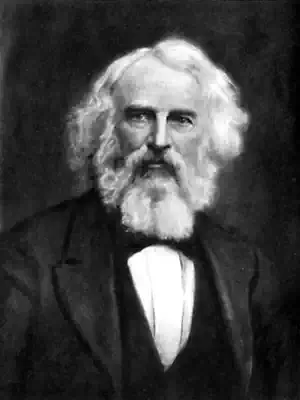
Henry Wadsworth Longfellow
The Hanging Of The Crane
The Hanging Of The Crane
The lights are out, and gone are all the guests
That thronging came with merriment and jests
To celebrate the Hanging of the Crane
In the new house,--into the night are gone;
But still the fire upon the hearth burns on,
And I alone remain.
O fortunate, O happy day,
When a new household finds its place
Among the myriad homes of earth,
Like a new star just sprung to birth,
And rolled on its harmonious way
Into the boundless realms of space!
So said the guests in speech and song,
As in the chimney, burning bright,
We hung the iron crane to-night,
And merry was the feast and long.
II.
And now I sit and muse on what may be,
And in my vision see, or seem to see,
Through floating vapors interfused with light,
Shapes indeterminate, that gleam and fade,
As shadows passing into deeper shade
Sink and elude the sight.
For two alone, there in the hall,
As spread the table round and small;
Upon the polished silver shine
The evening lamps, but, more divine,
The light of love shines over all;
Of love, that says not mine and thine,
But ours, for ours is thine and mine.
They want no guests, to come between
Their tender glances like a screen,
And tell them tales of land and sea,
And whatsoever may betide
The great, forgotten world outside;
They want no guests; they needs must be
Each other's own best company.
III.
The picture fades; as at a village fair
A showman's views, dissolving into air,
Again appear transfigured on the screen,
So in my fancy this; and now once more,
In part transfigured, through the open door
Appears the selfsame scene.
Seated, I see the two again,
But not alone; they entertain
A little angel unaware,
With face as round as is the moon;
A royal guest with flaxen hair,
Who, throned upon his lofty chair,
Drums on the table with his spoon,
Then drops it careless on the floor,
To grasp at things unseen before.
Are these celestial manners? these
The ways that win, the arts that please?
Ah yes; consider well the guest,
And whatsoe'er he does seems best;
He ruleth by the right divine
Of helplessness, so lately born
In purple chambers of the morn,
As sovereign over thee and thine.
He speaketh not; and yet there lies
A conversation in his eyes;
The golden silence of the Greek,
The gravest wisdom of the wise,
Not spoken in language, but in looks
More legible than printed books,
As if he could but would not speak.
And now, O monarch absolute,
Thy power is put to proof; for, lo!
Resistless, fathomless, and slow,
The nurse comes rustling like the sea,
And pushes back thy chair and thee,
And so good night to King Canute.
IV.
As one who walking in a forest sees
A lovely landscape through the parted frees,
Then sees it not, for boughs that intervene
Or as we see the moon sometimes revealed
Through drifting clouds, and then again concealed,
So I behold the scene.
There are two guests at table now;
The king, deposed and older grown,
No longer occupies the throne,--
The crown is on his sister's brow;
A Princess from the Fairy Isles,
The very pattern girl of girls.
All covered and embowered in curls,
Rose-tinted from the Isle of Flowers,
And sailing with soft, silken sails
From far-off Dreamland into ours.
Above their bowls with rims of blue
Four azure eyes of deeper hue
Are looking, dreamy with delight;
Limpid as planets that emerge
Above the ocean's rounded verge,
Soft-shining through the summer night.
Steadfast they gaze, yet nothing see
Beyond the horizon of their bowls;
Nor care they for the world that rolls
With all its freight of troubled souls
Into the days that are to be.
V.
Again the tossing boughs shut out the scene,
Again the drifting vapors intervene,
And the moon's pallid disk is hidden quite;
And now I see the table wider grown,
As round a pebble into water thrown
Dilates a ring of light.
I see the table wider grown,
I see it garlanded with guests,
As if fair Ariadne's Crown
Out of the sky had fallen down;
Maidens within whose tender breasts
A thousand restless hopes and fears,
Forth reaching to the coming years,
Flutter awhile, then quiet lie
Like timid birds that fain would fly,
But do not dare to leave their nests;--
And youths, who in their strength elate
Challenge the van and front of fate,
Eager as champions to be
In the divine knight-errantry
Of youth, that travels sea and land
Seeking adventures, or pursues,
Through cities, and through solitudes
Frequented by the lyric Muse,
The phantom with the beckoning hand,
That still allures and still eludes.
O sweet illusions of the brain!
O sudden thrills of fire and frost!
The world is bright while ye remain,
And dark and dead when ye are lost!
VI.
The meadow-brook, that seemeth to stand still,
Quickens its current as it nears the mill;
And so the stream of Time that lingereth
In level places, and so dull appears,
Runs with a swifter current as it nears
The gloomy mills of Death.
And now, like the magician's scroll,
That in the owner's keeping shrinks
With every wish he speaks or thinks,
Till the last wish consumes the whole,
The table dwindles, and again
I see the two alone remain.
The crown of stars is broken in parts;
Its jewels, brighter than the day,
Have one by one been stolen away
To shine in other homes and hearts.
One is a wanderer now afar
In Ceylon or in Zanzibar,
Or sunny regions of Cathay;
And one is in the boisterous camp
Mid clink of arms and horses' tramp,
And battle's terrible array.
I see the patient mother read,
With aching heart, of wrecks that float
Disabled on those seas remote,
Or of some great heroic deed
On battle-fie1ds where thousands bleed
To lift one hero into fame.
Anxious she bends her graceful head
Above these chronicles of pain,
And trembles with a secret dread
Lest there among the drowned or slain
She find the one beloved name.
VII.
After a day of cloud and wind and rain
Sometimes the setting sun breaks out again,
And touching all the darksome woods with light,
Smiles on the fields, until they laugh and sing,
Then like a ruby from the horizon's ring
Drops down into the night.
What see I now? The night is fair,
The storm of grief, the clouds of care,
The wind, the rain, have passed away;
The lamps are lit, the fires burn bright,
The house is full of life and light:
It is the Golden Wedding day.
The guests come thronging in once more,
Quick footsteps sound along the floor,
The trooping children crowd the stair,
And in and out and everywhere
Flashes along the corridor
The sunshine of their golden hair.
On the round table in the hall
Another Ariadne's Crown
Out of the sky hath fallen down;
More than one Monarch of the Moon
Is drumming with his silver spoon;
The light of love shines over all.
O fortunate, O happy day!
The people sing, the people say.
The ancient bridegroom and the bride,
Smiling contented and serene
Upon the blithe, bewildering scene,
Behold, well pleased, on every side
Their forms and features multiplied,
As the reflection of a light
Between two burnished mirrors gleams,
Or lamps upon a bridge at night
Stretch on and on before the sight,
Till the long vista endless seems.
The lights are out, and gone are all the guests
That thronging came with merriment and jests
To celebrate the Hanging of the Crane
In the new house,--into the night are gone;
But still the fire upon the hearth burns on,
And I alone remain.
O fortunate, O happy day,
When a new household finds its place
Among the myriad homes of earth,
Like a new star just sprung to birth,
And rolled on its harmonious way
Into the boundless realms of space!
So said the guests in speech and song,
As in the chimney, burning bright,
We hung the iron crane to-night,
And merry was the feast and long.
II.
And now I sit and muse on what may be,
And in my vision see, or seem to see,
Through floating vapors interfused with light,
Shapes indeterminate, that gleam and fade,
As shadows passing into deeper shade
Sink and elude the sight.
For two alone, there in the hall,
As spread the table round and small;
Upon the polished silver shine
The evening lamps, but, more divine,
The light of love shines over all;
Of love, that says not mine and thine,
But ours, for ours is thine and mine.
They want no guests, to come between
Their tender glances like a screen,
And tell them tales of land and sea,
And whatsoever may betide
The great, forgotten world outside;
They want no guests; they needs must be
Each other's own best company.
III.
The picture fades; as at a village fair
A showman's views, dissolving into air,
Again appear transfigured on the screen,
So in my fancy this; and now once more,
In part transfigured, through the open door
Appears the selfsame scene.
Seated, I see the two again,
But not alone; they entertain
A little angel unaware,
With face as round as is the moon;
A royal guest with flaxen hair,
Who, throned upon his lofty chair,
Drums on the table with his spoon,
Then drops it careless on the floor,
To grasp at things unseen before.
Are these celestial manners? these
The ways that win, the arts that please?
Ah yes; consider well the guest,
And whatsoe'er he does seems best;
He ruleth by the right divine
Of helplessness, so lately born
In purple chambers of the morn,
As sovereign over thee and thine.
He speaketh not; and yet there lies
A conversation in his eyes;
The golden silence of the Greek,
The gravest wisdom of the wise,
Not spoken in language, but in looks
More legible than printed books,
As if he could but would not speak.
And now, O monarch absolute,
Thy power is put to proof; for, lo!
Resistless, fathomless, and slow,
The nurse comes rustling like the sea,
And pushes back thy chair and thee,
And so good night to King Canute.
IV.
As one who walking in a forest sees
A lovely landscape through the parted frees,
Then sees it not, for boughs that intervene
Or as we see the moon sometimes revealed
Through drifting clouds, and then again concealed,
So I behold the scene.
There are two guests at table now;
The king, deposed and older grown,
No longer occupies the throne,--
The crown is on his sister's brow;
A Princess from the Fairy Isles,
The very pattern girl of girls.
All covered and embowered in curls,
Rose-tinted from the Isle of Flowers,
And sailing with soft, silken sails
From far-off Dreamland into ours.
Above their bowls with rims of blue
Four azure eyes of deeper hue
Are looking, dreamy with delight;
Limpid as planets that emerge
Above the ocean's rounded verge,
Soft-shining through the summer night.
Steadfast they gaze, yet nothing see
Beyond the horizon of their bowls;
Nor care they for the world that rolls
With all its freight of troubled souls
Into the days that are to be.
V.
Again the tossing boughs shut out the scene,
Again the drifting vapors intervene,
And the moon's pallid disk is hidden quite;
And now I see the table wider grown,
As round a pebble into water thrown
Dilates a ring of light.
I see the table wider grown,
I see it garlanded with guests,
As if fair Ariadne's Crown
Out of the sky had fallen down;
Maidens within whose tender breasts
A thousand restless hopes and fears,
Forth reaching to the coming years,
Flutter awhile, then quiet lie
Like timid birds that fain would fly,
But do not dare to leave their nests;--
And youths, who in their strength elate
Challenge the van and front of fate,
Eager as champions to be
In the divine knight-errantry
Of youth, that travels sea and land
Seeking adventures, or pursues,
Through cities, and through solitudes
Frequented by the lyric Muse,
The phantom with the beckoning hand,
That still allures and still eludes.
O sweet illusions of the brain!
O sudden thrills of fire and frost!
The world is bright while ye remain,
And dark and dead when ye are lost!
VI.
The meadow-brook, that seemeth to stand still,
Quickens its current as it nears the mill;
And so the stream of Time that lingereth
In level places, and so dull appears,
Runs with a swifter current as it nears
The gloomy mills of Death.
And now, like the magician's scroll,
That in the owner's keeping shrinks
With every wish he speaks or thinks,
Till the last wish consumes the whole,
The table dwindles, and again
I see the two alone remain.
The crown of stars is broken in parts;
Its jewels, brighter than the day,
Have one by one been stolen away
To shine in other homes and hearts.
One is a wanderer now afar
In Ceylon or in Zanzibar,
Or sunny regions of Cathay;
And one is in the boisterous camp
Mid clink of arms and horses' tramp,
And battle's terrible array.
I see the patient mother read,
With aching heart, of wrecks that float
Disabled on those seas remote,
Or of some great heroic deed
On battle-fie1ds where thousands bleed
To lift one hero into fame.
Anxious she bends her graceful head
Above these chronicles of pain,
And trembles with a secret dread
Lest there among the drowned or slain
She find the one beloved name.
VII.
After a day of cloud and wind and rain
Sometimes the setting sun breaks out again,
And touching all the darksome woods with light,
Smiles on the fields, until they laugh and sing,
Then like a ruby from the horizon's ring
Drops down into the night.
What see I now? The night is fair,
The storm of grief, the clouds of care,
The wind, the rain, have passed away;
The lamps are lit, the fires burn bright,
The house is full of life and light:
It is the Golden Wedding day.
The guests come thronging in once more,
Quick footsteps sound along the floor,
The trooping children crowd the stair,
And in and out and everywhere
Flashes along the corridor
The sunshine of their golden hair.
On the round table in the hall
Another Ariadne's Crown
Out of the sky hath fallen down;
More than one Monarch of the Moon
Is drumming with his silver spoon;
The light of love shines over all.
O fortunate, O happy day!
The people sing, the people say.
The ancient bridegroom and the bride,
Smiling contented and serene
Upon the blithe, bewildering scene,
Behold, well pleased, on every side
Their forms and features multiplied,
As the reflection of a light
Between two burnished mirrors gleams,
Or lamps upon a bridge at night
Stretch on and on before the sight,
Till the long vista endless seems.
340
Henry Wadsworth Longfellow
Hiawatha's Wedding-Feast
Hiawatha's Wedding-Feast
You shall hear how Pau-Puk-Keewis,
How the handsome Yenadizze
Danced at Hiawatha's wedding;
How the gentle Chibiabos,
He the sweetest of musicians,
Sang his songs of love and longing;
How Iagoo, the great boaster,
He the marvellous story-teller,
Told his tales of strange adventure,
That the feast might be more joyous,
That the time might pass more gayly,
And the guests be more contented.
Sumptuous was the feast Nokomis
Made at Hiawatha's wedding;
All the bowls were made of bass-wood,
White and polished very smoothly,
All the spoons of horn of bison,
Black and polished very smoothly.
She had sent through all the village
Messengers with wands of willow,
As a sign of invitation,
As a token of the feasting;
And the wedding guests assembled,
Clad in all their richest raiment,
Robes of fur and belts of wampum,
Splendid with their paint and plumage,
Beautiful with beads and tassels.
First they ate the sturgeon, Nahma,
And the pike, the Maskenozha,
Caught and cooked by old Nokomis;
Then on pemican they feasted,
Pemican and buffalo marrow,
Haunch of deer and hump of bison,
Yellow cakes of the Mondamin,
And the wild rice of the river.
But the gracious Hiawatha,
And the lovely Laughing Water,
And the careful old Nokomis,
Tasted not the food before them,
Only waited on the others
Only served their guests in silence.
And when all the guests had finished,
Old Nokomis, brisk and busy,
From an ample pouch of otter,
Filled the red-stone pipes for smoking
With tobacco from the South-land,
Mixed with bark of the red willow,
And with herbs and leaves of fragrance.
Then she said, "O Pau-Puk-Keewis,
Dance for us your merry dances,
Dance the Beggar's Dance to please us,
That the feast may be more joyous,
That the time may pass more gayly,
And our guests be more contented!"
Then the handsome Pau-Puk-Keewis,
He the idle Yenadizze,
He the merry mischief-maker,
Whom the people called the Storm-Fool,
Rose among the guests assembled.
Skilled was he in sports and pastimes,
In the merry dance of snow-shoes,
In the play of quoits and ball-play;
Skilled was he in games of hazard,
In all games of skill and hazard,
Pugasaing, the Bowl and Counters,
Kuntassoo, the Game of Plum-stones.
Though the warriors called him Faint-Heart,
Called him coward, Shaugodaya,
Idler, gambler, Yenadizze,
Little heeded he their jesting,
Little cared he for their insults,
For the women and the maidens
Loved the handsome Pau-Puk-Keewis.
He was dressed in shirt of doeskin,
White and soft, and fringed with ermine,
All inwrought with beads of wampum;
He was dressed in deer-skin leggings,
Fringed with hedgehog quills and ermine,
And in moccasins of buck-skin,
Thick with quills and beads embroidered.
On his head were plumes of swan's down,
On his heels were tails of foxes,
In one hand a fan of feathers,
And a pipe was in the other.
Barred with streaks of red and yellow,
Streaks of blue and bright vermilion,
Shone the face of Pau-Puk-Keewis.
From his forehead fell his tresses,
Smooth, and parted like a woman's,
Shining bright with oil, and plaited,
Hung with braids of scented grasses,
As among the guests assembled,
To the sound of flutes and singing,
To the sound of drums and voices,
Rose the handsome Pau-Puk-Keewis,
And began his mystic dances.
First he danced a solemn measure,
Very slow in step and gesture,
In and out among the pine-trees,
Through the shadows and the sunshine,
Treading softly like a panther.
Then more swiftly and still swifter,
Whirling, spinning round in circles,
Leaping o'er the guests assembled,
Eddying round and round the wigwam,
Till the leaves went whirling with him,
Till the dust and wind together
Swept in eddies round about him.
Then along the sandy margin
Of the lake, the Big-Sea-Water,
On he sped with frenzied gestures,
Stamped upon the sand, and tossed it
Wildly in the air around him;
Till the wind became a whirlwind,
Till the sand was blown and sifted
Like great snowdrifts o'er the landscape,
Heaping all the shores with Sand Dunes,
Sand Hills of the Nagow Wudjoo!
Thus the merry Pau-Puk-Keewis
Danced his Beggar's Dance to please them,
And, returning, sat down laughing
There among the guests assembled,
Sat and fanned himself serenely
With his fan of turkey-feathers.
Then they said to Chibiabos,
To the friend of Hiawatha,
To the sweetest of all singers,
To the best of all musicians,
"Sing to us, O Chibiabos!
Songs of love and songs of longing,
That the feast may be more joyous,
That the time may pass more gayly,
And our guests be more contented!"
And the gentle Chibiabos
Sang in accents sweet and tender,
Sang in tones of deep emotion,
Songs of love and songs of longing;
Looking still at Hiawatha,
Looking at fair Laughing Water,
Sang he softly, sang in this wise:
"Onaway! Awake, beloved!
Thou the wild-flower of the forest!
Thou the wild-bird of the prairie!
Thou with eyes so soft and fawn-like!
"If thou only lookest at me,
I am happy, I am happy,
As the lilies of the prairie,
When they feel the dew upon them!
"Sweet thy breath is as the fragrance
Of the wild-flowers in the morning,
As their fragrance is at evening,
In the Moon when leaves are falling.
"Does not all the blood within me
Leap to meet thee, leap to meet thee,
As the springs to meet the sunshine,
In the Moon when nights are brightest?
"Onaway! my heart sings to thee,
Sings with joy when thou art near me,
As the sighing, singing branches
In the pleasant Moon of Strawberries!
"When thou art not pleased, beloved,
Then my heart is sad and darkened,
As the shining river darkens
When the clouds drop shadows on it!
"When thou smilest, my beloved,
Then my troubled heart is brightened,
As in sunshine gleam the ripples
That the cold wind makes in rivers.
"Smiles the earth, and smile the waters,
Smile the cloudless skies above us,
But I lose the way of smiling
When thou art no longer near me!
"I myself, myself! behold me!
Blood of my beating heart, behold me!
Oh awake, awake, beloved!
Onaway! awake, beloved!"
Thus the gentle Chibiabos
Sang his song of love and longing;
And Iagoo, the great boaster,
He the marvellous story-teller,
He the friend of old Nokomis,
Jealous of the sweet musician,
Jealous of the applause they gave him,
Saw in all the eyes around him,
Saw in all their looks and gestures,
That the wedding guests assembled
Longed to hear his pleasant stories,
His immeasurable falsehoods.
Very boastful was Iagoo;
Never heard he an adventure
But himself had met a greater;
Never any deed of daring
But himself had done a bolder;
Never any marvellous story
But himself could tell a stranger.
Would you listen to his boasting,
Would you only give him credence,
No one ever shot an arrow
Half so far and high as he had;
Ever caught so many fishes,
Ever killed so many reindeer,
Ever trapped so many beaver!
None could run so fast as he could,
None could dive so deep as he could,
None could swim so far as he could;
None had made so many journeys,
None had seen so many wonders,
As this wonderful Iagoo,
As this marvellous story-teller!
Thus his name became a by-word
And a jest among the people;
And whene'er a boastful hunter
Praised his own address too highly,
Or a warrior, home returning,
Talked too much of his achievements,
All his hearers cried, "Iagoo!
Here's Iagoo come among us!"
He it was who carved the cradle
Of the little Hiawatha,
Carved its framework out of linden,
Bound it strong with reindeer sinews;
He it was who taught him later
How to make his bows and arrows,
How to make the bows of ash-tree,
And the arrows of the oak-tree.
So among the guests assembled
At my Hiawatha's wedding
Sat Iagoo, old and ugly,
Sat the marvellous story-teller.
And they said, "O good Iagoo,
Tell us now a tale of wonder,
Tell us of some strange adventure,
That the feast may be more joyous,
That the time may pass more gayly,
And our guests be more contented!"
And Iagoo answered straightway,
"You shall hear a tale of wonder,
You shall hear the strange adventures
Of Osseo, the Magician,
From the Evening Star descending."
You shall hear how Pau-Puk-Keewis,
How the handsome Yenadizze
Danced at Hiawatha's wedding;
How the gentle Chibiabos,
He the sweetest of musicians,
Sang his songs of love and longing;
How Iagoo, the great boaster,
He the marvellous story-teller,
Told his tales of strange adventure,
That the feast might be more joyous,
That the time might pass more gayly,
And the guests be more contented.
Sumptuous was the feast Nokomis
Made at Hiawatha's wedding;
All the bowls were made of bass-wood,
White and polished very smoothly,
All the spoons of horn of bison,
Black and polished very smoothly.
She had sent through all the village
Messengers with wands of willow,
As a sign of invitation,
As a token of the feasting;
And the wedding guests assembled,
Clad in all their richest raiment,
Robes of fur and belts of wampum,
Splendid with their paint and plumage,
Beautiful with beads and tassels.
First they ate the sturgeon, Nahma,
And the pike, the Maskenozha,
Caught and cooked by old Nokomis;
Then on pemican they feasted,
Pemican and buffalo marrow,
Haunch of deer and hump of bison,
Yellow cakes of the Mondamin,
And the wild rice of the river.
But the gracious Hiawatha,
And the lovely Laughing Water,
And the careful old Nokomis,
Tasted not the food before them,
Only waited on the others
Only served their guests in silence.
And when all the guests had finished,
Old Nokomis, brisk and busy,
From an ample pouch of otter,
Filled the red-stone pipes for smoking
With tobacco from the South-land,
Mixed with bark of the red willow,
And with herbs and leaves of fragrance.
Then she said, "O Pau-Puk-Keewis,
Dance for us your merry dances,
Dance the Beggar's Dance to please us,
That the feast may be more joyous,
That the time may pass more gayly,
And our guests be more contented!"
Then the handsome Pau-Puk-Keewis,
He the idle Yenadizze,
He the merry mischief-maker,
Whom the people called the Storm-Fool,
Rose among the guests assembled.
Skilled was he in sports and pastimes,
In the merry dance of snow-shoes,
In the play of quoits and ball-play;
Skilled was he in games of hazard,
In all games of skill and hazard,
Pugasaing, the Bowl and Counters,
Kuntassoo, the Game of Plum-stones.
Though the warriors called him Faint-Heart,
Called him coward, Shaugodaya,
Idler, gambler, Yenadizze,
Little heeded he their jesting,
Little cared he for their insults,
For the women and the maidens
Loved the handsome Pau-Puk-Keewis.
He was dressed in shirt of doeskin,
White and soft, and fringed with ermine,
All inwrought with beads of wampum;
He was dressed in deer-skin leggings,
Fringed with hedgehog quills and ermine,
And in moccasins of buck-skin,
Thick with quills and beads embroidered.
On his head were plumes of swan's down,
On his heels were tails of foxes,
In one hand a fan of feathers,
And a pipe was in the other.
Barred with streaks of red and yellow,
Streaks of blue and bright vermilion,
Shone the face of Pau-Puk-Keewis.
From his forehead fell his tresses,
Smooth, and parted like a woman's,
Shining bright with oil, and plaited,
Hung with braids of scented grasses,
As among the guests assembled,
To the sound of flutes and singing,
To the sound of drums and voices,
Rose the handsome Pau-Puk-Keewis,
And began his mystic dances.
First he danced a solemn measure,
Very slow in step and gesture,
In and out among the pine-trees,
Through the shadows and the sunshine,
Treading softly like a panther.
Then more swiftly and still swifter,
Whirling, spinning round in circles,
Leaping o'er the guests assembled,
Eddying round and round the wigwam,
Till the leaves went whirling with him,
Till the dust and wind together
Swept in eddies round about him.
Then along the sandy margin
Of the lake, the Big-Sea-Water,
On he sped with frenzied gestures,
Stamped upon the sand, and tossed it
Wildly in the air around him;
Till the wind became a whirlwind,
Till the sand was blown and sifted
Like great snowdrifts o'er the landscape,
Heaping all the shores with Sand Dunes,
Sand Hills of the Nagow Wudjoo!
Thus the merry Pau-Puk-Keewis
Danced his Beggar's Dance to please them,
And, returning, sat down laughing
There among the guests assembled,
Sat and fanned himself serenely
With his fan of turkey-feathers.
Then they said to Chibiabos,
To the friend of Hiawatha,
To the sweetest of all singers,
To the best of all musicians,
"Sing to us, O Chibiabos!
Songs of love and songs of longing,
That the feast may be more joyous,
That the time may pass more gayly,
And our guests be more contented!"
And the gentle Chibiabos
Sang in accents sweet and tender,
Sang in tones of deep emotion,
Songs of love and songs of longing;
Looking still at Hiawatha,
Looking at fair Laughing Water,
Sang he softly, sang in this wise:
"Onaway! Awake, beloved!
Thou the wild-flower of the forest!
Thou the wild-bird of the prairie!
Thou with eyes so soft and fawn-like!
"If thou only lookest at me,
I am happy, I am happy,
As the lilies of the prairie,
When they feel the dew upon them!
"Sweet thy breath is as the fragrance
Of the wild-flowers in the morning,
As their fragrance is at evening,
In the Moon when leaves are falling.
"Does not all the blood within me
Leap to meet thee, leap to meet thee,
As the springs to meet the sunshine,
In the Moon when nights are brightest?
"Onaway! my heart sings to thee,
Sings with joy when thou art near me,
As the sighing, singing branches
In the pleasant Moon of Strawberries!
"When thou art not pleased, beloved,
Then my heart is sad and darkened,
As the shining river darkens
When the clouds drop shadows on it!
"When thou smilest, my beloved,
Then my troubled heart is brightened,
As in sunshine gleam the ripples
That the cold wind makes in rivers.
"Smiles the earth, and smile the waters,
Smile the cloudless skies above us,
But I lose the way of smiling
When thou art no longer near me!
"I myself, myself! behold me!
Blood of my beating heart, behold me!
Oh awake, awake, beloved!
Onaway! awake, beloved!"
Thus the gentle Chibiabos
Sang his song of love and longing;
And Iagoo, the great boaster,
He the marvellous story-teller,
He the friend of old Nokomis,
Jealous of the sweet musician,
Jealous of the applause they gave him,
Saw in all the eyes around him,
Saw in all their looks and gestures,
That the wedding guests assembled
Longed to hear his pleasant stories,
His immeasurable falsehoods.
Very boastful was Iagoo;
Never heard he an adventure
But himself had met a greater;
Never any deed of daring
But himself had done a bolder;
Never any marvellous story
But himself could tell a stranger.
Would you listen to his boasting,
Would you only give him credence,
No one ever shot an arrow
Half so far and high as he had;
Ever caught so many fishes,
Ever killed so many reindeer,
Ever trapped so many beaver!
None could run so fast as he could,
None could dive so deep as he could,
None could swim so far as he could;
None had made so many journeys,
None had seen so many wonders,
As this wonderful Iagoo,
As this marvellous story-teller!
Thus his name became a by-word
And a jest among the people;
And whene'er a boastful hunter
Praised his own address too highly,
Or a warrior, home returning,
Talked too much of his achievements,
All his hearers cried, "Iagoo!
Here's Iagoo come among us!"
He it was who carved the cradle
Of the little Hiawatha,
Carved its framework out of linden,
Bound it strong with reindeer sinews;
He it was who taught him later
How to make his bows and arrows,
How to make the bows of ash-tree,
And the arrows of the oak-tree.
So among the guests assembled
At my Hiawatha's wedding
Sat Iagoo, old and ugly,
Sat the marvellous story-teller.
And they said, "O good Iagoo,
Tell us now a tale of wonder,
Tell us of some strange adventure,
That the feast may be more joyous,
That the time may pass more gayly,
And our guests be more contented!"
And Iagoo answered straightway,
"You shall hear a tale of wonder,
You shall hear the strange adventures
Of Osseo, the Magician,
From the Evening Star descending."
355
Henry Van Dyke
A Scrap of Paper
A Scrap of Paper
"Will you go to war just for a scrap of paper?" -- Question
of the German Chancellor to the British Ambassador,
August 5, 1914.
A mocking question! Britain's answer came
Swift as the light and searching as the flame.
"Yes, for a scrap of paper we will fight
Till our last breath, and God defend the right!
"A scrap of paper where a name is set
Is strong as duty's pledge and honor's debt.
"A scrap of paper holds for man and wife
The sacrament of love, the bond of life.
"A scrap of paper may be Holy Writ
With God's eternal word to hallow it.
"A scrap of paper binds us both to stand
Defenders of a neutral neighbor land.
"By God, by faith, by honor, yes! We fight
To keep our name upon that paper white."
"Will you go to war just for a scrap of paper?" -- Question
of the German Chancellor to the British Ambassador,
August 5, 1914.
A mocking question! Britain's answer came
Swift as the light and searching as the flame.
"Yes, for a scrap of paper we will fight
Till our last breath, and God defend the right!
"A scrap of paper where a name is set
Is strong as duty's pledge and honor's debt.
"A scrap of paper holds for man and wife
The sacrament of love, the bond of life.
"A scrap of paper may be Holy Writ
With God's eternal word to hallow it.
"A scrap of paper binds us both to stand
Defenders of a neutral neighbor land.
"By God, by faith, by honor, yes! We fight
To keep our name upon that paper white."
354

Henry Lawson
Written Afterwards
Written Afterwards
So the days of my tramping are over,
And the days of my riding are done—
I’m about as content as a rover
Will ever be under the sun;
I write, after reading your letter—
My pipe with old memories rife—
And I feel in a mood that had better
Not meet the true eyes of the wife.
You must never admit a suggestion
That old things are good to recall;
You must never consider the question:
‘Was I happier then, after all?’
You must banish the old hope and sorrow
That make the sad pleasures of life,
You must live for To-day and To-morrow
If you want to be just to the wife.
I have changed since the first day I kissed her.
Which is due—Heaven bless her!—to her;
I’m respected and trusted—I’m ‘Mister,’
Addressed by the children as ‘Sir.’
And I feel the respect without feigning—
But you’d laugh the great laugh of your life
If you only saw me entertaining
An old lady friend of the wife.
By-the-way, when you’re writing, remember
That you never went drinking with me,
And forget our last night of December,
Lest our sev’ral accounts disagree.
And, for my sake, old man, you had better
Avoid the old language of strife,
For the technical terms of your letter
May be misunderstood by the wife.
Never hint of the girls appertaining
To the past (when you’re writing again),
For they take such a lot of explaining,
And you know how I hate to explain.
There are some things, we know to our sorrow,
That cut to the heart like a knife,
And your past is To-day and To-morrow
If you want to be true to the wife.
I believe that the creed we were chums in
Was grand, but too abstract and bold,
And the knowledge of life only comes in
When you’re married and fathered and old.
And it’s well. You may travel as few men,
You may stick to a mistress for life;
But the world, as it is, born of woman
Must be seen through the eyes of the wife.
No doubt you are dreaming as I did
And going the careless old pace,
While my future grows dull and decided,
And the world narrows down to the Place.
Let it be. If my ‘treason’s’ resented,
You may do worse, old man, in your life;
Let me dream, too, that I am contented—
For the sake of a true little wife.
So the days of my tramping are over,
And the days of my riding are done—
I’m about as content as a rover
Will ever be under the sun;
I write, after reading your letter—
My pipe with old memories rife—
And I feel in a mood that had better
Not meet the true eyes of the wife.
You must never admit a suggestion
That old things are good to recall;
You must never consider the question:
‘Was I happier then, after all?’
You must banish the old hope and sorrow
That make the sad pleasures of life,
You must live for To-day and To-morrow
If you want to be just to the wife.
I have changed since the first day I kissed her.
Which is due—Heaven bless her!—to her;
I’m respected and trusted—I’m ‘Mister,’
Addressed by the children as ‘Sir.’
And I feel the respect without feigning—
But you’d laugh the great laugh of your life
If you only saw me entertaining
An old lady friend of the wife.
By-the-way, when you’re writing, remember
That you never went drinking with me,
And forget our last night of December,
Lest our sev’ral accounts disagree.
And, for my sake, old man, you had better
Avoid the old language of strife,
For the technical terms of your letter
May be misunderstood by the wife.
Never hint of the girls appertaining
To the past (when you’re writing again),
For they take such a lot of explaining,
And you know how I hate to explain.
There are some things, we know to our sorrow,
That cut to the heart like a knife,
And your past is To-day and To-morrow
If you want to be true to the wife.
I believe that the creed we were chums in
Was grand, but too abstract and bold,
And the knowledge of life only comes in
When you’re married and fathered and old.
And it’s well. You may travel as few men,
You may stick to a mistress for life;
But the world, as it is, born of woman
Must be seen through the eyes of the wife.
No doubt you are dreaming as I did
And going the careless old pace,
While my future grows dull and decided,
And the world narrows down to the Place.
Let it be. If my ‘treason’s’ resented,
You may do worse, old man, in your life;
Let me dream, too, that I am contented—
For the sake of a true little wife.
208
Henry Lawson
Keeping His First Wife Now
Keeping His First Wife Now
IT’S OH! for a rivet in marriage bonds,
And a splice in the knot untied—
The sanctity of the marriage tie
Is growing more sanctified!
They’re getting mixed up in society,
There’s an awful family row,
For Reginald Jones of “The Fernery”
Is “keeping” his first wife now!
Oh! she belonged to the smart, smart set
(Where reasons are far to seek)—
And the wedding and “crush” are remembered yet
As the “smart” things of the week.
Never an atom of love had she,
But they had a child somehow—
And Reginald Jones of “The Fernery”
Has the love of his first wife now.
Mad for “notice” and “talk” was she—
A butterfly blind as a bat—
She would flaunt for a season a divorcee,
Or divorce him, failing that.
He played his part and she held his heart
As light as her marriage vow—
But Reginald Jones of “The Fernery”
Has a hold on his first wife now.
She swore in Court what the world knew false,
With never a thought of shame—
She was free to flaunt to her heart’s content,
But she found it mighty tame:
The talk of the “town” for a week or two—
The gush, the smirk and the bow—
But Reginald Jones of “The Fernery”
Is the God of his first wife now!
Her soul grew sick of the smart, smart set,
Or her conscience drove her wild—
Or she craved for “notice” and “talk” once more—
Or perhaps because of the child;
But they met at last and they met again—
No matter the where or how—
And Reginald Jones of “The Fernery”
Is in love with his first wife now.
’Tis a “terrible life” for the second young wife,
But she married him too for “place”;
And she mustn’t forget that a smarting set
Belongs to the human race.
They say it’s fixed up in camera,
And, if that is the case, I’ll vow,
That Reginald Jones of “The Fernery”
Will marry his first wife now.
And there is a song of the English world
And a song for the English race:
The second husband and second wife
Must ever take second place.
So cherish the best that you find in the first,
And a margin of width allow:
The future looks after itself too well!
Look after the first ones now.
IT’S OH! for a rivet in marriage bonds,
And a splice in the knot untied—
The sanctity of the marriage tie
Is growing more sanctified!
They’re getting mixed up in society,
There’s an awful family row,
For Reginald Jones of “The Fernery”
Is “keeping” his first wife now!
Oh! she belonged to the smart, smart set
(Where reasons are far to seek)—
And the wedding and “crush” are remembered yet
As the “smart” things of the week.
Never an atom of love had she,
But they had a child somehow—
And Reginald Jones of “The Fernery”
Has the love of his first wife now.
Mad for “notice” and “talk” was she—
A butterfly blind as a bat—
She would flaunt for a season a divorcee,
Or divorce him, failing that.
He played his part and she held his heart
As light as her marriage vow—
But Reginald Jones of “The Fernery”
Has a hold on his first wife now.
She swore in Court what the world knew false,
With never a thought of shame—
She was free to flaunt to her heart’s content,
But she found it mighty tame:
The talk of the “town” for a week or two—
The gush, the smirk and the bow—
But Reginald Jones of “The Fernery”
Is the God of his first wife now!
Her soul grew sick of the smart, smart set,
Or her conscience drove her wild—
Or she craved for “notice” and “talk” once more—
Or perhaps because of the child;
But they met at last and they met again—
No matter the where or how—
And Reginald Jones of “The Fernery”
Is in love with his first wife now.
’Tis a “terrible life” for the second young wife,
But she married him too for “place”;
And she mustn’t forget that a smarting set
Belongs to the human race.
They say it’s fixed up in camera,
And, if that is the case, I’ll vow,
That Reginald Jones of “The Fernery”
Will marry his first wife now.
And there is a song of the English world
And a song for the English race:
The second husband and second wife
Must ever take second place.
So cherish the best that you find in the first,
And a margin of width allow:
The future looks after itself too well!
Look after the first ones now.
253
Emily Dickinson
The World-stands-solemner-to me
The World-stands-solemner-to me
493
The World-stands-solemner-to me-
Since I was wed-to Him-
A modesty befits the soul
That bears another's-name-
A doubt-if it be fair-indeed-
To wear that perfect-pearl-
The Man-upon the Woman-binds-
To clasp her soul-for all-
A prayer, that it more angel-prove-
A whiter Gift-within-
To that munificence, that chose-
So unadorned-a Queen-
A Gratitude-that such be true-
It had esteemed the Dream-
Too beautiful-for Shape to prove-
Or posture-to redeem!
493
The World-stands-solemner-to me-
Since I was wed-to Him-
A modesty befits the soul
That bears another's-name-
A doubt-if it be fair-indeed-
To wear that perfect-pearl-
The Man-upon the Woman-binds-
To clasp her soul-for all-
A prayer, that it more angel-prove-
A whiter Gift-within-
To that munificence, that chose-
So unadorned-a Queen-
A Gratitude-that such be true-
It had esteemed the Dream-
Too beautiful-for Shape to prove-
Or posture-to redeem!
210