

Poems in this theme
City and Everyday Life
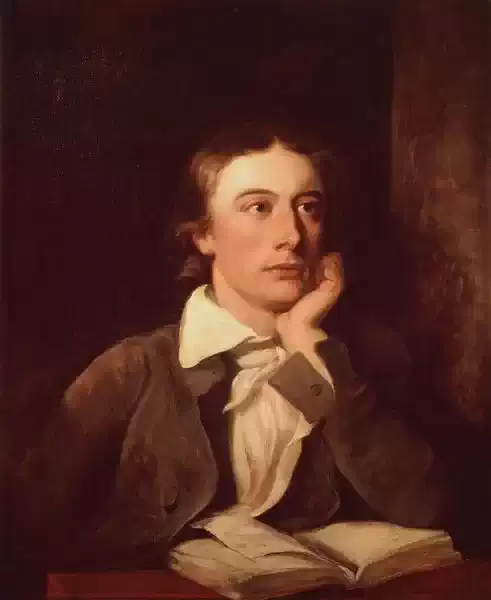
John Keats
To one who has been long in city pent
To one who has been long in city pent
To one who has been long in city pent,
'Tis very sweet to look into the fair
And open face of heaven,--to breathe a prayer
Full in the smile of the blue firmament.
Who is more happy, when, with heart's content,
Fatigued he sinks into some pleasant lair
Of wavy grass, and reads a debonair
And gentle tale of love and languishment?
Returning home at evening, with an ear
Catching the notes of Philomel,--an eye
Watching the sailing cloudlet's bright career,
He mourns that day so soon has glided by:
E'en like the passage of an angel's tear
That falls through the clear ether silently.
To one who has been long in city pent,
'Tis very sweet to look into the fair
And open face of heaven,--to breathe a prayer
Full in the smile of the blue firmament.
Who is more happy, when, with heart's content,
Fatigued he sinks into some pleasant lair
Of wavy grass, and reads a debonair
And gentle tale of love and languishment?
Returning home at evening, with an ear
Catching the notes of Philomel,--an eye
Watching the sailing cloudlet's bright career,
He mourns that day so soon has glided by:
E'en like the passage of an angel's tear
That falls through the clear ether silently.
408
John Keats
Lines Rhymed In A Letter From Oxford
Lines Rhymed In A Letter From Oxford
I.
The Gothic looks solemn,
The plain Doric column
Supports an old Bishop and Crosier;
The mouldering arch,
Shaded o'er by a larch
Stands next door to Wilson the Hosier.
II.
Vice--that is, by turns,-O'er
pale faces mourns
The black tassell'd trencher and common hat;
The Chantry boy sings,
The Steeple-bell rings,
And as for the Chancellor--dominat.
III.
There are plenty of trees,
And plenty of ease,
And plenty of fat deer for Parsons;
And when it is venison,
Short is the benison,--
Then each on a leg or thigh fastens.
I.
The Gothic looks solemn,
The plain Doric column
Supports an old Bishop and Crosier;
The mouldering arch,
Shaded o'er by a larch
Stands next door to Wilson the Hosier.
II.
Vice--that is, by turns,-O'er
pale faces mourns
The black tassell'd trencher and common hat;
The Chantry boy sings,
The Steeple-bell rings,
And as for the Chancellor--dominat.
III.
There are plenty of trees,
And plenty of ease,
And plenty of fat deer for Parsons;
And when it is venison,
Short is the benison,--
Then each on a leg or thigh fastens.
451
John Keats
A Party Of Lovers
A Party Of Lovers
Pensive they sit, and roll their languid eyes,
Nibble their toast, and cool their tea with sighs,
Or else forget the purpose of the night,
Forget their tea -- forget their appetite.
See with cross'd arms they sit -- ah! happy crew,
The fire is going out and no one rings
For coals, and therefore no coals Betty brings.
A fly is in the milk-pot -- must he die
By a humane society?
No, no; there Mr. Werter takes his spoon,
Inserts it, dips the handle, and lo! soon
The little straggler, sav'd from perils dark,
Across the teaboard draws a long wet mark.
Arise! take snuffers by the handle,
There's a large cauliflower in each candle.
A winding-sheet, ah me! I must away
To No. 7, just beyond the circus gay.
'Alas, my friend! your coat sits very well;
Where may your tailor live?' 'I may not tell.
O pardon me -- I'm absent now and then.
Where might my tailor live? I say again
I cannot tell, let me no more be teaz'd --
He lives in Wapping, might live where he pleas'd.'
Pensive they sit, and roll their languid eyes,
Nibble their toast, and cool their tea with sighs,
Or else forget the purpose of the night,
Forget their tea -- forget their appetite.
See with cross'd arms they sit -- ah! happy crew,
The fire is going out and no one rings
For coals, and therefore no coals Betty brings.
A fly is in the milk-pot -- must he die
By a humane society?
No, no; there Mr. Werter takes his spoon,
Inserts it, dips the handle, and lo! soon
The little straggler, sav'd from perils dark,
Across the teaboard draws a long wet mark.
Arise! take snuffers by the handle,
There's a large cauliflower in each candle.
A winding-sheet, ah me! I must away
To No. 7, just beyond the circus gay.
'Alas, my friend! your coat sits very well;
Where may your tailor live?' 'I may not tell.
O pardon me -- I'm absent now and then.
Where might my tailor live? I say again
I cannot tell, let me no more be teaz'd --
He lives in Wapping, might live where he pleas'd.'
447
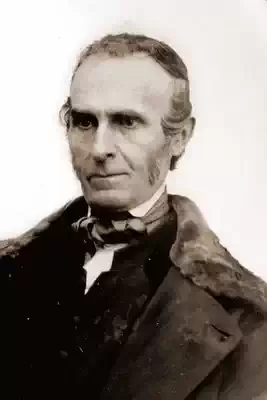
John Greenleaf Whittier
Pentucket
Pentucket
How sweetly on the wood-girt town
The mellow light of sunset shone!
Each small, bright lake, whose waters still
Mirror the forest and the hill,
Reflected from its waveless breast
The beauty of a cloudless west,
Glorious as if a glimpse were given
Within the western gates of heaven,
Left, by the spirit of the star
Of sunset's holy hour, ajar!
Beside the river's tranquil flood
The dark and low-walled dwellings stood,
Where many a rood of open land
Stretched up and down on either hand,
With corn-leaves waving freshly green
The thick and blackened stumps between.
Behind, unbroken, deep and dread,
The wild, untravelled forest spread,
Back to those mountains, white and cold,
Of which the Indian trapper told,
Upon whose summits never yet
Was mortal foot in safety set.
Quiet and calm without a fear,
Of danger darkly lurking near,
The weary laborer left his plough,
The milkmaid carolled by her cow;
From cottage door and household hearth
Rose songs of praise, or tones of mirth.
At length the murmur died away,
And silence on that village lay.
-So slept Pompeii, tower and hall,
Ere the quick earthquake swallowed all,
Undreaming of the fiery fate
Which made its dwellings desolate.
Hours passed away. By moonlight sped
The Merrimac along his bed.
Bathed in the pallid lustre, stood
Dark cottage-wall and rock and wood,
Silent, beneath that tranquil beam,
As the hushed grouping of a dream.
Yet on the still air crept a sound,
No bark of fox, nor rabbit's bound,
Nor stir of wings, nor waters flowing,
Nor leaves in midnight breezes blowing.
Was that the tread of many feet,
Which downward from the hillside beat?
What forms were those which darkly stood
Just on the margin of the wood?Charred
tree-stumps in the moonlight dim,
Or paling rude, or leafless limb?
No,-through the trees fierce eyeballs glowed,
Dark human forms in moonshine showed,
Wild from their native wilderness,
With painted limbs and battle-dress.
A yell the dead might wake to hear
Swelled on the night air, far and clear;
Then smote the Indian tomahawk
On crashing door and shattering lock;
Then rang the rifle-shot, and then
The shrill death-scream of stricken men,Sank
the red axe in woman's brain,
And childhood's cry arose in vain.
Bursting through roof and window came,
Red, fast, and fierce, the kindled flame,
And blended fire and moonlight glared
On still dead men and scalp-knives bared.
The morning sun looked brightly through
The river willows, wet with dew.
No sound of combat filled the air,
No shout was heard, nor gunshot there;
Yet still the thick and sullen smoke
From smouldering ruins slowly broke;
And on the greensward many a stain,
And, here and there, the mangled slain,
Told how that midnight bolt had sped
Pentucket, on thy fated head.
Even now the villager can tell
Where Rolfe beside his hearthstone fell,
Still show the door of wasting oak,
Through which the fatal death-shot broke,
And point the curious stranger where
De Rouville's corse lay grim and bare;
Whose hideous head, in death still feared,
Bore not a trace of hair or beard;
And still, within the churchyard ground,
Heaves darkly up the ancient mound,
Whose grass-grown surface overlies
The victims of that sacrifice.
How sweetly on the wood-girt town
The mellow light of sunset shone!
Each small, bright lake, whose waters still
Mirror the forest and the hill,
Reflected from its waveless breast
The beauty of a cloudless west,
Glorious as if a glimpse were given
Within the western gates of heaven,
Left, by the spirit of the star
Of sunset's holy hour, ajar!
Beside the river's tranquil flood
The dark and low-walled dwellings stood,
Where many a rood of open land
Stretched up and down on either hand,
With corn-leaves waving freshly green
The thick and blackened stumps between.
Behind, unbroken, deep and dread,
The wild, untravelled forest spread,
Back to those mountains, white and cold,
Of which the Indian trapper told,
Upon whose summits never yet
Was mortal foot in safety set.
Quiet and calm without a fear,
Of danger darkly lurking near,
The weary laborer left his plough,
The milkmaid carolled by her cow;
From cottage door and household hearth
Rose songs of praise, or tones of mirth.
At length the murmur died away,
And silence on that village lay.
-So slept Pompeii, tower and hall,
Ere the quick earthquake swallowed all,
Undreaming of the fiery fate
Which made its dwellings desolate.
Hours passed away. By moonlight sped
The Merrimac along his bed.
Bathed in the pallid lustre, stood
Dark cottage-wall and rock and wood,
Silent, beneath that tranquil beam,
As the hushed grouping of a dream.
Yet on the still air crept a sound,
No bark of fox, nor rabbit's bound,
Nor stir of wings, nor waters flowing,
Nor leaves in midnight breezes blowing.
Was that the tread of many feet,
Which downward from the hillside beat?
What forms were those which darkly stood
Just on the margin of the wood?Charred
tree-stumps in the moonlight dim,
Or paling rude, or leafless limb?
No,-through the trees fierce eyeballs glowed,
Dark human forms in moonshine showed,
Wild from their native wilderness,
With painted limbs and battle-dress.
A yell the dead might wake to hear
Swelled on the night air, far and clear;
Then smote the Indian tomahawk
On crashing door and shattering lock;
Then rang the rifle-shot, and then
The shrill death-scream of stricken men,Sank
the red axe in woman's brain,
And childhood's cry arose in vain.
Bursting through roof and window came,
Red, fast, and fierce, the kindled flame,
And blended fire and moonlight glared
On still dead men and scalp-knives bared.
The morning sun looked brightly through
The river willows, wet with dew.
No sound of combat filled the air,
No shout was heard, nor gunshot there;
Yet still the thick and sullen smoke
From smouldering ruins slowly broke;
And on the greensward many a stain,
And, here and there, the mangled slain,
Told how that midnight bolt had sped
Pentucket, on thy fated head.
Even now the villager can tell
Where Rolfe beside his hearthstone fell,
Still show the door of wasting oak,
Through which the fatal death-shot broke,
And point the curious stranger where
De Rouville's corse lay grim and bare;
Whose hideous head, in death still feared,
Bore not a trace of hair or beard;
And still, within the churchyard ground,
Heaves darkly up the ancient mound,
Whose grass-grown surface overlies
The victims of that sacrifice.
304
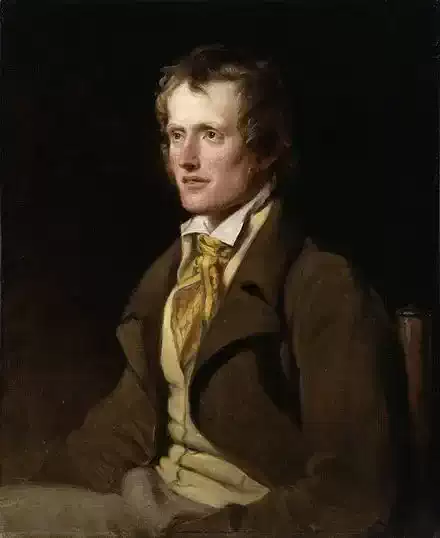
John Clare
The Lout
The Lout
For Sunday's play he never makes excuse,
But plays at taw, and buys his Spanish juice.
Hard as his toil, and ever slow to speak,
Yet he gives maidens many a burning cheek;
For none can pass him but his witless grace
Of bawdry brings the blushes in her face.
As vulgar as the dirt he treads upon
He calls his cows or drives his horses on;
He knows the lamest cow and strokes her side
And often tries to mount her back and ride,
And takes her tail at night in idle play,
And makes her drag him homeward all the way.
He knows of nothing but the football match,
And where hens lay, and when the duck will hatch.
For Sunday's play he never makes excuse,
But plays at taw, and buys his Spanish juice.
Hard as his toil, and ever slow to speak,
Yet he gives maidens many a burning cheek;
For none can pass him but his witless grace
Of bawdry brings the blushes in her face.
As vulgar as the dirt he treads upon
He calls his cows or drives his horses on;
He knows the lamest cow and strokes her side
And often tries to mount her back and ride,
And takes her tail at night in idle play,
And makes her drag him homeward all the way.
He knows of nothing but the football match,
And where hens lay, and when the duck will hatch.
397
John Clare
Market Day
Market Day
With arms and legs at work and gentle stroke
That urges switching tail nor mends his pace,
On an old ribbed and weather beaten horse,
The farmer goes jogtrotting to the fair.
Both keep their pace that nothing can provoke
Followed by brindled dog that snuffs the ground
With urging bark and hurries at his heels.
His hat slouched down, and great coat buttoned close
Bellied like hooped keg, and chuffy face
Red as the morning sun, he takes his round
And talks of stock: and when his jobs are done
And Dobbin's hay is eaten from the rack,
He drinks success to corn in language hoarse,
And claps old Dobbin's hide, and potters back.
With arms and legs at work and gentle stroke
That urges switching tail nor mends his pace,
On an old ribbed and weather beaten horse,
The farmer goes jogtrotting to the fair.
Both keep their pace that nothing can provoke
Followed by brindled dog that snuffs the ground
With urging bark and hurries at his heels.
His hat slouched down, and great coat buttoned close
Bellied like hooped keg, and chuffy face
Red as the morning sun, he takes his round
And talks of stock: and when his jobs are done
And Dobbin's hay is eaten from the rack,
He drinks success to corn in language hoarse,
And claps old Dobbin's hide, and potters back.
409
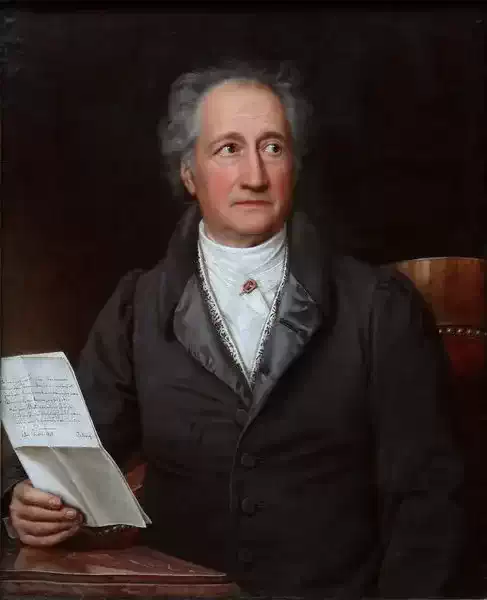
Johann Wolfgang von Goethe
Roman Elegies I
Roman Elegies I
Tell me you stones, O speak, you towering palaces!
Streets, say a word! Spirit of this place, are you dumb?
All things are alive in your sacred walls
eternal Rome, only for me all’s still.
Who will whisper to me, at what window
will I see the sweet thing who will kindle me, and quicken?
Already I guess the ways, walking to her and from her,
ever and always I’ll go, while sweet time slips by.
I’m gazing at church and palace, ruin and column,
like a serious man making sensible use of a journey,
but soon it will happen, and all will be one vast temple,
Love’s temple, receiving its new initiate.
Though you are a whole world, Rome, still, without Love,
the world’s not the world, Rome cannot be Rome.
Tell me you stones, O speak, you towering palaces!
Streets, say a word! Spirit of this place, are you dumb?
All things are alive in your sacred walls
eternal Rome, only for me all’s still.
Who will whisper to me, at what window
will I see the sweet thing who will kindle me, and quicken?
Already I guess the ways, walking to her and from her,
ever and always I’ll go, while sweet time slips by.
I’m gazing at church and palace, ruin and column,
like a serious man making sensible use of a journey,
but soon it will happen, and all will be one vast temple,
Love’s temple, receiving its new initiate.
Though you are a whole world, Rome, still, without Love,
the world’s not the world, Rome cannot be Rome.
411
Johann Wolfgang von Goethe
Hermann And Dorothea - III. Thalia
Hermann And Dorothea - III. Thalia
THE BURGHERS.
THUS did the prudent son escape from the hot conversation,
But the father continued precisely as he had begun it
What is not in a man can never come out of him, surely!
Never, I fear, shall I see fulfill'd my dearest of wishes,
That my son should be unlike his father, but better.
What would be the fate of a house or a town, if its inmates
Did not all take pride in preserving, renewing, improving,
As we are taught by the age, and by the wisdom of strangers?
Man is not born to spring out of the ground, just like a mere mushroom,
And to rot away soon in the very place that produced him!
Leaving behind him no trace of what he has done in his lifetime.
One can judge by the look of a house of the taste of its master,
As on ent'ring a town, one can judge the authorities' fitness.
For where the towers and walls are falling, where in the ditches
Dirt is collected, and dirt in every street is seen lying,
Where the stones come out of their groove, and are not replaced there,
Where the beams are rotting, and vainly the houses are waiting
New supports; that town is sure to be wretchedly managed.
For where order and cleanliness reign not supreme in high places,
Then to dirt and delay the citizens soon get accustom'd,
Just as the beggar's accustom'd to wear his cloths full of tatters.
Therefore I often have wish'd that Hermann would start on his travels
Ere he's much older, and visit at any rate Strasburg and Frankfort,
And that pleasant town, Mannheim, so evenly built and so cheerful.
He who has seen such large and cleanly cities rests never
Till his own native town, however small, he sees better'd.
Do not all strangers who visit us praise our well-mended gateways,
And the well-whited tower, the church so neatly repair'd too?
Do not all praise our pavements? Our well-arranged cover'd-in conduits,
Always well furnish'd with water, utility blending with safety,
So that a fire, whenever it happens, is straightway extinguish'd,--
Is not this the result of that conflagration so dreadful?
Six times in Council I superintended the town's works, receiving
Hearty thanks and assistance from every well-disposed burgher.
How I design'd, follow'd up, and ensured the completion of measures
Worthy men had projected, and afterwards left all unfinish'd!
Finally, every man in the Council took pleasure in working.
All put forth their exertions, and now they have finally settled
That new highway to make, which will join our town with the main road.
But I am greatly afraid that the young generation won't act thus;
Some on the one hand think only of pleasure and trumpery dresses,
Others wont stir out of doors, and pass all their time by the fireside,
And our Hermann, I fear, will always be one of this last sort.'
Forthwith to him replied the excellent sensible mother
'Father, you're always unjust whenever you speak of your son, and
That is the least likely way to obtain your wishes' fulfillment,
For we cannot fashion our children after our fancy.
We must have them and love them, as God has given them to us,
Bring them up for the best, and let each do as he listeth.
One has one kind of gift, another possesses another,
Each one employs them, and each in turn in his separate fashion
Good and happy becomes. My Hermann shall not be upbraided,
For I know that he well deserves the wealth he'll inherit;
He'll be an excellent landlord, a pattern to burghers and peasants,
And, as I clearly foresee, by no means the last in the Council.
But with your blame and reproaches, you daily dishearten him sadly,
As you have done just now, and make the poor fellow unhappy.'
Then she left the apartment, and after her son hasten'd quickly,
Hoping somewhere to find him, and with her words of affection
Gladden his heart, for he, the excellent son, well deserved it.
Smilingly, when she had closed the door, continued the father
'What a wonderful race of people are women and children.
All of them fain would do whatever pleases their fancy,
And we're only alow'd to praise them and flatter them freely.
Once for all there's truth in the ancient proverb which tells us:
He who moves not forward, goes backward! a capital saying!'
Speaking with much circumspection, the druggist made answer as follows
'What you say, good neighbour, is certainly true, and my plan is
Always to think of improvement, provided tho' new, 'tis not costly.
But what avails it in truth, unless one has plenty of money,
Active and fussy to he, improving both inside and outside?
Sadly confined are the means of a burgher; e'en when he knows it,
Little that's good he is able to do, his purse is too narrow,
And the sum wanted too great; and so he is always prevented.
I have had plenty of schemes! but then I was terribly frighten'd
At the expense, especially during a time of such danger.
Long had my house smiled upon me, decked out in modish exterior,
Long had my windows with large panes of glass resplendently glitterd.
Who can compete with a merchant, however, who, rolling in riches,
Also knows the manner in which what is best can be purchased?
Only look at the house up yonder, the new one: how handsome
Looks the stucco of those white scrolls on the green-colour'd panels!
Large are the plates of the windows--how shining and brilliant the panes are,
Quite eclipsing the rest of the houses that stand in the market!
Yet at the time of the fire, our two were by far the most handsome,
Mine at the sign of the Angel, and yours at the old Golden Lion.
Then my garden was famous throughout the whole country, and strangers
Used to stop as they pass'd and peep through my red-colourd palings
At my beggars of stone, and at my dwarfs, which were painted,
He to whom I gave coffee inside my beautiful grotto,
Which, alas! is now cover'd with dust and tumbling to pieces,
Used to rejoice in the colour'd glimmering light of the mussels,
Ranged in natural order around it, and connoisseurs even
Used with dazzled eyes to gaze at the spars and the coral.
Then, in the drawing-room, people look'd with delight on the painting,
Where the prim ladies and gentlemen walked in the garden demurely,
And with pointed fingers presented the flowers, and held them.
Ah, if only such things were now to be seen! Little care I
Now to go out; for everything needs to be alter'd and tasteful,
As it is call'd; and white are the benches of wood and the palings;
All things are simple and plain; and neither carving not gilding
Now are employ'd, and foreign timber is now all the fashion.
I should be only too pleased to possess some novelty also,
So as to march with the times, and my household furniture alter.
But we all are afraid to make the least alteration,
For who is able to pay the present charges of workmen?
Lately a fancy possess'd me, the angel Michael, whose figure
Hangs up over my shop, to treat to a new coat of gilding,
And the terrible Dragon, who round his feet is entwining;
But I have left him all brown; as he is; for the cost quite alarm'd me.'
THE BURGHERS.
THUS did the prudent son escape from the hot conversation,
But the father continued precisely as he had begun it
What is not in a man can never come out of him, surely!
Never, I fear, shall I see fulfill'd my dearest of wishes,
That my son should be unlike his father, but better.
What would be the fate of a house or a town, if its inmates
Did not all take pride in preserving, renewing, improving,
As we are taught by the age, and by the wisdom of strangers?
Man is not born to spring out of the ground, just like a mere mushroom,
And to rot away soon in the very place that produced him!
Leaving behind him no trace of what he has done in his lifetime.
One can judge by the look of a house of the taste of its master,
As on ent'ring a town, one can judge the authorities' fitness.
For where the towers and walls are falling, where in the ditches
Dirt is collected, and dirt in every street is seen lying,
Where the stones come out of their groove, and are not replaced there,
Where the beams are rotting, and vainly the houses are waiting
New supports; that town is sure to be wretchedly managed.
For where order and cleanliness reign not supreme in high places,
Then to dirt and delay the citizens soon get accustom'd,
Just as the beggar's accustom'd to wear his cloths full of tatters.
Therefore I often have wish'd that Hermann would start on his travels
Ere he's much older, and visit at any rate Strasburg and Frankfort,
And that pleasant town, Mannheim, so evenly built and so cheerful.
He who has seen such large and cleanly cities rests never
Till his own native town, however small, he sees better'd.
Do not all strangers who visit us praise our well-mended gateways,
And the well-whited tower, the church so neatly repair'd too?
Do not all praise our pavements? Our well-arranged cover'd-in conduits,
Always well furnish'd with water, utility blending with safety,
So that a fire, whenever it happens, is straightway extinguish'd,--
Is not this the result of that conflagration so dreadful?
Six times in Council I superintended the town's works, receiving
Hearty thanks and assistance from every well-disposed burgher.
How I design'd, follow'd up, and ensured the completion of measures
Worthy men had projected, and afterwards left all unfinish'd!
Finally, every man in the Council took pleasure in working.
All put forth their exertions, and now they have finally settled
That new highway to make, which will join our town with the main road.
But I am greatly afraid that the young generation won't act thus;
Some on the one hand think only of pleasure and trumpery dresses,
Others wont stir out of doors, and pass all their time by the fireside,
And our Hermann, I fear, will always be one of this last sort.'
Forthwith to him replied the excellent sensible mother
'Father, you're always unjust whenever you speak of your son, and
That is the least likely way to obtain your wishes' fulfillment,
For we cannot fashion our children after our fancy.
We must have them and love them, as God has given them to us,
Bring them up for the best, and let each do as he listeth.
One has one kind of gift, another possesses another,
Each one employs them, and each in turn in his separate fashion
Good and happy becomes. My Hermann shall not be upbraided,
For I know that he well deserves the wealth he'll inherit;
He'll be an excellent landlord, a pattern to burghers and peasants,
And, as I clearly foresee, by no means the last in the Council.
But with your blame and reproaches, you daily dishearten him sadly,
As you have done just now, and make the poor fellow unhappy.'
Then she left the apartment, and after her son hasten'd quickly,
Hoping somewhere to find him, and with her words of affection
Gladden his heart, for he, the excellent son, well deserved it.
Smilingly, when she had closed the door, continued the father
'What a wonderful race of people are women and children.
All of them fain would do whatever pleases their fancy,
And we're only alow'd to praise them and flatter them freely.
Once for all there's truth in the ancient proverb which tells us:
He who moves not forward, goes backward! a capital saying!'
Speaking with much circumspection, the druggist made answer as follows
'What you say, good neighbour, is certainly true, and my plan is
Always to think of improvement, provided tho' new, 'tis not costly.
But what avails it in truth, unless one has plenty of money,
Active and fussy to he, improving both inside and outside?
Sadly confined are the means of a burgher; e'en when he knows it,
Little that's good he is able to do, his purse is too narrow,
And the sum wanted too great; and so he is always prevented.
I have had plenty of schemes! but then I was terribly frighten'd
At the expense, especially during a time of such danger.
Long had my house smiled upon me, decked out in modish exterior,
Long had my windows with large panes of glass resplendently glitterd.
Who can compete with a merchant, however, who, rolling in riches,
Also knows the manner in which what is best can be purchased?
Only look at the house up yonder, the new one: how handsome
Looks the stucco of those white scrolls on the green-colour'd panels!
Large are the plates of the windows--how shining and brilliant the panes are,
Quite eclipsing the rest of the houses that stand in the market!
Yet at the time of the fire, our two were by far the most handsome,
Mine at the sign of the Angel, and yours at the old Golden Lion.
Then my garden was famous throughout the whole country, and strangers
Used to stop as they pass'd and peep through my red-colourd palings
At my beggars of stone, and at my dwarfs, which were painted,
He to whom I gave coffee inside my beautiful grotto,
Which, alas! is now cover'd with dust and tumbling to pieces,
Used to rejoice in the colour'd glimmering light of the mussels,
Ranged in natural order around it, and connoisseurs even
Used with dazzled eyes to gaze at the spars and the coral.
Then, in the drawing-room, people look'd with delight on the painting,
Where the prim ladies and gentlemen walked in the garden demurely,
And with pointed fingers presented the flowers, and held them.
Ah, if only such things were now to be seen! Little care I
Now to go out; for everything needs to be alter'd and tasteful,
As it is call'd; and white are the benches of wood and the palings;
All things are simple and plain; and neither carving not gilding
Now are employ'd, and foreign timber is now all the fashion.
I should be only too pleased to possess some novelty also,
So as to march with the times, and my household furniture alter.
But we all are afraid to make the least alteration,
For who is able to pay the present charges of workmen?
Lately a fancy possess'd me, the angel Michael, whose figure
Hangs up over my shop, to treat to a new coat of gilding,
And the terrible Dragon, who round his feet is entwining;
But I have left him all brown; as he is; for the cost quite alarm'd me.'
346
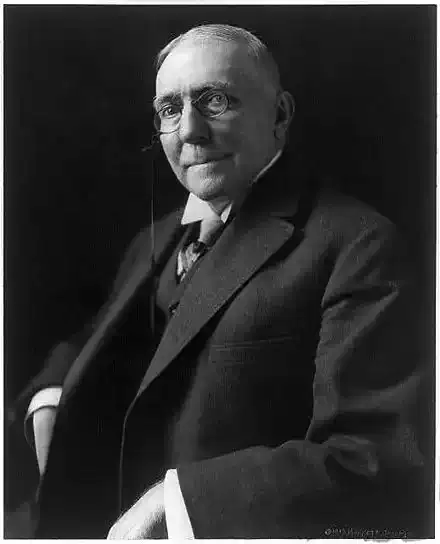
James Whitcomb Riley
The Town Karnteel
The Town Karnteel
The Town Karnteel--! It's who'll reveal
Its praises jushtifiable?
For who can sing av anything
So lovely and reliable?
Whin Summer, Spring, or Winter lies
From Malin's Head to Tipperary,
There's no such town for interprise
Bechuxt Youghal and Londonderry!
There's not its likes in Ireland--
For twic't the week, be gorries!
They're playing jigs upon the band,
And joomping there in sacks-- and-- and--
And racing, wid wheelborries!
Kanteel-- it's there, like any fair,
The purty gurrls is plinty, sure--!
And man-alive! At forty-five
The leg's av me air twinty, sure!
I lave me cares, and hoein' too,
Behint me, as is sinsible,
And it's Karnteel I'm goin' to,
To cilebrate in principle!
For there's the town av all the land!
And twic't the week, be-gorries!
They're playing jigs upon the band,
And joomping there in sacks-- and-- and--
And racing, wid wheelborries!
And whilst I feel for owld Karnteel
That I've no phrases glorious,
It stands above the need av love
That boasts in voice uproarious--!
Lave that for Cork, and Dublin too,
And Armagh and Killarney thin--,
And Karnteel won't be troublin' you
Wid any jilous blarney, thin!
For there's the town av all the land
Where twic't the week, be-gorries!
They're playing jigs upon the band,
And joomping there in sacks-- and-- and--
And racing, wid wheelborries!
The Town Karnteel--! It's who'll reveal
Its praises jushtifiable?
For who can sing av anything
So lovely and reliable?
Whin Summer, Spring, or Winter lies
From Malin's Head to Tipperary,
There's no such town for interprise
Bechuxt Youghal and Londonderry!
There's not its likes in Ireland--
For twic't the week, be gorries!
They're playing jigs upon the band,
And joomping there in sacks-- and-- and--
And racing, wid wheelborries!
Kanteel-- it's there, like any fair,
The purty gurrls is plinty, sure--!
And man-alive! At forty-five
The leg's av me air twinty, sure!
I lave me cares, and hoein' too,
Behint me, as is sinsible,
And it's Karnteel I'm goin' to,
To cilebrate in principle!
For there's the town av all the land!
And twic't the week, be-gorries!
They're playing jigs upon the band,
And joomping there in sacks-- and-- and--
And racing, wid wheelborries!
And whilst I feel for owld Karnteel
That I've no phrases glorious,
It stands above the need av love
That boasts in voice uproarious--!
Lave that for Cork, and Dublin too,
And Armagh and Killarney thin--,
And Karnteel won't be troublin' you
Wid any jilous blarney, thin!
For there's the town av all the land
Where twic't the week, be-gorries!
They're playing jigs upon the band,
And joomping there in sacks-- and-- and--
And racing, wid wheelborries!
286
James Whitcomb Riley
The Little Town O' Tailholt
The Little Town O' Tailholt
You kin boast about yer cities, and their stiddy growth and size,
And brag about yer County-seats, and business enterprise,
And railroads, and factories, and all sich foolery--
But the little Town o' Tailholt is big enough fer me!
You kin harp about yer churches, with their steeples in the clouds,
And gas about yer graded streets, and blow about yer crowds;
You kin talk about yer 'theaters,' and all you've got to see--
But the little Town o' Tailholt is show enough fer me!
They hain't no style in our town-- hit's little-like and small--
They hain't no 'churches,' nuther--, jes' the meetin' house is all;
They's no sidewalks, to speak of-- but the highway's allus free,
And the little Town o' Tailholt is wide enough fer me!
Some find it discommodin'-like, I'm willin' to admit,
To hev but one post-office, and a womern keepin' hit,
And the drug-store, and shoe-shop, and grocery, all three--
But the little Town o' Tailholt is handy 'nough fer me!
You kin smile and turn yer nose up, and joke and hev yer fun,
And laugh and holler 'Tail-holts is better holts'n none!
Ef the city suits you better w'y, hit's where you'd ort'o be--
But the little Town o' Tailholt's good enough fer me!
You kin boast about yer cities, and their stiddy growth and size,
And brag about yer County-seats, and business enterprise,
And railroads, and factories, and all sich foolery--
But the little Town o' Tailholt is big enough fer me!
You kin harp about yer churches, with their steeples in the clouds,
And gas about yer graded streets, and blow about yer crowds;
You kin talk about yer 'theaters,' and all you've got to see--
But the little Town o' Tailholt is show enough fer me!
They hain't no style in our town-- hit's little-like and small--
They hain't no 'churches,' nuther--, jes' the meetin' house is all;
They's no sidewalks, to speak of-- but the highway's allus free,
And the little Town o' Tailholt is wide enough fer me!
Some find it discommodin'-like, I'm willin' to admit,
To hev but one post-office, and a womern keepin' hit,
And the drug-store, and shoe-shop, and grocery, all three--
But the little Town o' Tailholt is handy 'nough fer me!
You kin smile and turn yer nose up, and joke and hev yer fun,
And laugh and holler 'Tail-holts is better holts'n none!
Ef the city suits you better w'y, hit's where you'd ort'o be--
But the little Town o' Tailholt's good enough fer me!
265
James Whitcomb Riley
Lockerbie Street
Lockerbie Street
Such a dear little street it is, nestled away
From the noise of the city and heat of the day,
In cool shady coverts of whispering trees,
With their leaves lifted up to shake hands with the breeze
Which in all its wide wanderings never may meet
With a resting-place fairer than Lockerbie street!
There is such a relief, from the clangor and din
Of the heart of the town, to go loitering in
Through the dim, narrow walks, with the sheltering shade
Of the trees waving over the long promenade,
And littering lightly the ways of our feet
With the gold of the sunshine of Lockerbie street.
And the nights that come down the dark pathways of dusk,
With the stars in their tresses, and odors of musk
In their moon-woven raiments, bespangled with dews,
And looped up with lilies for lovers to use
In the songs that they sing to the tinkle and beat
Of their sweet serenadings through Lockerbie street.
O my Lockerbie street! You are fair to be seen--
Be it noon of the day, or the rare and serene
Afternoon of the night-- you are one to my heart,
And I love you above all the phrases of art,
For no language could frame and no lips could repeat
My rhyme-haunted raptures of Lockerbie street.
Such a dear little street it is, nestled away
From the noise of the city and heat of the day,
In cool shady coverts of whispering trees,
With their leaves lifted up to shake hands with the breeze
Which in all its wide wanderings never may meet
With a resting-place fairer than Lockerbie street!
There is such a relief, from the clangor and din
Of the heart of the town, to go loitering in
Through the dim, narrow walks, with the sheltering shade
Of the trees waving over the long promenade,
And littering lightly the ways of our feet
With the gold of the sunshine of Lockerbie street.
And the nights that come down the dark pathways of dusk,
With the stars in their tresses, and odors of musk
In their moon-woven raiments, bespangled with dews,
And looped up with lilies for lovers to use
In the songs that they sing to the tinkle and beat
Of their sweet serenadings through Lockerbie street.
O my Lockerbie street! You are fair to be seen--
Be it noon of the day, or the rare and serene
Afternoon of the night-- you are one to my heart,
And I love you above all the phrases of art,
For no language could frame and no lips could repeat
My rhyme-haunted raptures of Lockerbie street.
322

Jack Kerouac
Trees
Trees
But a tree has
a long suffering shapeIs
spread in half
by 2 limbed fate
Rises from gray rain
pavements
To traffic in the bleak
brown air
Of cities radar television
nameless dumb &numb mis connicumb
Throwing twigs the
color of ink To white souled
heaven, with
A reality of its own uses
But a tree has
a long suffering shapeIs
spread in half
by 2 limbed fate
Rises from gray rain
pavements
To traffic in the bleak
brown air
Of cities radar television
nameless dumb &numb mis connicumb
Throwing twigs the
color of ink To white souled
heaven, with
A reality of its own uses
373
Jack Kerouac
th Chorus Mexico City Blues
th Chorus Mexico City Blues
Roosevelt was worth 6, 7 million dollars
He was Tight
Frog waits
Till poor fly
Flies by
And then they got him
The pool of clear rocks
Covered with vegetable scum
Covered the rocks
Clear the pool
Covered the warm surface
Covered the lotus
Dusted the watermelon flower
Aerial the Pad
Clean queer the clear
blue water
AND THEN THEY GOT HIM
The Oil of the Olive
Bittersweet taffies
Bittersweet cabbage
Cabbage soup made right
A hunk a grass
Sauerkraut let work
in a big barrel
Stunk but Good
Roosevelt was worth 6, 7 million dollars
He was Tight
Frog waits
Till poor fly
Flies by
And then they got him
The pool of clear rocks
Covered with vegetable scum
Covered the rocks
Clear the pool
Covered the warm surface
Covered the lotus
Dusted the watermelon flower
Aerial the Pad
Clean queer the clear
blue water
AND THEN THEY GOT HIM
The Oil of the Olive
Bittersweet taffies
Bittersweet cabbage
Cabbage soup made right
A hunk a grass
Sauerkraut let work
in a big barrel
Stunk but Good
231
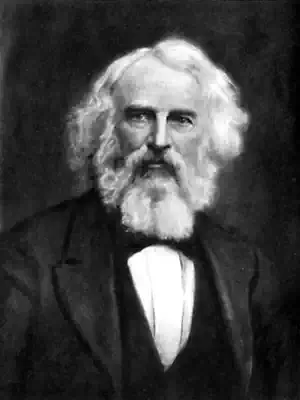
Henry Wadsworth Longfellow
Venice
Venice
White swan of cities, slumbering in thy nest
So wonderfully built among the reeds
Of the lagoon, that fences thee and feeds,
As sayeth thy old historian and thy guest!
White water-lily, cradled and caressed
By ocean streams, and from the silt and weeds
Lifting thy golden filaments and seeds,
Thy sun-illumined spires, thy crown and crest!
White phantom city, whose untrodden streets
Are rivers, and whose pavements are the shifting
Shadows of palaces and strips of sky;
I wait to see thee vanish like the fleets
Seen in mirage, or towers of cloud uplifting
In air their unsubstantial masonry.
White swan of cities, slumbering in thy nest
So wonderfully built among the reeds
Of the lagoon, that fences thee and feeds,
As sayeth thy old historian and thy guest!
White water-lily, cradled and caressed
By ocean streams, and from the silt and weeds
Lifting thy golden filaments and seeds,
Thy sun-illumined spires, thy crown and crest!
White phantom city, whose untrodden streets
Are rivers, and whose pavements are the shifting
Shadows of palaces and strips of sky;
I wait to see thee vanish like the fleets
Seen in mirage, or towers of cloud uplifting
In air their unsubstantial masonry.
314
Henry Wadsworth Longfellow
To The Driving Cloud
To The Driving Cloud
Gloomy and dark art thou, O chief of the mighty Omahas;
Gloomy and dark as the driving cloud, whose name thou hast taken!
Wrapped in thy scarlet blanket, I see thee stalk through the city's
Narrow and populous streets, as once by the margin of rivers
Stalked those birds unknown, that have left us only their
footprints.
What, in a few short years, will remain of thy race but the
footprints?
How canst thou walk these streets, who hast trod the green turf
of the prairies!
How canst thou breathe this air, who hast breathed the sweet air
of the mountains!
Ah! 'tis in vain that with lordly looks of disdain thou dost
challenge
Looks of disdain in return, and question these walls and these
pavements,
Claiming the soil for thy hunting-grounds, while down-trodden
millions
Starve in the garrets of Europe, and cry from its caverns that
they, too,
Have been created heirs of the earth, and claim its division!
Back, then, back to thy woods in the regions west of the Wabash!
There as a monarch thou reignest. In autumn the leaves of the
maple
Pave the floors of thy palace-halls with gold, and in summer
Pine-trees waft through its chambers the odorous breath of their
branches.
There thou art strong and great, a hero, a tamer of horses!
There thou chasest the stately stag on the banks of the Elkhorn,
Or by the roar of the Running-Water, or where the Omaha
Calls thee, and leaps through the wild ravine like a brave of the
Blackfeet!
Hark! what murmurs arise from the heart of those mountainous
deserts?
Is it the cry of the Foxes and Crows, or the mighty Behemoth,
Who, unharmed, on his tusks once caught the bolts of the thunder,
And now lurks in his lair to destroy the race of the red man?
Far more fatal to thee and thy race than the Crows and the Foxes,
Far more fatal to thee and thy race than the tread of Behemoth,
Lo! the big thunder-canoe, that steadily breasts the Missouri's
Merciless current! and yonder, afar on the prairies, the
camp-fires
Gleam through the night; and the cloud of dust in the gray of the
daybreak
Marks not the buffalo's track, nor the Mandan's dexterous
horse-race;
It is a caravan, whitening the desert where dwell the Camanches!
Ha! how the breath of these Saxons and Celts, like the blast of
the east-wind,
Drifts evermore to the west the scanty smokes of thy wigwams!
Gloomy and dark art thou, O chief of the mighty Omahas;
Gloomy and dark as the driving cloud, whose name thou hast taken!
Wrapped in thy scarlet blanket, I see thee stalk through the city's
Narrow and populous streets, as once by the margin of rivers
Stalked those birds unknown, that have left us only their
footprints.
What, in a few short years, will remain of thy race but the
footprints?
How canst thou walk these streets, who hast trod the green turf
of the prairies!
How canst thou breathe this air, who hast breathed the sweet air
of the mountains!
Ah! 'tis in vain that with lordly looks of disdain thou dost
challenge
Looks of disdain in return, and question these walls and these
pavements,
Claiming the soil for thy hunting-grounds, while down-trodden
millions
Starve in the garrets of Europe, and cry from its caverns that
they, too,
Have been created heirs of the earth, and claim its division!
Back, then, back to thy woods in the regions west of the Wabash!
There as a monarch thou reignest. In autumn the leaves of the
maple
Pave the floors of thy palace-halls with gold, and in summer
Pine-trees waft through its chambers the odorous breath of their
branches.
There thou art strong and great, a hero, a tamer of horses!
There thou chasest the stately stag on the banks of the Elkhorn,
Or by the roar of the Running-Water, or where the Omaha
Calls thee, and leaps through the wild ravine like a brave of the
Blackfeet!
Hark! what murmurs arise from the heart of those mountainous
deserts?
Is it the cry of the Foxes and Crows, or the mighty Behemoth,
Who, unharmed, on his tusks once caught the bolts of the thunder,
And now lurks in his lair to destroy the race of the red man?
Far more fatal to thee and thy race than the Crows and the Foxes,
Far more fatal to thee and thy race than the tread of Behemoth,
Lo! the big thunder-canoe, that steadily breasts the Missouri's
Merciless current! and yonder, afar on the prairies, the
camp-fires
Gleam through the night; and the cloud of dust in the gray of the
daybreak
Marks not the buffalo's track, nor the Mandan's dexterous
horse-race;
It is a caravan, whitening the desert where dwell the Camanches!
Ha! how the breath of these Saxons and Celts, like the blast of
the east-wind,
Drifts evermore to the west the scanty smokes of thy wigwams!
343
Henry Wadsworth Longfellow
Evangeline: Part The First. IV.
Evangeline: Part The First. IV.
PLEASANTLY rose next morn the sun on the village of Grand-Pré.
Pleasantly gleamed in the soft, sweet air the Basin of Minas,
Where the ships, with their wavering shadows, were riding at anchor.
Life had long been astir in the village, and clamorous labor
Knocked with its hundred hands at the golden gates of the morning.
Now from the country around, from the farms and neighboring hamlets,
Came in their holiday dresses the blithe Acadian peasants.
Many a glad good morrow and jocund laugh from the young folk
Made the bright air brighter, as up from the numerous meadows,
Where no path could be seen but the track of wheels in the greensward,
Group after group appeared, and joined, or passed on the highway.
Long ere noon, in the village all sounds of labor were silenced.
Thronged were the streets with people; and noisy groups at the house-doors
Sat in the cheerful sun, and rejoiced and gossiped together,
Every house was an inn, where all were welcomed and feasted;
For with this simple people, who lived like brothers together,
All things were held in common, and what one had was another's.
Yet under Benedict's roof hospitality seemed more abundant:
For Evangeline stood among the guests of her father;
Bright was her face with smiles, and words of welcome and gladness
Fell from her beautiful lips, and blessed the cup as she gave it.
Under the open sky, in the odorous air of the orchard,
Bending with golden fruit, was spread the feast of betrothal.
There in the shade of the porch were the priest and the notary seated;
There good Benedict sat, and sturdy Basil the blacksmith.
Not far withdrawn from these, by the cider-press and the beehives,
Michael the fiddler was placed, with the gayest of hearts and of waistcoats.
Shadow and light from the leaves alternately played on his snow-white
Hair, as it waved in the wind; and the jolly face of the fiddler
Glowed like a living coal when the ashes are blown from the embers.
Gayly the old man sang to the vibrant sound of his fiddle,
Tous les Bourgeois de Chartres, and Le Carillon de Dunkerque,
And anon with his wooden shoes beat time to the music.
Merrily, merrily whirled the wheels of the dizzying dances
Under the orchard-trees and down the path to the meadows;
Old folk and young together, and children mingled among them.
Fairest of all the maids was Evangeline, Benedict's daughter!
Noblest of all the youths was Gabriel, son of the blacksmith!
So passed the morning away. And lo! with a summons sonorous
Sounded the bell from its tower, and over the meadows a drum beat.
Thronged erelong was the church with men. Without, in the churchyard,
Waited the women. They stood by the graves, and hung on the headstones
Garlands of autumn-leaves and evergreens fresh from the forest.
Then came the guard from the ships, and marching proudly among them
Entered the sacred portal. With loud and dissonant clangor
Echoed the sound of their brazen drums from ceiling and casement,-
Echoed a moment only, and slowly the ponderous portal
Closed, and in silence the crowd awaited the will of the soldiers.
Then uprose their commander, and spake from the steps of the altar,
Holding aloft in his hands, with its seals, the royal commission.
'You are convened this day,' he said, 'by his Majesty's orders.
Clement and kind has he been; but how you have answered his kindness,
Let your own hearts reply! To my natural make and my temper
Painful the task is I do, which to you I know must be grievous.
Yet must I bow and obey, and deliver the will of our monarch;
Namely, that all your lands, and dwellings, and cattle of all kinds
Forfeited be to the crown; and that you yourselves from this province
Be transported to other lands. God grant you may dwell there
Ever as faithful subjects, a happy and peaceable people!
Prisoners now I declare you; for such is his Majesty's pleasure!'
As, when the air is serene in the sultry solstice of summer,
Suddenly gathers a storm, and the deadly sling of the hailstones
Beats down the farmer's corn in the field and shatters his windows,
Hiding the sun, and strewing the ground with thatch from the house-roofs,
Bellowing fly the herds, and seek to break their enclosures;
So on the hearts of the people descended the words of the speaker.
Silent a moment they stood in speechless wonder, and then rose
Louder and ever louder a wail of sorrow and anger,
And, by one impulse moved, they madly rushed to the door-way.
Vain was the hope of escape; and cries and fierce imprecations
Rang through the house of prayer; and high o'er the heads of the others
Rose, with his arms uplifted, the figure of Basil the blacksmith,
As, on a stormy sea, a spar is tossed by the billows.
Flushed was his face and distorted with passion; and wildly he shouted,'
Down with the tyrants of England! we never have sworn them allegiance!
Death to these foreign soldiers, who seize on our homes and our harvests!'
More he fain would have said, but the merciless hand of a soldier
Smote him upon the mouth, and dragged him down to the pavement.
In the midst of the strife and tumult of angry contention,
Lo! the door of the chancel opened, and Father Felician
Entered, with serious mien, and ascended the steps of the altar.
Raising his reverend hand, with a gesture he awed into silence
All that clamorous throng; and thus he spake to his people;
Deep were his tones and solemn; in accents measured and mournful
Spake he, as, after the tocsin's alarum, distinctly the clock strikes.
'What is this that ye do, my children? what madness has seized you?
Forty years of my life have I labored among you, and taught you,
Not in word alone, but in deed, to love one another!
Is this the fruit of my toils, of my vigils and prayers and privations?
Have you so soon forgotten all lessons of love and forgiveness?
This is the house of the Prince of Peace, and would you profane it
Thus with violent deeds and hearts overflowing with hatred?
Lo! where the crucified Christ from his cross is gazing upon you!
See! in those sorrowful eyes what meekness and holy compassion!
Hark! how those lips still repeat the prayer, `O Father, forgive them!'
Let us repeat that prayer in the hour when the wicked assail us,
Let us repeat it now, and say, `O Father, forgive them!' '
Few were his words of rebuke, but deep in the hearts of his people
Sank they, and sobs of contrition succeeded the passionate outbreak,
And they repeated his prayer, and said, 'O Father, forgive them!'
Then came the evening service. The tapers gleamed from the altar.
Fervent and deep was the voice of the priest, and the people responded,
Not with their lips alone, but their hearts; and the Ave Maria
Sang they, and fell on their knees, and their souls, with devotion translated,
Rose on the ardor of prayer, like Elijah ascending to heaven.
Meanwhile had spread in the village the tidings of ill, and on all sides
Wandered, wailing, from house to house the women and children.
Long at her father's door Evangeline stood, with her right hand
Shielding her eyes from the level rays of the sun, that, descending,
Lighted the village street with mysterious splendor, and roofed each
Peasant's cottage with golden thatch, and emblazoned its windows.
Long within had been spread the snow-white cloth on the table;
There stood the wheaten loaf, and the honey fragrant with wild-flowers;
There stood the tankard of ale, and the cheese fresh brought from the dairy,
And, at the head of the board, the great arm-chair of the farmer.
Thus did Evangeline wait at her father's door, as the sunset
Threw the long shadows of trees o'er the broad ambrosial meadows.
Ah! on her spirit within a deeper shadow had fallen,
And from the fields of her soul a fragrance celestial ascended,-
Charity, meekness, love, and hope, and forgiveness, and patience!
Then, all-forgetful of self, she wandered into the village,
Cheering with looks and words the disconsolate hearts of the women,
As o'er the darkening fields with lingering steps they departed,
Urged by their household cares, and the weary feet of their children.
Down sank the great red sun, and in golden, glimmering vapors
Veiled the light of his face, like the Prophet descending from Sinai.
Sweetly over the village the bell of the Angelus sounded.
Meanwhile, amid the gloom, by the church Evangeline lingered.
All was silent within; and in vain at the door and the windows
Stood she, and listened and looked, till, overcome by emotion,
'Gabriel!' cried she aloud with tremulous voice; but no answer
Came from the graves of the dead, nor the gloomier grave of the living.
Slowly at length she returned to the tenantless house of her father.
Smouldered the fire on the hearth, on the board stood the supper untasted,
Empty and drear was each room, and haunted with phantoms of terror.
Sadly echoed her step on the stair and the floor of her chamber.
In the dead of the night she heard the whispering rain fall
Loud on the withered leaves of the sycamore-tree by the window.
Keenly the lightning flashed; and the voice of the echoing thunder
Told her that God was in heaven, and governed the world he created!
Then she remembered the tale she had heard of the justice of Heaven;
Soothed was her troubled soul, and she peacefully slumbered till morning.
PLEASANTLY rose next morn the sun on the village of Grand-Pré.
Pleasantly gleamed in the soft, sweet air the Basin of Minas,
Where the ships, with their wavering shadows, were riding at anchor.
Life had long been astir in the village, and clamorous labor
Knocked with its hundred hands at the golden gates of the morning.
Now from the country around, from the farms and neighboring hamlets,
Came in their holiday dresses the blithe Acadian peasants.
Many a glad good morrow and jocund laugh from the young folk
Made the bright air brighter, as up from the numerous meadows,
Where no path could be seen but the track of wheels in the greensward,
Group after group appeared, and joined, or passed on the highway.
Long ere noon, in the village all sounds of labor were silenced.
Thronged were the streets with people; and noisy groups at the house-doors
Sat in the cheerful sun, and rejoiced and gossiped together,
Every house was an inn, where all were welcomed and feasted;
For with this simple people, who lived like brothers together,
All things were held in common, and what one had was another's.
Yet under Benedict's roof hospitality seemed more abundant:
For Evangeline stood among the guests of her father;
Bright was her face with smiles, and words of welcome and gladness
Fell from her beautiful lips, and blessed the cup as she gave it.
Under the open sky, in the odorous air of the orchard,
Bending with golden fruit, was spread the feast of betrothal.
There in the shade of the porch were the priest and the notary seated;
There good Benedict sat, and sturdy Basil the blacksmith.
Not far withdrawn from these, by the cider-press and the beehives,
Michael the fiddler was placed, with the gayest of hearts and of waistcoats.
Shadow and light from the leaves alternately played on his snow-white
Hair, as it waved in the wind; and the jolly face of the fiddler
Glowed like a living coal when the ashes are blown from the embers.
Gayly the old man sang to the vibrant sound of his fiddle,
Tous les Bourgeois de Chartres, and Le Carillon de Dunkerque,
And anon with his wooden shoes beat time to the music.
Merrily, merrily whirled the wheels of the dizzying dances
Under the orchard-trees and down the path to the meadows;
Old folk and young together, and children mingled among them.
Fairest of all the maids was Evangeline, Benedict's daughter!
Noblest of all the youths was Gabriel, son of the blacksmith!
So passed the morning away. And lo! with a summons sonorous
Sounded the bell from its tower, and over the meadows a drum beat.
Thronged erelong was the church with men. Without, in the churchyard,
Waited the women. They stood by the graves, and hung on the headstones
Garlands of autumn-leaves and evergreens fresh from the forest.
Then came the guard from the ships, and marching proudly among them
Entered the sacred portal. With loud and dissonant clangor
Echoed the sound of their brazen drums from ceiling and casement,-
Echoed a moment only, and slowly the ponderous portal
Closed, and in silence the crowd awaited the will of the soldiers.
Then uprose their commander, and spake from the steps of the altar,
Holding aloft in his hands, with its seals, the royal commission.
'You are convened this day,' he said, 'by his Majesty's orders.
Clement and kind has he been; but how you have answered his kindness,
Let your own hearts reply! To my natural make and my temper
Painful the task is I do, which to you I know must be grievous.
Yet must I bow and obey, and deliver the will of our monarch;
Namely, that all your lands, and dwellings, and cattle of all kinds
Forfeited be to the crown; and that you yourselves from this province
Be transported to other lands. God grant you may dwell there
Ever as faithful subjects, a happy and peaceable people!
Prisoners now I declare you; for such is his Majesty's pleasure!'
As, when the air is serene in the sultry solstice of summer,
Suddenly gathers a storm, and the deadly sling of the hailstones
Beats down the farmer's corn in the field and shatters his windows,
Hiding the sun, and strewing the ground with thatch from the house-roofs,
Bellowing fly the herds, and seek to break their enclosures;
So on the hearts of the people descended the words of the speaker.
Silent a moment they stood in speechless wonder, and then rose
Louder and ever louder a wail of sorrow and anger,
And, by one impulse moved, they madly rushed to the door-way.
Vain was the hope of escape; and cries and fierce imprecations
Rang through the house of prayer; and high o'er the heads of the others
Rose, with his arms uplifted, the figure of Basil the blacksmith,
As, on a stormy sea, a spar is tossed by the billows.
Flushed was his face and distorted with passion; and wildly he shouted,'
Down with the tyrants of England! we never have sworn them allegiance!
Death to these foreign soldiers, who seize on our homes and our harvests!'
More he fain would have said, but the merciless hand of a soldier
Smote him upon the mouth, and dragged him down to the pavement.
In the midst of the strife and tumult of angry contention,
Lo! the door of the chancel opened, and Father Felician
Entered, with serious mien, and ascended the steps of the altar.
Raising his reverend hand, with a gesture he awed into silence
All that clamorous throng; and thus he spake to his people;
Deep were his tones and solemn; in accents measured and mournful
Spake he, as, after the tocsin's alarum, distinctly the clock strikes.
'What is this that ye do, my children? what madness has seized you?
Forty years of my life have I labored among you, and taught you,
Not in word alone, but in deed, to love one another!
Is this the fruit of my toils, of my vigils and prayers and privations?
Have you so soon forgotten all lessons of love and forgiveness?
This is the house of the Prince of Peace, and would you profane it
Thus with violent deeds and hearts overflowing with hatred?
Lo! where the crucified Christ from his cross is gazing upon you!
See! in those sorrowful eyes what meekness and holy compassion!
Hark! how those lips still repeat the prayer, `O Father, forgive them!'
Let us repeat that prayer in the hour when the wicked assail us,
Let us repeat it now, and say, `O Father, forgive them!' '
Few were his words of rebuke, but deep in the hearts of his people
Sank they, and sobs of contrition succeeded the passionate outbreak,
And they repeated his prayer, and said, 'O Father, forgive them!'
Then came the evening service. The tapers gleamed from the altar.
Fervent and deep was the voice of the priest, and the people responded,
Not with their lips alone, but their hearts; and the Ave Maria
Sang they, and fell on their knees, and their souls, with devotion translated,
Rose on the ardor of prayer, like Elijah ascending to heaven.
Meanwhile had spread in the village the tidings of ill, and on all sides
Wandered, wailing, from house to house the women and children.
Long at her father's door Evangeline stood, with her right hand
Shielding her eyes from the level rays of the sun, that, descending,
Lighted the village street with mysterious splendor, and roofed each
Peasant's cottage with golden thatch, and emblazoned its windows.
Long within had been spread the snow-white cloth on the table;
There stood the wheaten loaf, and the honey fragrant with wild-flowers;
There stood the tankard of ale, and the cheese fresh brought from the dairy,
And, at the head of the board, the great arm-chair of the farmer.
Thus did Evangeline wait at her father's door, as the sunset
Threw the long shadows of trees o'er the broad ambrosial meadows.
Ah! on her spirit within a deeper shadow had fallen,
And from the fields of her soul a fragrance celestial ascended,-
Charity, meekness, love, and hope, and forgiveness, and patience!
Then, all-forgetful of self, she wandered into the village,
Cheering with looks and words the disconsolate hearts of the women,
As o'er the darkening fields with lingering steps they departed,
Urged by their household cares, and the weary feet of their children.
Down sank the great red sun, and in golden, glimmering vapors
Veiled the light of his face, like the Prophet descending from Sinai.
Sweetly over the village the bell of the Angelus sounded.
Meanwhile, amid the gloom, by the church Evangeline lingered.
All was silent within; and in vain at the door and the windows
Stood she, and listened and looked, till, overcome by emotion,
'Gabriel!' cried she aloud with tremulous voice; but no answer
Came from the graves of the dead, nor the gloomier grave of the living.
Slowly at length she returned to the tenantless house of her father.
Smouldered the fire on the hearth, on the board stood the supper untasted,
Empty and drear was each room, and haunted with phantoms of terror.
Sadly echoed her step on the stair and the floor of her chamber.
In the dead of the night she heard the whispering rain fall
Loud on the withered leaves of the sycamore-tree by the window.
Keenly the lightning flashed; and the voice of the echoing thunder
Told her that God was in heaven, and governed the world he created!
Then she remembered the tale she had heard of the justice of Heaven;
Soothed was her troubled soul, and she peacefully slumbered till morning.
364
Henry Wadsworth Longfellow
Boston
Boston
St. Botolph's Town! Hither across the plains
And fens of Lincolnshire, in garb austere,
There came a Saxon monk, and founded here
A Priory, pillaged by marauding Danes,
So that thereof no vestige now remains;
Only a name, that, spoken loud and clear,
And echoed in another hemisphere,
Survives the sculptured walls and painted panes.
St. Botolph's Town! Far over leagues of land
And leagues of sea looks forth its noble tower,
And far around the chiming bells are heard;
So may that sacred name forever stand
A landmark, and a symbol of the power,
That lies concentred in a single word.
St. Botolph's Town! Hither across the plains
And fens of Lincolnshire, in garb austere,
There came a Saxon monk, and founded here
A Priory, pillaged by marauding Danes,
So that thereof no vestige now remains;
Only a name, that, spoken loud and clear,
And echoed in another hemisphere,
Survives the sculptured walls and painted panes.
St. Botolph's Town! Far over leagues of land
And leagues of sea looks forth its noble tower,
And far around the chiming bells are heard;
So may that sacred name forever stand
A landmark, and a symbol of the power,
That lies concentred in a single word.
315
Henry Wadsworth Longfellow
Belfry of Bruges, The
Belfry of Bruges, The
In the market-place of Bruges stands the belfry old and brown;
Thrice consumed and thrice rebuilded, still it watches o'er the
town.
As the summer morn was breaking, on that lofty tower I stood,
And the world threw off the darkness, like the weeds of
widowhood.
Thick with towns and hamlets studded, and with streams and vapors
gray,
Like a shield embossed with silver, round and vast the landscape
lay.
At my feet the city slumbered. From its chimneys, here and
there,
Wreaths of snow-white smoke, ascending, vanished, ghost-like,
into air.
Not a sound rose from the city at that early morning hour,
But I heard a heart of iron beating in the ancient tower.
From their nests beneath the rafters sang the swallows wild and
high;
And the world, beneath me sleeping, seemed more distant than the
sky.
Then most musical and solemn, bringing back the olden times,
With their strange, unearthly changes rang the melancholy chimes,
Like the psalms from some old cloister, when the nuns sing in the
choir;
And the great bell tolled among them, like the chanting of a
friar.
Visions of the days departed, shadowy phantoms filled my brain;
They who live in history only seemed to walk the earth again;
All the Foresters of Flanders,--mighty Baldwin Bras de Fer,
Lyderick du Bucq and Cressy Philip, Guy de Dampierre.
I beheld the pageants splendid that adorned those days of old;
Stately dames, like queens attended, knights who bore the Fleece
of Gold
Lombard and Venetian merchants with deep-laden argosies;
Ministers from twenty nations; more than royal pomp and ease.
I beheld proud Maximilian, kneeling humbly on the ground;
I beheld the gentle Mary, hunting with her hawk and hound;
And her lighted bridal-chamber, where a duke slept with the
queen,
And the armed guard around them, and the sword unsheathed
between.
I beheld the Flemish weavers, with Namur and Juliers bold,
Marching homeward from the bloody battle of the Spurs of Gold;
Saw the light at Minnewater, saw the White Hoods moving west,
Saw great Artevelde victorious scale the Golden Dragon's nest.
And again the whiskered Spaniard all the land with terror smote;
And again the wild alarum sounded from the tocsin's throat;
Till the bell of Ghent responded o'er lagoon and dike of sand,
"I am Roland! I am Roland! there is victory in the land!"
Then the sound of drums aroused me. The awakened city's roar
Chased the phantoms I had summoned back into their graves once
more.
Hours had passed away like minutes; and, before I was aware,
Lo! the shadow of the belfry crossed the sun-illumined square.
In the market-place of Bruges stands the belfry old and brown;
Thrice consumed and thrice rebuilded, still it watches o'er the
town.
As the summer morn was breaking, on that lofty tower I stood,
And the world threw off the darkness, like the weeds of
widowhood.
Thick with towns and hamlets studded, and with streams and vapors
gray,
Like a shield embossed with silver, round and vast the landscape
lay.
At my feet the city slumbered. From its chimneys, here and
there,
Wreaths of snow-white smoke, ascending, vanished, ghost-like,
into air.
Not a sound rose from the city at that early morning hour,
But I heard a heart of iron beating in the ancient tower.
From their nests beneath the rafters sang the swallows wild and
high;
And the world, beneath me sleeping, seemed more distant than the
sky.
Then most musical and solemn, bringing back the olden times,
With their strange, unearthly changes rang the melancholy chimes,
Like the psalms from some old cloister, when the nuns sing in the
choir;
And the great bell tolled among them, like the chanting of a
friar.
Visions of the days departed, shadowy phantoms filled my brain;
They who live in history only seemed to walk the earth again;
All the Foresters of Flanders,--mighty Baldwin Bras de Fer,
Lyderick du Bucq and Cressy Philip, Guy de Dampierre.
I beheld the pageants splendid that adorned those days of old;
Stately dames, like queens attended, knights who bore the Fleece
of Gold
Lombard and Venetian merchants with deep-laden argosies;
Ministers from twenty nations; more than royal pomp and ease.
I beheld proud Maximilian, kneeling humbly on the ground;
I beheld the gentle Mary, hunting with her hawk and hound;
And her lighted bridal-chamber, where a duke slept with the
queen,
And the armed guard around them, and the sword unsheathed
between.
I beheld the Flemish weavers, with Namur and Juliers bold,
Marching homeward from the bloody battle of the Spurs of Gold;
Saw the light at Minnewater, saw the White Hoods moving west,
Saw great Artevelde victorious scale the Golden Dragon's nest.
And again the whiskered Spaniard all the land with terror smote;
And again the wild alarum sounded from the tocsin's throat;
Till the bell of Ghent responded o'er lagoon and dike of sand,
"I am Roland! I am Roland! there is victory in the land!"
Then the sound of drums aroused me. The awakened city's roar
Chased the phantoms I had summoned back into their graves once
more.
Hours had passed away like minutes; and, before I was aware,
Lo! the shadow of the belfry crossed the sun-illumined square.
434

Henry Lawson
With Dickens
With Dickens
In Windsor Terrace, number four,
I’ve taken my abode—
A little crescent from the street,
A bight from City Road;
And, hard up and in exile, I
To many fancies yield;
For it was here Micawber lived
And David Copperfield.
A bed, a table, and a chair,
A bottle and a cup.
The landlord’s waiting even now
For something to turn up.
The landlady is spiritless—
They both seem tired of life;
They cannot fight the battle like
Micawber and his wife.
But in the little open space
That lies back from the street,
The same old ancient, shabby clerk
Is sitting on a seat.
The same sad characters go by,
The ragged children play—
And things have very little changed
Since Dickens passed away.
Some seek religion in their grief,
And some for friendship yearn;
Some fly to liquor for relief,
But I to Dickens turn.
I find him ever fresh and new,
His lesson ever plain;
And every line that Dickens wrote
I’ve read and read again.
The tavern’s just across the ‘wye,’
And frowsy women there
Are gossiping and drinking gin,
And twisting up their hair.
And grubby girls go past at times,
And furtive gentry lurk—
I don’t think anyone has died
Since Dickens did his work.
There’s Jingle, Tigg, and Chevy Slyme,
And Weevle—whom you will;
And hard-up virtue proudly slinks
Into the pawnshop still.
Go east a bit from City Road,
And all the rest are there—
A friendly whistle might produce
A Chicken anywhere.
My favourite author’s heroes I
Should love, but somehow can’t.
I don’t like David Copperfield
As much as David’s Aunt,
And it may be because my mind
Has been in many fogs—
I don’t like Nicholas Nickleby
So well as Newman Noggs.
I don’t like Richard Carstone, Pip,
Or Martin Chuzzlewit,
And for the rich and fatherly
I scarcely care a bit.
The honest, sober clods are bores
Who cannot suffer much,
And with the Esther Summersons
I never was in touch.
The ‘Charleys’ and the haggard wives,
Kind hearts in poverty—
And yes! the Lizzie Hexams, too—
Are very near to me;
But men like Brothers Cheeryble,
And Madeline Bray divine,
And Nell, and Little Dorrit live
In a better world than mine.
The Nicklebys and Copperfields,
They do not stand the test;
And in my heart I don’t believe
That Dickens loved them best.
I can’t admire their ways and talk,
I do not like their looks—
Those selfish, injured sticks that stalk
Through all the Master’s books.
They’re mostly selfish in their love,
And selfish in their hate,
They marry Dora Spenlows, too,
While Agnes Wickfields wait;
And back they come to poor Tom Pinch
When hard-up for a friend;
They come to wrecks like Newman Nogga
To help them in the end.
And—well, maybe I am unjust,
And maybe I forget;
Some of us marry dolls and jilt
Our Agnes Wickfields yet.
We seek our friends when fortune frowns—
It has been ever thus—
And we neglect Joe Gargery
When fortune smiles on us.
They get some rich old grandfather
Or aunt to see them through,
And you can trace self-interest
In nearly all they do.
And scoundrels like Ralph Nickleby,
In spite of all their crimes,
And crawlers like Uriah Heep
Told bitter truths at times.
But—yes, I love the vagabonds
And failures from the ranks,
And hard old files with hidden hearts
Like Wemmick and like Pancks.
And Jaggers had his ‘poor dreams, too,’
And fond hopes like the rest—
But, somehow, somehow, all my life
I’ve loved Dick Swiveller best!
But, let us peep at Snagsby first
As softly he lays down
Beside the bed of dying Joe
Another half-a-crown.
And Nemo’s wretched pauper grave—
But we can let them be,
For Joe has said to Heaven: ‘They
Wos werry good to me.’
And Wemmick with his aged P——
No doubt has his reward;
And Jaggers, hardest nut of all,
Will be judged by the Lord.
And Pancks, the rent-collecting screw,
With laurels on his brow,
Is loved by all the bleeding hearts
In Bleeding Heart Yard now.
Tom Pinch is very happy now,
And Magwitch is at rest,
And Newman Noggs again might hold
His head up with the best;
Micawber, too, when all is said,
Drank bravely Sorrow’s cup—
Micawber worked to right them all,
And something did turn up.
How do ‘John Edward Nandy, Sir!’
And Plornish get along?
Why! if the old man is in voice
We’ll hear him pipe a song.
We’ll have a look at Baptiste, too,
While still the night is young—
With Mrs. Plornish to explain
In the Italian tongue.
Before we go we’ll ask about
Poor young John Chivery:
‘There never was a gentleman
In all his family.’
His hopeless love, his broken heart,
But to his rival true;
He came of Nature’s gentlemen,
But young John never knew.
We’ll pass the little midshipman
With heart that swells and fills,
Where Captain Ed’ard Cuttle waits
For Wal’r and Sol Gills.
Jack Bunsby stands by what he says
(Which isn’t very clear),
And Toots with his own hopeless love—
As true as any here.
And who that read has never felt
The sorrow that it cost
When Captain Cuttle read the news
The ‘Son and Heir’ was lost?
And who that read has not rejoiced
With him and ‘Heart’s Delight,’
And felt as Captain Cuttle felt
When Wal’r came that night?
And yonder, with a broken heart,
That people thought was stone,
Deserted in his ruined home,
Poor Dombey sits alone.
Who has not gulped a something down,
Whose eye has not grown dim
While feeling glad for Dombey’s sake
When Florence came to him?
(A stately house in Lincolnshire—
The scene is bleak and cold—
The footsteps on the terrace sound
To-night at Chesney Wold.
One who loved honour, wife, and truth,
If nothing else besides,
Along the dreary Avenue
Sir Leicester Dedlock rides.)
We’ll go round by Poll Sweedlepipe’s,
The bird and barber shop;
If Sairey Gamp is so dispoged
We’ll send her up a drop.
We’ll cross High Holborn to the Bull,
And, if he cares to come,
By streets that are not closed to him
We’ll see Dick Swiveller home.
He’s looking rather glum to-night,
The why I will not ask—
No matter how we act the goat,
We mostly wear a mask.
Some wear a mask to hide the false
(And some the good and true)—
I wouldn’t be surprised to know
Mark Tapley wore one too.
We wear a mask called cheerfulness
While feeling sad inside;
And men like Dombey, who was shy,
Oft wear a mask called pride.
A front of pure benevolence
The grinding ‘Patriarch’ bore;
And kind men often wear a mask
Like that which Jaggers wore.
But, never mind, Dick Swiveller!
We’ll see it out together
Beneath the wing of friendship, Dick,
That never moults a feather.
We’ll look upon the rosy yet
Full many a night, old friend,
And tread the mazy ere we woo
The balmy in the end.
Our palace walls are rather bare,
The floor is somewhat damp,
But, while there’s liquor, anywhere
Is good enough to camp.
What ho! mine host! bring forth thine ale
And let the board be spread!—
It is the hour when churchyards yawn
And wine goes to the head.
’Twas you who saved poor Kit, old chap,
When he was in a mess—
But, what ho! Varlet! bring us wine!
Here’s to the Marchioness!
‘We’ll make a scholar of her yet,’
She’ll be a lady fair,
‘And she shall go in silk attire
And siller have to spare.’
From sport to sport they hurry her
To banish her regrets,
And when we win a smile from her
We cannot pay our debts!
Left orphans at a tender age,
We’re happiest in the land—
We’re Glorious Apollos, Dick,
And you’re Perpetual Grand!
You’re king of all philosophers,
And let the Godly rust;
Here’s to the obscure citizen
Who sent the beer on trust?
It sure would be a cheerful world
If never man got tight;
You spent your money on your friends,
Dick Swiveller! Good night!
‘A dissolute and careless man—
An idle, drunken path;’
But see where Sidney Carton spills
His last drink on the hearth!
A ruined life! He lived for drink
And but one thing beside—
And Oh! it was a glorious death
That Sidney Carton died.
And ‘Which I meantersay is Pip’—
The voices hurry past—
‘Not to deceive you, sir’—‘Stand by!’
‘Awast, my lass, awast!’
‘Beware of widders, Samivel,’
And shun strong drink, my friend;
And, ‘not to put too fine a point
Upon it,’ I must end.
In Windsor Terrace, number four,
I’ve taken my abode—
A little crescent from the street,
A bight from City Road;
And, hard up and in exile, I
To many fancies yield;
For it was here Micawber lived
And David Copperfield.
A bed, a table, and a chair,
A bottle and a cup.
The landlord’s waiting even now
For something to turn up.
The landlady is spiritless—
They both seem tired of life;
They cannot fight the battle like
Micawber and his wife.
But in the little open space
That lies back from the street,
The same old ancient, shabby clerk
Is sitting on a seat.
The same sad characters go by,
The ragged children play—
And things have very little changed
Since Dickens passed away.
Some seek religion in their grief,
And some for friendship yearn;
Some fly to liquor for relief,
But I to Dickens turn.
I find him ever fresh and new,
His lesson ever plain;
And every line that Dickens wrote
I’ve read and read again.
The tavern’s just across the ‘wye,’
And frowsy women there
Are gossiping and drinking gin,
And twisting up their hair.
And grubby girls go past at times,
And furtive gentry lurk—
I don’t think anyone has died
Since Dickens did his work.
There’s Jingle, Tigg, and Chevy Slyme,
And Weevle—whom you will;
And hard-up virtue proudly slinks
Into the pawnshop still.
Go east a bit from City Road,
And all the rest are there—
A friendly whistle might produce
A Chicken anywhere.
My favourite author’s heroes I
Should love, but somehow can’t.
I don’t like David Copperfield
As much as David’s Aunt,
And it may be because my mind
Has been in many fogs—
I don’t like Nicholas Nickleby
So well as Newman Noggs.
I don’t like Richard Carstone, Pip,
Or Martin Chuzzlewit,
And for the rich and fatherly
I scarcely care a bit.
The honest, sober clods are bores
Who cannot suffer much,
And with the Esther Summersons
I never was in touch.
The ‘Charleys’ and the haggard wives,
Kind hearts in poverty—
And yes! the Lizzie Hexams, too—
Are very near to me;
But men like Brothers Cheeryble,
And Madeline Bray divine,
And Nell, and Little Dorrit live
In a better world than mine.
The Nicklebys and Copperfields,
They do not stand the test;
And in my heart I don’t believe
That Dickens loved them best.
I can’t admire their ways and talk,
I do not like their looks—
Those selfish, injured sticks that stalk
Through all the Master’s books.
They’re mostly selfish in their love,
And selfish in their hate,
They marry Dora Spenlows, too,
While Agnes Wickfields wait;
And back they come to poor Tom Pinch
When hard-up for a friend;
They come to wrecks like Newman Nogga
To help them in the end.
And—well, maybe I am unjust,
And maybe I forget;
Some of us marry dolls and jilt
Our Agnes Wickfields yet.
We seek our friends when fortune frowns—
It has been ever thus—
And we neglect Joe Gargery
When fortune smiles on us.
They get some rich old grandfather
Or aunt to see them through,
And you can trace self-interest
In nearly all they do.
And scoundrels like Ralph Nickleby,
In spite of all their crimes,
And crawlers like Uriah Heep
Told bitter truths at times.
But—yes, I love the vagabonds
And failures from the ranks,
And hard old files with hidden hearts
Like Wemmick and like Pancks.
And Jaggers had his ‘poor dreams, too,’
And fond hopes like the rest—
But, somehow, somehow, all my life
I’ve loved Dick Swiveller best!
But, let us peep at Snagsby first
As softly he lays down
Beside the bed of dying Joe
Another half-a-crown.
And Nemo’s wretched pauper grave—
But we can let them be,
For Joe has said to Heaven: ‘They
Wos werry good to me.’
And Wemmick with his aged P——
No doubt has his reward;
And Jaggers, hardest nut of all,
Will be judged by the Lord.
And Pancks, the rent-collecting screw,
With laurels on his brow,
Is loved by all the bleeding hearts
In Bleeding Heart Yard now.
Tom Pinch is very happy now,
And Magwitch is at rest,
And Newman Noggs again might hold
His head up with the best;
Micawber, too, when all is said,
Drank bravely Sorrow’s cup—
Micawber worked to right them all,
And something did turn up.
How do ‘John Edward Nandy, Sir!’
And Plornish get along?
Why! if the old man is in voice
We’ll hear him pipe a song.
We’ll have a look at Baptiste, too,
While still the night is young—
With Mrs. Plornish to explain
In the Italian tongue.
Before we go we’ll ask about
Poor young John Chivery:
‘There never was a gentleman
In all his family.’
His hopeless love, his broken heart,
But to his rival true;
He came of Nature’s gentlemen,
But young John never knew.
We’ll pass the little midshipman
With heart that swells and fills,
Where Captain Ed’ard Cuttle waits
For Wal’r and Sol Gills.
Jack Bunsby stands by what he says
(Which isn’t very clear),
And Toots with his own hopeless love—
As true as any here.
And who that read has never felt
The sorrow that it cost
When Captain Cuttle read the news
The ‘Son and Heir’ was lost?
And who that read has not rejoiced
With him and ‘Heart’s Delight,’
And felt as Captain Cuttle felt
When Wal’r came that night?
And yonder, with a broken heart,
That people thought was stone,
Deserted in his ruined home,
Poor Dombey sits alone.
Who has not gulped a something down,
Whose eye has not grown dim
While feeling glad for Dombey’s sake
When Florence came to him?
(A stately house in Lincolnshire—
The scene is bleak and cold—
The footsteps on the terrace sound
To-night at Chesney Wold.
One who loved honour, wife, and truth,
If nothing else besides,
Along the dreary Avenue
Sir Leicester Dedlock rides.)
We’ll go round by Poll Sweedlepipe’s,
The bird and barber shop;
If Sairey Gamp is so dispoged
We’ll send her up a drop.
We’ll cross High Holborn to the Bull,
And, if he cares to come,
By streets that are not closed to him
We’ll see Dick Swiveller home.
He’s looking rather glum to-night,
The why I will not ask—
No matter how we act the goat,
We mostly wear a mask.
Some wear a mask to hide the false
(And some the good and true)—
I wouldn’t be surprised to know
Mark Tapley wore one too.
We wear a mask called cheerfulness
While feeling sad inside;
And men like Dombey, who was shy,
Oft wear a mask called pride.
A front of pure benevolence
The grinding ‘Patriarch’ bore;
And kind men often wear a mask
Like that which Jaggers wore.
But, never mind, Dick Swiveller!
We’ll see it out together
Beneath the wing of friendship, Dick,
That never moults a feather.
We’ll look upon the rosy yet
Full many a night, old friend,
And tread the mazy ere we woo
The balmy in the end.
Our palace walls are rather bare,
The floor is somewhat damp,
But, while there’s liquor, anywhere
Is good enough to camp.
What ho! mine host! bring forth thine ale
And let the board be spread!—
It is the hour when churchyards yawn
And wine goes to the head.
’Twas you who saved poor Kit, old chap,
When he was in a mess—
But, what ho! Varlet! bring us wine!
Here’s to the Marchioness!
‘We’ll make a scholar of her yet,’
She’ll be a lady fair,
‘And she shall go in silk attire
And siller have to spare.’
From sport to sport they hurry her
To banish her regrets,
And when we win a smile from her
We cannot pay our debts!
Left orphans at a tender age,
We’re happiest in the land—
We’re Glorious Apollos, Dick,
And you’re Perpetual Grand!
You’re king of all philosophers,
And let the Godly rust;
Here’s to the obscure citizen
Who sent the beer on trust?
It sure would be a cheerful world
If never man got tight;
You spent your money on your friends,
Dick Swiveller! Good night!
‘A dissolute and careless man—
An idle, drunken path;’
But see where Sidney Carton spills
His last drink on the hearth!
A ruined life! He lived for drink
And but one thing beside—
And Oh! it was a glorious death
That Sidney Carton died.
And ‘Which I meantersay is Pip’—
The voices hurry past—
‘Not to deceive you, sir’—‘Stand by!’
‘Awast, my lass, awast!’
‘Beware of widders, Samivel,’
And shun strong drink, my friend;
And, ‘not to put too fine a point
Upon it,’ I must end.
254
Henry Lawson
Victory
Victory
The schools marched in procession in happiness and pride,
The city bands before them, the soldiers marched beside;
Oh, starched white frocks and sashes and suits that high schools wear,
The boy scout and the boy lout and all the rest were there,
And all flags save Australia's flag waved high in sun and air!
The Girls' High School, and Grammar School and colleges of stone
Flew all flags from their walls and towers – all flags except our own!
And down here in the alleys where Premiers never come,
Nor candidate, nor delegate, nor sound of fife and drum,
They packed them on the lorries, seared children of the slum.
Each face seemed soiled and faded, though scrubbed with household soap,
And older than a mother-face, but with less sign of hope:
The knowledge of things evil, of drunken wreck and hag,
Of sordid sounds and voices, the everlasting "nag" –
Oh, men without a battle-song! Oh, men without a flag!
They breed a nation's strength behind each shabby little door,
Where rent-collectors knock for aye, and Christ shall knock no more;
The sounds that hurt the mother's heart affright the children there –
Alarm-clocks on an empty tin, the tin tray on a chair;
For weary folk are hard to wake in hot and heavy air.
They sang in Pride's Procession that Mammon might endure –
Oh, wistful singing faces, the children of the poor!
Oh, hideous fiends of commerce! Oh, ghouls of business strife!
I wait the coming of the things to wake the land to life;
The flag without a cross or bar, the drum without a fife!
The schools marched in procession in happiness and pride,
The city bands before them, the soldiers marched beside;
Oh, starched white frocks and sashes and suits that high schools wear,
The boy scout and the boy lout and all the rest were there,
And all flags save Australia's flag waved high in sun and air!
The Girls' High School, and Grammar School and colleges of stone
Flew all flags from their walls and towers – all flags except our own!
And down here in the alleys where Premiers never come,
Nor candidate, nor delegate, nor sound of fife and drum,
They packed them on the lorries, seared children of the slum.
Each face seemed soiled and faded, though scrubbed with household soap,
And older than a mother-face, but with less sign of hope:
The knowledge of things evil, of drunken wreck and hag,
Of sordid sounds and voices, the everlasting "nag" –
Oh, men without a battle-song! Oh, men without a flag!
They breed a nation's strength behind each shabby little door,
Where rent-collectors knock for aye, and Christ shall knock no more;
The sounds that hurt the mother's heart affright the children there –
Alarm-clocks on an empty tin, the tin tray on a chair;
For weary folk are hard to wake in hot and heavy air.
They sang in Pride's Procession that Mammon might endure –
Oh, wistful singing faces, the children of the poor!
Oh, hideous fiends of commerce! Oh, ghouls of business strife!
I wait the coming of the things to wake the land to life;
The flag without a cross or bar, the drum without a fife!
314
Henry Lawson
The Watch on the Kerb
The Watch on the Kerb
Night-Lights are falling;
Girl of the street,
Go to your calling
If you would eat.
Lamplight and starlight
And moonlight superb,
Bright hope is a farlight,
So watch on the kerb.
Watch on the kerb,
Watch on the kerb;
Hope is a farlight;
Then watch on the kerb.
Comes a man: call him —
Gone! he is vext;
Curses befall him,
Wait for the next!
Fair world and bright world,
Life still is sweet —
Girl of the night-world,
Watch on the street.
Dreary the watch is:
Moon sinks from sight,
Gas only blotches
Darkness with light;
Never, Oh, never
Let courage go down;
Keep from the river,
Oh, Girl of the Town!
Night-Lights are falling;
Girl of the street,
Go to your calling
If you would eat.
Lamplight and starlight
And moonlight superb,
Bright hope is a farlight,
So watch on the kerb.
Watch on the kerb,
Watch on the kerb;
Hope is a farlight;
Then watch on the kerb.
Comes a man: call him —
Gone! he is vext;
Curses befall him,
Wait for the next!
Fair world and bright world,
Life still is sweet —
Girl of the night-world,
Watch on the street.
Dreary the watch is:
Moon sinks from sight,
Gas only blotches
Darkness with light;
Never, Oh, never
Let courage go down;
Keep from the river,
Oh, Girl of the Town!
239
Henry Lawson
The Pavement Stones :A Song of the Unemployed
The Pavement Stones :A Song of the Unemployed
WHEN first I came to town, resolved
To fight my way alone,
No prouder foot than mine e’er trod
Upon the pavement stone;
But I am one in thousands,
And why should I repine?
The pavement stones have broken springs
In stronger feet than mine.
I brought to aid me all the hope
And energy of youth;
And in my heart I felt the strength
Of plain bucolic truth:
The independence nourished
Amid the hills and trees—
But, ah! the city hath a cure
For qualities like these.
I wonder oft how e’er I made
The efforts that I made,
For after three long weary years
I taught myself a trade.
And two more years and I was free
With strength and hope elate,
For “he that hath a trade,” they say,
“Hath also an estate.”
I tramped the streets and looked for work
And begged for work in vain,
Until I recked not, though I ne’er
Might touch my tools again.
I tramped the streets despairing;
My cheeks grew white and thin;
I felt the pavement wearing through
The leather, sock, and skin.
The bitter war goes on between
The idlers and the drones,
Until the hearts of men grow cold
And hard as pavement stones;
But I am one amid the crowd,
Then why should I repine?
The pavement stones have broken springs
In stronger feet than mine.
WHEN first I came to town, resolved
To fight my way alone,
No prouder foot than mine e’er trod
Upon the pavement stone;
But I am one in thousands,
And why should I repine?
The pavement stones have broken springs
In stronger feet than mine.
I brought to aid me all the hope
And energy of youth;
And in my heart I felt the strength
Of plain bucolic truth:
The independence nourished
Amid the hills and trees—
But, ah! the city hath a cure
For qualities like these.
I wonder oft how e’er I made
The efforts that I made,
For after three long weary years
I taught myself a trade.
And two more years and I was free
With strength and hope elate,
For “he that hath a trade,” they say,
“Hath also an estate.”
I tramped the streets and looked for work
And begged for work in vain,
Until I recked not, though I ne’er
Might touch my tools again.
I tramped the streets despairing;
My cheeks grew white and thin;
I felt the pavement wearing through
The leather, sock, and skin.
The bitter war goes on between
The idlers and the drones,
Until the hearts of men grow cold
And hard as pavement stones;
But I am one amid the crowd,
Then why should I repine?
The pavement stones have broken springs
In stronger feet than mine.
234
Henry Lawson
The Lights of Cobb & Co.
The Lights of Cobb & Co.
Fire lighted; on the table a meal for sleepy men;
A lantern in the stable; a jingle now and then;
The mail-coach looming darkly by light on moon and star;
The growl of sleepy voices; a candle in the bar;
A stumble in the passage of folk with wits abroad;
A swear-word from a bedroom---the shout of "All aboard!"
"Tekh tehk! Git-up!" "Hold fast, there!" and down the range we go;
Five hundred miles of scattered camps will watch for Cobb and Co.
Old coaching towns already decaying for their sins;
Uncounted "Half-way Houses," and scores of "Ten-Mile Inns;"
The riders from the stations by lonely granite peaks;
The black-boy for the shepherds on sheep and cattle creeks;
The roaring camps of Gulgong, and many a Digger’s Rest;"
The diggers on the Lachlan; the huts of Farthest West;
Some twenty thousand exiles who sailed for weal or woe---
The bravest hearts of twenty lands will wait for Cobb and Co.
The morning star has vanished, the frost and fog are gone.
In one of those grand mornings which but on mountains dawn;
A flask of friendly whisky---each other’s hopes we share---
And throw our top-coats open to drink the mountain air.
The roads are rare to travel, and life seems all complete;
The grind of wheels on gravel, the trop of horses’ feet,
The trot, trot, trot and canter, as down the spur we go---
The green sweeps to horizons blue that call for Cobb and Co.
We take a bright girl actress through western dust and damps,
To bear the home-world message, and sing for sinful camps,
To stir our hearts and break them, wind hearts that hope and ache--(
Ah! When she thinks again of these her own must nearly break!)
Five miles this side of the gold-field, a loud, triumphant shout:
Five hundred cheering diggers have snatched the horses out:
With "Auld Lang Syne" in chorus, through roaring camp they go
That cheer for her, and cheer for Home, and cheer for Cobb and Co.
Three lamps above the ridges and gorges dark and deep,
A flash on sandstone cuttings where sheer the sidlings sweep,
A flash on shrouded wagons, on water ghastly white;
Weird brush and scattered remnants of "rushes in the night;"
Across the swollen river a flash beyond the ford:
Ride hard to warn the driver! He’s drunk or mad, good Lord!
But on the bank to westward a broad and cheerful glow---
New camps extend across the plains new routes for Cobb and Co.
Swift scramble up the sidling where teams climb inch by inch;
Pause, bird-like, on the summit--then breakneck down the pinch;
By clear, ridge-country rivers, and gaps where tracks run high,
Where waits the lonely horseman, cut clear against the sky;
Past haunted half-way houses--where convicts made the bricks--Scrub-
yards and new bark shanties, we dash with five and six;
Through stringy-bark and blue-gum, and box and pine we go---
A hundred miles shall see to-night the lights of Cobb and Co!
Fire lighted; on the table a meal for sleepy men;
A lantern in the stable; a jingle now and then;
The mail-coach looming darkly by light on moon and star;
The growl of sleepy voices; a candle in the bar;
A stumble in the passage of folk with wits abroad;
A swear-word from a bedroom---the shout of "All aboard!"
"Tekh tehk! Git-up!" "Hold fast, there!" and down the range we go;
Five hundred miles of scattered camps will watch for Cobb and Co.
Old coaching towns already decaying for their sins;
Uncounted "Half-way Houses," and scores of "Ten-Mile Inns;"
The riders from the stations by lonely granite peaks;
The black-boy for the shepherds on sheep and cattle creeks;
The roaring camps of Gulgong, and many a Digger’s Rest;"
The diggers on the Lachlan; the huts of Farthest West;
Some twenty thousand exiles who sailed for weal or woe---
The bravest hearts of twenty lands will wait for Cobb and Co.
The morning star has vanished, the frost and fog are gone.
In one of those grand mornings which but on mountains dawn;
A flask of friendly whisky---each other’s hopes we share---
And throw our top-coats open to drink the mountain air.
The roads are rare to travel, and life seems all complete;
The grind of wheels on gravel, the trop of horses’ feet,
The trot, trot, trot and canter, as down the spur we go---
The green sweeps to horizons blue that call for Cobb and Co.
We take a bright girl actress through western dust and damps,
To bear the home-world message, and sing for sinful camps,
To stir our hearts and break them, wind hearts that hope and ache--(
Ah! When she thinks again of these her own must nearly break!)
Five miles this side of the gold-field, a loud, triumphant shout:
Five hundred cheering diggers have snatched the horses out:
With "Auld Lang Syne" in chorus, through roaring camp they go
That cheer for her, and cheer for Home, and cheer for Cobb and Co.
Three lamps above the ridges and gorges dark and deep,
A flash on sandstone cuttings where sheer the sidlings sweep,
A flash on shrouded wagons, on water ghastly white;
Weird brush and scattered remnants of "rushes in the night;"
Across the swollen river a flash beyond the ford:
Ride hard to warn the driver! He’s drunk or mad, good Lord!
But on the bank to westward a broad and cheerful glow---
New camps extend across the plains new routes for Cobb and Co.
Swift scramble up the sidling where teams climb inch by inch;
Pause, bird-like, on the summit--then breakneck down the pinch;
By clear, ridge-country rivers, and gaps where tracks run high,
Where waits the lonely horseman, cut clear against the sky;
Past haunted half-way houses--where convicts made the bricks--Scrub-
yards and new bark shanties, we dash with five and six;
Through stringy-bark and blue-gum, and box and pine we go---
A hundred miles shall see to-night the lights of Cobb and Co!
237
Henry Lawson
The Cockney Soul
The Cockney Soul
From Woolwich and Brentford and Stamford Hill, from Richmond into the Strand,
Oh, the Cockney soul is a silent soul – as it is in every land!
But out on the sand with a broken band it's sarcasm spurs them through;
And, with never a laugh, in a gale and a half, 'tis the Cockney cheers the crew.
Oh, send them a tune from the music-halls with a chorus to shake the sky!
Oh, give them a deep-sea chanty now – and a star to steer them by!
Now this is a song of the great untrained, a song of the Unprepared,
Who had never the brains to plead unfit, or think of the things they dared;
Of the grocer-souled and the draper-souled, and the clerks of the four o'clock,
Who stood for London and died for home in the nineteen-fourteen shock.
Oh, this is a pork-shop warrior's chant – come back from it, maimed and blind,
To a little old counter in Grey's Inn-road and a tiny parlour behind;
And the bedroom above, where the wife and he go silently mourning yet
For a son-in-law who shall never come back and a dead son's room "To Let".
(But they have a boy "in the fried-fish line" in a shop across the "wye",
Who will take them "aht" and "abaht" to-night and cheer their old eyes dry.)
And this is a song of the draper's clerk (what have you all to say?) –
He'd a tall top-hat and a walking-coat in the city every day –
He wears no flesh on his broken bones that lie in the shell-churned loam;
For he went over the top and struck with his cheating yard-wand – home.
(Oh, touch your hat to the tailor-made before you are aware,
And lilt us a lay of Bank-holiday and the lights of Leicester-square!)
Hats off to the dowager lady at home in her house in Russell-square!
Like the pork-shop back and the Brixton flat, they are silently mourning there;
For one lay out ahead of the rest in the slush 'neath a darkening sky,
With the blood of a hundred earls congealed and his eye-glass to his eye.
(He gave me a cheque in an envelope on a distant gloomy day;
He gave me his hand at the mansion door and he said: "Good-luck! Good-bai!")
From Woolwich and Brentford and Stamford Hill, from Richmond into the Strand,
Oh, the Cockney soul is a silent soul – as it is in every land!
But out on the sand with a broken band it's sarcasm spurs them through;
And, with never a laugh, in a gale and a half, 'tis the Cockney cheers the crew.
Oh, send them a tune from the music-halls with a chorus to shake the sky!
Oh, give them a deep-sea chanty now – and a star to steer them by!
Now this is a song of the great untrained, a song of the Unprepared,
Who had never the brains to plead unfit, or think of the things they dared;
Of the grocer-souled and the draper-souled, and the clerks of the four o'clock,
Who stood for London and died for home in the nineteen-fourteen shock.
Oh, this is a pork-shop warrior's chant – come back from it, maimed and blind,
To a little old counter in Grey's Inn-road and a tiny parlour behind;
And the bedroom above, where the wife and he go silently mourning yet
For a son-in-law who shall never come back and a dead son's room "To Let".
(But they have a boy "in the fried-fish line" in a shop across the "wye",
Who will take them "aht" and "abaht" to-night and cheer their old eyes dry.)
And this is a song of the draper's clerk (what have you all to say?) –
He'd a tall top-hat and a walking-coat in the city every day –
He wears no flesh on his broken bones that lie in the shell-churned loam;
For he went over the top and struck with his cheating yard-wand – home.
(Oh, touch your hat to the tailor-made before you are aware,
And lilt us a lay of Bank-holiday and the lights of Leicester-square!)
Hats off to the dowager lady at home in her house in Russell-square!
Like the pork-shop back and the Brixton flat, they are silently mourning there;
For one lay out ahead of the rest in the slush 'neath a darkening sky,
With the blood of a hundred earls congealed and his eye-glass to his eye.
(He gave me a cheque in an envelope on a distant gloomy day;
He gave me his hand at the mansion door and he said: "Good-luck! Good-bai!")
209