

Poems in this theme
Courage and Strength
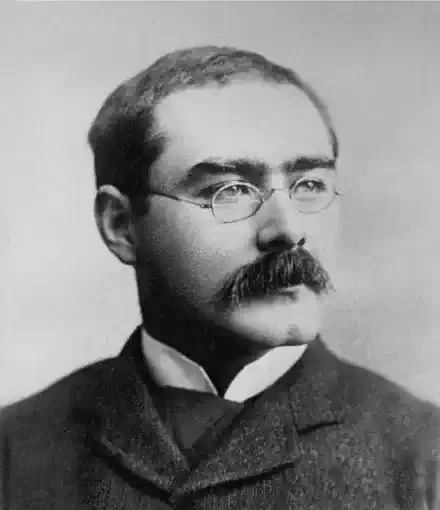
Rudyard Kipling
The Heritage
The Heritage
Our Fathers in a wondrous age,
Ere yet the Earth was small,
Ensured to us a heritage,
And doubted not at all
That we the children of their heart,
Which then did beat so high,
In later rime should play like part
For our posterity.
A thousand years they steadfast built,
To 'vantage us and ours,
The Walls that were a world's despair,
The sea-constraining Towers:
Yet in their midmost pride they knew,
And unto Kings made known,
Not all from these their strength they drew,
Their faith from brass or stone.
Youth's passion, manhood's fierce intent,
With age's judgment wise,
They spent, and counted not they spent,
At daily sacrifice.
Not lambs alone nor purchased doves .
Or tithe of trader's gold--
Their lives most dear, their dearer loves,
They offered up of old.
Refraining e'en from lawful things,
They bowed the neck to bear
The unadorned yoke that brings
Stark toil and sternest care.
Wherefore through them is Freedom sure;
Wherefore through them we stand,
From all but sloth and pride secure,
In a delightsome land.
Then, fretful, murmur not they gave
So great a charge to keep,
Nor dream that awestruck Time shall save
Their labour while we sleep.
Dear-bought and clear, a thousand year,
Our fathers' title runs.
Make we likewise their sacrifice,
Defrauding not our sons.
Our Fathers in a wondrous age,
Ere yet the Earth was small,
Ensured to us a heritage,
And doubted not at all
That we the children of their heart,
Which then did beat so high,
In later rime should play like part
For our posterity.
A thousand years they steadfast built,
To 'vantage us and ours,
The Walls that were a world's despair,
The sea-constraining Towers:
Yet in their midmost pride they knew,
And unto Kings made known,
Not all from these their strength they drew,
Their faith from brass or stone.
Youth's passion, manhood's fierce intent,
With age's judgment wise,
They spent, and counted not they spent,
At daily sacrifice.
Not lambs alone nor purchased doves .
Or tithe of trader's gold--
Their lives most dear, their dearer loves,
They offered up of old.
Refraining e'en from lawful things,
They bowed the neck to bear
The unadorned yoke that brings
Stark toil and sternest care.
Wherefore through them is Freedom sure;
Wherefore through them we stand,
From all but sloth and pride secure,
In a delightsome land.
Then, fretful, murmur not they gave
So great a charge to keep,
Nor dream that awestruck Time shall save
Their labour while we sleep.
Dear-bought and clear, a thousand year,
Our fathers' title runs.
Make we likewise their sacrifice,
Defrauding not our sons.
411
Rudyard Kipling
The Greek National Anthem
The Greek National Anthem
We knew thee of old,
Oh divinely restored,
By the light of thine eyes
And the light of thy Sword.
From the graves of our slain
Shall thy valour prevail
As we greet thee again --
Hail, Liberty! Hail!
Long time didst thou dwell
Mid the peoples that mourn,
Awaiting some voice
That should bid thee return.
Ah, slow broke that day
And no man dared call,
For the shadow of tyranny
Lay over all:
And we saw thee sad-eyed,
The tears on thy cheeks
While thy raiment was dyed
In the blood of the Greeks.
Yet, behold now thy sons
With impetuous breath
Go forth to the fight
Seeking Freedom or Death.
From the graves of our slain
Shall thy valour prevail
As we greet thee again
Hail, Liberty! Hail!
We knew thee of old,
Oh divinely restored,
By the light of thine eyes
And the light of thy Sword.
From the graves of our slain
Shall thy valour prevail
As we greet thee again --
Hail, Liberty! Hail!
Long time didst thou dwell
Mid the peoples that mourn,
Awaiting some voice
That should bid thee return.
Ah, slow broke that day
And no man dared call,
For the shadow of tyranny
Lay over all:
And we saw thee sad-eyed,
The tears on thy cheeks
While thy raiment was dyed
In the blood of the Greeks.
Yet, behold now thy sons
With impetuous breath
Go forth to the fight
Seeking Freedom or Death.
From the graves of our slain
Shall thy valour prevail
As we greet thee again
Hail, Liberty! Hail!
423
Rudyard Kipling
The Dead King
The Dead King
EDWARD VII.
Who in the Realm to-day lays down dear life for the sake of a land more dear?
And, unconcerned for his own estate, toils till the last grudged sands have run?
Let him approach. It is proven here
Our King asks nothing of any man more than Our King himself, has done.
For to him above all was Life good, above all he commanded
Her abundance full-handed.
The peculiar treasure of Kings was his for the taking:
All that men come to in dreams he inherited waking: --
His marvel of world-gathered armies -- one heart and all races;
His seas 'neath his keels when his war-castles foamed to their places;
The thundering foreshores that answered his heralded landing;
The huge lighted cities adoring, the assemblies upstanding;
The Councils of Kings called in haste to learn how he was minded --
The kingdoms, the Powers, and the Glories he dealt with unblinded.
To him came all captains of men, all achievers of glory
Hot from the press of their battles they told him their story.
They revealed him their lives in an hour and, saluting departed,
Joyful to labour afresh -- he had made them new-hearted.
And, since he weighed men from his youth, and no lie long deceived him,
He spoke and exacted the truth, and the basest believed him.
And God poured him an exquisite wine, that was daily renewed to him,
In the clear-welling love of his peoples that daily accrued to him.
Honour and service we gave him, rejoicingly fearless;
Faith absolute, trust beyond speech and a friendship as peerless.
And since he was Master and Servant in all that we asked him,
We leaned hard on his wisdom in all things, knowing not how we tasked him.
For on him each new day laid command, every tyrannous hour,
To confront, or confirm, or make smooth some dread issue of power;
To deliver true, judgment aright at the instant, unaided,
In the strict, level, ultimate phrase that allowed or dissuaded;
To foresee, to allay, to avert from us perils unnumbered,
To stand guard on our gates when he guessed that the watchmen had slumbered;
To win time, to turn hate, to woo folly to service and, mightily schooling
His strength to the use of his Nations, to rule as not ruling.
These were the works of our King; Earth's peace was the proof of them.
God gave him great works to fulfil, and to us the behoof of them.
We accepted his toil as our right -- none spared, none excused him.
When he was bowed by his burden his rest was refused him.
We troubled his age with our weakness -- the blacker our shame to us!
Hearing his People had need of him, straightway he came to us.
As he received so he gave -- nothing grudged, naught denying,
Not even the last gasp of his breath when he strove for us, dying.
For our sakes, without question, he put from him all that he cherished.
Simply as any that serve him he served and he perished.
All that Kings covet was his, and he flung it aside for us.
Simply as any that die in his service he died for us!
Who in the Realm to-day has choice of the easy road or the hard to tread?
And, much concerned for his own estate, would sell his soul to remain in the
sun?
Let him depart nor look on Our dead.
Our King asks nothing of any man more than Our King himself has done.
EDWARD VII.
Who in the Realm to-day lays down dear life for the sake of a land more dear?
And, unconcerned for his own estate, toils till the last grudged sands have run?
Let him approach. It is proven here
Our King asks nothing of any man more than Our King himself, has done.
For to him above all was Life good, above all he commanded
Her abundance full-handed.
The peculiar treasure of Kings was his for the taking:
All that men come to in dreams he inherited waking: --
His marvel of world-gathered armies -- one heart and all races;
His seas 'neath his keels when his war-castles foamed to their places;
The thundering foreshores that answered his heralded landing;
The huge lighted cities adoring, the assemblies upstanding;
The Councils of Kings called in haste to learn how he was minded --
The kingdoms, the Powers, and the Glories he dealt with unblinded.
To him came all captains of men, all achievers of glory
Hot from the press of their battles they told him their story.
They revealed him their lives in an hour and, saluting departed,
Joyful to labour afresh -- he had made them new-hearted.
And, since he weighed men from his youth, and no lie long deceived him,
He spoke and exacted the truth, and the basest believed him.
And God poured him an exquisite wine, that was daily renewed to him,
In the clear-welling love of his peoples that daily accrued to him.
Honour and service we gave him, rejoicingly fearless;
Faith absolute, trust beyond speech and a friendship as peerless.
And since he was Master and Servant in all that we asked him,
We leaned hard on his wisdom in all things, knowing not how we tasked him.
For on him each new day laid command, every tyrannous hour,
To confront, or confirm, or make smooth some dread issue of power;
To deliver true, judgment aright at the instant, unaided,
In the strict, level, ultimate phrase that allowed or dissuaded;
To foresee, to allay, to avert from us perils unnumbered,
To stand guard on our gates when he guessed that the watchmen had slumbered;
To win time, to turn hate, to woo folly to service and, mightily schooling
His strength to the use of his Nations, to rule as not ruling.
These were the works of our King; Earth's peace was the proof of them.
God gave him great works to fulfil, and to us the behoof of them.
We accepted his toil as our right -- none spared, none excused him.
When he was bowed by his burden his rest was refused him.
We troubled his age with our weakness -- the blacker our shame to us!
Hearing his People had need of him, straightway he came to us.
As he received so he gave -- nothing grudged, naught denying,
Not even the last gasp of his breath when he strove for us, dying.
For our sakes, without question, he put from him all that he cherished.
Simply as any that serve him he served and he perished.
All that Kings covet was his, and he flung it aside for us.
Simply as any that die in his service he died for us!
Who in the Realm to-day has choice of the easy road or the hard to tread?
And, much concerned for his own estate, would sell his soul to remain in the
sun?
Let him depart nor look on Our dead.
Our King asks nothing of any man more than Our King himself has done.
469
Rudyard Kipling
The Conversion of Aurelian McGoggin
The Conversion of Aurelian McGoggin
Ride with an idle whip, ride with an unused heel,
But, once in a way, there will come a day
When the colt must be taught to feel
The lash that falls, and the curb that galls, and the sting
of the rowelled steel.
Ride with an idle whip, ride with an unused heel,
But, once in a way, there will come a day
When the colt must be taught to feel
The lash that falls, and the curb that galls, and the sting
of the rowelled steel.
362
Rudyard Kipling
The Boy Scouts' Patrol Song
The Boy Scouts' Patrol Song
These are our regulations --
There's just one law for the Scout
And the first and the last, and the present and the past,
And the future and the perfect is "Look out!"
I, thou and he, look out!
We, ye and they, look out!
Though you didn't or you wouldn't
Or you hadn't or you couldn't;
You jolly well must look out!
Look out, when you start for the day
That your kit is packed to your mind;
There is no use going away
With half of it left behind.
Look out that your laces are tight,
And your boots are easy and stout,
Or you'll end with a blister at night.
(Chorus) All Patrols look out!
Look out for the birds of the air,
Look out for the beasts of the field --
They'll tell you how and where
The other side's concealed.
When the blackbird bolts from the copse,
Or the cattle are staring about,
The wise commander stops
And (chorus) All Patrols look out!
Look out when your front is clear,
And you feel you are bound to win.
Look out for your flank and your rear --
That's where surprises begin.
For the rustle that isn't a rat,
For the splash that isn't a trout,
For the boulder that may be a hat
(Chorus) All Patrols look out!
For the innocent knee-high grass,
For the ditch that never tells,
Look out! Look out ere you pass --
And look out for everything else!
A sign mis-read as you run
May turn retreat to a rout --
For all things under the sun
(Chorus) All Patrols look out!
Look out when your temper goes
At the end of a losing game;
When your boots are too tight for your toes;
And you answer and argue and blame.
It's the hardest part of the Low,
But it has to be learnt by the Scout --
For whining and shirking and "jaw"
(Chorus) All Patrols look out!
These are our regulations --
There's just one law for the Scout
And the first and the last, and the present and the past,
And the future and the perfect is "Look out!"
I, thou and he, look out!
We, ye and they, look out!
Though you didn't or you wouldn't
Or you hadn't or you couldn't;
You jolly well must look out!
Look out, when you start for the day
That your kit is packed to your mind;
There is no use going away
With half of it left behind.
Look out that your laces are tight,
And your boots are easy and stout,
Or you'll end with a blister at night.
(Chorus) All Patrols look out!
Look out for the birds of the air,
Look out for the beasts of the field --
They'll tell you how and where
The other side's concealed.
When the blackbird bolts from the copse,
Or the cattle are staring about,
The wise commander stops
And (chorus) All Patrols look out!
Look out when your front is clear,
And you feel you are bound to win.
Look out for your flank and your rear --
That's where surprises begin.
For the rustle that isn't a rat,
For the splash that isn't a trout,
For the boulder that may be a hat
(Chorus) All Patrols look out!
For the innocent knee-high grass,
For the ditch that never tells,
Look out! Look out ere you pass --
And look out for everything else!
A sign mis-read as you run
May turn retreat to a rout --
For all things under the sun
(Chorus) All Patrols look out!
Look out when your temper goes
At the end of a losing game;
When your boots are too tight for your toes;
And you answer and argue and blame.
It's the hardest part of the Low,
But it has to be learnt by the Scout --
For whining and shirking and "jaw"
(Chorus) All Patrols look out!
593
Rudyard Kipling
The Benefactors
The Benefactors
Ah! What avails the classic bent
And what the cultured word,
Against the undoctored incident
That actually occurred?
And what is Art whereto we press
Through paint and prose and rhyme--
When Nature in her nakedness
Defeats us every time?
It is not learning, grace nor gear,
Nor easy meat and drink,
But bitter pinch of pain and fear
That makes creation think.
When in this world's unpleasing youth
Our godlike race began,
The longest arm, the sharpest tooth,
Gave man control of man;
Till, bruised and bitten to the bone
And taught by pain and fear,
He learned to deal the far-off stone,
And poke the long, safe spear.
So tooth and nail were obsolete
As means against a foe,
Till, bored by uniform defeat,
Some genius built the bow.
Then stone and javelin proved as vain
As old-time tooth and nail;
Till, spurred anew by fear and pain,
Man fashioned coats of mail.
Then was there safety for the rich
And danger for the poor,
Till someone mixed a powder which
Redressed the scale once more.
Helmet and armour disappeared
With sword and bow and pike,
And, when the smoke of battle cleared,
All men were armed alike. . . .
And when ten million such were slain
To please one crazy king,
Man, schooled in bulk by fear and pain,
Grew weary of the thing;
And, at the very hour designed,
To enslave him past recall,
His tooth-stone-arrow-gun-shy mind
Turned and abolished all.
All Power, each Tyrant, every Mob
Whose head has grown too large,
Ends by destroying its own job
And works its own discharge;
And Man, whose mere necessities
Move all things from his path,
Trembles meanwhile at their decrees,
And deprecates their wrath!
Ah! What avails the classic bent
And what the cultured word,
Against the undoctored incident
That actually occurred?
And what is Art whereto we press
Through paint and prose and rhyme--
When Nature in her nakedness
Defeats us every time?
It is not learning, grace nor gear,
Nor easy meat and drink,
But bitter pinch of pain and fear
That makes creation think.
When in this world's unpleasing youth
Our godlike race began,
The longest arm, the sharpest tooth,
Gave man control of man;
Till, bruised and bitten to the bone
And taught by pain and fear,
He learned to deal the far-off stone,
And poke the long, safe spear.
So tooth and nail were obsolete
As means against a foe,
Till, bored by uniform defeat,
Some genius built the bow.
Then stone and javelin proved as vain
As old-time tooth and nail;
Till, spurred anew by fear and pain,
Man fashioned coats of mail.
Then was there safety for the rich
And danger for the poor,
Till someone mixed a powder which
Redressed the scale once more.
Helmet and armour disappeared
With sword and bow and pike,
And, when the smoke of battle cleared,
All men were armed alike. . . .
And when ten million such were slain
To please one crazy king,
Man, schooled in bulk by fear and pain,
Grew weary of the thing;
And, at the very hour designed,
To enslave him past recall,
His tooth-stone-arrow-gun-shy mind
Turned and abolished all.
All Power, each Tyrant, every Mob
Whose head has grown too large,
Ends by destroying its own job
And works its own discharge;
And Man, whose mere necessities
Move all things from his path,
Trembles meanwhile at their decrees,
And deprecates their wrath!
488
Rudyard Kipling
The Bell Buoy
The Bell Buoy
They christened my brother of old--
And a saintly name he bears--
They gave him his place to hold
At the head of the belfry-stairs,
Where the minister-towers stand
And the breeding kestrels cry.
Would I change with my brother a league inland?
(Shoal! 'Ware shoal!) Not I!
In the flush of the hot June prime,
O'er sleek flood-tides afire,
I hear him hurry the chime
To the bidding of checked Desire;
Till the sweated ringers tire
And the wild bob-majors die.
Could I wait for my turn in the godly choir?
(Shoal! 'Ware shoal!) Not I!
When the smoking scud is blown--
When the greasy wind-rack lowers--
Apart and at peace and alone,
He counts the changeless hours.
He wars with darkling Powers
(I war with a darkling sea);
Would he stoop to my work in the gusty mirk?
(Shoal! 'Ware shoal!) Not he!
There was never a priest to pray
There was never a hand to toll,
When they made me guard of the bay,
And moored me over the shoal.
I rock, I reel, and I roll--
My four great hammers ply--
Could I speak or be still at the Church's will?
(Shoal! 'Ware shoal!) Not I!
The landward marks have failed,
The fog-bank glides unguessed,
The seaward lights are veiled,
The spent deep feigns her rest:
But my ear is laid to her breast,
I lift to the swell--I cry!
Could I wait in sloth on the Church's oath?
(Shoal! 'Ware shoal!) Not I!
At the careless end of night
I thrill to the nearing screw;
I turn in the clearing light
And I call to the drowsy crew;
And the mud boils foul and blue
As the blind bow backs away.
Will they give me their thanks if they clear the banks?
(Shoal! 'Ware shoal!) Not they!
The beach-pools cake and skim,
The bursting spray-heads freeze,
I gather on crown and rim
The grey, grained ice of the seas,
Where, sheathed from bitt to trees,
The plunging colliers lie.
Would I barter my place for the Church's grace?
(Shoal! 'Ware shoal!) Not I!
Through the blur of the whirling snow,
Or the black of the inky sleet,
The lanterns gather and grow,
And I look for the homeward fleet.
Rattle of block and sheet--
"Ready about-stand by!"
Shall I ask them a fee ere they fetch the quay?
(Shoal! 'Ware shoal!) Not I!
I dip and I surge and I swing
In the rip of the racing tide,
By the gates of doom I sing,
On the horns of death I ride.
A ship-length overside,
Between the course and the sand,
Fretted and bound I bide
Peril whereof I cry.
Would I change with my brother a league inland?
(Shoal! 'Ware shoal!) Not I!
They christened my brother of old--
And a saintly name he bears--
They gave him his place to hold
At the head of the belfry-stairs,
Where the minister-towers stand
And the breeding kestrels cry.
Would I change with my brother a league inland?
(Shoal! 'Ware shoal!) Not I!
In the flush of the hot June prime,
O'er sleek flood-tides afire,
I hear him hurry the chime
To the bidding of checked Desire;
Till the sweated ringers tire
And the wild bob-majors die.
Could I wait for my turn in the godly choir?
(Shoal! 'Ware shoal!) Not I!
When the smoking scud is blown--
When the greasy wind-rack lowers--
Apart and at peace and alone,
He counts the changeless hours.
He wars with darkling Powers
(I war with a darkling sea);
Would he stoop to my work in the gusty mirk?
(Shoal! 'Ware shoal!) Not he!
There was never a priest to pray
There was never a hand to toll,
When they made me guard of the bay,
And moored me over the shoal.
I rock, I reel, and I roll--
My four great hammers ply--
Could I speak or be still at the Church's will?
(Shoal! 'Ware shoal!) Not I!
The landward marks have failed,
The fog-bank glides unguessed,
The seaward lights are veiled,
The spent deep feigns her rest:
But my ear is laid to her breast,
I lift to the swell--I cry!
Could I wait in sloth on the Church's oath?
(Shoal! 'Ware shoal!) Not I!
At the careless end of night
I thrill to the nearing screw;
I turn in the clearing light
And I call to the drowsy crew;
And the mud boils foul and blue
As the blind bow backs away.
Will they give me their thanks if they clear the banks?
(Shoal! 'Ware shoal!) Not they!
The beach-pools cake and skim,
The bursting spray-heads freeze,
I gather on crown and rim
The grey, grained ice of the seas,
Where, sheathed from bitt to trees,
The plunging colliers lie.
Would I barter my place for the Church's grace?
(Shoal! 'Ware shoal!) Not I!
Through the blur of the whirling snow,
Or the black of the inky sleet,
The lanterns gather and grow,
And I look for the homeward fleet.
Rattle of block and sheet--
"Ready about-stand by!"
Shall I ask them a fee ere they fetch the quay?
(Shoal! 'Ware shoal!) Not I!
I dip and I surge and I swing
In the rip of the racing tide,
By the gates of doom I sing,
On the horns of death I ride.
A ship-length overside,
Between the course and the sand,
Fretted and bound I bide
Peril whereof I cry.
Would I change with my brother a league inland?
(Shoal! 'Ware shoal!) Not I!
465
Rudyard Kipling
The Ballad of the Clampherdown
The Ballad of the Clampherdown
It was our war-ship Clampherdown
Would sweep the Channel clean,
Wherefore she kept her hatches close
When the merry Channel chops arose,
To save the bleached marine.
She had one bow-gun of a hundred ton
And a great stern-gun beside.
They dipped their noses deep in the sea,
They racked their stays and stanchions free
In the wash of the wind-whipped tide.
It was our war-ship Clampherdown,
Fell in with a cruiser light
That carried the dainty Hotchkiss gun
And a pair of heels wherewith to run
From the grip of a close-fought fight.
She opened fire at seven miles --
As ye shoot at a bobbing cork --
And once she fired and twice she fired,
Till the bow-gun dropped like a lily tired
That lolls upon the stalk.
"Captain, the bow-gun melts apace,
The deck-beams break below,
'Twere well to rest for an hour or twain,
And botch the shattered plates again."
And he answered, "Make it so."
She opened fire within the mile --
As ye shoot at the flying duck --
And the great stern-gun shot fair and true,
With the heave of the ship, to the stainless blue,
And the great stern-turret stuck.
"Captain, the turret fills with steam,
The feed-pipes burst below --
You can hear the hiss of the helpless ram,
You can hear the twisted runners jam."
And he answered, "Turn and go!"
It was our war-ship Clampherdown,
And grimly did she roll;
Swung round to take the cruiser's fire
As the White Whale faces the Thresher's ire
When they war by the frozen Pole.
"Captain, the shells are falling fast,
And faster still fall we;
And it is not meet for English stock
To bide in the heart of an eight-day clock
The death they cannot see."
"Lie down, lie down, my bold A.B.,
We drift upon her beam;
We dare not ram, for she can run;
And dare ye fire another gun,
And die in the peeling steam?"
It was our war-ship Clampherdown
That carried an armour-belt;
But fifty feet at stern and bow
Lay bare as the paunch of the purser's sow,
To the hail of the Nordenfeldt.
"Captain, they hack us through and through;
The chilled steel bolts are swift!
We have emptied our bunkers in open sea,
Their shrapnel bursts where our coal should be."
And he answered, "Let her drift."
It was our war-ship Clampherdown,
Swung round upon the tide,
Her two dumb guns glared south and north,
And the blood and the bubbling steam ran forth,
And she ground the cruiser's side.
"Captain, they cry, the fight is done,
They bid you send your sword."
And he answered, "Grapple her stern and bow.
They have asked for the steel. They shall have it now;
Out cutlasses and board!"
It was our war-ship Clampherdown
Spewed up four hundred men;
And the scalded stokers yelped delight,
As they rolled in the waist and heard the fight,
Stamp o'er their steel-walled pen.
They cleared the cruiser end to end,
From conning-tower to hold.
They fought as they fought in Nelson's fleet;
They were stripped to the waist, they were bare to the feet,
As it was in the days of old.
It was the sinking Clampherdown
Heaved up her battered side --
And carried a million pounds in steel,
To the cod and the corpse-fed conger-eel,
And the scour of the Channel tide.
It was the crew of the Clampherdown
Stood out to sweep the sea,
On a cruiser won from an ancient foe,
As it was in the days of long ago,
And as it still shall be!
It was our war-ship Clampherdown
Would sweep the Channel clean,
Wherefore she kept her hatches close
When the merry Channel chops arose,
To save the bleached marine.
She had one bow-gun of a hundred ton
And a great stern-gun beside.
They dipped their noses deep in the sea,
They racked their stays and stanchions free
In the wash of the wind-whipped tide.
It was our war-ship Clampherdown,
Fell in with a cruiser light
That carried the dainty Hotchkiss gun
And a pair of heels wherewith to run
From the grip of a close-fought fight.
She opened fire at seven miles --
As ye shoot at a bobbing cork --
And once she fired and twice she fired,
Till the bow-gun dropped like a lily tired
That lolls upon the stalk.
"Captain, the bow-gun melts apace,
The deck-beams break below,
'Twere well to rest for an hour or twain,
And botch the shattered plates again."
And he answered, "Make it so."
She opened fire within the mile --
As ye shoot at the flying duck --
And the great stern-gun shot fair and true,
With the heave of the ship, to the stainless blue,
And the great stern-turret stuck.
"Captain, the turret fills with steam,
The feed-pipes burst below --
You can hear the hiss of the helpless ram,
You can hear the twisted runners jam."
And he answered, "Turn and go!"
It was our war-ship Clampherdown,
And grimly did she roll;
Swung round to take the cruiser's fire
As the White Whale faces the Thresher's ire
When they war by the frozen Pole.
"Captain, the shells are falling fast,
And faster still fall we;
And it is not meet for English stock
To bide in the heart of an eight-day clock
The death they cannot see."
"Lie down, lie down, my bold A.B.,
We drift upon her beam;
We dare not ram, for she can run;
And dare ye fire another gun,
And die in the peeling steam?"
It was our war-ship Clampherdown
That carried an armour-belt;
But fifty feet at stern and bow
Lay bare as the paunch of the purser's sow,
To the hail of the Nordenfeldt.
"Captain, they hack us through and through;
The chilled steel bolts are swift!
We have emptied our bunkers in open sea,
Their shrapnel bursts where our coal should be."
And he answered, "Let her drift."
It was our war-ship Clampherdown,
Swung round upon the tide,
Her two dumb guns glared south and north,
And the blood and the bubbling steam ran forth,
And she ground the cruiser's side.
"Captain, they cry, the fight is done,
They bid you send your sword."
And he answered, "Grapple her stern and bow.
They have asked for the steel. They shall have it now;
Out cutlasses and board!"
It was our war-ship Clampherdown
Spewed up four hundred men;
And the scalded stokers yelped delight,
As they rolled in the waist and heard the fight,
Stamp o'er their steel-walled pen.
They cleared the cruiser end to end,
From conning-tower to hold.
They fought as they fought in Nelson's fleet;
They were stripped to the waist, they were bare to the feet,
As it was in the days of old.
It was the sinking Clampherdown
Heaved up her battered side --
And carried a million pounds in steel,
To the cod and the corpse-fed conger-eel,
And the scour of the Channel tide.
It was the crew of the Clampherdown
Stood out to sweep the sea,
On a cruiser won from an ancient foe,
As it was in the days of long ago,
And as it still shall be!
354
Rudyard Kipling
The Ballad Of The King's Mercy
The Ballad Of The King's Mercy
Abdhur Rahman, the Durani Chief, of him is the story told.
His mercy fills the Khyber hills -- his grace is manifold;
He has taken toll of the North and the South --
his glory reacheth far,
And they tell the tale of his charity from Balkh to Kandahar.
Before the old Peshawur Gate, where Kurd and Kaffir meet,
The Governor of Kabul dealt the Justice of the Street,
And that was strait as running noose and swift as plunging knife,
Tho' he who held the longer purse might hold the longer life.
There was a hound of Hindustan had struck a Euzufzai,
Wherefore they spat upon his face and led him out to die.
It chanced the King went forth that hour when throat was bared to knife;
The Kaffir grovelled under-hoof and clamoured for his life.
Then said the King: "Have hope, O friend! Yea, Death disgraced is hard;
Much honour shall be thine"; and called the Captain of the Guard,
Yar Khan, a bastard of the Blood, so city-babble saith,
And he was honoured of the King -- the which is salt to Death;
And he was son of Daoud Shah, the Reiver of the Plains,
And blood of old Durani Lords ran fire in his veins;
And 'twas to tame an Afghan pride nor Hell nor Heaven could bind,
The King would make him butcher to a yelping cur of Hind.
"Strike!" said the King. "King's blood art thou --
his death shall be his pride!"
Then louder, that the crowd might catch: "Fear not -- his arms are tied!"
Yar Khan drew clear the Khyber knife, and struck, and sheathed again.
"O man, thy will is done," quoth he; "a King this dog hath slain."
Abdhur Rahman, the Durani Chief, to the North and the South is sold.
The North and the South shall open their mouth
to a Ghilzai flag unrolled,
When the big guns speak to the Khyber peak, and his dog-Heratis fly:
Ye have heard the song -- How long? How long?
Wolves of the Abazai!
That night before the watch was set, when all the streets were clear,
The Governor of Kabul spoke: "My King, hast thou no fear?
Thou knowest -- thou hast heard," -- his speech died at his master's face.
And grimly said the Afghan King: "I rule the Afghan race.
My path is mine -- see thou to thine -- to-night upon thy bed
Think who there be in Kabul now that clamour for thy head."
That night when all the gates were shut to City and to throne,
Within a little garden-house the King lay down alone.
Before the sinking of the moon, which is the Night of Night,
Yar Khan came softly to the King to make his honour white.
The children of the town had mocked beneath his horse's hoofs,
The harlots of the town had hailed him "butcher!" from their roofs.
But as he groped against the wall, two hands upon him fell,
The King behind his shoulder spake: "Dead man, thou dost not well!
'Tis ill to jest with Kings by day and seek a boon by night;
And that thou bearest in thy hand is all too sharp to write.
But three days hence, if God be good, and if thy strength remain,
Thou shalt demand one boon of me and bless me in thy pain.
For I am merciful to all, and most of all to thee.
My butcher of the shambles, rest -- no knife hast thou for me!"
Abdhur Rahman, the Durani Chief,
holds hard by the South and the North;
But the Ghilzai knows, ere the melting snows,
when the swollen banks break forth,
When the red-coats crawl to the sungar wall,
and his Usbeg lances fail:
Ye have heard the song -- How long? How long?
Wolves of the Zuka Kheyl!
They stoned him in the rubbish-field when dawn was in the sky,
According to the written word, "See that he do not die."
They stoned him till the stones were piled above him on the plain,
And those the labouring limbs displaced they tumbled back again.
One watched beside the dreary mound that veiled the battered thing,
And him the King with laughter called the Herald of the King.
It was upon the second night, the night of Ramazan,
The watcher leaning earthward heard the message of Yar Khan.
From shattered breast through shrivelled lips broke forth the rattling breath,
"Creature of God, deliver me from agony of Death."
They sought the King among his girls, and risked their lives thereby:
"Protector of the Pitiful, give orders that he die!"
"Bid him endure until the day," a lagging answer came;
"The night is short, and he can pray and learn to bless my name."
Before the dawn three times he spoke, and on the day once more:
"Creature of God, deliver me, and bless the King therefor!"
They shot him at the morning prayer, to ease him of his pain,
And when he heard the matchlocks clink, he blessed the King again.
Which thing the singers made a song for all the world to sing,
So that the Outer Seas may know the mercy of the King.
Abdhur Rahman, the Durani Chief, of him is the story told,
He has opened his mouth to the North and the South,
they have stuffed his mouth with gold.
Ye know the truth of his tender ruth -- and sweet his favours are:
Ye have heard the song -- How long? How long?
from Balkh to Kandahar.
Abdhur Rahman, the Durani Chief, of him is the story told.
His mercy fills the Khyber hills -- his grace is manifold;
He has taken toll of the North and the South --
his glory reacheth far,
And they tell the tale of his charity from Balkh to Kandahar.
Before the old Peshawur Gate, where Kurd and Kaffir meet,
The Governor of Kabul dealt the Justice of the Street,
And that was strait as running noose and swift as plunging knife,
Tho' he who held the longer purse might hold the longer life.
There was a hound of Hindustan had struck a Euzufzai,
Wherefore they spat upon his face and led him out to die.
It chanced the King went forth that hour when throat was bared to knife;
The Kaffir grovelled under-hoof and clamoured for his life.
Then said the King: "Have hope, O friend! Yea, Death disgraced is hard;
Much honour shall be thine"; and called the Captain of the Guard,
Yar Khan, a bastard of the Blood, so city-babble saith,
And he was honoured of the King -- the which is salt to Death;
And he was son of Daoud Shah, the Reiver of the Plains,
And blood of old Durani Lords ran fire in his veins;
And 'twas to tame an Afghan pride nor Hell nor Heaven could bind,
The King would make him butcher to a yelping cur of Hind.
"Strike!" said the King. "King's blood art thou --
his death shall be his pride!"
Then louder, that the crowd might catch: "Fear not -- his arms are tied!"
Yar Khan drew clear the Khyber knife, and struck, and sheathed again.
"O man, thy will is done," quoth he; "a King this dog hath slain."
Abdhur Rahman, the Durani Chief, to the North and the South is sold.
The North and the South shall open their mouth
to a Ghilzai flag unrolled,
When the big guns speak to the Khyber peak, and his dog-Heratis fly:
Ye have heard the song -- How long? How long?
Wolves of the Abazai!
That night before the watch was set, when all the streets were clear,
The Governor of Kabul spoke: "My King, hast thou no fear?
Thou knowest -- thou hast heard," -- his speech died at his master's face.
And grimly said the Afghan King: "I rule the Afghan race.
My path is mine -- see thou to thine -- to-night upon thy bed
Think who there be in Kabul now that clamour for thy head."
That night when all the gates were shut to City and to throne,
Within a little garden-house the King lay down alone.
Before the sinking of the moon, which is the Night of Night,
Yar Khan came softly to the King to make his honour white.
The children of the town had mocked beneath his horse's hoofs,
The harlots of the town had hailed him "butcher!" from their roofs.
But as he groped against the wall, two hands upon him fell,
The King behind his shoulder spake: "Dead man, thou dost not well!
'Tis ill to jest with Kings by day and seek a boon by night;
And that thou bearest in thy hand is all too sharp to write.
But three days hence, if God be good, and if thy strength remain,
Thou shalt demand one boon of me and bless me in thy pain.
For I am merciful to all, and most of all to thee.
My butcher of the shambles, rest -- no knife hast thou for me!"
Abdhur Rahman, the Durani Chief,
holds hard by the South and the North;
But the Ghilzai knows, ere the melting snows,
when the swollen banks break forth,
When the red-coats crawl to the sungar wall,
and his Usbeg lances fail:
Ye have heard the song -- How long? How long?
Wolves of the Zuka Kheyl!
They stoned him in the rubbish-field when dawn was in the sky,
According to the written word, "See that he do not die."
They stoned him till the stones were piled above him on the plain,
And those the labouring limbs displaced they tumbled back again.
One watched beside the dreary mound that veiled the battered thing,
And him the King with laughter called the Herald of the King.
It was upon the second night, the night of Ramazan,
The watcher leaning earthward heard the message of Yar Khan.
From shattered breast through shrivelled lips broke forth the rattling breath,
"Creature of God, deliver me from agony of Death."
They sought the King among his girls, and risked their lives thereby:
"Protector of the Pitiful, give orders that he die!"
"Bid him endure until the day," a lagging answer came;
"The night is short, and he can pray and learn to bless my name."
Before the dawn three times he spoke, and on the day once more:
"Creature of God, deliver me, and bless the King therefor!"
They shot him at the morning prayer, to ease him of his pain,
And when he heard the matchlocks clink, he blessed the King again.
Which thing the singers made a song for all the world to sing,
So that the Outer Seas may know the mercy of the King.
Abdhur Rahman, the Durani Chief, of him is the story told,
He has opened his mouth to the North and the South,
they have stuffed his mouth with gold.
Ye know the truth of his tender ruth -- and sweet his favours are:
Ye have heard the song -- How long? How long?
from Balkh to Kandahar.
441
Rudyard Kipling
The Ballad of Bolivar
The Ballad of Bolivar
Seven men from all the world, back to Docks again,
Rolling down the Ratcliffe Road drunk and raising Cain:
Give the girls another drink 'fore we sign away --
We that took the ~Bolivar~ out across the Bay!
We put out from Sunderland loaded down with rails;
We put back to Sunderland 'cause our cargo shifted;
We put out from Sunderland -- met the winter gales --
Seven days and seven nights to the Start we drifted.
Racketing her rivets loose, smoke-stack white as snow,
All the coals adrift adeck, half the rails below,
Leaking like a lobster-pot, steering like a dray --
Out we took the ~Bolivar~, out across the Bay!
One by one the Lights came up, winked and let us by;
Mile by mile we waddled on, coal and fo'c'sle short;
Met a blow that laid us down, heard a bulkhead fly;
Left the ~Wolf~ behind us with a two-foot list to port.
Trailing like a wounded duck, working out her soul;
Clanging like a smithy-shop after every roll;
Just a funnel and a mast lurching through the spray --
So we threshed the ~Bolivar~ out across the Bay!
'Felt her hog and felt her sag, betted when she'd break;
Wondered every time she raced if she'd stand the shock;
Heard the seas like drunken men pounding at her strake;
Hoped the Lord 'ud keep his thumb on the plummer-block.
Banged against the iron decks, bilges choked with coal;
Flayed and frozen foot and hand, sick of heart and soul;
Last we prayed she'd buck herself into judgment Day --
Hi! we cursed the ~Bolivar~ knocking round the Bay!
O her nose flung up to sky, groaning to be still --
Up and down and back we went, never time for breath;
Then the money paid at Lloyd's caught her by the heel,
And the stars ran round and round dancin' at our death.
Aching for an hour's sleep, dozing off between;
'Heard the rotten rivets draw when she took it green;
'Watched the compass chase its tail like a cat at play --
That was on the ~Bolivar~, south across the Bay.
Once we saw between the squalls, lyin' head to swell --
Mad with work and weariness, wishin' they was we --
Some damned Liner's lights go by like a long hotel;
Cheered her from the ~Bolivar~ swampin' in the sea.
Then a grayback cleared us out, then the skipper laughed;
"Boys, the wheel has gone to Hell -- rig the winches aft!
Yoke the kicking rudder-head -- get her under way!"
So we steered her, pulley-haul, out across the Bay!
Just a pack o' rotten plates puttied up with tar,
In we came, an' time enough, 'cross Bilbao Bar.
Overloaded, undermanned, meant to founder, we
Euchred God Almighty's storm, bluffed the Eternal Sea!
Seven men from all the world, back to town again,
Rollin' down the Ratcliffe Road drunk and raising Cain:
Seven men from out of Hell. Ain't the owners gay,
'Cause we took the "Bolivar" safe across the Bay?
Seven men from all the world, back to Docks again,
Rolling down the Ratcliffe Road drunk and raising Cain:
Give the girls another drink 'fore we sign away --
We that took the ~Bolivar~ out across the Bay!
We put out from Sunderland loaded down with rails;
We put back to Sunderland 'cause our cargo shifted;
We put out from Sunderland -- met the winter gales --
Seven days and seven nights to the Start we drifted.
Racketing her rivets loose, smoke-stack white as snow,
All the coals adrift adeck, half the rails below,
Leaking like a lobster-pot, steering like a dray --
Out we took the ~Bolivar~, out across the Bay!
One by one the Lights came up, winked and let us by;
Mile by mile we waddled on, coal and fo'c'sle short;
Met a blow that laid us down, heard a bulkhead fly;
Left the ~Wolf~ behind us with a two-foot list to port.
Trailing like a wounded duck, working out her soul;
Clanging like a smithy-shop after every roll;
Just a funnel and a mast lurching through the spray --
So we threshed the ~Bolivar~ out across the Bay!
'Felt her hog and felt her sag, betted when she'd break;
Wondered every time she raced if she'd stand the shock;
Heard the seas like drunken men pounding at her strake;
Hoped the Lord 'ud keep his thumb on the plummer-block.
Banged against the iron decks, bilges choked with coal;
Flayed and frozen foot and hand, sick of heart and soul;
Last we prayed she'd buck herself into judgment Day --
Hi! we cursed the ~Bolivar~ knocking round the Bay!
O her nose flung up to sky, groaning to be still --
Up and down and back we went, never time for breath;
Then the money paid at Lloyd's caught her by the heel,
And the stars ran round and round dancin' at our death.
Aching for an hour's sleep, dozing off between;
'Heard the rotten rivets draw when she took it green;
'Watched the compass chase its tail like a cat at play --
That was on the ~Bolivar~, south across the Bay.
Once we saw between the squalls, lyin' head to swell --
Mad with work and weariness, wishin' they was we --
Some damned Liner's lights go by like a long hotel;
Cheered her from the ~Bolivar~ swampin' in the sea.
Then a grayback cleared us out, then the skipper laughed;
"Boys, the wheel has gone to Hell -- rig the winches aft!
Yoke the kicking rudder-head -- get her under way!"
So we steered her, pulley-haul, out across the Bay!
Just a pack o' rotten plates puttied up with tar,
In we came, an' time enough, 'cross Bilbao Bar.
Overloaded, undermanned, meant to founder, we
Euchred God Almighty's storm, bluffed the Eternal Sea!
Seven men from all the world, back to town again,
Rollin' down the Ratcliffe Road drunk and raising Cain:
Seven men from out of Hell. Ain't the owners gay,
'Cause we took the "Bolivar" safe across the Bay?
572
Rudyard Kipling
The American Rebellion
The American Rebellion
Before
Twas not while England's sword unsheathed
Put half a world to flight,
Nor while their new-built cities breathed
Secure behind her might;
Not while she poured from Pole to Line
Treasure and ships and men--
These worshippers at Freedoms shrine
They did not quit her then!
Not till their toes were driven forth
By England o'er the main--
Not till the Frenchman from the North
Had gone with shattered Spain;
Not till the clean-swept oceans showed
No hostile flag unrolled,
Did they remember that they owed
To Freedom--and were bold!
After
The snow lies thick on Valley Forge,
The ice on the Delaware,
But the poor dead soldiers of King George
They neither know nor care.
Not though the earliest primrose break
On the sunny side of the lane,
And scuffling rookeries awake
Their England' s spring again.
They will not stir when the drifts are gone,
Or the ice melts out of the bay:
And the men that served with Washington
Lie all as still as they.
They will not stir though the mayflower blows
In the moist dark woods of pine,
And every rock-strewn pasture shows
Mullein and columbine.
Each for his land, in a fair fight,
Encountered strove, and died,
And the kindly earth that knows no spite
Covers them side by side.
She is too busy to think of war;
She has all the world to make gay;
And, behold, the yearly flowers are
Where they were in our fathers' day!
Golden-rod by the pasture-wall
When the columbine is dead,
And sumach leaves that turn, in fall,
Bright as the blood they shed.
Before
Twas not while England's sword unsheathed
Put half a world to flight,
Nor while their new-built cities breathed
Secure behind her might;
Not while she poured from Pole to Line
Treasure and ships and men--
These worshippers at Freedoms shrine
They did not quit her then!
Not till their toes were driven forth
By England o'er the main--
Not till the Frenchman from the North
Had gone with shattered Spain;
Not till the clean-swept oceans showed
No hostile flag unrolled,
Did they remember that they owed
To Freedom--and were bold!
After
The snow lies thick on Valley Forge,
The ice on the Delaware,
But the poor dead soldiers of King George
They neither know nor care.
Not though the earliest primrose break
On the sunny side of the lane,
And scuffling rookeries awake
Their England' s spring again.
They will not stir when the drifts are gone,
Or the ice melts out of the bay:
And the men that served with Washington
Lie all as still as they.
They will not stir though the mayflower blows
In the moist dark woods of pine,
And every rock-strewn pasture shows
Mullein and columbine.
Each for his land, in a fair fight,
Encountered strove, and died,
And the kindly earth that knows no spite
Covers them side by side.
She is too busy to think of war;
She has all the world to make gay;
And, behold, the yearly flowers are
Where they were in our fathers' day!
Golden-rod by the pasture-wall
When the columbine is dead,
And sumach leaves that turn, in fall,
Bright as the blood they shed.
474
Rudyard Kipling
Snarleyow
Snarleyow
This 'appened in a battle to a batt'ry of the corps
Which is first among the women an' amazin' first in war;
An' what the bloomin' battle was I don't remember now,
But Two's off-lead 'e answered to the name o' ~Snarleyow~.
Down in the Infantry, nobody cares;
Down in the Cavalry, Colonel 'e swears;
But down in the lead with the wheel at the flog
Turns the bold Bombardier to a little whipped dog!
They was movin' into action, they was needed very sore,
To learn a little schoolin' to a native army corps,
They 'ad nipped against an uphill, they was tuckin' down the brow,
When a tricky, trundlin' roundshot give the knock to ~Snarleyow~.
They cut 'im loose an' left 'im -- 'e was almost tore in two --
But he tried to follow after as a well-trained 'orse should do;
'E went an' fouled the limber, an' the Driver's Brother squeals:
"Pull up, pull up for ~Snarleyow~ -- 'is head's between 'is 'eels!"
The Driver 'umped 'is shoulder, for the wheels was goin' round,
An' there ain't no "Stop, conductor!" when a batt'ry's changin' ground;
Sez 'e: "I broke the beggar in, an' very sad I feels,
But I couldn't pull up, not for ~you~ -- your 'ead between your 'eels!"
'E 'adn't 'ardly spoke the word, before a droppin' shell
A little right the batt'ry an' between the sections fell;
An' when the smoke 'ad cleared away, before the limber wheels,
There lay the Driver's Brother with 'is 'ead between 'is 'eels.
Then sez the Driver's Brother, an' 'is words was very plain,
"For Gawd's own sake get over me, an' put me out o' pain."
They saw 'is wounds was mortial, an' they judged that it was best,
So they took an' drove the limber straight across 'is back an' chest.
The Driver 'e give nothin' 'cept a little coughin' grunt,
But 'e swung 'is 'orses 'andsome when it came to "Action Front!"
An' if one wheel was juicy, you may lay your Monday head
'Twas juicier for the niggers when the case begun to spread.
The moril of this story, it is plainly to be seen:
You 'avn't got no families when servin' of the Queen --
You 'avn't got no brothers, fathers, sisters, wives, or sons --
If you want to win your battles take an' work your bloomin' guns!
Down in the Infantry, nobody cares;
Down in the Cavalry, Colonel 'e swears;
But down in the lead with the wheel at the flog
Turns the bold Bombardier to a little whipped dog!
This 'appened in a battle to a batt'ry of the corps
Which is first among the women an' amazin' first in war;
An' what the bloomin' battle was I don't remember now,
But Two's off-lead 'e answered to the name o' ~Snarleyow~.
Down in the Infantry, nobody cares;
Down in the Cavalry, Colonel 'e swears;
But down in the lead with the wheel at the flog
Turns the bold Bombardier to a little whipped dog!
They was movin' into action, they was needed very sore,
To learn a little schoolin' to a native army corps,
They 'ad nipped against an uphill, they was tuckin' down the brow,
When a tricky, trundlin' roundshot give the knock to ~Snarleyow~.
They cut 'im loose an' left 'im -- 'e was almost tore in two --
But he tried to follow after as a well-trained 'orse should do;
'E went an' fouled the limber, an' the Driver's Brother squeals:
"Pull up, pull up for ~Snarleyow~ -- 'is head's between 'is 'eels!"
The Driver 'umped 'is shoulder, for the wheels was goin' round,
An' there ain't no "Stop, conductor!" when a batt'ry's changin' ground;
Sez 'e: "I broke the beggar in, an' very sad I feels,
But I couldn't pull up, not for ~you~ -- your 'ead between your 'eels!"
'E 'adn't 'ardly spoke the word, before a droppin' shell
A little right the batt'ry an' between the sections fell;
An' when the smoke 'ad cleared away, before the limber wheels,
There lay the Driver's Brother with 'is 'ead between 'is 'eels.
Then sez the Driver's Brother, an' 'is words was very plain,
"For Gawd's own sake get over me, an' put me out o' pain."
They saw 'is wounds was mortial, an' they judged that it was best,
So they took an' drove the limber straight across 'is back an' chest.
The Driver 'e give nothin' 'cept a little coughin' grunt,
But 'e swung 'is 'orses 'andsome when it came to "Action Front!"
An' if one wheel was juicy, you may lay your Monday head
'Twas juicier for the niggers when the case begun to spread.
The moril of this story, it is plainly to be seen:
You 'avn't got no families when servin' of the Queen --
You 'avn't got no brothers, fathers, sisters, wives, or sons --
If you want to win your battles take an' work your bloomin' guns!
Down in the Infantry, nobody cares;
Down in the Cavalry, Colonel 'e swears;
But down in the lead with the wheel at the flog
Turns the bold Bombardier to a little whipped dog!
460
Rudyard Kipling
Screw-Guns
Screw-Guns
Smokin' my pipe on the mountings, sniffin' the mornin' cool,
I walks in my old brown gaiters along o' my old brown mule,
With seventy gunners be'ind me, an' never a beggar forgets
It's only the pick of the Army
that handles the dear little pets -- 'Tss! 'Tss!
For you all love the screw-guns -- the screw-guns they all love you!
So when we call round with a few guns,
o' course you will know what to do -- hoo! hoo!
Jest send in your Chief an' surrender --
it's worse if you fights or you runs:
You can go where you please, you can skid up the trees,
but you don't get away from the guns!
They sends us along where the roads are, but mostly we goes where they ain't:
We'd climb up the side of a sign-board an' trust to the stick o' the paint:
We've chivied the Naga an' Looshai, we've give the Afreedeeman fits,
For we fancies ourselves at two thousand,
we guns that are built in two bits -- 'Tss! 'Tss!
For you all love the screw-guns . . .
If a man doesn't work, why, we drills 'im an' teaches 'im 'ow to behave;
If a beggar can't march, why, we kills 'im an' rattles 'im into 'is grave.
You've got to stand up to our business an' spring without snatchin' or fuss.
D'you say that you sweat with the field-guns?
By God, you must lather with us -- 'Tss! 'Tss!
For you all love the screw-guns . . .
The eagles is screamin' around us, the river's a-moanin' below,
We're clear o' the pine an' the oak-scrub,
we're out on the rocks an' the snow,
An' the wind is as thin as a whip-lash what carries away to the plains
The rattle an' stamp o' the lead-mules --
the jinglety-jink o' the chains -- 'Tss! 'Tss!
For you all love the screw-guns . . .
There's a wheel on the Horns o' the Mornin',
an' a wheel on the edge o' the Pit,
An' a drop into nothin' beneath you as straight as a beggar can spit:
With the sweat runnin' out o' your shirt-sleeves,
an' the sun off the snow in your face,
An' 'arf o' the men on the drag-ropes
to hold the old gun in 'er place -- 'Tss! 'Tss!
For you all love the screw-guns . . .
Smokin' my pipe on the mountings, sniffin' the mornin' cool,
I climbs in my old brown gaiters along o' my old brown mule.
The monkey can say what our road was --
the wild-goat 'e knows where we passed.
Stand easy, you long-eared old darlin's!
Out drag-ropes! With shrapnel! Hold fast -- 'Tss! 'Tss!
For you all love the screw-guns -- the screw-guns they all love you!
So when we take tea with a few guns,
o' course you will know what to do -- hoo! hoo!
Jest send in your Chief an' surrender --
it's worse if you fights or you runs:
You may hide in the caves, they'll be only your graves,
but you can't get away from the guns!
Smokin' my pipe on the mountings, sniffin' the mornin' cool,
I walks in my old brown gaiters along o' my old brown mule,
With seventy gunners be'ind me, an' never a beggar forgets
It's only the pick of the Army
that handles the dear little pets -- 'Tss! 'Tss!
For you all love the screw-guns -- the screw-guns they all love you!
So when we call round with a few guns,
o' course you will know what to do -- hoo! hoo!
Jest send in your Chief an' surrender --
it's worse if you fights or you runs:
You can go where you please, you can skid up the trees,
but you don't get away from the guns!
They sends us along where the roads are, but mostly we goes where they ain't:
We'd climb up the side of a sign-board an' trust to the stick o' the paint:
We've chivied the Naga an' Looshai, we've give the Afreedeeman fits,
For we fancies ourselves at two thousand,
we guns that are built in two bits -- 'Tss! 'Tss!
For you all love the screw-guns . . .
If a man doesn't work, why, we drills 'im an' teaches 'im 'ow to behave;
If a beggar can't march, why, we kills 'im an' rattles 'im into 'is grave.
You've got to stand up to our business an' spring without snatchin' or fuss.
D'you say that you sweat with the field-guns?
By God, you must lather with us -- 'Tss! 'Tss!
For you all love the screw-guns . . .
The eagles is screamin' around us, the river's a-moanin' below,
We're clear o' the pine an' the oak-scrub,
we're out on the rocks an' the snow,
An' the wind is as thin as a whip-lash what carries away to the plains
The rattle an' stamp o' the lead-mules --
the jinglety-jink o' the chains -- 'Tss! 'Tss!
For you all love the screw-guns . . .
There's a wheel on the Horns o' the Mornin',
an' a wheel on the edge o' the Pit,
An' a drop into nothin' beneath you as straight as a beggar can spit:
With the sweat runnin' out o' your shirt-sleeves,
an' the sun off the snow in your face,
An' 'arf o' the men on the drag-ropes
to hold the old gun in 'er place -- 'Tss! 'Tss!
For you all love the screw-guns . . .
Smokin' my pipe on the mountings, sniffin' the mornin' cool,
I climbs in my old brown gaiters along o' my old brown mule.
The monkey can say what our road was --
the wild-goat 'e knows where we passed.
Stand easy, you long-eared old darlin's!
Out drag-ropes! With shrapnel! Hold fast -- 'Tss! 'Tss!
For you all love the screw-guns -- the screw-guns they all love you!
So when we take tea with a few guns,
o' course you will know what to do -- hoo! hoo!
Jest send in your Chief an' surrender --
it's worse if you fights or you runs:
You may hide in the caves, they'll be only your graves,
but you can't get away from the guns!
627
Rudyard Kipling
Red Dog
Red Dog
For our white and our excellent nights--for the nights of swift
running,
Fair ranging, far seeing, good hunting, sure cunning!
For the smells of the dawning, untainted, ere dew has departed!
For the rush through the mist, and the quarry blind-started!
For the cry of our mates when the sambhur has wheeled and is
standing at bay!
For the risk and the riot of night!
For the sleep at the lair-mouth by day!
It is met, and we go to the fight.
Bay! O bay!
For our white and our excellent nights--for the nights of swift
running,
Fair ranging, far seeing, good hunting, sure cunning!
For the smells of the dawning, untainted, ere dew has departed!
For the rush through the mist, and the quarry blind-started!
For the cry of our mates when the sambhur has wheeled and is
standing at bay!
For the risk and the riot of night!
For the sleep at the lair-mouth by day!
It is met, and we go to the fight.
Bay! O bay!
389
Rudyard Kipling
Outsong in the Jungle
Outsong in the Jungle
Baloo
For the sake of him who showed
One wise Frog the Jungle-Road,
Keep the Law the Man-Pack make
For thy blind old Baloo's sake!
Clean or tainted, hot or stale,
Hold it as it were the Trail,
Through the day and through the night,
Questing neither left nor right.
For the sake of him who loves
Thee beyond all else that moves,
When thy Pack would make thee pain,
Say: " Tabaqui sings again."
When thy Pack would work thee ill,
Say: "Shere Khan is yet to kill."
When the knife is drawn to slay,
Keep the Law and go thy way.
(Root and honey, palm and spathe,
Guard a cub from harm and scathe!)
Wood and Water, Wind and Tree,
Jungle-Favour go with thee!
Kaa
Anger is the egg of Fear--
Only lidless eyes see clear.
Cobra-poison none may leech--
Even so with Cobra-speech.
Open talk shall call to thee
Strength, whose mate is Courtesy.
Send no lunge beyond thy length.
Lend no rotten bough thy strength.
Gauge thy gape with buck or goat,
Lest thine eye should choke thy throat.
After gorging, wouldst thou sleep ?
Look thy den be hid and deep,
Lest a wrong, by thee forgot,
Draw thy killer to the spot.
East and West and North and South,
Wash thy hide and close thy mouth.
(Pit and rift and blue pool-brim,
Middle-Jungle follow him!)
Wood and Water, Wind and Tree,
Jungle-Favour go with thee!
Bagheera
In the cage my life began;
Well I know the worth of Man.
By the Broken Lock that freed--
Man-cub, ware the Man-cub's breed!
Scenting-dew or starlight pale,
Choose no tangled tree-cat trail.
Pack or council, hunt or den,
Cry no truce with Jackal-Men.
Feed them silence when they say:
"Come with us an easy way."
Feed them silence when they seek
Help of thine to hurt the weak.
Make no bandar's boast of skill;
Hold thy peace above the kill.
Let nor call nor song nor sign
Turn thee from thy hunting-line.
(Morning mist or twilight clear,
Serve him, Wardens of the Deer!)
Wood and Water, Wind and Tree,
Jungle-Favour go with thee!
The Three
On the trail that thou must tread
To the threshold of our dread,
Where the Flower blossoms red;
Through the nights when thou shalt lie
Prisoned from our Mother-sky,
Hearing us, thy loves, go by;
In the dawns when thou. shalt wake
To the toil thou canst not break,
Heartsick for the Jungle's sake;
Wood and Water, Wind air Tree,
Wisdom, Strength, and Courtesy,
Jungle-Favour go with thee!
Baloo
For the sake of him who showed
One wise Frog the Jungle-Road,
Keep the Law the Man-Pack make
For thy blind old Baloo's sake!
Clean or tainted, hot or stale,
Hold it as it were the Trail,
Through the day and through the night,
Questing neither left nor right.
For the sake of him who loves
Thee beyond all else that moves,
When thy Pack would make thee pain,
Say: " Tabaqui sings again."
When thy Pack would work thee ill,
Say: "Shere Khan is yet to kill."
When the knife is drawn to slay,
Keep the Law and go thy way.
(Root and honey, palm and spathe,
Guard a cub from harm and scathe!)
Wood and Water, Wind and Tree,
Jungle-Favour go with thee!
Kaa
Anger is the egg of Fear--
Only lidless eyes see clear.
Cobra-poison none may leech--
Even so with Cobra-speech.
Open talk shall call to thee
Strength, whose mate is Courtesy.
Send no lunge beyond thy length.
Lend no rotten bough thy strength.
Gauge thy gape with buck or goat,
Lest thine eye should choke thy throat.
After gorging, wouldst thou sleep ?
Look thy den be hid and deep,
Lest a wrong, by thee forgot,
Draw thy killer to the spot.
East and West and North and South,
Wash thy hide and close thy mouth.
(Pit and rift and blue pool-brim,
Middle-Jungle follow him!)
Wood and Water, Wind and Tree,
Jungle-Favour go with thee!
Bagheera
In the cage my life began;
Well I know the worth of Man.
By the Broken Lock that freed--
Man-cub, ware the Man-cub's breed!
Scenting-dew or starlight pale,
Choose no tangled tree-cat trail.
Pack or council, hunt or den,
Cry no truce with Jackal-Men.
Feed them silence when they say:
"Come with us an easy way."
Feed them silence when they seek
Help of thine to hurt the weak.
Make no bandar's boast of skill;
Hold thy peace above the kill.
Let nor call nor song nor sign
Turn thee from thy hunting-line.
(Morning mist or twilight clear,
Serve him, Wardens of the Deer!)
Wood and Water, Wind and Tree,
Jungle-Favour go with thee!
The Three
On the trail that thou must tread
To the threshold of our dread,
Where the Flower blossoms red;
Through the nights when thou shalt lie
Prisoned from our Mother-sky,
Hearing us, thy loves, go by;
In the dawns when thou. shalt wake
To the toil thou canst not break,
Heartsick for the Jungle's sake;
Wood and Water, Wind air Tree,
Wisdom, Strength, and Courtesy,
Jungle-Favour go with thee!
422
Rudyard Kipling
Mulholland's Contract
Mulholland's Contract
The fear was on the cattle, for the gale was on the sea,
An' the pens broke up on the lower deck an' let the creatures free --
An' the lights went out on the lower deck, an' no one near but me.
I had been singin' to them to keep 'em quiet there,
For the lower deck is the dangerousest, requirin' constant care,
An' give to me as the strongest man, though used to drink and swear.
I see my chance was certain of bein' horned or trod,
For the lower deck was packed with steers thicker'n peas in a pod,
An' more pens broke at every roll -- so I made a Contract with God.
An' by the terms of the Contract, as I have read the same,
If He got me to port alive I would exalt His Name,
An' praise His Holy Majesty till further orders came.
He saved me from the cattle an' He saved me from the sea,
For they found me 'tween two drownded ones where the roll had landed me --
An' a four-inch crack on top of my head, as crazy as could be.
But that were done by a stanchion, an' not by a bullock at all,
An' I lay still for seven weeks convalessing of the fall,
An' readin' the shiny Scripture texts in the Seaman's Hospital.
An' I spoke to God of our Contract, an' He says to my prayer:
"I never puts on My ministers no more than they can bear.
So back you go to the cattle-boats an' preach My Gospel there.
"For human life is chancy at any kind of trade,
But most of all, as well you know, when the steers are mad-afraid;
So you go back to the cattle-boats an' preach 'em as I've said.
"They must quit drinkin' an' swearin', they mustn't knife on a blow,
They must quit gamblin' their wages, and you must preach it so;
For now those boats are more like Hell than anything else I know."
I didn't want to do it, for I knew what I should get,
An' I wanted to preach Religion, handsome an' out of the wet,
But the Word of the Lord were lain on me, an' I done what I was set.
I have been smit an' bruis]\ed, as warned would be the case,
An' turned my cheek to the smiter exactly as Scripture says;
But following that, I knocked him down an' led him up to Grace.
An' we have preaching on Sundays whenever the sea is calm,
An' I use no knife or pistol an' I never take no harm,
For the Lord abideth back of me to guide my fighting arm.
An' I sign for four-pound-ten a month and save the money clear,
An' I am in charge of the lower deck, an' I never lose a steer;
An' I believe in Almighty God an' preach His Gospel here.
The skippers say I'm crazy, but I can prove 'em wrong,
For I am in charge of the lower deck with all that doth belong --
~Which they would not give to a lunatic, and the competition so strong!~
The fear was on the cattle, for the gale was on the sea,
An' the pens broke up on the lower deck an' let the creatures free --
An' the lights went out on the lower deck, an' no one near but me.
I had been singin' to them to keep 'em quiet there,
For the lower deck is the dangerousest, requirin' constant care,
An' give to me as the strongest man, though used to drink and swear.
I see my chance was certain of bein' horned or trod,
For the lower deck was packed with steers thicker'n peas in a pod,
An' more pens broke at every roll -- so I made a Contract with God.
An' by the terms of the Contract, as I have read the same,
If He got me to port alive I would exalt His Name,
An' praise His Holy Majesty till further orders came.
He saved me from the cattle an' He saved me from the sea,
For they found me 'tween two drownded ones where the roll had landed me --
An' a four-inch crack on top of my head, as crazy as could be.
But that were done by a stanchion, an' not by a bullock at all,
An' I lay still for seven weeks convalessing of the fall,
An' readin' the shiny Scripture texts in the Seaman's Hospital.
An' I spoke to God of our Contract, an' He says to my prayer:
"I never puts on My ministers no more than they can bear.
So back you go to the cattle-boats an' preach My Gospel there.
"For human life is chancy at any kind of trade,
But most of all, as well you know, when the steers are mad-afraid;
So you go back to the cattle-boats an' preach 'em as I've said.
"They must quit drinkin' an' swearin', they mustn't knife on a blow,
They must quit gamblin' their wages, and you must preach it so;
For now those boats are more like Hell than anything else I know."
I didn't want to do it, for I knew what I should get,
An' I wanted to preach Religion, handsome an' out of the wet,
But the Word of the Lord were lain on me, an' I done what I was set.
I have been smit an' bruis]\ed, as warned would be the case,
An' turned my cheek to the smiter exactly as Scripture says;
But following that, I knocked him down an' led him up to Grace.
An' we have preaching on Sundays whenever the sea is calm,
An' I use no knife or pistol an' I never take no harm,
For the Lord abideth back of me to guide my fighting arm.
An' I sign for four-pound-ten a month and save the money clear,
An' I am in charge of the lower deck, an' I never lose a steer;
An' I believe in Almighty God an' preach His Gospel here.
The skippers say I'm crazy, but I can prove 'em wrong,
For I am in charge of the lower deck with all that doth belong --
~Which they would not give to a lunatic, and the competition so strong!~
473
Rudyard Kipling
Lord Roberts
Lord Roberts
He passed in the very battle-smoke
Of the war that he had descried.
Three hundred mile of cannon spoke
When the Master-Gunner died.
He passed to the very sound of the guns;
But, before his eye grew dim,
He had seen the faces of the sons
Whose sires had served with him,
He had touched their sword-hilts and greeted
With the old sure word of praise;
And there was virtue in touch and speech
As it had been in old days.
So he dismissed them and took his rest,
And the steadfast spirit went forth
Between the adoring East and West
And the tireless guns of the North.
Clean, simple, valiant, well-beloved,
Flawless in faith and fame,
Whom neither ease nor honours moved
An hair's-breadth from his aim.
Never again the war-wise face,
The weighed and urgent word
That pleaded in the market-place-
Pleaded and was not heard!
Yet from his life a new life springs
Through all the hosts to come,
And Glory is the least of things
That follow this man home.
He passed in the very battle-smoke
Of the war that he had descried.
Three hundred mile of cannon spoke
When the Master-Gunner died.
He passed to the very sound of the guns;
But, before his eye grew dim,
He had seen the faces of the sons
Whose sires had served with him,
He had touched their sword-hilts and greeted
With the old sure word of praise;
And there was virtue in touch and speech
As it had been in old days.
So he dismissed them and took his rest,
And the steadfast spirit went forth
Between the adoring East and West
And the tireless guns of the North.
Clean, simple, valiant, well-beloved,
Flawless in faith and fame,
Whom neither ease nor honours moved
An hair's-breadth from his aim.
Never again the war-wise face,
The weighed and urgent word
That pleaded in the market-place-
Pleaded and was not heard!
Yet from his life a new life springs
Through all the hosts to come,
And Glory is the least of things
That follow this man home.
422
Rudyard Kipling
If
If
If you can keep your head when all about you
Are losing theirs and blaming it on you;
If you can trust yourself when all men doubt you,
But make allowance for their doubting too:
If you can wait and not be tired by waiting,
Or, being lied about, don't deal in lies,
Or being hated don't give way to hating,
And yet don't look too good, nor talk too wise;
If you can dream---and not make dreams your master;
If you can think---and not make thoughts your aim,
If you can meet with Triumph and Disaster
And treat those two impostors just the same:.
If you can bear to hear the truth you've spoken
Twisted by knaves to make a trap for fools,
Or watch the things you gave your life to, broken,
And stoop and build'em up with worn-out tools;
If you can make one heap of all your winnings
And risk it on one turn of pitch-and-toss,
And lose, and start again at your beginnings,
And never breathe a word about your loss:
If you can force your heart and nerve and sinew
To serve your turn long after they are gone,
And so hold on when there is nothing in you
Except the Will which says to them: "Hold on!"
If you can talk with crowds and keep your virtue,
Or walk with Kings---nor lose the common touch,
If neither foes nor loving friends can hurt you,
If all men count with you, but none too much:
If you can fill the unforgiving minute
With sixty seconds' worth of distance run,
Yours is the Earth and everything that's in it,
And---which is more---you'll be a Man, my son!
If you can keep your head when all about you
Are losing theirs and blaming it on you;
If you can trust yourself when all men doubt you,
But make allowance for their doubting too:
If you can wait and not be tired by waiting,
Or, being lied about, don't deal in lies,
Or being hated don't give way to hating,
And yet don't look too good, nor talk too wise;
If you can dream---and not make dreams your master;
If you can think---and not make thoughts your aim,
If you can meet with Triumph and Disaster
And treat those two impostors just the same:.
If you can bear to hear the truth you've spoken
Twisted by knaves to make a trap for fools,
Or watch the things you gave your life to, broken,
And stoop and build'em up with worn-out tools;
If you can make one heap of all your winnings
And risk it on one turn of pitch-and-toss,
And lose, and start again at your beginnings,
And never breathe a word about your loss:
If you can force your heart and nerve and sinew
To serve your turn long after they are gone,
And so hold on when there is nothing in you
Except the Will which says to them: "Hold on!"
If you can talk with crowds and keep your virtue,
Or walk with Kings---nor lose the common touch,
If neither foes nor loving friends can hurt you,
If all men count with you, but none too much:
If you can fill the unforgiving minute
With sixty seconds' worth of distance run,
Yours is the Earth and everything that's in it,
And---which is more---you'll be a Man, my son!
656
Rudyard Kipling
If -
If -
If you can keep your head when all about you
Are losing theirs and blaming it on you;
If you can trust yourself when all men doubt you,
But make allowance for their doubting too;
If you can wait and not be tired by waiting,
Or, being lied about, don't deal in lies,
Or, being hated, don't give way to hating,
And yet don't look too good, nor talk too wise;
If you can dream - and not make dreams your master;
If you can think - and not make thoughts your aim;
If you can meet with triumph and disaster
And treat those two imposters just the same;
If you can bear to hear the truth you've spoken
Twisted by knaves to make a trap for fools,
Or watch the things you gave your life to broken,
And stoop and build 'em up with wornout tools;
If you can make one heap of all your winnings
And risk it on one turn of pitch-and-toss,
And lose, and start again at your beginnings
And never breath a word about your loss;
If you can force your heart and nerve and sinew
To serve your turn long after they are gone,
And so hold on when there is nothing in you
Except the Will which says to them: "Hold on";
If you can talk with crowds and keep your virtue,
Or walk with kings - nor lose the common touch;
If neither foes nor loving friends can hurt you;
If all men count with you, but none too much;
If you can fill the unforgiving minute
With sixty seconds' worth of distance run -
Yours is the Earth and everything that's in it,
And - which is more - you'll be a Man my son!
If you can keep your head when all about you
Are losing theirs and blaming it on you;
If you can trust yourself when all men doubt you,
But make allowance for their doubting too;
If you can wait and not be tired by waiting,
Or, being lied about, don't deal in lies,
Or, being hated, don't give way to hating,
And yet don't look too good, nor talk too wise;
If you can dream - and not make dreams your master;
If you can think - and not make thoughts your aim;
If you can meet with triumph and disaster
And treat those two imposters just the same;
If you can bear to hear the truth you've spoken
Twisted by knaves to make a trap for fools,
Or watch the things you gave your life to broken,
And stoop and build 'em up with wornout tools;
If you can make one heap of all your winnings
And risk it on one turn of pitch-and-toss,
And lose, and start again at your beginnings
And never breath a word about your loss;
If you can force your heart and nerve and sinew
To serve your turn long after they are gone,
And so hold on when there is nothing in you
Except the Will which says to them: "Hold on";
If you can talk with crowds and keep your virtue,
Or walk with kings - nor lose the common touch;
If neither foes nor loving friends can hurt you;
If all men count with you, but none too much;
If you can fill the unforgiving minute
With sixty seconds' worth of distance run -
Yours is the Earth and everything that's in it,
And - which is more - you'll be a Man my son!
515
Rudyard Kipling
Hunting Song of the Seeonee Pack
Hunting Song of the Seeonee Pack
As the dawn was breaking the Sambhur belled
Once, twice, and again!
And a doe leaped up -- and a doe leaped up
From the pond in the wood where the wild deer sup.
This I, scouting alone, beheld,
Once, twice, and again!
As the dawn was breaking the Sambhur belled
Once, twice, and again!
And a wolf stole back -- and a wolf stole back
To carry the word to the waiting Pack;
And we sought and we found and we bayed on his track
Once, twice, and again!
As the dawn was breaking the Wolf-pack yelled
Once, twice, and again!
Feet in the jungle that leave no mark!
Eyes that can see in the dark -- the dark!
Tongue -- give tongue to it! Hark! O Hark!
Once, twice, and again!
His spots are the joy of the Leopard: his horns are the Buffalo's pride --
Be clean, for the strength of the hunter is known by the gloss of his hide.
If ye find that the Bullock can toss you, or the heavy-browed Sambhur can gore;
Ye need not stop work to inform us; we knew it ten seasons before.
Oppress not the cubs of the stranger, but hail them as Sister and Brother,
For though they are little and fubsy, it may be the Bear is their mother.
"There is none like to me!" says the Cub in the pride of his earliest kill;
But the Jungle is large and the Cub he is small. Let him think and be still.
As the dawn was breaking the Sambhur belled
Once, twice, and again!
And a doe leaped up -- and a doe leaped up
From the pond in the wood where the wild deer sup.
This I, scouting alone, beheld,
Once, twice, and again!
As the dawn was breaking the Sambhur belled
Once, twice, and again!
And a wolf stole back -- and a wolf stole back
To carry the word to the waiting Pack;
And we sought and we found and we bayed on his track
Once, twice, and again!
As the dawn was breaking the Wolf-pack yelled
Once, twice, and again!
Feet in the jungle that leave no mark!
Eyes that can see in the dark -- the dark!
Tongue -- give tongue to it! Hark! O Hark!
Once, twice, and again!
His spots are the joy of the Leopard: his horns are the Buffalo's pride --
Be clean, for the strength of the hunter is known by the gloss of his hide.
If ye find that the Bullock can toss you, or the heavy-browed Sambhur can gore;
Ye need not stop work to inform us; we knew it ten seasons before.
Oppress not the cubs of the stranger, but hail them as Sister and Brother,
For though they are little and fubsy, it may be the Bear is their mother.
"There is none like to me!" says the Cub in the pride of his earliest kill;
But the Jungle is large and the Cub he is small. Let him think and be still.
487
Rudyard Kipling
Gunga Din
Gunga Din
You may talk o' gin and beer
When you're quartered safe out 'ere,
An' you're sent to penny-fights an' Aldershot it;
But when it comes to slaughter
You will do your work on water,
An' you'll lick the bloomin' boots of 'im that's got it.
Now in Injia's sunny clime,
Where I used to spend my time
A-servin' of 'Er Majesty the Queen,
Of all them blackfaced crew
The finest man I knew
Was our regimental bhisti, Gunga Din.
He was "Din! Din! Din!
You limpin' lump o' brick-dust, Gunga Din!
Hi! slippery ~hitherao~!
Water, get it! ~Panee lao~! [Bring water swiftly.]
You squidgy-nosed old idol, Gunga Din."
The uniform 'e wore
Was nothin' much before,
An' rather less than 'arf o' that be'ind,
For a piece o' twisty rag
An' a goatskin water-bag
Was all the field-equipment 'e could find.
When the sweatin' troop-train lay
In a sidin' through the day,
Where the 'eat would make your bloomin' eyebrows crawl,
We shouted "Harry By!" [Mr. Atkins's equivalent for "O brother."]
Till our throats were bricky-dry,
Then we wopped 'im 'cause 'e couldn't serve us all.
It was "Din! Din! Din!
You 'eathen, where the mischief 'ave you been?
You put some ~juldee~ in it [Be quick.]
Or I'll ~marrow~ you this minute [Hit you.]
If you don't fill up my helmet, Gunga Din!"
'E would dot an' carry one
Till the longest day was done;
An' 'e didn't seem to know the use o' fear.
If we charged or broke or cut,
You could bet your bloomin' nut,
'E'd be waitin' fifty paces right flank rear.
With 'is ~mussick~ on 'is back, [Water-skin.]
'E would skip with our attack,
An' watch us till the bugles made "Retire",
An' for all 'is dirty 'ide
'E was white, clear white, inside
When 'e went to tend the wounded under fire!
It was "Din! Din! Din!"
With the bullets kickin' dust-spots on the green.
When the cartridges ran out,
You could hear the front-files shout,
"Hi! ammunition-mules an' Gunga Din!"
I shan't forgit the night
When I dropped be'ind the fight
With a bullet where my belt-plate should 'a' been.
I was chokin' mad with thirst,
An' the man that spied me first
Was our good old grinnin', gruntin' Gunga Din.
'E lifted up my 'ead,
An' he plugged me where I bled,
An' 'e guv me 'arf-a-pint o' water-green:
It was crawlin' and it stunk,
But of all the drinks I've drunk,
I'm gratefullest to one from Gunga Din.
It was "Din! Din! Din!
'Ere's a beggar with a bullet through 'is spleen;
'E's chawin' up the ground,
An' 'e's kickin' all around:
For Gawd's sake git the water, Gunga Din!"
'E carried me away
To where a dooli lay,
An' a bullet come an' drilled the beggar clean.
'E put me safe inside,
An' just before 'e died,
"I 'ope you liked your drink", sez Gunga Din.
So I'll meet 'im later on
At the place where 'e is gone --
Where it's always double drill and no canteen;
'E'll be squattin' on the coals
Givin' drink to poor damned souls,
An' I'll get a swig in hell from Gunga Din!
Yes, Din! Din! Din!
You Lazarushian-leather Gunga Din!
Though I've belted you and flayed you,
By the livin' Gawd that made you,
You're a better man than I am, Gunga Din!
You may talk o' gin and beer
When you're quartered safe out 'ere,
An' you're sent to penny-fights an' Aldershot it;
But when it comes to slaughter
You will do your work on water,
An' you'll lick the bloomin' boots of 'im that's got it.
Now in Injia's sunny clime,
Where I used to spend my time
A-servin' of 'Er Majesty the Queen,
Of all them blackfaced crew
The finest man I knew
Was our regimental bhisti, Gunga Din.
He was "Din! Din! Din!
You limpin' lump o' brick-dust, Gunga Din!
Hi! slippery ~hitherao~!
Water, get it! ~Panee lao~! [Bring water swiftly.]
You squidgy-nosed old idol, Gunga Din."
The uniform 'e wore
Was nothin' much before,
An' rather less than 'arf o' that be'ind,
For a piece o' twisty rag
An' a goatskin water-bag
Was all the field-equipment 'e could find.
When the sweatin' troop-train lay
In a sidin' through the day,
Where the 'eat would make your bloomin' eyebrows crawl,
We shouted "Harry By!" [Mr. Atkins's equivalent for "O brother."]
Till our throats were bricky-dry,
Then we wopped 'im 'cause 'e couldn't serve us all.
It was "Din! Din! Din!
You 'eathen, where the mischief 'ave you been?
You put some ~juldee~ in it [Be quick.]
Or I'll ~marrow~ you this minute [Hit you.]
If you don't fill up my helmet, Gunga Din!"
'E would dot an' carry one
Till the longest day was done;
An' 'e didn't seem to know the use o' fear.
If we charged or broke or cut,
You could bet your bloomin' nut,
'E'd be waitin' fifty paces right flank rear.
With 'is ~mussick~ on 'is back, [Water-skin.]
'E would skip with our attack,
An' watch us till the bugles made "Retire",
An' for all 'is dirty 'ide
'E was white, clear white, inside
When 'e went to tend the wounded under fire!
It was "Din! Din! Din!"
With the bullets kickin' dust-spots on the green.
When the cartridges ran out,
You could hear the front-files shout,
"Hi! ammunition-mules an' Gunga Din!"
I shan't forgit the night
When I dropped be'ind the fight
With a bullet where my belt-plate should 'a' been.
I was chokin' mad with thirst,
An' the man that spied me first
Was our good old grinnin', gruntin' Gunga Din.
'E lifted up my 'ead,
An' he plugged me where I bled,
An' 'e guv me 'arf-a-pint o' water-green:
It was crawlin' and it stunk,
But of all the drinks I've drunk,
I'm gratefullest to one from Gunga Din.
It was "Din! Din! Din!
'Ere's a beggar with a bullet through 'is spleen;
'E's chawin' up the ground,
An' 'e's kickin' all around:
For Gawd's sake git the water, Gunga Din!"
'E carried me away
To where a dooli lay,
An' a bullet come an' drilled the beggar clean.
'E put me safe inside,
An' just before 'e died,
"I 'ope you liked your drink", sez Gunga Din.
So I'll meet 'im later on
At the place where 'e is gone --
Where it's always double drill and no canteen;
'E'll be squattin' on the coals
Givin' drink to poor damned souls,
An' I'll get a swig in hell from Gunga Din!
Yes, Din! Din! Din!
You Lazarushian-leather Gunga Din!
Though I've belted you and flayed you,
By the livin' Gawd that made you,
You're a better man than I am, Gunga Din!
716
Rudyard Kipling
Fuzzy-Wuzzy
Fuzzy-Wuzzy
(Soudan Expeditionary Force)
We've fought with many men acrost the seas,
An' some of 'em was brave an' some was not:
The Paythan an' the Zulu an' Burmese;
But the Fuzzy was the finest o' the lot.
We never got a ha'porth's change of 'im:
'E squatted in the scrub an' 'ocked our 'orses,
'E cut our sentries up at Sua~kim~,
An' 'e played the cat an' banjo with our forces.
So 'ere's ~to~ you, Fuzzy-Wuzzy, at your 'ome in the Soudan;
You're a pore benighted 'eathen but a first-class fightin' man;
We gives you your certificate, an' if you want it signed
We'll come an' 'ave a romp with you whenever you're inclined.
We took our chanst among the Khyber 'ills,
The Boers knocked us silly at a mile,
The Burman give us Irriwaddy chills,
An' a Zulu ~impi~ dished us up in style:
But all we ever got from such as they
Was pop to what the Fuzzy made us swaller;
We 'eld our bloomin' own, the papers say,
But man for man the Fuzzy knocked us 'oller.
Then 'ere's ~to~ you, Fuzzy-Wuzzy, an' the missis and the kid;
Our orders was to break you, an' of course we went an' did.
We sloshed you with Martinis, an' it wasn't 'ardly fair;
But for all the odds agin' you, Fuzzy-Wuz, you broke the square.
'E 'asn't got no papers of 'is own,
'E 'asn't got no medals nor rewards,
So we must certify the skill 'e's shown
In usin' of 'is long two-'anded swords:
When 'e's 'oppin' in an' out among the bush
With 'is coffin-'eaded shield an' shovel-spear,
An 'appy day with Fuzzy on the rush
Will last an 'ealthy Tommy for a year.
So 'ere's ~to~ you, Fuzzy-Wuzzy, an' your friends which are no more,
If we 'adn't lost some messmates we would 'elp you to deplore;
But give an' take's the gospel, an' we'll call the bargain fair,
For if you 'ave lost more than us, you crumpled up the square!
'E rushes at the smoke when we let drive,
An', before we know, 'e's 'ackin' at our 'ead;
'E's all 'ot sand an' ginger when alive,
An' 'e's generally shammin' when 'e's dead.
'E's a daisy, 'e's a ducky, 'e's a lamb!
'E's a injia-rubber idiot on the spree,
'E's the on'y thing that doesn't give a damn
For a Regiment o' British Infantree!
So 'ere's ~to~ you, Fuzzy-Wuzzy, at your 'ome in the Soudan;
You're a pore benighted 'eathen but a first-class fightin' man;
An' 'ere's ~to~ you, Fuzzy-Wuzzy, with your 'ayrick 'ead of 'air --
You big black boundin' beggar -- for you broke a British square!
(Soudan Expeditionary Force)
We've fought with many men acrost the seas,
An' some of 'em was brave an' some was not:
The Paythan an' the Zulu an' Burmese;
But the Fuzzy was the finest o' the lot.
We never got a ha'porth's change of 'im:
'E squatted in the scrub an' 'ocked our 'orses,
'E cut our sentries up at Sua~kim~,
An' 'e played the cat an' banjo with our forces.
So 'ere's ~to~ you, Fuzzy-Wuzzy, at your 'ome in the Soudan;
You're a pore benighted 'eathen but a first-class fightin' man;
We gives you your certificate, an' if you want it signed
We'll come an' 'ave a romp with you whenever you're inclined.
We took our chanst among the Khyber 'ills,
The Boers knocked us silly at a mile,
The Burman give us Irriwaddy chills,
An' a Zulu ~impi~ dished us up in style:
But all we ever got from such as they
Was pop to what the Fuzzy made us swaller;
We 'eld our bloomin' own, the papers say,
But man for man the Fuzzy knocked us 'oller.
Then 'ere's ~to~ you, Fuzzy-Wuzzy, an' the missis and the kid;
Our orders was to break you, an' of course we went an' did.
We sloshed you with Martinis, an' it wasn't 'ardly fair;
But for all the odds agin' you, Fuzzy-Wuz, you broke the square.
'E 'asn't got no papers of 'is own,
'E 'asn't got no medals nor rewards,
So we must certify the skill 'e's shown
In usin' of 'is long two-'anded swords:
When 'e's 'oppin' in an' out among the bush
With 'is coffin-'eaded shield an' shovel-spear,
An 'appy day with Fuzzy on the rush
Will last an 'ealthy Tommy for a year.
So 'ere's ~to~ you, Fuzzy-Wuzzy, an' your friends which are no more,
If we 'adn't lost some messmates we would 'elp you to deplore;
But give an' take's the gospel, an' we'll call the bargain fair,
For if you 'ave lost more than us, you crumpled up the square!
'E rushes at the smoke when we let drive,
An', before we know, 'e's 'ackin' at our 'ead;
'E's all 'ot sand an' ginger when alive,
An' 'e's generally shammin' when 'e's dead.
'E's a daisy, 'e's a ducky, 'e's a lamb!
'E's a injia-rubber idiot on the spree,
'E's the on'y thing that doesn't give a damn
For a Regiment o' British Infantree!
So 'ere's ~to~ you, Fuzzy-Wuzzy, at your 'ome in the Soudan;
You're a pore benighted 'eathen but a first-class fightin' man;
An' 'ere's ~to~ you, Fuzzy-Wuzzy, with your 'ayrick 'ead of 'air --
You big black boundin' beggar -- for you broke a British square!
508
Rudyard Kipling
Boots
Boots
INFANTRY COLUMNS
We're foot--slog--slog--slog--sloggin' over Africa --
Foot--foot--foot--foot--sloggin' over Africa --
(Boots--boots--boots--boots--movin' up an' down again!)
There's no discharge in the war!
Seven--six--eleven--five--nine-an'-twenty mile to-day --
Four--eleven--seventeen--thirty-two the day before --
(Boots--boots--boots--boots--movin' up an' down again!)
There's no discharge in the war!
Don't--don't--don't--don't--look at what's in front of you.
(Boots--boots--boots--boots--movin' up an' down again);
Men--men--men--men--men go mad with watchin' em,
An' there's no discharge in the war!
Try--try--try--try--to think o' something different --
Oh--my--God--keep--me from goin' lunatic!
(Boots--boots--boots--boots--movin' up an' down again!)
There's no discharge in the war!
Count--count--count--count--the bullets in the bandoliers.
If--your--eyes--drop--they will get atop o' you!
(Boots--boots--boots--boots--movin' up an' down again) --
There's no discharge in the war!
We--can--stick--out--'unger, thirst, an' weariness,
But--not--not--not--not the chronic sight of 'em --
Boot--boots--boots--boots--movin' up an' down again,
An' there's no discharge in the war!
'Taint--so--bad--by--day because o' company,
But night--brings--long--strings--o' forty thousand million
Boots--boots--boots--boots--movin' up an' down again.
There's no discharge in the war!
I--'ave--marched--six--weeks in 'Ell an' certify
It--is--not--fire--devils, dark, or anything,
But boots--boots--boots--boots--movin' up an' down again,
An' there's no discharge in the war!
INFANTRY COLUMNS
We're foot--slog--slog--slog--sloggin' over Africa --
Foot--foot--foot--foot--sloggin' over Africa --
(Boots--boots--boots--boots--movin' up an' down again!)
There's no discharge in the war!
Seven--six--eleven--five--nine-an'-twenty mile to-day --
Four--eleven--seventeen--thirty-two the day before --
(Boots--boots--boots--boots--movin' up an' down again!)
There's no discharge in the war!
Don't--don't--don't--don't--look at what's in front of you.
(Boots--boots--boots--boots--movin' up an' down again);
Men--men--men--men--men go mad with watchin' em,
An' there's no discharge in the war!
Try--try--try--try--to think o' something different --
Oh--my--God--keep--me from goin' lunatic!
(Boots--boots--boots--boots--movin' up an' down again!)
There's no discharge in the war!
Count--count--count--count--the bullets in the bandoliers.
If--your--eyes--drop--they will get atop o' you!
(Boots--boots--boots--boots--movin' up an' down again) --
There's no discharge in the war!
We--can--stick--out--'unger, thirst, an' weariness,
But--not--not--not--not the chronic sight of 'em --
Boot--boots--boots--boots--movin' up an' down again,
An' there's no discharge in the war!
'Taint--so--bad--by--day because o' company,
But night--brings--long--strings--o' forty thousand million
Boots--boots--boots--boots--movin' up an' down again.
There's no discharge in the war!
I--'ave--marched--six--weeks in 'Ell an' certify
It--is--not--fire--devils, dark, or anything,
But boots--boots--boots--boots--movin' up an' down again,
An' there's no discharge in the war!
1,132
Rudyard Kipling
Back to the Army Again
Back to the Army Again
I'm 'ere in a ticky ulster an' a broken billycock 'at,
A-layin' on the sergeant I don't know a gun from a bat;
My shirt's doin' duty for jacket, my sock's stickin' out o' my boots,
An' I'm learnin' the damned old goose-step along o' the new recruits!
Back to Army again, sergeant,
Back to the Army again.
Don't look so 'ard, for I 'aven't no card,
I'm back to the Army again!
I done my six years' service. 'Er Majesty sez: "Good day --
You'll please to come when you're rung for, an' 'ere's your 'ole back-pay:
An' fourpence a day for baccy -- an' bloomin' gen'rous, too;
An' now you can make your fortune -- the same as your orf'cers do."
Back to the Army again, sergeant,
Back to the Army again.
'Ow did I learn to do right-about-turn?
I'm back to the Army again!
A man o' four-an'-twenty that 'asn't learned of a trade --
Beside "Reserve" agin' him -- 'e'd better be never made.
I tried my luck for a quarter, an' that was enough for me,
An' I thought of 'Er Majesty's barricks, an' I thought I'd go an' see.
Back to the Army again, sergeant,
Back to the Army again.
'Tisn't my fault if I dress when I 'alt --
I'm back to the Army again!
The sergeant arst no questions, but 'e winked the other eye,
'E sez to me, " 'Shun!" an' I shunted, the same as in days gone by;
For 'e saw the set o' my shoulders, an' I couldn't 'elp 'oldin' straight
When me an' the other rookies come under the barrik-gate.
Back to the Army again, sergeant,
Back to the Army again.
'Oo would ha' thought I could carry an' port?
I'm back to the Army again!
I took my bath, an' I wallered -- for, Gawd, I needed it so!
I smelt the smell o' the barricks, I 'eard the bugles go.
I 'eard the feet on the gravel -- the feet o' the men what drill --
An' I sez to my flutterin' 'eart-strings, I sez to 'em, "Peace, be still!"
Back to the Army again, sergeant,
Back to the Army again.
'Oo said I knew when the troopship was due?
I'm back to the Army again!
I carried my slops to the tailor; I sez to 'im, "None o' your lip!
You tight 'em over the shoulders, an' loose 'em over the 'ip,
For the set o' the tunic's 'orrid." An' 'e sez to me, "Strike me dead,
But I thought you was used to the business!" an' so 'e done what I said.
Back to the Army again, sergeant,
Back to the Army again.
Rather too free with my fancies? Wot -- me?
I'm back to the Army again!
Next week I'll 'ave 'em fitted; I'll buy me a swagger-cane;
They'll let me free o' the barricks to walk on the Hoe again,
In the name o' William Parsons, that used to be Edward Clay,
An' -- any pore beggar that wants it can draw my fourpence a day!
Back to the Army again, sergeant,
Back to the Army again.
Out o' the cold an' the rain, sergeant,
Out o' the cold an' the rain.
'Oo's there?
A man that's too good to be lost you,
A man that is 'andled an' made --
A man that will pay what 'e cost you
In learnin' the others their trade -- parade!
You're droppin' the pick o' the Army
Because you don't 'elp 'em remain,
But drives 'em to cheat to get out o' the street
An' back to the Army again!
I'm 'ere in a ticky ulster an' a broken billycock 'at,
A-layin' on the sergeant I don't know a gun from a bat;
My shirt's doin' duty for jacket, my sock's stickin' out o' my boots,
An' I'm learnin' the damned old goose-step along o' the new recruits!
Back to Army again, sergeant,
Back to the Army again.
Don't look so 'ard, for I 'aven't no card,
I'm back to the Army again!
I done my six years' service. 'Er Majesty sez: "Good day --
You'll please to come when you're rung for, an' 'ere's your 'ole back-pay:
An' fourpence a day for baccy -- an' bloomin' gen'rous, too;
An' now you can make your fortune -- the same as your orf'cers do."
Back to the Army again, sergeant,
Back to the Army again.
'Ow did I learn to do right-about-turn?
I'm back to the Army again!
A man o' four-an'-twenty that 'asn't learned of a trade --
Beside "Reserve" agin' him -- 'e'd better be never made.
I tried my luck for a quarter, an' that was enough for me,
An' I thought of 'Er Majesty's barricks, an' I thought I'd go an' see.
Back to the Army again, sergeant,
Back to the Army again.
'Tisn't my fault if I dress when I 'alt --
I'm back to the Army again!
The sergeant arst no questions, but 'e winked the other eye,
'E sez to me, " 'Shun!" an' I shunted, the same as in days gone by;
For 'e saw the set o' my shoulders, an' I couldn't 'elp 'oldin' straight
When me an' the other rookies come under the barrik-gate.
Back to the Army again, sergeant,
Back to the Army again.
'Oo would ha' thought I could carry an' port?
I'm back to the Army again!
I took my bath, an' I wallered -- for, Gawd, I needed it so!
I smelt the smell o' the barricks, I 'eard the bugles go.
I 'eard the feet on the gravel -- the feet o' the men what drill --
An' I sez to my flutterin' 'eart-strings, I sez to 'em, "Peace, be still!"
Back to the Army again, sergeant,
Back to the Army again.
'Oo said I knew when the troopship was due?
I'm back to the Army again!
I carried my slops to the tailor; I sez to 'im, "None o' your lip!
You tight 'em over the shoulders, an' loose 'em over the 'ip,
For the set o' the tunic's 'orrid." An' 'e sez to me, "Strike me dead,
But I thought you was used to the business!" an' so 'e done what I said.
Back to the Army again, sergeant,
Back to the Army again.
Rather too free with my fancies? Wot -- me?
I'm back to the Army again!
Next week I'll 'ave 'em fitted; I'll buy me a swagger-cane;
They'll let me free o' the barricks to walk on the Hoe again,
In the name o' William Parsons, that used to be Edward Clay,
An' -- any pore beggar that wants it can draw my fourpence a day!
Back to the Army again, sergeant,
Back to the Army again.
Out o' the cold an' the rain, sergeant,
Out o' the cold an' the rain.
'Oo's there?
A man that's too good to be lost you,
A man that is 'andled an' made --
A man that will pay what 'e cost you
In learnin' the others their trade -- parade!
You're droppin' the pick o' the Army
Because you don't 'elp 'em remain,
But drives 'em to cheat to get out o' the street
An' back to the Army again!
441