

Poems in this theme
Culture and Tradition
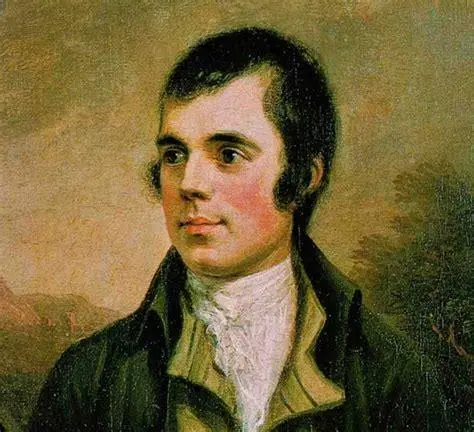
Robert Burns
Address To A Haggis
Address To A Haggis
Fair fa' your honest, sonsie face,
Great chieftain o' the puddin-race!
Aboon them a' ye tak your place,
Painch, tripe, or thairm:
Weel are ye wordy of a grace
As lang's my arm.
The groaning trencher there ye fill,
Your hurdies like a distant hill,
Your pin wad help to mend a mill
In time o' need,
While thro' your pores the dews distil
Like amber bead.
His knife see rustic Labour dight,
An' cut ye up wi' ready slight,
Trenching your gushing entrails bright
Like onie ditch;
And then, O what a glorious sight,
Warm-reekin, rich!
Then, horn for horn, they strech an' strive:
Deil tak the hindmost! on they drive,
Till a' their weel-swall'd kytes belyve,
Are bent like drums;
Then auld Guidman, maist like to rive,
'Bethankit!' hums.
Is there that owre his French ragout
Or olio that wad staw a sow,
Or fricassee wad mak her spew
Wi' perfect sconner,
Looks down wi' sneering, scornfu' view
On sic a dinner?
Poor devil! see him owre his trash,
As feckless as a wither'd rash,
His spindle shank, a guid whip-lash,
His nieve a nit;
Thro' bluidy flood or field to dash,
O how unfit!
But mark the Rustic, haggis-fed,
The trembling earth resounds his tread.
Clap in his walie nieve a blade,
He'll make it whissle;
An' legs, an' arms, an' heads will sned,
Like taps o' thrissle.
Ye Pow'rs wha mak mankind your care,
And dish them out their bill o 'fare,
Auld Scotland wants nae skinking ware
That jaups in luggies;
But, if ye wish her gratefu' prayer,
Gie her a Haggis!
Fair fa' your honest, sonsie face,
Great chieftain o' the puddin-race!
Aboon them a' ye tak your place,
Painch, tripe, or thairm:
Weel are ye wordy of a grace
As lang's my arm.
The groaning trencher there ye fill,
Your hurdies like a distant hill,
Your pin wad help to mend a mill
In time o' need,
While thro' your pores the dews distil
Like amber bead.
His knife see rustic Labour dight,
An' cut ye up wi' ready slight,
Trenching your gushing entrails bright
Like onie ditch;
And then, O what a glorious sight,
Warm-reekin, rich!
Then, horn for horn, they strech an' strive:
Deil tak the hindmost! on they drive,
Till a' their weel-swall'd kytes belyve,
Are bent like drums;
Then auld Guidman, maist like to rive,
'Bethankit!' hums.
Is there that owre his French ragout
Or olio that wad staw a sow,
Or fricassee wad mak her spew
Wi' perfect sconner,
Looks down wi' sneering, scornfu' view
On sic a dinner?
Poor devil! see him owre his trash,
As feckless as a wither'd rash,
His spindle shank, a guid whip-lash,
His nieve a nit;
Thro' bluidy flood or field to dash,
O how unfit!
But mark the Rustic, haggis-fed,
The trembling earth resounds his tread.
Clap in his walie nieve a blade,
He'll make it whissle;
An' legs, an' arms, an' heads will sned,
Like taps o' thrissle.
Ye Pow'rs wha mak mankind your care,
And dish them out their bill o 'fare,
Auld Scotland wants nae skinking ware
That jaups in luggies;
But, if ye wish her gratefu' prayer,
Gie her a Haggis!
285

Robert Browning
Pied Piper Of Hamelin, The
Pied Piper Of Hamelin, The
A CHILD'S STORY.
(_Written for, and inscribed to, W. M. the Younger._)
I.
Hamelin Town's in Brunswick,
By famous Hanover city;
The river Weser, deep and wide,
Washes its wall on the southern side;
A pleasanter spot you never spied;
But, when begins my ditty,
Almost five hundred years ago,
To see the townsfolk suffer so
From vermin, was a pity.
II.
Rats!
They fought the dogs and killed the cats,
And bit the babies in the cradles,
And ate the cheeses out of the vats,
And licked the soup from the cooks' own ladles,
Split open the kegs of salted sprats,
Made nests inside men's Sunday hats,
And even spoiled the women's chats
By drowning their speaking
With shrieking and squeaking
In fifty different sharps and flats.
III.
At last the people in a body
To the Town Hall came flocking:
``'Tis clear,'' cried they, ``our Mayor's a noddy;
``And as for our Corporation---shocking.
``To think we buy gowns lined with ermine
``For dolts that can't or won't determine
``What's best to rid us of our vermin!
``You hope, because you're old and obese,
``To find in the furry civic robe ease?
``Rouse up, sirs! Give your brains a racking
``To find the remedy we're lacking,
``Or, sure as fate, we'll send you packing!''
At this the Mayor and Corporation
Quaked with a mighty consternation.
IV.
An hour they sat in council,
At length the Mayor broke silence:
``For a guilder I'd my ermine gown sell,
``I wish I were a mile hence!
``It's easy to bid one rack one's brain---
``I'm sure my poor head aches again,
``I've scratched it so, and all in vain.
``Oh for a trap, a trap, a trap!''
Just as he said this, what should hap
At the chamber door but a gentle tap?
``Bless us,'' cried the Mayor, ``what's that?''
(With the Corporation as he sat,
Looking little though wondrous fat;
Nor brighter was his eye, nor moister
Than a too-long-opened oyster,
Save when at noon his paunch grew mutinous
For a plate of turtle green and glutinous)
``Only a scraping of shoes on the mat?
``Anything like the sound of a rat
``Makes my heart go pit-a-pat!''
V.
``Come in!''---the Mayor cried, looking bigger:
And in did come the strangest figure!
His queer long coat from heel to head
Was half of yellow and half of red,
And he himself was tall and thin,
With sharp blue eyes, each like a pin,
And light loose hair, yet swarthy skin,
No tuft on cheek nor beard on chin,
But lips where smiles went out and in;
There was no guessing his kith and kin:
And nobody could enough admire
The tall man and his quaint attire.
Quoth one: ``It's as my great-grandsire,
``Starting up at the Trump of Doom's tone,
``Had walked this way from his painted tombstone!''
VI.
He advanced to the council-table
And, ``Please your honours,'' said he, ``I'm able,
``By means of a secret charm, to draw
``All creatures living beneath the sun,
``That creep or swim or fly or run,
``After me so as you never saw!
``And I chiefly use my charm
``On creatures that do people harm,
``The mole and toad and newt and viper;
``And people call me the Pied Piper.''
(And here they noticed round his neck
A scarf of red and yellow stripe,
To match with his coat of the self-same cheque;
And at the scarf's end hung a pipe;
And his fingers, they noticed, were ever straying
As if impatient to be playing
Upon this pipe, as low it dangled
Over his vesture so old-fangled.)
``Yet,'' said he, ``poor piper as I am,
``In Tartary I freed the Cham,
``Last June, from his huge swarms of gnats;
``I eased in Asia the Nizam
``Of a monstrous brood of vampyre-bats:
``And as for what your brain bewilders,
``If I can rid your town of rats
``Will you give me a thousand guilders?''
``One? fifty thousand!''---was the exclamation
Of the astonished Mayor and Corporation.
VII.
Into the street the Piper stept,
Smiling first a little smile,
As if he knew what magic slept
In his quiet pipe the while;
Then, like a musical adept,
To blow the pipe his lips he wrinkled,
And green and blue his sharp eyes twinkled,
Like a candle-flame where salt is sprinkled;
And ere three shrill notes the pipe uttered,
You heard as if an army muttered;
And the muttering grew to a grumbling;
And the grumbling grew to a mighty rumbling;
And out of the houses the rats came tumbling.
Great rats, small rats, lean rats, brawny rats,
Brown rats, black rats, grey rats, tawny rats,
Grave old plodders, gay young friskers,
Fathers, mothers, uncles, cousins,
Cocking tails and pricking whiskers,
Families by tens and dozens,
Brothers, sisters, husbands, wives---
Followed the Piper for their lives.
From street to street he piped advancing,
And step for step they followed dancing,
Until they came to the river Weser,
Wherein all plunged and perished!
---Save one who, stout as Julius Csar,
Swam across and lived to carry
(As he, the manuscript he cherished)
To Rat-land home his commentary:
Which was, ``At the first shrill notes of the pipe,
``I heard a sound as of scraping tripe,
``And putting apples, wondrous ripe,
``Into a cider-press's gripe:
``And a moving away of pickle-tub-boards,
``And a leaving ajar of conserve-cupboards,
``And a drawing the corks of train-oil-flasks,
``And a breaking the hoops of butter-casks:
``And it seemed as if a voice
``(Sweeter far than b harp or b psaltery
``Is breathed) called out, `Oh rats, rejoice!
`` `The world is grown to one vast drysaltery!
`` `So munch on, crunch on, take your nuncheon,
`` `Breakfast, supper, dinner, luncheon!'
``And just as a bulky sugar-puncheon,
``All ready staved, like a great sun shone
``Glorious scarce an inch before me,
``Just as methought it said, `Come, bore me!'
``---I found the Weser rolling o'er me.''
VIII.
You should have heard the Hamelin people
ringing the bells till they rocked the steeple.
``Go,'' cried the Mayor, ``and get long poles,
``Poke out the nests and block up the holes!
``Consult with carpenters and builders,
``And leave in our town not even a trace
``Of the rats!''---when suddenly, up the face
Of the Piper perked in the market-place,
With a, ``First, if you please, my thousand guilders!''
IX.
A thousand guilders! The Mayor looked blue;
So did the Corporation too.
For council dinners made rare havoc
With Claret, Moselle, Vin-de-Grave, Hock;
And half the money would replenish
Their cellar's biggest butt with Rhenish.
To pay this sum to a wandering fellow
With a gipsy coat of red and yellow!
``Beside,'' quoth the Mayor with a knowing wink,
``Our business was done at the river's brink;
``We saw with our eyes the vermin sink,
``And what's dead can't come to life, I think.
``So, friend, we're not the folks to shrink
``From the duty of giving you something for drink,
``And a matter of money to put in your poke;
``But as for the guilders, what we spoke
``Of them, as you very well know, was in joke.
``Beside, our losses have made us thrifty.
``A thousand guilders! Come, take fifty!''
X.
The Piper's face fell, and he cried
``No trifling! I can't wait, beside!
``I've promised to visit by dinnertime
``Bagdat, and accept the prime
``Of the Head-Cook's pottage, all he's rich in,
``For having left, in the Caliph's kitchen,
``Of a nest of scorpions no survivor:
``With him I proved no bargain-driver,
``With you, don't think I'll bate a stiver!
``And folks who put me in a passion
``May find me pipe after another fashion.''
XI.
``How?'' cried the Mayor, ``d'ye think I brook
``Being worse treated than a Cook?
``Insulted by a lazy ribald
``With idle pipe and vesture piebald?
``You threaten us, fellow? Do your worst,
``Blow your pipe there till you burst!''
XII.
Once more he stept into the street
And to his lips again
Laid his long pipe of smooth straight cane;
And ere he blew three notes (such sweet
Soft notes as yet musician's cunning
Never gave the enraptured air)
There was a rustling that seemed like a bustling
Of merry crowds justling at pitching and hustling,
Small feet were pattering, wooden shoes clattering,
Little hands clapping and little tongues chattering,
And, like fowls in a farm-yard when barley is scattering,
Out came the children running.
All the little boys and girls,
With rosy cheeks and flaxen curls,
And sparkling eyes and teeth like pearls,
Tripping and skipping, ran merrily after
The wonderful music with shouting and laughter.
XIII.
The Mayor was dumb, and the Council stood
As if they were changed into blocks of wood,
Unable to move a step, or cry
To the children merrily skipping by,
---Could only follow with the eye
That joyous crowd at the Piper's back.
But how the Mayor was on the rack,
And the wretched Council's bosoms beat,
As the Piper turned from the High Street
To where the Weser rolled its waters
Right in the way of their sons and daughters!
However be turned from South to West,
And to Koppelberg Hill his steps addressed,
And after him the children pressed;
Great was the joy in every breast.
``He never can cross that mighty top!
``He's forced to let the piping drop,
``And we shall see our children stop!''
When, lo, as they reached the mountain-side,
A wondrous portal opened wide,
As if a cavern was suddenly hollowed;
And the Piper advanced and the children followed,
And when all were in to the very last,
The door in the mountain-side shut fast.
Did I say, all? No! One was lame,
And could not dance the whole of the way;
And in after years, if you would blame
His sadness, he was used to say,---
``It's dull in our town since my playmates left!
``I can't forget that I'm bereft
``Of all the pleasant sights they see,
``Which the Piper also promised me.
``For he led us, he said, to a joyous land,
``Joining the town and just at hand,
``Where waters gushed and fruit-trees grew
``And flowers put forth a fairer hue,
``And everything was strange and new;
``The sparrows were brighter than peacocks here,
``And their dogs outran our fallow deer,
``And honey-bees had lost their stings,
``And horses were born with eagles' wings:
``And just as I became assured
``My lame foot would be speedily cured,
``The music stopped and I stood still,
``And found myself outside the hill,
``Left alone against my will,
``To go now limping as before,
``And never hear of that country more!''
XIV.
Alas, alas for Hamelin!
There came into many a burgher's pate
A text which says that heaven's gate
Opes to the rich at as easy rate
As the needle's eye takes a camel in!
The mayor sent East, West, North and South,
To offer the Piper, by word of mouth,
Wherever it was men's lot to find him,
Silver and gold to his heart's content,
If he'd only return the way he went,
And bring the children behind him.
But when they saw 'twas a lost endeavour,
And Piper and dancers were gone for ever,
They made a decree that lawyers never
Should think their records dated duly
If, after the day of the month and year,
These words did not as well appear,
``And so long after what happened here
``On the Twenty-second of July,
``Thirteen hundred and seventy-six:''
And the better in memory to fix
The place of the children's last retreat,
They called it, the Pied Piper's Street---
Where any one playing on pipe or tabor
Was sure for the future to lose his labour.
Nor suffered they hostelry or tavern
To shock with mirth a street so solemn;
But opposite the place of the cavern
They wrote the story on a column,
And on the great church-window painted
The same, to make the world acquainted
How their children were stolen away,
And there it stands to this very day.
And I must not omit to say
That in Transylvania there's a tribe
Of alien people who ascribe
The outlandish ways and dress
On which their neighbours lay such stress,
To their fathers and mothers having risen
Out of some subterraneous prison
Into which they were trepanned
Long time ago in a mighty band
Out of Hamelin town in Brunswick land,
But how or why, they don't understand.
XV.
So, Willy, let me and you be wipers
Of scores out with all men---especially pipers!
And, whether they pipe us free frm rats or frm mice,
If we've promised them aught, let us keep our promise!
A CHILD'S STORY.
(_Written for, and inscribed to, W. M. the Younger._)
I.
Hamelin Town's in Brunswick,
By famous Hanover city;
The river Weser, deep and wide,
Washes its wall on the southern side;
A pleasanter spot you never spied;
But, when begins my ditty,
Almost five hundred years ago,
To see the townsfolk suffer so
From vermin, was a pity.
II.
Rats!
They fought the dogs and killed the cats,
And bit the babies in the cradles,
And ate the cheeses out of the vats,
And licked the soup from the cooks' own ladles,
Split open the kegs of salted sprats,
Made nests inside men's Sunday hats,
And even spoiled the women's chats
By drowning their speaking
With shrieking and squeaking
In fifty different sharps and flats.
III.
At last the people in a body
To the Town Hall came flocking:
``'Tis clear,'' cried they, ``our Mayor's a noddy;
``And as for our Corporation---shocking.
``To think we buy gowns lined with ermine
``For dolts that can't or won't determine
``What's best to rid us of our vermin!
``You hope, because you're old and obese,
``To find in the furry civic robe ease?
``Rouse up, sirs! Give your brains a racking
``To find the remedy we're lacking,
``Or, sure as fate, we'll send you packing!''
At this the Mayor and Corporation
Quaked with a mighty consternation.
IV.
An hour they sat in council,
At length the Mayor broke silence:
``For a guilder I'd my ermine gown sell,
``I wish I were a mile hence!
``It's easy to bid one rack one's brain---
``I'm sure my poor head aches again,
``I've scratched it so, and all in vain.
``Oh for a trap, a trap, a trap!''
Just as he said this, what should hap
At the chamber door but a gentle tap?
``Bless us,'' cried the Mayor, ``what's that?''
(With the Corporation as he sat,
Looking little though wondrous fat;
Nor brighter was his eye, nor moister
Than a too-long-opened oyster,
Save when at noon his paunch grew mutinous
For a plate of turtle green and glutinous)
``Only a scraping of shoes on the mat?
``Anything like the sound of a rat
``Makes my heart go pit-a-pat!''
V.
``Come in!''---the Mayor cried, looking bigger:
And in did come the strangest figure!
His queer long coat from heel to head
Was half of yellow and half of red,
And he himself was tall and thin,
With sharp blue eyes, each like a pin,
And light loose hair, yet swarthy skin,
No tuft on cheek nor beard on chin,
But lips where smiles went out and in;
There was no guessing his kith and kin:
And nobody could enough admire
The tall man and his quaint attire.
Quoth one: ``It's as my great-grandsire,
``Starting up at the Trump of Doom's tone,
``Had walked this way from his painted tombstone!''
VI.
He advanced to the council-table
And, ``Please your honours,'' said he, ``I'm able,
``By means of a secret charm, to draw
``All creatures living beneath the sun,
``That creep or swim or fly or run,
``After me so as you never saw!
``And I chiefly use my charm
``On creatures that do people harm,
``The mole and toad and newt and viper;
``And people call me the Pied Piper.''
(And here they noticed round his neck
A scarf of red and yellow stripe,
To match with his coat of the self-same cheque;
And at the scarf's end hung a pipe;
And his fingers, they noticed, were ever straying
As if impatient to be playing
Upon this pipe, as low it dangled
Over his vesture so old-fangled.)
``Yet,'' said he, ``poor piper as I am,
``In Tartary I freed the Cham,
``Last June, from his huge swarms of gnats;
``I eased in Asia the Nizam
``Of a monstrous brood of vampyre-bats:
``And as for what your brain bewilders,
``If I can rid your town of rats
``Will you give me a thousand guilders?''
``One? fifty thousand!''---was the exclamation
Of the astonished Mayor and Corporation.
VII.
Into the street the Piper stept,
Smiling first a little smile,
As if he knew what magic slept
In his quiet pipe the while;
Then, like a musical adept,
To blow the pipe his lips he wrinkled,
And green and blue his sharp eyes twinkled,
Like a candle-flame where salt is sprinkled;
And ere three shrill notes the pipe uttered,
You heard as if an army muttered;
And the muttering grew to a grumbling;
And the grumbling grew to a mighty rumbling;
And out of the houses the rats came tumbling.
Great rats, small rats, lean rats, brawny rats,
Brown rats, black rats, grey rats, tawny rats,
Grave old plodders, gay young friskers,
Fathers, mothers, uncles, cousins,
Cocking tails and pricking whiskers,
Families by tens and dozens,
Brothers, sisters, husbands, wives---
Followed the Piper for their lives.
From street to street he piped advancing,
And step for step they followed dancing,
Until they came to the river Weser,
Wherein all plunged and perished!
---Save one who, stout as Julius C
Swam across and lived to carry
(As he, the manuscript he cherished)
To Rat-land home his commentary:
Which was, ``At the first shrill notes of the pipe,
``I heard a sound as of scraping tripe,
``And putting apples, wondrous ripe,
``Into a cider-press's gripe:
``And a moving away of pickle-tub-boards,
``And a leaving ajar of conserve-cupboards,
``And a drawing the corks of train-oil-flasks,
``And a breaking the hoops of butter-casks:
``And it seemed as if a voice
``(Sweeter far than b
``Is breathed) called out, `Oh rats, rejoice!
`` `The world is grown to one vast drysaltery!
`` `So munch on, crunch on, take your nuncheon,
`` `Breakfast, supper, dinner, luncheon!'
``And just as a bulky sugar-puncheon,
``All ready staved, like a great sun shone
``Glorious scarce an inch before me,
``Just as methought it said, `Come, bore me!'
``---I found the Weser rolling o'er me.''
VIII.
You should have heard the Hamelin people
ringing the bells till they rocked the steeple.
``Go,'' cried the Mayor, ``and get long poles,
``Poke out the nests and block up the holes!
``Consult with carpenters and builders,
``And leave in our town not even a trace
``Of the rats!''---when suddenly, up the face
Of the Piper perked in the market-place,
With a, ``First, if you please, my thousand guilders!''
IX.
A thousand guilders! The Mayor looked blue;
So did the Corporation too.
For council dinners made rare havoc
With Claret, Moselle, Vin-de-Grave, Hock;
And half the money would replenish
Their cellar's biggest butt with Rhenish.
To pay this sum to a wandering fellow
With a gipsy coat of red and yellow!
``Beside,'' quoth the Mayor with a knowing wink,
``Our business was done at the river's brink;
``We saw with our eyes the vermin sink,
``And what's dead can't come to life, I think.
``So, friend, we're not the folks to shrink
``From the duty of giving you something for drink,
``And a matter of money to put in your poke;
``But as for the guilders, what we spoke
``Of them, as you very well know, was in joke.
``Beside, our losses have made us thrifty.
``A thousand guilders! Come, take fifty!''
X.
The Piper's face fell, and he cried
``No trifling! I can't wait, beside!
``I've promised to visit by dinnertime
``Bagdat, and accept the prime
``Of the Head-Cook's pottage, all he's rich in,
``For having left, in the Caliph's kitchen,
``Of a nest of scorpions no survivor:
``With him I proved no bargain-driver,
``With you, don't think I'll bate a stiver!
``And folks who put me in a passion
``May find me pipe after another fashion.''
XI.
``How?'' cried the Mayor, ``d'ye think I brook
``Being worse treated than a Cook?
``Insulted by a lazy ribald
``With idle pipe and vesture piebald?
``You threaten us, fellow? Do your worst,
``Blow your pipe there till you burst!''
XII.
Once more he stept into the street
And to his lips again
Laid his long pipe of smooth straight cane;
And ere he blew three notes (such sweet
Soft notes as yet musician's cunning
Never gave the enraptured air)
There was a rustling that seemed like a bustling
Of merry crowds justling at pitching and hustling,
Small feet were pattering, wooden shoes clattering,
Little hands clapping and little tongues chattering,
And, like fowls in a farm-yard when barley is scattering,
Out came the children running.
All the little boys and girls,
With rosy cheeks and flaxen curls,
And sparkling eyes and teeth like pearls,
Tripping and skipping, ran merrily after
The wonderful music with shouting and laughter.
XIII.
The Mayor was dumb, and the Council stood
As if they were changed into blocks of wood,
Unable to move a step, or cry
To the children merrily skipping by,
---Could only follow with the eye
That joyous crowd at the Piper's back.
But how the Mayor was on the rack,
And the wretched Council's bosoms beat,
As the Piper turned from the High Street
To where the Weser rolled its waters
Right in the way of their sons and daughters!
However be turned from South to West,
And to Koppelberg Hill his steps addressed,
And after him the children pressed;
Great was the joy in every breast.
``He never can cross that mighty top!
``He's forced to let the piping drop,
``And we shall see our children stop!''
When, lo, as they reached the mountain-side,
A wondrous portal opened wide,
As if a cavern was suddenly hollowed;
And the Piper advanced and the children followed,
And when all were in to the very last,
The door in the mountain-side shut fast.
Did I say, all? No! One was lame,
And could not dance the whole of the way;
And in after years, if you would blame
His sadness, he was used to say,---
``It's dull in our town since my playmates left!
``I can't forget that I'm bereft
``Of all the pleasant sights they see,
``Which the Piper also promised me.
``For he led us, he said, to a joyous land,
``Joining the town and just at hand,
``Where waters gushed and fruit-trees grew
``And flowers put forth a fairer hue,
``And everything was strange and new;
``The sparrows were brighter than peacocks here,
``And their dogs outran our fallow deer,
``And honey-bees had lost their stings,
``And horses were born with eagles' wings:
``And just as I became assured
``My lame foot would be speedily cured,
``The music stopped and I stood still,
``And found myself outside the hill,
``Left alone against my will,
``To go now limping as before,
``And never hear of that country more!''
XIV.
Alas, alas for Hamelin!
There came into many a burgher's pate
A text which says that heaven's gate
Opes to the rich at as easy rate
As the needle's eye takes a camel in!
The mayor sent East, West, North and South,
To offer the Piper, by word of mouth,
Wherever it was men's lot to find him,
Silver and gold to his heart's content,
If he'd only return the way he went,
And bring the children behind him.
But when they saw 'twas a lost endeavour,
And Piper and dancers were gone for ever,
They made a decree that lawyers never
Should think their records dated duly
If, after the day of the month and year,
These words did not as well appear,
``And so long after what happened here
``On the Twenty-second of July,
``Thirteen hundred and seventy-six:''
And the better in memory to fix
The place of the children's last retreat,
They called it, the Pied Piper's Street---
Where any one playing on pipe or tabor
Was sure for the future to lose his labour.
Nor suffered they hostelry or tavern
To shock with mirth a street so solemn;
But opposite the place of the cavern
They wrote the story on a column,
And on the great church-window painted
The same, to make the world acquainted
How their children were stolen away,
And there it stands to this very day.
And I must not omit to say
That in Transylvania there's a tribe
Of alien people who ascribe
The outlandish ways and dress
On which their neighbours lay such stress,
To their fathers and mothers having risen
Out of some subterraneous prison
Into which they were trepanned
Long time ago in a mighty band
Out of Hamelin town in Brunswick land,
But how or why, they don't understand.
XV.
So, Willy, let me and you be wipers
Of scores out with all men---especially pipers!
And, whether they pipe us free fr
If we've promised them aught, let us keep our promise!
569
Robert Browning
Holy-Cross Day
Holy-Cross Day
ON WHICH THE JEWS WERE FORCED TO
ATTEND AN ANNUAL CHRISTIAN SERMON
IN ROME.
[``Now was come about Holy-Cross Day,
and now must my lord preach his first sermon
to the Jews: as it was of old cared for in tine
merciful bowels of the Church, that, so to
speak, a crumb at least from her conspicuous
table here in Rome should be, though but
once yearly, cast to the famishing dogs, under-trampled
and bespitten-upon beneath the feet
of the guests. And a moving sight in truth,
this, of so many of the besotted blind restif
and ready-to-perish Hebrews! now maternally
brought---nay (for He saith, `Compel them
to come in') haled, as it were, by the head and
hair, and against their obstinate hearts, to partake
of the heavenly grace. What awakening,
what striving with tears, what working of a
yeasty conscience! Nor was my lord wanting
to himself on so apt an occasion; witness
the abundance of conversions which did incontinently
reward him: though not to my
lord be altogether the glory.''---_Diary by the
Bishop's Secretary,_ .]
What the Jews really said, on thus being
driven to church, was rather to this effect:---
I.
Fee, faw, fum! bubble and squeak!
Blessedest Thursday's the fat of the week.
Rumble and tumble, sleek and rough,
Stinking and savoury, simug and gruff,
Take the church-road, for the bell's due chime
Gives us the summons---'tis sermon-time!
II.
Bob, here's Barnabas! Job, that's you?
Up stumps Solomon---bustling too?
Shame, man! greedy beyond your years
To handsel the bishop's shaving-shears?
Fair play's a jewel! Leave friends in the lurch?
Stand on a line ere you start for the church!
III.
Higgledy piggledy, packed we lie,
Rats in a hamper, swine in a stye,
Wasps in a bottle, frogs in a sieve,
Worms in a carcase, fleas in a sleeve.
Hist! square shoulders, settle your thumbs
And buzz for the bishop---here he comes.
IV.
Bow, wow, wow---a bone for the dog!
I liken his Grace to an acorned hog.
What, a boy at his side, with the bloom of a lass,
To help and handle my lord's hour-glass!
Didst ever behold so lithe a chine?
His cheek hath laps like a fresh-singed swine.
V.
Aaron's asleep---shove hip to haunch,
Or somebody deal him a dig in the paunch!
Look at the purse with the tassel and knob,
And the gown with the angel and thingumbob!
What's he at, quotha? reading his text!
Now you've his curtsey---and what comes next?
VI.
See to our converts---you doomed black dozen---
No stealing away---nor cog nor cozen!
You five, that were thieves, deserve it fairly;
You seven, that were beggars, will live less sparely;
You took your turn and dipped in the hat,
Got fortune---and fortune gets you; mind that!
VII.
Give your first groan---compunction's at work;
And soft! from a Jew you mount to a Turk.
Lo, Micah,---the selfsame beard on chin
He was four times already converted in!
Here's a knife, clip quick---it's a sign of grace---
Or he ruins us all with his hanging-face.
VIII.
Whom now is the bishop a-leering at?
I know a point where his text falls pat.
I'll tell him to-morrow, a word just now
Went to my heart and made me vow
I meddle no more with the worst of trades---
Let somebody else pay his serenades.
IX.
Groan all together now, whee-hee-hee!
It's a-work, it's a-work, ah, woe is me!
It began, when a herd of us, picked and placed,
Were spurred through the Corso, stripped to the waist;
Jew brutes, with sweat and blood well spent
To usher in worthily Christian Lent.
X.
It grew, when the hangman entered our bounds,
Yelled, pricked us out to his church like hounds:
It got to a pitch, when the hand indeed
Which gutted my purse would throttle my creed:
And it overflows when, to even the odd,
Men I helped to their sins help me to their God.
XI.
But now, while the scapegoats leave our flock,
And the rest sit silent and count the clock,
Since forced to muse the appointed time
On these precious facts and truths sublime,---
Let us fitly ennploy it, under our breath,
In saying Ben Ezra's Song of Death.
XII.
For Rabbi Ben Ezra, the night he died,
Called sons and sons' sons to his side,
And spoke, ``This world has been harsh and strange;
``Something is wrong: there needeth a change.
``But what, or where? at the last or first?
``In one point only we sinned, at worst.
XIII.
``The Lord will have mercy on Jacob yet,
``And again in his border see Israel set.
``When Judah beholds Jerusalem,
``The stranger-seed shall be joined to them:
``To Jacob's House shall the Gentiles cleave.
``So the Prophet saith and his sons believe.
XIV.
``Ay, the children of the chosen race
``Shall carry and bring them to their place:
``In the land of the Lord shall lead the same,
``Bondsmen and handmaids. Who shall blame,
``When the slaves enslave, the oppressed ones o'er
``The oppressor triumph for evermore?
XV.
``God spoke, and gave us the word to keep,
``Bade never fold the hands nor sleep
``'Mid a faithless world,---at watch and ward,
``Till Christ at the end relieve our guard.
``By His servant Moses the watch was set:
``Though near upon cock-crow, we keep it yet.
XVI.
``Thou! if thou wast He, who at mid-watch came,
``By the starlight, naming a dubious name!
``And if, too heavy with sleep---too rash
``With fear---O Thou, if that martyr-gash
``Fell on Thee coming to take thine own,
``And we gave the Cross, when we owed the Throne---
XVII.
``Thou art the Judge. We are bruised thus.
``But, the Judgment over, join sides with us!
``Thine too is the cause! and not more thine
``Than ours, is the work of these dogs and swine,
``Whose life laughs through and spits at their creed!
``Who maintain Thee in word, and defy Thee in deed!
XVIII.
``We withstood Christ then? Be mindful how
``At least we withstand Barabbas now!
``Was our outrage sore? But the worst we spared,
``To have called these---Christians, had we dared!
``Let defiance to them pay mistrust of Thee,
``And Rome make amends for Calvary!
XIX.
``By the torture, prolonged from age to age,
``By the infamy, Israel's heritage,
``By the Ghetto's plague, by the garb's disgrace,
``By the badge of shame, by the felon's place,
``By the branding-tool, the bloody whip,
``And the summons to Christian fellowship,---
XX.
``We boast our proof that at least the Jew
``Would wrest Christ's name from the Devil's crew.
``Thy face took never so deep a shade
``But we fought them in it, God our aid!
``A trophy to bear, as we marchs, thy band,
``South, East, and on to the Pleasant Land!''
[_Pope Gregory XVI. abolished this bad
business of the Sermon._---R. B.]
ON WHICH THE JEWS WERE FORCED TO
ATTEND AN ANNUAL CHRISTIAN SERMON
IN ROME.
[``Now was come about Holy-Cross Day,
and now must my lord preach his first sermon
to the Jews: as it was of old cared for in tine
merciful bowels of the Church, that, so to
speak, a crumb at least from her conspicuous
table here in Rome should be, though but
once yearly, cast to the famishing dogs, under-trampled
and bespitten-upon beneath the feet
of the guests. And a moving sight in truth,
this, of so many of the besotted blind restif
and ready-to-perish Hebrews! now maternally
brought---nay (for He saith, `Compel them
to come in') haled, as it were, by the head and
hair, and against their obstinate hearts, to partake
of the heavenly grace. What awakening,
what striving with tears, what working of a
yeasty conscience! Nor was my lord wanting
to himself on so apt an occasion; witness
the abundance of conversions which did incontinently
reward him: though not to my
lord be altogether the glory.''---_Diary by the
Bishop's Secretary,_ .]
What the Jews really said, on thus being
driven to church, was rather to this effect:---
I.
Fee, faw, fum! bubble and squeak!
Blessedest Thursday's the fat of the week.
Rumble and tumble, sleek and rough,
Stinking and savoury, simug and gruff,
Take the church-road, for the bell's due chime
Gives us the summons---'tis sermon-time!
II.
Bob, here's Barnabas! Job, that's you?
Up stumps Solomon---bustling too?
Shame, man! greedy beyond your years
To handsel the bishop's shaving-shears?
Fair play's a jewel! Leave friends in the lurch?
Stand on a line ere you start for the church!
III.
Higgledy piggledy, packed we lie,
Rats in a hamper, swine in a stye,
Wasps in a bottle, frogs in a sieve,
Worms in a carcase, fleas in a sleeve.
Hist! square shoulders, settle your thumbs
And buzz for the bishop---here he comes.
IV.
Bow, wow, wow---a bone for the dog!
I liken his Grace to an acorned hog.
What, a boy at his side, with the bloom of a lass,
To help and handle my lord's hour-glass!
Didst ever behold so lithe a chine?
His cheek hath laps like a fresh-singed swine.
V.
Aaron's asleep---shove hip to haunch,
Or somebody deal him a dig in the paunch!
Look at the purse with the tassel and knob,
And the gown with the angel and thingumbob!
What's he at, quotha? reading his text!
Now you've his curtsey---and what comes next?
VI.
See to our converts---you doomed black dozen---
No stealing away---nor cog nor cozen!
You five, that were thieves, deserve it fairly;
You seven, that were beggars, will live less sparely;
You took your turn and dipped in the hat,
Got fortune---and fortune gets you; mind that!
VII.
Give your first groan---compunction's at work;
And soft! from a Jew you mount to a Turk.
Lo, Micah,---the selfsame beard on chin
He was four times already converted in!
Here's a knife, clip quick---it's a sign of grace---
Or he ruins us all with his hanging-face.
VIII.
Whom now is the bishop a-leering at?
I know a point where his text falls pat.
I'll tell him to-morrow, a word just now
Went to my heart and made me vow
I meddle no more with the worst of trades---
Let somebody else pay his serenades.
IX.
Groan all together now, whee-hee-hee!
It's a-work, it's a-work, ah, woe is me!
It began, when a herd of us, picked and placed,
Were spurred through the Corso, stripped to the waist;
Jew brutes, with sweat and blood well spent
To usher in worthily Christian Lent.
X.
It grew, when the hangman entered our bounds,
Yelled, pricked us out to his church like hounds:
It got to a pitch, when the hand indeed
Which gutted my purse would throttle my creed:
And it overflows when, to even the odd,
Men I helped to their sins help me to their God.
XI.
But now, while the scapegoats leave our flock,
And the rest sit silent and count the clock,
Since forced to muse the appointed time
On these precious facts and truths sublime,---
Let us fitly ennploy it, under our breath,
In saying Ben Ezra's Song of Death.
XII.
For Rabbi Ben Ezra, the night he died,
Called sons and sons' sons to his side,
And spoke, ``This world has been harsh and strange;
``Something is wrong: there needeth a change.
``But what, or where? at the last or first?
``In one point only we sinned, at worst.
XIII.
``The Lord will have mercy on Jacob yet,
``And again in his border see Israel set.
``When Judah beholds Jerusalem,
``The stranger-seed shall be joined to them:
``To Jacob's House shall the Gentiles cleave.
``So the Prophet saith and his sons believe.
XIV.
``Ay, the children of the chosen race
``Shall carry and bring them to their place:
``In the land of the Lord shall lead the same,
``Bondsmen and handmaids. Who shall blame,
``When the slaves enslave, the oppressed ones o'er
``The oppressor triumph for evermore?
XV.
``God spoke, and gave us the word to keep,
``Bade never fold the hands nor sleep
``'Mid a faithless world,---at watch and ward,
``Till Christ at the end relieve our guard.
``By His servant Moses the watch was set:
``Though near upon cock-crow, we keep it yet.
XVI.
``Thou! if thou wast He, who at mid-watch came,
``By the starlight, naming a dubious name!
``And if, too heavy with sleep---too rash
``With fear---O Thou, if that martyr-gash
``Fell on Thee coming to take thine own,
``And we gave the Cross, when we owed the Throne---
XVII.
``Thou art the Judge. We are bruised thus.
``But, the Judgment over, join sides with us!
``Thine too is the cause! and not more thine
``Than ours, is the work of these dogs and swine,
``Whose life laughs through and spits at their creed!
``Who maintain Thee in word, and defy Thee in deed!
XVIII.
``We withstood Christ then? Be mindful how
``At least we withstand Barabbas now!
``Was our outrage sore? But the worst we spared,
``To have called these---Christians, had we dared!
``Let defiance to them pay mistrust of Thee,
``And Rome make amends for Calvary!
XIX.
``By the torture, prolonged from age to age,
``By the infamy, Israel's heritage,
``By the Ghetto's plague, by the garb's disgrace,
``By the badge of shame, by the felon's place,
``By the branding-tool, the bloody whip,
``And the summons to Christian fellowship,---
XX.
``We boast our proof that at least the Jew
``Would wrest Christ's name from the Devil's crew.
``Thy face took never so deep a shade
``But we fought them in it, God our aid!
``A trophy to bear, as we marchs, thy band,
``South, East, and on to the Pleasant Land!''
[_Pope Gregory XVI. abolished this bad
business of the Sermon._---R. B.]
439
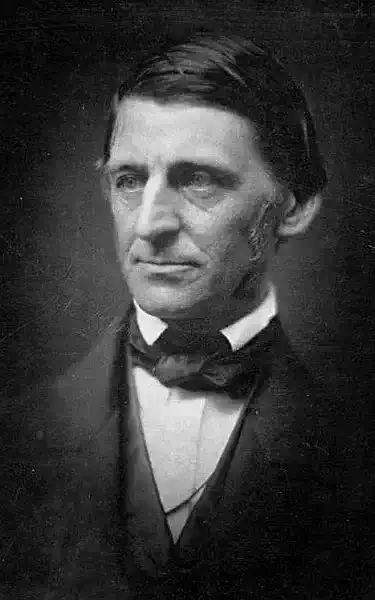
Ralph Waldo Emerson
The Romany Girl
The Romany Girl
The sun goes down, and with him takes
The coarseness of my por attire;
The fair moon mounts, and aye the flame
Of Gypsy beauty blazes higher.
Pale Northern girls! you scorn our race;
You captives of your air-tight halls,
Wear out in-doors your sickly days,
But leave us the horizon walls.
And if I take you, dames, to task,
And say it frankly without guile,
Then you are Gypsies in a mask,
And I the lady all the while.
If, on the heath, below the moon,
I court and play with paler blood,
Me false to mine dare whisper none,--
One sallow horseman knows me good.
Go, keep your cheek's rose from the rain,
For teeth and hair with shopmen deal;
My swarthy tint is in the grain,
The rocks and forest knoww it real.
The wild air bloweth in out lungs,
The keen stars twinkle in our eyes,
The birds gave us our wily tongues,
The panther in our dances flies.
You doubt we read the stars on high,
Nathless we read your fortunes true;
The stars may hide in the upper sky,
But without glass we fathom you.
The sun goes down, and with him takes
The coarseness of my por attire;
The fair moon mounts, and aye the flame
Of Gypsy beauty blazes higher.
Pale Northern girls! you scorn our race;
You captives of your air-tight halls,
Wear out in-doors your sickly days,
But leave us the horizon walls.
And if I take you, dames, to task,
And say it frankly without guile,
Then you are Gypsies in a mask,
And I the lady all the while.
If, on the heath, below the moon,
I court and play with paler blood,
Me false to mine dare whisper none,--
One sallow horseman knows me good.
Go, keep your cheek's rose from the rain,
For teeth and hair with shopmen deal;
My swarthy tint is in the grain,
The rocks and forest knoww it real.
The wild air bloweth in out lungs,
The keen stars twinkle in our eyes,
The birds gave us our wily tongues,
The panther in our dances flies.
You doubt we read the stars on high,
Nathless we read your fortunes true;
The stars may hide in the upper sky,
But without glass we fathom you.
308
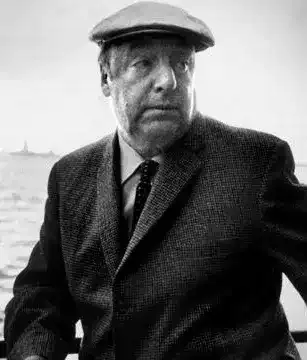
Pablo Neruda
The People
The People
I recall that man and not two centuries
have passed since I saw him,
he went neither by horse nor by carriage:
purely on foot
he outstripped
distances,
and carried no sword or armour,
only nets on his shoulder,
axe or hammer or spade,
never fighting the rest of his species:
his exploits were with water and earth,
with wheat so that it turned into bread,
with giant trees to render them wood,
with walls to open up doors,
with sand to construct the walls,
and with ocean for it to bear.
I knew him and he is still not cancelled in me.
The carriages fell to pieces,
war destroyed doors and walls,
the city was a handful of ashes,
all the clothes turned to dust,
and he remains to me,
he survives in the sand,
when everything before
seemed imperishable but him.
In the going and coming of families
at times he was my father or kinsman
or perhaps it was scarcely him or not
the one who did not return to his house
because water or earth swallowed him up
or a tree or an engine killed him,
or he was the saddened carpenter
who went behind the coffin, without tears,
someone in the end who had no name,
except those that metal or timber have,
and on whom others gazed from on high
without seeing the ant
for the anthill
and so that when his feet did not stir,
because the poor exhausted one had died,
they never saw what they had not seen:
already there were other feet where he'd been.
The other feet were still his,
and the other hands,
the man remained:
when it seemed that now he was done for
he was the same once more,
there he was digging again at the earth,
cutting cloth, minus a shirt,
there he was and was not, like before,
he had gone down and was once more,
and since he never owned graveyards,
or tombs, nor was his name carved
on the stone he sweated to quarry,
no one knew he had come
and no one knew when he died,
so that only when the poor man could
he returned to life once more, without it being noted.
He was the man, no doubt of it, without heritage,
without cattle, without a flag,
and he was not distinguished from others,
the others who were him,
from the heights he was grey like the subsoil,
tanned like the leather,
he was yellow reaping the wheat,
he was black down in the mine,
he was the colour of stone on the fortress,
in the fishing boat the colour of tuna,
and the colour of horses in the meadow:
how could anyone distinguish him
if he was inseparable, elemental,
earth, coal or sea vested in man?
Where he lived whatever
a man touched grew:
the hostile stones,
quarried
by his hands,
took on order
and one by one formed
the right clarity of a building,
he made bread with his hands,
moved the engines,
the distances peopled themselves with towns,
other men grew,
bees arrived,
and by man's creating and breeding
spring walked the market squares
between bakeries and doves.
The maker of loaves was forgotten,
he who quarried and journeyed, beating down
and opening furrows, transporting sand,
when everything existed he no longer existed,
he gave his existence, that's all.
He went elsewhere to labour, and at last
he was dead, rolling
like a stone in the river:
death carried him downstream.
I, who knew him, saw him descend
till he was no longer except what he left:
roads he could scarcely know,
houses he never ever would live in.
I turn to see him, and I await him
I see him in his grave and resurrected.
I distinguish him among all
who are his equals
and it seems to me it cannot be,
that like this we go nowhere,
that to survive like this holds no glory.
I believe that this man
must be enthroned, rightly shod and crowned.
I believe that those who made such things
must be the masters of all these things.
And that those who made bread should eat!
And those in the mines must have light!
Enough now of grey men enslaved!
Enough of the pale 'missing ones'!
Not another man passes except as a king.
Not a single woman without her crown.
Golden gauntlets for every hand.
Fruits of the sun for all the unknowns!
I knew that man and when I could,
when he still had eyes in his head,
when he still had a voice in his mouth
I searched for him among tombs, and I said
grasping his arm that was not yet dust:
'All will be gone, you will live on,
You ignite life.
You made what is yours.'
So let no one trouble themselves when
I seem to be alone and am not alone,
I am with no one and speak for them all:
Some listen to me, without knowing,
but those I sing, those who do know
go on being born, and will fill up the Earth.
I recall that man and not two centuries
have passed since I saw him,
he went neither by horse nor by carriage:
purely on foot
he outstripped
distances,
and carried no sword or armour,
only nets on his shoulder,
axe or hammer or spade,
never fighting the rest of his species:
his exploits were with water and earth,
with wheat so that it turned into bread,
with giant trees to render them wood,
with walls to open up doors,
with sand to construct the walls,
and with ocean for it to bear.
I knew him and he is still not cancelled in me.
The carriages fell to pieces,
war destroyed doors and walls,
the city was a handful of ashes,
all the clothes turned to dust,
and he remains to me,
he survives in the sand,
when everything before
seemed imperishable but him.
In the going and coming of families
at times he was my father or kinsman
or perhaps it was scarcely him or not
the one who did not return to his house
because water or earth swallowed him up
or a tree or an engine killed him,
or he was the saddened carpenter
who went behind the coffin, without tears,
someone in the end who had no name,
except those that metal or timber have,
and on whom others gazed from on high
without seeing the ant
for the anthill
and so that when his feet did not stir,
because the poor exhausted one had died,
they never saw what they had not seen:
already there were other feet where he'd been.
The other feet were still his,
and the other hands,
the man remained:
when it seemed that now he was done for
he was the same once more,
there he was digging again at the earth,
cutting cloth, minus a shirt,
there he was and was not, like before,
he had gone down and was once more,
and since he never owned graveyards,
or tombs, nor was his name carved
on the stone he sweated to quarry,
no one knew he had come
and no one knew when he died,
so that only when the poor man could
he returned to life once more, without it being noted.
He was the man, no doubt of it, without heritage,
without cattle, without a flag,
and he was not distinguished from others,
the others who were him,
from the heights he was grey like the subsoil,
tanned like the leather,
he was yellow reaping the wheat,
he was black down in the mine,
he was the colour of stone on the fortress,
in the fishing boat the colour of tuna,
and the colour of horses in the meadow:
how could anyone distinguish him
if he was inseparable, elemental,
earth, coal or sea vested in man?
Where he lived whatever
a man touched grew:
the hostile stones,
quarried
by his hands,
took on order
and one by one formed
the right clarity of a building,
he made bread with his hands,
moved the engines,
the distances peopled themselves with towns,
other men grew,
bees arrived,
and by man's creating and breeding
spring walked the market squares
between bakeries and doves.
The maker of loaves was forgotten,
he who quarried and journeyed, beating down
and opening furrows, transporting sand,
when everything existed he no longer existed,
he gave his existence, that's all.
He went elsewhere to labour, and at last
he was dead, rolling
like a stone in the river:
death carried him downstream.
I, who knew him, saw him descend
till he was no longer except what he left:
roads he could scarcely know,
houses he never ever would live in.
I turn to see him, and I await him
I see him in his grave and resurrected.
I distinguish him among all
who are his equals
and it seems to me it cannot be,
that like this we go nowhere,
that to survive like this holds no glory.
I believe that this man
must be enthroned, rightly shod and crowned.
I believe that those who made such things
must be the masters of all these things.
And that those who made bread should eat!
And those in the mines must have light!
Enough now of grey men enslaved!
Enough of the pale 'missing ones'!
Not another man passes except as a king.
Not a single woman without her crown.
Golden gauntlets for every hand.
Fruits of the sun for all the unknowns!
I knew that man and when I could,
when he still had eyes in his head,
when he still had a voice in his mouth
I searched for him among tombs, and I said
grasping his arm that was not yet dust:
'All will be gone, you will live on,
You ignite life.
You made what is yours.'
So let no one trouble themselves when
I seem to be alone and am not alone,
I am with no one and speak for them all:
Some listen to me, without knowing,
but those I sing, those who do know
go on being born, and will fill up the Earth.
540
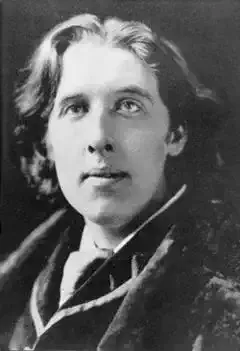
Oscar Wilde
Charmides
Charmides
HE was a Grecian lad, who coming home
With pulpy figs and wine from Sicily
Stood at his galley's prow, and let the foam
Blow through his crisp brown curls unconsciously,
And holding wave and wind in boy's despite
Peered from his dripping seat across the wet and stormy night
Till with the dawn he saw a burnished spear
Like a thin thread of gold against the sky,
And hoisted sail, and strained the creaking gear,
And bade the pilot head her lustily
Against the nor'west gale, and all day long
Held on his way, and marked the rowers' time with measured song,
And when the faint Corinthian hills were red
Dropped anchor in a little sandy bay,
And with fresh boughs of olive crowned his head,
And brushed from cheek and throat the hoary spray,
And washed his limbs with oil, and from the hold
Brought out his linen tunic and his sandals brazen-soled,
And a rich robe stained with the fishes' juice
Which of some swarthy trader he had bought
Upon the sunny quay at Syracuse,
And was with Tyrian broideries inwrought,
And by the questioning merchants made his way
Up through the soft and silver woods, and when the labouring day
Had spun its tangled web of crimson cloud,
Clomb the high hill, and with swift silent feet
Crept to the fane unnoticed by the crowd
Of busy priests, and from some dark retreat
Watched the young swains his frolic playmates bring
The firstling of their little flock, and the shy shepherd fling
The crackling salt upon the flame, or hang
His studded crook against the temple wall
To Her who keeps away the ravenous fang
Of the base wolf from homestead and from stall;
And then the clear-voiced maidens 'gan to sing,
And to the altar each man brought some goodly offering,
A beechen cup brimming with milky foam,
A fair cloth wrought with cunning imagery
Of hounds in chase, a waxen honey-comb
Dripping with oozy gold which scarce the bee
Had ceased from building, a black skin of oil
Meet for the wrestlers, a great boar the fierce and white-tusked
spoil
Stolen from Artemis that jealous maid
To please Athena, and the dappled hide
Of a tall stag who in some mountain glade
Had met the shaft; and then the herald cried,
And from the pillared precinct one by one
Went the glad Greeks well pleased that they their simple vows had
done.
And the old priest put out the waning fires
Save that one lamp whose restless ruby glowed
For ever in the cell, and the shrill lyres
Came fainter on the wind, as down the road
In joyous dance these country folk did pass,
And with stout hands the warder closed the gates of polished brass.
Long time he lay and hardly dared to breathe,
And heard the cadenced drip of spilt-out wine,
And the rose-petals falling from the wreath
As the night breezes wandered through the shrine,
And seemed to be in some entrancèd swoon
Till through the open roof above the full and brimming moon
Flooded with sheeny waves the marble floor,
When from his nook upleapt the venturous lad,
And flinging wide the cedar-carven door
Beheld an awful image saffron-clad
And armed for battle! the gaunt Griffin glared
From the huge helm, and the long lance of wreck and ruin flared
Like a red rod of flame, stony and steeled
The Gorgon's head its leaden eyeballs rolled,
And writhed its snaky horrors through the shield,
And gaped aghast with bloodless lips and cold
In passion impotent, while with blind gaze
The blinking owl between the feet hooted in shrill amaze.
The lonely fisher as he trimmed his lamp
Far out at sea off Sunium, or cast
The net for tunnies, heard a brazen tramp
Of horses smite the waves, and a wild blast
Divide the folded curtains of the night,
And knelt upon the little poop, and prayed in holy fright.
And guilty lovers in their venery
Forgat a little while their stolen sweets,
Deeming they heard dread Dian's bitter cry;
And the grim watchmen on their lofty seats
Ran to their shields in haste precipitate,
Or strained black-bearded throats across the dusky parapet.
For round the temple rolled the clang of arms,
And the twelve Gods leapt up in marble fear,
And the air quaked with dissonant alarums
Till huge Poseidon shook his mighty spear,
And on the frieze the prancing horses neighed,
And the low tread of hurrying feet rang from the cavalcade.
Ready for death with parted lips he stood,
And well content at such a price to see
That calm wide brow, that terrible maidenhood,
The marvel of that pitiless chastity,
Ah! well content indeed, for never wight
Since Troy's young shepherd prince had seen so wonderful a sight.
Ready for death he stood, but lo! the air
Grew silent, and the horses ceased to neigh,
And off his brow he tossed the clustering hair,
And from his limbs he threw the cloak away,
For whom would not such love make desperate,
And nigher came, and touched her throat, and with hands violate
Undid the cuirass, and the crocus gown,
And bared the breasts of polished ivory,
Till from the waist the peplos falling down
Left visible the secret mystery
Which to no lover will Athena show,
The grand cool flanks, the crescent thighs, the bossy hills of snow.
Those who have never known a lover's sin
Let them not read my ditty, it will be
To their dull ears so musicless and thin
That they will have no joy of it, but ye
To whose wan cheeks now creeps the lingering smile,
Ye who have learned who Eros is,--O listen yet a-while.
A little space he let his greedy eyes
Rest on the burnished image, till mere sight
Half swooned for surfeit of such luxuries,
And then his lips in hungering delight
Fed on her lips, and round the towered neck
He flung his arms, nor cared at all his passion's will to check.
Never I ween did lover hold such tryst,
For all night long he murmured honeyed word,
And saw her sweet unravished limbs, and kissed
Her pale and argent body undisturbed,
And paddled with the polished throat, and pressed
His hot and beating heart upon her chill and icy breast.
It was as if Numidian javelins
Pierced through and through his wild and whirling brain,
And his nerves thrilled like throbbing violins
In exquisite pulsation, and the pain
Was such sweet anguish that he never drew
His lips from hers till overhead the lark of warning flew.
They who have never seen the daylight peer
Into a darkened room, and drawn the curtain,
And with dull eyes and wearied from some dear
And worshipped body risen, they for certain
Will never know of what I try to sing,
How long the last kiss was, how fond and late his lingering.
The moon was girdled with a crystal rim,
The sign which shipmen say is ominous
Of wrath in heaven, the wan stars were dim,
And the low lightening east was tremulous
With the faint fluttering wings of flying dawn,
Ere from the silent sombre shrine this lover had withdrawn.
Down the steep rock with hurried feet and fast
Clomb the brave lad, and reached the cave of Pan,
And heard the goat-foot snoring as he passed,
And leapt upon a grassy knoll and ran
Like a young fawn unto an olive wood
Which in a shady valley by the well-built city stood.
And sought a little stream, which well he knew,
For oftentimes with boyish careless shout
The green and crested grebe he would pursue,
Or snare in woven net the silver trout,
And down amid the startled reeds he lay
Panting in breathless sweet affright, and waited for the day.
On the green bank he lay, and let one hand
Dip in the cool dark eddies listlessly,
And soon the breath of morning came and fanned
His hot flushed cheeks, or lifted wantonly
The tangled curls from off his forehead, while
He on the running water gazed with strange and secret smile.
And soon the shepherd in rough woollen cloak
With his long crook undid the wattled cotes,
And from the stack a thin blue wreath of smoke
Curled through the air across the ripening oats,
And on the hill the yellow house-dog bayed
As through the crisp and rustling fern the heavy cattle strayed.
And when the light-foot mower went afield
Across the meadows laced with threaded dew,
And the sheep bleated on the misty weald,
And from its nest the waking corn-crake flew,
Some woodmen saw him lying by the stream
And marvelled much that any lad so beautiful could seem,
Nor deemed him born of mortals, and one said,
'It is young Hylas, that false runaway
Who with a Naiad now would make his bed
Forgetting Herakles,' but others, 'Nay,
It is Narcissus, his own paramour,
Those are the fond and crimson lips no woman can allure.'
And when they nearer came a third one cried,
'It is young Dionysos who has hid
His spear and fawnskin by the river side
Weary of hunting with the Bassarid,
And wise indeed were we away to fly
They live not long who on the gods immortal come to spy.'
So turned they back, and feared to look behind,
And told the timid swain how they had seen
Amid the reeds some woodland God reclined,
And no man dared to cross the open green,
And on that day no olive-tree was slain,
Nor rushes cut, but all deserted was the fair domain.
Save when the neat-herd's lad, his empty pail
Well slung upon his back, with leap and bound
Raced on the other side, and stopped to hail
Hoping that he some comrade new had found,
And gat no answer, and then half afraid
Passed on his simple way, or down the still and silent glade
A little girl ran laughing from the farm
Not thinking of love's secret mysteries,
And when she saw the white and gleaming arm
And all his manlihood, with longing eyes
Whose passion mocked her sweet virginity
Watched him a-while, and then stole back sadly and wearily.
Far off he heard the city's hum and noise,
And now and then the shriller laughter where
The passionate purity of brown-limbed boys
Wrestled or raced in the clear healthful air,
And now and then a little tinkling bell
As the shorn wether led the sheep down to the mossy well.
Through the grey willows danced the fretful gnat,
The grasshopper chirped idly from the tree,
In sleek and oily coat the water-rat
Breasting the little ripples manfully
Made for the wild-duck's nest, from bough to bough
Hopped the shy finch, and the huge tortoise crept across the slough.
On the faint wind floated the silky seeds,
As the bright scythe swept through the waving grass,
The ousel-cock splashed circles in the reeds
And flecked with silver whorls the forest's glass,
Which scarce had caught again its imagery
Ere from its bed the dusky tench leapt at the dragonfly.
But little care had he for any thing
Though up and down the beech the squirrel played,
And from the copse the linnet 'gan to sing
To her brown mate her sweetest serenade,
Ah! little care indeed, for he had seen
The breasts of Pallas and the naked wonder of the Queen.
But when the herdsman called his straggling goats
With whistling pipe across the rocky road,
And the shard-beetle with its trumpet-notes
Boomed through the darkening woods, and seemed to bode
Of coming storm, and the belated crane
Passed homeward like a shadow, and the dull big drops of rain
Fell on the pattering fig-leaves, up he rose,
And from the gloomy forest went his way
Past sombre homestead and wet orchard-close,
And came at last unto a little quay,
And called his mates a-board, and took his seat
On the high poop, and pushed from land, and loosed the dripping
sheet,
And steered across the bay, and when nine suns
Passed down the long and laddered way of gold,
And nine pale moons had breathed their orisons
To the chaste stars their confessors, or told
Their dearest secret to the downy moth
That will not fly at noonday, through the foam and surging froth
Came a great owl with yellow sulphurous eyes
And lit upon the ship, whose timbers creaked
As though the lading of three argosies
Were in the hold, and flapped its wings, and shrieked,
And darkness straightway stole across the deep,
Sheathed was Orion's sword, dread Mars himself fled down the steep,
And the moon hid behind a tawny mask
Of drifting cloud, and from the ocean's marge
Rose the red plume, the huge and hornèd casque,
The seven-cubit spear, the brazen targe!
And clad in bright and burnished panoply
Athena strode across the stretch of sick and shivering sea!
To the dull sailors' sight her loosened locks
Seemed like the jagged storm-rack, and her feet
Only the spume that floats on hidden rocks,
And marking how the rising waters beat
Against the rolling ship, the pilot cried
To the young helmsman at the stern to luff to windward side.
But he, the over-bold adulterer,
A dear profaner of great mysteries,
An ardent amorous idolater,
When he beheld those grand relentless eyes
Laughed loud for joy, and crying out 'I come'
Leapt from the lofty poop into the chill and churning foam.
Then fell from the high heaven one bright star,
One dancer left the circling galaxy,
And back to Athens on her clattering car
In all the pride of venged divinity
Pale Pallas swept with shrill and steely clank,
And a few gurgling bubbles rose where her boy lover sank.
And the mast shuddered as the gaunt owl flew
With mocking hoots after the wrathful Queen,
And the old pilot bade the trembling crew
Hoist the big sail, and told how he had seen
Close to the stern a dim and giant form,
And like a dipping swallow the stout ship dashed through the storm.
And no man dared to speak of Charmides
Deeming that he some evil thing had wrought,
And when they reached the strait Symplegades
They beached their galley on the shore, and sought
The toll-gate of the city hastily,
And in the market showed their brown and pictured pottery.
II.
But some good Triton-god had ruth, and bare
The boy's drowned body back to Grecian land,
And mermaids combed his dank and dripping hair
And smoothed his brow, and loosed his clenching hand,
Some brought sweet spices from far Araby,
And others bade the halcyon sing her softest lullaby.
And when he neared his old Athenian home,
A mighty billow rose up suddenly
Upon whose oily back the clotted foam
Lay diapered in some strange fantasy,
And clasping him unto its glassy breast,
Swept landward, like a white-maned steed upon a venturous quest!
Now where Colonos leans unto the sea
There lies a long and level stretch of lawn,
The rabbit knows it, and the mountain bee
For it deserts Hymettus, and the Faun
Is not afraid, for never through the day
Comes a cry ruder than the shout of shepherd lads at play.
But often from the thorny labyrinth
And tangled branches of the circling wood
The stealthy hunter sees young Hyacinth
Hurling the polished disk, and draws his hood
Over his guilty gaze, and creeps away,
Nor dares to wind his horn, or--else at the first break of day
The Dyrads come and throw the leathern ball
Along the reedy shore, and circumvent
Some goat-eared Pan to be their seneschal
For fear of bold Poseidon's ravishment,
And loose their girdles, with shy timorous eyes,
Lest from the surf his azure arms and purple beard should rise.
On this side and on that a rocky cave,
Hung with the yellow-bell'd laburnum, stands,
Smooth is the beach, save where some ebbing wave
Leaves its faint outline etched upon the sands,
As though it feared to be too soon forgot
By the green rush, its playfellow,--and yet, it is a spot
So small, that the inconstant butterfly
Could steal the hoarded honey from each flower
Ere it was noon, and still not satisfy
Its over-greedy love,--within an hour
A sailor boy, were he but rude enow
To land and pluck a garland for his galley's painted prow,
Would almost leave the little meadow bare,
For it knows nothing of great pageantry,
Only a few narcissi here and there
Stand separate in sweet austerity,
Dotting the unmown grass with silver stars,
And here and there a daffodil waves tiny scimetars.
Hither the billow brought him, and was glad
Of such dear servitude, and where the land
Was virgin of all waters laid the lad
Upon the golden margent of the strand,
And like a lingering lover oft returned
To kiss those pallid limbs which once with intense fire burned,
Ere the wet seas had quenched that holocaust,
That self-fed flame, that passionate lustihead,
Ere grisly death with chill and nipping frost
Had withered up those lilies white and red
Which, while the boy would through the forest range,
Answered each other in a sweet antiphonal counterchange.
And when at dawn the woodnymphs, hand-in-hand,
Threaded the bosky dell, their satyr spied
The boy's pale body stretched upon the sand,
And feared Poseidon's treachery, and cried,
And like bright sunbeams flitting through a glade,
Each startled Dryad sought some safe and leafy ambuscade.
Save one white girl, who deemed it would not be
So dread a thing to feel a sea-god's arms
Crushing her breasts in amorous tyranny,
And longed to listen to those subtle charms
Insidious lovers weave when they would win
Some fencèd fortress, and stole back again, nor thought it sin
To yield her treasure unto one so fair,
And lay beside him, thirsty with love's drouth,
Called him soft names, played with his tangled hair,
And with hot lips made havoc of his mouth
Afraid he might not wake, and then afraid
Lest he might wake too soon, fled back, and then, fond renegade,
Returned to fresh assault, and all day long
Sat at his side, and laughed at her new toy,
And held his hand, and sang her sweetest song,
Then frowned to see how froward was the boy
Who would not with her maidenhood entwine,
Nor knew that three days since his eyes had looked on Proserpine,
Nor knew what sacrilege his lips had done,
But said, 'He will awake, I know him well,
He will awake at evening when the sun
Hangs his red shield on Corinth's citadel,
This sleep is but a cruel treachery
To make me love him more, and in some cavern of the sea
Deeper than ever falls the fisher's line
Already a huge Triton blows his horn,
And weaves a garland from the crystalline
And drifting ocean-tendrils to adorn
The emerald pillars of our bridal bed,
For sphered in foaming silver, and with coral-crownèd head,
We two will sit upon a throne of pearl,
And a blue wave will be our canopy,
And at our feet the water-snakes will curl
In all their amethystine panoply
Of diamonded mail, and we will mark
The mullets swimming by the mast of some storm-foundered bark,
Vermilion-finned with eyes of bossy gold
Like flakes of crimson light, and the great deep
His glassy-portaled chamber will unfold,
And we will see the painted dolphins sleep
Cradled by murmuring halcyons on the rocks
Where Proteus in quaint suit of green pastures his monstrous flocks.
And tremulous opal-hued anemones
Will wave their purple fringes where we tread
Upon the mirrored floor, and argosies
Of fishes flecked with tawny scales will thread
The drifting cordage of the shattered wreck,
And honey-coloured amber beads our twining limbs will deck.'
But when that baffled Lord of War the Sun
With gaudy pennon flying passed away
Into his brazen House, and one by one
The little yellow stars began to stray
Across the field of heaven, ah! then indeed
She feared his lips upon her lips would never care to feed,
And cried, 'Awake, already the pale moon
Washes the trees with silver, and the wave
Creeps grey and chilly up this sandy dune,
The croaking frogs are out, and from the cave
The night-jar shrieks, the fluttering bats repass,
And the brown stoat with hollow flanks creeps through the dusky
grass.
Nay, though thou art a God, be not so coy,
For in yon stream there is a little reed
That often whispers how a lovely boy
Lay with her once upon a grassy mead,
Who when his cruel pleasure he had done
Spread wings of rustling gold and soared aloft into the sun.
Be not so coy, the laurel trembles still
With great Apollo's kisses, and the fir
Whose clustering sisters fringe the sea-ward hill
Hath many a tale of that bold ravisher
Whom men call Boreas, and I have seen
The mocking eyes of Hermes through the poplar's silvery sheen.
Even the jealous Naiads call me fair,
And every morn a young and ruddy swain
Wooes me with apples and with locks of hair,
And seeks to soothe my virginal disdain
By all the gifts the gentle wood-nymphs love;
But yesterday he brought to me an iris-plumaged dove
With little crimson feet, which with its store
Of seven spotted eggs the cruel lad
Had stolen from the lofty sycamore
At day-break, when her amorous comrade had
Flown off in search of berried juniper
Which most they love; the fretful wasp, that earliest vintager
Of the blue grapes, hath not persistency
So constant as this simple shepherd-boy
For my poor lips, his joyous purity
And laughing sunny eyes might well decoy
A Dryad from her oath to Artemis;
For very beautiful is he, his mouth was made to kiss,
His argent forehead, like a rising moon
Over the dusky hills of meeting brows,
Is crescent shaped, the hot and Tyrian noon
Leads from the myrtle-grove no goodlier spouse
For Cytheræa, the first silky down
Fringes his blushing cheeks, and his young limbs are strong and
brown:
And he is rich, and fat and fleecy herds
Of bleating sheep upon his meadows lie,
And many an earthen bowl of yellow curds
Is in his homestead for the thievish fly
To swim and drown in, the pink clover mead
Keeps its sweet store for him, and he can pipe on oaten reed.
And yet I love him not, it was for thee
I kept my love, I knew that thou would'st come
To rid me of this pallid chastity;
Thou fairest flower of the flowerless foam
Of all the wide Ægean, brightest star
Of ocean's azure heavens where the mirrored planets are!
I knew that thou would'st come, for when at first
The dry wood burgeoned, and the sap of Spring
Swelled in my green and tender bark or burst
To myriad multitudinous blossoming
Which mocked the midnight with its mimic moons
That did not dread the dawn, and first the thrushes' rapturous tunes
Startled the squirrel from its granary,
And cuckoo flowers fringed the narrow lane,
Through my young leaves a sensuous ecstasy
Crept like new wine, and every mossy vein
Throbbed with the fitful pulse of amorous blood,
And the wild winds of passion shook my slim stem's maidenhood.
The trooping fawns at evening came and laid
Their cool black noses on my lowest boughs
And on my topmost branch the blackbird made
A little nest of grasses for his spouse,
And now and then a twittering wren would light
On a thin twig which hardly bare the weigh of such delight.
I was the Attic shepherd's trysting place,
Beneath my shadow Amaryllis lay,
And round my trunk would laughing Daphnis chase
The timorous girl, till tired out with play
She felt his hot breath stir her tangled hair,
And turned, and looked, and fled no more from such delightful snare.
Then come away unto my ambuscade
Where clustering woodbine weaves a canopy
For amorous pleasaunce, and the rustling shade
Of Paphian myrtles seems to sanctify
The dearest rites of love, there in the cool
And green recesses of its farthest depth there is a pool,
The ouzel's haunt, the wild bee's pasturage,
For round its rim great creamy lilies float
Through their flat leaves in verdant anchorage,
Each cup a white-sailed golden-laden boat
Steered by a dragon-fly,--be not afraid
To leave this wan and wave-kissed shore, surely the place were made
For lovers such as we, the Cyprian Queen,
One arm around her boyish paramour,
Strays often there at eve, and I have seen
The moon strip off her misty vestiture
For young Endymion's eyes, be not afraid,
The panther feet of Dian never tread that secret glade.
Nay if thou wil'st, back to the beating brine,
Back to the boisterous billow let us go,
And walk all day beneath the hyaline
Huge vault of Neptune's watery portico,
And watch the purple monsters of the deep
Sport in ungainly play, and from his lair keen Xiphias leap.
For if my mistress find me lying here
She will not ruth or gentle pity show,
But lay her boar-spear down, and with austere
Relentless fingers string the cornel bow,
And draw the feathered notch against her breast,
And loose the archèd cord, ay, even now upon the quest
I hear her hurrying feet,--awake, awake,
Thou laggard in love's battle! once at least
Let me drink deep of passion's wine, and slake
My parchèd being with the nectarous feast
Which even Gods affect! O come Love come,
Still we have time to reach the cavern of thine azure home.'
Scarce had she spoken when the shuddering trees
Shook, and the leaves divided, and the air
Grew conscious of a God, and the grey seas
Crawled backward, and a long and dismal blare
Blew from some tasselled horn, a sleuth-hound bayed,
And like a flame a barbèd reed flew whizzing down the glade.
And where the little flowers of her breast
Just brake into their milky blossoming,
This murderous paramour, this unbidden guest,
Pierced and struck deep in horrid chambering,
And ploughed a bloody furrow with its dart,
And dug a long red road, and cleft with wingèd death her heart.
Sobbing her life out with a bitter cry
On the boy's body fell the Dryad maid,
Sobbing for incomplete virginity,
And raptures unenjoyed, and pleasures dead,
And all the pain of things unsatisfied,
And the bright drops of crimson youth crept down her throbbing
side.
Ah! pitiful it was to hear her moan,
And very pitiful to see her die
Ere she had yielded up her sweets, or known
The joy of passion, that dread mystery
Which not to know is not to live at all,
And yet to know is to be held in death's most deadly thrall.
But as it hapt the Queen of Cythere,
Who with Adonis all night long had lain
Within some shepherd's hut in Arcady,
On team of silver doves and gilded wane
Was journeying Paphos-ward, high up afar
From mortal ken between the mountains and the morning star,
And when low down she spied the hapless pair,
And heard the Oread's faint despairing cry,
Whose cadence seemed to play upon the air
As though it were a viol, hastily
She bade her pigeons fold each straining plume,
And dropt to earth, and reached the strand, and saw their dolorous
doom.
For as a gardener turning back his head
To catch the last notes of the linnet, mows
With careless scythe too near some flower bed,
And cuts the thorny pillar of the rose,
And with the flower's loosened loveliness
Strews the brown mould, or as some shepherd lad in wantonness
Driving his little flock along the mead
Treads down two daffodils which side by side
Have lured the lady-bird with yellow brede
And made the gaudy moth forget its pride,
Treads down their brimming golden chalices
Under light feet which were not made for such rude ravages,
Or as a schoolboy tired of his book
Flings himself down upon the reedy grass
And plucks two water-lilies from the brook,
And for a time forgets the hour glass,
Then wearies of their sweets, and goes his way,
And lets the hot sun kill them, even so these lovers lay.
And Venus cried, 'It is dread Artemis
Whose bitter hand hath wrought this cruelty,
Or else that mightier may whose care it is
To guard her strong and stainless majesty
Upon the hill Athenian,--alas!
That they who loved so well unloved into Death's house should pass.
So with soft hands she laid the boy and girl
In the great golden waggon tenderly,
Her white throat whiter than a moony pearl
Just threaded with a blue vein's tapestry
Had not yet ceased to throb, and still her breast
Swayed like a wind-stirred lily in ambiguous unrest.
And then each pigeon spread its milky van,
The bright car soared into the dawning sky,
And like a cloud the aerial caravan
Passed over the Ægean silently,
Till the faint air was troubled with the song
From the wan mouths that call on bleeding Thammuz all night long.
But when the doves had reached their wonted goal
Where the wide stair of orbèd marble dips
Its snows into the sea, her fluttering soul
Just shook the trembling petals of her lips
And passed into the void, and Venus knew
That one fair maid the less would walk amid her retinue,
And bade her servants carve a cedar chest
With all the wonder of this history,
Within whose scented womb their limbs should rest
Where olive-trees make tender the blue sky
On the low hills of Paphos, and the faun
Pipes in the noonday, and the nightingale sings on till dawn.
Nor failed they to obey her hest, and ere
The morning bee had stung the daffodil
With tiny fretful spear, or from its lair
The waking stag had leapt across the rill
And roused the ouzel, or the lizard crept
Athwart the sunny rock, beneath the grass their bodies slept.
And when day brake, within that silver shrine
Fed by the flames of cressets tremulous,
Queen Venus knelt and prayed to Proserpine
That she whose beauty made Death amorous
Should beg a guerdon from her pallid Lord,
And let Desire pass across dread Charon's icy ford.
III.
In melancholy moonless Acheron,
Far from the goodly earth and joyous day,
Where no spring ever buds, nor ripening sun
Weighs down the apple trees, nor flowery May
Chequers with chestnut blooms the grassy floor,
Where thrushes never sing, and piping linnets mate no more,
There by a dim and dark Lethæan well
Young Charmides was lying, wearily
He plucked the blossoms from the asphodel,
And with its little rifled treasury
Strewed the dull waters of the dusky stream,
And watched the white stars founder, and the land was like a
dream,
When as he gazed into the watery glass
And through his brown hair's curly tangles scanned
His own wan face, a shadow seemed to pass
Across the mirror, and a little hand
Stole into his, and warm lips timidly
Brushed his pale cheeks, and breathed their secret forth into a sigh.
Then turned he round his weary eyes and saw,
And ever nigher still their faces came,
And nigher ever did their young mouths draw
Until they seemed one perfect rose of flame,
And longing arms around her neck he cast,
And felt her throbbing bosom, and his breath came hot and fast,
And all his hoarded sweets were hers to kiss,
And all her maidenhood was his to slay,
And limb to limb in long and rapturous bliss
Their passion waxed and waned,--O why essay
To pipe again of love too venturous reed!
Enough, enough that Erôs laughed upon that flowerless mead.
Too venturous poesy O why essay
To pipe again of passion! fold thy wings
O'er daring Icarus and bid thy lay
Sleep hidden in the lyre's silent strings,
Till thou hast found the old Castalian rill,
Or from the Lesbian waters plucked drowned Sappho's golden quill!
Enough, enough that he whose life had been
A fiery pulse of sin, a splendid shame,
Could in the loveless land of Hades glean
One scorching harvest from those fields of flame
Where passion walks with naked unshod feet
And is not wounded,--ah! enough that once their lips could meet
In that wild throb when all existences
Seem narrowed to one single ecstasy
Which dies through its own sweetness and the stress
Of too much pleasure, ere Persephone
Had bade them serve her by the ebon throne
Of the pale God who in the fields of Enna loosed her zone.
HE was a Grecian lad, who coming home
With pulpy figs and wine from Sicily
Stood at his galley's prow, and let the foam
Blow through his crisp brown curls unconsciously,
And holding wave and wind in boy's despite
Peered from his dripping seat across the wet and stormy night
Till with the dawn he saw a burnished spear
Like a thin thread of gold against the sky,
And hoisted sail, and strained the creaking gear,
And bade the pilot head her lustily
Against the nor'west gale, and all day long
Held on his way, and marked the rowers' time with measured song,
And when the faint Corinthian hills were red
Dropped anchor in a little sandy bay,
And with fresh boughs of olive crowned his head,
And brushed from cheek and throat the hoary spray,
And washed his limbs with oil, and from the hold
Brought out his linen tunic and his sandals brazen-soled,
And a rich robe stained with the fishes' juice
Which of some swarthy trader he had bought
Upon the sunny quay at Syracuse,
And was with Tyrian broideries inwrought,
And by the questioning merchants made his way
Up through the soft and silver woods, and when the labouring day
Had spun its tangled web of crimson cloud,
Clomb the high hill, and with swift silent feet
Crept to the fane unnoticed by the crowd
Of busy priests, and from some dark retreat
Watched the young swains his frolic playmates bring
The firstling of their little flock, and the shy shepherd fling
The crackling salt upon the flame, or hang
His studded crook against the temple wall
To Her who keeps away the ravenous fang
Of the base wolf from homestead and from stall;
And then the clear-voiced maidens 'gan to sing,
And to the altar each man brought some goodly offering,
A beechen cup brimming with milky foam,
A fair cloth wrought with cunning imagery
Of hounds in chase, a waxen honey-comb
Dripping with oozy gold which scarce the bee
Had ceased from building, a black skin of oil
Meet for the wrestlers, a great boar the fierce and white-tusked
spoil
Stolen from Artemis that jealous maid
To please Athena, and the dappled hide
Of a tall stag who in some mountain glade
Had met the shaft; and then the herald cried,
And from the pillared precinct one by one
Went the glad Greeks well pleased that they their simple vows had
done.
And the old priest put out the waning fires
Save that one lamp whose restless ruby glowed
For ever in the cell, and the shrill lyres
Came fainter on the wind, as down the road
In joyous dance these country folk did pass,
And with stout hands the warder closed the gates of polished brass.
Long time he lay and hardly dared to breathe,
And heard the cadenced drip of spilt-out wine,
And the rose-petals falling from the wreath
As the night breezes wandered through the shrine,
And seemed to be in some entrancèd swoon
Till through the open roof above the full and brimming moon
Flooded with sheeny waves the marble floor,
When from his nook upleapt the venturous lad,
And flinging wide the cedar-carven door
Beheld an awful image saffron-clad
And armed for battle! the gaunt Griffin glared
From the huge helm, and the long lance of wreck and ruin flared
Like a red rod of flame, stony and steeled
The Gorgon's head its leaden eyeballs rolled,
And writhed its snaky horrors through the shield,
And gaped aghast with bloodless lips and cold
In passion impotent, while with blind gaze
The blinking owl between the feet hooted in shrill amaze.
The lonely fisher as he trimmed his lamp
Far out at sea off Sunium, or cast
The net for tunnies, heard a brazen tramp
Of horses smite the waves, and a wild blast
Divide the folded curtains of the night,
And knelt upon the little poop, and prayed in holy fright.
And guilty lovers in their venery
Forgat a little while their stolen sweets,
Deeming they heard dread Dian's bitter cry;
And the grim watchmen on their lofty seats
Ran to their shields in haste precipitate,
Or strained black-bearded throats across the dusky parapet.
For round the temple rolled the clang of arms,
And the twelve Gods leapt up in marble fear,
And the air quaked with dissonant alarums
Till huge Poseidon shook his mighty spear,
And on the frieze the prancing horses neighed,
And the low tread of hurrying feet rang from the cavalcade.
Ready for death with parted lips he stood,
And well content at such a price to see
That calm wide brow, that terrible maidenhood,
The marvel of that pitiless chastity,
Ah! well content indeed, for never wight
Since Troy's young shepherd prince had seen so wonderful a sight.
Ready for death he stood, but lo! the air
Grew silent, and the horses ceased to neigh,
And off his brow he tossed the clustering hair,
And from his limbs he threw the cloak away,
For whom would not such love make desperate,
And nigher came, and touched her throat, and with hands violate
Undid the cuirass, and the crocus gown,
And bared the breasts of polished ivory,
Till from the waist the peplos falling down
Left visible the secret mystery
Which to no lover will Athena show,
The grand cool flanks, the crescent thighs, the bossy hills of snow.
Those who have never known a lover's sin
Let them not read my ditty, it will be
To their dull ears so musicless and thin
That they will have no joy of it, but ye
To whose wan cheeks now creeps the lingering smile,
Ye who have learned who Eros is,--O listen yet a-while.
A little space he let his greedy eyes
Rest on the burnished image, till mere sight
Half swooned for surfeit of such luxuries,
And then his lips in hungering delight
Fed on her lips, and round the towered neck
He flung his arms, nor cared at all his passion's will to check.
Never I ween did lover hold such tryst,
For all night long he murmured honeyed word,
And saw her sweet unravished limbs, and kissed
Her pale and argent body undisturbed,
And paddled with the polished throat, and pressed
His hot and beating heart upon her chill and icy breast.
It was as if Numidian javelins
Pierced through and through his wild and whirling brain,
And his nerves thrilled like throbbing violins
In exquisite pulsation, and the pain
Was such sweet anguish that he never drew
His lips from hers till overhead the lark of warning flew.
They who have never seen the daylight peer
Into a darkened room, and drawn the curtain,
And with dull eyes and wearied from some dear
And worshipped body risen, they for certain
Will never know of what I try to sing,
How long the last kiss was, how fond and late his lingering.
The moon was girdled with a crystal rim,
The sign which shipmen say is ominous
Of wrath in heaven, the wan stars were dim,
And the low lightening east was tremulous
With the faint fluttering wings of flying dawn,
Ere from the silent sombre shrine this lover had withdrawn.
Down the steep rock with hurried feet and fast
Clomb the brave lad, and reached the cave of Pan,
And heard the goat-foot snoring as he passed,
And leapt upon a grassy knoll and ran
Like a young fawn unto an olive wood
Which in a shady valley by the well-built city stood.
And sought a little stream, which well he knew,
For oftentimes with boyish careless shout
The green and crested grebe he would pursue,
Or snare in woven net the silver trout,
And down amid the startled reeds he lay
Panting in breathless sweet affright, and waited for the day.
On the green bank he lay, and let one hand
Dip in the cool dark eddies listlessly,
And soon the breath of morning came and fanned
His hot flushed cheeks, or lifted wantonly
The tangled curls from off his forehead, while
He on the running water gazed with strange and secret smile.
And soon the shepherd in rough woollen cloak
With his long crook undid the wattled cotes,
And from the stack a thin blue wreath of smoke
Curled through the air across the ripening oats,
And on the hill the yellow house-dog bayed
As through the crisp and rustling fern the heavy cattle strayed.
And when the light-foot mower went afield
Across the meadows laced with threaded dew,
And the sheep bleated on the misty weald,
And from its nest the waking corn-crake flew,
Some woodmen saw him lying by the stream
And marvelled much that any lad so beautiful could seem,
Nor deemed him born of mortals, and one said,
'It is young Hylas, that false runaway
Who with a Naiad now would make his bed
Forgetting Herakles,' but others, 'Nay,
It is Narcissus, his own paramour,
Those are the fond and crimson lips no woman can allure.'
And when they nearer came a third one cried,
'It is young Dionysos who has hid
His spear and fawnskin by the river side
Weary of hunting with the Bassarid,
And wise indeed were we away to fly
They live not long who on the gods immortal come to spy.'
So turned they back, and feared to look behind,
And told the timid swain how they had seen
Amid the reeds some woodland God reclined,
And no man dared to cross the open green,
And on that day no olive-tree was slain,
Nor rushes cut, but all deserted was the fair domain.
Save when the neat-herd's lad, his empty pail
Well slung upon his back, with leap and bound
Raced on the other side, and stopped to hail
Hoping that he some comrade new had found,
And gat no answer, and then half afraid
Passed on his simple way, or down the still and silent glade
A little girl ran laughing from the farm
Not thinking of love's secret mysteries,
And when she saw the white and gleaming arm
And all his manlihood, with longing eyes
Whose passion mocked her sweet virginity
Watched him a-while, and then stole back sadly and wearily.
Far off he heard the city's hum and noise,
And now and then the shriller laughter where
The passionate purity of brown-limbed boys
Wrestled or raced in the clear healthful air,
And now and then a little tinkling bell
As the shorn wether led the sheep down to the mossy well.
Through the grey willows danced the fretful gnat,
The grasshopper chirped idly from the tree,
In sleek and oily coat the water-rat
Breasting the little ripples manfully
Made for the wild-duck's nest, from bough to bough
Hopped the shy finch, and the huge tortoise crept across the slough.
On the faint wind floated the silky seeds,
As the bright scythe swept through the waving grass,
The ousel-cock splashed circles in the reeds
And flecked with silver whorls the forest's glass,
Which scarce had caught again its imagery
Ere from its bed the dusky tench leapt at the dragonfly.
But little care had he for any thing
Though up and down the beech the squirrel played,
And from the copse the linnet 'gan to sing
To her brown mate her sweetest serenade,
Ah! little care indeed, for he had seen
The breasts of Pallas and the naked wonder of the Queen.
But when the herdsman called his straggling goats
With whistling pipe across the rocky road,
And the shard-beetle with its trumpet-notes
Boomed through the darkening woods, and seemed to bode
Of coming storm, and the belated crane
Passed homeward like a shadow, and the dull big drops of rain
Fell on the pattering fig-leaves, up he rose,
And from the gloomy forest went his way
Past sombre homestead and wet orchard-close,
And came at last unto a little quay,
And called his mates a-board, and took his seat
On the high poop, and pushed from land, and loosed the dripping
sheet,
And steered across the bay, and when nine suns
Passed down the long and laddered way of gold,
And nine pale moons had breathed their orisons
To the chaste stars their confessors, or told
Their dearest secret to the downy moth
That will not fly at noonday, through the foam and surging froth
Came a great owl with yellow sulphurous eyes
And lit upon the ship, whose timbers creaked
As though the lading of three argosies
Were in the hold, and flapped its wings, and shrieked,
And darkness straightway stole across the deep,
Sheathed was Orion's sword, dread Mars himself fled down the steep,
And the moon hid behind a tawny mask
Of drifting cloud, and from the ocean's marge
Rose the red plume, the huge and hornèd casque,
The seven-cubit spear, the brazen targe!
And clad in bright and burnished panoply
Athena strode across the stretch of sick and shivering sea!
To the dull sailors' sight her loosened locks
Seemed like the jagged storm-rack, and her feet
Only the spume that floats on hidden rocks,
And marking how the rising waters beat
Against the rolling ship, the pilot cried
To the young helmsman at the stern to luff to windward side.
But he, the over-bold adulterer,
A dear profaner of great mysteries,
An ardent amorous idolater,
When he beheld those grand relentless eyes
Laughed loud for joy, and crying out 'I come'
Leapt from the lofty poop into the chill and churning foam.
Then fell from the high heaven one bright star,
One dancer left the circling galaxy,
And back to Athens on her clattering car
In all the pride of venged divinity
Pale Pallas swept with shrill and steely clank,
And a few gurgling bubbles rose where her boy lover sank.
And the mast shuddered as the gaunt owl flew
With mocking hoots after the wrathful Queen,
And the old pilot bade the trembling crew
Hoist the big sail, and told how he had seen
Close to the stern a dim and giant form,
And like a dipping swallow the stout ship dashed through the storm.
And no man dared to speak of Charmides
Deeming that he some evil thing had wrought,
And when they reached the strait Symplegades
They beached their galley on the shore, and sought
The toll-gate of the city hastily,
And in the market showed their brown and pictured pottery.
II.
But some good Triton-god had ruth, and bare
The boy's drowned body back to Grecian land,
And mermaids combed his dank and dripping hair
And smoothed his brow, and loosed his clenching hand,
Some brought sweet spices from far Araby,
And others bade the halcyon sing her softest lullaby.
And when he neared his old Athenian home,
A mighty billow rose up suddenly
Upon whose oily back the clotted foam
Lay diapered in some strange fantasy,
And clasping him unto its glassy breast,
Swept landward, like a white-maned steed upon a venturous quest!
Now where Colonos leans unto the sea
There lies a long and level stretch of lawn,
The rabbit knows it, and the mountain bee
For it deserts Hymettus, and the Faun
Is not afraid, for never through the day
Comes a cry ruder than the shout of shepherd lads at play.
But often from the thorny labyrinth
And tangled branches of the circling wood
The stealthy hunter sees young Hyacinth
Hurling the polished disk, and draws his hood
Over his guilty gaze, and creeps away,
Nor dares to wind his horn, or--else at the first break of day
The Dyrads come and throw the leathern ball
Along the reedy shore, and circumvent
Some goat-eared Pan to be their seneschal
For fear of bold Poseidon's ravishment,
And loose their girdles, with shy timorous eyes,
Lest from the surf his azure arms and purple beard should rise.
On this side and on that a rocky cave,
Hung with the yellow-bell'd laburnum, stands,
Smooth is the beach, save where some ebbing wave
Leaves its faint outline etched upon the sands,
As though it feared to be too soon forgot
By the green rush, its playfellow,--and yet, it is a spot
So small, that the inconstant butterfly
Could steal the hoarded honey from each flower
Ere it was noon, and still not satisfy
Its over-greedy love,--within an hour
A sailor boy, were he but rude enow
To land and pluck a garland for his galley's painted prow,
Would almost leave the little meadow bare,
For it knows nothing of great pageantry,
Only a few narcissi here and there
Stand separate in sweet austerity,
Dotting the unmown grass with silver stars,
And here and there a daffodil waves tiny scimetars.
Hither the billow brought him, and was glad
Of such dear servitude, and where the land
Was virgin of all waters laid the lad
Upon the golden margent of the strand,
And like a lingering lover oft returned
To kiss those pallid limbs which once with intense fire burned,
Ere the wet seas had quenched that holocaust,
That self-fed flame, that passionate lustihead,
Ere grisly death with chill and nipping frost
Had withered up those lilies white and red
Which, while the boy would through the forest range,
Answered each other in a sweet antiphonal counterchange.
And when at dawn the woodnymphs, hand-in-hand,
Threaded the bosky dell, their satyr spied
The boy's pale body stretched upon the sand,
And feared Poseidon's treachery, and cried,
And like bright sunbeams flitting through a glade,
Each startled Dryad sought some safe and leafy ambuscade.
Save one white girl, who deemed it would not be
So dread a thing to feel a sea-god's arms
Crushing her breasts in amorous tyranny,
And longed to listen to those subtle charms
Insidious lovers weave when they would win
Some fencèd fortress, and stole back again, nor thought it sin
To yield her treasure unto one so fair,
And lay beside him, thirsty with love's drouth,
Called him soft names, played with his tangled hair,
And with hot lips made havoc of his mouth
Afraid he might not wake, and then afraid
Lest he might wake too soon, fled back, and then, fond renegade,
Returned to fresh assault, and all day long
Sat at his side, and laughed at her new toy,
And held his hand, and sang her sweetest song,
Then frowned to see how froward was the boy
Who would not with her maidenhood entwine,
Nor knew that three days since his eyes had looked on Proserpine,
Nor knew what sacrilege his lips had done,
But said, 'He will awake, I know him well,
He will awake at evening when the sun
Hangs his red shield on Corinth's citadel,
This sleep is but a cruel treachery
To make me love him more, and in some cavern of the sea
Deeper than ever falls the fisher's line
Already a huge Triton blows his horn,
And weaves a garland from the crystalline
And drifting ocean-tendrils to adorn
The emerald pillars of our bridal bed,
For sphered in foaming silver, and with coral-crownèd head,
We two will sit upon a throne of pearl,
And a blue wave will be our canopy,
And at our feet the water-snakes will curl
In all their amethystine panoply
Of diamonded mail, and we will mark
The mullets swimming by the mast of some storm-foundered bark,
Vermilion-finned with eyes of bossy gold
Like flakes of crimson light, and the great deep
His glassy-portaled chamber will unfold,
And we will see the painted dolphins sleep
Cradled by murmuring halcyons on the rocks
Where Proteus in quaint suit of green pastures his monstrous flocks.
And tremulous opal-hued anemones
Will wave their purple fringes where we tread
Upon the mirrored floor, and argosies
Of fishes flecked with tawny scales will thread
The drifting cordage of the shattered wreck,
And honey-coloured amber beads our twining limbs will deck.'
But when that baffled Lord of War the Sun
With gaudy pennon flying passed away
Into his brazen House, and one by one
The little yellow stars began to stray
Across the field of heaven, ah! then indeed
She feared his lips upon her lips would never care to feed,
And cried, 'Awake, already the pale moon
Washes the trees with silver, and the wave
Creeps grey and chilly up this sandy dune,
The croaking frogs are out, and from the cave
The night-jar shrieks, the fluttering bats repass,
And the brown stoat with hollow flanks creeps through the dusky
grass.
Nay, though thou art a God, be not so coy,
For in yon stream there is a little reed
That often whispers how a lovely boy
Lay with her once upon a grassy mead,
Who when his cruel pleasure he had done
Spread wings of rustling gold and soared aloft into the sun.
Be not so coy, the laurel trembles still
With great Apollo's kisses, and the fir
Whose clustering sisters fringe the sea-ward hill
Hath many a tale of that bold ravisher
Whom men call Boreas, and I have seen
The mocking eyes of Hermes through the poplar's silvery sheen.
Even the jealous Naiads call me fair,
And every morn a young and ruddy swain
Wooes me with apples and with locks of hair,
And seeks to soothe my virginal disdain
By all the gifts the gentle wood-nymphs love;
But yesterday he brought to me an iris-plumaged dove
With little crimson feet, which with its store
Of seven spotted eggs the cruel lad
Had stolen from the lofty sycamore
At day-break, when her amorous comrade had
Flown off in search of berried juniper
Which most they love; the fretful wasp, that earliest vintager
Of the blue grapes, hath not persistency
So constant as this simple shepherd-boy
For my poor lips, his joyous purity
And laughing sunny eyes might well decoy
A Dryad from her oath to Artemis;
For very beautiful is he, his mouth was made to kiss,
His argent forehead, like a rising moon
Over the dusky hills of meeting brows,
Is crescent shaped, the hot and Tyrian noon
Leads from the myrtle-grove no goodlier spouse
For Cytheræa, the first silky down
Fringes his blushing cheeks, and his young limbs are strong and
brown:
And he is rich, and fat and fleecy herds
Of bleating sheep upon his meadows lie,
And many an earthen bowl of yellow curds
Is in his homestead for the thievish fly
To swim and drown in, the pink clover mead
Keeps its sweet store for him, and he can pipe on oaten reed.
And yet I love him not, it was for thee
I kept my love, I knew that thou would'st come
To rid me of this pallid chastity;
Thou fairest flower of the flowerless foam
Of all the wide Ægean, brightest star
Of ocean's azure heavens where the mirrored planets are!
I knew that thou would'st come, for when at first
The dry wood burgeoned, and the sap of Spring
Swelled in my green and tender bark or burst
To myriad multitudinous blossoming
Which mocked the midnight with its mimic moons
That did not dread the dawn, and first the thrushes' rapturous tunes
Startled the squirrel from its granary,
And cuckoo flowers fringed the narrow lane,
Through my young leaves a sensuous ecstasy
Crept like new wine, and every mossy vein
Throbbed with the fitful pulse of amorous blood,
And the wild winds of passion shook my slim stem's maidenhood.
The trooping fawns at evening came and laid
Their cool black noses on my lowest boughs
And on my topmost branch the blackbird made
A little nest of grasses for his spouse,
And now and then a twittering wren would light
On a thin twig which hardly bare the weigh of such delight.
I was the Attic shepherd's trysting place,
Beneath my shadow Amaryllis lay,
And round my trunk would laughing Daphnis chase
The timorous girl, till tired out with play
She felt his hot breath stir her tangled hair,
And turned, and looked, and fled no more from such delightful snare.
Then come away unto my ambuscade
Where clustering woodbine weaves a canopy
For amorous pleasaunce, and the rustling shade
Of Paphian myrtles seems to sanctify
The dearest rites of love, there in the cool
And green recesses of its farthest depth there is a pool,
The ouzel's haunt, the wild bee's pasturage,
For round its rim great creamy lilies float
Through their flat leaves in verdant anchorage,
Each cup a white-sailed golden-laden boat
Steered by a dragon-fly,--be not afraid
To leave this wan and wave-kissed shore, surely the place were made
For lovers such as we, the Cyprian Queen,
One arm around her boyish paramour,
Strays often there at eve, and I have seen
The moon strip off her misty vestiture
For young Endymion's eyes, be not afraid,
The panther feet of Dian never tread that secret glade.
Nay if thou wil'st, back to the beating brine,
Back to the boisterous billow let us go,
And walk all day beneath the hyaline
Huge vault of Neptune's watery portico,
And watch the purple monsters of the deep
Sport in ungainly play, and from his lair keen Xiphias leap.
For if my mistress find me lying here
She will not ruth or gentle pity show,
But lay her boar-spear down, and with austere
Relentless fingers string the cornel bow,
And draw the feathered notch against her breast,
And loose the archèd cord, ay, even now upon the quest
I hear her hurrying feet,--awake, awake,
Thou laggard in love's battle! once at least
Let me drink deep of passion's wine, and slake
My parchèd being with the nectarous feast
Which even Gods affect! O come Love come,
Still we have time to reach the cavern of thine azure home.'
Scarce had she spoken when the shuddering trees
Shook, and the leaves divided, and the air
Grew conscious of a God, and the grey seas
Crawled backward, and a long and dismal blare
Blew from some tasselled horn, a sleuth-hound bayed,
And like a flame a barbèd reed flew whizzing down the glade.
And where the little flowers of her breast
Just brake into their milky blossoming,
This murderous paramour, this unbidden guest,
Pierced and struck deep in horrid chambering,
And ploughed a bloody furrow with its dart,
And dug a long red road, and cleft with wingèd death her heart.
Sobbing her life out with a bitter cry
On the boy's body fell the Dryad maid,
Sobbing for incomplete virginity,
And raptures unenjoyed, and pleasures dead,
And all the pain of things unsatisfied,
And the bright drops of crimson youth crept down her throbbing
side.
Ah! pitiful it was to hear her moan,
And very pitiful to see her die
Ere she had yielded up her sweets, or known
The joy of passion, that dread mystery
Which not to know is not to live at all,
And yet to know is to be held in death's most deadly thrall.
But as it hapt the Queen of Cythere,
Who with Adonis all night long had lain
Within some shepherd's hut in Arcady,
On team of silver doves and gilded wane
Was journeying Paphos-ward, high up afar
From mortal ken between the mountains and the morning star,
And when low down she spied the hapless pair,
And heard the Oread's faint despairing cry,
Whose cadence seemed to play upon the air
As though it were a viol, hastily
She bade her pigeons fold each straining plume,
And dropt to earth, and reached the strand, and saw their dolorous
doom.
For as a gardener turning back his head
To catch the last notes of the linnet, mows
With careless scythe too near some flower bed,
And cuts the thorny pillar of the rose,
And with the flower's loosened loveliness
Strews the brown mould, or as some shepherd lad in wantonness
Driving his little flock along the mead
Treads down two daffodils which side by side
Have lured the lady-bird with yellow brede
And made the gaudy moth forget its pride,
Treads down their brimming golden chalices
Under light feet which were not made for such rude ravages,
Or as a schoolboy tired of his book
Flings himself down upon the reedy grass
And plucks two water-lilies from the brook,
And for a time forgets the hour glass,
Then wearies of their sweets, and goes his way,
And lets the hot sun kill them, even so these lovers lay.
And Venus cried, 'It is dread Artemis
Whose bitter hand hath wrought this cruelty,
Or else that mightier may whose care it is
To guard her strong and stainless majesty
Upon the hill Athenian,--alas!
That they who loved so well unloved into Death's house should pass.
So with soft hands she laid the boy and girl
In the great golden waggon tenderly,
Her white throat whiter than a moony pearl
Just threaded with a blue vein's tapestry
Had not yet ceased to throb, and still her breast
Swayed like a wind-stirred lily in ambiguous unrest.
And then each pigeon spread its milky van,
The bright car soared into the dawning sky,
And like a cloud the aerial caravan
Passed over the Ægean silently,
Till the faint air was troubled with the song
From the wan mouths that call on bleeding Thammuz all night long.
But when the doves had reached their wonted goal
Where the wide stair of orbèd marble dips
Its snows into the sea, her fluttering soul
Just shook the trembling petals of her lips
And passed into the void, and Venus knew
That one fair maid the less would walk amid her retinue,
And bade her servants carve a cedar chest
With all the wonder of this history,
Within whose scented womb their limbs should rest
Where olive-trees make tender the blue sky
On the low hills of Paphos, and the faun
Pipes in the noonday, and the nightingale sings on till dawn.
Nor failed they to obey her hest, and ere
The morning bee had stung the daffodil
With tiny fretful spear, or from its lair
The waking stag had leapt across the rill
And roused the ouzel, or the lizard crept
Athwart the sunny rock, beneath the grass their bodies slept.
And when day brake, within that silver shrine
Fed by the flames of cressets tremulous,
Queen Venus knelt and prayed to Proserpine
That she whose beauty made Death amorous
Should beg a guerdon from her pallid Lord,
And let Desire pass across dread Charon's icy ford.
III.
In melancholy moonless Acheron,
Far from the goodly earth and joyous day,
Where no spring ever buds, nor ripening sun
Weighs down the apple trees, nor flowery May
Chequers with chestnut blooms the grassy floor,
Where thrushes never sing, and piping linnets mate no more,
There by a dim and dark Lethæan well
Young Charmides was lying, wearily
He plucked the blossoms from the asphodel,
And with its little rifled treasury
Strewed the dull waters of the dusky stream,
And watched the white stars founder, and the land was like a
dream,
When as he gazed into the watery glass
And through his brown hair's curly tangles scanned
His own wan face, a shadow seemed to pass
Across the mirror, and a little hand
Stole into his, and warm lips timidly
Brushed his pale cheeks, and breathed their secret forth into a sigh.
Then turned he round his weary eyes and saw,
And ever nigher still their faces came,
And nigher ever did their young mouths draw
Until they seemed one perfect rose of flame,
And longing arms around her neck he cast,
And felt her throbbing bosom, and his breath came hot and fast,
And all his hoarded sweets were hers to kiss,
And all her maidenhood was his to slay,
And limb to limb in long and rapturous bliss
Their passion waxed and waned,--O why essay
To pipe again of love too venturous reed!
Enough, enough that Erôs laughed upon that flowerless mead.
Too venturous poesy O why essay
To pipe again of passion! fold thy wings
O'er daring Icarus and bid thy lay
Sleep hidden in the lyre's silent strings,
Till thou hast found the old Castalian rill,
Or from the Lesbian waters plucked drowned Sappho's golden quill!
Enough, enough that he whose life had been
A fiery pulse of sin, a splendid shame,
Could in the loveless land of Hades glean
One scorching harvest from those fields of flame
Where passion walks with naked unshod feet
And is not wounded,--ah! enough that once their lips could meet
In that wild throb when all existences
Seem narrowed to one single ecstasy
Which dies through its own sweetness and the stress
Of too much pleasure, ere Persephone
Had bade them serve her by the ebon throne
Of the pale God who in the fields of Enna loosed her zone.
197

Ogden Nash
The Cuckoo
The Cuckoo
Cuckoos lead Bohemian lives,
They fail as husbands and as wives,
Therefore they cynically disparage
Everybody else's marriage.
Cuckoos lead Bohemian lives,
They fail as husbands and as wives,
Therefore they cynically disparage
Everybody else's marriage.
207
Ogden Nash
Good-By Now or Pardon My Gauntlet
Good-By Now or Pardon My Gauntlet
Bring down the moon for genteel Janet;
She's too refined for this gross planet.
She wears garments and you wear clothes,
You buy stockings, she purchases hose.
She say That is correct, and you say Yes,
And she disrobes and you undress.
Confronted by a mouse or moose,
You turn green, she turns chartroose.
Her speech is new-minted, freshly quarried;
She has a fore-head, you have a forehead.
Nor snake nor slowworm draweth nigh her;
You go to bed, she doth retire.
To Janet, births are blessed events,
And odors that you smell she scents.
Replete she feels, when her food is yummy,
Not in the stomach but the tummy.
If urged some novel step to show,
You say Like this, she says Like so.
Her dear ones don't die, but pass away;
Beneath her formal is lonjeray.
Of refinement she's a fount, or fountess,
And that is why she's now a countess.
She was asking for the little girls' room
And a flunky though she said the earl's room.
Bring down the moon for genteel Janet;
She's too refined for this gross planet.
She wears garments and you wear clothes,
You buy stockings, she purchases hose.
She say That is correct, and you say Yes,
And she disrobes and you undress.
Confronted by a mouse or moose,
You turn green, she turns chartroose.
Her speech is new-minted, freshly quarried;
She has a fore-head, you have a forehead.
Nor snake nor slowworm draweth nigh her;
You go to bed, she doth retire.
To Janet, births are blessed events,
And odors that you smell she scents.
Replete she feels, when her food is yummy,
Not in the stomach but the tummy.
If urged some novel step to show,
You say Like this, she says Like so.
Her dear ones don't die, but pass away;
Beneath her formal is lonjeray.
Of refinement she's a fount, or fountess,
And that is why she's now a countess.
She was asking for the little girls' room
And a flunky though she said the earl's room.
248
Lewis Carroll
Fame's Penny-Trumpet
Fame's Penny-Trumpet
Blow, blow your trumpets till they crack,
Ye little men of little souls!
And bid them huddle at your back Goldsucking
leeches, shoals on shoals!
Fill all the air with hungry wails "
Reward us, ere we think or write!
Without your Gold mere Knowledge fails
To sate the swinish appetite!"
And, where great Plato paced serene,
Or Newton paused with wistful eye,
Rush to the chace with hoofs unclean
And Babelclamour
of the sty
Be yours the pay: be theirs the praise:
We will not rob them of their due,
Nor vex the ghosts of other days
By naming them along with you.
They sought and found undying fame:
They toiled not for reward nor thanks:
Their cheeks are hot with honest shame
For you, the modern mountebanks!
Who preach of Justice plead
with tears
That Love and Mercy should abound While
marking with complacent ears
The moaning of some tortured hound:
Who prate of Wisdom nay,
forbear,
Lest Wisdom turn on you in wrath,
Trampling, with heel that will not spare,
The vermin that beset her path!
Go, throng each other's drawingrooms,
Ye idols of a petty clique:
Strut your brief hour in borrowed plumes,
And make your pennytrumpets
squeak.
Deck your dull talk with pilfered shreds
Of learning from a nobler time,
And oil each other's little heads
With mutual Flattery's golden slime:
And when the topmost height ye gain,
And stand in Glory's ether clear,
And grasp the prize of all your pain So
many hundred pounds a year
Then let Fame's banner be unfurled!
Sing Paeans for a victory won!
Ye tapers, that would light the world,
And cast a shadow on the Sun
Who still shall pour His rays sublime,
One crystal flood, from East to West,
When YE have burned your little time
And feebly flickered into rest!
Blow, blow your trumpets till they crack,
Ye little men of little souls!
And bid them huddle at your back Goldsucking
leeches, shoals on shoals!
Fill all the air with hungry wails "
Reward us, ere we think or write!
Without your Gold mere Knowledge fails
To sate the swinish appetite!"
And, where great Plato paced serene,
Or Newton paused with wistful eye,
Rush to the chace with hoofs unclean
And Babelclamour
of the sty
Be yours the pay: be theirs the praise:
We will not rob them of their due,
Nor vex the ghosts of other days
By naming them along with you.
They sought and found undying fame:
They toiled not for reward nor thanks:
Their cheeks are hot with honest shame
For you, the modern mountebanks!
Who preach of Justice plead
with tears
That Love and Mercy should abound While
marking with complacent ears
The moaning of some tortured hound:
Who prate of Wisdom nay,
forbear,
Lest Wisdom turn on you in wrath,
Trampling, with heel that will not spare,
The vermin that beset her path!
Go, throng each other's drawingrooms,
Ye idols of a petty clique:
Strut your brief hour in borrowed plumes,
And make your pennytrumpets
squeak.
Deck your dull talk with pilfered shreds
Of learning from a nobler time,
And oil each other's little heads
With mutual Flattery's golden slime:
And when the topmost height ye gain,
And stand in Glory's ether clear,
And grasp the prize of all your pain So
many hundred pounds a year
Then let Fame's banner be unfurled!
Sing Paeans for a victory won!
Ye tapers, that would light the world,
And cast a shadow on the Sun
Who still shall pour His rays sublime,
One crystal flood, from East to West,
When YE have burned your little time
And feebly flickered into rest!
212
Langston Hughes
Cultural Exchange
Cultural Exchange
In the Quarter of the Negroes
Where the doors are doors of paper
Dust of dingy atoms
Blows a scratchy sound.
Amorphous jack-o'-Lanterns caper
And the wind won't wait for midnight
For fun to blow doors down.
By the river and the railroad
With fluid far-off goind
Boundaries bind unbinding
A whirl of whisteles blowing.
No trains or steamboats going--
Yet Leontyne's unpacking.
In the Quarter of the Negroes
Where the doorknob lets in Lieder
More than German ever bore,
Her yesterday past grandpa--
Not of her own doing--
In a pot of collard greens
Is gently stewing.
Pushcarts fold and unfold
In a supermarket sea.
And we better find out, mama,
Where is the colored laundromat
Since we move dup to Mount Vernon.
In the pot begind the paper doors
on the old iron stove what's cooking?
What's smelling, Leontyne?
Lieder, lovely Lieder
And a leaf of collard green.
Lovely Lieder, Leontyne.
You know, right at Christmas
They asked me if my blackness,
Would it rub off?
I said, Ask your mama.
Dreams and nightmares!
Nightmares, dreams, oh!
Dreaming that the Negroes
Of the South have taken over--
Voted all the Dixiecrats
Right out of power--
Comes the COLORED HOUR:
Martin Luther King is Governor of Georgia,
Dr. Rufus Clement his Chief Adviser,
A. Philip Randolph the High Grand Worthy.
In white pillared mansions
Sitting on their wide verandas,
Wealthy Negroes have white servants,
White sharecroppers work the black plantations,
And colored children have white mammies:
Mammy Faubus
Mammy Eastland
Mammy Wallace
Dear, dear darling old white mammies--
Sometimes even buried with our family.
Dear old
Mammy Faubus!
Culture, they say, is a two-way street:
Hand me my mint julep, mammny.
Hurry up!
Make haste!
In the Quarter of the Negroes
Where the doors are doors of paper
Dust of dingy atoms
Blows a scratchy sound.
Amorphous jack-o'-Lanterns caper
And the wind won't wait for midnight
For fun to blow doors down.
By the river and the railroad
With fluid far-off goind
Boundaries bind unbinding
A whirl of whisteles blowing.
No trains or steamboats going--
Yet Leontyne's unpacking.
In the Quarter of the Negroes
Where the doorknob lets in Lieder
More than German ever bore,
Her yesterday past grandpa--
Not of her own doing--
In a pot of collard greens
Is gently stewing.
Pushcarts fold and unfold
In a supermarket sea.
And we better find out, mama,
Where is the colored laundromat
Since we move dup to Mount Vernon.
In the pot begind the paper doors
on the old iron stove what's cooking?
What's smelling, Leontyne?
Lieder, lovely Lieder
And a leaf of collard green.
Lovely Lieder, Leontyne.
You know, right at Christmas
They asked me if my blackness,
Would it rub off?
I said, Ask your mama.
Dreams and nightmares!
Nightmares, dreams, oh!
Dreaming that the Negroes
Of the South have taken over--
Voted all the Dixiecrats
Right out of power--
Comes the COLORED HOUR:
Martin Luther King is Governor of Georgia,
Dr. Rufus Clement his Chief Adviser,
A. Philip Randolph the High Grand Worthy.
In white pillared mansions
Sitting on their wide verandas,
Wealthy Negroes have white servants,
White sharecroppers work the black plantations,
And colored children have white mammies:
Mammy Faubus
Mammy Eastland
Mammy Wallace
Dear, dear darling old white mammies--
Sometimes even buried with our family.
Dear old
Mammy Faubus!
Culture, they say, is a two-way street:
Hand me my mint julep, mammny.
Hurry up!
Make haste!
507

Kazi Nazrul Islam
My Prophet Mohammad
My Prophet Mohammad
Syed Makki Madani,
he is my prophet Mohammad.
The friend of God, full of kindness,
he is the dearly beloved of all.
Adam, Noah, Abraham, David,
Solomon, Moses and Jesus
all bear witness to his glory.
Over all their message
prevails the message revealed
to my prophet.
In him the world glimpsed
the hint of God's flaming light
It was he who brought to this sinful world
a foretaste of Heaven's delight.
In vain did Alexander seek
to find on this earth the nectar of Paradise.
My prophet freely distributed the same
in the assembly of mankind.
For nothing did Zuleikha lose her head
when she met the beautiful Yusuf.
Had she seen my prophet
gladly would she have renounced the world!
If David could hear
the honeyed words of my prophet
surely he would have prayed for his advice.
Noah's ark did not sink
only because it had my prophet's blessings.
Jonah, swallowed by the whale at sea,
continued to live,
and Nimrod's fire failed to kill Abraham,
only because my prophet showered on them both
his gracious blessings.
I for one have drunk deep the Quran's nectar
Hell I have made for ever harman for me!
[Original: Syed Makki Madni; Translation: Kabir Chowdhury]
Syed Makki Madani,
he is my prophet Mohammad.
The friend of God, full of kindness,
he is the dearly beloved of all.
Adam, Noah, Abraham, David,
Solomon, Moses and Jesus
all bear witness to his glory.
Over all their message
prevails the message revealed
to my prophet.
In him the world glimpsed
the hint of God's flaming light
It was he who brought to this sinful world
a foretaste of Heaven's delight.
In vain did Alexander seek
to find on this earth the nectar of Paradise.
My prophet freely distributed the same
in the assembly of mankind.
For nothing did Zuleikha lose her head
when she met the beautiful Yusuf.
Had she seen my prophet
gladly would she have renounced the world!
If David could hear
the honeyed words of my prophet
surely he would have prayed for his advice.
Noah's ark did not sink
only because it had my prophet's blessings.
Jonah, swallowed by the whale at sea,
continued to live,
and Nimrod's fire failed to kill Abraham,
only because my prophet showered on them both
his gracious blessings.
I for one have drunk deep the Quran's nectar
Hell I have made for ever harman for me!
[Original: Syed Makki Madni; Translation: Kabir Chowdhury]
778
Kazi Nazrul Islam
Come Hither
Come Hither
Come hither, the 'fallen', the 'impure', the 'outcastes'!
Let us all worship The Holy Mother together!
Only when all castes and all nations
Assemble at Her feet, side by side without fear;
Only where we are not bound by temple, priest or scriptures
Can we properly worship the Goddess
Only when brothers sit side by side, worshiping together
Will she embrace those who call Her by name
Descending from Her throne in the heavens,
Sitting amongst us on the dusty earthly ground.
The Goddess' altar will become sacred only when
Her holy water is blessed by the touch of us all.
Because we have ignored Her true message,
Brother has turned against brother
Today, upon seeing the Goddess in Her full splendor,
You will realize that we are all children of the same Mother
And heaven, earth and the entire universe will erupt in awe,
Awoken by our invocation to the Holy Mother
Fearlessly chanted by all in unison.
[Translated by: Udayan Chattopadhyay]
Come hither, the 'fallen', the 'impure', the 'outcastes'!
Let us all worship The Holy Mother together!
Only when all castes and all nations
Assemble at Her feet, side by side without fear;
Only where we are not bound by temple, priest or scriptures
Can we properly worship the Goddess
Only when brothers sit side by side, worshiping together
Will she embrace those who call Her by name
Descending from Her throne in the heavens,
Sitting amongst us on the dusty earthly ground.
The Goddess' altar will become sacred only when
Her holy water is blessed by the touch of us all.
Because we have ignored Her true message,
Brother has turned against brother
Today, upon seeing the Goddess in Her full splendor,
You will realize that we are all children of the same Mother
And heaven, earth and the entire universe will erupt in awe,
Awoken by our invocation to the Holy Mother
Fearlessly chanted by all in unison.
[Translated by: Udayan Chattopadhyay]
608

Kabir
It Is Needless To Ask Of A Saint
It Is Needless To Ask Of A Saint
It is needless to ask of a saint the caste to which he belongs;
For the priest, the warrior. the tradesman, and all the
thirty-six castes, alike are seeking for God.
It is but folly to ask what the caste of a saint may be;
The barber has sought God, the washerwoman, and the carpenter-
Even Raidas was a seeker after God.
The Rishi Swapacha was a tanner by caste.
Hindus and Moslems alike have achieved that End, where remains no mark of
distinction.
It is needless to ask of a saint the caste to which he belongs;
For the priest, the warrior. the tradesman, and all the
thirty-six castes, alike are seeking for God.
It is but folly to ask what the caste of a saint may be;
The barber has sought God, the washerwoman, and the carpenter-
Even Raidas was a seeker after God.
The Rishi Swapacha was a tanner by caste.
Hindus and Moslems alike have achieved that End, where remains no mark of
distinction.
840

Jonathan Swift
To Lady Carteret
To Lady Carteret
FROM India's burning clime I'm brought,
With cooling gales like zephyrs fraught.
Not Iris, when she paints the sky,
Can show more different hues than I;
Nor can she change her form so fast,
I'm now a sail, and now a mast.
I here am red, and there am green,
A beggar there, and here a queen.
I sometimes live in house of hair,
And oft in hand of lady fair.
I please the young, I grace the old,
And am at once both hot and cold.
Say what I am then, if you can,
And find the rhyme, and you're the man.
FROM India's burning clime I'm brought,
With cooling gales like zephyrs fraught.
Not Iris, when she paints the sky,
Can show more different hues than I;
Nor can she change her form so fast,
I'm now a sail, and now a mast.
I here am red, and there am green,
A beggar there, and here a queen.
I sometimes live in house of hair,
And oft in hand of lady fair.
I please the young, I grace the old,
And am at once both hot and cold.
Say what I am then, if you can,
And find the rhyme, and you're the man.
169
Jonathan Swift
The Famous Speech-Maker Of England Or Baron (Alias Barren) Lovel’s Charge
The Famous Speech-Maker Of England Or Baron (Alias Barren) Lovel’s Charge
At The Assizes At Exon, April 5, 1710
From London to Exon,
By special direction,
Came down the world's wonder,
Sir Salathiel Blunder,
With a quoif on his head
As heavy as lead;
And thus opened and said:
Gentlemen of the Grand Inquest,
Her majesty, mark it,
Appointed this circuit
For me and my brother,
Before any other;
To execute laws,
As you may suppose,
Upon such as offenders have been.
So then, not to scatter
More words on the matter,
We're beginning just now to begin.
But hold—first and foremost, I must enter a clause,
As touching and concerning our excellent laws;
Which here I aver,
Are better by far
Than them all put together abroad and beyond sea;
For I ne'er read the like, nor e'er shall, I fancy
The laws of our land
Don't abet, but withstand,
Inquisition and thrall,
And whatever may gall,
And fire withal;
And sword that devours
Wherever it scowers:
They preserve liberty and property, for which men pull and haul so,
And they are made for the support of good government also.
Her majesty, knowing
The best way of going
To work for the weal of the nation,
Builds on that rock,
Which all storms will mock,
Since Religion is made the foundation.
And, I tell you to boot, she
Resolves resolutely,
No promotion to give
To the best man alive,
In church or in state,
(I'm an instance of that,)
But only to such of a good reputation
For temper, morality, and moderation.
Fire! fire! a wild-fire,
Which greatly disturbs the queen's peace
Lies running about;
And if you don't put it out,
( That's positive) will increase:
And any may spy,
With half of an eye,
That it comes from our priests and Papistical fry.
Ye have one of these fellows,
With fiery bellows,
Come hither to blow and to puff here;
Who having been toss'd
From pillar to post,
At last vents his rascally stuff here:
Which to such as are honest must sound very oddly,
When they ought to preach nothing but what's very godly;
As here from this place we charge you to do,
As ye'll answer to man, besides ye know who.
Ye have a Diocesan,—
But I don't know the man;—
The man's a good liver,
They tell me, however,
And fiery never!
Now, ye under-pullers,
That wear such black colours,
How well would it look,
If his measures ye took,
Thus for head and for rump
Together to jump;
For there's none deserve places,
I speak't to their faces,
But men of such graces,
And I hope he will never prefer any asses;
Especially when I'm so confident on't,
For reasons of state, that her majesty won't
Know, I myself I
Was present and by,
At the great trial, where there was a great company,
Of a turbulent preacher, who, cursedly hot,
Turn'd the fifth of November, even the gun-powder plot,
Into impudent railing, and the devil knows what:
Exclaiming like fury—it was at Paul's, London—
How church was in danger, and like to be undone,
And so gave the lie to gracious Queen Anne;
And, which is far worse, to our parliament-men:
And then printed a book,
Into which men did look:
True, he made a good text;
But what follow'd next
Was nought but a dunghill of sordid abuses,
Instead of sound doctrine, with proofs to't, and uses.
It was high time of day
That such inflammation
should be extinguish'd without more delay:
But there was no engine could possibly do't,
Till the commons play'd theirs, and so quite put it out.
So the man was tried for't,
Before highest court:
Now it's plain to be seen,
It's his principles I mean,
Where they suffer'd this noisy and his lawyers to bellow:
Which over, the blade
A poor punishment had
For that racket he made.
By which ye may know
They thought as I do,
That he is but at best an inconsiderable fellow.
Upon this I find here,
And everywhere,
That the country rides rusty, and is all out of gear:
And for what?
May I not
In opinion vary,
And think the contrary,
But it must create
Unfriendly debate,
And disunion straight;
When no reason in nature
Can be given of the matter,
Any more than for shapes or for different stature?
If you love your dear selves, your religion or queen,
Ye ought in good manners to be peaceable men:
For nothing disgusts her
Like making a bluster:
And your making this riot,
Is what she could cry at,
Since all her concern's for our welfare and quiet.
I would ask any man
Of them all that maintain
Their passive obedience
With such mighty vehemence,
That damn'd doctrine, I trow!
What he means by it, ho',
To trump it up now?
Or to tell me in short,
What need there is for't?
Ye may say, I am hot;
I say I am not;
Only warm, as the subject on which I am got.
There are those alive yet,
If they do not forget,
May remember what mischiefs it did church and state:
Or at least must have heard
The deplorable calamities
It drew upon families,
About sixty years ago and upward.
And now, do ye see,
Whoever they be,
That make such an oration
In our Protestant nation,
As though church was all on a fire,—
With whatever cloak
They may cover their talk,
And wheedle the folk,
That the oaths they have took,
As our governors strictly require;—
I say they are men—(and I'm a judge, ye all know,)
That would our most excellent laws overthrow;
For the greater part of them to church never go;
Or, what's much the same, it by very great chance is,
If e'er they partake of her wise ordinances.
Their aim is, no doubt,
Were they made to speak out,
To pluck down the queen, that they make all this rout;
And to set up, moreover,
A bastardly brother;
Or at least to prevent the House of Hanover.
Ye gentlemen of the jury,
What means all this fury,
Of which I'm inform'd by good hands, I assure ye;
This insulting of persons by blows and rude speeches,
And breaking of windows, which, you know, maketh breaches?
Ye ought to resent it,
And in duty present it,
For the law is against it;
Not only the actors engaged in this job,
But those that encourage and set on the mob:
The mob, a paw word, and which I ne'er mention,
But must in this place, for the sake of distinction.
I hear that some bailiffs and some justices
Have strove what they could, all this rage to suppress;
And I hope many more
Will exert the like power,
Since none will, depend on't,
Get a jot of preferment.
But men of this kidney, as I told you before.—
I'll tell you a story: Once upon a time,
Some hot-headed fellows must needs take a whim,
And so were so weak
(Twas a mighty mistake)
To pull down and abuse
Bawdy-houses and stews;
Who, tried by the laws of the realm for high-treason,
Were hang'd, drawn, and quarter'd for that very reason.
When the time came about
For us all to set out,
We went to take leave of the queen;
Where were great men of worth,
Great heads and so forth,
The greatest that ever were seen:
And she gave us a large
And particular charge;—
Good part on't indeed
Is quite out of my head;—
But I remember she said,
We should recommend peace and good neighbourhood, wheresoever we came;
and so I do here;
For that every one, not only men and their wives,
Should do all that they can to lead peaceable lives;
And told us withal, that she fully expected
A special account how ye all stood affected;
When we've been at St. James's, you'll hear of the matter.
Again then I charge ye,
Ye men of the clergy,
That ye follow the track all
Of your own Bishop Blackall,
And preach, as ye should,
What's savoury and good;
And together all cling,
As it were, in a string;
Not falling out, quarrelling one with another,
Now we're treating with Monsieur,—that son of his mother.
Then proceeded on the common matters of the law; and concluded:
Once more, and no more, since few words are best,
I charge you all present, by way of request,
If ye honour, as I do,
Our dear royal widow,
Or have any compassion
For church or the nation;
And would live a long while
In continual smile,
And eat roast and boil,
And not be forgotten,
When ye are dead and rotten;
That ye would be quiet, and peaceably dwell,
And never fall out, but p—s all in a quill.
At The Assizes At Exon, April 5, 1710
From London to Exon,
By special direction,
Came down the world's wonder,
Sir Salathiel Blunder,
With a quoif on his head
As heavy as lead;
And thus opened and said:
Gentlemen of the Grand Inquest,
Her majesty, mark it,
Appointed this circuit
For me and my brother,
Before any other;
To execute laws,
As you may suppose,
Upon such as offenders have been.
So then, not to scatter
More words on the matter,
We're beginning just now to begin.
But hold—first and foremost, I must enter a clause,
As touching and concerning our excellent laws;
Which here I aver,
Are better by far
Than them all put together abroad and beyond sea;
For I ne'er read the like, nor e'er shall, I fancy
The laws of our land
Don't abet, but withstand,
Inquisition and thrall,
And whatever may gall,
And fire withal;
And sword that devours
Wherever it scowers:
They preserve liberty and property, for which men pull and haul so,
And they are made for the support of good government also.
Her majesty, knowing
The best way of going
To work for the weal of the nation,
Builds on that rock,
Which all storms will mock,
Since Religion is made the foundation.
And, I tell you to boot, she
Resolves resolutely,
No promotion to give
To the best man alive,
In church or in state,
(I'm an instance of that,)
But only to such of a good reputation
For temper, morality, and moderation.
Fire! fire! a wild-fire,
Which greatly disturbs the queen's peace
Lies running about;
And if you don't put it out,
( That's positive) will increase:
And any may spy,
With half of an eye,
That it comes from our priests and Papistical fry.
Ye have one of these fellows,
With fiery bellows,
Come hither to blow and to puff here;
Who having been toss'd
From pillar to post,
At last vents his rascally stuff here:
Which to such as are honest must sound very oddly,
When they ought to preach nothing but what's very godly;
As here from this place we charge you to do,
As ye'll answer to man, besides ye know who.
Ye have a Diocesan,—
But I don't know the man;—
The man's a good liver,
They tell me, however,
And fiery never!
Now, ye under-pullers,
That wear such black colours,
How well would it look,
If his measures ye took,
Thus for head and for rump
Together to jump;
For there's none deserve places,
I speak't to their faces,
But men of such graces,
And I hope he will never prefer any asses;
Especially when I'm so confident on't,
For reasons of state, that her majesty won't
Know, I myself I
Was present and by,
At the great trial, where there was a great company,
Of a turbulent preacher, who, cursedly hot,
Turn'd the fifth of November, even the gun-powder plot,
Into impudent railing, and the devil knows what:
Exclaiming like fury—it was at Paul's, London—
How church was in danger, and like to be undone,
And so gave the lie to gracious Queen Anne;
And, which is far worse, to our parliament-men:
And then printed a book,
Into which men did look:
True, he made a good text;
But what follow'd next
Was nought but a dunghill of sordid abuses,
Instead of sound doctrine, with proofs to't, and uses.
It was high time of day
That such inflammation
should be extinguish'd without more delay:
But there was no engine could possibly do't,
Till the commons play'd theirs, and so quite put it out.
So the man was tried for't,
Before highest court:
Now it's plain to be seen,
It's his principles I mean,
Where they suffer'd this noisy and his lawyers to bellow:
Which over, the blade
A poor punishment had
For that racket he made.
By which ye may know
They thought as I do,
That he is but at best an inconsiderable fellow.
Upon this I find here,
And everywhere,
That the country rides rusty, and is all out of gear:
And for what?
May I not
In opinion vary,
And think the contrary,
But it must create
Unfriendly debate,
And disunion straight;
When no reason in nature
Can be given of the matter,
Any more than for shapes or for different stature?
If you love your dear selves, your religion or queen,
Ye ought in good manners to be peaceable men:
For nothing disgusts her
Like making a bluster:
And your making this riot,
Is what she could cry at,
Since all her concern's for our welfare and quiet.
I would ask any man
Of them all that maintain
Their passive obedience
With such mighty vehemence,
That damn'd doctrine, I trow!
What he means by it, ho',
To trump it up now?
Or to tell me in short,
What need there is for't?
Ye may say, I am hot;
I say I am not;
Only warm, as the subject on which I am got.
There are those alive yet,
If they do not forget,
May remember what mischiefs it did church and state:
Or at least must have heard
The deplorable calamities
It drew upon families,
About sixty years ago and upward.
And now, do ye see,
Whoever they be,
That make such an oration
In our Protestant nation,
As though church was all on a fire,—
With whatever cloak
They may cover their talk,
And wheedle the folk,
That the oaths they have took,
As our governors strictly require;—
I say they are men—(and I'm a judge, ye all know,)
That would our most excellent laws overthrow;
For the greater part of them to church never go;
Or, what's much the same, it by very great chance is,
If e'er they partake of her wise ordinances.
Their aim is, no doubt,
Were they made to speak out,
To pluck down the queen, that they make all this rout;
And to set up, moreover,
A bastardly brother;
Or at least to prevent the House of Hanover.
Ye gentlemen of the jury,
What means all this fury,
Of which I'm inform'd by good hands, I assure ye;
This insulting of persons by blows and rude speeches,
And breaking of windows, which, you know, maketh breaches?
Ye ought to resent it,
And in duty present it,
For the law is against it;
Not only the actors engaged in this job,
But those that encourage and set on the mob:
The mob, a paw word, and which I ne'er mention,
But must in this place, for the sake of distinction.
I hear that some bailiffs and some justices
Have strove what they could, all this rage to suppress;
And I hope many more
Will exert the like power,
Since none will, depend on't,
Get a jot of preferment.
But men of this kidney, as I told you before.—
I'll tell you a story: Once upon a time,
Some hot-headed fellows must needs take a whim,
And so were so weak
(Twas a mighty mistake)
To pull down and abuse
Bawdy-houses and stews;
Who, tried by the laws of the realm for high-treason,
Were hang'd, drawn, and quarter'd for that very reason.
When the time came about
For us all to set out,
We went to take leave of the queen;
Where were great men of worth,
Great heads and so forth,
The greatest that ever were seen:
And she gave us a large
And particular charge;—
Good part on't indeed
Is quite out of my head;—
But I remember she said,
We should recommend peace and good neighbourhood, wheresoever we came;
and so I do here;
For that every one, not only men and their wives,
Should do all that they can to lead peaceable lives;
And told us withal, that she fully expected
A special account how ye all stood affected;
When we've been at St. James's, you'll hear of the matter.
Again then I charge ye,
Ye men of the clergy,
That ye follow the track all
Of your own Bishop Blackall,
And preach, as ye should,
What's savoury and good;
And together all cling,
As it were, in a string;
Not falling out, quarrelling one with another,
Now we're treating with Monsieur,—that son of his mother.
Then proceeded on the common matters of the law; and concluded:
Once more, and no more, since few words are best,
I charge you all present, by way of request,
If ye honour, as I do,
Our dear royal widow,
Or have any compassion
For church or the nation;
And would live a long while
In continual smile,
And eat roast and boil,
And not be forgotten,
When ye are dead and rotten;
That ye would be quiet, and peaceably dwell,
And never fall out, but p—s all in a quill.
211
Jonathan Swift
A Maypole
A Maypole
Deprived of root, and branch and rind,
Yet flowers I bear of every kind:
And such is my prolific power,
They bloom in less than half an hour;
Yet standers-by may plainly see
They get no nourishment from me.
My head with giddiness goes round,
And yet I firmly stand my ground:
All over naked I am seen,
And painted like an Indian queen.
No couple-beggar in the land
E'er joined such numbers hand in hand.
I joined them fairly with a ring;
Nor can our parson blame the thing.
And though no marriage words are spoke,
They part not till the ring is broke;
Yet hypocrite fanatics cry,
I'm but an idol raised on high;
And once a weaver in our town,
A damned Cromwellian, knocked me down.
I lay a prisoner twenty years,
And then the jovial cavaliers
To their old post restored all three -
I mean the church, the king, and me.
Deprived of root, and branch and rind,
Yet flowers I bear of every kind:
And such is my prolific power,
They bloom in less than half an hour;
Yet standers-by may plainly see
They get no nourishment from me.
My head with giddiness goes round,
And yet I firmly stand my ground:
All over naked I am seen,
And painted like an Indian queen.
No couple-beggar in the land
E'er joined such numbers hand in hand.
I joined them fairly with a ring;
Nor can our parson blame the thing.
And though no marriage words are spoke,
They part not till the ring is broke;
Yet hypocrite fanatics cry,
I'm but an idol raised on high;
And once a weaver in our town,
A damned Cromwellian, knocked me down.
I lay a prisoner twenty years,
And then the jovial cavaliers
To their old post restored all three -
I mean the church, the king, and me.
372
John Keats
The Gadfly
The Gadfly
1.
All gentle folks who owe a grudge
To any living thing
Open your ears and stay your t[r]udge
Whilst I in dudgeon sing.
2.
The Gadfly he hath stung me sore--
O may he ne'er sting you!
But we have many a horrid bore
He may sting black and blue.
3.
Has any here an old grey Mare
With three legs all her store,
O put it to her Buttocks bare
And straight she'll run on four.
4.
Has any here a Lawyer suit
Of 1743,
Take Lawyer's nose and put it to't
And you the end will see.
5.
Is there a Man in Parliament
Dum[b-] founder'd in his speech,
O let his neighbour make a rent
And put one in his breech.
6.
O Lowther how much better thou
Hadst figur'd t'other day
When to the folks thou mad'st a bow
And hadst no more to say.
7.
If lucky Gadfly had but ta'en
His seat * * * * * * * * *
And put thee to a little pain
To save thee from a worse.
8.
Better than Southey it had been,
Better than Mr. D-------,
Better than Wordsworth too, I ween,
Better than Mr. V-------.
9.
Forgive me pray good people all
For deviating so --
In spirit sure I had a call -www.
PoemHunter.com - The World's Poetry Archive
And now I on will go.
10.
Has any here a daughter fair
Too fond of reading novels,
Too apt to fall in love with care
And charming Mister Lovels,
11.
O put a Gadfly to that thing
She keeps so white and pert --
I mean the finger for the ring,
And it will breed a wort.
12.
Has any here a pious spouse
Who seven times a day
Scolds as King David pray'd, to chouse
And have her holy way -13.
O let a Gadfly's little sting
Persuade her sacred tongue
That noises are a common thing,
But that her bell has rung.
14.
And as this is the summon bo
num of all conquering,
I leave 'withouten wordes mo'
The Gadfly's little sting.
1.
All gentle folks who owe a grudge
To any living thing
Open your ears and stay your t[r]udge
Whilst I in dudgeon sing.
2.
The Gadfly he hath stung me sore--
O may he ne'er sting you!
But we have many a horrid bore
He may sting black and blue.
3.
Has any here an old grey Mare
With three legs all her store,
O put it to her Buttocks bare
And straight she'll run on four.
4.
Has any here a Lawyer suit
Of 1743,
Take Lawyer's nose and put it to't
And you the end will see.
5.
Is there a Man in Parliament
Dum[b-] founder'd in his speech,
O let his neighbour make a rent
And put one in his breech.
6.
O Lowther how much better thou
Hadst figur'd t'other day
When to the folks thou mad'st a bow
And hadst no more to say.
7.
If lucky Gadfly had but ta'en
His seat * * * * * * * * *
And put thee to a little pain
To save thee from a worse.
8.
Better than Southey it had been,
Better than Mr. D-------,
Better than Wordsworth too, I ween,
Better than Mr. V-------.
9.
Forgive me pray good people all
For deviating so --
In spirit sure I had a call -www.
PoemHunter.com - The World's Poetry Archive
And now I on will go.
10.
Has any here a daughter fair
Too fond of reading novels,
Too apt to fall in love with care
And charming Mister Lovels,
11.
O put a Gadfly to that thing
She keeps so white and pert --
I mean the finger for the ring,
And it will breed a wort.
12.
Has any here a pious spouse
Who seven times a day
Scolds as King David pray'd, to chouse
And have her holy way -13.
O let a Gadfly's little sting
Persuade her sacred tongue
That noises are a common thing,
But that her bell has rung.
14.
And as this is the summon bo
num of all conquering,
I leave 'withouten wordes mo'
The Gadfly's little sting.
463
John Keats
Bards of Passion and of Mirth, written on the Blank Page before Beaumont and
Bards of Passion and of Mirth, written on the Blank Page before Beaumont and
Fletcher's Tragi-Comedy 'The Fair Maid of the Inn'
BARDS of Passion and of Mirth,
Ye have left your souls on earth!
Have ye souls in heaven too,
Doubled-lived in regions new?
Yes, and those of heaven commune
With the spheres of sun and moon;
With the noise of fountains wondrous,
And the parle of voices thund'rous;
With the whisper of heaven's trees
And one another, in soft ease
Seated on Elysian lawns
Browsed by none but Dian's fawns;
Underneath large blue-bells tented,
Where the daisies are rose-scented,
And the rose herself has got
Perfume which on earth is not;
Where the nightingale doth sing
Not a senseless, tranced thing,
But divine melodious truth;
Philosophic numbers smooth;
Tales and golden histories
Of heaven and its mysteries.
Thus ye live on high, and then
On the earth ye live again;
And the souls ye left behind you
Teach us, here, the way to find you,
Where your other souls are joying,
Never slumber'd, never cloying.
Here, your earth-born souls still speak
To mortals, of their little week;
Of their sorrows and delights;
Of their passions and their spites;
Of their glory and their shame;
What doth strengthen and what maim.
Thus ye teach us, every day,
Wisdom, though fled far away.
Bards of Passion and of Mirth,
Ye have left your souls on earth!
Ye have souls in heaven too,
Double-lived in regions new!
Fletcher's Tragi-Comedy 'The Fair Maid of the Inn'
BARDS of Passion and of Mirth,
Ye have left your souls on earth!
Have ye souls in heaven too,
Doubled-lived in regions new?
Yes, and those of heaven commune
With the spheres of sun and moon;
With the noise of fountains wondrous,
And the parle of voices thund'rous;
With the whisper of heaven's trees
And one another, in soft ease
Seated on Elysian lawns
Browsed by none but Dian's fawns;
Underneath large blue-bells tented,
Where the daisies are rose-scented,
And the rose herself has got
Perfume which on earth is not;
Where the nightingale doth sing
Not a senseless, tranced thing,
But divine melodious truth;
Philosophic numbers smooth;
Tales and golden histories
Of heaven and its mysteries.
Thus ye live on high, and then
On the earth ye live again;
And the souls ye left behind you
Teach us, here, the way to find you,
Where your other souls are joying,
Never slumber'd, never cloying.
Here, your earth-born souls still speak
To mortals, of their little week;
Of their sorrows and delights;
Of their passions and their spites;
Of their glory and their shame;
What doth strengthen and what maim.
Thus ye teach us, every day,
Wisdom, though fled far away.
Bards of Passion and of Mirth,
Ye have left your souls on earth!
Ye have souls in heaven too,
Double-lived in regions new!
444
John Greenleaf Whittier
The Shoemakers
The Shoemakers
Ho! workers of the old time styled
The Gentle Craft of Leather!
Young brothers of the ancient guild,
Stand forth once more together!
Call out again your long array,
In the olden merry manner!
Once more, on gay St. Crispin's day,
Fling out your blazoned banner!
Rap, rap! upon the well-worn stone
How falls the polished hammer!
Rap, rap! the measured sound has grown
A quick and merry clamor.
Now shape the sole! now deftly curl
The glossy vamp around it,
And bless the while the bright-eyed girl
Whose gentle fingers bound it!
For you, along the Spanish main
A hundred keels are ploughing;
For you, the Indian on the plain
His lasso-coil is throwing;
For you, deep glens with hemlock dark
The woodman's fire is lighting;
For you, upon the oak's gray bark,
The woodman's axe is smiting.
For you, from Carolina's pine
The rosin-gum is stealing;
For you, the dark-eyed Florentine
Her silken skein is reeling;
For you, the dizzy goatherd roams
His rugged Alpine ledges;
For you, round all her shepherd homes,
Bloom England's thorny hedges.
The foremost still, by day or night,
On moated mound or heather,
Whete'er the need of trampled right
Brought toiling men together;
Where the free burghers from the wall
Defied the mail-clad master,
Than yours, at Freedom's trumpet-call,
No craftsmen rallied faster.
Let foplings sneer, let fools deride,
Ye heed no idle scorner;
Free hands and hearts are still your pride,
And duty done, your honor.
Ye dare to trust, for honest fame,
The jury Time empanels,
And leave to truth each noble name
Which glorifies your annals.
Thy songs, Han Sachs, are living yet,
In strong and hearty German;
And Bloomfield's lay, and Gifford's wit,
And patriot fame of Sherman;
Still from his book, a mystic seer,
The soul of Behmen teaches,
And England's priestcraft shakes to hear
Of Fox's leathern breeches.
The foot is yours; where'er it falls,
It treads your well-wrought leather,
On earthen floor, in marble halls,
On carpet, or on heather.
Still there the sweetest charm is found
Of matron grace or vestal's,
As Hebe's foot bore nectar round
Among the old celestials!
Rap, rap! — your stout and bluff brogan,
With footsteps slow and weary,
May wander where the sky's blue span
Shuts down upon the prairie.
On Beauty's foot your slippers glance,
By Saratoga's fountains,
Or twinkle down the summer dance
Beneath the Crystal Mountains!
The red brick to the mason's hand,
The brown earth to the tiller's,
The shoe in yours shall wealth command,
Like fairy Cinderella's!
As they who shunned the household maid
Beheld the crown upon her,
So all shall see your toil repaid
With hearth and home and honor.
Then let the toast be freely quaffed,
In water cool and brimming,
'All honor to the good old Craft,
Its merry men and women!'
Call out again your long array,
In the old time's pleasant manner:
Once more, on gay St. Crispin's day,
Fling out his blazoned banner!
Ho! workers of the old time styled
The Gentle Craft of Leather!
Young brothers of the ancient guild,
Stand forth once more together!
Call out again your long array,
In the olden merry manner!
Once more, on gay St. Crispin's day,
Fling out your blazoned banner!
Rap, rap! upon the well-worn stone
How falls the polished hammer!
Rap, rap! the measured sound has grown
A quick and merry clamor.
Now shape the sole! now deftly curl
The glossy vamp around it,
And bless the while the bright-eyed girl
Whose gentle fingers bound it!
For you, along the Spanish main
A hundred keels are ploughing;
For you, the Indian on the plain
His lasso-coil is throwing;
For you, deep glens with hemlock dark
The woodman's fire is lighting;
For you, upon the oak's gray bark,
The woodman's axe is smiting.
For you, from Carolina's pine
The rosin-gum is stealing;
For you, the dark-eyed Florentine
Her silken skein is reeling;
For you, the dizzy goatherd roams
His rugged Alpine ledges;
For you, round all her shepherd homes,
Bloom England's thorny hedges.
The foremost still, by day or night,
On moated mound or heather,
Whete'er the need of trampled right
Brought toiling men together;
Where the free burghers from the wall
Defied the mail-clad master,
Than yours, at Freedom's trumpet-call,
No craftsmen rallied faster.
Let foplings sneer, let fools deride,
Ye heed no idle scorner;
Free hands and hearts are still your pride,
And duty done, your honor.
Ye dare to trust, for honest fame,
The jury Time empanels,
And leave to truth each noble name
Which glorifies your annals.
Thy songs, Han Sachs, are living yet,
In strong and hearty German;
And Bloomfield's lay, and Gifford's wit,
And patriot fame of Sherman;
Still from his book, a mystic seer,
The soul of Behmen teaches,
And England's priestcraft shakes to hear
Of Fox's leathern breeches.
The foot is yours; where'er it falls,
It treads your well-wrought leather,
On earthen floor, in marble halls,
On carpet, or on heather.
Still there the sweetest charm is found
Of matron grace or vestal's,
As Hebe's foot bore nectar round
Among the old celestials!
Rap, rap! — your stout and bluff brogan,
With footsteps slow and weary,
May wander where the sky's blue span
Shuts down upon the prairie.
On Beauty's foot your slippers glance,
By Saratoga's fountains,
Or twinkle down the summer dance
Beneath the Crystal Mountains!
The red brick to the mason's hand,
The brown earth to the tiller's,
The shoe in yours shall wealth command,
Like fairy Cinderella's!
As they who shunned the household maid
Beheld the crown upon her,
So all shall see your toil repaid
With hearth and home and honor.
Then let the toast be freely quaffed,
In water cool and brimming,
'All honor to the good old Craft,
Its merry men and women!'
Call out again your long array,
In the old time's pleasant manner:
Once more, on gay St. Crispin's day,
Fling out his blazoned banner!
331
John Greenleaf Whittier
The Pipes At Lucknow
The Pipes At Lucknow
Pipes of the misty moorlands,
Voice of the glens and hills;
The droning of the torrents,
The treble of the rills!
Not the braes of bloom and heather,
Nor the mountains dark with rain,
Nor maiden bower, nor border tower,
Have heard your sweetest strain!
Dear to the Lowland reaper,
And plaided mountaineer, To
the cottage and the castle
The Scottish pipes are dear; Sweet
sounds the ancient pibroch
O'er mountain, loch, and glade;
But the sweetest of all music
The pipes at Lucknow played.
Day by day the Indian tiger
Louder yelled, and nearer crept;
Round and round the jungle-serpent
Near and nearer circles swept.
'Pray for rescue, wives and mothers, Pray
to-day!' the soldier said;
'To-morrow, death's between us
And the wrong and shame we dread.'
Oh, they listened, looked, and waited,
Till their hope became despair;
And the sobs of low bewailing
Filled the pauses of their prayer.
Then up spake a Scottish maiden.
With her ear unto the ground:
'Dinna ye hear it? - dinna ye hear it?
The pipes o' Havelock sound!'
Hushed the wounded man his groaning;
Hushed the wife her little ones;
Alone they heard the drum-roll
And the roar of Sepoy guns.
But to sounds of home and childhood
The Highland ear was true; As
her mother's cradle-crooning
The mountain pipes she knew.
Like the march of soundless music
Through the vision of the seer,
More of feeling than of hearing,
Of the heart than of the ear,
She knew the droning pibroch,
She knew the Campbell's call:
'Hark! hear ye no MacGregor's,
The grandest o' them all!'
Oh, they listened, dumb and breathless,
And they caught the sound at last;
Faint and far beyond the Goomtee
Rose and fell the piper's blast!
Then a burst of wild thanksgiving
Mingled woman's voice and man's;
'God be praised! - the march of Havelock!
The piping of the clans!'
Louder, nearer, fierce as vengeance,
Sharp and shrill as swords at strife,
Came the wild MacGregor's clan-call,
Stinging all the air to life.
But when the far-off dust-cloud
To plaided legions grew,
Full tenderly and blithesomely
The pipes of rescue blew!
Round the silver domes of Lucknow.
Moslem mosque and Pagan shrine,
Breathed the air to Britons dearest,
The air of Auld Lang Syne.
O'er the cruel roll of war-drums
Rose that sweet and homelike strain;
And the tartan clove the turban,
As the Goomtee cleaves the plain.
Dear to the corn-land reaper
And plaided mountaineer, To
the cottage and the castle
The piper's song is dear.
Sweet sounds the Gaelic pibroch
O'er mountain, glen, and glade;
But the sweetest of all music
The pipes at Lucknow played!
Pipes of the misty moorlands,
Voice of the glens and hills;
The droning of the torrents,
The treble of the rills!
Not the braes of bloom and heather,
Nor the mountains dark with rain,
Nor maiden bower, nor border tower,
Have heard your sweetest strain!
Dear to the Lowland reaper,
And plaided mountaineer, To
the cottage and the castle
The Scottish pipes are dear; Sweet
sounds the ancient pibroch
O'er mountain, loch, and glade;
But the sweetest of all music
The pipes at Lucknow played.
Day by day the Indian tiger
Louder yelled, and nearer crept;
Round and round the jungle-serpent
Near and nearer circles swept.
'Pray for rescue, wives and mothers, Pray
to-day!' the soldier said;
'To-morrow, death's between us
And the wrong and shame we dread.'
Oh, they listened, looked, and waited,
Till their hope became despair;
And the sobs of low bewailing
Filled the pauses of their prayer.
Then up spake a Scottish maiden.
With her ear unto the ground:
'Dinna ye hear it? - dinna ye hear it?
The pipes o' Havelock sound!'
Hushed the wounded man his groaning;
Hushed the wife her little ones;
Alone they heard the drum-roll
And the roar of Sepoy guns.
But to sounds of home and childhood
The Highland ear was true; As
her mother's cradle-crooning
The mountain pipes she knew.
Like the march of soundless music
Through the vision of the seer,
More of feeling than of hearing,
Of the heart than of the ear,
She knew the droning pibroch,
She knew the Campbell's call:
'Hark! hear ye no MacGregor's,
The grandest o' them all!'
Oh, they listened, dumb and breathless,
And they caught the sound at last;
Faint and far beyond the Goomtee
Rose and fell the piper's blast!
Then a burst of wild thanksgiving
Mingled woman's voice and man's;
'God be praised! - the march of Havelock!
The piping of the clans!'
Louder, nearer, fierce as vengeance,
Sharp and shrill as swords at strife,
Came the wild MacGregor's clan-call,
Stinging all the air to life.
But when the far-off dust-cloud
To plaided legions grew,
Full tenderly and blithesomely
The pipes of rescue blew!
Round the silver domes of Lucknow.
Moslem mosque and Pagan shrine,
Breathed the air to Britons dearest,
The air of Auld Lang Syne.
O'er the cruel roll of war-drums
Rose that sweet and homelike strain;
And the tartan clove the turban,
As the Goomtee cleaves the plain.
Dear to the corn-land reaper
And plaided mountaineer, To
the cottage and the castle
The piper's song is dear.
Sweet sounds the Gaelic pibroch
O'er mountain, glen, and glade;
But the sweetest of all music
The pipes at Lucknow played!
239
John Greenleaf Whittier
The Pennsylvania Pilgrim
The Pennsylvania Pilgrim
Prelude
I sing the Pilgrim of a softer clime
And milder speech than those brave men's who brought
To the ice and iron of our winter time
A will as firm, a creed as stern, and wrought
With one mailed hand, and with the other fought.
Simply, as fits my theme, in homely rhyme
I sing the blue-eyed German Spener taught,
Through whose veiled, mystic faith the Inward Light,
Steady and still, an easy brightness, shone,
Transfiguring all things in its radiance white.
The garland which his meekness never sought
I bring him; over fields of harvest sown
With seeds of blessing, now to ripeness grown,
I bid the sower pass before the reapers' sight.
The Pennsylvania Pilgrim
Never in tenderer quiet lapsed the day
From Pennsylvania's vales of spring away,
Where, forest-walled, the scattered hamlets lay
Along the wedded rivers. One long bar
Of purple cloud, on which the evening star
Shone like a jewel on a scimitar,
Held the sky's golden gateway. Through the deep
Hush of the woods a murmur seemed to creep,
The Schuylkill whispering in a voice of sleep.
All else was still. The oxen from their ploughs
Rested at last, and from their long day's browse
Came the dun files of Krisheim's home-bound cows.
And the young city, round whose virgin zone
The rivers like two mighty arms were thrown,
Marked by the smoke of evening fires alone,
Lay in the distance, lovely even then
With its fair women and its stately men
Gracing the forest court of William Penn,
Urban yet sylvan; in its rough-hewn frames
Of oak and pine the dryads held their claims,
And lent its streets their pleasant woodland names.
Anna Pastorius down the leafy lane
Looked city-ward, then stooped to prune again
Her vines and simples, with a sigh of pain.
For fast the streaks of ruddy sunset paled
In the oak clearing, and, as daylight failed,
Slow, overhead, the dusky night-birds sailed.
Again she looked: between green walls of shade,
With low-bent head as if with sorrow weighed,
Daniel Pastorius slowly came and said,
'God's peace be with thee, Anna!' Then he stood
Silent before her, wrestling with the mood
Of one who sees the evil and not good.
'What is it, my Pastorius?' As she spoke,
A slow, faint smile across his features broke,
Sadder than tears. 'Dear heart,' he said, 'our folk
'Are even as others. Yea, our goodliest Friends
Are frail; our elders have their selfish ends,
And few dare trust the Lord to make amends
'For duty's loss. So even our feeble word
For the dumb slaves the startled meeting heard
As if a stone its quiet waters stirred;
'And, as the clerk ceased reading, there began
A ripple of dissent which downward ran
In widening circles, as from man to man.
'Somewhat was said of running before sent,
Of tender fear that some their guide outwent,
Troublers of Israel. I was scarce intent
'On hearing, for behind the reverend row
Of gallery Friends, in dumb and piteous show,
I saw, methought, dark faces full of woe.
'And, in the spirit, I was taken where
They toiled and suffered; I was made aware
Of shame and wrath and anguish and despair!
'And while the meeting smothered our poor plea
With cautious phrase, a Voice there seemed to be,
As ye have done to these ye do to me!'
'So it all passed; and the old tithe went on
Of anise, mint, and cumin, till the sun
Set, leaving still the weightier work undone.
'Help, for the good man faileth! Who is strong,
If these be weak? Who shall rebuke the wrong,
If these consent? How long, O Lord! how long!'
He ceased; and, bound in spirit with the bound,
With folded arms, and eyes that sought the ground,
Walked musingly his little garden round.
About him, beaded with the falling dew,
Rare plants of power and herbs of healing grew,
Such as Van Helmont and Agrippa knew.
For, by the lore of Gorlitz' gentle sage,
With the mild mystics of his dreamy age
He read the herbal signs of nature's page,
As once he heard in sweet Von Merlau's' bowers
Fair as herself, in boyhood's happy hours,
The pious Spener read his creed in flowers.
'The dear Lord give us patience!' said his wife,
Touching with finger-tip an aloe, rife
With leaves sharp-pointed like an Aztec knife
Or Carib spear, a gift to William Penn
From the rare gardens of John Evelyn,
Brought from the Spanish Main by merchantmen.
'See this strange plant its steady purpose hold,
And, year by year, its patient leaves unfold,
Till the young eyes that watched it first are old.
'But some time, thou hast told me, there shall come
A sudden beauty, brightness, and perfume,
The century-moulded bud shall burst in bloom.
'So may the seed which hath been sown to-day
Grow with the years, and, after long delay,
Break into bloom, and God's eternal Yea!
'Answer at last the patient prayers of them
Who now, by faith alone, behold its stem
Crowned with the flowers of Freedom's diadem.
'Meanwhile, to feel and suffer, work and wait,
Remains for us. The wrong indeed is great,
But love and patience conquer soon or late.'
'Well hast thou said, my Anna!' Tenderer
Than youth's caress upon the head of her
Pastorius laid his hand. 'Shall we demur
'Because the vision tarrieth? In an hour
We dream not of, the slow-grown bud may flower,
And what was sown in weakness rise in power!'
Then through the vine-draped door whose legend read,
'Procul este profani!' Anna led
To where their child upon his little bed
Looked up and smiled. 'Dear heart,' she said, 'if we
Must bearers of a heavy burden be,
Our boy, God willing, yet the day shall see
'When from the gallery to the farthest seat,
Slave and slave-owner shall no longer meet,
But all sit equal at the Master's feet.'
On the stone hearth the blazing walnut block
Set the low walls a-glimmer, showed the cock
Rebuking Peter on the Van Wyck clock,
Shone on old tomes of law and physic, side
By side with Fox and Belimen, played at hide
And seek with Anna, midst her household pride
Of flaxen webs, and on the table, bare
Of costly cloth or silver cup, but where,
Tasting the fat shads of the Delaware,
The courtly Penn had praised the goodwife's cheer,
And quoted Horace o'er her home brewed beer,
Till even grave Pastorius smiled to hear.
In such a home, beside the Schuylkill's wave,
He dwelt in peace with God and man, and gave
Food to the poor and shelter to the slave.
For all too soon the New World's scandal shamed
The righteous code by Penn and Sidney framed,
And men withheld the human rights they claimed.
And slowly wealth and station sanction lent,
And hardened avarice, on its gains intent,
Stifled the inward whisper of dissent.
Yet all the while the burden rested sore
On tender hearts. At last Pastorius bore
Their warning message to the Church's door
In God's name; and the leaven of the word
Wrought ever after in the souls who heard,
And a dead conscience in its grave-clothes stirred
To troubled life, and urged the vain excuse
Of Hebrew custom, patriarchal use,
Good in itself if evil in abuse.
Gravely Pastorius listened, not the less
Discerning through the decent fig-leaf dress
Of the poor plea its shame of selfishness.
One Scripture rule, at least, was unforgot;
He hid the outcast, and betrayed him not;
And, when his prey the human hunter sought,
He scrupled not, while Anna's wise delay
And proffered cheer prolonged the master's stay,
To speed the black guest safely on his way.
Yet, who shall guess his bitter grief who lends
His life to some great cause, and finds his friends
Shame or betray it for their private ends?
How felt the Master when his chosen strove
In childish folly for their seats above;
And that fond mother, blinded by her love,
Besought him that her sons, beside his throne,
Might sit on either hand? Amidst his own
A stranger oft, companionless and lone,
God's priest and prophet stands. The martyr's pain
Is not alone from scourge and cell and chain;
Sharper the pang when, shouting in his train,
His weak disciples by their lives deny
The loud hosannas of their daily cry,
And make their echo of his truth a lie.
His forest home no hermit's cell he found,
Guests, motley-minded, drew his hearth around,
And held armed truce upon its neutral ground.
There Indian chiefs with battle-bows unstrung,
Strong, hero-limbed, like those whom Homer sung,
Pastorius fancied, when the world was young,
Came with their tawny women, lithe and tall,
Like bronzes in his friend Von Rodeck's hall,
Comely, if black, and not unpleasing all.
There hungry folk in homespun drab and gray
Drew round his board on Monthly Meeting day,
Genial, half merry in their friendly way.
Or, haply, pilgrims from the Fatherland,
Weak, timid, homesick, slow to understand
The New World's promise, sought his helping hand.
Or painful Kelpius from his hermit den
By Wissahickon, maddest of good men,
Dreamed o'er the Chiliast dreams of Petersen.
Deep in the woods, where the small river slid
Snake-like in shade, the Helmstadt Mystic hid,
Weird as a wizard, over arts forbid,
Reading the books of Daniel and of John,
And Behmen's Morning-Redness, through the Stone
Of Wisdom, vouchsafed to his eyes alone,
Whereby he read what man ne'er read before,
And saw the visions man shall see no more,
Till the great angel, striding sea and shore,
Shall bid all flesh await, on land or ships,
The warning trump of the Apocalypse,
Shattering the heavens before the dread eclipse.
Or meek-eyed Mennonist his bearded chin
Leaned o'er the gate; or Ranter, pure within,
Aired his perfection in a world of sin.
Or, talking of old home scenes, Op der Graaf
Teased the low back-log with his shodden staff,
Till the red embers broke into a laugh
And dance of flame, as if they fain would cheer
The rugged face, half tender, half austere,
Touched with the pathos of a homesick tear!
Or Sluyter, saintly familist, whose word
As law the Brethren of the Manor heard,
Announced the speedy terrors of the Lord,
And turned, like Lot at Sodom, from his race,
Above a wrecked world with complacent face
Riding secure upon his plank of grace!
Haply, from Finland's birchen groves exiled,
Manly in thought, in simple ways a child,
His white hair floating round his visage mild,
The Swedish pastor sought the Quaker's door,
Pleased from his neighbor's lips to hear once more
His long-disused and half-forgotten lore.
For both could baffle Babel's lingual curse,
And speak in Bion's Doric, and rehearse
Cleanthes' hymn or Virgil's sounding verse.
And oft Pastorius and the meek old man
Argued as Quaker and as Lutheran,
Ending in Christian love, as they began.
With lettered Lloyd on pleasant morns he strayed
Where Sommerhausen over vales of shade
Looked miles away, by every flower delayed,
Or song of bird, happy and free with one
Who loved, like him, to let his memory run
Over old fields of learning, and to sun
Himself in Plato's wise philosophies,
And dream with Philo over mysteries
Whereof the dreamer never finds the keys;
To touch all themes of thought, nor weakly stop
For doubt of truth, but let the buckets drop
Deep down and bring the hidden waters up
For there was freedom in that wakening time
Of tender souls; to differ was not crime;
The varying bells made up the perfect chime.
On lips unlike was laid the altar's coal,
The white, clear light, tradition-colored, stole
Through the stained oriel of each human soul.
Gathered from many sects, the Quaker brought
His old beliefs, adjusting to the thought
That moved his soul the creed his fathers taught.
One faith alone, so broad that all mankind
Within themselves its secret witness find,
The soul's communion with the Eternal Mind,
The Spirit's law, the Inward Rule and Guide,
Scholar and peasant, lord and serf, allied,
The polished Penn and Cromwell's Ironside.
As still in Hemskerck's Quaker Meeting, face
By face in Flemish detail, we may trace
How loose-mouthed boor and fine ancestral grace
Sat in close contrast,-the clipt-headed churl,
Broad market-dame, and simple serving-girl
By skirt of silk and periwig in curl
For soul touched soul; the spiritual treasure-trove
Made all men equal, none could rise above
Nor sink below that level of God's love.
So, with his rustic neighbors sitting down,
The homespun frock beside the scholar's gown,
Pastorius to the manners of the town
Added the freedom of the woods, and sought
The bookless wisdom by experience taught,
And learned to love his new-found home, while not
Forgetful of the old; the seasons went
Their rounds, and somewhat to his spirit lent
Of their own calm and measureless content.
Glad even to tears, he heard the robin sing
His song of welcome to the Western spring,
And bluebird borrowing from the sky his wing.
And when the miracle of autumn came,
And all the woods with many-colored flame
Of splendor, making summer's greenness tame,
Burned, unconsumed, a voice without a sound
Spake to him from each kindled bush around,
And made the strange, new landscape holy ground
And when the bitter north-wind, keen and swift,
Swept the white street and piled the dooryard drift,
He exercised, as Friends might say, his gift
Of verse, Dutch, English, Latin, like the hash
Of corn and beans in Indian succotash;
Dull, doubtless, but with here and there a flash
Of wit and fine conceit,-the good man's play
Of quiet fancies, meet to while away
The slow hours measuring off an idle day.
At evening, while his wife put on her look
Of love's endurance, from its niche he took
The written pages of his ponderous book.
And read, in half the languages of man,
His 'Rusca Apium,' which with bees began,
And through the gamut of creation ran.
Or, now and then, the missive of some friend
In gray Altorf or storied Nurnberg penned
Dropped in upon him like a guest to spend
The night beneath his roof-tree. Mystical
The fair Von Merlau spake as waters fall
And voices sound in dreams, and yet withal
Human and sweet, as if each far, low tone,
Over the roses of her gardens blown
Brought the warm sense of beauty all her own.
Wise Spener questioned what his friend could trace
Of spiritual influx or of saving grace
In the wild natures of the Indian race.
And learned Schurmberg, fain, at times, to look
From Talmud, Koran, Veds, and Pentateuch,
Sought out his pupil in his far-off nook,
To query with him of climatic change,
Of bird, beast, reptile, in his forest range,
Of flowers and fruits and simples new and strange.
And thus the Old and New World reached their hands
Across the water, and the friendly lands
Talked with each other from their severed strands.
Pastorius answered all: while seed and root
Sent from his new home grew to flower and fruit
Along the Rhine and at the Spessart's foot;
And, in return, the flowers his boyhood knew
Smiled at his door, the same in form and hue,
And on his vines the Rhenish clusters grew.
No idler he; whoever else might shirk,
He set his hand to every honest work,Farmer
and teacher, court and meeting clerk.
Still on the town seal his device is found,
Grapes, flax, and thread-spool on a trefoil ground,
With 'Vinum, Linum et Textrinum' wound.
One house sufficed for gospel and for law,
Where Paul and Grotius, Scripture text and saw,
Assured the good, and held the rest in awe.
Whatever legal maze he wandered through,
He kept the Sermon on the Mount in view,
And justice always into mercy grew.
No whipping-post he needed, stocks, nor jail,
Nor ducking-stool; the orchard-thief grew pale
At his rebuke, the vixen ceased to rail,
The usurer's grasp released the forfeit land;
The slanderer faltered at the witness-stand,
And all men took his counsel for command.
Was it caressing air, the brooding love
Of tenderer skies than German land knew of,
Green calm below, blue quietness above,
Still flow of water, deep repose of wood
That, with a sense of loving Fatherhood
And childlike trust in the Eternal Good,
Softened all hearts, and dulled the edge of hate,
Hushed strife, and taught impatient zeal to wait
The slow assurance of the better state?
Who knows what goadings in their sterner way
O'er jagged ice, relieved by granite gray,
Blew round the men of Massachusetts Bay?
What hate of heresy the east-wind woke?
What hints of pitiless power and terror spoke
In waves that on their iron coast-line broke?
Be it as it may: within the Land of Penn
The sectary yielded to the citizen,
And peaceful dwelt the many-creeded men.
Peace brooded over all. No trumpet stung
The air to madness, and no steeple flung
Alarums down from bells at midnight rung.
The land slept well. The Indian from his face
Washed all his war-paint off, and in the place
Of battle-marches sped the peaceful chase,
Or wrought for wages at the white man's side,Giving
to kindness what his native pride
And lazy freedom to all else denied.
And well the curious scholar loved the old
Traditions that his swarthy neighbors told
By wigwam-fires when nights were growing cold,
Discerned the fact round which their fancy drew
Its dreams, and held their childish faith more true
To God and man than half the creeds he knew.
The desert blossomed round him; wheat-fields rolled
Beneath the warm wind waves of green and gold;
The planted ear returned its hundred-fold.
Great clusters ripened in a warmer sun
Than that which by the Rhine stream shines upon
The purpling hillsides with low vines o'errun.
About each rustic porch the humming-bird
Tried with light bill, that scarce a petal stirred,
The Old World flowers to virgin soil transferred;
And the first-fruits of pear and apple, bending
The young boughs down, their gold and russet blending,
Made glad his heart, familiar odors lending
To the fresh fragrance of the birch and pine,
Life-everlasting, bay, and eglantine,
And all the subtle scents the woods combine.
Fair First-Day mornings, steeped in summer calm,
Warm, tender, restful, sweet with woodland balm,
Came to him, like some mother-hallowed psalm
To the tired grinder at the noisy wheel
Of labor, winding off from memory's reel
A golden thread of music. With no peal
Of bells to call them to the house of praise,
The scattered settlers through green forest-ways
Walked meeting-ward. In reverent amaze
The Indian trapper saw them, from the dim
Shade of the alders on the rivulet's rim,
Seek the Great Spirit's house to talk with Him.
There, through the gathered stillness multiplied
And made intense by sympathy, outside
The sparrows sang, and the gold-robin cried,
A-swing upon his elm. A faint perfume
Breathed through the open windows of the room
From locust-trees, heavy with clustered bloom.
Thither, perchance, sore-tried confessors came,
Whose fervor jail nor pillory could tame,
Proud of the cropped ears meant to be their shame,
Men who had eaten slavery's bitter bread
In Indian isles; pale women who had bled
Under the hangman's lash, and bravely said
God's message through their prison's iron bars;
And gray old soldier-converts, seamed with scars
From every stricken field of England's wars.
Lowly before the Unseen Presence knelt
Each waiting heart, till haply some one felt
On his moved lips the seal of silence melt.
Or, without spoken words, low breathings stole
Of a diviner life from soul to soul,
Baptizing in one tender thought the whole.
When shaken hands announced the meeting o'er,
The friendly group still lingered at the door,
Greeting, inquiring, sharing all the store
Of weekly tidings. Meanwhile youth and maid
Down the green vistas of the woodland strayed,
Whispered and smiled and oft their feet delayed.
Did the boy's whistle answer back the thrushes?
Did light girl laughter ripple through the bushes,
As brooks make merry over roots and rushes?
Unvexed the sweet air seemed. Without a wound
The ear of silence heard, and every sound
Its place in nature's fine accordance found.
And solemn meeting, summer sky and wood,
Old kindly faces, youth and maidenhood
Seemed, like God's new creation, very good!
And, greeting all with quiet smile and word,
Pastorius went his way. The unscared bird
Sang at his side; scarcely the squirrel stirred
At his hushed footstep on the mossy sod;
And, wheresoe'er the good man looked or trod,
He felt the peace of nature and of God.
His social life wore no ascetic form,
He loved all beauty, without fear of harm,
And in his veins his Teuton blood ran warm.
Strict to himself, of other men no spy,
He made his own no circuit-judge to try
The freer conscience of his neighbors by.
With love rebuking, by his life alone,
Gracious and sweet, the better way was shown,
The joy of one, who, seeking not his own,
And faithful to all scruples, finds at last
The thorns and shards of duty overpast,
And daily life, beyond his hope's forecast,
Pleasant and beautiful with sight and sound,
And flowers upspringing in its narrow round,
And all his days with quiet gladness crowned.
He sang not; but, if sometimes tempted strong,
He hummed what seemed like Altorf's Burschen-song;
His good wife smiled, and did not count it wrong.
For well he loved his boyhood's brother band;
His Memory, while he trod the New World's strand,
A double-ganger walked the Fatherland
If, when on frosty Christmas eves the light
Shone on his quiet hearth, he missed the sight
Of Yule-log, Tree, and Christ-child all in white;
And closed his eyes, and listened to the sweet
Old wait-songs sounding down his native street,
And watched again the dancers' mingling feet;
Yet not the less, when once the vision passed,
He held the plain and sober maxims fast
Of the dear Friends with whom his lot was cast.
Still all attuned to nature's melodies,
He loved the bird's song in his dooryard trees,
And the low hum of home-returning bees;
The blossomed flax, the tulip-trees in bloom
Down the long street, the beauty and perfume
Of apple-boughs, the mingling light and gloom
Of Sommerhausen's woodlands, woven through
With sun-threads; and the music the wind drew,
Mournful and sweet, from leaves it overblew.
And evermore, beneath this outward sense,
And through the common sequence of events,
He felt the guiding hand of Providence
Reach out of space. A Voice spake in his ear,
And to all other voices far and near
Died at that whisper, full of meanings clear.
The Light of Life shone round him; one by one
The wandering lights, that all-misleading run,
Went out like candles paling in the sun.
That Light he followed, step by step, where'er
It led, as in the vision of the seer
The wheels moved as the spirit in the clear
And terrible crystal moved, with all their eyes
Watching the living splendor sink or rise,
Its will their will, knowing no otherwise.
Within himself he found the law of right,
He walked by faith and not the letter's sight,
And read his Bible by the Inward Light.
And if sometimes the slaves of form and rule,
Frozen in their creeds like fish in winter's pool,
Tried the large tolerance of his liberal school,
His door was free to men of every name,
He welcomed all the seeking souls who came,
And no man's faith he made a cause of blame.
But best he loved in leisure hours to see
His own dear Friends sit by him knee to knee,
In social converse, genial, frank, and free.
There sometimes silence (it were hard to tell
Who owned it first) upon the circle fell,
Hushed Anna's busy wheel, and laid its spell
On the black boy who grimaced by the hearth,
To solemnize his shining face of mirth;
Only the old clock ticked amidst the dearth
Of sound; nor eye was raised nor hand was stirred
In that soul-sabbath, till at last some word
Of tender counsel or low prayer was heard.
Then guests, who lingered but farewell to say
And take love's message, went their homeward way;
So passed in peace the guileless Quaker's day.
His was the Christian's unsung Age of Gold,
A truer idyl than the bards have told
Of Arno's banks or Arcady of old.
Where still the Friends their place of burial keep,
And century-rooted mosses o'er it creep,
The Nurnberg scholar and his helpmeet sleep.
And Anna's aloe? If it flowered at last
In Bartram's garden, did John Woolman cast
A glance upon it as he meekly passed?
And did a secret sympathy possess
That tender soul, and for the slave's redress
Lend hope, strength, patience? It were vain to guess.
Nay, were the plant itself but mythical,
Set in the fresco of tradition's wall
Like Jotham's bramble, mattereth not at all.
Enough to know that, through the winter's frost
And summer's heat, no seed of truth is lost,
And every duty pays at last its cost.
For, ere Pastorius left the sun and air,
God sent the answer to his life-long prayer;
The child was born beside the Delaware,
Who, in the power a holy purpose lends,
Guided his people unto nobler ends,
And left them worthier of the name of Friends.
And to! the fulness of the time has come,
And over all the exile's Western home,
From sea to sea the flowers of freedom bloom!
And joy-bells ring, and silver trumpets blow;
But not for thee, Pastorius! Even so
The world forgets, but the wise angels know.
Prelude
I sing the Pilgrim of a softer clime
And milder speech than those brave men's who brought
To the ice and iron of our winter time
A will as firm, a creed as stern, and wrought
With one mailed hand, and with the other fought.
Simply, as fits my theme, in homely rhyme
I sing the blue-eyed German Spener taught,
Through whose veiled, mystic faith the Inward Light,
Steady and still, an easy brightness, shone,
Transfiguring all things in its radiance white.
The garland which his meekness never sought
I bring him; over fields of harvest sown
With seeds of blessing, now to ripeness grown,
I bid the sower pass before the reapers' sight.
The Pennsylvania Pilgrim
Never in tenderer quiet lapsed the day
From Pennsylvania's vales of spring away,
Where, forest-walled, the scattered hamlets lay
Along the wedded rivers. One long bar
Of purple cloud, on which the evening star
Shone like a jewel on a scimitar,
Held the sky's golden gateway. Through the deep
Hush of the woods a murmur seemed to creep,
The Schuylkill whispering in a voice of sleep.
All else was still. The oxen from their ploughs
Rested at last, and from their long day's browse
Came the dun files of Krisheim's home-bound cows.
And the young city, round whose virgin zone
The rivers like two mighty arms were thrown,
Marked by the smoke of evening fires alone,
Lay in the distance, lovely even then
With its fair women and its stately men
Gracing the forest court of William Penn,
Urban yet sylvan; in its rough-hewn frames
Of oak and pine the dryads held their claims,
And lent its streets their pleasant woodland names.
Anna Pastorius down the leafy lane
Looked city-ward, then stooped to prune again
Her vines and simples, with a sigh of pain.
For fast the streaks of ruddy sunset paled
In the oak clearing, and, as daylight failed,
Slow, overhead, the dusky night-birds sailed.
Again she looked: between green walls of shade,
With low-bent head as if with sorrow weighed,
Daniel Pastorius slowly came and said,
'God's peace be with thee, Anna!' Then he stood
Silent before her, wrestling with the mood
Of one who sees the evil and not good.
'What is it, my Pastorius?' As she spoke,
A slow, faint smile across his features broke,
Sadder than tears. 'Dear heart,' he said, 'our folk
'Are even as others. Yea, our goodliest Friends
Are frail; our elders have their selfish ends,
And few dare trust the Lord to make amends
'For duty's loss. So even our feeble word
For the dumb slaves the startled meeting heard
As if a stone its quiet waters stirred;
'And, as the clerk ceased reading, there began
A ripple of dissent which downward ran
In widening circles, as from man to man.
'Somewhat was said of running before sent,
Of tender fear that some their guide outwent,
Troublers of Israel. I was scarce intent
'On hearing, for behind the reverend row
Of gallery Friends, in dumb and piteous show,
I saw, methought, dark faces full of woe.
'And, in the spirit, I was taken where
They toiled and suffered; I was made aware
Of shame and wrath and anguish and despair!
'And while the meeting smothered our poor plea
With cautious phrase, a Voice there seemed to be,
As ye have done to these ye do to me!'
'So it all passed; and the old tithe went on
Of anise, mint, and cumin, till the sun
Set, leaving still the weightier work undone.
'Help, for the good man faileth! Who is strong,
If these be weak? Who shall rebuke the wrong,
If these consent? How long, O Lord! how long!'
He ceased; and, bound in spirit with the bound,
With folded arms, and eyes that sought the ground,
Walked musingly his little garden round.
About him, beaded with the falling dew,
Rare plants of power and herbs of healing grew,
Such as Van Helmont and Agrippa knew.
For, by the lore of Gorlitz' gentle sage,
With the mild mystics of his dreamy age
He read the herbal signs of nature's page,
As once he heard in sweet Von Merlau's' bowers
Fair as herself, in boyhood's happy hours,
The pious Spener read his creed in flowers.
'The dear Lord give us patience!' said his wife,
Touching with finger-tip an aloe, rife
With leaves sharp-pointed like an Aztec knife
Or Carib spear, a gift to William Penn
From the rare gardens of John Evelyn,
Brought from the Spanish Main by merchantmen.
'See this strange plant its steady purpose hold,
And, year by year, its patient leaves unfold,
Till the young eyes that watched it first are old.
'But some time, thou hast told me, there shall come
A sudden beauty, brightness, and perfume,
The century-moulded bud shall burst in bloom.
'So may the seed which hath been sown to-day
Grow with the years, and, after long delay,
Break into bloom, and God's eternal Yea!
'Answer at last the patient prayers of them
Who now, by faith alone, behold its stem
Crowned with the flowers of Freedom's diadem.
'Meanwhile, to feel and suffer, work and wait,
Remains for us. The wrong indeed is great,
But love and patience conquer soon or late.'
'Well hast thou said, my Anna!' Tenderer
Than youth's caress upon the head of her
Pastorius laid his hand. 'Shall we demur
'Because the vision tarrieth? In an hour
We dream not of, the slow-grown bud may flower,
And what was sown in weakness rise in power!'
Then through the vine-draped door whose legend read,
'Procul este profani!' Anna led
To where their child upon his little bed
Looked up and smiled. 'Dear heart,' she said, 'if we
Must bearers of a heavy burden be,
Our boy, God willing, yet the day shall see
'When from the gallery to the farthest seat,
Slave and slave-owner shall no longer meet,
But all sit equal at the Master's feet.'
On the stone hearth the blazing walnut block
Set the low walls a-glimmer, showed the cock
Rebuking Peter on the Van Wyck clock,
Shone on old tomes of law and physic, side
By side with Fox and Belimen, played at hide
And seek with Anna, midst her household pride
Of flaxen webs, and on the table, bare
Of costly cloth or silver cup, but where,
Tasting the fat shads of the Delaware,
The courtly Penn had praised the goodwife's cheer,
And quoted Horace o'er her home brewed beer,
Till even grave Pastorius smiled to hear.
In such a home, beside the Schuylkill's wave,
He dwelt in peace with God and man, and gave
Food to the poor and shelter to the slave.
For all too soon the New World's scandal shamed
The righteous code by Penn and Sidney framed,
And men withheld the human rights they claimed.
And slowly wealth and station sanction lent,
And hardened avarice, on its gains intent,
Stifled the inward whisper of dissent.
Yet all the while the burden rested sore
On tender hearts. At last Pastorius bore
Their warning message to the Church's door
In God's name; and the leaven of the word
Wrought ever after in the souls who heard,
And a dead conscience in its grave-clothes stirred
To troubled life, and urged the vain excuse
Of Hebrew custom, patriarchal use,
Good in itself if evil in abuse.
Gravely Pastorius listened, not the less
Discerning through the decent fig-leaf dress
Of the poor plea its shame of selfishness.
One Scripture rule, at least, was unforgot;
He hid the outcast, and betrayed him not;
And, when his prey the human hunter sought,
He scrupled not, while Anna's wise delay
And proffered cheer prolonged the master's stay,
To speed the black guest safely on his way.
Yet, who shall guess his bitter grief who lends
His life to some great cause, and finds his friends
Shame or betray it for their private ends?
How felt the Master when his chosen strove
In childish folly for their seats above;
And that fond mother, blinded by her love,
Besought him that her sons, beside his throne,
Might sit on either hand? Amidst his own
A stranger oft, companionless and lone,
God's priest and prophet stands. The martyr's pain
Is not alone from scourge and cell and chain;
Sharper the pang when, shouting in his train,
His weak disciples by their lives deny
The loud hosannas of their daily cry,
And make their echo of his truth a lie.
His forest home no hermit's cell he found,
Guests, motley-minded, drew his hearth around,
And held armed truce upon its neutral ground.
There Indian chiefs with battle-bows unstrung,
Strong, hero-limbed, like those whom Homer sung,
Pastorius fancied, when the world was young,
Came with their tawny women, lithe and tall,
Like bronzes in his friend Von Rodeck's hall,
Comely, if black, and not unpleasing all.
There hungry folk in homespun drab and gray
Drew round his board on Monthly Meeting day,
Genial, half merry in their friendly way.
Or, haply, pilgrims from the Fatherland,
Weak, timid, homesick, slow to understand
The New World's promise, sought his helping hand.
Or painful Kelpius from his hermit den
By Wissahickon, maddest of good men,
Dreamed o'er the Chiliast dreams of Petersen.
Deep in the woods, where the small river slid
Snake-like in shade, the Helmstadt Mystic hid,
Weird as a wizard, over arts forbid,
Reading the books of Daniel and of John,
And Behmen's Morning-Redness, through the Stone
Of Wisdom, vouchsafed to his eyes alone,
Whereby he read what man ne'er read before,
And saw the visions man shall see no more,
Till the great angel, striding sea and shore,
Shall bid all flesh await, on land or ships,
The warning trump of the Apocalypse,
Shattering the heavens before the dread eclipse.
Or meek-eyed Mennonist his bearded chin
Leaned o'er the gate; or Ranter, pure within,
Aired his perfection in a world of sin.
Or, talking of old home scenes, Op der Graaf
Teased the low back-log with his shodden staff,
Till the red embers broke into a laugh
And dance of flame, as if they fain would cheer
The rugged face, half tender, half austere,
Touched with the pathos of a homesick tear!
Or Sluyter, saintly familist, whose word
As law the Brethren of the Manor heard,
Announced the speedy terrors of the Lord,
And turned, like Lot at Sodom, from his race,
Above a wrecked world with complacent face
Riding secure upon his plank of grace!
Haply, from Finland's birchen groves exiled,
Manly in thought, in simple ways a child,
His white hair floating round his visage mild,
The Swedish pastor sought the Quaker's door,
Pleased from his neighbor's lips to hear once more
His long-disused and half-forgotten lore.
For both could baffle Babel's lingual curse,
And speak in Bion's Doric, and rehearse
Cleanthes' hymn or Virgil's sounding verse.
And oft Pastorius and the meek old man
Argued as Quaker and as Lutheran,
Ending in Christian love, as they began.
With lettered Lloyd on pleasant morns he strayed
Where Sommerhausen over vales of shade
Looked miles away, by every flower delayed,
Or song of bird, happy and free with one
Who loved, like him, to let his memory run
Over old fields of learning, and to sun
Himself in Plato's wise philosophies,
And dream with Philo over mysteries
Whereof the dreamer never finds the keys;
To touch all themes of thought, nor weakly stop
For doubt of truth, but let the buckets drop
Deep down and bring the hidden waters up
For there was freedom in that wakening time
Of tender souls; to differ was not crime;
The varying bells made up the perfect chime.
On lips unlike was laid the altar's coal,
The white, clear light, tradition-colored, stole
Through the stained oriel of each human soul.
Gathered from many sects, the Quaker brought
His old beliefs, adjusting to the thought
That moved his soul the creed his fathers taught.
One faith alone, so broad that all mankind
Within themselves its secret witness find,
The soul's communion with the Eternal Mind,
The Spirit's law, the Inward Rule and Guide,
Scholar and peasant, lord and serf, allied,
The polished Penn and Cromwell's Ironside.
As still in Hemskerck's Quaker Meeting, face
By face in Flemish detail, we may trace
How loose-mouthed boor and fine ancestral grace
Sat in close contrast,-the clipt-headed churl,
Broad market-dame, and simple serving-girl
By skirt of silk and periwig in curl
For soul touched soul; the spiritual treasure-trove
Made all men equal, none could rise above
Nor sink below that level of God's love.
So, with his rustic neighbors sitting down,
The homespun frock beside the scholar's gown,
Pastorius to the manners of the town
Added the freedom of the woods, and sought
The bookless wisdom by experience taught,
And learned to love his new-found home, while not
Forgetful of the old; the seasons went
Their rounds, and somewhat to his spirit lent
Of their own calm and measureless content.
Glad even to tears, he heard the robin sing
His song of welcome to the Western spring,
And bluebird borrowing from the sky his wing.
And when the miracle of autumn came,
And all the woods with many-colored flame
Of splendor, making summer's greenness tame,
Burned, unconsumed, a voice without a sound
Spake to him from each kindled bush around,
And made the strange, new landscape holy ground
And when the bitter north-wind, keen and swift,
Swept the white street and piled the dooryard drift,
He exercised, as Friends might say, his gift
Of verse, Dutch, English, Latin, like the hash
Of corn and beans in Indian succotash;
Dull, doubtless, but with here and there a flash
Of wit and fine conceit,-the good man's play
Of quiet fancies, meet to while away
The slow hours measuring off an idle day.
At evening, while his wife put on her look
Of love's endurance, from its niche he took
The written pages of his ponderous book.
And read, in half the languages of man,
His 'Rusca Apium,' which with bees began,
And through the gamut of creation ran.
Or, now and then, the missive of some friend
In gray Altorf or storied Nurnberg penned
Dropped in upon him like a guest to spend
The night beneath his roof-tree. Mystical
The fair Von Merlau spake as waters fall
And voices sound in dreams, and yet withal
Human and sweet, as if each far, low tone,
Over the roses of her gardens blown
Brought the warm sense of beauty all her own.
Wise Spener questioned what his friend could trace
Of spiritual influx or of saving grace
In the wild natures of the Indian race.
And learned Schurmberg, fain, at times, to look
From Talmud, Koran, Veds, and Pentateuch,
Sought out his pupil in his far-off nook,
To query with him of climatic change,
Of bird, beast, reptile, in his forest range,
Of flowers and fruits and simples new and strange.
And thus the Old and New World reached their hands
Across the water, and the friendly lands
Talked with each other from their severed strands.
Pastorius answered all: while seed and root
Sent from his new home grew to flower and fruit
Along the Rhine and at the Spessart's foot;
And, in return, the flowers his boyhood knew
Smiled at his door, the same in form and hue,
And on his vines the Rhenish clusters grew.
No idler he; whoever else might shirk,
He set his hand to every honest work,Farmer
and teacher, court and meeting clerk.
Still on the town seal his device is found,
Grapes, flax, and thread-spool on a trefoil ground,
With 'Vinum, Linum et Textrinum' wound.
One house sufficed for gospel and for law,
Where Paul and Grotius, Scripture text and saw,
Assured the good, and held the rest in awe.
Whatever legal maze he wandered through,
He kept the Sermon on the Mount in view,
And justice always into mercy grew.
No whipping-post he needed, stocks, nor jail,
Nor ducking-stool; the orchard-thief grew pale
At his rebuke, the vixen ceased to rail,
The usurer's grasp released the forfeit land;
The slanderer faltered at the witness-stand,
And all men took his counsel for command.
Was it caressing air, the brooding love
Of tenderer skies than German land knew of,
Green calm below, blue quietness above,
Still flow of water, deep repose of wood
That, with a sense of loving Fatherhood
And childlike trust in the Eternal Good,
Softened all hearts, and dulled the edge of hate,
Hushed strife, and taught impatient zeal to wait
The slow assurance of the better state?
Who knows what goadings in their sterner way
O'er jagged ice, relieved by granite gray,
Blew round the men of Massachusetts Bay?
What hate of heresy the east-wind woke?
What hints of pitiless power and terror spoke
In waves that on their iron coast-line broke?
Be it as it may: within the Land of Penn
The sectary yielded to the citizen,
And peaceful dwelt the many-creeded men.
Peace brooded over all. No trumpet stung
The air to madness, and no steeple flung
Alarums down from bells at midnight rung.
The land slept well. The Indian from his face
Washed all his war-paint off, and in the place
Of battle-marches sped the peaceful chase,
Or wrought for wages at the white man's side,Giving
to kindness what his native pride
And lazy freedom to all else denied.
And well the curious scholar loved the old
Traditions that his swarthy neighbors told
By wigwam-fires when nights were growing cold,
Discerned the fact round which their fancy drew
Its dreams, and held their childish faith more true
To God and man than half the creeds he knew.
The desert blossomed round him; wheat-fields rolled
Beneath the warm wind waves of green and gold;
The planted ear returned its hundred-fold.
Great clusters ripened in a warmer sun
Than that which by the Rhine stream shines upon
The purpling hillsides with low vines o'errun.
About each rustic porch the humming-bird
Tried with light bill, that scarce a petal stirred,
The Old World flowers to virgin soil transferred;
And the first-fruits of pear and apple, bending
The young boughs down, their gold and russet blending,
Made glad his heart, familiar odors lending
To the fresh fragrance of the birch and pine,
Life-everlasting, bay, and eglantine,
And all the subtle scents the woods combine.
Fair First-Day mornings, steeped in summer calm,
Warm, tender, restful, sweet with woodland balm,
Came to him, like some mother-hallowed psalm
To the tired grinder at the noisy wheel
Of labor, winding off from memory's reel
A golden thread of music. With no peal
Of bells to call them to the house of praise,
The scattered settlers through green forest-ways
Walked meeting-ward. In reverent amaze
The Indian trapper saw them, from the dim
Shade of the alders on the rivulet's rim,
Seek the Great Spirit's house to talk with Him.
There, through the gathered stillness multiplied
And made intense by sympathy, outside
The sparrows sang, and the gold-robin cried,
A-swing upon his elm. A faint perfume
Breathed through the open windows of the room
From locust-trees, heavy with clustered bloom.
Thither, perchance, sore-tried confessors came,
Whose fervor jail nor pillory could tame,
Proud of the cropped ears meant to be their shame,
Men who had eaten slavery's bitter bread
In Indian isles; pale women who had bled
Under the hangman's lash, and bravely said
God's message through their prison's iron bars;
And gray old soldier-converts, seamed with scars
From every stricken field of England's wars.
Lowly before the Unseen Presence knelt
Each waiting heart, till haply some one felt
On his moved lips the seal of silence melt.
Or, without spoken words, low breathings stole
Of a diviner life from soul to soul,
Baptizing in one tender thought the whole.
When shaken hands announced the meeting o'er,
The friendly group still lingered at the door,
Greeting, inquiring, sharing all the store
Of weekly tidings. Meanwhile youth and maid
Down the green vistas of the woodland strayed,
Whispered and smiled and oft their feet delayed.
Did the boy's whistle answer back the thrushes?
Did light girl laughter ripple through the bushes,
As brooks make merry over roots and rushes?
Unvexed the sweet air seemed. Without a wound
The ear of silence heard, and every sound
Its place in nature's fine accordance found.
And solemn meeting, summer sky and wood,
Old kindly faces, youth and maidenhood
Seemed, like God's new creation, very good!
And, greeting all with quiet smile and word,
Pastorius went his way. The unscared bird
Sang at his side; scarcely the squirrel stirred
At his hushed footstep on the mossy sod;
And, wheresoe'er the good man looked or trod,
He felt the peace of nature and of God.
His social life wore no ascetic form,
He loved all beauty, without fear of harm,
And in his veins his Teuton blood ran warm.
Strict to himself, of other men no spy,
He made his own no circuit-judge to try
The freer conscience of his neighbors by.
With love rebuking, by his life alone,
Gracious and sweet, the better way was shown,
The joy of one, who, seeking not his own,
And faithful to all scruples, finds at last
The thorns and shards of duty overpast,
And daily life, beyond his hope's forecast,
Pleasant and beautiful with sight and sound,
And flowers upspringing in its narrow round,
And all his days with quiet gladness crowned.
He sang not; but, if sometimes tempted strong,
He hummed what seemed like Altorf's Burschen-song;
His good wife smiled, and did not count it wrong.
For well he loved his boyhood's brother band;
His Memory, while he trod the New World's strand,
A double-ganger walked the Fatherland
If, when on frosty Christmas eves the light
Shone on his quiet hearth, he missed the sight
Of Yule-log, Tree, and Christ-child all in white;
And closed his eyes, and listened to the sweet
Old wait-songs sounding down his native street,
And watched again the dancers' mingling feet;
Yet not the less, when once the vision passed,
He held the plain and sober maxims fast
Of the dear Friends with whom his lot was cast.
Still all attuned to nature's melodies,
He loved the bird's song in his dooryard trees,
And the low hum of home-returning bees;
The blossomed flax, the tulip-trees in bloom
Down the long street, the beauty and perfume
Of apple-boughs, the mingling light and gloom
Of Sommerhausen's woodlands, woven through
With sun-threads; and the music the wind drew,
Mournful and sweet, from leaves it overblew.
And evermore, beneath this outward sense,
And through the common sequence of events,
He felt the guiding hand of Providence
Reach out of space. A Voice spake in his ear,
And to all other voices far and near
Died at that whisper, full of meanings clear.
The Light of Life shone round him; one by one
The wandering lights, that all-misleading run,
Went out like candles paling in the sun.
That Light he followed, step by step, where'er
It led, as in the vision of the seer
The wheels moved as the spirit in the clear
And terrible crystal moved, with all their eyes
Watching the living splendor sink or rise,
Its will their will, knowing no otherwise.
Within himself he found the law of right,
He walked by faith and not the letter's sight,
And read his Bible by the Inward Light.
And if sometimes the slaves of form and rule,
Frozen in their creeds like fish in winter's pool,
Tried the large tolerance of his liberal school,
His door was free to men of every name,
He welcomed all the seeking souls who came,
And no man's faith he made a cause of blame.
But best he loved in leisure hours to see
His own dear Friends sit by him knee to knee,
In social converse, genial, frank, and free.
There sometimes silence (it were hard to tell
Who owned it first) upon the circle fell,
Hushed Anna's busy wheel, and laid its spell
On the black boy who grimaced by the hearth,
To solemnize his shining face of mirth;
Only the old clock ticked amidst the dearth
Of sound; nor eye was raised nor hand was stirred
In that soul-sabbath, till at last some word
Of tender counsel or low prayer was heard.
Then guests, who lingered but farewell to say
And take love's message, went their homeward way;
So passed in peace the guileless Quaker's day.
His was the Christian's unsung Age of Gold,
A truer idyl than the bards have told
Of Arno's banks or Arcady of old.
Where still the Friends their place of burial keep,
And century-rooted mosses o'er it creep,
The Nurnberg scholar and his helpmeet sleep.
And Anna's aloe? If it flowered at last
In Bartram's garden, did John Woolman cast
A glance upon it as he meekly passed?
And did a secret sympathy possess
That tender soul, and for the slave's redress
Lend hope, strength, patience? It were vain to guess.
Nay, were the plant itself but mythical,
Set in the fresco of tradition's wall
Like Jotham's bramble, mattereth not at all.
Enough to know that, through the winter's frost
And summer's heat, no seed of truth is lost,
And every duty pays at last its cost.
For, ere Pastorius left the sun and air,
God sent the answer to his life-long prayer;
The child was born beside the Delaware,
Who, in the power a holy purpose lends,
Guided his people unto nobler ends,
And left them worthier of the name of Friends.
And to! the fulness of the time has come,
And over all the exile's Western home,
From sea to sea the flowers of freedom bloom!
And joy-bells ring, and silver trumpets blow;
But not for thee, Pastorius! Even so
The world forgets, but the wise angels know.
286
John Greenleaf Whittier
Funeral Tree of the Sokokis
Funeral Tree of the Sokokis
Around Sebago's lonely lake
There lingers not a breeze to break
The mirror which its waters make.
The solemn pines along its shore,
The firs which hang its gray rocks o'er,
Are painted on its glassy floor.
The sun looks o'er, with hazy eye,
The snowy mountain-tops which lie
Piled coldly up against the sky.
Dazzling and white! save where the bleak,
Wild winds have bared some splintering peak,
Or snow-slide left its dusky streak.
Yet green are Saco's banks below,
And belts of spruce and cedar show,
Dark fringing round those cones of snow.
The earth hath felt the breath of spring,
Though yet on her deliverer's wing
The lingering frosts of winter cling.
Fresh grasses fringe the meadow-brooks,
And mildly from its sunny nooks
The blue eye of the violet looks.
And odors from the springing grass,
The sweet birch and the sassafras,
Upon the scarce-felt breezes pass.
Her tokens of renewing care
Hath Nature scattered everywhere,
In bud and flower, and warmer air.
But in their hour of bitterness,
What reek the broken Sokokis,
Beside their slaughtered chief, of this?
The turf's red stain is yet undried,
Scarce have the death-shot echoes died
Along Sebago's wooded side;
And silent now the hunters stand,
Grouped darkly, where a swell of land
Slopes upward from the lake's white sand.
Fire and the axe have swept it bare,
Save one lone beech, unclosing there
Its light leaves in the vernal air.
With grave, cold looks, all sternly mute,
They break the damp turf at its foot,
And bare its coiled and twisted root.
They heave the stubborn trunk aside,
The firm roots from the earth divide,-The
rent beneath yawns dark and wide.
And there the fallen chief is laid,
In tasselled garb of skins arrayed,
And girded with his wampum-braid.
The silver cross he loved is pressed
Beneath the heavy arms, which rest
Upon his scarred and naked breast.
'T is done: the roots are backward sent,
The beechen-tree stands up unbent,
The Indian's fitting monument!
When of that sleeper's broken race
Their green and pleasant dwelling-place,
Which knew them once, retains no trace;
Oh, long may sunset's light be shed
As now upon that beech's head,
A green memorial of the dead!
There shall his fitting requiem be,
In northern winds, that, cold and free,
Howl nightly in that funeral tree.
To their wild wail the waves which break
Forever round that lonely lake
A solemn undertone shall make!
And who shall deem the spot unblest,
Where Nature's younger children rest,
Lulled on their sorrowing mother's breast?
Deem ye that mother loveth less
These bronzed forms of the wilderness
She foldeth in her long caress?
As sweet o'er them her wild-flowers blow,
As if with fairer hair and brow
The blue-eyed Saxon slept below.
What though the places of their rest
No priestly knee hath ever pressed,-No
funeral rite nor prayer hath blessed?
What though the bigot's ban be there,
And thoughts of wailing and despair,
And cursing in the place of prayer.
Yet Heaven hath angels watching round
The Indian's lowliest forest-mound,-And
they have made it holy ground.
There ceases man's frail judgment; all
His powerless bolts of cursing fall
Unheeded on that grassy pall.
O peeled and hunted and reviled,
Sleep on, dark tenant of the wild!
Great Nature owns her simple child!
And Nature's God, to whom alone
The secret of the heart is known,-The
hidden language traced thereon;
Who from its many cumberings
Of form and creed, and outward things,
To light the naked spirit brings;
Not with our partial eye shall scan,
Not with our pride and scorn shall ban,
The spirit of our brother man!
Around Sebago's lonely lake
There lingers not a breeze to break
The mirror which its waters make.
The solemn pines along its shore,
The firs which hang its gray rocks o'er,
Are painted on its glassy floor.
The sun looks o'er, with hazy eye,
The snowy mountain-tops which lie
Piled coldly up against the sky.
Dazzling and white! save where the bleak,
Wild winds have bared some splintering peak,
Or snow-slide left its dusky streak.
Yet green are Saco's banks below,
And belts of spruce and cedar show,
Dark fringing round those cones of snow.
The earth hath felt the breath of spring,
Though yet on her deliverer's wing
The lingering frosts of winter cling.
Fresh grasses fringe the meadow-brooks,
And mildly from its sunny nooks
The blue eye of the violet looks.
And odors from the springing grass,
The sweet birch and the sassafras,
Upon the scarce-felt breezes pass.
Her tokens of renewing care
Hath Nature scattered everywhere,
In bud and flower, and warmer air.
But in their hour of bitterness,
What reek the broken Sokokis,
Beside their slaughtered chief, of this?
The turf's red stain is yet undried,
Scarce have the death-shot echoes died
Along Sebago's wooded side;
And silent now the hunters stand,
Grouped darkly, where a swell of land
Slopes upward from the lake's white sand.
Fire and the axe have swept it bare,
Save one lone beech, unclosing there
Its light leaves in the vernal air.
With grave, cold looks, all sternly mute,
They break the damp turf at its foot,
And bare its coiled and twisted root.
They heave the stubborn trunk aside,
The firm roots from the earth divide,-The
rent beneath yawns dark and wide.
And there the fallen chief is laid,
In tasselled garb of skins arrayed,
And girded with his wampum-braid.
The silver cross he loved is pressed
Beneath the heavy arms, which rest
Upon his scarred and naked breast.
'T is done: the roots are backward sent,
The beechen-tree stands up unbent,
The Indian's fitting monument!
When of that sleeper's broken race
Their green and pleasant dwelling-place,
Which knew them once, retains no trace;
Oh, long may sunset's light be shed
As now upon that beech's head,
A green memorial of the dead!
There shall his fitting requiem be,
In northern winds, that, cold and free,
Howl nightly in that funeral tree.
To their wild wail the waves which break
Forever round that lonely lake
A solemn undertone shall make!
And who shall deem the spot unblest,
Where Nature's younger children rest,
Lulled on their sorrowing mother's breast?
Deem ye that mother loveth less
These bronzed forms of the wilderness
She foldeth in her long caress?
As sweet o'er them her wild-flowers blow,
As if with fairer hair and brow
The blue-eyed Saxon slept below.
What though the places of their rest
No priestly knee hath ever pressed,-No
funeral rite nor prayer hath blessed?
What though the bigot's ban be there,
And thoughts of wailing and despair,
And cursing in the place of prayer.
Yet Heaven hath angels watching round
The Indian's lowliest forest-mound,-And
they have made it holy ground.
There ceases man's frail judgment; all
His powerless bolts of cursing fall
Unheeded on that grassy pall.
O peeled and hunted and reviled,
Sleep on, dark tenant of the wild!
Great Nature owns her simple child!
And Nature's God, to whom alone
The secret of the heart is known,-The
hidden language traced thereon;
Who from its many cumberings
Of form and creed, and outward things,
To light the naked spirit brings;
Not with our partial eye shall scan,
Not with our pride and scorn shall ban,
The spirit of our brother man!
272
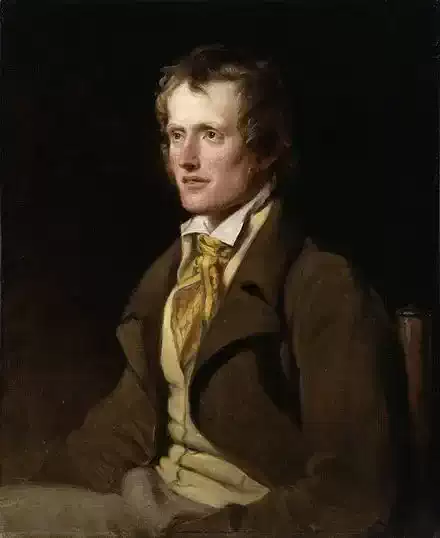
John Clare
The Cross Roads; Or, The Haymaker's Story
The Cross Roads; Or, The Haymaker's Story
Stopt by the storm, that long in sullen black
From the south-west stained its encroaching track,
Haymakers, hustling from the rain to hide,
Sought the grey willows by the pasture-side;
And there, while big drops bow the grassy stems,
And bleb the withering hay with pearly gems,
Dimple the brook, and patter in the leaves,
The song or tale an hour's restraint relieves.
And while the old dames gossip at their ease,
And pinch the snuff-box empty by degrees,
The young ones join in love's delightful themes,
Truths told by gipsies, and expounded dreams;
And mutter things kept secrets from the rest,
As sweethearts' names, and whom they love the best;
And dazzling ribbons they delight to show,
And last new favours of some veigling beau,
Who with such treachery tries their hearts to move,
And, like the highest, bribes the maidens' love.
The old dames, jealous of their whispered praise,
Throw in their hints of man's deluding ways;
And one, to give her counsels more effect,
And by example illustrate the fact
Of innocence oercome by flattering man,
Thrice tapped her box, and pinched, and thus began.
'Now wenches listen, and let lovers lie,
Ye'll hear a story ye may profit by;
I'm your age treble, with some oddments to't,
And right from wrong can tell, if ye'll but do't:
Ye need not giggle underneath your hat,
Mine's no joke-matter, let me tell you that;
So keep ye quiet till my story's told,
And don't despise your betters cause they're old.
'That grave ye've heard of, where the four roads meet,
Where walks the spirit in a winding-sheet,
Oft seen at night, by strangers passing late,
And tarrying neighbours that at market wait,
Stalking along as white as driven snow,
And long as one's shadow when the sun is low;
The girl that's buried there I knew her well,
And her whole history, if ye'll hark, can tell.
Her name was Jane, and neighbour's children we,
And old companions once, as ye may be;
And like to you, on Sundays often strolled
To gipsies' camps to have our fortunes told;
And oft, God rest her, in the fortune-book
Which we at hay-time in our pockets took,
Our pins at blindfold on the wheel we stuck,
When hers would always prick the worst of luck;
For try, poor thing, as often as she might,
Her point would always on the blank alight;
Which plainly shows the fortune one's to have,
As such like go unwedded to the grave,--
And so it proved.--The next succeeding May,
We both to service went from sports and play,
Though in the village still; as friends and kin
Thought neighbour's service better to begin.
So out we went:--Jane's place was reckoned good,
Though she bout life but little understood,
And had a master wild as wild can be,
And far unfit for such a child as she;
And soon the whisper went about the town,
That Jane's good looks procured her many a gown
From him, whose promise was to every one,
But whose intention was to wive with none.
Twas nought to wonder, though begun by guess;
For Jane was lovely in her Sunday dress,
And all expected such a rosy face
Would be her ruin--as was just the case.
The while the change was easily perceived,
Some months went by, ere I the tales believed;
For there are people nowadays, Lord knows,
Will sooner hatch up lies than mend their clothes;
And when with such-like tattle they begin,
Don't mind whose character they spoil a pin:
But passing neighbours often marked them smile,
And watched him take her milkpail oer a stile;
And many a time, as wandering closer by,
From Jenny's bosom met a heavy sigh;
And often marked her, as discoursing deep,
When doubts might rise to give just cause to weep,
Smothering their notice, by a wished disguise
To slive her apron corner to her eyes.
Such signs were mournful and alarming things,
And far more weighty than conjecture brings;
Though foes made double what they heard of all,
Swore lies as proofs, and prophesied her fall.
Poor thoughtless wench! it seems but Sunday past
Since we went out together for the last,
And plain enough indeed it was to find
She'd something more than common on her mind;
For she was always fond and full of chat,
In passing harmless jokes bout beaus and that,
But nothing then was scarcely talked about,
And what there was, I even forced it out.
A gloomy wanness spoiled her rosy cheek,
And doubts hung there it was not mine to seek;
She neer so much as mentioned things to come,
But sighed oer pleasures ere she left her home;
And now and then a mournful smile would raise
At freaks repeated of our younger days,
Which I brought up, while passing spots of ground
Where we, when children, 'hurly-burlied' round,
Or 'blindman-buffed' some morts of hours away--
Two games, poor thing, Jane dearly loved to play.
She smiled at these, but shook her head and sighed
When eer she thought my look was turned aside;
Nor turned she round, as was her former way,
To praise the thorn, white over then with May;
Nor stooped once, though thousands round her grew,
To pull a cowslip as she used to do:
For Jane in flowers delighted from a child--
I like the garden, but she loved the wild--
And oft on Sundays young men's gifts declined,
Posies from gardens of the sweetest kind,
And eager scrambled the dog-rose to get,
And woodbine-flowers at every bush she met.
The cowslip blossom, with its ruddy streak,
Would tempt her furlongs from the path to seek;
And gay long purple, with its tufty spike,
She'd wade oer shoes to reach it in the dyke;
And oft, while scratching through the briary woods
For tempting cuckoo-flowers and violet buds,
Poor Jane, I've known her crying sneak to town,
Fearing her mother, when she'd torn her gown.
Ah, these were days her conscience viewed with pain,
Which all are loth to lose, as well as Jane.
And, what I took more odd than all the rest,
Was, that same night she neer a wish exprest
To see the gipsies, so beloved before,
That lay a stone's throw from us on the moor:
I hinted it; she just replied again--
She once believed them, but had doubts since then.
And when we sought our cows, I called, 'Come mull!'
But she stood silent, for her heart was full.
She loved dumb things: and ere she had begun
To milk, caressed them more than eer she'd done;
But though her tears stood watering in her eye,
I little took it as her last good-bye;
For she was tender, and I've often known
Her mourn when beetles have been trampled on:
So I neer dreamed from this, what soon befell,
Till the next morning rang her passing-bell.
My story's long, but time's in plenty yet,
Since the black clouds betoken nought but wet;
And I'll een snatch a minute's breath or two,
And take another pinch, to help me through.
'So, as I said, next morn I heard the bell,
And passing neighbours crossed the street, to tell
That my poor partner Jenny had been found
In the old flag-pool, on the pasture, drowned.
God knows my heart! I twittered like a leaf,
And found too late the cause of Sunday's grief;
For every tongue was loosed to gabble oer
The slanderous things that secret passed before:
With truth or lies they need not then be strict,
The one they railed at could not contradict.
Twas now no secret of her being beguiled,
For every mouth knew Jenny died with child;
And though more cautious with a living name,
Each more than guessed her master bore the blame.
That very morning, it affects me still,
Ye know the foot-path sidles down the hill,
Ignorant as babe unborn I passed the pond
To milk as usual in our close beyond,
And cows were drinking at the water's edge,
And horses browsed among the flags and sedge,
And gnats and midges danced the water oer,
Just as I've marked them scores of times before,
And birds sat singing, as in mornings gone,--
While I as unconcerned went soodling on,
But little dreaming, as the wakening wind
Flapped the broad ash-leaves oer the pond reclin'd,
And oer the water crinked the curdled wave,
That Jane was sleeping in her watery grave.
The neatherd boy that used to tend the cows,
While getting whip-sticks from the dangling boughs
Of osiers drooping by the water-side,
Her bonnet floating on the top espied;
He knew it well, and hastened fearful down
To take the terror of his fears to town,--
A melancholy story, far too true;
And soon the village to the pasture flew,
Where, from the deepest hole the pond about,
They dragged poor Jenny's lifeless body out,
And took her home, where scarce an hour gone by
She had been living like to you and I.
I went with more, and kissed her for the last,
And thought with tears on pleasures that were past;
And, the last kindness left me then to do,
I went, at milking, where the blossoms grew,
And handfuls got of rose and lambtoe sweet,
And put them with her in her winding-sheet.
A wilful murder, jury made the crime;
Nor parson 'lowed to pray, nor bell to chime;
On the cross roads, far from her friends and kin,
The usual law for their ungodly sin
Who violent hands upon themselves have laid,
Poor Jane's last bed unchristian-like was made;
And there, like all whose last thoughts turn to heaven,
She sleeps, and doubtless hoped to be forgiven.
But, though I say't, for maids thus veigled in
I think the wicked men deserve the sin;
And sure enough we all at last shall see
The treachery punished as it ought to be.
For ere his wickedness pretended love,
Jane, I'll be bound, was spotless as the dove,
And's good a servant, still old folks allow,
As ever scoured a pail or milked a cow;
And ere he led her into ruin's way,
As gay and buxom as a summer's day:
The birds that ranted in the hedge-row boughs,
As night and morning we have sought our cows,
With yokes and buckets as she bounced along,
Were often deafed to silence with her song.
But now she's gone:--girls, shun deceitful men,
The worst of stumbles ye can fall agen;
Be deaf to them, and then, as twere, ye'll see
Your pleasures safe as under lock and key.
Throw not my words away, as many do;
They're gold in value, though they're cheap to you.
And husseys hearken, and be warned from this,
If ye love mothers, never do amiss:
Jane might love hers, but she forsook the plan
To make her happy, when she thought of man.
Poor tottering dame, it was too plainly known,
Her daughter's dying hastened on her own,
For from the day the tidings reached her door
She took to bed and looked up no more,
And, ere again another year came round,
She, well as Jane, was laid within the ground;
And all were grieved poor Goody's end to see:
No better neighbour entered house than she,
A harmless soul, with no abusive tongue,
Trig as new pins, and tight's the day was long;
And go the week about, nine times in ten
Ye'd find her house as cleanly as her sen.
But, Lord protect us! time such change does bring,
We cannot dream what oer our heads may hing;
The very house she lived in, stick and stone,
Since Goody died, has tumbled down and gone:
And where the marjoram once, and sage, and rue,
And balm, and mint, with curled-leaf parsley grew,
And double marygolds, and silver thyme,
And pumpkins neath the window used to climb;
And where I often when a child for hours
Tried through the pales to get the tempting flowers,
As lady's laces, everlasting peas,
True-love-lies-bleeding, with the hearts-at-ease,
And golden rods, and tansy running high
That oer the pale-tops smiled on passers-by,
Flowers in my time that every one would praise,
Though thrown like weeds from gardens nowadays;
Where these all grew, now henbane stinks and spreads,
And docks and thistles shake their seedy heads,
And yearly keep with nettles smothering oer;-
The house, the dame, the garden known no more:
While, neighbouring nigh, one lonely elder-tree
Is all that's left of what had used to be,
Marking the place, and bringing up with tears
The recollections of one's younger years.
And now I've done, ye're each at once as free
To take your trundle as ye used to be;
To take right ways, as Jenny should have ta'en,
Or headlong run, and be a second Jane;
For by one thoughtless girl that's acted ill
A thousand may be guided if they will:
As oft mong folks to labour bustling on,
We mark the foremost kick against a stone,
Or stumble oer a stile he meant to climb,
While hind ones see and shun the fall in time.
But ye, I will be bound, like far the best
Love's tickling nick-nacks and the laughing jest,
And ten times sooner than be warned by me,
Would each be sitting on some fellow's knee,
Sooner believe the lies wild chaps will tell
Than old dames' cautions, who would wish ye well:
So have your wills.'--She pinched her box again,
And ceased her tale, and listened to the rain,
Which still as usual pattered fast around,
And bowed the bent-head loaded to the ground;
While larks, their naked nest by force forsook,
Pruned their wet wings in bushes by the brook.
The maids, impatient now old Goody ceased,
As restless children from the school released,
Right gladly proving, what she'd just foretold,
That young ones' stories were preferred to old,
Turn to the whisperings of their former joy,
That oft deceive, but very rarely cloy.
Stopt by the storm, that long in sullen black
From the south-west stained its encroaching track,
Haymakers, hustling from the rain to hide,
Sought the grey willows by the pasture-side;
And there, while big drops bow the grassy stems,
And bleb the withering hay with pearly gems,
Dimple the brook, and patter in the leaves,
The song or tale an hour's restraint relieves.
And while the old dames gossip at their ease,
And pinch the snuff-box empty by degrees,
The young ones join in love's delightful themes,
Truths told by gipsies, and expounded dreams;
And mutter things kept secrets from the rest,
As sweethearts' names, and whom they love the best;
And dazzling ribbons they delight to show,
And last new favours of some veigling beau,
Who with such treachery tries their hearts to move,
And, like the highest, bribes the maidens' love.
The old dames, jealous of their whispered praise,
Throw in their hints of man's deluding ways;
And one, to give her counsels more effect,
And by example illustrate the fact
Of innocence oercome by flattering man,
Thrice tapped her box, and pinched, and thus began.
'Now wenches listen, and let lovers lie,
Ye'll hear a story ye may profit by;
I'm your age treble, with some oddments to't,
And right from wrong can tell, if ye'll but do't:
Ye need not giggle underneath your hat,
Mine's no joke-matter, let me tell you that;
So keep ye quiet till my story's told,
And don't despise your betters cause they're old.
'That grave ye've heard of, where the four roads meet,
Where walks the spirit in a winding-sheet,
Oft seen at night, by strangers passing late,
And tarrying neighbours that at market wait,
Stalking along as white as driven snow,
And long as one's shadow when the sun is low;
The girl that's buried there I knew her well,
And her whole history, if ye'll hark, can tell.
Her name was Jane, and neighbour's children we,
And old companions once, as ye may be;
And like to you, on Sundays often strolled
To gipsies' camps to have our fortunes told;
And oft, God rest her, in the fortune-book
Which we at hay-time in our pockets took,
Our pins at blindfold on the wheel we stuck,
When hers would always prick the worst of luck;
For try, poor thing, as often as she might,
Her point would always on the blank alight;
Which plainly shows the fortune one's to have,
As such like go unwedded to the grave,--
And so it proved.--The next succeeding May,
We both to service went from sports and play,
Though in the village still; as friends and kin
Thought neighbour's service better to begin.
So out we went:--Jane's place was reckoned good,
Though she bout life but little understood,
And had a master wild as wild can be,
And far unfit for such a child as she;
And soon the whisper went about the town,
That Jane's good looks procured her many a gown
From him, whose promise was to every one,
But whose intention was to wive with none.
Twas nought to wonder, though begun by guess;
For Jane was lovely in her Sunday dress,
And all expected such a rosy face
Would be her ruin--as was just the case.
The while the change was easily perceived,
Some months went by, ere I the tales believed;
For there are people nowadays, Lord knows,
Will sooner hatch up lies than mend their clothes;
And when with such-like tattle they begin,
Don't mind whose character they spoil a pin:
But passing neighbours often marked them smile,
And watched him take her milkpail oer a stile;
And many a time, as wandering closer by,
From Jenny's bosom met a heavy sigh;
And often marked her, as discoursing deep,
When doubts might rise to give just cause to weep,
Smothering their notice, by a wished disguise
To slive her apron corner to her eyes.
Such signs were mournful and alarming things,
And far more weighty than conjecture brings;
Though foes made double what they heard of all,
Swore lies as proofs, and prophesied her fall.
Poor thoughtless wench! it seems but Sunday past
Since we went out together for the last,
And plain enough indeed it was to find
She'd something more than common on her mind;
For she was always fond and full of chat,
In passing harmless jokes bout beaus and that,
But nothing then was scarcely talked about,
And what there was, I even forced it out.
A gloomy wanness spoiled her rosy cheek,
And doubts hung there it was not mine to seek;
She neer so much as mentioned things to come,
But sighed oer pleasures ere she left her home;
And now and then a mournful smile would raise
At freaks repeated of our younger days,
Which I brought up, while passing spots of ground
Where we, when children, 'hurly-burlied' round,
Or 'blindman-buffed' some morts of hours away--
Two games, poor thing, Jane dearly loved to play.
She smiled at these, but shook her head and sighed
When eer she thought my look was turned aside;
Nor turned she round, as was her former way,
To praise the thorn, white over then with May;
Nor stooped once, though thousands round her grew,
To pull a cowslip as she used to do:
For Jane in flowers delighted from a child--
I like the garden, but she loved the wild--
And oft on Sundays young men's gifts declined,
Posies from gardens of the sweetest kind,
And eager scrambled the dog-rose to get,
And woodbine-flowers at every bush she met.
The cowslip blossom, with its ruddy streak,
Would tempt her furlongs from the path to seek;
And gay long purple, with its tufty spike,
She'd wade oer shoes to reach it in the dyke;
And oft, while scratching through the briary woods
For tempting cuckoo-flowers and violet buds,
Poor Jane, I've known her crying sneak to town,
Fearing her mother, when she'd torn her gown.
Ah, these were days her conscience viewed with pain,
Which all are loth to lose, as well as Jane.
And, what I took more odd than all the rest,
Was, that same night she neer a wish exprest
To see the gipsies, so beloved before,
That lay a stone's throw from us on the moor:
I hinted it; she just replied again--
She once believed them, but had doubts since then.
And when we sought our cows, I called, 'Come mull!'
But she stood silent, for her heart was full.
She loved dumb things: and ere she had begun
To milk, caressed them more than eer she'd done;
But though her tears stood watering in her eye,
I little took it as her last good-bye;
For she was tender, and I've often known
Her mourn when beetles have been trampled on:
So I neer dreamed from this, what soon befell,
Till the next morning rang her passing-bell.
My story's long, but time's in plenty yet,
Since the black clouds betoken nought but wet;
And I'll een snatch a minute's breath or two,
And take another pinch, to help me through.
'So, as I said, next morn I heard the bell,
And passing neighbours crossed the street, to tell
That my poor partner Jenny had been found
In the old flag-pool, on the pasture, drowned.
God knows my heart! I twittered like a leaf,
And found too late the cause of Sunday's grief;
For every tongue was loosed to gabble oer
The slanderous things that secret passed before:
With truth or lies they need not then be strict,
The one they railed at could not contradict.
Twas now no secret of her being beguiled,
For every mouth knew Jenny died with child;
And though more cautious with a living name,
Each more than guessed her master bore the blame.
That very morning, it affects me still,
Ye know the foot-path sidles down the hill,
Ignorant as babe unborn I passed the pond
To milk as usual in our close beyond,
And cows were drinking at the water's edge,
And horses browsed among the flags and sedge,
And gnats and midges danced the water oer,
Just as I've marked them scores of times before,
And birds sat singing, as in mornings gone,--
While I as unconcerned went soodling on,
But little dreaming, as the wakening wind
Flapped the broad ash-leaves oer the pond reclin'd,
And oer the water crinked the curdled wave,
That Jane was sleeping in her watery grave.
The neatherd boy that used to tend the cows,
While getting whip-sticks from the dangling boughs
Of osiers drooping by the water-side,
Her bonnet floating on the top espied;
He knew it well, and hastened fearful down
To take the terror of his fears to town,--
A melancholy story, far too true;
And soon the village to the pasture flew,
Where, from the deepest hole the pond about,
They dragged poor Jenny's lifeless body out,
And took her home, where scarce an hour gone by
She had been living like to you and I.
I went with more, and kissed her for the last,
And thought with tears on pleasures that were past;
And, the last kindness left me then to do,
I went, at milking, where the blossoms grew,
And handfuls got of rose and lambtoe sweet,
And put them with her in her winding-sheet.
A wilful murder, jury made the crime;
Nor parson 'lowed to pray, nor bell to chime;
On the cross roads, far from her friends and kin,
The usual law for their ungodly sin
Who violent hands upon themselves have laid,
Poor Jane's last bed unchristian-like was made;
And there, like all whose last thoughts turn to heaven,
She sleeps, and doubtless hoped to be forgiven.
But, though I say't, for maids thus veigled in
I think the wicked men deserve the sin;
And sure enough we all at last shall see
The treachery punished as it ought to be.
For ere his wickedness pretended love,
Jane, I'll be bound, was spotless as the dove,
And's good a servant, still old folks allow,
As ever scoured a pail or milked a cow;
And ere he led her into ruin's way,
As gay and buxom as a summer's day:
The birds that ranted in the hedge-row boughs,
As night and morning we have sought our cows,
With yokes and buckets as she bounced along,
Were often deafed to silence with her song.
But now she's gone:--girls, shun deceitful men,
The worst of stumbles ye can fall agen;
Be deaf to them, and then, as twere, ye'll see
Your pleasures safe as under lock and key.
Throw not my words away, as many do;
They're gold in value, though they're cheap to you.
And husseys hearken, and be warned from this,
If ye love mothers, never do amiss:
Jane might love hers, but she forsook the plan
To make her happy, when she thought of man.
Poor tottering dame, it was too plainly known,
Her daughter's dying hastened on her own,
For from the day the tidings reached her door
She took to bed and looked up no more,
And, ere again another year came round,
She, well as Jane, was laid within the ground;
And all were grieved poor Goody's end to see:
No better neighbour entered house than she,
A harmless soul, with no abusive tongue,
Trig as new pins, and tight's the day was long;
And go the week about, nine times in ten
Ye'd find her house as cleanly as her sen.
But, Lord protect us! time such change does bring,
We cannot dream what oer our heads may hing;
The very house she lived in, stick and stone,
Since Goody died, has tumbled down and gone:
And where the marjoram once, and sage, and rue,
And balm, and mint, with curled-leaf parsley grew,
And double marygolds, and silver thyme,
And pumpkins neath the window used to climb;
And where I often when a child for hours
Tried through the pales to get the tempting flowers,
As lady's laces, everlasting peas,
True-love-lies-bleeding, with the hearts-at-ease,
And golden rods, and tansy running high
That oer the pale-tops smiled on passers-by,
Flowers in my time that every one would praise,
Though thrown like weeds from gardens nowadays;
Where these all grew, now henbane stinks and spreads,
And docks and thistles shake their seedy heads,
And yearly keep with nettles smothering oer;-
The house, the dame, the garden known no more:
While, neighbouring nigh, one lonely elder-tree
Is all that's left of what had used to be,
Marking the place, and bringing up with tears
The recollections of one's younger years.
And now I've done, ye're each at once as free
To take your trundle as ye used to be;
To take right ways, as Jenny should have ta'en,
Or headlong run, and be a second Jane;
For by one thoughtless girl that's acted ill
A thousand may be guided if they will:
As oft mong folks to labour bustling on,
We mark the foremost kick against a stone,
Or stumble oer a stile he meant to climb,
While hind ones see and shun the fall in time.
But ye, I will be bound, like far the best
Love's tickling nick-nacks and the laughing jest,
And ten times sooner than be warned by me,
Would each be sitting on some fellow's knee,
Sooner believe the lies wild chaps will tell
Than old dames' cautions, who would wish ye well:
So have your wills.'--She pinched her box again,
And ceased her tale, and listened to the rain,
Which still as usual pattered fast around,
And bowed the bent-head loaded to the ground;
While larks, their naked nest by force forsook,
Pruned their wet wings in bushes by the brook.
The maids, impatient now old Goody ceased,
As restless children from the school released,
Right gladly proving, what she'd just foretold,
That young ones' stories were preferred to old,
Turn to the whisperings of their former joy,
That oft deceive, but very rarely cloy.
343
John Clare
Christmass
Christmass
Christmass is come and every hearth
Makes room to give him welcome now
Een want will dry its tears in mirth
And crown him wi a holly bough
Tho tramping neath a winters sky
Oer snow track paths and ryhmey stiles
The huswife sets her spining bye
And bids him welcome wi her smiles
Each house is swept the day before
And windows stuck wi evergreens
The snow is beesomd from the door
And comfort crowns the cottage scenes
Gilt holly wi its thorny pricks
And yew and box wi berrys small
These deck the unusd candlesticks
And pictures hanging by the wall
Neighbours resume their anual cheer
Wishing wi smiles and spirits high
Clad christmass and a happy year
To every morning passer bye
Milk maids their christmass journeys go
Accompanyd wi favourd swain
And childern pace the crumping snow
To taste their grannys cake again
Hung wi the ivys veining bough
The ash trees round the cottage farm
Are often stript of branches now
The cotters christmass hearth to warm
He swings and twists his hazel band
And lops them off wi sharpend hook
And oft brings ivy in his hand
To decorate the chimney nook
Old winter whipes his ides bye
And warms his fingers till he smiles
Where cottage hearths are blazing high
And labour resteth from his toils
Wi merry mirth beguiling care
Old customs keeping wi the day
Friends meet their christmass cheer to share
And pass it in a harmless way
Old customs O I love the sound
However simple they may be
What ere wi time has sanction found
Is welcome and is dear to me
Pride grows above simplicity
And spurns it from her haughty mind
And soon the poets song will be
The only refuge they can find
The shepherd now no more afraid
Since custom doth the chance bestow
Starts up to kiss the giggling maid
Beneath the branch of mizzletoe
That neath each cottage beam is seen
Wi pearl-like-berrys shining gay
The shadow still of what hath been
Which fashion yearly fades away
And singers too a merry throng
At early morn wi simple skill
Yet imitate the angels song
And chant their christmass ditty still
And mid the storm that dies and swells
By fits-in humings softly steals
The music of the village bells
Ringing round their merry peals
And when its past a merry crew
Bedeckt in masks and ribbons gay
The 'Morrice danse' their sports renew
And act their winter evening play
The clown-turnd-kings for penny praise
Storm wi the actors strut and swell
And harlequin a laugh to raise
Wears his hump back and tinkling bell
And oft for pence and spicy ale
Wi winter nosgays pind before
The wassail singer tells her tale
And drawls her christmass carrols oer
The prentice boy wi ruddy face
And ryhme bepowderd dancing locks
From door to door wi happy pace
Runs round to claim his 'christmass box'
The block behind the fire is put
To sanction customs old desires
And many a faggots bands are cut
For the old farmers christmass fires
Where loud tongd gladness joins the throng
And winter meets the warmth of may
Feeling by times the heat too strong
And rubs his shins and draws away
While snows the window panes bedim
The fire curls up a sunny charm
Where creaming oer the pitchers rim
The flowering ale is set to warm
Mirth full of joy as summer bees
Sits there its pleasures to impart
While childern tween their parents knees
Sing scraps of carrols oer by heart
And some to view the winter weathers
Climb up the window seat wi glee
Likening the snow to falling feathers
In fancys infant extacy
Laughing wi superstitious love
Oer visions wild that youth supplyes
Of people pulling geese above
And keeping christmass in the skyes
As tho the homstead trees were drest
In lieu of snow wi dancing leaves
As. tho the sundryd martins nest
Instead of ides hung the eaves
The childern hail the happy day
As if the snow was april grass
And pleasd as neath the warmth of may
Sport oer the water froze to glass
Thou day of happy sound and mirth
That long wi childish memory stays
How blest around the cottage hearth
I met thee in my boyish days
Harping wi raptures dreaming joys
On presents that thy coming found
The welcome sight of little toys
The christmass gifts of comers round
'The wooden horse wi arching head
Drawn upon wheels around the room
The gilded coach of ginger bread
And many colord sugar plumb
Gilt coverd books for pictures sought
Or storys childhood loves to tell
Wi many a urgent promise bought
To get tomorrows lesson well
And many a thing a minutes sport
Left broken on the sanded floor
When we woud leave our play and court
Our parents promises for more
Tho manhood bids such raptures dye
And throws such toys away as vain
Yet memory loves to turn her eye
And talk such pleasures oer again
Around the glowing hearth at night
The harmless laugh and winter tale
Goes round-while parting friends delight
To toast each other oer their ale
The cotter oft wi quiet zeal
Will musing oer his bible lean
While in the dark the lovers steal
To kiss and toy behind the screen
The yule cake dotted thick wi plumbs
Is on each supper table found
And cats look up for falling crumbs
Which greedy childern litter round
And huswifes sage stuffd seasond chine
Long hung in chimney nook to drye
And boiling eldern berry wine
To drink the christmass eves 'good bye'
Christmass is come and every hearth
Makes room to give him welcome now
Een want will dry its tears in mirth
And crown him wi a holly bough
Tho tramping neath a winters sky
Oer snow track paths and ryhmey stiles
The huswife sets her spining bye
And bids him welcome wi her smiles
Each house is swept the day before
And windows stuck wi evergreens
The snow is beesomd from the door
And comfort crowns the cottage scenes
Gilt holly wi its thorny pricks
And yew and box wi berrys small
These deck the unusd candlesticks
And pictures hanging by the wall
Neighbours resume their anual cheer
Wishing wi smiles and spirits high
Clad christmass and a happy year
To every morning passer bye
Milk maids their christmass journeys go
Accompanyd wi favourd swain
And childern pace the crumping snow
To taste their grannys cake again
Hung wi the ivys veining bough
The ash trees round the cottage farm
Are often stript of branches now
The cotters christmass hearth to warm
He swings and twists his hazel band
And lops them off wi sharpend hook
And oft brings ivy in his hand
To decorate the chimney nook
Old winter whipes his ides bye
And warms his fingers till he smiles
Where cottage hearths are blazing high
And labour resteth from his toils
Wi merry mirth beguiling care
Old customs keeping wi the day
Friends meet their christmass cheer to share
And pass it in a harmless way
Old customs O I love the sound
However simple they may be
What ere wi time has sanction found
Is welcome and is dear to me
Pride grows above simplicity
And spurns it from her haughty mind
And soon the poets song will be
The only refuge they can find
The shepherd now no more afraid
Since custom doth the chance bestow
Starts up to kiss the giggling maid
Beneath the branch of mizzletoe
That neath each cottage beam is seen
Wi pearl-like-berrys shining gay
The shadow still of what hath been
Which fashion yearly fades away
And singers too a merry throng
At early morn wi simple skill
Yet imitate the angels song
And chant their christmass ditty still
And mid the storm that dies and swells
By fits-in humings softly steals
The music of the village bells
Ringing round their merry peals
And when its past a merry crew
Bedeckt in masks and ribbons gay
The 'Morrice danse' their sports renew
And act their winter evening play
The clown-turnd-kings for penny praise
Storm wi the actors strut and swell
And harlequin a laugh to raise
Wears his hump back and tinkling bell
And oft for pence and spicy ale
Wi winter nosgays pind before
The wassail singer tells her tale
And drawls her christmass carrols oer
The prentice boy wi ruddy face
And ryhme bepowderd dancing locks
From door to door wi happy pace
Runs round to claim his 'christmass box'
The block behind the fire is put
To sanction customs old desires
And many a faggots bands are cut
For the old farmers christmass fires
Where loud tongd gladness joins the throng
And winter meets the warmth of may
Feeling by times the heat too strong
And rubs his shins and draws away
While snows the window panes bedim
The fire curls up a sunny charm
Where creaming oer the pitchers rim
The flowering ale is set to warm
Mirth full of joy as summer bees
Sits there its pleasures to impart
While childern tween their parents knees
Sing scraps of carrols oer by heart
And some to view the winter weathers
Climb up the window seat wi glee
Likening the snow to falling feathers
In fancys infant extacy
Laughing wi superstitious love
Oer visions wild that youth supplyes
Of people pulling geese above
And keeping christmass in the skyes
As tho the homstead trees were drest
In lieu of snow wi dancing leaves
As. tho the sundryd martins nest
Instead of ides hung the eaves
The childern hail the happy day
As if the snow was april grass
And pleasd as neath the warmth of may
Sport oer the water froze to glass
Thou day of happy sound and mirth
That long wi childish memory stays
How blest around the cottage hearth
I met thee in my boyish days
Harping wi raptures dreaming joys
On presents that thy coming found
The welcome sight of little toys
The christmass gifts of comers round
'The wooden horse wi arching head
Drawn upon wheels around the room
The gilded coach of ginger bread
And many colord sugar plumb
Gilt coverd books for pictures sought
Or storys childhood loves to tell
Wi many a urgent promise bought
To get tomorrows lesson well
And many a thing a minutes sport
Left broken on the sanded floor
When we woud leave our play and court
Our parents promises for more
Tho manhood bids such raptures dye
And throws such toys away as vain
Yet memory loves to turn her eye
And talk such pleasures oer again
Around the glowing hearth at night
The harmless laugh and winter tale
Goes round-while parting friends delight
To toast each other oer their ale
The cotter oft wi quiet zeal
Will musing oer his bible lean
While in the dark the lovers steal
To kiss and toy behind the screen
The yule cake dotted thick wi plumbs
Is on each supper table found
And cats look up for falling crumbs
Which greedy childern litter round
And huswifes sage stuffd seasond chine
Long hung in chimney nook to drye
And boiling eldern berry wine
To drink the christmass eves 'good bye'
363