

Poems in this theme
Culture and Tradition
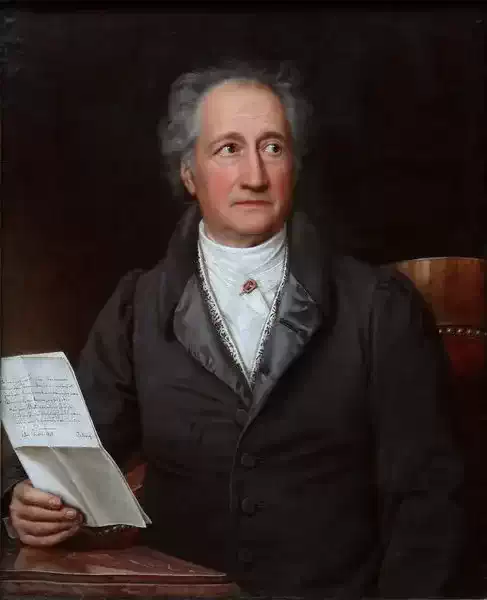
Johann Wolfgang von Goethe
The Fox And The Crane
The Fox And The Crane
ONCE two persons uninvited
Came to join my dinner table;
For the nonce they lived united,
Fox and crane yclept in fable.
Civil greetings pass'd between us
Then I pluck'd some pigeons tender
For the fox of jackal-genius,
Adding grapes in full-grown splendour.
Long-neck'd flasks I put as dishes
For the crane, without delaying,
Fill'd with gold and silver fishes,
In the limpid water playing.
Had ye witness'd Reynard planted
At his flat plate, all demurely,
Ye with envy must have granted:
"Ne'er was such a gourmand, surely!"
While the bird with circumspection
On one foot, as usual, cradled,
From the flasks his fish-refection
With his bill and long neck ladled.
One the pigeons praised,--the other,
As they went, extoll'd the fishes,
Each one scoffing at his brother
For preferring vulgar dishes.
*
If thou wouldst preserve thy credit,
When thou askest folks to guzzle
At thy hoard, take care to spread it
Suited both for bill and muzzle.
ONCE two persons uninvited
Came to join my dinner table;
For the nonce they lived united,
Fox and crane yclept in fable.
Civil greetings pass'd between us
Then I pluck'd some pigeons tender
For the fox of jackal-genius,
Adding grapes in full-grown splendour.
Long-neck'd flasks I put as dishes
For the crane, without delaying,
Fill'd with gold and silver fishes,
In the limpid water playing.
Had ye witness'd Reynard planted
At his flat plate, all demurely,
Ye with envy must have granted:
"Ne'er was such a gourmand, surely!"
While the bird with circumspection
On one foot, as usual, cradled,
From the flasks his fish-refection
With his bill and long neck ladled.
One the pigeons praised,--the other,
As they went, extoll'd the fishes,
Each one scoffing at his brother
For preferring vulgar dishes.
*
If thou wouldst preserve thy credit,
When thou askest folks to guzzle
At thy hoard, take care to spread it
Suited both for bill and muzzle.
385
Johann Wolfgang von Goethe
Minstrel's Book - The Four Favours
Minstrel's Book - The Four Favours
THAT Arabs through the realms of space
May wander on, light-hearted,
Great Allah hath, to all their race,
Four favours meet imparted.
The turban first--that ornament
All regal crowns excelling;
A light and ever-shifting tent,
Wherein to make our dwelling;
A sword, which, more than rocks and walls
Doth shield us, brightly glistening;
A song that profits and enthrall,
For which the maids are list'ning!
THAT Arabs through the realms of space
May wander on, light-hearted,
Great Allah hath, to all their race,
Four favours meet imparted.
The turban first--that ornament
All regal crowns excelling;
A light and ever-shifting tent,
Wherein to make our dwelling;
A sword, which, more than rocks and walls
Doth shield us, brightly glistening;
A song that profits and enthrall,
For which the maids are list'ning!
313
Johann Wolfgang von Goethe
Celebrity
Celebrity
ON bridges small and bridges great
Stands Nepomucks in ev'ry state,
Of bronze, wood, painted, or of stone,
Some small as dolls, some giants grown;
Each passer must worship before Nepomuck,
Who to die on a bridge chanced to have the ill luck,
When once a man with head and ears
A saint in people's eyes appears,
Or has been sentenced piteously
Beneath the hangman's hand to die,
He's as a noted person prized,
In portrait is immortalized.
Engravings, woodcuts, are supplied,
And through the world spread far and wide.
Upon them all is seen his name,
And ev'ry one admits his claim;
Even the image of the Lord
Is not with greater zeal ador'd.
Strange fancy of the human race!
Half sinner frail, half child of grace
We see HERR WERTHER of the story
In all the pomp of woodcut glory.
His worth is first made duly known,
By having his sad features shown
At ev'ry fair the country round;
In ev'ry alehouse too they're found.
His stick is pointed by each dunce
"The ball would reach his brain at once!"
And each says, o'er his beer and bread:
"Thank Heav'n that 'tis not we are dead!"
ON bridges small and bridges great
Stands Nepomucks in ev'ry state,
Of bronze, wood, painted, or of stone,
Some small as dolls, some giants grown;
Each passer must worship before Nepomuck,
Who to die on a bridge chanced to have the ill luck,
When once a man with head and ears
A saint in people's eyes appears,
Or has been sentenced piteously
Beneath the hangman's hand to die,
He's as a noted person prized,
In portrait is immortalized.
Engravings, woodcuts, are supplied,
And through the world spread far and wide.
Upon them all is seen his name,
And ev'ry one admits his claim;
Even the image of the Lord
Is not with greater zeal ador'd.
Strange fancy of the human race!
Half sinner frail, half child of grace
We see HERR WERTHER of the story
In all the pomp of woodcut glory.
His worth is first made duly known,
By having his sad features shown
At ev'ry fair the country round;
In ev'ry alehouse too they're found.
His stick is pointed by each dunce
"The ball would reach his brain at once!"
And each says, o'er his beer and bread:
"Thank Heav'n that 'tis not we are dead!"
381
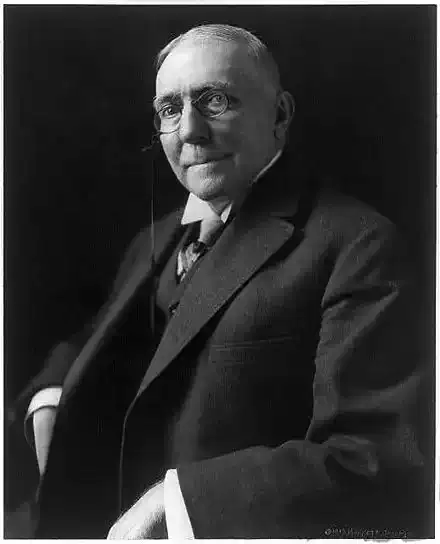
James Whitcomb Riley
The Town Karnteel
The Town Karnteel
The Town Karnteel--! It's who'll reveal
Its praises jushtifiable?
For who can sing av anything
So lovely and reliable?
Whin Summer, Spring, or Winter lies
From Malin's Head to Tipperary,
There's no such town for interprise
Bechuxt Youghal and Londonderry!
There's not its likes in Ireland--
For twic't the week, be gorries!
They're playing jigs upon the band,
And joomping there in sacks-- and-- and--
And racing, wid wheelborries!
Kanteel-- it's there, like any fair,
The purty gurrls is plinty, sure--!
And man-alive! At forty-five
The leg's av me air twinty, sure!
I lave me cares, and hoein' too,
Behint me, as is sinsible,
And it's Karnteel I'm goin' to,
To cilebrate in principle!
For there's the town av all the land!
And twic't the week, be-gorries!
They're playing jigs upon the band,
And joomping there in sacks-- and-- and--
And racing, wid wheelborries!
And whilst I feel for owld Karnteel
That I've no phrases glorious,
It stands above the need av love
That boasts in voice uproarious--!
Lave that for Cork, and Dublin too,
And Armagh and Killarney thin--,
And Karnteel won't be troublin' you
Wid any jilous blarney, thin!
For there's the town av all the land
Where twic't the week, be-gorries!
They're playing jigs upon the band,
And joomping there in sacks-- and-- and--
And racing, wid wheelborries!
The Town Karnteel--! It's who'll reveal
Its praises jushtifiable?
For who can sing av anything
So lovely and reliable?
Whin Summer, Spring, or Winter lies
From Malin's Head to Tipperary,
There's no such town for interprise
Bechuxt Youghal and Londonderry!
There's not its likes in Ireland--
For twic't the week, be gorries!
They're playing jigs upon the band,
And joomping there in sacks-- and-- and--
And racing, wid wheelborries!
Kanteel-- it's there, like any fair,
The purty gurrls is plinty, sure--!
And man-alive! At forty-five
The leg's av me air twinty, sure!
I lave me cares, and hoein' too,
Behint me, as is sinsible,
And it's Karnteel I'm goin' to,
To cilebrate in principle!
For there's the town av all the land!
And twic't the week, be-gorries!
They're playing jigs upon the band,
And joomping there in sacks-- and-- and--
And racing, wid wheelborries!
And whilst I feel for owld Karnteel
That I've no phrases glorious,
It stands above the need av love
That boasts in voice uproarious--!
Lave that for Cork, and Dublin too,
And Armagh and Killarney thin--,
And Karnteel won't be troublin' you
Wid any jilous blarney, thin!
For there's the town av all the land
Where twic't the week, be-gorries!
They're playing jigs upon the band,
And joomping there in sacks-- and-- and--
And racing, wid wheelborries!
286
James Whitcomb Riley
The Good, Old-Fashioned People
The Good, Old-Fashioned People
When we hear Uncle Sidney tell
About the long-ago
An' old, old friends he loved so well
When _he_ was young--My-oh!--
Us childern all wish _we'd 'a'_ bin
A-livin' then with Uncle,--so
We could a-kindo' happened in
On them old friends he used to know!--
The good, old-fashioned people--
The hale, hard-working people--
The kindly country people
'At Uncle used to know!
They was God's people, Uncle says,
An' gloried in His name,
An' worked, without no selfishness,
An' loved their neighbers same
As they was kin: An' when they biled
Their tree-molasses, in the Spring,
Er butchered in the Fall, they smiled
An' sheered with all jist ever'thing!--
The good, old-fashioned people--
The hale, hard-working people--
The kindly country people
'At Uncle used to know!
He tells about 'em, lots o' times,
Till we'd all ruther hear
About 'em than the Nurs'ry Rhymes
Er Fairies--mighty near!--
Only sometimes he stops so long
An' then talks on so low an' slow,
It's purt'-nigh sad as any song
To listen to him talkin' so
Of the good, old-fashioned people--
The hale, hard-working people--
The kindly country people
'At Uncle used to know!
When we hear Uncle Sidney tell
About the long-ago
An' old, old friends he loved so well
When _he_ was young--My-oh!--
Us childern all wish _we'd 'a'_ bin
A-livin' then with Uncle,--so
We could a-kindo' happened in
On them old friends he used to know!--
The good, old-fashioned people--
The hale, hard-working people--
The kindly country people
'At Uncle used to know!
They was God's people, Uncle says,
An' gloried in His name,
An' worked, without no selfishness,
An' loved their neighbers same
As they was kin: An' when they biled
Their tree-molasses, in the Spring,
Er butchered in the Fall, they smiled
An' sheered with all jist ever'thing!--
The good, old-fashioned people--
The hale, hard-working people--
The kindly country people
'At Uncle used to know!
He tells about 'em, lots o' times,
Till we'd all ruther hear
About 'em than the Nurs'ry Rhymes
Er Fairies--mighty near!--
Only sometimes he stops so long
An' then talks on so low an' slow,
It's purt'-nigh sad as any song
To listen to him talkin' so
Of the good, old-fashioned people--
The hale, hard-working people--
The kindly country people
'At Uncle used to know!
268
James Whitcomb Riley
Little Orphant Annie
Little Orphant Annie
To all the little children: -- The happy ones; and sad ones;
The sober and the silent ones; the boisterous and glad ones;
The good ones -- Yes, the good ones, too; and all the lovely bad ones.
Little Orphant Annie's come to our house to stay,
An' wash the cups an' saucers up, an' brush the crumbs away,
An' shoo the chickens off the porch, an' dust the hearth, an' sweep,
An' make the fire, an' bake the bread, an' earn her board-an'-keep;
An' all us other childern, when the supper-things is done,
We set around the kitchen fire an' has the mostest fun
A-list'nin' to the witch-tales 'at Annie tells about,
An' the Gobble-uns 'at gits you
Ef you
Don't
Watch
Out!
Wunst they wuz a little boy wouldn't say his prayers,--
An' when he went to bed at night, away up-stairs,
His Mammy heerd him holler, an' his Daddy heerd him bawl,
An' when they turn't the kivvers down, he wuzn't there at all!
An' they seeked him in the rafter-room, an' cubby-hole, an' press,
An' seeked him up the chimbly-flue, an' ever'-wheres, I guess;
But all they ever found wuz thist his pants an' roundabout:--
An' the Gobble-uns 'll git you
Ef you
Don't
Watch
Out!
An' one time a little girl 'ud allus laugh an' grin,
An' make fun of ever' one, an' all her blood-an'-kin;
An' wunst, when they was 'company,' an' ole folks wuz there,
She mocked 'em an' shocked 'em, an' said she didn't care!
An' thist as she kicked her heels, an' turn't to run an' hide,
They wuz two great big Black Things a-standin' by her side,
An' they snatched her through the ceilin' 'fore she knowed what she's about!
An' the Gobble-uns 'll git you
Ef you
Don't
Watch
Out!
An' little Orphant Annie says, when the blaze is blue,
An' the lamp-wick sputters, an' the wind goes woo-oo!
An' you hear the crickets quit, an' the moon is gray,
An' the lightnin'-bugs in dew is all squenched away,--
You better mind yer parunts, an' yer teachurs fond an' dear,
An' churish them 'at loves you, an' dry the orphant's tear,
An' he'p the pore an' needy ones 'at clusters all about,
Er the Gobble-uns 'll git you
Ef you
Don't
Watch
Out!
To all the little children: -- The happy ones; and sad ones;
The sober and the silent ones; the boisterous and glad ones;
The good ones -- Yes, the good ones, too; and all the lovely bad ones.
Little Orphant Annie's come to our house to stay,
An' wash the cups an' saucers up, an' brush the crumbs away,
An' shoo the chickens off the porch, an' dust the hearth, an' sweep,
An' make the fire, an' bake the bread, an' earn her board-an'-keep;
An' all us other childern, when the supper-things is done,
We set around the kitchen fire an' has the mostest fun
A-list'nin' to the witch-tales 'at Annie tells about,
An' the Gobble-uns 'at gits you
Ef you
Don't
Watch
Out!
Wunst they wuz a little boy wouldn't say his prayers,--
An' when he went to bed at night, away up-stairs,
His Mammy heerd him holler, an' his Daddy heerd him bawl,
An' when they turn't the kivvers down, he wuzn't there at all!
An' they seeked him in the rafter-room, an' cubby-hole, an' press,
An' seeked him up the chimbly-flue, an' ever'-wheres, I guess;
But all they ever found wuz thist his pants an' roundabout:--
An' the Gobble-uns 'll git you
Ef you
Don't
Watch
Out!
An' one time a little girl 'ud allus laugh an' grin,
An' make fun of ever' one, an' all her blood-an'-kin;
An' wunst, when they was 'company,' an' ole folks wuz there,
She mocked 'em an' shocked 'em, an' said she didn't care!
An' thist as she kicked her heels, an' turn't to run an' hide,
They wuz two great big Black Things a-standin' by her side,
An' they snatched her through the ceilin' 'fore she knowed what she's about!
An' the Gobble-uns 'll git you
Ef you
Don't
Watch
Out!
An' little Orphant Annie says, when the blaze is blue,
An' the lamp-wick sputters, an' the wind goes woo-oo!
An' you hear the crickets quit, an' the moon is gray,
An' the lightnin'-bugs in dew is all squenched away,--
You better mind yer parunts, an' yer teachurs fond an' dear,
An' churish them 'at loves you, an' dry the orphant's tear,
An' he'p the pore an' needy ones 'at clusters all about,
Er the Gobble-uns 'll git you
Ef you
Don't
Watch
Out!
303
James Whitcomb Riley
Leedle Dutch Baby
Leedle Dutch Baby
Leedle Dutch baby haff come ter town!
Jabber und jump till der day gone down--
Jabber und sphlutter und sphlit hees jaws--
Vot a Dutch baby dees Londsmon vas!
I dink dose mout' vas leedle too vide
Ober he laugh fon dot altso-side!
Haff got blenty off deemple und vrown--?
Hey! Leedle Dutchman come ter town!
Leedle Dutch baby, I dink me proud
Ober your fader can schquall dot loud
Ven he vas leedle Dutch baby like you
Und yoost don't gare, like he alvays do--!
Guess ven dey vean him on beer, you bet
Dot's der because dot he aind veaned yet--!
Vot you said off he dringk you down--?
Hey! Leedle Dutchman come ter town!
Leedle Dutch baby, yoost schquall avay--
Schquall fon preakfast till gisterday!
Better you all time gry und shout
Dan shmile me vonce fon der coffin out!
Vot I gare off you keek my nose
Downside-up mit your heels und toes--
Downside, oder der oopside-down--?
Hey! Leedle Dutchman come ter town!
Leedle Dutch baby haff come ter town!
Jabber und jump till der day gone down--
Jabber und sphlutter und sphlit hees jaws--
Vot a Dutch baby dees Londsmon vas!
I dink dose mout' vas leedle too vide
Ober he laugh fon dot altso-side!
Haff got blenty off deemple und vrown--?
Hey! Leedle Dutchman come ter town!
Leedle Dutch baby, I dink me proud
Ober your fader can schquall dot loud
Ven he vas leedle Dutch baby like you
Und yoost don't gare, like he alvays do--!
Guess ven dey vean him on beer, you bet
Dot's der because dot he aind veaned yet--!
Vot you said off he dringk you down--?
Hey! Leedle Dutchman come ter town!
Leedle Dutch baby, yoost schquall avay--
Schquall fon preakfast till gisterday!
Better you all time gry und shout
Dan shmile me vonce fon der coffin out!
Vot I gare off you keek my nose
Downside-up mit your heels und toes--
Downside, oder der oopside-down--?
Hey! Leedle Dutchman come ter town!
218
James Whitcomb Riley
A Tale Of The Airly Days
A Tale Of The Airly Days
Oh! tell me a tale of the airly days--
Of the times as they ust to be;
'Piller of Fi-er' and 'Shakespeare's Plays'
Is a' most too deep fer me!
I want plane facts, and I want plane words,
Of the good old-fashioned ways,
When speech run free as the songs of birds
'Way back in the airly days.
Tell me a tale of the timber-lands--
Of the old-time pioneers;
Somepin' a pore man understands
With his feelins's well as ears.
Tell of the old log house,--about
The loft, and the puncheon flore--
The old fi-er-place, with the crane swung out,
And the latch-string thrugh the door.
Tell of the things jest as they was--
They don't need no excuse!-Don't
tech 'em up like the poets does,
Tel theyr all too fine fer use!--
Say they was 'leven in the fambily--
Two beds, and the chist, below,
And the trundle-beds that each helt three,
And the clock and the old bureau.
Then blow the horn at the old back-door
Tel the echoes all halloo,
And the childern gethers home onc't more,
Jest as they ust to do:
Blow fer Pap tel he hears and comes,
With Tomps and Elias, too,
A-marchin' home, with the fife and drums
And the old Red White and Blue!
Blow and blow tel the sound draps low
As the moan of the whipperwill,
And wake up Mother, and Ruth and Jo,
All sleepin' at Bethel Hill:
Blow and call tel the faces all
Shine out in the back-log's blaze,
And the shadders dance on the old hewed wall
As they did in the airly days.
Oh! tell me a tale of the airly days--
Of the times as they ust to be;
'Piller of Fi-er' and 'Shakespeare's Plays'
Is a' most too deep fer me!
I want plane facts, and I want plane words,
Of the good old-fashioned ways,
When speech run free as the songs of birds
'Way back in the airly days.
Tell me a tale of the timber-lands--
Of the old-time pioneers;
Somepin' a pore man understands
With his feelins's well as ears.
Tell of the old log house,--about
The loft, and the puncheon flore--
The old fi-er-place, with the crane swung out,
And the latch-string thrugh the door.
Tell of the things jest as they was--
They don't need no excuse!-Don't
tech 'em up like the poets does,
Tel theyr all too fine fer use!--
Say they was 'leven in the fambily--
Two beds, and the chist, below,
And the trundle-beds that each helt three,
And the clock and the old bureau.
Then blow the horn at the old back-door
Tel the echoes all halloo,
And the childern gethers home onc't more,
Jest as they ust to do:
Blow fer Pap tel he hears and comes,
With Tomps and Elias, too,
A-marchin' home, with the fife and drums
And the old Red White and Blue!
Blow and blow tel the sound draps low
As the moan of the whipperwill,
And wake up Mother, and Ruth and Jo,
All sleepin' at Bethel Hill:
Blow and call tel the faces all
Shine out in the back-log's blaze,
And the shadders dance on the old hewed wall
As they did in the airly days.
297
James Whitcomb Riley
A Cup Of Tea
A Cup Of Tea
I have sipped, with drooping lashes,
Dreamy draughts of Verzenay;
I have flourished brandy-smashes
In the wildest sort of way;
I have joked with 'Tom and Jerry'
Till wee hours ayont the twal'--
But I've found my tea the very
Safest tipple of them all!
'Tis a mystical potation
That exceeds in warmth of glow
And divine exhilaration
All the drugs of long ago--
All of old magicians' potions--
Of Medea's filtered spells--
Or of fabled isles and oceans
Where the Lotos-eater dwells!
Though I've reveled o'er late lunches
With _blase_ dramatic stars,
And absorbed their wit and punches
And the fumes of their cigars--
Drank in the latest story,
With a cock-tail either end,--
I have drained a deeper glory
In a cup of tea, my friend.
Green, Black, Moyune, Formosa,
Congou, Amboy, Pingsuey--
No odds the name it knows--ah!
Fill a cup of it for me!
And, as I clink my china
Against your goblet's brim,
My tea in steam shall twine a
Fragrant laurel round its rim.
I have sipped, with drooping lashes,
Dreamy draughts of Verzenay;
I have flourished brandy-smashes
In the wildest sort of way;
I have joked with 'Tom and Jerry'
Till wee hours ayont the twal'--
But I've found my tea the very
Safest tipple of them all!
'Tis a mystical potation
That exceeds in warmth of glow
And divine exhilaration
All the drugs of long ago--
All of old magicians' potions--
Of Medea's filtered spells--
Or of fabled isles and oceans
Where the Lotos-eater dwells!
Though I've reveled o'er late lunches
With _blase_ dramatic stars,
And absorbed their wit and punches
And the fumes of their cigars--
Drank in the latest story,
With a cock-tail either end,--
I have drained a deeper glory
In a cup of tea, my friend.
Green, Black, Moyune, Formosa,
Congou, Amboy, Pingsuey--
No odds the name it knows--ah!
Fill a cup of it for me!
And, as I clink my china
Against your goblet's brim,
My tea in steam shall twine a
Fragrant laurel round its rim.
285
Hilaire Belloc
The Pelagian Drinking Song
The Pelagian Drinking Song
Pelagius lived at Kardanoel
And taught a doctrine there
How, whether you went to heaven or to hell
It was your own affair.
It had nothing to do with the Church, my boy,
But was your own affair.
No, he didn't believe
In Adam and Eve
He put no faith therein!
His doubts began
With the Fall of Man
And he laughed at Original Sin.
With my row-ti-tow
Ti-oodly-ow
He laughed at original sin.
Then came the bishop of old Auxerre
Germanus was his name
He tore great handfuls out of his hair
And he called Pelagius shame.
And with his stout Episcopal staff
So thoroughly whacked and banged
The heretics all, both short and tall --
They rather had been hanged.
Oh he whacked them hard, and he banged them long
Upon each and all occasions
Till they bellowed in chorus, loud and strong
Their orthodox persuasions.
With my row-ti-tow
Ti-oodly-ow
Their orthodox persuasions.
Now the faith is old and the Devil bold
Exceedingly bold indeed.
And the masses of doubt that are floating about
Would smother a mortal creed.
But we that sit in a sturdy youth
And still can drink strong ale
Let us put it away to infallible truth
That always shall prevail.
And thank the Lord
For the temporal sword
And howling heretics too.
And all good things
Our Christendom brings
But especially barley brew!
With my row-ti-tow
Ti-oodly-ow
Especially barley brew!
Pelagius lived at Kardanoel
And taught a doctrine there
How, whether you went to heaven or to hell
It was your own affair.
It had nothing to do with the Church, my boy,
But was your own affair.
No, he didn't believe
In Adam and Eve
He put no faith therein!
His doubts began
With the Fall of Man
And he laughed at Original Sin.
With my row-ti-tow
Ti-oodly-ow
He laughed at original sin.
Then came the bishop of old Auxerre
Germanus was his name
He tore great handfuls out of his hair
And he called Pelagius shame.
And with his stout Episcopal staff
So thoroughly whacked and banged
The heretics all, both short and tall --
They rather had been hanged.
Oh he whacked them hard, and he banged them long
Upon each and all occasions
Till they bellowed in chorus, loud and strong
Their orthodox persuasions.
With my row-ti-tow
Ti-oodly-ow
Their orthodox persuasions.
Now the faith is old and the Devil bold
Exceedingly bold indeed.
And the masses of doubt that are floating about
Would smother a mortal creed.
But we that sit in a sturdy youth
And still can drink strong ale
Let us put it away to infallible truth
That always shall prevail.
And thank the Lord
For the temporal sword
And howling heretics too.
And all good things
Our Christendom brings
But especially barley brew!
With my row-ti-tow
Ti-oodly-ow
Especially barley brew!
425
Hilaire Belloc
The Catholic Sun
The Catholic Sun
Wherever the Catholic sun doth shine,
There’s always laughter and good red wine.
At least I’ve always found it so.
Benedicamus Domino!
Wherever the Catholic sun doth shine,
There’s always laughter and good red wine.
At least I’ve always found it so.
Benedicamus Domino!
681
Hilaire Belloc
Heroic Poem in Praise of Wine
Heroic Poem in Praise of Wine
To exalt, enthrone, establish and defend,
To welcome home mankind's mysterious friend
Wine, true begetter of all arts that be;
Wine, privilege of the completely free;
Wine the recorder; wine the sagely strong;
Wine, bright avenger of sly-dealing wrong,
Awake, Ausonian Muse, and sing the vineyard song!
Sing how the Charioteer from Asia came,
And on his front the little dancing flame
Which marked the God-head. Sing the Panther-team,
The gilded Thrysus twirling, and the gleam
Of cymbals through the darkness. Sing the drums.
He comes; the young renewer of Hellas comes!
The Seas await him. Those Aegean Seas
Roll from the dawning, ponderous, ill at ease,
In lifts of lead, whose cresting hardly breaks
To ghostly foam, when suddenly there awakes
A mountain glory inland. All the skies
Are luminous; and amid the sea bird cries
The mariner hears a morning breeze arise.
Then goes the Pageant forward. The sea-way
Silvers the feet of that august array
Trailing above the waters, through the airs;
And as they pass a wind before them bears
The quickening word, the influence magical.
The Islands have received it, marble-tall;
The long shores of the mainland. Something fills
The warm Euboean combes, the sacred hills
Of Aulis and of Argos. Still they move
Touching the City walls, the Temple grove,
Till, far upon the horizon-glint, a gleam
Of light, of trembling light, revealed they seem
Turned to a cloud, but to a cloud that shines,
And everywhere as they pass, the Vines! The Vines!
The Vines, the conquering Vines! And the Vine
breaths
Her savour through the upland, empty heaths
Of treeless wastes; the Vines have come to where
The dark Pelasgian steep defends the lair
Of the wolf's hiding; to the empty fields
By Aufidus, the dry campaign that yields
No harvest for the husbandman, but now
Shall bear a nobler foison than the plough;
To where, festooned along the tall elm trees,
Tendrils are mirrored in Tyrrhenian seas;
To where the South awaits them; even to where
Stark, African informed of burning air,
Upturned to Heaven the broad Hipponian plain
Extends luxurious and invites the main.
Guelma's a mother: barren Thaspsa breeds;
And northward in the valleys, next the meads
That sleep by misty river banks, the Vines
Have struck to spread below the solemn pines.
The Vines are on the roof-trees. All the Shrines
And Homes of men are consecrate with Vines.
And now the task of that triumphant day
Has reached to victory. In the reddening ray
With all his train, from hard Iberian lands
Fulfilled, apparent, that Creator stands
Halted on Atlas. Far Beneath him, far,
The strength of Ocean darkening and the star
Beyond all shores. There is a silence made.
It glorifies: and the gigantic shade
Of Hercules adores him from the West.
Dead Lucre: burnt Ambition: Wine is best.
But what are these that from the outer murk
Of dense mephitic vapours creeping lurk
To breathe foul airs from that corrupted well
Which oozes slime along the floor of Hell?
These are the stricken palsied brood of sin
In whose vile veins, poor, poisonous and thin,
Decoctions of embittered hatreds crawl:
These are the Water-Drinkers, cursed all!
On what gin-sodden Hags, what flaccid sires
Bred these White Slugs from what exhaust desires?
In what close prison's horror were their wiles
Watched by what tyrant power with evil smiles;
Or in what caverns, blocked from grace and air
Received they, then, the mandates of despair?
What! Must our race, our tragic race, that roam
All exiled from our first, and final, home:
That in one moment of temptation lost
Our heritage, and now wander, hunger-tost
Beyond the Gates (still speaking with our eyes
For ever of remembered Paradise),
Must we with every gift accepted, still,
With every joy, receive attendant ill?
Must some lewd evil follow all our good
And muttering dog our brief beatitude?
A primal doom, inexorable, wise,
Permitted, ordered, even these to rise.
Even in the shadow of so bright a Lord
Must swarm and propagate the filthy horde
Debased, accursed I say, abhorrent and abhorred.
Accursed and curse-bestowing. For whosoe'er
Shall suffer their contagion, everywhere
Falls from the estate of man and finds his end
To the mere beverage of the beast condemned.
For such as these in vain the Rhine has rolled
Imperial centuries by hills of gold;
For such as these the flashing Rhone shall rage
In vain its lightning through the Hermitage
Or level-browed divine Touraine receive
The tribute of her vintages at eve.
For such as these Burgundian heats in vain
Swell the rich slope or load the empurpled plain.
Bootless for such as these the mighty task
Of bottling God the Father in a flask
And leading all Creation down distilled
To one small ardent sphere immensely filled.
With memories empty, with experience null,
With vapid eye-balls meaningless and dull
They pass unblest through the unfruitful light;
And when we open the bronze doors of Night,
When we in high carousal, we reclined,
Spur up to Heaven the still ascending mind,
Pass with the all inspiring, to and fro,
The torch of genius and the Muse's glow,
They, lifeless, stare at vacancy alone
Or plan mean traffic, or repeat their moan.
We, when repose demands us, welcomed are
In young white arms, like our great Exemplar
Who, wearied with creation, takes his rest
And sinks to sleep on Ariadne's breast.
They through the darkness into darkness press
Despised, abandoned and companionless.
And when the course of either's sleep has run
We leap to life like heralds of the sun;
We from the couch in roseate mornings gay
Salute as equals the exultant day
While they, the unworthy, unrewarded, they
The dank despisers of the Vine, arise
To watch grey dawns and mourn indifferent skies.
Forget them! Form the Dionysian ring
And pulse the ground, and Io, Io, sing.
Father Lenaean, to whom our strength belongs,
Our loves, our wars, our laughter and our songs,
Remember our inheritance, who praise
Your glory in these last unhappy days
When beauty sickens and a muddied robe
Of baseness fouls the universal globe.
Though all the Gods indignant and their train
Abandon ruined man, do thou remain!
By thee the vesture of our life was made,
The Embattled Gate, the lordly Colonnade,
The woven fabric's gracious hues, the sound
Of trumpets, and the quivering fountain-round,
And, indestructible, the Arch, and, high,
The Shaft of Stone that stands against the sky,
And, last, the guardian-genius of them, Rhyme,
Come from beyond the world to conquer time:
All these are thine, Lenaean.
By thee do seers the inward light discern;
By thee the statue lives, the Gods return;
By thee the thunder and the falling foam
Of loud Acquoria's torrent call to Rome;
Alba rejoices in a thousand springs,
Gensano laughs, and Orvieto sings...
But, Ah! With Orvieto, with that name
Of dark, Eturian, subterranean flame
The years dissolve. I am standing in that hour
Of majesty Septembral, and the power
Which swells the clusters when the nights are still
With autumn stars on Orvieto hill.
Had these been mine, Ausonian Muse, to know
The large contented oxen heaving slow;
To count my sheaves at harvest; so to spend
Perfected days in peace until the end;
With every evening's dust of gold to hear
The bells upon the pasture height, the clear
Full horn of herdsmen gathering in the kine
To ancient byres in hamlets Appenine,
And crown abundant age with generous ease:
Had these, Ausonian Muse, had these, had these.....
But since I would not, since I could not stay,
Let me remember even in this my day
How, when the ephemeral vision's lure is past
All, all, must face their Passion at the last
Was there not one that did to Heaven complain
How, driving through the midnight and the rain,
He struck, the Atlantic seethe and surge before,
Wrecked in the North along a lonely shore
To make the lights of home and hear his name no
more.
Was there not one that from a desperate field
Rode with no guerdon but a rifted shield;
A name disherited; a broken sword;
Wounds unrenowned; battle beneath no Lord;
Strong blows, but on the void, and toil without
reward.
When from the waste of such long labour done
I too must leave the grape-ennobling sun
And like the vineyard worker take my way
Down the long shadows of declining day,
Bend on the sombre plain my clouded sight
And leave the mountain to the advancing night,
Come to the term of all that was mine own
With nothingness before me, and alone;
Then to what hope of answer shall I turn?
Comrade-Commander whom I dared not earn,
What said You then to trembling friends and
few?
"A moment, and I drink it with you new:
But in my Father's Kingdom." So, my Friend,
Let not Your cup desert me in the end.
But when the hour of mine adventure's near
Just and benignant, let my youth appear
Bearing a Chalice, open, golden, wide,
With benediction graven on its side.
So touch my dying lip: so bridge that deep:
So pledge my waking from the gift of sleep,
And, sacramental, raise me the Divine:
Strong brother in God and last companion, Wine.
To exalt, enthrone, establish and defend,
To welcome home mankind's mysterious friend
Wine, true begetter of all arts that be;
Wine, privilege of the completely free;
Wine the recorder; wine the sagely strong;
Wine, bright avenger of sly-dealing wrong,
Awake, Ausonian Muse, and sing the vineyard song!
Sing how the Charioteer from Asia came,
And on his front the little dancing flame
Which marked the God-head. Sing the Panther-team,
The gilded Thrysus twirling, and the gleam
Of cymbals through the darkness. Sing the drums.
He comes; the young renewer of Hellas comes!
The Seas await him. Those Aegean Seas
Roll from the dawning, ponderous, ill at ease,
In lifts of lead, whose cresting hardly breaks
To ghostly foam, when suddenly there awakes
A mountain glory inland. All the skies
Are luminous; and amid the sea bird cries
The mariner hears a morning breeze arise.
Then goes the Pageant forward. The sea-way
Silvers the feet of that august array
Trailing above the waters, through the airs;
And as they pass a wind before them bears
The quickening word, the influence magical.
The Islands have received it, marble-tall;
The long shores of the mainland. Something fills
The warm Euboean combes, the sacred hills
Of Aulis and of Argos. Still they move
Touching the City walls, the Temple grove,
Till, far upon the horizon-glint, a gleam
Of light, of trembling light, revealed they seem
Turned to a cloud, but to a cloud that shines,
And everywhere as they pass, the Vines! The Vines!
The Vines, the conquering Vines! And the Vine
breaths
Her savour through the upland, empty heaths
Of treeless wastes; the Vines have come to where
The dark Pelasgian steep defends the lair
Of the wolf's hiding; to the empty fields
By Aufidus, the dry campaign that yields
No harvest for the husbandman, but now
Shall bear a nobler foison than the plough;
To where, festooned along the tall elm trees,
Tendrils are mirrored in Tyrrhenian seas;
To where the South awaits them; even to where
Stark, African informed of burning air,
Upturned to Heaven the broad Hipponian plain
Extends luxurious and invites the main.
Guelma's a mother: barren Thaspsa breeds;
And northward in the valleys, next the meads
That sleep by misty river banks, the Vines
Have struck to spread below the solemn pines.
The Vines are on the roof-trees. All the Shrines
And Homes of men are consecrate with Vines.
And now the task of that triumphant day
Has reached to victory. In the reddening ray
With all his train, from hard Iberian lands
Fulfilled, apparent, that Creator stands
Halted on Atlas. Far Beneath him, far,
The strength of Ocean darkening and the star
Beyond all shores. There is a silence made.
It glorifies: and the gigantic shade
Of Hercules adores him from the West.
Dead Lucre: burnt Ambition: Wine is best.
But what are these that from the outer murk
Of dense mephitic vapours creeping lurk
To breathe foul airs from that corrupted well
Which oozes slime along the floor of Hell?
These are the stricken palsied brood of sin
In whose vile veins, poor, poisonous and thin,
Decoctions of embittered hatreds crawl:
These are the Water-Drinkers, cursed all!
On what gin-sodden Hags, what flaccid sires
Bred these White Slugs from what exhaust desires?
In what close prison's horror were their wiles
Watched by what tyrant power with evil smiles;
Or in what caverns, blocked from grace and air
Received they, then, the mandates of despair?
What! Must our race, our tragic race, that roam
All exiled from our first, and final, home:
That in one moment of temptation lost
Our heritage, and now wander, hunger-tost
Beyond the Gates (still speaking with our eyes
For ever of remembered Paradise),
Must we with every gift accepted, still,
With every joy, receive attendant ill?
Must some lewd evil follow all our good
And muttering dog our brief beatitude?
A primal doom, inexorable, wise,
Permitted, ordered, even these to rise.
Even in the shadow of so bright a Lord
Must swarm and propagate the filthy horde
Debased, accursed I say, abhorrent and abhorred.
Accursed and curse-bestowing. For whosoe'er
Shall suffer their contagion, everywhere
Falls from the estate of man and finds his end
To the mere beverage of the beast condemned.
For such as these in vain the Rhine has rolled
Imperial centuries by hills of gold;
For such as these the flashing Rhone shall rage
In vain its lightning through the Hermitage
Or level-browed divine Touraine receive
The tribute of her vintages at eve.
For such as these Burgundian heats in vain
Swell the rich slope or load the empurpled plain.
Bootless for such as these the mighty task
Of bottling God the Father in a flask
And leading all Creation down distilled
To one small ardent sphere immensely filled.
With memories empty, with experience null,
With vapid eye-balls meaningless and dull
They pass unblest through the unfruitful light;
And when we open the bronze doors of Night,
When we in high carousal, we reclined,
Spur up to Heaven the still ascending mind,
Pass with the all inspiring, to and fro,
The torch of genius and the Muse's glow,
They, lifeless, stare at vacancy alone
Or plan mean traffic, or repeat their moan.
We, when repose demands us, welcomed are
In young white arms, like our great Exemplar
Who, wearied with creation, takes his rest
And sinks to sleep on Ariadne's breast.
They through the darkness into darkness press
Despised, abandoned and companionless.
And when the course of either's sleep has run
We leap to life like heralds of the sun;
We from the couch in roseate mornings gay
Salute as equals the exultant day
While they, the unworthy, unrewarded, they
The dank despisers of the Vine, arise
To watch grey dawns and mourn indifferent skies.
Forget them! Form the Dionysian ring
And pulse the ground, and Io, Io, sing.
Father Lenaean, to whom our strength belongs,
Our loves, our wars, our laughter and our songs,
Remember our inheritance, who praise
Your glory in these last unhappy days
When beauty sickens and a muddied robe
Of baseness fouls the universal globe.
Though all the Gods indignant and their train
Abandon ruined man, do thou remain!
By thee the vesture of our life was made,
The Embattled Gate, the lordly Colonnade,
The woven fabric's gracious hues, the sound
Of trumpets, and the quivering fountain-round,
And, indestructible, the Arch, and, high,
The Shaft of Stone that stands against the sky,
And, last, the guardian-genius of them, Rhyme,
Come from beyond the world to conquer time:
All these are thine, Lenaean.
By thee do seers the inward light discern;
By thee the statue lives, the Gods return;
By thee the thunder and the falling foam
Of loud Acquoria's torrent call to Rome;
Alba rejoices in a thousand springs,
Gensano laughs, and Orvieto sings...
But, Ah! With Orvieto, with that name
Of dark, Eturian, subterranean flame
The years dissolve. I am standing in that hour
Of majesty Septembral, and the power
Which swells the clusters when the nights are still
With autumn stars on Orvieto hill.
Had these been mine, Ausonian Muse, to know
The large contented oxen heaving slow;
To count my sheaves at harvest; so to spend
Perfected days in peace until the end;
With every evening's dust of gold to hear
The bells upon the pasture height, the clear
Full horn of herdsmen gathering in the kine
To ancient byres in hamlets Appenine,
And crown abundant age with generous ease:
Had these, Ausonian Muse, had these, had these.....
But since I would not, since I could not stay,
Let me remember even in this my day
How, when the ephemeral vision's lure is past
All, all, must face their Passion at the last
Was there not one that did to Heaven complain
How, driving through the midnight and the rain,
He struck, the Atlantic seethe and surge before,
Wrecked in the North along a lonely shore
To make the lights of home and hear his name no
more.
Was there not one that from a desperate field
Rode with no guerdon but a rifted shield;
A name disherited; a broken sword;
Wounds unrenowned; battle beneath no Lord;
Strong blows, but on the void, and toil without
reward.
When from the waste of such long labour done
I too must leave the grape-ennobling sun
And like the vineyard worker take my way
Down the long shadows of declining day,
Bend on the sombre plain my clouded sight
And leave the mountain to the advancing night,
Come to the term of all that was mine own
With nothingness before me, and alone;
Then to what hope of answer shall I turn?
Comrade-Commander whom I dared not earn,
What said You then to trembling friends and
few?
"A moment, and I drink it with you new:
But in my Father's Kingdom." So, my Friend,
Let not Your cup desert me in the end.
But when the hour of mine adventure's near
Just and benignant, let my youth appear
Bearing a Chalice, open, golden, wide,
With benediction graven on its side.
So touch my dying lip: so bridge that deep:
So pledge my waking from the gift of sleep,
And, sacramental, raise me the Divine:
Strong brother in God and last companion, Wine.
705
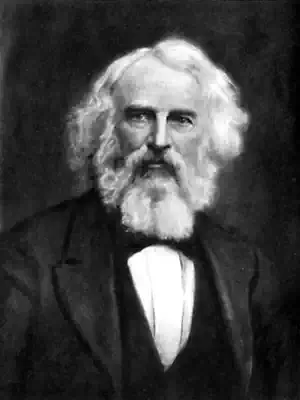
Henry Wadsworth Longfellow
Vox Populi. (Birds Of Passage. Flight The Third)
Vox Populi. (Birds Of Passage. Flight The Third)
When Mazarvan the Magician
Journeyed westward through Cathay,
Nothing heard he but the praises
Of Badoura on his way.
But the lessening rumor ended
When he came to Khaledan,
There the folk were talking only
Of Prince Camaralzaman,
So it happens with the poets:
Every province hath its own;
Camaralzaman is famous
Where Badoura is unknown.
When Mazarvan the Magician
Journeyed westward through Cathay,
Nothing heard he but the praises
Of Badoura on his way.
But the lessening rumor ended
When he came to Khaledan,
There the folk were talking only
Of Prince Camaralzaman,
So it happens with the poets:
Every province hath its own;
Camaralzaman is famous
Where Badoura is unknown.
297
Henry Wadsworth Longfellow
To The Driving Cloud
To The Driving Cloud
Gloomy and dark art thou, O chief of the mighty Omahas;
Gloomy and dark as the driving cloud, whose name thou hast taken!
Wrapped in thy scarlet blanket, I see thee stalk through the city's
Narrow and populous streets, as once by the margin of rivers
Stalked those birds unknown, that have left us only their
footprints.
What, in a few short years, will remain of thy race but the
footprints?
How canst thou walk these streets, who hast trod the green turf
of the prairies!
How canst thou breathe this air, who hast breathed the sweet air
of the mountains!
Ah! 'tis in vain that with lordly looks of disdain thou dost
challenge
Looks of disdain in return, and question these walls and these
pavements,
Claiming the soil for thy hunting-grounds, while down-trodden
millions
Starve in the garrets of Europe, and cry from its caverns that
they, too,
Have been created heirs of the earth, and claim its division!
Back, then, back to thy woods in the regions west of the Wabash!
There as a monarch thou reignest. In autumn the leaves of the
maple
Pave the floors of thy palace-halls with gold, and in summer
Pine-trees waft through its chambers the odorous breath of their
branches.
There thou art strong and great, a hero, a tamer of horses!
There thou chasest the stately stag on the banks of the Elkhorn,
Or by the roar of the Running-Water, or where the Omaha
Calls thee, and leaps through the wild ravine like a brave of the
Blackfeet!
Hark! what murmurs arise from the heart of those mountainous
deserts?
Is it the cry of the Foxes and Crows, or the mighty Behemoth,
Who, unharmed, on his tusks once caught the bolts of the thunder,
And now lurks in his lair to destroy the race of the red man?
Far more fatal to thee and thy race than the Crows and the Foxes,
Far more fatal to thee and thy race than the tread of Behemoth,
Lo! the big thunder-canoe, that steadily breasts the Missouri's
Merciless current! and yonder, afar on the prairies, the
camp-fires
Gleam through the night; and the cloud of dust in the gray of the
daybreak
Marks not the buffalo's track, nor the Mandan's dexterous
horse-race;
It is a caravan, whitening the desert where dwell the Camanches!
Ha! how the breath of these Saxons and Celts, like the blast of
the east-wind,
Drifts evermore to the west the scanty smokes of thy wigwams!
Gloomy and dark art thou, O chief of the mighty Omahas;
Gloomy and dark as the driving cloud, whose name thou hast taken!
Wrapped in thy scarlet blanket, I see thee stalk through the city's
Narrow and populous streets, as once by the margin of rivers
Stalked those birds unknown, that have left us only their
footprints.
What, in a few short years, will remain of thy race but the
footprints?
How canst thou walk these streets, who hast trod the green turf
of the prairies!
How canst thou breathe this air, who hast breathed the sweet air
of the mountains!
Ah! 'tis in vain that with lordly looks of disdain thou dost
challenge
Looks of disdain in return, and question these walls and these
pavements,
Claiming the soil for thy hunting-grounds, while down-trodden
millions
Starve in the garrets of Europe, and cry from its caverns that
they, too,
Have been created heirs of the earth, and claim its division!
Back, then, back to thy woods in the regions west of the Wabash!
There as a monarch thou reignest. In autumn the leaves of the
maple
Pave the floors of thy palace-halls with gold, and in summer
Pine-trees waft through its chambers the odorous breath of their
branches.
There thou art strong and great, a hero, a tamer of horses!
There thou chasest the stately stag on the banks of the Elkhorn,
Or by the roar of the Running-Water, or where the Omaha
Calls thee, and leaps through the wild ravine like a brave of the
Blackfeet!
Hark! what murmurs arise from the heart of those mountainous
deserts?
Is it the cry of the Foxes and Crows, or the mighty Behemoth,
Who, unharmed, on his tusks once caught the bolts of the thunder,
And now lurks in his lair to destroy the race of the red man?
Far more fatal to thee and thy race than the Crows and the Foxes,
Far more fatal to thee and thy race than the tread of Behemoth,
Lo! the big thunder-canoe, that steadily breasts the Missouri's
Merciless current! and yonder, afar on the prairies, the
camp-fires
Gleam through the night; and the cloud of dust in the gray of the
daybreak
Marks not the buffalo's track, nor the Mandan's dexterous
horse-race;
It is a caravan, whitening the desert where dwell the Camanches!
Ha! how the breath of these Saxons and Celts, like the blast of
the east-wind,
Drifts evermore to the west the scanty smokes of thy wigwams!
343
Henry Wadsworth Longfellow
To an Old Danish Song-Book
To an Old Danish Song-Book
Welcome, my old friend,
Welcome to a foreign fireside,
While the sullen gales of autumn
Shake the windows.
The ungrateful world
Has, it seems, dealt harshly with thee,
Since, beneath the skies of Denmark,
First I met thee.
There are marks of age,
There are thumb-marks on thy margin,
Made by hands that clasped thee rudely,
At the alehouse.
Soiled and dull thou art;
Yellow are thy time-worn pages,
As the russet, rain-molested
Leaves of autumn.
Thou art stained with wine
Scattered from hilarious goblets,
As the leaves with the libations
Of Olympus.
Yet dost thou recall
Days departed, half-forgotten,
When in dreamy youth I wandered
By the Baltic,--
When I paused to hear
The old ballad of King Christian
Shouted from suburban taverns
In the twilight.
Thou recallest bards,
Who in solitary chambers,
And with hearts by passion wasted,
Wrote thy pages.
Thou recallest homes
Where thy songs of love and friendship
Made the gloomy Northern winter
Bright as summer.
Once some ancient Scald,
In his bleak, ancestral Iceland,
Chanted staves of these old ballads
To the Vikings.
Once in Elsinore,
At the court of old King Hamlet
Yorick and his boon companions
Sang these ditties.
Once Prince Frederick's Guard
Sang them in their smoky barracks;--
Suddenly the English cannon
Joined the chorus!
Peasants in the field,
Sailors on the roaring ocean,
Students, tradesmen, pale mechanics,
All have sung them.
Thou hast been their friend;
They, alas! have left thee friendless!
Yet at least by one warm fireside
Art thou welcome.
And, as swallows build
In these wide, old-fashioned chimneys,
So thy twittering songs shall nestle
In my bosom,--
Quiet, close, and warm,
Sheltered from all molestation,
And recalling by their voices
Youth and travel.
Welcome, my old friend,
Welcome to a foreign fireside,
While the sullen gales of autumn
Shake the windows.
The ungrateful world
Has, it seems, dealt harshly with thee,
Since, beneath the skies of Denmark,
First I met thee.
There are marks of age,
There are thumb-marks on thy margin,
Made by hands that clasped thee rudely,
At the alehouse.
Soiled and dull thou art;
Yellow are thy time-worn pages,
As the russet, rain-molested
Leaves of autumn.
Thou art stained with wine
Scattered from hilarious goblets,
As the leaves with the libations
Of Olympus.
Yet dost thou recall
Days departed, half-forgotten,
When in dreamy youth I wandered
By the Baltic,--
When I paused to hear
The old ballad of King Christian
Shouted from suburban taverns
In the twilight.
Thou recallest bards,
Who in solitary chambers,
And with hearts by passion wasted,
Wrote thy pages.
Thou recallest homes
Where thy songs of love and friendship
Made the gloomy Northern winter
Bright as summer.
Once some ancient Scald,
In his bleak, ancestral Iceland,
Chanted staves of these old ballads
To the Vikings.
Once in Elsinore,
At the court of old King Hamlet
Yorick and his boon companions
Sang these ditties.
Once Prince Frederick's Guard
Sang them in their smoky barracks;--
Suddenly the English cannon
Joined the chorus!
Peasants in the field,
Sailors on the roaring ocean,
Students, tradesmen, pale mechanics,
All have sung them.
Thou hast been their friend;
They, alas! have left thee friendless!
Yet at least by one warm fireside
Art thou welcome.
And, as swallows build
In these wide, old-fashioned chimneys,
So thy twittering songs shall nestle
In my bosom,--
Quiet, close, and warm,
Sheltered from all molestation,
And recalling by their voices
Youth and travel.
307
Henry Wadsworth Longfellow
The Song of Hiawatha: X
The Song of Hiawatha: X
X. Hiawatha's Wooing
"As unto the bow the cord is,
So unto the man is woman,
Though she bends him, she obeys him,
Though she draws him, yet she follows,
Useless each without the other!"
Thus the youthful Hiawatha
Said within himself and pondered,
Much perplexed by various feelings,
Listless, longing, hoping, fearing,
Dreaming still of Minnehaha,
Of the lovely Laughing Water,
In the land of the Dacotahs.
"Wed a maiden of your people,"
Warning said the old Nokomis;
"Go not eastward, go not westward,
For a stranger, whom we know not!
Like a fire upon the hearth-stone
Is a neighbor's homely daughter,
Like the starlight or the moonlight
Is the handsomest of strangers!"
Thus dissuading spake Nokomis,
And my Hiawatha answered
Only this: "Dear old Nokomis,
Very pleasant is the firelight,
But I like the starlight better,
Better do I like the moonlight!"
Gravely then said old Nokomis:
"Bring not here an idle maiden,
Bring not here a useless woman,
Hands unskilful, feet unwilling;
Bring a wife with nimble fingers,
Heart and hand that move together,
Feet that run on willing errands!"
Smiling answered Hiawatha:
"In the land of the Dacotahs
Lives the Arrow-maker's daughter,
Minnehaha, Laughing Water,
Handsomest of all the women.
I will bring her to your wigwam,
She shall run upon your errands,
Be your starlight, moonlight, firelight,
Be the sunlight of my people!"
Still dissuading said Nokomis:
"Bring not to my lodge a stranger
From the land of the Dacotahs!
Very fierce are the Dacotahs,
Often is there war between us,
There are feuds yet unforgotten,
Wounds that ache and still may open!
Laughing answered Hiawatha:
"For that reason, if no other,
Would I wed the fair Dacotah,
That our tribes might be united,
That old feuds might be forgotten,
And old wounds be healed forever!"
Thus departed Hiawatha
To the land of the Dacotahs,
To the land of handsome women;
Striding over moor and meadow,
Through interminable forests,
Through uninterrupted silence.
With his moccasins of magic,
At each stride a mile he measured;
Yet the way seemed long before him,
And his heart outran his footsteps;
And he journeyed without resting,
Till he heard the cataract's laughter,
Heard the Falls of Minnehaha
Calling to him through the silence.
"Pleasant is the sound!" he murmured,
"Pleasant is the voice that calls me!"
On the outskirts of the forests,
'Twixt the shadow and the sunshine,
Herds of fallow deer were feeding,
But they saw not Hiawatha;
To his bow be whispered, "Fail not!"
To his arrow whispered, "Swerve not!"
Sent it singing on its errand,
To the red heart of the roebuck;
Threw the deer across his shoulder,
And sped forward without pausing.
At the doorway of his wigwam
Sat his ancient Arrow-maker,
In the land of the Dacotahs,
Making arrow-heads of jasper,
Arrow-heads of chalcedony.
At his side, in all her beauty,
Sat the lovely Minnehaha,
Sat his daughter, Laughing Water,
Plaiting mats of flags and rushes;
Of the past the old man's thoughts were,
And the maiden's of the future.
He was thinking, as he sat there,
Of the days when with such arrows
He had struck the deer and bison,
On the Muskoday, the meadow;
Shot the wild goose, flying southward,
On the wing, the clamorous Wawa;
Thinking of the great war-parties,
How they came to buy his arrows,
Could not fight without his arrows.
Ah, no more such noble warriors
Could be found on earth as they were!
Now the men were all like women,
Only used their tongues for weapons!
She was thinking of a hunter,
From another tribe and country,
Young and tall and very handsome,
Who one morning, in the Spring-time,
Came to buy her father's arrows,
Lingered long about the doorway,
Sat and rested in the wigwam,
Looking back as he departed.
She had heard her father praise him,
Praise his courage and his wisdom;
Would he come again for arrows
To the Falls of Minnehaha?
On the mat her hands lay idle,
And her eyes were very dreamy.
Through their thoughts they heard a footstep,
Heard a rustling in the branches,
And with glowing cheek and forehead,
With the deer upon his shoulders,
Suddenly from out the woodlands
Hiawatha stood before them.
Straight the ancient Arrow-maker
Looked up gravely from his labor,
Laid aside the unfinished arrow,
Bade him enter at the doorway,
Saying, as he rose to meet him,
"Hiawatha, you are welcome!"
At the feet of Laughing Water
Hiawatha laid his burden,
Threw the red deer from his shoulders;
And the maiden looked up at him,
Looked up from her mat of rushes,
Said with gentle look and accent,
"You are welcome, Hiawatha!"
Very spacious was the wigwam,
Made of deer-skins dressed and whitened,
With the Gods of the Dacotahs
Drawn and painted on its curtains,
And so tall the doorway, hardly
Hiawatha stooped to enter,
Hardly touched his eagle-feathers
As he entered at the doorway.
Then uprose the Laughing Water,
From the ground fair Minnehaha,
Laid aside her mat unfinished,
Brought forth food and set before them,
Water brought them from the brooklet,
Gave them food in earthen vessels,
Gave them drink in bowls of bass-wood,
Listened while the guest was speaking,
Listened while her father answered,
But not once her lips she opened,
Not a single word she uttered.
Yes, as in a dream she listened
To the words of Hiawatha,
As he talked of old Nokomis,
Who had nursed him in his childhood,
As he told of his companions,
Chibiabos, the musician,
And the very strong man, Kwasind,
And of happiness and plenty
In the land of the Ojibways,
In the pleasant land and peaceful.
"After many years of warfare,
Many years of strife and bloodshed,
There is peace between the Ojibways
And the tribe of the Dacotahs."
Thus continued Hiawatha,
And then added, speaking slowly,
'That this peace may last forever,
And our hands be clasped more closely,
And our hearts be more united,
Give me as my wife this maiden,
Minnehaha, Laughing Water,
Loveliest of Dacotah women!
And the ancient Arrow-maker
Paused a moment ere he answered,
Smoked a little while in silence,
Looked at Hiawatha proudly,
Fondly looked at Laughing Water,
And made answer very gravely:
"Yes, if Minnehaha wishes;
Let your heart speak, Minnehaha!"
And the lovely Laughing Water
Seemed more lovely as she stood there,
Neither willing nor reluctant,
As she went to Hiawatha,
Softly took the seat beside him,
While she said, and blushed to say it,
"I will follow you, my husband!"
This was Hiawatha's wooing!
Thus it was he won the daughter
Of the ancient Arrow-maker,
In the land of the Dacotahs!
From the wigwam he departed,
Leading with him Laughing Water;
Hand in hand they went together,
Through the woodland and the meadow,
Left the old man standing lonely
At the doorway of his wigwam,
Heard the Falls of Minnehaha
Calling to them from the distance,
Crying to them from afar off,
"Fare thee well, O Minnehaha!"
And the ancient Arrow-maker
Turned again unto his labor,
Sat down by his sunny doorway,
Murmuring to himself, and saying:
"Thus it is our daughters leave us,
Those we love, and those who love us!
Just when they have learned to help us,
When we are old and lean upon them,
Comes a youth with flaunting feathers,
With his flute of reeds, a stranger
Wanders piping through the village,
Beckons to the fairest maiden,
And she follows where he leads her,
Leaving all things for the stranger!"
Pleasant was the journey homeward,
Through interminable forests,
Over meadow, over mountain,
Over river, hill, and hollow.
Short it seemed to Hiawatha,
Though they journeyed very slowly,
Though his pace he checked and slackened
To the steps of Laughing Water.
Over wide and rushing rivers
In his arms he bore the maiden;
Light he thought her as a feather,
As the plume upon his head-gear;
Cleared the tangled pathway for her,
Bent aside the swaying branches,
Made at night a lodge of branches,
And a bed with boughs of hemlock,
And a fire before the doorway
With the dry cones of the pine-tree.
All the travelling winds went with them,
O'er the meadows, through the forest;
All the stars of night looked at them,
Watched with sleepless eyes their slumber;
From his ambush in the oak-tree
Peeped the squirrel, Adjidaumo,
Watched with eager eyes the lovers;
And the rabbit, the Wabasso,
Scampered from the path before them,
Peering, peeping from his burrow,
Sat erect upon his haunches,
Watched with curious eyes the lovers.
Pleasant was the journey homeward!
All the birds sang loud and sweetly
Songs of happiness and heart's-ease;
Sang the bluebird, the Owaissa,
"Happy are you, Hiawatha,
Having such a wife to love you!"
Sang the robin, the Opechee,
"Happy are you, Laughing Water,
Having such a noble husband!"
From the sky the sun benignant
Looked upon them through the branches,
Saying to them, "O my children,
Love is sunshine, hate is shadow,
Life is checkered shade and sunshine,
Rule by love, O Hiawatha!"
From the sky the moon looked at them,
Filled the lodge with mystic splendors,
Whispered to them, "O my children,
Day is restless, night is quiet,
Man imperious, woman feeble;
Half is mine, although I follow;
Rule by patience, Laughing Water!"
Thus it was they journeyed homeward;
Thus it was that Hiawatha
To the lodge of old Nokomis
Brought the moonlight, starlight, firelight,
Brought the sunshine of his people,
Minnehaha, Laughing Water,
Handsomest of all the women
In the land of the Dacotahs,
In the land of handsome women.
X. Hiawatha's Wooing
"As unto the bow the cord is,
So unto the man is woman,
Though she bends him, she obeys him,
Though she draws him, yet she follows,
Useless each without the other!"
Thus the youthful Hiawatha
Said within himself and pondered,
Much perplexed by various feelings,
Listless, longing, hoping, fearing,
Dreaming still of Minnehaha,
Of the lovely Laughing Water,
In the land of the Dacotahs.
"Wed a maiden of your people,"
Warning said the old Nokomis;
"Go not eastward, go not westward,
For a stranger, whom we know not!
Like a fire upon the hearth-stone
Is a neighbor's homely daughter,
Like the starlight or the moonlight
Is the handsomest of strangers!"
Thus dissuading spake Nokomis,
And my Hiawatha answered
Only this: "Dear old Nokomis,
Very pleasant is the firelight,
But I like the starlight better,
Better do I like the moonlight!"
Gravely then said old Nokomis:
"Bring not here an idle maiden,
Bring not here a useless woman,
Hands unskilful, feet unwilling;
Bring a wife with nimble fingers,
Heart and hand that move together,
Feet that run on willing errands!"
Smiling answered Hiawatha:
"In the land of the Dacotahs
Lives the Arrow-maker's daughter,
Minnehaha, Laughing Water,
Handsomest of all the women.
I will bring her to your wigwam,
She shall run upon your errands,
Be your starlight, moonlight, firelight,
Be the sunlight of my people!"
Still dissuading said Nokomis:
"Bring not to my lodge a stranger
From the land of the Dacotahs!
Very fierce are the Dacotahs,
Often is there war between us,
There are feuds yet unforgotten,
Wounds that ache and still may open!
Laughing answered Hiawatha:
"For that reason, if no other,
Would I wed the fair Dacotah,
That our tribes might be united,
That old feuds might be forgotten,
And old wounds be healed forever!"
Thus departed Hiawatha
To the land of the Dacotahs,
To the land of handsome women;
Striding over moor and meadow,
Through interminable forests,
Through uninterrupted silence.
With his moccasins of magic,
At each stride a mile he measured;
Yet the way seemed long before him,
And his heart outran his footsteps;
And he journeyed without resting,
Till he heard the cataract's laughter,
Heard the Falls of Minnehaha
Calling to him through the silence.
"Pleasant is the sound!" he murmured,
"Pleasant is the voice that calls me!"
On the outskirts of the forests,
'Twixt the shadow and the sunshine,
Herds of fallow deer were feeding,
But they saw not Hiawatha;
To his bow be whispered, "Fail not!"
To his arrow whispered, "Swerve not!"
Sent it singing on its errand,
To the red heart of the roebuck;
Threw the deer across his shoulder,
And sped forward without pausing.
At the doorway of his wigwam
Sat his ancient Arrow-maker,
In the land of the Dacotahs,
Making arrow-heads of jasper,
Arrow-heads of chalcedony.
At his side, in all her beauty,
Sat the lovely Minnehaha,
Sat his daughter, Laughing Water,
Plaiting mats of flags and rushes;
Of the past the old man's thoughts were,
And the maiden's of the future.
He was thinking, as he sat there,
Of the days when with such arrows
He had struck the deer and bison,
On the Muskoday, the meadow;
Shot the wild goose, flying southward,
On the wing, the clamorous Wawa;
Thinking of the great war-parties,
How they came to buy his arrows,
Could not fight without his arrows.
Ah, no more such noble warriors
Could be found on earth as they were!
Now the men were all like women,
Only used their tongues for weapons!
She was thinking of a hunter,
From another tribe and country,
Young and tall and very handsome,
Who one morning, in the Spring-time,
Came to buy her father's arrows,
Lingered long about the doorway,
Sat and rested in the wigwam,
Looking back as he departed.
She had heard her father praise him,
Praise his courage and his wisdom;
Would he come again for arrows
To the Falls of Minnehaha?
On the mat her hands lay idle,
And her eyes were very dreamy.
Through their thoughts they heard a footstep,
Heard a rustling in the branches,
And with glowing cheek and forehead,
With the deer upon his shoulders,
Suddenly from out the woodlands
Hiawatha stood before them.
Straight the ancient Arrow-maker
Looked up gravely from his labor,
Laid aside the unfinished arrow,
Bade him enter at the doorway,
Saying, as he rose to meet him,
"Hiawatha, you are welcome!"
At the feet of Laughing Water
Hiawatha laid his burden,
Threw the red deer from his shoulders;
And the maiden looked up at him,
Looked up from her mat of rushes,
Said with gentle look and accent,
"You are welcome, Hiawatha!"
Very spacious was the wigwam,
Made of deer-skins dressed and whitened,
With the Gods of the Dacotahs
Drawn and painted on its curtains,
And so tall the doorway, hardly
Hiawatha stooped to enter,
Hardly touched his eagle-feathers
As he entered at the doorway.
Then uprose the Laughing Water,
From the ground fair Minnehaha,
Laid aside her mat unfinished,
Brought forth food and set before them,
Water brought them from the brooklet,
Gave them food in earthen vessels,
Gave them drink in bowls of bass-wood,
Listened while the guest was speaking,
Listened while her father answered,
But not once her lips she opened,
Not a single word she uttered.
Yes, as in a dream she listened
To the words of Hiawatha,
As he talked of old Nokomis,
Who had nursed him in his childhood,
As he told of his companions,
Chibiabos, the musician,
And the very strong man, Kwasind,
And of happiness and plenty
In the land of the Ojibways,
In the pleasant land and peaceful.
"After many years of warfare,
Many years of strife and bloodshed,
There is peace between the Ojibways
And the tribe of the Dacotahs."
Thus continued Hiawatha,
And then added, speaking slowly,
'That this peace may last forever,
And our hands be clasped more closely,
And our hearts be more united,
Give me as my wife this maiden,
Minnehaha, Laughing Water,
Loveliest of Dacotah women!
And the ancient Arrow-maker
Paused a moment ere he answered,
Smoked a little while in silence,
Looked at Hiawatha proudly,
Fondly looked at Laughing Water,
And made answer very gravely:
"Yes, if Minnehaha wishes;
Let your heart speak, Minnehaha!"
And the lovely Laughing Water
Seemed more lovely as she stood there,
Neither willing nor reluctant,
As she went to Hiawatha,
Softly took the seat beside him,
While she said, and blushed to say it,
"I will follow you, my husband!"
This was Hiawatha's wooing!
Thus it was he won the daughter
Of the ancient Arrow-maker,
In the land of the Dacotahs!
From the wigwam he departed,
Leading with him Laughing Water;
Hand in hand they went together,
Through the woodland and the meadow,
Left the old man standing lonely
At the doorway of his wigwam,
Heard the Falls of Minnehaha
Calling to them from the distance,
Crying to them from afar off,
"Fare thee well, O Minnehaha!"
And the ancient Arrow-maker
Turned again unto his labor,
Sat down by his sunny doorway,
Murmuring to himself, and saying:
"Thus it is our daughters leave us,
Those we love, and those who love us!
Just when they have learned to help us,
When we are old and lean upon them,
Comes a youth with flaunting feathers,
With his flute of reeds, a stranger
Wanders piping through the village,
Beckons to the fairest maiden,
And she follows where he leads her,
Leaving all things for the stranger!"
Pleasant was the journey homeward,
Through interminable forests,
Over meadow, over mountain,
Over river, hill, and hollow.
Short it seemed to Hiawatha,
Though they journeyed very slowly,
Though his pace he checked and slackened
To the steps of Laughing Water.
Over wide and rushing rivers
In his arms he bore the maiden;
Light he thought her as a feather,
As the plume upon his head-gear;
Cleared the tangled pathway for her,
Bent aside the swaying branches,
Made at night a lodge of branches,
And a bed with boughs of hemlock,
And a fire before the doorway
With the dry cones of the pine-tree.
All the travelling winds went with them,
O'er the meadows, through the forest;
All the stars of night looked at them,
Watched with sleepless eyes their slumber;
From his ambush in the oak-tree
Peeped the squirrel, Adjidaumo,
Watched with eager eyes the lovers;
And the rabbit, the Wabasso,
Scampered from the path before them,
Peering, peeping from his burrow,
Sat erect upon his haunches,
Watched with curious eyes the lovers.
Pleasant was the journey homeward!
All the birds sang loud and sweetly
Songs of happiness and heart's-ease;
Sang the bluebird, the Owaissa,
"Happy are you, Hiawatha,
Having such a wife to love you!"
Sang the robin, the Opechee,
"Happy are you, Laughing Water,
Having such a noble husband!"
From the sky the sun benignant
Looked upon them through the branches,
Saying to them, "O my children,
Love is sunshine, hate is shadow,
Life is checkered shade and sunshine,
Rule by love, O Hiawatha!"
From the sky the moon looked at them,
Filled the lodge with mystic splendors,
Whispered to them, "O my children,
Day is restless, night is quiet,
Man imperious, woman feeble;
Half is mine, although I follow;
Rule by patience, Laughing Water!"
Thus it was they journeyed homeward;
Thus it was that Hiawatha
To the lodge of old Nokomis
Brought the moonlight, starlight, firelight,
Brought the sunshine of his people,
Minnehaha, Laughing Water,
Handsomest of all the women
In the land of the Dacotahs,
In the land of handsome women.
389
Henry Wadsworth Longfellow
The Song Of Hiawatha XIV: Picture-Writing
The Song Of Hiawatha XIV: Picture-Writing
In those days said Hiawatha,
'Lo! how all things fade and perish!
From the memory of the old men
Pass away the great traditions,
The achievements of the warriors,
The adventures of the hunters,
All the wisdom of the Medas,
All the craft of the Wabenos,
All the marvellous dreams and visions
Of the Jossakeeds, the Prophets!
'Great men die and are forgotten,
Wise men speak; their words of wisdom
Perish in the ears that hear them,
Do not reach the generations
That, as yet unborn, are waiting
In the great, mysterious darkness
Of the speechless days that shall be!
'On the grave-posts of our fathers
Are no signs, no figures painted;
Who are in those graves we know not,
Only know they are our fathers.
Of what kith they are and kindred,
From what old, ancestral Totem,
Be it Eagle, Bear, or Beaver,
They descended, this we know not,
Only know they are our fathers.
'Face to face we speak together,
But we cannot speak when absent,
Cannot send our voices from us
To the friends that dwell afar off;
Cannot send a secret message,
But the bearer learns our secret,
May pervert it, may betray it,
May reveal it unto others.'
Thus said Hiawatha, walking
In the solitary forest,
Pondering, musing in the forest,
On the welfare of his people.
From his pouch he took his colors,
Took his paints of different colors,
On the smooth bark of a birch-tree
Painted many shapes and figures,
Wonderful and mystic figures,
And each figure had a meaning,
Each some word or thought suggested.
Gitche Manito the Mighty,
He, the Master of Life, was painted
As an egg, with points projecting
To the four winds of the heavens.
Everywhere is the Great Spirit,
Was the meaning of this symbol.
Gitche Manito the Mighty,
He the dreadful Spirit of Evil,
As a serpent was depicted,
As Kenabeek, the great serpent.
Very crafty, very cunning,
Is the creeping Spirit of Evil,
Was the meaning of this symbol.
Life and Death he drew as circles,
Life was white, but Death was darkened;
Sun and moon and stars he painted,
Man and beast, and fish and reptile,
Forests, mountains, lakes, and rivers.
For the earth he drew a straight line,
For the sky a bow above it;
White the space between for daytime,
Filled with little stars for night-time;
On the left a point for sunrise,
On the right a point for sunset,
On the top a point for noontide,
And for rain and cloudy weather
Waving lines descending from it.
Footprints pointing towards a wigwam
Were a sign of invitation,
Were a sign of guests assembling;
Bloody hands with palms uplifted
Were a symbol of destruction,
Were a hostile sign and symbol.
All these things did Hiawatha
Show unto his wondering people,
And interpreted their meaning,
And he said: 'Behold, your grave-posts
Have no mark, no sign, nor symbol,
Go and paint them all with figures;
Each one with its household symbol,
With its own ancestral Totem;
So that those who follow after
May distinguish them and know them.'
And they painted on the grave-posts
On the graves yet unforgotten,
Each his own ancestral Totem,
Each the symbol of his household;
Figures of the Bear and Reindeer,
Of the Turtle, Crane, and Beaver,
Each inverted as a token
That the owner was departed,
That the chief who bore the symbol
Lay beneath in dust and ashes.
And the Jossakeeds, the Prophets,
The Wabenos, the Magicians,
And the Medicine-men, the Medas,
Painted upon bark and deer-skin
Figures for the songs they chanted,
For each song a separate symbol,
Figures mystical and awful,
Figures strange and brightly colored;
And each figure had its meaning,
Each some magic song suggested.
The Great Spirit, the Creator,
Flashing light through all the heaven;
The Great Serpent, the Kenabeek,
With his bloody crest erected,
Creeping, looking into heaven;
In the sky the sun, that listens,
And the moon eclipsed and dying;
Owl and eagle, crane and hen-hawk,
And the cormorant, bird of magic;
Headless men, that walk the heavens,
Bodies lying pierced with arrows,
Bloody hands of death uplifted,
Flags on graves, and great war-captains
Grasping both the earth and heaven!
Such as these the shapes they painted
On the birch-bark and the deer-skin;
Songs of war and songs of hunting,
Songs of medicine and of magic,
All were written in these figures,
For each figure had its meaning,
Each its separate song recorded.
Nor forgotten was the Love-Song,
The most subtle of all medicines,
The most potent spell of magic,
Dangerous more than war or hunting!
Thus the Love-Song was recorded,
Symbol and interpretation.
First a human figure standing,
Painted in the brightest scarlet;
`T Is the lover, the musician,
And the meaning is, 'My painting
Makes me powerful over others.'
Then the figure seated, singing,
Playing on a drum of magic,
And the interpretation, 'Listen!
`T Is my voice you hear, my singing!'
Then the same red figure seated
In the shelter of a wigwam,
And the meaning of the symbol,
'I will come and sit beside you
In the mystery of my passion!'
Then two figures, man and woman,
Standing hand in hand together
With their hands so clasped together
That they seemed in one united,
And the words thus represented
Are, 'I see your heart within you,
And your cheeks are red with blushes!'
Next the maiden on an island,
In the centre of an Island;
And the song this shape suggested
Was, 'Though you were at a distance,
Were upon some far-off island,
Such the spell I cast upon you,
Such the magic power of passion,
I could straightway draw you to me!'
Then the figure of the maiden
Sleeping, and the lover near her,
Whispering to her in her slumbers,
Saying, 'Though you were far from me
In the land of Sleep and Silence,
Still the voice of love would reach you!'
And the last of all the figures
Was a heart within a circle,
Drawn within a magic circle;
And the image had this meaning:
'Naked lies your heart before me,
To your naked heart I whisper!'
Thus it was that Hiawatha,
In his wisdom, taught the people
All the mysteries of painting,
All the art of Picture-Writing,
On the smooth bark of the birch-tree,
On the white skin of the reindeer,
On the grave-posts of the village.
In those days said Hiawatha,
'Lo! how all things fade and perish!
From the memory of the old men
Pass away the great traditions,
The achievements of the warriors,
The adventures of the hunters,
All the wisdom of the Medas,
All the craft of the Wabenos,
All the marvellous dreams and visions
Of the Jossakeeds, the Prophets!
'Great men die and are forgotten,
Wise men speak; their words of wisdom
Perish in the ears that hear them,
Do not reach the generations
That, as yet unborn, are waiting
In the great, mysterious darkness
Of the speechless days that shall be!
'On the grave-posts of our fathers
Are no signs, no figures painted;
Who are in those graves we know not,
Only know they are our fathers.
Of what kith they are and kindred,
From what old, ancestral Totem,
Be it Eagle, Bear, or Beaver,
They descended, this we know not,
Only know they are our fathers.
'Face to face we speak together,
But we cannot speak when absent,
Cannot send our voices from us
To the friends that dwell afar off;
Cannot send a secret message,
But the bearer learns our secret,
May pervert it, may betray it,
May reveal it unto others.'
Thus said Hiawatha, walking
In the solitary forest,
Pondering, musing in the forest,
On the welfare of his people.
From his pouch he took his colors,
Took his paints of different colors,
On the smooth bark of a birch-tree
Painted many shapes and figures,
Wonderful and mystic figures,
And each figure had a meaning,
Each some word or thought suggested.
Gitche Manito the Mighty,
He, the Master of Life, was painted
As an egg, with points projecting
To the four winds of the heavens.
Everywhere is the Great Spirit,
Was the meaning of this symbol.
Gitche Manito the Mighty,
He the dreadful Spirit of Evil,
As a serpent was depicted,
As Kenabeek, the great serpent.
Very crafty, very cunning,
Is the creeping Spirit of Evil,
Was the meaning of this symbol.
Life and Death he drew as circles,
Life was white, but Death was darkened;
Sun and moon and stars he painted,
Man and beast, and fish and reptile,
Forests, mountains, lakes, and rivers.
For the earth he drew a straight line,
For the sky a bow above it;
White the space between for daytime,
Filled with little stars for night-time;
On the left a point for sunrise,
On the right a point for sunset,
On the top a point for noontide,
And for rain and cloudy weather
Waving lines descending from it.
Footprints pointing towards a wigwam
Were a sign of invitation,
Were a sign of guests assembling;
Bloody hands with palms uplifted
Were a symbol of destruction,
Were a hostile sign and symbol.
All these things did Hiawatha
Show unto his wondering people,
And interpreted their meaning,
And he said: 'Behold, your grave-posts
Have no mark, no sign, nor symbol,
Go and paint them all with figures;
Each one with its household symbol,
With its own ancestral Totem;
So that those who follow after
May distinguish them and know them.'
And they painted on the grave-posts
On the graves yet unforgotten,
Each his own ancestral Totem,
Each the symbol of his household;
Figures of the Bear and Reindeer,
Of the Turtle, Crane, and Beaver,
Each inverted as a token
That the owner was departed,
That the chief who bore the symbol
Lay beneath in dust and ashes.
And the Jossakeeds, the Prophets,
The Wabenos, the Magicians,
And the Medicine-men, the Medas,
Painted upon bark and deer-skin
Figures for the songs they chanted,
For each song a separate symbol,
Figures mystical and awful,
Figures strange and brightly colored;
And each figure had its meaning,
Each some magic song suggested.
The Great Spirit, the Creator,
Flashing light through all the heaven;
The Great Serpent, the Kenabeek,
With his bloody crest erected,
Creeping, looking into heaven;
In the sky the sun, that listens,
And the moon eclipsed and dying;
Owl and eagle, crane and hen-hawk,
And the cormorant, bird of magic;
Headless men, that walk the heavens,
Bodies lying pierced with arrows,
Bloody hands of death uplifted,
Flags on graves, and great war-captains
Grasping both the earth and heaven!
Such as these the shapes they painted
On the birch-bark and the deer-skin;
Songs of war and songs of hunting,
Songs of medicine and of magic,
All were written in these figures,
For each figure had its meaning,
Each its separate song recorded.
Nor forgotten was the Love-Song,
The most subtle of all medicines,
The most potent spell of magic,
Dangerous more than war or hunting!
Thus the Love-Song was recorded,
Symbol and interpretation.
First a human figure standing,
Painted in the brightest scarlet;
`T Is the lover, the musician,
And the meaning is, 'My painting
Makes me powerful over others.'
Then the figure seated, singing,
Playing on a drum of magic,
And the interpretation, 'Listen!
`T Is my voice you hear, my singing!'
Then the same red figure seated
In the shelter of a wigwam,
And the meaning of the symbol,
'I will come and sit beside you
In the mystery of my passion!'
Then two figures, man and woman,
Standing hand in hand together
With their hands so clasped together
That they seemed in one united,
And the words thus represented
Are, 'I see your heart within you,
And your cheeks are red with blushes!'
Next the maiden on an island,
In the centre of an Island;
And the song this shape suggested
Was, 'Though you were at a distance,
Were upon some far-off island,
Such the spell I cast upon you,
Such the magic power of passion,
I could straightway draw you to me!'
Then the figure of the maiden
Sleeping, and the lover near her,
Whispering to her in her slumbers,
Saying, 'Though you were far from me
In the land of Sleep and Silence,
Still the voice of love would reach you!'
And the last of all the figures
Was a heart within a circle,
Drawn within a magic circle;
And the image had this meaning:
'Naked lies your heart before me,
To your naked heart I whisper!'
Thus it was that Hiawatha,
In his wisdom, taught the people
All the mysteries of painting,
All the art of Picture-Writing,
On the smooth bark of the birch-tree,
On the white skin of the reindeer,
On the grave-posts of the village.
294
Henry Wadsworth Longfellow
The Song of Hiawatha X: Hiawatha's Wooing
The Song of Hiawatha X: Hiawatha's Wooing
'As unto the bow the cord is,
So unto the man is woman,
Though she bends him, she obeys him,
Though she draws him, yet she follows,
Useless each without the other!'
Thus the youthful Hiawatha
Said within himself and pondered,
Much perplexed by various feelings,
Listless, longing, hoping, fearing,
Dreaming still of Minnehaha,
Of the lovely Laughing Water,
In the land of the Dacotahs.
'Wed a maiden of your people,'
Warning said the old Nokomis;
'Go not eastward, go not westward,
For a stranger, whom we know not!
Like a fire upon the hearth-stone
Is a neighbor's homely daughter,
Like the starlight or the moonlight
Is the handsomest of strangers!'
Thus dissuading spake Nokomis,
And my Hiawatha answered
Only this: 'Dear old Nokomis,
Very pleasant is the firelight,
But I like the starlight better,
Better do I like the moonlight!'
Gravely then said old Nokomis:
'Bring not here an idle maiden,
Bring not here a useless woman,
Hands unskilful, feet unwilling;
Bring a wife with nimble fingers,
Heart and hand that move together,
Feet that run on willing errands!'
Smiling answered Hiawatha:
'In the land of the Dacotahs
Lives the Arrow-maker's daughter,
Minnehaha, Laughing Water,
Handsomest of all the women.
I will bring her to your wigwam,
She shall run upon your errands,
Be your starlight, moonlight, firelight,
Be the sunlight of my people!'
Still dissuading said Nokomis:
'Bring not to my lodge a stranger
From the land of the Dacotahs!
Very fierce are the Dacotahs,
Often is there war between us,
There are feuds yet unforgotten,
Wounds that ache and still may open!
Laughing answered Hiawatha:
'For that reason, if no other,
Would I wed the fair Dacotah,
That our tribes might be united,
That old feuds might be forgotten,
And old wounds be healed forever!'
Thus departed Hiawatha
To the land of the Dacotahs,
To the land of handsome women;
Striding over moor and meadow,
Through interminable forests,
Through uninterrupted silence.
With his moccasins of magic,
At each stride a mile he measured;
Yet the way seemed long before him,
And his heart outran his footsteps;
And he journeyed without resting,
Till he heard the cataract's laughter,
Heard the Falls of Minnehaha
Calling to him through the silence.
'Pleasant is the sound!' he murmured,
'Pleasant is the voice that calls me!'
On the outskirts of the forests,
'Twixt the shadow and the sunshine,
Herds of fallow deer were feeding,
But they saw not Hiawatha;
To his bow be whispered, 'Fail not!'
To his arrow whispered, 'Swerve not!'
Sent it singing on its errand,
To the red heart of the roebuck;
Threw the deer across his shoulder,
And sped forward without pausing.
At the doorway of his wigwam
Sat his ancient Arrow-maker,
In the land of the Dacotahs,
Making arrow-heads of jasper,
Arrow-heads of chalcedony.
At his side, in all her beauty,
Sat the lovely Minnehaha,
Sat his daughter, Laughing Water,
Plaiting mats of flags and rushes;
Of the past the old man's thoughts were,
And the maiden's of the future.
He was thinking, as he sat there,
Of the days when with such arrows
He had struck the deer and bison,
On the Muskoday, the meadow;
Shot the wild goose, flying southward,
On the wing, the clamorous Wawa;
Thinking of the great war-parties,
How they came to buy his arrows,
Could not fight without his arrows.
Ah, no more such noble warriors
Could be found on earth as they were!
Now the men were all like women,
Only used their tongues for weapons!
She was thinking of a hunter,
From another tribe and country,
Young and tall and very handsome,
Who one morning, in the Spring-time,
Came to buy her father's arrows,
Lingered long about the doorway,
Sat and rested in the wigwam,
Looking back as he departed.
She had heard her father praise him,
Praise his courage and his wisdom;
Would he come again for arrows
To the Falls of Minnehaha?
On the mat her hands lay idle,
And her eyes were very dreamy.
Through their thoughts they heard a footstep,
Heard a rustling in the branches,
And with glowing cheek and forehead,
With the deer upon his shoulders,
Suddenly from out the woodlands
Hiawatha stood before them.
Straight the ancient Arrow-maker
Looked up gravely from his labor,
Laid aside the unfinished arrow,
Bade him enter at the doorway,
Saying, as he rose to meet him,
'Hiawatha, you are welcome!'
At the feet of Laughing Water
Hiawatha laid his burden,
Threw the red deer from his shoulders;
And the maiden looked up at him,
Looked up from her mat of rushes,
Said with gentle look and accent,
'You are welcome, Hiawatha!'
Very spacious was the wigwam,
Made of deer-skins dressed and whitened,
With the Gods of the Dacotahs
Drawn and painted on its curtains,
And so tall the doorway, hardly
Hiawatha stooped to enter,
Hardly touched his eagle-feathers
As he entered at the doorway.
Then uprose the Laughing Water,
From the ground fair Minnehaha,
Laid aside her mat unfinished,
Brought forth food and set before them,
Water brought them from the brooklet,
Gave them food in earthen vessels,
Gave them drink in bowls of bass-wood,
Listened while the guest was speaking,
Listened while her father answered,
But not once her lips she opened,
Not a single word she uttered.
Yes, as in a dream she listened
To the words of Hiawatha,
As he talked of old Nokomis,
Who had nursed him in his childhood,
As he told of his companions,
Chibiabos, the musician,
And the very strong man, Kwasind,
And of happiness and plenty
In the land of the Ojibways,
In the pleasant land and peaceful.
'After many years of warfare,
Many years of strife and bloodshed,
There is peace between the Ojibways
And the tribe of the Dacotahs.'
Thus continued Hiawatha,
And then added, speaking slowly,
'That this peace may last forever,
And our hands be clasped more closely,
And our hearts be more united,
Give me as my wife this maiden,
Minnehaha, Laughing Water,
Loveliest of Dacotah women!
And the ancient Arrow-maker
Paused a moment ere he answered,
Smoked a little while in silence,
Looked at Hiawatha proudly,
Fondly looked at Laughing Water,
And made answer very gravely:
'Yes, if Minnehaha wishes;
Let your heart speak, Minnehaha!'
And the lovely Laughing Water
Seemed more lovely as she stood there,
Neither willing nor reluctant,
As she went to Hiawatha,
Softly took the seat beside him,
While she said, and blushed to say it,
'I will follow you, my husband!'
This was Hiawatha's wooing!
Thus it was he won the daughter
Of the ancient Arrow-maker,
In the land of the Dacotahs!
From the wigwam he departed,
Leading with him Laughing Water;
Hand in hand they went together,
Through the woodland and the meadow,
Left the old man standing lonely
At the doorway of his wigwam,
Heard the Falls of Minnehaha
Calling to them from the distance,
Crying to them from afar off,
'Fare thee well, O Minnehaha!'
And the ancient Arrow-maker
Turned again unto his labor,
Sat down by his sunny doorway,
Murmuring to himself, and saying:
'Thus it is our daughters leave us,
Those we love, and those who love us!
Just when they have learned to help us,
When we are old and lean upon them,
Comes a youth with flaunting feathers,
With his flute of reeds, a stranger
Wanders piping through the village,
Beckons to the fairest maiden,
And she follows where he leads her,
Leaving all things for the stranger!'
Pleasant was the journey homeward,
Through interminable forests,
Over meadow, over mountain,
Over river, hill, and hollow.
Short it seemed to Hiawatha,
Though they journeyed very slowly,
Though his pace he checked and slackened
To the steps of Laughing Water.
Over wide and rushing rivers
In his arms he bore the maiden;
Light he thought her as a feather,
As the plume upon his head-gear;
Cleared the tangled pathway for her,
Bent aside the swaying branches,
Made at night a lodge of branches,
And a bed with boughs of hemlock,
And a fire before the doorway
With the dry cones of the pine-tree.
All the travelling winds went with them,
O'er the meadows, through the forest;
All the stars of night looked at them,
Watched with sleepless eyes their slumber;
From his ambush in the oak-tree
Peeped the squirrel, Adjidaumo,
Watched with eager eyes the lovers;
And the rabbit, the Wabasso,
Scampered from the path before them,
Peering, peeping from his burrow,
Sat erect upon his haunches,
Watched with curious eyes the lovers.
Pleasant was the journey homeward!
All the birds sang loud and sweetly
Songs of happiness and heart's-ease;
Sang the bluebird, the Owaissa,
'Happy are you, Hiawatha,
Having such a wife to love you!'
Sang the robin, the Opechee,
'Happy are you, Laughing Water,
Having such a noble husband!'
From the sky the sun benignant
Looked upon them through the branches,
Saying to them, 'O my children,
Love is sunshine, hate is shadow,
Life is checkered shade and sunshine,
Rule by love, O Hiawatha!'
From the sky the moon looked at them,
Filled the lodge with mystic splendors,
Whispered to them, 'O my children,
Day is restless, night is quiet,
Man imperious, woman feeble;
Half is mine, although I follow;
Rule by patience, Laughing Water!'
Thus it was they journeyed homeward;
Thus it was that Hiawatha
To the lodge of old Nokomis
Brought the moonlight, starlight, firelight,
Brought the sunshine of his people,
Minnehaha, Laughing Water,
Handsomest of all the women
In the land of the Dacotahs,
In the land of handsome women.
'As unto the bow the cord is,
So unto the man is woman,
Though she bends him, she obeys him,
Though she draws him, yet she follows,
Useless each without the other!'
Thus the youthful Hiawatha
Said within himself and pondered,
Much perplexed by various feelings,
Listless, longing, hoping, fearing,
Dreaming still of Minnehaha,
Of the lovely Laughing Water,
In the land of the Dacotahs.
'Wed a maiden of your people,'
Warning said the old Nokomis;
'Go not eastward, go not westward,
For a stranger, whom we know not!
Like a fire upon the hearth-stone
Is a neighbor's homely daughter,
Like the starlight or the moonlight
Is the handsomest of strangers!'
Thus dissuading spake Nokomis,
And my Hiawatha answered
Only this: 'Dear old Nokomis,
Very pleasant is the firelight,
But I like the starlight better,
Better do I like the moonlight!'
Gravely then said old Nokomis:
'Bring not here an idle maiden,
Bring not here a useless woman,
Hands unskilful, feet unwilling;
Bring a wife with nimble fingers,
Heart and hand that move together,
Feet that run on willing errands!'
Smiling answered Hiawatha:
'In the land of the Dacotahs
Lives the Arrow-maker's daughter,
Minnehaha, Laughing Water,
Handsomest of all the women.
I will bring her to your wigwam,
She shall run upon your errands,
Be your starlight, moonlight, firelight,
Be the sunlight of my people!'
Still dissuading said Nokomis:
'Bring not to my lodge a stranger
From the land of the Dacotahs!
Very fierce are the Dacotahs,
Often is there war between us,
There are feuds yet unforgotten,
Wounds that ache and still may open!
Laughing answered Hiawatha:
'For that reason, if no other,
Would I wed the fair Dacotah,
That our tribes might be united,
That old feuds might be forgotten,
And old wounds be healed forever!'
Thus departed Hiawatha
To the land of the Dacotahs,
To the land of handsome women;
Striding over moor and meadow,
Through interminable forests,
Through uninterrupted silence.
With his moccasins of magic,
At each stride a mile he measured;
Yet the way seemed long before him,
And his heart outran his footsteps;
And he journeyed without resting,
Till he heard the cataract's laughter,
Heard the Falls of Minnehaha
Calling to him through the silence.
'Pleasant is the sound!' he murmured,
'Pleasant is the voice that calls me!'
On the outskirts of the forests,
'Twixt the shadow and the sunshine,
Herds of fallow deer were feeding,
But they saw not Hiawatha;
To his bow be whispered, 'Fail not!'
To his arrow whispered, 'Swerve not!'
Sent it singing on its errand,
To the red heart of the roebuck;
Threw the deer across his shoulder,
And sped forward without pausing.
At the doorway of his wigwam
Sat his ancient Arrow-maker,
In the land of the Dacotahs,
Making arrow-heads of jasper,
Arrow-heads of chalcedony.
At his side, in all her beauty,
Sat the lovely Minnehaha,
Sat his daughter, Laughing Water,
Plaiting mats of flags and rushes;
Of the past the old man's thoughts were,
And the maiden's of the future.
He was thinking, as he sat there,
Of the days when with such arrows
He had struck the deer and bison,
On the Muskoday, the meadow;
Shot the wild goose, flying southward,
On the wing, the clamorous Wawa;
Thinking of the great war-parties,
How they came to buy his arrows,
Could not fight without his arrows.
Ah, no more such noble warriors
Could be found on earth as they were!
Now the men were all like women,
Only used their tongues for weapons!
She was thinking of a hunter,
From another tribe and country,
Young and tall and very handsome,
Who one morning, in the Spring-time,
Came to buy her father's arrows,
Lingered long about the doorway,
Sat and rested in the wigwam,
Looking back as he departed.
She had heard her father praise him,
Praise his courage and his wisdom;
Would he come again for arrows
To the Falls of Minnehaha?
On the mat her hands lay idle,
And her eyes were very dreamy.
Through their thoughts they heard a footstep,
Heard a rustling in the branches,
And with glowing cheek and forehead,
With the deer upon his shoulders,
Suddenly from out the woodlands
Hiawatha stood before them.
Straight the ancient Arrow-maker
Looked up gravely from his labor,
Laid aside the unfinished arrow,
Bade him enter at the doorway,
Saying, as he rose to meet him,
'Hiawatha, you are welcome!'
At the feet of Laughing Water
Hiawatha laid his burden,
Threw the red deer from his shoulders;
And the maiden looked up at him,
Looked up from her mat of rushes,
Said with gentle look and accent,
'You are welcome, Hiawatha!'
Very spacious was the wigwam,
Made of deer-skins dressed and whitened,
With the Gods of the Dacotahs
Drawn and painted on its curtains,
And so tall the doorway, hardly
Hiawatha stooped to enter,
Hardly touched his eagle-feathers
As he entered at the doorway.
Then uprose the Laughing Water,
From the ground fair Minnehaha,
Laid aside her mat unfinished,
Brought forth food and set before them,
Water brought them from the brooklet,
Gave them food in earthen vessels,
Gave them drink in bowls of bass-wood,
Listened while the guest was speaking,
Listened while her father answered,
But not once her lips she opened,
Not a single word she uttered.
Yes, as in a dream she listened
To the words of Hiawatha,
As he talked of old Nokomis,
Who had nursed him in his childhood,
As he told of his companions,
Chibiabos, the musician,
And the very strong man, Kwasind,
And of happiness and plenty
In the land of the Ojibways,
In the pleasant land and peaceful.
'After many years of warfare,
Many years of strife and bloodshed,
There is peace between the Ojibways
And the tribe of the Dacotahs.'
Thus continued Hiawatha,
And then added, speaking slowly,
'That this peace may last forever,
And our hands be clasped more closely,
And our hearts be more united,
Give me as my wife this maiden,
Minnehaha, Laughing Water,
Loveliest of Dacotah women!
And the ancient Arrow-maker
Paused a moment ere he answered,
Smoked a little while in silence,
Looked at Hiawatha proudly,
Fondly looked at Laughing Water,
And made answer very gravely:
'Yes, if Minnehaha wishes;
Let your heart speak, Minnehaha!'
And the lovely Laughing Water
Seemed more lovely as she stood there,
Neither willing nor reluctant,
As she went to Hiawatha,
Softly took the seat beside him,
While she said, and blushed to say it,
'I will follow you, my husband!'
This was Hiawatha's wooing!
Thus it was he won the daughter
Of the ancient Arrow-maker,
In the land of the Dacotahs!
From the wigwam he departed,
Leading with him Laughing Water;
Hand in hand they went together,
Through the woodland and the meadow,
Left the old man standing lonely
At the doorway of his wigwam,
Heard the Falls of Minnehaha
Calling to them from the distance,
Crying to them from afar off,
'Fare thee well, O Minnehaha!'
And the ancient Arrow-maker
Turned again unto his labor,
Sat down by his sunny doorway,
Murmuring to himself, and saying:
'Thus it is our daughters leave us,
Those we love, and those who love us!
Just when they have learned to help us,
When we are old and lean upon them,
Comes a youth with flaunting feathers,
With his flute of reeds, a stranger
Wanders piping through the village,
Beckons to the fairest maiden,
And she follows where he leads her,
Leaving all things for the stranger!'
Pleasant was the journey homeward,
Through interminable forests,
Over meadow, over mountain,
Over river, hill, and hollow.
Short it seemed to Hiawatha,
Though they journeyed very slowly,
Though his pace he checked and slackened
To the steps of Laughing Water.
Over wide and rushing rivers
In his arms he bore the maiden;
Light he thought her as a feather,
As the plume upon his head-gear;
Cleared the tangled pathway for her,
Bent aside the swaying branches,
Made at night a lodge of branches,
And a bed with boughs of hemlock,
And a fire before the doorway
With the dry cones of the pine-tree.
All the travelling winds went with them,
O'er the meadows, through the forest;
All the stars of night looked at them,
Watched with sleepless eyes their slumber;
From his ambush in the oak-tree
Peeped the squirrel, Adjidaumo,
Watched with eager eyes the lovers;
And the rabbit, the Wabasso,
Scampered from the path before them,
Peering, peeping from his burrow,
Sat erect upon his haunches,
Watched with curious eyes the lovers.
Pleasant was the journey homeward!
All the birds sang loud and sweetly
Songs of happiness and heart's-ease;
Sang the bluebird, the Owaissa,
'Happy are you, Hiawatha,
Having such a wife to love you!'
Sang the robin, the Opechee,
'Happy are you, Laughing Water,
Having such a noble husband!'
From the sky the sun benignant
Looked upon them through the branches,
Saying to them, 'O my children,
Love is sunshine, hate is shadow,
Life is checkered shade and sunshine,
Rule by love, O Hiawatha!'
From the sky the moon looked at them,
Filled the lodge with mystic splendors,
Whispered to them, 'O my children,
Day is restless, night is quiet,
Man imperious, woman feeble;
Half is mine, although I follow;
Rule by patience, Laughing Water!'
Thus it was they journeyed homeward;
Thus it was that Hiawatha
To the lodge of old Nokomis
Brought the moonlight, starlight, firelight,
Brought the sunshine of his people,
Minnehaha, Laughing Water,
Handsomest of all the women
In the land of the Dacotahs,
In the land of handsome women.
149
Henry Wadsworth Longfellow
The Song Of Hiawatha XII: The Son Of The Evening Star
The Song Of Hiawatha XII: The Son Of The Evening Star
Can it be the sun descending
O'er the level plain of water?
Or the Red Swan floating, flying,
Wounded by the magic arrow,
Staining all the waves with crimson,
With the crimson of its life-blood,
Filling all the air with splendor,
With the splendor of its plumage?
Yes; it is the sun descending,
Sinking down into the water;
All the sky is stained with purple,
All the water flushed with crimson!
No; it is the Red Swan floating,
Diving down beneath the water;
To the sky its wings are lifted,
With its blood the waves are reddened!
Over it the Star of Evening
Melts and trembles through the purple,
Hangs suspended in the twilight.
No; it is a bead of wampum
On the robes of the Great Spirit
As he passes through the twilight,
Walks in silence through the heavens.
This with joy beheld Iagoo
And he said in haste: 'Behold it!
See the sacred Star of Evening!
You shall hear a tale of wonder,
Hear the story of Osseo,
Son of the Evening Star, Osseo!
'Once, in days no more remembered,
Ages nearer the beginning,
When the heavens were closer to us,
And the Gods were more familiar,
In the North-land lived a hunter,
With ten young and comely daughters,
Tall and lithe as wands of willow;
Only Oweenee, the youngest,
She the wilful and the wayward,
She the silent, dreamy maiden,
Was the fairest of the sisters.
'All these women married warriors,
Married brave and haughty husbands;
Only Oweenee, the youngest,
Laughed and flouted all her lovers,
All her young and handsome suitors,
And then married old Osseo,
Old Osseo, poor and ugly,
Broken with age and weak with coughing,
Always coughing like a squirrel.
'Ah, but beautiful within him
Was the spirit of Osseo,
From the Evening Star descended,
Star of Evening, Star of Woman,
Star of tenderness and passion!
All its fire was in his bosom,
All its beauty in his spirit,
All its mystery in his being,
All its splendor in his language!
'And her lovers, the rejected,
Handsome men with belts of wampum,
Handsome men with paint and feathers.
Pointed at her in derision,
Followed her with jest and laughter.
But she said: 'I care not for you,
Care not for your belts of wampum,
Care not for your paint and feathers,
Care not for your jests and laughter;
I am happy with Osseo!'
'Once to some great feast invited,
Through the damp and dusk of evening,
Walked together the ten sisters,
Walked together with their husbands;
Slowly followed old Osseo,
With fair Oweenee beside him;
All the others chatted gayly,
These two only walked in silence.
'At the western sky Osseo
Gazed intent, as if imploring,
Often stopped and gazed imploring
At the trembling Star of Evening,
At the tender Star of Woman;
And they heard him murmur softly,
'Ah, showain nemeshin, Nosa!
Pity, pity me, my father!'
'Listen!' said the eldest sister,
'He is praying to his father!
What a pity that the old man
Does not stumble in the pathway,
Does not break his neck by falling!'
And they laughed till all the forest
Rang with their unseemly laughter.
'On their pathway through the woodlands
Lay an oak, by storms uprooted,
Lay the great trunk of an oak-tree,
Buried half in leaves and mosses,
Mouldering, crumbling, huge and hollow.
And Osseo, when he saw it,
Gave a shout, a cry of anguish,
Leaped into its yawning cavern,
At one end went in an old man,
Wasted, wrinkled, old, and ugly;
From the other came a young man,
Tall and straight and strong and handsome.
'Thus Osseo was transfigured,
Thus restored to youth and beauty;
But, alas for good Osseo,
And for Oweenee, the faithful!
Strangely, too, was she transfigured.
Changed into a weak old woman,
With a staff she tottered onward,
Wasted, wrinkled, old, and ugly!
And the sisters and their husbands
Laughed until the echoing forest
Rang with their unseemly laughter.
'But Osseo turned not from her,
Walked with slower step beside her,
Took her hand, as brown and withered
As an oak-leaf is in Winter,
Called her sweetheart, Nenemoosha,
Soothed her with soft words of kindness,
Till they reached the lodge of feasting,
Till they sat down in the wigwam,
Sacred to the Star of Evening,
To the tender Star of Woman.
'Wrapt in visions, lost in dreaming,
At the banquet sat Osseo;
All were merry, all were happy,
All were joyous but Osseo.
Neither food nor drink he tasted,
Neither did he speak nor listen;
But as one bewildered sat he,
Looking dreamily and sadly,
First at Oweenee, then upward
At the gleaming sky above them.
'Then a voice was heard, a whisper,
Coming from the starry distance,
Coming from the empty vastness,
Low, and musical, and tender;
And the voice said: 'O Osseo!
O my son, my best beloved!
Broken are the spells that bound you,
All the charms of the magicians,
All the magic powers of evil;
Come to me; ascend, Osseo!
''Taste the food that stands before you:
It is blessed and enchanted,
It has magic virtues in it,
It will change you to a spirit.
All your bowls and all your kettles
Shall be wood and clay no longer;
But the bowls be changed to wampum,
And the kettles shall be silver;
They shall shine like shells of scarlet,
Like the fire shall gleam and glimmer.
''And the women shall no longer
Bear the dreary doom of labor,
But be changed to birds, and glisten
With the beauty of the starlight,
Painted with the dusky splendors
Of the skies and clouds of evening!'
'What Osseo heard as whispers,
What as words he comprehended,
Was but music to the others,
Music as of birds afar off,
Of the whippoorwill afar off,
Of the lonely Wawonaissa
Singing in the darksome forest.
'Then the lodge began to tremble,
Straight began to shake and tremble,
And they felt it rising, rising,
Slowly through the air ascending,
From the darkness of the tree-tops
Forth into the dewy starlight,
Till it passed the topmost branches;
And behold! the wooden dishes
All were changed to shells of scarlet!
And behold! the earthen kettles
All were changed to bowls of silver!
And the roof-poles of the wigwam
Were as glittering rods of silver,
And the roof of bark upon them
As the shining shards of beetles.
'Then Osseo gazed around him,
And he saw the nine fair sisters,
All the sisters and their husbands,
Changed to birds of various plumage.
Some were jays and some were magpies,
Others thrushes, others blackbirds;
And they hopped, and sang, and twittered,
Perked and fluttered all their feathers,
Strutted in their shining plumage,
And their tails like fans unfolded.
'Only Oweenee, the youngest,
Was not changed, but sat in silence,
Wasted, wrinkled, old, and ugly,
Looking sadly at the others;
Till Osseo, gazing upward,
Gave another cry of anguish,
Such a cry as he had uttered
By the oak-tree in the forest.
'Then returned her youth and beauty,
And her soiled and tattered garments
Were transformed to robes of ermine,
And her staff became a feather,
Yes, a shining silver feather!
'And again the wigwam trembled,
Swayed and rushed through airy currents,
Through transparent cloud and vapor,
And amid celestial splendors
On the Evening Star alighted,
As a snow-flake falls on snow-flake,
As a leaf drops on a river,
As the thistledown on water.
'Forth with cheerful words of welcome
Came the father of Osseo,
He with radiant locks of silver,
He with eyes serene and tender.
And he said: `My son, Osseo,
Hang the cage of birds you bring there,
Hang the cage with rods of silver,
And the birds with glistening feathers,
At the doorway of my wigwam.'
'At the door he hung the bird-cage,
And they entered in and gladly
Listened to Osseo's father,
Ruler of the Star of Evening,
As he said: `O my Osseo!
I have had compassion on you,
Given you back your youth and beauty,
Into birds of various plumage
Changed your sisters and their husbands;
Changed them thus because they mocked you
In the figure of the old man,
In that aspect sad and wrinkled,
Could not see your heart of passion,
Could not see your youth immortal;
Only Oweenee, the faithful,
Saw your naked heart and loved you.
'`In the lodge that glimmers yonder,
In the little star that twinkles
Through the vapors, on the left hand,
Lives the envious Evil Spirit,
The Wabeno, the magician,
Who transformed you to an old man.
Take heed lest his beams fall on you,
For the rays he darts around him
Are the power of his enchantment,
Are the arrows that he uses.'
'Many years, in peace and quiet,
On the peaceful Star of Evening
Dwelt Osseo with his father;
Many years, in song and flutter,
At the doorway of the wigwam,
Hung the cage with rods of silver,
And fair Oweenee, the faithful,
Bore a son unto Osseo,
With the beauty of his mother,
With the courage of his father.
'And the boy grew up and prospered,
And Osseo, to delight him,
Made him little bows and arrows,
Opened the great cage of silver,
And let loose his aunts and uncles,
All those birds with glossy feathers,
For his little son to shoot at.
'Round and round they wheeled and darted,
Filled the Evening Star with music,
With their songs of joy and freedom
Filled the Evening Star with splendor,
With the fluttering of their plumage;
Till the boy, the little hunter,
Bent his bow and shot an arrow,
Shot a swift and fatal arrow,
And a bird, with shining feathers,
At his feet fell wounded sorely.
'But, O wondrous transformation!
`T was no bird he saw before him,
`T was a beautiful young woman,
With the arrow in her bosom!
'When her blood fell on the planet,
On the sacred Star of Evening,
Broken was the spell of magic,
Powerless was the strange enchantment,
And the youth, the fearless bowman,
Suddenly felt himself descending,
Held by unseen hands, but sinking
Downward through the empty spaces,
Downward through the clouds and vapors,
Till he rested on an island,
On an island, green and grassy,
Yonder in the Big-Sea-Water.
'After him he saw descending
All the birds with shining feathers,
Fluttering, falling, wafted downward,
Like the painted leaves of Autumn;
And the lodge with poles of silver,
With its roof like wings of beetles,
Like the shining shards of beetles,
By the winds of heaven uplifted,
Slowly sank upon the island,
Bringing back the good Osseo,
Bringing Oweenee, the faithful.
'Then the birds, again transfigured,
Reassumed the shape of mortals,
Took their shape, but not their stature;
They remained as Little People,
Like the pygmies, the Puk-Wudjies,
And on pleasant nights of Summer,
When the Evening Star was shining,
Hand in hand they danced together
On the island's craggy headlands,
On the sand-beach low and level.
'Still their glittering lodge is seen there,
On the tranquil Summer evenings,
And upon the shore the fisher
Sometimes hears their happy voices,
Sees them dancing in the starlight !'
When the story was completed,
When the wondrous tale was ended,
Looking round upon his listeners,
Solemnly Iagoo added:
'There are great men, I have known such,
Whom their people understand not,
Whom they even make a jest of,
Scoff and jeer at in derision.
From the story of Osseo
Let us learn the fate of jesters!'
All the wedding guests delighted
Listened to the marvellous story,
Listened laughing and applauding,
And they whispered to each other:
'Does he mean himself, I wonder?
And are we the aunts and uncles?'
Then again sang Chibiabos,
Sang a song of love and longing,
In those accents sweet and tender,
In those tones of pensive sadness,
Sang a maiden's lamentation
For her lover, her Algonquin.
'When I think of my beloved,
Ah me! think of my beloved,
When my heart is thinking of him,
O my sweetheart, my Algonquin!
'Ah me! when I parted from him,
Round my neck he hung the wampum,
As a pledge, the snow-white wampum,
O my sweetheart, my Algonquin!
'`I will go with you, he whispered,
Ah me! to your native country;
Let me go with you, he whispered,
O my sweetheart, my Algonquin!
'Far away, away, I answered,
Very far away, I answered,
Ah me! is my native country,
O my sweetheart, my Algonquin!
'When I looked back to behold him,
Where we parted, to behold him,
After me he still was gazing,
O my sweetheart, my Algonquin!
'By the tree he still was standing,
By the fallen tree was standing,
That had dropped into the water,
O my sweetheart, my Algonquin!
'When I think of my beloved,
Ah me! think of my beloved,
When my heart is thinking of him,
O my sweetheart, my Algonquin!'
Such was Hiawatha's Wedding,
Such the dance of Pau-Puk-Keewis,
Such the story of Iagoo,
Such the songs of Chibiabos;
Thus the wedding banquet ended,
And the wedding guests departed,
Leaving Hiawatha happy
With the night and Minnehaha.
Can it be the sun descending
O'er the level plain of water?
Or the Red Swan floating, flying,
Wounded by the magic arrow,
Staining all the waves with crimson,
With the crimson of its life-blood,
Filling all the air with splendor,
With the splendor of its plumage?
Yes; it is the sun descending,
Sinking down into the water;
All the sky is stained with purple,
All the water flushed with crimson!
No; it is the Red Swan floating,
Diving down beneath the water;
To the sky its wings are lifted,
With its blood the waves are reddened!
Over it the Star of Evening
Melts and trembles through the purple,
Hangs suspended in the twilight.
No; it is a bead of wampum
On the robes of the Great Spirit
As he passes through the twilight,
Walks in silence through the heavens.
This with joy beheld Iagoo
And he said in haste: 'Behold it!
See the sacred Star of Evening!
You shall hear a tale of wonder,
Hear the story of Osseo,
Son of the Evening Star, Osseo!
'Once, in days no more remembered,
Ages nearer the beginning,
When the heavens were closer to us,
And the Gods were more familiar,
In the North-land lived a hunter,
With ten young and comely daughters,
Tall and lithe as wands of willow;
Only Oweenee, the youngest,
She the wilful and the wayward,
She the silent, dreamy maiden,
Was the fairest of the sisters.
'All these women married warriors,
Married brave and haughty husbands;
Only Oweenee, the youngest,
Laughed and flouted all her lovers,
All her young and handsome suitors,
And then married old Osseo,
Old Osseo, poor and ugly,
Broken with age and weak with coughing,
Always coughing like a squirrel.
'Ah, but beautiful within him
Was the spirit of Osseo,
From the Evening Star descended,
Star of Evening, Star of Woman,
Star of tenderness and passion!
All its fire was in his bosom,
All its beauty in his spirit,
All its mystery in his being,
All its splendor in his language!
'And her lovers, the rejected,
Handsome men with belts of wampum,
Handsome men with paint and feathers.
Pointed at her in derision,
Followed her with jest and laughter.
But she said: 'I care not for you,
Care not for your belts of wampum,
Care not for your paint and feathers,
Care not for your jests and laughter;
I am happy with Osseo!'
'Once to some great feast invited,
Through the damp and dusk of evening,
Walked together the ten sisters,
Walked together with their husbands;
Slowly followed old Osseo,
With fair Oweenee beside him;
All the others chatted gayly,
These two only walked in silence.
'At the western sky Osseo
Gazed intent, as if imploring,
Often stopped and gazed imploring
At the trembling Star of Evening,
At the tender Star of Woman;
And they heard him murmur softly,
'Ah, showain nemeshin, Nosa!
Pity, pity me, my father!'
'Listen!' said the eldest sister,
'He is praying to his father!
What a pity that the old man
Does not stumble in the pathway,
Does not break his neck by falling!'
And they laughed till all the forest
Rang with their unseemly laughter.
'On their pathway through the woodlands
Lay an oak, by storms uprooted,
Lay the great trunk of an oak-tree,
Buried half in leaves and mosses,
Mouldering, crumbling, huge and hollow.
And Osseo, when he saw it,
Gave a shout, a cry of anguish,
Leaped into its yawning cavern,
At one end went in an old man,
Wasted, wrinkled, old, and ugly;
From the other came a young man,
Tall and straight and strong and handsome.
'Thus Osseo was transfigured,
Thus restored to youth and beauty;
But, alas for good Osseo,
And for Oweenee, the faithful!
Strangely, too, was she transfigured.
Changed into a weak old woman,
With a staff she tottered onward,
Wasted, wrinkled, old, and ugly!
And the sisters and their husbands
Laughed until the echoing forest
Rang with their unseemly laughter.
'But Osseo turned not from her,
Walked with slower step beside her,
Took her hand, as brown and withered
As an oak-leaf is in Winter,
Called her sweetheart, Nenemoosha,
Soothed her with soft words of kindness,
Till they reached the lodge of feasting,
Till they sat down in the wigwam,
Sacred to the Star of Evening,
To the tender Star of Woman.
'Wrapt in visions, lost in dreaming,
At the banquet sat Osseo;
All were merry, all were happy,
All were joyous but Osseo.
Neither food nor drink he tasted,
Neither did he speak nor listen;
But as one bewildered sat he,
Looking dreamily and sadly,
First at Oweenee, then upward
At the gleaming sky above them.
'Then a voice was heard, a whisper,
Coming from the starry distance,
Coming from the empty vastness,
Low, and musical, and tender;
And the voice said: 'O Osseo!
O my son, my best beloved!
Broken are the spells that bound you,
All the charms of the magicians,
All the magic powers of evil;
Come to me; ascend, Osseo!
''Taste the food that stands before you:
It is blessed and enchanted,
It has magic virtues in it,
It will change you to a spirit.
All your bowls and all your kettles
Shall be wood and clay no longer;
But the bowls be changed to wampum,
And the kettles shall be silver;
They shall shine like shells of scarlet,
Like the fire shall gleam and glimmer.
''And the women shall no longer
Bear the dreary doom of labor,
But be changed to birds, and glisten
With the beauty of the starlight,
Painted with the dusky splendors
Of the skies and clouds of evening!'
'What Osseo heard as whispers,
What as words he comprehended,
Was but music to the others,
Music as of birds afar off,
Of the whippoorwill afar off,
Of the lonely Wawonaissa
Singing in the darksome forest.
'Then the lodge began to tremble,
Straight began to shake and tremble,
And they felt it rising, rising,
Slowly through the air ascending,
From the darkness of the tree-tops
Forth into the dewy starlight,
Till it passed the topmost branches;
And behold! the wooden dishes
All were changed to shells of scarlet!
And behold! the earthen kettles
All were changed to bowls of silver!
And the roof-poles of the wigwam
Were as glittering rods of silver,
And the roof of bark upon them
As the shining shards of beetles.
'Then Osseo gazed around him,
And he saw the nine fair sisters,
All the sisters and their husbands,
Changed to birds of various plumage.
Some were jays and some were magpies,
Others thrushes, others blackbirds;
And they hopped, and sang, and twittered,
Perked and fluttered all their feathers,
Strutted in their shining plumage,
And their tails like fans unfolded.
'Only Oweenee, the youngest,
Was not changed, but sat in silence,
Wasted, wrinkled, old, and ugly,
Looking sadly at the others;
Till Osseo, gazing upward,
Gave another cry of anguish,
Such a cry as he had uttered
By the oak-tree in the forest.
'Then returned her youth and beauty,
And her soiled and tattered garments
Were transformed to robes of ermine,
And her staff became a feather,
Yes, a shining silver feather!
'And again the wigwam trembled,
Swayed and rushed through airy currents,
Through transparent cloud and vapor,
And amid celestial splendors
On the Evening Star alighted,
As a snow-flake falls on snow-flake,
As a leaf drops on a river,
As the thistledown on water.
'Forth with cheerful words of welcome
Came the father of Osseo,
He with radiant locks of silver,
He with eyes serene and tender.
And he said: `My son, Osseo,
Hang the cage of birds you bring there,
Hang the cage with rods of silver,
And the birds with glistening feathers,
At the doorway of my wigwam.'
'At the door he hung the bird-cage,
And they entered in and gladly
Listened to Osseo's father,
Ruler of the Star of Evening,
As he said: `O my Osseo!
I have had compassion on you,
Given you back your youth and beauty,
Into birds of various plumage
Changed your sisters and their husbands;
Changed them thus because they mocked you
In the figure of the old man,
In that aspect sad and wrinkled,
Could not see your heart of passion,
Could not see your youth immortal;
Only Oweenee, the faithful,
Saw your naked heart and loved you.
'`In the lodge that glimmers yonder,
In the little star that twinkles
Through the vapors, on the left hand,
Lives the envious Evil Spirit,
The Wabeno, the magician,
Who transformed you to an old man.
Take heed lest his beams fall on you,
For the rays he darts around him
Are the power of his enchantment,
Are the arrows that he uses.'
'Many years, in peace and quiet,
On the peaceful Star of Evening
Dwelt Osseo with his father;
Many years, in song and flutter,
At the doorway of the wigwam,
Hung the cage with rods of silver,
And fair Oweenee, the faithful,
Bore a son unto Osseo,
With the beauty of his mother,
With the courage of his father.
'And the boy grew up and prospered,
And Osseo, to delight him,
Made him little bows and arrows,
Opened the great cage of silver,
And let loose his aunts and uncles,
All those birds with glossy feathers,
For his little son to shoot at.
'Round and round they wheeled and darted,
Filled the Evening Star with music,
With their songs of joy and freedom
Filled the Evening Star with splendor,
With the fluttering of their plumage;
Till the boy, the little hunter,
Bent his bow and shot an arrow,
Shot a swift and fatal arrow,
And a bird, with shining feathers,
At his feet fell wounded sorely.
'But, O wondrous transformation!
`T was no bird he saw before him,
`T was a beautiful young woman,
With the arrow in her bosom!
'When her blood fell on the planet,
On the sacred Star of Evening,
Broken was the spell of magic,
Powerless was the strange enchantment,
And the youth, the fearless bowman,
Suddenly felt himself descending,
Held by unseen hands, but sinking
Downward through the empty spaces,
Downward through the clouds and vapors,
Till he rested on an island,
On an island, green and grassy,
Yonder in the Big-Sea-Water.
'After him he saw descending
All the birds with shining feathers,
Fluttering, falling, wafted downward,
Like the painted leaves of Autumn;
And the lodge with poles of silver,
With its roof like wings of beetles,
Like the shining shards of beetles,
By the winds of heaven uplifted,
Slowly sank upon the island,
Bringing back the good Osseo,
Bringing Oweenee, the faithful.
'Then the birds, again transfigured,
Reassumed the shape of mortals,
Took their shape, but not their stature;
They remained as Little People,
Like the pygmies, the Puk-Wudjies,
And on pleasant nights of Summer,
When the Evening Star was shining,
Hand in hand they danced together
On the island's craggy headlands,
On the sand-beach low and level.
'Still their glittering lodge is seen there,
On the tranquil Summer evenings,
And upon the shore the fisher
Sometimes hears their happy voices,
Sees them dancing in the starlight !'
When the story was completed,
When the wondrous tale was ended,
Looking round upon his listeners,
Solemnly Iagoo added:
'There are great men, I have known such,
Whom their people understand not,
Whom they even make a jest of,
Scoff and jeer at in derision.
From the story of Osseo
Let us learn the fate of jesters!'
All the wedding guests delighted
Listened to the marvellous story,
Listened laughing and applauding,
And they whispered to each other:
'Does he mean himself, I wonder?
And are we the aunts and uncles?'
Then again sang Chibiabos,
Sang a song of love and longing,
In those accents sweet and tender,
In those tones of pensive sadness,
Sang a maiden's lamentation
For her lover, her Algonquin.
'When I think of my beloved,
Ah me! think of my beloved,
When my heart is thinking of him,
O my sweetheart, my Algonquin!
'Ah me! when I parted from him,
Round my neck he hung the wampum,
As a pledge, the snow-white wampum,
O my sweetheart, my Algonquin!
'`I will go with you, he whispered,
Ah me! to your native country;
Let me go with you, he whispered,
O my sweetheart, my Algonquin!
'Far away, away, I answered,
Very far away, I answered,
Ah me! is my native country,
O my sweetheart, my Algonquin!
'When I looked back to behold him,
Where we parted, to behold him,
After me he still was gazing,
O my sweetheart, my Algonquin!
'By the tree he still was standing,
By the fallen tree was standing,
That had dropped into the water,
O my sweetheart, my Algonquin!
'When I think of my beloved,
Ah me! think of my beloved,
When my heart is thinking of him,
O my sweetheart, my Algonquin!'
Such was Hiawatha's Wedding,
Such the dance of Pau-Puk-Keewis,
Such the story of Iagoo,
Such the songs of Chibiabos;
Thus the wedding banquet ended,
And the wedding guests departed,
Leaving Hiawatha happy
With the night and Minnehaha.
279
Henry Wadsworth Longfellow
The Song Of Hiawatha I: The Peace-Pipe
The Song Of Hiawatha I: The Peace-Pipe
On the Mountains of the Prairie,
On the great Red Pipe-stone Quarry,
Gitche Manito, the mighty,
He the Master of Life, descending,
On the red crags of the quarry
Stood erect, and called the nations,
Called the tribes of men together.
From his footprints flowed a river,
Leaped into the light of morning,
O'er the precipice plunging downward
Gleamed like Ishkoodah, the comet.
And the Spirit, stooping earthward,
With his finger on the meadow
Traced a winding pathway for it,
Saying to it, 'Run in this way!'
From the red stone of the quarry
With his hand he broke a fragment,
Moulded it into a pipe-head,
Shaped and fashioned it with figures;
From the margin of the river
Took a long reed for a pipe-stem,
With its dark green leaves upon it;
Filled the pipe with bark of willow,
With the bark of the red willow;
Breathed upon the neighboring forest,
Made its great boughs chafe together,
Till in flame they burst and kindled;
And erect upon the mountains,
Gitche Manito, the mighty,
Smoked the calumet, the Peace-Pipe,
As a signal to the nations.
And the smoke rose slowly, slowly,
Through the tranquil air of morning,
First a single line of darkness,
Then a denser, bluer vapor,
Then a snow-white cloud unfolding,
Like the tree-tops of the forest,
Ever rising, rising, rising,
Till it touched the top of heaven,
Till it broke against the heaven,
And rolled outward all around it.
From the Vale of Tawasentha,
From the Valley of Wyoming,
From the groves of Tuscaloosa,
From the far-off Rocky Mountains,
From the Northern lakes and rivers
All the tribes beheld the signal,
Saw the distant smoke ascending,
The Pukwana of the Peace-Pipe.
And the Prophets of the nations
Said: 'Behold it, the Pukwana!
By the signal of the Peace-Pipe,
Bending like a wand of willow,
Waving like a hand that beckons,
Gitche Manito, the mighty,
Calls the tribes of men together,
Calls the warriors to his council!'
Down the rivers, o'er the prairies,
Came the warriors of the nations,
Came the Delawares and Mohawks,
Came the Choctaws and Camanches,
Came the Shoshonies and Blackfeet,
Came the Pawnees and Omahas,
Came the Mandans and Dacotahs,
Came the Hurons and Ojibways,
All the warriors drawn together
By the signal of the Peace-Pipe,
To the Mountains of the Prairie,
To the great Red Pipe-stone Quarry,
And they stood there on the meadow,
With their weapons and their war-gear,
Painted like the leaves of Autumn,
Painted like the sky of morning,
Wildly glaring at each other;
In their faces stem defiance,
In their hearts the feuds of ages,
The hereditary hatred,
The ancestral thirst of vengeance.
Gitche Manito, the mighty,
The creator of the nations,
Looked upon them with compassion,
With paternal love and pity;
Looked upon their wrath and wrangling
But as quarrels among children,
But as feuds and fights of children!
Over them he stretched his right hand,
To subdue their stubborn natures,
To allay their thirst and fever,
By the shadow of his right hand;
Spake to them with voice majestic
As the sound of far-off waters,
Falling into deep abysses,
Warning, chiding, spake in this wise :
'O my children! my poor children!
Listen to the words of wisdom,
Listen to the words of warning,
From the lips of the Great Spirit,
From the Master of Life, who made you!
'I have given you lands to hunt in,
I have given you streams to fish in,
I have given you bear and bison,
I have given you roe and reindeer,
I have given you brant and beaver,
Filled the marshes full of wild-fowl,
Filled the rivers full of fishes:
Why then are you not contented?
Why then will you hunt each other?
'I am weary of your quarrels,
Weary of your wars and bloodshed,
Weary of your prayers for vengeance,
Of your wranglings and dissensions;
All your strength is in your union,
All your danger is in discord;
Therefore be at peace henceforward,
And as brothers live together.
'I will send a Prophet to you,
A Deliverer of the nations,
Who shall guide you and shall teach you,
Who shall toil and suffer with you.
If you listen to his counsels,
You will multiply and prosper;
If his warnings pass unheeded,
You will fade away and perish!
'Bathe now in the stream before you,
Wash the war-paint from your faces,
Wash the blood-stains from your fingers,
Bury your war-clubs and your weapons,
Break the red stone from this quarry,
Mould and make it into Peace-Pipes,
Take the reeds that grow beside you,
Deck them with your brightest feathers,
Smoke the calumet together,
And as brothers live henceforward!'
Then upon the ground the warriors
Threw their cloaks and shirts of deer-skin,
Threw their weapons and their war-gear,
Leaped into the rushing river,
Washed the war-paint from their faces.
Clear above them flowed the water,
Clear and limpid from the footprints
Of the Master of Life descending;
Dark below them flowed the water,
Soiled and stained with streaks of crimson,
As if blood were mingled with it!
From the river came the warriors,
Clean and washed from all their war-paint;
On the banks their clubs they buried,
Buried all their warlike weapons.
Gitche Manito, the mighty,
The Great Spirit, the creator,
Smiled upon his helpless children!
And in silence all the warriors
Broke the red stone of the quarry,
Smoothed and formed it into Peace-Pipes,
Broke the long reeds by the river,
Decked them with their brightest feathers,
And departed each one homeward,
While the Master of Life, ascending,
Through the opening of cloud-curtains,
Through the doorways of the heaven,
Vanished from before their faces,
In the smoke that rolled around him,
The Pukwana of the Peace-Pipe!
On the Mountains of the Prairie,
On the great Red Pipe-stone Quarry,
Gitche Manito, the mighty,
He the Master of Life, descending,
On the red crags of the quarry
Stood erect, and called the nations,
Called the tribes of men together.
From his footprints flowed a river,
Leaped into the light of morning,
O'er the precipice plunging downward
Gleamed like Ishkoodah, the comet.
And the Spirit, stooping earthward,
With his finger on the meadow
Traced a winding pathway for it,
Saying to it, 'Run in this way!'
From the red stone of the quarry
With his hand he broke a fragment,
Moulded it into a pipe-head,
Shaped and fashioned it with figures;
From the margin of the river
Took a long reed for a pipe-stem,
With its dark green leaves upon it;
Filled the pipe with bark of willow,
With the bark of the red willow;
Breathed upon the neighboring forest,
Made its great boughs chafe together,
Till in flame they burst and kindled;
And erect upon the mountains,
Gitche Manito, the mighty,
Smoked the calumet, the Peace-Pipe,
As a signal to the nations.
And the smoke rose slowly, slowly,
Through the tranquil air of morning,
First a single line of darkness,
Then a denser, bluer vapor,
Then a snow-white cloud unfolding,
Like the tree-tops of the forest,
Ever rising, rising, rising,
Till it touched the top of heaven,
Till it broke against the heaven,
And rolled outward all around it.
From the Vale of Tawasentha,
From the Valley of Wyoming,
From the groves of Tuscaloosa,
From the far-off Rocky Mountains,
From the Northern lakes and rivers
All the tribes beheld the signal,
Saw the distant smoke ascending,
The Pukwana of the Peace-Pipe.
And the Prophets of the nations
Said: 'Behold it, the Pukwana!
By the signal of the Peace-Pipe,
Bending like a wand of willow,
Waving like a hand that beckons,
Gitche Manito, the mighty,
Calls the tribes of men together,
Calls the warriors to his council!'
Down the rivers, o'er the prairies,
Came the warriors of the nations,
Came the Delawares and Mohawks,
Came the Choctaws and Camanches,
Came the Shoshonies and Blackfeet,
Came the Pawnees and Omahas,
Came the Mandans and Dacotahs,
Came the Hurons and Ojibways,
All the warriors drawn together
By the signal of the Peace-Pipe,
To the Mountains of the Prairie,
To the great Red Pipe-stone Quarry,
And they stood there on the meadow,
With their weapons and their war-gear,
Painted like the leaves of Autumn,
Painted like the sky of morning,
Wildly glaring at each other;
In their faces stem defiance,
In their hearts the feuds of ages,
The hereditary hatred,
The ancestral thirst of vengeance.
Gitche Manito, the mighty,
The creator of the nations,
Looked upon them with compassion,
With paternal love and pity;
Looked upon their wrath and wrangling
But as quarrels among children,
But as feuds and fights of children!
Over them he stretched his right hand,
To subdue their stubborn natures,
To allay their thirst and fever,
By the shadow of his right hand;
Spake to them with voice majestic
As the sound of far-off waters,
Falling into deep abysses,
Warning, chiding, spake in this wise :
'O my children! my poor children!
Listen to the words of wisdom,
Listen to the words of warning,
From the lips of the Great Spirit,
From the Master of Life, who made you!
'I have given you lands to hunt in,
I have given you streams to fish in,
I have given you bear and bison,
I have given you roe and reindeer,
I have given you brant and beaver,
Filled the marshes full of wild-fowl,
Filled the rivers full of fishes:
Why then are you not contented?
Why then will you hunt each other?
'I am weary of your quarrels,
Weary of your wars and bloodshed,
Weary of your prayers for vengeance,
Of your wranglings and dissensions;
All your strength is in your union,
All your danger is in discord;
Therefore be at peace henceforward,
And as brothers live together.
'I will send a Prophet to you,
A Deliverer of the nations,
Who shall guide you and shall teach you,
Who shall toil and suffer with you.
If you listen to his counsels,
You will multiply and prosper;
If his warnings pass unheeded,
You will fade away and perish!
'Bathe now in the stream before you,
Wash the war-paint from your faces,
Wash the blood-stains from your fingers,
Bury your war-clubs and your weapons,
Break the red stone from this quarry,
Mould and make it into Peace-Pipes,
Take the reeds that grow beside you,
Deck them with your brightest feathers,
Smoke the calumet together,
And as brothers live henceforward!'
Then upon the ground the warriors
Threw their cloaks and shirts of deer-skin,
Threw their weapons and their war-gear,
Leaped into the rushing river,
Washed the war-paint from their faces.
Clear above them flowed the water,
Clear and limpid from the footprints
Of the Master of Life descending;
Dark below them flowed the water,
Soiled and stained with streaks of crimson,
As if blood were mingled with it!
From the river came the warriors,
Clean and washed from all their war-paint;
On the banks their clubs they buried,
Buried all their warlike weapons.
Gitche Manito, the mighty,
The Great Spirit, the creator,
Smiled upon his helpless children!
And in silence all the warriors
Broke the red stone of the quarry,
Smoothed and formed it into Peace-Pipes,
Broke the long reeds by the river,
Decked them with their brightest feathers,
And departed each one homeward,
While the Master of Life, ascending,
Through the opening of cloud-curtains,
Through the doorways of the heaven,
Vanished from before their faces,
In the smoke that rolled around him,
The Pukwana of the Peace-Pipe!
361
Henry Wadsworth Longfellow
The Luck of Edenhall. From The German Of Uhland
The Luck of Edenhall. From The German Of Uhland
Of Edenhall, the youthful Lord
Bids sound the festal trumpet's call.
He rises at the banquet board,
And cries, 'mid the drunken revellers all,
'Now bring me the Luck of Edenhall!'
The butler hears the words with pain,
The house's oldest seneschal,
Takes slow from its silken cloth again
The drinking glass of crystal tall;
They call it The Luck of Edenhall.
Then said the Lord, 'This glass to praise,
Fill with red wine from Portugal!'
The graybeard with trembling hand obeys;
A purple light shines over all,
It beams from the Luck of Edenhall.
Then speaks the Lord, and waves it light:
'This glass of flashing crystal tall
Gave to my sires the Fountain-Sprite;
She wrote in it,
If this glass doth fall,
Farewell then, O Luck of Edenhall!
''Twas right a goblet the Fate should be
Of the joyous race of Edenhall!
Deep draughts drink we right willingly:
And willingly ring, with merry call,
Kling! klang! to the Luck of Edenhall!'
First rings it deep, and full, and mild,
Like to the song of a nightingale
Then like the roar of a torrent wild;
Then mutters at last like the thunder's fall,
The glorious Luck of Edenhall.
'For its keeper takes a race of might,
The fragile goblet of crystal tall;
It has lasted longer than is right;
King! klang!--with a harder blow than all
Will I try the Luck of Edenhall!'
As the goblet ringing flies apart,
Suddenly cracks the vaulted hall;
And through the rift, the wild flames start;
The guests in dust are scattered all,
With the breaking Luck of Edenhall!
In storms the foe, with fire and sword;
He in the night had scaled the wall,
Slain by the sword lies the youthful Lord,
But holds in his hand the crystal tall,
The shattered Luck of Edenhall.
On the morrow the butler gropes alone,
The graybeard in the desert hall,
He seeks his Lord's burnt skeleton,
He seeks in the dismal ruin's fall
The shards of the Luck of Edenhall.
'The stone wall,' saith he, 'doth fall aside,
Down must the stately columns fall;
Glass is this earth's Luck and Pride;
In atoms shall fall this earthly ball
One day like the Luck of Edenhall!'
Of Edenhall, the youthful Lord
Bids sound the festal trumpet's call.
He rises at the banquet board,
And cries, 'mid the drunken revellers all,
'Now bring me the Luck of Edenhall!'
The butler hears the words with pain,
The house's oldest seneschal,
Takes slow from its silken cloth again
The drinking glass of crystal tall;
They call it The Luck of Edenhall.
Then said the Lord, 'This glass to praise,
Fill with red wine from Portugal!'
The graybeard with trembling hand obeys;
A purple light shines over all,
It beams from the Luck of Edenhall.
Then speaks the Lord, and waves it light:
'This glass of flashing crystal tall
Gave to my sires the Fountain-Sprite;
She wrote in it,
If this glass doth fall,
Farewell then, O Luck of Edenhall!
''Twas right a goblet the Fate should be
Of the joyous race of Edenhall!
Deep draughts drink we right willingly:
And willingly ring, with merry call,
Kling! klang! to the Luck of Edenhall!'
First rings it deep, and full, and mild,
Like to the song of a nightingale
Then like the roar of a torrent wild;
Then mutters at last like the thunder's fall,
The glorious Luck of Edenhall.
'For its keeper takes a race of might,
The fragile goblet of crystal tall;
It has lasted longer than is right;
King! klang!--with a harder blow than all
Will I try the Luck of Edenhall!'
As the goblet ringing flies apart,
Suddenly cracks the vaulted hall;
And through the rift, the wild flames start;
The guests in dust are scattered all,
With the breaking Luck of Edenhall!
In storms the foe, with fire and sword;
He in the night had scaled the wall,
Slain by the sword lies the youthful Lord,
But holds in his hand the crystal tall,
The shattered Luck of Edenhall.
On the morrow the butler gropes alone,
The graybeard in the desert hall,
He seeks his Lord's burnt skeleton,
He seeks in the dismal ruin's fall
The shards of the Luck of Edenhall.
'The stone wall,' saith he, 'doth fall aside,
Down must the stately columns fall;
Glass is this earth's Luck and Pride;
In atoms shall fall this earthly ball
One day like the Luck of Edenhall!'
358
Henry Wadsworth Longfellow
The Jewish Cemetery at Newport
The Jewish Cemetery at Newport
How strange it seems! These Hebrews in their graves,
Close by the street of this fair seaport town,
Silent beside the never-silent waves,
At rest in all this moving up and down!
The trees are white with dust, that o'er their sleep
Wave their broad curtains in the southwind's breath,
While underneath these leafy tents they keep
The long, mysterious Exodus of Death.
And these sepulchral stones, so old and brown,
That pave with level flags their burial-place,
Seem like the tablets of the Law, thrown down
And broken by Moses at the mountain's base.
The very names recorded here are strange,
Of foreign accent, and of different climes;
Alvares and Rivera interchange
With Abraham and Jacob of old times.
"Blessed be God! for he created Death!"
The mourner said, "and Death is rest and peace!"
Then added, in the certainty of faith,
"And giveth Life that nevermore shall cease."
Closed are the portals of their Synagogue,
No Psalms of David now the silence break,
No Rabbi reads the ancient Decalogue
In the grand dialect the Prophets spake.
Gone are the living, but the dead remain,
And not neglected; for a hand unseen,
Scattering its bounty, like a summer rain,
Still keeps their graves and their remembrance green.
How came they here? What burst of Christian hate,
What persecution, merciless and blind,
Drove o'er the sea -that desert desolate -
These Ishmaels and Hagars of mankind?
They lived in narrow streets and lanes obscure,
Ghetto and Judenstrass, in mirk and mire;
Taught in the school of patience to endure
The life of anguish and the death of fire.
All their lives long, with the unleavened bread
And bitter herbs of exile and its fears,
The wasting famine of the heart they fed,
And slaked its thirst with marah of their tears.
Anathema maranatha! was the cry
That rang from town to town, from street to street:
At every gate the accursed Mordecai
Was mocked and jeered, and spurned by Christian feet.
Pride and humiliation hand in hand
Walked with them through the world where'er they went;
Trampled and beaten were they as the sand,
And yet unshaken as the continent.
For in the background figures vague and vast
Of patriarchs and of prophets rose sublime,
And all the great traditions of the Past
They saw reflected in the coming time.
And thus forever with reverted look
The mystic volume of the world they read,
Spelling it backward, like a Hebrew book,
Till life became a Legend of the Dead.
But ah! what once has been shall be no more!
The groaning earth in travail and in pain
Brings forth its races, but does not restore,
And the dead nations never rise again.
How strange it seems! These Hebrews in their graves,
Close by the street of this fair seaport town,
Silent beside the never-silent waves,
At rest in all this moving up and down!
The trees are white with dust, that o'er their sleep
Wave their broad curtains in the southwind's breath,
While underneath these leafy tents they keep
The long, mysterious Exodus of Death.
And these sepulchral stones, so old and brown,
That pave with level flags their burial-place,
Seem like the tablets of the Law, thrown down
And broken by Moses at the mountain's base.
The very names recorded here are strange,
Of foreign accent, and of different climes;
Alvares and Rivera interchange
With Abraham and Jacob of old times.
"Blessed be God! for he created Death!"
The mourner said, "and Death is rest and peace!"
Then added, in the certainty of faith,
"And giveth Life that nevermore shall cease."
Closed are the portals of their Synagogue,
No Psalms of David now the silence break,
No Rabbi reads the ancient Decalogue
In the grand dialect the Prophets spake.
Gone are the living, but the dead remain,
And not neglected; for a hand unseen,
Scattering its bounty, like a summer rain,
Still keeps their graves and their remembrance green.
How came they here? What burst of Christian hate,
What persecution, merciless and blind,
Drove o'er the sea -that desert desolate -
These Ishmaels and Hagars of mankind?
They lived in narrow streets and lanes obscure,
Ghetto and Judenstrass, in mirk and mire;
Taught in the school of patience to endure
The life of anguish and the death of fire.
All their lives long, with the unleavened bread
And bitter herbs of exile and its fears,
The wasting famine of the heart they fed,
And slaked its thirst with marah of their tears.
Anathema maranatha! was the cry
That rang from town to town, from street to street:
At every gate the accursed Mordecai
Was mocked and jeered, and spurned by Christian feet.
Pride and humiliation hand in hand
Walked with them through the world where'er they went;
Trampled and beaten were they as the sand,
And yet unshaken as the continent.
For in the background figures vague and vast
Of patriarchs and of prophets rose sublime,
And all the great traditions of the Past
They saw reflected in the coming time.
And thus forever with reverted look
The mystic volume of the world they read,
Spelling it backward, like a Hebrew book,
Till life became a Legend of the Dead.
But ah! what once has been shall be no more!
The groaning earth in travail and in pain
Brings forth its races, but does not restore,
And the dead nations never rise again.
272
Henry Wadsworth Longfellow
The Children Of The Lord's Supper. (From The Swedish Of Bishop Tegner)
The Children Of The Lord's Supper. (From The Swedish Of Bishop Tegner)
Pentecost, day of rejoicing, had come. The church of the village
Gleaming stood in the morning's sheen. On the spire of the bell
Decked with a brazen cock, the friendly flames of the Spring-sun
Glanced like the tongues of fire, beheld by Apostles aforetime.
Clear was the heaven and blue, and May, with her cap crowned with roses,
Stood in her holiday dress in the fields, and the wind and the brooklet
Murmured gladness and peace, God's-peace! with lips rosy-tinted
Whispered the race of the flowers, and merry on balancing branches
Birds were singing their carol, a jubilant hymn to the Highest.
Swept and clean was the churchyard. Adorned like a leaf-woven arbor
Stood its old-fashioned gate; and within upon each cross of iron
Hung was a fragrant garland, new twined by the hands of
affection.
Even the dial, that stood on a mound among the departed,
(There full a hundred years had it stood,) was embellished with blossoms
Like to the patriarch hoary, the sage of his kith and the hamlet,
Who on his birthday is crowned by children and children's children,
So stood the ancient prophet, and mute with his pencil of iron
Marked on the tablet of stone, and measured the time and its changes,
While all around at his feet, an eternity slumbered in quiet.
Also the church within was adorned, for this was the season
When the young, their parents' hope, and the loved-ones of heaven,
Should at the foot of the altar renew the vows of their
baptism.
Therefore each nook and corner was swept and cleaned, and the dust was
Blown from the walls and ceiling, and from the oil-painted benches.
There stood the church like a garden; the Feast of the Leafy Pavilions
Saw we in living presentment. From noble arms on the church wall
Grew forth a cluster of leaves, and the preacher's pulpit of oak-wood
Budded once more anew, as aforetime the rod before Aaron.
Wreathed thereon was the Bible with leaves, and the dove, washed with silver
Under its canopy fastened, had on it a necklace of wind-flowers.
But in front of the choir, round the altar-piece painted by
Horberg,
Crept a garland gigantic; and bright-curling tresses of
angels
Peeped, like the sun from a cloud, from out of the shadowy leaf-work.
Likewise the lustre of brass, new-polished, blinked from the ceiling,
And for lights there were lilies of Pentecost set in the sockets.
Loud rang the bells already; the thronging crowd was
assembled
Far from valleys and hills, to list to the holy preaching.
Hark! then roll forth at once the mighty tones of the organ,
Hover like voices from God, aloft like invisible spirits.
Like as Elias in heaven, when he cast from off him his
mantle,
So cast off the soul its garments of earth; and with one voice
Chimed in the congregation, and sang an anthem immortal
Of the sublime Wallin, of David's harp in the North-land
Tuned to the choral of Luther; the song on its mighty pinions
Took every living soul, and lifted it gently to heaven,
And each face did shine like the Holy One's face upon Tabor.
Lo! there entered then into the church the Reverend Teacher.
Father he hight and he was in the parish; a Christianly
plainness
Clothed from his head to his feet the old man of seventy winters.
Friendly was he to behold, and glad as the heralding angel
Walked he among the crowds, but still a contemplative
grandeur
Lay on his forehead as clear as on moss-covered gravestone a sunbeam.
As in his inspiration (an evening twilight that faintly
Gleams in the human soul, even now, from the day of creation)
Th' Artist, the friend of heaven, imagines Saint John when in Patmos,
Gray, with his eyes uplifted to heaven, so seemed then the old man:
Such was the glance of his eye, and such were his tresses of silver.
All the congregation arose in the pews that were numbered.
But with a cordial look, to the right and the left hand, the old man
Nodding all hail and peace, disappeared in the innermost chancel.
Simply and solemnly now proceeded the Christian service,
Singing and prayer, and at last an ardent discourse from the old man.
Many a moving word and warning, that out of the heart came,
Fell like the dew of the morning, like manna on those in the desert.
Then, when all was finished, the Teacher re-entered the
chancel
Followed therein by the young. The boys on the right had their places,
Delicate figures, with close-curling hair and cheeks rosy-blooming.
But on the left of these there stood the tremulous lilies,
Tinged with the blushing light of the dawn, the diffident maidens,--
Folding their hands in prayer, and their eyes cast down on the pavement
Now came, with question and answer, the catechism. In the beginning
Answered the children with troubled and faltering voice, but the old man's
Glances of kindness encouraged them soon, and the doctrines eternal
Flowed, like the waters of fountains, so clear from lips unpolluted.
Each time the answer was closed, and as oft as they named the Redeemer,
Lowly louted the boys, and lowly the maidens all courtesied.
Friendly the Teacher stood, like an angel of light there among them.
And to the children explained the holy, the highest, in few words,
Thorough, yet simple and clear, for sublimity always is simple,
Both in sermon and song, a child can seize on its meaning.
E'en as the green-growing bud unfolds when Springtide
approaches.
Leaf by leaf puts forth, and wanued, by the radiant sunshine,
Blushes with purple and gold, till at last the perfected blossom
Opens its odorous chalice, and rocks with its crown in the breezes,
So was unfolded here the Christian lore of salvation,
Line by line from the soul of childhood. The fathers and mothers
Stood behind them in tears, and were glad at the well-worded answer.
Now went the old man up to the altar;--and straightway transfigured
(So did it seem unto me) was then the affectionate Teacher.
Like the Lord's Prophet sublime, and awful as Death and as Judgment
Stood he, the God-commissioned, the soul-searcher, earthward descending
Glances, sharp as a sword, into hearts that to him were
transparent
Shot he; his voice was deep, was low like the thunder afar off.
So on a sudden transfigured he stood there, lie spake and he questioned.
'This is the faith of the Fathers, the faith the Apostles delivered,
This is moreover the faith whereunto I baptized you, while still ye
Lay on your mothers' breasts, and nearer the portals of heaven,
Slumbering received you then the Holy Church in its bosom;
Wakened from sleep are ye now, and the light in its radiant splendor
Downward rains from the heaven;--to-day on the threshold of childhood
Kindly she frees you again, to examine and make your election,
For she knows naught of compulsion, and only conviction
desireth.
This is the hour of your trial, the turning-point of existence,
Seed for the coming days; without revocation departeth
Now from your lips the confession; Bethink ye, before ye make answer!
Think not, O think not with guile to deceive the questioning Teacher.
Sharp is his eye to-day, and a curse ever rests upon falsehood.
Enter not with a lie on Life's journey; the multitude hears you,
Brothers and sisters and parents, what dear upon earth is and holy
Standeth before your sight as a witness; the Judge everlasting
Looks from the sun down upon you, and angels in waiting beside him
Grave your confession in letters of fire upon tablets eternal.
Thus, then,--believe ye in God, in the Father who this world created?
Him who redeemed it, the Son, and the Spirit where both are united?
Will ye promise me here, (a holy promise!) to cherish
God more than all things earthly, and every man as a brother?
Will ye promise me here, to confirm your faith by your living,
Th' heavenly faith of affection! to hope, to forgive, and to suffer,
Be what it may your condition, and walk before God in
uprightness?
Will ye promise me this before God and man?'--With a clear voice
Answered the young men Yes! and Yes! with lips softly-breathing
Answered the maidens eke. Then dissolved from the brow of the Teacher
Clouds with the lightnings therein, and lie spake in accents more gentle,
Soft as the evening's breath, as harps by Babylon's rivers.
'Hail, then, hail to you all! To the heirdom of heaven be ye welcome!
Children no more from this day, but by covenant brothers and sisters!
Yet,--for what reason not children? Of such is the kingdom of heaven.
Here upon earth an assemblage of children, in heaven one Father,
Ruling them all as his household,--forgiving in turn and chastising,
That is of human life a picture, as Scripture has taught us.
Blest are the pure before God! Upon purity and upon virtue
Resteth the Christian Faith: she herself from on high is descended.
Strong as a man and pure as a child, is the sum of the doctrine,
Which the Divine One taught, and suffered and died on the cross for
Oh, as ye wander this day from childhood's sacred asylum
Downward and ever downward, and deeper in Age's chill valley,
Oh, how soon will ye come,--too soon!--and long to turn
backward
Up to its hill-tops again, to the sun-illumined, where Judgment
Stood like a father before you, and Pardon, clad like a mother,
Gave you her hand to kiss, and the loving heart was for given
Life was a play and your hands grasped after the roses of heaven!
Seventy years have I lived already; the Father eternal
Gave rue gladness and care; but the loveliest hours of
existence,
When I have steadfastly gazed in their eyes, I have instantly known them,
Known them all again;-- the were my childhood's acquaintance.
Therefore take from henceforth, as guides in the paths of existence,
Prayer, with her eyes raised to heaven, and. Innocence, bride of man's childhood
Innocence, child beloved, is a guest from the world of the blessed,
Beautiful, and in her hand a lily; on life's roaring billows
Swings she in safety, she heedeth them not in the ship she is sleeping.
Calmly she gazes around in the turmoil of men; in the desert
Angels descend and minister unto her; she herself knoweth
Naught of her glorious attendance; but follows faithful and humble,
Follows so long as she may her friend; oh do not reject her,
For she cometh from God and she holdeth the keys of the heavens.
Prayer is Innocence' friend; and willingly flieth incessant
'Twixt rhe earth and the sky, the carrier-pigeon of heaven,
Son of Eternity, fettered in Time, and an exile, the Spirit
Tugs at his chains evermore, and struggles like flame ever upward.
Still he recalls with emotion his Father's manifold mansions,
Thinks of the land of his fathers, where blossomed more freshly the flowerets,
Shone a more beautiful sun, and he played with the winged angels.
Then grows the earth too narrow, too close; and homesick for heaven
Longs the wanderer again; and the Spirit's longings are worship;
Worship is called his most beautiful hour, and its tongue is entreaty.
Aid when the infinite burden of life descendeth upon us,
Crushes to earth our hope, and, under the earth, in the
graveyard,
Then it is good to pray unto God; for his sorrowiug children
Turns he ne'er from his door, but he heals and helps and consoles them,
Yet is it better to pray when all things are prosperous with us,
Pray in fortunate days, for life's most beautiful Fortune
Kneels before the Eternal's throne; and with hands interfolded,
Praises thankful and moved the only giver of blessings.
Or do ye know, ye children, one blessing that comes not from Heaven?
What has mankind forsooth, the poor! that it has not received?
Therefore, fall in the dust and pray! The seraphs adoring
Cover with pinions six their face in the glory of him who
Hung his masonry pendent on naught, when the world be created.
Earth declareth his might, and the firmament utters his glory.
Races blossom and die, and stars fall downward from heaven,
Downward like withered leaves; at the last stroke of midnight, millenniums
Lay themselves down at his feet, and he sees them, but counts them as nothing
Who shall stand in his presence? The wrath of the judge is terrific,
Casting the insolent down at a glance. When he speaks in his anger
Hillocks skip like the kid, and mountains leap like the roebuck.
Yet,--why are ye afraid, ye children? This awful avenger,
Ah! is a merciful God! God's voice was not in the earthquake,
Not in the fire, nor the storm, but it was in the whispering breezes.
Love is the root of creation; God's essence; worlds without number
Lie in his bosom like children; he made them for this purpose only.
Only to love and to be loved again, he breathed forth his spirit
Into the slumbering dust, and upright standing, it laid its
Hand on its heart, and felt it was warm with a flame out of heaven.
Quench, oh quench not that flame! It is the breath of your being.
Love is life, but hatred is death. Not father, nor mother
Loved you, as God has loved you; for 't was that you may be happy
Gave he his only Son. When he bowed down his head in the death-hour
Solemnized Love its triumph; the sacrifice then was completed.
Lo! then was rent on a sudden the veil of the temple, dividing
Earth and heaven apart, and the dead from their sepulchres rising
Whispered with pallid lips and low in the ears of each other
Th' answer, but dreamed of before, to creation's enigma,-- Atonement!
Depths of Love are Atonement's depths, for Love is Atonement.
Therefore, child of mortality, love thou the merciful Father;
Wish what the Holy One wishes, and not from fear, but affection
Fear is the virtue of slaves ; but the heart that loveth is willing
Perfect was before God, and perfect is Love, and Love only.
Lovest thou God as thou oughtest, then lovest thou likewise thy brethren:
One is the sun in heaven, and one, only one, is Love also.
Bears not each human figure the godlike stamp on his forehead
Readest thou not in his face thou origin? Is he not sailing
Lost like thyself on an ocean unknown, and is he not guided
By the same stars that guide thee? Why shouldst thou hate then thy brother?
Hateth he thee, forgive! For 't is sweet to stammer one letter
Of the Eternal's language;--on earth it is called Forgiveness!
Knowest thou Him, who forgave, with the crown of thorns on his temples?
Earnestly prayed for his foes, for his murderers? Say, dost thou know him?
Ah! thou confessest his name, so follow likewise his example,
Think of thy brother no ill, but throw a veil over his failings,
Guide the erring aright; for the good, the heavenly shepherd
Took the lost lamb in his arms, and bore it back to its mother.
This is the fruit of Love, and it is by its fruits that we know it.
Love is the creature's welfare, with God; but Love among mortals
Is but an endless sigh! He longs, and endures, and stands waiting,
Suffers and yet rejoices, and smiles with tears on his eyelids.
Hope,--so is called upon earth, his recompense, Hope, the befriending,
Does what she can, for she points evermore up to heaven, and faithful
Plunges her anchor's peak in the depths of the grave, and beneath it
Paints a more beautiful world, a dim, but a sweet play of shadows!
Races, better than we, have leaned on her wavering promise,
Having naught else but Hope. Then praise we our Father in heaven,
Him, who has given us more; for to us has Hope been
transfigured,
Groping no longer in night; she is Faith, she is living
assurance.
Faith is enlightened Hope; she is light, is the eye of
affection,
Dreams of the longing interprets, and carves their visions in marble.
Faith is the sun of life ; and her countenance shines like the Hebrew's,
For she has looked upon God; the heaven on its stable foundation
Draws she with chains down to earth, and the New Jerusalem sinketh
Splendid with portals twelve in golden vapors descending.
There enraptured she wanders. and looks at the figures majestic,
Fears not the winged crowd, in the midst of them all is her homestead.
Therefore love and believe; for works will follow spontaneous
Even as day does the sun; the Right from the Good is an
offspring,
Love in a bodily shape; and Christian works are no more than
Animate Love and faith, as flowers are the animate Springtide.
Works do follow us all unto God; there stand and bear witness
Not what they seemed,--but what they were only. Blessed is he who
Hears their confession secure; they are mute upon earth until death's hand
Opens the mouth of the silent. Ye children, does Death e'er alarm you?
Death is the brother of Love, twin-brother is he, and is only
More austere to behold. With a kiss upon lips that are fading
Takes he the soul and departs, and, rocked in the arms of affection,
Places the ransomed child, new born, 'fore the face of its father.
Sounds of his coming already I hear,--see dimly his pinions,
Swart as the night, but with stars strewn upon them! I fear not before him.
Death is only release, and in mercy is mute. On his bosom
Freer breathes, in its coolness, my breast; and face to face standing
Look I on God as he is, a sun unpolluted by vapors;
Look on the light of the ages I loved, the spirits majestic,
Nobler, better than I; they stand by the throne all
transfigured,
Vested in white, and with harps of gold, and are singing an anthem,
Writ in the climate of heaven, in the language spoken by angels.
You, in like manner, ye children beloved, he one day shall gather,
Never forgets he the weary;--then welcome, ye loved ones, hereafter!
Meanwhile forget not the keeping of vows, forget not the promise,
Wander from holiness onward to holiness; earth shall ye heed not
Earth is but dust and heaven is light; I have pledged you to heaven.
God of the universe, hear me! thou fountain of Love
everlasting,
Hark to the voice of thy servant! I send up my prayer to thy heaven!
Let me hereafter not miss at thy throne one spirit of all these,
Whom thou hast given me here! I have loved them all like a father.
May they bear witness for me, that I taught them the way of salvation,
Faithful, so far as I knew, of thy word; again may they know me,
Fall on their Teacher's breast, and before thy face may I place them,
Pure as they now are, but only more tried, and exclaiming with gladness,
Father, lo! I am here, and the children, whom thou hast given me!'
Weeping he spake in these words; and now at the beck of the old man
Knee against knee they knitted a wreath round the altar's enclosure.
Kneeling he read then the prayers of the consecration, and softly
With him the children read; at the close, with tremulous accents,
Asked he the peace of Heaven, a benediction upon them.
Now should have ended his task for the day; the following Sunday
Was for the young appointed to eat of the Lord's holy Supper.
Sudden, as struck from the clouds, stood the Teacher silent and laid his
Hand on his forehead, and cast his looks upward; while thoughts high and holy,
Flew through the midst of his soul, and his eyes glanced with wonderful brightness.
'On the next Sunday, who knows! perhaps I shall rest in the graveyard!
Some one perhaps of yourselves, a lily broken untimely,
Bow down his head to the earth; why delay I? the hour is accomplished,
Warm is the heart;--I will! for to-day grows the harvest of heaven.
What I began accomplish I now; what failing therein is
I, the old man, will answer to God and the reverend father.
Say to me only, ye children, ye denizens new-come in heaven,
Are ye ready this day to eat of the bread of Atonement?
What it denoteth, that know ye full well, I have told it you often.
Of the new covenant symbol it is, of Atonement a token,
Stablished between earth and heaven. Man by his sins and transgressions
Far has wandered from God, from his essence. 'T was in the beginning
Fast by the Tree of Knowledge he fell, and it hangs its crown o'er the
Fall to this day; in the Thought is the Fall; in the Heart the Atonement.
Infinite is the fall,--the Atonement infinite likewise.
See! behind me, as far as the old man remembers, and forward,
Far as Hope in her flight can reach with her wearied pinions,
Sin and Atonement incessant go through the lifetime of mortals.
Sin is brought forth full-grown; but Atonement sleeps in our bosoms
Still as the cradled babe; and dreams of heaven and of angels,
Cannot awake to sensation; is like the tones in the harp's strings,
Spirits imprisoned, that wait evermore the deliverer's finger.
Therefore, ye children beloved, descended the Prince of
Atonement,
Woke the slumberer from sleep, and she stands now with eyes all resplendent.
Bright as the vault of the sky, and battles with Sin and o'ercomes her.
Downward to earth he came and, transfigured, thence reascended,
Not from the heart in like wise, for there he still lives in the Spirit,
Loves and atones evermore. So long as Time is, is Atonement.
Therefore with reverence take this day her visible token.
Tokens are dead if the things live not. The light everlasting
Unto the blind is not, but is born of the eye that has vision.
Neither in bread nor in wine, but in the heart that is hallowed
Lieth forgiveness enshrined; the intention alone of amendment
Fruits of the earth ennobles to heavenly things, and removes all
Sin and the guerdon of sin. Only Love with his arms wide extended,
Penitence wee ping and praying; the Will that is tried, and whose gold flows
Purified forth from the flames; in a word, mankind by Atonement
Breaketh Atonement's bread, and drinketh Atonement's wine-cup.
But he who cometh up hither, unworthy, with hate in his bosom,
Scoffing at men and at God, is guilty of Christ's blessed body,
And the Redeemer's blood! To himself he eateth and drinketh
Death and doom ! And from this, preserve us, thou heavenly Father!
Are ye ready, ye children, to eat of the bread of Atonement?
Thus with emotion he asked, and together answered the children,
'Yes!' with deep sobs interrupted. Then read he the due
supplications,
Read the Form of Communion, and in chimed the organ and anthem:
'O Holy Lamb of God, who takest away our transgressions,
Hear us! give us thy peace! have mercy, have mercy upon us!'
Th' old man, with trembling hand, and heavenly pearls on his eyelids,
Filled now the chalice and paten, and dealt round the mystical symbols.
Oh, then seemed it to me as if God, with the broad eye of midday,
Clearer looked in at the windows, and all the trees in the church yard
Bowed down their summits of green, and the grass on the graves 'gan to shiver
But in the children (I noted it well ; I knew it) there ran a
Tremor of holy rapture along through their ice-cold members.
Decked like an altar before them, there stood the green earth, and above it
Heaven opened itself, as of old before Stephen; they saw there
Radiant in glory the Father, and on his right hand the
Redeemer.
Under them hear they the clang of harpstrings, and angels from gold clouds
Beckon to them like brothers, and fan with their pinions of purple.
Closed was the Teacher's task, and with heaven in their hearts and their faces,
Up rose the children all, and each bowed him, weeping full sorely,
Downward to kiss that reverend hand, but all of them pressed he
Moved to his bosom, and laid, with a prayer, his hands full of blessings,
Now on the holy breast, and now on the innocent tresses.
Pentecost, day of rejoicing, had come. The church of the village
Gleaming stood in the morning's sheen. On the spire of the bell
Decked with a brazen cock, the friendly flames of the Spring-sun
Glanced like the tongues of fire, beheld by Apostles aforetime.
Clear was the heaven and blue, and May, with her cap crowned with roses,
Stood in her holiday dress in the fields, and the wind and the brooklet
Murmured gladness and peace, God's-peace! with lips rosy-tinted
Whispered the race of the flowers, and merry on balancing branches
Birds were singing their carol, a jubilant hymn to the Highest.
Swept and clean was the churchyard. Adorned like a leaf-woven arbor
Stood its old-fashioned gate; and within upon each cross of iron
Hung was a fragrant garland, new twined by the hands of
affection.
Even the dial, that stood on a mound among the departed,
(There full a hundred years had it stood,) was embellished with blossoms
Like to the patriarch hoary, the sage of his kith and the hamlet,
Who on his birthday is crowned by children and children's children,
So stood the ancient prophet, and mute with his pencil of iron
Marked on the tablet of stone, and measured the time and its changes,
While all around at his feet, an eternity slumbered in quiet.
Also the church within was adorned, for this was the season
When the young, their parents' hope, and the loved-ones of heaven,
Should at the foot of the altar renew the vows of their
baptism.
Therefore each nook and corner was swept and cleaned, and the dust was
Blown from the walls and ceiling, and from the oil-painted benches.
There stood the church like a garden; the Feast of the Leafy Pavilions
Saw we in living presentment. From noble arms on the church wall
Grew forth a cluster of leaves, and the preacher's pulpit of oak-wood
Budded once more anew, as aforetime the rod before Aaron.
Wreathed thereon was the Bible with leaves, and the dove, washed with silver
Under its canopy fastened, had on it a necklace of wind-flowers.
But in front of the choir, round the altar-piece painted by
Horberg,
Crept a garland gigantic; and bright-curling tresses of
angels
Peeped, like the sun from a cloud, from out of the shadowy leaf-work.
Likewise the lustre of brass, new-polished, blinked from the ceiling,
And for lights there were lilies of Pentecost set in the sockets.
Loud rang the bells already; the thronging crowd was
assembled
Far from valleys and hills, to list to the holy preaching.
Hark! then roll forth at once the mighty tones of the organ,
Hover like voices from God, aloft like invisible spirits.
Like as Elias in heaven, when he cast from off him his
mantle,
So cast off the soul its garments of earth; and with one voice
Chimed in the congregation, and sang an anthem immortal
Of the sublime Wallin, of David's harp in the North-land
Tuned to the choral of Luther; the song on its mighty pinions
Took every living soul, and lifted it gently to heaven,
And each face did shine like the Holy One's face upon Tabor.
Lo! there entered then into the church the Reverend Teacher.
Father he hight and he was in the parish; a Christianly
plainness
Clothed from his head to his feet the old man of seventy winters.
Friendly was he to behold, and glad as the heralding angel
Walked he among the crowds, but still a contemplative
grandeur
Lay on his forehead as clear as on moss-covered gravestone a sunbeam.
As in his inspiration (an evening twilight that faintly
Gleams in the human soul, even now, from the day of creation)
Th' Artist, the friend of heaven, imagines Saint John when in Patmos,
Gray, with his eyes uplifted to heaven, so seemed then the old man:
Such was the glance of his eye, and such were his tresses of silver.
All the congregation arose in the pews that were numbered.
But with a cordial look, to the right and the left hand, the old man
Nodding all hail and peace, disappeared in the innermost chancel.
Simply and solemnly now proceeded the Christian service,
Singing and prayer, and at last an ardent discourse from the old man.
Many a moving word and warning, that out of the heart came,
Fell like the dew of the morning, like manna on those in the desert.
Then, when all was finished, the Teacher re-entered the
chancel
Followed therein by the young. The boys on the right had their places,
Delicate figures, with close-curling hair and cheeks rosy-blooming.
But on the left of these there stood the tremulous lilies,
Tinged with the blushing light of the dawn, the diffident maidens,--
Folding their hands in prayer, and their eyes cast down on the pavement
Now came, with question and answer, the catechism. In the beginning
Answered the children with troubled and faltering voice, but the old man's
Glances of kindness encouraged them soon, and the doctrines eternal
Flowed, like the waters of fountains, so clear from lips unpolluted.
Each time the answer was closed, and as oft as they named the Redeemer,
Lowly louted the boys, and lowly the maidens all courtesied.
Friendly the Teacher stood, like an angel of light there among them.
And to the children explained the holy, the highest, in few words,
Thorough, yet simple and clear, for sublimity always is simple,
Both in sermon and song, a child can seize on its meaning.
E'en as the green-growing bud unfolds when Springtide
approaches.
Leaf by leaf puts forth, and wanued, by the radiant sunshine,
Blushes with purple and gold, till at last the perfected blossom
Opens its odorous chalice, and rocks with its crown in the breezes,
So was unfolded here the Christian lore of salvation,
Line by line from the soul of childhood. The fathers and mothers
Stood behind them in tears, and were glad at the well-worded answer.
Now went the old man up to the altar;--and straightway transfigured
(So did it seem unto me) was then the affectionate Teacher.
Like the Lord's Prophet sublime, and awful as Death and as Judgment
Stood he, the God-commissioned, the soul-searcher, earthward descending
Glances, sharp as a sword, into hearts that to him were
transparent
Shot he; his voice was deep, was low like the thunder afar off.
So on a sudden transfigured he stood there, lie spake and he questioned.
'This is the faith of the Fathers, the faith the Apostles delivered,
This is moreover the faith whereunto I baptized you, while still ye
Lay on your mothers' breasts, and nearer the portals of heaven,
Slumbering received you then the Holy Church in its bosom;
Wakened from sleep are ye now, and the light in its radiant splendor
Downward rains from the heaven;--to-day on the threshold of childhood
Kindly she frees you again, to examine and make your election,
For she knows naught of compulsion, and only conviction
desireth.
This is the hour of your trial, the turning-point of existence,
Seed for the coming days; without revocation departeth
Now from your lips the confession; Bethink ye, before ye make answer!
Think not, O think not with guile to deceive the questioning Teacher.
Sharp is his eye to-day, and a curse ever rests upon falsehood.
Enter not with a lie on Life's journey; the multitude hears you,
Brothers and sisters and parents, what dear upon earth is and holy
Standeth before your sight as a witness; the Judge everlasting
Looks from the sun down upon you, and angels in waiting beside him
Grave your confession in letters of fire upon tablets eternal.
Thus, then,--believe ye in God, in the Father who this world created?
Him who redeemed it, the Son, and the Spirit where both are united?
Will ye promise me here, (a holy promise!) to cherish
God more than all things earthly, and every man as a brother?
Will ye promise me here, to confirm your faith by your living,
Th' heavenly faith of affection! to hope, to forgive, and to suffer,
Be what it may your condition, and walk before God in
uprightness?
Will ye promise me this before God and man?'--With a clear voice
Answered the young men Yes! and Yes! with lips softly-breathing
Answered the maidens eke. Then dissolved from the brow of the Teacher
Clouds with the lightnings therein, and lie spake in accents more gentle,
Soft as the evening's breath, as harps by Babylon's rivers.
'Hail, then, hail to you all! To the heirdom of heaven be ye welcome!
Children no more from this day, but by covenant brothers and sisters!
Yet,--for what reason not children? Of such is the kingdom of heaven.
Here upon earth an assemblage of children, in heaven one Father,
Ruling them all as his household,--forgiving in turn and chastising,
That is of human life a picture, as Scripture has taught us.
Blest are the pure before God! Upon purity and upon virtue
Resteth the Christian Faith: she herself from on high is descended.
Strong as a man and pure as a child, is the sum of the doctrine,
Which the Divine One taught, and suffered and died on the cross for
Oh, as ye wander this day from childhood's sacred asylum
Downward and ever downward, and deeper in Age's chill valley,
Oh, how soon will ye come,--too soon!--and long to turn
backward
Up to its hill-tops again, to the sun-illumined, where Judgment
Stood like a father before you, and Pardon, clad like a mother,
Gave you her hand to kiss, and the loving heart was for given
Life was a play and your hands grasped after the roses of heaven!
Seventy years have I lived already; the Father eternal
Gave rue gladness and care; but the loveliest hours of
existence,
When I have steadfastly gazed in their eyes, I have instantly known them,
Known them all again;-- the were my childhood's acquaintance.
Therefore take from henceforth, as guides in the paths of existence,
Prayer, with her eyes raised to heaven, and. Innocence, bride of man's childhood
Innocence, child beloved, is a guest from the world of the blessed,
Beautiful, and in her hand a lily; on life's roaring billows
Swings she in safety, she heedeth them not in the ship she is sleeping.
Calmly she gazes around in the turmoil of men; in the desert
Angels descend and minister unto her; she herself knoweth
Naught of her glorious attendance; but follows faithful and humble,
Follows so long as she may her friend; oh do not reject her,
For she cometh from God and she holdeth the keys of the heavens.
Prayer is Innocence' friend; and willingly flieth incessant
'Twixt rhe earth and the sky, the carrier-pigeon of heaven,
Son of Eternity, fettered in Time, and an exile, the Spirit
Tugs at his chains evermore, and struggles like flame ever upward.
Still he recalls with emotion his Father's manifold mansions,
Thinks of the land of his fathers, where blossomed more freshly the flowerets,
Shone a more beautiful sun, and he played with the winged angels.
Then grows the earth too narrow, too close; and homesick for heaven
Longs the wanderer again; and the Spirit's longings are worship;
Worship is called his most beautiful hour, and its tongue is entreaty.
Aid when the infinite burden of life descendeth upon us,
Crushes to earth our hope, and, under the earth, in the
graveyard,
Then it is good to pray unto God; for his sorrowiug children
Turns he ne'er from his door, but he heals and helps and consoles them,
Yet is it better to pray when all things are prosperous with us,
Pray in fortunate days, for life's most beautiful Fortune
Kneels before the Eternal's throne; and with hands interfolded,
Praises thankful and moved the only giver of blessings.
Or do ye know, ye children, one blessing that comes not from Heaven?
What has mankind forsooth, the poor! that it has not received?
Therefore, fall in the dust and pray! The seraphs adoring
Cover with pinions six their face in the glory of him who
Hung his masonry pendent on naught, when the world be created.
Earth declareth his might, and the firmament utters his glory.
Races blossom and die, and stars fall downward from heaven,
Downward like withered leaves; at the last stroke of midnight, millenniums
Lay themselves down at his feet, and he sees them, but counts them as nothing
Who shall stand in his presence? The wrath of the judge is terrific,
Casting the insolent down at a glance. When he speaks in his anger
Hillocks skip like the kid, and mountains leap like the roebuck.
Yet,--why are ye afraid, ye children? This awful avenger,
Ah! is a merciful God! God's voice was not in the earthquake,
Not in the fire, nor the storm, but it was in the whispering breezes.
Love is the root of creation; God's essence; worlds without number
Lie in his bosom like children; he made them for this purpose only.
Only to love and to be loved again, he breathed forth his spirit
Into the slumbering dust, and upright standing, it laid its
Hand on its heart, and felt it was warm with a flame out of heaven.
Quench, oh quench not that flame! It is the breath of your being.
Love is life, but hatred is death. Not father, nor mother
Loved you, as God has loved you; for 't was that you may be happy
Gave he his only Son. When he bowed down his head in the death-hour
Solemnized Love its triumph; the sacrifice then was completed.
Lo! then was rent on a sudden the veil of the temple, dividing
Earth and heaven apart, and the dead from their sepulchres rising
Whispered with pallid lips and low in the ears of each other
Th' answer, but dreamed of before, to creation's enigma,-- Atonement!
Depths of Love are Atonement's depths, for Love is Atonement.
Therefore, child of mortality, love thou the merciful Father;
Wish what the Holy One wishes, and not from fear, but affection
Fear is the virtue of slaves ; but the heart that loveth is willing
Perfect was before God, and perfect is Love, and Love only.
Lovest thou God as thou oughtest, then lovest thou likewise thy brethren:
One is the sun in heaven, and one, only one, is Love also.
Bears not each human figure the godlike stamp on his forehead
Readest thou not in his face thou origin? Is he not sailing
Lost like thyself on an ocean unknown, and is he not guided
By the same stars that guide thee? Why shouldst thou hate then thy brother?
Hateth he thee, forgive! For 't is sweet to stammer one letter
Of the Eternal's language;--on earth it is called Forgiveness!
Knowest thou Him, who forgave, with the crown of thorns on his temples?
Earnestly prayed for his foes, for his murderers? Say, dost thou know him?
Ah! thou confessest his name, so follow likewise his example,
Think of thy brother no ill, but throw a veil over his failings,
Guide the erring aright; for the good, the heavenly shepherd
Took the lost lamb in his arms, and bore it back to its mother.
This is the fruit of Love, and it is by its fruits that we know it.
Love is the creature's welfare, with God; but Love among mortals
Is but an endless sigh! He longs, and endures, and stands waiting,
Suffers and yet rejoices, and smiles with tears on his eyelids.
Hope,--so is called upon earth, his recompense, Hope, the befriending,
Does what she can, for she points evermore up to heaven, and faithful
Plunges her anchor's peak in the depths of the grave, and beneath it
Paints a more beautiful world, a dim, but a sweet play of shadows!
Races, better than we, have leaned on her wavering promise,
Having naught else but Hope. Then praise we our Father in heaven,
Him, who has given us more; for to us has Hope been
transfigured,
Groping no longer in night; she is Faith, she is living
assurance.
Faith is enlightened Hope; she is light, is the eye of
affection,
Dreams of the longing interprets, and carves their visions in marble.
Faith is the sun of life ; and her countenance shines like the Hebrew's,
For she has looked upon God; the heaven on its stable foundation
Draws she with chains down to earth, and the New Jerusalem sinketh
Splendid with portals twelve in golden vapors descending.
There enraptured she wanders. and looks at the figures majestic,
Fears not the winged crowd, in the midst of them all is her homestead.
Therefore love and believe; for works will follow spontaneous
Even as day does the sun; the Right from the Good is an
offspring,
Love in a bodily shape; and Christian works are no more than
Animate Love and faith, as flowers are the animate Springtide.
Works do follow us all unto God; there stand and bear witness
Not what they seemed,--but what they were only. Blessed is he who
Hears their confession secure; they are mute upon earth until death's hand
Opens the mouth of the silent. Ye children, does Death e'er alarm you?
Death is the brother of Love, twin-brother is he, and is only
More austere to behold. With a kiss upon lips that are fading
Takes he the soul and departs, and, rocked in the arms of affection,
Places the ransomed child, new born, 'fore the face of its father.
Sounds of his coming already I hear,--see dimly his pinions,
Swart as the night, but with stars strewn upon them! I fear not before him.
Death is only release, and in mercy is mute. On his bosom
Freer breathes, in its coolness, my breast; and face to face standing
Look I on God as he is, a sun unpolluted by vapors;
Look on the light of the ages I loved, the spirits majestic,
Nobler, better than I; they stand by the throne all
transfigured,
Vested in white, and with harps of gold, and are singing an anthem,
Writ in the climate of heaven, in the language spoken by angels.
You, in like manner, ye children beloved, he one day shall gather,
Never forgets he the weary;--then welcome, ye loved ones, hereafter!
Meanwhile forget not the keeping of vows, forget not the promise,
Wander from holiness onward to holiness; earth shall ye heed not
Earth is but dust and heaven is light; I have pledged you to heaven.
God of the universe, hear me! thou fountain of Love
everlasting,
Hark to the voice of thy servant! I send up my prayer to thy heaven!
Let me hereafter not miss at thy throne one spirit of all these,
Whom thou hast given me here! I have loved them all like a father.
May they bear witness for me, that I taught them the way of salvation,
Faithful, so far as I knew, of thy word; again may they know me,
Fall on their Teacher's breast, and before thy face may I place them,
Pure as they now are, but only more tried, and exclaiming with gladness,
Father, lo! I am here, and the children, whom thou hast given me!'
Weeping he spake in these words; and now at the beck of the old man
Knee against knee they knitted a wreath round the altar's enclosure.
Kneeling he read then the prayers of the consecration, and softly
With him the children read; at the close, with tremulous accents,
Asked he the peace of Heaven, a benediction upon them.
Now should have ended his task for the day; the following Sunday
Was for the young appointed to eat of the Lord's holy Supper.
Sudden, as struck from the clouds, stood the Teacher silent and laid his
Hand on his forehead, and cast his looks upward; while thoughts high and holy,
Flew through the midst of his soul, and his eyes glanced with wonderful brightness.
'On the next Sunday, who knows! perhaps I shall rest in the graveyard!
Some one perhaps of yourselves, a lily broken untimely,
Bow down his head to the earth; why delay I? the hour is accomplished,
Warm is the heart;--I will! for to-day grows the harvest of heaven.
What I began accomplish I now; what failing therein is
I, the old man, will answer to God and the reverend father.
Say to me only, ye children, ye denizens new-come in heaven,
Are ye ready this day to eat of the bread of Atonement?
What it denoteth, that know ye full well, I have told it you often.
Of the new covenant symbol it is, of Atonement a token,
Stablished between earth and heaven. Man by his sins and transgressions
Far has wandered from God, from his essence. 'T was in the beginning
Fast by the Tree of Knowledge he fell, and it hangs its crown o'er the
Fall to this day; in the Thought is the Fall; in the Heart the Atonement.
Infinite is the fall,--the Atonement infinite likewise.
See! behind me, as far as the old man remembers, and forward,
Far as Hope in her flight can reach with her wearied pinions,
Sin and Atonement incessant go through the lifetime of mortals.
Sin is brought forth full-grown; but Atonement sleeps in our bosoms
Still as the cradled babe; and dreams of heaven and of angels,
Cannot awake to sensation; is like the tones in the harp's strings,
Spirits imprisoned, that wait evermore the deliverer's finger.
Therefore, ye children beloved, descended the Prince of
Atonement,
Woke the slumberer from sleep, and she stands now with eyes all resplendent.
Bright as the vault of the sky, and battles with Sin and o'ercomes her.
Downward to earth he came and, transfigured, thence reascended,
Not from the heart in like wise, for there he still lives in the Spirit,
Loves and atones evermore. So long as Time is, is Atonement.
Therefore with reverence take this day her visible token.
Tokens are dead if the things live not. The light everlasting
Unto the blind is not, but is born of the eye that has vision.
Neither in bread nor in wine, but in the heart that is hallowed
Lieth forgiveness enshrined; the intention alone of amendment
Fruits of the earth ennobles to heavenly things, and removes all
Sin and the guerdon of sin. Only Love with his arms wide extended,
Penitence wee ping and praying; the Will that is tried, and whose gold flows
Purified forth from the flames; in a word, mankind by Atonement
Breaketh Atonement's bread, and drinketh Atonement's wine-cup.
But he who cometh up hither, unworthy, with hate in his bosom,
Scoffing at men and at God, is guilty of Christ's blessed body,
And the Redeemer's blood! To himself he eateth and drinketh
Death and doom ! And from this, preserve us, thou heavenly Father!
Are ye ready, ye children, to eat of the bread of Atonement?
Thus with emotion he asked, and together answered the children,
'Yes!' with deep sobs interrupted. Then read he the due
supplications,
Read the Form of Communion, and in chimed the organ and anthem:
'O Holy Lamb of God, who takest away our transgressions,
Hear us! give us thy peace! have mercy, have mercy upon us!'
Th' old man, with trembling hand, and heavenly pearls on his eyelids,
Filled now the chalice and paten, and dealt round the mystical symbols.
Oh, then seemed it to me as if God, with the broad eye of midday,
Clearer looked in at the windows, and all the trees in the church yard
Bowed down their summits of green, and the grass on the graves 'gan to shiver
But in the children (I noted it well ; I knew it) there ran a
Tremor of holy rapture along through their ice-cold members.
Decked like an altar before them, there stood the green earth, and above it
Heaven opened itself, as of old before Stephen; they saw there
Radiant in glory the Father, and on his right hand the
Redeemer.
Under them hear they the clang of harpstrings, and angels from gold clouds
Beckon to them like brothers, and fan with their pinions of purple.
Closed was the Teacher's task, and with heaven in their hearts and their faces,
Up rose the children all, and each bowed him, weeping full sorely,
Downward to kiss that reverend hand, but all of them pressed he
Moved to his bosom, and laid, with a prayer, his hands full of blessings,
Now on the holy breast, and now on the innocent tresses.
271
Henry Wadsworth Longfellow
Thangbrand the Priest
Thangbrand the Priest
Short of stature, large of limb,
Burly face and russet beard,
All the women stared at him,
When in Iceland he appeared.
"Look!" they said,
With nodding head,
"There goes Thangbrand, Olaf's Priest."
All the prayers he knew by rote,
He could preach like Chrysostome,
From the Fathers he could quote,
He had even been at Rome.
A learned clerk,
A man of mark,
Was this Thangbrand, Olaf's Priest.
He was quarrelsome and loud,
And impatient of control,
Boisterous in the market crowd,
Boisterous at the wassail-bowl,
Everywhere
Would drink and swear,
Swaggering Thangbrand, Olaf's Priest.
In his house this malcontent
Could the King no longer bear,
So to Iceland he was sent
To convert the heathen there,
And away
One summer day
Sailed this Thangbrand, Olaf's Priest.
There in Iceland, o'er their books
Pored the people day and night,
But he did not like their looks,
Nor the songs they used to write.
All this rhyme
Is waste of time! "
Grumbled Thangbrand, Olaf's Priest.
To the alehouse, where he sat,
Came the Scalds and Saga men;
Is it to be wondered at,
That they quarrelled now and then,
When o'er his beer
Began to leer
Drunken Thangbrand, Olaf's Priest?
All the folk in Altafiord
Boasted of their island grand;
Saying in a single word,
"Iceland is the finest land
That the sun
Doth shine upon!"
Loud laughed Thangbrand, Olaf's Priest.
And he answered: "What's the use
Of this bragging up and down,
When three women and one goose
Make a market in your town! "
Every Scald
Satires scrawled
On poor Thangbrand, Olaf's Priest.
Something worse they did than that!
And what vexed him most of all
Was a figure in shovel hat,
Drawn in charcoal on the wall;
With words that go
Sprawling below,
"This is Thangbrand, Olaf's Priest."
Hardly knowing what he did,
Then he smote them might and main,
Thorvald Veile and Veterlid
Lay there in the alehouse slain.
"To-day we are gold,
To-morrow mould!"
Muttered Thangbrand, Olaf's Priest
Much in fear of axe and rope,
Back to Norway sailed he then.
"O, King Olaf! little hope
Is there of these Iceland men!"
Meekly said,
With bending head,
Pious Thangbrand, Olaf's Priest.
Short of stature, large of limb,
Burly face and russet beard,
All the women stared at him,
When in Iceland he appeared.
"Look!" they said,
With nodding head,
"There goes Thangbrand, Olaf's Priest."
All the prayers he knew by rote,
He could preach like Chrysostome,
From the Fathers he could quote,
He had even been at Rome.
A learned clerk,
A man of mark,
Was this Thangbrand, Olaf's Priest.
He was quarrelsome and loud,
And impatient of control,
Boisterous in the market crowd,
Boisterous at the wassail-bowl,
Everywhere
Would drink and swear,
Swaggering Thangbrand, Olaf's Priest.
In his house this malcontent
Could the King no longer bear,
So to Iceland he was sent
To convert the heathen there,
And away
One summer day
Sailed this Thangbrand, Olaf's Priest.
There in Iceland, o'er their books
Pored the people day and night,
But he did not like their looks,
Nor the songs they used to write.
All this rhyme
Is waste of time! "
Grumbled Thangbrand, Olaf's Priest.
To the alehouse, where he sat,
Came the Scalds and Saga men;
Is it to be wondered at,
That they quarrelled now and then,
When o'er his beer
Began to leer
Drunken Thangbrand, Olaf's Priest?
All the folk in Altafiord
Boasted of their island grand;
Saying in a single word,
"Iceland is the finest land
That the sun
Doth shine upon!"
Loud laughed Thangbrand, Olaf's Priest.
And he answered: "What's the use
Of this bragging up and down,
When three women and one goose
Make a market in your town! "
Every Scald
Satires scrawled
On poor Thangbrand, Olaf's Priest.
Something worse they did than that!
And what vexed him most of all
Was a figure in shovel hat,
Drawn in charcoal on the wall;
With words that go
Sprawling below,
"This is Thangbrand, Olaf's Priest."
Hardly knowing what he did,
Then he smote them might and main,
Thorvald Veile and Veterlid
Lay there in the alehouse slain.
"To-day we are gold,
To-morrow mould!"
Muttered Thangbrand, Olaf's Priest
Much in fear of axe and rope,
Back to Norway sailed he then.
"O, King Olaf! little hope
Is there of these Iceland men!"
Meekly said,
With bending head,
Pious Thangbrand, Olaf's Priest.
389