

Poems in this theme
Destiny and Overcoming

Robert W. Service
Drifter
Drifter
God gave you guts: don't let Him down;
Brace up, be worthy of His giving.
The road's a rut, the sky's a frown;
I know you're plumb fed up with living.
Fate birches you, and wry the rod . . .
Snap out, you fool! Don't let down God.
Oh, yes, you're on misfortune's shift,
And weary is the row your hoeing;
You have no home, you drift and drift,
Seems folks don't care the way you're going . . .
Well, make them care - you're not afraid:
Step on the gas - you'll make the grade.
Believe that God has faith in you,
In you His loving light is shining;
All of you that is fine and true
Is part of Him, so quit your whining . . .
buck up, son, for your Maker's sake:
Don't let Him down - give God a break.
God gave you guts: don't let Him down;
Brace up, be worthy of His giving.
The road's a rut, the sky's a frown;
I know you're plumb fed up with living.
Fate birches you, and wry the rod . . .
Snap out, you fool! Don't let down God.
Oh, yes, you're on misfortune's shift,
And weary is the row your hoeing;
You have no home, you drift and drift,
Seems folks don't care the way you're going . . .
Well, make them care - you're not afraid:
Step on the gas - you'll make the grade.
Believe that God has faith in you,
In you His loving light is shining;
All of you that is fine and true
Is part of Him, so quit your whining . . .
buck up, son, for your Maker's sake:
Don't let Him down - give God a break.
241
Robert W. Service
Divine Detachment
Divine Detachment
One day the Great Designer sought
His Clerk of Birth and Death.
Said he: "Two souls are in my thought,
to whom I gave life-breath.
I deemed my work was fitly done,
But yester-eve I saw
That in the finished brain of one
There was a tiny flaw.
"It worried me, and I would know,
Since I am all to blame,
What happened to them down below,
Of honour or of shame;
For if the later did befall,
My sorrow will be grave . . ."
Then numbers astronomical
unto the Clerk he gave.
The Keeper of the Rolls replied:
"Of them I've little trace;
But one he was a Prince of pride
And one of lowly race.
One was a Holy Saint proclaimed;
For one no hell sufficed . . . .
Let's see - the last was Nero named,
The other . . . Jesus Christ."
One day the Great Designer sought
His Clerk of Birth and Death.
Said he: "Two souls are in my thought,
to whom I gave life-breath.
I deemed my work was fitly done,
But yester-eve I saw
That in the finished brain of one
There was a tiny flaw.
"It worried me, and I would know,
Since I am all to blame,
What happened to them down below,
Of honour or of shame;
For if the later did befall,
My sorrow will be grave . . ."
Then numbers astronomical
unto the Clerk he gave.
The Keeper of the Rolls replied:
"Of them I've little trace;
But one he was a Prince of pride
And one of lowly race.
One was a Holy Saint proclaimed;
For one no hell sufficed . . . .
Let's see - the last was Nero named,
The other . . . Jesus Christ."
215
Robert W. Service
Causation
Causation
Said darling daughter unto me:
"oh Dad, how funny it would be
If you had gone to Mexico
A score or so of years ago.
Had not some whimsey changed your plan
I might have been a Mexican.
With lissome form and raven hair,
Instead of being fat and fair.
"Or if you'd sailed the Southern Seas
And mated with a Japanese
I might have been a squatty girl
With never golden locks to curl,
Who flirted with a painted fan,
And tinkled on a samisan,
And maybe slept upon a mat I'm
very glad I don't do that.
"When I consider the romance
Of all your youth of change and chance
I might, I fancy, just as well
Have bloomed a bold Tahitian belle,
Or have been born . . . but there - ah no!
I draw the line - and Esquimeaux.
It scares me stiff to think of what
I might have been - thank God! I'm not."
Said I: "my dear, don't be absurd,
Since everything that has occurred,
Through seeming fickle in your eyes,
Could not a jot be otherwise.
For in this casual cosmic biz
The world can be but what it is;
And nobody can dare deny
Part of this world is you and I.
Or call it fate or destiny
No other issue could there be.
Though half the world I've wandered through
Cause and effect have linked us two.
Aye, all the aeons of the past
Conspired to bring us here at last,
And all I ever chanced to do
Inevitably led to you.
To you, to make you what you are,
A maiden in a Morris car,
IN Harris tweeds, an airedale too,
But Anglo-Saxon through and through.
And all the good and ill I've done
In every land beneath the sun
Magnificently led to this
A country cottage and - your kiss."
Said darling daughter unto me:
"oh Dad, how funny it would be
If you had gone to Mexico
A score or so of years ago.
Had not some whimsey changed your plan
I might have been a Mexican.
With lissome form and raven hair,
Instead of being fat and fair.
"Or if you'd sailed the Southern Seas
And mated with a Japanese
I might have been a squatty girl
With never golden locks to curl,
Who flirted with a painted fan,
And tinkled on a samisan,
And maybe slept upon a mat I'm
very glad I don't do that.
"When I consider the romance
Of all your youth of change and chance
I might, I fancy, just as well
Have bloomed a bold Tahitian belle,
Or have been born . . . but there - ah no!
I draw the line - and Esquimeaux.
It scares me stiff to think of what
I might have been - thank God! I'm not."
Said I: "my dear, don't be absurd,
Since everything that has occurred,
Through seeming fickle in your eyes,
Could not a jot be otherwise.
For in this casual cosmic biz
The world can be but what it is;
And nobody can dare deny
Part of this world is you and I.
Or call it fate or destiny
No other issue could there be.
Though half the world I've wandered through
Cause and effect have linked us two.
Aye, all the aeons of the past
Conspired to bring us here at last,
And all I ever chanced to do
Inevitably led to you.
To you, to make you what you are,
A maiden in a Morris car,
IN Harris tweeds, an airedale too,
But Anglo-Saxon through and through.
And all the good and ill I've done
In every land beneath the sun
Magnificently led to this
A country cottage and - your kiss."
253
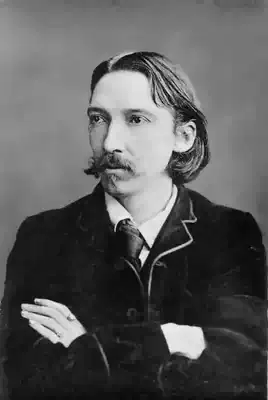
Robert Louis Stevenson
Strange Are The Ways Of Men
Strange Are The Ways Of Men
STRANGE are the ways of men,
And strange the ways of God!
We tread the mazy paths
That all our fathers trod.
We tread them undismayed,
And undismayed behold
The portents of the sky,
The things that were of old.
The fiery stars pursue
Their course in heav'n on high;
And round the 'leaguered town,
Crest-tossing heroes cry.
Crest-tossing heroes cry;
And martial fifes declare
How small, to mortal minds,
Is merely mortal care.
And to the clang of steel
And cry of piercing flute
Upon the azure peaks
A God shall plant his foot:
A God in arms shall stand,
And seeing wide and far
The green and golden earth,
The killing tide of war,
He, with uplifted arm,
Shall to the skies proclaim
The gleeful fate of man,
The noble road to fame!
STRANGE are the ways of men,
And strange the ways of God!
We tread the mazy paths
That all our fathers trod.
We tread them undismayed,
And undismayed behold
The portents of the sky,
The things that were of old.
The fiery stars pursue
Their course in heav'n on high;
And round the 'leaguered town,
Crest-tossing heroes cry.
Crest-tossing heroes cry;
And martial fifes declare
How small, to mortal minds,
Is merely mortal care.
And to the clang of steel
And cry of piercing flute
Upon the azure peaks
A God shall plant his foot:
A God in arms shall stand,
And seeing wide and far
The green and golden earth,
The killing tide of war,
He, with uplifted arm,
Shall to the skies proclaim
The gleeful fate of man,
The noble road to fame!
305
Robert Louis Stevenson
Sonnet I
Sonnet I
NOR judge me light, tho' light at times I seem,
And lightly in the stress of fortune bear
The innumerable flaws of changeful care -
Nor judge me light for this, nor rashly deem
(Office forbid to mortals, kept supreme
And separate the prerogative of God!)
That seaman idle who is borne abroad
To the far haven by the favouring stream.
Not he alone that to contrarious seas
Opposes, all night long, the unwearied oar,
Not he alone, by high success endeared,
Shall reach the Port; but, winged, with some light breeze
Shall they, with upright keels, pass in before
Whom easy Taste, the golden pilot, steered.
NOR judge me light, tho' light at times I seem,
And lightly in the stress of fortune bear
The innumerable flaws of changeful care -
Nor judge me light for this, nor rashly deem
(Office forbid to mortals, kept supreme
And separate the prerogative of God!)
That seaman idle who is borne abroad
To the far haven by the favouring stream.
Not he alone that to contrarious seas
Opposes, all night long, the unwearied oar,
Not he alone, by high success endeared,
Shall reach the Port; but, winged, with some light breeze
Shall they, with upright keels, pass in before
Whom easy Taste, the golden pilot, steered.
366
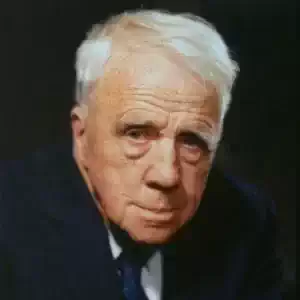
Robert Frost
The Soldier
The Soldier
He is that fallen lance that lies as hurled,
That lies unlifted now, come dew, come rust,
But still lies pointed as it ploughed the dust.
If we who sight along it round the world,
See nothing worthy to have been its mark,
It is because like men we look too near,
Forgetting that as fitted to the sphere,
Our missiles always make too short an arc.
They fall, they rip the grass, they intersect
The curve of earth, and striking, break their own;
They make us cringe for metal-point on stone.
But this we know, the obstacle that checked
And tripped the body, shot the spirit on
Further than target ever showed or shone.
He is that fallen lance that lies as hurled,
That lies unlifted now, come dew, come rust,
But still lies pointed as it ploughed the dust.
If we who sight along it round the world,
See nothing worthy to have been its mark,
It is because like men we look too near,
Forgetting that as fitted to the sphere,
Our missiles always make too short an arc.
They fall, they rip the grass, they intersect
The curve of earth, and striking, break their own;
They make us cringe for metal-point on stone.
But this we know, the obstacle that checked
And tripped the body, shot the spirit on
Further than target ever showed or shone.
491
Robert Frost
The Road Not Taken
The Road Not Taken
Two roads diverged in a yellow wood,
And sorry I could not travel both
And be one traveler, long I stood
And looked down one as far as I could
To where it bent in the undergrowth;
Then took the other, just as fair,
And having perhaps the better claim
Because it was grassy and wanted wear,
Though as for that the passing there
Had worn them really about the same,
And both that morning equally lay
In leaves no step had trodden black.
Oh, I marked the first for another day!
Yet knowing how way leads on to way
I doubted if I should ever come back.
I shall be telling this with a sigh
Somewhere ages and ages hence:
Two roads diverged in a wood, and I,
I took the one less traveled by,
And that has made all the difference.
Two roads diverged in a yellow wood,
And sorry I could not travel both
And be one traveler, long I stood
And looked down one as far as I could
To where it bent in the undergrowth;
Then took the other, just as fair,
And having perhaps the better claim
Because it was grassy and wanted wear,
Though as for that the passing there
Had worn them really about the same,
And both that morning equally lay
In leaves no step had trodden black.
Oh, I marked the first for another day!
Yet knowing how way leads on to way
I doubted if I should ever come back.
I shall be telling this with a sigh
Somewhere ages and ages hence:
Two roads diverged in a wood, and I,
I took the one less traveled by,
And that has made all the difference.
490
Robert Frost
The Lockless Door
The Lockless Door
It went many years,
But at last came a knock,
And I thought of the door
With no lock to lock.
I blew out the light,
I tip-toed the floor,
And raised both hands
In prayer to the door.
But the knock came again
My window was wide;
I climbed on the sill
And descended outside.
Back over the sill
I bade a "Come in"
To whoever the knock
At the door may have been.
So at a knock
I emptied my cage
To hide in the world
And alter with age.
It went many years,
But at last came a knock,
And I thought of the door
With no lock to lock.
I blew out the light,
I tip-toed the floor,
And raised both hands
In prayer to the door.
But the knock came again
My window was wide;
I climbed on the sill
And descended outside.
Back over the sill
I bade a "Come in"
To whoever the knock
At the door may have been.
So at a knock
I emptied my cage
To hide in the world
And alter with age.
496
Robert Frost
A Soldier
A Soldier
He is that fallen lance that lies as hurled,
That lies unlifted now, come dew, come rust,
But still lies pointed as it plowed the dust.
If we who sight along it round the world,
See nothing worthy to have been its mark,
It is because like men we look too near,
Forgetting that as fitted to the sphere,
Our missiles always make too short an arc.
They fall, they rip the grass, they intersect
The curve of earth, and striking, break their own;
They make us cringe for metal-point on stone.
But this we know, the obstacle that checked
And tripped the body, shot the spirit on
Further than target ever showed or shone.
He is that fallen lance that lies as hurled,
That lies unlifted now, come dew, come rust,
But still lies pointed as it plowed the dust.
If we who sight along it round the world,
See nothing worthy to have been its mark,
It is because like men we look too near,
Forgetting that as fitted to the sphere,
Our missiles always make too short an arc.
They fall, they rip the grass, they intersect
The curve of earth, and striking, break their own;
They make us cringe for metal-point on stone.
But this we know, the obstacle that checked
And tripped the body, shot the spirit on
Further than target ever showed or shone.
469

Robert Browning
Through The Metidja To Abd-El-Kadr
Through The Metidja To Abd-El-Kadr
Abd-el-Kadr was an Arab Chief of Algiers who resisted the French in .]
I.
As I ride, as I ride,
With a full heart for my guide,
So its tide rocks my side,
As I ride, as I ride,
That, as I were double-eyed,
He, in whom our Tribes confide,
Is descried, ways untried
As I ride, as I ride.
II.
As I ride, as I ride
To our Chief and his Allied,
Who dares chide my heart's pride
As I ride, as I ride?
Or are witnesses denied---
Through the desert waste and wide
Do I glide unespied
As I ride, as I ride?
III.
As I ride, as I ride,
When an inner voice has cried,
The sands slide, nor abide
(As I ride, as I ride)
O'er each visioned homicide
That came vaunting (has he lied?)
To reside---where he died,
As I ride, as I ride.
IV.
As I ride, as I ride,
Ne'er has spur my swift horse plied,
Yet his hide, streaked and pied,
As I ride, as I ride,
Shows where sweat has sprung and dried,
---Zebra-footed, ostrich-thighed---
How has vied stride with stride
As I ride, as I ride!
V.
As I ride, as I ride,
Could I loose what Fate has tied,
Ere I pried, she should hide
(As I ride, as I ride)
All that's meant me---satisfied
When the Prophet and the Bride
Stop veins I'd have subside
As I ride, as I ride!
Abd-el-Kadr was an Arab Chief of Algiers who resisted the French in .]
I.
As I ride, as I ride,
With a full heart for my guide,
So its tide rocks my side,
As I ride, as I ride,
That, as I were double-eyed,
He, in whom our Tribes confide,
Is descried, ways untried
As I ride, as I ride.
II.
As I ride, as I ride
To our Chief and his Allied,
Who dares chide my heart's pride
As I ride, as I ride?
Or are witnesses denied---
Through the desert waste and wide
Do I glide unespied
As I ride, as I ride?
III.
As I ride, as I ride,
When an inner voice has cried,
The sands slide, nor abide
(As I ride, as I ride)
O'er each visioned homicide
That came vaunting (has he lied?)
To reside---where he died,
As I ride, as I ride.
IV.
As I ride, as I ride,
Ne'er has spur my swift horse plied,
Yet his hide, streaked and pied,
As I ride, as I ride,
Shows where sweat has sprung and dried,
---Zebra-footed, ostrich-thighed---
How has vied stride with stride
As I ride, as I ride!
V.
As I ride, as I ride,
Could I loose what Fate has tied,
Ere I pried, she should hide
(As I ride, as I ride)
All that's meant me---satisfied
When the Prophet and the Bride
Stop veins I'd have subside
As I ride, as I ride!
310
Robert Browning
The Wanderers
The Wanderers
OVER the sea our galleys went,
With cleaving prows in order brave
To a speeding wind and a bounding wave--
A gallant armament:
Each bark built out of a forest-tree
Left leafy and rough as first it grew,
And nail'd all over the gaping sides,
Within and without, with black bull-hides,
Seethed in fat and suppled in flame,
To bear the playful billows' game;
So, each good ship was rude to see,
Rude and bare to the outward view.
But each upbore a stately tent
Where cedar pales in scented row
Kept out the flakes of the dancing brine,
And an awning droop'd the mast below,
In fold on fold of the purple fine,
That neither noontide nor star-shine
Nor moonlight cold which maketh mad,
Might pierce the regal tenement.
When the sun dawn'd, O, gay and glad
We set the sail and plied the oar;
But when the night-wind blew like breath,
For joy of one day's voyage more,
We sang together on the wide sea,
Like men at peace on a peaceful shore;
Each sail was loosed to the wind so free,
Each helm made sure by the twilight star,
And in a sleep as calm as death,
We, the voyagers from afar,
Lay stretch'd along, each weary crew
In a circle round its wondrous tent
Whence gleam'd soft light and curl'd rich scent,
And with light and perfume, music too:
So the stars wheel'd round, and the darkness past,
And at morn we started beside the mast,
And still each ship was sailing fast!
Now, one morn, land appear'd--a speck
Dim trembling betwixt sea and sky--
'Avoid it,' cried our pilot, 'check
The shout, restrain the eager eye!'
But the heaving sea was black behind
For many a night and many a day,
And land, though but a rock, drew nigh;
So we broke the cedar pales away,
Let the purple awning flap in the wind,
And a statue bright was on every deck!
We shouted, every man of us,
And steer'd right into the harbour thus,
With pomp and paean glorious.
A hundred shapes of lucid stone!
All day we built its shrine for each,
A shrine of rock for ever one,
Nor paused till in the westering sun
We sat together on the beach
To sing because our task was done;
When lo! what shouts and merry songs!
What laughter all the distance stirs!
A loaded raft with happy throngs
Of gentle islanders!
'Our isles are just at hand,' they cried,
'Like cloudlets faint in even sleeping;
Our temple-gates are open'd wide,
Our olive-groves thick shade are keeping
For these majestic forms'--they cried.
O, then we awoke with sudden start
From our deep dream, and knew, too late,
How bare the rock, how desolate,
Which had received our precious freight:
Yet we call'd out--'Depart!
Our gifts, once given, must here abide:
Our work is done; we have no heart
To mar our work,'--we cried.
OVER the sea our galleys went,
With cleaving prows in order brave
To a speeding wind and a bounding wave--
A gallant armament:
Each bark built out of a forest-tree
Left leafy and rough as first it grew,
And nail'd all over the gaping sides,
Within and without, with black bull-hides,
Seethed in fat and suppled in flame,
To bear the playful billows' game;
So, each good ship was rude to see,
Rude and bare to the outward view.
But each upbore a stately tent
Where cedar pales in scented row
Kept out the flakes of the dancing brine,
And an awning droop'd the mast below,
In fold on fold of the purple fine,
That neither noontide nor star-shine
Nor moonlight cold which maketh mad,
Might pierce the regal tenement.
When the sun dawn'd, O, gay and glad
We set the sail and plied the oar;
But when the night-wind blew like breath,
For joy of one day's voyage more,
We sang together on the wide sea,
Like men at peace on a peaceful shore;
Each sail was loosed to the wind so free,
Each helm made sure by the twilight star,
And in a sleep as calm as death,
We, the voyagers from afar,
Lay stretch'd along, each weary crew
In a circle round its wondrous tent
Whence gleam'd soft light and curl'd rich scent,
And with light and perfume, music too:
So the stars wheel'd round, and the darkness past,
And at morn we started beside the mast,
And still each ship was sailing fast!
Now, one morn, land appear'd--a speck
Dim trembling betwixt sea and sky--
'Avoid it,' cried our pilot, 'check
The shout, restrain the eager eye!'
But the heaving sea was black behind
For many a night and many a day,
And land, though but a rock, drew nigh;
So we broke the cedar pales away,
Let the purple awning flap in the wind,
And a statue bright was on every deck!
We shouted, every man of us,
And steer'd right into the harbour thus,
With pomp and paean glorious.
A hundred shapes of lucid stone!
All day we built its shrine for each,
A shrine of rock for ever one,
Nor paused till in the westering sun
We sat together on the beach
To sing because our task was done;
When lo! what shouts and merry songs!
What laughter all the distance stirs!
A loaded raft with happy throngs
Of gentle islanders!
'Our isles are just at hand,' they cried,
'Like cloudlets faint in even sleeping;
Our temple-gates are open'd wide,
Our olive-groves thick shade are keeping
For these majestic forms'--they cried.
O, then we awoke with sudden start
From our deep dream, and knew, too late,
How bare the rock, how desolate,
Which had received our precious freight:
Yet we call'd out--'Depart!
Our gifts, once given, must here abide:
Our work is done; we have no heart
To mar our work,'--we cried.
334
Robert Browning
The Italian In England
The Italian In England
That second time they hunted me
From hill to plain, from shore to sea,
And Austria, hounding far and wide
Her blood-hounds thro' the country-side,
Breathed hot and instant on my trace,---
I made six days a hiding-place
Of that dry green old aqueduct
Where I and Charles, when boys, have plucked
The fire-flies from the roof above,
Bright creeping thro' the moss they love:
---How long it seems since Charles was lost!
Six days the soldiers crossed and crossed
The country in my very sight;
And when that peril ceased at night,
The sky broke out in red dismay
With signal fires; well, there I lay
Close covered o'er in my recess,
Up to the neck in ferns and cress,
Thinking on Metternich our friend,
And Charles's miserable end,
And much beside, two days; the third,
Hunger o'ercame me when I heard
The peasants from the village go
To work among the maize; you know,
With us in Lombardy, they bring
Provisions packed on mules, a string
With little bells that cheer their task,
And casks, and boughs on every cask
To keep the sun's heat from the wine;
These I let pass in jingling line,
And, close on them, dear noisy crew,
The peasants from the village, too;
For at the very rear would troop
Their wives and sisters in a group
To help, I knew. When these had passed,
I threw my glove to strike the last,
Taking the chance: she did not start,
Much less cry out, but stooped apart,
One instant rapidly glanced round,
And saw me beckon from the ground.
A wild bush grows and hides my crypt;
She picked my glove up while she stripped
A branch off, then rejoined the rest
With that; my glove lay in her breast.
Then I drew breath; they disappeared:
It was for Italy I feared.
An hour, and she returned alone
Exactly where my glove was thrown.
Meanwhile came many thoughts: on me
Rested the hopes of Italy.
I had devised a certain tale
Which, when 'twas told her, could not fail
Persuade a peasant of its truth;
I meant to call a freak of youth
This hiding, and give hopes of pay,
And no temptation to betray.
But when I saw that woman's face,
Its calm simplicity of grace,
Our Italy's own attitude
In which she walked thus far, and stood,
Planting each naked foot so firm,
To crush the snake and spare the worm---
At first sight of her eyes, I said,
``I am that man upon whose head
``They fix the price, because I hate
``The Austrians over us: the State
``Will give you gold---oh, gold so much!---
``If you betray me to their clutch,
``And be your death, for aught I know,
``If once they find you saved their foe.
``Now, you must bring me food and drink,
``And also paper, pen and ink,
``And carry safe what I shall write
``To Padua, which you'll reach at night
``Before the duomo shuts; go in,
``And wait till Tenebr begin;
``Walk to the third confessional,
``Between the pillar and the wall,
``And kneeling whisper, _Whence comes peace?_
``Say it a second time, then cease;
``And if the voice inside returns,
``_From Christ and Freedom; what concerns
``The cause of Peace?_---for answer, slip
``My letter where you placed your lip;
``Then come back happy we have done
``Our mother service---I, the son,
``As you the daughter of our land!''
Three mornings more, she took her stand
In the same place, with the same eyes:
I was no surer of sun-rise
That of her coming. We conferred
Of her own prospects, and I heard
She had a lover---stout and tall,
She said---then let her eyelids fall,
``He could do much''---as if some doubt
Entered her heart,---then, passing out,
``She could not speak for others, who
``Had other thoughts; herself she knew:''
And so she brought me drink and food.
After four days, the scouts pursued
Another path; at last arrived
The help my Paduan friends contrived
To furnish me: she brought the news.
For the first time I could not choose
But kiss her hand, and lay my own
Upon her head---``This faith was shown
``To Italy, our mother; she
``Uses my hand and blesses thee.''
She followed down to the sea-shore;
I left and never saw her more.
How very long since I have thought
Concerning---much less wished for---aught
Beside the good of Italy,
For which I live and mean to die!
I never was in love; and since
Charles proved false, what shall now convince.
My inmost heart I have a friend?
However, if I pleased to spend
Real wishes on myself---say, three---
I know at least what one should be.
I would grasp Metternich until
I felt his red wet throat distil
In blood thro' these two hands. And next,
---Nor much for that am I perplexed---
Charles, perjured traitor, for his part,
Should die slow of a broken heart
Under his new employer. Last
---Ah, there, what should I wish? For fast
Do I grow old and out of strength.
If I resolved to seek at length
My father's house again, how scared
They all would look, and unprepared!
My brothers live in Austria's pay
---Disowned me long ago, men say;
And all my early mates who used
To praise me so---perhaps induced
More than one early step of mine---
Are turning wise: while some opine
``Freedom grows license,'' some suspect
``Haste breeds delay,'' and recollect
They always said, such premature
Beginnings never could endure!
So, with a sullen ``All's for best,''
The land seems settling to its rest.
I think then, I should wish to stand
This evening in that dear, lost land,
Over the sea the thousand miles,
And know if yet that woman smiles
With the calm smile; some little farm
She lives in there, no doubt: what harm
If I sat on the door-side bench,
And, while her spindle made a trench
Fantastically in the dust,
Inquired of all her fortunes---just
Her children's ages and their names,
And what may be the husband's aims
For each of them. I'd talk this out,
And sit there, for an hour about,
Then kiss her hand once more, and lay
Mine on her head, and go my way.
So much for idle wishing---how
It steals the time! To business now.
That second time they hunted me
From hill to plain, from shore to sea,
And Austria, hounding far and wide
Her blood-hounds thro' the country-side,
Breathed hot and instant on my trace,---
I made six days a hiding-place
Of that dry green old aqueduct
Where I and Charles, when boys, have plucked
The fire-flies from the roof above,
Bright creeping thro' the moss they love:
---How long it seems since Charles was lost!
Six days the soldiers crossed and crossed
The country in my very sight;
And when that peril ceased at night,
The sky broke out in red dismay
With signal fires; well, there I lay
Close covered o'er in my recess,
Up to the neck in ferns and cress,
Thinking on Metternich our friend,
And Charles's miserable end,
And much beside, two days; the third,
Hunger o'ercame me when I heard
The peasants from the village go
To work among the maize; you know,
With us in Lombardy, they bring
Provisions packed on mules, a string
With little bells that cheer their task,
And casks, and boughs on every cask
To keep the sun's heat from the wine;
These I let pass in jingling line,
And, close on them, dear noisy crew,
The peasants from the village, too;
For at the very rear would troop
Their wives and sisters in a group
To help, I knew. When these had passed,
I threw my glove to strike the last,
Taking the chance: she did not start,
Much less cry out, but stooped apart,
One instant rapidly glanced round,
And saw me beckon from the ground.
A wild bush grows and hides my crypt;
She picked my glove up while she stripped
A branch off, then rejoined the rest
With that; my glove lay in her breast.
Then I drew breath; they disappeared:
It was for Italy I feared.
An hour, and she returned alone
Exactly where my glove was thrown.
Meanwhile came many thoughts: on me
Rested the hopes of Italy.
I had devised a certain tale
Which, when 'twas told her, could not fail
Persuade a peasant of its truth;
I meant to call a freak of youth
This hiding, and give hopes of pay,
And no temptation to betray.
But when I saw that woman's face,
Its calm simplicity of grace,
Our Italy's own attitude
In which she walked thus far, and stood,
Planting each naked foot so firm,
To crush the snake and spare the worm---
At first sight of her eyes, I said,
``I am that man upon whose head
``They fix the price, because I hate
``The Austrians over us: the State
``Will give you gold---oh, gold so much!---
``If you betray me to their clutch,
``And be your death, for aught I know,
``If once they find you saved their foe.
``Now, you must bring me food and drink,
``And also paper, pen and ink,
``And carry safe what I shall write
``To Padua, which you'll reach at night
``Before the duomo shuts; go in,
``And wait till Tenebr begin;
``Walk to the third confessional,
``Between the pillar and the wall,
``And kneeling whisper, _Whence comes peace?_
``Say it a second time, then cease;
``And if the voice inside returns,
``_From Christ and Freedom; what concerns
``The cause of Peace?_---for answer, slip
``My letter where you placed your lip;
``Then come back happy we have done
``Our mother service---I, the son,
``As you the daughter of our land!''
Three mornings more, she took her stand
In the same place, with the same eyes:
I was no surer of sun-rise
That of her coming. We conferred
Of her own prospects, and I heard
She had a lover---stout and tall,
She said---then let her eyelids fall,
``He could do much''---as if some doubt
Entered her heart,---then, passing out,
``She could not speak for others, who
``Had other thoughts; herself she knew:''
And so she brought me drink and food.
After four days, the scouts pursued
Another path; at last arrived
The help my Paduan friends contrived
To furnish me: she brought the news.
For the first time I could not choose
But kiss her hand, and lay my own
Upon her head---``This faith was shown
``To Italy, our mother; she
``Uses my hand and blesses thee.''
She followed down to the sea-shore;
I left and never saw her more.
How very long since I have thought
Concerning---much less wished for---aught
Beside the good of Italy,
For which I live and mean to die!
I never was in love; and since
Charles proved false, what shall now convince.
My inmost heart I have a friend?
However, if I pleased to spend
Real wishes on myself---say, three---
I know at least what one should be.
I would grasp Metternich until
I felt his red wet throat distil
In blood thro' these two hands. And next,
---Nor much for that am I perplexed---
Charles, perjured traitor, for his part,
Should die slow of a broken heart
Under his new employer. Last
---Ah, there, what should I wish? For fast
Do I grow old and out of strength.
If I resolved to seek at length
My father's house again, how scared
They all would look, and unprepared!
My brothers live in Austria's pay
---Disowned me long ago, men say;
And all my early mates who used
To praise me so---perhaps induced
More than one early step of mine---
Are turning wise: while some opine
``Freedom grows license,'' some suspect
``Haste breeds delay,'' and recollect
They always said, such premature
Beginnings never could endure!
So, with a sullen ``All's for best,''
The land seems settling to its rest.
I think then, I should wish to stand
This evening in that dear, lost land,
Over the sea the thousand miles,
And know if yet that woman smiles
With the calm smile; some little farm
She lives in there, no doubt: what harm
If I sat on the door-side bench,
And, while her spindle made a trench
Fantastically in the dust,
Inquired of all her fortunes---just
Her children's ages and their names,
And what may be the husband's aims
For each of them. I'd talk this out,
And sit there, for an hour about,
Then kiss her hand once more, and lay
Mine on her head, and go my way.
So much for idle wishing---how
It steals the time! To business now.
333
Robert Browning
Childe Roland To The Dark Tower Came
Childe Roland To The Dark Tower Came
I.
My first thought was, he lied in every word,
That hoary cripple, with malicious eye
Askance to watch the working of his lie
On mine, and mouth scarce able to afford
Suppression of the glee, that pursed and scored
Its edge, at one more victim gained thereby.
II.
What else should he be set for, with his staff?
What, save to waylay with his lies, ensnare
All travellers who might find him posted there,
And ask the road? I guessed what skull-like laugh
Would break, what crutch 'gin write my epitaph
For pastime in the dusty thoroughfare,
III.
If at his counsel I should turn aside
Into that ominous tract which, all agree,
Hides the Dark Tower. Yet acquiescingly
I did turn as he pointed: neither pride
Nor hope rekindling at the end descried,
So much as gladness that some end might be.
IV.
For, what with my whole world-wide wandering,
What with my search drawn out thro' years, my hope
Dwindled into a ghost not fit to cope
With that obstreperous joy success would bring,
I hardly tried now to rebuke the spring
My heart made, finding failure in its scope.
V.
As when a sick man very near to death
Seems dead indeed, and feels begin and end
The tears and takes the farewell of each friend,
And hears one bid the other go, draw breath
Freelier outside, (``since all is o'er,'' he saith,
``And the blow falIen no grieving can amend;'')
VI.
While some discuss if near the other graves
Be room enough for this, and when a day
Suits best for carrying the corpse away,
With care about the banners, scarves and staves:
And still the man hears all, and only craves
He may not shame such tender love and stay.
VII.
Thus, I had so long suffered in this quest,
Heard failure prophesied so oft, been writ
So many times among ``The Band''---to wit,
The knights who to the Dark Tower's search addressed
Their steps---that just to fail as they, seemed best,
And all the doubt was now---should I be fit?
VIII.
So, quiet as despair, I turned from him,
That hateful cripple, out of his highway
Into the path he pointed. All the day
Had been a dreary one at best, and dim
Was settling to its close, yet shot one grim
Red leer to see the plain catch its estray.
IX.
For mark! no sooner was I fairly found
Pledged to the plain, after a pace or two,
Than, pausing to throw backward a last view
O'er the safe road, 'twas gone; grey plain all round:
Nothing but plain to the horizon's bound.
I might go on; nought else remained to do.
X.
So, on I went. I think I never saw
Such starved ignoble nature; nothing throve:
For flowers---as well expect a cedar grove!
But cockle, spurge, according to their law
Might propagate their kind, with none to awe,
You'd think; a burr had been a treasure-trove.
XI.
No! penury, inertness and grimace,
In some strange sort, were the land's portion. ``See
``Or shut your eyes,'' said nature peevishly,
``It nothing skills: I cannot help my case:
``'Tis the Last judgment's fire must cure this place,
``Calcine its clods and set my prisoners free.''
XII.
If there pushed any ragged thistle-stalk
Above its mates, the head was chopped; the bents
Were jealous else. What made those holes and rents
In the dock's harsh swarth leaves, bruised as to baulk
All hope of greenness?'tis a brute must walk
Pashing their life out, with a brute's intents.
XIII.
As for the grass, it grew as scant as hair
In leprosy; thin dry blades pricked the mud
Which underneath looked kneaded up with blood.
One stiff blind horse, his every bone a-stare,
Stood stupefied, however he came there:
Thrust out past service from the devil's stud!
XIV.
Alive? he might be dead for aught I know,
With that red gaunt and colloped neck a-strain,
And shut eyes underneath the rusty mane;
Seldom went such grotesqueness with such woe;
I never saw a brute I hated so;
He must be wicked to deserve such pain.
XV.
I shut my eyes and turned them on my heart.
As a man calls for wine before he fights,
I asked one draught of earlier, happier sights,
Ere fitly I could hope to play my part.
Think first, fight afterwards---the soldier's art:
One taste of the old time sets all to rights.
XVI.
Not it! I fancied Cuthbert's reddening face
Beneath its garniture of curly gold,
Dear fellow, till I almost felt him fold
An arm in mine to fix me to the place,
That way he used. Alas, one night's disgrace!
Out went my heart's new fire and left it cold.
XVII.
Giles then, the soul of honour---there he stands
Frank as ten years ago when knighted first.
What honest man should dare (he said) he durst.
Good---but the scene shifts---faugh! what hangman hands
Pin to his breast a parchment? His own bands
Read it. Poor traitor, spit upon and curst!
XVIII.
Better this present than a past like that;
Back therefore to my darkening path again!
No sound, no sight as far as eye could strain.
Will the night send a howlet or a bat?
I asked: when something on the dismal flat
Came to arrest my thoughts and change their train.
XIX.
A sudden little river crossed my path
As unexpected as a serpent comes.
No sluggish tide congenial to the glooms;
This, as it frothed by, might have been a bath
For the fiend's glowing hoof---to see the wrath
Of its black eddy bespate with flakes and spumes.
XX.
So petty yet so spiteful! All along,
Low scrubby alders kneeled down over it;
Drenched willows flung them headlong in a fit
Of route despair, a suicidal throng:
The river which had done them all the wrong,
Whate'er that was, rolled by, deterred no whit.
XXI.
Which, while I forded,---good saints, how I feared
To set my foot upon a dead man's cheek,
Each step, or feel the spear I thrust to seek
For hollows, tangled in his hair or beard!
---It may have been a water-rat I speared,
But, ugh! it sounded like a baby's shriek.
XXII.
Glad was I when I reached the other bank.
Now for a better country. Vain presage!
Who were the strugglers, what war did they wage,
Whose savage trample thus could pad the dank
Soil to a plash? Toads in a poisoned tank,
Or wild cats in a red-hot iron cage---
XXIII.
The fight must so have seemed in that fell cirque.
What penned them there, with all the plain to choose?
No foot-print leading to that horrid mews,
None out of it. Mad brewage set to work
Their brains, no doubt, like galley-slaves the Turk
Pits for his pastime, Christians against Jews.
XXIV.
And more than that---a furlong on---why, there!
What bad use was that engine for, that wheel,
Or brake, not wheel---that harrow fit to reel
Men's bodies out like silk? with all the air
Of Tophet's tool, on earth left unaware,
Or brought to sharpen its rusty teeth of steel.
XXV.
Then came a bit of stubbed ground, once a wood,
Next a marsh, it would seem, and now mere earth
Desperate and done with; (so a fool finds mirth,
Makes a thing and then mars it, till his mood
Changes and off he goes!) within a rood---
Bog, clay and rubble, sand and stark black dearth.
XXVI.
Now blotches rankling, coloured gay and grim,
Now patches where some leanness of the soil's
Broke into moss or substances like boils;
Then came some palsied oak, a cleft in him
Like a distorted mouth that splits its rim
Gaping at death, and dies while it recoils.
XXVII.
And just as far as ever from the end!
Nought in the distance but the evening, nought
To point my footstep further! At the thought,
great black bird, Apollyon's bosom-friend,
Sailed past, nor beat his wide wing dragon-penned
That brushed my cap---perchance the guide I sought.
XXVIII.
For, looking up, aware I somehow grew,
'Spite of the dusk, the plain had given place
All round to mountains---with such name to grace
Mere ugly heights and heaps now stolen in view.
How thus they had surprised me,---solve it, you!
How to get from them was no clearer case.
XXIX.
Yet half I seemed to recognize some trick
Of mischief happened to me, God knows when---
In a bad dream perhaps. Here ended, then,
Progress this way. When, in the very nick
Of giving up, one time more, came a click
As when a trap shuts---you're inside the den!
XXX.
Burningly it came on me all at once,
This was the place! those two hills on the right,
Crouched like two bulls locked horn in horn in fight;
While to the left, a tall scalped mountain ... Dunce,
Dotard, a-dozing at the very nonce,
After a life spent training for the sight!
XXXI.
What in the midst lay but the Tower itself?
The round squat turret, blind as the fool's heart,
Built of brown stone, without a counter-part
In the whole world. The tempest's mocking elf
Points to the shipman thus the unseen shelf
He strikes on, only when the timbers start.
XXXII.
Not see? because of night perhaps?---why, day
Came back again for that! before it left,
The dying sunset kindled through a cleft:
The hills, like giants at a hunting, lay,
Chin upon hand, to see the game at bay,---
``Now stab and end the creature---to the heft!''
XXXIII.
Not hear? when noise was everywhere! it tolled
Increasing like a bell. Names in my ears
Of all the lost adventurers my peers,---
How such a one was strong, and such was bold,
And such was fortunate, yet, each of old
Lost, lost! one moment knelled the woe of years.
XXXIV.
There they stood, ranged along the hill-sides, met
To view the last of me, a living frame
For one more picture! in a sheet of flame
I saw them and I knew them all. And yet
Dauntless the slug-horn to my lips I set,
And blew. ``_Childe Roland to the Dark Tower came._''
I.
My first thought was, he lied in every word,
That hoary cripple, with malicious eye
Askance to watch the working of his lie
On mine, and mouth scarce able to afford
Suppression of the glee, that pursed and scored
Its edge, at one more victim gained thereby.
II.
What else should he be set for, with his staff?
What, save to waylay with his lies, ensnare
All travellers who might find him posted there,
And ask the road? I guessed what skull-like laugh
Would break, what crutch 'gin write my epitaph
For pastime in the dusty thoroughfare,
III.
If at his counsel I should turn aside
Into that ominous tract which, all agree,
Hides the Dark Tower. Yet acquiescingly
I did turn as he pointed: neither pride
Nor hope rekindling at the end descried,
So much as gladness that some end might be.
IV.
For, what with my whole world-wide wandering,
What with my search drawn out thro' years, my hope
Dwindled into a ghost not fit to cope
With that obstreperous joy success would bring,
I hardly tried now to rebuke the spring
My heart made, finding failure in its scope.
V.
As when a sick man very near to death
Seems dead indeed, and feels begin and end
The tears and takes the farewell of each friend,
And hears one bid the other go, draw breath
Freelier outside, (``since all is o'er,'' he saith,
``And the blow falIen no grieving can amend;'')
VI.
While some discuss if near the other graves
Be room enough for this, and when a day
Suits best for carrying the corpse away,
With care about the banners, scarves and staves:
And still the man hears all, and only craves
He may not shame such tender love and stay.
VII.
Thus, I had so long suffered in this quest,
Heard failure prophesied so oft, been writ
So many times among ``The Band''---to wit,
The knights who to the Dark Tower's search addressed
Their steps---that just to fail as they, seemed best,
And all the doubt was now---should I be fit?
VIII.
So, quiet as despair, I turned from him,
That hateful cripple, out of his highway
Into the path he pointed. All the day
Had been a dreary one at best, and dim
Was settling to its close, yet shot one grim
Red leer to see the plain catch its estray.
IX.
For mark! no sooner was I fairly found
Pledged to the plain, after a pace or two,
Than, pausing to throw backward a last view
O'er the safe road, 'twas gone; grey plain all round:
Nothing but plain to the horizon's bound.
I might go on; nought else remained to do.
X.
So, on I went. I think I never saw
Such starved ignoble nature; nothing throve:
For flowers---as well expect a cedar grove!
But cockle, spurge, according to their law
Might propagate their kind, with none to awe,
You'd think; a burr had been a treasure-trove.
XI.
No! penury, inertness and grimace,
In some strange sort, were the land's portion. ``See
``Or shut your eyes,'' said nature peevishly,
``It nothing skills: I cannot help my case:
``'Tis the Last judgment's fire must cure this place,
``Calcine its clods and set my prisoners free.''
XII.
If there pushed any ragged thistle-stalk
Above its mates, the head was chopped; the bents
Were jealous else. What made those holes and rents
In the dock's harsh swarth leaves, bruised as to baulk
All hope of greenness?'tis a brute must walk
Pashing their life out, with a brute's intents.
XIII.
As for the grass, it grew as scant as hair
In leprosy; thin dry blades pricked the mud
Which underneath looked kneaded up with blood.
One stiff blind horse, his every bone a-stare,
Stood stupefied, however he came there:
Thrust out past service from the devil's stud!
XIV.
Alive? he might be dead for aught I know,
With that red gaunt and colloped neck a-strain,
And shut eyes underneath the rusty mane;
Seldom went such grotesqueness with such woe;
I never saw a brute I hated so;
He must be wicked to deserve such pain.
XV.
I shut my eyes and turned them on my heart.
As a man calls for wine before he fights,
I asked one draught of earlier, happier sights,
Ere fitly I could hope to play my part.
Think first, fight afterwards---the soldier's art:
One taste of the old time sets all to rights.
XVI.
Not it! I fancied Cuthbert's reddening face
Beneath its garniture of curly gold,
Dear fellow, till I almost felt him fold
An arm in mine to fix me to the place,
That way he used. Alas, one night's disgrace!
Out went my heart's new fire and left it cold.
XVII.
Giles then, the soul of honour---there he stands
Frank as ten years ago when knighted first.
What honest man should dare (he said) he durst.
Good---but the scene shifts---faugh! what hangman hands
Pin to his breast a parchment? His own bands
Read it. Poor traitor, spit upon and curst!
XVIII.
Better this present than a past like that;
Back therefore to my darkening path again!
No sound, no sight as far as eye could strain.
Will the night send a howlet or a bat?
I asked: when something on the dismal flat
Came to arrest my thoughts and change their train.
XIX.
A sudden little river crossed my path
As unexpected as a serpent comes.
No sluggish tide congenial to the glooms;
This, as it frothed by, might have been a bath
For the fiend's glowing hoof---to see the wrath
Of its black eddy bespate with flakes and spumes.
XX.
So petty yet so spiteful! All along,
Low scrubby alders kneeled down over it;
Drenched willows flung them headlong in a fit
Of route despair, a suicidal throng:
The river which had done them all the wrong,
Whate'er that was, rolled by, deterred no whit.
XXI.
Which, while I forded,---good saints, how I feared
To set my foot upon a dead man's cheek,
Each step, or feel the spear I thrust to seek
For hollows, tangled in his hair or beard!
---It may have been a water-rat I speared,
But, ugh! it sounded like a baby's shriek.
XXII.
Glad was I when I reached the other bank.
Now for a better country. Vain presage!
Who were the strugglers, what war did they wage,
Whose savage trample thus could pad the dank
Soil to a plash? Toads in a poisoned tank,
Or wild cats in a red-hot iron cage---
XXIII.
The fight must so have seemed in that fell cirque.
What penned them there, with all the plain to choose?
No foot-print leading to that horrid mews,
None out of it. Mad brewage set to work
Their brains, no doubt, like galley-slaves the Turk
Pits for his pastime, Christians against Jews.
XXIV.
And more than that---a furlong on---why, there!
What bad use was that engine for, that wheel,
Or brake, not wheel---that harrow fit to reel
Men's bodies out like silk? with all the air
Of Tophet's tool, on earth left unaware,
Or brought to sharpen its rusty teeth of steel.
XXV.
Then came a bit of stubbed ground, once a wood,
Next a marsh, it would seem, and now mere earth
Desperate and done with; (so a fool finds mirth,
Makes a thing and then mars it, till his mood
Changes and off he goes!) within a rood---
Bog, clay and rubble, sand and stark black dearth.
XXVI.
Now blotches rankling, coloured gay and grim,
Now patches where some leanness of the soil's
Broke into moss or substances like boils;
Then came some palsied oak, a cleft in him
Like a distorted mouth that splits its rim
Gaping at death, and dies while it recoils.
XXVII.
And just as far as ever from the end!
Nought in the distance but the evening, nought
To point my footstep further! At the thought,
great black bird, Apollyon's bosom-friend,
Sailed past, nor beat his wide wing dragon-penned
That brushed my cap---perchance the guide I sought.
XXVIII.
For, looking up, aware I somehow grew,
'Spite of the dusk, the plain had given place
All round to mountains---with such name to grace
Mere ugly heights and heaps now stolen in view.
How thus they had surprised me,---solve it, you!
How to get from them was no clearer case.
XXIX.
Yet half I seemed to recognize some trick
Of mischief happened to me, God knows when---
In a bad dream perhaps. Here ended, then,
Progress this way. When, in the very nick
Of giving up, one time more, came a click
As when a trap shuts---you're inside the den!
XXX.
Burningly it came on me all at once,
This was the place! those two hills on the right,
Crouched like two bulls locked horn in horn in fight;
While to the left, a tall scalped mountain ... Dunce,
Dotard, a-dozing at the very nonce,
After a life spent training for the sight!
XXXI.
What in the midst lay but the Tower itself?
The round squat turret, blind as the fool's heart,
Built of brown stone, without a counter-part
In the whole world. The tempest's mocking elf
Points to the shipman thus the unseen shelf
He strikes on, only when the timbers start.
XXXII.
Not see? because of night perhaps?---why, day
Came back again for that! before it left,
The dying sunset kindled through a cleft:
The hills, like giants at a hunting, lay,
Chin upon hand, to see the game at bay,---
``Now stab and end the creature---to the heft!''
XXXIII.
Not hear? when noise was everywhere! it tolled
Increasing like a bell. Names in my ears
Of all the lost adventurers my peers,---
How such a one was strong, and such was bold,
And such was fortunate, yet, each of old
Lost, lost! one moment knelled the woe of years.
XXXIV.
There they stood, ranged along the hill-sides, met
To view the last of me, a living frame
For one more picture! in a sheet of flame
I saw them and I knew them all. And yet
Dauntless the slug-horn to my lips I set,
And blew. ``_Childe Roland to the Dark Tower came._''
421
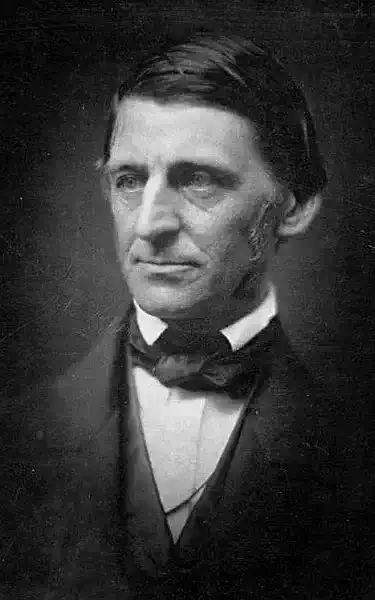
Ralph Waldo Emerson
The Park
The Park
The prosperous and beautiful
To me seem not to wear
The yoke of conscience masterful,
Which galls me everywhere.
I cannot shake off the god;
On my neck he makes his seat;
I look at my face in the glass,
My eyes his eye-balls meet.
Enchanters! enchantresses!
Your gold makes you seem wise:
The morning mist within your grounds
More proudly rolls, more softly lies.
Yet spake yon purple mountain,
Yet said yon ancient wood,
That night or day, that love or crime
Lead all souls to the Good.
The prosperous and beautiful
To me seem not to wear
The yoke of conscience masterful,
Which galls me everywhere.
I cannot shake off the god;
On my neck he makes his seat;
I look at my face in the glass,
My eyes his eye-balls meet.
Enchanters! enchantresses!
Your gold makes you seem wise:
The morning mist within your grounds
More proudly rolls, more softly lies.
Yet spake yon purple mountain,
Yet said yon ancient wood,
That night or day, that love or crime
Lead all souls to the Good.
355
Ralph Waldo Emerson
Monadnoc
Monadnoc
Thousand minstrels woke within me,
"Our music's in the hills; "—
Gayest pictures rose to win me,
Leopard-colored rills.
Up!—If thou knew'st who calls
To twilight parks of beech and pine,
High over the river intervals,
Above the ploughman's highest line,
Over the owner's farthest walls;—
Up!—where the airy citadel
O'erlooks the purging landscape's swell.
Let not unto the stones the day
Her lily and rose, her sea and land display;
Read the celestial sign!
Lo! the South answers to the North;
Bookworm, break this sloth urbane;
A greater Spirit bids thee forth,
Than the gray dreams which thee detain.
Mark how the climbing Oreads
Beckon thee to their arcades;
Youth, for a moment free as they,
Teach thy feet to feel the ground,
Ere yet arrive the wintry day
When Time thy feet has bound.
Accept the bounty of thy birth;
Taste the lordship of the earth.
I heard and I obeyed,
Assured that he who pressed the claim,
Well-known, but loving not a name,
Was not to be gainsaid.
Ere yet the summoning voice was still,
I turned to Cheshire's haughty hill.
From the fixed cone the cloud-rack flowed
Like ample banner flung abroad
Round about, a hundred miles,
With invitation to the sea, and to the bordering isles.
In his own loom's garment drest,
By his own bounty blest,
Fast abides this constant giver,
Pouring many a cheerful river;
To far eyes, an aërial isle,
Unploughed, which finer spirits pile,
Which morn and crimson evening paint
For bard, for lover, and for saint;
The country's core,
Inspirer, prophet evermore,
Pillar which God aloft had set
So that men might it not forget,
It should be their life's ornament,
And mix itself with each event;
Their calendar and dial,
Barometer, and chemic phial,
Garden of berries, perch of birds,
Pasture of pool-haunting herds,
Graced by each change of sum untold,
Earth-baking heat, stone-cleaving cold.
The Titan minds his sky-affairs,
Rich rents and wide alliance shares;
Mysteries of color daily laid
By the great sun in light and shade,
And, sweet varieties of chance,
And the mystic seasons' dance,
And thief-like step of liberal hours
Which thawed the snow-drift into flowers.
O wondrous craft of plant and stone
By eldest science done and shown!
Happy, I said, whose home is here,
Fair fortunes to the mountaineer!
Boon nature to his poorest shed
Has royal pleasure-grounds outspread.
Intent I searched the region round,
And in low hut my monarch found.
He was no eagle and no earl,
Alas! my foundling was a churl,
With heart of cat, and eyes of bug,
Dull victim of his pipe and mug;
Woe is me for my hopes' downfall!
Lord! is yon squalid peasant all
That this proud nursery could breed
For God's vicegerency and stead?
Time out of mind this forge of ores,
Quarry of spars in mountain pores,
Old cradle, hunting ground, and bier
Of wolf and otter, bear, and deer;
Well-built abode of many a race;
Tower of observance searching space;
Factory of river, and of rain;
Link in the alps' globe-girding chain;
By million changes skilled to tell
What in the Eternal standeth well,
And what obedient nature can,—
Is this colossal talisman
Kindly to creature, blood, and kind,
And speechless to the master's mind?
I thought to find the patriots
In whom the stock of freedom roots.
To myself I oft recount
Tales of many a famous mount.—
Wales, Scotland, Uri, Hungary's dells,
Roys, and Scanderbegs, and Tells.
Here now shall nature crowd her powers,
Her music, and her meteors,
And, lifting man to the blue deep
Where stars their perfect courses keep,
Like wise preceptor lure his eye
To sound the science of the sky,
And carry learning to its height
Of untried power and sane delight;
The Indian cheer, the frosty skies
Breed purer wits, inventive eyes,
Eyes that frame cities where none be,
And hands that stablish what these see:
And, by the moral of his place,
Hint summits of heroic grace;
Man in these crags a fastness find
To fight pollution of the mind;
In the wide thaw and ooze of wrong,
Adhere like this foundation strong,
The insanity of towns to stem
With simpleness for stratagem.
But if the brave old mould is broke,
And end in clowns the mountain-folk,
In tavern cheer and tavern joke,—
Sink, O mountain! in the swamp,
Hide in thy skies, O sovereign lap!
Perish like leaves the highland breed!
No sire survive, no son succeed!
Soft! let not the offended muse
Toil's hard hap with scorn accuse.
Many hamlets sought I then,
Many farms of mountain men;—
Found I not a minstrel seed,
But men of bone, and good at need.
Rallying round a parish steeple
Nestle warm the highland people,
Coarse and boisterous, yet mild,
Strong as giant, slow as child,
Smoking in a squalid room,
Where yet the westland breezes come.
Close hid in those rough guises lurk
Western magians, here they work;
Sweat and season are their arts,
Their talismans are ploughs and carts;
And well the youngest can command
Honey from the frozen land,
With sweet hay the swamp adorn,
Change the running sand to corn,
For wolves and foxes, lowing herds,
And for cold mosses, cream and curds;
Weave wood to canisters and mats,
Drain sweet maple-juice in vats.
No bird is safe that cuts the air,
From their rifle or their snare;
No fish in river or in lake,
But their long hands it thence will take;
And the country's iron face
Like wax their fashioning skill betrays,
To fill the hollows, sink the hills,
Bridge gulfs, drain swamps, build dams and mills,
And fit the bleak and howling place
For gardens of a finer race,
The world-soul knows his own affair,
Fore-looking when his hands prepare
For the next ages men of mould,
Well embodied, well ensouled,
He cools the present's fiery glow,
Sets the life pulse strong, but slow.
Bitter winds and fasts austere.
His quarantines and grottos, where
He slowly cures decrepit flesh,
And brings it infantile and fresh.
These exercises are the toys
And games with which he breathes his boys.
They bide their time, and well can prove,
If need were, their line from Jove,
Of the same stuff, and so allayed,
As that whereof the sun is made;
And of that fibre quick and strong
Whose throbs are love, whose thrills are song.
Now in sordid weeds they sleep,
Their secret now in dulness keep.
Yet, will you learn our ancient speech,
These the masters who can teach,
Fourscore or a hundred words
All their vocal muse affords,
These they turn in other fashion
Than the writer or the parson.
I can spare the college-bell,
And the learned lecture well.
Spare the clergy and libraries,
Institutes and dictionaries,
For the hardy English root
Thrives here unvalued underfoot.
Rude poets of the tavern hearth,
Squandering your unquoted mirth,
Which keeps the ground and never soars,
While Jake retorts and Reuben roars,
Tough and screaming as birch-bark,
Goes like bullet to its mark,
While the solid curse and jeer
Never balk the waiting ear:
To student ears keen-relished jokes
On truck, and stock, and farming-folks,—
Nought the mountain yields thereof
But savage health and sinews tough.
On the summit as I stood,
O'er the wide floor of plain and flood,
Seemed to me the towering hill
Was not altogether still,
But a quiet sense conveyed;
If I err not, thus it said:
Many feet in summer seek
Betimes my far-appearing peak;
In the dreaded winter-time,
None save dappling shadows climb
Under clouds my lonely head,
Old as the sun, old almost as the shade.
And comest thou
To see strange forests and new snow,
And tread uplifted land?
And leavest thou thy lowland race,
Here amid clouds to stand,
And would'st be my companion,
Where I gaze
And shall gaze
When forests fall, and man is gone,
Over tribes and over times
As the burning Lyre
Nearing me,
With its stars of northern fire,
In many a thousand years.
Ah! welcome, if thou bring
My secret in thy brain;
To mountain-top may muse's wing
With good allowance strain.
Gentle pilgrim, if thou know
The gamut old of Pan,
And how the hills began,
The frank blessings of the hill
Fall on thee, as fall they will.
'Tis the law of bush and stone—
Each can only take his own.
Let him heed who can and will,—
Enchantment fixed me here
To stand the hurts of time, until
In mightier chant I disappear.
If thou trowest
How the chemic eddies play
Pole to pole, and what they say,
And that these gray crags
Not on crags are hung,
But beads are of a rosary
On prayer and music strung;
And, credulous, through the granite seeming
Seest the smile of Reason beaming;
Can thy style-discerning eye
The hidden-working Builder spy,
Who builds, yet makes no chips, no din,
With hammer soft as snow-flake's flight;
Knowest thou this?
O pilgrim, wandering not amiss!
Already my rocks lie light,
And soon my cone will spin.
For the world was built in order,
And the atoms march in tune,
Rhyme the pipe, and time the warder,
Cannot forget the sun, the moon.
Orb and atom forth they prance,
When they hear from far the rune,
None so backward in the troop,
When the music and the dance
Reach his place and circumstance,
But knows the sun-creating sound,
And, though a pyramid, will bound.
Monadnoc is a mountain strong,
Tall and good my kind among,
But well I know, no mountain can
Measure with a perfect man;
For it is on Zodiack's writ,
Adamant is soft to wit;
And when the greater comes again,
With my music in his brain,
I shall pass as glides my shadow
Daily over hill and meadow.
Through all time
I hear the approaching feet
Along the flinty pathway beat
Of him that cometh, and shall come,—
Of him who shall as lightly bear
My daily load of woods and streams,
As now the round sky-cleaving boat
Which never strains its rocky beams,
Whose timbers, as they silent float,
Alps and Caucasus uprear,
And the long Alleghanies here,
And all town-sprinkled lands that be,
Sailing through stars with all their history.
Every morn I lift my head,
Gaze o'er New England underspread
South from Saint Lawrence to the Sound,
From Katshill east to the sea-bound.
Anchored fast for many an age,
I await the bard and sage,
Who in large thoughts, like fair pearl-seed,
Shall string Monadnoc like a bead.
Comes that cheerful troubadour,
This mound shall throb his face before,
As when with inward fires and pain
It rose a bubble from the plain.
When he cometh, I shall shed
From this well-spring in my head
Fountain drop of spicier worth
Than all vintage of the earth.
There's fruit upon my barren soil
Costlier far than wine or oil;
There's a berry blue and gold,—
Autumn-ripe its juices hold,
Sparta's stoutness, Bethlehem's heart,
Asia's rancor, Athens' art,
Slowsure Britain's secular might,
And the German's inward sight;
I will give my son to eat
Best of Pan's immortal meat,
Bread to eat and juice to drink,
So the thoughts that he shall think
Shall not be forms of stars, but stars,
Nor pictures pale, but Jove and Mars.
He comes, but not of that race bred
Who daily climb my specular head.
Oft as morning wreathes my scarf,
Fled the last plumule of the dark,
Pants up hither the spruce clerk
From South-Cove and City-wharf;
I take him up my rugged sides,
Half-repentant, scant of breath,—
Bead-eyes my granite chaos show,
And my midsummer snow;
Open the daunting map beneath,—
All his county, sea and land,
Dwarfed to measure of his hand;
His day's ride is a furlong space,
His city tops a glimmering haze:
I plant his eyes on the sky-hoop bounding;—
See there the grim gray rounding
Of the bullet of the earth
Whereon ye sail,
Tumbling steep
In the uncontinented deep;—
He looks on that, and he turns pale:
'Tis even so, this treacherous kite,
Farm-furrowed, town-incrusted sphere,
Thoughtless of its anxious freight,
Plunges eyeless on for ever,
And he, poor parasite,—
Cooped in a ship he cannot steer,
Who is the captain he knows not,
Port or pilot trows not,—
Risk or ruin he must share.
I scowl on him with my cloud,
With my north wind chill his blood,
I lame him clattering down the rocks,
And to live he is in fear.
Then, at last, I let him down
Once more into his dapper town,
To chatter frightened to his clan,
And forget me, if he can.
As in the old poetic fame
The gods are blind and lame,
And the simular despite
Betrays the more abounding might,
So call not waste that barren cone
Above the floral zone,
Where forests starve:
It is pure use;
What sheaves like those which here we glean and bind,
Of a celestial Ceres, and the Muse?
Ages are thy days,
Thou grand expressor of the present tense,
And type of permanence,
Firm ensign of the fatal Being,
Amid these coward shapes of joy and grief
That will not bide the seeing.
Hither we bring
Our insect miseries to the rocks,
And the whole flight with pestering wing
Vanish and end their murmuring,
Vanish beside these dedicated blocks,
Which, who can tell what mason laid?
Spoils of a front none need restore,
Replacing frieze and architrave;
Yet flowers each stone rosette and metope brave,
Still is the haughty pile erect
Of the old building Intellect.
Complement of human kind,
Having us at vantage still,
Our sumptuous indigence,
O barren mound! thy plenties fill.
We fool and prate,—
Thou art silent and sedate.
To million kinds and times one sense
The constant mountain doth dispense,
Shedding on all its snows and leaves,
One joy it joys, one grief it grieves.
Thou seest, O watchman tall!
Our towns and races grow and fall,
And imagest the stable Good
For which we all our lifetime grope,
In shifting form the formless mind;
And though the substance us elude,
We in thee the shadow find.
Thou in our astronomy
An opaker star,
Seen, haply, from afar,
Above the horizon's hoop.
A moment by the railway troop,
As o'er some bolder height they speed,—
By circumspect ambition,
By errant Gain,
By feasters, and the frivolous,—
Recallest us,
And makest sane.
Mute orator! well-skilled to plead,
And send conviction without phrase,
Thou dost supply
The shortness of our days,
And promise, on thy Founder's truth,
Long morrow to this mortal youth.
Thousand minstrels woke within me,
"Our music's in the hills; "—
Gayest pictures rose to win me,
Leopard-colored rills.
Up!—If thou knew'st who calls
To twilight parks of beech and pine,
High over the river intervals,
Above the ploughman's highest line,
Over the owner's farthest walls;—
Up!—where the airy citadel
O'erlooks the purging landscape's swell.
Let not unto the stones the day
Her lily and rose, her sea and land display;
Read the celestial sign!
Lo! the South answers to the North;
Bookworm, break this sloth urbane;
A greater Spirit bids thee forth,
Than the gray dreams which thee detain.
Mark how the climbing Oreads
Beckon thee to their arcades;
Youth, for a moment free as they,
Teach thy feet to feel the ground,
Ere yet arrive the wintry day
When Time thy feet has bound.
Accept the bounty of thy birth;
Taste the lordship of the earth.
I heard and I obeyed,
Assured that he who pressed the claim,
Well-known, but loving not a name,
Was not to be gainsaid.
Ere yet the summoning voice was still,
I turned to Cheshire's haughty hill.
From the fixed cone the cloud-rack flowed
Like ample banner flung abroad
Round about, a hundred miles,
With invitation to the sea, and to the bordering isles.
In his own loom's garment drest,
By his own bounty blest,
Fast abides this constant giver,
Pouring many a cheerful river;
To far eyes, an aërial isle,
Unploughed, which finer spirits pile,
Which morn and crimson evening paint
For bard, for lover, and for saint;
The country's core,
Inspirer, prophet evermore,
Pillar which God aloft had set
So that men might it not forget,
It should be their life's ornament,
And mix itself with each event;
Their calendar and dial,
Barometer, and chemic phial,
Garden of berries, perch of birds,
Pasture of pool-haunting herds,
Graced by each change of sum untold,
Earth-baking heat, stone-cleaving cold.
The Titan minds his sky-affairs,
Rich rents and wide alliance shares;
Mysteries of color daily laid
By the great sun in light and shade,
And, sweet varieties of chance,
And the mystic seasons' dance,
And thief-like step of liberal hours
Which thawed the snow-drift into flowers.
O wondrous craft of plant and stone
By eldest science done and shown!
Happy, I said, whose home is here,
Fair fortunes to the mountaineer!
Boon nature to his poorest shed
Has royal pleasure-grounds outspread.
Intent I searched the region round,
And in low hut my monarch found.
He was no eagle and no earl,
Alas! my foundling was a churl,
With heart of cat, and eyes of bug,
Dull victim of his pipe and mug;
Woe is me for my hopes' downfall!
Lord! is yon squalid peasant all
That this proud nursery could breed
For God's vicegerency and stead?
Time out of mind this forge of ores,
Quarry of spars in mountain pores,
Old cradle, hunting ground, and bier
Of wolf and otter, bear, and deer;
Well-built abode of many a race;
Tower of observance searching space;
Factory of river, and of rain;
Link in the alps' globe-girding chain;
By million changes skilled to tell
What in the Eternal standeth well,
And what obedient nature can,—
Is this colossal talisman
Kindly to creature, blood, and kind,
And speechless to the master's mind?
I thought to find the patriots
In whom the stock of freedom roots.
To myself I oft recount
Tales of many a famous mount.—
Wales, Scotland, Uri, Hungary's dells,
Roys, and Scanderbegs, and Tells.
Here now shall nature crowd her powers,
Her music, and her meteors,
And, lifting man to the blue deep
Where stars their perfect courses keep,
Like wise preceptor lure his eye
To sound the science of the sky,
And carry learning to its height
Of untried power and sane delight;
The Indian cheer, the frosty skies
Breed purer wits, inventive eyes,
Eyes that frame cities where none be,
And hands that stablish what these see:
And, by the moral of his place,
Hint summits of heroic grace;
Man in these crags a fastness find
To fight pollution of the mind;
In the wide thaw and ooze of wrong,
Adhere like this foundation strong,
The insanity of towns to stem
With simpleness for stratagem.
But if the brave old mould is broke,
And end in clowns the mountain-folk,
In tavern cheer and tavern joke,—
Sink, O mountain! in the swamp,
Hide in thy skies, O sovereign lap!
Perish like leaves the highland breed!
No sire survive, no son succeed!
Soft! let not the offended muse
Toil's hard hap with scorn accuse.
Many hamlets sought I then,
Many farms of mountain men;—
Found I not a minstrel seed,
But men of bone, and good at need.
Rallying round a parish steeple
Nestle warm the highland people,
Coarse and boisterous, yet mild,
Strong as giant, slow as child,
Smoking in a squalid room,
Where yet the westland breezes come.
Close hid in those rough guises lurk
Western magians, here they work;
Sweat and season are their arts,
Their talismans are ploughs and carts;
And well the youngest can command
Honey from the frozen land,
With sweet hay the swamp adorn,
Change the running sand to corn,
For wolves and foxes, lowing herds,
And for cold mosses, cream and curds;
Weave wood to canisters and mats,
Drain sweet maple-juice in vats.
No bird is safe that cuts the air,
From their rifle or their snare;
No fish in river or in lake,
But their long hands it thence will take;
And the country's iron face
Like wax their fashioning skill betrays,
To fill the hollows, sink the hills,
Bridge gulfs, drain swamps, build dams and mills,
And fit the bleak and howling place
For gardens of a finer race,
The world-soul knows his own affair,
Fore-looking when his hands prepare
For the next ages men of mould,
Well embodied, well ensouled,
He cools the present's fiery glow,
Sets the life pulse strong, but slow.
Bitter winds and fasts austere.
His quarantines and grottos, where
He slowly cures decrepit flesh,
And brings it infantile and fresh.
These exercises are the toys
And games with which he breathes his boys.
They bide their time, and well can prove,
If need were, their line from Jove,
Of the same stuff, and so allayed,
As that whereof the sun is made;
And of that fibre quick and strong
Whose throbs are love, whose thrills are song.
Now in sordid weeds they sleep,
Their secret now in dulness keep.
Yet, will you learn our ancient speech,
These the masters who can teach,
Fourscore or a hundred words
All their vocal muse affords,
These they turn in other fashion
Than the writer or the parson.
I can spare the college-bell,
And the learned lecture well.
Spare the clergy and libraries,
Institutes and dictionaries,
For the hardy English root
Thrives here unvalued underfoot.
Rude poets of the tavern hearth,
Squandering your unquoted mirth,
Which keeps the ground and never soars,
While Jake retorts and Reuben roars,
Tough and screaming as birch-bark,
Goes like bullet to its mark,
While the solid curse and jeer
Never balk the waiting ear:
To student ears keen-relished jokes
On truck, and stock, and farming-folks,—
Nought the mountain yields thereof
But savage health and sinews tough.
On the summit as I stood,
O'er the wide floor of plain and flood,
Seemed to me the towering hill
Was not altogether still,
But a quiet sense conveyed;
If I err not, thus it said:
Many feet in summer seek
Betimes my far-appearing peak;
In the dreaded winter-time,
None save dappling shadows climb
Under clouds my lonely head,
Old as the sun, old almost as the shade.
And comest thou
To see strange forests and new snow,
And tread uplifted land?
And leavest thou thy lowland race,
Here amid clouds to stand,
And would'st be my companion,
Where I gaze
And shall gaze
When forests fall, and man is gone,
Over tribes and over times
As the burning Lyre
Nearing me,
With its stars of northern fire,
In many a thousand years.
Ah! welcome, if thou bring
My secret in thy brain;
To mountain-top may muse's wing
With good allowance strain.
Gentle pilgrim, if thou know
The gamut old of Pan,
And how the hills began,
The frank blessings of the hill
Fall on thee, as fall they will.
'Tis the law of bush and stone—
Each can only take his own.
Let him heed who can and will,—
Enchantment fixed me here
To stand the hurts of time, until
In mightier chant I disappear.
If thou trowest
How the chemic eddies play
Pole to pole, and what they say,
And that these gray crags
Not on crags are hung,
But beads are of a rosary
On prayer and music strung;
And, credulous, through the granite seeming
Seest the smile of Reason beaming;
Can thy style-discerning eye
The hidden-working Builder spy,
Who builds, yet makes no chips, no din,
With hammer soft as snow-flake's flight;
Knowest thou this?
O pilgrim, wandering not amiss!
Already my rocks lie light,
And soon my cone will spin.
For the world was built in order,
And the atoms march in tune,
Rhyme the pipe, and time the warder,
Cannot forget the sun, the moon.
Orb and atom forth they prance,
When they hear from far the rune,
None so backward in the troop,
When the music and the dance
Reach his place and circumstance,
But knows the sun-creating sound,
And, though a pyramid, will bound.
Monadnoc is a mountain strong,
Tall and good my kind among,
But well I know, no mountain can
Measure with a perfect man;
For it is on Zodiack's writ,
Adamant is soft to wit;
And when the greater comes again,
With my music in his brain,
I shall pass as glides my shadow
Daily over hill and meadow.
Through all time
I hear the approaching feet
Along the flinty pathway beat
Of him that cometh, and shall come,—
Of him who shall as lightly bear
My daily load of woods and streams,
As now the round sky-cleaving boat
Which never strains its rocky beams,
Whose timbers, as they silent float,
Alps and Caucasus uprear,
And the long Alleghanies here,
And all town-sprinkled lands that be,
Sailing through stars with all their history.
Every morn I lift my head,
Gaze o'er New England underspread
South from Saint Lawrence to the Sound,
From Katshill east to the sea-bound.
Anchored fast for many an age,
I await the bard and sage,
Who in large thoughts, like fair pearl-seed,
Shall string Monadnoc like a bead.
Comes that cheerful troubadour,
This mound shall throb his face before,
As when with inward fires and pain
It rose a bubble from the plain.
When he cometh, I shall shed
From this well-spring in my head
Fountain drop of spicier worth
Than all vintage of the earth.
There's fruit upon my barren soil
Costlier far than wine or oil;
There's a berry blue and gold,—
Autumn-ripe its juices hold,
Sparta's stoutness, Bethlehem's heart,
Asia's rancor, Athens' art,
Slowsure Britain's secular might,
And the German's inward sight;
I will give my son to eat
Best of Pan's immortal meat,
Bread to eat and juice to drink,
So the thoughts that he shall think
Shall not be forms of stars, but stars,
Nor pictures pale, but Jove and Mars.
He comes, but not of that race bred
Who daily climb my specular head.
Oft as morning wreathes my scarf,
Fled the last plumule of the dark,
Pants up hither the spruce clerk
From South-Cove and City-wharf;
I take him up my rugged sides,
Half-repentant, scant of breath,—
Bead-eyes my granite chaos show,
And my midsummer snow;
Open the daunting map beneath,—
All his county, sea and land,
Dwarfed to measure of his hand;
His day's ride is a furlong space,
His city tops a glimmering haze:
I plant his eyes on the sky-hoop bounding;—
See there the grim gray rounding
Of the bullet of the earth
Whereon ye sail,
Tumbling steep
In the uncontinented deep;—
He looks on that, and he turns pale:
'Tis even so, this treacherous kite,
Farm-furrowed, town-incrusted sphere,
Thoughtless of its anxious freight,
Plunges eyeless on for ever,
And he, poor parasite,—
Cooped in a ship he cannot steer,
Who is the captain he knows not,
Port or pilot trows not,—
Risk or ruin he must share.
I scowl on him with my cloud,
With my north wind chill his blood,
I lame him clattering down the rocks,
And to live he is in fear.
Then, at last, I let him down
Once more into his dapper town,
To chatter frightened to his clan,
And forget me, if he can.
As in the old poetic fame
The gods are blind and lame,
And the simular despite
Betrays the more abounding might,
So call not waste that barren cone
Above the floral zone,
Where forests starve:
It is pure use;
What sheaves like those which here we glean and bind,
Of a celestial Ceres, and the Muse?
Ages are thy days,
Thou grand expressor of the present tense,
And type of permanence,
Firm ensign of the fatal Being,
Amid these coward shapes of joy and grief
That will not bide the seeing.
Hither we bring
Our insect miseries to the rocks,
And the whole flight with pestering wing
Vanish and end their murmuring,
Vanish beside these dedicated blocks,
Which, who can tell what mason laid?
Spoils of a front none need restore,
Replacing frieze and architrave;
Yet flowers each stone rosette and metope brave,
Still is the haughty pile erect
Of the old building Intellect.
Complement of human kind,
Having us at vantage still,
Our sumptuous indigence,
O barren mound! thy plenties fill.
We fool and prate,—
Thou art silent and sedate.
To million kinds and times one sense
The constant mountain doth dispense,
Shedding on all its snows and leaves,
One joy it joys, one grief it grieves.
Thou seest, O watchman tall!
Our towns and races grow and fall,
And imagest the stable Good
For which we all our lifetime grope,
In shifting form the formless mind;
And though the substance us elude,
We in thee the shadow find.
Thou in our astronomy
An opaker star,
Seen, haply, from afar,
Above the horizon's hoop.
A moment by the railway troop,
As o'er some bolder height they speed,—
By circumspect ambition,
By errant Gain,
By feasters, and the frivolous,—
Recallest us,
And makest sane.
Mute orator! well-skilled to plead,
And send conviction without phrase,
Thou dost supply
The shortness of our days,
And promise, on thy Founder's truth,
Long morrow to this mortal youth.
468
Rabindranath Tagore
The Journey
The Journey
The morning sea of silence broke into ripples of bird songs;
and the flowers were all merry by the roadside;
and the wealth of gold was scattered through the rift of the clouds
while we busily went on our way and paid no heed.
We sang no glad songs nor played;
we went not to the village for barter;
we spoke not a word nor smiled;
we lingered not on the way.
We quickened our pace more and more as the time sped by.
The sun rose to the mid sky and doves cooed in the shade.
Withered leaves danced and whirled in the hot air of noon.
The shepherd boy drowsed and dreamed in the shadow of the banyan tree,
and I laid myself down by the water
and stretched my tired limbs on the grass.
My companions laughed at me in scorn;
they held their heads high and hurried on;
they never looked back nor rested;
they vanished in the distant blue haze.
They crossed many meadows and hills,
and passed through strange, far-away countries.
All honor to you, heroic host of the interminable path!
Mockery and reproach pricked me to rise,
but found no response in me.
I gave myself up for lost
in the depth of a glad humiliation
---in the shadow of a dim delight.
The repose of the sun-embroidered green gloom
slowly spread over my heart.
I forgot for what I had traveled,
and I surrendered my mind without struggle
to the maze of shadows and songs.
At last, when I woke from my slumber and opened my eyes,
I saw thee standing by me, flooding my sleep with thy smile.
How I had feared that the path was long and wearisome,
and the struggle to reach thee was hard!
The morning sea of silence broke into ripples of bird songs;
and the flowers were all merry by the roadside;
and the wealth of gold was scattered through the rift of the clouds
while we busily went on our way and paid no heed.
We sang no glad songs nor played;
we went not to the village for barter;
we spoke not a word nor smiled;
we lingered not on the way.
We quickened our pace more and more as the time sped by.
The sun rose to the mid sky and doves cooed in the shade.
Withered leaves danced and whirled in the hot air of noon.
The shepherd boy drowsed and dreamed in the shadow of the banyan tree,
and I laid myself down by the water
and stretched my tired limbs on the grass.
My companions laughed at me in scorn;
they held their heads high and hurried on;
they never looked back nor rested;
they vanished in the distant blue haze.
They crossed many meadows and hills,
and passed through strange, far-away countries.
All honor to you, heroic host of the interminable path!
Mockery and reproach pricked me to rise,
but found no response in me.
I gave myself up for lost
in the depth of a glad humiliation
---in the shadow of a dim delight.
The repose of the sun-embroidered green gloom
slowly spread over my heart.
I forgot for what I had traveled,
and I surrendered my mind without struggle
to the maze of shadows and songs.
At last, when I woke from my slumber and opened my eyes,
I saw thee standing by me, flooding my sleep with thy smile.
How I had feared that the path was long and wearisome,
and the struggle to reach thee was hard!
531
Rabindranath Tagore
At The Last Watch
At The Last Watch
Pity, in place of love,
That pettiest of gifts,
Is but a sugar-coating over neglect.
Any passerby can make a gift of it
To a street beggar,
Only to forget the moment the first corner is turned.
I had not hoped for anything more that day.
You left during the last watch of night.
I had hoped you would say goodbye,
Just say 'Adieu' before going away,
What you had said another day,
What I shall never hear again.
In their place, just that one word,
Bound by the thin fabric of a little compassion
Would even that have been too much for you to bear?
When I first awoke from sleep
My heart fluttered with fear
Lest the time had been over.
I rushed out of bed.
The distant church clock chimed half past twelve
I sat waiting near the door of my room
Resting my head against it,
Facing the porch through which you would come out.
Even that tiniest of chances
Was snatched away by fate from hapless me;
I fell asleep
Shortly before you left.
Perhaps you cast a sidelong glance
At my reclining body
Like a broken boat left high and dry.
Perhaps you walked away with care
Lest you wake me up.
Awaking with a start I knew at once
That my vigil had been wasted
I realised, what was to go went away in a moment,
What was to stay behind stayed on
For all time.
Silence everywhere
Like that of a birds' nest bereft of birds
On the bough of a songless tree.
With the lifeless light of the waning moon was now blended
The pallor of dawn
Spreading itself over the greyness of my empty life.
I walked towards your bedroom
For no reason.
Outside the door
Burnt a smoky lantern covered with soot,
The porch smelt of the smouldering wick.
Over the abandoned bed the flaps of the rolled-up mosquito-net
Fluttered a little in the breeze.
Seen in the sky outside through the window
Was the morning star,
Witness of all sleepless people
Bereft of hope.
Suddenly I found you had left behind by mistake
Your gold-mounted ivory walking stick.
If there were time, I thought,
You might come back from the station to look for it,
But not because
You had not seen me before going away.
Pity, in place of love,
That pettiest of gifts,
Is but a sugar-coating over neglect.
Any passerby can make a gift of it
To a street beggar,
Only to forget the moment the first corner is turned.
I had not hoped for anything more that day.
You left during the last watch of night.
I had hoped you would say goodbye,
Just say 'Adieu' before going away,
What you had said another day,
What I shall never hear again.
In their place, just that one word,
Bound by the thin fabric of a little compassion
Would even that have been too much for you to bear?
When I first awoke from sleep
My heart fluttered with fear
Lest the time had been over.
I rushed out of bed.
The distant church clock chimed half past twelve
I sat waiting near the door of my room
Resting my head against it,
Facing the porch through which you would come out.
Even that tiniest of chances
Was snatched away by fate from hapless me;
I fell asleep
Shortly before you left.
Perhaps you cast a sidelong glance
At my reclining body
Like a broken boat left high and dry.
Perhaps you walked away with care
Lest you wake me up.
Awaking with a start I knew at once
That my vigil had been wasted
I realised, what was to go went away in a moment,
What was to stay behind stayed on
For all time.
Silence everywhere
Like that of a birds' nest bereft of birds
On the bough of a songless tree.
With the lifeless light of the waning moon was now blended
The pallor of dawn
Spreading itself over the greyness of my empty life.
I walked towards your bedroom
For no reason.
Outside the door
Burnt a smoky lantern covered with soot,
The porch smelt of the smouldering wick.
Over the abandoned bed the flaps of the rolled-up mosquito-net
Fluttered a little in the breeze.
Seen in the sky outside through the window
Was the morning star,
Witness of all sleepless people
Bereft of hope.
Suddenly I found you had left behind by mistake
Your gold-mounted ivory walking stick.
If there were time, I thought,
You might come back from the station to look for it,
But not because
You had not seen me before going away.
657
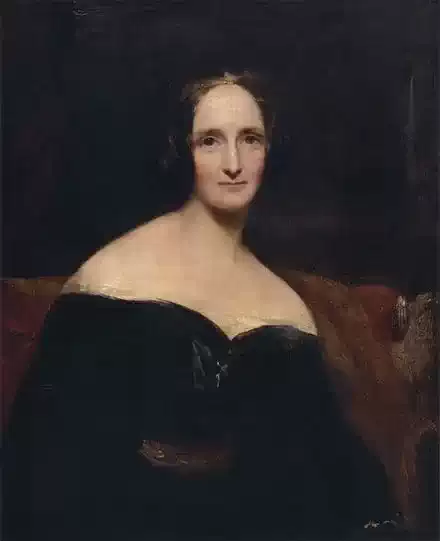
Percy Bysshe Shelley
Hellas
Hellas
THE world's great age begins anew,
The golden years return,
The earth doth like a snake renew
Her winter weeds outworn;
Heaven smiles, and faiths and empires gleam
Like wrecks of a dissolving dream.
A brighter Hellas rears its mountains
From waves serener far;
A new Peneus rolls his fountains
Against the morning star;
Where fairer Tempes bloom, there sleep
Young Cyclads on a sunnier deep.
A loftier Argo cleaves the main,
Fraught with a later prize;
Another Orpheus sings again,
And loves, and weeps, and dies;
A new Ulysses leaves once more
Calypso for his native shore.
O write no more the tale of Troy,
If earth Death's scroll must be--
Nor mix with Laian rage the joy
Which dawns upon the free,
Although a subtler Sphinx renew
Riddles of death Thebes never knew.
Another Athens shall arise,
And to remoter time
Bequeath, like sunset to the skies,
The splendour of its prime;
And leave, if naught so bright may live,
All earth can take or Heaven can give.
Saturn and Love their long repose
Shall burst, more bright and good
Than all who fell, than One who rose,
Than many unsubdued:
Not gold, not blood, their altar dowers,
But votive tears and symbol flowers.
O cease! must hate and death return?
Cease! must men kill and die?
Cease! drain not to its dregs the urn
Of bitter prophecy!
The world is weary of the past--
O might it die or rest at last!
THE world's great age begins anew,
The golden years return,
The earth doth like a snake renew
Her winter weeds outworn;
Heaven smiles, and faiths and empires gleam
Like wrecks of a dissolving dream.
A brighter Hellas rears its mountains
From waves serener far;
A new Peneus rolls his fountains
Against the morning star;
Where fairer Tempes bloom, there sleep
Young Cyclads on a sunnier deep.
A loftier Argo cleaves the main,
Fraught with a later prize;
Another Orpheus sings again,
And loves, and weeps, and dies;
A new Ulysses leaves once more
Calypso for his native shore.
O write no more the tale of Troy,
If earth Death's scroll must be--
Nor mix with Laian rage the joy
Which dawns upon the free,
Although a subtler Sphinx renew
Riddles of death Thebes never knew.
Another Athens shall arise,
And to remoter time
Bequeath, like sunset to the skies,
The splendour of its prime;
And leave, if naught so bright may live,
All earth can take or Heaven can give.
Saturn and Love their long repose
Shall burst, more bright and good
Than all who fell, than One who rose,
Than many unsubdued:
Not gold, not blood, their altar dowers,
But votive tears and symbol flowers.
O cease! must hate and death return?
Cease! must men kill and die?
Cease! drain not to its dregs the urn
Of bitter prophecy!
The world is weary of the past--
O might it die or rest at last!
523

Paul Laurence Dunbar
The Barrier
The Barrier
The Midnight wooed the Morning Star,
And prayed her: "Love come nearer;
Your swinging coldly there afar
To me but makes you dearer."
The Morning Star was pale with dole
As said she, low replying:
"Oh, lover mine, soul of my soul,
For you I too am sighing."
"But One ordained when we were born,
In spite of love's insistence,
That night might only view the Morn
Adoring at a distance."
But as she spoke, the jealous Sun
Across the heavens panted;
"Oh, whining fools," he cried, "have done,
Your wishes shall be granted."
He hurled his flaming lances far;
The twain stood unaffrighted,
And Midnight and the Morning Star
Lay down in death united.
The Midnight wooed the Morning Star,
And prayed her: "Love come nearer;
Your swinging coldly there afar
To me but makes you dearer."
The Morning Star was pale with dole
As said she, low replying:
"Oh, lover mine, soul of my soul,
For you I too am sighing."
"But One ordained when we were born,
In spite of love's insistence,
That night might only view the Morn
Adoring at a distance."
But as she spoke, the jealous Sun
Across the heavens panted;
"Oh, whining fools," he cried, "have done,
Your wishes shall be granted."
He hurled his flaming lances far;
The twain stood unaffrighted,
And Midnight and the Morning Star
Lay down in death united.
691
Paul Laurence Dunbar
Accountability
Accountability
FOLKS ain't got no right to censuah othah folks about dey habits;
Him dat giv' de squir'ls de bushtails made de bobtails fu' de rabbits.
Him dat built de gread big mountains hollered out de little valleys,
Him dat made de streets an' driveways wasn't shamed to make de alleys.
We is all constructed diff'ent, d'ain't no two of us de same;
We cain't he'p ouah likes an' dislikes, ef we'se bad we ain't to blame.
Ef we'se good, we need n't show off, case you bet it ain't ouah doin'
We gits into su'ttain channels dat we jes' cain't he'p pu'suin'.
But we all fits into places dat no othah ones could fill,
An' we does the things we has to, big er little, good er ill.
John cain't tek de place o' Henry, Su an' Sally ain't alike;
Bass ain't nuthin' like a suckah, chub ain't nuthin' like a pike.
When you come to think about it, how it's all planned out it's splendid.
Nuthin's done er evah happens, 'dout hit's somefin' dat's intended;
Don't keer whut you does, you has to, an' hit sholy beats de dickens,--
Viney, go put on de kittle, I got one o' mastah's chickens.
FOLKS ain't got no right to censuah othah folks about dey habits;
Him dat giv' de squir'ls de bushtails made de bobtails fu' de rabbits.
Him dat built de gread big mountains hollered out de little valleys,
Him dat made de streets an' driveways wasn't shamed to make de alleys.
We is all constructed diff'ent, d'ain't no two of us de same;
We cain't he'p ouah likes an' dislikes, ef we'se bad we ain't to blame.
Ef we'se good, we need n't show off, case you bet it ain't ouah doin'
We gits into su'ttain channels dat we jes' cain't he'p pu'suin'.
But we all fits into places dat no othah ones could fill,
An' we does the things we has to, big er little, good er ill.
John cain't tek de place o' Henry, Su an' Sally ain't alike;
Bass ain't nuthin' like a suckah, chub ain't nuthin' like a pike.
When you come to think about it, how it's all planned out it's splendid.
Nuthin's done er evah happens, 'dout hit's somefin' dat's intended;
Don't keer whut you does, you has to, an' hit sholy beats de dickens,--
Viney, go put on de kittle, I got one o' mastah's chickens.
472
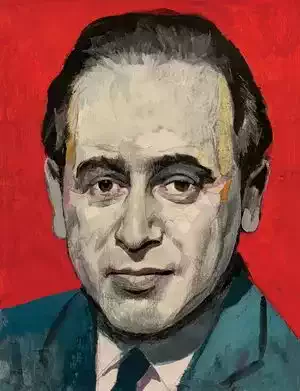
Paul Celan
The Poles
The Poles
The Poles
are within us,
insurmountable
while Awake,
we sleep across, to the Gate
of Mercy,
I lose you to you, that
is my Snow-Comfort,
say, that Jerusalem is,
say, as if I were this
your Whiteness,
as if you were
mine,
as if without us we could be we,
I open your leaves, forever,
you bless, you bed
us free.
The Poles
are within us,
insurmountable
while Awake,
we sleep across, to the Gate
of Mercy,
I lose you to you, that
is my Snow-Comfort,
say, that Jerusalem is,
say, as if I were this
your Whiteness,
as if you were
mine,
as if without us we could be we,
I open your leaves, forever,
you bless, you bed
us free.
442
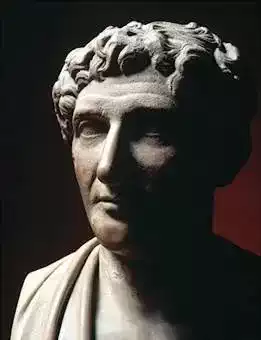
Ovídio
Metamorphoses: Book The Third
Metamorphoses: Book The Third
WHEN now Agenor had his daughter lost,
He sent his son to search on ev'ry coast;
And sternly bid him to his arms restore
The darling maid, or see his face no more,
But live an exile in a foreign clime;
Thus was the father pious to a crime.
The Story of The restless youth search'd all the world around;
of Cadmus But how can Jove in his amours be found?
When, tir'd at length with unsuccessful toil,
To shun his angry sire and native soil,
He goes a suppliant to the Delphick dome;
There asks the God what new appointed home
Should end his wand'rings, and his toils relieve.
The Delphick oracles this answer give.
"Behold among the fields a lonely cow,
Unworn with yokes, unbroken to the plow;
Mark well the place where first she lays her down,
There measure out thy walls, and build thy town,
And from thy guide Boeotia call the land,
In which the destin'd walls and town shall stand."
No sooner had he left the dark abode,
Big with the promise of the Delphick God,
When in the fields the fatal cow he view'd,
Nor gall'd with yokes, nor worn with servitude:
Her gently at a distance he pursu'd;
And as he walk'd aloof, in silence pray'd
To the great Pow'r whose counsels he obey'd.
Her way thro' flow'ry Panope she took,
And now, Cephisus, cross'd thy silver brook;
When to the Heav'ns her spacious front she rais'd,
And bellow'd thrice, then backward turning gaz'd
On those behind, 'till on the destin'd place
She stoop'd, and couch'd amid the rising grass.
Cadmus salutes the soil, and gladly hails
The new-found mountains, and the nameless vales,
And thanks the Gods, and turns about his eye
To see his new dominions round him lye;
Then sends his servants to a neighb'ring grove
For living streams, a sacrifice to Jove.
O'er the wide plain there rose a shady wood
Of aged trees; in its dark bosom stood
A bushy thicket, pathless and unworn,
O'er-run with brambles, and perplex'd with thorn:
Amidst the brake a hollow den was found,
With rocks and shelving arches vaulted round.
Deep in the dreary den, conceal'd from day,
Sacred to Mars, a mighty dragon lay,
Bloated with poison to a monstrous size;
Fire broke in flashes when he glanc'd his eyes:
His tow'ring crest was glorious to behold,
His shoulders and his sides were scal'd with gold;
Three tongues he brandish'd when he charg'd his
foes;
His teeth stood jaggy in three dreadful rowes.
The Tyrians in the den for water sought,
And with their urns explor'd the hollow vault:
From side to side their empty urns rebound,
And rowse the sleeping serpent with the sound.
Strait he bestirs him, and is seen to rise;
And now with dreadful hissings fills the skies,
And darts his forky tongues, and rowles his glaring
eyes.
The Tyrians drop their vessels in the fright,
All pale and trembling at the hideous sight.
Spire above spire uprear'd in air he stood,
And gazing round him over-look'd the wood:
Then floating on the ground in circles rowl'd;
Then leap'd upon them in a mighty fold.
Of such a bulk, and such a monstrous size
The serpent in the polar circle lyes,
That stretches over half the northern skies.
In vain the Tyrians on their arms rely,
In vain attempt to fight, in vain to fly:
All their endeavours and their hopes are vain;
Some die entangled in the winding train;
Some are devour'd, or feel a loathsom death,
Swoln up with blasts of pestilential breath.
And now the scorching sun was mounted high,
In all its lustre, to the noon-day sky;
When, anxious for his friends, and fill'd with
cares,
To search the woods th' impatient chief prepares.
A lion's hide around his loins he wore,
The well poiz'd javelin to the field he bore,
Inur'd to blood; the far-destroying dart;
And, the best weapon, an undaunted heart.
Soon as the youth approach'd the fatal place,
He saw his servants breathless on the grass;
The scaly foe amid their corps he view'd,
Basking at ease, and feasting in their blood.
"Such friends," he cries, "deserv'd a longer date;
But Cadmus will revenge or share their fate."
Then heav'd a stone, and rising to the throw,
He sent it in a whirlwind at the foe:
A tow'r, assaulted by so rude a stroke,
With all its lofty battlements had shook;
But nothing here th' unwieldy rock avails,
Rebounding harmless from the plaited scales,
That, firmly join'd, preserv'd him from a wound,
With native armour crusted all around.
With more success, the dart unerring flew,
Which at his back the raging warriour threw;
Amid the plaited scales it took its course,
And in the spinal marrow spent its force.
The monster hiss'd aloud, and rag'd in vain,
And writh'd his body to and fro with pain;
He bit the dart, and wrench'd the wood away;
The point still buried in the marrow lay.
And now his rage, increasing with his pain,
Reddens his eyes, and beats in ev'ry vein;
Churn'd in his teeth the foamy venom rose,
Whilst from his mouth a blast of vapours flows,
Such as th' infernal Stygian waters cast.
The plants around him wither in the blast.
Now in a maze of rings he lies enrowl'd,
Now all unravel'd, and without a fold;
Now, like a torrent, with a mighty force
Bears down the forest in his boist'rous course.
Cadmus gave back, and on the lion's spoil
Sustain'd the shock, then forc'd him to recoil;
The pointed jav'lin warded off his rage:
Mad with his pains, and furious to engage,
The serpent champs the steel, and bites the spear,
'Till blood and venom all the point besmear.
But still the hurt he yet receiv'd was slight;
For, whilst the champion with redoubled might
Strikes home the jav'lin, his retiring foe
Shrinks from the wound, and disappoints the blow.
The dauntless heroe still pursues his stroke,
And presses forward, 'till a knotty oak
Retards his foe, and stops him in the rear;
Full in his throat he plung'd the fatal spear,
That in th' extended neck a passage found,
And pierc'd the solid timber through the wound.
Fix'd to the reeling trunk, with many a stroke
Of his huge tail he lash'd the sturdy oak;
'Till spent with toil, and lab'ring hard for
breath,
He now lay twisting in the pangs of death.
Cadmus beheld him wallow in a flood
Of swimming poison, intermix'd with blood;
When suddenly a speech was heard from high
(The speech was heard, nor was the speaker nigh),
"Why dost thou thus with secret pleasure see,
Insulting man! what thou thy self shalt be?"
Astonish'd at the voice, he stood amaz'd,
And all around with inward horror gaz'd:
When Pallas swift descending from the skies,
Pallas, the guardian of the bold and wise,
Bids him plow up the field, and scatter round
The dragon's teeth o'er all the furrow'd ground;
Then tells the youth how to his wond'ring eyes
Embattled armies from the field should rise.
He sows the teeth at Pallas's command,
And flings the future people from his hand.
The clods grow warm, and crumble where he sows;
And now the pointed spears advance in rows;
Now nodding plumes appear, and shining crests,
Now the broad shoulders and the rising breasts;
O'er all the field the breathing harvest swarms,
A growing host, a crop of men and arms.
So through the parting stage a figure rears
Its body up, and limb by limb appears
By just degrees; 'till all the man arise,
And in his full proportion strikes the eyes.
Cadmus surpriz'd, and startled at the sight
Of his new foes, prepar'd himself for fight:
When one cry'd out, "Forbear, fond man, forbear
To mingle in a blind promiscuous war."
This said, he struck his brother to the ground,
Himself expiring by another's wound;
Nor did the third his conquest long survive,
Dying ere scarce he had begun to live.
The dire example ran through all the field,
'Till heaps of brothers were by brothers kill'd;
The furrows swam in blood: and only five
Of all the vast increase were left alive.
Echion one, at Pallas's command,
Let fall the guiltless weapon from his hand,
And with the rest a peaceful treaty makes,
Whom Cadmus as his friends and partners takes;
So founds a city on the promis'd earth,
And gives his new Boeotian empire birth.
Here Cadmus reign'd; and now one would have
guess'd
The royal founder in his exile blest:
Long did he live within his new abodes,
Ally'd by marriage to the deathless Gods;
And, in a fruitful wife's embraces old,
A long increase of children's children told:
But no frail man, however great or high,
Can be concluded blest before he die.
Actaeon was the first of all his race,
Who griev'd his grandsire in his borrow'd face;
Condemn'd by stern Diana to bemoan
The branching horns, and visage not his own;
To shun his once lov'd dogs, to bound away,
And from their huntsman to become their prey,
And yet consider why the change was wrought,
You'll find it his misfortune, not his fault;
Or, if a fault, it was the fault of chance:
For how can guilt proceed from ignorance?
The In a fair chace a shady mountain stood,
Transformation Well stor'd with game, and mark'd with trails of
of Actaeon blood;
into a Stag Here did the huntsmen, 'till the heat of day,
Pursue the stag, and load themselves with rey:
When thus Actaeon calling to the rest:
"My friends," said he, "our sport is at the best,
The sun is high advanc'd, and downward sheds
His burning beams directly on our heads;
Then by consent abstain from further spoils,
Call off the dogs, and gather up the toils,
And ere to-morrow's sun begins his race,
Take the cool morning to renew the chace."
They all consent, and in a chearful train
The jolly huntsmen, loaden with the slain,
Return in triumph from the sultry plain.
Down in a vale with pine and cypress clad,
Refresh'd with gentle winds, and brown with shade,
The chaste Diana's private haunt, there stood
Full in the centre of the darksome wood
A spacious grotto, all around o'er-grown
With hoary moss, and arch'd with pumice-stone.
From out its rocky clefts the waters flow,
And trickling swell into a lake below.
Nature had ev'ry where so plaid her part,
That ev'ry where she seem'd to vie with art.
Here the bright Goddess, toil'd and chaf'd with
heat,
Was wont to bathe her in the cool retreat.
Here did she now with all her train resort,
Panting with heat, and breathless from the sport;
Her armour-bearer laid her bow aside,
Some loos'd her sandals, some her veil unty'd;
Each busy nymph her proper part undrest;
While Crocale, more handy than the rest,
Gather'd her flowing hair, and in a noose
Bound it together, whilst her own hung loose.
Five of the more ignoble sort by turns
Fetch up the water, and unlade the urns.
Now all undrest the shining Goddess stood,
When young Actaeon, wilder'd in the wood,
To the cool grott by his hard fate betray'd,
The fountains fill'd with naked nymphs survey'd.
The frighted virgins shriek'd at the surprize
(The forest echo'd with their piercing cries).
Then in a huddle round their Goddess prest:
She, proudly eminent above the rest,
With blushes glow'd; such blushes as adorn
The ruddy welkin, or the purple morn;
And tho' the crowding nymphs her body hide,
Half backward shrunk, and view'd him from a side.
Surpriz'd, at first she would have snatch'd her
bow,
But sees the circling waters round her flow;
These in the hollow of her hand she took,
And dash'd 'em in his face, while thus she spoke:
"Tell, if thou can'st, the wond'rous sight
disclos'd,
A Goddess naked to thy view expos'd."
This said, the man begun to disappear
By slow degrees, and ended in a deer.
A rising horn on either brow he wears,
And stretches out his neck, and pricks his ears;
Rough is his skin, with sudden hairs o'er-grown,
His bosom pants with fears before unknown:
Transform'd at length, he flies away in haste,
And wonders why he flies away so fast.
But as by chance, within a neighb'ring brook,
He saw his branching horns and alter'd look.
Wretched Actaeon! in a doleful tone
He try'd to speak, but only gave a groan;
And as he wept, within the watry glass
He saw the big round drops, with silent pace,
Run trickling down a savage hairy face.
What should he do? Or seek his old abodes,
Or herd among the deer, and sculk in woods!
Here shame dissuades him, there his fear prevails,
And each by turns his aking heart assails.
As he thus ponders, he behind him spies
His op'ning hounds, and now he hears their cries:
A gen'rous pack, or to maintain the chace,
Or snuff the vapour from the scented grass.
He bounded off with fear, and swiftly ran
O'er craggy mountains, and the flow'ry plain;
Through brakes and thickets forc'd his way, and
flew
Through many a ring, where once he did pursue.
In vain he oft endeavour'd to proclaim
His new misfortune, and to tell his name;
Nor voice nor words the brutal tongue supplies;
From shouting men, and horns, and dogs he flies,
Deafen'd and stunn'd with their promiscuous cries.
When now the fleetest of the pack, that prest
Close at his heels, and sprung before the rest,
Had fasten'd on him, straight another pair,
Hung on his wounded haunch, and held him there,
'Till all the pack came up, and ev'ry hound
Tore the sad huntsman grov'ling on the ground,
Who now appear'd but one continu'd wound.
With dropping tears his bitter fate he moans,
And fills the mountain with his dying groans.
His servants with a piteous look he spies,
And turns about his supplicating eyes.
His servants, ignorant of what had chanc'd,
With eager haste and joyful shouts advanc'd,
And call'd their lord Actaeon to the game.
He shook his head in answer to the name;
He heard, but wish'd he had indeed been gone,
Or only to have stood a looker-on.
But to his grief he finds himself too near,
And feels his rav'nous dogs with fury tear
Their wretched master panting in a deer.
The Birth of Actaeon's suff'rings, and Diana's rage,
Bacchus Did all the thoughts of men and Gods engage;
Some call'd the evils which Diana wrought,
Too great, and disproportion'd to the fault:
Others again, esteem'd Actaeon's woes
Fit for a virgin Goddess to impose.
The hearers into diff'rent parts divide,
And reasons are produc'd on either side.
Juno alone, of all that heard the news,
Nor would condemn the Goddess, nor excuse:
She heeded not the justice of the deed,
But joy'd to see the race of Cadmus bleed;
For still she kept Europa in her mind,
And, for her sake, detested all her kind.
Besides, to aggravate her hate, she heard
How Semele, to Jove's embrace preferr'd,
Was now grown big with an immortal load,
And carry'd in her womb a future God.
Thus terribly incens'd, the Goddess broke
To sudden fury, and abruptly spoke.
"Are my reproaches of so small a force?
'Tis time I then pursue another course:
It is decreed the guilty wretch shall die,
If I'm indeed the mistress of the sky,
If rightly styl'd among the Pow'rs above
The wife and sister of the thund'ring Jove
(And none can sure a sister's right deny);
It is decreed the guilty wretch shall die.
She boasts an honour I can hardly claim,
Pregnant she rises to a mother's name;
While proud and vain she triumphs in her Jove,
And shows the glorious tokens of his love:
But if I'm still the mistress of the skies,
By her own lover the fond beauty dies."
This said, descending in a yellow cloud,
Before the gates of Semele she stood.
Old Beroe's decrepit shape she wears,
Her wrinkled visage, and her hoary hairs;
Whilst in her trembling gait she totters on,
And learns to tattle in the nurse's tone.
The Goddess, thus disguis'd in age, beguil'd
With pleasing stories her false foster-child.
Much did she talk of love, and when she came
To mention to the nymph her lover's name,
Fetching a sigh, and holding down her head,
"'Tis well," says she, "if all be true that's said.
But trust me, child, I'm much inclin'd to fear
Some counterfeit in this your Jupiter:
Many an honest well-designing maid
Has been by these pretended Gods betray'd,
But if he be indeed the thund'ring Jove,
Bid him, when next he courts the rites of love,
Descend triumphant from th' etherial sky,
In all the pomp of his divinity,
Encompass'd round by those celestial charms,
With which he fills th' immortal Juno's arms."
Th' unwary nymph, ensnar'd with what she said,
Desir'd of Jove, when next he sought her bed,
To grant a certain gift which she would chuse;
"Fear not," reply'd the God, "that I'll refuse
Whate'er you ask: may Styx confirm my voice,
Chuse what you will, and you shall have your
choice."
"Then," says the nymph, "when next you seek my
arms,
May you descend in those celestial charms,
With which your Juno's bosom you enflame,
And fill with transport Heav'n's immortal dame."
The God surpriz'd would fain have stopp'd her
voice,
But he had sworn, and she had made her choice.
To keep his promise he ascends, and shrowds
His awful brow in whirl-winds and in clouds;
Whilst all around, in terrible array,
His thunders rattle, and his light'nings play.
And yet, the dazling lustre to abate,
He set not out in all his pomp and state,
Clad in the mildest light'ning of the skies,
And arm'd with thunder of the smallest size:
Not those huge bolts, by which the giants slain
Lay overthrown on the Phlegrean plain.
'Twas of a lesser mould, and lighter weight;
They call it thunder of a second-rate,
For the rough Cyclops, who by Jove's command
Temper'd the bolt, and turn'd it to his hand,
Work'd up less flame and fury in its make,
And quench'd it sooner in the standing lake.
Thus dreadfully adorn'd, with horror bright,
Th' illustrious God, descending from his height,
Came rushing on her in a storm of light.
The mortal dame, too feeble to engage
The lightning's flashes, and the thunder's rage,
Consum'd amidst the glories she desir'd,
And in the terrible embrace expir'd.
But, to preserve his offspring from the tomb,
Jove took him smoaking from the blasted womb:
And, if on ancient tales we may rely,
Inclos'd th' abortive infant in his thigh.
Here when the babe had all his time fulfill'd,
Ino first took him for her foster-child;
Then the Niseans, in their dark abode,
Nurs'd secretly with milk the thriving God.
The 'Twas now, while these transactions past on
Transformation Earth,
of Tiresias And Bacchus thus procur'd a second birth,
When Jove, dispos'd to lay aside the weight
Of publick empire and the cares of state,
As to his queen in nectar bowls he quaff'd,
"In troth," says he, and as he spoke he laugh'd,
"The sense of pleasure in the male is far
More dull and dead, than what you females share."
Juno the truth of what was said deny'd;
Tiresias therefore must the cause decide,
For he the pleasure of each sex had try'd.
It happen'd once, within a shady wood,
Two twisted snakes he in conjunction view'd,
When with his staff their slimy folds he broke,
And lost his manhood at the fatal stroke.
But, after seven revolving years, he view'd
The self-same serpents in the self-same wood:
"And if," says he, "such virtue in you lye,
That he who dares your slimy folds untie
Must change his kind, a second stroke I'll try."
Again he struck the snakes, and stood again
New-sex'd, and strait recover'd into man.
Him therefore both the deities create
The sov'raign umpire, in their grand debate;
And he declar'd for Jove: when Juno fir'd,
More than so trivial an affair requir'd,
Depriv'd him, in her fury, of his sight,
And left him groping round in sudden night.
But Jove (for so it is in Heav'n decreed,
That no one God repeal another's deed)
Irradiates all his soul with inward light,
And with the prophet's art relieves the want of
sight.
The Fam'd far and near for knowing things to come,
Transformation From him th' enquiring nations sought their doom;
of Echo The fair Liriope his answers try'd,
And first th' unerring prophet justify'd.
This nymph the God Cephisus had abus'd,
With all his winding waters circumfus'd,
And on the Nereid got a lovely boy,
Whom the soft maids ev'n then beheld with joy.
The tender dame, sollicitous to know
Whether her child should reach old age or no,
Consults the sage Tiresias, who replies,
"If e'er he knows himself he surely dies."
Long liv'd the dubious mother in suspence,
'Till time unriddled all the prophet's sense.
Narcissus now his sixteenth year began,
Just turn'd of boy, and on the verge of man;
Many a friend the blooming youth caress'd,
Many a love-sick maid her flame confess'd:
Such was his pride, in vain the friend caress'd,
The love-sick maid in vain her flame confess'd.
Once, in the woods, as he pursu'd the chace,
The babbling Echo had descry'd his face;
She, who in others' words her silence breaks,
Nor speaks her self but when another speaks.
Echo was then a maid, of speech bereft,
Of wonted speech; for tho' her voice was left,
Juno a curse did on her tongue impose,
To sport with ev'ry sentence in the close.
Full often when the Goddess might have caught
Jove and her rivals in the very fault,
This nymph with subtle stories would delay
Her coming, 'till the lovers slip'd away.
The Goddess found out the deceit in time,
And then she cry'd, "That tongue, for this thy
crime,
Which could so many subtle tales produce,
Shall be hereafter but of little use."
Hence 'tis she prattles in a fainter tone,
With mimick sounds, and accents not her own.
This love-sick virgin, over-joy'd to find
The boy alone, still follow'd him behind:
When glowing warmly at her near approach,
As sulphur blazes at the taper's touch,
She long'd her hidden passion to reveal,
And tell her pains, but had not words to tell:
She can't begin, but waits for the rebound,
To catch his voice, and to return the sound.
The nymph, when nothing could Narcissus move,
Still dash'd with blushes for her slighted love,
Liv'd in the shady covert of the woods,
In solitary caves and dark abodes;
Where pining wander'd the rejected fair,
'Till harrass'd out, and worn away with care,
The sounding skeleton, of blood bereft,
Besides her bones and voice had nothing left.
Her bones are petrify'd, her voice is found
In vaults, where still it doubles ev'ry sound.
The Story of Thus did the nymphs in vain caress the boy,
Narcissus He still was lovely, but he still was coy;
When one fair virgin of the slighted train
Thus pray'd the Gods, provok'd by his disdain,
"Oh may he love like me, and love like me in vain!"
Rhamnusia pity'd the neglected fair,
And with just vengeance answer'd to her pray'r.
There stands a fountain in a darksom wood,
Nor stain'd with falling leaves nor rising mud;
Untroubled by the breath of winds it rests,
Unsully'd by the touch of men or beasts;
High bow'rs of shady trees above it grow,
And rising grass and chearful greens below.
Pleas'd with the form and coolness of the place,
And over-heated by the morning chace,
Narcissus on the grassie verdure lyes:
But whilst within the chrystal fount he tries
To quench his heat, he feels new heats arise.
For as his own bright image he survey'd,
He fell in love with the fantastick shade;
And o'er the fair resemblance hung unmov'd,
Nor knew, fond youth! it was himself he lov'd.
The well-turn'd neck and shoulders he descries,
The spacious forehead, and the sparkling eyes;
The hands that Bacchus might not scorn to show,
And hair that round Apollo's head might flow;
With all the purple youthfulness of face,
That gently blushes in the wat'ry glass.
By his own flames consum'd the lover lyes,
And gives himself the wound by which he dies.
To the cold water oft he joins his lips,
Oft catching at the beauteous shade he dips
His arms, as often from himself he slips.
Nor knows he who it is his arms pursue
With eager clasps, but loves he knows not who.
What could, fond youth, this helpless passion
move?
What kindled in thee this unpity'd love?
Thy own warm blush within the water glows,
With thee the colour'd shadow comes and goes,
Its empty being on thy self relies;
Step thou aside, and the frail charmer dies.
Still o'er the fountain's wat'ry gleam he stood,
Mindless of sleep, and negligent of food;
Still view'd his face, and languish'd as he view'd.
At length he rais'd his head, and thus began
To vent his griefs, and tell the woods his pain.
"You trees," says he, "and thou surrounding grove,
Who oft have been the kindly scenes of love,
Tell me, if e'er within your shades did lye
A youth so tortur'd, so perplex'd as I?
I, who before me see the charming fair,
Whilst there he stands, and yet he stands not
there:
In such a maze of love my thoughts are lost:
And yet no bulwark'd town, nor distant coast,
Preserves the beauteous youth from being seen,
No mountains rise, nor oceans flow between.
A shallow water hinders my embrace;
And yet the lovely mimick wears a face
That kindly smiles, and when I bend to join
My lips to his, he fondly bends to mine.
Hear, gentle youth, and pity my complaint,
Come from thy well, thou fair inhabitant.
My charms an easy conquest have obtain'd
O'er other hearts, by thee alone disdain'd.
But why should I despair? I'm sure he burns
With equal flames, and languishes by turns.
When-e'er I stoop, he offers at a kiss,
And when my arms I stretch, he stretches his.
His eye with pleasure on my face he keeps,
He smiles my smiles, and when I weep he weeps.
When e'er I speak, his moving lips appear
To utter something, which I cannot hear.
"Ah wretched me! I now begin too late
To find out all the long-perplex'd deceit;
It is my self I love, my self I see;
The gay delusion is a part of me.
I kindle up the fires by which I burn,
And my own beauties from the well return.
Whom should I court? how utter my complaint?
Enjoyment but produces my restraint,
And too much plenty makes me die for want.
How gladly would I from my self remove!
And at a distance set the thing I love.
My breast is warm'd with such unusual fire,
I wish him absent whom I most desire.
And now I faint with grief; my fate draws nigh;
In all the pride of blooming youth I die.
Death will the sorrows of my heart relieve.
Oh might the visionary youth survive,
I should with joy my latest breath resign!
But oh! I see his fate involv'd in mine."
This said, the weeping youth again return'd
To the clear fountain, where again he burn'd;
His tears defac'd the surface of the well,
With circle after circle, as they fell:
And now the lovely face but half appears,
O'er-run with wrinkles, and deform'd with tears.
"Ah whither," cries Narcissus, "dost thou fly?
Let me still feed the flame by which I die;
Let me still see, tho' I'm no further blest."
Then rends his garment off, and beats his breast:
His naked bosom redden'd with the blow,
In such a blush as purple clusters show,
Ere yet the sun's autumnal heats refine
Their sprightly juice, and mellow it to wine.
The glowing beauties of his breast he spies,
And with a new redoubled passion dies.
As wax dissolves, as ice begins to run,
And trickle into drops before the sun;
So melts the youth, and languishes away,
His beauty withers, and his limbs decay;
And none of those attractive charms remain,
To which the slighted Echo su'd in vain.
She saw him in his present misery,
Whom, spight of all her wrongs, she griev'd to see.
She answer'd sadly to the lover's moan,
Sigh'd back his sighs, and groan'd to ev'ry groan:
"Ah youth! belov'd in vain," Narcissus cries;
"Ah youth! belov'd in vain," the nymph replies.
"Farewel," says he; the parting sound scarce fell
From his faint lips, but she reply'd, "farewel."
Then on th' wholsome earth he gasping lyes,
'Till death shuts up those self-admiring eyes.
To the cold shades his flitting ghost retires,
And in the Stygian waves it self admires.
For him the Naiads and the Dryads mourn,
Whom the sad Echo answers in her turn;
And now the sister-nymphs prepare his urn:
When, looking for his corps, they only found
A rising stalk, with yellow blossoms crown'd.
The Story of This sad event gave blind Tiresias fame,
Pentheus Through Greece establish'd in a prophet's name.
Th' unhallow'd Pentheus only durst deride
The cheated people, and their eyeless guide.
To whom the prophet in his fury said,
Shaking the hoary honours of his head:
"'Twere well, presumptuous man, 'twere well for
thee
If thou wert eyeless too, and blind, like me:
For the time comes, nay, 'tis already here,
When the young God's solemnities appear:
Which, if thou dost not with just rites adorn,
Thy impious carcass, into pieces torn,
Shall strew the woods, and hang on ev'ry thorn.
Then, then, remember what I now foretel,
And own the blind Tiresias saw too well."
Still Pentheus scorns him, and derides his skill;
But time did all the prophet's threats fulfil.
For now through prostrate Greece young Bacchus
rode,
Whilst howling matrons celebrate the God:
All ranks and sexes to his Orgies ran,
To mingle in the pomps, and fill the train.
When Pentheus thus his wicked rage express'd:
"What madness, Thebans, has your souls possess'd?
Can hollow timbrels, can a drunken shout,
And the lewd clamours of a beastly rout,
Thus quell your courage; can the weak alarm
Of women's yells those stubborn souls disarm,
Whom nor the sword nor trumpet e'er could fright,
Nor the loud din and horror of a fight?
And you, our sires, who left your old abodes,
And fix'd in foreign earth your country Gods;
Will you without a stroak your city yield,
And poorly quit an undisputed field?
But you, whose youth and vigour should inspire
Heroick warmth, and kindle martial fire,
Whom burnish'd arms and crested helmets grace,
Not flow'ry garlands and a painted face;
Remember him to whom you stand ally'd:
The serpent for his well of waters dy'd.
He fought the strong; do you his courage show,
And gain a conquest o'er a feeble foe.
If Thebes must fall, oh might the fates afford
A nobler doom from famine, fire, or sword.
Then might the Thebans perish with renown:
But now a beardless victor sacks the town;
Whom nor the prancing steed, nor pond'rous shield,
Nor the hack'd helmet, nor the dusty field,
But the soft joys of luxury and ease,
The purple vests, and flow'ry garlands please.
Stand then aside, I'll make the counterfeit
Renounce his god-head, and confess the cheat.
Acrisius from the Grecian walls repell'd
This boasted pow'r; why then should Pentheus yield?
Go quickly drag th' impostor boy to me;
I'll try the force of his divinity."
Thus did th' audacious wretch those rites profane;
His friends dissuade th' audacious wretch in vain:
In vain his grandsire urg'd him to give o'er
His impious threats; the wretch but raves the more.
So have I seen a river gently glide,
In a smooth course, and inoffensive tide;
But if with dams its current we restrain,
It bears down all, and foams along the plain.
But now his servants came besmear'd with blood,
Sent by their haughty prince to seize the God;
The God they found not in the frantick throng,
But dragg'd a zealous votary along.
The Mariners Him Pentheus view'd with fury in his look,
transform'd to And scarce with-held his hands, whilst thus he
Dolphins spoke:
"Vile slave! whom speedy vengeance shall pursue,
And terrify thy base seditious crew:
Thy country and thy parentage reveal,
And, why thou joinest in these mad Orgies, tell."
The captive views him with undaunted eyes,
And, arm'd with inward innocence, replies,
"From high Meonia's rocky shores I came,
Of poor descent, Acoetes is my name:
My sire was meanly born; no oxen plow'd
His fruitful fields, nor in his pastures low'd.
His whole estate within the waters lay;
With lines and hooks he caught the finny prey,
His art was all his livelyhood; which he
Thus with his dying lips bequeath'd to me:
In streams, my boy, and rivers take thy chance;
There swims, said he, thy whole inheritance.
Long did I live on this poor legacy;
'Till tir'd with rocks, and my old native sky,
To arts of navigation I inclin'd;
Observ'd the turns and changes of the wind,
Learn'd the fit havens, and began to note
The stormy Hyades, the rainy Goat,
The bright Taygete, and the shining Bears,
With all the sailor's catalogue of stars.
"Once, as by chance for Delos I design'd,
My vessel, driv'n by a strong gust of wind,
Moor'd in a Chian Creek; a-shore I went,
And all the following night in Chios spent.
When morning rose, I sent my mates to bring
Supplies of water from a neighb'ring spring,
Whilst I the motion of the winds explor'd;
Then summon'd in my crew, and went aboard.
Opheltes heard my summons, and with joy
Brought to the shore a soft and lovely boy,
With more than female sweetness in his look,
Whom straggling in the neighb'ring fields he took.
With fumes of wine the little captive glows,
And nods with sleep, and staggers as he goes.
"I view'd him nicely, and began to trace
Each heav'nly feature, each immortal grace,
And saw divinity in all his face,
I know not who, said I, this God should be;
But that he is a God I plainly see:
And thou, who-e'er thou art, excuse the force
These men have us'd; and oh befriend our course!
Pray not for us, the nimble Dictys cry'd,
Dictys, that could the main-top mast bestride,
And down the ropes with active vigour slide.
To the same purpose old Epopeus spoke,
Who over-look'd the oars, and tim'd the stroke;
The same the pilot, and the same the rest;
Such impious avarice their souls possest.
Nay, Heav'n forbid that I should bear away
Within my vessel so divine a prey,
Said I; and stood to hinder their intent:
When Lycabas, a wretch for murder sent
From Tuscany, to suffer banishment,
With his clench'd fist had struck me over-board,
Had not my hands in falling grasp'd a cord.
"His base confederates the fact approve;
When Bacchus (for 'twas he) begun to move,
Wak'd by the noise and clamours which they rais'd;
And shook his drowsie limbs, and round him gaz'd:
What means this noise? he cries; am I betray'd?
Ah, whither, whither must I be convey'd?
Fear not, said Proreus, child, but tell us where
You wish to land, and trust our friendly care.
To Naxos then direct your course, said he;
Naxos a hospitable port shall be
To each of you, a joyful home to me.
By ev'ry God, that rules the sea or sky,
The perjur'd villains promise to comply,
And bid me hasten to unmoor the ship.
With eager joy I launch into the deep;
And, heedless of the fraud, for Naxos stand.
They whisper oft, and beckon with the hand,
And give me signs, all anxious for their prey,
To tack about, and steer another way.
Then let some other to my post succeed,
Said I, I'm guiltless of so foul a deed.
What, says Ethalion, must the ship's whole crew
Follow your humour, and depend on you?
And strait himself he seated at the prore,
And tack'd about, and sought another shore.
"The beauteous youth now found himself betray'd,
And from the deck the rising waves survey'd,
And seem'd to weep, and as he wept he said:
And do you thus my easy faith beguile?
Thus do you bear me to my native isle?
Will such a multitude of men employ
Their strength against a weak defenceless boy?
"In vain did I the God-like youth deplore,
The more I begg'd, they thwarted me the more.
And now by all the Gods in Heav'n that hear
This solemn oath, by Bacchus' self, I swear,
The mighty miracle that did ensue,
Although it seems beyond belief, is true.
The vessel, fix'd and rooted in the flood,
Unmov'd by all the beating billows stood.
In vain the mariners would plow the main
With sails unfurl'd, and strike their oars in vain;
Around their oars a twining ivy cleaves,
And climbs the mast, and hides the cords in leaves:
The sails are cover'd with a chearful green,
And berries in the fruitful canvass seen.
Amidst the waves a sudden forest rears
Its verdant head, and a new Spring appears.
"The God we now behold with open'd eyes;
A herd of spotted panthers round him lyes
In glaring forms; the grapy clusters spread
On his fair brows, and dangle on his head.
And whilst he frowns, and brandishes his spear,
My mates surpriz'd with madness or with fear,
Leap'd over board; first perjur'd Madon found
Rough scales and fins his stiff'ning sides
surround;
Ah what, cries one, has thus transform'd thy look?
Strait his own mouth grew wider as he spoke;
And now himself he views with like surprize.
Still at his oar th' industrious Libys plies;
But, as he plies, each busy arm shrinks in,
And by degrees is fashion'd to a fin.
Another, as he catches at a cord,
Misses his arms, and, tumbling over-board,
With his broad fins and forky tail he laves
The rising surge, and flounces in the waves.
Thus all my crew transform'd around the ship,
Or dive below, or on the surface leap,
And spout the waves, and wanton in the deep.
Full nineteen sailors did the ship convey,
A shole of nineteen dolphins round her play.
I only in my proper shape appear,
Speechless with wonder, and half dead with fear,
'Till Bacchus kindly bid me fear no more.
With him I landed on the Chian shore,
And him shall ever gratefully adore."
"This forging slave," says Pentheus, "would
prevail
O'er our just fury by a far-fetch'd tale:
Go, let him feel the whips, the swords, the fire,
And in the tortures of the rack expire."
Th' officious servants hurry him away,
And the poor captive in a dungeon lay.
But, whilst the whips and tortures are prepar'd,
The gates fly open, of themselves unbarr'd;
At liberty th' unfetter'd captive stands,
And flings the loosen'd shackles from his hands.
The Death of But Pentheus, grown more furious than before,
Pentheus Resolv'd to send his messengers no more,
But went himself to the distracted throng,
Where high Cithaeron echo'd with their song.
And as the fiery war-horse paws the ground,
And snorts and trembles at the trumpet's sound;
Transported thus he heard the frantick rout,
And rav'd and madden'd at the distant shout.
A spacious circuit on the hill there stood.
Level and wide, and skirted round with wood;
Here the rash Pentheus, with unhallow'd eyes,
The howling dames and mystick Orgies spies.
His mother sternly view'd him where he stood,
And kindled into madness as she view'd:
Her leafy jav'lin at her son she cast,
And cries, "The boar that lays our country waste!
The boar, my sisters! Aim the fatal dart,
And strike the brindled monster to the heart."
Pentheus astonish'd heard the dismal sound,
And sees the yelling matrons gath'ring round;
He sees, and weeps at his approaching fate,
And begs for mercy, and repents too late.
"Help, help! my aunt Autonoe," he cry'd;
"Remember, how your own Actaeon dy'd."
Deaf to his cries, the frantick matron crops
One stretch'd-out arm, the other Ino lops.
In vain does Pentheus to his mother sue,
And the raw bleeding stumps presents to view:
His mother howl'd; and, heedless of his pray'r,
Her trembling hand she twisted in his hair,
"And this," she cry'd, "shall be Agave's share,"
When from the neck his struggling head she tore,
And in her hands the ghastly visage bore.
With pleasure all the hideous trunk survey;
Then pull'd and tore the mangled limbs away,
As starting in the pangs of death it lay,
Soon as the wood its leafy honours casts,
Blown off and scatter'd by autumnal blasts,
With such a sudden death lay Pentheus slain,
And in a thousand pieces strow'd the plain.
By so distinguishing a judgment aw'd,
The Thebans tremble, and confess the God.
The End of the Third Book.
Translated into English verse under the direction of
Sir Samuel Garth by John Dryden, Alexander Pope, Joseph Addison,
William Congreve and other eminent hands
WHEN now Agenor had his daughter lost,
He sent his son to search on ev'ry coast;
And sternly bid him to his arms restore
The darling maid, or see his face no more,
But live an exile in a foreign clime;
Thus was the father pious to a crime.
The Story of The restless youth search'd all the world around;
of Cadmus But how can Jove in his amours be found?
When, tir'd at length with unsuccessful toil,
To shun his angry sire and native soil,
He goes a suppliant to the Delphick dome;
There asks the God what new appointed home
Should end his wand'rings, and his toils relieve.
The Delphick oracles this answer give.
"Behold among the fields a lonely cow,
Unworn with yokes, unbroken to the plow;
Mark well the place where first she lays her down,
There measure out thy walls, and build thy town,
And from thy guide Boeotia call the land,
In which the destin'd walls and town shall stand."
No sooner had he left the dark abode,
Big with the promise of the Delphick God,
When in the fields the fatal cow he view'd,
Nor gall'd with yokes, nor worn with servitude:
Her gently at a distance he pursu'd;
And as he walk'd aloof, in silence pray'd
To the great Pow'r whose counsels he obey'd.
Her way thro' flow'ry Panope she took,
And now, Cephisus, cross'd thy silver brook;
When to the Heav'ns her spacious front she rais'd,
And bellow'd thrice, then backward turning gaz'd
On those behind, 'till on the destin'd place
She stoop'd, and couch'd amid the rising grass.
Cadmus salutes the soil, and gladly hails
The new-found mountains, and the nameless vales,
And thanks the Gods, and turns about his eye
To see his new dominions round him lye;
Then sends his servants to a neighb'ring grove
For living streams, a sacrifice to Jove.
O'er the wide plain there rose a shady wood
Of aged trees; in its dark bosom stood
A bushy thicket, pathless and unworn,
O'er-run with brambles, and perplex'd with thorn:
Amidst the brake a hollow den was found,
With rocks and shelving arches vaulted round.
Deep in the dreary den, conceal'd from day,
Sacred to Mars, a mighty dragon lay,
Bloated with poison to a monstrous size;
Fire broke in flashes when he glanc'd his eyes:
His tow'ring crest was glorious to behold,
His shoulders and his sides were scal'd with gold;
Three tongues he brandish'd when he charg'd his
foes;
His teeth stood jaggy in three dreadful rowes.
The Tyrians in the den for water sought,
And with their urns explor'd the hollow vault:
From side to side their empty urns rebound,
And rowse the sleeping serpent with the sound.
Strait he bestirs him, and is seen to rise;
And now with dreadful hissings fills the skies,
And darts his forky tongues, and rowles his glaring
eyes.
The Tyrians drop their vessels in the fright,
All pale and trembling at the hideous sight.
Spire above spire uprear'd in air he stood,
And gazing round him over-look'd the wood:
Then floating on the ground in circles rowl'd;
Then leap'd upon them in a mighty fold.
Of such a bulk, and such a monstrous size
The serpent in the polar circle lyes,
That stretches over half the northern skies.
In vain the Tyrians on their arms rely,
In vain attempt to fight, in vain to fly:
All their endeavours and their hopes are vain;
Some die entangled in the winding train;
Some are devour'd, or feel a loathsom death,
Swoln up with blasts of pestilential breath.
And now the scorching sun was mounted high,
In all its lustre, to the noon-day sky;
When, anxious for his friends, and fill'd with
cares,
To search the woods th' impatient chief prepares.
A lion's hide around his loins he wore,
The well poiz'd javelin to the field he bore,
Inur'd to blood; the far-destroying dart;
And, the best weapon, an undaunted heart.
Soon as the youth approach'd the fatal place,
He saw his servants breathless on the grass;
The scaly foe amid their corps he view'd,
Basking at ease, and feasting in their blood.
"Such friends," he cries, "deserv'd a longer date;
But Cadmus will revenge or share their fate."
Then heav'd a stone, and rising to the throw,
He sent it in a whirlwind at the foe:
A tow'r, assaulted by so rude a stroke,
With all its lofty battlements had shook;
But nothing here th' unwieldy rock avails,
Rebounding harmless from the plaited scales,
That, firmly join'd, preserv'd him from a wound,
With native armour crusted all around.
With more success, the dart unerring flew,
Which at his back the raging warriour threw;
Amid the plaited scales it took its course,
And in the spinal marrow spent its force.
The monster hiss'd aloud, and rag'd in vain,
And writh'd his body to and fro with pain;
He bit the dart, and wrench'd the wood away;
The point still buried in the marrow lay.
And now his rage, increasing with his pain,
Reddens his eyes, and beats in ev'ry vein;
Churn'd in his teeth the foamy venom rose,
Whilst from his mouth a blast of vapours flows,
Such as th' infernal Stygian waters cast.
The plants around him wither in the blast.
Now in a maze of rings he lies enrowl'd,
Now all unravel'd, and without a fold;
Now, like a torrent, with a mighty force
Bears down the forest in his boist'rous course.
Cadmus gave back, and on the lion's spoil
Sustain'd the shock, then forc'd him to recoil;
The pointed jav'lin warded off his rage:
Mad with his pains, and furious to engage,
The serpent champs the steel, and bites the spear,
'Till blood and venom all the point besmear.
But still the hurt he yet receiv'd was slight;
For, whilst the champion with redoubled might
Strikes home the jav'lin, his retiring foe
Shrinks from the wound, and disappoints the blow.
The dauntless heroe still pursues his stroke,
And presses forward, 'till a knotty oak
Retards his foe, and stops him in the rear;
Full in his throat he plung'd the fatal spear,
That in th' extended neck a passage found,
And pierc'd the solid timber through the wound.
Fix'd to the reeling trunk, with many a stroke
Of his huge tail he lash'd the sturdy oak;
'Till spent with toil, and lab'ring hard for
breath,
He now lay twisting in the pangs of death.
Cadmus beheld him wallow in a flood
Of swimming poison, intermix'd with blood;
When suddenly a speech was heard from high
(The speech was heard, nor was the speaker nigh),
"Why dost thou thus with secret pleasure see,
Insulting man! what thou thy self shalt be?"
Astonish'd at the voice, he stood amaz'd,
And all around with inward horror gaz'd:
When Pallas swift descending from the skies,
Pallas, the guardian of the bold and wise,
Bids him plow up the field, and scatter round
The dragon's teeth o'er all the furrow'd ground;
Then tells the youth how to his wond'ring eyes
Embattled armies from the field should rise.
He sows the teeth at Pallas's command,
And flings the future people from his hand.
The clods grow warm, and crumble where he sows;
And now the pointed spears advance in rows;
Now nodding plumes appear, and shining crests,
Now the broad shoulders and the rising breasts;
O'er all the field the breathing harvest swarms,
A growing host, a crop of men and arms.
So through the parting stage a figure rears
Its body up, and limb by limb appears
By just degrees; 'till all the man arise,
And in his full proportion strikes the eyes.
Cadmus surpriz'd, and startled at the sight
Of his new foes, prepar'd himself for fight:
When one cry'd out, "Forbear, fond man, forbear
To mingle in a blind promiscuous war."
This said, he struck his brother to the ground,
Himself expiring by another's wound;
Nor did the third his conquest long survive,
Dying ere scarce he had begun to live.
The dire example ran through all the field,
'Till heaps of brothers were by brothers kill'd;
The furrows swam in blood: and only five
Of all the vast increase were left alive.
Echion one, at Pallas's command,
Let fall the guiltless weapon from his hand,
And with the rest a peaceful treaty makes,
Whom Cadmus as his friends and partners takes;
So founds a city on the promis'd earth,
And gives his new Boeotian empire birth.
Here Cadmus reign'd; and now one would have
guess'd
The royal founder in his exile blest:
Long did he live within his new abodes,
Ally'd by marriage to the deathless Gods;
And, in a fruitful wife's embraces old,
A long increase of children's children told:
But no frail man, however great or high,
Can be concluded blest before he die.
Actaeon was the first of all his race,
Who griev'd his grandsire in his borrow'd face;
Condemn'd by stern Diana to bemoan
The branching horns, and visage not his own;
To shun his once lov'd dogs, to bound away,
And from their huntsman to become their prey,
And yet consider why the change was wrought,
You'll find it his misfortune, not his fault;
Or, if a fault, it was the fault of chance:
For how can guilt proceed from ignorance?
The In a fair chace a shady mountain stood,
Transformation Well stor'd with game, and mark'd with trails of
of Actaeon blood;
into a Stag Here did the huntsmen, 'till the heat of day,
Pursue the stag, and load themselves with rey:
When thus Actaeon calling to the rest:
"My friends," said he, "our sport is at the best,
The sun is high advanc'd, and downward sheds
His burning beams directly on our heads;
Then by consent abstain from further spoils,
Call off the dogs, and gather up the toils,
And ere to-morrow's sun begins his race,
Take the cool morning to renew the chace."
They all consent, and in a chearful train
The jolly huntsmen, loaden with the slain,
Return in triumph from the sultry plain.
Down in a vale with pine and cypress clad,
Refresh'd with gentle winds, and brown with shade,
The chaste Diana's private haunt, there stood
Full in the centre of the darksome wood
A spacious grotto, all around o'er-grown
With hoary moss, and arch'd with pumice-stone.
From out its rocky clefts the waters flow,
And trickling swell into a lake below.
Nature had ev'ry where so plaid her part,
That ev'ry where she seem'd to vie with art.
Here the bright Goddess, toil'd and chaf'd with
heat,
Was wont to bathe her in the cool retreat.
Here did she now with all her train resort,
Panting with heat, and breathless from the sport;
Her armour-bearer laid her bow aside,
Some loos'd her sandals, some her veil unty'd;
Each busy nymph her proper part undrest;
While Crocale, more handy than the rest,
Gather'd her flowing hair, and in a noose
Bound it together, whilst her own hung loose.
Five of the more ignoble sort by turns
Fetch up the water, and unlade the urns.
Now all undrest the shining Goddess stood,
When young Actaeon, wilder'd in the wood,
To the cool grott by his hard fate betray'd,
The fountains fill'd with naked nymphs survey'd.
The frighted virgins shriek'd at the surprize
(The forest echo'd with their piercing cries).
Then in a huddle round their Goddess prest:
She, proudly eminent above the rest,
With blushes glow'd; such blushes as adorn
The ruddy welkin, or the purple morn;
And tho' the crowding nymphs her body hide,
Half backward shrunk, and view'd him from a side.
Surpriz'd, at first she would have snatch'd her
bow,
But sees the circling waters round her flow;
These in the hollow of her hand she took,
And dash'd 'em in his face, while thus she spoke:
"Tell, if thou can'st, the wond'rous sight
disclos'd,
A Goddess naked to thy view expos'd."
This said, the man begun to disappear
By slow degrees, and ended in a deer.
A rising horn on either brow he wears,
And stretches out his neck, and pricks his ears;
Rough is his skin, with sudden hairs o'er-grown,
His bosom pants with fears before unknown:
Transform'd at length, he flies away in haste,
And wonders why he flies away so fast.
But as by chance, within a neighb'ring brook,
He saw his branching horns and alter'd look.
Wretched Actaeon! in a doleful tone
He try'd to speak, but only gave a groan;
And as he wept, within the watry glass
He saw the big round drops, with silent pace,
Run trickling down a savage hairy face.
What should he do? Or seek his old abodes,
Or herd among the deer, and sculk in woods!
Here shame dissuades him, there his fear prevails,
And each by turns his aking heart assails.
As he thus ponders, he behind him spies
His op'ning hounds, and now he hears their cries:
A gen'rous pack, or to maintain the chace,
Or snuff the vapour from the scented grass.
He bounded off with fear, and swiftly ran
O'er craggy mountains, and the flow'ry plain;
Through brakes and thickets forc'd his way, and
flew
Through many a ring, where once he did pursue.
In vain he oft endeavour'd to proclaim
His new misfortune, and to tell his name;
Nor voice nor words the brutal tongue supplies;
From shouting men, and horns, and dogs he flies,
Deafen'd and stunn'd with their promiscuous cries.
When now the fleetest of the pack, that prest
Close at his heels, and sprung before the rest,
Had fasten'd on him, straight another pair,
Hung on his wounded haunch, and held him there,
'Till all the pack came up, and ev'ry hound
Tore the sad huntsman grov'ling on the ground,
Who now appear'd but one continu'd wound.
With dropping tears his bitter fate he moans,
And fills the mountain with his dying groans.
His servants with a piteous look he spies,
And turns about his supplicating eyes.
His servants, ignorant of what had chanc'd,
With eager haste and joyful shouts advanc'd,
And call'd their lord Actaeon to the game.
He shook his head in answer to the name;
He heard, but wish'd he had indeed been gone,
Or only to have stood a looker-on.
But to his grief he finds himself too near,
And feels his rav'nous dogs with fury tear
Their wretched master panting in a deer.
The Birth of Actaeon's suff'rings, and Diana's rage,
Bacchus Did all the thoughts of men and Gods engage;
Some call'd the evils which Diana wrought,
Too great, and disproportion'd to the fault:
Others again, esteem'd Actaeon's woes
Fit for a virgin Goddess to impose.
The hearers into diff'rent parts divide,
And reasons are produc'd on either side.
Juno alone, of all that heard the news,
Nor would condemn the Goddess, nor excuse:
She heeded not the justice of the deed,
But joy'd to see the race of Cadmus bleed;
For still she kept Europa in her mind,
And, for her sake, detested all her kind.
Besides, to aggravate her hate, she heard
How Semele, to Jove's embrace preferr'd,
Was now grown big with an immortal load,
And carry'd in her womb a future God.
Thus terribly incens'd, the Goddess broke
To sudden fury, and abruptly spoke.
"Are my reproaches of so small a force?
'Tis time I then pursue another course:
It is decreed the guilty wretch shall die,
If I'm indeed the mistress of the sky,
If rightly styl'd among the Pow'rs above
The wife and sister of the thund'ring Jove
(And none can sure a sister's right deny);
It is decreed the guilty wretch shall die.
She boasts an honour I can hardly claim,
Pregnant she rises to a mother's name;
While proud and vain she triumphs in her Jove,
And shows the glorious tokens of his love:
But if I'm still the mistress of the skies,
By her own lover the fond beauty dies."
This said, descending in a yellow cloud,
Before the gates of Semele she stood.
Old Beroe's decrepit shape she wears,
Her wrinkled visage, and her hoary hairs;
Whilst in her trembling gait she totters on,
And learns to tattle in the nurse's tone.
The Goddess, thus disguis'd in age, beguil'd
With pleasing stories her false foster-child.
Much did she talk of love, and when she came
To mention to the nymph her lover's name,
Fetching a sigh, and holding down her head,
"'Tis well," says she, "if all be true that's said.
But trust me, child, I'm much inclin'd to fear
Some counterfeit in this your Jupiter:
Many an honest well-designing maid
Has been by these pretended Gods betray'd,
But if he be indeed the thund'ring Jove,
Bid him, when next he courts the rites of love,
Descend triumphant from th' etherial sky,
In all the pomp of his divinity,
Encompass'd round by those celestial charms,
With which he fills th' immortal Juno's arms."
Th' unwary nymph, ensnar'd with what she said,
Desir'd of Jove, when next he sought her bed,
To grant a certain gift which she would chuse;
"Fear not," reply'd the God, "that I'll refuse
Whate'er you ask: may Styx confirm my voice,
Chuse what you will, and you shall have your
choice."
"Then," says the nymph, "when next you seek my
arms,
May you descend in those celestial charms,
With which your Juno's bosom you enflame,
And fill with transport Heav'n's immortal dame."
The God surpriz'd would fain have stopp'd her
voice,
But he had sworn, and she had made her choice.
To keep his promise he ascends, and shrowds
His awful brow in whirl-winds and in clouds;
Whilst all around, in terrible array,
His thunders rattle, and his light'nings play.
And yet, the dazling lustre to abate,
He set not out in all his pomp and state,
Clad in the mildest light'ning of the skies,
And arm'd with thunder of the smallest size:
Not those huge bolts, by which the giants slain
Lay overthrown on the Phlegrean plain.
'Twas of a lesser mould, and lighter weight;
They call it thunder of a second-rate,
For the rough Cyclops, who by Jove's command
Temper'd the bolt, and turn'd it to his hand,
Work'd up less flame and fury in its make,
And quench'd it sooner in the standing lake.
Thus dreadfully adorn'd, with horror bright,
Th' illustrious God, descending from his height,
Came rushing on her in a storm of light.
The mortal dame, too feeble to engage
The lightning's flashes, and the thunder's rage,
Consum'd amidst the glories she desir'd,
And in the terrible embrace expir'd.
But, to preserve his offspring from the tomb,
Jove took him smoaking from the blasted womb:
And, if on ancient tales we may rely,
Inclos'd th' abortive infant in his thigh.
Here when the babe had all his time fulfill'd,
Ino first took him for her foster-child;
Then the Niseans, in their dark abode,
Nurs'd secretly with milk the thriving God.
The 'Twas now, while these transactions past on
Transformation Earth,
of Tiresias And Bacchus thus procur'd a second birth,
When Jove, dispos'd to lay aside the weight
Of publick empire and the cares of state,
As to his queen in nectar bowls he quaff'd,
"In troth," says he, and as he spoke he laugh'd,
"The sense of pleasure in the male is far
More dull and dead, than what you females share."
Juno the truth of what was said deny'd;
Tiresias therefore must the cause decide,
For he the pleasure of each sex had try'd.
It happen'd once, within a shady wood,
Two twisted snakes he in conjunction view'd,
When with his staff their slimy folds he broke,
And lost his manhood at the fatal stroke.
But, after seven revolving years, he view'd
The self-same serpents in the self-same wood:
"And if," says he, "such virtue in you lye,
That he who dares your slimy folds untie
Must change his kind, a second stroke I'll try."
Again he struck the snakes, and stood again
New-sex'd, and strait recover'd into man.
Him therefore both the deities create
The sov'raign umpire, in their grand debate;
And he declar'd for Jove: when Juno fir'd,
More than so trivial an affair requir'd,
Depriv'd him, in her fury, of his sight,
And left him groping round in sudden night.
But Jove (for so it is in Heav'n decreed,
That no one God repeal another's deed)
Irradiates all his soul with inward light,
And with the prophet's art relieves the want of
sight.
The Fam'd far and near for knowing things to come,
Transformation From him th' enquiring nations sought their doom;
of Echo The fair Liriope his answers try'd,
And first th' unerring prophet justify'd.
This nymph the God Cephisus had abus'd,
With all his winding waters circumfus'd,
And on the Nereid got a lovely boy,
Whom the soft maids ev'n then beheld with joy.
The tender dame, sollicitous to know
Whether her child should reach old age or no,
Consults the sage Tiresias, who replies,
"If e'er he knows himself he surely dies."
Long liv'd the dubious mother in suspence,
'Till time unriddled all the prophet's sense.
Narcissus now his sixteenth year began,
Just turn'd of boy, and on the verge of man;
Many a friend the blooming youth caress'd,
Many a love-sick maid her flame confess'd:
Such was his pride, in vain the friend caress'd,
The love-sick maid in vain her flame confess'd.
Once, in the woods, as he pursu'd the chace,
The babbling Echo had descry'd his face;
She, who in others' words her silence breaks,
Nor speaks her self but when another speaks.
Echo was then a maid, of speech bereft,
Of wonted speech; for tho' her voice was left,
Juno a curse did on her tongue impose,
To sport with ev'ry sentence in the close.
Full often when the Goddess might have caught
Jove and her rivals in the very fault,
This nymph with subtle stories would delay
Her coming, 'till the lovers slip'd away.
The Goddess found out the deceit in time,
And then she cry'd, "That tongue, for this thy
crime,
Which could so many subtle tales produce,
Shall be hereafter but of little use."
Hence 'tis she prattles in a fainter tone,
With mimick sounds, and accents not her own.
This love-sick virgin, over-joy'd to find
The boy alone, still follow'd him behind:
When glowing warmly at her near approach,
As sulphur blazes at the taper's touch,
She long'd her hidden passion to reveal,
And tell her pains, but had not words to tell:
She can't begin, but waits for the rebound,
To catch his voice, and to return the sound.
The nymph, when nothing could Narcissus move,
Still dash'd with blushes for her slighted love,
Liv'd in the shady covert of the woods,
In solitary caves and dark abodes;
Where pining wander'd the rejected fair,
'Till harrass'd out, and worn away with care,
The sounding skeleton, of blood bereft,
Besides her bones and voice had nothing left.
Her bones are petrify'd, her voice is found
In vaults, where still it doubles ev'ry sound.
The Story of Thus did the nymphs in vain caress the boy,
Narcissus He still was lovely, but he still was coy;
When one fair virgin of the slighted train
Thus pray'd the Gods, provok'd by his disdain,
"Oh may he love like me, and love like me in vain!"
Rhamnusia pity'd the neglected fair,
And with just vengeance answer'd to her pray'r.
There stands a fountain in a darksom wood,
Nor stain'd with falling leaves nor rising mud;
Untroubled by the breath of winds it rests,
Unsully'd by the touch of men or beasts;
High bow'rs of shady trees above it grow,
And rising grass and chearful greens below.
Pleas'd with the form and coolness of the place,
And over-heated by the morning chace,
Narcissus on the grassie verdure lyes:
But whilst within the chrystal fount he tries
To quench his heat, he feels new heats arise.
For as his own bright image he survey'd,
He fell in love with the fantastick shade;
And o'er the fair resemblance hung unmov'd,
Nor knew, fond youth! it was himself he lov'd.
The well-turn'd neck and shoulders he descries,
The spacious forehead, and the sparkling eyes;
The hands that Bacchus might not scorn to show,
And hair that round Apollo's head might flow;
With all the purple youthfulness of face,
That gently blushes in the wat'ry glass.
By his own flames consum'd the lover lyes,
And gives himself the wound by which he dies.
To the cold water oft he joins his lips,
Oft catching at the beauteous shade he dips
His arms, as often from himself he slips.
Nor knows he who it is his arms pursue
With eager clasps, but loves he knows not who.
What could, fond youth, this helpless passion
move?
What kindled in thee this unpity'd love?
Thy own warm blush within the water glows,
With thee the colour'd shadow comes and goes,
Its empty being on thy self relies;
Step thou aside, and the frail charmer dies.
Still o'er the fountain's wat'ry gleam he stood,
Mindless of sleep, and negligent of food;
Still view'd his face, and languish'd as he view'd.
At length he rais'd his head, and thus began
To vent his griefs, and tell the woods his pain.
"You trees," says he, "and thou surrounding grove,
Who oft have been the kindly scenes of love,
Tell me, if e'er within your shades did lye
A youth so tortur'd, so perplex'd as I?
I, who before me see the charming fair,
Whilst there he stands, and yet he stands not
there:
In such a maze of love my thoughts are lost:
And yet no bulwark'd town, nor distant coast,
Preserves the beauteous youth from being seen,
No mountains rise, nor oceans flow between.
A shallow water hinders my embrace;
And yet the lovely mimick wears a face
That kindly smiles, and when I bend to join
My lips to his, he fondly bends to mine.
Hear, gentle youth, and pity my complaint,
Come from thy well, thou fair inhabitant.
My charms an easy conquest have obtain'd
O'er other hearts, by thee alone disdain'd.
But why should I despair? I'm sure he burns
With equal flames, and languishes by turns.
When-e'er I stoop, he offers at a kiss,
And when my arms I stretch, he stretches his.
His eye with pleasure on my face he keeps,
He smiles my smiles, and when I weep he weeps.
When e'er I speak, his moving lips appear
To utter something, which I cannot hear.
"Ah wretched me! I now begin too late
To find out all the long-perplex'd deceit;
It is my self I love, my self I see;
The gay delusion is a part of me.
I kindle up the fires by which I burn,
And my own beauties from the well return.
Whom should I court? how utter my complaint?
Enjoyment but produces my restraint,
And too much plenty makes me die for want.
How gladly would I from my self remove!
And at a distance set the thing I love.
My breast is warm'd with such unusual fire,
I wish him absent whom I most desire.
And now I faint with grief; my fate draws nigh;
In all the pride of blooming youth I die.
Death will the sorrows of my heart relieve.
Oh might the visionary youth survive,
I should with joy my latest breath resign!
But oh! I see his fate involv'd in mine."
This said, the weeping youth again return'd
To the clear fountain, where again he burn'd;
His tears defac'd the surface of the well,
With circle after circle, as they fell:
And now the lovely face but half appears,
O'er-run with wrinkles, and deform'd with tears.
"Ah whither," cries Narcissus, "dost thou fly?
Let me still feed the flame by which I die;
Let me still see, tho' I'm no further blest."
Then rends his garment off, and beats his breast:
His naked bosom redden'd with the blow,
In such a blush as purple clusters show,
Ere yet the sun's autumnal heats refine
Their sprightly juice, and mellow it to wine.
The glowing beauties of his breast he spies,
And with a new redoubled passion dies.
As wax dissolves, as ice begins to run,
And trickle into drops before the sun;
So melts the youth, and languishes away,
His beauty withers, and his limbs decay;
And none of those attractive charms remain,
To which the slighted Echo su'd in vain.
She saw him in his present misery,
Whom, spight of all her wrongs, she griev'd to see.
She answer'd sadly to the lover's moan,
Sigh'd back his sighs, and groan'd to ev'ry groan:
"Ah youth! belov'd in vain," Narcissus cries;
"Ah youth! belov'd in vain," the nymph replies.
"Farewel," says he; the parting sound scarce fell
From his faint lips, but she reply'd, "farewel."
Then on th' wholsome earth he gasping lyes,
'Till death shuts up those self-admiring eyes.
To the cold shades his flitting ghost retires,
And in the Stygian waves it self admires.
For him the Naiads and the Dryads mourn,
Whom the sad Echo answers in her turn;
And now the sister-nymphs prepare his urn:
When, looking for his corps, they only found
A rising stalk, with yellow blossoms crown'd.
The Story of This sad event gave blind Tiresias fame,
Pentheus Through Greece establish'd in a prophet's name.
Th' unhallow'd Pentheus only durst deride
The cheated people, and their eyeless guide.
To whom the prophet in his fury said,
Shaking the hoary honours of his head:
"'Twere well, presumptuous man, 'twere well for
thee
If thou wert eyeless too, and blind, like me:
For the time comes, nay, 'tis already here,
When the young God's solemnities appear:
Which, if thou dost not with just rites adorn,
Thy impious carcass, into pieces torn,
Shall strew the woods, and hang on ev'ry thorn.
Then, then, remember what I now foretel,
And own the blind Tiresias saw too well."
Still Pentheus scorns him, and derides his skill;
But time did all the prophet's threats fulfil.
For now through prostrate Greece young Bacchus
rode,
Whilst howling matrons celebrate the God:
All ranks and sexes to his Orgies ran,
To mingle in the pomps, and fill the train.
When Pentheus thus his wicked rage express'd:
"What madness, Thebans, has your souls possess'd?
Can hollow timbrels, can a drunken shout,
And the lewd clamours of a beastly rout,
Thus quell your courage; can the weak alarm
Of women's yells those stubborn souls disarm,
Whom nor the sword nor trumpet e'er could fright,
Nor the loud din and horror of a fight?
And you, our sires, who left your old abodes,
And fix'd in foreign earth your country Gods;
Will you without a stroak your city yield,
And poorly quit an undisputed field?
But you, whose youth and vigour should inspire
Heroick warmth, and kindle martial fire,
Whom burnish'd arms and crested helmets grace,
Not flow'ry garlands and a painted face;
Remember him to whom you stand ally'd:
The serpent for his well of waters dy'd.
He fought the strong; do you his courage show,
And gain a conquest o'er a feeble foe.
If Thebes must fall, oh might the fates afford
A nobler doom from famine, fire, or sword.
Then might the Thebans perish with renown:
But now a beardless victor sacks the town;
Whom nor the prancing steed, nor pond'rous shield,
Nor the hack'd helmet, nor the dusty field,
But the soft joys of luxury and ease,
The purple vests, and flow'ry garlands please.
Stand then aside, I'll make the counterfeit
Renounce his god-head, and confess the cheat.
Acrisius from the Grecian walls repell'd
This boasted pow'r; why then should Pentheus yield?
Go quickly drag th' impostor boy to me;
I'll try the force of his divinity."
Thus did th' audacious wretch those rites profane;
His friends dissuade th' audacious wretch in vain:
In vain his grandsire urg'd him to give o'er
His impious threats; the wretch but raves the more.
So have I seen a river gently glide,
In a smooth course, and inoffensive tide;
But if with dams its current we restrain,
It bears down all, and foams along the plain.
But now his servants came besmear'd with blood,
Sent by their haughty prince to seize the God;
The God they found not in the frantick throng,
But dragg'd a zealous votary along.
The Mariners Him Pentheus view'd with fury in his look,
transform'd to And scarce with-held his hands, whilst thus he
Dolphins spoke:
"Vile slave! whom speedy vengeance shall pursue,
And terrify thy base seditious crew:
Thy country and thy parentage reveal,
And, why thou joinest in these mad Orgies, tell."
The captive views him with undaunted eyes,
And, arm'd with inward innocence, replies,
"From high Meonia's rocky shores I came,
Of poor descent, Acoetes is my name:
My sire was meanly born; no oxen plow'd
His fruitful fields, nor in his pastures low'd.
His whole estate within the waters lay;
With lines and hooks he caught the finny prey,
His art was all his livelyhood; which he
Thus with his dying lips bequeath'd to me:
In streams, my boy, and rivers take thy chance;
There swims, said he, thy whole inheritance.
Long did I live on this poor legacy;
'Till tir'd with rocks, and my old native sky,
To arts of navigation I inclin'd;
Observ'd the turns and changes of the wind,
Learn'd the fit havens, and began to note
The stormy Hyades, the rainy Goat,
The bright Taygete, and the shining Bears,
With all the sailor's catalogue of stars.
"Once, as by chance for Delos I design'd,
My vessel, driv'n by a strong gust of wind,
Moor'd in a Chian Creek; a-shore I went,
And all the following night in Chios spent.
When morning rose, I sent my mates to bring
Supplies of water from a neighb'ring spring,
Whilst I the motion of the winds explor'd;
Then summon'd in my crew, and went aboard.
Opheltes heard my summons, and with joy
Brought to the shore a soft and lovely boy,
With more than female sweetness in his look,
Whom straggling in the neighb'ring fields he took.
With fumes of wine the little captive glows,
And nods with sleep, and staggers as he goes.
"I view'd him nicely, and began to trace
Each heav'nly feature, each immortal grace,
And saw divinity in all his face,
I know not who, said I, this God should be;
But that he is a God I plainly see:
And thou, who-e'er thou art, excuse the force
These men have us'd; and oh befriend our course!
Pray not for us, the nimble Dictys cry'd,
Dictys, that could the main-top mast bestride,
And down the ropes with active vigour slide.
To the same purpose old Epopeus spoke,
Who over-look'd the oars, and tim'd the stroke;
The same the pilot, and the same the rest;
Such impious avarice their souls possest.
Nay, Heav'n forbid that I should bear away
Within my vessel so divine a prey,
Said I; and stood to hinder their intent:
When Lycabas, a wretch for murder sent
From Tuscany, to suffer banishment,
With his clench'd fist had struck me over-board,
Had not my hands in falling grasp'd a cord.
"His base confederates the fact approve;
When Bacchus (for 'twas he) begun to move,
Wak'd by the noise and clamours which they rais'd;
And shook his drowsie limbs, and round him gaz'd:
What means this noise? he cries; am I betray'd?
Ah, whither, whither must I be convey'd?
Fear not, said Proreus, child, but tell us where
You wish to land, and trust our friendly care.
To Naxos then direct your course, said he;
Naxos a hospitable port shall be
To each of you, a joyful home to me.
By ev'ry God, that rules the sea or sky,
The perjur'd villains promise to comply,
And bid me hasten to unmoor the ship.
With eager joy I launch into the deep;
And, heedless of the fraud, for Naxos stand.
They whisper oft, and beckon with the hand,
And give me signs, all anxious for their prey,
To tack about, and steer another way.
Then let some other to my post succeed,
Said I, I'm guiltless of so foul a deed.
What, says Ethalion, must the ship's whole crew
Follow your humour, and depend on you?
And strait himself he seated at the prore,
And tack'd about, and sought another shore.
"The beauteous youth now found himself betray'd,
And from the deck the rising waves survey'd,
And seem'd to weep, and as he wept he said:
And do you thus my easy faith beguile?
Thus do you bear me to my native isle?
Will such a multitude of men employ
Their strength against a weak defenceless boy?
"In vain did I the God-like youth deplore,
The more I begg'd, they thwarted me the more.
And now by all the Gods in Heav'n that hear
This solemn oath, by Bacchus' self, I swear,
The mighty miracle that did ensue,
Although it seems beyond belief, is true.
The vessel, fix'd and rooted in the flood,
Unmov'd by all the beating billows stood.
In vain the mariners would plow the main
With sails unfurl'd, and strike their oars in vain;
Around their oars a twining ivy cleaves,
And climbs the mast, and hides the cords in leaves:
The sails are cover'd with a chearful green,
And berries in the fruitful canvass seen.
Amidst the waves a sudden forest rears
Its verdant head, and a new Spring appears.
"The God we now behold with open'd eyes;
A herd of spotted panthers round him lyes
In glaring forms; the grapy clusters spread
On his fair brows, and dangle on his head.
And whilst he frowns, and brandishes his spear,
My mates surpriz'd with madness or with fear,
Leap'd over board; first perjur'd Madon found
Rough scales and fins his stiff'ning sides
surround;
Ah what, cries one, has thus transform'd thy look?
Strait his own mouth grew wider as he spoke;
And now himself he views with like surprize.
Still at his oar th' industrious Libys plies;
But, as he plies, each busy arm shrinks in,
And by degrees is fashion'd to a fin.
Another, as he catches at a cord,
Misses his arms, and, tumbling over-board,
With his broad fins and forky tail he laves
The rising surge, and flounces in the waves.
Thus all my crew transform'd around the ship,
Or dive below, or on the surface leap,
And spout the waves, and wanton in the deep.
Full nineteen sailors did the ship convey,
A shole of nineteen dolphins round her play.
I only in my proper shape appear,
Speechless with wonder, and half dead with fear,
'Till Bacchus kindly bid me fear no more.
With him I landed on the Chian shore,
And him shall ever gratefully adore."
"This forging slave," says Pentheus, "would
prevail
O'er our just fury by a far-fetch'd tale:
Go, let him feel the whips, the swords, the fire,
And in the tortures of the rack expire."
Th' officious servants hurry him away,
And the poor captive in a dungeon lay.
But, whilst the whips and tortures are prepar'd,
The gates fly open, of themselves unbarr'd;
At liberty th' unfetter'd captive stands,
And flings the loosen'd shackles from his hands.
The Death of But Pentheus, grown more furious than before,
Pentheus Resolv'd to send his messengers no more,
But went himself to the distracted throng,
Where high Cithaeron echo'd with their song.
And as the fiery war-horse paws the ground,
And snorts and trembles at the trumpet's sound;
Transported thus he heard the frantick rout,
And rav'd and madden'd at the distant shout.
A spacious circuit on the hill there stood.
Level and wide, and skirted round with wood;
Here the rash Pentheus, with unhallow'd eyes,
The howling dames and mystick Orgies spies.
His mother sternly view'd him where he stood,
And kindled into madness as she view'd:
Her leafy jav'lin at her son she cast,
And cries, "The boar that lays our country waste!
The boar, my sisters! Aim the fatal dart,
And strike the brindled monster to the heart."
Pentheus astonish'd heard the dismal sound,
And sees the yelling matrons gath'ring round;
He sees, and weeps at his approaching fate,
And begs for mercy, and repents too late.
"Help, help! my aunt Autonoe," he cry'd;
"Remember, how your own Actaeon dy'd."
Deaf to his cries, the frantick matron crops
One stretch'd-out arm, the other Ino lops.
In vain does Pentheus to his mother sue,
And the raw bleeding stumps presents to view:
His mother howl'd; and, heedless of his pray'r,
Her trembling hand she twisted in his hair,
"And this," she cry'd, "shall be Agave's share,"
When from the neck his struggling head she tore,
And in her hands the ghastly visage bore.
With pleasure all the hideous trunk survey;
Then pull'd and tore the mangled limbs away,
As starting in the pangs of death it lay,
Soon as the wood its leafy honours casts,
Blown off and scatter'd by autumnal blasts,
With such a sudden death lay Pentheus slain,
And in a thousand pieces strow'd the plain.
By so distinguishing a judgment aw'd,
The Thebans tremble, and confess the God.
The End of the Third Book.
Translated into English verse under the direction of
Sir Samuel Garth by John Dryden, Alexander Pope, Joseph Addison,
William Congreve and other eminent hands
251
Ovídio
Metamorphoses: Book The Twelfth
Metamorphoses: Book The Twelfth
PRIAM, to whom the story was unknown,
As dead, deplor'd his metamorphos'd son:
A cenotaph his name, and title kept,
And Hector round the tomb, with all his brothers,
wept.
This pious office Paris did not share;
Absent alone; and author of the war,
Which, for the Spartan queen, the Grecians drew
T' avenge the rape; and Asia to subdue.
The A thousand ships were mann'd, to sail the sea:
Trojan War Nor had their just resentments found delay,
Had not the winds, and waves oppos'd their way.
At Aulis, with united pow'rs they meet,
But there, cross-winds or calms detain'd the fleet.
Now, while they raise an altar on the shore,
And Jove with solemn sacrifice adore;
A boding sign the priests and people see:
A snake of size immense ascends a tree,
And, in the leafie summit, spy'd a nest,
Which o'er her callow young, a sparrow press'd.
Eight were the birds unfledg'd; their mother flew,
And hover'd round her care; but still in view:
'Till the fierce reptile first devour'd the brood,
Then seiz'd the flutt'ring dam, and drunk her
blood.
This dire ostent, the fearful people view;
Calchas alone, by Phoebus taught, foreknew
What Heav'n decreed; and with a smiling glance,
Thus gratulates to Greece her happy chance:
O Argives, we shall conquer: Troy is ours,
But long delays shall first afflict our pow'rs:
Nine years of labour, the nine birds portend;
The tenth shall in the town's destruction end.
The serpent, who his maw obscene had fill'd,
The branches in his curl'd embraces held:
But, as in spires he stood, he turn'd to stone:
The stony snake retain'd the figure still his own.
Yet, not for this, the wind-bound navy weigh'd;
Slack were their sails; and Neptune disobey'd.
Some thought him loth the town should be destroy'd,
Whose building had his hands divine employ'd:
Not so the seer; who knew, and known foreshow'd,
The virgin Phoebe, with a virgin's blood
Must first be reconcil'd: the common cause
Prevail'd; and pity yielding to the laws,
Fair Iphigenia the devoted maid
Was, by the weeping priests, in linnen-robes
array'd;
All mourn her fate; but no relief appear'd;
The royal victim bound, the knife already rear'd:
When that offended Pow'r, who caus'd their woe,
Relenting ceas'd her wrath; and stop'd the coming
blow.
A mist before the ministers she cast,
And, in the virgin's room, a hind she plac'd.
Th' oblation slain, and Phoebe, reconcil'd,
The storm was hush'd, and dimpled ocean smil'd:
A favourable gale arose from shore,
Which to the port desir'd, the Graecian gallies
bore.
The House of Full in the midst of this created space,
Fame Betwixt Heav'n, Earth, and skies, there stands a
place,
Confining on all three, with triple bound;
Whence all things, tho' remote, are view'd around;
And thither bring their undulating sound.
The palace of loud Fame, her seat of pow'r,
Plac'd on the summet of a lofty tow'r;
A thousand winding entries long and wide,
Receive of fresh reports a flowing tide.
A thousand crannies in the walls are made;
Nor gate, nor bars exclude the busie trade.
'Tis built of brass, the better to diffuse
The spreading sounds, and multiply the news:
Where eccho's in repeated eccho's play:
A mart for ever full, and open night and day.
Nor silence is within, nor voice express,
But a deaf noise of sounds, that never cease.
Confus'd and chiding, like the hollow roar
Of tides, receding from th' insulted shore,
Or like the broken thunder heard from far,
When Jove at distance drives the rouling war.
The courts are fill'd with a tumultuous din
Of crouds, or issuing forth, or entring in:
A thorough-fare of news: where some devise
Things never heard, some mingle truth with lies;
The troubled air with empty sounds they beat,
Intent to hear, and eager to repeat.
Error sits brooding there, with added train
Of vain credulity, and joys as vain:
Suspicion, with sedition join'd, are near,
And rumours rais'd, and murmurs mix'd, and panique
fear.
Fame sits aloft, and sees the subject ground,
And seas about, and skies above; enquiring all
around.
The Goddess gives th' alarm; and soon is known
The Grecian fleet descending on the town.
Fix'd on defence, the Trojans are not slow
To guard their shore, from an expected foe.
They meet in fight: by Hector's fatal hand
Protesilaus falls, and bites the strand:
Which with expence of blood the Grecians won;
And prov'd the strength unknown of Priam's son.
And to their cost the Trojan leaders felt
The Grecian heroes; and what deaths they dealt.
The Story of From these first onsets, the Sigaean shore
Cygnus Was strew'd with carcasses, and stain'd with gore:
Neptunian Cygnus troops of Greeks had slain;
Achilles in his carr had scour'd the plain,
And clear'd the Trojan ranks: where-e'er he fought,
Cygnus, or Hector, through the fields he sought:
Cygnus he found; on him his force essay'd:
For Hector was to the tenth year delay'd.
His white-main'd steeds, that bow'd beneath the
yoke,
He chear'd to courage, with a gentle stroke;
Then urg'd his fiery chariot on the foe;
And rising shook his lance; in act to throw.
But first he cry'd, O youth, be proud to bear
Thy death, ennobled by Pelides' spear.
The lance pursu'd the voice without delay,
Nor did the whizzing weapon miss the way;
But pierc'd his cuirass, with such fury sent,
And sign'd his bosom with a purple dint.
At this the seed of Neptune: Goddess-born,
For ornament, not use, these arms are worn;
This helm, and heavy buckler, I can spare;
As only decorations of the war:
So Mars is arm'd for glory, not for need.
'Tis somewhat more from Neptune to proceed,
Than from a daughter of the sea to spring:
Thy sire is mortal; mine is ocean's king.
Secure of death, I shou'd contemn thy dart,
Tho' naked; and impassible depart:
He said, and threw: the trembling weapon pass'd
Through nine bull-hides, each under other plac'd,
On his broad shield; and stuck within the last.
Achilles wrench'd it out; and sent again
The hostile gift: the hostile gift was vain.
He try'd a third, a tough well-chosen spear;
Th' inviolable body stood sincere,
Though Cygnus then did no defence provide,
But scornful offer'd his unshielded side.
Not otherwise th' impatient hero far'd,
Than as a bull incompass'd with a guard,
Amid the Circus roars, provok'd from far
By sight of scarlet, and a sanguine war:
They quit their ground, his bended horns elude;
In vain pursuing, and in vain pursu'd:
Before to farther fight he wou'd advance,
He stood considering, and survey'd his lance.
Doubts if he wielded not a wooden spear
Without a point: he look'd, the point was there.
This is my hand, and this my lance, he said;
By which so many thousand foes are dead,
O whither is their usual virtue fled!
I had it once; and the Lyrnessian wall,
And Tenedos, confess'd it in their fall.
Thy streams, Caicus, rowl'd a crimson-flood;
And Thebes ran red with her own natives' blood.
Twice Telephus employ'd their piercing steel,
To wound him first, and afterward to heal.
The vigour of this arm was never vain:
And that my wonted prowess I retain,
Witness these heaps of slaughter on the plain.
He said; and, doubtful of his former deeds,
To some new tryal of his force proceeds.
He chose Menoetes from among the rest;
At him he launch'd his spear, and pierc'd his
breast:
On the hard earth the Lycian knock'd his head,
And lay supine; and forth the spirit fled.
Then thus the hero: Neither can I blame
The hand, or jav'lin; both are still the same.
The same I will employ against this foe,
And wish but with the same success to throw.
So spoke the chief; and while he spoke he threw;
The weapon with unerring fury flew,
At his left shoulder aim'd: nor entrance found;
But back, as from a rock, with swift rebound
Harmless return'd: a bloody mark appear'd,
Which with false joy the flatter'd hero chear'd.
Wound there was none; the blood that was in view,
The lance before from slain Menoetes drew.
Headlong he leaps from off his lofty car,
And in close fight on foot renews the war.
Raging with high disdain, repeats his blows;
Nor shield, nor armour can their force oppose;
Huge cantlets of his buckler strew the ground,
And no defence in his bor'd arms is found,
But on his flesh, no wound or blood is seen;
The sword it self is blunted on the skin.
This vain attempt the chief no longer bears;
But round his hollow temples and his ears
His buckler beats: the son of Neptune, stunn'd
With these repeated buffets, quits his ground;
A sickly sweat succeeds, and shades of night;
Inverted Nature swims before his sight:
Th' insulting victor presses on the more,
And treads the steps the vanquish'd trod before,
Nor rest, nor respite gives. A stone there lay
Behind his trembling foe, and stopp'd his way:
Achilles took th' advantage which he found,
O'er-turn'd, and push'd him backward on the ground,
His buckler held him under, while he press'd,
With both his knees, above his panting breast.
Unlac'd his helm: about his chin the twist
He ty'd; and soon the strangled soul dismiss'd.
With eager haste he went to strip the dead:
The vanish'd body from his arms was fled.
His sea-God sire, t' immortalize his frame,
Had turn'd it to a bird that bears his name.
A truce succeeds the labours of this day,
And arms suspended with a long delay.
While Trojan walls are kept with watch and ward;
The Greeks before their trenches mount the guard;
The feast approach'd; when to the blue-ey'd maid
His vows for Cygnus slain the victor paid,
And a white heyfer on her altar laid.
The reeking entrails on the fire they threw,
And to the Gods the grateful odour flew.
Heav'n had its part in sacrifice: the rest
Was broil'd, and roasted for the future feast.
The chief-invited guests were set around!
And hunger first asswag'd, the bowls were crown'd,
Which in deep draughts their cares, and labours
drown'd.
The mellow harp did not their ears employ:
And mute was all the warlike symphony:
Discourse, the food of souls, was their delight,
And pleasing chat prolong'd the summer's night.
The subject, deeds of arms; and valour shown,
Or on the Trojan side, or on their own.
Of dangers undertaken, fame atchiev'd,
They talk'd by turns; the talk by turns reliev'd.
What things but these could fierce Achilles tell,
Or what cou'd fierce Achilles hear so well?
The last great act perform'd, of Cygnus slain,
Did most the martial audience entertain:
Wondring to find a body free by Fate
From steel; and which cou'd ev'n that steel rebate:
Amaz'd, their admiration they renew;
And scarce Pelides cou'd believe it true.
The Story of Then Nestor thus: what once this age has known,
Caeneus In fated Cygnus, and in him alone,
These eyes have seen in Caeneus long before;
Whose body not a thousand swords cou'd bore.
Caeneus, in courage, and in strength, excell'd;
And still his Othrys with his fame is fill'd:
But what did most his martial deeds adorn
(Though since he chang'd his sex) a woman born.
A novelty so strange, and full of Fate,
His list'ning audience ask'd him to relate.
Achilles thus commends their common sute:
O father, first for prudence in repute,
Tell, with that eloquence, so much thy own,
What thou hast heard, or what of Caeneus known:
What was he, whence his change of sex begun,
What trophies, join'd in wars with thee, he won?
Who conquer'd him, and in what fatal strife
The youth, without a wound, cou'd lose his life?
Neleides then: Though tardy age, and time,
Have shrunk my sinews, and decay'd my prime;
Though much I have forgotten of my store,
Yet not exhausted, I remember more.
Of all that arms atchiev'd, or peace design'd,
That action still is fresher in my mind,
Than ought beside. If reverend age can give
To faith a sanction, in my third I live.
'Twas in my second cent'ry, I survey'd
Young Caenis, then a fair Thessalian maid:
Caenis the bright, was born to high command;
A princess, and a native of thy land,
Divine Achilles; every tongue proclaim'd
Her beauty, and her eyes all hearts inflam'd.
Peleus, thy sire, perhaps had sought her bed,
Among the rest; but he had either led
Thy mother then; or was by promise ty'd;
But she to him, and all, alike her love deny'd.
It was her fortune once to take her way
Along the sandy margin of the sea:
The Pow'r of ocean view'd her as she pass'd,
And, lov'd as soon as seen, by force embrac'd.
So Fame reports. Her virgin-treasure seiz'd,
And his new joys, the ravisher so pleas'd,
That thus, transported, to the nymph he cry'd;
Ask what thou wilt, no pray'r shall be deny'd.
This also Fame relates: the haughty fair,
Who not the rape ev'n of a God cou'd bear,
This answer, proud, return'd: To mighty wrongs
A mighty recompence, of right, belongs.
Give me no more to suffer such a shame;
But change the woman, for a better name;
One gift for all: she said; and while she spoke,
A stern, majestick, manly tone she took.
A man she was: and as the Godhead swore,
To Caeneus turn'd, who Caenis was before.
To this the lover adds, without request,
No force of steel shou'd violate his breast.
Glad of the gift, the new-made warrior goes;
And arms among the Greeks, and longs for equal
foes.
The Skirmish Now brave Perithous, bold Ixion's son,
between the The love of fair Hippodame had won.
Centaurs and The cloud-begotten race, half men, half beast,
Lapithites Invited, came to grace the nuptial feast:
In a cool cave's recess the treat was made,
Whose entrance, trees with spreading boughs
o'er-shade
They sate: and summon'd by the bridegroom, came,
To mix with those, the Lapythaean name:
Nor wanted I: the roofs with joy resound:
And Hymen, Io Hymen, rung around.
Rais'd altars shone with holy fires; the bride,
Lovely her self (and lovely by her side
A bevy of bright nymphs, with sober grace),
Came glitt'ring like a star, and took her place.
Her heav'nly form beheld, all wish'd her joy;
And little wanted; but in vain, their wishes all
employ.
For one, most brutal, of the brutal brood,
Or whether wine, or beauty fir'd his blood,
Or both at once, beheld with lustful eyes
The bride; at once resolv'd to make his prize.
Down went the board; and fastning on her hair,
He seiz'd with sudden force the frighted fair.
'Twas Eurytus began: his bestial kind
His crime pursu'd; and each as pleas'd his mind,
Or her, whom chance presented, took: the feast
An image of a taken town express'd.
The cave resounds with female shrieks; we rise,
Mad with revenge to make a swift reprise:
And Theseus first, What phrenzy has possess'd,
O Eurytus, he cry'd, thy brutal breast,
To wrong Perithous, and not him alone,
But while I live, two friends conjoyn'd in one?
To justifie his threat, he thrusts aside
The crowd of centaurs; and redeems the bride:
The monster nought reply'd: for words were vain,
And deeds cou'd only deeds unjust maintain;
But answers with his hand, and forward press'd,
With blows redoubled, on his face, and breast.
An ample goblet stood, of antick mold,
And rough with figures of the rising gold;
The hero snatch'd it up, and toss'd in air
Full at the front of the foul ravisher.
He falls; and falling vomits forth a flood
Of wine, and foam, and brains, and mingled blood.
Half roaring, and half neighing through the hall,
Arms, arms, the double-form'd with fury call;
To wreak their brother's death: a medley-flight
Of bowls, and jars, at first supply the fight,
Once instruments of feasts; but now of Fate;
Wine animates their rage, and arms their hate.
Bold Amycus, from the robb'd vestry brings
The chalices of Heav'n; and holy things
Of precious weight: a sconce that hung on high,
With tapers fill'd, to light the sacristy,
Torn from the cord, with his unhallow'd hand
He threw amid the Lapythaean band.
On Celadon the ruin fell; and left
His face of feature, and of form bereft:
So, when some brawny sacrificer knocks,
Before an altar led, an offer'd ox,
His eyes-balls rooted out, are thrown to ground;
His nose, dismantled, in his mouth is found;
His jaws, cheeks, front, one undistinguish'd wound.
This, Belates, th' avenger, cou'd not brook;
But, by the foot, a maple board he took;
And hurl'd at Amycus; his chin it bent
Against his chest, and down the centaur sent:
Whom sputtring bloody teeth, the second blow
Of his drawn sword, dispatch'd to shades below.
Grineus was near; and cast a furious look
On the side-altar, cens'd with sacred smoke,
And bright with flaming fires; The Gods, he cry'd,
Have with their holy trade our hands supply'd:
Why use we not their gifts? Then from the floor
An altar stone he heav'd, with all the load it
bore:
Altar, and altar's freight together slew,
Where thickest throng'd the Lapythaean crew:
And, at once, Broteas and Oryus flew.
Oryus' mother, Mycale, was known
Down from her sphere to draw the lab'ring moon.
Exadius cry'd, Unpunish'd shall not go
This fact, if arms are found against the foe.
He look'd about, where on a pine were spread
The votive horns of a stag's branching head:
At Grineus these he throws; so just they fly,
That the sharp antlers stuck in either eye:
Breathless, and blind he fell; with blood
besmear'd;
His eye-balls beaten out, hung dangling on his
beard.
Fierce Rhoetus, from the hearth a burning brand
Selects, and whirling waves; 'till, from his hand
The fire took flame; then dash'd it from the right,
On fair Charaxus' temples, near the sight:
The whistling pest came on, and pierc'd the bone,
And caught the yellow hair, that shrivel'd while it
shone.
Caught, like dry stubble fir'd; or like seerwood;
Yet from the wound ensu'd no purple flood;
But look'd a bubbling mass of frying blood.
His blazing locks sent forth a crackling sound;
And hiss'd, like red hot ir'n within the smithy
drown'd.
The wounded warrior shook his flaming hair,
Then (what a team of horse could hardly rear)
He heaves the threshold stone, but could not throw;
The weight itself forbad the threaten'd blow;
Which dropping from his lifted arms, came down
Full on Cometes' head; and crush'd his crown.
Nor Rhoetus then retain'd his joy; but said,
So by their fellows may our foes be sped;
Then, with redoubled strokes he plies his head:
The burning lever not deludes his pains:
But drives the batter'd skull within the brains.
Thus flush'd, the conqueror, with force renew'd,
Evagrus, Dryas, Corythus, pursu'd:
First, Corythus, with downy cheeks, he slew;
Whose fall, when fierce Evagrus had in view,
He cry'd, What palm is from a beardless prey?
Rhoetus prevents what more he had to say;
And drove within his mouth the fi'ry death,
Which enter'd hissing in, and choak'd his breath.
At Dryas next he flew: but weary chance,
No longer wou'd the same success advance.
For while he whirl'd in fiery circles round
The brand, a sharpen'd stake strong Dryas found;
And in the shoulder's joint inflicts the wound.
The weapon stuck; which, roaring out with pain,
He drew; nor longer durst the fight maintain,
But turn'd his back, for fear; and fled amain.
With him fled Orneus, with like dread possess'd,
Thaumas, and Medon wounded in the breast;
And Mermeros, in the late race renown'd,
Now limping ran, and tardy with his wound.
Pholus, and Melaneus from fight withdrew,
And Abas maim'd, who boars encountring slew:
And Augur Asbolos, whose art in vain,
From fight dissuaded the four-footed train,
Now beat the hoof with Nessus on the plain;
But to his fellow cry'd, Be safely slow,
Thy death deferr'd is due to great Alcides' bow.
Mean-time strong Dryas urg'd his chance so well,
That Lycidas, Areos, Imbreus fell;
All, one by one, and fighting face to face:
Crenaeus fled, to fall with more disgrace:
For, fearful, while he look'd behind, he bore,
Betwixt his nose, and front, the blow before.
Amid the noise, and tumult of the fray,
Snoring, and drunk with wine, Aphidas lay.
Ev'n then the bowl within his hand he kept,
And on a bear's rough hide securely slept.
Him Phorbas with his flying dart transfix'd;
Take thy next draught, with Stygian waters mix'd,
And sleep thy fill, th' insulting victor cry'd;
Surpriz'd with death unfelt, the centaur dy'd;
The ruddy vomit, as he breath'd his soul
Repass'd his throat, and fill'd his empty bowl.
I saw Petraeus' arms employ'd around
A well-grown oak, to root it from the ground.
This way, and that, he wrench'd the fibrous bands;
The trunk was like a sappling, in his hands,
And still obey'd the bent: while thus he stood,
Perithous' dart drove on; and nail'd him to the
wood;
Lycus, and Chromis fell, by him oppress'd:
Helops, and Dictis added to the rest
A nobler palm: Helops, through either ear
Transfix'd, receiv'd the penetrating spear.
This Dictis saw; and, seiz'd with sudden fright,
Leapt headlong from the hill of steepy height;
And crush'd an ash beneath, that cou'd not bear his
weight.
The shatter'd tree receives his fall; and strikes,
Within his full-blown paunch, the sharpen'd spikes.
Strong Aphareus had heav'd a mighty stone,
The fragment of a rock; and wou'd have thrown;
But Theseus, with a club of harden'd oak,
The cubit-bone of the bold centaur broke;
And left him maim'd; nor seconded the stroke.
Then leapt on tall Bianor's back (who bore
No mortal burden but his own, before);
Press'd with his knees his sides; the double man,
His speed with spurs increas'd, unwilling ran.
One hand the hero fastn'd on his locks;
His other ply'd him with repeated strokes.
The club rung round his ears, and batter'd brows;
He falls; and lashing up his heels, his rider
throws.
The same Herculean arms, Nedymnus wound;
And lay by him Lycotas on the ground,
And Hippasus, whose beard his breast invades;
And Ripheus, haunter of the woodland shades:
And Thereus, us'd with mountain-bears to strive,
And from their dens to draw th' indignant beasts
alive.
Demoleon cou'd not bear this hateful sight,
Or the long fortune of th' Athenian knight:
But pull'd with all his force, to disengage
From Earth a pine, the product of an age:
The root stuck fast: the broken trunk he sent
At Theseus; Theseus frustrates his intent,
And leaps aside; by Pallas warn'd, the blow
To shun (for so he said; and we believ'd it so).
Yet not in vain th' enormous weight was cast;
Which Crantor's body sunder'd at the waist:
Thy father's 'squire, Achilles, and his care;
Whom conquer'd in the Polopeian war,
Their king, his present ruin to prevent,
A pledge of peace implor'd, to Peleus sent.
Thy sire, with grieving eyes, beheld his Fate;
And cry'd, Not long, lov'd Crantor, shalt thou wait
Thy vow'd revenge. At once he said, and threw
His ashen-spear; which quiver'd, as it flew;
With all his force, and all his soul apply'd;
The sharp point enter'd in the centaur's side:
Both hands, to wrench it out, the monster join'd;
And wrench'd it out; but left the steel behind;
Stuck in his lungs it stood: inrag'd he rears
His hoofs, and down to ground thy father bears.
Thus trampled under foot, his shield defends
His head; his other hand the lance portends.
Ev'n while he lay extended on the dust,
He sped the centaur, with one single thrust.
Two more his lance before transfix'd from far;
And two, his sword had slain, in closer war.
To these was added Dorylas, who spread
A bull's two goring horns around his head.
With these he push'd; in blood already dy'd,
Him fearless, I approach'd; and thus defy'd:
Now, monster, now, by proof it shall appear,
Whether thy horns are sharper, or my spear.
At this, I threw: for want of other ward,
He lifted up his hand, his front to guard.
His hand it pass'd; and fix'd it to his brow:
Loud shouts of ours attend the lucky blow.
Him Peleus finish'd, with a second wound,
Which thro' the navel pierc'd: he reel'd around;
And dragg'd his dangling bowels on the ground.
Trod what he drag'd; and what he trod, he crush'd:
And to his mother-Earth, with empty belly, rush'd.
The Story of Nor cou'd thy form, o Cyllarus, foreflow
Cyllarus and Thy Fate (if form to monsters men allow):
Hylonome Just bloom'd thy beard: thy beard of golden hue:
Thy locks, in golden waves, about thy shoulders
flew.
Sprightly thy look: thy shapes in ev'ry part
So clean, as might instruct the sculptor's art;
As far as man extended: where began
The beast, the beast was equal to the man.
Add but a horse's head and neck; and he,
O Castor, was a courser worthy thee.
So was his back proportion'd for the seat:
So rose his brawny chest; so swiftly mov'd his
feet.
Coal-black his colour, but like jett it shone;
His legs, and flowing tail were white alone.
Belov'd by many maidens of his kind;
But fair Hylonome possess'd his mind;
Hylonome, for features, and for face,
Excelling all the nymphs of double race:
Nor less her blandishments, than beauty, move;
At once both loving, and confessing love.
For him she dress'd: for him, with female care
She comb'd, and set in curls, her auburn hair.
Of roses, violets, and lillies mix'd,
And sprigs of flowing rosemary betwixt,
She form'd the chaplet, that adorn'd her front:
In waters of the Pegasaean fount,
And in the streams that from the fountain play,
She wash'd her face; and bath'd her twice a-day.
The scarf of furs, that hung below her side,
Was ermin, or the panther's spotted pride;
Spoils of no common beast: with equal flame
They lov'd: their silvan pleasures were the same:
All day they hunted: and when day expir'd,
Together to some shady cave retir'd:
Invited to the nuptials, both repair:
And, side by side, they both engage in war.
Uncertain from what hand, a flying dart
At Cyllarus was sent; which pierc'd his heart.
The jav'lin drawn from out the mortal wound,
He faints with stagg'ring steps; and seeks the
ground:
The fair within her arms receiv'd his fall,
And strove his wand'ring spirits to recall:
And while her hand the streaming blood oppos'd,
Join'd face to face, his lips with hers she clos'd.
Stifled with kisses, a sweet death he dies;
She fills the fields with undistinguish'd cries;
At least her words were in her clamour drown'd;
For my stunn'd ears receiv'd no vocal sound.
In madness of her grief, she seiz'd the dart
New-drawn, and reeking from her lover's heart;
To her bare bosom the sharp point apply'd;
And wounded fell; and falling by his side,
Embrac'd him in her arms; and thus embracing dy'd.
Ev'n still methinks, I see Phaeocomes;
Strange was his habit, and as odd his dress.
Six lions' hides, with thongs together fast,
His upper part defended to his waist:
And where man ended, the continued vest,
Spread on his back, the houss and trappings of a
beast.
A stump too heavy for a team to draw
(It seems a fable, tho' the fact I saw);
He threw at Pholon; the descending blow
Divides the skull, and cleaves his head in two.
The brains, from nose, and mouth, and either ear,
Came issuing out, as through a colendar
The curdled milk; or from the press the whey,
Driv'n down by weight above, is drain'd away.
But him, while stooping down to spoil the slain,
Pierc'd through the paunch, I tumbled on the plain.
Then Chthonyus, and Teleboas I slew:
A fork the former arm'd; a dart his fellow threw.
The jav'lin wounded me (behold the scar,
Then was my time to seek the Trojan war;
Then I was Hector's match in open field;
But he was then unborn; at least a child:
Now, I am nothing). I forbear to tell
By Periphantas how Pyretus fell;
The centaur by the knight: nor will I stay
On Amphix, or what deaths he dealt that day:
What honour, with a pointless lance, he won,
Stuck in the front of a four-footed man.
What fame young Macareus obtain'd in fight:
Or dwell on Nessus, now return'd from flight.
How prophet Mopsus not alone divin'd,
Whose valour equal'd his foreseeing mind.
Caeneus Already Caeneus, with his conquering hand,
transform'd to Had slaughter'd five the boldest of their band.
an Eagle Pyrachmus, Helymus, Antimachus,
Bromus the brave, and stronger Stiphelus,
Their names I number'd, and remember well,
No trace remaining, by what wounds they fell.
Laitreus, the bulki'st of the double race,
Whom the spoil'd arms of slain Halesus grace,
In years retaining still his youthful might,
Though his black hairs were interspers'd with
white,
Betwixt th' imbattled ranks began to prance,
Proud of his helm, and Macedonian lance;
And rode the ring around; that either hoast
Might hear him, while he made this empty boast:
And from a strumpet shall we suffer shame?
For Caenis still, not Caeneus, is thy name:
And still the native softness of thy kind
Prevails; and leaves the woman in thy mind;
Remember what thou wert; what price was paid
To change thy sex; to make thee not a maid:
And but a man in shew; go, card and spin;
And leave the business of the war to men.
While thus the boaster exercis'd his pride,
The fatal spear of Caeneus reach'd his side:
Just in the mixture of the kinds it ran;
Betwixt the neather beast, and upper man:
The monster mad with rage, and stung with smart,
His lance directed at the hero's heart:
It struck; but bounded from his harden'd breast,
Like hail from tiles, which the safe house invest.
Nor seem'd the stroke with more effect to come,
Than a small pebble falling on a drum.
He next his fauchion try'd, in closer fight;
But the keen fauchion had no pow'r to bite.
He thrust; the blunted point return'd again:
Since downright blows, he cry'd, and thrusts are
vain,
I'll prove his side; in strong embraces held
He prov'd his side; his side the sword repell'd:
His hollow belly eccho'd to the stroke,
Untouch'd his body, as a solid rock;
Aim'd at his neck at last, the blade in shivers
broke.
Th' impassive knight stood idle, to deride
His rage, and offer'd oft his naked side;
At length, Now monster, in thy turn, he cry'd,
Try thou the strength of Caeneus: at the word
He thrust; and in his shoulder plung'd the sword.
Then writh'd his hand; and as he drove it down,
Deep in his breast, made many wounds in one.
The centaurs saw, inrag'd, th' unhop'd success;
And rushing on in crowds, together press;
At him, and him alone, their darts they threw:
Repuls'd they from his fated body flew.
Amaz'd they stood; 'till Monichus began,
O shame, a nation conquer'd by a man!
A woman-man! yet more a man is he,
Than all our race; and what he was, are we.
Now, what avail our nerves? th' united force,
Of two the strongest creatures, man and horse;
Nor Goddess-born; nor of Ixion's seed
We seem (a lover built for Juno's bed);
Master'd by this half man. Whole mountains throw
With woods at once, and bury him below.
This only way remains. Nor need we doubt
To choak the soul within; though not to force it
out:
Heap weights, instead of wounds. He chanc'd to see
Where southern storms had rooted up a tree;
This, rais'd from Earth, against the foe he threw;
Th' example shewn, his fellow-brutes pursue.
With forest-loads the warrior they invade;
Othrys, and Pelion soon were void of shade;
And spreading groves were naked mountains made.
Press'd with the burden, Caeneus pants for breath;
And on his shoulders bears the wooden death.
To heave th' intolerable weight he tries;
At length it rose above his mouth and eyes:
Yet still he heaves; and, strugling with despair,
Shakes all aside, and gains a gulp of air:
A short relief, which but prolongs his pain;
He faints by fits; and then respires again:
At last, the burden only nods above,
As when an earthquake stirs th' Idaean grove.
Doubtful his death: he suffocated seem'd,
To most; but otherwise our Mopsus deem'd,
Who said he saw a yellow bird arise
From out the piles, and cleave the liquid skies:
I saw it too, with golden feathers bright;
Nor e'er before beheld so strange a sight.
Whom Mopsus viewing, as it soar'd around
Our troop, and heard the pinions' rattling sound,
All hail, he cry'd, thy country's grace and love!
Once first of men below, now first of birds above.
Its author to the story gave belief:
For us, our courage was increas'd by grief:
Asham'd to see a single man, pursu'd
With odds, to sink beneath a multitude,
We push'd the foe: and forc'd to shameful flight,
Part fell, and part escap'd by favour of the night.
The Fate of This tale, by Nestor told, did much displease
Periclymenos Tlepolemus, the seed of Hercules:
For, often he had heard his father say,
That he himself was present at the fray;
And more than shar'd the glories of the day.
Old Chronicle, he said, among the rest,
You might have nam'd Alcides at the least:
Is he not worth your praise? The Pylian prince
Sigh'd ere he spoke; then made this proud defence.
My former woes in long oblivion drown'd,
I wou'd have lost; but you renew the wound:
Better to pass him o'er, than to relate
The cause I have your mighty sire to hate.
His fame has fill'd the world, and reach'd the sky
(Which, oh, I wish, with truth, I cou'd deny!);
We praise not Hector; though his name, we know,
Is great in arms; 'tis hard to praise a foe.
He, your great father, levell'd to the ground
Messenia's tow'rs: nor better fortune found
Elis, and Pylos; that a neighb'ring state,
And this my own: both guiltless of their fate.
To pass the rest, twelve, wanting one, he slew;
My brethren, who their birth from Neleus drew,
All youths of early promise, had they liv'd;
By him they perish'd: I alone surviv'd.
The rest were easie conquest: but the fate
Of Periclymenos, is wondrous to relate.
To him, our common grandsire of the main
Had giv'n to change his form, and chang'd, resume
again.
Vary'd at pleasure, every shape he try'd;
And in all beasts, Alcides still defy'd:
Vanquish'd on Earth, at length he soar'd above;
Chang'd to the bird, that bears the bolt of Jove:
The new-dissembled eagle, now endu'd
With beak, and pounces, Hercules pursu'd,
And cuff'd his manly cheeks, and tore his face;
Then, safe retir'd, and tour'd in empty space.
Alcides bore not long his flying foe;
But bending his inevitable bow,
Reach'd him in air, suspended as he stood;
And in his pinion fix'd the feather'd wood.
Light was the wound; but in the sinew hung
The point, and his disabled wing unstrung.
He wheel'd in air, and stretch'd his vans in vain;
His vans no longer cou'd his flight sustain:
For while one gather'd wind, one unsupply'd
Hung drooping down, nor pois'd his other side.
He fell: the shaft that slightly was impress'd,
Now from his heavy fall with weight increas'd,
Drove through his neck, aslant, he spurns the
ground,
And the soul issues through the weazon's wound.
Now, brave commander of the Rhodian seas,
What praise is due from me, to Hercules?
Silence is all the vengeance I decree
For my slain brothers; but 'tis peace with thee.
Thus with a flowing tongue old Nestor spoke:
Then, to full bowls each other they provoke:
At length, with weariness, and wine oppress'd,
They rise from table; and withdraw to rest.
The Death of The sire of Cygnus, monarch of the main,
Achilles Mean-time, laments his son, in battel slain,
And vows the victor's death; nor vows in vain.
For nine long years the smother'd pain he bore
(Achilles was not ripe for Fate before):
Then when he saw the promis'd hour was near,
He thus bespoke the God, that guides the year:
Immortal offspring of my brother Jove;
My brightest nephew, and whom best I love,
Whose hands were join'd with mine, to raise the
wall
Of tott'ring Troy, now nodding to her fall,
Dost thou not mourn our pow'r employ'd in vain;
And the defenders of our city slain?
To pass the rest, could noble Hector lie
Unpity'd, drag'd around his native Troy?
And yet the murd'rer lives: himself by far
A greater plague, than all the wasteful war:
He lives; the proud Pelides lives, to boast
Our town destroy'd, our common labour lost.
O, could I meet him! But I wish too late:
To prove my trident is not in his Fate!
But let him try (for that's allow'd) thy dart,
And pierce his only penetrable part.
Apollo bows to the superior throne;
And to his uncle's anger, adds his own.
Then in a cloud involv'd, he takes his flight,
Where Greeks, and Trojans mix'd in mortal fight;
And found out Paris, lurking where he stood,
And stain'd his arrows with plebeian blood:
Phoebus to him alone the God confess'd,
Then to the recreant knight, he thus address'd.
Dost thou not blush, to spend thy shafts in vain
On a degenerate, and ignoble train?
If fame, or better vengeance be thy care,
There aim: and, with one arrow, end the war.
He said; and shew'd from far the blazing shield
And sword, which, but Achilles, none cou'd wield;
And how he mov'd a God, and mow'd the standing
field.
The deity himself directs aright
Th' invenom'd shaft; and wings the fatal flight.
Thus fell the foremost of the Grecian name;
And he, the base adult'rer, boasts the fame.
A spectacle to glad the Trojan train;
And please old Priam, after Hector slain.
If by a female hand he had foreseen
He was to die, his wish had rather been
The lance, and double ax of the fair warriour
queen.
And now the terror of the Trojan field,
The Grecian honour, ornament, and shield,
High on a pile, th' unconquer'd chief is plac'd,
The God that arm'd him first, consum'd at last.
Of all the mighty man, the small remains
A little urn, and scarcely fill'd, contains.
Yet great in Homer, still Achilles lives;
And equal to himself, himself survives.
His buckler owns its former lord; and brings
New cause of strife, betwixt contending kings;
Who worthi'st after him, his sword to wield,
Or wear his armour, or sustain his shield.
Ev'n Diomede sat mute, with down-cast eyes;
Conscious of wanted worth to win the prize:
Nor Menelaus presum'd these arms to claim,
Nor he the king of men, a greater name.
Two rivals only rose: Laertes' son,
And the vast bulk of Ajax Telamon:
The king, who cherish'd each with equal love,
And from himself all envy wou'd remove,
Left both to be determin'd by the laws;
And to the Graecian chiefs transferr'd the cause.
The End of the Twelfth Book.
Translated into English verse under the direction of
Sir Samuel Garth by John Dryden, Alexander Pope, Joseph Addison,
William Congreve and other eminent hands
PRIAM, to whom the story was unknown,
As dead, deplor'd his metamorphos'd son:
A cenotaph his name, and title kept,
And Hector round the tomb, with all his brothers,
wept.
This pious office Paris did not share;
Absent alone; and author of the war,
Which, for the Spartan queen, the Grecians drew
T' avenge the rape; and Asia to subdue.
The A thousand ships were mann'd, to sail the sea:
Trojan War Nor had their just resentments found delay,
Had not the winds, and waves oppos'd their way.
At Aulis, with united pow'rs they meet,
But there, cross-winds or calms detain'd the fleet.
Now, while they raise an altar on the shore,
And Jove with solemn sacrifice adore;
A boding sign the priests and people see:
A snake of size immense ascends a tree,
And, in the leafie summit, spy'd a nest,
Which o'er her callow young, a sparrow press'd.
Eight were the birds unfledg'd; their mother flew,
And hover'd round her care; but still in view:
'Till the fierce reptile first devour'd the brood,
Then seiz'd the flutt'ring dam, and drunk her
blood.
This dire ostent, the fearful people view;
Calchas alone, by Phoebus taught, foreknew
What Heav'n decreed; and with a smiling glance,
Thus gratulates to Greece her happy chance:
O Argives, we shall conquer: Troy is ours,
But long delays shall first afflict our pow'rs:
Nine years of labour, the nine birds portend;
The tenth shall in the town's destruction end.
The serpent, who his maw obscene had fill'd,
The branches in his curl'd embraces held:
But, as in spires he stood, he turn'd to stone:
The stony snake retain'd the figure still his own.
Yet, not for this, the wind-bound navy weigh'd;
Slack were their sails; and Neptune disobey'd.
Some thought him loth the town should be destroy'd,
Whose building had his hands divine employ'd:
Not so the seer; who knew, and known foreshow'd,
The virgin Phoebe, with a virgin's blood
Must first be reconcil'd: the common cause
Prevail'd; and pity yielding to the laws,
Fair Iphigenia the devoted maid
Was, by the weeping priests, in linnen-robes
array'd;
All mourn her fate; but no relief appear'd;
The royal victim bound, the knife already rear'd:
When that offended Pow'r, who caus'd their woe,
Relenting ceas'd her wrath; and stop'd the coming
blow.
A mist before the ministers she cast,
And, in the virgin's room, a hind she plac'd.
Th' oblation slain, and Phoebe, reconcil'd,
The storm was hush'd, and dimpled ocean smil'd:
A favourable gale arose from shore,
Which to the port desir'd, the Graecian gallies
bore.
The House of Full in the midst of this created space,
Fame Betwixt Heav'n, Earth, and skies, there stands a
place,
Confining on all three, with triple bound;
Whence all things, tho' remote, are view'd around;
And thither bring their undulating sound.
The palace of loud Fame, her seat of pow'r,
Plac'd on the summet of a lofty tow'r;
A thousand winding entries long and wide,
Receive of fresh reports a flowing tide.
A thousand crannies in the walls are made;
Nor gate, nor bars exclude the busie trade.
'Tis built of brass, the better to diffuse
The spreading sounds, and multiply the news:
Where eccho's in repeated eccho's play:
A mart for ever full, and open night and day.
Nor silence is within, nor voice express,
But a deaf noise of sounds, that never cease.
Confus'd and chiding, like the hollow roar
Of tides, receding from th' insulted shore,
Or like the broken thunder heard from far,
When Jove at distance drives the rouling war.
The courts are fill'd with a tumultuous din
Of crouds, or issuing forth, or entring in:
A thorough-fare of news: where some devise
Things never heard, some mingle truth with lies;
The troubled air with empty sounds they beat,
Intent to hear, and eager to repeat.
Error sits brooding there, with added train
Of vain credulity, and joys as vain:
Suspicion, with sedition join'd, are near,
And rumours rais'd, and murmurs mix'd, and panique
fear.
Fame sits aloft, and sees the subject ground,
And seas about, and skies above; enquiring all
around.
The Goddess gives th' alarm; and soon is known
The Grecian fleet descending on the town.
Fix'd on defence, the Trojans are not slow
To guard their shore, from an expected foe.
They meet in fight: by Hector's fatal hand
Protesilaus falls, and bites the strand:
Which with expence of blood the Grecians won;
And prov'd the strength unknown of Priam's son.
And to their cost the Trojan leaders felt
The Grecian heroes; and what deaths they dealt.
The Story of From these first onsets, the Sigaean shore
Cygnus Was strew'd with carcasses, and stain'd with gore:
Neptunian Cygnus troops of Greeks had slain;
Achilles in his carr had scour'd the plain,
And clear'd the Trojan ranks: where-e'er he fought,
Cygnus, or Hector, through the fields he sought:
Cygnus he found; on him his force essay'd:
For Hector was to the tenth year delay'd.
His white-main'd steeds, that bow'd beneath the
yoke,
He chear'd to courage, with a gentle stroke;
Then urg'd his fiery chariot on the foe;
And rising shook his lance; in act to throw.
But first he cry'd, O youth, be proud to bear
Thy death, ennobled by Pelides' spear.
The lance pursu'd the voice without delay,
Nor did the whizzing weapon miss the way;
But pierc'd his cuirass, with such fury sent,
And sign'd his bosom with a purple dint.
At this the seed of Neptune: Goddess-born,
For ornament, not use, these arms are worn;
This helm, and heavy buckler, I can spare;
As only decorations of the war:
So Mars is arm'd for glory, not for need.
'Tis somewhat more from Neptune to proceed,
Than from a daughter of the sea to spring:
Thy sire is mortal; mine is ocean's king.
Secure of death, I shou'd contemn thy dart,
Tho' naked; and impassible depart:
He said, and threw: the trembling weapon pass'd
Through nine bull-hides, each under other plac'd,
On his broad shield; and stuck within the last.
Achilles wrench'd it out; and sent again
The hostile gift: the hostile gift was vain.
He try'd a third, a tough well-chosen spear;
Th' inviolable body stood sincere,
Though Cygnus then did no defence provide,
But scornful offer'd his unshielded side.
Not otherwise th' impatient hero far'd,
Than as a bull incompass'd with a guard,
Amid the Circus roars, provok'd from far
By sight of scarlet, and a sanguine war:
They quit their ground, his bended horns elude;
In vain pursuing, and in vain pursu'd:
Before to farther fight he wou'd advance,
He stood considering, and survey'd his lance.
Doubts if he wielded not a wooden spear
Without a point: he look'd, the point was there.
This is my hand, and this my lance, he said;
By which so many thousand foes are dead,
O whither is their usual virtue fled!
I had it once; and the Lyrnessian wall,
And Tenedos, confess'd it in their fall.
Thy streams, Caicus, rowl'd a crimson-flood;
And Thebes ran red with her own natives' blood.
Twice Telephus employ'd their piercing steel,
To wound him first, and afterward to heal.
The vigour of this arm was never vain:
And that my wonted prowess I retain,
Witness these heaps of slaughter on the plain.
He said; and, doubtful of his former deeds,
To some new tryal of his force proceeds.
He chose Menoetes from among the rest;
At him he launch'd his spear, and pierc'd his
breast:
On the hard earth the Lycian knock'd his head,
And lay supine; and forth the spirit fled.
Then thus the hero: Neither can I blame
The hand, or jav'lin; both are still the same.
The same I will employ against this foe,
And wish but with the same success to throw.
So spoke the chief; and while he spoke he threw;
The weapon with unerring fury flew,
At his left shoulder aim'd: nor entrance found;
But back, as from a rock, with swift rebound
Harmless return'd: a bloody mark appear'd,
Which with false joy the flatter'd hero chear'd.
Wound there was none; the blood that was in view,
The lance before from slain Menoetes drew.
Headlong he leaps from off his lofty car,
And in close fight on foot renews the war.
Raging with high disdain, repeats his blows;
Nor shield, nor armour can their force oppose;
Huge cantlets of his buckler strew the ground,
And no defence in his bor'd arms is found,
But on his flesh, no wound or blood is seen;
The sword it self is blunted on the skin.
This vain attempt the chief no longer bears;
But round his hollow temples and his ears
His buckler beats: the son of Neptune, stunn'd
With these repeated buffets, quits his ground;
A sickly sweat succeeds, and shades of night;
Inverted Nature swims before his sight:
Th' insulting victor presses on the more,
And treads the steps the vanquish'd trod before,
Nor rest, nor respite gives. A stone there lay
Behind his trembling foe, and stopp'd his way:
Achilles took th' advantage which he found,
O'er-turn'd, and push'd him backward on the ground,
His buckler held him under, while he press'd,
With both his knees, above his panting breast.
Unlac'd his helm: about his chin the twist
He ty'd; and soon the strangled soul dismiss'd.
With eager haste he went to strip the dead:
The vanish'd body from his arms was fled.
His sea-God sire, t' immortalize his frame,
Had turn'd it to a bird that bears his name.
A truce succeeds the labours of this day,
And arms suspended with a long delay.
While Trojan walls are kept with watch and ward;
The Greeks before their trenches mount the guard;
The feast approach'd; when to the blue-ey'd maid
His vows for Cygnus slain the victor paid,
And a white heyfer on her altar laid.
The reeking entrails on the fire they threw,
And to the Gods the grateful odour flew.
Heav'n had its part in sacrifice: the rest
Was broil'd, and roasted for the future feast.
The chief-invited guests were set around!
And hunger first asswag'd, the bowls were crown'd,
Which in deep draughts their cares, and labours
drown'd.
The mellow harp did not their ears employ:
And mute was all the warlike symphony:
Discourse, the food of souls, was their delight,
And pleasing chat prolong'd the summer's night.
The subject, deeds of arms; and valour shown,
Or on the Trojan side, or on their own.
Of dangers undertaken, fame atchiev'd,
They talk'd by turns; the talk by turns reliev'd.
What things but these could fierce Achilles tell,
Or what cou'd fierce Achilles hear so well?
The last great act perform'd, of Cygnus slain,
Did most the martial audience entertain:
Wondring to find a body free by Fate
From steel; and which cou'd ev'n that steel rebate:
Amaz'd, their admiration they renew;
And scarce Pelides cou'd believe it true.
The Story of Then Nestor thus: what once this age has known,
Caeneus In fated Cygnus, and in him alone,
These eyes have seen in Caeneus long before;
Whose body not a thousand swords cou'd bore.
Caeneus, in courage, and in strength, excell'd;
And still his Othrys with his fame is fill'd:
But what did most his martial deeds adorn
(Though since he chang'd his sex) a woman born.
A novelty so strange, and full of Fate,
His list'ning audience ask'd him to relate.
Achilles thus commends their common sute:
O father, first for prudence in repute,
Tell, with that eloquence, so much thy own,
What thou hast heard, or what of Caeneus known:
What was he, whence his change of sex begun,
What trophies, join'd in wars with thee, he won?
Who conquer'd him, and in what fatal strife
The youth, without a wound, cou'd lose his life?
Neleides then: Though tardy age, and time,
Have shrunk my sinews, and decay'd my prime;
Though much I have forgotten of my store,
Yet not exhausted, I remember more.
Of all that arms atchiev'd, or peace design'd,
That action still is fresher in my mind,
Than ought beside. If reverend age can give
To faith a sanction, in my third I live.
'Twas in my second cent'ry, I survey'd
Young Caenis, then a fair Thessalian maid:
Caenis the bright, was born to high command;
A princess, and a native of thy land,
Divine Achilles; every tongue proclaim'd
Her beauty, and her eyes all hearts inflam'd.
Peleus, thy sire, perhaps had sought her bed,
Among the rest; but he had either led
Thy mother then; or was by promise ty'd;
But she to him, and all, alike her love deny'd.
It was her fortune once to take her way
Along the sandy margin of the sea:
The Pow'r of ocean view'd her as she pass'd,
And, lov'd as soon as seen, by force embrac'd.
So Fame reports. Her virgin-treasure seiz'd,
And his new joys, the ravisher so pleas'd,
That thus, transported, to the nymph he cry'd;
Ask what thou wilt, no pray'r shall be deny'd.
This also Fame relates: the haughty fair,
Who not the rape ev'n of a God cou'd bear,
This answer, proud, return'd: To mighty wrongs
A mighty recompence, of right, belongs.
Give me no more to suffer such a shame;
But change the woman, for a better name;
One gift for all: she said; and while she spoke,
A stern, majestick, manly tone she took.
A man she was: and as the Godhead swore,
To Caeneus turn'd, who Caenis was before.
To this the lover adds, without request,
No force of steel shou'd violate his breast.
Glad of the gift, the new-made warrior goes;
And arms among the Greeks, and longs for equal
foes.
The Skirmish Now brave Perithous, bold Ixion's son,
between the The love of fair Hippodame had won.
Centaurs and The cloud-begotten race, half men, half beast,
Lapithites Invited, came to grace the nuptial feast:
In a cool cave's recess the treat was made,
Whose entrance, trees with spreading boughs
o'er-shade
They sate: and summon'd by the bridegroom, came,
To mix with those, the Lapythaean name:
Nor wanted I: the roofs with joy resound:
And Hymen, Io Hymen, rung around.
Rais'd altars shone with holy fires; the bride,
Lovely her self (and lovely by her side
A bevy of bright nymphs, with sober grace),
Came glitt'ring like a star, and took her place.
Her heav'nly form beheld, all wish'd her joy;
And little wanted; but in vain, their wishes all
employ.
For one, most brutal, of the brutal brood,
Or whether wine, or beauty fir'd his blood,
Or both at once, beheld with lustful eyes
The bride; at once resolv'd to make his prize.
Down went the board; and fastning on her hair,
He seiz'd with sudden force the frighted fair.
'Twas Eurytus began: his bestial kind
His crime pursu'd; and each as pleas'd his mind,
Or her, whom chance presented, took: the feast
An image of a taken town express'd.
The cave resounds with female shrieks; we rise,
Mad with revenge to make a swift reprise:
And Theseus first, What phrenzy has possess'd,
O Eurytus, he cry'd, thy brutal breast,
To wrong Perithous, and not him alone,
But while I live, two friends conjoyn'd in one?
To justifie his threat, he thrusts aside
The crowd of centaurs; and redeems the bride:
The monster nought reply'd: for words were vain,
And deeds cou'd only deeds unjust maintain;
But answers with his hand, and forward press'd,
With blows redoubled, on his face, and breast.
An ample goblet stood, of antick mold,
And rough with figures of the rising gold;
The hero snatch'd it up, and toss'd in air
Full at the front of the foul ravisher.
He falls; and falling vomits forth a flood
Of wine, and foam, and brains, and mingled blood.
Half roaring, and half neighing through the hall,
Arms, arms, the double-form'd with fury call;
To wreak their brother's death: a medley-flight
Of bowls, and jars, at first supply the fight,
Once instruments of feasts; but now of Fate;
Wine animates their rage, and arms their hate.
Bold Amycus, from the robb'd vestry brings
The chalices of Heav'n; and holy things
Of precious weight: a sconce that hung on high,
With tapers fill'd, to light the sacristy,
Torn from the cord, with his unhallow'd hand
He threw amid the Lapythaean band.
On Celadon the ruin fell; and left
His face of feature, and of form bereft:
So, when some brawny sacrificer knocks,
Before an altar led, an offer'd ox,
His eyes-balls rooted out, are thrown to ground;
His nose, dismantled, in his mouth is found;
His jaws, cheeks, front, one undistinguish'd wound.
This, Belates, th' avenger, cou'd not brook;
But, by the foot, a maple board he took;
And hurl'd at Amycus; his chin it bent
Against his chest, and down the centaur sent:
Whom sputtring bloody teeth, the second blow
Of his drawn sword, dispatch'd to shades below.
Grineus was near; and cast a furious look
On the side-altar, cens'd with sacred smoke,
And bright with flaming fires; The Gods, he cry'd,
Have with their holy trade our hands supply'd:
Why use we not their gifts? Then from the floor
An altar stone he heav'd, with all the load it
bore:
Altar, and altar's freight together slew,
Where thickest throng'd the Lapythaean crew:
And, at once, Broteas and Oryus flew.
Oryus' mother, Mycale, was known
Down from her sphere to draw the lab'ring moon.
Exadius cry'd, Unpunish'd shall not go
This fact, if arms are found against the foe.
He look'd about, where on a pine were spread
The votive horns of a stag's branching head:
At Grineus these he throws; so just they fly,
That the sharp antlers stuck in either eye:
Breathless, and blind he fell; with blood
besmear'd;
His eye-balls beaten out, hung dangling on his
beard.
Fierce Rhoetus, from the hearth a burning brand
Selects, and whirling waves; 'till, from his hand
The fire took flame; then dash'd it from the right,
On fair Charaxus' temples, near the sight:
The whistling pest came on, and pierc'd the bone,
And caught the yellow hair, that shrivel'd while it
shone.
Caught, like dry stubble fir'd; or like seerwood;
Yet from the wound ensu'd no purple flood;
But look'd a bubbling mass of frying blood.
His blazing locks sent forth a crackling sound;
And hiss'd, like red hot ir'n within the smithy
drown'd.
The wounded warrior shook his flaming hair,
Then (what a team of horse could hardly rear)
He heaves the threshold stone, but could not throw;
The weight itself forbad the threaten'd blow;
Which dropping from his lifted arms, came down
Full on Cometes' head; and crush'd his crown.
Nor Rhoetus then retain'd his joy; but said,
So by their fellows may our foes be sped;
Then, with redoubled strokes he plies his head:
The burning lever not deludes his pains:
But drives the batter'd skull within the brains.
Thus flush'd, the conqueror, with force renew'd,
Evagrus, Dryas, Corythus, pursu'd:
First, Corythus, with downy cheeks, he slew;
Whose fall, when fierce Evagrus had in view,
He cry'd, What palm is from a beardless prey?
Rhoetus prevents what more he had to say;
And drove within his mouth the fi'ry death,
Which enter'd hissing in, and choak'd his breath.
At Dryas next he flew: but weary chance,
No longer wou'd the same success advance.
For while he whirl'd in fiery circles round
The brand, a sharpen'd stake strong Dryas found;
And in the shoulder's joint inflicts the wound.
The weapon stuck; which, roaring out with pain,
He drew; nor longer durst the fight maintain,
But turn'd his back, for fear; and fled amain.
With him fled Orneus, with like dread possess'd,
Thaumas, and Medon wounded in the breast;
And Mermeros, in the late race renown'd,
Now limping ran, and tardy with his wound.
Pholus, and Melaneus from fight withdrew,
And Abas maim'd, who boars encountring slew:
And Augur Asbolos, whose art in vain,
From fight dissuaded the four-footed train,
Now beat the hoof with Nessus on the plain;
But to his fellow cry'd, Be safely slow,
Thy death deferr'd is due to great Alcides' bow.
Mean-time strong Dryas urg'd his chance so well,
That Lycidas, Areos, Imbreus fell;
All, one by one, and fighting face to face:
Crenaeus fled, to fall with more disgrace:
For, fearful, while he look'd behind, he bore,
Betwixt his nose, and front, the blow before.
Amid the noise, and tumult of the fray,
Snoring, and drunk with wine, Aphidas lay.
Ev'n then the bowl within his hand he kept,
And on a bear's rough hide securely slept.
Him Phorbas with his flying dart transfix'd;
Take thy next draught, with Stygian waters mix'd,
And sleep thy fill, th' insulting victor cry'd;
Surpriz'd with death unfelt, the centaur dy'd;
The ruddy vomit, as he breath'd his soul
Repass'd his throat, and fill'd his empty bowl.
I saw Petraeus' arms employ'd around
A well-grown oak, to root it from the ground.
This way, and that, he wrench'd the fibrous bands;
The trunk was like a sappling, in his hands,
And still obey'd the bent: while thus he stood,
Perithous' dart drove on; and nail'd him to the
wood;
Lycus, and Chromis fell, by him oppress'd:
Helops, and Dictis added to the rest
A nobler palm: Helops, through either ear
Transfix'd, receiv'd the penetrating spear.
This Dictis saw; and, seiz'd with sudden fright,
Leapt headlong from the hill of steepy height;
And crush'd an ash beneath, that cou'd not bear his
weight.
The shatter'd tree receives his fall; and strikes,
Within his full-blown paunch, the sharpen'd spikes.
Strong Aphareus had heav'd a mighty stone,
The fragment of a rock; and wou'd have thrown;
But Theseus, with a club of harden'd oak,
The cubit-bone of the bold centaur broke;
And left him maim'd; nor seconded the stroke.
Then leapt on tall Bianor's back (who bore
No mortal burden but his own, before);
Press'd with his knees his sides; the double man,
His speed with spurs increas'd, unwilling ran.
One hand the hero fastn'd on his locks;
His other ply'd him with repeated strokes.
The club rung round his ears, and batter'd brows;
He falls; and lashing up his heels, his rider
throws.
The same Herculean arms, Nedymnus wound;
And lay by him Lycotas on the ground,
And Hippasus, whose beard his breast invades;
And Ripheus, haunter of the woodland shades:
And Thereus, us'd with mountain-bears to strive,
And from their dens to draw th' indignant beasts
alive.
Demoleon cou'd not bear this hateful sight,
Or the long fortune of th' Athenian knight:
But pull'd with all his force, to disengage
From Earth a pine, the product of an age:
The root stuck fast: the broken trunk he sent
At Theseus; Theseus frustrates his intent,
And leaps aside; by Pallas warn'd, the blow
To shun (for so he said; and we believ'd it so).
Yet not in vain th' enormous weight was cast;
Which Crantor's body sunder'd at the waist:
Thy father's 'squire, Achilles, and his care;
Whom conquer'd in the Polopeian war,
Their king, his present ruin to prevent,
A pledge of peace implor'd, to Peleus sent.
Thy sire, with grieving eyes, beheld his Fate;
And cry'd, Not long, lov'd Crantor, shalt thou wait
Thy vow'd revenge. At once he said, and threw
His ashen-spear; which quiver'd, as it flew;
With all his force, and all his soul apply'd;
The sharp point enter'd in the centaur's side:
Both hands, to wrench it out, the monster join'd;
And wrench'd it out; but left the steel behind;
Stuck in his lungs it stood: inrag'd he rears
His hoofs, and down to ground thy father bears.
Thus trampled under foot, his shield defends
His head; his other hand the lance portends.
Ev'n while he lay extended on the dust,
He sped the centaur, with one single thrust.
Two more his lance before transfix'd from far;
And two, his sword had slain, in closer war.
To these was added Dorylas, who spread
A bull's two goring horns around his head.
With these he push'd; in blood already dy'd,
Him fearless, I approach'd; and thus defy'd:
Now, monster, now, by proof it shall appear,
Whether thy horns are sharper, or my spear.
At this, I threw: for want of other ward,
He lifted up his hand, his front to guard.
His hand it pass'd; and fix'd it to his brow:
Loud shouts of ours attend the lucky blow.
Him Peleus finish'd, with a second wound,
Which thro' the navel pierc'd: he reel'd around;
And dragg'd his dangling bowels on the ground.
Trod what he drag'd; and what he trod, he crush'd:
And to his mother-Earth, with empty belly, rush'd.
The Story of Nor cou'd thy form, o Cyllarus, foreflow
Cyllarus and Thy Fate (if form to monsters men allow):
Hylonome Just bloom'd thy beard: thy beard of golden hue:
Thy locks, in golden waves, about thy shoulders
flew.
Sprightly thy look: thy shapes in ev'ry part
So clean, as might instruct the sculptor's art;
As far as man extended: where began
The beast, the beast was equal to the man.
Add but a horse's head and neck; and he,
O Castor, was a courser worthy thee.
So was his back proportion'd for the seat:
So rose his brawny chest; so swiftly mov'd his
feet.
Coal-black his colour, but like jett it shone;
His legs, and flowing tail were white alone.
Belov'd by many maidens of his kind;
But fair Hylonome possess'd his mind;
Hylonome, for features, and for face,
Excelling all the nymphs of double race:
Nor less her blandishments, than beauty, move;
At once both loving, and confessing love.
For him she dress'd: for him, with female care
She comb'd, and set in curls, her auburn hair.
Of roses, violets, and lillies mix'd,
And sprigs of flowing rosemary betwixt,
She form'd the chaplet, that adorn'd her front:
In waters of the Pegasaean fount,
And in the streams that from the fountain play,
She wash'd her face; and bath'd her twice a-day.
The scarf of furs, that hung below her side,
Was ermin, or the panther's spotted pride;
Spoils of no common beast: with equal flame
They lov'd: their silvan pleasures were the same:
All day they hunted: and when day expir'd,
Together to some shady cave retir'd:
Invited to the nuptials, both repair:
And, side by side, they both engage in war.
Uncertain from what hand, a flying dart
At Cyllarus was sent; which pierc'd his heart.
The jav'lin drawn from out the mortal wound,
He faints with stagg'ring steps; and seeks the
ground:
The fair within her arms receiv'd his fall,
And strove his wand'ring spirits to recall:
And while her hand the streaming blood oppos'd,
Join'd face to face, his lips with hers she clos'd.
Stifled with kisses, a sweet death he dies;
She fills the fields with undistinguish'd cries;
At least her words were in her clamour drown'd;
For my stunn'd ears receiv'd no vocal sound.
In madness of her grief, she seiz'd the dart
New-drawn, and reeking from her lover's heart;
To her bare bosom the sharp point apply'd;
And wounded fell; and falling by his side,
Embrac'd him in her arms; and thus embracing dy'd.
Ev'n still methinks, I see Phaeocomes;
Strange was his habit, and as odd his dress.
Six lions' hides, with thongs together fast,
His upper part defended to his waist:
And where man ended, the continued vest,
Spread on his back, the houss and trappings of a
beast.
A stump too heavy for a team to draw
(It seems a fable, tho' the fact I saw);
He threw at Pholon; the descending blow
Divides the skull, and cleaves his head in two.
The brains, from nose, and mouth, and either ear,
Came issuing out, as through a colendar
The curdled milk; or from the press the whey,
Driv'n down by weight above, is drain'd away.
But him, while stooping down to spoil the slain,
Pierc'd through the paunch, I tumbled on the plain.
Then Chthonyus, and Teleboas I slew:
A fork the former arm'd; a dart his fellow threw.
The jav'lin wounded me (behold the scar,
Then was my time to seek the Trojan war;
Then I was Hector's match in open field;
But he was then unborn; at least a child:
Now, I am nothing). I forbear to tell
By Periphantas how Pyretus fell;
The centaur by the knight: nor will I stay
On Amphix, or what deaths he dealt that day:
What honour, with a pointless lance, he won,
Stuck in the front of a four-footed man.
What fame young Macareus obtain'd in fight:
Or dwell on Nessus, now return'd from flight.
How prophet Mopsus not alone divin'd,
Whose valour equal'd his foreseeing mind.
Caeneus Already Caeneus, with his conquering hand,
transform'd to Had slaughter'd five the boldest of their band.
an Eagle Pyrachmus, Helymus, Antimachus,
Bromus the brave, and stronger Stiphelus,
Their names I number'd, and remember well,
No trace remaining, by what wounds they fell.
Laitreus, the bulki'st of the double race,
Whom the spoil'd arms of slain Halesus grace,
In years retaining still his youthful might,
Though his black hairs were interspers'd with
white,
Betwixt th' imbattled ranks began to prance,
Proud of his helm, and Macedonian lance;
And rode the ring around; that either hoast
Might hear him, while he made this empty boast:
And from a strumpet shall we suffer shame?
For Caenis still, not Caeneus, is thy name:
And still the native softness of thy kind
Prevails; and leaves the woman in thy mind;
Remember what thou wert; what price was paid
To change thy sex; to make thee not a maid:
And but a man in shew; go, card and spin;
And leave the business of the war to men.
While thus the boaster exercis'd his pride,
The fatal spear of Caeneus reach'd his side:
Just in the mixture of the kinds it ran;
Betwixt the neather beast, and upper man:
The monster mad with rage, and stung with smart,
His lance directed at the hero's heart:
It struck; but bounded from his harden'd breast,
Like hail from tiles, which the safe house invest.
Nor seem'd the stroke with more effect to come,
Than a small pebble falling on a drum.
He next his fauchion try'd, in closer fight;
But the keen fauchion had no pow'r to bite.
He thrust; the blunted point return'd again:
Since downright blows, he cry'd, and thrusts are
vain,
I'll prove his side; in strong embraces held
He prov'd his side; his side the sword repell'd:
His hollow belly eccho'd to the stroke,
Untouch'd his body, as a solid rock;
Aim'd at his neck at last, the blade in shivers
broke.
Th' impassive knight stood idle, to deride
His rage, and offer'd oft his naked side;
At length, Now monster, in thy turn, he cry'd,
Try thou the strength of Caeneus: at the word
He thrust; and in his shoulder plung'd the sword.
Then writh'd his hand; and as he drove it down,
Deep in his breast, made many wounds in one.
The centaurs saw, inrag'd, th' unhop'd success;
And rushing on in crowds, together press;
At him, and him alone, their darts they threw:
Repuls'd they from his fated body flew.
Amaz'd they stood; 'till Monichus began,
O shame, a nation conquer'd by a man!
A woman-man! yet more a man is he,
Than all our race; and what he was, are we.
Now, what avail our nerves? th' united force,
Of two the strongest creatures, man and horse;
Nor Goddess-born; nor of Ixion's seed
We seem (a lover built for Juno's bed);
Master'd by this half man. Whole mountains throw
With woods at once, and bury him below.
This only way remains. Nor need we doubt
To choak the soul within; though not to force it
out:
Heap weights, instead of wounds. He chanc'd to see
Where southern storms had rooted up a tree;
This, rais'd from Earth, against the foe he threw;
Th' example shewn, his fellow-brutes pursue.
With forest-loads the warrior they invade;
Othrys, and Pelion soon were void of shade;
And spreading groves were naked mountains made.
Press'd with the burden, Caeneus pants for breath;
And on his shoulders bears the wooden death.
To heave th' intolerable weight he tries;
At length it rose above his mouth and eyes:
Yet still he heaves; and, strugling with despair,
Shakes all aside, and gains a gulp of air:
A short relief, which but prolongs his pain;
He faints by fits; and then respires again:
At last, the burden only nods above,
As when an earthquake stirs th' Idaean grove.
Doubtful his death: he suffocated seem'd,
To most; but otherwise our Mopsus deem'd,
Who said he saw a yellow bird arise
From out the piles, and cleave the liquid skies:
I saw it too, with golden feathers bright;
Nor e'er before beheld so strange a sight.
Whom Mopsus viewing, as it soar'd around
Our troop, and heard the pinions' rattling sound,
All hail, he cry'd, thy country's grace and love!
Once first of men below, now first of birds above.
Its author to the story gave belief:
For us, our courage was increas'd by grief:
Asham'd to see a single man, pursu'd
With odds, to sink beneath a multitude,
We push'd the foe: and forc'd to shameful flight,
Part fell, and part escap'd by favour of the night.
The Fate of This tale, by Nestor told, did much displease
Periclymenos Tlepolemus, the seed of Hercules:
For, often he had heard his father say,
That he himself was present at the fray;
And more than shar'd the glories of the day.
Old Chronicle, he said, among the rest,
You might have nam'd Alcides at the least:
Is he not worth your praise? The Pylian prince
Sigh'd ere he spoke; then made this proud defence.
My former woes in long oblivion drown'd,
I wou'd have lost; but you renew the wound:
Better to pass him o'er, than to relate
The cause I have your mighty sire to hate.
His fame has fill'd the world, and reach'd the sky
(Which, oh, I wish, with truth, I cou'd deny!);
We praise not Hector; though his name, we know,
Is great in arms; 'tis hard to praise a foe.
He, your great father, levell'd to the ground
Messenia's tow'rs: nor better fortune found
Elis, and Pylos; that a neighb'ring state,
And this my own: both guiltless of their fate.
To pass the rest, twelve, wanting one, he slew;
My brethren, who their birth from Neleus drew,
All youths of early promise, had they liv'd;
By him they perish'd: I alone surviv'd.
The rest were easie conquest: but the fate
Of Periclymenos, is wondrous to relate.
To him, our common grandsire of the main
Had giv'n to change his form, and chang'd, resume
again.
Vary'd at pleasure, every shape he try'd;
And in all beasts, Alcides still defy'd:
Vanquish'd on Earth, at length he soar'd above;
Chang'd to the bird, that bears the bolt of Jove:
The new-dissembled eagle, now endu'd
With beak, and pounces, Hercules pursu'd,
And cuff'd his manly cheeks, and tore his face;
Then, safe retir'd, and tour'd in empty space.
Alcides bore not long his flying foe;
But bending his inevitable bow,
Reach'd him in air, suspended as he stood;
And in his pinion fix'd the feather'd wood.
Light was the wound; but in the sinew hung
The point, and his disabled wing unstrung.
He wheel'd in air, and stretch'd his vans in vain;
His vans no longer cou'd his flight sustain:
For while one gather'd wind, one unsupply'd
Hung drooping down, nor pois'd his other side.
He fell: the shaft that slightly was impress'd,
Now from his heavy fall with weight increas'd,
Drove through his neck, aslant, he spurns the
ground,
And the soul issues through the weazon's wound.
Now, brave commander of the Rhodian seas,
What praise is due from me, to Hercules?
Silence is all the vengeance I decree
For my slain brothers; but 'tis peace with thee.
Thus with a flowing tongue old Nestor spoke:
Then, to full bowls each other they provoke:
At length, with weariness, and wine oppress'd,
They rise from table; and withdraw to rest.
The Death of The sire of Cygnus, monarch of the main,
Achilles Mean-time, laments his son, in battel slain,
And vows the victor's death; nor vows in vain.
For nine long years the smother'd pain he bore
(Achilles was not ripe for Fate before):
Then when he saw the promis'd hour was near,
He thus bespoke the God, that guides the year:
Immortal offspring of my brother Jove;
My brightest nephew, and whom best I love,
Whose hands were join'd with mine, to raise the
wall
Of tott'ring Troy, now nodding to her fall,
Dost thou not mourn our pow'r employ'd in vain;
And the defenders of our city slain?
To pass the rest, could noble Hector lie
Unpity'd, drag'd around his native Troy?
And yet the murd'rer lives: himself by far
A greater plague, than all the wasteful war:
He lives; the proud Pelides lives, to boast
Our town destroy'd, our common labour lost.
O, could I meet him! But I wish too late:
To prove my trident is not in his Fate!
But let him try (for that's allow'd) thy dart,
And pierce his only penetrable part.
Apollo bows to the superior throne;
And to his uncle's anger, adds his own.
Then in a cloud involv'd, he takes his flight,
Where Greeks, and Trojans mix'd in mortal fight;
And found out Paris, lurking where he stood,
And stain'd his arrows with plebeian blood:
Phoebus to him alone the God confess'd,
Then to the recreant knight, he thus address'd.
Dost thou not blush, to spend thy shafts in vain
On a degenerate, and ignoble train?
If fame, or better vengeance be thy care,
There aim: and, with one arrow, end the war.
He said; and shew'd from far the blazing shield
And sword, which, but Achilles, none cou'd wield;
And how he mov'd a God, and mow'd the standing
field.
The deity himself directs aright
Th' invenom'd shaft; and wings the fatal flight.
Thus fell the foremost of the Grecian name;
And he, the base adult'rer, boasts the fame.
A spectacle to glad the Trojan train;
And please old Priam, after Hector slain.
If by a female hand he had foreseen
He was to die, his wish had rather been
The lance, and double ax of the fair warriour
queen.
And now the terror of the Trojan field,
The Grecian honour, ornament, and shield,
High on a pile, th' unconquer'd chief is plac'd,
The God that arm'd him first, consum'd at last.
Of all the mighty man, the small remains
A little urn, and scarcely fill'd, contains.
Yet great in Homer, still Achilles lives;
And equal to himself, himself survives.
His buckler owns its former lord; and brings
New cause of strife, betwixt contending kings;
Who worthi'st after him, his sword to wield,
Or wear his armour, or sustain his shield.
Ev'n Diomede sat mute, with down-cast eyes;
Conscious of wanted worth to win the prize:
Nor Menelaus presum'd these arms to claim,
Nor he the king of men, a greater name.
Two rivals only rose: Laertes' son,
And the vast bulk of Ajax Telamon:
The king, who cherish'd each with equal love,
And from himself all envy wou'd remove,
Left both to be determin'd by the laws;
And to the Graecian chiefs transferr'd the cause.
The End of the Twelfth Book.
Translated into English verse under the direction of
Sir Samuel Garth by John Dryden, Alexander Pope, Joseph Addison,
William Congreve and other eminent hands
205
Ovídio
Metamorphoses: Book The Second
Metamorphoses: Book The Second
THE Sun's bright palace, on high columns rais'd,
With burnish'd gold and flaming jewels blaz'd;
The folding gates diffus'd a silver light,
And with a milder gleam refresh'd the sight;
Of polish'd iv'ry was the cov'ring wrought:
The Story of The matter vied not with the sculptor's thought,
Phaeton For in the portal was display'd on high
(The work of Vulcan) a fictitious sky;
A waving sea th' inferiour Earth embrac'd,
And Gods and Goddesses the waters grac'd.
Aegeon here a mighty whale bestrode;
Triton, and Proteus (the deceiving God)
With Doris here were carv'd, and all her train,
Some loosely swimming in the figur'd main,
While some on rocks their dropping hair divide,
And some on fishes through the waters glide:
Tho' various features did the sisters grace,
A sister's likeness was in ev'ry face.
On Earth a diff'rent landskip courts the eyes,
Men, towns, and beasts in distant prospects rise,
And nymphs, and streams, and woods, and rural
deities.
O'er all, the Heav'n's refulgent image shines;
On either gate were six engraven signs.
Here Phaeton still gaining on th' ascent,
To his suspected father's palace went,
'Till pressing forward through the bright abode,
He saw at distance the illustrious God:
He saw at distance, or the dazling light
Had flash'd too strongly on his aking sight.
The God sits high, exalted on a throne
Of blazing gems, with purple garments on;
The Hours, in order rang'd on either hand,
And Days, and Months, and Years, and Ages stand.
Here Spring appears with flow'ry chaplets bound;
Here Summer in her wheaten garland crown'd;
Here Autumn the rich trodden grapes besmear;
And hoary Winter shivers in the reer.
Phoebus beheld the youth from off his throne;
That eye, which looks on all, was fix'd in one.
He saw the boy's confusion in his face,
Surpriz'd at all the wonders of the place;
And cries aloud, "What wants my son? for know
My son thou art, and I must call thee so."
"Light of the world," the trembling youth replies,
"Illustrious parent! since you don't despise
The parent's name, some certain token give,
That I may Clymene's proud boast believe,
Nor longer under false reproaches grieve."
The tender sire was touch'd with what he said,
And flung the blaze of glories from his head,
And bid the youth advance: "My son," said he,
"Come to thy father's arms! for Clymene
Has told thee true; a parent's name I own,
And deem thee worthy to be called my son.
As a sure proof, make some request, and I,
Whate'er it be, with that request comply;
By Styx I swear, whose waves are hid in night,
And roul impervious to my piercing sight."
The youth transported, asks, without delay,
To guide the sun's bright chariot for a day.
The God repented of the oath he took,
For anguish thrice his radiant head he shook;
"My son," says he, "some other proof require,
Rash was my promise, rash is thy desire.
I'd fain deny this wish, which thou hast made,
Or, what I can't deny, wou'd fain disswade.
Too vast and hazardous the task appears,
Nor suited to thy strength, nor to thy years.
Thy lot is mortal, but thy wishes fly
Beyond the province of mortality:
There is not one of all the Gods that dares
(However skill'd in other great affairs)
To mount the burning axle-tree, but I;
Not Jove himself, the ruler of the sky,
That hurles the three-fork'd thunder from above,
Dares try his strength: yet who so strong as Jove?
The steeds climb up the first ascent with pain,
And when the middle firmament they gain,
If downward from the Heav'ns my head I bow,
And see the Earth and Ocean hang below,
Ev'n I am seiz'd with horror and affright,
And my own heart misgives me at the sight.
A mighty downfal steeps the ev'ning stage,
And steddy reins must curb the horses' rage.
Tethys herself has fear'd to see me driv'n
Down headlong from the precipice of Heav'n.
Besides, consider what impetuous force
Turns stars and planets in a diff'rent course.
I steer against their motions; nor am I
Born back by all the current of the sky.
But how cou'd you resist the orbs that roul
In adverse whirls, and stem the rapid pole?
But you perhaps may hope for pleasing woods,
And stately dooms, and cities fill'd with Gods;
While through a thousand snares your progress lies,
Where forms of starry monsters stock the skies:
For, shou'd you hit the doubtful way aright,
The bull with stooping horns stands opposite;
Next him the bright Haemonian bow is strung,
And next, the lion's grinning visage hung:
The scorpion's claws, here clasp a wide extent;
And here the crab's in lesser clasps are bent.
Nor wou'd you find it easie to compose
The mettled steeds, when from their nostrils flows
The scorching fire, that in their entrails glows.
Ev'n I their head-strong fury scarce restrain,
When they grow warm and restif to the rein.
Let not my son a fatal gift require,
But, O! in time, recall your rash desire;
You ask a gift that may your parent tell,
Let these my fears your parentage reveal;
And learn a father from a father's care:
Look on my face; or if my heart lay bare,
Cou'd you but look, you'd read the father there.
Chuse out a gift from seas, or Earth, or skies,
For open to your wish all Nature lies,
Only decline this one unequal task,
For 'tis a mischief, not a gift, you ask.
You ask a real mischief, Phaeton:
Nay hang not thus about my neck, my son:
I grant your wish, and Styx has heard my voice,
Chuse what you will, but make a wiser choice."
Thus did the God th' unwary youth advise;
But he still longs to travel through the skies.
When the fond father (for in vain he pleads)
At length to the Vulcanian Chariot leads.
A golden axle did the work uphold,
Gold was the beam, the wheels were orb'd with gold.
The spokes in rows of silver pleas'd the sight,
The seat with party-colour'd gems was bright;
Apollo shin'd amid the glare of light.
The youth with secret joy the work surveys,
When now the moon disclos'd her purple rays;
The stars were fled, for Lucifer had chased
The stars away, and fled himself at last.
Soon as the father saw the rosy morn,
And the moon shining with a blunter horn,
He bid the nimble Hours, without delay,
Bring forth the steeds; the nimble Hours obey:
From their full racks the gen'rous steeds retire,
Dropping ambrosial foams, and snorting fire.
Still anxious for his son, the God of day,
To make him proof against the burning ray,
His temples with celestial ointment wet,
Of sov'reign virtue to repel the heat;
Then fix'd the beamy circle on his head,
And fetch'd a deep foreboding sigh, and said,
"Take this at least, this last advice, my son,
Keep a stiff rein, and move but gently on:
The coursers of themselves will run too fast,
Your art must be to moderate their haste.
Drive 'em not on directly through the skies,
But where the Zodiac's winding circle lies,
Along the midmost Zone; but sally forth
Nor to the distant south, nor stormy north.
The horses' hoofs a beaten track will show,
But neither mount too high, nor sink too low.
That no new fires, or Heav'n or Earth infest;
Keep the mid way, the middle way is best.
Nor, where in radiant folds the serpent twines,
Direct your course, nor where the altar shines.
Shun both extreams; the rest let Fortune guide,
And better for thee than thy self provide!
See, while I speak, the shades disperse away,
Aurora gives the promise of a day;
I'm call'd, nor can I make a longer stay.
Snatch up the reins; or still th' attempt forsake,
And not my chariot, but my counsel, take,
While yet securely on the Earth you stand;
Nor touch the horses with too rash a hand.
Let me alone to light the world, while you
Enjoy those beams which you may safely view."
He spoke in vain; the youth with active heat
And sprightly vigour vaults into the seat;
And joys to hold the reins, and fondly gives
Those thanks his father with remorse receives.
Mean-while the restless horses neigh'd aloud,
Breathing out fire, and pawing where they stood.
Tethys, not knowing what had past, gave way,
And all the waste of Heav'n before 'em lay.
They spring together out, and swiftly bear
The flying youth thro' clouds and yielding air;
With wingy speed outstrip the eastern wind,
And leave the breezes of the morn behind.
The youth was light, nor cou'd he fill the seat,
Or poise the chariot with its wonted weight:
But as at sea th' unballass'd vessel rides,
Cast to and fro, the sport of winds and tides;
So in the bounding chariot toss'd on high,
The youth is hurry'd headlong through the sky.
Soon as the steeds perceive it, they forsake
Their stated course, and leave the beaten track.
The youth was in a maze, nor did he know
Which way to turn the reins, or where to go;
Nor wou'd the horses, had he known, obey.
Then the sev'n stars first felt Apollo's ray,
And wish'd to dip in the forbidden sea.
The folded serpent next the frozen pole,
Stiff and benum'd before, began to rowle,
And raged with inward heat, and threaten'd war,
And shot a redder light from ev'ry star;
Nay, and 'tis said Bootes too, that fain
Thou woud'st have fled, tho' cumber'd with thy
wane.
Th' unhappy youth then, bending down his head,
Saw Earth and Ocean far beneath him spread.
His colour chang'd, he startled at the sight,
And his eyes darken'd by too great a light.
Now cou'd he wish the fiery steeds untry'd,
His birth obscure, and his request deny'd:
Now wou'd he Merops for his father own,
And quit his boasted kindred to the sun.
So fares the pilot, when his ship is tost
In troubled seas, and all its steerage lost,
He gives her to the winds, and in despair
Seeks his last refuge in the Gods and pray'r.
What cou'd he do? his eyes, if backward cast,
Find a long path he had already past;
If forward, still a longer path they find:
Both he compares, and measures in his mind;
And sometimes casts an eye upon the east,
And sometimes looks on the forbidden west,
The horses' names he knew not in the fright,
Nor wou'd he loose the reins, nor cou'd he hold 'em
right.
Now all the horrors of the Heav'ns he spies,
And monstrous shadows of prodigious size,
That, deck'd with stars, lye scatter'd o'er the
skies.
There is a place above, where Scorpio bent
In tail and arms surrounds a vast extent;
In a wide circuit of the Heav'ns he shines,
And fills the space of two coelestial signs.
Soon as the youth beheld him vex'd with heat
Brandish his sting, and in his poison sweat,
Half dead with sudden fear he dropt the reins;
The horses felt 'em loose upon their mains,
And, flying out through all the plains above,
Ran uncontroul'd where-e're their fury drove;
Rush'd on the stars, and through a pathless way
Of unknown regions hurry'd on the day.
And now above, and now below they flew,
And near the Earth the burning chariot drew.
The clouds disperse in fumes, the wond'ring Moon
Beholds her brother's steeds beneath her own;
The highlands smoak, cleft by the piercing rays,
Or, clad with woods, in their own fewel blaze.
Next o'er the plains, where ripen'd harvests grow,
The running conflagration spreads below.
But these are trivial ills: whole cities burn,
And peopled kingdoms into ashes turn.
The mountains kindle as the car draws near,
Athos and Tmolus red with fires appear;
Oeagrian Haemus (then a single name)
And virgin Helicon increase the flame;
Taurus and Oete glare amid the sky,
And Ida, spight of all her fountains, dry.
Eryx and Othrys, and Cithaeron, glow,
And Rhodope, no longer cloath'd in snow;
High Pindus, Mimas, and Parnassus, sweat,
And Aetna rages with redoubled heat.
Ev'n Scythia, through her hoary regions warm'd,
In vain with all her native frost was arm'd.
Cover'd with flames the tow'ring Appennine,
And Caucasus, and proud Olympus, shine;
And, where the long-extended Alpes aspire,
Now stands a huge continu'd range of fire.
Th' astonisht youth, where-e'er his eyes cou'd
turn,
Beheld the universe around him burn:
The world was in a blaze; nor cou'd he bear
The sultry vapours and the scorching air,
Which from below, as from a furnace, flow'd;
And now the axle-tree beneath him glow'd:
Lost in the whirling clouds that round him broke,
And white with ashes, hov'ring in the smoke.
He flew where-e'er the horses drove, nor knew
Whither the horses drove, or where he flew.
'Twas then, they say, the swarthy Moor begun
To change his hue, and blacken in the sun.
Then Libya first, of all her moisture drain'd,
Became a barren waste, a wild of sand.
The water-nymphs lament their empty urns,
Boeotia, robb's of silve Dirce, mourns,
Corinth Pyrene's wasted spring bewails,
And Argos grieves whilst Amymone fails.
The floods are drain'd from ev'ry distant coast,
Ev'n Tanais, tho' fix'd in ice, was lost.
Enrag'd Caicus and Lycormas roar,
And Xanthus, fated to be burnt once more.
The fam'd Maeander, that unweary'd strays
Through mazy windings, smoaks in ev'ry maze.
From his lov'd Babylon Euphrates flies;
The big-swoln Ganges and the Danube rise
In thick'ning fumes, and darken half the skies.
In flames Ismenos and the Phasis roul'd,
And Tagus floating in his melted gold.
The swans, that on Cayster often try'd
Their tuneful songs, now sung their last and dy'd.
The frighted Nile ran off, and under ground
Conceal'd his head, nor can it yet be found:
His sev'n divided currents all are dry,
And where they row'ld, sev'n gaping trenches lye:
No more the Rhine or Rhone their course maintain,
Nor Tiber, of his promis'd empire vain.
The ground, deep-cleft, admits the dazling ray,
And startles Pluto with the flash of day.
The seas shrink in, and to the sight disclose
Wide naked plains, where once their billows rose;
Their rocks are all discover'd, and increase
The number of the scatter'd Cyclades.
The fish in sholes about the bottom creep,
Nor longer dares the crooked dolphin leap
Gasping for breath, th' unshapen Phocae die,
And on the boiling wave extended lye.
Nereus, and Doris with her virgin train,
Seek out the last recesses of the main;
Beneath unfathomable depths they faint,
And secret in their gloomy caverns pant.
Stern Neptune thrice above the waves upheld
His face, and thrice was by the flames repell'd.
The Earth at length, on ev'ry side embrac'd
With scalding seas that floated round her waste,
When now she felt the springs and rivers come,
And crowd within the hollow of her womb,
Up-lifted to the Heav'ns her blasted head,
And clapt her hand upon her brows, and said
(But first, impatient of the sultry heat,
Sunk deeper down, and sought a cooler seat):
"If you, great king of Gods, my death approve,
And I deserve it, let me die by Jove;
If I must perish by the force of fire,
Let me transfix'd with thunder-bolts expire.
See, whilst I speak, my breath the vapours choak
(For now her face lay wrapt in clouds of smoak),
See my singe'd hair, behold my faded eye,
And wither'd face, where heaps of cinders lye!
And does the plow for this my body tear?
This the reward for all the fruits I bear,
Tortur'd with rakes, and harrass'd all the year?
That herbs for cattle daily I renew,
And food for Man, and frankincense for you?
But grant me guilty; what has Neptune done?
Why are his waters boiling in the sun?
The wavy empire, which by lot was giv'n,
Why does it waste, and further shrink from Heav'n?
If I nor he your pity can provoke,
See your own Heav'ns, the Heav'ns begin to smoke!
Shou'd once the sparkles catch those bright abodes,
Destruction seizes on the Heav'ns and Gods;
Atlas becomes unequal to his freight,
And almost faints beneath the glowing weight.
If Heav'n, and Earth, and sea, together burn,
All must again into their chaos turn.
Apply some speedy cure, prevent our fate,
And succour Nature, ere it be too late."
She cea'sd, for choak'd with vapours round her
spread,
Down to the deepest shades she sunk her head.
Jove call'd to witness ev'ry Pow'r above,
And ev'n the God, whose son the chariot drove,
That what he acts he is compell'd to do,
Or universal ruin must ensue.
Strait he ascends the high aetherial throne,
From whence he us'd to dart his thunder down,
From whence his show'rs and storms he us'd to pour,
But now cou'd meet with neither storm nor show'r.
Then, aiming at the youth, with lifted hand,
Full at his head he hurl'd the forky brand,
In dreadful thund'rings. Thus th' almighty sire
Suppress'd the raging of the fires with fire.
At once from life and from the chariot driv'n,
Th' ambitious boy fell thunder-struck from Heav'n.
The horses started with a sudden bound,
And flung the reins and chariot to the ground:
The studded harness from their necks they broke,
Here fell a wheel, and here a silver spoke,
Here were the beam and axle torn away;
And, scatter'd o'er the Earth, the shining
fragments lay.
The breathless Phaeton, with flaming hair,
Shot from the chariot, like a falling star,
That in a summer's ev'ning from the top
Of Heav'n drops down, or seems at least to drop;
'Till on the Po his blasted corps was hurl'd,
Far from his country, in the western world.
Phaeton's The Latian nymphs came round him, and, amaz'd,
Sisters On the dead youth, transfix'd with thunder, gaz'd;
transform'd And, whilst yet smoaking from the bolt he lay,
into Trees His shatter'd body to a tomb convey,
And o'er the tomb an epitaph devise:
"Here he, who drove the sun's bright chariot, lies;
His father's fiery steeds he cou'd not guide,
But in the glorious enterprize he dy'd."
Apollo hid his face, and pin'd for grief,
And, if the story may deserve belief,
The space of one whole day is said to run,
From morn to wonted ev'n, without a sun:
The burning ruins, with a fainter ray,
Supply the sun, and counterfeit a day,
A day, that still did Nature's face disclose:
This comfort from the mighty mischief rose.
But Clymene, enrag'd with grief, laments,
And as her grief inspires, her passion vents:
Wild for her son, and frantick in her woes,
With hair dishevel'd round the world she goes,
To seek where-e'er his body might be cast;
'Till, on the borders of the Po, at last
The name inscrib'd on the new tomb appears.
The dear dear name she bathes in flowing tears,
Hangs o'er the tomb, unable to depart,
And hugs the marble to her throbbing heart.
Her daughters too lament, and sigh, and mourn
(A fruitless tribute to their brother's urn),
And beat their naked bosoms, and complain,
And call aloud for Phaeton in vain:
All the long night their mournful watch they keep,
And all the day stand round the tomb, and weep.
Four times, revolving, the full moon return'd;
So long the mother and the daughters mourn'd:
When now the eldest, Phaethusa, strove
To rest her weary limbs, but could not move;
Lampetia wou'd have help'd her, but she found
Her self with-held, and rooted to the ground:
A third in wild affliction, as she grieves,
Wou'd rend her hair, but fills her hands with
leaves;
One sees her thighs transform'd, another views
Her arms shot out, and branching into boughs.
And now their legs, and breasts, and bodies stood
Crusted with bark, and hard'ning into wood;
But still above were female heads display'd,
And mouths, that call'd the mother to their aid.
What cou'd, alas! the weeping mother do?
From this to that with eager haste she flew,
And kiss'd her sprouting daughters as they grew.
She tears the bark that to each body cleaves,
And from their verdant fingers strips the leaves:
The blood came trickling, where she tore away
The leaves and bark: the maids were heard to say,
"Forbear, mistaken parent, oh! forbear;
A wounded daughter in each tree you tear;
Farewell for ever." Here the bark encreas'd,
Clos'd on their faces, and their words suppress'd.
The new-made trees in tears of amber run,
Which, harden'd into value by the sun,
Distill for ever on the streams below:
The limpid streams their radiant treasure show,
Mixt in the sand; whence the rich drops convey'd
Shine in the dress of the bright Latian maid.
The Cycnus beheld the nymphs transform'd, ally'd
Transformation To their dead brother on the mortal side,
of Cycnus into In friendship and affection nearer bound;
a Swan He left the cities and the realms he own'd,
Thro' pathless fields and lonely shores to range,
And woods made thicker by the sisters' change.
Whilst here, within the dismal gloom, alone,
The melancholy monarch made his moan,
His voice was lessen'd, as he try'd to speak,
And issu'd through a long-extended neck;
His hair transforms to down, his fingers meet
In skinny films, and shape his oary feet;
From both his sides the wings and feathers break;
And from his mouth proceeds a blunted beak:
All Cycnus now into a Swan was turn'd,
Who, still remembring how his kinsman burn'd,
To solitary pools and lakes retires,
And loves the waters as oppos'd to fires.
Mean-while Apollo in a gloomy shade
(The native lustre of his brows decay'd)
Indulging sorrow, sickens at the sight
Of his own sun-shine, and abhors the light;
The hidden griefs, that in his bosom rise,
Sadden his looks and over-cast his eyes,
As when some dusky orb obstructs his ray,
And sullies in a dim eclipse the day.
Now secretly with inward griefs he pin'd,
Now warm resentments to his griefs he joyn'd,
And now renounc'd his office to mankind.
"Ere since the birth of time," said he, "I've born
A long ungrateful toil, without return;
Let now some other manage, if he dare,
The fiery steeds, and mount the burning carr;
Or, if none else, let Jove his fortune try,
And learn to lay his murd'ring thunder by;
Then will he own, perhaps, but own too late,
My son deserv'd not so severe a fate."
The Gods stand round him, as he mourns, and pray
He would resume the conduct of the day,
Nor let the world be lost in endless night:
Jove too himself descending from his height,
Excuses what had happen'd, and intreats,
Majestically mixing pray'rs and threats.
Prevail'd upon at length, again he took
The harness'd steeds, that still with horror shook,
And plies 'em with the lash, and whips 'em on,
And, as he whips, upbraids 'em with his son.
The Story of The day was settled in its course; and Jove
Calisto Walk'd the wide circuit of the Heavens above,
To search if any cracks or flaws were made;
But all was safe: the Earth he then survey'd,
And cast an eye on ev'ry diff'rent coast,
And ev'ry land; but on Arcadia most.
Her fields he cloath'd, and chear'd her blasted
face
With running fountains, and with springing grass.
No tracks of Heav'n's destructive fire remain,
The fields and woods revive, and Nature smiles
again.
But as the God walk'd to and fro the Earth,
And rais'd the plants, and gave the spring its
birth,
By chance a fair Arcadian nymph he view'd,
And felt the lovely charmer in his blood.
The nymph nor spun, nor dress'd with artful pride,
Her vest was gather'd up, her hair was ty'd;
Now in her hand a slender spear she bore,
Now a light quiver on her shoulders wore;
To chaste Diana from her youth inclin'd,
The sprightly warriors of the wood she joyn'd.
Diana too the gentle huntress lov'd,
Nor was there one of all the nymphs that rov'd
O'er Maenalus, amid the maiden throng,
More favour'd once; but favour lasts not long.
The sun now shone in all its strength, and drove
The heated virgin panting to a grove;
The grove around a grateful shadow cast:
She dropt her arrows, and her bow unbrac'd;
She flung her self on the cool grassy bed;
And on the painted quiver rais'd her head,
Jove saw the charming huntress unprepar'd,
Stretch'd on the verdant turf, without a guard.
"Here I am safe," he cries, "from Juno's eye;
Or shou'd my jealous queen the theft descry,
Yet wou'd I venture on a theft like this,
And stand her rage for such, for such a bliss!"
Diana's shape and habit strait he took,
Soften'd his brows, and smooth'd his awful look,
And mildly in a female accent spoke.
"How fares my girl? How went the morning chase?"
To whom the virgin, starting from the grass,
"All hail, bright deity, whom I prefer
To Jove himself, tho' Jove himself were here."
The God was nearer than she thought, and heard
Well-pleas'd himself before himself preferr'd.
He then salutes her with a warm embrace;
And, e're she half had told the morning chase,
With love enflam'd, and eager on his bliss,
Smother'd her words, and stop'd her with a kiss;
His kisses with unwonted ardour glow'd,
Nor cou'd Diana's shape conceal the God.
The virgin did whate'er a virgin cou'd
(Sure Juno must have pardon'd, had she view'd);
With all her might against his force she strove;
But how can mortal maids contend with Jove?
Possest at length of what his heart desir'd,
Back to his Heav'ns, th' exulting God retir'd.
The lovely huntress, rising from the grass,
With down-cast eyes, and with a blushing face,
By shame confounded, and by fear dismay'd,
Flew from the covert of the guilty shade,
And almost, in the tumult of her mind,
Left her forgotten bow and shafts behind.
But now Diana, with a sprightly train
Of quiver'd virgins, bounding o'er the plain,
Call'd to the nymph; the nymph began to fear
A second fraud, a Jove disguis'd in her;
But, when she saw the sister nymphs, suppress'd
Her rising fears, and mingled with the rest.
How in the look does conscious guilt appear!
Slowly she mov'd, and loiter'd in the rear;
Nor lightly tripp'd, nor by the Goddess ran,
As once she us'd, the foremost of the train.
Her looks were flush'd, and sullen was her mien,
That sure the virgin Goddess (had she been
Aught but a virgin) must the guilt have seen.
'Tis said the nymphs saw all, and guess'd aright:
And now the moon had nine times lost her light,
When Dian, fainting in the mid-day beams,
Found a cool covert, and refreshing streams
That in soft murmurs through the forest flow'd,
And a smooth bed of shining gravel show'd.
A covert so obscure, and streams so clear,
The Goddess prais'd: "And now no spies are near
Let's strip, my gentle maids, and wash," she cries.
Pleas'd with the motion, every maid complies;
Only the blushing huntress stood confus'd,
And form'd delays, and her delays excus'd;
In vain excus'd: her fellows round her press'd,
And the reluctant nymph by force undress'd,
The naked huntress all her shame reveal'd,
In vain her hands the pregnant womb conceal'd;
"Begone!" the Goddess cries with stern disdain,
"Begone! nor dare the hallow'd stream to stain":
She fled, for ever banish'd from the train.
This Juno heard, who long had watch'd her time
To punish the detested rival's crime;
The time was come; for, to enrage her more,
A lovely boy the teeming rival bore.
The Goddess cast a furious look, and cry'd,
"It is enough! I'm fully satisfy'd!
This boy shall stand a living mark, to prove
My husband's baseness and the strumpet's love:
But vengeance shall awake: those guilty charms
That drew the Thunderer from Juno's arms,
No longer shall their wonted force retain,
Nor please the God, nor make the mortal vain."
This said, her hand within her hair she wound,
Swung her to Earth, and drag'd her on the ground:
The prostrate wretch lifts up her arms in pray'r;
Her arms grow shaggy, and deform'd with hair,
Her nails are sharpen'd into pointed claws,
Her hands bear half her weight, and turn to paws;
Her lips, that once cou'd tempt a God, begin
To grow distorted in an ugly grin.
And, lest the supplicating brute might reach
The ears of Jove, she was depriv'd of speech:
Her surly voice thro' a hoarse passage came
In savage sounds: her mind was still the same,
The furry monster fix'd her eyes above,
And heav'd her new unwieldy paws to Jove,
And beg'd his aid with inward groans; and tho'
She could not call him false, she thought him so.
How did she fear to lodge in woods alone,
And haunt the fields and meadows, once her own!
How often wou'd the deep-mouth'd dogs pursue,
Whilst from her hounds the frighted huntress flew!
How did she fear her fellow-brutes, and shun
The shaggy bear, tho' now her self was one!
How from the sight of rugged wolves retire,
Although the grim Lycaon was her sire!
But now her son had fifteen summers told,
Fierce at the chase, and in the forest bold;
When, as he beat the woods in quest of prey,
He chanc'd to rouze his mother where she lay.
She knew her son, and kept him in her sight,
And fondly gaz'd: the boy was in a fright,
And aim'd a pointed arrow at her breast,
And would have slain his mother in the beast;
But Jove forbad, and snatch'd 'em through the air
In whirlwinds up to Heav'n, and fix'd 'em there!
Where the new constellations nightly rise,
And add a lustre to the northern skies.
When Juno saw the rival in her height,
Spangled with stars, and circled round with light,
She sought old Ocean in his deep abodes,
And Tethys, both rever'd among the Gods.
They ask what brings her there: "Ne'er ask," says
she,
"What brings me here, Heav'n is no place for me.
You'll see, when night has cover'd all things o'er,
Jove's starry bastard and triumphant whore
Usurp the Heav'ns; you'll see 'em proudly rowle
And who shall now on Juno's altars wait,
When those she hates grow greater by her hate?
I on the nymph a brutal form impress'd,
Jove to a goddess has transform'd the beast;
This, this was all my weak revenge could do:
But let the God his chaste amours pursue,
And, as he acted after Io's rape,
Restore th' adultress to her former shape;
Then may he cast his Juno off, and lead
The great Lycaon's offspring to his bed.
But you, ye venerable Pow'rs, be kind,
And, if my wrongs a due resentment find,
Receive not in your waves their setting beams,
Nor let the glaring strumpet taint your streams."
The Goddess ended, and her wish was giv'n.
Back she return'd in triumph up to Heav'n;
Her gawdy peacocks drew her through the skies.
Their tails were spotted with a thousand eyes;
The eyes of Argus on their tails were rang'd,
At the same time the raven's colour chang'd.
The Story of The raven once in snowy plumes was drest,
Coronis, and White as the whitest dove's unsully'd breast,
Birth of Fair as the guardian of the Capitol,
Aesculapius Soft as the swan; a large and lovely fowl;
His tongue, his prating tongue had chang'd him
quite
To sooty blackness, from the purest white.
The story of his change shall here be told;
In Thessaly there liv'd a nymph of old,
Coronis nam'd; a peerless maid she shin'd,
Confest the fairest of the fairer kind.
Apollo lov'd her, 'till her guilt he knew,
While true she was, or whilst he thought her true.
But his own bird the raven chanc'd to find
The false one with a secret rival joyn'd.
Coronis begg'd him to suppress the tale,
But could not with repeated pray'rs prevail.
His milk-white pinions to the God he ply'd;
The busy daw flew with him, side by side,
And by a thousand teizing questions drew
Th' important secret from him as they flew.
The daw gave honest counsel, tho' despis'd,
And, tedious in her tattle, thus advis'd:
"Stay, silly bird, th' ill-natur'd task refuse,
Nor be the bearer of unwelcome news.
Be warn'd by my example: you discern
What now I am, and what I was shall learn.
My foolish honesty was all my crime;
Then hear my story. Once upon a time,
The two-shap'd Ericthonius had his birth
(Without a mother) from the teeming Earth;
Minerva nurs'd him, and the infant laid
Within a chest, of twining osiers made.
The daughters of king Cecrops undertook
To guard the chest, commanded not to look
On what was hid within. I stood to see
The charge obey'd, perch'd on a neighb'ring tree.
The sisters Pandrosos and Herse keep
The strict command; Aglauros needs would peep,
And saw the monstrous infant, in a fright,
And call'd her sisters to the hideous sight:
A boy's soft shape did to the waste prevail,
But the boy ended in a dragon's tail.
I told the stern Minerva all that pass'd;
But for my pains, discarded and disgrac'd,
The frowning Goddess drove me from her sight,
And for her fav'rite chose the bird of night.
Be then no tell-tale; for I think my wrong
Enough to teach a bird to hold her tongue.
But you, perhaps, may think I was remov'd,
As never by the heav'nly maid belov'd:
But I was lov'd; ask Pallas if I lye;
Tho' Pallas hate me now, she won't deny:
For I, whom in a feather'd shape you view,
Was once a maid (by Heav'n the story's true)
A blooming maid, and a king's daughter too.
A crowd of lovers own'd my beauty's charms;
My beauty was the cause of all my harms;
Neptune, as on his shores I wont to rove,
Observ'd me in my walks, and fell in love.
He made his courtship, he confess'd his pain,
And offer'd force, when all his arts were vain;
Swift he pursu'd: I ran along the strand,
'Till, spent and weary'd on the sinking sand,
I shriek'd aloud, with cries I fill'd the air
To Gods and men; nor God nor man was there:
A virgin Goddess heard a virgin's pray'r.
For, as my arms I lifted to the skies,
I saw black feathers from my fingers rise;
I strove to fling my garment on the ground;
My garment turn'd to plumes, and girt me round:
My hands to beat my naked bosom try;
Nor naked bosom now nor hands had I:
Lightly I tript, nor weary as before
Sunk in the sand, but skim'd along the shore;
'Till, rising on my wings, I was preferr'd
To be the chaste Minerva's virgin bird:
Preferr'd in vain! I am now in disgrace:
Nyctimene the owl enjoys my place.
On her incestuous life I need not dwell
(In Lesbos still the horrid tale they tell),
And of her dire amours you must have heard,
For which she now does penance in a bird,
That conscious of her shame, avoids the light,
And loves the gloomy cov'ring of the night;
The birds, where-e'er she flutters, scare away
The hooting wretch, and drive her from the day."
The raven, urg'd by such impertinence,
Grew passionate, it seems, and took offence,
And curst the harmless daw; the daw withdrew:
The raven to her injur'd patron flew,
And found him out, and told the fatal truth
Of false Coronis and the favour'd youth.
The God was wroth, the colour left his look,
The wreath his head, the harp his hand forsook:
His silver bow and feather'd shafts he took,
And lodg'd an arrow in the tender breast,
That had so often to his own been prest.
Down fell the wounded nymph, and sadly groan'd,
And pull'd his arrow reeking from the wound;
And weltring in her blood, thus faintly cry'd,
"Ah cruel God! tho' I have justly dy'd,
What has, alas! my unborn infant done,
That he should fall, and two expire in one?"
This said, in agonies she fetch'd her breath.
The God dissolves in pity at her death;
He hates the bird that made her falshood known,
And hates himself for what himself had done;
The feather'd shaft, that sent her to the Fates,
And his own hand, that sent the shaft, he hates.
Fain would he heal the wound, and ease her pain,
And tries the compass of his art in vain.
Soon as he saw the lovely nymph expire,
The pile made ready, and the kindling fire.
With sighs and groans her obsequies he kept,
And, if a God could weep, the God had wept.
Her corps he kiss'd, and heav'nly incense brought,
And solemniz'd the death himself had wrought.
But lest his offspring should her fate partake,
Spight of th' immortal mixture in his make,
He ript her womb, and set the child at large,
And gave him to the centaur Chiron's charge:
Then in his fury black'd the raven o'er,
And bid him prate in his white plumes no more.
Ocyrrhoe Old Chiron took the babe with secret joy,
transform'd Proud of the charge of the celestial boy.
into a Mare His daughter too, whom on the sandy shore
The nymph Charicle to the centaur bore,
With hair dishevel'd on her shoulders, came
To see the child, Ocyrrhoe was her name;
She knew her father's arts, and could rehearse
The depths of prophecy in sounding verse.
Once, as the sacred infant she survey'd,
The God was kindled in the raving maid,
And thus she utter'd her prophetick tale:
"Hail, great physician of the world, all-hail;
Hail, mighty infant, who in years to come
Shalt heal the nations, and defraud the tomb;
Swift be thy growth! thy triumphs unconfin'd!
Make kingdoms thicker, and increase mankind.
Thy daring art shall animate the dead,
And draw the thunder on thy guilty head:
Then shalt thou dye, but from the dark abode
Rise up victorious, and be twice a God.
And thou, my sire, not destin'd by thy birth
To turn to dust, and mix with common earth,
How wilt thou toss, and rave, and long to dye,
And quit thy claim to immortality;
When thou shalt feel, enrag'd with inward pains,
The Hydra's venom rankling in thy veins?
The Gods, in pity, shall contract thy date,
And give thee over to the pow'r of Fate."
Thus entring into destiny, the maid
The secrets of offended Jove betray'd:
More had she still to say; but now appears
Oppress'd with sobs and sighs, and drown'd in
tears.
"My voice," says she, "is gone, my language fails;
Through ev'ry limb my kindred shape prevails:
Why did the God this fatal gift impart,
And with prophetick raptures swell my heart!
What new desires are these? I long to pace
O'er flow'ry meadows, and to feed on grass;
I hasten to a brute, a maid no more;
But why, alas! am I transform'd all o'er?
My sire does half a human shape retain,
And in his upper parts preserve the man."
Her tongue no more distinct complaints affords,
But in shrill accents and mis-shapen words
Pours forth such hideous wailings, as declare
The human form confounded in the mare:
'Till by degrees accomplish'd in the beast,
She neigh'd outright, and all the steed exprest.
Her stooping body on her hands is born,
Her hands are turn'd to hoofs, and shod in horn,
Her yellow tresses ruffle in a mane,
And in a flowing tail she frisks her train,
The mare was finish'd in her voice and look,
And a new name from the new figure took.
The Sore wept the centuar, and to Phoebus pray'd;
Transformation But how could Phoebus give the centaur aid?
of Battus to a Degraded of his pow'r by angry Jove,
Touch stone In Elis then a herd of beeves he drove;
And wielded in his hand a staff of oak,
And o'er his shoulders threw the shepherd's cloak;
On sev'n compacted reeds he us'd to play,
And on his rural pipe to waste the day.
As once attentive to his pipe he play'd,
The crafty Hermes from the God convey'd
A drove, that sep'rate from their fellows stray'd.
The theft an old insidious peasant view'd
(They call'd him Battus in the neighbourhood),
Hir'd by a vealthy Pylian prince to feed
His fav'rite mares, and watch the gen'rous breed.
The thievish God suspected him, and took
The hind aside, and thus in whispers spoke:
"Discover not the theft, whoe'er thou be,
And take that milk-white heifer for thy fee."
"Go, stranger," cries the clown, "securely on,
That stone shall sooner tell," and show'd a stone.
The God withdrew, but strait return'd again,
In speech and habit like a country swain;
And cries out, "Neighbour, hast thou seen a stray
Of bullocks and of heifers pass this way?
In the recov'ry of my cattle join,
A bullock and a heifer shall be thine."
The peasant quick replies, "You'll find 'em there
In yon dark vale"; and in the vale they were.
The double bribe had his false heart beguil'd:
The God, successful in the tryal, smil'd;
"And dost thou thus betray my self to me?
Me to my self dost thou betray?" says he:
Then to a Touch stone turns the faithless spy;
And in his name records his infamy.
The Story of This done, the God flew up on high, and pass'd
Aglauros, O'er lofty Athens, by Minerva grac'd,
transform'd And wide Munichia, whilst his eyes survey
into a Statue All the vast region that beneath him lay.
'Twas now the feast, when each Athenian maid
Her yearly homage to Minerva paid;
In canisters, with garlands cover'd o'er,
High on their heads, their mystick gifts they bore:
And now, returning in a solemn train,
The troop of shining virgins fill'd the plain.
The God well pleas'd beheld the pompous show,
And saw the bright procession pass below;
Then veer'd about, and took a wheeling flight,
And hover'd o'er them: as the spreading kite,
That smells the slaughter'd victim from on high,
Flies at a distance, if the priests are nigh,
And sails around, and keeps it in her eye:
So kept the God the virgin quire in view,
And in slow winding circles round them flew.
As Lucifer excells the meanest star,
Or, as the full-orb'd Phoebe, Lucifer;
So much did Herse all the rest outvy,
And gave a grace to the solemnity.
Hermes was fir'd, as in the clouds he hung:
So the cold bullet, that with fury slung
From Balearick engines mounts on high,
Glows in the whirl, and burns along the sky.
At length he pitch'd upon the ground, and show'd
The form divine, the features of a God.
He knew their vertue o'er a female heart,
And yet he strives to better them by art.
He hangs his mantle loose, and sets to show
The golden edging on the seam below;
Adjusts his flowing curls, and in his hand
Waves, with an air, the sleep-procuring wand;
The glitt'ring sandals to his feet applies,
And to each heel the well-trim'd pinion ties.
His ornaments with nicest art display'd,
He seeks th' apartment of the royal maid.
The roof was all with polish'd iv'ry lin'd,
That richly mix'd, in clouds of tortoise shin'd.
Three rooms, contiguous, in a range were plac'd,
The midmost by the beauteous Herse grac'd;
Her virgin sisters lodg'd on either side.
Aglauros first th' approaching God descry'd,
And, as he cross'd her chamber, ask'd his name,
And what his business was, and whence he came.
"I come," reply'd the God, "from Heav'n, to woo
Your sister, and to make an aunt of you;
I am the son and messenger of Jove;
My name is Mercury, my bus'ness love;
Do you, kind damsel, take a lover's part,
And gain admittance to your sister's heart."
She star'd him in the face with looks amaz'd,
As when she on Minerva's secret gaz'd,
And asks a mighty treasure for her hire;
And, 'till he brings it, makes the God retire.
Minerva griev'd to see the nymph succeed;
And now remembring the late impious deed,
When, disobedient to her strict command,
She touch'd the chest with an unhallow'd hand;
In big-swoln sighs her inward rage express'd,
That heav'd the rising Aegis on her breast;
Then sought out Envy in her dark abode,
Defil'd with ropy gore and clots of blood:
Shut from the winds, and from the wholesome skies,
In a deep vale the gloomy dungeon lies,
Dismal and cold, where not a beam of light
Invades the winter, or disturbs the night.
Directly to the cave her course she steer'd;
Against the gates her martial lance she rear'd;
The gates flew open, and the fiend appear'd.
A pois'nous morsel in her teeth she chew'd,
And gorg'd the flesh of vipers for her food.
Minerva loathing turn'd away her eye;
The hideous monster, rising heavily,
Came stalking forward with a sullen pace,
And left her mangled offals on the place.
Soon as she saw the goddess gay and bright,
She fetch'd a groan at such a chearful sight.
Livid and meagre were her looks, her eye
In foul distorted glances turn'd awry;
A hoard of gall her inward parts possess'd,
And spread a greenness o'er her canker'd breast;
Her teeth were brown with rust, and from her
tongue,
In dangling drops, the stringy poison hung.
She never smiles but when the wretched weep,
Nor lulls her malice with a moment's sleep,
Restless in spite: while watchful to destroy,
She pines and sickens at another's joy;
Foe to her self, distressing and distrest,
She bears her own tormentor in her breast.
The Goddess gave (for she abhorr'd her sight)
A short command: "To Athens speed thy flight;
On curst Aglauros try thy utmost art,
And fix thy rankest venoms in her heart."
This said, her spear she push'd against the ground,
And mounting from it with an active bound,
Flew off to Heav'n: the hag with eyes askew
Look'd up, and mutter'd curses as she flew;
For sore she fretted, and began to grieve
At the success which she her self must give.
Then takes her staff, hung round with wreaths of
thorn,
And sails along, in a black whirlwind born,
O'er fields and flow'ry meadows: where she steers
Her baneful course, a mighty blast appears,
Mildews and blights; the meadows are defac'd,
The fields, the flow'rs, and the whole years laid
waste:
On mortals next, and peopled towns she falls,
And breathes a burning plague among their walls.
When Athens she beheld, for arts renown'd,
With peace made happy, and with plenty crown'd,
Scarce could the hideous fiend from tears forbear,
To find out nothing that deserv'd a tear.
Th' apartment now she enter'd, where at rest
Aglauros lay, with gentle sleep opprest.
To execute Minerva's dire command,
She stroak'd the virgin with her canker'd hand,
Then prickly thorns into her breast convey'd,
That stung to madness the devoted maid:
Her subtle venom still improves the smart,
Frets in the blood, and festers in the heart.
To make the work more sure, a scene she drew,
And plac'd before the dreaming virgin's view
Her sister's marriage, and her glorious fate:
Th' imaginary bride appears in state;
The bride-groom with unwonted beauty glows:
For envy magnifies what-e'er she shows.
Full of the dream, Aglauros pin'd away
In tears all night, in darkness all the day;
Consum'd like ice, that just begins to run,
When feebly smitten by the distant sun;
Or like unwholsome weeds, that set on fire
Are slowly wasted, and in smoke expire.
Giv'n up to envy (for in ev'ry thought
The thorns, the venom, and the vision wrought)
Oft did she call on death, as oft decreed,
Rather than see her sister's wish succeed,
To tell her awfull father what had past:
At length before the door her self she cast;
And, sitting on the ground with sullen pride,
A passage to the love-sick God deny'd.
The God caress'd, and for admission pray'd,
And sooth'd in softest words th' envenom'd maid.
In vain he sooth'd: "Begone!" the maid replies,
"Or here I keep my seat, and never rise."
"Then keep thy seat for ever," cries the God,
And touch'd the door, wide op'ning to his rod.
Fain would she rise, and stop him, but she found
Her trunk too heavy to forsake the ground;
Her joynts are all benum'd, her hands are pale,
And marble now appears in ev'ry nail.
As when a cancer in the body feeds,
And gradual death from limb to limb proceeds;
So does the chilness to each vital parte
Spread by degrees, and creeps into her heart;
'Till hard'ning ev'ry where, and speechless grown,
She sits unmov'd, and freezes to a stone.
But still her envious hue and sullen mien
Are in the sedentary figure seen.
Europa's Rape When now the God his fury had allay'd,
And taken vengeance of the stubborn maid,
From where the bright Athenian turrets rise
He mounts aloft, and re-ascends the skies.
Jove saw him enter the sublime abodes,
And, as he mix'd among the crowd of Gods,
Beckon'd him out, and drew him from the rest,
And in soft whispers thus his will exprest.
"My trusty Hermes, by whose ready aid
Thy sire's commands are through the world convey'd.
Resume thy wings, exert their utmost force,
And to the walls of Sidon speed thy course;
There find a herd of heifers wand'ring o'er
The neighb'ring hill, and drive 'em to the shore."
Thus spoke the God, concealing his intent.
The trusty Hermes, on his message went,
And found the herd of heifers wand'ring o'er
A neighb'ring hill, and drove 'em to the shore;
Where the king's daughter, with a lovely train
Of fellow-nymphs, was sporting on the plain.
The dignity of empire laid aside,
(For love but ill agrees with kingly pride)
The ruler of the skies, the thund'ring God,
Who shakes the world's foundations with a nod,
Among a herd of lowing heifers ran,
Frisk'd in a bull, and bellow'd o'er the plain.
Large rowles of fat about his shoulders clung,
And from his neck the double dewlap hung.
His skin was whiter than the snow that lies
Unsully'd by the breath of southern skies;
Small shining horns on his curl'd forehead stand,
As turn'd and polish'd by the work-man's hand;
His eye-balls rowl'd, not formidably bright,
But gaz'd and languish'd with a gentle light.
His ev'ry look was peaceful, and exprest
The softness of the lover in the beast.
Agenor's royal daughter, as she plaid
Among the fields, the milk-white bull survey'd,
And view'd his spotless body with delight,
And at a distance kept him in her sight.
At length she pluck'd the rising flow'rs, and fed
The gentle beast, and fondly stroak'd his head.
He stood well-pleas'd to touch the charming fair,
But hardly could confine his pleasure there.
And now he wantons o'er the neighb'ring strand,
Now rowls his body on the yellow sand;
And, now perceiving all her fears decay'd,
Comes tossing forward to the royal maid;
Gives her his breast to stroke, and downward turns
His grizly brow, and gently stoops his horns.
In flow'ry wreaths the royal virgin drest
His bending horns, and kindly clapt his breast.
'Till now grown wanton and devoid of fear,
Not knowing that she prest the Thunderer,
She plac'd her self upon his back, and rode
O'er fields and meadows, seated on the God.
He gently march'd along, and by degrees
Left the dry meadow, and approach'd the seas;
Where now he dips his hoofs and wets his thighs,
Now plunges in, and carries off the prize.
The frighted nymph looks backward on the shoar,
And hears the tumbling billows round her roar;
But still she holds him fast: one hand is born
Upon his back; the other grasps a horn:
Her train of ruffling garments flies behind,
Swells in the air, and hovers in the wind.
Through storms and tempests he the virgin bore,
And lands her safe on the Dictean shore;
Where now, in his divinest form array'd,
In his true shape he captivates the maid;
Who gazes on him, and with wond'ring eyes
Beholds the new majestick figure rise,
His glowing features, and celestial light,
And all the God discover'd to her sight.
The End of the Second Book.
Translated into English verse under the direction of
Sir Samuel Garth by John Dryden, Alexander Pope, Joseph Addison,
William Congreve and other eminent hands
THE Sun's bright palace, on high columns rais'd,
With burnish'd gold and flaming jewels blaz'd;
The folding gates diffus'd a silver light,
And with a milder gleam refresh'd the sight;
Of polish'd iv'ry was the cov'ring wrought:
The Story of The matter vied not with the sculptor's thought,
Phaeton For in the portal was display'd on high
(The work of Vulcan) a fictitious sky;
A waving sea th' inferiour Earth embrac'd,
And Gods and Goddesses the waters grac'd.
Aegeon here a mighty whale bestrode;
Triton, and Proteus (the deceiving God)
With Doris here were carv'd, and all her train,
Some loosely swimming in the figur'd main,
While some on rocks their dropping hair divide,
And some on fishes through the waters glide:
Tho' various features did the sisters grace,
A sister's likeness was in ev'ry face.
On Earth a diff'rent landskip courts the eyes,
Men, towns, and beasts in distant prospects rise,
And nymphs, and streams, and woods, and rural
deities.
O'er all, the Heav'n's refulgent image shines;
On either gate were six engraven signs.
Here Phaeton still gaining on th' ascent,
To his suspected father's palace went,
'Till pressing forward through the bright abode,
He saw at distance the illustrious God:
He saw at distance, or the dazling light
Had flash'd too strongly on his aking sight.
The God sits high, exalted on a throne
Of blazing gems, with purple garments on;
The Hours, in order rang'd on either hand,
And Days, and Months, and Years, and Ages stand.
Here Spring appears with flow'ry chaplets bound;
Here Summer in her wheaten garland crown'd;
Here Autumn the rich trodden grapes besmear;
And hoary Winter shivers in the reer.
Phoebus beheld the youth from off his throne;
That eye, which looks on all, was fix'd in one.
He saw the boy's confusion in his face,
Surpriz'd at all the wonders of the place;
And cries aloud, "What wants my son? for know
My son thou art, and I must call thee so."
"Light of the world," the trembling youth replies,
"Illustrious parent! since you don't despise
The parent's name, some certain token give,
That I may Clymene's proud boast believe,
Nor longer under false reproaches grieve."
The tender sire was touch'd with what he said,
And flung the blaze of glories from his head,
And bid the youth advance: "My son," said he,
"Come to thy father's arms! for Clymene
Has told thee true; a parent's name I own,
And deem thee worthy to be called my son.
As a sure proof, make some request, and I,
Whate'er it be, with that request comply;
By Styx I swear, whose waves are hid in night,
And roul impervious to my piercing sight."
The youth transported, asks, without delay,
To guide the sun's bright chariot for a day.
The God repented of the oath he took,
For anguish thrice his radiant head he shook;
"My son," says he, "some other proof require,
Rash was my promise, rash is thy desire.
I'd fain deny this wish, which thou hast made,
Or, what I can't deny, wou'd fain disswade.
Too vast and hazardous the task appears,
Nor suited to thy strength, nor to thy years.
Thy lot is mortal, but thy wishes fly
Beyond the province of mortality:
There is not one of all the Gods that dares
(However skill'd in other great affairs)
To mount the burning axle-tree, but I;
Not Jove himself, the ruler of the sky,
That hurles the three-fork'd thunder from above,
Dares try his strength: yet who so strong as Jove?
The steeds climb up the first ascent with pain,
And when the middle firmament they gain,
If downward from the Heav'ns my head I bow,
And see the Earth and Ocean hang below,
Ev'n I am seiz'd with horror and affright,
And my own heart misgives me at the sight.
A mighty downfal steeps the ev'ning stage,
And steddy reins must curb the horses' rage.
Tethys herself has fear'd to see me driv'n
Down headlong from the precipice of Heav'n.
Besides, consider what impetuous force
Turns stars and planets in a diff'rent course.
I steer against their motions; nor am I
Born back by all the current of the sky.
But how cou'd you resist the orbs that roul
In adverse whirls, and stem the rapid pole?
But you perhaps may hope for pleasing woods,
And stately dooms, and cities fill'd with Gods;
While through a thousand snares your progress lies,
Where forms of starry monsters stock the skies:
For, shou'd you hit the doubtful way aright,
The bull with stooping horns stands opposite;
Next him the bright Haemonian bow is strung,
And next, the lion's grinning visage hung:
The scorpion's claws, here clasp a wide extent;
And here the crab's in lesser clasps are bent.
Nor wou'd you find it easie to compose
The mettled steeds, when from their nostrils flows
The scorching fire, that in their entrails glows.
Ev'n I their head-strong fury scarce restrain,
When they grow warm and restif to the rein.
Let not my son a fatal gift require,
But, O! in time, recall your rash desire;
You ask a gift that may your parent tell,
Let these my fears your parentage reveal;
And learn a father from a father's care:
Look on my face; or if my heart lay bare,
Cou'd you but look, you'd read the father there.
Chuse out a gift from seas, or Earth, or skies,
For open to your wish all Nature lies,
Only decline this one unequal task,
For 'tis a mischief, not a gift, you ask.
You ask a real mischief, Phaeton:
Nay hang not thus about my neck, my son:
I grant your wish, and Styx has heard my voice,
Chuse what you will, but make a wiser choice."
Thus did the God th' unwary youth advise;
But he still longs to travel through the skies.
When the fond father (for in vain he pleads)
At length to the Vulcanian Chariot leads.
A golden axle did the work uphold,
Gold was the beam, the wheels were orb'd with gold.
The spokes in rows of silver pleas'd the sight,
The seat with party-colour'd gems was bright;
Apollo shin'd amid the glare of light.
The youth with secret joy the work surveys,
When now the moon disclos'd her purple rays;
The stars were fled, for Lucifer had chased
The stars away, and fled himself at last.
Soon as the father saw the rosy morn,
And the moon shining with a blunter horn,
He bid the nimble Hours, without delay,
Bring forth the steeds; the nimble Hours obey:
From their full racks the gen'rous steeds retire,
Dropping ambrosial foams, and snorting fire.
Still anxious for his son, the God of day,
To make him proof against the burning ray,
His temples with celestial ointment wet,
Of sov'reign virtue to repel the heat;
Then fix'd the beamy circle on his head,
And fetch'd a deep foreboding sigh, and said,
"Take this at least, this last advice, my son,
Keep a stiff rein, and move but gently on:
The coursers of themselves will run too fast,
Your art must be to moderate their haste.
Drive 'em not on directly through the skies,
But where the Zodiac's winding circle lies,
Along the midmost Zone; but sally forth
Nor to the distant south, nor stormy north.
The horses' hoofs a beaten track will show,
But neither mount too high, nor sink too low.
That no new fires, or Heav'n or Earth infest;
Keep the mid way, the middle way is best.
Nor, where in radiant folds the serpent twines,
Direct your course, nor where the altar shines.
Shun both extreams; the rest let Fortune guide,
And better for thee than thy self provide!
See, while I speak, the shades disperse away,
Aurora gives the promise of a day;
I'm call'd, nor can I make a longer stay.
Snatch up the reins; or still th' attempt forsake,
And not my chariot, but my counsel, take,
While yet securely on the Earth you stand;
Nor touch the horses with too rash a hand.
Let me alone to light the world, while you
Enjoy those beams which you may safely view."
He spoke in vain; the youth with active heat
And sprightly vigour vaults into the seat;
And joys to hold the reins, and fondly gives
Those thanks his father with remorse receives.
Mean-while the restless horses neigh'd aloud,
Breathing out fire, and pawing where they stood.
Tethys, not knowing what had past, gave way,
And all the waste of Heav'n before 'em lay.
They spring together out, and swiftly bear
The flying youth thro' clouds and yielding air;
With wingy speed outstrip the eastern wind,
And leave the breezes of the morn behind.
The youth was light, nor cou'd he fill the seat,
Or poise the chariot with its wonted weight:
But as at sea th' unballass'd vessel rides,
Cast to and fro, the sport of winds and tides;
So in the bounding chariot toss'd on high,
The youth is hurry'd headlong through the sky.
Soon as the steeds perceive it, they forsake
Their stated course, and leave the beaten track.
The youth was in a maze, nor did he know
Which way to turn the reins, or where to go;
Nor wou'd the horses, had he known, obey.
Then the sev'n stars first felt Apollo's ray,
And wish'd to dip in the forbidden sea.
The folded serpent next the frozen pole,
Stiff and benum'd before, began to rowle,
And raged with inward heat, and threaten'd war,
And shot a redder light from ev'ry star;
Nay, and 'tis said Bootes too, that fain
Thou woud'st have fled, tho' cumber'd with thy
wane.
Th' unhappy youth then, bending down his head,
Saw Earth and Ocean far beneath him spread.
His colour chang'd, he startled at the sight,
And his eyes darken'd by too great a light.
Now cou'd he wish the fiery steeds untry'd,
His birth obscure, and his request deny'd:
Now wou'd he Merops for his father own,
And quit his boasted kindred to the sun.
So fares the pilot, when his ship is tost
In troubled seas, and all its steerage lost,
He gives her to the winds, and in despair
Seeks his last refuge in the Gods and pray'r.
What cou'd he do? his eyes, if backward cast,
Find a long path he had already past;
If forward, still a longer path they find:
Both he compares, and measures in his mind;
And sometimes casts an eye upon the east,
And sometimes looks on the forbidden west,
The horses' names he knew not in the fright,
Nor wou'd he loose the reins, nor cou'd he hold 'em
right.
Now all the horrors of the Heav'ns he spies,
And monstrous shadows of prodigious size,
That, deck'd with stars, lye scatter'd o'er the
skies.
There is a place above, where Scorpio bent
In tail and arms surrounds a vast extent;
In a wide circuit of the Heav'ns he shines,
And fills the space of two coelestial signs.
Soon as the youth beheld him vex'd with heat
Brandish his sting, and in his poison sweat,
Half dead with sudden fear he dropt the reins;
The horses felt 'em loose upon their mains,
And, flying out through all the plains above,
Ran uncontroul'd where-e're their fury drove;
Rush'd on the stars, and through a pathless way
Of unknown regions hurry'd on the day.
And now above, and now below they flew,
And near the Earth the burning chariot drew.
The clouds disperse in fumes, the wond'ring Moon
Beholds her brother's steeds beneath her own;
The highlands smoak, cleft by the piercing rays,
Or, clad with woods, in their own fewel blaze.
Next o'er the plains, where ripen'd harvests grow,
The running conflagration spreads below.
But these are trivial ills: whole cities burn,
And peopled kingdoms into ashes turn.
The mountains kindle as the car draws near,
Athos and Tmolus red with fires appear;
Oeagrian Haemus (then a single name)
And virgin Helicon increase the flame;
Taurus and Oete glare amid the sky,
And Ida, spight of all her fountains, dry.
Eryx and Othrys, and Cithaeron, glow,
And Rhodope, no longer cloath'd in snow;
High Pindus, Mimas, and Parnassus, sweat,
And Aetna rages with redoubled heat.
Ev'n Scythia, through her hoary regions warm'd,
In vain with all her native frost was arm'd.
Cover'd with flames the tow'ring Appennine,
And Caucasus, and proud Olympus, shine;
And, where the long-extended Alpes aspire,
Now stands a huge continu'd range of fire.
Th' astonisht youth, where-e'er his eyes cou'd
turn,
Beheld the universe around him burn:
The world was in a blaze; nor cou'd he bear
The sultry vapours and the scorching air,
Which from below, as from a furnace, flow'd;
And now the axle-tree beneath him glow'd:
Lost in the whirling clouds that round him broke,
And white with ashes, hov'ring in the smoke.
He flew where-e'er the horses drove, nor knew
Whither the horses drove, or where he flew.
'Twas then, they say, the swarthy Moor begun
To change his hue, and blacken in the sun.
Then Libya first, of all her moisture drain'd,
Became a barren waste, a wild of sand.
The water-nymphs lament their empty urns,
Boeotia, robb's of silve Dirce, mourns,
Corinth Pyrene's wasted spring bewails,
And Argos grieves whilst Amymone fails.
The floods are drain'd from ev'ry distant coast,
Ev'n Tanais, tho' fix'd in ice, was lost.
Enrag'd Caicus and Lycormas roar,
And Xanthus, fated to be burnt once more.
The fam'd Maeander, that unweary'd strays
Through mazy windings, smoaks in ev'ry maze.
From his lov'd Babylon Euphrates flies;
The big-swoln Ganges and the Danube rise
In thick'ning fumes, and darken half the skies.
In flames Ismenos and the Phasis roul'd,
And Tagus floating in his melted gold.
The swans, that on Cayster often try'd
Their tuneful songs, now sung their last and dy'd.
The frighted Nile ran off, and under ground
Conceal'd his head, nor can it yet be found:
His sev'n divided currents all are dry,
And where they row'ld, sev'n gaping trenches lye:
No more the Rhine or Rhone their course maintain,
Nor Tiber, of his promis'd empire vain.
The ground, deep-cleft, admits the dazling ray,
And startles Pluto with the flash of day.
The seas shrink in, and to the sight disclose
Wide naked plains, where once their billows rose;
Their rocks are all discover'd, and increase
The number of the scatter'd Cyclades.
The fish in sholes about the bottom creep,
Nor longer dares the crooked dolphin leap
Gasping for breath, th' unshapen Phocae die,
And on the boiling wave extended lye.
Nereus, and Doris with her virgin train,
Seek out the last recesses of the main;
Beneath unfathomable depths they faint,
And secret in their gloomy caverns pant.
Stern Neptune thrice above the waves upheld
His face, and thrice was by the flames repell'd.
The Earth at length, on ev'ry side embrac'd
With scalding seas that floated round her waste,
When now she felt the springs and rivers come,
And crowd within the hollow of her womb,
Up-lifted to the Heav'ns her blasted head,
And clapt her hand upon her brows, and said
(But first, impatient of the sultry heat,
Sunk deeper down, and sought a cooler seat):
"If you, great king of Gods, my death approve,
And I deserve it, let me die by Jove;
If I must perish by the force of fire,
Let me transfix'd with thunder-bolts expire.
See, whilst I speak, my breath the vapours choak
(For now her face lay wrapt in clouds of smoak),
See my singe'd hair, behold my faded eye,
And wither'd face, where heaps of cinders lye!
And does the plow for this my body tear?
This the reward for all the fruits I bear,
Tortur'd with rakes, and harrass'd all the year?
That herbs for cattle daily I renew,
And food for Man, and frankincense for you?
But grant me guilty; what has Neptune done?
Why are his waters boiling in the sun?
The wavy empire, which by lot was giv'n,
Why does it waste, and further shrink from Heav'n?
If I nor he your pity can provoke,
See your own Heav'ns, the Heav'ns begin to smoke!
Shou'd once the sparkles catch those bright abodes,
Destruction seizes on the Heav'ns and Gods;
Atlas becomes unequal to his freight,
And almost faints beneath the glowing weight.
If Heav'n, and Earth, and sea, together burn,
All must again into their chaos turn.
Apply some speedy cure, prevent our fate,
And succour Nature, ere it be too late."
She cea'sd, for choak'd with vapours round her
spread,
Down to the deepest shades she sunk her head.
Jove call'd to witness ev'ry Pow'r above,
And ev'n the God, whose son the chariot drove,
That what he acts he is compell'd to do,
Or universal ruin must ensue.
Strait he ascends the high aetherial throne,
From whence he us'd to dart his thunder down,
From whence his show'rs and storms he us'd to pour,
But now cou'd meet with neither storm nor show'r.
Then, aiming at the youth, with lifted hand,
Full at his head he hurl'd the forky brand,
In dreadful thund'rings. Thus th' almighty sire
Suppress'd the raging of the fires with fire.
At once from life and from the chariot driv'n,
Th' ambitious boy fell thunder-struck from Heav'n.
The horses started with a sudden bound,
And flung the reins and chariot to the ground:
The studded harness from their necks they broke,
Here fell a wheel, and here a silver spoke,
Here were the beam and axle torn away;
And, scatter'd o'er the Earth, the shining
fragments lay.
The breathless Phaeton, with flaming hair,
Shot from the chariot, like a falling star,
That in a summer's ev'ning from the top
Of Heav'n drops down, or seems at least to drop;
'Till on the Po his blasted corps was hurl'd,
Far from his country, in the western world.
Phaeton's The Latian nymphs came round him, and, amaz'd,
Sisters On the dead youth, transfix'd with thunder, gaz'd;
transform'd And, whilst yet smoaking from the bolt he lay,
into Trees His shatter'd body to a tomb convey,
And o'er the tomb an epitaph devise:
"Here he, who drove the sun's bright chariot, lies;
His father's fiery steeds he cou'd not guide,
But in the glorious enterprize he dy'd."
Apollo hid his face, and pin'd for grief,
And, if the story may deserve belief,
The space of one whole day is said to run,
From morn to wonted ev'n, without a sun:
The burning ruins, with a fainter ray,
Supply the sun, and counterfeit a day,
A day, that still did Nature's face disclose:
This comfort from the mighty mischief rose.
But Clymene, enrag'd with grief, laments,
And as her grief inspires, her passion vents:
Wild for her son, and frantick in her woes,
With hair dishevel'd round the world she goes,
To seek where-e'er his body might be cast;
'Till, on the borders of the Po, at last
The name inscrib'd on the new tomb appears.
The dear dear name she bathes in flowing tears,
Hangs o'er the tomb, unable to depart,
And hugs the marble to her throbbing heart.
Her daughters too lament, and sigh, and mourn
(A fruitless tribute to their brother's urn),
And beat their naked bosoms, and complain,
And call aloud for Phaeton in vain:
All the long night their mournful watch they keep,
And all the day stand round the tomb, and weep.
Four times, revolving, the full moon return'd;
So long the mother and the daughters mourn'd:
When now the eldest, Phaethusa, strove
To rest her weary limbs, but could not move;
Lampetia wou'd have help'd her, but she found
Her self with-held, and rooted to the ground:
A third in wild affliction, as she grieves,
Wou'd rend her hair, but fills her hands with
leaves;
One sees her thighs transform'd, another views
Her arms shot out, and branching into boughs.
And now their legs, and breasts, and bodies stood
Crusted with bark, and hard'ning into wood;
But still above were female heads display'd,
And mouths, that call'd the mother to their aid.
What cou'd, alas! the weeping mother do?
From this to that with eager haste she flew,
And kiss'd her sprouting daughters as they grew.
She tears the bark that to each body cleaves,
And from their verdant fingers strips the leaves:
The blood came trickling, where she tore away
The leaves and bark: the maids were heard to say,
"Forbear, mistaken parent, oh! forbear;
A wounded daughter in each tree you tear;
Farewell for ever." Here the bark encreas'd,
Clos'd on their faces, and their words suppress'd.
The new-made trees in tears of amber run,
Which, harden'd into value by the sun,
Distill for ever on the streams below:
The limpid streams their radiant treasure show,
Mixt in the sand; whence the rich drops convey'd
Shine in the dress of the bright Latian maid.
The Cycnus beheld the nymphs transform'd, ally'd
Transformation To their dead brother on the mortal side,
of Cycnus into In friendship and affection nearer bound;
a Swan He left the cities and the realms he own'd,
Thro' pathless fields and lonely shores to range,
And woods made thicker by the sisters' change.
Whilst here, within the dismal gloom, alone,
The melancholy monarch made his moan,
His voice was lessen'd, as he try'd to speak,
And issu'd through a long-extended neck;
His hair transforms to down, his fingers meet
In skinny films, and shape his oary feet;
From both his sides the wings and feathers break;
And from his mouth proceeds a blunted beak:
All Cycnus now into a Swan was turn'd,
Who, still remembring how his kinsman burn'd,
To solitary pools and lakes retires,
And loves the waters as oppos'd to fires.
Mean-while Apollo in a gloomy shade
(The native lustre of his brows decay'd)
Indulging sorrow, sickens at the sight
Of his own sun-shine, and abhors the light;
The hidden griefs, that in his bosom rise,
Sadden his looks and over-cast his eyes,
As when some dusky orb obstructs his ray,
And sullies in a dim eclipse the day.
Now secretly with inward griefs he pin'd,
Now warm resentments to his griefs he joyn'd,
And now renounc'd his office to mankind.
"Ere since the birth of time," said he, "I've born
A long ungrateful toil, without return;
Let now some other manage, if he dare,
The fiery steeds, and mount the burning carr;
Or, if none else, let Jove his fortune try,
And learn to lay his murd'ring thunder by;
Then will he own, perhaps, but own too late,
My son deserv'd not so severe a fate."
The Gods stand round him, as he mourns, and pray
He would resume the conduct of the day,
Nor let the world be lost in endless night:
Jove too himself descending from his height,
Excuses what had happen'd, and intreats,
Majestically mixing pray'rs and threats.
Prevail'd upon at length, again he took
The harness'd steeds, that still with horror shook,
And plies 'em with the lash, and whips 'em on,
And, as he whips, upbraids 'em with his son.
The Story of The day was settled in its course; and Jove
Calisto Walk'd the wide circuit of the Heavens above,
To search if any cracks or flaws were made;
But all was safe: the Earth he then survey'd,
And cast an eye on ev'ry diff'rent coast,
And ev'ry land; but on Arcadia most.
Her fields he cloath'd, and chear'd her blasted
face
With running fountains, and with springing grass.
No tracks of Heav'n's destructive fire remain,
The fields and woods revive, and Nature smiles
again.
But as the God walk'd to and fro the Earth,
And rais'd the plants, and gave the spring its
birth,
By chance a fair Arcadian nymph he view'd,
And felt the lovely charmer in his blood.
The nymph nor spun, nor dress'd with artful pride,
Her vest was gather'd up, her hair was ty'd;
Now in her hand a slender spear she bore,
Now a light quiver on her shoulders wore;
To chaste Diana from her youth inclin'd,
The sprightly warriors of the wood she joyn'd.
Diana too the gentle huntress lov'd,
Nor was there one of all the nymphs that rov'd
O'er Maenalus, amid the maiden throng,
More favour'd once; but favour lasts not long.
The sun now shone in all its strength, and drove
The heated virgin panting to a grove;
The grove around a grateful shadow cast:
She dropt her arrows, and her bow unbrac'd;
She flung her self on the cool grassy bed;
And on the painted quiver rais'd her head,
Jove saw the charming huntress unprepar'd,
Stretch'd on the verdant turf, without a guard.
"Here I am safe," he cries, "from Juno's eye;
Or shou'd my jealous queen the theft descry,
Yet wou'd I venture on a theft like this,
And stand her rage for such, for such a bliss!"
Diana's shape and habit strait he took,
Soften'd his brows, and smooth'd his awful look,
And mildly in a female accent spoke.
"How fares my girl? How went the morning chase?"
To whom the virgin, starting from the grass,
"All hail, bright deity, whom I prefer
To Jove himself, tho' Jove himself were here."
The God was nearer than she thought, and heard
Well-pleas'd himself before himself preferr'd.
He then salutes her with a warm embrace;
And, e're she half had told the morning chase,
With love enflam'd, and eager on his bliss,
Smother'd her words, and stop'd her with a kiss;
His kisses with unwonted ardour glow'd,
Nor cou'd Diana's shape conceal the God.
The virgin did whate'er a virgin cou'd
(Sure Juno must have pardon'd, had she view'd);
With all her might against his force she strove;
But how can mortal maids contend with Jove?
Possest at length of what his heart desir'd,
Back to his Heav'ns, th' exulting God retir'd.
The lovely huntress, rising from the grass,
With down-cast eyes, and with a blushing face,
By shame confounded, and by fear dismay'd,
Flew from the covert of the guilty shade,
And almost, in the tumult of her mind,
Left her forgotten bow and shafts behind.
But now Diana, with a sprightly train
Of quiver'd virgins, bounding o'er the plain,
Call'd to the nymph; the nymph began to fear
A second fraud, a Jove disguis'd in her;
But, when she saw the sister nymphs, suppress'd
Her rising fears, and mingled with the rest.
How in the look does conscious guilt appear!
Slowly she mov'd, and loiter'd in the rear;
Nor lightly tripp'd, nor by the Goddess ran,
As once she us'd, the foremost of the train.
Her looks were flush'd, and sullen was her mien,
That sure the virgin Goddess (had she been
Aught but a virgin) must the guilt have seen.
'Tis said the nymphs saw all, and guess'd aright:
And now the moon had nine times lost her light,
When Dian, fainting in the mid-day beams,
Found a cool covert, and refreshing streams
That in soft murmurs through the forest flow'd,
And a smooth bed of shining gravel show'd.
A covert so obscure, and streams so clear,
The Goddess prais'd: "And now no spies are near
Let's strip, my gentle maids, and wash," she cries.
Pleas'd with the motion, every maid complies;
Only the blushing huntress stood confus'd,
And form'd delays, and her delays excus'd;
In vain excus'd: her fellows round her press'd,
And the reluctant nymph by force undress'd,
The naked huntress all her shame reveal'd,
In vain her hands the pregnant womb conceal'd;
"Begone!" the Goddess cries with stern disdain,
"Begone! nor dare the hallow'd stream to stain":
She fled, for ever banish'd from the train.
This Juno heard, who long had watch'd her time
To punish the detested rival's crime;
The time was come; for, to enrage her more,
A lovely boy the teeming rival bore.
The Goddess cast a furious look, and cry'd,
"It is enough! I'm fully satisfy'd!
This boy shall stand a living mark, to prove
My husband's baseness and the strumpet's love:
But vengeance shall awake: those guilty charms
That drew the Thunderer from Juno's arms,
No longer shall their wonted force retain,
Nor please the God, nor make the mortal vain."
This said, her hand within her hair she wound,
Swung her to Earth, and drag'd her on the ground:
The prostrate wretch lifts up her arms in pray'r;
Her arms grow shaggy, and deform'd with hair,
Her nails are sharpen'd into pointed claws,
Her hands bear half her weight, and turn to paws;
Her lips, that once cou'd tempt a God, begin
To grow distorted in an ugly grin.
And, lest the supplicating brute might reach
The ears of Jove, she was depriv'd of speech:
Her surly voice thro' a hoarse passage came
In savage sounds: her mind was still the same,
The furry monster fix'd her eyes above,
And heav'd her new unwieldy paws to Jove,
And beg'd his aid with inward groans; and tho'
She could not call him false, she thought him so.
How did she fear to lodge in woods alone,
And haunt the fields and meadows, once her own!
How often wou'd the deep-mouth'd dogs pursue,
Whilst from her hounds the frighted huntress flew!
How did she fear her fellow-brutes, and shun
The shaggy bear, tho' now her self was one!
How from the sight of rugged wolves retire,
Although the grim Lycaon was her sire!
But now her son had fifteen summers told,
Fierce at the chase, and in the forest bold;
When, as he beat the woods in quest of prey,
He chanc'd to rouze his mother where she lay.
She knew her son, and kept him in her sight,
And fondly gaz'd: the boy was in a fright,
And aim'd a pointed arrow at her breast,
And would have slain his mother in the beast;
But Jove forbad, and snatch'd 'em through the air
In whirlwinds up to Heav'n, and fix'd 'em there!
Where the new constellations nightly rise,
And add a lustre to the northern skies.
When Juno saw the rival in her height,
Spangled with stars, and circled round with light,
She sought old Ocean in his deep abodes,
And Tethys, both rever'd among the Gods.
They ask what brings her there: "Ne'er ask," says
she,
"What brings me here, Heav'n is no place for me.
You'll see, when night has cover'd all things o'er,
Jove's starry bastard and triumphant whore
Usurp the Heav'ns; you'll see 'em proudly rowle
And who shall now on Juno's altars wait,
When those she hates grow greater by her hate?
I on the nymph a brutal form impress'd,
Jove to a goddess has transform'd the beast;
This, this was all my weak revenge could do:
But let the God his chaste amours pursue,
And, as he acted after Io's rape,
Restore th' adultress to her former shape;
Then may he cast his Juno off, and lead
The great Lycaon's offspring to his bed.
But you, ye venerable Pow'rs, be kind,
And, if my wrongs a due resentment find,
Receive not in your waves their setting beams,
Nor let the glaring strumpet taint your streams."
The Goddess ended, and her wish was giv'n.
Back she return'd in triumph up to Heav'n;
Her gawdy peacocks drew her through the skies.
Their tails were spotted with a thousand eyes;
The eyes of Argus on their tails were rang'd,
At the same time the raven's colour chang'd.
The Story of The raven once in snowy plumes was drest,
Coronis, and White as the whitest dove's unsully'd breast,
Birth of Fair as the guardian of the Capitol,
Aesculapius Soft as the swan; a large and lovely fowl;
His tongue, his prating tongue had chang'd him
quite
To sooty blackness, from the purest white.
The story of his change shall here be told;
In Thessaly there liv'd a nymph of old,
Coronis nam'd; a peerless maid she shin'd,
Confest the fairest of the fairer kind.
Apollo lov'd her, 'till her guilt he knew,
While true she was, or whilst he thought her true.
But his own bird the raven chanc'd to find
The false one with a secret rival joyn'd.
Coronis begg'd him to suppress the tale,
But could not with repeated pray'rs prevail.
His milk-white pinions to the God he ply'd;
The busy daw flew with him, side by side,
And by a thousand teizing questions drew
Th' important secret from him as they flew.
The daw gave honest counsel, tho' despis'd,
And, tedious in her tattle, thus advis'd:
"Stay, silly bird, th' ill-natur'd task refuse,
Nor be the bearer of unwelcome news.
Be warn'd by my example: you discern
What now I am, and what I was shall learn.
My foolish honesty was all my crime;
Then hear my story. Once upon a time,
The two-shap'd Ericthonius had his birth
(Without a mother) from the teeming Earth;
Minerva nurs'd him, and the infant laid
Within a chest, of twining osiers made.
The daughters of king Cecrops undertook
To guard the chest, commanded not to look
On what was hid within. I stood to see
The charge obey'd, perch'd on a neighb'ring tree.
The sisters Pandrosos and Herse keep
The strict command; Aglauros needs would peep,
And saw the monstrous infant, in a fright,
And call'd her sisters to the hideous sight:
A boy's soft shape did to the waste prevail,
But the boy ended in a dragon's tail.
I told the stern Minerva all that pass'd;
But for my pains, discarded and disgrac'd,
The frowning Goddess drove me from her sight,
And for her fav'rite chose the bird of night.
Be then no tell-tale; for I think my wrong
Enough to teach a bird to hold her tongue.
But you, perhaps, may think I was remov'd,
As never by the heav'nly maid belov'd:
But I was lov'd; ask Pallas if I lye;
Tho' Pallas hate me now, she won't deny:
For I, whom in a feather'd shape you view,
Was once a maid (by Heav'n the story's true)
A blooming maid, and a king's daughter too.
A crowd of lovers own'd my beauty's charms;
My beauty was the cause of all my harms;
Neptune, as on his shores I wont to rove,
Observ'd me in my walks, and fell in love.
He made his courtship, he confess'd his pain,
And offer'd force, when all his arts were vain;
Swift he pursu'd: I ran along the strand,
'Till, spent and weary'd on the sinking sand,
I shriek'd aloud, with cries I fill'd the air
To Gods and men; nor God nor man was there:
A virgin Goddess heard a virgin's pray'r.
For, as my arms I lifted to the skies,
I saw black feathers from my fingers rise;
I strove to fling my garment on the ground;
My garment turn'd to plumes, and girt me round:
My hands to beat my naked bosom try;
Nor naked bosom now nor hands had I:
Lightly I tript, nor weary as before
Sunk in the sand, but skim'd along the shore;
'Till, rising on my wings, I was preferr'd
To be the chaste Minerva's virgin bird:
Preferr'd in vain! I am now in disgrace:
Nyctimene the owl enjoys my place.
On her incestuous life I need not dwell
(In Lesbos still the horrid tale they tell),
And of her dire amours you must have heard,
For which she now does penance in a bird,
That conscious of her shame, avoids the light,
And loves the gloomy cov'ring of the night;
The birds, where-e'er she flutters, scare away
The hooting wretch, and drive her from the day."
The raven, urg'd by such impertinence,
Grew passionate, it seems, and took offence,
And curst the harmless daw; the daw withdrew:
The raven to her injur'd patron flew,
And found him out, and told the fatal truth
Of false Coronis and the favour'd youth.
The God was wroth, the colour left his look,
The wreath his head, the harp his hand forsook:
His silver bow and feather'd shafts he took,
And lodg'd an arrow in the tender breast,
That had so often to his own been prest.
Down fell the wounded nymph, and sadly groan'd,
And pull'd his arrow reeking from the wound;
And weltring in her blood, thus faintly cry'd,
"Ah cruel God! tho' I have justly dy'd,
What has, alas! my unborn infant done,
That he should fall, and two expire in one?"
This said, in agonies she fetch'd her breath.
The God dissolves in pity at her death;
He hates the bird that made her falshood known,
And hates himself for what himself had done;
The feather'd shaft, that sent her to the Fates,
And his own hand, that sent the shaft, he hates.
Fain would he heal the wound, and ease her pain,
And tries the compass of his art in vain.
Soon as he saw the lovely nymph expire,
The pile made ready, and the kindling fire.
With sighs and groans her obsequies he kept,
And, if a God could weep, the God had wept.
Her corps he kiss'd, and heav'nly incense brought,
And solemniz'd the death himself had wrought.
But lest his offspring should her fate partake,
Spight of th' immortal mixture in his make,
He ript her womb, and set the child at large,
And gave him to the centaur Chiron's charge:
Then in his fury black'd the raven o'er,
And bid him prate in his white plumes no more.
Ocyrrhoe Old Chiron took the babe with secret joy,
transform'd Proud of the charge of the celestial boy.
into a Mare His daughter too, whom on the sandy shore
The nymph Charicle to the centaur bore,
With hair dishevel'd on her shoulders, came
To see the child, Ocyrrhoe was her name;
She knew her father's arts, and could rehearse
The depths of prophecy in sounding verse.
Once, as the sacred infant she survey'd,
The God was kindled in the raving maid,
And thus she utter'd her prophetick tale:
"Hail, great physician of the world, all-hail;
Hail, mighty infant, who in years to come
Shalt heal the nations, and defraud the tomb;
Swift be thy growth! thy triumphs unconfin'd!
Make kingdoms thicker, and increase mankind.
Thy daring art shall animate the dead,
And draw the thunder on thy guilty head:
Then shalt thou dye, but from the dark abode
Rise up victorious, and be twice a God.
And thou, my sire, not destin'd by thy birth
To turn to dust, and mix with common earth,
How wilt thou toss, and rave, and long to dye,
And quit thy claim to immortality;
When thou shalt feel, enrag'd with inward pains,
The Hydra's venom rankling in thy veins?
The Gods, in pity, shall contract thy date,
And give thee over to the pow'r of Fate."
Thus entring into destiny, the maid
The secrets of offended Jove betray'd:
More had she still to say; but now appears
Oppress'd with sobs and sighs, and drown'd in
tears.
"My voice," says she, "is gone, my language fails;
Through ev'ry limb my kindred shape prevails:
Why did the God this fatal gift impart,
And with prophetick raptures swell my heart!
What new desires are these? I long to pace
O'er flow'ry meadows, and to feed on grass;
I hasten to a brute, a maid no more;
But why, alas! am I transform'd all o'er?
My sire does half a human shape retain,
And in his upper parts preserve the man."
Her tongue no more distinct complaints affords,
But in shrill accents and mis-shapen words
Pours forth such hideous wailings, as declare
The human form confounded in the mare:
'Till by degrees accomplish'd in the beast,
She neigh'd outright, and all the steed exprest.
Her stooping body on her hands is born,
Her hands are turn'd to hoofs, and shod in horn,
Her yellow tresses ruffle in a mane,
And in a flowing tail she frisks her train,
The mare was finish'd in her voice and look,
And a new name from the new figure took.
The Sore wept the centuar, and to Phoebus pray'd;
Transformation But how could Phoebus give the centaur aid?
of Battus to a Degraded of his pow'r by angry Jove,
Touch stone In Elis then a herd of beeves he drove;
And wielded in his hand a staff of oak,
And o'er his shoulders threw the shepherd's cloak;
On sev'n compacted reeds he us'd to play,
And on his rural pipe to waste the day.
As once attentive to his pipe he play'd,
The crafty Hermes from the God convey'd
A drove, that sep'rate from their fellows stray'd.
The theft an old insidious peasant view'd
(They call'd him Battus in the neighbourhood),
Hir'd by a vealthy Pylian prince to feed
His fav'rite mares, and watch the gen'rous breed.
The thievish God suspected him, and took
The hind aside, and thus in whispers spoke:
"Discover not the theft, whoe'er thou be,
And take that milk-white heifer for thy fee."
"Go, stranger," cries the clown, "securely on,
That stone shall sooner tell," and show'd a stone.
The God withdrew, but strait return'd again,
In speech and habit like a country swain;
And cries out, "Neighbour, hast thou seen a stray
Of bullocks and of heifers pass this way?
In the recov'ry of my cattle join,
A bullock and a heifer shall be thine."
The peasant quick replies, "You'll find 'em there
In yon dark vale"; and in the vale they were.
The double bribe had his false heart beguil'd:
The God, successful in the tryal, smil'd;
"And dost thou thus betray my self to me?
Me to my self dost thou betray?" says he:
Then to a Touch stone turns the faithless spy;
And in his name records his infamy.
The Story of This done, the God flew up on high, and pass'd
Aglauros, O'er lofty Athens, by Minerva grac'd,
transform'd And wide Munichia, whilst his eyes survey
into a Statue All the vast region that beneath him lay.
'Twas now the feast, when each Athenian maid
Her yearly homage to Minerva paid;
In canisters, with garlands cover'd o'er,
High on their heads, their mystick gifts they bore:
And now, returning in a solemn train,
The troop of shining virgins fill'd the plain.
The God well pleas'd beheld the pompous show,
And saw the bright procession pass below;
Then veer'd about, and took a wheeling flight,
And hover'd o'er them: as the spreading kite,
That smells the slaughter'd victim from on high,
Flies at a distance, if the priests are nigh,
And sails around, and keeps it in her eye:
So kept the God the virgin quire in view,
And in slow winding circles round them flew.
As Lucifer excells the meanest star,
Or, as the full-orb'd Phoebe, Lucifer;
So much did Herse all the rest outvy,
And gave a grace to the solemnity.
Hermes was fir'd, as in the clouds he hung:
So the cold bullet, that with fury slung
From Balearick engines mounts on high,
Glows in the whirl, and burns along the sky.
At length he pitch'd upon the ground, and show'd
The form divine, the features of a God.
He knew their vertue o'er a female heart,
And yet he strives to better them by art.
He hangs his mantle loose, and sets to show
The golden edging on the seam below;
Adjusts his flowing curls, and in his hand
Waves, with an air, the sleep-procuring wand;
The glitt'ring sandals to his feet applies,
And to each heel the well-trim'd pinion ties.
His ornaments with nicest art display'd,
He seeks th' apartment of the royal maid.
The roof was all with polish'd iv'ry lin'd,
That richly mix'd, in clouds of tortoise shin'd.
Three rooms, contiguous, in a range were plac'd,
The midmost by the beauteous Herse grac'd;
Her virgin sisters lodg'd on either side.
Aglauros first th' approaching God descry'd,
And, as he cross'd her chamber, ask'd his name,
And what his business was, and whence he came.
"I come," reply'd the God, "from Heav'n, to woo
Your sister, and to make an aunt of you;
I am the son and messenger of Jove;
My name is Mercury, my bus'ness love;
Do you, kind damsel, take a lover's part,
And gain admittance to your sister's heart."
She star'd him in the face with looks amaz'd,
As when she on Minerva's secret gaz'd,
And asks a mighty treasure for her hire;
And, 'till he brings it, makes the God retire.
Minerva griev'd to see the nymph succeed;
And now remembring the late impious deed,
When, disobedient to her strict command,
She touch'd the chest with an unhallow'd hand;
In big-swoln sighs her inward rage express'd,
That heav'd the rising Aegis on her breast;
Then sought out Envy in her dark abode,
Defil'd with ropy gore and clots of blood:
Shut from the winds, and from the wholesome skies,
In a deep vale the gloomy dungeon lies,
Dismal and cold, where not a beam of light
Invades the winter, or disturbs the night.
Directly to the cave her course she steer'd;
Against the gates her martial lance she rear'd;
The gates flew open, and the fiend appear'd.
A pois'nous morsel in her teeth she chew'd,
And gorg'd the flesh of vipers for her food.
Minerva loathing turn'd away her eye;
The hideous monster, rising heavily,
Came stalking forward with a sullen pace,
And left her mangled offals on the place.
Soon as she saw the goddess gay and bright,
She fetch'd a groan at such a chearful sight.
Livid and meagre were her looks, her eye
In foul distorted glances turn'd awry;
A hoard of gall her inward parts possess'd,
And spread a greenness o'er her canker'd breast;
Her teeth were brown with rust, and from her
tongue,
In dangling drops, the stringy poison hung.
She never smiles but when the wretched weep,
Nor lulls her malice with a moment's sleep,
Restless in spite: while watchful to destroy,
She pines and sickens at another's joy;
Foe to her self, distressing and distrest,
She bears her own tormentor in her breast.
The Goddess gave (for she abhorr'd her sight)
A short command: "To Athens speed thy flight;
On curst Aglauros try thy utmost art,
And fix thy rankest venoms in her heart."
This said, her spear she push'd against the ground,
And mounting from it with an active bound,
Flew off to Heav'n: the hag with eyes askew
Look'd up, and mutter'd curses as she flew;
For sore she fretted, and began to grieve
At the success which she her self must give.
Then takes her staff, hung round with wreaths of
thorn,
And sails along, in a black whirlwind born,
O'er fields and flow'ry meadows: where she steers
Her baneful course, a mighty blast appears,
Mildews and blights; the meadows are defac'd,
The fields, the flow'rs, and the whole years laid
waste:
On mortals next, and peopled towns she falls,
And breathes a burning plague among their walls.
When Athens she beheld, for arts renown'd,
With peace made happy, and with plenty crown'd,
Scarce could the hideous fiend from tears forbear,
To find out nothing that deserv'd a tear.
Th' apartment now she enter'd, where at rest
Aglauros lay, with gentle sleep opprest.
To execute Minerva's dire command,
She stroak'd the virgin with her canker'd hand,
Then prickly thorns into her breast convey'd,
That stung to madness the devoted maid:
Her subtle venom still improves the smart,
Frets in the blood, and festers in the heart.
To make the work more sure, a scene she drew,
And plac'd before the dreaming virgin's view
Her sister's marriage, and her glorious fate:
Th' imaginary bride appears in state;
The bride-groom with unwonted beauty glows:
For envy magnifies what-e'er she shows.
Full of the dream, Aglauros pin'd away
In tears all night, in darkness all the day;
Consum'd like ice, that just begins to run,
When feebly smitten by the distant sun;
Or like unwholsome weeds, that set on fire
Are slowly wasted, and in smoke expire.
Giv'n up to envy (for in ev'ry thought
The thorns, the venom, and the vision wrought)
Oft did she call on death, as oft decreed,
Rather than see her sister's wish succeed,
To tell her awfull father what had past:
At length before the door her self she cast;
And, sitting on the ground with sullen pride,
A passage to the love-sick God deny'd.
The God caress'd, and for admission pray'd,
And sooth'd in softest words th' envenom'd maid.
In vain he sooth'd: "Begone!" the maid replies,
"Or here I keep my seat, and never rise."
"Then keep thy seat for ever," cries the God,
And touch'd the door, wide op'ning to his rod.
Fain would she rise, and stop him, but she found
Her trunk too heavy to forsake the ground;
Her joynts are all benum'd, her hands are pale,
And marble now appears in ev'ry nail.
As when a cancer in the body feeds,
And gradual death from limb to limb proceeds;
So does the chilness to each vital parte
Spread by degrees, and creeps into her heart;
'Till hard'ning ev'ry where, and speechless grown,
She sits unmov'd, and freezes to a stone.
But still her envious hue and sullen mien
Are in the sedentary figure seen.
Europa's Rape When now the God his fury had allay'd,
And taken vengeance of the stubborn maid,
From where the bright Athenian turrets rise
He mounts aloft, and re-ascends the skies.
Jove saw him enter the sublime abodes,
And, as he mix'd among the crowd of Gods,
Beckon'd him out, and drew him from the rest,
And in soft whispers thus his will exprest.
"My trusty Hermes, by whose ready aid
Thy sire's commands are through the world convey'd.
Resume thy wings, exert their utmost force,
And to the walls of Sidon speed thy course;
There find a herd of heifers wand'ring o'er
The neighb'ring hill, and drive 'em to the shore."
Thus spoke the God, concealing his intent.
The trusty Hermes, on his message went,
And found the herd of heifers wand'ring o'er
A neighb'ring hill, and drove 'em to the shore;
Where the king's daughter, with a lovely train
Of fellow-nymphs, was sporting on the plain.
The dignity of empire laid aside,
(For love but ill agrees with kingly pride)
The ruler of the skies, the thund'ring God,
Who shakes the world's foundations with a nod,
Among a herd of lowing heifers ran,
Frisk'd in a bull, and bellow'd o'er the plain.
Large rowles of fat about his shoulders clung,
And from his neck the double dewlap hung.
His skin was whiter than the snow that lies
Unsully'd by the breath of southern skies;
Small shining horns on his curl'd forehead stand,
As turn'd and polish'd by the work-man's hand;
His eye-balls rowl'd, not formidably bright,
But gaz'd and languish'd with a gentle light.
His ev'ry look was peaceful, and exprest
The softness of the lover in the beast.
Agenor's royal daughter, as she plaid
Among the fields, the milk-white bull survey'd,
And view'd his spotless body with delight,
And at a distance kept him in her sight.
At length she pluck'd the rising flow'rs, and fed
The gentle beast, and fondly stroak'd his head.
He stood well-pleas'd to touch the charming fair,
But hardly could confine his pleasure there.
And now he wantons o'er the neighb'ring strand,
Now rowls his body on the yellow sand;
And, now perceiving all her fears decay'd,
Comes tossing forward to the royal maid;
Gives her his breast to stroke, and downward turns
His grizly brow, and gently stoops his horns.
In flow'ry wreaths the royal virgin drest
His bending horns, and kindly clapt his breast.
'Till now grown wanton and devoid of fear,
Not knowing that she prest the Thunderer,
She plac'd her self upon his back, and rode
O'er fields and meadows, seated on the God.
He gently march'd along, and by degrees
Left the dry meadow, and approach'd the seas;
Where now he dips his hoofs and wets his thighs,
Now plunges in, and carries off the prize.
The frighted nymph looks backward on the shoar,
And hears the tumbling billows round her roar;
But still she holds him fast: one hand is born
Upon his back; the other grasps a horn:
Her train of ruffling garments flies behind,
Swells in the air, and hovers in the wind.
Through storms and tempests he the virgin bore,
And lands her safe on the Dictean shore;
Where now, in his divinest form array'd,
In his true shape he captivates the maid;
Who gazes on him, and with wond'ring eyes
Beholds the new majestick figure rise,
His glowing features, and celestial light,
And all the God discover'd to her sight.
The End of the Second Book.
Translated into English verse under the direction of
Sir Samuel Garth by John Dryden, Alexander Pope, Joseph Addison,
William Congreve and other eminent hands
182