

Poems in this theme
Destiny and Overcoming
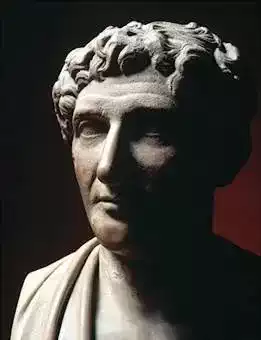
Ovídio
Metamorphoses: Book The First
Metamorphoses: Book The First
OF bodies chang'd to various forms, I sing:
Ye Gods, from whom these miracles did spring,
Inspire my numbers with coelestial heat;
'Till I my long laborious work compleat:
And add perpetual tenour to my rhimes,
Deduc'd from Nature's birth, to Caesar's times.
The Creation of Before the seas, and this terrestrial ball,
the World And Heav'n's high canopy, that covers all,
One was the face of Nature; if a face:
Rather a rude and indigested mass:
A lifeless lump, unfashion'd, and unfram'd,
Of jarring seeds; and justly Chaos nam'd.
No sun was lighted up, the world to view;
No moon did yet her blunted horns renew:
Nor yet was Earth suspended in the sky,
Nor pois'd, did on her own foundations lye:
Nor seas about the shores their arms had thrown;
But earth, and air, and water, were in one.
Thus air was void of light, and earth unstable,
And water's dark abyss unnavigable.
No certain form on any was imprest;
All were confus'd, and each disturb'd the rest.
For hot and cold were in one body fixt;
And soft with hard, and light with heavy mixt.
But God, or Nature, while they thus contend,
To these intestine discords put an end:
Then earth from air, and seas from earth were
driv'n,
And grosser air sunk from aetherial Heav'n.
Thus disembroil'd, they take their proper place;
The next of kin, contiguously embrace;
And foes are sunder'd, by a larger space.
The force of fire ascended first on high,
And took its dwelling in the vaulted sky:
Then air succeeds, in lightness next to fire;
Whose atoms from unactive earth retire.
Earth sinks beneath, and draws a num'rous throng
Of pondrous, thick, unwieldy seeds along.
About her coasts, unruly waters roar;
And rising, on a ridge, insult the shore.
Thus when the God, whatever God was he,
Had form'd the whole, and made the parts agree,
That no unequal portions might be found,
He moulded Earth into a spacious round:
Then with a breath, he gave the winds to blow;
And bad the congregated waters flow.
He adds the running springs, and standing lakes;
And bounding banks for winding rivers makes.
Some part, in Earth are swallow'd up, the most
In ample oceans, disembogu'd, are lost.
He shades the woods, the vallies he restrains
With rocky mountains, and extends the plains.
And as five zones th' aetherial regions bind,
Five, correspondent, are to Earth assign'd:
The sun with rays, directly darting down,
Fires all beneath, and fries the middle zone:
The two beneath the distant poles, complain
Of endless winter, and perpetual rain.
Betwixt th' extreams, two happier climates hold
The temper that partakes of hot, and cold.
The fields of liquid air, inclosing all,
Surround the compass of this earthly ball:
The lighter parts lye next the fires above;
The grosser near the watry surface move:
Thick clouds are spread, and storms engender there,
And thunder's voice, which wretched mortals fear,
And winds that on their wings cold winter bear.
Nor were those blustring brethren left at large,
On seas, and shores, their fury to discharge:
Bound as they are, and circumscrib'd in place,
They rend the world, resistless, where they pass;
And mighty marks of mischief leave behind;
Such is the rage of their tempestuous kind.
First Eurus to the rising morn is sent
(The regions of the balmy continent);
And Eastern realms, where early Persians run,
To greet the blest appearance of the sun.
Westward, the wanton Zephyr wings his flight;
Pleas'd with the remnants of departing light:
Fierce Boreas, with his off-spring, issues forth
T' invade the frozen waggon of the North.
While frowning Auster seeks the Southern sphere;
And rots, with endless rain, th' unwholsom year.
High o'er the clouds, and empty realms of wind,
The God a clearer space for Heav'n design'd;
Where fields of light, and liquid aether flow;
Purg'd from the pondrous dregs of Earth below.
Scarce had the Pow'r distinguish'd these, when
streight
The stars, no longer overlaid with weight,
Exert their heads, from underneath the mass;
And upward shoot, and kindle as they pass,
And with diffusive light adorn their heav'nly
place.
Then, every void of Nature to supply,
With forms of Gods he fills the vacant sky:
New herds of beasts he sends, the plains to share:
New colonies of birds, to people air:
And to their oozy beds, the finny fish repair.
A creature of a more exalted kind
Was wanting yet, and then was Man design'd:
Conscious of thought, of more capacious breast,
For empire form'd, and fit to rule the rest:
Whether with particles of heav'nly fire
The God of Nature did his soul inspire,
Or Earth, but new divided from the sky,
And, pliant, still retain'd th' aetherial energy:
Which wise Prometheus temper'd into paste,
And, mixt with living streams, the godlike image
cast.
Thus, while the mute creation downward bend
Their sight, and to their earthly mother tend,
Man looks aloft; and with erected eyes
Beholds his own hereditary skies.
From such rude principles our form began;
And earth was metamorphos'd into Man.
The The golden age was first; when Man yet new,
Golden Age No rule but uncorrupted reason knew:
And, with a native bent, did good pursue.
Unforc'd by punishment, un-aw'd by fear,
His words were simple, and his soul sincere;
Needless was written law, where none opprest:
The law of Man was written in his breast:
No suppliant crowds before the judge appear'd,
No court erected yet, nor cause was heard:
But all was safe, for conscience was their guard.
The mountain-trees in distant prospect please,
E're yet the pine descended to the seas:
E're sails were spread, new oceans to explore:
And happy mortals, unconcern'd for more,
Confin'd their wishes to their native shore.
No walls were yet; nor fence, nor mote, nor mound,
Nor drum was heard, nor trumpet's angry sound:
Nor swords were forg'd; but void of care and crime,
The soft creation slept away their time.
The teeming Earth, yet guiltless of the plough,
And unprovok'd, did fruitful stores allow:
Content with food, which Nature freely bred,
On wildings and on strawberries they fed;
Cornels and bramble-berries gave the rest,
And falling acorns furnish'd out a feast.
The flow'rs unsown, in fields and meadows reign'd:
And Western winds immortal spring maintain'd.
In following years, the bearded corn ensu'd
From Earth unask'd, nor was that Earth renew'd.
From veins of vallies, milk and nectar broke;
And honey sweating through the pores of oak.
The But when good Saturn, banish'd from above,
Silver Age Was driv'n to Hell, the world was under Jove.
Succeeding times a silver age behold,
Excelling brass, but more excell'd by gold.
Then summer, autumn, winter did appear:
And spring was but a season of the year.
The sun his annual course obliquely made,
Good days contracted, and enlarg'd the bad.
Then air with sultry heats began to glow;
The wings of winds were clogg'd with ice and snow;
And shivering mortals, into houses driv'n,
Sought shelter from th' inclemency of Heav'n.
Those houses, then, were caves, or homely sheds;
With twining oziers fenc'd; and moss their beds.
Then ploughs, for seed, the fruitful furrows broke,
And oxen labour'd first beneath the yoke.
The To this came next in course, the brazen age:
Brazen Age A warlike offspring, prompt to bloody rage,
Not impious yet...
The Hard steel succeeded then:
Iron Age And stubborn as the metal, were the men.
Truth, modesty, and shame, the world forsook:
Fraud, avarice, and force, their places took.
Then sails were spread, to every wind that blew.
Raw were the sailors, and the depths were new:
Trees, rudely hollow'd, did the waves sustain;
E're ships in triumph plough'd the watry plain.
Then land-marks limited to each his right:
For all before was common as the light.
Nor was the ground alone requir'd to bear
Her annual income to the crooked share,
But greedy mortals, rummaging her store,
Digg'd from her entrails first the precious oar;
Which next to Hell, the prudent Gods had laid;
And that alluring ill, to sight display'd.
Thus cursed steel, and more accursed gold,
Gave mischief birth, and made that mischief bold:
And double death did wretched Man invade,
By steel assaulted, and by gold betray'd,
Now (brandish'd weapons glittering in their hands)
Mankind is broken loose from moral bands;
No rights of hospitality remain:
The guest, by him who harbour'd him, is slain,
The son-in-law pursues the father's life;
The wife her husband murders, he the wife.
The step-dame poyson for the son prepares;
The son inquires into his father's years.
Faith flies, and piety in exile mourns;
And justice, here opprest, to Heav'n returns.
The Nor were the Gods themselves more safe above;
Giants' War Against beleaguer'd Heav'n the giants move.
Hills pil'd on hills, on mountains mountains lie,
To make their mad approaches to the skie.
'Till Jove, no longer patient, took his time
T' avenge with thunder their audacious crime:
Red light'ning plaid along the firmament,
And their demolish'd works to pieces rent.
Sing'd with the flames, and with the bolts
transfixt,
With native Earth, their blood the monsters mixt;
The blood, indu'd with animating heat,
Did in th' impregnant Earth new sons beget:
They, like the seed from which they sprung,
accurst,
Against the Gods immortal hatred nurst,
An impious, arrogant, and cruel brood;
Expressing their original from blood.
Which when the king of Gods beheld from high
(Withal revolving in his memory,
What he himself had found on Earth of late,
Lycaon's guilt, and his inhumane treat),
He sigh'd; nor longer with his pity strove;
But kindled to a wrath becoming Jove:
Then call'd a general council of the Gods;
Who summon'd, issue from their blest abodes,
And fill th' assembly with a shining train.
A way there is, in Heav'n's expanded plain,
Which, when the skies are clear, is seen below,
And mortals, by the name of Milky, know.
The ground-work is of stars; through which the road
Lyes open to the Thunderer's abode:
The Gods of greater nations dwell around,
And, on the right and left, the palace bound;
The commons where they can: the nobler sort
With winding-doors wide open, front the court.
This place, as far as Earth with Heav'n may vie,
I dare to call the Louvre of the skie.
When all were plac'd, in seats distinctly known,
And he, their father, had assum'd the throne,
Upon his iv'ry sceptre first he leant,
Then shook his head, that shook the firmament:
Air, Earth, and seas, obey'd th' almighty nod;
And, with a gen'ral fear, confess'd the God.
At length, with indignation, thus he broke
His awful silence, and the Pow'rs bespoke.
I was not more concern'd in that debate
Of empire, when our universal state
Was put to hazard, and the giant race
Our captive skies were ready to imbrace:
For tho' the foe was fierce, the seeds of all
Rebellion, sprung from one original;
Now, wheresoever ambient waters glide,
All are corrupt, and all must be destroy'd.
Let me this holy protestation make,
By Hell, and Hell's inviolable lake,
I try'd whatever in the godhead lay:
But gangren'd members must be lopt away,
Before the nobler parts are tainted to decay.
There dwells below, a race of demi-gods,
Of nymphs in waters, and of fawns in woods:
Who, tho' not worthy yet, in Heav'n to live,
Let 'em, at least, enjoy that Earth we give.
Can these be thought securely lodg'd below,
When I my self, who no superior know,
I, who have Heav'n and Earth at my command,
Have been attempted by Lycaon's hand?
At this a murmur through the synod went,
And with one voice they vote his punishment.
Thus, when conspiring traytors dar'd to doom
The fall of Caesar, and in him of Rome,
The nations trembled with a pious fear;
All anxious for their earthly Thunderer:
Nor was their care, o Caesar, less esteem'd
By thee, than that of Heav'n for Jove was deem'd:
Who with his hand, and voice, did first restrain
Their murmurs, then resum'd his speech again.
The Gods to silence were compos'd, and sate
With reverence, due to his superior state.
Cancel your pious cares; already he
Has paid his debt to justice, and to me.
Yet what his crimes, and what my judgments were,
Remains for me thus briefly to declare.
The clamours of this vile degenerate age,
The cries of orphans, and th' oppressor's rage,
Had reach'd the stars: I will descend, said I,
In hope to prove this loud complaint a lye.
Disguis'd in humane shape, I travell'd round
The world, and more than what I heard, I found.
O'er Maenalus I took my steepy way,
By caverns infamous for beasts of prey:
Then cross'd Cyllene, and the piny shade
More infamous, by curst Lycaon made:
Dark night had cover'd Heaven, and Earth, before
I enter'd his unhospitable door.
Just at my entrance, I display'd the sign
That somewhat was approaching of divine.
The prostrate people pray; the tyrant grins;
And, adding prophanation to his sins,
I'll try, said he, and if a God appear,
To prove his deity shall cost him dear.
'Twas late; the graceless wretch my death prepares,
When I shou'd soundly sleep, opprest with cares:
This dire experiment he chose, to prove
If I were mortal, or undoubted Jove:
But first he had resolv'd to taste my pow'r;
Not long before, but in a luckless hour,
Some legates, sent from the Molossian state,
Were on a peaceful errand come to treat:
Of these he murders one, he boils the flesh;
And lays the mangled morsels in a dish:
Some part he roasts; then serves it up, so drest,
And bids me welcome to this humane feast.
Mov'd with disdain, the table I o'er-turn'd;
And with avenging flames, the palace burn'd.
The tyrant in a fright, for shelter gains
The neighb'ring fields, and scours along the
plains.
Howling he fled, and fain he wou'd have spoke;
But humane voice his brutal tongue forsook.
About his lips the gather'd foam he churns,
And, breathing slaughters, still with rage he
burns,
But on the bleating flock his fury turns.
His mantle, now his hide, with rugged hairs
Cleaves to his back; a famish'd face he bears;
His arms descend, his shoulders sink away
To multiply his legs for chase of prey.
He grows a wolf, his hoariness remains,
And the same rage in other members reigns.
His eyes still sparkle in a narr'wer space:
His jaws retain the grin, and violence of his face
This was a single ruin, but not one
Deserves so just a punishment alone.
Mankind's a monster, and th' ungodly times
Confed'rate into guilt, are sworn to crimes.
All are alike involv'd in ill, and all
Must by the same relentless fury fall.
Thus ended he; the greater Gods assent;
By clamours urging his severe intent;
The less fill up the cry for punishment.
Yet still with pity they remember Man;
And mourn as much as heav'nly spirits can.
They ask, when those were lost of humane birth,
What he wou'd do with all this waste of Earth:
If his dispeopl'd world he would resign
To beasts, a mute, and more ignoble line;
Neglected altars must no longer smoke,
If none were left to worship, and invoke.
To whom the Father of the Gods reply'd,
Lay that unnecessary fear aside:
Mine be the care, new people to provide.
I will from wondrous principles ordain
A race unlike the first, and try my skill again.
Already had he toss'd the flaming brand;
And roll'd the thunder in his spacious hand;
Preparing to discharge on seas and land:
But stopt, for fear, thus violently driv'n,
The sparks should catch his axle-tree of Heav'n.
Remembring in the fates, a time when fire
Shou'd to the battlements of Heaven aspire,
And all his blazing worlds above shou'd burn;
And all th' inferior globe to cinders turn.
His dire artill'ry thus dismist, he bent
His thoughts to some securer punishment:
Concludes to pour a watry deluge down;
And what he durst not burn, resolves to drown.
The northern breath, that freezes floods, he
binds;
With all the race of cloud-dispelling winds:
The south he loos'd, who night and horror brings;
And foggs are shaken from his flaggy wings.
From his divided beard two streams he pours,
His head, and rheumy eyes distill in show'rs,
With rain his robe, and heavy mantle flow:
And lazy mists are lowring on his brow;
Still as he swept along, with his clench'd fist
He squeez'd the clouds, th' imprison'd clouds
resist:
The skies, from pole to pole, with peals resound;
And show'rs inlarg'd, come pouring on the ground.
Then, clad in colours of a various dye,
Junonian Iris breeds a new supply
To feed the clouds: impetuous rain descends;
The bearded corn beneath the burden bends:
Defrauded clowns deplore their perish'd grain;
And the long labours of the year are vain.
Nor from his patrimonial Heaven alone
Is Jove content to pour his vengeance down;
Aid from his brother of the seas he craves,
To help him with auxiliary waves.
The watry tyrant calls his brooks and floods,
Who rowl from mossie caves (their moist abodes);
And with perpetual urns his palace fill:
To whom in brief, he thus imparts his will.
Small exhortation needs; your pow'rs employ:
And this bad world, so Jove requires, destroy.
Let loose the reins to all your watry store:
Bear down the damms, and open ev'ry door.
The floods, by Nature enemies to land,
And proudly swelling with their new command,
Remove the living stones, that stopt their way,
And gushing from their source, augment the sea.
Then, with his mace, their monarch struck the
ground;
With inward trembling Earth receiv'd the wound;
And rising streams a ready passage found.
Th' expanded waters gather on the plain:
They float the fields, and over-top the grain;
Then rushing onwards, with a sweepy sway,
Bear flocks, and folds, and lab'ring hinds away.
Nor safe their dwellings were, for, sap'd by
floods,
Their houses fell upon their houshold Gods.
The solid piles, too strongly built to fall,
High o'er their heads, behold a watry wall:
Now seas and Earth were in confusion lost;
A world of waters, and without a coast.
One climbs a cliff; one in his boat is born:
And ploughs above, where late he sow'd his corn.
Others o'er chimney-tops and turrets row,
And drop their anchors on the meads below:
Or downward driv'n, they bruise the tender vine,
Or tost aloft, are knock'd against a pine.
And where of late the kids had cropt the grass,
The monsters of the deep now take their place.
Insulting Nereids on the cities ride,
And wond'ring dolphins o'er the palace glide.
On leaves, and masts of mighty oaks they brouze;
And their broad fins entangle in the boughs.
The frighted wolf now swims amongst the sheep;
The yellow lion wanders in the deep:
His rapid force no longer helps the boar:
The stag swims faster, than he ran before.
The fowls, long beating on their wings in vain,
Despair of land, and drop into the main.
Now hills, and vales no more distinction know;
And levell'd Nature lies oppress'd below.
The most of mortals perish in the flood:
The small remainder dies for want of food.
A mountain of stupendous height there stands
Betwixt th' Athenian and Boeotian lands,
The bound of fruitful fields, while fields they
were,
But then a field of waters did appear:
Parnassus is its name; whose forky rise
Mounts thro' the clouds, and mates the lofty skies.
High on the summit of this dubious cliff,
Deucalion wafting, moor'd his little skiff.
He with his wife were only left behind
Of perish'd Man; they two were human kind.
The mountain nymphs, and Themis they adore,
And from her oracles relief implore.
The most upright of mortal men was he;
The most sincere, and holy woman, she.
When Jupiter, surveying Earth from high,
Beheld it in a lake of water lie,
That where so many millions lately liv'd,
But two, the best of either sex, surviv'd;
He loos'd the northern wind; fierce Boreas flies
To puff away the clouds, and purge the skies:
Serenely, while he blows, the vapours driv'n,
Discover Heav'n to Earth, and Earth to Heav'n.
The billows fall, while Neptune lays his mace
On the rough sea, and smooths its furrow'd face.
Already Triton, at his call, appears
Above the waves; a Tyrian robe he wears;
And in his hand a crooked trumpet bears.
The soveraign bids him peaceful sounds inspire,
And give the waves the signal to retire.
His writhen shell he takes; whose narrow vent
Grows by degrees into a large extent,
Then gives it breath; the blast with doubling
sound,
Runs the wide circuit of the world around:
The sun first heard it, in his early east,
And met the rattling ecchos in the west.
The waters, listning to the trumpet's roar,
Obey the summons, and forsake the shore.
A thin circumference of land appears;
And Earth, but not at once, her visage rears,
And peeps upon the seas from upper grounds;
The streams, but just contain'd within their
bounds,
By slow degrees into their channels crawl;
And Earth increases, as the waters fall.
In longer time the tops of trees appear,
Which mud on their dishonour'd branches bear.
At length the world was all restor'd to view;
But desolate, and of a sickly hue:
Nature beheld her self, and stood aghast,
A dismal desart, and a silent waste.
Which when Deucalion, with a piteous look
Beheld, he wept, and thus to Pyrrha spoke:
Oh wife, oh sister, oh of all thy kind
The best, and only creature left behind,
By kindred, love, and now by dangers joyn'd;
Of multitudes, who breath'd the common air,
We two remain; a species in a pair:
The rest the seas have swallow'd; nor have we
Ev'n of this wretched life a certainty.
The clouds are still above; and, while I speak,
A second deluge o'er our heads may break.
Shou'd I be snatcht from hence, and thou remain,
Without relief, or partner of thy pain,
How cou'dst thou such a wretched life sustain?
Shou'd I be left, and thou be lost, the sea
That bury'd her I lov'd, shou'd bury me.
Oh cou'd our father his old arts inspire,
And make me heir of his informing fire,
That so I might abolisht Man retrieve,
And perisht people in new souls might live.
But Heav'n is pleas'd, nor ought we to complain,
That we, th' examples of mankind, remain.
He said; the careful couple joyn their tears:
And then invoke the Gods, with pious prayers.
Thus, in devotion having eas'd their grief,
From sacred oracles they seek relief;
And to Cephysus' brook their way pursue:
The stream was troubled, but the ford they knew;
With living waters, in the fountain bred,
They sprinkle first their garments, and their head,
Then took the way, which to the temple led.
The roofs were all defil'd with moss, and mire,
The desart altars void of solemn fire.
Before the gradual, prostrate they ador'd;
The pavement kiss'd; and thus the saint implor'd.
O righteous Themis, if the Pow'rs above
By pray'rs are bent to pity, and to love;
If humane miseries can move their mind;
If yet they can forgive, and yet be kind;
Tell how we may restore, by second birth,
Mankind, and people desolated Earth.
Then thus the gracious Goddess, nodding, said;
Depart, and with your vestments veil your head:
And stooping lowly down, with losen'd zones,
Throw each behind your backs, your mighty mother's
bones.
Amaz'd the pair, and mute with wonder stand,
'Till Pyrrha first refus'd the dire command.
Forbid it Heav'n, said she, that I shou'd tear
Those holy reliques from the sepulcher.
They ponder'd the mysterious words again,
For some new sense; and long they sought in vain:
At length Deucalion clear'd his cloudy brow,
And said, the dark Aenigma will allow
A meaning, which, if well I understand,
From sacrilege will free the God's command:
This Earth our mighty mother is, the stones
In her capacious body, are her bones:
These we must cast behind. With hope, and fear,
The woman did the new solution hear:
The man diffides in his own augury,
And doubts the Gods; yet both resolve to try.
Descending from the mount, they first unbind
Their vests, and veil'd, they cast the stones
behind:
The stones (a miracle to mortal view,
But long tradition makes it pass for true)
Did first the rigour of their kind expel,
And suppled into softness, as they fell;
Then swell'd, and swelling, by degrees grew warm;
And took the rudiments of human form.
Imperfect shapes: in marble such are seen,
When the rude chizzel does the man begin;
While yet the roughness of the stone remains,
Without the rising muscles, and the veins.
The sappy parts, and next resembling juice,
Were turn'd to moisture, for the body's use:
Supplying humours, blood, and nourishment;
The rest, too solid to receive a bent,
Converts to bones; and what was once a vein,
Its former name and Nature did retain.
By help of pow'r divine, in little space,
What the man threw, assum'd a manly face;
And what the wife, renew'd the female race.
Hence we derive our nature; born to bear
Laborious life; and harden'd into care.
The rest of animals, from teeming Earth
Produc'd, in various forms receiv'd their birth.
The native moisture, in its close retreat,
Digested by the sun's aetherial heat,
As in a kindly womb, began to breed:
Then swell'd, and quicken'd by the vital seed.
And some in less, and some in longer space,
Were ripen'd into form, and took a sev'ral face.
Thus when the Nile from Pharian fields is fled,
And seeks, with ebbing tides, his ancient bed,
The fat manure with heav'nly fire is warm'd;
And crusted creatures, as in wombs, are form'd;
These, when they turn the glebe, the peasants find;
Some rude, and yet unfinish'd in their kind:
Short of their limbs, a lame imperfect birth:
One half alive; and one of lifeless earth.
For heat, and moisture, when in bodies join'd,
The temper that results from either kind
Conception makes; and fighting 'till they mix,
Their mingled atoms in each other fix.
Thus Nature's hand the genial bed prepares
With friendly discord, and with fruitful wars.
From hence the surface of the ground, with mud
And slime besmear'd (the faeces of the flood),
Receiv'd the rays of Heav'n: and sucking in
The seeds of heat, new creatures did begin:
Some were of sev'ral sorts produc'd before,
But of new monsters, Earth created more.
Unwillingly, but yet she brought to light
Thee, Python too, the wondring world to fright,
And the new nations, with so dire a sight:
So monstrous was his bulk, so large a space
Did his vast body, and long train embrace.
Whom Phoebus basking on a bank espy'd;
E're now the God his arrows had not try'd
But on the trembling deer, or mountain goat;
At this new quarry he prepares to shoot.
Though ev'ry shaft took place, he spent the store
Of his full quiver; and 'twas long before
Th' expiring serpent wallow'd in his gore.
Then, to preserve the fame of such a deed,
For Python slain, he Pythian games decred.
Where noble youths for mastership shou'd strive,
To quoit, to run, and steeds, and chariots drive.
The prize was fame: in witness of renown
An oaken garland did the victor crown.
The laurel was not yet for triumphs born;
But every green alike by Phoebus worn,
Did, with promiscuous grace, his flowing locks
adorn.
The The first and fairest of his loves, was she
Transformation Whom not blind fortune, but the dire decree
of Daphne into Of angry Cupid forc'd him to desire:
a Lawrel Daphne her name, and Peneus was her sire.
Swell'd with the pride, that new success attends,
He sees the stripling, while his bow he bends,
And thus insults him: Thou lascivious boy,
Are arms like these for children to employ?
Know, such atchievements are my proper claim;
Due to my vigour, and unerring aim:
Resistless are my shafts, and Python late
In such a feather'd death, has found his fate.
Take up the torch (and lay my weapons by),
With that the feeble souls of lovers fry.
To whom the son of Venus thus reply'd,
Phoebus, thy shafts are sure on all beside,
But mine of Phoebus, mine the fame shall be
Of all thy conquests, when I conquer thee.
He said, and soaring, swiftly wing'd his flight:
Nor stopt but on Parnassus' airy height.
Two diff'rent shafts he from his quiver draws;
One to repel desire, and one to cause.
One shaft is pointed with refulgent gold:
To bribe the love, and make the lover bold:
One blunt, and tipt with lead, whose base allay
Provokes disdain, and drives desire away.
The blunted bolt against the nymph he drest:
But with the sharp transfixt Apollo's breast.
Th' enamour'd deity pursues the chace;
The scornful damsel shuns his loath'd embrace:
In hunting beasts of prey, her youth employs;
And Phoebe rivals in her rural joys.
With naked neck she goes, and shoulders bare;
And with a fillet binds her flowing hair.
By many suitors sought, she mocks their pains,
And still her vow'd virginity maintains.
Impatient of a yoke, the name of bride
She shuns, and hates the joys, she never try'd.
On wilds, and woods, she fixes her desire:
Nor knows what youth, and kindly love, inspire.
Her father chides her oft: Thou ow'st, says he,
A husband to thy self, a son to me.
She, like a crime, abhors the nuptial bed:
She glows with blushes, and she hangs her head.
Then casting round his neck her tender arms,
Sooths him with blandishments, and filial charms:
Give me, my Lord, she said, to live, and die,
A spotless maid, without the marriage tye.
'Tis but a small request; I beg no more
Than what Diana's father gave before.
The good old sire was soften'd to consent;
But said her wish wou'd prove her punishment:
For so much youth, and so much beauty join'd,
Oppos'd the state, which her desires design'd.
The God of light, aspiring to her bed,
Hopes what he seeks, with flattering fancies fed;
And is, by his own oracles, mis-led.
And as in empty fields the stubble burns,
Or nightly travellers, when day returns,
Their useless torches on dry hedges throw,
That catch the flames, and kindle all the row;
So burns the God, consuming in desire,
And feeding in his breast a fruitless fire:
Her well-turn'd neck he view'd (her neck was bare)
And on her shoulders her dishevel'd hair;
Oh were it comb'd, said he, with what a grace
Wou'd every waving curl become her face!
He view'd her eyes, like heav'nly lamps that shone,
He view'd her lips, too sweet to view alone,
Her taper fingers, and her panting breast;
He praises all he sees, and for the rest
Believes the beauties yet unseen are best:
Swift as the wind, the damsel fled away,
Nor did for these alluring speeches stay:
Stay Nymph, he cry'd, I follow, not a foe.
Thus from the lyon trips the trembling doe;
Thus from the wolf the frighten'd lamb removes,
And, from pursuing faulcons, fearful doves;
Thou shunn'st a God, and shunn'st a God, that
loves.
Ah, lest some thorn shou'd pierce thy tender foot,
Or thou shou'dst fall in flying my pursuit!
To sharp uneven ways thy steps decline;
Abate thy speed, and I will bate of mine.
Yet think from whom thou dost so rashly fly;
Nor basely born, nor shepherd's swain am I.
Perhaps thou know'st not my superior state;
And from that ignorance proceeds thy hate.
Me Claros, Delphi, Tenedos obey;
These hands the Patareian scepter sway.
The King of Gods begot me: what shall be,
Or is, or ever was, in Fate, I see.
Mine is th' invention of the charming lyre;
Sweet notes, and heav'nly numbers, I inspire.
Sure is my bow, unerring is my dart;
But ah! more deadly his, who pierc'd my heart.
Med'cine is mine; what herbs and simples grow
In fields, and forrests, all their pow'rs I know;
And am the great physician call'd, below.
Alas that fields and forrests can afford.
No remedies to heal their love-sick lord!
To cure the pains of love, no plant avails:
And his own physick, the physician falls.
She heard not half; so furiously she flies;
And on her ear th' imperfect accent dies,
Fear gave her wings; and as she fled, the wind
Increasing, spread her flowing hair behind;
And left her legs and thighs expos'd to view:
Which made the God more eager to pursue.
The God was young, and was too hotly bent
To lose his time in empty compliment:
But led by love, and fir'd with such a sight,
Impetuously pursu'd his near delight.
As when th' impatient greyhound slipt from far,
Bounds o'er the glebe to course the fearful hare,
She in her speed does all her safety lay;
And he with double speed pursues the prey;
O'er-runs her at the sitting turn, and licks
His chaps in vain, and blows upon the flix:
She scapes, and for the neighb'ring covert strives,
And gaining shelter, doubts if yet she lives:
If little things with great we may compare,
Such was the God, and such the flying fair,
She urg'd by fear, her feet did swiftly move,
But he more swiftly, who was urg'd by love.
He gathers ground upon her in the chace:
Now breathes upon her hair, with nearer pace;
And just is fast'ning on the wish'd embrace.
The nymph grew pale, and in a mortal fright,
Spent with the labour of so long a flight;
And now despairing, cast a mournful look
Upon the streams of her paternal brook;
Oh help, she cry'd, in this extreamest need!
If water Gods are deities indeed:
Gape Earth, and this unhappy wretch intomb;
Or change my form, whence all my sorrows come.
Scarce had she finish'd, when her feet she found
Benumb'd with cold, and fasten'd to the ground:
A filmy rind about her body grows;
Her hair to leaves, her arms extend to boughs:
The nymph is all into a lawrel gone;
The smoothness of her skin remains alone.
Yet Phoebus loves her still, and casting round
Her bole, his arms, some little warmth he found.
The tree still panted in th' unfinish'd part:
Not wholly vegetive, and heav'd her heart.
He fixt his lips upon the trembling rind;
It swerv'd aside, and his embrace declin'd.
To whom the God, Because thou canst not be
My mistress, I espouse thee for my tree:
Be thou the prize of honour, and renown;
The deathless poet, and the poem, crown.
Thou shalt the Roman festivals adorn,
And, after poets, be by victors worn.
Thou shalt returning Caesar's triumph grace;
When pomps shall in a long procession pass.
Wreath'd on the posts before his palace wait;
And be the sacred guardian of the gate.
Secure from thunder, and unharm'd by Jove,
Unfading as th' immortal Pow'rs above:
And as the locks of Phoebus are unshorn,
So shall perpetual green thy boughs adorn.
The grateful tree was pleas'd with what he said;
And shook the shady honours of her head.
The An ancient forest in Thessalia grows;
Transformation Which Tempe's pleasing valley does inclose:
of Io into a Through this the rapid Peneus take his course;
Heyfer From Pindus rolling with impetuous force;
Mists from the river's mighty fall arise:
And deadly damps inclose the cloudy skies:
Perpetual fogs are hanging o'er the wood;
And sounds of waters deaf the neighbourhood.
Deep, in a rocky cave, he makes abode
(A mansion proper for a mourning God).
Here he gives audience; issuing out decrees
To rivers, his dependant deities.
On this occasion hither they resort;
To pay their homage, and to make their court.
All doubtful, whether to congratulate
His daughter's honour, or lament her fate.
Sperchaeus, crown'd with poplar, first appears;
Then old Apidanus came crown'd with years:
Enipeus turbulent, Amphrysos tame;
And Aeas last with lagging waters came.
Then, of his kindred brooks, a num'rous throng
Condole his loss; and bring their urns along.
Not one was wanting of the wat'ry train,
That fill'd his flood, or mingled with the main:
But Inachus, who in his cave, alone,
Wept not another's losses, but his own,
For his dear Io, whether stray'd, or dead,
To him uncertain, doubtful tears he shed.
He sought her through the world; but sought in
vain;
And no where finding, rather fear'd her slain.
Her, just returning from her father's brook,
Jove had beheld, with a desiring look:
And, Oh fair daughter of the flood, he said,
Worthy alone of Jove's imperial bed,
Happy whoever shall those charms possess;
The king of Gods (nor is thy lover less)
Invites thee to yon cooler shades; to shun
The scorching rays of the meridian sun.
Nor shalt thou tempt the dangers of the grove
Alone, without a guide; thy guide is Jove.
No puny Pow'r, but he whose high command
Is unconfin'd, who rules the seas and land;
And tempers thunder in his awful hand,
Oh fly not: for she fled from his embrace
O'er Lerna's pastures: he pursu'd the chace
Along the shades of the Lyrcaean plain;
At length the God, who never asks in vain,
Involv'd with vapours, imitating night,
Both Air, and Earth; and then suppress'd her
flight,
And mingling force with love, enjoy'd the full
delight.
Mean-time the jealous Juno, from on high,
Survey'd the fruitful fields of Arcady;
And wonder'd that the mist shou'd over-run
The face of day-light, and obscure the sun.
No nat'ral cause she found, from brooks, or bogs,
Or marshy lowlands, to produce the fogs;
Then round the skies she sought for Jupiter,
Her faithless husband; but no Jove was there:
Suspecting now the worst, Or I, she said,
Am much mistaken, or am much betray'd.
With fury she precipitates her flight:
Dispels the shadows of dissembled night;
And to the day restores his native light.
Th' Almighty Leacher, careful to prevent
The consequence, foreseeing her descent,
Transforms his mistress in a trice; and now
In Io's place appears a lovely cow.
So sleek her skin, so faultless was her make,
Ev'n Juno did unwilling pleasure take
To see so fair a rival of her love;
And what she was, and whence, enquir'd of Jove:
Of what fair herd, and from what pedigree?
The God, half caught, was forc'd upon a lye:
And said she sprung from Earth. She took the word,
And begg'd the beauteous heyfer of her lord.
What should he do? 'twas equal shame to Jove
Or to relinquish, or betray his love:
Yet to refuse so slight a gift, wou'd be
But more t' increase his consort's jealousie:
Thus fear, and love, by turns, his heart assail'd;
And stronger love had sure, at length, prevail'd:
But some faint hope remain'd, his jealous queen
Had not the mistress through the heyfer seen.
The cautious Goddess, of her gift possest,
Yet harbour'd anxious thoughts within her breast;
As she who knew the falshood of her Jove;
And justly fear'd some new relapse of love.
Which to prevent, and to secure her care,
To trusty Argus she commits the fair.
The head of Argus (as with stars the skies)
Was compass'd round, and wore an hundred eyes.
But two by turns their lids in slumber steep;
The rest on duty still their station keep;
Nor cou'd the total constellation sleep.
Thus, ever present, to his eyes, and mind,
His charge was still before him, tho' behind.
In fields he suffer'd her to feed by Day,
But when the setting sun to night gave way,
The captive cow he summon'd with a call;
And drove her back, and ty'd her to the stall.
On leaves of trees, and bitter herbs she fed,
Heav'n was her canopy, bare earth her bed:
So hardly lodg'd, and to digest her food,
She drank from troubled streams, defil'd with mud.
Her woeful story fain she wou'd have told,
With hands upheld, but had no hands to hold.
Her head to her ungentle keeper bow'd,
She strove to speak, she spoke not, but she low'd:
Affrighted with the noise, she look'd around,
And seem'd t' inquire the author of the sound.
Once on the banks where often she had play'd
(Her father's banks), she came, and there survey'd
Her alter'd visage, and her branching head;
And starting, from her self she wou'd have fled.
Her fellow nymphs, familiar to her eyes,
Beheld, but knew her not in this disguise.
Ev'n Inachus himself was ignorant;
And in his daughter, did his daughter want.
She follow'd where her fellows went, as she
Were still a partner of the company:
They stroak her neck; the gentle heyfer stands,
And her neck offers to their stroaking hands.
Her father gave her grass; the grass she took;
And lick'd his palms, and cast a piteous look;
And in the language of her eyes, she spoke.
She wou'd have told her name, and ask'd relief,
But wanting words, in tears she tells her grief.
Which, with her foot she makes him understand;
And prints the name of Io in the sand.
Ah wretched me! her mournful father cry'd;
She, with a sigh, to wretched me reply'd:
About her milk-white neck, his arms he threw;
And wept, and then these tender words ensue.
And art thou she, whom I have sought around
The world, and have at length so sadly found?
So found, is worse than lost: with mutual words
Thou answer'st not, no voice thy tongue affords:
But sighs are deeply drawn from out thy breast;
And speech deny'd, by lowing is express'd.
Unknowing, I prepar'd thy bridal bed;
With empty hopes of happy issue fed.
But now the husband of a herd must be
Thy mate, and bell'wing sons thy progeny.
Oh, were I mortal, death might bring relief:
But now my God-head but extends my grief:
Prolongs my woes, of which no end I see,
And makes me curse my immortality!
More had he said, but fearful of her stay,
The starry guardian drove his charge away,
To some fresh pasture; on a hilly height
He sate himself, and kept her still in sight.
The Eyes of Now Jove no longer cou'd her suff'rings bear;
Argus But call'd in haste his airy messenger,
transform'd The son of Maia, with severe decree
into a To kill the keeper, and to set her free.
Peacock's With all his harness soon the God was sped,
Train His flying hat was fastned on his head,
Wings on his heels were hung, and in his hand
He holds the vertue of the snaky wand.
The liquid air his moving pinions wound,
And, in the moment, shoot him on the ground.
Before he came in sight, the crafty God
His wings dismiss'd, but still retain'd his rod:
That sleep-procuring wand wise Hermes took,
But made it seem to sight a sherpherd's hook.
With this, he did a herd of goats controul;
Which by the way he met, and slily stole.
Clad like a country swain, he pip'd, and sung;
And playing, drove his jolly troop along.
With pleasure, Argus the musician heeds;
But wonders much at those new vocal reeds.
And whosoe'er thou art, my friend, said he,
Up hither drive thy goats, and play by me:
This hill has browz for them, and shade for thee.
The God, who was with ease induc'd to climb,
Began discourse to pass away the time;
And still betwixt, his tuneful pipe he plies;
And watch'd his hour, to close the keeper's eyes.
With much ado, he partly kept awake;
Not suff'ring all his eyes repose to take:
And ask'd the stranger, who did reeds invent,
And whence began so rare an instrument?
The Then Hermes thus: A nymph of late there was
Transformation Whose heav'nly form her fellows did surpass.
of Syrinx The pride and joy of fair Arcadia's plains,
into Reeds Belov'd by deities, ador'd by swains:
Syrinx her name, by Sylvans oft pursu'd,
As oft she did the lustful Gods delude:
The rural, and the woodland Pow'rs disdain'd;
With Cynthia hunted, and her rites maintain'd:
Like Phoebe clad, even Phoebe's self she seems,
So tall, so streight, such well-proportion'd limbs:
The nicest eye did no distinction know,
But that the goddess bore a golden bow:
Distinguish'd thus, the sight she cheated too.
Descending from Lycaeus, Pan admires
The matchless nymph, and burns with new desires.
A crown of pine upon his head he wore;
And thus began her pity to implore.
But e'er he thus began, she took her flight
So swift, she was already out of sight.
Nor stay'd to hear the courtship of the God;
But bent her course to Ladon's gentle flood:
There by the river stopt, and tir'd before;
Relief from water nymphs her pray'rs implore.
Now while the lustful God, with speedy pace,
Just thought to strain her in a strict embrace,
He fill'd his arms with reeds, new rising on the
place.
And while he sighs, his ill success to find,
The tender canes were shaken by the wind;
And breath'd a mournful air, unheard before;
That much surprizing Pan, yet pleas'd him more.
Admiring this new musick, Thou, he said,
Who canst not be the partner of my bed,
At least shall be the confort of my mind:
And often, often to my lips be joyn'd.
He form'd the reeds, proportion'd as they are,
Unequal in their length, and wax'd with care,
They still retain the name of his ungrateful fair.
While Hermes pip'd, and sung, and told his tale,
The keeper's winking eyes began to fail,
And drowsie slumber on the lids to creep;
'Till all the watchman was at length asleep.
Then soon the God his voice, and song supprest;
And with his pow'rful rod confirm'd his rest:
Without delay his crooked faulchion drew,
And at one fatal stroke the keeper slew.
Down from the rock fell the dissever'd head,
Opening its eyes in death; and falling, bled;
And mark'd the passage with a crimson trail:
Thus Argus lies in pieces, cold, and pale;
And all his hundred eyes, with all their light,
Are clos'd at once, in one perpetual night.
These Juno takes, that they no more may fail,
And spreads them in her peacock's gaudy tail.
Impatient to revenge her injur'd bed,
She wreaks her anger on her rival's head;
With Furies frights her from her native home;
And drives her gadding, round the world to roam:
Nor ceas'd her madness, and her flight, before
She touch'd the limits of the Pharian shore.
At length, arriving on the banks of Nile,
Wearied with length of ways, and worn with toil,
She laid her down; and leaning on her knees,
Invok'd the cause of all her miseries:
And cast her languishing regards above,
For help from Heav'n, and her ungrateful Jove.
She sigh'd, she wept, she low'd; 'twas all she
cou'd;
And with unkindness seem'd to tax the God.
Last, with an humble pray'r, she beg'd repose,
Or death at least, to finish all her woes.
Jove heard her vows, and with a flatt'ring look,
In her behalf to jealous Juno spoke,
He cast his arms about her neck, and said,
Dame, rest secure; no more thy nuptial bed
This nymph shall violate; by Styx I swear,
And every oath that binds the Thunderer.
The Goddess was appeas'd; and at the word
Was Io to her former shape restor'd.
The rugged hair began to fall away;
The sweetness of her eyes did only stay,
Tho' not so large; her crooked horns decrease;
The wideness of her jaws and nostrils cease:
Her hoofs to hands return, in little space:
The five long taper fingers take their place,
And nothing of the heyfer now is seen,
Beside the native whiteness of the skin.
Erected on her feet she walks again:
And two the duty of the four sustain.
She tries her tongue; her silence softly breaks,
And fears her former lowings when she speaks:
A Goddess now, through all th' Aegyptian State:
And serv'd by priests, who in white linnen wait.
Her son was Epaphus, at length believ'd
The son of Jove, and as a God receiv'd;
With sacrifice ador'd, and publick pray'rs,
He common temples with his mother shares.
Equal in years, and rival in renown
With Epaphus, the youthful Phaeton
Like honour claims; and boasts his sire the sun.
His haughty looks, and his assuming air,
The son of Isis could no longer bear:
Thou tak'st thy mother's word too far, said he,
And hast usurp'd thy boasted pedigree.
Go, base pretender to a borrow'd name.
Thus tax'd, he blush'd with anger, and with shame;
But shame repress'd his rage: the daunted youth
Soon seeks his mother, and enquires the truth:
Mother, said he, this infamy was thrown
By Epaphus on you, and me your son.
He spoke in publick, told it to my face;
Nor durst I vindicate the dire disgrace:
Even I, the bold, the sensible of wrong,
Restrain'd by shame, was forc'd to hold my tongue.
To hear an open slander, is a curse:
But not to find an answer, is a worse.
If I am Heav'n-begot, assert your son
By some sure sign; and make my father known,
To right my honour, and redeem your own.
He said, and saying cast his arms about
Her neck, and beg'd her to resolve the doubt.
'Tis hard to judge if Clymene were mov'd
More by his pray'r, whom she so dearly lov'd,
Or more with fury fir'd, to find her name
Traduc'd, and made the sport of common fame.
She stretch'd her arms to Heav'n, and fix'd her
eyes
On that fair planet that adorns the skies;
Now by those beams, said she, whose holy fires
Consume my breast, and kindle my desires;
By him, who sees us both, and clears our sight,
By him, the publick minister of light,
I swear that Sun begot thee; if I lye,
Let him his chearful influence deny:
Let him no more this perjur'd creature see;
And shine on all the world but only me.
If still you doubt your mother's innocence,
His eastern mansion is not far from hence;
With little pains you to his Leve go,
And from himself your parentage may know.
With joy th' ambitious youth his mother heard,
And eager, for the journey soon prepar'd.
He longs the world beneath him to survey;
To guide the chariot; and to give the day:
From Meroe's burning sands he bends his course,
Nor less in India feels his father's force:
His travel urging, till he came in sight;
And saw the palace by the purple light.
The End of the First Book.
Translated into English verse under the direction of
Sir Samuel Garth by John Dryden, Alexander Pope, Joseph Addison,
William Congreve and other eminent hands
OF bodies chang'd to various forms, I sing:
Ye Gods, from whom these miracles did spring,
Inspire my numbers with coelestial heat;
'Till I my long laborious work compleat:
And add perpetual tenour to my rhimes,
Deduc'd from Nature's birth, to Caesar's times.
The Creation of Before the seas, and this terrestrial ball,
the World And Heav'n's high canopy, that covers all,
One was the face of Nature; if a face:
Rather a rude and indigested mass:
A lifeless lump, unfashion'd, and unfram'd,
Of jarring seeds; and justly Chaos nam'd.
No sun was lighted up, the world to view;
No moon did yet her blunted horns renew:
Nor yet was Earth suspended in the sky,
Nor pois'd, did on her own foundations lye:
Nor seas about the shores their arms had thrown;
But earth, and air, and water, were in one.
Thus air was void of light, and earth unstable,
And water's dark abyss unnavigable.
No certain form on any was imprest;
All were confus'd, and each disturb'd the rest.
For hot and cold were in one body fixt;
And soft with hard, and light with heavy mixt.
But God, or Nature, while they thus contend,
To these intestine discords put an end:
Then earth from air, and seas from earth were
driv'n,
And grosser air sunk from aetherial Heav'n.
Thus disembroil'd, they take their proper place;
The next of kin, contiguously embrace;
And foes are sunder'd, by a larger space.
The force of fire ascended first on high,
And took its dwelling in the vaulted sky:
Then air succeeds, in lightness next to fire;
Whose atoms from unactive earth retire.
Earth sinks beneath, and draws a num'rous throng
Of pondrous, thick, unwieldy seeds along.
About her coasts, unruly waters roar;
And rising, on a ridge, insult the shore.
Thus when the God, whatever God was he,
Had form'd the whole, and made the parts agree,
That no unequal portions might be found,
He moulded Earth into a spacious round:
Then with a breath, he gave the winds to blow;
And bad the congregated waters flow.
He adds the running springs, and standing lakes;
And bounding banks for winding rivers makes.
Some part, in Earth are swallow'd up, the most
In ample oceans, disembogu'd, are lost.
He shades the woods, the vallies he restrains
With rocky mountains, and extends the plains.
And as five zones th' aetherial regions bind,
Five, correspondent, are to Earth assign'd:
The sun with rays, directly darting down,
Fires all beneath, and fries the middle zone:
The two beneath the distant poles, complain
Of endless winter, and perpetual rain.
Betwixt th' extreams, two happier climates hold
The temper that partakes of hot, and cold.
The fields of liquid air, inclosing all,
Surround the compass of this earthly ball:
The lighter parts lye next the fires above;
The grosser near the watry surface move:
Thick clouds are spread, and storms engender there,
And thunder's voice, which wretched mortals fear,
And winds that on their wings cold winter bear.
Nor were those blustring brethren left at large,
On seas, and shores, their fury to discharge:
Bound as they are, and circumscrib'd in place,
They rend the world, resistless, where they pass;
And mighty marks of mischief leave behind;
Such is the rage of their tempestuous kind.
First Eurus to the rising morn is sent
(The regions of the balmy continent);
And Eastern realms, where early Persians run,
To greet the blest appearance of the sun.
Westward, the wanton Zephyr wings his flight;
Pleas'd with the remnants of departing light:
Fierce Boreas, with his off-spring, issues forth
T' invade the frozen waggon of the North.
While frowning Auster seeks the Southern sphere;
And rots, with endless rain, th' unwholsom year.
High o'er the clouds, and empty realms of wind,
The God a clearer space for Heav'n design'd;
Where fields of light, and liquid aether flow;
Purg'd from the pondrous dregs of Earth below.
Scarce had the Pow'r distinguish'd these, when
streight
The stars, no longer overlaid with weight,
Exert their heads, from underneath the mass;
And upward shoot, and kindle as they pass,
And with diffusive light adorn their heav'nly
place.
Then, every void of Nature to supply,
With forms of Gods he fills the vacant sky:
New herds of beasts he sends, the plains to share:
New colonies of birds, to people air:
And to their oozy beds, the finny fish repair.
A creature of a more exalted kind
Was wanting yet, and then was Man design'd:
Conscious of thought, of more capacious breast,
For empire form'd, and fit to rule the rest:
Whether with particles of heav'nly fire
The God of Nature did his soul inspire,
Or Earth, but new divided from the sky,
And, pliant, still retain'd th' aetherial energy:
Which wise Prometheus temper'd into paste,
And, mixt with living streams, the godlike image
cast.
Thus, while the mute creation downward bend
Their sight, and to their earthly mother tend,
Man looks aloft; and with erected eyes
Beholds his own hereditary skies.
From such rude principles our form began;
And earth was metamorphos'd into Man.
The The golden age was first; when Man yet new,
Golden Age No rule but uncorrupted reason knew:
And, with a native bent, did good pursue.
Unforc'd by punishment, un-aw'd by fear,
His words were simple, and his soul sincere;
Needless was written law, where none opprest:
The law of Man was written in his breast:
No suppliant crowds before the judge appear'd,
No court erected yet, nor cause was heard:
But all was safe, for conscience was their guard.
The mountain-trees in distant prospect please,
E're yet the pine descended to the seas:
E're sails were spread, new oceans to explore:
And happy mortals, unconcern'd for more,
Confin'd their wishes to their native shore.
No walls were yet; nor fence, nor mote, nor mound,
Nor drum was heard, nor trumpet's angry sound:
Nor swords were forg'd; but void of care and crime,
The soft creation slept away their time.
The teeming Earth, yet guiltless of the plough,
And unprovok'd, did fruitful stores allow:
Content with food, which Nature freely bred,
On wildings and on strawberries they fed;
Cornels and bramble-berries gave the rest,
And falling acorns furnish'd out a feast.
The flow'rs unsown, in fields and meadows reign'd:
And Western winds immortal spring maintain'd.
In following years, the bearded corn ensu'd
From Earth unask'd, nor was that Earth renew'd.
From veins of vallies, milk and nectar broke;
And honey sweating through the pores of oak.
The But when good Saturn, banish'd from above,
Silver Age Was driv'n to Hell, the world was under Jove.
Succeeding times a silver age behold,
Excelling brass, but more excell'd by gold.
Then summer, autumn, winter did appear:
And spring was but a season of the year.
The sun his annual course obliquely made,
Good days contracted, and enlarg'd the bad.
Then air with sultry heats began to glow;
The wings of winds were clogg'd with ice and snow;
And shivering mortals, into houses driv'n,
Sought shelter from th' inclemency of Heav'n.
Those houses, then, were caves, or homely sheds;
With twining oziers fenc'd; and moss their beds.
Then ploughs, for seed, the fruitful furrows broke,
And oxen labour'd first beneath the yoke.
The To this came next in course, the brazen age:
Brazen Age A warlike offspring, prompt to bloody rage,
Not impious yet...
The Hard steel succeeded then:
Iron Age And stubborn as the metal, were the men.
Truth, modesty, and shame, the world forsook:
Fraud, avarice, and force, their places took.
Then sails were spread, to every wind that blew.
Raw were the sailors, and the depths were new:
Trees, rudely hollow'd, did the waves sustain;
E're ships in triumph plough'd the watry plain.
Then land-marks limited to each his right:
For all before was common as the light.
Nor was the ground alone requir'd to bear
Her annual income to the crooked share,
But greedy mortals, rummaging her store,
Digg'd from her entrails first the precious oar;
Which next to Hell, the prudent Gods had laid;
And that alluring ill, to sight display'd.
Thus cursed steel, and more accursed gold,
Gave mischief birth, and made that mischief bold:
And double death did wretched Man invade,
By steel assaulted, and by gold betray'd,
Now (brandish'd weapons glittering in their hands)
Mankind is broken loose from moral bands;
No rights of hospitality remain:
The guest, by him who harbour'd him, is slain,
The son-in-law pursues the father's life;
The wife her husband murders, he the wife.
The step-dame poyson for the son prepares;
The son inquires into his father's years.
Faith flies, and piety in exile mourns;
And justice, here opprest, to Heav'n returns.
The Nor were the Gods themselves more safe above;
Giants' War Against beleaguer'd Heav'n the giants move.
Hills pil'd on hills, on mountains mountains lie,
To make their mad approaches to the skie.
'Till Jove, no longer patient, took his time
T' avenge with thunder their audacious crime:
Red light'ning plaid along the firmament,
And their demolish'd works to pieces rent.
Sing'd with the flames, and with the bolts
transfixt,
With native Earth, their blood the monsters mixt;
The blood, indu'd with animating heat,
Did in th' impregnant Earth new sons beget:
They, like the seed from which they sprung,
accurst,
Against the Gods immortal hatred nurst,
An impious, arrogant, and cruel brood;
Expressing their original from blood.
Which when the king of Gods beheld from high
(Withal revolving in his memory,
What he himself had found on Earth of late,
Lycaon's guilt, and his inhumane treat),
He sigh'd; nor longer with his pity strove;
But kindled to a wrath becoming Jove:
Then call'd a general council of the Gods;
Who summon'd, issue from their blest abodes,
And fill th' assembly with a shining train.
A way there is, in Heav'n's expanded plain,
Which, when the skies are clear, is seen below,
And mortals, by the name of Milky, know.
The ground-work is of stars; through which the road
Lyes open to the Thunderer's abode:
The Gods of greater nations dwell around,
And, on the right and left, the palace bound;
The commons where they can: the nobler sort
With winding-doors wide open, front the court.
This place, as far as Earth with Heav'n may vie,
I dare to call the Louvre of the skie.
When all were plac'd, in seats distinctly known,
And he, their father, had assum'd the throne,
Upon his iv'ry sceptre first he leant,
Then shook his head, that shook the firmament:
Air, Earth, and seas, obey'd th' almighty nod;
And, with a gen'ral fear, confess'd the God.
At length, with indignation, thus he broke
His awful silence, and the Pow'rs bespoke.
I was not more concern'd in that debate
Of empire, when our universal state
Was put to hazard, and the giant race
Our captive skies were ready to imbrace:
For tho' the foe was fierce, the seeds of all
Rebellion, sprung from one original;
Now, wheresoever ambient waters glide,
All are corrupt, and all must be destroy'd.
Let me this holy protestation make,
By Hell, and Hell's inviolable lake,
I try'd whatever in the godhead lay:
But gangren'd members must be lopt away,
Before the nobler parts are tainted to decay.
There dwells below, a race of demi-gods,
Of nymphs in waters, and of fawns in woods:
Who, tho' not worthy yet, in Heav'n to live,
Let 'em, at least, enjoy that Earth we give.
Can these be thought securely lodg'd below,
When I my self, who no superior know,
I, who have Heav'n and Earth at my command,
Have been attempted by Lycaon's hand?
At this a murmur through the synod went,
And with one voice they vote his punishment.
Thus, when conspiring traytors dar'd to doom
The fall of Caesar, and in him of Rome,
The nations trembled with a pious fear;
All anxious for their earthly Thunderer:
Nor was their care, o Caesar, less esteem'd
By thee, than that of Heav'n for Jove was deem'd:
Who with his hand, and voice, did first restrain
Their murmurs, then resum'd his speech again.
The Gods to silence were compos'd, and sate
With reverence, due to his superior state.
Cancel your pious cares; already he
Has paid his debt to justice, and to me.
Yet what his crimes, and what my judgments were,
Remains for me thus briefly to declare.
The clamours of this vile degenerate age,
The cries of orphans, and th' oppressor's rage,
Had reach'd the stars: I will descend, said I,
In hope to prove this loud complaint a lye.
Disguis'd in humane shape, I travell'd round
The world, and more than what I heard, I found.
O'er Maenalus I took my steepy way,
By caverns infamous for beasts of prey:
Then cross'd Cyllene, and the piny shade
More infamous, by curst Lycaon made:
Dark night had cover'd Heaven, and Earth, before
I enter'd his unhospitable door.
Just at my entrance, I display'd the sign
That somewhat was approaching of divine.
The prostrate people pray; the tyrant grins;
And, adding prophanation to his sins,
I'll try, said he, and if a God appear,
To prove his deity shall cost him dear.
'Twas late; the graceless wretch my death prepares,
When I shou'd soundly sleep, opprest with cares:
This dire experiment he chose, to prove
If I were mortal, or undoubted Jove:
But first he had resolv'd to taste my pow'r;
Not long before, but in a luckless hour,
Some legates, sent from the Molossian state,
Were on a peaceful errand come to treat:
Of these he murders one, he boils the flesh;
And lays the mangled morsels in a dish:
Some part he roasts; then serves it up, so drest,
And bids me welcome to this humane feast.
Mov'd with disdain, the table I o'er-turn'd;
And with avenging flames, the palace burn'd.
The tyrant in a fright, for shelter gains
The neighb'ring fields, and scours along the
plains.
Howling he fled, and fain he wou'd have spoke;
But humane voice his brutal tongue forsook.
About his lips the gather'd foam he churns,
And, breathing slaughters, still with rage he
burns,
But on the bleating flock his fury turns.
His mantle, now his hide, with rugged hairs
Cleaves to his back; a famish'd face he bears;
His arms descend, his shoulders sink away
To multiply his legs for chase of prey.
He grows a wolf, his hoariness remains,
And the same rage in other members reigns.
His eyes still sparkle in a narr'wer space:
His jaws retain the grin, and violence of his face
This was a single ruin, but not one
Deserves so just a punishment alone.
Mankind's a monster, and th' ungodly times
Confed'rate into guilt, are sworn to crimes.
All are alike involv'd in ill, and all
Must by the same relentless fury fall.
Thus ended he; the greater Gods assent;
By clamours urging his severe intent;
The less fill up the cry for punishment.
Yet still with pity they remember Man;
And mourn as much as heav'nly spirits can.
They ask, when those were lost of humane birth,
What he wou'd do with all this waste of Earth:
If his dispeopl'd world he would resign
To beasts, a mute, and more ignoble line;
Neglected altars must no longer smoke,
If none were left to worship, and invoke.
To whom the Father of the Gods reply'd,
Lay that unnecessary fear aside:
Mine be the care, new people to provide.
I will from wondrous principles ordain
A race unlike the first, and try my skill again.
Already had he toss'd the flaming brand;
And roll'd the thunder in his spacious hand;
Preparing to discharge on seas and land:
But stopt, for fear, thus violently driv'n,
The sparks should catch his axle-tree of Heav'n.
Remembring in the fates, a time when fire
Shou'd to the battlements of Heaven aspire,
And all his blazing worlds above shou'd burn;
And all th' inferior globe to cinders turn.
His dire artill'ry thus dismist, he bent
His thoughts to some securer punishment:
Concludes to pour a watry deluge down;
And what he durst not burn, resolves to drown.
The northern breath, that freezes floods, he
binds;
With all the race of cloud-dispelling winds:
The south he loos'd, who night and horror brings;
And foggs are shaken from his flaggy wings.
From his divided beard two streams he pours,
His head, and rheumy eyes distill in show'rs,
With rain his robe, and heavy mantle flow:
And lazy mists are lowring on his brow;
Still as he swept along, with his clench'd fist
He squeez'd the clouds, th' imprison'd clouds
resist:
The skies, from pole to pole, with peals resound;
And show'rs inlarg'd, come pouring on the ground.
Then, clad in colours of a various dye,
Junonian Iris breeds a new supply
To feed the clouds: impetuous rain descends;
The bearded corn beneath the burden bends:
Defrauded clowns deplore their perish'd grain;
And the long labours of the year are vain.
Nor from his patrimonial Heaven alone
Is Jove content to pour his vengeance down;
Aid from his brother of the seas he craves,
To help him with auxiliary waves.
The watry tyrant calls his brooks and floods,
Who rowl from mossie caves (their moist abodes);
And with perpetual urns his palace fill:
To whom in brief, he thus imparts his will.
Small exhortation needs; your pow'rs employ:
And this bad world, so Jove requires, destroy.
Let loose the reins to all your watry store:
Bear down the damms, and open ev'ry door.
The floods, by Nature enemies to land,
And proudly swelling with their new command,
Remove the living stones, that stopt their way,
And gushing from their source, augment the sea.
Then, with his mace, their monarch struck the
ground;
With inward trembling Earth receiv'd the wound;
And rising streams a ready passage found.
Th' expanded waters gather on the plain:
They float the fields, and over-top the grain;
Then rushing onwards, with a sweepy sway,
Bear flocks, and folds, and lab'ring hinds away.
Nor safe their dwellings were, for, sap'd by
floods,
Their houses fell upon their houshold Gods.
The solid piles, too strongly built to fall,
High o'er their heads, behold a watry wall:
Now seas and Earth were in confusion lost;
A world of waters, and without a coast.
One climbs a cliff; one in his boat is born:
And ploughs above, where late he sow'd his corn.
Others o'er chimney-tops and turrets row,
And drop their anchors on the meads below:
Or downward driv'n, they bruise the tender vine,
Or tost aloft, are knock'd against a pine.
And where of late the kids had cropt the grass,
The monsters of the deep now take their place.
Insulting Nereids on the cities ride,
And wond'ring dolphins o'er the palace glide.
On leaves, and masts of mighty oaks they brouze;
And their broad fins entangle in the boughs.
The frighted wolf now swims amongst the sheep;
The yellow lion wanders in the deep:
His rapid force no longer helps the boar:
The stag swims faster, than he ran before.
The fowls, long beating on their wings in vain,
Despair of land, and drop into the main.
Now hills, and vales no more distinction know;
And levell'd Nature lies oppress'd below.
The most of mortals perish in the flood:
The small remainder dies for want of food.
A mountain of stupendous height there stands
Betwixt th' Athenian and Boeotian lands,
The bound of fruitful fields, while fields they
were,
But then a field of waters did appear:
Parnassus is its name; whose forky rise
Mounts thro' the clouds, and mates the lofty skies.
High on the summit of this dubious cliff,
Deucalion wafting, moor'd his little skiff.
He with his wife were only left behind
Of perish'd Man; they two were human kind.
The mountain nymphs, and Themis they adore,
And from her oracles relief implore.
The most upright of mortal men was he;
The most sincere, and holy woman, she.
When Jupiter, surveying Earth from high,
Beheld it in a lake of water lie,
That where so many millions lately liv'd,
But two, the best of either sex, surviv'd;
He loos'd the northern wind; fierce Boreas flies
To puff away the clouds, and purge the skies:
Serenely, while he blows, the vapours driv'n,
Discover Heav'n to Earth, and Earth to Heav'n.
The billows fall, while Neptune lays his mace
On the rough sea, and smooths its furrow'd face.
Already Triton, at his call, appears
Above the waves; a Tyrian robe he wears;
And in his hand a crooked trumpet bears.
The soveraign bids him peaceful sounds inspire,
And give the waves the signal to retire.
His writhen shell he takes; whose narrow vent
Grows by degrees into a large extent,
Then gives it breath; the blast with doubling
sound,
Runs the wide circuit of the world around:
The sun first heard it, in his early east,
And met the rattling ecchos in the west.
The waters, listning to the trumpet's roar,
Obey the summons, and forsake the shore.
A thin circumference of land appears;
And Earth, but not at once, her visage rears,
And peeps upon the seas from upper grounds;
The streams, but just contain'd within their
bounds,
By slow degrees into their channels crawl;
And Earth increases, as the waters fall.
In longer time the tops of trees appear,
Which mud on their dishonour'd branches bear.
At length the world was all restor'd to view;
But desolate, and of a sickly hue:
Nature beheld her self, and stood aghast,
A dismal desart, and a silent waste.
Which when Deucalion, with a piteous look
Beheld, he wept, and thus to Pyrrha spoke:
Oh wife, oh sister, oh of all thy kind
The best, and only creature left behind,
By kindred, love, and now by dangers joyn'd;
Of multitudes, who breath'd the common air,
We two remain; a species in a pair:
The rest the seas have swallow'd; nor have we
Ev'n of this wretched life a certainty.
The clouds are still above; and, while I speak,
A second deluge o'er our heads may break.
Shou'd I be snatcht from hence, and thou remain,
Without relief, or partner of thy pain,
How cou'dst thou such a wretched life sustain?
Shou'd I be left, and thou be lost, the sea
That bury'd her I lov'd, shou'd bury me.
Oh cou'd our father his old arts inspire,
And make me heir of his informing fire,
That so I might abolisht Man retrieve,
And perisht people in new souls might live.
But Heav'n is pleas'd, nor ought we to complain,
That we, th' examples of mankind, remain.
He said; the careful couple joyn their tears:
And then invoke the Gods, with pious prayers.
Thus, in devotion having eas'd their grief,
From sacred oracles they seek relief;
And to Cephysus' brook their way pursue:
The stream was troubled, but the ford they knew;
With living waters, in the fountain bred,
They sprinkle first their garments, and their head,
Then took the way, which to the temple led.
The roofs were all defil'd with moss, and mire,
The desart altars void of solemn fire.
Before the gradual, prostrate they ador'd;
The pavement kiss'd; and thus the saint implor'd.
O righteous Themis, if the Pow'rs above
By pray'rs are bent to pity, and to love;
If humane miseries can move their mind;
If yet they can forgive, and yet be kind;
Tell how we may restore, by second birth,
Mankind, and people desolated Earth.
Then thus the gracious Goddess, nodding, said;
Depart, and with your vestments veil your head:
And stooping lowly down, with losen'd zones,
Throw each behind your backs, your mighty mother's
bones.
Amaz'd the pair, and mute with wonder stand,
'Till Pyrrha first refus'd the dire command.
Forbid it Heav'n, said she, that I shou'd tear
Those holy reliques from the sepulcher.
They ponder'd the mysterious words again,
For some new sense; and long they sought in vain:
At length Deucalion clear'd his cloudy brow,
And said, the dark Aenigma will allow
A meaning, which, if well I understand,
From sacrilege will free the God's command:
This Earth our mighty mother is, the stones
In her capacious body, are her bones:
These we must cast behind. With hope, and fear,
The woman did the new solution hear:
The man diffides in his own augury,
And doubts the Gods; yet both resolve to try.
Descending from the mount, they first unbind
Their vests, and veil'd, they cast the stones
behind:
The stones (a miracle to mortal view,
But long tradition makes it pass for true)
Did first the rigour of their kind expel,
And suppled into softness, as they fell;
Then swell'd, and swelling, by degrees grew warm;
And took the rudiments of human form.
Imperfect shapes: in marble such are seen,
When the rude chizzel does the man begin;
While yet the roughness of the stone remains,
Without the rising muscles, and the veins.
The sappy parts, and next resembling juice,
Were turn'd to moisture, for the body's use:
Supplying humours, blood, and nourishment;
The rest, too solid to receive a bent,
Converts to bones; and what was once a vein,
Its former name and Nature did retain.
By help of pow'r divine, in little space,
What the man threw, assum'd a manly face;
And what the wife, renew'd the female race.
Hence we derive our nature; born to bear
Laborious life; and harden'd into care.
The rest of animals, from teeming Earth
Produc'd, in various forms receiv'd their birth.
The native moisture, in its close retreat,
Digested by the sun's aetherial heat,
As in a kindly womb, began to breed:
Then swell'd, and quicken'd by the vital seed.
And some in less, and some in longer space,
Were ripen'd into form, and took a sev'ral face.
Thus when the Nile from Pharian fields is fled,
And seeks, with ebbing tides, his ancient bed,
The fat manure with heav'nly fire is warm'd;
And crusted creatures, as in wombs, are form'd;
These, when they turn the glebe, the peasants find;
Some rude, and yet unfinish'd in their kind:
Short of their limbs, a lame imperfect birth:
One half alive; and one of lifeless earth.
For heat, and moisture, when in bodies join'd,
The temper that results from either kind
Conception makes; and fighting 'till they mix,
Their mingled atoms in each other fix.
Thus Nature's hand the genial bed prepares
With friendly discord, and with fruitful wars.
From hence the surface of the ground, with mud
And slime besmear'd (the faeces of the flood),
Receiv'd the rays of Heav'n: and sucking in
The seeds of heat, new creatures did begin:
Some were of sev'ral sorts produc'd before,
But of new monsters, Earth created more.
Unwillingly, but yet she brought to light
Thee, Python too, the wondring world to fright,
And the new nations, with so dire a sight:
So monstrous was his bulk, so large a space
Did his vast body, and long train embrace.
Whom Phoebus basking on a bank espy'd;
E're now the God his arrows had not try'd
But on the trembling deer, or mountain goat;
At this new quarry he prepares to shoot.
Though ev'ry shaft took place, he spent the store
Of his full quiver; and 'twas long before
Th' expiring serpent wallow'd in his gore.
Then, to preserve the fame of such a deed,
For Python slain, he Pythian games decred.
Where noble youths for mastership shou'd strive,
To quoit, to run, and steeds, and chariots drive.
The prize was fame: in witness of renown
An oaken garland did the victor crown.
The laurel was not yet for triumphs born;
But every green alike by Phoebus worn,
Did, with promiscuous grace, his flowing locks
adorn.
The The first and fairest of his loves, was she
Transformation Whom not blind fortune, but the dire decree
of Daphne into Of angry Cupid forc'd him to desire:
a Lawrel Daphne her name, and Peneus was her sire.
Swell'd with the pride, that new success attends,
He sees the stripling, while his bow he bends,
And thus insults him: Thou lascivious boy,
Are arms like these for children to employ?
Know, such atchievements are my proper claim;
Due to my vigour, and unerring aim:
Resistless are my shafts, and Python late
In such a feather'd death, has found his fate.
Take up the torch (and lay my weapons by),
With that the feeble souls of lovers fry.
To whom the son of Venus thus reply'd,
Phoebus, thy shafts are sure on all beside,
But mine of Phoebus, mine the fame shall be
Of all thy conquests, when I conquer thee.
He said, and soaring, swiftly wing'd his flight:
Nor stopt but on Parnassus' airy height.
Two diff'rent shafts he from his quiver draws;
One to repel desire, and one to cause.
One shaft is pointed with refulgent gold:
To bribe the love, and make the lover bold:
One blunt, and tipt with lead, whose base allay
Provokes disdain, and drives desire away.
The blunted bolt against the nymph he drest:
But with the sharp transfixt Apollo's breast.
Th' enamour'd deity pursues the chace;
The scornful damsel shuns his loath'd embrace:
In hunting beasts of prey, her youth employs;
And Phoebe rivals in her rural joys.
With naked neck she goes, and shoulders bare;
And with a fillet binds her flowing hair.
By many suitors sought, she mocks their pains,
And still her vow'd virginity maintains.
Impatient of a yoke, the name of bride
She shuns, and hates the joys, she never try'd.
On wilds, and woods, she fixes her desire:
Nor knows what youth, and kindly love, inspire.
Her father chides her oft: Thou ow'st, says he,
A husband to thy self, a son to me.
She, like a crime, abhors the nuptial bed:
She glows with blushes, and she hangs her head.
Then casting round his neck her tender arms,
Sooths him with blandishments, and filial charms:
Give me, my Lord, she said, to live, and die,
A spotless maid, without the marriage tye.
'Tis but a small request; I beg no more
Than what Diana's father gave before.
The good old sire was soften'd to consent;
But said her wish wou'd prove her punishment:
For so much youth, and so much beauty join'd,
Oppos'd the state, which her desires design'd.
The God of light, aspiring to her bed,
Hopes what he seeks, with flattering fancies fed;
And is, by his own oracles, mis-led.
And as in empty fields the stubble burns,
Or nightly travellers, when day returns,
Their useless torches on dry hedges throw,
That catch the flames, and kindle all the row;
So burns the God, consuming in desire,
And feeding in his breast a fruitless fire:
Her well-turn'd neck he view'd (her neck was bare)
And on her shoulders her dishevel'd hair;
Oh were it comb'd, said he, with what a grace
Wou'd every waving curl become her face!
He view'd her eyes, like heav'nly lamps that shone,
He view'd her lips, too sweet to view alone,
Her taper fingers, and her panting breast;
He praises all he sees, and for the rest
Believes the beauties yet unseen are best:
Swift as the wind, the damsel fled away,
Nor did for these alluring speeches stay:
Stay Nymph, he cry'd, I follow, not a foe.
Thus from the lyon trips the trembling doe;
Thus from the wolf the frighten'd lamb removes,
And, from pursuing faulcons, fearful doves;
Thou shunn'st a God, and shunn'st a God, that
loves.
Ah, lest some thorn shou'd pierce thy tender foot,
Or thou shou'dst fall in flying my pursuit!
To sharp uneven ways thy steps decline;
Abate thy speed, and I will bate of mine.
Yet think from whom thou dost so rashly fly;
Nor basely born, nor shepherd's swain am I.
Perhaps thou know'st not my superior state;
And from that ignorance proceeds thy hate.
Me Claros, Delphi, Tenedos obey;
These hands the Patareian scepter sway.
The King of Gods begot me: what shall be,
Or is, or ever was, in Fate, I see.
Mine is th' invention of the charming lyre;
Sweet notes, and heav'nly numbers, I inspire.
Sure is my bow, unerring is my dart;
But ah! more deadly his, who pierc'd my heart.
Med'cine is mine; what herbs and simples grow
In fields, and forrests, all their pow'rs I know;
And am the great physician call'd, below.
Alas that fields and forrests can afford.
No remedies to heal their love-sick lord!
To cure the pains of love, no plant avails:
And his own physick, the physician falls.
She heard not half; so furiously she flies;
And on her ear th' imperfect accent dies,
Fear gave her wings; and as she fled, the wind
Increasing, spread her flowing hair behind;
And left her legs and thighs expos'd to view:
Which made the God more eager to pursue.
The God was young, and was too hotly bent
To lose his time in empty compliment:
But led by love, and fir'd with such a sight,
Impetuously pursu'd his near delight.
As when th' impatient greyhound slipt from far,
Bounds o'er the glebe to course the fearful hare,
She in her speed does all her safety lay;
And he with double speed pursues the prey;
O'er-runs her at the sitting turn, and licks
His chaps in vain, and blows upon the flix:
She scapes, and for the neighb'ring covert strives,
And gaining shelter, doubts if yet she lives:
If little things with great we may compare,
Such was the God, and such the flying fair,
She urg'd by fear, her feet did swiftly move,
But he more swiftly, who was urg'd by love.
He gathers ground upon her in the chace:
Now breathes upon her hair, with nearer pace;
And just is fast'ning on the wish'd embrace.
The nymph grew pale, and in a mortal fright,
Spent with the labour of so long a flight;
And now despairing, cast a mournful look
Upon the streams of her paternal brook;
Oh help, she cry'd, in this extreamest need!
If water Gods are deities indeed:
Gape Earth, and this unhappy wretch intomb;
Or change my form, whence all my sorrows come.
Scarce had she finish'd, when her feet she found
Benumb'd with cold, and fasten'd to the ground:
A filmy rind about her body grows;
Her hair to leaves, her arms extend to boughs:
The nymph is all into a lawrel gone;
The smoothness of her skin remains alone.
Yet Phoebus loves her still, and casting round
Her bole, his arms, some little warmth he found.
The tree still panted in th' unfinish'd part:
Not wholly vegetive, and heav'd her heart.
He fixt his lips upon the trembling rind;
It swerv'd aside, and his embrace declin'd.
To whom the God, Because thou canst not be
My mistress, I espouse thee for my tree:
Be thou the prize of honour, and renown;
The deathless poet, and the poem, crown.
Thou shalt the Roman festivals adorn,
And, after poets, be by victors worn.
Thou shalt returning Caesar's triumph grace;
When pomps shall in a long procession pass.
Wreath'd on the posts before his palace wait;
And be the sacred guardian of the gate.
Secure from thunder, and unharm'd by Jove,
Unfading as th' immortal Pow'rs above:
And as the locks of Phoebus are unshorn,
So shall perpetual green thy boughs adorn.
The grateful tree was pleas'd with what he said;
And shook the shady honours of her head.
The An ancient forest in Thessalia grows;
Transformation Which Tempe's pleasing valley does inclose:
of Io into a Through this the rapid Peneus take his course;
Heyfer From Pindus rolling with impetuous force;
Mists from the river's mighty fall arise:
And deadly damps inclose the cloudy skies:
Perpetual fogs are hanging o'er the wood;
And sounds of waters deaf the neighbourhood.
Deep, in a rocky cave, he makes abode
(A mansion proper for a mourning God).
Here he gives audience; issuing out decrees
To rivers, his dependant deities.
On this occasion hither they resort;
To pay their homage, and to make their court.
All doubtful, whether to congratulate
His daughter's honour, or lament her fate.
Sperchaeus, crown'd with poplar, first appears;
Then old Apidanus came crown'd with years:
Enipeus turbulent, Amphrysos tame;
And Aeas last with lagging waters came.
Then, of his kindred brooks, a num'rous throng
Condole his loss; and bring their urns along.
Not one was wanting of the wat'ry train,
That fill'd his flood, or mingled with the main:
But Inachus, who in his cave, alone,
Wept not another's losses, but his own,
For his dear Io, whether stray'd, or dead,
To him uncertain, doubtful tears he shed.
He sought her through the world; but sought in
vain;
And no where finding, rather fear'd her slain.
Her, just returning from her father's brook,
Jove had beheld, with a desiring look:
And, Oh fair daughter of the flood, he said,
Worthy alone of Jove's imperial bed,
Happy whoever shall those charms possess;
The king of Gods (nor is thy lover less)
Invites thee to yon cooler shades; to shun
The scorching rays of the meridian sun.
Nor shalt thou tempt the dangers of the grove
Alone, without a guide; thy guide is Jove.
No puny Pow'r, but he whose high command
Is unconfin'd, who rules the seas and land;
And tempers thunder in his awful hand,
Oh fly not: for she fled from his embrace
O'er Lerna's pastures: he pursu'd the chace
Along the shades of the Lyrcaean plain;
At length the God, who never asks in vain,
Involv'd with vapours, imitating night,
Both Air, and Earth; and then suppress'd her
flight,
And mingling force with love, enjoy'd the full
delight.
Mean-time the jealous Juno, from on high,
Survey'd the fruitful fields of Arcady;
And wonder'd that the mist shou'd over-run
The face of day-light, and obscure the sun.
No nat'ral cause she found, from brooks, or bogs,
Or marshy lowlands, to produce the fogs;
Then round the skies she sought for Jupiter,
Her faithless husband; but no Jove was there:
Suspecting now the worst, Or I, she said,
Am much mistaken, or am much betray'd.
With fury she precipitates her flight:
Dispels the shadows of dissembled night;
And to the day restores his native light.
Th' Almighty Leacher, careful to prevent
The consequence, foreseeing her descent,
Transforms his mistress in a trice; and now
In Io's place appears a lovely cow.
So sleek her skin, so faultless was her make,
Ev'n Juno did unwilling pleasure take
To see so fair a rival of her love;
And what she was, and whence, enquir'd of Jove:
Of what fair herd, and from what pedigree?
The God, half caught, was forc'd upon a lye:
And said she sprung from Earth. She took the word,
And begg'd the beauteous heyfer of her lord.
What should he do? 'twas equal shame to Jove
Or to relinquish, or betray his love:
Yet to refuse so slight a gift, wou'd be
But more t' increase his consort's jealousie:
Thus fear, and love, by turns, his heart assail'd;
And stronger love had sure, at length, prevail'd:
But some faint hope remain'd, his jealous queen
Had not the mistress through the heyfer seen.
The cautious Goddess, of her gift possest,
Yet harbour'd anxious thoughts within her breast;
As she who knew the falshood of her Jove;
And justly fear'd some new relapse of love.
Which to prevent, and to secure her care,
To trusty Argus she commits the fair.
The head of Argus (as with stars the skies)
Was compass'd round, and wore an hundred eyes.
But two by turns their lids in slumber steep;
The rest on duty still their station keep;
Nor cou'd the total constellation sleep.
Thus, ever present, to his eyes, and mind,
His charge was still before him, tho' behind.
In fields he suffer'd her to feed by Day,
But when the setting sun to night gave way,
The captive cow he summon'd with a call;
And drove her back, and ty'd her to the stall.
On leaves of trees, and bitter herbs she fed,
Heav'n was her canopy, bare earth her bed:
So hardly lodg'd, and to digest her food,
She drank from troubled streams, defil'd with mud.
Her woeful story fain she wou'd have told,
With hands upheld, but had no hands to hold.
Her head to her ungentle keeper bow'd,
She strove to speak, she spoke not, but she low'd:
Affrighted with the noise, she look'd around,
And seem'd t' inquire the author of the sound.
Once on the banks where often she had play'd
(Her father's banks), she came, and there survey'd
Her alter'd visage, and her branching head;
And starting, from her self she wou'd have fled.
Her fellow nymphs, familiar to her eyes,
Beheld, but knew her not in this disguise.
Ev'n Inachus himself was ignorant;
And in his daughter, did his daughter want.
She follow'd where her fellows went, as she
Were still a partner of the company:
They stroak her neck; the gentle heyfer stands,
And her neck offers to their stroaking hands.
Her father gave her grass; the grass she took;
And lick'd his palms, and cast a piteous look;
And in the language of her eyes, she spoke.
She wou'd have told her name, and ask'd relief,
But wanting words, in tears she tells her grief.
Which, with her foot she makes him understand;
And prints the name of Io in the sand.
Ah wretched me! her mournful father cry'd;
She, with a sigh, to wretched me reply'd:
About her milk-white neck, his arms he threw;
And wept, and then these tender words ensue.
And art thou she, whom I have sought around
The world, and have at length so sadly found?
So found, is worse than lost: with mutual words
Thou answer'st not, no voice thy tongue affords:
But sighs are deeply drawn from out thy breast;
And speech deny'd, by lowing is express'd.
Unknowing, I prepar'd thy bridal bed;
With empty hopes of happy issue fed.
But now the husband of a herd must be
Thy mate, and bell'wing sons thy progeny.
Oh, were I mortal, death might bring relief:
But now my God-head but extends my grief:
Prolongs my woes, of which no end I see,
And makes me curse my immortality!
More had he said, but fearful of her stay,
The starry guardian drove his charge away,
To some fresh pasture; on a hilly height
He sate himself, and kept her still in sight.
The Eyes of Now Jove no longer cou'd her suff'rings bear;
Argus But call'd in haste his airy messenger,
transform'd The son of Maia, with severe decree
into a To kill the keeper, and to set her free.
Peacock's With all his harness soon the God was sped,
Train His flying hat was fastned on his head,
Wings on his heels were hung, and in his hand
He holds the vertue of the snaky wand.
The liquid air his moving pinions wound,
And, in the moment, shoot him on the ground.
Before he came in sight, the crafty God
His wings dismiss'd, but still retain'd his rod:
That sleep-procuring wand wise Hermes took,
But made it seem to sight a sherpherd's hook.
With this, he did a herd of goats controul;
Which by the way he met, and slily stole.
Clad like a country swain, he pip'd, and sung;
And playing, drove his jolly troop along.
With pleasure, Argus the musician heeds;
But wonders much at those new vocal reeds.
And whosoe'er thou art, my friend, said he,
Up hither drive thy goats, and play by me:
This hill has browz for them, and shade for thee.
The God, who was with ease induc'd to climb,
Began discourse to pass away the time;
And still betwixt, his tuneful pipe he plies;
And watch'd his hour, to close the keeper's eyes.
With much ado, he partly kept awake;
Not suff'ring all his eyes repose to take:
And ask'd the stranger, who did reeds invent,
And whence began so rare an instrument?
The Then Hermes thus: A nymph of late there was
Transformation Whose heav'nly form her fellows did surpass.
of Syrinx The pride and joy of fair Arcadia's plains,
into Reeds Belov'd by deities, ador'd by swains:
Syrinx her name, by Sylvans oft pursu'd,
As oft she did the lustful Gods delude:
The rural, and the woodland Pow'rs disdain'd;
With Cynthia hunted, and her rites maintain'd:
Like Phoebe clad, even Phoebe's self she seems,
So tall, so streight, such well-proportion'd limbs:
The nicest eye did no distinction know,
But that the goddess bore a golden bow:
Distinguish'd thus, the sight she cheated too.
Descending from Lycaeus, Pan admires
The matchless nymph, and burns with new desires.
A crown of pine upon his head he wore;
And thus began her pity to implore.
But e'er he thus began, she took her flight
So swift, she was already out of sight.
Nor stay'd to hear the courtship of the God;
But bent her course to Ladon's gentle flood:
There by the river stopt, and tir'd before;
Relief from water nymphs her pray'rs implore.
Now while the lustful God, with speedy pace,
Just thought to strain her in a strict embrace,
He fill'd his arms with reeds, new rising on the
place.
And while he sighs, his ill success to find,
The tender canes were shaken by the wind;
And breath'd a mournful air, unheard before;
That much surprizing Pan, yet pleas'd him more.
Admiring this new musick, Thou, he said,
Who canst not be the partner of my bed,
At least shall be the confort of my mind:
And often, often to my lips be joyn'd.
He form'd the reeds, proportion'd as they are,
Unequal in their length, and wax'd with care,
They still retain the name of his ungrateful fair.
While Hermes pip'd, and sung, and told his tale,
The keeper's winking eyes began to fail,
And drowsie slumber on the lids to creep;
'Till all the watchman was at length asleep.
Then soon the God his voice, and song supprest;
And with his pow'rful rod confirm'd his rest:
Without delay his crooked faulchion drew,
And at one fatal stroke the keeper slew.
Down from the rock fell the dissever'd head,
Opening its eyes in death; and falling, bled;
And mark'd the passage with a crimson trail:
Thus Argus lies in pieces, cold, and pale;
And all his hundred eyes, with all their light,
Are clos'd at once, in one perpetual night.
These Juno takes, that they no more may fail,
And spreads them in her peacock's gaudy tail.
Impatient to revenge her injur'd bed,
She wreaks her anger on her rival's head;
With Furies frights her from her native home;
And drives her gadding, round the world to roam:
Nor ceas'd her madness, and her flight, before
She touch'd the limits of the Pharian shore.
At length, arriving on the banks of Nile,
Wearied with length of ways, and worn with toil,
She laid her down; and leaning on her knees,
Invok'd the cause of all her miseries:
And cast her languishing regards above,
For help from Heav'n, and her ungrateful Jove.
She sigh'd, she wept, she low'd; 'twas all she
cou'd;
And with unkindness seem'd to tax the God.
Last, with an humble pray'r, she beg'd repose,
Or death at least, to finish all her woes.
Jove heard her vows, and with a flatt'ring look,
In her behalf to jealous Juno spoke,
He cast his arms about her neck, and said,
Dame, rest secure; no more thy nuptial bed
This nymph shall violate; by Styx I swear,
And every oath that binds the Thunderer.
The Goddess was appeas'd; and at the word
Was Io to her former shape restor'd.
The rugged hair began to fall away;
The sweetness of her eyes did only stay,
Tho' not so large; her crooked horns decrease;
The wideness of her jaws and nostrils cease:
Her hoofs to hands return, in little space:
The five long taper fingers take their place,
And nothing of the heyfer now is seen,
Beside the native whiteness of the skin.
Erected on her feet she walks again:
And two the duty of the four sustain.
She tries her tongue; her silence softly breaks,
And fears her former lowings when she speaks:
A Goddess now, through all th' Aegyptian State:
And serv'd by priests, who in white linnen wait.
Her son was Epaphus, at length believ'd
The son of Jove, and as a God receiv'd;
With sacrifice ador'd, and publick pray'rs,
He common temples with his mother shares.
Equal in years, and rival in renown
With Epaphus, the youthful Phaeton
Like honour claims; and boasts his sire the sun.
His haughty looks, and his assuming air,
The son of Isis could no longer bear:
Thou tak'st thy mother's word too far, said he,
And hast usurp'd thy boasted pedigree.
Go, base pretender to a borrow'd name.
Thus tax'd, he blush'd with anger, and with shame;
But shame repress'd his rage: the daunted youth
Soon seeks his mother, and enquires the truth:
Mother, said he, this infamy was thrown
By Epaphus on you, and me your son.
He spoke in publick, told it to my face;
Nor durst I vindicate the dire disgrace:
Even I, the bold, the sensible of wrong,
Restrain'd by shame, was forc'd to hold my tongue.
To hear an open slander, is a curse:
But not to find an answer, is a worse.
If I am Heav'n-begot, assert your son
By some sure sign; and make my father known,
To right my honour, and redeem your own.
He said, and saying cast his arms about
Her neck, and beg'd her to resolve the doubt.
'Tis hard to judge if Clymene were mov'd
More by his pray'r, whom she so dearly lov'd,
Or more with fury fir'd, to find her name
Traduc'd, and made the sport of common fame.
She stretch'd her arms to Heav'n, and fix'd her
eyes
On that fair planet that adorns the skies;
Now by those beams, said she, whose holy fires
Consume my breast, and kindle my desires;
By him, who sees us both, and clears our sight,
By him, the publick minister of light,
I swear that Sun begot thee; if I lye,
Let him his chearful influence deny:
Let him no more this perjur'd creature see;
And shine on all the world but only me.
If still you doubt your mother's innocence,
His eastern mansion is not far from hence;
With little pains you to his Leve go,
And from himself your parentage may know.
With joy th' ambitious youth his mother heard,
And eager, for the journey soon prepar'd.
He longs the world beneath him to survey;
To guide the chariot; and to give the day:
From Meroe's burning sands he bends his course,
Nor less in India feels his father's force:
His travel urging, till he came in sight;
And saw the palace by the purple light.
The End of the First Book.
Translated into English verse under the direction of
Sir Samuel Garth by John Dryden, Alexander Pope, Joseph Addison,
William Congreve and other eminent hands
191

Ogden Nash
One From One Leaves Two
One From One Leaves Two
Higgledy piggledy, my black hen,
She lays eggs for gentlemen.
Gentlemen come every day
To count what my black hen doth lay.
If perchance she lays too many,
They fine my hen a pretty penny;
If perchance she fails to lay,
The gentlemen a bonus pay.
Mumbledy pumbledy, my red cow,
She’s cooperating now.
At first she didn’t understand
That milk production must be planned;
She didn’t understand at first
She either had to plan or burst,
But now the government reports
She’s giving pints instead of quarts.
Fiddle de dee, my next-door neighbors,
They are giggling at their labors.
First they plant the tiny seed,
Then they water, then they weed,
Then they hoe and prune and lop,
They they raise a record crop,
Then they laugh their sides asunder,
And plow the whole caboodle under.
Abracadabra, thus we learn
The more you create, the less you earn.
The less you earn, the more you’re given,
The less you lead, the more you’re driven,
The more destroyed, the more they feed,
The more you pay, the more they need,
The more you earn, the less you keep,
And now I lay me down to sleep.
I pray the Lord my soul to take
If the tax-collector hasn’t got it before I wake.
Higgledy piggledy, my black hen,
She lays eggs for gentlemen.
Gentlemen come every day
To count what my black hen doth lay.
If perchance she lays too many,
They fine my hen a pretty penny;
If perchance she fails to lay,
The gentlemen a bonus pay.
Mumbledy pumbledy, my red cow,
She’s cooperating now.
At first she didn’t understand
That milk production must be planned;
She didn’t understand at first
She either had to plan or burst,
But now the government reports
She’s giving pints instead of quarts.
Fiddle de dee, my next-door neighbors,
They are giggling at their labors.
First they plant the tiny seed,
Then they water, then they weed,
Then they hoe and prune and lop,
They they raise a record crop,
Then they laugh their sides asunder,
And plow the whole caboodle under.
Abracadabra, thus we learn
The more you create, the less you earn.
The less you earn, the more you’re given,
The less you lead, the more you’re driven,
The more destroyed, the more they feed,
The more you pay, the more they need,
The more you earn, the less you keep,
And now I lay me down to sleep.
I pray the Lord my soul to take
If the tax-collector hasn’t got it before I wake.
253
Ogden Nash
A Caution To Everybody
A Caution To Everybody
Consider the auk;
Becoming extinct because he forgot how to fly, and could only walk.
Consider man, who may well become extinct
Because he forgot how to walk and learned how to fly before he thinked.
Consider the auk;
Becoming extinct because he forgot how to fly, and could only walk.
Consider man, who may well become extinct
Because he forgot how to walk and learned how to fly before he thinked.
326
Maya Angelou
Still I Rise
Still I Rise
You may write me down in history
With your bitter, twisted lies,
You may trod me in the very dirt
But still, like dust, I'll rise.
Does my sassiness upset you?
Why are you beset with gloom?
'Cause I walk like I've got oil wells
Pumping in my living room.
Just like moons and like suns,
With the certainty of tides,
Just like hopes springing high,
Still I'll rise.
Did you want to see me broken?
Bowed head and lowered eyes?
Shoulders falling down like teardrops.
Weakened by my soulful cries.
Does my haughtiness offend you?
Don't you take it awful hard
'Cause I laugh like I've got gold mines
Diggin' in my own back yard.
You may shoot me with your words,
You may cut me with your eyes,
You may kill me with your hatefulness,
But still, like air, I'll rise.
Does my sexiness upset you?
Does it come as a surprise
That I dance like I've got diamonds
At the meeting of my thighs?
Out of the huts of history's shame
I rise
Up from a past that's rooted in pain
I rise
I'm a black ocean, leaping and wide,
Welling and swelling I bear in the tide.
Leaving behind nights of terror and fear
I rise
Into a daybreak that's wondrously clear
I rise
Bringing the gifts that my ancestors gave,
I am the dream and the hope of the slave.
I rise
I rise
I rise.
You may write me down in history
With your bitter, twisted lies,
You may trod me in the very dirt
But still, like dust, I'll rise.
Does my sassiness upset you?
Why are you beset with gloom?
'Cause I walk like I've got oil wells
Pumping in my living room.
Just like moons and like suns,
With the certainty of tides,
Just like hopes springing high,
Still I'll rise.
Did you want to see me broken?
Bowed head and lowered eyes?
Shoulders falling down like teardrops.
Weakened by my soulful cries.
Does my haughtiness offend you?
Don't you take it awful hard
'Cause I laugh like I've got gold mines
Diggin' in my own back yard.
You may shoot me with your words,
You may cut me with your eyes,
You may kill me with your hatefulness,
But still, like air, I'll rise.
Does my sexiness upset you?
Does it come as a surprise
That I dance like I've got diamonds
At the meeting of my thighs?
Out of the huts of history's shame
I rise
Up from a past that's rooted in pain
I rise
I'm a black ocean, leaping and wide,
Welling and swelling I bear in the tide.
Leaving behind nights of terror and fear
I rise
Into a daybreak that's wondrously clear
I rise
Bringing the gifts that my ancestors gave,
I am the dream and the hope of the slave.
I rise
I rise
I rise.
168

Kazi Nazrul Islam
You Burn Me in the Sorrow's Fire
You Burn Me in the Sorrow's Fire
However intensely you burn me in sorrow's fire.
If l am constantly burnt my heart will get purified and I will get closer to you.
After the drought shall I come the rain and
my heart will get touched by your kindness.
The drought will not remain and the dry tree
will again smile with flowers.
Once I've got your forehead's fire,
you beautiful one
I am sure to get the caressing Ganges' touch
the cool moon's feel.
Oh beneficent one! You remind me time and again
with the shock of a blow
You have thought of me again after all these days.
[Original: Tumi jotoi doho na; Translation: Abu Rushd]
However intensely you burn me in sorrow's fire.
If l am constantly burnt my heart will get purified and I will get closer to you.
After the drought shall I come the rain and
my heart will get touched by your kindness.
The drought will not remain and the dry tree
will again smile with flowers.
Once I've got your forehead's fire,
you beautiful one
I am sure to get the caressing Ganges' touch
the cool moon's feel.
Oh beneficent one! You remind me time and again
with the shock of a blow
You have thought of me again after all these days.
[Original: Tumi jotoi doho na; Translation: Abu Rushd]
496
Kazi Nazrul Islam
The Destitutes
The Destitutes
Encircled by the water-waves of suffering the
shoal of quicksand,
O insane! Who built a shack there
with your precious hand?
Lightening reveals a new attitude,
Leave this neighborhood, O destitute!
The flowing tear of motherly cloud
is raining over your head; and
The land over there is calling you,
waving its plants and trees' band.
Your daughters are flood-slaughtered weeping
bitterly,
They are being invited today
by the ocean, motherly.
O boatman! O boatman!
Lift your sail - delay? - no more you can,
Your ride is like a stormy fan,
swinging on the waves of sea.
O boatman! Why more delay?
Lift your anchor, let it be free.
Here in the broken life's span,
your time is almost gone!
Look, your gazelle, O boatman,
eyes at the shore for a new dawn.
Your friends have already begun the voyage,
as the night sets its dark stage,
mat-bound your shoulder's edge,
Don't, any more, live in yawn!
To give up the tie of this bondage,
how much more you need to be overdrawn?
Diamond or jewels, you didn't seek;
Millionaire's rich you didn't cherish;
Your want is of a miserable meek
That's as small as a potter's dish.
You sought to sleep in peace,
And, a small mat, even if torn, apiece,
A lamp offering light's kiss,
A small shack with a door, is what you wish!
Enough of death's hanging shadow, or illness' hiss,
No more burglars stealing your fish.
O boatman, sail your boat now
toward land, ashore.
From the hard soil
let your soft feet be bloodied, like never before!
You will roam around as a storm;
You will traverse through places of soft or rugged form;
Approaching rains, like dance they perform,
as they swirl from the Indus river's floor.
Come on, the riders of water now
to the land that invites you to its door.
[Original: Sharbohara (Bengali) , Translation by: Mohammad Omar Farooq]
Encircled by the water-waves of suffering the
shoal of quicksand,
O insane! Who built a shack there
with your precious hand?
Lightening reveals a new attitude,
Leave this neighborhood, O destitute!
The flowing tear of motherly cloud
is raining over your head; and
The land over there is calling you,
waving its plants and trees' band.
Your daughters are flood-slaughtered weeping
bitterly,
They are being invited today
by the ocean, motherly.
O boatman! O boatman!
Lift your sail - delay? - no more you can,
Your ride is like a stormy fan,
swinging on the waves of sea.
O boatman! Why more delay?
Lift your anchor, let it be free.
Here in the broken life's span,
your time is almost gone!
Look, your gazelle, O boatman,
eyes at the shore for a new dawn.
Your friends have already begun the voyage,
as the night sets its dark stage,
mat-bound your shoulder's edge,
Don't, any more, live in yawn!
To give up the tie of this bondage,
how much more you need to be overdrawn?
Diamond or jewels, you didn't seek;
Millionaire's rich you didn't cherish;
Your want is of a miserable meek
That's as small as a potter's dish.
You sought to sleep in peace,
And, a small mat, even if torn, apiece,
A lamp offering light's kiss,
A small shack with a door, is what you wish!
Enough of death's hanging shadow, or illness' hiss,
No more burglars stealing your fish.
O boatman, sail your boat now
toward land, ashore.
From the hard soil
let your soft feet be bloodied, like never before!
You will roam around as a storm;
You will traverse through places of soft or rugged form;
Approaching rains, like dance they perform,
as they swirl from the Indus river's floor.
Come on, the riders of water now
to the land that invites you to its door.
[Original: Sharbohara (Bengali) , Translation by: Mohammad Omar Farooq]
546
Kazi Nazrul Islam
The Ecstasy of Destruction
The Ecstasy of Destruction
Come, make merry and rejoice.
There rages the summer storm
flying the flag of the New and the Young,
There comes he who had not come so long;
Dancing merrily
drink we will the joy of destruction.
There comes the Terrible
like the fierce executioner of eternal time
across the dark well of death
through smouldering smoke
lighting the torch of thunder.
There, listen to his ringing laughter.
Come, make merry and rejoice!
The wavy locks of his hair
make the sky rock and swing.
Even the ominous comet is at his service.
His blood, like an unsheathed sword,
rocks the bosom of the father of the universe.
Look, this wild tumultuous tunnoil
has made the sky and the earth still and numb
Come, make merry and rejoice.
A dozen suns glitter and shine in his burning eyes
And the sorrows of the world cluster in his
tangled and disheveled hair.
A single dropp of his tear
makes the seven seas roll and swell.
In his giant arms he crakles the mother-earth
and cries out, 'Welcome, Destruction! '
Come, comrades, make merry and rejoice, '
Oh, have no fear!
The deluge will soon overtake the universe.
The final hour is fast drawing near.
The rotting old and the dying decrepit
will now be wiped out for good.
Now at last at the end of the long night of darkness
The glorious dawn will come with a smile
in her soft and tender dress.
Look, there the young moon shines in his unkempt hair.
Its light will fill your room
and make it glow with a strange radiance,
Come, make merry and rejoice!
There he comes flashing his whip of blood and lightning,
directing the passage of eternity.
The neighing of his horse reverberates in the stormy wind
and in the song of thunder.
The blast of his hoofs hits the stars
and scatters them shooting
through the columns of the blue-domed sky.
The gods are all lying in the dead well
of a dark dungeon.
They are tied to the cold stony pillar
of the sacriticial altar.
Indeed this is the time for him
to come triumphantly riding his gorgeous chariot.
O comrades, come, make merry and rejoice!
Why should the sight of destruction frighten you?
All this upheaval is but the birth pain
of a new creation.
There comes the bold new youth
eager to wipe out all that is ugly and decayed.
He comes with' his unkempt hair and careless dress
on the wings of the Deluge
with a smile on his lips.
He is the eternal beauty
who knows how to destroy and build again,
Come, make merry and rejoice!
What fear has he
for whom all this destruction and rebuilding
is but a game?
Come, make merry and rejoice,
and welcome the Beautiful
who comes today in the garb of the Terrible.
[Translation: Kabir Chowdhury]
Come, make merry and rejoice.
There rages the summer storm
flying the flag of the New and the Young,
There comes he who had not come so long;
Dancing merrily
drink we will the joy of destruction.
There comes the Terrible
like the fierce executioner of eternal time
across the dark well of death
through smouldering smoke
lighting the torch of thunder.
There, listen to his ringing laughter.
Come, make merry and rejoice!
The wavy locks of his hair
make the sky rock and swing.
Even the ominous comet is at his service.
His blood, like an unsheathed sword,
rocks the bosom of the father of the universe.
Look, this wild tumultuous tunnoil
has made the sky and the earth still and numb
Come, make merry and rejoice.
A dozen suns glitter and shine in his burning eyes
And the sorrows of the world cluster in his
tangled and disheveled hair.
A single dropp of his tear
makes the seven seas roll and swell.
In his giant arms he crakles the mother-earth
and cries out, 'Welcome, Destruction! '
Come, comrades, make merry and rejoice, '
Oh, have no fear!
The deluge will soon overtake the universe.
The final hour is fast drawing near.
The rotting old and the dying decrepit
will now be wiped out for good.
Now at last at the end of the long night of darkness
The glorious dawn will come with a smile
in her soft and tender dress.
Look, there the young moon shines in his unkempt hair.
Its light will fill your room
and make it glow with a strange radiance,
Come, make merry and rejoice!
There he comes flashing his whip of blood and lightning,
directing the passage of eternity.
The neighing of his horse reverberates in the stormy wind
and in the song of thunder.
The blast of his hoofs hits the stars
and scatters them shooting
through the columns of the blue-domed sky.
The gods are all lying in the dead well
of a dark dungeon.
They are tied to the cold stony pillar
of the sacriticial altar.
Indeed this is the time for him
to come triumphantly riding his gorgeous chariot.
O comrades, come, make merry and rejoice!
Why should the sight of destruction frighten you?
All this upheaval is but the birth pain
of a new creation.
There comes the bold new youth
eager to wipe out all that is ugly and decayed.
He comes with' his unkempt hair and careless dress
on the wings of the Deluge
with a smile on his lips.
He is the eternal beauty
who knows how to destroy and build again,
Come, make merry and rejoice!
What fear has he
for whom all this destruction and rebuilding
is but a game?
Come, make merry and rejoice,
and welcome the Beautiful
who comes today in the garb of the Terrible.
[Translation: Kabir Chowdhury]
569
Kazi Nazrul Islam
Pioneers, O Pioneers
Pioneers, O Pioneers
O you who look so soiled and weary,
Collect your armour for the struggle,
Your rusty shovels, heavy hammers,
To save the earth from dire disaster.
We have no time for sport or revels,
No leisure for procrastinating.
The war's begun in deadly earnest;
We've deeds to plant and crops to harvest.
I see the young on fire and marching
Onward past mountains, vales and rivers,
Unbent and proud man's heritage,
Freedom and honour, in their keeping.
The ancient East, inert, feeble,
A waits a voice to end its slumber.
We will once more awaken, rouse it,
And set it stirring, breathing, moving.
The murky past is dead and buried.
We must emerge from sunless caverns
Into broad uplands bright and shining,
Create a world of newer splendour.
We'll scale the peaks and cross the gorges,
And overcome what risks lie hidden.
We'll fell old trees to build our bridges
And go down in the mines for treasure.
We are awake, no longer sleeping;
We have descended from the plateaus,
Reckless of hungry wounded tigers
And we must move and look not backwards.
We are beholden to those countries,
Egypt and China, Spain and Norway,
Russia, Korea, who have broken
Their age-old chains and savoured freedom.
O Fortune's darlings, I, the poet,
Have nought to offer but my anguish,
My hopes, My dreams, the red blood dripping
From Within my heart beating wildly.
Invoke the gods of ruthless terror,
Shrink not from blood, as green and daring
You must unfurl your country's banner
Armed to the teeth and marching forward.
Listen! beloved fearless children;
Wild beasts and vultures squeak behind you,
And rotting corpses leer, or, frowning,
Earn praise from those who're scared of movement.
Let not these horrors daunt Or frighten;
But torch in hand advance, resistless;
The battlefield is strewn with martyrs
Who died in hundreds faces shining.
The earth is pulsing with a new life,
A tremor coursing through its arteries.
Ours is the strength of many armies;
Our comrades wait in every hamlet.
Sailors and ploughmen, slaves and masters,
Workers and lovers, waifs and prisoners,
Unhappy men who know no laughter-
They too are actors in Our drama.
The day that wanes, the night that follows,
The planets which you see revolving,
Children not born yet, our future soldiers,
They too are bound on this quest endless.
Sisters, awake, your brothers need you
They'll lag behind if you are missing;
Arise and join them, Jet the vanguard
Move forward, rank on rank in order.
I hear the sound of bells announcing
The coming age, when dreams and reveries
Will be fulfilled, and hopes turn rosy,
And we will reach our destination.
We have no use for lifeless knowledge
Stored in thick tomes; We want no false dreams
Or short-lived joys, bejewelled footwear,
Or cushioned thrones, no wealth that's rotten.
We shall survive on bread and water.
And sleep on hard floors, learn to hate those
Who are enslaved by greed, those gluttons;
We will go forward, we the fighters.
Do wipe away your tears, my comrades,
And rest a while if are weary,
Do not lose heart if night is falling,
Our will is firm, our aim is steady.
[Translation: Syed Sajjad Husain]
O you who look so soiled and weary,
Collect your armour for the struggle,
Your rusty shovels, heavy hammers,
To save the earth from dire disaster.
We have no time for sport or revels,
No leisure for procrastinating.
The war's begun in deadly earnest;
We've deeds to plant and crops to harvest.
I see the young on fire and marching
Onward past mountains, vales and rivers,
Unbent and proud man's heritage,
Freedom and honour, in their keeping.
The ancient East, inert, feeble,
A waits a voice to end its slumber.
We will once more awaken, rouse it,
And set it stirring, breathing, moving.
The murky past is dead and buried.
We must emerge from sunless caverns
Into broad uplands bright and shining,
Create a world of newer splendour.
We'll scale the peaks and cross the gorges,
And overcome what risks lie hidden.
We'll fell old trees to build our bridges
And go down in the mines for treasure.
We are awake, no longer sleeping;
We have descended from the plateaus,
Reckless of hungry wounded tigers
And we must move and look not backwards.
We are beholden to those countries,
Egypt and China, Spain and Norway,
Russia, Korea, who have broken
Their age-old chains and savoured freedom.
O Fortune's darlings, I, the poet,
Have nought to offer but my anguish,
My hopes, My dreams, the red blood dripping
From Within my heart beating wildly.
Invoke the gods of ruthless terror,
Shrink not from blood, as green and daring
You must unfurl your country's banner
Armed to the teeth and marching forward.
Listen! beloved fearless children;
Wild beasts and vultures squeak behind you,
And rotting corpses leer, or, frowning,
Earn praise from those who're scared of movement.
Let not these horrors daunt Or frighten;
But torch in hand advance, resistless;
The battlefield is strewn with martyrs
Who died in hundreds faces shining.
The earth is pulsing with a new life,
A tremor coursing through its arteries.
Ours is the strength of many armies;
Our comrades wait in every hamlet.
Sailors and ploughmen, slaves and masters,
Workers and lovers, waifs and prisoners,
Unhappy men who know no laughter-
They too are actors in Our drama.
The day that wanes, the night that follows,
The planets which you see revolving,
Children not born yet, our future soldiers,
They too are bound on this quest endless.
Sisters, awake, your brothers need you
They'll lag behind if you are missing;
Arise and join them, Jet the vanguard
Move forward, rank on rank in order.
I hear the sound of bells announcing
The coming age, when dreams and reveries
Will be fulfilled, and hopes turn rosy,
And we will reach our destination.
We have no use for lifeless knowledge
Stored in thick tomes; We want no false dreams
Or short-lived joys, bejewelled footwear,
Or cushioned thrones, no wealth that's rotten.
We shall survive on bread and water.
And sleep on hard floors, learn to hate those
Who are enslaved by greed, those gluttons;
We will go forward, we the fighters.
Do wipe away your tears, my comrades,
And rest a while if are weary,
Do not lose heart if night is falling,
Our will is firm, our aim is steady.
[Translation: Syed Sajjad Husain]
509

Jonathan Swift
On A Pair Of Dice
On A Pair Of Dice
We are little brethren twain,
Arbiters of loss and gain,
Many to our counters run,
Some are made, and some undone:
But men find it to their cost,
Few are made, but numbers lost.
Though we play them tricks for ever,
Yet they always hope our favour.
We are little brethren twain,
Arbiters of loss and gain,
Many to our counters run,
Some are made, and some undone:
But men find it to their cost,
Few are made, but numbers lost.
Though we play them tricks for ever,
Yet they always hope our favour.
239
John Milton
Psalm 83
Psalm 83
Be not thou silent now at length
O God hold not thy peace,
Sit not thou still O God of strength
We cry and do not cease.
For lo thy furious foes now *swell
And *storm outrageously, *Jehemajun.
And they that hate thee proud and fill
Exalt their heads full hie.
Against thy people they *contrive *Jagnarimu.
*Their Plots and Counsels deep, *Sod.
*Them to ensnare they chiefly strive *Jithjagnatsu gnal.
*Whom thou dost hide and keep. *Tsephuneca.
Come let us cut them off say they,
Till they no Nation be
That Israels name for ever may
Be lost in memory.
For they consult *with all their might, *Lev jachdau.
And all as one in mind
Themselves against thee they unite
And in firm union bind.
The tents of Edom, and the brood
Of scornful Ishmael,
Moab, with them of Hagars blood
That in the Desart dwell,
Gebal and Ammon there conspire,
And hateful Amalec,
The Philistims, and they of Tyre
Whose bounds the sea doth check.
With them great Asshur also bands
And doth confirm the knot,
All these have lent their armed hands
To aid the Sons of Lot.
Do to them as to Midian bold
That wasted all the Coast.
To Sisera, and as is told
Thou didst to Jabins hoast,
When at the brook of Kishon old
They were repulst and slain,
At Endor quite cut off, and rowl'd
As dung upon the plain.
As Zeb and Oreb evil sped
So let their Princes speed
As Zeba, and Zalmunna bled
So let their Princes bleed.
For they amidst their pride have said
By right now shall we seize
Gods houses, and will now invade
*Their stately Palaces. *Neoth Elohim bears both.
My God, oh make them as a wheel
No quiet let them find,
Giddy and restless let them reel
Like stubble from the wind.
As when an aged wood takes fire
Which on a sudden straies,
The greedy flame runs hier and hier
Till all the mountains blaze,
So with thy whirlwind them pursue,
And with thy tempest chase;
*And till they *yield thee honour due,
Lord fill with shame their face.
*They seek thy
Name. Heb.
Asham'd and troubl'd let them be,
Troubl'd and sham'd for ever,
Ever confounded, and so die
With shame, and scape it never.
Then shall they know that thou whose name
Jehova is alone,
Art the most high, and thou the same
O're all the earth art one.
Be not thou silent now at length
O God hold not thy peace,
Sit not thou still O God of strength
We cry and do not cease.
For lo thy furious foes now *swell
And *storm outrageously, *Jehemajun.
And they that hate thee proud and fill
Exalt their heads full hie.
Against thy people they *contrive *Jagnarimu.
*Their Plots and Counsels deep, *Sod.
*Them to ensnare they chiefly strive *Jithjagnatsu gnal.
*Whom thou dost hide and keep. *Tsephuneca.
Come let us cut them off say they,
Till they no Nation be
That Israels name for ever may
Be lost in memory.
For they consult *with all their might, *Lev jachdau.
And all as one in mind
Themselves against thee they unite
And in firm union bind.
The tents of Edom, and the brood
Of scornful Ishmael,
Moab, with them of Hagars blood
That in the Desart dwell,
Gebal and Ammon there conspire,
And hateful Amalec,
The Philistims, and they of Tyre
Whose bounds the sea doth check.
With them great Asshur also bands
And doth confirm the knot,
All these have lent their armed hands
To aid the Sons of Lot.
Do to them as to Midian bold
That wasted all the Coast.
To Sisera, and as is told
Thou didst to Jabins hoast,
When at the brook of Kishon old
They were repulst and slain,
At Endor quite cut off, and rowl'd
As dung upon the plain.
As Zeb and Oreb evil sped
So let their Princes speed
As Zeba, and Zalmunna bled
So let their Princes bleed.
For they amidst their pride have said
By right now shall we seize
Gods houses, and will now invade
*Their stately Palaces. *Neoth Elohim bears both.
My God, oh make them as a wheel
No quiet let them find,
Giddy and restless let them reel
Like stubble from the wind.
As when an aged wood takes fire
Which on a sudden straies,
The greedy flame runs hier and hier
Till all the mountains blaze,
So with thy whirlwind them pursue,
And with thy tempest chase;
*And till they *yield thee honour due,
Lord fill with shame their face.
*They seek thy
Name. Heb.
Asham'd and troubl'd let them be,
Troubl'd and sham'd for ever,
Ever confounded, and so die
With shame, and scape it never.
Then shall they know that thou whose name
Jehova is alone,
Art the most high, and thou the same
O're all the earth art one.
510
John Milton
Paradise Regained: The Third Book
Paradise Regained: The Third Book
So spake the Son of God; and Satan stood
A while as mute, confounded what to say,
What to reply, confuted and convinced
Of his weak arguing and fallacious drift;
At length, collecting all his serpent wiles,
With soothing words renewed, him thus accosts:
"I see thou know'st what is of use to know,
What best to say canst say, to do canst do;
Thy actions to thy words accord; thy words
To thy large heart give utterance due; thy heart
Contains of good, wise, just, the perfet shape.
Should kings and nations from thy mouth consult,
Thy counsel would be as the oracle
Urim and Thummim, those oraculous gems
On Aaron's breast, or tongue of Seers old
Infallible; or, wert thou sought to deeds
That might require the array of war, thy skill
Of conduct would be such that all the world
Could not sustain thy prowess, or subsist
In battle, though against thy few in arms.
These godlike virtues wherefore dost thou hide?
Affecting private life, or more obscure
In savage wilderness, wherefore deprive
All Earth her wonder at thy acts, thyself
The fame and glory-glory, the reward
That sole excites to high attempts the flame
Of most erected spirits, most tempered pure
AEthereal, who all pleasures else despise,
All treasures and all gain esteem as dross,
And dignities and powers, all but the highest?
Thy years are ripe, and over-ripe. The son
Of Macedonian Philip had ere these
Won Asia, and the throne of Cyrus held
At his dispose; young Scipio had brought down
The Carthaginian pride; young Pompey quelled
The Pontic king, and in triumph had rode.
Yet years, and to ripe years judgment mature,
Quench not the thirst of glory, but augment.
Great Julius, whom now all the world admires,
The more he grew in years, the more inflamed
With glory, wept that he had lived so long
Ingloroious. But thou yet art not too late."
To whom our Saviour calmly thus replied:"
Thou neither dost persuade me to seek wealth
For empire's sake, nor empire to affect
For glory's sake, by all thy argument.
For what is glory but the blaze of fame,
The people's praise, if always praise unmixed?
And what the people but a herd confused,
A miscellaneous rabble, who extol
Things vulgar, and, well weighed, scarce worth the praise?
They praise and they admire they know not what,
And know not whom, but as one leads the other;
And what delight to be by such extolled,
To live upon their tongues, and be their talk?
Of whom to be dispraised were no small praise-
His lot who dares be singularly good.
The intelligent among them and the wise
Are few, and glory scarce of few is raised.
This is true glory and renown-when God,
Looking on the Earth, with approbation marks
The just man, and divulges him through Heaven
To all his Angels, who with true applause
Recount his praises. Thus he did to Job,
When, to extend his fame through Heaven and Earth,
As thou to thy reproach may'st well remember,
He asked thee, 'Hast thou seen my servant Job?'
Famous he was in Heaven; on Earth less known,
Where glory is false glory, attributed
To things not glorious, men not worthy of fame.
They err who count it glorious to subdue
By conquest far and wide, to overrun
Large countries, and in field great battles win,
Great cities by assault. What do these worthies
But rob and spoil, burn, slaughter, and enslave
Peaceable nations, neighbouring or remote,
Made captive, yet deserving freedom more
Than those their conquerors, who leave behind
Nothing but ruin wheresoe'er they rove,
And all the flourishing works of peace destroy;
Then swell with pride, and must be titled Gods,
Great benefactors of mankind, Deliverers,
Worshipped with temple, priest, and sacrifice?
One is the son of Jove, of Mars the other;
Till conqueror Death discover them scarce men,
Rowling in brutish vices, and deformed,
Violent or shameful death their due reward.
But, if there be in glory aught of good;
It may be means far different be attained,
Without ambition, war, or violence-
By deeds of peace, by wisdom eminent,
By patience, temperance. I mention still
Him whom thy wrongs, with saintly patience borne,
Made famous in a land and times obscure;
Who names not now with honour patient Job?
Poor Socrates, (who next more memorable?)
By what he taught and suffered for so doing,
For truth's sake suffering death unjust, lives now
Equal in fame to proudest conquerors.
Yet, if for fame and glory aught be done,
Aught suffered-if young African for fame
His wasted country freed from Punic rage-
The deed becomes unpraised, the man at least,
And loses, though but verbal, his reward.
Shall I seek glory, then, as vain men seek,
Oft not deserved? I seek not mine, but His
Who sent me, and thereby witness whence I am."
To whom the Tempter, murmuring, thus replied:"
Think not so slight of glory, therein least
Resembling thy great Father. He seeks glory,
And for his glory all things made, all things
Orders and governs; nor content in Heaven,
By all his Angels glorified, requires
Glory from men, from all men, good or bad,
Wise or unwise, no difference, no exemption.
Above all sacrifice, or hallowed gift,
Glory he requires, and glory he receives,
Promiscuous from all nations, Jew, or Greek,
Or Barbarous, nor exception hath declared;
From us, his foes pronounced, glory he exacts."
To whom our Saviour fervently replied:
"And reason; since his Word all things produced,
Though chiefly not for glory as prime end,
But to shew forth his goodness, and impart
His good communicable to every soul
Freely; of whom what could He less expect
Than glory and benediction-that is, thanks-
The slightest, easiest, readiest recompense
From them who could return him nothing else,
And, not returning that, would likeliest render
Contempt instead, dishonour, obloquy?
Hard recompense, unsuitable return
For so much good, so much beneficience!
But why should man seek glory, who of his own
Hath nothing, and to whom nothing belongs
But condemnation, ignominy, and shame-
Who, for so many benefits received,
Turned recreant to God, ingrate and false,
And so of all true good himself despoiled;
Yet, sacrilegious, to himself would take
That which to God alone of right belongs?
Yet so much bounty is in God, such grace,
That who advances his glory, not their own,
Them he himself to glory will advance."
So spake the Son of God; and here again
Satan had not to answer, but stood struck
With guilt of his own sin-for he himself,
Insatiable of glory, had lost all;
Yet of another plea bethought him soon:
"Of glory, as thou wilt," said he, "so deem;
Worth or not worth the seeking, let it pass.
But to a Kingdom thou art born-ordained
To sit upon thy father David's throne,
By mother's side thy father, though thy right
Be now in powerful hands, that will not part
Easily from possession won with arms.
Judaea now and all the Promised Land,
Reduced a province under Roman yoke,
Obeys Tiberius, nor is always ruled
With temperate sway: oft have they violated
The Temple, oft the Law, with foul affronts,
Abominations rather, as did once
Antiochus. And think'st thou to regain
Thy right by sitting still, or thus retiring?
So did not Machabeus. He indeed
Retired unto the Desert, but with arms;
And o'er a mighty king so oft prevailed
That by strong hand his family obtained,
Though priests, the crown, and David's throne usurped,
With Modin and her suburbs once content.
If kingdom move thee not, let move thee zeal
And duty-zeal and duty are not slow,
But on Occasion's forelock watchful wait:
They themselves rather are occasion best-
Zeal of thy Father's house, duty to free
Thy country from her heathen servitude.
So shalt thou best fulfil, best verify,
The Prophets old, who sung thy endless reign-
The happier reign the sooner it begins.
Rein then; what canst thou better do the while?"
To whom our Saviour answer thus returned:"
All things are best fulfilled in their due time;
And time there is for all things, Truth hath said.
If of my reign Prophetic Writ hath told
That it shall never end, so, when begin
The Father in his purpose hath decreed-
He in whose hand all times and seasons rowl.
What if he hath decreed that I shall first
Be tried in humble state, and things adverse,
By tribulations, injuries, insults,
Contempts, and scorns, and snares, and violence,
Suffering, abstaining, quietly expecting
Without distrust or doubt, that He may know
What I can suffer, how obey? Who best
Can suffer best can do, best reign who first
Well hath obeyed-just trial ere I merit
My exaltation without change or end.
But what concerns it thee when I begin
My everlasting Kingdom? Why art thou
Solicitous? What moves thy inquisition?
Know'st thou not that my rising is thy fall,
And my promotion will be thy destruction?"
To whom the Tempter, inly racked, replied:"
Let that come when it comes. All hope is lost
Of my reception into grace; what worse?
For where no hope is left is left no fear.
If there be worse, the expectation more
Of worse torments me than the feeling can.
I would be at the worst; worst is my port,
My harbour, and my ultimate repose,
The end I would attain, my final good.
My error was my error, and my crime
My crime; whatever, for itself condemned,
And will alike be punished, whether thou
Reign or reign not-though to that gentle brow
Willingly I could fly, and hope thy reign,
From that placid aspect and meek regard,
Rather than aggravate my evil state,
Would stand between me and thy Father's ire
(Whose ire I dread more than the fire of Hell)
A shelter and a kind of shading cool
Interposition, as a summer's cloud.
If I, then, to the worst that can be haste,
Why move thy feet so slow to what is best?
Happiest, both to thyself and all the world,
That thou, who worthiest art, shouldst be their King!
Perhaps thou linger'st in deep thoughts detained
Of the enterprise so hazardous and high!
No wonder; for, though in thee be united
What of perfection can in Man be found,
Or human nature can receive, consider
Thy life hath yet been private, most part spent
At home, scarce viewed the Galilean towns,
And once a year Jerusalem, few days'
Short sojourn; and what thence couldst thou observe?
The world thou hast not seen, much less her glory,
Empires, and monarchs, and their radiant courts-
Best school of best experience, quickest in sight
In all things that to greatest actions lead.
The wisest, unexperienced, will be ever
Timorous, and loth, with novice modesty
(As he who, seeking asses, found a kingdom)
Irresolute, unhardy, unadventrous.
But I will bring thee where thou soon shalt quit
Those rudiments, and see before thine eyes
The monarchies of the Earth, their pomp and state-
Sufficient introduction to inform
Thee, of thyself so apt, in regal arts,
And regal mysteries; that thou may'st know
How best their opposition to withstand."
With that (such power was given him then), he took
The Son of God up to a mountain high.
It was a mountain at whose verdant feet
A spacious plain outstretched in circuit wide
Lay pleasant; from his side two rivers flowed,
The one winding, the other straight, and left between
Fair champaign, with less rivers interveined,
Then meeting joined their tribute to the sea.
Fertil of corn the glebe, of oil, and wine;
With herds the pasture thronged, with flocks the hills;
Huge cities and high-towered, that well might seem
The seats of mightiest monarchs; and so large
The prospect was that here and there was room
For barren desert, fountainless and dry.
To this high mountain-top the Tempter brought
Our Saviour, and new train of words began:"
Well have we speeded, and o'er hill and dale,
Forest, and field, and flood, temples and towers,
Cut shorter many a league. Here thou behold'st
Assyria, and her empire's ancient bounds,
Araxes and the Caspian lake; thence on
As far as Indus east, Euphrates west,
And oft beyond; to south the Persian bay,
And, inaccessible, the Arabian drouth:
Here, Nineveh, of length within her wall
Several days' journey, built by Ninus old,
Of that first golden monarchy the seat,
And seat of Salmanassar, whose success
Israel in long captivity still mourns;
There Babylon, the wonder of all tongues,
As ancient, but rebuilt by him who twice
Judah and all thy father David's house
Led captive, and Jerusalem laid waste,
Till Cyrus set them free; Persepolis,
His city, there thou seest, and Bactra there;
Ecbatana her structure vast there shews,
And Hecatompylos her hunderd gates;
There Susa by Choaspes, amber stream,
The drink of none but kings; of later fame,
Built by Emathian or by Parthian hands,
The great Seleucia, Nisibis, and there
Artaxata, Teredon, Ctesiphon,
Turning with easy eye, thou may'st behold.
All these the Parthian (now some ages past
By great Arsaces led, who founded first
That empire) under his dominion holds,
From the luxurious kings of Antioch won.
And just in time thou com'st to have a view
Of his great power; for now the Parthian king
In Ctesiphon hath gathered all his host
Against the Scythian, whose incursions wild
Have wasted Sogdiana; to her aid
He marches now in haste. See, though from far,
His thousands, in what martial equipage
They issue forth, steel bows and shafts their arms,
Of equal dread in flight or in pursuit-
All horsemen, in which fight they most excel;
See how in warlike muster they appear,
In rhombs, and wedges, and half-moons, and wings."
He looked, and saw what numbers numberless
The city gates outpoured, light-armed troops
In coats of mail and military pride.
In mail their horses clad, yet fleet and strong,
Prauncing their riders bore, the flower and choice
Of many provinces from bound to bound-
From Arachosia, from Candaor east,
And Margiana, to the Hyrcanian cliffs
Of Caucasus, and dark Iberian dales;
From Atropatia, and the neighbouring plains
Of Adiabene, Media, and the south
Of Susiana, to Balsara's haven.
He saw them in their forms of battle ranged,
How quick they wheeled, and flying behind them shot
Sharp sleet of arrowy showers against the face
Of their pursuers, and overcame by flight;
The field all iron cast a gleaming brown.
Nor wanted clouds of foot, nor, on each horn,
Cuirassiers all in steel for standing fight,
Chariots, or elephants indorsed with towers
Of archers; nor of labouring pioners
A multitude, with spades and axes armed,
To lay hills plain, fell woods, or valleys fill,
Or where plain was raise hill, or overlay
With bridges rivers proud, as with a yoke:
Mules after these, camels and dromedaries,
And waggons fraught with utensils of war.
Such forces met not, nor so wide a camp,
When Agrican, with all his northern powers,
Besieged Albracea, as romances tell,
The city of Gallaphrone, from thence to win
The fairest of her sex, Angelica,
His daughter, sought by many prowest knights,
Both Paynim and the peers of Charlemane.
Such and so numerous was their chivalry;
At sight whereof the Fiend yet more presumed,
And to our Saviour thus his words renewed:"
That thou may'st know I seek not to engage
Thy virtue, and not every way secure
On no slight grounds thy safety, hear and mark
To what end I have brought thee hither, and shew
All this fair sight. Thy kingdom, though foretold
By Prophet or by Angel, unless thou
Endeavour, as thy father David did,
Thou never shalt obtain: prediction still
In all things, and all men, supposes means;
Without means used, what it predicts revokes.
But say thou wert possessed of David's throne
By free consent of all, none opposite,
Samaritan or Jew; how couldst thou hope
Long to enjoy it quiet and secure
Between two such enclosing enemies,
Roman and Parthian? Therefore one of these
Thou must make sure thy own: the Parthian first,
By my advice, as nearer, and of late
Found able by invasion to annoy
Thy country, and captive lead away her kings,
Antigonus and old Hyrcanus, bound,
Maugre the Roman. It shall be my task
To render thee the Parthian at dispose,
Choose which thou wilt, by conquest or by league.
By him thou shalt regain, without him not,
That which alone can truly reinstall thee
In David's royal seat, his true successor-
Deliverance of thy brethren, those Ten Tribes
Whose offspring in his territory yet serve
In Habor, and among the Medes dispersed:
The sons of Jacob, two of Joseph, lost
Thus long from Israel, serving, as of old
Their fathers in the land of Egypt served,
This offer sets before thee to deliver.
These if from servitude thou shalt restore
To their inheritance, then, nor till then,
Thou on the throne of David in full glory,
From Egypt to Euphrates and beyond,
Shalt reign, and Rome or Caesar not need fear."
To whom our Saviour answered thus, unmoved:
"Much ostentation vain of fleshly arm
And fragile arms, much instrument of war,
Long in preparing, soon to nothing brought,
Before mine eyes thou hast set, and in my ear
Vented much policy, and projects deep
Of enemies, of aids, battles, and leagues,
Plausible to the world, to me worth naught.
Means I must use, thou say'st; prediction else
Will unpredict, and fail me of the throne!
My time, I told thee (and that time for thee
Were better farthest off), is not yet come.
When that comes, think not thou to find me slack
On my part aught endeavouring, or to need
Thy politic maxims, or that cumbersome
Luggage of war there shewn me-argument
Of human weakness rather than of strength.
My brethren, as thou call'st them, those Ten Tribes,
I must deliver, if I mean to reign
David's true heir, and his full sceptre sway
To just extent over all Israel's sons!
But whence to thee this zeal? Where was it then
For Israel, or for David, or his throne,
When thou stood'st up his tempter to the pride
Of numbering Israel-which cost the lives
of threescore and ten thousand Israelites
By three days' pestilence? Such was thy zeal
To Israel then, the same that now to me.
As for those captive tribes, themselves were they
Who wrought their own captivity, fell off
From God to worship calves, the deities
Of Egypt, Baal next and Ashtaroth,
And all the idolatries of heathen round,
Besides their other worse than heathenish crimes;
Nor in the land of their captivity
Humbled themselves, or penitent besought
The God of their forefathers, but so died
Impenitent, and left a race behind
Like to themselves, distinguishable scarce
From Gentiles, but by circumcision vain,
And God with idols in their worship joined.
Should I of these the liberty regard,
Who, freed, as to their ancient patrimony,
Unhumbled, unrepentant, unreformed,
Headlong would follow, and to their gods perhaps
Of Bethel and of Dan? No; let them serve
Their enemies who serve idols with God.
Yet He at length, time to himself best known,
Remembering Abraham, by some wondrous call
May bring them back, repentant and sincere,
And at their passing cleave the Assyrian flood,
While to their native land with joy they haste,
As the Red Sea and Jordan once he cleft,
When to the Promised Land their fathers passed.
To his due time and providence I leave them."
So spake Israel's true King, and to the Fiend
Made answer meet, that made void all his wiles.
So fares it when with truth falsehood contends.
So spake the Son of God; and Satan stood
A while as mute, confounded what to say,
What to reply, confuted and convinced
Of his weak arguing and fallacious drift;
At length, collecting all his serpent wiles,
With soothing words renewed, him thus accosts:
"I see thou know'st what is of use to know,
What best to say canst say, to do canst do;
Thy actions to thy words accord; thy words
To thy large heart give utterance due; thy heart
Contains of good, wise, just, the perfet shape.
Should kings and nations from thy mouth consult,
Thy counsel would be as the oracle
Urim and Thummim, those oraculous gems
On Aaron's breast, or tongue of Seers old
Infallible; or, wert thou sought to deeds
That might require the array of war, thy skill
Of conduct would be such that all the world
Could not sustain thy prowess, or subsist
In battle, though against thy few in arms.
These godlike virtues wherefore dost thou hide?
Affecting private life, or more obscure
In savage wilderness, wherefore deprive
All Earth her wonder at thy acts, thyself
The fame and glory-glory, the reward
That sole excites to high attempts the flame
Of most erected spirits, most tempered pure
AEthereal, who all pleasures else despise,
All treasures and all gain esteem as dross,
And dignities and powers, all but the highest?
Thy years are ripe, and over-ripe. The son
Of Macedonian Philip had ere these
Won Asia, and the throne of Cyrus held
At his dispose; young Scipio had brought down
The Carthaginian pride; young Pompey quelled
The Pontic king, and in triumph had rode.
Yet years, and to ripe years judgment mature,
Quench not the thirst of glory, but augment.
Great Julius, whom now all the world admires,
The more he grew in years, the more inflamed
With glory, wept that he had lived so long
Ingloroious. But thou yet art not too late."
To whom our Saviour calmly thus replied:"
Thou neither dost persuade me to seek wealth
For empire's sake, nor empire to affect
For glory's sake, by all thy argument.
For what is glory but the blaze of fame,
The people's praise, if always praise unmixed?
And what the people but a herd confused,
A miscellaneous rabble, who extol
Things vulgar, and, well weighed, scarce worth the praise?
They praise and they admire they know not what,
And know not whom, but as one leads the other;
And what delight to be by such extolled,
To live upon their tongues, and be their talk?
Of whom to be dispraised were no small praise-
His lot who dares be singularly good.
The intelligent among them and the wise
Are few, and glory scarce of few is raised.
This is true glory and renown-when God,
Looking on the Earth, with approbation marks
The just man, and divulges him through Heaven
To all his Angels, who with true applause
Recount his praises. Thus he did to Job,
When, to extend his fame through Heaven and Earth,
As thou to thy reproach may'st well remember,
He asked thee, 'Hast thou seen my servant Job?'
Famous he was in Heaven; on Earth less known,
Where glory is false glory, attributed
To things not glorious, men not worthy of fame.
They err who count it glorious to subdue
By conquest far and wide, to overrun
Large countries, and in field great battles win,
Great cities by assault. What do these worthies
But rob and spoil, burn, slaughter, and enslave
Peaceable nations, neighbouring or remote,
Made captive, yet deserving freedom more
Than those their conquerors, who leave behind
Nothing but ruin wheresoe'er they rove,
And all the flourishing works of peace destroy;
Then swell with pride, and must be titled Gods,
Great benefactors of mankind, Deliverers,
Worshipped with temple, priest, and sacrifice?
One is the son of Jove, of Mars the other;
Till conqueror Death discover them scarce men,
Rowling in brutish vices, and deformed,
Violent or shameful death their due reward.
But, if there be in glory aught of good;
It may be means far different be attained,
Without ambition, war, or violence-
By deeds of peace, by wisdom eminent,
By patience, temperance. I mention still
Him whom thy wrongs, with saintly patience borne,
Made famous in a land and times obscure;
Who names not now with honour patient Job?
Poor Socrates, (who next more memorable?)
By what he taught and suffered for so doing,
For truth's sake suffering death unjust, lives now
Equal in fame to proudest conquerors.
Yet, if for fame and glory aught be done,
Aught suffered-if young African for fame
His wasted country freed from Punic rage-
The deed becomes unpraised, the man at least,
And loses, though but verbal, his reward.
Shall I seek glory, then, as vain men seek,
Oft not deserved? I seek not mine, but His
Who sent me, and thereby witness whence I am."
To whom the Tempter, murmuring, thus replied:"
Think not so slight of glory, therein least
Resembling thy great Father. He seeks glory,
And for his glory all things made, all things
Orders and governs; nor content in Heaven,
By all his Angels glorified, requires
Glory from men, from all men, good or bad,
Wise or unwise, no difference, no exemption.
Above all sacrifice, or hallowed gift,
Glory he requires, and glory he receives,
Promiscuous from all nations, Jew, or Greek,
Or Barbarous, nor exception hath declared;
From us, his foes pronounced, glory he exacts."
To whom our Saviour fervently replied:
"And reason; since his Word all things produced,
Though chiefly not for glory as prime end,
But to shew forth his goodness, and impart
His good communicable to every soul
Freely; of whom what could He less expect
Than glory and benediction-that is, thanks-
The slightest, easiest, readiest recompense
From them who could return him nothing else,
And, not returning that, would likeliest render
Contempt instead, dishonour, obloquy?
Hard recompense, unsuitable return
For so much good, so much beneficience!
But why should man seek glory, who of his own
Hath nothing, and to whom nothing belongs
But condemnation, ignominy, and shame-
Who, for so many benefits received,
Turned recreant to God, ingrate and false,
And so of all true good himself despoiled;
Yet, sacrilegious, to himself would take
That which to God alone of right belongs?
Yet so much bounty is in God, such grace,
That who advances his glory, not their own,
Them he himself to glory will advance."
So spake the Son of God; and here again
Satan had not to answer, but stood struck
With guilt of his own sin-for he himself,
Insatiable of glory, had lost all;
Yet of another plea bethought him soon:
"Of glory, as thou wilt," said he, "so deem;
Worth or not worth the seeking, let it pass.
But to a Kingdom thou art born-ordained
To sit upon thy father David's throne,
By mother's side thy father, though thy right
Be now in powerful hands, that will not part
Easily from possession won with arms.
Judaea now and all the Promised Land,
Reduced a province under Roman yoke,
Obeys Tiberius, nor is always ruled
With temperate sway: oft have they violated
The Temple, oft the Law, with foul affronts,
Abominations rather, as did once
Antiochus. And think'st thou to regain
Thy right by sitting still, or thus retiring?
So did not Machabeus. He indeed
Retired unto the Desert, but with arms;
And o'er a mighty king so oft prevailed
That by strong hand his family obtained,
Though priests, the crown, and David's throne usurped,
With Modin and her suburbs once content.
If kingdom move thee not, let move thee zeal
And duty-zeal and duty are not slow,
But on Occasion's forelock watchful wait:
They themselves rather are occasion best-
Zeal of thy Father's house, duty to free
Thy country from her heathen servitude.
So shalt thou best fulfil, best verify,
The Prophets old, who sung thy endless reign-
The happier reign the sooner it begins.
Rein then; what canst thou better do the while?"
To whom our Saviour answer thus returned:"
All things are best fulfilled in their due time;
And time there is for all things, Truth hath said.
If of my reign Prophetic Writ hath told
That it shall never end, so, when begin
The Father in his purpose hath decreed-
He in whose hand all times and seasons rowl.
What if he hath decreed that I shall first
Be tried in humble state, and things adverse,
By tribulations, injuries, insults,
Contempts, and scorns, and snares, and violence,
Suffering, abstaining, quietly expecting
Without distrust or doubt, that He may know
What I can suffer, how obey? Who best
Can suffer best can do, best reign who first
Well hath obeyed-just trial ere I merit
My exaltation without change or end.
But what concerns it thee when I begin
My everlasting Kingdom? Why art thou
Solicitous? What moves thy inquisition?
Know'st thou not that my rising is thy fall,
And my promotion will be thy destruction?"
To whom the Tempter, inly racked, replied:"
Let that come when it comes. All hope is lost
Of my reception into grace; what worse?
For where no hope is left is left no fear.
If there be worse, the expectation more
Of worse torments me than the feeling can.
I would be at the worst; worst is my port,
My harbour, and my ultimate repose,
The end I would attain, my final good.
My error was my error, and my crime
My crime; whatever, for itself condemned,
And will alike be punished, whether thou
Reign or reign not-though to that gentle brow
Willingly I could fly, and hope thy reign,
From that placid aspect and meek regard,
Rather than aggravate my evil state,
Would stand between me and thy Father's ire
(Whose ire I dread more than the fire of Hell)
A shelter and a kind of shading cool
Interposition, as a summer's cloud.
If I, then, to the worst that can be haste,
Why move thy feet so slow to what is best?
Happiest, both to thyself and all the world,
That thou, who worthiest art, shouldst be their King!
Perhaps thou linger'st in deep thoughts detained
Of the enterprise so hazardous and high!
No wonder; for, though in thee be united
What of perfection can in Man be found,
Or human nature can receive, consider
Thy life hath yet been private, most part spent
At home, scarce viewed the Galilean towns,
And once a year Jerusalem, few days'
Short sojourn; and what thence couldst thou observe?
The world thou hast not seen, much less her glory,
Empires, and monarchs, and their radiant courts-
Best school of best experience, quickest in sight
In all things that to greatest actions lead.
The wisest, unexperienced, will be ever
Timorous, and loth, with novice modesty
(As he who, seeking asses, found a kingdom)
Irresolute, unhardy, unadventrous.
But I will bring thee where thou soon shalt quit
Those rudiments, and see before thine eyes
The monarchies of the Earth, their pomp and state-
Sufficient introduction to inform
Thee, of thyself so apt, in regal arts,
And regal mysteries; that thou may'st know
How best their opposition to withstand."
With that (such power was given him then), he took
The Son of God up to a mountain high.
It was a mountain at whose verdant feet
A spacious plain outstretched in circuit wide
Lay pleasant; from his side two rivers flowed,
The one winding, the other straight, and left between
Fair champaign, with less rivers interveined,
Then meeting joined their tribute to the sea.
Fertil of corn the glebe, of oil, and wine;
With herds the pasture thronged, with flocks the hills;
Huge cities and high-towered, that well might seem
The seats of mightiest monarchs; and so large
The prospect was that here and there was room
For barren desert, fountainless and dry.
To this high mountain-top the Tempter brought
Our Saviour, and new train of words began:"
Well have we speeded, and o'er hill and dale,
Forest, and field, and flood, temples and towers,
Cut shorter many a league. Here thou behold'st
Assyria, and her empire's ancient bounds,
Araxes and the Caspian lake; thence on
As far as Indus east, Euphrates west,
And oft beyond; to south the Persian bay,
And, inaccessible, the Arabian drouth:
Here, Nineveh, of length within her wall
Several days' journey, built by Ninus old,
Of that first golden monarchy the seat,
And seat of Salmanassar, whose success
Israel in long captivity still mourns;
There Babylon, the wonder of all tongues,
As ancient, but rebuilt by him who twice
Judah and all thy father David's house
Led captive, and Jerusalem laid waste,
Till Cyrus set them free; Persepolis,
His city, there thou seest, and Bactra there;
Ecbatana her structure vast there shews,
And Hecatompylos her hunderd gates;
There Susa by Choaspes, amber stream,
The drink of none but kings; of later fame,
Built by Emathian or by Parthian hands,
The great Seleucia, Nisibis, and there
Artaxata, Teredon, Ctesiphon,
Turning with easy eye, thou may'st behold.
All these the Parthian (now some ages past
By great Arsaces led, who founded first
That empire) under his dominion holds,
From the luxurious kings of Antioch won.
And just in time thou com'st to have a view
Of his great power; for now the Parthian king
In Ctesiphon hath gathered all his host
Against the Scythian, whose incursions wild
Have wasted Sogdiana; to her aid
He marches now in haste. See, though from far,
His thousands, in what martial equipage
They issue forth, steel bows and shafts their arms,
Of equal dread in flight or in pursuit-
All horsemen, in which fight they most excel;
See how in warlike muster they appear,
In rhombs, and wedges, and half-moons, and wings."
He looked, and saw what numbers numberless
The city gates outpoured, light-armed troops
In coats of mail and military pride.
In mail their horses clad, yet fleet and strong,
Prauncing their riders bore, the flower and choice
Of many provinces from bound to bound-
From Arachosia, from Candaor east,
And Margiana, to the Hyrcanian cliffs
Of Caucasus, and dark Iberian dales;
From Atropatia, and the neighbouring plains
Of Adiabene, Media, and the south
Of Susiana, to Balsara's haven.
He saw them in their forms of battle ranged,
How quick they wheeled, and flying behind them shot
Sharp sleet of arrowy showers against the face
Of their pursuers, and overcame by flight;
The field all iron cast a gleaming brown.
Nor wanted clouds of foot, nor, on each horn,
Cuirassiers all in steel for standing fight,
Chariots, or elephants indorsed with towers
Of archers; nor of labouring pioners
A multitude, with spades and axes armed,
To lay hills plain, fell woods, or valleys fill,
Or where plain was raise hill, or overlay
With bridges rivers proud, as with a yoke:
Mules after these, camels and dromedaries,
And waggons fraught with utensils of war.
Such forces met not, nor so wide a camp,
When Agrican, with all his northern powers,
Besieged Albracea, as romances tell,
The city of Gallaphrone, from thence to win
The fairest of her sex, Angelica,
His daughter, sought by many prowest knights,
Both Paynim and the peers of Charlemane.
Such and so numerous was their chivalry;
At sight whereof the Fiend yet more presumed,
And to our Saviour thus his words renewed:"
That thou may'st know I seek not to engage
Thy virtue, and not every way secure
On no slight grounds thy safety, hear and mark
To what end I have brought thee hither, and shew
All this fair sight. Thy kingdom, though foretold
By Prophet or by Angel, unless thou
Endeavour, as thy father David did,
Thou never shalt obtain: prediction still
In all things, and all men, supposes means;
Without means used, what it predicts revokes.
But say thou wert possessed of David's throne
By free consent of all, none opposite,
Samaritan or Jew; how couldst thou hope
Long to enjoy it quiet and secure
Between two such enclosing enemies,
Roman and Parthian? Therefore one of these
Thou must make sure thy own: the Parthian first,
By my advice, as nearer, and of late
Found able by invasion to annoy
Thy country, and captive lead away her kings,
Antigonus and old Hyrcanus, bound,
Maugre the Roman. It shall be my task
To render thee the Parthian at dispose,
Choose which thou wilt, by conquest or by league.
By him thou shalt regain, without him not,
That which alone can truly reinstall thee
In David's royal seat, his true successor-
Deliverance of thy brethren, those Ten Tribes
Whose offspring in his territory yet serve
In Habor, and among the Medes dispersed:
The sons of Jacob, two of Joseph, lost
Thus long from Israel, serving, as of old
Their fathers in the land of Egypt served,
This offer sets before thee to deliver.
These if from servitude thou shalt restore
To their inheritance, then, nor till then,
Thou on the throne of David in full glory,
From Egypt to Euphrates and beyond,
Shalt reign, and Rome or Caesar not need fear."
To whom our Saviour answered thus, unmoved:
"Much ostentation vain of fleshly arm
And fragile arms, much instrument of war,
Long in preparing, soon to nothing brought,
Before mine eyes thou hast set, and in my ear
Vented much policy, and projects deep
Of enemies, of aids, battles, and leagues,
Plausible to the world, to me worth naught.
Means I must use, thou say'st; prediction else
Will unpredict, and fail me of the throne!
My time, I told thee (and that time for thee
Were better farthest off), is not yet come.
When that comes, think not thou to find me slack
On my part aught endeavouring, or to need
Thy politic maxims, or that cumbersome
Luggage of war there shewn me-argument
Of human weakness rather than of strength.
My brethren, as thou call'st them, those Ten Tribes,
I must deliver, if I mean to reign
David's true heir, and his full sceptre sway
To just extent over all Israel's sons!
But whence to thee this zeal? Where was it then
For Israel, or for David, or his throne,
When thou stood'st up his tempter to the pride
Of numbering Israel-which cost the lives
of threescore and ten thousand Israelites
By three days' pestilence? Such was thy zeal
To Israel then, the same that now to me.
As for those captive tribes, themselves were they
Who wrought their own captivity, fell off
From God to worship calves, the deities
Of Egypt, Baal next and Ashtaroth,
And all the idolatries of heathen round,
Besides their other worse than heathenish crimes;
Nor in the land of their captivity
Humbled themselves, or penitent besought
The God of their forefathers, but so died
Impenitent, and left a race behind
Like to themselves, distinguishable scarce
From Gentiles, but by circumcision vain,
And God with idols in their worship joined.
Should I of these the liberty regard,
Who, freed, as to their ancient patrimony,
Unhumbled, unrepentant, unreformed,
Headlong would follow, and to their gods perhaps
Of Bethel and of Dan? No; let them serve
Their enemies who serve idols with God.
Yet He at length, time to himself best known,
Remembering Abraham, by some wondrous call
May bring them back, repentant and sincere,
And at their passing cleave the Assyrian flood,
While to their native land with joy they haste,
As the Red Sea and Jordan once he cleft,
When to the Promised Land their fathers passed.
To his due time and providence I leave them."
So spake Israel's true King, and to the Fiend
Made answer meet, that made void all his wiles.
So fares it when with truth falsehood contends.
527
John Milton
Paradise Regained
Paradise Regained
THE FIRST BOOK
I, WHO erewhile the happy Garden sung
By one man's disobedience lost, now sing
Recovered Paradise to all mankind,
By one man's firm obedience fully tried
Through all temptation, and the Tempter foiled
In all his wiles, defeated and repulsed,
And Eden raised in the waste Wilderness.
Thou Spirit, who led'st this glorious Eremite
Into the desert, his victorious field
Against the spiritual foe, and brought'st him thence 10
By proof the undoubted Son of God, inspire,
As thou art wont, my prompted song, else mute,
And bear through highth or depth of Nature's bounds,
With prosperous wing full summed, to tell of deeds
Above heroic, though in secret done,
And unrecorded left through many an age:
Worthy to have not remained so long unsung.
Now had the great Proclaimer, with a voice
More awful than the sound of trumpet, cried
Repentance, and Heaven's kingdom nigh at hand 20
To all baptized. To his great baptism flocked
With awe the regions round, and with them came
From Nazareth the son of Joseph deemed
To the flood Jordan--came as then obscure,
Unmarked, unknown. But him the Baptist soon
Descried, divinely warned, and witness bore
As to his worthier, and would have resigned
To him his heavenly office. Nor was long
His witness unconfirmed: on him baptized
Heaven opened, and in likeness of a Dove 30
The Spirit descended, while the Father's voice
From Heaven pronounced him his beloved Son.
That heard the Adversary, who, roving still
About the world, at that assembly famed
Would not be last, and, with the voice divine
Nigh thunder-struck, the exalted man to whom
Such high attest was given a while surveyed
With wonder; then, with envy fraught and rage,
Flies to his place, nor rests, but in mid air
To council summons all his mighty Peers, 40
Within thick clouds and dark tenfold involved,
A gloomy consistory; and them amidst,
With looks aghast and sad, he thus bespake:-"
O ancient Powers of Air and this wide World
(For much more willingly I mention Air,
This our old conquest, than remember Hell,
Our hated habitation), well ye know
How many ages, as the years of men,
This Universe we have possessed, and ruled
In manner at our will the affairs of Earth, 50
Since Adam and his facile consort Eve
Lost Paradise, deceived by me, though since
With dread attending when that fatal wound
Shall be inflicted by the seed of Eve
Upon my head. Long the decrees of Heaven
Delay, for longest time to Him is short;
And now, too soon for us, the circling hours
This dreaded time have compassed, wherein we
Must bide the stroke of that long-threatened wound
(At least, if so we can, and by the head 60
Broken be not intended all our power
To be infringed, our freedom and our being
In this fair empire won of Earth and Air)--
For this ill news I bring: The Woman's Seed,
Destined to this, is late of woman born.
His birth to our just fear gave no small cause;
But his growth now to youth's full flower, displaying
All virtue, grace and wisdom to achieve
Things highest, greatest, multiplies my fear.
Before him a great Prophet, to proclaim 70
His coming, is sent harbinger, who all
Invites, and in the consecrated stream
Pretends to wash off sin, and fit them so
Purified to receive him pure, or rather
To do him honour as their King. All come,
And he himself among them was baptized--
Not thence to be more pure, but to receive
The testimony of Heaven, that who he is
Thenceforth the nations may not doubt. I saw
The Prophet do him reverence; on him, rising 80
Out of the water, Heaven above the clouds
Unfold her crystal doors; thence on his head
A perfet Dove descend (whate'er it meant);
And out of Heaven the sovraign voice I heard,
'This is my Son beloved,--in him am pleased.'
His mother, than, is mortal, but his Sire
He who obtains the monarchy of Heaven;
And what will He not do to advance his Son?
His first-begot we know, and sore have felt,
When his fierce thunder drove us to the Deep; 90
Who this is we must learn, for Man he seems
In all his lineaments, though in his face
The glimpses of his Father's glory shine.
Ye see our danger on the utmost edge
Of hazard, which admits no long debate,
But must with something sudden be opposed
(Not force, but well-couched fraud, well-woven snares),
Ere in the head of nations he appear,
Their king, their leader, and supreme on Earth.
I, when no other durst, sole undertook 100
The dismal expedition to find out
And ruin Adam, and the exploit performed
Successfully: a calmer voyage now
Will waft me; and the way found prosperous once
Induces best to hope of like success."
He ended, and his words impression left
Of much amazement to the infernal crew,
Distracted and surprised with deep dismay
At these sad tidings. But no time was then
For long indulgence to their fears or grief: 110
Unanimous they all commit the care
And management of this man enterprise
To him, their great Dictator, whose attempt
At first against mankind so well had thrived
In Adam's overthrow, and led their march
From Hell's deep-vaulted den to dwell in light,
Regents, and potentates, and kings, yea gods,
Of many a pleasant realm and province wide.
So to the coast of Jordan he directs
His easy steps, girded with snaky wiles, 120
Where he might likeliest find this new-declared,
This man of men, attested Son of God,
Temptation and all guile on him to try--
So to subvert whom he suspected raised
To end his reign on Earth so long enjoyed:
But, contrary, unweeting he fulfilled
The purposed counsel, pre-ordained and fixed,
Of the Most High, who, in full frequence bright
Of Angels, thus to Gabriel smiling spake:-"
Gabriel, this day, by proof, thou shalt behold, 130
Thou and all Angels conversant on Earth
With Man or men's affairs, how I begin
To verify that solemn message late,
On which I sent thee to the Virgin pure
In Galilee, that she should bear a son,
Great in renown, and called the Son of God.
Then told'st her, doubting how these things could be
To her a virgin, that on her should come
The Holy Ghost, and the power of the Highest
O'ershadow her. This Man, born and now upgrown, 140
To shew him worthy of his birth divine
And high prediction, henceforth I expose
To Satan; let him tempt, and now assay
His utmost subtlety, because he boasts
And vaunts of his great cunning to the throng
Of his Apostasy. He might have learnt
Less overweening, since he failed in Job,
Whose constant perseverance overcame
Whate'er his cruel malice could invent.
He now shall know I can produce a man, 150
Of female seed, far abler to resist
All his solicitations, and at length
All his vast force, and drive him back to Hell--
Winning by conquest what the first man lost
By fallacy surprised. But first I mean
To exercise him in the Wilderness;
There he shall first lay down the rudiments
Of his great warfare, ere I send him forth
To conquer Sin and Death, the two grand foes.
By humiliation and strong sufferance
His weakness shall o'ercome Satanic strength,
And all the world, and mass of sinful flesh;
That all the Angels and aethereal Powers--
They now, and men hereafter--may discern
From what consummate virtue I have chose
This perfet man, by merit called my Son,
To earn salvation for the sons of men."
So spake the Eternal Father, and all Heaven
Admiring stood a space; then into hymns
Burst forth, and in celestial measures moved,
Circling the throne and singing, while the hand
Sung with the voice, and this the argument:-
"Victory and triumph to the Son of God,
Now entering his great duel, not of arms,
But to vanquish by wisdom hellish wiles!
The Father knows the Son; therefore secure
Ventures his filial virtue, though untried,
Against whate'er may tempt, whate'er seduce,
Allure, or terrify, or undermine.
Be frustrate, all ye stratagems of Hell,
And, devilish machinations, come to nought!"
So they in Heaven their odes and vigils tuned.
Meanwhile the Son of God, who yet some days
Lodged in Bethabara, where John baptized,
Musing and much revolving in his breast
How best the mighty work he might begin
Of Saviour to mankind, and which way first
Publish his godlike office now mature,
One day forth walked alone, the Spirit leading
And his deep thoughts, the better to converse
With solitude, till, far from track of men,
Thought following thought, and step by step led on,
He entered now the bordering Desert wild,
And, with dark shades and rocks environed round,
His holy meditations thus pursued:-
"O what a multitude of thoughts at once
Awakened in me swarm, while I consider
What from within I feel myself, and hear
What from without comes often to my ears,
Ill sorting with my present state compared!
When I was yet a child, no childish play
To me was pleasing; all my mind was set
Serious to learn and know, and thence to do,
What might be public good; myself I thought
Born to that end, born to promote all truth,
All righteous things. Therefore, above my years,
160
170
180
190
200
The Law of God I read, and found it sweet;
Made it my whole delight, and in it grew
To such perfection that, ere yet my age
Had measured twice six years, at our great Feast
I went into the Temple, there to hear
The teachers of our Law, and to propose
What might improve my knowledge or their own,
And was admired by all. Yet this not all
To which my spirit aspired. Victorious deeds
Flamed in my heart, heroic acts--one while
To rescue Israel from the Roman yoke;
Then to subdue and quell, o'er all the earth,
Brute violence and proud tyrannic power,
Till truth were freed, and equity restored:
Yet held it more humane, more heavenly, first
By winning words to conquer willing hearts,
And make persuasion do the work of fear;
At least to try, and teach the erring soul,
Not wilfully misdoing, but unware
Misled; the stubborn only to subdue.
These growing thoughts my mother soon perceiving,
By words at times cast forth, inly rejoiced,
And said to me apart, 'High are thy thoughts,
O Son! but nourish them, and let them soar
To what highth sacred virtue and true worth
Can raise them, though above example high;
By matchless deeds express thy matchless Sire.
For know, thou art no son of mortal man;
Though men esteem thee low of parentage,
Thy Father is the Eternal King who rules
All Heaven and Earth, Angels and sons of men.
A messenger from God foretold thy birth
Conceived in me a virgin; he foretold
Thou shouldst be great, and sit on David's throne,
And of thy kingdom there should be no end.
At thy nativity a glorious quire
Of Angels, in the fields of Bethlehem, sung
To shepherds, watching at their folds by night,
And told them the Messiah now was born,
Where they might see him; and to thee they came,
Directed to the manger where thou lay'st;
For in the inn was left no better room.
A Star, not seen before, in heaven appearing,
Guided the Wise Men thither from the East,
To honour thee with incense, myrrh, and gold;
By whose bright course led on they found the place,
Affirming it thy star, new-graven in heaven,
By which they knew thee King of Israel born.
Just Simeon and prophetic Anna, warned
By vision, found thee in the Temple, and spake,
Before the altar and the vested priest,
Like things of thee to all that present stood.'
210
220
230
240
250
This having heart, straight I again revolved
The Law and Prophets, searching what was writ 260
Concerning the Messiah, to our scribes
Known partly, and soon found of whom they spake
I am--this chiefly, that my way must lie
Through many a hard assay, even to the death,
Ere I the promised kingdom can attain,
Or work redemption for mankind, whose sins'
Full weight must be transferred upon my head.
Yet, neither thus disheartened or dismayed,
The time prefixed I waited; when behold
The Baptist (of whose birth I oft had heard, 270
Not knew by sight) now come, who was to come
Before Messiah, and his way prepare!
I, as all others, to his baptism came,
Which I believed was from above; but he
Straight knew me, and with loudest voice proclaimed
Me him (for it was shewn him so from Heaven)--
Me him whose harbinger he was; and first
Refused on me his baptism to confer,
As much his greater, and was hardly won.
But, as I rose out of the laving stream, 280
Heaven opened her eternal doors, from whence
The Spirit descended on me like a Dove;
And last, the sum of all, my Father's voice,
Audibly heard from Heaven, pronounced me his,
Me his beloved Son, in whom alone
He was well pleased: by which I knew the time
Now full, that I no more should live obscure,
But openly begin, as best becomes
The authority which I derived from Heaven.
And now by some strong motion I am led 290
Into this wilderness; to what intent
I learn not yet. Perhaps I need not know;
For what concerns my knowledge God reveals."
So spake our Morning Star, then in his rise,
And, looking round, on every side beheld
A pathless desert, dusk with horrid shades.
The way he came, not having marked return,
Was difficult, by human steps untrod;
And he still on was led, but with such thoughts
Accompanied of things past and to come 300
Lodged in his breast as well might recommend
Such solitude before choicest society.
Full forty days he passed--whether on hill
Sometimes, anon in shady vale, each night
Under the covert of some ancient oak
Or cedar to defend him from the dew,
Or harboured in one cave, is not revealed;
Nor tasted human food, nor hunger felt,
Till those days ended; hungered then at last
Among wild beasts. They at his sight grew mild, 310
Nor sleeping him nor waking harmed; his walk
The fiery serpent fled and noxious worm;
The lion and fierce tiger glared aloof.
But now an aged man in rural weeds,
Following, as seemed, the quest of some stray eye,
Or withered sticks to gather, which might serve
Against a winter's day, when winds blow keen,
To warm him wet returned from field at eve,
He saw approach; who first with curious eye
Perused him, then with words thus uttered spake:--320
"Sir, what ill chance hath brought thee to this place,
So far from path or road of men, who pass
In troop or caravan? for single none
Durst ever, who returned, and dropt not here
His carcass, pined with hunger and with droughth.
I ask the rather, and the more admire,
For that to me thou seem'st the man whom late
Our new baptizing Prophet at the ford
Of Jordan honoured so, and called thee Son
Of God. I saw and heard, for we sometimes 330
Who dwell this wild, constrained by want, come forth
To town or village nigh (nighest is far),
Where aught we hear, and curious are to hear,
What happens new; fame also finds us out."
To whom the Son of God:--"Who brought me hither
Will bring me hence; no other guide I seek."
"By miracle he may," replied the swain;
"What other way I see not; for we here
Live on tough roots and stubs, to thirst inured
More than the camel, and to drink go far--340
Men to much misery and hardship born.
But, if thou be the Son of God, command
That out of these hard stones be made thee bread;
So shalt thou save thyself, and us relieve
With food, whereof we wretched seldom taste."
He ended, and the Son of God replied:-
"Think'st thou such force in bread? Is it not written
(For I discern thee other than thou seem'st),
Man lives not by bread only, but each word
Proceeding from the mouth of God, who fed 350
Our fathers here with manna? In the Mount
Moses was forty days, nor eat nor drank;
And forty days Eliah without food
Wandered this barren waste; the same I now.
Why dost thou, then, suggest to me distrust
Knowing who I am, as I know who thou art?"
Whom thus answered the Arch-Fiend, now undisguised:-
"'Tis true, I am that Spirit unfortunate
Who, leagued with millions more in rash revolt,
Kept not my happy station, but was driven 360
With them from bliss to the bottomless Deep--
Yet to that hideous place not so confined
By rigour unconniving but that oft,
Leaving my dolorous prison, I enjoy
Large liberty to round this globe of Earth,
Or range in the Air; nor from the Heaven of Heavens
Hath he excluded my resort sometimes.
I came, among the Sons of God, when he
Gave up into my hands Uzzean Job,
To prove him, and illustrate his high worth; 370
And, when to all his Angels he proposed
To draw the proud king Ahab into fraud,
That he might fall in Ramoth, they demurring,
I undertook that office, and the tongues
Of all his flattering prophets glibbed with lies
To his destruction, as I had in charge:
For what he bids I do. Though I have lost
Much lustre of my native brightness, lost
To be beloved of God, I have not lost
To love, at least contemplate and admire, 380
What I see excellent in good, or fair,
Or virtuous; I should so have lost all sense.
What can be then less in me than desire
To see thee and approach thee, whom I know
Declared the Son of God, to hear attent
Thy wisdom, and behold thy godlike deeds?
Men generally think me much a foe
To all mankind. Why should I? they to me
Never did wrong or violence. By them
I lost not what I lost; rather by them 390
I gained what I have gained, and with them dwell
Copartner in these regions of the World,
If not disposer--lend them oft my aid,
Oft my advice by presages and signs,
And answers, oracles, portents, and dreams,
Whereby they may direct their future life.
Envy, they say, excites me, thus to gain
Companions of my misery and woe!
At first it may be; but, long since with woe
Nearer acquainted, now I feel by proof 400
That fellowship in pain divides not smart,
Nor lightens aught each man's peculiar load;
Small consolation, then, were Man adjoined.
This wounds me most (what can it less?) that Man,
Man fallen, shall be restored, I never more."
To whom our Saviour sternly thus replied:-
"Deservedly thou griev'st, composed of lies
From the beginning, and in lies wilt end,
Who boast'st release from Hell, and leave to come
Into the Heaven of Heavens. Thou com'st, indeed, 410
As a poor miserable captive thrall
Comes to the place where he before had sat
Among the prime in splendour, now deposed,
Ejected, emptied, gazed, unpitied, shunned,
A spectacle of ruin, or of scorn,
To all the host of Heaven. The happy place
Imparts to thee no happiness, no joy--
Rather inflames thy torment, representing
Lost bliss, to thee no more communicable;
So never more in Hell than when in Heaven. 420
But thou art serviceable to Heaven's King!
Wilt thou impute to obedience what thy fear
Extorts, or pleasure to do ill excites?
What but thy malice moved thee to misdeem
Of righteous Job, then cruelly to afflict him
With all inflictions? but his patience won.
The other service was thy chosen task,
To be a liar in four hundred mouths;
For lying is thy sustenance, thy food.
Yet thou pretend'st to truth! all oracles 430
By thee are given, and what confessed more true
Among the nations? That hath been thy craft,
By mixing somewhat true to vent more lies.
But what have been thy answers? what but dark,
Ambiguous, and with double sense deluding,
Which they who asked have seldom understood,
And, not well understood, as good not known?
Who ever, by consulting at thy shrine,
Returned the wiser, or the more instruct
To fly or follow what concerned him most, 440
And run not sooner to his fatal snare?
For God hath justly given the nations up
To thy delusions; justly, since they fell
Idolatrous. But, when his purpose is
Among them to declare his providence,
To thee not known, whence hast thou then thy truth,
But from him, or his Angels president
In every province, who, themselves disdaining
To approach thy temples, give thee in command
What, to the smallest tittle, thou shalt say 450
To thy adorers? Thou, with trembling fear,
Or like a fawning parasite, obey'st;
Then to thyself ascrib'st the truth foretold.
But this thy glory shall be soon retrenched;
No more shalt thou by oracling abuse
The Gentiles; henceforth oracles are ceased,
And thou no more with pomp and sacrifice
Shalt be enquired at Delphos or elsewhere--
At least in vain, for they shall find thee mute.
God hath now sent his living Oracle 460
Into the world to teach his final will,
And sends his Spirit of Truth henceforth to dwell
In pious hearts, an inward oracle
To all truth requisite for men to know."
So spake our Saviour; but the subtle Fiend,
Though inly stung with anger and disdain,
Dissembled, and this answer smooth returned:-"
Sharply thou hast insisted on rebuke,
And urged me hard with doings which not will,
But misery, hath wrested from me. Where 470
Easily canst thou find one miserable,
And not inforced oft-times to part from truth,
If it may stand him more in stead to lie,
Say and unsay, feign, flatter, or abjure?
But thou art placed above me; thou art Lord;
From thee I can, and must, submiss, endure
Cheek or reproof, and glad to scape so quit.
Hard are the ways of truth, and rough to walk,
Smooth on the tongue discoursed, pleasing to the ear,
And tunable as sylvan pipe or song; 480
What wonder, then, if I delight to hear
Her dictates from thy mouth? most men admire
Virtue who follow not her lore. Permit me
To hear thee when I come (since no man comes),
And talk at least, though I despair to attain.
Thy Father, who is holy, wise, and pure,
Suffers the hypocrite or atheous priest
To tread his sacred courts, and minister
About his altar, handling holy things,
Praying or vowing, and voutsafed his voice 490
To Balaam reprobate, a prophet yet
Inspired: disdain not such access to me."
To whom our Saviour, with unaltered brow:-
"Thy coming hither, though I know thy scope,
I bid not, or forbid. Do as thou find'st
Permission from above; thou canst not more."
He added not; and Satan, bowling low
His gray dissimulation, disappeared,
Into thin air diffused: for now began
Night with her sullen wing to double-shade 500
The desert; fowls in their clay nests were couched;
And now wild beasts came forth the woods to roam.
THE SECOND BOOK
MEANWHILE the new-baptized, who yet remained
At Jordan with the Baptist, and had seen
Him whom they heard so late expressly called
Jesus Messiah, Son of God, declared,
And on that high authority had believed,
And with him talked, and with him lodged--I mean
Andrew and Simon, famous after known,
With others, though in Holy Writ not named--
Now missing him, their joy so lately found,
So lately found and so abruptly gone, 10
Began to doubt, and doubted many days,
And, as the days increased, increased their doubt.
Sometimes they thought he might be only shewn,
And for a time caught up to God, as once
Moses was in the Mount and missing long,
And the great Thisbite, who on fiery wheels
Rode up to Heaven, yet once again to come.
Therefore, as those young prophets then with care
Sought lost Eliah, so in each place these
Nigh to Bethabara--in Jericho 20
The city of palms, AEnon, and Salem old,
Machaerus, and each town or city walled
On this side the broad lake Genezaret,
Or in Peraea--but returned in vain.
Then on the bank of Jordan, by a creek,
Where winds with reeds and osiers whispering play,
Plain fishermen (no greater men them call),
Close in a cottage low together got,
Their unexpected loss and plaints outbreathed:-
"Alas, from what high hope to what relapse 30
Unlooked for are we fallen! Our eyes beheld
Messiah certainly now come, so long
Expected of our fathers; we have heard
His words, his wisdom full of grace and truth.
'Now, now, for sure, deliverance is at hand;
The kingdom shall to Israel be restored:'
Thus we rejoiced, but soon our joy is turned
Into perplexity and new amaze.
For whither is he gone? what accident
Hath rapt him from us? will he now retire 40
After appearance, and again prolong
Our expectation? God of Israel,
Send thy Messiah forth; the time is come.
Behold the kings of the earth, how they oppress
Thy Chosen, to what highth their power unjust
They have exalted, and behind them cast
All fear of Thee; arise, and vindicate
Thy glory; free thy people from their yoke!
But let us wait; thus far He hath performed--
Sent his Anointed, and to us revealed him 50
By his great Prophet pointed at and shown
In public, and with him we have conversed.
Let us be glad of this, and all our fears
Lay on his providence; He will not fail,
Nor will withdraw him now, nor will recall--
Mock us with his blest sight, then snatch him hence:
Soon we shall see our hope, our joy, return."
Thus they out of their plaints new hope resume
To find whom at the first they found unsought.
But to his mother Mary, when she saw 60
Others returned from baptism, not her Son,
Nor left at Jordan tidings of him none,
Within her breast though calm, her breast though pure,
Motherly cares and fears got head, and raised
Some troubled thoughts, which she in sighs thus clad:-"
Oh, what avails me now that honour high,
To have conceived of God, or that salute,
'Hail, highly favoured, among women blest!'
While I to sorrows am no less advanced,
And fears as eminent above the lot 70
Of other women, by the birth I bore:
In such a season born, when scarce a shed
Could be obtained to shelter him or me
From the bleak air? A stable was our warmth,
A manger his; yet soon enforced to fly
Thence into Egypt, till the murderous king
Were dead, who sought his life, and, missing, filled
With infant blood the streets of Bethlehem.
From Egypt home returned, in Nazareth
Hath been our dwelling many years; his life 80
Private, unactive, calm, contemplative,
Little suspicious to any king. But now,
Full grown to man, acknowledged, as I hear,
By John the Baptist, and in public shewn,
Son owned from Heaven by his Father's voice,
I looked for some great change. To honour? no;
But trouble, as old Simeon plain foretold,
That to the fall and rising he should be
Of many in Israel, and to a sign
Spoken against--that through my very soul 90
A sword shall pierce. This is my favoured lot,
My exaltation to afflictions high!
Afflicted I may be, it seems, and blest!
I will not argue that, nor will repine.
But where delays he now? Some great intent
Conceals him. When twelve years he scarce had seen,
I lost him, but so found as well I saw
He could not lose himself, but went about
His Father's business. What he meant I mused--
Since understand; much more his absence now 100
Thus long to some great purpose he obscures.
But I to wait with patience am inured;
My heart hath been a storehouse long of things
And sayings laid up, pretending strange events."
Thus Mary, pondering oft, and oft to mind
Recalling what remarkably had passed
Since first her Salutation heard, with thoughts
Meekly composed awaited the fulfilling:
The while her Son, tracing the desert wild,
Sole, but with holiest meditations fed, 110
Into himself descended, and at once
All his great work to come before him set--
How to begin, how to accomplish best
His end of being on Earth, and mission high.
For Satan, with sly preface to return,
Had left him vacant, and with speed was gone
Up to the middle region of thick air,
Where all his Potentates in council sate.
There, without sign of boast, or sign of joy,
Solicitous and blank, he thus began:--120
"Princes, Heaven's ancient Sons, AEthereal Thrones--
Daemonian Spirits now, from the element
Each of his reign allotted, rightlier called
Powers of Fire, Air, Water, and Earth beneath
(So may we hold our place and these mild seats
Without new trouble!)--such an enemy
Is risen to invade us, who no less
Threatens than our expulsion down to Hell.
I, as I undertook, and with the vote
Consenting in full frequence was impowered, 130
Have found him, viewed him, tasted him; but find
Far other labour to be undergone
Than when I dealt with Adam, first of men,
Though Adam by his wife's allurement fell,
However to this Man inferior far--
If he be Man by mother's side, at least
With more than human gifts from Heaven adorned,
Perfections absolute, graces divine,
And amplitude of mind to greatest deeds.
Therefore I am returned, lest confidence 140
Of my success with Eve in Paradise
Deceive ye to persuasion over-sure
Of like succeeding here. I summon all
Rather to be in readiness with hand
Or counsel to assist, lest I, who erst
Thought none my equal, now be overmatched."
So spake the old Serpent, doubting, and from all
With clamour was assured their utmost aid
At his command; when from amidst them rose
Belial, the dissolutest Spirit that fell, 150
The sensualest, and, after Asmodai,
The fleshliest Incubus, and thus advised:-"
Set women in his eye and in his walk,
Among daughters of men the fairest found.
Many are in each region passing fair
As the noon sky, more like to goddesses
Than mortal creatures, graceful and discreet,
Expert in amorous arts, enchanting tongues
Persuasive, virgin majesty with mild
And sweet allayed, yet terrible to approach, 160
Skilled to retire, and in retiring draw
Hearts after them tangled in amorous nets.
Such object hath the power to soften and tame
Severest temper, smooth the rugged'st brow,
Enerve, and with voluptuous hope dissolve,
Draw out with credulous desire, and lead
At will the manliest, resolutest breast,
As the magnetic hardest iron draws.
Women, when nothing else, beguiled the heart
Of wisest Solomon, and made him build,
And made him bow, to the gods of his wives."
To whom quick answer Satan thus returned:-"
Belial, in much uneven scale thou weigh'st
All others by thyself. Because of old
Thou thyself doat'st on womankind, admiring
Their shape, their colour, and attractive grace,
None are, thou think'st, but taken with such toys.
Before the Flood, thou, with thy lusty crew,
False titled Sons of God, roaming the Earth,
Cast wanton eyes on the daughters of men,
And coupled with them, and begot a race.
Have we not seen, or by relation heard,
In courts and regal chambers how thou lurk'st,
In wood or grove, by mossy fountain-side,
In valley or green meadow, to waylay
Some beauty rare, Calisto, Clymene,
Daphne, or Semele, Antiopa,
Or Amymone, Syrinx, many more
Too long--then lay'st thy scapes on names adored,
Apollo, Neptune, Jupiter, or Pan,
Satyr, or Faun, or Silvan? But these haunts
Delight not all. Among the sons of men
How many have with a smile made small account
Of beauty and her lures, easily scorned
All her assaults, on worthier things intent!
Remember that Pellean conqueror,
A youth, how all the beauties of the East
He slightly viewed, and slightly overpassed;
How he surnamed of Africa dismissed,
In his prime youth, the fair Iberian maid.
For Solomon, he lived at ease, and, full
Of honour, wealth, high fare, aimed not beyond
Higher design than to enjoy his state;
Thence to the bait of women lay exposed.
But he whom we attempt is wiser far
Than Solomon, of more exalted mind,
Made and set wholly on the accomplishment
Of greatest things. What woman will you find,
Though of this age the wonder and the fame,
On whom his leisure will voutsafe an eye
Of fond desire? Or should she, confident,
As sitting queen adored on Beauty's throne,
Descend with all her winning charms begirt
To enamour, as the zone of Venus once
Wrought that effect on Jove (so fables tell),
How would one look from his majestic brow,
Seated as on the top of Virtue's hill,
Discountenance her despised, and put to rout
All her array, her female pride deject,
Or turn to reverent awe! For Beauty stands
170
180
190
200
210
220
In the admiration only of weak minds
Led captive; cease to admire, and all her plumes
Fall flat, and shrink into a trivial toy,
At every sudden slighting quite abashed.
Therefore with manlier objects we must try
His constancy--with such as have more shew
Of worth, of honour, glory, and popular praise
(Rocks whereon greatest men have oftest wrecked);
Or that which only seems to satisfy
Lawful desires of nature, not beyond. 230
And now I know he hungers, where no food
Is to be found, in the wide Wilderness:
The rest commit to me; I shall let pass
No advantage, and his strength as oft assay."
He ceased, and heard their grant in loud acclaim;
Then forthwith to him takes a chosen band
Of Spirits likest to himself in guile,
To be at hand and at his beck appear,
If cause were to unfold some active scene
Of various persons, each to know his part; 240
Then to the desert takes with these his flight,
Where still, from shade to shade, the Son of God,
After forty days' fasting, had remained,
Now hungering first, and to himself thus said:-"
Where will this end? Four times ten days I have passed
Wandering this woody maze, and human food
Nor tasted, nor had appetite. That fast
To virtue I impute not, or count part
Of what I suffer here. If nature need not,
Or God support nature without repast, 250
Though needing, what praise is it to endure?
But now I feel I hunger; which declares
Nature hath need of what she asks. Yet God
Can satisfy that need some other way,
Though hunger still remain. So it remain
Without this body's wasting, I content me,
And from the sting of famine fear no harm;
Nor mind it, fed with better thoughts, that feed
Me hungering more to do my Father's will."
It was the hour of night, when thus the Son 260
Communed in silent walk, then laid him down
Under the hospitable covert nigh
Of trees thick interwoven. There he slept,
And dreamed, as appetite is wont to dream,
Of meats and drinks, nature's refreshment sweet.
Him thought he by the brook of Cherith stood,
And saw the ravens with their horny beaks
Food to Elijah bringing even and morn--
Though ravenous, taught to abstain from what they brought;
He saw the Prophet also, how he fled 270
Into the desert, and how there he slept
Under a juniper--then how, awaked,
He found his supper on the coals prepared,
And by the Angel was bid rise and eat,
And eat the second time after repose,
The strength whereof sufficed him forty days:
Sometimes that with Elijah he partook,
Or as a guest with Daniel at his pulse.
Thus wore out night; and now the harald Lark
Left his ground-nest, high towering to descry 280
The Morn's approach, and greet her with his song.
As lightly from his grassy couch up rose
Our Saviour, and found all was but a dream;
Fasting he went to sleep, and fasting waked.
Up to a hill anon his steps he reared,
From whose high top to ken the prospect round,
If cottage were in view, sheep-cote, or herd;
But cottage, herd, or sheep-cote, none he saw--
Only in a bottom saw a pleasant grove,
With chaunt of tuneful birds resounding loud. 290
Thither he bent his way, determined there
To rest at noon, and entered soon the shade
High-roofed, and walks beneath, and alleys brown,
That opened in the midst a woody scene;
Nature's own work it seemed (Nature taught Art),
And, to a superstitious eye, the haunt
Of wood-gods and wood-nymphs. He viewed it round;
When suddenly a man before him stood,
Not rustic as before, but seemlier clad,
As one in city or court or palace bred, 300
And with fair speech these words to him addressed:-"
With granted leave officious I return,
But much more wonder that the Son of God
In this wild solitude so long should bide,
Of all things destitute, and, well I know,
Not without hunger. Others of some note,
As story tells, have trod this wilderness:
The fugitive Bond-woman, with her son,
Outcast Nebaioth, yet found here relief
By a providing Angel; all the race 310
Of Israel here had famished, had not God
Rained from heaven manna; and that Prophet bold,
Native of Thebez, wandering here, was fed
Twice by a voice inviting him to eat.
Of thee those forty days none hath regard,
Forty and more deserted here indeed."
To whom thus Jesus:--"What conclud'st thou hence?
They all had need; I, as thou seest, have none."
"How hast thou hunger then?" Satan replied.
"Tell me, if food were now before thee set, 320
Wouldst thou not eat?" "Thereafter as I like
the giver," answered Jesus. "Why should that
Cause thy refusal?" said the subtle Fiend.
"Hast thou not right to all created things?
Owe not all creatures, by just right, to thee
Duty and service, nor to stay till bid,
But tender all their power? Nor mention I
Meats by the law unclean, or offered first
To idols--those young Daniel could refuse;
Nor proffered by an enemy--though who
Would scruple that, with want oppressed? Behold,
Nature ashamed, or, better to express,
Troubled, that thou shouldst hunger, hath purveyed
From all the elements her choicest store,
To treat thee as beseems, and as her Lord
With honour. Only deign to sit and eat."
He spake no dream; for, as his words had end,
Our Saviour, lifting up his eyes, beheld,
In ample space under the broadest shade,
A table richly spread in regal mode,
With dishes piled and meats of noblest sort
And savour--beasts of chase, or fowl of game,
In pastry built, or from the spit, or boiled,
Grisamber-steamed; all fish, from sea or shore,
Freshet or purling brook, of shell or fin,
And exquisitest name, for which was drained
Pontus, and Lucrine bay, and Afric coast.
Alas! how simple, to these cates compared,
Was that crude Apple that diverted Eve!
And at a stately sideboard, by the wine,
That fragrant smell diffused, in order stood
Tall stripling youths rich-clad, of fairer hue
Than Ganymed or Hylas; distant more,
Under the trees now tripped, now solemn stood,
Nymphs of Diana's train, and Naiades
With fruits and flowers from Amalthea's horn,
And ladies of the Hesperides, that seemed
Fairer than feigned of old, or fabled since
Of faery damsels met in forest wide
By knights of Logres, or of Lyones,
Lancelot, or Pelleas, or Pellenore.
And all the while harmonious airs were heard
Of chiming strings or charming pipes; and winds
Of gentlest gale Arabian odours fanned
From their soft wings, and Flora's earliest smells.
Such was the splendour; and the Tempter now
His invitation earnestly renewed:-
"What doubts the Son of God to sit and eat?
These are not fruits forbidden; no interdict
Defends the touching of these viands pure;
Their taste no knowledge works, at least of evil,
But life preserves, destroys life's enemy,
Hunger, with sweet restorative delight.
All these are Spirits of air, and woods, and springs,
Thy gentle ministers, who come to pay
Thee homage, and acknowledge thee their Lord.
330
340
350
360
370
What doubt'st thou, Son of God? Sit down and eat."
To whom thus Jesus temperately replied:-
"Said'st thou not that to all things I had right?
And who withholds my power that right to use? 380
Shall I receive by gift what of my own,
When and where likes me best, I can command?
I can at will, doubt not, as soon as thou,
Command a table in this wilderness,
And call swift flights of Angels ministrant,
Arrayed in glory, on my cup to attend:
Why shouldst thou, then, obtrude this diligence
In vain, where no acceptance it can find?
And with my hunger what hast thou to do?
Thy pompous delicacies I contemn, 390
And count thy specious gifts no gifts, but guiles."
To whom thus answered Satan, male-content:-
"That I have also power to give thou seest;
If of that power I bring thee voluntary
What I might have bestowed on whom I pleased,
And rather opportunely in this place
Chose to impart to thy apparent need,
Why shouldst thou not accept it? But I see
What I can do or offer is suspect.
Of these things others quickly will dispose, 400
Whose pains have earned the far-fet spoil." With that
Both table and provision vanished quite,
With sound of harpies' wings and talons heard;
Only the importune Tempter still remained,
And with these words his temptation pursued:-"
By hunger, that each other creature tames,
Thou art not to be harmed, therefore not moved;
Thy temperance, invincible besides,
For no allurement yields to appetite;
And all thy heart is set on high designs, 410
High actions. But wherewith to be achieved?
Great acts require great means of enterprise;
Thou art unknown, unfriended, low of birth,
A carpenter thy father known, thyself
Bred up in poverty and straits at home,
Lost in a desert here and hunger-bit.
Which way, or from what hope, dost thou aspire
To greatness? whence authority deriv'st?
What followers, what retinue canst thou gain,
Or at thy heels the dizzy multitude, 420
Longer than thou canst feed them on thy cost?
Money brings honour, friends, conquest, and realms.
What raised Antipater the Edomite,
And his son Herod placed on Juda's throne,
Thy throne, but gold, that got him puissant friends?
Therefore, if at great things thou wouldst arrive,
Get riches first, get wealth, and treasure heap--
Not difficult, if thou hearken to me.
Riches are mine, fortune is in my hand;
They whom I favour thrive in wealth amain, 430
While virtue, valour, wisdom, sit in want."
To whom thus Jesus patiently replied:-
"Yet wealth without these three is impotent
To gain dominion, or to keep it gained--
Witness those ancient empires of the earth,
In highth of all their flowing wealth dissolved;
But men endued with these have oft attained,
In lowest poverty, to highest deeds--
Gideon, and Jephtha, and the shepherd lad
Whose offspring on the throne of Juda sate 440
So many ages, and shall yet regain
That seat, and reign in Israel without end.
Among the Heathen (for throughout the world
To me is not unknown what hath been done
Worthy of memorial) canst thou not remember
Quintius, Fabricius, Curius, Regulus?
For I esteem those names of men so poor,
Who could do mighty things, and could contemn
Riches, though offered from the hand of kings.
And what in me seems wanting but that I 450
May also in this poverty as soon
Accomplish what they did, perhaps and more?
Extol not riches, then, the toil of fools,
The wise man's cumbrance, if not snare; more apt
To slacken virtue and abate her edge
Than prompt her to do aught may merit praise.
What if with like aversion I reject
Riches and realms! Yet not for that a crown,
Golden in shew, is but a wreath of thorns,
Brings dangers, troubles, cares, and sleepless nights, 460
To him who wears the regal diadem,
When on his shoulders each man's burden lies;
For therein stands the office of a king,
His honour, virtue, merit, and chief praise,
That for the public all this weight he bears.
Yet he who reigns within himself, and rules
Passions, desires, and fears, is more a king--
Which every wise and virtuous man attains;
And who attains not, ill aspires to rule
Cities of men, or headstrong multitudes, 470
Subject himself to anarchy within,
Or lawless passions in him, which he serves.
But to guide nations in the way of truth
By saving doctrine, and from error lead
To know, and, knowing, worship God aright,
Is yet more kingly. This attracts the soul,
Governs the inner man, the nobler part;
That other o'er the body only reigns,
And oft by force--which to a generous mind
So reigning can be no sincere delight. 480
Besides, to give a kingdom hath been thought
Greater and nobler done, and to lay down
Far more magnanimous, than to assume.
Riches are needless, then, both for themselves,
And for thy reason why they should be sought--
To gain a sceptre, oftest better missed."
THE THIRD BOOK
SO spake the Son of God; and Satan stood
A while as mute, confounded what to say,
What to reply, confuted and convinced
Of his weak arguing and fallacious drift;
At length, collecting all his serpent wiles,
With soothing words renewed, him thus accosts:-
"I see thou know'st what is of use to know,
What best to say canst say, to do canst do;
Thy actions to thy words accord; thy words
To thy large heart give utterance due; thy heart
Contains of good, wise, just, the perfet shape.
Should kings and nations from thy mouth consult,
Thy counsel would be as the oracle
Urim and Thummim, those oraculous gems
On Aaron's breast, or tongue of Seers old
Infallible; or, wert thou sought to deeds
That might require the array of war, thy skill
Of conduct would be such that all the world
Could not sustain thy prowess, or subsist
In battle, though against thy few in arms.
These godlike virtues wherefore dost thou hide?
Affecting private life, or more obscure
In savage wilderness, wherefore deprive
All Earth her wonder at thy acts, thyself
The fame and glory--glory, the reward
That sole excites to high attempts the flame
Of most erected spirits, most tempered pure
AEthereal, who all pleasures else despise,
All treasures and all gain esteem as dross,
And dignities and powers, all but the highest?
Thy years are ripe, and over-ripe. The son
Of Macedonian Philip had ere these
Won Asia, and the throne of Cyrus held
At his dispose; young Scipio had brought down
The Carthaginian pride; young Pompey quelled
The Pontic king, and in triumph had rode.
Yet years, and to ripe years judgment mature,
Quench not the thirst of glory, but augment.
Great Julius, whom now all the world admires,
The more he grew in years, the more inflamed
With glory, wept that he had lived so long
Ingloroious. But thou yet art not too late."
10
20
30
40
To whom our Saviour calmly thus replied:-
"Thou neither dost persuade me to seek wealth
For empire's sake, nor empire to affect
For glory's sake, by all thy argument.
For what is glory but the blaze of fame,
The people's praise, if always praise unmixed?
And what the people but a herd confused,
A miscellaneous rabble, who extol 50
Things vulgar, and, well weighed, scarce worth the praise?
They praise and they admire they know not what,
And know not whom, but as one leads the other;
And what delight to be by such extolled,
To live upon their tongues, and be their talk?
Of whom to be dispraised were no small praise--
His lot who dares be singularly good.
The intelligent among them and the wise
Are few, and glory scarce of few is raised.
This is true glory and renown--when God, 60
Looking on the Earth, with approbation marks
The just man, and divulges him through Heaven
To all his Angels, who with true applause
Recount his praises. Thus he did to Job,
When, to extend his fame through Heaven and Earth,
As thou to thy reproach may'st well remember,
He asked thee, 'Hast thou seen my servant Job?'
Famous he was in Heaven; on Earth less known,
Where glory is false glory, attributed
To things not glorious, men not worthy of fame. 70
They err who count it glorious to subdue
By conquest far and wide, to overrun
Large countries, and in field great battles win,
Great cities by assault. What do these worthies
But rob and spoil, burn, slaughter, and enslave
Peaceable nations, neighbouring or remote,
Made captive, yet deserving freedom more
Than those their conquerors, who leave behind
Nothing but ruin wheresoe'er they rove,
And all the flourishing works of peace destroy; 80
Then swell with pride, and must be titled Gods,
Great benefactors of mankind, Deliverers,
Worshipped with temple, priest, and sacrifice?
One is the son of Jove, of Mars the other;
Till conqueror Death discover them scarce men,
Rowling in brutish vices, and deformed,
Violent or shameful death their due reward.
But, if there be in glory aught of good;
It may be means far different be attained,
Without ambition, war, or violence--90
By deeds of peace, by wisdom eminent,
By patience, temperance. I mention still
Him whom thy wrongs, with saintly patience borne,
Made famous in a land and times obscure;
Who names not now with honour patient Job?
Poor Socrates, (who next more memorable?)
By what he taught and suffered for so doing,
For truth's sake suffering death unjust, lives now
Equal in fame to proudest conquerors.
Yet, if for fame and glory aught be done,
Aught suffered--if young African for fame
His wasted country freed from Punic rage--
The deed becomes unpraised, the man at least,
And loses, though but verbal, his reward.
Shall I seek glory, then, as vain men seek,
Oft not deserved? I seek not mine, but His
Who sent me, and thereby witness whence I am."
To whom the Tempter, murmuring, thus replied:-"
Think not so slight of glory, therein least
Resembling thy great Father. He seeks glory,
And for his glory all things made, all things
Orders and governs; nor content in Heaven,
By all his Angels glorified, requires
Glory from men, from all men, good or bad,
Wise or unwise, no difference, no exemption.
Above all sacrifice, or hallowed gift,
Glory he requires, and glory he receives,
Promiscuous from all nations, Jew, or Greek,
Or Barbarous, nor exception hath declared;
From us, his foes pronounced, glory he exacts."
To whom our Saviour fervently replied:
"And reason; since his Word all things produced,
Though chiefly not for glory as prime end,
But to shew forth his goodness, and impart
His good communicable to every soul
Freely; of whom what could He less expect
Than glory and benediction--that is, thanks--
The slightest, easiest, readiest recompense
From them who could return him nothing else,
And, not returning that, would likeliest render
Contempt instead, dishonour, obloquy?
Hard recompense, unsuitable return
For so much good, so much beneficience!
But why should man seek glory, who of his own
Hath nothing, and to whom nothing belongs
But condemnation, ignominy, and shame--
Who, for so many benefits received,
Turned recreant to God, ingrate and false,
And so of all true good himself despoiled;
Yet, sacrilegious, to himself would take
That which to God alone of right belongs?
Yet so much bounty is in God, such grace,
That who advances his glory, not their own,
Them he himself to glory will advance."
So spake the Son of God; and here again
Satan had not to answer, but stood struck
100
110
120
130
140
With guilt of his own sin--for he himself,
Insatiable of glory, had lost all;
Yet of another plea bethought him soon:-"
Of glory, as thou wilt," said he, "so deem; 150
Worth or not worth the seeking, let it pass.
But to a Kingdom thou art born--ordained
To sit upon thy father David's throne,
By mother's side thy father, though thy right
Be now in powerful hands, that will not part
Easily from possession won with arms.
Judaea now and all the Promised Land,
Reduced a province under Roman yoke,
Obeys Tiberius, nor is always ruled
With temperate sway: oft have they violated 160
The Temple, oft the Law, with foul affronts,
Abominations rather, as did once
Antiochus. And think'st thou to regain
Thy right by sitting still, or thus retiring?
So did not Machabeus. He indeed
Retired unto the Desert, but with arms;
And o'er a mighty king so oft prevailed
That by strong hand his family obtained,
Though priests, the crown, and David's throne usurped,
With Modin and her suburbs once content. 170
If kingdom move thee not, let move thee zeal
And duty--zeal and duty are not slow,
But on Occasion's forelock watchful wait:
They themselves rather are occasion best--
Zeal of thy Father's house, duty to free
Thy country from her heathen servitude.
So shalt thou best fulfil, best verify,
The Prophets old, who sung thy endless reign--
The happier reign the sooner it begins.
Rein then; what canst thou better do the while?" 180
To whom our Saviour answer thus returned:-
"All things are best fulfilled in their due time;
And time there is for all things, Truth hath said.
If of my reign Prophetic Writ hath told
That it shall never end, so, when begin
The Father in his purpose hath decreed--
He in whose hand all times and seasons rowl.
What if he hath decreed that I shall first
Be tried in humble state, and things adverse,
By tribulations, injuries, insults, 190
Contempts, and scorns, and snares, and violence,
Suffering, abstaining, quietly expecting
Without distrust or doubt, that He may know
What I can suffer, how obey? Who best
Can suffer best can do, best reign who first
Well hath obeyed--just trial ere I merit
My exaltation without change or end.
But what concerns it thee when I begin
My everlasting Kingdom? Why art thou
Solicitous? What moves thy inquisition? 200
Know'st thou not that my rising is thy fall,
And my promotion will be thy destruction?"
To whom the Tempter, inly racked, replied:-
"Let that come when it comes. All hope is lost
Of my reception into grace; what worse?
For where no hope is left is left no fear.
If there be worse, the expectation more
Of worse torments me than the feeling can.
I would be at the worst; worst is my port,
My harbour, and my ultimate repose, 210
The end I would attain, my final good.
My error was my error, and my crime
My crime; whatever, for itself condemned,
And will alike be punished, whether thou
Reign or reign not--though to that gentle brow
Willingly I could fly, and hope thy reign,
From that placid aspect and meek regard,
Rather than aggravate my evil state,
Would stand between me and thy Father's ire
(Whose ire I dread more than the fire of Hell) 220
A shelter and a kind of shading cool
Interposition, as a summer's cloud.
If I, then, to the worst that can be haste,
Why move thy feet so slow to what is best?
Happiest, both to thyself and all the world,
That thou, who worthiest art, shouldst be their King!
Perhaps thou linger'st in deep thoughts detained
Of the enterprise so hazardous and high!
No wonder; for, though in thee be united
What of perfection can in Man be found, 230
Or human nature can receive, consider
Thy life hath yet been private, most part spent
At home, scarce viewed the Galilean towns,
And once a year Jerusalem, few days'
Short sojourn; and what thence couldst thou observe?
The world thou hast not seen, much less her glory,
Empires, and monarchs, and their radiant courts--
Best school of best experience, quickest in sight
In all things that to greatest actions lead.
The wisest, unexperienced, will be ever 240
Timorous, and loth, with novice modesty
(As he who, seeking asses, found a kingdom)
Irresolute, unhardy, unadventrous.
But I will bring thee where thou soon shalt quit
Those rudiments, and see before thine eyes
The monarchies of the Earth, their pomp and state--
Sufficient introduction to inform
Thee, of thyself so apt, in regal arts,
And regal mysteries; that thou may'st know
How best their opposition to withstand." 250
With that (such power was given him then), he took
The Son of God up to a mountain high.
It was a mountain at whose verdant feet
A spacious plain outstretched in circuit wide
Lay pleasant; from his side two rivers flowed,
The one winding, the other straight, and left between
Fair champaign, with less rivers interveined,
Then meeting joined their tribute to the sea.
Fertil of corn the glebe, of oil, and wine;
With herds the pasture thronged, with flocks the hills; 260
Huge cities and high-towered, that well might seem
The seats of mightiest monarchs; and so large
The prospect was that here and there was room
For barren desert, fountainless and dry.
To this high mountain-top the Tempter brought
Our Saviour, and new train of words began:-"
Well have we speeded, and o'er hill and dale,
Forest, and field, and flood, temples and towers,
Cut shorter many a league. Here thou behold'st
Assyria, and her empire's ancient bounds, 270
Araxes and the Caspian lake; thence on
As far as Indus east, Euphrates west,
And oft beyond; to south the Persian bay,
And, inaccessible, the Arabian drouth:
Here, Nineveh, of length within her wall
Several days' journey, built by Ninus old,
Of that first golden monarchy the seat,
And seat of Salmanassar, whose success
Israel in long captivity still mourns;
There Babylon, the wonder of all tongues, 280
As ancient, but rebuilt by him who twice
Judah and all thy father David's house
Led captive, and Jerusalem laid waste,
Till Cyrus set them free; Persepolis,
His city, there thou seest, and Bactra there;
Ecbatana her structure vast there shews,
And Hecatompylos her hunderd gates;
There Susa by Choaspes, amber stream,
The drink of none but kings; of later fame,
Built by Emathian or by Parthian hands, 290
The great Seleucia, Nisibis, and there
Artaxata, Teredon, Ctesiphon,
Turning with easy eye, thou may'st behold.
All these the Parthian (now some ages past
By great Arsaces led, who founded first
That empire) under his dominion holds,
From the luxurious kings of Antioch won.
And just in time thou com'st to have a view
Of his great power; for now the Parthian king
In Ctesiphon hath gathered all his host 300
Against the Scythian, whose incursions wild
Have wasted Sogdiana; to her aid
He marches now in haste. See, though from far,
His thousands, in what martial equipage
They issue forth, steel bows and shafts their arms,
Of equal dread in flight or in pursuit--
All horsemen, in which fight they most excel;
See how in warlike muster they appear,
In rhombs, and wedges, and half-moons, and wings."
He looked, and saw what numbers numberless 310
The city gates outpoured, light-armed troops
In coats of mail and military pride.
In mail their horses clad, yet fleet and strong,
Prauncing their riders bore, the flower and choice
Of many provinces from bound to bound--
From Arachosia, from Candaor east,
And Margiana, to the Hyrcanian cliffs
Of Caucasus, and dark Iberian dales;
From Atropatia, and the neighbouring plains
Of Adiabene, Media, and the south 320
Of Susiana, to Balsara's haven.
He saw them in their forms of battle ranged,
How quick they wheeled, and flying behind them shot
Sharp sleet of arrowy showers against the face
Of their pursuers, and overcame by flight;
The field all iron cast a gleaming brown.
Nor wanted clouds of foot, nor, on each horn,
Cuirassiers all in steel for standing fight,
Chariots, or elephants indorsed with towers
Of archers; nor of labouring pioners 330
A multitude, with spades and axes armed,
To lay hills plain, fell woods, or valleys fill,
Or where plain was raise hill, or overlay
With bridges rivers proud, as with a yoke:
Mules after these, camels and dromedaries,
And waggons fraught with utensils of war.
Such forces met not, nor so wide a camp,
When Agrican, with all his northern powers,
Besieged Albracea, as romances tell,
The city of Gallaphrone, from thence to win 340
The fairest of her sex, Angelica,
His daughter, sought by many prowest knights,
Both Paynim and the peers of Charlemane.
Such and so numerous was their chivalry;
At sight whereof the Fiend yet more presumed,
And to our Saviour thus his words renewed:-"
That thou may'st know I seek not to engage
Thy virtue, and not every way secure
On no slight grounds thy safety, hear and mark
To what end I have brought thee hither, and shew 350
All this fair sight. Thy kingdom, though foretold
By Prophet or by Angel, unless thou
Endeavour, as thy father David did,
Thou never shalt obtain: prediction still
In all things, and all men, supposes means;
Without means used, what it predicts revokes.
But say thou wert possessed of David's throne
By free consent of all, none opposite,
Samaritan or Jew; how couldst thou hope
Long to enjoy it quiet and secure 360
Between two such enclosing enemies,
Roman and Parthian? Therefore one of these
Thou must make sure thy own: the Parthian first,
By my advice, as nearer, and of late
Found able by invasion to annoy
Thy country, and captive lead away her kings,
Antigonus and old Hyrcanus, bound,
Maugre the Roman. It shall be my task
To render thee the Parthian at dispose,
Choose which thou wilt, by conquest or by league. 370
By him thou shalt regain, without him not,
That which alone can truly reinstall thee
In David's royal seat, his true successor--
Deliverance of thy brethren, those Ten Tribes
Whose offspring in his territory yet serve
In Habor, and among the Medes dispersed:
The sons of Jacob, two of Joseph, lost
Thus long from Israel, serving, as of old
Their fathers in the land of Egypt served,
This offer sets before thee to deliver. 380
These if from servitude thou shalt restore
To their inheritance, then, nor till then,
Thou on the throne of David in full glory,
From Egypt to Euphrates and beyond,
Shalt reign, and Rome or Caesar not need fear."
To whom our Saviour answered thus, unmoved:-
"Much ostentation vain of fleshly arm
And fragile arms, much instrument of war,
Long in preparing, soon to nothing brought,
Before mine eyes thou hast set, and in my ear 390
Vented much policy, and projects deep
Of enemies, of aids, battles, and leagues,
Plausible to the world, to me worth naught.
Means I must use, thou say'st; prediction else
Will unpredict, and fail me of the throne!
My time, I told thee (and that time for thee
Were better farthest off), is not yet come.
When that comes, think not thou to find me slack
On my part aught endeavouring, or to need
Thy politic maxims, or that cumbersome 400
Luggage of war there shewn me--argument
Of human weakness rather than of strength.
My brethren, as thou call'st them, those Ten Tribes,
I must deliver, if I mean to reign
David's true heir, and his full sceptre sway
To just extent over all Israel's sons!
But whence to thee this zeal? Where was it then
For Israel, or for David, or his throne,
When thou stood'st up his tempter to the pride
Of numbering Israel--which cost the lives
of threescore and ten thousand Israelites
By three days' pestilence? Such was thy zeal
To Israel then, the same that now to me.
As for those captive tribes, themselves were they
Who wrought their own captivity, fell off
From God to worship calves, the deities
Of Egypt, Baal next and Ashtaroth,
And all the idolatries of heathen round,
Besides their other worse than heathenish crimes;
Nor in the land of their captivity 420
Humbled themselves, or penitent besought
The God of their forefathers, but so died
Impenitent, and left a race behind
Like to themselves, distinguishable scarce
From Gentiles, but by circumcision vain,
And God with idols in their worship joined.
Should I of these the liberty regard,
Who, freed, as to their ancient patrimony,
Unhumbled, unrepentant, unreformed,
Headlong would follow, and to their gods perhaps
Of Bethel and of Dan? No; let them serve
Their enemies who serve idols with God.
Yet He at length, time to himself best known,
Remembering Abraham, by some wondrous call
May bring them back, repentant and sincere,
And at their passing cleave the Assyrian flood,
While to their native land with joy they haste,
As the Red Sea and Jordan once he cleft,
When to the Promised Land their fathers passed.
To his due time and providence I leave them."
So spake Israel's true King, and to the Fiend
Made answer meet, that made void all his wiles.
So fares it when with truth falsehood contends.
THE FOURTH BOOK
Perplexed and troubled at his bad success
The Tempter stood, nor had what to reply,
Discovered in his fraud, thrown from his hope
So oft, and the persuasive rhetoric
That sleeked his tongue, and won so much on Eve,
So little here, nay lost. But Eve was Eve;
This far his over-match, who, self-deceived
And rash, beforehand had no better weighed
The strength he was to cope with, or his own.
But--as a man who had been matchless held
In cunning, over-reached where least he thought,
410
430
440
10
To salve his credit, and for very spite,
Still will be tempting him who foils him still,
And never cease, though to his shame the more;
Or as a swarm of flies in vintage-time,
About the wine-press where sweet must is poured,
Beat off, returns as oft with humming sound;
Or surging waves against a solid rock,
Though all to shivers dashed, the assault renew,
(Vain battery!) and in froth or bubbles end--20
So Satan, whom repulse upon repulse
Met ever, and to shameful silence brought,
Yet gives not o'er, though desperate of success,
And his vain importunity pursues.
He brought our Saviour to the western side
Of that high mountain, whence he might behold
Another plain, long, but in breadth not wide,
Washed by the southern sea, and on the north
To equal length backed with a ridge of hills
That screened the fruits of the earth and seats of men 30
From cold Septentrion blasts; thence in the midst
Divided by a river, off whose banks
On each side an Imperial City stood,
With towers and temples proudly elevate
On seven small hills, with palaces adorned,
Porches and theatres, baths, aqueducts,
Statues and trophies, and triumphal arcs,
Gardens and groves, presented to his eyes
Above the highth of mountains interposed--
By what strange parallax, or optic skill 40
Of vision, multiplied through air, or glass
Of telescope, were curious to enquire.
And now the Tempter thus his silence broke:-"
The city which thou seest no other deem
Than great and glorious Rome, Queen of the Earth
So far renowned, and with the spoils enriched
Of nations. There the Capitol thou seest,
Above the rest lifting his stately head
On the Tarpeian rock, her citadel
Impregnable; and there Mount Palatine, 50
The imperial palace, compass huge, and high
The structure, skill of noblest architects,
With gilded battlements, conspicuous far,
Turrets, and terraces, and glittering spires.
Many a fair edifice besides, more like
Houses of gods--so well I have disposed
My aerie microscope--thou may'st behold,
Outside and inside both, pillars and roofs
Carved work, the hand of famed artificers
In cedar, marble, ivory, or gold. 60
Thence to the gates cast round thine eye, and see
What conflux issuing forth, or entering in:
Praetors, proconsuls to their provinces
Hasting, or on return, in robes of state;
Lictors and rods, the ensigns of their power;
Legions and cohorts, turms of horse and wings;
Or embassies from regions far remote,
In various habits, on the Appian road,
Or on the AEmilian--some from farthest south,
Syene, and where the shadow both way falls,
Meroe, Nilotic isle, and, more to west,
The realm of Bocchus to the Blackmoor sea;
From the Asian kings (and Parthian among these),
From India and the Golden Chersoness,
And utmost Indian isle Taprobane,
Dusk faces with white silken turbants wreathed;
From Gallia, Gades, and the British west;
Germans, and Scythians, and Sarmatians north
Beyond Danubius to the Tauric pool.
All nations now to Rome obedience pay--
To Rome's great Emperor, whose wide domain,
In ample territory, wealth and power,
Civility of manners, arts and arms,
And long renown, thou justly may'st prefer
Before the Parthian. These two thrones except,
The rest are barbarous, and scarce worth the sight,
Shared among petty kings too far removed;
These having shewn thee, I have shewn thee all
The kingdoms of the world, and all their glory.
This Emperor hath no son, and now is old,
Old and lascivious, and from Rome retired
To Capreae, an island small but strong
On the Campanian shore, with purpose there
His horrid lusts in private to enjoy;
Committing to a wicked favourite
All public cares, and yet of him suspicious;
Hated of all, and hating. With what ease,
Endued with regal virtues as thou art,
Appearing, and beginning noble deeds,
Might'st thou expel this monster from his throne,
Now made a sty, and, in his place ascending,
A victor-people free from servile yoke!
And with my help thou may'st; to me the power
Is given, and by that right I give it thee.
Aim, therefore, at no less than all the world;
Aim at the highest; without the highest attained,
Will be for thee no sitting, or not long,
On David's throne, be prophesied what will."
To whom the Son of God, unmoved, replied:-"
Nor doth this grandeur and majestic shew
Of luxury, though called magnificence,
More than of arms before, allure mine eye,
Much less my mind; though thou should'st add to tell
Their sumptuous gluttonies, and gorgeous feasts
On citron tables or Atlantic stone
70
80
90
100
110
(For I have also heard, perhaps have read),
Their wines of Setia, Cales, and Falerne,
Chios and Crete, and how they quaff in gold,
Crystal, and myrrhine cups, imbossed with gems
And studs of pearl--to me should'st tell, who thirst
And hunger still. Then embassies thou shew'st
From nations far and nigh! What honour that,
But tedious waste of time, to sit and hear
So many hollow compliments and lies,
Outlandish flatteries? Then proceed'st to talk
Of the Emperor, how easily subdued,
How gloriously. I shall, thou say'st, expel
A brutish monster: what if I withal
Expel a Devil who first made him such?
Let his tormentor, Conscience, find him out;
For him I was not sent, nor yet to free
That people, victor once, now vile and base,
Deservedly made vassal--who, once just,
Frugal, and mild, and temperate, conquered well,
But govern ill the nations under yoke,
Peeling their provinces, exhausted all
By lust and rapine; first ambitious grown
Of triumph, that insulting vanity;
Then cruel, by their sports to blood inured
Of fighting beasts, and men to beasts exposed;
Luxurious by their wealth, and greedier still,
And from the daily Scene effeminate.
What wise and valiant man would seek to free
These, thus degenerate, by themselves enslaved,
Or could of inward slaves make outward free?
Know, therefore, when my season comes to sit
On David's throne, it shall be like a tree
Spreading and overshadowing all the earth,
Or as a stone that shall to pieces dash
All monarchies besides throughout the world;
And of my Kingdom there shall be no end.
Means there shall be to this; but what the means
Is not for thee to know, nor me to tell."
To whom the Tempter, impudent, replied:-"
I see all offers made by me how slight
Thou valuest, because offered, and reject'st.
Nothing will please the difficult and nice,
Or nothing more than still to contradict.
On the other side know also thou that I
On what I offer set as high esteem,
Nor what I part with mean to give for naught,
All these, which in a moment thou behold'st,
The kingdoms of the world, to thee I give
(For, given to me, I give to whom I please),
No trifle; yet with this reserve, not else--
On this condition, if thou wilt fall down,
And worship me as thy superior Lord
120
130
140
150
160
(Easily done), and hold them all of me;
For what can less so great a gift deserve?"
Whom thus our Saviour answered with disdain:--
"I never liked thy talk, thy offers less;
Now both abhor, since thou hast dared to utter
The abominable terms, impious condition.
But I endure the time, till which expired
Thou hast permission on me. It is written,
The first of all commandments, 'Thou shalt worship
The Lord thy God, and only Him shalt serve.'
And dar'st thou to the Son of God propound
To worship thee, accursed? now more accursed
For this attempt, bolder than that on Eve,
And more blasphemous; which expect to rue.
The kingdoms of the world to thee were given!
Permitted rather, and by thee usurped;
Other donation none thou canst produce.
If given, by whom but by the King of kings,
God over all supreme? If given to thee,
By thee how fairly is the Giver now
Repaid! But gratitude in thee is lost
Long since. Wert thou so void of fear or shame
As offer them to me, the Son of God--
To me my own, on such abhorred pact,
That I fall down and worship thee as God?
Get thee behind me! Plain thou now appear'st
That Evil One, Satan for ever damned."
To whom the Fiend, with fear abashed, replied:-"
Be not so sore offended, Son of God--
Though Sons of God both Angels are and Men--
If I, to try whether in higher sort
Than these thou bear'st that title, have proposed
What both from Men and Angels I receive,
Tetrarchs of Fire, Air, Flood, and on the Earth
Nations besides from all the quartered winds--
God of this World invoked, and World beneath.
Who then thou art, whose coming is foretold
To me most fatal, me it most concerns.
The trial hath indamaged thee no way,
Rather more honour left and more esteem;
Me naught advantaged, missing what I aimed.
Therefore let pass, as they are transitory,
The kingdoms of this world; I shall no more
Advise thee; gain them as thou canst, or not.
And thou thyself seem'st otherwise inclined
Than to a worldly crown, addicted more
To contemplation and profound dispute;
As by that early action may be judged,
When, slipping from thy mother's eye, thou went'st
Alone into the Temple, there wast found
Among the gravest Rabbies, disputant
On points and questions fitting Moses' chair,
170
180
190
200
210
Teaching, not taught. The childhood shews the man,
As morning shews the day. Be famous, then,
By wisdom; as thy empire must extend,
So let extend thy mind o'er all the world
In knowledge; all things in it comprehend.
All knowledge is not couched in Moses' law,
The Pentateuch, or what the Prophets wrote;
The Gentiles also know, and write, and teach
To admiration, led by Nature's light;
And with the Gentiles much thou must converse,
Ruling them by persuasion, as thou mean'st.
Without their learning, how wilt thou with them,
Or they with thee, hold conversation meet?
How wilt thou reason with them, how refute
Their idolisms, traditions, paradoxes?
Error by his own arms is best evinced.
Look once more, ere we leave this specular mount,
Westward, much nearer by south-west; behold
Where on the AEgean shore a city stands,
Built nobly, pure the air and light the soil--
Athens, the eye of Greece, mother of arts
And Eloquence, native to famous wits
Or hospitable, in her sweet recess,
City or suburban, studious walks and shades.
See there the olive-grove of Academe,
Plato's retirement, where the Attic bird
Trills her thick-warbled notes the summer long;
There, flowery hill, Hymettus, with the sound
Of bees' industrious murmur, oft invites
To studious musing; there Ilissus rowls
His whispering stream. Within the walls then view
The schools of ancient sages--his who bred
Great Alexander to subdue the world,
Lyceum there; and painted Stoa next.
There thou shalt hear and learn the secret power
Of harmony, in tones and numbers hit
By voice or hand, and various-measured verse,
AEolian charms and Dorian lyric odes,
And his who gave them breath, but higher sung,
Blind Melesigenes, thence Homer called,
Whose poem Phoebus challenged for his own.
Thence what the lofty grave Tragedians taught
In chorus or iambic, teachers best
Of moral prudence, with delight received
In brief sententious precepts, while they treat
Of fate, and chance, and change in human life,
High actions and high passions best describing.
Thence to the famous Orators repair,
Those ancient whose resistless eloquence
Wielded at will that fierce democraty,
Shook the Arsenal, and fulmined over Greece
To Macedon and Artaxerxes' throne.
220
230
240
250
260
270
To sage Philosophy next lend thine ear,
From heaven descended to the low-roofed house
Of Socrates--see there his tenement--
Whom, well inspired, the Oracle pronounced
Wisest of men; from whose mouth issued forth
Mellifluous streams, that watered all the schools
Of Academics old and new, with those
Surnamed Peripatetics, and the sect
Epicurean, and the Stoic severe. 280
These here revolve, or, as thou likest, at home,
Till time mature thee to a kingdom's weight;
These rules will render thee a king complete
Within thyself, much more with empire joined."
To whom our Saviour sagely thus replied:-
"Think not but that I know these things; or, think
I know them not, not therefore am I short
Of knowing what I ought. He who receives
Light from above, from the Fountain of Light,
No other doctrine needs, though granted true; 290
But these are false, or little else but dreams,
Conjectures, fancies, built on nothing firm.
The first and wisest of them all professed
To know this only, that he nothing knew;
The next to fabling fell and smooth conceits;
A third sort doubted all things, though plain sense;
Others in virtue placed felicity,
But virtue joined with riches and long life;
In corporal pleasure he, and careless ease;
The Stoic last in philosophic pride, 300
By him called virtue, and his virtuous man,
Wise, perfect in himself, and all possessing,
Equal to God, oft shames not to prefer,
As fearing God nor man, contemning all
Wealth, pleasure, pain or torment, death and life--
Which, when he lists, he leaves, or boasts he can;
For all his tedious talk is but vain boast,
Or subtle shifts conviction to evade.
Alas! what can they teach, and not mislead,
Ignorant of themselves, of God much more, 310
And how the World began, and how Man fell,
Degraded by himself, on grace depending?
Much of the Soul they talk, but all awry;
And in themselves seek virtue; and to themselves
All glory arrogate, to God give none;
Rather accuse him under usual names,
Fortune and Fate, as one regardless quite
Of mortal things. Who, therefore, seeks in these
True wisdom finds her not, or, by delusion
Far worse, her false resemblance only meets, 320
An empty cloud. However, many books,
Wise men have said, are wearisome; who reads
Incessantly, and to his reading brings not
A spirit and judgment equal or superior,
(And what he brings what needs he elsewhere seek?)
Uncertain and unsettled still remains,
Deep-versed in books and shallow in himself,
Crude or intoxicate, collecting toys
And trifles for choice matters, worth a sponge,
As children gathering pebbles on the shore. 330
Or, if I would delight my private hours
With music or with poem, where so soon
As in our native language can I find
That solace? All our Law and Story strewed
With hymns, our Psalms with artful terms inscribed,
Our Hebrew songs and harps, in Babylon
That pleased so well our victor's ear, declare
That rather Greece from us these arts derived--
Ill imitated while they loudest sing
The vices of their deities, and their own, 340
In fable, hymn, or song, so personating
Their gods ridiculous, and themselves past shame.
Remove their swelling epithetes, thick-laid
As varnish on a harlot's cheek, the rest,
Thin-sown with aught of profit or delight,
Will far be found unworthy to compare
With Sion's songs, to all true tastes excelling,
Where God is praised aright and godlike men,
The Holiest of Holies and his Saints
(Such are from God inspired, not such from thee); 350
Unless where moral virtue is expressed
By light of Nature, not in all quite lost.
Their orators thou then extoll'st as those
The top of eloquence--statists indeed,
And lovers of their country, as may seem;
But herein to our Prophets far beneath,
As men divinely taught, and better teaching
The solid rules of civil government,
In their majestic, unaffected style,
Than all the oratory of Greece and Rome. 360
In them is plainest taught, and easiest learnt,
What makes a nation happy, and keeps it so,
What ruins kingdoms, and lays cities flat;
These only, with our Law, best form a king."
So spake the Son of God; but Satan, now
Quite at a loss (for all his darts were spent),
Thus to our Saviour, with stern brow, replied:-"
Since neither wealth nor honour, arms nor arts,
Kingdom nor empire, pleases thee, nor aught
By me proposed in life contemplative 370
Or active, tended on by glory or fame,
What dost thou in this world? The Wilderness
For thee is fittest place: I found thee there,
And thither will return thee. Yet remember
What I foretell thee; soon thou shalt have cause
To wish thou never hadst rejected, thus
Nicely or cautiously, my offered aid,
Which would have set thee in short time with ease
On David's throne, or throne of all the world,
Now at full age, fulness of time, thy season, 380
When prophecies of thee are best fulfilled.
Now, contrary--if I read aught in heaven,
Or heaven write aught of fate--by what the stars
Voluminous, or single characters
In their conjunction met, give me to spell,
Sorrows and labours, opposition, hate,
Attends thee; scorns, reproaches, injuries,
Violence and stripes, and, lastly, cruel death.
A kingdom they portend thee, but what kingdom,
Real or allegoric, I discern not; 390
Nor when: eternal sure--as without end,
Without beginning; for no date prefixed
Directs me in the starry rubric set."
So saying, he took (for still he knew his power
Not yet expired), and to the Wilderness
Brought back, the Son of God, and left him there,
Feigning to disappear. Darkness now rose,
As daylight sunk, and brought in louring Night,
Her shadowy offspring, unsubstantial both,
Privation mere of light and absent day. 400
Our Saviour, meek, and with untroubled mind
After hisaerie jaunt, though hurried sore,
Hungry and cold, betook him to his rest,
Wherever, under some concourse of shades,
Whose branching arms thick intertwined might shield
From dews and damps of night his sheltered head;
But, sheltered, slept in vain; for at his head
The Tempter watched, and soon with ugly dreams
Disturbed his sleep. And either tropic now
'Gan thunder, and both ends of heaven; the clouds 410
From many a horrid rift abortive poured
Fierce rain with lightning mixed, water with fire,
In ruin reconciled; nor slept the winds
Within their stony caves, but rushed abroad
From the four hinges of the world, and fell
On the vexed wilderness, whose tallest pines,
Though rooted deep as high, and sturdiest oaks,
Bowed their stiff necks, loaden with stormy blasts,
Or torn up sheer. Ill wast thou shrouded then,
O patient Son of God, yet only stood'st 420
Unshaken! Nor yet staid the terror there:
Infernal ghosts and hellish furies round
Environed thee; some howled, some yelled, some shrieked,
Some bent at thee their fiery darts, while thou
Sat'st unappalled in calm and sinless peace.
Thus passed the night so foul, till Morning fair
Came forth with pilgrim steps, in amice grey,
Who with her radiant finger stilled the roar
Of thunder, chased the clouds, and laid the winds,
And griesly spectres, which the Fiend had raised 430
To tempt the Son of God with terrors dire.
And now the sun with more effectual beams
Had cheered the face of earth, and dried the wet
From drooping plant, or dropping tree; the birds,
Who all things now behold more fresh and green,
After a night of storm so ruinous,
Cleared up their choicest notes in bush and spray,
To gratulate the sweet return of morn.
Nor yet, amidst this joy and brightest morn,
Was absent, after all his mischief done, 440
The Prince of Darkness; glad would also seem
Of this fair change, and to our Saviour came;
Yet with no new device (they all were spent),
Rather by this his last affront resolved,
Desperate of better course, to vent his rage
And mad despite to be so oft repelled.
Him walking on a sunny hill he found,
Backed on the north and west by a thick wood;
Out of the wood he starts in wonted shape,
And in a careless mood thus to him said:--450
"Fair morning yet betides thee, Son of God,
After a dismal night. I heard the wrack,
As earth and sky would mingle; but myself
Was distant; and these flaws, though mortals fear them,
As dangerous to the pillared frame of Heaven,
Or to the Earth's dark basis underneath,
Are to the main as inconsiderable
And harmless, if not wholesome, as a sneeze
To man's less universe, and soon are gone.
Yet, as being ofttimes noxious where they light 460
On man, beast, plant, wasteful and turbulent,
Like turbulencies in the affairs of men,
Over whose heads they roar, and seem to point,
They oft fore-signify and threaten ill.
This tempest at this desert most was bent;
Of men at thee, for only thou here dwell'st.
Did I not tell thee, if thou didst reject
The perfect season offered with my aid
To win thy destined seat, but wilt prolong
All to the push of fate, pursue thy way 470
Of gaining David's throne no man knows when
(For both the when and how is nowhere told),
Thou shalt be what thou art ordained, no doubt;
For Angels have proclaimed it, but concealing
The time and means? Each act is rightliest done
Not when it must, but when it may be best.
If thou observe not this, be sure to find
What I foretold thee--many a hard assay
Of dangers, and adversities, and pains,
Ere thou of Israel's sceptre get fast hold; 480
Whereof this ominous night that closed thee round,
So many terrors, voices, prodigies,
May warn thee, as a sure foregoing sign."
So talked he, while the Son of God went on,
And staid not, but in brief him answered thus:-
"Me worse than wet thou find'st not; other harm
Those terrors which thou speak'st of did me none.
I never feared they could, though noising loud
And threatening nigh: what they can do as signs
Betokening or ill-boding I contemn 490
As false portents, not sent from God, but thee;
Who, knowing I shall reign past thy preventing,
Obtrud'st thy offered aid, that I, accepting,
At least might seem to hold all power of thee,
Ambitious Spirit! and would'st be thought my God;
And storm'st, refused, thinking to terrify
Me to thy will! Desist (thou art discerned,
And toil'st in vain), nor me in vain molest."
To whom the Fiend, now swoln with rage, replied:-"
Then hear, O Son of David, virgin-born! 500
For Son of God to me is yet in doubt.
Of the Messiah I have heard foretold
By all the Prophets; of thy birth, at length
Announced by Gabriel, with the first I knew,
And of the angelic song in Bethlehem field,
On thy birth-night, that sung thee Saviour born.
From that time seldom have I ceased to eye
Thy infancy, thy childhood, and thy youth,
Thy manhood last, though yet in private bred;
Till, at the ford of Jordan, whither all 510
Flocked to the Baptist, I among the rest
(Though not to be baptized), by voice from Heaven
Heard thee pronounced the Son of God beloved.
Thenceforth I thought thee worth my nearer view
And narrower scrutiny, that I might learn
In what degree or meaning thou art called
The Son of God, which bears no single sense.
The Son of God I also am, or was;
And, if I was, I am; relation stands:
All men are Sons of God; yet thee I thought 520
In some respect far higher so declared.
Therefore I watched thy footsteps from that hour,
And followed thee still on to this waste wild,
Where, by all best conjectures, I collect
Thou art to be my fatal enemy.
Good reason, then, if I beforehand seek
To understand my adversary, who
And what he is; his wisdom, power, intent;
By parle or composition, truce or league,
To win him, or win from him what I can. 530
And opportunity I here have had
To try thee, sift thee, and confess have found thee
Proof against all temptation, as a rock
Of adamant and as a centre, firm
To the utmost of mere man both wise and good,
Not more; for honours, riches, kingdoms, glory,
Have been before contemned, and may again.
Therefore, to know what more thou art than man,
Worth naming the Son of God by voice from Heaven,
Another method I must now begin." 540
So saying, he caught him up, and, without wing
Of hippogrif, bore through the air sublime,
Over the wilderness and o'er the plain,
Till underneath them fair Jerusalem,
The Holy City, lifted high her towers,
And higher yet the glorious Temple reared
Her pile, far off appearing like a mount
Of alablaster, topt with golden spires:
There, on the highest pinnacle, he set
The Son of God, and added thus in scorn:--550
"There stand, if thou wilt stand; to stand upright
Will ask thee skill. I to thy Father's house
Have brought thee, and highest placed: highest is best.
Now shew thy progeny; if not to stand,
Cast thyself down. Safely, if Son of God;
For it is written, 'He will give command
Concerning thee to his Angels; in their hands
They shall uplift thee, lest at any time
Thou chance to dash thy foot against a stone.'"
To whom thus Jesus: "Also it is written, 560
'Tempt not the Lord thy God.'" He said, and stood;
But Satan, smitten with amazement, fell.
As when Earth's son, Antaeus (to compare
Small things with greatest), in Irassa strove
With Jove's Alcides, and, oft foiled, still rose,
Receiving from his mother Earth new strength,
Fresh from his fall, and fiercer grapple joined,
Throttled at length in the air expired and fell,
So, after many a foil, the Tempter proud,
Renewing fresh assaults, amidst his pride 570
Fell whence he stood to see his victor fall;
And, as that Theban monster that proposed
Her riddle, and him who solved it not devoured,
That once found out and solved, for grief and spite
Cast herself headlong from the Ismenian steep,
So, strook with dread and anguish, fell the Fiend,
And to his crew, that sat consulting, brought
Joyless triumphals of his hoped success,
Ruin, and desperation, and dismay,
Who durst so proudly tempt the Son of God. 580
So Satan fell; and straight a fiery globe
Of Angels on full sail of wing flew nigh,
Who on their plumy vans received Him soft
From his uneasy station, and upbore,
As on a floating couch, through the blithe air;
Then, in a flowery valley, set him down
On a green bank, and set before him spread
A table of celestial food, divine
Ambrosial fruits fetched from the Tree of Life,
And from the Fount of Life ambrosial drink,
That soon refreshed him wearied, and repaired
What hunger, if aught hunger, had impaired,
Or thirst; and, as he fed, Angelic quires
Sung heavenly anthems of his victory
Over temptation and the Tempter proud:-"
True Image of the Father, whether throned
In the bosom of bliss, and light of light
Conceiving, or, remote from Heaven, enshrined
In fleshly tabernacle and human form,
Wandering the wilderness--whatever place,
Habit, or state, or motion, still expressing
The Son of God, with Godlike force endued
Against the attempter of thy Father's throne
And thief of Paradise! Him long of old
Thou didst debel, and down from Heaven cast
With all his army; now thou hast avenged
Supplanted Adam, and, by vanquishing
Temptation, hast regained lost Paradise,
And frustrated the conquest fraudulent.
He never more henceforth will dare set foot
In paradise to tempt; his snares are broke.
For, though that seat of earthly bliss be failed,
A fairer Paradise is founded now
For Adam and his chosen sons, whom thou,
A Saviour, art come down to reinstall;
Where they shall dwell secure, when time shall be,
Of tempter and temptation without fear.
But thou, Infernal Serpent! shalt not long
Rule in the clouds. Like an autumnal star,
Or lightning, thou shalt fall from Heaven, trod down
Under his feet. For proof, ere this thou feel'st
Thy wound (yet not thy last and deadliest wound)
By this repulse received, and hold'st in Hell
No triumph; in all her gates Abaddon rues
Thy bold attempt. Hereafter learn with awe
To dread the Son of God. He, all unarmed,
Shall chase thee, with the terror of his voice,
From thy demoniac holds, possession foul--
Thee and thy legions; yelling they shall fly,
And beg to hide them in a herd of swine,
Lest he command them down into the Deep,
Bound, and to torment sent before their time.
Hail, Son of the Most High, heir of both Worlds,
Queller of Satan! On thy glorious work
Now enter, and begin to save Mankind."
590
600
610
620
630
Thus they the Son of God, our Saviour meek,
Sung victor, and, from heavenly feast refreshed,
Brought on his way with joy. He, unobserved,
Home to his mother's house private returned.
END.
.
THE FIRST BOOK
I, WHO erewhile the happy Garden sung
By one man's disobedience lost, now sing
Recovered Paradise to all mankind,
By one man's firm obedience fully tried
Through all temptation, and the Tempter foiled
In all his wiles, defeated and repulsed,
And Eden raised in the waste Wilderness.
Thou Spirit, who led'st this glorious Eremite
Into the desert, his victorious field
Against the spiritual foe, and brought'st him thence 10
By proof the undoubted Son of God, inspire,
As thou art wont, my prompted song, else mute,
And bear through highth or depth of Nature's bounds,
With prosperous wing full summed, to tell of deeds
Above heroic, though in secret done,
And unrecorded left through many an age:
Worthy to have not remained so long unsung.
Now had the great Proclaimer, with a voice
More awful than the sound of trumpet, cried
Repentance, and Heaven's kingdom nigh at hand 20
To all baptized. To his great baptism flocked
With awe the regions round, and with them came
From Nazareth the son of Joseph deemed
To the flood Jordan--came as then obscure,
Unmarked, unknown. But him the Baptist soon
Descried, divinely warned, and witness bore
As to his worthier, and would have resigned
To him his heavenly office. Nor was long
His witness unconfirmed: on him baptized
Heaven opened, and in likeness of a Dove 30
The Spirit descended, while the Father's voice
From Heaven pronounced him his beloved Son.
That heard the Adversary, who, roving still
About the world, at that assembly famed
Would not be last, and, with the voice divine
Nigh thunder-struck, the exalted man to whom
Such high attest was given a while surveyed
With wonder; then, with envy fraught and rage,
Flies to his place, nor rests, but in mid air
To council summons all his mighty Peers, 40
Within thick clouds and dark tenfold involved,
A gloomy consistory; and them amidst,
With looks aghast and sad, he thus bespake:-"
O ancient Powers of Air and this wide World
(For much more willingly I mention Air,
This our old conquest, than remember Hell,
Our hated habitation), well ye know
How many ages, as the years of men,
This Universe we have possessed, and ruled
In manner at our will the affairs of Earth, 50
Since Adam and his facile consort Eve
Lost Paradise, deceived by me, though since
With dread attending when that fatal wound
Shall be inflicted by the seed of Eve
Upon my head. Long the decrees of Heaven
Delay, for longest time to Him is short;
And now, too soon for us, the circling hours
This dreaded time have compassed, wherein we
Must bide the stroke of that long-threatened wound
(At least, if so we can, and by the head 60
Broken be not intended all our power
To be infringed, our freedom and our being
In this fair empire won of Earth and Air)--
For this ill news I bring: The Woman's Seed,
Destined to this, is late of woman born.
His birth to our just fear gave no small cause;
But his growth now to youth's full flower, displaying
All virtue, grace and wisdom to achieve
Things highest, greatest, multiplies my fear.
Before him a great Prophet, to proclaim 70
His coming, is sent harbinger, who all
Invites, and in the consecrated stream
Pretends to wash off sin, and fit them so
Purified to receive him pure, or rather
To do him honour as their King. All come,
And he himself among them was baptized--
Not thence to be more pure, but to receive
The testimony of Heaven, that who he is
Thenceforth the nations may not doubt. I saw
The Prophet do him reverence; on him, rising 80
Out of the water, Heaven above the clouds
Unfold her crystal doors; thence on his head
A perfet Dove descend (whate'er it meant);
And out of Heaven the sovraign voice I heard,
'This is my Son beloved,--in him am pleased.'
His mother, than, is mortal, but his Sire
He who obtains the monarchy of Heaven;
And what will He not do to advance his Son?
His first-begot we know, and sore have felt,
When his fierce thunder drove us to the Deep; 90
Who this is we must learn, for Man he seems
In all his lineaments, though in his face
The glimpses of his Father's glory shine.
Ye see our danger on the utmost edge
Of hazard, which admits no long debate,
But must with something sudden be opposed
(Not force, but well-couched fraud, well-woven snares),
Ere in the head of nations he appear,
Their king, their leader, and supreme on Earth.
I, when no other durst, sole undertook 100
The dismal expedition to find out
And ruin Adam, and the exploit performed
Successfully: a calmer voyage now
Will waft me; and the way found prosperous once
Induces best to hope of like success."
He ended, and his words impression left
Of much amazement to the infernal crew,
Distracted and surprised with deep dismay
At these sad tidings. But no time was then
For long indulgence to their fears or grief: 110
Unanimous they all commit the care
And management of this man enterprise
To him, their great Dictator, whose attempt
At first against mankind so well had thrived
In Adam's overthrow, and led their march
From Hell's deep-vaulted den to dwell in light,
Regents, and potentates, and kings, yea gods,
Of many a pleasant realm and province wide.
So to the coast of Jordan he directs
His easy steps, girded with snaky wiles, 120
Where he might likeliest find this new-declared,
This man of men, attested Son of God,
Temptation and all guile on him to try--
So to subvert whom he suspected raised
To end his reign on Earth so long enjoyed:
But, contrary, unweeting he fulfilled
The purposed counsel, pre-ordained and fixed,
Of the Most High, who, in full frequence bright
Of Angels, thus to Gabriel smiling spake:-"
Gabriel, this day, by proof, thou shalt behold, 130
Thou and all Angels conversant on Earth
With Man or men's affairs, how I begin
To verify that solemn message late,
On which I sent thee to the Virgin pure
In Galilee, that she should bear a son,
Great in renown, and called the Son of God.
Then told'st her, doubting how these things could be
To her a virgin, that on her should come
The Holy Ghost, and the power of the Highest
O'ershadow her. This Man, born and now upgrown, 140
To shew him worthy of his birth divine
And high prediction, henceforth I expose
To Satan; let him tempt, and now assay
His utmost subtlety, because he boasts
And vaunts of his great cunning to the throng
Of his Apostasy. He might have learnt
Less overweening, since he failed in Job,
Whose constant perseverance overcame
Whate'er his cruel malice could invent.
He now shall know I can produce a man, 150
Of female seed, far abler to resist
All his solicitations, and at length
All his vast force, and drive him back to Hell--
Winning by conquest what the first man lost
By fallacy surprised. But first I mean
To exercise him in the Wilderness;
There he shall first lay down the rudiments
Of his great warfare, ere I send him forth
To conquer Sin and Death, the two grand foes.
By humiliation and strong sufferance
His weakness shall o'ercome Satanic strength,
And all the world, and mass of sinful flesh;
That all the Angels and aethereal Powers--
They now, and men hereafter--may discern
From what consummate virtue I have chose
This perfet man, by merit called my Son,
To earn salvation for the sons of men."
So spake the Eternal Father, and all Heaven
Admiring stood a space; then into hymns
Burst forth, and in celestial measures moved,
Circling the throne and singing, while the hand
Sung with the voice, and this the argument:-
"Victory and triumph to the Son of God,
Now entering his great duel, not of arms,
But to vanquish by wisdom hellish wiles!
The Father knows the Son; therefore secure
Ventures his filial virtue, though untried,
Against whate'er may tempt, whate'er seduce,
Allure, or terrify, or undermine.
Be frustrate, all ye stratagems of Hell,
And, devilish machinations, come to nought!"
So they in Heaven their odes and vigils tuned.
Meanwhile the Son of God, who yet some days
Lodged in Bethabara, where John baptized,
Musing and much revolving in his breast
How best the mighty work he might begin
Of Saviour to mankind, and which way first
Publish his godlike office now mature,
One day forth walked alone, the Spirit leading
And his deep thoughts, the better to converse
With solitude, till, far from track of men,
Thought following thought, and step by step led on,
He entered now the bordering Desert wild,
And, with dark shades and rocks environed round,
His holy meditations thus pursued:-
"O what a multitude of thoughts at once
Awakened in me swarm, while I consider
What from within I feel myself, and hear
What from without comes often to my ears,
Ill sorting with my present state compared!
When I was yet a child, no childish play
To me was pleasing; all my mind was set
Serious to learn and know, and thence to do,
What might be public good; myself I thought
Born to that end, born to promote all truth,
All righteous things. Therefore, above my years,
160
170
180
190
200
The Law of God I read, and found it sweet;
Made it my whole delight, and in it grew
To such perfection that, ere yet my age
Had measured twice six years, at our great Feast
I went into the Temple, there to hear
The teachers of our Law, and to propose
What might improve my knowledge or their own,
And was admired by all. Yet this not all
To which my spirit aspired. Victorious deeds
Flamed in my heart, heroic acts--one while
To rescue Israel from the Roman yoke;
Then to subdue and quell, o'er all the earth,
Brute violence and proud tyrannic power,
Till truth were freed, and equity restored:
Yet held it more humane, more heavenly, first
By winning words to conquer willing hearts,
And make persuasion do the work of fear;
At least to try, and teach the erring soul,
Not wilfully misdoing, but unware
Misled; the stubborn only to subdue.
These growing thoughts my mother soon perceiving,
By words at times cast forth, inly rejoiced,
And said to me apart, 'High are thy thoughts,
O Son! but nourish them, and let them soar
To what highth sacred virtue and true worth
Can raise them, though above example high;
By matchless deeds express thy matchless Sire.
For know, thou art no son of mortal man;
Though men esteem thee low of parentage,
Thy Father is the Eternal King who rules
All Heaven and Earth, Angels and sons of men.
A messenger from God foretold thy birth
Conceived in me a virgin; he foretold
Thou shouldst be great, and sit on David's throne,
And of thy kingdom there should be no end.
At thy nativity a glorious quire
Of Angels, in the fields of Bethlehem, sung
To shepherds, watching at their folds by night,
And told them the Messiah now was born,
Where they might see him; and to thee they came,
Directed to the manger where thou lay'st;
For in the inn was left no better room.
A Star, not seen before, in heaven appearing,
Guided the Wise Men thither from the East,
To honour thee with incense, myrrh, and gold;
By whose bright course led on they found the place,
Affirming it thy star, new-graven in heaven,
By which they knew thee King of Israel born.
Just Simeon and prophetic Anna, warned
By vision, found thee in the Temple, and spake,
Before the altar and the vested priest,
Like things of thee to all that present stood.'
210
220
230
240
250
This having heart, straight I again revolved
The Law and Prophets, searching what was writ 260
Concerning the Messiah, to our scribes
Known partly, and soon found of whom they spake
I am--this chiefly, that my way must lie
Through many a hard assay, even to the death,
Ere I the promised kingdom can attain,
Or work redemption for mankind, whose sins'
Full weight must be transferred upon my head.
Yet, neither thus disheartened or dismayed,
The time prefixed I waited; when behold
The Baptist (of whose birth I oft had heard, 270
Not knew by sight) now come, who was to come
Before Messiah, and his way prepare!
I, as all others, to his baptism came,
Which I believed was from above; but he
Straight knew me, and with loudest voice proclaimed
Me him (for it was shewn him so from Heaven)--
Me him whose harbinger he was; and first
Refused on me his baptism to confer,
As much his greater, and was hardly won.
But, as I rose out of the laving stream, 280
Heaven opened her eternal doors, from whence
The Spirit descended on me like a Dove;
And last, the sum of all, my Father's voice,
Audibly heard from Heaven, pronounced me his,
Me his beloved Son, in whom alone
He was well pleased: by which I knew the time
Now full, that I no more should live obscure,
But openly begin, as best becomes
The authority which I derived from Heaven.
And now by some strong motion I am led 290
Into this wilderness; to what intent
I learn not yet. Perhaps I need not know;
For what concerns my knowledge God reveals."
So spake our Morning Star, then in his rise,
And, looking round, on every side beheld
A pathless desert, dusk with horrid shades.
The way he came, not having marked return,
Was difficult, by human steps untrod;
And he still on was led, but with such thoughts
Accompanied of things past and to come 300
Lodged in his breast as well might recommend
Such solitude before choicest society.
Full forty days he passed--whether on hill
Sometimes, anon in shady vale, each night
Under the covert of some ancient oak
Or cedar to defend him from the dew,
Or harboured in one cave, is not revealed;
Nor tasted human food, nor hunger felt,
Till those days ended; hungered then at last
Among wild beasts. They at his sight grew mild, 310
Nor sleeping him nor waking harmed; his walk
The fiery serpent fled and noxious worm;
The lion and fierce tiger glared aloof.
But now an aged man in rural weeds,
Following, as seemed, the quest of some stray eye,
Or withered sticks to gather, which might serve
Against a winter's day, when winds blow keen,
To warm him wet returned from field at eve,
He saw approach; who first with curious eye
Perused him, then with words thus uttered spake:--320
"Sir, what ill chance hath brought thee to this place,
So far from path or road of men, who pass
In troop or caravan? for single none
Durst ever, who returned, and dropt not here
His carcass, pined with hunger and with droughth.
I ask the rather, and the more admire,
For that to me thou seem'st the man whom late
Our new baptizing Prophet at the ford
Of Jordan honoured so, and called thee Son
Of God. I saw and heard, for we sometimes 330
Who dwell this wild, constrained by want, come forth
To town or village nigh (nighest is far),
Where aught we hear, and curious are to hear,
What happens new; fame also finds us out."
To whom the Son of God:--"Who brought me hither
Will bring me hence; no other guide I seek."
"By miracle he may," replied the swain;
"What other way I see not; for we here
Live on tough roots and stubs, to thirst inured
More than the camel, and to drink go far--340
Men to much misery and hardship born.
But, if thou be the Son of God, command
That out of these hard stones be made thee bread;
So shalt thou save thyself, and us relieve
With food, whereof we wretched seldom taste."
He ended, and the Son of God replied:-
"Think'st thou such force in bread? Is it not written
(For I discern thee other than thou seem'st),
Man lives not by bread only, but each word
Proceeding from the mouth of God, who fed 350
Our fathers here with manna? In the Mount
Moses was forty days, nor eat nor drank;
And forty days Eliah without food
Wandered this barren waste; the same I now.
Why dost thou, then, suggest to me distrust
Knowing who I am, as I know who thou art?"
Whom thus answered the Arch-Fiend, now undisguised:-
"'Tis true, I am that Spirit unfortunate
Who, leagued with millions more in rash revolt,
Kept not my happy station, but was driven 360
With them from bliss to the bottomless Deep--
Yet to that hideous place not so confined
By rigour unconniving but that oft,
Leaving my dolorous prison, I enjoy
Large liberty to round this globe of Earth,
Or range in the Air; nor from the Heaven of Heavens
Hath he excluded my resort sometimes.
I came, among the Sons of God, when he
Gave up into my hands Uzzean Job,
To prove him, and illustrate his high worth; 370
And, when to all his Angels he proposed
To draw the proud king Ahab into fraud,
That he might fall in Ramoth, they demurring,
I undertook that office, and the tongues
Of all his flattering prophets glibbed with lies
To his destruction, as I had in charge:
For what he bids I do. Though I have lost
Much lustre of my native brightness, lost
To be beloved of God, I have not lost
To love, at least contemplate and admire, 380
What I see excellent in good, or fair,
Or virtuous; I should so have lost all sense.
What can be then less in me than desire
To see thee and approach thee, whom I know
Declared the Son of God, to hear attent
Thy wisdom, and behold thy godlike deeds?
Men generally think me much a foe
To all mankind. Why should I? they to me
Never did wrong or violence. By them
I lost not what I lost; rather by them 390
I gained what I have gained, and with them dwell
Copartner in these regions of the World,
If not disposer--lend them oft my aid,
Oft my advice by presages and signs,
And answers, oracles, portents, and dreams,
Whereby they may direct their future life.
Envy, they say, excites me, thus to gain
Companions of my misery and woe!
At first it may be; but, long since with woe
Nearer acquainted, now I feel by proof 400
That fellowship in pain divides not smart,
Nor lightens aught each man's peculiar load;
Small consolation, then, were Man adjoined.
This wounds me most (what can it less?) that Man,
Man fallen, shall be restored, I never more."
To whom our Saviour sternly thus replied:-
"Deservedly thou griev'st, composed of lies
From the beginning, and in lies wilt end,
Who boast'st release from Hell, and leave to come
Into the Heaven of Heavens. Thou com'st, indeed, 410
As a poor miserable captive thrall
Comes to the place where he before had sat
Among the prime in splendour, now deposed,
Ejected, emptied, gazed, unpitied, shunned,
A spectacle of ruin, or of scorn,
To all the host of Heaven. The happy place
Imparts to thee no happiness, no joy--
Rather inflames thy torment, representing
Lost bliss, to thee no more communicable;
So never more in Hell than when in Heaven. 420
But thou art serviceable to Heaven's King!
Wilt thou impute to obedience what thy fear
Extorts, or pleasure to do ill excites?
What but thy malice moved thee to misdeem
Of righteous Job, then cruelly to afflict him
With all inflictions? but his patience won.
The other service was thy chosen task,
To be a liar in four hundred mouths;
For lying is thy sustenance, thy food.
Yet thou pretend'st to truth! all oracles 430
By thee are given, and what confessed more true
Among the nations? That hath been thy craft,
By mixing somewhat true to vent more lies.
But what have been thy answers? what but dark,
Ambiguous, and with double sense deluding,
Which they who asked have seldom understood,
And, not well understood, as good not known?
Who ever, by consulting at thy shrine,
Returned the wiser, or the more instruct
To fly or follow what concerned him most, 440
And run not sooner to his fatal snare?
For God hath justly given the nations up
To thy delusions; justly, since they fell
Idolatrous. But, when his purpose is
Among them to declare his providence,
To thee not known, whence hast thou then thy truth,
But from him, or his Angels president
In every province, who, themselves disdaining
To approach thy temples, give thee in command
What, to the smallest tittle, thou shalt say 450
To thy adorers? Thou, with trembling fear,
Or like a fawning parasite, obey'st;
Then to thyself ascrib'st the truth foretold.
But this thy glory shall be soon retrenched;
No more shalt thou by oracling abuse
The Gentiles; henceforth oracles are ceased,
And thou no more with pomp and sacrifice
Shalt be enquired at Delphos or elsewhere--
At least in vain, for they shall find thee mute.
God hath now sent his living Oracle 460
Into the world to teach his final will,
And sends his Spirit of Truth henceforth to dwell
In pious hearts, an inward oracle
To all truth requisite for men to know."
So spake our Saviour; but the subtle Fiend,
Though inly stung with anger and disdain,
Dissembled, and this answer smooth returned:-"
Sharply thou hast insisted on rebuke,
And urged me hard with doings which not will,
But misery, hath wrested from me. Where 470
Easily canst thou find one miserable,
And not inforced oft-times to part from truth,
If it may stand him more in stead to lie,
Say and unsay, feign, flatter, or abjure?
But thou art placed above me; thou art Lord;
From thee I can, and must, submiss, endure
Cheek or reproof, and glad to scape so quit.
Hard are the ways of truth, and rough to walk,
Smooth on the tongue discoursed, pleasing to the ear,
And tunable as sylvan pipe or song; 480
What wonder, then, if I delight to hear
Her dictates from thy mouth? most men admire
Virtue who follow not her lore. Permit me
To hear thee when I come (since no man comes),
And talk at least, though I despair to attain.
Thy Father, who is holy, wise, and pure,
Suffers the hypocrite or atheous priest
To tread his sacred courts, and minister
About his altar, handling holy things,
Praying or vowing, and voutsafed his voice 490
To Balaam reprobate, a prophet yet
Inspired: disdain not such access to me."
To whom our Saviour, with unaltered brow:-
"Thy coming hither, though I know thy scope,
I bid not, or forbid. Do as thou find'st
Permission from above; thou canst not more."
He added not; and Satan, bowling low
His gray dissimulation, disappeared,
Into thin air diffused: for now began
Night with her sullen wing to double-shade 500
The desert; fowls in their clay nests were couched;
And now wild beasts came forth the woods to roam.
THE SECOND BOOK
MEANWHILE the new-baptized, who yet remained
At Jordan with the Baptist, and had seen
Him whom they heard so late expressly called
Jesus Messiah, Son of God, declared,
And on that high authority had believed,
And with him talked, and with him lodged--I mean
Andrew and Simon, famous after known,
With others, though in Holy Writ not named--
Now missing him, their joy so lately found,
So lately found and so abruptly gone, 10
Began to doubt, and doubted many days,
And, as the days increased, increased their doubt.
Sometimes they thought he might be only shewn,
And for a time caught up to God, as once
Moses was in the Mount and missing long,
And the great Thisbite, who on fiery wheels
Rode up to Heaven, yet once again to come.
Therefore, as those young prophets then with care
Sought lost Eliah, so in each place these
Nigh to Bethabara--in Jericho 20
The city of palms, AEnon, and Salem old,
Machaerus, and each town or city walled
On this side the broad lake Genezaret,
Or in Peraea--but returned in vain.
Then on the bank of Jordan, by a creek,
Where winds with reeds and osiers whispering play,
Plain fishermen (no greater men them call),
Close in a cottage low together got,
Their unexpected loss and plaints outbreathed:-
"Alas, from what high hope to what relapse 30
Unlooked for are we fallen! Our eyes beheld
Messiah certainly now come, so long
Expected of our fathers; we have heard
His words, his wisdom full of grace and truth.
'Now, now, for sure, deliverance is at hand;
The kingdom shall to Israel be restored:'
Thus we rejoiced, but soon our joy is turned
Into perplexity and new amaze.
For whither is he gone? what accident
Hath rapt him from us? will he now retire 40
After appearance, and again prolong
Our expectation? God of Israel,
Send thy Messiah forth; the time is come.
Behold the kings of the earth, how they oppress
Thy Chosen, to what highth their power unjust
They have exalted, and behind them cast
All fear of Thee; arise, and vindicate
Thy glory; free thy people from their yoke!
But let us wait; thus far He hath performed--
Sent his Anointed, and to us revealed him 50
By his great Prophet pointed at and shown
In public, and with him we have conversed.
Let us be glad of this, and all our fears
Lay on his providence; He will not fail,
Nor will withdraw him now, nor will recall--
Mock us with his blest sight, then snatch him hence:
Soon we shall see our hope, our joy, return."
Thus they out of their plaints new hope resume
To find whom at the first they found unsought.
But to his mother Mary, when she saw 60
Others returned from baptism, not her Son,
Nor left at Jordan tidings of him none,
Within her breast though calm, her breast though pure,
Motherly cares and fears got head, and raised
Some troubled thoughts, which she in sighs thus clad:-"
Oh, what avails me now that honour high,
To have conceived of God, or that salute,
'Hail, highly favoured, among women blest!'
While I to sorrows am no less advanced,
And fears as eminent above the lot 70
Of other women, by the birth I bore:
In such a season born, when scarce a shed
Could be obtained to shelter him or me
From the bleak air? A stable was our warmth,
A manger his; yet soon enforced to fly
Thence into Egypt, till the murderous king
Were dead, who sought his life, and, missing, filled
With infant blood the streets of Bethlehem.
From Egypt home returned, in Nazareth
Hath been our dwelling many years; his life 80
Private, unactive, calm, contemplative,
Little suspicious to any king. But now,
Full grown to man, acknowledged, as I hear,
By John the Baptist, and in public shewn,
Son owned from Heaven by his Father's voice,
I looked for some great change. To honour? no;
But trouble, as old Simeon plain foretold,
That to the fall and rising he should be
Of many in Israel, and to a sign
Spoken against--that through my very soul 90
A sword shall pierce. This is my favoured lot,
My exaltation to afflictions high!
Afflicted I may be, it seems, and blest!
I will not argue that, nor will repine.
But where delays he now? Some great intent
Conceals him. When twelve years he scarce had seen,
I lost him, but so found as well I saw
He could not lose himself, but went about
His Father's business. What he meant I mused--
Since understand; much more his absence now 100
Thus long to some great purpose he obscures.
But I to wait with patience am inured;
My heart hath been a storehouse long of things
And sayings laid up, pretending strange events."
Thus Mary, pondering oft, and oft to mind
Recalling what remarkably had passed
Since first her Salutation heard, with thoughts
Meekly composed awaited the fulfilling:
The while her Son, tracing the desert wild,
Sole, but with holiest meditations fed, 110
Into himself descended, and at once
All his great work to come before him set--
How to begin, how to accomplish best
His end of being on Earth, and mission high.
For Satan, with sly preface to return,
Had left him vacant, and with speed was gone
Up to the middle region of thick air,
Where all his Potentates in council sate.
There, without sign of boast, or sign of joy,
Solicitous and blank, he thus began:--120
"Princes, Heaven's ancient Sons, AEthereal Thrones--
Daemonian Spirits now, from the element
Each of his reign allotted, rightlier called
Powers of Fire, Air, Water, and Earth beneath
(So may we hold our place and these mild seats
Without new trouble!)--such an enemy
Is risen to invade us, who no less
Threatens than our expulsion down to Hell.
I, as I undertook, and with the vote
Consenting in full frequence was impowered, 130
Have found him, viewed him, tasted him; but find
Far other labour to be undergone
Than when I dealt with Adam, first of men,
Though Adam by his wife's allurement fell,
However to this Man inferior far--
If he be Man by mother's side, at least
With more than human gifts from Heaven adorned,
Perfections absolute, graces divine,
And amplitude of mind to greatest deeds.
Therefore I am returned, lest confidence 140
Of my success with Eve in Paradise
Deceive ye to persuasion over-sure
Of like succeeding here. I summon all
Rather to be in readiness with hand
Or counsel to assist, lest I, who erst
Thought none my equal, now be overmatched."
So spake the old Serpent, doubting, and from all
With clamour was assured their utmost aid
At his command; when from amidst them rose
Belial, the dissolutest Spirit that fell, 150
The sensualest, and, after Asmodai,
The fleshliest Incubus, and thus advised:-"
Set women in his eye and in his walk,
Among daughters of men the fairest found.
Many are in each region passing fair
As the noon sky, more like to goddesses
Than mortal creatures, graceful and discreet,
Expert in amorous arts, enchanting tongues
Persuasive, virgin majesty with mild
And sweet allayed, yet terrible to approach, 160
Skilled to retire, and in retiring draw
Hearts after them tangled in amorous nets.
Such object hath the power to soften and tame
Severest temper, smooth the rugged'st brow,
Enerve, and with voluptuous hope dissolve,
Draw out with credulous desire, and lead
At will the manliest, resolutest breast,
As the magnetic hardest iron draws.
Women, when nothing else, beguiled the heart
Of wisest Solomon, and made him build,
And made him bow, to the gods of his wives."
To whom quick answer Satan thus returned:-"
Belial, in much uneven scale thou weigh'st
All others by thyself. Because of old
Thou thyself doat'st on womankind, admiring
Their shape, their colour, and attractive grace,
None are, thou think'st, but taken with such toys.
Before the Flood, thou, with thy lusty crew,
False titled Sons of God, roaming the Earth,
Cast wanton eyes on the daughters of men,
And coupled with them, and begot a race.
Have we not seen, or by relation heard,
In courts and regal chambers how thou lurk'st,
In wood or grove, by mossy fountain-side,
In valley or green meadow, to waylay
Some beauty rare, Calisto, Clymene,
Daphne, or Semele, Antiopa,
Or Amymone, Syrinx, many more
Too long--then lay'st thy scapes on names adored,
Apollo, Neptune, Jupiter, or Pan,
Satyr, or Faun, or Silvan? But these haunts
Delight not all. Among the sons of men
How many have with a smile made small account
Of beauty and her lures, easily scorned
All her assaults, on worthier things intent!
Remember that Pellean conqueror,
A youth, how all the beauties of the East
He slightly viewed, and slightly overpassed;
How he surnamed of Africa dismissed,
In his prime youth, the fair Iberian maid.
For Solomon, he lived at ease, and, full
Of honour, wealth, high fare, aimed not beyond
Higher design than to enjoy his state;
Thence to the bait of women lay exposed.
But he whom we attempt is wiser far
Than Solomon, of more exalted mind,
Made and set wholly on the accomplishment
Of greatest things. What woman will you find,
Though of this age the wonder and the fame,
On whom his leisure will voutsafe an eye
Of fond desire? Or should she, confident,
As sitting queen adored on Beauty's throne,
Descend with all her winning charms begirt
To enamour, as the zone of Venus once
Wrought that effect on Jove (so fables tell),
How would one look from his majestic brow,
Seated as on the top of Virtue's hill,
Discountenance her despised, and put to rout
All her array, her female pride deject,
Or turn to reverent awe! For Beauty stands
170
180
190
200
210
220
In the admiration only of weak minds
Led captive; cease to admire, and all her plumes
Fall flat, and shrink into a trivial toy,
At every sudden slighting quite abashed.
Therefore with manlier objects we must try
His constancy--with such as have more shew
Of worth, of honour, glory, and popular praise
(Rocks whereon greatest men have oftest wrecked);
Or that which only seems to satisfy
Lawful desires of nature, not beyond. 230
And now I know he hungers, where no food
Is to be found, in the wide Wilderness:
The rest commit to me; I shall let pass
No advantage, and his strength as oft assay."
He ceased, and heard their grant in loud acclaim;
Then forthwith to him takes a chosen band
Of Spirits likest to himself in guile,
To be at hand and at his beck appear,
If cause were to unfold some active scene
Of various persons, each to know his part; 240
Then to the desert takes with these his flight,
Where still, from shade to shade, the Son of God,
After forty days' fasting, had remained,
Now hungering first, and to himself thus said:-"
Where will this end? Four times ten days I have passed
Wandering this woody maze, and human food
Nor tasted, nor had appetite. That fast
To virtue I impute not, or count part
Of what I suffer here. If nature need not,
Or God support nature without repast, 250
Though needing, what praise is it to endure?
But now I feel I hunger; which declares
Nature hath need of what she asks. Yet God
Can satisfy that need some other way,
Though hunger still remain. So it remain
Without this body's wasting, I content me,
And from the sting of famine fear no harm;
Nor mind it, fed with better thoughts, that feed
Me hungering more to do my Father's will."
It was the hour of night, when thus the Son 260
Communed in silent walk, then laid him down
Under the hospitable covert nigh
Of trees thick interwoven. There he slept,
And dreamed, as appetite is wont to dream,
Of meats and drinks, nature's refreshment sweet.
Him thought he by the brook of Cherith stood,
And saw the ravens with their horny beaks
Food to Elijah bringing even and morn--
Though ravenous, taught to abstain from what they brought;
He saw the Prophet also, how he fled 270
Into the desert, and how there he slept
Under a juniper--then how, awaked,
He found his supper on the coals prepared,
And by the Angel was bid rise and eat,
And eat the second time after repose,
The strength whereof sufficed him forty days:
Sometimes that with Elijah he partook,
Or as a guest with Daniel at his pulse.
Thus wore out night; and now the harald Lark
Left his ground-nest, high towering to descry 280
The Morn's approach, and greet her with his song.
As lightly from his grassy couch up rose
Our Saviour, and found all was but a dream;
Fasting he went to sleep, and fasting waked.
Up to a hill anon his steps he reared,
From whose high top to ken the prospect round,
If cottage were in view, sheep-cote, or herd;
But cottage, herd, or sheep-cote, none he saw--
Only in a bottom saw a pleasant grove,
With chaunt of tuneful birds resounding loud. 290
Thither he bent his way, determined there
To rest at noon, and entered soon the shade
High-roofed, and walks beneath, and alleys brown,
That opened in the midst a woody scene;
Nature's own work it seemed (Nature taught Art),
And, to a superstitious eye, the haunt
Of wood-gods and wood-nymphs. He viewed it round;
When suddenly a man before him stood,
Not rustic as before, but seemlier clad,
As one in city or court or palace bred, 300
And with fair speech these words to him addressed:-"
With granted leave officious I return,
But much more wonder that the Son of God
In this wild solitude so long should bide,
Of all things destitute, and, well I know,
Not without hunger. Others of some note,
As story tells, have trod this wilderness:
The fugitive Bond-woman, with her son,
Outcast Nebaioth, yet found here relief
By a providing Angel; all the race 310
Of Israel here had famished, had not God
Rained from heaven manna; and that Prophet bold,
Native of Thebez, wandering here, was fed
Twice by a voice inviting him to eat.
Of thee those forty days none hath regard,
Forty and more deserted here indeed."
To whom thus Jesus:--"What conclud'st thou hence?
They all had need; I, as thou seest, have none."
"How hast thou hunger then?" Satan replied.
"Tell me, if food were now before thee set, 320
Wouldst thou not eat?" "Thereafter as I like
the giver," answered Jesus. "Why should that
Cause thy refusal?" said the subtle Fiend.
"Hast thou not right to all created things?
Owe not all creatures, by just right, to thee
Duty and service, nor to stay till bid,
But tender all their power? Nor mention I
Meats by the law unclean, or offered first
To idols--those young Daniel could refuse;
Nor proffered by an enemy--though who
Would scruple that, with want oppressed? Behold,
Nature ashamed, or, better to express,
Troubled, that thou shouldst hunger, hath purveyed
From all the elements her choicest store,
To treat thee as beseems, and as her Lord
With honour. Only deign to sit and eat."
He spake no dream; for, as his words had end,
Our Saviour, lifting up his eyes, beheld,
In ample space under the broadest shade,
A table richly spread in regal mode,
With dishes piled and meats of noblest sort
And savour--beasts of chase, or fowl of game,
In pastry built, or from the spit, or boiled,
Grisamber-steamed; all fish, from sea or shore,
Freshet or purling brook, of shell or fin,
And exquisitest name, for which was drained
Pontus, and Lucrine bay, and Afric coast.
Alas! how simple, to these cates compared,
Was that crude Apple that diverted Eve!
And at a stately sideboard, by the wine,
That fragrant smell diffused, in order stood
Tall stripling youths rich-clad, of fairer hue
Than Ganymed or Hylas; distant more,
Under the trees now tripped, now solemn stood,
Nymphs of Diana's train, and Naiades
With fruits and flowers from Amalthea's horn,
And ladies of the Hesperides, that seemed
Fairer than feigned of old, or fabled since
Of faery damsels met in forest wide
By knights of Logres, or of Lyones,
Lancelot, or Pelleas, or Pellenore.
And all the while harmonious airs were heard
Of chiming strings or charming pipes; and winds
Of gentlest gale Arabian odours fanned
From their soft wings, and Flora's earliest smells.
Such was the splendour; and the Tempter now
His invitation earnestly renewed:-
"What doubts the Son of God to sit and eat?
These are not fruits forbidden; no interdict
Defends the touching of these viands pure;
Their taste no knowledge works, at least of evil,
But life preserves, destroys life's enemy,
Hunger, with sweet restorative delight.
All these are Spirits of air, and woods, and springs,
Thy gentle ministers, who come to pay
Thee homage, and acknowledge thee their Lord.
330
340
350
360
370
What doubt'st thou, Son of God? Sit down and eat."
To whom thus Jesus temperately replied:-
"Said'st thou not that to all things I had right?
And who withholds my power that right to use? 380
Shall I receive by gift what of my own,
When and where likes me best, I can command?
I can at will, doubt not, as soon as thou,
Command a table in this wilderness,
And call swift flights of Angels ministrant,
Arrayed in glory, on my cup to attend:
Why shouldst thou, then, obtrude this diligence
In vain, where no acceptance it can find?
And with my hunger what hast thou to do?
Thy pompous delicacies I contemn, 390
And count thy specious gifts no gifts, but guiles."
To whom thus answered Satan, male-content:-
"That I have also power to give thou seest;
If of that power I bring thee voluntary
What I might have bestowed on whom I pleased,
And rather opportunely in this place
Chose to impart to thy apparent need,
Why shouldst thou not accept it? But I see
What I can do or offer is suspect.
Of these things others quickly will dispose, 400
Whose pains have earned the far-fet spoil." With that
Both table and provision vanished quite,
With sound of harpies' wings and talons heard;
Only the importune Tempter still remained,
And with these words his temptation pursued:-"
By hunger, that each other creature tames,
Thou art not to be harmed, therefore not moved;
Thy temperance, invincible besides,
For no allurement yields to appetite;
And all thy heart is set on high designs, 410
High actions. But wherewith to be achieved?
Great acts require great means of enterprise;
Thou art unknown, unfriended, low of birth,
A carpenter thy father known, thyself
Bred up in poverty and straits at home,
Lost in a desert here and hunger-bit.
Which way, or from what hope, dost thou aspire
To greatness? whence authority deriv'st?
What followers, what retinue canst thou gain,
Or at thy heels the dizzy multitude, 420
Longer than thou canst feed them on thy cost?
Money brings honour, friends, conquest, and realms.
What raised Antipater the Edomite,
And his son Herod placed on Juda's throne,
Thy throne, but gold, that got him puissant friends?
Therefore, if at great things thou wouldst arrive,
Get riches first, get wealth, and treasure heap--
Not difficult, if thou hearken to me.
Riches are mine, fortune is in my hand;
They whom I favour thrive in wealth amain, 430
While virtue, valour, wisdom, sit in want."
To whom thus Jesus patiently replied:-
"Yet wealth without these three is impotent
To gain dominion, or to keep it gained--
Witness those ancient empires of the earth,
In highth of all their flowing wealth dissolved;
But men endued with these have oft attained,
In lowest poverty, to highest deeds--
Gideon, and Jephtha, and the shepherd lad
Whose offspring on the throne of Juda sate 440
So many ages, and shall yet regain
That seat, and reign in Israel without end.
Among the Heathen (for throughout the world
To me is not unknown what hath been done
Worthy of memorial) canst thou not remember
Quintius, Fabricius, Curius, Regulus?
For I esteem those names of men so poor,
Who could do mighty things, and could contemn
Riches, though offered from the hand of kings.
And what in me seems wanting but that I 450
May also in this poverty as soon
Accomplish what they did, perhaps and more?
Extol not riches, then, the toil of fools,
The wise man's cumbrance, if not snare; more apt
To slacken virtue and abate her edge
Than prompt her to do aught may merit praise.
What if with like aversion I reject
Riches and realms! Yet not for that a crown,
Golden in shew, is but a wreath of thorns,
Brings dangers, troubles, cares, and sleepless nights, 460
To him who wears the regal diadem,
When on his shoulders each man's burden lies;
For therein stands the office of a king,
His honour, virtue, merit, and chief praise,
That for the public all this weight he bears.
Yet he who reigns within himself, and rules
Passions, desires, and fears, is more a king--
Which every wise and virtuous man attains;
And who attains not, ill aspires to rule
Cities of men, or headstrong multitudes, 470
Subject himself to anarchy within,
Or lawless passions in him, which he serves.
But to guide nations in the way of truth
By saving doctrine, and from error lead
To know, and, knowing, worship God aright,
Is yet more kingly. This attracts the soul,
Governs the inner man, the nobler part;
That other o'er the body only reigns,
And oft by force--which to a generous mind
So reigning can be no sincere delight. 480
Besides, to give a kingdom hath been thought
Greater and nobler done, and to lay down
Far more magnanimous, than to assume.
Riches are needless, then, both for themselves,
And for thy reason why they should be sought--
To gain a sceptre, oftest better missed."
THE THIRD BOOK
SO spake the Son of God; and Satan stood
A while as mute, confounded what to say,
What to reply, confuted and convinced
Of his weak arguing and fallacious drift;
At length, collecting all his serpent wiles,
With soothing words renewed, him thus accosts:-
"I see thou know'st what is of use to know,
What best to say canst say, to do canst do;
Thy actions to thy words accord; thy words
To thy large heart give utterance due; thy heart
Contains of good, wise, just, the perfet shape.
Should kings and nations from thy mouth consult,
Thy counsel would be as the oracle
Urim and Thummim, those oraculous gems
On Aaron's breast, or tongue of Seers old
Infallible; or, wert thou sought to deeds
That might require the array of war, thy skill
Of conduct would be such that all the world
Could not sustain thy prowess, or subsist
In battle, though against thy few in arms.
These godlike virtues wherefore dost thou hide?
Affecting private life, or more obscure
In savage wilderness, wherefore deprive
All Earth her wonder at thy acts, thyself
The fame and glory--glory, the reward
That sole excites to high attempts the flame
Of most erected spirits, most tempered pure
AEthereal, who all pleasures else despise,
All treasures and all gain esteem as dross,
And dignities and powers, all but the highest?
Thy years are ripe, and over-ripe. The son
Of Macedonian Philip had ere these
Won Asia, and the throne of Cyrus held
At his dispose; young Scipio had brought down
The Carthaginian pride; young Pompey quelled
The Pontic king, and in triumph had rode.
Yet years, and to ripe years judgment mature,
Quench not the thirst of glory, but augment.
Great Julius, whom now all the world admires,
The more he grew in years, the more inflamed
With glory, wept that he had lived so long
Ingloroious. But thou yet art not too late."
10
20
30
40
To whom our Saviour calmly thus replied:-
"Thou neither dost persuade me to seek wealth
For empire's sake, nor empire to affect
For glory's sake, by all thy argument.
For what is glory but the blaze of fame,
The people's praise, if always praise unmixed?
And what the people but a herd confused,
A miscellaneous rabble, who extol 50
Things vulgar, and, well weighed, scarce worth the praise?
They praise and they admire they know not what,
And know not whom, but as one leads the other;
And what delight to be by such extolled,
To live upon their tongues, and be their talk?
Of whom to be dispraised were no small praise--
His lot who dares be singularly good.
The intelligent among them and the wise
Are few, and glory scarce of few is raised.
This is true glory and renown--when God, 60
Looking on the Earth, with approbation marks
The just man, and divulges him through Heaven
To all his Angels, who with true applause
Recount his praises. Thus he did to Job,
When, to extend his fame through Heaven and Earth,
As thou to thy reproach may'st well remember,
He asked thee, 'Hast thou seen my servant Job?'
Famous he was in Heaven; on Earth less known,
Where glory is false glory, attributed
To things not glorious, men not worthy of fame. 70
They err who count it glorious to subdue
By conquest far and wide, to overrun
Large countries, and in field great battles win,
Great cities by assault. What do these worthies
But rob and spoil, burn, slaughter, and enslave
Peaceable nations, neighbouring or remote,
Made captive, yet deserving freedom more
Than those their conquerors, who leave behind
Nothing but ruin wheresoe'er they rove,
And all the flourishing works of peace destroy; 80
Then swell with pride, and must be titled Gods,
Great benefactors of mankind, Deliverers,
Worshipped with temple, priest, and sacrifice?
One is the son of Jove, of Mars the other;
Till conqueror Death discover them scarce men,
Rowling in brutish vices, and deformed,
Violent or shameful death their due reward.
But, if there be in glory aught of good;
It may be means far different be attained,
Without ambition, war, or violence--90
By deeds of peace, by wisdom eminent,
By patience, temperance. I mention still
Him whom thy wrongs, with saintly patience borne,
Made famous in a land and times obscure;
Who names not now with honour patient Job?
Poor Socrates, (who next more memorable?)
By what he taught and suffered for so doing,
For truth's sake suffering death unjust, lives now
Equal in fame to proudest conquerors.
Yet, if for fame and glory aught be done,
Aught suffered--if young African for fame
His wasted country freed from Punic rage--
The deed becomes unpraised, the man at least,
And loses, though but verbal, his reward.
Shall I seek glory, then, as vain men seek,
Oft not deserved? I seek not mine, but His
Who sent me, and thereby witness whence I am."
To whom the Tempter, murmuring, thus replied:-"
Think not so slight of glory, therein least
Resembling thy great Father. He seeks glory,
And for his glory all things made, all things
Orders and governs; nor content in Heaven,
By all his Angels glorified, requires
Glory from men, from all men, good or bad,
Wise or unwise, no difference, no exemption.
Above all sacrifice, or hallowed gift,
Glory he requires, and glory he receives,
Promiscuous from all nations, Jew, or Greek,
Or Barbarous, nor exception hath declared;
From us, his foes pronounced, glory he exacts."
To whom our Saviour fervently replied:
"And reason; since his Word all things produced,
Though chiefly not for glory as prime end,
But to shew forth his goodness, and impart
His good communicable to every soul
Freely; of whom what could He less expect
Than glory and benediction--that is, thanks--
The slightest, easiest, readiest recompense
From them who could return him nothing else,
And, not returning that, would likeliest render
Contempt instead, dishonour, obloquy?
Hard recompense, unsuitable return
For so much good, so much beneficience!
But why should man seek glory, who of his own
Hath nothing, and to whom nothing belongs
But condemnation, ignominy, and shame--
Who, for so many benefits received,
Turned recreant to God, ingrate and false,
And so of all true good himself despoiled;
Yet, sacrilegious, to himself would take
That which to God alone of right belongs?
Yet so much bounty is in God, such grace,
That who advances his glory, not their own,
Them he himself to glory will advance."
So spake the Son of God; and here again
Satan had not to answer, but stood struck
100
110
120
130
140
With guilt of his own sin--for he himself,
Insatiable of glory, had lost all;
Yet of another plea bethought him soon:-"
Of glory, as thou wilt," said he, "so deem; 150
Worth or not worth the seeking, let it pass.
But to a Kingdom thou art born--ordained
To sit upon thy father David's throne,
By mother's side thy father, though thy right
Be now in powerful hands, that will not part
Easily from possession won with arms.
Judaea now and all the Promised Land,
Reduced a province under Roman yoke,
Obeys Tiberius, nor is always ruled
With temperate sway: oft have they violated 160
The Temple, oft the Law, with foul affronts,
Abominations rather, as did once
Antiochus. And think'st thou to regain
Thy right by sitting still, or thus retiring?
So did not Machabeus. He indeed
Retired unto the Desert, but with arms;
And o'er a mighty king so oft prevailed
That by strong hand his family obtained,
Though priests, the crown, and David's throne usurped,
With Modin and her suburbs once content. 170
If kingdom move thee not, let move thee zeal
And duty--zeal and duty are not slow,
But on Occasion's forelock watchful wait:
They themselves rather are occasion best--
Zeal of thy Father's house, duty to free
Thy country from her heathen servitude.
So shalt thou best fulfil, best verify,
The Prophets old, who sung thy endless reign--
The happier reign the sooner it begins.
Rein then; what canst thou better do the while?" 180
To whom our Saviour answer thus returned:-
"All things are best fulfilled in their due time;
And time there is for all things, Truth hath said.
If of my reign Prophetic Writ hath told
That it shall never end, so, when begin
The Father in his purpose hath decreed--
He in whose hand all times and seasons rowl.
What if he hath decreed that I shall first
Be tried in humble state, and things adverse,
By tribulations, injuries, insults, 190
Contempts, and scorns, and snares, and violence,
Suffering, abstaining, quietly expecting
Without distrust or doubt, that He may know
What I can suffer, how obey? Who best
Can suffer best can do, best reign who first
Well hath obeyed--just trial ere I merit
My exaltation without change or end.
But what concerns it thee when I begin
My everlasting Kingdom? Why art thou
Solicitous? What moves thy inquisition? 200
Know'st thou not that my rising is thy fall,
And my promotion will be thy destruction?"
To whom the Tempter, inly racked, replied:-
"Let that come when it comes. All hope is lost
Of my reception into grace; what worse?
For where no hope is left is left no fear.
If there be worse, the expectation more
Of worse torments me than the feeling can.
I would be at the worst; worst is my port,
My harbour, and my ultimate repose, 210
The end I would attain, my final good.
My error was my error, and my crime
My crime; whatever, for itself condemned,
And will alike be punished, whether thou
Reign or reign not--though to that gentle brow
Willingly I could fly, and hope thy reign,
From that placid aspect and meek regard,
Rather than aggravate my evil state,
Would stand between me and thy Father's ire
(Whose ire I dread more than the fire of Hell) 220
A shelter and a kind of shading cool
Interposition, as a summer's cloud.
If I, then, to the worst that can be haste,
Why move thy feet so slow to what is best?
Happiest, both to thyself and all the world,
That thou, who worthiest art, shouldst be their King!
Perhaps thou linger'st in deep thoughts detained
Of the enterprise so hazardous and high!
No wonder; for, though in thee be united
What of perfection can in Man be found, 230
Or human nature can receive, consider
Thy life hath yet been private, most part spent
At home, scarce viewed the Galilean towns,
And once a year Jerusalem, few days'
Short sojourn; and what thence couldst thou observe?
The world thou hast not seen, much less her glory,
Empires, and monarchs, and their radiant courts--
Best school of best experience, quickest in sight
In all things that to greatest actions lead.
The wisest, unexperienced, will be ever 240
Timorous, and loth, with novice modesty
(As he who, seeking asses, found a kingdom)
Irresolute, unhardy, unadventrous.
But I will bring thee where thou soon shalt quit
Those rudiments, and see before thine eyes
The monarchies of the Earth, their pomp and state--
Sufficient introduction to inform
Thee, of thyself so apt, in regal arts,
And regal mysteries; that thou may'st know
How best their opposition to withstand." 250
With that (such power was given him then), he took
The Son of God up to a mountain high.
It was a mountain at whose verdant feet
A spacious plain outstretched in circuit wide
Lay pleasant; from his side two rivers flowed,
The one winding, the other straight, and left between
Fair champaign, with less rivers interveined,
Then meeting joined their tribute to the sea.
Fertil of corn the glebe, of oil, and wine;
With herds the pasture thronged, with flocks the hills; 260
Huge cities and high-towered, that well might seem
The seats of mightiest monarchs; and so large
The prospect was that here and there was room
For barren desert, fountainless and dry.
To this high mountain-top the Tempter brought
Our Saviour, and new train of words began:-"
Well have we speeded, and o'er hill and dale,
Forest, and field, and flood, temples and towers,
Cut shorter many a league. Here thou behold'st
Assyria, and her empire's ancient bounds, 270
Araxes and the Caspian lake; thence on
As far as Indus east, Euphrates west,
And oft beyond; to south the Persian bay,
And, inaccessible, the Arabian drouth:
Here, Nineveh, of length within her wall
Several days' journey, built by Ninus old,
Of that first golden monarchy the seat,
And seat of Salmanassar, whose success
Israel in long captivity still mourns;
There Babylon, the wonder of all tongues, 280
As ancient, but rebuilt by him who twice
Judah and all thy father David's house
Led captive, and Jerusalem laid waste,
Till Cyrus set them free; Persepolis,
His city, there thou seest, and Bactra there;
Ecbatana her structure vast there shews,
And Hecatompylos her hunderd gates;
There Susa by Choaspes, amber stream,
The drink of none but kings; of later fame,
Built by Emathian or by Parthian hands, 290
The great Seleucia, Nisibis, and there
Artaxata, Teredon, Ctesiphon,
Turning with easy eye, thou may'st behold.
All these the Parthian (now some ages past
By great Arsaces led, who founded first
That empire) under his dominion holds,
From the luxurious kings of Antioch won.
And just in time thou com'st to have a view
Of his great power; for now the Parthian king
In Ctesiphon hath gathered all his host 300
Against the Scythian, whose incursions wild
Have wasted Sogdiana; to her aid
He marches now in haste. See, though from far,
His thousands, in what martial equipage
They issue forth, steel bows and shafts their arms,
Of equal dread in flight or in pursuit--
All horsemen, in which fight they most excel;
See how in warlike muster they appear,
In rhombs, and wedges, and half-moons, and wings."
He looked, and saw what numbers numberless 310
The city gates outpoured, light-armed troops
In coats of mail and military pride.
In mail their horses clad, yet fleet and strong,
Prauncing their riders bore, the flower and choice
Of many provinces from bound to bound--
From Arachosia, from Candaor east,
And Margiana, to the Hyrcanian cliffs
Of Caucasus, and dark Iberian dales;
From Atropatia, and the neighbouring plains
Of Adiabene, Media, and the south 320
Of Susiana, to Balsara's haven.
He saw them in their forms of battle ranged,
How quick they wheeled, and flying behind them shot
Sharp sleet of arrowy showers against the face
Of their pursuers, and overcame by flight;
The field all iron cast a gleaming brown.
Nor wanted clouds of foot, nor, on each horn,
Cuirassiers all in steel for standing fight,
Chariots, or elephants indorsed with towers
Of archers; nor of labouring pioners 330
A multitude, with spades and axes armed,
To lay hills plain, fell woods, or valleys fill,
Or where plain was raise hill, or overlay
With bridges rivers proud, as with a yoke:
Mules after these, camels and dromedaries,
And waggons fraught with utensils of war.
Such forces met not, nor so wide a camp,
When Agrican, with all his northern powers,
Besieged Albracea, as romances tell,
The city of Gallaphrone, from thence to win 340
The fairest of her sex, Angelica,
His daughter, sought by many prowest knights,
Both Paynim and the peers of Charlemane.
Such and so numerous was their chivalry;
At sight whereof the Fiend yet more presumed,
And to our Saviour thus his words renewed:-"
That thou may'st know I seek not to engage
Thy virtue, and not every way secure
On no slight grounds thy safety, hear and mark
To what end I have brought thee hither, and shew 350
All this fair sight. Thy kingdom, though foretold
By Prophet or by Angel, unless thou
Endeavour, as thy father David did,
Thou never shalt obtain: prediction still
In all things, and all men, supposes means;
Without means used, what it predicts revokes.
But say thou wert possessed of David's throne
By free consent of all, none opposite,
Samaritan or Jew; how couldst thou hope
Long to enjoy it quiet and secure 360
Between two such enclosing enemies,
Roman and Parthian? Therefore one of these
Thou must make sure thy own: the Parthian first,
By my advice, as nearer, and of late
Found able by invasion to annoy
Thy country, and captive lead away her kings,
Antigonus and old Hyrcanus, bound,
Maugre the Roman. It shall be my task
To render thee the Parthian at dispose,
Choose which thou wilt, by conquest or by league. 370
By him thou shalt regain, without him not,
That which alone can truly reinstall thee
In David's royal seat, his true successor--
Deliverance of thy brethren, those Ten Tribes
Whose offspring in his territory yet serve
In Habor, and among the Medes dispersed:
The sons of Jacob, two of Joseph, lost
Thus long from Israel, serving, as of old
Their fathers in the land of Egypt served,
This offer sets before thee to deliver. 380
These if from servitude thou shalt restore
To their inheritance, then, nor till then,
Thou on the throne of David in full glory,
From Egypt to Euphrates and beyond,
Shalt reign, and Rome or Caesar not need fear."
To whom our Saviour answered thus, unmoved:-
"Much ostentation vain of fleshly arm
And fragile arms, much instrument of war,
Long in preparing, soon to nothing brought,
Before mine eyes thou hast set, and in my ear 390
Vented much policy, and projects deep
Of enemies, of aids, battles, and leagues,
Plausible to the world, to me worth naught.
Means I must use, thou say'st; prediction else
Will unpredict, and fail me of the throne!
My time, I told thee (and that time for thee
Were better farthest off), is not yet come.
When that comes, think not thou to find me slack
On my part aught endeavouring, or to need
Thy politic maxims, or that cumbersome 400
Luggage of war there shewn me--argument
Of human weakness rather than of strength.
My brethren, as thou call'st them, those Ten Tribes,
I must deliver, if I mean to reign
David's true heir, and his full sceptre sway
To just extent over all Israel's sons!
But whence to thee this zeal? Where was it then
For Israel, or for David, or his throne,
When thou stood'st up his tempter to the pride
Of numbering Israel--which cost the lives
of threescore and ten thousand Israelites
By three days' pestilence? Such was thy zeal
To Israel then, the same that now to me.
As for those captive tribes, themselves were they
Who wrought their own captivity, fell off
From God to worship calves, the deities
Of Egypt, Baal next and Ashtaroth,
And all the idolatries of heathen round,
Besides their other worse than heathenish crimes;
Nor in the land of their captivity 420
Humbled themselves, or penitent besought
The God of their forefathers, but so died
Impenitent, and left a race behind
Like to themselves, distinguishable scarce
From Gentiles, but by circumcision vain,
And God with idols in their worship joined.
Should I of these the liberty regard,
Who, freed, as to their ancient patrimony,
Unhumbled, unrepentant, unreformed,
Headlong would follow, and to their gods perhaps
Of Bethel and of Dan? No; let them serve
Their enemies who serve idols with God.
Yet He at length, time to himself best known,
Remembering Abraham, by some wondrous call
May bring them back, repentant and sincere,
And at their passing cleave the Assyrian flood,
While to their native land with joy they haste,
As the Red Sea and Jordan once he cleft,
When to the Promised Land their fathers passed.
To his due time and providence I leave them."
So spake Israel's true King, and to the Fiend
Made answer meet, that made void all his wiles.
So fares it when with truth falsehood contends.
THE FOURTH BOOK
Perplexed and troubled at his bad success
The Tempter stood, nor had what to reply,
Discovered in his fraud, thrown from his hope
So oft, and the persuasive rhetoric
That sleeked his tongue, and won so much on Eve,
So little here, nay lost. But Eve was Eve;
This far his over-match, who, self-deceived
And rash, beforehand had no better weighed
The strength he was to cope with, or his own.
But--as a man who had been matchless held
In cunning, over-reached where least he thought,
410
430
440
10
To salve his credit, and for very spite,
Still will be tempting him who foils him still,
And never cease, though to his shame the more;
Or as a swarm of flies in vintage-time,
About the wine-press where sweet must is poured,
Beat off, returns as oft with humming sound;
Or surging waves against a solid rock,
Though all to shivers dashed, the assault renew,
(Vain battery!) and in froth or bubbles end--20
So Satan, whom repulse upon repulse
Met ever, and to shameful silence brought,
Yet gives not o'er, though desperate of success,
And his vain importunity pursues.
He brought our Saviour to the western side
Of that high mountain, whence he might behold
Another plain, long, but in breadth not wide,
Washed by the southern sea, and on the north
To equal length backed with a ridge of hills
That screened the fruits of the earth and seats of men 30
From cold Septentrion blasts; thence in the midst
Divided by a river, off whose banks
On each side an Imperial City stood,
With towers and temples proudly elevate
On seven small hills, with palaces adorned,
Porches and theatres, baths, aqueducts,
Statues and trophies, and triumphal arcs,
Gardens and groves, presented to his eyes
Above the highth of mountains interposed--
By what strange parallax, or optic skill 40
Of vision, multiplied through air, or glass
Of telescope, were curious to enquire.
And now the Tempter thus his silence broke:-"
The city which thou seest no other deem
Than great and glorious Rome, Queen of the Earth
So far renowned, and with the spoils enriched
Of nations. There the Capitol thou seest,
Above the rest lifting his stately head
On the Tarpeian rock, her citadel
Impregnable; and there Mount Palatine, 50
The imperial palace, compass huge, and high
The structure, skill of noblest architects,
With gilded battlements, conspicuous far,
Turrets, and terraces, and glittering spires.
Many a fair edifice besides, more like
Houses of gods--so well I have disposed
My aerie microscope--thou may'st behold,
Outside and inside both, pillars and roofs
Carved work, the hand of famed artificers
In cedar, marble, ivory, or gold. 60
Thence to the gates cast round thine eye, and see
What conflux issuing forth, or entering in:
Praetors, proconsuls to their provinces
Hasting, or on return, in robes of state;
Lictors and rods, the ensigns of their power;
Legions and cohorts, turms of horse and wings;
Or embassies from regions far remote,
In various habits, on the Appian road,
Or on the AEmilian--some from farthest south,
Syene, and where the shadow both way falls,
Meroe, Nilotic isle, and, more to west,
The realm of Bocchus to the Blackmoor sea;
From the Asian kings (and Parthian among these),
From India and the Golden Chersoness,
And utmost Indian isle Taprobane,
Dusk faces with white silken turbants wreathed;
From Gallia, Gades, and the British west;
Germans, and Scythians, and Sarmatians north
Beyond Danubius to the Tauric pool.
All nations now to Rome obedience pay--
To Rome's great Emperor, whose wide domain,
In ample territory, wealth and power,
Civility of manners, arts and arms,
And long renown, thou justly may'st prefer
Before the Parthian. These two thrones except,
The rest are barbarous, and scarce worth the sight,
Shared among petty kings too far removed;
These having shewn thee, I have shewn thee all
The kingdoms of the world, and all their glory.
This Emperor hath no son, and now is old,
Old and lascivious, and from Rome retired
To Capreae, an island small but strong
On the Campanian shore, with purpose there
His horrid lusts in private to enjoy;
Committing to a wicked favourite
All public cares, and yet of him suspicious;
Hated of all, and hating. With what ease,
Endued with regal virtues as thou art,
Appearing, and beginning noble deeds,
Might'st thou expel this monster from his throne,
Now made a sty, and, in his place ascending,
A victor-people free from servile yoke!
And with my help thou may'st; to me the power
Is given, and by that right I give it thee.
Aim, therefore, at no less than all the world;
Aim at the highest; without the highest attained,
Will be for thee no sitting, or not long,
On David's throne, be prophesied what will."
To whom the Son of God, unmoved, replied:-"
Nor doth this grandeur and majestic shew
Of luxury, though called magnificence,
More than of arms before, allure mine eye,
Much less my mind; though thou should'st add to tell
Their sumptuous gluttonies, and gorgeous feasts
On citron tables or Atlantic stone
70
80
90
100
110
(For I have also heard, perhaps have read),
Their wines of Setia, Cales, and Falerne,
Chios and Crete, and how they quaff in gold,
Crystal, and myrrhine cups, imbossed with gems
And studs of pearl--to me should'st tell, who thirst
And hunger still. Then embassies thou shew'st
From nations far and nigh! What honour that,
But tedious waste of time, to sit and hear
So many hollow compliments and lies,
Outlandish flatteries? Then proceed'st to talk
Of the Emperor, how easily subdued,
How gloriously. I shall, thou say'st, expel
A brutish monster: what if I withal
Expel a Devil who first made him such?
Let his tormentor, Conscience, find him out;
For him I was not sent, nor yet to free
That people, victor once, now vile and base,
Deservedly made vassal--who, once just,
Frugal, and mild, and temperate, conquered well,
But govern ill the nations under yoke,
Peeling their provinces, exhausted all
By lust and rapine; first ambitious grown
Of triumph, that insulting vanity;
Then cruel, by their sports to blood inured
Of fighting beasts, and men to beasts exposed;
Luxurious by their wealth, and greedier still,
And from the daily Scene effeminate.
What wise and valiant man would seek to free
These, thus degenerate, by themselves enslaved,
Or could of inward slaves make outward free?
Know, therefore, when my season comes to sit
On David's throne, it shall be like a tree
Spreading and overshadowing all the earth,
Or as a stone that shall to pieces dash
All monarchies besides throughout the world;
And of my Kingdom there shall be no end.
Means there shall be to this; but what the means
Is not for thee to know, nor me to tell."
To whom the Tempter, impudent, replied:-"
I see all offers made by me how slight
Thou valuest, because offered, and reject'st.
Nothing will please the difficult and nice,
Or nothing more than still to contradict.
On the other side know also thou that I
On what I offer set as high esteem,
Nor what I part with mean to give for naught,
All these, which in a moment thou behold'st,
The kingdoms of the world, to thee I give
(For, given to me, I give to whom I please),
No trifle; yet with this reserve, not else--
On this condition, if thou wilt fall down,
And worship me as thy superior Lord
120
130
140
150
160
(Easily done), and hold them all of me;
For what can less so great a gift deserve?"
Whom thus our Saviour answered with disdain:--
"I never liked thy talk, thy offers less;
Now both abhor, since thou hast dared to utter
The abominable terms, impious condition.
But I endure the time, till which expired
Thou hast permission on me. It is written,
The first of all commandments, 'Thou shalt worship
The Lord thy God, and only Him shalt serve.'
And dar'st thou to the Son of God propound
To worship thee, accursed? now more accursed
For this attempt, bolder than that on Eve,
And more blasphemous; which expect to rue.
The kingdoms of the world to thee were given!
Permitted rather, and by thee usurped;
Other donation none thou canst produce.
If given, by whom but by the King of kings,
God over all supreme? If given to thee,
By thee how fairly is the Giver now
Repaid! But gratitude in thee is lost
Long since. Wert thou so void of fear or shame
As offer them to me, the Son of God--
To me my own, on such abhorred pact,
That I fall down and worship thee as God?
Get thee behind me! Plain thou now appear'st
That Evil One, Satan for ever damned."
To whom the Fiend, with fear abashed, replied:-"
Be not so sore offended, Son of God--
Though Sons of God both Angels are and Men--
If I, to try whether in higher sort
Than these thou bear'st that title, have proposed
What both from Men and Angels I receive,
Tetrarchs of Fire, Air, Flood, and on the Earth
Nations besides from all the quartered winds--
God of this World invoked, and World beneath.
Who then thou art, whose coming is foretold
To me most fatal, me it most concerns.
The trial hath indamaged thee no way,
Rather more honour left and more esteem;
Me naught advantaged, missing what I aimed.
Therefore let pass, as they are transitory,
The kingdoms of this world; I shall no more
Advise thee; gain them as thou canst, or not.
And thou thyself seem'st otherwise inclined
Than to a worldly crown, addicted more
To contemplation and profound dispute;
As by that early action may be judged,
When, slipping from thy mother's eye, thou went'st
Alone into the Temple, there wast found
Among the gravest Rabbies, disputant
On points and questions fitting Moses' chair,
170
180
190
200
210
Teaching, not taught. The childhood shews the man,
As morning shews the day. Be famous, then,
By wisdom; as thy empire must extend,
So let extend thy mind o'er all the world
In knowledge; all things in it comprehend.
All knowledge is not couched in Moses' law,
The Pentateuch, or what the Prophets wrote;
The Gentiles also know, and write, and teach
To admiration, led by Nature's light;
And with the Gentiles much thou must converse,
Ruling them by persuasion, as thou mean'st.
Without their learning, how wilt thou with them,
Or they with thee, hold conversation meet?
How wilt thou reason with them, how refute
Their idolisms, traditions, paradoxes?
Error by his own arms is best evinced.
Look once more, ere we leave this specular mount,
Westward, much nearer by south-west; behold
Where on the AEgean shore a city stands,
Built nobly, pure the air and light the soil--
Athens, the eye of Greece, mother of arts
And Eloquence, native to famous wits
Or hospitable, in her sweet recess,
City or suburban, studious walks and shades.
See there the olive-grove of Academe,
Plato's retirement, where the Attic bird
Trills her thick-warbled notes the summer long;
There, flowery hill, Hymettus, with the sound
Of bees' industrious murmur, oft invites
To studious musing; there Ilissus rowls
His whispering stream. Within the walls then view
The schools of ancient sages--his who bred
Great Alexander to subdue the world,
Lyceum there; and painted Stoa next.
There thou shalt hear and learn the secret power
Of harmony, in tones and numbers hit
By voice or hand, and various-measured verse,
AEolian charms and Dorian lyric odes,
And his who gave them breath, but higher sung,
Blind Melesigenes, thence Homer called,
Whose poem Phoebus challenged for his own.
Thence what the lofty grave Tragedians taught
In chorus or iambic, teachers best
Of moral prudence, with delight received
In brief sententious precepts, while they treat
Of fate, and chance, and change in human life,
High actions and high passions best describing.
Thence to the famous Orators repair,
Those ancient whose resistless eloquence
Wielded at will that fierce democraty,
Shook the Arsenal, and fulmined over Greece
To Macedon and Artaxerxes' throne.
220
230
240
250
260
270
To sage Philosophy next lend thine ear,
From heaven descended to the low-roofed house
Of Socrates--see there his tenement--
Whom, well inspired, the Oracle pronounced
Wisest of men; from whose mouth issued forth
Mellifluous streams, that watered all the schools
Of Academics old and new, with those
Surnamed Peripatetics, and the sect
Epicurean, and the Stoic severe. 280
These here revolve, or, as thou likest, at home,
Till time mature thee to a kingdom's weight;
These rules will render thee a king complete
Within thyself, much more with empire joined."
To whom our Saviour sagely thus replied:-
"Think not but that I know these things; or, think
I know them not, not therefore am I short
Of knowing what I ought. He who receives
Light from above, from the Fountain of Light,
No other doctrine needs, though granted true; 290
But these are false, or little else but dreams,
Conjectures, fancies, built on nothing firm.
The first and wisest of them all professed
To know this only, that he nothing knew;
The next to fabling fell and smooth conceits;
A third sort doubted all things, though plain sense;
Others in virtue placed felicity,
But virtue joined with riches and long life;
In corporal pleasure he, and careless ease;
The Stoic last in philosophic pride, 300
By him called virtue, and his virtuous man,
Wise, perfect in himself, and all possessing,
Equal to God, oft shames not to prefer,
As fearing God nor man, contemning all
Wealth, pleasure, pain or torment, death and life--
Which, when he lists, he leaves, or boasts he can;
For all his tedious talk is but vain boast,
Or subtle shifts conviction to evade.
Alas! what can they teach, and not mislead,
Ignorant of themselves, of God much more, 310
And how the World began, and how Man fell,
Degraded by himself, on grace depending?
Much of the Soul they talk, but all awry;
And in themselves seek virtue; and to themselves
All glory arrogate, to God give none;
Rather accuse him under usual names,
Fortune and Fate, as one regardless quite
Of mortal things. Who, therefore, seeks in these
True wisdom finds her not, or, by delusion
Far worse, her false resemblance only meets, 320
An empty cloud. However, many books,
Wise men have said, are wearisome; who reads
Incessantly, and to his reading brings not
A spirit and judgment equal or superior,
(And what he brings what needs he elsewhere seek?)
Uncertain and unsettled still remains,
Deep-versed in books and shallow in himself,
Crude or intoxicate, collecting toys
And trifles for choice matters, worth a sponge,
As children gathering pebbles on the shore. 330
Or, if I would delight my private hours
With music or with poem, where so soon
As in our native language can I find
That solace? All our Law and Story strewed
With hymns, our Psalms with artful terms inscribed,
Our Hebrew songs and harps, in Babylon
That pleased so well our victor's ear, declare
That rather Greece from us these arts derived--
Ill imitated while they loudest sing
The vices of their deities, and their own, 340
In fable, hymn, or song, so personating
Their gods ridiculous, and themselves past shame.
Remove their swelling epithetes, thick-laid
As varnish on a harlot's cheek, the rest,
Thin-sown with aught of profit or delight,
Will far be found unworthy to compare
With Sion's songs, to all true tastes excelling,
Where God is praised aright and godlike men,
The Holiest of Holies and his Saints
(Such are from God inspired, not such from thee); 350
Unless where moral virtue is expressed
By light of Nature, not in all quite lost.
Their orators thou then extoll'st as those
The top of eloquence--statists indeed,
And lovers of their country, as may seem;
But herein to our Prophets far beneath,
As men divinely taught, and better teaching
The solid rules of civil government,
In their majestic, unaffected style,
Than all the oratory of Greece and Rome. 360
In them is plainest taught, and easiest learnt,
What makes a nation happy, and keeps it so,
What ruins kingdoms, and lays cities flat;
These only, with our Law, best form a king."
So spake the Son of God; but Satan, now
Quite at a loss (for all his darts were spent),
Thus to our Saviour, with stern brow, replied:-"
Since neither wealth nor honour, arms nor arts,
Kingdom nor empire, pleases thee, nor aught
By me proposed in life contemplative 370
Or active, tended on by glory or fame,
What dost thou in this world? The Wilderness
For thee is fittest place: I found thee there,
And thither will return thee. Yet remember
What I foretell thee; soon thou shalt have cause
To wish thou never hadst rejected, thus
Nicely or cautiously, my offered aid,
Which would have set thee in short time with ease
On David's throne, or throne of all the world,
Now at full age, fulness of time, thy season, 380
When prophecies of thee are best fulfilled.
Now, contrary--if I read aught in heaven,
Or heaven write aught of fate--by what the stars
Voluminous, or single characters
In their conjunction met, give me to spell,
Sorrows and labours, opposition, hate,
Attends thee; scorns, reproaches, injuries,
Violence and stripes, and, lastly, cruel death.
A kingdom they portend thee, but what kingdom,
Real or allegoric, I discern not; 390
Nor when: eternal sure--as without end,
Without beginning; for no date prefixed
Directs me in the starry rubric set."
So saying, he took (for still he knew his power
Not yet expired), and to the Wilderness
Brought back, the Son of God, and left him there,
Feigning to disappear. Darkness now rose,
As daylight sunk, and brought in louring Night,
Her shadowy offspring, unsubstantial both,
Privation mere of light and absent day. 400
Our Saviour, meek, and with untroubled mind
After hisaerie jaunt, though hurried sore,
Hungry and cold, betook him to his rest,
Wherever, under some concourse of shades,
Whose branching arms thick intertwined might shield
From dews and damps of night his sheltered head;
But, sheltered, slept in vain; for at his head
The Tempter watched, and soon with ugly dreams
Disturbed his sleep. And either tropic now
'Gan thunder, and both ends of heaven; the clouds 410
From many a horrid rift abortive poured
Fierce rain with lightning mixed, water with fire,
In ruin reconciled; nor slept the winds
Within their stony caves, but rushed abroad
From the four hinges of the world, and fell
On the vexed wilderness, whose tallest pines,
Though rooted deep as high, and sturdiest oaks,
Bowed their stiff necks, loaden with stormy blasts,
Or torn up sheer. Ill wast thou shrouded then,
O patient Son of God, yet only stood'st 420
Unshaken! Nor yet staid the terror there:
Infernal ghosts and hellish furies round
Environed thee; some howled, some yelled, some shrieked,
Some bent at thee their fiery darts, while thou
Sat'st unappalled in calm and sinless peace.
Thus passed the night so foul, till Morning fair
Came forth with pilgrim steps, in amice grey,
Who with her radiant finger stilled the roar
Of thunder, chased the clouds, and laid the winds,
And griesly spectres, which the Fiend had raised 430
To tempt the Son of God with terrors dire.
And now the sun with more effectual beams
Had cheered the face of earth, and dried the wet
From drooping plant, or dropping tree; the birds,
Who all things now behold more fresh and green,
After a night of storm so ruinous,
Cleared up their choicest notes in bush and spray,
To gratulate the sweet return of morn.
Nor yet, amidst this joy and brightest morn,
Was absent, after all his mischief done, 440
The Prince of Darkness; glad would also seem
Of this fair change, and to our Saviour came;
Yet with no new device (they all were spent),
Rather by this his last affront resolved,
Desperate of better course, to vent his rage
And mad despite to be so oft repelled.
Him walking on a sunny hill he found,
Backed on the north and west by a thick wood;
Out of the wood he starts in wonted shape,
And in a careless mood thus to him said:--450
"Fair morning yet betides thee, Son of God,
After a dismal night. I heard the wrack,
As earth and sky would mingle; but myself
Was distant; and these flaws, though mortals fear them,
As dangerous to the pillared frame of Heaven,
Or to the Earth's dark basis underneath,
Are to the main as inconsiderable
And harmless, if not wholesome, as a sneeze
To man's less universe, and soon are gone.
Yet, as being ofttimes noxious where they light 460
On man, beast, plant, wasteful and turbulent,
Like turbulencies in the affairs of men,
Over whose heads they roar, and seem to point,
They oft fore-signify and threaten ill.
This tempest at this desert most was bent;
Of men at thee, for only thou here dwell'st.
Did I not tell thee, if thou didst reject
The perfect season offered with my aid
To win thy destined seat, but wilt prolong
All to the push of fate, pursue thy way 470
Of gaining David's throne no man knows when
(For both the when and how is nowhere told),
Thou shalt be what thou art ordained, no doubt;
For Angels have proclaimed it, but concealing
The time and means? Each act is rightliest done
Not when it must, but when it may be best.
If thou observe not this, be sure to find
What I foretold thee--many a hard assay
Of dangers, and adversities, and pains,
Ere thou of Israel's sceptre get fast hold; 480
Whereof this ominous night that closed thee round,
So many terrors, voices, prodigies,
May warn thee, as a sure foregoing sign."
So talked he, while the Son of God went on,
And staid not, but in brief him answered thus:-
"Me worse than wet thou find'st not; other harm
Those terrors which thou speak'st of did me none.
I never feared they could, though noising loud
And threatening nigh: what they can do as signs
Betokening or ill-boding I contemn 490
As false portents, not sent from God, but thee;
Who, knowing I shall reign past thy preventing,
Obtrud'st thy offered aid, that I, accepting,
At least might seem to hold all power of thee,
Ambitious Spirit! and would'st be thought my God;
And storm'st, refused, thinking to terrify
Me to thy will! Desist (thou art discerned,
And toil'st in vain), nor me in vain molest."
To whom the Fiend, now swoln with rage, replied:-"
Then hear, O Son of David, virgin-born! 500
For Son of God to me is yet in doubt.
Of the Messiah I have heard foretold
By all the Prophets; of thy birth, at length
Announced by Gabriel, with the first I knew,
And of the angelic song in Bethlehem field,
On thy birth-night, that sung thee Saviour born.
From that time seldom have I ceased to eye
Thy infancy, thy childhood, and thy youth,
Thy manhood last, though yet in private bred;
Till, at the ford of Jordan, whither all 510
Flocked to the Baptist, I among the rest
(Though not to be baptized), by voice from Heaven
Heard thee pronounced the Son of God beloved.
Thenceforth I thought thee worth my nearer view
And narrower scrutiny, that I might learn
In what degree or meaning thou art called
The Son of God, which bears no single sense.
The Son of God I also am, or was;
And, if I was, I am; relation stands:
All men are Sons of God; yet thee I thought 520
In some respect far higher so declared.
Therefore I watched thy footsteps from that hour,
And followed thee still on to this waste wild,
Where, by all best conjectures, I collect
Thou art to be my fatal enemy.
Good reason, then, if I beforehand seek
To understand my adversary, who
And what he is; his wisdom, power, intent;
By parle or composition, truce or league,
To win him, or win from him what I can. 530
And opportunity I here have had
To try thee, sift thee, and confess have found thee
Proof against all temptation, as a rock
Of adamant and as a centre, firm
To the utmost of mere man both wise and good,
Not more; for honours, riches, kingdoms, glory,
Have been before contemned, and may again.
Therefore, to know what more thou art than man,
Worth naming the Son of God by voice from Heaven,
Another method I must now begin." 540
So saying, he caught him up, and, without wing
Of hippogrif, bore through the air sublime,
Over the wilderness and o'er the plain,
Till underneath them fair Jerusalem,
The Holy City, lifted high her towers,
And higher yet the glorious Temple reared
Her pile, far off appearing like a mount
Of alablaster, topt with golden spires:
There, on the highest pinnacle, he set
The Son of God, and added thus in scorn:--550
"There stand, if thou wilt stand; to stand upright
Will ask thee skill. I to thy Father's house
Have brought thee, and highest placed: highest is best.
Now shew thy progeny; if not to stand,
Cast thyself down. Safely, if Son of God;
For it is written, 'He will give command
Concerning thee to his Angels; in their hands
They shall uplift thee, lest at any time
Thou chance to dash thy foot against a stone.'"
To whom thus Jesus: "Also it is written, 560
'Tempt not the Lord thy God.'" He said, and stood;
But Satan, smitten with amazement, fell.
As when Earth's son, Antaeus (to compare
Small things with greatest), in Irassa strove
With Jove's Alcides, and, oft foiled, still rose,
Receiving from his mother Earth new strength,
Fresh from his fall, and fiercer grapple joined,
Throttled at length in the air expired and fell,
So, after many a foil, the Tempter proud,
Renewing fresh assaults, amidst his pride 570
Fell whence he stood to see his victor fall;
And, as that Theban monster that proposed
Her riddle, and him who solved it not devoured,
That once found out and solved, for grief and spite
Cast herself headlong from the Ismenian steep,
So, strook with dread and anguish, fell the Fiend,
And to his crew, that sat consulting, brought
Joyless triumphals of his hoped success,
Ruin, and desperation, and dismay,
Who durst so proudly tempt the Son of God. 580
So Satan fell; and straight a fiery globe
Of Angels on full sail of wing flew nigh,
Who on their plumy vans received Him soft
From his uneasy station, and upbore,
As on a floating couch, through the blithe air;
Then, in a flowery valley, set him down
On a green bank, and set before him spread
A table of celestial food, divine
Ambrosial fruits fetched from the Tree of Life,
And from the Fount of Life ambrosial drink,
That soon refreshed him wearied, and repaired
What hunger, if aught hunger, had impaired,
Or thirst; and, as he fed, Angelic quires
Sung heavenly anthems of his victory
Over temptation and the Tempter proud:-"
True Image of the Father, whether throned
In the bosom of bliss, and light of light
Conceiving, or, remote from Heaven, enshrined
In fleshly tabernacle and human form,
Wandering the wilderness--whatever place,
Habit, or state, or motion, still expressing
The Son of God, with Godlike force endued
Against the attempter of thy Father's throne
And thief of Paradise! Him long of old
Thou didst debel, and down from Heaven cast
With all his army; now thou hast avenged
Supplanted Adam, and, by vanquishing
Temptation, hast regained lost Paradise,
And frustrated the conquest fraudulent.
He never more henceforth will dare set foot
In paradise to tempt; his snares are broke.
For, though that seat of earthly bliss be failed,
A fairer Paradise is founded now
For Adam and his chosen sons, whom thou,
A Saviour, art come down to reinstall;
Where they shall dwell secure, when time shall be,
Of tempter and temptation without fear.
But thou, Infernal Serpent! shalt not long
Rule in the clouds. Like an autumnal star,
Or lightning, thou shalt fall from Heaven, trod down
Under his feet. For proof, ere this thou feel'st
Thy wound (yet not thy last and deadliest wound)
By this repulse received, and hold'st in Hell
No triumph; in all her gates Abaddon rues
Thy bold attempt. Hereafter learn with awe
To dread the Son of God. He, all unarmed,
Shall chase thee, with the terror of his voice,
From thy demoniac holds, possession foul--
Thee and thy legions; yelling they shall fly,
And beg to hide them in a herd of swine,
Lest he command them down into the Deep,
Bound, and to torment sent before their time.
Hail, Son of the Most High, heir of both Worlds,
Queller of Satan! On thy glorious work
Now enter, and begin to save Mankind."
590
600
610
620
630
Thus they the Son of God, our Saviour meek,
Sung victor, and, from heavenly feast refreshed,
Brought on his way with joy. He, unobserved,
Home to his mother's house private returned.
END.
.
569
John Milton
Paradise Regained: The Fourth Book
Paradise Regained: The Fourth Book
Perplexed and troubled at his bad success
The Tempter stood, nor had what to reply,
Discovered in his fraud, thrown from his hope
So oft, and the persuasive rhetoric
That sleeked his tongue, and won so much on Eve,
So little here, nay lost. But Eve was Eve;
This far his over-match, who, self-deceived
And rash, beforehand had no better weighed
The strength he was to cope with, or his own.
But-as a man who had been matchless held
In cunning, over-reached where least he thought,
To salve his credit, and for very spite,
Still will be tempting him who foils him still,
And never cease, though to his shame the more;
Or as a swarm of flies in vintage-time,
About the wine-press where sweet must is poured,
Beat off, returns as oft with humming sound;
Or surging waves against a solid rock,
Though all to shivers dashed, the assault renew,
(Vain battery!) and in froth or bubbles end-
So Satan, whom repulse upon repulse
Met ever, and to shameful silence brought,
Yet gives not o'er, though desperate of success,
And his vain importunity pursues.
He brought our Saviour to the western side
Of that high mountain, whence he might behold
Another plain, long, but in breadth not wide,
Washed by the southern sea, and on the north
To equal length backed with a ridge of hills
That screened the fruits of the earth and seats of men
From cold Septentrion blasts; thence in the midst
Divided by a river, off whose banks
On each side an Imperial City stood,
With towers and temples proudly elevate
On seven small hills, with palaces adorned,
Porches and theatres, baths, aqueducts,
Statues and trophies, and triumphal arcs,
Gardens and groves, presented to his eyes
Above the highth of mountains interposed-
By what strange parallax, or optic skill
Of vision, multiplied through air, or glass
Of telescope, were curious to enquire.
And now the Tempter thus his silence broke:"
The city which thou seest no other deem
Than great and glorious Rome, Queen of the Earth
So far renowned, and with the spoils enriched
Of nations. There the Capitol thou seest,
Above the rest lifting his stately head
On the Tarpeian rock, her citadel
Impregnable; and there Mount Palatine,
The imperial palace, compass huge, and high
The structure, skill of noblest architects,
With gilded battlements, conspicuous far,
Turrets, and terraces, and glittering spires.
Many a fair edifice besides, more like
Houses of gods-so well I have disposed
My aerie microscope-thou may'st behold,
Outside and inside both, pillars and roofs
Carved work, the hand of famed artificers
In cedar, marble, ivory, or gold.
Thence to the gates cast round thine eye, and see
What conflux issuing forth, or entering in:
Praetors, proconsuls to their provinces
Hasting, or on return, in robes of state;
Lictors and rods, the ensigns of their power;
Legions and cohorts, turms of horse and wings;
Or embassies from regions far remote,
In various habits, on the Appian road,
Or on the AEmilian-some from farthest south,
Syene, and where the shadow both way falls,
Meroe, Nilotic isle, and, more to west,
The realm of Bocchus to the Blackmoor sea;
From the Asian kings (and Parthian among these),
From India and the Golden Chersoness,
And utmost Indian isle Taprobane,
Dusk faces with white silken turbants wreathed;
From Gallia, Gades, and the British west;
Germans, and Scythians, and Sarmatians north
Beyond Danubius to the Tauric pool.
All nations now to Rome obedience pay-
To Rome's great Emperor, whose wide domain,
In ample territory, wealth and power,
Civility of manners, arts and arms,
And long renown, thou justly may'st prefer
Before the Parthian. These two thrones except,
The rest are barbarous, and scarce worth the sight,
Shared among petty kings too far removed;
These having shewn thee, I have shewn thee all
The kingdoms of the world, and all their glory.
This Emperor hath no son, and now is old,
Old and lascivious, and from Rome retired
To Capreae, an island small but strong
On the Campanian shore, with purpose there
His horrid lusts in private to enjoy;
Committing to a wicked favourite
All public cares, and yet of him suspicious;
Hated of all, and hating. With what ease,
Endued with regal virtues as thou art,
Appearing, and beginning noble deeds,
Might'st thou expel this monster from his throne,
Now made a sty, and, in his place ascending,
A victor-people free from servile yoke!
And with my help thou may'st; to me the power
Is given, and by that right I give it thee.
Aim, therefore, at no less than all the world;
Aim at the highest; without the highest attained,
Will be for thee no sitting, or not long,
On David's throne, be prophesied what will."
To whom the Son of God, unmoved, replied:
"Nor doth this grandeur and majestic shew
Of luxury, though called magnificence,
More than of arms before, allure mine eye,
Much less my mind; though thou should'st add to tell
Their sumptuous gluttonies, and gorgeous feasts
On citron tables or Atlantic stone
(For I have also heard, perhaps have read),
Their wines of Setia, Cales, and Falerne,
Chios and Crete, and how they quaff in gold,
Crystal, and myrrhine cups, imbossed with gems
And studs of pearl-to me should'st tell, who thirst
And hunger still. Then embassies thou shew'st
From nations far and nigh! What honour that,
But tedious waste of time, to sit and hear
So many hollow compliments and lies,
Outlandish flatteries? Then proceed'st to talk
Of the Emperor, how easily subdued,
How gloriously. I shall, thou say'st, expel
A brutish monster: what if I withal
Expel a Devil who first made him such?
Let his tormentor, Conscience, find him out;
For him I was not sent, nor yet to free
That people, victor once, now vile and base,
Deservedly made vassal-who, once just,
Frugal, and mild, and temperate, conquered well,
But govern ill the nations under yoke,
Peeling their provinces, exhausted all
By lust and rapine; first ambitious grown
Of triumph, that insulting vanity;
Then cruel, by their sports to blood inured
Of fighting beasts, and men to beasts exposed;
Luxurious by their wealth, and greedier still,
And from the daily Scene effeminate.
What wise and valiant man would seek to free
These, thus degenerate, by themselves enslaved,
Or could of inward slaves make outward free?
Know, therefore, when my season comes to sit
On David's throne, it shall be like a tree
Spreading and overshadowing all the earth,
Or as a stone that shall to pieces dash
All monarchies besides throughout the world;
And of my Kingdom there shall be no end.
Means there shall be to this; but what the means
Is not for thee to know, nor me to tell."
To whom the Tempter, impudent, replied:
"I see all offers made by me how slight
Thou valuest, because offered, and reject'st.
Nothing will please the difficult and nice,
Or nothing more than still to contradict.
On the other side know also thou that I
On what I offer set as high esteem,
Nor what I part with mean to give for naught,
All these, which in a moment thou behold'st,
The kingdoms of the world, to thee I give
(For, given to me, I give to whom I please),
No trifle; yet with this reserve, not else-
On this condition, if thou wilt fall down,
And worship me as thy superior Lord
(Easily done), and hold them all of me;
For what can less so great a gift deserve?"
Whom thus our Saviour answered with disdain:"
I never liked thy talk, thy offers less;
Now both abhor, since thou hast dared to utter
The abominable terms, impious condition.
But I endure the time, till which expired
Thou hast permission on me. It is written,
The first of all commandments, 'Thou shalt worship
The Lord thy God, and only Him shalt serve.'
And dar'st thou to the Son of God propound
To worship thee, accursed? now more accursed
For this attempt, bolder than that on Eve,
And more blasphemous; which expect to rue.
The kingdoms of the world to thee were given!
Permitted rather, and by thee usurped;
Other donation none thou canst produce.
If given, by whom but by the King of kings,
God over all supreme? If given to thee,
By thee how fairly is the Giver now
Repaid! But gratitude in thee is lost
Long since. Wert thou so void of fear or shame
As offer them to me, the Son of God-
To me my own, on such abhorred pact,
That I fall down and worship thee as God?
Get thee behind me! Plain thou now appear'st
That Evil One, Satan for ever damned."
To whom the Fiend, with fear abashed, replied:"
Be not so sore offended, Son of God-
Though Sons of God both Angels are and Men-
If I, to try whether in higher sort
Than these thou bear'st that title, have proposed
What both from Men and Angels I receive,
Tetrarchs of Fire, Air, Flood, and on the Earth
Nations besides from all the quartered winds-
God of this World invoked, and World beneath.
Who then thou art, whose coming is foretold
To me most fatal, me it most concerns.
The trial hath indamaged thee no way,
Rather more honour left and more esteem;
Me naught advantaged, missing what I aimed.
Therefore let pass, as they are transitory,
The kingdoms of this world; I shall no more
Advise thee; gain them as thou canst, or not.
And thou thyself seem'st otherwise inclined
Than to a worldly crown, addicted more
To contemplation and profound dispute;
As by that early action may be judged,
When, slipping from thy mother's eye, thou went'st
Alone into the Temple, there wast found
Among the gravest Rabbies, disputant
On points and questions fitting Moses' chair,
Teaching, not taught. The childhood shews the man,
As morning shews the day. Be famous, then,
By wisdom; as thy empire must extend,
So let extend thy mind o'er all the world
In knowledge; all things in it comprehend.
All knowledge is not couched in Moses' law,
The Pentateuch, or what the Prophets wrote;
The Gentiles also know, and write, and teach
To admiration, led by Nature's light;
And with the Gentiles much thou must converse,
Ruling them by persuasion, as thou mean'st.
Without their learning, how wilt thou with them,
Or they with thee, hold conversation meet?
How wilt thou reason with them, how refute
Their idolisms, traditions, paradoxes?
Error by his own arms is best evinced.
Look once more, ere we leave this specular mount,
Westward, much nearer by south-west; behold
Where on the AEgean shore a city stands,
Built nobly, pure the air and light the soil-
Athens, the eye of Greece, mother of arts
And Eloquence, native to famous wits
Or hospitable, in her sweet recess,
City or suburban, studious walks and shades.
See there the olive-grove of Academe,
Plato's retirement, where the Attic bird
Trills her thick-warbled notes the summer long;
There, flowery hill, Hymettus, with the sound
Of bees' industrious murmur, oft invites
To studious musing; there Ilissus rowls
His whispering stream. Within the walls then view
The schools of ancient sages-his who bred
Great Alexander to subdue the world,
Lyceum there; and painted Stoa next.
There thou shalt hear and learn the secret power
Of harmony, in tones and numbers hit
By voice or hand, and various-measured verse,
AEolian charms and Dorian lyric odes,
And his who gave them breath, but higher sung,
Blind Melesigenes, thence Homer called,
Whose poem Phoebus challenged for his own.
Thence what the lofty grave Tragedians taught
In chorus or iambic, teachers best
Of moral prudence, with delight received
In brief sententious precepts, while they treat
Of fate, and chance, and change in human life,
High actions and high passions best describing.
Thence to the famous Orators repair,
Those ancient whose resistless eloquence
Wielded at will that fierce democraty,
Shook the Arsenal, and fulmined over Greece
To Macedon and Artaxerxes' throne.
To sage Philosophy next lend thine ear,
From heaven descended to the low-roofed house
Of Socrates-see there his tenement-
Whom, well inspired, the Oracle pronounced
Wisest of men; from whose mouth issued forth
Mellifluous streams, that watered all the schools
Of Academics old and new, with those
Surnamed Peripatetics, and the sect
Epicurean, and the Stoic severe.
These here revolve, or, as thou likest, at home,
Till time mature thee to a kingdom's weight;
These rules will render thee a king complete
Within thyself, much more with empire joined."
To whom our Saviour sagely thus replied:"
Think not but that I know these things; or, think
I know them not, not therefore am I short
Of knowing what I ought. He who receives
Light from above, from the Fountain of Light,
No other doctrine needs, though granted true;
But these are false, or little else but dreams,
Conjectures, fancies, built on nothing firm.
The first and wisest of them all professed
To know this only, that he nothing knew;
The next to fabling fell and smooth conceits;
A third sort doubted all things, though plain sense;
Others in virtue placed felicity,
But virtue joined with riches and long life;
In corporal pleasure he, and careless ease;
The Stoic last in philosophic pride,
By him called virtue, and his virtuous man,
Wise, perfect in himself, and all possessing,
Equal to God, oft shames not to prefer,
As fearing God nor man, contemning all
Wealth, pleasure, pain or torment, death and life-
Which, when he lists, he leaves, or boasts he can;
For all his tedious talk is but vain boast,
Or subtle shifts conviction to evade.
Alas! what can they teach, and not mislead,
Ignorant of themselves, of God much more,
And how the World began, and how Man fell,
Degraded by himself, on grace depending?
Much of the Soul they talk, but all awry;
And in themselves seek virtue; and to themselves
All glory arrogate, to God give none;
Rather accuse him under usual names,
Fortune and Fate, as one regardless quite
Of mortal things. Who, therefore, seeks in these
True wisdom finds her not, or, by delusion
Far worse, her false resemblance only meets,
An empty cloud. However, many books,
Wise men have said, are wearisome; who reads
Incessantly, and to his reading brings not
A spirit and judgment equal or superior,
(And what he brings what needs he elsewhere seek?)
Uncertain and unsettled still remains,
Deep-versed in books and shallow in himself,
Crude or intoxicate, collecting toys
And trifles for choice matters, worth a sponge,
As children gathering pebbles on the shore.
Or, if I would delight my private hours
With music or with poem, where so soon
As in our native language can I find
That solace? All our Law and Story strewed
With hymns, our Psalms with artful terms inscribed,
Our Hebrew songs and harps, in Babylon
That pleased so well our victor's ear, declare
That rather Greece from us these arts derived-
Ill imitated while they loudest sing
The vices of their deities, and their own,
In fable, hymn, or song, so personating
Their gods ridiculous, and themselves past shame.
Remove their swelling epithetes, thick-laid
As varnish on a harlot's cheek, the rest,
Thin-sown with aught of profit or delight,
Will far be found unworthy to compare
With Sion's songs, to all true tastes excelling,
Where God is praised aright and godlike men,
The Holiest of Holies and his Saints
(Such are from God inspired, not such from thee);
Unless where moral virtue is expressed
By light of Nature, not in all quite lost.
Their orators thou then extoll'st as those
The top of eloquence-statists indeed,
And lovers of their country, as may seem;
But herein to our Prophets far beneath,
As men divinely taught, and better teaching
The solid rules of civil government,
In their majestic, unaffected style,
Than all the oratory of Greece and Rome.
In them is plainest taught, and easiest learnt,
What makes a nation happy, and keeps it so,
What ruins kingdoms, and lays cities flat;
These only, with our Law, best form a king."
So spake the Son of God; but Satan, now
Quite at a loss (for all his darts were spent),
Thus to our Saviour, with stern brow, replied:
"Since neither wealth nor honour, arms nor arts,
Kingdom nor empire, pleases thee, nor aught
By me proposed in life contemplative
Or active, tended on by glory or fame,
What dost thou in this world? The Wilderness
For thee is fittest place: I found thee there,
And thither will return thee. Yet remember
What I foretell thee; soon thou shalt have cause
To wish thou never hadst rejected, thus
Nicely or cautiously, my offered aid,
Which would have set thee in short time with ease
On David's throne, or throne of all the world,
Now at full age, fulness of time, thy season,
When prophecies of thee are best fulfilled.
Now, contrary-if I read aught in heaven,
Or heaven write aught of fate-by what the stars
Voluminous, or single characters
In their conjunction met, give me to spell,
Sorrows and labours, opposition, hate,
Attends thee; scorns, reproaches, injuries,
Violence and stripes, and, lastly, cruel death.
A kingdom they portend thee, but what kingdom,
Real or allegoric, I discern not;
Nor when: eternal sure-as without end,
Without beginning; for no date prefixed
Directs me in the starry rubric set."
So saying, he took (for still he knew his power
Not yet expired), and to the Wilderness
Brought back, the Son of God, and left him there,
Feigning to disappear. Darkness now rose,
As daylight sunk, and brought in louring Night,
Her shadowy offspring, unsubstantial both,
Privation mere of light and absent day.
Our Saviour, meek, and with untroubled mind
After hisaerie jaunt, though hurried sore,
Hungry and cold, betook him to his rest,
Wherever, under some concourse of shades,
Whose branching arms thick intertwined might shield
From dews and damps of night his sheltered head;
But, sheltered, slept in vain; for at his head
The Tempter watched, and soon with ugly dreams
Disturbed his sleep. And either tropic now
'Gan thunder, and both ends of heaven; the clouds
From many a horrid rift abortive poured
Fierce rain with lightning mixed, water with fire,
In ruin reconciled; nor slept the winds
Within their stony caves, but rushed abroad
From the four hinges of the world, and fell
On the vexed wilderness, whose tallest pines,
Though rooted deep as high, and sturdiest oaks,
Bowed their stiff necks, loaden with stormy blasts,
Or torn up sheer. Ill wast thou shrouded then,
O patient Son of God, yet only stood'st
Unshaken! Nor yet staid the terror there:
Infernal ghosts and hellish furies round
Environed thee; some howled, some yelled, some shrieked,
Some bent at thee their fiery darts, while thou
Sat'st unappalled in calm and sinless peace.
Thus passed the night so foul, till Morning fair
Came forth with pilgrim steps, in amice grey,
Who with her radiant finger stilled the roar
Of thunder, chased the clouds, and laid the winds,
And griesly spectres, which the Fiend had raised
To tempt the Son of God with terrors dire.
And now the sun with more effectual beams
Had cheered the face of earth, and dried the wet
From drooping plant, or dropping tree; the birds,
Who all things now behold more fresh and green,
After a night of storm so ruinous,
Cleared up their choicest notes in bush and spray,
To gratulate the sweet return of morn.
Nor yet, amidst this joy and brightest morn,
Was absent, after all his mischief done,
The Prince of Darkness; glad would also seem
Of this fair change, and to our Saviour came;
Yet with no new device (they all were spent),
Rather by this his last affront resolved,
Desperate of better course, to vent his rage
And mad despite to be so oft repelled.
Him walking on a sunny hill he found,
Backed on the north and west by a thick wood;
Out of the wood he starts in wonted shape,
And in a careless mood thus to him said:"
Fair morning yet betides thee, Son of God,
After a dismal night. I heard the wrack,
As earth and sky would mingle; but myself
Was distant; and these flaws, though mortals fear them,
As dangerous to the pillared frame of Heaven,
Or to the Earth's dark basis underneath,
Are to the main as inconsiderable
And harmless, if not wholesome, as a sneeze
To man's less universe, and soon are gone.
Yet, as being ofttimes noxious where they light
On man, beast, plant, wasteful and turbulent,
Like turbulencies in the affairs of men,
Over whose heads they roar, and seem to point,
They oft fore-signify and threaten ill.
This tempest at this desert most was bent;
Of men at thee, for only thou here dwell'st.
Did I not tell thee, if thou didst reject
The perfect season offered with my aid
To win thy destined seat, but wilt prolong
All to the push of fate, pursue thy way
Of gaining David's throne no man knows when
(For both the when and how is nowhere told),
Thou shalt be what thou art ordained, no doubt;
For Angels have proclaimed it, but concealing
The time and means? Each act is rightliest done
Not when it must, but when it may be best.
If thou observe not this, be sure to find
What I foretold thee-many a hard assay
Of dangers, and adversities, and pains,
Ere thou of Israel's sceptre get fast hold;
Whereof this ominous night that closed thee round,
So many terrors, voices, prodigies,
May warn thee, as a sure foregoing sign."
So talked he, while the Son of God went on,
And staid not, but in brief him answered thus:
"Me worse than wet thou find'st not; other harm
Those terrors which thou speak'st of did me none.
I never feared they could, though noising loud
And threatening nigh: what they can do as signs
Betokening or ill-boding I contemn
As false portents, not sent from God, but thee;
Who, knowing I shall reign past thy preventing,
Obtrud'st thy offered aid, that I, accepting,
At least might seem to hold all power of thee,
Ambitious Spirit! and would'st be thought my God;
And storm'st, refused, thinking to terrify
Me to thy will! Desist (thou art discerned,
And toil'st in vain), nor me in vain molest."
To whom the Fiend, now swoln with rage, replied:"
Then hear, O Son of David, virgin-born!
For Son of God to me is yet in doubt.
Of the Messiah I have heard foretold
By all the Prophets; of thy birth, at length
Announced by Gabriel, with the first I knew,
And of the angelic song in Bethlehem field,
On thy birth-night, that sung thee Saviour born.
From that time seldom have I ceased to eye
Thy infancy, thy childhood, and thy youth,
Thy manhood last, though yet in private bred;
Till, at the ford of Jordan, whither all
Flocked to the Baptist, I among the rest
(Though not to be baptized), by voice from Heaven
Heard thee pronounced the Son of God beloved.
Thenceforth I thought thee worth my nearer view
And narrower scrutiny, that I might learn
In what degree or meaning thou art called
The Son of God, which bears no single sense.
The Son of God I also am, or was;
And, if I was, I am; relation stands:
All men are Sons of God; yet thee I thought
In some respect far higher so declared.
Therefore I watched thy footsteps from that hour,
And followed thee still on to this waste wild,
Where, by all best conjectures, I collect
Thou art to be my fatal enemy.
Good reason, then, if I beforehand seek
To understand my adversary, who
And what he is; his wisdom, power, intent;
By parle or composition, truce or league,
To win him, or win from him what I can.
And opportunity I here have had
To try thee, sift thee, and confess have found thee
Proof against all temptation, as a rock
Of adamant and as a centre, firm
To the utmost of mere man both wise and good,
Not more; for honours, riches, kingdoms, glory,
Have been before contemned, and may again.
Therefore, to know what more thou art than man,
Worth naming the Son of God by voice from Heaven,
Another method I must now begin."
So saying, he caught him up, and, without wing
Of hippogrif, bore through the air sublime,
Over the wilderness and o'er the plain,
Till underneath them fair Jerusalem,
The Holy City, lifted high her towers,
And higher yet the glorious Temple reared
Her pile, far off appearing like a mount
Of alablaster, topt with golden spires:
There, on the highest pinnacle, he set
The Son of God, and added thus in scorn:
"There stand, if thou wilt stand; to stand upright
Will ask thee skill. I to thy Father's house
Have brought thee, and highest placed: highest is best.
Now shew thy progeny; if not to stand,
Cast thyself down. Safely, if Son of God;
For it is written, 'He will give command
Concerning thee to his Angels; in their hands
They shall uplift thee, lest at any time
Thou chance to dash thy foot against a stone.'"
To whom thus Jesus: "Also it is written,
'Tempt not the Lord thy God.'" He said, and stood;
But Satan, smitten with amazement, fell.
As when Earth's son, Antaeus (to compare
Small things with greatest), in Irassa strove
With Jove's Alcides, and, oft foiled, still rose,
Receiving from his mother Earth new strength,
Fresh from his fall, and fiercer grapple joined,
Throttled at length in the air expired and fell,
So, after many a foil, the Tempter proud,
Renewing fresh assaults, amidst his pride
Fell whence he stood to see his victor fall;
And, as that Theban monster that proposed
Her riddle, and him who solved it not devoured,
That once found out and solved, for grief and spite
Cast herself headlong from the Ismenian steep,
So, strook with dread and anguish, fell the Fiend,
And to his crew, that sat consulting, brought
Joyless triumphals of his hoped success,
Ruin, and desperation, and dismay,
Who durst so proudly tempt the Son of God.
So Satan fell; and straight a fiery globe
Of Angels on full sail of wing flew nigh,
Who on their plumy vans received Him soft
From his uneasy station, and upbore,
As on a floating couch, through the blithe air;
Then, in a flowery valley, set him down
On a green bank, and set before him spread
A table of celestial food, divine
Ambrosial fruits fetched from the Tree of Life,
And from the Fount of Life ambrosial drink,
That soon refreshed him wearied, and repaired
What hunger, if aught hunger, had impaired,
Or thirst; and, as he fed, Angelic quires
Sung heavenly anthems of his victory
Over temptation and the Tempter proud:
"True Image of the Father, whether throned
In the bosom of bliss, and light of light
Conceiving, or, remote from Heaven, enshrined
In fleshly tabernacle and human form,
Wandering the wilderness-whatever place,
Habit, or state, or motion, still expressing
The Son of God, with Godlike force endued
Against the attempter of thy Father's throne
And thief of Paradise! Him long of old
Thou didst debel, and down from Heaven cast
With all his army; now thou hast avenged
Supplanted Adam, and, by vanquishing
Temptation, hast regained lost Paradise,
And frustrated the conquest fraudulent.
He never more henceforth will dare set foot
In paradise to tempt; his snares are broke.
For, though that seat of earthly bliss be failed,
A fairer Paradise is founded now
For Adam and his chosen sons, whom thou,
A Saviour, art come down to reinstall;
Where they shall dwell secure, when time shall be,
Of tempter and temptation without fear.
But thou, Infernal Serpent! shalt not long
Rule in the clouds. Like an autumnal star,
Or lightning, thou shalt fall from Heaven, trod down
Under his feet. For proof, ere this thou feel'st
Thy wound (yet not thy last and deadliest wound)
By this repulse received, and hold'st in Hell
No triumph; in all her gates Abaddon rues
Thy bold attempt. Hereafter learn with awe
To dread the Son of God. He, all unarmed,
Shall chase thee, with the terror of his voice,
From thy demoniac holds, possession foul-
Thee and thy legions; yelling they shall fly,
And beg to hide them in a herd of swine,
Lest he command them down into the Deep,
Bound, and to torment sent before their time.
Hail, Son of the Most High, heir of both Worlds,
Queller of Satan! On thy glorious work
Now enter, and begin to save Mankind."
Thus they the Son of God, our Saviour meek,
Sung victor, and, from heavenly feast refreshed,
Brought on his way with joy. He, unobserved,
Home to his mother's house private returned.
THE END
Perplexed and troubled at his bad success
The Tempter stood, nor had what to reply,
Discovered in his fraud, thrown from his hope
So oft, and the persuasive rhetoric
That sleeked his tongue, and won so much on Eve,
So little here, nay lost. But Eve was Eve;
This far his over-match, who, self-deceived
And rash, beforehand had no better weighed
The strength he was to cope with, or his own.
But-as a man who had been matchless held
In cunning, over-reached where least he thought,
To salve his credit, and for very spite,
Still will be tempting him who foils him still,
And never cease, though to his shame the more;
Or as a swarm of flies in vintage-time,
About the wine-press where sweet must is poured,
Beat off, returns as oft with humming sound;
Or surging waves against a solid rock,
Though all to shivers dashed, the assault renew,
(Vain battery!) and in froth or bubbles end-
So Satan, whom repulse upon repulse
Met ever, and to shameful silence brought,
Yet gives not o'er, though desperate of success,
And his vain importunity pursues.
He brought our Saviour to the western side
Of that high mountain, whence he might behold
Another plain, long, but in breadth not wide,
Washed by the southern sea, and on the north
To equal length backed with a ridge of hills
That screened the fruits of the earth and seats of men
From cold Septentrion blasts; thence in the midst
Divided by a river, off whose banks
On each side an Imperial City stood,
With towers and temples proudly elevate
On seven small hills, with palaces adorned,
Porches and theatres, baths, aqueducts,
Statues and trophies, and triumphal arcs,
Gardens and groves, presented to his eyes
Above the highth of mountains interposed-
By what strange parallax, or optic skill
Of vision, multiplied through air, or glass
Of telescope, were curious to enquire.
And now the Tempter thus his silence broke:"
The city which thou seest no other deem
Than great and glorious Rome, Queen of the Earth
So far renowned, and with the spoils enriched
Of nations. There the Capitol thou seest,
Above the rest lifting his stately head
On the Tarpeian rock, her citadel
Impregnable; and there Mount Palatine,
The imperial palace, compass huge, and high
The structure, skill of noblest architects,
With gilded battlements, conspicuous far,
Turrets, and terraces, and glittering spires.
Many a fair edifice besides, more like
Houses of gods-so well I have disposed
My aerie microscope-thou may'st behold,
Outside and inside both, pillars and roofs
Carved work, the hand of famed artificers
In cedar, marble, ivory, or gold.
Thence to the gates cast round thine eye, and see
What conflux issuing forth, or entering in:
Praetors, proconsuls to their provinces
Hasting, or on return, in robes of state;
Lictors and rods, the ensigns of their power;
Legions and cohorts, turms of horse and wings;
Or embassies from regions far remote,
In various habits, on the Appian road,
Or on the AEmilian-some from farthest south,
Syene, and where the shadow both way falls,
Meroe, Nilotic isle, and, more to west,
The realm of Bocchus to the Blackmoor sea;
From the Asian kings (and Parthian among these),
From India and the Golden Chersoness,
And utmost Indian isle Taprobane,
Dusk faces with white silken turbants wreathed;
From Gallia, Gades, and the British west;
Germans, and Scythians, and Sarmatians north
Beyond Danubius to the Tauric pool.
All nations now to Rome obedience pay-
To Rome's great Emperor, whose wide domain,
In ample territory, wealth and power,
Civility of manners, arts and arms,
And long renown, thou justly may'st prefer
Before the Parthian. These two thrones except,
The rest are barbarous, and scarce worth the sight,
Shared among petty kings too far removed;
These having shewn thee, I have shewn thee all
The kingdoms of the world, and all their glory.
This Emperor hath no son, and now is old,
Old and lascivious, and from Rome retired
To Capreae, an island small but strong
On the Campanian shore, with purpose there
His horrid lusts in private to enjoy;
Committing to a wicked favourite
All public cares, and yet of him suspicious;
Hated of all, and hating. With what ease,
Endued with regal virtues as thou art,
Appearing, and beginning noble deeds,
Might'st thou expel this monster from his throne,
Now made a sty, and, in his place ascending,
A victor-people free from servile yoke!
And with my help thou may'st; to me the power
Is given, and by that right I give it thee.
Aim, therefore, at no less than all the world;
Aim at the highest; without the highest attained,
Will be for thee no sitting, or not long,
On David's throne, be prophesied what will."
To whom the Son of God, unmoved, replied:
"Nor doth this grandeur and majestic shew
Of luxury, though called magnificence,
More than of arms before, allure mine eye,
Much less my mind; though thou should'st add to tell
Their sumptuous gluttonies, and gorgeous feasts
On citron tables or Atlantic stone
(For I have also heard, perhaps have read),
Their wines of Setia, Cales, and Falerne,
Chios and Crete, and how they quaff in gold,
Crystal, and myrrhine cups, imbossed with gems
And studs of pearl-to me should'st tell, who thirst
And hunger still. Then embassies thou shew'st
From nations far and nigh! What honour that,
But tedious waste of time, to sit and hear
So many hollow compliments and lies,
Outlandish flatteries? Then proceed'st to talk
Of the Emperor, how easily subdued,
How gloriously. I shall, thou say'st, expel
A brutish monster: what if I withal
Expel a Devil who first made him such?
Let his tormentor, Conscience, find him out;
For him I was not sent, nor yet to free
That people, victor once, now vile and base,
Deservedly made vassal-who, once just,
Frugal, and mild, and temperate, conquered well,
But govern ill the nations under yoke,
Peeling their provinces, exhausted all
By lust and rapine; first ambitious grown
Of triumph, that insulting vanity;
Then cruel, by their sports to blood inured
Of fighting beasts, and men to beasts exposed;
Luxurious by their wealth, and greedier still,
And from the daily Scene effeminate.
What wise and valiant man would seek to free
These, thus degenerate, by themselves enslaved,
Or could of inward slaves make outward free?
Know, therefore, when my season comes to sit
On David's throne, it shall be like a tree
Spreading and overshadowing all the earth,
Or as a stone that shall to pieces dash
All monarchies besides throughout the world;
And of my Kingdom there shall be no end.
Means there shall be to this; but what the means
Is not for thee to know, nor me to tell."
To whom the Tempter, impudent, replied:
"I see all offers made by me how slight
Thou valuest, because offered, and reject'st.
Nothing will please the difficult and nice,
Or nothing more than still to contradict.
On the other side know also thou that I
On what I offer set as high esteem,
Nor what I part with mean to give for naught,
All these, which in a moment thou behold'st,
The kingdoms of the world, to thee I give
(For, given to me, I give to whom I please),
No trifle; yet with this reserve, not else-
On this condition, if thou wilt fall down,
And worship me as thy superior Lord
(Easily done), and hold them all of me;
For what can less so great a gift deserve?"
Whom thus our Saviour answered with disdain:"
I never liked thy talk, thy offers less;
Now both abhor, since thou hast dared to utter
The abominable terms, impious condition.
But I endure the time, till which expired
Thou hast permission on me. It is written,
The first of all commandments, 'Thou shalt worship
The Lord thy God, and only Him shalt serve.'
And dar'st thou to the Son of God propound
To worship thee, accursed? now more accursed
For this attempt, bolder than that on Eve,
And more blasphemous; which expect to rue.
The kingdoms of the world to thee were given!
Permitted rather, and by thee usurped;
Other donation none thou canst produce.
If given, by whom but by the King of kings,
God over all supreme? If given to thee,
By thee how fairly is the Giver now
Repaid! But gratitude in thee is lost
Long since. Wert thou so void of fear or shame
As offer them to me, the Son of God-
To me my own, on such abhorred pact,
That I fall down and worship thee as God?
Get thee behind me! Plain thou now appear'st
That Evil One, Satan for ever damned."
To whom the Fiend, with fear abashed, replied:"
Be not so sore offended, Son of God-
Though Sons of God both Angels are and Men-
If I, to try whether in higher sort
Than these thou bear'st that title, have proposed
What both from Men and Angels I receive,
Tetrarchs of Fire, Air, Flood, and on the Earth
Nations besides from all the quartered winds-
God of this World invoked, and World beneath.
Who then thou art, whose coming is foretold
To me most fatal, me it most concerns.
The trial hath indamaged thee no way,
Rather more honour left and more esteem;
Me naught advantaged, missing what I aimed.
Therefore let pass, as they are transitory,
The kingdoms of this world; I shall no more
Advise thee; gain them as thou canst, or not.
And thou thyself seem'st otherwise inclined
Than to a worldly crown, addicted more
To contemplation and profound dispute;
As by that early action may be judged,
When, slipping from thy mother's eye, thou went'st
Alone into the Temple, there wast found
Among the gravest Rabbies, disputant
On points and questions fitting Moses' chair,
Teaching, not taught. The childhood shews the man,
As morning shews the day. Be famous, then,
By wisdom; as thy empire must extend,
So let extend thy mind o'er all the world
In knowledge; all things in it comprehend.
All knowledge is not couched in Moses' law,
The Pentateuch, or what the Prophets wrote;
The Gentiles also know, and write, and teach
To admiration, led by Nature's light;
And with the Gentiles much thou must converse,
Ruling them by persuasion, as thou mean'st.
Without their learning, how wilt thou with them,
Or they with thee, hold conversation meet?
How wilt thou reason with them, how refute
Their idolisms, traditions, paradoxes?
Error by his own arms is best evinced.
Look once more, ere we leave this specular mount,
Westward, much nearer by south-west; behold
Where on the AEgean shore a city stands,
Built nobly, pure the air and light the soil-
Athens, the eye of Greece, mother of arts
And Eloquence, native to famous wits
Or hospitable, in her sweet recess,
City or suburban, studious walks and shades.
See there the olive-grove of Academe,
Plato's retirement, where the Attic bird
Trills her thick-warbled notes the summer long;
There, flowery hill, Hymettus, with the sound
Of bees' industrious murmur, oft invites
To studious musing; there Ilissus rowls
His whispering stream. Within the walls then view
The schools of ancient sages-his who bred
Great Alexander to subdue the world,
Lyceum there; and painted Stoa next.
There thou shalt hear and learn the secret power
Of harmony, in tones and numbers hit
By voice or hand, and various-measured verse,
AEolian charms and Dorian lyric odes,
And his who gave them breath, but higher sung,
Blind Melesigenes, thence Homer called,
Whose poem Phoebus challenged for his own.
Thence what the lofty grave Tragedians taught
In chorus or iambic, teachers best
Of moral prudence, with delight received
In brief sententious precepts, while they treat
Of fate, and chance, and change in human life,
High actions and high passions best describing.
Thence to the famous Orators repair,
Those ancient whose resistless eloquence
Wielded at will that fierce democraty,
Shook the Arsenal, and fulmined over Greece
To Macedon and Artaxerxes' throne.
To sage Philosophy next lend thine ear,
From heaven descended to the low-roofed house
Of Socrates-see there his tenement-
Whom, well inspired, the Oracle pronounced
Wisest of men; from whose mouth issued forth
Mellifluous streams, that watered all the schools
Of Academics old and new, with those
Surnamed Peripatetics, and the sect
Epicurean, and the Stoic severe.
These here revolve, or, as thou likest, at home,
Till time mature thee to a kingdom's weight;
These rules will render thee a king complete
Within thyself, much more with empire joined."
To whom our Saviour sagely thus replied:"
Think not but that I know these things; or, think
I know them not, not therefore am I short
Of knowing what I ought. He who receives
Light from above, from the Fountain of Light,
No other doctrine needs, though granted true;
But these are false, or little else but dreams,
Conjectures, fancies, built on nothing firm.
The first and wisest of them all professed
To know this only, that he nothing knew;
The next to fabling fell and smooth conceits;
A third sort doubted all things, though plain sense;
Others in virtue placed felicity,
But virtue joined with riches and long life;
In corporal pleasure he, and careless ease;
The Stoic last in philosophic pride,
By him called virtue, and his virtuous man,
Wise, perfect in himself, and all possessing,
Equal to God, oft shames not to prefer,
As fearing God nor man, contemning all
Wealth, pleasure, pain or torment, death and life-
Which, when he lists, he leaves, or boasts he can;
For all his tedious talk is but vain boast,
Or subtle shifts conviction to evade.
Alas! what can they teach, and not mislead,
Ignorant of themselves, of God much more,
And how the World began, and how Man fell,
Degraded by himself, on grace depending?
Much of the Soul they talk, but all awry;
And in themselves seek virtue; and to themselves
All glory arrogate, to God give none;
Rather accuse him under usual names,
Fortune and Fate, as one regardless quite
Of mortal things. Who, therefore, seeks in these
True wisdom finds her not, or, by delusion
Far worse, her false resemblance only meets,
An empty cloud. However, many books,
Wise men have said, are wearisome; who reads
Incessantly, and to his reading brings not
A spirit and judgment equal or superior,
(And what he brings what needs he elsewhere seek?)
Uncertain and unsettled still remains,
Deep-versed in books and shallow in himself,
Crude or intoxicate, collecting toys
And trifles for choice matters, worth a sponge,
As children gathering pebbles on the shore.
Or, if I would delight my private hours
With music or with poem, where so soon
As in our native language can I find
That solace? All our Law and Story strewed
With hymns, our Psalms with artful terms inscribed,
Our Hebrew songs and harps, in Babylon
That pleased so well our victor's ear, declare
That rather Greece from us these arts derived-
Ill imitated while they loudest sing
The vices of their deities, and their own,
In fable, hymn, or song, so personating
Their gods ridiculous, and themselves past shame.
Remove their swelling epithetes, thick-laid
As varnish on a harlot's cheek, the rest,
Thin-sown with aught of profit or delight,
Will far be found unworthy to compare
With Sion's songs, to all true tastes excelling,
Where God is praised aright and godlike men,
The Holiest of Holies and his Saints
(Such are from God inspired, not such from thee);
Unless where moral virtue is expressed
By light of Nature, not in all quite lost.
Their orators thou then extoll'st as those
The top of eloquence-statists indeed,
And lovers of their country, as may seem;
But herein to our Prophets far beneath,
As men divinely taught, and better teaching
The solid rules of civil government,
In their majestic, unaffected style,
Than all the oratory of Greece and Rome.
In them is plainest taught, and easiest learnt,
What makes a nation happy, and keeps it so,
What ruins kingdoms, and lays cities flat;
These only, with our Law, best form a king."
So spake the Son of God; but Satan, now
Quite at a loss (for all his darts were spent),
Thus to our Saviour, with stern brow, replied:
"Since neither wealth nor honour, arms nor arts,
Kingdom nor empire, pleases thee, nor aught
By me proposed in life contemplative
Or active, tended on by glory or fame,
What dost thou in this world? The Wilderness
For thee is fittest place: I found thee there,
And thither will return thee. Yet remember
What I foretell thee; soon thou shalt have cause
To wish thou never hadst rejected, thus
Nicely or cautiously, my offered aid,
Which would have set thee in short time with ease
On David's throne, or throne of all the world,
Now at full age, fulness of time, thy season,
When prophecies of thee are best fulfilled.
Now, contrary-if I read aught in heaven,
Or heaven write aught of fate-by what the stars
Voluminous, or single characters
In their conjunction met, give me to spell,
Sorrows and labours, opposition, hate,
Attends thee; scorns, reproaches, injuries,
Violence and stripes, and, lastly, cruel death.
A kingdom they portend thee, but what kingdom,
Real or allegoric, I discern not;
Nor when: eternal sure-as without end,
Without beginning; for no date prefixed
Directs me in the starry rubric set."
So saying, he took (for still he knew his power
Not yet expired), and to the Wilderness
Brought back, the Son of God, and left him there,
Feigning to disappear. Darkness now rose,
As daylight sunk, and brought in louring Night,
Her shadowy offspring, unsubstantial both,
Privation mere of light and absent day.
Our Saviour, meek, and with untroubled mind
After hisaerie jaunt, though hurried sore,
Hungry and cold, betook him to his rest,
Wherever, under some concourse of shades,
Whose branching arms thick intertwined might shield
From dews and damps of night his sheltered head;
But, sheltered, slept in vain; for at his head
The Tempter watched, and soon with ugly dreams
Disturbed his sleep. And either tropic now
'Gan thunder, and both ends of heaven; the clouds
From many a horrid rift abortive poured
Fierce rain with lightning mixed, water with fire,
In ruin reconciled; nor slept the winds
Within their stony caves, but rushed abroad
From the four hinges of the world, and fell
On the vexed wilderness, whose tallest pines,
Though rooted deep as high, and sturdiest oaks,
Bowed their stiff necks, loaden with stormy blasts,
Or torn up sheer. Ill wast thou shrouded then,
O patient Son of God, yet only stood'st
Unshaken! Nor yet staid the terror there:
Infernal ghosts and hellish furies round
Environed thee; some howled, some yelled, some shrieked,
Some bent at thee their fiery darts, while thou
Sat'st unappalled in calm and sinless peace.
Thus passed the night so foul, till Morning fair
Came forth with pilgrim steps, in amice grey,
Who with her radiant finger stilled the roar
Of thunder, chased the clouds, and laid the winds,
And griesly spectres, which the Fiend had raised
To tempt the Son of God with terrors dire.
And now the sun with more effectual beams
Had cheered the face of earth, and dried the wet
From drooping plant, or dropping tree; the birds,
Who all things now behold more fresh and green,
After a night of storm so ruinous,
Cleared up their choicest notes in bush and spray,
To gratulate the sweet return of morn.
Nor yet, amidst this joy and brightest morn,
Was absent, after all his mischief done,
The Prince of Darkness; glad would also seem
Of this fair change, and to our Saviour came;
Yet with no new device (they all were spent),
Rather by this his last affront resolved,
Desperate of better course, to vent his rage
And mad despite to be so oft repelled.
Him walking on a sunny hill he found,
Backed on the north and west by a thick wood;
Out of the wood he starts in wonted shape,
And in a careless mood thus to him said:"
Fair morning yet betides thee, Son of God,
After a dismal night. I heard the wrack,
As earth and sky would mingle; but myself
Was distant; and these flaws, though mortals fear them,
As dangerous to the pillared frame of Heaven,
Or to the Earth's dark basis underneath,
Are to the main as inconsiderable
And harmless, if not wholesome, as a sneeze
To man's less universe, and soon are gone.
Yet, as being ofttimes noxious where they light
On man, beast, plant, wasteful and turbulent,
Like turbulencies in the affairs of men,
Over whose heads they roar, and seem to point,
They oft fore-signify and threaten ill.
This tempest at this desert most was bent;
Of men at thee, for only thou here dwell'st.
Did I not tell thee, if thou didst reject
The perfect season offered with my aid
To win thy destined seat, but wilt prolong
All to the push of fate, pursue thy way
Of gaining David's throne no man knows when
(For both the when and how is nowhere told),
Thou shalt be what thou art ordained, no doubt;
For Angels have proclaimed it, but concealing
The time and means? Each act is rightliest done
Not when it must, but when it may be best.
If thou observe not this, be sure to find
What I foretold thee-many a hard assay
Of dangers, and adversities, and pains,
Ere thou of Israel's sceptre get fast hold;
Whereof this ominous night that closed thee round,
So many terrors, voices, prodigies,
May warn thee, as a sure foregoing sign."
So talked he, while the Son of God went on,
And staid not, but in brief him answered thus:
"Me worse than wet thou find'st not; other harm
Those terrors which thou speak'st of did me none.
I never feared they could, though noising loud
And threatening nigh: what they can do as signs
Betokening or ill-boding I contemn
As false portents, not sent from God, but thee;
Who, knowing I shall reign past thy preventing,
Obtrud'st thy offered aid, that I, accepting,
At least might seem to hold all power of thee,
Ambitious Spirit! and would'st be thought my God;
And storm'st, refused, thinking to terrify
Me to thy will! Desist (thou art discerned,
And toil'st in vain), nor me in vain molest."
To whom the Fiend, now swoln with rage, replied:"
Then hear, O Son of David, virgin-born!
For Son of God to me is yet in doubt.
Of the Messiah I have heard foretold
By all the Prophets; of thy birth, at length
Announced by Gabriel, with the first I knew,
And of the angelic song in Bethlehem field,
On thy birth-night, that sung thee Saviour born.
From that time seldom have I ceased to eye
Thy infancy, thy childhood, and thy youth,
Thy manhood last, though yet in private bred;
Till, at the ford of Jordan, whither all
Flocked to the Baptist, I among the rest
(Though not to be baptized), by voice from Heaven
Heard thee pronounced the Son of God beloved.
Thenceforth I thought thee worth my nearer view
And narrower scrutiny, that I might learn
In what degree or meaning thou art called
The Son of God, which bears no single sense.
The Son of God I also am, or was;
And, if I was, I am; relation stands:
All men are Sons of God; yet thee I thought
In some respect far higher so declared.
Therefore I watched thy footsteps from that hour,
And followed thee still on to this waste wild,
Where, by all best conjectures, I collect
Thou art to be my fatal enemy.
Good reason, then, if I beforehand seek
To understand my adversary, who
And what he is; his wisdom, power, intent;
By parle or composition, truce or league,
To win him, or win from him what I can.
And opportunity I here have had
To try thee, sift thee, and confess have found thee
Proof against all temptation, as a rock
Of adamant and as a centre, firm
To the utmost of mere man both wise and good,
Not more; for honours, riches, kingdoms, glory,
Have been before contemned, and may again.
Therefore, to know what more thou art than man,
Worth naming the Son of God by voice from Heaven,
Another method I must now begin."
So saying, he caught him up, and, without wing
Of hippogrif, bore through the air sublime,
Over the wilderness and o'er the plain,
Till underneath them fair Jerusalem,
The Holy City, lifted high her towers,
And higher yet the glorious Temple reared
Her pile, far off appearing like a mount
Of alablaster, topt with golden spires:
There, on the highest pinnacle, he set
The Son of God, and added thus in scorn:
"There stand, if thou wilt stand; to stand upright
Will ask thee skill. I to thy Father's house
Have brought thee, and highest placed: highest is best.
Now shew thy progeny; if not to stand,
Cast thyself down. Safely, if Son of God;
For it is written, 'He will give command
Concerning thee to his Angels; in their hands
They shall uplift thee, lest at any time
Thou chance to dash thy foot against a stone.'"
To whom thus Jesus: "Also it is written,
'Tempt not the Lord thy God.'" He said, and stood;
But Satan, smitten with amazement, fell.
As when Earth's son, Antaeus (to compare
Small things with greatest), in Irassa strove
With Jove's Alcides, and, oft foiled, still rose,
Receiving from his mother Earth new strength,
Fresh from his fall, and fiercer grapple joined,
Throttled at length in the air expired and fell,
So, after many a foil, the Tempter proud,
Renewing fresh assaults, amidst his pride
Fell whence he stood to see his victor fall;
And, as that Theban monster that proposed
Her riddle, and him who solved it not devoured,
That once found out and solved, for grief and spite
Cast herself headlong from the Ismenian steep,
So, strook with dread and anguish, fell the Fiend,
And to his crew, that sat consulting, brought
Joyless triumphals of his hoped success,
Ruin, and desperation, and dismay,
Who durst so proudly tempt the Son of God.
So Satan fell; and straight a fiery globe
Of Angels on full sail of wing flew nigh,
Who on their plumy vans received Him soft
From his uneasy station, and upbore,
As on a floating couch, through the blithe air;
Then, in a flowery valley, set him down
On a green bank, and set before him spread
A table of celestial food, divine
Ambrosial fruits fetched from the Tree of Life,
And from the Fount of Life ambrosial drink,
That soon refreshed him wearied, and repaired
What hunger, if aught hunger, had impaired,
Or thirst; and, as he fed, Angelic quires
Sung heavenly anthems of his victory
Over temptation and the Tempter proud:
"True Image of the Father, whether throned
In the bosom of bliss, and light of light
Conceiving, or, remote from Heaven, enshrined
In fleshly tabernacle and human form,
Wandering the wilderness-whatever place,
Habit, or state, or motion, still expressing
The Son of God, with Godlike force endued
Against the attempter of thy Father's throne
And thief of Paradise! Him long of old
Thou didst debel, and down from Heaven cast
With all his army; now thou hast avenged
Supplanted Adam, and, by vanquishing
Temptation, hast regained lost Paradise,
And frustrated the conquest fraudulent.
He never more henceforth will dare set foot
In paradise to tempt; his snares are broke.
For, though that seat of earthly bliss be failed,
A fairer Paradise is founded now
For Adam and his chosen sons, whom thou,
A Saviour, art come down to reinstall;
Where they shall dwell secure, when time shall be,
Of tempter and temptation without fear.
But thou, Infernal Serpent! shalt not long
Rule in the clouds. Like an autumnal star,
Or lightning, thou shalt fall from Heaven, trod down
Under his feet. For proof, ere this thou feel'st
Thy wound (yet not thy last and deadliest wound)
By this repulse received, and hold'st in Hell
No triumph; in all her gates Abaddon rues
Thy bold attempt. Hereafter learn with awe
To dread the Son of God. He, all unarmed,
Shall chase thee, with the terror of his voice,
From thy demoniac holds, possession foul-
Thee and thy legions; yelling they shall fly,
And beg to hide them in a herd of swine,
Lest he command them down into the Deep,
Bound, and to torment sent before their time.
Hail, Son of the Most High, heir of both Worlds,
Queller of Satan! On thy glorious work
Now enter, and begin to save Mankind."
Thus they the Son of God, our Saviour meek,
Sung victor, and, from heavenly feast refreshed,
Brought on his way with joy. He, unobserved,
Home to his mother's house private returned.
THE END
570
John Milton
Paradise Lost: Book 10
Paradise Lost: Book 10
Mean while the heinous and despiteful act
Of Satan, done in Paradise; and how
He, in the serpent, had perverted Eve,
Her husband she, to taste the fatal fruit,
Was known in Heaven; for what can 'scape the eye
Of God all-seeing, or deceive his heart
Omniscient? who, in all things wise and just,
Hindered not Satan to attempt the mind
Of Man, with strength entire and free will armed,
Complete to have discovered and repulsed
Whatever wiles of foe or seeming friend.
For still they knew, and ought to have still remembered,
The high injunction, not to taste that fruit,
Whoever tempted; which they not obeying,
(Incurred what could they less?) the penalty;
And, manifold in sin, deserved to fall.
Up into Heaven from Paradise in haste
The angelick guards ascended, mute, and sad,
For Man; for of his state by this they knew,
Much wondering how the subtle Fiend had stolen
Entrance unseen. Soon as the unwelcome news
From Earth arrived at Heaven-gate, displeased
All were who heard; dim sadness did not spare
That time celestial visages, yet, mixed
With pity, violated not their bliss.
About the new-arrived, in multitudes
The ethereal people ran, to hear and know
How all befel: They towards the throne supreme,
Accountable, made haste, to make appear,
With righteous plea, their utmost vigilance
And easily approved; when the Most High
Eternal Father, from his secret cloud,
Amidst in thunder uttered thus his voice.
Assembled Angels, and ye Powers returned
From unsuccessful charge; be not dismayed,
Nor troubled at these tidings from the earth,
Which your sincerest care could not prevent;
Foretold so lately what would come to pass,
When first this tempter crossed the gulf from Hell.
I told ye then he should prevail, and speed
On his bad errand; Man should be seduced,
And flattered out of all, believing lies
Against his Maker; no decree of mine
Concurring to necessitate his fall,
Or touch with lightest moment of impulse
His free will, to her own inclining left
In even scale. But fallen he is; and now
What rests, but that the mortal sentence pass
On his transgression,--death denounced that day?
Which he presumes already vain and void,
Because not yet inflicted, as he feared,
By some immediate stroke; but soon shall find
Forbearance no acquittance, ere day end.
Justice shall not return as bounty scorned.
But whom send I to judge them? whom but thee,
Vicegerent Son? To thee I have transferred
All judgement, whether in Heaven, or Earth, or Hell.
Easy it may be seen that I intend
Mercy colleague with justice, sending thee
Man's friend, his Mediator, his designed
Both ransom and Redeemer voluntary,
And destined Man himself to judge Man fallen.
So spake the Father; and, unfolding bright
Toward the right hand his glory, on the Son
Blazed forth unclouded Deity: He full
Resplendent all his Father manifest
Expressed, and thus divinely answered mild.
Father Eternal, thine is to decree;
Mine, both in Heaven and Earth, to do thy will
Supreme; that thou in me, thy Son beloved,
Mayest ever rest well pleased. I go to judge
On earth these thy transgressours; but thou knowest,
Whoever judged, the worst on me must light,
When time shall be; for so I undertook
Before thee; and, not repenting, this obtain
Of right, that I may mitigate their doom
On me derived; yet I shall temper so
Justice with mercy, as may illustrate most
Them fully satisfied, and thee appease.
Attendance none shall need, nor train, where none
Are to behold the judgement, but the judged,
Those two; the third best absent is condemned,
Convict by flight, and rebel to all law:
Conviction to the serpent none belongs.
Thus saying, from his radiant seat he rose
Of high collateral glory: Him Thrones, and Powers,
Princedoms, and Dominations ministrant,
Accompanied to Heaven-gate; from whence
Eden, and all the coast, in prospect lay.
Down he descended straight; the speed of Gods
Time counts not, though with swiftest minutes winged.
Now was the sun in western cadence low
From noon, and gentle airs, due at their hour,
To fan the earth now waked, and usher in
The evening cool; when he, from wrath more cool,
Came the mild Judge, and Intercessour both,
To sentence Man: The voice of God they heard
Now walking in the garden, by soft winds
Brought to their ears, while day declined; they heard,
And from his presence hid themselves among
The thickest trees, both man and wife; till God,
Approaching, thus to Adam called aloud.
Where art thou, Adam, wont with joy to meet
My coming seen far off? I miss thee here,
Not pleased, thus entertained with solitude,
Where obvious duty ere while appeared unsought:
Or come I less conspicuous, or what change
Absents thee, or what chance detains?--Come forth!
He came; and with him Eve, more loth, though first
To offend; discountenanced both, and discomposed;
Love was not in their looks, either to God,
Or to each other; but apparent guilt,
And shame, and perturbation, and despair,
Anger, and obstinacy, and hate, and guile.
Whence Adam, faltering long, thus answered brief.
I heard thee in the garden, and of thy voice
Afraid, being naked, hid myself. To whom
The gracious Judge without revile replied.
My voice thou oft hast heard, and hast not feared,
But still rejoiced; how is it now become
So dreadful to thee? That thou art naked, who
Hath told thee? Hast thou eaten of the tree,
Whereof I gave thee charge thou shouldst not eat?
To whom thus Adam sore beset replied.
O Heaven! in evil strait this day I stand
Before my Judge; either to undergo
Myself the total crime, or to accuse
My other self, the partner of my life;
Whose failing, while her faith to me remains,
I should conceal, and not expose to blame
By my complaint: but strict necessity
Subdues me, and calamitous constraint;
Lest on my head both sin and punishment,
However insupportable, be all
Devolved; though should I hold my peace, yet thou
Wouldst easily detect what I conceal.--
This Woman, whom thou madest to be my help,
And gavest me as thy perfect gift, so good,
So fit, so acceptable, so divine,
That from her hand I could suspect no ill,
And what she did, whatever in itself,
Her doing seemed to justify the deed;
She gave me of the tree, and I did eat.
To whom the Sovran Presence thus replied.
Was she thy God, that her thou didst obey
Before his voice? or was she made thy guide,
Superiour, or but equal, that to her
Thou didst resign thy manhood, and the place
Wherein God set thee above her made of thee,
And for thee, whose perfection far excelled
Hers in all real dignity? Adorned
She was indeed, and lovely, to attract
Thy love, not thy subjection; and her gifts
Were such, as under government well seemed;
Unseemly to bear rule; which was thy part
And person, hadst thou known thyself aright.
So having said, he thus to Eve in few.
Say, Woman, what is this which thou hast done?
To whom sad Eve, with shame nigh overwhelmed,
Confessing soon, yet not before her Judge
Bold or loquacious, thus abashed replied.
The Serpent me beguiled, and I did eat.
Which when the Lord God heard, without delay
To judgement he proceeded on the accused
Serpent, though brute; unable to transfer
The guilt on him, who made him instrument
Of mischief, and polluted from the end
Of his creation; justly then accursed,
As vitiated in nature: More to know
Concerned not Man, (since he no further knew)
Nor altered his offence; yet God at last
To Satan first in sin his doom applied,
Though in mysterious terms, judged as then best:
And on the Serpent thus his curse let fall.
Because thou hast done this, thou art accursed
Above all cattle, each beast of the field;
Upon thy belly groveling thou shalt go,
And dust shalt eat all the days of thy life.
Between thee and the woman I will put
Enmity, and between thine and her seed;
Her seed shall bruise thy head, thou bruise his heel.
So spake this oracle, then verified
When Jesus, Son of Mary, second Eve,
Saw Satan fall, like lightning, down from Heaven,
Prince of the air; then, rising from his grave
Spoiled Principalities and Powers, triumphed
In open show; and, with ascension bright,
Captivity led captive through the air,
The realm itself of Satan, long usurped;
Whom he shall tread at last under our feet;
Even he, who now foretold his fatal bruise;
And to the Woman thus his sentence turned.
Thy sorrow I will greatly multiply
By thy conception; children thou shalt bring
In sorrow forth; and to thy husband's will
Thine shall submit; he over thee shall rule.
On Adam last thus judgement he pronounced.
Because thou hast hearkened to the voice of thy wife,
And eaten of the tree, concerning which
I charged thee, saying, Thou shalt not eat thereof:
Cursed is the ground for thy sake; thou in sorrow
Shalt eat thereof, all the days of thy life;
Thorns also and thistles it shall bring thee forth
Unbid; and thou shalt eat the herb of the field;
In the sweat of thy face shalt thou eat bread,
Till thou return unto the ground; for thou
Out of the ground wast taken, know thy birth,
For dust thou art, and shalt to dust return.
So judged he Man, both Judge and Saviour sent;
And the instant stroke of death, denounced that day,
Removed far off; then, pitying how they stood
Before him naked to the air, that now
Must suffer change, disdained not to begin
Thenceforth the form of servant to assume;
As when he washed his servants feet; so now,
As father of his family, he clad
Their nakedness with skins of beasts, or slain,
Or as the snake with youthful coat repaid;
And thought not much to clothe his enemies;
Nor he their outward only with the skins
Of beasts, but inward nakedness, much more.
Opprobrious, with his robe of righteousness,
Arraying, covered from his Father's sight.
To him with swift ascent he up returned,
Into his blissful bosom reassumed
In glory, as of old; to him appeased
All, though all-knowing, what had passed with Man
Recounted, mixing intercession sweet.
Mean while, ere thus was sinned and judged on Earth,
Within the gates of Hell sat Sin and Death,
In counterview within the gates, that now
Stood open wide, belching outrageous flame
Far into Chaos, since the Fiend passed through,
Sin opening; who thus now to Death began.
O Son, why sit we here each other viewing
Idly, while Satan, our great author, thrives
In other worlds, and happier seat provides
For us, his offspring dear? It cannot be
But that success attends him; if mishap,
Ere this he had returned, with fury driven
By his avengers; since no place like this
Can fit his punishment, or their revenge.
Methinks I feel new strength within me rise,
Wings growing, and dominion given me large
Beyond this deep; whatever draws me on,
Or sympathy, or some connatural force,
Powerful at greatest distance to unite,
With secret amity, things of like kind,
By secretest conveyance. Thou, my shade
Inseparable, must with me along;
For Death from Sin no power can separate.
But, lest the difficulty of passing back
Stay his return perhaps over this gulf
Impassable, impervious; let us try
Adventurous work, yet to thy power and mine
Not unagreeable, to found a path
Over this main from Hell to that new world,
Where Satan now prevails; a monument
Of merit high to all the infernal host,
Easing their passage hence, for intercourse,
Or transmigration, as their lot shall lead.
Nor can I miss the way, so strongly drawn
By this new-felt attraction and instinct.
Whom thus the meager Shadow answered soon.
Go, whither Fate, and inclination strong,
Leads thee; I shall not lag behind, nor err
The way, thou leading; such a scent I draw
Of carnage, prey innumerable, and taste
The savour of death from all things there that live:
Nor shall I to the work thou enterprisest
Be wanting, but afford thee equal aid.
So saying, with delight he snuffed the smell
Of mortal change on earth. As when a flock
Of ravenous fowl, though many a league remote,
Against the day of battle, to a field,
Where armies lie encamped, come flying, lured
With scent of living carcasses designed
For death, the following day, in bloody fight:
So scented the grim Feature, and upturned
His nostril wide into the murky air;
Sagacious of his quarry from so far.
Then both from out Hell-gates, into the waste
Wide anarchy of Chaos, damp and dark,
Flew diverse; and with power (their power was great)
Hovering upon the waters, what they met
Solid or slimy, as in raging sea
Tost up and down, together crouded drove,
From each side shoaling towards the mouth of Hell;
As when two polar winds, blowing adverse
Upon the Cronian sea, together drive
Mountains of ice, that stop the imagined way
Beyond Petsora eastward, to the rich
Cathaian coast. The aggregated soil
Death with his mace petrifick, cold and dry,
As with a trident, smote; and fixed as firm
As Delos, floating once; the rest his look
Bound with Gorgonian rigour not to move;
And with Asphaltick slime, broad as the gate,
Deep to the roots of Hell the gathered beach
They fastened, and the mole immense wrought on
Over the foaming deep high-arched, a bridge
Of length prodigious, joining to the wall
Immoveable of this now fenceless world,
Forfeit to Death; from hence a passage broad,
Smooth, easy, inoffensive, down to Hell.
So, if great things to small may be compared,
Xerxes, the liberty of Greece to yoke,
From Susa, his Memnonian palace high,
Came to the sea: and, over Hellespont
Bridging his way, Europe with Asia joined,
And scourged with many a stroke the indignant waves.
Now had they brought the work by wonderous art
Pontifical, a ridge of pendant rock,
Over the vexed abyss, following the track
Of Satan to the self-same place where he
First lighted from his wing, and landed safe
From out of Chaos, to the outside bare
Of this round world: With pins of adamant
And chains they made all fast, too fast they made
And durable! And now in little space
The confines met of empyrean Heaven,
And of this World; and, on the left hand, Hell
With long reach interposed; three several ways
In sight, to each of these three places led.
And now their way to Earth they had descried,
To Paradise first tending; when, behold!
Satan, in likeness of an Angel bright,
Betwixt the Centaur and the Scorpion steering
His zenith, while the sun in Aries rose:
Disguised he came; but those his children dear
Their parent soon discerned, though in disguise.
He, after Eve seduced, unminded slunk
Into the wood fast by; and, changing shape,
To observe the sequel, saw his guileful act
By Eve, though all unweeting, seconded
Upon her husband; saw their shame that sought
Vain covertures; but when he saw descend
The Son of God to judge them, terrified
He fled; not hoping to escape, but shun
The present; fearing, guilty, what his wrath
Might suddenly inflict; that past, returned
By night, and listening where the hapless pair
Sat in their sad discourse, and various plaint,
Thence gathered his own doom; which understood
Not instant, but of future time, with joy
And tidings fraught, to Hell he now returned;
And at the brink of Chaos, near the foot
Of this new wonderous pontifice, unhoped
Met, who to meet him came, his offspring dear.
Great joy was at their meeting, and at sight
Of that stupendious bridge his joy encreased.
Long he admiring stood, till Sin, his fair
Enchanting daughter, thus the silence broke.
O Parent, these are thy magnifick deeds,
Thy trophies! which thou viewest as not thine own;
Thou art their author, and prime architect:
For I no sooner in my heart divined,
My heart, which by a secret harmony
Still moves with thine, joined in connexion sweet,
That thou on earth hadst prospered, which thy looks
Now also evidence, but straight I felt,
Though distant from thee worlds between, yet felt,
That I must after thee, with this thy son;
Such fatal consequence unites us three!
Hell could no longer hold us in our bounds,
Nor this unvoyageable gulf obscure
Detain from following thy illustrious track.
Thou hast achieved our liberty, confined
Within Hell-gates till now; thou us impowered
To fortify thus far, and overlay,
With this portentous bridge, the dark abyss.
Thine now is all this world; thy virtue hath won
What thy hands builded not; thy wisdom gained
With odds what war hath lost, and fully avenged
Our foil in Heaven; here thou shalt monarch reign,
There didst not; there let him still victor sway,
As battle hath adjudged; from this new world
Retiring, by his own doom alienated;
And henceforth monarchy with thee divide
Of all things, parted by the empyreal bounds,
His quadrature, from thy orbicular world;
Or try thee now more dangerous to his throne.
Whom thus the Prince of darkness answered glad.
Fair Daughter, and thou Son and Grandchild both;
High proof ye now have given to be the race
Of Satan (for I glory in the name,
Antagonist of Heaven's Almighty King,)
Amply have merited of me, of all
The infernal empire, that so near Heaven's door
Triumphal with triumphal act have met,
Mine, with this glorious work; and made one realm,
Hell and this world, one realm, one continent
Of easy thorough-fare. Therefore, while I
Descend through darkness, on your road with ease,
To my associate Powers, them to acquaint
With these successes, and with them rejoice;
You two this way, among these numerous orbs,
All yours, right down to Paradise descend;
There dwell, and reign in bliss; thence on the earth
Dominion exercise and in the air,
Chiefly on Man, sole lord of all declared;
Him first make sure your thrall, and lastly kill.
My substitutes I send ye, and create
Plenipotent on earth, of matchless might
Issuing from me: on your joint vigour now
My hold of this new kingdom all depends,
Through Sin to Death exposed by my exploit.
If your joint power prevail, the affairs of Hell
No detriment need fear; go, and be strong!
So saying he dismissed them; they with speed
Their course through thickest constellations held,
Spreading their bane; the blasted stars looked wan,
And planets, planet-struck, real eclipse
Then suffered. The other way Satan went down
The causey to Hell-gate: On either side
Disparted Chaos overbuilt exclaimed,
And with rebounding surge the bars assailed,
That scorned his indignation: Through the gate,
Wide open and unguarded, Satan passed,
And all about found desolate; for those,
Appointed to sit there, had left their charge,
Flown to the upper world; the rest were all
Far to the inland retired, about the walls
Of Pandemonium; city and proud seat
Of Lucifer, so by allusion called
Of that bright star to Satan paragoned;
There kept their watch the legions, while the Grand
In council sat, solicitous what chance
Might intercept their emperour sent; so he
Departing gave command, and they observed.
As when the Tartar from his Russian foe,
By Astracan, over the snowy plains,
Retires; or Bactrin Sophi, from the horns
Of Turkish crescent, leaves all waste beyond
The realm of Aladule, in his retreat
To Tauris or Casbeen: So these, the late
Heaven-banished host, left desart utmost Hell
Many a dark league, reduced in careful watch
Round their metropolis; and now expecting
Each hour their great adventurer, from the search
Of foreign worlds: He through the midst unmarked,
In show plebeian Angel militant
Of lowest order, passed; and from the door
Of that Plutonian hall, invisible
Ascended his high throne; which, under state
Of richest texture spread, at the upper end
Was placed in regal lustre. Down a while
He sat, and round about him saw unseen:
At last, as from a cloud, his fulgent head
And shape star-bright appeared, or brighter; clad
With what permissive glory since his fall
Was left him, or false glitter: All amazed
At that so sudden blaze the Stygian throng
Bent their aspect, and whom they wished beheld,
Their mighty Chief returned: loud was the acclaim:
Forth rushed in haste the great consulting peers,
Raised from their dark Divan, and with like joy
Congratulant approached him; who with hand
Silence, and with these words attention, won.
Thrones, Dominations, Princedoms, Virtues, Powers;
For in possession such, not only of right,
I call ye, and declare ye now; returned
Successful beyond hope, to lead ye forth
Triumphant out of this infernal pit
Abominable, accursed, the house of woe,
And dungeon of our tyrant: Now possess,
As Lords, a spacious world, to our native Heaven
Little inferiour, by my adventure hard
With peril great achieved. Long were to tell
What I have done; what suffered;with what pain
Voyaged th' unreal, vast, unbounded deep
Of horrible confusion; over which
By Sin and Death a broad way now is paved,
To expedite your glorious march; but I
Toiled out my uncouth passage, forced to ride
The untractable abyss, plunged in the womb
Of unoriginal Night and Chaos wild;
That, jealous of their secrets, fiercely opposed
My journey strange, with clamorous uproar
Protesting Fate supreme; thence how I found
The new created world, which fame in Heaven
Long had foretold, a fabrick wonderful
Of absolute perfection! therein Man
Placed in a Paradise, by our exile
Made happy: Him by fraud I have seduced
From his Creator; and, the more to encrease
Your wonder, with an apple; he, thereat
Offended, worth your laughter! hath given up
Both his beloved Man, and all his world,
To Sin and Death a prey, and so to us,
Without our hazard, labour, or alarm;
To range in, and to dwell, and over Man
To rule, as over all he should have ruled.
True is, me also he hath judged, or rather
Me not, but the brute serpent in whose shape
Man I deceived: that which to me belongs,
Is enmity which he will put between
Me and mankind; I am to bruise his heel;
His seed, when is not set, shall bruise my head:
A world who would not purchase with a bruise,
Or much more grievous pain?--Ye have the account
Of my performance: What remains, ye Gods,
But up, and enter now into full bliss?
So having said, a while he stood, expecting
Their universal shout, and high applause,
To fill his ear; when, contrary, he hears
On all sides, from innumerable tongues,
A dismal universal hiss, the sound
Of publick scorn; he wondered, but not long
Had leisure, wondering at himself now more,
His visage drawn he felt to sharp and spare;
His arms clung to his ribs; his legs entwining
Each other, till supplanted down he fell
A monstrous serpent on his belly prone,
Reluctant, but in vain; a greater power
Now ruled him, punished in the shape he sinned,
According to his doom: he would have spoke,
But hiss for hiss returned with forked tongue
To forked tongue; for now were all transformed
Alike, to serpents all, as accessories
To his bold riot: Dreadful was the din
Of hissing through the hall, thick swarming now
With complicated monsters head and tail,
Scorpion, and Asp, and Amphisbaena dire,
Cerastes horned, Hydrus, and Elops drear,
And Dipsas; (not so thick swarmed once the soil
Bedropt with blood of Gorgon, or the isle
Ophiusa,) but still greatest he the midst,
Now Dragon grown, larger than whom the sun
Ingendered in the Pythian vale or slime,
Huge Python, and his power no less he seemed
Above the rest still to retain; they all
Him followed, issuing forth to the open field,
Where all yet left of that revolted rout,
Heaven-fallen, in station stood or just array;
Sublime with expectation when to see
In triumph issuing forth their glorious Chief;
They saw, but other sight instead! a croud
Of ugly serpents; horrour on them fell,
And horrid sympathy; for, what they saw,
They felt themselves, now changing; down their arms,
Down fell both spear and shield; down they as fast;
And the dire hiss renewed, and the dire form
Catched, by contagion; like in punishment,
As in their crime. Thus was the applause they meant,
Turned to exploding hiss, triumph to shame
Cast on themselves from their own mouths. There stood
A grove hard by, sprung up with this their change,
His will who reigns above, to aggravate
Their penance, laden with fair fruit, like that
Which grew in Paradise, the bait of Eve
Used by the Tempter: on that prospect strange
Their earnest eyes they fixed, imagining
For one forbidden tree a multitude
Now risen, to work them further woe or shame;
Yet, parched with scalding thirst and hunger fierce,
Though to delude them sent, could not abstain;
But on they rolled in heaps, and, up the trees
Climbing, sat thicker than the snaky locks
That curled Megaera: greedily they plucked
The fruitage fair to sight, like that which grew
Near that bituminous lake where Sodom flamed;
This more delusive, not the touch, but taste
Deceived; they, fondly thinking to allay
Their appetite with gust, instead of fruit
Chewed bitter ashes, which the offended taste
With spattering noise rejected: oft they assayed,
Hunger and thirst constraining; drugged as oft,
With hatefullest disrelish writhed their jaws,
With soot and cinders filled; so oft they fell
Into the same illusion, not as Man
Whom they triumphed once lapsed. Thus were they plagued
And worn with famine, long and ceaseless hiss,
Till their lost shape, permitted, they resumed;
Yearly enjoined, some say, to undergo,
This annual humbling certain numbered days,
To dash their pride, and joy, for Man seduced.
However, some tradition they dispersed
Among the Heathen, of their purchase got,
And fabled how the Serpent, whom they called
Ophion, with Eurynome, the wide--
Encroaching Eve perhaps, had first the rule
Of high Olympus; thence by Saturn driven
And Ops, ere yet Dictaean Jove was born.
Mean while in Paradise the hellish pair
Too soon arrived; Sin, there in power before,
Once actual; now in body, and to dwell
Habitual habitant; behind her Death,
Close following pace for pace, not mounted yet
On his pale horse: to whom Sin thus began.
Second of Satan sprung, all-conquering Death!
What thinkest thou of our empire now, though earned
With travel difficult, not better far
Than still at Hell's dark threshold to have sat watch,
Unnamed, undreaded, and thyself half starved?
Whom thus the Sin-born monster answered soon.
To me, who with eternal famine pine,
Alike is Hell, or Paradise, or Heaven;
There best, where most with ravine I may meet;
Which here, though plenteous, all too little seems
To stuff this maw, this vast unhide-bound corps.
To whom the incestuous mother thus replied.
Thou therefore on these herbs, and fruits, and flowers,
Feed first; on each beast next, and fish, and fowl;
No homely morsels! and, whatever thing
The sithe of Time mows down, devour unspared;
Till I, in Man residing, through the race,
His thoughts, his looks, words, actions, all infect;
And season him thy last and sweetest prey.
This said, they both betook them several ways,
Both to destroy, or unimmortal make
All kinds, and for destruction to mature
Sooner or later; which the Almighty seeing,
From his transcendent seat the Saints among,
To those bright Orders uttered thus his voice.
See, with what heat these dogs of Hell advance
To waste and havock yonder world, which I
So fair and good created; and had still
Kept in that state, had not the folly of Man
Let in these wasteful furies, who impute
Folly to me; so doth the Prince of Hell
And his adherents, that with so much ease
I suffer them to enter and possess
A place so heavenly; and, conniving, seem
To gratify my scornful enemies,
That laugh, as if, transported with some fit
Of passion, I to them had quitted all,
At random yielded up to their misrule;
And know not that I called, and drew them thither,
My Hell-hounds, to lick up the draff and filth
Which Man's polluting sin with taint hath shed
On what was pure; til, crammed and gorged, nigh burst
With sucked and glutted offal, at one sling
Of thy victorious arm, well-pleasing Son,
Both Sin, and Death, and yawning Grave, at last,
Through Chaos hurled, obstruct the mouth of Hell
For ever, and seal up his ravenous jaws.
Then Heaven and Earth renewed shall be made pure
To sanctity, that shall receive no stain:
Till then, the curse pronounced on both precedes.
He ended, and the heavenly audience loud
Sung Halleluiah, as the sound of seas,
Through multitude that sung: Just are thy ways,
Righteous are thy decrees on all thy works;
Who can extenuate thee? Next, to the Son,
Destined Restorer of mankind, by whom
New Heaven and Earth shall to the ages rise,
Or down from Heaven descend.--Such was their song;
While the Creator, calling forth by name
His mighty Angels, gave them several charge,
As sorted best with present things. The sun
Had first his precept so to move, so shine,
As might affect the earth with cold and heat
Scarce tolerable; and from the north to call
Decrepit winter; from the south to bring
Solstitial summer's heat. To the blanc moon
Her office they prescribed; to the other five
Their planetary motions, and aspects,
In sextile, square, and trine, and opposite,
Of noxious efficacy, and when to join
In synod unbenign; and taught the fixed
Their influence malignant when to shower,
Which of them rising with the sun, or falling,
Should prove tempestuous: To the winds they set
Their corners, when with bluster to confound
Sea, air, and shore; the thunder when to roll
With terrour through the dark aereal hall.
Some say, he bid his Angels turn ascanse
The poles of earth, twice ten degrees and more,
From the sun's axle; they with labour pushed
Oblique the centrick globe: Some say, the sun
Was bid turn reins from the equinoctial road
Like distant breadth to Taurus with the seven
Atlantick Sisters, and the Spartan Twins,
Up to the Tropick Crab: thence down amain
By Leo, and the Virgin, and the Scales,
As deep as Capricorn; to bring in change
Of seasons to each clime; else had the spring
Perpetual smiled on earth with vernant flowers,
Equal in days and nights, except to those
Beyond the polar circles; to them day
Had unbenighted shone, while the low sun,
To recompense his distance, in their sight
Had rounded still the horizon, and not known
Or east or west; which had forbid the snow
From cold Estotiland, and south as far
Beneath Magellan. At that tasted fruit
The sun, as from Thyestean banquet, turned
His course intended; else, how had the world
Inhabited, though sinless, more than now,
Avoided pinching cold and scorching heat?
These changes in the Heavens, though slow, produced
Like change on sea and land; sideral blast,
Vapour, and mist, and exhalation hot,
Corrupt and pestilent: Now from the north
Of Norumbega, and the Samoed shore,
Bursting their brazen dungeon, armed with ice,
And snow, and hail, and stormy gust and flaw,
Boreas, and Caecias, and Argestes loud,
And Thrascias, rend the woods, and seas upturn;
With adverse blast upturns them from the south
Notus, and Afer black with thunderous clouds
From Serraliona; thwart of these, as fierce,
Forth rush the Levant and the Ponent winds,
Eurus and Zephyr, with their lateral noise,
Sirocco and Libecchio. Thus began
Outrage from lifeless things; but Discord first,
Daughter of Sin, among the irrational
Death introduced, through fierce antipathy:
Beast now with beast 'gan war, and fowl with fowl,
And fish with fish; to graze the herb all leaving,
Devoured each other; nor stood much in awe
Of Man, but fled him; or, with countenance grim,
Glared on him passing. These were from without
The growing miseries, which Adam saw
Already in part, though hid in gloomiest shade,
To sorrow abandoned, but worse felt within;
And, in a troubled sea of passion tost,
Thus to disburden sought with sad complaint.
O miserable of happy! Is this the end
Of this new glorious world, and me so late
The glory of that glory, who now become
Accursed, of blessed? hide me from the face
Of God, whom to behold was then my highth
Of happiness!--Yet well, if here would end
The misery; I deserved it, and would bear
My own deservings; but this will not serve:
All that I eat or drink, or shall beget,
Is propagated curse. O voice, once heard
Delightfully, Encrease and multiply;
Now death to hear! for what can I encrease,
Or multiply, but curses on my head?
Who of all ages to succeed, but, feeling
The evil on him brought by me, will curse
My head? Ill fare our ancestor impure,
For this we may thank Adam! but his thanks
Shall be the execration: so, besides
Mine own that bide upon me, all from me
Shall with a fierce reflux on me rebound;
On me, as on their natural center, light
Heavy, though in their place. O fleeting joys
Of Paradise, dear bought with lasting woes!
Did I request thee, Maker, from my clay
To mould me Man? did I solicit thee
From darkness to promote me, or here place
In this delicious garden? As my will
Concurred not to my being, it were but right
And equal to reduce me to my dust;
Desirous to resign and render back
All I received; unable to perform
Thy terms too hard, by which I was to hold
The good I sought not. To the loss of that,
Sufficient penalty, why hast thou added
The sense of endless woes? Inexplicable
Why am I mocked with death, and lengthened out
To deathless pain? How gladly would I meet
Mortality my sentence, and be earth
Insensible! How glad would lay me down
As in my mother's lap! There I should rest,
And sleep secure; his dreadful voice no more
Would thunder in my ears; no fear of worse
To me, and to my offspring, would torment me
With cruel expectation. Yet one doubt
Pursues me still, lest all I cannot die;
Lest that pure breath of life, the spirit of Man
Which God inspired, cannot together perish
With this corporeal clod; then, in the grave,
Or in some other dismal place, who knows
But I shall die a living death? O thought
Horrid, if true! Yet why? It was but breath
Of life that sinned; what dies but what had life
And sin? The body properly had neither,
All of me then shall die: let this appease
The doubt, since human reach no further knows.
For though the Lord of all be infinite,
Is his wrath also? Be it, Man is not so,
But mortal doomed. How can he exercise
Wrath without end on Man, whom death must end?
Can he make deathless death? That were to make
Strange contradiction, which to God himself
Impossible is held; as argument
Of weakness, not of power. Will he draw out,
For anger's sake, finite to infinite,
In punished Man, to satisfy his rigour,
Satisfied never? That were to extend
His sentence beyond dust and Nature's law;
By which all causes else, according still
To the reception of their matter, act;
Not to the extent of their own sphere. But say
That death be not one stroke, as I supposed,
Bereaving sense, but endless misery
From this day onward; which I feel begun
Both in me, and without me; and so last
To perpetuity;--Ay me!that fear
Comes thundering back with dreadful revolution
On my defenceless head; both Death and I
Am found eternal, and incorporate both;
Nor I on my part single; in me all
Posterity stands cursed: Fair patrimony
That I must leave ye, Sons! O, were I able
To waste it all myself, and leave ye none!
So disinherited, how would you bless
Me, now your curse! Ah, why should all mankind,
For one man's fault, thus guiltless be condemned,
It guiltless? But from me what can proceed,
But all corrupt; both mind and will depraved
Not to do only, but to will the same
With me? How can they then acquitted stand
In sight of God? Him, after all disputes,
Forced I absolve: all my evasions vain,
And reasonings, though through mazes, lead me still
But to my own conviction: first and last
On me, me only, as the source and spring
Of all corruption, all the blame lights due;
So might the wrath! Fond wish!couldst thou support
That burden, heavier than the earth to bear;
Than all the world much heavier, though divided
With that bad Woman? Thus, what thou desirest,
And what thou fearest, alike destroys all hope
Of refuge, and concludes thee miserable
Beyond all past example and future;
To Satan only like both crime and doom.
O Conscience! into what abyss of fears
And horrours hast thou driven me; out of which
I find no way, from deep to deeper plunged!
Thus Adam to himself lamented loud,
Through the still night; not now, as ere Man fell,
Wholesome, and cool, and mild, but with black air
Accompanied; with damps, and dreadful gloom;
Which to his evil conscience represented
All things with double terrour: On the ground
Outstretched he lay, on the cold ground; and oft
Cursed his creation; Death as oft accused
Of tardy execution, since denounced
The day of his offence. Why comes not Death,
Said he, with one thrice-acceptable stroke
To end me? Shall Truth fail to keep her word,
Justice Divine not hasten to be just?
But Death comes not at call; Justice Divine
Mends not her slowest pace for prayers or cries,
O woods, O fountains, hillocks, dales, and bowers!
With other echo late I taught your shades
To answer, and resound far other song.--
Whom thus afflicted when sad Eve beheld,
Desolate where she sat, approaching nigh,
Soft words to his fierce passion she assayed:
But her with stern regard he thus repelled.
Out of my sight, thou Serpent! That name best
Befits thee with him leagued, thyself as false
And hateful; nothing wants, but that thy shape,
Like his, and colour serpentine, may show
Thy inward fraud; to warn all creatures from thee
Henceforth; lest that too heavenly form, pretended
To hellish falshood, snare them! But for thee
I had persisted happy; had not thy pride
And wandering vanity, when least was safe,
Rejected my forewarning, and disdained
Not to be trusted; longing to be seen,
Though by the Devil himself; him overweening
To over-reach; but, with the serpent meeting,
Fooled and beguiled; by him thou, I by thee
To trust thee from my side; imagined wise,
Constant, mature, proof against all assaults;
And understood not all was but a show,
Rather than solid virtue; all but a rib
Crooked by nature, bent, as now appears,
More to the part sinister, from me drawn;
Well if thrown out, as supernumerary
To my just number found. O! why did God,
Creator wise, that peopled highest Heaven
With Spirits masculine, create at last
This novelty on earth, this fair defect
Of nature, and not fill the world at once
With Men, as Angels, without feminine;
Or find some other way to generate
Mankind? This mischief had not been befallen,
And more that shall befall; innumerable
Disturbances on earth through female snares,
And strait conjunction with this sex: for either
He never shall find out fit mate, but such
As some misfortune brings him, or mistake;
Or whom he wishes most shall seldom gain
Through her perverseness, but shall see her gained
By a far worse; or, if she love, withheld
By parents; or his happiest choice too late
Shall meet, already linked and wedlock-bound
To a fell adversary, his hate or shame:
Which infinite calamity shall cause
To human life, and houshold peace confound.
He added not, and from her turned; but Eve,
Not so repulsed, with tears that ceased not flowing
And tresses all disordered, at his feet
Fell humble; and, embracing them, besought
His peace, and thus proceeded in her plaint.
Forsake me not thus, Adam! witness Heaven
What love sincere, and reverence in my heart
I bear thee, and unweeting have offended,
Unhappily deceived! Thy suppliant
I beg, and clasp thy knees; bereave me not,
Whereon I live, thy gentle looks, thy aid,
Thy counsel, in this uttermost distress,
My only strength and stay: Forlorn of thee,
Whither shall I betake me, where subsist?
While yet we live, scarce one short hour perhaps,
Between us two let there be peace; both joining,
As joined in injuries, one enmity
Against a foe by doom express assigned us,
That cruel Serpent: On me exercise not
Thy hatred for this misery befallen;
On me already lost, me than thyself
More miserable! Both have sinned;but thou
Against God only; I against God and thee;
And to the place of judgement will return,
There with my cries importune Heaven; that all
The sentence, from thy head removed, may light
On me, sole cause to thee of all this woe;
Me, me only, just object of his ire!
She ended weeping; and her lowly plight,
Immoveable, till peace obtained from fault
Acknowledged and deplored, in Adam wrought
Commiseration: Soon his heart relented
Towards her, his life so late, and sole delight,
Now at his feet submissive in distress;
Creature so fair his reconcilement seeking,
His counsel, whom she had displeased, his aid:
As one disarmed, his anger all he lost,
And thus with peaceful words upraised her soon.
Unwary, and too desirous, as before,
So now of what thou knowest not, who desirest
The punishment all on thyself; alas!
Bear thine own first, ill able to sustain
His full wrath, whose thou feelest as yet least part,
And my displeasure bearest so ill. If prayers
Could alter high decrees, I to that place
Would speed before thee, and be louder heard,
That on my head all might be visited;
Thy frailty and infirmer sex forgiven,
To me committed, and by me exposed.
But rise;--let us no more contend, nor blame
Each other, blamed enough elsewhere; but strive
In offices of love, how we may lighten
Each other's burden, in our share of woe;
Since this day's death denounced, if aught I see,
Will prove no sudden, but a slow-paced evil;
A long day's dying, to augment our pain;
And to our seed (O hapless seed!) derived.
To whom thus Eve, recovering heart, replied.
Adam, by sad experiment I know
How little weight my words with thee can find,
Found so erroneous; thence by just event
Found so unfortunate: Nevertheless,
Restored by thee, vile as I am, to place
Of new acceptance, hopeful to regain
Thy love, the sole contentment of my heart
Living or dying, from thee I will not hide
What thoughts in my unquiet breast are risen,
Tending to some relief of our extremes,
Or end; though sharp and sad, yet tolerable,
As in our evils, and of easier choice.
If care of our descent perplex us most,
Which must be born to certain woe, devoured
By Death at last; and miserable it is
To be to others cause of misery,
Our own begotten, and of our loins to bring
Into this cursed world a woeful race,
That after wretched life must be at last
Food for so foul a monster; in thy power
It lies, yet ere conception to prevent
The race unblest, to being yet unbegot.
Childless thou art, childless remain: so Death
Shall be deceived his glut, and with us two
Be forced to satisfy his ravenous maw.
But if thou judge it hard and difficult,
Conversing, looking, loving, to abstain
From love's due rights, nuptial embraces sweet;
And with desire to languish without hope,
Before the present object languishing
With like desire; which would be misery
And torment less than none of what we dread;
Then, both ourselves and seed at once to free
From what we fear for both, let us make short, --
Let us seek Death; -- or, he not found, supply
With our own hands his office on ourselves:
Why stand we longer shivering under fears,
That show no end but death, and have the power,
Of many ways to die the shortest choosing,
Destruction with destruction to destroy? --
She ended here, or vehement despair
Broke off the rest: so much of death her thoughts
Had entertained, as dyed her cheeks with pale.
But Adam, with such counsel nothing swayed,
To better hopes his more attentive mind
Labouring had raised; and thus to Eve replied.
Eve, thy contempt of life and pleasure seems
To argue in thee something more sublime
And excellent, than what thy mind contemns;
But self-destruction therefore sought, refutes
That excellence thought in thee; and implies,
Not thy contempt, but anguish and regret
For loss of life and pleasure overloved.
Or if thou covet death, as utmost end
Of misery, so thinking to evade
The penalty pronounced; doubt not but God
Hath wiselier armed his vengeful ire, than so
To be forestalled; much more I fear lest death,
So snatched, will not exempt us from the pain
We are by doom to pay; rather, such acts
Of contumacy will provoke the Highest
To make death in us live: Then let us seek
Some safer resolution, which methinks
I have in view, calling to mind with heed
Part of our sentence, that thy seed shall bruise
The Serpent's head; piteous amends! unless
Be meant, whom I conjecture, our grand foe,
Satan; who, in the serpent, hath contrived
Against us this deceit: To crush his head
Would be revenge indeed! which will be lost
By death brought on ourselves, or childless days
Resolved, as thou proposest; so our foe
Shal 'scape his punishment ordained, and we
Instead shall double ours upon our heads.
No more be mentioned then of violence
Against ourselves; and wilful barrenness,
That cuts us off from hope; and savours only
Rancour and pride, impatience and despite,
Reluctance against God and his just yoke
Laid on our necks. Remember with what mild
And gracious temper he both heard, and judged,
Without wrath or reviling; we expected
Immediate dissolution, which we thought
Was meant by death that day; when lo!to thee
Pains only in child-bearing were foretold,
And bringing forth; soon recompensed with joy,
Fruit of thy womb: On me the curse aslope
Glanced on the ground; with labour I must earn
My bread; what harm? Idleness had been worse;
My labour will sustain me; and, lest cold
Or heat should injure us, his timely care
Hath, unbesought, provided; and his hands
Clothed us unworthy, pitying while he judged;
How much more, if we pray him, will his ear
Be open, and his heart to pity incline,
And teach us further by what means to shun
The inclement seasons, rain, ice, hail, and snow!
Which now the sky, with various face, begins
To show us in this mountain; while the winds
Blow moist and keen, shattering the graceful locks
Of these fair spreading trees; which bids us seek
Some better shroud, some better warmth to cherish
Our limbs benummed, ere this diurnal star
Leave cold the night, how we his gathered beams
Reflected may with matter sere foment;
Or, by collision of two bodies, grind
The air attrite to fire; as late the clouds
Justling, or pushed with winds, rude in their shock,
Tine the slant lightning; whose thwart flame, driven down
Kindles the gummy bark of fir or pine;
And sends a comfortable heat from far,
Which might supply the sun: Such fire to use,
And what may else be remedy or cure
To evils which our own misdeeds have wrought,
He will instruct us praying, and of grace
Beseeching him; so as we need not fear
To pass commodiously this life, sustained
By him with many comforts, till we end
In dust, our final rest and native home.
What better can we do, than, to the place
Repairing where he judged us, prostrate fall
Before him reverent; and there confess
Humbly our faults, and pardon beg; with tears
Watering the ground, and with our sighs the air
Frequenting, sent from hearts contrite, in sign
Of sorrow unfeigned, and humiliation meek.
Mean while the heinous and despiteful act
Of Satan, done in Paradise; and how
He, in the serpent, had perverted Eve,
Her husband she, to taste the fatal fruit,
Was known in Heaven; for what can 'scape the eye
Of God all-seeing, or deceive his heart
Omniscient? who, in all things wise and just,
Hindered not Satan to attempt the mind
Of Man, with strength entire and free will armed,
Complete to have discovered and repulsed
Whatever wiles of foe or seeming friend.
For still they knew, and ought to have still remembered,
The high injunction, not to taste that fruit,
Whoever tempted; which they not obeying,
(Incurred what could they less?) the penalty;
And, manifold in sin, deserved to fall.
Up into Heaven from Paradise in haste
The angelick guards ascended, mute, and sad,
For Man; for of his state by this they knew,
Much wondering how the subtle Fiend had stolen
Entrance unseen. Soon as the unwelcome news
From Earth arrived at Heaven-gate, displeased
All were who heard; dim sadness did not spare
That time celestial visages, yet, mixed
With pity, violated not their bliss.
About the new-arrived, in multitudes
The ethereal people ran, to hear and know
How all befel: They towards the throne supreme,
Accountable, made haste, to make appear,
With righteous plea, their utmost vigilance
And easily approved; when the Most High
Eternal Father, from his secret cloud,
Amidst in thunder uttered thus his voice.
Assembled Angels, and ye Powers returned
From unsuccessful charge; be not dismayed,
Nor troubled at these tidings from the earth,
Which your sincerest care could not prevent;
Foretold so lately what would come to pass,
When first this tempter crossed the gulf from Hell.
I told ye then he should prevail, and speed
On his bad errand; Man should be seduced,
And flattered out of all, believing lies
Against his Maker; no decree of mine
Concurring to necessitate his fall,
Or touch with lightest moment of impulse
His free will, to her own inclining left
In even scale. But fallen he is; and now
What rests, but that the mortal sentence pass
On his transgression,--death denounced that day?
Which he presumes already vain and void,
Because not yet inflicted, as he feared,
By some immediate stroke; but soon shall find
Forbearance no acquittance, ere day end.
Justice shall not return as bounty scorned.
But whom send I to judge them? whom but thee,
Vicegerent Son? To thee I have transferred
All judgement, whether in Heaven, or Earth, or Hell.
Easy it may be seen that I intend
Mercy colleague with justice, sending thee
Man's friend, his Mediator, his designed
Both ransom and Redeemer voluntary,
And destined Man himself to judge Man fallen.
So spake the Father; and, unfolding bright
Toward the right hand his glory, on the Son
Blazed forth unclouded Deity: He full
Resplendent all his Father manifest
Expressed, and thus divinely answered mild.
Father Eternal, thine is to decree;
Mine, both in Heaven and Earth, to do thy will
Supreme; that thou in me, thy Son beloved,
Mayest ever rest well pleased. I go to judge
On earth these thy transgressours; but thou knowest,
Whoever judged, the worst on me must light,
When time shall be; for so I undertook
Before thee; and, not repenting, this obtain
Of right, that I may mitigate their doom
On me derived; yet I shall temper so
Justice with mercy, as may illustrate most
Them fully satisfied, and thee appease.
Attendance none shall need, nor train, where none
Are to behold the judgement, but the judged,
Those two; the third best absent is condemned,
Convict by flight, and rebel to all law:
Conviction to the serpent none belongs.
Thus saying, from his radiant seat he rose
Of high collateral glory: Him Thrones, and Powers,
Princedoms, and Dominations ministrant,
Accompanied to Heaven-gate; from whence
Eden, and all the coast, in prospect lay.
Down he descended straight; the speed of Gods
Time counts not, though with swiftest minutes winged.
Now was the sun in western cadence low
From noon, and gentle airs, due at their hour,
To fan the earth now waked, and usher in
The evening cool; when he, from wrath more cool,
Came the mild Judge, and Intercessour both,
To sentence Man: The voice of God they heard
Now walking in the garden, by soft winds
Brought to their ears, while day declined; they heard,
And from his presence hid themselves among
The thickest trees, both man and wife; till God,
Approaching, thus to Adam called aloud.
Where art thou, Adam, wont with joy to meet
My coming seen far off? I miss thee here,
Not pleased, thus entertained with solitude,
Where obvious duty ere while appeared unsought:
Or come I less conspicuous, or what change
Absents thee, or what chance detains?--Come forth!
He came; and with him Eve, more loth, though first
To offend; discountenanced both, and discomposed;
Love was not in their looks, either to God,
Or to each other; but apparent guilt,
And shame, and perturbation, and despair,
Anger, and obstinacy, and hate, and guile.
Whence Adam, faltering long, thus answered brief.
I heard thee in the garden, and of thy voice
Afraid, being naked, hid myself. To whom
The gracious Judge without revile replied.
My voice thou oft hast heard, and hast not feared,
But still rejoiced; how is it now become
So dreadful to thee? That thou art naked, who
Hath told thee? Hast thou eaten of the tree,
Whereof I gave thee charge thou shouldst not eat?
To whom thus Adam sore beset replied.
O Heaven! in evil strait this day I stand
Before my Judge; either to undergo
Myself the total crime, or to accuse
My other self, the partner of my life;
Whose failing, while her faith to me remains,
I should conceal, and not expose to blame
By my complaint: but strict necessity
Subdues me, and calamitous constraint;
Lest on my head both sin and punishment,
However insupportable, be all
Devolved; though should I hold my peace, yet thou
Wouldst easily detect what I conceal.--
This Woman, whom thou madest to be my help,
And gavest me as thy perfect gift, so good,
So fit, so acceptable, so divine,
That from her hand I could suspect no ill,
And what she did, whatever in itself,
Her doing seemed to justify the deed;
She gave me of the tree, and I did eat.
To whom the Sovran Presence thus replied.
Was she thy God, that her thou didst obey
Before his voice? or was she made thy guide,
Superiour, or but equal, that to her
Thou didst resign thy manhood, and the place
Wherein God set thee above her made of thee,
And for thee, whose perfection far excelled
Hers in all real dignity? Adorned
She was indeed, and lovely, to attract
Thy love, not thy subjection; and her gifts
Were such, as under government well seemed;
Unseemly to bear rule; which was thy part
And person, hadst thou known thyself aright.
So having said, he thus to Eve in few.
Say, Woman, what is this which thou hast done?
To whom sad Eve, with shame nigh overwhelmed,
Confessing soon, yet not before her Judge
Bold or loquacious, thus abashed replied.
The Serpent me beguiled, and I did eat.
Which when the Lord God heard, without delay
To judgement he proceeded on the accused
Serpent, though brute; unable to transfer
The guilt on him, who made him instrument
Of mischief, and polluted from the end
Of his creation; justly then accursed,
As vitiated in nature: More to know
Concerned not Man, (since he no further knew)
Nor altered his offence; yet God at last
To Satan first in sin his doom applied,
Though in mysterious terms, judged as then best:
And on the Serpent thus his curse let fall.
Because thou hast done this, thou art accursed
Above all cattle, each beast of the field;
Upon thy belly groveling thou shalt go,
And dust shalt eat all the days of thy life.
Between thee and the woman I will put
Enmity, and between thine and her seed;
Her seed shall bruise thy head, thou bruise his heel.
So spake this oracle, then verified
When Jesus, Son of Mary, second Eve,
Saw Satan fall, like lightning, down from Heaven,
Prince of the air; then, rising from his grave
Spoiled Principalities and Powers, triumphed
In open show; and, with ascension bright,
Captivity led captive through the air,
The realm itself of Satan, long usurped;
Whom he shall tread at last under our feet;
Even he, who now foretold his fatal bruise;
And to the Woman thus his sentence turned.
Thy sorrow I will greatly multiply
By thy conception; children thou shalt bring
In sorrow forth; and to thy husband's will
Thine shall submit; he over thee shall rule.
On Adam last thus judgement he pronounced.
Because thou hast hearkened to the voice of thy wife,
And eaten of the tree, concerning which
I charged thee, saying, Thou shalt not eat thereof:
Cursed is the ground for thy sake; thou in sorrow
Shalt eat thereof, all the days of thy life;
Thorns also and thistles it shall bring thee forth
Unbid; and thou shalt eat the herb of the field;
In the sweat of thy face shalt thou eat bread,
Till thou return unto the ground; for thou
Out of the ground wast taken, know thy birth,
For dust thou art, and shalt to dust return.
So judged he Man, both Judge and Saviour sent;
And the instant stroke of death, denounced that day,
Removed far off; then, pitying how they stood
Before him naked to the air, that now
Must suffer change, disdained not to begin
Thenceforth the form of servant to assume;
As when he washed his servants feet; so now,
As father of his family, he clad
Their nakedness with skins of beasts, or slain,
Or as the snake with youthful coat repaid;
And thought not much to clothe his enemies;
Nor he their outward only with the skins
Of beasts, but inward nakedness, much more.
Opprobrious, with his robe of righteousness,
Arraying, covered from his Father's sight.
To him with swift ascent he up returned,
Into his blissful bosom reassumed
In glory, as of old; to him appeased
All, though all-knowing, what had passed with Man
Recounted, mixing intercession sweet.
Mean while, ere thus was sinned and judged on Earth,
Within the gates of Hell sat Sin and Death,
In counterview within the gates, that now
Stood open wide, belching outrageous flame
Far into Chaos, since the Fiend passed through,
Sin opening; who thus now to Death began.
O Son, why sit we here each other viewing
Idly, while Satan, our great author, thrives
In other worlds, and happier seat provides
For us, his offspring dear? It cannot be
But that success attends him; if mishap,
Ere this he had returned, with fury driven
By his avengers; since no place like this
Can fit his punishment, or their revenge.
Methinks I feel new strength within me rise,
Wings growing, and dominion given me large
Beyond this deep; whatever draws me on,
Or sympathy, or some connatural force,
Powerful at greatest distance to unite,
With secret amity, things of like kind,
By secretest conveyance. Thou, my shade
Inseparable, must with me along;
For Death from Sin no power can separate.
But, lest the difficulty of passing back
Stay his return perhaps over this gulf
Impassable, impervious; let us try
Adventurous work, yet to thy power and mine
Not unagreeable, to found a path
Over this main from Hell to that new world,
Where Satan now prevails; a monument
Of merit high to all the infernal host,
Easing their passage hence, for intercourse,
Or transmigration, as their lot shall lead.
Nor can I miss the way, so strongly drawn
By this new-felt attraction and instinct.
Whom thus the meager Shadow answered soon.
Go, whither Fate, and inclination strong,
Leads thee; I shall not lag behind, nor err
The way, thou leading; such a scent I draw
Of carnage, prey innumerable, and taste
The savour of death from all things there that live:
Nor shall I to the work thou enterprisest
Be wanting, but afford thee equal aid.
So saying, with delight he snuffed the smell
Of mortal change on earth. As when a flock
Of ravenous fowl, though many a league remote,
Against the day of battle, to a field,
Where armies lie encamped, come flying, lured
With scent of living carcasses designed
For death, the following day, in bloody fight:
So scented the grim Feature, and upturned
His nostril wide into the murky air;
Sagacious of his quarry from so far.
Then both from out Hell-gates, into the waste
Wide anarchy of Chaos, damp and dark,
Flew diverse; and with power (their power was great)
Hovering upon the waters, what they met
Solid or slimy, as in raging sea
Tost up and down, together crouded drove,
From each side shoaling towards the mouth of Hell;
As when two polar winds, blowing adverse
Upon the Cronian sea, together drive
Mountains of ice, that stop the imagined way
Beyond Petsora eastward, to the rich
Cathaian coast. The aggregated soil
Death with his mace petrifick, cold and dry,
As with a trident, smote; and fixed as firm
As Delos, floating once; the rest his look
Bound with Gorgonian rigour not to move;
And with Asphaltick slime, broad as the gate,
Deep to the roots of Hell the gathered beach
They fastened, and the mole immense wrought on
Over the foaming deep high-arched, a bridge
Of length prodigious, joining to the wall
Immoveable of this now fenceless world,
Forfeit to Death; from hence a passage broad,
Smooth, easy, inoffensive, down to Hell.
So, if great things to small may be compared,
Xerxes, the liberty of Greece to yoke,
From Susa, his Memnonian palace high,
Came to the sea: and, over Hellespont
Bridging his way, Europe with Asia joined,
And scourged with many a stroke the indignant waves.
Now had they brought the work by wonderous art
Pontifical, a ridge of pendant rock,
Over the vexed abyss, following the track
Of Satan to the self-same place where he
First lighted from his wing, and landed safe
From out of Chaos, to the outside bare
Of this round world: With pins of adamant
And chains they made all fast, too fast they made
And durable! And now in little space
The confines met of empyrean Heaven,
And of this World; and, on the left hand, Hell
With long reach interposed; three several ways
In sight, to each of these three places led.
And now their way to Earth they had descried,
To Paradise first tending; when, behold!
Satan, in likeness of an Angel bright,
Betwixt the Centaur and the Scorpion steering
His zenith, while the sun in Aries rose:
Disguised he came; but those his children dear
Their parent soon discerned, though in disguise.
He, after Eve seduced, unminded slunk
Into the wood fast by; and, changing shape,
To observe the sequel, saw his guileful act
By Eve, though all unweeting, seconded
Upon her husband; saw their shame that sought
Vain covertures; but when he saw descend
The Son of God to judge them, terrified
He fled; not hoping to escape, but shun
The present; fearing, guilty, what his wrath
Might suddenly inflict; that past, returned
By night, and listening where the hapless pair
Sat in their sad discourse, and various plaint,
Thence gathered his own doom; which understood
Not instant, but of future time, with joy
And tidings fraught, to Hell he now returned;
And at the brink of Chaos, near the foot
Of this new wonderous pontifice, unhoped
Met, who to meet him came, his offspring dear.
Great joy was at their meeting, and at sight
Of that stupendious bridge his joy encreased.
Long he admiring stood, till Sin, his fair
Enchanting daughter, thus the silence broke.
O Parent, these are thy magnifick deeds,
Thy trophies! which thou viewest as not thine own;
Thou art their author, and prime architect:
For I no sooner in my heart divined,
My heart, which by a secret harmony
Still moves with thine, joined in connexion sweet,
That thou on earth hadst prospered, which thy looks
Now also evidence, but straight I felt,
Though distant from thee worlds between, yet felt,
That I must after thee, with this thy son;
Such fatal consequence unites us three!
Hell could no longer hold us in our bounds,
Nor this unvoyageable gulf obscure
Detain from following thy illustrious track.
Thou hast achieved our liberty, confined
Within Hell-gates till now; thou us impowered
To fortify thus far, and overlay,
With this portentous bridge, the dark abyss.
Thine now is all this world; thy virtue hath won
What thy hands builded not; thy wisdom gained
With odds what war hath lost, and fully avenged
Our foil in Heaven; here thou shalt monarch reign,
There didst not; there let him still victor sway,
As battle hath adjudged; from this new world
Retiring, by his own doom alienated;
And henceforth monarchy with thee divide
Of all things, parted by the empyreal bounds,
His quadrature, from thy orbicular world;
Or try thee now more dangerous to his throne.
Whom thus the Prince of darkness answered glad.
Fair Daughter, and thou Son and Grandchild both;
High proof ye now have given to be the race
Of Satan (for I glory in the name,
Antagonist of Heaven's Almighty King,)
Amply have merited of me, of all
The infernal empire, that so near Heaven's door
Triumphal with triumphal act have met,
Mine, with this glorious work; and made one realm,
Hell and this world, one realm, one continent
Of easy thorough-fare. Therefore, while I
Descend through darkness, on your road with ease,
To my associate Powers, them to acquaint
With these successes, and with them rejoice;
You two this way, among these numerous orbs,
All yours, right down to Paradise descend;
There dwell, and reign in bliss; thence on the earth
Dominion exercise and in the air,
Chiefly on Man, sole lord of all declared;
Him first make sure your thrall, and lastly kill.
My substitutes I send ye, and create
Plenipotent on earth, of matchless might
Issuing from me: on your joint vigour now
My hold of this new kingdom all depends,
Through Sin to Death exposed by my exploit.
If your joint power prevail, the affairs of Hell
No detriment need fear; go, and be strong!
So saying he dismissed them; they with speed
Their course through thickest constellations held,
Spreading their bane; the blasted stars looked wan,
And planets, planet-struck, real eclipse
Then suffered. The other way Satan went down
The causey to Hell-gate: On either side
Disparted Chaos overbuilt exclaimed,
And with rebounding surge the bars assailed,
That scorned his indignation: Through the gate,
Wide open and unguarded, Satan passed,
And all about found desolate; for those,
Appointed to sit there, had left their charge,
Flown to the upper world; the rest were all
Far to the inland retired, about the walls
Of Pandemonium; city and proud seat
Of Lucifer, so by allusion called
Of that bright star to Satan paragoned;
There kept their watch the legions, while the Grand
In council sat, solicitous what chance
Might intercept their emperour sent; so he
Departing gave command, and they observed.
As when the Tartar from his Russian foe,
By Astracan, over the snowy plains,
Retires; or Bactrin Sophi, from the horns
Of Turkish crescent, leaves all waste beyond
The realm of Aladule, in his retreat
To Tauris or Casbeen: So these, the late
Heaven-banished host, left desart utmost Hell
Many a dark league, reduced in careful watch
Round their metropolis; and now expecting
Each hour their great adventurer, from the search
Of foreign worlds: He through the midst unmarked,
In show plebeian Angel militant
Of lowest order, passed; and from the door
Of that Plutonian hall, invisible
Ascended his high throne; which, under state
Of richest texture spread, at the upper end
Was placed in regal lustre. Down a while
He sat, and round about him saw unseen:
At last, as from a cloud, his fulgent head
And shape star-bright appeared, or brighter; clad
With what permissive glory since his fall
Was left him, or false glitter: All amazed
At that so sudden blaze the Stygian throng
Bent their aspect, and whom they wished beheld,
Their mighty Chief returned: loud was the acclaim:
Forth rushed in haste the great consulting peers,
Raised from their dark Divan, and with like joy
Congratulant approached him; who with hand
Silence, and with these words attention, won.
Thrones, Dominations, Princedoms, Virtues, Powers;
For in possession such, not only of right,
I call ye, and declare ye now; returned
Successful beyond hope, to lead ye forth
Triumphant out of this infernal pit
Abominable, accursed, the house of woe,
And dungeon of our tyrant: Now possess,
As Lords, a spacious world, to our native Heaven
Little inferiour, by my adventure hard
With peril great achieved. Long were to tell
What I have done; what suffered;with what pain
Voyaged th' unreal, vast, unbounded deep
Of horrible confusion; over which
By Sin and Death a broad way now is paved,
To expedite your glorious march; but I
Toiled out my uncouth passage, forced to ride
The untractable abyss, plunged in the womb
Of unoriginal Night and Chaos wild;
That, jealous of their secrets, fiercely opposed
My journey strange, with clamorous uproar
Protesting Fate supreme; thence how I found
The new created world, which fame in Heaven
Long had foretold, a fabrick wonderful
Of absolute perfection! therein Man
Placed in a Paradise, by our exile
Made happy: Him by fraud I have seduced
From his Creator; and, the more to encrease
Your wonder, with an apple; he, thereat
Offended, worth your laughter! hath given up
Both his beloved Man, and all his world,
To Sin and Death a prey, and so to us,
Without our hazard, labour, or alarm;
To range in, and to dwell, and over Man
To rule, as over all he should have ruled.
True is, me also he hath judged, or rather
Me not, but the brute serpent in whose shape
Man I deceived: that which to me belongs,
Is enmity which he will put between
Me and mankind; I am to bruise his heel;
His seed, when is not set, shall bruise my head:
A world who would not purchase with a bruise,
Or much more grievous pain?--Ye have the account
Of my performance: What remains, ye Gods,
But up, and enter now into full bliss?
So having said, a while he stood, expecting
Their universal shout, and high applause,
To fill his ear; when, contrary, he hears
On all sides, from innumerable tongues,
A dismal universal hiss, the sound
Of publick scorn; he wondered, but not long
Had leisure, wondering at himself now more,
His visage drawn he felt to sharp and spare;
His arms clung to his ribs; his legs entwining
Each other, till supplanted down he fell
A monstrous serpent on his belly prone,
Reluctant, but in vain; a greater power
Now ruled him, punished in the shape he sinned,
According to his doom: he would have spoke,
But hiss for hiss returned with forked tongue
To forked tongue; for now were all transformed
Alike, to serpents all, as accessories
To his bold riot: Dreadful was the din
Of hissing through the hall, thick swarming now
With complicated monsters head and tail,
Scorpion, and Asp, and Amphisbaena dire,
Cerastes horned, Hydrus, and Elops drear,
And Dipsas; (not so thick swarmed once the soil
Bedropt with blood of Gorgon, or the isle
Ophiusa,) but still greatest he the midst,
Now Dragon grown, larger than whom the sun
Ingendered in the Pythian vale or slime,
Huge Python, and his power no less he seemed
Above the rest still to retain; they all
Him followed, issuing forth to the open field,
Where all yet left of that revolted rout,
Heaven-fallen, in station stood or just array;
Sublime with expectation when to see
In triumph issuing forth their glorious Chief;
They saw, but other sight instead! a croud
Of ugly serpents; horrour on them fell,
And horrid sympathy; for, what they saw,
They felt themselves, now changing; down their arms,
Down fell both spear and shield; down they as fast;
And the dire hiss renewed, and the dire form
Catched, by contagion; like in punishment,
As in their crime. Thus was the applause they meant,
Turned to exploding hiss, triumph to shame
Cast on themselves from their own mouths. There stood
A grove hard by, sprung up with this their change,
His will who reigns above, to aggravate
Their penance, laden with fair fruit, like that
Which grew in Paradise, the bait of Eve
Used by the Tempter: on that prospect strange
Their earnest eyes they fixed, imagining
For one forbidden tree a multitude
Now risen, to work them further woe or shame;
Yet, parched with scalding thirst and hunger fierce,
Though to delude them sent, could not abstain;
But on they rolled in heaps, and, up the trees
Climbing, sat thicker than the snaky locks
That curled Megaera: greedily they plucked
The fruitage fair to sight, like that which grew
Near that bituminous lake where Sodom flamed;
This more delusive, not the touch, but taste
Deceived; they, fondly thinking to allay
Their appetite with gust, instead of fruit
Chewed bitter ashes, which the offended taste
With spattering noise rejected: oft they assayed,
Hunger and thirst constraining; drugged as oft,
With hatefullest disrelish writhed their jaws,
With soot and cinders filled; so oft they fell
Into the same illusion, not as Man
Whom they triumphed once lapsed. Thus were they plagued
And worn with famine, long and ceaseless hiss,
Till their lost shape, permitted, they resumed;
Yearly enjoined, some say, to undergo,
This annual humbling certain numbered days,
To dash their pride, and joy, for Man seduced.
However, some tradition they dispersed
Among the Heathen, of their purchase got,
And fabled how the Serpent, whom they called
Ophion, with Eurynome, the wide--
Encroaching Eve perhaps, had first the rule
Of high Olympus; thence by Saturn driven
And Ops, ere yet Dictaean Jove was born.
Mean while in Paradise the hellish pair
Too soon arrived; Sin, there in power before,
Once actual; now in body, and to dwell
Habitual habitant; behind her Death,
Close following pace for pace, not mounted yet
On his pale horse: to whom Sin thus began.
Second of Satan sprung, all-conquering Death!
What thinkest thou of our empire now, though earned
With travel difficult, not better far
Than still at Hell's dark threshold to have sat watch,
Unnamed, undreaded, and thyself half starved?
Whom thus the Sin-born monster answered soon.
To me, who with eternal famine pine,
Alike is Hell, or Paradise, or Heaven;
There best, where most with ravine I may meet;
Which here, though plenteous, all too little seems
To stuff this maw, this vast unhide-bound corps.
To whom the incestuous mother thus replied.
Thou therefore on these herbs, and fruits, and flowers,
Feed first; on each beast next, and fish, and fowl;
No homely morsels! and, whatever thing
The sithe of Time mows down, devour unspared;
Till I, in Man residing, through the race,
His thoughts, his looks, words, actions, all infect;
And season him thy last and sweetest prey.
This said, they both betook them several ways,
Both to destroy, or unimmortal make
All kinds, and for destruction to mature
Sooner or later; which the Almighty seeing,
From his transcendent seat the Saints among,
To those bright Orders uttered thus his voice.
See, with what heat these dogs of Hell advance
To waste and havock yonder world, which I
So fair and good created; and had still
Kept in that state, had not the folly of Man
Let in these wasteful furies, who impute
Folly to me; so doth the Prince of Hell
And his adherents, that with so much ease
I suffer them to enter and possess
A place so heavenly; and, conniving, seem
To gratify my scornful enemies,
That laugh, as if, transported with some fit
Of passion, I to them had quitted all,
At random yielded up to their misrule;
And know not that I called, and drew them thither,
My Hell-hounds, to lick up the draff and filth
Which Man's polluting sin with taint hath shed
On what was pure; til, crammed and gorged, nigh burst
With sucked and glutted offal, at one sling
Of thy victorious arm, well-pleasing Son,
Both Sin, and Death, and yawning Grave, at last,
Through Chaos hurled, obstruct the mouth of Hell
For ever, and seal up his ravenous jaws.
Then Heaven and Earth renewed shall be made pure
To sanctity, that shall receive no stain:
Till then, the curse pronounced on both precedes.
He ended, and the heavenly audience loud
Sung Halleluiah, as the sound of seas,
Through multitude that sung: Just are thy ways,
Righteous are thy decrees on all thy works;
Who can extenuate thee? Next, to the Son,
Destined Restorer of mankind, by whom
New Heaven and Earth shall to the ages rise,
Or down from Heaven descend.--Such was their song;
While the Creator, calling forth by name
His mighty Angels, gave them several charge,
As sorted best with present things. The sun
Had first his precept so to move, so shine,
As might affect the earth with cold and heat
Scarce tolerable; and from the north to call
Decrepit winter; from the south to bring
Solstitial summer's heat. To the blanc moon
Her office they prescribed; to the other five
Their planetary motions, and aspects,
In sextile, square, and trine, and opposite,
Of noxious efficacy, and when to join
In synod unbenign; and taught the fixed
Their influence malignant when to shower,
Which of them rising with the sun, or falling,
Should prove tempestuous: To the winds they set
Their corners, when with bluster to confound
Sea, air, and shore; the thunder when to roll
With terrour through the dark aereal hall.
Some say, he bid his Angels turn ascanse
The poles of earth, twice ten degrees and more,
From the sun's axle; they with labour pushed
Oblique the centrick globe: Some say, the sun
Was bid turn reins from the equinoctial road
Like distant breadth to Taurus with the seven
Atlantick Sisters, and the Spartan Twins,
Up to the Tropick Crab: thence down amain
By Leo, and the Virgin, and the Scales,
As deep as Capricorn; to bring in change
Of seasons to each clime; else had the spring
Perpetual smiled on earth with vernant flowers,
Equal in days and nights, except to those
Beyond the polar circles; to them day
Had unbenighted shone, while the low sun,
To recompense his distance, in their sight
Had rounded still the horizon, and not known
Or east or west; which had forbid the snow
From cold Estotiland, and south as far
Beneath Magellan. At that tasted fruit
The sun, as from Thyestean banquet, turned
His course intended; else, how had the world
Inhabited, though sinless, more than now,
Avoided pinching cold and scorching heat?
These changes in the Heavens, though slow, produced
Like change on sea and land; sideral blast,
Vapour, and mist, and exhalation hot,
Corrupt and pestilent: Now from the north
Of Norumbega, and the Samoed shore,
Bursting their brazen dungeon, armed with ice,
And snow, and hail, and stormy gust and flaw,
Boreas, and Caecias, and Argestes loud,
And Thrascias, rend the woods, and seas upturn;
With adverse blast upturns them from the south
Notus, and Afer black with thunderous clouds
From Serraliona; thwart of these, as fierce,
Forth rush the Levant and the Ponent winds,
Eurus and Zephyr, with their lateral noise,
Sirocco and Libecchio. Thus began
Outrage from lifeless things; but Discord first,
Daughter of Sin, among the irrational
Death introduced, through fierce antipathy:
Beast now with beast 'gan war, and fowl with fowl,
And fish with fish; to graze the herb all leaving,
Devoured each other; nor stood much in awe
Of Man, but fled him; or, with countenance grim,
Glared on him passing. These were from without
The growing miseries, which Adam saw
Already in part, though hid in gloomiest shade,
To sorrow abandoned, but worse felt within;
And, in a troubled sea of passion tost,
Thus to disburden sought with sad complaint.
O miserable of happy! Is this the end
Of this new glorious world, and me so late
The glory of that glory, who now become
Accursed, of blessed? hide me from the face
Of God, whom to behold was then my highth
Of happiness!--Yet well, if here would end
The misery; I deserved it, and would bear
My own deservings; but this will not serve:
All that I eat or drink, or shall beget,
Is propagated curse. O voice, once heard
Delightfully, Encrease and multiply;
Now death to hear! for what can I encrease,
Or multiply, but curses on my head?
Who of all ages to succeed, but, feeling
The evil on him brought by me, will curse
My head? Ill fare our ancestor impure,
For this we may thank Adam! but his thanks
Shall be the execration: so, besides
Mine own that bide upon me, all from me
Shall with a fierce reflux on me rebound;
On me, as on their natural center, light
Heavy, though in their place. O fleeting joys
Of Paradise, dear bought with lasting woes!
Did I request thee, Maker, from my clay
To mould me Man? did I solicit thee
From darkness to promote me, or here place
In this delicious garden? As my will
Concurred not to my being, it were but right
And equal to reduce me to my dust;
Desirous to resign and render back
All I received; unable to perform
Thy terms too hard, by which I was to hold
The good I sought not. To the loss of that,
Sufficient penalty, why hast thou added
The sense of endless woes? Inexplicable
Why am I mocked with death, and lengthened out
To deathless pain? How gladly would I meet
Mortality my sentence, and be earth
Insensible! How glad would lay me down
As in my mother's lap! There I should rest,
And sleep secure; his dreadful voice no more
Would thunder in my ears; no fear of worse
To me, and to my offspring, would torment me
With cruel expectation. Yet one doubt
Pursues me still, lest all I cannot die;
Lest that pure breath of life, the spirit of Man
Which God inspired, cannot together perish
With this corporeal clod; then, in the grave,
Or in some other dismal place, who knows
But I shall die a living death? O thought
Horrid, if true! Yet why? It was but breath
Of life that sinned; what dies but what had life
And sin? The body properly had neither,
All of me then shall die: let this appease
The doubt, since human reach no further knows.
For though the Lord of all be infinite,
Is his wrath also? Be it, Man is not so,
But mortal doomed. How can he exercise
Wrath without end on Man, whom death must end?
Can he make deathless death? That were to make
Strange contradiction, which to God himself
Impossible is held; as argument
Of weakness, not of power. Will he draw out,
For anger's sake, finite to infinite,
In punished Man, to satisfy his rigour,
Satisfied never? That were to extend
His sentence beyond dust and Nature's law;
By which all causes else, according still
To the reception of their matter, act;
Not to the extent of their own sphere. But say
That death be not one stroke, as I supposed,
Bereaving sense, but endless misery
From this day onward; which I feel begun
Both in me, and without me; and so last
To perpetuity;--Ay me!that fear
Comes thundering back with dreadful revolution
On my defenceless head; both Death and I
Am found eternal, and incorporate both;
Nor I on my part single; in me all
Posterity stands cursed: Fair patrimony
That I must leave ye, Sons! O, were I able
To waste it all myself, and leave ye none!
So disinherited, how would you bless
Me, now your curse! Ah, why should all mankind,
For one man's fault, thus guiltless be condemned,
It guiltless? But from me what can proceed,
But all corrupt; both mind and will depraved
Not to do only, but to will the same
With me? How can they then acquitted stand
In sight of God? Him, after all disputes,
Forced I absolve: all my evasions vain,
And reasonings, though through mazes, lead me still
But to my own conviction: first and last
On me, me only, as the source and spring
Of all corruption, all the blame lights due;
So might the wrath! Fond wish!couldst thou support
That burden, heavier than the earth to bear;
Than all the world much heavier, though divided
With that bad Woman? Thus, what thou desirest,
And what thou fearest, alike destroys all hope
Of refuge, and concludes thee miserable
Beyond all past example and future;
To Satan only like both crime and doom.
O Conscience! into what abyss of fears
And horrours hast thou driven me; out of which
I find no way, from deep to deeper plunged!
Thus Adam to himself lamented loud,
Through the still night; not now, as ere Man fell,
Wholesome, and cool, and mild, but with black air
Accompanied; with damps, and dreadful gloom;
Which to his evil conscience represented
All things with double terrour: On the ground
Outstretched he lay, on the cold ground; and oft
Cursed his creation; Death as oft accused
Of tardy execution, since denounced
The day of his offence. Why comes not Death,
Said he, with one thrice-acceptable stroke
To end me? Shall Truth fail to keep her word,
Justice Divine not hasten to be just?
But Death comes not at call; Justice Divine
Mends not her slowest pace for prayers or cries,
O woods, O fountains, hillocks, dales, and bowers!
With other echo late I taught your shades
To answer, and resound far other song.--
Whom thus afflicted when sad Eve beheld,
Desolate where she sat, approaching nigh,
Soft words to his fierce passion she assayed:
But her with stern regard he thus repelled.
Out of my sight, thou Serpent! That name best
Befits thee with him leagued, thyself as false
And hateful; nothing wants, but that thy shape,
Like his, and colour serpentine, may show
Thy inward fraud; to warn all creatures from thee
Henceforth; lest that too heavenly form, pretended
To hellish falshood, snare them! But for thee
I had persisted happy; had not thy pride
And wandering vanity, when least was safe,
Rejected my forewarning, and disdained
Not to be trusted; longing to be seen,
Though by the Devil himself; him overweening
To over-reach; but, with the serpent meeting,
Fooled and beguiled; by him thou, I by thee
To trust thee from my side; imagined wise,
Constant, mature, proof against all assaults;
And understood not all was but a show,
Rather than solid virtue; all but a rib
Crooked by nature, bent, as now appears,
More to the part sinister, from me drawn;
Well if thrown out, as supernumerary
To my just number found. O! why did God,
Creator wise, that peopled highest Heaven
With Spirits masculine, create at last
This novelty on earth, this fair defect
Of nature, and not fill the world at once
With Men, as Angels, without feminine;
Or find some other way to generate
Mankind? This mischief had not been befallen,
And more that shall befall; innumerable
Disturbances on earth through female snares,
And strait conjunction with this sex: for either
He never shall find out fit mate, but such
As some misfortune brings him, or mistake;
Or whom he wishes most shall seldom gain
Through her perverseness, but shall see her gained
By a far worse; or, if she love, withheld
By parents; or his happiest choice too late
Shall meet, already linked and wedlock-bound
To a fell adversary, his hate or shame:
Which infinite calamity shall cause
To human life, and houshold peace confound.
He added not, and from her turned; but Eve,
Not so repulsed, with tears that ceased not flowing
And tresses all disordered, at his feet
Fell humble; and, embracing them, besought
His peace, and thus proceeded in her plaint.
Forsake me not thus, Adam! witness Heaven
What love sincere, and reverence in my heart
I bear thee, and unweeting have offended,
Unhappily deceived! Thy suppliant
I beg, and clasp thy knees; bereave me not,
Whereon I live, thy gentle looks, thy aid,
Thy counsel, in this uttermost distress,
My only strength and stay: Forlorn of thee,
Whither shall I betake me, where subsist?
While yet we live, scarce one short hour perhaps,
Between us two let there be peace; both joining,
As joined in injuries, one enmity
Against a foe by doom express assigned us,
That cruel Serpent: On me exercise not
Thy hatred for this misery befallen;
On me already lost, me than thyself
More miserable! Both have sinned;but thou
Against God only; I against God and thee;
And to the place of judgement will return,
There with my cries importune Heaven; that all
The sentence, from thy head removed, may light
On me, sole cause to thee of all this woe;
Me, me only, just object of his ire!
She ended weeping; and her lowly plight,
Immoveable, till peace obtained from fault
Acknowledged and deplored, in Adam wrought
Commiseration: Soon his heart relented
Towards her, his life so late, and sole delight,
Now at his feet submissive in distress;
Creature so fair his reconcilement seeking,
His counsel, whom she had displeased, his aid:
As one disarmed, his anger all he lost,
And thus with peaceful words upraised her soon.
Unwary, and too desirous, as before,
So now of what thou knowest not, who desirest
The punishment all on thyself; alas!
Bear thine own first, ill able to sustain
His full wrath, whose thou feelest as yet least part,
And my displeasure bearest so ill. If prayers
Could alter high decrees, I to that place
Would speed before thee, and be louder heard,
That on my head all might be visited;
Thy frailty and infirmer sex forgiven,
To me committed, and by me exposed.
But rise;--let us no more contend, nor blame
Each other, blamed enough elsewhere; but strive
In offices of love, how we may lighten
Each other's burden, in our share of woe;
Since this day's death denounced, if aught I see,
Will prove no sudden, but a slow-paced evil;
A long day's dying, to augment our pain;
And to our seed (O hapless seed!) derived.
To whom thus Eve, recovering heart, replied.
Adam, by sad experiment I know
How little weight my words with thee can find,
Found so erroneous; thence by just event
Found so unfortunate: Nevertheless,
Restored by thee, vile as I am, to place
Of new acceptance, hopeful to regain
Thy love, the sole contentment of my heart
Living or dying, from thee I will not hide
What thoughts in my unquiet breast are risen,
Tending to some relief of our extremes,
Or end; though sharp and sad, yet tolerable,
As in our evils, and of easier choice.
If care of our descent perplex us most,
Which must be born to certain woe, devoured
By Death at last; and miserable it is
To be to others cause of misery,
Our own begotten, and of our loins to bring
Into this cursed world a woeful race,
That after wretched life must be at last
Food for so foul a monster; in thy power
It lies, yet ere conception to prevent
The race unblest, to being yet unbegot.
Childless thou art, childless remain: so Death
Shall be deceived his glut, and with us two
Be forced to satisfy his ravenous maw.
But if thou judge it hard and difficult,
Conversing, looking, loving, to abstain
From love's due rights, nuptial embraces sweet;
And with desire to languish without hope,
Before the present object languishing
With like desire; which would be misery
And torment less than none of what we dread;
Then, both ourselves and seed at once to free
From what we fear for both, let us make short, --
Let us seek Death; -- or, he not found, supply
With our own hands his office on ourselves:
Why stand we longer shivering under fears,
That show no end but death, and have the power,
Of many ways to die the shortest choosing,
Destruction with destruction to destroy? --
She ended here, or vehement despair
Broke off the rest: so much of death her thoughts
Had entertained, as dyed her cheeks with pale.
But Adam, with such counsel nothing swayed,
To better hopes his more attentive mind
Labouring had raised; and thus to Eve replied.
Eve, thy contempt of life and pleasure seems
To argue in thee something more sublime
And excellent, than what thy mind contemns;
But self-destruction therefore sought, refutes
That excellence thought in thee; and implies,
Not thy contempt, but anguish and regret
For loss of life and pleasure overloved.
Or if thou covet death, as utmost end
Of misery, so thinking to evade
The penalty pronounced; doubt not but God
Hath wiselier armed his vengeful ire, than so
To be forestalled; much more I fear lest death,
So snatched, will not exempt us from the pain
We are by doom to pay; rather, such acts
Of contumacy will provoke the Highest
To make death in us live: Then let us seek
Some safer resolution, which methinks
I have in view, calling to mind with heed
Part of our sentence, that thy seed shall bruise
The Serpent's head; piteous amends! unless
Be meant, whom I conjecture, our grand foe,
Satan; who, in the serpent, hath contrived
Against us this deceit: To crush his head
Would be revenge indeed! which will be lost
By death brought on ourselves, or childless days
Resolved, as thou proposest; so our foe
Shal 'scape his punishment ordained, and we
Instead shall double ours upon our heads.
No more be mentioned then of violence
Against ourselves; and wilful barrenness,
That cuts us off from hope; and savours only
Rancour and pride, impatience and despite,
Reluctance against God and his just yoke
Laid on our necks. Remember with what mild
And gracious temper he both heard, and judged,
Without wrath or reviling; we expected
Immediate dissolution, which we thought
Was meant by death that day; when lo!to thee
Pains only in child-bearing were foretold,
And bringing forth; soon recompensed with joy,
Fruit of thy womb: On me the curse aslope
Glanced on the ground; with labour I must earn
My bread; what harm? Idleness had been worse;
My labour will sustain me; and, lest cold
Or heat should injure us, his timely care
Hath, unbesought, provided; and his hands
Clothed us unworthy, pitying while he judged;
How much more, if we pray him, will his ear
Be open, and his heart to pity incline,
And teach us further by what means to shun
The inclement seasons, rain, ice, hail, and snow!
Which now the sky, with various face, begins
To show us in this mountain; while the winds
Blow moist and keen, shattering the graceful locks
Of these fair spreading trees; which bids us seek
Some better shroud, some better warmth to cherish
Our limbs benummed, ere this diurnal star
Leave cold the night, how we his gathered beams
Reflected may with matter sere foment;
Or, by collision of two bodies, grind
The air attrite to fire; as late the clouds
Justling, or pushed with winds, rude in their shock,
Tine the slant lightning; whose thwart flame, driven down
Kindles the gummy bark of fir or pine;
And sends a comfortable heat from far,
Which might supply the sun: Such fire to use,
And what may else be remedy or cure
To evils which our own misdeeds have wrought,
He will instruct us praying, and of grace
Beseeching him; so as we need not fear
To pass commodiously this life, sustained
By him with many comforts, till we end
In dust, our final rest and native home.
What better can we do, than, to the place
Repairing where he judged us, prostrate fall
Before him reverent; and there confess
Humbly our faults, and pardon beg; with tears
Watering the ground, and with our sighs the air
Frequenting, sent from hearts contrite, in sign
Of sorrow unfeigned, and humiliation meek.
624
John Milton
Paradise Lost: Book 12
Paradise Lost: Book 12
As one who in his journey bates at noon,
Though bent on speed; so here the Arch-Angel paused
Betwixt the world destroyed and world restored,
If Adam aught perhaps might interpose;
Then, with transition sweet, new speech resumes.
Thus thou hast seen one world begin, and end;
And Man, as from a second stock, proceed.
Much thou hast yet to see; but I perceive
Thy mortal sight to fail; objects divine
Must needs impair and weary human sense:
Henceforth what is to come I will relate;
Thou therefore give due audience, and attend.
This second source of Men, while yet but few,
And while the dread of judgement past remains
Fresh in their minds, fearing the Deity,
With some regard to what is just and right
Shall lead their lives, and multiply apace;
Labouring the soil, and reaping plenteous crop,
Corn, wine, and oil; and, from the herd or flock,
Oft sacrificing bullock, lamb, or kid,
With large wine-offerings poured, and sacred feast,
Shall spend their days in joy unblamed; and dwell
Long time in peace, by families and tribes,
Under paternal rule: till one shall rise
Of proud ambitious heart; who, not content
With fair equality, fraternal state,
Will arrogate dominion undeserved
Over his brethren, and quite dispossess
Concord and law of nature from the earth;
Hunting (and men not beasts shall be his game)
With war, and hostile snare, such as refuse
Subjection to his empire tyrannous:
A mighty hunter thence he shall be styled
Before the Lord; as in despite of Heaven,
Or from Heaven, claiming second sovranty;
And from rebellion shall derive his name,
Though of rebellion others he accuse.
He with a crew, whom like ambition joins
With him or under him to tyrannize,
Marching from Eden towards the west, shall find
The plain, wherein a black bituminous gurge
Boils out from under ground, the mouth of Hell:
Of brick, and of that stuff, they cast to build
A city and tower, whose top may reach to Heaven;
And get themselves a name; lest, far dispersed
In foreign lands, their memory be lost;
Regardless whether good or evil fame.
But God, who oft descends to visit men
Unseen, and through their habitations walks
To mark their doings, them beholding soon,
Comes down to see their city, ere the tower
Obstruct Heaven-towers, and in derision sets
Upon their tongues a various spirit, to rase
Quite out their native language; and, instead,
To sow a jangling noise of words unknown:
Forthwith a hideous gabble rises loud,
Among the builders; each to other calls
Not understood; till hoarse, and all in rage,
As mocked they storm: great laughter was in Heaven,
And looking down, to see the hubbub strange,
And hear the din: Thus was the building left
Ridiculous, and the work Confusion named.
Whereto thus Adam, fatherly displeased.
O execrable son! so to aspire
Above his brethren; to himself assuming
Authority usurped, from God not given:
He gave us only over beast, fish, fowl,
Dominion absolute; that right we hold
By his donation; but man over men
He made not lord; such title to himself
Reserving, human left from human free.
But this usurper his encroachment proud
Stays not on Man; to God his tower intends
Siege and defiance: Wretched man!what food
Will he convey up thither, to sustain
Himself and his rash army; where thin air
Above the clouds will pine his entrails gross,
And famish him of breath, if not of bread?
To whom thus Michael. Justly thou abhorrest
That son, who on the quiet state of men
Such trouble brought, affecting to subdue
Rational liberty; yet know withal,
Since thy original lapse, true liberty
Is lost, which always with right reason dwells
Twinned, and from her hath no dividual being:
Reason in man obscured, or not obeyed,
Immediately inordinate desires,
And upstart passions, catch the government
From reason; and to servitude reduce
Man, till then free. Therefore, since he permits
Within himself unworthy powers to reign
Over free reason, God, in judgement just,
Subjects him from without to violent lords;
Who oft as undeservedly enthrall
His outward freedom: Tyranny must be;
Though to the tyrant thereby no excuse.
Yet sometimes nations will decline so low
From virtue, which is reason, that no wrong,
But justice, and some fatal curse annexed,
Deprives them of their outward liberty;
Their inward lost: Witness the irreverent son
Of him who built the ark; who, for the shame
Done to his father, heard this heavy curse,
Servant of servants, on his vicious race.
Thus will this latter, as the former world,
Still tend from bad to worse; till God at last,
Wearied with their iniquities, withdraw
His presence from among them, and avert
His holy eyes; resolving from thenceforth
To leave them to their own polluted ways;
And one peculiar nation to select
From all the rest, of whom to be invoked,
A nation from one faithful man to spring:
Him on this side Euphrates yet residing,
Bred up in idol-worship: O, that men
(Canst thou believe?) should be so stupid grown,
While yet the patriarch lived, who 'scaped the flood,
As to forsake the living God, and fall
To worship their own work in wood and stone
For Gods! Yet him God the Most High vouchsafes
To call by vision, from his father's house,
His kindred, and false Gods, into a land
Which he will show him; and from him will raise
A mighty nation; and upon him shower
His benediction so, that in his seed
All nations shall be blest: he straight obeys;
Not knowing to what land, yet firm believes:
I see him, but thou canst not, with what faith
He leaves his Gods, his friends, and native soil,
Ur of Chaldaea, passing now the ford
To Haran; after him a cumbrous train
Of herds and flocks, and numerous servitude;
Not wandering poor, but trusting all his wealth
With God, who called him, in a land unknown.
Canaan he now attains; I see his tents
Pitched about Sechem, and the neighbouring plain
Of Moreh; there by promise he receives
Gift to his progeny of all that land,
From Hameth northward to the Desart south;
(Things by their names I call, though yet unnamed;)
From Hermon east to the great western Sea;
Mount Hermon, yonder sea; each place behold
In prospect, as I point them; on the shore
Mount Carmel; here, the double-founted stream,
Jordan, true limit eastward; but his sons
Shall dwell to Senir, that long ridge of hills.
This ponder, that all nations of the earth
Shall in his seed be blessed: By that seed
Is meant thy great Deliverer, who shall bruise
The Serpent's head; whereof to thee anon
Plainlier shall be revealed. This patriarch blest,
Whom faithful Abraham due time shall call,
A son, and of his son a grand-child, leaves;
Like him in faith, in wisdom, and renown:
The grandchild, with twelve sons increased, departs
From Canaan to a land hereafter called
Egypt, divided by the river Nile
See where it flows, disgorging at seven mouths
Into the sea. To sojourn in that land
He comes, invited by a younger son
In time of dearth, a son whose worthy deeds
Raise him to be the second in that realm
Of Pharaoh. There he dies, and leaves his race
Growing into a nation, and now grown
Suspected to a sequent king, who seeks
To stop their overgrowth, as inmate guests
Too numerous; whence of guests he makes them slaves
Inhospitably, and kills their infant males:
Till by two brethren (these two brethren call
Moses and Aaron) sent from God to claim
His people from enthralment, they return,
With glory and spoil, back to their promised land.
But first, the lawless tyrant, who denies
To know their God, or message to regard,
Must be compelled by signs and judgements dire;
To blood unshed the rivers must be turned;
Frogs, lice, and flies, must all his palace fill
With loathed intrusion, and fill all the land;
His cattle must of rot and murren die;
Botches and blains must all his flesh emboss,
And all his people; thunder mixed with hail,
Hail mixed with fire, must rend the Egyptians sky,
And wheel on the earth, devouring where it rolls;
What it devours not, herb, or fruit, or grain,
A darksome cloud of locusts swarming down
Must eat, and on the ground leave nothing green;
Darkness must overshadow all his bounds,
Palpable darkness, and blot out three days;
Last, with one midnight stroke, all the first-born
Of Egypt must lie dead. Thus with ten wounds
The river-dragon tamed at length submits
To let his sojourners depart, and oft
Humbles his stubborn heart; but still, as ice
More hardened after thaw; till, in his rage
Pursuing whom he late dismissed, the sea
Swallows him with his host; but them lets pass,
As on dry land, between two crystal walls;
Awed by the rod of Moses so to stand
Divided, till his rescued gain their shore:
Such wondrous power God to his saint will lend,
Though present in his Angel; who shall go
Before them in a cloud, and pillar of fire;
By day a cloud, by night a pillar of fire;
To guide them in their journey, and remove
Behind them, while the obdurate king pursues:
All night he will pursue; but his approach
Darkness defends between till morning watch;
Then through the fiery pillar, and the cloud,
God looking forth will trouble all his host,
And craze their chariot-wheels: when by command
Moses once more his potent rod extends
Over the sea; the sea his rod obeys;
On their embattled ranks the waves return,
And overwhelm their war: The race elect
Safe toward Canaan from the shore advance
Through the wild Desart, not the readiest way;
Lest, entering on the Canaanite alarmed,
War terrify them inexpert, and fear
Return them back to Egypt, choosing rather
Inglorious life with servitude; for life
To noble and ignoble is more sweet
Untrained in arms, where rashness leads not on.
This also shall they gain by their delay
In the wide wilderness; there they shall found
Their government, and their great senate choose
Through the twelve tribes, to rule by laws ordained:
God from the mount of Sinai, whose gray top
Shall tremble, he descending, will himself
In thunder, lightning, and loud trumpets' sound,
Ordain them laws; part, such as appertain
To civil justice; part, religious rites
Of sacrifice; informing them, by types
And shadows, of that destined Seed to bruise
The Serpent, by what means he shall achieve
Mankind's deliverance. But the voice of God
To mortal ear is dreadful: They beseech
That Moses might report to them his will,
And terrour cease; he grants what they besought,
Instructed that to God is no access
Without Mediator, whose high office now
Moses in figure bears; to introduce
One greater, of whose day he shall foretel,
And all the Prophets in their age the times
Of great Messiah shall sing. Thus, laws and rites
Established, such delight hath God in Men
Obedient to his will, that he vouchsafes
Among them to set up his tabernacle;
The Holy One with mortal Men to dwell:
By his prescript a sanctuary is framed
Of cedar, overlaid with gold; therein
An ark, and in the ark his testimony,
The records of his covenant; over these
A mercy-seat of gold, between the wings
Of two bright Cherubim; before him burn
Seven lamps as in a zodiack representing
The heavenly fires; over the tent a cloud
Shall rest by day, a fiery gleam by night;
Save when they journey, and at length they come,
Conducted by his Angel, to the land
Promised to Abraham and his seed:--The rest
Were long to tell; how many battles fought
How many kings destroyed; and kingdoms won;
Or how the sun shall in mid Heaven stand still
A day entire, and night's due course adjourn,
Man's voice commanding, 'Sun, in Gibeon stand,
'And thou moon in the vale of Aialon,
'Till Israel overcome! so call the third
From Abraham, son of Isaac; and from him
His whole descent, who thus shall Canaan win.
Here Adam interposed. O sent from Heaven,
Enlightener of my darkness, gracious things
Thou hast revealed; those chiefly, which concern
Just Abraham and his seed: now first I find
Mine eyes true-opening, and my heart much eased;
Erewhile perplexed with thoughts, what would become
Of me and all mankind: But now I see
His day, in whom all nations shall be blest;
Favour unmerited by me, who sought
Forbidden knowledge by forbidden means.
This yet I apprehend not, why to those
Among whom God will deign to dwell on earth
So many and so various laws are given;
So many laws argue so many sins
Among them; how can God with such reside?
To whom thus Michael. Doubt not but that sin
Will reign among them, as of thee begot;
And therefore was law given them, to evince
Their natural pravity, by stirring up
Sin against law to fight: that when they see
Law can discover sin, but not remove,
Save by those shadowy expiations weak,
The blood of bulls and goats, they may conclude
Some blood more precious must be paid for Man;
Just for unjust; that, in such righteousness
To them by faith imputed, they may find
Justification towards God, and peace
Of conscience; which the law by ceremonies
Cannot appease; nor Man the mortal part
Perform; and, not performing, cannot live.
So law appears imperfect; and but given
With purpose to resign them, in full time,
Up to a better covenant; disciplined
From shadowy types to truth; from flesh to spirit;
From imposition of strict laws to free
Acceptance of large grace; from servile fear
To filial; works of law to works of faith.
And therefore shall not Moses, though of God
Highly beloved, being but the minister
Of law, his people into Canaan lead;
But Joshua, whom the Gentiles Jesus call,
His name and office bearing, who shall quell
The adversary-Serpent, and bring back
Through the world's wilderness long-wandered Man
Safe to eternal Paradise of rest.
Mean while they, in their earthly Canaan placed,
Long time shall dwell and prosper, but when sins
National interrupt their publick peace,
Provoking God to raise them enemies;
From whom as oft he saves them penitent
By Judges first, then under Kings; of whom
The second, both for piety renowned
And puissant deeds, a promise shall receive
Irrevocable, that his regal throne
For ever shall endure; the like shall sing
All Prophecy, that of the royal stock
Of David (so I name this king) shall rise
A Son, the Woman's seed to thee foretold,
Foretold to Abraham, as in whom shall trust
All nations; and to kings foretold, of kings
The last; for of his reign shall be no end.
But first, a long succession must ensue;
And his next son, for wealth and wisdom famed,
The clouded ark of God, till then in tents
Wandering, shall in a glorious temple enshrine.
Such follow him, as shall be registered
Part good, part bad; of bad the longer scroll;
Whose foul idolatries, and other faults
Heaped to the popular sum, will so incense
God, as to leave them, and expose their land,
Their city, his temple, and his holy ark,
With all his sacred things, a scorn and prey
To that proud city, whose high walls thou sawest
Left in confusion; Babylon thence called.
There in captivity he lets them dwell
The space of seventy years; then brings them back,
Remembering mercy, and his covenant sworn
To David, stablished as the days of Heaven.
Returned from Babylon by leave of kings
Their lords, whom God disposed, the house of God
They first re-edify; and for a while
In mean estate live moderate; till, grown
In wealth and multitude, factious they grow;
But first among the priests dissention springs,
Men who attend the altar, and should most
Endeavour peace: their strife pollution brings
Upon the temple itself: at last they seise
The scepter, and regard not David's sons;
Then lose it to a stranger, that the true
Anointed King Messiah might be born
Barred of his right; yet at his birth a star,
Unseen before in Heaven, proclaims him come;
And guides the eastern sages, who inquire
His place, to offer incense, myrrh, and gold:
His place of birth a solemn Angel tells
To simple shepherds, keeping watch by night;
They gladly thither haste, and by a quire
Of squadroned Angels hear his carol sung.
A virgin is his mother, but his sire
The power of the Most High: He shall ascend
The throne hereditary, and bound his reign
With Earth's wide bounds, his glory with the Heavens.
He ceased, discerning Adam with such joy
Surcharged, as had like grief been dewed in tears,
Without the vent of words; which these he breathed.
O prophet of glad tidings, finisher
Of utmost hope! now clear I understand
What oft my steadiest thoughts have searched in vain;
Why our great Expectation should be called
The seed of Woman: Virgin Mother, hail,
High in the love of Heaven; yet from my loins
Thou shalt proceed, and from thy womb the Son
Of God Most High: so God with Man unites!
Needs must the Serpent now his capital bruise
Expect with mortal pain: Say where and when
Their fight, what stroke shall bruise the victor's heel.
To whom thus Michael. Dream not of their fight,
As of a duel, or the local wounds
Of head or heel: Not therefore joins the Son
Manhood to Godhead, with more strength to foil
Thy enemy; nor so is overcome
Satan, whose fall from Heaven, a deadlier bruise,
Disabled, not to give thee thy death's wound:
Which he, who comes thy Saviour, shall recure,
Not by destroying Satan, but his works
In thee, and in thy seed: Nor can this be,
But by fulfilling that which thou didst want,
Obedience to the law of God, imposed
On penalty of death, and suffering death;
The penalty to thy transgression due,
And due to theirs which out of thine will grow:
So only can high Justice rest appaid.
The law of God exact he shall fulfil
Both by obedience and by love, though love
Alone fulfil the law; thy punishment
He shall endure, by coming in the flesh
To a reproachful life, and cursed death;
Proclaiming life to all who shall believe
In his redemption; and that his obedience,
Imputed, becomes theirs by faith; his merits
To save them, not their own, though legal, works.
For this he shall live hated, be blasphemed,
Seised on by force, judged, and to death condemned
A shameful and accursed, nailed to the cross
By his own nation; slain for bringing life:
But to the cross he nails thy enemies,
The law that is against thee, and the sins
Of all mankind, with him there crucified,
Never to hurt them more who rightly trust
In this his satisfaction; so he dies,
But soon revives; Death over him no power
Shall long usurp; ere the third dawning light
Return, the stars of morn shall see him rise
Out of his grave, fresh as the dawning light,
Thy ransom paid, which Man from death redeems,
His death for Man, as many as offered life
Neglect not, and the benefit embrace
By faith not void of works: This God-like act
Annuls thy doom, the death thou shouldest have died,
In sin for ever lost from life; this act
Shall bruise the head of Satan, crush his strength,
Defeating Sin and Death, his two main arms;
And fix far deeper in his head their stings
Than temporal death shall bruise the victor's heel,
Or theirs whom he redeems; a death, like sleep,
A gentle wafting to immortal life.
Nor after resurrection shall he stay
Longer on earth, than certain times to appear
To his disciples, men who in his life
Still followed him; to them shall leave in charge
To teach all nations what of him they learned
And his salvation; them who shall believe
Baptizing in the profluent stream, the sign
Of washing them from guilt of sin to life
Pure, and in mind prepared, if so befall,
For death, like that which the Redeemer died.
All nations they shall teach; for, from that day,
Not only to the sons of Abraham's loins
Salvation shall be preached, but to the sons
Of Abraham's faith wherever through the world;
So in his seed all nations shall be blest.
Then to the Heaven of Heavens he shall ascend
With victory, triumphing through the air
Over his foes and thine; there shall surprise
The Serpent, prince of air, and drag in chains
Through all his realm, and there confounded leave;
Then enter into glory, and resume
His seat at God's right hand, exalted high
Above all names in Heaven; and thence shall come,
When this world's dissolution shall be ripe,
With glory and power to judge both quick and dead;
To judge the unfaithful dead, but to reward
His faithful, and receive them into bliss,
Whether in Heaven or Earth; for then the Earth
Shall all be Paradise, far happier place
Than this of Eden, and far happier days.
So spake the Arch-Angel Michael; then paused,
As at the world's great period; and our sire,
Replete with joy and wonder, thus replied.
O Goodness infinite, Goodness immense!
That all this good of evil shall produce,
And evil turn to good; more wonderful
Than that which by creation first brought forth
Light out of darkness! Full of doubt I stand,
Whether I should repent me now of sin
By me done, and occasioned; or rejoice
Much more, that much more good thereof shall spring;
To God more glory, more good-will to Men
From God, and over wrath grace shall abound.
But say, if our Deliverer up to Heaven
Must re-ascend, what will betide the few
His faithful, left among the unfaithful herd,
The enemies of truth? Who then shall guide
His people, who defend? Will they not deal
Worse with his followers than with him they dealt?
Be sure they will, said the Angel; but from Heaven
He to his own a Comforter will send,
The promise of the Father, who shall dwell
His Spirit within them; and the law of faith,
Working through love, upon their hearts shall write,
To guide them in all truth; and also arm
With spiritual armour, able to resist
Satan's assaults, and quench his fiery darts;
What man can do against them, not afraid,
Though to the death; against such cruelties
With inward consolations recompensed,
And oft supported so as shall amaze
Their proudest persecutors: For the Spirit,
Poured first on his Apostles, whom he sends
To evangelize the nations, then on all
Baptized, shall them with wonderous gifts endue
To speak all tongues, and do all miracles,
As did their Lord before them. Thus they win
Great numbers of each nation to receive
With joy the tidings brought from Heaven: At length
Their ministry performed, and race well run,
Their doctrine and their story written left,
They die; but in their room, as they forewarn,
Wolves shall succeed for teachers, grievous wolves,
Who all the sacred mysteries of Heaven
To their own vile advantages shall turn
Of lucre and ambition; and the truth
With superstitions and traditions taint,
Left only in those written records pure,
Though not but by the Spirit understood.
Then shall they seek to avail themselves of names,
Places, and titles, and with these to join
Secular power; though feigning still to act
By spiritual, to themselves appropriating
The Spirit of God, promised alike and given
To all believers; and, from that pretence,
Spiritual laws by carnal power shall force
On every conscience; laws which none shall find
Left them inrolled, or what the Spirit within
Shall on the heart engrave. What will they then
But force the Spirit of Grace itself, and bind
His consort Liberty? what, but unbuild
His living temples, built by faith to stand,
Their own faith, not another's? for, on earth,
Who against faith and conscience can be heard
Infallible? yet many will presume:
Whence heavy persecution shall arise
On all, who in the worship persevere
Of spirit and truth; the rest, far greater part,
Will deem in outward rites and specious forms
Religion satisfied; Truth shall retire
Bestuck with slanderous darts, and works of faith
Rarely be found: So shall the world go on,
To good malignant, to bad men benign;
Under her own weight groaning; till the day
Appear of respiration to the just,
And vengeance to the wicked, at return
Of him so lately promised to thy aid,
The Woman's Seed; obscurely then foretold,
Now ampler known thy Saviour and thy Lord;
Last, in the clouds, from Heaven to be revealed
In glory of the Father, to dissolve
Satan with his perverted world; then raise
From the conflagrant mass, purged and refined,
New Heavens, new Earth, ages of endless date,
Founded in righteousness, and peace, and love;
To bring forth fruits, joy and eternal bliss.
He ended; and thus Adam last replied.
How soon hath thy prediction, Seer blest,
Measured this transient world, the race of time,
Till time stand fixed! Beyond is all abyss,
Eternity, whose end no eye can reach.
Greatly-instructed I shall hence depart;
Greatly in peace of thought; and have my fill
Of knowledge, what this vessel can contain;
Beyond which was my folly to aspire.
Henceforth I learn, that to obey is best,
And love with fear the only God; to walk
As in his presence; ever to observe
His providence; and on him sole depend,
Merciful over all his works, with good
Still overcoming evil, and by small
Accomplishing great things, by things deemed weak
Subverting worldly strong, and worldly wise
By simply meek: that suffering for truth's sake
Is fortitude to highest victory,
And, to the faithful, death the gate of life;
Taught this by his example, whom I now
Acknowledge my Redeemer ever blest.
To whom thus also the Angel last replied.
This having learned, thou hast attained the sum
Of wisdom; hope no higher, though all the stars
Thou knewest by name, and all the ethereal powers,
All secrets of the deep, all Nature's works,
Or works of God in Heaven, air, earth, or sea,
And all the riches of this world enjoyedst,
And all the rule, one empire; only add
Deeds to thy knowledge answerable; add faith,
Add virtue, patience, temperance; add love,
By name to come called charity, the soul
Of all the rest: then wilt thou not be loth
To leave this Paradise, but shalt possess
A Paradise within thee, happier far.--
Let us descend now therefore from this top
Of speculation; for the hour precise
Exacts our parting hence; and see!the guards,
By me encamped on yonder hill, expect
Their motion; at whose front a flaming sword,
In signal of remove, waves fiercely round:
We may no longer stay: go, waken Eve;
Her also I with gentle dreams have calmed
Portending good, and all her spirits composed
To meek submission: thou, at season fit,
Let her with thee partake what thou hast heard;
Chiefly what may concern her faith to know,
The great deliverance by her seed to come
(For by the Woman's seed) on all mankind:
That ye may live, which will be many days,
Both in one faith unanimous, though sad,
With cause, for evils past; yet much more cheered
With meditation on the happy end.
He ended, and they both descend the hill;
Descended, Adam to the bower, where Eve
Lay sleeping, ran before; but found her waked;
And thus with words not sad she him received.
Whence thou returnest, and whither wentest, I know;
For God is also in sleep; and dreams advise,
Which he hath sent propitious, some great good
Presaging, since with sorrow and heart's distress
Wearied I fell asleep: But now lead on;
In me is no delay; with thee to go,
Is to stay here; without thee here to stay,
Is to go hence unwilling; thou to me
Art all things under $Heaven, all places thou,
Who for my wilful crime art banished hence.
This further consolation yet secure
I carry hence; though all by me is lost,
Such favour I unworthy am vouchsafed,
By me the Promised Seed shall all restore.
So spake our mother Eve; and Adam heard
Well pleased, but answered not: For now, too nigh
The Arch-Angel stood; and, from the other hill
To their fixed station, all in bright array
The Cherubim descended; on the ground
Gliding meteorous, as evening-mist
Risen from a river o'er the marish glides,
And gathers ground fast at the labourer's heel
Homeward returning. High in front advanced,
The brandished sword of God before them blazed,
Fierce as a comet; which with torrid heat,
And vapour as the Libyan air adust,
Began to parch that temperate clime; whereat
In either hand the hastening Angel caught
Our lingering parents, and to the eastern gate
Led them direct, and down the cliff as fast
To the subjected plain; then disappeared.
They, looking back, all the eastern side beheld
Of Paradise, so late their happy seat,
Waved over by that flaming brand; the gate
With dreadful faces thronged, and fiery arms:
Some natural tears they dropt, but wiped them soon;
The world was all before them, where to choose
Their place of rest, and Providence their guide:
They, hand in hand, with wandering steps and slow,
Through Eden took their solitary way.
THE END
As one who in his journey bates at noon,
Though bent on speed; so here the Arch-Angel paused
Betwixt the world destroyed and world restored,
If Adam aught perhaps might interpose;
Then, with transition sweet, new speech resumes.
Thus thou hast seen one world begin, and end;
And Man, as from a second stock, proceed.
Much thou hast yet to see; but I perceive
Thy mortal sight to fail; objects divine
Must needs impair and weary human sense:
Henceforth what is to come I will relate;
Thou therefore give due audience, and attend.
This second source of Men, while yet but few,
And while the dread of judgement past remains
Fresh in their minds, fearing the Deity,
With some regard to what is just and right
Shall lead their lives, and multiply apace;
Labouring the soil, and reaping plenteous crop,
Corn, wine, and oil; and, from the herd or flock,
Oft sacrificing bullock, lamb, or kid,
With large wine-offerings poured, and sacred feast,
Shall spend their days in joy unblamed; and dwell
Long time in peace, by families and tribes,
Under paternal rule: till one shall rise
Of proud ambitious heart; who, not content
With fair equality, fraternal state,
Will arrogate dominion undeserved
Over his brethren, and quite dispossess
Concord and law of nature from the earth;
Hunting (and men not beasts shall be his game)
With war, and hostile snare, such as refuse
Subjection to his empire tyrannous:
A mighty hunter thence he shall be styled
Before the Lord; as in despite of Heaven,
Or from Heaven, claiming second sovranty;
And from rebellion shall derive his name,
Though of rebellion others he accuse.
He with a crew, whom like ambition joins
With him or under him to tyrannize,
Marching from Eden towards the west, shall find
The plain, wherein a black bituminous gurge
Boils out from under ground, the mouth of Hell:
Of brick, and of that stuff, they cast to build
A city and tower, whose top may reach to Heaven;
And get themselves a name; lest, far dispersed
In foreign lands, their memory be lost;
Regardless whether good or evil fame.
But God, who oft descends to visit men
Unseen, and through their habitations walks
To mark their doings, them beholding soon,
Comes down to see their city, ere the tower
Obstruct Heaven-towers, and in derision sets
Upon their tongues a various spirit, to rase
Quite out their native language; and, instead,
To sow a jangling noise of words unknown:
Forthwith a hideous gabble rises loud,
Among the builders; each to other calls
Not understood; till hoarse, and all in rage,
As mocked they storm: great laughter was in Heaven,
And looking down, to see the hubbub strange,
And hear the din: Thus was the building left
Ridiculous, and the work Confusion named.
Whereto thus Adam, fatherly displeased.
O execrable son! so to aspire
Above his brethren; to himself assuming
Authority usurped, from God not given:
He gave us only over beast, fish, fowl,
Dominion absolute; that right we hold
By his donation; but man over men
He made not lord; such title to himself
Reserving, human left from human free.
But this usurper his encroachment proud
Stays not on Man; to God his tower intends
Siege and defiance: Wretched man!what food
Will he convey up thither, to sustain
Himself and his rash army; where thin air
Above the clouds will pine his entrails gross,
And famish him of breath, if not of bread?
To whom thus Michael. Justly thou abhorrest
That son, who on the quiet state of men
Such trouble brought, affecting to subdue
Rational liberty; yet know withal,
Since thy original lapse, true liberty
Is lost, which always with right reason dwells
Twinned, and from her hath no dividual being:
Reason in man obscured, or not obeyed,
Immediately inordinate desires,
And upstart passions, catch the government
From reason; and to servitude reduce
Man, till then free. Therefore, since he permits
Within himself unworthy powers to reign
Over free reason, God, in judgement just,
Subjects him from without to violent lords;
Who oft as undeservedly enthrall
His outward freedom: Tyranny must be;
Though to the tyrant thereby no excuse.
Yet sometimes nations will decline so low
From virtue, which is reason, that no wrong,
But justice, and some fatal curse annexed,
Deprives them of their outward liberty;
Their inward lost: Witness the irreverent son
Of him who built the ark; who, for the shame
Done to his father, heard this heavy curse,
Servant of servants, on his vicious race.
Thus will this latter, as the former world,
Still tend from bad to worse; till God at last,
Wearied with their iniquities, withdraw
His presence from among them, and avert
His holy eyes; resolving from thenceforth
To leave them to their own polluted ways;
And one peculiar nation to select
From all the rest, of whom to be invoked,
A nation from one faithful man to spring:
Him on this side Euphrates yet residing,
Bred up in idol-worship: O, that men
(Canst thou believe?) should be so stupid grown,
While yet the patriarch lived, who 'scaped the flood,
As to forsake the living God, and fall
To worship their own work in wood and stone
For Gods! Yet him God the Most High vouchsafes
To call by vision, from his father's house,
His kindred, and false Gods, into a land
Which he will show him; and from him will raise
A mighty nation; and upon him shower
His benediction so, that in his seed
All nations shall be blest: he straight obeys;
Not knowing to what land, yet firm believes:
I see him, but thou canst not, with what faith
He leaves his Gods, his friends, and native soil,
Ur of Chaldaea, passing now the ford
To Haran; after him a cumbrous train
Of herds and flocks, and numerous servitude;
Not wandering poor, but trusting all his wealth
With God, who called him, in a land unknown.
Canaan he now attains; I see his tents
Pitched about Sechem, and the neighbouring plain
Of Moreh; there by promise he receives
Gift to his progeny of all that land,
From Hameth northward to the Desart south;
(Things by their names I call, though yet unnamed;)
From Hermon east to the great western Sea;
Mount Hermon, yonder sea; each place behold
In prospect, as I point them; on the shore
Mount Carmel; here, the double-founted stream,
Jordan, true limit eastward; but his sons
Shall dwell to Senir, that long ridge of hills.
This ponder, that all nations of the earth
Shall in his seed be blessed: By that seed
Is meant thy great Deliverer, who shall bruise
The Serpent's head; whereof to thee anon
Plainlier shall be revealed. This patriarch blest,
Whom faithful Abraham due time shall call,
A son, and of his son a grand-child, leaves;
Like him in faith, in wisdom, and renown:
The grandchild, with twelve sons increased, departs
From Canaan to a land hereafter called
Egypt, divided by the river Nile
See where it flows, disgorging at seven mouths
Into the sea. To sojourn in that land
He comes, invited by a younger son
In time of dearth, a son whose worthy deeds
Raise him to be the second in that realm
Of Pharaoh. There he dies, and leaves his race
Growing into a nation, and now grown
Suspected to a sequent king, who seeks
To stop their overgrowth, as inmate guests
Too numerous; whence of guests he makes them slaves
Inhospitably, and kills their infant males:
Till by two brethren (these two brethren call
Moses and Aaron) sent from God to claim
His people from enthralment, they return,
With glory and spoil, back to their promised land.
But first, the lawless tyrant, who denies
To know their God, or message to regard,
Must be compelled by signs and judgements dire;
To blood unshed the rivers must be turned;
Frogs, lice, and flies, must all his palace fill
With loathed intrusion, and fill all the land;
His cattle must of rot and murren die;
Botches and blains must all his flesh emboss,
And all his people; thunder mixed with hail,
Hail mixed with fire, must rend the Egyptians sky,
And wheel on the earth, devouring where it rolls;
What it devours not, herb, or fruit, or grain,
A darksome cloud of locusts swarming down
Must eat, and on the ground leave nothing green;
Darkness must overshadow all his bounds,
Palpable darkness, and blot out three days;
Last, with one midnight stroke, all the first-born
Of Egypt must lie dead. Thus with ten wounds
The river-dragon tamed at length submits
To let his sojourners depart, and oft
Humbles his stubborn heart; but still, as ice
More hardened after thaw; till, in his rage
Pursuing whom he late dismissed, the sea
Swallows him with his host; but them lets pass,
As on dry land, between two crystal walls;
Awed by the rod of Moses so to stand
Divided, till his rescued gain their shore:
Such wondrous power God to his saint will lend,
Though present in his Angel; who shall go
Before them in a cloud, and pillar of fire;
By day a cloud, by night a pillar of fire;
To guide them in their journey, and remove
Behind them, while the obdurate king pursues:
All night he will pursue; but his approach
Darkness defends between till morning watch;
Then through the fiery pillar, and the cloud,
God looking forth will trouble all his host,
And craze their chariot-wheels: when by command
Moses once more his potent rod extends
Over the sea; the sea his rod obeys;
On their embattled ranks the waves return,
And overwhelm their war: The race elect
Safe toward Canaan from the shore advance
Through the wild Desart, not the readiest way;
Lest, entering on the Canaanite alarmed,
War terrify them inexpert, and fear
Return them back to Egypt, choosing rather
Inglorious life with servitude; for life
To noble and ignoble is more sweet
Untrained in arms, where rashness leads not on.
This also shall they gain by their delay
In the wide wilderness; there they shall found
Their government, and their great senate choose
Through the twelve tribes, to rule by laws ordained:
God from the mount of Sinai, whose gray top
Shall tremble, he descending, will himself
In thunder, lightning, and loud trumpets' sound,
Ordain them laws; part, such as appertain
To civil justice; part, religious rites
Of sacrifice; informing them, by types
And shadows, of that destined Seed to bruise
The Serpent, by what means he shall achieve
Mankind's deliverance. But the voice of God
To mortal ear is dreadful: They beseech
That Moses might report to them his will,
And terrour cease; he grants what they besought,
Instructed that to God is no access
Without Mediator, whose high office now
Moses in figure bears; to introduce
One greater, of whose day he shall foretel,
And all the Prophets in their age the times
Of great Messiah shall sing. Thus, laws and rites
Established, such delight hath God in Men
Obedient to his will, that he vouchsafes
Among them to set up his tabernacle;
The Holy One with mortal Men to dwell:
By his prescript a sanctuary is framed
Of cedar, overlaid with gold; therein
An ark, and in the ark his testimony,
The records of his covenant; over these
A mercy-seat of gold, between the wings
Of two bright Cherubim; before him burn
Seven lamps as in a zodiack representing
The heavenly fires; over the tent a cloud
Shall rest by day, a fiery gleam by night;
Save when they journey, and at length they come,
Conducted by his Angel, to the land
Promised to Abraham and his seed:--The rest
Were long to tell; how many battles fought
How many kings destroyed; and kingdoms won;
Or how the sun shall in mid Heaven stand still
A day entire, and night's due course adjourn,
Man's voice commanding, 'Sun, in Gibeon stand,
'And thou moon in the vale of Aialon,
'Till Israel overcome! so call the third
From Abraham, son of Isaac; and from him
His whole descent, who thus shall Canaan win.
Here Adam interposed. O sent from Heaven,
Enlightener of my darkness, gracious things
Thou hast revealed; those chiefly, which concern
Just Abraham and his seed: now first I find
Mine eyes true-opening, and my heart much eased;
Erewhile perplexed with thoughts, what would become
Of me and all mankind: But now I see
His day, in whom all nations shall be blest;
Favour unmerited by me, who sought
Forbidden knowledge by forbidden means.
This yet I apprehend not, why to those
Among whom God will deign to dwell on earth
So many and so various laws are given;
So many laws argue so many sins
Among them; how can God with such reside?
To whom thus Michael. Doubt not but that sin
Will reign among them, as of thee begot;
And therefore was law given them, to evince
Their natural pravity, by stirring up
Sin against law to fight: that when they see
Law can discover sin, but not remove,
Save by those shadowy expiations weak,
The blood of bulls and goats, they may conclude
Some blood more precious must be paid for Man;
Just for unjust; that, in such righteousness
To them by faith imputed, they may find
Justification towards God, and peace
Of conscience; which the law by ceremonies
Cannot appease; nor Man the mortal part
Perform; and, not performing, cannot live.
So law appears imperfect; and but given
With purpose to resign them, in full time,
Up to a better covenant; disciplined
From shadowy types to truth; from flesh to spirit;
From imposition of strict laws to free
Acceptance of large grace; from servile fear
To filial; works of law to works of faith.
And therefore shall not Moses, though of God
Highly beloved, being but the minister
Of law, his people into Canaan lead;
But Joshua, whom the Gentiles Jesus call,
His name and office bearing, who shall quell
The adversary-Serpent, and bring back
Through the world's wilderness long-wandered Man
Safe to eternal Paradise of rest.
Mean while they, in their earthly Canaan placed,
Long time shall dwell and prosper, but when sins
National interrupt their publick peace,
Provoking God to raise them enemies;
From whom as oft he saves them penitent
By Judges first, then under Kings; of whom
The second, both for piety renowned
And puissant deeds, a promise shall receive
Irrevocable, that his regal throne
For ever shall endure; the like shall sing
All Prophecy, that of the royal stock
Of David (so I name this king) shall rise
A Son, the Woman's seed to thee foretold,
Foretold to Abraham, as in whom shall trust
All nations; and to kings foretold, of kings
The last; for of his reign shall be no end.
But first, a long succession must ensue;
And his next son, for wealth and wisdom famed,
The clouded ark of God, till then in tents
Wandering, shall in a glorious temple enshrine.
Such follow him, as shall be registered
Part good, part bad; of bad the longer scroll;
Whose foul idolatries, and other faults
Heaped to the popular sum, will so incense
God, as to leave them, and expose their land,
Their city, his temple, and his holy ark,
With all his sacred things, a scorn and prey
To that proud city, whose high walls thou sawest
Left in confusion; Babylon thence called.
There in captivity he lets them dwell
The space of seventy years; then brings them back,
Remembering mercy, and his covenant sworn
To David, stablished as the days of Heaven.
Returned from Babylon by leave of kings
Their lords, whom God disposed, the house of God
They first re-edify; and for a while
In mean estate live moderate; till, grown
In wealth and multitude, factious they grow;
But first among the priests dissention springs,
Men who attend the altar, and should most
Endeavour peace: their strife pollution brings
Upon the temple itself: at last they seise
The scepter, and regard not David's sons;
Then lose it to a stranger, that the true
Anointed King Messiah might be born
Barred of his right; yet at his birth a star,
Unseen before in Heaven, proclaims him come;
And guides the eastern sages, who inquire
His place, to offer incense, myrrh, and gold:
His place of birth a solemn Angel tells
To simple shepherds, keeping watch by night;
They gladly thither haste, and by a quire
Of squadroned Angels hear his carol sung.
A virgin is his mother, but his sire
The power of the Most High: He shall ascend
The throne hereditary, and bound his reign
With Earth's wide bounds, his glory with the Heavens.
He ceased, discerning Adam with such joy
Surcharged, as had like grief been dewed in tears,
Without the vent of words; which these he breathed.
O prophet of glad tidings, finisher
Of utmost hope! now clear I understand
What oft my steadiest thoughts have searched in vain;
Why our great Expectation should be called
The seed of Woman: Virgin Mother, hail,
High in the love of Heaven; yet from my loins
Thou shalt proceed, and from thy womb the Son
Of God Most High: so God with Man unites!
Needs must the Serpent now his capital bruise
Expect with mortal pain: Say where and when
Their fight, what stroke shall bruise the victor's heel.
To whom thus Michael. Dream not of their fight,
As of a duel, or the local wounds
Of head or heel: Not therefore joins the Son
Manhood to Godhead, with more strength to foil
Thy enemy; nor so is overcome
Satan, whose fall from Heaven, a deadlier bruise,
Disabled, not to give thee thy death's wound:
Which he, who comes thy Saviour, shall recure,
Not by destroying Satan, but his works
In thee, and in thy seed: Nor can this be,
But by fulfilling that which thou didst want,
Obedience to the law of God, imposed
On penalty of death, and suffering death;
The penalty to thy transgression due,
And due to theirs which out of thine will grow:
So only can high Justice rest appaid.
The law of God exact he shall fulfil
Both by obedience and by love, though love
Alone fulfil the law; thy punishment
He shall endure, by coming in the flesh
To a reproachful life, and cursed death;
Proclaiming life to all who shall believe
In his redemption; and that his obedience,
Imputed, becomes theirs by faith; his merits
To save them, not their own, though legal, works.
For this he shall live hated, be blasphemed,
Seised on by force, judged, and to death condemned
A shameful and accursed, nailed to the cross
By his own nation; slain for bringing life:
But to the cross he nails thy enemies,
The law that is against thee, and the sins
Of all mankind, with him there crucified,
Never to hurt them more who rightly trust
In this his satisfaction; so he dies,
But soon revives; Death over him no power
Shall long usurp; ere the third dawning light
Return, the stars of morn shall see him rise
Out of his grave, fresh as the dawning light,
Thy ransom paid, which Man from death redeems,
His death for Man, as many as offered life
Neglect not, and the benefit embrace
By faith not void of works: This God-like act
Annuls thy doom, the death thou shouldest have died,
In sin for ever lost from life; this act
Shall bruise the head of Satan, crush his strength,
Defeating Sin and Death, his two main arms;
And fix far deeper in his head their stings
Than temporal death shall bruise the victor's heel,
Or theirs whom he redeems; a death, like sleep,
A gentle wafting to immortal life.
Nor after resurrection shall he stay
Longer on earth, than certain times to appear
To his disciples, men who in his life
Still followed him; to them shall leave in charge
To teach all nations what of him they learned
And his salvation; them who shall believe
Baptizing in the profluent stream, the sign
Of washing them from guilt of sin to life
Pure, and in mind prepared, if so befall,
For death, like that which the Redeemer died.
All nations they shall teach; for, from that day,
Not only to the sons of Abraham's loins
Salvation shall be preached, but to the sons
Of Abraham's faith wherever through the world;
So in his seed all nations shall be blest.
Then to the Heaven of Heavens he shall ascend
With victory, triumphing through the air
Over his foes and thine; there shall surprise
The Serpent, prince of air, and drag in chains
Through all his realm, and there confounded leave;
Then enter into glory, and resume
His seat at God's right hand, exalted high
Above all names in Heaven; and thence shall come,
When this world's dissolution shall be ripe,
With glory and power to judge both quick and dead;
To judge the unfaithful dead, but to reward
His faithful, and receive them into bliss,
Whether in Heaven or Earth; for then the Earth
Shall all be Paradise, far happier place
Than this of Eden, and far happier days.
So spake the Arch-Angel Michael; then paused,
As at the world's great period; and our sire,
Replete with joy and wonder, thus replied.
O Goodness infinite, Goodness immense!
That all this good of evil shall produce,
And evil turn to good; more wonderful
Than that which by creation first brought forth
Light out of darkness! Full of doubt I stand,
Whether I should repent me now of sin
By me done, and occasioned; or rejoice
Much more, that much more good thereof shall spring;
To God more glory, more good-will to Men
From God, and over wrath grace shall abound.
But say, if our Deliverer up to Heaven
Must re-ascend, what will betide the few
His faithful, left among the unfaithful herd,
The enemies of truth? Who then shall guide
His people, who defend? Will they not deal
Worse with his followers than with him they dealt?
Be sure they will, said the Angel; but from Heaven
He to his own a Comforter will send,
The promise of the Father, who shall dwell
His Spirit within them; and the law of faith,
Working through love, upon their hearts shall write,
To guide them in all truth; and also arm
With spiritual armour, able to resist
Satan's assaults, and quench his fiery darts;
What man can do against them, not afraid,
Though to the death; against such cruelties
With inward consolations recompensed,
And oft supported so as shall amaze
Their proudest persecutors: For the Spirit,
Poured first on his Apostles, whom he sends
To evangelize the nations, then on all
Baptized, shall them with wonderous gifts endue
To speak all tongues, and do all miracles,
As did their Lord before them. Thus they win
Great numbers of each nation to receive
With joy the tidings brought from Heaven: At length
Their ministry performed, and race well run,
Their doctrine and their story written left,
They die; but in their room, as they forewarn,
Wolves shall succeed for teachers, grievous wolves,
Who all the sacred mysteries of Heaven
To their own vile advantages shall turn
Of lucre and ambition; and the truth
With superstitions and traditions taint,
Left only in those written records pure,
Though not but by the Spirit understood.
Then shall they seek to avail themselves of names,
Places, and titles, and with these to join
Secular power; though feigning still to act
By spiritual, to themselves appropriating
The Spirit of God, promised alike and given
To all believers; and, from that pretence,
Spiritual laws by carnal power shall force
On every conscience; laws which none shall find
Left them inrolled, or what the Spirit within
Shall on the heart engrave. What will they then
But force the Spirit of Grace itself, and bind
His consort Liberty? what, but unbuild
His living temples, built by faith to stand,
Their own faith, not another's? for, on earth,
Who against faith and conscience can be heard
Infallible? yet many will presume:
Whence heavy persecution shall arise
On all, who in the worship persevere
Of spirit and truth; the rest, far greater part,
Will deem in outward rites and specious forms
Religion satisfied; Truth shall retire
Bestuck with slanderous darts, and works of faith
Rarely be found: So shall the world go on,
To good malignant, to bad men benign;
Under her own weight groaning; till the day
Appear of respiration to the just,
And vengeance to the wicked, at return
Of him so lately promised to thy aid,
The Woman's Seed; obscurely then foretold,
Now ampler known thy Saviour and thy Lord;
Last, in the clouds, from Heaven to be revealed
In glory of the Father, to dissolve
Satan with his perverted world; then raise
From the conflagrant mass, purged and refined,
New Heavens, new Earth, ages of endless date,
Founded in righteousness, and peace, and love;
To bring forth fruits, joy and eternal bliss.
He ended; and thus Adam last replied.
How soon hath thy prediction, Seer blest,
Measured this transient world, the race of time,
Till time stand fixed! Beyond is all abyss,
Eternity, whose end no eye can reach.
Greatly-instructed I shall hence depart;
Greatly in peace of thought; and have my fill
Of knowledge, what this vessel can contain;
Beyond which was my folly to aspire.
Henceforth I learn, that to obey is best,
And love with fear the only God; to walk
As in his presence; ever to observe
His providence; and on him sole depend,
Merciful over all his works, with good
Still overcoming evil, and by small
Accomplishing great things, by things deemed weak
Subverting worldly strong, and worldly wise
By simply meek: that suffering for truth's sake
Is fortitude to highest victory,
And, to the faithful, death the gate of life;
Taught this by his example, whom I now
Acknowledge my Redeemer ever blest.
To whom thus also the Angel last replied.
This having learned, thou hast attained the sum
Of wisdom; hope no higher, though all the stars
Thou knewest by name, and all the ethereal powers,
All secrets of the deep, all Nature's works,
Or works of God in Heaven, air, earth, or sea,
And all the riches of this world enjoyedst,
And all the rule, one empire; only add
Deeds to thy knowledge answerable; add faith,
Add virtue, patience, temperance; add love,
By name to come called charity, the soul
Of all the rest: then wilt thou not be loth
To leave this Paradise, but shalt possess
A Paradise within thee, happier far.--
Let us descend now therefore from this top
Of speculation; for the hour precise
Exacts our parting hence; and see!the guards,
By me encamped on yonder hill, expect
Their motion; at whose front a flaming sword,
In signal of remove, waves fiercely round:
We may no longer stay: go, waken Eve;
Her also I with gentle dreams have calmed
Portending good, and all her spirits composed
To meek submission: thou, at season fit,
Let her with thee partake what thou hast heard;
Chiefly what may concern her faith to know,
The great deliverance by her seed to come
(For by the Woman's seed) on all mankind:
That ye may live, which will be many days,
Both in one faith unanimous, though sad,
With cause, for evils past; yet much more cheered
With meditation on the happy end.
He ended, and they both descend the hill;
Descended, Adam to the bower, where Eve
Lay sleeping, ran before; but found her waked;
And thus with words not sad she him received.
Whence thou returnest, and whither wentest, I know;
For God is also in sleep; and dreams advise,
Which he hath sent propitious, some great good
Presaging, since with sorrow and heart's distress
Wearied I fell asleep: But now lead on;
In me is no delay; with thee to go,
Is to stay here; without thee here to stay,
Is to go hence unwilling; thou to me
Art all things under $Heaven, all places thou,
Who for my wilful crime art banished hence.
This further consolation yet secure
I carry hence; though all by me is lost,
Such favour I unworthy am vouchsafed,
By me the Promised Seed shall all restore.
So spake our mother Eve; and Adam heard
Well pleased, but answered not: For now, too nigh
The Arch-Angel stood; and, from the other hill
To their fixed station, all in bright array
The Cherubim descended; on the ground
Gliding meteorous, as evening-mist
Risen from a river o'er the marish glides,
And gathers ground fast at the labourer's heel
Homeward returning. High in front advanced,
The brandished sword of God before them blazed,
Fierce as a comet; which with torrid heat,
And vapour as the Libyan air adust,
Began to parch that temperate clime; whereat
In either hand the hastening Angel caught
Our lingering parents, and to the eastern gate
Led them direct, and down the cliff as fast
To the subjected plain; then disappeared.
They, looking back, all the eastern side beheld
Of Paradise, so late their happy seat,
Waved over by that flaming brand; the gate
With dreadful faces thronged, and fiery arms:
Some natural tears they dropt, but wiped them soon;
The world was all before them, where to choose
Their place of rest, and Providence their guide:
They, hand in hand, with wandering steps and slow,
Through Eden took their solitary way.
THE END
661
John Keats
Otho The Great - Act II
Otho The Great - Act II
SCENE I.
An Ante-chamber in the Castle.
Enter LUDOLPH and SIGIFRED.
Ludolph. No more advices, no more cautioning:
I leave it all to fate to any thing!
I cannot square my conduct to time, place,
Or circumstances; to me 'tis all a mist!
Sigifred. I say no more.
Ludolph. It seems I am to wait
Here in the ante-room; that may be a trifle.
You see now how I dance attendance here,
Without that tyrant temper, you so blame,
Snapping the rein. You have medicin'd me
With good advices; and I here remain,
In this most honourable ante-room,
Your patient scholar.
Sigifred. Do not wrong me, Prince.
By Heavens, I'd rather kiss Duke Conrad's slipper,
When in the morning he doth yawn with pride,
Than see you humbled but a half-degree!
Truth is, the Emperor would fain dismiss
The nobles ere he sees you.
Enter GONFRED from the Council-room.
Ludolph. Well, sir! What?
Gonfred. Great honour to the Prince! The Emperor,
Hearing that his brave son had re-appeared,
Instant dismiss 'd the Council from his sight,
As Jove fans off the clouds. Even now they pass.
[Exit.
Enter the Nobles from the Council-room. They cross the stage,
bowing unth respect to LUDOLPH, he frowning on them.
CONRAD follows. Exeunt Nobles.
Ludolph. Not the discoloured poisons of a fen,
Which he who breathes feels warning of his death,
Could taste so nauseous to the bodily sense,
As these prodigious sycophants disgust
The soul's fine palate.
Conrad. Princely Ludolph, hail!
Welcome, thou younger sceptre to the realm!
Strength to thy virgin crownet's golden buds,
That they, against the winter of thy sire,
May burst, and swell, and flourish round thy brows,
Maturing to a weighty diadem!
Yet be that hour far off; and may he live,
Who waits for thee, as the chapp'd earth for rain.
Set my life's star! I have lived long enough,
Since under my glad roof, propitiously,
Father and son each other re-possess.
Ludolph. Fine wording, Duke! but words could never yet
Forestall the fates; have you not learnt that yet?
Let me look well: your features are the same;
Your gait the same; your hair of the same shade;
As one I knew some passed weeks ago,
Who sung far different notes into mine ears.
I have mine own particular comments on 't;
You have your own, perhaps.
Conrad. My gracious Prince,
All men may err. In truth I was deceived
In your great father's nature, as you were.
Had I known that of him I have since known,
And what you soon will learn, I would have turned
My sword to my own throat, rather than held
Its threatening edge against a good King's quiet:
Or with one word fever'd you, gentle Prince,
Who seem'd to me, as rugged times then went,
Indeed too much oppress'd. May I be bold
To tell the Emperor you will haste to him?
Ludolph. Your Dukedom's privilege will grant so much.
[Exit CONRAD
He's very close to Otho, a tight leech!
Your hand I go. Ha! here the thunder comes
Sullen against the wind! If in two angry brows
My safety lies, then Sigifred, I'm safe.
Enter OTHO and CONRAD.
Otho. Will you make Titan play the lackey-page &
To chattering pigmies? I would have you know
That such neglect of our high Majesty
Annuls all feel of kindred. What is son,
Or friend, or brother, or all ties of blood,
When the whole kingdom, centred in ourself,
Is rudely slighted ? Who am I to wait ?
By Peter's chair! I have upon my tongue
A word to fright the proudest spirit here!
Death! and slow tortures to the hardy fool,
Who dares take such large charter from our smiles!
Conrad, we would be private. Sigifred!
Off! And none pass this way on pain of death!
[Exeunt CONRAD and SIGIFRED,
Ludolph. This was but half expected, my good sire,
Yet I am griev'd at it, to the full height,
As though my hopes of favour had been whole.
Otho. How you indulge yourself! What can you hope for?
Ludolph. Nothing, my liege ; I have to hope for nothing.
I come to greet you as a loving son,
And then depart, if I may be so free,
Seeing that blood of yours in my warm veins
Has not yet mitigated into milk.
Otho. What would you, sir?
Ludolph. A lenient banishment;
So please you let me unmolested pass
This Conrad's gates, to the wide air again.
I want no more. A rebel wants no more.
Otho. And shall I let a rebel loose again
To muster kites and eagles 'gainst my head?
No, obstinate boy, you shall be kept cag'd up,
Serv'd with harsh food, with scum for Sunday-drink.
Ludolph. Indeed!
Otho. And chains too heavy for your life:
I'll choose a gaoler, whose swart monstrous face
Shall be a hell to look upon, and she
Ludolph. Ha!
Otho. Shall be your fair Auranthe.
Ludolph. Amaze! Amaze!
Otho. To-day you marry her.
Ludolph. This is a sharp jest!
Otho. No. None at all. When have I said a lie?
Ludolph. If I sleep not, I am a waking wretch.
Otho. Not a word more. Let me embrace my child.
Ludolph. I dare not. 'Twould pollute so good a father!
heavy crime! that your son's blinded eyes
Could not see all his parent's love aright,
As now I see it. Be not kind to me
Punish me not with favour.
Otho. Are you sure,
Ludolph, you have no saving plea in store?
Ludolph. My father, none!
Otho. Then you astonish me.
Ludolph. No, I have no plea. Disobedience,
Rebellion, obstinacy, blasphemy,
Are all my counsellors. If they can make
My crooked deeds show good and plausible,
Then grant me loving pardon, but not else,
Good Gods! not else, in any way, my liege!
Otho. You are a most perplexing, noble boy.
Ludolph. You not less a perplexing noble father.
Otho. Well, you shall have free passport through the gates.
Farewell!
Ludolph. Farewell! and by these tears believe,
And still remember, I repent in pain
All my misdeeds!
Otho. Ludolph, I will! I will!
But, Ludolph, ere you go, I would enquire
If you, in all your wandering, ever met
A certain Arab haunting in these parts.
Ludolph. No, my good lord, I cannot say I did.
Otho. Make not your father blind before his time;
Nor let these arms paternal hunger more
For an embrace, to dull the appetite
Of my great love for thee, my supreme child!
Come close, and let me breathe into thine ear.
knew you through disguise. You are the Arab!
You can't deny it. [Embracing him.
Ludolph. Happiest of days!
Otho. We'll make it so.
Ludolph. 'Stead of one fatted calf
Ten hecatombs shall bellow out their last,
Smote 'twixt the horns by the death-stunning mace
Of Mars, and all the soldiery shall feast
Nobly as Nimrod's masons, when the towers
Of Nineveh new kiss'd the parted clouds!
Otho. Large as a God speak out, where all is thine.
Ludolph. Aye, father, but the fire in my sad breast
Is quench 'd with inward tears! I must rejoice
For you, whose wings so shadow over me
In tender victory, but for myself
I still must mourn. The fair Auranthe mine!
Too great a boon! I prythee let me ask I
What more than I know of could so have changed
Your purpose touching her?
Otho. At a word, this:
In no deed did you give me more offense
Than your rejection of Erminia.
To my appalling, I saw too good proof
Of your keen-eyed suspicion, she is naught!
Ludolph. You are convinced?
Otho. Aye, spite of her sweet looks.
O, that my brother's daughter should so fall!
Her fame has pass'd into the grosser lips
Of soldiers in their cups.
Lndolph. 'Tis very sad.
Otho. No more of her. Auranthe Ludolph, come!
This marriage be the bond of endless peace! [Exeunt.
SCENE II. The Entrance of GERSA'S Tent in the Hungarian Camp.
Enter ERMINIA.
Erminia. Where! where! where shall I find a messenger?
A trusty soul? A good man in the camp?
Shall I go myself? Monstrous wickedness!
O cursed Conrad devilish Auranthe!
Here is proof palpable as the bright sun!
O for a voice to reach the Emperor's ears!
[Shouts in the Camp.
Enter an HUNGARIAN CAPTAIN.
Captain. Fair prisoner, hear you those joyous shouts?
The king aye, now our king, but still your slave,
Young Gersa, from a short captivity
Has just return'd. He bids me say, bright Dame,
That even the homage of his ranged chiefs
Cures not his keen impatience to behold
Such beauty once again. What ails you, lady?
Erminia. Say, is not that a German, yonder? There!
Captain. Methinks by his stout bearing he should be
Yes 'tis one Albert; a brave German knight,
And much in the emperor's favour.
Erminia. I would fain
Enquire of friends and kinsfolk; how they fared
In these rough times. Brave soldier, as you pass
To royal Gersa with my humble thanks,
Will you send yonder knight to me?
Captain. I will. [Exit.
Ermina. Yes, he was ever known to be a man
Frank, open, generous; Albert I may trust.
proof! proof! proof! Albert's an honest man;
Not Ethelbert the monk, if he were here,
Would I hold more trustworthy. Now!
Enter ALBERT.
Albert. Good Gods!
Lady Erminia! are you prisoner
In this beleaguer 'd camp? Or are you here
Of your own will? You pleas'd to send for me.
By Venus, 'tis a pity I knew not
Your plight before, and, by her Son, I swear
To do you every service you can ask.
What would the fairest?
Erminia. Albert, will you swear?
Albert. I have. Well?
Erminia. Albert, you have fame to lose.
If men, in court and camp, lie not outright,
You should be, from a thousand, chosen forth
To do an honest deed. Shall I confide?
Albert. Aye, anything to me, fair creature. Do;
Dictate my task. Sweet woman,
Erminia. Truce with that.
You understand me not; and, in your speech,
see how far the slander is abroad.
Without proof could you think me innocent?
Albert. Lady, I should rejoice to know you so.
Erminia. If you have any pity for a maid,
Suffering a daily death from evil tongues;
Any compassion for that Emperor's niece,
Who, for your bright sword and clear honesty,
Lifted you from the crowd of common men
Into the lap of honour; save me, knight!
Albert. How? Make it clear; if it be possible,
I, by the banner of Saint Maurice, swear
To right you.
Erminia. Possible! Easy. O my heart!
This letter's not so soil'd but you may read it;
Possible! There that letter! Read read it,
[Gives him a letter.
Albert (reading). 'To the Duke Conrad. Forget the threat you
made at parting, and I will forget to send the Emperor letters and
papers of your's I have become possessed of. His life is no trifle to
me; his death you shall find none to yourself.' (Speaks to himself
‘Tis me my life that's pleaded for! (Reads.) 'He, for his
own sake, will be dumb as the grave. Erminia has my shame fix'd
upon her, sure as a wen. We are safe.
AURANTHE.'A she-devil! A dragon! I her imp!
Fire of Hell! Auranthe lewd demon!
Where got you this? Where? When?
Erminia. I found it in the tent, among some spoils
Which, being noble, fell to Gersa's lot.
Come in, and see. [They go in and return.
Albert. Villainy! Villainy!
Conrad's sword, his corslet, and his helm,
And his letter. Caitiff, he shall feel
Erminia. I see you are thunderstruck. Haste, haste away!
Albert. O I am tortured by this villainy.
Erminia. You needs must be. Carry it swift to Otho;
Tell him, moreover, I am prisoner
Here in this camp, where all the sisterhood,
Forc'd from their quiet cells, are parcell'd out
For slaves among these Huns. Away! Away!
Albert. I am gone.
Erminia. Swift be your steed! Within this hour
The Emperor will see it.
Albert. Ere I sleep:
That I can swear. [Hurries out.
Gersa (without). Brave captains! thanks. Enough
Of loyal homage now!
Enter GERSA.
Erminia. Hail, royal Hun!
Gersa. What means this, fair one? Why in such alarm?
Who was it hurried by me so distract?
It seem'd you were in deep discourse together;
Your doctrine has not been so harsh to him
As to my poor deserts. Come, come, be plain.
I am no jealous fool to kill you both,
Or, for such trifles, rob the adorned world
Of such a beauteous vestal.
Erminia. I grieve, my Lord,
To hear you condescend to ribald phrase.
Gersa. This is too much! Hearken, my lady pure!
Erminia. Silence! and hear the magic of a name
Erminia! I am she, the Emperor's niece!
Prais'd be the Heavens, I now dare own myself!
Gersa. Erminia! Indeed! I've heard of her.
Prythee, fair lady, what chance brought you here?
Erminia. Ask your own soldiers.
Gersa. And you dare own your name.
For loveliness you may and for the rest
My vein is not censorious.
Erminia. Alas! poor me!
‘Tis false indeed.
Gersa. Indeed you are too fair:
the swan, soft leaning on her fledgy breast,
When to the stream she launches, looks not back
With such a tender grace ; nor are her wings
So white as your soul is, if that but be
Twin-picture to your face. Erminia!
To-day, for the first day, I am a king,
Yet would I give my unworn crown away
To know you spotless.
Erminia. Trust me one day more,
Generously, without more certain guarantee,
Than this poor face you deign to praise so much;
After that, say and do whate'er you please.
If I have any knowledge of you, sir,
I think, nay I am sure, you will grieve much
To hear my story. O be gentle to me,
For I am sick and faint with many wrongs,
Tir'd out, and weary-worn with contumelies.
Gersa. Poor lady!
Enter ETHELBERT.
Erminia. Gentle Prince, 'tis false indeed.
Good morrow, holy father! I have had
Your prayers, though I look'd for you in vain.
Ethelbert. Blessings upon you, daughter! Sure you look
Too cheerful for these foul pernicious days.
Young man, you heard this virgin say 'twas false,
‘Tis false, I say. What! can you not employ
Your temper elsewhere, 'mong these burly tents,
But you must taunt this dove, for she hath lost
The Eagle Otho to beat off assault?
Fie! fie! But I will be her guard myself;
In the Emperor's name. I here demand of you
Herself, and all her sisterhood. She false!
Gersa. Peace! peace, old man! I cannot think she is.
Ethelbert. Whom I have known from her first infancy,
Baptized her in the bosom of the Church,
Watch'd her, as anxious husbandmen the grain,
From the first shoot till the unripe mid-May,
Then to the tender ear of her June days,
Which, lifting sweet abroad its timid green,
Is blighted by the touch of calumny;
You cannot credit such a monstrous tale.
Gersa. I cannot. Take her. Fair Erminia,
I follow you to Friedburg, is't not so?
Erminia. Aye, so we purpose.
Ethelbert. Daughter, do you so?
How's this? I marvel! Yet you look not mad.
Erminia. I have good news to tell you, Ethelbert.
Gersa. Ho! ho, there! Guards!
Your blessing, father! Sweet Erminia,
Believe me, I am well nigh sure
Erminia . Farewell!
Short time will show. [Enter Chiefs.
Yes, father Ethelbert,
I have news precious as we pass along.
Ethelbert. Dear daughter, you shall guide me.
Erminia. To no ill.
Gersa. Command an escort to the Friedburg lines.
[Exeunt Chiefs.
Pray let me lead. Fair lady, forget not
Gersa, how he believ'd you innocent.
I follow you to Friedburg with all speed. [Exeunt.
SCENE I.
An Ante-chamber in the Castle.
Enter LUDOLPH and SIGIFRED.
Ludolph. No more advices, no more cautioning:
I leave it all to fate to any thing!
I cannot square my conduct to time, place,
Or circumstances; to me 'tis all a mist!
Sigifred. I say no more.
Ludolph. It seems I am to wait
Here in the ante-room; that may be a trifle.
You see now how I dance attendance here,
Without that tyrant temper, you so blame,
Snapping the rein. You have medicin'd me
With good advices; and I here remain,
In this most honourable ante-room,
Your patient scholar.
Sigifred. Do not wrong me, Prince.
By Heavens, I'd rather kiss Duke Conrad's slipper,
When in the morning he doth yawn with pride,
Than see you humbled but a half-degree!
Truth is, the Emperor would fain dismiss
The nobles ere he sees you.
Enter GONFRED from the Council-room.
Ludolph. Well, sir! What?
Gonfred. Great honour to the Prince! The Emperor,
Hearing that his brave son had re-appeared,
Instant dismiss 'd the Council from his sight,
As Jove fans off the clouds. Even now they pass.
[Exit.
Enter the Nobles from the Council-room. They cross the stage,
bowing unth respect to LUDOLPH, he frowning on them.
CONRAD follows. Exeunt Nobles.
Ludolph. Not the discoloured poisons of a fen,
Which he who breathes feels warning of his death,
Could taste so nauseous to the bodily sense,
As these prodigious sycophants disgust
The soul's fine palate.
Conrad. Princely Ludolph, hail!
Welcome, thou younger sceptre to the realm!
Strength to thy virgin crownet's golden buds,
That they, against the winter of thy sire,
May burst, and swell, and flourish round thy brows,
Maturing to a weighty diadem!
Yet be that hour far off; and may he live,
Who waits for thee, as the chapp'd earth for rain.
Set my life's star! I have lived long enough,
Since under my glad roof, propitiously,
Father and son each other re-possess.
Ludolph. Fine wording, Duke! but words could never yet
Forestall the fates; have you not learnt that yet?
Let me look well: your features are the same;
Your gait the same; your hair of the same shade;
As one I knew some passed weeks ago,
Who sung far different notes into mine ears.
I have mine own particular comments on 't;
You have your own, perhaps.
Conrad. My gracious Prince,
All men may err. In truth I was deceived
In your great father's nature, as you were.
Had I known that of him I have since known,
And what you soon will learn, I would have turned
My sword to my own throat, rather than held
Its threatening edge against a good King's quiet:
Or with one word fever'd you, gentle Prince,
Who seem'd to me, as rugged times then went,
Indeed too much oppress'd. May I be bold
To tell the Emperor you will haste to him?
Ludolph. Your Dukedom's privilege will grant so much.
[Exit CONRAD
He's very close to Otho, a tight leech!
Your hand I go. Ha! here the thunder comes
Sullen against the wind! If in two angry brows
My safety lies, then Sigifred, I'm safe.
Enter OTHO and CONRAD.
Otho. Will you make Titan play the lackey-page &
To chattering pigmies? I would have you know
That such neglect of our high Majesty
Annuls all feel of kindred. What is son,
Or friend, or brother, or all ties of blood,
When the whole kingdom, centred in ourself,
Is rudely slighted ? Who am I to wait ?
By Peter's chair! I have upon my tongue
A word to fright the proudest spirit here!
Death! and slow tortures to the hardy fool,
Who dares take such large charter from our smiles!
Conrad, we would be private. Sigifred!
Off! And none pass this way on pain of death!
[Exeunt CONRAD and SIGIFRED,
Ludolph. This was but half expected, my good sire,
Yet I am griev'd at it, to the full height,
As though my hopes of favour had been whole.
Otho. How you indulge yourself! What can you hope for?
Ludolph. Nothing, my liege ; I have to hope for nothing.
I come to greet you as a loving son,
And then depart, if I may be so free,
Seeing that blood of yours in my warm veins
Has not yet mitigated into milk.
Otho. What would you, sir?
Ludolph. A lenient banishment;
So please you let me unmolested pass
This Conrad's gates, to the wide air again.
I want no more. A rebel wants no more.
Otho. And shall I let a rebel loose again
To muster kites and eagles 'gainst my head?
No, obstinate boy, you shall be kept cag'd up,
Serv'd with harsh food, with scum for Sunday-drink.
Ludolph. Indeed!
Otho. And chains too heavy for your life:
I'll choose a gaoler, whose swart monstrous face
Shall be a hell to look upon, and she
Ludolph. Ha!
Otho. Shall be your fair Auranthe.
Ludolph. Amaze! Amaze!
Otho. To-day you marry her.
Ludolph. This is a sharp jest!
Otho. No. None at all. When have I said a lie?
Ludolph. If I sleep not, I am a waking wretch.
Otho. Not a word more. Let me embrace my child.
Ludolph. I dare not. 'Twould pollute so good a father!
heavy crime! that your son's blinded eyes
Could not see all his parent's love aright,
As now I see it. Be not kind to me
Punish me not with favour.
Otho. Are you sure,
Ludolph, you have no saving plea in store?
Ludolph. My father, none!
Otho. Then you astonish me.
Ludolph. No, I have no plea. Disobedience,
Rebellion, obstinacy, blasphemy,
Are all my counsellors. If they can make
My crooked deeds show good and plausible,
Then grant me loving pardon, but not else,
Good Gods! not else, in any way, my liege!
Otho. You are a most perplexing, noble boy.
Ludolph. You not less a perplexing noble father.
Otho. Well, you shall have free passport through the gates.
Farewell!
Ludolph. Farewell! and by these tears believe,
And still remember, I repent in pain
All my misdeeds!
Otho. Ludolph, I will! I will!
But, Ludolph, ere you go, I would enquire
If you, in all your wandering, ever met
A certain Arab haunting in these parts.
Ludolph. No, my good lord, I cannot say I did.
Otho. Make not your father blind before his time;
Nor let these arms paternal hunger more
For an embrace, to dull the appetite
Of my great love for thee, my supreme child!
Come close, and let me breathe into thine ear.
knew you through disguise. You are the Arab!
You can't deny it. [Embracing him.
Ludolph. Happiest of days!
Otho. We'll make it so.
Ludolph. 'Stead of one fatted calf
Ten hecatombs shall bellow out their last,
Smote 'twixt the horns by the death-stunning mace
Of Mars, and all the soldiery shall feast
Nobly as Nimrod's masons, when the towers
Of Nineveh new kiss'd the parted clouds!
Otho. Large as a God speak out, where all is thine.
Ludolph. Aye, father, but the fire in my sad breast
Is quench 'd with inward tears! I must rejoice
For you, whose wings so shadow over me
In tender victory, but for myself
I still must mourn. The fair Auranthe mine!
Too great a boon! I prythee let me ask I
What more than I know of could so have changed
Your purpose touching her?
Otho. At a word, this:
In no deed did you give me more offense
Than your rejection of Erminia.
To my appalling, I saw too good proof
Of your keen-eyed suspicion, she is naught!
Ludolph. You are convinced?
Otho. Aye, spite of her sweet looks.
O, that my brother's daughter should so fall!
Her fame has pass'd into the grosser lips
Of soldiers in their cups.
Lndolph. 'Tis very sad.
Otho. No more of her. Auranthe Ludolph, come!
This marriage be the bond of endless peace! [Exeunt.
SCENE II. The Entrance of GERSA'S Tent in the Hungarian Camp.
Enter ERMINIA.
Erminia. Where! where! where shall I find a messenger?
A trusty soul? A good man in the camp?
Shall I go myself? Monstrous wickedness!
O cursed Conrad devilish Auranthe!
Here is proof palpable as the bright sun!
O for a voice to reach the Emperor's ears!
[Shouts in the Camp.
Enter an HUNGARIAN CAPTAIN.
Captain. Fair prisoner, hear you those joyous shouts?
The king aye, now our king, but still your slave,
Young Gersa, from a short captivity
Has just return'd. He bids me say, bright Dame,
That even the homage of his ranged chiefs
Cures not his keen impatience to behold
Such beauty once again. What ails you, lady?
Erminia. Say, is not that a German, yonder? There!
Captain. Methinks by his stout bearing he should be
Yes 'tis one Albert; a brave German knight,
And much in the emperor's favour.
Erminia. I would fain
Enquire of friends and kinsfolk; how they fared
In these rough times. Brave soldier, as you pass
To royal Gersa with my humble thanks,
Will you send yonder knight to me?
Captain. I will. [Exit.
Ermina. Yes, he was ever known to be a man
Frank, open, generous; Albert I may trust.
proof! proof! proof! Albert's an honest man;
Not Ethelbert the monk, if he were here,
Would I hold more trustworthy. Now!
Enter ALBERT.
Albert. Good Gods!
Lady Erminia! are you prisoner
In this beleaguer 'd camp? Or are you here
Of your own will? You pleas'd to send for me.
By Venus, 'tis a pity I knew not
Your plight before, and, by her Son, I swear
To do you every service you can ask.
What would the fairest?
Erminia. Albert, will you swear?
Albert. I have. Well?
Erminia. Albert, you have fame to lose.
If men, in court and camp, lie not outright,
You should be, from a thousand, chosen forth
To do an honest deed. Shall I confide?
Albert. Aye, anything to me, fair creature. Do;
Dictate my task. Sweet woman,
Erminia. Truce with that.
You understand me not; and, in your speech,
see how far the slander is abroad.
Without proof could you think me innocent?
Albert. Lady, I should rejoice to know you so.
Erminia. If you have any pity for a maid,
Suffering a daily death from evil tongues;
Any compassion for that Emperor's niece,
Who, for your bright sword and clear honesty,
Lifted you from the crowd of common men
Into the lap of honour; save me, knight!
Albert. How? Make it clear; if it be possible,
I, by the banner of Saint Maurice, swear
To right you.
Erminia. Possible! Easy. O my heart!
This letter's not so soil'd but you may read it;
Possible! There that letter! Read read it,
[Gives him a letter.
Albert (reading). 'To the Duke Conrad. Forget the threat you
made at parting, and I will forget to send the Emperor letters and
papers of your's I have become possessed of. His life is no trifle to
me; his death you shall find none to yourself.' (Speaks to himself
‘Tis me my life that's pleaded for! (Reads.) 'He, for his
own sake, will be dumb as the grave. Erminia has my shame fix'd
upon her, sure as a wen. We are safe.
AURANTHE.'A she-devil! A dragon! I her imp!
Fire of Hell! Auranthe lewd demon!
Where got you this? Where? When?
Erminia. I found it in the tent, among some spoils
Which, being noble, fell to Gersa's lot.
Come in, and see. [They go in and return.
Albert. Villainy! Villainy!
Conrad's sword, his corslet, and his helm,
And his letter. Caitiff, he shall feel
Erminia. I see you are thunderstruck. Haste, haste away!
Albert. O I am tortured by this villainy.
Erminia. You needs must be. Carry it swift to Otho;
Tell him, moreover, I am prisoner
Here in this camp, where all the sisterhood,
Forc'd from their quiet cells, are parcell'd out
For slaves among these Huns. Away! Away!
Albert. I am gone.
Erminia. Swift be your steed! Within this hour
The Emperor will see it.
Albert. Ere I sleep:
That I can swear. [Hurries out.
Gersa (without). Brave captains! thanks. Enough
Of loyal homage now!
Enter GERSA.
Erminia. Hail, royal Hun!
Gersa. What means this, fair one? Why in such alarm?
Who was it hurried by me so distract?
It seem'd you were in deep discourse together;
Your doctrine has not been so harsh to him
As to my poor deserts. Come, come, be plain.
I am no jealous fool to kill you both,
Or, for such trifles, rob the adorned world
Of such a beauteous vestal.
Erminia. I grieve, my Lord,
To hear you condescend to ribald phrase.
Gersa. This is too much! Hearken, my lady pure!
Erminia. Silence! and hear the magic of a name
Erminia! I am she, the Emperor's niece!
Prais'd be the Heavens, I now dare own myself!
Gersa. Erminia! Indeed! I've heard of her.
Prythee, fair lady, what chance brought you here?
Erminia. Ask your own soldiers.
Gersa. And you dare own your name.
For loveliness you may and for the rest
My vein is not censorious.
Erminia. Alas! poor me!
‘Tis false indeed.
Gersa. Indeed you are too fair:
the swan, soft leaning on her fledgy breast,
When to the stream she launches, looks not back
With such a tender grace ; nor are her wings
So white as your soul is, if that but be
Twin-picture to your face. Erminia!
To-day, for the first day, I am a king,
Yet would I give my unworn crown away
To know you spotless.
Erminia. Trust me one day more,
Generously, without more certain guarantee,
Than this poor face you deign to praise so much;
After that, say and do whate'er you please.
If I have any knowledge of you, sir,
I think, nay I am sure, you will grieve much
To hear my story. O be gentle to me,
For I am sick and faint with many wrongs,
Tir'd out, and weary-worn with contumelies.
Gersa. Poor lady!
Enter ETHELBERT.
Erminia. Gentle Prince, 'tis false indeed.
Good morrow, holy father! I have had
Your prayers, though I look'd for you in vain.
Ethelbert. Blessings upon you, daughter! Sure you look
Too cheerful for these foul pernicious days.
Young man, you heard this virgin say 'twas false,
‘Tis false, I say. What! can you not employ
Your temper elsewhere, 'mong these burly tents,
But you must taunt this dove, for she hath lost
The Eagle Otho to beat off assault?
Fie! fie! But I will be her guard myself;
In the Emperor's name. I here demand of you
Herself, and all her sisterhood. She false!
Gersa. Peace! peace, old man! I cannot think she is.
Ethelbert. Whom I have known from her first infancy,
Baptized her in the bosom of the Church,
Watch'd her, as anxious husbandmen the grain,
From the first shoot till the unripe mid-May,
Then to the tender ear of her June days,
Which, lifting sweet abroad its timid green,
Is blighted by the touch of calumny;
You cannot credit such a monstrous tale.
Gersa. I cannot. Take her. Fair Erminia,
I follow you to Friedburg, is't not so?
Erminia. Aye, so we purpose.
Ethelbert. Daughter, do you so?
How's this? I marvel! Yet you look not mad.
Erminia. I have good news to tell you, Ethelbert.
Gersa. Ho! ho, there! Guards!
Your blessing, father! Sweet Erminia,
Believe me, I am well nigh sure
Erminia . Farewell!
Short time will show. [Enter Chiefs.
Yes, father Ethelbert,
I have news precious as we pass along.
Ethelbert. Dear daughter, you shall guide me.
Erminia. To no ill.
Gersa. Command an escort to the Friedburg lines.
[Exeunt Chiefs.
Pray let me lead. Fair lady, forget not
Gersa, how he believ'd you innocent.
I follow you to Friedburg with all speed. [Exeunt.
476
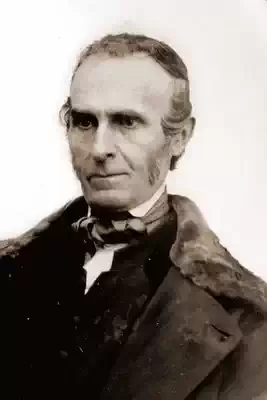
John Greenleaf Whittier
To Pennsylvania
To Pennsylvania
O STATE prayer-founded! never hung
Such choice upon a people's tongue,
Such power to bless or ban,
As that which makes thy whisper Fate,
For which on thee the centuries wait,
And destinies of man!
Across thy Alleghanian chain,
With groanings from a land in pain,
The west-wind finds its way:
Wild-wailing from Missouri's flood
The crying of thy children's blood
Is in thy ears to-day!
And unto thee in Freedom's hour
Of sorest need God gives the power
To ruin or to save;
To wound or heal, to blight or bless
With fertile field or wilderness,
A free home or a grave!
Then let thy virtue match the crime,
Rise to a level with the time;
And, if a son of thine
Betray or tempt thee, Brutus-like
For Fatherland and Freedom strike
As Justice gives the sign.
Wake, sleeper, from thy dream of ease,
The great occasion's forelock seize;
And let the north-wind strong,
And golden leaves of autumn, be
Thy coronal of Victory
And thy triumphal song.
O STATE prayer-founded! never hung
Such choice upon a people's tongue,
Such power to bless or ban,
As that which makes thy whisper Fate,
For which on thee the centuries wait,
And destinies of man!
Across thy Alleghanian chain,
With groanings from a land in pain,
The west-wind finds its way:
Wild-wailing from Missouri's flood
The crying of thy children's blood
Is in thy ears to-day!
And unto thee in Freedom's hour
Of sorest need God gives the power
To ruin or to save;
To wound or heal, to blight or bless
With fertile field or wilderness,
A free home or a grave!
Then let thy virtue match the crime,
Rise to a level with the time;
And, if a son of thine
Betray or tempt thee, Brutus-like
For Fatherland and Freedom strike
As Justice gives the sign.
Wake, sleeper, from thy dream of ease,
The great occasion's forelock seize;
And let the north-wind strong,
And golden leaves of autumn, be
Thy coronal of Victory
And thy triumphal song.
277
John Greenleaf Whittier
To A Southern Statesman
To A Southern Statesman
IS this thy voice whose treble notes of fear
Wail in the wind? And dost thou shake to hear,
Actæon-like, the bay of thine own hounds,
Spurning the leash, and leaping o'er their bounds?
Sore-baffled statesman! when thy eager hand,
With game afoot, unslipped the hungry pack,
To hunt down Freedom in her chosen land,
Hadst thou no fear, that, erelong, doubling back,
These dogs of thine might snuff on Slavery's track?
Where's now the boast, which even thy guarded tongue,
Cold, calm, and proud, in the teeth o' the Senate flung,
O'er the fulfilment of thy baleful plan,
Like Satan's triumph at the fall of man?
How stood'st thou then, thy feet on Freedom planting,
And pointing to the lurid heaven afar,
Whence all could see, through the south windows slanting,
Crimson as blood, the beams of that Lone Star!
The Fates are just; they give us but our own;
Nemesis ripens what our hands have sown.
There is an Eastern story, not unknown,
Doubtless, to thee, of one whose magic skill
Called demons up his water-jars to fill;
Defty and silently, they did his will,
But, when the task was done, kept pouring still.
In vain with spell and charm the wizard wrought,
Faster and faster were the buckets brought,
Higher and higher rose the flood around,
Till the fiends clapped their hands above their master drowned!
So, Carolinian, it may prove with thee,
For God still overrules man's schemes, and takes
Craftiness in its self-set snare, and makes
The wrath of man to praise Him. It may be,
That the roused spirits of Democracy
May leave to freer States the same wide door
Through which thy slave-cursed Texas entered in,
From out the blood and fire, the wrong and sin,
Of the stormed city and the ghastly plain,
Beat by hot hail, and wet with bloody rain,
The myriad-handed pioneer may pour,
And the wild West with the roused North combine
And heave the engineer of evil with his mine.
IS this thy voice whose treble notes of fear
Wail in the wind? And dost thou shake to hear,
Actæon-like, the bay of thine own hounds,
Spurning the leash, and leaping o'er their bounds?
Sore-baffled statesman! when thy eager hand,
With game afoot, unslipped the hungry pack,
To hunt down Freedom in her chosen land,
Hadst thou no fear, that, erelong, doubling back,
These dogs of thine might snuff on Slavery's track?
Where's now the boast, which even thy guarded tongue,
Cold, calm, and proud, in the teeth o' the Senate flung,
O'er the fulfilment of thy baleful plan,
Like Satan's triumph at the fall of man?
How stood'st thou then, thy feet on Freedom planting,
And pointing to the lurid heaven afar,
Whence all could see, through the south windows slanting,
Crimson as blood, the beams of that Lone Star!
The Fates are just; they give us but our own;
Nemesis ripens what our hands have sown.
There is an Eastern story, not unknown,
Doubtless, to thee, of one whose magic skill
Called demons up his water-jars to fill;
Defty and silently, they did his will,
But, when the task was done, kept pouring still.
In vain with spell and charm the wizard wrought,
Faster and faster were the buckets brought,
Higher and higher rose the flood around,
Till the fiends clapped their hands above their master drowned!
So, Carolinian, it may prove with thee,
For God still overrules man's schemes, and takes
Craftiness in its self-set snare, and makes
The wrath of man to praise Him. It may be,
That the roused spirits of Democracy
May leave to freer States the same wide door
Through which thy slave-cursed Texas entered in,
From out the blood and fire, the wrong and sin,
Of the stormed city and the ghastly plain,
Beat by hot hail, and wet with bloody rain,
The myriad-handed pioneer may pour,
And the wild West with the roused North combine
And heave the engineer of evil with his mine.
240
John Greenleaf Whittier
Thy Will Be Done
Thy Will Be Done
WE see not, know not; all our way
Is night, — with Thee alone is day:
From out the torrent's troubled drift,
Above the storm our prayers we lift,
Thy will be done!
The flesh may fail, the heart may faint,
But who are we to make complaint,
Or dare to plead, in times like these,
The weakness of our love of ease?
Thy will be done!
We take with solemn thankfulness
Our burden up, nor ask it less,
And count it joy that even we
May suffer, serve, or wait for Thee,
Whose will be done!
Though dim as yet in tint and line,
We trace Thy picture's wise design,
And thank Thee that our age supplies
Its dark relief of sacrifice.
Thy will be done!
And if, in our unworthiness,
Thy sacrificial wine we press;
If from Thy ordeal's heated bars
Our feet are seamed with crimson scars,
Thy will be done!
If, for the age to come, this hour
Of trial hath vicarious power,
And, blest by Thee, our present pain,
Be Liberty's eternal gain,
Thy will be done!
Strike, Thou the Master, we Thy keys,
The anthem of the destinies!
The minor of Thy loftier strain,
Our hearts shall breathe the old refrain,
Thy will be done!
WE see not, know not; all our way
Is night, — with Thee alone is day:
From out the torrent's troubled drift,
Above the storm our prayers we lift,
Thy will be done!
The flesh may fail, the heart may faint,
But who are we to make complaint,
Or dare to plead, in times like these,
The weakness of our love of ease?
Thy will be done!
We take with solemn thankfulness
Our burden up, nor ask it less,
And count it joy that even we
May suffer, serve, or wait for Thee,
Whose will be done!
Though dim as yet in tint and line,
We trace Thy picture's wise design,
And thank Thee that our age supplies
Its dark relief of sacrifice.
Thy will be done!
And if, in our unworthiness,
Thy sacrificial wine we press;
If from Thy ordeal's heated bars
Our feet are seamed with crimson scars,
Thy will be done!
If, for the age to come, this hour
Of trial hath vicarious power,
And, blest by Thee, our present pain,
Be Liberty's eternal gain,
Thy will be done!
Strike, Thou the Master, we Thy keys,
The anthem of the destinies!
The minor of Thy loftier strain,
Our hearts shall breathe the old refrain,
Thy will be done!
326
John Greenleaf Whittier
The Wife Of Manoah To Her Husband
The Wife Of Manoah To Her Husband
Against the sunset's glowing wall
The city towers rise black and tall,
Where Zorah, on its rocky height,
Stands like an armed man in the light.
Down Eshtaol's vales of ripened grain
Falls like a cloud the night amain,
And up the hillsides climbing slow
The barley reapers homeward go.
Look, dearest! how our fair child's head
The sunset light hath hallowed,
Where at this olive's foot he lies,
Uplooking to the tranquil skies.
Oh, while beneath the fervent heat
Thy sickle swept the bearded wheat,
I've watched, with mingled joy and dread,
Our child upon his grassy bed.
Joy, which the mother feels alone
Whose morning hope like mine had flown,
When to her bosom, over-blessed,
A dearer life than hers is pressed.
Dread, for the future dark and still,
Which shapes our dear one to its will;
Forever in his large calm eyes,
I read a tale of sacrifice.
The same foreboding awe I felt
When at the altar's side we knelt,
And he, who as a pilgrim came,
Rose, winged and glorious, through the flame.
I slept not, though the wild bees made
A dreamlike murmuring in the shade,
And on me the warm-fingered hours
Pressed with the drowsy smell of flowers.
Before me, in a vision, rose
The hosts of Israel's scornful foes,-Rank
over rank, helm, shield, and spear,
Glittered in noon's hot atmosphere.
I heard their boast, and bitter word,
Their mockery of the Hebrew's Lord,
I saw their hands His ark assail,
Their feet profane His holy veil.
No angel down the blue space spoke,
No thunder from the still sky broke;
But in their midst, in power and awe,
Like God's waked wrath, our child I saw!
A child no more!--harsh-browed and strong,
He towered a giant in the throng,
And down his shoulders, broad and bare,
Swept the black terror of his hair.
He raised his arm--he smote amain;
As round the reaper falls the grain,
So the dark host around him fell,
So sank the foes of Israel!
Again I looked. In sunlight shone
The towers and domes of Askelon;
Priest, warrior, slave, a mighty crowd
Within her idol temple bowed.
Yet one knelt not; stark, gaunt, and blind,
His arms the massive pillars twined,-An
eyeless captive, strong with hate,
He stood there like an evil Fate.
The red shrines smoked,--the trumpets pealed
He stooped,--the giant columns reeled;
Reeled tower and fane, sank arch and wall,
And the thick dust-cloud closed o'er all!
Above the shriek, the crash, the groan
Of the fallen pride of Askelon,
I heard, sheer down the echoing sky,
A voice as of an angel cry,-
The voice of him, who at our side
Sat through the golden eventide;
Of him who, on thy altar's blaze,
Rose fire-winged, with his song of praise.
'Rejoice o'er Israel's broken chain,
Gray mother of the mighty slain!
Rejoice!' it cried, 'he vanquisheth!
The strong in life is strong in death!
'To him shall Zorah's daughters raise
Through coming years their hymns of praise,
And gray old men at evening tell
Of all be wrought for Israel.
'And they who sing and they who hear
Alike shall hold thy memory dear,
And pour their blessings on thy head,
O mother of the mighty dead!'
It ceased; and though a sound I heard
As if great wings the still air stirred,
I only saw the barley sheaves
And hills half hid by olive leaves.
I bowed my face, in awe and fear,
On the dear child who slumbered near;
'With me, as with my only son,
O God,' I said, 'Thy will be done!'
Against the sunset's glowing wall
The city towers rise black and tall,
Where Zorah, on its rocky height,
Stands like an armed man in the light.
Down Eshtaol's vales of ripened grain
Falls like a cloud the night amain,
And up the hillsides climbing slow
The barley reapers homeward go.
Look, dearest! how our fair child's head
The sunset light hath hallowed,
Where at this olive's foot he lies,
Uplooking to the tranquil skies.
Oh, while beneath the fervent heat
Thy sickle swept the bearded wheat,
I've watched, with mingled joy and dread,
Our child upon his grassy bed.
Joy, which the mother feels alone
Whose morning hope like mine had flown,
When to her bosom, over-blessed,
A dearer life than hers is pressed.
Dread, for the future dark and still,
Which shapes our dear one to its will;
Forever in his large calm eyes,
I read a tale of sacrifice.
The same foreboding awe I felt
When at the altar's side we knelt,
And he, who as a pilgrim came,
Rose, winged and glorious, through the flame.
I slept not, though the wild bees made
A dreamlike murmuring in the shade,
And on me the warm-fingered hours
Pressed with the drowsy smell of flowers.
Before me, in a vision, rose
The hosts of Israel's scornful foes,-Rank
over rank, helm, shield, and spear,
Glittered in noon's hot atmosphere.
I heard their boast, and bitter word,
Their mockery of the Hebrew's Lord,
I saw their hands His ark assail,
Their feet profane His holy veil.
No angel down the blue space spoke,
No thunder from the still sky broke;
But in their midst, in power and awe,
Like God's waked wrath, our child I saw!
A child no more!--harsh-browed and strong,
He towered a giant in the throng,
And down his shoulders, broad and bare,
Swept the black terror of his hair.
He raised his arm--he smote amain;
As round the reaper falls the grain,
So the dark host around him fell,
So sank the foes of Israel!
Again I looked. In sunlight shone
The towers and domes of Askelon;
Priest, warrior, slave, a mighty crowd
Within her idol temple bowed.
Yet one knelt not; stark, gaunt, and blind,
His arms the massive pillars twined,-An
eyeless captive, strong with hate,
He stood there like an evil Fate.
The red shrines smoked,--the trumpets pealed
He stooped,--the giant columns reeled;
Reeled tower and fane, sank arch and wall,
And the thick dust-cloud closed o'er all!
Above the shriek, the crash, the groan
Of the fallen pride of Askelon,
I heard, sheer down the echoing sky,
A voice as of an angel cry,-
The voice of him, who at our side
Sat through the golden eventide;
Of him who, on thy altar's blaze,
Rose fire-winged, with his song of praise.
'Rejoice o'er Israel's broken chain,
Gray mother of the mighty slain!
Rejoice!' it cried, 'he vanquisheth!
The strong in life is strong in death!
'To him shall Zorah's daughters raise
Through coming years their hymns of praise,
And gray old men at evening tell
Of all be wrought for Israel.
'And they who sing and they who hear
Alike shall hold thy memory dear,
And pour their blessings on thy head,
O mother of the mighty dead!'
It ceased; and though a sound I heard
As if great wings the still air stirred,
I only saw the barley sheaves
And hills half hid by olive leaves.
I bowed my face, in awe and fear,
On the dear child who slumbered near;
'With me, as with my only son,
O God,' I said, 'Thy will be done!'
209
John Greenleaf Whittier
The Vow Of Washington
The Vow Of Washington
The sword was sheathed: in April's sun
Lay green the fields by Freedom won;
And severed sections, weary of debates,
Joined hands at last and were United States.
O City sitting by the Sea
How proud the day that dawned on thee,
When the new era, long desired, began,
And, in its need, the hour had found the man!
One thought the cannon salvos spoke,
The resonant bell-tower's vibrant stroke,
The voiceful streets, the plaudit-echoing halls,
And prayer and hymn borne heavenward from St. Paul's!
How felt the land in every part
The strong throb of a nation's heart,
As its great leader gave, with reverent awe,
His pledge to Union, Liberty, and Law.
That pledge the heavens above him heard,
That vow the sleep of centuries stirred;
In world-wide wonder listening peoples bent
Their gaze on Freedom's great experiment.
Could it succeed? Of honor sold
And hopes deceived all history told.
Above the wrecks that strewed the mournful past,
Was the long dream of ages true at last?
Thank God! the people's choice was just,
The one man equal to his trust,
Wise beyond lore, and without weakness good,
Calm in the strength of flawless rectitude.
His rule of justice, order, peace,
Made possible the world's release;
Taught prince and serf that power is but a trust,
And rule, alone, which serves the ruled, is just;
That Freedom generous is, but strong
In hate of fraud and selfish wrong,
Pretence that turns her holy truths to lies,
And lawless license masking in her guise.
Land of his love! with one glad voice
Let thy great sisterhood rejoice;
A century's suns o'er thee have risen and set,
And, God be praised, we are one nation yet.
And still we trust the years to be
Shall prove his hope was destiny,
Leaving our flag, with all its added stars,
Unrent by faction and unstained by wars.
Lo! where with patient toil he nursed
And trained the new-set plant at first,
The widening branches of a stately tree
Stretch from the sunrise to the sunset sea.
And in its broad and sheltering shade,
Sitting with none to make afraid,
Were we now silent, through each mighty limb,
The winds of heaven would sing the praise of him.
Our first and best!--his ashes lie
Beneath his own Virginian sky.
Forgive, forget, O true and just and brave,
The storm that swept above thy sacred grave.
For, ever in the awful strife
And dark hours of the nation's life,
Through the fierce tumult pierced his warning word,
Their father's voice his erring children heard.
The change for which he prayed and sought
In that sharp agony was wrought;
No partial interest draws its alien line
'Twixt North and South, the cypress and the pine!
One people now, all doubt beyond,
His name shall be our Union-bond;
We lift our hands to Heaven, and here and now.
Take on our lips the old Centennial vow.
For rule and trust must needs be ours;
Chooser and chosen both are powers
Equal in service as in rights; the claim
Of Duty rests on each and all the same.
Then let the sovereign millions, where
Our banner floats in sun and air,
From the warm palm-lands to Alaska's cold,
Repeat with us the pledge a century old?
The sword was sheathed: in April's sun
Lay green the fields by Freedom won;
And severed sections, weary of debates,
Joined hands at last and were United States.
O City sitting by the Sea
How proud the day that dawned on thee,
When the new era, long desired, began,
And, in its need, the hour had found the man!
One thought the cannon salvos spoke,
The resonant bell-tower's vibrant stroke,
The voiceful streets, the plaudit-echoing halls,
And prayer and hymn borne heavenward from St. Paul's!
How felt the land in every part
The strong throb of a nation's heart,
As its great leader gave, with reverent awe,
His pledge to Union, Liberty, and Law.
That pledge the heavens above him heard,
That vow the sleep of centuries stirred;
In world-wide wonder listening peoples bent
Their gaze on Freedom's great experiment.
Could it succeed? Of honor sold
And hopes deceived all history told.
Above the wrecks that strewed the mournful past,
Was the long dream of ages true at last?
Thank God! the people's choice was just,
The one man equal to his trust,
Wise beyond lore, and without weakness good,
Calm in the strength of flawless rectitude.
His rule of justice, order, peace,
Made possible the world's release;
Taught prince and serf that power is but a trust,
And rule, alone, which serves the ruled, is just;
That Freedom generous is, but strong
In hate of fraud and selfish wrong,
Pretence that turns her holy truths to lies,
And lawless license masking in her guise.
Land of his love! with one glad voice
Let thy great sisterhood rejoice;
A century's suns o'er thee have risen and set,
And, God be praised, we are one nation yet.
And still we trust the years to be
Shall prove his hope was destiny,
Leaving our flag, with all its added stars,
Unrent by faction and unstained by wars.
Lo! where with patient toil he nursed
And trained the new-set plant at first,
The widening branches of a stately tree
Stretch from the sunrise to the sunset sea.
And in its broad and sheltering shade,
Sitting with none to make afraid,
Were we now silent, through each mighty limb,
The winds of heaven would sing the praise of him.
Our first and best!--his ashes lie
Beneath his own Virginian sky.
Forgive, forget, O true and just and brave,
The storm that swept above thy sacred grave.
For, ever in the awful strife
And dark hours of the nation's life,
Through the fierce tumult pierced his warning word,
Their father's voice his erring children heard.
The change for which he prayed and sought
In that sharp agony was wrought;
No partial interest draws its alien line
'Twixt North and South, the cypress and the pine!
One people now, all doubt beyond,
His name shall be our Union-bond;
We lift our hands to Heaven, and here and now.
Take on our lips the old Centennial vow.
For rule and trust must needs be ours;
Chooser and chosen both are powers
Equal in service as in rights; the claim
Of Duty rests on each and all the same.
Then let the sovereign millions, where
Our banner floats in sun and air,
From the warm palm-lands to Alaska's cold,
Repeat with us the pledge a century old?
253
John Greenleaf Whittier
The Rock In El Ghor
The Rock In El Ghor
Dead Petra in her hill-tomb sleeps,
Her stones of emptiness remain;
Around her sculptured mystery sweeps
The lonely waste of Edom's plain.
From the doomed dwellers in the cleft
The bow of vengeance turns not back;
Of all her myriads none are left
Along the Wady Mousa's track.
Clear in the hot Arabian day
Her arches spring, her statues climb;
Unchanged, the graven wonders pay
No tribute to the spoiler, Time!
Unchanged the awful lithograph
Of power and glory undertrod;
Of nations scattered like the chaff
Blown from the threshing-floor of God.
Yet shall the thoughtful stranger turn
From Petra's gates with deeper awe,
To mark afar the burial urn
Of Aaron on the cliffs of Hor;
And where upon its ancient guard
Thy Rock, El Ghor, is standing yet,-Looks
from its turrets desertward,
And keeps the watch that God has set.
The same as when in thunders loud
It heard the voice of God to man,
As when it saw in fire and cloud
The angels walk in Israel's van,
Or when from Ezion-Geber's way
It saw the long procession file,
And heard the Hebrew timbrels play
The music of the lordly Nile;
Or saw the tabernacle pause,
Cloud-bound, by Kadesh Barnea's wells,
While Moses graved the sacred laws,
And Aaron swung his golden bells.
Rock of the desert, prophet-sung!
How grew its shadowing pile at length,
A symbol, in the Hebrew tongue,
Of God's eternal love and strength.
On lip of bard and scroll of seer,
From age to age went down the name,
Until the Shiloh's promised year,
And Christ, the Rock of Ages, came!
The path of life we walk to-day
Is strange as that the Hebrews trod;
We need the shadowing rock, as they,-We
need, like them, the guides of God.
God send His angels, Cloud and Fire,
To lead us o'er the desert sand!
God give our hearts their long desire,
His shadow in a weary land!
Dead Petra in her hill-tomb sleeps,
Her stones of emptiness remain;
Around her sculptured mystery sweeps
The lonely waste of Edom's plain.
From the doomed dwellers in the cleft
The bow of vengeance turns not back;
Of all her myriads none are left
Along the Wady Mousa's track.
Clear in the hot Arabian day
Her arches spring, her statues climb;
Unchanged, the graven wonders pay
No tribute to the spoiler, Time!
Unchanged the awful lithograph
Of power and glory undertrod;
Of nations scattered like the chaff
Blown from the threshing-floor of God.
Yet shall the thoughtful stranger turn
From Petra's gates with deeper awe,
To mark afar the burial urn
Of Aaron on the cliffs of Hor;
And where upon its ancient guard
Thy Rock, El Ghor, is standing yet,-Looks
from its turrets desertward,
And keeps the watch that God has set.
The same as when in thunders loud
It heard the voice of God to man,
As when it saw in fire and cloud
The angels walk in Israel's van,
Or when from Ezion-Geber's way
It saw the long procession file,
And heard the Hebrew timbrels play
The music of the lordly Nile;
Or saw the tabernacle pause,
Cloud-bound, by Kadesh Barnea's wells,
While Moses graved the sacred laws,
And Aaron swung his golden bells.
Rock of the desert, prophet-sung!
How grew its shadowing pile at length,
A symbol, in the Hebrew tongue,
Of God's eternal love and strength.
On lip of bard and scroll of seer,
From age to age went down the name,
Until the Shiloh's promised year,
And Christ, the Rock of Ages, came!
The path of life we walk to-day
Is strange as that the Hebrews trod;
We need the shadowing rock, as they,-We
need, like them, the guides of God.
God send His angels, Cloud and Fire,
To lead us o'er the desert sand!
God give our hearts their long desire,
His shadow in a weary land!
234
John Greenleaf Whittier
The Seeking Of The Waterfall
The Seeking Of The Waterfall
They left their home of summer ease
Beneath the lowland's sheltering trees,
To seek, by ways unknown to all,
The promise of the waterfall.
Some vague, faint rumor to the vale
Had crept--perchance a hunter's tale-Of
its wild mirth of waters lost
On the dark woods through which it tossed.
Somewhere it laughed and sang; somewhere
Whirled in mad dance its misty hair;
But who had raised its veil, or seen
The rainbow skirts of that Undine?
They sought it where the mountain brook
Its swift way to the valley took;
Along the rugged slope they clomb,
Their guide a thread of sound and foam.
Height after height they slowly won;
The fiery javelins of the sun
Smote the bare ledge; the tangled shade
With rock and vine their steps delayed.
But, through leaf-openings, now and then
They saw the cheerful homes of men,
And the great mountains with their wall
Of misty purple girdling all.
The leaves through which the glad winds blew
Shared. the wild dance the waters knew;
And where the shadows deepest fell
The wood-thrush rang his silver bell.
Fringing the stream, at every turn
Swung low the waving fronds of fern;
From stony cleft and mossy sod
Pale asters sprang, and golden-rod.
And still the water sang the sweet,
Glad song that stirred its gliding feet,
And found in rock and root the keys
Of its beguiling melodies.
Beyond, above, its signals flew
Of tossing foam the birch-trees through;
Now seen, now lost, but baffling still
The weary seekers' slackening will.
Each called to each: 'Lo here! Lo there!
Its white scarf flutters in the air!'
They climbed anew; the vision fled,
To beckon higher overhead.
So toiled they up the mountain-slope
With faint and ever fainter hope;
With faint and fainter voice the brook
Still bade them listen, pause, and look.
Meanwhile below the day was done;
Above the tall peaks saw the sun
Sink, beam-shorn, to its misty set
Behind the hills of violet.
'Here ends our quest!' the seekers cried,
'The brook and rumor both have lied!
The phantom of a waterfall
Has led us at its beck and call.'
But one, with years grown wiser, said
'So, always baffled, not misled,
We follow where before us runs
The vision of the shining ones.
'Not where they seem their signals fly,
Their voices while we listen die;
We cannot keep, however fleet,
The quick time of their winged feet.
'From youth to age unresting stray
These kindly mockers in our way;
Yet lead they not, the baffling elves,
To something better than themselves?
'Here, though unreached the goal we sought,
Its own reward our toil has brought:
The winding water's sounding rush,
The long note of the hermit thrush,
'The turquoise lakes, the glimpse of pond
And river track, and, vast, beyond
Broad meadows belted round with pines,
The grand uplift of mountain lines!
'What matter though we seek with pain
The garden of the gods in vain,
If lured thereby we climb to greet
Some wayside blossom Eden-sweet?
'To seek is better than to gain,
The fond hope dies as we attain;
Life's fairest things are those which seem,
The best is that of which we dream.
'Then let us trust our waterfall
Still flashes down its rocky wall,
With rainbow crescent curved across
Its sunlit spray from moss to moss.
'And we, forgetful of our pain,
In thought shall seek it oft again;
Shall see this aster-blossomed sod,
This sunshine of the golden-rod,
'And haply gain, through parting boughs,
Grand glimpses of great mountain brows
Cloud-turbaned, and the sharp steel sheen
Of lakes deep set in valleys green.
'So failure wins; the consequence
Of loss becomes its recompense;
And evermore the end shall tell
The unreached ideal guided well.
'Our sweet illusions only die
Fulfilling love's sure prophecy;
And every wish for better things
An undreamed beauty nearer brings.
'For fate is servitor of love;
Desire and hope and longing prove
The secret of immortal youth,
And Nature cheats us into truth.
'O kind allurers, wisely sent,
Beguiling with benign intent,
Still move us, through divine unrest,
To seek the loveliest and the best!
'Go with us when our souls go free,
And, in the clear, white light to be,
Add unto Heaven's beatitude
The old delight of seeking good!'
They left their home of summer ease
Beneath the lowland's sheltering trees,
To seek, by ways unknown to all,
The promise of the waterfall.
Some vague, faint rumor to the vale
Had crept--perchance a hunter's tale-Of
its wild mirth of waters lost
On the dark woods through which it tossed.
Somewhere it laughed and sang; somewhere
Whirled in mad dance its misty hair;
But who had raised its veil, or seen
The rainbow skirts of that Undine?
They sought it where the mountain brook
Its swift way to the valley took;
Along the rugged slope they clomb,
Their guide a thread of sound and foam.
Height after height they slowly won;
The fiery javelins of the sun
Smote the bare ledge; the tangled shade
With rock and vine their steps delayed.
But, through leaf-openings, now and then
They saw the cheerful homes of men,
And the great mountains with their wall
Of misty purple girdling all.
The leaves through which the glad winds blew
Shared. the wild dance the waters knew;
And where the shadows deepest fell
The wood-thrush rang his silver bell.
Fringing the stream, at every turn
Swung low the waving fronds of fern;
From stony cleft and mossy sod
Pale asters sprang, and golden-rod.
And still the water sang the sweet,
Glad song that stirred its gliding feet,
And found in rock and root the keys
Of its beguiling melodies.
Beyond, above, its signals flew
Of tossing foam the birch-trees through;
Now seen, now lost, but baffling still
The weary seekers' slackening will.
Each called to each: 'Lo here! Lo there!
Its white scarf flutters in the air!'
They climbed anew; the vision fled,
To beckon higher overhead.
So toiled they up the mountain-slope
With faint and ever fainter hope;
With faint and fainter voice the brook
Still bade them listen, pause, and look.
Meanwhile below the day was done;
Above the tall peaks saw the sun
Sink, beam-shorn, to its misty set
Behind the hills of violet.
'Here ends our quest!' the seekers cried,
'The brook and rumor both have lied!
The phantom of a waterfall
Has led us at its beck and call.'
But one, with years grown wiser, said
'So, always baffled, not misled,
We follow where before us runs
The vision of the shining ones.
'Not where they seem their signals fly,
Their voices while we listen die;
We cannot keep, however fleet,
The quick time of their winged feet.
'From youth to age unresting stray
These kindly mockers in our way;
Yet lead they not, the baffling elves,
To something better than themselves?
'Here, though unreached the goal we sought,
Its own reward our toil has brought:
The winding water's sounding rush,
The long note of the hermit thrush,
'The turquoise lakes, the glimpse of pond
And river track, and, vast, beyond
Broad meadows belted round with pines,
The grand uplift of mountain lines!
'What matter though we seek with pain
The garden of the gods in vain,
If lured thereby we climb to greet
Some wayside blossom Eden-sweet?
'To seek is better than to gain,
The fond hope dies as we attain;
Life's fairest things are those which seem,
The best is that of which we dream.
'Then let us trust our waterfall
Still flashes down its rocky wall,
With rainbow crescent curved across
Its sunlit spray from moss to moss.
'And we, forgetful of our pain,
In thought shall seek it oft again;
Shall see this aster-blossomed sod,
This sunshine of the golden-rod,
'And haply gain, through parting boughs,
Grand glimpses of great mountain brows
Cloud-turbaned, and the sharp steel sheen
Of lakes deep set in valleys green.
'So failure wins; the consequence
Of loss becomes its recompense;
And evermore the end shall tell
The unreached ideal guided well.
'Our sweet illusions only die
Fulfilling love's sure prophecy;
And every wish for better things
An undreamed beauty nearer brings.
'For fate is servitor of love;
Desire and hope and longing prove
The secret of immortal youth,
And Nature cheats us into truth.
'O kind allurers, wisely sent,
Beguiling with benign intent,
Still move us, through divine unrest,
To seek the loveliest and the best!
'Go with us when our souls go free,
And, in the clear, white light to be,
Add unto Heaven's beatitude
The old delight of seeking good!'
306
John Greenleaf Whittier
The Cross
The Cross
'The cross, if rightly borne, shall be
No burden, but support to thee;'
So, moved of old time for our sake,
The holy monk of Kempen spake.
Thou brave and true one! upon whom
Was laid the cross of martyrdom,
How didst thou, in thy generous youth,
Bear witness to this blessed truth!
Thy cross of suffering and of shame
A staff within thy hands became,
In paths where faith alone could see
The Master's steps supporting thee.
Thine was the seed-time; God alone
Beholds the end of what is sown;
Beyond our vision, weak and dim,
The harvest-time is hid with Him.
Yet, unforgotten where it lies,
That seed of generous sacrifice,
Though seeming on the desert cast,
Shall rise with bloom and fruit at last.
'The cross, if rightly borne, shall be
No burden, but support to thee;'
So, moved of old time for our sake,
The holy monk of Kempen spake.
Thou brave and true one! upon whom
Was laid the cross of martyrdom,
How didst thou, in thy generous youth,
Bear witness to this blessed truth!
Thy cross of suffering and of shame
A staff within thy hands became,
In paths where faith alone could see
The Master's steps supporting thee.
Thine was the seed-time; God alone
Beholds the end of what is sown;
Beyond our vision, weak and dim,
The harvest-time is hid with Him.
Yet, unforgotten where it lies,
That seed of generous sacrifice,
Though seeming on the desert cast,
Shall rise with bloom and fruit at last.
288