

Poems in this theme
Destiny and Overcoming
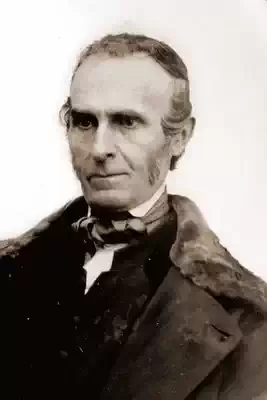
John Greenleaf Whittier
Seed-Time And Harvest
Seed-Time And Harvest
As o'er his furrowed fields which lie
Beneath a coldly dropping sky,
Yet chill with winter's melted snow,
The husbandman goes forth to sow,
Thus, Freedom, on the bitter blast
The ventures of thy seed we cast,
And trust to warmer sun and rain
To swell the germs and fill the grain.
Who calls thy glorious service hard?
Who deems it not its own reward?
Who, for its trials, counts it less
A cause of praise and thankfulness?
It may not be our lot to wield
The sickle in the ripened field;
Nor ours to hear, on summer eves,
The reaper's song among the sheaves.
Yet where our duty's task is wrought
In unison with God's great thought,
The near and future blend in one,
And whatsoe'er is willed, is done!
And ours the grateful service whence
Comes day by day the recompense;
The hope, the trust, the purpose stayed,
The fountain and the noonday shade.
And were this life the utmost span,
The only end and aim of man,
Better the toil of fields like these
Than waking dream and slothful ease.
But life, though falling like our grain,
Like that revives and springs again;
And, early called, how blest are they
Who wait in heaven their harvest-day!
As o'er his furrowed fields which lie
Beneath a coldly dropping sky,
Yet chill with winter's melted snow,
The husbandman goes forth to sow,
Thus, Freedom, on the bitter blast
The ventures of thy seed we cast,
And trust to warmer sun and rain
To swell the germs and fill the grain.
Who calls thy glorious service hard?
Who deems it not its own reward?
Who, for its trials, counts it less
A cause of praise and thankfulness?
It may not be our lot to wield
The sickle in the ripened field;
Nor ours to hear, on summer eves,
The reaper's song among the sheaves.
Yet where our duty's task is wrought
In unison with God's great thought,
The near and future blend in one,
And whatsoe'er is willed, is done!
And ours the grateful service whence
Comes day by day the recompense;
The hope, the trust, the purpose stayed,
The fountain and the noonday shade.
And were this life the utmost span,
The only end and aim of man,
Better the toil of fields like these
Than waking dream and slothful ease.
But life, though falling like our grain,
Like that revives and springs again;
And, early called, how blest are they
Who wait in heaven their harvest-day!
294
John Greenleaf Whittier
Overruled
Overruled
The threads our hands in blindness spin
No self-determined plan weaves in;
The shuttle of the unseen powers
Works out a pattern not as ours.
Ah! small the choice of him who sings
What sound shall leave the smitten strings;
Fate holds and guides the hand of art;
The singer's is the servant's part.
The wind-harp chooses not the tone
That through its trembling threads is blown;
The patient organ cannot guess
What hand its passive keys shall press.
Through wish, resolve, and act, our will
Is moved by undreamed forces still;
And no man measures in advance
His strength with untried circumstance.
As streams take hue from shade and sun,
As runs the life the song must run;
But, glad or sad, to His good end
God grant the varying notes may tend!
The threads our hands in blindness spin
No self-determined plan weaves in;
The shuttle of the unseen powers
Works out a pattern not as ours.
Ah! small the choice of him who sings
What sound shall leave the smitten strings;
Fate holds and guides the hand of art;
The singer's is the servant's part.
The wind-harp chooses not the tone
That through its trembling threads is blown;
The patient organ cannot guess
What hand its passive keys shall press.
Through wish, resolve, and act, our will
Is moved by undreamed forces still;
And no man measures in advance
His strength with untried circumstance.
As streams take hue from shade and sun,
As runs the life the song must run;
But, glad or sad, to His good end
God grant the varying notes may tend!
312
John Greenleaf Whittier
Kallundborg Church ( From The Tent on the Beach)
Kallundborg Church ( From The Tent on the Beach)
"Tie stille, barn min!
Imorgen kommer Fin,
Fa'er din,
Og gi'er dich Esbern Snares öine og hjerte at lege med!"
Zealand Rhyme.
"BUILD at Kallundborg by the sea
A church as stately as church may be,
And there shalt thou wed my daughter fair,"
Said the Lord of Nesvek to Esbern Snare.
And the Baron laughed. But Esbern said,
"Though I lose my soul, I will Helva wed!"
And off he strode, in his pride of will,
To the Troll who dwelt in Ulshoi hill.
"Build, O Troll, a church for me
At Kallundborg by the mighty sea;
Build it stately, and build it fair,
Build it quickly," said Esbern Snare.
But the sly Dwarf said, "No work is wrought
By Trolls of the Hills, O man, for naught.
What wilt thou give for thy church so fair?"
"Set thy own price," quoth Esbern Snare.
"When Kallundborg church is builded well,
Thou must the name of its builder tell,
Or thy heart and thy eyes must be my boon."
"Build," said Esbern, "and build it soon."
By night and by day the Troll wrought on;
He hewed the timbers, he piled the stone;
But day by day, as the walls rose fair,
Darker and sadder grew Esbern Snare.
He listened by night, he watched by day,
He sought and thought, but he dared not pray;
In vain he called on the Elle-maids shy,
And the Neck and the Nis gave no reply.
Of his evil bargain far and wide
A rumor ran through the country-side;
And Helva of Nesvek, young and fair,
Prayed for the soul of Esbern Snare.
And now the church was wellnigh done;
One pillar it lacked, and one alone;
And the grim Troll muttered, "Fool thou art!
To-morrow gives me thy eyes and heart!"
By Kallundborg in black despair,
Through wood and meadow, walked Esbern Snare,
Till, worn and weary, the strong man sank
Under the birches on Ulshoi bank.
At his last day's work he heard the Troll
Hammer and delve in the quarry's hole;
Before him the church stood large and fair:
"I have builded my tomb," said Esbern Snare.
And he closed his eyes the sight to hide,
When he heard a light step at his side:
"O Esbern Snare! a sweet voice said,
"Would I might die now in thy stead!"
With a grasp by love and by fear made strong,
He held her fast, and he held her long;
With the beating heart of a bird afeard,
She hid her face in his flame-red beard.
"O love!" he cried, "let me look to-day
In thine eyes ere mine are plucked away;
Let me hold thee close, let me feel thy heart
Ere mine by the Troll is torn apart!
"I sinned, O Helva, for love of thee!
Pray that the Lord Christ pardon me!"
But fast as she prayed, and faster still,
Hammered the Troll in Ulshoi hill.
He knew, as he wrought, that a loving heart
Was somehow baffling his evil art;
For more than spell of Elf or Troll
Is a maiden's prayer for her lover's soul.
And Esbern listened, and caught the sound
Of a Troll-wife singing underground:
"To-morrow comes Fine, father thine:
Lie still and hush thee, baby mine!
"Lie still, my darling! next sunrise
Thou'lt play with Esbern Snare's heart and eyes!"
"Ho! ho!" quoth Esbern, "is that your game?
Thanks to the Troll-wife, I know his name!"
The Troll he heard him, and hurried on
To Kallundborg church with the lacking stone.
"Too late, Gaffer Fine!" cried Esbern Snare;
And Troll and pillar vanished in air!
That night the harvesters heard the sound
Of a woman sobbing underground,
And the voice of the Hill-Troll loud with blame
Of the careless singer who told his name.
Of the Troll of the Church they sing the rune
By the Northern Sea in the harvest moon;
And the fishers of Zealand hear him still
Scolding his wife in Ulshoi hill.
And seaward over its groves of birch
Still looks the tower of Kallundborg church
Where, first at its altar, a wedded pair,
Stood Helva of Nesvek and Esbern Snare!
"Tie stille, barn min!
Imorgen kommer Fin,
Fa'er din,
Og gi'er dich Esbern Snares öine og hjerte at lege med!"
Zealand Rhyme.
"BUILD at Kallundborg by the sea
A church as stately as church may be,
And there shalt thou wed my daughter fair,"
Said the Lord of Nesvek to Esbern Snare.
And the Baron laughed. But Esbern said,
"Though I lose my soul, I will Helva wed!"
And off he strode, in his pride of will,
To the Troll who dwelt in Ulshoi hill.
"Build, O Troll, a church for me
At Kallundborg by the mighty sea;
Build it stately, and build it fair,
Build it quickly," said Esbern Snare.
But the sly Dwarf said, "No work is wrought
By Trolls of the Hills, O man, for naught.
What wilt thou give for thy church so fair?"
"Set thy own price," quoth Esbern Snare.
"When Kallundborg church is builded well,
Thou must the name of its builder tell,
Or thy heart and thy eyes must be my boon."
"Build," said Esbern, "and build it soon."
By night and by day the Troll wrought on;
He hewed the timbers, he piled the stone;
But day by day, as the walls rose fair,
Darker and sadder grew Esbern Snare.
He listened by night, he watched by day,
He sought and thought, but he dared not pray;
In vain he called on the Elle-maids shy,
And the Neck and the Nis gave no reply.
Of his evil bargain far and wide
A rumor ran through the country-side;
And Helva of Nesvek, young and fair,
Prayed for the soul of Esbern Snare.
And now the church was wellnigh done;
One pillar it lacked, and one alone;
And the grim Troll muttered, "Fool thou art!
To-morrow gives me thy eyes and heart!"
By Kallundborg in black despair,
Through wood and meadow, walked Esbern Snare,
Till, worn and weary, the strong man sank
Under the birches on Ulshoi bank.
At his last day's work he heard the Troll
Hammer and delve in the quarry's hole;
Before him the church stood large and fair:
"I have builded my tomb," said Esbern Snare.
And he closed his eyes the sight to hide,
When he heard a light step at his side:
"O Esbern Snare! a sweet voice said,
"Would I might die now in thy stead!"
With a grasp by love and by fear made strong,
He held her fast, and he held her long;
With the beating heart of a bird afeard,
She hid her face in his flame-red beard.
"O love!" he cried, "let me look to-day
In thine eyes ere mine are plucked away;
Let me hold thee close, let me feel thy heart
Ere mine by the Troll is torn apart!
"I sinned, O Helva, for love of thee!
Pray that the Lord Christ pardon me!"
But fast as she prayed, and faster still,
Hammered the Troll in Ulshoi hill.
He knew, as he wrought, that a loving heart
Was somehow baffling his evil art;
For more than spell of Elf or Troll
Is a maiden's prayer for her lover's soul.
And Esbern listened, and caught the sound
Of a Troll-wife singing underground:
"To-morrow comes Fine, father thine:
Lie still and hush thee, baby mine!
"Lie still, my darling! next sunrise
Thou'lt play with Esbern Snare's heart and eyes!"
"Ho! ho!" quoth Esbern, "is that your game?
Thanks to the Troll-wife, I know his name!"
The Troll he heard him, and hurried on
To Kallundborg church with the lacking stone.
"Too late, Gaffer Fine!" cried Esbern Snare;
And Troll and pillar vanished in air!
That night the harvesters heard the sound
Of a woman sobbing underground,
And the voice of the Hill-Troll loud with blame
Of the careless singer who told his name.
Of the Troll of the Church they sing the rune
By the Northern Sea in the harvest moon;
And the fishers of Zealand hear him still
Scolding his wife in Ulshoi hill.
And seaward over its groves of birch
Still looks the tower of Kallundborg church
Where, first at its altar, a wedded pair,
Stood Helva of Nesvek and Esbern Snare!
246
John Greenleaf Whittier
Italy
Italy
ACROSS the sea I heard the groans
Of nations in the intervals
Of wind and wave. Their blood and bones
Cried out in torture, crushed by thrones,
And sucked by priestly cannibals.
I dreamed of Freedom slowly gained
By martyr meekness, patience, faith,
And lo! an athlete grimly stained,
With corded muscles battle-strained,
Shouting it from the fields of death!
I turn me, awe-struck, from the sight,
Among the clamoring thousands mute,
I only know that God is right,
And that the children of the light
Shall tread the darkness under foot.
I know the pent fire heaves its crust,
That sultry skies the bolt will form
To smite them clear; that Nature must
The balance of her powers adjust,
Though with the earthquake and the storm.
God reigns, and let the earth rejoice!
I bow before His sterner plan.
Dumb are the organs of my choice;
He speaks in battle's stormy voice,
His praise is in the wrath of man!
Yet, surely as He lives, the day
Of peace He promised shall be ours,
To fold the flags of war, and lay
Its sword and spear to rust away,
And sow its ghastly fields with flowers!
ACROSS the sea I heard the groans
Of nations in the intervals
Of wind and wave. Their blood and bones
Cried out in torture, crushed by thrones,
And sucked by priestly cannibals.
I dreamed of Freedom slowly gained
By martyr meekness, patience, faith,
And lo! an athlete grimly stained,
With corded muscles battle-strained,
Shouting it from the fields of death!
I turn me, awe-struck, from the sight,
Among the clamoring thousands mute,
I only know that God is right,
And that the children of the light
Shall tread the darkness under foot.
I know the pent fire heaves its crust,
That sultry skies the bolt will form
To smite them clear; that Nature must
The balance of her powers adjust,
Though with the earthquake and the storm.
God reigns, and let the earth rejoice!
I bow before His sterner plan.
Dumb are the organs of my choice;
He speaks in battle's stormy voice,
His praise is in the wrath of man!
Yet, surely as He lives, the day
Of peace He promised shall be ours,
To fold the flags of war, and lay
Its sword and spear to rust away,
And sow its ghastly fields with flowers!
244
John Greenleaf Whittier
Garibaldi
Garibaldi
In trance and dream of old, God's prophet saw
The casting down of thrones. Thou, watching lone
The hot Sardinian coast-line, hazy-hilled,
Where, fringing round Caprera's rocky zone
With foam, the slow waves gather and withdraw,
Behold'st the vision of the seer fulfilled,
And hear'st the sea-winds burdened with a sound
Of falling chains, as, one by one, unbound,
The nations lift their right hands up and swear
Their oath of freedom. From the chalk-white wall
Of England, from the black Carpathian range,
Along the Danube and the Theiss, through all
The passes of the Spanish Pyrenees,
And from the Seine's thronged banks, a murmur strange
And glad floats to thee o'er thy summer seas
On the salt wind that stirs thy whitening hair,--
The song of freedom's bloodless victories!
Rejoice, O Garibaldi! Though thy sword
Failed at Rome's gates, and blood seemed vainly poured
Where, in Christ's name, the crowned infidel
Of France wrought murder with the arms of hell
On that sad mountain slope whose ghostly dead,
Unmindful of the gray exorcist's ban,
Walk, unappeased, the chambered Vatican,
And draw the curtains of Napoleon's bed!
God's providence is not blind, but, full of eyes,
It searches all the refuges of lies;
And in His time and way, the accursed things
Before whose evil feet thy battle-gage
Has clashed defiance from hot youth to age
Shall perish. All men shall be priests and kings,
One royal brotherhood, one church made free
By love, which is the law of liberty
In trance and dream of old, God's prophet saw
The casting down of thrones. Thou, watching lone
The hot Sardinian coast-line, hazy-hilled,
Where, fringing round Caprera's rocky zone
With foam, the slow waves gather and withdraw,
Behold'st the vision of the seer fulfilled,
And hear'st the sea-winds burdened with a sound
Of falling chains, as, one by one, unbound,
The nations lift their right hands up and swear
Their oath of freedom. From the chalk-white wall
Of England, from the black Carpathian range,
Along the Danube and the Theiss, through all
The passes of the Spanish Pyrenees,
And from the Seine's thronged banks, a murmur strange
And glad floats to thee o'er thy summer seas
On the salt wind that stirs thy whitening hair,--
The song of freedom's bloodless victories!
Rejoice, O Garibaldi! Though thy sword
Failed at Rome's gates, and blood seemed vainly poured
Where, in Christ's name, the crowned infidel
Of France wrought murder with the arms of hell
On that sad mountain slope whose ghostly dead,
Unmindful of the gray exorcist's ban,
Walk, unappeased, the chambered Vatican,
And draw the curtains of Napoleon's bed!
God's providence is not blind, but, full of eyes,
It searches all the refuges of lies;
And in His time and way, the accursed things
Before whose evil feet thy battle-gage
Has clashed defiance from hot youth to age
Shall perish. All men shall be priests and kings,
One royal brotherhood, one church made free
By love, which is the law of liberty
281
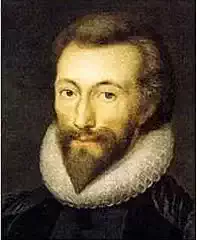
John Donne
Crucifying
Crucifying
By miracles exceeding power of man,
He faith in some, envy in some begat,
For, what weak spirits admire, ambitious hate :
In both affections many to Him ran.
But O ! the worst are most, they will and can,
Alas ! and do, unto th' Immaculate,
Whose creature Fate is, now prescribe a fate,
Measuring self-life's infinity to span,
Nay to an inch. Lo ! where condemned He
Bears His own cross, with pain, yet by and by
When it bears him, He must bear more and die.
Now Thou art lifted up, draw me to Thee,
And at Thy death giving such liberal dole,
Moist with one drop of Thy blood my dry soul.
By miracles exceeding power of man,
He faith in some, envy in some begat,
For, what weak spirits admire, ambitious hate :
In both affections many to Him ran.
But O ! the worst are most, they will and can,
Alas ! and do, unto th' Immaculate,
Whose creature Fate is, now prescribe a fate,
Measuring self-life's infinity to span,
Nay to an inch. Lo ! where condemned He
Bears His own cross, with pain, yet by and by
When it bears him, He must bear more and die.
Now Thou art lifted up, draw me to Thee,
And at Thy death giving such liberal dole,
Moist with one drop of Thy blood my dry soul.
432
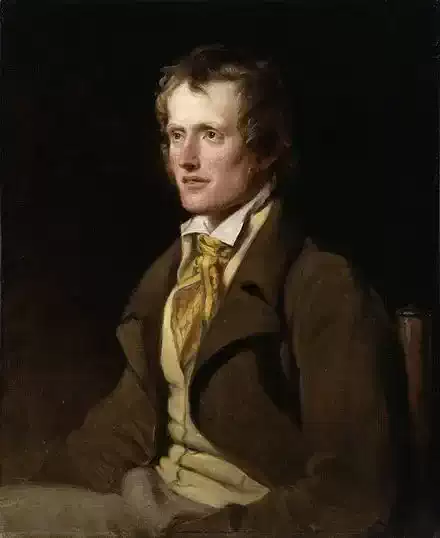
John Clare
The Gipsy's Camp
The Gipsy's Camp
How oft on Sundays, when I'd time to tramp,
My rambles led me to a gipsy's camp,
Where the real effigy of midnight hags,
With tawny smoked flesh and tattered rags,
Uncouth-brimmed hat, and weather-beaten cloak,
Neath the wild shelter of a knotty oak,
Along the greensward uniformly pricks
Her pliant bending hazel's arching sticks:
While round-topt bush, or briar-entangled hedge,
Where flag-leaves spring beneath, or ramping sedge,
Keeps off the bothering bustle of the wind,
And give the best retreat she hopes to find.
How oft I've bent me oer her fire and smoke,
To hear her gibberish tale so quaintly spoke,
While the old Sybil forged her boding clack,
Twin imps the meanwhile bawling at her back;
Oft on my hand her magic coin's been struck,
And hoping chink, she talked of morts of luck:
And still, as boyish hopes did first agree,
Mingled with fears to drop the fortune's fee,
I never failed to gain the honours sought,
And Squire and Lord were purchased with a groat.
But as man's unbelieving taste came round,
She furious stampt her shoeless foot aground,
Wiped bye her soot-black hair with clenching fist,
While through her yellow teeth the spittle hist,
Swearing by all her lucky powers of fate,
Which like as footboys on her actions wait,
That fortune's scale should to my sorrow turn,
And I one day the rash neglect should mourn;
That good to bad should change, and I should be
Lost to this world and all eternity;
That poor as Job I should remain unblest:-(
Alas, for fourpence how my die is cast!)
Of not a hoarded farthing be possesst,
And when all's done, be shoved to hell at last!
How oft on Sundays, when I'd time to tramp,
My rambles led me to a gipsy's camp,
Where the real effigy of midnight hags,
With tawny smoked flesh and tattered rags,
Uncouth-brimmed hat, and weather-beaten cloak,
Neath the wild shelter of a knotty oak,
Along the greensward uniformly pricks
Her pliant bending hazel's arching sticks:
While round-topt bush, or briar-entangled hedge,
Where flag-leaves spring beneath, or ramping sedge,
Keeps off the bothering bustle of the wind,
And give the best retreat she hopes to find.
How oft I've bent me oer her fire and smoke,
To hear her gibberish tale so quaintly spoke,
While the old Sybil forged her boding clack,
Twin imps the meanwhile bawling at her back;
Oft on my hand her magic coin's been struck,
And hoping chink, she talked of morts of luck:
And still, as boyish hopes did first agree,
Mingled with fears to drop the fortune's fee,
I never failed to gain the honours sought,
And Squire and Lord were purchased with a groat.
But as man's unbelieving taste came round,
She furious stampt her shoeless foot aground,
Wiped bye her soot-black hair with clenching fist,
While through her yellow teeth the spittle hist,
Swearing by all her lucky powers of fate,
Which like as footboys on her actions wait,
That fortune's scale should to my sorrow turn,
And I one day the rash neglect should mourn;
That good to bad should change, and I should be
Lost to this world and all eternity;
That poor as Job I should remain unblest:-(
Alas, for fourpence how my die is cast!)
Of not a hoarded farthing be possesst,
And when all's done, be shoved to hell at last!
457
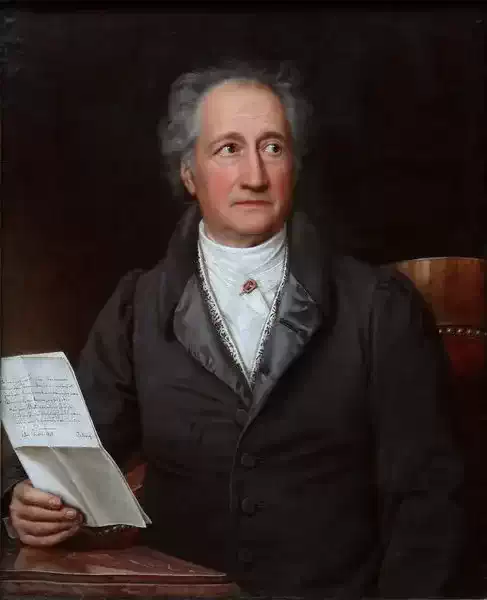
Johann Wolfgang von Goethe
Winter Journey Over The Hartz Mountain
Winter Journey Over The Hartz Mountain
LIKE the vulture
Who on heavy morning clouds
With gentle wing reposing
Looks for his prey,--
Hover, my song!
For a God hath
Unto each prescribed
His destined path,
Which the happy one
Runs o'er swiftly
To his glad goal:
He whose heart cruel
Fate hath contracted,
Struggles but vainly
Against all the barriers
The brazen thread raises,
But which the harsh shears
Must one day sever.
Through gloomy thickets
Presseth the wild deer on,
And with the sparrows
Long have the wealthy
Settled themselves in the marsh.
Easy 'tis following the chariot
That by Fortune is driven,
Like the baggage that moves
Over well-mended highways
After the train of a prince.
But who stands there apart?
In the thicket, lost is his path;
Behind him the bushes
Are closing together,
The grass springs up again,
The desert engulphs him.
Ah, who'll heal his afflictions,
To whom balsam was poison,
Who, from love's fullness,
Drank in misanthropy only?
First despised, and now a despiser,
He, in secret, wasteth
All that he is worth,
In a selfishness vain.
If there be, on thy psaltery,
Father of Love, but one tone
That to his ear may be pleasing,
Oh, then, quicken his heart!
Clear his cloud-enveloped eyes
Over the thousand fountains
Close by the thirsty one
In the desert.
Thou who createst much joy,
For each a measure o'erflowing,
Bless the sons of the chase
When on the track of the prey,
With a wild thirsting for blood,
Youthful and joyous
Avenging late the injustice
Which the peasant resisted
Vainly for years with his staff.
But the lonely one veil
Within thy gold clouds!
Surround with winter-green,
Until the roses bloom again,
The humid locks,
Oh Love, of thy minstrel!
With thy glimmering torch
Lightest thou him
Through the fords when 'tis night,
Over bottomless places
On desert-like plains;
With the thousand colours of morning
Gladd'nest his bosom;
With the fierce-biting storm
Bearest him proudly on high;
Winter torrents rush from the cliffs,--
Blend with his psalms;
An altar of grateful delight
He finds in the much-dreaded mountain's
Snow-begirded summit,
Which foreboding nations
Crown'd with spirit-dances.
Thou stand'st with breast inscrutable,
Mysteriously disclosed,
High o'er the wondering world,
And look'st from clouds
Upon its realms and its majesty,
Which thou from the veins of thy brethren
Near thee dost water.
LIKE the vulture
Who on heavy morning clouds
With gentle wing reposing
Looks for his prey,--
Hover, my song!
For a God hath
Unto each prescribed
His destined path,
Which the happy one
Runs o'er swiftly
To his glad goal:
He whose heart cruel
Fate hath contracted,
Struggles but vainly
Against all the barriers
The brazen thread raises,
But which the harsh shears
Must one day sever.
Through gloomy thickets
Presseth the wild deer on,
And with the sparrows
Long have the wealthy
Settled themselves in the marsh.
Easy 'tis following the chariot
That by Fortune is driven,
Like the baggage that moves
Over well-mended highways
After the train of a prince.
But who stands there apart?
In the thicket, lost is his path;
Behind him the bushes
Are closing together,
The grass springs up again,
The desert engulphs him.
Ah, who'll heal his afflictions,
To whom balsam was poison,
Who, from love's fullness,
Drank in misanthropy only?
First despised, and now a despiser,
He, in secret, wasteth
All that he is worth,
In a selfishness vain.
If there be, on thy psaltery,
Father of Love, but one tone
That to his ear may be pleasing,
Oh, then, quicken his heart!
Clear his cloud-enveloped eyes
Over the thousand fountains
Close by the thirsty one
In the desert.
Thou who createst much joy,
For each a measure o'erflowing,
Bless the sons of the chase
When on the track of the prey,
With a wild thirsting for blood,
Youthful and joyous
Avenging late the injustice
Which the peasant resisted
Vainly for years with his staff.
But the lonely one veil
Within thy gold clouds!
Surround with winter-green,
Until the roses bloom again,
The humid locks,
Oh Love, of thy minstrel!
With thy glimmering torch
Lightest thou him
Through the fords when 'tis night,
Over bottomless places
On desert-like plains;
With the thousand colours of morning
Gladd'nest his bosom;
With the fierce-biting storm
Bearest him proudly on high;
Winter torrents rush from the cliffs,--
Blend with his psalms;
An altar of grateful delight
He finds in the much-dreaded mountain's
Snow-begirded summit,
Which foreboding nations
Crown'd with spirit-dances.
Thou stand'st with breast inscrutable,
Mysteriously disclosed,
High o'er the wondering world,
And look'st from clouds
Upon its realms and its majesty,
Which thou from the veins of thy brethren
Near thee dost water.
383
Johann Wolfgang von Goethe
The Fisherman
The Fisherman
THE waters rush'd, the waters rose,
A fisherman sat by,
While on his line in calm repose
He cast his patient eye.
And as he sat, and hearken'd there,
The flood was cleft in twain,
And, lo! a dripping mermaid fair
Sprang from the troubled main.
She sang to him, and spake the while:
"Why lurest thou my brood,
With human wit and human guile
From out their native flood?
Oh, couldst thou know how gladly dart
The fish across the sea,
Thou wouldst descend, e'en as thou art,
And truly happy be!
"Do not the sun and moon with grace
Their forms in ocean lave?
Shines not with twofold charms their face,
When rising from the wave?
The deep, deep heavens, then lure thee not,--
The moist yet radiant blue,--
Not thine own form,--to tempt thy lot
'Midst this eternal dew?"
The waters rush'd, the waters rose,
Wetting his naked feet;
As if his true love's words were those,
His heart with longing beat.
She sang to him, to him spake she,
His doom was fix'd, I ween;
Half drew she him, and half sank he,
And ne'er again was seen.
THE waters rush'd, the waters rose,
A fisherman sat by,
While on his line in calm repose
He cast his patient eye.
And as he sat, and hearken'd there,
The flood was cleft in twain,
And, lo! a dripping mermaid fair
Sprang from the troubled main.
She sang to him, and spake the while:
"Why lurest thou my brood,
With human wit and human guile
From out their native flood?
Oh, couldst thou know how gladly dart
The fish across the sea,
Thou wouldst descend, e'en as thou art,
And truly happy be!
"Do not the sun and moon with grace
Their forms in ocean lave?
Shines not with twofold charms their face,
When rising from the wave?
The deep, deep heavens, then lure thee not,--
The moist yet radiant blue,--
Not thine own form,--to tempt thy lot
'Midst this eternal dew?"
The waters rush'd, the waters rose,
Wetting his naked feet;
As if his true love's words were those,
His heart with longing beat.
She sang to him, to him spake she,
His doom was fix'd, I ween;
Half drew she him, and half sank he,
And ne'er again was seen.
480
Johann Wolfgang von Goethe
The Book Of Paradise - The Seven Sleepers
The Book Of Paradise - The Seven Sleepers
Six among the courtiers favour'd
Fly before the Caesar's fury,
Who would as a god be worshipp'd,
Though in truth no god appearing,
For a fly prevents him ever
From enjoying food at table.
Though with fans his servants scare it,
They the fly can never banish.
It torments him, stings, and troubles,
And the festal board perplexes,
Then returning like the herald
Of the olden crafty Fly-God.
'What!'--the striplings say together-'
Shall a fly a god embarrass?
Shall a god drink, eat at table,
Like us mortals? No, the Only,
Who the sun and moon created,
And the glowing stars arch'd o'er us,
He is God,--we'll fly!'--The gentle,
Lightly shod, and dainty striplings
Did a shepherd meet, and hide them,
With himself, within a cavern.
And the sheep-dog will not leave them,--
Scared away, his foot all-mangled,
To his master still he presses,
And he joins the hidden party,
Joins the favorites of slumber.
And the prince, whom they had fled from,
Fondly-furious, thinks of vengeance,
And, discarding sword and fire,
Has them walled-up in the cavern,
Walled-up fast with bricks and mortar.
But the others slumber ever,
And the Angel, their protector,
Gives before God's throne this notice
'To the right and left alternate
Have I ever cared to turn them,
That their fair and youthful members
Be not by the mould-damp injured;
Clefts within the rocks I open'd,
That the sun may, rising, setting,
Keep their cheeks in youthful freshness.'
So they lie there, bless'd by Heaven.
And, with forepaws sound and scatheless,
Sleeps the dog in gentle slumber.
Years come round, and years fly onward,
And the youths at length awaken,
And the wall, which now had moldered,
From its very age has fallen.
And Jamblika says,--whose beauty
Far exceedeth all the others,--
When the fearful shepherd lingers:-'
I will run, and food procure you,
Life and piece of gold I'll wager!'--
Ephebus had many a year now
Own'd the teaching of the Prophet
Jesus (Peace be with the Good One!)
And he ran, and at the gateway
Were the warders and the others.
Yet he to the nearest baker's,
Seeking bread, went swiftly onwards.-'
Rogue!' thus cried the baker--'hast thou,
Youth, a treasure, then, discover'd?
Give me,--for the gold betrays thee,--
Give me half, to keep thy secret!'--
And they quarrel.--To the monarch
Comes the matter; and the monarch
Fain would halve it, like the baker.
Now the miracle is proven
Slowly by a hundred tokens.
He can e'en his right establish
To the palace he erected,
For a pillar, when pierced open.
Leads to wealth he said 'twould lead to.
Soon are gather'd there whole races,
Their relationship to show him.
And as great-grandfather, nobly
Stands Jamblika's youthful figure.
As of ancestors, he hears them,
Speaking of his son and grandsons.
His great-grandsons stand around him,
Like a race of valiant mortals,
Him to honour,--him, the youngest.
And one token on another
Rises up, the proof completing;
The identity is proven
Of himself, and of his comrades.
Now returns he to the cavern,
With him go both king and people.--
Neither to the king nor people
E'er returns that chosen mortal;
For the Seven, who for ages--
Eight was, with the dog, their number-
Had from all the world been sunder'd,
Gabriel's mysterious power,
To the will of God obedient,
Hath to Paradise conducted,--
And the cave was closed for ever.
Six among the courtiers favour'd
Fly before the Caesar's fury,
Who would as a god be worshipp'd,
Though in truth no god appearing,
For a fly prevents him ever
From enjoying food at table.
Though with fans his servants scare it,
They the fly can never banish.
It torments him, stings, and troubles,
And the festal board perplexes,
Then returning like the herald
Of the olden crafty Fly-God.
'What!'--the striplings say together-'
Shall a fly a god embarrass?
Shall a god drink, eat at table,
Like us mortals? No, the Only,
Who the sun and moon created,
And the glowing stars arch'd o'er us,
He is God,--we'll fly!'--The gentle,
Lightly shod, and dainty striplings
Did a shepherd meet, and hide them,
With himself, within a cavern.
And the sheep-dog will not leave them,--
Scared away, his foot all-mangled,
To his master still he presses,
And he joins the hidden party,
Joins the favorites of slumber.
And the prince, whom they had fled from,
Fondly-furious, thinks of vengeance,
And, discarding sword and fire,
Has them walled-up in the cavern,
Walled-up fast with bricks and mortar.
But the others slumber ever,
And the Angel, their protector,
Gives before God's throne this notice
'To the right and left alternate
Have I ever cared to turn them,
That their fair and youthful members
Be not by the mould-damp injured;
Clefts within the rocks I open'd,
That the sun may, rising, setting,
Keep their cheeks in youthful freshness.'
So they lie there, bless'd by Heaven.
And, with forepaws sound and scatheless,
Sleeps the dog in gentle slumber.
Years come round, and years fly onward,
And the youths at length awaken,
And the wall, which now had moldered,
From its very age has fallen.
And Jamblika says,--whose beauty
Far exceedeth all the others,--
When the fearful shepherd lingers:-'
I will run, and food procure you,
Life and piece of gold I'll wager!'--
Ephebus had many a year now
Own'd the teaching of the Prophet
Jesus (Peace be with the Good One!)
And he ran, and at the gateway
Were the warders and the others.
Yet he to the nearest baker's,
Seeking bread, went swiftly onwards.-'
Rogue!' thus cried the baker--'hast thou,
Youth, a treasure, then, discover'd?
Give me,--for the gold betrays thee,--
Give me half, to keep thy secret!'--
And they quarrel.--To the monarch
Comes the matter; and the monarch
Fain would halve it, like the baker.
Now the miracle is proven
Slowly by a hundred tokens.
He can e'en his right establish
To the palace he erected,
For a pillar, when pierced open.
Leads to wealth he said 'twould lead to.
Soon are gather'd there whole races,
Their relationship to show him.
And as great-grandfather, nobly
Stands Jamblika's youthful figure.
As of ancestors, he hears them,
Speaking of his son and grandsons.
His great-grandsons stand around him,
Like a race of valiant mortals,
Him to honour,--him, the youngest.
And one token on another
Rises up, the proof completing;
The identity is proven
Of himself, and of his comrades.
Now returns he to the cavern,
With him go both king and people.--
Neither to the king nor people
E'er returns that chosen mortal;
For the Seven, who for ages--
Eight was, with the dog, their number-
Had from all the world been sunder'd,
Gabriel's mysterious power,
To the will of God obedient,
Hath to Paradise conducted,--
And the cave was closed for ever.
313
Johann Wolfgang von Goethe
Neither This Nor That
Neither This Nor That
IF thou to be a slave shouldst will,
Thou'lt get no pity, but fare ill;
And if a master thou wouldst be,
The world will view it angrily;
And if in status quo thou stay,
That thou art but a fool, they'll say.
IF thou to be a slave shouldst will,
Thou'lt get no pity, but fare ill;
And if a master thou wouldst be,
The world will view it angrily;
And if in status quo thou stay,
That thou art but a fool, they'll say.
378
Johann Wolfgang von Goethe
From Iphigenia In Tauris
From Iphigenia In Tauris
ACT IV. SCENE 5.
SONG OF THE FATES.
The deities dread!
The mastery hold they
In hands all-eternal,
And use them, unquestioned,
What manner they like.
Let him fear them doubly,
Whom they have uplifted!
On cliffs and on clouds, oh,
Round tables all-golden,
he seats are made ready.
When rises contention,
The guests are humid downwards
With shame and dishonor
To deep depths of midnight,
And vainly await they,
Bound fast in the darkness,
A just condemnation.
But they remain ever
In firmness unshaken
Round tables all-golden.
On stride they from mountain
To mountain far distant:
From out the abysses'
Dark jaws, the breath rises
Of torment-choked Titans
Up tow'rds them, like incense
In light clouds ascending.
The rulers immortal
Avert from whole peoples
Their blessing-fraught glances,
And shun, in the children,
To trace the once cherish'd,
Still, eloquent features
Their ancestors wore.
Thus chanted the Parae;
The old man, the banish'd,
In gloomy vault lying,
Their song overheareth,
Sons, grandsons remembereth,
And shaketh his head.
ACT IV. SCENE 5.
SONG OF THE FATES.
The deities dread!
The mastery hold they
In hands all-eternal,
And use them, unquestioned,
What manner they like.
Let him fear them doubly,
Whom they have uplifted!
On cliffs and on clouds, oh,
Round tables all-golden,
he seats are made ready.
When rises contention,
The guests are humid downwards
With shame and dishonor
To deep depths of midnight,
And vainly await they,
Bound fast in the darkness,
A just condemnation.
But they remain ever
In firmness unshaken
Round tables all-golden.
On stride they from mountain
To mountain far distant:
From out the abysses'
Dark jaws, the breath rises
Of torment-choked Titans
Up tow'rds them, like incense
In light clouds ascending.
The rulers immortal
Avert from whole peoples
Their blessing-fraught glances,
And shun, in the children,
To trace the once cherish'd,
Still, eloquent features
Their ancestors wore.
Thus chanted the Parae;
The old man, the banish'd,
In gloomy vault lying,
Their song overheareth,
Sons, grandsons remembereth,
And shaketh his head.
397
Johann Wolfgang von Goethe
Book Of Suleika - The Reunion
Book Of Suleika - The Reunion
CAN it be! of stars the star,
Do I press thee to my heart?
In the night of distance far,
What deep gulf, what bitter smart!
Yes, 'tis thou, indeed, at last,
Of my joys the partner dear!
Mindful, though, of sorrows past,
I the present needs must fear.
When the still-unfashion'd earth
Lay on God's eternal breast,
He ordain'd its hour of birth,
With creative joy possess'd.
Then a heavy sigh arose,
When He spake the sentence:--"Be!"
And the All, with mighty throes,
Burst into reality.
And when thus was born the light,
Darkness near it fear'd to stay,
And the elements with might
Fled on every side away;
Each on some far-distant trace,
Each with visions wild employ,
Numb, in boundless realm of space,
Harmony and feeling-void.
Dumb was all, all still and dead,
For the first time, God alone!
Then He form'd the morning-red,
Which soon made its kindness known:
It unravelled from the waste,
Bright and glowing harmony,
And once more with love was grac'd
What contended formerly.
And with earnest, noble strife,
Each its own Peculiar sought;
Back to full, unbounded life
Sight and feeling soon were brought.
Wherefore, if 'tis done, explore
How? why give the manner, name?
Allah need create no more,
We his world ourselves can frame.
So, with morning pinions bright,
To thy mouth was I impell'd;
Stamped with thousand seals by night,
Star-clear is the bond fast held.
Paragons on earth are we
Both of grief and joy sublime,
And a second sentence:--"Be!"
Parts us not a second time.
CAN it be! of stars the star,
Do I press thee to my heart?
In the night of distance far,
What deep gulf, what bitter smart!
Yes, 'tis thou, indeed, at last,
Of my joys the partner dear!
Mindful, though, of sorrows past,
I the present needs must fear.
When the still-unfashion'd earth
Lay on God's eternal breast,
He ordain'd its hour of birth,
With creative joy possess'd.
Then a heavy sigh arose,
When He spake the sentence:--"Be!"
And the All, with mighty throes,
Burst into reality.
And when thus was born the light,
Darkness near it fear'd to stay,
And the elements with might
Fled on every side away;
Each on some far-distant trace,
Each with visions wild employ,
Numb, in boundless realm of space,
Harmony and feeling-void.
Dumb was all, all still and dead,
For the first time, God alone!
Then He form'd the morning-red,
Which soon made its kindness known:
It unravelled from the waste,
Bright and glowing harmony,
And once more with love was grac'd
What contended formerly.
And with earnest, noble strife,
Each its own Peculiar sought;
Back to full, unbounded life
Sight and feeling soon were brought.
Wherefore, if 'tis done, explore
How? why give the manner, name?
Allah need create no more,
We his world ourselves can frame.
So, with morning pinions bright,
To thy mouth was I impell'd;
Stamped with thousand seals by night,
Star-clear is the bond fast held.
Paragons on earth are we
Both of grief and joy sublime,
And a second sentence:--"Be!"
Parts us not a second time.
488
Johann Wolfgang von Goethe
As Broad As It's Long
As Broad As It's Long
MODEST men must needs endure,
And the bold must humbly bow;
Thus thy fate's the same, be sure,
Whether bold or modest thou.
MODEST men must needs endure,
And the bold must humbly bow;
Thus thy fate's the same, be sure,
Whether bold or modest thou.
382
Johann Wolfgang von Goethe
Another
Another
Go! obedient to my call,
Turn to profit thy young days,
Wiser make betimes thy breast
In Fate's balance as it sways,
Seldom is the cock at rest;
Thou must either mount, or fall,
Thou must either rule and win,
Or submissively give in,
Triumph, or else yield to clamour:
Be the anvil or the hammer.
Go! obedient to my call,
Turn to profit thy young days,
Wiser make betimes thy breast
In Fate's balance as it sways,
Seldom is the cock at rest;
Thou must either mount, or fall,
Thou must either rule and win,
Or submissively give in,
Triumph, or else yield to clamour:
Be the anvil or the hammer.
384
James Whitcomb Riley
The Curse Of The Wandering Foot
The Curse Of The Wandering Foot
All hope of rest withdrawn me?--
What dread command hath put
This awful curse upon me--
The curse of the wandering foot!
Forward and backward and thither,
And hither and yon again--
Wandering ever! And whither?
Answer them, God! Amen.
The blue skies are far o'er me---
The bleak fields near below:
Where the mother that bore me?--
Where her grave in the snow?--
Glad in her trough of a coffin--
The sad eyes frozen shut
That wept so often, often,
The curse of the wandering foot!
Here in your marts I care not
Whatsoever ye think.
Good folk many who dare not
Give me to eat and drink:
Give me to sup of your pity--
Feast me on prayers!--O ye,
Met I your Christ in the city
He would fare forth with me--
Forward and onward and thither,
And hither again and yon,
With milk for our drink together
And honey to feed upon--
Nor hope of rest withdrawn us,
Since the one Father put
The blessed curse upon us--
The curse of the wandering foot.
All hope of rest withdrawn me?--
What dread command hath put
This awful curse upon me--
The curse of the wandering foot!
Forward and backward and thither,
And hither and yon again--
Wandering ever! And whither?
Answer them, God! Amen.
The blue skies are far o'er me---
The bleak fields near below:
Where the mother that bore me?--
Where her grave in the snow?--
Glad in her trough of a coffin--
The sad eyes frozen shut
That wept so often, often,
The curse of the wandering foot!
Here in your marts I care not
Whatsoever ye think.
Good folk many who dare not
Give me to eat and drink:
Give me to sup of your pity--
Feast me on prayers!--O ye,
Met I your Christ in the city
He would fare forth with me--
Forward and onward and thither,
And hither again and yon,
With milk for our drink together
And honey to feed upon--
Nor hope of rest withdrawn us,
Since the one Father put
The blessed curse upon us--
The curse of the wandering foot.
257
Horácio
BkIV:II Augustus’s Return
BkIV:II Augustus’s Return
Iulus, whoever tries to rival Pindar,
flies on waxen wings, with Daedalean art,
and is doomed, like Icarus, to give a name
to glassy waters.
Like a river, rushing down from the mountains,
that the rain has filled above its usual banks,
so Pindar’s deep voice seethes, immeasurably,
and goes on flowing,
Pindar, deserving Apollo’s laurel crown,
whether he coins new phrases in audacious
dithyrambs, and is carried along in verse
that’s free of rules,
or whether he sings gods, and kings, the children
of gods, at whose hands the Centaurs, rightly, died,
and by whom the fearful Chimaera’s fires
were all extinguished,
or speaks of those godlike ones an Elean
palm, for boxing or riding, leads home again,
granting a tribute much more powerful than
a hundred statues,
or weeps for the young man snatched from his tearful
bride, praises his powers, to the stars, his spirit,
his golden virtue, begrudging all of them
to gloomy Orcus.
Son of Antony, a powerful breeze raises
the Dircean swan, whenever it’s carried
to cloudy heights. While I create my verses,
in the manner
of a humble Matinian bee, that goes
gathering pollen from all the pleasant thyme,
and labours among the many groves, on the banks
of flowing Tiber.
You, a poet of much greater power, will sing
Caesar, honoured with well-earned wreaths, as he climbs
the sacred slopes, drawing along in his wake
the savage Germans:
he, whom no greater and no better ruler
has Fate, and the true gods, given to the world,
nor ever will, though the centuries roll back
to that first age of gold.
You’ll sing of those happy days, and the City’s
public games, when our brave Augustus returns,
in answer to our prayers: you’ll sing the Forum
free of all quarrels.
Then, if what I utter’s worth hearing, the best
strains of my voice, thrilled by Caesar’s return,
will rise, and I will sing: ‘O lovely sun, O
worthy to be praised!’
While you lead us along: ‘Hail, God of Triumph!’
not once but many times: ‘Hail, God of Triumph!’
all the city will shout, and offer incense
to the kindly gods.
Ten bulls will acquit you, and as many cows:
me, a tender calf that has left its mother,
one that’s been fattened on wide pastures, one that
can fulfil my vow,
echoing, with its brow, those returning fires
of the crescent moon, at the third night’s rising,
appearing snow-white where it carries a mark,
and the rest tawny.
Iulus, whoever tries to rival Pindar,
flies on waxen wings, with Daedalean art,
and is doomed, like Icarus, to give a name
to glassy waters.
Like a river, rushing down from the mountains,
that the rain has filled above its usual banks,
so Pindar’s deep voice seethes, immeasurably,
and goes on flowing,
Pindar, deserving Apollo’s laurel crown,
whether he coins new phrases in audacious
dithyrambs, and is carried along in verse
that’s free of rules,
or whether he sings gods, and kings, the children
of gods, at whose hands the Centaurs, rightly, died,
and by whom the fearful Chimaera’s fires
were all extinguished,
or speaks of those godlike ones an Elean
palm, for boxing or riding, leads home again,
granting a tribute much more powerful than
a hundred statues,
or weeps for the young man snatched from his tearful
bride, praises his powers, to the stars, his spirit,
his golden virtue, begrudging all of them
to gloomy Orcus.
Son of Antony, a powerful breeze raises
the Dircean swan, whenever it’s carried
to cloudy heights. While I create my verses,
in the manner
of a humble Matinian bee, that goes
gathering pollen from all the pleasant thyme,
and labours among the many groves, on the banks
of flowing Tiber.
You, a poet of much greater power, will sing
Caesar, honoured with well-earned wreaths, as he climbs
the sacred slopes, drawing along in his wake
the savage Germans:
he, whom no greater and no better ruler
has Fate, and the true gods, given to the world,
nor ever will, though the centuries roll back
to that first age of gold.
You’ll sing of those happy days, and the City’s
public games, when our brave Augustus returns,
in answer to our prayers: you’ll sing the Forum
free of all quarrels.
Then, if what I utter’s worth hearing, the best
strains of my voice, thrilled by Caesar’s return,
will rise, and I will sing: ‘O lovely sun, O
worthy to be praised!’
While you lead us along: ‘Hail, God of Triumph!’
not once but many times: ‘Hail, God of Triumph!’
all the city will shout, and offer incense
to the kindly gods.
Ten bulls will acquit you, and as many cows:
me, a tender calf that has left its mother,
one that’s been fattened on wide pastures, one that
can fulfil my vow,
echoing, with its brow, those returning fires
of the crescent moon, at the third night’s rising,
appearing snow-white where it carries a mark,
and the rest tawny.
253
Horácio
BkIII:XXVII Europa
BkIII:XXVII Europa
Let the wicked be led by omens of screeching
from owls, by pregnant dogs, or a grey-she wolf,
hurrying down from Lanuvian meadows,
or a fox with young:
May a snake disturb the journey they’ve started,
terrifying the ponies like an arrow
flashing across the road: but I far-seeing
augur, with prayer
for him whom I’m fearful for, out of the east
I’ll call up the ominous raven, before
the bird that divines the imminent showers
seeks standing water.
Galatea, wherever you choose to live
may you be happy, and live in thought of me:
no woodpecker on your left, or errant crow
to bar your going.
But see, with what storms flickering Orion
is setting. I know how the Adriatic’s
black gulf can be, and how the bright westerly
wind commits its sins.
Let the wives and children of our enemy
feel the blind force of the rising southerly,
and the thunder of the dark waters, the shores
trembling at the blow.
So, Europa entrusted her snow-white form
to the bull’s deceit, and the brave girl grew pale,
at the sea alive with monsters, the dangers
of the deep ocean.
Leaving the meadow, where, lost among flowers,
she was weaving a garland owed to the Nymphs,
now, in the luminous night, she saw nothing
but water and stars.
As soon as she reached the shores of Crete, mighty
with its hundred cities, she cried: ‘O father,
I’ve lost the name of daughter, my piety
conquered by fury.
Where have I come from, where am I going? One
death is too few for a virgin’s sin. Am I
awake, weeping a vile act, or free from guilt,
mocked by a phantom,
that fleeing, false, from the ivory gate brings
only a dream? Is it not better to pick
fresh flowers than to go travelling over
the breadths of the sea?
If anyone now could deliver that foul
beast to my anger, I’d attempt to wound it
with steel, and shatter the horns of that monster,
the one I once loved.
I’m shameless, I’ve abandoned my country’s gods,
I’m shameless, I keep Orcus waiting. O if
one of the gods can hear, I wish I might walk
naked with lions!
Before vile leanness hollows my lovely cheeks,
and the juices ebb in this tender victim,
while I am still beautiful, I’ll seek to be
food for the tigers.
My absent father urges me on: ‘Why wait
to die, worthless Europa? Happily you
can hang by the neck from this ash-tree: use
the sash that’s with you.
Or if cliffs and the sharpened rocks attract you,
as a means of death, put your trust in the speed
of the wind, unless you’d rather be carding
some mistress’s wool,
you, of royal blood, be handed over, as
concubine to a barbarous queen.’ She moaned:
Venus was laughing, treacherously, with her
son, his bow unstrung.
When she’d toyed enough with her, she said: ‘Refrain
from anger and burning passion, when the bull,
you hate, yields you his horns again, so that you
can start to wound them.
Don’t you know you’re invincible Jupiter’s
wife. Stop your sobbing, and learn to carry your
good fortune well: a continent of the Earth
will be named for you.
Let the wicked be led by omens of screeching
from owls, by pregnant dogs, or a grey-she wolf,
hurrying down from Lanuvian meadows,
or a fox with young:
May a snake disturb the journey they’ve started,
terrifying the ponies like an arrow
flashing across the road: but I far-seeing
augur, with prayer
for him whom I’m fearful for, out of the east
I’ll call up the ominous raven, before
the bird that divines the imminent showers
seeks standing water.
Galatea, wherever you choose to live
may you be happy, and live in thought of me:
no woodpecker on your left, or errant crow
to bar your going.
But see, with what storms flickering Orion
is setting. I know how the Adriatic’s
black gulf can be, and how the bright westerly
wind commits its sins.
Let the wives and children of our enemy
feel the blind force of the rising southerly,
and the thunder of the dark waters, the shores
trembling at the blow.
So, Europa entrusted her snow-white form
to the bull’s deceit, and the brave girl grew pale,
at the sea alive with monsters, the dangers
of the deep ocean.
Leaving the meadow, where, lost among flowers,
she was weaving a garland owed to the Nymphs,
now, in the luminous night, she saw nothing
but water and stars.
As soon as she reached the shores of Crete, mighty
with its hundred cities, she cried: ‘O father,
I’ve lost the name of daughter, my piety
conquered by fury.
Where have I come from, where am I going? One
death is too few for a virgin’s sin. Am I
awake, weeping a vile act, or free from guilt,
mocked by a phantom,
that fleeing, false, from the ivory gate brings
only a dream? Is it not better to pick
fresh flowers than to go travelling over
the breadths of the sea?
If anyone now could deliver that foul
beast to my anger, I’d attempt to wound it
with steel, and shatter the horns of that monster,
the one I once loved.
I’m shameless, I’ve abandoned my country’s gods,
I’m shameless, I keep Orcus waiting. O if
one of the gods can hear, I wish I might walk
naked with lions!
Before vile leanness hollows my lovely cheeks,
and the juices ebb in this tender victim,
while I am still beautiful, I’ll seek to be
food for the tigers.
My absent father urges me on: ‘Why wait
to die, worthless Europa? Happily you
can hang by the neck from this ash-tree: use
the sash that’s with you.
Or if cliffs and the sharpened rocks attract you,
as a means of death, put your trust in the speed
of the wind, unless you’d rather be carding
some mistress’s wool,
you, of royal blood, be handed over, as
concubine to a barbarous queen.’ She moaned:
Venus was laughing, treacherously, with her
son, his bow unstrung.
When she’d toyed enough with her, she said: ‘Refrain
from anger and burning passion, when the bull,
you hate, yields you his horns again, so that you
can start to wound them.
Don’t you know you’re invincible Jupiter’s
wife. Stop your sobbing, and learn to carry your
good fortune well: a continent of the Earth
will be named for you.
262
Horácio
BkIII:V No Surrender
BkIII:V No Surrender
We believe thunderous Jupiter rules the sky:
Augustus is considered a god on earth,
for adding the Britons, and likewise
the weight of the Persians to our empire.
Didn’t Crassus’ soldiers live in vile marriage
with barbarian wives, and (because of our
Senate and its perverse ways!) grow old,
in the service of their hostile fathers.
Marsians, Apulians ruled by a Mede,
forgetting their shields, Roman names, and togas,
and eternal Vesta, though Jove’s shrines
and the city of Rome remained unharmed?
Regulus’s far-seeing mind warned of this,
when he objected to shameful surrender,
and considered from its example
harm would come to the following age,
unless captured men were killed without pity.
‘I’ve seen standards and weapons,’ he said,
‘taken bloodlessly from our soldiers,
hung there in the Carthaginian shrines,
I’ve seen the arms of our freemen twisted
behind their backs, enemy gates wide open,
and the fields that our warfare ravaged
being freely cultivated again.
Do you think that our soldiers ransomed for gold,
will fight more fiercely next time! You’ll add
harm to shame: the wool that’s dyed purple
never regains the colour that vanished,
and true courage, when once departed, never
cares to return to an inferior heart.
When a doe that’s set free, from the thick
hunting nets, turns to fight, then he’ll be brave
who trusts himself to treacherous enemies
and he’ll crush Carthage, in a second battle,
who’s felt the chains on his fettered wrists,
without a struggle, afraid of dying.
He’s one who, not knowing how life should be lived,
confuses war with peace. O, shame! O mighty
Carthage, made mightier now because
of Italy’s disgraceful decadence.’
It’s said he set aside his wife’s chaste kisses,
and his little ones, as of less importance,
and, grimly, he set his manly face
to the soil, until he might be able
to strengthen the Senate’s wavering purpose,
by making of himself an example no
other man had made, and hurrying,
among grieving friends, to noble exile.
Yet he knew what the barbarous torturer
was preparing for him. Still he pushed aside
the kinsmen who were blocking his way,
and the people who delayed his going,
as if, with some case decided, and leaving
all that tedious business of his clients,
he headed for Venafrum’s meadows,
or Lacedaemonian Tarentum.
We believe thunderous Jupiter rules the sky:
Augustus is considered a god on earth,
for adding the Britons, and likewise
the weight of the Persians to our empire.
Didn’t Crassus’ soldiers live in vile marriage
with barbarian wives, and (because of our
Senate and its perverse ways!) grow old,
in the service of their hostile fathers.
Marsians, Apulians ruled by a Mede,
forgetting their shields, Roman names, and togas,
and eternal Vesta, though Jove’s shrines
and the city of Rome remained unharmed?
Regulus’s far-seeing mind warned of this,
when he objected to shameful surrender,
and considered from its example
harm would come to the following age,
unless captured men were killed without pity.
‘I’ve seen standards and weapons,’ he said,
‘taken bloodlessly from our soldiers,
hung there in the Carthaginian shrines,
I’ve seen the arms of our freemen twisted
behind their backs, enemy gates wide open,
and the fields that our warfare ravaged
being freely cultivated again.
Do you think that our soldiers ransomed for gold,
will fight more fiercely next time! You’ll add
harm to shame: the wool that’s dyed purple
never regains the colour that vanished,
and true courage, when once departed, never
cares to return to an inferior heart.
When a doe that’s set free, from the thick
hunting nets, turns to fight, then he’ll be brave
who trusts himself to treacherous enemies
and he’ll crush Carthage, in a second battle,
who’s felt the chains on his fettered wrists,
without a struggle, afraid of dying.
He’s one who, not knowing how life should be lived,
confuses war with peace. O, shame! O mighty
Carthage, made mightier now because
of Italy’s disgraceful decadence.’
It’s said he set aside his wife’s chaste kisses,
and his little ones, as of less importance,
and, grimly, he set his manly face
to the soil, until he might be able
to strengthen the Senate’s wavering purpose,
by making of himself an example no
other man had made, and hurrying,
among grieving friends, to noble exile.
Yet he knew what the barbarous torturer
was preparing for him. Still he pushed aside
the kinsmen who were blocking his way,
and the people who delayed his going,
as if, with some case decided, and leaving
all that tedious business of his clients,
he headed for Venafrum’s meadows,
or Lacedaemonian Tarentum.
295
Horácio
BkII:XX Poetic Immortality
BkII:XX Poetic Immortality
A poet of dual form, I won’t be carried
through the flowing air on weak or mundane wings,
nor will I linger down here on earth,
for any length of time: beyond envy,
I’ll leave the cities behind. It’s not I, born
of poor parents, it’s not I, who hear your voice,
beloved Maecenas, I who’ll die,
or be encircled by Stygian waters.
Even now the rough skin is settling around
my ankles, and now above them I’ve become
a snow-white swan, and soft feathers are
emerging over my arms and shoulders.
Soon, a melodious bird, and more famous
than Icarus, Daedalus’ son, I’ll visit
Bosphorus’ loud shores, Gaetulian
Syrtes, and the Hyperborean plains.
Colchis will know me, so will the Scythians,
who pretend to show no fear of Italian
troops, and the Geloni: Spain will learn
from me, the expert, and those who drink Rhone.
No dirges at my insubstantial funeral,
no elegies, and no unseemly grieving:
suppress all the clamour, not for me
the superfluous honour of a tomb.
A poet of dual form, I won’t be carried
through the flowing air on weak or mundane wings,
nor will I linger down here on earth,
for any length of time: beyond envy,
I’ll leave the cities behind. It’s not I, born
of poor parents, it’s not I, who hear your voice,
beloved Maecenas, I who’ll die,
or be encircled by Stygian waters.
Even now the rough skin is settling around
my ankles, and now above them I’ve become
a snow-white swan, and soft feathers are
emerging over my arms and shoulders.
Soon, a melodious bird, and more famous
than Icarus, Daedalus’ son, I’ll visit
Bosphorus’ loud shores, Gaetulian
Syrtes, and the Hyperborean plains.
Colchis will know me, so will the Scythians,
who pretend to show no fear of Italian
troops, and the Geloni: Spain will learn
from me, the expert, and those who drink Rhone.
No dirges at my insubstantial funeral,
no elegies, and no unseemly grieving:
suppress all the clamour, not for me
the superfluous honour of a tomb.
237
Horácio
BkII:XVII We’ll Go Together
BkII:XVII We’ll Go Together
Why do you stifle me with your complaining?
It’s neither the gods’ idea nor mine to die
before you, Maecenas, you’re the great
glory, and pillar of my existence.
Ah, if some premature blow snatches away
half of my spirit, why should the rest remain,
no longer as loved, nor surviving
entire? That day shall lead us to ruin
together. I’m not making some treacherous
promise: whenever you lead the way, let’s go,
let’s go, prepared as friends to set out,
you and I, to try the final journey.
No Chimaera’s fiery breath will ever tear
me from you, or if he should rise against me
hundred handed Gyas: that’s the will
of all-powerful Justice and the Fates.
Whether Libra or fearful Scorpio shone
more powerfully on me at my natal hour,
or Capricorn, which is the ruler
of the waters that flow round Italy,
our stars were mutually aspected in their
marvellous way. Jupiter’s protection shone,
brighter for you than baleful Saturn,
and rescued you, and held back the rapid
wings of Fate, that day when the people crowding
the theatre, three times broke into wild applause:
I’d have received the trunk of a tree
on my head, if Faunus, the guardian
of Mercurial poets, hadn’t warded off
the blow with his hand. So remember to make
due offering: you build a votive shrine:
I’ll come and sacrifice a humble lamb.
Why do you stifle me with your complaining?
It’s neither the gods’ idea nor mine to die
before you, Maecenas, you’re the great
glory, and pillar of my existence.
Ah, if some premature blow snatches away
half of my spirit, why should the rest remain,
no longer as loved, nor surviving
entire? That day shall lead us to ruin
together. I’m not making some treacherous
promise: whenever you lead the way, let’s go,
let’s go, prepared as friends to set out,
you and I, to try the final journey.
No Chimaera’s fiery breath will ever tear
me from you, or if he should rise against me
hundred handed Gyas: that’s the will
of all-powerful Justice and the Fates.
Whether Libra or fearful Scorpio shone
more powerfully on me at my natal hour,
or Capricorn, which is the ruler
of the waters that flow round Italy,
our stars were mutually aspected in their
marvellous way. Jupiter’s protection shone,
brighter for you than baleful Saturn,
and rescued you, and held back the rapid
wings of Fate, that day when the people crowding
the theatre, three times broke into wild applause:
I’d have received the trunk of a tree
on my head, if Faunus, the guardian
of Mercurial poets, hadn’t warded off
the blow with his hand. So remember to make
due offering: you build a votive shrine:
I’ll come and sacrifice a humble lamb.
177
Horácio
BkI:XXXIV Fortune’s Changes
BkI:XXXIV Fortune’s Changes
Once I wandered, an expert in crazy wisdom,
a scant and infrequent adorer of gods,
now I’m forced to set sail and return,
to go back to the paths I abandoned.
For Jupiter, Father of all of the gods,
who generally splits the clouds with his lightning,
flashing away, drove thundering horses,
and his swift chariot, through the clear sky,
till the dull earth, and the wandering rivers,
and Styx, and dread Taenarus’ hateful headland,
and Atlas’s mountain-summits shook.
The god has the power to replace the highest
with the lowest, bring down the famous, and raise
the obscure to the heights. And greedy Fortune
with her shrill whirring, carries away
the crown and delights in setting it, there.
Once I wandered, an expert in crazy wisdom,
a scant and infrequent adorer of gods,
now I’m forced to set sail and return,
to go back to the paths I abandoned.
For Jupiter, Father of all of the gods,
who generally splits the clouds with his lightning,
flashing away, drove thundering horses,
and his swift chariot, through the clear sky,
till the dull earth, and the wandering rivers,
and Styx, and dread Taenarus’ hateful headland,
and Atlas’s mountain-summits shook.
The god has the power to replace the highest
with the lowest, bring down the famous, and raise
the obscure to the heights. And greedy Fortune
with her shrill whirring, carries away
the crown and delights in setting it, there.
228
Horácio
BkI:XV Nereus’ Prophecy of Troy
BkI:XV Nereus’ Prophecy of Troy
While Paris, the traitorous shepherd, her guest,
bore Helen over the waves, in a ship from Troy,
Nereus, the sea-god, checked the swift breeze
with an unwelcome calm, to tell
their harsh fate: ‘You’re taking a bird of ill-omen,
back home, whom the Greeks, new armed, will look for again,
having sworn to destroy the marriage your planning
and the empire of old Priam.
Ah, what sweated labour for men and for horses
draws near! What disaster you bring for the Trojan
people! Athene’s already prepared her helm,
breastplate, chariot, and fury.
Uselessly daring, through Venus’ protection,
you’ll comb your hair and pluck at the peace-loving lyre,
make the music for songs that please girls: uselessly
you’ll hide, in the depths of your room,
from the heavy spears, from the arrows of Cretan
reeds, and the noise of the battle, and swift-footed
Ajax quick to follow: yet, ah too late, you’ll bathe
your adulterous hair in the dust!
Have you thought of Ulysses, the bane of your race,
have you even considered Pylian Nestor?
Teucer of Salamis presses you fearlessly,
Sthenelus, skilful in warfare,
and if it’s a question of handling the horses
he’s no mean charioteer. And Meriones
you’ll know him too. See fierce Tydides, his father’s
braver, he’s raging to find you.
As the deer sees the wolf there, over the valley,
and forgets its pastures, a coward, you’ll flee him,
breathing hard, as you run, with your head thrown high,
not as you promised your mistress.
The anger of Achilles’ armies may delay
the day of destruction for Troy and its women:
but after so many winters the fires of Greece
will burn the Dardanian houses.’
While Paris, the traitorous shepherd, her guest,
bore Helen over the waves, in a ship from Troy,
Nereus, the sea-god, checked the swift breeze
with an unwelcome calm, to tell
their harsh fate: ‘You’re taking a bird of ill-omen,
back home, whom the Greeks, new armed, will look for again,
having sworn to destroy the marriage your planning
and the empire of old Priam.
Ah, what sweated labour for men and for horses
draws near! What disaster you bring for the Trojan
people! Athene’s already prepared her helm,
breastplate, chariot, and fury.
Uselessly daring, through Venus’ protection,
you’ll comb your hair and pluck at the peace-loving lyre,
make the music for songs that please girls: uselessly
you’ll hide, in the depths of your room,
from the heavy spears, from the arrows of Cretan
reeds, and the noise of the battle, and swift-footed
Ajax quick to follow: yet, ah too late, you’ll bathe
your adulterous hair in the dust!
Have you thought of Ulysses, the bane of your race,
have you even considered Pylian Nestor?
Teucer of Salamis presses you fearlessly,
Sthenelus, skilful in warfare,
and if it’s a question of handling the horses
he’s no mean charioteer. And Meriones
you’ll know him too. See fierce Tydides, his father’s
braver, he’s raging to find you.
As the deer sees the wolf there, over the valley,
and forgets its pastures, a coward, you’ll flee him,
breathing hard, as you run, with your head thrown high,
not as you promised your mistress.
The anger of Achilles’ armies may delay
the day of destruction for Troy and its women:
but after so many winters the fires of Greece
will burn the Dardanian houses.’
175
Horácio
BkI:XIV The Ship of State
BkI:XIV The Ship of State
O ship the fresh tide carries back to sea again.
Where are you going! Quickly, run for harbour.
Can’t you see how your sides
have been stripped bare of oars,
how your shattered masts and yards are groaning loudly
in the swift south-westerly, and bare of rigging,
your hull can scarce tolerate
the overpowering waters?
You haven’t a single sail that’s still intact now,
no gods, that people call to when they’re in trouble.
Though you’re built of Pontic pine,
a child of those famous forests,
though you can boast of your race, and an idle name:
the fearful sailor puts no faith in gaudy keels.
You must beware of being
merely a plaything of the winds.
You, who not long ago were troubling weariness
to me, and now are my passion and anxious care,
avoid the glistening seas
between the shining Cyclades.
O ship the fresh tide carries back to sea again.
Where are you going! Quickly, run for harbour.
Can’t you see how your sides
have been stripped bare of oars,
how your shattered masts and yards are groaning loudly
in the swift south-westerly, and bare of rigging,
your hull can scarce tolerate
the overpowering waters?
You haven’t a single sail that’s still intact now,
no gods, that people call to when they’re in trouble.
Though you’re built of Pontic pine,
a child of those famous forests,
though you can boast of your race, and an idle name:
the fearful sailor puts no faith in gaudy keels.
You must beware of being
merely a plaything of the winds.
You, who not long ago were troubling weariness
to me, and now are my passion and anxious care,
avoid the glistening seas
between the shining Cyclades.
289