

Poems in this theme
Pain and Despair

William Shakespeare
Sonnet XXVIII
Sonnet XXVIII
How can I then return in happy plight,
That am debarr'd the benefit of rest?
When day's oppression is not eased by night,
But day by night, and night by day, oppress'd?
And each, though enemies to either's reign,
Do in consent shake hands to torture me;
The one by toil, the other to complain
How far I toil, still farther off from thee.
I tell the day, to please them thou art bright
And dost him grace when clouds do blot the heaven:
So flatter I the swart-complexion'd night,
When sparkling stars twire not thou gild'st the even.
But day doth daily draw my sorrows longer
And night doth nightly make grief's strength seem stronger.
How can I then return in happy plight,
That am debarr'd the benefit of rest?
When day's oppression is not eased by night,
But day by night, and night by day, oppress'd?
And each, though enemies to either's reign,
Do in consent shake hands to torture me;
The one by toil, the other to complain
How far I toil, still farther off from thee.
I tell the day, to please them thou art bright
And dost him grace when clouds do blot the heaven:
So flatter I the swart-complexion'd night,
When sparkling stars twire not thou gild'st the even.
But day doth daily draw my sorrows longer
And night doth nightly make grief's strength seem stronger.
372
William Shakespeare
Sonnet XLVIII
Sonnet XLVIII
How careful was I, when I took my way,
Each trifle under truest bars to thrust,
That to my use it might unused stay
From hands of falsehood, in sure wards of trust!
But thou, to whom my jewels trifles are,
Most worthy of comfort, now my greatest grief,
Thou, best of dearest and mine only care,
Art left the prey of every vulgar thief.
Thee have I not lock'd up in any chest,
Save where thou art not, though I feel thou art,
Within the gentle closure of my breast,
From whence at pleasure thou mayst come and part;
And even thence thou wilt be stol'n, I fear,
For truth proves thievish for a prize so dear.
How careful was I, when I took my way,
Each trifle under truest bars to thrust,
That to my use it might unused stay
From hands of falsehood, in sure wards of trust!
But thou, to whom my jewels trifles are,
Most worthy of comfort, now my greatest grief,
Thou, best of dearest and mine only care,
Art left the prey of every vulgar thief.
Thee have I not lock'd up in any chest,
Save where thou art not, though I feel thou art,
Within the gentle closure of my breast,
From whence at pleasure thou mayst come and part;
And even thence thou wilt be stol'n, I fear,
For truth proves thievish for a prize so dear.
343
William Shakespeare
Sonnet XLIX
Sonnet XLIX
Against that time, if ever that time come,
When I shall see thee frown on my defects,
When as thy love hath cast his utmost sum,
Call'd to that audit by advised respects;
Against that time when thou shalt strangely pass
And scarcely greet me with that sun thine eye,
When love, converted from the thing it was,
Shall reasons find of settled gravity,-Against
that time do I ensconce me here
Within the knowledge of mine own desert,
And this my hand against myself uprear,
To guard the lawful reasons on thy part:
To leave poor me thou hast the strength of laws,
Since why to love I can allege no cause.
Against that time, if ever that time come,
When I shall see thee frown on my defects,
When as thy love hath cast his utmost sum,
Call'd to that audit by advised respects;
Against that time when thou shalt strangely pass
And scarcely greet me with that sun thine eye,
When love, converted from the thing it was,
Shall reasons find of settled gravity,-Against
that time do I ensconce me here
Within the knowledge of mine own desert,
And this my hand against myself uprear,
To guard the lawful reasons on thy part:
To leave poor me thou hast the strength of laws,
Since why to love I can allege no cause.
319
William Shakespeare
Sonnet LXXXVIII
Sonnet LXXXVIII
When thou shalt be disposed to set me light,
And place my merit in the eye of scorn,
Upon thy side against myself I'll fight,
And prove thee virtuous, though thou art forsworn.
With mine own weakness being best acquainted,
Upon thy part I can set down a story
Of faults conceal'd, wherein I am attainted,
That thou in losing me shalt win much glory:
And I by this will be a gainer too;
For bending all my loving thoughts on thee,
The injuries that to myself I do,
Doing thee vantage, double-vantage me.
Such is my love, to thee I so belong,
That for thy right myself will bear all wrong.
When thou shalt be disposed to set me light,
And place my merit in the eye of scorn,
Upon thy side against myself I'll fight,
And prove thee virtuous, though thou art forsworn.
With mine own weakness being best acquainted,
Upon thy part I can set down a story
Of faults conceal'd, wherein I am attainted,
That thou in losing me shalt win much glory:
And I by this will be a gainer too;
For bending all my loving thoughts on thee,
The injuries that to myself I do,
Doing thee vantage, double-vantage me.
Such is my love, to thee I so belong,
That for thy right myself will bear all wrong.
297
William Shakespeare
Sonnet LXVI
Sonnet LXVI
Tired with all these, for restful death I cry,
As, to behold desert a beggar born,
And needy nothing trimm'd in jollity,
And purest faith unhappily forsworn,
And guilded honour shamefully misplaced,
And maiden virtue rudely strumpeted,
And right perfection wrongfully disgraced,
And strength by limping sway disabled,
And art made tongue-tied by authority,
And folly doctor-like controlling skill,
And simple truth miscall'd simplicity,
And captive good attending captain ill:
Tired with all these, from these would I be gone,
Save that, to die, I leave my love alone.
Tired with all these, for restful death I cry,
As, to behold desert a beggar born,
And needy nothing trimm'd in jollity,
And purest faith unhappily forsworn,
And guilded honour shamefully misplaced,
And maiden virtue rudely strumpeted,
And right perfection wrongfully disgraced,
And strength by limping sway disabled,
And art made tongue-tied by authority,
And folly doctor-like controlling skill,
And simple truth miscall'd simplicity,
And captive good attending captain ill:
Tired with all these, from these would I be gone,
Save that, to die, I leave my love alone.
278
William Shakespeare
Sonnet L
Sonnet L
How heavy do I journey on the way,
When what I seek, my weary travel's end,
Doth teach that ease and that repose to say
'Thus far the miles are measured from thy friend!'
The beast that bears me, tired with my woe,
Plods dully on, to bear that weight in me,
As if by some instinct the wretch did know
His rider loved not speed, being made from thee:
The bloody spur cannot provoke him on
That sometimes anger thrusts into his hide;
Which heavily he answers with a groan,
More sharp to me than spurring to his side;
For that same groan doth put this in my mind;
My grief lies onward and my joy behind.
How heavy do I journey on the way,
When what I seek, my weary travel's end,
Doth teach that ease and that repose to say
'Thus far the miles are measured from thy friend!'
The beast that bears me, tired with my woe,
Plods dully on, to bear that weight in me,
As if by some instinct the wretch did know
His rider loved not speed, being made from thee:
The bloody spur cannot provoke him on
That sometimes anger thrusts into his hide;
Which heavily he answers with a groan,
More sharp to me than spurring to his side;
For that same groan doth put this in my mind;
My grief lies onward and my joy behind.
320
William Shakespeare
Sonnet CXXXIII
Sonnet CXXXIII
Beshrew that heart that makes my heart to groan
For that deep wound it gives my friend and me!
Is't not enough to torture me alone,
But slave to slavery my sweet'st friend must be?
Me from myself thy cruel eye hath taken,
And my next self thou harder hast engross'd:
Of him, myself, and thee, I am forsaken;
A torment thrice threefold thus to be cross'd.
Prison my heart in thy steel bosom's ward,
But then my friend's heart let my poor heart bail;
Whoe'er keeps me, let my heart be his guard;
Thou canst not then use rigor in my gaol:
And yet thou wilt; for I, being pent in thee,
Perforce am thine, and all that is in me.
Beshrew that heart that makes my heart to groan
For that deep wound it gives my friend and me!
Is't not enough to torture me alone,
But slave to slavery my sweet'st friend must be?
Me from myself thy cruel eye hath taken,
And my next self thou harder hast engross'd:
Of him, myself, and thee, I am forsaken;
A torment thrice threefold thus to be cross'd.
Prison my heart in thy steel bosom's ward,
But then my friend's heart let my poor heart bail;
Whoe'er keeps me, let my heart be his guard;
Thou canst not then use rigor in my gaol:
And yet thou wilt; for I, being pent in thee,
Perforce am thine, and all that is in me.
357
William Shakespeare
Sonnet CXXIX
Sonnet CXXIX
The expense of spirit in a waste of shame
Is lust in action; and till action, lust
Is perjured, murderous, bloody, full of blame,
Savage, extreme, rude, cruel, not to trust,
Enjoy'd no sooner but despised straight,
Past reason hunted, and no sooner had
Past reason hated, as a swallow'd bait
On purpose laid to make the taker mad;
Mad in pursuit and in possession so;
Had, having, and in quest to have, extreme;
A bliss in proof, and proved, a very woe;
Before, a joy proposed; behind, a dream.
All this the world well knows; yet none knows well
To shun the heaven that leads men to this hell.
The expense of spirit in a waste of shame
Is lust in action; and till action, lust
Is perjured, murderous, bloody, full of blame,
Savage, extreme, rude, cruel, not to trust,
Enjoy'd no sooner but despised straight,
Past reason hunted, and no sooner had
Past reason hated, as a swallow'd bait
On purpose laid to make the taker mad;
Mad in pursuit and in possession so;
Had, having, and in quest to have, extreme;
A bliss in proof, and proved, a very woe;
Before, a joy proposed; behind, a dream.
All this the world well knows; yet none knows well
To shun the heaven that leads men to this hell.
250
William Shakespeare
Sonnet CXX
Sonnet CXX
That you were once unkind befriends me now,
And for that sorrow which I then did feel
Needs must I under my transgression bow,
Unless my nerves were brass or hammer'd steel.
For if you were by my unkindness shaken
As I by yours, you've pass'd a hell of time,
And I, a tyrant, have no leisure taken
To weigh how once I suffered in your crime.
O, that our night of woe might have remember'd
My deepest sense, how hard true sorrow hits,
And soon to you, as you to me, then tender'd
The humble slave which wounded bosoms fits!
But that your trespass now becomes a fee;
Mine ransoms yours, and yours must ransom me.
That you were once unkind befriends me now,
And for that sorrow which I then did feel
Needs must I under my transgression bow,
Unless my nerves were brass or hammer'd steel.
For if you were by my unkindness shaken
As I by yours, you've pass'd a hell of time,
And I, a tyrant, have no leisure taken
To weigh how once I suffered in your crime.
O, that our night of woe might have remember'd
My deepest sense, how hard true sorrow hits,
And soon to you, as you to me, then tender'd
The humble slave which wounded bosoms fits!
But that your trespass now becomes a fee;
Mine ransoms yours, and yours must ransom me.
366
William Shakespeare
Sonnet CXLVIII
Sonnet CXLVIII
O me, what eyes hath Love put in my head,
Which have no correspondence with true sight!
Or, if they have, where is my judgment fled,
That censures falsely what they see aright?
If that be fair whereon my false eyes dote,
What means the world to say it is not so?
If it be not, then love doth well denote
Love's eye is not so true as all men's 'No.'
How can it? O, how can Love's eye be true,
That is so vex'd with watching and with tears?
No marvel then, though I mistake my view;
The sun itself sees not till heaven clears.
O cunning Love! with tears thou keep'st me blind,
Lest eyes well-seeing thy foul faults should find.
O me, what eyes hath Love put in my head,
Which have no correspondence with true sight!
Or, if they have, where is my judgment fled,
That censures falsely what they see aright?
If that be fair whereon my false eyes dote,
What means the world to say it is not so?
If it be not, then love doth well denote
Love's eye is not so true as all men's 'No.'
How can it? O, how can Love's eye be true,
That is so vex'd with watching and with tears?
No marvel then, though I mistake my view;
The sun itself sees not till heaven clears.
O cunning Love! with tears thou keep'st me blind,
Lest eyes well-seeing thy foul faults should find.
247
William Shakespeare
Sonnet CXLIX
Sonnet CXLIX
Canst thou, O cruel! say I love thee not,
When I against myself with thee partake?
Do I not think on thee, when I forgot
Am of myself, all tyrant, for thy sake?
Who hateth thee that I do call my friend?
On whom frown'st thou that I do fawn upon?
Nay, if thou lour'st on me, do I not spend
Revenge upon myself with present moan?
What merit do I in myself respect,
That is so proud thy service to despise,
When all my best doth worship thy defect,
Commanded by the motion of thine eyes?
But, love, hate on, for now I know thy mind;
Those that can see thou lovest, and I am blind.
Canst thou, O cruel! say I love thee not,
When I against myself with thee partake?
Do I not think on thee, when I forgot
Am of myself, all tyrant, for thy sake?
Who hateth thee that I do call my friend?
On whom frown'st thou that I do fawn upon?
Nay, if thou lour'st on me, do I not spend
Revenge upon myself with present moan?
What merit do I in myself respect,
That is so proud thy service to despise,
When all my best doth worship thy defect,
Commanded by the motion of thine eyes?
But, love, hate on, for now I know thy mind;
Those that can see thou lovest, and I am blind.
270
William Shakespeare
Sonnet 66: Tired with all these, for restful death I cry
Sonnet 66: Tired with all these, for restful death I cry
Tired with all these, for restful death I cry,
As to behold desert a beggar born,
And needy nothing trimmed in jollity,
And purest faith unhappily forsworn,
And gilded honour shamefully misplaced,
And maiden virtue rudely strumpeted,
And right perfection wrongfully disgraced,
And strength by limping sway disablèd
And art made tongue-tied by authority,
And folly doctor-like controlling skill,
And simple truth miscalled simplicity,
And captive good attending captain ill.
Tired with all these, from these would I be gone,
Save that to die, I leave my love alone.
Tired with all these, for restful death I cry,
As to behold desert a beggar born,
And needy nothing trimmed in jollity,
And purest faith unhappily forsworn,
And gilded honour shamefully misplaced,
And maiden virtue rudely strumpeted,
And right perfection wrongfully disgraced,
And strength by limping sway disablèd
And art made tongue-tied by authority,
And folly doctor-like controlling skill,
And simple truth miscalled simplicity,
And captive good attending captain ill.
Tired with all these, from these would I be gone,
Save that to die, I leave my love alone.
356
William Shakespeare
Sonnet 44: If the dull substance of my flesh were thought
Sonnet 44: If the dull substance of my flesh were thought
If the dull substance of my flesh were thought,
Injurious distance should not stop my way;
For then despite of space I would be brought,
From limits far remote, where thou dost stay.
No matter then although my foot did stand
Upon the farthest earth removed from thee;
For nimble thought can jump both sea and land
As soon as think the place where he would be.
But, ah, thought kills me that I am not thought,
To leap large lengths of miles when thou art gone,
But that, so much of earth and water wrought,
I must attend time's leisure with my moan,
Receiving nought by elements so slow,
But heavy tears, badges of either's woe.
If the dull substance of my flesh were thought,
Injurious distance should not stop my way;
For then despite of space I would be brought,
From limits far remote, where thou dost stay.
No matter then although my foot did stand
Upon the farthest earth removed from thee;
For nimble thought can jump both sea and land
As soon as think the place where he would be.
But, ah, thought kills me that I am not thought,
To leap large lengths of miles when thou art gone,
But that, so much of earth and water wrought,
I must attend time's leisure with my moan,
Receiving nought by elements so slow,
But heavy tears, badges of either's woe.
273
William Shakespeare
Sonnet 149: Canst thou, O cruel, say I love thee not
Sonnet 149: Canst thou, O cruel, say I love thee not
Canst thou, O cruel, say I love thee not,
When I against my self with thee partake?
Do I not think on thee when I forgot
Am of my self, all tyrant, for thy sake?
Who hateth thee that I do call my friend?
On whom frown'st thou that I do fawn upon?
Nay, if thou lour'st on me, do I not spend
Revenge upon my self with present moan?
What merit do I in my self respect,
That is so proud thy service to despise,
When all my best doth worship thy defect,
Commanded by the motion of thine eyes?
But, love, hate on, for now I know thy mind:
Those that can see thou lov'st, and I am blind.
Canst thou, O cruel, say I love thee not,
When I against my self with thee partake?
Do I not think on thee when I forgot
Am of my self, all tyrant, for thy sake?
Who hateth thee that I do call my friend?
On whom frown'st thou that I do fawn upon?
Nay, if thou lour'st on me, do I not spend
Revenge upon my self with present moan?
What merit do I in my self respect,
That is so proud thy service to despise,
When all my best doth worship thy defect,
Commanded by the motion of thine eyes?
But, love, hate on, for now I know thy mind:
Those that can see thou lov'st, and I am blind.
201
William Shakespeare
Sonnet 141: In faith, I do not love thee with mine eyes
Sonnet 141: In faith, I do not love thee with mine eyes
In faith, I do not love thee with mine eyes,
For they in thee a thousand errors note;
But 'tis my heart that loves what they despise,
Who in despite of view is pleased to dote.
Nor are mine cars with thy tongue's tune delighted,
Nor tender feeling to base touches prone,
Nor taste, nor smell, desire to be invited
To any sensual feast with thee alone;
But my five wits, nor my five senses can
Dissuade one foolish heart from serving thee,
Who leaves unswayed the likeness of a man,
Thy proud heart's slave and vassal wretch to be.
Only my plague thus far I count my gain,
That she that makes me sin awards me pain.
In faith, I do not love thee with mine eyes,
For they in thee a thousand errors note;
But 'tis my heart that loves what they despise,
Who in despite of view is pleased to dote.
Nor are mine cars with thy tongue's tune delighted,
Nor tender feeling to base touches prone,
Nor taste, nor smell, desire to be invited
To any sensual feast with thee alone;
But my five wits, nor my five senses can
Dissuade one foolish heart from serving thee,
Who leaves unswayed the likeness of a man,
Thy proud heart's slave and vassal wretch to be.
Only my plague thus far I count my gain,
That she that makes me sin awards me pain.
292
William Shakespeare
Sonnet 139: O, call not me to justify the wrong
Sonnet 139: O, call not me to justify the wrong
O, call not me to justify the wrong
That thy unkindness lays upon my heart
Wound me not with thine eye but with thy tongue;
Use power with power, and slay me not by art.
Tell me thou lov'st elsewhere, but in my sight,
Dear heart forbear to glance thine eye aside;
What need'st thou wound with cunning when thy might
Is more than my o'erpressed defence can bide?
Let me excuse thee: "Ah, my love well knows,
Her pretty looks have been mine enemies,
And therefore from my face she turns my foes,
That they elsewhere might dart their injuries."
Yet do not so; but since I am near slain,
Kill me outright with looks and rid my pain.
O, call not me to justify the wrong
That thy unkindness lays upon my heart
Wound me not with thine eye but with thy tongue;
Use power with power, and slay me not by art.
Tell me thou lov'st elsewhere, but in my sight,
Dear heart forbear to glance thine eye aside;
What need'st thou wound with cunning when thy might
Is more than my o'erpressed defence can bide?
Let me excuse thee: "Ah, my love well knows,
Her pretty looks have been mine enemies,
And therefore from my face she turns my foes,
That they elsewhere might dart their injuries."
Yet do not so; but since I am near slain,
Kill me outright with looks and rid my pain.
310
William Shakespeare
Orpheus
Orpheus
? or John Fletcher.
ORPHEUS with his lute made trees
And the mountain tops that freeze
Bow themselves when he did sing:
To his music plants and flowers
Ever sprung; as sun and showers
There had made a lasting spring.
Every thing that heard him play,
Even the billows of the sea,
Hung their heads and then lay by.
In sweet music is such art,
Killing care and grief of heart
Fall asleep, or hearing, die.
? or John Fletcher.
ORPHEUS with his lute made trees
And the mountain tops that freeze
Bow themselves when he did sing:
To his music plants and flowers
Ever sprung; as sun and showers
There had made a lasting spring.
Every thing that heard him play,
Even the billows of the sea,
Hung their heads and then lay by.
In sweet music is such art,
Killing care and grief of heart
Fall asleep, or hearing, die.
465
William Shakespeare
Fidele
Fidele
FEAR no more the heat o' the sun,
Nor the furious winter's rages;
Thou thy worldly task hast done,
Home art gone, and ta'en thy wages:
Golden lads and girls all must,
As chimney-sweepers, come to dust.
Fear no more the frown o' the great,
Thou art past the tyrant's stroke;
Care no more to clothe and eat;
To thee the reed is as the oak:
The sceptre, learning, physic, must
All follow this, and come to dust.
Fear no more the lightning-flash,
Nor the all-dreaded thunder-stone;
Fear not slander, censure rash;
Thou hast finish'd joy and moan:
All lovers young, all lovers must
Consign to thee, and come to dust.
No exorciser harm thee!
Nor no witchcraft charm thee!
Ghost unlaid forbear thee!
Nothing ill come near thee!
Quiet consummation have;
And renowned be thy grave!
FEAR no more the heat o' the sun,
Nor the furious winter's rages;
Thou thy worldly task hast done,
Home art gone, and ta'en thy wages:
Golden lads and girls all must,
As chimney-sweepers, come to dust.
Fear no more the frown o' the great,
Thou art past the tyrant's stroke;
Care no more to clothe and eat;
To thee the reed is as the oak:
The sceptre, learning, physic, must
All follow this, and come to dust.
Fear no more the lightning-flash,
Nor the all-dreaded thunder-stone;
Fear not slander, censure rash;
Thou hast finish'd joy and moan:
All lovers young, all lovers must
Consign to thee, and come to dust.
No exorciser harm thee!
Nor no witchcraft charm thee!
Ghost unlaid forbear thee!
Nothing ill come near thee!
Quiet consummation have;
And renowned be thy grave!
469
William Shakespeare
Dirge of the Three Queens
Dirge of the Three Queens
URNS and odours bring away!
Vapours, sighs, darken the day!
Our dole more deadly looks than dying;
Balms and gums and heavy cheers,
Sacred vials fill'd with tears,
And clamours through the wild air flying!
Come, all sad and solemn shows,
That are quick-eyed Pleasure's foes!
We convent naught else but woes.
URNS and odours bring away!
Vapours, sighs, darken the day!
Our dole more deadly looks than dying;
Balms and gums and heavy cheers,
Sacred vials fill'd with tears,
And clamours through the wild air flying!
Come, all sad and solemn shows,
That are quick-eyed Pleasure's foes!
We convent naught else but woes.
368

William Ernest Henley
Madam Life's a Piece in Bloom
Madam Life's a Piece in Bloom
Madam Life's a piece in bloom
Death goes dogging everywhere:
She's the tenant of the room,
He's the ruffian on the stair.
You shall see her as a friend,
You shall bilk him once or twice;
But he'll trap you in the end,
And he'll stick you for her price.
With his kneebones at your chest,
And his knuckles in your throat,
You would reason -- plead -- protest!
Clutching at her petticoat;
But she's heard it all before,
Well she knows you've had your fun,
Gingerly she gains the door,
And your little job is done.
Madam Life's a piece in bloom
Death goes dogging everywhere:
She's the tenant of the room,
He's the ruffian on the stair.
You shall see her as a friend,
You shall bilk him once or twice;
But he'll trap you in the end,
And he'll stick you for her price.
With his kneebones at your chest,
And his knuckles in your throat,
You would reason -- plead -- protest!
Clutching at her petticoat;
But she's heard it all before,
Well she knows you've had your fun,
Gingerly she gains the door,
And your little job is done.
189
William Ernest Henley
Croquis
Croquis
The beach was crowded. Pausing now and then,
He groped and fiddled doggedly along,
His worn face glaring on the thoughtless throng
The stony peevishness of sightless men.
He seemed scarce older than his clothes. Again,
Grotesquing thinly many an old sweet song,
So cracked his fiddle, his hand so frail and wrong,
You hardly could distinguish one in ten.
He stopped at last, and sat him on the sand,
And, grasping wearily his bread-winner,
Staring dim towards the blue immensity,
Then leaned his head upon his poor old hand.
He may have slept: he did not speak nor stir:
His gesture spoke a vast despondency.
The beach was crowded. Pausing now and then,
He groped and fiddled doggedly along,
His worn face glaring on the thoughtless throng
The stony peevishness of sightless men.
He seemed scarce older than his clothes. Again,
Grotesquing thinly many an old sweet song,
So cracked his fiddle, his hand so frail and wrong,
You hardly could distinguish one in ten.
He stopped at last, and sat him on the sand,
And, grasping wearily his bread-winner,
Staring dim towards the blue immensity,
Then leaned his head upon his poor old hand.
He may have slept: he did not speak nor stir:
His gesture spoke a vast despondency.
158
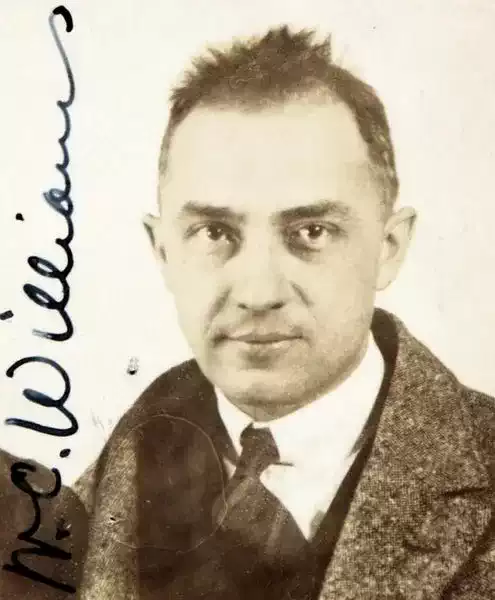
William Carlos Williams
To Elsie
To Elsie
The pure products of America
go crazy--
mountain folk from Kentucky
or the ribbed north end of
Jersey
with its isolate lakes and
valleys, its deaf-mutes, thieves
old names
and promiscuity between
devil-may-care men who have taken
to railroading
out of sheer lust of adventure--
and young slatterns, bathed
in filth
from Monday to Saturday
to be tricked out that night
with gauds
from imaginations which have no
peasant traditions to give them
character
but flutter and flaunt
sheer rags-succumbing without
emotion
save numbed terror
under some hedge of choke-cherry
or viburnumwhich
they cannot express--
Unless it be that marriage
perhaps
with a dash of Indian blood
will throw up a girl so desolate
so hemmed round
with disease or murder
that she'll be rescued by an
agent--
reared by the state and
sent out at fifteen to work in
some hard-pressed
house in the suburbs--
some doctor's family, some Elsie--
voluptuous water
expressing with broken
brain the truth about us--
her great
ungainly hips and flopping breasts
addressed to cheap
jewelry
and rich young men with fine eyes
as if the earth under our feet
were
an excrement of some sky
and we degraded prisoners
destined
to hunger until we eat filth
while the imagination strains
after deer
going by fields of goldenrod in
the stifling heat of September
Somehow
it seems to destroy us
It is only in isolate flecks that
something
is given off
No one
to witness
and adjust, no one to drive the car
The pure products of America
go crazy--
mountain folk from Kentucky
or the ribbed north end of
Jersey
with its isolate lakes and
valleys, its deaf-mutes, thieves
old names
and promiscuity between
devil-may-care men who have taken
to railroading
out of sheer lust of adventure--
and young slatterns, bathed
in filth
from Monday to Saturday
to be tricked out that night
with gauds
from imaginations which have no
peasant traditions to give them
character
but flutter and flaunt
sheer rags-succumbing without
emotion
save numbed terror
under some hedge of choke-cherry
or viburnumwhich
they cannot express--
Unless it be that marriage
perhaps
with a dash of Indian blood
will throw up a girl so desolate
so hemmed round
with disease or murder
that she'll be rescued by an
agent--
reared by the state and
sent out at fifteen to work in
some hard-pressed
house in the suburbs--
some doctor's family, some Elsie--
voluptuous water
expressing with broken
brain the truth about us--
her great
ungainly hips and flopping breasts
addressed to cheap
jewelry
and rich young men with fine eyes
as if the earth under our feet
were
an excrement of some sky
and we degraded prisoners
destined
to hunger until we eat filth
while the imagination strains
after deer
going by fields of goldenrod in
the stifling heat of September
Somehow
it seems to destroy us
It is only in isolate flecks that
something
is given off
No one
to witness
and adjust, no one to drive the car
434
William Carlos Williams
The Uses of Poetry
The Uses of Poetry
I've fond anticipation of a day
O'erfilled with pure diversion presently,
For I must read a lady poesy
The while we glide by many a leafy bay,
Hid deep in rushes, where at random play
The glossy black winged May-flies, or whence flee
Hush-throated nestlings in alarm,
Whom we have idly frighted with our boat's long sway.
For, lest o'ersaddened by such woes as spring
To rural peace from our meek onward trend,
What else more fit? We'll draw the latch-string
And close the door of sense; then satiate wend,
On poesy's transforming giant wing,
To worlds afar whose fruits all anguish mend.
I've fond anticipation of a day
O'erfilled with pure diversion presently,
For I must read a lady poesy
The while we glide by many a leafy bay,
Hid deep in rushes, where at random play
The glossy black winged May-flies, or whence flee
Hush-throated nestlings in alarm,
Whom we have idly frighted with our boat's long sway.
For, lest o'ersaddened by such woes as spring
To rural peace from our meek onward trend,
What else more fit? We'll draw the latch-string
And close the door of sense; then satiate wend,
On poesy's transforming giant wing,
To worlds afar whose fruits all anguish mend.
444
William Carlos Williams
The Great Figure
The Great Figure
Among the rain
and lights
I saw the figure
in gold
on a red
firetruck
moving
tense
unheeded
to gong clangs
siren howls
and wheels rumbling
through the dark city.
Among the rain
and lights
I saw the figure
in gold
on a red
firetruck
moving
tense
unheeded
to gong clangs
siren howls
and wheels rumbling
through the dark city.
273