

Poems in this theme
Gratitude

Wilfred Owen
Schoolmistress
Schoolmistress
Schoolmistress
Having, with bold Horatius, stamped her feet
And waved a final swashing arabesque
O'er the brave days of old, she ceased to bleat,
Slapped her Macaulay back upon the desk,
Resuned her calm gaze and her lofty seat.
There, while she heard the classic lines repeat,
Once more the teacher's face clenched stern;
For through the window, looking on the street,
Three soldiers hailed her. She made no return.
One was called 'Orace whom she would not greet.
Schoolmistress
Having, with bold Horatius, stamped her feet
And waved a final swashing arabesque
O'er the brave days of old, she ceased to bleat,
Slapped her Macaulay back upon the desk,
Resuned her calm gaze and her lofty seat.
There, while she heard the classic lines repeat,
Once more the teacher's face clenched stern;
For through the window, looking on the street,
Three soldiers hailed her. She made no return.
One was called 'Orace whom she would not greet.
124
Wilfred Owen
Apologia Pro Poemate Meo
Apologia Pro Poemate Meo
I, too, saw God through mud--
The mud that cracked on cheeks when wretches smiled.
War brought more glory to their eyes than blood,
And gave their laughs more glee than shakes a child.
Merry it was to laugh there--
Where death becomes absurd and life absurder.
For power was on us as we slashed bones bare
Not to feel sickness or remorse of murder.
I, too, have dropped off fear--
Behind the barrage, dead as my platoon,
And sailed my spirit surging, light and clear,
Past the entanglement where hopes lie strewn;
And witnessed exhultation--
Faces that used to curse me, scowl for scowl,
Shine and lift up with passion of oblation,
Seraphic for an hour, though they were foul.
I have made fellowships--
Untold of happy lovers in old song.
For love is not the binding of fair lips
With the soft silk of eyes that look and long.
By joy, whose ribbon slips,--
But wound with war's hard wire whose stakes are strong;
Bound with the bandage of the arm that drips;
Knit in the welding of the rifle-thong.
I have perceived much beauty
In the hoarse oaths that kept our courage straight;
Heard music in the silentness of duty;
Found peace where shell-storms spouted reddest spate.
Nevertheless, except you share
With them in hell the sorrowful dark of hell,
Whose world is but a trembling of a flare
And heaven but a highway for a shell,
You shall not hear their mirth:
You shall not come to think them well content
By any jest of mine. These men are worth
Your tears: You are not worth their merriment.
I, too, saw God through mud--
The mud that cracked on cheeks when wretches smiled.
War brought more glory to their eyes than blood,
And gave their laughs more glee than shakes a child.
Merry it was to laugh there--
Where death becomes absurd and life absurder.
For power was on us as we slashed bones bare
Not to feel sickness or remorse of murder.
I, too, have dropped off fear--
Behind the barrage, dead as my platoon,
And sailed my spirit surging, light and clear,
Past the entanglement where hopes lie strewn;
And witnessed exhultation--
Faces that used to curse me, scowl for scowl,
Shine and lift up with passion of oblation,
Seraphic for an hour, though they were foul.
I have made fellowships--
Untold of happy lovers in old song.
For love is not the binding of fair lips
With the soft silk of eyes that look and long.
By joy, whose ribbon slips,--
But wound with war's hard wire whose stakes are strong;
Bound with the bandage of the arm that drips;
Knit in the welding of the rifle-thong.
I have perceived much beauty
In the hoarse oaths that kept our courage straight;
Heard music in the silentness of duty;
Found peace where shell-storms spouted reddest spate.
Nevertheless, except you share
With them in hell the sorrowful dark of hell,
Whose world is but a trembling of a flare
And heaven but a highway for a shell,
You shall not hear their mirth:
You shall not come to think them well content
By any jest of mine. These men are worth
Your tears: You are not worth their merriment.
167

Walter de la Mare
The Scribe
The Scribe
What lovely things
Thy hand hath made:
The smooth-plumed bird
In its emerald shade,
The seed of the grass,
The speck of the stone
Which the wayfaring ant
Stirs -- and hastes on!
Though I should sit
By some tarn in thy hills,
Using its ink
As the spirit wills
To write of Earth's wonders,
Its live, willed things,
Flit would the ages
On soundless wings
Ere unto Z
My pen drew nigh
Leviathan told,
And the honey-fly:
And still would remain
My wit to try --
My worn reeds broken,
The dark tarn dry,
All words forgotten --
Thou, Lord, and I.
What lovely things
Thy hand hath made:
The smooth-plumed bird
In its emerald shade,
The seed of the grass,
The speck of the stone
Which the wayfaring ant
Stirs -- and hastes on!
Though I should sit
By some tarn in thy hills,
Using its ink
As the spirit wills
To write of Earth's wonders,
Its live, willed things,
Flit would the ages
On soundless wings
Ere unto Z
My pen drew nigh
Leviathan told,
And the honey-fly:
And still would remain
My wit to try --
My worn reeds broken,
The dark tarn dry,
All words forgotten --
Thou, Lord, and I.
315
Walter de la Mare
How Sleep the Brave
How Sleep the Brave
Nay, nay, sweet England, do not grieve!
Not one of these poor men who died
But did within his soul believe
That death for thee was glorified.
Ever they watched it hovering near
That mystery 'yond thought to plumb,
Perchance sometimes in loathèd fear
They heard cold Danger whisper, Come! --
Heard and obeyed. O, if thou weep
Such courage and honour, beauty, care,
Be it for joy that those who sleep
Only thy joy could share.
Nay, nay, sweet England, do not grieve!
Not one of these poor men who died
But did within his soul believe
That death for thee was glorified.
Ever they watched it hovering near
That mystery 'yond thought to plumb,
Perchance sometimes in loathèd fear
They heard cold Danger whisper, Come! --
Heard and obeyed. O, if thou weep
Such courage and honour, beauty, care,
Be it for joy that those who sleep
Only thy joy could share.
281
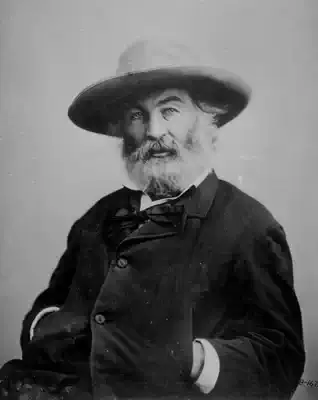
Walt Whitman
When I Heard At The Close Of The Day
When I Heard At The Close Of The Day
WHEN I heard at the close of the day how my name had been receiv'd
with plaudits in the capitol, still it was not a happy night
for me that follow'd;
And else, when I carous'd, or when my plans were accomplish'd, still
I was not happy;
But the day when I rose at dawn from the bed of perfect health,
refresh'd, singing, inhaling the ripe breath of autumn,
When I saw the full moon in the west grow pale and disappear in the
morning light,
When I wander'd alone over the beach, and undressing, bathed,
laughing with the cool waters, and saw the sun rise,
And when I thought how my dear friend, my lover, was on his way
coming, O then I was happy;
O then each breath tasted sweeter--and all that day my food nourish'd
me more--and the beautiful day pass'd well,
And the next came with equal joy--and with the next, at evening, came
my friend;
And that night, while all was still, I heard the waters roll slowly
continually up the shores,
I heard the hissing rustle of the liquid and sands, as directed to
me, whispering, to congratulate me, 10
For the one I love most lay sleeping by me under the same cover in
the cool night,
In the stillness, in the autumn moonbeams, his face was inclined
toward me,
And his arm lay lightly around my breast--and that night I was happy.
WHEN I heard at the close of the day how my name had been receiv'd
with plaudits in the capitol, still it was not a happy night
for me that follow'd;
And else, when I carous'd, or when my plans were accomplish'd, still
I was not happy;
But the day when I rose at dawn from the bed of perfect health,
refresh'd, singing, inhaling the ripe breath of autumn,
When I saw the full moon in the west grow pale and disappear in the
morning light,
When I wander'd alone over the beach, and undressing, bathed,
laughing with the cool waters, and saw the sun rise,
And when I thought how my dear friend, my lover, was on his way
coming, O then I was happy;
O then each breath tasted sweeter--and all that day my food nourish'd
me more--and the beautiful day pass'd well,
And the next came with equal joy--and with the next, at evening, came
my friend;
And that night, while all was still, I heard the waters roll slowly
continually up the shores,
I heard the hissing rustle of the liquid and sands, as directed to
me, whispering, to congratulate me, 10
For the one I love most lay sleeping by me under the same cover in
the cool night,
In the stillness, in the autumn moonbeams, his face was inclined
toward me,
And his arm lay lightly around my breast--and that night I was happy.
429
Walt Whitman
Thou Orb Aloft Full-Dazzling
Thou Orb Aloft Full-Dazzling
THOU orb aloft full-dazzling! thou hot October noon!
Flooding with sheeny light the gray beach sand,
The sibilant near sea with vistas far and foam,
And tawny streaks and shades and spreading blue;
O sun of noon rufulgent! my special word to thee.
Hear me illustrious!
Thy lover me, for always I have loved thee,
Even as basking babe, then happy boy alone by some wood edge, thy
touching-distant beams enough,
Or man matured, or young or old, as now to thee I launch my
invocation.
(Thou canst not with thy dumbness me deceive, 10
I know before the fitting man all Nature yields,
Though answering not in words, the skies, trees, hear his voice--and
thou O sun,
As for thy throes, thy perturbations, sudden breaks and shafts of
flame gigantic,
I understand them, I know those flames, those perturbations well.)
Thou that with fructifying heat and light,
O'er myriad farms, o'er lands and waters North and South,
O'er Mississippi's endless course, o'er Texas' grassy plains,
Kanada's woods,
O'er all the globe that turns its face to thee shining in space,
Thou that impartially infoldest all, not only continents, seas,
Thou that to grapes and weeds and little wild flowers givest so
liberally, 20
Shed, shed thyself on mine and me, with but a fleeting ray out of thy
million millions,
Strike through these chants.
Nor only launch thy subtle dazzle and thy strength for these,
Prepare the later afternoon of me myself--prepare my lengthening
shadows,
Prepare my starry nights.
THOU orb aloft full-dazzling! thou hot October noon!
Flooding with sheeny light the gray beach sand,
The sibilant near sea with vistas far and foam,
And tawny streaks and shades and spreading blue;
O sun of noon rufulgent! my special word to thee.
Hear me illustrious!
Thy lover me, for always I have loved thee,
Even as basking babe, then happy boy alone by some wood edge, thy
touching-distant beams enough,
Or man matured, or young or old, as now to thee I launch my
invocation.
(Thou canst not with thy dumbness me deceive, 10
I know before the fitting man all Nature yields,
Though answering not in words, the skies, trees, hear his voice--and
thou O sun,
As for thy throes, thy perturbations, sudden breaks and shafts of
flame gigantic,
I understand them, I know those flames, those perturbations well.)
Thou that with fructifying heat and light,
O'er myriad farms, o'er lands and waters North and South,
O'er Mississippi's endless course, o'er Texas' grassy plains,
Kanada's woods,
O'er all the globe that turns its face to thee shining in space,
Thou that impartially infoldest all, not only continents, seas,
Thou that to grapes and weeds and little wild flowers givest so
liberally, 20
Shed, shed thyself on mine and me, with but a fleeting ray out of thy
million millions,
Strike through these chants.
Nor only launch thy subtle dazzle and thy strength for these,
Prepare the later afternoon of me myself--prepare my lengthening
shadows,
Prepare my starry nights.
335
Walt Whitman
These Carols
These Carols
THESE Carols, sung to cheer my passage through the world I see,
For completion, I dedicate to the Invisible World.
THESE Carols, sung to cheer my passage through the world I see,
For completion, I dedicate to the Invisible World.
409
Walt Whitman
The Ox tamer
The Ox tamer
IN a faraway northern county, in the placid, pastoral region,
Lives my farmer friend, the theme of my recitative, a famous Tamer of
Oxen:
There they bring him the three-year-olds and the four-year-olds, to
break them;
He will take the wildest steer in the world, and break him and tame
him;
He will go, fearless, without any whip, where the young bullock
chafes up and down the yard;
The bullock's head tosses restless high in the air, with raging eyes;
Yet, see you! how soon his rage subsides--how soon this Tamer tames
him:
See you! on the farms hereabout, a hundred oxen, young and old--and
he is the man who has tamed them;
They all know him--all are affectionate to him;
See you! some are such beautiful animals--so lofty looking! 10
Some are buff color'd--some mottled--one has a white line running
along his back--some are brindled,
Some have wide flaring horns (a good sign)--See you! the bright
hides;
See, the two with stars on their foreheads--See, the round bodies and
broad backs;
See, how straight and square they stand on their legs--See, what
fine, sagacious eyes;
See, how they watch their Tamer--they wish him near them--how they
turn to look after him!
What yearning expression! how uneasy they are when he moves away from
them:
--Now I marvel what it can be he appears to them, (books, politics,
poems depart--all else departs;)
I confess I envy only his fascination--my silent, illiterate friend,
Whom a hundred oxen love, there in his life on farms,
In the northern county far, in the placid, pastoral region.
IN a faraway northern county, in the placid, pastoral region,
Lives my farmer friend, the theme of my recitative, a famous Tamer of
Oxen:
There they bring him the three-year-olds and the four-year-olds, to
break them;
He will take the wildest steer in the world, and break him and tame
him;
He will go, fearless, without any whip, where the young bullock
chafes up and down the yard;
The bullock's head tosses restless high in the air, with raging eyes;
Yet, see you! how soon his rage subsides--how soon this Tamer tames
him:
See you! on the farms hereabout, a hundred oxen, young and old--and
he is the man who has tamed them;
They all know him--all are affectionate to him;
See you! some are such beautiful animals--so lofty looking! 10
Some are buff color'd--some mottled--one has a white line running
along his back--some are brindled,
Some have wide flaring horns (a good sign)--See you! the bright
hides;
See, the two with stars on their foreheads--See, the round bodies and
broad backs;
See, how straight and square they stand on their legs--See, what
fine, sagacious eyes;
See, how they watch their Tamer--they wish him near them--how they
turn to look after him!
What yearning expression! how uneasy they are when he moves away from
them:
--Now I marvel what it can be he appears to them, (books, politics,
poems depart--all else departs;)
I confess I envy only his fascination--my silent, illiterate friend,
Whom a hundred oxen love, there in his life on farms,
In the northern county far, in the placid, pastoral region.
457
Walt Whitman
Souvenirs Of Democracy
Souvenirs Of Democracy
THE business man, the acquirer vast,
After assiduous years, surveying results, preparing for departure,
Devises houses and lands to his children--bequeaths stocks, goods-
funds for a school or hospital,
Leaves money to certain companions to buy tokens, souvenirs of gems
and gold;
Parceling out with care--And then, to prevent all cavil,
His name to his testament formally signs.
But I, my life surveying,
With nothing to show, to devise, from its idle years,
Nor houses, nor lands--nor tokens of gems or gold for my friends,
Only these Souvenirs of Democracy--In them--in all my songs--behind
me leaving, 10
To You, who ever you are, (bathing, leavening this leaf especially
with my breath--pressing on it a moment with my own hands;
--Here! feel how the pulse beats in my wrists!--how my heart's-blood
is swelling, contracting!)
I will You, in all, Myself, with promise to never desert you,
To which I sign my name.
THE business man, the acquirer vast,
After assiduous years, surveying results, preparing for departure,
Devises houses and lands to his children--bequeaths stocks, goods-
funds for a school or hospital,
Leaves money to certain companions to buy tokens, souvenirs of gems
and gold;
Parceling out with care--And then, to prevent all cavil,
His name to his testament formally signs.
But I, my life surveying,
With nothing to show, to devise, from its idle years,
Nor houses, nor lands--nor tokens of gems or gold for my friends,
Only these Souvenirs of Democracy--In them--in all my songs--behind
me leaving, 10
To You, who ever you are, (bathing, leavening this leaf especially
with my breath--pressing on it a moment with my own hands;
--Here! feel how the pulse beats in my wrists!--how my heart's-blood
is swelling, contracting!)
I will You, in all, Myself, with promise to never desert you,
To which I sign my name.
444
Walt Whitman
Song Of The Redwood-Tree
Song Of The Redwood-Tree
A CALIFORNIA song!
A prophecy and indirection--a thought impalpable, to breathe, as air;
A chorus of dryads, fading, departing--or hamadryads departing;
A murmuring, fateful, giant voice, out of the earth and sky,
Voice of a mighty dying tree in the Redwood forest dense.
Farewell, my brethren,
Farewell, O earth and sky--farewell, ye neighboring waters;
My time has ended, my term has come.
Along the northern coast,
Just back from the rock-bound shore, and the caves, 10
In the saline air from the sea, in the Mendocino country,
With the surge for bass and accompaniment low and hoarse,
With crackling blows of axes, sounding musically, driven by strong
arms,
Riven deep by the sharp tongues of the axes--there in the Redwood
forest dense,
I heard the mighty tree its death-chant chanting.
The choppers heard not--the camp shanties echoed not;
The quick-ear'd teamsters, and chain and jack-screw men, heard not,
As the wood-spirits came from their haunts of a thousand years, to
join the refrain;
But in my soul I plainly heard.
Murmuring out of its myriad leaves, 20
Down from its lofty top, rising two hundred feet high,
Out of its stalwart trunk and limbs--out of its foot-thick bark,
That chant of the seasons and time--chant, not of the past only, but
the future.
You untold life of me,
And all you venerable and innocent joys,
Perennial, hardy life of me, with joys, 'mid rain, and many a summer
sun,
And the white snows, and night, and the wild winds;
O the great patient, rugged joys! my soul's strong joys, unreck'd by
man;
(For know I bear the soul befitting me--I too have consciousness,
identity,
And all the rocks and mountains have--and all the earth;) 30
Joys of the life befitting me and brothers mine,
Our time, our term has come.
Nor yield we mournfully, majestic brothers,
We who have grandly fill'd our time;
With Nature's calm content, and tacit, huge delight,
We welcome what we wrought for through the past,
And leave the field for them.
For them predicted long,
For a superber Race--they too to grandly fill their time,
For them we abdicate--in them ourselves, ye forest kings! 40
In them these skies and airs--these mountain peaks--Shasta--Nevadas,
These huge, precipitous cliffs--this amplitude--these valleys grand-Yosemite,
To be in them absorb'd, assimilated.
Then to a loftier strain,
Still prouder, more ecstatic, rose the chant,
As if the heirs, the Deities of the West,
Joining, with master-tongue, bore part.
Not wan from Asia's fetishes,
Nor red from Europe's old dynastic slaughter-house,
(Area of murder-plots of thrones, with scent left yet of wars and
scaffolds every where,) 50
But come from Nature's long and harmless throes--peacefully builded
thence,
These virgin lands--Lands of the Western Shore,
To the new Culminating Man--to you, the Empire New,
You, promis'd long, we pledge, we dedicate.
You occult, deep volitions,
You average Spiritual Manhood, purpose of all, pois'd on yourself-giving,
not taking law,
You Womanhood divine, mistress and source of all, whence life and
love, and aught that comes from life and love,
You unseen Moral Essence of all the vast materials of America, (age
upon age, working in Death the same as Life,)
You that, sometimes known, oftener unknown, really shape and mould
the New World, adjusting it to Time and Space,
You hidden National Will, lying in your abysms, conceal'd, but ever
alert, 60
You past and present purposes, tenaciously pursued, may-be
unconscious of yourselves,
Unswerv'd by all the passing errors, perturbations of the surface;
You vital, universal, deathless germs, beneath all creeds, arts,
statutes, literatures,
Here build your homes for good--establish here--These areas entire,
Lands of the Western Shore,
We pledge, we dedicate to you.
For man of you--your characteristic Race,
Here may be hardy, sweet, gigantic grow--here tower, proportionate to
Nature,
Here climb the vast, pure spaces, unconfined, uncheck'd by wall or
roof,
Here laugh with storm or sun--here joy--here patiently inure,
Here heed himself, unfold himself (not others' formulas heed)--here
fill his time, 70
To duly fall, to aid, unreck'd at last,
To disappear, to serve.
Thus, on the northern coast,
In the echo of teamsters' calls, and the clinking chains, and the
music of choppers' axes,
The falling trunk and limbs, the crash, the muffled shriek, the
groan,
Such words combined from the Redwood-tree--as of wood-spirits' voices
ecstatic, ancient and rustling,
The century-lasting, unseen dryads, singing, withdrawing,
All their recesses of forests and mountains leaving,
From the Cascade range to the Wasatch--or Idaho far, or Utah,
To the deities of the Modern henceforth yielding, 80
The chorus and indications, the vistas of coming humanity--the
settlements, features all,
In the Mendocino woods I caught.
The flashing and golden pageant of California!
The sudden and gorgeous drama--the sunny and ample lands;
The long and varied stretch from Puget Sound to Colorado south;
Lands bathed in sweeter, rarer, healthier air--valleys and mountain
cliffs;
The fields of Nature long prepared and fallow--the silent, cyclic
chemistry;
The slow and steady ages plodding--the unoccupied surface ripening-
the rich ores forming beneath;
At last the New arriving, assuming, taking possession,
A swarming and busy race settling and organizing every where;
Ships coming in from the whole round world, and going out to the
whole world, 90
To India and China and Australia, and the thousand island paradises
of the Pacific;
Populous cities--the latest inventions--the steamers on the rivers-the
railroads--with many a thrifty farm, with machinery,
And wool, and wheat, and the grape--and diggings of yellow gold.
But more in you than these, Lands of the Western Shore!
(These but the means, the implements, the standing-ground,)
I see in you, certain to come, the promise of thousands of years,
till now deferr'd,
Promis'd, to be fulfill'd, our common kind, the Race.
The New Society at last, proportionate to Nature,
In Man of you, more than your mountain peaks, or stalwart trees
imperial, 100
In Woman more, far more, than all your gold, or vines, or even vital
air.
Fresh come, to a New World indeed, yet long prepared,
I see the Genius of the Modern, child of the Real and Ideal,
Clearing the ground for broad humanity, the true America, heir of the
past so grand,
To build a grander future.
A CALIFORNIA song!
A prophecy and indirection--a thought impalpable, to breathe, as air;
A chorus of dryads, fading, departing--or hamadryads departing;
A murmuring, fateful, giant voice, out of the earth and sky,
Voice of a mighty dying tree in the Redwood forest dense.
Farewell, my brethren,
Farewell, O earth and sky--farewell, ye neighboring waters;
My time has ended, my term has come.
Along the northern coast,
Just back from the rock-bound shore, and the caves, 10
In the saline air from the sea, in the Mendocino country,
With the surge for bass and accompaniment low and hoarse,
With crackling blows of axes, sounding musically, driven by strong
arms,
Riven deep by the sharp tongues of the axes--there in the Redwood
forest dense,
I heard the mighty tree its death-chant chanting.
The choppers heard not--the camp shanties echoed not;
The quick-ear'd teamsters, and chain and jack-screw men, heard not,
As the wood-spirits came from their haunts of a thousand years, to
join the refrain;
But in my soul I plainly heard.
Murmuring out of its myriad leaves, 20
Down from its lofty top, rising two hundred feet high,
Out of its stalwart trunk and limbs--out of its foot-thick bark,
That chant of the seasons and time--chant, not of the past only, but
the future.
You untold life of me,
And all you venerable and innocent joys,
Perennial, hardy life of me, with joys, 'mid rain, and many a summer
sun,
And the white snows, and night, and the wild winds;
O the great patient, rugged joys! my soul's strong joys, unreck'd by
man;
(For know I bear the soul befitting me--I too have consciousness,
identity,
And all the rocks and mountains have--and all the earth;) 30
Joys of the life befitting me and brothers mine,
Our time, our term has come.
Nor yield we mournfully, majestic brothers,
We who have grandly fill'd our time;
With Nature's calm content, and tacit, huge delight,
We welcome what we wrought for through the past,
And leave the field for them.
For them predicted long,
For a superber Race--they too to grandly fill their time,
For them we abdicate--in them ourselves, ye forest kings! 40
In them these skies and airs--these mountain peaks--Shasta--Nevadas,
These huge, precipitous cliffs--this amplitude--these valleys grand-Yosemite,
To be in them absorb'd, assimilated.
Then to a loftier strain,
Still prouder, more ecstatic, rose the chant,
As if the heirs, the Deities of the West,
Joining, with master-tongue, bore part.
Not wan from Asia's fetishes,
Nor red from Europe's old dynastic slaughter-house,
(Area of murder-plots of thrones, with scent left yet of wars and
scaffolds every where,) 50
But come from Nature's long and harmless throes--peacefully builded
thence,
These virgin lands--Lands of the Western Shore,
To the new Culminating Man--to you, the Empire New,
You, promis'd long, we pledge, we dedicate.
You occult, deep volitions,
You average Spiritual Manhood, purpose of all, pois'd on yourself-giving,
not taking law,
You Womanhood divine, mistress and source of all, whence life and
love, and aught that comes from life and love,
You unseen Moral Essence of all the vast materials of America, (age
upon age, working in Death the same as Life,)
You that, sometimes known, oftener unknown, really shape and mould
the New World, adjusting it to Time and Space,
You hidden National Will, lying in your abysms, conceal'd, but ever
alert, 60
You past and present purposes, tenaciously pursued, may-be
unconscious of yourselves,
Unswerv'd by all the passing errors, perturbations of the surface;
You vital, universal, deathless germs, beneath all creeds, arts,
statutes, literatures,
Here build your homes for good--establish here--These areas entire,
Lands of the Western Shore,
We pledge, we dedicate to you.
For man of you--your characteristic Race,
Here may be hardy, sweet, gigantic grow--here tower, proportionate to
Nature,
Here climb the vast, pure spaces, unconfined, uncheck'd by wall or
roof,
Here laugh with storm or sun--here joy--here patiently inure,
Here heed himself, unfold himself (not others' formulas heed)--here
fill his time, 70
To duly fall, to aid, unreck'd at last,
To disappear, to serve.
Thus, on the northern coast,
In the echo of teamsters' calls, and the clinking chains, and the
music of choppers' axes,
The falling trunk and limbs, the crash, the muffled shriek, the
groan,
Such words combined from the Redwood-tree--as of wood-spirits' voices
ecstatic, ancient and rustling,
The century-lasting, unseen dryads, singing, withdrawing,
All their recesses of forests and mountains leaving,
From the Cascade range to the Wasatch--or Idaho far, or Utah,
To the deities of the Modern henceforth yielding, 80
The chorus and indications, the vistas of coming humanity--the
settlements, features all,
In the Mendocino woods I caught.
The flashing and golden pageant of California!
The sudden and gorgeous drama--the sunny and ample lands;
The long and varied stretch from Puget Sound to Colorado south;
Lands bathed in sweeter, rarer, healthier air--valleys and mountain
cliffs;
The fields of Nature long prepared and fallow--the silent, cyclic
chemistry;
The slow and steady ages plodding--the unoccupied surface ripening-
the rich ores forming beneath;
At last the New arriving, assuming, taking possession,
A swarming and busy race settling and organizing every where;
Ships coming in from the whole round world, and going out to the
whole world, 90
To India and China and Australia, and the thousand island paradises
of the Pacific;
Populous cities--the latest inventions--the steamers on the rivers-the
railroads--with many a thrifty farm, with machinery,
And wool, and wheat, and the grape--and diggings of yellow gold.
But more in you than these, Lands of the Western Shore!
(These but the means, the implements, the standing-ground,)
I see in you, certain to come, the promise of thousands of years,
till now deferr'd,
Promis'd, to be fulfill'd, our common kind, the Race.
The New Society at last, proportionate to Nature,
In Man of you, more than your mountain peaks, or stalwart trees
imperial, 100
In Woman more, far more, than all your gold, or vines, or even vital
air.
Fresh come, to a New World indeed, yet long prepared,
I see the Genius of the Modern, child of the Real and Ideal,
Clearing the ground for broad humanity, the true America, heir of the
past so grand,
To build a grander future.
535
Walt Whitman
Song At Sunset
Song At Sunset
SPLENDOR of ended day, floating and filling me!
Hour prophetic--hour resuming the past!
Inflating my throat--you, divine average!
You, Earth and Life, till the last ray gleams, I sing.
Open mouth of my Soul, uttering gladness,
Eyes of my Soul, seeing perfection,
Natural life of me, faithfully praising things;
Corroborating forever the triumph of things.
Illustrious every one!
Illustrious what we name space--sphere of unnumber'd spirits; 10
Illustrious the mystery of motion, in all beings, even the tiniest
insect;
Illustrious the attribute of speech--the senses--the body;
Illustrious the passing light! Illustrious the pale reflection on the
new moon in the western sky!
Illustrious whatever I see, or hear, or touch, to the last.
Good in all,
In the satisfaction and aplomb of animals,
In the annual return of the seasons,
In the hilarity of youth,
In the strength and flush of manhood,
In the grandeur and exquisiteness of old age, 20
In the superb vistas of Death.
Wonderful to depart;
Wonderful to be here!
The heart, to jet the all-alike and innocent blood!
To breathe the air, how delicious!
To speak! to walk! to seize something by the hand!
To prepare for sleep, for bed--to look on my rose-color'd flesh;
To be conscious of my body, so satisfied, so large;
To be this incredible God I am;
To have gone forth among other Gods--these men and women I love. 30
Wonderful how I celebrate you and myself!
How my thoughts play subtly at the spectacles around!
How the clouds pass silently overhead!
How the earth darts on and on! and how the sun, moon, stars, dart on
and on!
How the water sports and sings! (Surely it is alive!)
How the trees rise and stand up--with strong trunks--with branches
and leaves!
(Surely there is something more in each of the tree--some living
Soul.)
O amazement of things! even the least particle!
O spirituality of things!
O strain musical, flowing through ages and continents--now reaching
me and America! 40
I take your strong chords--I intersperse them, and cheerfully pass
them forward.
I too carol the sun, usher'd, or at noon, or, as now, setting,
I too throb to the brain and beauty of the earth, and of all the
growths of the earth,
I too have felt the resistless call of myself.
As I sail'd down the Mississippi,
As I wander'd over the prairies,
As I have lived--As I have look'd through my windows, my eyes,
As I went forth in the morning--As I beheld the light breaking in the
east;
As I bathed on the beach of the Eastern Sea, and again on the beach
of the Western Sea;
As I roam'd the streets of inland Chicago--whatever streets I have
roam'd; 50
Or cities, or silent woods, or peace, or even amid the sights of war;
Wherever I have been, I have charged myself with contentment and
triumph.
I sing the Equalities, modern or old,
I sing the endless finales of things;
I say Nature continues--Glory continues;
I praise with electric voice;
For I do not see one imperfection in the universe;
And I do not see one cause or result lamentable at last in the
universe.
O setting sun! though the time has come,
I still warble under you, if none else does, unmitigated
adoration. 60
SPLENDOR of ended day, floating and filling me!
Hour prophetic--hour resuming the past!
Inflating my throat--you, divine average!
You, Earth and Life, till the last ray gleams, I sing.
Open mouth of my Soul, uttering gladness,
Eyes of my Soul, seeing perfection,
Natural life of me, faithfully praising things;
Corroborating forever the triumph of things.
Illustrious every one!
Illustrious what we name space--sphere of unnumber'd spirits; 10
Illustrious the mystery of motion, in all beings, even the tiniest
insect;
Illustrious the attribute of speech--the senses--the body;
Illustrious the passing light! Illustrious the pale reflection on the
new moon in the western sky!
Illustrious whatever I see, or hear, or touch, to the last.
Good in all,
In the satisfaction and aplomb of animals,
In the annual return of the seasons,
In the hilarity of youth,
In the strength and flush of manhood,
In the grandeur and exquisiteness of old age, 20
In the superb vistas of Death.
Wonderful to depart;
Wonderful to be here!
The heart, to jet the all-alike and innocent blood!
To breathe the air, how delicious!
To speak! to walk! to seize something by the hand!
To prepare for sleep, for bed--to look on my rose-color'd flesh;
To be conscious of my body, so satisfied, so large;
To be this incredible God I am;
To have gone forth among other Gods--these men and women I love. 30
Wonderful how I celebrate you and myself!
How my thoughts play subtly at the spectacles around!
How the clouds pass silently overhead!
How the earth darts on and on! and how the sun, moon, stars, dart on
and on!
How the water sports and sings! (Surely it is alive!)
How the trees rise and stand up--with strong trunks--with branches
and leaves!
(Surely there is something more in each of the tree--some living
Soul.)
O amazement of things! even the least particle!
O spirituality of things!
O strain musical, flowing through ages and continents--now reaching
me and America! 40
I take your strong chords--I intersperse them, and cheerfully pass
them forward.
I too carol the sun, usher'd, or at noon, or, as now, setting,
I too throb to the brain and beauty of the earth, and of all the
growths of the earth,
I too have felt the resistless call of myself.
As I sail'd down the Mississippi,
As I wander'd over the prairies,
As I have lived--As I have look'd through my windows, my eyes,
As I went forth in the morning--As I beheld the light breaking in the
east;
As I bathed on the beach of the Eastern Sea, and again on the beach
of the Western Sea;
As I roam'd the streets of inland Chicago--whatever streets I have
roam'd; 50
Or cities, or silent woods, or peace, or even amid the sights of war;
Wherever I have been, I have charged myself with contentment and
triumph.
I sing the Equalities, modern or old,
I sing the endless finales of things;
I say Nature continues--Glory continues;
I praise with electric voice;
For I do not see one imperfection in the universe;
And I do not see one cause or result lamentable at last in the
universe.
O setting sun! though the time has come,
I still warble under you, if none else does, unmitigated
adoration. 60
467
Walt Whitman
Savantism
Savantism
THITHER, as I look, I see each result and glory retracing itself and
nestling close, always obligated;
Thither hours, months, years--thither trades, compacts,
establishments, even the most minute;
Thither every-day life, speech, utensils, politics, persons, estates;
Thither we also, I with my leaves and songs, trustful, admirant,
As a father, to his father going, takes his children along with him.
THITHER, as I look, I see each result and glory retracing itself and
nestling close, always obligated;
Thither hours, months, years--thither trades, compacts,
establishments, even the most minute;
Thither every-day life, speech, utensils, politics, persons, estates;
Thither we also, I with my leaves and songs, trustful, admirant,
As a father, to his father going, takes his children along with him.
496
Walt Whitman
President Lincoln's Burial Hymn
President Lincoln's Burial Hymn
When Lilacs Last in the Door-yard Bloom'd
WHEN lilacs last in the door-yard bloom'd,
And the great star early droop'd in the western sky in the night,
I mourn'd--and yet shall mourn with ever-returning spring.
O ever-returning spring! trinity sure to me you bring;
Lilac blooming perennial, and drooping star in the west,
And thought of him I love.
O powerful, western, fallen star!
O shades of night! O moody, tearful night!
O great star disappear'd! O the black murk that hides the star!
O cruel hands that hold me powerless! O helpless soul of me! 10
O harsh surrounding cloud, that will not free my soul!
In the door-yard fronting an old farm-house, near the white-wash'd
palings,
Stands the lilac bush, tall-growing, with heart-shaped leaves of rich
green,
With many a pointed blossom, rising, delicate, with the perfume
strong I love,
With every leaf a miracle......and from this bush in the door-yard,
With delicate-color'd blossoms, and heart-shaped leaves of rich
green,
A sprig, with its flower, I break.
In the swamp, in secluded recesses,
A shy and hidden bird is warbling a song.
Solitary, the thrush, 20
The hermit, withdrawn to himself, avoiding the settlements,
Sings by himself a song.
Song of the bleeding throat!
Death's outlet song of life--(for well, dear brother, I know
If thou wast not gifted to sing, thou would'st surely die.)
Over the breast of the spring, the land, amid cities,
Amid lanes, and through old woods, (where lately the violets peep'd
from the ground, spotting the gray debris;)
Amid the grass in the fields each side of the lanes--passing the
endless grass;
Passing the yellow-spear'd wheat, every grain from its shroud in the
dark-brown fields uprising;
Passing the apple-tree blows of white and pink in the orchards; 30
Carrying a corpse to where it shall rest in the grave,
Night and day journeys a coffin.
Coffin that passes through lanes and streets,
Through day and night, with the great cloud darkening the land,
With the pomp of the inloop'd flags, with the cities draped in black,
With the show of the States themselves, as of crape-veil'd women,
standing,
With processions long and winding, and the flambeaus of the night,
With the countless torches lit--with the silent sea of faces, and the
unbared heads,
With the waiting depot, the arriving coffin, and the sombre faces,
With dirges through the night, with the thousand voices rising strong
and solemn; 40
With all the mournful voices of the dirges, pour'd around the coffin,
The dim-lit churches and the shuddering organs--Where amid these you
journey,
With the tolling, tolling bells' perpetual clang;
Here! coffin that slowly passes,
I give you my sprig of lilac.
(Nor for you, for one, alone;
Blossoms and branches green to coffins all I bring:
For fresh as the morning--thus would I carol a song for you, O sane
and sacred death.
All over bouquets of roses,
O death! I cover you over with roses and early lilies; 50
But mostly and now the lilac that blooms the first,
Copious, I break, I break the sprigs from the bushes;
With loaded arms I come, pouring for you,
For you, and the coffins all of you, O death.)
O western orb, sailing the heaven!
Now I know what you must have meant, as a month since we walk'd,
As we walk'd up and down in the dark blue so mystic,
As we walk'd in silence the transparent shadowy night,
As I saw you had something to tell, as you bent to me night after
night,
As you droop'd from the sky low down, as if to my side, (while the
other stars all look'd on;) 60
As we wander'd together the solemn night, (for something, I know not
what, kept me from sleep;)
As the night advanced, and I saw on the rim of the west, ere you
went, how full you were of woe;
As I stood on the rising ground in the breeze, in the cold
transparent night,
As I watch'd where you pass'd and was lost in the netherward black of
the night,
As my soul, in its trouble, dissatisfied, sank, as where you, sad
orb,
Concluded, dropt in the night, and was gone.
Sing on, there in the swamp!
O singer bashful and tender! I hear your notes--I hear your call;
I hear--I come presently--I understand you;
But a moment I linger--for the lustrous star has detain'd me; 70
The star, my departing comrade, holds and detains me.
O how shall I warble myself for the dead one there I loved?
And how shall I deck my song for the large sweet soul that has gone?
And what shall my perfume be, for the grave of him I love?
Sea-winds, blown from east and west,
Blown from the eastern sea, and blown from the western sea, till
there on the prairies meeting:
These, and with these, and the breath of my chant,
I perfume the grave of him I love.
O what shall I hang on the chamber walls?
And what shall the pictures be that I hang on the walls, 80
To adorn the burial-house of him I love?
Pictures of growing spring, and farms, and homes,
With the Fourth-month eve at sundown, and the gray smoke lucid and
bright,
With floods of the yellow gold of the gorgeous, indolent, sinking
sun, burning, expanding the air;
With the fresh sweet herbage under foot, and the pale green leaves of
the trees prolific;
In the distance the flowing glaze, the breast of the river, with a
wind-dapple here and there;
With ranging hills on the banks, with many a line against the sky,
and shadows;
And the city at hand, with dwellings so dense, and stacks of
chimneys,
And all the scenes of life, and the workshops, and the workmen
homeward returning.
Lo! body and soul! this land! 90
Mighty Manhattan, with spires, and the sparkling and hurrying tides,
and the ships;
The varied and ample land--the South and the North in the light-Ohio's
shores, and flashing Missouri,
And ever the far-spreading prairies, cover'd with grass and corn.
Lo! the most excellent sun, so calm and haughty;
The violet and purple morn, with just-felt breezes;
The gentle, soft-born, measureless light;
The miracle, spreading, bathing all--the fulfill'd noon;
The coming eve, delicious--the welcome night, and the stars,
Over my cities shining all, enveloping man and land.
Sing on! sing on, you gray-brown bird! 100
Sing from the swamps, the recesses--pour your chant from the bushes;
Limitless out of the dusk, out of the cedars and pines.
Sing on, dearest brother--warble your reedy song;
Loud human song, with voice of uttermost woe.
O liquid, and free, and tender!
O wild and loose to my soul! O wondrous singer!
You only I hear......yet the star holds me, (but will soon depart;)
Yet the lilac, with mastering odor, holds me.
Now while I sat in the day, and look'd forth,
In the close of the day, with its light, and the fields of spring,
and the farmer preparing his crops, 110
In the large unconscious scenery of my land, with its lakes and
forests,
In the heavenly aerial beauty, (after the perturb'd winds, and the
storms;)
Under the arching heavens of the afternoon swift passing, and the
voices of children and women,
The many-moving sea-tides,--and I saw the ships how they sail'd,
And the summer approaching with richness, and the fields all busy
with labor,
And the infinite separate houses, how they all went on, each with its
meals and minutia of daily usages;
And the streets, how their throbbings throbb'd, and the cities pent-lo!
then and there,
Falling upon them all, and among them all, enveloping me with the
rest,
Appear'd the cloud, appear'd the long black trail;
And I knew Death, its thought, and the sacred knowledge of death. 120
Then with the knowledge of death as walking one side of me,
And the thought of death close-walking the other side of me,
And I in the middle, as with companions, and as holding the hands of
companions,
I fled forth to the hiding receiving night, that talks not,
Down to the shores of the water, the path by the swamp in the
dimness,
To the solemn shadowy cedars, and ghostly pines so still.
And the singer so shy to the rest receiv'd me;
The gray-brown bird I know, receiv'd us comrades three;
And he sang what seem'd the carol of death, and a verse for him I
love.
From deep secluded recesses, 130
From the fragrant cedars, and the ghostly pines so still,
Came the carol of the bird.
And the charm of the carol rapt me,
As I held, as if by their hands, my comrades in the night;
And the voice of my spirit tallied the song of the bird.
DEATH CAROL.
Come, lovely and soothing Death,
Undulate round the world, serenely arriving, arriving,
In the day, in the night, to all, to each,
Sooner or later, delicate Death.
Prais'd be the fathomless universe, 140
For life and joy, and for objects and knowledge curious;
And for love, sweet love--But praise! praise! praise!
For the sure-enwinding arms of cool-enfolding Death.
Dark Mother, always gliding near, with soft feet,
Have none chanted for thee a chant of fullest welcome?
Then I chant it for thee--I glorify thee above all;
I bring thee a song that when thou must indeed come, come
unfalteringly.
Approach, strong Deliveress!
When it is so--when thou hast taken them, I joyously sing the dead,
Lost in the loving, floating ocean of thee, 150
Laved in the flood of thy bliss, O Death.
From me to thee glad serenades,
Dances for thee I propose, saluting thee--adornments and feastings
for thee;
And the sights of the open landscape, and the high-spread sky, are
fitting,
And life and the fields, and the huge and thoughtful night.
The night, in silence, under many a star;
The ocean shore, and the husky whispering wave, whose voice I know;
And the soul turning to thee, O vast and well-veil'd Death,
And the body gratefully nestling close to thee.
Over the tree-tops I float thee a song! 160
Over the rising and sinking waves--over the myriad fields, and the
prairies wide;
Over the dense-pack'd cities all, and the teeming wharves and ways,
I float this carol with joy, with joy to thee, O Death!
To the tally of my soul,
Loud and strong kept up the gray-brown bird,
With pure, deliberate notes, spreading, filling the night.
Loud in the pines and cedars dim,
Clear in the freshness moist, and the swamp-perfume;
And I with my comrades there in the night.
While my sight that was bound in my eyes unclosed, 170
As to long panoramas of visions.
I saw askant the armies;
And I saw, as in noiseless dreams, hundreds of battle-flags;
Borne through the smoke of the battles, and pierc'd with missiles, I
saw them,
And carried hither and yon through the smoke, and torn and bloody;
And at last but a few shreds left on the staffs, (and all in
silence,)
And the staffs all splinter'd and broken.
I saw battle-corpses, myriads of them,
And the white skeletons of young men--I saw them;
I saw the debris and debris of all the dead soldiers of the war; 180
But I saw they were not as was thought;
They themselves were fully at rest--they suffer'd not;
The living remain'd and suffer'd--the mother suffer'd,
And the wife and the child, and the musing comrade suffer'd,
And the armies that remain'd suffer'd.
Passing the visions, passing the night;
Passing, unloosing the hold of my comrades' hands;
Passing the song of the hermit bird, and the tallying song of my
soul,
(Victorious song, death's outlet song, yet varying, ever-altering
song,
As low and wailing, yet clear the notes, rising and falling, flooding
the night, 190
Sadly sinking and fainting, as warning and warning, and yet again
bursting with joy,
Covering the earth, and filling the spread of the heaven,
As that powerful psalm in the night I heard from recesses,)
Passing, I leave thee, lilac with heart-shaped leaves;
I leave thee there in the door-yard, blooming, returning with spring,
I cease from my song for thee;
From my gaze on thee in the west, fronting the west, communing with
thee,
O comrade lustrous, with silver face in the night.
Yet each I keep, and all, retrievements out of the night;
The song, the wondrous chant of the gray-brown bird, 200
And the tallying chant, the echo arous'd in my soul,
With the lustrous and drooping star, with the countenance full of
woe,
With the lilac tall, and its blossoms of mastering odor;
With the holders holding my hand, nearing the call of the bird,
Comrades mine, and I in the midst, and their memory ever I keep--for
the dead I loved so well;
For the sweetest, wisest soul of all my days and lands...and this for
his dear sake;
Lilac and star and bird, twined with the chant of my soul,
There in the fragrant pines, and the cedars dusk and dim.
When Lilacs Last in the Door-yard Bloom'd
WHEN lilacs last in the door-yard bloom'd,
And the great star early droop'd in the western sky in the night,
I mourn'd--and yet shall mourn with ever-returning spring.
O ever-returning spring! trinity sure to me you bring;
Lilac blooming perennial, and drooping star in the west,
And thought of him I love.
O powerful, western, fallen star!
O shades of night! O moody, tearful night!
O great star disappear'd! O the black murk that hides the star!
O cruel hands that hold me powerless! O helpless soul of me! 10
O harsh surrounding cloud, that will not free my soul!
In the door-yard fronting an old farm-house, near the white-wash'd
palings,
Stands the lilac bush, tall-growing, with heart-shaped leaves of rich
green,
With many a pointed blossom, rising, delicate, with the perfume
strong I love,
With every leaf a miracle......and from this bush in the door-yard,
With delicate-color'd blossoms, and heart-shaped leaves of rich
green,
A sprig, with its flower, I break.
In the swamp, in secluded recesses,
A shy and hidden bird is warbling a song.
Solitary, the thrush, 20
The hermit, withdrawn to himself, avoiding the settlements,
Sings by himself a song.
Song of the bleeding throat!
Death's outlet song of life--(for well, dear brother, I know
If thou wast not gifted to sing, thou would'st surely die.)
Over the breast of the spring, the land, amid cities,
Amid lanes, and through old woods, (where lately the violets peep'd
from the ground, spotting the gray debris;)
Amid the grass in the fields each side of the lanes--passing the
endless grass;
Passing the yellow-spear'd wheat, every grain from its shroud in the
dark-brown fields uprising;
Passing the apple-tree blows of white and pink in the orchards; 30
Carrying a corpse to where it shall rest in the grave,
Night and day journeys a coffin.
Coffin that passes through lanes and streets,
Through day and night, with the great cloud darkening the land,
With the pomp of the inloop'd flags, with the cities draped in black,
With the show of the States themselves, as of crape-veil'd women,
standing,
With processions long and winding, and the flambeaus of the night,
With the countless torches lit--with the silent sea of faces, and the
unbared heads,
With the waiting depot, the arriving coffin, and the sombre faces,
With dirges through the night, with the thousand voices rising strong
and solemn; 40
With all the mournful voices of the dirges, pour'd around the coffin,
The dim-lit churches and the shuddering organs--Where amid these you
journey,
With the tolling, tolling bells' perpetual clang;
Here! coffin that slowly passes,
I give you my sprig of lilac.
(Nor for you, for one, alone;
Blossoms and branches green to coffins all I bring:
For fresh as the morning--thus would I carol a song for you, O sane
and sacred death.
All over bouquets of roses,
O death! I cover you over with roses and early lilies; 50
But mostly and now the lilac that blooms the first,
Copious, I break, I break the sprigs from the bushes;
With loaded arms I come, pouring for you,
For you, and the coffins all of you, O death.)
O western orb, sailing the heaven!
Now I know what you must have meant, as a month since we walk'd,
As we walk'd up and down in the dark blue so mystic,
As we walk'd in silence the transparent shadowy night,
As I saw you had something to tell, as you bent to me night after
night,
As you droop'd from the sky low down, as if to my side, (while the
other stars all look'd on;) 60
As we wander'd together the solemn night, (for something, I know not
what, kept me from sleep;)
As the night advanced, and I saw on the rim of the west, ere you
went, how full you were of woe;
As I stood on the rising ground in the breeze, in the cold
transparent night,
As I watch'd where you pass'd and was lost in the netherward black of
the night,
As my soul, in its trouble, dissatisfied, sank, as where you, sad
orb,
Concluded, dropt in the night, and was gone.
Sing on, there in the swamp!
O singer bashful and tender! I hear your notes--I hear your call;
I hear--I come presently--I understand you;
But a moment I linger--for the lustrous star has detain'd me; 70
The star, my departing comrade, holds and detains me.
O how shall I warble myself for the dead one there I loved?
And how shall I deck my song for the large sweet soul that has gone?
And what shall my perfume be, for the grave of him I love?
Sea-winds, blown from east and west,
Blown from the eastern sea, and blown from the western sea, till
there on the prairies meeting:
These, and with these, and the breath of my chant,
I perfume the grave of him I love.
O what shall I hang on the chamber walls?
And what shall the pictures be that I hang on the walls, 80
To adorn the burial-house of him I love?
Pictures of growing spring, and farms, and homes,
With the Fourth-month eve at sundown, and the gray smoke lucid and
bright,
With floods of the yellow gold of the gorgeous, indolent, sinking
sun, burning, expanding the air;
With the fresh sweet herbage under foot, and the pale green leaves of
the trees prolific;
In the distance the flowing glaze, the breast of the river, with a
wind-dapple here and there;
With ranging hills on the banks, with many a line against the sky,
and shadows;
And the city at hand, with dwellings so dense, and stacks of
chimneys,
And all the scenes of life, and the workshops, and the workmen
homeward returning.
Lo! body and soul! this land! 90
Mighty Manhattan, with spires, and the sparkling and hurrying tides,
and the ships;
The varied and ample land--the South and the North in the light-Ohio's
shores, and flashing Missouri,
And ever the far-spreading prairies, cover'd with grass and corn.
Lo! the most excellent sun, so calm and haughty;
The violet and purple morn, with just-felt breezes;
The gentle, soft-born, measureless light;
The miracle, spreading, bathing all--the fulfill'd noon;
The coming eve, delicious--the welcome night, and the stars,
Over my cities shining all, enveloping man and land.
Sing on! sing on, you gray-brown bird! 100
Sing from the swamps, the recesses--pour your chant from the bushes;
Limitless out of the dusk, out of the cedars and pines.
Sing on, dearest brother--warble your reedy song;
Loud human song, with voice of uttermost woe.
O liquid, and free, and tender!
O wild and loose to my soul! O wondrous singer!
You only I hear......yet the star holds me, (but will soon depart;)
Yet the lilac, with mastering odor, holds me.
Now while I sat in the day, and look'd forth,
In the close of the day, with its light, and the fields of spring,
and the farmer preparing his crops, 110
In the large unconscious scenery of my land, with its lakes and
forests,
In the heavenly aerial beauty, (after the perturb'd winds, and the
storms;)
Under the arching heavens of the afternoon swift passing, and the
voices of children and women,
The many-moving sea-tides,--and I saw the ships how they sail'd,
And the summer approaching with richness, and the fields all busy
with labor,
And the infinite separate houses, how they all went on, each with its
meals and minutia of daily usages;
And the streets, how their throbbings throbb'd, and the cities pent-lo!
then and there,
Falling upon them all, and among them all, enveloping me with the
rest,
Appear'd the cloud, appear'd the long black trail;
And I knew Death, its thought, and the sacred knowledge of death. 120
Then with the knowledge of death as walking one side of me,
And the thought of death close-walking the other side of me,
And I in the middle, as with companions, and as holding the hands of
companions,
I fled forth to the hiding receiving night, that talks not,
Down to the shores of the water, the path by the swamp in the
dimness,
To the solemn shadowy cedars, and ghostly pines so still.
And the singer so shy to the rest receiv'd me;
The gray-brown bird I know, receiv'd us comrades three;
And he sang what seem'd the carol of death, and a verse for him I
love.
From deep secluded recesses, 130
From the fragrant cedars, and the ghostly pines so still,
Came the carol of the bird.
And the charm of the carol rapt me,
As I held, as if by their hands, my comrades in the night;
And the voice of my spirit tallied the song of the bird.
DEATH CAROL.
Come, lovely and soothing Death,
Undulate round the world, serenely arriving, arriving,
In the day, in the night, to all, to each,
Sooner or later, delicate Death.
Prais'd be the fathomless universe, 140
For life and joy, and for objects and knowledge curious;
And for love, sweet love--But praise! praise! praise!
For the sure-enwinding arms of cool-enfolding Death.
Dark Mother, always gliding near, with soft feet,
Have none chanted for thee a chant of fullest welcome?
Then I chant it for thee--I glorify thee above all;
I bring thee a song that when thou must indeed come, come
unfalteringly.
Approach, strong Deliveress!
When it is so--when thou hast taken them, I joyously sing the dead,
Lost in the loving, floating ocean of thee, 150
Laved in the flood of thy bliss, O Death.
From me to thee glad serenades,
Dances for thee I propose, saluting thee--adornments and feastings
for thee;
And the sights of the open landscape, and the high-spread sky, are
fitting,
And life and the fields, and the huge and thoughtful night.
The night, in silence, under many a star;
The ocean shore, and the husky whispering wave, whose voice I know;
And the soul turning to thee, O vast and well-veil'd Death,
And the body gratefully nestling close to thee.
Over the tree-tops I float thee a song! 160
Over the rising and sinking waves--over the myriad fields, and the
prairies wide;
Over the dense-pack'd cities all, and the teeming wharves and ways,
I float this carol with joy, with joy to thee, O Death!
To the tally of my soul,
Loud and strong kept up the gray-brown bird,
With pure, deliberate notes, spreading, filling the night.
Loud in the pines and cedars dim,
Clear in the freshness moist, and the swamp-perfume;
And I with my comrades there in the night.
While my sight that was bound in my eyes unclosed, 170
As to long panoramas of visions.
I saw askant the armies;
And I saw, as in noiseless dreams, hundreds of battle-flags;
Borne through the smoke of the battles, and pierc'd with missiles, I
saw them,
And carried hither and yon through the smoke, and torn and bloody;
And at last but a few shreds left on the staffs, (and all in
silence,)
And the staffs all splinter'd and broken.
I saw battle-corpses, myriads of them,
And the white skeletons of young men--I saw them;
I saw the debris and debris of all the dead soldiers of the war; 180
But I saw they were not as was thought;
They themselves were fully at rest--they suffer'd not;
The living remain'd and suffer'd--the mother suffer'd,
And the wife and the child, and the musing comrade suffer'd,
And the armies that remain'd suffer'd.
Passing the visions, passing the night;
Passing, unloosing the hold of my comrades' hands;
Passing the song of the hermit bird, and the tallying song of my
soul,
(Victorious song, death's outlet song, yet varying, ever-altering
song,
As low and wailing, yet clear the notes, rising and falling, flooding
the night, 190
Sadly sinking and fainting, as warning and warning, and yet again
bursting with joy,
Covering the earth, and filling the spread of the heaven,
As that powerful psalm in the night I heard from recesses,)
Passing, I leave thee, lilac with heart-shaped leaves;
I leave thee there in the door-yard, blooming, returning with spring,
I cease from my song for thee;
From my gaze on thee in the west, fronting the west, communing with
thee,
O comrade lustrous, with silver face in the night.
Yet each I keep, and all, retrievements out of the night;
The song, the wondrous chant of the gray-brown bird, 200
And the tallying chant, the echo arous'd in my soul,
With the lustrous and drooping star, with the countenance full of
woe,
With the lilac tall, and its blossoms of mastering odor;
With the holders holding my hand, nearing the call of the bird,
Comrades mine, and I in the midst, and their memory ever I keep--for
the dead I loved so well;
For the sweetest, wisest soul of all my days and lands...and this for
his dear sake;
Lilac and star and bird, twined with the chant of my soul,
There in the fragrant pines, and the cedars dusk and dim.
419
Walt Whitman
No Labor-Saving Machine
No Labor-Saving Machine
NO labor-saving machine,
Nor discovery have I made;
Nor will I be able to leave behind me any wealthy bequest to found a
hospital or library,
Nor reminiscence of any deed of courage, for America,
Nor literary success, nor intellect--nor book for the book-shelf;
Only a few carols, vibrating through the air, I leave,
For comrades and lovers.
NO labor-saving machine,
Nor discovery have I made;
Nor will I be able to leave behind me any wealthy bequest to found a
hospital or library,
Nor reminiscence of any deed of courage, for America,
Nor literary success, nor intellect--nor book for the book-shelf;
Only a few carols, vibrating through the air, I leave,
For comrades and lovers.
333
Walt Whitman
Miracles
Miracles
WHY! who makes much of a miracle?
As to me, I know of nothing else but miracles,
Whether I walk the streets of Manhattan,
Or dart my sight over the roofs of houses toward the sky,
Or wade with naked feet along the beach, just in the edge of the
water,
Or stand under trees in the woods,
Or talk by day with any one I love--or sleep in the bed at night with
any one I love,
Or sit at table at dinner with my mother,
Or look at strangers opposite me riding in the car,
Or watch honey-bees busy around the hive, of a summer forenoon, 10
Or animals feeding in the fields,
Or birds--or the wonderfulness of insects in the air,
Or the wonderfulness of the sun-down--or of stars shining so quiet
and bright,
Or the exquisite, delicate, thin curve of the new moon in spring;
Or whether I go among those I like best, and that like me best-
mechanics, boatmen, farmers,
Or among the savans--or to the soiree--or to the opera,
Or stand a long while looking at the movements of machinery,
Or behold children at their sports,
Or the admirable sight of the perfect old man, or the perfect old
woman,
Or the sick in hospitals, or the dead carried to burial, 20
Or my own eyes and figure in the glass;
These, with the rest, one and all, are to me miracles,
The whole referring--yet each distinct, and in its place.
To me, every hour of the light and dark is a miracle,
Every cubic inch of space is a miracle,
Every square yard of the surface of the earth is spread with the
same,
Every foot of the interior swarms with the same;
Every spear of grass--the frames, limbs, organs, of men and women,
and all that concerns them,
All these to me are unspeakably perfect miracles.
To me the sea is a continual miracle; 30
The fishes that swim--the rocks--the motion of the waves--the ships,
with men in them,
What stranger miracles are there?
WHY! who makes much of a miracle?
As to me, I know of nothing else but miracles,
Whether I walk the streets of Manhattan,
Or dart my sight over the roofs of houses toward the sky,
Or wade with naked feet along the beach, just in the edge of the
water,
Or stand under trees in the woods,
Or talk by day with any one I love--or sleep in the bed at night with
any one I love,
Or sit at table at dinner with my mother,
Or look at strangers opposite me riding in the car,
Or watch honey-bees busy around the hive, of a summer forenoon, 10
Or animals feeding in the fields,
Or birds--or the wonderfulness of insects in the air,
Or the wonderfulness of the sun-down--or of stars shining so quiet
and bright,
Or the exquisite, delicate, thin curve of the new moon in spring;
Or whether I go among those I like best, and that like me best-
mechanics, boatmen, farmers,
Or among the savans--or to the soiree--or to the opera,
Or stand a long while looking at the movements of machinery,
Or behold children at their sports,
Or the admirable sight of the perfect old man, or the perfect old
woman,
Or the sick in hospitals, or the dead carried to burial, 20
Or my own eyes and figure in the glass;
These, with the rest, one and all, are to me miracles,
The whole referring--yet each distinct, and in its place.
To me, every hour of the light and dark is a miracle,
Every cubic inch of space is a miracle,
Every square yard of the surface of the earth is spread with the
same,
Every foot of the interior swarms with the same;
Every spear of grass--the frames, limbs, organs, of men and women,
and all that concerns them,
All these to me are unspeakably perfect miracles.
To me the sea is a continual miracle; 30
The fishes that swim--the rocks--the motion of the waves--the ships,
with men in them,
What stranger miracles are there?
717
Walt Whitman
Leaves Of Grass. A Carol Of Harvest For 1867
Leaves Of Grass. A Carol Of Harvest For 1867
A SONG of the good green grass!
A song no more of the city streets;
A song of farms--a song of the soil of fields.
A song with the smell of sun-dried hay, where the nimble pitchers
handle the pitch-fork;
A song tasting of new wheat, and of fresh-husk'd maize.
For the lands, and for these passionate days, and for myself,
Now I awhile return to thee, O soil of Autumn fields,
Reclining on thy breast, giving myself to thee,
Answering the pulses of thy sane and equable heart,
Tuning a verse for thee. 10
O Earth, that hast no voice, confide to me a voice!
O harvest of my lands! O boundless summer growths!
O lavish, brown, parturient earth! O infinite, teeming womb!
A verse to seek, to see, to narrate thee.
Ever upon this stage,
Is acted God's calm, annual drama,
Gorgeous processions, songs of birds,
Sunrise, that fullest feeds and freshens most the soul,
The heaving sea, the waves upon the shore, the musical, strong waves,
The woods, the stalwart trees, the slender, tapering trees, 20
The flowers, the grass, the lilliput, countless armies of the grass,
The heat, the showers, the measureless pasturages,
The scenery of the snows, the winds' free orchestra,
The stretching, light-hung roof of clouds--the clear cerulean, and
the bulging, silvery fringes,
The high dilating stars, the placid, beckoning stars,
The moving flocks and herds, the plains and emerald meadows,
The shows of all the varied lands, and all the growths and products.
Fecund America! To-day,
Thou art all over set in births and joys!
Thou groan'st with riches! thy wealth clothes thee as with a swathing
garment! 30
Thou laughest loud with ache of great possessions!
A myriad-twining life, like interlacing vines, binds all thy vast
demesne!
As some huge ship, freighted to water's edge, thou ridest into port!
As rain falls from the heaven, and vapors rise from earth, so have
the precious values fallen upon thee, and risen out of thee!
Thou envy of the globe! thou miracle!
Thou, bathed, choked, swimming in plenty!
Thou lucky Mistress of the tranquil barns!
Thou Prairie Dame that sittest in the middle, and lookest out upon
thy world, and lookest East, and lookest West!
Dispensatress, that by a word givest a thousand miles--that giv'st a
million farms, and missest nothing!
Thou All-Acceptress--thou Hospitable--(thou only art hospitable, as
God is hospitable.) 40
When late I sang, sad was my voice;
Sad were the shows around me, with deafening noises of hatred, and
smoke of conflict;
In the midst of the armies, the Heroes, I stood,
Or pass'd with slow step through the wounded and dying.
But now I sing not War,
Nor the measur'd march of soldiers, nor the tents of camps,
Nor the regiments hastily coming up, deploying in line of battle.
No more the dead and wounded;
No more the sad, unnatural shows of War.
Ask'd room those flush'd immortal ranks? the first forth-stepping
armies? 50
Ask room, alas, the ghastly ranks--the armies dread that follow'd.
(Pass--pass, ye proud brigades!
So handsome, dress'd in blue--with your tramping, sinewy legs;
With your shoulders young and strong--with your knapsacks and your
muskets;
--How elate I stood and watch'd you, where, starting off, you
march'd!
Pass;--then rattle, drums, again!
Scream, you steamers on the river, out of whistles loud and shrill,
your salutes!
For an army heaves in sight--O another gathering army!
Swarming, trailing on the rear--O you dread, accruing army!
O you regiments so piteous, with your mortal diarrhoea! with your
fever! 60
O my land's maimed darlings! with the plenteous bloody bandage and
the crutch!
Lo! your pallid army follow'd!)
But on these days of brightness,
On the far-stretching beauteous landscape, the roads and lanes, the
high-piled farm-wagons, and the fruits and barns,
Shall the dead intrude?
Ah, the dead to me mar not--they fit well in Nature;
They fit very well in the landscape, under the trees and grass,
And along the edge of the sky, in the horizon's far margin.
Nor do I forget you, departed;
Nor in winter or summer, my lost ones; 70
But most, in the open air, as now, when my soul is rapt and at
peace--like pleasing phantoms,
Your dear memories, rising, glide silently by me.
I saw the day, the return of the Heroes;
(Yet the Heroes never surpass'd, shall never return;
Them, that day, I saw not.)
I saw the interminable Corps--I saw the processions of armies,
I saw them approaching, defiling by, with divisions,
Streaming northward, their work done, camping awhile in clusters of
mighty camps.
No holiday soldiers!--youthful, yet veterans;
Worn, swart, handsome, strong, of the stock of homestead and
workshop,
Harden'd of many a long campaign and sweaty march,
Inured on many a hard-fought, bloody field.
80
A pause--the armies wait;
A million flush'd, embattled conquerors wait;
The world, too, waits--then, soft as breaking night, and sure as
dawn,
They melt--they disappear.
Exult, indeed, O lands! victorious lands!
Not there your victory, on those red, shuddering fields;
But here and hence your victory.
Melt, melt away, ye armies! disperse, ye blue-clad soldiers!
Resolve ye back again--give up, for good, your deadly arms; 90
Other the arms, the fields henceforth for you, or South or North, or
East or West,
With saner wars--sweet wars--life-giving wars.
Loud, O my throat, and clear, O soul!
The season of thanks, and the voice of full-yielding;
The chant of joy and power for boundless fertility.
All till'd and untill'd fields expand before me;
I see the true arenas of my race--or first, or last,
Man's innocent and strong arenas.
I see the Heroes at other toils;
I see, well-wielded in their hands, the better weapons. 100
I see where America, Mother of All,
Well-pleased, with full-spanning eye, gazes forth, dwells long,
And counts the varied gathering of the products.
Busy the far, the sunlit panorama;
Prairie, orchard, and yellow grain of the North,
Cotton and rice of the South, and Louisianian cane;
Open, unseeded fallows, rich fields of clover and timothy,
Kine and horses feeding, and droves of sheep and swine,
And many a stately river flowing, and many a jocund brook,
And healthy uplands with their herby-perfumed breezes, 110
And the good green grass--that delicate miracle, the ever-recurring
grass.
Toil on, Heroes! harvest the products!
Not alone on those warlike fields, the Mother of All,
With dilated form and lambent eyes, watch'd you.
Toil on, Heroes! toil well! Handle the weapons well!
The Mother of All--yet here, as ever, she watches you.
Well-pleased, America, thou beholdest,
Over the fields of the West, those crawling monsters,
The human-divine inventions, the labor-saving implements:
Beholdest, moving in every direction, imbued as with life, the
revolving hay-rakes, 120
The steam-power reaping-machines, and the horse-power machines,
The engines, thrashers of grain, and cleaners of grain, well
separating the straw--the nimble work of the patent pitch-fork;
Beholdest the newer saw-mill, the southern cotton-gin, and the ricecleanser.
Beneath thy look, O Maternal,
With these, and else, and with their own strong hands, the Heroes
harvest.
All gather, and all harvest;
(Yet but for thee, O Powerful! not a scythe might swing, as now, in
security;
Not a maize-stalk dangle, as now, its silken tassels in peace.)
Under Thee only they harvest--even but a wisp of hay, under thy great
face, only;
Harvest the wheat of Ohio, Illinois, Wisconsin--every barbed spear,
under thee; 130
Harvest the maize of Missouri, Kentucky, Tennessee--each ear in its
light-green sheath,
Gather the hay to its myriad mows, in the odorous, tranquil barns,
Oats to their bins--the white potato, the buckwheat of Michigan, to
theirs;
Gather the cotton in Mississippi or Alabama--dig and hoard the
golden, the sweet potato of Georgia and the Carolinas,
Clip the wool of California or Pennsylvania,
Cut the flax in the Middle States, or hemp, or tobacco in the
Borders,
Pick the pea and the bean, or pull apples from the trees, or bunches
of grapes from the vines,
Or aught that ripens in all These States, or North or South,
Under the beaming sun, and under Thee.
A SONG of the good green grass!
A song no more of the city streets;
A song of farms--a song of the soil of fields.
A song with the smell of sun-dried hay, where the nimble pitchers
handle the pitch-fork;
A song tasting of new wheat, and of fresh-husk'd maize.
For the lands, and for these passionate days, and for myself,
Now I awhile return to thee, O soil of Autumn fields,
Reclining on thy breast, giving myself to thee,
Answering the pulses of thy sane and equable heart,
Tuning a verse for thee. 10
O Earth, that hast no voice, confide to me a voice!
O harvest of my lands! O boundless summer growths!
O lavish, brown, parturient earth! O infinite, teeming womb!
A verse to seek, to see, to narrate thee.
Ever upon this stage,
Is acted God's calm, annual drama,
Gorgeous processions, songs of birds,
Sunrise, that fullest feeds and freshens most the soul,
The heaving sea, the waves upon the shore, the musical, strong waves,
The woods, the stalwart trees, the slender, tapering trees, 20
The flowers, the grass, the lilliput, countless armies of the grass,
The heat, the showers, the measureless pasturages,
The scenery of the snows, the winds' free orchestra,
The stretching, light-hung roof of clouds--the clear cerulean, and
the bulging, silvery fringes,
The high dilating stars, the placid, beckoning stars,
The moving flocks and herds, the plains and emerald meadows,
The shows of all the varied lands, and all the growths and products.
Fecund America! To-day,
Thou art all over set in births and joys!
Thou groan'st with riches! thy wealth clothes thee as with a swathing
garment! 30
Thou laughest loud with ache of great possessions!
A myriad-twining life, like interlacing vines, binds all thy vast
demesne!
As some huge ship, freighted to water's edge, thou ridest into port!
As rain falls from the heaven, and vapors rise from earth, so have
the precious values fallen upon thee, and risen out of thee!
Thou envy of the globe! thou miracle!
Thou, bathed, choked, swimming in plenty!
Thou lucky Mistress of the tranquil barns!
Thou Prairie Dame that sittest in the middle, and lookest out upon
thy world, and lookest East, and lookest West!
Dispensatress, that by a word givest a thousand miles--that giv'st a
million farms, and missest nothing!
Thou All-Acceptress--thou Hospitable--(thou only art hospitable, as
God is hospitable.) 40
When late I sang, sad was my voice;
Sad were the shows around me, with deafening noises of hatred, and
smoke of conflict;
In the midst of the armies, the Heroes, I stood,
Or pass'd with slow step through the wounded and dying.
But now I sing not War,
Nor the measur'd march of soldiers, nor the tents of camps,
Nor the regiments hastily coming up, deploying in line of battle.
No more the dead and wounded;
No more the sad, unnatural shows of War.
Ask'd room those flush'd immortal ranks? the first forth-stepping
armies? 50
Ask room, alas, the ghastly ranks--the armies dread that follow'd.
(Pass--pass, ye proud brigades!
So handsome, dress'd in blue--with your tramping, sinewy legs;
With your shoulders young and strong--with your knapsacks and your
muskets;
--How elate I stood and watch'd you, where, starting off, you
march'd!
Pass;--then rattle, drums, again!
Scream, you steamers on the river, out of whistles loud and shrill,
your salutes!
For an army heaves in sight--O another gathering army!
Swarming, trailing on the rear--O you dread, accruing army!
O you regiments so piteous, with your mortal diarrhoea! with your
fever! 60
O my land's maimed darlings! with the plenteous bloody bandage and
the crutch!
Lo! your pallid army follow'd!)
But on these days of brightness,
On the far-stretching beauteous landscape, the roads and lanes, the
high-piled farm-wagons, and the fruits and barns,
Shall the dead intrude?
Ah, the dead to me mar not--they fit well in Nature;
They fit very well in the landscape, under the trees and grass,
And along the edge of the sky, in the horizon's far margin.
Nor do I forget you, departed;
Nor in winter or summer, my lost ones; 70
But most, in the open air, as now, when my soul is rapt and at
peace--like pleasing phantoms,
Your dear memories, rising, glide silently by me.
I saw the day, the return of the Heroes;
(Yet the Heroes never surpass'd, shall never return;
Them, that day, I saw not.)
I saw the interminable Corps--I saw the processions of armies,
I saw them approaching, defiling by, with divisions,
Streaming northward, their work done, camping awhile in clusters of
mighty camps.
No holiday soldiers!--youthful, yet veterans;
Worn, swart, handsome, strong, of the stock of homestead and
workshop,
Harden'd of many a long campaign and sweaty march,
Inured on many a hard-fought, bloody field.
80
A pause--the armies wait;
A million flush'd, embattled conquerors wait;
The world, too, waits--then, soft as breaking night, and sure as
dawn,
They melt--they disappear.
Exult, indeed, O lands! victorious lands!
Not there your victory, on those red, shuddering fields;
But here and hence your victory.
Melt, melt away, ye armies! disperse, ye blue-clad soldiers!
Resolve ye back again--give up, for good, your deadly arms; 90
Other the arms, the fields henceforth for you, or South or North, or
East or West,
With saner wars--sweet wars--life-giving wars.
Loud, O my throat, and clear, O soul!
The season of thanks, and the voice of full-yielding;
The chant of joy and power for boundless fertility.
All till'd and untill'd fields expand before me;
I see the true arenas of my race--or first, or last,
Man's innocent and strong arenas.
I see the Heroes at other toils;
I see, well-wielded in their hands, the better weapons. 100
I see where America, Mother of All,
Well-pleased, with full-spanning eye, gazes forth, dwells long,
And counts the varied gathering of the products.
Busy the far, the sunlit panorama;
Prairie, orchard, and yellow grain of the North,
Cotton and rice of the South, and Louisianian cane;
Open, unseeded fallows, rich fields of clover and timothy,
Kine and horses feeding, and droves of sheep and swine,
And many a stately river flowing, and many a jocund brook,
And healthy uplands with their herby-perfumed breezes, 110
And the good green grass--that delicate miracle, the ever-recurring
grass.
Toil on, Heroes! harvest the products!
Not alone on those warlike fields, the Mother of All,
With dilated form and lambent eyes, watch'd you.
Toil on, Heroes! toil well! Handle the weapons well!
The Mother of All--yet here, as ever, she watches you.
Well-pleased, America, thou beholdest,
Over the fields of the West, those crawling monsters,
The human-divine inventions, the labor-saving implements:
Beholdest, moving in every direction, imbued as with life, the
revolving hay-rakes, 120
The steam-power reaping-machines, and the horse-power machines,
The engines, thrashers of grain, and cleaners of grain, well
separating the straw--the nimble work of the patent pitch-fork;
Beholdest the newer saw-mill, the southern cotton-gin, and the ricecleanser.
Beneath thy look, O Maternal,
With these, and else, and with their own strong hands, the Heroes
harvest.
All gather, and all harvest;
(Yet but for thee, O Powerful! not a scythe might swing, as now, in
security;
Not a maize-stalk dangle, as now, its silken tassels in peace.)
Under Thee only they harvest--even but a wisp of hay, under thy great
face, only;
Harvest the wheat of Ohio, Illinois, Wisconsin--every barbed spear,
under thee; 130
Harvest the maize of Missouri, Kentucky, Tennessee--each ear in its
light-green sheath,
Gather the hay to its myriad mows, in the odorous, tranquil barns,
Oats to their bins--the white potato, the buckwheat of Michigan, to
theirs;
Gather the cotton in Mississippi or Alabama--dig and hoard the
golden, the sweet potato of Georgia and the Carolinas,
Clip the wool of California or Pennsylvania,
Cut the flax in the Middle States, or hemp, or tobacco in the
Borders,
Pick the pea and the bean, or pull apples from the trees, or bunches
of grapes from the vines,
Or aught that ripens in all These States, or North or South,
Under the beaming sun, and under Thee.
434
Walt Whitman
Hush'd Be the Camps Today
Hush'd Be the Camps Today
Hush'd be the camps today,
And soldiers let us drape our war-worn weapons,
And each with musing soul retire to celebrate,
Our dear commander's death.
No more for him life's stormy conflicts,
Nor victory, nor defeat--no more time's dark events,
Charging like ceaseless clouds across the sky.
But sing poet in our name,
Sing of the love we bore him--because you, dweller in camps, know it truly.
As they invault the coffin there,
Sing--as they close the doors of earth upon him--one verse,
For the heavy hearts of soldiers.
Hush'd be the camps today,
And soldiers let us drape our war-worn weapons,
And each with musing soul retire to celebrate,
Our dear commander's death.
No more for him life's stormy conflicts,
Nor victory, nor defeat--no more time's dark events,
Charging like ceaseless clouds across the sky.
But sing poet in our name,
Sing of the love we bore him--because you, dweller in camps, know it truly.
As they invault the coffin there,
Sing--as they close the doors of earth upon him--one verse,
For the heavy hearts of soldiers.
452
Walt Whitman
From Far Dakota's Canons
From Far Dakota's Canons
FROM far Dakota's cañons,
Lands of the wild ravine, the dusky Sioux, the lonesome stretch, the
silence,
Haply to-day a mournful wail, haply a trumpet-note for heroes.
The battle-bulletin,
The Indian ambuscade, the craft, the fatal environment,
The cavalry companies fighting to the last in sternest heroism,
In the midst of their little circle, with their slaughter'd horses
for breastworks,
The fall of Custer and all his officers and men.
Continues yet the old, old legend of our race,
The loftiest of life upheld by death, 10
The ancient banner perfectly maintain'd,
O lesson opportune, O how I welcome thee!
As sitting in dark days,
Lone, sulky, through the time's thick murk looking in vain for light,
for hope,
From unsuspected parts a fierce and momentary proof,
(The sun there at the centre though conceal'd,
Electric life forever at the centre,)
Breaks forth a lightning flash.
Thou of the tawny flowing hair in battle,
I erewhile saw, with erect head, pressing ever in front, bearing a
bright sword in thy hand, 20
Now ending well in death the splendid fever of thy deeds,
(I bring no dirge for it or thee, I bring a glad triumphal sonnet,)
Desperate and glorious, aye in defeat most desperate, most glorious,
After thy many battles in which never yielding up a gun or a color
Leaving behind thee a memory sweet to soldiers,
Thou yieldest up thyself.
FROM far Dakota's cañons,
Lands of the wild ravine, the dusky Sioux, the lonesome stretch, the
silence,
Haply to-day a mournful wail, haply a trumpet-note for heroes.
The battle-bulletin,
The Indian ambuscade, the craft, the fatal environment,
The cavalry companies fighting to the last in sternest heroism,
In the midst of their little circle, with their slaughter'd horses
for breastworks,
The fall of Custer and all his officers and men.
Continues yet the old, old legend of our race,
The loftiest of life upheld by death, 10
The ancient banner perfectly maintain'd,
O lesson opportune, O how I welcome thee!
As sitting in dark days,
Lone, sulky, through the time's thick murk looking in vain for light,
for hope,
From unsuspected parts a fierce and momentary proof,
(The sun there at the centre though conceal'd,
Electric life forever at the centre,)
Breaks forth a lightning flash.
Thou of the tawny flowing hair in battle,
I erewhile saw, with erect head, pressing ever in front, bearing a
bright sword in thy hand, 20
Now ending well in death the splendid fever of thy deeds,
(I bring no dirge for it or thee, I bring a glad triumphal sonnet,)
Desperate and glorious, aye in defeat most desperate, most glorious,
After thy many battles in which never yielding up a gun or a color
Leaving behind thee a memory sweet to soldiers,
Thou yieldest up thyself.
429
Walt Whitman
Excelsior
Excelsior
WHO has gone farthest? For lo! have not I gone farther?
And who has been just? For I would be the most just person of the
earth;
And who most cautious? For I would be more cautious;
And who has been happiest? O I think it is I! I think no one was ever
happier than I;
And who has lavish'd all? For I lavish constantly the best I have;
And who has been firmest? For I would be firmer;
And who proudest? For I think I have reason to be the proudest son
alive--for I am the son of the brawny and tall-topt city;
And who has been bold and true? For I would be the boldest and truest
being of the universe;
And who benevolent? For I would show more benevolence than all the
rest;
And who has projected beautiful words through the longest time? Have
I not outvied him? have I not said the words that shall stretch
through longer time? 10
And who has receiv'd the love of the most friends? For I know what it
is to receive the passionate love of many friends;
And who possesses a perfect and enamour'd body? For I do not believe
any one possesses a more perfect or enamour'd body than mine;
And who thinks the amplest thoughts? For I will surround those
thoughts;
And who has made hymns fit for the earth? For I am mad with devouring
extasy to make joyous hymns for the whole earth!
WHO has gone farthest? For lo! have not I gone farther?
And who has been just? For I would be the most just person of the
earth;
And who most cautious? For I would be more cautious;
And who has been happiest? O I think it is I! I think no one was ever
happier than I;
And who has lavish'd all? For I lavish constantly the best I have;
And who has been firmest? For I would be firmer;
And who proudest? For I think I have reason to be the proudest son
alive--for I am the son of the brawny and tall-topt city;
And who has been bold and true? For I would be the boldest and truest
being of the universe;
And who benevolent? For I would show more benevolence than all the
rest;
And who has projected beautiful words through the longest time? Have
I not outvied him? have I not said the words that shall stretch
through longer time? 10
And who has receiv'd the love of the most friends? For I know what it
is to receive the passionate love of many friends;
And who possesses a perfect and enamour'd body? For I do not believe
any one possesses a more perfect or enamour'd body than mine;
And who thinks the amplest thoughts? For I will surround those
thoughts;
And who has made hymns fit for the earth? For I am mad with devouring
extasy to make joyous hymns for the whole earth!
463
Walt Whitman
Drum-Taps
Drum-Taps
Aroused and angry,
I thought to beat the alarum, and urge relentless war;
But soon my fingers fail'd me, my face droop'd, and I resign'd
myself,
To sit by the wounded and soothe them, or silently watch the dead.
Drum-Taps
FIRST, O songs, for a prelude,
Lightly strike on the stretch'd tympanum, pride and joy in my city,
How she led the rest to arms--how she gave the cue,
How at once with lithe limbs, unwaiting a moment, she sprang;
(O superb! O Manhattan, my own, my peerless!
O strongest you in the hour of danger, in crisis! O truer than
steel!)
How you sprang! how you threw off the costumes of peace with
indifferent hand;
How your soft opera-music changed, and the drum and fife were heard
in their stead;
How you led to the war, (that shall serve for our prelude, songs of
soldiers,)
How Manhattan drum-taps led. 10
Forty years had I in my city seen soldiers parading;
Forty years as a pageant--till unawares, the Lady of this teeming and
turbulent city,
Sleepless amid her ships, her houses, her incalculable wealth,
With her million children around her--suddenly,
At dead of night, at news from the south,
Incens'd, struck with clench'd hand the pavement.
A shock electric--the night sustain'd it;
Till with ominous hum, our hive at day-break pour'd out its myriads.
From the houses then, and the workshops, and through all the
doorways,
Leapt they tumultuous--and lo! Manhattan arming. 20
To the drum-taps prompt,
The young men falling in and arming;
The mechanics arming, (the trowel, the jack-plane, the blacksmith's
hammer, tost aside with precipitation;)
The lawyer leaving his office, and arming--the judge leaving the
court;
The driver deserting his wagon in the street, jumping down, throwing
the reins abruptly down on the horses' backs;
The salesman leaving the store--the boss, book-keeper, porter, all
leaving;
Squads gather everywhere by common consent, and arm;
The new recruits, even boys--the old men show them how to wear their
accoutrements--they buckle the straps carefully;
Outdoors arming--indoors arming--the flash of the musket-barrels;
The white tents cluster in camps--the arm'd sentries around--the
sunrise cannon, and again at sunset; 30
Arm'd regiments arrive every day, pass through the city, and embark
from the wharves;
(How good they look, as they tramp down to the river, sweaty, with
their guns on their shoulders!
How I love them! how I could hug them, with their brown faces, and
their clothes and knapsacks cover'd with dust!)
The blood of the city up--arm'd! arm'd! the cry everywhere;
The flags flung out from the steeples of churches, and from all the
public buildings and stores;
The tearful parting--the mother kisses her son--the son kisses his
mother;
(Loth is the mother to part--yet not a word does she speak to detain
him;)
The tumultuous escort--the ranks of policemen preceding, clearing the
way;
The unpent enthusiasm--the wild cheers of the crowd for their
favorites;
The artillery--the silent cannons, bright as gold, drawn along,
rumble lightly over the stones; 40
(Silent cannons--soon to cease your silence!
Soon, unlimber'd, to begin the red business;)
All the mutter of preparation--all the determin'd arming;
The hospital service--the lint, bandages, and medicines;
The women volunteering for nurses--the work begun for, in earnest--no
mere parade now;
War! an arm'd race is advancing!--the welcome for battle--no turning
away;
War! be it weeks, months, or years--an arm'd race is advancing to
welcome it.
Mannahatta a-march!--and it's O to sing it well!
It's O for a manly life in the camp!
And the sturdy artillery! 50
The guns, bright as gold--the work for giants--to serve well the
guns:
Unlimber them! no more, as the past forty years, for salutes for
courtesies merely;
Put in something else now besides powder and wadding.
And you, Lady of Ships! you Mannahatta!
Old matron of this proud, friendly, turbulent city!
Often in peace and wealth you were pensive, or covertly frown'd amid
all your children;
But now you smile with joy, exulting old Mannahatta!
Aroused and angry,
I thought to beat the alarum, and urge relentless war;
But soon my fingers fail'd me, my face droop'd, and I resign'd
myself,
To sit by the wounded and soothe them, or silently watch the dead.
Drum-Taps
FIRST, O songs, for a prelude,
Lightly strike on the stretch'd tympanum, pride and joy in my city,
How she led the rest to arms--how she gave the cue,
How at once with lithe limbs, unwaiting a moment, she sprang;
(O superb! O Manhattan, my own, my peerless!
O strongest you in the hour of danger, in crisis! O truer than
steel!)
How you sprang! how you threw off the costumes of peace with
indifferent hand;
How your soft opera-music changed, and the drum and fife were heard
in their stead;
How you led to the war, (that shall serve for our prelude, songs of
soldiers,)
How Manhattan drum-taps led. 10
Forty years had I in my city seen soldiers parading;
Forty years as a pageant--till unawares, the Lady of this teeming and
turbulent city,
Sleepless amid her ships, her houses, her incalculable wealth,
With her million children around her--suddenly,
At dead of night, at news from the south,
Incens'd, struck with clench'd hand the pavement.
A shock electric--the night sustain'd it;
Till with ominous hum, our hive at day-break pour'd out its myriads.
From the houses then, and the workshops, and through all the
doorways,
Leapt they tumultuous--and lo! Manhattan arming. 20
To the drum-taps prompt,
The young men falling in and arming;
The mechanics arming, (the trowel, the jack-plane, the blacksmith's
hammer, tost aside with precipitation;)
The lawyer leaving his office, and arming--the judge leaving the
court;
The driver deserting his wagon in the street, jumping down, throwing
the reins abruptly down on the horses' backs;
The salesman leaving the store--the boss, book-keeper, porter, all
leaving;
Squads gather everywhere by common consent, and arm;
The new recruits, even boys--the old men show them how to wear their
accoutrements--they buckle the straps carefully;
Outdoors arming--indoors arming--the flash of the musket-barrels;
The white tents cluster in camps--the arm'd sentries around--the
sunrise cannon, and again at sunset; 30
Arm'd regiments arrive every day, pass through the city, and embark
from the wharves;
(How good they look, as they tramp down to the river, sweaty, with
their guns on their shoulders!
How I love them! how I could hug them, with their brown faces, and
their clothes and knapsacks cover'd with dust!)
The blood of the city up--arm'd! arm'd! the cry everywhere;
The flags flung out from the steeples of churches, and from all the
public buildings and stores;
The tearful parting--the mother kisses her son--the son kisses his
mother;
(Loth is the mother to part--yet not a word does she speak to detain
him;)
The tumultuous escort--the ranks of policemen preceding, clearing the
way;
The unpent enthusiasm--the wild cheers of the crowd for their
favorites;
The artillery--the silent cannons, bright as gold, drawn along,
rumble lightly over the stones; 40
(Silent cannons--soon to cease your silence!
Soon, unlimber'd, to begin the red business;)
All the mutter of preparation--all the determin'd arming;
The hospital service--the lint, bandages, and medicines;
The women volunteering for nurses--the work begun for, in earnest--no
mere parade now;
War! an arm'd race is advancing!--the welcome for battle--no turning
away;
War! be it weeks, months, or years--an arm'd race is advancing to
welcome it.
Mannahatta a-march!--and it's O to sing it well!
It's O for a manly life in the camp!
And the sturdy artillery! 50
The guns, bright as gold--the work for giants--to serve well the
guns:
Unlimber them! no more, as the past forty years, for salutes for
courtesies merely;
Put in something else now besides powder and wadding.
And you, Lady of Ships! you Mannahatta!
Old matron of this proud, friendly, turbulent city!
Often in peace and wealth you were pensive, or covertly frown'd amid
all your children;
But now you smile with joy, exulting old Mannahatta!
447
Walt Whitman
Brother Of All, With Genesrous Hand
Brother Of All, With Genesrous Hand
BROTHER of all, with generous hand,
Of thee, pondering on thee, as o'er thy tomb, I and my Soul,
A thought to launch in memory of thee,
A burial verse for thee.
What may we chant, O thou within this tomb?
What tablets, pictures, hang for thee, O millionaire?
--The life thou lived'st we know not,
But that thou walk'dst thy years in barter, 'mid the haunts of
brokers;
Nor heroism thine, nor war, nor glory.
Yet lingering, yearning, joining soul with thine, 10
If not thy past we chant, we chant the future,
Select, adorn the future.
Lo, Soul, the graves of heroes!
The pride of lands--the gratitudes of men,
The statues of the manifold famous dead, Old World and New,
The kings, inventors, generals, poets, (stretch wide thy vision,
Soul,)
The excellent rulers of the races, great discoverers, sailors,
Marble and brass select from them, with pictures, scenes,
(The histories of the lands, the races, bodied there,
In what they've built for, graced and graved, 20
Monuments to their heroes.)
Silent, my Soul,
With drooping lids, as waiting, ponder'd,
Turning from all the samples, all the monuments of heroes.
While through the interior vistas,
Noiseless uprose, phantasmic (as, by night, Auroras of the North,)
Lambent tableaux, prophetic, bodiless scenes,
Spiritual projections.
In one, among the city streets, a laborer's home appear'd,
After his day's work done, cleanly, sweet-air'd, the gaslight
burning, 30
The carpet swept, and a fire in the cheerful stove.
In one, the sacred parturition scene,
A happy, painless mother birth'd a perfect child.
In one, at a bounteous morning meal,
Sat peaceful parents, with contented sons.
In one, by twos and threes, young people,
Hundreds concentering, walk'd the paths and streets and roads,
Toward a tall-domed school.
In one a trio, beautiful,
Grandmother, loving daughter, loving daughter's daughter, sat, 40
Chatting and sewing.
In one, along a suite of noble rooms,
'Mid plenteous books and journals, paintings on the walls, fine
statuettes,
Were groups of friendly journeymen, mechanics, young and old,
Reading, conversing.
All, all the shows of laboring life,
City and country, women's, men's and children's,
Their wants provided for, hued in the sun, and tinged for once with
joy,
Marriage, the street, the factory, farm, the house-room, lodgingroom,
Labor and toil, the bath, gymnasium, play-ground, library,
college, 50
The student, boy or girl, led forward to be taught;
The sick cared for, the shoeless shod--the orphan father'd and
mother'd,
The hungry fed, the houseless housed;
(The intentions perfect and divine,
The workings, details, haply human.)
O thou within this tomb,
From thee, such scenes--thou stintless, lavish Giver,
Tallying the gifts of Earth--large as the Earth,
Thy name an Earth, with mountains, fields and rivers.
Nor by your streams alone, you rivers, 60
By you, your banks, Connecticut,
By you, and all your teeming life, Old Thames,
By you, Potomac, laving the ground Washington trod--by you Patapsco,
You, Hudson--you, endless Mississippi--not by you alone,
But to the high seas launch, my thought, his memory.
Lo, Soul, by this tomb's lambency,
The darkness of the arrogant standards of the world,
With all its flaunting aims, ambitions, pleasures.
(Old, commonplace, and rusty saws,
The rich, the gay, the supercilious, smiled at long, 70
Now, piercing to the marrow in my bones,
Fused with each drop my heart's blood jets,
Swim in ineffable meaning.)
Lo, Soul, the sphere requireth, portioneth,
To each his share, his measure,
The moderate to the moderate, the ample to the ample.
Lo, Soul, see'st thou not, plain as the sun,
The only real wealth of wealth in generosity,
The only life of life in goodness?
BROTHER of all, with generous hand,
Of thee, pondering on thee, as o'er thy tomb, I and my Soul,
A thought to launch in memory of thee,
A burial verse for thee.
What may we chant, O thou within this tomb?
What tablets, pictures, hang for thee, O millionaire?
--The life thou lived'st we know not,
But that thou walk'dst thy years in barter, 'mid the haunts of
brokers;
Nor heroism thine, nor war, nor glory.
Yet lingering, yearning, joining soul with thine, 10
If not thy past we chant, we chant the future,
Select, adorn the future.
Lo, Soul, the graves of heroes!
The pride of lands--the gratitudes of men,
The statues of the manifold famous dead, Old World and New,
The kings, inventors, generals, poets, (stretch wide thy vision,
Soul,)
The excellent rulers of the races, great discoverers, sailors,
Marble and brass select from them, with pictures, scenes,
(The histories of the lands, the races, bodied there,
In what they've built for, graced and graved, 20
Monuments to their heroes.)
Silent, my Soul,
With drooping lids, as waiting, ponder'd,
Turning from all the samples, all the monuments of heroes.
While through the interior vistas,
Noiseless uprose, phantasmic (as, by night, Auroras of the North,)
Lambent tableaux, prophetic, bodiless scenes,
Spiritual projections.
In one, among the city streets, a laborer's home appear'd,
After his day's work done, cleanly, sweet-air'd, the gaslight
burning, 30
The carpet swept, and a fire in the cheerful stove.
In one, the sacred parturition scene,
A happy, painless mother birth'd a perfect child.
In one, at a bounteous morning meal,
Sat peaceful parents, with contented sons.
In one, by twos and threes, young people,
Hundreds concentering, walk'd the paths and streets and roads,
Toward a tall-domed school.
In one a trio, beautiful,
Grandmother, loving daughter, loving daughter's daughter, sat, 40
Chatting and sewing.
In one, along a suite of noble rooms,
'Mid plenteous books and journals, paintings on the walls, fine
statuettes,
Were groups of friendly journeymen, mechanics, young and old,
Reading, conversing.
All, all the shows of laboring life,
City and country, women's, men's and children's,
Their wants provided for, hued in the sun, and tinged for once with
joy,
Marriage, the street, the factory, farm, the house-room, lodgingroom,
Labor and toil, the bath, gymnasium, play-ground, library,
college, 50
The student, boy or girl, led forward to be taught;
The sick cared for, the shoeless shod--the orphan father'd and
mother'd,
The hungry fed, the houseless housed;
(The intentions perfect and divine,
The workings, details, haply human.)
O thou within this tomb,
From thee, such scenes--thou stintless, lavish Giver,
Tallying the gifts of Earth--large as the Earth,
Thy name an Earth, with mountains, fields and rivers.
Nor by your streams alone, you rivers, 60
By you, your banks, Connecticut,
By you, and all your teeming life, Old Thames,
By you, Potomac, laving the ground Washington trod--by you Patapsco,
You, Hudson--you, endless Mississippi--not by you alone,
But to the high seas launch, my thought, his memory.
Lo, Soul, by this tomb's lambency,
The darkness of the arrogant standards of the world,
With all its flaunting aims, ambitions, pleasures.
(Old, commonplace, and rusty saws,
The rich, the gay, the supercilious, smiled at long, 70
Now, piercing to the marrow in my bones,
Fused with each drop my heart's blood jets,
Swim in ineffable meaning.)
Lo, Soul, the sphere requireth, portioneth,
To each his share, his measure,
The moderate to the moderate, the ample to the ample.
Lo, Soul, see'st thou not, plain as the sun,
The only real wealth of wealth in generosity,
The only life of life in goodness?
397
Walt Whitman
Ashes Of Soldiers
Ashes Of Soldiers
Again a verse for sake of you,
You soldiers in the ranks--you Volunteers,
Who bravely fighting, silent fell,
To fill unmention'd graves.
ASHES of soldiers!
As I muse, retrospective, murmuring a chant in thought,
Lo! the war resumes--again to my sense your shapes,
And again the advance of armies.
Noiseless as mists and vapors,
From their graves in the trenches ascending,
From the cemeteries all through Virginia and Tennessee,
From every point of the compass, out of the countless unnamed graves,
In wafted clouds, in myraids large, or squads of twos or threes, or
single ones, they come,
And silently gather round me. 10
Now sound no note, O trumpeters!
Not at the head of my cavalry, parading on spirited horses,
With sabres drawn and glist'ning, and carbines by their thighs--(ah,
my brave horsemen!
My handsome, tan-faced horsemen! what life, what joy and pride,
With all the perils, were yours!)
Nor you drummers--neither at reveille, at dawn,
Nor the long roll alarming the camp--nor even the muffled beat for a
burial;
Nothing from you, this time, O drummers, bearing my warlike drums.
But aside from these, and the marts of wealth, and the crowded
promenade,
Admitting around me comrades close, unseen by the rest, and
voiceless, 20
The slain elate and alive again--the dust and debris alive,
I chant this chant of my silent soul, in the name of all dead
soldiers.
Faces so pale, with wondrous eyes, very dear, gather closer yet;
Draw close, but speak not.
Phantoms of countless lost!
Invisible to the rest, henceforth become my companions!
Follow me ever! desert me not, while I live.
Sweet are the blooming cheeks of the living! sweet are the musical
voices sounding!
But sweet, ah sweet, are the dead, with their silent eyes.
Dearest comrades! all is over and long gone; 30
But love is not over--and what love, O comrades!
Perfume from battle-fields rising--up from foetor arising.
Perfume therefore my chant, O love! immortal Love!
Give me to bathe the memories of all dead soldiers,
Shroud them, embalm them, cover them all over with tender pride!
Perfume all! make all wholesome!
Make these ashes to nourish and blossom,
O love! O chant! solve all, fructify all with the last chemistry.
Give me exhaustless--make me a fountain,
That I exhale love from me wherever I go, like a moist perennial dew,
For the ashes of all dead soldiers.
Again a verse for sake of you,
You soldiers in the ranks--you Volunteers,
Who bravely fighting, silent fell,
To fill unmention'd graves.
ASHES of soldiers!
As I muse, retrospective, murmuring a chant in thought,
Lo! the war resumes--again to my sense your shapes,
And again the advance of armies.
Noiseless as mists and vapors,
From their graves in the trenches ascending,
From the cemeteries all through Virginia and Tennessee,
From every point of the compass, out of the countless unnamed graves,
In wafted clouds, in myraids large, or squads of twos or threes, or
single ones, they come,
And silently gather round me. 10
Now sound no note, O trumpeters!
Not at the head of my cavalry, parading on spirited horses,
With sabres drawn and glist'ning, and carbines by their thighs--(ah,
my brave horsemen!
My handsome, tan-faced horsemen! what life, what joy and pride,
With all the perils, were yours!)
Nor you drummers--neither at reveille, at dawn,
Nor the long roll alarming the camp--nor even the muffled beat for a
burial;
Nothing from you, this time, O drummers, bearing my warlike drums.
But aside from these, and the marts of wealth, and the crowded
promenade,
Admitting around me comrades close, unseen by the rest, and
voiceless, 20
The slain elate and alive again--the dust and debris alive,
I chant this chant of my silent soul, in the name of all dead
soldiers.
Faces so pale, with wondrous eyes, very dear, gather closer yet;
Draw close, but speak not.
Phantoms of countless lost!
Invisible to the rest, henceforth become my companions!
Follow me ever! desert me not, while I live.
Sweet are the blooming cheeks of the living! sweet are the musical
voices sounding!
But sweet, ah sweet, are the dead, with their silent eyes.
Dearest comrades! all is over and long gone; 30
But love is not over--and what love, O comrades!
Perfume from battle-fields rising--up from foetor arising.
Perfume therefore my chant, O love! immortal Love!
Give me to bathe the memories of all dead soldiers,
Shroud them, embalm them, cover them all over with tender pride!
Perfume all! make all wholesome!
Make these ashes to nourish and blossom,
O love! O chant! solve all, fructify all with the last chemistry.
Give me exhaustless--make me a fountain,
That I exhale love from me wherever I go, like a moist perennial dew,
For the ashes of all dead soldiers.
436
Vikram Seth
From California
From California
Sunday night in the house.
The blinds drawn, the phone dead.
The sound of the kettle, the rain.
Supper: cheese, celery, bread.
For company, old letters
In the same disjointed script.
Old love wells up again,
All that I thought had slipped
Through the sieve of long absence
Is here with me again:
The long stone walls, the green
Hillsides renewed with rain.
The way you would lick your finger
And touch your forehead, the way
You hummed a phrase from the flute
Sonatas, or turned to say,
"Larches--the only conifers
That honestly blend with Wales."
I walk with you again
Along these settled trails.
It seems I started this poem
So many years ago
I cannt follow its ending
And must begin anew.
Blame, some bitterness,
I recall there were these.
Yet what survives is Bach
And a few blackberries
Something of the "falling starlight",
In the phrase of Wang Wei,
Falls on my shadowed self.
I thank you that today
His words are open to me.
How much you have inspired
You cannot know. The end
Left much to be desired.
"There is a comfort in
The strength of love." I quote
Another favourite
You vouchsafed me. Please note
The lack of hope or faith:
Neither is justified.
I have closed out the night.
The random rain outside
Rejuvenates the parched
Foothills along the Bay.
Anaesthetised by years
I think of you today
Not with impassionedness
So much as half a smile
To see the weathered past
Still worth my present while.
Sunday night in the house.
The blinds drawn, the phone dead.
The sound of the kettle, the rain.
Supper: cheese, celery, bread.
For company, old letters
In the same disjointed script.
Old love wells up again,
All that I thought had slipped
Through the sieve of long absence
Is here with me again:
The long stone walls, the green
Hillsides renewed with rain.
The way you would lick your finger
And touch your forehead, the way
You hummed a phrase from the flute
Sonatas, or turned to say,
"Larches--the only conifers
That honestly blend with Wales."
I walk with you again
Along these settled trails.
It seems I started this poem
So many years ago
I cannt follow its ending
And must begin anew.
Blame, some bitterness,
I recall there were these.
Yet what survives is Bach
And a few blackberries
Something of the "falling starlight",
In the phrase of Wang Wei,
Falls on my shadowed self.
I thank you that today
His words are open to me.
How much you have inspired
You cannot know. The end
Left much to be desired.
"There is a comfort in
The strength of love." I quote
Another favourite
You vouchsafed me. Please note
The lack of hope or faith:
Neither is justified.
I have closed out the night.
The random rain outside
Rejuvenates the parched
Foothills along the Bay.
Anaesthetised by years
I think of you today
Not with impassionedness
So much as half a smile
To see the weathered past
Still worth my present while.
639
Vikram Seth
Across
Across
Across these miles I wish you well.
May nothing haunt your heart but sleep.
May you not sense what I don't tell.
May you not dream, or doubt, or weep.
May what my pen this peaceless day
Writes on this page not reach your view
Till its deferred print lets you say
It speaks to someone else than you.
Across these miles I wish you well.
May nothing haunt your heart but sleep.
May you not sense what I don't tell.
May you not dream, or doubt, or weep.
May what my pen this peaceless day
Writes on this page not reach your view
Till its deferred print lets you say
It speaks to someone else than you.
678