

Poems in this theme
Freedom
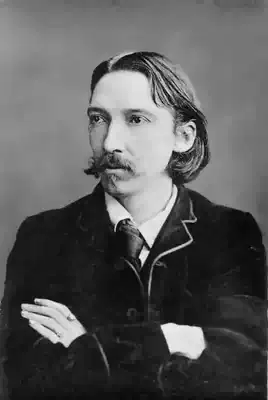
Robert Louis Stevenson
A Valentine's Song
A Valentine's Song
MOTLEY I count the only wear
That suits, in this mixed world, the truly wise,
Who boldly smile upon despair
And shake their bells in Grandam Grundy's eyes.
Singers should sing with such a goodly cheer
That the bare listening should make strong like wine,
At this unruly time of year,
The Feast of Valentine.
We do not now parade our "oughts"
And "shoulds" and motives and beliefs in God.
Their life lies all indoors; sad thoughts
Must keep the house, while gay thoughts go abroad,
Within we hold the wake for hopes deceased;
But in the public streets, in wind or sun,
Keep open, at the annual feast,
The puppet-booth of fun.
Our powers, perhaps, are small to please,
But even negro-songs and castanettes,
Old jokes and hackneyed repartees
Are more than the parade of vain regrets.
Let Jacques stand Wert(h)ering by the wounded deer -
We shall make merry, honest friends of mine,
At this unruly time of year,
The Feast of Valentine.
I know how, day by weary day,
Hope fades, love fades, a thousand pleasures fade.
I have not trudged in vain that way
On which life's daylight darkens, shade by shade.
And still, with hopes decreasing, griefs increased,
Still, with what wit I have shall I, for one,
Keep open, at the annual feast,
The puppet-booth of fun.
I care not if the wit be poor,
The old worn motley stained with rain and tears,
If but the courage still endure
That filled and strengthened hope in earlier years;
If still, with friends averted, fate severe,
A glad, untainted cheerfulness be mine
To greet the unruly time of year,
The Feast of Valentine.
Priest, I am none of thine, and see
In the perspective of still hopeful youth
That Truth shall triumph over thee -
Truth to one's self - I know no other truth.
I see strange days for thee and thine, O priest,
And how your doctrines, fallen one by one,
Shall furnish at the annual feast
The puppet-booth of fun.
Stand on your putrid ruins - stand,
White neck-clothed bigot, fixedly the same,
Cruel with all things but the hand,
Inquisitor in all things but the name.
Back, minister of Christ and source of fear -
We cherish freedom - back with thee and thine
From this unruly time of year,
The Feast of Valentine.
Blood thou mayest spare; but what of tears?
But what of riven households, broken faith -
Bywords that cling through all men's years
And drag them surely down to shame and death?
Stand back, O cruel man, O foe of youth,
And let such men as hearken not thy voice
Press freely up the road to truth,
The King's highway of choice.
MOTLEY I count the only wear
That suits, in this mixed world, the truly wise,
Who boldly smile upon despair
And shake their bells in Grandam Grundy's eyes.
Singers should sing with such a goodly cheer
That the bare listening should make strong like wine,
At this unruly time of year,
The Feast of Valentine.
We do not now parade our "oughts"
And "shoulds" and motives and beliefs in God.
Their life lies all indoors; sad thoughts
Must keep the house, while gay thoughts go abroad,
Within we hold the wake for hopes deceased;
But in the public streets, in wind or sun,
Keep open, at the annual feast,
The puppet-booth of fun.
Our powers, perhaps, are small to please,
But even negro-songs and castanettes,
Old jokes and hackneyed repartees
Are more than the parade of vain regrets.
Let Jacques stand Wert(h)ering by the wounded deer -
We shall make merry, honest friends of mine,
At this unruly time of year,
The Feast of Valentine.
I know how, day by weary day,
Hope fades, love fades, a thousand pleasures fade.
I have not trudged in vain that way
On which life's daylight darkens, shade by shade.
And still, with hopes decreasing, griefs increased,
Still, with what wit I have shall I, for one,
Keep open, at the annual feast,
The puppet-booth of fun.
I care not if the wit be poor,
The old worn motley stained with rain and tears,
If but the courage still endure
That filled and strengthened hope in earlier years;
If still, with friends averted, fate severe,
A glad, untainted cheerfulness be mine
To greet the unruly time of year,
The Feast of Valentine.
Priest, I am none of thine, and see
In the perspective of still hopeful youth
That Truth shall triumph over thee -
Truth to one's self - I know no other truth.
I see strange days for thee and thine, O priest,
And how your doctrines, fallen one by one,
Shall furnish at the annual feast
The puppet-booth of fun.
Stand on your putrid ruins - stand,
White neck-clothed bigot, fixedly the same,
Cruel with all things but the hand,
Inquisitor in all things but the name.
Back, minister of Christ and source of fear -
We cherish freedom - back with thee and thine
From this unruly time of year,
The Feast of Valentine.
Blood thou mayest spare; but what of tears?
But what of riven households, broken faith -
Bywords that cling through all men's years
And drag them surely down to shame and death?
Stand back, O cruel man, O foe of youth,
And let such men as hearken not thy voice
Press freely up the road to truth,
The King's highway of choice.
348
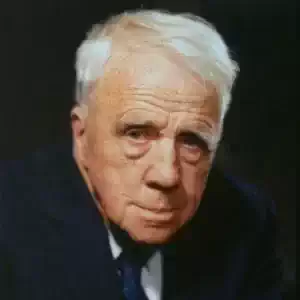
Robert Frost
The Hill Wife
The Hill Wife
It was too lonely for her there,
And too wild,
And since there were but two of them,
And no child.
And work was little in the house,
She was free,
And followed where he furrowed field,
Or felled log.
She rested on a log and tossed
The fresh chips,
With a song only to herself
On her lips.
And once she went to break a bough
Of black alder.
She strayed so far she scarcely heard
When he called her -
And didn't answer - didn't speak -
Or return.
She stood, and then she ran and hid
In the fern.
He never found her, though he looked
Everywhere,
And he asked at her mother's house
Was she there.
Sudden and swift and light as that
The ties gave,
And he learned of finalities
Besides the grave.
It was too lonely for her there,
And too wild,
And since there were but two of them,
And no child.
And work was little in the house,
She was free,
And followed where he furrowed field,
Or felled log.
She rested on a log and tossed
The fresh chips,
With a song only to herself
On her lips.
And once she went to break a bough
Of black alder.
She strayed so far she scarcely heard
When he called her -
And didn't answer - didn't speak -
Or return.
She stood, and then she ran and hid
In the fern.
He never found her, though he looked
Everywhere,
And he asked at her mother's house
Was she there.
Sudden and swift and light as that
The ties gave,
And he learned of finalities
Besides the grave.
474
Robert Frost
The Gift Outright
The Gift Outright
The land was ours before we were the land's.
She was our land more than a hundred years
Before we were her people. She was ours
In Massachusetts, in Virginia,
But we were England's, still colonials,
Possessing what we still were unpossessed by,
Possessed by what we now no more possessed.
Something we were withholding made us weak
Until we found out that it was ourselves
We were withholding from our land of living,
And forthwith found salvation in surrender.
Such as we were we gave ourselves outright
(The deed of gift was many deeds of war)
To the land vaguely realizing westward,
But still unstoried, artless, unenhanced,
Such as she was, such as she would become.
The land was ours before we were the land's.
She was our land more than a hundred years
Before we were her people. She was ours
In Massachusetts, in Virginia,
But we were England's, still colonials,
Possessing what we still were unpossessed by,
Possessed by what we now no more possessed.
Something we were withholding made us weak
Until we found out that it was ourselves
We were withholding from our land of living,
And forthwith found salvation in surrender.
Such as we were we gave ourselves outright
(The deed of gift was many deeds of war)
To the land vaguely realizing westward,
But still unstoried, artless, unenhanced,
Such as she was, such as she would become.
572
Robert Frost
The Bear
The Bear
The bear puts both arms around the tree above her
And draws it down as if it were a lover
And its chokecherries lips to kiss good-by,
Then lets it snap back upright in the sky.
Her next step rocks a boulder on the wall
(She's making her cross-country in the fall).
Her great weight creaks the barbed wire in its staples
As she flings over and off down through the maples,
Leaving on one wire tooth a lock of hair.
Such is the uncaged progress of the bear.
The world has room to make a bear feel free;
The universe seems cramped to you and me.
Man acts more like the poor bear in a cage,
That all day fights a nervous inward rage,
His mood rejecting all his mind suggests.
He paces back and forth and never rests
The me-nail click and shuffle of his feet,
The telescope at one end of his beat,
And at the other end the microscope,
Two instruments of nearly equal hope,
And in conjunction giving quite a spread.
Or if he rests from scientific tread,
'Tis only to sit back and sway his head
Through ninety-odd degrees of arc, it seems,
Between two metaphysical extremes.
He sits back on his fundamental butt
With lifted snout and eyes (if any) shut
(He almost looks religious but he's not),
And back and forth he sways from cheek to cheek,
At one extreme agreeing with one Greek
At the other agreeing with another Greek
Which may be thought, but only so to speak.
A baggy figure, equally pathetic
When sedentary and when peripatetic.
The bear puts both arms around the tree above her
And draws it down as if it were a lover
And its chokecherries lips to kiss good-by,
Then lets it snap back upright in the sky.
Her next step rocks a boulder on the wall
(She's making her cross-country in the fall).
Her great weight creaks the barbed wire in its staples
As she flings over and off down through the maples,
Leaving on one wire tooth a lock of hair.
Such is the uncaged progress of the bear.
The world has room to make a bear feel free;
The universe seems cramped to you and me.
Man acts more like the poor bear in a cage,
That all day fights a nervous inward rage,
His mood rejecting all his mind suggests.
He paces back and forth and never rests
The me-nail click and shuffle of his feet,
The telescope at one end of his beat,
And at the other end the microscope,
Two instruments of nearly equal hope,
And in conjunction giving quite a spread.
Or if he rests from scientific tread,
'Tis only to sit back and sway his head
Through ninety-odd degrees of arc, it seems,
Between two metaphysical extremes.
He sits back on his fundamental butt
With lifted snout and eyes (if any) shut
(He almost looks religious but he's not),
And back and forth he sways from cheek to cheek,
At one extreme agreeing with one Greek
At the other agreeing with another Greek
Which may be thought, but only so to speak.
A baggy figure, equally pathetic
When sedentary and when peripatetic.
513
Robert Frost
Birches
Birches
When I see birches bend to left and right
Across the lines of straighter darker trees,
I like to think some boy's been swinging them.
But swinging doesn't bend them down to stay.
Ice-storms do that. Often you must have seen them
Loaded with ice a sunny winter morning
After a rain. They click upon themselves
As the breeze rises, and turn many-coloured
As the stir cracks and crazes their enamel.
Soon the sun's warmth makes them shed crystal shells
Shattering and avalanching on the snow-crust
Such heaps of broken glass to sweep away
You'd think the inner dome of heaven had fallen.
They are dragged to the withered bracken by the load,
And they seem not to break; though once they are bowed
So low for long, they never right themselves:
You may see their trunks arching in the woods
Years afterwards, trailing their leaves on the ground,
Like girls on hands and knees that throw their hair
Before them over their heads to dry in the sun.
But I was going to say when Truth broke in
With all her matter-of-fact about the ice-storm,
I should prefer to have some boy bend them
As he went out and in to fetch the cows--
Some boy too far from town to learn baseball,
Whose only play was what he found himself,
Summer or winter, and could play alone.
One by one he subdued his father's trees
By riding them down over and over again
Until he took the stiffness out of them,
And not one but hung limp, not one was left
For him to conquer. He learned all there was
To learn about not launching out too soon
And so not carrying the tree away
Clear to the ground. He always kept his poise
To the top branches, climbing carefully
With the same pains you use to fill a cup
Up to the brim, and even above the brim.
Then he flung outward, feet first, with a swish,
Kicking his way down through the air to the ground.
So was I once myself a swinger of birches.
And so I dream of going back to be.
It's when I'm weary of considerations,
And life is too much like a pathless wood
Where your face burns and tickles with the cobwebs
Broken across it, and one eye is weeping
From a twig's having lashed across it open.
I'd like to get away from earth awhile
And then come back to it and begin over.
May no fate willfully misunderstand me
And half grant what I wish and snatch me away
Not to return. Earth's the right place for love:
I don't know where it's likely to go better.
I'd like to go by climbing a birch tree
And climb black branches up a snow-white trunk
Toward heaven, till the tree could bear no more,
But dipped its top and set me down again.
That would be good both going and coming back.
One could do worse than be a swinger of birches.
When I see birches bend to left and right
Across the lines of straighter darker trees,
I like to think some boy's been swinging them.
But swinging doesn't bend them down to stay.
Ice-storms do that. Often you must have seen them
Loaded with ice a sunny winter morning
After a rain. They click upon themselves
As the breeze rises, and turn many-coloured
As the stir cracks and crazes their enamel.
Soon the sun's warmth makes them shed crystal shells
Shattering and avalanching on the snow-crust
Such heaps of broken glass to sweep away
You'd think the inner dome of heaven had fallen.
They are dragged to the withered bracken by the load,
And they seem not to break; though once they are bowed
So low for long, they never right themselves:
You may see their trunks arching in the woods
Years afterwards, trailing their leaves on the ground,
Like girls on hands and knees that throw their hair
Before them over their heads to dry in the sun.
But I was going to say when Truth broke in
With all her matter-of-fact about the ice-storm,
I should prefer to have some boy bend them
As he went out and in to fetch the cows--
Some boy too far from town to learn baseball,
Whose only play was what he found himself,
Summer or winter, and could play alone.
One by one he subdued his father's trees
By riding them down over and over again
Until he took the stiffness out of them,
And not one but hung limp, not one was left
For him to conquer. He learned all there was
To learn about not launching out too soon
And so not carrying the tree away
Clear to the ground. He always kept his poise
To the top branches, climbing carefully
With the same pains you use to fill a cup
Up to the brim, and even above the brim.
Then he flung outward, feet first, with a swish,
Kicking his way down through the air to the ground.
So was I once myself a swinger of birches.
And so I dream of going back to be.
It's when I'm weary of considerations,
And life is too much like a pathless wood
Where your face burns and tickles with the cobwebs
Broken across it, and one eye is weeping
From a twig's having lashed across it open.
I'd like to get away from earth awhile
And then come back to it and begin over.
May no fate willfully misunderstand me
And half grant what I wish and snatch me away
Not to return. Earth's the right place for love:
I don't know where it's likely to go better.
I'd like to go by climbing a birch tree
And climb black branches up a snow-white trunk
Toward heaven, till the tree could bear no more,
But dipped its top and set me down again.
That would be good both going and coming back.
One could do worse than be a swinger of birches.
417
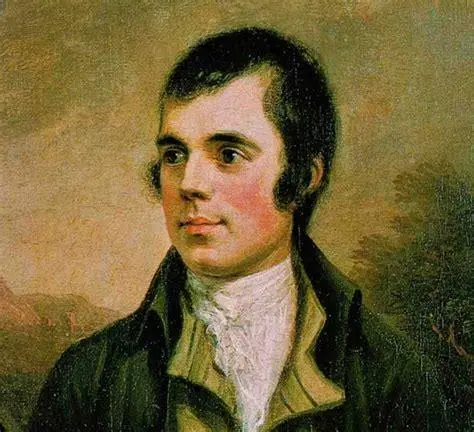
Robert Burns
Scots, Wha Hae Wi' Wallace Bled
Scots, Wha Hae Wi' Wallace Bled
Scots, wha hae wi' Wallace bled,
Scots, wham Bruce has aften led,
Welcome to your gory bed,
Or to victory!
Now's the day, and now's the hour;
See the front o' battle lour,
See approach proud Edward's power—
Chains and slavery!
Wha will be a traitor-knave?
Wha can fill a coward's grave?
Wha sae base as be a slave?
Let him turn and flee!
Wha for Scotland's king and law
Freedom's sword will strongly draw,
Freeman stand or freeman fa',
Let him follow me!
By oppression's woes and pains,
By your sons in servile chains,
We will drain our dearest veins,
But they shall be free!
Lay the proud usurpers low!
Tyrants fall in ev'ry foe!
Liberty's in ev'ry blow!
Let us do or die!
Scots, wha hae wi' Wallace bled,
Scots, wham Bruce has aften led,
Welcome to your gory bed,
Or to victory!
Now's the day, and now's the hour;
See the front o' battle lour,
See approach proud Edward's power—
Chains and slavery!
Wha will be a traitor-knave?
Wha can fill a coward's grave?
Wha sae base as be a slave?
Let him turn and flee!
Wha for Scotland's king and law
Freedom's sword will strongly draw,
Freeman stand or freeman fa',
Let him follow me!
By oppression's woes and pains,
By your sons in servile chains,
We will drain our dearest veins,
But they shall be free!
Lay the proud usurpers low!
Tyrants fall in ev'ry foe!
Liberty's in ev'ry blow!
Let us do or die!
230
Robert Burns
Here's A Health To Them That's Awa
Here's A Health To Them That's Awa
Here's a health to them that's awa,
Here's a health to them that's awa
And wha winna wish guid luck to our cause,
May never guid luck be their fa'!
It's guid to be merry and wise,
It's guid to be honest and true,
It's guid to support Caledonia's cause
And bide by the buff and the blue.
Here's a health to them that's awa,
Here's a health to them that's awa!
Here's a health to Charlie, the chief o' the clan,
Altho that his band be sma'!
May Liberty meet wi success,
May Prudence protect her frae evil!
May tyrants and Tyranny tine i' the mist
And wander their way to the Devil!
Here's a health to them that's awa,
Here's a health to them that's awa;
Here's a health to Tammie, the Norlan' laddie,
That lives at the lug o' the Law!
Here's freedom to thern that wad read,
Here's freedom to them that would write!
There's nane ever fear'd that the truth should be heard,
But they whom the truth would indite!
Here's a health to them that's awa,
An here's to them that's awa!
Here's to Maitland and Wycombe! let wha does na like 'em
Be built in a hole in the wa'!
Here's timmer that's red at the heart,
Here's fruit that is sound at the core,
And may he that wad turn the buff and blue coat
Be turn'd to the back o' the door!
Here's a health to them that's awa,
Here's a health to them that's awa,
Here's Chieftain M'Leod, a chieftain worth gowd,
Tho' bred amang mountains o' snaw!
Here's friends on baith sides o' the Firth,
And friends on baith sides o' the Tweed,
And wha wad betray old Albion's right,
May they never eat of her bread!
Here's a health to them that's awa,
Here's a health to them that's awa
And wha winna wish guid luck to our cause,
May never guid luck be their fa'!
It's guid to be merry and wise,
It's guid to be honest and true,
It's guid to support Caledonia's cause
And bide by the buff and the blue.
Here's a health to them that's awa,
Here's a health to them that's awa!
Here's a health to Charlie, the chief o' the clan,
Altho that his band be sma'!
May Liberty meet wi success,
May Prudence protect her frae evil!
May tyrants and Tyranny tine i' the mist
And wander their way to the Devil!
Here's a health to them that's awa,
Here's a health to them that's awa;
Here's a health to Tammie, the Norlan' laddie,
That lives at the lug o' the Law!
Here's freedom to thern that wad read,
Here's freedom to them that would write!
There's nane ever fear'd that the truth should be heard,
But they whom the truth would indite!
Here's a health to them that's awa,
An here's to them that's awa!
Here's to Maitland and Wycombe! let wha does na like 'em
Be built in a hole in the wa'!
Here's timmer that's red at the heart,
Here's fruit that is sound at the core,
And may he that wad turn the buff and blue coat
Be turn'd to the back o' the door!
Here's a health to them that's awa,
Here's a health to them that's awa,
Here's Chieftain M'Leod, a chieftain worth gowd,
Tho' bred amang mountains o' snaw!
Here's friends on baith sides o' the Firth,
And friends on baith sides o' the Tweed,
And wha wad betray old Albion's right,
May they never eat of her bread!
227
Robert Burns
A Dream
A Dream
Guid-Mornin' to our Majesty!
May Heaven augment your blisses
On ev'ry new birth-day ye see,
A humble poet wishes.
My bardship here, at your Levee
On sic a day as this is,
Is sure an uncouth sight to see,
Amang thae birth-day dresses
Sae fine this day.
I see ye're complimented thrang,
By mony a lord an' lady;
"God save the King" 's a cuckoo sang
That's unco easy said aye:
The poets, too, a venal gang,
Wi' rhymes weel-turn'd an' ready,
Wad gar you trow ye ne'er do wrang,
But aye unerring steady,
On sic a day.
For me! before a monarch's face
Ev'n there I winna flatter;
For neither pension, post, nor place,
Am I your humble debtor:
So, nae reflection on your Grace,
Your Kingship to bespatter;
There's mony waur been o' the race,
And aiblins ane been better
Than you this day.
'Tis very true, my sovereign King,
My skill may weel be doubted;
But facts are chiels that winna ding,
An' downa be disputed:
Your royal nest, beneath your wing,
Is e'en right reft and clouted,
And now the third part o' the string,
An' less, will gang aboot it
Than did ae day.^
Far be't frae me that I aspire
To blame your legislation,
Or say, ye wisdom want, or fire,
To rule this mighty nation:
But faith! I muckle doubt, my sire,
Ye've trusted ministration
To chaps wha in barn or byre
Wad better fill'd their station
Than courts yon day.
And now ye've gien auld Britain peace,
Her broken shins to plaister,
Your sair taxation does her fleece,
Till she has scarce a tester:
For me, thank God, my life's a lease,
Nae bargain wearin' faster,
Or, faith! I fear, that, wi' the geese,
I shortly boost to pasture
I' the craft some day.
I'm no mistrusting Willie Pitt,
When taxes he enlarges,
(An' Will's a true guid fallow's get,
A name not envy spairges),
That he intends to pay your debt,
An' lessen a' your charges;
But, God-sake! let nae saving fit
Abridge your bonie barges
An'boats this day.
Adieu, my Liege; may freedom geck
Beneath your high protection;
An' may ye rax Corruption's neck,
And gie her for dissection!
But since I'm here, I'll no neglect,
In loyal, true affection,
To pay your Queen, wi' due respect,
May fealty an' subjection
This great birth-day.
Hail, Majesty most Excellent!
While nobles strive to please ye,
Will ye accept a compliment,
A simple poet gies ye?
Thae bonie bairntime, Heav'n has lent,
Still higher may they heeze ye
In bliss, till fate some day is sent
For ever to release ye
Frae care that day.
For you, young Potentate o'Wales,
I tell your highness fairly,
Down Pleasure's stream, wi' swelling sails,
I'm tauld ye're driving rarely;
But some day ye may gnaw your nails,
An' curse your folly sairly,
That e'er ye brak Diana's pales,
Or rattl'd dice wi' Charlie
By night or day.
Yet aft a ragged cowt's been known,
To mak a noble aiver;
So, ye may doucely fill the throne,
For a'their clish-ma-claver:
There, him^ at Agincourt wha shone,
Few better were or braver:
And yet, wi' funny, queer Sir John,^
He was an unco shaver
For mony a day.
For you, right rev'rend Osnaburg,
Nane sets the lawn-sleeve sweeter,
Altho' a ribbon at your lug
Wad been a dress completer:
As ye disown yon paughty dog,
That bears the keys of Peter,
Then swith! an' get a wife to hug,
Or trowth, ye'll stain the mitre
Some luckless day!
Young, royal Tarry-breeks, I learn,
Ye've lately come athwart her-
A glorious galley,^ stem and stern,
Weel rigg'd for Venus' barter;
But first hang out, that she'll discern,
Your hymeneal charter;
Then heave aboard your grapple airn,
An' large upon her quarter,
Come full that day.
Ye, lastly, bonie blossoms a',
Ye royal lasses dainty,
Heav'n mak you guid as well as braw,
An' gie you lads a-plenty!
But sneer na British boys awa!
For kings are unco scant aye,
An' German gentles are but sma',
They're better just than want aye
On ony day.
Gad bless you a'! consider now,
Ye're unco muckle dautit;
But ere the course o' life be through,
It may be bitter sautit:
An' I hae seen their coggie fou,
That yet hae tarrow't at it.
But or the day was done, I trow,
The laggen they hae clautit
Fu' clean that day.
Guid-Mornin' to our Majesty!
May Heaven augment your blisses
On ev'ry new birth-day ye see,
A humble poet wishes.
My bardship here, at your Levee
On sic a day as this is,
Is sure an uncouth sight to see,
Amang thae birth-day dresses
Sae fine this day.
I see ye're complimented thrang,
By mony a lord an' lady;
"God save the King" 's a cuckoo sang
That's unco easy said aye:
The poets, too, a venal gang,
Wi' rhymes weel-turn'd an' ready,
Wad gar you trow ye ne'er do wrang,
But aye unerring steady,
On sic a day.
For me! before a monarch's face
Ev'n there I winna flatter;
For neither pension, post, nor place,
Am I your humble debtor:
So, nae reflection on your Grace,
Your Kingship to bespatter;
There's mony waur been o' the race,
And aiblins ane been better
Than you this day.
'Tis very true, my sovereign King,
My skill may weel be doubted;
But facts are chiels that winna ding,
An' downa be disputed:
Your royal nest, beneath your wing,
Is e'en right reft and clouted,
And now the third part o' the string,
An' less, will gang aboot it
Than did ae day.^
Far be't frae me that I aspire
To blame your legislation,
Or say, ye wisdom want, or fire,
To rule this mighty nation:
But faith! I muckle doubt, my sire,
Ye've trusted ministration
To chaps wha in barn or byre
Wad better fill'd their station
Than courts yon day.
And now ye've gien auld Britain peace,
Her broken shins to plaister,
Your sair taxation does her fleece,
Till she has scarce a tester:
For me, thank God, my life's a lease,
Nae bargain wearin' faster,
Or, faith! I fear, that, wi' the geese,
I shortly boost to pasture
I' the craft some day.
I'm no mistrusting Willie Pitt,
When taxes he enlarges,
(An' Will's a true guid fallow's get,
A name not envy spairges),
That he intends to pay your debt,
An' lessen a' your charges;
But, God-sake! let nae saving fit
Abridge your bonie barges
An'boats this day.
Adieu, my Liege; may freedom geck
Beneath your high protection;
An' may ye rax Corruption's neck,
And gie her for dissection!
But since I'm here, I'll no neglect,
In loyal, true affection,
To pay your Queen, wi' due respect,
May fealty an' subjection
This great birth-day.
Hail, Majesty most Excellent!
While nobles strive to please ye,
Will ye accept a compliment,
A simple poet gies ye?
Thae bonie bairntime, Heav'n has lent,
Still higher may they heeze ye
In bliss, till fate some day is sent
For ever to release ye
Frae care that day.
For you, young Potentate o'Wales,
I tell your highness fairly,
Down Pleasure's stream, wi' swelling sails,
I'm tauld ye're driving rarely;
But some day ye may gnaw your nails,
An' curse your folly sairly,
That e'er ye brak Diana's pales,
Or rattl'd dice wi' Charlie
By night or day.
Yet aft a ragged cowt's been known,
To mak a noble aiver;
So, ye may doucely fill the throne,
For a'their clish-ma-claver:
There, him^ at Agincourt wha shone,
Few better were or braver:
And yet, wi' funny, queer Sir John,^
He was an unco shaver
For mony a day.
For you, right rev'rend Osnaburg,
Nane sets the lawn-sleeve sweeter,
Altho' a ribbon at your lug
Wad been a dress completer:
As ye disown yon paughty dog,
That bears the keys of Peter,
Then swith! an' get a wife to hug,
Or trowth, ye'll stain the mitre
Some luckless day!
Young, royal Tarry-breeks, I learn,
Ye've lately come athwart her-
A glorious galley,^ stem and stern,
Weel rigg'd for Venus' barter;
But first hang out, that she'll discern,
Your hymeneal charter;
Then heave aboard your grapple airn,
An' large upon her quarter,
Come full that day.
Ye, lastly, bonie blossoms a',
Ye royal lasses dainty,
Heav'n mak you guid as well as braw,
An' gie you lads a-plenty!
But sneer na British boys awa!
For kings are unco scant aye,
An' German gentles are but sma',
They're better just than want aye
On ony day.
Gad bless you a'! consider now,
Ye're unco muckle dautit;
But ere the course o' life be through,
It may be bitter sautit:
An' I hae seen their coggie fou,
That yet hae tarrow't at it.
But or the day was done, I trow,
The laggen they hae clautit
Fu' clean that day.
308
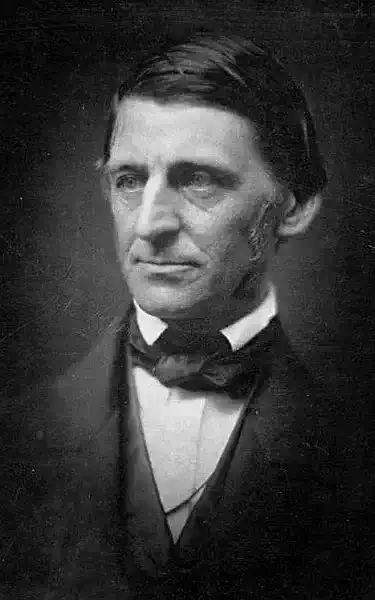
Ralph Waldo Emerson
To-day
To-day
I rake no coffined clay, nor publish wide
The resurrection of departed pride.
Safe in their ancient crannies, dark and deep,
Let kings and conquerors, saints and soldiers sleep--
Late in the world,--too late perchance for fame,
Just late enough to reap abundant blame,--
I choose a novel theme, a bold abuse
Of critic charters, an unlaurelled Muse.
Old mouldy men and books and names and lands
Disgust my reason and defile my hands.
I had as lief respect an ancient shoe,
As love old things for age, and hate the new.
I spurn the Past, my mind disdains its nod,
Nor kneels in homage to so mean a God.
I laugh at those who, while they gape and gaze,
The bald antiquity of China praise.
Youth is (whatever cynic tubs pretend)
The fault that boys and nations soonest mend.
I rake no coffined clay, nor publish wide
The resurrection of departed pride.
Safe in their ancient crannies, dark and deep,
Let kings and conquerors, saints and soldiers sleep--
Late in the world,--too late perchance for fame,
Just late enough to reap abundant blame,--
I choose a novel theme, a bold abuse
Of critic charters, an unlaurelled Muse.
Old mouldy men and books and names and lands
Disgust my reason and defile my hands.
I had as lief respect an ancient shoe,
As love old things for age, and hate the new.
I spurn the Past, my mind disdains its nod,
Nor kneels in homage to so mean a God.
I laugh at those who, while they gape and gaze,
The bald antiquity of China praise.
Youth is (whatever cynic tubs pretend)
The fault that boys and nations soonest mend.
320
Ralph Waldo Emerson
The Romany Girl
The Romany Girl
The sun goes down, and with him takes
The coarseness of my por attire;
The fair moon mounts, and aye the flame
Of Gypsy beauty blazes higher.
Pale Northern girls! you scorn our race;
You captives of your air-tight halls,
Wear out in-doors your sickly days,
But leave us the horizon walls.
And if I take you, dames, to task,
And say it frankly without guile,
Then you are Gypsies in a mask,
And I the lady all the while.
If, on the heath, below the moon,
I court and play with paler blood,
Me false to mine dare whisper none,--
One sallow horseman knows me good.
Go, keep your cheek's rose from the rain,
For teeth and hair with shopmen deal;
My swarthy tint is in the grain,
The rocks and forest knoww it real.
The wild air bloweth in out lungs,
The keen stars twinkle in our eyes,
The birds gave us our wily tongues,
The panther in our dances flies.
You doubt we read the stars on high,
Nathless we read your fortunes true;
The stars may hide in the upper sky,
But without glass we fathom you.
The sun goes down, and with him takes
The coarseness of my por attire;
The fair moon mounts, and aye the flame
Of Gypsy beauty blazes higher.
Pale Northern girls! you scorn our race;
You captives of your air-tight halls,
Wear out in-doors your sickly days,
But leave us the horizon walls.
And if I take you, dames, to task,
And say it frankly without guile,
Then you are Gypsies in a mask,
And I the lady all the while.
If, on the heath, below the moon,
I court and play with paler blood,
Me false to mine dare whisper none,--
One sallow horseman knows me good.
Go, keep your cheek's rose from the rain,
For teeth and hair with shopmen deal;
My swarthy tint is in the grain,
The rocks and forest knoww it real.
The wild air bloweth in out lungs,
The keen stars twinkle in our eyes,
The birds gave us our wily tongues,
The panther in our dances flies.
You doubt we read the stars on high,
Nathless we read your fortunes true;
The stars may hide in the upper sky,
But without glass we fathom you.
308
Ralph Waldo Emerson
Ode
Ode
Inscribed to W.H. Channing
Though loath to grieve
The evil time's sole patriot,
I cannot leave
My honeyed thought
For the priest's cant,
Or statesman's rant.
If I refuse
My study for their politic,
Which at the best is trick,
The angry Muse
Puts confusion in my brain.
But who is he that prates
Of the culture of mankind,
Of better arts and life?
Go, blindworm, go,
Behold the famous States
Harrying Mexico
With rifle and with knife!
Or who, with accent bolder
Dare praise the freedom-loving mountaineer?
I found by thee, O rushing Contoocook!
And in thy valleys, Agiochook!
The jackals of the Negro-holder.
The God who made New Hampshire
Taunted the lofty land
With little men;--
Small bat and wren
House in the oak:--
If earth-fire cleave
The upheaved land, and bury the folk,
The southern crocodile would grieve.
Virtue palters; Right is hence;
Freedom praised, but hid;
Funeral eloquence
Rattles the coffin lid.
What boots thy zeal,
O glowing friend,
That would indignant rend
The northland from the south?
Wherefore? to what good end?
Boston Bay and Bunker Hill
Would serve things still;--
Things are of the snake.
The horseman serves the horse
The neatherd serves the neat,
The merchant serves the purse,
The eater serves his meat;
'Tis the day of the chattel,
Web to weave, and corn to grind;
Things are in the saddle,
And ride mankind.
There are two laws discrete,
Not reconciled,--
Law for man, and law for thing;
The last builds town and fleet,
But it runs wild,
And doth the man unking.
'Tis fit the forest fall,
The steep be graded,
The mountain tunneled,
The sand shaded,
The orchard planted,
The glebe tilled,
The prairie granted
The steamer built.
Let man serve law for man;
Live for friendship, live for love,
For truth's and harmony's behoof;
The state may follow how it can,
As Olympus follows Jove.
Yet do not I implore
The wrinkled shopman to my sounding woods,
Nor did the unwilling senator
Ask votes of thrushes in the solitudes.
Everyone to his chosen work--
Foolish hands may mix and mar;
Wise and sure the issues are.
Round they roll till dark is light,
Sex to sex, and even to odd;--
The overgod
Who marries Right to Might,
Who peoples, unpeoples,--
He who exterminates
Races by stronger races,
Black by white faces,--
Knows to bring honey
Out of the lion;
Grafts gentlest scion
On pirate and Turk.
The Cossack eats Poland,
Like stolen fruit;
Her last noble is ruined,
Her last poet mute;
Straight, into double band
The victors divide;
Half for freedom strike and stand;--
The astonished Muse finds thousands at her side.
Inscribed to W.H. Channing
Though loath to grieve
The evil time's sole patriot,
I cannot leave
My honeyed thought
For the priest's cant,
Or statesman's rant.
If I refuse
My study for their politic,
Which at the best is trick,
The angry Muse
Puts confusion in my brain.
But who is he that prates
Of the culture of mankind,
Of better arts and life?
Go, blindworm, go,
Behold the famous States
Harrying Mexico
With rifle and with knife!
Or who, with accent bolder
Dare praise the freedom-loving mountaineer?
I found by thee, O rushing Contoocook!
And in thy valleys, Agiochook!
The jackals of the Negro-holder.
The God who made New Hampshire
Taunted the lofty land
With little men;--
Small bat and wren
House in the oak:--
If earth-fire cleave
The upheaved land, and bury the folk,
The southern crocodile would grieve.
Virtue palters; Right is hence;
Freedom praised, but hid;
Funeral eloquence
Rattles the coffin lid.
What boots thy zeal,
O glowing friend,
That would indignant rend
The northland from the south?
Wherefore? to what good end?
Boston Bay and Bunker Hill
Would serve things still;--
Things are of the snake.
The horseman serves the horse
The neatherd serves the neat,
The merchant serves the purse,
The eater serves his meat;
'Tis the day of the chattel,
Web to weave, and corn to grind;
Things are in the saddle,
And ride mankind.
There are two laws discrete,
Not reconciled,--
Law for man, and law for thing;
The last builds town and fleet,
But it runs wild,
And doth the man unking.
'Tis fit the forest fall,
The steep be graded,
The mountain tunneled,
The sand shaded,
The orchard planted,
The glebe tilled,
The prairie granted
The steamer built.
Let man serve law for man;
Live for friendship, live for love,
For truth's and harmony's behoof;
The state may follow how it can,
As Olympus follows Jove.
Yet do not I implore
The wrinkled shopman to my sounding woods,
Nor did the unwilling senator
Ask votes of thrushes in the solitudes.
Everyone to his chosen work--
Foolish hands may mix and mar;
Wise and sure the issues are.
Round they roll till dark is light,
Sex to sex, and even to odd;--
The overgod
Who marries Right to Might,
Who peoples, unpeoples,--
He who exterminates
Races by stronger races,
Black by white faces,--
Knows to bring honey
Out of the lion;
Grafts gentlest scion
On pirate and Turk.
The Cossack eats Poland,
Like stolen fruit;
Her last noble is ruined,
Her last poet mute;
Straight, into double band
The victors divide;
Half for freedom strike and stand;--
The astonished Muse finds thousands at her side.
381
Ralph Waldo Emerson
Merlin I
Merlin I
Thy trivial harp will never please
Or fill my craving ear;
Its chords should ring as blows the breeze,
Free, peremptory, clear.
No jingling serenader's art,
Nor tinkle of piano strings,
Can make the wild blood start
In its mystic springs.
The kingly bard
Must smite the chords rudely and hard,
As with hammer or with mace,
That they may render back
Artful thunder that conveys
Secrets of the solar track,
Sparks of the supersolar blaze.
Merlin's blows are strokes of fate,
Chiming with the forest-tone,
When boughs buffet boughs in the wood;
Chiming with the gasp and moan
Of the ice-imprisoned flood;
With the pulse of manly hearts,
With the voice of orators,
With the din of city arts,
With the cannonade of wars.
With the marches of the brave,
And prayers of might from martyrs' cave.
Great is the art,
Great be the manners of the bard!
He shall not his brain encumber
With the coil of rhythm and number,
But, leaving rule and pale forethought,
He shall aye climb
For his rhyme:
Pass in, pass in, the angels say,
In to the upper doors;
Nor count compartments of the floors,
But mount to Paradise
By the stairway of surprise.
Blameless master of the games,
King of sport that never shames;
He shall daily joy dispense
Hid in song's sweet influence.
Things more cheerly live and go,
What time the subtle mind
Plays aloud the tune whereto
Their pulses beat,
And march their feet,
And their members are combined.
By Sybarites beguiled
He shall no task decline;
Merlin's mighty line,
Extremes of nature reconciled,
Bereaved a tyrant of his will,
And made the lion mild.
Songs can the tempest still,
Scattered on the stormy air,
Mould the year to fair increase,
And bring in poetic peace.
He shall not seek to weave,
In weak unhappy times,
Efficacious rhymes;
Wait his returning strength,
Bird, that from the nadir's floor,
To the zenith's top could soar,
The soaring orbit of the muse exceeds that journey's length!
Nor, profane, affect to hit
Or compass that by meddling wit,
Which only the propitious mind
Publishes when 'tis inclined.
There are open hours
When the god's will sallies free,
And the dull idiot might see
The flowing fortunes of a thousand years;
Sudden, at unawares,
Self-moved fly-to the doors,
Nor sword of angels could reveal
What they conceal.
Thy trivial harp will never please
Or fill my craving ear;
Its chords should ring as blows the breeze,
Free, peremptory, clear.
No jingling serenader's art,
Nor tinkle of piano strings,
Can make the wild blood start
In its mystic springs.
The kingly bard
Must smite the chords rudely and hard,
As with hammer or with mace,
That they may render back
Artful thunder that conveys
Secrets of the solar track,
Sparks of the supersolar blaze.
Merlin's blows are strokes of fate,
Chiming with the forest-tone,
When boughs buffet boughs in the wood;
Chiming with the gasp and moan
Of the ice-imprisoned flood;
With the pulse of manly hearts,
With the voice of orators,
With the din of city arts,
With the cannonade of wars.
With the marches of the brave,
And prayers of might from martyrs' cave.
Great is the art,
Great be the manners of the bard!
He shall not his brain encumber
With the coil of rhythm and number,
But, leaving rule and pale forethought,
He shall aye climb
For his rhyme:
Pass in, pass in, the angels say,
In to the upper doors;
Nor count compartments of the floors,
But mount to Paradise
By the stairway of surprise.
Blameless master of the games,
King of sport that never shames;
He shall daily joy dispense
Hid in song's sweet influence.
Things more cheerly live and go,
What time the subtle mind
Plays aloud the tune whereto
Their pulses beat,
And march their feet,
And their members are combined.
By Sybarites beguiled
He shall no task decline;
Merlin's mighty line,
Extremes of nature reconciled,
Bereaved a tyrant of his will,
And made the lion mild.
Songs can the tempest still,
Scattered on the stormy air,
Mould the year to fair increase,
And bring in poetic peace.
He shall not seek to weave,
In weak unhappy times,
Efficacious rhymes;
Wait his returning strength,
Bird, that from the nadir's floor,
To the zenith's top could soar,
The soaring orbit of the muse exceeds that journey's length!
Nor, profane, affect to hit
Or compass that by meddling wit,
Which only the propitious mind
Publishes when 'tis inclined.
There are open hours
When the god's will sallies free,
And the dull idiot might see
The flowing fortunes of a thousand years;
Sudden, at unawares,
Self-moved fly-to the doors,
Nor sword of angels could reveal
What they conceal.
376
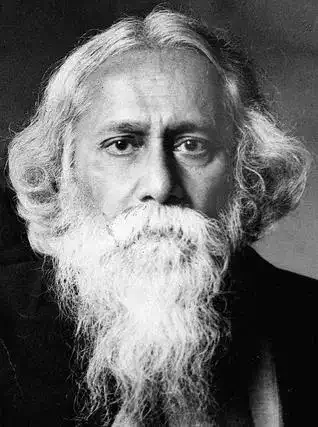
Rabindranath Tagore
Where The Mind Is Without Fear
Where The Mind Is Without Fear
Where the mind is without fear and the head is held high
Where knowledge is free
Where the world has not been broken up into fragments
By narrow domestic walls
Where words come out from the depth of truth
Where tireless striving stretches its arms towards perfection
Where the clear stream of reason has not lost its way
Into the dreary desert sand of dead habit
Where the mind is led forward by thee
Into ever-widening thought and action
Into that heaven of freedom, my Father, let my country awake
Where the mind is without fear and the head is held high
Where knowledge is free
Where the world has not been broken up into fragments
By narrow domestic walls
Where words come out from the depth of truth
Where tireless striving stretches its arms towards perfection
Where the clear stream of reason has not lost its way
Into the dreary desert sand of dead habit
Where the mind is led forward by thee
Into ever-widening thought and action
Into that heaven of freedom, my Father, let my country awake
525
Rabindranath Tagore
Vocation
Vocation
When the gong sounds ten in the morning and I walk to school by our
lane.
Every day I meet the hawker crying, "Bangles, crystal
bangles!"
There is nothing to hurry him on, there is no road he must
take, no place he must go to, no time when he must come home.
I wish I were a hawker, spending my day in the road, crying,
"Bangles, crystal bangles!"
When at four in the afternoon I come back from the school,
I can see through the gate of that house the gardener digging
the ground.
He does what he likes with his spade, he soils his clothes
with dust, nobody takes him to task if he gets baked in the sun or
gets wet.
I wish I were a gardener digging away at the garden with
nobody to stop me from digging.
Just as it gets dark in the evening and my mother sends me to
bed,
I can see through my open window the watchman walking up and
down.
The lane is dark and lonely, and the street-lamp stands like
a giant with one red eye in its head.
The watchman swings his lantern and walks with his shadow at
his side, and never once goes to bed in his life.
I wish I were a watchman walking the streets all night,
chasing the shadows with my lantern.
When the gong sounds ten in the morning and I walk to school by our
lane.
Every day I meet the hawker crying, "Bangles, crystal
bangles!"
There is nothing to hurry him on, there is no road he must
take, no place he must go to, no time when he must come home.
I wish I were a hawker, spending my day in the road, crying,
"Bangles, crystal bangles!"
When at four in the afternoon I come back from the school,
I can see through the gate of that house the gardener digging
the ground.
He does what he likes with his spade, he soils his clothes
with dust, nobody takes him to task if he gets baked in the sun or
gets wet.
I wish I were a gardener digging away at the garden with
nobody to stop me from digging.
Just as it gets dark in the evening and my mother sends me to
bed,
I can see through my open window the watchman walking up and
down.
The lane is dark and lonely, and the street-lamp stands like
a giant with one red eye in its head.
The watchman swings his lantern and walks with his shadow at
his side, and never once goes to bed in his life.
I wish I were a watchman walking the streets all night,
chasing the shadows with my lantern.
607
Rabindranath Tagore
The Last Bargain
The Last Bargain
"Come and hire me," I cried, while in the morning I was walking on the stone-paved
road.
Sword in hand, the King came in his chariot.
He held my hand and said, "I will hire you with my power."
But his power counted for nought, and he went away in his chariot.
In the heat of the midday the houses stood with shut doors.
I wandered along the crooked lane.
An old man came out with his bag of gold.
He pondered and said, "I will hire you with my money."
He weighed his coins one by one, but I turned away.
It was evening. The garden hedge was all aflower.
The fair maid came out and said, "I will hire you with a smile."
Her smile paled and melted into tears, and she went back alone into the dark.
The sun glistened on the sand, and the sea waves broke waywardly.
A child sat playing with shells.
He raised his head and seemed to know me, and said, "I hire you with nothing."
From thenceforward that bargain struck in child's play made me a free man.
"Come and hire me," I cried, while in the morning I was walking on the stone-paved
road.
Sword in hand, the King came in his chariot.
He held my hand and said, "I will hire you with my power."
But his power counted for nought, and he went away in his chariot.
In the heat of the midday the houses stood with shut doors.
I wandered along the crooked lane.
An old man came out with his bag of gold.
He pondered and said, "I will hire you with my money."
He weighed his coins one by one, but I turned away.
It was evening. The garden hedge was all aflower.
The fair maid came out and said, "I will hire you with a smile."
Her smile paled and melted into tears, and she went back alone into the dark.
The sun glistened on the sand, and the sea waves broke waywardly.
A child sat playing with shells.
He raised his head and seemed to know me, and said, "I hire you with nothing."
From thenceforward that bargain struck in child's play made me a free man.
794
Rabindranath Tagore
The Gardener XLII: O Mad, Superbly Drunk
The Gardener XLII: O Mad, Superbly Drunk
O mad, superbly drunk;
If you kick open your doors and
play the fool in public;
If you empty your bag in a night,
and snap your fingers at prudence;
If you walk in curious paths and
play with useless things;
Reck not rhyme or reason;
If unfurling your sails before the
storm you snap the rudder in two,
Then I will follow you, comrade,
and be drunken and go to the dogs.
I have wasted my days and nights
in the company of steady wise neighbours.
Much knowing has turned my hair
grey, and much watching has made
my sight dim.
For years I have gathered and
heaped up scraps and fragments of
things:
Crush them and dance upon them,
and scatter them all to the winds.
For I know 'tis the height of wisdom
to be drunken and go the dogs.
Let all crooked scruples vanish,
let me hopelessly lose my way.
Let a gust of wild giddiness come
and sweep me away from my anchors.
The world is peopled with worthies,
and workers, useful and clever.
There are men who are easily first,
and men who come decently after.
Let them be happy and prosper,
and let me be foolishly futile.
For I know 'tis the end of all works
to be drunken and go to the dogs.
I swear to surrender this moment
all claims to the ranks of the decent.
I let go my pride of learning and
judgment of right and of wrong.
I'll shatter memory's vessel, scattering
the last drop of tears.
With the foam of the berry-red
wine I will bathe and brighten my
laughter.
The badge of the civil and staid
I'll tear into shreds for the nonce.
I'll take the holy vow to be worthless,
to be drunken and go to the dogs.
O mad, superbly drunk;
If you kick open your doors and
play the fool in public;
If you empty your bag in a night,
and snap your fingers at prudence;
If you walk in curious paths and
play with useless things;
Reck not rhyme or reason;
If unfurling your sails before the
storm you snap the rudder in two,
Then I will follow you, comrade,
and be drunken and go to the dogs.
I have wasted my days and nights
in the company of steady wise neighbours.
Much knowing has turned my hair
grey, and much watching has made
my sight dim.
For years I have gathered and
heaped up scraps and fragments of
things:
Crush them and dance upon them,
and scatter them all to the winds.
For I know 'tis the height of wisdom
to be drunken and go the dogs.
Let all crooked scruples vanish,
let me hopelessly lose my way.
Let a gust of wild giddiness come
and sweep me away from my anchors.
The world is peopled with worthies,
and workers, useful and clever.
There are men who are easily first,
and men who come decently after.
Let them be happy and prosper,
and let me be foolishly futile.
For I know 'tis the end of all works
to be drunken and go to the dogs.
I swear to surrender this moment
all claims to the ranks of the decent.
I let go my pride of learning and
judgment of right and of wrong.
I'll shatter memory's vessel, scattering
the last drop of tears.
With the foam of the berry-red
wine I will bathe and brighten my
laughter.
The badge of the civil and staid
I'll tear into shreds for the nonce.
I'll take the holy vow to be worthless,
to be drunken and go to the dogs.
564
Rabindranath Tagore
Stray Birds 31 - 40
Stray Birds 31 - 40
31
THE trees come up to my window
like the yearning voice of the dumb earth.
32
HIS own mornings are new surprises to God.
33
LIFE finds its wealth by the claims of the world,
and its worth by the claims of love.
34
THE dry river-bed finds no thanks for its past.
35
THE bird wishes it were a cloud.
The cloud wishes it were a bird.
36
THE waterfall sings,
'I find my song,
when I find my freedom.'
37
I CANNOT tell why this heart languishes in silence.
It is for small needs it never asks,
or knows or remembers.
38
WOMAN,
when you move about in your household service
your limbs sing like a hill stream among its pebbles.
39
THE sun goes to cross the Western sea,
leaving its last salutation to the East.
40
DO not blame your food because you have no appetite.
31
THE trees come up to my window
like the yearning voice of the dumb earth.
32
HIS own mornings are new surprises to God.
33
LIFE finds its wealth by the claims of the world,
and its worth by the claims of love.
34
THE dry river-bed finds no thanks for its past.
35
THE bird wishes it were a cloud.
The cloud wishes it were a bird.
36
THE waterfall sings,
'I find my song,
when I find my freedom.'
37
I CANNOT tell why this heart languishes in silence.
It is for small needs it never asks,
or knows or remembers.
38
WOMAN,
when you move about in your household service
your limbs sing like a hill stream among its pebbles.
39
THE sun goes to cross the Western sea,
leaving its last salutation to the East.
40
DO not blame your food because you have no appetite.
558
Rabindranath Tagore
Prisoner
Prisoner
`Prisoner, tell me, who was it that bound you?'
`It was my master,' said the prisoner.
`I thought I could outdo everybody in the world in wealth and power,
and I amassed in my own treasure-house the money due to my king.
When sleep overcame me I lay upon the bed that was for my lord,
and on waking up I found I was a prisoner in my own treasure-house.'
`Prisoner, tell me, who was it that wrought this unbreakable chain?'
`It was I,' said the prisoner, `who forged this chain very carefully.
I thought my invincible power would hold the world captive
leaving me in a freedom undisturbed.
Thus night and day I worked at the chain
with huge fires and cruel hard strokes.
When at last the work was done
and the links were complete and unbreakable,
I found that it held me in its grip.'
`Prisoner, tell me, who was it that bound you?'
`It was my master,' said the prisoner.
`I thought I could outdo everybody in the world in wealth and power,
and I amassed in my own treasure-house the money due to my king.
When sleep overcame me I lay upon the bed that was for my lord,
and on waking up I found I was a prisoner in my own treasure-house.'
`Prisoner, tell me, who was it that wrought this unbreakable chain?'
`It was I,' said the prisoner, `who forged this chain very carefully.
I thought my invincible power would hold the world captive
leaving me in a freedom undisturbed.
Thus night and day I worked at the chain
with huge fires and cruel hard strokes.
When at last the work was done
and the links were complete and unbreakable,
I found that it held me in its grip.'
588
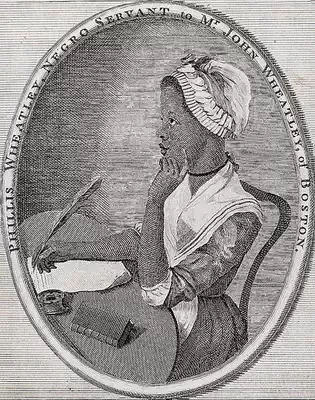
Phillis Wheatley
To the Rt. Hon. William, Earl of Dartmouth
To the Rt. Hon. William, Earl of Dartmouth
Hail, happy day, when, smiling like the morn,
Fair Freedom rose New-England to adorn:
The northern clime beneath her genial ray,
Dartmouth, congratulates thy blissful sway:
Elate with hope her race no longer mourns,
Each soul expands, each grateful bosom burns,
While in thine hand with pleasure we behold
The silken reins, and Freedom's charms unfold.
Long lost to realms beneath the northern skies
She shines supreme, while hated faction dies:
Soon as appear'd the Goddess long desir'd,
Sick at the view, she languish'd and expir'd;
Thus from the splendors of the morning light
The owl in sadness seeks the caves of night.
No more, America, in mournful strain
Of wrongs, and grievance unredress'd complain,
No longer shalt thou dread the iron chain,
Which wanton Tyranny with lawless hand
Had made, and with it meant t' enslave the land.
Should you, my lord, while you peruse my song,
Wonder from whence my love of Freedom sprung,
Whence flow these wishes for the common good,
By feeling hearts alone best understood,
I, young in life, by seeming cruel fate
Was snatch'd from Afric's fancy'd happy seat:
What pangs excruciating must molest,
What sorrows labour in my parent's breast?
Steel'd was that soul and by no misery mov'd
That from a father seiz'd his babe belov'd:
Such, such my case. And can I then but pray
Others may never feel tyrannic sway?
For favours past, great Sir, our thanks are due,
And thee we ask thy favours to renew,
Since in thy pow'r, as in thy will before,
To sooth the griefs, which thou did'st once deplore.
May heav'nly grace the sacred sanction give
To all thy works, and thou for ever live
Not only on the wings of fleeting Fame,
Though praise immortal crowns the patriot's name,
But to conduct to heav'ns refulgent fane,
May fiery coursers sweep th' ethereal plain,
And bear thee upwards to that blest abode,
Where, like the prophet, thou shalt find thy God.
Hail, happy day, when, smiling like the morn,
Fair Freedom rose New-England to adorn:
The northern clime beneath her genial ray,
Dartmouth, congratulates thy blissful sway:
Elate with hope her race no longer mourns,
Each soul expands, each grateful bosom burns,
While in thine hand with pleasure we behold
The silken reins, and Freedom's charms unfold.
Long lost to realms beneath the northern skies
She shines supreme, while hated faction dies:
Soon as appear'd the Goddess long desir'd,
Sick at the view, she languish'd and expir'd;
Thus from the splendors of the morning light
The owl in sadness seeks the caves of night.
No more, America, in mournful strain
Of wrongs, and grievance unredress'd complain,
No longer shalt thou dread the iron chain,
Which wanton Tyranny with lawless hand
Had made, and with it meant t' enslave the land.
Should you, my lord, while you peruse my song,
Wonder from whence my love of Freedom sprung,
Whence flow these wishes for the common good,
By feeling hearts alone best understood,
I, young in life, by seeming cruel fate
Was snatch'd from Afric's fancy'd happy seat:
What pangs excruciating must molest,
What sorrows labour in my parent's breast?
Steel'd was that soul and by no misery mov'd
That from a father seiz'd his babe belov'd:
Such, such my case. And can I then but pray
Others may never feel tyrannic sway?
For favours past, great Sir, our thanks are due,
And thee we ask thy favours to renew,
Since in thy pow'r, as in thy will before,
To sooth the griefs, which thou did'st once deplore.
May heav'nly grace the sacred sanction give
To all thy works, and thou for ever live
Not only on the wings of fleeting Fame,
Though praise immortal crowns the patriot's name,
But to conduct to heav'ns refulgent fane,
May fiery coursers sweep th' ethereal plain,
And bear thee upwards to that blest abode,
Where, like the prophet, thou shalt find thy God.
210

Paul Laurence Dunbar
Frederick Douglass
Frederick Douglass
A hush is over all the teeming lists,
And there is pause, a breath-space in the strife;
A spirit brave has passed beyond the mists
And vapors that obscure the sun of life.
And Ethiopia, with bosom torn,
Laments the passing of her noblest born.
She weeps for him a mother's burning tears--
She loved him with a mother's deepest love
He was her champion thro' direful years,
And held her weal all other ends above.
When Bondage held her bleeding in the dust,
He raised her up and whispered, 'Hope and Trust.'
For her his voice, a fearless clarion, rung
That broke in warning on the ears of men;
For her the strong bow of his pow'r he strung
And sent his arrows to the very den
Where grim Oppression held his bloody place
And gloated o'er the mis'ries of a race.
And he was no soft-tongued apologist;
He spoke straight-forward, fearlessly uncowed;
The sunlight of his truth dispelled the mist
And set in bold relief each dark-hued cloud;
To sin and crime he gave their proper hue,
And hurled at evil what was evil's due.
Thro' good and ill report he cleaved his way
Right onward, with his face set toward the heights,
Nor feared to face the foeman's dread array--
The lash of scorn, the sting of petty spites.
He dared the lightning in the lightning's track,
And answered thunder with his thunder back.
When men maligned him and their torrent wrath
In furious imprecations o'er him broke,
He kept his counsel as he kept his path;
'Twas for his race, not for himself, he spoke.
He knew the import of his Master's call
And felt himself too mighty to be small.
No miser in the good he held was he--
His kindness followed his horizon's rim.
His heart, his talents and his hands were free
To all who truly needed aught of him.
Where poverty and ignorance were rife,
He gave his bounty as he gave his life.
The place and cause that first aroused his might
Still proved its pow'r until his latest day.
In Freedom's lists and for the aid of Right
Still in the foremost rank he waged the fray;
Wrong lived; His occupation was not gone.
He died in action with his armor on!
We weep for him, but we have touched his hand,
And felt the magic of his presence nigh,
The current that he sent thro' out the land,
The kindling spirit of his battle-cry
O'er all that holds us we shall triumph yet
And place our banner where his hopes were set!
Oh, Douglass, thou hast passed beyond the shore,
But still thy voice is ringing o'er the gale!
Thou 'st taught thy race how high her hopes may soar
And bade her seek the heights, nor faint, nor fail.
She will not fail, she heeds thy stirring cry,
She knows thy guardian spirit will be nigh,
And rising from beneath the chast'ning rod,
She stretches out her bleeding hands to God!
A hush is over all the teeming lists,
And there is pause, a breath-space in the strife;
A spirit brave has passed beyond the mists
And vapors that obscure the sun of life.
And Ethiopia, with bosom torn,
Laments the passing of her noblest born.
She weeps for him a mother's burning tears--
She loved him with a mother's deepest love
He was her champion thro' direful years,
And held her weal all other ends above.
When Bondage held her bleeding in the dust,
He raised her up and whispered, 'Hope and Trust.'
For her his voice, a fearless clarion, rung
That broke in warning on the ears of men;
For her the strong bow of his pow'r he strung
And sent his arrows to the very den
Where grim Oppression held his bloody place
And gloated o'er the mis'ries of a race.
And he was no soft-tongued apologist;
He spoke straight-forward, fearlessly uncowed;
The sunlight of his truth dispelled the mist
And set in bold relief each dark-hued cloud;
To sin and crime he gave their proper hue,
And hurled at evil what was evil's due.
Thro' good and ill report he cleaved his way
Right onward, with his face set toward the heights,
Nor feared to face the foeman's dread array--
The lash of scorn, the sting of petty spites.
He dared the lightning in the lightning's track,
And answered thunder with his thunder back.
When men maligned him and their torrent wrath
In furious imprecations o'er him broke,
He kept his counsel as he kept his path;
'Twas for his race, not for himself, he spoke.
He knew the import of his Master's call
And felt himself too mighty to be small.
No miser in the good he held was he--
His kindness followed his horizon's rim.
His heart, his talents and his hands were free
To all who truly needed aught of him.
Where poverty and ignorance were rife,
He gave his bounty as he gave his life.
The place and cause that first aroused his might
Still proved its pow'r until his latest day.
In Freedom's lists and for the aid of Right
Still in the foremost rank he waged the fray;
Wrong lived; His occupation was not gone.
He died in action with his armor on!
We weep for him, but we have touched his hand,
And felt the magic of his presence nigh,
The current that he sent thro' out the land,
The kindling spirit of his battle-cry
O'er all that holds us we shall triumph yet
And place our banner where his hopes were set!
Oh, Douglass, thou hast passed beyond the shore,
But still thy voice is ringing o'er the gale!
Thou 'st taught thy race how high her hopes may soar
And bade her seek the heights, nor faint, nor fail.
She will not fail, she heeds thy stirring cry,
She knows thy guardian spirit will be nigh,
And rising from beneath the chast'ning rod,
She stretches out her bleeding hands to God!
1,110
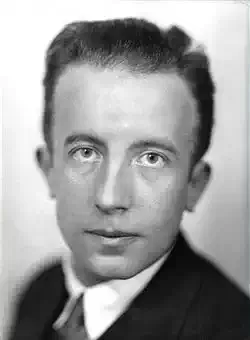
Paul Éluard
Head Against The Walls
Head Against The Walls
There were only a few of them
In all the earth
Each one thought he was alone
They sang, they were right
To sing
But they sang the way you sack a city
The way you kill yourself.
Frayed moist night
Shall we endure you
Longer
Shall we not shake
Your cloacal evidence
We shall not wait for a morning
Made to measure
We wanted to see in other people's eyes
Their nights of love exhausted
They dream only of dying
Their lovely flesh forgotten
Bees caught in their honey
They are ignorant of life
And we suffer everywhere
Red roofs dissolve under the tongue
Dog days in the full beds
Come, empty your sacks of fresh blood
There is still a shadow here
A shred of imbecile there
In the wind their masks, their cast-offs
In lead their traps, their chains
And their prudent blind-men's gestures
There is fire under rocks
If you put out the fire
Be careful we have
Despite the night it breeds
More strength than the belly
Of your wives and sisters
And we will reproduce
Without them but by ax strokes
In your prisons
Torrents of stone labors of foam
Where eyes float without rancor
Just eyes without hope
That know you
And that you should have put out
Rather than ignore
With a safety pin quicker than your gibbets
We shall take our booty where we want it to be
There were only a few of them
In all the earth
Each one thought he was alone
They sang, they were right
To sing
But they sang the way you sack a city
The way you kill yourself.
Frayed moist night
Shall we endure you
Longer
Shall we not shake
Your cloacal evidence
We shall not wait for a morning
Made to measure
We wanted to see in other people's eyes
Their nights of love exhausted
They dream only of dying
Their lovely flesh forgotten
Bees caught in their honey
They are ignorant of life
And we suffer everywhere
Red roofs dissolve under the tongue
Dog days in the full beds
Come, empty your sacks of fresh blood
There is still a shadow here
A shred of imbecile there
In the wind their masks, their cast-offs
In lead their traps, their chains
And their prudent blind-men's gestures
There is fire under rocks
If you put out the fire
Be careful we have
Despite the night it breeds
More strength than the belly
Of your wives and sisters
And we will reproduce
Without them but by ax strokes
In your prisons
Torrents of stone labors of foam
Where eyes float without rancor
Just eyes without hope
That know you
And that you should have put out
Rather than ignore
With a safety pin quicker than your gibbets
We shall take our booty where we want it to be
411
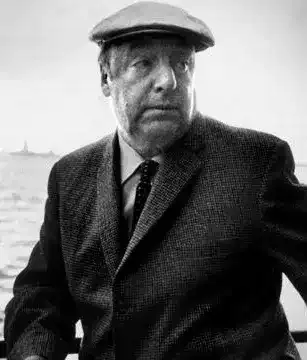
Pablo Neruda
Poor Creatures
Poor Creatures
What it takes on this planet,
to make love to each other in peace.
Everyone pries under your sheets,
everyone interferes with your loving.
They say terrible things about a man and a woman,
who after much milling about,
all sorts of compunctions,
do something unique,
they both lie with each other in one bed.
I ask myself whether frogs are so furtive,
or sneeze as they please.
Whether they whisper to each other in swamps about illegitimate frogs,
or the joys of amphibious living.
I ask myself if birds single out enemy birds,
or bulls gossip with bullocks before they go out in public with cows.
Even the roads have eyes and the parks their police.
Hotels spy on their guests,
windows name names,
canons and squadrons debark on missions to liquidate love.
All those ears and those jaws working incessantly,
till a man and his girl
have to raise their climax,
full tilt,
on a bicycle.
What it takes on this planet,
to make love to each other in peace.
Everyone pries under your sheets,
everyone interferes with your loving.
They say terrible things about a man and a woman,
who after much milling about,
all sorts of compunctions,
do something unique,
they both lie with each other in one bed.
I ask myself whether frogs are so furtive,
or sneeze as they please.
Whether they whisper to each other in swamps about illegitimate frogs,
or the joys of amphibious living.
I ask myself if birds single out enemy birds,
or bulls gossip with bullocks before they go out in public with cows.
Even the roads have eyes and the parks their police.
Hotels spy on their guests,
windows name names,
canons and squadrons debark on missions to liquidate love.
All those ears and those jaws working incessantly,
till a man and his girl
have to raise their climax,
full tilt,
on a bicycle.
596
Oscar Wilde
Sonnet To Liberty
Sonnet To Liberty
NOT that I love thy children, whose dull eyes
See nothing save their own unlovely woe,
Whose minds know nothing, nothing care to know,--
But that the roar of thy Democracies,
Thy reigns of Terror, thy great Anarchies,
Mirror my wildest passions like the sea,--
And give my rage a brother----! Liberty!
For this sake only do thy dissonant cries
Delight my discreet soul, else might all kings
By bloody knout or treacherous cannonades
Rob nations of their rights inviolate
And I remain unmoved--and yet, and yet,
These Christs that die upon the barricades,
God knows it I am with them, in some things.
NOT that I love thy children, whose dull eyes
See nothing save their own unlovely woe,
Whose minds know nothing, nothing care to know,--
But that the roar of thy Democracies,
Thy reigns of Terror, thy great Anarchies,
Mirror my wildest passions like the sea,--
And give my rage a brother----! Liberty!
For this sake only do thy dissonant cries
Delight my discreet soul, else might all kings
By bloody knout or treacherous cannonades
Rob nations of their rights inviolate
And I remain unmoved--and yet, and yet,
These Christs that die upon the barricades,
God knows it I am with them, in some things.
199
Oscar Wilde
Quantum Mutata
Quantum Mutata
THERE was a time in Europe long ago
When no man died for freedom anywhere,
But England's lion leaping from its lair
Laid hands on the oppressor! it was so
While England could a great Republic show.
Witness the men of Piedmont, chiefest care
Of Cromwell, when with impotent despair
The Pontiff in his painted portico
Trembled before our stern ambassadors.
How comes it then that from such high estate
We have thus fallen, save that Luxury
With barren merchandise piles up the gate
Where nobler thoughts and deeds should enter by:
Else might we still be Milton's heritors.
THERE was a time in Europe long ago
When no man died for freedom anywhere,
But England's lion leaping from its lair
Laid hands on the oppressor! it was so
While England could a great Republic show.
Witness the men of Piedmont, chiefest care
Of Cromwell, when with impotent despair
The Pontiff in his painted portico
Trembled before our stern ambassadors.
How comes it then that from such high estate
We have thus fallen, save that Luxury
With barren merchandise piles up the gate
Where nobler thoughts and deeds should enter by:
Else might we still be Milton's heritors.
221