

Poems in this theme
Literature and Words
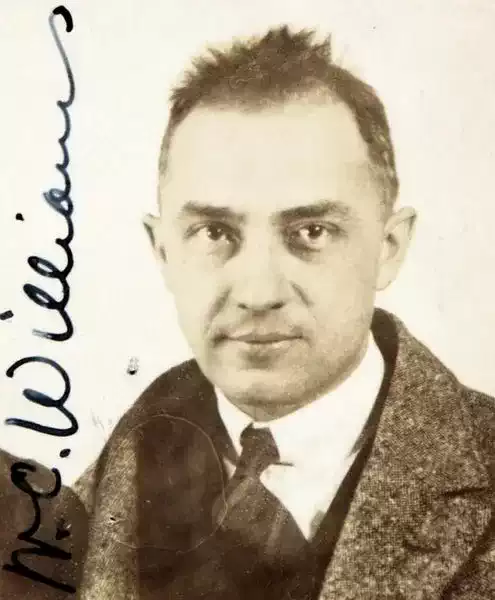
William Carlos Williams
A Sort of a Song
A Sort of a Song
Let the snake wait under
his weed
and the writing
be of words, slow and quick, sharp
to strike, quiet to wait,
sleepless.
-- through metaphor to reconcile
the people and the stones.
Compose. (No ideas
but in things) Invent!
Saxifrage is my flower that splits
the rocks.
Let the snake wait under
his weed
and the writing
be of words, slow and quick, sharp
to strike, quiet to wait,
sleepless.
-- through metaphor to reconcile
the people and the stones.
Compose. (No ideas
but in things) Invent!
Saxifrage is my flower that splits
the rocks.
503
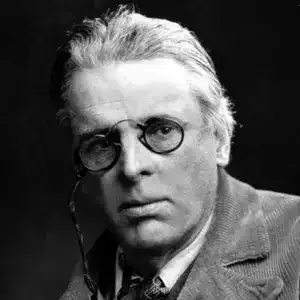
William Butler Yeats
Who Goes With Fergus?
Who Goes With Fergus?
WHO will go drive with Fergus now,
And pierce the deep wood's woven shade,
And dance upon the level shore?
Young man, lift up your russet brow,
And lift your tender eyelids, maid,
And brood on hopes and fear no more.
And no more turn aside and brood
Upon love's bitter mystery;
For Fergus rules the brazen cars,
And rules the shadows of the wood,
And the white breast of the dim sea
And all dishevelled wandering stars.
WHO will go drive with Fergus now,
And pierce the deep wood's woven shade,
And dance upon the level shore?
Young man, lift up your russet brow,
And lift your tender eyelids, maid,
And brood on hopes and fear no more.
And no more turn aside and brood
Upon love's bitter mystery;
For Fergus rules the brazen cars,
And rules the shadows of the wood,
And the white breast of the dim sea
And all dishevelled wandering stars.
297
William Butler Yeats
To The Rose Upon The Rood Of Time
To The Rose Upon The Rood Of Time
Red Rose, proud Rose, sad Rose of all my days!
Come near me, while I sing the ancient ways:
Cuchulain battling with the bitter tide;
The Druid, grey, wood-nurtured, quiet-eyed,
Who cast round Fergus dreams, and ruin untold;
And thine own sadness, where of stars, grown old
In dancing silver-sandalled on the sea,
Sing in their high and lonely melody.
Come near, that no more blinded hy man's fate,
I find under the boughs of love and hate,
In all poor foolish things that live a day,
Eternal beauty wandering on her way.
Come near, come near, come near -- Ah, leave me still
A little space for the rose-breath to fill!
Lest I no more bear common things that crave;
The weak worm hiding down in its small cave,
The field-mouse running by me in the grass,
And heavy mortal hopes that toil and pass;
But seek alone to hear the strange things said
By God to the bright hearts of those long dead,
And learn to chaunt a tongue men do not know.
Come near; I would, before my time to go,
Sing of old Eire and the ancient ways:
Red Rose, proud Rose, sad Rose of all my days.
Red Rose, proud Rose, sad Rose of all my days!
Come near me, while I sing the ancient ways:
Cuchulain battling with the bitter tide;
The Druid, grey, wood-nurtured, quiet-eyed,
Who cast round Fergus dreams, and ruin untold;
And thine own sadness, where of stars, grown old
In dancing silver-sandalled on the sea,
Sing in their high and lonely melody.
Come near, that no more blinded hy man's fate,
I find under the boughs of love and hate,
In all poor foolish things that live a day,
Eternal beauty wandering on her way.
Come near, come near, come near -- Ah, leave me still
A little space for the rose-breath to fill!
Lest I no more bear common things that crave;
The weak worm hiding down in its small cave,
The field-mouse running by me in the grass,
And heavy mortal hopes that toil and pass;
But seek alone to hear the strange things said
By God to the bright hearts of those long dead,
And learn to chaunt a tongue men do not know.
Come near; I would, before my time to go,
Sing of old Eire and the ancient ways:
Red Rose, proud Rose, sad Rose of all my days.
479
William Butler Yeats
The Wanderings of Oisin: Book I
The Wanderings of Oisin: Book I
S. Patrick. You who are bent, and bald, and blind,
With a heavy heart and a wandering mind,
Have known three centuries, poets sing,
Of dalliance with a demon thing.
Oisin. Sad to remember, sick with years,
The swift innumerable spears,
The horsemen with their floating hair,
And bowls of barley, honey, and wine,
Those merry couples dancing in tune,
And the white body that lay by mine;
But the tale, though words be lighter than air.
Must live to be old like the wandering moon.
Caoilte, and Conan, and Finn were there,
When we followed a deer with our baying hounds.
With Bran, Sceolan, and Lomair,
And passing the Firbolgs' burial-motmds,
Came to the cairn-heaped grassy hill
Where passionate Maeve is stony-still;
And found On the dove-grey edge of the sea
A pearl-pale, high-born lady, who rode
On a horse with bridle of findrinny;
And like a sunset were her lips,
A stormy sunset on doomed ships;
A citron colour gloomed in her hair,
But down to her feet white vesture flowed,
And with the glimmering crimson glowed
Of many a figured embroidery;
And it was bound with a pearl-pale shell
That wavered like the summer streams,
As her soft bosom rose and fell.
S. Patrick. You are still wrecked among heathen dreams.
Oisin. 'Why do you wind no horn?' she said
'And every hero droop his head?
The hornless deer is not more sad
That many a peaceful moment had,
More sleek than any granary mouse,
In his own leafy forest house
Among the waving fields of fern:
The hunting of heroes should be glad.'
'O pleasant woman,' answered Finn,
'We think on Oscar's pencilled urn,
And on the heroes lying slain
On Gabhra's raven-covered plain;
But where are your noble kith and kin,
And from what country do you ride?'
'My father and my mother are
Aengus and Edain, my own name
Niamh, and my country far
Beyond the tumbling of this tide.'
'What dream came with you that you came
Through bitter tide on foam-wet feet?
Did your companion wander away
From where the birds of Aengus wing?'
Thereon did she look haughty and sweet:
'I have not yet, war-weary king,
Been spoken of with any man;
Yet now I choose, for these four feet
Ran through the foam and ran to this
That I might have your son to kiss.'
'Were there no better than my son
That you through all that foam should run?'
'I loved no man, though kings besought,
Until the Danaan poets brought
Rhyme that rhymed upon Oisin's name,
And now I am dizzy with the thought
Of all that wisdom and the fame
Of battles broken by his hands,
Of stories builded by his words
That are like coloured Asian birds
At evening in their rainless lands.'
O Patrick, by your brazen bell,
There was no limb of mine but fell
Into a desperate gulph of love!
'You only will I wed,' I cried,
'And I will make a thousand songs,
And set your name all names above,
And captives bound with leathern thongs
Shall kneel and praise you, one by one,
At evening in my western dun.'
'O Oisin, mount by me and ride
To shores by the wash of the tremulous tide,
Where men have heaped no burial-mounds,
And the days pass by like a wayward tune,
Where broken faith has never been known
And the blushes of first love never have flown;
And there I will give you a hundred hounds;
No mightier creatures bay at the moon;
And a hundred robes of murmuring silk,
And a hundred calves and a hundred sheep
Whose long wool whiter than sea-froth flows,
And a hundred spears and a hundred bows,
And oil and wine and honey and milk,
And always never-anxious sleep;
While a hundred youths, mighty of limb,
But knowing nor tumult nor hate nor strife,
And a hundred ladies, merry as birds,
Who when they dance to a fitful measure
Have a speed like the speed of the salmon herds,
Shall follow your horn and obey your whim,
And you shall know the Danaan leisure;
And Niamh be with you for a wife.'
Then she sighed gently, 'It grows late.
Music and love and sleep await,
Where I would be when the white moon climbs,
The red sun falls and the world grows dim.'
And then I mounted and she bound me
With her triumphing arms around me,
And whispering to herself enwound me;
He shook himself and neighed three times:
Caoilte, Conan, and Finn came near,
And wept, and raised their lamenting hands,
And bid me stay, with many a tear;
But we rode out from the human lands.
In what far kingdom do you go'
Ah Fenians, with the shield and bow?
Or are you phantoms white as snow,
Whose lips had life's most prosperous glow?
O you, with whom in sloping vallcys,
Or down the dewy forest alleys,
I chased at morn the flying deer,
With whom I hurled the hurrying spear,
And heard the foemen's bucklers rattle,
And broke the heaving ranks of battle!
And Bran, Sceolan, and Lomair,
Where are you with your long rough hair?
You go not where the red deer feeds,
Nor tear the foemen from their steeds.
S. Patrick. Boast not, nor mourn with drooping head
Companions long accurst and dead,
And hounds for centuries dust and air.
Oisin. We galloped over the glossy sea:
I know not if days passed or hours,
And Niamh sang continually
Danaan songs, and their dewy showers
Of pensive laughter, unhuman sound,
Lulled weariness, and softly round
My human sorrow her white arms wound.
We galloped; now a hornless deer
Passed by us, chased by a phantom hound
All pearly white, save one red ear;
And now a lady rode like the wind
With an apple of gold in her tossing hand;
And a beautiful young man followed behind
With quenchless gaze and fluttering hair.
'Were these two born in the Danaan land,
Or have they breathed the mortal air?'
'Vex them no longer,' Niamh said,
And sighing bowed her gentle head,
And sighing laid the pearly tip
Of one long finger on my lip.
But now the moon like a white rose shone
In the pale west, and the sun'S rim sank,
And clouds atrayed their rank on rank
About his fading crimson ball:
The floor of Almhuin's hosting hall
Was not more level than the sea,
As, full of loving fantasy,
And with low murmurs, we rode on,
Where many a trumpet-twisted shell
That in immortal silence sleeps
Dreaming of her own melting hues,
Her golds, her ambers, and her blues,
Pierced with soft light the shallowing deeps.
But now a wandering land breeze came
And a far sound of feathery quires;
It seemed to blow from the dying flame,
They seemed to sing in the smouldering fires.
The horse towards the music raced,
Neighing along the lifeless waste;
Like sooty fingers, many a tree
Rose ever out of the warm sea;
And they were trembling ceaselessly,
As though they all were beating time,
Upon the centre of the sun,
To that low laughing woodland rhyme.
And, now our wandering hours were done,
We cantered to the shore, and knew
The reason of the trembling trees:
Round every branch the song-birds flew,
Or clung thereon like swarming bees;
While round the shore a million stood
Like drops of frozen rainbow light,
And pondered in a soft vain mood
Upon their shadows in the tide,
And told the purple deeps their pride,
And murmured snatches of delight;
And on the shores were many boats
With bending sterns and bending bows,
And carven figures on their prows
Of bitterns, and fish-eating stoats,
And swans with their exultant throats:
And where the wood and waters meet
We tied the horse in a leafy clump,
And Niamh blew three merry notes
Out of a little silver trump;
And then an answering whispering flew
Over the bare and woody land,
A whisper of impetuous feet,
And ever nearer, nearer grew;
And from the woods rushed out a band
Of men and ladies, hand in hand,
And singing, singing all together;
Their brows were white as fragrant milk,
Their cloaks made out of yellow silk,
And trimmed with many a crimson feather;
And when they saw the cloak I wore
Was dim with mire of a mortal shore,
They fingered it and gazed on me
And laughed like murmurs of the sea;
But Niamh with a swift distress
Bid them away and hold their peace;
And when they heard her voice they ran
And knelt there, every girl and man,
And kissed, as they would never cease,
Her pearl-pale hand and the hem of her dress.
She bade them bring us to the hall
Where Aengus dreams, from sun to sun,
A Druid dream of the end of days
When the stars are to wane and the world be done.
They led us by long and shadowy ways
Where drops of dew in myriads fall,
And tangled creepers every hour
Blossom in some new crimson flower,
And once a sudden laughter sprang
From all their lips, and once they sang
Together, while the dark woods rang,
And made in all their distant parts,
With boom of bees in honey-marts,
A rumour of delighted hearts.
And once a lady by my side
Gave me a harp, and bid me sing,
And touch the laughing silver string;
But when I sang of human joy
A sorrow wrapped each merry face,
And, patrick! by your beard, they wept,
Until one came, a tearful boy;
'A sadder creature never stept
Than this strange human bard,' he cried;
And caught the silver harp away,
And, weeping over the white strings, hurled
It down in a leaf-hid, hollow place
That kept dim waters from the sky;
And each one said, with a long, long sigh,
'O saddest harp in all the world,
Sleep there till the moon and the stars die!'
And now, still sad, we came to where
A beautiful young man dreamed within
A house of wattles, clay, and skin;
One hand upheld his beardless chin,
And one a sceptre flashing out
Wild flames of red and gold and blue,
Like to a merry wandering rout
Of dancers leaping in the air;
And men and ladies knelt them there
And showed their eyes with teardrops dim,
And with low murmurs prayed to him,
And kissed the sceptre with red lips,
And touched it with their finger-tips.
He held that flashing sceptre up.
'Joy drowns the twilight in the dew,
And fills with stars night's purple cup,
And wakes the sluggard seeds of corn,
And stirs the young kid's budding horn,
And makes the infant ferns unwrap,
And for the peewit paints his cap,
And rolls along the unwieldy sun,
And makes the little planets run:
And if joy were not on the earth,
There were an end of change and birth,
And Earth and Heaven and Hell would die,
And in some gloomy barrow lie
Folded like a frozen fly;
Then mock at Death and Time with glances
And wavering arms and wandering dances.
'Men's hearts of old were drops of flame
That from the saffron morning came,
Or drops of silver joy that fell
Out of the moon's pale twisted shell;
But now hearts cry that hearts are slaves,
And toss and turn in narrow caves;
But here there is nor law nor rule,
Nor have hands held a weary tool;
And here there is nor Change nor Death,
But only kind and merry breath,
For joy is God and God is joy.'
With one long glance for girl and boy
And the pale blossom of the moon,
He fell into a Druid swoon.
And in a wild and sudden dance
We mocked at Time and Fate and Chance
And swept out of the wattled hall
And came to where the dewdrops fall
Among the foamdrops of the sea,
And there we hushed the revelry;
And, gathering on our brows a frown,
Bent all our swaying bodies down,
And to the waves that glimmer by
That sloping green De Danaan sod
Sang, 'God is joy and joy is God,
And things that have grown sad are wicked,
And things that fear the dawn of the morrow
Or the grey wandering osprey Sorrow.'
We danced to where in the winding thicket
The damask roses, bloom on bloom,
Like crimson meteors hang in the gloom.
And bending over them softly said,
Bending over them in the dance,
With a swift and friendly glance
From dewy eyes: 'Upon the dead
Fall the leaves of other roses,
On the dead dim earth encloses:
But never, never on our graves,
Heaped beside the glimmering waves,
Shall fall the leaves of damask roses.
For neither Death nor Change comes near us,
And all listless hours fear us,
And we fear no dawning morrow,
Nor the grey wandering osprey Sorrow.'
The dance wound through the windless woods;
The ever-summered solitudes;
Until the tossing arms grew still
Upon the woody central hill;
And, gathered in a panting band,
We flung on high each waving hand,
And sang unto the starry broods.
In our raised eyes there flashed a glow
Of milky brightness to and fro
As thus our song arose: 'You stars,
Across your wandering ruby cars
Shake the loose reins: you slaves of God.
He rules you with an iron rod,
He holds you with an iron bond,
Each one woven to the other,
Each one woven to his brother
Like bubbles in a frozen pond;
But we in a lonely land abide
Unchainable as the dim tide,
With hearts that know nor law nor rule,
And hands that hold no wearisome tool,
Folded in love that fears no morrow,
Nor the grey wandering osprey Sorrow.'
O Patrick! for a hundred years
I chased upon that woody shore
The deer, the badger, and the boar.
O patrick! for a hundred years
At evening on the glimmering sands,
Beside the piled-up hunting spears,
These now outworn and withered hands
Wrestled among the island bands.
O patrick! for a hundred years
We went a-fishing in long boats
With bending sterns and bending bows,
And carven figures on their prows
Of bitterns and fish-eating stoats.
O patrick! for a hundred years
The gentle Niamh was my wife;
But now two things devour my life;
The things that most of all I hate:
Fasting and prayers.
S. Patrick. Tell on.
Oisin. Yes, yes,
For these were ancient Oisin's fate
Loosed long ago from Heaven's gate,
For his last days to lie in wait.
When one day by the tide I stood,
I found in that forgetfulness
Of dreamy foam a staff of wood
From some dead warrior's broken lance:
I tutned it in my hands; the stains
Of war were on it, and I wept,
Remembering how the Fenians stept
Along the blood-bedabbled plains,
Equal to good or grievous chance:
Thereon young Niamh softly came
And caught my hands, but spake no word
Save only many times my name,
In murmurs, like a frighted bird.
We passed by woods, and lawns of clover,
And found the horse and bridled him,
For we knew well the old was over.
I heard one say, 'His eyes grow dim
With all the ancient sorrow of men';
And wrapped in dreams rode out again
With hoofs of the pale findrinny
Over the glimmering purple sea.
Under the golden evening light,
The Immortals moved among thc fountains
By rivers and the woods' old night;
Some danced like shadows on the mountains
Some wandered ever hand in hand;
Or sat in dreams on the pale strand,
Each forehead like an obscure star
Bent down above each hooked knee,
And sang, and with a dreamy gaze
Watched where the sun in a saffron blaze
Was slumbering half in the sea-ways;
And, as they sang, the painted birds
Kept time with their bright wings and feet;
Like drops of honey came their words,
But fainter than a young lamb's bleat.
'An old man stirs the fire to a blaze,
In the house of a child, of a friend, of a brother.
He has over-lingered his welcome; the days,
Grown desolate, whisper and sigh to each other;
He hears the storm in the chimney above,
And bends to the fire and shakes with the cold,
While his heart still dreams of battle and love,
And the cry of the hounds on the hills of old.
But We are apart in the grassy places,
Where care cannot trouble the least of our days,
Or the softness of youth be gone from our faces,
Or love's first tenderness die in our gaze.
The hare grows old as she plays in the sun
And gazes around her with eyes of brightness;
Before the swift things that she dreamed of were done
She limps along in an aged whiteness;
A storm of birds in the Asian trees
Like tulips in the air a-winging,
And the gentle waves of the summer seas,
That raise their heads and wander singing,
Must murmur at last, "Unjust, unjust";
And "My speed is a weariness," falters the mouse,
And the kingfisher turns to a ball of dust,
And the roof falls in of his tunnelled house.
But the love-dew dims our eyes till the day
When God shall come from the Sea with a sigh
And bid the stars drop down from the sky,
And the moon like a pale rose wither away.'
S. Patrick. You who are bent, and bald, and blind,
With a heavy heart and a wandering mind,
Have known three centuries, poets sing,
Of dalliance with a demon thing.
Oisin. Sad to remember, sick with years,
The swift innumerable spears,
The horsemen with their floating hair,
And bowls of barley, honey, and wine,
Those merry couples dancing in tune,
And the white body that lay by mine;
But the tale, though words be lighter than air.
Must live to be old like the wandering moon.
Caoilte, and Conan, and Finn were there,
When we followed a deer with our baying hounds.
With Bran, Sceolan, and Lomair,
And passing the Firbolgs' burial-motmds,
Came to the cairn-heaped grassy hill
Where passionate Maeve is stony-still;
And found On the dove-grey edge of the sea
A pearl-pale, high-born lady, who rode
On a horse with bridle of findrinny;
And like a sunset were her lips,
A stormy sunset on doomed ships;
A citron colour gloomed in her hair,
But down to her feet white vesture flowed,
And with the glimmering crimson glowed
Of many a figured embroidery;
And it was bound with a pearl-pale shell
That wavered like the summer streams,
As her soft bosom rose and fell.
S. Patrick. You are still wrecked among heathen dreams.
Oisin. 'Why do you wind no horn?' she said
'And every hero droop his head?
The hornless deer is not more sad
That many a peaceful moment had,
More sleek than any granary mouse,
In his own leafy forest house
Among the waving fields of fern:
The hunting of heroes should be glad.'
'O pleasant woman,' answered Finn,
'We think on Oscar's pencilled urn,
And on the heroes lying slain
On Gabhra's raven-covered plain;
But where are your noble kith and kin,
And from what country do you ride?'
'My father and my mother are
Aengus and Edain, my own name
Niamh, and my country far
Beyond the tumbling of this tide.'
'What dream came with you that you came
Through bitter tide on foam-wet feet?
Did your companion wander away
From where the birds of Aengus wing?'
Thereon did she look haughty and sweet:
'I have not yet, war-weary king,
Been spoken of with any man;
Yet now I choose, for these four feet
Ran through the foam and ran to this
That I might have your son to kiss.'
'Were there no better than my son
That you through all that foam should run?'
'I loved no man, though kings besought,
Until the Danaan poets brought
Rhyme that rhymed upon Oisin's name,
And now I am dizzy with the thought
Of all that wisdom and the fame
Of battles broken by his hands,
Of stories builded by his words
That are like coloured Asian birds
At evening in their rainless lands.'
O Patrick, by your brazen bell,
There was no limb of mine but fell
Into a desperate gulph of love!
'You only will I wed,' I cried,
'And I will make a thousand songs,
And set your name all names above,
And captives bound with leathern thongs
Shall kneel and praise you, one by one,
At evening in my western dun.'
'O Oisin, mount by me and ride
To shores by the wash of the tremulous tide,
Where men have heaped no burial-mounds,
And the days pass by like a wayward tune,
Where broken faith has never been known
And the blushes of first love never have flown;
And there I will give you a hundred hounds;
No mightier creatures bay at the moon;
And a hundred robes of murmuring silk,
And a hundred calves and a hundred sheep
Whose long wool whiter than sea-froth flows,
And a hundred spears and a hundred bows,
And oil and wine and honey and milk,
And always never-anxious sleep;
While a hundred youths, mighty of limb,
But knowing nor tumult nor hate nor strife,
And a hundred ladies, merry as birds,
Who when they dance to a fitful measure
Have a speed like the speed of the salmon herds,
Shall follow your horn and obey your whim,
And you shall know the Danaan leisure;
And Niamh be with you for a wife.'
Then she sighed gently, 'It grows late.
Music and love and sleep await,
Where I would be when the white moon climbs,
The red sun falls and the world grows dim.'
And then I mounted and she bound me
With her triumphing arms around me,
And whispering to herself enwound me;
He shook himself and neighed three times:
Caoilte, Conan, and Finn came near,
And wept, and raised their lamenting hands,
And bid me stay, with many a tear;
But we rode out from the human lands.
In what far kingdom do you go'
Ah Fenians, with the shield and bow?
Or are you phantoms white as snow,
Whose lips had life's most prosperous glow?
O you, with whom in sloping vallcys,
Or down the dewy forest alleys,
I chased at morn the flying deer,
With whom I hurled the hurrying spear,
And heard the foemen's bucklers rattle,
And broke the heaving ranks of battle!
And Bran, Sceolan, and Lomair,
Where are you with your long rough hair?
You go not where the red deer feeds,
Nor tear the foemen from their steeds.
S. Patrick. Boast not, nor mourn with drooping head
Companions long accurst and dead,
And hounds for centuries dust and air.
Oisin. We galloped over the glossy sea:
I know not if days passed or hours,
And Niamh sang continually
Danaan songs, and their dewy showers
Of pensive laughter, unhuman sound,
Lulled weariness, and softly round
My human sorrow her white arms wound.
We galloped; now a hornless deer
Passed by us, chased by a phantom hound
All pearly white, save one red ear;
And now a lady rode like the wind
With an apple of gold in her tossing hand;
And a beautiful young man followed behind
With quenchless gaze and fluttering hair.
'Were these two born in the Danaan land,
Or have they breathed the mortal air?'
'Vex them no longer,' Niamh said,
And sighing bowed her gentle head,
And sighing laid the pearly tip
Of one long finger on my lip.
But now the moon like a white rose shone
In the pale west, and the sun'S rim sank,
And clouds atrayed their rank on rank
About his fading crimson ball:
The floor of Almhuin's hosting hall
Was not more level than the sea,
As, full of loving fantasy,
And with low murmurs, we rode on,
Where many a trumpet-twisted shell
That in immortal silence sleeps
Dreaming of her own melting hues,
Her golds, her ambers, and her blues,
Pierced with soft light the shallowing deeps.
But now a wandering land breeze came
And a far sound of feathery quires;
It seemed to blow from the dying flame,
They seemed to sing in the smouldering fires.
The horse towards the music raced,
Neighing along the lifeless waste;
Like sooty fingers, many a tree
Rose ever out of the warm sea;
And they were trembling ceaselessly,
As though they all were beating time,
Upon the centre of the sun,
To that low laughing woodland rhyme.
And, now our wandering hours were done,
We cantered to the shore, and knew
The reason of the trembling trees:
Round every branch the song-birds flew,
Or clung thereon like swarming bees;
While round the shore a million stood
Like drops of frozen rainbow light,
And pondered in a soft vain mood
Upon their shadows in the tide,
And told the purple deeps their pride,
And murmured snatches of delight;
And on the shores were many boats
With bending sterns and bending bows,
And carven figures on their prows
Of bitterns, and fish-eating stoats,
And swans with their exultant throats:
And where the wood and waters meet
We tied the horse in a leafy clump,
And Niamh blew three merry notes
Out of a little silver trump;
And then an answering whispering flew
Over the bare and woody land,
A whisper of impetuous feet,
And ever nearer, nearer grew;
And from the woods rushed out a band
Of men and ladies, hand in hand,
And singing, singing all together;
Their brows were white as fragrant milk,
Their cloaks made out of yellow silk,
And trimmed with many a crimson feather;
And when they saw the cloak I wore
Was dim with mire of a mortal shore,
They fingered it and gazed on me
And laughed like murmurs of the sea;
But Niamh with a swift distress
Bid them away and hold their peace;
And when they heard her voice they ran
And knelt there, every girl and man,
And kissed, as they would never cease,
Her pearl-pale hand and the hem of her dress.
She bade them bring us to the hall
Where Aengus dreams, from sun to sun,
A Druid dream of the end of days
When the stars are to wane and the world be done.
They led us by long and shadowy ways
Where drops of dew in myriads fall,
And tangled creepers every hour
Blossom in some new crimson flower,
And once a sudden laughter sprang
From all their lips, and once they sang
Together, while the dark woods rang,
And made in all their distant parts,
With boom of bees in honey-marts,
A rumour of delighted hearts.
And once a lady by my side
Gave me a harp, and bid me sing,
And touch the laughing silver string;
But when I sang of human joy
A sorrow wrapped each merry face,
And, patrick! by your beard, they wept,
Until one came, a tearful boy;
'A sadder creature never stept
Than this strange human bard,' he cried;
And caught the silver harp away,
And, weeping over the white strings, hurled
It down in a leaf-hid, hollow place
That kept dim waters from the sky;
And each one said, with a long, long sigh,
'O saddest harp in all the world,
Sleep there till the moon and the stars die!'
And now, still sad, we came to where
A beautiful young man dreamed within
A house of wattles, clay, and skin;
One hand upheld his beardless chin,
And one a sceptre flashing out
Wild flames of red and gold and blue,
Like to a merry wandering rout
Of dancers leaping in the air;
And men and ladies knelt them there
And showed their eyes with teardrops dim,
And with low murmurs prayed to him,
And kissed the sceptre with red lips,
And touched it with their finger-tips.
He held that flashing sceptre up.
'Joy drowns the twilight in the dew,
And fills with stars night's purple cup,
And wakes the sluggard seeds of corn,
And stirs the young kid's budding horn,
And makes the infant ferns unwrap,
And for the peewit paints his cap,
And rolls along the unwieldy sun,
And makes the little planets run:
And if joy were not on the earth,
There were an end of change and birth,
And Earth and Heaven and Hell would die,
And in some gloomy barrow lie
Folded like a frozen fly;
Then mock at Death and Time with glances
And wavering arms and wandering dances.
'Men's hearts of old were drops of flame
That from the saffron morning came,
Or drops of silver joy that fell
Out of the moon's pale twisted shell;
But now hearts cry that hearts are slaves,
And toss and turn in narrow caves;
But here there is nor law nor rule,
Nor have hands held a weary tool;
And here there is nor Change nor Death,
But only kind and merry breath,
For joy is God and God is joy.'
With one long glance for girl and boy
And the pale blossom of the moon,
He fell into a Druid swoon.
And in a wild and sudden dance
We mocked at Time and Fate and Chance
And swept out of the wattled hall
And came to where the dewdrops fall
Among the foamdrops of the sea,
And there we hushed the revelry;
And, gathering on our brows a frown,
Bent all our swaying bodies down,
And to the waves that glimmer by
That sloping green De Danaan sod
Sang, 'God is joy and joy is God,
And things that have grown sad are wicked,
And things that fear the dawn of the morrow
Or the grey wandering osprey Sorrow.'
We danced to where in the winding thicket
The damask roses, bloom on bloom,
Like crimson meteors hang in the gloom.
And bending over them softly said,
Bending over them in the dance,
With a swift and friendly glance
From dewy eyes: 'Upon the dead
Fall the leaves of other roses,
On the dead dim earth encloses:
But never, never on our graves,
Heaped beside the glimmering waves,
Shall fall the leaves of damask roses.
For neither Death nor Change comes near us,
And all listless hours fear us,
And we fear no dawning morrow,
Nor the grey wandering osprey Sorrow.'
The dance wound through the windless woods;
The ever-summered solitudes;
Until the tossing arms grew still
Upon the woody central hill;
And, gathered in a panting band,
We flung on high each waving hand,
And sang unto the starry broods.
In our raised eyes there flashed a glow
Of milky brightness to and fro
As thus our song arose: 'You stars,
Across your wandering ruby cars
Shake the loose reins: you slaves of God.
He rules you with an iron rod,
He holds you with an iron bond,
Each one woven to the other,
Each one woven to his brother
Like bubbles in a frozen pond;
But we in a lonely land abide
Unchainable as the dim tide,
With hearts that know nor law nor rule,
And hands that hold no wearisome tool,
Folded in love that fears no morrow,
Nor the grey wandering osprey Sorrow.'
O Patrick! for a hundred years
I chased upon that woody shore
The deer, the badger, and the boar.
O patrick! for a hundred years
At evening on the glimmering sands,
Beside the piled-up hunting spears,
These now outworn and withered hands
Wrestled among the island bands.
O patrick! for a hundred years
We went a-fishing in long boats
With bending sterns and bending bows,
And carven figures on their prows
Of bitterns and fish-eating stoats.
O patrick! for a hundred years
The gentle Niamh was my wife;
But now two things devour my life;
The things that most of all I hate:
Fasting and prayers.
S. Patrick. Tell on.
Oisin. Yes, yes,
For these were ancient Oisin's fate
Loosed long ago from Heaven's gate,
For his last days to lie in wait.
When one day by the tide I stood,
I found in that forgetfulness
Of dreamy foam a staff of wood
From some dead warrior's broken lance:
I tutned it in my hands; the stains
Of war were on it, and I wept,
Remembering how the Fenians stept
Along the blood-bedabbled plains,
Equal to good or grievous chance:
Thereon young Niamh softly came
And caught my hands, but spake no word
Save only many times my name,
In murmurs, like a frighted bird.
We passed by woods, and lawns of clover,
And found the horse and bridled him,
For we knew well the old was over.
I heard one say, 'His eyes grow dim
With all the ancient sorrow of men';
And wrapped in dreams rode out again
With hoofs of the pale findrinny
Over the glimmering purple sea.
Under the golden evening light,
The Immortals moved among thc fountains
By rivers and the woods' old night;
Some danced like shadows on the mountains
Some wandered ever hand in hand;
Or sat in dreams on the pale strand,
Each forehead like an obscure star
Bent down above each hooked knee,
And sang, and with a dreamy gaze
Watched where the sun in a saffron blaze
Was slumbering half in the sea-ways;
And, as they sang, the painted birds
Kept time with their bright wings and feet;
Like drops of honey came their words,
But fainter than a young lamb's bleat.
'An old man stirs the fire to a blaze,
In the house of a child, of a friend, of a brother.
He has over-lingered his welcome; the days,
Grown desolate, whisper and sigh to each other;
He hears the storm in the chimney above,
And bends to the fire and shakes with the cold,
While his heart still dreams of battle and love,
And the cry of the hounds on the hills of old.
But We are apart in the grassy places,
Where care cannot trouble the least of our days,
Or the softness of youth be gone from our faces,
Or love's first tenderness die in our gaze.
The hare grows old as she plays in the sun
And gazes around her with eyes of brightness;
Before the swift things that she dreamed of were done
She limps along in an aged whiteness;
A storm of birds in the Asian trees
Like tulips in the air a-winging,
And the gentle waves of the summer seas,
That raise their heads and wander singing,
Must murmur at last, "Unjust, unjust";
And "My speed is a weariness," falters the mouse,
And the kingfisher turns to a ball of dust,
And the roof falls in of his tunnelled house.
But the love-dew dims our eyes till the day
When God shall come from the Sea with a sigh
And bid the stars drop down from the sky,
And the moon like a pale rose wither away.'
468
William Butler Yeats
The Song Of The Happy Shepherd
The Song Of The Happy Shepherd
THE woods of Arcady are dead,
And over is their antique joy;
Of old the world on dreaming fed;
Grey Truth is now her painted toy;
Yet still she turns her restless head:
But O, sick children of the world,
Of all the many changing things
In dreary dancing past us whirled,
To the cracked tune that Chronos sings,
Words alone are certain good.
Where are now the warring kings,
Word be-mockers? -- By the Rood,
Where are now the watring kings?
An idle word is now their glory,
By the stammering schoolboy said,
Reading some entangled story:
The kings of the old time are dead;
The wandering earth herself may be
Only a sudden flaming word,
In clanging space a moment heard,
Troubling the endless reverie.
Then nowise worship dusty deeds,
Nor seek, for this is also sooth,
To hunger fiercely after truth,
Lest all thy toiling only breeds
New dreams, new dreams; there is no truth
Saving in thine own heart. Seek, then,
No learning from the starry men,
Who follow with the optic glass
The whirling ways of stars that pass --
Seek, then, for this is also sooth,
No word of theirs -- the cold star-bane
Has cloven and rent their hearts in twain,
And dead is all their human truth.
Go gather by the humming sea
Some twisted, echo-harbouring shell.
And to its lips thy story tell,
And they thy comforters will be.
Rewording in melodious guile
Thy fretful words a little while,
Till they shall singing fade in ruth
And die a pearly brotherhood;
For words alone are certain good:
Sing, then, for this is also sooth.
I must be gone: there is a grave
Where daffodil and lily wave,
And I would please the hapless faun,
Buried under the sleepy ground,
With mirthful songs before the dawn.
His shouting days with mirth were crowned;
And still I dream he treads the lawn,
Walking ghostly in the dew,
Pierced by my glad singing through,
My songs of old earth's dreamy youth:
But ah! she dreams not now; dream thou!
For fair are poppies on the brow:
Dream, dream, for this is also sooth.
THE woods of Arcady are dead,
And over is their antique joy;
Of old the world on dreaming fed;
Grey Truth is now her painted toy;
Yet still she turns her restless head:
But O, sick children of the world,
Of all the many changing things
In dreary dancing past us whirled,
To the cracked tune that Chronos sings,
Words alone are certain good.
Where are now the warring kings,
Word be-mockers? -- By the Rood,
Where are now the watring kings?
An idle word is now their glory,
By the stammering schoolboy said,
Reading some entangled story:
The kings of the old time are dead;
The wandering earth herself may be
Only a sudden flaming word,
In clanging space a moment heard,
Troubling the endless reverie.
Then nowise worship dusty deeds,
Nor seek, for this is also sooth,
To hunger fiercely after truth,
Lest all thy toiling only breeds
New dreams, new dreams; there is no truth
Saving in thine own heart. Seek, then,
No learning from the starry men,
Who follow with the optic glass
The whirling ways of stars that pass --
Seek, then, for this is also sooth,
No word of theirs -- the cold star-bane
Has cloven and rent their hearts in twain,
And dead is all their human truth.
Go gather by the humming sea
Some twisted, echo-harbouring shell.
And to its lips thy story tell,
And they thy comforters will be.
Rewording in melodious guile
Thy fretful words a little while,
Till they shall singing fade in ruth
And die a pearly brotherhood;
For words alone are certain good:
Sing, then, for this is also sooth.
I must be gone: there is a grave
Where daffodil and lily wave,
And I would please the hapless faun,
Buried under the sleepy ground,
With mirthful songs before the dawn.
His shouting days with mirth were crowned;
And still I dream he treads the lawn,
Walking ghostly in the dew,
Pierced by my glad singing through,
My songs of old earth's dreamy youth:
But ah! she dreams not now; dream thou!
For fair are poppies on the brow:
Dream, dream, for this is also sooth.
471
William Butler Yeats
The Shadowy Waters
The Shadowy Waters
I walked among the seven woods of Coole:
Shan-walla, where a willow-hordered pond
Gathers the wild duck from the winter dawn;
Shady Kyle-dortha; sunnier Kyle-na-no,
Where many hundred squirrels are as happy
As though they had been hidden hy green houghs
Where old age cannot find them; Paire-na-lee,
Where hazel and ash and privet hlind the paths:
Dim Pairc-na-carraig, where the wild bees fling
Their sudden fragrances on the green air;
Dim Pairc-na-tarav, where enchanted eyes
Have seen immortal, mild, proud shadows walk;
Dim Inchy wood, that hides badger and fox
And marten-cat, and borders that old wood
Wise Buddy Early called the wicked wood:
Seven odours, seven murmurs, seven woods.
I had not eyes like those enchanted eyes,
Yet dreamed that beings happier than men
Moved round me in the shadows, and at night
My dreams were clown hy voices and by fires;
And the images I have woven in this story
Of Forgael and Dectora and the empty waters
Moved round me in the voices and the fires,
And more I may not write of, for they that cleave
The waters of sleep can make a chattering tongue
Heavy like stone, their wisdom being half silence.
How shall I name you, immortal, mild, proud shadows?
I only know that all we know comes from you,
And that you come from Eden on flying feet.
Is Eden far away, or do you hide
From human thought, as hares and mice and coneys
That run before the reaping-hook and lie
In the last ridge of the barley? Do our woods
And winds and ponds cover more quiet woods,
More shining winds, more star-glimmering ponds?
Is Eden out of time and out of space?
And do you gather about us when pale light
Shining on water and fallen among leaves,
And winds blowing from flowers, and whirr of feathers
And the green quiet, have uplifted the heart?
I have made this poem for you, that men may read it
Before they read of Forgael and Dectora,
As men in the old times, before the harps began,
Poured out wine for the high invisible ones.
I walked among the seven woods of Coole:
Shan-walla, where a willow-hordered pond
Gathers the wild duck from the winter dawn;
Shady Kyle-dortha; sunnier Kyle-na-no,
Where many hundred squirrels are as happy
As though they had been hidden hy green houghs
Where old age cannot find them; Paire-na-lee,
Where hazel and ash and privet hlind the paths:
Dim Pairc-na-carraig, where the wild bees fling
Their sudden fragrances on the green air;
Dim Pairc-na-tarav, where enchanted eyes
Have seen immortal, mild, proud shadows walk;
Dim Inchy wood, that hides badger and fox
And marten-cat, and borders that old wood
Wise Buddy Early called the wicked wood:
Seven odours, seven murmurs, seven woods.
I had not eyes like those enchanted eyes,
Yet dreamed that beings happier than men
Moved round me in the shadows, and at night
My dreams were clown hy voices and by fires;
And the images I have woven in this story
Of Forgael and Dectora and the empty waters
Moved round me in the voices and the fires,
And more I may not write of, for they that cleave
The waters of sleep can make a chattering tongue
Heavy like stone, their wisdom being half silence.
How shall I name you, immortal, mild, proud shadows?
I only know that all we know comes from you,
And that you come from Eden on flying feet.
Is Eden far away, or do you hide
From human thought, as hares and mice and coneys
That run before the reaping-hook and lie
In the last ridge of the barley? Do our woods
And winds and ponds cover more quiet woods,
More shining winds, more star-glimmering ponds?
Is Eden out of time and out of space?
And do you gather about us when pale light
Shining on water and fallen among leaves,
And winds blowing from flowers, and whirr of feathers
And the green quiet, have uplifted the heart?
I have made this poem for you, that men may read it
Before they read of Forgael and Dectora,
As men in the old times, before the harps began,
Poured out wine for the high invisible ones.
446
William Butler Yeats
The Scholars
The Scholars
BALD heads forgetful of their sins,
Old, learned, respectable bald heads
Edit and annotate the lines
That young men, tossing on their beds,
Rhymed out in love's despair
To flatter beauty's ignorant ear.
All shuffle there; all cough in ink;
All wear the carpet with their shoes;
All think what other people think;
All know the man their neighbour knows.
Lord, what would they say
Did their Catullus walk that way?
BALD heads forgetful of their sins,
Old, learned, respectable bald heads
Edit and annotate the lines
That young men, tossing on their beds,
Rhymed out in love's despair
To flatter beauty's ignorant ear.
All shuffle there; all cough in ink;
All wear the carpet with their shoes;
All think what other people think;
All know the man their neighbour knows.
Lord, what would they say
Did their Catullus walk that way?
382
William Butler Yeats
Shepherd And Goatherd
Shepherd And Goatherd
Shepherd. That cry's from the first cuckoo of the year.
I wished before it ceased.
Goatherd. Nor bird nor beast
Could make me wish for anything this day,
Being old, but that the old alone might die,
And that would be against God's providence.
Let the young wish. But what has brought you here?
Never until this moment have we met
Where my goats browse on the scarce grass or leap
From stone to Stone.
Shepherd. I am looking for strayed sheep;
Something has troubled me and in my rrouble
I let them stray. I thought of rhyme alone,
For rhme can beat a measure out of trouble
And make the daylight sweet once more; but when
I had driven every rhyme into its Place
The sheep had gone from theirs.
Goatherd. I know right well
What turned so good a shepherd from his charge.
Shepherd. He that was best in every country sport
And every country craft, and of us all
Most courteous to slow age and hasty youth,
Is dead.
Goatherd. The boy that brings my griddle-cake
Brought the bare news.
Shepherd. He had thrown the crook away
And died in the great war beyond the sea.
Goatherd. He had often played his pipes among my hills,
And when he played it was their loneliness,
The exultation of their stone, that died
Under his fingers.
Shepherd. I had it from his mother,
And his own flock was browsing at the door.
Goatherd. How does she bear her grief? There is not a
shepherd
But grows more gentle when he speaks her name,
Remembering kindness done, and how can I,
That found when I had neither goat nor grazing
New welcome and old wisdom at her fire
Till winter blasts were gone, but speak of her
Even before his children and his wife?
Shepherd. She goes about her house erect and calm
Between the pantry and the linen-chest,
Or else at meadow or at grazing overlooks
Her labouring men, as though her darling lived,
But for her grandson now; there is no change
But such as I have Seen upon her face
Watching our shepherd sports at harvest-time
When her son's turn was over.
Goatherd. Sing your song.
I too have rhymed my reveries, but youth
Is hot to show whatever it has found,
And till that's done can neither work nor wait.
Old goatherds and old goats, if in all else
Youth can excel them in accomplishment,
Are learned in waiting.
Shepherd. You cannot but have seen
That he alone had gathered up no gear,
Set carpenters to work on no wide table,
On no long bench nor lofty milking-shed
As others will, when first they take possession,
But left the house as in his father's time
As though he knew himself, as it were, a cuckoo,
No settled man. And now that he is gone
There's nothing of him left but half a score
Of sorrowful, austere, sweet, lofty pipe tunes.
Goatherd. You have put the thought in rhyme.
Shepherd. I worked all day,
And when 'twas done so little had I done
That maybe "I am sorry' in plain prose
Had Sounded better to your mountain fancy.
[He sings.]
"Like the speckled bird that steers
Thousands of leagues oversea,
And runs or a while half-flies
On his yellow legs through our meadows.
He stayed for a while; and we
Had scarcely accustomed our ears
To his speech at the break of day,
Had scarcely accustomed our eyes
To his shape at the rinsing-pool
Among the evening shadows,
When he vanished from ears and eyes.
I might have wished on the day
He came, but man is a fool.'
Goatherd. You sing as always of the natural life,
And I that made like music in my youth
Hearing it now have sighed for that young man
And certain lost companions of my own.
Shepherd. They say that on your barren mountain ridge
You have measured out the road that the soul treads
When it has vanished from our natural eyes;
That you have talked with apparitions.
Goatherd. Indeed
My daily thoughts since the first stupor of youth
Have found the path my goats' feet cannot find.
Shepherd. Sing, for it may be that your thoughts have
plucked
Some medicable herb to make our grief
Less bitter.
Goatherd. They have brought me from that ridge
Seed-pods and flowers that are not all wild poppy.
[Sings.]
"He grows younger every second
That were all his birthdays reckoned
Much too solemn seemed;
Because of what he had dreamed,
Or the ambitions that he served,
Much too solemn and reserved.
Jaunting, journeying
To his own dayspring,
He unpacks the loaded pern
Of all 'twas pain or joy to learn,
Of all that he had made.
The outrageous war shall fade;
At some old winding whitethorn root
He'll practise on the shepherd's flute,
Or on the close-cropped grass
Court his shepherd lass,
Or put his heart into some game
Till daytime, playtime seem the same;
Knowledge he shall unwind
Through victories of the mind,
Till, clambering at the cradle-side,
He dreams himself hsi mother's pride,
All knowledge lost in trance
Of sweeter ignorance.'
Shepherd. When I have shut these ewes and this old ram
Into the fold, we'll to the woods and there
Cut out our rhymes on strips of new-torn bark
But put no name and leave them at her door.
To know the mountain and the valley have grieved
May be a quiet thought to wife and mother,
And children when they spring up shoulder-high.
Shepherd. That cry's from the first cuckoo of the year.
I wished before it ceased.
Goatherd. Nor bird nor beast
Could make me wish for anything this day,
Being old, but that the old alone might die,
And that would be against God's providence.
Let the young wish. But what has brought you here?
Never until this moment have we met
Where my goats browse on the scarce grass or leap
From stone to Stone.
Shepherd. I am looking for strayed sheep;
Something has troubled me and in my rrouble
I let them stray. I thought of rhyme alone,
For rhme can beat a measure out of trouble
And make the daylight sweet once more; but when
I had driven every rhyme into its Place
The sheep had gone from theirs.
Goatherd. I know right well
What turned so good a shepherd from his charge.
Shepherd. He that was best in every country sport
And every country craft, and of us all
Most courteous to slow age and hasty youth,
Is dead.
Goatherd. The boy that brings my griddle-cake
Brought the bare news.
Shepherd. He had thrown the crook away
And died in the great war beyond the sea.
Goatherd. He had often played his pipes among my hills,
And when he played it was their loneliness,
The exultation of their stone, that died
Under his fingers.
Shepherd. I had it from his mother,
And his own flock was browsing at the door.
Goatherd. How does she bear her grief? There is not a
shepherd
But grows more gentle when he speaks her name,
Remembering kindness done, and how can I,
That found when I had neither goat nor grazing
New welcome and old wisdom at her fire
Till winter blasts were gone, but speak of her
Even before his children and his wife?
Shepherd. She goes about her house erect and calm
Between the pantry and the linen-chest,
Or else at meadow or at grazing overlooks
Her labouring men, as though her darling lived,
But for her grandson now; there is no change
But such as I have Seen upon her face
Watching our shepherd sports at harvest-time
When her son's turn was over.
Goatherd. Sing your song.
I too have rhymed my reveries, but youth
Is hot to show whatever it has found,
And till that's done can neither work nor wait.
Old goatherds and old goats, if in all else
Youth can excel them in accomplishment,
Are learned in waiting.
Shepherd. You cannot but have seen
That he alone had gathered up no gear,
Set carpenters to work on no wide table,
On no long bench nor lofty milking-shed
As others will, when first they take possession,
But left the house as in his father's time
As though he knew himself, as it were, a cuckoo,
No settled man. And now that he is gone
There's nothing of him left but half a score
Of sorrowful, austere, sweet, lofty pipe tunes.
Goatherd. You have put the thought in rhyme.
Shepherd. I worked all day,
And when 'twas done so little had I done
That maybe "I am sorry' in plain prose
Had Sounded better to your mountain fancy.
[He sings.]
"Like the speckled bird that steers
Thousands of leagues oversea,
And runs or a while half-flies
On his yellow legs through our meadows.
He stayed for a while; and we
Had scarcely accustomed our ears
To his speech at the break of day,
Had scarcely accustomed our eyes
To his shape at the rinsing-pool
Among the evening shadows,
When he vanished from ears and eyes.
I might have wished on the day
He came, but man is a fool.'
Goatherd. You sing as always of the natural life,
And I that made like music in my youth
Hearing it now have sighed for that young man
And certain lost companions of my own.
Shepherd. They say that on your barren mountain ridge
You have measured out the road that the soul treads
When it has vanished from our natural eyes;
That you have talked with apparitions.
Goatherd. Indeed
My daily thoughts since the first stupor of youth
Have found the path my goats' feet cannot find.
Shepherd. Sing, for it may be that your thoughts have
plucked
Some medicable herb to make our grief
Less bitter.
Goatherd. They have brought me from that ridge
Seed-pods and flowers that are not all wild poppy.
[Sings.]
"He grows younger every second
That were all his birthdays reckoned
Much too solemn seemed;
Because of what he had dreamed,
Or the ambitions that he served,
Much too solemn and reserved.
Jaunting, journeying
To his own dayspring,
He unpacks the loaded pern
Of all 'twas pain or joy to learn,
Of all that he had made.
The outrageous war shall fade;
At some old winding whitethorn root
He'll practise on the shepherd's flute,
Or on the close-cropped grass
Court his shepherd lass,
Or put his heart into some game
Till daytime, playtime seem the same;
Knowledge he shall unwind
Through victories of the mind,
Till, clambering at the cradle-side,
He dreams himself hsi mother's pride,
All knowledge lost in trance
Of sweeter ignorance.'
Shepherd. When I have shut these ewes and this old ram
Into the fold, we'll to the woods and there
Cut out our rhymes on strips of new-torn bark
But put no name and leave them at her door.
To know the mountain and the valley have grieved
May be a quiet thought to wife and mother,
And children when they spring up shoulder-high.
360
William Butler Yeats
Responsibilities - Introduction
Responsibilities - Introduction
Pardon, old fathers, if you still remain
Somewhere in ear-shot for the story's end,
Old Dublin merchant "free of the ten and four"
Or trading out of Galway into Spain;
Old country scholar, Robert Emmet's friend,
A hundred-year-old memory to the poor;
Merchant and scholar who have left me blood
That has not passed through any huckster's loin,
Soldiers that gave, whatever die was cast:
A Butler or an Armstrong that withstood
Beside the brackish waters of the Boyne
James and his Irish when the Dutchman crossed;
Old merchant skipper that leaped overboard
After a ragged hat in Biscay Bay;
You most of all, silent and fierce old man,
Because the daily spectacle that stirred
My fancy, and set my boyish lips to say,
"Only the wasteful virtues earn the sun";
Pardon that for a barren passion's sake,
Although I have come close on forty-nine,
I have no child, I have nothing but a book,
Nothing but that to prove your blood and mine.
Pardon, old fathers, if you still remain
Somewhere in ear-shot for the story's end,
Old Dublin merchant "free of the ten and four"
Or trading out of Galway into Spain;
Old country scholar, Robert Emmet's friend,
A hundred-year-old memory to the poor;
Merchant and scholar who have left me blood
That has not passed through any huckster's loin,
Soldiers that gave, whatever die was cast:
A Butler or an Armstrong that withstood
Beside the brackish waters of the Boyne
James and his Irish when the Dutchman crossed;
Old merchant skipper that leaped overboard
After a ragged hat in Biscay Bay;
You most of all, silent and fierce old man,
Because the daily spectacle that stirred
My fancy, and set my boyish lips to say,
"Only the wasteful virtues earn the sun";
Pardon that for a barren passion's sake,
Although I have come close on forty-nine,
I have no child, I have nothing but a book,
Nothing but that to prove your blood and mine.
322
William Butler Yeats
Narrative And Dramatic The Wanderings Of Oisin
Narrative And Dramatic The Wanderings Of Oisin
BOOK I
S. Patrick. You who are bent, and bald, and blind,
With a heavy heart and a wandering mind,
Have known three centuries, poets sing,
Of dalliance with a demon thing.
Oisin. Sad to remember, sick with years,
The swift innumerable spears,
The horsemen with their floating hair,
And bowls of barley, honey, and wine,
Those merry couples dancing in tune,
And the white body that lay by mine;
But the tale, though words be lighter than air.
Must live to be old like the wandering moon.
Caoilte, and Conan, and Finn were there,
When we followed a deer with our baying hounds.
With Bran, Sceolan, and Lomair,
And passing the Firbolgs' burial-motmds,
Came to the cairn-heaped grassy hill
Where passionate Maeve is stony-still;
And found On the dove-grey edge of the sea
A pearl-pale, high-born lady, who rode
On a horse with bridle of findrinny;
And like a sunset were her lips,
A stormy sunset on doomed ships;
A citron colour gloomed in her hair,
But down to her feet white vesture flowed,
And with the glimmering crimson glowed
Of many a figured embroidery;
And it was bound with a pearl-pale shell
That wavered like the summer streams,
As her soft bosom rose and fell.
S. Patrick. You are still wrecked among heathen dreams.
Oisin. 'Why do you wind no horn?' she said
'And every hero droop his head?
The hornless deer is not more sad
That many a peaceful moment had,
More sleek than any granary mouse,
In his own leafy forest house
Among the waving fields of fern:
The hunting of heroes should be glad.'
'O pleasant woman,' answered Finn,
'We think on Oscar's pencilled urn,
And on the heroes lying slain
On Gabhra's raven-covered plain;
But where are your noble kith and kin,
And from what country do you ride?'
'My father and my mother are
Aengus and Edain, my own name
Niamh, and my country far
Beyond the tumbling of this tide.'
'What dream came with you that you came
Through bitter tide on foam-wet feet?
Did your companion wander away
From where the birds of Aengus wing?'
Thereon did she look haughty and sweet:
'I have not yet, war-weary king,
Been spoken of with any man;
Yet now I choose, for these four feet
Ran through the foam and ran to this
That I might have your son to kiss.'
'Were there no better than my son
That you through all that foam should run?'
'I loved no man, though kings besought,
Until the Danaan poets brought
Rhyme that rhymed upon Oisin's name,
And now I am dizzy with the thought
Of all that wisdom and the fame
Of battles broken by his hands,
Of stories builded by his words
That are like coloured Asian birds
At evening in their rainless lands.'
O Patrick, by your brazen bell,
There was no limb of mine but fell
Into a desperate gulph of love!
'You only will I wed,' I cried,
'And I will make a thousand songs,
And set your name all names above,
And captives bound with leathern thongs
Shall kneel and praise you, one by one,
At evening in my western dun.'
'O Oisin, mount by me and ride
To shores by the wash of the tremulous tide,
Where men have heaped no burial-mounds,
And the days pass by like a wayward tune,
Where broken faith has never been known
And the blushes of first love never have flown;
And there I will give you a hundred hounds;
No mightier creatures bay at the moon;
And a hundred robes of murmuring silk,
And a hundred calves and a hundred sheep
Whose long wool whiter than sea-froth flows,
And a hundred spears and a hundred bows,
And oil and wine and honey and milk,
And always never-anxious sleep;
While a hundred youths, mighty of limb,
But knowing nor tumult nor hate nor strife,
And a hundred ladies, merry as birds,
Who when they dance to a fitful measure
Have a speed like the speed of the salmon herds,
Shall follow your horn and obey your whim,
And you shall know the Danaan leisure;
And Niamh be with you for a wife.'
Then she sighed gently, 'It grows late.
Music and love and sleep await,
Where I would be when the white moon climbs,
The red sun falls and the world grows dim.'
And then I mounted and she bound me
With her triumphing arms around me,
And whispering to herself enwound me;
He shook himself and neighed three times:
Caoilte, Conan, and Finn came near,
And wept, and raised their lamenting hands,
And bid me stay, with many a tear;
But we rode out from the human lands.
In what far kingdom do you go'
Ah Fenians, with the shield and bow?
Or are you phantoms white as snow,
Whose lips had life's most prosperous glow?
O you, with whom in sloping vallcys,
Or down the dewy forest alleys,
I chased at morn the flying deer,
With whom I hurled the hurrying spear,
And heard the foemen's bucklers rattle,
And broke the heaving ranks of battle!
And Bran, Sceolan, and Lomair,
Where are you with your long rough hair?
You go not where the red deer feeds,
Nor tear the foemen from their steeds.
S. Patrick. Boast not, nor mourn with drooping head
Companions long accurst and dead,
And hounds for centuries dust and air.
Oisin. We galloped over the glossy sea:
I know not if days passed or hours,
And Niamh sang continually
Danaan songs, and their dewy showers
Of pensive laughter, unhuman sound,
Lulled weariness, and softly round
My human sorrow her white arms wound.
We galloped; now a hornless deer
Passed by us, chased by a phantom hound
All pearly white, save one red ear;
And now a lady rode like the wind
With an apple of gold in her tossing hand;
And a beautiful young man followed behind
With quenchless gaze and fluttering hair.
'Were these two born in the Danaan land,
Or have they breathed the mortal air?'
'Vex them no longer,' Niamh said,
And sighing bowed her gentle head,
And sighing laid the pearly tip
Of one long finger on my lip.
But now the moon like a white rose shone
In the pale west, and the sun'S rim sank,
And clouds atrayed their rank on rank
About his fading crimson ball:
The floor of Almhuin's hosting hall
Was not more level than the sea,
As, full of loving fantasy,
And with low murmurs, we rode on,
Where many a trumpet-twisted shell
That in immortal silence sleeps
Dreaming of her own melting hues,
Her golds, her ambers, and her blues,
Pierced with soft light the shallowing deeps.
But now a wandering land breeze came
And a far sound of feathery quires;
It seemed to blow from the dying flame,
They seemed to sing in the smouldering fires.
The horse towards the music raced,
Neighing along the lifeless waste;
Like sooty fingers, many a tree
Rose ever out of the warm sea;
And they were trembling ceaselessly,
As though they all were beating time,
Upon the centre of the sun,
To that low laughing woodland rhyme.
And, now our wandering hours were done,
We cantered to the shore, and knew
The reason of the trembling trees:
Round every branch the song-birds flew,
Or clung thereon like swarming bees;
While round the shore a million stood
Like drops of frozen rainbow light,
And pondered in a soft vain mood
Upon their shadows in the tide,
And told the purple deeps their pride,
And murmured snatches of delight;
And on the shores were many boats
With bending sterns and bending bows,
And carven figures on their prows
Of bitterns, and fish-eating stoats,
And swans with their exultant throats:
And where the wood and waters meet
We tied the horse in a leafy clump,
And Niamh blew three merry notes
Out of a little silver trump;
And then an answering whispering flew
Over the bare and woody land,
A whisper of impetuous feet,
And ever nearer, nearer grew;
And from the woods rushed out a band
Of men and ladies, hand in hand,
And singing, singing all together;
Their brows were white as fragrant milk,
Their cloaks made out of yellow silk,
And trimmed with many a crimson feather;
And when they saw the cloak I wore
Was dim with mire of a mortal shore,
They fingered it and gazed on me
And laughed like murmurs of the sea;
But Niamh with a swift distress
Bid them away and hold their peace;
And when they heard her voice they ran
And knelt there, every girl and man,
And kissed, as they would never cease,
Her pearl-pale hand and the hem of her dress.
She bade them bring us to the hall
Where Aengus dreams, from sun to sun,
A Druid dream of the end of days
When the stars are to wane and the world be done.
They led us by long and shadowy ways
Where drops of dew in myriads fall,
And tangled creepers every hour
Blossom in some new crimson flower,
And once a sudden laughter sprang
From all their lips, and once they sang
Together, while the dark woods rang,
And made in all their distant parts,
With boom of bees in honey-marts,
A rumour of delighted hearts.
And once a lady by my side
Gave me a harp, and bid me sing,
And touch the laughing silver string;
But when I sang of human joy
A sorrow wrapped each merry face,
And, patrick! by your beard, they wept,
Until one came, a tearful boy;
'A sadder creature never stept
Than this strange human bard,' he cried;
And caught the silver harp away,
And, weeping over the white strings, hurled
It down in a leaf-hid, hollow place
That kept dim waters from the sky;
And each one said, with a long, long sigh,
'O saddest harp in all the world,
Sleep there till the moon and the stars die!'
And now, still sad, we came to where
A beautiful young man dreamed within
A house of wattles, clay, and skin;
One hand upheld his beardless chin,
And one a sceptre flashing out
Wild flames of red and gold and blue,
Like to a merry wandering rout
Of dancers leaping in the air;
And men and ladies knelt them there
And showed their eyes with teardrops dim,
And with low murmurs prayed to him,
And kissed the sceptre with red lips,
And touched it with their finger-tips.
He held that flashing sceptre up.
'Joy drowns the twilight in the dew,
And fills with stars night's purple cup,
And wakes the sluggard seeds of corn,
And stirs the young kid's budding horn,
And makes the infant ferns unwrap,
And for the peewit paints his cap,
And rolls along the unwieldy sun,
And makes the little planets run:
And if joy were not on the earth,
There were an end of change and birth,
And Earth and Heaven and Hell would die,
And in some gloomy barrow lie
Folded like a frozen fly;
Then mock at Death and Time with glances
And wavering arms and wandering dances.
'Men's hearts of old were drops of flame
That from the saffron morning came,
Or drops of silver joy that fell
Out of the moon's pale twisted shell;
But now hearts cry that hearts are slaves,
And toss and turn in narrow caves;
But here there is nor law nor rule,
Nor have hands held a weary tool;
And here there is nor Change nor Death,
But only kind and merry breath,
For joy is God and God is joy.'
With one long glance for girl and boy
And the pale blossom of the moon,
He fell into a Druid swoon.
And in a wild and sudden dance
We mocked at Time and Fate and Chance
And swept out of the wattled hall
And came to where the dewdrops fall
Among the foamdrops of the sea,
And there we hushed the revelry;
And, gathering on our brows a frown,
Bent all our swaying bodies down,
And to the waves that glimmer by
That sloping green De Danaan sod
Sang, 'God is joy and joy is God,
And things that have grown sad are wicked,
And things that fear the dawn of the morrow
Or the grey wandering osprey Sorrow.'
We danced to where in the winding thicket
The damask roses, bloom on bloom,
Like crimson meteors hang in the gloom.
And bending over them softly said,
Bending over them in the dance,
With a swift and friendly glance
From dewy eyes: 'Upon the dead
Fall the leaves of other roses,
On the dead dim earth encloses:
But never, never on our graves,
Heaped beside the glimmering waves,
Shall fall the leaves of damask roses.
For neither Death nor Change comes near us,
And all listless hours fear us,
And we fear no dawning morrow,
Nor the grey wandering osprey Sorrow.'
The dance wound through the windless woods;
The ever-summered solitudes;
Until the tossing arms grew still
Upon the woody central hill;
And, gathered in a panting band,
We flung on high each waving hand,
And sang unto the starry broods.
In our raised eyes there flashed a glow
Of milky brightness to and fro
As thus our song arose: 'You stars,
Across your wandering ruby cars
Shake the loose reins: you slaves of God.
He rules you with an iron rod,
He holds you with an iron bond,
Each one woven to the other,
Each one woven to his brother
Like bubbles in a frozen pond;
But we in a lonely land abide
Unchainable as the dim tide,
With hearts that know nor law nor rule,
And hands that hold no wearisome tool,
Folded in love that fears no morrow,
Nor the grey wandering osprey Sorrow.'
O Patrick! for a hundred years
I chased upon that woody shore
The deer, the badger, and the boar.
O patrick! for a hundred years
At evening on the glimmering sands,
Beside the piled-up hunting spears,
These now outworn and withered hands
Wrestled among the island bands.
O patrick! for a hundred years
We went a-fishing in long boats
With bending sterns and bending bows,
And carven figures on their prows
Of bitterns and fish-eating stoats.
O patrick! for a hundred years
The gentle Niamh was my wife;
But now two things devour my life;
The things that most of all I hate:
Fasting and prayers.
S. Patrick. Tell On.
Oisin. Yes, yes,
For these were ancient Oisin's fate
Loosed long ago from Heaven's gate,
For his last days to lie in wait.
When one day by the tide I stood,
I found in that forgetfulness
Of dreamy foam a staff of wood
From some dead warrior's broken lance:
I tutned it in my hands; the stains
Of war were on it, and I wept,
Remembering how the Fenians stept
Along the blood-bedabbled plains,
Equal to good or grievous chance:
Thereon young Niamh softly came
And caught my hands, but spake no word
Save only many times my name,
In murmurs, like a frighted bird.
We passed by woods, and lawns of clover,
And found the horse and bridled him,
For we knew well the old was over.
I heard one say, 'His eyes grow dim
With all the ancient sorrow of men';
And wrapped in dreams rode out again
With hoofs of the pale findrinny
Over the glimmering purple sea.
Under the golden evening light,
The Immortals moved among thc fountains
By rivers and the woods' old night;
Some danced like shadows on the mountains
Some wandered ever hand in hand;
Or sat in dreams on the pale strand,
Each forehead like an obscure star
Bent down above each hooked knee,
And sang, and with a dreamy gaze
Watched where the sun in a saffron blaze
Was slumbering half in the sea-ways;
And, as they sang, the painted birds
Kept time with their bright wings and feet;
Like drops of honey came their words,
But fainter than a young lamb's bleat.
'An old man stirs the fire to a blaze,
In the house of a child, of a friend, of a brother.
He has over-lingered his welcome; the days,
Grown desolate, whisper and sigh to each other;
He hears the storm in the chimney above,
And bends to the fire and shakes with the cold,
While his heart still dreams of battle and love,
And the cry of the hounds on the hills of old.
But We are apart in the grassy places,
Where care cannot trouble the least of our days,
Or the softness of youth be gone from our faces,
Or love's first tenderness die in our gaze.
The hare grows old as she plays in the sun
And gazes around her with eyes of brightness;
Before the swift things that she dreamed of were done
She limps along in an aged whiteness;
A storm of birds in the Asian trees
Like tulips in the air a-winging,
And the gentle waves of the summer seas,
That raise their heads and wander singing,
Must murmur at last, ''Unjust, unjust';
And ''My speed is a weariness,' falters the mouse,
And the kingfisher turns to a ball of dust,
And the roof falls in of his tunnelled house.
But the love-dew dims our eyes till the day
When God shall come from the Sea with a sigh
And bid the stars drop down from the sky,
And the moon like a pale rose wither away.'
BOOK II
NOW, man of croziers, shadows called our names
And then away, away, like whirling flames;
And now fled by, mist-covered, without sound,
The youth and lady and the deer and hound;
'Gaze no more on the phantoms,' Niamh said,
And kissed my eyes, and, swaying her bright head
And her bright body, sang of faery and man
Before God was or my old line began;
Wars shadowy, vast, exultant; faeries of old
Who wedded men with rings of Druid gold;
And how those lovers never turn their eyes
Upon the life that fades and flickers and dies,
Yet love and kiss on dim shores far away
Rolled round with music of the sighing spray:
Yet sang no more as when, like a brown bee
That has drunk full, she crossed the misty sea
With me in her white arms a hundred years
Before this day; for now the fall of tears
Troubled her song.
I do not know if days
Or hours passed by, yet hold the morning rays
Shone many times among the glimmering flowers
Woven into her hair, before dark towers
Rose in the darkness, and the white surf gleamed
About them; and the horse of Faery screamed
And shivered, knowing the Isle of Many Fears,
Nor ceased until white Niamh stroked his ears
And named him by sweet names.
A foaming tide
Whitened afar with surge, fan-formed and wide,
Burst from a great door matred by many a blow
From mace and sword and pole-axe, long ago
When gods and giants warred. We rode between
The seaweed-covered pillars; and the green
And surging phosphorus alone gave light
On our dark pathway, till a countless flight
Of moonlit steps glimmered; and left and right
Dark statues glimmered over the pale tide
Upon dark thrones. Between the lids of one
The imaged meteors had flashed and run
And had disported in the stilly jet,
And the fixed stars had dawned and shone and set,
Since God made Time and Death and Sleep: the other
Stretched his long arm to where, a misty smother,
The stream churned, churned, and churned -- his lips apart,
As though he told his never-slumbering heart
Of every foamdrop on its misty way.
Tying the horse to his vast foot that lay
Half in the unvesselled sea, we climbed the stair
And climbed so long, I thought the last steps were
Hung from the morning star; when these mild words
Fanned the delighted air like wings of birds:
'My brothers spring out of their beds at morn,
A-murmur like young partridge: with loud horn
They chase the noontide deer;
And when the dew-drowned stars hang in the air
Look to long fishing-lines, or point and pare
An ashen hunting spear.
O sigh, O fluttering sigh, be kind to me;
Flutter along the froth lips of the sea,
And shores the froth lips wet:
And stay a little while, and bid them weep:
Ah, touch their blue-veined eyelids if they sleep,
And shake their coverlet.
When you have told how I weep endlessly,
Flutter along the froth lips of the sea
And home to me again,
And in the shadow of my hair lie hid,
And tell me that you found a man unbid,
The saddest of all men.'
A lady with soft eyes like funeral tapers,
And face that seemed wrought out of moonlit vapours,
And a sad mouth, that fear made tremulous
As any ruddy moth, looked down on us;
And she with a wave-rusted chain was tied
To two old eagles, full of ancient pride,
That with dim eyeballs stood on either side.
Few feathers were on their dishevelled wings,
For their dim minds were with the ancient things.
'I bring deliverance,' pearl-pale Niamh said.
'Neither the living, nor the unlabouring dead,
Nor the high gods who never lived, may fight
My enemy and hope; demons for fright
Jabber and scream about him in the night;
For he is strong and crafty as the seas
That sprang under the Seven Hazel Trees,
And I must needs endure and hate and weep,
Until the gods and demons drop asleep,
Hearing Acdh touch thc mournful strings of gold.'
'Is he So dreadful?'
'Be not over-bold,
But fly while still you may.'
And thereon I:
'This demon shall be battered till he die,
And his loose bulk be thrown in the loud tide.'
'Flee from him,' pearl-pale Niamh weeping cried,
'For all men flee the demons'; but moved not
My angry king-remembering soul one jot.
There was no mightier soul of Heber's line;
Now it is old and mouse-like. For a sign
I burst the chain: still earless, neNeless, blind,
Wrapped in the things of the unhuman mind,
In some dim memory or ancient mood,
Still earless, netveless, blind, the eagles stood.
And then we climbed the stair to a high door;
A hundred horsemen on the basalt floor
Beneath had paced content: we held our way
And stood within: clothed in a misty ray
I saw a foam-white seagull drift and float
Under the roof, and with a straining throat
Shouted, and hailed him: he hung there a star,
For no man's cry shall ever mount so far;
Not even your God could have thrown down that hall;
Stabling His unloosed lightnings in their stall,
He had sat down and sighed with cumbered heart,
As though His hour were come.
We sought the patt
That was most distant from the door; green slime
Made the way slippery, and time on time
Showed prints of sea-born scales. while down through it
The captive's journeys to and fro were writ
Like a small river, and where feet touched came
A momentary gleam of phosphorus flame.
Under the deepest shadows of the hall
That woman found a ring hung on the wall,
And in the ring a torch, and with its flare
Making a world about her in the air,
Passed under the dim doorway, out of sight,
And came again, holding a second light
Burning between her fingers, and in mine
Laid it and sighed: I held a sword whose shine
No centuries could dim, and a word ran
Thereon in Ogham letters, 'Manannan';
That sea-god's name, who in a deep content
Sprang dripping, and, with captive demons sent
Out of the sevenfold seas, built the dark hall
Rooted in foam and clouds, and cried to all
The mightier masters of a mightier race;
And at his cry there came no milk-pale face
Under a crown of thorns and dark with blood,
But only exultant faces.
Niamh stood
With bowed head, trembling when the white blade shone,
But she whose hours of tenderness were gone
Had neither hope nor fear. I bade them hide
Under the shadowS till the tumults died
Of the loud-crashing and earth-shaking fight,
Lest they should look upon some dreadful sight;
And thrust the torch between the slimy flags.
A dome made out of endless carven jags,
Where shadowy face flowed into shadowy face,
Looked down on me; and in the self-same place
I waited hour by hour, and the high dome,
Windowless, pillarless, multitudinous home
Of faces, waited; and the leisured gaze
Was loaded with the memory of days
Buried and mighty. When through the great door
The dawn came in, and glimmered on the floor
With a pale light, I journeyed round the hall
And found a door deep sunken in the wall,
The least of doors; beyond on a dim plain
A little mnnel made a bubbling strain,
And on the runnel's stony and bare edge
A dusky demon dry as a withered sedge
Swayed, crooning to himself an unknown tongue:
In a sad revelry he sang and swung
Bacchant and mournful, passing to and fro
His hand along the runnel's side, as though
The flowers still grew there: far on the sea's waste
Shaking and waving, vapour vapour chased,
While high frail cloudlets, fed with a green light,
Like drifts of leaves, immovable and bright,
Hung in the passionate dawn. He slowly turned:
A demon's leisure: eyes, first white, now burned
Like wings of kingfishers; and he arose
Barking. We trampled up and down with blows
Of sword and brazen battle-axe, while day
Gave to high noon and noon to night gave way;
And when he knew the sword of Manannan
Amid the shades of night, he changed and ran
Through many shapes; I lunged at the smooth throat
Of a great eel; it changed, and I but smote
A fir-tree roaring in its leafless top;
And thereupon I drew the livid chop
Of a drowned dripping body to my breast;
Horror from horror grew; but when the west
Had surged up in a plumy fire, I drave
Through heart and spine; and cast him in the wave
Lest Niamh shudder.
Full of hope and dread
Those two came carrying wine and meat and bread,
And healed my wounds with unguents out of flowers
That feed white moths by some De Danaan shrine;
Then in that hall, lit by the dim sea-shine,
We lay on skins of otters, and drank wine,
Brewed by the sea-gods, from huge cups that lay
Upon the lips of sea-gods in their day;
And then on heaped-up skins of otters slept.
And when the sun once more in saffron stept,
Rolling his flagrant wheel out of the deep,
We sang the loves and angers without sleep,
And all the exultant labours of the strong.
But now the lying clerics murder song
With barren words and flatteries of the weak.
In what land do the powerless turn the beak
Of ravening Sorrow, or the hand of Wrath?
For all your croziers, they have left the path
And wander in the storms and clinging snows,
Hopeless for ever: ancient Oisin knows,
For he is weak and poor and blind, and lies
On the anvil of the world.
S. Patrick. Be still: the skies
Are choked with thunder, lightning, and fierce wind,
For God has heard, and speaks His angry mind;
Go cast your body on the stones and pray,
For He has wrought midnight and dawn and day.
Oisin. Saint, do you weep? I hear amid the thunder
The Fenian horses; atmour torn asunder;
Laughter and cries. The armies clash and shock,
And now the daylight-darkening ravens flock.
Cease, cease, O mournful, laughing Fenian horn!
We feasted for three days. On the fourth morn
I found, dropping sea-foam on the wide stair,
And hung with slime, and whispering in his hair,
That demon dull and unsubduable;
And once more to a day-long battle fell,
And at the sundown threw him in the surge,
To lie until the fourth morn saw emerge
His new-healed shape; and for a hundred years
So watred, so feasted, with nor dreams nor fears,
Nor languor nor fatigue: an endless feast,
An endless war.
The hundred years had ceased;
I stood upon the stair: the surges bore
A beech-bough to me, and my heart grew sore,
Remembering how I had stood by white-haired Finn
Under a beech at Almhuin and heard the thin
Outcry of bats.
And then young Niamh came
Holding that horse, and sadly called my name;
I mounted, and we passed over the lone
And drifting greyness, while this monotone,
Surly and distant, mixed inseparably
Into the clangour of the wind and sea.
'I hear my soul drop
And Mananna's dark tower, stone after stone.
Gather sea-slime and fall the seaward way,
And the moon goad the waters night and day,
That all be overthrown.
'But till the moon has taken all, I wage
War on the mightiest men under the skies,
And they have fallen or fled, age after age.
Light is man's love, and lighter is man's rage;
His purpose drifts and dies.'
And then lost Niamh murmured, 'Love, we go
To the Island of Forgetfulness, for lo!
The Islands of Dancing and of Victories
Are empty of all power.'
'And which of these
Is the Island of Content?'
'None know,' she said;
And on my bosom laid her weeping head.
BOOK III
FLED foam underneath us, and round us, a wandering and milky smoke,
High as the Saddle-girth, covering away from our glances the tide;
And those that fled, and that followed, from the foam-pale distance broke;
The immortal desire of Immortals we saw in their faces, and sighed.
I mused on the chase with the Fenians, and Bran, Sceolan, Lomair,
And never a song sang Niamh, and over my finger-tips
Came now the sliding of tears and sweeping of mist-cold hair,
And now the warmth of sighs, and after the quiver of lips.
Were we days long or hours long in riding, when, rolled in a grisly peace,
An isle lay level before us, with dripping hazel and oak?
And we stood on a sea's edge we saw not; for whiter than new-washed fleece
Fled foam underneath us, and round us, a wandering and milky smoke.
And we rode on the plains of the sea's edge; the sea's edge barren and grey,
Grey sand on the green of the grasses and over the dripping trees,
Dripping and doubling landward, as though they would hasten away,
Like an army of old men longing for rest from the moan of the seas.
But the trees grew taller and closer, immense in their wrinkling bark;
Dropping; a murmurous dropping; old silence and that one sound;
For no live creatures lived there, no weasels moved in the dark:
Long sighs arose in our spirits, beneath us bubbled the ground.
And the ears of the horse went sinking away in the hollow night,
For, as drift from a sailor slow drowning the gleams of the world and the sun,
Ceased on our hands and our faces, on hazel and oak leaf, the light,
And the stars were blotted above us, and the whole of the world was one.
Till the horse gave a whinny; for, cumbrous with stems of the hazel and oak,
A valley flowed down from his hoofs, and there in the long grass lay,
Under the starlight and shadow, a monstrous slumbering folk,
Their naked and gleaming bodies poured out and heaped in the way.
And by them were arrow and war-axe, arrow and shield and blade;
And dew-blanched horns, in whose hollow a child of three years old
Could sleep on a couch of rushes, and all inwrought and inlaid,
And more comely than man can make them with bronze and silver and gold.
And each of the huge white creatures was huger than fourscore men;
The tops of their ears were feathered, their hands were the claws of birds,
And, shaking the plumes of the grasses and the leaves of the mural glen,
The breathing came from those bodies, long warless, grown whiter than curds.
The wood was so Spacious above them, that He who has stars for His flocks
Could fondle the leaves with His fingers, nor go from His dew-cumbered skies;
So long were they sleeping, the owls had builded their nests in their locks,
Filling the fibrous dimness with long generations of eyes.
And over the limbs and the valley the slow owls wandered and came,
Now in a place of star-fire, and now in a shadow-place wide;
And the chief of the huge white creatures, his knees in the soft star-flame,
Lay loose in a place of shadow: we drew the reins by his side.
Golden the nails of his bird-clawS, flung loosely along the dim ground;
In one was a branch soft-shining with bells more many than sighs
In midst of an old man's bosom; owls ruffling and pacing around
Sidled their bodies against him, filling the shade with their eyes.
And my gaze was thronged with the sleepers; no, not since the world began,
In realms where the handsome were many, nor in glamours by demons flung,
Have faces alive with such beauty been known to the salt eye of man,
Yet weary with passions that faded when the sevenfold seas were young.
And I gazed on the bell-branch, sleep's forebear, far sung by the Sennachies.
I saw how those slumbererS, grown weary, there camping in grasses deep,
Of wars with the wide world and pacing the shores of the wandering seas,
Laid hands on the bell-branch and swayed it, and fed of unhuman sleep.
Snatching the horn of Niamh, I blew a long lingering note.
Came sound from those monstrous sleepers, a sound like the stirring of flies.
He, shaking the fold of his lips, and heaving the pillar of his throat,
Watched me with mournful wonder out of the wells of his eyes.
I cried, 'Come out of the shadow, king of the nails of gold!
And tell of your goodly household and the goodly works of your hands,
That we may muse in the starlight and talk of the battles of old;
Your questioner, Oisin, is worthy, he comes from the Fenian lands.'
Half open his eyes were, and held me, dull with the smoke of their dreams;
His lips moved slowly in answer, no answer out of them came;
Then he swayed in his fingers the bell-branch, slowdropping a sound in faint streams
Softer than snow-flakes in April and piercing the marrow like flame.
Wrapt in the wave of that music, with weariness more than of earth,
The moil of my centuries filled me; and gone like a sea-covered stone
Were the memories of the whole of my sorrow and the memories of the whole of my
mirth,
And a softness came from the starlight and filled me full to the bone.
In the roots of the grasses, the sorrels, I laid my body as low;
And the pearl-pale Niamh lay by me, her brow on the midst of my breast;
And the horse was gone in the distance, and years after years 'gan flow;
Square leaves of the ivy moved over us, binding us down to our rest.
And, man of the many white croziers, a century there I forgot
How the fetlocks drip blocd in the battle, when the fallen on fallen lie rolled;
How the falconer follows the falcon in the weeds of the heron's plot,
And the name of the demon whose hammer made
Conchubar's sword-blade of old.
And, man of the many white croziers, a century there I forgot
That the spear-shaft is made out of ashwood, the shield out of osier and hide;
How the hammers spring on the anvil, on the spearhead's burning spot;
How the slow, blue-eyed oxen of Finn low sadly at evening tide.
But in dreams, mild man of the croziers, driving the dust with their throngs,
Moved round me, of seamen or landsmen, all who are winter tales;
Came by me the kings of the Red Branch, with roaring of laughter and songs,
Or moved as they moved once, love-making or piercing the tempest with sails.
Came Blanid, Mac Nessa, tall Fergus who feastward of old time slunk,
Cook Barach, the traitor; and warward, the spittle on his beard never dry,
Dark Balor, as old as a forest, car-borne, his mighty head sunk
Helpless, men lifting the lids of his weary and deathmaking eye.
And by me, in soft red raiment, the Fenians moved in loud streams,
And Grania, walking and smiling, sewed with her needle of bone.
So lived I and lived not, so wrought I and wrought not, with creatures of dreams,
In a long iron sleep, as a fish in the water goes dumb as a stone.
At times our slumber was lightened. When the sun was on silver or gold;
When brushed with the wings of the owls, in the dimness they love going by;
When a glow-worm was green on a grass-leaf, lured from his lair in the mould;
Half wakening, we lifted our eyelids, and gazed on the grass with a sigh.
So watched I when, man of the croziers, at the heel of a century fell,
Weak, in the midst of the meadow, from his miles in the midst of the air,
A starling like them that forgathered 'neath a moon waking white as a shell
When the Fenians made foray at morning with Bran, Sceolan, Lomair.
I awoke: the strange horse without summons out of the distance ran,
Thrusting his nose to my shoulder; he knew in his bosom deep
That once more moved in my bosom the ancient sadness of man,
And that I would leave the Immortals, their dimness, their dews dropping sleep.
O, had you seen beautiful Niamh grow white as the waters are white,
Lord of the croziers, you even had lifted your hands and wept:
But, the bird in my fingers, I mounted, remembering alone that delight
Of twilight and slumber were gone, and that hoofs impatiently stept.
I died, 'O Niamh! O white one! if only a twelve-houred day,
I must gaze on the beard of Finn, and move where the old men and young
In the Fenians' dwellings of wattle lean on the chessboards and play,
Ah, sweet to me now were even bald Conan's slanderous tongue!
'Like me were some galley forsaken far off in Meridian isle,
Remembering its long-oared companions, sails turning to threadbare rags;
No more to crawl on the seas with long oars mile after mile,
But to be amid shooting of flies and flowering of rushes and flags.'
Their motionless eyeballs of spirits grown mild with mysterious thought,
Watched her those seamless faces from the valley's glimmering girth;
As she murmured, 'O wandering Oisin, the strength of the bell-branch is naught,
For there moves alive in your fingers the fluttering sadness of earth.
'Then go through the lands in the saddle and see what the mortals do,
And softly come to your Niamh over the tops of the tide;
But weep for your Niamh, O Oisin, weep; for if only your shoe
Brush lightly as haymouse earth's pebbles, you will come no more to my side.
'O flaming lion of the world, O when will you turn to your rest?'
I saw from a distant saddle; from the earth she made her moan:
'I would die like a small withered leaf in the autumn, for breast unto breast
We shall mingle no more, nor our gazes empty their sweetness lone
'In the isles of the farthest seas where only the spirits come.
Were the winds less soft than the breath of a pigeon who sleeps on her nest,
Nor lost in the star-fires and odours the sound of the sea's vague drum?
O flaming lion of the world, O when will you turn to your rest?'
The wailing grew distant; I rode by the woods of the wrinkling bark,
Where ever is murmurous dropping, old silence and that one sound;
For no live creatures live there, no weasels move in the dark:
In a reverie forgetful of all things, over the bubbling' ground.
And I rode by the plains of the sea's edge, where all is barren and grey,
Grey sand on the green of the grasses and over the dripping trees,
Dripping and doubling landward, as though they would hasten away',
Like an army of old men longing for rest from the moan of the seas.
And the winds made the sands on the sea's edge turning and turning go,
As my mind made the names of the Fenians. Far from the hazel and oak,
I rode away on the surges, where, high aS the saddlebow,
Fled foam underneath me, and round me, a wandering and milky smoke.
Long fled the foam-flakes around me, the winds fled out of the vast,
Snatching the bird in secret; nor knew I, embosomed apart,
When they froze the cloth on my body like armour riveted fast,
For Remembrance, lifting her leanness, keened in the gates of my heart.
Till, fattening the winds of the morning, an odour of new-mown hay
Came, and my forehead fell low, and my tears like berries fell down;
Later a sound came, half lost in the sound of a shore far away,
From the great grass-barnacle calling, and later the shore-weeds brown.
If I were as I once was, the strong hoofs crushing the sand and the shells,
Coming out of the sea as the dawn comes, a chaunt of love on my lips,
Not coughing, my head on my knees, and praying, and wroth with the bells,
I would leave no saint's head on his body from Rachlin to Bera of ships.
Making way from the kindling surges, I rode on a bridle-path
Much wondering to see upon all hands, of wattles and woodwork made,
Your bell-mounted churches, and guardless the sacred cairn and the mth,
And a small and a feeble populace stooping with mattock and spade,
Or weeding or ploughing with faces a-shining with much-toil wet;
While in this place and that place, with bodies un, glorious, their chieftains stood,
Awaiting in patience the straw-death, croziered one, caught in your net:
Went the laughter of scorn from my mouth like the roaring of wind in a wood.
And before I went by them so huge and so speedy with eyes so bright,
Came after the hard gaze of youth, or an old man lifted his head:
And I rode and I rode, and I cried out, 'The Fenians hunt wolves in the night,
So sleep thee by daytime.' A voice cried, 'The Fenians a long time are dead.'
A whitebeard stood hushed on the pathway, the flesh of his face as dried grass,
And in folds round his eyes and his mouth, he sad as a child without milk-
And the dreams of the islands were gone, and I knew how men sorrow and pass,
And their hound, and their horse, and their love, and their eyes that glimmer like silk.
And wrapping my face in my hair, I murmured, 'In old age they ceased';
And my tears were larger than berries, and I murmured, 'Where white clouds lie spread
On Crevroe or broad Knockfefin, with many of old they feast
On the floors of the gods.' He cried, 'No, the gods a long time are dead.'
And lonely and longing for Niamh, I shivered and turned me about,
The heart in me longing to leap like a grasshopper into her heart;
I turned and rode to the westward, and followed the sea's old shout
Till I saw where Maeve lies sleeping till starlight and midnight part.
And there at the foot of the mountain, two carried a sack full of sand,
They bore it with staggering and sweating, but fell with their burden at length.
Leaning down from the gem-studded saddle, I flung it five yards with my hand,
With a sob for men waxing so weakly, a sob for the Fenians' old strength.
The rest you have heard of, O croziered man; how, when divided the girth,
I fell on the path, and the horse went away like a summer fly;
And my years three hundred fell on me, and I rose, and walked on the earth,
A creeping old man, full of sleep, with the spittle on his beard never dry'.
How the men of the sand-sack showed me a church with its belfry in air;
Sorry place, where for swing of the war-axe in my dim eyes the crozier gleams;
What place have Caoilte and Conan, and Bran, Sceolan, Lomair?
Speak, you too are old with your memories, an old man surrounded with dreams.
S. Patrick. Where the flesh of the footsole clingeth on the burning stones is their
place;
Where he demons whip them with wires on the burning stones of wide Hell,
Watching the blessed ones move far off, and the smile on God's face,
Between them a gateway of brass, and the howl of the angels who fell.
Oisin. Put the staff in my hands; for I go to the Fenians,
O cleric, to chaunt
The war-songs that roused them of old; they will rise, making clouds with their Breath,
Innumerable, singing, exultant; the clay underneath them shall pant,
And demons be broken in pieces, and trampled beneath them in death.
And demons afraid in their darkness; deep horror of eyes and of wings,
Afraid, their ears on the earth laid, shall listen and rise up and weep;
Hearing the shaking of shields and the quiver of stretched bowstrings,
Hearing Hell loud with a murmur, as shouting and mocking we sweep.
We will tear out the flaming stones, and batter the gateway of brass
And enter, and none sayeth 'No' when there enters the strongly armed guest;
Make clean as a broom cleans, and march on as oxen move over young grass;
Then feast, making converse of wars, and of old wounds, and turn to our rest.
S. Patrick. On the flaming stones, without refuge, the limbs of the Fenians are tost;
None war on the masters of Hell, who could break up the world in their rage;
But kneel and wear out the flags and pray for your soul that is lost
Through the demon love of its youth and its godless and passionate age.
Oisin. Ah me! to be Shaken with coughing and broken with old age and pain,
Without laughter, a show unto children, alone with remembrance and fear;
All emptied of purple hours as a beggar's cloak in the rain,
As a hay-cock out on the flood, or a wolf sucked under a weir.
It were sad to gaze on the blessed and no man I loved of old there;
I throw down the chain of small stones! when life in my body has ceased,
I will go to Caoilte, and Conan, and Bran, Sceolan, Lomair,
And dwell in the house of the Fenians, be they in flames or at feast.
BOOK I
S. Patrick. You who are bent, and bald, and blind,
With a heavy heart and a wandering mind,
Have known three centuries, poets sing,
Of dalliance with a demon thing.
Oisin. Sad to remember, sick with years,
The swift innumerable spears,
The horsemen with their floating hair,
And bowls of barley, honey, and wine,
Those merry couples dancing in tune,
And the white body that lay by mine;
But the tale, though words be lighter than air.
Must live to be old like the wandering moon.
Caoilte, and Conan, and Finn were there,
When we followed a deer with our baying hounds.
With Bran, Sceolan, and Lomair,
And passing the Firbolgs' burial-motmds,
Came to the cairn-heaped grassy hill
Where passionate Maeve is stony-still;
And found On the dove-grey edge of the sea
A pearl-pale, high-born lady, who rode
On a horse with bridle of findrinny;
And like a sunset were her lips,
A stormy sunset on doomed ships;
A citron colour gloomed in her hair,
But down to her feet white vesture flowed,
And with the glimmering crimson glowed
Of many a figured embroidery;
And it was bound with a pearl-pale shell
That wavered like the summer streams,
As her soft bosom rose and fell.
S. Patrick. You are still wrecked among heathen dreams.
Oisin. 'Why do you wind no horn?' she said
'And every hero droop his head?
The hornless deer is not more sad
That many a peaceful moment had,
More sleek than any granary mouse,
In his own leafy forest house
Among the waving fields of fern:
The hunting of heroes should be glad.'
'O pleasant woman,' answered Finn,
'We think on Oscar's pencilled urn,
And on the heroes lying slain
On Gabhra's raven-covered plain;
But where are your noble kith and kin,
And from what country do you ride?'
'My father and my mother are
Aengus and Edain, my own name
Niamh, and my country far
Beyond the tumbling of this tide.'
'What dream came with you that you came
Through bitter tide on foam-wet feet?
Did your companion wander away
From where the birds of Aengus wing?'
Thereon did she look haughty and sweet:
'I have not yet, war-weary king,
Been spoken of with any man;
Yet now I choose, for these four feet
Ran through the foam and ran to this
That I might have your son to kiss.'
'Were there no better than my son
That you through all that foam should run?'
'I loved no man, though kings besought,
Until the Danaan poets brought
Rhyme that rhymed upon Oisin's name,
And now I am dizzy with the thought
Of all that wisdom and the fame
Of battles broken by his hands,
Of stories builded by his words
That are like coloured Asian birds
At evening in their rainless lands.'
O Patrick, by your brazen bell,
There was no limb of mine but fell
Into a desperate gulph of love!
'You only will I wed,' I cried,
'And I will make a thousand songs,
And set your name all names above,
And captives bound with leathern thongs
Shall kneel and praise you, one by one,
At evening in my western dun.'
'O Oisin, mount by me and ride
To shores by the wash of the tremulous tide,
Where men have heaped no burial-mounds,
And the days pass by like a wayward tune,
Where broken faith has never been known
And the blushes of first love never have flown;
And there I will give you a hundred hounds;
No mightier creatures bay at the moon;
And a hundred robes of murmuring silk,
And a hundred calves and a hundred sheep
Whose long wool whiter than sea-froth flows,
And a hundred spears and a hundred bows,
And oil and wine and honey and milk,
And always never-anxious sleep;
While a hundred youths, mighty of limb,
But knowing nor tumult nor hate nor strife,
And a hundred ladies, merry as birds,
Who when they dance to a fitful measure
Have a speed like the speed of the salmon herds,
Shall follow your horn and obey your whim,
And you shall know the Danaan leisure;
And Niamh be with you for a wife.'
Then she sighed gently, 'It grows late.
Music and love and sleep await,
Where I would be when the white moon climbs,
The red sun falls and the world grows dim.'
And then I mounted and she bound me
With her triumphing arms around me,
And whispering to herself enwound me;
He shook himself and neighed three times:
Caoilte, Conan, and Finn came near,
And wept, and raised their lamenting hands,
And bid me stay, with many a tear;
But we rode out from the human lands.
In what far kingdom do you go'
Ah Fenians, with the shield and bow?
Or are you phantoms white as snow,
Whose lips had life's most prosperous glow?
O you, with whom in sloping vallcys,
Or down the dewy forest alleys,
I chased at morn the flying deer,
With whom I hurled the hurrying spear,
And heard the foemen's bucklers rattle,
And broke the heaving ranks of battle!
And Bran, Sceolan, and Lomair,
Where are you with your long rough hair?
You go not where the red deer feeds,
Nor tear the foemen from their steeds.
S. Patrick. Boast not, nor mourn with drooping head
Companions long accurst and dead,
And hounds for centuries dust and air.
Oisin. We galloped over the glossy sea:
I know not if days passed or hours,
And Niamh sang continually
Danaan songs, and their dewy showers
Of pensive laughter, unhuman sound,
Lulled weariness, and softly round
My human sorrow her white arms wound.
We galloped; now a hornless deer
Passed by us, chased by a phantom hound
All pearly white, save one red ear;
And now a lady rode like the wind
With an apple of gold in her tossing hand;
And a beautiful young man followed behind
With quenchless gaze and fluttering hair.
'Were these two born in the Danaan land,
Or have they breathed the mortal air?'
'Vex them no longer,' Niamh said,
And sighing bowed her gentle head,
And sighing laid the pearly tip
Of one long finger on my lip.
But now the moon like a white rose shone
In the pale west, and the sun'S rim sank,
And clouds atrayed their rank on rank
About his fading crimson ball:
The floor of Almhuin's hosting hall
Was not more level than the sea,
As, full of loving fantasy,
And with low murmurs, we rode on,
Where many a trumpet-twisted shell
That in immortal silence sleeps
Dreaming of her own melting hues,
Her golds, her ambers, and her blues,
Pierced with soft light the shallowing deeps.
But now a wandering land breeze came
And a far sound of feathery quires;
It seemed to blow from the dying flame,
They seemed to sing in the smouldering fires.
The horse towards the music raced,
Neighing along the lifeless waste;
Like sooty fingers, many a tree
Rose ever out of the warm sea;
And they were trembling ceaselessly,
As though they all were beating time,
Upon the centre of the sun,
To that low laughing woodland rhyme.
And, now our wandering hours were done,
We cantered to the shore, and knew
The reason of the trembling trees:
Round every branch the song-birds flew,
Or clung thereon like swarming bees;
While round the shore a million stood
Like drops of frozen rainbow light,
And pondered in a soft vain mood
Upon their shadows in the tide,
And told the purple deeps their pride,
And murmured snatches of delight;
And on the shores were many boats
With bending sterns and bending bows,
And carven figures on their prows
Of bitterns, and fish-eating stoats,
And swans with their exultant throats:
And where the wood and waters meet
We tied the horse in a leafy clump,
And Niamh blew three merry notes
Out of a little silver trump;
And then an answering whispering flew
Over the bare and woody land,
A whisper of impetuous feet,
And ever nearer, nearer grew;
And from the woods rushed out a band
Of men and ladies, hand in hand,
And singing, singing all together;
Their brows were white as fragrant milk,
Their cloaks made out of yellow silk,
And trimmed with many a crimson feather;
And when they saw the cloak I wore
Was dim with mire of a mortal shore,
They fingered it and gazed on me
And laughed like murmurs of the sea;
But Niamh with a swift distress
Bid them away and hold their peace;
And when they heard her voice they ran
And knelt there, every girl and man,
And kissed, as they would never cease,
Her pearl-pale hand and the hem of her dress.
She bade them bring us to the hall
Where Aengus dreams, from sun to sun,
A Druid dream of the end of days
When the stars are to wane and the world be done.
They led us by long and shadowy ways
Where drops of dew in myriads fall,
And tangled creepers every hour
Blossom in some new crimson flower,
And once a sudden laughter sprang
From all their lips, and once they sang
Together, while the dark woods rang,
And made in all their distant parts,
With boom of bees in honey-marts,
A rumour of delighted hearts.
And once a lady by my side
Gave me a harp, and bid me sing,
And touch the laughing silver string;
But when I sang of human joy
A sorrow wrapped each merry face,
And, patrick! by your beard, they wept,
Until one came, a tearful boy;
'A sadder creature never stept
Than this strange human bard,' he cried;
And caught the silver harp away,
And, weeping over the white strings, hurled
It down in a leaf-hid, hollow place
That kept dim waters from the sky;
And each one said, with a long, long sigh,
'O saddest harp in all the world,
Sleep there till the moon and the stars die!'
And now, still sad, we came to where
A beautiful young man dreamed within
A house of wattles, clay, and skin;
One hand upheld his beardless chin,
And one a sceptre flashing out
Wild flames of red and gold and blue,
Like to a merry wandering rout
Of dancers leaping in the air;
And men and ladies knelt them there
And showed their eyes with teardrops dim,
And with low murmurs prayed to him,
And kissed the sceptre with red lips,
And touched it with their finger-tips.
He held that flashing sceptre up.
'Joy drowns the twilight in the dew,
And fills with stars night's purple cup,
And wakes the sluggard seeds of corn,
And stirs the young kid's budding horn,
And makes the infant ferns unwrap,
And for the peewit paints his cap,
And rolls along the unwieldy sun,
And makes the little planets run:
And if joy were not on the earth,
There were an end of change and birth,
And Earth and Heaven and Hell would die,
And in some gloomy barrow lie
Folded like a frozen fly;
Then mock at Death and Time with glances
And wavering arms and wandering dances.
'Men's hearts of old were drops of flame
That from the saffron morning came,
Or drops of silver joy that fell
Out of the moon's pale twisted shell;
But now hearts cry that hearts are slaves,
And toss and turn in narrow caves;
But here there is nor law nor rule,
Nor have hands held a weary tool;
And here there is nor Change nor Death,
But only kind and merry breath,
For joy is God and God is joy.'
With one long glance for girl and boy
And the pale blossom of the moon,
He fell into a Druid swoon.
And in a wild and sudden dance
We mocked at Time and Fate and Chance
And swept out of the wattled hall
And came to where the dewdrops fall
Among the foamdrops of the sea,
And there we hushed the revelry;
And, gathering on our brows a frown,
Bent all our swaying bodies down,
And to the waves that glimmer by
That sloping green De Danaan sod
Sang, 'God is joy and joy is God,
And things that have grown sad are wicked,
And things that fear the dawn of the morrow
Or the grey wandering osprey Sorrow.'
We danced to where in the winding thicket
The damask roses, bloom on bloom,
Like crimson meteors hang in the gloom.
And bending over them softly said,
Bending over them in the dance,
With a swift and friendly glance
From dewy eyes: 'Upon the dead
Fall the leaves of other roses,
On the dead dim earth encloses:
But never, never on our graves,
Heaped beside the glimmering waves,
Shall fall the leaves of damask roses.
For neither Death nor Change comes near us,
And all listless hours fear us,
And we fear no dawning morrow,
Nor the grey wandering osprey Sorrow.'
The dance wound through the windless woods;
The ever-summered solitudes;
Until the tossing arms grew still
Upon the woody central hill;
And, gathered in a panting band,
We flung on high each waving hand,
And sang unto the starry broods.
In our raised eyes there flashed a glow
Of milky brightness to and fro
As thus our song arose: 'You stars,
Across your wandering ruby cars
Shake the loose reins: you slaves of God.
He rules you with an iron rod,
He holds you with an iron bond,
Each one woven to the other,
Each one woven to his brother
Like bubbles in a frozen pond;
But we in a lonely land abide
Unchainable as the dim tide,
With hearts that know nor law nor rule,
And hands that hold no wearisome tool,
Folded in love that fears no morrow,
Nor the grey wandering osprey Sorrow.'
O Patrick! for a hundred years
I chased upon that woody shore
The deer, the badger, and the boar.
O patrick! for a hundred years
At evening on the glimmering sands,
Beside the piled-up hunting spears,
These now outworn and withered hands
Wrestled among the island bands.
O patrick! for a hundred years
We went a-fishing in long boats
With bending sterns and bending bows,
And carven figures on their prows
Of bitterns and fish-eating stoats.
O patrick! for a hundred years
The gentle Niamh was my wife;
But now two things devour my life;
The things that most of all I hate:
Fasting and prayers.
S. Patrick. Tell On.
Oisin. Yes, yes,
For these were ancient Oisin's fate
Loosed long ago from Heaven's gate,
For his last days to lie in wait.
When one day by the tide I stood,
I found in that forgetfulness
Of dreamy foam a staff of wood
From some dead warrior's broken lance:
I tutned it in my hands; the stains
Of war were on it, and I wept,
Remembering how the Fenians stept
Along the blood-bedabbled plains,
Equal to good or grievous chance:
Thereon young Niamh softly came
And caught my hands, but spake no word
Save only many times my name,
In murmurs, like a frighted bird.
We passed by woods, and lawns of clover,
And found the horse and bridled him,
For we knew well the old was over.
I heard one say, 'His eyes grow dim
With all the ancient sorrow of men';
And wrapped in dreams rode out again
With hoofs of the pale findrinny
Over the glimmering purple sea.
Under the golden evening light,
The Immortals moved among thc fountains
By rivers and the woods' old night;
Some danced like shadows on the mountains
Some wandered ever hand in hand;
Or sat in dreams on the pale strand,
Each forehead like an obscure star
Bent down above each hooked knee,
And sang, and with a dreamy gaze
Watched where the sun in a saffron blaze
Was slumbering half in the sea-ways;
And, as they sang, the painted birds
Kept time with their bright wings and feet;
Like drops of honey came their words,
But fainter than a young lamb's bleat.
'An old man stirs the fire to a blaze,
In the house of a child, of a friend, of a brother.
He has over-lingered his welcome; the days,
Grown desolate, whisper and sigh to each other;
He hears the storm in the chimney above,
And bends to the fire and shakes with the cold,
While his heart still dreams of battle and love,
And the cry of the hounds on the hills of old.
But We are apart in the grassy places,
Where care cannot trouble the least of our days,
Or the softness of youth be gone from our faces,
Or love's first tenderness die in our gaze.
The hare grows old as she plays in the sun
And gazes around her with eyes of brightness;
Before the swift things that she dreamed of were done
She limps along in an aged whiteness;
A storm of birds in the Asian trees
Like tulips in the air a-winging,
And the gentle waves of the summer seas,
That raise their heads and wander singing,
Must murmur at last, ''Unjust, unjust';
And ''My speed is a weariness,' falters the mouse,
And the kingfisher turns to a ball of dust,
And the roof falls in of his tunnelled house.
But the love-dew dims our eyes till the day
When God shall come from the Sea with a sigh
And bid the stars drop down from the sky,
And the moon like a pale rose wither away.'
BOOK II
NOW, man of croziers, shadows called our names
And then away, away, like whirling flames;
And now fled by, mist-covered, without sound,
The youth and lady and the deer and hound;
'Gaze no more on the phantoms,' Niamh said,
And kissed my eyes, and, swaying her bright head
And her bright body, sang of faery and man
Before God was or my old line began;
Wars shadowy, vast, exultant; faeries of old
Who wedded men with rings of Druid gold;
And how those lovers never turn their eyes
Upon the life that fades and flickers and dies,
Yet love and kiss on dim shores far away
Rolled round with music of the sighing spray:
Yet sang no more as when, like a brown bee
That has drunk full, she crossed the misty sea
With me in her white arms a hundred years
Before this day; for now the fall of tears
Troubled her song.
I do not know if days
Or hours passed by, yet hold the morning rays
Shone many times among the glimmering flowers
Woven into her hair, before dark towers
Rose in the darkness, and the white surf gleamed
About them; and the horse of Faery screamed
And shivered, knowing the Isle of Many Fears,
Nor ceased until white Niamh stroked his ears
And named him by sweet names.
A foaming tide
Whitened afar with surge, fan-formed and wide,
Burst from a great door matred by many a blow
From mace and sword and pole-axe, long ago
When gods and giants warred. We rode between
The seaweed-covered pillars; and the green
And surging phosphorus alone gave light
On our dark pathway, till a countless flight
Of moonlit steps glimmered; and left and right
Dark statues glimmered over the pale tide
Upon dark thrones. Between the lids of one
The imaged meteors had flashed and run
And had disported in the stilly jet,
And the fixed stars had dawned and shone and set,
Since God made Time and Death and Sleep: the other
Stretched his long arm to where, a misty smother,
The stream churned, churned, and churned -- his lips apart,
As though he told his never-slumbering heart
Of every foamdrop on its misty way.
Tying the horse to his vast foot that lay
Half in the unvesselled sea, we climbed the stair
And climbed so long, I thought the last steps were
Hung from the morning star; when these mild words
Fanned the delighted air like wings of birds:
'My brothers spring out of their beds at morn,
A-murmur like young partridge: with loud horn
They chase the noontide deer;
And when the dew-drowned stars hang in the air
Look to long fishing-lines, or point and pare
An ashen hunting spear.
O sigh, O fluttering sigh, be kind to me;
Flutter along the froth lips of the sea,
And shores the froth lips wet:
And stay a little while, and bid them weep:
Ah, touch their blue-veined eyelids if they sleep,
And shake their coverlet.
When you have told how I weep endlessly,
Flutter along the froth lips of the sea
And home to me again,
And in the shadow of my hair lie hid,
And tell me that you found a man unbid,
The saddest of all men.'
A lady with soft eyes like funeral tapers,
And face that seemed wrought out of moonlit vapours,
And a sad mouth, that fear made tremulous
As any ruddy moth, looked down on us;
And she with a wave-rusted chain was tied
To two old eagles, full of ancient pride,
That with dim eyeballs stood on either side.
Few feathers were on their dishevelled wings,
For their dim minds were with the ancient things.
'I bring deliverance,' pearl-pale Niamh said.
'Neither the living, nor the unlabouring dead,
Nor the high gods who never lived, may fight
My enemy and hope; demons for fright
Jabber and scream about him in the night;
For he is strong and crafty as the seas
That sprang under the Seven Hazel Trees,
And I must needs endure and hate and weep,
Until the gods and demons drop asleep,
Hearing Acdh touch thc mournful strings of gold.'
'Is he So dreadful?'
'Be not over-bold,
But fly while still you may.'
And thereon I:
'This demon shall be battered till he die,
And his loose bulk be thrown in the loud tide.'
'Flee from him,' pearl-pale Niamh weeping cried,
'For all men flee the demons'; but moved not
My angry king-remembering soul one jot.
There was no mightier soul of Heber's line;
Now it is old and mouse-like. For a sign
I burst the chain: still earless, neNeless, blind,
Wrapped in the things of the unhuman mind,
In some dim memory or ancient mood,
Still earless, netveless, blind, the eagles stood.
And then we climbed the stair to a high door;
A hundred horsemen on the basalt floor
Beneath had paced content: we held our way
And stood within: clothed in a misty ray
I saw a foam-white seagull drift and float
Under the roof, and with a straining throat
Shouted, and hailed him: he hung there a star,
For no man's cry shall ever mount so far;
Not even your God could have thrown down that hall;
Stabling His unloosed lightnings in their stall,
He had sat down and sighed with cumbered heart,
As though His hour were come.
We sought the patt
That was most distant from the door; green slime
Made the way slippery, and time on time
Showed prints of sea-born scales. while down through it
The captive's journeys to and fro were writ
Like a small river, and where feet touched came
A momentary gleam of phosphorus flame.
Under the deepest shadows of the hall
That woman found a ring hung on the wall,
And in the ring a torch, and with its flare
Making a world about her in the air,
Passed under the dim doorway, out of sight,
And came again, holding a second light
Burning between her fingers, and in mine
Laid it and sighed: I held a sword whose shine
No centuries could dim, and a word ran
Thereon in Ogham letters, 'Manannan';
That sea-god's name, who in a deep content
Sprang dripping, and, with captive demons sent
Out of the sevenfold seas, built the dark hall
Rooted in foam and clouds, and cried to all
The mightier masters of a mightier race;
And at his cry there came no milk-pale face
Under a crown of thorns and dark with blood,
But only exultant faces.
Niamh stood
With bowed head, trembling when the white blade shone,
But she whose hours of tenderness were gone
Had neither hope nor fear. I bade them hide
Under the shadowS till the tumults died
Of the loud-crashing and earth-shaking fight,
Lest they should look upon some dreadful sight;
And thrust the torch between the slimy flags.
A dome made out of endless carven jags,
Where shadowy face flowed into shadowy face,
Looked down on me; and in the self-same place
I waited hour by hour, and the high dome,
Windowless, pillarless, multitudinous home
Of faces, waited; and the leisured gaze
Was loaded with the memory of days
Buried and mighty. When through the great door
The dawn came in, and glimmered on the floor
With a pale light, I journeyed round the hall
And found a door deep sunken in the wall,
The least of doors; beyond on a dim plain
A little mnnel made a bubbling strain,
And on the runnel's stony and bare edge
A dusky demon dry as a withered sedge
Swayed, crooning to himself an unknown tongue:
In a sad revelry he sang and swung
Bacchant and mournful, passing to and fro
His hand along the runnel's side, as though
The flowers still grew there: far on the sea's waste
Shaking and waving, vapour vapour chased,
While high frail cloudlets, fed with a green light,
Like drifts of leaves, immovable and bright,
Hung in the passionate dawn. He slowly turned:
A demon's leisure: eyes, first white, now burned
Like wings of kingfishers; and he arose
Barking. We trampled up and down with blows
Of sword and brazen battle-axe, while day
Gave to high noon and noon to night gave way;
And when he knew the sword of Manannan
Amid the shades of night, he changed and ran
Through many shapes; I lunged at the smooth throat
Of a great eel; it changed, and I but smote
A fir-tree roaring in its leafless top;
And thereupon I drew the livid chop
Of a drowned dripping body to my breast;
Horror from horror grew; but when the west
Had surged up in a plumy fire, I drave
Through heart and spine; and cast him in the wave
Lest Niamh shudder.
Full of hope and dread
Those two came carrying wine and meat and bread,
And healed my wounds with unguents out of flowers
That feed white moths by some De Danaan shrine;
Then in that hall, lit by the dim sea-shine,
We lay on skins of otters, and drank wine,
Brewed by the sea-gods, from huge cups that lay
Upon the lips of sea-gods in their day;
And then on heaped-up skins of otters slept.
And when the sun once more in saffron stept,
Rolling his flagrant wheel out of the deep,
We sang the loves and angers without sleep,
And all the exultant labours of the strong.
But now the lying clerics murder song
With barren words and flatteries of the weak.
In what land do the powerless turn the beak
Of ravening Sorrow, or the hand of Wrath?
For all your croziers, they have left the path
And wander in the storms and clinging snows,
Hopeless for ever: ancient Oisin knows,
For he is weak and poor and blind, and lies
On the anvil of the world.
S. Patrick. Be still: the skies
Are choked with thunder, lightning, and fierce wind,
For God has heard, and speaks His angry mind;
Go cast your body on the stones and pray,
For He has wrought midnight and dawn and day.
Oisin. Saint, do you weep? I hear amid the thunder
The Fenian horses; atmour torn asunder;
Laughter and cries. The armies clash and shock,
And now the daylight-darkening ravens flock.
Cease, cease, O mournful, laughing Fenian horn!
We feasted for three days. On the fourth morn
I found, dropping sea-foam on the wide stair,
And hung with slime, and whispering in his hair,
That demon dull and unsubduable;
And once more to a day-long battle fell,
And at the sundown threw him in the surge,
To lie until the fourth morn saw emerge
His new-healed shape; and for a hundred years
So watred, so feasted, with nor dreams nor fears,
Nor languor nor fatigue: an endless feast,
An endless war.
The hundred years had ceased;
I stood upon the stair: the surges bore
A beech-bough to me, and my heart grew sore,
Remembering how I had stood by white-haired Finn
Under a beech at Almhuin and heard the thin
Outcry of bats.
And then young Niamh came
Holding that horse, and sadly called my name;
I mounted, and we passed over the lone
And drifting greyness, while this monotone,
Surly and distant, mixed inseparably
Into the clangour of the wind and sea.
'I hear my soul drop
And Mananna's dark tower, stone after stone.
Gather sea-slime and fall the seaward way,
And the moon goad the waters night and day,
That all be overthrown.
'But till the moon has taken all, I wage
War on the mightiest men under the skies,
And they have fallen or fled, age after age.
Light is man's love, and lighter is man's rage;
His purpose drifts and dies.'
And then lost Niamh murmured, 'Love, we go
To the Island of Forgetfulness, for lo!
The Islands of Dancing and of Victories
Are empty of all power.'
'And which of these
Is the Island of Content?'
'None know,' she said;
And on my bosom laid her weeping head.
BOOK III
FLED foam underneath us, and round us, a wandering and milky smoke,
High as the Saddle-girth, covering away from our glances the tide;
And those that fled, and that followed, from the foam-pale distance broke;
The immortal desire of Immortals we saw in their faces, and sighed.
I mused on the chase with the Fenians, and Bran, Sceolan, Lomair,
And never a song sang Niamh, and over my finger-tips
Came now the sliding of tears and sweeping of mist-cold hair,
And now the warmth of sighs, and after the quiver of lips.
Were we days long or hours long in riding, when, rolled in a grisly peace,
An isle lay level before us, with dripping hazel and oak?
And we stood on a sea's edge we saw not; for whiter than new-washed fleece
Fled foam underneath us, and round us, a wandering and milky smoke.
And we rode on the plains of the sea's edge; the sea's edge barren and grey,
Grey sand on the green of the grasses and over the dripping trees,
Dripping and doubling landward, as though they would hasten away,
Like an army of old men longing for rest from the moan of the seas.
But the trees grew taller and closer, immense in their wrinkling bark;
Dropping; a murmurous dropping; old silence and that one sound;
For no live creatures lived there, no weasels moved in the dark:
Long sighs arose in our spirits, beneath us bubbled the ground.
And the ears of the horse went sinking away in the hollow night,
For, as drift from a sailor slow drowning the gleams of the world and the sun,
Ceased on our hands and our faces, on hazel and oak leaf, the light,
And the stars were blotted above us, and the whole of the world was one.
Till the horse gave a whinny; for, cumbrous with stems of the hazel and oak,
A valley flowed down from his hoofs, and there in the long grass lay,
Under the starlight and shadow, a monstrous slumbering folk,
Their naked and gleaming bodies poured out and heaped in the way.
And by them were arrow and war-axe, arrow and shield and blade;
And dew-blanched horns, in whose hollow a child of three years old
Could sleep on a couch of rushes, and all inwrought and inlaid,
And more comely than man can make them with bronze and silver and gold.
And each of the huge white creatures was huger than fourscore men;
The tops of their ears were feathered, their hands were the claws of birds,
And, shaking the plumes of the grasses and the leaves of the mural glen,
The breathing came from those bodies, long warless, grown whiter than curds.
The wood was so Spacious above them, that He who has stars for His flocks
Could fondle the leaves with His fingers, nor go from His dew-cumbered skies;
So long were they sleeping, the owls had builded their nests in their locks,
Filling the fibrous dimness with long generations of eyes.
And over the limbs and the valley the slow owls wandered and came,
Now in a place of star-fire, and now in a shadow-place wide;
And the chief of the huge white creatures, his knees in the soft star-flame,
Lay loose in a place of shadow: we drew the reins by his side.
Golden the nails of his bird-clawS, flung loosely along the dim ground;
In one was a branch soft-shining with bells more many than sighs
In midst of an old man's bosom; owls ruffling and pacing around
Sidled their bodies against him, filling the shade with their eyes.
And my gaze was thronged with the sleepers; no, not since the world began,
In realms where the handsome were many, nor in glamours by demons flung,
Have faces alive with such beauty been known to the salt eye of man,
Yet weary with passions that faded when the sevenfold seas were young.
And I gazed on the bell-branch, sleep's forebear, far sung by the Sennachies.
I saw how those slumbererS, grown weary, there camping in grasses deep,
Of wars with the wide world and pacing the shores of the wandering seas,
Laid hands on the bell-branch and swayed it, and fed of unhuman sleep.
Snatching the horn of Niamh, I blew a long lingering note.
Came sound from those monstrous sleepers, a sound like the stirring of flies.
He, shaking the fold of his lips, and heaving the pillar of his throat,
Watched me with mournful wonder out of the wells of his eyes.
I cried, 'Come out of the shadow, king of the nails of gold!
And tell of your goodly household and the goodly works of your hands,
That we may muse in the starlight and talk of the battles of old;
Your questioner, Oisin, is worthy, he comes from the Fenian lands.'
Half open his eyes were, and held me, dull with the smoke of their dreams;
His lips moved slowly in answer, no answer out of them came;
Then he swayed in his fingers the bell-branch, slowdropping a sound in faint streams
Softer than snow-flakes in April and piercing the marrow like flame.
Wrapt in the wave of that music, with weariness more than of earth,
The moil of my centuries filled me; and gone like a sea-covered stone
Were the memories of the whole of my sorrow and the memories of the whole of my
mirth,
And a softness came from the starlight and filled me full to the bone.
In the roots of the grasses, the sorrels, I laid my body as low;
And the pearl-pale Niamh lay by me, her brow on the midst of my breast;
And the horse was gone in the distance, and years after years 'gan flow;
Square leaves of the ivy moved over us, binding us down to our rest.
And, man of the many white croziers, a century there I forgot
How the fetlocks drip blocd in the battle, when the fallen on fallen lie rolled;
How the falconer follows the falcon in the weeds of the heron's plot,
And the name of the demon whose hammer made
Conchubar's sword-blade of old.
And, man of the many white croziers, a century there I forgot
That the spear-shaft is made out of ashwood, the shield out of osier and hide;
How the hammers spring on the anvil, on the spearhead's burning spot;
How the slow, blue-eyed oxen of Finn low sadly at evening tide.
But in dreams, mild man of the croziers, driving the dust with their throngs,
Moved round me, of seamen or landsmen, all who are winter tales;
Came by me the kings of the Red Branch, with roaring of laughter and songs,
Or moved as they moved once, love-making or piercing the tempest with sails.
Came Blanid, Mac Nessa, tall Fergus who feastward of old time slunk,
Cook Barach, the traitor; and warward, the spittle on his beard never dry,
Dark Balor, as old as a forest, car-borne, his mighty head sunk
Helpless, men lifting the lids of his weary and deathmaking eye.
And by me, in soft red raiment, the Fenians moved in loud streams,
And Grania, walking and smiling, sewed with her needle of bone.
So lived I and lived not, so wrought I and wrought not, with creatures of dreams,
In a long iron sleep, as a fish in the water goes dumb as a stone.
At times our slumber was lightened. When the sun was on silver or gold;
When brushed with the wings of the owls, in the dimness they love going by;
When a glow-worm was green on a grass-leaf, lured from his lair in the mould;
Half wakening, we lifted our eyelids, and gazed on the grass with a sigh.
So watched I when, man of the croziers, at the heel of a century fell,
Weak, in the midst of the meadow, from his miles in the midst of the air,
A starling like them that forgathered 'neath a moon waking white as a shell
When the Fenians made foray at morning with Bran, Sceolan, Lomair.
I awoke: the strange horse without summons out of the distance ran,
Thrusting his nose to my shoulder; he knew in his bosom deep
That once more moved in my bosom the ancient sadness of man,
And that I would leave the Immortals, their dimness, their dews dropping sleep.
O, had you seen beautiful Niamh grow white as the waters are white,
Lord of the croziers, you even had lifted your hands and wept:
But, the bird in my fingers, I mounted, remembering alone that delight
Of twilight and slumber were gone, and that hoofs impatiently stept.
I died, 'O Niamh! O white one! if only a twelve-houred day,
I must gaze on the beard of Finn, and move where the old men and young
In the Fenians' dwellings of wattle lean on the chessboards and play,
Ah, sweet to me now were even bald Conan's slanderous tongue!
'Like me were some galley forsaken far off in Meridian isle,
Remembering its long-oared companions, sails turning to threadbare rags;
No more to crawl on the seas with long oars mile after mile,
But to be amid shooting of flies and flowering of rushes and flags.'
Their motionless eyeballs of spirits grown mild with mysterious thought,
Watched her those seamless faces from the valley's glimmering girth;
As she murmured, 'O wandering Oisin, the strength of the bell-branch is naught,
For there moves alive in your fingers the fluttering sadness of earth.
'Then go through the lands in the saddle and see what the mortals do,
And softly come to your Niamh over the tops of the tide;
But weep for your Niamh, O Oisin, weep; for if only your shoe
Brush lightly as haymouse earth's pebbles, you will come no more to my side.
'O flaming lion of the world, O when will you turn to your rest?'
I saw from a distant saddle; from the earth she made her moan:
'I would die like a small withered leaf in the autumn, for breast unto breast
We shall mingle no more, nor our gazes empty their sweetness lone
'In the isles of the farthest seas where only the spirits come.
Were the winds less soft than the breath of a pigeon who sleeps on her nest,
Nor lost in the star-fires and odours the sound of the sea's vague drum?
O flaming lion of the world, O when will you turn to your rest?'
The wailing grew distant; I rode by the woods of the wrinkling bark,
Where ever is murmurous dropping, old silence and that one sound;
For no live creatures live there, no weasels move in the dark:
In a reverie forgetful of all things, over the bubbling' ground.
And I rode by the plains of the sea's edge, where all is barren and grey,
Grey sand on the green of the grasses and over the dripping trees,
Dripping and doubling landward, as though they would hasten away',
Like an army of old men longing for rest from the moan of the seas.
And the winds made the sands on the sea's edge turning and turning go,
As my mind made the names of the Fenians. Far from the hazel and oak,
I rode away on the surges, where, high aS the saddlebow,
Fled foam underneath me, and round me, a wandering and milky smoke.
Long fled the foam-flakes around me, the winds fled out of the vast,
Snatching the bird in secret; nor knew I, embosomed apart,
When they froze the cloth on my body like armour riveted fast,
For Remembrance, lifting her leanness, keened in the gates of my heart.
Till, fattening the winds of the morning, an odour of new-mown hay
Came, and my forehead fell low, and my tears like berries fell down;
Later a sound came, half lost in the sound of a shore far away,
From the great grass-barnacle calling, and later the shore-weeds brown.
If I were as I once was, the strong hoofs crushing the sand and the shells,
Coming out of the sea as the dawn comes, a chaunt of love on my lips,
Not coughing, my head on my knees, and praying, and wroth with the bells,
I would leave no saint's head on his body from Rachlin to Bera of ships.
Making way from the kindling surges, I rode on a bridle-path
Much wondering to see upon all hands, of wattles and woodwork made,
Your bell-mounted churches, and guardless the sacred cairn and the mth,
And a small and a feeble populace stooping with mattock and spade,
Or weeding or ploughing with faces a-shining with much-toil wet;
While in this place and that place, with bodies un, glorious, their chieftains stood,
Awaiting in patience the straw-death, croziered one, caught in your net:
Went the laughter of scorn from my mouth like the roaring of wind in a wood.
And before I went by them so huge and so speedy with eyes so bright,
Came after the hard gaze of youth, or an old man lifted his head:
And I rode and I rode, and I cried out, 'The Fenians hunt wolves in the night,
So sleep thee by daytime.' A voice cried, 'The Fenians a long time are dead.'
A whitebeard stood hushed on the pathway, the flesh of his face as dried grass,
And in folds round his eyes and his mouth, he sad as a child without milk-
And the dreams of the islands were gone, and I knew how men sorrow and pass,
And their hound, and their horse, and their love, and their eyes that glimmer like silk.
And wrapping my face in my hair, I murmured, 'In old age they ceased';
And my tears were larger than berries, and I murmured, 'Where white clouds lie spread
On Crevroe or broad Knockfefin, with many of old they feast
On the floors of the gods.' He cried, 'No, the gods a long time are dead.'
And lonely and longing for Niamh, I shivered and turned me about,
The heart in me longing to leap like a grasshopper into her heart;
I turned and rode to the westward, and followed the sea's old shout
Till I saw where Maeve lies sleeping till starlight and midnight part.
And there at the foot of the mountain, two carried a sack full of sand,
They bore it with staggering and sweating, but fell with their burden at length.
Leaning down from the gem-studded saddle, I flung it five yards with my hand,
With a sob for men waxing so weakly, a sob for the Fenians' old strength.
The rest you have heard of, O croziered man; how, when divided the girth,
I fell on the path, and the horse went away like a summer fly;
And my years three hundred fell on me, and I rose, and walked on the earth,
A creeping old man, full of sleep, with the spittle on his beard never dry'.
How the men of the sand-sack showed me a church with its belfry in air;
Sorry place, where for swing of the war-axe in my dim eyes the crozier gleams;
What place have Caoilte and Conan, and Bran, Sceolan, Lomair?
Speak, you too are old with your memories, an old man surrounded with dreams.
S. Patrick. Where the flesh of the footsole clingeth on the burning stones is their
place;
Where he demons whip them with wires on the burning stones of wide Hell,
Watching the blessed ones move far off, and the smile on God's face,
Between them a gateway of brass, and the howl of the angels who fell.
Oisin. Put the staff in my hands; for I go to the Fenians,
O cleric, to chaunt
The war-songs that roused them of old; they will rise, making clouds with their Breath,
Innumerable, singing, exultant; the clay underneath them shall pant,
And demons be broken in pieces, and trampled beneath them in death.
And demons afraid in their darkness; deep horror of eyes and of wings,
Afraid, their ears on the earth laid, shall listen and rise up and weep;
Hearing the shaking of shields and the quiver of stretched bowstrings,
Hearing Hell loud with a murmur, as shouting and mocking we sweep.
We will tear out the flaming stones, and batter the gateway of brass
And enter, and none sayeth 'No' when there enters the strongly armed guest;
Make clean as a broom cleans, and march on as oxen move over young grass;
Then feast, making converse of wars, and of old wounds, and turn to our rest.
S. Patrick. On the flaming stones, without refuge, the limbs of the Fenians are tost;
None war on the masters of Hell, who could break up the world in their rage;
But kneel and wear out the flags and pray for your soul that is lost
Through the demon love of its youth and its godless and passionate age.
Oisin. Ah me! to be Shaken with coughing and broken with old age and pain,
Without laughter, a show unto children, alone with remembrance and fear;
All emptied of purple hours as a beggar's cloak in the rain,
As a hay-cock out on the flood, or a wolf sucked under a weir.
It were sad to gaze on the blessed and no man I loved of old there;
I throw down the chain of small stones! when life in my body has ceased,
I will go to Caoilte, and Conan, and Bran, Sceolan, Lomair,
And dwell in the house of the Fenians, be they in flames or at feast.
352
William Butler Yeats
He Thinks Of Those Who Have Spoken Evil Of His Beloved
He Thinks Of Those Who Have Spoken Evil Of His Beloved
HALF close your eyelids, loosen your hair,
And dream about the great and their pride;
They have spoken against you everywhere,
But weigh this song with the great and their pride;
I made it out of a mouthful of air,
Their children's children shall say they have lied.
HALF close your eyelids, loosen your hair,
And dream about the great and their pride;
They have spoken against you everywhere,
But weigh this song with the great and their pride;
I made it out of a mouthful of air,
Their children's children shall say they have lied.
349
William Butler Yeats
Alternative Song For The Severd head In The King Of The Great Clock Tower
Alternative Song For The Severd head In "The King Of The Great Clock Tower"
SADDLE and ride, I heard a man say,
Out of Ben Bulben and Knocknarea,
i{What says the Clock in the Great Clock Tower?}
All those tragic characters ride
But turn from Rosses' crawling tide,
The meet's upon the mountain-side.
i{A slow low note and an iron bell.}
What brought them there so far from their home.
Cuchulain that fought night long with the foam,
i{What says the Clock in the Great Clock Tower?}
Niamh that rode on it; lad and lass
That sat so still and played at the chess?
What but heroic wantonness?
i{A slow low note and an iron bell.}
Aleel, his Countess; Hanrahan
That seemed but a wild wenching man;
i{What says the Clock in the Great Clock Tower?}
And all alone comes riding there
The King that could make his people stare,
Because he had feathers instead of hair.
i{A slow low note and an iron bell.}
SADDLE and ride, I heard a man say,
Out of Ben Bulben and Knocknarea,
i{What says the Clock in the Great Clock Tower?}
All those tragic characters ride
But turn from Rosses' crawling tide,
The meet's upon the mountain-side.
i{A slow low note and an iron bell.}
What brought them there so far from their home.
Cuchulain that fought night long with the foam,
i{What says the Clock in the Great Clock Tower?}
Niamh that rode on it; lad and lass
That sat so still and played at the chess?
What but heroic wantonness?
i{A slow low note and an iron bell.}
Aleel, his Countess; Hanrahan
That seemed but a wild wenching man;
i{What says the Clock in the Great Clock Tower?}
And all alone comes riding there
The King that could make his people stare,
Because he had feathers instead of hair.
i{A slow low note and an iron bell.}
479
William Butler Yeats
A Coat
A Coat
I MADE my song a coat
Covered with embroideries
Out of old mythologies
From heel to throat;
But the fools caught it,
Wore it in the world's eyes
As though they'd wrought it.
Song, let them take it,
For there's more enterprise
In walking naked.
I MADE my song a coat
Covered with embroideries
Out of old mythologies
From heel to throat;
But the fools caught it,
Wore it in the world's eyes
As though they'd wrought it.
Song, let them take it,
For there's more enterprise
In walking naked.
375
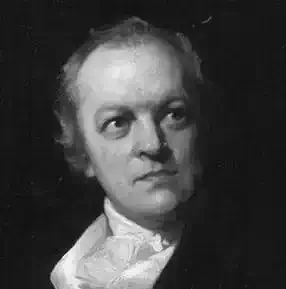
William Blake
To the Muses
To the Muses
Whether on Ida's shady brow,
Or in the chambers of the East,
The chambers of the sun, that now
From ancient melody have ceas'd;
Whether in Heav'n ye wander fair,
Or the green corners of the earth,
Or the blue regions of the air,
Where the melodious winds have birth;
Whether on crystal rocks ye rove,
Beneath the bosom of the sea
Wand'ring in many a coral grove,
Fair Nine, forsaking Poetry!
How have you left the ancient love
That bards of old enjoy'd in you!
The languid strings do scarcely move!
The sound is forc'd, the notes are few!
Whether on Ida's shady brow,
Or in the chambers of the East,
The chambers of the sun, that now
From ancient melody have ceas'd;
Whether in Heav'n ye wander fair,
Or the green corners of the earth,
Or the blue regions of the air,
Where the melodious winds have birth;
Whether on crystal rocks ye rove,
Beneath the bosom of the sea
Wand'ring in many a coral grove,
Fair Nine, forsaking Poetry!
How have you left the ancient love
That bards of old enjoy'd in you!
The languid strings do scarcely move!
The sound is forc'd, the notes are few!
458
William Blake
Songs Of Innocence: Introduction
Songs Of Innocence: Introduction
Piping down the valleys wild
Piping songs of pleasant glee
On a cloud I saw a child.
And he laughing said to me.
Pipe a song about a Lamb:
So I piped with merry chear,
Piper, pipe that song again--
So I piped, he wept to hear.
Drop thy pipe thy happy pipe
Sing thy songs of happy chear,
So I sung the same again
While he wept with joy to hear
Piper sit thee down and write
In a book that all may read--
So he vanished from my sight
And I pluck'd a hollow reed.
And I made a rural pen,
And I stained the water clear,
And I wrote my happy songs,
Every child may joy to hear.
Piping down the valleys wild
Piping songs of pleasant glee
On a cloud I saw a child.
And he laughing said to me.
Pipe a song about a Lamb:
So I piped with merry chear,
Piper, pipe that song again--
So I piped, he wept to hear.
Drop thy pipe thy happy pipe
Sing thy songs of happy chear,
So I sung the same again
While he wept with joy to hear
Piper sit thee down and write
In a book that all may read--
So he vanished from my sight
And I pluck'd a hollow reed.
And I made a rural pen,
And I stained the water clear,
And I wrote my happy songs,
Every child may joy to hear.
432
William Blake
Reeds of Innocence
Reeds of Innocence
Piping down the valleys wild,
Piping songs of pleasant glee,
On a cloud I saw a child,
And he laughing said to me:
'Pipe a song about a Lamb!'
So I piped with merry cheer.
'Piper, pipe that song again;'
So I piped: he wept to hear.
'Drop thy pipe, thy happy pipe;
Sing thy songs of happy cheer!'
So I sung the same again,
While he wept with joy to hear.
'Piper, sit thee down and write
In a book that all may read.'
So he vanish'd from my sight;
And I pluck'd a hollow reed,
And I made a rural pen,
And I stain'd the water clear,
And I wrote my happy songs
Every child may joy to hear.
Piping down the valleys wild,
Piping songs of pleasant glee,
On a cloud I saw a child,
And he laughing said to me:
'Pipe a song about a Lamb!'
So I piped with merry cheer.
'Piper, pipe that song again;'
So I piped: he wept to hear.
'Drop thy pipe, thy happy pipe;
Sing thy songs of happy cheer!'
So I sung the same again,
While he wept with joy to hear.
'Piper, sit thee down and write
In a book that all may read.'
So he vanish'd from my sight;
And I pluck'd a hollow reed,
And I made a rural pen,
And I stain'd the water clear,
And I wrote my happy songs
Every child may joy to hear.
456
William Blake
An Imitation of Spenser
An Imitation of Spenser
Golden Apollo, that thro' heaven wide
Scatter'st the rays of light, and truth's beams,
In lucent words my darkling verses dight,
And wash my earthy mind in thy clear streams,
That wisdom may descend in fairy dreams,
All while the jocund hours in thy train
Scatter their fancies at thy poet's feet;
And when thou yields to night thy wide domain,
Let rays of truth enlight his sleeping brain.
For brutish Pan in vain might thee assay
With tinkling sounds to dash thy nervous verse,
Sound without sense; yet in his rude affray,
(For ignorance is Folly's leasing nurse
And love of Folly needs none other's curse)
Midas the praise hath gain'd of lengthen'd ears,
For which himself might deem him ne'er the worse
To sit in council with his modern peers,
And judge of tinkling rimes and elegances terse.
And thou, Mercurius, that with wingèd brow
Dost mount aloft into the yielding sky,
And thro' Heav'n's halls thy airy flight dost throw,
Entering with holy feet to where on high
Jove weighs the counsel of futurity;
Then, laden with eternal fate, dost go
Down, like a falling star, from autumn sky,
And o'er the surface of the silent deep dost fly:
If thou arrivest at the sandy shore
Where nought but envious hissing adders dwell,
Thy golden rod, thrown on t he dusty floor,
Can charm to harmony with potent spell.
Such is sweet Eloquence, that does dispel
Envy and Hate that thirst for human gore;
And cause in sweet society to dwell
Vile savage minds that lurk in lonely cell
O Mercury, assist my lab'ring sense
That round the circle of the world would fly,
As the wing'd eagle scorns the tow'ry fence
Of Alpine hills round his high aëry,
And searches thro' the corners of the sky,
Sports in the clouds to hear the thunder's sound,
And see the wingèd lightnings as they fly;
Then, bosom'd in an amber cloud, around
Plumes his wide wings, and seeks Sol's palace high.
And thou, O warrior maid invincible,
Arm'd with the terrors of Almighty Jove,
Pallas, Minerva, maiden terrible,
Lov'st thou to walk the peaceful solemn grove,
In solemn gloom of branches interwove?
Or bear'st thy AEgis o'er the burning field,
Where, like the sea, the waves of battle move?
Or have thy soft piteous eyes beheld
The weary wanderer thro' the desert rove?
Or does th' afflicted man thy heav'nly bosom move?
Golden Apollo, that thro' heaven wide
Scatter'st the rays of light, and truth's beams,
In lucent words my darkling verses dight,
And wash my earthy mind in thy clear streams,
That wisdom may descend in fairy dreams,
All while the jocund hours in thy train
Scatter their fancies at thy poet's feet;
And when thou yields to night thy wide domain,
Let rays of truth enlight his sleeping brain.
For brutish Pan in vain might thee assay
With tinkling sounds to dash thy nervous verse,
Sound without sense; yet in his rude affray,
(For ignorance is Folly's leasing nurse
And love of Folly needs none other's curse)
Midas the praise hath gain'd of lengthen'd ears,
For which himself might deem him ne'er the worse
To sit in council with his modern peers,
And judge of tinkling rimes and elegances terse.
And thou, Mercurius, that with wingèd brow
Dost mount aloft into the yielding sky,
And thro' Heav'n's halls thy airy flight dost throw,
Entering with holy feet to where on high
Jove weighs the counsel of futurity;
Then, laden with eternal fate, dost go
Down, like a falling star, from autumn sky,
And o'er the surface of the silent deep dost fly:
If thou arrivest at the sandy shore
Where nought but envious hissing adders dwell,
Thy golden rod, thrown on t he dusty floor,
Can charm to harmony with potent spell.
Such is sweet Eloquence, that does dispel
Envy and Hate that thirst for human gore;
And cause in sweet society to dwell
Vile savage minds that lurk in lonely cell
O Mercury, assist my lab'ring sense
That round the circle of the world would fly,
As the wing'd eagle scorns the tow'ry fence
Of Alpine hills round his high aëry,
And searches thro' the corners of the sky,
Sports in the clouds to hear the thunder's sound,
And see the wingèd lightnings as they fly;
Then, bosom'd in an amber cloud, around
Plumes his wide wings, and seeks Sol's palace high.
And thou, O warrior maid invincible,
Arm'd with the terrors of Almighty Jove,
Pallas, Minerva, maiden terrible,
Lov'st thou to walk the peaceful solemn grove,
In solemn gloom of branches interwove?
Or bear'st thy AEgis o'er the burning field,
Where, like the sea, the waves of battle move?
Or have thy soft piteous eyes beheld
The weary wanderer thro' the desert rove?
Or does th' afflicted man thy heav'nly bosom move?
457
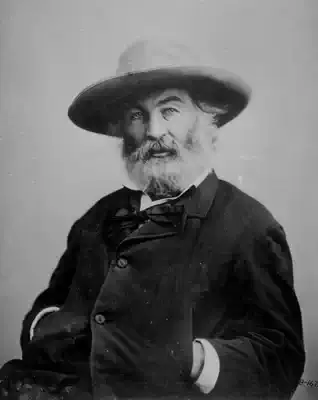
Walt Whitman
To Oratists
To Oratists
TO ORATISTS--to male or female,
Vocalism, measure, concentration, determination, and the divine power
to use words.
Are you full-lung'd and limber-lipp'd from long trial? from vigorous
practice? from physique?
Do you move in these broad lands as broad as they?
Come duly to the divine power to use words?
For only at last, after many years--after chastity, friendship,
procreation, prudence, and nakedness;
After treading ground and breasting river and lake;
After a loosen'd throat--after absorbing eras, temperaments, races-
after knowledge, freedom, crimes;
After complete faith--after clarifyings, elevations, and removing
obstructions;
After these, and more, it is just possible there comes to a man, a
woman, the divine power to use words. 10
Then toward that man or that woman, swiftly hasten all--None refuse,
all attend;
Armies, ships, antiquities, the dead, libraries, paintings, machines,
cities, hate, despair, amity, pain, theft, murder, aspiration,
form in close ranks;
They debouch as they are wanted to march obediently through the mouth
of that man, or that woman.
.... O I see arise orators fit for inland America;
And I see it is as slow to become an orator as to become a man;
And I see that all power is folded in a great vocalism.
Of a great vocalism, the merciless light thereof shall pour, and the
storm rage,
Every flash shall be a revelation, an insult,
The glaring flame on depths, on heights, on suns, on stars,
On the interior and exterior of man or woman, 20
On the laws of Nature--on passive materials,
On what you called death--(and what to you therefore was death,
As far as there can be death.)
TO ORATISTS--to male or female,
Vocalism, measure, concentration, determination, and the divine power
to use words.
Are you full-lung'd and limber-lipp'd from long trial? from vigorous
practice? from physique?
Do you move in these broad lands as broad as they?
Come duly to the divine power to use words?
For only at last, after many years--after chastity, friendship,
procreation, prudence, and nakedness;
After treading ground and breasting river and lake;
After a loosen'd throat--after absorbing eras, temperaments, races-
after knowledge, freedom, crimes;
After complete faith--after clarifyings, elevations, and removing
obstructions;
After these, and more, it is just possible there comes to a man, a
woman, the divine power to use words. 10
Then toward that man or that woman, swiftly hasten all--None refuse,
all attend;
Armies, ships, antiquities, the dead, libraries, paintings, machines,
cities, hate, despair, amity, pain, theft, murder, aspiration,
form in close ranks;
They debouch as they are wanted to march obediently through the mouth
of that man, or that woman.
.... O I see arise orators fit for inland America;
And I see it is as slow to become an orator as to become a man;
And I see that all power is folded in a great vocalism.
Of a great vocalism, the merciless light thereof shall pour, and the
storm rage,
Every flash shall be a revelation, an insult,
The glaring flame on depths, on heights, on suns, on stars,
On the interior and exterior of man or woman, 20
On the laws of Nature--on passive materials,
On what you called death--(and what to you therefore was death,
As far as there can be death.)
477
Walt Whitman
Song Of The Exposition
Song Of The Exposition
AFTER all, not to create only, or found only,
But to bring, perhaps from afar, what is already founded,
To give it our own identity, average, limitless, free;
To fill the gross, the torpid bulk with vital religious fire;
Not to repel or destroy, so much as accept, fuse, rehabilitate;
To obey, as well as command--to follow, more than to lead;
These also are the lessons of our New World;
--While how little the New, after all--how much the Old, Old World!
Long, long, long, has the grass been growing,
Long and long has the rain been falling, 10
Long has the globe been rolling round.
Come, Muse, migrate from Greece and Ionia;
Cross out, please, those immensely overpaid accounts,
That matter of Troy, and Achilles' wrath, and Eneas', Odysseus'
wanderings;
Placard "Removed" and "To Let" on the rocks of your snowy Parnassus;
Repeat at Jerusalem--place the notice high on Jaffa's gate, and on
Mount Moriah;
The same on the walls of your Gothic European Cathedrals, and German,
French and Spanish Castles;
For know a better, fresher, busier sphere--a wide, untried domain
awaits, demands you.
Responsive to our summons,
Or rather to her long-nurs'd inclination, 20
Join'd with an irresistible, natural gravitation,
She comes! this famous Female--as was indeed to be expected;
(For who, so-ever youthful, 'cute and handsome, would wish to stay in
mansions such as those,
When offer'd quarters with all the modern improvements,
With all the fun that 's going--and all the best society?)
She comes! I hear the rustling of her gown;
I scent the odor of her breath's delicious fragrance;
I mark her step divine--her curious eyes a-turning, rolling,
Upon this very scene.
The Dame of Dames! can I believe, then, 30
Those ancient temples classic, and castles strong and feudalistic,
could none of them restrain her?
Nor shades of Virgil and Dante--nor myriad memories, poems, old
associations, magnetize and hold on to her?
But that she 's left them all--and here?
Yes, if you will allow me to say so,
I, my friends, if you do not, can plainly see Her,
The same Undying Soul of Earth's, activity's, beauty's, heroism's
Expression,
Out from her evolutions hither come--submerged the strata of her
former themes,
Hidden and cover'd by to-day's--foundation of to-day's;
Ended, deceas'd, through time, her voice by Castaly's fountain;
Silent through time the broken-lipp'd Sphynx in Egypt--silent those
century-baffling tombs; 40
Closed for aye the epics of Asia's, Europe's helmeted warriors;
Calliope's call for ever closed--Clio, Melpomene, Thalia closed and
dead;
Seal'd the stately rhythmus of Una and Oriana--ended the quest of the
Holy Graal;
Jerusalem a handful of ashes blown by the wind--extinct;
The Crusaders' streams of shadowy, midnight troops, sped with the
sunrise;
Amadis, Tancred, utterly gone--Charlemagne, Roland, Oliver gone,
Palmerin, ogre, departed--vanish'd the turrets that Usk reflected,
Arthur vanish'd with all his knights--Merlin and Lancelot and
Galahad--all gone--dissolv'd utterly, like an exhalation;
Pass'd! pass'd! for us, for ever pass'd! that once so mighty World-now
void, inanimate, phantom World!
Embroider'd, dazzling World! with all its gorgeous legends, myths, 50
Its kings and barons proud--its priests, and warlike lords, and
courtly dames;
Pass'd to its charnel vault--laid on the shelf--coffin'd, with Crown
and Armor on,
Blazon'd with Shakspeare's purple page,
And dirged by Tennyson's sweet sad rhyme.
I say I see, my friends, if you do not, the Animus of all that World,
Escaped, bequeath'd, vital, fugacious as ever, leaving those dead
remains, and now this spot approaching, filling;
--And I can hear what maybe you do not--a terrible aesthetical
commotion,
With howling, desperate gulp of "flower" and "bower,"
With "Sonnet to Matilda's Eyebrow" quite, quite frantic;
With gushing, sentimental reading circles turn'd to ice or stone; 60
With many a squeak, (in metre choice,) from Boston, New York,
Philadelphia, London;
As she, the illustrious Emigré, (having, it is true, in her day,
although the same, changed, journey'd considerable,)
Making directly for this rendezvous--vigorously clearing a path for
herself--striding through the confusion,
By thud of machinery and shrill steam-whistle undismay'd,
Bluff'd not a bit by drain-pipe, gasometers, artificial fertilizers,
Smiling and pleased, with palpable intent to stay,
She 's here, install'd amid the kitchen ware!
But hold--don't I forget my manners?
To introduce the Stranger (what else indeed have I come for?) to
thee, Columbia:
In Liberty's name, welcome, Immortal! clasp hands, 70
And ever henceforth Sisters dear be both.
Fear not, O Muse! truly new ways and days receive, surround you,
(I candidly confess, a queer, queer race, of novel fashion,)
And yet the same old human race--the same within, without,
Faces and hearts the same--feelings the same--yearnings the same,
The same old love--beauty and use the same.
We do not blame thee, Elder World--nor separate ourselves from thee:
(Would the Son separate himself from the Father?)
Looking back on thee--seeing thee to thy duties, grandeurs, through
past ages bending, building,
We build to ours to-day. 80
Mightier than Egypt's tombs,
Fairer than Grecia's, Roma's temples,
Prouder than Milan's statued, spired Cathedral,
More picturesque than Rhenish castle-keeps,
We plan, even now, to raise, beyond them all,
Thy great Cathedral, sacred Industry--no tomb,
A Keep for life for practical Invention.
As in a waking vision,
E'en while I chant, I see it rise--I scan and prophesy outside and
in,
Its manifold ensemble. 90
Around a Palace,
Loftier, fairer, ampler than any yet,
Earth's modern Wonder, History's Seven outstripping,
High rising tier on tier, with glass and iron façades.
Gladdening the sun and sky--enhued in cheerfulest hues,
Bronze, lilac, robin's-egg, marine and crimson,
Over whose golden roof shall flaunt, beneath thy banner, Freedom,
The banners of The States, the flags of every land,
A brood of lofty, fair, but lesser Palaces shall cluster.
Somewhere within the walls of all, 100
Shall all that forwards perfect human life be started,
Tried, taught, advanced, visibly exhibited.
Here shall you trace in flowing operation,
In every state of practical, busy movement,
The rills of Civilization.
Materials here, under your eye, shall change their shape, as if by
magic;
The cotton shall be pick'd almost in the very field,
Shall be dried, clean'd, ginn'd, baled, spun into thread and cloth,
before you:
You shall see hands at work at all the old processes, and all the new
ones;
You shall see the various grains, and how flour is made, and then
bread baked by the bakers; 110
You shall see the crude ores of California and Nevada passing on and
on till they become bullion;
You shall watch how the printer sets type, and learn what a composing
stick is;
You shall mark, in amazement, the Hoe press whirling its cylinders,
shedding the printed leaves steady and fast:
The photograph, model, watch, pin, nail, shall be created before you.
In large calm halls, a stately Museum shall teach you the infinite,
solemn lessons of Minerals;
In another, woods, plants, Vegetation shall be illustrated--in
another Animals, animal life and development.
One stately house shall be the Music House;
Others for other Arts--Learning, the Sciences, shall all be here;
None shall be slighted--none but shall here be honor'd, help'd,
exampled.
This, this and these, America, shall be your Pyramids and
Obelisks, 120
Your Alexandrian Pharos, gardens of Babylon,
Your temple at Olympia.
The male and female many laboring not,
Shall ever here confront the laboring many,
With precious benefits to both--glory to all,
To thee, America--and thee, Eternal Muse.
And here shall ye inhabit, Powerful Matrons!
In your vast state, vaster than all the old;
Echoed through long, long centuries to come,
To sound of different, prouder songs, with stronger themes, 130
Practical, peaceful life--the people's life--the People themselves,
Lifted, illumin'd, bathed in peace--elate, secure in peace.
Away with themes of war! away with War itself!
Hence from my shuddering sight, to never more return, that show of
blacken'd, mutilated corpses!
That hell unpent, and raid of blood--fit for wild tigers, or for lop
tongued wolves--not reasoning men!
And in its stead speed Industry's campaigns!
With thy undaunted armies, Engineering!
Thy pennants, Labor, loosen'd to the breeze!
Thy bugles sounding loud and clear!
Away with old romance! 140
Away with novels, plots, and plays of foreign courts!
Away with love-verses, sugar'd in rhyme--the intrigues, amours of
idlers,
Fitted for only banquets of the night, where dancers to late music
slide;
The unhealthy pleasures, extravagant dissipations of the few,
With perfumes, heat and wine, beneath the dazzling chandeliers.
To you, ye Reverent, sane Sisters,
To this resplendent day, the present scene,
These eyes and ears that like some broad parterre bloom up around,
before me,
I raise a voice for far superber themes for poets and for Art,
To exalt the present and the real, 150
To teach the average man the glory of his daily walk and trade,
To sing, in songs, how exercise and chemical life are never to be
baffled;
Boldly to thee, America, to-day! and thee, Immortal Muse!
To practical, manual work, for each and all--to plough, hoe, dig,
To plant and tend the tree, the berry, the vegetables, flowers,
For every man to see to it that he really do something--for every
woman too;
To use the hammer, and the saw, (rip or cross-cut,)
To cultivate a turn for carpentering, plastering, painting,
To work as tailor, tailoress, nurse, hostler, porter,
To invent a little--something ingenious--to aid the washing, cooking,
cleaning, 160
And hold it no disgrace to take a hand at them themselves.
I say I bring thee, Muse, to-day and here,
All occupations, duties broad and close,
Toil, healthy toil and sweat, endless, without cessation,
The old, old general burdens, interests, joys,
The family, parentage, childhood, husband and wife,
The house-comforts--the house itself, and all its belongings,
Food and its preservations--chemistry applied to it;
Whatever forms the average, strong, complete, sweet-blooded Man or
Woman--the perfect, longeve Personality,
And helps its present life to health and happiness--and shapes its
Soul, 170
For the eternal Real Life to come.
With latest materials, works,
Steam-power, the great Express lines, gas, petroleum,
These triumphs of our time, the Atlantic's delicate cable,
The Pacific Railroad, the Suez canal, the Mont Cenis tunnel;
Science advanced, in grandeur and reality, analyzing every thing,
This world all spann'd with iron rails--with lines of steamships
threading every sea,
Our own Rondure, the current globe I bring.
And thou, high-towering One--America!
Thy swarm of offspring towering high--yet higher thee, above all
towering, 180
With Victory on thy left, and at thy right hand Law;
Thou Union, holding all--fusing, absorbing, tolerating all,
Thee, ever thee, I bring.
Thou--also thou, a world!
With all thy wide geographies, manifold, different, distant,
Rounding by thee in One--one common orbic language,
One common indivisible destiny and Union.
And by the spells which ye vouchsafe,
To those, your ministers in earnest,
I here personify and call my themes, 190
To make them pass before ye.
Behold, America! (And thou, ineffable Guest and Sister!)
For thee come trooping up thy waters and thy lands:
Behold! thy fields and farms, thy far-off woods and mountains,
As in procession coming.
Behold! the sea itself!
And on its limitless, heaving breast, thy ships:
See! where their white sails, bellying in the wind, speckle the green
and blue!
See! thy steamers coming and going, steaming in or out of port!
See! dusky and undulating, their long pennants of smoke! 200
Behold, in Oregon, far in the north and west,
Or in Maine, far in the north and east, thy cheerful axemen,
Wielding all day their axes!
Behold, on the lakes, thy pilots at their wheels--thy oarsmen!
Behold how the ash writhes under those muscular arms!
There by the furnace, and there by the anvil,
Behold thy sturdy blacksmiths, swinging their sledges;
Overhand so steady--overhand they turn and fall, with joyous clank,
Like a tumult of laughter.
Behold! (for still the procession moves,) 210
Behold, Mother of All, thy countless sailors, boatmen, coasters!
The myriads of thy young and old mechanics!
Mark--mark the spirit of invention everywhere--thy rapid patents,
Thy continual workshops, foundries, risen or rising;
See, from their chimneys, how the tall flame-fires stream!
Mark, thy interminable farms, North, South,
Thy wealthy Daughter-States, Eastern, and Western,
The varied products of Ohio, Pennsylvania, Missouri, Georgia, Texas,
and the rest;
Thy limitless crops--grass, wheat, sugar, corn, rice, hemp, hops,
Thy barns all fill'd--thy endless freight-trains, and thy bulging
store-houses, 220
The grapes that ripen on thy vines--the apples in thy orchards,
Thy incalculable lumber, beef, pork, potatoes--thy coal--thy gold and
silver,
The inexhaustible iron in thy mines.
All thine, O sacred Union!
Ship, farm, shop, barns, factories, mines,
City and State--North, South, item and aggregate,
We dedicate, dread Mother, all to thee!
Protectress absolute, thou! Bulwark of all!
For well we know that while thou givest each and all, (generous as
God,)
Without thee, neither all nor each, nor land, home, 230
Ship, nor mine--nor any here, this day, secure,
Nor aught, nor any day secure.
And thou, thy Emblem, waving over all!
Delicate beauty! a word to thee, (it may be salutary;)
Remember, thou hast not always been, as here to-day, so comfortably
ensovereign'd;
In other scenes than these have I observ'd thee, flag;
Not quite so trim and whole, and freshly blooming, in folds of
stainless silk;
But I have seen thee, bunting, to tatters torn, upon thy splinter'd
staff,
Or clutch'd to some young color-bearer's breast, with desperate
hands,
Savagely struggled for, for life or death--fought over long, 240
'Mid cannon's thunder-crash, and many a curse, and groan and yell-and
rifle-volleys cracking sharp,
And moving masses, as wild demons surging--and lives as nothing
risk'd,
For thy mere remnant, grimed with dirt and smoke, and sopp'd in
blood;
For sake of that, my beauty--and that thou might'st dally, as now,
secure up there,
Many a good man have I seen go under.
Now here, and these, and hence, in peace all thine, O Flag!
And here, and hence, for thee, O universal Muse! and thou for them!
And here and hence, O Union, all the work and workmen thine!
The poets, women, sailors, soldiers, farmers, miners, students thine!
None separate from Thee--henceforth one only, we and Thou; 250
(For the blood of the children--what is it only the blood Maternal?
And lives and works--what are they all at last except the roads to
Faith and Death?)
While we rehearse our measureless wealth, it is for thee, dear
Mother!
We own it all and several to-day indissoluble in Thee;
--Think not our chant, our show, merely for products gross, or
lucre--it is for Thee, the Soul, electric, spiritual!
Our farms, inventions, crops, we own in Thee! Cities and States in
Thee!
Our freedom all in Thee! our very lives in Thee!
AFTER all, not to create only, or found only,
But to bring, perhaps from afar, what is already founded,
To give it our own identity, average, limitless, free;
To fill the gross, the torpid bulk with vital religious fire;
Not to repel or destroy, so much as accept, fuse, rehabilitate;
To obey, as well as command--to follow, more than to lead;
These also are the lessons of our New World;
--While how little the New, after all--how much the Old, Old World!
Long, long, long, has the grass been growing,
Long and long has the rain been falling, 10
Long has the globe been rolling round.
Come, Muse, migrate from Greece and Ionia;
Cross out, please, those immensely overpaid accounts,
That matter of Troy, and Achilles' wrath, and Eneas', Odysseus'
wanderings;
Placard "Removed" and "To Let" on the rocks of your snowy Parnassus;
Repeat at Jerusalem--place the notice high on Jaffa's gate, and on
Mount Moriah;
The same on the walls of your Gothic European Cathedrals, and German,
French and Spanish Castles;
For know a better, fresher, busier sphere--a wide, untried domain
awaits, demands you.
Responsive to our summons,
Or rather to her long-nurs'd inclination, 20
Join'd with an irresistible, natural gravitation,
She comes! this famous Female--as was indeed to be expected;
(For who, so-ever youthful, 'cute and handsome, would wish to stay in
mansions such as those,
When offer'd quarters with all the modern improvements,
With all the fun that 's going--and all the best society?)
She comes! I hear the rustling of her gown;
I scent the odor of her breath's delicious fragrance;
I mark her step divine--her curious eyes a-turning, rolling,
Upon this very scene.
The Dame of Dames! can I believe, then, 30
Those ancient temples classic, and castles strong and feudalistic,
could none of them restrain her?
Nor shades of Virgil and Dante--nor myriad memories, poems, old
associations, magnetize and hold on to her?
But that she 's left them all--and here?
Yes, if you will allow me to say so,
I, my friends, if you do not, can plainly see Her,
The same Undying Soul of Earth's, activity's, beauty's, heroism's
Expression,
Out from her evolutions hither come--submerged the strata of her
former themes,
Hidden and cover'd by to-day's--foundation of to-day's;
Ended, deceas'd, through time, her voice by Castaly's fountain;
Silent through time the broken-lipp'd Sphynx in Egypt--silent those
century-baffling tombs; 40
Closed for aye the epics of Asia's, Europe's helmeted warriors;
Calliope's call for ever closed--Clio, Melpomene, Thalia closed and
dead;
Seal'd the stately rhythmus of Una and Oriana--ended the quest of the
Holy Graal;
Jerusalem a handful of ashes blown by the wind--extinct;
The Crusaders' streams of shadowy, midnight troops, sped with the
sunrise;
Amadis, Tancred, utterly gone--Charlemagne, Roland, Oliver gone,
Palmerin, ogre, departed--vanish'd the turrets that Usk reflected,
Arthur vanish'd with all his knights--Merlin and Lancelot and
Galahad--all gone--dissolv'd utterly, like an exhalation;
Pass'd! pass'd! for us, for ever pass'd! that once so mighty World-now
void, inanimate, phantom World!
Embroider'd, dazzling World! with all its gorgeous legends, myths, 50
Its kings and barons proud--its priests, and warlike lords, and
courtly dames;
Pass'd to its charnel vault--laid on the shelf--coffin'd, with Crown
and Armor on,
Blazon'd with Shakspeare's purple page,
And dirged by Tennyson's sweet sad rhyme.
I say I see, my friends, if you do not, the Animus of all that World,
Escaped, bequeath'd, vital, fugacious as ever, leaving those dead
remains, and now this spot approaching, filling;
--And I can hear what maybe you do not--a terrible aesthetical
commotion,
With howling, desperate gulp of "flower" and "bower,"
With "Sonnet to Matilda's Eyebrow" quite, quite frantic;
With gushing, sentimental reading circles turn'd to ice or stone; 60
With many a squeak, (in metre choice,) from Boston, New York,
Philadelphia, London;
As she, the illustrious Emigré, (having, it is true, in her day,
although the same, changed, journey'd considerable,)
Making directly for this rendezvous--vigorously clearing a path for
herself--striding through the confusion,
By thud of machinery and shrill steam-whistle undismay'd,
Bluff'd not a bit by drain-pipe, gasometers, artificial fertilizers,
Smiling and pleased, with palpable intent to stay,
She 's here, install'd amid the kitchen ware!
But hold--don't I forget my manners?
To introduce the Stranger (what else indeed have I come for?) to
thee, Columbia:
In Liberty's name, welcome, Immortal! clasp hands, 70
And ever henceforth Sisters dear be both.
Fear not, O Muse! truly new ways and days receive, surround you,
(I candidly confess, a queer, queer race, of novel fashion,)
And yet the same old human race--the same within, without,
Faces and hearts the same--feelings the same--yearnings the same,
The same old love--beauty and use the same.
We do not blame thee, Elder World--nor separate ourselves from thee:
(Would the Son separate himself from the Father?)
Looking back on thee--seeing thee to thy duties, grandeurs, through
past ages bending, building,
We build to ours to-day. 80
Mightier than Egypt's tombs,
Fairer than Grecia's, Roma's temples,
Prouder than Milan's statued, spired Cathedral,
More picturesque than Rhenish castle-keeps,
We plan, even now, to raise, beyond them all,
Thy great Cathedral, sacred Industry--no tomb,
A Keep for life for practical Invention.
As in a waking vision,
E'en while I chant, I see it rise--I scan and prophesy outside and
in,
Its manifold ensemble. 90
Around a Palace,
Loftier, fairer, ampler than any yet,
Earth's modern Wonder, History's Seven outstripping,
High rising tier on tier, with glass and iron façades.
Gladdening the sun and sky--enhued in cheerfulest hues,
Bronze, lilac, robin's-egg, marine and crimson,
Over whose golden roof shall flaunt, beneath thy banner, Freedom,
The banners of The States, the flags of every land,
A brood of lofty, fair, but lesser Palaces shall cluster.
Somewhere within the walls of all, 100
Shall all that forwards perfect human life be started,
Tried, taught, advanced, visibly exhibited.
Here shall you trace in flowing operation,
In every state of practical, busy movement,
The rills of Civilization.
Materials here, under your eye, shall change their shape, as if by
magic;
The cotton shall be pick'd almost in the very field,
Shall be dried, clean'd, ginn'd, baled, spun into thread and cloth,
before you:
You shall see hands at work at all the old processes, and all the new
ones;
You shall see the various grains, and how flour is made, and then
bread baked by the bakers; 110
You shall see the crude ores of California and Nevada passing on and
on till they become bullion;
You shall watch how the printer sets type, and learn what a composing
stick is;
You shall mark, in amazement, the Hoe press whirling its cylinders,
shedding the printed leaves steady and fast:
The photograph, model, watch, pin, nail, shall be created before you.
In large calm halls, a stately Museum shall teach you the infinite,
solemn lessons of Minerals;
In another, woods, plants, Vegetation shall be illustrated--in
another Animals, animal life and development.
One stately house shall be the Music House;
Others for other Arts--Learning, the Sciences, shall all be here;
None shall be slighted--none but shall here be honor'd, help'd,
exampled.
This, this and these, America, shall be your Pyramids and
Obelisks, 120
Your Alexandrian Pharos, gardens of Babylon,
Your temple at Olympia.
The male and female many laboring not,
Shall ever here confront the laboring many,
With precious benefits to both--glory to all,
To thee, America--and thee, Eternal Muse.
And here shall ye inhabit, Powerful Matrons!
In your vast state, vaster than all the old;
Echoed through long, long centuries to come,
To sound of different, prouder songs, with stronger themes, 130
Practical, peaceful life--the people's life--the People themselves,
Lifted, illumin'd, bathed in peace--elate, secure in peace.
Away with themes of war! away with War itself!
Hence from my shuddering sight, to never more return, that show of
blacken'd, mutilated corpses!
That hell unpent, and raid of blood--fit for wild tigers, or for lop
tongued wolves--not reasoning men!
And in its stead speed Industry's campaigns!
With thy undaunted armies, Engineering!
Thy pennants, Labor, loosen'd to the breeze!
Thy bugles sounding loud and clear!
Away with old romance! 140
Away with novels, plots, and plays of foreign courts!
Away with love-verses, sugar'd in rhyme--the intrigues, amours of
idlers,
Fitted for only banquets of the night, where dancers to late music
slide;
The unhealthy pleasures, extravagant dissipations of the few,
With perfumes, heat and wine, beneath the dazzling chandeliers.
To you, ye Reverent, sane Sisters,
To this resplendent day, the present scene,
These eyes and ears that like some broad parterre bloom up around,
before me,
I raise a voice for far superber themes for poets and for Art,
To exalt the present and the real, 150
To teach the average man the glory of his daily walk and trade,
To sing, in songs, how exercise and chemical life are never to be
baffled;
Boldly to thee, America, to-day! and thee, Immortal Muse!
To practical, manual work, for each and all--to plough, hoe, dig,
To plant and tend the tree, the berry, the vegetables, flowers,
For every man to see to it that he really do something--for every
woman too;
To use the hammer, and the saw, (rip or cross-cut,)
To cultivate a turn for carpentering, plastering, painting,
To work as tailor, tailoress, nurse, hostler, porter,
To invent a little--something ingenious--to aid the washing, cooking,
cleaning, 160
And hold it no disgrace to take a hand at them themselves.
I say I bring thee, Muse, to-day and here,
All occupations, duties broad and close,
Toil, healthy toil and sweat, endless, without cessation,
The old, old general burdens, interests, joys,
The family, parentage, childhood, husband and wife,
The house-comforts--the house itself, and all its belongings,
Food and its preservations--chemistry applied to it;
Whatever forms the average, strong, complete, sweet-blooded Man or
Woman--the perfect, longeve Personality,
And helps its present life to health and happiness--and shapes its
Soul, 170
For the eternal Real Life to come.
With latest materials, works,
Steam-power, the great Express lines, gas, petroleum,
These triumphs of our time, the Atlantic's delicate cable,
The Pacific Railroad, the Suez canal, the Mont Cenis tunnel;
Science advanced, in grandeur and reality, analyzing every thing,
This world all spann'd with iron rails--with lines of steamships
threading every sea,
Our own Rondure, the current globe I bring.
And thou, high-towering One--America!
Thy swarm of offspring towering high--yet higher thee, above all
towering, 180
With Victory on thy left, and at thy right hand Law;
Thou Union, holding all--fusing, absorbing, tolerating all,
Thee, ever thee, I bring.
Thou--also thou, a world!
With all thy wide geographies, manifold, different, distant,
Rounding by thee in One--one common orbic language,
One common indivisible destiny and Union.
And by the spells which ye vouchsafe,
To those, your ministers in earnest,
I here personify and call my themes, 190
To make them pass before ye.
Behold, America! (And thou, ineffable Guest and Sister!)
For thee come trooping up thy waters and thy lands:
Behold! thy fields and farms, thy far-off woods and mountains,
As in procession coming.
Behold! the sea itself!
And on its limitless, heaving breast, thy ships:
See! where their white sails, bellying in the wind, speckle the green
and blue!
See! thy steamers coming and going, steaming in or out of port!
See! dusky and undulating, their long pennants of smoke! 200
Behold, in Oregon, far in the north and west,
Or in Maine, far in the north and east, thy cheerful axemen,
Wielding all day their axes!
Behold, on the lakes, thy pilots at their wheels--thy oarsmen!
Behold how the ash writhes under those muscular arms!
There by the furnace, and there by the anvil,
Behold thy sturdy blacksmiths, swinging their sledges;
Overhand so steady--overhand they turn and fall, with joyous clank,
Like a tumult of laughter.
Behold! (for still the procession moves,) 210
Behold, Mother of All, thy countless sailors, boatmen, coasters!
The myriads of thy young and old mechanics!
Mark--mark the spirit of invention everywhere--thy rapid patents,
Thy continual workshops, foundries, risen or rising;
See, from their chimneys, how the tall flame-fires stream!
Mark, thy interminable farms, North, South,
Thy wealthy Daughter-States, Eastern, and Western,
The varied products of Ohio, Pennsylvania, Missouri, Georgia, Texas,
and the rest;
Thy limitless crops--grass, wheat, sugar, corn, rice, hemp, hops,
Thy barns all fill'd--thy endless freight-trains, and thy bulging
store-houses, 220
The grapes that ripen on thy vines--the apples in thy orchards,
Thy incalculable lumber, beef, pork, potatoes--thy coal--thy gold and
silver,
The inexhaustible iron in thy mines.
All thine, O sacred Union!
Ship, farm, shop, barns, factories, mines,
City and State--North, South, item and aggregate,
We dedicate, dread Mother, all to thee!
Protectress absolute, thou! Bulwark of all!
For well we know that while thou givest each and all, (generous as
God,)
Without thee, neither all nor each, nor land, home, 230
Ship, nor mine--nor any here, this day, secure,
Nor aught, nor any day secure.
And thou, thy Emblem, waving over all!
Delicate beauty! a word to thee, (it may be salutary;)
Remember, thou hast not always been, as here to-day, so comfortably
ensovereign'd;
In other scenes than these have I observ'd thee, flag;
Not quite so trim and whole, and freshly blooming, in folds of
stainless silk;
But I have seen thee, bunting, to tatters torn, upon thy splinter'd
staff,
Or clutch'd to some young color-bearer's breast, with desperate
hands,
Savagely struggled for, for life or death--fought over long, 240
'Mid cannon's thunder-crash, and many a curse, and groan and yell-and
rifle-volleys cracking sharp,
And moving masses, as wild demons surging--and lives as nothing
risk'd,
For thy mere remnant, grimed with dirt and smoke, and sopp'd in
blood;
For sake of that, my beauty--and that thou might'st dally, as now,
secure up there,
Many a good man have I seen go under.
Now here, and these, and hence, in peace all thine, O Flag!
And here, and hence, for thee, O universal Muse! and thou for them!
And here and hence, O Union, all the work and workmen thine!
The poets, women, sailors, soldiers, farmers, miners, students thine!
None separate from Thee--henceforth one only, we and Thou; 250
(For the blood of the children--what is it only the blood Maternal?
And lives and works--what are they all at last except the roads to
Faith and Death?)
While we rehearse our measureless wealth, it is for thee, dear
Mother!
We own it all and several to-day indissoluble in Thee;
--Think not our chant, our show, merely for products gross, or
lucre--it is for Thee, the Soul, electric, spiritual!
Our farms, inventions, crops, we own in Thee! Cities and States in
Thee!
Our freedom all in Thee! our very lives in Thee!
439
Walt Whitman
Shut Not Your Doors, &c.
Shut Not Your Doors, &c.
SHUT not your doors to me, proud libraries,
For that which was lacking on all your well-fill'd shelves, yet
needed most, I bring;
Forth from the army, the war emerging--a book I have made,
The words of my book nothing--the drift of it everything;
A book separate, not link'd with the rest, nor felt by the intellect,
But you, ye untold latencies, will thrill to every page;
Through Space and Time fused in a chant, and the flowing, eternal
Identity,
To Nature, encompassing these, encompassing God--to the joyous,
electric All,
To the sense of Death--and accepting, exulting in Death, in its turn,
the same as life,
The entrance of Man I sing. 10
SHUT not your doors to me, proud libraries,
For that which was lacking on all your well-fill'd shelves, yet
needed most, I bring;
Forth from the army, the war emerging--a book I have made,
The words of my book nothing--the drift of it everything;
A book separate, not link'd with the rest, nor felt by the intellect,
But you, ye untold latencies, will thrill to every page;
Through Space and Time fused in a chant, and the flowing, eternal
Identity,
To Nature, encompassing these, encompassing God--to the joyous,
electric All,
To the sense of Death--and accepting, exulting in Death, in its turn,
the same as life,
The entrance of Man I sing. 10
310
Walt Whitman
Not Heaving From My Ribb'd Breast Only
Not Heaving From My Ribb'd Breast Only
NOT heaving from my ribb'd breast only;
Not in sighs at night, in rage, dissatisfied with myself;
Not in those long-drawn, ill-supprest sighs;
Not in many an oath and promise broken;
Not in my wilful and savage soul's volition;
Not in the subtle nourishment of the air;
Not in this beating and pounding at my temples and wrists;
Not in the curious systole and diastole within, which will one day
cease;
Not in many a hungry wish, told to the skies only;
Not in cries, laughter, defiances, thrown from me when alone, far in
the wilds; 10
Not in husky pantings through clench'd teeth;
Not in sounded and resounded words--chattering words, echoes, dead
words;
Not in the murmurs of my dreams while I sleep,
Nor the other murmurs of these incredible dreams of every day;
Nor in the limbs and senses of my body, that take you and dismiss you
continually--Not there;
Not in any or all of them, O adhesiveness! O pulse of my life!
Need I that you exist and show yourself, any more than in these
songs.
NOT heaving from my ribb'd breast only;
Not in sighs at night, in rage, dissatisfied with myself;
Not in those long-drawn, ill-supprest sighs;
Not in many an oath and promise broken;
Not in my wilful and savage soul's volition;
Not in the subtle nourishment of the air;
Not in this beating and pounding at my temples and wrists;
Not in the curious systole and diastole within, which will one day
cease;
Not in many a hungry wish, told to the skies only;
Not in cries, laughter, defiances, thrown from me when alone, far in
the wilds; 10
Not in husky pantings through clench'd teeth;
Not in sounded and resounded words--chattering words, echoes, dead
words;
Not in the murmurs of my dreams while I sleep,
Nor the other murmurs of these incredible dreams of every day;
Nor in the limbs and senses of my body, that take you and dismiss you
continually--Not there;
Not in any or all of them, O adhesiveness! O pulse of my life!
Need I that you exist and show yourself, any more than in these
songs.
360
Walt Whitman
In Cabin'd Ships At Sea
In Cabin'd Ships At Sea
IN cabin'd ships, at sea,
The boundless blue on every side expanding,
With whistling winds and music of the waves--the large imperious
waves--In such,
Or some lone bark, buoy'd on the dense marine,
Where, joyous, full of faith, spreading white sails,
She cleaves the ether, mid the sparkle and the foam of day, or under
many a star at night,
By sailors young and old, haply will I, a reminiscence of the land,
be read,
In full rapport at last.
Here are our thoughts--voyagers' thoughts,
Here not the land, firm land, alone appears, may then by them be
said; 10
The sky o'erarches here--we feel the undulating deck beneath our
feet,
We feel the long pulsation--ebb and flow of endless motion;
The tones of unseen mystery--the vague and vast suggestions of the
briny world--the liquid-flowing syllables,
The perfume, the faint creaking of the cordage, the melancholy
rhythm,
The boundless vista, and the horizon far and dim, are all here,
And this is Ocean's poem.
Then falter not, O book! fulfil your destiny!
You, not a reminiscence of the land alone,
You too, as a lone bark, cleaving the ether--purpos'd I know
not whither--yet ever full of faith, 20
Consort to every ship that sails--sail you!
Bear forth to them, folded, my love--(Dear mariners! for you I fold
it here, in every leaf;)
Speed on, my Book! spread your white sails, my little bark, athwart
the imperious waves!
Chant on--sail on--bear o'er the boundless blue, from me, to every
shore,
This song for mariners and all their ships.
IN cabin'd ships, at sea,
The boundless blue on every side expanding,
With whistling winds and music of the waves--the large imperious
waves--In such,
Or some lone bark, buoy'd on the dense marine,
Where, joyous, full of faith, spreading white sails,
She cleaves the ether, mid the sparkle and the foam of day, or under
many a star at night,
By sailors young and old, haply will I, a reminiscence of the land,
be read,
In full rapport at last.
Here are our thoughts--voyagers' thoughts,
Here not the land, firm land, alone appears, may then by them be
said; 10
The sky o'erarches here--we feel the undulating deck beneath our
feet,
We feel the long pulsation--ebb and flow of endless motion;
The tones of unseen mystery--the vague and vast suggestions of the
briny world--the liquid-flowing syllables,
The perfume, the faint creaking of the cordage, the melancholy
rhythm,
The boundless vista, and the horizon far and dim, are all here,
And this is Ocean's poem.
Then falter not, O book! fulfil your destiny!
You, not a reminiscence of the land alone,
You too, as a lone bark, cleaving the ether--purpos'd I know
not whither--yet ever full of faith, 20
Consort to every ship that sails--sail you!
Bear forth to them, folded, my love--(Dear mariners! for you I fold
it here, in every leaf;)
Speed on, my Book! spread your white sails, my little bark, athwart
the imperious waves!
Chant on--sail on--bear o'er the boundless blue, from me, to every
shore,
This song for mariners and all their ships.
430
Walt Whitman
Here The Frailest Leaves Of Me
Here The Frailest Leaves Of Me
HERE the frailest leaves of me, and yet my strongest-lasting:
Here I shade and hide my thoughts--I myself do not expose them,
And yet they expose me more than all my other poems.
HERE the frailest leaves of me, and yet my strongest-lasting:
Here I shade and hide my thoughts--I myself do not expose them,
And yet they expose me more than all my other poems.
303
Walt Whitman
Eidólons
Eidólons
I MET a Seer,
Passing the hues and objects of the world,
The fields of art and learning, pleasure, sense,
To glean Eidólons.
Put in thy chants, said he,
No more the puzzling hour, nor day--nor segments, parts, put in,
Put first before the rest, as light for all, and entrance-song of
all,
That of Eidólons.
Ever the dim beginning;
Ever the growth, the rounding of the circle; 10
Ever the summit, and the merge at last, (to surely start again,)
Eidólons! Eidólons!
Ever the mutable!
Ever materials, changing, crumbling, re-cohering;
Ever the ateliers, the factories divine,
Issuing Eidólons!
Lo! I or you!
Or woman, man, or State, known or unknown,
We seeming solid wealth, strength, beauty build,
But really build Eidólons. 20
The ostent evanescent;
The substance of an artist's mood, or savan's studies long,
Or warrior's, martyr's, hero's toils,
To fashion his Eidólon.
Of every human life,
(The units gather'd, posted--not a thought, emotion, deed, left out;)
The whole, or large or small, summ'd, added up,
In its Eidólon.
The old, old urge;
Based on the ancient pinnacles, lo! newer, higher pinnacles; 30
From Science and the Modern still impell'd,
The old, old urge, Eidólons.
The present, now and here,
America's busy, teeming, intricate whirl,
Of aggregate and segregate, for only thence releasing,
To-day's Eidólons.
These, with the past,
Of vanish'd lands--of all the reigns of kings across the sea,
Old conquerors, old campaigns, old sailors' voyages,
Joining Eidólons. 40
Densities, growth, façades,
Strata of mountains, soils, rocks, giant trees,
Far-born, far-dying, living long, to leave,
Eidólons everlasting.
Exaltè, rapt, extatic,
The visible but their womb of birth,
Of orbic tendencies to shape, and shape, and shape,
The mighty Earth-Eidólon.
All space, all time,
(The stars, the terrible perturbations of the suns, 50
Swelling, collapsing, ending--serving their longer, shorter use,)
Fill'd with Eidólons only.
The noiseless myriads!
The infinite oceans where the rivers empty!
The separate, countless free identities, like eyesight;
The true realities, Eidólons.
Not this the World,
Nor these the Universes--they the Universes,
Purport and end--ever the permanent life of life,
Eidólons, Eidólons. 60
Beyond thy lectures, learn'd professor,
Beyond thy telescope or spectroscope, observer keen--beyond all
mathematics,
Beyond the doctor's surgery, anatomy--beyond the chemist with his
chemistry,
The entities of entities, Eidólons.
Unfix'd, yet fix'd;
Ever shall be--ever have been, and are,
Sweeping the present to the infinite future,
Eidólons, Eidólons, Eidólons.
The prophet and the bard,
Shall yet maintain themselves--in higher stages yet, 70
Shall mediate to the Modern, to Democracy--interpret yet to them,
God, and Eidólons.
And thee, My Soul!
Joys, ceaseless exercises, exaltations!
Thy yearning amply fed at last, prepared to meet,
Thy mates, Eidólons.
Thy Body permanent,
The Body lurking there within thy Body,
The only purport of the Form thou art--the real I myself,
An image, an Eidólon. 80
Thy very songs, not in thy songs;
No special strains to sing--none for itself;
But from the whole resulting, rising at last and floating,
A round, full-orb'd Eidólon.
I MET a Seer,
Passing the hues and objects of the world,
The fields of art and learning, pleasure, sense,
To glean Eidólons.
Put in thy chants, said he,
No more the puzzling hour, nor day--nor segments, parts, put in,
Put first before the rest, as light for all, and entrance-song of
all,
That of Eidólons.
Ever the dim beginning;
Ever the growth, the rounding of the circle; 10
Ever the summit, and the merge at last, (to surely start again,)
Eidólons! Eidólons!
Ever the mutable!
Ever materials, changing, crumbling, re-cohering;
Ever the ateliers, the factories divine,
Issuing Eidólons!
Lo! I or you!
Or woman, man, or State, known or unknown,
We seeming solid wealth, strength, beauty build,
But really build Eidólons. 20
The ostent evanescent;
The substance of an artist's mood, or savan's studies long,
Or warrior's, martyr's, hero's toils,
To fashion his Eidólon.
Of every human life,
(The units gather'd, posted--not a thought, emotion, deed, left out;)
The whole, or large or small, summ'd, added up,
In its Eidólon.
The old, old urge;
Based on the ancient pinnacles, lo! newer, higher pinnacles; 30
From Science and the Modern still impell'd,
The old, old urge, Eidólons.
The present, now and here,
America's busy, teeming, intricate whirl,
Of aggregate and segregate, for only thence releasing,
To-day's Eidólons.
These, with the past,
Of vanish'd lands--of all the reigns of kings across the sea,
Old conquerors, old campaigns, old sailors' voyages,
Joining Eidólons. 40
Densities, growth, façades,
Strata of mountains, soils, rocks, giant trees,
Far-born, far-dying, living long, to leave,
Eidólons everlasting.
Exaltè, rapt, extatic,
The visible but their womb of birth,
Of orbic tendencies to shape, and shape, and shape,
The mighty Earth-Eidólon.
All space, all time,
(The stars, the terrible perturbations of the suns, 50
Swelling, collapsing, ending--serving their longer, shorter use,)
Fill'd with Eidólons only.
The noiseless myriads!
The infinite oceans where the rivers empty!
The separate, countless free identities, like eyesight;
The true realities, Eidólons.
Not this the World,
Nor these the Universes--they the Universes,
Purport and end--ever the permanent life of life,
Eidólons, Eidólons. 60
Beyond thy lectures, learn'd professor,
Beyond thy telescope or spectroscope, observer keen--beyond all
mathematics,
Beyond the doctor's surgery, anatomy--beyond the chemist with his
chemistry,
The entities of entities, Eidólons.
Unfix'd, yet fix'd;
Ever shall be--ever have been, and are,
Sweeping the present to the infinite future,
Eidólons, Eidólons, Eidólons.
The prophet and the bard,
Shall yet maintain themselves--in higher stages yet, 70
Shall mediate to the Modern, to Democracy--interpret yet to them,
God, and Eidólons.
And thee, My Soul!
Joys, ceaseless exercises, exaltations!
Thy yearning amply fed at last, prepared to meet,
Thy mates, Eidólons.
Thy Body permanent,
The Body lurking there within thy Body,
The only purport of the Form thou art--the real I myself,
An image, an Eidólon. 80
Thy very songs, not in thy songs;
No special strains to sing--none for itself;
But from the whole resulting, rising at last and floating,
A round, full-orb'd Eidólon.
407