

Poems in this theme
Literature and Words
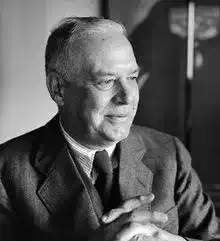
Wallace Stevens
The House Was Quiet And The World Was Calm
The House Was Quiet And The World Was Calm
The house was quiet and the world was calm.
The reader became the book; and summer night
Was like the conscious being of the book.
The house was quiet and the world was calm.
The words were spoken as if there was no book,
Except that the reader leaned above the page,
Wanted to lean, wanted much to be
The scholar to whom his book is true, to whom
The summer night is like a perfection of thought.
The house was quiet because it had to be.
The quiet was part of the meaning, part of the mind:
The access of perfection to the page.
And the world was calm. The truth in a calm world,
In which there is no other meaning, itself
Is calm, itself is summer and night, itself
Is the reader leaning late and reading there.
The house was quiet and the world was calm.
The reader became the book; and summer night
Was like the conscious being of the book.
The house was quiet and the world was calm.
The words were spoken as if there was no book,
Except that the reader leaned above the page,
Wanted to lean, wanted much to be
The scholar to whom his book is true, to whom
The summer night is like a perfection of thought.
The house was quiet because it had to be.
The quiet was part of the meaning, part of the mind:
The access of perfection to the page.
And the world was calm. The truth in a calm world,
In which there is no other meaning, itself
Is calm, itself is summer and night, itself
Is the reader leaning late and reading there.
316
Wallace Stevens
A High-Toned Old Christian Woman
A High-Toned Old Christian Woman
Poetry is the supreme fiction, madame.
Take the moral law and make a nave of it
And from the nave build haunted heaven. Thus,
The conscience is converted into palms,
Like windy citherns hankering for hymns.
We agree in principle. That's clear. But take
The opposing law and make a peristyle,
And from the peristyle project a masque
Beyond the planets. Thus, our bawdiness,
Unpurged by epitaph, indulged at last,
Is equally converted into palms,
Squiggling like saxophones. And palm for palm,
Madame, we are where we began. Allow,
Therefore, that in the planetary scene
Your disaffected flagellants, well-stuffed,
Smacking their muzzy bellies in parade,
Proud of such novelties of the sublime,
Such tink and tank and tunk-a-tunk-tunk,
May, merely may, madame, whip from themselves
A jovial hullabaloo among the spheres.
This will make widows wince. But fictive things
Wink as they will. Wink most when widows wince.
Poetry is the supreme fiction, madame.
Take the moral law and make a nave of it
And from the nave build haunted heaven. Thus,
The conscience is converted into palms,
Like windy citherns hankering for hymns.
We agree in principle. That's clear. But take
The opposing law and make a peristyle,
And from the peristyle project a masque
Beyond the planets. Thus, our bawdiness,
Unpurged by epitaph, indulged at last,
Is equally converted into palms,
Squiggling like saxophones. And palm for palm,
Madame, we are where we began. Allow,
Therefore, that in the planetary scene
Your disaffected flagellants, well-stuffed,
Smacking their muzzy bellies in parade,
Proud of such novelties of the sublime,
Such tink and tank and tunk-a-tunk-tunk,
May, merely may, madame, whip from themselves
A jovial hullabaloo among the spheres.
This will make widows wince. But fictive things
Wink as they will. Wink most when widows wince.
315
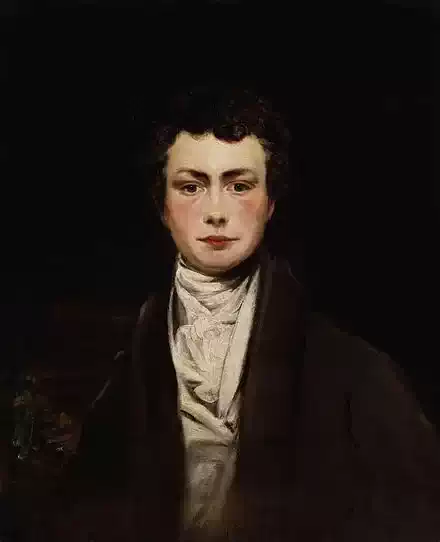
Thomas Moore
Ode to the Sublime Porte
Ode to the Sublime Porte
Great Sultan, how wise are thy state compositions!
And oh, above all, I admire that Decree,
In which thou command'st, that all she politicians
Shall forthwith be strangled and cast in the sea.
'Tis my fortune to know a lean Benthamite spinster --
A maid, who her faith in old Jeremy puts;
Who talks, with a lisp, of the "last new Westminster,"
And hopes you're delighted with "Mill upon Gluts";
Who tells you how clever one Mr. Fun-blank is,
How charming his Articles 'gainst the Nobility; --
And assures you that even a gentleman's rank is,
In Jeremy's school, of no sort of utility.
To see her, ye Gods, a new number perusing --
Art. - "On the Needle's variations", by Pl--e;
Art. - By her fav'rite Fun-blank - so amusing!
"Dear man! he makes poetry quite a Law case."
Art. -"Upon Fallacies", Jeremy's own --
(Chief Fallacy being, his hope to find readers); -
Art. - "Upon Honesty", author unkown; --
Art. - (by the young Mr. M--) "Hints to Breeders".
Oh, Sultan, oh, Sultan, though oft for the bag
And the bowstring, like thee, I am tempted to call --
Though drowning's too good for each blue-stocking hag,
I would bag this she Benthamite first of them all!
And, lest she should ever again lift her head
From the watery bottom, her clack to renew --
As a clog, as a sinker, far better than lead,
I would hang round her neck her own darling Review.
Great Sultan, how wise are thy state compositions!
And oh, above all, I admire that Decree,
In which thou command'st, that all she politicians
Shall forthwith be strangled and cast in the sea.
'Tis my fortune to know a lean Benthamite spinster --
A maid, who her faith in old Jeremy puts;
Who talks, with a lisp, of the "last new Westminster,"
And hopes you're delighted with "Mill upon Gluts";
Who tells you how clever one Mr. Fun-blank is,
How charming his Articles 'gainst the Nobility; --
And assures you that even a gentleman's rank is,
In Jeremy's school, of no sort of utility.
To see her, ye Gods, a new number perusing --
Art. - "On the Needle's variations", by Pl--e;
Art. - By her fav'rite Fun-blank - so amusing!
"Dear man! he makes poetry quite a Law case."
Art. -"Upon Fallacies", Jeremy's own --
(Chief Fallacy being, his hope to find readers); -
Art. - "Upon Honesty", author unkown; --
Art. - (by the young Mr. M--) "Hints to Breeders".
Oh, Sultan, oh, Sultan, though oft for the bag
And the bowstring, like thee, I am tempted to call --
Though drowning's too good for each blue-stocking hag,
I would bag this she Benthamite first of them all!
And, lest she should ever again lift her head
From the watery bottom, her clack to renew --
As a clog, as a sinker, far better than lead,
I would hang round her neck her own darling Review.
180
Thomas Moore
Drink To Her
Drink To Her
Drink to her who long
Hath waked the poet's sigh,
The girl who gave to song
What gold could never buy.
Oh! woman's heart was made
For minstrel hands alone;
By other fingers play'd,
It yields not half the tone.
Then here's to her who long
Hath waked the poet's sigh,
The girl who gave to song
What gold could never buy.
At Beauty's door of glass,
When Wealth and Wit once stood,
They ask'd her, "which might pass?"
She answer'd, "he who could."
With golden key Wealth thought
To pass -- but 'twould not do:
While Wit a diamond brought,
Which cut his bright way through.
So here's to her who long
Hath waked the poet's sigh,
The girl who gave to song
What gold could never buy.
The love that seeks a home
Where wealth or grandeur shines,
Is like the gloomy gnome,
That dwells in dark mines.
But oh! the poet's love
Can boast a brighter sphere;
Its native home's above,
Though woman keeps it here.
Then drink to her who long
Hath waked the poet's sigh,
The girl who gave to song
What gold could never buy.
Drink to her who long
Hath waked the poet's sigh,
The girl who gave to song
What gold could never buy.
Oh! woman's heart was made
For minstrel hands alone;
By other fingers play'd,
It yields not half the tone.
Then here's to her who long
Hath waked the poet's sigh,
The girl who gave to song
What gold could never buy.
At Beauty's door of glass,
When Wealth and Wit once stood,
They ask'd her, "which might pass?"
She answer'd, "he who could."
With golden key Wealth thought
To pass -- but 'twould not do:
While Wit a diamond brought,
Which cut his bright way through.
So here's to her who long
Hath waked the poet's sigh,
The girl who gave to song
What gold could never buy.
The love that seeks a home
Where wealth or grandeur shines,
Is like the gloomy gnome,
That dwells in dark mines.
But oh! the poet's love
Can boast a brighter sphere;
Its native home's above,
Though woman keeps it here.
Then drink to her who long
Hath waked the poet's sigh,
The girl who gave to song
What gold could never buy.
255
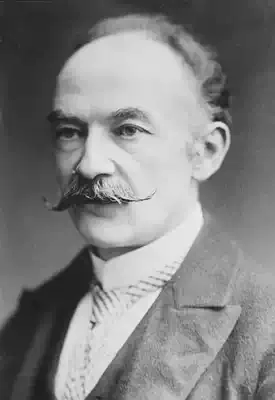
Thomas Hardy
Shelley's Skylark.
Shelley's Skylark.
Somewhere afield here something lies
In Earth's oblivious eyeless trust
That moved a poet to prophecies -
A pinch of unseen, unguarded dust
The dust of the lark that Shelley heard,
And made immortal through times to be; -
Though it only lived like another bird,
And knew not its immortality.
Lived its meek life; then, one day, fell -
A little ball of feather and bone;
And how it perished, when piped farewell,
And where it wastes, are alike unknown.
Maybe it rests in the loam I view,
Maybe it throbs in a myrtle's green,
Maybe it sleeps in the coming hue
Of a grape on the slopes of yon inland scene.
Go find it, faeries, go and find
That tiny pinch of priceless dust,
And bring a casket silver-lined,
And framed of gold that gems encrust;
And we will lay it safe therein,
And consecrate it to endless time;
For it inspired a bard to win
Ecstatic heights in thought and rhyme.
Somewhere afield here something lies
In Earth's oblivious eyeless trust
That moved a poet to prophecies -
A pinch of unseen, unguarded dust
The dust of the lark that Shelley heard,
And made immortal through times to be; -
Though it only lived like another bird,
And knew not its immortality.
Lived its meek life; then, one day, fell -
A little ball of feather and bone;
And how it perished, when piped farewell,
And where it wastes, are alike unknown.
Maybe it rests in the loam I view,
Maybe it throbs in a myrtle's green,
Maybe it sleeps in the coming hue
Of a grape on the slopes of yon inland scene.
Go find it, faeries, go and find
That tiny pinch of priceless dust,
And bring a casket silver-lined,
And framed of gold that gems encrust;
And we will lay it safe therein,
And consecrate it to endless time;
For it inspired a bard to win
Ecstatic heights in thought and rhyme.
255
Thomas Hardy
Rome: At the Pyramid of Cestius. (Near the graves of Shelley & Keats)
Rome: At the Pyramid of Cestius. (Near the graves of Shelley & Keats)
Who, then, was Cestius,
And what is he to me? -
Amid thick thoughts and memories multitudinous
One thought alone brings he.
I can recall no word
Of anything he did;
For me he is a man who died and was interred
To leave a pyramid
Whose purpose was exprest
Not with its first design,
Nor till, far down in Time, beside it found their rest
Two countrymen of mine.
Cestius in life, maybe,
Slew, breathed out threatening;
I know not. This I know: in death all silently
He does a kindlier thing,
In beckoning pilgrim feet
With marble finger high
To where, by shadowy wall and history-haunted street,
Those matchless singers lie . . .
--Say, then, he lived and died
That stones which bear his name
Should mark, through Time, where two immortal Shades abide;
It is an ample fame.
Who, then, was Cestius,
And what is he to me? -
Amid thick thoughts and memories multitudinous
One thought alone brings he.
I can recall no word
Of anything he did;
For me he is a man who died and was interred
To leave a pyramid
Whose purpose was exprest
Not with its first design,
Nor till, far down in Time, beside it found their rest
Two countrymen of mine.
Cestius in life, maybe,
Slew, breathed out threatening;
I know not. This I know: in death all silently
He does a kindlier thing,
In beckoning pilgrim feet
With marble finger high
To where, by shadowy wall and history-haunted street,
Those matchless singers lie . . .
--Say, then, he lived and died
That stones which bear his name
Should mark, through Time, where two immortal Shades abide;
It is an ample fame.
206
Thomas Hardy
Lausanne, In Gibbon's Old Garden: - p.m.
Lausanne, In Gibbon's Old Garden: - p.m.
(The th anniversary of the completion of the "Decline and Fall" at the same hour
and place)
A spirit seems to pass,
Formal in pose, but grave and grand withal:
He contemplates a volume stout and tall,
And far lamps fleck him through the thin acacias.
Anon the book is closed,
With "It is finished!" And at the alley's end
He turns, and soon on me his glances bend;
And, as from earth, comes speech--small, muted, yet composed.
"How fares the Truth now?--Ill?
--Do pens but slily further her advance?
May one not speed her but in phrase askance?
Do scribes aver the Comic to be Reverend still?
"Still rule those minds on earth
At whom sage Milton's wormwood words were hurled:
'Truth like a bastard comes into the world
Never without ill-fame to him who gives her birth'?"
(The th anniversary of the completion of the "Decline and Fall" at the same hour
and place)
A spirit seems to pass,
Formal in pose, but grave and grand withal:
He contemplates a volume stout and tall,
And far lamps fleck him through the thin acacias.
Anon the book is closed,
With "It is finished!" And at the alley's end
He turns, and soon on me his glances bend;
And, as from earth, comes speech--small, muted, yet composed.
"How fares the Truth now?--Ill?
--Do pens but slily further her advance?
May one not speed her but in phrase askance?
Do scribes aver the Comic to be Reverend still?
"Still rule those minds on earth
At whom sage Milton's wormwood words were hurled:
'Truth like a bastard comes into the world
Never without ill-fame to him who gives her birth'?"
186

Spike Milligan
A Silly Poem
A Silly Poem
Said Hamlet to Ophelia,
I'll draw a sketch of thee,
What kind of pencil shall I use?
B or not B?
Said Hamlet to Ophelia,
I'll draw a sketch of thee,
What kind of pencil shall I use?
B or not B?
178

Siegfried Sassoon
Limitations
Limitations
If you could crowd them into forty lines!
Yes; you can do it, once you get a start;
All that you want is waiting in your head,
For long-ago you’ve learnt it off by heart.
. . . .
Begin: your mind’s the room where you have slept,
(Don’t pause for rhymes), till twilight woke you early.
The window stands wide-open, as it stood
When tree-tops loomed enchanted for a child
Hearing the dawn’s first thrushes through the wood
Warbling (you know the words) serene and wild.
You’ve said it all before: you dreamed of Death,
A dim Apollo in the bird-voiced breeze
That drifts across the morning veiled with showers,
While golden weather shines among dark trees.
You’ve got your limitations; let them sing,
And all your life will waken with a cry:
Why should you halt when rapture’s on the wing
And you’ve no limit but the cloud-flocked sky?...
But some chap shouts, ‘Here, stop it; that’s been done!’—
As God might holloa to the rising sun,
And then relent, because the glorying rays
Remind Him of green-glinting Eden days,
And Adam’s trustful eyes as he looks up
From carving eagles on his beechwood cup.
Young Adam knew his job; he could condense
Life to an eagle from the unknown immense....
Go on, whoever you are; your lines can be
A whisper in the music from the weirs
Of song that plunge and tumble toward the sea
That is the uncharted mercy of our tears.
. . . .
I told you it was easy! ... Words are fools
Who follow blindly, once they get a lead.
But thoughts are kingfishers that haunt the pools
Of quiet; seldom-seen: and all you need
Is just that flash of joy above your dream.
So, when those forty platitudes are done,
You’ll hear a bird-note calling from the stream
That wandered through your childhood; and the sun
Will strike the old flaming wonder from the waters....
And there’ll be forty lines not yet begun.
If you could crowd them into forty lines!
Yes; you can do it, once you get a start;
All that you want is waiting in your head,
For long-ago you’ve learnt it off by heart.
. . . .
Begin: your mind’s the room where you have slept,
(Don’t pause for rhymes), till twilight woke you early.
The window stands wide-open, as it stood
When tree-tops loomed enchanted for a child
Hearing the dawn’s first thrushes through the wood
Warbling (you know the words) serene and wild.
You’ve said it all before: you dreamed of Death,
A dim Apollo in the bird-voiced breeze
That drifts across the morning veiled with showers,
While golden weather shines among dark trees.
You’ve got your limitations; let them sing,
And all your life will waken with a cry:
Why should you halt when rapture’s on the wing
And you’ve no limit but the cloud-flocked sky?...
But some chap shouts, ‘Here, stop it; that’s been done!’—
As God might holloa to the rising sun,
And then relent, because the glorying rays
Remind Him of green-glinting Eden days,
And Adam’s trustful eyes as he looks up
From carving eagles on his beechwood cup.
Young Adam knew his job; he could condense
Life to an eagle from the unknown immense....
Go on, whoever you are; your lines can be
A whisper in the music from the weirs
Of song that plunge and tumble toward the sea
That is the uncharted mercy of our tears.
. . . .
I told you it was easy! ... Words are fools
Who follow blindly, once they get a lead.
But thoughts are kingfishers that haunt the pools
Of quiet; seldom-seen: and all you need
Is just that flash of joy above your dream.
So, when those forty platitudes are done,
You’ll hear a bird-note calling from the stream
That wandered through your childhood; and the sun
Will strike the old flaming wonder from the waters....
And there’ll be forty lines not yet begun.
105
Siegfried Sassoon
Editorial Impressions
Editorial Impressions
He seemed so certain ‘all was going well’,
As he discussed the glorious time he’d had
While visiting the trenches.
‘One can tell
You’ve gathered big impressions!’ grinned the lad
Who’d been severely wounded in the back
In some wiped-out impossible Attack.
‘Impressions? Yes, most vivid! I am writing
A little book called Europe on the Rack,
Based on notes made while witnessing the fighting.
I hope I’ve caught the feeling of “the Line”,
And the amazing spirit of the troops.
By Jove, those flying-chaps of ours are fine!
I watched one daring beggar looping loops,
Soaring and diving like some bird of prey.
And through it all I felt that splendour shine
Which makes us win.’
The soldier sipped his wine.
‘Ah, yes, but it’s the Press that leads the way!
He seemed so certain ‘all was going well’,
As he discussed the glorious time he’d had
While visiting the trenches.
‘One can tell
You’ve gathered big impressions!’ grinned the lad
Who’d been severely wounded in the back
In some wiped-out impossible Attack.
‘Impressions? Yes, most vivid! I am writing
A little book called Europe on the Rack,
Based on notes made while witnessing the fighting.
I hope I’ve caught the feeling of “the Line”,
And the amazing spirit of the troops.
By Jove, those flying-chaps of ours are fine!
I watched one daring beggar looping loops,
Soaring and diving like some bird of prey.
And through it all I felt that splendour shine
Which makes us win.’
The soldier sipped his wine.
‘Ah, yes, but it’s the Press that leads the way!
109
Siegfried Sassoon
An Old French Poet
An Old French Poet
When in your sober mood my body have ye laid
In sight and sound of things beloved, woodland and stream,
And the green turf has hidden the poor bones ye deem
No more a close companion with those rhymes we made;
Then, if some bird should pipe, or breezes stir the glade,
Thinking them for the while my voice, so let them seem
A fading message from the misty shores of dream,
Or wheresoever, following Death, my feet have strayed.
When in your sober mood my body have ye laid
In sight and sound of things beloved, woodland and stream,
And the green turf has hidden the poor bones ye deem
No more a close companion with those rhymes we made;
Then, if some bird should pipe, or breezes stir the glade,
Thinking them for the while my voice, so let them seem
A fading message from the misty shores of dream,
Or wheresoever, following Death, my feet have strayed.
109

Sarah Teasdale
The Net
The Net
I made you many and many a song,
Yet never one told all you are --
It was as though a net of words
Were flung to catch a star;
It was as though I curved my hand
And dipped sea-water eagerly,
Only to find it lost the blue
Dark splendor of the sea.
I made you many and many a song,
Yet never one told all you are --
It was as though a net of words
Were flung to catch a star;
It was as though I curved my hand
And dipped sea-water eagerly,
Only to find it lost the blue
Dark splendor of the sea.
414
Sarah Teasdale
My Heart Is Heavy
"My Heart Is Heavy"
My heart is heavy with many a song
Like ripe fruit bearing down the tree,
But I can never give you one --
My songs do not belong to me.
Yet in the evening, in the dusk
When moths go to and fro,
In the gray hour if the fruit has fallen,
Take it, no one will know.
My heart is heavy with many a song
Like ripe fruit bearing down the tree,
But I can never give you one --
My songs do not belong to me.
Yet in the evening, in the dusk
When moths go to and fro,
In the gray hour if the fruit has fallen,
Take it, no one will know.
428
Safo
Words
Words
Although they are
only breath, words
which I command
are immortal
Sappho
tr. Barnard
Although they are
only breath, words
which I command
are immortal
Sappho
tr. Barnard
413
Safo
It is the Muses
It is the Muses
It is the Muses
who have caused me
to be honred: they
taught me their craft
It is the Muses
who have caused me
to be honred: they
taught me their craft
368
Safo
Although they are
Although they are
Although they are
only breath, words
which I command
are immortal
Although they are
only breath, words
which I command
are immortal
587
Rudyard Kipling
The Press
The Press
The Soldier may forget his Sword,
The Sailorman the Sea,
The Mason may forget the Word
And the Priest his Litany:
The Maid may forget both jewel and gem,
And the Bride her wedding-dress--
But the Jew shall forget Jerusalem
Ere we forget the Press!
Who once hath stood through the loaded hour
Ere, roaring like the gale,
The Harrild and the Hoe devour
Their league-long paper-bale,
And has lit his pipe in the morning calm
That follows the midnight stress--
He hath sold his heart to the old Black Art
We call the daily Press.
Who once hath dealt in the widest game
That all of a man can play,
No later love, no larger fame
Will lure him long away.
As the war-horse snuffeth the battle afar,
The entered Soul, no less,
He saith: "Ha! Ha!" where the trumpets are
And the thunders of the Press!
Canst thou number the days that we fulfill,
Or the Times that we bring forth?
Canst thou send the lightnings to do thy will,
And cause them reign on earth?
Hast thou given a peacock goodly wings,
To please his foolishness?
Sit down at the heart of men and things,
Companion of the Press!
The Pope may launch his Interdict,
The Union its decree,
But the bubble is blown and the bubble is pricked
By Us and such as We.
Remember the battle and stand aside
While Thrones and Powers confess
That King over all the children of pride
Is the Press--the Press--the Press!
The Soldier may forget his Sword,
The Sailorman the Sea,
The Mason may forget the Word
And the Priest his Litany:
The Maid may forget both jewel and gem,
And the Bride her wedding-dress--
But the Jew shall forget Jerusalem
Ere we forget the Press!
Who once hath stood through the loaded hour
Ere, roaring like the gale,
The Harrild and the Hoe devour
Their league-long paper-bale,
And has lit his pipe in the morning calm
That follows the midnight stress--
He hath sold his heart to the old Black Art
We call the daily Press.
Who once hath dealt in the widest game
That all of a man can play,
No later love, no larger fame
Will lure him long away.
As the war-horse snuffeth the battle afar,
The entered Soul, no less,
He saith: "Ha! Ha!" where the trumpets are
And the thunders of the Press!
Canst thou number the days that we fulfill,
Or the Times that we bring forth?
Canst thou send the lightnings to do thy will,
And cause them reign on earth?
Hast thou given a peacock goodly wings,
To please his foolishness?
Sit down at the heart of men and things,
Companion of the Press!
The Pope may launch his Interdict,
The Union its decree,
But the bubble is blown and the bubble is pricked
By Us and such as We.
Remember the battle and stand aside
While Thrones and Powers confess
That King over all the children of pride
Is the Press--the Press--the Press!
450
Rudyard Kipling
The Fabulists
The Fabulists
-
When all the world would keep a matter hid,
Since Truth is seldom Friend to any crowd,
Men write in Fable, as old AEsop did,
Jesting at that which none will name aloud.
And this they needs must do, or it will fall
Unless they please they are not heard at all.
When desperate Folly daily laboureth
To work confusion upon all we have,
When diligent Sloth demandeth Freedom's death,
And banded Fear commandeth Honour's grave--
Even in that certain hour before the fall,
Unless men please they are not heard at all.
Needs must all please, yet some not all for need,
Needs must all toil, yet some not all for gain,
But that men taking pleasure may take heed
Whom present toil shall snatch from later pain.
Thus some have toiled, but their reward was small
Since, though they pleased, they were not heard at all.
This was the lock that lay upon our lips,
This was the yoke that we have undergone,
Denying us all pleasant fellowships
As in our time and generation.
Our pleasures unpursued age past recall,
And for our pains--we are not heard at all.
What man hears aught except the groaning guns?
What man heeds aught save what each instant brings?
When each man's life all imaged life outruns,
What man shall pleasure in imaginings?
So it hath fallen, as it was bound to fall,
We are not, nor we were not, heard at all.
-
When all the world would keep a matter hid,
Since Truth is seldom Friend to any crowd,
Men write in Fable, as old AEsop did,
Jesting at that which none will name aloud.
And this they needs must do, or it will fall
Unless they please they are not heard at all.
When desperate Folly daily laboureth
To work confusion upon all we have,
When diligent Sloth demandeth Freedom's death,
And banded Fear commandeth Honour's grave--
Even in that certain hour before the fall,
Unless men please they are not heard at all.
Needs must all please, yet some not all for need,
Needs must all toil, yet some not all for gain,
But that men taking pleasure may take heed
Whom present toil shall snatch from later pain.
Thus some have toiled, but their reward was small
Since, though they pleased, they were not heard at all.
This was the lock that lay upon our lips,
This was the yoke that we have undergone,
Denying us all pleasant fellowships
As in our time and generation.
Our pleasures unpursued age past recall,
And for our pains--we are not heard at all.
What man hears aught except the groaning guns?
What man heeds aught save what each instant brings?
When each man's life all imaged life outruns,
What man shall pleasure in imaginings?
So it hath fallen, as it was bound to fall,
We are not, nor we were not, heard at all.
525
Rudyard Kipling
A Recantation
A Recantation
What boots it on the Gods to call?
Since, answered or unheard,
We perish with the Gods and all
Things made--except the Word.
Ere certain Fate had touched a heart
By fifty years made cold,
I judged thee, Lyde, and thy art
O'erblown and over-bold.
But he--but he, of whom bereft
I suffer vacant days--
He on his shield not meanly left
He cherished all thy lays.
Witness the magic coffer stocked
With convoluted runes
Wherein thy very voice was locked
And linked to circling tunes.
Witness thy portrait, smoke-defiled,
That decked his shelter-place.
Life seemed more present, wrote the child,
Beneath thy well-known face.
And when the grudging days restored
Him for a breath to home,
He, with fresh crowds of youth, adored
Thee making mirth in Rome.
Therefore, I humble, join the hosts,
Loyal and loud, who bow
To thee as Queen of Song--and ghosts,
For I remember how
Never more rampant rose the Hall
At thy audacious line
Than when the news came in from Gaul
Thy son had--followed mine.
But thou didst hide it in thy breast
And, capering, took the brunt
Of blaze and blare, and launched the jest
That swept next week the front.
Singer to children! Ours possessed
Sleep before noon--but thee,
Wakeful each midnight for the rest,
No holocaust shall free!
Yet they who use the Word assigned,
To hearten and make whole,
Not less than Gods have served mankind,
Though vultures rend their soul.
What boots it on the Gods to call?
Since, answered or unheard,
We perish with the Gods and all
Things made--except the Word.
Ere certain Fate had touched a heart
By fifty years made cold,
I judged thee, Lyde, and thy art
O'erblown and over-bold.
But he--but he, of whom bereft
I suffer vacant days--
He on his shield not meanly left
He cherished all thy lays.
Witness the magic coffer stocked
With convoluted runes
Wherein thy very voice was locked
And linked to circling tunes.
Witness thy portrait, smoke-defiled,
That decked his shelter-place.
Life seemed more present, wrote the child,
Beneath thy well-known face.
And when the grudging days restored
Him for a breath to home,
He, with fresh crowds of youth, adored
Thee making mirth in Rome.
Therefore, I humble, join the hosts,
Loyal and loud, who bow
To thee as Queen of Song--and ghosts,
For I remember how
Never more rampant rose the Hall
At thy audacious line
Than when the news came in from Gaul
Thy son had--followed mine.
But thou didst hide it in thy breast
And, capering, took the brunt
Of blaze and blare, and launched the jest
That swept next week the front.
Singer to children! Ours possessed
Sleep before noon--but thee,
Wakeful each midnight for the rest,
No holocaust shall free!
Yet they who use the Word assigned,
To hearten and make whole,
Not less than Gods have served mankind,
Though vultures rend their soul.
538
Rudyard Kipling
A Pageant of Elizabeth
A Pageant of Elizabeth
Written for "The Pageant of Parliament,"
Like Princes crowned they bore them--
Like Demi-Gods they wrought,
When the New World lay before them
In headlong fact and thought.
Fate and their foemen proved them
Above all meed of praise,
And Gloriana loved them,
And Shakespeare wrote them plays!
. . . . . . .
Now Valour, Youth, and Life's delight break forth
In flames of wondrous deed, and thought sublime---
Lightly to mould new worlds or lightly loose
Words that shall shake and shape all after-time!
Giants with giants, wits with wits engage,
And England-England-England takes the breath
Of morning, body and soul, till the great Age
Fulfills in one great chord:--Elizabeth!
Written for "The Pageant of Parliament,"
Like Princes crowned they bore them--
Like Demi-Gods they wrought,
When the New World lay before them
In headlong fact and thought.
Fate and their foemen proved them
Above all meed of praise,
And Gloriana loved them,
And Shakespeare wrote them plays!
. . . . . . .
Now Valour, Youth, and Life's delight break forth
In flames of wondrous deed, and thought sublime---
Lightly to mould new worlds or lightly loose
Words that shall shake and shape all after-time!
Giants with giants, wits with wits engage,
And England-England-England takes the breath
Of morning, body and soul, till the great Age
Fulfills in one great chord:--Elizabeth!
502

Robert W. Service
Your Poem
Your Poem
My poem may be yours indeed
In melody and tone,
If in its rhythm you can read
A music of your own;
If in its pale woof you can weave
Your lovelier design,
'Twill make my lyric, I believe,
More yours than mine.
I'm but a prompter at the best;
Crude cues are all I give.
In simple stanzas I suggest
'Tis you who make them live.
My bit of rhyme is but a frame,
And if my lines you quote,
I think, although they bear my name,
'Tis you who wrote.
Yours is the beauty that you see
In any words I sing;
The magic and the melody
'Tis you, dear friend, who bring.
Yea, by the glory and the gleam,
The loveliness that lures
Your thought to starry heights of dream,
The poem's yours.
My poem may be yours indeed
In melody and tone,
If in its rhythm you can read
A music of your own;
If in its pale woof you can weave
Your lovelier design,
'Twill make my lyric, I believe,
More yours than mine.
I'm but a prompter at the best;
Crude cues are all I give.
In simple stanzas I suggest
'Tis you who make them live.
My bit of rhyme is but a frame,
And if my lines you quote,
I think, although they bear my name,
'Tis you who wrote.
Yours is the beauty that you see
In any words I sing;
The magic and the melody
'Tis you, dear friend, who bring.
Yea, by the glory and the gleam,
The loveliness that lures
Your thought to starry heights of dream,
The poem's yours.
242
Robert W. Service
The Old Armchair
The Old Armchair
In all the pubs from Troon to Ayr
Grandfather's father would repair
With Bobby Burns, a drouthy pair,
The glass to clink;
And oftenwhiles, when not too "fou,"
They'd roar a bawdy stave or two,
From midnight muk to morning dew,
And drink and drink.
And Grandfather, with eye aglow
And proper pride, would often show
An old armchair where long ago
The Bard would sit;
Reciting there with pawky glee
"The Lass that Made the Bed for Me;"
Or whiles a rhyme about the flea
That ne'er was writ.
Then I would seek the Poet's chair
And plant my kilted buttocks there,
And read with joy the Bard of Ayr
In my own tongue;
The Diel, the Daisy and the Louse
The Hare, the Haggis and the Mouse,
(What fornication and carouse!)
When I was young.
Though Kipling, Hardy, Stevenson
Have each my admiration won,
Today, my rhyme-race almost run,
My fancy turns
To him who did Pegasus prod
For me, Bard of my native sod,
The sinner best-loved of God
Rare Robbie Burns.
In all the pubs from Troon to Ayr
Grandfather's father would repair
With Bobby Burns, a drouthy pair,
The glass to clink;
And oftenwhiles, when not too "fou,"
They'd roar a bawdy stave or two,
From midnight muk to morning dew,
And drink and drink.
And Grandfather, with eye aglow
And proper pride, would often show
An old armchair where long ago
The Bard would sit;
Reciting there with pawky glee
"The Lass that Made the Bed for Me;"
Or whiles a rhyme about the flea
That ne'er was writ.
Then I would seek the Poet's chair
And plant my kilted buttocks there,
And read with joy the Bard of Ayr
In my own tongue;
The Diel, the Daisy and the Louse
The Hare, the Haggis and the Mouse,
(What fornication and carouse!)
When I was young.
Though Kipling, Hardy, Stevenson
Have each my admiration won,
Today, my rhyme-race almost run,
My fancy turns
To him who did Pegasus prod
For me, Bard of my native sod,
The sinner best-loved of God
Rare Robbie Burns.
198
Robert W. Service
The Missal Makers
The Missal Makers
To visit the Escurial
We took a motor bus,
And there a guide mercurial
Took charge of us.
He showed us through room after room,
And talked hour after hour,
Of place, crypt and royal tomb,
Of pomp and power.
But in bewilderment of grace
What pleased me most of all
Were ancient missals proud in place
In stately hall.
A thousand tomes there were at least,
All luminously bright,
That each a score of years some priest
Had toiled to write.
Poor patient monk who brushed and penned
From rise to set of sun!
And when his book came to an end,
His life was done.
With heart of love to God above
For guidance he would pray,
And here behold his art of gold
Undimmed today.
And as our homeward way we took,
The thought occurred to me -
If scribes would only write one book,
How good 'twould be!
Or if our authors had to scroll
Their words on vellum fair,
Their output might be very small,
But oh how rare!
So writers of today take note,
If you your souls would save,
Let every line be one to quote
And to engrave.
Then though you dismally are dead,
You will be cheered to know
your precious prose may still be read
-Ten years or so.
To visit the Escurial
We took a motor bus,
And there a guide mercurial
Took charge of us.
He showed us through room after room,
And talked hour after hour,
Of place, crypt and royal tomb,
Of pomp and power.
But in bewilderment of grace
What pleased me most of all
Were ancient missals proud in place
In stately hall.
A thousand tomes there were at least,
All luminously bright,
That each a score of years some priest
Had toiled to write.
Poor patient monk who brushed and penned
From rise to set of sun!
And when his book came to an end,
His life was done.
With heart of love to God above
For guidance he would pray,
And here behold his art of gold
Undimmed today.
And as our homeward way we took,
The thought occurred to me -
If scribes would only write one book,
How good 'twould be!
Or if our authors had to scroll
Their words on vellum fair,
Their output might be very small,
But oh how rare!
So writers of today take note,
If you your souls would save,
Let every line be one to quote
And to engrave.
Then though you dismally are dead,
You will be cheered to know
your precious prose may still be read
-Ten years or so.
143
Robert W. Service
The Argument
The Argument
Said Jock McBrown to Tam McSmith,
"A little bet I'm game to take on,
That I can scotch this Shakespeare myth
And prove Will just a stoodge for Bacon."
Said Tam McSmith to Jock McBrown,
"Ye gyke, I canna let ye rave on.
See here, I put a shilling down:
My betting's on the Bard of Avon."
Said Jock McBrown to Tam McSmith,
"Come on, ye'll pay a braw wee dramlet;
Bacon's my bet - the proof herewith . . .
He called his greatest hero - HAMlet."
Said Jock McBrown to Tam McSmith,
"A little bet I'm game to take on,
That I can scotch this Shakespeare myth
And prove Will just a stoodge for Bacon."
Said Tam McSmith to Jock McBrown,
"Ye gyke, I canna let ye rave on.
See here, I put a shilling down:
My betting's on the Bard of Avon."
Said Jock McBrown to Tam McSmith,
"Come on, ye'll pay a braw wee dramlet;
Bacon's my bet - the proof herewith . . .
He called his greatest hero - HAMlet."
218