

Poems in this theme
Memories and Recollections

Sarah Teasdale
Change
Change
Remember me as I was then;
Turn from me now, but always see
The laughing shadowy girl who stood
At midnight by the flowering tree,
With eyes that love had made as bright
As the trembling stars of the summer night.
Turn from me now, but always hear
The muted laughter in the dew
Of that one year of youth we had,
The only youth we ever knew --
Turn from me now, or you will see
What other years have done to me.
Remember me as I was then;
Turn from me now, but always see
The laughing shadowy girl who stood
At midnight by the flowering tree,
With eyes that love had made as bright
As the trembling stars of the summer night.
Turn from me now, but always hear
The muted laughter in the dew
Of that one year of youth we had,
The only youth we ever knew --
Turn from me now, or you will see
What other years have done to me.
476
Sarah Teasdale
A November Night
A November Night
There! See the line of lights,
A chain of stars down either side the street --
Why can't you lift the chain and give it to me,
A necklace for my throat? I'd twist it round
And you could play with it. You smile at me
As though I were a little dreamy child
Behind whose eyes the fairies live. . . . And see,
The people on the street look up at us
All envious. We are a king and queen,
Our royal carriage is a motor bus,
We watch our subjects with a haughty joy. . . .
How still you are! Have you been hard at work
And are you tired to-night? It is so long
Since I have seen you -- four whole days, I think.
My heart is crowded full of foolish thoughts
Like early flowers in an April meadow,
And I must give them to you, all of them,
Before they fade. The people I have met,
The play I saw, the trivial, shifting things
That loom too big or shrink too little, shadows
That hurry, gesturing along a wall,
Haunting or gay -- and yet they all grow real
And take their proper size here in my heart
When you have seen them. . . . There's the Plaza now,
A lake of light! To-night it almost seems
That all the lights are gathered in your eyes,
Drawn somehow toward you. See the open park
Lying below us with a million lamps
Scattered in wise disorder like the stars.
We look down on them as God must look down
On constellations floating under Him
Tangled in clouds. . . . Come, then, and let us walk
Since we have reached the park. It is our garden,
All black and blossomless this winter night,
But we bring April with us, you and I;
We set the whole world on the trail of spring.
I think that every path we ever took
Has marked our footprints in mysterious fire,
Delicate gold that only fairies see.
When they wake up at dawn in hollow tree-trunks
And come out on the drowsy park, they look
Along the empty paths and say, "Oh, here
They went, and here, and here, and here! Come, see,
Here is their bench, take hands and let us dance
About it in a windy ring and make
A circle round it only they can cross
When they come back again!" . . . Look at the lake --
Do you remember how we watched the swans
That night in late October while they slept?
Swans must have stately dreams, I think. But now
The lake bears only thin reflected lights
That shake a little. How I long to take
One from the cold black water -- new-made gold
To give you in your hand! And see, and see,
There is a star, deep in the lake, a star!
Oh, dimmer than a pearl -- if you stoop down
Your hand could almost reach it up to me. . . .
There was a new frail yellow moon to-night --
I wish you could have had it for a cup
With stars like dew to fill it to the brim. . . .
How cold it is! Even the lights are cold;
They have put shawls of fog around them, see!
What if the air should grow so dimly white
That we would lose our way along the paths
Made new by walls of moving mist receding
The more we follow. . . . What a silver night!
That was our bench the time you said to me
The long new poem -- but how different now,
How eerie with the curtain of the fog
Making it strange to all the friendly trees!
There is no wind, and yet great curving scrolls
Carve themselves, ever changing, in the mist.
Walk on a little, let me stand here watching
To see you, too, grown strange to me and far. . . .
I used to wonder how the park would be
If one night we could have it all alone --
No lovers with close arm-encircled waists
To whisper and break in upon our dreams.
And now we have it! Every wish comes true!
We are alone now in a fleecy world;
Even the stars have gone. We two alone!
There! See the line of lights,
A chain of stars down either side the street --
Why can't you lift the chain and give it to me,
A necklace for my throat? I'd twist it round
And you could play with it. You smile at me
As though I were a little dreamy child
Behind whose eyes the fairies live. . . . And see,
The people on the street look up at us
All envious. We are a king and queen,
Our royal carriage is a motor bus,
We watch our subjects with a haughty joy. . . .
How still you are! Have you been hard at work
And are you tired to-night? It is so long
Since I have seen you -- four whole days, I think.
My heart is crowded full of foolish thoughts
Like early flowers in an April meadow,
And I must give them to you, all of them,
Before they fade. The people I have met,
The play I saw, the trivial, shifting things
That loom too big or shrink too little, shadows
That hurry, gesturing along a wall,
Haunting or gay -- and yet they all grow real
And take their proper size here in my heart
When you have seen them. . . . There's the Plaza now,
A lake of light! To-night it almost seems
That all the lights are gathered in your eyes,
Drawn somehow toward you. See the open park
Lying below us with a million lamps
Scattered in wise disorder like the stars.
We look down on them as God must look down
On constellations floating under Him
Tangled in clouds. . . . Come, then, and let us walk
Since we have reached the park. It is our garden,
All black and blossomless this winter night,
But we bring April with us, you and I;
We set the whole world on the trail of spring.
I think that every path we ever took
Has marked our footprints in mysterious fire,
Delicate gold that only fairies see.
When they wake up at dawn in hollow tree-trunks
And come out on the drowsy park, they look
Along the empty paths and say, "Oh, here
They went, and here, and here, and here! Come, see,
Here is their bench, take hands and let us dance
About it in a windy ring and make
A circle round it only they can cross
When they come back again!" . . . Look at the lake --
Do you remember how we watched the swans
That night in late October while they slept?
Swans must have stately dreams, I think. But now
The lake bears only thin reflected lights
That shake a little. How I long to take
One from the cold black water -- new-made gold
To give you in your hand! And see, and see,
There is a star, deep in the lake, a star!
Oh, dimmer than a pearl -- if you stoop down
Your hand could almost reach it up to me. . . .
There was a new frail yellow moon to-night --
I wish you could have had it for a cup
With stars like dew to fill it to the brim. . . .
How cold it is! Even the lights are cold;
They have put shawls of fog around them, see!
What if the air should grow so dimly white
That we would lose our way along the paths
Made new by walls of moving mist receding
The more we follow. . . . What a silver night!
That was our bench the time you said to me
The long new poem -- but how different now,
How eerie with the curtain of the fog
Making it strange to all the friendly trees!
There is no wind, and yet great curving scrolls
Carve themselves, ever changing, in the mist.
Walk on a little, let me stand here watching
To see you, too, grown strange to me and far. . . .
I used to wonder how the park would be
If one night we could have it all alone --
No lovers with close arm-encircled waists
To whisper and break in upon our dreams.
And now we have it! Every wish comes true!
We are alone now in a fleecy world;
Even the stars have gone. We two alone!
537
Sarah Teasdale
I Thought of You
"I Thought of You"
I thought of you and how you love this beauty,
And walking up the long beach all alone
I heard the waves breaking in measured thunder
As you and I once heard their monotone.
Around me were the echoing dunes, beyond me
The cold and sparkling silver of the sea --
We two will pass through death and ages lengthen
Before you hear that sound again with me.
I thought of you and how you love this beauty,
And walking up the long beach all alone
I heard the waves breaking in measured thunder
As you and I once heard their monotone.
Around me were the echoing dunes, beyond me
The cold and sparkling silver of the sea --
We two will pass through death and ages lengthen
Before you hear that sound again with me.
433
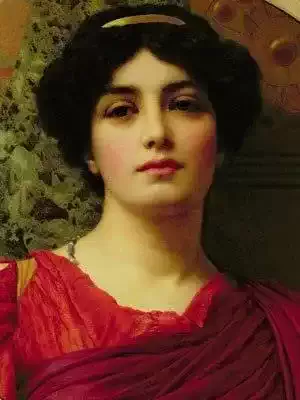
Safo
Cyprian, in my dream
Cyprian, in my dream
Cyprian, in my dream
the folds of a purple
kerchief shadowed
your cheeks --- the one
Timas one time sent,
a timid gift, all
the way from Phocaea
Sappho
tr. Barnard
Cyprian, in my dream
the folds of a purple
kerchief shadowed
your cheeks --- the one
Timas one time sent,
a timid gift, all
the way from Phocaea
Sappho
tr. Barnard
441
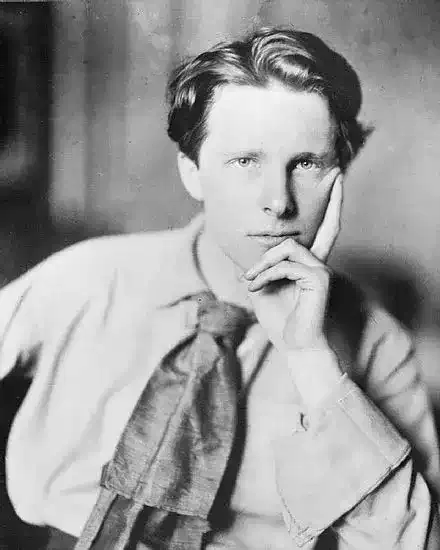
Rupert Brooke
Treasure, The
Treasure, The
When colour goes home into the eyes,
And lights that shine are shut again
With dancing girls and sweet birds' cries
Behind the gateways of the brain;
And that no-place which gave them birth, shall close
The rainbow and the rose: --
Still may Time hold some golden space
Where I'll unpack that scented store
Of song and flower and sky and face,
And count, and touch, and turn them o'er,
Musing upon them; as a mother, who
Has watched her children all the rich day through
Sits, quiet-handed, in the fading light,
When children sleep, ere night.
When colour goes home into the eyes,
And lights that shine are shut again
With dancing girls and sweet birds' cries
Behind the gateways of the brain;
And that no-place which gave them birth, shall close
The rainbow and the rose: --
Still may Time hold some golden space
Where I'll unpack that scented store
Of song and flower and sky and face,
And count, and touch, and turn them o'er,
Musing upon them; as a mother, who
Has watched her children all the rich day through
Sits, quiet-handed, in the fading light,
When children sleep, ere night.
189
Rupert Brooke
The Soldier
The Soldier
If I should die, think only this of me:
That there's some corner of a foreign field
That is for ever England. There shall be
In that rich earth a richer dust concealed;
A dust whom England bore, shaped, made aware,
Gave once her flowers to love, her ways to roam;
A body of England's, breathing English air,
Washed by the rivers, blest by suns of home.
And think, this heart, all evil shed away,
A pulse in the eternal mind, no less
Gives somewhere back the thoughts by England given;
Her sights and sounds; dreams happy as her day;
And laughter, learnt of friends; and gentleness,
In hearts at peace, under an English heaven.
If I should die, think only this of me:
That there's some corner of a foreign field
That is for ever England. There shall be
In that rich earth a richer dust concealed;
A dust whom England bore, shaped, made aware,
Gave once her flowers to love, her ways to roam;
A body of England's, breathing English air,
Washed by the rivers, blest by suns of home.
And think, this heart, all evil shed away,
A pulse in the eternal mind, no less
Gives somewhere back the thoughts by England given;
Her sights and sounds; dreams happy as her day;
And laughter, learnt of friends; and gentleness,
In hearts at peace, under an English heaven.
198
Rupert Brooke
One Before the Last, The
One Before the Last, The
I dreamt I was in love again
With the One Before the Last,
And smiled to greet the pleasant pain
Of that innocent young past.
But I jumped to feel how sharp had been
The pain when it did live,
How the faded dreams of Nineteen-ten
Were Hell in Nineteen-five.
The boy's woe was as keen and clear,
The boy's love just as true,
And the One Before the Last, my dear,
Hurt quite as much as you.
* * * * *
Sickly I pondered how the lover
Wrongs the unanswering tomb,
And sentimentalizes over
What earned a better doom.
Gently he tombs the poor dim last time,
Strews pinkish dust above,
And sighs, "The dear dead boyish pastime!
But THIS -- ah, God! -- is Love!"
-- Better oblivion hide dead true loves,
Better the night enfold,
Than men, to eke the praise of new loves,
Should lie about the old!
* * * * *
Oh! bitter thoughts I had in plenty.
But here's the worst of it --
I shall forget, in Nineteen-twenty,
YOU ever hurt abit!
I dreamt I was in love again
With the One Before the Last,
And smiled to greet the pleasant pain
Of that innocent young past.
But I jumped to feel how sharp had been
The pain when it did live,
How the faded dreams of Nineteen-ten
Were Hell in Nineteen-five.
The boy's woe was as keen and clear,
The boy's love just as true,
And the One Before the Last, my dear,
Hurt quite as much as you.
* * * * *
Sickly I pondered how the lover
Wrongs the unanswering tomb,
And sentimentalizes over
What earned a better doom.
Gently he tombs the poor dim last time,
Strews pinkish dust above,
And sighs, "The dear dead boyish pastime!
But THIS -- ah, God! -- is Love!"
-- Better oblivion hide dead true loves,
Better the night enfold,
Than men, to eke the praise of new loves,
Should lie about the old!
* * * * *
Oh! bitter thoughts I had in plenty.
But here's the worst of it --
I shall forget, in Nineteen-twenty,
YOU ever hurt abit!
204
Rupert Brooke
Oh! Death Will Find Me, Long Before I Tire
Oh! Death Will Find Me, Long Before I Tire
Oh! Death will find me, long before I tire
Of watching you; and swing me suddenly
Into the shade and loneliness and mire
Of the last land! There, waiting patiently,
One day, I think, I'll feel a cool wind blowing,
See a slow light across the Stygian tide,
And hear the Dead about me stir, unknowing,
And tremble. And I shall know that you have died,
And watch you, a broad-browed and smiling dream,
Pass, light as ever, through the lightless host,
Quietly ponder, start, and sway, and gleam --
Most individual and bewildering ghost! --
And turn, and toss your brown delightful head
Amusedly, among the ancient Dead.
Oh! Death will find me, long before I tire
Of watching you; and swing me suddenly
Into the shade and loneliness and mire
Of the last land! There, waiting patiently,
One day, I think, I'll feel a cool wind blowing,
See a slow light across the Stygian tide,
And hear the Dead about me stir, unknowing,
And tremble. And I shall know that you have died,
And watch you, a broad-browed and smiling dream,
Pass, light as ever, through the lightless host,
Quietly ponder, start, and sway, and gleam --
Most individual and bewildering ghost! --
And turn, and toss your brown delightful head
Amusedly, among the ancient Dead.
166
Rupert Brooke
Lines Written In The Belief That The Ancient Roman Festival Of The Dead Was
Lines Written In The Belief That The Ancient Roman Festival Of The Dead Was
Called Ambarvalia
Swings the way still by hollow and hill,
And all the world's a song;
"She's far," it sings me, "but fair," it rings me,
"Quiet," it laughs, "and strong!"
Oh! spite of the miles and years between us,
Spite of your chosen part,
I do remember; and I go
With laughter in my heart.
So above the little folk that know not,
Out of the white hill-town,
High up I clamber; and I remember;
And watch the day go down.
Gold is my heart, and the world's golden,
And one peak tipped with light;
And the air lies still about the hill
With the first fear of night;
Till mystery down the soundless valley
Thunders, and dark is here;
And the wind blows, and the light goes,
And the night is full of fear,
And I know, one night, on some far height,
In the tongue I never knew,
I yet shall hear the tidings clear
From them that were friends of you.
They'll call the news from hill to hill,
Dark and uncomforted,
Earth and sky and the winds; and I
Shall know that you are dead.
I shall not hear your trentals,
Nor eat your arval bread;
For the kin of you will surely do
Their duty by the dead.
Their little dull greasy eyes will water;
They'll paw you, and gulp afresh.
They'll sniffle and weep, and their thoughts will creep
Like flies on the cold flesh.
They will put pence on your grey eyes,
Bind up your fallen chin,
And lay you straight, the fools that loved you
Because they were your kin.
They will praise all the bad about you,
And hush the good away,
And wonder how they'll do without you,
And then they'll go away.
But quieter than one sleeping,
And stranger than of old,
You will not stir for weeping,
You will not mind the cold;
But through the night the lips will laugh not,
The hands will be in place,
And at length the hair be lying still
About the quiet face.
With snuffle and sniff and handkerchief,
And dim and decorous mirth,
With ham and sherry, they'll meet to bury
The lordliest lass of earth.
The little dead hearts will tramp ungrieving
Behind lone-riding you,
The heart so high, the heart so living,
Heart that they never knew.
I shall not hear your trentals,
Nor eat your arval bread,
Nor with smug breath tell lies of death
To the unanswering dead.
With snuffle and sniff and handkerchief,
The folk who loved you not
Will bury you, and go wondering
Back home. And you will rot.
But laughing and half-way up to heaven,
With wind and hill and star,
I yet shall keep, before I sleep,
Your Ambarvalia.
Called Ambarvalia
Swings the way still by hollow and hill,
And all the world's a song;
"She's far," it sings me, "but fair," it rings me,
"Quiet," it laughs, "and strong!"
Oh! spite of the miles and years between us,
Spite of your chosen part,
I do remember; and I go
With laughter in my heart.
So above the little folk that know not,
Out of the white hill-town,
High up I clamber; and I remember;
And watch the day go down.
Gold is my heart, and the world's golden,
And one peak tipped with light;
And the air lies still about the hill
With the first fear of night;
Till mystery down the soundless valley
Thunders, and dark is here;
And the wind blows, and the light goes,
And the night is full of fear,
And I know, one night, on some far height,
In the tongue I never knew,
I yet shall hear the tidings clear
From them that were friends of you.
They'll call the news from hill to hill,
Dark and uncomforted,
Earth and sky and the winds; and I
Shall know that you are dead.
I shall not hear your trentals,
Nor eat your arval bread;
For the kin of you will surely do
Their duty by the dead.
Their little dull greasy eyes will water;
They'll paw you, and gulp afresh.
They'll sniffle and weep, and their thoughts will creep
Like flies on the cold flesh.
They will put pence on your grey eyes,
Bind up your fallen chin,
And lay you straight, the fools that loved you
Because they were your kin.
They will praise all the bad about you,
And hush the good away,
And wonder how they'll do without you,
And then they'll go away.
But quieter than one sleeping,
And stranger than of old,
You will not stir for weeping,
You will not mind the cold;
But through the night the lips will laugh not,
The hands will be in place,
And at length the hair be lying still
About the quiet face.
With snuffle and sniff and handkerchief,
And dim and decorous mirth,
With ham and sherry, they'll meet to bury
The lordliest lass of earth.
The little dead hearts will tramp ungrieving
Behind lone-riding you,
The heart so high, the heart so living,
Heart that they never knew.
I shall not hear your trentals,
Nor eat your arval bread,
Nor with smug breath tell lies of death
To the unanswering dead.
With snuffle and sniff and handkerchief,
The folk who loved you not
Will bury you, and go wondering
Back home. And you will rot.
But laughing and half-way up to heaven,
With wind and hill and star,
I yet shall keep, before I sleep,
Your Ambarvalia.
188
Rupert Brooke
IV. The Dead
IV. The Dead
These hearts were woven of human joys and cares,
Washed marvellously with sorrow, swift to mirth.
The years had given them kindness. Dawn was theirs,
And sunset, and the colours of the earth.
These had seen movement, and heard music; known
Slumber and waking; loved; gone proudly friended;
Felt the quick stir of wonder; sat alone;
Touched flowers and furs and cheeks. All this is ended.
There are waters blown by changing winds to laughter
And lit by the rich skies, all day. And after,
Frost, with a gesture, stays the waves that dance
And wandering loveliness. He leaves a white
Unbroken glory, a gathered radiance,
A width, a shining peace, under the night.
These hearts were woven of human joys and cares,
Washed marvellously with sorrow, swift to mirth.
The years had given them kindness. Dawn was theirs,
And sunset, and the colours of the earth.
These had seen movement, and heard music; known
Slumber and waking; loved; gone proudly friended;
Felt the quick stir of wonder; sat alone;
Touched flowers and furs and cheeks. All this is ended.
There are waters blown by changing winds to laughter
And lit by the rich skies, all day. And after,
Frost, with a gesture, stays the waves that dance
And wandering loveliness. He leaves a white
Unbroken glory, a gathered radiance,
A width, a shining peace, under the night.
243
Rupert Brooke
Hauntings
Hauntings
In the grey tumult of these after years
Oft silence falls; the incessant wranglers part;
And less-than-echoes of remembered tears
Hush all the loud confusion of the heart;
And a shade, through the toss'd ranks of mirth and crying
Hungers, and pains, and each dull passionate mood, --
Quite lost, and all but all forgot, undying,
Comes back the ecstasy of your quietude.
So a poor ghost, beside his misty streams,
Is haunted by strange doubts, evasive dreams,
Hints of a pre-Lethean life, of men,
Stars, rocks, and flesh, things unintelligible,
And light on waving grass, he knows not when,
And feet that ran, but where, he cannot tell.
In the grey tumult of these after years
Oft silence falls; the incessant wranglers part;
And less-than-echoes of remembered tears
Hush all the loud confusion of the heart;
And a shade, through the toss'd ranks of mirth and crying
Hungers, and pains, and each dull passionate mood, --
Quite lost, and all but all forgot, undying,
Comes back the ecstasy of your quietude.
So a poor ghost, beside his misty streams,
Is haunted by strange doubts, evasive dreams,
Hints of a pre-Lethean life, of men,
Stars, rocks, and flesh, things unintelligible,
And light on waving grass, he knows not when,
And feet that ran, but where, he cannot tell.
184
Rupert Brooke
Finding
Finding
From the candles and dumb shadows,
And the house where love had died,
I stole to the vast moonlight
And the whispering life outside.
But I found no lips of comfort,
No home in the moon's light
(I, little and lone and frightened
In the unfriendly night),
And no meaning in the voices. . . .
Far over the lands and through
The dark, beyond the ocean,
I willed to think of YOU!
For I knew, had you been with me
I'd have known the words of night,
Found peace of heart, gone gladly
In comfort of that light.
Oh! the wind with soft beguiling
Would have stolen my thought away;
And the night, subtly smiling,
Came by the silver way;
And the moon came down and danced to me,
And her robe was white and flying;
And trees bent their heads to me
Mysteriously crying;
And dead voices wept around me;
And dead soft fingers thrilled;
And the little gods whispered. . . .
But ever
Desperately I willed;
Till all grew soft and far
And silent . . .
And suddenly
I found you white and radiant,
Sleeping quietly,
Far out through the tides of darkness.
And I there in that great light
Was alone no more, nor fearful;
For there, in the homely night,
Was no thought else that mattered,
And nothing else was true,
But the white fire of moonlight,
And a white dream of you.
From the candles and dumb shadows,
And the house where love had died,
I stole to the vast moonlight
And the whispering life outside.
But I found no lips of comfort,
No home in the moon's light
(I, little and lone and frightened
In the unfriendly night),
And no meaning in the voices. . . .
Far over the lands and through
The dark, beyond the ocean,
I willed to think of YOU!
For I knew, had you been with me
I'd have known the words of night,
Found peace of heart, gone gladly
In comfort of that light.
Oh! the wind with soft beguiling
Would have stolen my thought away;
And the night, subtly smiling,
Came by the silver way;
And the moon came down and danced to me,
And her robe was white and flying;
And trees bent their heads to me
Mysteriously crying;
And dead voices wept around me;
And dead soft fingers thrilled;
And the little gods whispered. . . .
But ever
Desperately I willed;
Till all grew soft and far
And silent . . .
And suddenly
I found you white and radiant,
Sleeping quietly,
Far out through the tides of darkness.
And I there in that great light
Was alone no more, nor fearful;
For there, in the homely night,
Was no thought else that mattered,
And nothing else was true,
But the white fire of moonlight,
And a white dream of you.
173
Rupert Brooke
Dining-Room Tea
Dining-Room Tea
When you were there, and you, and you,
Happiness crowned the night; I too,
Laughing and looking, one of all,
I watched the quivering lamplight fall
On plate and flowers and pouring tea
And cup and cloth; and they and we
Flung all the dancing moments by
With jest and glitter. Lip and eye
Flashed on the glory, shone and cried,
Improvident, unmemoried;
And fitfully and like a flame
The light of laughter went and came.
Proud in their careless transience moved
The changing faces that I loved.
Till suddenly, and otherwhence,
I looked upon your innocence.
For lifted clear and still and strange
From the dark woven flow of change
Under a vast and starless sky
I saw the immortal moment lie.
One Instant I, an instant, knew
As God knows all. And it and you
I, above Time, oh, blind! could see
In witless immortality.
I saw the marble cup; the tea,
Hung on the air, an amber stream;
I saw the fire’s unglittering gleam,
The painted flame, the frozen smoke.
No more the flooding lamplight broke
On flying eyes and lips and hair;
But lay, but slept unbroken there,
On stiller flesh, and body breathless,
And lips and laughter stayed and deathless,
And words on which no silence grew.
Light was more alive than you.
For suddenly, and otherwhence,
I looked on your magnificence.
I saw the stillness and the light,
And you, august, immortal, white,
Holy and strange; and every glint
Posture and jest and thought and tint
Freed from the mask of transiency,
Triumphant in eternity,
Immote, immortal.
Dazed at length
Human eyes grew, mortal strength
Wearied; and Time began to creep.
Change closed about me like a sleep.
Light glinted on the eyes I loved.
The cup was filled. The bodies moved.
The drifting petal came to ground.
The laughter chimed its perfect round.
The broken syllable was ended.
And I, so certain and so friended,
How could I cloud, or how distress,
The heaven of your unconsciousness?
Or shake at Time’s sufficient spell,
Stammering of lights unutterable?
The eternal holiness of you,
The timeless end, you never knew,
The peace that lay, the light that shone.
You never knew that I had gone
A million miles away, and stayed
A million years. The laughter played
Unbroken round me; and the jest
Flashed on. And we that knew the best
Down wonderful hours grew happier yet.
I sang at heart, and talked, and eat,
And lived from laugh to laugh, I too,
When you were there, and you, and you.
When you were there, and you, and you,
Happiness crowned the night; I too,
Laughing and looking, one of all,
I watched the quivering lamplight fall
On plate and flowers and pouring tea
And cup and cloth; and they and we
Flung all the dancing moments by
With jest and glitter. Lip and eye
Flashed on the glory, shone and cried,
Improvident, unmemoried;
And fitfully and like a flame
The light of laughter went and came.
Proud in their careless transience moved
The changing faces that I loved.
Till suddenly, and otherwhence,
I looked upon your innocence.
For lifted clear and still and strange
From the dark woven flow of change
Under a vast and starless sky
I saw the immortal moment lie.
One Instant I, an instant, knew
As God knows all. And it and you
I, above Time, oh, blind! could see
In witless immortality.
I saw the marble cup; the tea,
Hung on the air, an amber stream;
I saw the fire’s unglittering gleam,
The painted flame, the frozen smoke.
No more the flooding lamplight broke
On flying eyes and lips and hair;
But lay, but slept unbroken there,
On stiller flesh, and body breathless,
And lips and laughter stayed and deathless,
And words on which no silence grew.
Light was more alive than you.
For suddenly, and otherwhence,
I looked on your magnificence.
I saw the stillness and the light,
And you, august, immortal, white,
Holy and strange; and every glint
Posture and jest and thought and tint
Freed from the mask of transiency,
Triumphant in eternity,
Immote, immortal.
Dazed at length
Human eyes grew, mortal strength
Wearied; and Time began to creep.
Change closed about me like a sleep.
Light glinted on the eyes I loved.
The cup was filled. The bodies moved.
The drifting petal came to ground.
The laughter chimed its perfect round.
The broken syllable was ended.
And I, so certain and so friended,
How could I cloud, or how distress,
The heaven of your unconsciousness?
Or shake at Time’s sufficient spell,
Stammering of lights unutterable?
The eternal holiness of you,
The timeless end, you never knew,
The peace that lay, the light that shone.
You never knew that I had gone
A million miles away, and stayed
A million years. The laughter played
Unbroken round me; and the jest
Flashed on. And we that knew the best
Down wonderful hours grew happier yet.
I sang at heart, and talked, and eat,
And lived from laugh to laugh, I too,
When you were there, and you, and you.
172
Rupert Brooke
Day That I Have Loved
Day That I Have Loved
Tenderly, day that I have loved, I close your eyes,
And smooth your quiet brow, and fold your thin dead hands.
The grey veils of the half-light deepen; colour dies.
I bear you, a light burden, to the shrouded sands,
Where lies your waiting boat, by wreaths of the sea's making
Mist-garlanded, with all grey weeds of the water crowned.
There you'll be laid, past fear of sleep or hope of waking;
And over the unmoving sea, without a sound,
Faint hands will row you outward, out beyond our sight,
Us with stretched arms and empty eyes on the far-gleaming
And marble sand. . . .
Beyond the shifting cold twilight,
Further than laughter goes, or tears, further than dreaming,
There'll be no port, no dawn-lit islands! But the drear
Waste darkening, and, at length, flame ultimate on the deep.
Oh, the last fire -- and you, unkissed, unfriended there!
Oh, the lone way's red ending, and we not there to weep!
(We found you pale and quiet, and strangely crowned with flowers,
Lovely and secret as a child. You came with us,
Came happily, hand in hand with the young dancing hours,
High on the downs at dawn!) Void now and tenebrous,
The grey sands curve before me. . . .
From the inland meadows,
Fragrant of June and clover, floats the dark, and fills
The hollow sea's dead face with little creeping shadows,
And the white silence brims the hollow of the hills.
Close in the nest is folded every weary wing,
Hushed all the joyful voices; and we, who held you dear,
Eastward we turn and homeward, alone, remembering . . .
Day that I loved, day that I loved, the Night is here!
Tenderly, day that I have loved, I close your eyes,
And smooth your quiet brow, and fold your thin dead hands.
The grey veils of the half-light deepen; colour dies.
I bear you, a light burden, to the shrouded sands,
Where lies your waiting boat, by wreaths of the sea's making
Mist-garlanded, with all grey weeds of the water crowned.
There you'll be laid, past fear of sleep or hope of waking;
And over the unmoving sea, without a sound,
Faint hands will row you outward, out beyond our sight,
Us with stretched arms and empty eyes on the far-gleaming
And marble sand. . . .
Beyond the shifting cold twilight,
Further than laughter goes, or tears, further than dreaming,
There'll be no port, no dawn-lit islands! But the drear
Waste darkening, and, at length, flame ultimate on the deep.
Oh, the last fire -- and you, unkissed, unfriended there!
Oh, the lone way's red ending, and we not there to weep!
(We found you pale and quiet, and strangely crowned with flowers,
Lovely and secret as a child. You came with us,
Came happily, hand in hand with the young dancing hours,
High on the downs at dawn!) Void now and tenebrous,
The grey sands curve before me. . . .
From the inland meadows,
Fragrant of June and clover, floats the dark, and fills
The hollow sea's dead face with little creeping shadows,
And the white silence brims the hollow of the hills.
Close in the nest is folded every weary wing,
Hushed all the joyful voices; and we, who held you dear,
Eastward we turn and homeward, alone, remembering . . .
Day that I loved, day that I loved, the Night is here!
161
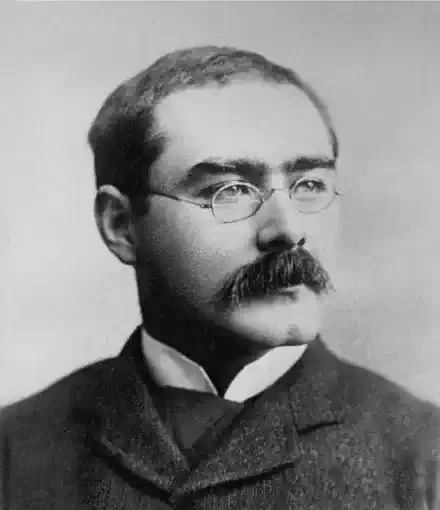
Rudyard Kipling
With Scindia To Delhi
With Scindia To Delhi
More than a hundred years ago, in a great battle fought near Delhi,
an Indian Prince rode fifty miles after the day was lost
with a beggar-girl, who had loved him and followed him in all his camps,
on his saddle-bow. He lost the girl when almost within sight of safety.
A Maratta trooper tells the story: --
The wreath of banquet overnight lay withered on the neck,
Our hands and scarfs were saffron-dyed for signal of despair,
When we went forth to Paniput to battle with the ~Mlech~, --
Ere we came back from Paniput and left a kingdom there.
Thrice thirty thousand men were we to force the Jumna fords --
The hawk-winged horse of Damajee, mailed squadrons of the Bhao,
Stark levies of the southern hills, the Deccan's sharpest swords,
And he the harlot's traitor son the goatherd Mulhar Rao!
Thrice thirty thousand men were we before the mists had cleared,
The low white mists of morning heard the war-conch scream and bray;
We called upon Bhowani and we gripped them by the beard,
We rolled upon them like a flood and washed their ranks away.
The children of the hills of Khost before our lances ran,
We drove the black Rohillas back as cattle to the pen;
'Twas then we needed Mulhar Rao to end what we began,
A thousand men had saved the charge; he fled the field with ten!
There was no room to clear a sword -- no power to strike a blow,
For foot to foot, ay, breast to breast, the battle held us fast --
Save where the naked hill-men ran, and stabbing from below
Brought down the horse and rider and we trampled them and passed.
To left the roar of musketry rang like a falling flood --
To right the sunshine rippled red from redder lance and blade --
Above the dark ~Upsaras~* flew, beneath us plashed the blood,
And, bellying black against the dust, the Bhagwa Jhanda swayed.
* The Choosers of the Slain.
I saw it fall in smoke and fire, the banner of the Bhao;
I heard a voice across the press of one who called in vain: --
"Ho! Anand Rao Nimbalkhur, ride! Get aid of Mulhar Rao!
Go shame his squadrons into fight -- the Bhao -- the Bhao is slain!"
Thereat, as when a sand-bar breaks in clotted spume and spray --
When rain of later autumn sweeps the Jumna water-head,
Before their charge from flank to flank our riven ranks gave way;
But of the waters of that flood the Jumna fords ran red.
I held by Scindia, my lord, as close as man might hold;
A Soobah of the Deccan asks no aid to guard his life;
But Holkar's Horse were flying, and our chiefest chiefs were cold,
And like a flame among us leapt the long lean Northern knife.
I held by Scindia -- my lance from butt to tuft was dyed,
The froth of battle bossed the shield and roped the bridle-chain --
What time beneath our horses' feet a maiden rose and cried,
And clung to Scindia, and I turned a sword-cut from the twain.
(He set a spell upon the maid in woodlands long ago,
A hunter by the Tapti banks she gave him water there:
He turned her heart to water, and she followed to her woe.
What need had he of Lalun who had twenty maids as fair?)
Now in that hour strength left my lord; he wrenched his mare aside;
He bound the girl behind him and we slashed and struggled free.
Across the reeling wreck of strife we rode as shadows ride
From Paniput to Delhi town, but not alone were we.
'Twas Lutuf-Ullah Populzai laid horse upon our track,
A swine-fed reiver of the North that lusted for the maid;
I might have barred his path awhile, but Scindia called me back,
And I -- O woe for Scindia! -- I listened and obeyed.
League after league the formless scrub took shape and glided by --
League after league the white road swirled behind the white mare's feet --
League after league, when leagues were done, we heard the Populzai,
Where sure as Time and swift as Death the tireless footfall beat.
Noon's eye beheld that shame of flight, the shadows fell, we fled
Where steadfast as the wheeling kite he followed in our train;
The black wolf warred where we had warred, the jackal mocked our dead,
And terror born of twilight-tide made mad the labouring brain.
I gasped: -- "A kingdom waits my lord; her love is but her own.
A day shall mar, a day shall cure for her, but what for thee?
Cut loose the girl: he follows fast. Cut loose and ride alone!"
Then Scindia 'twixt his blistered lips: -- "My Queens' Queen shall she be!
"Of all who ate my bread last night 'twas she alone that came
To seek her love between the spears and find her crown therein!
One shame is mine to-day, what need the weight of double shame?
If once we reach the Delhi gate, though all be lost, I win!"
We rode -- the white mare failed -- her trot a staggering stumble grew, --
The cooking-smoke of even rose and weltered and hung low;
And still we heard the Populzai and still we strained anew,
And Delhi town was very near, but nearer was the foe.
Yea, Delhi town was very near when Lalun whispered: -- "Slay!
Lord of my life, the mare sinks fast -- stab deep and let me die!"
But Scindia would not, and the maid tore free and flung away,
And turning as she fell we heard the clattering Populzai.
Then Scindia checked the gasping mare that rocked and groaned for breath,
And wheeled to charge and plunged the knife a hand's-breadth in her side --
The hunter and the hunted know how that last pause is death --
The blood had chilled about her heart, she reared and fell and died.
Our Gods were kind. Before he heard the maiden's piteous scream
A log upon the Delhi road, beneath the mare he lay --
Lost mistress and lost battle passed before him like a dream;
The darkness closed about his eyes -- I bore my King away.
More than a hundred years ago, in a great battle fought near Delhi,
an Indian Prince rode fifty miles after the day was lost
with a beggar-girl, who had loved him and followed him in all his camps,
on his saddle-bow. He lost the girl when almost within sight of safety.
A Maratta trooper tells the story: --
The wreath of banquet overnight lay withered on the neck,
Our hands and scarfs were saffron-dyed for signal of despair,
When we went forth to Paniput to battle with the ~Mlech~, --
Ere we came back from Paniput and left a kingdom there.
Thrice thirty thousand men were we to force the Jumna fords --
The hawk-winged horse of Damajee, mailed squadrons of the Bhao,
Stark levies of the southern hills, the Deccan's sharpest swords,
And he the harlot's traitor son the goatherd Mulhar Rao!
Thrice thirty thousand men were we before the mists had cleared,
The low white mists of morning heard the war-conch scream and bray;
We called upon Bhowani and we gripped them by the beard,
We rolled upon them like a flood and washed their ranks away.
The children of the hills of Khost before our lances ran,
We drove the black Rohillas back as cattle to the pen;
'Twas then we needed Mulhar Rao to end what we began,
A thousand men had saved the charge; he fled the field with ten!
There was no room to clear a sword -- no power to strike a blow,
For foot to foot, ay, breast to breast, the battle held us fast --
Save where the naked hill-men ran, and stabbing from below
Brought down the horse and rider and we trampled them and passed.
To left the roar of musketry rang like a falling flood --
To right the sunshine rippled red from redder lance and blade --
Above the dark ~Upsaras~* flew, beneath us plashed the blood,
And, bellying black against the dust, the Bhagwa Jhanda swayed.
* The Choosers of the Slain.
I saw it fall in smoke and fire, the banner of the Bhao;
I heard a voice across the press of one who called in vain: --
"Ho! Anand Rao Nimbalkhur, ride! Get aid of Mulhar Rao!
Go shame his squadrons into fight -- the Bhao -- the Bhao is slain!"
Thereat, as when a sand-bar breaks in clotted spume and spray --
When rain of later autumn sweeps the Jumna water-head,
Before their charge from flank to flank our riven ranks gave way;
But of the waters of that flood the Jumna fords ran red.
I held by Scindia, my lord, as close as man might hold;
A Soobah of the Deccan asks no aid to guard his life;
But Holkar's Horse were flying, and our chiefest chiefs were cold,
And like a flame among us leapt the long lean Northern knife.
I held by Scindia -- my lance from butt to tuft was dyed,
The froth of battle bossed the shield and roped the bridle-chain --
What time beneath our horses' feet a maiden rose and cried,
And clung to Scindia, and I turned a sword-cut from the twain.
(He set a spell upon the maid in woodlands long ago,
A hunter by the Tapti banks she gave him water there:
He turned her heart to water, and she followed to her woe.
What need had he of Lalun who had twenty maids as fair?)
Now in that hour strength left my lord; he wrenched his mare aside;
He bound the girl behind him and we slashed and struggled free.
Across the reeling wreck of strife we rode as shadows ride
From Paniput to Delhi town, but not alone were we.
'Twas Lutuf-Ullah Populzai laid horse upon our track,
A swine-fed reiver of the North that lusted for the maid;
I might have barred his path awhile, but Scindia called me back,
And I -- O woe for Scindia! -- I listened and obeyed.
League after league the formless scrub took shape and glided by --
League after league the white road swirled behind the white mare's feet --
League after league, when leagues were done, we heard the Populzai,
Where sure as Time and swift as Death the tireless footfall beat.
Noon's eye beheld that shame of flight, the shadows fell, we fled
Where steadfast as the wheeling kite he followed in our train;
The black wolf warred where we had warred, the jackal mocked our dead,
And terror born of twilight-tide made mad the labouring brain.
I gasped: -- "A kingdom waits my lord; her love is but her own.
A day shall mar, a day shall cure for her, but what for thee?
Cut loose the girl: he follows fast. Cut loose and ride alone!"
Then Scindia 'twixt his blistered lips: -- "My Queens' Queen shall she be!
"Of all who ate my bread last night 'twas she alone that came
To seek her love between the spears and find her crown therein!
One shame is mine to-day, what need the weight of double shame?
If once we reach the Delhi gate, though all be lost, I win!"
We rode -- the white mare failed -- her trot a staggering stumble grew, --
The cooking-smoke of even rose and weltered and hung low;
And still we heard the Populzai and still we strained anew,
And Delhi town was very near, but nearer was the foe.
Yea, Delhi town was very near when Lalun whispered: -- "Slay!
Lord of my life, the mare sinks fast -- stab deep and let me die!"
But Scindia would not, and the maid tore free and flung away,
And turning as she fell we heard the clattering Populzai.
Then Scindia checked the gasping mare that rocked and groaned for breath,
And wheeled to charge and plunged the knife a hand's-breadth in her side --
The hunter and the hunted know how that last pause is death --
The blood had chilled about her heart, she reared and fell and died.
Our Gods were kind. Before he heard the maiden's piteous scream
A log upon the Delhi road, beneath the mare he lay --
Lost mistress and lost battle passed before him like a dream;
The darkness closed about his eyes -- I bore my King away.
577
Rudyard Kipling
To the Companions
To the Companions
How comes it that, at even-tide,
When level beams should show most truth,
Man, failing, takes unfailing pride
In memories of his frolic youth?
Venus and Liber fill their hour;
The games engage, the law-courts prove;
Till hardened life breeds love of power
Or Avarice, Age's final love.
Yet at the end, these comfort not--
Nor any triumph Fate decrees--
Compared with glorious, unforgot--
Ten innocent enormities
Of frontless days before the beard,
When, instant on the casual jest,
The God Himself of Mirth appeared
And snatched us to His heaving breast
And we--not caring who He was
But certain He would come again--
Accepted all He brought to pass
As Gods accept the lives of men...
Then He withdrew from sight and speech,
Nor left a shrine. How comes it now,
While Charon's keel grates on the beach,
He calls so clear: "Rememberest thou?"
How comes it that, at even-tide,
When level beams should show most truth,
Man, failing, takes unfailing pride
In memories of his frolic youth?
Venus and Liber fill their hour;
The games engage, the law-courts prove;
Till hardened life breeds love of power
Or Avarice, Age's final love.
Yet at the end, these comfort not--
Nor any triumph Fate decrees--
Compared with glorious, unforgot--
Ten innocent enormities
Of frontless days before the beard,
When, instant on the casual jest,
The God Himself of Mirth appeared
And snatched us to His heaving breast
And we--not caring who He was
But certain He would come again--
Accepted all He brought to pass
As Gods accept the lives of men...
Then He withdrew from sight and speech,
Nor left a shrine. How comes it now,
While Charon's keel grates on the beach,
He calls so clear: "Rememberest thou?"
454
Rudyard Kipling
The Moon of Other Days
The Moon of Other Days
Beneath the deep veranda's shade,
When bats begin to fly,
I sit me down and watch -- alas! --
Another evening die.
Blood-red behind the sere ferash
She rises through the haze.
Sainted Diana! can that be
The Moon of Other Days?
Ah! shade of little Kitty Smith,
Sweet Saint of Kensington!
Say, was it ever thus at Home
The Moon of August shone,
When arm in arm we wandered long
Through Putney's evening haze,
And Hammersmith was Heaven beneath
The moon of Other Days?
But Wandle's stream is Sutlej now,
And Putney's evening haze
The dust that half a hundered kine
Before my window raise.
Unkempt, unclean, athwart the mist
The seething city looms,
In place of Putney's golden gorse
The sickly babul blooms.
Glare down, old Hecate, through the dust,
And bid the pie-dog yell,
Draw from the drain its typhoid-term,
From each bazaar its smell;
Yea, suck the fever from the tank
And sap my strength therewith:
Thank Heaven, you show a smiling face
To little Kitty Smith!
Beneath the deep veranda's shade,
When bats begin to fly,
I sit me down and watch -- alas! --
Another evening die.
Blood-red behind the sere ferash
She rises through the haze.
Sainted Diana! can that be
The Moon of Other Days?
Ah! shade of little Kitty Smith,
Sweet Saint of Kensington!
Say, was it ever thus at Home
The Moon of August shone,
When arm in arm we wandered long
Through Putney's evening haze,
And Hammersmith was Heaven beneath
The moon of Other Days?
But Wandle's stream is Sutlej now,
And Putney's evening haze
The dust that half a hundered kine
Before my window raise.
Unkempt, unclean, athwart the mist
The seething city looms,
In place of Putney's golden gorse
The sickly babul blooms.
Glare down, old Hecate, through the dust,
And bid the pie-dog yell,
Draw from the drain its typhoid-term,
From each bazaar its smell;
Yea, suck the fever from the tank
And sap my strength therewith:
Thank Heaven, you show a smiling face
To little Kitty Smith!
421
Rudyard Kipling
The Consolations of Memory
The Consolations of Memory
Circa -- Done out of Boethius by Geoffrey Chaucer
Blessed was our first age and morning-time. Then were no
waies tarren, ne no cars numberen, but each followed his owne
playing-busyness to go about singly or by large interspaces,
for to leden his viage after his luste and layen under clene hedge.
Jungling there was not, nor the overtaking wheele, and all those
now cruel clarions were full-hushed and full-still. Then nobile
horses, lest they should make the chariots moveable to run by
cause of this new feare, we did not press, and were apayed by
sweete thankes of him that drave. There was not cursings ne
adventure of death blinded bankes betweene, but good-fellowship
of yoke-mates at ignorance equal, and a one pillar of dust covered
all exodus.... But, see now how the blacke road hath
strippen herself of hearte and beauty where the dumbe lampe of
Tartarus winketh red, etc.
Circa -- Done out of Boethius by Geoffrey Chaucer
Blessed was our first age and morning-time. Then were no
waies tarren, ne no cars numberen, but each followed his owne
playing-busyness to go about singly or by large interspaces,
for to leden his viage after his luste and layen under clene hedge.
Jungling there was not, nor the overtaking wheele, and all those
now cruel clarions were full-hushed and full-still. Then nobile
horses, lest they should make the chariots moveable to run by
cause of this new feare, we did not press, and were apayed by
sweete thankes of him that drave. There was not cursings ne
adventure of death blinded bankes betweene, but good-fellowship
of yoke-mates at ignorance equal, and a one pillar of dust covered
all exodus.... But, see now how the blacke road hath
strippen herself of hearte and beauty where the dumbe lampe of
Tartarus winketh red, etc.
472
Rudyard Kipling
The Changelings
The Changelings
R.N.V.R, Sea Constables
Or ever the battered liners sank
With their passengers to the dark
I was head of a Walworth Bank,
And you were a grocer's clerk.
I was a dealer in stocks and shares,
And you in butters and teas;
And we both abandoned our own affairs
And took to the dreadful seas.
Wet and worry about our ways--
Panic, onset and flight--
Had us in charge for a thousand days
And thousand-year-long night.
We saw more than the nights could hide--
More than the waves could keep--
And--certain faces over the side
Which do not go from our sleep.
We were more tired than words can tell
While the pied craft fled by,
And the swinging mounds of the Western swell
Hoisted us Heavens-high...
Now there is nothing -- not even our rank--
To witness what we have been;
And I am returned to my Walworth Bank
And you to your margarine!
R.N.V.R, Sea Constables
Or ever the battered liners sank
With their passengers to the dark
I was head of a Walworth Bank,
And you were a grocer's clerk.
I was a dealer in stocks and shares,
And you in butters and teas;
And we both abandoned our own affairs
And took to the dreadful seas.
Wet and worry about our ways--
Panic, onset and flight--
Had us in charge for a thousand days
And thousand-year-long night.
We saw more than the nights could hide--
More than the waves could keep--
And--certain faces over the side
Which do not go from our sleep.
We were more tired than words can tell
While the pied craft fled by,
And the swinging mounds of the Western swell
Hoisted us Heavens-high...
Now there is nothing -- not even our rank--
To witness what we have been;
And I am returned to my Walworth Bank
And you to your margarine!
485
Rudyard Kipling
Prelude
Prelude
I have eaten your bread and salt.
I have drunk your water and wine.
In deaths ye died I have watched beside,
And the lives ye led were mine.
Was there aught that I did not share
In vigil or toil or ease, --
One joy or woe that I did not know,
Dear hearts across the seas?
I have written the tale of our life
For a sheltered people's mirth,
In jesting guise -- but ye are wise,
And ye know what the jest is worth.
I have eaten your bread and salt.
I have drunk your water and wine.
In deaths ye died I have watched beside,
And the lives ye led were mine.
Was there aught that I did not share
In vigil or toil or ease, --
One joy or woe that I did not know,
Dear hearts across the seas?
I have written the tale of our life
For a sheltered people's mirth,
In jesting guise -- but ye are wise,
And ye know what the jest is worth.
499
Rudyard Kipling
Philadelphia
Philadelphia
If you're off to Philadelphia in the morning,
You mustn't take my stories for a guide.
There's little left, indeed, of the city you will read of,
And all the folk I write about have died.
Now few will understand if you mention Talleyrand,
Or remember what his cunning and his skill did;
And the cabmen at the wharf do not know Count Zinzendorf,
Nor the Church in Philadelphia he builded.
It is gone, gone, gone with lost Atlantis,
(Never say I didn't give you warning).
In Seventeen Ninety-three 'twas there for all to see,
But it's not in Philadelphia this morning.
If you're off to Philadelphia in the morning,
You mustn't go by anything I've said.
Bob Bicknell's Southern Stages have been laid aside for ages,
But the Limited will take you there instead.
Toby Hirte can't be seen at One Hundred and Eighteen
North Second Street--no matter when you call;
And I fear you'll search in vain for the wash-house down the lane
Where Pharaoh played the fiddle at the ball.
It is gone, gone, gone with Thebes the Golden,
(Never say I didn't give you warning).
In Seventeen Ninety-four 'twas a famous dancing floor--
But it's not in Philadelphia this morning.
If you're off to Philadelphia in the morning,
You must telegraph for rooms at some Hotel.
You needn't try your luck at Epply's or "The Buck,"
Though the Father of his Country liked them well.
It is not the slightest use to inquire for Adam Goos,
Or to ask where Pastor Meder has removed--so
You must treat as out of date the story I relate
Of the Church in Philadelphia he loved so.
He is gone, gone, gone with Martin Luther
(Never say I didn't give you warning)
In Seventeen Ninety-five he was, (rest his soul!) alive.
But he's not in Philadelphia this morning.
If you're off to Philadelphia this morning,
And wish to prove the truth of what I say,
I pledge my word you'll find the pleasant land behind
Unaltered since Red Jacket rode that way.
Still the pine-woods scent the noon; still the catbird sings his
tune;
Still autumn sets the maple-forest blazing;
Still the grape-vine through the dusk flings her soul-compelling
musk;
Still the fire-flies in the corn make night amazing!
They are there, there, there with Earth immortal
( Citizens, I give you friendly warning )
The thins that truly last when men and times have passed,
They are all in Pennsylvania this morning!
If you're off to Philadelphia in the morning,
You mustn't take my stories for a guide.
There's little left, indeed, of the city you will read of,
And all the folk I write about have died.
Now few will understand if you mention Talleyrand,
Or remember what his cunning and his skill did;
And the cabmen at the wharf do not know Count Zinzendorf,
Nor the Church in Philadelphia he builded.
It is gone, gone, gone with lost Atlantis,
(Never say I didn't give you warning).
In Seventeen Ninety-three 'twas there for all to see,
But it's not in Philadelphia this morning.
If you're off to Philadelphia in the morning,
You mustn't go by anything I've said.
Bob Bicknell's Southern Stages have been laid aside for ages,
But the Limited will take you there instead.
Toby Hirte can't be seen at One Hundred and Eighteen
North Second Street--no matter when you call;
And I fear you'll search in vain for the wash-house down the lane
Where Pharaoh played the fiddle at the ball.
It is gone, gone, gone with Thebes the Golden,
(Never say I didn't give you warning).
In Seventeen Ninety-four 'twas a famous dancing floor--
But it's not in Philadelphia this morning.
If you're off to Philadelphia in the morning,
You must telegraph for rooms at some Hotel.
You needn't try your luck at Epply's or "The Buck,"
Though the Father of his Country liked them well.
It is not the slightest use to inquire for Adam Goos,
Or to ask where Pastor Meder has removed--so
You must treat as out of date the story I relate
Of the Church in Philadelphia he loved so.
He is gone, gone, gone with Martin Luther
(Never say I didn't give you warning)
In Seventeen Ninety-five he was, (rest his soul!) alive.
But he's not in Philadelphia this morning.
If you're off to Philadelphia this morning,
And wish to prove the truth of what I say,
I pledge my word you'll find the pleasant land behind
Unaltered since Red Jacket rode that way.
Still the pine-woods scent the noon; still the catbird sings his
tune;
Still autumn sets the maple-forest blazing;
Still the grape-vine through the dusk flings her soul-compelling
musk;
Still the fire-flies in the corn make night amazing!
They are there, there, there with Earth immortal
( Citizens, I give you friendly warning )
The thins that truly last when men and times have passed,
They are all in Pennsylvania this morning!
489
Rudyard Kipling
Four-Feet
Four-Feet
I have done mostly what most men do,
And pushed it out of my mind;
But I can't forget, if I wanted to,
Four-Feet trotting behind.
Day after day, the whole day through --
Wherever my road inclined --
Four-feet said, "I am coming with you!"
And trotted along behind.
Now I must go by some other round, --
Which I shall never find --
Somewhere that does not carry the sound
Of Four-Feet trotting behind.
I have done mostly what most men do,
And pushed it out of my mind;
But I can't forget, if I wanted to,
Four-Feet trotting behind.
Day after day, the whole day through --
Wherever my road inclined --
Four-feet said, "I am coming with you!"
And trotted along behind.
Now I must go by some other round, --
Which I shall never find --
Somewhere that does not carry the sound
Of Four-Feet trotting behind.
473
Rudyard Kipling
For To Admire
For To Admire
The Injian Ocean sets an' smiles
So sof', so bright, so bloomin' blue;
There aren't a wave for miles an' miles
Excep' the jiggle from the screw.
The ship is swep', the day is done,
The bugle's gone for smoke and play;
An' black agin' the settin' sun
The Lascar sings, "~Hum deckty hai!~" ["I'm looking out."]
For to admire an' for to see,
For to be'old this world so wide --
It never done no good to me,
But I can't drop it if I tried!
I see the sergeants pitchin' quoits,
I 'ear the women laugh an' talk,
I spy upon the quarter-deck
The orficers an' lydies walk.
I thinks about the things that was,
An' leans an' looks acrost the sea,
Till spite of all the crowded ship
There's no one lef' alive but me.
The things that was which I 'ave seen,
In barrick, camp, an' action too,
I tells them over by myself,
An' sometimes wonders if they're true;
For they was odd -- most awful odd --
But all the same now they are o'er,
There must be 'eaps o' plenty such,
An' if I wait I'll see some more.
Oh, I 'ave come upon the books,
An' frequent broke a barrick rule,
An' stood beside an' watched myself
Be'avin' like a bloomin' fool.
I paid my price for findin' out,
Nor never grutched the price I paid,
But sat in Clink without my boots,
Admirin' 'ow the world was made.
Be'old a crowd upon the beam,
An' 'umped above the sea appears
Old Aden, like a barrick-stove
That no one's lit for years an' years!
I passed by that when I began,
An' I go 'ome the road I came,
A time-expired soldier-man
With six years' service to 'is name.
My girl she said, "Oh, stay with me!"
My mother 'eld me to 'er breast.
They've never written none, an' so
They must 'ave gone with all the rest --
With all the rest which I 'ave seen
An' found an' known an' met along.
I cannot say the things I feel,
And so I sing my evenin' song:
For to admire an' for to see,
For to be'old this world so wide --
It never done no good to me,
But I can't drop it if I tried!
The Injian Ocean sets an' smiles
So sof', so bright, so bloomin' blue;
There aren't a wave for miles an' miles
Excep' the jiggle from the screw.
The ship is swep', the day is done,
The bugle's gone for smoke and play;
An' black agin' the settin' sun
The Lascar sings, "~Hum deckty hai!~" ["I'm looking out."]
For to admire an' for to see,
For to be'old this world so wide --
It never done no good to me,
But I can't drop it if I tried!
I see the sergeants pitchin' quoits,
I 'ear the women laugh an' talk,
I spy upon the quarter-deck
The orficers an' lydies walk.
I thinks about the things that was,
An' leans an' looks acrost the sea,
Till spite of all the crowded ship
There's no one lef' alive but me.
The things that was which I 'ave seen,
In barrick, camp, an' action too,
I tells them over by myself,
An' sometimes wonders if they're true;
For they was odd -- most awful odd --
But all the same now they are o'er,
There must be 'eaps o' plenty such,
An' if I wait I'll see some more.
Oh, I 'ave come upon the books,
An' frequent broke a barrick rule,
An' stood beside an' watched myself
Be'avin' like a bloomin' fool.
I paid my price for findin' out,
Nor never grutched the price I paid,
But sat in Clink without my boots,
Admirin' 'ow the world was made.
Be'old a crowd upon the beam,
An' 'umped above the sea appears
Old Aden, like a barrick-stove
That no one's lit for years an' years!
I passed by that when I began,
An' I go 'ome the road I came,
A time-expired soldier-man
With six years' service to 'is name.
My girl she said, "Oh, stay with me!"
My mother 'eld me to 'er breast.
They've never written none, an' so
They must 'ave gone with all the rest --
With all the rest which I 'ave seen
An' found an' known an' met along.
I cannot say the things I feel,
And so I sing my evenin' song:
For to admire an' for to see,
For to be'old this world so wide --
It never done no good to me,
But I can't drop it if I tried!
404
Rudyard Kipling
En-Dor
En-Dor
Behold there is a woman that hath a familiar spirit at En-dor. -- I Samuel, xxviii.
The road to En-dor is easy to tread
For Mother or yearning Wife.
There, it is sure, we shall meet our Dead
As they were even in life.
Earth has not dreamed of the blessing in store
For desolate hearts on the road to En-dor.
Whispers shall comfort us out of the dark--
Hands--ah God!--that we knew!
Visions .and voices --look and hark!--
Shall prove that the tale is true,
An that those who have passed to the further shore
May' be hailed--at a price--on the road to En-dor.
But they are so deep in their new eclipse
Nothing they say can reach,
Unless it be uttered by alien lips
And I framed in a stranger's speech.
The son must send word to the mother that bore,
'Through an hireling's mouth. 'Tis the rule of En-dor.
And not for nothing these gifts are shown
By such as delight our dead.
They must twitch and stiffen and slaver and groan
Ere the eyes are set in the head,
And the voice from the belly begins. Therefore,
We pay them a wage where they ply at En-dor.
Even so, we have need of faith
And patience to follow the clue.
Often, at first, what the dear one saith
Is babble, or jest, or untrue.
(Lying spirits perplex us sore
Till our loves--and their lives--are well-known at
En-dor). . . .
Oh the road to En-dor is the oldest road
And the craziest road of all!
Straight it runs to the Witch's abode,
As it did in the days of Saul,
And nothing has changed of the sorrow in store
For such as go down on the road to En-dor!
Behold there is a woman that hath a familiar spirit at En-dor. -- I Samuel, xxviii.
The road to En-dor is easy to tread
For Mother or yearning Wife.
There, it is sure, we shall meet our Dead
As they were even in life.
Earth has not dreamed of the blessing in store
For desolate hearts on the road to En-dor.
Whispers shall comfort us out of the dark--
Hands--ah God!--that we knew!
Visions .and voices --look and hark!--
Shall prove that the tale is true,
An that those who have passed to the further shore
May' be hailed--at a price--on the road to En-dor.
But they are so deep in their new eclipse
Nothing they say can reach,
Unless it be uttered by alien lips
And I framed in a stranger's speech.
The son must send word to the mother that bore,
'Through an hireling's mouth. 'Tis the rule of En-dor.
And not for nothing these gifts are shown
By such as delight our dead.
They must twitch and stiffen and slaver and groan
Ere the eyes are set in the head,
And the voice from the belly begins. Therefore,
We pay them a wage where they ply at En-dor.
Even so, we have need of faith
And patience to follow the clue.
Often, at first, what the dear one saith
Is babble, or jest, or untrue.
(Lying spirits perplex us sore
Till our loves--and their lives--are well-known at
En-dor). . . .
Oh the road to En-dor is the oldest road
And the craziest road of all!
Straight it runs to the Witch's abode,
As it did in the days of Saul,
And nothing has changed of the sorrow in store
For such as go down on the road to En-dor!
518