

Poems in this theme
Death and Mourning
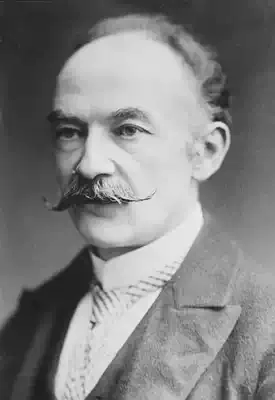
Thomas Hardy
In Tenebris
In Tenebris
Wintertime nighs;
But my bereavement-pain
It cannot bring again:
Twice no one dies.
Flower-petals flee;
But since it once hath been,
No more that severing scene
Can harrow me.
Birds faint in dread:
I shall not lose old strength
In the lone frost's black length:
Strength long since fled!
Leaves freeze to dun;
But friends cannot turn cold
This season as of old
For him with none.
Tempests may scath;
But love cannot make smart
Again this year his heart
Who no heart hath.
Black is night's cope;
But death will not appal
One, who past doubtings all,
Waits in unhope.
Wintertime nighs;
But my bereavement-pain
It cannot bring again:
Twice no one dies.
Flower-petals flee;
But since it once hath been,
No more that severing scene
Can harrow me.
Birds faint in dread:
I shall not lose old strength
In the lone frost's black length:
Strength long since fled!
Leaves freeze to dun;
But friends cannot turn cold
This season as of old
For him with none.
Tempests may scath;
But love cannot make smart
Again this year his heart
Who no heart hath.
Black is night's cope;
But death will not appal
One, who past doubtings all,
Waits in unhope.
212
Thomas Hardy
I have lived with Shades
I have lived with Shades
I
I have lived with Shades so long,
So long have talked to them,
I sped to street and throng,
That sometimes they
In their dim style
Will pause awhile
To hear my say;
II
And take me by the hand,
And lead me through their rooms
In the To-Be, where Dooms
Half-wove and shapeless stand:
And show from there
The dwindled dust
And rot and rust
Of things that were.
III
"Now turn," they said to me
One day: "Look whence we came,
And signify his name
Who gazes thence at thee" --
-- "Nor name nor race
Know I, or can,"
I said, "Of man
So commonplace."
IV
"He moves me not at all:
I note no ray or jot
Of rareness in his lot,
Or star exceptional.
Into the dim
Dead throngs around
He'll sink, nor sound
Be left of him."
V
"Yet," said they, "his frail speech,
Hath accents pitched like thine --
Thy mould and his define
A likeness each to each --
But go! Deep pain
Alas, would be
His name to thee,
And told in vain!"
I
I have lived with Shades so long,
So long have talked to them,
I sped to street and throng,
That sometimes they
In their dim style
Will pause awhile
To hear my say;
II
And take me by the hand,
And lead me through their rooms
In the To-Be, where Dooms
Half-wove and shapeless stand:
And show from there
The dwindled dust
And rot and rust
Of things that were.
III
"Now turn," they said to me
One day: "Look whence we came,
And signify his name
Who gazes thence at thee" --
-- "Nor name nor race
Know I, or can,"
I said, "Of man
So commonplace."
IV
"He moves me not at all:
I note no ray or jot
Of rareness in his lot,
Or star exceptional.
Into the dim
Dead throngs around
He'll sink, nor sound
Be left of him."
V
"Yet," said they, "his frail speech,
Hath accents pitched like thine --
Thy mould and his define
A likeness each to each --
But go! Deep pain
Alas, would be
His name to thee,
And told in vain!"
215
Thomas Hardy
Her Late Husband (King's-Hintock, -.)
Her Late Husband (King's-Hintock, -.)
"No--not where I shall make my own;
But dig his grave just by
The woman's with the initialed stone -
As near as he can lie -
After whose death he seemed to ail,
Though none considered why.
"And when I also claim a nook,
And your feet tread me in,
Bestow me, under my old name,
Among my kith and kin,
That strangers gazing may not dream
I did a husband win."
"Widow, your wish shall be obeyed;
Though, thought I, certainly
You'd lay him where your folk are laid,
And your grave, too, will be,
As custom hath it; you to right,
And on the left hand he."
"Aye, sexton; such the Hintock rule,
And none has said it nay;
But now it haps a native here
Eschews that ancient way . . .
And it may be, some Christmas night,
When angels walk, they'll say:
"'O strange interment! Civilized lands
Afford few types thereof;
Here is a man who takes his rest
Beside his very Love,
Beside the one who was his wife
In our sight up above!'"
"No--not where I shall make my own;
But dig his grave just by
The woman's with the initialed stone -
As near as he can lie -
After whose death he seemed to ail,
Though none considered why.
"And when I also claim a nook,
And your feet tread me in,
Bestow me, under my old name,
Among my kith and kin,
That strangers gazing may not dream
I did a husband win."
"Widow, your wish shall be obeyed;
Though, thought I, certainly
You'd lay him where your folk are laid,
And your grave, too, will be,
As custom hath it; you to right,
And on the left hand he."
"Aye, sexton; such the Hintock rule,
And none has said it nay;
But now it haps a native here
Eschews that ancient way . . .
And it may be, some Christmas night,
When angels walk, they'll say:
"'O strange interment! Civilized lands
Afford few types thereof;
Here is a man who takes his rest
Beside his very Love,
Beside the one who was his wife
In our sight up above!'"
242
Thomas Hardy
Her Dilemma
Her Dilemma
THE two were silent in a sunless church,
Whose mildewed walls, uneven paving-stones,
And wasted carvings passed antique research;
And nothing broke the clock's dull monotones.
Leaning against a wormy poppy-head,
So wan and worn that he could scarcely stand,
--For he was soon to die,--he softly said,
"Tell me you love me!"--holding hard her hand.
She would have given a world to breathe "yes" truly,
So much his life seemed hanging on her mind,
And hence she lied, her heart persuaded throughly,
'Twas worth her soul to be a moment kind.
But the sad need thereof, his nearing death,
So mocked humanity that she shamed to prize
A world conditioned thus, or care for breath
Where Nature such dilemmas could devise.
THE two were silent in a sunless church,
Whose mildewed walls, uneven paving-stones,
And wasted carvings passed antique research;
And nothing broke the clock's dull monotones.
Leaning against a wormy poppy-head,
So wan and worn that he could scarcely stand,
--For he was soon to die,--he softly said,
"Tell me you love me!"--holding hard her hand.
She would have given a world to breathe "yes" truly,
So much his life seemed hanging on her mind,
And hence she lied, her heart persuaded throughly,
'Twas worth her soul to be a moment kind.
But the sad need thereof, his nearing death,
So mocked humanity that she shamed to prize
A world conditioned thus, or care for breath
Where Nature such dilemmas could devise.
261
Thomas Hardy
Cardinal Bembo's Epitaph on Raphael
Cardinal Bembo's Epitaph on Raphael
Here's one in whom Nature feared--faint at such vying -
Eclipse while he lived, and decease at his dying.
Here's one in whom Nature feared--faint at such vying -
Eclipse while he lived, and decease at his dying.
262
Thomas Hardy
At the War Office, London (Affixing the Lists of Killed and Wounded:
At the War Office, London (Affixing the Lists of Killed and Wounded:
December, )
I
Last year I called this world of gain-givings
The darkest thinkable, and questioned sadly
If my own land could heave its pulse less gladly,
So charged it seemed with circumstance whence springs
The tragedy of things.
II
Yet at that censured time no heart was rent
Or feature blanched of parent, wife, or daughter
By hourly blazoned sheets of listed slaughter;
Death waited Nature's wont; Peace smiled unshent
From Ind to Occident.
December, )
I
Last year I called this world of gain-givings
The darkest thinkable, and questioned sadly
If my own land could heave its pulse less gladly,
So charged it seemed with circumstance whence springs
The tragedy of things.
II
Yet at that censured time no heart was rent
Or feature blanched of parent, wife, or daughter
By hourly blazoned sheets of listed slaughter;
Death waited Nature's wont; Peace smiled unshent
From Ind to Occident.
193
Thomas Hardy
Ah, Are You Digging on My Grave?
Ah, Are You Digging on My Grave?
"Ah, are you digging on my grave,
My loved one? -- planting rue?"
-- "No: yesterday he went to wed
One of the brightest wealth has bred.
'It cannot hurt her now,' he said,
'That I should not be true.'"
"Then who is digging on my grave,
My nearest dearest kin?"
-- "Ah, no: they sit and think, 'What use!
What good will planting flowers produce?
No tendance of her mound can loose
Her spirit from Death's gin.'"
"But someone digs upon my grave?
My enemy? -- prodding sly?"
-- "Nay: when she heard you had passed the Gate
That shuts on all flesh soon or late,
She thought you no more worth her hate,
And cares not where you lie.
"Then, who is digging on my grave?
Say -- since I have not guessed!"
-- "O it is I, my mistress dear,
Your little dog , who still lives near,
And much I hope my movements here
Have not disturbed your rest?"
"Ah yes! You dig upon my grave...
Why flashed it not to me
That one true heart was left behind!
What feeling do we ever find
To equal among human kind
A dog's fidelity!"
"Mistress, I dug upon your grave
To bury a bone, in case
I should be hungry near this spot
When passing on my daily trot.
I am sorry, but I quite forgot
It was your resting place."
"Ah, are you digging on my grave,
My loved one? -- planting rue?"
-- "No: yesterday he went to wed
One of the brightest wealth has bred.
'It cannot hurt her now,' he said,
'That I should not be true.'"
"Then who is digging on my grave,
My nearest dearest kin?"
-- "Ah, no: they sit and think, 'What use!
What good will planting flowers produce?
No tendance of her mound can loose
Her spirit from Death's gin.'"
"But someone digs upon my grave?
My enemy? -- prodding sly?"
-- "Nay: when she heard you had passed the Gate
That shuts on all flesh soon or late,
She thought you no more worth her hate,
And cares not where you lie.
"Then, who is digging on my grave?
Say -- since I have not guessed!"
-- "O it is I, my mistress dear,
Your little dog , who still lives near,
And much I hope my movements here
Have not disturbed your rest?"
"Ah yes! You dig upon my grave...
Why flashed it not to me
That one true heart was left behind!
What feeling do we ever find
To equal among human kind
A dog's fidelity!"
"Mistress, I dug upon your grave
To bury a bone, in case
I should be hungry near this spot
When passing on my daily trot.
I am sorry, but I quite forgot
It was your resting place."
329
Thomas Hardy
A Wife in London (December, )
A Wife in London (December, )
I--The Tragedy
She sits in the tawny vapour
That the City lanes have uprolled,
Behind whose webby fold on fold
Like a waning taper
The street-lamp glimmers cold.
A messenger's knock cracks smartly,
Flashed news is in her hand
Of meaning it dazes to understand
Though shaped so shortly:
He--has fallen--in the far South Land . . .
II--The Irony
'Tis the morrow; the fog hangs thicker,
The postman nears and goes:
A letter is brought whose lines disclose
By the firelight flicker
His hand, whom the worm now knows:
Fresh--firm--penned in highest feather -
Page-full of his hoped return,
And of home-planned jaunts by brake and burn
In the summer weather,
And of new love that they would learn.
I--The Tragedy
She sits in the tawny vapour
That the City lanes have uprolled,
Behind whose webby fold on fold
Like a waning taper
The street-lamp glimmers cold.
A messenger's knock cracks smartly,
Flashed news is in her hand
Of meaning it dazes to understand
Though shaped so shortly:
He--has fallen--in the far South Land . . .
II--The Irony
'Tis the morrow; the fog hangs thicker,
The postman nears and goes:
A letter is brought whose lines disclose
By the firelight flicker
His hand, whom the worm now knows:
Fresh--firm--penned in highest feather -
Page-full of his hoped return,
And of home-planned jaunts by brake and burn
In the summer weather,
And of new love that they would learn.
278
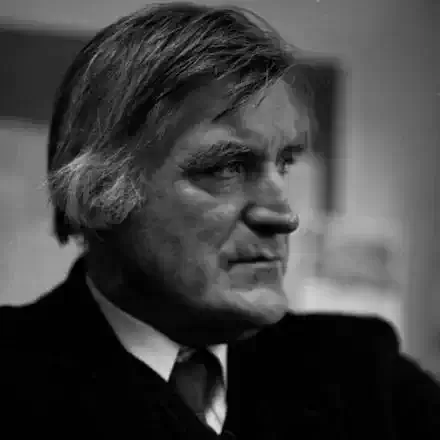
Ted Hughes
Examination at the Womb-Door
Examination at the Womb-Door
Who owns those scrawny little feet? Death.
Who owns this bristly scorched-looking face? Death.
Who owns these still-working lungs? Death.
Who owns this utility coat of muscles? Death.
Who owns these unspeakable guts? Death.
Who owns these questionable brains? Death.
All this messy blood? Death.
These minimum-efficiency eyes? Death.
This wicked little tongue? Death.
This occasional wakefulness? Death.
Given, stolen, or held pending trial?
Held.
Who owns the whole rainy, stony earth? Death.
Who owns all of space? Death.
Who is stronger than hope? Death.
Who is stronger than the will? Death.
Stronger than love? Death.
Stronger than life? Death.
But who is stronger than Death?
Me, evidently.
Pass, Crow.
Who owns those scrawny little feet? Death.
Who owns this bristly scorched-looking face? Death.
Who owns these still-working lungs? Death.
Who owns this utility coat of muscles? Death.
Who owns these unspeakable guts? Death.
Who owns these questionable brains? Death.
All this messy blood? Death.
These minimum-efficiency eyes? Death.
This wicked little tongue? Death.
This occasional wakefulness? Death.
Given, stolen, or held pending trial?
Held.
Who owns the whole rainy, stony earth? Death.
Who owns all of space? Death.
Who is stronger than hope? Death.
Who is stronger than the will? Death.
Stronger than love? Death.
Stronger than life? Death.
But who is stronger than Death?
Me, evidently.
Pass, Crow.
694
Ted Hughes
A Woman Unconscious
A Woman Unconscious
Russia and America circle each other;
Threats nudge an act that were without doubt
A melting of the mould in the mother,
Stones melting about the root.
The quick of the earth burned out:
The toil of all our ages a loss
With leaf and insect. Yet flitting thought
(Not to be thought ridiculous)
Shies from the world-cancelling black
Of its playing shadow: it has learned
That there's no trusting (trusting to luck)
Dates when the world's due to be burned;
That the future's no calamitous change
But a malingering of now,
Histories, towns, faces that no
Malice or accident much derange.
And though bomb be matched against bomb,
Though all mankind wince out and nothing endure --
Earth gone in an instant flare --
Did a lesser death come
Onto the white hospital bed
Where one, numb beyond her last of sense,
Closed her eyes on the world's evidence
And into pillows sunk her head.
Submitted by Andrew Mayers
Russia and America circle each other;
Threats nudge an act that were without doubt
A melting of the mould in the mother,
Stones melting about the root.
The quick of the earth burned out:
The toil of all our ages a loss
With leaf and insect. Yet flitting thought
(Not to be thought ridiculous)
Shies from the world-cancelling black
Of its playing shadow: it has learned
That there's no trusting (trusting to luck)
Dates when the world's due to be burned;
That the future's no calamitous change
But a malingering of now,
Histories, towns, faces that no
Malice or accident much derange.
And though bomb be matched against bomb,
Though all mankind wince out and nothing endure --
Earth gone in an instant flare --
Did a lesser death come
Onto the white hospital bed
Where one, numb beyond her last of sense,
Closed her eyes on the world's evidence
And into pillows sunk her head.
Submitted by Andrew Mayers
617

Spike Milligan
The Soldiers at Lauro
The Soldiers at Lauro
Young are our dead
Like babies they lie
The wombs they blest once
Not healed dry
And yet - too soon
Into each space
A cold earth falls
On colder face.
Quite still they lie
These fresh-cut reeds
Clutched in earth
Like winter seeds
But they will not bloom
When called by spring
To burst with leaf
And blossoming
They sleep on
In silent dust
As crosses rot
And helmets rust.
Young are our dead
Like babies they lie
The wombs they blest once
Not healed dry
And yet - too soon
Into each space
A cold earth falls
On colder face.
Quite still they lie
These fresh-cut reeds
Clutched in earth
Like winter seeds
But they will not bloom
When called by spring
To burst with leaf
And blossoming
They sleep on
In silent dust
As crosses rot
And helmets rust.
211

Siegfried Sassoon
Twelve Months After
Twelve Months After
Hullo! here’s my platoon, the lot I had last year.
‘The war’ll be over soon.’
‘What ’opes?’
‘No bloody fear!’
Then, ‘Number Seven, ’shun! All present and correct.’
They’re standing in the sun, impassive and erect.
Young Gibson with his grin; and Morgan, tired and white;
Jordan, who’s out to win a D.C.M. some night;
And Hughes that’s keen on wiring; and Davies (’),
Who always must be firing at the Boche front line.
. . . .
‘Old soldiers never die; they simply fide a-why!’
That’s what they used to sing along the roads last spring;
That’s what they used to say before the push began;
That’s where they are to-day, knocked over to a man.
Hullo! here’s my platoon, the lot I had last year.
‘The war’ll be over soon.’
‘What ’opes?’
‘No bloody fear!’
Then, ‘Number Seven, ’shun! All present and correct.’
They’re standing in the sun, impassive and erect.
Young Gibson with his grin; and Morgan, tired and white;
Jordan, who’s out to win a D.C.M. some night;
And Hughes that’s keen on wiring; and Davies (’),
Who always must be firing at the Boche front line.
. . . .
‘Old soldiers never die; they simply fide a-why!’
That’s what they used to sing along the roads last spring;
That’s what they used to say before the push began;
That’s where they are to-day, knocked over to a man.
106
Siegfried Sassoon
To His Dead Body
To His Dead Body
When roaring gloom surged inward and you cried,
Groping for friendly hands, and clutched, and died,
Like racing smoke, swift from your lolling head
phantoms of thought and memory thinned and fled.
Yet, though my dreams that throng the darkened stair
Can bring me no report of how you fare,
Safe quit of wars, I speed you on your way
Up lonely, glimmering fields to find new day,
Slow-rising, saintless, confident and kind—
Dear, red-faced father God who lit your mind.
When roaring gloom surged inward and you cried,
Groping for friendly hands, and clutched, and died,
Like racing smoke, swift from your lolling head
phantoms of thought and memory thinned and fled.
Yet, though my dreams that throng the darkened stair
Can bring me no report of how you fare,
Safe quit of wars, I speed you on your way
Up lonely, glimmering fields to find new day,
Slow-rising, saintless, confident and kind—
Dear, red-faced father God who lit your mind.
98
Siegfried Sassoon
The Troops
The Troops
Dim, gradual thinning of the shapeless gloom
Shudders to drizzling daybreak that reveals
Disconsolate men who stamp their sodden boots
And turn dulled, sunken faces to the sky
Haggard and hopeless. They, who have beaten down
The stale despair of night, must now renew
Their desolation in the truce of dawn,
Murdering the livid hours that grope for peace.
Yet these, who cling to life with stubborn hands,
Can grin through storms of death and find a gap
In the clawed, cruel tangles of his defence.
They march from safety, and the bird-sung joy
Of grass-green thickets, to the land where all
Is ruin, and nothing blossoms but the sky
That hastens over them where they endure
Sad, smoking, flat horizons, reeking woods,
And foundered trench-lines volleying doom for doom.
O my brave brown companions, when your souls
Flock silently away, and the eyeless dead
Shame the wild beast of battle on the ridge,
Death will stand grieving in that field of war
Since your unvanquished hardihood is spent.
And through some mooned Valhalla there will pass
Battalions and battalions, scarred from hell;
The unreturning army that was youth;
The legions who have suffered and are dust.
Dim, gradual thinning of the shapeless gloom
Shudders to drizzling daybreak that reveals
Disconsolate men who stamp their sodden boots
And turn dulled, sunken faces to the sky
Haggard and hopeless. They, who have beaten down
The stale despair of night, must now renew
Their desolation in the truce of dawn,
Murdering the livid hours that grope for peace.
Yet these, who cling to life with stubborn hands,
Can grin through storms of death and find a gap
In the clawed, cruel tangles of his defence.
They march from safety, and the bird-sung joy
Of grass-green thickets, to the land where all
Is ruin, and nothing blossoms but the sky
That hastens over them where they endure
Sad, smoking, flat horizons, reeking woods,
And foundered trench-lines volleying doom for doom.
O my brave brown companions, when your souls
Flock silently away, and the eyeless dead
Shame the wild beast of battle on the ridge,
Death will stand grieving in that field of war
Since your unvanquished hardihood is spent.
And through some mooned Valhalla there will pass
Battalions and battalions, scarred from hell;
The unreturning army that was youth;
The legions who have suffered and are dust.
115
Siegfried Sassoon
The Rear-Guard
The Rear-Guard
Groping along the tunnel, step by step,
He winked his prying torch with patching glare
From side to side, and sniffed the unwholesome air.
Tins, boxes, bottles, shapes too vague to know,
A mirror smashed, the mattress from a bed;
And he, exploring fifty feet below
The rosy gloom of battle overhead.
Tripping, he grapped the wall; saw someone lie
Humped at his feet, half-hidden by a rug,
And stooped to give the sleeper's arm a tug.
"I'm looking for headquarters." No reply.
"God blast your neck!" (For days he'd had no sleep.)
"Get up and guide me through this stinking place."
Savage, he kicked a soft, unanswering heap,
And flashed his beam across the livid face
Terribly glaring up, whose eyes yet wore
Agony dying hard ten days before;
And fists of fingers clutched a blackening wound.
Alone he staggered on until he found
Dawn's ghost that filtered down a shafted stair
To the dazed, muttering creatures underground
Who hear the boom of shells in muffled sound.
At last, with sweat of horror in his hair,
He climbed through darkness to the twilight air,
Unloading hell behind him step by step.
Groping along the tunnel, step by step,
He winked his prying torch with patching glare
From side to side, and sniffed the unwholesome air.
Tins, boxes, bottles, shapes too vague to know,
A mirror smashed, the mattress from a bed;
And he, exploring fifty feet below
The rosy gloom of battle overhead.
Tripping, he grapped the wall; saw someone lie
Humped at his feet, half-hidden by a rug,
And stooped to give the sleeper's arm a tug.
"I'm looking for headquarters." No reply.
"God blast your neck!" (For days he'd had no sleep.)
"Get up and guide me through this stinking place."
Savage, he kicked a soft, unanswering heap,
And flashed his beam across the livid face
Terribly glaring up, whose eyes yet wore
Agony dying hard ten days before;
And fists of fingers clutched a blackening wound.
Alone he staggered on until he found
Dawn's ghost that filtered down a shafted stair
To the dazed, muttering creatures underground
Who hear the boom of shells in muffled sound.
At last, with sweat of horror in his hair,
He climbed through darkness to the twilight air,
Unloading hell behind him step by step.
98
Siegfried Sassoon
The Road
The Road
The road is thronged with women; soldiers pass
And halt, but never see them; yet they’re here—
A patient crowd along the sodden grass,
Silent, worn out with waiting, sick with fear.
The road goes crawling up a long hillside,
All ruts and stones and sludge, and the emptied dregs
Of battle thrown in heaps. Here where they died
Are stretched big-bellied horses with stiff legs,
And dead men, bloody-fingered from the fight,
Stare up at caverned darkness winking white.
You in the bomb-scorched kilt, poor sprawling Jock,
You tottered here and fell, and stumbled on,
Half dazed for want of sleep. No dream would mock
Your reeling brain with comforts lost and gone.
You did not feel her arms about your knees,
Her blind caress, her lips upon your head.
Too tired for thoughts of home and love and ease,
The road would serve you well enough for bed.
The road is thronged with women; soldiers pass
And halt, but never see them; yet they’re here—
A patient crowd along the sodden grass,
Silent, worn out with waiting, sick with fear.
The road goes crawling up a long hillside,
All ruts and stones and sludge, and the emptied dregs
Of battle thrown in heaps. Here where they died
Are stretched big-bellied horses with stiff legs,
And dead men, bloody-fingered from the fight,
Stare up at caverned darkness winking white.
You in the bomb-scorched kilt, poor sprawling Jock,
You tottered here and fell, and stumbled on,
Half dazed for want of sleep. No dream would mock
Your reeling brain with comforts lost and gone.
You did not feel her arms about your knees,
Her blind caress, her lips upon your head.
Too tired for thoughts of home and love and ease,
The road would serve you well enough for bed.
130
Siegfried Sassoon
The Last Meeting
The Last Meeting
I
Because the night was falling warm and still
Upon a golden day at April’s end,
I thought; I will go up the hill once more
To find the face of him that I have lost,
And speak with him before his ghost has flown
Far from the earth that might not keep him long.
So down the road I went, pausing to see
How slow the dusk drew on, and how the folk
Loitered about their doorways, well-content
With the fine weather and the waxing year.
The miller’s house, that glimmered with grey walls,
Turned me aside; and for a while I leaned
Along the tottering rail beside the bridge
To watch the dripping mill-wheel green with damp.
The miller peered at me with shadowed eyes
And pallid face: I could not hear his voice
For sound of the weir’s plunging. He was old.
His days went round with the unhurrying wheel.
Moving along the street, each side I saw
The humble, kindly folk in lamp-lit rooms;
Children at table; simple, homely wives;
Strong, grizzled men; and soldiers back from war,
Scaring the gaping elders with loud talk.
Soon all the jumbled roofs were down the hill,
And I was turning up the grassy lane
That goes to the big, empty house that stands
Above the town, half-hid by towering trees.
I looked below and saw the glinting lights:
I heard the treble cries of bustling life,
And mirth, and scolding; and the grind of wheels.
An engine whistled, piercing-shrill, and called
High echoes from the sombre slopes afar;
Then a long line of trucks began to move.
It was quite still; the columned chestnuts stood
Dark in their noble canopies of leaves.
I thought: ‘A little longer I’ll delay,
And then he’ll be more glad to hear my feet,
And with low laughter ask me why I’m late.
The place will be too dim to show his eyes,
But he will loom above me like a tree,
With lifted arms and body tall and strong.’
There stood the empty house; a ghostly hulk
Becalmed and huge, massed in the mantling dark,
As builders left it when quick-shattering war
Leapt upon France and called her men to fight.
Lightly along the terraces I trod,
Crunching the rubble till I found the door
That gaped in twilight, framing inward gloom.
An owl flew out from under the high eaves
To vanish secretly among the firs,
Where lofty boughs netted the gleam of stars.
I stumbled in; the dusty floors were strewn
With cumbering piles of planks and props and beams;
Tall windows gapped the walls; the place was free
To every searching gust and jousting gale;
But now they slept; I was afraid to speak,
And heavily the shadows crowded in.
I called him, once; then listened: nothing moved:
Only my thumping heart beat out the time.
Whispering his name, I groped from room to room.
Quite empty was that house; it could not hold
His human ghost, remembered in the love
That strove in vain to be companioned still.
II
Blindly I sought the woods that I had known
So beautiful with morning when I came
Amazed with spring that wove the hazel twigs
With misty raiment of awakening green.
I found a holy dimness, and the peace
Of sanctuary, austerely built of trees,
And wonder stooping from the tranquil sky.
Ah! but there was no need to call his name.
He was beside me now, as swift as light.
I knew him crushed to earth in scentless flowers,
And lifted in the rapture of dark pines.
‘For now,’ he said, ‘my spirit has more eyes
Than heaven has stars; and they are lit by love.
My body is the magic of the world,
And dawn and sunset flame with my spilt blood.
My breath is the great wind, and I am filled
With molten power and surge of the bright waves
That chant my doom along the ocean’s edge.
‘Look in the faces of the flowers and find
The innocence that shrives me; stoop to the stream
That you may share the wisdom of my peace.
For talking water travels undismayed.
The luminous willows lean to it with tales
Of the young earth; and swallows dip their wings
Where showering hawthorn strews the lanes of light.
‘I can remember summer in one thought
Of wind-swept green, and deeps of melting blue,
And scent of limes in bloom; and I can hear
Distinct the early mower in the grass,
Whetting his blade along some morn of June.
‘For I was born to the round world’s delight,
And knowledge of enfolding motherhood,
Whose tenderness, that shines through constant toil,
Gathers the naked children to her knees.
In death I can remember how she came
To kiss me while I slept; still I can share
The glee of childhood; and the fleeting gloom
When all my flowers were washed with rain of tears.
‘I triumph in the choruses of birds,
Bursting like April buds in gyres of song.
My meditations are the blaze of noon
On silent woods, where glory burns the leaves.
I have shared breathless vigils; I have slaked
The thirst of my desires in bounteous rain
Pouring and splashing downward through the dark.
Loud storm has roused me with its winking glare,
And voice of doom that crackles overhead.
I have been tired and watchful, craving rest,
Till the slow-footed hours have touched my brows
And laid me on the breast of sundering sleep.’
III
I know that he is lost among the stars,
And may return no more but in their light.
Though his hushed voice may call me in the stir
Of whispering trees, I shall not understand.
Men may not speak with stillness; and the joy
Of brooks that leap and tumble down green hills
Is faster than their feet; and all their thoughts
Can win no meaning from the talk of birds.
My heart is fooled with fancies, being wise;
For fancy is the gleaming of wet flowers
When the hid sun looks forth with golden stare.
Thus, when I find new loveliness to praise,
And things long-known shine out in sudden grace,
Then will I think: ‘He moves before me now.’
So he will never come but in delight,
And, as it was in life, his name shall be
Wonder awaking in a summer dawn,
And youth, that dying, touched my lips to song.
Flixécourt. May .
I
Because the night was falling warm and still
Upon a golden day at April’s end,
I thought; I will go up the hill once more
To find the face of him that I have lost,
And speak with him before his ghost has flown
Far from the earth that might not keep him long.
So down the road I went, pausing to see
How slow the dusk drew on, and how the folk
Loitered about their doorways, well-content
With the fine weather and the waxing year.
The miller’s house, that glimmered with grey walls,
Turned me aside; and for a while I leaned
Along the tottering rail beside the bridge
To watch the dripping mill-wheel green with damp.
The miller peered at me with shadowed eyes
And pallid face: I could not hear his voice
For sound of the weir’s plunging. He was old.
His days went round with the unhurrying wheel.
Moving along the street, each side I saw
The humble, kindly folk in lamp-lit rooms;
Children at table; simple, homely wives;
Strong, grizzled men; and soldiers back from war,
Scaring the gaping elders with loud talk.
Soon all the jumbled roofs were down the hill,
And I was turning up the grassy lane
That goes to the big, empty house that stands
Above the town, half-hid by towering trees.
I looked below and saw the glinting lights:
I heard the treble cries of bustling life,
And mirth, and scolding; and the grind of wheels.
An engine whistled, piercing-shrill, and called
High echoes from the sombre slopes afar;
Then a long line of trucks began to move.
It was quite still; the columned chestnuts stood
Dark in their noble canopies of leaves.
I thought: ‘A little longer I’ll delay,
And then he’ll be more glad to hear my feet,
And with low laughter ask me why I’m late.
The place will be too dim to show his eyes,
But he will loom above me like a tree,
With lifted arms and body tall and strong.’
There stood the empty house; a ghostly hulk
Becalmed and huge, massed in the mantling dark,
As builders left it when quick-shattering war
Leapt upon France and called her men to fight.
Lightly along the terraces I trod,
Crunching the rubble till I found the door
That gaped in twilight, framing inward gloom.
An owl flew out from under the high eaves
To vanish secretly among the firs,
Where lofty boughs netted the gleam of stars.
I stumbled in; the dusty floors were strewn
With cumbering piles of planks and props and beams;
Tall windows gapped the walls; the place was free
To every searching gust and jousting gale;
But now they slept; I was afraid to speak,
And heavily the shadows crowded in.
I called him, once; then listened: nothing moved:
Only my thumping heart beat out the time.
Whispering his name, I groped from room to room.
Quite empty was that house; it could not hold
His human ghost, remembered in the love
That strove in vain to be companioned still.
II
Blindly I sought the woods that I had known
So beautiful with morning when I came
Amazed with spring that wove the hazel twigs
With misty raiment of awakening green.
I found a holy dimness, and the peace
Of sanctuary, austerely built of trees,
And wonder stooping from the tranquil sky.
Ah! but there was no need to call his name.
He was beside me now, as swift as light.
I knew him crushed to earth in scentless flowers,
And lifted in the rapture of dark pines.
‘For now,’ he said, ‘my spirit has more eyes
Than heaven has stars; and they are lit by love.
My body is the magic of the world,
And dawn and sunset flame with my spilt blood.
My breath is the great wind, and I am filled
With molten power and surge of the bright waves
That chant my doom along the ocean’s edge.
‘Look in the faces of the flowers and find
The innocence that shrives me; stoop to the stream
That you may share the wisdom of my peace.
For talking water travels undismayed.
The luminous willows lean to it with tales
Of the young earth; and swallows dip their wings
Where showering hawthorn strews the lanes of light.
‘I can remember summer in one thought
Of wind-swept green, and deeps of melting blue,
And scent of limes in bloom; and I can hear
Distinct the early mower in the grass,
Whetting his blade along some morn of June.
‘For I was born to the round world’s delight,
And knowledge of enfolding motherhood,
Whose tenderness, that shines through constant toil,
Gathers the naked children to her knees.
In death I can remember how she came
To kiss me while I slept; still I can share
The glee of childhood; and the fleeting gloom
When all my flowers were washed with rain of tears.
‘I triumph in the choruses of birds,
Bursting like April buds in gyres of song.
My meditations are the blaze of noon
On silent woods, where glory burns the leaves.
I have shared breathless vigils; I have slaked
The thirst of my desires in bounteous rain
Pouring and splashing downward through the dark.
Loud storm has roused me with its winking glare,
And voice of doom that crackles overhead.
I have been tired and watchful, craving rest,
Till the slow-footed hours have touched my brows
And laid me on the breast of sundering sleep.’
III
I know that he is lost among the stars,
And may return no more but in their light.
Though his hushed voice may call me in the stir
Of whispering trees, I shall not understand.
Men may not speak with stillness; and the joy
Of brooks that leap and tumble down green hills
Is faster than their feet; and all their thoughts
Can win no meaning from the talk of birds.
My heart is fooled with fancies, being wise;
For fancy is the gleaming of wet flowers
When the hid sun looks forth with golden stare.
Thus, when I find new loveliness to praise,
And things long-known shine out in sudden grace,
Then will I think: ‘He moves before me now.’
So he will never come but in delight,
And, as it was in life, his name shall be
Wonder awaking in a summer dawn,
And youth, that dying, touched my lips to song.
Flixécourt. May .
91
Siegfried Sassoon
The Investiture
The Investiture
GOD with a Roll of Honour in His hand
Sits welcoming the heroes who have died,
While sorrowless angels ranked on either side
Stand easy in Elysium’s meadow-land.
Then you come shyly through the garden gate,
Wearing a blood-soaked bandage on your head;
And God says something kind because you’re dead,
And homesick, discontented with your fate.
If I were there we’d snowball Death with skulls;
Or ride away to hunt in Devil’s Wood
With ghosts of puppies that we walked of old.
But you’re alone; and solitude annuls
Our earthly jokes; and strangely wise and good
You roam forlorn along the streets of gold.
GOD with a Roll of Honour in His hand
Sits welcoming the heroes who have died,
While sorrowless angels ranked on either side
Stand easy in Elysium’s meadow-land.
Then you come shyly through the garden gate,
Wearing a blood-soaked bandage on your head;
And God says something kind because you’re dead,
And homesick, discontented with your fate.
If I were there we’d snowball Death with skulls;
Or ride away to hunt in Devil’s Wood
With ghosts of puppies that we walked of old.
But you’re alone; and solitude annuls
Our earthly jokes; and strangely wise and good
You roam forlorn along the streets of gold.
116
Siegfried Sassoon
The Heritage
The Heritage
Cry out on Time that he may take away
Your cold philosophies that give no hint
Of spirit-quickened flesh; fall down and pray
That Death come never with a face of flint:
Death is our heritage; with Life we share
The sunlight that must own his darkening hour:
Within his very presence yet we dare
To gather gladness like a fading flower.
For even as this, our joy not long may live
Perfect; and most in change the heart can trace
The miracle of life and human things:
All we have held to destiny we give;
Dawn glimmers on the soul-forsaken face;
Not we, but others, hear the bird that sings.
Cry out on Time that he may take away
Your cold philosophies that give no hint
Of spirit-quickened flesh; fall down and pray
That Death come never with a face of flint:
Death is our heritage; with Life we share
The sunlight that must own his darkening hour:
Within his very presence yet we dare
To gather gladness like a fading flower.
For even as this, our joy not long may live
Perfect; and most in change the heart can trace
The miracle of life and human things:
All we have held to destiny we give;
Dawn glimmers on the soul-forsaken face;
Not we, but others, hear the bird that sings.
108
Siegfried Sassoon
The Dug-out
The Dug-out
Why do you lie with your legs ungainly huddled,
And one arm bent across your sullen, cold,
Exhausted face? It hurts my heart to watch you,
Deep-shadowed from the candle's guttering gold;
And you wonder why I shake you by the shoulder;
Drowsy, you mumble and sigh and turn your head...
You are too young to fall asleep for ever;
And when you sleep you remind me of the dead.
Why do you lie with your legs ungainly huddled,
And one arm bent across your sullen, cold,
Exhausted face? It hurts my heart to watch you,
Deep-shadowed from the candle's guttering gold;
And you wonder why I shake you by the shoulder;
Drowsy, you mumble and sigh and turn your head...
You are too young to fall asleep for ever;
And when you sleep you remind me of the dead.
72
Siegfried Sassoon
The Death-Bed
The Death-Bed
He drowsed and was aware of silence heaped
Round him, unshaken as the steadfast walls;
Aqueous like floating rays of amber light,
Soaring and quivering in the wings of sleep.
Silence and safety; and his mortal shore
Lipped by the inward, moonless waves of death.
Someone was holding water to his mouth.
He swallowed, unresisting; moaned and dropped
Through crimson gloom to darkness; and forgot
The opiate throb and ache that was his wound.
Water—calm, sliding green above the weir.
Water—a sky-lit alley for his boat,
Bird- voiced, and bordered with reflected flowers
And shaken hues of summer; drifting down,
He dipped contented oars, and sighed, and slept.
Night, with a gust of wind, was in the ward,
Blowing the curtain to a glimmering curve.
Night. He was blind; he could not see the stars
Glinting among the wraiths of wandering cloud;
Queer blots of colour, purple, scarlet, green,
Flickered and faded in his drowning eyes.
Rain—he could hear it rustling through the dark;
Fragrance and passionless music woven as one;
Warm rain on drooping roses; pattering showers
That soak the woods; not the harsh rain that sweeps
Behind the thunder, but a trickling peace,
Gently and slowly washing life away.
He stirred, shifting his body; then the pain
Leapt like a prowling beast, and gripped and tore
His groping dreams with grinding claws and fangs.
But someone was beside him; soon he lay
Shuddering because that evil thing had passed.
And death, who'd stepped toward him, paused and stared.
Light many lamps and gather round his bed.
Lend him your eyes, warm blood, and will to live.
Speak to him; rouse him; you may save him yet.
He's young; he hated War; how should he die
When cruel old campaigners win safe through?
But death replied: 'I choose him.' So he went,
And there was silence in the summer night;
Silence and safety; and the veils of sleep.
Then, far away, the thudding of the guns.
He drowsed and was aware of silence heaped
Round him, unshaken as the steadfast walls;
Aqueous like floating rays of amber light,
Soaring and quivering in the wings of sleep.
Silence and safety; and his mortal shore
Lipped by the inward, moonless waves of death.
Someone was holding water to his mouth.
He swallowed, unresisting; moaned and dropped
Through crimson gloom to darkness; and forgot
The opiate throb and ache that was his wound.
Water—calm, sliding green above the weir.
Water—a sky-lit alley for his boat,
Bird- voiced, and bordered with reflected flowers
And shaken hues of summer; drifting down,
He dipped contented oars, and sighed, and slept.
Night, with a gust of wind, was in the ward,
Blowing the curtain to a glimmering curve.
Night. He was blind; he could not see the stars
Glinting among the wraiths of wandering cloud;
Queer blots of colour, purple, scarlet, green,
Flickered and faded in his drowning eyes.
Rain—he could hear it rustling through the dark;
Fragrance and passionless music woven as one;
Warm rain on drooping roses; pattering showers
That soak the woods; not the harsh rain that sweeps
Behind the thunder, but a trickling peace,
Gently and slowly washing life away.
He stirred, shifting his body; then the pain
Leapt like a prowling beast, and gripped and tore
His groping dreams with grinding claws and fangs.
But someone was beside him; soon he lay
Shuddering because that evil thing had passed.
And death, who'd stepped toward him, paused and stared.
Light many lamps and gather round his bed.
Lend him your eyes, warm blood, and will to live.
Speak to him; rouse him; you may save him yet.
He's young; he hated War; how should he die
When cruel old campaigners win safe through?
But death replied: 'I choose him.' So he went,
And there was silence in the summer night;
Silence and safety; and the veils of sleep.
Then, far away, the thudding of the guns.
74
Siegfried Sassoon
Hero
Hero
'Jack fell as he'd have wished,' the Mother said,
And folded up the letter that she'd read.
'The Colonel writes so nicely.' Something broke
In the tired voice that quavered to a choke.
She half looked up. 'We mothers are so proud
Of our dead soldiers.' Then her face was bowed.
Quietly the Brother Officer went out.
He'd told the poor old dear some gallant lies
That she would nourish all her days, no doubt.
For while he coughed and mumbled, her weak eyes
Had shone with gentle triumph, brimmed with joy,
Because he'd been so brave, her glorious boy.
He thought how 'Jack', cold-footed, useless swine,
Had panicked down the trench that night the mine
Went up at Wicked Corner; how he'd tried
To get sent home, and how, at last, he died,
Blown to small bits. And no one seemed to care
Except that lonely woman with white hair.
'Jack fell as he'd have wished,' the Mother said,
And folded up the letter that she'd read.
'The Colonel writes so nicely.' Something broke
In the tired voice that quavered to a choke.
She half looked up. 'We mothers are so proud
Of our dead soldiers.' Then her face was bowed.
Quietly the Brother Officer went out.
He'd told the poor old dear some gallant lies
That she would nourish all her days, no doubt.
For while he coughed and mumbled, her weak eyes
Had shone with gentle triumph, brimmed with joy,
Because he'd been so brave, her glorious boy.
He thought how 'Jack', cold-footed, useless swine,
Had panicked down the trench that night the mine
Went up at Wicked Corner; how he'd tried
To get sent home, and how, at last, he died,
Blown to small bits. And no one seemed to care
Except that lonely woman with white hair.
126
Siegfried Sassoon
I Stood With the Dead
I Stood With the Dead
I Stood with the Dead, so forsaken and still:
When dawn was grey I stood with the Dead.
And my slow heart said, 'You must kill, you must kill:
'Soldier, soldier, morning is red'.
On the shapes of the slain in their crumpled disgrace
I stared for a while through the thin cold rain...
'O lad that I loved, there is rain on your face,
'And your eyes are blurred and sick like the plain.'
I stood with the Dead ... They were dead; they were dead;
My heart and my head beat a march of dismay:
And gusts of the wind came dulled by the guns.
'Fall in!' I shouted; 'Fall in for your pay!'
I Stood with the Dead, so forsaken and still:
When dawn was grey I stood with the Dead.
And my slow heart said, 'You must kill, you must kill:
'Soldier, soldier, morning is red'.
On the shapes of the slain in their crumpled disgrace
I stared for a while through the thin cold rain...
'O lad that I loved, there is rain on your face,
'And your eyes are blurred and sick like the plain.'
I stood with the Dead ... They were dead; they were dead;
My heart and my head beat a march of dismay:
And gusts of the wind came dulled by the guns.
'Fall in!' I shouted; 'Fall in for your pay!'
106
Siegfried Sassoon
Enemies
Enemies
He stood alone in some queer sunless place
Where Armageddon ends. Perhaps he longed
For days he might have lived; but his young face
Gazed forth untroubled: and suddenly there thronged
Round him the hulking Germans that I shot
When for his death my brooding rage was hot.
He stared at them, half-wondering; and then
They told him how I’d killed them for his sake—
Those patient, stupid, sullen ghosts of men;
And still there seemed no answer he could make.
At last he turned and smiled. One took his hand
Because his face could make them understand.
He stood alone in some queer sunless place
Where Armageddon ends. Perhaps he longed
For days he might have lived; but his young face
Gazed forth untroubled: and suddenly there thronged
Round him the hulking Germans that I shot
When for his death my brooding rage was hot.
He stared at them, half-wondering; and then
They told him how I’d killed them for his sake—
Those patient, stupid, sullen ghosts of men;
And still there seemed no answer he could make.
At last he turned and smiled. One took his hand
Because his face could make them understand.
96