

Poems in this theme
Change and Transformation
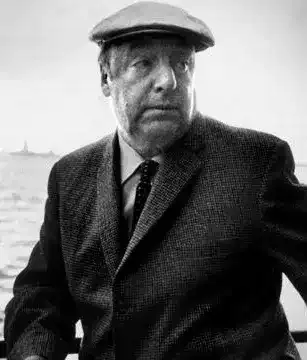
Pablo Neruda
Enigma with Flower
Enigma with Flower
Victory. It has come late, I had not learnt
how to arrive, like the lily, at will,
the white figure, that pierces
the motionless eternity of earth,
pushing at clear, faint, form,
till the hour strikes: that clay,
with a white ray, or a spur of milk.
Shedding of clothing, the thick darkness of soil,
on whose cliff the fair flower advances,
till the flag of its whiteness
defeats the contemptible deep of night,
and, from the motion of light,
spills itself in astonished seed.
Victory. It has come late, I had not learnt
how to arrive, like the lily, at will,
the white figure, that pierces
the motionless eternity of earth,
pushing at clear, faint, form,
till the hour strikes: that clay,
with a white ray, or a spur of milk.
Shedding of clothing, the thick darkness of soil,
on whose cliff the fair flower advances,
till the flag of its whiteness
defeats the contemptible deep of night,
and, from the motion of light,
spills itself in astonished seed.
584
Pablo Neruda
‘In the wave-strike over unquiet stones’
‘In the wave-strike over unquiet stones’
In the wave-strike over unquiet stones
the brightness bursts and bears the rose
and the ring of water contracts to a cluster
to one drop of azure brine that falls.
O magnolia radiance breaking in spume,
magnetic voyager whose death flowers
and returns, eternal, to being and nothingness:
shattered brine, dazzling leap of the ocean.
Merged, you and I, my love, seal the silence
while the sea destroys its continual forms,
collapses its turrets of wildness and whiteness,
because in the weft of those unseen garments
of headlong water, and perpetual sand,
we bear the sole, relentless tenderness.
In the wave-strike over unquiet stones
the brightness bursts and bears the rose
and the ring of water contracts to a cluster
to one drop of azure brine that falls.
O magnolia radiance breaking in spume,
magnetic voyager whose death flowers
and returns, eternal, to being and nothingness:
shattered brine, dazzling leap of the ocean.
Merged, you and I, my love, seal the silence
while the sea destroys its continual forms,
collapses its turrets of wildness and whiteness,
because in the weft of those unseen garments
of headlong water, and perpetual sand,
we bear the sole, relentless tenderness.
599
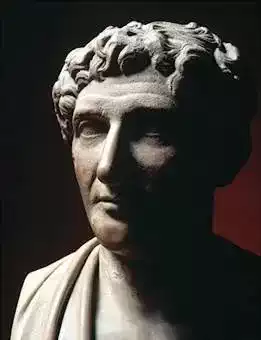
Ovídio
Metamorphoses: Book The Fourth
Metamorphoses: Book The Fourth
YET still Alcithoe perverse remains,
And Bacchus still, and all his rites, disdains.
Too rash, and madly bold, she bids him prove
Himself a God, nor owns the son of Jove.
Her sisters too unanimous agree,
Faithful associates in impiety.
The Story of Be this a solemn feast, the priest had said;
Alcithoe and Be, with each mistress, unemploy'd each maid.
her Sisters With skins of beasts your tender limbs enclose,
And with an ivy-crown adorn your brows,
The leafy Thyrsus high in triumph bear,
And give your locks to wanton in the air.
These rites profan'd, the holy seer foreshow'd
A mourning people, and a vengeful God.
Matrons and pious wives obedience show,
Distaffs, and wooll, half spun, away they throw:
Then incense burn, and, Bacchus, thee adore,
Or lov'st thou Nyseus, or Lyaeus more?
O! doubly got, O! doubly born, they sung,
Thou mighty Bromius, hail, from light'ning sprung!
Hail, Thyon, Eleleus! each name is thine:
Or, listen parent of the genial vine!
Iachus! Evan! loudly they repeat,
And not one Grecian attribute forget,
Which to thy praise, great Deity, belong,
Stil'd justly Liber in the Roman song.
Eternity of youth is thine! enjoy
Years roul'd on years, yet still a blooming boy.
In Heav'n thou shin'st with a superior grace;
Conceal thy horns, and 'tis a virgin's face.
Thou taught'st the tawny Indian to obey,
And Ganges, smoothly flowing, own'd thy sway.
Lycurgus, Pentheus, equally profane,
By thy just vengeance equally were slain.
By thee the Tuscans, who conspir'd to keep
Thee captive, plung'd, and cut with finns the deep.
With painted reins, all-glitt'ring from afar,
The spotted lynxes proudly draw thy car.
Around, the Bacchae, and the satyrs throng;
Behind, Silenus, drunk, lags slow along:
On his dull ass he nods from side to side,
Forbears to fall, yet half forgets to ride.
Still at thy near approach, applauses loud
Are heard, with yellings of the female crowd.
Timbrels, and boxen pipes, with mingled cries,
Swell up in sounds confus'd, and rend the skies.
Come, Bacchus, come propitious, all implore,
And act thy sacred orgies o'er and o'er.
But Mineus' daughters, while these rites were
pay'd,
At home, impertinently busie, stay'd.
Their wicked tasks they ply with various art,
And thro' the loom the sliding shuttle dart;
Or at the fire to comb the wooll they stand,
Or twirl the spindle with a dext'rous hand.
Guilty themselves, they force the guiltless in;
Their maids, who share the labour, share the sin.
At last one sister cries, who nimbly knew
To draw nice threads, and winde the finest clue,
While others idly rove, and Gods revere,
Their fancy'd Gods! they know not who, or where;
Let us, whom Pallas taught her better arts,
Still working, cheer with mirthful chat our hearts,
And to deceive the time, let me prevail
With each by turns to tell some antique tale.
She said: her sisters lik'd the humour well,
And smiling, bad her the first story tell.
But she a-while profoundly seem'd to muse,
Perplex'd amid variety to chuse:
And knew not, whether she should first relate
The poor Dircetis, and her wond'rous fate.
The Palestines believe it to a man,
And show the lake, in which her scales began.
Or if she rather should the daughter sing,
Who in the hoary verge of life took wing;
Who soar'd from Earth, and dwelt in tow'rs on high,
And now a dove she flits along the sky.
Or how lewd Nais, when her lust was cloy'd,
To fishes turn'd the youths, she had enjoy'd,
By pow'rful verse, and herbs; effect most strange!
At last the changer shar'd herself the change.
Or how the tree, which once white berries bore,
Still crimson bears, since stain'd with crimson
gore.
The tree was new; she likes it, and begins
To tell the tale, and as she tells, she spins.
The Story of In Babylon, where first her queen, for state
Pyramus and Rais'd walls of brick magnificently great,
Thisbe Liv'd Pyramus, and Thisbe, lovely pair!
He found no eastern youth his equal there,
And she beyond the fairest nymph was fair.
A closer neighbourhood was never known,
Tho' two the houses, yet the roof was one.
Acquaintance grew, th' acquaintance they improve
To friendship, friendship ripen'd into love:
Love had been crown'd, but impotently mad,
What parents could not hinder, they forbad.
For with fierce flames young Pyramus still burn'd,
And grateful Thisbe flames as fierce return'd.
Aloud in words their thoughts they dare not break,
But silent stand; and silent looks can speak.
The fire of love the more it is supprest,
The more it glows, and rages in the breast.
When the division-wall was built, a chink
Was left, the cement unobserv'd to shrink.
So slight the cranny, that it still had been
For centuries unclos'd, because unseen.
But oh! what thing so small, so secret lies,
Which scapes, if form'd for love, a lover's eyes?
Ev'n in this narrow chink they quickly found
A friendly passage for a trackless sound.
Safely they told their sorrows, and their joys,
In whisper'd murmurs, and a dying noise,
By turns to catch each other's breath they strove,
And suck'd in all the balmy breeze of love.
Oft as on diff'rent sides they stood, they cry'd,
Malicious wall, thus lovers to divide!
Suppose, thou should'st a-while to us give place
To lock, and fasten in a close embrace:
But if too much to grant so sweet a bliss,
Indulge at least the pleasure of a kiss.
We scorn ingratitude: to thee, we know,
This safe conveyance of our minds we owe.
Thus they their vain petition did renew
'Till night, and then they softly sigh'd adieu.
But first they strove to kiss, and that was all;
Their kisses dy'd untasted on the wall.
Soon as the morn had o'er the stars prevail'd,
And warm'd by Phoebus, flow'rs their dews exhal'd,
The lovers to their well-known place return,
Alike they suffer, and alike they mourn.
At last their parents they resolve to cheat
(If to deceive in love be call'd deceit),
To steal by night from home, and thence unknown
To seek the fields, and quit th' unfaithful town.
But, to prevent their wand'ring in the dark,
They both agree to fix upon a mark;
A mark, that could not their designs expose:
The tomb of Ninus was the mark they chose.
There they might rest secure beneath the shade,
Which boughs, with snowy fruit encumber'd, made:
A wide-spread mulberry its rise had took
Just on the margin of a gurgling brook.
Impatient for the friendly dusk they stay;
And chide the slowness of departing day;
In western seas down sunk at last the light,
From western seas up-rose the shades of night.
The loving Thisbe ev'n prevents the hour,
With cautious silence she unlocks the door,
And veils her face, and marching thro' the gloom
Swiftly arrives at th' assignation-tomb.
For still the fearful sex can fearless prove;
Boldly they act, if spirited by love.
When lo! a lioness rush'd o'er the plain,
Grimly besmear'd with blood of oxen slain:
And what to the dire sight new horrors brought,
To slake her thirst the neighb'ring spring she
sought.
Which, by the moon, when trembling Thisbe spies,
Wing'd with her fear, swift, as the wind, she
flies;
And in a cave recovers from her fright,
But drop'd her veil, confounded in her flight.
When sated with repeated draughts, again
The queen of beasts scour'd back along the plain,
She found the veil, and mouthing it all o'er,
With bloody jaws the lifeless prey she tore.
The youth, who could not cheat his guards so
soon,
Late came, and noted by the glimm'ring moon
Some savage feet, new printed on the ground,
His cheeks turn'd pale, his limbs no vigour found;
But when, advancing on, the veil he spied
Distain'd with blood, and ghastly torn, he cried,
One night shall death to two young lovers give,
But she deserv'd unnumber'd years to live!
'Tis I am guilty, I have thee betray'd,
Who came not early, as my charming maid.
Whatever slew thee, I the cause remain,
I nam'd, and fix'd the place where thou wast slain.
Ye lions from your neighb'ring dens repair,
Pity the wretch, this impious body tear!
But cowards thus for death can idly cry;
The brave still have it in their pow'r to die.
Then to th' appointed tree he hastes away,
The veil first gather'd, tho' all rent it lay:
The veil all rent yet still it self endears,
He kist, and kissing, wash'd it with his tears.
Tho' rich (he cry'd) with many a precious stain,
Still from my blood a deeper tincture gain.
Then in his breast his shining sword he drown'd,
And fell supine, extended on the ground.
As out again the blade lie dying drew,
Out spun the blood, and streaming upwards flew.
So if a conduit-pipe e'er burst you saw,
Swift spring the gushing waters thro' the flaw:
Then spouting in a bow, they rise on high,
And a new fountain plays amid the sky.
The berries, stain'd with blood, began to show
A dark complexion, and forgot their snow;
While fatten'd with the flowing gore, the root
Was doom'd for ever to a purple fruit.
Mean-time poor Thisbe fear'd, so long she stay'd,
Her lover might suspect a perjur'd maid.
Her fright scarce o'er, she strove the youth to
find
With ardent eyes, which spoke an ardent mind.
Already in his arms, she hears him sigh
At her destruction, which was once so nigh.
The tomb, the tree, but not the fruit she knew,
The fruit she doubted for its alter'd hue.
Still as she doubts, her eyes a body found
Quiv'ring in death, and gasping on the ground.
She started back, the red her cheeks forsook,
And ev'ry nerve with thrilling horrors shook.
So trembles the smooth surface of the seas,
If brush'd o'er gently with a rising breeze.
But when her view her bleeding love confest,
She shriek'd, she tore her hair, she beat her
breast.
She rais'd the body, and embrac'd it round,
And bath'd with tears unfeign'd the gaping wound.
Then her warm lips to the cold face apply'd,
And is it thus, ah! thus we meet, she cry'd!
My Pyramus! whence sprung thy cruel fate?
My Pyramus!- ah! speak, ere 'tis too late.
I, thy own Thisbe, but one word implore,
One word thy Thisbe never ask'd before.
At Thisbe's name, awak'd, he open'd wide
His dying eyes; with dying eyes he try'd
On her to dwell, but clos'd them slow, and dy'd.
The fatal cause was now at last explor'd,
Her veil she knew, and saw his sheathless sword:
From thy own hand thy ruin thou hast found,
She said, but love first taught that hand to wound,
Ev'n I for thee as bold a hand can show,
And love, which shall as true direct the blow.
I will against the woman's weakness strive,
And never thee, lamented youth, survive.
The world may say, I caus'd, alas! thy death,
But saw thee breathless, and resign'd my breath.
Fate, tho' it conquers, shall no triumph gain,
Fate, that divides us, still divides in vain.
Now, both our cruel parents, hear my pray'r;
My pray'r to offer for us both I dare;
Oh! see our ashes in one urn confin'd,
Whom love at first, and fate at last has join'd.
The bliss, you envy'd, is not our request;
Lovers, when dead, may sure together rest.
Thou, tree, where now one lifeless lump is laid,
Ere-long o'er two shalt cast a friendly shade.
Still let our loves from thee be understood,
Still witness in thy purple fruit our blood.
She spoke, and in her bosom plung'd the sword,
All warm and reeking from its slaughter'd lord.
The pray'r, which dying Thisbe had preferr'd,
Both Gods, and parents, with compassion heard.
The whiteness of the mulberry soon fled,
And rip'ning, sadden'd in a dusky red:
While both their parents their lost children mourn,
And mix their ashes in one golden urn.
Thus did the melancholy tale conclude,
And a short, silent interval ensu'd.
The next in birth unloos'd her artful tongue,
And drew attentive all the sister-throng.
The Story of The Sun, the source of light, by beauty's pow'r
Leucothoe and Once am'rous grew; then hear the Sun's amour.
the Sun Venus, and Mars, with his far-piercing eyes
This God first spy'd; this God first all things
spies.
Stung at the sight, and swift on mischief bent,
To haughty Juno's shapeless son he went:
The Goddess, and her God gallant betray'd,
And told the cuckold, where their pranks were
play'd.
Poor Vulcan soon desir'd to hear no more,
He drop'd his hammer, and he shook all o'er:
Then courage takes, and full of vengeful ire
He heaves the bellows, and blows fierce the fire:
From liquid brass, tho' sure, yet subtile snares
He forms, and next a wond'rous net prepares,
Drawn with such curious art, so nicely sly,
Unseen the mashes cheat the searching eye.
Not half so thin their webs the spiders weave,
Which the most wary, buzzing prey deceive.
These chains, obedient to the touch, he spread
In secret foldings o'er the conscious bed:
The conscious bed again was quickly prest
By the fond pair, in lawless raptures blest.
Mars wonder'd at his Cytherea's charms,
More fast than ever lock'd within her arms.
While Vulcan th' iv'ry doors unbarr'd with care,
Then call'd the Gods to view the sportive pair:
The Gods throng'd in, and saw in open day,
Where Mars, and beauty's queen, all naked, lay.
O! shameful sight, if shameful that we name,
Which Gods with envy view'd, and could not blame;
But, for the pleasure, wish'd to bear the shame.
Each Deity, with laughter tir'd, departs,
Yet all still laugh'd at Vulcan in their hearts.
Thro' Heav'n the news of this surprizal run,
But Venus did not thus forget the Sun.
He, who stol'n transports idly had betray'd,
By a betrayer was in kind repay'd.
What now avails, great God, thy piercing blaze,
That youth, and beauty, and those golden rays?
Thou, who can'st warm this universe alone,
Feel'st now a warmth more pow'rful than thy own:
And those bright eyes, which all things should
survey,
Know not from fair Leucothoe to stray.
The lamp of light, for human good design'd,
Is to one virgin niggardly confin'd.
Sometimes too early rise thy eastern beams,
Sometimes too late they set in western streams:
'Tis then her beauty thy swift course delays,
And gives to winter skies long summer days.
Now in thy face thy love-sick mind appears,
And spreads thro' impious nations empty fears:
For when thy beamless head is wrapt in night,
Poor mortals tremble in despair of light.
'Tis not the moon, that o'er thee casts a veil
'Tis love alone, which makes thy looks so pale.
Leucothoe is grown thy only care,
Not Phaeton's fair mother now is fair.
The youthful Rhodos moves no tender thought,
And beauteous Porsa is at last forgot.
Fond Clytie, scorn'd, yet lov'd, and sought thy
bed,
Ev'n then thy heart for other virgins bled.
Leucothoe has all thy soul possest,
And chas'd each rival passion from thy breast.
To this bright nymph Eurynome gave birth
In the blest confines of the spicy Earth.
Excelling others, she herself beheld
By her own blooming daughter far excell'd.
The sire was Orchamus, whose vast command,
The sev'nth from Belus, rul'd the Persian Land.
Deep in cool vales, beneath th' Hesperian sky,
For the Sun's fiery steeds the pastures lye.
Ambrosia there they eat, and thence they gain
New vigour, and their daily toils sustain.
While thus on heav'nly food the coursers fed,
And night, around, her gloomy empire spread,
The God assum'd the mother's shape and air,
And pass'd, unheeded, to his darling fair.
Close by a lamp, with maids encompass'd round,
The royal spinster, full employ'd, he found:
Then cry'd, A-while from work, my daughter, rest;
And, like a mother, scarce her lips he prest.
Servants retire!- nor secrets dare to hear,
Intrusted only to a daughter's ear.
They swift obey'd: not one, suspicious, thought
The secret, which their mistress would be taught.
Then he: since now no witnesses are near,
Behold! the God, who guides the various year!
The world's vast eye, of light the source serene,
Who all things sees, by whom are all things seen.
Believe me, nymph! (for I the truth have show'd)
Thy charms have pow'r to charm so great a God.
Confus'd, she heard him his soft passion tell,
And on the floor, untwirl'd, the spindle fell:
Still from the sweet confusion some new grace
Blush'd out by stealth, and languish'd in her face.
The lover, now inflam'd, himself put on,
And out at once the God, all-radiant, shone.
The virgin startled at his alter'd form,
Too weak to bear a God's impetuous storm:
No more against the dazling youth she strove,
But silent yielded, and indulg'd his love.
This Clytie knew, and knew she was undone,
Whose soul was fix'd, and doated on the Sun.
She rag'd to think on her neglected charms,
And Phoebus, panting in another's arms.
With envious madness fir'd, she flies in haste,
And tells the king, his daughter was unchaste.
The king, incens'd to hear his honour stain'd,
No more the father nor the man retain'd.
In vain she stretch'd her arms, and turn'd her eyes
To her lov'd God, th' enlightner of the skies.
In vain she own'd it was a crime, yet still
It was a crime not acted by her will.
The brutal sire stood deaf to ev'ry pray'r,
And deep in Earth entomb'd alive the fair.
What Phoebus could do, was by Phoebus done:
Full on her grave with pointed beams he shone:
To pointed beams the gaping Earth gave way;
Had the nymph eyes, her eyes had seen the day,
But lifeless now, yet lovely still, she lay.
Not more the God wept, when the world was fir'd,
And in the wreck his blooming boy expir'd.
The vital flame he strives to light again,
And warm the frozen blood in ev'ry vein:
But since resistless Fates deny'd that pow'r,
On the cold nymph he rain'd a nectar show'r.
Ah! undeserving thus (he said) to die,
Yet still in odours thou shalt reach the sky.
The body soon dissolv'd, and all around
Perfum'd with heav'nly fragrancies the ground,
A sacrifice for Gods up-rose from thence,
A sweet, delightful tree of frankincense.
The Tho' guilty Clytie thus the sun betray'd,
Transformation By too much passion she was guilty made.
of Clytie Excess of love begot excess of grief,
Grief fondly bad her hence to hope relief.
But angry Phoebus hears, unmov'd, her sighs,
And scornful from her loath'd embraces flies.
All day, all night, in trackless wilds, alone
She pin'd, and taught the list'ning rocks her moan.
On the bare earth she lies, her bosom bare,
Loose her attire, dishevel'd is her hair.
Nine times the morn unbarr'd the gates of light,
As oft were spread th' alternate shades of night,
So long no sustenance the mourner knew,
Unless she drunk her tears, or suck'd the dew.
She turn'd about, but rose not from the ground,
Turn'd to the Sun, still as he roul'd his round:
On his bright face hung her desiring eyes,
'Till fix'd to Earth, she strove in vain to rise.
Her looks their paleness in a flow'r retain'd,
But here, and there, some purple streaks they
gain'd.
Still the lov'd object the fond leafs pursue,
Still move their root, the moving Sun to view,
And in the Heliotrope the nymph is true.
The sisters heard these wonders with surprise,
But part receiv'd them as romantick lies;
And pertly rally'd, that they could not see
In Pow'rs divine so vast an energy.
Part own'd, true Gods such miracles might do,
But own'd not Bacchus, one among the true.
At last a common, just request they make,
And beg Alcithoe her turn to take.
I will (she said) and please you, if I can.
Then shot her shuttle swift, and thus began.
The fate of Daphnis is a fate too known,
Whom an enamour'd nymph transform'd to stone,
Because she fear'd another nymph might see
The lovely youth, and love as much as she:
So strange the madness is of jealousie!
Nor shall I tell, what changes Scython made,
And how he walk'd a man, or tripp'd a maid.
You too would peevish frown, and patience want
To hear, how Celmis grew an adamant.
He once was dear to Jove, and saw of old
Jove, when a child; but what he saw, he told.
Crocus, and Smilax may be turn'd to flow'rs,
And the Curetes spring from bounteous show'rs;
I pass a hundred legends stale, as these,
And with sweet novelty your taste will please.
The Story of How Salmacis, with weak enfeebling streams
Salmacis and Softens the body, and unnerves the limbs,
Hermaphroditus And what the secret cause, shall here be shown;
The cause is secret, but th' effect is known.
The Naids nurst an infant heretofore,
That Cytherea once to Hermes bore:
From both th' illustrious authors of his race
The child was nam'd, nor was it hard to trace
Both the bright parents thro' the infant's face.
When fifteen years in Ida's cool retreat
The boy had told, he left his native seat,
And sought fresh fountains in a foreign soil:
The pleasure lessen'd the attending toil,
With eager steps the Lycian fields he crost,
A river here he view'd so lovely bright,
It shew'd the bottom in a fairer light,
Nor kept a sand conceal'd from human sight.
The stream produc'd nor slimy ooze, nor weeds,
Nor miry rushes, nor the spiky reeds;
But dealt enriching moisture all around,
The fruitful banks with chearful verdure crown'd,
And kept the spring eternal on the ground.
A nymph presides, not practis'd in the chace,
Nor skilful at the bow, nor at the race;
Of all the blue-ey'd daughters of the main,
The only stranger to Diana's train:
Her sisters often, as 'tis said, wou'd cry,
"Fie Salmacis: what, always idle! fie.
Or take thy quiver, or thy arrows seize,
And mix the toils of hunting with thy ease."
Nor quiver she nor arrows e'er wou'd seize,
Nor mix the toils of hunting with her ease.
But oft would bathe her in the chrystal tide,
Oft with a comb her dewy locks divide;
Now in the limpid streams she views her face,
And drest her image in the floating glass:
On beds of leaves she now repos'd her limbs,
Now gather'd flow'rs that grew about her streams,
And then by chance was gathering, as he stood
To view the boy, and long'd for what she view'd.
Fain wou'd she meet the youth with hasty feet,
She fain wou'd meet him, but refus'd to meet
Before her looks were set with nicest care,
And well deserv'd to be reputed fair.
"Bright youth," she cries, "whom all thy features
prove
A God, and, if a God, the God of love;
But if a mortal, blest thy nurse's breast,
Blest are thy parents, and thy sisters blest:
But oh how blest! how more than blest thy bride,
Ally'd in bliss, if any yet ally'd.
If so, let mine the stoln enjoyments be;
If not, behold a willing bride in me."
The boy knew nought of love, and toucht with
shame,
He strove, and blusht, but still the blush became:
In rising blushes still fresh beauties rose;
The sunny side of fruit such blushes shows,
And such the moon, when all her silver white
Turns in eclipses to a ruddy light.
The nymph still begs, if not a nobler bliss,
A cold salute at least, a sister's kiss:
And now prepares to take the lovely boy
Between her arms. He, innocently coy,
Replies, "Or leave me to my self alone,
You rude uncivil nymph, or I'll be gone."
"Fair stranger then," says she, "it shall be so";
And, for she fear'd his threats, she feign'd to go:
But hid within a covert's neighbouring green,
She kept him still in sight, herself unseen.
The boy now fancies all the danger o'er,
And innocently sports about the shore,
Playful and wanton to the stream he trips,
And dips his foot, and shivers as he dips.
The coolness pleas'd him, and with eager haste
His airy garments on the banks he cast;
His godlike features, and his heav'nly hue,
And all his beauties were expos'd to view.
His naked limbs the nymph with rapture spies,
While hotter passions in her bosom rise,
Flush in her cheeks, and sparkle in her eyes.
She longs, she burns to clasp him in her arms,
And looks, and sighs, and kindles at his charms.
Now all undrest upon the banks he stood,
And clapt his sides, and leapt into the flood:
His lovely limbs the silver waves divide,
His limbs appear more lovely through the tide;
As lillies shut within a chrystal case,
Receive a glossy lustre from the glass.
He's mine, he's all my own, the Naid cries,
And flings off all, and after him she flies.
And now she fastens on him as he swims,
And holds him close, and wraps about his limbs.
The more the boy resisted, and was coy,
The more she clipt, and kist the strugling boy.
So when the wrigling snake is snatcht on high
In Eagle's claws, and hisses in the sky,
Around the foe his twirling tail he flings,
And twists her legs, and wriths about her wings.
The restless boy still obstinately strove
To free himself, and still refus'd her love.
Amidst his limbs she kept her limbs intwin'd,
"And why, coy youth," she cries, "why thus unkind!
Oh may the Gods thus keep us ever join'd!
Oh may we never, never part again!"
So pray'd the nymph, nor did she pray in vain:
For now she finds him, as his limbs she prest,
Grow nearer still, and nearer to her breast;
'Till, piercing each the other's flesh, they run
Together, and incorporate in one:
Last in one face are both their faces join'd,
As when the stock and grafted twig combin'd
Shoot up the same, and wear a common rind:
Both bodies in a single body mix,
A single body with a double sex.
The boy, thus lost in woman, now survey'd
The river's guilty stream, and thus he pray'd.
(He pray'd, but wonder'd at his softer tone,
Surpriz'd to hear a voice but half his own.)
You parent-Gods, whose heav'nly names I bear,
Hear your Hermaphrodite, and grant my pray'r;
Oh grant, that whomsoe'er these streams contain,
If man he enter'd, he may rise again
Supple, unsinew'd, and but half a man!
The heav'nly parents answer'd from on high,
Their two-shap'd son, the double votary
Then gave a secret virtue to the flood,
And ting'd its source to make his wishes good.
Alcithoe and But Mineus' daughters still their tasks pursue,
her Sisters To wickedness most obstinately true:
transform'd At Bacchus still they laugh, when all around,
to Bats Unseen, the timbrels hoarse were heard to sound.
Saffron and myrrh their fragrant odours shed,
And now the present deity they dread.
Strange to relate! Here ivy first was seen,
Along the distaff crept the wond'rous green.
Then sudden-springing vines began to bloom,
And the soft tendrils curl'd around the loom:
While purple clusters, dangling from on high,
Ting'd the wrought purple with a second die.
Now from the skies was shot a doubtful light,
The day declining to the bounds of night.
The fabrick's firm foundations shake all o'er,
False tigers rage, and figur'd lions roar.
Torches, aloft, seem blazing in the air,
And angry flashes of red light'nings glare.
To dark recesses, the dire sight to shun,
Swift the pale sisters in confusion run.
Their arms were lost in pinions, as they fled,
And subtle films each slender limb o'er-spread.
Their alter'd forms their senses soon reveal'd;
Their forms, how alter'd, darkness still conceal'd.
Close to the roof each, wond'ring, upwards springs,
Born on unknown, transparent, plumeless wings.
They strove for words; their little bodies found
No words, but murmur'd in a fainting sound.
In towns, not woods, the sooty bats delight,
And, never, 'till the dusk, begin their flight;
'Till Vesper rises with his ev'ning flame;
From whom the Romans have deriv'd their name.
The The pow'r of Bacchus now o'er Thebes had flown:
Transformation With awful rev'rence soon the God they own.
of Ino and Proud Ino, all around the wonder tells,
Melicerta to And on her nephew deity still dwells.
Sea-Gods Of num'rous sisters, she alone yet knew
No grief, but grief, which she from sisters drew.
Imperial Juno saw her with disdain,
Vain in her offspring, in her consort vain,
Who rul'd the trembling Thebans with a nod,
But saw her vainest in her foster-God.
Could then (she cry'd) a bastard-boy have pow'r
To make a mother her own son devour?
Could he the Tuscan crew to fishes change,
And now three sisters damn to forms so strange?
Yet shall the wife of Jove find no relief?
Shall she, still unreveng'd, disclose her grief?
Have I the mighty freedom to complain?
Is that my pow'r? is that to ease my pain?
A foe has taught me vengeance; and who ought
To scorn that vengeance, which a foe has taught?
What sure destruction frantick rage can throw,
The gaping wounds of slaughter'd Pentheus show.
Why should not Ino, fir'd with madness, stray,
Like her mad sisters her own kindred slay?
Why, she not follow, where they lead the way?
Down a steep, yawning cave, where yews display'd
In arches meet, and lend a baleful shade,
Thro' silent labyrinths a passage lies
To mournful regions, and infernal skies.
Here Styx exhales its noisome clouds, and here,
The fun'ral rites once paid, all souls appear.
Stiff cold, and horror with a ghastly face
And staring eyes, infest the dreary place.
Ghosts, new-arriv'd, and strangers to these plains,
Know not the palace, where grim Pluto reigns.
They journey doubtful, nor the road can tell,
Which leads to the metropolis of Hell.
A thousand avenues those tow'rs command,
A thousand gates for ever open stand.
As all the rivers, disembogu'd, find room
For all their waters in old Ocean's womb:
So this vast city worlds of shades receives,
And space for millions still of worlds she leaves.
Th' unbody'd spectres freely rove, and show
Whate'er they lov'd on Earth, they love below.
The lawyers still, or right, or wrong, support,
The courtiers smoothly glide to Pluto's court.
Still airy heroes thoughts of glory fire,
Still the dead poet strings his deathless lyre,
And lovers still with fancy'd darts expire.
The Queen of Heaven, to gratify her hate,
And sooth immortal wrath, forgets her state.
Down from the realms of day, to realms of night,
The Goddess swift precipitates her flight.
At Hell arriv'd, the noise Hell's porter heard,
Th' enormous dog his triple head up-rear'd:
Thrice from three grizly throats he howl'd
profound,
Then suppliant couch'd, and stretch'd along the
ground.
The trembling threshold, which Saturnia prest,
The weight of such divinity confest.
Before a lofty, adamantine gate,
Which clos'd a tow'r of brass, the Furies sate:
Mis-shapen forms, tremendous to the sight,
Th' implacable foul daughters of the night.
A sounding whip each bloody sister shakes,
Or from her tresses combs the curling snakes.
But now great Juno's majesty was known;
Thro' the thick gloom, all heav'nly bright, she
shone:
The hideous monsters their obedience show'd,
And rising from their seats, submissive bow'd.
This is the place of woe, here groan the dead;
Huge Tityus o'er nine acres here is spread.
Fruitful for pain th' immortal liver breeds,
Still grows, and still th' insatiate vulture feeds.
Poor Tantalus to taste the water tries,
But from his lips the faithless water flies:
Then thinks the bending tree he can command,
The tree starts backwards, and eludes his hand.
The labour too of Sisyphus is vain,
Up the steep mount he heaves the stone with pain,
Down from the summet rouls the stone again.
The Belides their leaky vessels still
Are ever filling, and yet never fill:
Doom'd to this punishment for blood they shed,
For bridegrooms slaughter'd in the bridal bed.
Stretch'd on the rolling wheel Ixion lies;
Himself he follows, and himself he flies.
Ixion, tortur'd, Juno sternly ey'd,
Then turn'd, and toiling Sisyphus espy'd:
And why (she said) so wretched is the fate
Of him, whose brother proudly reigns in state?
Yet still my altars unador'd have been
By Athamas, and his presumptuous queen.
What caus'd her hate, the Goddess thus confest,
What caus'd her journey now was more than guest.
That hate, relentless, its revenge did want,
And that revenge the Furies soon could grant:
They could the glory of proud Thebes efface,
And hide in ruin the Cadmean race.
For this she largely promises, entreats,
And to intreaties adds imperial threats.
Then fell Tisiphone with rage was stung,
And from her mouth th' untwisted serpents flung.
To gain this trifling boon, there is no need
(She cry'd) in formal speeches to proceed.
Whatever thou command'st to do, is done;
Believe it finish'd, tho' not yet begun.
But from these melancholly seats repair
To happier mansions, and to purer air.
She spoke: the Goddess, darting upwards, flies,
And joyous re-ascends her native skies:
Nor enter'd there, till 'round her Iris threw
Ambrosial sweets, and pour'd celestial dew.
The faithful Fury, guiltless of delays,
With cruel haste the dire command obeys.
Girt in a bloody gown, a torch she shakes,
And round her neck twines speckled wreaths of
snakes.
Fear, and dismay, and agonizing pain,
With frantick rage, compleat her loveless train.
To Thebes her flight she sped, and Hell forsook;
At her approach the Theban turrets shook:
The sun shrunk back, thick clouds the day
o'er-cast,
And springing greens were wither'd as she past.
Now, dismal yellings heard, strange spectres
seen,
Confound as much the monarch as the queen.
In vain to quit the palace they prepar'd,
Tisiphone was there, and kept the ward.
She wide extended her unfriendly arms,
And all the Fury lavish'd all her harms.
Part of her tresses loudly hiss, and part
Spread poyson, as their forky tongues they dart.
Then from her middle locks two snakes she drew,
Whose merit from superior mischief grew:
Th' envenom'd ruin, thrown with spiteful care,
Clung to the bosoms of the hapless pair.
The hapless pair soon with wild thoughts were
fir'd,
And madness, by a thousand ways inspir'd.
'Tis true, th' unwounded body still was sound,
But 'twas the soul which felt the deadly wound.
Nor did th' unsated monster here give o'er,
But dealt of plagues a fresh, unnumber'd store.
Each baneful juice too well she understood,
Foam, churn'd by Cerberus, and Hydra's blood.
Hot hemlock, and cold aconite she chose,
Delighted in variety of woes.
Whatever can untune th' harmonious soul,
And its mild, reas'ning faculties controul,
Give false ideas, raise desires profane,
And whirl in eddies the tumultuous brain,
Mix'd with curs'd art, she direfully around
Thro' all their nerves diffus'd the sad compound.
Then toss'd her torch in circles still the same,
Improv'd their rage, and added flame to flame.
The grinning Fury her own conquest spy'd,
And to her rueful shades return'd with pride,
And threw th' exhausted, useless snakes aside.
Now Athamas cries out, his reason fled,
Here, fellow-hunters, let the toils be spread.
I saw a lioness, in quest of food,
With her two young, run roaring in this wood.
Again the fancy'd savages were seen,
As thro' his palace still he chac'd his queen;
Then tore Learchus from her breast: the child
Stretch'd little arms, and on its father smil'd:
A father now no more, who now begun
Around his head to whirl his giddy son,
And, quite insensible to Nature's call,
The helpless infant flung against the wall.
The same mad poyson in the mother wrought,
Young Melicerta in her arms she caught,
And with disorder'd tresses, howling, flies,
O! Bacchus, Evoe, Bacchus! loud she cries.
The name of Bacchus Juno laugh'd to hear,
And said, Thy foster-God has cost thee dear.
A rock there stood, whose side the beating waves
Had long consum'd, and hollow'd into caves.
The head shot forwards in a bending steep,
And cast a dreadful covert o'er the deep.
The wretched Ino, on destruction bent,
Climb'd up the cliff; such strength her fury lent:
Thence with her guiltless boy, who wept in vain,
At one bold spring she plung'd into the main.
Her neice's fate touch'd Cytherea's breast,
And in soft sounds she Neptune thus addrest:
Great God of waters, whose extended sway
Is next to his, whom Heav'n and Earth obey:
Let not the suit of Venus thee displease,
Pity the floaters on th' Ionian seas.
Encrease thy Subject-Gods, nor yet disdain
To add my kindred to that glorious train.
If from the sea I may such honours claim,
If 'tis desert, that from the sea I came,
As Grecian poets artfully have sung,
And in the name confest, from whence I sprung.
Pleas'd Neptune nodded his assent, and free
Both soon became from frail mortality.
He gave them form, and majesty divine,
And bad them glide along the foamy brine.
For Melicerta is Palaemon known,
And Ino once, Leucothoe is grown.
The The Theban matrons their lov'd queen pursu'd,
Transformation And tracing to the rock, her footsteps view'd.
of the Theban Too certain of her fate, they rend the skies
Matrons With piteous shrieks, and lamentable cries.
All beat their breasts, and Juno all upbraid,
Who still remember'd a deluded maid:
Who, still revengeful for one stol'n embrace,
Thus wreak'd her hate on the Cadmean race.
This Juno heard: And shall such elfs, she cry'd,
Dispute my justice, or my pow'r deride?
You too shall feel my wrath not idly spent;
A Goddess never for insults was meant.
She, who lov'd most, and who most lov'd had been,
Said, Not the waves shall part me from my queen.
She strove to plunge into the roaring flood;
Fix'd to the stone, a stone her self she stood.
This, on her breast would fain her blows repeat,
Her stiffen'd hands refus'd her breast to beat.
That, stretch'd her arms unto the seas; in vain
Her arms she labour'd to unstretch again.
To tear her comely locks another try'd,
Both comely locks, and fingers petryfi'd.
Part thus; but Juno with a softer mind
Part doom'd to mix among the feather'd kind.
Transform'd, the name of Theban birds they keep,
And skim the surface of that fatal deep.
Cadmus Mean-time, the wretched Cadmus mourns, nor knows,
and his Queen That they who mortal fell, immortal rose.
transform'd to With a long series of new ills opprest,
Serpents He droops, and all the man forsakes his breast.
Strange prodigies confound his frighted eyes;
From the fair city, which he rais'd, he flies:
As if misfortune not pursu'd his race,
But only hung o'er that devoted place.
Resolv'd by sea to seek some distant land,
At last he safely gain'd th' Illyrian strand.
Chearless himself, his consort still he chears,
Hoary, and loaden'd both with woes and years.
Then to recount past sorrows they begin,
And trace them to the gloomy origin.
That serpent sure was hallow'd, Cadmus cry'd,
Which once my spear transfix'd with foolish pride;
When the big teeth, a seed before unknown,
By me along the wond'ring glebe were sown,
And sprouting armies by themselves o'erthrown.
If thence the wrath of Heav'n on me is bent,
May Heav'n conclude it with one sad event;
To an extended serpent change the man:
And while he spoke, the wish'd-for change began.
His skin with sea-green spots was vary'd 'round,
And on his belly prone he prest the ground.
He glitter'd soon with many a golden scale,
And his shrunk legs clos'd in a spiry tail.
Arms yet remain'd, remaining arms he spread
To his lov'd wife, and human tears yet shed.
Come, my Harmonia, come, thy face recline
Down to my face; still touch, what still is mine.
O! let these hands, while hands, be gently prest,
While yet the serpent has not all possest.
More he had spoke, but strove to speak in vain,
The forky tongue refus'd to tell his pain,
And learn'd in hissings only to complain.
Then shriek'd Harmonia, Stay, my Cadmus, stay,
Glide not in such a monstrous shape away!
Destruction, like impetuous waves, rouls on.
Where are thy feet, thy legs, thy shoulders gone?
Chang'd is thy visage, chang'd is all thy frame;
Cadmus is only Cadmus now in name.
Ye Gods, my Cadmus to himself restore,
Or me like him transform; I ask no more.
The husband-serpent show'd he still had thought,
With wonted fondness an embrace he sought;
Play'd 'round her neck in many a harmless twist,
And lick'd that bosom, which, a man, he kist.
The lookers-on (for lookers-on there were)
Shock'd at the sight, half-dy'd away with fear.
The transformation was again renew'd,
And, like the husband, chang'd the wife they
view'd.
Both, serpents now, with fold involv'd in fold,
To the next covert amicably roul'd.
There curl'd they lie, or wave along the green,
Fearless see men, by men are fearless seen,
Still mild, and conscious what they once have been.
The Story of Yet tho' this harsh, inglorious fate they found,
Perseus Each in the deathless grandson liv'd renown'd.
Thro' conquer'd India Bacchus nobly rode,
And Greece with temples hail'd the conqu'ring God.
In Argos only proud Acrisius reign'd,
Who all the consecrated rites profan'd.
Audacious wretch! thus Bacchus to deny,
And the great Thunderer's great son defie!
Nor him alone: thy daughter vainly strove,
Brave Perseus of celestial stem to prove,
And her self pregnant by a golden Jove.
Yet this was true, and truth in time prevails;
Acrisius now his unbelief bewails.
His former thought, an impious thought he found,
And both the heroe, and the God were own'd.
He saw, already one in Heav'n was plac'd,
And one with more than mortal triumphs grac'd,
The victor Perseus with the Gorgon-head,
O'er Libyan sands his airy journey sped.
The gory drops distill'd, as swift he flew,
And from each drop envenom'd serpents grew,
The mischiefs brooded on the barren plains,
And still th' unhappy fruitfulness remains.
Atlas Thence Perseus, like a cloud, by storms was
transform'd to driv'n,
a Mountain Thro' all th' expanse beneath the cope of Heaven.
The jarring winds unable to controul,
He saw the southern, and the northern pole:
And eastward thrice, and westward thrice was
whirl'd,
And from the skies survey'd the nether world.
But when grey ev'ning show'd the verge of night,
He fear'd in darkness to pursue his flight.
He pois'd his pinions, and forgot to soar,
And sinking, clos'd them on th' Hesperian shore:
Then beg'd to rest, 'till Lucifer begun
To wake the morn, the morn to wake the sun.
Here Atlas reign'd, of more than human size,
And in his kingdom the world's limit lies.
Here Titan bids his weary'd coursers sleep,
And cools the burning axle in the deep.
The mighty monarch, uncontrol'd, alone,
His sceptre sways: no neighb'ring states are known.
A thousand flocks on shady mountains fed,
A thousand herds o'er grassy plains were spread.
Here wond'rous trees their shining stores unfold,
Their shining stores too wond'rous to be told,
Their leafs, their branches, and their apples,
gold.
Then Perseus the gigantick prince addrest,
Humbly implor'd a hospitable rest.
If bold exploits thy admiration fire,
He said, I fancy, mine thou wilt admire.
Or if the glory of a race can move,
Not mean my glory, for I spring from Jove.
At this confession Atlas ghastly star'd,
Mindful of what an oracle declar'd,
That the dark womb of Time conceal'd a day,
Which should, disclos'd, the bloomy gold betray:
All should at once be ravish'd from his eyes,
And Jove's own progeny enjoy the prize.
For this, the fruit he loftily immur'd,
And a fierce dragon the strait pass secur'd.
For this, all strangers he forbad to land,
And drove them from th' inhospitable strand.
To Perseus then: Fly quickly, fly this coast,
Nor falsly dare thy acts and race to boast.
In vain the heroe for one night entreats,
Threat'ning he storms, and next adds force to
threats.
By strength not Perseus could himself defend,
For who in strength with Atlas could contend?
But since short rest to me thou wilt not give,
A gift of endless rest from me receive,
He said, and backward turn'd, no more conceal'd
The present, and Medusa's head reveal'd.
Soon the high Atlas a high mountain stood,
His locks, and beard became a leafy wood.
His hands, and shoulders, into ridges went,
The summit-head still crown'd the steep ascent.
His bones a solid, rocky hardness gain'd:
He, thus immensely grown (as fate ordain'd),
The stars, the Heav'ns, and all the Gods sustain'd.
Andromeda Now Aeolus had with strong chains confin'd,
rescu'd from And deep imprison'd e'vry blust'ring wind,
the Sea Monster The rising Phospher with a purple light
Did sluggish mortals to new toils invite.
His feet again the valiant Perseus plumes,
And his keen sabre in his hand resumes:
Then nobly spurns the ground, and upwards springs,
And cuts the liquid air with sounding wings.
O'er various seas, and various lands he past,
'Till Aethiopia's shore appear'd at last.
Andromeda was there, doom'd to attone
By her own ruin follies not her own:
And if injustice in a God can be,
Such was the Libyan God's unjust decree.
Chain'd to a rock she stood; young Perseus stay'd
His rapid flight, to view the beauteous maid.
So sweet her frame, so exquisitely fine,
She seem'd a statue by a hand divine,
Had not the wind her waving tresses show'd,
And down her cheeks the melting sorrows flow'd.
Her faultless form the heroe's bosom fires;
The more he looks, the more he still admires.
Th' admirer almost had forgot to fly,
And swift descended, flutt'ring from on high.
O! Virgin, worthy no such chains to prove,
But pleasing chains in the soft folds of love;
Thy country, and thy name (he said) disclose,
And give a true rehearsal of thy woes.
A quick reply her bashfulness refus'd,
To the free converse of a man unus'd.
Her rising blushes had concealment found
From her spread hands, but that her hands were
bound.
She acted to her full extent of pow'r,
And bath'd her face with a fresh, silent show'r.
But by degrees in innocence grown bold,
Her name, her country, and her birth she told:
And how she suffer'd for her mother's pride,
Who with the Nereids once in beauty vy'd.
Part yet untold, the seas began to roar,
And mounting billows tumbled to the shore.
Above the waves a monster rais'd his head,
His body o'er the deep was widely spread:
Onward he flounc'd; aloud the virgin cries;
Each parent to her shrieks in shrieks replies:
But she had deepest cause to rend the skies.
Weeping, to her they cling; no sign appears
Of help, they only lend their helpless tears.
Too long you vent your sorrows, Perseus said,
Short is the hour, and swift the time of aid,
In me the son of thund'ring Jove behold,
Got in a kindly show'r of fruitful gold.
Medusa's snaky head is now my prey,
And thro' the clouds I boldly wing my way.
If such desert be worthy of esteem,
And, if your daughter I from death redeem,
Shall she be mine? Shall it not then be thought,
A bride, so lovely, was too cheaply bought?
For her my arms I willingly employ,
If I may beauties, which I save, enjoy.
The parents eagerly the terms embrace:
For who would slight such terms in such a case?
Nor her alone they promise, but beside,
The dowry of a kingdom with the bride.
As well-rigg'd gallies, which slaves, sweating,
row,
With their sharp beaks the whiten'd ocean plough;
So when the monster mov'd, still at his back
The furrow'd waters left a foamy track.
Now to the rock he was advanc'd so nigh,
Whirl'd from a sling a stone the space would fly.
Then bounding, upwards the brave Perseus sprung,
And in mid air on hov'ring pinions hung.
His shadow quickly floated on the main;
The monster could not his wild rage restrain,
But at the floating shadow leap'd in vain.
As when Jove's bird, a speckl'd serpent spies,
Which in the shine of Phoebus basking lies,
Unseen, he souses down, and bears away,
Truss'd from behind, the vainly-hissing prey.
To writh his neck the labour nought avails,
Too deep th' imperial talons pierce his scales.
Thus the wing'd heroe now descends, now soars,
And at his pleasure the vast monster gores.
Full in his back, swift stooping from above,
The crooked sabre to its hilt he drove.
The monster rag'd, impatient of the pain,
First bounded high, and then sunk low again.
Now, like a savage boar, when chaf'd with wounds,
And bay'd with opening mouths of hungry hounds,
He on the foe turns with collected might,
Who still eludes him with an airy flight;
And wheeling round, the scaly armour tries
Of his thick sides; his thinner tall now plies:
'Till from repeated strokes out gush'd a flood,
And the waves redden'd with the streaming blood.
At last the dropping wings, befoam'd all o'er,
With flaggy heaviness their master bore:
A rock he spy'd, whose humble head was low,
Bare at an ebb, but cover'd at a flow.
A ridgy hold, he, thither flying, gain'd,
And with one hand his bending weight sustain'd;
With th' other, vig'rous blows he dealt around,
And the home-thrusts the expiring monster own'd.
In deaf'ning shouts the glad applauses rise,
And peal on peal runs ratling thro' the skies.
The saviour-youth the royal pair confess,
And with heav'd hands their daughter's bridegroom
bless.
The beauteous bride moves on, now loos'd from
chains,
The cause, and sweet reward of all the heroe's
pains,
Mean-time, on shore triumphant Perseus stood,
And purg'd his hands, smear'd with the monster's
blood:
Then in the windings of a sandy bed
Compos'd Medusa's execrable head.
But to prevent the roughness, leafs he threw,
And young, green twigs, which soft in waters grew,
There soft, and full of sap; but here, when lay'd,
Touch'd by the head, that softness soon decay'd.
The wonted flexibility quite gone,
The tender scyons harden'd into stone.
Fresh, juicy twigs, surpriz'd, the Nereids brought,
Fresh, juicy twigs the same contagion caught.
The nymphs the petrifying seeds still keep,
And propagate the wonder thro' the deep.
The pliant sprays of coral yet declare
Their stiff'ning Nature, when expos'd to air.
Those sprays, which did, like bending osiers, move,
Snatch'd from their element, obdurate prove,
And shrubs beneath the waves, grow stones above.
The great immortals grateful Perseus prais'd,
And to three Pow'rs three turfy altars rais'd.
To Hermes this; and that he did assign
To Pallas: the mid honours, Jove, were thine,
He hastes for Pallas a white cow to cull,
A calf for Hermes, but for Jove a bull.
Then seiz'd the prize of his victorious fight,
Andromeda, and claim'd the nuptial rite.
Andromeda alone he greatly sought,
The dowry kingdom was not worth his thought.
Pleas'd Hymen now his golden torch displays;
With rich oblations fragrant altars blaze,
Sweet wreaths of choicest flow'rs are hung on high,
And cloudless pleasure smiles in ev'ry eye.
The melting musick melting thoughts inspires,
And warbling songsters aid the warbling lyres.
The palace opens wide in pompous state,
And by his peers surrounded, Cepheus sate.
A feast was serv'd, fit for a king to give,
And fit for God-like heroes to receive.
The banquet ended, the gay, chearful bowl
Mov'd round, and brighten'd, and enlarg'd each
soul.
Then Perseus ask'd, what customs there obtain'd,
And by what laws the people were restrain'd.
Which told; the teller a like freedom takes,
And to the warrior his petition makes,
To know, what arts had won Medusa's snakes.
The Story of The heroe with his just request complies,
Medusa's Head Shows, how a vale beneath cold Atlas lies,
Where, with aspiring mountains fenc'd around,
He the two daughters of old Phorcus found.
Fate had one common eye to both assign'd,
Each saw by turns, and each by turns was blind.
But while one strove to lend her sister sight,
He stretch'd his hand, and stole their mutual
light,
And left both eyeless, both involv'd in night.
Thro' devious wilds, and trackless woods he past,
And at the Gorgon-seats arriv'd at last:
But as he journey'd, pensive he survey'd,
What wasteful havock dire Medusa made.
Here, stood still breathing statues, men before;
There, rampant lions seem'd in stone to roar.
Nor did he, yet affrighted, quit the field,
But in the mirror of his polish'd shield
Reflected saw Medusa slumbers take,
And not one serpent by good chance awake.
Then backward an unerring blow he sped,
And from her body lop'd at once her head.
The gore prolifick prov'd; with sudden force
Sprung Pegasus, and wing'd his airy course.
The Heav'n-born warrior faithfully went on,
And told the num'rous dangers which he run.
What subject seas, what lands he had in view,
And nigh what stars th' advent'rous heroe flew.
At last he silent sate; the list'ning throng
Sigh'd at the pause of his delightful tongue.
Some beg'd to know, why this alone should wear,
Of all the sisters, such destructive hair.
Great Perseus then: With me you shall prevail,
Worth the relation, to relate a tale.
Medusa once had charms; to gain her love
A rival crowd of envious lovers strove.
They, who have seen her, own, they ne'er did trace
More moving features in a sweeter face.
Yet above all, her length of hair, they own,
In golden ringlets wav'd, and graceful shone.
Her Neptune saw, and with such beauties fir'd,
Resolv'd to compass, what his soul desir'd.
In chaste Minerva's fane, he, lustful, stay'd,
And seiz'd, and rifled the young, blushing maid.
The bashful Goddess turn'd her eyes away,
Nor durst such bold impurity survey;
But on the ravish'd virgin vengeance takes,
Her shining hair is chang'd to hissing snakes.
These in her Aegis Pallas joys to bear,
The hissing snakes her foes more sure ensnare,
Than they did lovers once, when shining hair.
The End of the Fourth Book.
Translated into English verse under the direction of
Sir Samuel Garth by John Dryden, Alexander Pope, Joseph Addison,
William Congreve and other eminent hands
YET still Alcithoe perverse remains,
And Bacchus still, and all his rites, disdains.
Too rash, and madly bold, she bids him prove
Himself a God, nor owns the son of Jove.
Her sisters too unanimous agree,
Faithful associates in impiety.
The Story of Be this a solemn feast, the priest had said;
Alcithoe and Be, with each mistress, unemploy'd each maid.
her Sisters With skins of beasts your tender limbs enclose,
And with an ivy-crown adorn your brows,
The leafy Thyrsus high in triumph bear,
And give your locks to wanton in the air.
These rites profan'd, the holy seer foreshow'd
A mourning people, and a vengeful God.
Matrons and pious wives obedience show,
Distaffs, and wooll, half spun, away they throw:
Then incense burn, and, Bacchus, thee adore,
Or lov'st thou Nyseus, or Lyaeus more?
O! doubly got, O! doubly born, they sung,
Thou mighty Bromius, hail, from light'ning sprung!
Hail, Thyon, Eleleus! each name is thine:
Or, listen parent of the genial vine!
Iachus! Evan! loudly they repeat,
And not one Grecian attribute forget,
Which to thy praise, great Deity, belong,
Stil'd justly Liber in the Roman song.
Eternity of youth is thine! enjoy
Years roul'd on years, yet still a blooming boy.
In Heav'n thou shin'st with a superior grace;
Conceal thy horns, and 'tis a virgin's face.
Thou taught'st the tawny Indian to obey,
And Ganges, smoothly flowing, own'd thy sway.
Lycurgus, Pentheus, equally profane,
By thy just vengeance equally were slain.
By thee the Tuscans, who conspir'd to keep
Thee captive, plung'd, and cut with finns the deep.
With painted reins, all-glitt'ring from afar,
The spotted lynxes proudly draw thy car.
Around, the Bacchae, and the satyrs throng;
Behind, Silenus, drunk, lags slow along:
On his dull ass he nods from side to side,
Forbears to fall, yet half forgets to ride.
Still at thy near approach, applauses loud
Are heard, with yellings of the female crowd.
Timbrels, and boxen pipes, with mingled cries,
Swell up in sounds confus'd, and rend the skies.
Come, Bacchus, come propitious, all implore,
And act thy sacred orgies o'er and o'er.
But Mineus' daughters, while these rites were
pay'd,
At home, impertinently busie, stay'd.
Their wicked tasks they ply with various art,
And thro' the loom the sliding shuttle dart;
Or at the fire to comb the wooll they stand,
Or twirl the spindle with a dext'rous hand.
Guilty themselves, they force the guiltless in;
Their maids, who share the labour, share the sin.
At last one sister cries, who nimbly knew
To draw nice threads, and winde the finest clue,
While others idly rove, and Gods revere,
Their fancy'd Gods! they know not who, or where;
Let us, whom Pallas taught her better arts,
Still working, cheer with mirthful chat our hearts,
And to deceive the time, let me prevail
With each by turns to tell some antique tale.
She said: her sisters lik'd the humour well,
And smiling, bad her the first story tell.
But she a-while profoundly seem'd to muse,
Perplex'd amid variety to chuse:
And knew not, whether she should first relate
The poor Dircetis, and her wond'rous fate.
The Palestines believe it to a man,
And show the lake, in which her scales began.
Or if she rather should the daughter sing,
Who in the hoary verge of life took wing;
Who soar'd from Earth, and dwelt in tow'rs on high,
And now a dove she flits along the sky.
Or how lewd Nais, when her lust was cloy'd,
To fishes turn'd the youths, she had enjoy'd,
By pow'rful verse, and herbs; effect most strange!
At last the changer shar'd herself the change.
Or how the tree, which once white berries bore,
Still crimson bears, since stain'd with crimson
gore.
The tree was new; she likes it, and begins
To tell the tale, and as she tells, she spins.
The Story of In Babylon, where first her queen, for state
Pyramus and Rais'd walls of brick magnificently great,
Thisbe Liv'd Pyramus, and Thisbe, lovely pair!
He found no eastern youth his equal there,
And she beyond the fairest nymph was fair.
A closer neighbourhood was never known,
Tho' two the houses, yet the roof was one.
Acquaintance grew, th' acquaintance they improve
To friendship, friendship ripen'd into love:
Love had been crown'd, but impotently mad,
What parents could not hinder, they forbad.
For with fierce flames young Pyramus still burn'd,
And grateful Thisbe flames as fierce return'd.
Aloud in words their thoughts they dare not break,
But silent stand; and silent looks can speak.
The fire of love the more it is supprest,
The more it glows, and rages in the breast.
When the division-wall was built, a chink
Was left, the cement unobserv'd to shrink.
So slight the cranny, that it still had been
For centuries unclos'd, because unseen.
But oh! what thing so small, so secret lies,
Which scapes, if form'd for love, a lover's eyes?
Ev'n in this narrow chink they quickly found
A friendly passage for a trackless sound.
Safely they told their sorrows, and their joys,
In whisper'd murmurs, and a dying noise,
By turns to catch each other's breath they strove,
And suck'd in all the balmy breeze of love.
Oft as on diff'rent sides they stood, they cry'd,
Malicious wall, thus lovers to divide!
Suppose, thou should'st a-while to us give place
To lock, and fasten in a close embrace:
But if too much to grant so sweet a bliss,
Indulge at least the pleasure of a kiss.
We scorn ingratitude: to thee, we know,
This safe conveyance of our minds we owe.
Thus they their vain petition did renew
'Till night, and then they softly sigh'd adieu.
But first they strove to kiss, and that was all;
Their kisses dy'd untasted on the wall.
Soon as the morn had o'er the stars prevail'd,
And warm'd by Phoebus, flow'rs their dews exhal'd,
The lovers to their well-known place return,
Alike they suffer, and alike they mourn.
At last their parents they resolve to cheat
(If to deceive in love be call'd deceit),
To steal by night from home, and thence unknown
To seek the fields, and quit th' unfaithful town.
But, to prevent their wand'ring in the dark,
They both agree to fix upon a mark;
A mark, that could not their designs expose:
The tomb of Ninus was the mark they chose.
There they might rest secure beneath the shade,
Which boughs, with snowy fruit encumber'd, made:
A wide-spread mulberry its rise had took
Just on the margin of a gurgling brook.
Impatient for the friendly dusk they stay;
And chide the slowness of departing day;
In western seas down sunk at last the light,
From western seas up-rose the shades of night.
The loving Thisbe ev'n prevents the hour,
With cautious silence she unlocks the door,
And veils her face, and marching thro' the gloom
Swiftly arrives at th' assignation-tomb.
For still the fearful sex can fearless prove;
Boldly they act, if spirited by love.
When lo! a lioness rush'd o'er the plain,
Grimly besmear'd with blood of oxen slain:
And what to the dire sight new horrors brought,
To slake her thirst the neighb'ring spring she
sought.
Which, by the moon, when trembling Thisbe spies,
Wing'd with her fear, swift, as the wind, she
flies;
And in a cave recovers from her fright,
But drop'd her veil, confounded in her flight.
When sated with repeated draughts, again
The queen of beasts scour'd back along the plain,
She found the veil, and mouthing it all o'er,
With bloody jaws the lifeless prey she tore.
The youth, who could not cheat his guards so
soon,
Late came, and noted by the glimm'ring moon
Some savage feet, new printed on the ground,
His cheeks turn'd pale, his limbs no vigour found;
But when, advancing on, the veil he spied
Distain'd with blood, and ghastly torn, he cried,
One night shall death to two young lovers give,
But she deserv'd unnumber'd years to live!
'Tis I am guilty, I have thee betray'd,
Who came not early, as my charming maid.
Whatever slew thee, I the cause remain,
I nam'd, and fix'd the place where thou wast slain.
Ye lions from your neighb'ring dens repair,
Pity the wretch, this impious body tear!
But cowards thus for death can idly cry;
The brave still have it in their pow'r to die.
Then to th' appointed tree he hastes away,
The veil first gather'd, tho' all rent it lay:
The veil all rent yet still it self endears,
He kist, and kissing, wash'd it with his tears.
Tho' rich (he cry'd) with many a precious stain,
Still from my blood a deeper tincture gain.
Then in his breast his shining sword he drown'd,
And fell supine, extended on the ground.
As out again the blade lie dying drew,
Out spun the blood, and streaming upwards flew.
So if a conduit-pipe e'er burst you saw,
Swift spring the gushing waters thro' the flaw:
Then spouting in a bow, they rise on high,
And a new fountain plays amid the sky.
The berries, stain'd with blood, began to show
A dark complexion, and forgot their snow;
While fatten'd with the flowing gore, the root
Was doom'd for ever to a purple fruit.
Mean-time poor Thisbe fear'd, so long she stay'd,
Her lover might suspect a perjur'd maid.
Her fright scarce o'er, she strove the youth to
find
With ardent eyes, which spoke an ardent mind.
Already in his arms, she hears him sigh
At her destruction, which was once so nigh.
The tomb, the tree, but not the fruit she knew,
The fruit she doubted for its alter'd hue.
Still as she doubts, her eyes a body found
Quiv'ring in death, and gasping on the ground.
She started back, the red her cheeks forsook,
And ev'ry nerve with thrilling horrors shook.
So trembles the smooth surface of the seas,
If brush'd o'er gently with a rising breeze.
But when her view her bleeding love confest,
She shriek'd, she tore her hair, she beat her
breast.
She rais'd the body, and embrac'd it round,
And bath'd with tears unfeign'd the gaping wound.
Then her warm lips to the cold face apply'd,
And is it thus, ah! thus we meet, she cry'd!
My Pyramus! whence sprung thy cruel fate?
My Pyramus!- ah! speak, ere 'tis too late.
I, thy own Thisbe, but one word implore,
One word thy Thisbe never ask'd before.
At Thisbe's name, awak'd, he open'd wide
His dying eyes; with dying eyes he try'd
On her to dwell, but clos'd them slow, and dy'd.
The fatal cause was now at last explor'd,
Her veil she knew, and saw his sheathless sword:
From thy own hand thy ruin thou hast found,
She said, but love first taught that hand to wound,
Ev'n I for thee as bold a hand can show,
And love, which shall as true direct the blow.
I will against the woman's weakness strive,
And never thee, lamented youth, survive.
The world may say, I caus'd, alas! thy death,
But saw thee breathless, and resign'd my breath.
Fate, tho' it conquers, shall no triumph gain,
Fate, that divides us, still divides in vain.
Now, both our cruel parents, hear my pray'r;
My pray'r to offer for us both I dare;
Oh! see our ashes in one urn confin'd,
Whom love at first, and fate at last has join'd.
The bliss, you envy'd, is not our request;
Lovers, when dead, may sure together rest.
Thou, tree, where now one lifeless lump is laid,
Ere-long o'er two shalt cast a friendly shade.
Still let our loves from thee be understood,
Still witness in thy purple fruit our blood.
She spoke, and in her bosom plung'd the sword,
All warm and reeking from its slaughter'd lord.
The pray'r, which dying Thisbe had preferr'd,
Both Gods, and parents, with compassion heard.
The whiteness of the mulberry soon fled,
And rip'ning, sadden'd in a dusky red:
While both their parents their lost children mourn,
And mix their ashes in one golden urn.
Thus did the melancholy tale conclude,
And a short, silent interval ensu'd.
The next in birth unloos'd her artful tongue,
And drew attentive all the sister-throng.
The Story of The Sun, the source of light, by beauty's pow'r
Leucothoe and Once am'rous grew; then hear the Sun's amour.
the Sun Venus, and Mars, with his far-piercing eyes
This God first spy'd; this God first all things
spies.
Stung at the sight, and swift on mischief bent,
To haughty Juno's shapeless son he went:
The Goddess, and her God gallant betray'd,
And told the cuckold, where their pranks were
play'd.
Poor Vulcan soon desir'd to hear no more,
He drop'd his hammer, and he shook all o'er:
Then courage takes, and full of vengeful ire
He heaves the bellows, and blows fierce the fire:
From liquid brass, tho' sure, yet subtile snares
He forms, and next a wond'rous net prepares,
Drawn with such curious art, so nicely sly,
Unseen the mashes cheat the searching eye.
Not half so thin their webs the spiders weave,
Which the most wary, buzzing prey deceive.
These chains, obedient to the touch, he spread
In secret foldings o'er the conscious bed:
The conscious bed again was quickly prest
By the fond pair, in lawless raptures blest.
Mars wonder'd at his Cytherea's charms,
More fast than ever lock'd within her arms.
While Vulcan th' iv'ry doors unbarr'd with care,
Then call'd the Gods to view the sportive pair:
The Gods throng'd in, and saw in open day,
Where Mars, and beauty's queen, all naked, lay.
O! shameful sight, if shameful that we name,
Which Gods with envy view'd, and could not blame;
But, for the pleasure, wish'd to bear the shame.
Each Deity, with laughter tir'd, departs,
Yet all still laugh'd at Vulcan in their hearts.
Thro' Heav'n the news of this surprizal run,
But Venus did not thus forget the Sun.
He, who stol'n transports idly had betray'd,
By a betrayer was in kind repay'd.
What now avails, great God, thy piercing blaze,
That youth, and beauty, and those golden rays?
Thou, who can'st warm this universe alone,
Feel'st now a warmth more pow'rful than thy own:
And those bright eyes, which all things should
survey,
Know not from fair Leucothoe to stray.
The lamp of light, for human good design'd,
Is to one virgin niggardly confin'd.
Sometimes too early rise thy eastern beams,
Sometimes too late they set in western streams:
'Tis then her beauty thy swift course delays,
And gives to winter skies long summer days.
Now in thy face thy love-sick mind appears,
And spreads thro' impious nations empty fears:
For when thy beamless head is wrapt in night,
Poor mortals tremble in despair of light.
'Tis not the moon, that o'er thee casts a veil
'Tis love alone, which makes thy looks so pale.
Leucothoe is grown thy only care,
Not Phaeton's fair mother now is fair.
The youthful Rhodos moves no tender thought,
And beauteous Porsa is at last forgot.
Fond Clytie, scorn'd, yet lov'd, and sought thy
bed,
Ev'n then thy heart for other virgins bled.
Leucothoe has all thy soul possest,
And chas'd each rival passion from thy breast.
To this bright nymph Eurynome gave birth
In the blest confines of the spicy Earth.
Excelling others, she herself beheld
By her own blooming daughter far excell'd.
The sire was Orchamus, whose vast command,
The sev'nth from Belus, rul'd the Persian Land.
Deep in cool vales, beneath th' Hesperian sky,
For the Sun's fiery steeds the pastures lye.
Ambrosia there they eat, and thence they gain
New vigour, and their daily toils sustain.
While thus on heav'nly food the coursers fed,
And night, around, her gloomy empire spread,
The God assum'd the mother's shape and air,
And pass'd, unheeded, to his darling fair.
Close by a lamp, with maids encompass'd round,
The royal spinster, full employ'd, he found:
Then cry'd, A-while from work, my daughter, rest;
And, like a mother, scarce her lips he prest.
Servants retire!- nor secrets dare to hear,
Intrusted only to a daughter's ear.
They swift obey'd: not one, suspicious, thought
The secret, which their mistress would be taught.
Then he: since now no witnesses are near,
Behold! the God, who guides the various year!
The world's vast eye, of light the source serene,
Who all things sees, by whom are all things seen.
Believe me, nymph! (for I the truth have show'd)
Thy charms have pow'r to charm so great a God.
Confus'd, she heard him his soft passion tell,
And on the floor, untwirl'd, the spindle fell:
Still from the sweet confusion some new grace
Blush'd out by stealth, and languish'd in her face.
The lover, now inflam'd, himself put on,
And out at once the God, all-radiant, shone.
The virgin startled at his alter'd form,
Too weak to bear a God's impetuous storm:
No more against the dazling youth she strove,
But silent yielded, and indulg'd his love.
This Clytie knew, and knew she was undone,
Whose soul was fix'd, and doated on the Sun.
She rag'd to think on her neglected charms,
And Phoebus, panting in another's arms.
With envious madness fir'd, she flies in haste,
And tells the king, his daughter was unchaste.
The king, incens'd to hear his honour stain'd,
No more the father nor the man retain'd.
In vain she stretch'd her arms, and turn'd her eyes
To her lov'd God, th' enlightner of the skies.
In vain she own'd it was a crime, yet still
It was a crime not acted by her will.
The brutal sire stood deaf to ev'ry pray'r,
And deep in Earth entomb'd alive the fair.
What Phoebus could do, was by Phoebus done:
Full on her grave with pointed beams he shone:
To pointed beams the gaping Earth gave way;
Had the nymph eyes, her eyes had seen the day,
But lifeless now, yet lovely still, she lay.
Not more the God wept, when the world was fir'd,
And in the wreck his blooming boy expir'd.
The vital flame he strives to light again,
And warm the frozen blood in ev'ry vein:
But since resistless Fates deny'd that pow'r,
On the cold nymph he rain'd a nectar show'r.
Ah! undeserving thus (he said) to die,
Yet still in odours thou shalt reach the sky.
The body soon dissolv'd, and all around
Perfum'd with heav'nly fragrancies the ground,
A sacrifice for Gods up-rose from thence,
A sweet, delightful tree of frankincense.
The Tho' guilty Clytie thus the sun betray'd,
Transformation By too much passion she was guilty made.
of Clytie Excess of love begot excess of grief,
Grief fondly bad her hence to hope relief.
But angry Phoebus hears, unmov'd, her sighs,
And scornful from her loath'd embraces flies.
All day, all night, in trackless wilds, alone
She pin'd, and taught the list'ning rocks her moan.
On the bare earth she lies, her bosom bare,
Loose her attire, dishevel'd is her hair.
Nine times the morn unbarr'd the gates of light,
As oft were spread th' alternate shades of night,
So long no sustenance the mourner knew,
Unless she drunk her tears, or suck'd the dew.
She turn'd about, but rose not from the ground,
Turn'd to the Sun, still as he roul'd his round:
On his bright face hung her desiring eyes,
'Till fix'd to Earth, she strove in vain to rise.
Her looks their paleness in a flow'r retain'd,
But here, and there, some purple streaks they
gain'd.
Still the lov'd object the fond leafs pursue,
Still move their root, the moving Sun to view,
And in the Heliotrope the nymph is true.
The sisters heard these wonders with surprise,
But part receiv'd them as romantick lies;
And pertly rally'd, that they could not see
In Pow'rs divine so vast an energy.
Part own'd, true Gods such miracles might do,
But own'd not Bacchus, one among the true.
At last a common, just request they make,
And beg Alcithoe her turn to take.
I will (she said) and please you, if I can.
Then shot her shuttle swift, and thus began.
The fate of Daphnis is a fate too known,
Whom an enamour'd nymph transform'd to stone,
Because she fear'd another nymph might see
The lovely youth, and love as much as she:
So strange the madness is of jealousie!
Nor shall I tell, what changes Scython made,
And how he walk'd a man, or tripp'd a maid.
You too would peevish frown, and patience want
To hear, how Celmis grew an adamant.
He once was dear to Jove, and saw of old
Jove, when a child; but what he saw, he told.
Crocus, and Smilax may be turn'd to flow'rs,
And the Curetes spring from bounteous show'rs;
I pass a hundred legends stale, as these,
And with sweet novelty your taste will please.
The Story of How Salmacis, with weak enfeebling streams
Salmacis and Softens the body, and unnerves the limbs,
Hermaphroditus And what the secret cause, shall here be shown;
The cause is secret, but th' effect is known.
The Naids nurst an infant heretofore,
That Cytherea once to Hermes bore:
From both th' illustrious authors of his race
The child was nam'd, nor was it hard to trace
Both the bright parents thro' the infant's face.
When fifteen years in Ida's cool retreat
The boy had told, he left his native seat,
And sought fresh fountains in a foreign soil:
The pleasure lessen'd the attending toil,
With eager steps the Lycian fields he crost,
A river here he view'd so lovely bright,
It shew'd the bottom in a fairer light,
Nor kept a sand conceal'd from human sight.
The stream produc'd nor slimy ooze, nor weeds,
Nor miry rushes, nor the spiky reeds;
But dealt enriching moisture all around,
The fruitful banks with chearful verdure crown'd,
And kept the spring eternal on the ground.
A nymph presides, not practis'd in the chace,
Nor skilful at the bow, nor at the race;
Of all the blue-ey'd daughters of the main,
The only stranger to Diana's train:
Her sisters often, as 'tis said, wou'd cry,
"Fie Salmacis: what, always idle! fie.
Or take thy quiver, or thy arrows seize,
And mix the toils of hunting with thy ease."
Nor quiver she nor arrows e'er wou'd seize,
Nor mix the toils of hunting with her ease.
But oft would bathe her in the chrystal tide,
Oft with a comb her dewy locks divide;
Now in the limpid streams she views her face,
And drest her image in the floating glass:
On beds of leaves she now repos'd her limbs,
Now gather'd flow'rs that grew about her streams,
And then by chance was gathering, as he stood
To view the boy, and long'd for what she view'd.
Fain wou'd she meet the youth with hasty feet,
She fain wou'd meet him, but refus'd to meet
Before her looks were set with nicest care,
And well deserv'd to be reputed fair.
"Bright youth," she cries, "whom all thy features
prove
A God, and, if a God, the God of love;
But if a mortal, blest thy nurse's breast,
Blest are thy parents, and thy sisters blest:
But oh how blest! how more than blest thy bride,
Ally'd in bliss, if any yet ally'd.
If so, let mine the stoln enjoyments be;
If not, behold a willing bride in me."
The boy knew nought of love, and toucht with
shame,
He strove, and blusht, but still the blush became:
In rising blushes still fresh beauties rose;
The sunny side of fruit such blushes shows,
And such the moon, when all her silver white
Turns in eclipses to a ruddy light.
The nymph still begs, if not a nobler bliss,
A cold salute at least, a sister's kiss:
And now prepares to take the lovely boy
Between her arms. He, innocently coy,
Replies, "Or leave me to my self alone,
You rude uncivil nymph, or I'll be gone."
"Fair stranger then," says she, "it shall be so";
And, for she fear'd his threats, she feign'd to go:
But hid within a covert's neighbouring green,
She kept him still in sight, herself unseen.
The boy now fancies all the danger o'er,
And innocently sports about the shore,
Playful and wanton to the stream he trips,
And dips his foot, and shivers as he dips.
The coolness pleas'd him, and with eager haste
His airy garments on the banks he cast;
His godlike features, and his heav'nly hue,
And all his beauties were expos'd to view.
His naked limbs the nymph with rapture spies,
While hotter passions in her bosom rise,
Flush in her cheeks, and sparkle in her eyes.
She longs, she burns to clasp him in her arms,
And looks, and sighs, and kindles at his charms.
Now all undrest upon the banks he stood,
And clapt his sides, and leapt into the flood:
His lovely limbs the silver waves divide,
His limbs appear more lovely through the tide;
As lillies shut within a chrystal case,
Receive a glossy lustre from the glass.
He's mine, he's all my own, the Naid cries,
And flings off all, and after him she flies.
And now she fastens on him as he swims,
And holds him close, and wraps about his limbs.
The more the boy resisted, and was coy,
The more she clipt, and kist the strugling boy.
So when the wrigling snake is snatcht on high
In Eagle's claws, and hisses in the sky,
Around the foe his twirling tail he flings,
And twists her legs, and wriths about her wings.
The restless boy still obstinately strove
To free himself, and still refus'd her love.
Amidst his limbs she kept her limbs intwin'd,
"And why, coy youth," she cries, "why thus unkind!
Oh may the Gods thus keep us ever join'd!
Oh may we never, never part again!"
So pray'd the nymph, nor did she pray in vain:
For now she finds him, as his limbs she prest,
Grow nearer still, and nearer to her breast;
'Till, piercing each the other's flesh, they run
Together, and incorporate in one:
Last in one face are both their faces join'd,
As when the stock and grafted twig combin'd
Shoot up the same, and wear a common rind:
Both bodies in a single body mix,
A single body with a double sex.
The boy, thus lost in woman, now survey'd
The river's guilty stream, and thus he pray'd.
(He pray'd, but wonder'd at his softer tone,
Surpriz'd to hear a voice but half his own.)
You parent-Gods, whose heav'nly names I bear,
Hear your Hermaphrodite, and grant my pray'r;
Oh grant, that whomsoe'er these streams contain,
If man he enter'd, he may rise again
Supple, unsinew'd, and but half a man!
The heav'nly parents answer'd from on high,
Their two-shap'd son, the double votary
Then gave a secret virtue to the flood,
And ting'd its source to make his wishes good.
Alcithoe and But Mineus' daughters still their tasks pursue,
her Sisters To wickedness most obstinately true:
transform'd At Bacchus still they laugh, when all around,
to Bats Unseen, the timbrels hoarse were heard to sound.
Saffron and myrrh their fragrant odours shed,
And now the present deity they dread.
Strange to relate! Here ivy first was seen,
Along the distaff crept the wond'rous green.
Then sudden-springing vines began to bloom,
And the soft tendrils curl'd around the loom:
While purple clusters, dangling from on high,
Ting'd the wrought purple with a second die.
Now from the skies was shot a doubtful light,
The day declining to the bounds of night.
The fabrick's firm foundations shake all o'er,
False tigers rage, and figur'd lions roar.
Torches, aloft, seem blazing in the air,
And angry flashes of red light'nings glare.
To dark recesses, the dire sight to shun,
Swift the pale sisters in confusion run.
Their arms were lost in pinions, as they fled,
And subtle films each slender limb o'er-spread.
Their alter'd forms their senses soon reveal'd;
Their forms, how alter'd, darkness still conceal'd.
Close to the roof each, wond'ring, upwards springs,
Born on unknown, transparent, plumeless wings.
They strove for words; their little bodies found
No words, but murmur'd in a fainting sound.
In towns, not woods, the sooty bats delight,
And, never, 'till the dusk, begin their flight;
'Till Vesper rises with his ev'ning flame;
From whom the Romans have deriv'd their name.
The The pow'r of Bacchus now o'er Thebes had flown:
Transformation With awful rev'rence soon the God they own.
of Ino and Proud Ino, all around the wonder tells,
Melicerta to And on her nephew deity still dwells.
Sea-Gods Of num'rous sisters, she alone yet knew
No grief, but grief, which she from sisters drew.
Imperial Juno saw her with disdain,
Vain in her offspring, in her consort vain,
Who rul'd the trembling Thebans with a nod,
But saw her vainest in her foster-God.
Could then (she cry'd) a bastard-boy have pow'r
To make a mother her own son devour?
Could he the Tuscan crew to fishes change,
And now three sisters damn to forms so strange?
Yet shall the wife of Jove find no relief?
Shall she, still unreveng'd, disclose her grief?
Have I the mighty freedom to complain?
Is that my pow'r? is that to ease my pain?
A foe has taught me vengeance; and who ought
To scorn that vengeance, which a foe has taught?
What sure destruction frantick rage can throw,
The gaping wounds of slaughter'd Pentheus show.
Why should not Ino, fir'd with madness, stray,
Like her mad sisters her own kindred slay?
Why, she not follow, where they lead the way?
Down a steep, yawning cave, where yews display'd
In arches meet, and lend a baleful shade,
Thro' silent labyrinths a passage lies
To mournful regions, and infernal skies.
Here Styx exhales its noisome clouds, and here,
The fun'ral rites once paid, all souls appear.
Stiff cold, and horror with a ghastly face
And staring eyes, infest the dreary place.
Ghosts, new-arriv'd, and strangers to these plains,
Know not the palace, where grim Pluto reigns.
They journey doubtful, nor the road can tell,
Which leads to the metropolis of Hell.
A thousand avenues those tow'rs command,
A thousand gates for ever open stand.
As all the rivers, disembogu'd, find room
For all their waters in old Ocean's womb:
So this vast city worlds of shades receives,
And space for millions still of worlds she leaves.
Th' unbody'd spectres freely rove, and show
Whate'er they lov'd on Earth, they love below.
The lawyers still, or right, or wrong, support,
The courtiers smoothly glide to Pluto's court.
Still airy heroes thoughts of glory fire,
Still the dead poet strings his deathless lyre,
And lovers still with fancy'd darts expire.
The Queen of Heaven, to gratify her hate,
And sooth immortal wrath, forgets her state.
Down from the realms of day, to realms of night,
The Goddess swift precipitates her flight.
At Hell arriv'd, the noise Hell's porter heard,
Th' enormous dog his triple head up-rear'd:
Thrice from three grizly throats he howl'd
profound,
Then suppliant couch'd, and stretch'd along the
ground.
The trembling threshold, which Saturnia prest,
The weight of such divinity confest.
Before a lofty, adamantine gate,
Which clos'd a tow'r of brass, the Furies sate:
Mis-shapen forms, tremendous to the sight,
Th' implacable foul daughters of the night.
A sounding whip each bloody sister shakes,
Or from her tresses combs the curling snakes.
But now great Juno's majesty was known;
Thro' the thick gloom, all heav'nly bright, she
shone:
The hideous monsters their obedience show'd,
And rising from their seats, submissive bow'd.
This is the place of woe, here groan the dead;
Huge Tityus o'er nine acres here is spread.
Fruitful for pain th' immortal liver breeds,
Still grows, and still th' insatiate vulture feeds.
Poor Tantalus to taste the water tries,
But from his lips the faithless water flies:
Then thinks the bending tree he can command,
The tree starts backwards, and eludes his hand.
The labour too of Sisyphus is vain,
Up the steep mount he heaves the stone with pain,
Down from the summet rouls the stone again.
The Belides their leaky vessels still
Are ever filling, and yet never fill:
Doom'd to this punishment for blood they shed,
For bridegrooms slaughter'd in the bridal bed.
Stretch'd on the rolling wheel Ixion lies;
Himself he follows, and himself he flies.
Ixion, tortur'd, Juno sternly ey'd,
Then turn'd, and toiling Sisyphus espy'd:
And why (she said) so wretched is the fate
Of him, whose brother proudly reigns in state?
Yet still my altars unador'd have been
By Athamas, and his presumptuous queen.
What caus'd her hate, the Goddess thus confest,
What caus'd her journey now was more than guest.
That hate, relentless, its revenge did want,
And that revenge the Furies soon could grant:
They could the glory of proud Thebes efface,
And hide in ruin the Cadmean race.
For this she largely promises, entreats,
And to intreaties adds imperial threats.
Then fell Tisiphone with rage was stung,
And from her mouth th' untwisted serpents flung.
To gain this trifling boon, there is no need
(She cry'd) in formal speeches to proceed.
Whatever thou command'st to do, is done;
Believe it finish'd, tho' not yet begun.
But from these melancholly seats repair
To happier mansions, and to purer air.
She spoke: the Goddess, darting upwards, flies,
And joyous re-ascends her native skies:
Nor enter'd there, till 'round her Iris threw
Ambrosial sweets, and pour'd celestial dew.
The faithful Fury, guiltless of delays,
With cruel haste the dire command obeys.
Girt in a bloody gown, a torch she shakes,
And round her neck twines speckled wreaths of
snakes.
Fear, and dismay, and agonizing pain,
With frantick rage, compleat her loveless train.
To Thebes her flight she sped, and Hell forsook;
At her approach the Theban turrets shook:
The sun shrunk back, thick clouds the day
o'er-cast,
And springing greens were wither'd as she past.
Now, dismal yellings heard, strange spectres
seen,
Confound as much the monarch as the queen.
In vain to quit the palace they prepar'd,
Tisiphone was there, and kept the ward.
She wide extended her unfriendly arms,
And all the Fury lavish'd all her harms.
Part of her tresses loudly hiss, and part
Spread poyson, as their forky tongues they dart.
Then from her middle locks two snakes she drew,
Whose merit from superior mischief grew:
Th' envenom'd ruin, thrown with spiteful care,
Clung to the bosoms of the hapless pair.
The hapless pair soon with wild thoughts were
fir'd,
And madness, by a thousand ways inspir'd.
'Tis true, th' unwounded body still was sound,
But 'twas the soul which felt the deadly wound.
Nor did th' unsated monster here give o'er,
But dealt of plagues a fresh, unnumber'd store.
Each baneful juice too well she understood,
Foam, churn'd by Cerberus, and Hydra's blood.
Hot hemlock, and cold aconite she chose,
Delighted in variety of woes.
Whatever can untune th' harmonious soul,
And its mild, reas'ning faculties controul,
Give false ideas, raise desires profane,
And whirl in eddies the tumultuous brain,
Mix'd with curs'd art, she direfully around
Thro' all their nerves diffus'd the sad compound.
Then toss'd her torch in circles still the same,
Improv'd their rage, and added flame to flame.
The grinning Fury her own conquest spy'd,
And to her rueful shades return'd with pride,
And threw th' exhausted, useless snakes aside.
Now Athamas cries out, his reason fled,
Here, fellow-hunters, let the toils be spread.
I saw a lioness, in quest of food,
With her two young, run roaring in this wood.
Again the fancy'd savages were seen,
As thro' his palace still he chac'd his queen;
Then tore Learchus from her breast: the child
Stretch'd little arms, and on its father smil'd:
A father now no more, who now begun
Around his head to whirl his giddy son,
And, quite insensible to Nature's call,
The helpless infant flung against the wall.
The same mad poyson in the mother wrought,
Young Melicerta in her arms she caught,
And with disorder'd tresses, howling, flies,
O! Bacchus, Evoe, Bacchus! loud she cries.
The name of Bacchus Juno laugh'd to hear,
And said, Thy foster-God has cost thee dear.
A rock there stood, whose side the beating waves
Had long consum'd, and hollow'd into caves.
The head shot forwards in a bending steep,
And cast a dreadful covert o'er the deep.
The wretched Ino, on destruction bent,
Climb'd up the cliff; such strength her fury lent:
Thence with her guiltless boy, who wept in vain,
At one bold spring she plung'd into the main.
Her neice's fate touch'd Cytherea's breast,
And in soft sounds she Neptune thus addrest:
Great God of waters, whose extended sway
Is next to his, whom Heav'n and Earth obey:
Let not the suit of Venus thee displease,
Pity the floaters on th' Ionian seas.
Encrease thy Subject-Gods, nor yet disdain
To add my kindred to that glorious train.
If from the sea I may such honours claim,
If 'tis desert, that from the sea I came,
As Grecian poets artfully have sung,
And in the name confest, from whence I sprung.
Pleas'd Neptune nodded his assent, and free
Both soon became from frail mortality.
He gave them form, and majesty divine,
And bad them glide along the foamy brine.
For Melicerta is Palaemon known,
And Ino once, Leucothoe is grown.
The The Theban matrons their lov'd queen pursu'd,
Transformation And tracing to the rock, her footsteps view'd.
of the Theban Too certain of her fate, they rend the skies
Matrons With piteous shrieks, and lamentable cries.
All beat their breasts, and Juno all upbraid,
Who still remember'd a deluded maid:
Who, still revengeful for one stol'n embrace,
Thus wreak'd her hate on the Cadmean race.
This Juno heard: And shall such elfs, she cry'd,
Dispute my justice, or my pow'r deride?
You too shall feel my wrath not idly spent;
A Goddess never for insults was meant.
She, who lov'd most, and who most lov'd had been,
Said, Not the waves shall part me from my queen.
She strove to plunge into the roaring flood;
Fix'd to the stone, a stone her self she stood.
This, on her breast would fain her blows repeat,
Her stiffen'd hands refus'd her breast to beat.
That, stretch'd her arms unto the seas; in vain
Her arms she labour'd to unstretch again.
To tear her comely locks another try'd,
Both comely locks, and fingers petryfi'd.
Part thus; but Juno with a softer mind
Part doom'd to mix among the feather'd kind.
Transform'd, the name of Theban birds they keep,
And skim the surface of that fatal deep.
Cadmus Mean-time, the wretched Cadmus mourns, nor knows,
and his Queen That they who mortal fell, immortal rose.
transform'd to With a long series of new ills opprest,
Serpents He droops, and all the man forsakes his breast.
Strange prodigies confound his frighted eyes;
From the fair city, which he rais'd, he flies:
As if misfortune not pursu'd his race,
But only hung o'er that devoted place.
Resolv'd by sea to seek some distant land,
At last he safely gain'd th' Illyrian strand.
Chearless himself, his consort still he chears,
Hoary, and loaden'd both with woes and years.
Then to recount past sorrows they begin,
And trace them to the gloomy origin.
That serpent sure was hallow'd, Cadmus cry'd,
Which once my spear transfix'd with foolish pride;
When the big teeth, a seed before unknown,
By me along the wond'ring glebe were sown,
And sprouting armies by themselves o'erthrown.
If thence the wrath of Heav'n on me is bent,
May Heav'n conclude it with one sad event;
To an extended serpent change the man:
And while he spoke, the wish'd-for change began.
His skin with sea-green spots was vary'd 'round,
And on his belly prone he prest the ground.
He glitter'd soon with many a golden scale,
And his shrunk legs clos'd in a spiry tail.
Arms yet remain'd, remaining arms he spread
To his lov'd wife, and human tears yet shed.
Come, my Harmonia, come, thy face recline
Down to my face; still touch, what still is mine.
O! let these hands, while hands, be gently prest,
While yet the serpent has not all possest.
More he had spoke, but strove to speak in vain,
The forky tongue refus'd to tell his pain,
And learn'd in hissings only to complain.
Then shriek'd Harmonia, Stay, my Cadmus, stay,
Glide not in such a monstrous shape away!
Destruction, like impetuous waves, rouls on.
Where are thy feet, thy legs, thy shoulders gone?
Chang'd is thy visage, chang'd is all thy frame;
Cadmus is only Cadmus now in name.
Ye Gods, my Cadmus to himself restore,
Or me like him transform; I ask no more.
The husband-serpent show'd he still had thought,
With wonted fondness an embrace he sought;
Play'd 'round her neck in many a harmless twist,
And lick'd that bosom, which, a man, he kist.
The lookers-on (for lookers-on there were)
Shock'd at the sight, half-dy'd away with fear.
The transformation was again renew'd,
And, like the husband, chang'd the wife they
view'd.
Both, serpents now, with fold involv'd in fold,
To the next covert amicably roul'd.
There curl'd they lie, or wave along the green,
Fearless see men, by men are fearless seen,
Still mild, and conscious what they once have been.
The Story of Yet tho' this harsh, inglorious fate they found,
Perseus Each in the deathless grandson liv'd renown'd.
Thro' conquer'd India Bacchus nobly rode,
And Greece with temples hail'd the conqu'ring God.
In Argos only proud Acrisius reign'd,
Who all the consecrated rites profan'd.
Audacious wretch! thus Bacchus to deny,
And the great Thunderer's great son defie!
Nor him alone: thy daughter vainly strove,
Brave Perseus of celestial stem to prove,
And her self pregnant by a golden Jove.
Yet this was true, and truth in time prevails;
Acrisius now his unbelief bewails.
His former thought, an impious thought he found,
And both the heroe, and the God were own'd.
He saw, already one in Heav'n was plac'd,
And one with more than mortal triumphs grac'd,
The victor Perseus with the Gorgon-head,
O'er Libyan sands his airy journey sped.
The gory drops distill'd, as swift he flew,
And from each drop envenom'd serpents grew,
The mischiefs brooded on the barren plains,
And still th' unhappy fruitfulness remains.
Atlas Thence Perseus, like a cloud, by storms was
transform'd to driv'n,
a Mountain Thro' all th' expanse beneath the cope of Heaven.
The jarring winds unable to controul,
He saw the southern, and the northern pole:
And eastward thrice, and westward thrice was
whirl'd,
And from the skies survey'd the nether world.
But when grey ev'ning show'd the verge of night,
He fear'd in darkness to pursue his flight.
He pois'd his pinions, and forgot to soar,
And sinking, clos'd them on th' Hesperian shore:
Then beg'd to rest, 'till Lucifer begun
To wake the morn, the morn to wake the sun.
Here Atlas reign'd, of more than human size,
And in his kingdom the world's limit lies.
Here Titan bids his weary'd coursers sleep,
And cools the burning axle in the deep.
The mighty monarch, uncontrol'd, alone,
His sceptre sways: no neighb'ring states are known.
A thousand flocks on shady mountains fed,
A thousand herds o'er grassy plains were spread.
Here wond'rous trees their shining stores unfold,
Their shining stores too wond'rous to be told,
Their leafs, their branches, and their apples,
gold.
Then Perseus the gigantick prince addrest,
Humbly implor'd a hospitable rest.
If bold exploits thy admiration fire,
He said, I fancy, mine thou wilt admire.
Or if the glory of a race can move,
Not mean my glory, for I spring from Jove.
At this confession Atlas ghastly star'd,
Mindful of what an oracle declar'd,
That the dark womb of Time conceal'd a day,
Which should, disclos'd, the bloomy gold betray:
All should at once be ravish'd from his eyes,
And Jove's own progeny enjoy the prize.
For this, the fruit he loftily immur'd,
And a fierce dragon the strait pass secur'd.
For this, all strangers he forbad to land,
And drove them from th' inhospitable strand.
To Perseus then: Fly quickly, fly this coast,
Nor falsly dare thy acts and race to boast.
In vain the heroe for one night entreats,
Threat'ning he storms, and next adds force to
threats.
By strength not Perseus could himself defend,
For who in strength with Atlas could contend?
But since short rest to me thou wilt not give,
A gift of endless rest from me receive,
He said, and backward turn'd, no more conceal'd
The present, and Medusa's head reveal'd.
Soon the high Atlas a high mountain stood,
His locks, and beard became a leafy wood.
His hands, and shoulders, into ridges went,
The summit-head still crown'd the steep ascent.
His bones a solid, rocky hardness gain'd:
He, thus immensely grown (as fate ordain'd),
The stars, the Heav'ns, and all the Gods sustain'd.
Andromeda Now Aeolus had with strong chains confin'd,
rescu'd from And deep imprison'd e'vry blust'ring wind,
the Sea Monster The rising Phospher with a purple light
Did sluggish mortals to new toils invite.
His feet again the valiant Perseus plumes,
And his keen sabre in his hand resumes:
Then nobly spurns the ground, and upwards springs,
And cuts the liquid air with sounding wings.
O'er various seas, and various lands he past,
'Till Aethiopia's shore appear'd at last.
Andromeda was there, doom'd to attone
By her own ruin follies not her own:
And if injustice in a God can be,
Such was the Libyan God's unjust decree.
Chain'd to a rock she stood; young Perseus stay'd
His rapid flight, to view the beauteous maid.
So sweet her frame, so exquisitely fine,
She seem'd a statue by a hand divine,
Had not the wind her waving tresses show'd,
And down her cheeks the melting sorrows flow'd.
Her faultless form the heroe's bosom fires;
The more he looks, the more he still admires.
Th' admirer almost had forgot to fly,
And swift descended, flutt'ring from on high.
O! Virgin, worthy no such chains to prove,
But pleasing chains in the soft folds of love;
Thy country, and thy name (he said) disclose,
And give a true rehearsal of thy woes.
A quick reply her bashfulness refus'd,
To the free converse of a man unus'd.
Her rising blushes had concealment found
From her spread hands, but that her hands were
bound.
She acted to her full extent of pow'r,
And bath'd her face with a fresh, silent show'r.
But by degrees in innocence grown bold,
Her name, her country, and her birth she told:
And how she suffer'd for her mother's pride,
Who with the Nereids once in beauty vy'd.
Part yet untold, the seas began to roar,
And mounting billows tumbled to the shore.
Above the waves a monster rais'd his head,
His body o'er the deep was widely spread:
Onward he flounc'd; aloud the virgin cries;
Each parent to her shrieks in shrieks replies:
But she had deepest cause to rend the skies.
Weeping, to her they cling; no sign appears
Of help, they only lend their helpless tears.
Too long you vent your sorrows, Perseus said,
Short is the hour, and swift the time of aid,
In me the son of thund'ring Jove behold,
Got in a kindly show'r of fruitful gold.
Medusa's snaky head is now my prey,
And thro' the clouds I boldly wing my way.
If such desert be worthy of esteem,
And, if your daughter I from death redeem,
Shall she be mine? Shall it not then be thought,
A bride, so lovely, was too cheaply bought?
For her my arms I willingly employ,
If I may beauties, which I save, enjoy.
The parents eagerly the terms embrace:
For who would slight such terms in such a case?
Nor her alone they promise, but beside,
The dowry of a kingdom with the bride.
As well-rigg'd gallies, which slaves, sweating,
row,
With their sharp beaks the whiten'd ocean plough;
So when the monster mov'd, still at his back
The furrow'd waters left a foamy track.
Now to the rock he was advanc'd so nigh,
Whirl'd from a sling a stone the space would fly.
Then bounding, upwards the brave Perseus sprung,
And in mid air on hov'ring pinions hung.
His shadow quickly floated on the main;
The monster could not his wild rage restrain,
But at the floating shadow leap'd in vain.
As when Jove's bird, a speckl'd serpent spies,
Which in the shine of Phoebus basking lies,
Unseen, he souses down, and bears away,
Truss'd from behind, the vainly-hissing prey.
To writh his neck the labour nought avails,
Too deep th' imperial talons pierce his scales.
Thus the wing'd heroe now descends, now soars,
And at his pleasure the vast monster gores.
Full in his back, swift stooping from above,
The crooked sabre to its hilt he drove.
The monster rag'd, impatient of the pain,
First bounded high, and then sunk low again.
Now, like a savage boar, when chaf'd with wounds,
And bay'd with opening mouths of hungry hounds,
He on the foe turns with collected might,
Who still eludes him with an airy flight;
And wheeling round, the scaly armour tries
Of his thick sides; his thinner tall now plies:
'Till from repeated strokes out gush'd a flood,
And the waves redden'd with the streaming blood.
At last the dropping wings, befoam'd all o'er,
With flaggy heaviness their master bore:
A rock he spy'd, whose humble head was low,
Bare at an ebb, but cover'd at a flow.
A ridgy hold, he, thither flying, gain'd,
And with one hand his bending weight sustain'd;
With th' other, vig'rous blows he dealt around,
And the home-thrusts the expiring monster own'd.
In deaf'ning shouts the glad applauses rise,
And peal on peal runs ratling thro' the skies.
The saviour-youth the royal pair confess,
And with heav'd hands their daughter's bridegroom
bless.
The beauteous bride moves on, now loos'd from
chains,
The cause, and sweet reward of all the heroe's
pains,
Mean-time, on shore triumphant Perseus stood,
And purg'd his hands, smear'd with the monster's
blood:
Then in the windings of a sandy bed
Compos'd Medusa's execrable head.
But to prevent the roughness, leafs he threw,
And young, green twigs, which soft in waters grew,
There soft, and full of sap; but here, when lay'd,
Touch'd by the head, that softness soon decay'd.
The wonted flexibility quite gone,
The tender scyons harden'd into stone.
Fresh, juicy twigs, surpriz'd, the Nereids brought,
Fresh, juicy twigs the same contagion caught.
The nymphs the petrifying seeds still keep,
And propagate the wonder thro' the deep.
The pliant sprays of coral yet declare
Their stiff'ning Nature, when expos'd to air.
Those sprays, which did, like bending osiers, move,
Snatch'd from their element, obdurate prove,
And shrubs beneath the waves, grow stones above.
The great immortals grateful Perseus prais'd,
And to three Pow'rs three turfy altars rais'd.
To Hermes this; and that he did assign
To Pallas: the mid honours, Jove, were thine,
He hastes for Pallas a white cow to cull,
A calf for Hermes, but for Jove a bull.
Then seiz'd the prize of his victorious fight,
Andromeda, and claim'd the nuptial rite.
Andromeda alone he greatly sought,
The dowry kingdom was not worth his thought.
Pleas'd Hymen now his golden torch displays;
With rich oblations fragrant altars blaze,
Sweet wreaths of choicest flow'rs are hung on high,
And cloudless pleasure smiles in ev'ry eye.
The melting musick melting thoughts inspires,
And warbling songsters aid the warbling lyres.
The palace opens wide in pompous state,
And by his peers surrounded, Cepheus sate.
A feast was serv'd, fit for a king to give,
And fit for God-like heroes to receive.
The banquet ended, the gay, chearful bowl
Mov'd round, and brighten'd, and enlarg'd each
soul.
Then Perseus ask'd, what customs there obtain'd,
And by what laws the people were restrain'd.
Which told; the teller a like freedom takes,
And to the warrior his petition makes,
To know, what arts had won Medusa's snakes.
The Story of The heroe with his just request complies,
Medusa's Head Shows, how a vale beneath cold Atlas lies,
Where, with aspiring mountains fenc'd around,
He the two daughters of old Phorcus found.
Fate had one common eye to both assign'd,
Each saw by turns, and each by turns was blind.
But while one strove to lend her sister sight,
He stretch'd his hand, and stole their mutual
light,
And left both eyeless, both involv'd in night.
Thro' devious wilds, and trackless woods he past,
And at the Gorgon-seats arriv'd at last:
But as he journey'd, pensive he survey'd,
What wasteful havock dire Medusa made.
Here, stood still breathing statues, men before;
There, rampant lions seem'd in stone to roar.
Nor did he, yet affrighted, quit the field,
But in the mirror of his polish'd shield
Reflected saw Medusa slumbers take,
And not one serpent by good chance awake.
Then backward an unerring blow he sped,
And from her body lop'd at once her head.
The gore prolifick prov'd; with sudden force
Sprung Pegasus, and wing'd his airy course.
The Heav'n-born warrior faithfully went on,
And told the num'rous dangers which he run.
What subject seas, what lands he had in view,
And nigh what stars th' advent'rous heroe flew.
At last he silent sate; the list'ning throng
Sigh'd at the pause of his delightful tongue.
Some beg'd to know, why this alone should wear,
Of all the sisters, such destructive hair.
Great Perseus then: With me you shall prevail,
Worth the relation, to relate a tale.
Medusa once had charms; to gain her love
A rival crowd of envious lovers strove.
They, who have seen her, own, they ne'er did trace
More moving features in a sweeter face.
Yet above all, her length of hair, they own,
In golden ringlets wav'd, and graceful shone.
Her Neptune saw, and with such beauties fir'd,
Resolv'd to compass, what his soul desir'd.
In chaste Minerva's fane, he, lustful, stay'd,
And seiz'd, and rifled the young, blushing maid.
The bashful Goddess turn'd her eyes away,
Nor durst such bold impurity survey;
But on the ravish'd virgin vengeance takes,
Her shining hair is chang'd to hissing snakes.
These in her Aegis Pallas joys to bear,
The hissing snakes her foes more sure ensnare,
Than they did lovers once, when shining hair.
The End of the Fourth Book.
Translated into English verse under the direction of
Sir Samuel Garth by John Dryden, Alexander Pope, Joseph Addison,
William Congreve and other eminent hands
202

Ogden Nash
Look What You Did, Christopher!
Look What You Did, Christopher!
In fourteen hundred and ninety-two,
Someone sailed the ocean blue.
Somebody borrowed the fare in Spain
For a business trip on the bounding main,
And to prove to the people, by actual test,
You could get to the East by sailing West.
Somebody said, Sail on! Sail on!
And studied China and China's lingo,
And cried from the bow, There's China now!
And promptly bumped into San Domingo.
Somebody murmured, Oh dear, oh dear!
I've discovered the Western Hemisphere.
And that, you may think, my friends, was that.
But it wasn't. Not by a fireman's hat.
Well enough wasn't left alone,
And Columbus was only a cornerstone.
There came the Spaniards,
There came the Greeks,
There came the Pilgrims in leather breeks.
There came the Dutch,
And the Poles and Swedes,
The Persians, too,
And perhaps the Medes,
The Letts, the Lapps, and the Lithuanians,
Regal Russians, and ripe Roumanians.
There came the French
And there came the Finns,
And the Japanese
With their formal grins.
The Tartars came,
And the Terrible Turks -
In a word, humanity shot the works.
And the country that should have been Cathay
Decided to be
The U.S.A.
And that, you may think, my friends, was that.
But it wasn't. Not by a fireman's hat.
Christopher C. was the cornerstone,
And well enough wasn't left alone.
For those who followed
When he was through,
They burned to discover something, too.
Somebody, bored with rural scenery,
Went to work and invented machinery,
While a couple of other mental giants
Got together
And thought up Science.
Platinum blondes
(They were once peroxide),
Peruvian bonds
And carbon monoxide,
Tax evaders
And Vitamin A,
Vice crusaders,
And tattletale gray -
These, with many another phobia,
We owe to that famous Twelfth of Octobia.
O misery, misery, mumble and moan!
Someone invented the telephone,
And interrupted a nation's slumbers,
Ringing wrong but similar numbers.
Someone devised the silver screen
And the intimate Hollywood magazine,
And life is a Hades
Of clicking cameras,
And foreign ladies
Behaving amorous.
Gags have erased
Amusing dialog,
As gas has replaced
The crackling firelog.
All that glitters is sold as gold,
And our daily diet grows odder and odder,
And breakfast foods are dusty and cold -
It's a wise child
That knows its fodder.
Someone invented the automobile,
And good Americans took the wheel
To view American rivers and rills
And justly famous forests and hills -
But someone equally enterprising
Had invented billboard advertising.
You linger at home
In dark despair,
And wistfully try the electric air.
You hope against hope for a quiz imperial,
And what do they give you?
A doctor serial.
Oh, Columbus was only a cornerstone,
And well enough wasn't left alone,
For the Inquisition was less tyrannical
Than the iron rules of an age mechanical,
Which, because of an error in ',
Are clamped like corsets on me and you,
While Children of Nature we'd be today
If San Domingo
Had been Cathay.
And that, you may think, my friends, is that.
But it isn't - not by a fireman's hat.
The American people,
With grins jocose,
Always survive the fatal dose.
And though our systems are slightly wobbly,
We'll fool the doctor this time, probly.
In fourteen hundred and ninety-two,
Someone sailed the ocean blue.
Somebody borrowed the fare in Spain
For a business trip on the bounding main,
And to prove to the people, by actual test,
You could get to the East by sailing West.
Somebody said, Sail on! Sail on!
And studied China and China's lingo,
And cried from the bow, There's China now!
And promptly bumped into San Domingo.
Somebody murmured, Oh dear, oh dear!
I've discovered the Western Hemisphere.
And that, you may think, my friends, was that.
But it wasn't. Not by a fireman's hat.
Well enough wasn't left alone,
And Columbus was only a cornerstone.
There came the Spaniards,
There came the Greeks,
There came the Pilgrims in leather breeks.
There came the Dutch,
And the Poles and Swedes,
The Persians, too,
And perhaps the Medes,
The Letts, the Lapps, and the Lithuanians,
Regal Russians, and ripe Roumanians.
There came the French
And there came the Finns,
And the Japanese
With their formal grins.
The Tartars came,
And the Terrible Turks -
In a word, humanity shot the works.
And the country that should have been Cathay
Decided to be
The U.S.A.
And that, you may think, my friends, was that.
But it wasn't. Not by a fireman's hat.
Christopher C. was the cornerstone,
And well enough wasn't left alone.
For those who followed
When he was through,
They burned to discover something, too.
Somebody, bored with rural scenery,
Went to work and invented machinery,
While a couple of other mental giants
Got together
And thought up Science.
Platinum blondes
(They were once peroxide),
Peruvian bonds
And carbon monoxide,
Tax evaders
And Vitamin A,
Vice crusaders,
And tattletale gray -
These, with many another phobia,
We owe to that famous Twelfth of Octobia.
O misery, misery, mumble and moan!
Someone invented the telephone,
And interrupted a nation's slumbers,
Ringing wrong but similar numbers.
Someone devised the silver screen
And the intimate Hollywood magazine,
And life is a Hades
Of clicking cameras,
And foreign ladies
Behaving amorous.
Gags have erased
Amusing dialog,
As gas has replaced
The crackling firelog.
All that glitters is sold as gold,
And our daily diet grows odder and odder,
And breakfast foods are dusty and cold -
It's a wise child
That knows its fodder.
Someone invented the automobile,
And good Americans took the wheel
To view American rivers and rills
And justly famous forests and hills -
But someone equally enterprising
Had invented billboard advertising.
You linger at home
In dark despair,
And wistfully try the electric air.
You hope against hope for a quiz imperial,
And what do they give you?
A doctor serial.
Oh, Columbus was only a cornerstone,
And well enough wasn't left alone,
For the Inquisition was less tyrannical
Than the iron rules of an age mechanical,
Which, because of an error in ',
Are clamped like corsets on me and you,
While Children of Nature we'd be today
If San Domingo
Had been Cathay.
And that, you may think, my friends, is that.
But it isn't - not by a fireman's hat.
The American people,
With grins jocose,
Always survive the fatal dose.
And though our systems are slightly wobbly,
We'll fool the doctor this time, probly.
290
Ogden Nash
Always Marry An April Girl
Always Marry An April Girl
Praise the spells and bless the charms,
I found April in my arms.
April golden, April cloudy,
Gracious, cruel, tender, rowdy;
April soft in flowered languor,
April cold with sudden anger,
Ever changing, ever true --
I love April, I love you.
Praise the spells and bless the charms,
I found April in my arms.
April golden, April cloudy,
Gracious, cruel, tender, rowdy;
April soft in flowered languor,
April cold with sudden anger,
Ever changing, ever true --
I love April, I love you.
295

Mirza Ghalib
The dropp dies in the river
The dropp dies in the river
The dropp dies in the riverof its joy
Pain goes so far it cures itself
In the spring after the heavy rain the cloud disappears
That was nothing but tears
In the spring the mirror turns green
holding a miracle
Change the shining wind
The rose led us to our eyes
Let whatever is be open.
[Translated by W. S. Merwin and Aijaz Ahmed]
The dropp dies in the riverof its joy
Pain goes so far it cures itself
In the spring after the heavy rain the cloud disappears
That was nothing but tears
In the spring the mirror turns green
holding a miracle
Change the shining wind
The rose led us to our eyes
Let whatever is be open.
[Translated by W. S. Merwin and Aijaz Ahmed]
291
Mirza Ghalib
Let the ascetics sing of the garden of Paradise --
Let the ascetics sing of the garden of Paradise --
Let the ascetics sing of the garden of Paradise --
We who dwell in the true ecstasy can forget their vase-tamed bouquet.
In our hall of mirrors, the map of the one Face appears
As the sun's splendor would spangle a world made of dew.
Hidden in this image is also its end,
As peasants' lives harbor revolt and unthreshed corn sparks with fire.
Hidden in my silence are a thousand abandoned longings:
My words the darkened oil lamp on a stranger's unspeaking grave.
Ghalib, the road of change is before you always:
The only line stitching this world's scattered parts.
Let the ascetics sing of the garden of Paradise --
We who dwell in the true ecstasy can forget their vase-tamed bouquet.
In our hall of mirrors, the map of the one Face appears
As the sun's splendor would spangle a world made of dew.
Hidden in this image is also its end,
As peasants' lives harbor revolt and unthreshed corn sparks with fire.
Hidden in my silence are a thousand abandoned longings:
My words the darkened oil lamp on a stranger's unspeaking grave.
Ghalib, the road of change is before you always:
The only line stitching this world's scattered parts.
300
Maya Angelou
Passing Time
Passing Time
Your skin like dawn
Mine like musk
One paints the beginning
of a certain end.
The other, the end of a
sure beginning.
Your skin like dawn
Mine like musk
One paints the beginning
of a certain end.
The other, the end of a
sure beginning.
273

Matsuo Bashō
A caterpillar
A caterpillar
A caterpillar,
this deep in fall--
still not a butterfly.
Translated by Robert Hass
A caterpillar,
this deep in fall--
still not a butterfly.
Translated by Robert Hass
343

Mao Tsé-Tung
The People's Liberation Army Captures Nanking
The People's Liberation Army Captures Nanking
Over Chungshan swept a storm, headlong,
Our mighty army, a million strong, has crossed the Great River.
The City, a tiger crouching, a dragon curling, outshines its ancient glories;
In heroic triumph heaven and earth have been overturned.
With power and to spare we must pursue the tottering foe
And not ape Hsiang Yu the conqueror seeking idle fame.
Were Nature sentient, she too would pass from youth to age,
But Man's world is mutable, seas become mulberry fields.
Over Chungshan swept a storm, headlong,
Our mighty army, a million strong, has crossed the Great River.
The City, a tiger crouching, a dragon curling, outshines its ancient glories;
In heroic triumph heaven and earth have been overturned.
With power and to spare we must pursue the tottering foe
And not ape Hsiang Yu the conqueror seeking idle fame.
Were Nature sentient, she too would pass from youth to age,
But Man's world is mutable, seas become mulberry fields.
292
Mao Tsé-Tung
Peitaiho
Peitaiho
A rainstorm sweeps down on this northern land,
White breakers leap to the sky.
No fishing boats off Chinwangtao
Are seen on the boundless ocean.
Where are they gone?
Nearly two thousand years ago
Wielding his whip, the Emperor Wu of Wei
Rode eastward to Chiehshih; his poem survives.
Today the autumn wind still sighs,
But the world has changed!
A rainstorm sweeps down on this northern land,
White breakers leap to the sky.
No fishing boats off Chinwangtao
Are seen on the boundless ocean.
Where are they gone?
Nearly two thousand years ago
Wielding his whip, the Emperor Wu of Wei
Rode eastward to Chiehshih; his poem survives.
Today the autumn wind still sighs,
But the world has changed!
196
Langston Hughes
Final Curve
Final Curve
When you turn the corner
And you run into yourself
Then you know that you have turned
All the corners that are left
When you turn the corner
And you run into yourself
Then you know that you have turned
All the corners that are left
531

Kazi Nazrul Islam
The Eternal Child
The Eternal Child
O the nameless eternal child
you have come across unknown lands,
what ornament of name you have put on!
What a prison it is for the chainless!
Tell me, by what name I'll call you again
to my heart's content,
you lost your way from this home
where you lived, where you do come back
over and over again losing your own name.
O my sweet dear,
you are the radiant pearl of my dark home
filling the hungry home with little butter
your tiny hand has brought.
That today in intimate happiness
a sea of wailing swells up in my bosom
to call you by a new name,
who is there to stop my voice
my mind, too, utterly dejected.
You came from settling down, O traveller
stepping toward rising up.
[Original: Chiro Shishu; Translation: Mohammad Nurul Huda]
O the nameless eternal child
you have come across unknown lands,
what ornament of name you have put on!
What a prison it is for the chainless!
Tell me, by what name I'll call you again
to my heart's content,
you lost your way from this home
where you lived, where you do come back
over and over again losing your own name.
O my sweet dear,
you are the radiant pearl of my dark home
filling the hungry home with little butter
your tiny hand has brought.
That today in intimate happiness
a sea of wailing swells up in my bosom
to call you by a new name,
who is there to stop my voice
my mind, too, utterly dejected.
You came from settling down, O traveller
stepping toward rising up.
[Original: Chiro Shishu; Translation: Mohammad Nurul Huda]
551
Kazi Nazrul Islam
The Ecstasy of Destruction
The Ecstasy of Destruction
Come, make merry and rejoice.
There rages the summer storm
flying the flag of the New and the Young,
There comes he who had not come so long;
Dancing merrily
drink we will the joy of destruction.
There comes the Terrible
like the fierce executioner of eternal time
across the dark well of death
through smouldering smoke
lighting the torch of thunder.
There, listen to his ringing laughter.
Come, make merry and rejoice!
The wavy locks of his hair
make the sky rock and swing.
Even the ominous comet is at his service.
His blood, like an unsheathed sword,
rocks the bosom of the father of the universe.
Look, this wild tumultuous tunnoil
has made the sky and the earth still and numb
Come, make merry and rejoice.
A dozen suns glitter and shine in his burning eyes
And the sorrows of the world cluster in his
tangled and disheveled hair.
A single dropp of his tear
makes the seven seas roll and swell.
In his giant arms he crakles the mother-earth
and cries out, 'Welcome, Destruction! '
Come, comrades, make merry and rejoice, '
Oh, have no fear!
The deluge will soon overtake the universe.
The final hour is fast drawing near.
The rotting old and the dying decrepit
will now be wiped out for good.
Now at last at the end of the long night of darkness
The glorious dawn will come with a smile
in her soft and tender dress.
Look, there the young moon shines in his unkempt hair.
Its light will fill your room
and make it glow with a strange radiance,
Come, make merry and rejoice!
There he comes flashing his whip of blood and lightning,
directing the passage of eternity.
The neighing of his horse reverberates in the stormy wind
and in the song of thunder.
The blast of his hoofs hits the stars
and scatters them shooting
through the columns of the blue-domed sky.
The gods are all lying in the dead well
of a dark dungeon.
They are tied to the cold stony pillar
of the sacriticial altar.
Indeed this is the time for him
to come triumphantly riding his gorgeous chariot.
O comrades, come, make merry and rejoice!
Why should the sight of destruction frighten you?
All this upheaval is but the birth pain
of a new creation.
There comes the bold new youth
eager to wipe out all that is ugly and decayed.
He comes with' his unkempt hair and careless dress
on the wings of the Deluge
with a smile on his lips.
He is the eternal beauty
who knows how to destroy and build again,
Come, make merry and rejoice!
What fear has he
for whom all this destruction and rebuilding
is but a game?
Come, make merry and rejoice,
and welcome the Beautiful
who comes today in the garb of the Terrible.
[Translation: Kabir Chowdhury]
Come, make merry and rejoice.
There rages the summer storm
flying the flag of the New and the Young,
There comes he who had not come so long;
Dancing merrily
drink we will the joy of destruction.
There comes the Terrible
like the fierce executioner of eternal time
across the dark well of death
through smouldering smoke
lighting the torch of thunder.
There, listen to his ringing laughter.
Come, make merry and rejoice!
The wavy locks of his hair
make the sky rock and swing.
Even the ominous comet is at his service.
His blood, like an unsheathed sword,
rocks the bosom of the father of the universe.
Look, this wild tumultuous tunnoil
has made the sky and the earth still and numb
Come, make merry and rejoice.
A dozen suns glitter and shine in his burning eyes
And the sorrows of the world cluster in his
tangled and disheveled hair.
A single dropp of his tear
makes the seven seas roll and swell.
In his giant arms he crakles the mother-earth
and cries out, 'Welcome, Destruction! '
Come, comrades, make merry and rejoice, '
Oh, have no fear!
The deluge will soon overtake the universe.
The final hour is fast drawing near.
The rotting old and the dying decrepit
will now be wiped out for good.
Now at last at the end of the long night of darkness
The glorious dawn will come with a smile
in her soft and tender dress.
Look, there the young moon shines in his unkempt hair.
Its light will fill your room
and make it glow with a strange radiance,
Come, make merry and rejoice!
There he comes flashing his whip of blood and lightning,
directing the passage of eternity.
The neighing of his horse reverberates in the stormy wind
and in the song of thunder.
The blast of his hoofs hits the stars
and scatters them shooting
through the columns of the blue-domed sky.
The gods are all lying in the dead well
of a dark dungeon.
They are tied to the cold stony pillar
of the sacriticial altar.
Indeed this is the time for him
to come triumphantly riding his gorgeous chariot.
O comrades, come, make merry and rejoice!
Why should the sight of destruction frighten you?
All this upheaval is but the birth pain
of a new creation.
There comes the bold new youth
eager to wipe out all that is ugly and decayed.
He comes with' his unkempt hair and careless dress
on the wings of the Deluge
with a smile on his lips.
He is the eternal beauty
who knows how to destroy and build again,
Come, make merry and rejoice!
What fear has he
for whom all this destruction and rebuilding
is but a game?
Come, make merry and rejoice,
and welcome the Beautiful
who comes today in the garb of the Terrible.
[Translation: Kabir Chowdhury]
569
Kazi Nazrul Islam
Life
Life
An awakening pervades
The meadows and wilderness
Let not your slumber
Make it go in vain.
The lightning is beckoning
With thunder and rain.
The heaven is awake
The earth is awake
Oh, wake up for heaven's sake.
Beneath the earth
And under the feet
Those who lay dead
They shall now sprout
Like the green grass
With new blades.
A verdant earth is awaiting
The advent of a spring-shower.
The bud that the thunder
Failed to burst into new blossom
Out of joy, it will now bloom.
[Original: Jibon; Translation: Syed Mujibul Huq]
An awakening pervades
The meadows and wilderness
Let not your slumber
Make it go in vain.
The lightning is beckoning
With thunder and rain.
The heaven is awake
The earth is awake
Oh, wake up for heaven's sake.
Beneath the earth
And under the feet
Those who lay dead
They shall now sprout
Like the green grass
With new blades.
A verdant earth is awaiting
The advent of a spring-shower.
The bud that the thunder
Failed to burst into new blossom
Out of joy, it will now bloom.
[Original: Jibon; Translation: Syed Mujibul Huq]
581

Jonathan Swift
To Lady Carteret
To Lady Carteret
FROM India's burning clime I'm brought,
With cooling gales like zephyrs fraught.
Not Iris, when she paints the sky,
Can show more different hues than I;
Nor can she change her form so fast,
I'm now a sail, and now a mast.
I here am red, and there am green,
A beggar there, and here a queen.
I sometimes live in house of hair,
And oft in hand of lady fair.
I please the young, I grace the old,
And am at once both hot and cold.
Say what I am then, if you can,
And find the rhyme, and you're the man.
FROM India's burning clime I'm brought,
With cooling gales like zephyrs fraught.
Not Iris, when she paints the sky,
Can show more different hues than I;
Nor can she change her form so fast,
I'm now a sail, and now a mast.
I here am red, and there am green,
A beggar there, and here a queen.
I sometimes live in house of hair,
And oft in hand of lady fair.
I please the young, I grace the old,
And am at once both hot and cold.
Say what I am then, if you can,
And find the rhyme, and you're the man.
169
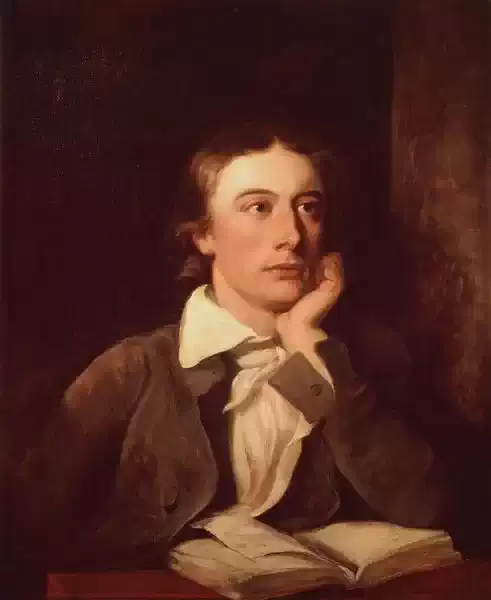
John Keats
On Sitting Down to Read King Lear Once Again
On Sitting Down to Read King Lear Once Again
O golden-tongued Romance with serene lute!
Fair plumed Syren! Queen of far away!
Leave melodizing on this wintry day,
Shut up thine olden pages, and be mute:
Adieu! for once again the fierce dispute,
Betwixt damnation and impassion'd clay
Must I burn through; once more humbly assay
The bitter-sweet of this Shakespearian fruit.
Chief Poet! and ye clouds of Albion,
Begetters of our deep eternal theme,
When through the old oak forest I am gone,
Let me not wander in a barren dream,
But when I am consumed in the fire,
Give me new Phoenix wings to fly at my desire.
O golden-tongued Romance with serene lute!
Fair plumed Syren! Queen of far away!
Leave melodizing on this wintry day,
Shut up thine olden pages, and be mute:
Adieu! for once again the fierce dispute,
Betwixt damnation and impassion'd clay
Must I burn through; once more humbly assay
The bitter-sweet of this Shakespearian fruit.
Chief Poet! and ye clouds of Albion,
Begetters of our deep eternal theme,
When through the old oak forest I am gone,
Let me not wander in a barren dream,
But when I am consumed in the fire,
Give me new Phoenix wings to fly at my desire.
383
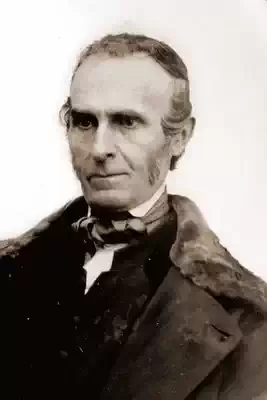
John Greenleaf Whittier
The Clear Vision
The Clear Vision
I did but dream. I never knew
What charms our sternest season wore.
Was never yet the sky so blue,
Was never earth so white before.
Till now I never saw the glow
Of sunset on yon hills of snow,
And never learned the bough's designs
Of beauty in its leafless lines.
Did ever such a morning break
As that my eastern windows see?
Did ever such a moonlight take
Weird photographs of shrub and tree?
Rang ever bells so wild and fleet
The music of the winter street?
Was ever yet a sound by half
So merry as you school-boy's laugh?
O Earth! with gladness overfraught,
No added charm thy face hath found;
Within my heart the change is wrought,
My footsteps make enchanted ground.
From couch of pain and curtained room
Forth to thy light and air I come,
To find in all that meets my eyes
The freshness of a glad surprise.
Fair seem these winter days, and soon
Shall blow the warm west-winds of spring,
To set the unbound rills in tune
And hither urge the bluebird's wing.
The vales shall laugh in flowers, the woods
Grow misty green with leafing buds,
And violets and wind-flowers sway
Against the throbbing heart of May.
Break forth, my lips, in praise, and own
The wiser love severely kind;
Since, richer for its chastening grown,
I see, whereas I once was blind.
The world, O Father! hath not wronged
With loss the life by Thee prolonged;
But still, with every added year,
More beautiful Thy works appear!
As Thou hast made thy world without,
Make Thou more fair my world within;
Shine through its lingering clouds of doubt;
Rebuke its haunting shapes of sin;
Fill, brief or long, my granted span
Of life with love to thee and man;
Strike when thou wilt the hour of rest,
But let my last days be my best!
I did but dream. I never knew
What charms our sternest season wore.
Was never yet the sky so blue,
Was never earth so white before.
Till now I never saw the glow
Of sunset on yon hills of snow,
And never learned the bough's designs
Of beauty in its leafless lines.
Did ever such a morning break
As that my eastern windows see?
Did ever such a moonlight take
Weird photographs of shrub and tree?
Rang ever bells so wild and fleet
The music of the winter street?
Was ever yet a sound by half
So merry as you school-boy's laugh?
O Earth! with gladness overfraught,
No added charm thy face hath found;
Within my heart the change is wrought,
My footsteps make enchanted ground.
From couch of pain and curtained room
Forth to thy light and air I come,
To find in all that meets my eyes
The freshness of a glad surprise.
Fair seem these winter days, and soon
Shall blow the warm west-winds of spring,
To set the unbound rills in tune
And hither urge the bluebird's wing.
The vales shall laugh in flowers, the woods
Grow misty green with leafing buds,
And violets and wind-flowers sway
Against the throbbing heart of May.
Break forth, my lips, in praise, and own
The wiser love severely kind;
Since, richer for its chastening grown,
I see, whereas I once was blind.
The world, O Father! hath not wronged
With loss the life by Thee prolonged;
But still, with every added year,
More beautiful Thy works appear!
As Thou hast made thy world without,
Make Thou more fair my world within;
Shine through its lingering clouds of doubt;
Rebuke its haunting shapes of sin;
Fill, brief or long, my granted span
Of life with love to thee and man;
Strike when thou wilt the hour of rest,
But let my last days be my best!
272
John Greenleaf Whittier
Among the Hills
Among the Hills
PRELUDE
ALONG the roadside, like the flowers of gold
That tawny Incas for their gardens wrought,
Heavy with sunshine droops the golden-rod,
And the red pennons of the cardinal-flowers
Hang motionless upon their upright staves.
The sky is hot and hazy, and the wind,
Vying-weary with its long flight from the south,
Unfelt; yet, closely scanned, yon maple leaf
With faintest motion, as one stirs in dreams,
Confesses it. The locust by the wall
Stabs the noon-silence with his sharp alarm.
A single hay-cart down the dusty road
Creaks slowly, with its driver fast asleep
On the load’s top. Against the neighboring hill,
Huddled along the stone wall’s shady side,
The sheep show white, as if a snowdrift still
Defied the dog-star. Through the open door
A drowsy smell of flowers-gray heliotrope,
And white sweet clover, and shy mignonette—
Comes faintly in, and silent chorus lends
To the pervading symphony of peace.
No time is this for hands long over-worn
To task their strength; and (unto Him be praise
Who giveth quietness!) the stress and strain
Of years that did the work of centuries
Have ceased, and we can draw our breath once more
Freely and full. So, as yon harvesters
Make glad their nooning underneath the elms
With tale and riddle and old snatch of song,
I lay aside grave themes, and idly turn
The leaves of memory’s sketch-book, dreaming o’er
Old summer pictures of the quiet hills,
And human life, as quiet, at their feet.
And yet not idly all. A farmer’s son,
Proud of field-lore and harvest craft, and feeling
All their fine possibilities, how rich
And restful even poverty and toil
Become when beauty, harmony, and love
Sit at their humble hearth as angels sat
At evening in the patriarch’s tent, when man
Makes labor noble, and his farmer’s frock
The symbol of a Christian chivalry
Tender and just and generous to her
Who clothes with grace all duty; still, I know
Too well the picture has another side,—
How wearily the grind of toil goes on
Where love is wanting, how the eye and ear
And heart are starved amidst the plenitude
Of nature, and how hard and colorless
Is life without an atmosphere. I look
Across the lapse of half a century,
And call to mind old homesteads, where no flower
Told that the spring had come, but evil weeds,
Nightshade and rough-leaved burdock in the place
Of the sweet doorway greeting of the rose
And honeysuckle, where the house walls seemed
Blistering in sun, without a tree or vine
To cast the tremulous shadow of its leaves
Across the curtainless windows, from whose panes
Fluttered the signal rags of shiftlessness.
Within, the cluttered kitchen-floor, unwashed
(Broom-clean I think they called it); the best room
Stifling with cellar damp, shut from the air
In hot midsummer, bookless, pictureless,
Save the inevitable sampler hung
Over the fireplace, or a mourning piece,
A green-haired woman, peony-cheeked, beneath
Impossible willows; the wide-throated hearth
Bristling with faded pine-boughs half concealing
The piled-up rubbish at the chimney’s back;
And, in sad keeping with all things about them,
Shrill, querulous-women, sour and sullen men,
Untidy, loveless, old before their time,
With scarce a human interest save their own
Monotonous round of small economies,
Or the poor scandal of the neighborhood;
Blind to the beauty everywhere revealed,
Treading the May-flowers with regardless feet;
For them the song-sparrow and the bobolink
Sang not, nor winds made music in the leaves;
For them in vain October’s holocaust
Burned, gold and crimson, over all the hills,
The sacramental mystery of the woods.
Church-goers, fearful of the unseen Powers,
But grumbling over pulpit-tax and pew-rent,
Saving, as shrewd economists, their souls
And winter pork with the least possible outlay
Of salt and sanctity; in daily life
Showing as little actual comprehension
Of Christian charity and love and duty,
As if the Sermon on the Mount had been
Outdated like a last year’s almanac
Rich in broad woodlands and in half-tilled fields,
And yet so pinched and bare and comfortless,
The veriest straggler limping on his rounds,
The sun and air his sole inheritance,
Laughed at a poverty that paid its taxes,
And hugged his rags in self-complacency!
Not such should be the homesteads of a land
Where whoso wisely wills and acts may dwell
As king and lawgiver, in broad-acred state,
With beauty, art, taste, culture, books, to make
His hour of leisure richer than a life
Of fourscore to the barons of old time,
Our yeoman should be equal to his home
Set in the fair, green valleys, purple walled,
A man to match his mountains, not to creep
Dwarfed and abased below them. I would fain
In this light way (of which I needs must own
With the knife-grinder of whom Canning sings,
“Story, God bless you! I have none to tell you!”)
Invite the eye to see and heart to feel
The beauty and the joy within their reach,—
Home, and home loves, and the beatitudes
Of nature free to all. Haply in years
That wait to take the places of our own,
Heard where some breezy balcony looks down
On happy homes, or where the lake in the moon
Sleeps dreaming of the mountains, fair as Ruth,
In the old Hebrew pastoral, at the feet
Of Boaz, even this simple lay of mine
May seem the burden of a prophecy,
Finding its late fulfilment in a change
Slow as the oak’s growth, lifting manhood up
Through broader culture, finer manners, love,
And reverence, to the level of the hills.
O Golden Age, whose light is of the dawn,
And not of sunset, forward, not behind,
Flood the new heavens and earth, and with thee bring
All the old virtues, whatsoever things
Are pure and honest and of good repute,
But add thereto whatever bard has sung
Or seer has told of when in trance and dream
They saw the Happy Isles of prophecy
Let Justice hold her scale, and Truth divide
Between the right and wrong; but give the heart
The freedom of its fair inheritance;
Let the poor prisoner, cramped and starved so long,
At Nature’s table feast his ear and eye
With joy and wonder; let all harmonies
Of sound, form, color, motion, wait upon
The princely guest, whether in soft attire
Of leisure clad, or the coarse frock of toil,
And, lending life to the dead form of faith,
Give human nature reverence for the sake
Of One who bore it, making it divine
With the ineffable tenderness of God;
Let common need, the brotherhood of prayer,
The heirship of an unknown destiny,
The unsolved mystery round about us, make
A man more precious than the gold of Ophir.
Sacred, inviolate, unto whom all things
Should minister, as outward types and signs
Of the eternal beauty which fulfils
The one great purpose of creation, Love,
The sole necessity of Earth and Heaven!
. . . . .
For weeks the clouds had raked the hills
And vexed the vales with raining,
And all the woods were sad with mist,
And all the brooks complaining.
At last, a sudden night-storm tore
The mountain veils asunder,
And swept the valleys clean before
The bosom of the thunder.
Through Sandwich notch the west-wind sang
Good morrow to the cotter;
And once again Chocorua’s horn
Of shadow pierced the water.
Above his broad lake Ossipee,
Once more the sunshine wearing,
Stooped, tracing on that silver shield
His grim armorial bearing.
Clear drawn against the hard blue sky,
The peaks had winter’s keenness;
And, close on autumn’s frost, the vales
Had more than June’s fresh greenness.
Again the sodden forest floors
With golden lights were checkered,
Once more rejoicing leaves in wind
And sunshine danced and flickered.
It was as if the summer’s late
Atoning for it’s sadness
Had borrowed every season’s charm
To end its days in gladness.
I call to mind those banded vales
Of shadow and of shining,
Through which, my hostess at my side,
I drove in day’s declining.
We held our sideling way above
The river’s whitening shallows,
By homesteads old, with wide-flung barns
Swept through and through by swallows,—
By maple orchards, belts of pine
And larches climbing darkly
The mountain slopes, and, over all,
The great peaks rising starkly.
You should have seen that long hill-range
With gaps of brightness riven,—
How through each pass and hollow streamed
The purpling lights of heaven,—
Rivers of gold-mist flowing down
From far celestial fountains,—
The great sun flaming through the rifts
Beyond the wall of mountains.
We paused at last where home-bound cows
Brought down the pasture’s treasure,
And in the barn the rhythmic flails
Beat out a harvest measure.
We heard the night-hawk’s sullen plunge,
The crow his tree-mates calling:
The shadows lengthening down the slopes
About our feet were falling.
And through them smote the level sun
In broken lines of splendor,
Touched the gray rocks and made the green
Of the shorn grass more tender.
The maples bending o’er the gate,
Their arch of leaves just tinted
With yellow warmth, the golden glow
Of coming autumn hinted.
Keen white between the farm-house showed,
And smiled on porch and trellis,
The fair democracy of flowers
That equals cot and palace.
And weaving garlands for her dog,
’Twixt chidings and caresses,
A human flower of childhood shook
The sunshine from her tresses.
On either hand we saw the signs
Of fancy and of shrewdness,
Where taste had wound its arms of vines
Round thrift’s uncomely rudeness.
The sun-brown farmer in his frock
Shook hands, and called to Mary
Bare-armed, as Juno might, she came,
White-aproned from her dairy.
Her air, her smile, her motions, told
Of womanly completeness;
A music as of household songs
Was in her voice of sweetness.
Not fair alone in curve and line,
But something more and better,
The secret charm eluding art,
Its spirit, not its letter;—
An inborn grace that nothing lacked
Of culture or appliance,
The warmth of genial courtesy,
The calm of self-reliance.
Before her queenly womanhood
How dared our hostess utter
The paltry errand of her need
To buy her fresh-churned butter?
She led the way with housewife pride,
Her goodly store disclosing,
Full tenderly the golden balls
With practised hands disposing.
Then, while along the western hills
We watched the changeful glory
Of sunset, on our homeward way,
I heard her simple story.
The early crickets sang; the stream
Plashed through my friend’s narration:
Her rustic patois of the hills
Lost in my free-translation.
“More wise,” she said, “than those who swarm
Our hills in middle summer,
She came, when June’s first roses blow,
To greet the early comer.
“From school and ball and rout she came,
The city’s fair, pale daughter,
To drink the wine of mountain air
Beside the Bearcamp Water.
“Her step grew firmer on the hills
That watch our homesteads over;
On cheek and lip, from summer fields,
She caught the bloom of clover.
“For health comes sparkling in the streams
From cool Chocorua stealing:
There’s iron in our Northern winds;
Our pines are trees of healing.
“She sat beneath the broad-armed elms
That skirt the mowing-meadow,
And watched the gentle west-wind weave
The grass with shine and shadow.
“Beside her, from the summer heat
To share her grateful screening,
With forehead bared, the farmer stood,
Upon his pitchfork leaning.
“Framed in its damp, dark locks, his face
Had nothing mean or common,—
Strong, manly, true, the tenderness
And pride beloved of woman.
“She looked up, glowing with the health
The country air had brought her,
And, laughing, said: ‘You lack a wife,
Your mother lacks a daughter.
“‘To mend your frock and bake your bread
You do not need a lady:
Be sure among these brown old homes
Is some one waiting ready,—
“‘Some fair, sweet girl with skilful hand
And cheerful heart for treasure,
Who never played with ivory keys,
Or danced the polka’s measure.’
“He bent his black brows to a frown,
He set his white teeth tightly.
‘’T is well,’ he said, ‘for one like you
To choose for me so lightly.
“You think, because my life is rude
I take no note of sweetness:
I tell you love has naught to do
With meetness or unmeetness.
“‘Itself its best excuse, it asks
No leave of pride or fashion
When silken zone or homespun frock
It stirs with throbs of passion.
“‘You think me deaf and blind: you bring
Your winning graces hither
As free as if from cradle-time
We two had played together.
“‘You tempt me with your laughing eyes,
Your cheek of sundown’s blushes,
A motion as of waving grain,
A music as of thrushes.
“‘The plaything of your summer sport,
The spells you weave around me
You cannot at your will undo,
Nor leave me as you found me.
“‘You go as lightly as you came,
Your life is well without me;
What care you that these hills will close
Like prison-walls about me?
“‘No mood is mine to seek a wife,
Or daughter for my mother
Who loves you loses in that love
All power to love another!
“‘I dare your pity or your scorn,
With pride your own exceeding;
I fling my heart into your lap
Without a word of pleading.’
“She looked up in his face of pain
So archly, yet so tender
‘And if I lend you mine,’ she said,
‘Will you forgive the lender?
“‘Nor frock nor tan can hide the man;
And see you not, my farmer,
How weak and fond a woman waits
Behind this silken armor?
“‘I love you: on that love alone,
And not my worth, presuming,
Will you not trust for summer fruit
The tree in May-day blooming?’
“Alone the hangbird overhead,
His hair-swung cradle straining,
Looked down to see love’s miracle,—
The giving that is gaining.
“And so the farmer found a wife,
His mother found a daughter
There looks no happier home than hers
On pleasant Bearcamp Water.
“Flowers spring to blossom where she walks
The careful ways of duty;
Our hard, stiff lines of life with her
Are flowing curves of beauty.
“Our homes are cheerier for her sake,
Our door-yards brighter blooming,
And all about the social air
Is sweeter for her coming.
“Unspoken homilies of peace
Her daily life is preaching;
The still refreshment of the dew
Is her unconscious teaching.
“And never tenderer hand than hers
Unknits the brow of ailing;
Her garments to the sick man’s ear
Have music in their trailing.
“And when, in pleasant harvest moons,
The youthful huskers gather,
Or sleigh-drives on the mountain ways
Defy the winter weather,—
“In sugar-camps, when south and warm
The winds of March are blowing,
And sweetly from its thawing veins
The maple’s blood is flowing,—
“In summer, where some lilied pond
Its virgin zone is baring,
Or where the ruddy autumn fire
Lights up the apple-paring,—
“The coarseness of a ruder time
Her finer mirth displaces,
A subtler sense of pleasure fills
Each rustic sport she graces.
“Her presence lends its warmth and health
To all who come before it.
If woman lost us Eden, such
As she alone restore it.
“For larger life and wiser aims
The farmer is her debtor;
Who holds to his another’s heart
Must needs be worse or better.
“Through her his civic service shows
A purer-toned ambition;
No double consciousness divides
The man and politician.
“In party’s doubtful ways he trusts
Her instincts to determine;
At the loud polls, the thought of her
Recalls Christ’s Mountain Sermon.
“He owns her logic of the heart,
And wisdom of unreason,
Supplying, while he doubts and weighs,
The needed word in season.
“He sees with pride her richer thought,
Her fancy’s freer ranges;
And love thus deepened to respect
Is proof against all changes.
“And if she walks at ease in ways
His feet are slow to travel,
And if she reads with cultured eyes
What his may scarce unravel,
“Still clearer, for her keener sight
Of beauty and of wonder,
He learns the meaning of the hills
He dwelt from childhood under.
“And higher, warmed with summer lights,
Or winter-crowned and hoary,
The ridged horizon lifts for him
Its inner veils of glory.
“He has his own free, bookless lore,
The lessons nature taught him,
The wisdom which the woods and hills
And toiling men have brought him:
“The steady force of will whereby
Her flexile grace seems sweeter;
The sturdy counterpoise which makes
Her woman’s life completer.
“A latent fire of soul which lacks
No breath of love to fan it;
And wit, that, like his native brooks,
Plays over solid granite.
“How dwarfed against his manliness
She sees the poor pretension,
The wants, the aims, the follies, born
Of fashion and convention.
“How life behind its accidents
Stands strong and self-sustaining,
The human fact transcending all
The losing and the gaining.
“And so in grateful interchange
Of teacher and of hearer,
Their lives their true distinctness keep
While daily drawing nearer.
“And if the husband or the wife
In home’s strong light discovers
Such slight defaults as failed to meet
The blinded eyes of lovers,
“Why need we care to ask?—who dreams
Without their thorns of roses,
Or wonders that the truest steel
The readiest spark discloses?
“For still in mutual sufferance lies
The secret of true living;
Love scarce is love that never knows
The sweetness of forgiving.
“We send the Squire to General Court,
He takes his young wife thither;
No prouder man election day
Rides through the sweet June weather.
“He sees with eyes of manly trust
All hearts to her inclining;
Not less for him his household light
That others share its shining.”
Thus, while my hostess spake, there grew
Before me, warmer tinted
And outlined with a tenderer grace,
The picture that she hinted.
The sunset smouldered as we drove
Beneath the deep hill-shadows.
Below us wreaths of white fog walked
Like ghosts the haunted meadows.
Sounding the summer night, the stars
Dropped down their golden plummets;
The pale arc of the Northern lights
Rose o’er the mountain summits,—
Until, at last, beneath its bridge,
We heard the Bearcamp flowing,
And saw across the mapled lawn
The welcome home lights glowing;—
And, musing on the tale I heard,
’T were well, thought I, if often
To rugged farm-life came the gift
To harmonize and soften;—
If more and more we found the troth
Of fact and fancy plighted,
And culture’s charm and labor’s strength
In rural homes united,—
The simple life, the homely hearth,
With beauty’s sphere surrounding,
And blessing toil where toil abounds
With graces more abounding.
PRELUDE
ALONG the roadside, like the flowers of gold
That tawny Incas for their gardens wrought,
Heavy with sunshine droops the golden-rod,
And the red pennons of the cardinal-flowers
Hang motionless upon their upright staves.
The sky is hot and hazy, and the wind,
Vying-weary with its long flight from the south,
Unfelt; yet, closely scanned, yon maple leaf
With faintest motion, as one stirs in dreams,
Confesses it. The locust by the wall
Stabs the noon-silence with his sharp alarm.
A single hay-cart down the dusty road
Creaks slowly, with its driver fast asleep
On the load’s top. Against the neighboring hill,
Huddled along the stone wall’s shady side,
The sheep show white, as if a snowdrift still
Defied the dog-star. Through the open door
A drowsy smell of flowers-gray heliotrope,
And white sweet clover, and shy mignonette—
Comes faintly in, and silent chorus lends
To the pervading symphony of peace.
No time is this for hands long over-worn
To task their strength; and (unto Him be praise
Who giveth quietness!) the stress and strain
Of years that did the work of centuries
Have ceased, and we can draw our breath once more
Freely and full. So, as yon harvesters
Make glad their nooning underneath the elms
With tale and riddle and old snatch of song,
I lay aside grave themes, and idly turn
The leaves of memory’s sketch-book, dreaming o’er
Old summer pictures of the quiet hills,
And human life, as quiet, at their feet.
And yet not idly all. A farmer’s son,
Proud of field-lore and harvest craft, and feeling
All their fine possibilities, how rich
And restful even poverty and toil
Become when beauty, harmony, and love
Sit at their humble hearth as angels sat
At evening in the patriarch’s tent, when man
Makes labor noble, and his farmer’s frock
The symbol of a Christian chivalry
Tender and just and generous to her
Who clothes with grace all duty; still, I know
Too well the picture has another side,—
How wearily the grind of toil goes on
Where love is wanting, how the eye and ear
And heart are starved amidst the plenitude
Of nature, and how hard and colorless
Is life without an atmosphere. I look
Across the lapse of half a century,
And call to mind old homesteads, where no flower
Told that the spring had come, but evil weeds,
Nightshade and rough-leaved burdock in the place
Of the sweet doorway greeting of the rose
And honeysuckle, where the house walls seemed
Blistering in sun, without a tree or vine
To cast the tremulous shadow of its leaves
Across the curtainless windows, from whose panes
Fluttered the signal rags of shiftlessness.
Within, the cluttered kitchen-floor, unwashed
(Broom-clean I think they called it); the best room
Stifling with cellar damp, shut from the air
In hot midsummer, bookless, pictureless,
Save the inevitable sampler hung
Over the fireplace, or a mourning piece,
A green-haired woman, peony-cheeked, beneath
Impossible willows; the wide-throated hearth
Bristling with faded pine-boughs half concealing
The piled-up rubbish at the chimney’s back;
And, in sad keeping with all things about them,
Shrill, querulous-women, sour and sullen men,
Untidy, loveless, old before their time,
With scarce a human interest save their own
Monotonous round of small economies,
Or the poor scandal of the neighborhood;
Blind to the beauty everywhere revealed,
Treading the May-flowers with regardless feet;
For them the song-sparrow and the bobolink
Sang not, nor winds made music in the leaves;
For them in vain October’s holocaust
Burned, gold and crimson, over all the hills,
The sacramental mystery of the woods.
Church-goers, fearful of the unseen Powers,
But grumbling over pulpit-tax and pew-rent,
Saving, as shrewd economists, their souls
And winter pork with the least possible outlay
Of salt and sanctity; in daily life
Showing as little actual comprehension
Of Christian charity and love and duty,
As if the Sermon on the Mount had been
Outdated like a last year’s almanac
Rich in broad woodlands and in half-tilled fields,
And yet so pinched and bare and comfortless,
The veriest straggler limping on his rounds,
The sun and air his sole inheritance,
Laughed at a poverty that paid its taxes,
And hugged his rags in self-complacency!
Not such should be the homesteads of a land
Where whoso wisely wills and acts may dwell
As king and lawgiver, in broad-acred state,
With beauty, art, taste, culture, books, to make
His hour of leisure richer than a life
Of fourscore to the barons of old time,
Our yeoman should be equal to his home
Set in the fair, green valleys, purple walled,
A man to match his mountains, not to creep
Dwarfed and abased below them. I would fain
In this light way (of which I needs must own
With the knife-grinder of whom Canning sings,
“Story, God bless you! I have none to tell you!”)
Invite the eye to see and heart to feel
The beauty and the joy within their reach,—
Home, and home loves, and the beatitudes
Of nature free to all. Haply in years
That wait to take the places of our own,
Heard where some breezy balcony looks down
On happy homes, or where the lake in the moon
Sleeps dreaming of the mountains, fair as Ruth,
In the old Hebrew pastoral, at the feet
Of Boaz, even this simple lay of mine
May seem the burden of a prophecy,
Finding its late fulfilment in a change
Slow as the oak’s growth, lifting manhood up
Through broader culture, finer manners, love,
And reverence, to the level of the hills.
O Golden Age, whose light is of the dawn,
And not of sunset, forward, not behind,
Flood the new heavens and earth, and with thee bring
All the old virtues, whatsoever things
Are pure and honest and of good repute,
But add thereto whatever bard has sung
Or seer has told of when in trance and dream
They saw the Happy Isles of prophecy
Let Justice hold her scale, and Truth divide
Between the right and wrong; but give the heart
The freedom of its fair inheritance;
Let the poor prisoner, cramped and starved so long,
At Nature’s table feast his ear and eye
With joy and wonder; let all harmonies
Of sound, form, color, motion, wait upon
The princely guest, whether in soft attire
Of leisure clad, or the coarse frock of toil,
And, lending life to the dead form of faith,
Give human nature reverence for the sake
Of One who bore it, making it divine
With the ineffable tenderness of God;
Let common need, the brotherhood of prayer,
The heirship of an unknown destiny,
The unsolved mystery round about us, make
A man more precious than the gold of Ophir.
Sacred, inviolate, unto whom all things
Should minister, as outward types and signs
Of the eternal beauty which fulfils
The one great purpose of creation, Love,
The sole necessity of Earth and Heaven!
. . . . .
For weeks the clouds had raked the hills
And vexed the vales with raining,
And all the woods were sad with mist,
And all the brooks complaining.
At last, a sudden night-storm tore
The mountain veils asunder,
And swept the valleys clean before
The bosom of the thunder.
Through Sandwich notch the west-wind sang
Good morrow to the cotter;
And once again Chocorua’s horn
Of shadow pierced the water.
Above his broad lake Ossipee,
Once more the sunshine wearing,
Stooped, tracing on that silver shield
His grim armorial bearing.
Clear drawn against the hard blue sky,
The peaks had winter’s keenness;
And, close on autumn’s frost, the vales
Had more than June’s fresh greenness.
Again the sodden forest floors
With golden lights were checkered,
Once more rejoicing leaves in wind
And sunshine danced and flickered.
It was as if the summer’s late
Atoning for it’s sadness
Had borrowed every season’s charm
To end its days in gladness.
I call to mind those banded vales
Of shadow and of shining,
Through which, my hostess at my side,
I drove in day’s declining.
We held our sideling way above
The river’s whitening shallows,
By homesteads old, with wide-flung barns
Swept through and through by swallows,—
By maple orchards, belts of pine
And larches climbing darkly
The mountain slopes, and, over all,
The great peaks rising starkly.
You should have seen that long hill-range
With gaps of brightness riven,—
How through each pass and hollow streamed
The purpling lights of heaven,—
Rivers of gold-mist flowing down
From far celestial fountains,—
The great sun flaming through the rifts
Beyond the wall of mountains.
We paused at last where home-bound cows
Brought down the pasture’s treasure,
And in the barn the rhythmic flails
Beat out a harvest measure.
We heard the night-hawk’s sullen plunge,
The crow his tree-mates calling:
The shadows lengthening down the slopes
About our feet were falling.
And through them smote the level sun
In broken lines of splendor,
Touched the gray rocks and made the green
Of the shorn grass more tender.
The maples bending o’er the gate,
Their arch of leaves just tinted
With yellow warmth, the golden glow
Of coming autumn hinted.
Keen white between the farm-house showed,
And smiled on porch and trellis,
The fair democracy of flowers
That equals cot and palace.
And weaving garlands for her dog,
’Twixt chidings and caresses,
A human flower of childhood shook
The sunshine from her tresses.
On either hand we saw the signs
Of fancy and of shrewdness,
Where taste had wound its arms of vines
Round thrift’s uncomely rudeness.
The sun-brown farmer in his frock
Shook hands, and called to Mary
Bare-armed, as Juno might, she came,
White-aproned from her dairy.
Her air, her smile, her motions, told
Of womanly completeness;
A music as of household songs
Was in her voice of sweetness.
Not fair alone in curve and line,
But something more and better,
The secret charm eluding art,
Its spirit, not its letter;—
An inborn grace that nothing lacked
Of culture or appliance,
The warmth of genial courtesy,
The calm of self-reliance.
Before her queenly womanhood
How dared our hostess utter
The paltry errand of her need
To buy her fresh-churned butter?
She led the way with housewife pride,
Her goodly store disclosing,
Full tenderly the golden balls
With practised hands disposing.
Then, while along the western hills
We watched the changeful glory
Of sunset, on our homeward way,
I heard her simple story.
The early crickets sang; the stream
Plashed through my friend’s narration:
Her rustic patois of the hills
Lost in my free-translation.
“More wise,” she said, “than those who swarm
Our hills in middle summer,
She came, when June’s first roses blow,
To greet the early comer.
“From school and ball and rout she came,
The city’s fair, pale daughter,
To drink the wine of mountain air
Beside the Bearcamp Water.
“Her step grew firmer on the hills
That watch our homesteads over;
On cheek and lip, from summer fields,
She caught the bloom of clover.
“For health comes sparkling in the streams
From cool Chocorua stealing:
There’s iron in our Northern winds;
Our pines are trees of healing.
“She sat beneath the broad-armed elms
That skirt the mowing-meadow,
And watched the gentle west-wind weave
The grass with shine and shadow.
“Beside her, from the summer heat
To share her grateful screening,
With forehead bared, the farmer stood,
Upon his pitchfork leaning.
“Framed in its damp, dark locks, his face
Had nothing mean or common,—
Strong, manly, true, the tenderness
And pride beloved of woman.
“She looked up, glowing with the health
The country air had brought her,
And, laughing, said: ‘You lack a wife,
Your mother lacks a daughter.
“‘To mend your frock and bake your bread
You do not need a lady:
Be sure among these brown old homes
Is some one waiting ready,—
“‘Some fair, sweet girl with skilful hand
And cheerful heart for treasure,
Who never played with ivory keys,
Or danced the polka’s measure.’
“He bent his black brows to a frown,
He set his white teeth tightly.
‘’T is well,’ he said, ‘for one like you
To choose for me so lightly.
“You think, because my life is rude
I take no note of sweetness:
I tell you love has naught to do
With meetness or unmeetness.
“‘Itself its best excuse, it asks
No leave of pride or fashion
When silken zone or homespun frock
It stirs with throbs of passion.
“‘You think me deaf and blind: you bring
Your winning graces hither
As free as if from cradle-time
We two had played together.
“‘You tempt me with your laughing eyes,
Your cheek of sundown’s blushes,
A motion as of waving grain,
A music as of thrushes.
“‘The plaything of your summer sport,
The spells you weave around me
You cannot at your will undo,
Nor leave me as you found me.
“‘You go as lightly as you came,
Your life is well without me;
What care you that these hills will close
Like prison-walls about me?
“‘No mood is mine to seek a wife,
Or daughter for my mother
Who loves you loses in that love
All power to love another!
“‘I dare your pity or your scorn,
With pride your own exceeding;
I fling my heart into your lap
Without a word of pleading.’
“She looked up in his face of pain
So archly, yet so tender
‘And if I lend you mine,’ she said,
‘Will you forgive the lender?
“‘Nor frock nor tan can hide the man;
And see you not, my farmer,
How weak and fond a woman waits
Behind this silken armor?
“‘I love you: on that love alone,
And not my worth, presuming,
Will you not trust for summer fruit
The tree in May-day blooming?’
“Alone the hangbird overhead,
His hair-swung cradle straining,
Looked down to see love’s miracle,—
The giving that is gaining.
“And so the farmer found a wife,
His mother found a daughter
There looks no happier home than hers
On pleasant Bearcamp Water.
“Flowers spring to blossom where she walks
The careful ways of duty;
Our hard, stiff lines of life with her
Are flowing curves of beauty.
“Our homes are cheerier for her sake,
Our door-yards brighter blooming,
And all about the social air
Is sweeter for her coming.
“Unspoken homilies of peace
Her daily life is preaching;
The still refreshment of the dew
Is her unconscious teaching.
“And never tenderer hand than hers
Unknits the brow of ailing;
Her garments to the sick man’s ear
Have music in their trailing.
“And when, in pleasant harvest moons,
The youthful huskers gather,
Or sleigh-drives on the mountain ways
Defy the winter weather,—
“In sugar-camps, when south and warm
The winds of March are blowing,
And sweetly from its thawing veins
The maple’s blood is flowing,—
“In summer, where some lilied pond
Its virgin zone is baring,
Or where the ruddy autumn fire
Lights up the apple-paring,—
“The coarseness of a ruder time
Her finer mirth displaces,
A subtler sense of pleasure fills
Each rustic sport she graces.
“Her presence lends its warmth and health
To all who come before it.
If woman lost us Eden, such
As she alone restore it.
“For larger life and wiser aims
The farmer is her debtor;
Who holds to his another’s heart
Must needs be worse or better.
“Through her his civic service shows
A purer-toned ambition;
No double consciousness divides
The man and politician.
“In party’s doubtful ways he trusts
Her instincts to determine;
At the loud polls, the thought of her
Recalls Christ’s Mountain Sermon.
“He owns her logic of the heart,
And wisdom of unreason,
Supplying, while he doubts and weighs,
The needed word in season.
“He sees with pride her richer thought,
Her fancy’s freer ranges;
And love thus deepened to respect
Is proof against all changes.
“And if she walks at ease in ways
His feet are slow to travel,
And if she reads with cultured eyes
What his may scarce unravel,
“Still clearer, for her keener sight
Of beauty and of wonder,
He learns the meaning of the hills
He dwelt from childhood under.
“And higher, warmed with summer lights,
Or winter-crowned and hoary,
The ridged horizon lifts for him
Its inner veils of glory.
“He has his own free, bookless lore,
The lessons nature taught him,
The wisdom which the woods and hills
And toiling men have brought him:
“The steady force of will whereby
Her flexile grace seems sweeter;
The sturdy counterpoise which makes
Her woman’s life completer.
“A latent fire of soul which lacks
No breath of love to fan it;
And wit, that, like his native brooks,
Plays over solid granite.
“How dwarfed against his manliness
She sees the poor pretension,
The wants, the aims, the follies, born
Of fashion and convention.
“How life behind its accidents
Stands strong and self-sustaining,
The human fact transcending all
The losing and the gaining.
“And so in grateful interchange
Of teacher and of hearer,
Their lives their true distinctness keep
While daily drawing nearer.
“And if the husband or the wife
In home’s strong light discovers
Such slight defaults as failed to meet
The blinded eyes of lovers,
“Why need we care to ask?—who dreams
Without their thorns of roses,
Or wonders that the truest steel
The readiest spark discloses?
“For still in mutual sufferance lies
The secret of true living;
Love scarce is love that never knows
The sweetness of forgiving.
“We send the Squire to General Court,
He takes his young wife thither;
No prouder man election day
Rides through the sweet June weather.
“He sees with eyes of manly trust
All hearts to her inclining;
Not less for him his household light
That others share its shining.”
Thus, while my hostess spake, there grew
Before me, warmer tinted
And outlined with a tenderer grace,
The picture that she hinted.
The sunset smouldered as we drove
Beneath the deep hill-shadows.
Below us wreaths of white fog walked
Like ghosts the haunted meadows.
Sounding the summer night, the stars
Dropped down their golden plummets;
The pale arc of the Northern lights
Rose o’er the mountain summits,—
Until, at last, beneath its bridge,
We heard the Bearcamp flowing,
And saw across the mapled lawn
The welcome home lights glowing;—
And, musing on the tale I heard,
’T were well, thought I, if often
To rugged farm-life came the gift
To harmonize and soften;—
If more and more we found the troth
Of fact and fancy plighted,
And culture’s charm and labor’s strength
In rural homes united,—
The simple life, the homely hearth,
With beauty’s sphere surrounding,
And blessing toil where toil abounds
With graces more abounding.
302
John Donne
The Annunciation And Passion
The Annunciation And Passion
TAMELY, frail body, abstain to-day ; to-day
My soul eats twice, Christ hither and away.
She sees Him man, so like God made in this,
That of them both a circle emblem is,
Whose first and last concur ; this doubtful day
Of feast or fast, Christ came, and went away ;
She sees Him nothing, twice at once, who's all ;
She sees a cedar plant itself, and fall ;
Her Maker put to making, and the head
Of life at once not yet alive, yet dead ;
She sees at once the Virgin Mother stay
Reclused at home, public at Golgotha ;
Sad and rejoiced she's seen at once, and seen
At almost fifty, and at scarce fifteen ;
At once a son is promised her, and gone ;
Gabriell gives Christ to her, He her to John ;
Not fully a mother, she's in orbity ;
At once receiver and the legacy.
All this, and all between, this day hath shown,
Th' abridgement of Christ's story, which makes one—
As in plain maps, the furthest west is east—
Of th' angels Ave, and Consummatum est.
How well the Church, God's Court of Faculties,
Deals, in sometimes, and seldom joining these.
As by the self-fix'd Pole we never do
Direct our course, but the next star thereto,
Which shows where th'other is, and which we say
—Because it strays not far—doth never stray,
So God by His Church, nearest to him, we know,
And stand firm, if we by her motion go.
His Spirit, as His fiery pillar, doth
Lead, and His Church, as cloud ; to one end both.
This Church by letting those days join, hath shown
Death and conception in mankind is one ;
Or 'twas in Him the same humility,
That He would be a man, and leave to be ;
Or as creation He hath made, as God,
With the last judgment but one period,
His imitating spouse would join in one
Manhood's extremes ; He shall come, He is gone ;
Or as though one blood drop, which thence did fall,
Accepted, would have served, He yet shed all,
So though the least of His pains, deeds, or words,
Would busy a life, she all this day affords.
This treasure then, in gross, my soul, uplay,
And in my life retail it every day.
TAMELY, frail body, abstain to-day ; to-day
My soul eats twice, Christ hither and away.
She sees Him man, so like God made in this,
That of them both a circle emblem is,
Whose first and last concur ; this doubtful day
Of feast or fast, Christ came, and went away ;
She sees Him nothing, twice at once, who's all ;
She sees a cedar plant itself, and fall ;
Her Maker put to making, and the head
Of life at once not yet alive, yet dead ;
She sees at once the Virgin Mother stay
Reclused at home, public at Golgotha ;
Sad and rejoiced she's seen at once, and seen
At almost fifty, and at scarce fifteen ;
At once a son is promised her, and gone ;
Gabriell gives Christ to her, He her to John ;
Not fully a mother, she's in orbity ;
At once receiver and the legacy.
All this, and all between, this day hath shown,
Th' abridgement of Christ's story, which makes one—
As in plain maps, the furthest west is east—
Of th' angels Ave, and Consummatum est.
How well the Church, God's Court of Faculties,
Deals, in sometimes, and seldom joining these.
As by the self-fix'd Pole we never do
Direct our course, but the next star thereto,
Which shows where th'other is, and which we say
—Because it strays not far—doth never stray,
So God by His Church, nearest to him, we know,
And stand firm, if we by her motion go.
His Spirit, as His fiery pillar, doth
Lead, and His Church, as cloud ; to one end both.
This Church by letting those days join, hath shown
Death and conception in mankind is one ;
Or 'twas in Him the same humility,
That He would be a man, and leave to be ;
Or as creation He hath made, as God,
With the last judgment but one period,
His imitating spouse would join in one
Manhood's extremes ; He shall come, He is gone ;
Or as though one blood drop, which thence did fall,
Accepted, would have served, He yet shed all,
So though the least of His pains, deeds, or words,
Would busy a life, she all this day affords.
This treasure then, in gross, my soul, uplay,
And in my life retail it every day.
328
John Donne
Oh my blacke Soule! now thou art summoned
Oh my blacke Soule! now thou art summoned
Oh my black Soule! Now thou art summoned
By sicknesse, deaths herald, and champion;
Thou art like a pilgrim, which abroad hath done
Treason, and durst not turne to whence hee is fled,
Or like a thiefe, which till deaths doome be read,
Wisheth himselfe deliverd from prison;
But damn'd and hal'd to execution,
Wisheth that sill he might be imprisioned;
Yet grace, if thou repent, thou canst not lacke;
But who shall give thee that grace to beginne?
Oh make thy selfe with holy mourning blacke;
And red with blushing, as thou art with sinne;
Or wash thee in Christ's blood, which hath this might
That being red, it dyes red soules to white.
Oh my black Soule! Now thou art summoned
By sicknesse, deaths herald, and champion;
Thou art like a pilgrim, which abroad hath done
Treason, and durst not turne to whence hee is fled,
Or like a thiefe, which till deaths doome be read,
Wisheth himselfe deliverd from prison;
But damn'd and hal'd to execution,
Wisheth that sill he might be imprisioned;
Yet grace, if thou repent, thou canst not lacke;
But who shall give thee that grace to beginne?
Oh make thy selfe with holy mourning blacke;
And red with blushing, as thou art with sinne;
Or wash thee in Christ's blood, which hath this might
That being red, it dyes red soules to white.
312
John Donne
Holy Sonnet XIX: Oh, To Vex Me, Contraries Meet In One
Holy Sonnet XIX: Oh, To Vex Me, Contraries Meet In One
Oh, to vex me, contraries meet in one:
Inconstancy unnaturally hath begot
A constant habit; that when I would not
I change in vows, and in devotion.
As humorous is my contrition
As my profane love, and as soon forgot:
As riddlingly distempered, cold and hot,
As praying, as mute; as infinite, as none.
I durst not view heaven yesterday; and today
In prayers and flattering speeches I court God:
Tomorrow I quake with true fear of his rod.
So my devout fits come and go away
Like a fantastic ague; save that here
Those are my best days, when I shake with feare.
Oh, to vex me, contraries meet in one:
Inconstancy unnaturally hath begot
A constant habit; that when I would not
I change in vows, and in devotion.
As humorous is my contrition
As my profane love, and as soon forgot:
As riddlingly distempered, cold and hot,
As praying, as mute; as infinite, as none.
I durst not view heaven yesterday; and today
In prayers and flattering speeches I court God:
Tomorrow I quake with true fear of his rod.
So my devout fits come and go away
Like a fantastic ague; save that here
Those are my best days, when I shake with feare.
303
John Donne
Holy Sonnet IV: Oh my black soul!
Holy Sonnet IV: Oh my black soul!
Oh my black soul! now art thou summoned
By sickness, death's herald, and champion;
Thou art like a pilgrim, which abroad hath done
Treason, and durst not turn to whence he is fled;
Or like a thief, which till death's doom be read,
Wisheth himself delivered from prison,
But damned and haled to execution,
Wisheth that still he might be imprisoned.
Yet grace, if thou repent, thou canst not lack;
But who shall give thee that grace to begin?
Oh make thy self with holy mourning black,
And red with blushing, as thou art with sin;
Or wash thee in Christ's blood, which hath this might
That being red, it dyes red souls to white.
Oh my black soul! now art thou summoned
By sickness, death's herald, and champion;
Thou art like a pilgrim, which abroad hath done
Treason, and durst not turn to whence he is fled;
Or like a thief, which till death's doom be read,
Wisheth himself delivered from prison,
But damned and haled to execution,
Wisheth that still he might be imprisoned.
Yet grace, if thou repent, thou canst not lack;
But who shall give thee that grace to begin?
Oh make thy self with holy mourning black,
And red with blushing, as thou art with sin;
Or wash thee in Christ's blood, which hath this might
That being red, it dyes red souls to white.
295
John Donne
An Anatomy Of The World...
An Anatomy Of The World...
When that rich soul which to her heaven is gone,
Whom all do celebrate, who know they have one
(For who is sure he hath a soul, unless
It see, and judge, and follow worthiness,
And by deeds praise it? He who doth not this,
May lodge an inmate soul, but 'tis not his)
When that queen ended here her progress time,
And, as t'her standing house, to heaven did climb,
Where loath to make the saints attend her long,
She's now a part both of the choir, and song;
This world, in that great earthquake languished;
For in a common bath of tears it bled,
Which drew the strongest vital spirits out;
But succour'd then with a perplexed doubt,
Whether the world did lose, or gain in this,
(Because since now no other way there is,
But goodness, to see her, whom all would see,
All must endeavour to be good as she)
This great consumption to a fever turn'd,
And so the world had fits; it joy'd, it mourn'd;
And, as men think, that agues physic are,
And th' ague being spent, give over care,
So thou, sick world, mistak'st thy self to be
Well, when alas, thou'rt in a lethargy.
Her death did wound and tame thee then, and then
Thou might'st have better spar'd the sun, or man.
That wound was deep, but 'tis more misery
That thou hast lost thy sense and memory.
'Twas heavy then to hear thy voice of moan,
But this is worse, that thou art speechless grown.
Thou hast forgot thy name thou hadst; thou wast
Nothing but she, and her thou hast o'erpast.
For, as a child kept from the font until
A prince, expected long, come to fulfill
The ceremonies, thou unnam'd had'st laid,
Had not her coming, thee her palace made;
Her name defin'd thee, gave thee form, and frame,
And thou forget'st to celebrate thy name.
Some months she hath been dead (but being dead,
Measures of times are all determined)
But long she'ath been away, long, long, yet none
Offers to tell us who it is that's gone.
But as in states doubtful of future heirs,
When sickness without remedy impairs
The present prince, they're loath it should be said,
'The prince doth languish,' or 'The prince is dead;'
So mankind feeling now a general thaw,
A strong example gone, equal to law,
The cement which did faithfully compact
And glue all virtues, now resolv'd, and slack'd,
Thought it some blasphemy to say sh'was dead,
Or that our weakness was discovered
In that confession; therefore spoke no more
Than tongues, the soul being gone, the loss deplore.
But though it be too late to succour thee,
Sick world, yea dead, yea putrified, since she
Thy' intrinsic balm, and thy preservative,
Can never be renew'd, thou never live,
I (since no man can make thee live) will try,
What we may gain by thy anatomy.
Her death hath taught us dearly that thou art
Corrupt and mortal in thy purest part.
Let no man say, the world itself being dead,
'Tis labour lost to have discovered
The world's infirmities, since there is none
Alive to study this dissection;
For there's a kind of world remaining still,
Though she which did inanimate and fill
The world, be gone, yet in this last long night,
Her ghost doth walk; that is a glimmering light,
A faint weak love of virtue, and of good,
Reflects from her on them which understood
Her worth; and though she have shut in all day,
The twilight of her memory doth stay,
Which, from the carcass of the old world free,
Creates a new world, and new creatures be
Produc'd. The matter and the stuff of this,
Her virtue, and the form our practice is.
And though to be thus elemented, arm
These creatures from home-born intrinsic harm,
(For all assum'd unto this dignity
So many weedless paradises be,
Which of themselves produce no venomous sin,
Except some foreign serpent bring it in)
Yet, because outward storms the strongest break,
And strength itself by confidence grows weak,
This new world may be safer, being told
The dangers and diseases of the old;
For with due temper men do then forgo,
Or covet things, when they their true worth know.
There is no health; physicians say that we
At best enjoy but a neutrality.
And can there be worse sickness than to know
That we are never well, nor can be so?
We are born ruinous: poor mothers cry
That children come not right, nor orderly;
Except they headlong come and fall upon
An ominous precipitation.
How witty's ruin! how importunate
Upon mankind! It labour'd to frustrate
Even God's purpose; and made woman, sent
For man's relief, cause of his languishment.
They were to good ends, and they are so still,
But accessory, and principal in ill,
For that first marriage was our funeral;
One woman at one blow, then kill'd us all,
And singly, one by one, they kill us now.
We do delightfully our selves allow
To that consumption; and profusely blind,
We kill our selves to propagate our kind.
And yet we do not that; we are not men;
There is not now that mankind, which was then,
When as the sun and man did seem to strive,
(Joint tenants of the world) who should survive;
When stag, and raven, and the long-liv'd tree,
Compar'd with man, died in minority;
When, if a slow-pac'd star had stol'n away
From the observer's marking, he might stay
Two or three hundred years to see't again,
And then make up his observation plain;
When, as the age was long, the size was great
(Man's growth confess'd, and recompens'd the meat),
So spacious and large, that every soul
Did a fair kingdom, and large realm control;
And when the very stature, thus erect,
Did that soul a good way towards heaven direct.
Where is this mankind now? Who lives to age,
Fit to be made Methusalem his page?
Alas, we scarce live long enough to try
Whether a true-made clock run right, or lie.
Old grandsires talk of yesterday with sorrow,
And for our children we reserve tomorrow.
So short is life, that every peasant strives,
In a torn house, or field, to have three lives.
And as in lasting, so in length is man
Contracted to an inch, who was a span;
For had a man at first in forests stray'd,
Or shipwrack'd in the sea, one would have laid
A wager, that an elephant, or whale,
That met him, would not hastily assail
A thing so equall to him; now alas,
The fairies, and the pigmies well may pass
As credible; mankind decays so soon,
We'are scarce our fathers' shadows cast at noon,
Only death adds t'our length: nor are we grown
In stature to be men, till we are none.
But this were light, did our less volume hold
All the old text; or had we chang'd to gold
Their silver; or dispos'd into less glass
Spirits of virtue, which then scatter'd was.
But 'tis not so; w'are not retir'd, but damp'd;
And as our bodies, so our minds are cramp'd;
'Tis shrinking, not close weaving, that hath thus
In mind and body both bedwarfed us.
We seem ambitious, God's whole work t'undo;
Of nothing he made us, and we strive too,
To bring our selves to nothing back; and we
Do what we can, to do't so soon as he.
With new diseases on our selves we war,
And with new physic, a worse engine far.
Thus man, this world's vice-emperor, in whom
All faculties, all graces are at home
(And if in other creatures they appear,
They're but man's ministers and legates there
To work on their rebellions, and reduce
Them to civility, and to man's use);
This man, whom God did woo, and loath t'attend
Till man came up, did down to man descend,
This man, so great, that all that is, is his,
O what a trifle, and poor thing he is!
If man were anything, he's nothing now;
Help, or at least some time to waste, allow
T'his other wants, yet when he did depart
With her whom we lament, he lost his heart.
She, of whom th'ancients seem'd to prophesy,
When they call'd virtues by the name of she;
She in whom virtue was so much refin'd,
That for alloy unto so pure a mind
She took the weaker sex; she that could drive
The poisonous tincture, and the stain of Eve,
Out of her thoughts, and deeds, and purify
All, by a true religious alchemy,
She, she is dead; she's dead: when thou knowest this,
Thou knowest how poor a trifling thing man is,
And learn'st thus much by our anatomy,
The heart being perish'd, no part can be free,
And that except thou feed (not banquet) on
The supernatural food, religion,
Thy better growth grows withered, and scant;
Be more than man, or thou'rt less than an ant.
Then, as mankind, so is the world's whole frame
Quite out of joint, almost created lame,
For, before God had made up all the rest,
Corruption ent'red, and deprav'd the best;
It seiz'd the angels, and then first of all
The world did in her cradle take a fall,
And turn'd her brains, and took a general maim,
Wronging each joint of th'universal frame.
The noblest part, man, felt it first; and then
Both beasts and plants, curs'd in the curse of man.
So did the world from the first hour decay,
That evening was beginning of the day,
And now the springs and summers which we see,
Like sons of women after fifty be.
And new philosophy calls all in doubt,
The element of fire is quite put out,
The sun is lost, and th'earth, and no man's wit
Can well direct him where to look for it.
And freely men confess that this world's spent,
When in the planets and the firmament
They seek so many new; they see that this
Is crumbled out again to his atomies.
'Tis all in pieces, all coherence gone,
All just supply, and all relation;
Prince, subject, father, son, are things forgot,
For every man alone thinks he hath got
To be a phoenix, and that then can be
None of that kind, of which he is, but he.
This is the world's condition now, and now
She that should all parts to reunion bow,
She that had all magnetic force alone,
To draw, and fasten sund'red parts in one;
She whom wise nature had invented then
When she observ'd that every sort of men
Did in their voyage in this world's sea stray,
And needed a new compass for their way;
She that was best and first original
Of all fair copies, and the general
Steward to fate; she whose rich eyes and breast
Gilt the West Indies, and perfum'd the East;
Whose having breath'd in this world, did bestow
Spice on those Isles, and bade them still smell so,
And that rich India which doth gold inter,
Is but as single money, coin'd from her;
She to whom this world must it self refer,
As suburbs or the microcosm of her,
She, she is dead; she's dead: when thou know'st this,
Thou know'st how lame a cripple this world is
....
When that rich soul which to her heaven is gone,
Whom all do celebrate, who know they have one
(For who is sure he hath a soul, unless
It see, and judge, and follow worthiness,
And by deeds praise it? He who doth not this,
May lodge an inmate soul, but 'tis not his)
When that queen ended here her progress time,
And, as t'her standing house, to heaven did climb,
Where loath to make the saints attend her long,
She's now a part both of the choir, and song;
This world, in that great earthquake languished;
For in a common bath of tears it bled,
Which drew the strongest vital spirits out;
But succour'd then with a perplexed doubt,
Whether the world did lose, or gain in this,
(Because since now no other way there is,
But goodness, to see her, whom all would see,
All must endeavour to be good as she)
This great consumption to a fever turn'd,
And so the world had fits; it joy'd, it mourn'd;
And, as men think, that agues physic are,
And th' ague being spent, give over care,
So thou, sick world, mistak'st thy self to be
Well, when alas, thou'rt in a lethargy.
Her death did wound and tame thee then, and then
Thou might'st have better spar'd the sun, or man.
That wound was deep, but 'tis more misery
That thou hast lost thy sense and memory.
'Twas heavy then to hear thy voice of moan,
But this is worse, that thou art speechless grown.
Thou hast forgot thy name thou hadst; thou wast
Nothing but she, and her thou hast o'erpast.
For, as a child kept from the font until
A prince, expected long, come to fulfill
The ceremonies, thou unnam'd had'st laid,
Had not her coming, thee her palace made;
Her name defin'd thee, gave thee form, and frame,
And thou forget'st to celebrate thy name.
Some months she hath been dead (but being dead,
Measures of times are all determined)
But long she'ath been away, long, long, yet none
Offers to tell us who it is that's gone.
But as in states doubtful of future heirs,
When sickness without remedy impairs
The present prince, they're loath it should be said,
'The prince doth languish,' or 'The prince is dead;'
So mankind feeling now a general thaw,
A strong example gone, equal to law,
The cement which did faithfully compact
And glue all virtues, now resolv'd, and slack'd,
Thought it some blasphemy to say sh'was dead,
Or that our weakness was discovered
In that confession; therefore spoke no more
Than tongues, the soul being gone, the loss deplore.
But though it be too late to succour thee,
Sick world, yea dead, yea putrified, since she
Thy' intrinsic balm, and thy preservative,
Can never be renew'd, thou never live,
I (since no man can make thee live) will try,
What we may gain by thy anatomy.
Her death hath taught us dearly that thou art
Corrupt and mortal in thy purest part.
Let no man say, the world itself being dead,
'Tis labour lost to have discovered
The world's infirmities, since there is none
Alive to study this dissection;
For there's a kind of world remaining still,
Though she which did inanimate and fill
The world, be gone, yet in this last long night,
Her ghost doth walk; that is a glimmering light,
A faint weak love of virtue, and of good,
Reflects from her on them which understood
Her worth; and though she have shut in all day,
The twilight of her memory doth stay,
Which, from the carcass of the old world free,
Creates a new world, and new creatures be
Produc'd. The matter and the stuff of this,
Her virtue, and the form our practice is.
And though to be thus elemented, arm
These creatures from home-born intrinsic harm,
(For all assum'd unto this dignity
So many weedless paradises be,
Which of themselves produce no venomous sin,
Except some foreign serpent bring it in)
Yet, because outward storms the strongest break,
And strength itself by confidence grows weak,
This new world may be safer, being told
The dangers and diseases of the old;
For with due temper men do then forgo,
Or covet things, when they their true worth know.
There is no health; physicians say that we
At best enjoy but a neutrality.
And can there be worse sickness than to know
That we are never well, nor can be so?
We are born ruinous: poor mothers cry
That children come not right, nor orderly;
Except they headlong come and fall upon
An ominous precipitation.
How witty's ruin! how importunate
Upon mankind! It labour'd to frustrate
Even God's purpose; and made woman, sent
For man's relief, cause of his languishment.
They were to good ends, and they are so still,
But accessory, and principal in ill,
For that first marriage was our funeral;
One woman at one blow, then kill'd us all,
And singly, one by one, they kill us now.
We do delightfully our selves allow
To that consumption; and profusely blind,
We kill our selves to propagate our kind.
And yet we do not that; we are not men;
There is not now that mankind, which was then,
When as the sun and man did seem to strive,
(Joint tenants of the world) who should survive;
When stag, and raven, and the long-liv'd tree,
Compar'd with man, died in minority;
When, if a slow-pac'd star had stol'n away
From the observer's marking, he might stay
Two or three hundred years to see't again,
And then make up his observation plain;
When, as the age was long, the size was great
(Man's growth confess'd, and recompens'd the meat),
So spacious and large, that every soul
Did a fair kingdom, and large realm control;
And when the very stature, thus erect,
Did that soul a good way towards heaven direct.
Where is this mankind now? Who lives to age,
Fit to be made Methusalem his page?
Alas, we scarce live long enough to try
Whether a true-made clock run right, or lie.
Old grandsires talk of yesterday with sorrow,
And for our children we reserve tomorrow.
So short is life, that every peasant strives,
In a torn house, or field, to have three lives.
And as in lasting, so in length is man
Contracted to an inch, who was a span;
For had a man at first in forests stray'd,
Or shipwrack'd in the sea, one would have laid
A wager, that an elephant, or whale,
That met him, would not hastily assail
A thing so equall to him; now alas,
The fairies, and the pigmies well may pass
As credible; mankind decays so soon,
We'are scarce our fathers' shadows cast at noon,
Only death adds t'our length: nor are we grown
In stature to be men, till we are none.
But this were light, did our less volume hold
All the old text; or had we chang'd to gold
Their silver; or dispos'd into less glass
Spirits of virtue, which then scatter'd was.
But 'tis not so; w'are not retir'd, but damp'd;
And as our bodies, so our minds are cramp'd;
'Tis shrinking, not close weaving, that hath thus
In mind and body both bedwarfed us.
We seem ambitious, God's whole work t'undo;
Of nothing he made us, and we strive too,
To bring our selves to nothing back; and we
Do what we can, to do't so soon as he.
With new diseases on our selves we war,
And with new physic, a worse engine far.
Thus man, this world's vice-emperor, in whom
All faculties, all graces are at home
(And if in other creatures they appear,
They're but man's ministers and legates there
To work on their rebellions, and reduce
Them to civility, and to man's use);
This man, whom God did woo, and loath t'attend
Till man came up, did down to man descend,
This man, so great, that all that is, is his,
O what a trifle, and poor thing he is!
If man were anything, he's nothing now;
Help, or at least some time to waste, allow
T'his other wants, yet when he did depart
With her whom we lament, he lost his heart.
She, of whom th'ancients seem'd to prophesy,
When they call'd virtues by the name of she;
She in whom virtue was so much refin'd,
That for alloy unto so pure a mind
She took the weaker sex; she that could drive
The poisonous tincture, and the stain of Eve,
Out of her thoughts, and deeds, and purify
All, by a true religious alchemy,
She, she is dead; she's dead: when thou knowest this,
Thou knowest how poor a trifling thing man is,
And learn'st thus much by our anatomy,
The heart being perish'd, no part can be free,
And that except thou feed (not banquet) on
The supernatural food, religion,
Thy better growth grows withered, and scant;
Be more than man, or thou'rt less than an ant.
Then, as mankind, so is the world's whole frame
Quite out of joint, almost created lame,
For, before God had made up all the rest,
Corruption ent'red, and deprav'd the best;
It seiz'd the angels, and then first of all
The world did in her cradle take a fall,
And turn'd her brains, and took a general maim,
Wronging each joint of th'universal frame.
The noblest part, man, felt it first; and then
Both beasts and plants, curs'd in the curse of man.
So did the world from the first hour decay,
That evening was beginning of the day,
And now the springs and summers which we see,
Like sons of women after fifty be.
And new philosophy calls all in doubt,
The element of fire is quite put out,
The sun is lost, and th'earth, and no man's wit
Can well direct him where to look for it.
And freely men confess that this world's spent,
When in the planets and the firmament
They seek so many new; they see that this
Is crumbled out again to his atomies.
'Tis all in pieces, all coherence gone,
All just supply, and all relation;
Prince, subject, father, son, are things forgot,
For every man alone thinks he hath got
To be a phoenix, and that then can be
None of that kind, of which he is, but he.
This is the world's condition now, and now
She that should all parts to reunion bow,
She that had all magnetic force alone,
To draw, and fasten sund'red parts in one;
She whom wise nature had invented then
When she observ'd that every sort of men
Did in their voyage in this world's sea stray,
And needed a new compass for their way;
She that was best and first original
Of all fair copies, and the general
Steward to fate; she whose rich eyes and breast
Gilt the West Indies, and perfum'd the East;
Whose having breath'd in this world, did bestow
Spice on those Isles, and bade them still smell so,
And that rich India which doth gold inter,
Is but as single money, coin'd from her;
She to whom this world must it self refer,
As suburbs or the microcosm of her,
She, she is dead; she's dead: when thou know'st this,
Thou know'st how lame a cripple this world is
....
352