

Poems in this theme
Anger and Indignation

Robert Browning
Instans Tyrannus
Instans Tyrannus
I.
Of the million or two, more or less,
I rule and possess,
One man, for some cause undefined,
Was least to my mind.
II.
I struck him, he grovelled of course---
For, what was his force?
I pinned him to earth with my weight
And persistence of hate:
And he lay, would not moan, would not curse,
As his lot might be worse.
III.
``Were the object less mean, would he stand
``At the swing of my hand!
``For obscurity helps him and blots
``The hole where he squats.''
So, I set my five wits on the stretch
To inveigle the wretch.
All in vain! Gold and jewels I threw,
Still he couched there perdue;
I tempted his blood and his flesh,
Hid in roses my mesh,
Choicest cates and the flagon's best spilth:
Still he kept to his filth.
IV.
Had he kith now or kin, were access
To his heart, did I press:
Just a son or a mother to seize!
No such booty as these.
Were it simply a friend to pursue
'Mid my million or two,
Who could pay me in person or pelf
What he owes me himself!
No: I could not but smile through my chafe:
For the fellow lay safe
As his mates do, the midge and the nit,
---Through minuteness, to wit.
V.
Then a humour more great took its place
At the thought of his face,
The droop, the low cares of the mouth,
The trouble uncouth
'Twixt the brows, all that air one is fain
To put out of its pain.
And, ``no!'' I admonished myself,
``Is one mocked by an elf,
``Is one baffled by toad or by rat?
``The gravamen's in that!
``How the lion, who crouches to suit
``His back to my foot,
``Would admire that I stand in debate!
``But the small turns the great
``If it vexes you,---that is the thing!
``Toad or rat vex the king?
``Though I waste half my realm to unearth
``Toad or rat, 'tis well worth!''
VI.
So, I soberly laid my last plan
To extinguish the man.
Round his creep-hole, with never a break
Ran my fires for his sake;
Over-head, did my thunder combine
With my underground mine:
Till I looked from my labour content
To enjoy the event.
VII.
When sudden ... how think ye, the end?
Did I say ``without friend''?
Say rather, from marge to blue marge
The whole sky grew his targe
With the sun's self for visible boss,
While an Arm ran across
Which the earth heaved beneath like a breast
Where the wretch was safe prest!
Do you see? Just my vengeance complete,
The man sprang to his feet,
Stood erect, caught at God's skirts, and prayed!
---So, _I_ was afraid!
I.
Of the million or two, more or less,
I rule and possess,
One man, for some cause undefined,
Was least to my mind.
II.
I struck him, he grovelled of course---
For, what was his force?
I pinned him to earth with my weight
And persistence of hate:
And he lay, would not moan, would not curse,
As his lot might be worse.
III.
``Were the object less mean, would he stand
``At the swing of my hand!
``For obscurity helps him and blots
``The hole where he squats.''
So, I set my five wits on the stretch
To inveigle the wretch.
All in vain! Gold and jewels I threw,
Still he couched there perdue;
I tempted his blood and his flesh,
Hid in roses my mesh,
Choicest cates and the flagon's best spilth:
Still he kept to his filth.
IV.
Had he kith now or kin, were access
To his heart, did I press:
Just a son or a mother to seize!
No such booty as these.
Were it simply a friend to pursue
'Mid my million or two,
Who could pay me in person or pelf
What he owes me himself!
No: I could not but smile through my chafe:
For the fellow lay safe
As his mates do, the midge and the nit,
---Through minuteness, to wit.
V.
Then a humour more great took its place
At the thought of his face,
The droop, the low cares of the mouth,
The trouble uncouth
'Twixt the brows, all that air one is fain
To put out of its pain.
And, ``no!'' I admonished myself,
``Is one mocked by an elf,
``Is one baffled by toad or by rat?
``The gravamen's in that!
``How the lion, who crouches to suit
``His back to my foot,
``Would admire that I stand in debate!
``But the small turns the great
``If it vexes you,---that is the thing!
``Toad or rat vex the king?
``Though I waste half my realm to unearth
``Toad or rat, 'tis well worth!''
VI.
So, I soberly laid my last plan
To extinguish the man.
Round his creep-hole, with never a break
Ran my fires for his sake;
Over-head, did my thunder combine
With my underground mine:
Till I looked from my labour content
To enjoy the event.
VII.
When sudden ... how think ye, the end?
Did I say ``without friend''?
Say rather, from marge to blue marge
The whole sky grew his targe
With the sun's self for visible boss,
While an Arm ran across
Which the earth heaved beneath like a breast
Where the wretch was safe prest!
Do you see? Just my vengeance complete,
The man sprang to his feet,
Stood erect, caught at God's skirts, and prayed!
---So, _I_ was afraid!
344
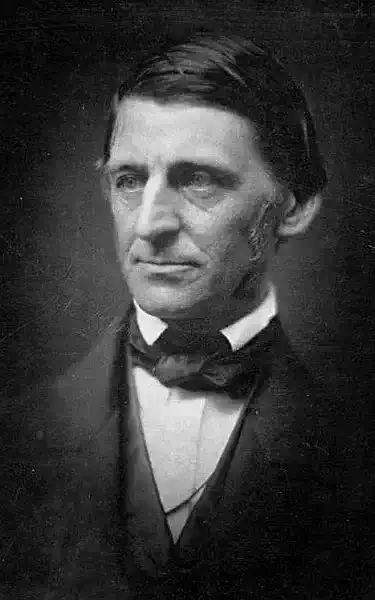
Ralph Waldo Emerson
Ode To William H. Channing
Ode To William H. Channing
Though loth to grieve
The evil time's sole patriot,
I cannot leave
My buried thought
For the priest's cant,
Or statesman's rant.
If I refuse
My study for their politique,
Which at the best is trick,
The angry muse
Puts confusion in my brain.
But who is he that prates
Of the culture of mankind,
Of better arts and life?
Go, blind worm, go,
Behold the famous States
Harrying Mexico
With rifle and with knife.
Or who, with accent bolder,
Dare praise the freedom-loving mountaineer,
I found by thee, O rushing Contoocook!
And in thy valleys, Agiochook!
The jackals of the negro-holder.
The God who made New Hampshire
Taunted the lofty land
With little men.
Small bat and wren
House in the oak.
If earth fire cleave
The upheaved land, and bury the folk,
The southern crocodile would grieve.
Virtue palters, right is hence,
Freedom praised but hid;
Funeral eloquence
Rattles the coffin-lid.
What boots thy zeal,
O glowing friend,
That would indignant rend
The northland from the south?
Wherefore? To what good end?
Boston Bay and Bunker Hill
Would serve things still:
Things are of the snake.
The horseman serves the horse,
The neat-herd serves the neat,
The merchant serves the purse,
The eater serves his meat;
'Tis the day of the chattel,
Web to weave, and corn to grind,
Things are in the saddle,
And ride mankind.
There are two laws discrete
Not reconciled,
Law for man, and law for thing;
The last builds town and fleet,
But it runs wild,
And doth the man unking.
'Tis fit the forest fall,
The steep be graded,
The mountain tunnelled,
The land shaded,
The orchard planted,
The globe tilled,
The prairie planted,
The steamer built.
Live for friendship, live for love,
For truth's and harmony's behoof;
The state may follow how it can,
As Olympus follows Jove.
Yet do not I implore
The wrinkled shopman to my sounding woods,
Nor bid the unwilling senator
Ask votes of thrushes in the solitudes.
Every one to his chosen work.
Foolish hands may mix and mar,
Wise and sure the issues are.
Round they roll, till dark is light,
Sex to sex, and even to odd;
The over-God,
Who marries Right to Might,
Who peoples, unpeoples,
He who exterminates
Races by stronger races,
Black by white faces,
Knows to bring honey
Out of the lion,
Grafts gentlest scion
On Pirate and Turk.
The Cossack eats Poland,
Like stolen fruit;
Her last noble is ruined,
Her last poet mute;
Straight into double band
The victors divide,
Half for freedom strike and stand,
The astonished muse finds thousands at her side.
Though loth to grieve
The evil time's sole patriot,
I cannot leave
My buried thought
For the priest's cant,
Or statesman's rant.
If I refuse
My study for their politique,
Which at the best is trick,
The angry muse
Puts confusion in my brain.
But who is he that prates
Of the culture of mankind,
Of better arts and life?
Go, blind worm, go,
Behold the famous States
Harrying Mexico
With rifle and with knife.
Or who, with accent bolder,
Dare praise the freedom-loving mountaineer,
I found by thee, O rushing Contoocook!
And in thy valleys, Agiochook!
The jackals of the negro-holder.
The God who made New Hampshire
Taunted the lofty land
With little men.
Small bat and wren
House in the oak.
If earth fire cleave
The upheaved land, and bury the folk,
The southern crocodile would grieve.
Virtue palters, right is hence,
Freedom praised but hid;
Funeral eloquence
Rattles the coffin-lid.
What boots thy zeal,
O glowing friend,
That would indignant rend
The northland from the south?
Wherefore? To what good end?
Boston Bay and Bunker Hill
Would serve things still:
Things are of the snake.
The horseman serves the horse,
The neat-herd serves the neat,
The merchant serves the purse,
The eater serves his meat;
'Tis the day of the chattel,
Web to weave, and corn to grind,
Things are in the saddle,
And ride mankind.
There are two laws discrete
Not reconciled,
Law for man, and law for thing;
The last builds town and fleet,
But it runs wild,
And doth the man unking.
'Tis fit the forest fall,
The steep be graded,
The mountain tunnelled,
The land shaded,
The orchard planted,
The globe tilled,
The prairie planted,
The steamer built.
Live for friendship, live for love,
For truth's and harmony's behoof;
The state may follow how it can,
As Olympus follows Jove.
Yet do not I implore
The wrinkled shopman to my sounding woods,
Nor bid the unwilling senator
Ask votes of thrushes in the solitudes.
Every one to his chosen work.
Foolish hands may mix and mar,
Wise and sure the issues are.
Round they roll, till dark is light,
Sex to sex, and even to odd;
The over-God,
Who marries Right to Might,
Who peoples, unpeoples,
He who exterminates
Races by stronger races,
Black by white faces,
Knows to bring honey
Out of the lion,
Grafts gentlest scion
On Pirate and Turk.
The Cossack eats Poland,
Like stolen fruit;
Her last noble is ruined,
Her last poet mute;
Straight into double band
The victors divide,
Half for freedom strike and stand,
The astonished muse finds thousands at her side.
329
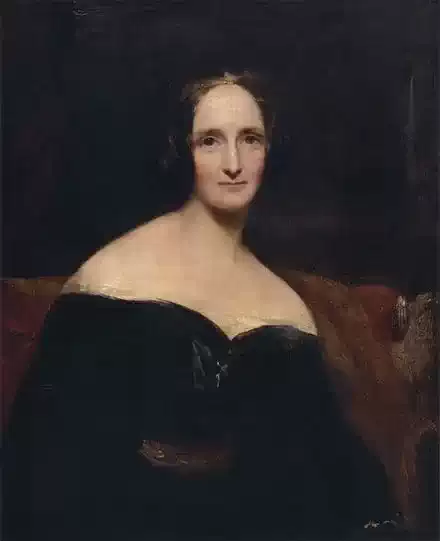
Percy Bysshe Shelley
Feelings Of A Republican On The Fall Of Bonaparte
Feelings Of A Republican On The Fall Of Bonaparte
I hated thee, fallen tyrant! I did groan
To think that a most unambitious slave,
Like thou, shouldst dance and revel on the grave
Of Liberty. Thou mightst have built thy throne
Where it had stood even now: thou didst prefer
A frail and bloody pomp which Time has swept
In fragments towards Oblivion. Massacre,
For this I prayed, would on thy sleep have crept,
Treason and Slavery, Rapine, Fear, and Lust,
And stifled thee, their minister. I know
Too late, since thou and France are in the dust,
That Virtue owns a more eternal foe
Than Force or Fraud: old Custom, legal Crime,
And bloody Faith the foulest birth of Time.
I hated thee, fallen tyrant! I did groan
To think that a most unambitious slave,
Like thou, shouldst dance and revel on the grave
Of Liberty. Thou mightst have built thy throne
Where it had stood even now: thou didst prefer
A frail and bloody pomp which Time has swept
In fragments towards Oblivion. Massacre,
For this I prayed, would on thy sleep have crept,
Treason and Slavery, Rapine, Fear, and Lust,
And stifled thee, their minister. I know
Too late, since thou and France are in the dust,
That Virtue owns a more eternal foe
Than Force or Fraud: old Custom, legal Crime,
And bloody Faith the foulest birth of Time.
492
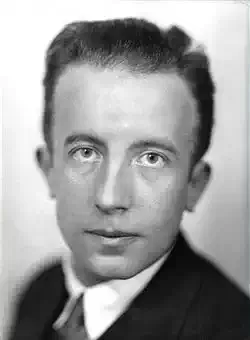
Paul Éluard
Head Against The Walls
Head Against The Walls
There were only a few of them
In all the earth
Each one thought he was alone
They sang, they were right
To sing
But they sang the way you sack a city
The way you kill yourself.
Frayed moist night
Shall we endure you
Longer
Shall we not shake
Your cloacal evidence
We shall not wait for a morning
Made to measure
We wanted to see in other people's eyes
Their nights of love exhausted
They dream only of dying
Their lovely flesh forgotten
Bees caught in their honey
They are ignorant of life
And we suffer everywhere
Red roofs dissolve under the tongue
Dog days in the full beds
Come, empty your sacks of fresh blood
There is still a shadow here
A shred of imbecile there
In the wind their masks, their cast-offs
In lead their traps, their chains
And their prudent blind-men's gestures
There is fire under rocks
If you put out the fire
Be careful we have
Despite the night it breeds
More strength than the belly
Of your wives and sisters
And we will reproduce
Without them but by ax strokes
In your prisons
Torrents of stone labors of foam
Where eyes float without rancor
Just eyes without hope
That know you
And that you should have put out
Rather than ignore
With a safety pin quicker than your gibbets
We shall take our booty where we want it to be
There were only a few of them
In all the earth
Each one thought he was alone
They sang, they were right
To sing
But they sang the way you sack a city
The way you kill yourself.
Frayed moist night
Shall we endure you
Longer
Shall we not shake
Your cloacal evidence
We shall not wait for a morning
Made to measure
We wanted to see in other people's eyes
Their nights of love exhausted
They dream only of dying
Their lovely flesh forgotten
Bees caught in their honey
They are ignorant of life
And we suffer everywhere
Red roofs dissolve under the tongue
Dog days in the full beds
Come, empty your sacks of fresh blood
There is still a shadow here
A shred of imbecile there
In the wind their masks, their cast-offs
In lead their traps, their chains
And their prudent blind-men's gestures
There is fire under rocks
If you put out the fire
Be careful we have
Despite the night it breeds
More strength than the belly
Of your wives and sisters
And we will reproduce
Without them but by ax strokes
In your prisons
Torrents of stone labors of foam
Where eyes float without rancor
Just eyes without hope
That know you
And that you should have put out
Rather than ignore
With a safety pin quicker than your gibbets
We shall take our booty where we want it to be
411
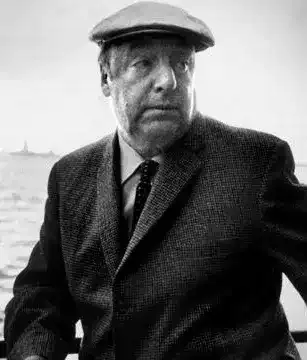
Pablo Neruda
The Dictators
The Dictators
An odor has remained among the sugarcane:
a mixture of blood and body, a penetrating
petal that brings nausea.
Between the coconut palms the graves are full
of ruined bones, of speechless death-rattles.
The delicate dictator is talking
with top hats, gold braid, and collars.
The tiny palace gleams like a watch
and the rapid laughs with gloves on
cross the corridors at times
and join the dead voices
and the blue mouths freshly buried.
The weeping cannot be seen, like a plant
whose seeds fall endlessly on the earth,
whose large blind leaves grow even without light.
Hatred has grown scale on scale,
blow on blow, in the ghastly water of the swamp,
with a snout full of ooze and silence
An odor has remained among the sugarcane:
a mixture of blood and body, a penetrating
petal that brings nausea.
Between the coconut palms the graves are full
of ruined bones, of speechless death-rattles.
The delicate dictator is talking
with top hats, gold braid, and collars.
The tiny palace gleams like a watch
and the rapid laughs with gloves on
cross the corridors at times
and join the dead voices
and the blue mouths freshly buried.
The weeping cannot be seen, like a plant
whose seeds fall endlessly on the earth,
whose large blind leaves grow even without light.
Hatred has grown scale on scale,
blow on blow, in the ghastly water of the swamp,
with a snout full of ooze and silence
805
Pablo Neruda
I'm Explaining a Few Things
I'm Explaining a Few Things
You are going to ask: and where are the lilacs?
and the poppy-petalled metaphysics?
and the rain repeatedly spattering
its words and drilling them full
of apertures and birds?
I'll tell you all the news.
I lived in a suburb,
a suburb of Madrid, with bells,
and clocks, and trees.
From there you could look out
over Castille's dry face:
a leather ocean.
My house was called
the house of flowers, because in every cranny
geraniums burst: it was
a good-looking house
with its dogs and children.
Remember, Raul?
Eh, Rafel? Federico, do you remember
from under the ground
my balconies on which
the light of June drowned flowers in your mouth?
Brother, my brother!
Everything
loud with big voices, the salt of merchandises,
pile-ups of palpitating bread,
the stalls of my suburb of Arguelles with its statue
like a drained inkwell in a swirl of hake:
oil flowed into spoons,
a deep baying
of feet and hands swelled in the streets,
metres, litres, the sharp
measure of life,
stacked-up fish,
the texture of roofs with a cold sun in which
the weather vane falters,
the fine, frenzied ivory of potatoes,
wave on wave of tomatoes rolling down the sea.
And one morning all that was burning,
one morning the bonfires
leapt out of the earth
devouring human beings -and
from then on fire,
gunpowder from then on,
and from then on blood.
Bandits with planes and Moors,
bandits with finger-rings and duchesses,
bandits with black friars spattering blessings
came through the sky to kill children
and the blood of children ran through the streets
without fuss, like children's blood.
Jackals that the jackals would despise,
stones that the dry thistle would bite on and spit out,
vipers that the vipers would abominate!
Face to face with you I have seen the blood
of Spain tower like a tide
to drown you in one wave
of pride and knives!
Treacherous
generals:
see my dead house,
look at broken Spain :
from every house burning metal flows
instead of flowers,
from every socket of Spain
Spain emerges
and from every dead child a rifle with eyes,
and from every crime bullets are born
which will one day find
the bull's eye of your hearts.
And you'll ask: why doesn't his poetry
speak of dreams and leaves
and the great volcanoes of his native land?
Come and see the blood in the streets.
Come and see
The blood in the streets.
Come and see the blood
In the streets!
You are going to ask: and where are the lilacs?
and the poppy-petalled metaphysics?
and the rain repeatedly spattering
its words and drilling them full
of apertures and birds?
I'll tell you all the news.
I lived in a suburb,
a suburb of Madrid, with bells,
and clocks, and trees.
From there you could look out
over Castille's dry face:
a leather ocean.
My house was called
the house of flowers, because in every cranny
geraniums burst: it was
a good-looking house
with its dogs and children.
Remember, Raul?
Eh, Rafel? Federico, do you remember
from under the ground
my balconies on which
the light of June drowned flowers in your mouth?
Brother, my brother!
Everything
loud with big voices, the salt of merchandises,
pile-ups of palpitating bread,
the stalls of my suburb of Arguelles with its statue
like a drained inkwell in a swirl of hake:
oil flowed into spoons,
a deep baying
of feet and hands swelled in the streets,
metres, litres, the sharp
measure of life,
stacked-up fish,
the texture of roofs with a cold sun in which
the weather vane falters,
the fine, frenzied ivory of potatoes,
wave on wave of tomatoes rolling down the sea.
And one morning all that was burning,
one morning the bonfires
leapt out of the earth
devouring human beings -and
from then on fire,
gunpowder from then on,
and from then on blood.
Bandits with planes and Moors,
bandits with finger-rings and duchesses,
bandits with black friars spattering blessings
came through the sky to kill children
and the blood of children ran through the streets
without fuss, like children's blood.
Jackals that the jackals would despise,
stones that the dry thistle would bite on and spit out,
vipers that the vipers would abominate!
Face to face with you I have seen the blood
of Spain tower like a tide
to drown you in one wave
of pride and knives!
Treacherous
generals:
see my dead house,
look at broken Spain :
from every house burning metal flows
instead of flowers,
from every socket of Spain
Spain emerges
and from every dead child a rifle with eyes,
and from every crime bullets are born
which will one day find
the bull's eye of your hearts.
And you'll ask: why doesn't his poetry
speak of dreams and leaves
and the great volcanoes of his native land?
Come and see the blood in the streets.
Come and see
The blood in the streets.
Come and see the blood
In the streets!
650

Ogden Nash
I Do, I Will, I Have
I Do, I Will, I Have
How wise I am to have instructed the butler
to instruct the first footman to instruct the second
footman to instruct the doorman to order my carriage;
I am about to volunteer a definition of marriage.
Just as I know that there are two Hagens, Walter and Copen,
I know that marriage is a legal and religious alliance entered
into by a man who can't sleep with the window shut and a
woman who can't sleep with the window open.
Moreover, just as I am unsure of the difference between
flora and fauna and flotsam and jetsam,
I am quite sure that marriage is the alliance of two people
one of whom never remembers birthdays and the other
never forgetsam,
And he refuses to believe there is a leak in the water pipe or
the gas pipe and she is convinced she is about to asphyxiate
or drown,
And she says Quick get up and get my hairbrushes off the
windowsill, it's raining in, and he replies Oh they're all right,
it's only raining straight down.
That is why marriage is so much more interesting than divorce,
Because it's the only known example of the happy meeting of
the immovable object and the irresistible force.
So I hope husbands and wives will continue to debate and
combat over everything debatable and combatable,
Because I believe a little incompatibility is the spice of life,
particularly if he has income and she is pattable.
How wise I am to have instructed the butler
to instruct the first footman to instruct the second
footman to instruct the doorman to order my carriage;
I am about to volunteer a definition of marriage.
Just as I know that there are two Hagens, Walter and Copen,
I know that marriage is a legal and religious alliance entered
into by a man who can't sleep with the window shut and a
woman who can't sleep with the window open.
Moreover, just as I am unsure of the difference between
flora and fauna and flotsam and jetsam,
I am quite sure that marriage is the alliance of two people
one of whom never remembers birthdays and the other
never forgetsam,
And he refuses to believe there is a leak in the water pipe or
the gas pipe and she is convinced she is about to asphyxiate
or drown,
And she says Quick get up and get my hairbrushes off the
windowsill, it's raining in, and he replies Oh they're all right,
it's only raining straight down.
That is why marriage is so much more interesting than divorce,
Because it's the only known example of the happy meeting of
the immovable object and the irresistible force.
So I hope husbands and wives will continue to debate and
combat over everything debatable and combatable,
Because I believe a little incompatibility is the spice of life,
particularly if he has income and she is pattable.
224

Mao Tsé-Tung
Against the First Encirclement Campaign
Against the First Encirclement Campaign
Forests blaze red beneath the frosty sky,
The wrath of Heaven's armies soars to the clouds.
Mist veils Lungkang, its thousand peaks blurred.
All cry out in unison:
Our van has taken Chang Hui-tsan!
The enemy returns to Kiangsi two hundred thousand strong,
Fumes billowing in the wind in mid-sky.
Workers and peasants are wakened in their millions
To fight as one man,
Under the riot of red flags round the foot of Puchou !
Forests blaze red beneath the frosty sky,
The wrath of Heaven's armies soars to the clouds.
Mist veils Lungkang, its thousand peaks blurred.
All cry out in unison:
Our van has taken Chang Hui-tsan!
The enemy returns to Kiangsi two hundred thousand strong,
Fumes billowing in the wind in mid-sky.
Workers and peasants are wakened in their millions
To fight as one man,
Under the riot of red flags round the foot of Puchou !
207
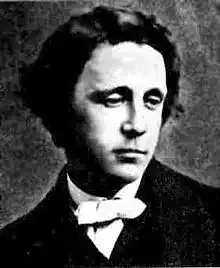
Lewis Carroll
Phantasmagoria CANTO VI ( Dyscomfyture )
Phantasmagoria CANTO VI ( Dyscomfyture )
As one who strives a hill to climb,
Who never climbed before:
Who finds it, in a little time,
Grow every moment less sublime,
And votes the thing a bore:
Yet, having once begun to try,
Dares not desert his quest,
But, climbing, ever keeps his eye
On one small hut against the sky
Wherein he hopes to rest:
Who climbs till nerve and force are spent,
With many a puff and pant:
Who still, as rises the ascent,
In language grows more violent,
Although in breath more scant:
Who, climbing, gains at length the place
That crowns the upward track.
And, entering with unsteady pace,
Receives a buffet in the face
That lands him on his back:
And feels himself, like one in sleep,
Glide swiftly down again,
A helpless weight, from steep to steep,
Till, with a headlong giddy sweep,
He drops upon the plain
So I, that had resolved to bring
Conviction to a ghost,
And found it quite a different thing
From any human arguing,
Yet dared not quit my post
But, keeping still the end in view
To which I hoped to come,
I strove to prove the matter true
By putting everything I knew
Into an axiom:
Commencing every single phrase
With 'therefore' or 'because,'
I blindly reeled, a hundred ways,
About the syllogistic maze,
Unconscious where I was.
Quoth he "That's regular claptrap:
Don't bluster any more.
Now DO be cool and take a nap!
Such a ridiculous old chap
Was never seen before!
"You're like a man I used to meet,
Who got one day so furious
In arguing, the simple heat
Scorched both his slippers off his feet!"
I said "THAT'S VERY CURIOUS!"
"Well, it IS curious, I agree,
And sounds perhaps like fibs:
But still it's true as true can be As
sure as your name's Tibbs," said he.
I said "My name's NOT Tibbs."
"NOT Tibbs!" he cried his
tone became
A shade or two less hearty "
Why, no," said I. "My proper name
Is Tibbets "
"Tibbets?" "Aye, the same."
"Why, then YOU'RE NOT THE PARTY!"
With that he struck the board a blow
That shivered half the glasses.
"Why couldn't you have told me so
Three quarters of an hour ago,
You prince of all the asses?
"To walk four miles through mud and rain,
To spend the night in smoking,
And then to find that it's in vain And
I've to do it all again It's
really TOO provoking!
"Don't talk!" he cried, as I began
To mutter some excuse.
"Who can have patience with a man
That's got no more discretion than
An idiotic goose?
"To keep me waiting here, instead
Of telling me at once
That this was not the house!" he said.
"There, that'll do be
off to bed!
Don't gape like that, you dunce!"
"It's very fine to throw the blame
On ME in such a fashion!
Why didn't you enquire my name
The very minute that you came?"
I answered in a passion.
"Of course it worries you a bit
To come so far on foot
But how was I to blame for it?"
"Well, well!" said he. "I must admit
That isn't badly put.
"And certainly you've given me
The best of wine and victual Excuse
my violence," said he,
"But accidents like this, you see,
They put one out a little.
"'Twas MY fault after all, I find Shake
hands, old Turniptop!"
The name was hardly to my mind,
But, as no doubt he meant it kind,
I let the matter drop.
"Goodnight,
old Turniptop,
goodnight!
When I am gone, perhaps
They'll send you some inferior Sprite,
Who'll keep you in a constant fright
And spoil your soundest naps.
"Tell him you'll stand no sort of trick;
Then, if he leers and chuckles,
You just be handy with a stick
(Mind that it's pretty hard and thick)
And rap him on the knuckles!
"Then carelessly remark 'Old coon!
Perhaps you're not aware
That, if you don't behave, you'll soon
Be chuckling to another tune And
so you'd best take care!'
"That's the right way to cure a Sprite
Of such like goingson
But
gracious me! It's getting light!
Goodnight,
old Turniptop,
goodnight!"
A nod, and he was gone.
As one who strives a hill to climb,
Who never climbed before:
Who finds it, in a little time,
Grow every moment less sublime,
And votes the thing a bore:
Yet, having once begun to try,
Dares not desert his quest,
But, climbing, ever keeps his eye
On one small hut against the sky
Wherein he hopes to rest:
Who climbs till nerve and force are spent,
With many a puff and pant:
Who still, as rises the ascent,
In language grows more violent,
Although in breath more scant:
Who, climbing, gains at length the place
That crowns the upward track.
And, entering with unsteady pace,
Receives a buffet in the face
That lands him on his back:
And feels himself, like one in sleep,
Glide swiftly down again,
A helpless weight, from steep to steep,
Till, with a headlong giddy sweep,
He drops upon the plain
So I, that had resolved to bring
Conviction to a ghost,
And found it quite a different thing
From any human arguing,
Yet dared not quit my post
But, keeping still the end in view
To which I hoped to come,
I strove to prove the matter true
By putting everything I knew
Into an axiom:
Commencing every single phrase
With 'therefore' or 'because,'
I blindly reeled, a hundred ways,
About the syllogistic maze,
Unconscious where I was.
Quoth he "That's regular claptrap:
Don't bluster any more.
Now DO be cool and take a nap!
Such a ridiculous old chap
Was never seen before!
"You're like a man I used to meet,
Who got one day so furious
In arguing, the simple heat
Scorched both his slippers off his feet!"
I said "THAT'S VERY CURIOUS!"
"Well, it IS curious, I agree,
And sounds perhaps like fibs:
But still it's true as true can be As
sure as your name's Tibbs," said he.
I said "My name's NOT Tibbs."
"NOT Tibbs!" he cried his
tone became
A shade or two less hearty "
Why, no," said I. "My proper name
Is Tibbets "
"Tibbets?" "Aye, the same."
"Why, then YOU'RE NOT THE PARTY!"
With that he struck the board a blow
That shivered half the glasses.
"Why couldn't you have told me so
Three quarters of an hour ago,
You prince of all the asses?
"To walk four miles through mud and rain,
To spend the night in smoking,
And then to find that it's in vain And
I've to do it all again It's
really TOO provoking!
"Don't talk!" he cried, as I began
To mutter some excuse.
"Who can have patience with a man
That's got no more discretion than
An idiotic goose?
"To keep me waiting here, instead
Of telling me at once
That this was not the house!" he said.
"There, that'll do be
off to bed!
Don't gape like that, you dunce!"
"It's very fine to throw the blame
On ME in such a fashion!
Why didn't you enquire my name
The very minute that you came?"
I answered in a passion.
"Of course it worries you a bit
To come so far on foot
But how was I to blame for it?"
"Well, well!" said he. "I must admit
That isn't badly put.
"And certainly you've given me
The best of wine and victual Excuse
my violence," said he,
"But accidents like this, you see,
They put one out a little.
"'Twas MY fault after all, I find Shake
hands, old Turniptop!"
The name was hardly to my mind,
But, as no doubt he meant it kind,
I let the matter drop.
"Goodnight,
old Turniptop,
goodnight!
When I am gone, perhaps
They'll send you some inferior Sprite,
Who'll keep you in a constant fright
And spoil your soundest naps.
"Tell him you'll stand no sort of trick;
Then, if he leers and chuckles,
You just be handy with a stick
(Mind that it's pretty hard and thick)
And rap him on the knuckles!
"Then carelessly remark 'Old coon!
Perhaps you're not aware
That, if you don't behave, you'll soon
Be chuckling to another tune And
so you'd best take care!'
"That's the right way to cure a Sprite
Of such like goingson
But
gracious me! It's getting light!
Goodnight,
old Turniptop,
goodnight!"
A nod, and he was gone.
145
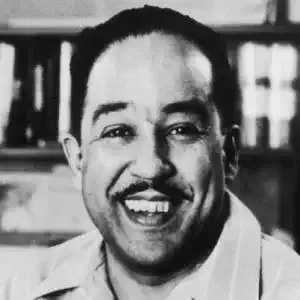
Langston Hughes
Madam and The Rent Man
Madam and The Rent Man
The rent man knocked.
He said, Howdy-do?
I said, What
Can I do for you?
He said, You know
Your rent is due.
I said, Listen,
Before I'd pay
I'd go to Hades
And rot away!
The sink is broke,
The water don't run,
And you ain't done a thing
You promised to've done.
Back window's cracked,
Kitchen floor squeaks,
There's rats in the cellar,
And the attic leaks.
He said, Madam,
It's not up to me.
I'm just the agent,
Don't you see?
I said, Naturally,
You pass the buck.
If it's money you want
You're out of luck.
He said, Madam,
I ain't pleased!
I said, Neither am I.
So we agrees!
The rent man knocked.
He said, Howdy-do?
I said, What
Can I do for you?
He said, You know
Your rent is due.
I said, Listen,
Before I'd pay
I'd go to Hades
And rot away!
The sink is broke,
The water don't run,
And you ain't done a thing
You promised to've done.
Back window's cracked,
Kitchen floor squeaks,
There's rats in the cellar,
And the attic leaks.
He said, Madam,
It's not up to me.
I'm just the agent,
Don't you see?
I said, Naturally,
You pass the buck.
If it's money you want
You're out of luck.
He said, Madam,
I ain't pleased!
I said, Neither am I.
So we agrees!
507
Langston Hughes
Enemy
Enemy
It would be nice
In any case,
To someday meet you
Face to face
Walking down
The road to hell...
As I come up
Feeling swell.
It would be nice
In any case,
To someday meet you
Face to face
Walking down
The road to hell...
As I come up
Feeling swell.
421
Langston Hughes
-50
-50
I’m all alone in this world, she said,
Ain’t got nobody to share my bed,
Ain’t got nobody to hold my hand—
The truth of the matter’s
I ain’t got no man.
Big Boy opened his mouth and said,
Trouble with you is
You ain’t got no head!
If you had a head and used your mind
You could have me with you
All the time.
She answered, Babe, what must I do?
He said, Share your bed—
And your money, too.
I’m all alone in this world, she said,
Ain’t got nobody to share my bed,
Ain’t got nobody to hold my hand—
The truth of the matter’s
I ain’t got no man.
Big Boy opened his mouth and said,
Trouble with you is
You ain’t got no head!
If you had a head and used your mind
You could have me with you
All the time.
She answered, Babe, what must I do?
He said, Share your bed—
And your money, too.
304

Kazi Nazrul Islam
The Rebel
The Rebel
Say, Valiant,
Say: High is my head!
Looking at my head
Is cast down the great Himalayan peak!
Say, Valiant,
Say: Ripping apart the wide sky of the universe,
Leaving behind the moon, the sun, the planets
and the stars
Piercing the earth and the heavens,
Pushing through Almighty's sacred seat
Have I risen,
I, the perennial wonder of mother-earth!
The angry God shines on my forehead
Like some royal victory's gorgeous emblem.
Say, Valiant,
Ever high is my head!
I am irresponsible, cruel and arrogant,
I an the king of the great upheaval,
I am cyclone, I am destruction,
I am the great fear, the curse of the universe.
I have no mercy,
I grind all to pieces.
I am disorderly and lawless,
I trample under my feet all rules and discipline!
I am Durjati, I am the sudden tempest of ultimate summer,
I am the rebel, the rebel-son of mother-earth!
Say, Valiant,
Ever high is my head!
I am the hurricane, I am the cyclone
I destroy all that I found in the path!
I am the dance-intoxicated rhythm,
I dance at my own pleasure,
I am the unfettered joy of life!
I am Hambeer, I am Chhayanata, I am Hindole,
I am ever restless,
I caper and dance as I move!
I do whatever appeals to me, whenever I like,
I embrace the enemy and wrestle with death,
I am mad. I am the tornado!
I am pestilence, the great fear,
I am the death of all reigns of terror,
I am full of a warm restlessness for ever!
Say, Valiant,
Ever high is my head!
I am creation, I am destruction,
I am habitation, I am the grave-yard,
I am the end, the end of night!
I am the son of Indrani
With the moon in my head
And the sun on my temple
In one hand of mine is the tender flute
While in the other I hold the war bugle!
I am the Bedouin, I am the Chengis,
I salute none but me!
I am thunder,
I am Brahma's sound in the sky and on the earth,
I am the mighty roar of Israfil's bugle,
I am the great trident of Pinakpani,
I am the staff of the king of truth,
I am the Chakra and the great Shanka,
I am the mighty primordial shout!
I am Bishyamitra's pupil, Durbasha the furious,
I am the fury of the wild fire,
I burn to ashes this universe!
I am the gay laughter of the generous heart,
I am the enemy of creation, the mighty terror!
I am the eclipse of the twelve suns,
I herald the final destruction!
Sometimes I am quiet and serene,
I am in a frenzy at other times,
I am the new youth of dawn,
I crush under my feet the vain glory of the Almighty!
I am the fury of typhoon,
I am the tumultuous roar of the ocean,
I am ever effluent and bright,
I trippingly flow like the gaily warbling brook.
I am the maiden's dark glassy hair,
I am the spark of fire in her blazing eyes.
I am the tender love that lies
In the sixteen year old's heart,
I am the happy beyond measure!
I am the pining soul of the lovesick,
I am the bitter tears in the widow's heart,
i am the piteous sighs of the unlucky!
I am the pain and sorrow of all homeless sufferers,
i am the anguish of the insulted heart,
I am the burning pain and the madness of the jilted lover!
I am the unutterable grief,
I am the trembling first touch of the virgin,
I am the throbbing tenderness of her first stolen kiss.
I am the fleeting glace of the veiled beloved,
I am her constant surreptitious gaze.
I am the gay gripping young girl's love,
I am the jingling music of her bangles!
I am the eternal-child, the adolescent of all times,
I am the shy village maiden frightened by her own budding youth.
I am the soothing breeze of the south,
I am the pensive gale of the east.
I am the deep solemn song sung by the wondering bard,
I am the soft music played on his lyre!
I am the harsh unquenched mid-day thirst,
I am the fierce blazing sun,
I am the softly trilling desert spring,
I am the cool shadowy greenery!
Maddened with an intense joy I rush onward,
I am insane! I am insane!
Suddenly I have come to know myself,
All the false barriers have crumbled today!
I am the rising, I am the fall,
I am consciousness in the unconscious soul,
I am the flag of triumph at the gate of the world,
I am the glorious sign of man's victory,
Clapping my hands in exultation I rush like the hurricane,
Traversing the earth and the sky.
The mighty Borrak is the horse I ride.
It neighs impatiently, drunk with delight!
I am the burning volcano in the bosom of the earth,
I am the wild fire of the woods,
I am Hell's mad terrific sea of wrath!
I ride on the wings of the lightning with joy and profound,
I scatter misery and fear all around,
I bring earth-quakes on this world!
I am Orpheus's flute,
I bring sleep to the fevered world,
I make the heaving hells temple in fear and die.
I carry the message of revolt to the earth and the sky!
I am the mighty flood,
Sometimes I make the earth rich and fertile,
At another times I cause colossal damage.
I snatch from Bishnu's bosom the two girls!
I am injustice, I am the shooting star,
I am Saturn, I am the fire of the comet,
I am the poisonous asp!
I am Chandi the headless, I am ruinous Warlord,
Sitting in the burning pit of Hell
I smile as the innocent flower!
I am the cruel axe of Parsurama,
I shall kill warriors
And bring peace and harmony in the universe!
I am the plough on the shoulders of Balarama,
I shall uproot this miserable earth effortlessly and with ease,
And create a new universe of joy and peace.
Weary of struggles, I, the great rebel,
Shall rest in quiet only when I find
The sky and the air free of the piteous groans of the oppressed.
Only when the battle fields are cleared of jingling bloody sabres
Shall I, weary of struggles, rest in quiet,
I the great rebel.
I am the rebel eternal,
I raise my head beyond this world,
High, ever erect and alone!
[Translation: Kabir Chowdhury]
Say, Valiant,
Say: High is my head!
Looking at my head
Is cast down the great Himalayan peak!
Say, Valiant,
Say: Ripping apart the wide sky of the universe,
Leaving behind the moon, the sun, the planets
and the stars
Piercing the earth and the heavens,
Pushing through Almighty's sacred seat
Have I risen,
I, the perennial wonder of mother-earth!
The angry God shines on my forehead
Like some royal victory's gorgeous emblem.
Say, Valiant,
Ever high is my head!
I am irresponsible, cruel and arrogant,
I an the king of the great upheaval,
I am cyclone, I am destruction,
I am the great fear, the curse of the universe.
I have no mercy,
I grind all to pieces.
I am disorderly and lawless,
I trample under my feet all rules and discipline!
I am Durjati, I am the sudden tempest of ultimate summer,
I am the rebel, the rebel-son of mother-earth!
Say, Valiant,
Ever high is my head!
I am the hurricane, I am the cyclone
I destroy all that I found in the path!
I am the dance-intoxicated rhythm,
I dance at my own pleasure,
I am the unfettered joy of life!
I am Hambeer, I am Chhayanata, I am Hindole,
I am ever restless,
I caper and dance as I move!
I do whatever appeals to me, whenever I like,
I embrace the enemy and wrestle with death,
I am mad. I am the tornado!
I am pestilence, the great fear,
I am the death of all reigns of terror,
I am full of a warm restlessness for ever!
Say, Valiant,
Ever high is my head!
I am creation, I am destruction,
I am habitation, I am the grave-yard,
I am the end, the end of night!
I am the son of Indrani
With the moon in my head
And the sun on my temple
In one hand of mine is the tender flute
While in the other I hold the war bugle!
I am the Bedouin, I am the Chengis,
I salute none but me!
I am thunder,
I am Brahma's sound in the sky and on the earth,
I am the mighty roar of Israfil's bugle,
I am the great trident of Pinakpani,
I am the staff of the king of truth,
I am the Chakra and the great Shanka,
I am the mighty primordial shout!
I am Bishyamitra's pupil, Durbasha the furious,
I am the fury of the wild fire,
I burn to ashes this universe!
I am the gay laughter of the generous heart,
I am the enemy of creation, the mighty terror!
I am the eclipse of the twelve suns,
I herald the final destruction!
Sometimes I am quiet and serene,
I am in a frenzy at other times,
I am the new youth of dawn,
I crush under my feet the vain glory of the Almighty!
I am the fury of typhoon,
I am the tumultuous roar of the ocean,
I am ever effluent and bright,
I trippingly flow like the gaily warbling brook.
I am the maiden's dark glassy hair,
I am the spark of fire in her blazing eyes.
I am the tender love that lies
In the sixteen year old's heart,
I am the happy beyond measure!
I am the pining soul of the lovesick,
I am the bitter tears in the widow's heart,
i am the piteous sighs of the unlucky!
I am the pain and sorrow of all homeless sufferers,
i am the anguish of the insulted heart,
I am the burning pain and the madness of the jilted lover!
I am the unutterable grief,
I am the trembling first touch of the virgin,
I am the throbbing tenderness of her first stolen kiss.
I am the fleeting glace of the veiled beloved,
I am her constant surreptitious gaze.
I am the gay gripping young girl's love,
I am the jingling music of her bangles!
I am the eternal-child, the adolescent of all times,
I am the shy village maiden frightened by her own budding youth.
I am the soothing breeze of the south,
I am the pensive gale of the east.
I am the deep solemn song sung by the wondering bard,
I am the soft music played on his lyre!
I am the harsh unquenched mid-day thirst,
I am the fierce blazing sun,
I am the softly trilling desert spring,
I am the cool shadowy greenery!
Maddened with an intense joy I rush onward,
I am insane! I am insane!
Suddenly I have come to know myself,
All the false barriers have crumbled today!
I am the rising, I am the fall,
I am consciousness in the unconscious soul,
I am the flag of triumph at the gate of the world,
I am the glorious sign of man's victory,
Clapping my hands in exultation I rush like the hurricane,
Traversing the earth and the sky.
The mighty Borrak is the horse I ride.
It neighs impatiently, drunk with delight!
I am the burning volcano in the bosom of the earth,
I am the wild fire of the woods,
I am Hell's mad terrific sea of wrath!
I ride on the wings of the lightning with joy and profound,
I scatter misery and fear all around,
I bring earth-quakes on this world!
I am Orpheus's flute,
I bring sleep to the fevered world,
I make the heaving hells temple in fear and die.
I carry the message of revolt to the earth and the sky!
I am the mighty flood,
Sometimes I make the earth rich and fertile,
At another times I cause colossal damage.
I snatch from Bishnu's bosom the two girls!
I am injustice, I am the shooting star,
I am Saturn, I am the fire of the comet,
I am the poisonous asp!
I am Chandi the headless, I am ruinous Warlord,
Sitting in the burning pit of Hell
I smile as the innocent flower!
I am the cruel axe of Parsurama,
I shall kill warriors
And bring peace and harmony in the universe!
I am the plough on the shoulders of Balarama,
I shall uproot this miserable earth effortlessly and with ease,
And create a new universe of joy and peace.
Weary of struggles, I, the great rebel,
Shall rest in quiet only when I find
The sky and the air free of the piteous groans of the oppressed.
Only when the battle fields are cleared of jingling bloody sabres
Shall I, weary of struggles, rest in quiet,
I the great rebel.
I am the rebel eternal,
I raise my head beyond this world,
High, ever erect and alone!
[Translation: Kabir Chowdhury]
862
Kazi Nazrul Islam
Robbers and Dacoits
Robbers and Dacoits
Who calls you a dacoit, friend,
Who calls you a robber?
All around dacoits reign today,
And thieves prosper.
Who is judging the robbers and the dacoits?
Who is the lord of justice?
Ask him, friend, who is not a dacoit today,
Who is not a robber chief.
My lord, raise your mace of justice and punish
Those wealthy and the rich who thrived
Robbing the humble poor and the deprive.
Today the greater the robber, the bigger the thief
and the cleverer the cheat
The more honourable, the more distinguished
and the more dignified his seat
In the assembly of nations.
All around
Bricks red with the blood of the subjects
Go to raise the king's palaces
And the factories of the gangster-rich flourish
Rendering thousands homeless.
The cunning devils start mills
Where men are ground to pieces,
Where from hungry millions emerge,
Sucked dry like sugarcane,
Bereft of their juices.
Squeezing out the life blood of millions of men
The mill owners amass vast wealth in their hidden den.
The money lenders grow rich
Robbing the helpless,
And the Zamindars on joy rides go
Rendering the weak homeless.
The greedy merchants in this earth
Have built a house of prostitution of wealth
There the vice Saki dances and drinks
The gold demon's health.
Losing health, food, life, hope, language and all
Bankrupt man is heading to a terrible fall.
There is no way of escape
The gold-hungry monsters have dug
Deep invincible moats all around,
The world today is a prison sound
With cruel gangsters working as sentinel.
Thieves are friends here
Cheats are comrades dear.
Who calls you a dacoit, dear friend?
Who calls you a robber?
You may have stolen money or goods,
But you have not dug a dagger
In some one's tender-heart.
You may be thieves all right
But not inhuman like the so-called great
You can turn Valmikis yet
When true men you meet
You who are the Ratnakars.
[Original: Chor-Dakaat; Translation: Kabir Chowdhury]
Who calls you a dacoit, friend,
Who calls you a robber?
All around dacoits reign today,
And thieves prosper.
Who is judging the robbers and the dacoits?
Who is the lord of justice?
Ask him, friend, who is not a dacoit today,
Who is not a robber chief.
My lord, raise your mace of justice and punish
Those wealthy and the rich who thrived
Robbing the humble poor and the deprive.
Today the greater the robber, the bigger the thief
and the cleverer the cheat
The more honourable, the more distinguished
and the more dignified his seat
In the assembly of nations.
All around
Bricks red with the blood of the subjects
Go to raise the king's palaces
And the factories of the gangster-rich flourish
Rendering thousands homeless.
The cunning devils start mills
Where men are ground to pieces,
Where from hungry millions emerge,
Sucked dry like sugarcane,
Bereft of their juices.
Squeezing out the life blood of millions of men
The mill owners amass vast wealth in their hidden den.
The money lenders grow rich
Robbing the helpless,
And the Zamindars on joy rides go
Rendering the weak homeless.
The greedy merchants in this earth
Have built a house of prostitution of wealth
There the vice Saki dances and drinks
The gold demon's health.
Losing health, food, life, hope, language and all
Bankrupt man is heading to a terrible fall.
There is no way of escape
The gold-hungry monsters have dug
Deep invincible moats all around,
The world today is a prison sound
With cruel gangsters working as sentinel.
Thieves are friends here
Cheats are comrades dear.
Who calls you a dacoit, dear friend?
Who calls you a robber?
You may have stolen money or goods,
But you have not dug a dagger
In some one's tender-heart.
You may be thieves all right
But not inhuman like the so-called great
You can turn Valmikis yet
When true men you meet
You who are the Ratnakars.
[Original: Chor-Dakaat; Translation: Kabir Chowdhury]
587
Kazi Nazrul Islam
Rise Up, O Farmer!
Rise Up, O Farmer!
O farmer, where is tile smile of your face?
Where is' your shepherd's bamboo flute'!
Where is your jute?
Who plunders it from your stock on riverside?
Who robs you of huge golden paddy grown in your fields?
The empty corn-bin in your courtyard resembles a husband-less daughter
lamenting in her father's home.
Your rural fields present winter-crops as though painted, why
does your son ask for salt and green chilies while eating?
It seems that the government has taxed on your curry too.
Have your sugar-canes been sweetened by the juice of your tears?
Who have drunk milk exploiting your cow?
Alas, your milk pot docs not hold even the starch of boiled rice.
Your younger child with high fever is healed up,
since he is sleeping in tile graveyard.
And he seems to drag her elder sister towards the grave, too.
The girl is calling him deliriously.
Mother replaces milk will oyster,
father weeps on his way to field burying his son;
around him tile fields are full of paddy and the sky is full of delight.
It seems that today's horizon is red by sucking' a farmer's blood.
Fields overflow with paddy, markets with goods,
the wharps with jute-loaded boats.
Who eats away tile crops of your field,who
are those swarm of locusts?
Why are you so destitute in this realm of merrymaking?
Why does the son of your home go to the grave?
Your cattle grazes in the vast pastures, but you get no milk,
O farmer, your hopes of living have gone away long before,
how do you stand lamentations beside a tomb?
Can't you wake up the burning of thunder in your arid bones?
How long shall you see with eyes wide open the theft by burglars?
Don't you possess a bamboo-stick even?
You may have no blood in your body, yet we want all your bones.
The plunderer robbing you of your boiled rice day
and night has ascended to affluency sucking your blood.
Your bone shall cause the bones of those plunderers decay,
and your rib-bones will turn into war swords.
Allah, the Benevolent, gives water to your fields,
energy to your wind to bloom flowers,
sun and moon rise up to grow your crops, would
those gifts of Allah again be plundered by that demon?
Though the sky is all clear, there is no hope.
Though Khuda's mercy comes in torrents,
you don't reach it. So raise up your hands straight,
that would give you instant strength.
Your crops shall fill your granary, and God shall bless you.
[Original: Otth re chashi; Translation: Mohammad Nurul Huda]
O farmer, where is tile smile of your face?
Where is' your shepherd's bamboo flute'!
Where is your jute?
Who plunders it from your stock on riverside?
Who robs you of huge golden paddy grown in your fields?
The empty corn-bin in your courtyard resembles a husband-less daughter
lamenting in her father's home.
Your rural fields present winter-crops as though painted, why
does your son ask for salt and green chilies while eating?
It seems that the government has taxed on your curry too.
Have your sugar-canes been sweetened by the juice of your tears?
Who have drunk milk exploiting your cow?
Alas, your milk pot docs not hold even the starch of boiled rice.
Your younger child with high fever is healed up,
since he is sleeping in tile graveyard.
And he seems to drag her elder sister towards the grave, too.
The girl is calling him deliriously.
Mother replaces milk will oyster,
father weeps on his way to field burying his son;
around him tile fields are full of paddy and the sky is full of delight.
It seems that today's horizon is red by sucking' a farmer's blood.
Fields overflow with paddy, markets with goods,
the wharps with jute-loaded boats.
Who eats away tile crops of your field,who
are those swarm of locusts?
Why are you so destitute in this realm of merrymaking?
Why does the son of your home go to the grave?
Your cattle grazes in the vast pastures, but you get no milk,
O farmer, your hopes of living have gone away long before,
how do you stand lamentations beside a tomb?
Can't you wake up the burning of thunder in your arid bones?
How long shall you see with eyes wide open the theft by burglars?
Don't you possess a bamboo-stick even?
You may have no blood in your body, yet we want all your bones.
The plunderer robbing you of your boiled rice day
and night has ascended to affluency sucking your blood.
Your bone shall cause the bones of those plunderers decay,
and your rib-bones will turn into war swords.
Allah, the Benevolent, gives water to your fields,
energy to your wind to bloom flowers,
sun and moon rise up to grow your crops, would
those gifts of Allah again be plundered by that demon?
Though the sky is all clear, there is no hope.
Though Khuda's mercy comes in torrents,
you don't reach it. So raise up your hands straight,
that would give you instant strength.
Your crops shall fill your granary, and God shall bless you.
[Original: Otth re chashi; Translation: Mohammad Nurul Huda]
564
Kazi Nazrul Islam
Irrepressible Youth
Irrepressible Youth
O restless and impetuous youth!
Who hid thy face with the mask of wisdom
And clothed thee with the apparel of patience?
All the morality-mongers advise restraint
For the arrogant power of youth
Only to hide their own inner fears.
O thou impetuous! Who fettered thy flying wings?
Fearless youth! Thou, who from the crowd
Of begging weaklings, used to snatch light
Out of the womb of darkness, dost rest today
In thy nest,
How couldst thou check
Thy terrific onrush of life at the bidding
Of those whose spine is broken by
The cold touch of the polar wind and
Whose life is made powerless by the shadow of
hardened frost.
How strange to see the lion of the desert
Meekly enter the cage and submit to punishment!
Those who to want create to and yet are afraid to destroy
Are themselves victims of destruction first.
What fool says that thou canst kindle the fire
Without burning firewood? How
Canst thou get the shade of the forest
If the seed does not supply the life?
The swift flowing river as it rushes madly on
Impelled by its richness of life erodes the
two banks
And yet, at the same time, makes the flowers blossom.
She is thirsty for the sea and knows not
Who is her friend or foe. She cares
Not how many boats she sinks. All she
Wants is ever to be on the move, for that is
Her religion, Who ever heard that the breakers
Of the sea quietly slept lest two merchant ships sank?
Will not the elephant walk on the roads
Lest it tramples an ant under its feet?
Will not the mighty fire burn lest
It destroys healths and homes?
Will the sight of gaping, tattered roofs
Make the rains cease its heavy downpour?
Will the summer storms fail to come
Lest the trees in the woods tumble arid break?
Will there be no eagle because the timid
Baby-Lamb might take fright at his sight ?
O uncalculating youth,
Thou dost never waste thy time making out
The balance sheet of loss and gain !
O tempestuous youth, wake up!
Come like a tornado, trampling everything that falls
In front of thee, in causeless glee.
Bring generous life, wide as the horizons,
And a mighty current of motion strong enough
To wash tile debris off the banks
In a wild rush.
Embrace sorrow with a stout heart
And laugh loudly with frankness and joy.
Freedom will come later, but sing now
Of the fresh and the young. Untimely and
Ugly sickness has attacked the kingdom of youth.
This nation is inert as the dead
Long before its real decease. Open the iron door
And let joy unbounded flow
Like the smooth easy flight of the pigeons
In the blue firmament. Rush into the ocean
For no reason and climb the peak
Of that distant hill! If thou meetest
Death round the corner, embrace him as thy comrade.
Get rid of all the prejudices that reside
Inside thy heart and outside of thee, All the swords
Of Ali are rusted today and gone to seed!
[Original: Durbar joubon; Translation: Kabir Chowdhury]
O restless and impetuous youth!
Who hid thy face with the mask of wisdom
And clothed thee with the apparel of patience?
All the morality-mongers advise restraint
For the arrogant power of youth
Only to hide their own inner fears.
O thou impetuous! Who fettered thy flying wings?
Fearless youth! Thou, who from the crowd
Of begging weaklings, used to snatch light
Out of the womb of darkness, dost rest today
In thy nest,
How couldst thou check
Thy terrific onrush of life at the bidding
Of those whose spine is broken by
The cold touch of the polar wind and
Whose life is made powerless by the shadow of
hardened frost.
How strange to see the lion of the desert
Meekly enter the cage and submit to punishment!
Those who to want create to and yet are afraid to destroy
Are themselves victims of destruction first.
What fool says that thou canst kindle the fire
Without burning firewood? How
Canst thou get the shade of the forest
If the seed does not supply the life?
The swift flowing river as it rushes madly on
Impelled by its richness of life erodes the
two banks
And yet, at the same time, makes the flowers blossom.
She is thirsty for the sea and knows not
Who is her friend or foe. She cares
Not how many boats she sinks. All she
Wants is ever to be on the move, for that is
Her religion, Who ever heard that the breakers
Of the sea quietly slept lest two merchant ships sank?
Will not the elephant walk on the roads
Lest it tramples an ant under its feet?
Will not the mighty fire burn lest
It destroys healths and homes?
Will the sight of gaping, tattered roofs
Make the rains cease its heavy downpour?
Will the summer storms fail to come
Lest the trees in the woods tumble arid break?
Will there be no eagle because the timid
Baby-Lamb might take fright at his sight ?
O uncalculating youth,
Thou dost never waste thy time making out
The balance sheet of loss and gain !
O tempestuous youth, wake up!
Come like a tornado, trampling everything that falls
In front of thee, in causeless glee.
Bring generous life, wide as the horizons,
And a mighty current of motion strong enough
To wash tile debris off the banks
In a wild rush.
Embrace sorrow with a stout heart
And laugh loudly with frankness and joy.
Freedom will come later, but sing now
Of the fresh and the young. Untimely and
Ugly sickness has attacked the kingdom of youth.
This nation is inert as the dead
Long before its real decease. Open the iron door
And let joy unbounded flow
Like the smooth easy flight of the pigeons
In the blue firmament. Rush into the ocean
For no reason and climb the peak
Of that distant hill! If thou meetest
Death round the corner, embrace him as thy comrade.
Get rid of all the prejudices that reside
Inside thy heart and outside of thee, All the swords
Of Ali are rusted today and gone to seed!
[Original: Durbar joubon; Translation: Kabir Chowdhury]
593
Kazi Nazrul Islam
Anwar
Anwar
[A dark prison-house guarded by sentries at Constantinople. Thc mid-night of a new
moon with silence prevailing everywhere, except occasional footsieps of sentries
walking with heavy boots. A young soldier belonging to the National Army under the
command of Anwar is lying captive there. Although rebellious in appearance, he looks
older than his age. Today he has faced a Court Martial. Tomorrow he will be shot dead.
So this is the last night of the luckless warrior fastened by iron chains around his
limbs'. Suddenly he wakes up.Shouting, but finds nobody nearby. Only cold wind
weeps for him, 'O the motherless'! ' The young rebel bites his left arm, loosing temper
as he remembers' the treachery of his countrymen. He remembers his commander,
who gave him the weapons to free his motherland. He shouts loudly calling his
commander, 'ANWAR'.]
Anwar. Anwar.
Valiant as you are,
Drive your sword hard,
Kill them all, and annihilate those beasts
Anwar, alas!
It's but an irony of fate that
the b1ood has no more that warmth and valour,
The shamsir is broken, its scabbard left-over.
Anwar! Anwar!
What makes you cry if everything goes undisturbed?
Look, muslims are pet animals in today's world.
No more, Anwar, no more!
Whose heart does not tremble?
The sword shines no more, Smarna is insignificant, as well.
Lool there tremble the gates of Madina.
No more Anwar, no more. Anwar! Anwar!
Tear the chest apart and bring out the liver,
Kill them all, kill all those coward beasts.
Anwar! are we pigs in chain?
The chain jingles on, and listen,
the fountain of flame is almost extinguished.
Our necks are in shackles, too.
Anwar! Anwar!
Why does the poor fox jump and brag?
Where is that mighty lion? - Anwar is full of wounds.
Anwar! it's really hard to wake up a narrow heart.
It is not least aware of the wild fire that comes all around.
My brother plays the part of a satan, he bribes me with his feast.
Anwar! we are, indeed, in a fix.
Anwar! Anwar!
We are all non-believers, having not even half the heart.
Where do you look for muslims? - they are all wild beasts.
Anwar! everything ends indeed,
Though the blood remains in the veins!
The occident has robbed you of your fake sword. I
t is now womanlike to surrender, weeping,
Anwar, although ends everything.
Anwar! Anwar!
It is useless to repent in this barren land.
Those, who are still living, are maddened animals.
Anwar! none is there. Weapon? - no, nowhere.
The sea is also dreadfully stagnant and dark, having no waves.
Even the beduin has put on shackles around his neck.
Anwar! none is left any more.
Anwar! Anwar!
He who calls him a muslim, drag him by his tongue.
The unfaithful knows only to save his own life.
Anwar, what a pity!
They have beggar's bags on their shoulders,
who learnt the lesson of liberty with the sword in hand.
The intrepid have turned disgusted today.
Anwar, what a pity!
Anwar! Anwar!
The world is now ruled by the killers,
Why then to abide by bloodred eyes! -
Devilry is today's tricks, indeed.
Anwar! hold your fists firm!
They persuade us in vain,
The suffering rebel heart dances in storms,
The blood-eater swords want the war,
Anwar, hold your fist firm.
Anwar! Anwar!
You are a Pasha, now turn a destroyer of muslim beasts,
The home is full of enemies, why do you hit the outsiders?
Come Anwar, O my brother,
I want today end of everything,
Islam, too, sets in; nowhere exists a liberated homeland!
So we have worn the guise of a beggar leaving aside the sword.
Come Anwar, a my brother.
(Suddenly a negro sentry shouted challengingly, 'Get alert, young man', The blood in
young man's vein boiled in agitation, He, too, shouted like a young lion.)
a Khuda! a Ali! Take my sword,
(Then the image of the chained mother-Turkey flashed before his eyes. Beside it the
image of his own mother appealed in the guise of a chained beggar-maid. Eye-corners
of both of them held drops of tears. Shocked as he was, the son turned his face aside
and cried out)
Who is it'? Deprived and deceived'?
No, mother, no,
It's no use afflicting a dead heart with a scar.
Anwar! Anwar!
(The coward sentry again tortured the young captive, who groaned in pain. I firmly
believe with my eyes full of tears, 'Days are near, good days'.)
[Original: Anwar; Translation: Mohammad Nurul Huda]
[A dark prison-house guarded by sentries at Constantinople. Thc mid-night of a new
moon with silence prevailing everywhere, except occasional footsieps of sentries
walking with heavy boots. A young soldier belonging to the National Army under the
command of Anwar is lying captive there. Although rebellious in appearance, he looks
older than his age. Today he has faced a Court Martial. Tomorrow he will be shot dead.
So this is the last night of the luckless warrior fastened by iron chains around his
limbs'. Suddenly he wakes up.Shouting, but finds nobody nearby. Only cold wind
weeps for him, 'O the motherless'! ' The young rebel bites his left arm, loosing temper
as he remembers' the treachery of his countrymen. He remembers his commander,
who gave him the weapons to free his motherland. He shouts loudly calling his
commander, 'ANWAR'.]
Anwar. Anwar.
Valiant as you are,
Drive your sword hard,
Kill them all, and annihilate those beasts
Anwar, alas!
It's but an irony of fate that
the b1ood has no more that warmth and valour,
The shamsir is broken, its scabbard left-over.
Anwar! Anwar!
What makes you cry if everything goes undisturbed?
Look, muslims are pet animals in today's world.
No more, Anwar, no more!
Whose heart does not tremble?
The sword shines no more, Smarna is insignificant, as well.
Lool there tremble the gates of Madina.
No more Anwar, no more. Anwar! Anwar!
Tear the chest apart and bring out the liver,
Kill them all, kill all those coward beasts.
Anwar! are we pigs in chain?
The chain jingles on, and listen,
the fountain of flame is almost extinguished.
Our necks are in shackles, too.
Anwar! Anwar!
Why does the poor fox jump and brag?
Where is that mighty lion? - Anwar is full of wounds.
Anwar! it's really hard to wake up a narrow heart.
It is not least aware of the wild fire that comes all around.
My brother plays the part of a satan, he bribes me with his feast.
Anwar! we are, indeed, in a fix.
Anwar! Anwar!
We are all non-believers, having not even half the heart.
Where do you look for muslims? - they are all wild beasts.
Anwar! everything ends indeed,
Though the blood remains in the veins!
The occident has robbed you of your fake sword. I
t is now womanlike to surrender, weeping,
Anwar, although ends everything.
Anwar! Anwar!
It is useless to repent in this barren land.
Those, who are still living, are maddened animals.
Anwar! none is there. Weapon? - no, nowhere.
The sea is also dreadfully stagnant and dark, having no waves.
Even the beduin has put on shackles around his neck.
Anwar! none is left any more.
Anwar! Anwar!
He who calls him a muslim, drag him by his tongue.
The unfaithful knows only to save his own life.
Anwar, what a pity!
They have beggar's bags on their shoulders,
who learnt the lesson of liberty with the sword in hand.
The intrepid have turned disgusted today.
Anwar, what a pity!
Anwar! Anwar!
The world is now ruled by the killers,
Why then to abide by bloodred eyes! -
Devilry is today's tricks, indeed.
Anwar! hold your fists firm!
They persuade us in vain,
The suffering rebel heart dances in storms,
The blood-eater swords want the war,
Anwar, hold your fist firm.
Anwar! Anwar!
You are a Pasha, now turn a destroyer of muslim beasts,
The home is full of enemies, why do you hit the outsiders?
Come Anwar, O my brother,
I want today end of everything,
Islam, too, sets in; nowhere exists a liberated homeland!
So we have worn the guise of a beggar leaving aside the sword.
Come Anwar, a my brother.
(Suddenly a negro sentry shouted challengingly, 'Get alert, young man', The blood in
young man's vein boiled in agitation, He, too, shouted like a young lion.)
a Khuda! a Ali! Take my sword,
(Then the image of the chained mother-Turkey flashed before his eyes. Beside it the
image of his own mother appealed in the guise of a chained beggar-maid. Eye-corners
of both of them held drops of tears. Shocked as he was, the son turned his face aside
and cried out)
Who is it'? Deprived and deceived'?
No, mother, no,
It's no use afflicting a dead heart with a scar.
Anwar! Anwar!
(The coward sentry again tortured the young captive, who groaned in pain. I firmly
believe with my eyes full of tears, 'Days are near, good days'.)
[Original: Anwar; Translation: Mohammad Nurul Huda]
1,085

Jonathan Swift
Toland’s Invitation To Dismal To Dine With The Calve’s Head Club
Toland’s Invitation To Dismal To Dine With The Calve’s Head Club
If, dearest Dismal, you for once can dine
Upon a single dish, and tavern wine,
Toland to you this invitation sends,
To eat the calfs head with your trusty friends.
Suspend awhile your vain ambitious hopes,
Leave hunting after bribes, forget your tropes.
To-morrow we our mystic feast prepare,
Where thou, our latest proselyte, shall share:
When we, by proper signs and symbols, tell,
How by brave hands the royal traitor fell;
The meat shall represent the tyrant's head,
The wine, his blood our predecessors shed;
Whilst an alluding hymn some artist sings,
We toast, Confusion to the race of kings!
At monarchy we nobly show our spight,
And talk, what fools call treason, all the night.
Who, by disgraces or ill fortune sunk,
Feels not his soul enliven'd when he's drunk?
Wine can clear up Godolphin's cloudy face,
And fill Jack Smith with hopes to keep his place:
By force of wine, ev'n Scarborough is brave,
Hal grows more pert, and Somers not so grave:
Wine can give Portland wit, and Cleaveland sense,
Montague learning, Bolton eloquence:
Cholmondeley, when drunk, can never lose his wand;
And Lincoln then imagines he has land.
My province is, to see that all be right,
Glasses and linen clean, and pewter bright;
From our mysterious club to keep out spies,
And Tories (dress'd like waiters) in disguise.
You shall be coupled as you best approve,
Seated at table next the man you love.
Sunderland, Orford, Boyle, and Richmond's grace
Will come; and Hampden shall have Walpole's place;
Wharton, unless prevented by a whore,
Will hardly fail; and there is room for more;
But I love elbow-room whene'er I drink;
And honest Harry is too apt to stink.
Let no pretence of bus'ness make you stay;
Yet take one word of counsel by the way.
If Guernsey calls, send word you're gone abroad;
He'll teaze you with King Charles, and Bishop Laud,
Or make you fast, and carry you to prayers;
But, if he will break in, and walk up stairs,
Steal by the back-door out, and leave him there;
Then order Squash to call a hackney chair.
If, dearest Dismal, you for once can dine
Upon a single dish, and tavern wine,
Toland to you this invitation sends,
To eat the calfs head with your trusty friends.
Suspend awhile your vain ambitious hopes,
Leave hunting after bribes, forget your tropes.
To-morrow we our mystic feast prepare,
Where thou, our latest proselyte, shall share:
When we, by proper signs and symbols, tell,
How by brave hands the royal traitor fell;
The meat shall represent the tyrant's head,
The wine, his blood our predecessors shed;
Whilst an alluding hymn some artist sings,
We toast, Confusion to the race of kings!
At monarchy we nobly show our spight,
And talk, what fools call treason, all the night.
Who, by disgraces or ill fortune sunk,
Feels not his soul enliven'd when he's drunk?
Wine can clear up Godolphin's cloudy face,
And fill Jack Smith with hopes to keep his place:
By force of wine, ev'n Scarborough is brave,
Hal grows more pert, and Somers not so grave:
Wine can give Portland wit, and Cleaveland sense,
Montague learning, Bolton eloquence:
Cholmondeley, when drunk, can never lose his wand;
And Lincoln then imagines he has land.
My province is, to see that all be right,
Glasses and linen clean, and pewter bright;
From our mysterious club to keep out spies,
And Tories (dress'd like waiters) in disguise.
You shall be coupled as you best approve,
Seated at table next the man you love.
Sunderland, Orford, Boyle, and Richmond's grace
Will come; and Hampden shall have Walpole's place;
Wharton, unless prevented by a whore,
Will hardly fail; and there is room for more;
But I love elbow-room whene'er I drink;
And honest Harry is too apt to stink.
Let no pretence of bus'ness make you stay;
Yet take one word of counsel by the way.
If Guernsey calls, send word you're gone abroad;
He'll teaze you with King Charles, and Bishop Laud,
Or make you fast, and carry you to prayers;
But, if he will break in, and walk up stairs,
Steal by the back-door out, and leave him there;
Then order Squash to call a hackney chair.
196
Jonathan Swift
The Revolution At Market-Hill
The Revolution At Market-Hill
From distant regions Fortune sends
An odd triumvirate of friends;
Where Phoebus pays a scanty stipend,
Where never yet a codling ripen'd:
Hither the frantic goddess draws
Three sufferers in a ruin'd cause:
By faction banish'd, here unite,
A Dean, a Spaniard, and a Knight;
Unite, but on conditions cruel;
The Dean and Spaniard find it too well,
Condemn'd to live in service hard;
On either side his honour's guard:
The Dean to guard his honour's back,
Must build a castle at Drumlack;
The Spaniard, sore against his will,
Must raise a fort at Market-Hill.
And thus the pair of humble gentry
At north and south are posted sentry;
While in his lordly castle fixt,
The knight triumphant reigns betwixt:
And, what the wretches most resent,
To be his slaves, must pay him rent;
Attend him daily as their chief,
Decant his wine, and carve his beef.
O Fortune! 'tis a scandal for thee
To smile on those who are least worthy:
Weigh but the merits of the three,
His slaves have ten times more than he.
Proud baronet of Nova Scotia!
The Dean and Spaniard must reproach ye:
Of their two fames the world enough rings:
Where are thy services and sufferings?
What if for nothing once you kiss'd,
Against the grain, a monarch's fist?
What if, among the courtly tribe,
You lost a place and saved a bribe?
And then in surly mood came here,
To fifteen hundred pounds a-year,
And fierce against the Whigs harangu'd?
You never ventured to be hang'd.
How dare you treat your betters thus?
Are you to be compared with us?
Come, Spaniard, let us from our farms
Call forth our cottagers to arms:
Our forces let us both unite,
Attack the foe at left and right;
From Market-Hill's exalted head,
Full northward let your troops be led;
While I from Drapier's-Mount descend,
And to the south my squadrons bend.
New-River Walk, with friendly shade,
Shall keep my host in ambuscade;
While you, from where the basin stands,
Shall scale the rampart with your bands.
Nor need we doubt the fort to win;
I hold intelligence within.
True, Lady Anne no danger fears,
Brave as the Upton fan she wears;
Then, lest upon our first attack
Her valiant arm should force us back,
And we of all our hopes deprived;
I have a stratagem contrived.
By these embroider'd high-heel shoes
She shall be caught as in a noose:
So well contriv'd her toes to pinch,
She'll not have power to stir an inch:
These gaudy shoes must Hannah place
Direct before her lady's face;
The shoes put on, our faithful portress
Admits us in, to storm the fortress,
While tortured madam bound remains,
Like Montezume, in golden chains;
Or like a cat with walnuts shod,
Stumbling at every step she trod.
Sly hunters thus, in Borneo's isle,
To catch a monkey by a wile,
The mimic animal amuse;
They place before him gloves and shoes;
Which, when the brute puts awkward on:
All his agility is gone;
In vain to frisk or climb he tries;
The huntsmen seize the grinning prize.
But let us on our first assault
Secure the larder and the vault;
The valiant Dennis, you must fix on,
And I'll engage with Peggy Dixon:
Then, if we once can seize the key
And chest that keeps my lady's tea,
They must surrender at discretion!
And, soon as we have gain'd possession,
We'll act as other conquerors do,
Divide the realm between us two;
Then, (let me see,) we'll make the knight
Our clerk, for he can read and write.
But must not think, I tell him that,
Like Lorimer to wear his hat;
Yet, when we dine without a friend,
We'll place him at the lower end.
Madam, whose skill does all in dress lie,
May serve to wait on Mrs. Leslie;
But, lest it might not be so proper
That her own maid should over-top her,
To mortify the creature more,
We'll take her heels five inches lower.
For Hannah, when we have no need of her,
'Twill be our interest to get rid of her;
And when we execute our plot,
'Tis best to hang her on the spot;
As all your politicians wise,
Dispatch the rogues by whom they rise.
From distant regions Fortune sends
An odd triumvirate of friends;
Where Phoebus pays a scanty stipend,
Where never yet a codling ripen'd:
Hither the frantic goddess draws
Three sufferers in a ruin'd cause:
By faction banish'd, here unite,
A Dean, a Spaniard, and a Knight;
Unite, but on conditions cruel;
The Dean and Spaniard find it too well,
Condemn'd to live in service hard;
On either side his honour's guard:
The Dean to guard his honour's back,
Must build a castle at Drumlack;
The Spaniard, sore against his will,
Must raise a fort at Market-Hill.
And thus the pair of humble gentry
At north and south are posted sentry;
While in his lordly castle fixt,
The knight triumphant reigns betwixt:
And, what the wretches most resent,
To be his slaves, must pay him rent;
Attend him daily as their chief,
Decant his wine, and carve his beef.
O Fortune! 'tis a scandal for thee
To smile on those who are least worthy:
Weigh but the merits of the three,
His slaves have ten times more than he.
Proud baronet of Nova Scotia!
The Dean and Spaniard must reproach ye:
Of their two fames the world enough rings:
Where are thy services and sufferings?
What if for nothing once you kiss'd,
Against the grain, a monarch's fist?
What if, among the courtly tribe,
You lost a place and saved a bribe?
And then in surly mood came here,
To fifteen hundred pounds a-year,
And fierce against the Whigs harangu'd?
You never ventured to be hang'd.
How dare you treat your betters thus?
Are you to be compared with us?
Come, Spaniard, let us from our farms
Call forth our cottagers to arms:
Our forces let us both unite,
Attack the foe at left and right;
From Market-Hill's exalted head,
Full northward let your troops be led;
While I from Drapier's-Mount descend,
And to the south my squadrons bend.
New-River Walk, with friendly shade,
Shall keep my host in ambuscade;
While you, from where the basin stands,
Shall scale the rampart with your bands.
Nor need we doubt the fort to win;
I hold intelligence within.
True, Lady Anne no danger fears,
Brave as the Upton fan she wears;
Then, lest upon our first attack
Her valiant arm should force us back,
And we of all our hopes deprived;
I have a stratagem contrived.
By these embroider'd high-heel shoes
She shall be caught as in a noose:
So well contriv'd her toes to pinch,
She'll not have power to stir an inch:
These gaudy shoes must Hannah place
Direct before her lady's face;
The shoes put on, our faithful portress
Admits us in, to storm the fortress,
While tortured madam bound remains,
Like Montezume, in golden chains;
Or like a cat with walnuts shod,
Stumbling at every step she trod.
Sly hunters thus, in Borneo's isle,
To catch a monkey by a wile,
The mimic animal amuse;
They place before him gloves and shoes;
Which, when the brute puts awkward on:
All his agility is gone;
In vain to frisk or climb he tries;
The huntsmen seize the grinning prize.
But let us on our first assault
Secure the larder and the vault;
The valiant Dennis, you must fix on,
And I'll engage with Peggy Dixon:
Then, if we once can seize the key
And chest that keeps my lady's tea,
They must surrender at discretion!
And, soon as we have gain'd possession,
We'll act as other conquerors do,
Divide the realm between us two;
Then, (let me see,) we'll make the knight
Our clerk, for he can read and write.
But must not think, I tell him that,
Like Lorimer to wear his hat;
Yet, when we dine without a friend,
We'll place him at the lower end.
Madam, whose skill does all in dress lie,
May serve to wait on Mrs. Leslie;
But, lest it might not be so proper
That her own maid should over-top her,
To mortify the creature more,
We'll take her heels five inches lower.
For Hannah, when we have no need of her,
'Twill be our interest to get rid of her;
And when we execute our plot,
'Tis best to hang her on the spot;
As all your politicians wise,
Dispatch the rogues by whom they rise.
205
Jonathan Swift
My Lady’s Lamantation And Complaint Against The Dean
My Lady’s Lamantation And Complaint Against The Dean
Sure never did man see
A wretch like poor Nancy,
So teazed day and night
By a Dean and a Knight.
To punish my sins,
Sir Arthur begins,
And gives me a wipe,
With Skinny and Snipe:,
His malice is plain,
Hallooing the Dean.
The Dean never stops,
When he opens his chops;
I'm quite overrun
With rebus and pun.
Before he came here,
To spunge for good cheer,
I sat with delight,
From morning till night,
With two bony thumbs
Could rub my old gums,
Or scratching my nose
And jogging my toes;
But at present, forsooth,
I must not rub a tooth.
When my elbows he sees
Held up by my knees,
My arms, like two props,
Supporting my chops,
And just as I handle 'em
Moving all like a pendulum;
He trips up my props,
And down my chin drops
From my head to my heels,
Like a clock without wheels;
I sink in the spleen,
A useless machine.
If he had his will,
I should never sit still:
He comes with his whims
I must move my limbs;
I cannot be sweet
Without using my feet;
To lengthen my breath,
He tires me to death.
By the worst of all squires,
Thro' bogs and thro' briers,
Where a cow would be startled,
I'm in spite of my heart led;
And, say what I will,
Haul'd up every hill;
Till, daggled and tatter'd,
My spirits quite shatter'd,
I return home at night,
And fast, out of spite:
For I'd rather be dead,
Than it e'er should be said,
I was better for him,
In stomach or limb.
But now to my diet;
No eating in quiet,
He's still finding fault,
Too sour or too salt:
The wing of a chick
I hardly can pick:
But trash without measure
I swallow with pleasure.
Next, for his diversion,
He rails at my person.
What court breeding this is!
He takes me to pieces:
From shoulder to flank
I'm lean and am lank;
My nose, long and thin,
Grows down to my chin;
My chin will not stay,
But meets it halfway;
My fingers, prolix,
Are ten crooked sticks:
He swears my el—bows
Are two iron crows,
Or sharp pointed rocks,
And wear out my smocks:
To 'scape them, Sir Arthur
Is forced to lie farther,
Or his sides they would gore
Like the tusks of a boar.
Now changing the scene
But still to the Dean;
He loves to be bitter at
A lady illiterate;
If he sees her but once,
He'll swear she's a dunce;
Can tell by her looks
A hater of books;
Thro' each line of her face
Her folly can trace;
Which spoils every feature
Bestow'd her by nature;
But sense gives a grace
To the homeliest face:
Wise books and reflection
Will mend the complexion:
(A civil divine!
I suppose, meaning mine!)
No lady who wants them,
Can ever be handsome.
I guess well enough
What he means by this stuff:
He haws and he hums,
At last out it comes:
What, madam? No walking,
No reading, nor talking?
You're now in your prime,
Make use of your time.
Consider, before
You come to threescore,
How the hussies will fleer
Where'er you appear;
'That silly old puss
Would fain be like us:
What a figure she made
In her tarnish'd brocade!'
And then he grows mild:
Come, be a good child:
If you are inclined
To polish your mind,
Be adored by the men
Till threescore and ten,
And kill with the spleen
The jades of sixteen;
I'll show you the way;
Read six hours a-day.
The wits will frequent ye,
And think you but twenty.
[To make you learn faster,
I'll be your schoolmaster
And leave you to choose
The books you peruse.]
Thus was I drawn in;
Forgive me my sin.
At breakfast he'll ask
An account of my task.
Put a word out of joint,
Or miss but a point,
He rages and frets,
His manners forgets;
And as I am serious,
Is very imperious.
No book for delight
Must come in my sight;
But, instead of new plays,
Dull Bacon's Essays,
And pore every day on
That nasty Pantheon.
If I be not a drudge,
Let all the world judge.
'Twere better be blind,
Than thus be confined.
But while in an ill tone,
I murder poor Milton,
The Dean you will swear,
Is at study or prayer.
He's all the day sauntering,
With labourers bantering,
Among his colleagues,
A parcel of Teagues,
Whom he brings in among us
And bribes with mundungus.
[He little believes
How they laugh in their sleeves.]
Hail, fellow, well met,
All dirty and wet:
Find out, if you can,
Who's master, who's man;
Who makes the best figure,
The Dean or the digger;
And which is the best
At cracking a jest.
[Now see how he sits
Perplexing his wits
In search of a motto
To fix on his grotto.]
How proudly he talks
Of zigzags and walks,
And all the day raves
Of cradles and caves;
And boasts of his feats,
His grottos and seats;
Shows all his gewgaws,
And gapes for applause;
A fine occupation
For one in his station!
A hole where a rabbit
Would scorn to inhabit,
Dug out in an hour;
He calls it a bower.
But, O! how we laugh,
To see a wild calf
Come, driven by heat,
And foul the green seat;
Or run helter-skelter,
To his arbour for shelter,
Where all goes to ruin
The Dean has been doing:
The girls of the village
Come flocking for pillage,
Pull down the fine briers
And thorns to make fires;
But yet are so kind
To leave something behind:
No more need be said on't,
I smell when I tread on't.
Dear friend, Doctor Jinny.
If I could but win ye,
Or Walmsley or Whaley,
To come hither daily,
Since fortune, my foe,
Will needs have it so,
That I'm, by her frowns,
Condemn'd to black gowns;
No squire to be found
The neighbourhood round;
(For, under the rose,
I would rather choose those)
If your wives will permit ye,
Come here out of pity,
To ease a poor lady,
And beg her a play-day.
So may you be seen
No more in the spleen;
May Walmsley give wine
Like a hearty divine!
May Whaley disgrace
Dull Daniel's whey-face!
And may your three spouses
Let you lie at friends' houses!
Sure never did man see
A wretch like poor Nancy,
So teazed day and night
By a Dean and a Knight.
To punish my sins,
Sir Arthur begins,
And gives me a wipe,
With Skinny and Snipe:,
His malice is plain,
Hallooing the Dean.
The Dean never stops,
When he opens his chops;
I'm quite overrun
With rebus and pun.
Before he came here,
To spunge for good cheer,
I sat with delight,
From morning till night,
With two bony thumbs
Could rub my old gums,
Or scratching my nose
And jogging my toes;
But at present, forsooth,
I must not rub a tooth.
When my elbows he sees
Held up by my knees,
My arms, like two props,
Supporting my chops,
And just as I handle 'em
Moving all like a pendulum;
He trips up my props,
And down my chin drops
From my head to my heels,
Like a clock without wheels;
I sink in the spleen,
A useless machine.
If he had his will,
I should never sit still:
He comes with his whims
I must move my limbs;
I cannot be sweet
Without using my feet;
To lengthen my breath,
He tires me to death.
By the worst of all squires,
Thro' bogs and thro' briers,
Where a cow would be startled,
I'm in spite of my heart led;
And, say what I will,
Haul'd up every hill;
Till, daggled and tatter'd,
My spirits quite shatter'd,
I return home at night,
And fast, out of spite:
For I'd rather be dead,
Than it e'er should be said,
I was better for him,
In stomach or limb.
But now to my diet;
No eating in quiet,
He's still finding fault,
Too sour or too salt:
The wing of a chick
I hardly can pick:
But trash without measure
I swallow with pleasure.
Next, for his diversion,
He rails at my person.
What court breeding this is!
He takes me to pieces:
From shoulder to flank
I'm lean and am lank;
My nose, long and thin,
Grows down to my chin;
My chin will not stay,
But meets it halfway;
My fingers, prolix,
Are ten crooked sticks:
He swears my el—bows
Are two iron crows,
Or sharp pointed rocks,
And wear out my smocks:
To 'scape them, Sir Arthur
Is forced to lie farther,
Or his sides they would gore
Like the tusks of a boar.
Now changing the scene
But still to the Dean;
He loves to be bitter at
A lady illiterate;
If he sees her but once,
He'll swear she's a dunce;
Can tell by her looks
A hater of books;
Thro' each line of her face
Her folly can trace;
Which spoils every feature
Bestow'd her by nature;
But sense gives a grace
To the homeliest face:
Wise books and reflection
Will mend the complexion:
(A civil divine!
I suppose, meaning mine!)
No lady who wants them,
Can ever be handsome.
I guess well enough
What he means by this stuff:
He haws and he hums,
At last out it comes:
What, madam? No walking,
No reading, nor talking?
You're now in your prime,
Make use of your time.
Consider, before
You come to threescore,
How the hussies will fleer
Where'er you appear;
'That silly old puss
Would fain be like us:
What a figure she made
In her tarnish'd brocade!'
And then he grows mild:
Come, be a good child:
If you are inclined
To polish your mind,
Be adored by the men
Till threescore and ten,
And kill with the spleen
The jades of sixteen;
I'll show you the way;
Read six hours a-day.
The wits will frequent ye,
And think you but twenty.
[To make you learn faster,
I'll be your schoolmaster
And leave you to choose
The books you peruse.]
Thus was I drawn in;
Forgive me my sin.
At breakfast he'll ask
An account of my task.
Put a word out of joint,
Or miss but a point,
He rages and frets,
His manners forgets;
And as I am serious,
Is very imperious.
No book for delight
Must come in my sight;
But, instead of new plays,
Dull Bacon's Essays,
And pore every day on
That nasty Pantheon.
If I be not a drudge,
Let all the world judge.
'Twere better be blind,
Than thus be confined.
But while in an ill tone,
I murder poor Milton,
The Dean you will swear,
Is at study or prayer.
He's all the day sauntering,
With labourers bantering,
Among his colleagues,
A parcel of Teagues,
Whom he brings in among us
And bribes with mundungus.
[He little believes
How they laugh in their sleeves.]
Hail, fellow, well met,
All dirty and wet:
Find out, if you can,
Who's master, who's man;
Who makes the best figure,
The Dean or the digger;
And which is the best
At cracking a jest.
[Now see how he sits
Perplexing his wits
In search of a motto
To fix on his grotto.]
How proudly he talks
Of zigzags and walks,
And all the day raves
Of cradles and caves;
And boasts of his feats,
His grottos and seats;
Shows all his gewgaws,
And gapes for applause;
A fine occupation
For one in his station!
A hole where a rabbit
Would scorn to inhabit,
Dug out in an hour;
He calls it a bower.
But, O! how we laugh,
To see a wild calf
Come, driven by heat,
And foul the green seat;
Or run helter-skelter,
To his arbour for shelter,
Where all goes to ruin
The Dean has been doing:
The girls of the village
Come flocking for pillage,
Pull down the fine briers
And thorns to make fires;
But yet are so kind
To leave something behind:
No more need be said on't,
I smell when I tread on't.
Dear friend, Doctor Jinny.
If I could but win ye,
Or Walmsley or Whaley,
To come hither daily,
Since fortune, my foe,
Will needs have it so,
That I'm, by her frowns,
Condemn'd to black gowns;
No squire to be found
The neighbourhood round;
(For, under the rose,
I would rather choose those)
If your wives will permit ye,
Come here out of pity,
To ease a poor lady,
And beg her a play-day.
So may you be seen
No more in the spleen;
May Walmsley give wine
Like a hearty divine!
May Whaley disgrace
Dull Daniel's whey-face!
And may your three spouses
Let you lie at friends' houses!
218
Jonathan Swift
Dean Swift At Sir Arthur Acheson’s In The North Of Ireland
Dean Swift At Sir Arthur Acheson’s In The North Of Ireland
The Dean would visit Market-Hill,
Our invitation was but slight;
I said—'Why let him, if he will:'
And so I bade Sir Arthur write.
His manners would not let him wait,
Lest we should think ourselves neglected,
And so we see him at our gate
Three days before he was expected,
After a week, a month, a quarter,
And day succeeding after day,
Says not a word of his departure,
Though not a soul would have him stay.
I've said enough to make him blush,
Methinks, or else the devil's in't;
But he cares not for it a rush,
Nor for my life will take the hint.
But you, my dear, may let him know,
In civil language, if he stays,
How deep and foul the roads may grow,
And that he may command the chaise.
Or you may say—'My wife intends,
Though I should be exceeding proud,
This winter to invite some friends,
And, sir, I know you hate a crowd.'
Or, 'Mr. Dean—I should with joy
Beg you would here continue still,
But we must go to Aghnecloy;
Or Mr. Moore will take it ill.'
The house accounts are daily rising;
So much his stay doth swell the bills:
My dearest life, it is surprising,
How much he eats, how much he swills.
His brace of puppies how they stuff!
And they must have three meals a-day,
Yet never think they get enough;
His horses too eat all our hay.
O! if I could, how I would maul
His tallow face and wainscot paws,
His beetle brows, and eyes of wall,
And make him soon give up the cause!
Must I be every moment chid
With Skinnybonia, Snipe, and Lean?
O! that I could but once be rid
Of this insulting tyrant Dean!
The Dean would visit Market-Hill,
Our invitation was but slight;
I said—'Why let him, if he will:'
And so I bade Sir Arthur write.
His manners would not let him wait,
Lest we should think ourselves neglected,
And so we see him at our gate
Three days before he was expected,
After a week, a month, a quarter,
And day succeeding after day,
Says not a word of his departure,
Though not a soul would have him stay.
I've said enough to make him blush,
Methinks, or else the devil's in't;
But he cares not for it a rush,
Nor for my life will take the hint.
But you, my dear, may let him know,
In civil language, if he stays,
How deep and foul the roads may grow,
And that he may command the chaise.
Or you may say—'My wife intends,
Though I should be exceeding proud,
This winter to invite some friends,
And, sir, I know you hate a crowd.'
Or, 'Mr. Dean—I should with joy
Beg you would here continue still,
But we must go to Aghnecloy;
Or Mr. Moore will take it ill.'
The house accounts are daily rising;
So much his stay doth swell the bills:
My dearest life, it is surprising,
How much he eats, how much he swills.
His brace of puppies how they stuff!
And they must have three meals a-day,
Yet never think they get enough;
His horses too eat all our hay.
O! if I could, how I would maul
His tallow face and wainscot paws,
His beetle brows, and eyes of wall,
And make him soon give up the cause!
Must I be every moment chid
With Skinnybonia, Snipe, and Lean?
O! that I could but once be rid
Of this insulting tyrant Dean!
220
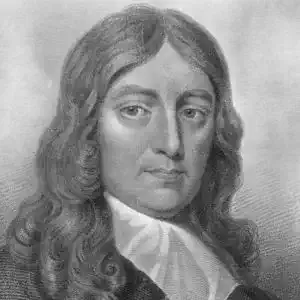
John Milton
Psalm 83
Psalm 83
Be not thou silent now at length
O God hold not thy peace,
Sit not thou still O God of strength
We cry and do not cease.
For lo thy furious foes now *swell
And *storm outrageously, *Jehemajun.
And they that hate thee proud and fill
Exalt their heads full hie.
Against thy people they *contrive *Jagnarimu.
*Their Plots and Counsels deep, *Sod.
*Them to ensnare they chiefly strive *Jithjagnatsu gnal.
*Whom thou dost hide and keep. *Tsephuneca.
Come let us cut them off say they,
Till they no Nation be
That Israels name for ever may
Be lost in memory.
For they consult *with all their might, *Lev jachdau.
And all as one in mind
Themselves against thee they unite
And in firm union bind.
The tents of Edom, and the brood
Of scornful Ishmael,
Moab, with them of Hagars blood
That in the Desart dwell,
Gebal and Ammon there conspire,
And hateful Amalec,
The Philistims, and they of Tyre
Whose bounds the sea doth check.
With them great Asshur also bands
And doth confirm the knot,
All these have lent their armed hands
To aid the Sons of Lot.
Do to them as to Midian bold
That wasted all the Coast.
To Sisera, and as is told
Thou didst to Jabins hoast,
When at the brook of Kishon old
They were repulst and slain,
At Endor quite cut off, and rowl'd
As dung upon the plain.
As Zeb and Oreb evil sped
So let their Princes speed
As Zeba, and Zalmunna bled
So let their Princes bleed.
For they amidst their pride have said
By right now shall we seize
Gods houses, and will now invade
*Their stately Palaces. *Neoth Elohim bears both.
My God, oh make them as a wheel
No quiet let them find,
Giddy and restless let them reel
Like stubble from the wind.
As when an aged wood takes fire
Which on a sudden straies,
The greedy flame runs hier and hier
Till all the mountains blaze,
So with thy whirlwind them pursue,
And with thy tempest chase;
*And till they *yield thee honour due,
Lord fill with shame their face.
*They seek thy
Name. Heb.
Asham'd and troubl'd let them be,
Troubl'd and sham'd for ever,
Ever confounded, and so die
With shame, and scape it never.
Then shall they know that thou whose name
Jehova is alone,
Art the most high, and thou the same
O're all the earth art one.
Be not thou silent now at length
O God hold not thy peace,
Sit not thou still O God of strength
We cry and do not cease.
For lo thy furious foes now *swell
And *storm outrageously, *Jehemajun.
And they that hate thee proud and fill
Exalt their heads full hie.
Against thy people they *contrive *Jagnarimu.
*Their Plots and Counsels deep, *Sod.
*Them to ensnare they chiefly strive *Jithjagnatsu gnal.
*Whom thou dost hide and keep. *Tsephuneca.
Come let us cut them off say they,
Till they no Nation be
That Israels name for ever may
Be lost in memory.
For they consult *with all their might, *Lev jachdau.
And all as one in mind
Themselves against thee they unite
And in firm union bind.
The tents of Edom, and the brood
Of scornful Ishmael,
Moab, with them of Hagars blood
That in the Desart dwell,
Gebal and Ammon there conspire,
And hateful Amalec,
The Philistims, and they of Tyre
Whose bounds the sea doth check.
With them great Asshur also bands
And doth confirm the knot,
All these have lent their armed hands
To aid the Sons of Lot.
Do to them as to Midian bold
That wasted all the Coast.
To Sisera, and as is told
Thou didst to Jabins hoast,
When at the brook of Kishon old
They were repulst and slain,
At Endor quite cut off, and rowl'd
As dung upon the plain.
As Zeb and Oreb evil sped
So let their Princes speed
As Zeba, and Zalmunna bled
So let their Princes bleed.
For they amidst their pride have said
By right now shall we seize
Gods houses, and will now invade
*Their stately Palaces. *Neoth Elohim bears both.
My God, oh make them as a wheel
No quiet let them find,
Giddy and restless let them reel
Like stubble from the wind.
As when an aged wood takes fire
Which on a sudden straies,
The greedy flame runs hier and hier
Till all the mountains blaze,
So with thy whirlwind them pursue,
And with thy tempest chase;
*And till they *yield thee honour due,
Lord fill with shame their face.
*They seek thy
Name. Heb.
Asham'd and troubl'd let them be,
Troubl'd and sham'd for ever,
Ever confounded, and so die
With shame, and scape it never.
Then shall they know that thou whose name
Jehova is alone,
Art the most high, and thou the same
O're all the earth art one.
510
John Milton
Paradise Lost: Book 04
Paradise Lost: Book 04
O, for that warning voice, which he, who saw
The Apocalypse, heard cry in Heaven aloud,
Then when the Dragon, put to second rout,
Came furious down to be revenged on men,
Woe to the inhabitants on earth! that now,
While time was, our first parents had been warned
The coming of their secret foe, and 'scaped,
Haply so 'scaped his mortal snare: For now
Satan, now first inflamed with rage, came down,
The tempter ere the accuser of mankind,
To wreak on innocent frail Man his loss
Of that first battle, and his flight to Hell:
Yet, not rejoicing in his speed, though bold
Far off and fearless, nor with cause to boast,
Begins his dire attempt; which nigh the birth
Now rolling boils in his tumultuous breast,
And like a devilish engine back recoils
Upon himself; horrour and doubt distract
His troubled thoughts, and from the bottom stir
The Hell within him; for within him Hell
He brings, and round about him, nor from Hell
One step, no more than from himself, can fly
By change of place: Now conscience wakes despair,
That slumbered; wakes the bitter memory
Of what he was, what is, and what must be
Worse; of worse deeds worse sufferings must ensue.
Sometimes towards Eden, which now in his view
Lay pleasant, his grieved look he fixes sad;
Sometimes towards Heaven, and the full-blazing sun,
Which now sat high in his meridian tower:
Then, much revolving, thus in sighs began.
O thou, that, with surpassing glory crowned,
Lookest from thy sole dominion like the God
Of this new world; at whose sight all the stars
Hide their diminished heads; to thee I call,
But with no friendly voice, and add thy name,
Of Sun! to tell thee how I hate thy beams,
That bring to my remembrance from what state
I fell, how glorious once above thy sphere;
Till pride and worse ambition threw me down
Warring in Heaven against Heaven's matchless King:
Ah, wherefore! he deserved no such return
From me, whom he created what I was
In that bright eminence, and with his good
Upbraided none; nor was his service hard.
What could be less than to afford him praise,
The easiest recompence, and pay him thanks,
How due! yet all his good proved ill in me,
And wrought but malice; lifted up so high
I sdeined subjection, and thought one step higher
Would set me highest, and in a moment quit
The debt immense of endless gratitude,
So burdensome still paying, still to owe,
Forgetful what from him I still received,
And understood not that a grateful mind
By owing owes not, but still pays, at once
Indebted and discharged; what burden then
O, had his powerful destiny ordained
Me some inferiour Angel, I had stood
Then happy; no unbounded hope had raised
Ambition! Yet why not some other Power
As great might have aspired, and me, though mean,
Drawn to his part; but other Powers as great
Fell not, but stand unshaken, from within
Or from without, to all temptations armed.
Hadst thou the same free will and power to stand?
Thou hadst: whom hast thou then or what to accuse,
But Heaven's free love dealt equally to all?
Be then his love accursed, since love or hate,
To me alike, it deals eternal woe.
Nay, cursed be thou; since against his thy will
Chose freely what it now so justly rues.
Me miserable! which way shall I fly
Infinite wrath, and infinite despair?
Which way I fly is Hell; myself am Hell;
And, in the lowest deep, a lower deep
Still threatening to devour me opens wide,
To which the Hell I suffer seems a Heaven.
O, then, at last relent: Is there no place
Left for repentance, none for pardon left?
None left but by submission; and that word
Disdain forbids me, and my dread of shame
Among the Spirits beneath, whom I seduced
With other promises and other vaunts
Than to submit, boasting I could subdue
The Omnipotent. Ay me! they little know
How dearly I abide that boast so vain,
Under what torments inwardly I groan,
While they adore me on the throne of Hell.
With diadem and scepter high advanced,
The lower still I fall, only supreme
In misery: Such joy ambition finds.
But say I could repent, and could obtain,
By act of grace, my former state; how soon
Would highth recall high thoughts, how soon unsay
What feigned submission swore? Ease would recant
Vows made in pain, as violent and void.
For never can true reconcilement grow,
Where wounds of deadly hate have pierced so deep:
Which would but lead me to a worse relapse
And heavier fall: so should I purchase dear
Short intermission bought with double smart.
This knows my Punisher; therefore as far
From granting he, as I from begging, peace;
All hope excluded thus, behold, in stead
Mankind created, and for him this world.
So farewell, hope; and with hope farewell, fear;
Farewell, remorse! all good to me is lost;
Evil, be thou my good; by thee at least
Divided empire with Heaven's King I hold,
By thee, and more than half perhaps will reign;
As Man ere long, and this new world, shall know.
Thus while he spake, each passion dimmed his face
Thrice changed with pale, ire, envy, and despair;
Which marred his borrowed visage, and betrayed
Him counterfeit, if any eye beheld.
For heavenly minds from such distempers foul
Are ever clear. Whereof he soon aware,
Each perturbation smoothed with outward calm,
Artificer of fraud; and was the first
That practised falsehood under saintly show,
Deep malice to conceal, couched with revenge:
Yet not enough had practised to deceive
Uriel once warned; whose eye pursued him down
The way he went, and on the Assyrian mount
Saw him disfigured, more than could befall
Spirit of happy sort; his gestures fierce
He marked and mad demeanour, then alone,
As he supposed, all unobserved, unseen.
So on he fares, and to the border comes
Of Eden, where delicious Paradise,
Now nearer, crowns with her enclosure green,
As with a rural mound, the champaign head
Of a steep wilderness, whose hairy sides
Access denied; and overhead upgrew
Insuperable height of loftiest shade,
Cedar, and pine, and fir, and branching palm,
A sylvan scene, and, as the ranks ascend,
Shade above shade, a woody theatre
Of stateliest view. Yet higher than their tops
The verdurous wall of Paradise upsprung;
Which to our general sire gave prospect large
Into his nether empire neighbouring round.
And higher than that wall a circling row
Of goodliest trees, loaden with fairest fruit,
Blossoms and fruits at once of golden hue,
Appeared, with gay enamelled colours mixed:
On which the sun more glad impressed his beams
Than in fair evening cloud, or humid bow,
When God hath showered the earth; so lovely seemed
That landskip: And of pure now purer air
Meets his approach, and to the heart inspires
Vernal delight and joy, able to drive
All sadness but despair: Now gentle gales,
Fanning their odoriferous wings, dispense
Native perfumes, and whisper whence they stole
Those balmy spoils. As when to them who fail
Beyond the Cape of Hope, and now are past
Mozambick, off at sea north-east winds blow
Sabean odours from the spicy shore
Of Araby the blest; with such delay
Well pleased they slack their course, and many a league
Cheered with the grateful smell old Ocean smiles:
So entertained those odorous sweets the Fiend,
Who came their bane; though with them better pleased
Than Asmodeus with the fishy fume
That drove him, though enamoured, from the spouse
Of Tobit's son, and with a vengeance sent
From Media post to Egypt, there fast bound.
Now to the ascent of that steep savage hill
Satan had journeyed on, pensive and slow;
But further way found none, so thick entwined,
As one continued brake, the undergrowth
Of shrubs and tangling bushes had perplexed
All path of man or beast that passed that way.
One gate there only was, and that looked east
On the other side: which when the arch-felon saw,
Due entrance he disdained; and, in contempt,
At one flight bound high over-leaped all bound
Of hill or highest wall, and sheer within
Lights on his feet. As when a prowling wolf,
Whom hunger drives to seek new haunt for prey,
Watching where shepherds pen their flocks at eve
In hurdled cotes amid the field secure,
Leaps o'er the fence with ease into the fold:
Or as a thief, bent to unhoard the cash
Of some rich burgher, whose substantial doors,
Cross-barred and bolted fast, fear no assault,
In at the window climbs, or o'er the tiles:
So clomb this first grand thief into God's fold;
So since into his church lewd hirelings climb.
Thence up he flew, and on the tree of life,
The middle tree and highest there that grew,
Sat like a cormorant; yet not true life
Thereby regained, but sat devising death
To them who lived; nor on the virtue thought
Of that life-giving plant, but only used
For prospect, what well used had been the pledge
Of immortality. So little knows
Any, but God alone, to value right
The good before him, but perverts best things
To worst abuse, or to their meanest use.
Beneath him with new wonder now he views,
To all delight of human sense exposed,
In narrow room, Nature's whole wealth, yea more,
A Heaven on Earth: For blissful Paradise
Of God the garden was, by him in the east
Of Eden planted; Eden stretched her line
From Auran eastward to the royal towers
Of great Seleucia, built by Grecian kings,
Of where the sons of Eden long before
Dwelt in Telassar: In this pleasant soil
His far more pleasant garden God ordained;
Out of the fertile ground he caused to grow
All trees of noblest kind for sight, smell, taste;
And all amid them stood the tree of life,
High eminent, blooming ambrosial fruit
Of vegetable gold; and next to life,
Our death, the tree of knowledge, grew fast by,
Knowledge of good bought dear by knowing ill.
Southward through Eden went a river large,
Nor changed his course, but through the shaggy hill
Passed underneath ingulfed; for God had thrown
That mountain as his garden-mould high raised
Upon the rapid current, which, through veins
Of porous earth with kindly thirst up-drawn,
Rose a fresh fountain, and with many a rill
Watered the garden; thence united fell
Down the steep glade, and met the nether flood,
Which from his darksome passage now appears,
And now, divided into four main streams,
Runs diverse, wandering many a famous realm
And country, whereof here needs no account;
But rather to tell how, if Art could tell,
How from that sapphire fount the crisped brooks,
Rolling on orient pearl and sands of gold,
With mazy errour under pendant shades
Ran nectar, visiting each plant, and fed
Flowers worthy of Paradise, which not nice Art
In beds and curious knots, but Nature boon
Poured forth profuse on hill, and dale, and plain,
Both where the morning sun first warmly smote
The open field, and where the unpierced shade
Imbrowned the noontide bowers: Thus was this place
A happy rural seat of various view;
Groves whose rich trees wept odorous gums and balm,
Others whose fruit, burnished with golden rind,
Hung amiable, Hesperian fables true,
If true, here only, and of delicious taste:
Betwixt them lawns, or level downs, and flocks
Grazing the tender herb, were interposed,
Or palmy hillock; or the flowery lap
Of some irriguous valley spread her store,
Flowers of all hue, and without thorn the rose:
Another side, umbrageous grots and caves
Of cool recess, o'er which the mantling vine
Lays forth her purple grape, and gently creeps
Luxuriant; mean while murmuring waters fall
Down the slope hills, dispersed, or in a lake,
That to the fringed bank with myrtle crowned
Her crystal mirrour holds, unite their streams.
The birds their quire apply; airs, vernal airs,
Breathing the smell of field and grove, attune
The trembling leaves, while universal Pan,
Knit with the Graces and the Hours in dance,
Led on the eternal Spring. Not that fair field
Of Enna, where Proserpine gathering flowers,
Herself a fairer flower by gloomy Dis
Was gathered, which cost Ceres all that pain
To seek her through the world; nor that sweet grove
Of Daphne by Orontes, and the inspired
Castalian spring, might with this Paradise
Of Eden strive; nor that Nyseian isle
Girt with the river Triton, where old Cham,
Whom Gentiles Ammon call and Libyan Jove,
Hid Amalthea, and her florid son
Young Bacchus, from his stepdame Rhea's eye;
Nor where Abassin kings their issue guard,
Mount Amara, though this by some supposed
True Paradise under the Ethiop line
By Nilus' head, enclosed with shining rock,
A whole day's journey high, but wide remote
From this Assyrian garden, where the Fiend
Saw, undelighted, all delight, all kind
Of living creatures, new to sight, and strange
Two of far nobler shape, erect and tall,
Godlike erect, with native honour clad
In naked majesty seemed lords of all:
And worthy seemed; for in their looks divine
The image of their glorious Maker shone,
Truth, wisdom, sanctitude severe and pure,
(Severe, but in true filial freedom placed,)
Whence true authority in men; though both
Not equal, as their sex not equal seemed;
For contemplation he and valour formed;
For softness she and sweet attractive grace;
He for God only, she for God in him:
His fair large front and eye sublime declared
Absolute rule; and hyacinthine locks
Round from his parted forelock manly hung
Clustering, but not beneath his shoulders broad:
She, as a veil, down to the slender waist
Her unadorned golden tresses wore
Dishevelled, but in wanton ringlets waved
As the vine curls her tendrils, which implied
Subjection, but required with gentle sway,
And by her yielded, by him best received,
Yielded with coy submission, modest pride,
And sweet, reluctant, amorous delay.
Nor those mysterious parts were then concealed;
Then was not guilty shame, dishonest shame
Of nature's works, honour dishonourable,
Sin-bred, how have ye troubled all mankind
With shows instead, mere shows of seeming pure,
And banished from man's life his happiest life,
Simplicity and spotless innocence!
So passed they naked on, nor shunned the sight
Of God or Angel; for they thought no ill:
So hand in hand they passed, the loveliest pair,
That ever since in love's embraces met;
Adam the goodliest man of men since born
His sons, the fairest of her daughters Eve.
Under a tuft of shade that on a green
Stood whispering soft, by a fresh fountain side
They sat them down; and, after no more toil
Of their sweet gardening labour than sufficed
To recommend cool Zephyr, and made ease
More easy, wholesome thirst and appetite
More grateful, to their supper-fruits they fell,
Nectarine fruits which the compliant boughs
Yielded them, side-long as they sat recline
On the soft downy bank damasked with flowers:
The savoury pulp they chew, and in the rind,
Still as they thirsted, scoop the brimming stream;
Nor gentle purpose, nor endearing smiles
Wanted, nor youthful dalliance, as beseems
Fair couple, linked in happy nuptial league,
Alone as they. About them frisking played
All beasts of the earth, since wild, and of all chase
In wood or wilderness, forest or den;
Sporting the lion ramped, and in his paw
Dandled the kid; bears, tigers, ounces, pards,
Gambolled before them; the unwieldy elephant,
To make them mirth, used all his might, and wreathed
His?kithetmroboscis; close the serpent sly,
Insinuating, wove with Gordian twine
His braided train, and of his fatal guile
Gave proof unheeded; others on the grass
Couched, and now filled with pasture gazing sat,
Or bedward ruminating; for the sun,
Declined, was hasting now with prone career
To the ocean isles, and in the ascending scale
Of Heaven the stars that usher evening rose:
When Satan still in gaze, as first he stood,
Scarce thus at length failed speech recovered sad.
O Hell! what do mine eyes with grief behold!
Into our room of bliss thus high advanced
Creatures of other mould, earth-born perhaps,
Not Spirits, yet to heavenly Spirits bright
Little inferiour; whom my thoughts pursue
With wonder, and could love, so lively shines
In them divine resemblance, and such grace
The hand that formed them on their shape hath poured.
Ah! gentle pair, ye little think how nigh
Your change approaches, when all these delights
Will vanish, and deliver ye to woe;
More woe, the more your taste is now of joy;
Happy, but for so happy ill secured
Long to continue, and this high seat your Heaven
Ill fenced for Heaven to keep out such a foe
As now is entered; yet no purposed foe
To you, whom I could pity thus forlorn,
Though I unpitied: League with you I seek,
And mutual amity, so strait, so close,
That I with you must dwell, or you with me
Henceforth; my dwelling haply may not please,
Like this fair Paradise, your sense; yet such
Accept your Maker's work; he gave it me,
Which I as freely give: Hell shall unfold,
To entertain you two, her widest gates,
And send forth all her kings; there will be room,
Not like these narrow limits, to receive
Your numerous offspring; if no better place,
Thank him who puts me loth to this revenge
On you who wrong me not for him who wronged.
And should I at your harmless innocence
Melt, as I do, yet publick reason just,
Honour and empire with revenge enlarged,
By conquering this new world, compels me now
To do what else, though damned, I should abhor.
So spake the Fiend, and with necessity,
The tyrant's plea, excused his devilish deeds.
Then from his lofty stand on that high tree
Down he alights among the sportful herd
Of those four-footed kinds, himself now one,
Now other, as their shape served best his end
Nearer to view his prey, and, unespied,
To mark what of their state he more might learn,
By word or action marked. About them round
A lion now he stalks with fiery glare;
Then as a tiger, who by chance hath spied
In some purlieu two gentle fawns at play,
Straight couches close, then, rising, changes oft
His couchant watch, as one who chose his ground,
Whence rushing, he might surest seize them both,
Griped in each paw: when, Adam first of men
To first of women Eve thus moving speech,
Turned him, all ear to hear new utterance flow.
Sole partner, and sole part, of all these joys,
Dearer thyself than all; needs must the Power
That made us, and for us this ample world,
Be infinitely good, and of his good
As liberal and free as infinite;
That raised us from the dust, and placed us here
In all this happiness, who at his hand
Have nothing merited, nor can perform
Aught whereof he hath need; he who requires
From us no other service than to keep
This one, this easy charge, of all the trees
In Paradise that bear delicious fruit
So various, not to taste that only tree
Of knowledge, planted by the tree of life;
So near grows death to life, whate'er death is,
Some dreadful thing no doubt; for well thou knowest
God hath pronounced it death to taste that tree,
The only sign of our obedience left,
Among so many signs of power and rule
Conferred upon us, and dominion given
Over all other creatures that possess
Earth, air, and sea. Then let us not think hard
One easy prohibition, who enjoy
Free leave so large to all things else, and choice
Unlimited of manifold delights:
But let us ever praise him, and extol
His bounty, following our delightful task,
To prune these growing plants, and tend these flowers,
Which were it toilsome, yet with thee were sweet.
To whom thus Eve replied. O thou for whom
And from whom I was formed, flesh of thy flesh,
And without whom am to no end, my guide
And head! what thou hast said is just and right.
For we to him indeed all praises owe,
And daily thanks; I chiefly, who enjoy
So far the happier lot, enjoying thee
Pre-eminent by so much odds, while thou
Like consort to thyself canst no where find.
That day I oft remember, when from sleep
I first awaked, and found myself reposed
Under a shade on flowers, much wondering where
And what I was, whence thither brought, and how.
Not distant far from thence a murmuring sound
Of waters issued from a cave, and spread
Into a liquid plain, then stood unmoved
Pure as the expanse of Heaven; I thither went
With unexperienced thought, and laid me down
On the green bank, to look into the clear
Smooth lake, that to me seemed another sky.
As I bent down to look, just opposite
A shape within the watery gleam appeared,
Bending to look on me: I started back,
It started back; but pleased I soon returned,
Pleased it returned as soon with answering looks
Of sympathy and love: There I had fixed
Mine eyes till now, and pined with vain desire,
Had not a voice thus warned me; 'What thou seest,
'What there thou seest, fair Creature, is thyself;
'With thee it came and goes: but follow me,
'And I will bring thee where no shadow stays
'Thy coming, and thy soft embraces, he
'Whose image thou art; him thou shalt enjoy
'Inseparably thine, to him shalt bear
'Multitudes like thyself, and thence be called
'Mother of human race.' What could I do,
But follow straight, invisibly thus led?
Till I espied thee, fair indeed and tall,
Under a platane; yet methought less fair,
Less winning soft, less amiably mild,
Than that smooth watery image: Back I turned;
Thou following cryedst aloud, 'Return, fair Eve;
'Whom flyest thou? whom thou flyest, of him thou art,
'His flesh, his bone; to give thee being I lent
'Out of my side to thee, nearest my heart,
'Substantial life, to have thee by my side
'Henceforth an individual solace dear;
'Part of my soul I seek thee, and thee claim
'My other half:' With that thy gentle hand
Seised mine: I yielded;and from that time see
How beauty is excelled by manly grace,
And wisdom, which alone is truly fair.
So spake our general mother, and with eyes
Of conjugal attraction unreproved,
And meek surrender, half-embracing leaned
On our first father; half her swelling breast
Naked met his, under the flowing gold
Of her loose tresses hid: he in delight
Both of her beauty, and submissive charms,
Smiled with superiour love, as Jupiter
On Juno smiles, when he impregns the clouds
That shed Mayflowers; and pressed her matron lip
With kisses pure: Aside the Devil turned
For envy; yet with jealous leer malign
Eyed them askance, and to himself thus plained.
Sight hateful, sight tormenting! thus these two,
Imparadised in one another's arms,
The happier Eden, shall enjoy their fill
Of bliss on bliss; while I to Hell am thrust,
Where neither joy nor love, but fierce desire,
Among our other torments not the least,
Still unfulfilled with pain of longing pines.
Yet let me not forget what I have gained
From their own mouths: All is not theirs, it seems;
One fatal tree there stands, of knowledge called,
Forbidden them to taste: Knowledge forbidden
Suspicious, reasonless. Why should their Lord
Envy them that? Can it be sin to know?
Can it be death? And do they only stand
By ignorance? Is that their happy state,
The proof of their obedience and their faith?
O fair foundation laid whereon to build
Their ruin! hence I will excite their minds
With more desire to know, and to reject
Envious commands, invented with design
To keep them low, whom knowledge might exalt
Equal with Gods: aspiring to be such,
They taste and die: What likelier can ensue
But first with narrow search I must walk round
This garden, and no corner leave unspied;
A chance but chance may lead where I may meet
Some wandering Spirit of Heaven by fountain side,
Or in thick shade retired, from him to draw
What further would be learned. Live while ye may,
Yet happy pair; enjoy, till I return,
Short pleasures, for long woes are to succeed!
So saying, his proud step he scornful turned,
But with sly circumspection, and began
Through wood, through waste, o'er hill, o'er dale, his roam
Mean while in utmost longitude, where Heaven
With earth and ocean meets, the setting sun
Slowly descended, and with right aspect
Against the eastern gate of Paradise
Levelled his evening rays: It was a rock
Of alabaster, piled up to the clouds,
Conspicuous far, winding with one ascent
Accessible from earth, one entrance high;
The rest was craggy cliff, that overhung
Still as it rose, impossible to climb.
Betwixt these rocky pillars Gabriel sat,
Chief of the angelick guards, awaiting night;
About him exercised heroick games
The unarmed youth of Heaven, but nigh at hand
Celestial armoury, shields, helms, and spears,
Hung high with diamond flaming, and with gold.
Thither came Uriel, gliding through the even
On a sun-beam, swift as a shooting star
In autumn thwarts the night, when vapours fired
Impress the air, and shows the mariner
From what point of his compass to beware
Impetuous winds: He thus began in haste.
Gabriel, to thee thy course by lot hath given
Charge and strict watch, that to this happy place
No evil thing approach or enter in.
This day at highth of noon came to my sphere
A Spirit, zealous, as he seemed, to know
More of the Almighty's works, and chiefly Man,
God's latest image: I described his way
Bent all on speed, and marked his aery gait;
But in the mount that lies from Eden north,
Where he first lighted, soon discerned his looks
Alien from Heaven, with passions foul obscured:
Mine eye pursued him still, but under shade
Lost sight of him: One of the banished crew,
I fear, hath ventured from the deep, to raise
New troubles; him thy care must be to find.
To whom the winged warriour thus returned.
Uriel, no wonder if thy perfect sight,
Amid the sun's bright circle where thou sitst,
See far and wide: In at this gate none pass
The vigilance here placed, but such as come
Well known from Heaven; and since meridian hour
No creature thence: If Spirit of other sort,
So minded, have o'er-leaped these earthly bounds
On purpose, hard thou knowest it to exclude
Spiritual substance with corporeal bar.
But if within the circuit of these walks,
In whatsoever shape he lurk, of whom
Thou tellest, by morrow dawning I shall know.
So promised he; and Uriel to his charge
Returned on that bright beam, whose point now raised
Bore him slope downward to the sun now fallen
Beneath the Azores; whether the prime orb,
Incredible how swift, had thither rolled
Diurnal, or this less volubil earth,
By shorter flight to the east, had left him there
Arraying with reflected purple and gold
The clouds that on his western throne attend.
Now came still Evening on, and Twilight gray
Had in her sober livery all things clad;
Silence accompanied; for beast and bird,
They to their grassy couch, these to their nests
Were slunk, all but the wakeful nightingale;
She all night long her amorous descant sung;
Silence was pleased: Now glowed the firmament
With living sapphires: Hesperus, that led
The starry host, rode brightest, till the moon,
Rising in clouded majesty, at length
Apparent queen unveiled her peerless light,
And o'er the dark her silver mantle threw.
When Adam thus to Eve. Fair Consort, the hour
Of night, and all things now retired to rest,
Mind us of like repose; since God hath set
Labour and rest, as day and night, to men
Successive; and the timely dew of sleep,
Now falling with soft slumbrous weight, inclines
Our eye-lids: Other creatures all day long
Rove idle, unemployed, and less need rest;
Man hath his daily work of body or mind
Appointed, which declares his dignity,
And the regard of Heaven on all his ways;
While other animals unactive range,
And of their doings God takes no account.
To-morrow, ere fresh morning streak the east
With first approach of light, we must be risen,
And at our pleasant labour, to reform
Yon flowery arbours, yonder alleys green,
Our walk at noon, with branches overgrown,
That mock our scant manuring, and require
More hands than ours to lop their wanton growth:
Those blossoms also, and those dropping gums,
That lie bestrown, unsightly and unsmooth,
Ask riddance, if we mean to tread with ease;
Mean while, as Nature wills, night bids us rest.
To whom thus Eve, with perfect beauty adorned
My Author and Disposer, what thou bidst
Unargued I obey: So God ordains;
God is thy law, thou mine: To know no more
Is woman's happiest knowledge, and her praise.
With thee conversing I forget all time;
All seasons, and their change, all please alike.
Sweet is the breath of Morn, her rising sweet,
With charm of earliest birds: pleasant the sun,
When first on this delightful land he spreads
His orient beams, on herb, tree, fruit, and flower,
Glistering with dew; fragrant the fertile earth
After soft showers; and sweet the coming on
Of grateful Evening mild; then silent Night,
With this her solemn bird, and this fair moon,
And these the gems of Heaven, her starry train:
But neither breath of Morn, when she ascends
With charm of earliest birds; nor rising sun
On this delightful land; nor herb, fruit, flower,
Glistering with dew; nor fragrance after showers;
Nor grateful Evening mild; nor silent Night,
With this her solemn bird, nor walk by moon,
Or glittering star-light, without thee is sweet.
But wherefore all night long shine these? for whom
This glorious sight, when sleep hath shut all eyes?
To whom our general ancestor replied.
Daughter of God and Man, accomplished Eve,
These have their course to finish round the earth,
By morrow evening, and from land to land
In order, though to nations yet unborn,
Ministring light prepared, they set and rise;
Lest total Darkness should by night regain
Her old possession, and extinguish life
In Nature and all things; which these soft fires
Not only enlighten, but with kindly heat
Of various influence foment and warm,
Temper or nourish, or in part shed down
Their stellar virtue on all kinds that grow
On earth, made hereby apter to receive
Perfection from the sun's more potent ray.
These then, though unbeheld in deep of night,
Shine not in vain; nor think, though men were none,
That Heaven would want spectators, God want praise:
Millions of spiritual creatures walk the earth
Unseen, both when we wake, and when we sleep:
All these with ceaseless praise his works behold
Both day and night: How often from the steep
Of echoing hill or thicket have we heard
Celestial voices to the midnight air,
Sole, or responsive each to others note,
Singing their great Creator? oft in bands
While they keep watch, or nightly rounding walk,
With heavenly touch of instrumental sounds
In full harmonick number joined, their songs
Divide the night, and lift our thoughts to Heaven.
Thus talking, hand in hand alone they passed
On to their blissful bower: it was a place
Chosen by the sovran Planter, when he framed
All things to Man's delightful use; the roof
Of thickest covert was inwoven shade
Laurel and myrtle, and what higher grew
Of firm and fragrant leaf; on either side
Acanthus, and each odorous bushy shrub,
Fenced up the verdant wall; each beauteous flower,
Iris all hues, roses, and jessamin,
Reared high their flourished heads between, and wrought
Mosaick; underfoot the violet,
Crocus, and hyacinth, with rich inlay
Broidered the ground, more coloured than with stone
Of costliest emblem: Other creature here,
Bird, beast, insect, or worm, durst enter none,
Such was their awe of Man. In shadier bower
More sacred and sequestered, though but feigned,
Pan or Sylvanus never slept, nor Nymph
Nor Faunus haunted. Here, in close recess,
With flowers, garlands, and sweet-smelling herbs,
Espoused Eve decked first her nuptial bed;
And heavenly quires the hymenaean sung,
What day the genial Angel to our sire
Brought her in naked beauty more adorned,
More lovely, than Pandora, whom the Gods
Endowed with all their gifts, and O! too like
In sad event, when to the unwiser son
Of Japhet brought by Hermes, she ensnared
Mankind with her fair looks, to be avenged
On him who had stole Jove's authentick fire.
Thus, at their shady lodge arrived, both stood,
Both turned, and under open sky adored
The God that made both sky, air, earth, and heaven,
Which they beheld, the moon's resplendent globe,
And starry pole: Thou also madest the night,
Maker Omnipotent, and thou the day,
Which we, in our appointed work employed,
Have finished, happy in our mutual help
And mutual love, the crown of all our bliss
Ordained by thee; and this delicious place
For us too large, where thy abundance wants
Partakers, and uncropt falls to the ground.
But thou hast promised from us two a race
To fill the earth, who shall with us extol
Thy goodness infinite, both when we wake,
And when we seek, as now, thy gift of sleep.
This said unanimous, and other rites
Observing none, but adoration pure
Which God likes best, into their inmost bower
Handed they went; and, eased the putting off
These troublesome disguises which we wear,
Straight side by side were laid; nor turned, I ween,
Adam from his fair spouse, nor Eve the rites
Mysterious of connubial love refused:
Whatever hypocrites austerely talk
Of purity, and place, and innocence,
Defaming as impure what God declares
Pure, and commands to some, leaves free to all.
Our Maker bids encrease; who bids abstain
But our Destroyer, foe to God and Man?
Hail, wedded Love, mysterious law, true source
Of human offspring, sole propriety
In Paradise of all things common else!
By thee adulterous Lust was driven from men
Among the bestial herds to range; by thee
Founded in reason, loyal, just, and pure,
Relations dear, and all the charities
Of father, son, and brother, first were known.
Far be it, that I should write thee sin or blame,
Or think thee unbefitting holiest place,
Perpetual fountain of domestick sweets,
Whose bed is undefiled and chaste pronounced,
Present, or past, as saints and patriarchs used.
Here Love his golden shafts employs, here lights
His constant lamp, and waves his purple wings,
Reigns here and revels; not in the bought smile
Of harlots, loveless, joyless, unendeared,
Casual fruition; nor in court-amours,
Mixed dance, or wanton mask, or midnight ball,
Or serenate, which the starved lover sings
To his proud fair, best quitted with disdain.
These, lulled by nightingales, embracing slept,
And on their naked limbs the flowery roof
Showered roses, which the morn repaired. Sleep on,
Blest pair; and O!yet happiest, if ye seek
No happier state, and know to know no more.
Now had night measured with her shadowy cone
Half way up hill this vast sublunar vault,
And from their ivory port the Cherubim,
Forth issuing at the accustomed hour, stood armed
To their night watches in warlike parade;
When Gabriel to his next in power thus spake.
Uzziel, half these draw off, and coast the south
With strictest watch; these other wheel the north;
Our circuit meets full west. As flame they part,
Half wheeling to the shield, half to the spear.
From these, two strong and subtle Spirits he called
That near him stood, and gave them thus in charge.
Ithuriel and Zephon, with winged speed
Search through this garden, leave unsearched no nook;
But chiefly where those two fair creatures lodge,
Now laid perhaps asleep, secure of harm.
This evening from the sun's decline arrived,
Who tells of some infernal Spirit seen
Hitherward bent (who could have thought?) escaped
The bars of Hell, on errand bad no doubt:
Such, where ye find, seise fast, and hither bring.
So saying, on he led his radiant files,
Dazzling the moon; these to the bower direct
In search of whom they sought: Him there they found
Squat like a toad, close at the ear of Eve,
Assaying by his devilish art to reach
The organs of her fancy, and with them forge
Illusions, as he list, phantasms and dreams;
Or if, inspiring venom, he might taint
The animal spirits, that from pure blood arise
Like gentle breaths from rivers pure, thence raise
At least distempered, discontented thoughts,
Vain hopes, vain aims, inordinate desires,
Blown up with high conceits ingendering pride.
Him thus intent Ithuriel with his spear
Touched lightly; for no falshood can endure
Touch of celestial temper, but returns
Of force to its own likeness: Up he starts
Discovered and surprised. As when a spark
Lights on a heap of nitrous powder, laid
Fit for the tun some magazine to store
Against a rumoured war, the smutty grain,
With sudden blaze diffused, inflames the air;
So started up in his own shape the Fiend.
Back stept those two fair Angels, half amazed
So sudden to behold the grisly king;
Yet thus, unmoved with fear, accost him soon.
Which of those rebel Spirits adjudged to Hell
Comest thou, escaped thy prison? and, transformed,
Why sat'st thou like an enemy in wait,
Here watching at the head of these that sleep?
Know ye not then said Satan, filled with scorn,
Know ye not me? ye knew me once no mate
For you, there sitting where ye durst not soar:
Not to know me argues yourselves unknown,
The lowest of your throng; or, if ye know,
Why ask ye, and superfluous begin
Your message, like to end as much in vain?
To whom thus Zephon, answering scorn with scorn.
Think not, revolted Spirit, thy shape the same,
Or undiminished brightness to be known,
As when thou stoodest in Heaven upright and pure;
That glory then, when thou no more wast good,
Departed from thee; and thou resemblest now
Thy sin and place of doom obscure and foul.
But come, for thou, be sure, shalt give account
To him who sent us, whose charge is to keep
This place inviolable, and these from harm.
So spake the Cherub; and his grave rebuke,
Severe in youthful beauty, added grace
Invincible: Abashed the Devil stood,
And felt how awful goodness is, and saw
Virtue in her shape how lovely; saw, and pined
His loss; but chiefly to find here observed
His lustre visibly impaired; yet seemed
Undaunted. If I must contend, said he,
Best with the best, the sender, not the sent,
Or all at once; more glory will be won,
Or less be lost. Thy fear, said Zephon bold,
Will save us trial what the least can do
Single against thee wicked, and thence weak.
The Fiend replied not, overcome with rage;
But, like a proud steed reined, went haughty on,
Champing his iron curb: To strive or fly
He held it vain; awe from above had quelled
His heart, not else dismayed. Now drew they nigh
The western point, where those half-rounding guards
Just met, and closing stood in squadron joined,
A waiting next command. To whom their Chief,
Gabriel, from the front thus called aloud.
O friends! I hear the tread of nimble feet
Hasting this way, and now by glimpse discern
Ithuriel and Zephon through the shade;
And with them comes a third of regal port,
But faded splendour wan; who by his gait
And fierce demeanour seems the Prince of Hell,
Not likely to part hence without contest;
Stand firm, for in his look defiance lours.
He scarce had ended, when those two approached,
And brief related whom they brought, where found,
How busied, in what form and posture couched.
To whom with stern regard thus Gabriel spake.
Why hast thou, Satan, broke the bounds prescribed
To thy transgressions, and disturbed the charge
Of others, who approve not to transgress
By thy example, but have power and right
To question thy bold entrance on this place;
Employed, it seems, to violate sleep, and those
Whose dwelling God hath planted here in bliss!
To whom thus Satan with contemptuous brow.
Gabriel? thou hadst in Heaven the esteem of wise,
And such I held thee; but this question asked
Puts me in doubt. Lives there who loves his pain!
Who would not, finding way, break loose from Hell,
Though thither doomed! Thou wouldst thyself, no doubt
And boldly venture to whatever place
Farthest from pain, where thou mightst hope to change
Torment with ease, and soonest recompense
Dole with delight, which in this place I sought;
To thee no reason, who knowest only good,
But evil hast not tried: and wilt object
His will who bounds us! Let him surer bar
His iron gates, if he intends our stay
In that dark durance: Thus much what was asked.
The rest is true, they found me where they say;
But that implies not violence or harm.
Thus he in scorn. The warlike Angel moved,
Disdainfully half smiling, thus replied.
O loss of one in Heaven to judge of wise
Since Satan fell, whom folly overthrew,
And now returns him from his prison 'scaped,
Gravely in doubt whether to hold them wise
Or not, who ask what boldness brought him hither
Unlicensed from his bounds in Hell prescribed;
So wise he judges it to fly from pain
However, and to 'scape his punishment!
So judge thou still, presumptuous! till the wrath,
Which thou incurrest by flying, meet thy flight
Sevenfold, and scourge that wisdom back to Hell,
Which taught thee yet no better, that no pain
Can equal anger infinite provoked.
But wherefore thou alone? wherefore with thee
Came not all hell broke loose? or thou than they
Less hardy to endure? Courageous Chief!
The first in flight from pain! hadst thou alleged
To thy deserted host this cause of flight,
Thou surely hadst not come sole fugitive.
To which the Fiend thus answered, frowning stern.
Not that I less endure, or shrink from pain,
Insulting Angel! well thou knowest I stood
Thy fiercest, when in battle to thy aid
The blasting vollied thunder made all speed,
And seconded thy else not dreaded spear.
But still thy words at random, as before,
Argue thy inexperience what behoves
From hard assays and ill successes past
A faithful leader, not to hazard all
Through ways of danger by himself untried:
I, therefore, I alone first undertook
To wing the desolate abyss, and spy
This new created world, whereof in Hell
Fame is not silent, here in hope to find
Better abode, and my afflicted Powers
To settle here on earth, or in mid air;
Though for possession put to try once more
What thou and thy gay legions dare against;
Whose easier business were to serve their Lord
High up in Heaven, with songs to hymn his throne,
And practised distances to cringe, not fight,
To whom the warriour Angel soon replied.
To say and straight unsay, pretending first
Wise to fly pain, professing next the spy,
Argues no leader but a liear traced,
Satan, and couldst thou faithful add? O name,
O sacred name of faithfulness profaned!
Faithful to whom? to thy rebellious crew?
Army of Fiends, fit body to fit head.
Was this your discipline and faith engaged,
Your military obedience, to dissolve
Allegiance to the acknowledged Power supreme?
And thou, sly hypocrite, who now wouldst seem
Patron of liberty, who more than thou
Once fawned, and cringed, and servily adored
Heaven's awful Monarch? wherefore, but in hope
To dispossess him, and thyself to reign?
But mark what I arreed thee now, Avant;
Fly neither whence thou fledst! If from this hour
Within these hallowed limits thou appear,
Back to the infernal pit I drag thee chained,
And seal thee so, as henceforth not to scorn
The facile gates of Hell too slightly barred.
So threatened he; but Satan to no threats
Gave heed, but waxing more in rage replied.
Then when I am thy captive talk of chains,
Proud limitary Cherub! but ere then
Far heavier load thyself expect to feel
From my prevailing arm, though Heaven's King
Ride on thy wings, and thou with thy compeers,
Us'd to the yoke, drawest his triumphant wheels
In progress through the road of Heaven star-paved.
While thus he spake, the angelick squadron bright
Turned fiery red, sharpening in mooned horns
Their phalanx, and began to hem him round
With ported spears, as thick as when a field
Of Ceres ripe for harvest waving bends
Her bearded grove of ears, which way the wind
Sways them; the careful plowman doubting stands,
Left on the threshing floor his hopeless sheaves
Prove chaff. On the other side, Satan, alarmed,
Collecting all his might, dilated stood,
Like Teneriff or Atlas, unremoved:
His stature reached the sky, and on his crest
Sat Horrour plumed; nor wanted in his grasp
What seemed both spear and shield: Now dreadful deeds
Might have ensued, nor only Paradise
In this commotion, but the starry cope
Of Heaven perhaps, or all the elements
At least had gone to wrack, disturbed and torn
With violence of this conflict, had not soon
The Eternal, to prevent such horrid fray,
Hung forth in Heaven his golden scales, yet seen
Betwixt Astrea and the Scorpion sign,
Wherein all things created first he weighed,
The pendulous round earth with balanced air
In counterpoise, now ponders all events,
Battles and realms: In these he put two weights,
The sequel each of parting and of fight:
The latter quick up flew, and kicked the beam,
Which Gabriel spying, thus bespake the Fiend.
Satan, I know thy strength, and thou knowest mine;
Neither our own, but given: What folly then
To boast what arms can do? since thine no more
Than Heaven permits, nor mine, though doubled now
To trample thee as mire: For proof look up,
And read thy lot in yon celestial sign;
Where thou art weighed, and shown how light, how weak,
If thou resist. The Fiend looked up, and knew
His mounted scale aloft: Nor more;but fled
Murmuring, and with him fled the shades of night.
O, for that warning voice, which he, who saw
The Apocalypse, heard cry in Heaven aloud,
Then when the Dragon, put to second rout,
Came furious down to be revenged on men,
Woe to the inhabitants on earth! that now,
While time was, our first parents had been warned
The coming of their secret foe, and 'scaped,
Haply so 'scaped his mortal snare: For now
Satan, now first inflamed with rage, came down,
The tempter ere the accuser of mankind,
To wreak on innocent frail Man his loss
Of that first battle, and his flight to Hell:
Yet, not rejoicing in his speed, though bold
Far off and fearless, nor with cause to boast,
Begins his dire attempt; which nigh the birth
Now rolling boils in his tumultuous breast,
And like a devilish engine back recoils
Upon himself; horrour and doubt distract
His troubled thoughts, and from the bottom stir
The Hell within him; for within him Hell
He brings, and round about him, nor from Hell
One step, no more than from himself, can fly
By change of place: Now conscience wakes despair,
That slumbered; wakes the bitter memory
Of what he was, what is, and what must be
Worse; of worse deeds worse sufferings must ensue.
Sometimes towards Eden, which now in his view
Lay pleasant, his grieved look he fixes sad;
Sometimes towards Heaven, and the full-blazing sun,
Which now sat high in his meridian tower:
Then, much revolving, thus in sighs began.
O thou, that, with surpassing glory crowned,
Lookest from thy sole dominion like the God
Of this new world; at whose sight all the stars
Hide their diminished heads; to thee I call,
But with no friendly voice, and add thy name,
Of Sun! to tell thee how I hate thy beams,
That bring to my remembrance from what state
I fell, how glorious once above thy sphere;
Till pride and worse ambition threw me down
Warring in Heaven against Heaven's matchless King:
Ah, wherefore! he deserved no such return
From me, whom he created what I was
In that bright eminence, and with his good
Upbraided none; nor was his service hard.
What could be less than to afford him praise,
The easiest recompence, and pay him thanks,
How due! yet all his good proved ill in me,
And wrought but malice; lifted up so high
I sdeined subjection, and thought one step higher
Would set me highest, and in a moment quit
The debt immense of endless gratitude,
So burdensome still paying, still to owe,
Forgetful what from him I still received,
And understood not that a grateful mind
By owing owes not, but still pays, at once
Indebted and discharged; what burden then
O, had his powerful destiny ordained
Me some inferiour Angel, I had stood
Then happy; no unbounded hope had raised
Ambition! Yet why not some other Power
As great might have aspired, and me, though mean,
Drawn to his part; but other Powers as great
Fell not, but stand unshaken, from within
Or from without, to all temptations armed.
Hadst thou the same free will and power to stand?
Thou hadst: whom hast thou then or what to accuse,
But Heaven's free love dealt equally to all?
Be then his love accursed, since love or hate,
To me alike, it deals eternal woe.
Nay, cursed be thou; since against his thy will
Chose freely what it now so justly rues.
Me miserable! which way shall I fly
Infinite wrath, and infinite despair?
Which way I fly is Hell; myself am Hell;
And, in the lowest deep, a lower deep
Still threatening to devour me opens wide,
To which the Hell I suffer seems a Heaven.
O, then, at last relent: Is there no place
Left for repentance, none for pardon left?
None left but by submission; and that word
Disdain forbids me, and my dread of shame
Among the Spirits beneath, whom I seduced
With other promises and other vaunts
Than to submit, boasting I could subdue
The Omnipotent. Ay me! they little know
How dearly I abide that boast so vain,
Under what torments inwardly I groan,
While they adore me on the throne of Hell.
With diadem and scepter high advanced,
The lower still I fall, only supreme
In misery: Such joy ambition finds.
But say I could repent, and could obtain,
By act of grace, my former state; how soon
Would highth recall high thoughts, how soon unsay
What feigned submission swore? Ease would recant
Vows made in pain, as violent and void.
For never can true reconcilement grow,
Where wounds of deadly hate have pierced so deep:
Which would but lead me to a worse relapse
And heavier fall: so should I purchase dear
Short intermission bought with double smart.
This knows my Punisher; therefore as far
From granting he, as I from begging, peace;
All hope excluded thus, behold, in stead
Mankind created, and for him this world.
So farewell, hope; and with hope farewell, fear;
Farewell, remorse! all good to me is lost;
Evil, be thou my good; by thee at least
Divided empire with Heaven's King I hold,
By thee, and more than half perhaps will reign;
As Man ere long, and this new world, shall know.
Thus while he spake, each passion dimmed his face
Thrice changed with pale, ire, envy, and despair;
Which marred his borrowed visage, and betrayed
Him counterfeit, if any eye beheld.
For heavenly minds from such distempers foul
Are ever clear. Whereof he soon aware,
Each perturbation smoothed with outward calm,
Artificer of fraud; and was the first
That practised falsehood under saintly show,
Deep malice to conceal, couched with revenge:
Yet not enough had practised to deceive
Uriel once warned; whose eye pursued him down
The way he went, and on the Assyrian mount
Saw him disfigured, more than could befall
Spirit of happy sort; his gestures fierce
He marked and mad demeanour, then alone,
As he supposed, all unobserved, unseen.
So on he fares, and to the border comes
Of Eden, where delicious Paradise,
Now nearer, crowns with her enclosure green,
As with a rural mound, the champaign head
Of a steep wilderness, whose hairy sides
Access denied; and overhead upgrew
Insuperable height of loftiest shade,
Cedar, and pine, and fir, and branching palm,
A sylvan scene, and, as the ranks ascend,
Shade above shade, a woody theatre
Of stateliest view. Yet higher than their tops
The verdurous wall of Paradise upsprung;
Which to our general sire gave prospect large
Into his nether empire neighbouring round.
And higher than that wall a circling row
Of goodliest trees, loaden with fairest fruit,
Blossoms and fruits at once of golden hue,
Appeared, with gay enamelled colours mixed:
On which the sun more glad impressed his beams
Than in fair evening cloud, or humid bow,
When God hath showered the earth; so lovely seemed
That landskip: And of pure now purer air
Meets his approach, and to the heart inspires
Vernal delight and joy, able to drive
All sadness but despair: Now gentle gales,
Fanning their odoriferous wings, dispense
Native perfumes, and whisper whence they stole
Those balmy spoils. As when to them who fail
Beyond the Cape of Hope, and now are past
Mozambick, off at sea north-east winds blow
Sabean odours from the spicy shore
Of Araby the blest; with such delay
Well pleased they slack their course, and many a league
Cheered with the grateful smell old Ocean smiles:
So entertained those odorous sweets the Fiend,
Who came their bane; though with them better pleased
Than Asmodeus with the fishy fume
That drove him, though enamoured, from the spouse
Of Tobit's son, and with a vengeance sent
From Media post to Egypt, there fast bound.
Now to the ascent of that steep savage hill
Satan had journeyed on, pensive and slow;
But further way found none, so thick entwined,
As one continued brake, the undergrowth
Of shrubs and tangling bushes had perplexed
All path of man or beast that passed that way.
One gate there only was, and that looked east
On the other side: which when the arch-felon saw,
Due entrance he disdained; and, in contempt,
At one flight bound high over-leaped all bound
Of hill or highest wall, and sheer within
Lights on his feet. As when a prowling wolf,
Whom hunger drives to seek new haunt for prey,
Watching where shepherds pen their flocks at eve
In hurdled cotes amid the field secure,
Leaps o'er the fence with ease into the fold:
Or as a thief, bent to unhoard the cash
Of some rich burgher, whose substantial doors,
Cross-barred and bolted fast, fear no assault,
In at the window climbs, or o'er the tiles:
So clomb this first grand thief into God's fold;
So since into his church lewd hirelings climb.
Thence up he flew, and on the tree of life,
The middle tree and highest there that grew,
Sat like a cormorant; yet not true life
Thereby regained, but sat devising death
To them who lived; nor on the virtue thought
Of that life-giving plant, but only used
For prospect, what well used had been the pledge
Of immortality. So little knows
Any, but God alone, to value right
The good before him, but perverts best things
To worst abuse, or to their meanest use.
Beneath him with new wonder now he views,
To all delight of human sense exposed,
In narrow room, Nature's whole wealth, yea more,
A Heaven on Earth: For blissful Paradise
Of God the garden was, by him in the east
Of Eden planted; Eden stretched her line
From Auran eastward to the royal towers
Of great Seleucia, built by Grecian kings,
Of where the sons of Eden long before
Dwelt in Telassar: In this pleasant soil
His far more pleasant garden God ordained;
Out of the fertile ground he caused to grow
All trees of noblest kind for sight, smell, taste;
And all amid them stood the tree of life,
High eminent, blooming ambrosial fruit
Of vegetable gold; and next to life,
Our death, the tree of knowledge, grew fast by,
Knowledge of good bought dear by knowing ill.
Southward through Eden went a river large,
Nor changed his course, but through the shaggy hill
Passed underneath ingulfed; for God had thrown
That mountain as his garden-mould high raised
Upon the rapid current, which, through veins
Of porous earth with kindly thirst up-drawn,
Rose a fresh fountain, and with many a rill
Watered the garden; thence united fell
Down the steep glade, and met the nether flood,
Which from his darksome passage now appears,
And now, divided into four main streams,
Runs diverse, wandering many a famous realm
And country, whereof here needs no account;
But rather to tell how, if Art could tell,
How from that sapphire fount the crisped brooks,
Rolling on orient pearl and sands of gold,
With mazy errour under pendant shades
Ran nectar, visiting each plant, and fed
Flowers worthy of Paradise, which not nice Art
In beds and curious knots, but Nature boon
Poured forth profuse on hill, and dale, and plain,
Both where the morning sun first warmly smote
The open field, and where the unpierced shade
Imbrowned the noontide bowers: Thus was this place
A happy rural seat of various view;
Groves whose rich trees wept odorous gums and balm,
Others whose fruit, burnished with golden rind,
Hung amiable, Hesperian fables true,
If true, here only, and of delicious taste:
Betwixt them lawns, or level downs, and flocks
Grazing the tender herb, were interposed,
Or palmy hillock; or the flowery lap
Of some irriguous valley spread her store,
Flowers of all hue, and without thorn the rose:
Another side, umbrageous grots and caves
Of cool recess, o'er which the mantling vine
Lays forth her purple grape, and gently creeps
Luxuriant; mean while murmuring waters fall
Down the slope hills, dispersed, or in a lake,
That to the fringed bank with myrtle crowned
Her crystal mirrour holds, unite their streams.
The birds their quire apply; airs, vernal airs,
Breathing the smell of field and grove, attune
The trembling leaves, while universal Pan,
Knit with the Graces and the Hours in dance,
Led on the eternal Spring. Not that fair field
Of Enna, where Proserpine gathering flowers,
Herself a fairer flower by gloomy Dis
Was gathered, which cost Ceres all that pain
To seek her through the world; nor that sweet grove
Of Daphne by Orontes, and the inspired
Castalian spring, might with this Paradise
Of Eden strive; nor that Nyseian isle
Girt with the river Triton, where old Cham,
Whom Gentiles Ammon call and Libyan Jove,
Hid Amalthea, and her florid son
Young Bacchus, from his stepdame Rhea's eye;
Nor where Abassin kings their issue guard,
Mount Amara, though this by some supposed
True Paradise under the Ethiop line
By Nilus' head, enclosed with shining rock,
A whole day's journey high, but wide remote
From this Assyrian garden, where the Fiend
Saw, undelighted, all delight, all kind
Of living creatures, new to sight, and strange
Two of far nobler shape, erect and tall,
Godlike erect, with native honour clad
In naked majesty seemed lords of all:
And worthy seemed; for in their looks divine
The image of their glorious Maker shone,
Truth, wisdom, sanctitude severe and pure,
(Severe, but in true filial freedom placed,)
Whence true authority in men; though both
Not equal, as their sex not equal seemed;
For contemplation he and valour formed;
For softness she and sweet attractive grace;
He for God only, she for God in him:
His fair large front and eye sublime declared
Absolute rule; and hyacinthine locks
Round from his parted forelock manly hung
Clustering, but not beneath his shoulders broad:
She, as a veil, down to the slender waist
Her unadorned golden tresses wore
Dishevelled, but in wanton ringlets waved
As the vine curls her tendrils, which implied
Subjection, but required with gentle sway,
And by her yielded, by him best received,
Yielded with coy submission, modest pride,
And sweet, reluctant, amorous delay.
Nor those mysterious parts were then concealed;
Then was not guilty shame, dishonest shame
Of nature's works, honour dishonourable,
Sin-bred, how have ye troubled all mankind
With shows instead, mere shows of seeming pure,
And banished from man's life his happiest life,
Simplicity and spotless innocence!
So passed they naked on, nor shunned the sight
Of God or Angel; for they thought no ill:
So hand in hand they passed, the loveliest pair,
That ever since in love's embraces met;
Adam the goodliest man of men since born
His sons, the fairest of her daughters Eve.
Under a tuft of shade that on a green
Stood whispering soft, by a fresh fountain side
They sat them down; and, after no more toil
Of their sweet gardening labour than sufficed
To recommend cool Zephyr, and made ease
More easy, wholesome thirst and appetite
More grateful, to their supper-fruits they fell,
Nectarine fruits which the compliant boughs
Yielded them, side-long as they sat recline
On the soft downy bank damasked with flowers:
The savoury pulp they chew, and in the rind,
Still as they thirsted, scoop the brimming stream;
Nor gentle purpose, nor endearing smiles
Wanted, nor youthful dalliance, as beseems
Fair couple, linked in happy nuptial league,
Alone as they. About them frisking played
All beasts of the earth, since wild, and of all chase
In wood or wilderness, forest or den;
Sporting the lion ramped, and in his paw
Dandled the kid; bears, tigers, ounces, pards,
Gambolled before them; the unwieldy elephant,
To make them mirth, used all his might, and wreathed
His?kithetmroboscis; close the serpent sly,
Insinuating, wove with Gordian twine
His braided train, and of his fatal guile
Gave proof unheeded; others on the grass
Couched, and now filled with pasture gazing sat,
Or bedward ruminating; for the sun,
Declined, was hasting now with prone career
To the ocean isles, and in the ascending scale
Of Heaven the stars that usher evening rose:
When Satan still in gaze, as first he stood,
Scarce thus at length failed speech recovered sad.
O Hell! what do mine eyes with grief behold!
Into our room of bliss thus high advanced
Creatures of other mould, earth-born perhaps,
Not Spirits, yet to heavenly Spirits bright
Little inferiour; whom my thoughts pursue
With wonder, and could love, so lively shines
In them divine resemblance, and such grace
The hand that formed them on their shape hath poured.
Ah! gentle pair, ye little think how nigh
Your change approaches, when all these delights
Will vanish, and deliver ye to woe;
More woe, the more your taste is now of joy;
Happy, but for so happy ill secured
Long to continue, and this high seat your Heaven
Ill fenced for Heaven to keep out such a foe
As now is entered; yet no purposed foe
To you, whom I could pity thus forlorn,
Though I unpitied: League with you I seek,
And mutual amity, so strait, so close,
That I with you must dwell, or you with me
Henceforth; my dwelling haply may not please,
Like this fair Paradise, your sense; yet such
Accept your Maker's work; he gave it me,
Which I as freely give: Hell shall unfold,
To entertain you two, her widest gates,
And send forth all her kings; there will be room,
Not like these narrow limits, to receive
Your numerous offspring; if no better place,
Thank him who puts me loth to this revenge
On you who wrong me not for him who wronged.
And should I at your harmless innocence
Melt, as I do, yet publick reason just,
Honour and empire with revenge enlarged,
By conquering this new world, compels me now
To do what else, though damned, I should abhor.
So spake the Fiend, and with necessity,
The tyrant's plea, excused his devilish deeds.
Then from his lofty stand on that high tree
Down he alights among the sportful herd
Of those four-footed kinds, himself now one,
Now other, as their shape served best his end
Nearer to view his prey, and, unespied,
To mark what of their state he more might learn,
By word or action marked. About them round
A lion now he stalks with fiery glare;
Then as a tiger, who by chance hath spied
In some purlieu two gentle fawns at play,
Straight couches close, then, rising, changes oft
His couchant watch, as one who chose his ground,
Whence rushing, he might surest seize them both,
Griped in each paw: when, Adam first of men
To first of women Eve thus moving speech,
Turned him, all ear to hear new utterance flow.
Sole partner, and sole part, of all these joys,
Dearer thyself than all; needs must the Power
That made us, and for us this ample world,
Be infinitely good, and of his good
As liberal and free as infinite;
That raised us from the dust, and placed us here
In all this happiness, who at his hand
Have nothing merited, nor can perform
Aught whereof he hath need; he who requires
From us no other service than to keep
This one, this easy charge, of all the trees
In Paradise that bear delicious fruit
So various, not to taste that only tree
Of knowledge, planted by the tree of life;
So near grows death to life, whate'er death is,
Some dreadful thing no doubt; for well thou knowest
God hath pronounced it death to taste that tree,
The only sign of our obedience left,
Among so many signs of power and rule
Conferred upon us, and dominion given
Over all other creatures that possess
Earth, air, and sea. Then let us not think hard
One easy prohibition, who enjoy
Free leave so large to all things else, and choice
Unlimited of manifold delights:
But let us ever praise him, and extol
His bounty, following our delightful task,
To prune these growing plants, and tend these flowers,
Which were it toilsome, yet with thee were sweet.
To whom thus Eve replied. O thou for whom
And from whom I was formed, flesh of thy flesh,
And without whom am to no end, my guide
And head! what thou hast said is just and right.
For we to him indeed all praises owe,
And daily thanks; I chiefly, who enjoy
So far the happier lot, enjoying thee
Pre-eminent by so much odds, while thou
Like consort to thyself canst no where find.
That day I oft remember, when from sleep
I first awaked, and found myself reposed
Under a shade on flowers, much wondering where
And what I was, whence thither brought, and how.
Not distant far from thence a murmuring sound
Of waters issued from a cave, and spread
Into a liquid plain, then stood unmoved
Pure as the expanse of Heaven; I thither went
With unexperienced thought, and laid me down
On the green bank, to look into the clear
Smooth lake, that to me seemed another sky.
As I bent down to look, just opposite
A shape within the watery gleam appeared,
Bending to look on me: I started back,
It started back; but pleased I soon returned,
Pleased it returned as soon with answering looks
Of sympathy and love: There I had fixed
Mine eyes till now, and pined with vain desire,
Had not a voice thus warned me; 'What thou seest,
'What there thou seest, fair Creature, is thyself;
'With thee it came and goes: but follow me,
'And I will bring thee where no shadow stays
'Thy coming, and thy soft embraces, he
'Whose image thou art; him thou shalt enjoy
'Inseparably thine, to him shalt bear
'Multitudes like thyself, and thence be called
'Mother of human race.' What could I do,
But follow straight, invisibly thus led?
Till I espied thee, fair indeed and tall,
Under a platane; yet methought less fair,
Less winning soft, less amiably mild,
Than that smooth watery image: Back I turned;
Thou following cryedst aloud, 'Return, fair Eve;
'Whom flyest thou? whom thou flyest, of him thou art,
'His flesh, his bone; to give thee being I lent
'Out of my side to thee, nearest my heart,
'Substantial life, to have thee by my side
'Henceforth an individual solace dear;
'Part of my soul I seek thee, and thee claim
'My other half:' With that thy gentle hand
Seised mine: I yielded;and from that time see
How beauty is excelled by manly grace,
And wisdom, which alone is truly fair.
So spake our general mother, and with eyes
Of conjugal attraction unreproved,
And meek surrender, half-embracing leaned
On our first father; half her swelling breast
Naked met his, under the flowing gold
Of her loose tresses hid: he in delight
Both of her beauty, and submissive charms,
Smiled with superiour love, as Jupiter
On Juno smiles, when he impregns the clouds
That shed Mayflowers; and pressed her matron lip
With kisses pure: Aside the Devil turned
For envy; yet with jealous leer malign
Eyed them askance, and to himself thus plained.
Sight hateful, sight tormenting! thus these two,
Imparadised in one another's arms,
The happier Eden, shall enjoy their fill
Of bliss on bliss; while I to Hell am thrust,
Where neither joy nor love, but fierce desire,
Among our other torments not the least,
Still unfulfilled with pain of longing pines.
Yet let me not forget what I have gained
From their own mouths: All is not theirs, it seems;
One fatal tree there stands, of knowledge called,
Forbidden them to taste: Knowledge forbidden
Suspicious, reasonless. Why should their Lord
Envy them that? Can it be sin to know?
Can it be death? And do they only stand
By ignorance? Is that their happy state,
The proof of their obedience and their faith?
O fair foundation laid whereon to build
Their ruin! hence I will excite their minds
With more desire to know, and to reject
Envious commands, invented with design
To keep them low, whom knowledge might exalt
Equal with Gods: aspiring to be such,
They taste and die: What likelier can ensue
But first with narrow search I must walk round
This garden, and no corner leave unspied;
A chance but chance may lead where I may meet
Some wandering Spirit of Heaven by fountain side,
Or in thick shade retired, from him to draw
What further would be learned. Live while ye may,
Yet happy pair; enjoy, till I return,
Short pleasures, for long woes are to succeed!
So saying, his proud step he scornful turned,
But with sly circumspection, and began
Through wood, through waste, o'er hill, o'er dale, his roam
Mean while in utmost longitude, where Heaven
With earth and ocean meets, the setting sun
Slowly descended, and with right aspect
Against the eastern gate of Paradise
Levelled his evening rays: It was a rock
Of alabaster, piled up to the clouds,
Conspicuous far, winding with one ascent
Accessible from earth, one entrance high;
The rest was craggy cliff, that overhung
Still as it rose, impossible to climb.
Betwixt these rocky pillars Gabriel sat,
Chief of the angelick guards, awaiting night;
About him exercised heroick games
The unarmed youth of Heaven, but nigh at hand
Celestial armoury, shields, helms, and spears,
Hung high with diamond flaming, and with gold.
Thither came Uriel, gliding through the even
On a sun-beam, swift as a shooting star
In autumn thwarts the night, when vapours fired
Impress the air, and shows the mariner
From what point of his compass to beware
Impetuous winds: He thus began in haste.
Gabriel, to thee thy course by lot hath given
Charge and strict watch, that to this happy place
No evil thing approach or enter in.
This day at highth of noon came to my sphere
A Spirit, zealous, as he seemed, to know
More of the Almighty's works, and chiefly Man,
God's latest image: I described his way
Bent all on speed, and marked his aery gait;
But in the mount that lies from Eden north,
Where he first lighted, soon discerned his looks
Alien from Heaven, with passions foul obscured:
Mine eye pursued him still, but under shade
Lost sight of him: One of the banished crew,
I fear, hath ventured from the deep, to raise
New troubles; him thy care must be to find.
To whom the winged warriour thus returned.
Uriel, no wonder if thy perfect sight,
Amid the sun's bright circle where thou sitst,
See far and wide: In at this gate none pass
The vigilance here placed, but such as come
Well known from Heaven; and since meridian hour
No creature thence: If Spirit of other sort,
So minded, have o'er-leaped these earthly bounds
On purpose, hard thou knowest it to exclude
Spiritual substance with corporeal bar.
But if within the circuit of these walks,
In whatsoever shape he lurk, of whom
Thou tellest, by morrow dawning I shall know.
So promised he; and Uriel to his charge
Returned on that bright beam, whose point now raised
Bore him slope downward to the sun now fallen
Beneath the Azores; whether the prime orb,
Incredible how swift, had thither rolled
Diurnal, or this less volubil earth,
By shorter flight to the east, had left him there
Arraying with reflected purple and gold
The clouds that on his western throne attend.
Now came still Evening on, and Twilight gray
Had in her sober livery all things clad;
Silence accompanied; for beast and bird,
They to their grassy couch, these to their nests
Were slunk, all but the wakeful nightingale;
She all night long her amorous descant sung;
Silence was pleased: Now glowed the firmament
With living sapphires: Hesperus, that led
The starry host, rode brightest, till the moon,
Rising in clouded majesty, at length
Apparent queen unveiled her peerless light,
And o'er the dark her silver mantle threw.
When Adam thus to Eve. Fair Consort, the hour
Of night, and all things now retired to rest,
Mind us of like repose; since God hath set
Labour and rest, as day and night, to men
Successive; and the timely dew of sleep,
Now falling with soft slumbrous weight, inclines
Our eye-lids: Other creatures all day long
Rove idle, unemployed, and less need rest;
Man hath his daily work of body or mind
Appointed, which declares his dignity,
And the regard of Heaven on all his ways;
While other animals unactive range,
And of their doings God takes no account.
To-morrow, ere fresh morning streak the east
With first approach of light, we must be risen,
And at our pleasant labour, to reform
Yon flowery arbours, yonder alleys green,
Our walk at noon, with branches overgrown,
That mock our scant manuring, and require
More hands than ours to lop their wanton growth:
Those blossoms also, and those dropping gums,
That lie bestrown, unsightly and unsmooth,
Ask riddance, if we mean to tread with ease;
Mean while, as Nature wills, night bids us rest.
To whom thus Eve, with perfect beauty adorned
My Author and Disposer, what thou bidst
Unargued I obey: So God ordains;
God is thy law, thou mine: To know no more
Is woman's happiest knowledge, and her praise.
With thee conversing I forget all time;
All seasons, and their change, all please alike.
Sweet is the breath of Morn, her rising sweet,
With charm of earliest birds: pleasant the sun,
When first on this delightful land he spreads
His orient beams, on herb, tree, fruit, and flower,
Glistering with dew; fragrant the fertile earth
After soft showers; and sweet the coming on
Of grateful Evening mild; then silent Night,
With this her solemn bird, and this fair moon,
And these the gems of Heaven, her starry train:
But neither breath of Morn, when she ascends
With charm of earliest birds; nor rising sun
On this delightful land; nor herb, fruit, flower,
Glistering with dew; nor fragrance after showers;
Nor grateful Evening mild; nor silent Night,
With this her solemn bird, nor walk by moon,
Or glittering star-light, without thee is sweet.
But wherefore all night long shine these? for whom
This glorious sight, when sleep hath shut all eyes?
To whom our general ancestor replied.
Daughter of God and Man, accomplished Eve,
These have their course to finish round the earth,
By morrow evening, and from land to land
In order, though to nations yet unborn,
Ministring light prepared, they set and rise;
Lest total Darkness should by night regain
Her old possession, and extinguish life
In Nature and all things; which these soft fires
Not only enlighten, but with kindly heat
Of various influence foment and warm,
Temper or nourish, or in part shed down
Their stellar virtue on all kinds that grow
On earth, made hereby apter to receive
Perfection from the sun's more potent ray.
These then, though unbeheld in deep of night,
Shine not in vain; nor think, though men were none,
That Heaven would want spectators, God want praise:
Millions of spiritual creatures walk the earth
Unseen, both when we wake, and when we sleep:
All these with ceaseless praise his works behold
Both day and night: How often from the steep
Of echoing hill or thicket have we heard
Celestial voices to the midnight air,
Sole, or responsive each to others note,
Singing their great Creator? oft in bands
While they keep watch, or nightly rounding walk,
With heavenly touch of instrumental sounds
In full harmonick number joined, their songs
Divide the night, and lift our thoughts to Heaven.
Thus talking, hand in hand alone they passed
On to their blissful bower: it was a place
Chosen by the sovran Planter, when he framed
All things to Man's delightful use; the roof
Of thickest covert was inwoven shade
Laurel and myrtle, and what higher grew
Of firm and fragrant leaf; on either side
Acanthus, and each odorous bushy shrub,
Fenced up the verdant wall; each beauteous flower,
Iris all hues, roses, and jessamin,
Reared high their flourished heads between, and wrought
Mosaick; underfoot the violet,
Crocus, and hyacinth, with rich inlay
Broidered the ground, more coloured than with stone
Of costliest emblem: Other creature here,
Bird, beast, insect, or worm, durst enter none,
Such was their awe of Man. In shadier bower
More sacred and sequestered, though but feigned,
Pan or Sylvanus never slept, nor Nymph
Nor Faunus haunted. Here, in close recess,
With flowers, garlands, and sweet-smelling herbs,
Espoused Eve decked first her nuptial bed;
And heavenly quires the hymenaean sung,
What day the genial Angel to our sire
Brought her in naked beauty more adorned,
More lovely, than Pandora, whom the Gods
Endowed with all their gifts, and O! too like
In sad event, when to the unwiser son
Of Japhet brought by Hermes, she ensnared
Mankind with her fair looks, to be avenged
On him who had stole Jove's authentick fire.
Thus, at their shady lodge arrived, both stood,
Both turned, and under open sky adored
The God that made both sky, air, earth, and heaven,
Which they beheld, the moon's resplendent globe,
And starry pole: Thou also madest the night,
Maker Omnipotent, and thou the day,
Which we, in our appointed work employed,
Have finished, happy in our mutual help
And mutual love, the crown of all our bliss
Ordained by thee; and this delicious place
For us too large, where thy abundance wants
Partakers, and uncropt falls to the ground.
But thou hast promised from us two a race
To fill the earth, who shall with us extol
Thy goodness infinite, both when we wake,
And when we seek, as now, thy gift of sleep.
This said unanimous, and other rites
Observing none, but adoration pure
Which God likes best, into their inmost bower
Handed they went; and, eased the putting off
These troublesome disguises which we wear,
Straight side by side were laid; nor turned, I ween,
Adam from his fair spouse, nor Eve the rites
Mysterious of connubial love refused:
Whatever hypocrites austerely talk
Of purity, and place, and innocence,
Defaming as impure what God declares
Pure, and commands to some, leaves free to all.
Our Maker bids encrease; who bids abstain
But our Destroyer, foe to God and Man?
Hail, wedded Love, mysterious law, true source
Of human offspring, sole propriety
In Paradise of all things common else!
By thee adulterous Lust was driven from men
Among the bestial herds to range; by thee
Founded in reason, loyal, just, and pure,
Relations dear, and all the charities
Of father, son, and brother, first were known.
Far be it, that I should write thee sin or blame,
Or think thee unbefitting holiest place,
Perpetual fountain of domestick sweets,
Whose bed is undefiled and chaste pronounced,
Present, or past, as saints and patriarchs used.
Here Love his golden shafts employs, here lights
His constant lamp, and waves his purple wings,
Reigns here and revels; not in the bought smile
Of harlots, loveless, joyless, unendeared,
Casual fruition; nor in court-amours,
Mixed dance, or wanton mask, or midnight ball,
Or serenate, which the starved lover sings
To his proud fair, best quitted with disdain.
These, lulled by nightingales, embracing slept,
And on their naked limbs the flowery roof
Showered roses, which the morn repaired. Sleep on,
Blest pair; and O!yet happiest, if ye seek
No happier state, and know to know no more.
Now had night measured with her shadowy cone
Half way up hill this vast sublunar vault,
And from their ivory port the Cherubim,
Forth issuing at the accustomed hour, stood armed
To their night watches in warlike parade;
When Gabriel to his next in power thus spake.
Uzziel, half these draw off, and coast the south
With strictest watch; these other wheel the north;
Our circuit meets full west. As flame they part,
Half wheeling to the shield, half to the spear.
From these, two strong and subtle Spirits he called
That near him stood, and gave them thus in charge.
Ithuriel and Zephon, with winged speed
Search through this garden, leave unsearched no nook;
But chiefly where those two fair creatures lodge,
Now laid perhaps asleep, secure of harm.
This evening from the sun's decline arrived,
Who tells of some infernal Spirit seen
Hitherward bent (who could have thought?) escaped
The bars of Hell, on errand bad no doubt:
Such, where ye find, seise fast, and hither bring.
So saying, on he led his radiant files,
Dazzling the moon; these to the bower direct
In search of whom they sought: Him there they found
Squat like a toad, close at the ear of Eve,
Assaying by his devilish art to reach
The organs of her fancy, and with them forge
Illusions, as he list, phantasms and dreams;
Or if, inspiring venom, he might taint
The animal spirits, that from pure blood arise
Like gentle breaths from rivers pure, thence raise
At least distempered, discontented thoughts,
Vain hopes, vain aims, inordinate desires,
Blown up with high conceits ingendering pride.
Him thus intent Ithuriel with his spear
Touched lightly; for no falshood can endure
Touch of celestial temper, but returns
Of force to its own likeness: Up he starts
Discovered and surprised. As when a spark
Lights on a heap of nitrous powder, laid
Fit for the tun some magazine to store
Against a rumoured war, the smutty grain,
With sudden blaze diffused, inflames the air;
So started up in his own shape the Fiend.
Back stept those two fair Angels, half amazed
So sudden to behold the grisly king;
Yet thus, unmoved with fear, accost him soon.
Which of those rebel Spirits adjudged to Hell
Comest thou, escaped thy prison? and, transformed,
Why sat'st thou like an enemy in wait,
Here watching at the head of these that sleep?
Know ye not then said Satan, filled with scorn,
Know ye not me? ye knew me once no mate
For you, there sitting where ye durst not soar:
Not to know me argues yourselves unknown,
The lowest of your throng; or, if ye know,
Why ask ye, and superfluous begin
Your message, like to end as much in vain?
To whom thus Zephon, answering scorn with scorn.
Think not, revolted Spirit, thy shape the same,
Or undiminished brightness to be known,
As when thou stoodest in Heaven upright and pure;
That glory then, when thou no more wast good,
Departed from thee; and thou resemblest now
Thy sin and place of doom obscure and foul.
But come, for thou, be sure, shalt give account
To him who sent us, whose charge is to keep
This place inviolable, and these from harm.
So spake the Cherub; and his grave rebuke,
Severe in youthful beauty, added grace
Invincible: Abashed the Devil stood,
And felt how awful goodness is, and saw
Virtue in her shape how lovely; saw, and pined
His loss; but chiefly to find here observed
His lustre visibly impaired; yet seemed
Undaunted. If I must contend, said he,
Best with the best, the sender, not the sent,
Or all at once; more glory will be won,
Or less be lost. Thy fear, said Zephon bold,
Will save us trial what the least can do
Single against thee wicked, and thence weak.
The Fiend replied not, overcome with rage;
But, like a proud steed reined, went haughty on,
Champing his iron curb: To strive or fly
He held it vain; awe from above had quelled
His heart, not else dismayed. Now drew they nigh
The western point, where those half-rounding guards
Just met, and closing stood in squadron joined,
A waiting next command. To whom their Chief,
Gabriel, from the front thus called aloud.
O friends! I hear the tread of nimble feet
Hasting this way, and now by glimpse discern
Ithuriel and Zephon through the shade;
And with them comes a third of regal port,
But faded splendour wan; who by his gait
And fierce demeanour seems the Prince of Hell,
Not likely to part hence without contest;
Stand firm, for in his look defiance lours.
He scarce had ended, when those two approached,
And brief related whom they brought, where found,
How busied, in what form and posture couched.
To whom with stern regard thus Gabriel spake.
Why hast thou, Satan, broke the bounds prescribed
To thy transgressions, and disturbed the charge
Of others, who approve not to transgress
By thy example, but have power and right
To question thy bold entrance on this place;
Employed, it seems, to violate sleep, and those
Whose dwelling God hath planted here in bliss!
To whom thus Satan with contemptuous brow.
Gabriel? thou hadst in Heaven the esteem of wise,
And such I held thee; but this question asked
Puts me in doubt. Lives there who loves his pain!
Who would not, finding way, break loose from Hell,
Though thither doomed! Thou wouldst thyself, no doubt
And boldly venture to whatever place
Farthest from pain, where thou mightst hope to change
Torment with ease, and soonest recompense
Dole with delight, which in this place I sought;
To thee no reason, who knowest only good,
But evil hast not tried: and wilt object
His will who bounds us! Let him surer bar
His iron gates, if he intends our stay
In that dark durance: Thus much what was asked.
The rest is true, they found me where they say;
But that implies not violence or harm.
Thus he in scorn. The warlike Angel moved,
Disdainfully half smiling, thus replied.
O loss of one in Heaven to judge of wise
Since Satan fell, whom folly overthrew,
And now returns him from his prison 'scaped,
Gravely in doubt whether to hold them wise
Or not, who ask what boldness brought him hither
Unlicensed from his bounds in Hell prescribed;
So wise he judges it to fly from pain
However, and to 'scape his punishment!
So judge thou still, presumptuous! till the wrath,
Which thou incurrest by flying, meet thy flight
Sevenfold, and scourge that wisdom back to Hell,
Which taught thee yet no better, that no pain
Can equal anger infinite provoked.
But wherefore thou alone? wherefore with thee
Came not all hell broke loose? or thou than they
Less hardy to endure? Courageous Chief!
The first in flight from pain! hadst thou alleged
To thy deserted host this cause of flight,
Thou surely hadst not come sole fugitive.
To which the Fiend thus answered, frowning stern.
Not that I less endure, or shrink from pain,
Insulting Angel! well thou knowest I stood
Thy fiercest, when in battle to thy aid
The blasting vollied thunder made all speed,
And seconded thy else not dreaded spear.
But still thy words at random, as before,
Argue thy inexperience what behoves
From hard assays and ill successes past
A faithful leader, not to hazard all
Through ways of danger by himself untried:
I, therefore, I alone first undertook
To wing the desolate abyss, and spy
This new created world, whereof in Hell
Fame is not silent, here in hope to find
Better abode, and my afflicted Powers
To settle here on earth, or in mid air;
Though for possession put to try once more
What thou and thy gay legions dare against;
Whose easier business were to serve their Lord
High up in Heaven, with songs to hymn his throne,
And practised distances to cringe, not fight,
To whom the warriour Angel soon replied.
To say and straight unsay, pretending first
Wise to fly pain, professing next the spy,
Argues no leader but a liear traced,
Satan, and couldst thou faithful add? O name,
O sacred name of faithfulness profaned!
Faithful to whom? to thy rebellious crew?
Army of Fiends, fit body to fit head.
Was this your discipline and faith engaged,
Your military obedience, to dissolve
Allegiance to the acknowledged Power supreme?
And thou, sly hypocrite, who now wouldst seem
Patron of liberty, who more than thou
Once fawned, and cringed, and servily adored
Heaven's awful Monarch? wherefore, but in hope
To dispossess him, and thyself to reign?
But mark what I arreed thee now, Avant;
Fly neither whence thou fledst! If from this hour
Within these hallowed limits thou appear,
Back to the infernal pit I drag thee chained,
And seal thee so, as henceforth not to scorn
The facile gates of Hell too slightly barred.
So threatened he; but Satan to no threats
Gave heed, but waxing more in rage replied.
Then when I am thy captive talk of chains,
Proud limitary Cherub! but ere then
Far heavier load thyself expect to feel
From my prevailing arm, though Heaven's King
Ride on thy wings, and thou with thy compeers,
Us'd to the yoke, drawest his triumphant wheels
In progress through the road of Heaven star-paved.
While thus he spake, the angelick squadron bright
Turned fiery red, sharpening in mooned horns
Their phalanx, and began to hem him round
With ported spears, as thick as when a field
Of Ceres ripe for harvest waving bends
Her bearded grove of ears, which way the wind
Sways them; the careful plowman doubting stands,
Left on the threshing floor his hopeless sheaves
Prove chaff. On the other side, Satan, alarmed,
Collecting all his might, dilated stood,
Like Teneriff or Atlas, unremoved:
His stature reached the sky, and on his crest
Sat Horrour plumed; nor wanted in his grasp
What seemed both spear and shield: Now dreadful deeds
Might have ensued, nor only Paradise
In this commotion, but the starry cope
Of Heaven perhaps, or all the elements
At least had gone to wrack, disturbed and torn
With violence of this conflict, had not soon
The Eternal, to prevent such horrid fray,
Hung forth in Heaven his golden scales, yet seen
Betwixt Astrea and the Scorpion sign,
Wherein all things created first he weighed,
The pendulous round earth with balanced air
In counterpoise, now ponders all events,
Battles and realms: In these he put two weights,
The sequel each of parting and of fight:
The latter quick up flew, and kicked the beam,
Which Gabriel spying, thus bespake the Fiend.
Satan, I know thy strength, and thou knowest mine;
Neither our own, but given: What folly then
To boast what arms can do? since thine no more
Than Heaven permits, nor mine, though doubled now
To trample thee as mire: For proof look up,
And read thy lot in yon celestial sign;
Where thou art weighed, and shown how light, how weak,
If thou resist. The Fiend looked up, and knew
His mounted scale aloft: Nor more;but fled
Murmuring, and with him fled the shades of night.
675
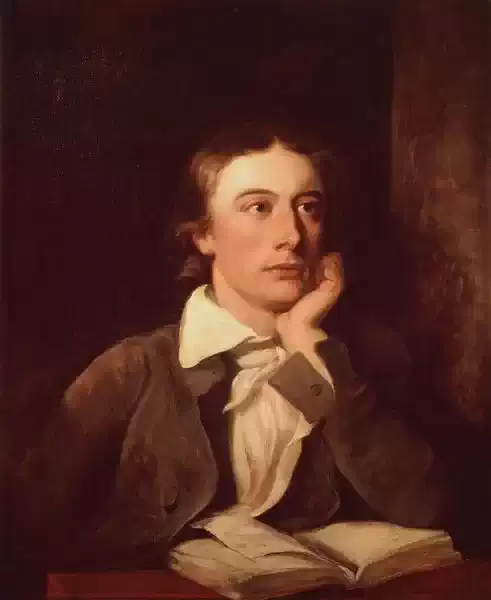
John Keats
The Gadfly
The Gadfly
1.
All gentle folks who owe a grudge
To any living thing
Open your ears and stay your t[r]udge
Whilst I in dudgeon sing.
2.
The Gadfly he hath stung me sore--
O may he ne'er sting you!
But we have many a horrid bore
He may sting black and blue.
3.
Has any here an old grey Mare
With three legs all her store,
O put it to her Buttocks bare
And straight she'll run on four.
4.
Has any here a Lawyer suit
Of 1743,
Take Lawyer's nose and put it to't
And you the end will see.
5.
Is there a Man in Parliament
Dum[b-] founder'd in his speech,
O let his neighbour make a rent
And put one in his breech.
6.
O Lowther how much better thou
Hadst figur'd t'other day
When to the folks thou mad'st a bow
And hadst no more to say.
7.
If lucky Gadfly had but ta'en
His seat * * * * * * * * *
And put thee to a little pain
To save thee from a worse.
8.
Better than Southey it had been,
Better than Mr. D-------,
Better than Wordsworth too, I ween,
Better than Mr. V-------.
9.
Forgive me pray good people all
For deviating so --
In spirit sure I had a call -www.
PoemHunter.com - The World's Poetry Archive
And now I on will go.
10.
Has any here a daughter fair
Too fond of reading novels,
Too apt to fall in love with care
And charming Mister Lovels,
11.
O put a Gadfly to that thing
She keeps so white and pert --
I mean the finger for the ring,
And it will breed a wort.
12.
Has any here a pious spouse
Who seven times a day
Scolds as King David pray'd, to chouse
And have her holy way -13.
O let a Gadfly's little sting
Persuade her sacred tongue
That noises are a common thing,
But that her bell has rung.
14.
And as this is the summon bo
num of all conquering,
I leave 'withouten wordes mo'
The Gadfly's little sting.
1.
All gentle folks who owe a grudge
To any living thing
Open your ears and stay your t[r]udge
Whilst I in dudgeon sing.
2.
The Gadfly he hath stung me sore--
O may he ne'er sting you!
But we have many a horrid bore
He may sting black and blue.
3.
Has any here an old grey Mare
With three legs all her store,
O put it to her Buttocks bare
And straight she'll run on four.
4.
Has any here a Lawyer suit
Of 1743,
Take Lawyer's nose and put it to't
And you the end will see.
5.
Is there a Man in Parliament
Dum[b-] founder'd in his speech,
O let his neighbour make a rent
And put one in his breech.
6.
O Lowther how much better thou
Hadst figur'd t'other day
When to the folks thou mad'st a bow
And hadst no more to say.
7.
If lucky Gadfly had but ta'en
His seat * * * * * * * * *
And put thee to a little pain
To save thee from a worse.
8.
Better than Southey it had been,
Better than Mr. D-------,
Better than Wordsworth too, I ween,
Better than Mr. V-------.
9.
Forgive me pray good people all
For deviating so --
In spirit sure I had a call -www.
PoemHunter.com - The World's Poetry Archive
And now I on will go.
10.
Has any here a daughter fair
Too fond of reading novels,
Too apt to fall in love with care
And charming Mister Lovels,
11.
O put a Gadfly to that thing
She keeps so white and pert --
I mean the finger for the ring,
And it will breed a wort.
12.
Has any here a pious spouse
Who seven times a day
Scolds as King David pray'd, to chouse
And have her holy way -13.
O let a Gadfly's little sting
Persuade her sacred tongue
That noises are a common thing,
But that her bell has rung.
14.
And as this is the summon bo
num of all conquering,
I leave 'withouten wordes mo'
The Gadfly's little sting.
463