

Poems in this theme
Anger and Indignation
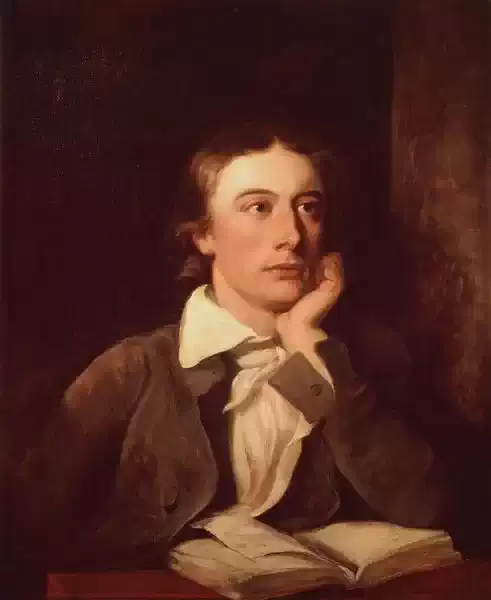
John Keats
Otho The Great - Act II
Otho The Great - Act II
SCENE I.
An Ante-chamber in the Castle.
Enter LUDOLPH and SIGIFRED.
Ludolph. No more advices, no more cautioning:
I leave it all to fate to any thing!
I cannot square my conduct to time, place,
Or circumstances; to me 'tis all a mist!
Sigifred. I say no more.
Ludolph. It seems I am to wait
Here in the ante-room; that may be a trifle.
You see now how I dance attendance here,
Without that tyrant temper, you so blame,
Snapping the rein. You have medicin'd me
With good advices; and I here remain,
In this most honourable ante-room,
Your patient scholar.
Sigifred. Do not wrong me, Prince.
By Heavens, I'd rather kiss Duke Conrad's slipper,
When in the morning he doth yawn with pride,
Than see you humbled but a half-degree!
Truth is, the Emperor would fain dismiss
The nobles ere he sees you.
Enter GONFRED from the Council-room.
Ludolph. Well, sir! What?
Gonfred. Great honour to the Prince! The Emperor,
Hearing that his brave son had re-appeared,
Instant dismiss 'd the Council from his sight,
As Jove fans off the clouds. Even now they pass.
[Exit.
Enter the Nobles from the Council-room. They cross the stage,
bowing unth respect to LUDOLPH, he frowning on them.
CONRAD follows. Exeunt Nobles.
Ludolph. Not the discoloured poisons of a fen,
Which he who breathes feels warning of his death,
Could taste so nauseous to the bodily sense,
As these prodigious sycophants disgust
The soul's fine palate.
Conrad. Princely Ludolph, hail!
Welcome, thou younger sceptre to the realm!
Strength to thy virgin crownet's golden buds,
That they, against the winter of thy sire,
May burst, and swell, and flourish round thy brows,
Maturing to a weighty diadem!
Yet be that hour far off; and may he live,
Who waits for thee, as the chapp'd earth for rain.
Set my life's star! I have lived long enough,
Since under my glad roof, propitiously,
Father and son each other re-possess.
Ludolph. Fine wording, Duke! but words could never yet
Forestall the fates; have you not learnt that yet?
Let me look well: your features are the same;
Your gait the same; your hair of the same shade;
As one I knew some passed weeks ago,
Who sung far different notes into mine ears.
I have mine own particular comments on 't;
You have your own, perhaps.
Conrad. My gracious Prince,
All men may err. In truth I was deceived
In your great father's nature, as you were.
Had I known that of him I have since known,
And what you soon will learn, I would have turned
My sword to my own throat, rather than held
Its threatening edge against a good King's quiet:
Or with one word fever'd you, gentle Prince,
Who seem'd to me, as rugged times then went,
Indeed too much oppress'd. May I be bold
To tell the Emperor you will haste to him?
Ludolph. Your Dukedom's privilege will grant so much.
[Exit CONRAD
He's very close to Otho, a tight leech!
Your hand I go. Ha! here the thunder comes
Sullen against the wind! If in two angry brows
My safety lies, then Sigifred, I'm safe.
Enter OTHO and CONRAD.
Otho. Will you make Titan play the lackey-page &
To chattering pigmies? I would have you know
That such neglect of our high Majesty
Annuls all feel of kindred. What is son,
Or friend, or brother, or all ties of blood,
When the whole kingdom, centred in ourself,
Is rudely slighted ? Who am I to wait ?
By Peter's chair! I have upon my tongue
A word to fright the proudest spirit here!
Death! and slow tortures to the hardy fool,
Who dares take such large charter from our smiles!
Conrad, we would be private. Sigifred!
Off! And none pass this way on pain of death!
[Exeunt CONRAD and SIGIFRED,
Ludolph. This was but half expected, my good sire,
Yet I am griev'd at it, to the full height,
As though my hopes of favour had been whole.
Otho. How you indulge yourself! What can you hope for?
Ludolph. Nothing, my liege ; I have to hope for nothing.
I come to greet you as a loving son,
And then depart, if I may be so free,
Seeing that blood of yours in my warm veins
Has not yet mitigated into milk.
Otho. What would you, sir?
Ludolph. A lenient banishment;
So please you let me unmolested pass
This Conrad's gates, to the wide air again.
I want no more. A rebel wants no more.
Otho. And shall I let a rebel loose again
To muster kites and eagles 'gainst my head?
No, obstinate boy, you shall be kept cag'd up,
Serv'd with harsh food, with scum for Sunday-drink.
Ludolph. Indeed!
Otho. And chains too heavy for your life:
I'll choose a gaoler, whose swart monstrous face
Shall be a hell to look upon, and she
Ludolph. Ha!
Otho. Shall be your fair Auranthe.
Ludolph. Amaze! Amaze!
Otho. To-day you marry her.
Ludolph. This is a sharp jest!
Otho. No. None at all. When have I said a lie?
Ludolph. If I sleep not, I am a waking wretch.
Otho. Not a word more. Let me embrace my child.
Ludolph. I dare not. 'Twould pollute so good a father!
heavy crime! that your son's blinded eyes
Could not see all his parent's love aright,
As now I see it. Be not kind to me
Punish me not with favour.
Otho. Are you sure,
Ludolph, you have no saving plea in store?
Ludolph. My father, none!
Otho. Then you astonish me.
Ludolph. No, I have no plea. Disobedience,
Rebellion, obstinacy, blasphemy,
Are all my counsellors. If they can make
My crooked deeds show good and plausible,
Then grant me loving pardon, but not else,
Good Gods! not else, in any way, my liege!
Otho. You are a most perplexing, noble boy.
Ludolph. You not less a perplexing noble father.
Otho. Well, you shall have free passport through the gates.
Farewell!
Ludolph. Farewell! and by these tears believe,
And still remember, I repent in pain
All my misdeeds!
Otho. Ludolph, I will! I will!
But, Ludolph, ere you go, I would enquire
If you, in all your wandering, ever met
A certain Arab haunting in these parts.
Ludolph. No, my good lord, I cannot say I did.
Otho. Make not your father blind before his time;
Nor let these arms paternal hunger more
For an embrace, to dull the appetite
Of my great love for thee, my supreme child!
Come close, and let me breathe into thine ear.
knew you through disguise. You are the Arab!
You can't deny it. [Embracing him.
Ludolph. Happiest of days!
Otho. We'll make it so.
Ludolph. 'Stead of one fatted calf
Ten hecatombs shall bellow out their last,
Smote 'twixt the horns by the death-stunning mace
Of Mars, and all the soldiery shall feast
Nobly as Nimrod's masons, when the towers
Of Nineveh new kiss'd the parted clouds!
Otho. Large as a God speak out, where all is thine.
Ludolph. Aye, father, but the fire in my sad breast
Is quench 'd with inward tears! I must rejoice
For you, whose wings so shadow over me
In tender victory, but for myself
I still must mourn. The fair Auranthe mine!
Too great a boon! I prythee let me ask I
What more than I know of could so have changed
Your purpose touching her?
Otho. At a word, this:
In no deed did you give me more offense
Than your rejection of Erminia.
To my appalling, I saw too good proof
Of your keen-eyed suspicion, she is naught!
Ludolph. You are convinced?
Otho. Aye, spite of her sweet looks.
O, that my brother's daughter should so fall!
Her fame has pass'd into the grosser lips
Of soldiers in their cups.
Lndolph. 'Tis very sad.
Otho. No more of her. Auranthe Ludolph, come!
This marriage be the bond of endless peace! [Exeunt.
SCENE II. The Entrance of GERSA'S Tent in the Hungarian Camp.
Enter ERMINIA.
Erminia. Where! where! where shall I find a messenger?
A trusty soul? A good man in the camp?
Shall I go myself? Monstrous wickedness!
O cursed Conrad devilish Auranthe!
Here is proof palpable as the bright sun!
O for a voice to reach the Emperor's ears!
[Shouts in the Camp.
Enter an HUNGARIAN CAPTAIN.
Captain. Fair prisoner, hear you those joyous shouts?
The king aye, now our king, but still your slave,
Young Gersa, from a short captivity
Has just return'd. He bids me say, bright Dame,
That even the homage of his ranged chiefs
Cures not his keen impatience to behold
Such beauty once again. What ails you, lady?
Erminia. Say, is not that a German, yonder? There!
Captain. Methinks by his stout bearing he should be
Yes 'tis one Albert; a brave German knight,
And much in the emperor's favour.
Erminia. I would fain
Enquire of friends and kinsfolk; how they fared
In these rough times. Brave soldier, as you pass
To royal Gersa with my humble thanks,
Will you send yonder knight to me?
Captain. I will. [Exit.
Ermina. Yes, he was ever known to be a man
Frank, open, generous; Albert I may trust.
proof! proof! proof! Albert's an honest man;
Not Ethelbert the monk, if he were here,
Would I hold more trustworthy. Now!
Enter ALBERT.
Albert. Good Gods!
Lady Erminia! are you prisoner
In this beleaguer 'd camp? Or are you here
Of your own will? You pleas'd to send for me.
By Venus, 'tis a pity I knew not
Your plight before, and, by her Son, I swear
To do you every service you can ask.
What would the fairest?
Erminia. Albert, will you swear?
Albert. I have. Well?
Erminia. Albert, you have fame to lose.
If men, in court and camp, lie not outright,
You should be, from a thousand, chosen forth
To do an honest deed. Shall I confide?
Albert. Aye, anything to me, fair creature. Do;
Dictate my task. Sweet woman,
Erminia. Truce with that.
You understand me not; and, in your speech,
see how far the slander is abroad.
Without proof could you think me innocent?
Albert. Lady, I should rejoice to know you so.
Erminia. If you have any pity for a maid,
Suffering a daily death from evil tongues;
Any compassion for that Emperor's niece,
Who, for your bright sword and clear honesty,
Lifted you from the crowd of common men
Into the lap of honour; save me, knight!
Albert. How? Make it clear; if it be possible,
I, by the banner of Saint Maurice, swear
To right you.
Erminia. Possible! Easy. O my heart!
This letter's not so soil'd but you may read it;
Possible! There that letter! Read read it,
[Gives him a letter.
Albert (reading). 'To the Duke Conrad. Forget the threat you
made at parting, and I will forget to send the Emperor letters and
papers of your's I have become possessed of. His life is no trifle to
me; his death you shall find none to yourself.' (Speaks to himself
‘Tis me my life that's pleaded for! (Reads.) 'He, for his
own sake, will be dumb as the grave. Erminia has my shame fix'd
upon her, sure as a wen. We are safe.
AURANTHE.'A she-devil! A dragon! I her imp!
Fire of Hell! Auranthe lewd demon!
Where got you this? Where? When?
Erminia. I found it in the tent, among some spoils
Which, being noble, fell to Gersa's lot.
Come in, and see. [They go in and return.
Albert. Villainy! Villainy!
Conrad's sword, his corslet, and his helm,
And his letter. Caitiff, he shall feel
Erminia. I see you are thunderstruck. Haste, haste away!
Albert. O I am tortured by this villainy.
Erminia. You needs must be. Carry it swift to Otho;
Tell him, moreover, I am prisoner
Here in this camp, where all the sisterhood,
Forc'd from their quiet cells, are parcell'd out
For slaves among these Huns. Away! Away!
Albert. I am gone.
Erminia. Swift be your steed! Within this hour
The Emperor will see it.
Albert. Ere I sleep:
That I can swear. [Hurries out.
Gersa (without). Brave captains! thanks. Enough
Of loyal homage now!
Enter GERSA.
Erminia. Hail, royal Hun!
Gersa. What means this, fair one? Why in such alarm?
Who was it hurried by me so distract?
It seem'd you were in deep discourse together;
Your doctrine has not been so harsh to him
As to my poor deserts. Come, come, be plain.
I am no jealous fool to kill you both,
Or, for such trifles, rob the adorned world
Of such a beauteous vestal.
Erminia. I grieve, my Lord,
To hear you condescend to ribald phrase.
Gersa. This is too much! Hearken, my lady pure!
Erminia. Silence! and hear the magic of a name
Erminia! I am she, the Emperor's niece!
Prais'd be the Heavens, I now dare own myself!
Gersa. Erminia! Indeed! I've heard of her.
Prythee, fair lady, what chance brought you here?
Erminia. Ask your own soldiers.
Gersa. And you dare own your name.
For loveliness you may and for the rest
My vein is not censorious.
Erminia. Alas! poor me!
‘Tis false indeed.
Gersa. Indeed you are too fair:
the swan, soft leaning on her fledgy breast,
When to the stream she launches, looks not back
With such a tender grace ; nor are her wings
So white as your soul is, if that but be
Twin-picture to your face. Erminia!
To-day, for the first day, I am a king,
Yet would I give my unworn crown away
To know you spotless.
Erminia. Trust me one day more,
Generously, without more certain guarantee,
Than this poor face you deign to praise so much;
After that, say and do whate'er you please.
If I have any knowledge of you, sir,
I think, nay I am sure, you will grieve much
To hear my story. O be gentle to me,
For I am sick and faint with many wrongs,
Tir'd out, and weary-worn with contumelies.
Gersa. Poor lady!
Enter ETHELBERT.
Erminia. Gentle Prince, 'tis false indeed.
Good morrow, holy father! I have had
Your prayers, though I look'd for you in vain.
Ethelbert. Blessings upon you, daughter! Sure you look
Too cheerful for these foul pernicious days.
Young man, you heard this virgin say 'twas false,
‘Tis false, I say. What! can you not employ
Your temper elsewhere, 'mong these burly tents,
But you must taunt this dove, for she hath lost
The Eagle Otho to beat off assault?
Fie! fie! But I will be her guard myself;
In the Emperor's name. I here demand of you
Herself, and all her sisterhood. She false!
Gersa. Peace! peace, old man! I cannot think she is.
Ethelbert. Whom I have known from her first infancy,
Baptized her in the bosom of the Church,
Watch'd her, as anxious husbandmen the grain,
From the first shoot till the unripe mid-May,
Then to the tender ear of her June days,
Which, lifting sweet abroad its timid green,
Is blighted by the touch of calumny;
You cannot credit such a monstrous tale.
Gersa. I cannot. Take her. Fair Erminia,
I follow you to Friedburg, is't not so?
Erminia. Aye, so we purpose.
Ethelbert. Daughter, do you so?
How's this? I marvel! Yet you look not mad.
Erminia. I have good news to tell you, Ethelbert.
Gersa. Ho! ho, there! Guards!
Your blessing, father! Sweet Erminia,
Believe me, I am well nigh sure
Erminia . Farewell!
Short time will show. [Enter Chiefs.
Yes, father Ethelbert,
I have news precious as we pass along.
Ethelbert. Dear daughter, you shall guide me.
Erminia. To no ill.
Gersa. Command an escort to the Friedburg lines.
[Exeunt Chiefs.
Pray let me lead. Fair lady, forget not
Gersa, how he believ'd you innocent.
I follow you to Friedburg with all speed. [Exeunt.
SCENE I.
An Ante-chamber in the Castle.
Enter LUDOLPH and SIGIFRED.
Ludolph. No more advices, no more cautioning:
I leave it all to fate to any thing!
I cannot square my conduct to time, place,
Or circumstances; to me 'tis all a mist!
Sigifred. I say no more.
Ludolph. It seems I am to wait
Here in the ante-room; that may be a trifle.
You see now how I dance attendance here,
Without that tyrant temper, you so blame,
Snapping the rein. You have medicin'd me
With good advices; and I here remain,
In this most honourable ante-room,
Your patient scholar.
Sigifred. Do not wrong me, Prince.
By Heavens, I'd rather kiss Duke Conrad's slipper,
When in the morning he doth yawn with pride,
Than see you humbled but a half-degree!
Truth is, the Emperor would fain dismiss
The nobles ere he sees you.
Enter GONFRED from the Council-room.
Ludolph. Well, sir! What?
Gonfred. Great honour to the Prince! The Emperor,
Hearing that his brave son had re-appeared,
Instant dismiss 'd the Council from his sight,
As Jove fans off the clouds. Even now they pass.
[Exit.
Enter the Nobles from the Council-room. They cross the stage,
bowing unth respect to LUDOLPH, he frowning on them.
CONRAD follows. Exeunt Nobles.
Ludolph. Not the discoloured poisons of a fen,
Which he who breathes feels warning of his death,
Could taste so nauseous to the bodily sense,
As these prodigious sycophants disgust
The soul's fine palate.
Conrad. Princely Ludolph, hail!
Welcome, thou younger sceptre to the realm!
Strength to thy virgin crownet's golden buds,
That they, against the winter of thy sire,
May burst, and swell, and flourish round thy brows,
Maturing to a weighty diadem!
Yet be that hour far off; and may he live,
Who waits for thee, as the chapp'd earth for rain.
Set my life's star! I have lived long enough,
Since under my glad roof, propitiously,
Father and son each other re-possess.
Ludolph. Fine wording, Duke! but words could never yet
Forestall the fates; have you not learnt that yet?
Let me look well: your features are the same;
Your gait the same; your hair of the same shade;
As one I knew some passed weeks ago,
Who sung far different notes into mine ears.
I have mine own particular comments on 't;
You have your own, perhaps.
Conrad. My gracious Prince,
All men may err. In truth I was deceived
In your great father's nature, as you were.
Had I known that of him I have since known,
And what you soon will learn, I would have turned
My sword to my own throat, rather than held
Its threatening edge against a good King's quiet:
Or with one word fever'd you, gentle Prince,
Who seem'd to me, as rugged times then went,
Indeed too much oppress'd. May I be bold
To tell the Emperor you will haste to him?
Ludolph. Your Dukedom's privilege will grant so much.
[Exit CONRAD
He's very close to Otho, a tight leech!
Your hand I go. Ha! here the thunder comes
Sullen against the wind! If in two angry brows
My safety lies, then Sigifred, I'm safe.
Enter OTHO and CONRAD.
Otho. Will you make Titan play the lackey-page &
To chattering pigmies? I would have you know
That such neglect of our high Majesty
Annuls all feel of kindred. What is son,
Or friend, or brother, or all ties of blood,
When the whole kingdom, centred in ourself,
Is rudely slighted ? Who am I to wait ?
By Peter's chair! I have upon my tongue
A word to fright the proudest spirit here!
Death! and slow tortures to the hardy fool,
Who dares take such large charter from our smiles!
Conrad, we would be private. Sigifred!
Off! And none pass this way on pain of death!
[Exeunt CONRAD and SIGIFRED,
Ludolph. This was but half expected, my good sire,
Yet I am griev'd at it, to the full height,
As though my hopes of favour had been whole.
Otho. How you indulge yourself! What can you hope for?
Ludolph. Nothing, my liege ; I have to hope for nothing.
I come to greet you as a loving son,
And then depart, if I may be so free,
Seeing that blood of yours in my warm veins
Has not yet mitigated into milk.
Otho. What would you, sir?
Ludolph. A lenient banishment;
So please you let me unmolested pass
This Conrad's gates, to the wide air again.
I want no more. A rebel wants no more.
Otho. And shall I let a rebel loose again
To muster kites and eagles 'gainst my head?
No, obstinate boy, you shall be kept cag'd up,
Serv'd with harsh food, with scum for Sunday-drink.
Ludolph. Indeed!
Otho. And chains too heavy for your life:
I'll choose a gaoler, whose swart monstrous face
Shall be a hell to look upon, and she
Ludolph. Ha!
Otho. Shall be your fair Auranthe.
Ludolph. Amaze! Amaze!
Otho. To-day you marry her.
Ludolph. This is a sharp jest!
Otho. No. None at all. When have I said a lie?
Ludolph. If I sleep not, I am a waking wretch.
Otho. Not a word more. Let me embrace my child.
Ludolph. I dare not. 'Twould pollute so good a father!
heavy crime! that your son's blinded eyes
Could not see all his parent's love aright,
As now I see it. Be not kind to me
Punish me not with favour.
Otho. Are you sure,
Ludolph, you have no saving plea in store?
Ludolph. My father, none!
Otho. Then you astonish me.
Ludolph. No, I have no plea. Disobedience,
Rebellion, obstinacy, blasphemy,
Are all my counsellors. If they can make
My crooked deeds show good and plausible,
Then grant me loving pardon, but not else,
Good Gods! not else, in any way, my liege!
Otho. You are a most perplexing, noble boy.
Ludolph. You not less a perplexing noble father.
Otho. Well, you shall have free passport through the gates.
Farewell!
Ludolph. Farewell! and by these tears believe,
And still remember, I repent in pain
All my misdeeds!
Otho. Ludolph, I will! I will!
But, Ludolph, ere you go, I would enquire
If you, in all your wandering, ever met
A certain Arab haunting in these parts.
Ludolph. No, my good lord, I cannot say I did.
Otho. Make not your father blind before his time;
Nor let these arms paternal hunger more
For an embrace, to dull the appetite
Of my great love for thee, my supreme child!
Come close, and let me breathe into thine ear.
knew you through disguise. You are the Arab!
You can't deny it. [Embracing him.
Ludolph. Happiest of days!
Otho. We'll make it so.
Ludolph. 'Stead of one fatted calf
Ten hecatombs shall bellow out their last,
Smote 'twixt the horns by the death-stunning mace
Of Mars, and all the soldiery shall feast
Nobly as Nimrod's masons, when the towers
Of Nineveh new kiss'd the parted clouds!
Otho. Large as a God speak out, where all is thine.
Ludolph. Aye, father, but the fire in my sad breast
Is quench 'd with inward tears! I must rejoice
For you, whose wings so shadow over me
In tender victory, but for myself
I still must mourn. The fair Auranthe mine!
Too great a boon! I prythee let me ask I
What more than I know of could so have changed
Your purpose touching her?
Otho. At a word, this:
In no deed did you give me more offense
Than your rejection of Erminia.
To my appalling, I saw too good proof
Of your keen-eyed suspicion, she is naught!
Ludolph. You are convinced?
Otho. Aye, spite of her sweet looks.
O, that my brother's daughter should so fall!
Her fame has pass'd into the grosser lips
Of soldiers in their cups.
Lndolph. 'Tis very sad.
Otho. No more of her. Auranthe Ludolph, come!
This marriage be the bond of endless peace! [Exeunt.
SCENE II. The Entrance of GERSA'S Tent in the Hungarian Camp.
Enter ERMINIA.
Erminia. Where! where! where shall I find a messenger?
A trusty soul? A good man in the camp?
Shall I go myself? Monstrous wickedness!
O cursed Conrad devilish Auranthe!
Here is proof palpable as the bright sun!
O for a voice to reach the Emperor's ears!
[Shouts in the Camp.
Enter an HUNGARIAN CAPTAIN.
Captain. Fair prisoner, hear you those joyous shouts?
The king aye, now our king, but still your slave,
Young Gersa, from a short captivity
Has just return'd. He bids me say, bright Dame,
That even the homage of his ranged chiefs
Cures not his keen impatience to behold
Such beauty once again. What ails you, lady?
Erminia. Say, is not that a German, yonder? There!
Captain. Methinks by his stout bearing he should be
Yes 'tis one Albert; a brave German knight,
And much in the emperor's favour.
Erminia. I would fain
Enquire of friends and kinsfolk; how they fared
In these rough times. Brave soldier, as you pass
To royal Gersa with my humble thanks,
Will you send yonder knight to me?
Captain. I will. [Exit.
Ermina. Yes, he was ever known to be a man
Frank, open, generous; Albert I may trust.
proof! proof! proof! Albert's an honest man;
Not Ethelbert the monk, if he were here,
Would I hold more trustworthy. Now!
Enter ALBERT.
Albert. Good Gods!
Lady Erminia! are you prisoner
In this beleaguer 'd camp? Or are you here
Of your own will? You pleas'd to send for me.
By Venus, 'tis a pity I knew not
Your plight before, and, by her Son, I swear
To do you every service you can ask.
What would the fairest?
Erminia. Albert, will you swear?
Albert. I have. Well?
Erminia. Albert, you have fame to lose.
If men, in court and camp, lie not outright,
You should be, from a thousand, chosen forth
To do an honest deed. Shall I confide?
Albert. Aye, anything to me, fair creature. Do;
Dictate my task. Sweet woman,
Erminia. Truce with that.
You understand me not; and, in your speech,
see how far the slander is abroad.
Without proof could you think me innocent?
Albert. Lady, I should rejoice to know you so.
Erminia. If you have any pity for a maid,
Suffering a daily death from evil tongues;
Any compassion for that Emperor's niece,
Who, for your bright sword and clear honesty,
Lifted you from the crowd of common men
Into the lap of honour; save me, knight!
Albert. How? Make it clear; if it be possible,
I, by the banner of Saint Maurice, swear
To right you.
Erminia. Possible! Easy. O my heart!
This letter's not so soil'd but you may read it;
Possible! There that letter! Read read it,
[Gives him a letter.
Albert (reading). 'To the Duke Conrad. Forget the threat you
made at parting, and I will forget to send the Emperor letters and
papers of your's I have become possessed of. His life is no trifle to
me; his death you shall find none to yourself.' (Speaks to himself
‘Tis me my life that's pleaded for! (Reads.) 'He, for his
own sake, will be dumb as the grave. Erminia has my shame fix'd
upon her, sure as a wen. We are safe.
AURANTHE.'A she-devil! A dragon! I her imp!
Fire of Hell! Auranthe lewd demon!
Where got you this? Where? When?
Erminia. I found it in the tent, among some spoils
Which, being noble, fell to Gersa's lot.
Come in, and see. [They go in and return.
Albert. Villainy! Villainy!
Conrad's sword, his corslet, and his helm,
And his letter. Caitiff, he shall feel
Erminia. I see you are thunderstruck. Haste, haste away!
Albert. O I am tortured by this villainy.
Erminia. You needs must be. Carry it swift to Otho;
Tell him, moreover, I am prisoner
Here in this camp, where all the sisterhood,
Forc'd from their quiet cells, are parcell'd out
For slaves among these Huns. Away! Away!
Albert. I am gone.
Erminia. Swift be your steed! Within this hour
The Emperor will see it.
Albert. Ere I sleep:
That I can swear. [Hurries out.
Gersa (without). Brave captains! thanks. Enough
Of loyal homage now!
Enter GERSA.
Erminia. Hail, royal Hun!
Gersa. What means this, fair one? Why in such alarm?
Who was it hurried by me so distract?
It seem'd you were in deep discourse together;
Your doctrine has not been so harsh to him
As to my poor deserts. Come, come, be plain.
I am no jealous fool to kill you both,
Or, for such trifles, rob the adorned world
Of such a beauteous vestal.
Erminia. I grieve, my Lord,
To hear you condescend to ribald phrase.
Gersa. This is too much! Hearken, my lady pure!
Erminia. Silence! and hear the magic of a name
Erminia! I am she, the Emperor's niece!
Prais'd be the Heavens, I now dare own myself!
Gersa. Erminia! Indeed! I've heard of her.
Prythee, fair lady, what chance brought you here?
Erminia. Ask your own soldiers.
Gersa. And you dare own your name.
For loveliness you may and for the rest
My vein is not censorious.
Erminia. Alas! poor me!
‘Tis false indeed.
Gersa. Indeed you are too fair:
the swan, soft leaning on her fledgy breast,
When to the stream she launches, looks not back
With such a tender grace ; nor are her wings
So white as your soul is, if that but be
Twin-picture to your face. Erminia!
To-day, for the first day, I am a king,
Yet would I give my unworn crown away
To know you spotless.
Erminia. Trust me one day more,
Generously, without more certain guarantee,
Than this poor face you deign to praise so much;
After that, say and do whate'er you please.
If I have any knowledge of you, sir,
I think, nay I am sure, you will grieve much
To hear my story. O be gentle to me,
For I am sick and faint with many wrongs,
Tir'd out, and weary-worn with contumelies.
Gersa. Poor lady!
Enter ETHELBERT.
Erminia. Gentle Prince, 'tis false indeed.
Good morrow, holy father! I have had
Your prayers, though I look'd for you in vain.
Ethelbert. Blessings upon you, daughter! Sure you look
Too cheerful for these foul pernicious days.
Young man, you heard this virgin say 'twas false,
‘Tis false, I say. What! can you not employ
Your temper elsewhere, 'mong these burly tents,
But you must taunt this dove, for she hath lost
The Eagle Otho to beat off assault?
Fie! fie! But I will be her guard myself;
In the Emperor's name. I here demand of you
Herself, and all her sisterhood. She false!
Gersa. Peace! peace, old man! I cannot think she is.
Ethelbert. Whom I have known from her first infancy,
Baptized her in the bosom of the Church,
Watch'd her, as anxious husbandmen the grain,
From the first shoot till the unripe mid-May,
Then to the tender ear of her June days,
Which, lifting sweet abroad its timid green,
Is blighted by the touch of calumny;
You cannot credit such a monstrous tale.
Gersa. I cannot. Take her. Fair Erminia,
I follow you to Friedburg, is't not so?
Erminia. Aye, so we purpose.
Ethelbert. Daughter, do you so?
How's this? I marvel! Yet you look not mad.
Erminia. I have good news to tell you, Ethelbert.
Gersa. Ho! ho, there! Guards!
Your blessing, father! Sweet Erminia,
Believe me, I am well nigh sure
Erminia . Farewell!
Short time will show. [Enter Chiefs.
Yes, father Ethelbert,
I have news precious as we pass along.
Ethelbert. Dear daughter, you shall guide me.
Erminia. To no ill.
Gersa. Command an escort to the Friedburg lines.
[Exeunt Chiefs.
Pray let me lead. Fair lady, forget not
Gersa, how he believ'd you innocent.
I follow you to Friedburg with all speed. [Exeunt.
476
John Keats
King Stephen
King Stephen
A FRAGMENT OF A TRAGEDY
ACT I.
SCENE I. Field of Battle.
Alarum. Enter King STEPHEN, Knights, and Soldiers.
Stephen. If shame can on a soldier's vein-swoll’n front
Spread deeper crimson than the battle's toil,
Blush in your casing helmets! for see, see!
Yonder my chivalry, my pride of war,
Wrench'd with an iron hand from firm array,
Are routed loose about the plashy meads,
Of honour forfeit. O that my known voice
Could reach your dastard ears, and fright you more!
Fly, cowards, fly! Glocester is at your backs!
Throw your slack bridles o'er the flurried manes,
Ply well the rowel with faint trembling heels,
Scampering to death at last!
First Knight. The enemy
Bears his flaunt standard close upon their rear.
Second Knight. Sure of a bloody prey, seeing the fens
Will swamp them girth-deep.
Stephen. Over head and ears,
No matter! 'Tis a gallant enemy;
How like a comet he goes streaming on.
But we must plague him in the flank, hey, friends?
We are well breathed, follow!
Enter Earl BALDWIN and Soldiers, as defeated.
Stephen. De Redvers!
What is the monstrous bugbear that can fright
Baldwin?
Baldwin. No scare-crow, but the fortunate star
Of boisterous Chester, whose fell truncheon now
Points level to the goal of victory.
This way he comes, and if you would maintain
Your person unaffronted by vile odds,
Take horse, my Lord.
Stephen. And which way spur for life?
Now I thank Heaven I am in the toils,
That soldiers may bear witness how my arm
Can burst the meshes. Not the eagle more
Loves to beat up against a tyrannous blast,
Than I to meet the torrent of my foes.
This is a brag, be 't so, but if I fall,
Carve it upon my 'scutcheon'd sepulchre.
On, fellow soldiers! Earl of Redvers, back!
Not twenty Earls of Chester shall brow-beat
The diadem. [Exeunt. Alarum.
SCENE II. Another part of the Field.
Trumpets sounding a Victory. Enter GLOCESTER. Knights, and Forces.
Glocester. Now may we lift our bruised vizors up,
And take the flattering freshness of the air,
While the wide din of battle dies away
Into times past, yet to be echoed sure
In the silent pages of our chroniclers.
First Knight. Will Stephen's death be marked there, my good
Lord,
Or that we gave him lodging in yon towers?
Glocester. Fain would I know the great usurper's fate.
Enter two Captains severally.
First Captain. My Lord!
Second Captain. Most noble Earl!
First Captain. The King
Second Captain. The Empress greets
Glocester. What of the King?
First Captain. He sole and lone maintains
A hopeless bustle mid our swarming arms,
And with a nimble savageness attacks,
Escapes, makes fiercer onset, then anew
Eludes death, giving death to most that dare
Trespass within the circuit of his sword!
He must by this have fallen. Baldwin is taken;
And for the Duke of Bretagne, like a stag
He flies, for the Welsh beagles to hunt down.
God save the Empress!
Glocester. Now our dreaded Queen:
What message from her Highness?
Second Captain. Royal Maud
From the throng'd towers of Lincoln hath look'd down,
Like Pallas from the walls of Ilion,
And seen her enemies havock'd at her feet.
She greets most noble Glocester from her heart,
Intreating him, his captains, and brave knights,
To grace a banquet. The high city gates
Are envious which shall see your triumph pass;
The streets are full of music.
Enter Second Knight.
Glocester. Whence come you?
Second Knight. From Stephen, my good Prince, Stephen!
Stephen!
Glocester. Why do you make such echoing of his name?
Second Knight. Because I think, my lord, he is no man,
But a fierce demon, Anointed safe from wounds,
And misbaptized with a Christian name.
Glocester. A mighty soldier! Does he still hold out?
Second Knight. He shames our victory. His valour still
Keeps elbow-room amid our eager swords,
And holds our bladed falchions all aloof
His gleaming battle-axe being slaughter-sick,
Smote on the morion of a Flemish knight,
Broke short in his hand; upon the which he flung
The heft away with such a vengeful force,
It paunch'd the Earl of Chester's horse, who then
Spleen-hearted came in full career at him.
Glocester. Did no one take him at a vantage then?
Second Knight. Three then with tiger leap upon him flew,
Whom, with his sword swift-drawn and nimbly held,
He stung away again, and stood to breathe,
Smiling. Anon upon him rush'd once more
A throng of foes, and in this renew'd strife,
My sword met his and snapp'd off at the hilts.
Glocester. Come, lead me to this Mars and let us move
In silence, not insulting his sad doom
With clamorous trumpets. To the Empress bear
My salutation as befits the time.
[Exeunt GLOCESTER and Forces.
SCENE III. The Field of Battle. Enter STEPHEN unarmed.
Stephen. Another sword! And what if I could seize
One from Bellona's gleaming armoury,
Or choose the fairest of her sheaved spears!
Where are my enemies? Here, close at hand,
Here come the testy brood. O for a sword!
I'm faint a biting sword! A noble sword!
A hedge-stake or a ponderous stone to hurl
With brawny vengeance, like the labourer Cain.
Come on! Farewell my kingdom, and all hail
Thou superb, plum'd, and helmeted renown,
All hail I would not truck this brilliant day
To rule in Pylos with a Nestor's beard
Come on!
Enter DE KAIMS and Knights, &c.
De Kaims. Is 't madness, or a hunger after death,
That makes thee thus unarm'd throw taunts at us?
Yield, Stephen, or my sword's point dip in
'he gloomy current of a traitor's heart.
Stephen. Do it, De Kaims, I will not budge an inch.
De Kaims. Yes, of thy madness thou shalt take the meed.
Stephen. Darest thou?
De Kaims. How dare, against a man disarmed?
Stephen. What weapons has the lion but himself?
Come not near me, De Kaims, for by the price
Of all the glory I have won this day,
Being a king, I will not yield alive
To any but the second man of the realm,
Robert of Glocester.
De Kaims. Thou shalt vail to me.
Stephen. Shall I, when I have sworn against it, sir?
Thou think'st it brave to take a breathing king,
That, on a court-day bow'd to haughty Maud,
The awed presence-chamber may be bold
To whisper, there's the man who took alive
Stephen me prisoner. Certes, De Kaims,
The ambition is a noble one.
De Kaims. 'Tis true,
And, Stephen, I must compass it.
Stephen. No, no,
Do not tempt me to throttle you on the gorge,
Or with my gauntlet crush your hollow breast,
Just when your knighthood is grown ripe and full
For lordship.
A Soldier. Is an honest yeoman's spear
Of no use at a need? Take that.
Stephen. Ah, dastard!
De Kaims. What, you are vulnerable! my prisoner I
Stephen. No, not yet. I disclaim it, and demand
Death as a sovereign right unto a king
Who 'sdains to yield to any but his peer,
If not in title, yet in noble deeds,
The Earl of Glocester. Stab to the hilts, De Kaims,
For I will never by mean hands be led
From this so famous field. Do ye hear! Be quick!
[Trumpets. Enter the Earl of CHESTER and Knights.
SCENE IV. A Presence Chamber. Queen MAUD in a Chair of State, the
Earls of GLOCESTER and CHESTER, Lords, Attendants.
Maud. Glocester, no more: I will behold that Boulogne:
Set him before me. Not for the poor sake
Of regal pomp and a vain-glorious hour,
As thou with wary speech, yet near enough,
Hast hinted.
Glocester. Faithful counsel have I given ;
If wary, for your Highness' benefit.
Maud. The Heavens forbid that I should not think so,
For by thy valour have I won this realm,
Which by thy wisdom I will ever keep.
To sage advisers let me ever bend
'A meek attentive ear, so that they treat
Of the wide kingdom's rule and government,
Not trenching on our actions personal.
Advis'd, not school'd, I would be; and henceforth
Spoken to in clear, plain, and open terms,
Not side-ways sermon'd at.
Glocester. Then, in plain terms,
Once more for the fallen king
Maud. Your pardon, Brother,
I would no more of that; for, as I said,
‘Tis not for worldly pomp I wish to see
The rebel, but as dooming judge to give
A sentence something worthy of his guilt.
Glocester. If 't must be so, I'll bring him to your presence.
[Exit GLOCESTER,
Maud. A meaner summoner might do as well
My Lord of Chester, is 't true what I hear
Of Stephen of Boulogne, our prisoner,
That he, as a fit penance for his crimes,
Eats wholesome, sweet, and palatable food
Off Glocester's golden dishes drinks pure wine,
Lodgest soft?
Chester. More than that, my gracious Queen,
Has anger'd me. The noble Earl, methinks,
Full soldier as he is, and without peer
In counsel, dreams too much among his books.
It may read well, but sure 'tis out of date
To play the Alexander with Darius.
Maud. Truth! I think so. By Heavens it shall not last!
Chester. It would amaze your Highness now to mark
How Glocester overstrains his courtesy
To that crime-loving rebel, that Boulogne
Maud. That ingrate!
Chester. For whose vast ingratitude
To our late sovereign lord, your noble sire,
The generous Earl condoles in his mishaps,
And with a sort of lackeying friendliness,
Talks off the mighty frowning from his brow,
Woos him to hold a duet in a smile,
Or, if it please him, play an hour at chess
Maud. A perjured slave!
Chester. And for his perjury,
Glocester has fit rewards nay, I believe,
He sets his bustling household's wits at work
For flatteries to ease this Stephen's hours,
And make a heaven of his purgatory ;
Adorning bondage with the pleasant gloss
Of feasts and music, and all idle shows
Of indoor pageantry; while syren whispers,
Predestined for his ear, 'scape as half-check'd
From lips the courtliest and the rubiest
Of all the realm, admiring of his deeds.
Maud. A frost upon his summer!
Chester. A queen's nod
Can make his June December. Here he comes
A FRAGMENT OF A TRAGEDY
ACT I.
SCENE I. Field of Battle.
Alarum. Enter King STEPHEN, Knights, and Soldiers.
Stephen. If shame can on a soldier's vein-swoll’n front
Spread deeper crimson than the battle's toil,
Blush in your casing helmets! for see, see!
Yonder my chivalry, my pride of war,
Wrench'd with an iron hand from firm array,
Are routed loose about the plashy meads,
Of honour forfeit. O that my known voice
Could reach your dastard ears, and fright you more!
Fly, cowards, fly! Glocester is at your backs!
Throw your slack bridles o'er the flurried manes,
Ply well the rowel with faint trembling heels,
Scampering to death at last!
First Knight. The enemy
Bears his flaunt standard close upon their rear.
Second Knight. Sure of a bloody prey, seeing the fens
Will swamp them girth-deep.
Stephen. Over head and ears,
No matter! 'Tis a gallant enemy;
How like a comet he goes streaming on.
But we must plague him in the flank, hey, friends?
We are well breathed, follow!
Enter Earl BALDWIN and Soldiers, as defeated.
Stephen. De Redvers!
What is the monstrous bugbear that can fright
Baldwin?
Baldwin. No scare-crow, but the fortunate star
Of boisterous Chester, whose fell truncheon now
Points level to the goal of victory.
This way he comes, and if you would maintain
Your person unaffronted by vile odds,
Take horse, my Lord.
Stephen. And which way spur for life?
Now I thank Heaven I am in the toils,
That soldiers may bear witness how my arm
Can burst the meshes. Not the eagle more
Loves to beat up against a tyrannous blast,
Than I to meet the torrent of my foes.
This is a brag, be 't so, but if I fall,
Carve it upon my 'scutcheon'd sepulchre.
On, fellow soldiers! Earl of Redvers, back!
Not twenty Earls of Chester shall brow-beat
The diadem. [Exeunt. Alarum.
SCENE II. Another part of the Field.
Trumpets sounding a Victory. Enter GLOCESTER. Knights, and Forces.
Glocester. Now may we lift our bruised vizors up,
And take the flattering freshness of the air,
While the wide din of battle dies away
Into times past, yet to be echoed sure
In the silent pages of our chroniclers.
First Knight. Will Stephen's death be marked there, my good
Lord,
Or that we gave him lodging in yon towers?
Glocester. Fain would I know the great usurper's fate.
Enter two Captains severally.
First Captain. My Lord!
Second Captain. Most noble Earl!
First Captain. The King
Second Captain. The Empress greets
Glocester. What of the King?
First Captain. He sole and lone maintains
A hopeless bustle mid our swarming arms,
And with a nimble savageness attacks,
Escapes, makes fiercer onset, then anew
Eludes death, giving death to most that dare
Trespass within the circuit of his sword!
He must by this have fallen. Baldwin is taken;
And for the Duke of Bretagne, like a stag
He flies, for the Welsh beagles to hunt down.
God save the Empress!
Glocester. Now our dreaded Queen:
What message from her Highness?
Second Captain. Royal Maud
From the throng'd towers of Lincoln hath look'd down,
Like Pallas from the walls of Ilion,
And seen her enemies havock'd at her feet.
She greets most noble Glocester from her heart,
Intreating him, his captains, and brave knights,
To grace a banquet. The high city gates
Are envious which shall see your triumph pass;
The streets are full of music.
Enter Second Knight.
Glocester. Whence come you?
Second Knight. From Stephen, my good Prince, Stephen!
Stephen!
Glocester. Why do you make such echoing of his name?
Second Knight. Because I think, my lord, he is no man,
But a fierce demon, Anointed safe from wounds,
And misbaptized with a Christian name.
Glocester. A mighty soldier! Does he still hold out?
Second Knight. He shames our victory. His valour still
Keeps elbow-room amid our eager swords,
And holds our bladed falchions all aloof
His gleaming battle-axe being slaughter-sick,
Smote on the morion of a Flemish knight,
Broke short in his hand; upon the which he flung
The heft away with such a vengeful force,
It paunch'd the Earl of Chester's horse, who then
Spleen-hearted came in full career at him.
Glocester. Did no one take him at a vantage then?
Second Knight. Three then with tiger leap upon him flew,
Whom, with his sword swift-drawn and nimbly held,
He stung away again, and stood to breathe,
Smiling. Anon upon him rush'd once more
A throng of foes, and in this renew'd strife,
My sword met his and snapp'd off at the hilts.
Glocester. Come, lead me to this Mars and let us move
In silence, not insulting his sad doom
With clamorous trumpets. To the Empress bear
My salutation as befits the time.
[Exeunt GLOCESTER and Forces.
SCENE III. The Field of Battle. Enter STEPHEN unarmed.
Stephen. Another sword! And what if I could seize
One from Bellona's gleaming armoury,
Or choose the fairest of her sheaved spears!
Where are my enemies? Here, close at hand,
Here come the testy brood. O for a sword!
I'm faint a biting sword! A noble sword!
A hedge-stake or a ponderous stone to hurl
With brawny vengeance, like the labourer Cain.
Come on! Farewell my kingdom, and all hail
Thou superb, plum'd, and helmeted renown,
All hail I would not truck this brilliant day
To rule in Pylos with a Nestor's beard
Come on!
Enter DE KAIMS and Knights, &c.
De Kaims. Is 't madness, or a hunger after death,
That makes thee thus unarm'd throw taunts at us?
Yield, Stephen, or my sword's point dip in
'he gloomy current of a traitor's heart.
Stephen. Do it, De Kaims, I will not budge an inch.
De Kaims. Yes, of thy madness thou shalt take the meed.
Stephen. Darest thou?
De Kaims. How dare, against a man disarmed?
Stephen. What weapons has the lion but himself?
Come not near me, De Kaims, for by the price
Of all the glory I have won this day,
Being a king, I will not yield alive
To any but the second man of the realm,
Robert of Glocester.
De Kaims. Thou shalt vail to me.
Stephen. Shall I, when I have sworn against it, sir?
Thou think'st it brave to take a breathing king,
That, on a court-day bow'd to haughty Maud,
The awed presence-chamber may be bold
To whisper, there's the man who took alive
Stephen me prisoner. Certes, De Kaims,
The ambition is a noble one.
De Kaims. 'Tis true,
And, Stephen, I must compass it.
Stephen. No, no,
Do not tempt me to throttle you on the gorge,
Or with my gauntlet crush your hollow breast,
Just when your knighthood is grown ripe and full
For lordship.
A Soldier. Is an honest yeoman's spear
Of no use at a need? Take that.
Stephen. Ah, dastard!
De Kaims. What, you are vulnerable! my prisoner I
Stephen. No, not yet. I disclaim it, and demand
Death as a sovereign right unto a king
Who 'sdains to yield to any but his peer,
If not in title, yet in noble deeds,
The Earl of Glocester. Stab to the hilts, De Kaims,
For I will never by mean hands be led
From this so famous field. Do ye hear! Be quick!
[Trumpets. Enter the Earl of CHESTER and Knights.
SCENE IV. A Presence Chamber. Queen MAUD in a Chair of State, the
Earls of GLOCESTER and CHESTER, Lords, Attendants.
Maud. Glocester, no more: I will behold that Boulogne:
Set him before me. Not for the poor sake
Of regal pomp and a vain-glorious hour,
As thou with wary speech, yet near enough,
Hast hinted.
Glocester. Faithful counsel have I given ;
If wary, for your Highness' benefit.
Maud. The Heavens forbid that I should not think so,
For by thy valour have I won this realm,
Which by thy wisdom I will ever keep.
To sage advisers let me ever bend
'A meek attentive ear, so that they treat
Of the wide kingdom's rule and government,
Not trenching on our actions personal.
Advis'd, not school'd, I would be; and henceforth
Spoken to in clear, plain, and open terms,
Not side-ways sermon'd at.
Glocester. Then, in plain terms,
Once more for the fallen king
Maud. Your pardon, Brother,
I would no more of that; for, as I said,
‘Tis not for worldly pomp I wish to see
The rebel, but as dooming judge to give
A sentence something worthy of his guilt.
Glocester. If 't must be so, I'll bring him to your presence.
[Exit GLOCESTER,
Maud. A meaner summoner might do as well
My Lord of Chester, is 't true what I hear
Of Stephen of Boulogne, our prisoner,
That he, as a fit penance for his crimes,
Eats wholesome, sweet, and palatable food
Off Glocester's golden dishes drinks pure wine,
Lodgest soft?
Chester. More than that, my gracious Queen,
Has anger'd me. The noble Earl, methinks,
Full soldier as he is, and without peer
In counsel, dreams too much among his books.
It may read well, but sure 'tis out of date
To play the Alexander with Darius.
Maud. Truth! I think so. By Heavens it shall not last!
Chester. It would amaze your Highness now to mark
How Glocester overstrains his courtesy
To that crime-loving rebel, that Boulogne
Maud. That ingrate!
Chester. For whose vast ingratitude
To our late sovereign lord, your noble sire,
The generous Earl condoles in his mishaps,
And with a sort of lackeying friendliness,
Talks off the mighty frowning from his brow,
Woos him to hold a duet in a smile,
Or, if it please him, play an hour at chess
Maud. A perjured slave!
Chester. And for his perjury,
Glocester has fit rewards nay, I believe,
He sets his bustling household's wits at work
For flatteries to ease this Stephen's hours,
And make a heaven of his purgatory ;
Adorning bondage with the pleasant gloss
Of feasts and music, and all idle shows
Of indoor pageantry; while syren whispers,
Predestined for his ear, 'scape as half-check'd
From lips the courtliest and the rubiest
Of all the realm, admiring of his deeds.
Maud. A frost upon his summer!
Chester. A queen's nod
Can make his June December. Here he comes
487
John Keats
Hymn To Apollo
Hymn To Apollo
GOD of the golden bow,
And of the golden lyre,
And of the golden hair,
And of the golden fire,
Charioteer
Of the patient year,
Where---where slept thine ire,
When like a blank idiot I put on thy wreath,
Thy laurel, thy glory,
The light of thy story,
Or was I a worm---too low crawling for death?
O Delphic Apollo!
The Thunderer grasp'd and grasp'd,
The Thunderer frown'd and frown'd;
The eagle's feathery mane
For wrath became stiffen'd---the sound
Of breeding thunder
Went drowsily under,
Muttering to be unbound.
O why didst thou pity, and beg for a worm?
Why touch thy soft lute
Till the thunder was mute,
Why was I not crush'd---such a pitiful germ?
O Delphic Apollo!
The Pleiades were up,
Watching the silent air;
The seeds and roots in Earth
Were swelling for summer fare;
The Ocean, its neighbour,
Was at his old labour,
When, who---who did dare
To tie for a moment, thy plant round his brow,
And grin and look proudly,
And blaspheme so loudly,
And live for that honour, to stoop to thee now?
O Delphic Apollo!
GOD of the golden bow,
And of the golden lyre,
And of the golden hair,
And of the golden fire,
Charioteer
Of the patient year,
Where---where slept thine ire,
When like a blank idiot I put on thy wreath,
Thy laurel, thy glory,
The light of thy story,
Or was I a worm---too low crawling for death?
O Delphic Apollo!
The Thunderer grasp'd and grasp'd,
The Thunderer frown'd and frown'd;
The eagle's feathery mane
For wrath became stiffen'd---the sound
Of breeding thunder
Went drowsily under,
Muttering to be unbound.
O why didst thou pity, and beg for a worm?
Why touch thy soft lute
Till the thunder was mute,
Why was I not crush'd---such a pitiful germ?
O Delphic Apollo!
The Pleiades were up,
Watching the silent air;
The seeds and roots in Earth
Were swelling for summer fare;
The Ocean, its neighbour,
Was at his old labour,
When, who---who did dare
To tie for a moment, thy plant round his brow,
And grin and look proudly,
And blaspheme so loudly,
And live for that honour, to stoop to thee now?
O Delphic Apollo!
438
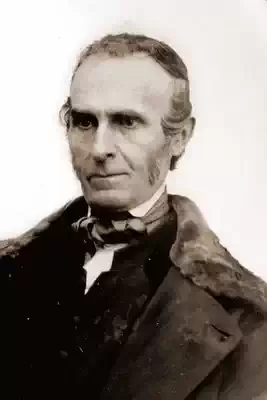
John Greenleaf Whittier
What The Voice Said
What The Voice Said
MADDENED by Earth's wrong and evil,
'Lord!' I cried in sudden ire,
'From Thy right hand, clothed with thunder,
Shake the bolted fire!
'Love is lost, and Faith is dying;
With the brute the man is sold;
And the dropping blood of labor
Hardens into gold.
'Here the dying wail of Famine,
There the battle's groan of pain;
And, in silence, smooth-faced Mammon
Reaping men like grain.
''Where is God, that we should fear Him?'
Thus the earth-born Titans say
'God! if Thou art living, hear us!'
Thus the weak ones pray.'
'Thou, the patient Heaven upbraiding,'
Spake a solemn Voice within;
'Weary of our Lord's forbearance,
Art thou free from sin?
'Fearless brow to Him uplifting,
Canst thou for His thunders call,
Knowing that to guilt's attraction
Evermore they fall?
'Know'st thou not all germs of evil
In thy heart await their time?
Not thyself, but God's restraining,
Stays their growth of crime.
'Couldst thou boast, O child of weakness!
O'er the sons of wrong and strife,
Were their strong temptations planted
In thy path of life?
'Thou hast seen two streamlets gushing
From one fountain, clear and free,
But by widely varying channels
Searching for the sea.
'Glideth one through greenest valleys,
Kissing them with lips still sweet;
One, mad roaring down the mountains,
Stagnates at their feet.
'Is it choice whereby the Parsee
Kneels before his mother's fire?
In his black tent did the Tartar
Choose his wandering sire?
'He alone, whose hand is bounding
Human power and human will,
Looking through each soul's surrounding,
Knows its good or ill.
'For thyself, while wrong and sorrow
Make to thee their strong appeal,
Coward wert thou not to utter
What the heart must feel.
'Earnest words must needs be spoken
When the warm heart bleeds or burns
With its scorn of wrong, or pity
For the wronged, by turns.
'But, by all thy nature's weakness,
Hidden faults and follies known,
Be thou, in rebuking evil,
Conscious of thine own.
'Not the less shall stern-eyed Duty
To thy lips her trumpet set,
But with harsher blasts shall mingle
Wailings of regret.'
Cease not, Voice of holy speaking,
Teacher sent of God, be near,
Whispering through the day's cool silence,
Let my spirit hear!
So, when thoughts of evil-doers
Waken scorn, or hatred move,
Shall a mournful fellow-feeling
Temper all with love.
MADDENED by Earth's wrong and evil,
'Lord!' I cried in sudden ire,
'From Thy right hand, clothed with thunder,
Shake the bolted fire!
'Love is lost, and Faith is dying;
With the brute the man is sold;
And the dropping blood of labor
Hardens into gold.
'Here the dying wail of Famine,
There the battle's groan of pain;
And, in silence, smooth-faced Mammon
Reaping men like grain.
''Where is God, that we should fear Him?'
Thus the earth-born Titans say
'God! if Thou art living, hear us!'
Thus the weak ones pray.'
'Thou, the patient Heaven upbraiding,'
Spake a solemn Voice within;
'Weary of our Lord's forbearance,
Art thou free from sin?
'Fearless brow to Him uplifting,
Canst thou for His thunders call,
Knowing that to guilt's attraction
Evermore they fall?
'Know'st thou not all germs of evil
In thy heart await their time?
Not thyself, but God's restraining,
Stays their growth of crime.
'Couldst thou boast, O child of weakness!
O'er the sons of wrong and strife,
Were their strong temptations planted
In thy path of life?
'Thou hast seen two streamlets gushing
From one fountain, clear and free,
But by widely varying channels
Searching for the sea.
'Glideth one through greenest valleys,
Kissing them with lips still sweet;
One, mad roaring down the mountains,
Stagnates at their feet.
'Is it choice whereby the Parsee
Kneels before his mother's fire?
In his black tent did the Tartar
Choose his wandering sire?
'He alone, whose hand is bounding
Human power and human will,
Looking through each soul's surrounding,
Knows its good or ill.
'For thyself, while wrong and sorrow
Make to thee their strong appeal,
Coward wert thou not to utter
What the heart must feel.
'Earnest words must needs be spoken
When the warm heart bleeds or burns
With its scorn of wrong, or pity
For the wronged, by turns.
'But, by all thy nature's weakness,
Hidden faults and follies known,
Be thou, in rebuking evil,
Conscious of thine own.
'Not the less shall stern-eyed Duty
To thy lips her trumpet set,
But with harsher blasts shall mingle
Wailings of regret.'
Cease not, Voice of holy speaking,
Teacher sent of God, be near,
Whispering through the day's cool silence,
Let my spirit hear!
So, when thoughts of evil-doers
Waken scorn, or hatred move,
Shall a mournful fellow-feeling
Temper all with love.
304
John Greenleaf Whittier
Toussaint L’Ouverture
Toussaint L’Ouverture
'T WAS night. The tranquil moonlight smile
With which Heaven dreams of Earth, shed down
Its beauty on the Indian isle, —
On broad green field and white-walled town;
And inland waste of rock and wood,
In searching sunshine, wild and rude,
Rose, mellowed through the silver gleam,
Soft as the landscape of a dream.
All motionless and dewy wet,
Tree, vine, and flower in shadow met:
The myrtle with its snowy bloom,
Crossing the nightshade's solemn gloom, —
The white cecropia's silver rind
Relieved by deeper green behind,
The orange with its fruit of gold,
The lithe paullinia's verdant fold,
The passion-flower, with symbol holy,
Twining its tendrils long and lowly,
The rhexias dark, and cassia tall,
And proudly rising over all,
The kingly palm's imperial stem,.
Crowned with its leafy diadem,
Star-like, beneath whose sombre shade,
The fiery-winged cucullo played!
How lovely was thine aspect, then,
Fair island of the Western Sea!
Lavish of beauty, even whe
Thy brutes were happier than thy men,
For they, at least, were free!
Regardless of thy glorious clime,
Unmindful of thy soil of flowers,
The toiling negro sighed, that Time
No faster sped his hours.
For, by the dewy moonlight still,
He fed the weary-turning mill,
Or bent him in the chill morass,
To pluck the long and tangled grass,
And hear above his scar-worn back
The heavy slave-whip's frequent crack:
While in his heart one evil thought
In solitary madness wrought,
One baleful fire surviving still
The quenching of the immortal mind,
One sterner passion of his kind,
Which even fetters could not kill,
The savage hope, to deal, erelong,
A vengeance bitterer than his wrong!
Hark to that cry! long, loud, and shrill,
From field and forest, rock and hill,
Thrilling and horrible it rang,
Around, beneath, above;
The wild beast from his cavern sprang,
The wild bird from her grove!
Nor fear, nor joy, nor agony
Were mingled in that midnight cry;
But like the lion's growl of wrath,
When falls that hunter in his path
Whose barbed arrow, deeply set,
Is rankling in his bosom yet,
It told of hate, full, deep, and strong,
Of vengeance kindling out of wrong;
It was as if the crimes of years —
The unrequited toil, the tears,
The shame and hate, which liken well
Earth's garden to the nether hell—
Had found in nature's self a tongue,
On which the gathered horror hung;
As if from cliff, and stream, and glen
Burst on the startled ears of men
That voice which rises unto God,
Solemn and stern, —the cry of blood!
It ceased, and all was still once more,
Save ocean chafing on his shore,
The sighing of the wind between
The broad banana's leaves of green,
Or bough by restless plumage shook,
Or murmuring voice of mountain brook.
Brief was the silence. Once again
Pealed to the skies that frantic yell,
Glowed on the heavens a fiery stain,
And flashes rose and fell;
And painted on the blood-red sky,
Dark, naked arms were tossed on high;
And, round the white man's lordly hall,
Trod, fierce and free, the brute he made;
And those who crept along the wall,
And answered to his lightest call
With more than spaniel dread,
The creatures of his lawless beck,
Were trampling on his very neck!
And on the night-air, wild and clear,
Rose woman's shriek of more than fear;
For bloodied arms were round her thrown,
Aan dark cheeks pressed against her own!
Then, injured Afric! for the shame
Of thy own daughters, vengeance came
Full on the scornful hearts of those,
Who mocked thee in thy nameless woes,
And to thy hapless children gave
One choice,—pollution or the grave!
Where then was he whose fiery zeal
Had taught the trampled heart to feel,
Until despair itself grew strong,
And vengeance fed its torch from wrong?
Now, when the thunderbolt is speeding;
Now, when oppression's heart is bleeding;
Now, when the latent curse of Time
Is raining down in fire and blood,
That curse which, through long years of crime,
Has gathered, drop by drop, its flood, —
Why strikes he not, the foremost one,
Where murder's sternest deeds are done?
He stood the aged palms beneath,
That shadowed o'er his humble door,
Listening, with half-suspended breath,
To the wild sounds of fear and death,
Toussaint L'Ouverture!
What marvel that his heart beat high!
The blow for freedom had been given,
And blood had answered to the cry
Which Earth sent up to Heaven!
What marvel that a fierce delight
Smiled grimly o'er his brow of night,
As groan and shout and bursting flame
Told where the midnight tempest came,
With blood and fire along its van,
And death behind! he was a Man!
Yes, dark-souled chieftain! if the light
Of mild Religion's heavenly ray
Unveiled not to thy mental sight
The lowlier and the purer way,
In which the Holy Sufferer trod,
Meekly amidst the sons of crime;
That calm reliance upon God
For justice in His own good time;
That gentleness to which belongs
Forgiveness for its many wrongs,
Even as the primal martyr, kneeling
For mercy on the evil-dealing;
Let not the favored white man name
Thy stern appeal, with words of blame.
Has he not, with the light of heaven
Broadly around him, made the same?
Yea, on his thousand war-fields striven,
And gloried in his ghastly shame?
Kneeling amidst his brother's blood,
To offer mockery unto God,
As if the High and Holy One
Could smile on deeds of murder done!
As if a human sacrifice
Were purer in His holy eyes,
Though offered up by Christian hands,
Than the foul rites of Pagan lands!
. . . . . . . .
Sternly, amidst his household band,
His carbine grasped within his hand,
The white man stood, prepared and still,
Waiting the shock of maddened men,
Unchained, and fierce as tigers, when
The horn winds through their caverned hill.
And one was weeping in his sight,
The sweetest flower of all the isle,
The bride who seemed but yesternight
Love's fair embodied smile.
And, clinging to her trembling knee,
Looked up the form of infancy,
With tearful glance in either face
The secret of its fear to trace.
'Ha! stand or die!' The white man's eye
His steady musket gleamed along,
As a tall Negro hastened nigh,
With fearless step and strong.
'What, ho, Toussaint!' A moment more,
His shadow crossed the lighted floor.
'Away!' he shouted; 'fly with me,
The white man's bark is on the sea;
Her sails must catch the seaward wind,
For sudden vengeance sweeps behind.
Our brethren from their graves have spoken,
The yoke is spurned, the chain is broken;
On all the hills our fires are glowing,
Through all the vales red blood is flowing!
No more the mocking White shall rest
His foot upon the Negro's breast;
No more, at morn or eve, shall drip
The warm blood from the driver's whip:
Yet, though Tonssaint has vengeance sworn
For all the wrongs his race have borne,
Though for each drop of Negro blood
The white man's veins shall pour a flood;
Not all alone the sense of ill
Around his heart is lingering still,
Nor deeper can the white man feel
The generous warmth of grateful zeal.
Friends of the Negro! fly with me,
The path is open to the sea:
Away, for life!' He spoke, and pressed
The young child to his manly breast,
As, headlong, through the cracking cane,
Down swept the dark insurgent train,
Drunken and grim, with shout and yell
Howled through the dark, like sounds from hell.
Far out, in peace, the white man's sail
Swayed free before the sunrise gale.
Cloud-like that island hung afar,
Along the bright horizon's verge,
O'er which the curse of servile war
Rolled its red torrent, surge on surge;
And he, the Negro champion, where
In the fierce tumult struggled he?
Go trace him by the fiery glare
Of dwellings in the midnight air,
The yells of triumph and despair,
The streams that crimson to the sea!
Sleep calmly in thy dungeon-tomb,
Beneath Besançon's alien sky,
Dark Haytien! for the time shall come,
Yea, even now is nigh,
When, everywhere, thy name shall be
Redeemed from color's infamy;
And men shall learn to speak of thee
As one of earth's great spirits, born
In servitude, and nursed in scorn,
Casting aside the weary weight
And fetters of its low estate,
In that strong majesty of soul
Which knows no color, tongue, or clime,
Which still hath spurned the base control
Of tyrants through all time!
Far other hands than mine may wreathe
The laurel round thy brow of death,
And speak thy praise, as one whose word
A thousand fiery spirits stirred,
Who crushed his foeman as a worm,1
Whose step on human hearts fell firm:
Be mine the better task to find
A tribute for thy lofty mind,
Amidst whose gloomy vengeance shone
Some milder virtues all thine own,
Some gleams of feeling pure and warm,
Like sunshine on a sky of storm,
Proofs that the Negro's heart retains
Some nobleness amid its chains, —
That kindness to the wronged is never
Without its excellent reward,
Holy to human-kind and ever
Acceptable to God.
'T WAS night. The tranquil moonlight smile
With which Heaven dreams of Earth, shed down
Its beauty on the Indian isle, —
On broad green field and white-walled town;
And inland waste of rock and wood,
In searching sunshine, wild and rude,
Rose, mellowed through the silver gleam,
Soft as the landscape of a dream.
All motionless and dewy wet,
Tree, vine, and flower in shadow met:
The myrtle with its snowy bloom,
Crossing the nightshade's solemn gloom, —
The white cecropia's silver rind
Relieved by deeper green behind,
The orange with its fruit of gold,
The lithe paullinia's verdant fold,
The passion-flower, with symbol holy,
Twining its tendrils long and lowly,
The rhexias dark, and cassia tall,
And proudly rising over all,
The kingly palm's imperial stem,.
Crowned with its leafy diadem,
Star-like, beneath whose sombre shade,
The fiery-winged cucullo played!
How lovely was thine aspect, then,
Fair island of the Western Sea!
Lavish of beauty, even whe
Thy brutes were happier than thy men,
For they, at least, were free!
Regardless of thy glorious clime,
Unmindful of thy soil of flowers,
The toiling negro sighed, that Time
No faster sped his hours.
For, by the dewy moonlight still,
He fed the weary-turning mill,
Or bent him in the chill morass,
To pluck the long and tangled grass,
And hear above his scar-worn back
The heavy slave-whip's frequent crack:
While in his heart one evil thought
In solitary madness wrought,
One baleful fire surviving still
The quenching of the immortal mind,
One sterner passion of his kind,
Which even fetters could not kill,
The savage hope, to deal, erelong,
A vengeance bitterer than his wrong!
Hark to that cry! long, loud, and shrill,
From field and forest, rock and hill,
Thrilling and horrible it rang,
Around, beneath, above;
The wild beast from his cavern sprang,
The wild bird from her grove!
Nor fear, nor joy, nor agony
Were mingled in that midnight cry;
But like the lion's growl of wrath,
When falls that hunter in his path
Whose barbed arrow, deeply set,
Is rankling in his bosom yet,
It told of hate, full, deep, and strong,
Of vengeance kindling out of wrong;
It was as if the crimes of years —
The unrequited toil, the tears,
The shame and hate, which liken well
Earth's garden to the nether hell—
Had found in nature's self a tongue,
On which the gathered horror hung;
As if from cliff, and stream, and glen
Burst on the startled ears of men
That voice which rises unto God,
Solemn and stern, —the cry of blood!
It ceased, and all was still once more,
Save ocean chafing on his shore,
The sighing of the wind between
The broad banana's leaves of green,
Or bough by restless plumage shook,
Or murmuring voice of mountain brook.
Brief was the silence. Once again
Pealed to the skies that frantic yell,
Glowed on the heavens a fiery stain,
And flashes rose and fell;
And painted on the blood-red sky,
Dark, naked arms were tossed on high;
And, round the white man's lordly hall,
Trod, fierce and free, the brute he made;
And those who crept along the wall,
And answered to his lightest call
With more than spaniel dread,
The creatures of his lawless beck,
Were trampling on his very neck!
And on the night-air, wild and clear,
Rose woman's shriek of more than fear;
For bloodied arms were round her thrown,
Aan dark cheeks pressed against her own!
Then, injured Afric! for the shame
Of thy own daughters, vengeance came
Full on the scornful hearts of those,
Who mocked thee in thy nameless woes,
And to thy hapless children gave
One choice,—pollution or the grave!
Where then was he whose fiery zeal
Had taught the trampled heart to feel,
Until despair itself grew strong,
And vengeance fed its torch from wrong?
Now, when the thunderbolt is speeding;
Now, when oppression's heart is bleeding;
Now, when the latent curse of Time
Is raining down in fire and blood,
That curse which, through long years of crime,
Has gathered, drop by drop, its flood, —
Why strikes he not, the foremost one,
Where murder's sternest deeds are done?
He stood the aged palms beneath,
That shadowed o'er his humble door,
Listening, with half-suspended breath,
To the wild sounds of fear and death,
Toussaint L'Ouverture!
What marvel that his heart beat high!
The blow for freedom had been given,
And blood had answered to the cry
Which Earth sent up to Heaven!
What marvel that a fierce delight
Smiled grimly o'er his brow of night,
As groan and shout and bursting flame
Told where the midnight tempest came,
With blood and fire along its van,
And death behind! he was a Man!
Yes, dark-souled chieftain! if the light
Of mild Religion's heavenly ray
Unveiled not to thy mental sight
The lowlier and the purer way,
In which the Holy Sufferer trod,
Meekly amidst the sons of crime;
That calm reliance upon God
For justice in His own good time;
That gentleness to which belongs
Forgiveness for its many wrongs,
Even as the primal martyr, kneeling
For mercy on the evil-dealing;
Let not the favored white man name
Thy stern appeal, with words of blame.
Has he not, with the light of heaven
Broadly around him, made the same?
Yea, on his thousand war-fields striven,
And gloried in his ghastly shame?
Kneeling amidst his brother's blood,
To offer mockery unto God,
As if the High and Holy One
Could smile on deeds of murder done!
As if a human sacrifice
Were purer in His holy eyes,
Though offered up by Christian hands,
Than the foul rites of Pagan lands!
. . . . . . . .
Sternly, amidst his household band,
His carbine grasped within his hand,
The white man stood, prepared and still,
Waiting the shock of maddened men,
Unchained, and fierce as tigers, when
The horn winds through their caverned hill.
And one was weeping in his sight,
The sweetest flower of all the isle,
The bride who seemed but yesternight
Love's fair embodied smile.
And, clinging to her trembling knee,
Looked up the form of infancy,
With tearful glance in either face
The secret of its fear to trace.
'Ha! stand or die!' The white man's eye
His steady musket gleamed along,
As a tall Negro hastened nigh,
With fearless step and strong.
'What, ho, Toussaint!' A moment more,
His shadow crossed the lighted floor.
'Away!' he shouted; 'fly with me,
The white man's bark is on the sea;
Her sails must catch the seaward wind,
For sudden vengeance sweeps behind.
Our brethren from their graves have spoken,
The yoke is spurned, the chain is broken;
On all the hills our fires are glowing,
Through all the vales red blood is flowing!
No more the mocking White shall rest
His foot upon the Negro's breast;
No more, at morn or eve, shall drip
The warm blood from the driver's whip:
Yet, though Tonssaint has vengeance sworn
For all the wrongs his race have borne,
Though for each drop of Negro blood
The white man's veins shall pour a flood;
Not all alone the sense of ill
Around his heart is lingering still,
Nor deeper can the white man feel
The generous warmth of grateful zeal.
Friends of the Negro! fly with me,
The path is open to the sea:
Away, for life!' He spoke, and pressed
The young child to his manly breast,
As, headlong, through the cracking cane,
Down swept the dark insurgent train,
Drunken and grim, with shout and yell
Howled through the dark, like sounds from hell.
Far out, in peace, the white man's sail
Swayed free before the sunrise gale.
Cloud-like that island hung afar,
Along the bright horizon's verge,
O'er which the curse of servile war
Rolled its red torrent, surge on surge;
And he, the Negro champion, where
In the fierce tumult struggled he?
Go trace him by the fiery glare
Of dwellings in the midnight air,
The yells of triumph and despair,
The streams that crimson to the sea!
Sleep calmly in thy dungeon-tomb,
Beneath Besançon's alien sky,
Dark Haytien! for the time shall come,
Yea, even now is nigh,
When, everywhere, thy name shall be
Redeemed from color's infamy;
And men shall learn to speak of thee
As one of earth's great spirits, born
In servitude, and nursed in scorn,
Casting aside the weary weight
And fetters of its low estate,
In that strong majesty of soul
Which knows no color, tongue, or clime,
Which still hath spurned the base control
Of tyrants through all time!
Far other hands than mine may wreathe
The laurel round thy brow of death,
And speak thy praise, as one whose word
A thousand fiery spirits stirred,
Who crushed his foeman as a worm,1
Whose step on human hearts fell firm:
Be mine the better task to find
A tribute for thy lofty mind,
Amidst whose gloomy vengeance shone
Some milder virtues all thine own,
Some gleams of feeling pure and warm,
Like sunshine on a sky of storm,
Proofs that the Negro's heart retains
Some nobleness amid its chains, —
That kindness to the wronged is never
Without its excellent reward,
Holy to human-kind and ever
Acceptable to God.
209
John Greenleaf Whittier
The Hunters Of Men
The Hunters Of Men
HAVE ye heard of our hunting, o'er mountain and glen,
Through cane-brake and forest, — the hunting of men?
The lords of our land to this hunting have gone,
As the fox-hunter follows the sound of the horn;
Hark! the cheer and the hallo! the crack of the whip,
And the yell of the hound as he fastens his grip!
All blithe are our hunters, and noble their match,
Though hundreds are caught, there are millions to catch.
So speed to their hunting, o'er mountain and glen,
Through cane-brake and forest, — the hunting of men!
Gay luck to our hunters! how nobly they ride
In the glow of their zeal, and the strength of their pride!
The priest with his cassock flung back on the wind,
Just screening the politic statesman behind;
The saint and the sinner, with cursing and prayer,
The drunk and the sober, ride merrily there.
And woman, kind woman, wife, widow, and maid,
For the good of the hunted, is lending her aid:
Her foot's in the stirrup, her hand on the rein,
How blithely she rides to the hunting of men!
Oh, goodly and grand is our hunting to see,
In this 'land of the brave and this home of the free.'
Priest, warrior, and statesman, from Georgia to Maine,
All mounting the saddle, all grasping the rein;
Right merrily hunting the black man, whose sin
Is the curl of his hair and the hue of his skin!
Woe, now, to the hunted who turns him at bay!
Will our hunters be turned from their purpose and prey?
Will their hearts fail within them? their nerves tremble, when
All roughly they ride to the hunting of men?
Ho! alms for our hunters! all weary and faint,
Wax the curse of the sinner and prayer of the saint.
The horn is wound faintly, the echoes are still,
Over cane-brake and river, and forest and hill.
Haste, alms for our hunters! the hunted once more
Have turned from their flight with their backs to the shore:
What right have they here in the home of the white,
Shadowed o'er by our banner of Freedom and Right?
Ho! alms for the hunters! or never again
Will they ride in their pomp to the hunting of men!
Alms, alms for our hunters! why will ye delay,
When their pride and their glory are melting away?
The parson has turned; for, on charge of his own,
Who goeth a warfare, or hunting, alone?
The politic statesman looks back with a sigh,
There is doubt in his heart, there is fear in his eye.
Oh, haste, lest that doubting and fear shall prevail,
And the head of his steed take the place of the tail.
Oh, haste, ere he leave us! for who will ride then,
For pleasure or gain, to the hunting of men?
HAVE ye heard of our hunting, o'er mountain and glen,
Through cane-brake and forest, — the hunting of men?
The lords of our land to this hunting have gone,
As the fox-hunter follows the sound of the horn;
Hark! the cheer and the hallo! the crack of the whip,
And the yell of the hound as he fastens his grip!
All blithe are our hunters, and noble their match,
Though hundreds are caught, there are millions to catch.
So speed to their hunting, o'er mountain and glen,
Through cane-brake and forest, — the hunting of men!
Gay luck to our hunters! how nobly they ride
In the glow of their zeal, and the strength of their pride!
The priest with his cassock flung back on the wind,
Just screening the politic statesman behind;
The saint and the sinner, with cursing and prayer,
The drunk and the sober, ride merrily there.
And woman, kind woman, wife, widow, and maid,
For the good of the hunted, is lending her aid:
Her foot's in the stirrup, her hand on the rein,
How blithely she rides to the hunting of men!
Oh, goodly and grand is our hunting to see,
In this 'land of the brave and this home of the free.'
Priest, warrior, and statesman, from Georgia to Maine,
All mounting the saddle, all grasping the rein;
Right merrily hunting the black man, whose sin
Is the curl of his hair and the hue of his skin!
Woe, now, to the hunted who turns him at bay!
Will our hunters be turned from their purpose and prey?
Will their hearts fail within them? their nerves tremble, when
All roughly they ride to the hunting of men?
Ho! alms for our hunters! all weary and faint,
Wax the curse of the sinner and prayer of the saint.
The horn is wound faintly, the echoes are still,
Over cane-brake and river, and forest and hill.
Haste, alms for our hunters! the hunted once more
Have turned from their flight with their backs to the shore:
What right have they here in the home of the white,
Shadowed o'er by our banner of Freedom and Right?
Ho! alms for the hunters! or never again
Will they ride in their pomp to the hunting of men!
Alms, alms for our hunters! why will ye delay,
When their pride and their glory are melting away?
The parson has turned; for, on charge of his own,
Who goeth a warfare, or hunting, alone?
The politic statesman looks back with a sigh,
There is doubt in his heart, there is fear in his eye.
Oh, haste, lest that doubting and fear shall prevail,
And the head of his steed take the place of the tail.
Oh, haste, ere he leave us! for who will ride then,
For pleasure or gain, to the hunting of men?
293
John Greenleaf Whittier
The Haschish
The Haschish
Of all that Orient lands can vaunt
Of marvels with our own competing,
The strangest is the Haschish plant,
And what will follow on its eating.
What pictures to the taster rise,
Of Dervish or of Almeh dances!
Of Eblis, or of Paradise,
Set all aglow with Houri glances!
The poppy visions of Cathay,
The heavy beer-trance of the Suabian;
The wizard lights and demon play
Of nights Walpurgis and Arabian!
The Mollah and the Christian dog
Change place in mad metempsychosis;
The Muezzin climbs the synagogue,
The Rabbi shakes his beard at Moses!
The Arab by his desert well
Sits choosing from some Caliph's daughters,
And hears his single camel's bell
Sound welcome to his regal quarters.
The Koran's reader makes complaint
Of Shitan dancing on and off it;
The robber offers alms, the saint
Drinks Tokay and blasphemes the Prophet.
Such scenes that Eastern plant awakes;
But we have one ordained to beat it,
The Haschish of the West, which makes
Or fools or knaves of all who eat it.
The preacher eats, and straight appears
His Bible in a new translation;
Its angels negro overseers,
And Heaven itself a snug plantation!
The man of peace, about whose dreams
The sweet millennial angels cluster,
Tastes the mad weed, and plots and schemes,
A raving Cuban filibuster!
The noisiest Democrat, with ease,
It turns to Slavery's parish beadle;
The shrewdest statesman eats and sees
Due southward point the polar needle.
The Judge partakes, and sits erelong
Upon his bench a railing blackguard;
Decides off-hand that right is wrong,
And reads the ten commandments backward.
O potent plant! so rare a taste
Has never Turk or Gentoo gotten;
The hempen Haschish of the East
Is powerless to our Western Cotton!
Of all that Orient lands can vaunt
Of marvels with our own competing,
The strangest is the Haschish plant,
And what will follow on its eating.
What pictures to the taster rise,
Of Dervish or of Almeh dances!
Of Eblis, or of Paradise,
Set all aglow with Houri glances!
The poppy visions of Cathay,
The heavy beer-trance of the Suabian;
The wizard lights and demon play
Of nights Walpurgis and Arabian!
The Mollah and the Christian dog
Change place in mad metempsychosis;
The Muezzin climbs the synagogue,
The Rabbi shakes his beard at Moses!
The Arab by his desert well
Sits choosing from some Caliph's daughters,
And hears his single camel's bell
Sound welcome to his regal quarters.
The Koran's reader makes complaint
Of Shitan dancing on and off it;
The robber offers alms, the saint
Drinks Tokay and blasphemes the Prophet.
Such scenes that Eastern plant awakes;
But we have one ordained to beat it,
The Haschish of the West, which makes
Or fools or knaves of all who eat it.
The preacher eats, and straight appears
His Bible in a new translation;
Its angels negro overseers,
And Heaven itself a snug plantation!
The man of peace, about whose dreams
The sweet millennial angels cluster,
Tastes the mad weed, and plots and schemes,
A raving Cuban filibuster!
The noisiest Democrat, with ease,
It turns to Slavery's parish beadle;
The shrewdest statesman eats and sees
Due southward point the polar needle.
The Judge partakes, and sits erelong
Upon his bench a railing blackguard;
Decides off-hand that right is wrong,
And reads the ten commandments backward.
O potent plant! so rare a taste
Has never Turk or Gentoo gotten;
The hempen Haschish of the East
Is powerless to our Western Cotton!
304
John Greenleaf Whittier
Clerical Oppressors
Clerical Oppressors
JUST God! and these are they
Who minister at thine altar, God of Right!
Men who their hands with prayer and blessing lay
On Israel's Ark of light!
What! preach, and kidnap men?
Give thanks, and rob thy own afflicted poor?
Talk of thy glorious liberty, and then
Bolt hard the captive's door?
What! servants of thy own
Merciful Son, who came to seek and save
The homeless and the outcast, fettering down
The tasked and plundered slave!
Pilate and Herod, friends!
Chief priests and rulers, as of old, combine!
Just God and holy! is that church, which lends
Strength to the spoiler, thine?
Paid hypocrites, who turn
Judgment aside, and rob the Holy Book
Of those high words of truth which search and burn
In warning and rebuke;
Feed fat, ye locusts, feed!
And, in your tasselled pulpits, thank the Lord
That, from the toiling bondman's utter need,
Ye pile your own full board.
How long, O Lord! how long
Shall such a priesthood barter truth away,
And in Thy name, for robbery and wrong
At Thy own altars pray?
Is not Thy hand stretched forth
Visibly in the heavens, to awe and smite?
Shall not the living God of all the earth,
And heaven above, do right?
Woe, then, to all who grind
Their brethren of a common Father down!
To all who plunder from the immortal mind
Its bright and glorious crown!
Woe to the priesthood! woe
To those whose hire is with the price of blood;
Perverting, darkening, changing, as they go,
The searching truths of God!
Their glory and their might.
Shall perish; and their very names shall be
Vile before all the people, in the light
Of a world's liberty.
Oh, speed the moment on
When Wrong shall cease, and Liberty and Love
And Truth and Right throughout the earth be known
As in their home above.
JUST God! and these are they
Who minister at thine altar, God of Right!
Men who their hands with prayer and blessing lay
On Israel's Ark of light!
What! preach, and kidnap men?
Give thanks, and rob thy own afflicted poor?
Talk of thy glorious liberty, and then
Bolt hard the captive's door?
What! servants of thy own
Merciful Son, who came to seek and save
The homeless and the outcast, fettering down
The tasked and plundered slave!
Pilate and Herod, friends!
Chief priests and rulers, as of old, combine!
Just God and holy! is that church, which lends
Strength to the spoiler, thine?
Paid hypocrites, who turn
Judgment aside, and rob the Holy Book
Of those high words of truth which search and burn
In warning and rebuke;
Feed fat, ye locusts, feed!
And, in your tasselled pulpits, thank the Lord
That, from the toiling bondman's utter need,
Ye pile your own full board.
How long, O Lord! how long
Shall such a priesthood barter truth away,
And in Thy name, for robbery and wrong
At Thy own altars pray?
Is not Thy hand stretched forth
Visibly in the heavens, to awe and smite?
Shall not the living God of all the earth,
And heaven above, do right?
Woe, then, to all who grind
Their brethren of a common Father down!
To all who plunder from the immortal mind
Its bright and glorious crown!
Woe to the priesthood! woe
To those whose hire is with the price of blood;
Perverting, darkening, changing, as they go,
The searching truths of God!
Their glory and their might.
Shall perish; and their very names shall be
Vile before all the people, in the light
Of a world's liberty.
Oh, speed the moment on
When Wrong shall cease, and Liberty and Love
And Truth and Right throughout the earth be known
As in their home above.
307
John Greenleaf Whittier
A Letter
A Letter
'TIS over, Moses! All is lost!
I hear the bells a-ringing;
Of Pharaoh and his Red Sea host
I hear the Free-Wills singing.*
We're routed, Moses, horse and foot,
If there be truth in figures,
With Federal Whigs in hot pursuit,
And Hale, and all the 'niggers.'
Alack! alas! this month or more
We've felt a sad foreboding;
Our very dreams the burden bore
Of central cliques exploding;
Before our eyes a furnace shone,
Where heads of dough were roasting,
And one we took to be your own
The traitor Hale was toasting!
Our Belknap brother* heard with awe
The Congo minstrels playing;
At Pittsfield Reuben Leavitt* saw
The ghost of Storrs a-praying;
And Carroll's woods were sad to see,
With black-winged crows a-darting;
And Black Snout looked on Ossipee,
New-glossed with Day and Martin.
We thought the 'Old Man of the Notch'
His face seemed changing wholly —
His lips seemed thick; his nose seemed flat;
His misty hair looked woolly;
And Coös teamsters, shrieking, fled
From the metamorphosed figure.
'Look there!' they said, 'the Old Stone Head
Himself is turning nigger!'
The schoolhouse* out of Canaan hauled
Seemed turning on its track again,
And like a great swamp-turtle crawled
To Canaan village back again,
Shook off the mud and settled flat
Upon its underpinning;
A nigger on its ridge-pole sat,
From ear to ear a-grinning.
Gray H—d heard o' nights the sound
Of rail-cars onward faring;
Right over Democratic ground
The iron horse came tearing.
A flag waved o'er that spectral train,
As high as Pittsfield steeple;
Its emblem was a broken chain;
Its motto: 'To the people!'
I dreamed that Charley took his bed,
With Hale for his physician;
His daily dose an old 'unread
And unreferred' petition.*
There Hayes and Tuck as nurses sat,
As near as near could be, man;
They leeched him with the 'Democrat;'
They blistered with the 'Freeman.'
Ah! grisly portents! What avail
Your terrors of forewarning?
We wake to find the nightmare Hale
Astride our breasts at morning!
From Portsmouth lights to Indian stream
Our foes their throats are trying;
The very factory-spindles seem
To mock us while they're flying.
The hills have bonfires; in our streets
Flags flout us in our faces;
The newsboys, peddling off their sheets,
Are hoarse with our disgraces.
In vain we turn, for gibing wit
And shoutings follow after,
As if old Kearsarge had split
His granite sides with laughter!
What boots it that we pelted out
The anti-slavery women,9
And bravely strewed their hall about
With tattered lace and trimming?
Was it for such a sad reverse
Our mobs became peacemakers,
And kept their tar and wooden horse
For Englishmen and Quakers?
For this did shifty Atherton
Make gag rules for the Great House?
Wiped we for this our feet upon
Petitions in our State House?
Plied we for this our axe of doom,
No stubborn traitor sparing,
Who scoffed at our opinion loom,
And took to homespun wearing?
Ah, Moses! hard it is to scan
These crooked providences,
Deducing from the wisest plan
The saddest consequences!
Strange that, in trampling as was meet
The nigger-men's petition,
We sprung a mine beneath our feet
Which opened up perdition.
How goodly, Moses, was the game
In which we've long been actors,
Supplying freedom with the name
And slavery with the practice!
Our smooth words fed the people's mouth,
Their ears our party rattle;
We kept them headed to the South,
As drovers do their cattle.
But now our game of politics
The world at large is learning;
And men grown gray in all our tricks
State's evidence are turning.
Votes and preambles subtly spun
They cram with meanings louder,
And load the Democratic gun
With abolition powder.
The ides of June! Woe worth the day
When, turning all things over,
The traitor Hale shall make his hay
From Democratic clover!
Who then shall take him in the law,
Who punish crime so flagrant?
Whose hand shall serve, whose pen shall draw,
A writ against that 'vagrant'?
Alas! no hope is left us here,
And one can only pine for
The envied place of overseer
Of slaves in Carolina!
Pray, Moses, give Calhoun the wink,
And see what pay he's giving!
We're practised long enough, we think,
To know the art of driving.
And for the faithful rank and file,
Who know their proper stations,
Perhaps it may be worth their while
To try the rice plantations.
Let Hale exult, let Wilson scoff,
To see us southward scamper;
The slaves, we know, are 'better off
Than laborers in New Hampshire!'
'TIS over, Moses! All is lost!
I hear the bells a-ringing;
Of Pharaoh and his Red Sea host
I hear the Free-Wills singing.*
We're routed, Moses, horse and foot,
If there be truth in figures,
With Federal Whigs in hot pursuit,
And Hale, and all the 'niggers.'
Alack! alas! this month or more
We've felt a sad foreboding;
Our very dreams the burden bore
Of central cliques exploding;
Before our eyes a furnace shone,
Where heads of dough were roasting,
And one we took to be your own
The traitor Hale was toasting!
Our Belknap brother* heard with awe
The Congo minstrels playing;
At Pittsfield Reuben Leavitt* saw
The ghost of Storrs a-praying;
And Carroll's woods were sad to see,
With black-winged crows a-darting;
And Black Snout looked on Ossipee,
New-glossed with Day and Martin.
We thought the 'Old Man of the Notch'
His face seemed changing wholly —
His lips seemed thick; his nose seemed flat;
His misty hair looked woolly;
And Coös teamsters, shrieking, fled
From the metamorphosed figure.
'Look there!' they said, 'the Old Stone Head
Himself is turning nigger!'
The schoolhouse* out of Canaan hauled
Seemed turning on its track again,
And like a great swamp-turtle crawled
To Canaan village back again,
Shook off the mud and settled flat
Upon its underpinning;
A nigger on its ridge-pole sat,
From ear to ear a-grinning.
Gray H—d heard o' nights the sound
Of rail-cars onward faring;
Right over Democratic ground
The iron horse came tearing.
A flag waved o'er that spectral train,
As high as Pittsfield steeple;
Its emblem was a broken chain;
Its motto: 'To the people!'
I dreamed that Charley took his bed,
With Hale for his physician;
His daily dose an old 'unread
And unreferred' petition.*
There Hayes and Tuck as nurses sat,
As near as near could be, man;
They leeched him with the 'Democrat;'
They blistered with the 'Freeman.'
Ah! grisly portents! What avail
Your terrors of forewarning?
We wake to find the nightmare Hale
Astride our breasts at morning!
From Portsmouth lights to Indian stream
Our foes their throats are trying;
The very factory-spindles seem
To mock us while they're flying.
The hills have bonfires; in our streets
Flags flout us in our faces;
The newsboys, peddling off their sheets,
Are hoarse with our disgraces.
In vain we turn, for gibing wit
And shoutings follow after,
As if old Kearsarge had split
His granite sides with laughter!
What boots it that we pelted out
The anti-slavery women,9
And bravely strewed their hall about
With tattered lace and trimming?
Was it for such a sad reverse
Our mobs became peacemakers,
And kept their tar and wooden horse
For Englishmen and Quakers?
For this did shifty Atherton
Make gag rules for the Great House?
Wiped we for this our feet upon
Petitions in our State House?
Plied we for this our axe of doom,
No stubborn traitor sparing,
Who scoffed at our opinion loom,
And took to homespun wearing?
Ah, Moses! hard it is to scan
These crooked providences,
Deducing from the wisest plan
The saddest consequences!
Strange that, in trampling as was meet
The nigger-men's petition,
We sprung a mine beneath our feet
Which opened up perdition.
How goodly, Moses, was the game
In which we've long been actors,
Supplying freedom with the name
And slavery with the practice!
Our smooth words fed the people's mouth,
Their ears our party rattle;
We kept them headed to the South,
As drovers do their cattle.
But now our game of politics
The world at large is learning;
And men grown gray in all our tricks
State's evidence are turning.
Votes and preambles subtly spun
They cram with meanings louder,
And load the Democratic gun
With abolition powder.
The ides of June! Woe worth the day
When, turning all things over,
The traitor Hale shall make his hay
From Democratic clover!
Who then shall take him in the law,
Who punish crime so flagrant?
Whose hand shall serve, whose pen shall draw,
A writ against that 'vagrant'?
Alas! no hope is left us here,
And one can only pine for
The envied place of overseer
Of slaves in Carolina!
Pray, Moses, give Calhoun the wink,
And see what pay he's giving!
We're practised long enough, we think,
To know the art of driving.
And for the faithful rank and file,
Who know their proper stations,
Perhaps it may be worth their while
To try the rice plantations.
Let Hale exult, let Wilson scoff,
To see us southward scamper;
The slaves, we know, are 'better off
Than laborers in New Hampshire!'
272
John Donne
The Curse
The Curse
Whoever guesses, thinks, or dreams, he knows
Who is my mistress, wither by this curse ;
Him, only for his purse
May some dull whore to love dispose,
And then yield unto all that are his foes ;
May he be scorn'd by one, whom all else scorn,
Forswear to others, what to her he hath sworn,
With fear of missing, shame of getting, torn.
Madness his sorrow, gout his cramps, may he
Make, by but thinking who hath made him such ;
And may he feel no touch
Of conscience, but of fame, and be
Anguish'd, not that 'twas sin, but that 'twas she ;
Or may he for her virtue reverence
One that hates him only for impotence,
And equal traitors be she and his sense.
May he dream treason, and believe that he
Meant to perform it, and confesses, and die,
And no record tell why ;
His sons, which none of his may be,
Inherit nothing but his infamy ;
Or may he so long parasites have fed,
That he would fain be theirs whom he hath bred,
And at the last be circumcised for bread.
The venom of all stepdames, gamesters' gall,
What tyrants and their subjects interwish,
What plants, mine, beasts, fowl, fish,
Can contribute, all ill, which all
Prophets or poets spake, and all which shall
Be annex'd in schedules unto this by me,
Fall on that man ; For if it be a she
Nature beforehand hath out-cursèd me.
Whoever guesses, thinks, or dreams, he knows
Who is my mistress, wither by this curse ;
Him, only for his purse
May some dull whore to love dispose,
And then yield unto all that are his foes ;
May he be scorn'd by one, whom all else scorn,
Forswear to others, what to her he hath sworn,
With fear of missing, shame of getting, torn.
Madness his sorrow, gout his cramps, may he
Make, by but thinking who hath made him such ;
And may he feel no touch
Of conscience, but of fame, and be
Anguish'd, not that 'twas sin, but that 'twas she ;
Or may he for her virtue reverence
One that hates him only for impotence,
And equal traitors be she and his sense.
May he dream treason, and believe that he
Meant to perform it, and confesses, and die,
And no record tell why ;
His sons, which none of his may be,
Inherit nothing but his infamy ;
Or may he so long parasites have fed,
That he would fain be theirs whom he hath bred,
And at the last be circumcised for bread.
The venom of all stepdames, gamesters' gall,
What tyrants and their subjects interwish,
What plants, mine, beasts, fowl, fish,
Can contribute, all ill, which all
Prophets or poets spake, and all which shall
Be annex'd in schedules unto this by me,
Fall on that man ; For if it be a she
Nature beforehand hath out-cursèd me.
440
John Donne
Elegy XIV: Julia
Elegy XIV: Julia
Hark, news, O envy ; thou shalt hear descried
My Julia ; who as yet was ne'er envied.
To vomit gall in slander, swell her veins
With calumny, that hell itself disdains,
Is her continual practice ; does her best,
To tear opinion e'en out of the breast
Of dearest friends, and—which is worse than vile—
Sticks jealousy in wedlock ; her own child
Scapes not the showers of envy. To repeat
The monstrous fashions how, were alive to eat
Deare reputation ; would to God she were
But half so loth to act vice, as to hear
My mild reproof. Lived Mantuan now again
That female Mastix to limn with his pen,
This she Chimera that hath eyes of fire,
Burning with anger—anger feeds desire—
Tongued like the night crow, whose ill boding cries
Give out for nothing but new injuries ;
Her breath like to the juice in Tænarus,
That blasts the springs, though ne'er so prosperous ;
Her hands, I know not how, used more to spill
The food of others than herself to fill ;
But O ! her mind, that Orcus, which includes
Legions of mischiefs, countless multitudes
Of formless curses, projects unmade up,
Abuses yet unfashion'd, thoughts corrupt,
Misshapen cavils, palpable untroths,
Inevitable errors, self-accusing loaths.
These, like those atoms swarming in the sun,
Throng in her bosom for creation.
I blush to give her halfe her due ; yet say,
No poison's half so bad as Julia.
Hark, news, O envy ; thou shalt hear descried
My Julia ; who as yet was ne'er envied.
To vomit gall in slander, swell her veins
With calumny, that hell itself disdains,
Is her continual practice ; does her best,
To tear opinion e'en out of the breast
Of dearest friends, and—which is worse than vile—
Sticks jealousy in wedlock ; her own child
Scapes not the showers of envy. To repeat
The monstrous fashions how, were alive to eat
Deare reputation ; would to God she were
But half so loth to act vice, as to hear
My mild reproof. Lived Mantuan now again
That female Mastix to limn with his pen,
This she Chimera that hath eyes of fire,
Burning with anger—anger feeds desire—
Tongued like the night crow, whose ill boding cries
Give out for nothing but new injuries ;
Her breath like to the juice in Tænarus,
That blasts the springs, though ne'er so prosperous ;
Her hands, I know not how, used more to spill
The food of others than herself to fill ;
But O ! her mind, that Orcus, which includes
Legions of mischiefs, countless multitudes
Of formless curses, projects unmade up,
Abuses yet unfashion'd, thoughts corrupt,
Misshapen cavils, palpable untroths,
Inevitable errors, self-accusing loaths.
These, like those atoms swarming in the sun,
Throng in her bosom for creation.
I blush to give her halfe her due ; yet say,
No poison's half so bad as Julia.
335
John Donne
Elegy I: Jealousy
Elegy I: Jealousy
Fond woman, which wouldst have thy husband die,
And yet complain'st of his great jealousy;
If swol'n with poison, he lay in his last bed,
His body with a sere-bark covered,
Drawing his breath, as thick and short, as can
The nimblest crocheting musician,
Ready with loathsome vomiting to spew
His soul out of one hell, into a new,
Made deaf with his poor kindred's howling cries,
Begging with few feigned tears, great legacies,
Thou wouldst not weep, but jolly and frolic be,
As a slave, which tomorrow should be free;
Yet weep'st thou, when thou seest him hungerly
Swallow his own death, hearts-bane jealousy.
O give him many thanks, he's courteous,
That in suspecting kindly warneth us
Wee must not, as we used, flout openly,
In scoffing riddles, his deformity;
Nor at his board together being sat,
With words, nor touch, scarce looks adulterate;
Nor when he swol'n, and pampered with great fare
Sits down, and snorts, caged in his basket chair,
Must we usurp his own bed any more,
Nor kiss and play in his house, as before.
Now I see many dangers; for that is
His realm, his castle, and his diocese.
But if, as envious men, which would revile
Their Prince, or coin his gold, themselves exile
Into another country, and do it there,
We play in another house, what should we fear?
There we will scorn his houshold policies,
His seely plots, and pensionary spies,
As the inhabitants of Thames' right side
Do London's Mayor; or Germans, the Pope's pride.
Fond woman, which wouldst have thy husband die,
And yet complain'st of his great jealousy;
If swol'n with poison, he lay in his last bed,
His body with a sere-bark covered,
Drawing his breath, as thick and short, as can
The nimblest crocheting musician,
Ready with loathsome vomiting to spew
His soul out of one hell, into a new,
Made deaf with his poor kindred's howling cries,
Begging with few feigned tears, great legacies,
Thou wouldst not weep, but jolly and frolic be,
As a slave, which tomorrow should be free;
Yet weep'st thou, when thou seest him hungerly
Swallow his own death, hearts-bane jealousy.
O give him many thanks, he's courteous,
That in suspecting kindly warneth us
Wee must not, as we used, flout openly,
In scoffing riddles, his deformity;
Nor at his board together being sat,
With words, nor touch, scarce looks adulterate;
Nor when he swol'n, and pampered with great fare
Sits down, and snorts, caged in his basket chair,
Must we usurp his own bed any more,
Nor kiss and play in his house, as before.
Now I see many dangers; for that is
His realm, his castle, and his diocese.
But if, as envious men, which would revile
Their Prince, or coin his gold, themselves exile
Into another country, and do it there,
We play in another house, what should we fear?
There we will scorn his houshold policies,
His seely plots, and pensionary spies,
As the inhabitants of Thames' right side
Do London's Mayor; or Germans, the Pope's pride.
307
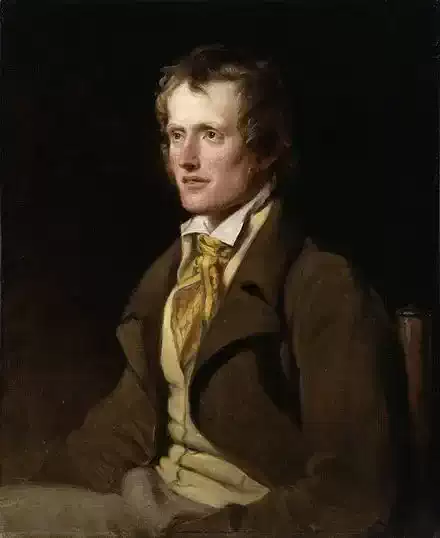
John Clare
The Cellar Door
The Cellar Door
By the old tavern door on the causey there lay
A hogshead of stingo just rolled from a dray,
And there stood the blacksmith awaiting a drop
As dry as the cinders that lay in his shop;
And there stood the cobbler as dry as a bun,
Almost crackt like a bucket when left in the sun.
He'd whetted his knife upon pendil and hone
Till he'd not got a spittle to moisten the stone;
So ere he could work--though he'd lost the whole day--
He must wait the new broach and bemoisten his clay.
The cellar was empty, each barrel was drained
To its dregs--and Sir John like a rebel remained
In the street--for removal too powerful and large
For two or three topers to take into charge.
Odd zooks, said a gipsey, with bellows to mend,
Had I strength I would just be for helping a friend
To walk on his legs: but a child in the street
Had as much power as he to put John on his feet.
Then up came the blacksmith: Sir Barley, said he,
I should just like to storm your old tower for a spree;
And my strength for your strength and bar your renown
I'd soon try your spirit by cracking your crown.
And the cobbler he tuckt up his apron and spit
In his hands for a burster--but devil a bit
Would he move--so as yet they made nothing of land;
For there lay the knight like a whale in the sand.
Said the tinker: If I could but drink of his vein
I should just be as strong and as stubborn again.
Push along, said the toper, the cellar's adry:
There's nothing to moisten the mouth of a fly.
Says the host, We shall burn out with thirst, he's so big.
There's a cag of small swipes half as sour as a wig.
In such like extremes, why, extremes will come pat;
So let's go and wet all our whistles with that.
Says the gipsey, May I never bottom a chair
If I drink of small swipes while Sir John's lying there.
And the blacksmith he threw off his apron and swore
Small swipes should bemoisten his gullet no more:
Let it out on the floor for the dry cock-a-roach--
And he held up his hammer with threatens to broach
Sir John in his castle without leave or law
And suck out his blood with a reed or a straw
Ere he'd soak at the swipes--and he turned him to start,
Till the host for high treason came down a full quart.
Just then passed the dandy and turned up his nose:
They'd fain have him shove, but he looked at his clothes
And nipt his nose closer and twirled his stick round
And simpered, Tis nuisance to lie on the ground.
But Bacchus, he laughed from the old tavern sign,
Saying, Go on, thou shadow, and let the sun shine.
Then again they all tried, and the tinker he swore
That the hogshead had grown twice as heavy or more.
Nay nay, said the toper, and reeled as he spoke,
We're all getting weak, that's the end of the joke.
The ploughman came up and cut short his old tune,
Hallooed 'woi' to his horses and though it was June
Said he'd help them an hour ere he'd keep them adry;
Well done, said the blacksmith with hopes running high;
He moves, and, by jingo, success to the plough!
Aye aye, said the cobbler, we'll conquer him now.
The hogshead rolled forward, the toper fell back,
And the host laughed aloud as his sides they would crack
To see the old tinker's toil make such a gap
In his coat as to rend it from collar to flap.
But the tinker he grumbled and cried Fiddle-dee!
This garment hath been an old tenant with me;
And a needle and thread with a little good skill
When I've leisure will make it stand more weathers still.
Then crack went his breeks from the hip to the knee
With his thrusting--no matter; for nothing cared he.
So long as Sir John rolled along to the door,
He's a chip of our block, said the blacksmith, and swore;
And as sure as I live to drive nails in a shoe
He shall have at my cost a full pitcher or two.
And the toper he hiccuped--which hindered an oath--
So long as he'd credit, he'd pitcher them both.
But the host stopt to hint when he'd ordered the dray
Sir Barleycorn's order was purchase and pay.
And now the old knight is imprisoned and ta'en
To waste in the tavern man's cellar again.
And now, said the blacksmith, let forfeits come first
For the insult swipes offered, or his hoops I will burst.
Here it is, my old hearties--Then drink your thirst full,
Said the host, for the stingo is worth a strong pull.
Never fear for your legs if they're broken to-day;
Winds only blow straws, dust, and feathers away.
But the cask that is full, like a giant he lies,
And giants alone can his spirits capsize.
If he lies in the path, though a king's coming bye,
John Barleycorn's mighty and there he will lie.
Then the toper sat down with a hiccup and felt
If he'd still an odd coin in his pocket to melt,
And he made a wry face, for his pocket was bare.
--But he laughed and danced up, What, old boy, are you there?
When he felt that a stiver had got to his knee
Through a hole in his fob, and right happy was he.
Says the tinker, I've brawled till no breath I have got
And not met with twopence to purchase a pot.
Says the toper, I've powder to charge a long gun,
And a stiver I've found when I thought I'd got none;
So helping a thirsty old friend in his need
Is my duty--take heart, thou art welcome indeed.
Then the smith with his tools in Sir John made a breach,
And the toper he hiccuped and ended his speech;
And pulled at the quart, till the snob he declared
When he went to drink next that the bottom was bared.
No matter for that, said the toper, and grinned;
I had but a soak and neer rested for wind.
That's the law, said the smith, with a look rather vexed,
But the quart was a forfeit; so pay for the next.
Thus they talked of their skill and their labour till noon
When the sober man's toil was exactly half done,
And there the plough lay--people hardly could pass
And the horses let loose polished up the short grass
And browsed on the bottle of flags lying there,
By the gipsey's old budget, for mending a chair.
The miller's horse tied to the old smithy door
Stood stamping his feet, by the flies bitten sore,
Awaiting the smith as he wanted a shoe;
And he stampt till another fell off and made two:
Till the miller, expecting that all would get loose,
Went to seek him and cursed him outright for a goose;
But he dipt his dry beak in the mug once or twice
And forgot all his passion and toil in a trice.
And the flybitten horse at the old smithy post
Might stamp till his shoes and his legs they were lost.
He sung his old songs and forgot his old mill--
Blow winds high or low, she might rest her at will.
And the cobbler, in spite of his bustle for pelf,
Left the shop all the day to take care of itself.
And the toper who carried his house on his head,
No wife to be teazing, no bairns to be fed,
Would sit out the week or the month or the year
Or a life-time so long as he'd credit for beer.
The ploughman he talked of his skill as divine,
How he could plough thurrows as straight as a line;
And the blacksmith he swore, had he but the command,
He could shoe the king's hunter the best in the land;
And the cobbler declared, was his skill but once seen,
He should soon get an order for shoes from the queen.
But the tinker he swore he could beat them all three,
For gi' me a pair of old bellows, says he,
And I'll make them roar out like the wind in a storm
And make them blow fire out of coal hardly warm.
The toper said nothing but wished the quart full
And swore he could toss it all off at a pull.
Have one, said the tinker; but wit was away,
When the bet was to bind him he'd nothing to pay.
And thus in the face of life's sun-and-shower weather
They drank, bragged, and sung, and got merry together.
The sun he went down--the last gleam from his brow
Flung a smile of repose on the holiday plough;
The glooms they approached, and the dews like a rain
Fell thick and hung pearls on the old sorrel mane
Of the horse that the miller had brought to be shod,
And the morning awoke, saw a sight rather odd--
For a bit of the halter still hung at the door,
Bit through by the horse now at feed on the moor;
And the old tinker's budget lay still in the weather,
While all kept on singing and drinking together.
By the old tavern door on the causey there lay
A hogshead of stingo just rolled from a dray,
And there stood the blacksmith awaiting a drop
As dry as the cinders that lay in his shop;
And there stood the cobbler as dry as a bun,
Almost crackt like a bucket when left in the sun.
He'd whetted his knife upon pendil and hone
Till he'd not got a spittle to moisten the stone;
So ere he could work--though he'd lost the whole day--
He must wait the new broach and bemoisten his clay.
The cellar was empty, each barrel was drained
To its dregs--and Sir John like a rebel remained
In the street--for removal too powerful and large
For two or three topers to take into charge.
Odd zooks, said a gipsey, with bellows to mend,
Had I strength I would just be for helping a friend
To walk on his legs: but a child in the street
Had as much power as he to put John on his feet.
Then up came the blacksmith: Sir Barley, said he,
I should just like to storm your old tower for a spree;
And my strength for your strength and bar your renown
I'd soon try your spirit by cracking your crown.
And the cobbler he tuckt up his apron and spit
In his hands for a burster--but devil a bit
Would he move--so as yet they made nothing of land;
For there lay the knight like a whale in the sand.
Said the tinker: If I could but drink of his vein
I should just be as strong and as stubborn again.
Push along, said the toper, the cellar's adry:
There's nothing to moisten the mouth of a fly.
Says the host, We shall burn out with thirst, he's so big.
There's a cag of small swipes half as sour as a wig.
In such like extremes, why, extremes will come pat;
So let's go and wet all our whistles with that.
Says the gipsey, May I never bottom a chair
If I drink of small swipes while Sir John's lying there.
And the blacksmith he threw off his apron and swore
Small swipes should bemoisten his gullet no more:
Let it out on the floor for the dry cock-a-roach--
And he held up his hammer with threatens to broach
Sir John in his castle without leave or law
And suck out his blood with a reed or a straw
Ere he'd soak at the swipes--and he turned him to start,
Till the host for high treason came down a full quart.
Just then passed the dandy and turned up his nose:
They'd fain have him shove, but he looked at his clothes
And nipt his nose closer and twirled his stick round
And simpered, Tis nuisance to lie on the ground.
But Bacchus, he laughed from the old tavern sign,
Saying, Go on, thou shadow, and let the sun shine.
Then again they all tried, and the tinker he swore
That the hogshead had grown twice as heavy or more.
Nay nay, said the toper, and reeled as he spoke,
We're all getting weak, that's the end of the joke.
The ploughman came up and cut short his old tune,
Hallooed 'woi' to his horses and though it was June
Said he'd help them an hour ere he'd keep them adry;
Well done, said the blacksmith with hopes running high;
He moves, and, by jingo, success to the plough!
Aye aye, said the cobbler, we'll conquer him now.
The hogshead rolled forward, the toper fell back,
And the host laughed aloud as his sides they would crack
To see the old tinker's toil make such a gap
In his coat as to rend it from collar to flap.
But the tinker he grumbled and cried Fiddle-dee!
This garment hath been an old tenant with me;
And a needle and thread with a little good skill
When I've leisure will make it stand more weathers still.
Then crack went his breeks from the hip to the knee
With his thrusting--no matter; for nothing cared he.
So long as Sir John rolled along to the door,
He's a chip of our block, said the blacksmith, and swore;
And as sure as I live to drive nails in a shoe
He shall have at my cost a full pitcher or two.
And the toper he hiccuped--which hindered an oath--
So long as he'd credit, he'd pitcher them both.
But the host stopt to hint when he'd ordered the dray
Sir Barleycorn's order was purchase and pay.
And now the old knight is imprisoned and ta'en
To waste in the tavern man's cellar again.
And now, said the blacksmith, let forfeits come first
For the insult swipes offered, or his hoops I will burst.
Here it is, my old hearties--Then drink your thirst full,
Said the host, for the stingo is worth a strong pull.
Never fear for your legs if they're broken to-day;
Winds only blow straws, dust, and feathers away.
But the cask that is full, like a giant he lies,
And giants alone can his spirits capsize.
If he lies in the path, though a king's coming bye,
John Barleycorn's mighty and there he will lie.
Then the toper sat down with a hiccup and felt
If he'd still an odd coin in his pocket to melt,
And he made a wry face, for his pocket was bare.
--But he laughed and danced up, What, old boy, are you there?
When he felt that a stiver had got to his knee
Through a hole in his fob, and right happy was he.
Says the tinker, I've brawled till no breath I have got
And not met with twopence to purchase a pot.
Says the toper, I've powder to charge a long gun,
And a stiver I've found when I thought I'd got none;
So helping a thirsty old friend in his need
Is my duty--take heart, thou art welcome indeed.
Then the smith with his tools in Sir John made a breach,
And the toper he hiccuped and ended his speech;
And pulled at the quart, till the snob he declared
When he went to drink next that the bottom was bared.
No matter for that, said the toper, and grinned;
I had but a soak and neer rested for wind.
That's the law, said the smith, with a look rather vexed,
But the quart was a forfeit; so pay for the next.
Thus they talked of their skill and their labour till noon
When the sober man's toil was exactly half done,
And there the plough lay--people hardly could pass
And the horses let loose polished up the short grass
And browsed on the bottle of flags lying there,
By the gipsey's old budget, for mending a chair.
The miller's horse tied to the old smithy door
Stood stamping his feet, by the flies bitten sore,
Awaiting the smith as he wanted a shoe;
And he stampt till another fell off and made two:
Till the miller, expecting that all would get loose,
Went to seek him and cursed him outright for a goose;
But he dipt his dry beak in the mug once or twice
And forgot all his passion and toil in a trice.
And the flybitten horse at the old smithy post
Might stamp till his shoes and his legs they were lost.
He sung his old songs and forgot his old mill--
Blow winds high or low, she might rest her at will.
And the cobbler, in spite of his bustle for pelf,
Left the shop all the day to take care of itself.
And the toper who carried his house on his head,
No wife to be teazing, no bairns to be fed,
Would sit out the week or the month or the year
Or a life-time so long as he'd credit for beer.
The ploughman he talked of his skill as divine,
How he could plough thurrows as straight as a line;
And the blacksmith he swore, had he but the command,
He could shoe the king's hunter the best in the land;
And the cobbler declared, was his skill but once seen,
He should soon get an order for shoes from the queen.
But the tinker he swore he could beat them all three,
For gi' me a pair of old bellows, says he,
And I'll make them roar out like the wind in a storm
And make them blow fire out of coal hardly warm.
The toper said nothing but wished the quart full
And swore he could toss it all off at a pull.
Have one, said the tinker; but wit was away,
When the bet was to bind him he'd nothing to pay.
And thus in the face of life's sun-and-shower weather
They drank, bragged, and sung, and got merry together.
The sun he went down--the last gleam from his brow
Flung a smile of repose on the holiday plough;
The glooms they approached, and the dews like a rain
Fell thick and hung pearls on the old sorrel mane
Of the horse that the miller had brought to be shod,
And the morning awoke, saw a sight rather odd--
For a bit of the halter still hung at the door,
Bit through by the horse now at feed on the moor;
And the old tinker's budget lay still in the weather,
While all kept on singing and drinking together.
373
John Clare
Scandal
Scandal
She hastens out and scarcely pins her clothes
To hear the news and tell the news she knows;
She talks of sluts, marks each unmended gown,
Her self the dirtiest slut in all the town.
She stands with eager haste at slander's tale,
And drinks the news as drunkards drink their ale.
Excuse is ready at the biggest lie--
She only heard it and it passes bye.
The very cat looks up and knows her face
And hastens to the chair to get the place;
When once set down she never goes away,
Till tales are done and talk has nought to say.
She goes from house to house the village oer,
Her slander bothers everybody's door.
She hastens out and scarcely pins her clothes
To hear the news and tell the news she knows;
She talks of sluts, marks each unmended gown,
Her self the dirtiest slut in all the town.
She stands with eager haste at slander's tale,
And drinks the news as drunkards drink their ale.
Excuse is ready at the biggest lie--
She only heard it and it passes bye.
The very cat looks up and knows her face
And hastens to the chair to get the place;
When once set down she never goes away,
Till tales are done and talk has nought to say.
She goes from house to house the village oer,
Her slander bothers everybody's door.
344
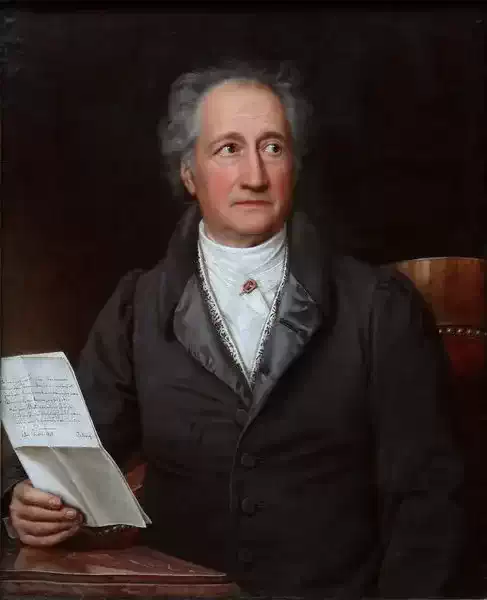
Johann Wolfgang von Goethe
Valediction
Valediction
I ONCE was fond of fools,
And bid them come each day;
Then each one brought his tools
The carpenter to play;
The roof to strip first choosing,
Another to supply,
The wood as trestles using,
To move it by-and-by,
While here and there they ran,
And knock'd against each other;
To fret I soon began,
My anger could not smother,
So cried, "Get out, ye fools!"
At this they were offended
Then each one took his tools,
And so our friendship ended.
Since that, I've wiser been,
And sit beside my door;
When one of them is seen,
I cry, "Appear no more!"
"Hence, stupid knave!" I bellow:
At this he's angry too:
"You impudent old fellow!
And pray, sir, who are you?
Along the streets we riot,
And revel at the fair;
But yet we're pretty quiet,
And folks revile us ne'er.
Don't call us names, then, please!"--
At length I meet with ease,
For now they leave my door-
'Tis better than before!
I ONCE was fond of fools,
And bid them come each day;
Then each one brought his tools
The carpenter to play;
The roof to strip first choosing,
Another to supply,
The wood as trestles using,
To move it by-and-by,
While here and there they ran,
And knock'd against each other;
To fret I soon began,
My anger could not smother,
So cried, "Get out, ye fools!"
At this they were offended
Then each one took his tools,
And so our friendship ended.
Since that, I've wiser been,
And sit beside my door;
When one of them is seen,
I cry, "Appear no more!"
"Hence, stupid knave!" I bellow:
At this he's angry too:
"You impudent old fellow!
And pray, sir, who are you?
Along the streets we riot,
And revel at the fair;
But yet we're pretty quiet,
And folks revile us ne'er.
Don't call us names, then, please!"--
At length I meet with ease,
For now they leave my door-
'Tis better than before!
368
Johann Wolfgang von Goethe
The Yelpers
The Yelpers
OUR rides in all directions bend,
For business or for pleasure,
Yet yelpings on our steps attend,
And barkings without measure.
The dog that in our stable dwells,
After our heels is striding,
And all the while his noisy yells
But show that we are riding.
OUR rides in all directions bend,
For business or for pleasure,
Yet yelpings on our steps attend,
And barkings without measure.
The dog that in our stable dwells,
After our heels is striding,
And all the while his noisy yells
But show that we are riding.
334
Johann Wolfgang von Goethe
The Wanderer's Storm-Song
The Wanderer's Storm-Song
He whom thou ne'er leavest, Genius,
Feels no dread within his heart
At the tempest or the rain.
He whom thou ne'er leavest, Genius,
Will to the rain-clouds,
Will to the hailstorm,
Sing in reply
As the lark sings,
Oh thou on high!
Him whom thou ne'er leavest, Genius,
Thou wilt raise above the mud-track
With thy fiery pinions.
He will wander,
As, with flowery feet,
Over Deucalion's dark flood,
Python-slaying, light, glorious,
Pythius Apollo.
Him whom thou ne'er leavest, Genius,
Thou wilt place upon thy fleecy pinion
When he sleepeth on the rock,--
Thou wilt shelter with thy guardian wing
In the forest's midnight hour.
Him whom thou ne'er leavest, Genius,
Thou wilt wrap up warmly
In the snow-drift;
Tow'rd the warmth approach the Muses,
Tow'rd the warmth approach the Graces.
Ye Muses, hover round me!
Ye Graces also!
That is water, that is earth,
And the son of water and of earth
Over which I wander,
Like the gods.
Ye are pure, like the heart of the water,
Ye are pure like the marrow of earth,
Hov'ring round me, while I hover
Over water, o'er the earth
Like the gods.
Shall he, then, return,
The small, the dark, the fiery peasant?
Shall he, then, return, waiting
Only thy gifts, oh Father Bromius,
And brightly gleaming, warmth-spreading fire?
Return with joy?
And I, whom ye attended,
Ye Muses and ye Graces,
Whom all awaits that ye,
Ye Muses and ye Graces,
Of circling bliss in life
Have glorified--shall I
Return dejected?
Father Bromius!
Thourt the Genius,
Genius of ages,
Thou'rt what inward glow
To Pindar was,
What to the world
Phoebus Apollo.
Woe! Woe Inward warmth,
Spirit-warmth,
Central-point!
Glow, and vie with
Phoebus Apollo!
Coldly soon
His regal look
Over thee will swiftly glide,-
Envy-struck
Linger o'er the cedar's strength,
Which, to flourish,
Waits him not.
Why doth my lay name thee the last?
Thee, from whom it began,
Thee, in whom it endeth,
Thee, from whom it flows,
Jupiter Pluvius!
Tow'rd thee streams my song.
And a Castalian spring
Runs as a fellow-brook,
Runs to the idle ones,
Mortal, happy ones,
Apart from thee,
Who cov'rest me around,
Jupiter Pluvius!
Not by the elm-tree
Him didst thou visit,
With the pair of doves
Held in his gentle arm,--
With the beauteous garland of roses,--
Caressing him, so blest in his flowers,
Anacreon,
Storm-breathing godhead!
Not in the poplar grove,
Near the Sybaris' strand,
Not on the mountain's
Sun-illumined brow
Didst thou seize him,
The flower-singing,
Honey-breathing,
Sweetly nodding
Theocritus.
When the wheels were rattling,
Wheel on wheel tow'rd the goal,
High arose
The sound of the lash
Of youths with victory glowing,
In the dust rolling,
As from the mountain fall
Showers of stones in the vale--
Then thy soul was brightly glowing, Pindar--
Glowing? Poor heart!
There, on the hill,--
Heavenly might!
But enough glow
Thither to wend,
Where is my cot!
He whom thou ne'er leavest, Genius,
Feels no dread within his heart
At the tempest or the rain.
He whom thou ne'er leavest, Genius,
Will to the rain-clouds,
Will to the hailstorm,
Sing in reply
As the lark sings,
Oh thou on high!
Him whom thou ne'er leavest, Genius,
Thou wilt raise above the mud-track
With thy fiery pinions.
He will wander,
As, with flowery feet,
Over Deucalion's dark flood,
Python-slaying, light, glorious,
Pythius Apollo.
Him whom thou ne'er leavest, Genius,
Thou wilt place upon thy fleecy pinion
When he sleepeth on the rock,--
Thou wilt shelter with thy guardian wing
In the forest's midnight hour.
Him whom thou ne'er leavest, Genius,
Thou wilt wrap up warmly
In the snow-drift;
Tow'rd the warmth approach the Muses,
Tow'rd the warmth approach the Graces.
Ye Muses, hover round me!
Ye Graces also!
That is water, that is earth,
And the son of water and of earth
Over which I wander,
Like the gods.
Ye are pure, like the heart of the water,
Ye are pure like the marrow of earth,
Hov'ring round me, while I hover
Over water, o'er the earth
Like the gods.
Shall he, then, return,
The small, the dark, the fiery peasant?
Shall he, then, return, waiting
Only thy gifts, oh Father Bromius,
And brightly gleaming, warmth-spreading fire?
Return with joy?
And I, whom ye attended,
Ye Muses and ye Graces,
Whom all awaits that ye,
Ye Muses and ye Graces,
Of circling bliss in life
Have glorified--shall I
Return dejected?
Father Bromius!
Thourt the Genius,
Genius of ages,
Thou'rt what inward glow
To Pindar was,
What to the world
Phoebus Apollo.
Woe! Woe Inward warmth,
Spirit-warmth,
Central-point!
Glow, and vie with
Phoebus Apollo!
Coldly soon
His regal look
Over thee will swiftly glide,-
Envy-struck
Linger o'er the cedar's strength,
Which, to flourish,
Waits him not.
Why doth my lay name thee the last?
Thee, from whom it began,
Thee, in whom it endeth,
Thee, from whom it flows,
Jupiter Pluvius!
Tow'rd thee streams my song.
And a Castalian spring
Runs as a fellow-brook,
Runs to the idle ones,
Mortal, happy ones,
Apart from thee,
Who cov'rest me around,
Jupiter Pluvius!
Not by the elm-tree
Him didst thou visit,
With the pair of doves
Held in his gentle arm,--
With the beauteous garland of roses,--
Caressing him, so blest in his flowers,
Anacreon,
Storm-breathing godhead!
Not in the poplar grove,
Near the Sybaris' strand,
Not on the mountain's
Sun-illumined brow
Didst thou seize him,
The flower-singing,
Honey-breathing,
Sweetly nodding
Theocritus.
When the wheels were rattling,
Wheel on wheel tow'rd the goal,
High arose
The sound of the lash
Of youths with victory glowing,
In the dust rolling,
As from the mountain fall
Showers of stones in the vale--
Then thy soul was brightly glowing, Pindar--
Glowing? Poor heart!
There, on the hill,--
Heavenly might!
But enough glow
Thither to wend,
Where is my cot!
349
Johann Wolfgang von Goethe
The Maid Of The Mill's Treachery
The Maid Of The Mill's Treachery
WHENCE comes our friend so hastily,
When scarce the Eastern sky is grey?
Hath he just ceased, though cold it be,
In yonder holy spot to pray?
The brook appears to hem his path,
Would he barefooted o'er it go?
Why curse his orisons in wrath,
Across those heights beclad with snow?
Alas! his warm bed he bath left,
Where he had look'd for bliss, I ween;
And if his cloak too, had been reft,
How fearful his disgrace had been!
By yonder villain sorely press'd,
His wallet from him has been torn;
Our hapless friend has been undress'd,
Left well nigh naked as when born.
The reason why he came this road,
Is that he sought a pair of eyes,
Which, at the mill, as brightly glow'd
As those that are in Paradise.
He will not soon again be there;
From out the house he quickly hied,
And when he gain'd the open air,
Thus bitterly and loudly cried
'Within her gaze, so dazzling bright,
No word of treachery I could read;
She seem'd to see me with delight,
Yet plann'd e'en then this cruel deed!
Could I, when basking in her smile,
Dream of the treason in her breast?
She bade kind Cupid stay awhile,
And he was there, to make us blest.
'To taste of love's sweet ecstasy
Throughout the night, that endless seem'd,
And for her mother's help to cry
Only when morning sunlight beam'd!
A dozen of her kith and kin,
A very human flood, in-press'd
Her cousins came, her aunts peer'd in,
And uncles, brothers, and the rest.
'Then what a tumult, fierce and loud!
Each seem'd a beast of prey to be;
The maiden's honour all the crowd,
With fearful shout, demand of me.
Why should they, madmen-like, begin
To fall upon a guiltless youth?
For he who such a prize would win,
Far nimbler needs must be, in truth.
'The way to follow up with skill
His freaks, by love betimes is known:
He ne'er will leave, within a mill,
Sweet flowers for sixteen years alone.-
They stole my clothes away,-yes, all!
And tried my cloak besides to steal.
How strange that any house so small
So many rascals could conceal!
'Then I sprang up, and raved, and swore,
To force a passage through them there.
I saw the treacherous maid once more,
And she was still, alas, so fair
They all gave way before my wrath,
Wild outcries flew about pell-mell;
At length I managed to rush forth,
With voice of thunder, from that hell.
'As maidens of the town we fly,
We'll shun you maidens of the village;
Leave it to those of quality
Their humble worshippers to pillage.
Yet if ye are of practised skill,
And of all tender ties afraid,
Exchange your lovers, if ye will,
But never let them be betray'd.'
Thus sings he in the winter-night,
While not a blade of grass was green.
I laugh'd to see his piteous plight,
For it was well-deserved, I ween.
And may this be the fate of all,
Who treat by day their true loves ill,
And, with foolhardy daring, crawl
By night to Cupid's treacherous mill!
WHENCE comes our friend so hastily,
When scarce the Eastern sky is grey?
Hath he just ceased, though cold it be,
In yonder holy spot to pray?
The brook appears to hem his path,
Would he barefooted o'er it go?
Why curse his orisons in wrath,
Across those heights beclad with snow?
Alas! his warm bed he bath left,
Where he had look'd for bliss, I ween;
And if his cloak too, had been reft,
How fearful his disgrace had been!
By yonder villain sorely press'd,
His wallet from him has been torn;
Our hapless friend has been undress'd,
Left well nigh naked as when born.
The reason why he came this road,
Is that he sought a pair of eyes,
Which, at the mill, as brightly glow'd
As those that are in Paradise.
He will not soon again be there;
From out the house he quickly hied,
And when he gain'd the open air,
Thus bitterly and loudly cried
'Within her gaze, so dazzling bright,
No word of treachery I could read;
She seem'd to see me with delight,
Yet plann'd e'en then this cruel deed!
Could I, when basking in her smile,
Dream of the treason in her breast?
She bade kind Cupid stay awhile,
And he was there, to make us blest.
'To taste of love's sweet ecstasy
Throughout the night, that endless seem'd,
And for her mother's help to cry
Only when morning sunlight beam'd!
A dozen of her kith and kin,
A very human flood, in-press'd
Her cousins came, her aunts peer'd in,
And uncles, brothers, and the rest.
'Then what a tumult, fierce and loud!
Each seem'd a beast of prey to be;
The maiden's honour all the crowd,
With fearful shout, demand of me.
Why should they, madmen-like, begin
To fall upon a guiltless youth?
For he who such a prize would win,
Far nimbler needs must be, in truth.
'The way to follow up with skill
His freaks, by love betimes is known:
He ne'er will leave, within a mill,
Sweet flowers for sixteen years alone.-
They stole my clothes away,-yes, all!
And tried my cloak besides to steal.
How strange that any house so small
So many rascals could conceal!
'Then I sprang up, and raved, and swore,
To force a passage through them there.
I saw the treacherous maid once more,
And she was still, alas, so fair
They all gave way before my wrath,
Wild outcries flew about pell-mell;
At length I managed to rush forth,
With voice of thunder, from that hell.
'As maidens of the town we fly,
We'll shun you maidens of the village;
Leave it to those of quality
Their humble worshippers to pillage.
Yet if ye are of practised skill,
And of all tender ties afraid,
Exchange your lovers, if ye will,
But never let them be betray'd.'
Thus sings he in the winter-night,
While not a blade of grass was green.
I laugh'd to see his piteous plight,
For it was well-deserved, I ween.
And may this be the fate of all,
Who treat by day their true loves ill,
And, with foolhardy daring, crawl
By night to Cupid's treacherous mill!
397
Johann Wolfgang von Goethe
The Critic
The Critic
I HAD a fellow as my guest,
Not knowing he was such a pest,
And gave him just my usual fare;
He ate his fill of what was there,
And for desert my best things swallow'd,
Soon as his meal was o'er, what follow'd?
Led by the Deuce, to a neighbour he went,
And talk'd of my food to his heart's content:
"The soup might surely have had more spice,
The meat was ill-brown'd, and the wine wasn't nice."
A thousand curses alight on his head!
'Tis a critic, I vow! Let the dog be struck dead!
I HAD a fellow as my guest,
Not knowing he was such a pest,
And gave him just my usual fare;
He ate his fill of what was there,
And for desert my best things swallow'd,
Soon as his meal was o'er, what follow'd?
Led by the Deuce, to a neighbour he went,
And talk'd of my food to his heart's content:
"The soup might surely have had more spice,
The meat was ill-brown'd, and the wine wasn't nice."
A thousand curses alight on his head!
'Tis a critic, I vow! Let the dog be struck dead!
398
Johann Wolfgang von Goethe
Phoebus And Hermes
Phoebus And Hermes
DELOS' stately ruler, and Maia's son, the adroit one,
Warmly were striving, for both sought the great prize to obtain.
Hermes the lyre demanded, the lyre was claim'd by Apollo,
Yet were the hearts of the foes fruitlessly nourish'd by hope.
For on a sudden Ares burst in, with fury decisive,
Dashing in twain the gold toy, brandishing wildly his sword.
Hermes, malicious one, laughed beyond measure; yet deep-seated sorrow
Seized upon Phoebus's heart, seized on the heart of each Muse.
DELOS' stately ruler, and Maia's son, the adroit one,
Warmly were striving, for both sought the great prize to obtain.
Hermes the lyre demanded, the lyre was claim'd by Apollo,
Yet were the hearts of the foes fruitlessly nourish'd by hope.
For on a sudden Ares burst in, with fury decisive,
Dashing in twain the gold toy, brandishing wildly his sword.
Hermes, malicious one, laughed beyond measure; yet deep-seated sorrow
Seized upon Phoebus's heart, seized on the heart of each Muse.
369
James Whitcomb Riley
Mylo Jones's Wife
Mylo Jones's Wife
'Mylo Jones's wife' was all
I heerd, mighty near, last Fall--
Visitun relations down
T'other side of Morgantown!
Mylo Jones's wife she does
This and that, and 'those' and 'thus'!-Can't
'bide babies in her sight--
Ner no childern, day and night,
Whoopin' round the premises--
NER NO NOTHIN' ELSE, I guess!
Mylo Jones's wife she 'lows
She's the boss of her own house!-Mylo--
consequences is--
Stays whare things seem SOME like HIS,--
Uses, mostly, with the stock--
Coaxin' 'Old Kate' not to balk,
Ner kick hoss-flies' branes out, ner
Act, I s'pose, so much like HER!
Yit the wimmern-folks tells you
She's PERFECTION.--Yes they do!
Mylo's wife she says she's found
Home hain't home with MEN-FOLKS round
When they's work like HERN to do-
Picklin' pears and BUTCHERN, too,
And a-rendern lard, and then
Cookin' fer a pack of men
To come trackin' up the flore
SHE'S scrubbed TEL she'll scrub no MORE!--
Yit she'd keep things clean ef they
Made her scrub tel Jedgmunt Day!
Mylo Jones's wife she sews
Carpet-rags and patches clothes
Jest year IN and OUT!--and yit
Whare's the livin' use of it?
She asts Mylo that.--And he
Gits back whare he'd ruther be,
With his team;--jest PLOWS--and don't
Never sware--like some folks won't!
Think ef HE'D CUT LOOSE, I gum!
'D he'p his heavenly chances some!
Mylo's wife don't see no use,
Ner no reason ner excuse
Fer his pore relations to
Hang round like they allus do!
Thare 'bout onc't a year--and SHE--
She jest GA'NTS 'em, folks tells me,
On spiced pears!--Pass Mylo one,
He says 'No, he don't chuse none!'
Workin'men like Mylo they
'D ort to have MEAT ev'ry day!
Dad-burn Mylo Jones's wife!
Ruther rake a blame caseknife
'Crost my wizzen than to see
Sich a womern rulin' ME!--
Ruther take and turn in and
Raise a fool mule-colt by hand'
MYLO, though--od-rot the man!--
Jest keeps ca'm--like some folks CAN--
And 'lows sich as her, I s'pose,
Is MAN'S HE'PMEET'--Mercy knows!
'Mylo Jones's wife' was all
I heerd, mighty near, last Fall--
Visitun relations down
T'other side of Morgantown!
Mylo Jones's wife she does
This and that, and 'those' and 'thus'!-Can't
'bide babies in her sight--
Ner no childern, day and night,
Whoopin' round the premises--
NER NO NOTHIN' ELSE, I guess!
Mylo Jones's wife she 'lows
She's the boss of her own house!-Mylo--
consequences is--
Stays whare things seem SOME like HIS,--
Uses, mostly, with the stock--
Coaxin' 'Old Kate' not to balk,
Ner kick hoss-flies' branes out, ner
Act, I s'pose, so much like HER!
Yit the wimmern-folks tells you
She's PERFECTION.--Yes they do!
Mylo's wife she says she's found
Home hain't home with MEN-FOLKS round
When they's work like HERN to do-
Picklin' pears and BUTCHERN, too,
And a-rendern lard, and then
Cookin' fer a pack of men
To come trackin' up the flore
SHE'S scrubbed TEL she'll scrub no MORE!--
Yit she'd keep things clean ef they
Made her scrub tel Jedgmunt Day!
Mylo Jones's wife she sews
Carpet-rags and patches clothes
Jest year IN and OUT!--and yit
Whare's the livin' use of it?
She asts Mylo that.--And he
Gits back whare he'd ruther be,
With his team;--jest PLOWS--and don't
Never sware--like some folks won't!
Think ef HE'D CUT LOOSE, I gum!
'D he'p his heavenly chances some!
Mylo's wife don't see no use,
Ner no reason ner excuse
Fer his pore relations to
Hang round like they allus do!
Thare 'bout onc't a year--and SHE--
She jest GA'NTS 'em, folks tells me,
On spiced pears!--Pass Mylo one,
He says 'No, he don't chuse none!'
Workin'men like Mylo they
'D ort to have MEAT ev'ry day!
Dad-burn Mylo Jones's wife!
Ruther rake a blame caseknife
'Crost my wizzen than to see
Sich a womern rulin' ME!--
Ruther take and turn in and
Raise a fool mule-colt by hand'
MYLO, though--od-rot the man!--
Jest keeps ca'm--like some folks CAN--
And 'lows sich as her, I s'pose,
Is MAN'S HE'PMEET'--Mercy knows!
295
James Whitcomb Riley
Down On Wriggle Crick
Down On Wriggle Crick
'Best time to kill a hog's when he's fat.' --Old Saw.
Mostly folks is law-abidin'
Down on Wriggle Crick--,
Seein' they's no Squire residin'
In our bailywick;
No grand juries, no suppeenies,
Ner no vested rights to pick
Out yer man, jerk up and jail ef
He's outragin' Wriggle Crick!
Wriggle Crick hain't got no lawin',
Ner no suits to beat;
Ner no court-house gee-and-hawin'
Like a County-seat;
Hain't no waitin' round fer verdick,
Ner non-gittin' witness-fees;
Ner no thiefs 'at gits 'new heain's,'
By some lawyer slick as grease!
Wriggle Cricks's leadin' spirit
Is old Johnts Culwell--,
Keeps post-office, and right near it
Owns what's called 'The Grand Hotel--'
(Warehouse now--) buys wheat and ships it;
Gits out ties, and trades in stock,
And knows all the high-toned drummers
'Twixt South Bend and Mishawauk'
Last year comes along a feller--
Sharper 'an a lance-Stovepipe-
hat and silk umbreller,
And a boughten all-wool pants--,
Tinkerin of clocks and watches:
Says a trial's all he wants--
And rents out the tavern-office
Next to Uncle Johnts.
Well--. He tacked up his k'dentials,
And got down to biz--.
Captured Johnts by cuttin' stenchils
Fer them old wheat-sacks o' his--.
Fixed his clock, in the post-office--
Painted fer him, clean and slick,
'Crost his safe, in gold-leaf letters,
'J. Culwells's Wriggle Crick.'
Any kindo' job you keered to
Resk him with, and bring,
He'd fix fer you-- jest appeared to
Turn his hand to anything--!
Rings, er earbobs, er umbrellers--
Glue a cheer er chany doll--,
W'y, of all the beatin' fellers,
He Jest beat 'em all!
Made his friends, but wouldn't stop there--,
One mistake he learnt,
That was, sleepin' in his shop there--.
And one Sund'y night it burnt!
Come in one o' jest a-sweepin'
All the whole town high and dry--
And that feller, when they waked him,
Suffocatin', mighty nigh!
Johnts he drug him from the buildin',
He'pless-- 'peared to be--,
And the women and the childern
Drenchin' him with sympathy!
But I noticed Johnts helt on him
With a' extry lovin' grip,
And the men-folks gethered round him
In most warmest pardership!
That's the whole mess, grease-and-dopin'!
Johnt's safe was saved--,
But the lock was found sprung open,
And the inside caved.
Was no trial-- ner no jury--
Ner no jedge ner court-house-click--.
Circumstances alters cases
Down on Wriggle Crick!
'Best time to kill a hog's when he's fat.' --Old Saw.
Mostly folks is law-abidin'
Down on Wriggle Crick--,
Seein' they's no Squire residin'
In our bailywick;
No grand juries, no suppeenies,
Ner no vested rights to pick
Out yer man, jerk up and jail ef
He's outragin' Wriggle Crick!
Wriggle Crick hain't got no lawin',
Ner no suits to beat;
Ner no court-house gee-and-hawin'
Like a County-seat;
Hain't no waitin' round fer verdick,
Ner non-gittin' witness-fees;
Ner no thiefs 'at gits 'new heain's,'
By some lawyer slick as grease!
Wriggle Cricks's leadin' spirit
Is old Johnts Culwell--,
Keeps post-office, and right near it
Owns what's called 'The Grand Hotel--'
(Warehouse now--) buys wheat and ships it;
Gits out ties, and trades in stock,
And knows all the high-toned drummers
'Twixt South Bend and Mishawauk'
Last year comes along a feller--
Sharper 'an a lance-Stovepipe-
hat and silk umbreller,
And a boughten all-wool pants--,
Tinkerin of clocks and watches:
Says a trial's all he wants--
And rents out the tavern-office
Next to Uncle Johnts.
Well--. He tacked up his k'dentials,
And got down to biz--.
Captured Johnts by cuttin' stenchils
Fer them old wheat-sacks o' his--.
Fixed his clock, in the post-office--
Painted fer him, clean and slick,
'Crost his safe, in gold-leaf letters,
'J. Culwells's Wriggle Crick.'
Any kindo' job you keered to
Resk him with, and bring,
He'd fix fer you-- jest appeared to
Turn his hand to anything--!
Rings, er earbobs, er umbrellers--
Glue a cheer er chany doll--,
W'y, of all the beatin' fellers,
He Jest beat 'em all!
Made his friends, but wouldn't stop there--,
One mistake he learnt,
That was, sleepin' in his shop there--.
And one Sund'y night it burnt!
Come in one o' jest a-sweepin'
All the whole town high and dry--
And that feller, when they waked him,
Suffocatin', mighty nigh!
Johnts he drug him from the buildin',
He'pless-- 'peared to be--,
And the women and the childern
Drenchin' him with sympathy!
But I noticed Johnts helt on him
With a' extry lovin' grip,
And the men-folks gethered round him
In most warmest pardership!
That's the whole mess, grease-and-dopin'!
Johnt's safe was saved--,
But the lock was found sprung open,
And the inside caved.
Was no trial-- ner no jury--
Ner no jedge ner court-house-click--.
Circumstances alters cases
Down on Wriggle Crick!
303
James Whitcomb Riley
A Variation
A Variation
I am tired of this!
Nothing else but loving!
Nothing else but kiss and kiss,
Coo, and turtle-doving!
Can't you change the order some?
Hate me just a little--come!
Lay aside your 'dears,'
'Darlings,' 'kings,' and 'princes!'--
Call me knave, and dry your tears--
Nothing in me winces,--
Call me something low and base--
Something that will suit the case!
Wish I had your eyes
And their drooping lashes!
I would dry their teary lies
Up with lightning-flashes--
Make your sobbing lips unsheathe
All the glitter of your teeth!
Can't you lift one word--
With some pang of laughter--
Louder than the drowsy bird
Crooning 'neath the rafter?
Just one bitter word, to shriek
Madly at me as I speak!
How I hate the fair
Beauty of your forehead!
How I hate your fragrant hair!
How I hate the torrid
Touches of your splendid lips,
And the kiss that drips and drips!
Ah, you pale at last!
And your face is lifted
Like a white sail to the blast,
And your hands are shifted
Into fists: and, towering thus,
You are simply glorious!
Now before me looms
Something more than human;
Something more than beauty blooms
In the wrath of Woman--
Something to bow down before
Reverently and adore.
I am tired of this!
Nothing else but loving!
Nothing else but kiss and kiss,
Coo, and turtle-doving!
Can't you change the order some?
Hate me just a little--come!
Lay aside your 'dears,'
'Darlings,' 'kings,' and 'princes!'--
Call me knave, and dry your tears--
Nothing in me winces,--
Call me something low and base--
Something that will suit the case!
Wish I had your eyes
And their drooping lashes!
I would dry their teary lies
Up with lightning-flashes--
Make your sobbing lips unsheathe
All the glitter of your teeth!
Can't you lift one word--
With some pang of laughter--
Louder than the drowsy bird
Crooning 'neath the rafter?
Just one bitter word, to shriek
Madly at me as I speak!
How I hate the fair
Beauty of your forehead!
How I hate your fragrant hair!
How I hate the torrid
Touches of your splendid lips,
And the kiss that drips and drips!
Ah, you pale at last!
And your face is lifted
Like a white sail to the blast,
And your hands are shifted
Into fists: and, towering thus,
You are simply glorious!
Now before me looms
Something more than human;
Something more than beauty blooms
In the wrath of Woman--
Something to bow down before
Reverently and adore.
253

Homero
The Iliad: Book 24
The Iliad: Book 24
The assembly now broke up and the people went their ways each to his
own ship. There they made ready their supper, and then bethought
them of the blessed boon of sleep; but Achilles still wept for
thinking of his dear comrade, and sleep, before whom all things bow,
could take no hold upon him. This way and that did he turn as he
yearned after the might and manfulness of Patroclus; he thought of all
they had done together, and all they had gone through both on the
field of battle and on the waves of the weary sea. As he dwelt on
these things he wept bitterly and lay now on his side, now on his
back, and now face downwards, till at last he rose and went out as one
distraught to wander upon the seashore. Then, when he saw dawn
breaking over beach and sea, he yoked his horses to his chariot, and
bound the body of Hector behind it that he might drag it about. Thrice
did he drag it round the tomb of the son of Menoetius, and then went
back into his tent, leaving the body on the ground full length and
with its face downwards. But Apollo would not suffer it to be
disfigured, for he pitied the man, dead though he now was; therefore
he shielded him with his golden aegis continually, that he might
take no hurt while Achilles was dragging him.
Thus shamefully did Achilles in his fury dishonour Hector; but the
blessed gods looked down in pity from heaven, and urged Mercury,
slayer of Argus, to steal the body. All were of this mind save only
Juno, Neptune, and Jove's grey-eyed daughter, who persisted in the
hate which they had ever borne towards Ilius with Priam and his
people; for they forgave not the wrong done them by Alexandrus in
disdaining the goddesses who came to him when he was in his
sheepyards, and preferring her who had offered him a wanton to his
ruin.
When, therefore, the morning of the twelfth day had now come,
Phoebus Apollo spoke among the immortals saying, "You gods ought to be
ashamed of yourselves; you are cruel and hard-hearted. Did not
Hector burn you thigh-bones of heifers and of unblemished goats? And
now dare you not rescue even his dead body, for his wife to look upon,
with his mother and child, his father Priam, and his people, who would
forthwith commit him to the flames, and give him his due funeral
rites? So, then, you would all be on the side of mad Achilles, who
knows neither right nor ruth? He is like some savage lion that in
the pride of his great strength and daring springs upon men's flocks
and gorges on them. Even so has Achilles flung aside all pity, and all
that conscience which at once so greatly banes yet greatly boons him
that will heed it. man may lose one far dearer than Achilles has losta
son, it may be, or a brother born from his own mother's womb; yet
when he has mourned him and wept over him he will let him bide, for it
takes much sorrow to kill a man; whereas Achilles, now that he has
slain noble Hector, drags him behind his chariot round the tomb of his
comrade. It were better of him, and for him, that he should not do so,
for brave though he be we gods may take it ill that he should vent his
fury upon dead clay."
Juno spoke up in a rage. "This were well," she cried, "O lord of the
silver bow, if you would give like honour to Hector and to Achilles;
but Hector was mortal and suckled at a woman's breast, whereas
Achilles is the offspring of a goddess whom I myself reared and
brought up. I married her to Peleus, who is above measure dear to
the immortals; you gods came all of you to her wedding; you feasted
along with them yourself and brought your lyre- false, and fond of low
company, that you have ever been."
Then said Jove, "Juno, be not so bitter. Their honour shall not be
equal, but of all that dwell in Ilius, Hector was dearest to the gods,
as also to myself, for his offerings never failed me. Never was my
altar stinted of its dues, nor of the drink-offerings and savour of
sacrifice which we claim of right. I shall therefore permit the body
of mighty Hector to be stolen; and yet this may hardly be without
Achilles coming to know it, for his mother keeps night and day
beside him. Let some one of you, therefore, send Thetis to me, and I
will impart my counsel to her, namely that Achilles is to accept a
ransom from Priam, and give up the body."
On this Iris fleet as the wind went forth to carry his message. Down
she plunged into the dark sea midway between Samos and rocky Imbrus;
the waters hissed as they closed over her, and she sank into the
bottom as the lead at the end of an ox-horn, that is sped to carry
death to fishes. She found Thetis sitting in a great cave with the
other sea-goddesses gathered round her; there she sat in the midst
of them weeping for her noble son who was to fall far from his own
land, on the rich plains of Troy. Iris went up to her and said,
"Rise Thetis; Jove, whose counsels fail not, bids you come to him."
And Thetis answered, "Why does the mighty god so bid me? I am in great
grief, and shrink from going in and out among the immortals. Still,
I will go, and the word that he may speak shall not be spoken in
vain."
The goddess took her dark veil, than which there can be no robe more
sombre, and went forth with fleet Iris leading the way before her. The
waves of the sea opened them a path, and when they reached the shore
they flew up into the heavens, where they found the all-seeing son
of Saturn with the blessed gods that live for ever assembled near him.
Minerva gave up her seat to her, and she sat down by the side of
father Jove. Juno then placed a fair golden cup in her hand, and spoke
to her in words of comfort, whereon Thetis drank and gave her back the
cup; and the sire of gods and men was the first to speak.
"So, goddess," said he, "for all your sorrow, and the grief that I
well know reigns ever in your heart, you have come hither to
Olympus, and I will tell you why I have sent for you. This nine days
past the immortals have been quarrelling about Achilles waster of
cities and the body of Hector. The gods would have Mercury slayer of
Argus steal the body, but in furtherance of our peace and amity
henceforward, I will concede such honour to your son as I will now
tell you. Go, then, to the host and lay these commands upon him; say
that the gods are angry with him, and that I am myself more angry than
them all, in that he keeps Hector at the ships and will not give him
up. He may thus fear me and let the body go. At the same time I will
send Iris to great Priam to bid him go to the ships of the Achaeans,
and ransom his son, taking with him such gifts for Achilles as may
give him satisfaction.
Silver-footed Thetis did as the god had told her, and forthwith down
she darted from the topmost summits of Olympus. She went to her
son's tents where she found him grieving bitterly, while his trusty
comrades round him were busy preparing their morning meal, for which
they had killed a great woolly sheep. His mother sat down beside him
and caressed him with her hand saying, "My son, how long will you keep
on thus grieving and making moan? You are gnawing at your own heart,
and think neither of food nor of woman's embraces; and yet these too
were well, for you have no long time to live, and death with the
strong hand of fate are already close beside you. Now, therefore, heed
what I say, for I come as a messenger from Jove; he says that the gods
are angry with you, and himself more angry than them all, in that
you keep Hector at the ships and will not give him up. Therefore let
him go, and accept a ransom for his body."
And Achilles answered, "So be it. If Olympian Jove of his own motion
thus commands me, let him that brings the ransom bear the body away."
Thus did mother and son talk together at the ships in long discourse
with one another. Meanwhile the son of Saturn sent Iris to the
strong city of Ilius. "Go," said he, "fleet Iris, from the mansions of
Olympus, and tell King Priam in Ilius, that he is to go to the ships
of the Achaeans and free the body of his dear son. He is to take
such gifts with him as shall give satisfaction to Achilles, and he
is to go alone, with no other Trojan, save only some honoured
servant who may drive his mules and waggon, and bring back the body of
him whom noble Achilles has slain. Let him have no thought nor fear of
death in his heart, for we will send the slayer of Argus to escort
him, and bring him within the tent of Achilles. Achilles will not kill
him nor let another do so, for he will take heed to his ways and sin
not, and he will entreat a suppliant with all honourable courtesy."
On this Iris, fleet as the wind, sped forth to deliver her
message. She went to Priam's house, and found weeping and
lamentation therein. His sons were seated round their father in the
outer courtyard, and their raiment was wet with tears: the old man sat
in the midst of them with his mantle wrapped close about his body, and
his head and neck all covered with the filth which he had clutched
as he lay grovelling in the mire. His daughters and his sons' wives
went wailing about the house, as they thought of the many and brave
men who lay dead, slain by the Argives. The messenger of Jove stood by
Priam and spoke softly to him, but fear fell upon him as she did so.
"Take heart," she said, "Priam offspring of Dardanus, take heart and
fear not. I bring no evil tidings, but am minded well towards you. I
come as a messenger from Jove, who though he be not near, takes
thought for you and pities you. The lord of Olympus bids you go and
ransom noble Hector, and take with you such gifts as shall give
satisfaction to Achilles. You are to go alone, with no Trojan, save
only some honoured servant who may drive your mules and waggon, and
bring back to the city the body of him whom noble Achilles has
slain. You are to have no thought, nor fear of death, for Jove will
send the slayer of Argus to escort you. When he has brought you within
Achilles' tent, Achilles will not kill you nor let another do so,
for he will take heed to his ways and sin not, and he will entreat a
suppliant with all honourable courtesy."
Iris went her way when she had thus spoken, and Priam told his
sons to get a mule-waggon ready, and to make the body of the waggon
fast upon the top of its bed. Then he went down into his fragrant
store-room, high-vaulted, and made of cedar-wood, where his many
treasures were kept, and he called Hecuba his wife. "Wife," said he,
"a messenger has come to me from Olympus, and has told me to go to the
ships of the Achaeans to ransom my dear son, taking with me such gifts
as shall give satisfaction to Achilles. What think you of this matter?
for my own part I am greatly moved to pass through the of the Achaeans
and go to their ships."
His wife cried aloud as she heard him, and said, "Alas, what has
become of that judgement for which you have been ever famous both
among strangers and your own people? How can you venture alone to
the ships of the Achaeans, and look into the face of him who has slain
so many of your brave sons? You must have iron courage, for if the
cruel savage sees you and lays hold on you, he will know neither
respect nor pity. Let us then weep Hector from afar here in our own
house, for when I gave him birth the threads of overruling fate were
spun for him that dogs should eat his flesh far from his parents, in
the house of that terrible man on whose liver I would fain fasten
and devour it. Thus would I avenge my son, who showed no cowardice
when Achilles slew him, and thought neither of Right nor of avoiding
battle as he stood in defence of Trojan men and Trojan women."
Then Priam said, "I would go, do not therefore stay me nor be as a
bird of ill omen in my house, for you will not move me. Had it been
some mortal man who had sent me some prophet or priest who divines
from sacrifice- I should have deemed him false and have given him no
heed; but now I have heard the goddess and seen her face to face,
therefore I will go and her saying shall not be in vain. If it be my
fate to die at the ships of the Achaeans even so would I have it;
let Achilles slay me, if I may but first have taken my son in my
arms and mourned him to my heart's comforting."
So saying he lifted the lids of his chests, and took out twelve
goodly vestments. He took also twelve cloaks of single fold, twelve
rugs, twelve fair mantles, and an equal number of shirts. He weighed
out ten talents of gold, and brought moreover two burnished tripods,
four cauldrons, and a very beautiful cup which the Thracians had given
him when he had gone to them on an embassy; it was very precious,
but he grudged not even this, so eager was he to ransom the body of
his son. Then he chased all the Trojans from the court and rebuked
them with words of anger. "Out," he cried, "shame and disgrace to me
that you are. Have you no grief in your own homes that you are come to
plague me here? Is it a small thing, think you, that the son of Saturn
has sent this sorrow upon me, to lose the bravest of my sons? Nay, you
shall prove it in person, for now he is gone the Achaeans will have
easier work in killing you. As for me, let me go down within the house
of Hades, ere mine eyes behold the sacking and wasting of the city."
He drove the men away with his staff, and they went forth as the old
man sped them. Then he called to his sons, upbraiding Helenus,
Paris, noble Agathon, Pammon, Antiphonus, Polites of the loud
battle-cry, Deiphobus, Hippothous, and Dius. These nine did the old
man call near him. "Come to me at once," he cried, "worthless sons who
do me shame; would that you had all been killed at the ships rather
than Hector. Miserable man that I am, I have had the bravest sons in
all Troy- noble Nestor, Troilus the dauntless charioteer, and Hector
who was a god among men, so that one would have thought he was son
to an immortal- yet there is not one of them left. Mars has slain them
and those of whom I am ashamed are alone left me. Liars, and light
of foot, heroes of the dance, robbers of lambs and kids from your
own people, why do you not get a waggon ready for me at once, and
put all these things upon it that I may set out on my way?"
Thus did he speak, and they feared the rebuke of their father.
They brought out a strong mule-waggon, newly made, and set the body of
the waggon fast on its bed. They took the mule-yoke from the peg on
which it hung, a yoke of boxwood with a knob on the top of it and
rings for the reins to go through. Then they brought a yoke-band
eleven cubits long, to bind the yoke to the pole; they bound it on
at the far end of the pole, and put the ring over the upright pin
making it fast with three turns of the band on either side the knob,
and bending the thong of the yoke beneath it. This done, they
brought from the store-chamber the rich ransom that was to purchase
the body of Hector, and they set it all orderly on the waggon; then
they yoked the strong harness-mules which the Mysians had on a time
given as a goodly present to Priam; but for Priam himself they yoked
horses which the old king had bred, and kept for own use.
Thus heedfully did Priam and his servant see to the yolking of their
cars at the palace. Then Hecuba came to them all sorrowful, with a
golden goblet of wine in her right hand, that they might make a
drink-offering before they set out. She stood in front of the horses
and said, "Take this, make a drink-offering to father Jove, and
since you are minded to go to the ships in spite of me, pray that
you may come safely back from the hands of your enemies. Pray to the
son of Saturn lord of the whirlwind, who sits on Ida and looks down
over all Troy, pray him to send his swift messenger on your right
hand, the bird of omen which is strongest and most dear to him of
all birds, that you may see it with your own eyes and trust it as
you go forth to the ships of the Danaans. If all-seeing Jove will
not send you this messenger, however set upon it you may be, I would
not have you go to the ships of the Argives."
And Priam answered, "Wife, I will do as you desire me; it is well to
lift hands in prayer to Jove, if so be he may have mercy upon me."
With this the old man bade the serving-woman pour pure water over
his hands, and the woman came, bearing the water in a bowl. He
washed his hands and took the cup from his wife; then he made the
drink-offering and prayed, standing in the middle of the courtyard and
turning his eyes to heaven. "Father Jove," he said, "that rulest
from Ida, most glorious and most great, grant that I may be received
kindly and compassionately in the tents of Achilles; and send your
swift messenger upon my right hand, the bird of omen which is
strongest and most dear to you of all birds, that I may see it with my
own eyes and trust it as I go forth to the ships of the Danaans."
So did he pray, and Jove the lord of counsel heard his prayer.
Forthwith he sent an eagle, the most unerring portent of all birds
that fly, the dusky hunter that men also call the Black Eagle. His
wings were spread abroad on either side as wide as the well-made and
well-bolted door of a rich man's chamber. He came to them flying
over the city upon their right hands, and when they saw him they
were glad and their hearts took comfort within them. The old man
made haste to mount his chariot, and drove out through the inner
gateway and under the echoing gatehouse of the outer court. Before him
went the mules drawing the four-wheeled waggon, and driven by wise
Idaeus; behind these were the horses, which the old man lashed with
his whip and drove swiftly through the city, while his friends
followed after, wailing and lamenting for him as though he were on his
road to death. As soon as they had come down from the city and had
reached the plain, his sons and sons-in-law who had followed him
went back to Ilius.
But Priam and Idaeus as they showed out upon the plain did not
escape the ken of all-seeing Jove, who looked down upon the old man
and pitied him; then he spoke to his son Mercury and said, "Mercury,
for it is you who are the most disposed to escort men on their way,
and to hear those whom you will hear, go, and so conduct Priam to
the ships of the Achaeans that no other of the Danaans shall see him
nor take note of him until he reach the son of Peleus."
Thus he spoke and Mercury, guide and guardian, slayer of Argus,
did as he was told. Forthwith he bound on his glittering golden
sandals with which he could fly like the wind over land and sea; he
took the wand with which he seals men's eyes in sleep, or wakes them
just as he pleases, and flew holding it in his hand till he came to
Troy and to the Hellespont. To look at, he was like a young man of
noble birth in the hey-day of his youth and beauty with the down
just coming upon his face.
Now when Priam and Idaeus had driven past the great tomb of Ilius,
they stayed their mules and horses that they might drink in the river,
for the shades of night were falling, when, therefore, Idaeus saw
Mercury standing near them he said to Priam, "Take heed, descendant of
Dardanus; here is matter which demands consideration. I see a man
who I think will presently fall upon us; let us fly with our horses,
or at least embrace his knees and implore him to take compassion
upon us?
When he heard this the old man's heart failed him, and he was in
great fear; he stayed where he was as one dazed, and the hair stood on
end over his whole body; but the bringer of good luck came up to him
and took him by the hand, saying, "Whither, father, are you thus
driving your mules and horses in the dead of night when other men
are asleep? Are you not afraid of the fierce Achaeans who are hard
by you, so cruel and relentless? Should some one of them see you
bearing so much treasure through the darkness of the flying night,
what would not your state then be? You are no longer young, and he who
is with you is too old to protect you from those who would attack you.
For myself, I will do you no harm, and I will defend you from any
one else, for you remind me of my own father."
And Priam answered, "It is indeed as you say, my dear son;
nevertheless some god has held his hand over me, in that he has sent
such a wayfarer as yourself to meet me so Opportunely; you are so
comely in mien and figure, and your judgement is so excellent that you
must come of blessed parents."
Then said the slayer of Argus, guide and guardian, "Sir, all that
you have said is right; but tell me and tell me true, are you taking
this rich treasure to send it to a foreign people where it may be
safe, or are you all leaving strong Ilius in dismay now that your
son has fallen who was the bravest man among you and was never lacking
in battle with the Achaeans?"
And Priam said, "Wo are you, my friend, and who are your parents,
that you speak so truly about the fate of my unhappy son?"
The slayer of Argus, guide and guardian, answered him, "Sir, you
would prove me, that you question me about noble Hector. Many a time
have I set eyes upon him in battle when he was driving the Argives
to their ships and putting them to the sword. We stood still and
marvelled, for Achilles in his anger with the son of Atreus suffered
us not to fight. I am his squire, and came with him in the same
ship. I am a Myrmidon, and my father's name is Polyctor: he is a
rich man and about as old as you are; he has six sons besides
myself, and I am the seventh. We cast lots, and it fell upon me to
sail hither with Achilles. I am now come from the ships on to the
plain, for with daybreak the Achaeans will set battle in array about
the city. They chafe at doing nothing, and are so eager that their
princes cannot hold them back."
Then answered Priam, "If you are indeed the squire of Achilles son
of Peleus, tell me now the Whole truth. Is my son still at the
ships, or has Achilles hewn him limb from limb, and given him to his
hounds?"
"Sir," replied the slayer of Argus, guide and guardian, "neither
hounds nor vultures have yet devoured him; he is still just lying at
the tents by the ship of Achilles, and though it is now twelve days
that he has lain there, his flesh is not wasted nor have the worms
eaten him although they feed on warriors. At daybreak Achilles drags
him cruelly round the sepulchre of his dear comrade, but it does him
no hurt. You should come yourself and see how he lies fresh as dew,
with the blood all washed away, and his wounds every one of them
closed though many pierced him with their spears. Such care have the
blessed gods taken of your brave son, for he was dear to them beyond
all measure."
The old man was comforted as he heard him and said, "My son, see
what a good thing it is to have made due offerings to the immortals;
for as sure as that he was born my son never forgot the gods that hold
Olympus, and now they requite it to him even in death. Accept
therefore at my hands this goodly chalice; guard me and with
heaven's help guide me till I come to the tent of the son of Peleus."
Then answered the slayer of Argus, guide and guardian, "Sir, you are
tempting me and playing upon my youth, but you shall not move me,
for you are offering me presents without the knowledge of Achilles
whom I fear and hold it great guiltless to defraud, lest some evil
presently befall me; but as your guide I would go with you even to
Argos itself, and would guard you so carefully whether by sea or land,
that no one should attack you through making light of him who was with
you."
The bringer of good luck then sprang on to the chariot, and
seizing the whip and reins he breathed fresh spirit into the mules and
horses. When they reached the trench and the wall that was before
the ships, those who were on guard had just been getting their
suppers, and the slayer of Argus threw them all into a deep sleep.
Then he drew back the bolts to open the gates, and took Priam inside
with the treasure he had upon his waggon. Ere long they came to the
lofty dwelling of the son of Peleus for which the Myrmidons had cut
pine and which they had built for their king; when they had built it
they thatched it with coarse tussock-grass which they had mown out
on the plain, and all round it they made a large courtyard, which
was fenced with stakes set close together. The gate was barred with
a single bolt of pine which it took three men to force into its place,
and three to draw back so as to open the gate, but Achilles could draw
it by himself. Mercury opened the gate for the old man, and brought in
the treasure that he was taking with him for the son of Peleus. Then
he sprang from the chariot on to the ground and said, "Sir, it is I,
immortal Mercury, that am come with you, for my father sent me to
escort you. I will now leave you, and will not enter into the presence
of Achilles, for it might anger him that a god should befriend
mortal men thus openly. Go you within, and embrace the knees of the
son of Peleus: beseech him by his father, his lovely mother, and his
son; thus you may move him."
With these words Mercury went back to high Olympus. Priam sprang
from his chariot to the ground, leaving Idaeus where he was, in charge
of the mules and horses. The old man went straight into the house
where Achilles, loved of the gods, was sitting. There he found him
with his men seated at a distance from him: only two, the hero
Automedon, and Alcimus of the race of Mars, were busy in attendance
about his person, for he had but just done eating and drinking, and
the table was still there. King Priam entered without their seeing
him, and going right up to Achilles he clasped his knees and kissed
the dread murderous hands that had slain so many of his sons.
As when some cruel spite has befallen a man that he should have
killed some one in his own country, and must fly to a great man's
protection in a land of strangers, and all marvel who see him, even so
did Achilles marvel as he beheld Priam. The others looked one to
another and marvelled also, but Priam besought Achilles saying, "Think
of your father, O Achilles like unto the gods, who is such even as I
am, on the sad threshold of old age. It may be that those who dwell
near him harass him, and there is none to keep war and ruin from
him. Yet when he hears of you being still alive, he is glad, and his
days are full of hope that he shall see his dear son come home to
him from Troy; but I, wretched man that I am, had the bravest in all
Troy for my sons, and there is not one of them left. I had fifty
sons when the Achaeans came here; nineteen of them were from a
single womb, and the others were borne to me by the women of my
household. The greater part of them has fierce Mars laid low, and
Hector, him who was alone left, him who was the guardian of the city
and ourselves, him have you lately slain; therefore I am now come to
the ships of the Achaeans to ransom his body from you with a great
ransom. Fear, O Achilles, the wrath of heaven; think on your own
father and have compassion upon me, who am the more pitiable, for I
have steeled myself as no man yet has ever steeled himself before
me, and have raised to my lips the hand of him who slew my son."
Thus spoke Priam, and the heart of Achilles yearned as he
bethought him of his father. He took the old man's hand and moved
him gently away. The two wept bitterly- Priam, as he lay at
Achilles' feet, weeping for Hector, and Achilles now for his father
and now for Patroclous, till the house was filled with their
lamentation. But when Achilles was now sated with grief and had
unburthened the bitterness of his sorrow, he left his seat and
raised the old man by the hand, in pity for his white hair and
beard; then he said, "Unhappy man, you have indeed been greatly
daring; how could you venture to come alone to the ships of the
Achaeans, and enter the presence of him who has slain so many of
your brave sons? You must have iron courage: sit now upon this seat,
and for all our grief we will hide our sorrows in our hearts, for
weeping will not avail us. The immortals know no care, yet the lot
they spin for man is full of sorrow; on the floor of Jove's palace
there stand two urns, the one filled with evil gifts, and the other
with good ones. He for whom Jove the lord of thunder mixes the gifts
he sends, will meet now with good and now with evil fortune; but he to
whom Jove sends none but evil gifts will be pointed at by the finger
of scorn, the hand of famine will pursue him to the ends of the world,
and he will go up and down the face of the earth, respected neither by
gods nor men. Even so did it befall Peleus; the gods endowed him
with all good things from his birth upwards, for he reigned over the
Myrmidons excelling all men in prosperity and wealth, and mortal
though he was they gave him a goddess for his bride. But even on him
too did heaven send misfortune, for there is no race of royal children
born to him in his house, save one son who is doomed to die all
untimely; nor may I take care of him now that he is growing old, for I
must stay here at Troy to be the bane of you and your children. And
you too, O Priam, I have heard that you were aforetime happy. They say
that in wealth and plenitude of offspring you surpassed all that is in
Lesbos, the realm of Makar to the northward, Phrygia that is more
inland, and those that dwell upon the great Hellespont; but from the
day when the dwellers in heaven sent this evil upon you, war and
slaughter have been about your city continually. Bear up against it,
and let there be some intervals in your sorrow. Mourn as you may for
your brave son, you will take nothing by it. You cannot raise him from
the dead, ere you do so yet another sorrow shall befall you."
And Priam answered, "O king, bid me not be seated, while Hector is
still lying uncared for in your tents, but accept the great ransom
which I have brought you, and give him to me at once that I may look
upon him. May you prosper with the ransom and reach your own land in
safety, seeing that you have suffered me to live and to look upon
the light of the sun."
Achilles looked at him sternly and said, "Vex me, sir, no longer;
I am of myself minded to give up the body of Hector. My mother,
daughter of the old man of the sea, came to me from Jove to bid me
deliver it to you. Moreover I know well, O Priam, and you cannot
hide it, that some god has brought you to the ships of the Achaeans,
for else, no man however strong and in his prime would dare to come to
our host; he could neither pass our guard unseen, nor draw the bolt of
my gates thus easily; therefore, provoke me no further, lest I sin
against the word of Jove, and suffer you not, suppliant though you
are, within my tents."
The old man feared him and obeyed. Then the son of Peleus sprang
like a lion through the door of his house, not alone, but with him
went his two squires Automedon and Alcimus who were closer to him than
any others of his comrades now that Patroclus was no more. These
unyoked the horses and mules, and bade Priam's herald and attendant be
seated within the house. They lifted the ransom for Hector's body from
the waggon. but they left two mantles and a goodly shirt, that
Achilles might wrap the body in them when he gave it to be taken home.
Then he called to his servants and ordered them to wash the body and
anoint it, but he first took it to a place where Priam should not
see it, lest if he did so, he should break out in the bitterness of
his grief, and enrage Achilles, who might then kill him and sin
against the word of Jove. When the servants had washed the body and
anointed it, and had wrapped it in a fair shirt and mantle, Achilles
himself lifted it on to a bier, and he and his men then laid it on the
waggon. He cried aloud as he did so and called on the name of his dear
comrade, "Be not angry with me, Patroclus," he said, "if you hear even
in the house of Hades that I have given Hector to his father for a
ransom. It has been no unworthy one, and I will share it equitably
with you."
Achilles then went back into the tent and took his place on the
richly inlaid seat from which he had risen, by the wall that was at
right angles to the one against which Priam was sitting. "Sir," he
said, "your son is now laid upon his bier and is ransomed according to
desire; you shall look upon him when you him away at daybreak; for the
present let us prepare our supper. Even lovely Niobe had to think
about eating, though her twelve children- six daughters and six
lusty sons- had been all slain in her house. Apollo killed the sons
with arrows from his silver bow, to punish Niobe, and Diana slew the
daughters, because Niobe had vaunted herself against Leto; she said
Leto had borne two children only, whereas she had herself borne
many- whereon the two killed the many. Nine days did they lie
weltering, and there was none to bury them, for the son of Saturn
turned the people into stone; but on the tenth day the gods in
heaven themselves buried them, and Niobe then took food, being worn
out with weeping. They say that somewhere among the rocks on the
mountain pastures of Sipylus, where the nymphs live that haunt the
river Achelous, there, they say, she lives in stone and still nurses
the sorrows sent upon her by the hand of heaven. Therefore, noble sir,
let us two now take food; you can weep for your dear son hereafter
as you are bearing him back to Ilius- and many a tear will he cost
you."
With this Achilles sprang from his seat and killed a sheep of
silvery whiteness, which his followers skinned and made ready all in
due order. They cut the meat carefully up into smaller pieces, spitted
them, and drew them off again when they were well roasted. Automedon
brought bread in fair baskets and served it round the table, while
Achilles dealt out the meat, and they laid their hands on the good
things that were before them. As soon as they had had enough to eat
and drink, Priam, descendant of Dardanus, marvelled at the strength
and beauty of Achilles for he was as a god to see, and Achilles
marvelled at Priam as he listened to him and looked upon his noble
presence. When they had gazed their fill Priam spoke first. "And
now, O king," he said, "take me to my couch that we may lie down and
enjoy the blessed boon of sleep. Never once have my eyes been closed
from the day your hands took the life of my son; I have grovelled
without ceasing in the mire of my stable-yard, making moan and
brooding over my countless sorrows. Now, moreover, I have eaten
bread and drunk wine; hitherto I have tasted nothing."
As he spoke Achilles told his men and the women-servants to set beds
in the room that was in the gatehouse, and make them with good red
rugs, and spread coverlets on the top of them with woollen cloaks
for Priam and Idaeus to wear. So the maids went out carrying a torch
and got the two beds ready in all haste. Then Achilles said laughingly
to Priam, "Dear sir, you shall lie outside, lest some counsellor of
those who in due course keep coming to advise with me should see you
here in the darkness of the flying night, and tell it to Agamemnon.
This might cause delay in the delivery of the body. And now tell me
and tell me true, for how many days would you celebrate the funeral
rites of noble Hector? Tell me, that I may hold aloof from war and
restrain the host."
And Priam answered, "Since, then, you suffer me to bury my noble son
with all due rites, do thus, Achilles, and I shall be grateful. You
know how we are pent up within our city; it is far for us to fetch
wood from the mountain, and the people live in fear. Nine days,
therefore, will we mourn Hector in my house; on the tenth day we
will bury him and there shall be a public feast in his honour; on
the eleventh we will build a mound over his ashes, and on the twelfth,
if there be need, we will fight."
And Achilles answered, "All, King Priam, shall be as you have
said. I will stay our fighting for as long a time as you have named."
As he spoke he laid his hand on the old man's right wrist, in
token that he should have no fear; thus then did Priam and his
attendant sleep there in the forecourt, full of thought, while
Achilles lay in an inner room of the house, with fair Briseis by his
side.
And now both gods and mortals were fast asleep through the
livelong night, but upon Mercury alone, the bringer of good luck,
sleep could take no hold for he was thinking all the time how to get
King Priam away from the ships without his being seen by the strong
force of sentinels. He hovered therefore over Priam's head and said,
"Sir, now that Achilles has spared your life, you seem to have no fear
about sleeping in the thick of your foes. You have paid a great
ransom, and have received the body of your son; were you still alive
and a prisoner the sons whom you have left at home would have to
give three times as much to free you; and so it would be if
Agamemnon and the other Achaeans were to know of your being here."
When he heard this the old man was afraid and roused his servant.
Mercury then yoked their horses and mules, and drove them quickly
through the host so that no man perceived them. When they came to
the ford of eddying Xanthus, begotten of immortal Jove, Mercury went
back to high Olympus, and dawn in robe of saffron began to break
over all the land. Priam and Idaeus then drove on toward the city
lamenting and making moan, and the mules drew the body of Hector. No
one neither man nor woman saw them, till Cassandra, fair as golden
Venus standing on Pergamus, caught sight of her dear father in his
chariot, and his servant that was the city's herald with him. Then she
saw him that was lying upon the bier, drawn by the mules, and with a
loud cry she went about the city saying, "Come hither Trojans, men and
women, and look on Hector; if ever you rejoiced to see him coming from
battle when he was alive, look now on him that was the glory of our
city and all our people."
At this there was not man nor woman left in the city, so great a
sorrow had possessed them. Hard by the gates they met Priam as he
was bringing in the body. Hector's wife and his mother were the
first to mourn him: they flew towards the waggon and laid their
hands upon his head, while the crowd stood weeping round them. They
would have stayed before the gates, weeping and lamenting the livelong
day to the going down of the sun, had not Priam spoken to them from
the chariot and said, "Make way for the mules to pass you.
Afterwards when I have taken the body home you shall have your fill of
weeping."
On this the people stood asunder, and made a way for the waggon.
When they had borne the body within the house they laid it upon a
bed and seated minstrels round it to lead the dirge, whereon the women
joined in the sad music of their lament. Foremost among them all
Andromache led their wailing as she clasped the head of mighty
Hector in her embrace. "Husband," she cried, "you have died young, and
leave me in your house a widow; he of whom we are the ill-starred
parents is still a mere child, and I fear he may not reach manhood.
Ere he can do so our city will be razed and overthrown, for you who
watched over it are no more- you who were its saviour, the guardian of
our wives and children. Our women will be carried away captives to the
ships, and I among them; while you, my child, who will be with me will
be put to some unseemly tasks, working for a cruel master. Or, may be,
some Achaean will hurl you (O miserable death) from our walls, to
avenge some brother, son, or father whom Hector slew; many of them
have indeed bitten the dust at his hands, for your father's hand in
battle was no light one. Therefore do the people mourn him. You have
left, O Hector, sorrow unutterable to your parents, and my own grief
is greatest of all, for you did not stretch forth your arms and
embrace me as you lay dying, nor say to me any words that might have
lived with me in my tears night and day for evermore."
Bitterly did she weep the while, and the women joined in her lament.
Hecuba in her turn took up the strains of woe. "Hector," she cried,
"dearest to me of all my children. So long as you were alive the
gods loved you well, and even in death they have not been utterly
unmindful of you; for when Achilles took any other of my sons, he
would sell him beyond the seas, to Samos Imbrus or rugged Lemnos;
and when he had slain you too with his sword, many a time did he
drag you round the sepulchre of his comrade- though this could not
give him life- yet here you lie all fresh as dew, and comely as one
whom Apollo has slain with his painless shafts."
Thus did she too speak through her tears with bitter moan, and
then Helen for a third time took up the strain of lamentation.
"Hector," said she, "dearest of all my brothers-in-law-for I am wife
to Alexandrus who brought me hither to Troy- would that I had died ere
he did so- twenty years are come and gone since I left my home and
came from over the sea, but I have never heard one word of insult or
unkindness from you. When another would chide with me, as it might
be one of your brothers or sisters or of your brothers' wives, or my
mother-in-law- for Priam was as kind to me as though he were my own
father- you would rebuke and check them with words of gentleness and
goodwill. Therefore my tears flow both for you and for my unhappy
self, for there is no one else in Troy who is kind to me, but all
shrink and shudder as they go by me."
She wept as she spoke and the vast crowd that was gathered round her
joined in her lament. Then King Priam spoke to them saying, "Bring
wood, O Trojans, to the city, and fear no cunning ambush of the
Argives, for Achilles when he dismissed me from the ships gave me
his word that they should not attack us until the morning of the
twelfth day."
Forthwith they yoked their oxen and mules and gathered together
before the city. Nine days long did they bring in great heaps wood,
and on the morning of the tenth day with many tears they took trave
Hector forth, laid his dead body upon the summit of the pile, and
set the fire thereto. Then when the child of morning rosy-fingered
dawn appeared on the eleventh day, the people again assembled, round
the pyre of mighty Hector. When they were got together, they first
quenched the fire with wine wherever it was burning, and then his
brothers and comrades with many a bitter tear gathered his white
bones, wrapped them in soft robes of purple, and laid them in a golden
urn, which they placed in a grave and covered over with large stones
set close together. Then they built a barrow hurriedly over it keeping
guard on every side lest the Achaeans should attack them before they
had finished. When they had heaped up the barrow they went back
again into the city, and being well assembled they held high feast
in the house of Priam their king.
Thus, then, did they celebrate the funeral of Hector tamer of
horses.
-THE END-
Translated by Samuel Butler
The assembly now broke up and the people went their ways each to his
own ship. There they made ready their supper, and then bethought
them of the blessed boon of sleep; but Achilles still wept for
thinking of his dear comrade, and sleep, before whom all things bow,
could take no hold upon him. This way and that did he turn as he
yearned after the might and manfulness of Patroclus; he thought of all
they had done together, and all they had gone through both on the
field of battle and on the waves of the weary sea. As he dwelt on
these things he wept bitterly and lay now on his side, now on his
back, and now face downwards, till at last he rose and went out as one
distraught to wander upon the seashore. Then, when he saw dawn
breaking over beach and sea, he yoked his horses to his chariot, and
bound the body of Hector behind it that he might drag it about. Thrice
did he drag it round the tomb of the son of Menoetius, and then went
back into his tent, leaving the body on the ground full length and
with its face downwards. But Apollo would not suffer it to be
disfigured, for he pitied the man, dead though he now was; therefore
he shielded him with his golden aegis continually, that he might
take no hurt while Achilles was dragging him.
Thus shamefully did Achilles in his fury dishonour Hector; but the
blessed gods looked down in pity from heaven, and urged Mercury,
slayer of Argus, to steal the body. All were of this mind save only
Juno, Neptune, and Jove's grey-eyed daughter, who persisted in the
hate which they had ever borne towards Ilius with Priam and his
people; for they forgave not the wrong done them by Alexandrus in
disdaining the goddesses who came to him when he was in his
sheepyards, and preferring her who had offered him a wanton to his
ruin.
When, therefore, the morning of the twelfth day had now come,
Phoebus Apollo spoke among the immortals saying, "You gods ought to be
ashamed of yourselves; you are cruel and hard-hearted. Did not
Hector burn you thigh-bones of heifers and of unblemished goats? And
now dare you not rescue even his dead body, for his wife to look upon,
with his mother and child, his father Priam, and his people, who would
forthwith commit him to the flames, and give him his due funeral
rites? So, then, you would all be on the side of mad Achilles, who
knows neither right nor ruth? He is like some savage lion that in
the pride of his great strength and daring springs upon men's flocks
and gorges on them. Even so has Achilles flung aside all pity, and all
that conscience which at once so greatly banes yet greatly boons him
that will heed it. man may lose one far dearer than Achilles has losta
son, it may be, or a brother born from his own mother's womb; yet
when he has mourned him and wept over him he will let him bide, for it
takes much sorrow to kill a man; whereas Achilles, now that he has
slain noble Hector, drags him behind his chariot round the tomb of his
comrade. It were better of him, and for him, that he should not do so,
for brave though he be we gods may take it ill that he should vent his
fury upon dead clay."
Juno spoke up in a rage. "This were well," she cried, "O lord of the
silver bow, if you would give like honour to Hector and to Achilles;
but Hector was mortal and suckled at a woman's breast, whereas
Achilles is the offspring of a goddess whom I myself reared and
brought up. I married her to Peleus, who is above measure dear to
the immortals; you gods came all of you to her wedding; you feasted
along with them yourself and brought your lyre- false, and fond of low
company, that you have ever been."
Then said Jove, "Juno, be not so bitter. Their honour shall not be
equal, but of all that dwell in Ilius, Hector was dearest to the gods,
as also to myself, for his offerings never failed me. Never was my
altar stinted of its dues, nor of the drink-offerings and savour of
sacrifice which we claim of right. I shall therefore permit the body
of mighty Hector to be stolen; and yet this may hardly be without
Achilles coming to know it, for his mother keeps night and day
beside him. Let some one of you, therefore, send Thetis to me, and I
will impart my counsel to her, namely that Achilles is to accept a
ransom from Priam, and give up the body."
On this Iris fleet as the wind went forth to carry his message. Down
she plunged into the dark sea midway between Samos and rocky Imbrus;
the waters hissed as they closed over her, and she sank into the
bottom as the lead at the end of an ox-horn, that is sped to carry
death to fishes. She found Thetis sitting in a great cave with the
other sea-goddesses gathered round her; there she sat in the midst
of them weeping for her noble son who was to fall far from his own
land, on the rich plains of Troy. Iris went up to her and said,
"Rise Thetis; Jove, whose counsels fail not, bids you come to him."
And Thetis answered, "Why does the mighty god so bid me? I am in great
grief, and shrink from going in and out among the immortals. Still,
I will go, and the word that he may speak shall not be spoken in
vain."
The goddess took her dark veil, than which there can be no robe more
sombre, and went forth with fleet Iris leading the way before her. The
waves of the sea opened them a path, and when they reached the shore
they flew up into the heavens, where they found the all-seeing son
of Saturn with the blessed gods that live for ever assembled near him.
Minerva gave up her seat to her, and she sat down by the side of
father Jove. Juno then placed a fair golden cup in her hand, and spoke
to her in words of comfort, whereon Thetis drank and gave her back the
cup; and the sire of gods and men was the first to speak.
"So, goddess," said he, "for all your sorrow, and the grief that I
well know reigns ever in your heart, you have come hither to
Olympus, and I will tell you why I have sent for you. This nine days
past the immortals have been quarrelling about Achilles waster of
cities and the body of Hector. The gods would have Mercury slayer of
Argus steal the body, but in furtherance of our peace and amity
henceforward, I will concede such honour to your son as I will now
tell you. Go, then, to the host and lay these commands upon him; say
that the gods are angry with him, and that I am myself more angry than
them all, in that he keeps Hector at the ships and will not give him
up. He may thus fear me and let the body go. At the same time I will
send Iris to great Priam to bid him go to the ships of the Achaeans,
and ransom his son, taking with him such gifts for Achilles as may
give him satisfaction.
Silver-footed Thetis did as the god had told her, and forthwith down
she darted from the topmost summits of Olympus. She went to her
son's tents where she found him grieving bitterly, while his trusty
comrades round him were busy preparing their morning meal, for which
they had killed a great woolly sheep. His mother sat down beside him
and caressed him with her hand saying, "My son, how long will you keep
on thus grieving and making moan? You are gnawing at your own heart,
and think neither of food nor of woman's embraces; and yet these too
were well, for you have no long time to live, and death with the
strong hand of fate are already close beside you. Now, therefore, heed
what I say, for I come as a messenger from Jove; he says that the gods
are angry with you, and himself more angry than them all, in that
you keep Hector at the ships and will not give him up. Therefore let
him go, and accept a ransom for his body."
And Achilles answered, "So be it. If Olympian Jove of his own motion
thus commands me, let him that brings the ransom bear the body away."
Thus did mother and son talk together at the ships in long discourse
with one another. Meanwhile the son of Saturn sent Iris to the
strong city of Ilius. "Go," said he, "fleet Iris, from the mansions of
Olympus, and tell King Priam in Ilius, that he is to go to the ships
of the Achaeans and free the body of his dear son. He is to take
such gifts with him as shall give satisfaction to Achilles, and he
is to go alone, with no other Trojan, save only some honoured
servant who may drive his mules and waggon, and bring back the body of
him whom noble Achilles has slain. Let him have no thought nor fear of
death in his heart, for we will send the slayer of Argus to escort
him, and bring him within the tent of Achilles. Achilles will not kill
him nor let another do so, for he will take heed to his ways and sin
not, and he will entreat a suppliant with all honourable courtesy."
On this Iris, fleet as the wind, sped forth to deliver her
message. She went to Priam's house, and found weeping and
lamentation therein. His sons were seated round their father in the
outer courtyard, and their raiment was wet with tears: the old man sat
in the midst of them with his mantle wrapped close about his body, and
his head and neck all covered with the filth which he had clutched
as he lay grovelling in the mire. His daughters and his sons' wives
went wailing about the house, as they thought of the many and brave
men who lay dead, slain by the Argives. The messenger of Jove stood by
Priam and spoke softly to him, but fear fell upon him as she did so.
"Take heart," she said, "Priam offspring of Dardanus, take heart and
fear not. I bring no evil tidings, but am minded well towards you. I
come as a messenger from Jove, who though he be not near, takes
thought for you and pities you. The lord of Olympus bids you go and
ransom noble Hector, and take with you such gifts as shall give
satisfaction to Achilles. You are to go alone, with no Trojan, save
only some honoured servant who may drive your mules and waggon, and
bring back to the city the body of him whom noble Achilles has
slain. You are to have no thought, nor fear of death, for Jove will
send the slayer of Argus to escort you. When he has brought you within
Achilles' tent, Achilles will not kill you nor let another do so,
for he will take heed to his ways and sin not, and he will entreat a
suppliant with all honourable courtesy."
Iris went her way when she had thus spoken, and Priam told his
sons to get a mule-waggon ready, and to make the body of the waggon
fast upon the top of its bed. Then he went down into his fragrant
store-room, high-vaulted, and made of cedar-wood, where his many
treasures were kept, and he called Hecuba his wife. "Wife," said he,
"a messenger has come to me from Olympus, and has told me to go to the
ships of the Achaeans to ransom my dear son, taking with me such gifts
as shall give satisfaction to Achilles. What think you of this matter?
for my own part I am greatly moved to pass through the of the Achaeans
and go to their ships."
His wife cried aloud as she heard him, and said, "Alas, what has
become of that judgement for which you have been ever famous both
among strangers and your own people? How can you venture alone to
the ships of the Achaeans, and look into the face of him who has slain
so many of your brave sons? You must have iron courage, for if the
cruel savage sees you and lays hold on you, he will know neither
respect nor pity. Let us then weep Hector from afar here in our own
house, for when I gave him birth the threads of overruling fate were
spun for him that dogs should eat his flesh far from his parents, in
the house of that terrible man on whose liver I would fain fasten
and devour it. Thus would I avenge my son, who showed no cowardice
when Achilles slew him, and thought neither of Right nor of avoiding
battle as he stood in defence of Trojan men and Trojan women."
Then Priam said, "I would go, do not therefore stay me nor be as a
bird of ill omen in my house, for you will not move me. Had it been
some mortal man who had sent me some prophet or priest who divines
from sacrifice- I should have deemed him false and have given him no
heed; but now I have heard the goddess and seen her face to face,
therefore I will go and her saying shall not be in vain. If it be my
fate to die at the ships of the Achaeans even so would I have it;
let Achilles slay me, if I may but first have taken my son in my
arms and mourned him to my heart's comforting."
So saying he lifted the lids of his chests, and took out twelve
goodly vestments. He took also twelve cloaks of single fold, twelve
rugs, twelve fair mantles, and an equal number of shirts. He weighed
out ten talents of gold, and brought moreover two burnished tripods,
four cauldrons, and a very beautiful cup which the Thracians had given
him when he had gone to them on an embassy; it was very precious,
but he grudged not even this, so eager was he to ransom the body of
his son. Then he chased all the Trojans from the court and rebuked
them with words of anger. "Out," he cried, "shame and disgrace to me
that you are. Have you no grief in your own homes that you are come to
plague me here? Is it a small thing, think you, that the son of Saturn
has sent this sorrow upon me, to lose the bravest of my sons? Nay, you
shall prove it in person, for now he is gone the Achaeans will have
easier work in killing you. As for me, let me go down within the house
of Hades, ere mine eyes behold the sacking and wasting of the city."
He drove the men away with his staff, and they went forth as the old
man sped them. Then he called to his sons, upbraiding Helenus,
Paris, noble Agathon, Pammon, Antiphonus, Polites of the loud
battle-cry, Deiphobus, Hippothous, and Dius. These nine did the old
man call near him. "Come to me at once," he cried, "worthless sons who
do me shame; would that you had all been killed at the ships rather
than Hector. Miserable man that I am, I have had the bravest sons in
all Troy- noble Nestor, Troilus the dauntless charioteer, and Hector
who was a god among men, so that one would have thought he was son
to an immortal- yet there is not one of them left. Mars has slain them
and those of whom I am ashamed are alone left me. Liars, and light
of foot, heroes of the dance, robbers of lambs and kids from your
own people, why do you not get a waggon ready for me at once, and
put all these things upon it that I may set out on my way?"
Thus did he speak, and they feared the rebuke of their father.
They brought out a strong mule-waggon, newly made, and set the body of
the waggon fast on its bed. They took the mule-yoke from the peg on
which it hung, a yoke of boxwood with a knob on the top of it and
rings for the reins to go through. Then they brought a yoke-band
eleven cubits long, to bind the yoke to the pole; they bound it on
at the far end of the pole, and put the ring over the upright pin
making it fast with three turns of the band on either side the knob,
and bending the thong of the yoke beneath it. This done, they
brought from the store-chamber the rich ransom that was to purchase
the body of Hector, and they set it all orderly on the waggon; then
they yoked the strong harness-mules which the Mysians had on a time
given as a goodly present to Priam; but for Priam himself they yoked
horses which the old king had bred, and kept for own use.
Thus heedfully did Priam and his servant see to the yolking of their
cars at the palace. Then Hecuba came to them all sorrowful, with a
golden goblet of wine in her right hand, that they might make a
drink-offering before they set out. She stood in front of the horses
and said, "Take this, make a drink-offering to father Jove, and
since you are minded to go to the ships in spite of me, pray that
you may come safely back from the hands of your enemies. Pray to the
son of Saturn lord of the whirlwind, who sits on Ida and looks down
over all Troy, pray him to send his swift messenger on your right
hand, the bird of omen which is strongest and most dear to him of
all birds, that you may see it with your own eyes and trust it as
you go forth to the ships of the Danaans. If all-seeing Jove will
not send you this messenger, however set upon it you may be, I would
not have you go to the ships of the Argives."
And Priam answered, "Wife, I will do as you desire me; it is well to
lift hands in prayer to Jove, if so be he may have mercy upon me."
With this the old man bade the serving-woman pour pure water over
his hands, and the woman came, bearing the water in a bowl. He
washed his hands and took the cup from his wife; then he made the
drink-offering and prayed, standing in the middle of the courtyard and
turning his eyes to heaven. "Father Jove," he said, "that rulest
from Ida, most glorious and most great, grant that I may be received
kindly and compassionately in the tents of Achilles; and send your
swift messenger upon my right hand, the bird of omen which is
strongest and most dear to you of all birds, that I may see it with my
own eyes and trust it as I go forth to the ships of the Danaans."
So did he pray, and Jove the lord of counsel heard his prayer.
Forthwith he sent an eagle, the most unerring portent of all birds
that fly, the dusky hunter that men also call the Black Eagle. His
wings were spread abroad on either side as wide as the well-made and
well-bolted door of a rich man's chamber. He came to them flying
over the city upon their right hands, and when they saw him they
were glad and their hearts took comfort within them. The old man
made haste to mount his chariot, and drove out through the inner
gateway and under the echoing gatehouse of the outer court. Before him
went the mules drawing the four-wheeled waggon, and driven by wise
Idaeus; behind these were the horses, which the old man lashed with
his whip and drove swiftly through the city, while his friends
followed after, wailing and lamenting for him as though he were on his
road to death. As soon as they had come down from the city and had
reached the plain, his sons and sons-in-law who had followed him
went back to Ilius.
But Priam and Idaeus as they showed out upon the plain did not
escape the ken of all-seeing Jove, who looked down upon the old man
and pitied him; then he spoke to his son Mercury and said, "Mercury,
for it is you who are the most disposed to escort men on their way,
and to hear those whom you will hear, go, and so conduct Priam to
the ships of the Achaeans that no other of the Danaans shall see him
nor take note of him until he reach the son of Peleus."
Thus he spoke and Mercury, guide and guardian, slayer of Argus,
did as he was told. Forthwith he bound on his glittering golden
sandals with which he could fly like the wind over land and sea; he
took the wand with which he seals men's eyes in sleep, or wakes them
just as he pleases, and flew holding it in his hand till he came to
Troy and to the Hellespont. To look at, he was like a young man of
noble birth in the hey-day of his youth and beauty with the down
just coming upon his face.
Now when Priam and Idaeus had driven past the great tomb of Ilius,
they stayed their mules and horses that they might drink in the river,
for the shades of night were falling, when, therefore, Idaeus saw
Mercury standing near them he said to Priam, "Take heed, descendant of
Dardanus; here is matter which demands consideration. I see a man
who I think will presently fall upon us; let us fly with our horses,
or at least embrace his knees and implore him to take compassion
upon us?
When he heard this the old man's heart failed him, and he was in
great fear; he stayed where he was as one dazed, and the hair stood on
end over his whole body; but the bringer of good luck came up to him
and took him by the hand, saying, "Whither, father, are you thus
driving your mules and horses in the dead of night when other men
are asleep? Are you not afraid of the fierce Achaeans who are hard
by you, so cruel and relentless? Should some one of them see you
bearing so much treasure through the darkness of the flying night,
what would not your state then be? You are no longer young, and he who
is with you is too old to protect you from those who would attack you.
For myself, I will do you no harm, and I will defend you from any
one else, for you remind me of my own father."
And Priam answered, "It is indeed as you say, my dear son;
nevertheless some god has held his hand over me, in that he has sent
such a wayfarer as yourself to meet me so Opportunely; you are so
comely in mien and figure, and your judgement is so excellent that you
must come of blessed parents."
Then said the slayer of Argus, guide and guardian, "Sir, all that
you have said is right; but tell me and tell me true, are you taking
this rich treasure to send it to a foreign people where it may be
safe, or are you all leaving strong Ilius in dismay now that your
son has fallen who was the bravest man among you and was never lacking
in battle with the Achaeans?"
And Priam said, "Wo are you, my friend, and who are your parents,
that you speak so truly about the fate of my unhappy son?"
The slayer of Argus, guide and guardian, answered him, "Sir, you
would prove me, that you question me about noble Hector. Many a time
have I set eyes upon him in battle when he was driving the Argives
to their ships and putting them to the sword. We stood still and
marvelled, for Achilles in his anger with the son of Atreus suffered
us not to fight. I am his squire, and came with him in the same
ship. I am a Myrmidon, and my father's name is Polyctor: he is a
rich man and about as old as you are; he has six sons besides
myself, and I am the seventh. We cast lots, and it fell upon me to
sail hither with Achilles. I am now come from the ships on to the
plain, for with daybreak the Achaeans will set battle in array about
the city. They chafe at doing nothing, and are so eager that their
princes cannot hold them back."
Then answered Priam, "If you are indeed the squire of Achilles son
of Peleus, tell me now the Whole truth. Is my son still at the
ships, or has Achilles hewn him limb from limb, and given him to his
hounds?"
"Sir," replied the slayer of Argus, guide and guardian, "neither
hounds nor vultures have yet devoured him; he is still just lying at
the tents by the ship of Achilles, and though it is now twelve days
that he has lain there, his flesh is not wasted nor have the worms
eaten him although they feed on warriors. At daybreak Achilles drags
him cruelly round the sepulchre of his dear comrade, but it does him
no hurt. You should come yourself and see how he lies fresh as dew,
with the blood all washed away, and his wounds every one of them
closed though many pierced him with their spears. Such care have the
blessed gods taken of your brave son, for he was dear to them beyond
all measure."
The old man was comforted as he heard him and said, "My son, see
what a good thing it is to have made due offerings to the immortals;
for as sure as that he was born my son never forgot the gods that hold
Olympus, and now they requite it to him even in death. Accept
therefore at my hands this goodly chalice; guard me and with
heaven's help guide me till I come to the tent of the son of Peleus."
Then answered the slayer of Argus, guide and guardian, "Sir, you are
tempting me and playing upon my youth, but you shall not move me,
for you are offering me presents without the knowledge of Achilles
whom I fear and hold it great guiltless to defraud, lest some evil
presently befall me; but as your guide I would go with you even to
Argos itself, and would guard you so carefully whether by sea or land,
that no one should attack you through making light of him who was with
you."
The bringer of good luck then sprang on to the chariot, and
seizing the whip and reins he breathed fresh spirit into the mules and
horses. When they reached the trench and the wall that was before
the ships, those who were on guard had just been getting their
suppers, and the slayer of Argus threw them all into a deep sleep.
Then he drew back the bolts to open the gates, and took Priam inside
with the treasure he had upon his waggon. Ere long they came to the
lofty dwelling of the son of Peleus for which the Myrmidons had cut
pine and which they had built for their king; when they had built it
they thatched it with coarse tussock-grass which they had mown out
on the plain, and all round it they made a large courtyard, which
was fenced with stakes set close together. The gate was barred with
a single bolt of pine which it took three men to force into its place,
and three to draw back so as to open the gate, but Achilles could draw
it by himself. Mercury opened the gate for the old man, and brought in
the treasure that he was taking with him for the son of Peleus. Then
he sprang from the chariot on to the ground and said, "Sir, it is I,
immortal Mercury, that am come with you, for my father sent me to
escort you. I will now leave you, and will not enter into the presence
of Achilles, for it might anger him that a god should befriend
mortal men thus openly. Go you within, and embrace the knees of the
son of Peleus: beseech him by his father, his lovely mother, and his
son; thus you may move him."
With these words Mercury went back to high Olympus. Priam sprang
from his chariot to the ground, leaving Idaeus where he was, in charge
of the mules and horses. The old man went straight into the house
where Achilles, loved of the gods, was sitting. There he found him
with his men seated at a distance from him: only two, the hero
Automedon, and Alcimus of the race of Mars, were busy in attendance
about his person, for he had but just done eating and drinking, and
the table was still there. King Priam entered without their seeing
him, and going right up to Achilles he clasped his knees and kissed
the dread murderous hands that had slain so many of his sons.
As when some cruel spite has befallen a man that he should have
killed some one in his own country, and must fly to a great man's
protection in a land of strangers, and all marvel who see him, even so
did Achilles marvel as he beheld Priam. The others looked one to
another and marvelled also, but Priam besought Achilles saying, "Think
of your father, O Achilles like unto the gods, who is such even as I
am, on the sad threshold of old age. It may be that those who dwell
near him harass him, and there is none to keep war and ruin from
him. Yet when he hears of you being still alive, he is glad, and his
days are full of hope that he shall see his dear son come home to
him from Troy; but I, wretched man that I am, had the bravest in all
Troy for my sons, and there is not one of them left. I had fifty
sons when the Achaeans came here; nineteen of them were from a
single womb, and the others were borne to me by the women of my
household. The greater part of them has fierce Mars laid low, and
Hector, him who was alone left, him who was the guardian of the city
and ourselves, him have you lately slain; therefore I am now come to
the ships of the Achaeans to ransom his body from you with a great
ransom. Fear, O Achilles, the wrath of heaven; think on your own
father and have compassion upon me, who am the more pitiable, for I
have steeled myself as no man yet has ever steeled himself before
me, and have raised to my lips the hand of him who slew my son."
Thus spoke Priam, and the heart of Achilles yearned as he
bethought him of his father. He took the old man's hand and moved
him gently away. The two wept bitterly- Priam, as he lay at
Achilles' feet, weeping for Hector, and Achilles now for his father
and now for Patroclous, till the house was filled with their
lamentation. But when Achilles was now sated with grief and had
unburthened the bitterness of his sorrow, he left his seat and
raised the old man by the hand, in pity for his white hair and
beard; then he said, "Unhappy man, you have indeed been greatly
daring; how could you venture to come alone to the ships of the
Achaeans, and enter the presence of him who has slain so many of
your brave sons? You must have iron courage: sit now upon this seat,
and for all our grief we will hide our sorrows in our hearts, for
weeping will not avail us. The immortals know no care, yet the lot
they spin for man is full of sorrow; on the floor of Jove's palace
there stand two urns, the one filled with evil gifts, and the other
with good ones. He for whom Jove the lord of thunder mixes the gifts
he sends, will meet now with good and now with evil fortune; but he to
whom Jove sends none but evil gifts will be pointed at by the finger
of scorn, the hand of famine will pursue him to the ends of the world,
and he will go up and down the face of the earth, respected neither by
gods nor men. Even so did it befall Peleus; the gods endowed him
with all good things from his birth upwards, for he reigned over the
Myrmidons excelling all men in prosperity and wealth, and mortal
though he was they gave him a goddess for his bride. But even on him
too did heaven send misfortune, for there is no race of royal children
born to him in his house, save one son who is doomed to die all
untimely; nor may I take care of him now that he is growing old, for I
must stay here at Troy to be the bane of you and your children. And
you too, O Priam, I have heard that you were aforetime happy. They say
that in wealth and plenitude of offspring you surpassed all that is in
Lesbos, the realm of Makar to the northward, Phrygia that is more
inland, and those that dwell upon the great Hellespont; but from the
day when the dwellers in heaven sent this evil upon you, war and
slaughter have been about your city continually. Bear up against it,
and let there be some intervals in your sorrow. Mourn as you may for
your brave son, you will take nothing by it. You cannot raise him from
the dead, ere you do so yet another sorrow shall befall you."
And Priam answered, "O king, bid me not be seated, while Hector is
still lying uncared for in your tents, but accept the great ransom
which I have brought you, and give him to me at once that I may look
upon him. May you prosper with the ransom and reach your own land in
safety, seeing that you have suffered me to live and to look upon
the light of the sun."
Achilles looked at him sternly and said, "Vex me, sir, no longer;
I am of myself minded to give up the body of Hector. My mother,
daughter of the old man of the sea, came to me from Jove to bid me
deliver it to you. Moreover I know well, O Priam, and you cannot
hide it, that some god has brought you to the ships of the Achaeans,
for else, no man however strong and in his prime would dare to come to
our host; he could neither pass our guard unseen, nor draw the bolt of
my gates thus easily; therefore, provoke me no further, lest I sin
against the word of Jove, and suffer you not, suppliant though you
are, within my tents."
The old man feared him and obeyed. Then the son of Peleus sprang
like a lion through the door of his house, not alone, but with him
went his two squires Automedon and Alcimus who were closer to him than
any others of his comrades now that Patroclus was no more. These
unyoked the horses and mules, and bade Priam's herald and attendant be
seated within the house. They lifted the ransom for Hector's body from
the waggon. but they left two mantles and a goodly shirt, that
Achilles might wrap the body in them when he gave it to be taken home.
Then he called to his servants and ordered them to wash the body and
anoint it, but he first took it to a place where Priam should not
see it, lest if he did so, he should break out in the bitterness of
his grief, and enrage Achilles, who might then kill him and sin
against the word of Jove. When the servants had washed the body and
anointed it, and had wrapped it in a fair shirt and mantle, Achilles
himself lifted it on to a bier, and he and his men then laid it on the
waggon. He cried aloud as he did so and called on the name of his dear
comrade, "Be not angry with me, Patroclus," he said, "if you hear even
in the house of Hades that I have given Hector to his father for a
ransom. It has been no unworthy one, and I will share it equitably
with you."
Achilles then went back into the tent and took his place on the
richly inlaid seat from which he had risen, by the wall that was at
right angles to the one against which Priam was sitting. "Sir," he
said, "your son is now laid upon his bier and is ransomed according to
desire; you shall look upon him when you him away at daybreak; for the
present let us prepare our supper. Even lovely Niobe had to think
about eating, though her twelve children- six daughters and six
lusty sons- had been all slain in her house. Apollo killed the sons
with arrows from his silver bow, to punish Niobe, and Diana slew the
daughters, because Niobe had vaunted herself against Leto; she said
Leto had borne two children only, whereas she had herself borne
many- whereon the two killed the many. Nine days did they lie
weltering, and there was none to bury them, for the son of Saturn
turned the people into stone; but on the tenth day the gods in
heaven themselves buried them, and Niobe then took food, being worn
out with weeping. They say that somewhere among the rocks on the
mountain pastures of Sipylus, where the nymphs live that haunt the
river Achelous, there, they say, she lives in stone and still nurses
the sorrows sent upon her by the hand of heaven. Therefore, noble sir,
let us two now take food; you can weep for your dear son hereafter
as you are bearing him back to Ilius- and many a tear will he cost
you."
With this Achilles sprang from his seat and killed a sheep of
silvery whiteness, which his followers skinned and made ready all in
due order. They cut the meat carefully up into smaller pieces, spitted
them, and drew them off again when they were well roasted. Automedon
brought bread in fair baskets and served it round the table, while
Achilles dealt out the meat, and they laid their hands on the good
things that were before them. As soon as they had had enough to eat
and drink, Priam, descendant of Dardanus, marvelled at the strength
and beauty of Achilles for he was as a god to see, and Achilles
marvelled at Priam as he listened to him and looked upon his noble
presence. When they had gazed their fill Priam spoke first. "And
now, O king," he said, "take me to my couch that we may lie down and
enjoy the blessed boon of sleep. Never once have my eyes been closed
from the day your hands took the life of my son; I have grovelled
without ceasing in the mire of my stable-yard, making moan and
brooding over my countless sorrows. Now, moreover, I have eaten
bread and drunk wine; hitherto I have tasted nothing."
As he spoke Achilles told his men and the women-servants to set beds
in the room that was in the gatehouse, and make them with good red
rugs, and spread coverlets on the top of them with woollen cloaks
for Priam and Idaeus to wear. So the maids went out carrying a torch
and got the two beds ready in all haste. Then Achilles said laughingly
to Priam, "Dear sir, you shall lie outside, lest some counsellor of
those who in due course keep coming to advise with me should see you
here in the darkness of the flying night, and tell it to Agamemnon.
This might cause delay in the delivery of the body. And now tell me
and tell me true, for how many days would you celebrate the funeral
rites of noble Hector? Tell me, that I may hold aloof from war and
restrain the host."
And Priam answered, "Since, then, you suffer me to bury my noble son
with all due rites, do thus, Achilles, and I shall be grateful. You
know how we are pent up within our city; it is far for us to fetch
wood from the mountain, and the people live in fear. Nine days,
therefore, will we mourn Hector in my house; on the tenth day we
will bury him and there shall be a public feast in his honour; on
the eleventh we will build a mound over his ashes, and on the twelfth,
if there be need, we will fight."
And Achilles answered, "All, King Priam, shall be as you have
said. I will stay our fighting for as long a time as you have named."
As he spoke he laid his hand on the old man's right wrist, in
token that he should have no fear; thus then did Priam and his
attendant sleep there in the forecourt, full of thought, while
Achilles lay in an inner room of the house, with fair Briseis by his
side.
And now both gods and mortals were fast asleep through the
livelong night, but upon Mercury alone, the bringer of good luck,
sleep could take no hold for he was thinking all the time how to get
King Priam away from the ships without his being seen by the strong
force of sentinels. He hovered therefore over Priam's head and said,
"Sir, now that Achilles has spared your life, you seem to have no fear
about sleeping in the thick of your foes. You have paid a great
ransom, and have received the body of your son; were you still alive
and a prisoner the sons whom you have left at home would have to
give three times as much to free you; and so it would be if
Agamemnon and the other Achaeans were to know of your being here."
When he heard this the old man was afraid and roused his servant.
Mercury then yoked their horses and mules, and drove them quickly
through the host so that no man perceived them. When they came to
the ford of eddying Xanthus, begotten of immortal Jove, Mercury went
back to high Olympus, and dawn in robe of saffron began to break
over all the land. Priam and Idaeus then drove on toward the city
lamenting and making moan, and the mules drew the body of Hector. No
one neither man nor woman saw them, till Cassandra, fair as golden
Venus standing on Pergamus, caught sight of her dear father in his
chariot, and his servant that was the city's herald with him. Then she
saw him that was lying upon the bier, drawn by the mules, and with a
loud cry she went about the city saying, "Come hither Trojans, men and
women, and look on Hector; if ever you rejoiced to see him coming from
battle when he was alive, look now on him that was the glory of our
city and all our people."
At this there was not man nor woman left in the city, so great a
sorrow had possessed them. Hard by the gates they met Priam as he
was bringing in the body. Hector's wife and his mother were the
first to mourn him: they flew towards the waggon and laid their
hands upon his head, while the crowd stood weeping round them. They
would have stayed before the gates, weeping and lamenting the livelong
day to the going down of the sun, had not Priam spoken to them from
the chariot and said, "Make way for the mules to pass you.
Afterwards when I have taken the body home you shall have your fill of
weeping."
On this the people stood asunder, and made a way for the waggon.
When they had borne the body within the house they laid it upon a
bed and seated minstrels round it to lead the dirge, whereon the women
joined in the sad music of their lament. Foremost among them all
Andromache led their wailing as she clasped the head of mighty
Hector in her embrace. "Husband," she cried, "you have died young, and
leave me in your house a widow; he of whom we are the ill-starred
parents is still a mere child, and I fear he may not reach manhood.
Ere he can do so our city will be razed and overthrown, for you who
watched over it are no more- you who were its saviour, the guardian of
our wives and children. Our women will be carried away captives to the
ships, and I among them; while you, my child, who will be with me will
be put to some unseemly tasks, working for a cruel master. Or, may be,
some Achaean will hurl you (O miserable death) from our walls, to
avenge some brother, son, or father whom Hector slew; many of them
have indeed bitten the dust at his hands, for your father's hand in
battle was no light one. Therefore do the people mourn him. You have
left, O Hector, sorrow unutterable to your parents, and my own grief
is greatest of all, for you did not stretch forth your arms and
embrace me as you lay dying, nor say to me any words that might have
lived with me in my tears night and day for evermore."
Bitterly did she weep the while, and the women joined in her lament.
Hecuba in her turn took up the strains of woe. "Hector," she cried,
"dearest to me of all my children. So long as you were alive the
gods loved you well, and even in death they have not been utterly
unmindful of you; for when Achilles took any other of my sons, he
would sell him beyond the seas, to Samos Imbrus or rugged Lemnos;
and when he had slain you too with his sword, many a time did he
drag you round the sepulchre of his comrade- though this could not
give him life- yet here you lie all fresh as dew, and comely as one
whom Apollo has slain with his painless shafts."
Thus did she too speak through her tears with bitter moan, and
then Helen for a third time took up the strain of lamentation.
"Hector," said she, "dearest of all my brothers-in-law-for I am wife
to Alexandrus who brought me hither to Troy- would that I had died ere
he did so- twenty years are come and gone since I left my home and
came from over the sea, but I have never heard one word of insult or
unkindness from you. When another would chide with me, as it might
be one of your brothers or sisters or of your brothers' wives, or my
mother-in-law- for Priam was as kind to me as though he were my own
father- you would rebuke and check them with words of gentleness and
goodwill. Therefore my tears flow both for you and for my unhappy
self, for there is no one else in Troy who is kind to me, but all
shrink and shudder as they go by me."
She wept as she spoke and the vast crowd that was gathered round her
joined in her lament. Then King Priam spoke to them saying, "Bring
wood, O Trojans, to the city, and fear no cunning ambush of the
Argives, for Achilles when he dismissed me from the ships gave me
his word that they should not attack us until the morning of the
twelfth day."
Forthwith they yoked their oxen and mules and gathered together
before the city. Nine days long did they bring in great heaps wood,
and on the morning of the tenth day with many tears they took trave
Hector forth, laid his dead body upon the summit of the pile, and
set the fire thereto. Then when the child of morning rosy-fingered
dawn appeared on the eleventh day, the people again assembled, round
the pyre of mighty Hector. When they were got together, they first
quenched the fire with wine wherever it was burning, and then his
brothers and comrades with many a bitter tear gathered his white
bones, wrapped them in soft robes of purple, and laid them in a golden
urn, which they placed in a grave and covered over with large stones
set close together. Then they built a barrow hurriedly over it keeping
guard on every side lest the Achaeans should attack them before they
had finished. When they had heaped up the barrow they went back
again into the city, and being well assembled they held high feast
in the house of Priam their king.
Thus, then, did they celebrate the funeral of Hector tamer of
horses.
-THE END-
Translated by Samuel Butler
164