

Poems in this theme
Solitude

Robert W. Service
Tranquilism
Tranquilism
I call myself a Tranquilist;
With deep detachment I exist,
From friction free;
While others court the gilded throng
And worship Women, Wine and Song,
I scorn the three.
For I have reached the sober age
When I prefer to turn a page
Beside the fire,
And from the busy mart of men
To meditative book and pen
With grace retire.
If you are craving peace of mind,
In Tranquilism you will find
Philosophy;
Serenely fold your hands and wait
Be cloistered calm whatever fate
The Gods decree.
And though the world with rage be rent,
Hold it remote and claim content
With quiet heart;
You can't do much to better it,
But your good-will may help a bit,
Ere you depart.
So let us who are old and sere
To din of battle shut the ear,
And trumpet vain;
And though in no monastic mood
Accept the balm of solitude
And grace regain.
Let us be Tranquilists and try
In placid places to apply
Life's wisdom won;
In Nature's bounty we may bless
The Gods and wait with thankfulness
Our setting sun.
I call myself a Tranquilist;
With deep detachment I exist,
From friction free;
While others court the gilded throng
And worship Women, Wine and Song,
I scorn the three.
For I have reached the sober age
When I prefer to turn a page
Beside the fire,
And from the busy mart of men
To meditative book and pen
With grace retire.
If you are craving peace of mind,
In Tranquilism you will find
Philosophy;
Serenely fold your hands and wait
Be cloistered calm whatever fate
The Gods decree.
And though the world with rage be rent,
Hold it remote and claim content
With quiet heart;
You can't do much to better it,
But your good-will may help a bit,
Ere you depart.
So let us who are old and sere
To din of battle shut the ear,
And trumpet vain;
And though in no monastic mood
Accept the balm of solitude
And grace regain.
Let us be Tranquilists and try
In placid places to apply
Life's wisdom won;
In Nature's bounty we may bless
The Gods and wait with thankfulness
Our setting sun.
202
Robert W. Service
The Telegraph Operator
The Telegraph Operator
I will not wash my face;
I will not brush my hair;
I "pig" around the place-There's
nobody to care.
Nothing but rock and tree;
Nothing but wood and stone,
Oh, God, it's hell to be
Alone, alone, alone!
Snow-peaks and deep-gashed draws
Corral me in a ring.
I feel as if I was
The only living thing
On all this blighted earth;
And so I frowst and shrink,
And crouching by my hearth
I hear the thoughts I think.
I think of all I miss--
The boys I used to know;
The girls I used to kiss;
The coin I used to blow:
The bars I used to haunt;
The racket and the row;
The beers I didn't want
(I wish I had 'em now).
Day after day the same,
Only a little worse;
No one to grouch or blame--
Oh, for a loving curse!
Oh, in the night I fear,
Haunted by nameless things,
Just for a voice to cheer,
Just for a hand that clings!
Faintly as from a star
Voices come o'er the line;
Voices of ghosts afar,
Not in this world of mine;
Lives in whose loom I grope;
Words in whose weft I hear
Eager the thrill of hope,
Awful the chill of fear.
I'm thinking out aloud;
I reckon that is bad;
(The snow is like a shroud)--
Maybe I'm going mad.
Say! wouldn't that be tough?
This awful hush that hugs
And chokes one is enough
To make a man go "bugs".
There's not a thing to do;
I cannot sleep at night;
No wonder I'm so blue;
Oh, for a friendly fight!
The din and rush of strife;
A music-hall aglow;
A crowd, a city, life--
Dear God, I miss it so!
Here, you have moped enough!
Brace up and play the game!
But say, it's awful tough--
Day after day the same
(I've said that twice, I bet).
Well, there's not much to say.
I wish I had a pet,
Or something I could play.
Cheer up! don't get so glum
And sick of everything;
The worst is yet to come;
God help you till the Spring.
God shield you from the Fear;
Teach you to laugh, not moan.
Ha! ha! it sounds so queer--
Alone, alone, alone!
I will not wash my face;
I will not brush my hair;
I "pig" around the place-There's
nobody to care.
Nothing but rock and tree;
Nothing but wood and stone,
Oh, God, it's hell to be
Alone, alone, alone!
Snow-peaks and deep-gashed draws
Corral me in a ring.
I feel as if I was
The only living thing
On all this blighted earth;
And so I frowst and shrink,
And crouching by my hearth
I hear the thoughts I think.
I think of all I miss--
The boys I used to know;
The girls I used to kiss;
The coin I used to blow:
The bars I used to haunt;
The racket and the row;
The beers I didn't want
(I wish I had 'em now).
Day after day the same,
Only a little worse;
No one to grouch or blame--
Oh, for a loving curse!
Oh, in the night I fear,
Haunted by nameless things,
Just for a voice to cheer,
Just for a hand that clings!
Faintly as from a star
Voices come o'er the line;
Voices of ghosts afar,
Not in this world of mine;
Lives in whose loom I grope;
Words in whose weft I hear
Eager the thrill of hope,
Awful the chill of fear.
I'm thinking out aloud;
I reckon that is bad;
(The snow is like a shroud)--
Maybe I'm going mad.
Say! wouldn't that be tough?
This awful hush that hugs
And chokes one is enough
To make a man go "bugs".
There's not a thing to do;
I cannot sleep at night;
No wonder I'm so blue;
Oh, for a friendly fight!
The din and rush of strife;
A music-hall aglow;
A crowd, a city, life--
Dear God, I miss it so!
Here, you have moped enough!
Brace up and play the game!
But say, it's awful tough--
Day after day the same
(I've said that twice, I bet).
Well, there's not much to say.
I wish I had a pet,
Or something I could play.
Cheer up! don't get so glum
And sick of everything;
The worst is yet to come;
God help you till the Spring.
God shield you from the Fear;
Teach you to laugh, not moan.
Ha! ha! it sounds so queer--
Alone, alone, alone!
198
Robert W. Service
Stamp Collector
Stamp Collector
My worldly wealth I hoard in albums three,
My life collection of rare postage stamps;
My room is cold and bare as you can see,
My coat is old and shabby as a tramp's;
Yet more to me than balances in banks,
My albums three are worth a million francs.
I keep them in that box beside my bed,
For who would dream such treasures it could hold;
But every day I take them out and spread
Each page, to gloat like miser o'er his gold:
Dearer to me than could be child or wife,
I would defend them with my very life.
They are my very life, for every night
over my catalogues I pore and pore;
I recognize rare items with delight,
Nothing I read but philatelic lore;
And when some specimen of choice I buy,
In all the world there's none more glad than I.
Behold my gem, my British penny black;
To pay its price I starved myself a year;
And many a night my dinner I would lack,
But when I bought it, oh, what radiant cheer!
Hitler made war that day - I did not care,
So long as my collection he would spare.
Look - my triangular Cape of Good Hope.
To purchase it I had to sell my car.
Now in my pocket for some sous I grope
To pay my omnibus when home is far,
And I am cold and hungry and footsore,
In haste to add some beauty to my store.
This very day, ah, what a joy was mine,
When in a dingy dealer's shop I found
This franc vermillion, eighteen forty-nine . . .
How painfully my heart began to pound!
(It's weak they say), I paid the modest price
And tremblingly I vanished in a trice.
But oh, my dream is that some day of days,
I might discover a Mauritius blue,
poking among the stamp-bins of the quais;
Who knows! They say there are but two;
Yet if a third one I should spy,
I think - God help me! I should faint and die. . . .
Poor Monsieur Pns, he's cold and dead,
One of those stamp-collecting cranks.
His garret held no crust of bread,
But albums worth a million francs.
on them his income he would spend,
By philatelic frenzy driven:
What did it profit in the end. . .
You can't take stamps to Heaven.
My worldly wealth I hoard in albums three,
My life collection of rare postage stamps;
My room is cold and bare as you can see,
My coat is old and shabby as a tramp's;
Yet more to me than balances in banks,
My albums three are worth a million francs.
I keep them in that box beside my bed,
For who would dream such treasures it could hold;
But every day I take them out and spread
Each page, to gloat like miser o'er his gold:
Dearer to me than could be child or wife,
I would defend them with my very life.
They are my very life, for every night
over my catalogues I pore and pore;
I recognize rare items with delight,
Nothing I read but philatelic lore;
And when some specimen of choice I buy,
In all the world there's none more glad than I.
Behold my gem, my British penny black;
To pay its price I starved myself a year;
And many a night my dinner I would lack,
But when I bought it, oh, what radiant cheer!
Hitler made war that day - I did not care,
So long as my collection he would spare.
Look - my triangular Cape of Good Hope.
To purchase it I had to sell my car.
Now in my pocket for some sous I grope
To pay my omnibus when home is far,
And I am cold and hungry and footsore,
In haste to add some beauty to my store.
This very day, ah, what a joy was mine,
When in a dingy dealer's shop I found
This franc vermillion, eighteen forty-nine . . .
How painfully my heart began to pound!
(It's weak they say), I paid the modest price
And tremblingly I vanished in a trice.
But oh, my dream is that some day of days,
I might discover a Mauritius blue,
poking among the stamp-bins of the quais;
Who knows! They say there are but two;
Yet if a third one I should spy,
I think - God help me! I should faint and die. . . .
Poor Monsieur Pns, he's cold and dead,
One of those stamp-collecting cranks.
His garret held no crust of bread,
But albums worth a million francs.
on them his income he would spend,
By philatelic frenzy driven:
What did it profit in the end. . .
You can't take stamps to Heaven.
181
Robert W. Service
Rich Poor Man
Rich Poor Man
We pitied him because
He lived alone;
His tiny cottage was
His only own.
His little garden had
A wall around;
Yet never was so glad
A bit of ground.
It seemed to fair rejoice
With flowers and fruit;
With blooms it found a voice
When ours was muts.
It smiled without a pause
In gracious glow:
I think it was because
He loved it so.
He had no news to read,
No rent to pay;
His vegetable need
He plucked each day.
His grateful garden gave
Him ample fare;
He lived without a crave,
Without a care.
His bread and milk and tea
Were all he bought;
To us he seemed to be
A sorry lot . . .
But when we're dead and gone,
With all our fuss,
I guess he'll carry on,
And laugh at us.
We pitied him because
He lived alone;
His tiny cottage was
His only own.
His little garden had
A wall around;
Yet never was so glad
A bit of ground.
It seemed to fair rejoice
With flowers and fruit;
With blooms it found a voice
When ours was muts.
It smiled without a pause
In gracious glow:
I think it was because
He loved it so.
He had no news to read,
No rent to pay;
His vegetable need
He plucked each day.
His grateful garden gave
Him ample fare;
He lived without a crave,
Without a care.
His bread and milk and tea
Were all he bought;
To us he seemed to be
A sorry lot . . .
But when we're dead and gone,
With all our fuss,
I guess he'll carry on,
And laugh at us.
201
Robert W. Service
Portrait
Portrait
Because life's passing show
Is little to his mind,
There is a man I know
Indrawn from human kind.
His dearest friends are books;
Yet oh how glad he talks
To birds and trees and brooks
On lonely walks.
He takes the same still way
By grove and hill and sea;
He lives that each new day
May like the last one be.
He hates all kinds of change;
His step is sure and slow:
Though life has little range
He loves it so.
He makes it his one aim
His pleasure to repeat;
To always do the same,
Since sameness is so sweet;
In simple things to find
The dearest to his mood.
His true life in his mind
Is oh so good!
Please leave him to his dream,
This old, unweary man,
Who shuns the busy stream
And has outlived his span.
Just leave him on his shelf
To watch the world go by . . .
Because he is--myself:
Yea, such be I.
Because life's passing show
Is little to his mind,
There is a man I know
Indrawn from human kind.
His dearest friends are books;
Yet oh how glad he talks
To birds and trees and brooks
On lonely walks.
He takes the same still way
By grove and hill and sea;
He lives that each new day
May like the last one be.
He hates all kinds of change;
His step is sure and slow:
Though life has little range
He loves it so.
He makes it his one aim
His pleasure to repeat;
To always do the same,
Since sameness is so sweet;
In simple things to find
The dearest to his mood.
His true life in his mind
Is oh so good!
Please leave him to his dream,
This old, unweary man,
Who shuns the busy stream
And has outlived his span.
Just leave him on his shelf
To watch the world go by . . .
Because he is--myself:
Yea, such be I.
204
Robert W. Service
Old Bob
Old Bob
I guess folks think I'm mighty dumb
Since Jack and Jim and Joe
Have hit the trail to Kingdom Come
And left me here below:
Since Death, the bastard, bowled them out,
And left me faced with--Doubt.
My pals have all passed out on me
And I am by my lone;
Old Bill was last, and now I see
His name cut on a stone;
A marble slab, but not as fine
As I have picked for mine.
I nurse and curse rheumatic pain
As on the porch I sit;
With nothing special in my brain
I rock and smoke and spit:
When one is nearing to the end
One sorely needs a friend.
My Pals have gone,--in God's good earth
I guess they're packed up snug,
And since I have no guts for mirth
I zipper to my mug:
The question that I ponder on
Is--where the heck they've gone?
I guess folks think I'm mighty dumb
Since Jack and Jim and Joe
Have hit the trail to Kingdom Come
And left me here below:
Since Death, the bastard, bowled them out,
And left me faced with--Doubt.
My pals have all passed out on me
And I am by my lone;
Old Bill was last, and now I see
His name cut on a stone;
A marble slab, but not as fine
As I have picked for mine.
I nurse and curse rheumatic pain
As on the porch I sit;
With nothing special in my brain
I rock and smoke and spit:
When one is nearing to the end
One sorely needs a friend.
My Pals have gone,--in God's good earth
I guess they're packed up snug,
And since I have no guts for mirth
I zipper to my mug:
The question that I ponder on
Is--where the heck they've gone?
161
Robert W. Service
My Inner Life
My Inner Life
'Tis true my garments threadbare are,
And sorry poor I seem;
But inly I am richer far
Than any poet's dream.
For I've a hidden life no one
Can ever hope to see;
A sacred sanctuary none
May share with me.
Aloof I stand from out the strife,
Within my heart a song;
By virtue of my inner life
I to myself belong.
Against man-ruling I rebel,
Yet do not fear defeat,
For to my secret citadel
I may retreat.
Oh you who have an inner life
Beyond this dismal day
With wars and evil rumours rife,
Go blessedly your way.
Your refuge hold inviolate;
Unto yourself be true,
And shield serene from sordid fate
The Real You.
'Tis true my garments threadbare are,
And sorry poor I seem;
But inly I am richer far
Than any poet's dream.
For I've a hidden life no one
Can ever hope to see;
A sacred sanctuary none
May share with me.
Aloof I stand from out the strife,
Within my heart a song;
By virtue of my inner life
I to myself belong.
Against man-ruling I rebel,
Yet do not fear defeat,
For to my secret citadel
I may retreat.
Oh you who have an inner life
Beyond this dismal day
With wars and evil rumours rife,
Go blessedly your way.
Your refuge hold inviolate;
Unto yourself be true,
And shield serene from sordid fate
The Real You.
274
Robert W. Service
My Hundred Books
My Hundred Books
A thousand books my library
Contains;
And all are primed, it seems to me
With brains.
Mine are so few I scratch in thought
My head;
For just a hundred of the lot
I've read.
A hundred books, but of the best,
I can
With wisdom savour and digest
And scan.
Yet when afar from kin and kith
In nooks
Of quietness I'm happy with
Sweet books.
So as nine hundred at me stare
In vain,
My lack I'm wistfully aware
Of brain;
Yet as my leave of living ends,
With looks
Of love I view a hundred friends,
My books.
A thousand books my library
Contains;
And all are primed, it seems to me
With brains.
Mine are so few I scratch in thought
My head;
For just a hundred of the lot
I've read.
A hundred books, but of the best,
I can
With wisdom savour and digest
And scan.
Yet when afar from kin and kith
In nooks
Of quietness I'm happy with
Sweet books.
So as nine hundred at me stare
In vain,
My lack I'm wistfully aware
Of brain;
Yet as my leave of living ends,
With looks
Of love I view a hundred friends,
My books.
212
Robert W. Service
Moon-Lover
Moon-Lover
I
The Moon is like a ping-pong ball;
I lean against the orchard wall,
And see it soar into the void,
A silky sphere of celluloid.
Then fairy fire enkindles it,
Like gossamer by taper lit,
Until it glows above the trees
As mellow as a Cheddar cheese.
And up and up I watch it press
Into appalling loneliness;
Like realms of ice without a stain,
A corpse Moon come to life again.
Ruthless it drowns a sturdy star
That seeks its regal way to bar;
Seeming with conscious power to grow,
And sweeter, purer, gladder glow.
Dreaming serenely up the sky
Until exultantly on high,
It shimmers with superb delight,
The silver navel of the night.
II
I have a compact to commune
A monthly midnight with the Moon;
Into its face I stare and stare,
And find sweet understanding there.
As quiet as a toad I sit
And tell my tale of days to it;
The tessellated yarn I've spun
In thirty spells of star and sun.
And the Moon listens pensively,
As placid as a lamb to me;
Until I think there's just us two
In silver world of mist and dew.
In all of spangled space, but I
To stare moon-struck into the sky;
Of billion beings I alone
To praise the Moon as still as stone.
And seal a bond between us two,
Closer than mortal ever knew;
For as mute masses I intone
The Moon is mine and mine alone.
III
To know the Moon as few men may,
One must be just a little fey;
And for our friendship's sake I'm glad
That I am just a trifle mad.
And one with all the wild, wise things,
The furtive folk of fur and wings,
That hold the Moon within their eyes,
And make it nightly sacrifice.
O I will watch the maiden Moon
Dance on the sea with silver shoon;
But with the Queen Moon I will keep
My tryst when all the world's asleep.
As I have kept by land and sea
That tryst for half a century;
Entranced in sibylline suspense
Beyond a world of common-sense.
Until one night the Moon alone
Will look upon a graven stone. . . .
I wonder will it miss me then,
Its lover more than other men?
Or will my wistful ghost be there,
Down ages dim to stare and stare,
On silver nights without a stir--
The Moon's Eternal Worshipper?
I
The Moon is like a ping-pong ball;
I lean against the orchard wall,
And see it soar into the void,
A silky sphere of celluloid.
Then fairy fire enkindles it,
Like gossamer by taper lit,
Until it glows above the trees
As mellow as a Cheddar cheese.
And up and up I watch it press
Into appalling loneliness;
Like realms of ice without a stain,
A corpse Moon come to life again.
Ruthless it drowns a sturdy star
That seeks its regal way to bar;
Seeming with conscious power to grow,
And sweeter, purer, gladder glow.
Dreaming serenely up the sky
Until exultantly on high,
It shimmers with superb delight,
The silver navel of the night.
II
I have a compact to commune
A monthly midnight with the Moon;
Into its face I stare and stare,
And find sweet understanding there.
As quiet as a toad I sit
And tell my tale of days to it;
The tessellated yarn I've spun
In thirty spells of star and sun.
And the Moon listens pensively,
As placid as a lamb to me;
Until I think there's just us two
In silver world of mist and dew.
In all of spangled space, but I
To stare moon-struck into the sky;
Of billion beings I alone
To praise the Moon as still as stone.
And seal a bond between us two,
Closer than mortal ever knew;
For as mute masses I intone
The Moon is mine and mine alone.
III
To know the Moon as few men may,
One must be just a little fey;
And for our friendship's sake I'm glad
That I am just a trifle mad.
And one with all the wild, wise things,
The furtive folk of fur and wings,
That hold the Moon within their eyes,
And make it nightly sacrifice.
O I will watch the maiden Moon
Dance on the sea with silver shoon;
But with the Queen Moon I will keep
My tryst when all the world's asleep.
As I have kept by land and sea
That tryst for half a century;
Entranced in sibylline suspense
Beyond a world of common-sense.
Until one night the Moon alone
Will look upon a graven stone. . . .
I wonder will it miss me then,
Its lover more than other men?
Or will my wistful ghost be there,
Down ages dim to stare and stare,
On silver nights without a stir--
The Moon's Eternal Worshipper?
257
Robert W. Service
Heart O' The North
Heart O' The North
And when I come to the dim trail-end,
I who have been Life's rover,
This is all I would ask, my friend,
Over and over and over:
A little space on a stony hill
With never another near me,
Sky o' the North that's vast and still,
With a single star to cheer me;
Star that gleams on a moss-grey stone
Graven by those who love me --
There would I lie alone, alone,
With a single pine above me;
Pine that the north wind whinneys through -Oh,
I have been Life's lover!
But there I'd lie and listen to
Eternity passing over.
And when I come to the dim trail-end,
I who have been Life's rover,
This is all I would ask, my friend,
Over and over and over:
A little space on a stony hill
With never another near me,
Sky o' the North that's vast and still,
With a single star to cheer me;
Star that gleams on a moss-grey stone
Graven by those who love me --
There would I lie alone, alone,
With a single pine above me;
Pine that the north wind whinneys through -Oh,
I have been Life's lover!
But there I'd lie and listen to
Eternity passing over.
224
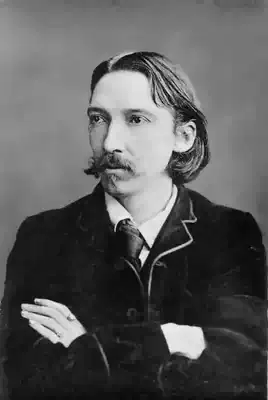
Robert Louis Stevenson
The Vagabond
The Vagabond
Give to me the life I love,
Let the lave go by me,
Give the jolly heaven above
And the byway nigh me.
Bed in the bush with stars to see,
Bread I dip in the river -
There's the life for a man like me,
There's the life for ever.
Let the blow fall soon or late,
Let what will be o'er me;
Give the face of earth around
And the road before me.
Wealth I seek not, hope nor love,
Nor a friend to know me;
All I seek, the heaven above
And the road below me.
Or let autumn fall on me
Where afield I linger,
Silencing the bird on tree,
Biting the blue finger.
White as meal the frosty field -
Warm the fireside haven -
Not to autumn will I yield,
Not to winter even!
Let the blow fall soon or late,
Let what will be o'er me;
Give the face of earth around,
And the road before me.
Wealth I ask not, hope nor love,
Nor a friend to know me;
All I ask, the heaven above
And the road below me.
Give to me the life I love,
Let the lave go by me,
Give the jolly heaven above
And the byway nigh me.
Bed in the bush with stars to see,
Bread I dip in the river -
There's the life for a man like me,
There's the life for ever.
Let the blow fall soon or late,
Let what will be o'er me;
Give the face of earth around
And the road before me.
Wealth I seek not, hope nor love,
Nor a friend to know me;
All I seek, the heaven above
And the road below me.
Or let autumn fall on me
Where afield I linger,
Silencing the bird on tree,
Biting the blue finger.
White as meal the frosty field -
Warm the fireside haven -
Not to autumn will I yield,
Not to winter even!
Let the blow fall soon or late,
Let what will be o'er me;
Give the face of earth around,
And the road before me.
Wealth I ask not, hope nor love,
Nor a friend to know me;
All I ask, the heaven above
And the road below me.
383
Robert Louis Stevenson
Hail! Childish Slave Of Social Rules
Hail! Childish Slave Of Social Rules
HAIL! Childish slaves of social rules
You had yourselves a hand in making!
How I could shake your faith, ye fools,
If but I thought it worth the shaking.
I see, and pity you; and then
Go, casting off the idle pity,
In search of better, braver men,
My own way freely through the city.
My own way freely, and not yours;
And, careless of a town's abusing,
Seek real friendship that endures
Among the friends of my own choosing.
I'll choose my friends myself, do you hear?
And won't let Mrs. Grundy do it,
Tho' all I honour and hold dear
And all I hope should move me to it.
I take my old coat from the shelf -
I am a man of little breeding.
And only dress to please myself -
I own, a very strange proceeding.
I smoke a pipe abroad, because
To all cigars I much prefer it,
And as I scorn your social laws
My choice has nothing to deter it.
Gladly I trudge the footpath way,
While you and yours roll by in coaches
In all the pride of fine array,
Through all the city's thronged approaches.
O fine religious, decent folk,
In Virtue's flaunting gold and scarlet,
I sneer between two puffs of smoke, -
Give me the publican and harlot.
Ye dainty-spoken, stiff, severe
Seed of the migrated Philistian,
One whispered question in your ear -
Pray, what was Christ, if you be Christian?
If Christ were only here just now,
Among the city's wynds and gables
Teaching the life he taught us, how
Would he be welcome to your tables?
I go and leave your logic-straws,
Your former-friends with face averted,
Your petty ways and narrow laws,
Your Grundy and your God, deserted.
From your frail ark of lies, I flee
I know not where, like Noah's raven.
Full to the broad, unsounded sea
I swim from your dishonest haven.
Alone on that unsounded deep,
Poor waif, it may be I shall perish,
Far from the course I thought to keep,
Far from the friends I hoped to cherish.
It may be that I shall sink, and yet
Hear, thro' all taunt and scornful laughter,
Through all defeat and all regret,
The stronger swimmers coming after.
HAIL! Childish slaves of social rules
You had yourselves a hand in making!
How I could shake your faith, ye fools,
If but I thought it worth the shaking.
I see, and pity you; and then
Go, casting off the idle pity,
In search of better, braver men,
My own way freely through the city.
My own way freely, and not yours;
And, careless of a town's abusing,
Seek real friendship that endures
Among the friends of my own choosing.
I'll choose my friends myself, do you hear?
And won't let Mrs. Grundy do it,
Tho' all I honour and hold dear
And all I hope should move me to it.
I take my old coat from the shelf -
I am a man of little breeding.
And only dress to please myself -
I own, a very strange proceeding.
I smoke a pipe abroad, because
To all cigars I much prefer it,
And as I scorn your social laws
My choice has nothing to deter it.
Gladly I trudge the footpath way,
While you and yours roll by in coaches
In all the pride of fine array,
Through all the city's thronged approaches.
O fine religious, decent folk,
In Virtue's flaunting gold and scarlet,
I sneer between two puffs of smoke, -
Give me the publican and harlot.
Ye dainty-spoken, stiff, severe
Seed of the migrated Philistian,
One whispered question in your ear -
Pray, what was Christ, if you be Christian?
If Christ were only here just now,
Among the city's wynds and gables
Teaching the life he taught us, how
Would he be welcome to your tables?
I go and leave your logic-straws,
Your former-friends with face averted,
Your petty ways and narrow laws,
Your Grundy and your God, deserted.
From your frail ark of lies, I flee
I know not where, like Noah's raven.
Full to the broad, unsounded sea
I swim from your dishonest haven.
Alone on that unsounded deep,
Poor waif, it may be I shall perish,
Far from the course I thought to keep,
Far from the friends I hoped to cherish.
It may be that I shall sink, and yet
Hear, thro' all taunt and scornful laughter,
Through all defeat and all regret,
The stronger swimmers coming after.
436
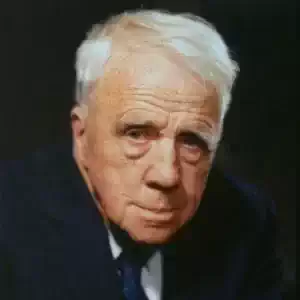
Robert Frost
The Hill Wife
The Hill Wife
It was too lonely for her there,
And too wild,
And since there were but two of them,
And no child.
And work was little in the house,
She was free,
And followed where he furrowed field,
Or felled log.
She rested on a log and tossed
The fresh chips,
With a song only to herself
On her lips.
And once she went to break a bough
Of black alder.
She strayed so far she scarcely heard
When he called her -
And didn't answer - didn't speak -
Or return.
She stood, and then she ran and hid
In the fern.
He never found her, though he looked
Everywhere,
And he asked at her mother's house
Was she there.
Sudden and swift and light as that
The ties gave,
And he learned of finalities
Besides the grave.
It was too lonely for her there,
And too wild,
And since there were but two of them,
And no child.
And work was little in the house,
She was free,
And followed where he furrowed field,
Or felled log.
She rested on a log and tossed
The fresh chips,
With a song only to herself
On her lips.
And once she went to break a bough
Of black alder.
She strayed so far she scarcely heard
When he called her -
And didn't answer - didn't speak -
Or return.
She stood, and then she ran and hid
In the fern.
He never found her, though he looked
Everywhere,
And he asked at her mother's house
Was she there.
Sudden and swift and light as that
The ties gave,
And he learned of finalities
Besides the grave.
474
Robert Frost
Desert Places
Desert Places
Snow falling and night falling fast, oh, fast
In a field I looked into going past,
And the ground almost covered smooth in snow,
But a few weeds and stubble showing last.
The woods around it have it - it is theirs.
All animals are smothered in their lairs.
I am too absent-spirited to count;
The loneliness includes me unawares.
And lonely as it is, that loneliness
Will be more lonely ere it will be less -
A blanker whiteness of benighted snow
WIth no expression, nothing to express.
They cannot scare me with their empty spaces
Between stars - on stars where no human race is.
I have it in me so much nearer home
To scare myself with my own desert places.
Snow falling and night falling fast, oh, fast
In a field I looked into going past,
And the ground almost covered smooth in snow,
But a few weeds and stubble showing last.
The woods around it have it - it is theirs.
All animals are smothered in their lairs.
I am too absent-spirited to count;
The loneliness includes me unawares.
And lonely as it is, that loneliness
Will be more lonely ere it will be less -
A blanker whiteness of benighted snow
WIth no expression, nothing to express.
They cannot scare me with their empty spaces
Between stars - on stars where no human race is.
I have it in me so much nearer home
To scare myself with my own desert places.
405
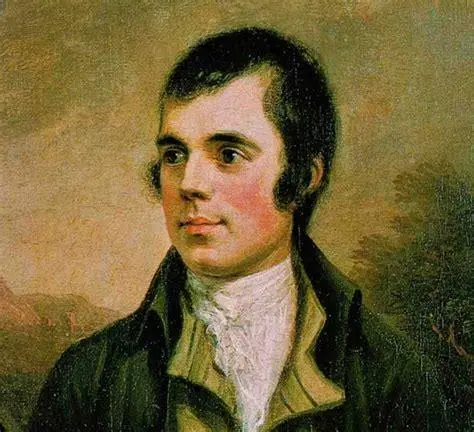
Robert Burns
Despondency -- An Ode
Despondency -- An Ode
Oppress'd with grief, oppress'd with care,
A burden more than I can bear,
I set me down and sigh:
O life! thou art a galling load,
Along a rough, a weary road,
To wretches such as I!
Dim backward as I cast my view,
What sick'ning scenes appear!
What sorrows yet may pierce me thro',
Too justly I may fear!
Still caring, despairing,
Must be my bitter doom;
My woes here shall close ne'er
But with the closing tomb!
Happy, ye sons of busy life,
Who, equal to the bustling strife,
No other view regard!
Ev'n when the wished end's denied,
Yet while the busy means are plied,
They bring their own reward:
Whilst I, a hope-abandon'd wight,
Unfitted with an aim,
Meet ev'ry sad returning night,
And joyless morn the same;
You, bustling, and justling,
Forget each grief and pain;
I, listless, yet restless,
Find every prospect vain.
How blest the Solitary's lot,
Who, all-forgetting, all-forgot,
Within his humble cell,
The cavern wild with tangling roots,
Sits o'er his newly-gather'd fruits,
Beside his crystal well!
Or, haply, to his ev'ning thought,
By unfrequented stream,
The ways of men are distant brought,
A faint collected dream:
While praising, and raising
His thoughts to heav'n on high,
As wand'ring, meand'ring,
He views the solemn sky.
Than I, no lonely hermit plac'd
Where never human footstep trac'd,
Less fit to play the part;
The lucky moment to improve,
And just to stop, and just to move,
With self-respecting art:
But ah! those pleasures, loves, and joys,
Which I too keenly taste,
The Solitary can despise,
Can want, and yet be blest!
He needs not, he heeds not,
Or human love or hate,
Whilst I here must cry here,
At perfidy ingrate!
Oh! enviable, early days,
When dancing thoughtless pleasure's maze,
To care, to guilt unknown!
How ill exchang'd for riper times,
To feel the follies, or the crimes
Of others, or my own !
Ye tiny elves that guiltless sport
Like linnets in the bush,
Ye little know the ills ye court,
When manhood is your wish!
The losses, the crosses,
That active man engage
The fears all, the tears all,
Of dim-declining age!
Oppress'd with grief, oppress'd with care,
A burden more than I can bear,
I set me down and sigh:
O life! thou art a galling load,
Along a rough, a weary road,
To wretches such as I!
Dim backward as I cast my view,
What sick'ning scenes appear!
What sorrows yet may pierce me thro',
Too justly I may fear!
Still caring, despairing,
Must be my bitter doom;
My woes here shall close ne'er
But with the closing tomb!
Happy, ye sons of busy life,
Who, equal to the bustling strife,
No other view regard!
Ev'n when the wished end's denied,
Yet while the busy means are plied,
They bring their own reward:
Whilst I, a hope-abandon'd wight,
Unfitted with an aim,
Meet ev'ry sad returning night,
And joyless morn the same;
You, bustling, and justling,
Forget each grief and pain;
I, listless, yet restless,
Find every prospect vain.
How blest the Solitary's lot,
Who, all-forgetting, all-forgot,
Within his humble cell,
The cavern wild with tangling roots,
Sits o'er his newly-gather'd fruits,
Beside his crystal well!
Or, haply, to his ev'ning thought,
By unfrequented stream,
The ways of men are distant brought,
A faint collected dream:
While praising, and raising
His thoughts to heav'n on high,
As wand'ring, meand'ring,
He views the solemn sky.
Than I, no lonely hermit plac'd
Where never human footstep trac'd,
Less fit to play the part;
The lucky moment to improve,
And just to stop, and just to move,
With self-respecting art:
But ah! those pleasures, loves, and joys,
Which I too keenly taste,
The Solitary can despise,
Can want, and yet be blest!
He needs not, he heeds not,
Or human love or hate,
Whilst I here must cry here,
At perfidy ingrate!
Oh! enviable, early days,
When dancing thoughtless pleasure's maze,
To care, to guilt unknown!
How ill exchang'd for riper times,
To feel the follies, or the crimes
Of others, or my own !
Ye tiny elves that guiltless sport
Like linnets in the bush,
Ye little know the ills ye court,
When manhood is your wish!
The losses, the crosses,
That active man engage
The fears all, the tears all,
Of dim-declining age!
244
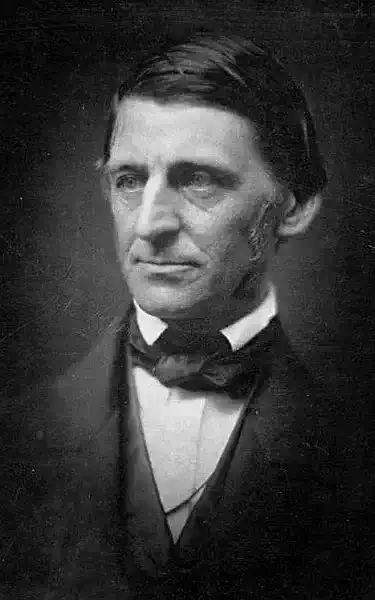
Ralph Waldo Emerson
Compensation
Compensation
Why should I keep holiday,
When other men have none?
Why but because when these are gay,
I sit and mourn alone.
And why when mirth unseals all tongues
Should mine alone be dumb?
Ah! late I spoke to silent throngs,
And now their hour is come.
Why should I keep holiday,
When other men have none?
Why but because when these are gay,
I sit and mourn alone.
And why when mirth unseals all tongues
Should mine alone be dumb?
Ah! late I spoke to silent throngs,
And now their hour is come.
270
Rabindranath Tagore
The Gardener IV: Ah Me
The Gardener IV: Ah Me
Ah me, why did they build my
house by the road to the market
town?
They moor their laden boats near
my trees.
They come and go and wander at
their will.
I sit and watch them; my time
wears on.
Turn them away I cannot. And
thus my days pass by.
Night and day their steps sound
by my door.
Vainly I cry, "I do not know
you."
Some of them are known to my
fingers, some to my nostrils, the
blood in my veins seems to know
them, and some are known to my
dreams.
Turn them away I cannot. I call
them and say, "Come to my house
whoever chooses. Yes, come."
In the morning the bell rings in the
temple.
They come with their baskets in
their hands.
Their feet are rosy red. The early
light of dawn is on their faces.
Turn them away I cannot. I call
them and I say, "Come to my garden
to gather flowers. Come hither."
In the mid-day the gong sounds
at the palace gate.
I know not why they leave their
work and linger near my hedge.
The flowers in their hair are pale
and faded; the notes are languid in
their flutes.
Turn them away I cannot. I call
them and say, "The shade is cool
under my trees. Come, friends."
At night the crickets chirp in the
woods.
Who is it that comes slowly to my
door and gently knocks?
I vaguely see the face, not a word
is spoken, the stillness of the sky is
all around.
Turn away my silent guest I
cannot. I look at the face through the
dark, and hours of dreams pass by.
Ah me, why did they build my
house by the road to the market
town?
They moor their laden boats near
my trees.
They come and go and wander at
their will.
I sit and watch them; my time
wears on.
Turn them away I cannot. And
thus my days pass by.
Night and day their steps sound
by my door.
Vainly I cry, "I do not know
you."
Some of them are known to my
fingers, some to my nostrils, the
blood in my veins seems to know
them, and some are known to my
dreams.
Turn them away I cannot. I call
them and say, "Come to my house
whoever chooses. Yes, come."
In the morning the bell rings in the
temple.
They come with their baskets in
their hands.
Their feet are rosy red. The early
light of dawn is on their faces.
Turn them away I cannot. I call
them and I say, "Come to my garden
to gather flowers. Come hither."
In the mid-day the gong sounds
at the palace gate.
I know not why they leave their
work and linger near my hedge.
The flowers in their hair are pale
and faded; the notes are languid in
their flutes.
Turn them away I cannot. I call
them and say, "The shade is cool
under my trees. Come, friends."
At night the crickets chirp in the
woods.
Who is it that comes slowly to my
door and gently knocks?
I vaguely see the face, not a word
is spoken, the stillness of the sky is
all around.
Turn away my silent guest I
cannot. I look at the face through the
dark, and hours of dreams pass by.
484
Rabindranath Tagore
Stray Birds 71 - 80
Stray Birds 71 - 80
71
THE woodcutter's axe begged for its handle from the tree.
The tree gave it.
72
IN my solitude of heart
I feel the sigh of this widowed evening
veiled with mist and rain.
73
CHASTITY
is a wealth that comes from
abundance of love.
74
THE mist,
like love,
plays upon the heart of the hills
and brings out surprises of beauty.
75
WE read the world wrong
and say that it deceives us.
76
THE poet wind is out over the sea
and the forest to seek his own voice.
77
EVERY child
comes with the message
that God is not yet discouraged
of man.
78
THE grass seeks her crowd in the earth.
The tree seeks his solitude of the sky.
79
MAN barricades against himself.
80
YOUR voice, my friend,
wanders in my heart,
like the muffled sound of the sea
among these listening pines.
71
THE woodcutter's axe begged for its handle from the tree.
The tree gave it.
72
IN my solitude of heart
I feel the sigh of this widowed evening
veiled with mist and rain.
73
CHASTITY
is a wealth that comes from
abundance of love.
74
THE mist,
like love,
plays upon the heart of the hills
and brings out surprises of beauty.
75
WE read the world wrong
and say that it deceives us.
76
THE poet wind is out over the sea
and the forest to seek his own voice.
77
EVERY child
comes with the message
that God is not yet discouraged
of man.
78
THE grass seeks her crowd in the earth.
The tree seeks his solitude of the sky.
79
MAN barricades against himself.
80
YOUR voice, my friend,
wanders in my heart,
like the muffled sound of the sea
among these listening pines.
615
Percy Bysshe Shelley
Alastor: or, the Spirit of Solitude
Alastor: or, the Spirit of Solitude
Earth, Ocean, Air, belovèd brotherhood!
If our great Mother has imbued my soul
With aught of natural piety to feel
Your love, and recompense the boon with mine;
If dewy morn, and odorous noon, and even,
With sunset and its gorgeous ministers,
And solemn midnight's tingling silentness;
If Autumn's hollow sighs in the sere wood,
And Winter robing with pure snow and crowns
Of starry ice the gray grass and bare boughs;
If Spring's voluptuous pantings when she breathes
Her first sweet kisses,--have been dear to me;
If no bright bird, insect, or gentle beast
I consciously have injured, but still loved
And cherished these my kindred; then forgive
This boast, belovèd brethren, and withdraw
No portion of your wonted favor now!
Mother of this unfathomable world!
Favor my solemn song, for I have loved
Thee ever, and thee only; I have watched
Thy shadow, and the darkness of thy steps,
And my heart ever gazes on the depth
Of thy deep mysteries. I have made my bed
In charnels and on coffins, where black death
Keeps record of the trophies won from thee,
Hoping to still these obstinate questionings
Of thee and thine, by forcing some lone ghost,
Thy messenger, to render up the tale
Of what we are. In lone and silent hours,
When night makes a weird sound of its own stillness,
Like an inspired and desperate alchemist
Staking his very life on some dark hope,
Have I mixed awful talk and asking looks
With my most innocent love, until strange tears,
Uniting with those breathless kisses, made
Such magic as compels the charmèd night
To render up thy charge; and, though ne'er yet
Thou hast unveiled thy inmost sanctuary,
Enough from incommunicable dream,
And twilight phantasms, and deep noonday thought,
Has shone within me, that serenely now
And moveless, as a long-forgotten lyre
Suspended in the solitary dome
Of some mysterious and deserted fane,
I wait thy breath, Great Parent, that my strain
May modulate with murmurs of the air,
And motions of the forests and the sea,
And voice of living beings, and woven hymns
Of night and day, and the deep heart of man.
There was a Poet whose untimely tomb
No human hands with pious reverence reared,
But the charmed eddies of autumnal winds
Built o'er his mouldering bones a pyramid
Of mouldering leaves in the waste wilderness:
A lovely youth,--no mourning maiden decked
With weeping flowers, or votive cypress wreath,
The lone couch of his everlasting sleep:
Gentle, and brave, and generous,--no lorn bard
Breathed o'er his dark fate one melodious sigh:
He lived, he died, he sung in solitude.
Strangers have wept to hear his passionate notes,
And virgins, as unknown he passed, have pined
And wasted for fond love of his wild eyes.
The fire of those soft orbs has ceased to burn,
And Silence, too enamoured of that voice,
Locks its mute music in her rugged cell.
By solemn vision and bright silver dream
His infancy was nurtured. Every sight
And sound from the vast earth and ambient air
Sent to his heart its choicest impulses.
The fountains of divine philosophy
Fled not his thirsting lips, and all of great,
Or good, or lovely, which the sacred past
In truth or fable consecrates, he felt
And knew. When early youth had passed, he left
His cold fireside and alienated home
To seek strange truths in undiscovered lands.
Many a wide waste and tangled wilderness
Has lured his fearless steps; and he has bought
With his sweet voice and eyes, from savage men,
His rest and food. Nature's most secret steps
He like her shadow has pursued, where'er
The red volcano overcanopies
Its fields of snow and pinnacles of ice
With burning smoke, or where bitumen lakes
On black bare pointed islets ever beat
With sluggish surge, or where the secret caves,
Rugged and dark, winding among the springs
Of fire and poison, inaccessible
To avarice or pride, their starry domes
Of diamond and of gold expand above
Numberless and immeasurable halls,
Frequent with crystal column, and clear shrines
Of pearl, and thrones radiant with chrysolite.
Nor had that scene of ampler majesty
Than gems or gold, the varying roof of heaven
And the green earth, lost in his heart its claims
To love and wonder; he would linger long
In lonesome vales, making the wild his home,
Until the doves and squirrels would partake
From his innocuous band his bloodless food,
Lured by the gentle meaning of his looks,
And the wild antelope, that starts whene'er
The dry leaf rustles in the brake, suspend
Her timid steps, to gaze upon a form
More graceful than her own.
His wandering step,
Obedient to high thoughts, has visited
The awful ruins of the days of old:
Athens, and Tyre, and Balbec, and the waste
Where stood Jerusalem, the fallen towers
Of Babylon, the eternal pyramids,
Memphis and Thebes, and whatsoe'er of strange,
Sculptured on alabaster obelisk
Or jasper tomb or mutilated sphinx,
Dark Æthiopia in her desert hills
Conceals. Among the ruined temples there,
Stupendous columns, and wild images
Of more than man, where marble daemons watch
The Zodiac's brazen mystery, and dead men
Hang their mute thoughts on the mute walls around,
He lingered, poring on memorials
Of the world's youth: through the long burning day
Gazed on those speechless shapes; nor, when the moon
Filled the mysterious halls with floating shades
Suspended he that task, but ever gazed
And gazed, till meaning on his vacant mind
Flashed like strong inspiration, and he saw
The thrilling secrets of the birth of time.
Meanwhile an Arab maiden brought his food,
Her daily portion, from her father's tent,
And spread her matting for his couch, and stole
From duties and repose to tend his steps,
Enamoured, yet not daring for deep awe
To speak her love, and watched his nightly sleep,
Sleepless herself, to gaze upon his lips
Parted in slumber, whence the regular breath
Of innocent dreams arose; then, when red morn
Made paler the pale moon, to her cold home
Wildered, and wan, and panting, she returned.
The Poet, wandering on, through Arabie,
And Persia, and the wild Carmanian waste,
And o'er the aërial mountains which pour down
Indus and Oxus from their icy caves,
In joy and exultation held his way;
Till in the vale of Cashmire, far within
Its loneliest dell, where odorous plants entwine
Beneath the hollow rocks a natural bower,
Beside a sparkling rivulet he stretched
His languid limbs. A vision on his sleep
There came, a dream of hopes that never yet
Had flushed his cheek. He dreamed a veilèd maid
Sate near him, talking in low solemn tones.
Her voice was like the voice of his own soul
Heard in the calm of thought; its music long,
Like woven sounds of streams and breezes, held
His inmost sense suspended in its web
Of many-colored woof and shifting hues.
Knowledge and truth and virtue were her theme,
And lofty hopes of divine liberty,
Thoughts the most dear to him, and poesy,
Herself a poet. Soon the solemn mood
Of her pure mind kindled through all her frame
A permeating fire; wild numbers then
She raised, with voice stifled in tremulous sobs
Subdued by its own pathos; her fair hands
Were bare alone, sweeping from some strange harp
Strange symphony, and in their branching veins
The eloquent blood told an ineffable tale.
The beating of her heart was heard to fill
The pauses of her music, and her breath
Tumultuously accorded with those fits
Of intermitted song. Sudden she rose,
As if her heart impatiently endured
Its bursting burden; at the sound he turned,
And saw by the warm light of their own life
Her glowing limbs beneath the sinuous veil
Of woven wind, her outspread arms now bare,
Her dark locks floating in the breath of night,
Her beamy bending eyes, her parted lips
Outstretched, and pale, and quivering eagerly.
His strong heart sunk and sickened with excess
Of love. He reared his shuddering limbs, and quelled
His gasping breath, and spread his arms to meet
Her panting bosom:--she drew back awhile,
Then, yielding to the irresistible joy,
With frantic gesture and short breathless cry
Folded his frame in her dissolving arms.
Now blackness veiled his dizzy eyes, and night
Involved and swallowed up the vision; sleep,
Like a dark flood suspended in its course,
Rolled back its impulse on his vacant brain.
Roused by the shock, he started from his trance--
The cold white light of morning, the blue moon
Low in the west, the clear and garish hills,
The distinct valley and the vacant woods,
Spread round him where he stood. Whither have fled
The hues of heaven that canopied his bower
Of yesternight? The sounds that soothed his sleep,
The mystery and the majesty of Earth,
The joy, the exultation? His wan eyes
Gaze on the empty scene as vacantly
As ocean's moon looks on the moon in heaven.
The spirit of sweet human love has sent
A vision to the sleep of him who spurned
Her choicest gifts. He eagerly pursues
Beyond the realms of dream that fleeting shade;
He overleaps the bounds. Alas! alas!
Were limbs and breath and being intertwined
Thus treacherously? Lost, lost, forever lost
In the wide pathless desert of dim sleep,
That beautiful shape! Does the dark gate of death
Conduct to thy mysterious paradise,
O Sleep? Does the bright arch of rainbow clouds
And pendent mountains seen in the calm lake
Lead only to a black and watery depth,
While death's blue vault with loathliest vapors hung,
Where every shade which the foul grave exhales
Hides its dead eye from the detested day,
Conducts, O Sleep, to thy delightful realms?
This doubt with sudden tide flowed on his heart;
The insatiate hope which it awakened stung
His brain even like despair.
While daylight held
The sky, the Poet kept mute conference
With his still soul. At night the passion came,
Like the fierce fiend of a distempered dream,
And shook him from his rest, and led him forth
Into the darkness. As an eagle, grasped
In folds of the green serpent, feels her breast
Burn with the poison, and precipitates
Through night and day, tempest, and calm, and cloud,
Frantic with dizzying anguish, her blind flight
O'er the wide aëry wilderness: thus driven
By the bright shadow of that lovely dream,
Beneath the cold glare of the desolate night,
Through tangled swamps and deep precipitous dells,
Startling with careless step the moon-light snake,
He fled. Red morning dawned upon his flight,
Shedding the mockery of its vital hues
Upon his cheek of death. He wandered on
Till vast Aornos seen from Petra's steep
Hung o'er the low horizon like a cloud;
Through Balk, and where the desolated tombs
Of Parthian kings scatter to every wind
Their wasting dust, wildly he wandered on,
Day after day, a weary waste of hours,
Bearing within his life the brooding care
That ever fed on its decaying flame.
And now his limbs were lean; his scattered hair,
Sered by the autumn of strange suffering,
Sung dirges in the wind; his listless hand
Hung like dead bone within its withered skin;
Life, and the lustre that consumed it, shone,
As in a furnace burning secretly,
From his dark eyes alone. The cottagers,
Who ministered with human charity
His human wants, beheld with wondering awe
Their fleeting visitant. The mountaineer,
Encountering on some dizzy precipice
That spectral form, deemed that the Spirit of Wind,
With lightning eyes, and eager breath, and feet
Disturbing not the drifted snow, had paused
In its career; the infant would conceal
His troubled visage in his mother's robe
In terror at the glare of those wild eyes,
To remember their strange light in many a dream
Of after times; but youthful maidens, taught
By nature, would interpret half the woe
That wasted him, would call him with false names
Brother and friend, would press his pallid hand
At parting, and watch, dim through tears, the path
Of his departure from their father's door.
At length upon the lone Chorasmian shore
He paused, a wide and melancholy waste
Of putrid marshes. A strong impulse urged
His steps to the sea-shore. A swan was there,
Beside a sluggish stream among the reeds.
It rose as he approached, and, with strong wings
Scaling the upward sky, bent its bright course
High over the immeasurable main.
His eyes pursued its flight:--'Thou hast a home,
Beautiful bird! thou voyagest to thine home,
Where thy sweet mate will twine her downy neck
With thine, and welcome thy return with eyes
Bright in the lustre of their own fond joy.
And what am I that I should linger here,
With voice far sweeter than thy dying notes,
Spirit more vast than thine, frame more attuned
To beauty, wasting these surpassing powers
In the deaf air, to the blind earth, and heaven
That echoes not my thoughts?' A gloomy smile
Of desperate hope wrinkled his quivering lips.
For sleep, he knew, kept most relentlessly
Its precious charge, and silent death exposed,
Faithless perhaps as sleep, a shadowy lure,
With doubtful smile mocking its own strange charms.
Startled by his own thoughts, he looked around.
There was no fair fiend near him, not a sight
Or sound of awe but in his own deep mind.
A little shallop floating near the shore
Caught the impatient wandering of his gaze.
It had been long abandoned, for its sides
Gaped wide with many a rift, and its frail joints
Swayed with the undulations of the tide.
A restless impulse urged him to embark
And meet lone Death on the drear ocean's waste;
For well he knew that mighty Shadow loves
The slimy caverns of the populous deep.
The day was fair and sunny; sea and sky
Drank its inspiring radiance, and the wind
Swept strongly from the shore, blackening the waves.
Following his eager soul, the wanderer
Leaped in the boat; he spread his cloak aloft
On the bare mast, and took his lonely seat,
And felt the boat speed o'er the tranquil sea
Like a torn cloud before the hurricane.
As one that in a silver vision floats
Obedient to the sweep of odorous winds
Upon resplendent clouds, so rapidly
Along the dark and ruffled waters fled
The straining boat. A whirlwind swept it on,
With fierce gusts and precipitating force,
Through the white ridges of the chafèd sea.
The waves arose. Higher and higher still
Their fierce necks writhed beneath the tempest's scourge
Like serpents struggling in a vulture's grasp.
Calm and rejoicing in the fearful war
Of wave ruining on wave, and blast on blast
Descending, and black flood on whirlpool driven
With dark obliterating course, he sate:
As if their genii were the ministers
Appointed to conduct him to the light
Of those belovèd eyes, the Poet sate,
Holding the steady helm. Evening came on;
The beams of sunset hung their rainbow hues
High 'mid the shifting domes of sheeted spray
That canopied his path o'er the waste deep;
Twilight, ascending slowly from the east,
Entwined in duskier wreaths her braided locks
O'er the fair front and radiant eyes of Day;
Night followed, clad with stars. On every side
More horribly the multitudinous streams
Of ocean's mountainous waste to mutual war
Rushed in dark tumult thundering, as to mock
The calm and spangled sky. The little boat
Still fled before the storm; still fled, like foam
Down the steep cataract of a wintry river;
Now pausing on the edge of the riven wave;
Now leaving far behind the bursting mass
That fell, convulsing ocean; safely fled--
As if that frail and wasted human form
Had been an elemental god.
At midnight
The moon arose; and lo! the ethereal cliffs
Of Caucasus, whose icy summits shone
Among the stars like sunlight, and around
Whose caverned base the whirlpools and the waves
Bursting and eddying irresistibly
Rage and resound forever.--Who shall save?--
The boat fled on,--the boiling torrent drove,--
The crags closed round with black and jagged arms,
The shattered mountain overhung the sea,
And faster still, beyond all human speed,
Suspended on the sweep of the smooth wave,
The little boat was driven. A cavern there
Yawned, and amid its slant and winding depths
Ingulfed the rushing sea. The boat fled on
With unrelaxing speed.--'Vision and Love!'
The Poet cried aloud, 'I have beheld
The path of thy departure. Sleep and death
Shall not divide us long.'
The boat pursued
The windings of the cavern. Daylight shone
At length upon that gloomy river's flow;
Now, where the fiercest war among the waves
Is calm, on the unfathomable stream
The boat moved slowly. Where the mountain, riven,
Exposed those black depths to the azure sky,
Ere yet the flood's enormous volume fell
Even to the base of Caucasus, with sound
That shook the everlasting rocks, the mass
Filled with one whirlpool all that ample chasm;
Stair above stair the eddying waters rose,
Circling immeasurably fast, and laved
With alternating dash the gnarlèd roots
Of mighty trees, that stretched their giant arms
In darkness over it. I' the midst was left,
Reflecting yet distorting every cloud,
A pool of treacherous and tremendous calm.
Seized by the sway of the ascending stream,
With dizzy swiftness, round and round and round,
Ridge after ridge the straining boat arose,
Till on the verge of the extremest curve,
Where through an opening of the rocky bank
The waters overflow, and a smooth spot
Of glassy quiet 'mid those battling tides
Is left, the boat paused shuddering.--Shall it sink
Down the abyss? Shall the reverting stress
Of that resistless gulf embosom it?
Now shall it fall?--A wandering stream of wind
Breathed from the west, has caught the expanded sail,
And, lo! with gentle motion between banks
Of mossy slope, and on a placid stream,
Beneath a woven grove, it sails, and, hark!
The ghastly torrent mingles its far roar
With the breeze murmuring in the musical woods.
Where the embowering trees recede, and leave
A little space of green expanse, the cove
Is closed by meeting banks, whose yellow flowers
Forever gaze on their own drooping eyes,
Reflected in the crystal calm. The wave
Of the boat's motion marred their pensive task,
Which naught but vagrant bird, or wanton wind,
Or falling spear-grass, or their own decay
Had e'er disturbed before. The Poet longed
To deck with their bright hues his withered hair,
But on his heart its solitude returned,
And he forbore. Not the strong impulse hid
In those flushed cheeks, bent eyes, and shadowy frame,
Had yet performed its ministry; it hung
Upon his life, as lightning in a cloud
Gleams, hovering ere it vanish, ere the floods
Of night close over it.
The noonday sun
Now shone upon the forest, one vast mass
Of mingling shade, whose brown magnificence
A narrow vale embosoms. There, huge caves,
Scooped in the dark base of their aëry rocks,
Mocking its moans, respond and roar forever.
The meeting boughs and implicated leaves
Wove twilight o'er the Poet's path, as, led
By love, or dream, or god, or mightier Death,
He sought in Nature's dearest haunt some bank,
Her cradle and his sepulchre. More dark
And dark the shades accumulate. The oak,
Expanding its immense and knotty arms,
Embraces the light beech. The pyramids
Of the tall cedar overarching frame
Most solemn domes within, and far below,
Like clouds suspended in an emerald sky,
The ash and the acacia floating hang
Tremulous and pale. Like restless serpents, clothed
In rainbow and in fire, the parasites,
Starred with ten thousand blossoms, flow around
The gray trunks, and, as gamesome infants' eyes,
With gentle meanings, and most innocent wiles,
Fold their beams round the hearts of those that love,
These twine their tendrils with the wedded boughs,
Uniting their close union; the woven leaves
Make network of the dark blue light of day
And the night's noontide clearness, mutable
As shapes in the weird clouds. Soft mossy lawns
Beneath these canopies extend their swells,
Fragrant with perfumed herbs, and eyed with blooms
Minute yet beautiful. One darkest glen
Sends from its woods of musk-rose twined with jasmine
A soul-dissolving odor to invite
To some more lovely mystery. Through the dell
Silence and Twilight here, twin-sisters, keep
Their noonday watch, and sail among the shades,
Like vaporous shapes half-seen; beyond, a well,
Dark, gleaming, and of most translucent wave,
Images all the woven boughs above,
And each depending leaf, and every speck
Of azure sky darting between their chasms;
Nor aught else in the liquid mirror laves
Its portraiture, but some inconstant star,
Between one foliaged lattice twinkling fair,
Or painted bird, sleeping beneath the moon,
Or gorgeous insect floating motionless,
Unconscious of the day, ere yet his wings
Have spread their glories to the gaze of noon.
Hither the Poet came. His eyes beheld
Their own wan light through the reflected lines
Of his thin hair, distinct in the dark depth
Of that still fountain; as the human heart,
Gazing in dreams over the gloomy grave,
Sees its own treacherous likeness there. He heard
The motion of the leaves--the grass that sprung
Startled and glanced and trembled even to feel
An unaccustomed presence--and the sound
Of the sweet brook that from the secret springs
Of that dark fountain rose. A Spirit seemed
To stand beside him--clothed in no bright robes
Of shadowy silver or enshrining light,
Borrowed from aught the visible world affords
Of grace, or majesty, or mystery;
But undulating woods, and silent well,
And leaping rivulet, and evening gloom
Now deepening the dark shades, for speech assuming,
Held commune with him, as if he and it
Were all that was; only--when his regard
Was raised by intense pensiveness--two eyes,
Two starry eyes, hung in the gloom of thought,
And seemed with their serene and azure smiles
To beckon him.
Obedient to the light
That shone within his soul, he went, pursuing
The windings of the dell. The rivulet,
Wanton and wild, through many a green ravine
Beneath the forest flowed. Sometimes it fell
Among the moss with hollow harmony
Dark and profound. Now on the polished stones
It danced, like childhood laughing as it went;
Then, through the plain in tranquil wanderings crept,
Reflecting every herb and drooping bud
That overhung its quietness.--'O stream!
Whose source is inaccessibly profound,
Whither do thy mysterious waters tend?
Thou imagest my life. Thy darksome stillness,
Thy dazzling waves, thy loud and hollow gulfs,
Thy searchless fountain and invisible course,
Have each their type in me; and the wide sky
And measureless ocean may declare as soon
What oozy cavern or what wandering cloud
Contains thy waters, as the universe
Tell where these living thoughts reside, when stretched
Upon thy flowers my bloodless limbs shall waste
I' the passing wind!'
Beside the grassy shore
Of the small stream he went; he did impress
On the green moss his tremulous step, that caught
Strong shuddering from his burning limbs. As one
Roused by some joyous madness from the couch
Of fever, he did move; yet not like him
Forgetful of the grave, where, when the flame
Of his frail exultation shall be spent,
He must descend. With rapid steps he went
Beneath the shade of trees, beside the flow
Of the wild babbling rivulet; and now
The forest's solemn canopies were changed
For the uniform and lightsome evening sky.
Gray rocks did peep from the spare moss, and stemmed
The struggling brook; tall spires of windlestrae
Threw their thin shadows down the rugged slope,
And nought but gnarlèd roots of ancient pines
Branchless and blasted, clenched with grasping roots
The unwilling soil. A gradual change was here
Yet ghastly. For, as fast years flow away,
The smooth brow gathers, and the hair grows thin
And white, and where irradiate dewy eyes
Had shone, gleam stony orbs:--so from his steps
Bright flowers departed, and the beautiful shade
Of the green groves, with all their odorous winds
And musical motions. Calm he still pursued
The stream, that with a larger volume now
Rolled through the labyrinthine dell; and there
Fretted a path through its descending curves
With its wintry speed. On every side now rose
Rocks, which, in unimaginable forms,
Lifted their black and barren pinnacles
In the light of evening, and its precipice
Obscuring the ravine, disclosed above,
'Mid toppling stones, black gulfs and yawning caves,
Whose windings gave ten thousand various tongues
To the loud stream. Lo! where the pass expands
Its stony jaws, the abrupt mountain breaks,
And seems with its accumulated crags
To overhang the world; for wide expand
Beneath the wan stars and descending moon
Islanded seas, blue mountains, mighty streams,
Dim tracts and vast, robed in the lustrous gloom
Of leaden-colored even, and fiery hills
Mingling their flames with twilight, on the verge
Of the remote horizon. The near scene,
In naked and severe simplicity,
Made contrast with the universe. A pine,
Rock-rooted, stretched athwart the vacancy
Its swinging boughs, to each inconstant blast
Yielding one only response at each pause
In most familiar cadence, with the howl,
The thunder and the hiss of homeless streams
Mingling its solemn song, whilst the broad river
Foaming and hurrying o'er its rugged path,
Fell into that immeasurable void,
Scattering its waters to the passing winds.
Yet the gray precipice and solemn pine
And torrent were not all;--one silent nook
Was there. Even on the edge of that vast mountain,
Upheld by knotty roots and fallen rocks,
It overlooked in its serenity
The dark earth and the bending vault of stars.
It was a tranquil spot that seemed to smile
Even in the lap of horror. Ivy clasped
The fissured stones with its entwining arms,
And did embower with leaves forever green
And berries dark the smooth and even space
Of its inviolated floor; and here
The children of the autumnal whirlwind bore
In wanton sport those bright leaves whose decay,
Red, yellow, or ethereally pale,
Rivals the pride of summer. 'T is the haunt
Of every gentle wind whose breath can teach
The wilds to love tranquillity. One step,
One human step alone, has ever broken
The stillness of its solitude; one voice
Alone inspired its echoes;--even that voice
Which hither came, floating among the winds,
And led the loveliest among human forms
To make their wild haunts the depository
Of all the grace and beauty that endued
Its motions, render up its majesty,
Scatter its music on the unfeeling storm,
And to the damp leaves and blue cavern mould,
Nurses of rainbow flowers and branching moss,
Commit the colors of that varying cheek,
That snowy breast, those dark and drooping eyes.
The dim and hornèd moon hung low, and poured
A sea of lustre on the horizon's verge
That overflowed its mountains. Yellow mist
Filled the unbounded atmosphere, and drank
Wan moonlight even to fulness; not a star
Shone, not a sound was heard; the very winds,
Danger's grim playmates, on that precipice
Slept, clasped in his embrace.--O storm of death,
Whose sightless speed divides this sullen night!
And thou, colossal Skeleton, that, still
Guiding its irresistible career
In thy devastating omnipotence,
Art king of this frail world! from the red field
Of slaughter, from the reeking hospital,
The patriot's sacred couch, the snowy bed
Of innocence, the scaffold and the throne,
A mighty voice invokes thee! Ruin calls
His brother Death! A rare and regal prey
He hath prepared, prowling around the world;
Glutted with which thou mayst repose, and men
Go to their graves like flowers or creeping worms,
Nor ever more offer at thy dark shrine
The unheeded tribute of a broken heart.
When on the threshold of the green recess
The wanderer's footsteps fell, he knew that death
Was on him. Yet a little, ere it fled,
Did he resign his high and holy soul
To images of the majestic past,
That paused within his passive being now,
Like winds that bear sweet music, when they breathe
Through some dim latticed chamber. He did place
His pale lean hand upon the rugged trunk
Of the old pine; upon an ivied stone
Reclined his languid head; his limbs did rest,
Diffused and motionless, on the smooth brink
Of that obscurest chasm;--and thus he lay,
Surrendering to their final impulses
The hovering powers of life. Hope and Despair,
The torturers, slept; no mortal pain or fear
Marred his repose; the influxes of sense
And his own being, unalloyed by pain,
Yet feebler and more feeble, calmly fed
The stream of thought, till he lay breathing there
At peace, and faintly smiling. His last sight
Was the great moon, which o'er the western line
Of the wide world her mighty horn suspended,
With whose dun beams inwoven darkness seemed
To mingle. Now upon the jagged hills
It rests; and still as the divided frame
Of the vast meteor sunk, the Poet's blood,
That ever beat in mystic sympathy
With Nature's ebb and flow, grew feebler still;
And when two lessening points of light alone
Gleamed through the darkness, the alternate gasp
Of his faint respiration scarce did stir
The stagnate night:--till the minutest ray
Was quenched, the pulse yet lingered in his heart.
It paused--it fluttered. But when heaven remained
Utterly black, the murky shades involved
An image silent, cold, and motionless,
As their own voiceless earth and vacant air.
Even as a vapor fed with golden beams
That ministered on sunlight, ere the west
Eclipses it, was now that wondrous frame--
No sense, no motion, no divinity--
A fragile lute, on whose harmonious strings
The breath of heaven did wander--a bright stream
Once fed with many-voicèd waves--a dream
Of youth, which night and time have quenched forever--
Still, dark, and dry, and unremembered now.
Oh, for Medea's wondrous alchemy,
Which wheresoe'er it fell made the earth gleam
With bright flowers, and the wintry boughs exhale
From vernal blooms fresh fragrance! Oh, that God,
Profuse of poisons, would concede the chalice
Which but one living man has drained, who now,
Vessel of deathless wrath, a slave that feels
No proud exemption in the blighting curse
He bears, over the world wanders forever,
Lone as incarnate death! Oh, that the dream
Of dark magician in his visioned cave,
Raking the cinders of a crucible
For life and power, even when his feeble hand
Shakes in its last decay, were the true law
Of this so lovely world! But thou art fled,
Like some frail exhalation, which the dawn
Robes in its golden beams,--ah! thou hast fled!
The brave, the gentle and the beautiful,
The child of grace and genius. Heartless things
Are done and said i' the world, and many worms
And beasts and men live on, and mighty Earth
From sea and mountain, city and wilderness,
In vesper low or joyous orison,
Lifts still its solemn voice:--but thou art fled--
Thou canst no longer know or love the shapes
Of this phantasmal scene, who have to thee
Been purest ministers, who are, alas!
Now thou art not! Upon those pallid lips
So sweet even in their silence, on those eyes
That image sleep in death, upon that form
Yet safe from the worm's outrage, let no tear
Be shed--not even in thought. Nor, when those hues
Are gone, and those divinest lineaments,
Worn by the senseless wind, shall live alone
In the frail pauses of this simple strain,
Let not high verse, mourning the memory
Of that which is no more, or painting's woe
Or sculpture, speak in feeble imagery
Their own cold powers. Art and eloquence,
And all the shows o' the world, are frail and vain
To weep a loss that turns their lights to shade.
It is a woe "too deep for tears," when all
Is reft at once, when some surpassing Spirit,
Whose light adorned the world around it, leaves
Those who remain behind, not sobs or groans,
The passionate tumult of a clinging hope;
But pale despair and cold tranquillity,
Nature's vast frame, the web of human things,
Birth and the grave, that are not as they were.
Earth, Ocean, Air, belovèd brotherhood!
If our great Mother has imbued my soul
With aught of natural piety to feel
Your love, and recompense the boon with mine;
If dewy morn, and odorous noon, and even,
With sunset and its gorgeous ministers,
And solemn midnight's tingling silentness;
If Autumn's hollow sighs in the sere wood,
And Winter robing with pure snow and crowns
Of starry ice the gray grass and bare boughs;
If Spring's voluptuous pantings when she breathes
Her first sweet kisses,--have been dear to me;
If no bright bird, insect, or gentle beast
I consciously have injured, but still loved
And cherished these my kindred; then forgive
This boast, belovèd brethren, and withdraw
No portion of your wonted favor now!
Mother of this unfathomable world!
Favor my solemn song, for I have loved
Thee ever, and thee only; I have watched
Thy shadow, and the darkness of thy steps,
And my heart ever gazes on the depth
Of thy deep mysteries. I have made my bed
In charnels and on coffins, where black death
Keeps record of the trophies won from thee,
Hoping to still these obstinate questionings
Of thee and thine, by forcing some lone ghost,
Thy messenger, to render up the tale
Of what we are. In lone and silent hours,
When night makes a weird sound of its own stillness,
Like an inspired and desperate alchemist
Staking his very life on some dark hope,
Have I mixed awful talk and asking looks
With my most innocent love, until strange tears,
Uniting with those breathless kisses, made
Such magic as compels the charmèd night
To render up thy charge; and, though ne'er yet
Thou hast unveiled thy inmost sanctuary,
Enough from incommunicable dream,
And twilight phantasms, and deep noonday thought,
Has shone within me, that serenely now
And moveless, as a long-forgotten lyre
Suspended in the solitary dome
Of some mysterious and deserted fane,
I wait thy breath, Great Parent, that my strain
May modulate with murmurs of the air,
And motions of the forests and the sea,
And voice of living beings, and woven hymns
Of night and day, and the deep heart of man.
There was a Poet whose untimely tomb
No human hands with pious reverence reared,
But the charmed eddies of autumnal winds
Built o'er his mouldering bones a pyramid
Of mouldering leaves in the waste wilderness:
A lovely youth,--no mourning maiden decked
With weeping flowers, or votive cypress wreath,
The lone couch of his everlasting sleep:
Gentle, and brave, and generous,--no lorn bard
Breathed o'er his dark fate one melodious sigh:
He lived, he died, he sung in solitude.
Strangers have wept to hear his passionate notes,
And virgins, as unknown he passed, have pined
And wasted for fond love of his wild eyes.
The fire of those soft orbs has ceased to burn,
And Silence, too enamoured of that voice,
Locks its mute music in her rugged cell.
By solemn vision and bright silver dream
His infancy was nurtured. Every sight
And sound from the vast earth and ambient air
Sent to his heart its choicest impulses.
The fountains of divine philosophy
Fled not his thirsting lips, and all of great,
Or good, or lovely, which the sacred past
In truth or fable consecrates, he felt
And knew. When early youth had passed, he left
His cold fireside and alienated home
To seek strange truths in undiscovered lands.
Many a wide waste and tangled wilderness
Has lured his fearless steps; and he has bought
With his sweet voice and eyes, from savage men,
His rest and food. Nature's most secret steps
He like her shadow has pursued, where'er
The red volcano overcanopies
Its fields of snow and pinnacles of ice
With burning smoke, or where bitumen lakes
On black bare pointed islets ever beat
With sluggish surge, or where the secret caves,
Rugged and dark, winding among the springs
Of fire and poison, inaccessible
To avarice or pride, their starry domes
Of diamond and of gold expand above
Numberless and immeasurable halls,
Frequent with crystal column, and clear shrines
Of pearl, and thrones radiant with chrysolite.
Nor had that scene of ampler majesty
Than gems or gold, the varying roof of heaven
And the green earth, lost in his heart its claims
To love and wonder; he would linger long
In lonesome vales, making the wild his home,
Until the doves and squirrels would partake
From his innocuous band his bloodless food,
Lured by the gentle meaning of his looks,
And the wild antelope, that starts whene'er
The dry leaf rustles in the brake, suspend
Her timid steps, to gaze upon a form
More graceful than her own.
His wandering step,
Obedient to high thoughts, has visited
The awful ruins of the days of old:
Athens, and Tyre, and Balbec, and the waste
Where stood Jerusalem, the fallen towers
Of Babylon, the eternal pyramids,
Memphis and Thebes, and whatsoe'er of strange,
Sculptured on alabaster obelisk
Or jasper tomb or mutilated sphinx,
Dark Æthiopia in her desert hills
Conceals. Among the ruined temples there,
Stupendous columns, and wild images
Of more than man, where marble daemons watch
The Zodiac's brazen mystery, and dead men
Hang their mute thoughts on the mute walls around,
He lingered, poring on memorials
Of the world's youth: through the long burning day
Gazed on those speechless shapes; nor, when the moon
Filled the mysterious halls with floating shades
Suspended he that task, but ever gazed
And gazed, till meaning on his vacant mind
Flashed like strong inspiration, and he saw
The thrilling secrets of the birth of time.
Meanwhile an Arab maiden brought his food,
Her daily portion, from her father's tent,
And spread her matting for his couch, and stole
From duties and repose to tend his steps,
Enamoured, yet not daring for deep awe
To speak her love, and watched his nightly sleep,
Sleepless herself, to gaze upon his lips
Parted in slumber, whence the regular breath
Of innocent dreams arose; then, when red morn
Made paler the pale moon, to her cold home
Wildered, and wan, and panting, she returned.
The Poet, wandering on, through Arabie,
And Persia, and the wild Carmanian waste,
And o'er the aërial mountains which pour down
Indus and Oxus from their icy caves,
In joy and exultation held his way;
Till in the vale of Cashmire, far within
Its loneliest dell, where odorous plants entwine
Beneath the hollow rocks a natural bower,
Beside a sparkling rivulet he stretched
His languid limbs. A vision on his sleep
There came, a dream of hopes that never yet
Had flushed his cheek. He dreamed a veilèd maid
Sate near him, talking in low solemn tones.
Her voice was like the voice of his own soul
Heard in the calm of thought; its music long,
Like woven sounds of streams and breezes, held
His inmost sense suspended in its web
Of many-colored woof and shifting hues.
Knowledge and truth and virtue were her theme,
And lofty hopes of divine liberty,
Thoughts the most dear to him, and poesy,
Herself a poet. Soon the solemn mood
Of her pure mind kindled through all her frame
A permeating fire; wild numbers then
She raised, with voice stifled in tremulous sobs
Subdued by its own pathos; her fair hands
Were bare alone, sweeping from some strange harp
Strange symphony, and in their branching veins
The eloquent blood told an ineffable tale.
The beating of her heart was heard to fill
The pauses of her music, and her breath
Tumultuously accorded with those fits
Of intermitted song. Sudden she rose,
As if her heart impatiently endured
Its bursting burden; at the sound he turned,
And saw by the warm light of their own life
Her glowing limbs beneath the sinuous veil
Of woven wind, her outspread arms now bare,
Her dark locks floating in the breath of night,
Her beamy bending eyes, her parted lips
Outstretched, and pale, and quivering eagerly.
His strong heart sunk and sickened with excess
Of love. He reared his shuddering limbs, and quelled
His gasping breath, and spread his arms to meet
Her panting bosom:--she drew back awhile,
Then, yielding to the irresistible joy,
With frantic gesture and short breathless cry
Folded his frame in her dissolving arms.
Now blackness veiled his dizzy eyes, and night
Involved and swallowed up the vision; sleep,
Like a dark flood suspended in its course,
Rolled back its impulse on his vacant brain.
Roused by the shock, he started from his trance--
The cold white light of morning, the blue moon
Low in the west, the clear and garish hills,
The distinct valley and the vacant woods,
Spread round him where he stood. Whither have fled
The hues of heaven that canopied his bower
Of yesternight? The sounds that soothed his sleep,
The mystery and the majesty of Earth,
The joy, the exultation? His wan eyes
Gaze on the empty scene as vacantly
As ocean's moon looks on the moon in heaven.
The spirit of sweet human love has sent
A vision to the sleep of him who spurned
Her choicest gifts. He eagerly pursues
Beyond the realms of dream that fleeting shade;
He overleaps the bounds. Alas! alas!
Were limbs and breath and being intertwined
Thus treacherously? Lost, lost, forever lost
In the wide pathless desert of dim sleep,
That beautiful shape! Does the dark gate of death
Conduct to thy mysterious paradise,
O Sleep? Does the bright arch of rainbow clouds
And pendent mountains seen in the calm lake
Lead only to a black and watery depth,
While death's blue vault with loathliest vapors hung,
Where every shade which the foul grave exhales
Hides its dead eye from the detested day,
Conducts, O Sleep, to thy delightful realms?
This doubt with sudden tide flowed on his heart;
The insatiate hope which it awakened stung
His brain even like despair.
While daylight held
The sky, the Poet kept mute conference
With his still soul. At night the passion came,
Like the fierce fiend of a distempered dream,
And shook him from his rest, and led him forth
Into the darkness. As an eagle, grasped
In folds of the green serpent, feels her breast
Burn with the poison, and precipitates
Through night and day, tempest, and calm, and cloud,
Frantic with dizzying anguish, her blind flight
O'er the wide aëry wilderness: thus driven
By the bright shadow of that lovely dream,
Beneath the cold glare of the desolate night,
Through tangled swamps and deep precipitous dells,
Startling with careless step the moon-light snake,
He fled. Red morning dawned upon his flight,
Shedding the mockery of its vital hues
Upon his cheek of death. He wandered on
Till vast Aornos seen from Petra's steep
Hung o'er the low horizon like a cloud;
Through Balk, and where the desolated tombs
Of Parthian kings scatter to every wind
Their wasting dust, wildly he wandered on,
Day after day, a weary waste of hours,
Bearing within his life the brooding care
That ever fed on its decaying flame.
And now his limbs were lean; his scattered hair,
Sered by the autumn of strange suffering,
Sung dirges in the wind; his listless hand
Hung like dead bone within its withered skin;
Life, and the lustre that consumed it, shone,
As in a furnace burning secretly,
From his dark eyes alone. The cottagers,
Who ministered with human charity
His human wants, beheld with wondering awe
Their fleeting visitant. The mountaineer,
Encountering on some dizzy precipice
That spectral form, deemed that the Spirit of Wind,
With lightning eyes, and eager breath, and feet
Disturbing not the drifted snow, had paused
In its career; the infant would conceal
His troubled visage in his mother's robe
In terror at the glare of those wild eyes,
To remember their strange light in many a dream
Of after times; but youthful maidens, taught
By nature, would interpret half the woe
That wasted him, would call him with false names
Brother and friend, would press his pallid hand
At parting, and watch, dim through tears, the path
Of his departure from their father's door.
At length upon the lone Chorasmian shore
He paused, a wide and melancholy waste
Of putrid marshes. A strong impulse urged
His steps to the sea-shore. A swan was there,
Beside a sluggish stream among the reeds.
It rose as he approached, and, with strong wings
Scaling the upward sky, bent its bright course
High over the immeasurable main.
His eyes pursued its flight:--'Thou hast a home,
Beautiful bird! thou voyagest to thine home,
Where thy sweet mate will twine her downy neck
With thine, and welcome thy return with eyes
Bright in the lustre of their own fond joy.
And what am I that I should linger here,
With voice far sweeter than thy dying notes,
Spirit more vast than thine, frame more attuned
To beauty, wasting these surpassing powers
In the deaf air, to the blind earth, and heaven
That echoes not my thoughts?' A gloomy smile
Of desperate hope wrinkled his quivering lips.
For sleep, he knew, kept most relentlessly
Its precious charge, and silent death exposed,
Faithless perhaps as sleep, a shadowy lure,
With doubtful smile mocking its own strange charms.
Startled by his own thoughts, he looked around.
There was no fair fiend near him, not a sight
Or sound of awe but in his own deep mind.
A little shallop floating near the shore
Caught the impatient wandering of his gaze.
It had been long abandoned, for its sides
Gaped wide with many a rift, and its frail joints
Swayed with the undulations of the tide.
A restless impulse urged him to embark
And meet lone Death on the drear ocean's waste;
For well he knew that mighty Shadow loves
The slimy caverns of the populous deep.
The day was fair and sunny; sea and sky
Drank its inspiring radiance, and the wind
Swept strongly from the shore, blackening the waves.
Following his eager soul, the wanderer
Leaped in the boat; he spread his cloak aloft
On the bare mast, and took his lonely seat,
And felt the boat speed o'er the tranquil sea
Like a torn cloud before the hurricane.
As one that in a silver vision floats
Obedient to the sweep of odorous winds
Upon resplendent clouds, so rapidly
Along the dark and ruffled waters fled
The straining boat. A whirlwind swept it on,
With fierce gusts and precipitating force,
Through the white ridges of the chafèd sea.
The waves arose. Higher and higher still
Their fierce necks writhed beneath the tempest's scourge
Like serpents struggling in a vulture's grasp.
Calm and rejoicing in the fearful war
Of wave ruining on wave, and blast on blast
Descending, and black flood on whirlpool driven
With dark obliterating course, he sate:
As if their genii were the ministers
Appointed to conduct him to the light
Of those belovèd eyes, the Poet sate,
Holding the steady helm. Evening came on;
The beams of sunset hung their rainbow hues
High 'mid the shifting domes of sheeted spray
That canopied his path o'er the waste deep;
Twilight, ascending slowly from the east,
Entwined in duskier wreaths her braided locks
O'er the fair front and radiant eyes of Day;
Night followed, clad with stars. On every side
More horribly the multitudinous streams
Of ocean's mountainous waste to mutual war
Rushed in dark tumult thundering, as to mock
The calm and spangled sky. The little boat
Still fled before the storm; still fled, like foam
Down the steep cataract of a wintry river;
Now pausing on the edge of the riven wave;
Now leaving far behind the bursting mass
That fell, convulsing ocean; safely fled--
As if that frail and wasted human form
Had been an elemental god.
At midnight
The moon arose; and lo! the ethereal cliffs
Of Caucasus, whose icy summits shone
Among the stars like sunlight, and around
Whose caverned base the whirlpools and the waves
Bursting and eddying irresistibly
Rage and resound forever.--Who shall save?--
The boat fled on,--the boiling torrent drove,--
The crags closed round with black and jagged arms,
The shattered mountain overhung the sea,
And faster still, beyond all human speed,
Suspended on the sweep of the smooth wave,
The little boat was driven. A cavern there
Yawned, and amid its slant and winding depths
Ingulfed the rushing sea. The boat fled on
With unrelaxing speed.--'Vision and Love!'
The Poet cried aloud, 'I have beheld
The path of thy departure. Sleep and death
Shall not divide us long.'
The boat pursued
The windings of the cavern. Daylight shone
At length upon that gloomy river's flow;
Now, where the fiercest war among the waves
Is calm, on the unfathomable stream
The boat moved slowly. Where the mountain, riven,
Exposed those black depths to the azure sky,
Ere yet the flood's enormous volume fell
Even to the base of Caucasus, with sound
That shook the everlasting rocks, the mass
Filled with one whirlpool all that ample chasm;
Stair above stair the eddying waters rose,
Circling immeasurably fast, and laved
With alternating dash the gnarlèd roots
Of mighty trees, that stretched their giant arms
In darkness over it. I' the midst was left,
Reflecting yet distorting every cloud,
A pool of treacherous and tremendous calm.
Seized by the sway of the ascending stream,
With dizzy swiftness, round and round and round,
Ridge after ridge the straining boat arose,
Till on the verge of the extremest curve,
Where through an opening of the rocky bank
The waters overflow, and a smooth spot
Of glassy quiet 'mid those battling tides
Is left, the boat paused shuddering.--Shall it sink
Down the abyss? Shall the reverting stress
Of that resistless gulf embosom it?
Now shall it fall?--A wandering stream of wind
Breathed from the west, has caught the expanded sail,
And, lo! with gentle motion between banks
Of mossy slope, and on a placid stream,
Beneath a woven grove, it sails, and, hark!
The ghastly torrent mingles its far roar
With the breeze murmuring in the musical woods.
Where the embowering trees recede, and leave
A little space of green expanse, the cove
Is closed by meeting banks, whose yellow flowers
Forever gaze on their own drooping eyes,
Reflected in the crystal calm. The wave
Of the boat's motion marred their pensive task,
Which naught but vagrant bird, or wanton wind,
Or falling spear-grass, or their own decay
Had e'er disturbed before. The Poet longed
To deck with their bright hues his withered hair,
But on his heart its solitude returned,
And he forbore. Not the strong impulse hid
In those flushed cheeks, bent eyes, and shadowy frame,
Had yet performed its ministry; it hung
Upon his life, as lightning in a cloud
Gleams, hovering ere it vanish, ere the floods
Of night close over it.
The noonday sun
Now shone upon the forest, one vast mass
Of mingling shade, whose brown magnificence
A narrow vale embosoms. There, huge caves,
Scooped in the dark base of their aëry rocks,
Mocking its moans, respond and roar forever.
The meeting boughs and implicated leaves
Wove twilight o'er the Poet's path, as, led
By love, or dream, or god, or mightier Death,
He sought in Nature's dearest haunt some bank,
Her cradle and his sepulchre. More dark
And dark the shades accumulate. The oak,
Expanding its immense and knotty arms,
Embraces the light beech. The pyramids
Of the tall cedar overarching frame
Most solemn domes within, and far below,
Like clouds suspended in an emerald sky,
The ash and the acacia floating hang
Tremulous and pale. Like restless serpents, clothed
In rainbow and in fire, the parasites,
Starred with ten thousand blossoms, flow around
The gray trunks, and, as gamesome infants' eyes,
With gentle meanings, and most innocent wiles,
Fold their beams round the hearts of those that love,
These twine their tendrils with the wedded boughs,
Uniting their close union; the woven leaves
Make network of the dark blue light of day
And the night's noontide clearness, mutable
As shapes in the weird clouds. Soft mossy lawns
Beneath these canopies extend their swells,
Fragrant with perfumed herbs, and eyed with blooms
Minute yet beautiful. One darkest glen
Sends from its woods of musk-rose twined with jasmine
A soul-dissolving odor to invite
To some more lovely mystery. Through the dell
Silence and Twilight here, twin-sisters, keep
Their noonday watch, and sail among the shades,
Like vaporous shapes half-seen; beyond, a well,
Dark, gleaming, and of most translucent wave,
Images all the woven boughs above,
And each depending leaf, and every speck
Of azure sky darting between their chasms;
Nor aught else in the liquid mirror laves
Its portraiture, but some inconstant star,
Between one foliaged lattice twinkling fair,
Or painted bird, sleeping beneath the moon,
Or gorgeous insect floating motionless,
Unconscious of the day, ere yet his wings
Have spread their glories to the gaze of noon.
Hither the Poet came. His eyes beheld
Their own wan light through the reflected lines
Of his thin hair, distinct in the dark depth
Of that still fountain; as the human heart,
Gazing in dreams over the gloomy grave,
Sees its own treacherous likeness there. He heard
The motion of the leaves--the grass that sprung
Startled and glanced and trembled even to feel
An unaccustomed presence--and the sound
Of the sweet brook that from the secret springs
Of that dark fountain rose. A Spirit seemed
To stand beside him--clothed in no bright robes
Of shadowy silver or enshrining light,
Borrowed from aught the visible world affords
Of grace, or majesty, or mystery;
But undulating woods, and silent well,
And leaping rivulet, and evening gloom
Now deepening the dark shades, for speech assuming,
Held commune with him, as if he and it
Were all that was; only--when his regard
Was raised by intense pensiveness--two eyes,
Two starry eyes, hung in the gloom of thought,
And seemed with their serene and azure smiles
To beckon him.
Obedient to the light
That shone within his soul, he went, pursuing
The windings of the dell. The rivulet,
Wanton and wild, through many a green ravine
Beneath the forest flowed. Sometimes it fell
Among the moss with hollow harmony
Dark and profound. Now on the polished stones
It danced, like childhood laughing as it went;
Then, through the plain in tranquil wanderings crept,
Reflecting every herb and drooping bud
That overhung its quietness.--'O stream!
Whose source is inaccessibly profound,
Whither do thy mysterious waters tend?
Thou imagest my life. Thy darksome stillness,
Thy dazzling waves, thy loud and hollow gulfs,
Thy searchless fountain and invisible course,
Have each their type in me; and the wide sky
And measureless ocean may declare as soon
What oozy cavern or what wandering cloud
Contains thy waters, as the universe
Tell where these living thoughts reside, when stretched
Upon thy flowers my bloodless limbs shall waste
I' the passing wind!'
Beside the grassy shore
Of the small stream he went; he did impress
On the green moss his tremulous step, that caught
Strong shuddering from his burning limbs. As one
Roused by some joyous madness from the couch
Of fever, he did move; yet not like him
Forgetful of the grave, where, when the flame
Of his frail exultation shall be spent,
He must descend. With rapid steps he went
Beneath the shade of trees, beside the flow
Of the wild babbling rivulet; and now
The forest's solemn canopies were changed
For the uniform and lightsome evening sky.
Gray rocks did peep from the spare moss, and stemmed
The struggling brook; tall spires of windlestrae
Threw their thin shadows down the rugged slope,
And nought but gnarlèd roots of ancient pines
Branchless and blasted, clenched with grasping roots
The unwilling soil. A gradual change was here
Yet ghastly. For, as fast years flow away,
The smooth brow gathers, and the hair grows thin
And white, and where irradiate dewy eyes
Had shone, gleam stony orbs:--so from his steps
Bright flowers departed, and the beautiful shade
Of the green groves, with all their odorous winds
And musical motions. Calm he still pursued
The stream, that with a larger volume now
Rolled through the labyrinthine dell; and there
Fretted a path through its descending curves
With its wintry speed. On every side now rose
Rocks, which, in unimaginable forms,
Lifted their black and barren pinnacles
In the light of evening, and its precipice
Obscuring the ravine, disclosed above,
'Mid toppling stones, black gulfs and yawning caves,
Whose windings gave ten thousand various tongues
To the loud stream. Lo! where the pass expands
Its stony jaws, the abrupt mountain breaks,
And seems with its accumulated crags
To overhang the world; for wide expand
Beneath the wan stars and descending moon
Islanded seas, blue mountains, mighty streams,
Dim tracts and vast, robed in the lustrous gloom
Of leaden-colored even, and fiery hills
Mingling their flames with twilight, on the verge
Of the remote horizon. The near scene,
In naked and severe simplicity,
Made contrast with the universe. A pine,
Rock-rooted, stretched athwart the vacancy
Its swinging boughs, to each inconstant blast
Yielding one only response at each pause
In most familiar cadence, with the howl,
The thunder and the hiss of homeless streams
Mingling its solemn song, whilst the broad river
Foaming and hurrying o'er its rugged path,
Fell into that immeasurable void,
Scattering its waters to the passing winds.
Yet the gray precipice and solemn pine
And torrent were not all;--one silent nook
Was there. Even on the edge of that vast mountain,
Upheld by knotty roots and fallen rocks,
It overlooked in its serenity
The dark earth and the bending vault of stars.
It was a tranquil spot that seemed to smile
Even in the lap of horror. Ivy clasped
The fissured stones with its entwining arms,
And did embower with leaves forever green
And berries dark the smooth and even space
Of its inviolated floor; and here
The children of the autumnal whirlwind bore
In wanton sport those bright leaves whose decay,
Red, yellow, or ethereally pale,
Rivals the pride of summer. 'T is the haunt
Of every gentle wind whose breath can teach
The wilds to love tranquillity. One step,
One human step alone, has ever broken
The stillness of its solitude; one voice
Alone inspired its echoes;--even that voice
Which hither came, floating among the winds,
And led the loveliest among human forms
To make their wild haunts the depository
Of all the grace and beauty that endued
Its motions, render up its majesty,
Scatter its music on the unfeeling storm,
And to the damp leaves and blue cavern mould,
Nurses of rainbow flowers and branching moss,
Commit the colors of that varying cheek,
That snowy breast, those dark and drooping eyes.
The dim and hornèd moon hung low, and poured
A sea of lustre on the horizon's verge
That overflowed its mountains. Yellow mist
Filled the unbounded atmosphere, and drank
Wan moonlight even to fulness; not a star
Shone, not a sound was heard; the very winds,
Danger's grim playmates, on that precipice
Slept, clasped in his embrace.--O storm of death,
Whose sightless speed divides this sullen night!
And thou, colossal Skeleton, that, still
Guiding its irresistible career
In thy devastating omnipotence,
Art king of this frail world! from the red field
Of slaughter, from the reeking hospital,
The patriot's sacred couch, the snowy bed
Of innocence, the scaffold and the throne,
A mighty voice invokes thee! Ruin calls
His brother Death! A rare and regal prey
He hath prepared, prowling around the world;
Glutted with which thou mayst repose, and men
Go to their graves like flowers or creeping worms,
Nor ever more offer at thy dark shrine
The unheeded tribute of a broken heart.
When on the threshold of the green recess
The wanderer's footsteps fell, he knew that death
Was on him. Yet a little, ere it fled,
Did he resign his high and holy soul
To images of the majestic past,
That paused within his passive being now,
Like winds that bear sweet music, when they breathe
Through some dim latticed chamber. He did place
His pale lean hand upon the rugged trunk
Of the old pine; upon an ivied stone
Reclined his languid head; his limbs did rest,
Diffused and motionless, on the smooth brink
Of that obscurest chasm;--and thus he lay,
Surrendering to their final impulses
The hovering powers of life. Hope and Despair,
The torturers, slept; no mortal pain or fear
Marred his repose; the influxes of sense
And his own being, unalloyed by pain,
Yet feebler and more feeble, calmly fed
The stream of thought, till he lay breathing there
At peace, and faintly smiling. His last sight
Was the great moon, which o'er the western line
Of the wide world her mighty horn suspended,
With whose dun beams inwoven darkness seemed
To mingle. Now upon the jagged hills
It rests; and still as the divided frame
Of the vast meteor sunk, the Poet's blood,
That ever beat in mystic sympathy
With Nature's ebb and flow, grew feebler still;
And when two lessening points of light alone
Gleamed through the darkness, the alternate gasp
Of his faint respiration scarce did stir
The stagnate night:--till the minutest ray
Was quenched, the pulse yet lingered in his heart.
It paused--it fluttered. But when heaven remained
Utterly black, the murky shades involved
An image silent, cold, and motionless,
As their own voiceless earth and vacant air.
Even as a vapor fed with golden beams
That ministered on sunlight, ere the west
Eclipses it, was now that wondrous frame--
No sense, no motion, no divinity--
A fragile lute, on whose harmonious strings
The breath of heaven did wander--a bright stream
Once fed with many-voicèd waves--a dream
Of youth, which night and time have quenched forever--
Still, dark, and dry, and unremembered now.
Oh, for Medea's wondrous alchemy,
Which wheresoe'er it fell made the earth gleam
With bright flowers, and the wintry boughs exhale
From vernal blooms fresh fragrance! Oh, that God,
Profuse of poisons, would concede the chalice
Which but one living man has drained, who now,
Vessel of deathless wrath, a slave that feels
No proud exemption in the blighting curse
He bears, over the world wanders forever,
Lone as incarnate death! Oh, that the dream
Of dark magician in his visioned cave,
Raking the cinders of a crucible
For life and power, even when his feeble hand
Shakes in its last decay, were the true law
Of this so lovely world! But thou art fled,
Like some frail exhalation, which the dawn
Robes in its golden beams,--ah! thou hast fled!
The brave, the gentle and the beautiful,
The child of grace and genius. Heartless things
Are done and said i' the world, and many worms
And beasts and men live on, and mighty Earth
From sea and mountain, city and wilderness,
In vesper low or joyous orison,
Lifts still its solemn voice:--but thou art fled--
Thou canst no longer know or love the shapes
Of this phantasmal scene, who have to thee
Been purest ministers, who are, alas!
Now thou art not! Upon those pallid lips
So sweet even in their silence, on those eyes
That image sleep in death, upon that form
Yet safe from the worm's outrage, let no tear
Be shed--not even in thought. Nor, when those hues
Are gone, and those divinest lineaments,
Worn by the senseless wind, shall live alone
In the frail pauses of this simple strain,
Let not high verse, mourning the memory
Of that which is no more, or painting's woe
Or sculpture, speak in feeble imagery
Their own cold powers. Art and eloquence,
And all the shows o' the world, are frail and vain
To weep a loss that turns their lights to shade.
It is a woe "too deep for tears," when all
Is reft at once, when some surpassing Spirit,
Whose light adorned the world around it, leaves
Those who remain behind, not sobs or groans,
The passionate tumult of a clinging hope;
But pale despair and cold tranquillity,
Nature's vast frame, the web of human things,
Birth and the grave, that are not as they were.
418
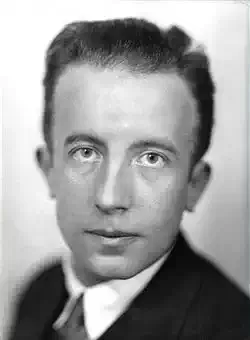
Paul Éluard
I Cannot be Known
I Cannot be Known
I cannot be known
Better than you know me
Your eyes in which we sleep
We together
Have made for my man's gleam
A better fate than for the common nights
Your eyes in which I travel
Have given to signs along the roads
A meaning alien to the earth
In your eyes who reveal to us
Our endless solitude
Are no longer what they thought themselves to be
You cannot be known
Better than I know you.
I cannot be known
Better than you know me
Your eyes in which we sleep
We together
Have made for my man's gleam
A better fate than for the common nights
Your eyes in which I travel
Have given to signs along the roads
A meaning alien to the earth
In your eyes who reveal to us
Our endless solitude
Are no longer what they thought themselves to be
You cannot be known
Better than I know you.
373
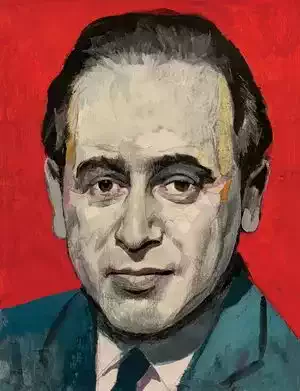
Paul Celan
To Stand in the Shadow
To Stand in the Shadow
To stand in the Shadow
of the Wound’s-Mark in the Air.
For no-one and nothing to Stand.
Unknown,
for you
alone.
With all, that within finds Room,
even without
Speech.
To stand in the Shadow
of the Wound’s-Mark in the Air.
For no-one and nothing to Stand.
Unknown,
for you
alone.
With all, that within finds Room,
even without
Speech.
467
Pablo Neruda
Waltz
Waltz
I touch hatred like a covered breast;
I without stopping go from garment to garment,
sleeping at a distance.
I am not, I'm of no use, I do not know
anyone; I have no weapons of ocean or wood,
I do not live in this house.
My mouth is full of night and water.
The abiding moon determines
what I do not have.
What I have is in the midst of the waves,
a ray of water, a day for myself,
an iron depth.
There is no cross-tide, there is no shield, no costume,
there is no special solution too deep to be sounded,
no vicious eyelid.
I live suddenly and other times I follow.
I touch a face suddenly and it murders me.
I have no time.
Do not look for me when drawing
the usual wild thread or the
bleeding net.
Do not call me: that is my occupation.
Do not ask my name or my condition.
Leave me in the middle of my own moon
in my wounded ground.
I touch hatred like a covered breast;
I without stopping go from garment to garment,
sleeping at a distance.
I am not, I'm of no use, I do not know
anyone; I have no weapons of ocean or wood,
I do not live in this house.
My mouth is full of night and water.
The abiding moon determines
what I do not have.
What I have is in the midst of the waves,
a ray of water, a day for myself,
an iron depth.
There is no cross-tide, there is no shield, no costume,
there is no special solution too deep to be sounded,
no vicious eyelid.
I live suddenly and other times I follow.
I touch a face suddenly and it murders me.
I have no time.
Do not look for me when drawing
the usual wild thread or the
bleeding net.
Do not call me: that is my occupation.
Do not ask my name or my condition.
Leave me in the middle of my own moon
in my wounded ground.
612
Pablo Neruda
Tower Of Light
Tower Of Light
O tower of light, sad beauty
that magnified necklaces and statues in the sea,
calcareous eye, insignia of the vast waters, cry
of the mourning petrel, tooth of the sea, wife
of the Oceanian wind, O separate rose
from the long stem of the trampled bush
that the depths, converted into archipelago,
O natural star, green diadem,
alone in your lonesome dynasty,
still unattainable, elusive, desolate
like one drop, like one grape, like the sea.
O tower of light, sad beauty
that magnified necklaces and statues in the sea,
calcareous eye, insignia of the vast waters, cry
of the mourning petrel, tooth of the sea, wife
of the Oceanian wind, O separate rose
from the long stem of the trampled bush
that the depths, converted into archipelago,
O natural star, green diadem,
alone in your lonesome dynasty,
still unattainable, elusive, desolate
like one drop, like one grape, like the sea.
595
Pablo Neruda
The Weary One
The Weary One
The weary one, orphan
of the masses, the self,
the crushed one, the one made of concrete,
the one without a country in crowded restaurants,
he who wanted to go far away, always farther away,
didn't know what to do there, whether he wanted
or didn't want to leave or remain on the island,
the hesitant one, the hybrid, entangled in himself,
had no place here: the straight-angled stone,
the infinite look of the granite prism,
the circular solitude all banished him:
he went somewhere else with his sorrows,
he returned to the agony of his native land,
to his indecisions, of winter and summer.
The weary one, orphan
of the masses, the self,
the crushed one, the one made of concrete,
the one without a country in crowded restaurants,
he who wanted to go far away, always farther away,
didn't know what to do there, whether he wanted
or didn't want to leave or remain on the island,
the hesitant one, the hybrid, entangled in himself,
had no place here: the straight-angled stone,
the infinite look of the granite prism,
the circular solitude all banished him:
he went somewhere else with his sorrows,
he returned to the agony of his native land,
to his indecisions, of winter and summer.
635