

Poems in this theme
Solitude
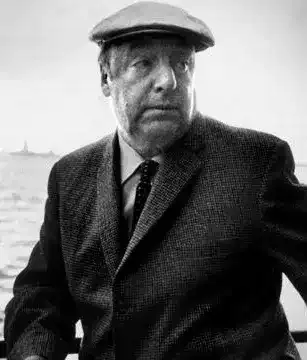
Pablo Neruda
Gentleman Alone
Gentleman Alone
The young maricones and the horny muchachas,
The big fat widows delirious from insomnia,
The young wives thirty hours' pregnant,
And the hoarse tomcats that cross my garden at night,
Like a collar of palpitating sexual oysters
Surround my solitary home,
Enemies of my soul,
Conspirators in pajamas
Who exchange deep kisses for passwords.
Radiant summer brings out the lovers
In melancholy regiments,
Fat and thin and happy and sad couples;
Under the elegant coconut palms, near the ocean and moon,
There is a continual life of pants and panties,
A hum from the fondling of silk stockings,
And women's breasts that glisten like eyes.
The salary man, after a while,
After the week's tedium, and the novels read in bed at night,
Has decisively fucked his neighbor,
And now takes her to the miserable movies,
Where the heroes are horses or passionate princes,
And he caresses her legs covered with sweet down
With his ardent and sweaty palms that smell like cigarettes.
The night of the hunter and the night of the husband
Come together like bed sheets and bury me,
And the hours after lunch, when the students and priests are masturbating,
And the animals mount each other openly,
And the bees smell of blood, and the flies buzz cholerically,
And cousins play strange games with cousins,
And doctors glower at the husband of the young patient,
And the early morning in which the professor, without a thought,
Pays his conjugal debt and eats breakfast,
And to top it all off, the adulterers, who love each other truly
On beds big and tall as ships:
So, eternally,
This twisted and breathing forest crushes me
With gigantic flowers like mouth and teeth
And black roots like fingernails and shoes.
Translated by Mike Topp
The young maricones and the horny muchachas,
The big fat widows delirious from insomnia,
The young wives thirty hours' pregnant,
And the hoarse tomcats that cross my garden at night,
Like a collar of palpitating sexual oysters
Surround my solitary home,
Enemies of my soul,
Conspirators in pajamas
Who exchange deep kisses for passwords.
Radiant summer brings out the lovers
In melancholy regiments,
Fat and thin and happy and sad couples;
Under the elegant coconut palms, near the ocean and moon,
There is a continual life of pants and panties,
A hum from the fondling of silk stockings,
And women's breasts that glisten like eyes.
The salary man, after a while,
After the week's tedium, and the novels read in bed at night,
Has decisively fucked his neighbor,
And now takes her to the miserable movies,
Where the heroes are horses or passionate princes,
And he caresses her legs covered with sweet down
With his ardent and sweaty palms that smell like cigarettes.
The night of the hunter and the night of the husband
Come together like bed sheets and bury me,
And the hours after lunch, when the students and priests are masturbating,
And the animals mount each other openly,
And the bees smell of blood, and the flies buzz cholerically,
And cousins play strange games with cousins,
And doctors glower at the husband of the young patient,
And the early morning in which the professor, without a thought,
Pays his conjugal debt and eats breakfast,
And to top it all off, the adulterers, who love each other truly
On beds big and tall as ships:
So, eternally,
This twisted and breathing forest crushes me
With gigantic flowers like mouth and teeth
And black roots like fingernails and shoes.
Translated by Mike Topp
624

Nazim Hikmet
Letters From A Man In Solitary
Letters From A Man In Solitary
I carved your name on my watchband
with my fingernail.
Where I am, you know,
I don't have a pearl-handled jackknife
(they won't give me anything sharp)
or a plane tree with its head in the clouds.
Trees may grow in the yard,
but I'm not allowed
to see the sky overhead...
How many others are in this place?
I don't know.
I'm alone far from them,
they're all together far from me.
To talk anyone besides myself
is forbidden.
So I talk to myself.
But I find my conversation so boring,
my dear wife, that I sing songs.
And what do you know,
that awful, always off-key voice of mine
touches me so
that my heart breaks.
And just like the barefoot orphan
lost in the snow
in those old sad stories, my heart
-- with moist blue eyes
and a little red runny rose --
wants to snuggle up in your arms.
It doesn't make me blush
that right now
I'm this weak,
this selfish,
this human simply.
No doubt my state can be explained
physiologically, psychologically, etc.
Or maybe it's
this barred window,
this earthen jug,
these four walls,
which for months have kept me from hearing
another human voice.
It's five o'clock, my dear.
Outside,
with its dryness,
eerie whispers,
mud roof,
and lame, skinny horse
standing motionless in infinity
-- I mean, it's enough to drive the man inside crazy with grief --
outside, with all its machinery and all its art,
a plains night comes down red on treeless space.
Again today, night will fall in no time.
A light will circle the lame, skinny horse.
And the treeless space, in this hopeless landscape
stretched out before me like the body of a hard man,
will suddenly be filled with stars.
We'll reach the inevitable end once more,
which is to say the stage is set
again today for an elaborate nostalgia.
Me,
the man inside,
once more I'll exhibit my customary talent,
and singing an old-fashioned lament
in the reedy voice of my childhood,
once more, by God, it will crush my unhappy heart
to hear you inside my head,
so far
away, as if I were watching you
in a smoky, broken mirror...
It's spring outside, my dear wife, spring.
Outside on the plain, suddenly the smell
of fresh earth, birds singing, etc.
It's spring, my dear wife,
the plain outside sparkles...
And inside the bed comes alive with bugs,
the water jug no longer freezes,
and in the morning sun floods the concrete...
The sun--
every day till noon now
it comes and goes
from me, flashing off
and on...
And as the day turns to afternoon, shadows climb the walls,
the glass of the barred window catches fire,
and it's night outside,
a cloudless spring night...
And inside this is spring's darkest hour.
In short, the demon called freedom,
with its glittering scales and fiery eyes,
possesses the man inside
especially in spring...
I know this from experience, my dear wife,
from experience...
Sunday today.
Today they took me out in the sun for the first time.
And I just stood there, struck for the first time in my life
by how far away the sky is,
how blue
and how wide.
Then I respectfully sat down on the earth.
I leaned back against the wall.
For a moment no trap to fall into,
no struggle, no freedom, no wife.
Only earth, sun, and me...
I am happy.
Trans. by Randy Blasing and Mutlu Konuk ()
I carved your name on my watchband
with my fingernail.
Where I am, you know,
I don't have a pearl-handled jackknife
(they won't give me anything sharp)
or a plane tree with its head in the clouds.
Trees may grow in the yard,
but I'm not allowed
to see the sky overhead...
How many others are in this place?
I don't know.
I'm alone far from them,
they're all together far from me.
To talk anyone besides myself
is forbidden.
So I talk to myself.
But I find my conversation so boring,
my dear wife, that I sing songs.
And what do you know,
that awful, always off-key voice of mine
touches me so
that my heart breaks.
And just like the barefoot orphan
lost in the snow
in those old sad stories, my heart
-- with moist blue eyes
and a little red runny rose --
wants to snuggle up in your arms.
It doesn't make me blush
that right now
I'm this weak,
this selfish,
this human simply.
No doubt my state can be explained
physiologically, psychologically, etc.
Or maybe it's
this barred window,
this earthen jug,
these four walls,
which for months have kept me from hearing
another human voice.
It's five o'clock, my dear.
Outside,
with its dryness,
eerie whispers,
mud roof,
and lame, skinny horse
standing motionless in infinity
-- I mean, it's enough to drive the man inside crazy with grief --
outside, with all its machinery and all its art,
a plains night comes down red on treeless space.
Again today, night will fall in no time.
A light will circle the lame, skinny horse.
And the treeless space, in this hopeless landscape
stretched out before me like the body of a hard man,
will suddenly be filled with stars.
We'll reach the inevitable end once more,
which is to say the stage is set
again today for an elaborate nostalgia.
Me,
the man inside,
once more I'll exhibit my customary talent,
and singing an old-fashioned lament
in the reedy voice of my childhood,
once more, by God, it will crush my unhappy heart
to hear you inside my head,
so far
away, as if I were watching you
in a smoky, broken mirror...
It's spring outside, my dear wife, spring.
Outside on the plain, suddenly the smell
of fresh earth, birds singing, etc.
It's spring, my dear wife,
the plain outside sparkles...
And inside the bed comes alive with bugs,
the water jug no longer freezes,
and in the morning sun floods the concrete...
The sun--
every day till noon now
it comes and goes
from me, flashing off
and on...
And as the day turns to afternoon, shadows climb the walls,
the glass of the barred window catches fire,
and it's night outside,
a cloudless spring night...
And inside this is spring's darkest hour.
In short, the demon called freedom,
with its glittering scales and fiery eyes,
possesses the man inside
especially in spring...
I know this from experience, my dear wife,
from experience...
Sunday today.
Today they took me out in the sun for the first time.
And I just stood there, struck for the first time in my life
by how far away the sky is,
how blue
and how wide.
Then I respectfully sat down on the earth.
I leaned back against the wall.
For a moment no trap to fall into,
no struggle, no freedom, no wife.
Only earth, sun, and me...
I am happy.
Trans. by Randy Blasing and Mutlu Konuk ()
351

Mirza Ghalib
Ghazal
Ghazal
I wish to go and dwell,
In such a place,
Where there's no one else.
No one to understand my speech,
No one around to talk with,
There, I want to reach.
I wish to build,
One such house,
Without a door to enter,
Without the boundary walls,
Thus there will be no neighbours,
And there will be no guard.
There will be no one thus,
To take care of me,
When I will fell ill.
And there will be no one,
To mourn or cry,
When I will die.
I wish to go and dwell,
In such a place,
Where there's no one else.
No one to understand my speech,
No one around to talk with,
There, I want to reach.
I wish to build,
One such house,
Without a door to enter,
Without the boundary walls,
Thus there will be no neighbours,
And there will be no guard.
There will be no one thus,
To take care of me,
When I will fell ill.
And there will be no one,
To mourn or cry,
When I will die.
355

Maya Angelou
Alone
Alone
Lying, thinking
Last night
How to find my soul a home
Where water is not thirsty
And bread loaf is not stone
I came up with one thing
And I don't believe I'm wrong
That nobody,
But nobody
Can make it out here alone.
Alone, all alone
Nobody, but nobody
Can make it out here alone.
There are some millionaires
With money they can't use
Their wives run round like banshees
Their children sing the blues
They've got expensive doctors
To cure their hearts of stone.
But nobody
No, nobody
Can make it out here alone.
Alone, all alone
Nobody, but nobody
Can make it out here alone.
Now if you listen closely
I'll tell you what I know
Storm clouds are gathering
The wind is gonna blow
The race of man is suffering
And I can hear the moan,
'Cause nobody,
But nobody
Can make it out here alone.
Alone, all alone
Nobody, but nobody
Can make it out here alone.
Lying, thinking
Last night
How to find my soul a home
Where water is not thirsty
And bread loaf is not stone
I came up with one thing
And I don't believe I'm wrong
That nobody,
But nobody
Can make it out here alone.
Alone, all alone
Nobody, but nobody
Can make it out here alone.
There are some millionaires
With money they can't use
Their wives run round like banshees
Their children sing the blues
They've got expensive doctors
To cure their hearts of stone.
But nobody
No, nobody
Can make it out here alone.
Alone, all alone
Nobody, but nobody
Can make it out here alone.
Now if you listen closely
I'll tell you what I know
Storm clouds are gathering
The wind is gonna blow
The race of man is suffering
And I can hear the moan,
'Cause nobody,
But nobody
Can make it out here alone.
Alone, all alone
Nobody, but nobody
Can make it out here alone.
295

Kazi Nazrul Islam
Alone
Alone
My eyes don't go by forbidding;
so does my mind
neither by forbidding nor by weeping.
Over the ages I have been looking for you
staying at roadside,
tears rolled down overflowing my banks
not caring for eye wash.
I am alone in the midst of all
which is why I long to see you
death, too, reckons none barring you.
[Original: Noyon je mor; Translation: Mohammad Nurul Huda]
My eyes don't go by forbidding;
so does my mind
neither by forbidding nor by weeping.
Over the ages I have been looking for you
staying at roadside,
tears rolled down overflowing my banks
not caring for eye wash.
I am alone in the midst of all
which is why I long to see you
death, too, reckons none barring you.
[Original: Noyon je mor; Translation: Mohammad Nurul Huda]
744
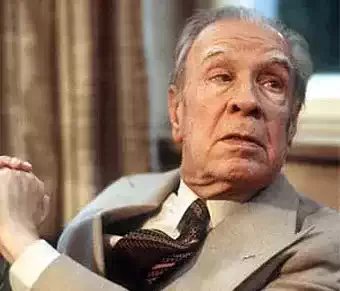
Jorge Luis Borges
To a Cat
To a Cat
Mirrors are not more silent
nor the creeping dawn more secretive;
in the moonlight, you are that panther
we catch sight of from afar.
By the inexplicable workings of a divine law,
we look for you in vain;
More remote, even, than the Ganges or the setting sun,
yours is the solitude, yours the secret.
Your haunch allows the lingering
caress of my hand. You have accepted,
since that long forgotten past,
the love of the distrustful hand.
You belong to another time. You are lord
of a place bounded like a dream.
Mirrors are not more silent
nor the creeping dawn more secretive;
in the moonlight, you are that panther
we catch sight of from afar.
By the inexplicable workings of a divine law,
we look for you in vain;
More remote, even, than the Ganges or the setting sun,
yours is the solitude, yours the secret.
Your haunch allows the lingering
caress of my hand. You have accepted,
since that long forgotten past,
the love of the distrustful hand.
You belong to another time. You are lord
of a place bounded like a dream.
661
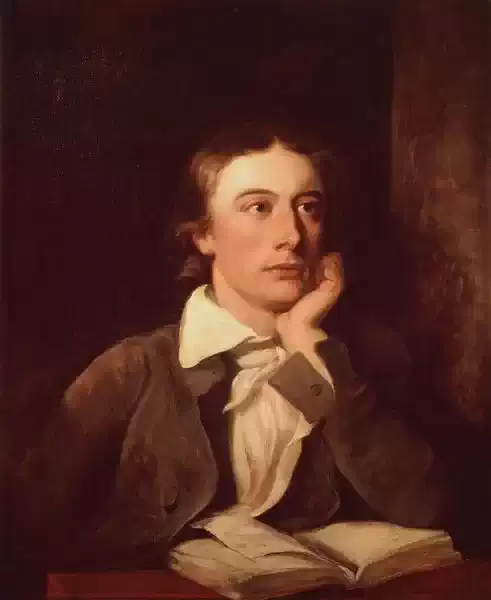
John Keats
To Solitude
To Solitude
O Solitude! if I must with thee dwell,
Let it not be among the jumbled heap
Of murky buildings; climb with me the steep, -
Nature's observatory -- whence the dell,
Its flowery slopes, its river's crystal swell,
May seem a span; let me thy vigils keep
'Mongst boughs pavilion'd, where the deer's swift leap
Startles the wild bee from the foxglove bell.
But though I'll gladly trace these scenes with thee,
Yet the sweet converse of an innocent mind,
Whose words are images of thoughts refin'd,
Is my soul's pleasure; and it sure must be
Almost the highest bliss of human-kind,
When to thy haunts two kindred spirits flee.
O Solitude! if I must with thee dwell,
Let it not be among the jumbled heap
Of murky buildings; climb with me the steep, -
Nature's observatory -- whence the dell,
Its flowery slopes, its river's crystal swell,
May seem a span; let me thy vigils keep
'Mongst boughs pavilion'd, where the deer's swift leap
Startles the wild bee from the foxglove bell.
But though I'll gladly trace these scenes with thee,
Yet the sweet converse of an innocent mind,
Whose words are images of thoughts refin'd,
Is my soul's pleasure; and it sure must be
Almost the highest bliss of human-kind,
When to thy haunts two kindred spirits flee.
451
John Keats
On Leaving Some Friends At An Early Hour
On Leaving Some Friends At An Early Hour
Give me a golden pen, and let me lean
On heaped-up flowers, in regions clear, and far;
Bring me a tablet whiter than a star,
Or hand of hymning angel, when 'tis seen
The silver strings of heavenly harp atween:
And let there glide by many a pearly car
Pink robes, and wavy hair, and diamond jar,
And half-discovered wings, and glances keen.
The while let music wander round my ears,
And as it reaches each delicious ending,
Let me write down a line of glorious tone,
And full of many wonders of the spheres:
For what a height my spirit is contending!
'Tis not content so soon to be alone.
Give me a golden pen, and let me lean
On heaped-up flowers, in regions clear, and far;
Bring me a tablet whiter than a star,
Or hand of hymning angel, when 'tis seen
The silver strings of heavenly harp atween:
And let there glide by many a pearly car
Pink robes, and wavy hair, and diamond jar,
And half-discovered wings, and glances keen.
The while let music wander round my ears,
And as it reaches each delicious ending,
Let me write down a line of glorious tone,
And full of many wonders of the spheres:
For what a height my spirit is contending!
'Tis not content so soon to be alone.
360
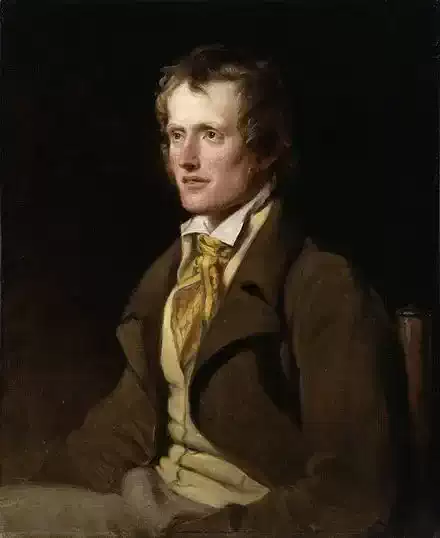
John Clare
Summer Images
Summer Images
Now swarthy Summer, by rude health embrowned,
Precedence takes of rosy fingered Spring;
And laughing Joy, with wild flowers prank'd, and crown'd,
A wild and giddy thing,
And Health robust, from every care unbound,
Come on the zephyr's wing,
And cheer the toiling clown.
Happy as holiday-enjoying face,
Loud tongued, and "merry as a marriage bell,"
Thy lightsome step sheds joy in every place;
And where the troubled dwell,
Thy witching charms wean them of half their cares;
And from thy sunny spell,
They greet joy unawares.
Then with thy sultry locks all loose and rude,
And mantle laced with gems of garish light,
Come as of wont; for I would fain intrude,
And in the world's despite,
Share the rude wealth that thy own heart beguiles;
If haply so I might
Win pleasure from thy smiles.
Me not the noise of brawling pleasure cheers,
In nightly revels or in city streets;
But joys which soothe, and not distract the ears,
That one at leisure meets
In the green woods, and meadows summer-shorn,
Or fields, where bee-fly greets
The ear with mellow horn.
The green-swathed grasshopper, on treble pipe,
Sings there, and dances, in mad-hearted pranks;
There bees go courting every flower that's ripe,
On baulks and sunny banks;
And droning dragon-fly, on rude bassoon,
Attempts to give God thanks
In no discordant tune.
The speckled thrush, by self-delight embued,
There sings unto himself for joy's amends,
And drinks the honey dew of solitude.
There Happiness attends
With inbred Joy until the heart o'erflow,
Of which the world's rude friends,
Nought heeding, nothing know.
There the gay river, laughing as it goes,
Plashes with easy wave its flaggy sides,
And to the calm of heart, in calmness shows
What pleasure there abides,
To trace its sedgy banks, from trouble free:
Spots Solitude provides
To muse, and happy be.
There ruminating 'neath some pleasant bush,
On sweet silk grass I stretch me at mine ease,
Where I can pillow on the yielding rush;
And, acting as I please,
Drop into pleasant dreams; or musing lie,
Mark the wind-shaken trees,
And cloud-betravelled sky.
There think me how some barter joy for care,
And waste life's summer-health in riot rude,
Of nature, nor of nature's sweets aware.
When passions vain intrude,
These, by calm musings, softened are and still;
And the heart's better mood
Feels sick of doing ill.
There I can live, and at my leisure seek
Joys far from cold restraints--not fearing pride--
Free as the winds, that breathe upon my cheek
Rude health, so long denied.
Here poor Integrity can sit at ease,
And list self-satisfied
The song of honey-bees.
The green lane now I traverse, where it goes
Nought guessing, till some sudden turn espies
Rude batter'd finger post, that stooping shows
Where the snug mystery lies;
And then a mossy spire, with ivy crown,
Cheers up the short surprise,
And shows a peeping town.
I see the wild flowers, in their summer morn
Of beauty, feeding on joy's luscious hours;
The gay convolvulus, wreathing round the thorn,
Agape for honey showers;
And slender kingcup, burnished with the dew
Of morning's early hours,
Like gold yminted new.
And mark by rustic bridge, o'er shallow stream,
Cow-tending boy, to toil unreconciled,
Absorbed as in some vagrant summer dream;
Who now, in gestures wild,
Starts dancing to his shadow on the wall,
Feeling self-gratified,
Nor fearing human thrall.
Or thread the sunny valley laced with streams,
Or forests rude, and the o'ershadow'd brims
Of simple ponds, where idle shepherd dreams,
Stretching his listless limbs;
Or trace hay-scented meadows, smooth and long,
Where joy's wild impulse swims
In one continued song.
I love at early morn, from new mown swath,
To see the startled frog his route pursue;
To mark while, leaping o'er the dripping path,
His bright sides scatter dew,
The early lark that from its bustle flies,
To hail his matin new;
And watch him to the skies.
To note on hedgerow baulks, in moisture sprent,
The jetty snail creep from the mossy thorn,
With earnest heed, and tremulous intent,
Frail brother of the morn,
That from the tiny bent's dew-misted leaves
Withdraws his timid horn,
And fearful vision weaves.
Or swallow heed on smoke-tanned chimney top,
Wont to be first unsealing Morning's eye,
Ere yet the bee hath gleaned one wayward drop
Of honey on his thigh;
To see him seek morn's airy couch to sing,
Until the golden sky
Bepaint his russet wing.
Or sauntering boy by tanning corn to spy,
With clapping noise to startle birds away,
And hear him bawl to every passer by
To know the hour of day;
While the uncradled breezes, fresh and strong,
With waking blossoms play,
And breathe Æolian song.
I love the south-west wind, or low or loud,
And not the less when sudden drops of rain
Moisten my glowing cheek from ebon cloud,
Threatening soft showers again,
That over lands new ploughed and meadow grounds,
Summer's sweet breath unchain,
And wake harmonious sounds.
Rich music breathes in Summer's every sound;
And in her harmony of varied greens,
Woods, meadows, hedge-rows, corn-fields, all around
Much beauty intervenes,
Filling with harmony the ear and eye;
While o'er the mingling scenes
Far spreads the laughing sky.
See, how the wind-enamoured aspen leaves
Turn up their silver lining to the sun!
And hark! the rustling noise, that oft deceives,
And makes the sheep-boy run:
The sound so mimics fast-approaching showers,
He thinks the rain's begun,
And hastes to sheltering bowers.
But now the evening curdles dank and grey,
Changing her watchet hue for sombre weed;
And moping owls, to close the lids of day,
On drowsy wing proceed;
While chickering crickets, tremulous and long,
Light's farewell inly heed,
And give it parting song.
The pranking bat its flighty circlet makes;
The glow-worm burnishes its lamp anew;
O'er meadows dew-besprent, the beetle wakes
Inquiries ever new,
Teazing each passing ear with murmurs vain,
As wanting to pursue
His homeward path again.
Hark! 'tis the melody of distant bells
That on the wind with pleasing hum rebounds
By fitful starts, then musically swells
O'er the dim stilly grounds;
While on the meadow-bridge the pausing boy
Listens the mellow sounds,
And hums in vacant joy.
Now homeward-bound, the hedger bundles round
His evening faggot, and with every stride
His leathern doublet leaves a rustling sound,
Till silly sheep beside
His path start tremulous, and once again
Look back dissatisfied,
And scour the dewy plain.
How sweet the soothing calmness that distills
O'er the heart's every sense its opiate dews,
In meek-eyed moods and ever balmy trills!
That softens and subdues,
With gentle Quiet's bland and sober train,
Which dreamy eve renews
In many a mellow strain!
I love to walk the fields, they are to me
A legacy no evil can destroy;
They, like a spell, set every rapture free
That cheer'd me when a boy.
Play--pastime--all Time's blotting pen conceal'd,
Comes like a new-born joy,
To greet me in the field.
For Nature's objects ever harmonize
With emulous Taste, that vulgar deed annoys;
Which loves in pensive moods to sympathize,
And meet vibrating joys
O'er Nature's pleasing things; nor slighting, deems
Pastimes, the Muse employs,
Vain and obtrusive themes.
Now swarthy Summer, by rude health embrowned,
Precedence takes of rosy fingered Spring;
And laughing Joy, with wild flowers prank'd, and crown'd,
A wild and giddy thing,
And Health robust, from every care unbound,
Come on the zephyr's wing,
And cheer the toiling clown.
Happy as holiday-enjoying face,
Loud tongued, and "merry as a marriage bell,"
Thy lightsome step sheds joy in every place;
And where the troubled dwell,
Thy witching charms wean them of half their cares;
And from thy sunny spell,
They greet joy unawares.
Then with thy sultry locks all loose and rude,
And mantle laced with gems of garish light,
Come as of wont; for I would fain intrude,
And in the world's despite,
Share the rude wealth that thy own heart beguiles;
If haply so I might
Win pleasure from thy smiles.
Me not the noise of brawling pleasure cheers,
In nightly revels or in city streets;
But joys which soothe, and not distract the ears,
That one at leisure meets
In the green woods, and meadows summer-shorn,
Or fields, where bee-fly greets
The ear with mellow horn.
The green-swathed grasshopper, on treble pipe,
Sings there, and dances, in mad-hearted pranks;
There bees go courting every flower that's ripe,
On baulks and sunny banks;
And droning dragon-fly, on rude bassoon,
Attempts to give God thanks
In no discordant tune.
The speckled thrush, by self-delight embued,
There sings unto himself for joy's amends,
And drinks the honey dew of solitude.
There Happiness attends
With inbred Joy until the heart o'erflow,
Of which the world's rude friends,
Nought heeding, nothing know.
There the gay river, laughing as it goes,
Plashes with easy wave its flaggy sides,
And to the calm of heart, in calmness shows
What pleasure there abides,
To trace its sedgy banks, from trouble free:
Spots Solitude provides
To muse, and happy be.
There ruminating 'neath some pleasant bush,
On sweet silk grass I stretch me at mine ease,
Where I can pillow on the yielding rush;
And, acting as I please,
Drop into pleasant dreams; or musing lie,
Mark the wind-shaken trees,
And cloud-betravelled sky.
There think me how some barter joy for care,
And waste life's summer-health in riot rude,
Of nature, nor of nature's sweets aware.
When passions vain intrude,
These, by calm musings, softened are and still;
And the heart's better mood
Feels sick of doing ill.
There I can live, and at my leisure seek
Joys far from cold restraints--not fearing pride--
Free as the winds, that breathe upon my cheek
Rude health, so long denied.
Here poor Integrity can sit at ease,
And list self-satisfied
The song of honey-bees.
The green lane now I traverse, where it goes
Nought guessing, till some sudden turn espies
Rude batter'd finger post, that stooping shows
Where the snug mystery lies;
And then a mossy spire, with ivy crown,
Cheers up the short surprise,
And shows a peeping town.
I see the wild flowers, in their summer morn
Of beauty, feeding on joy's luscious hours;
The gay convolvulus, wreathing round the thorn,
Agape for honey showers;
And slender kingcup, burnished with the dew
Of morning's early hours,
Like gold yminted new.
And mark by rustic bridge, o'er shallow stream,
Cow-tending boy, to toil unreconciled,
Absorbed as in some vagrant summer dream;
Who now, in gestures wild,
Starts dancing to his shadow on the wall,
Feeling self-gratified,
Nor fearing human thrall.
Or thread the sunny valley laced with streams,
Or forests rude, and the o'ershadow'd brims
Of simple ponds, where idle shepherd dreams,
Stretching his listless limbs;
Or trace hay-scented meadows, smooth and long,
Where joy's wild impulse swims
In one continued song.
I love at early morn, from new mown swath,
To see the startled frog his route pursue;
To mark while, leaping o'er the dripping path,
His bright sides scatter dew,
The early lark that from its bustle flies,
To hail his matin new;
And watch him to the skies.
To note on hedgerow baulks, in moisture sprent,
The jetty snail creep from the mossy thorn,
With earnest heed, and tremulous intent,
Frail brother of the morn,
That from the tiny bent's dew-misted leaves
Withdraws his timid horn,
And fearful vision weaves.
Or swallow heed on smoke-tanned chimney top,
Wont to be first unsealing Morning's eye,
Ere yet the bee hath gleaned one wayward drop
Of honey on his thigh;
To see him seek morn's airy couch to sing,
Until the golden sky
Bepaint his russet wing.
Or sauntering boy by tanning corn to spy,
With clapping noise to startle birds away,
And hear him bawl to every passer by
To know the hour of day;
While the uncradled breezes, fresh and strong,
With waking blossoms play,
And breathe Æolian song.
I love the south-west wind, or low or loud,
And not the less when sudden drops of rain
Moisten my glowing cheek from ebon cloud,
Threatening soft showers again,
That over lands new ploughed and meadow grounds,
Summer's sweet breath unchain,
And wake harmonious sounds.
Rich music breathes in Summer's every sound;
And in her harmony of varied greens,
Woods, meadows, hedge-rows, corn-fields, all around
Much beauty intervenes,
Filling with harmony the ear and eye;
While o'er the mingling scenes
Far spreads the laughing sky.
See, how the wind-enamoured aspen leaves
Turn up their silver lining to the sun!
And hark! the rustling noise, that oft deceives,
And makes the sheep-boy run:
The sound so mimics fast-approaching showers,
He thinks the rain's begun,
And hastes to sheltering bowers.
But now the evening curdles dank and grey,
Changing her watchet hue for sombre weed;
And moping owls, to close the lids of day,
On drowsy wing proceed;
While chickering crickets, tremulous and long,
Light's farewell inly heed,
And give it parting song.
The pranking bat its flighty circlet makes;
The glow-worm burnishes its lamp anew;
O'er meadows dew-besprent, the beetle wakes
Inquiries ever new,
Teazing each passing ear with murmurs vain,
As wanting to pursue
His homeward path again.
Hark! 'tis the melody of distant bells
That on the wind with pleasing hum rebounds
By fitful starts, then musically swells
O'er the dim stilly grounds;
While on the meadow-bridge the pausing boy
Listens the mellow sounds,
And hums in vacant joy.
Now homeward-bound, the hedger bundles round
His evening faggot, and with every stride
His leathern doublet leaves a rustling sound,
Till silly sheep beside
His path start tremulous, and once again
Look back dissatisfied,
And scour the dewy plain.
How sweet the soothing calmness that distills
O'er the heart's every sense its opiate dews,
In meek-eyed moods and ever balmy trills!
That softens and subdues,
With gentle Quiet's bland and sober train,
Which dreamy eve renews
In many a mellow strain!
I love to walk the fields, they are to me
A legacy no evil can destroy;
They, like a spell, set every rapture free
That cheer'd me when a boy.
Play--pastime--all Time's blotting pen conceal'd,
Comes like a new-born joy,
To greet me in the field.
For Nature's objects ever harmonize
With emulous Taste, that vulgar deed annoys;
Which loves in pensive moods to sympathize,
And meet vibrating joys
O'er Nature's pleasing things; nor slighting, deems
Pastimes, the Muse employs,
Vain and obtrusive themes.
412
John Clare
In Hilly-Wood
In Hilly-Wood
How sweet to be thus nestling deep in boughs,
Upon an ashen stoven pillowing me;
Faintly are heard the ploughmen at their ploughs,
But not an eye can find its way to see.
The sunbeams scarce molest me with a smile,
So thick the leafy armies gather round;
And where they do, the breeze blows cool the while,
Their leafy shadows dancing on the ground.
Full many a flower, too, wishing to be seen,
Perks up its head the hiding grass between.-
In mid-wood silence, thus, how sweet to be;
Where all the noises, that on peace intrude,
Come from the chittering cricket, bird, and bee,
Whose songs have charms to sweeten solitude.
How sweet to be thus nestling deep in boughs,
Upon an ashen stoven pillowing me;
Faintly are heard the ploughmen at their ploughs,
But not an eye can find its way to see.
The sunbeams scarce molest me with a smile,
So thick the leafy armies gather round;
And where they do, the breeze blows cool the while,
Their leafy shadows dancing on the ground.
Full many a flower, too, wishing to be seen,
Perks up its head the hiding grass between.-
In mid-wood silence, thus, how sweet to be;
Where all the noises, that on peace intrude,
Come from the chittering cricket, bird, and bee,
Whose songs have charms to sweeten solitude.
380
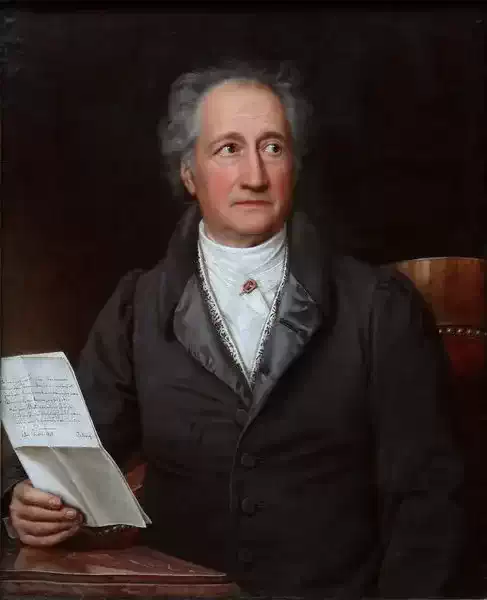
Johann Wolfgang von Goethe
Solitude
Solitude
OH ye kindly nymphs, who dwell 'mongst the rocks and the thickets,
Grant unto each whatsoe'er he may in silence desire!
Comfort impart to the mourner, and give to the doubter instruction,
And let the lover rejoice, finding the bliss that he craves.
For from the gods ye received what they ever denied unto mortals,
Power to comfort and aid all who in you may confide.
OH ye kindly nymphs, who dwell 'mongst the rocks and the thickets,
Grant unto each whatsoe'er he may in silence desire!
Comfort impart to the mourner, and give to the doubter instruction,
And let the lover rejoice, finding the bliss that he craves.
For from the gods ye received what they ever denied unto mortals,
Power to comfort and aid all who in you may confide.
388

Henry Lawson
On the Summit of Mt. Clarence
On the Summit of Mt. Clarence
On the summit of Mount Clarence rotting slowly in the air
Stands a tall and naked flagstaff, relic of the Russian scare—
Russian scare that scares no longer, for the cry is “All is well”—
Yet the flagstaff still is standing like a lonely sentinel.
And it watches through the seasons—winter’s cold and summer’s heat,
Watches seaward, watches ever for the phantom Russian fleet.
In a cave among the ridges, where the scrub is tall and thick
With no human being near him dwells a wretched lunatic:
On Mount Clarence in the morning he will fix his burning eyes,
And he scans the sea and watches for the signal flag to rise;
In his ears the roar of cannon and the sound of battle drums
While he cleans his gun and watches for the foe that never comes.
And they say, at dreary nightfall, when the storms are howling round
Comes a phantom ship to anchor in the waters of the “Sound”,
And the lunatic who sees it wakes the landscape with his whoops,
Loads his gun and marches seaward at the head of airy troops—
To the summit of Mount Clarence leads them on with martial tread,
Fires his gun and sends the Russians to the mustering of the dead.
On the summit of Mount Clarence rotting slowly in the air
Stands a tall and naked flagstaff, relic of the Russian scare—
Russian scare that scares no longer, for the cry is “All is well”—
Yet the flagstaff still is standing like a lonely sentinel.
And it watches through the seasons—winter’s cold and summer’s heat,
Watches seaward, watches ever for the phantom Russian fleet.
In a cave among the ridges, where the scrub is tall and thick
With no human being near him dwells a wretched lunatic:
On Mount Clarence in the morning he will fix his burning eyes,
And he scans the sea and watches for the signal flag to rise;
In his ears the roar of cannon and the sound of battle drums
While he cleans his gun and watches for the foe that never comes.
And they say, at dreary nightfall, when the storms are howling round
Comes a phantom ship to anchor in the waters of the “Sound”,
And the lunatic who sees it wakes the landscape with his whoops,
Loads his gun and marches seaward at the head of airy troops—
To the summit of Mount Clarence leads them on with martial tread,
Fires his gun and sends the Russians to the mustering of the dead.
250
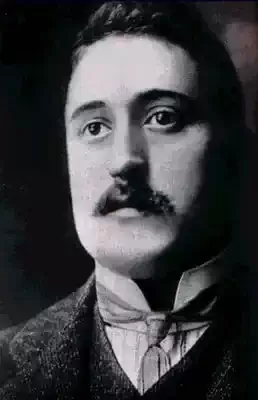
Guillaume Apollinaire
In the Sante
In the Sante
I
Before I got into my cell
I had to strip my body bare
I heard an ominous voice say Well
Guillaume what are you doing here
Lazarus steps into the ground
Not out of it as he was bid
Adieu Adieu O singing round
Of years and girls the life I led
II
I'm no longer myself in here
I know
I'm number fifteen in the eleventh
Row
The sunlight filters downward through
The panes
And on these lines bright clowns alight
Like stains
They dance under my eyes while my
Ears follow
The feet of one whose feet above
Sound hollow
III
In a bear-pit like a bear
Every morning round I tramp
Round and round and round and round
The sky is like an iron clamp
In a bear-pit like a bear
Every morning round I tramp
In the next cell at the sink
Someone lets the water run
With his bunch of keys that clink
Let the goaler go and come
In the next cell at the sink
Someone lets the water run
IV
How bored I am between bare wall and wall
Whose colour pales and pines
A fly on the paper with extremely small
Steps runs across these lines
What will become of me O God Who know
My pain Who gave it me
Have pity on my dry eyes and my pallor
My chair which creaks and is not free
And all these poor hearts beating in this prison
And Love beside me seated
Pity above all my unstable reason
And this despair which threatens to defeat it
V
How long these hours take to go
As long as a whole funeral
You'll mourn the time you mourned you know
It will be gone too soon like all
Time past
too fast too long ago
VI
I hear the noises of the city
In the turning world beyond me
I see a sky which has no pity
And bare prison walls around me
The daylight disappears and now
A lamp is lit within the prison
We're all alone here in my cell
Beautiful light Beloved reason
I
Before I got into my cell
I had to strip my body bare
I heard an ominous voice say Well
Guillaume what are you doing here
Lazarus steps into the ground
Not out of it as he was bid
Adieu Adieu O singing round
Of years and girls the life I led
II
I'm no longer myself in here
I know
I'm number fifteen in the eleventh
Row
The sunlight filters downward through
The panes
And on these lines bright clowns alight
Like stains
They dance under my eyes while my
Ears follow
The feet of one whose feet above
Sound hollow
III
In a bear-pit like a bear
Every morning round I tramp
Round and round and round and round
The sky is like an iron clamp
In a bear-pit like a bear
Every morning round I tramp
In the next cell at the sink
Someone lets the water run
With his bunch of keys that clink
Let the goaler go and come
In the next cell at the sink
Someone lets the water run
IV
How bored I am between bare wall and wall
Whose colour pales and pines
A fly on the paper with extremely small
Steps runs across these lines
What will become of me O God Who know
My pain Who gave it me
Have pity on my dry eyes and my pallor
My chair which creaks and is not free
And all these poor hearts beating in this prison
And Love beside me seated
Pity above all my unstable reason
And this despair which threatens to defeat it
V
How long these hours take to go
As long as a whole funeral
You'll mourn the time you mourned you know
It will be gone too soon like all
Time past
too fast too long ago
VI
I hear the noises of the city
In the turning world beyond me
I see a sky which has no pity
And bare prison walls around me
The daylight disappears and now
A lamp is lit within the prison
We're all alone here in my cell
Beautiful light Beloved reason
889
Guillaume Apollinaire
Hotels
Hotels
The room is free
Each for himself
A new arrival
Pays by the month
The boss is doubtful
Whether you’ll pay
Like a top
I spin on the way
The traffic noise
My neighbour gross
Who puffs an acrid
English smoke
O La Vallière
Who limps and smiles
In my prayers
The bedside table
And all the company
in this hotel
know the languages
of Babel
Let’s shut our doors
With a double lock
And each adore
his lonely love
The room is free
Each for himself
A new arrival
Pays by the month
The boss is doubtful
Whether you’ll pay
Like a top
I spin on the way
The traffic noise
My neighbour gross
Who puffs an acrid
English smoke
O La Vallière
Who limps and smiles
In my prayers
The bedside table
And all the company
in this hotel
know the languages
of Babel
Let’s shut our doors
With a double lock
And each adore
his lonely love
725
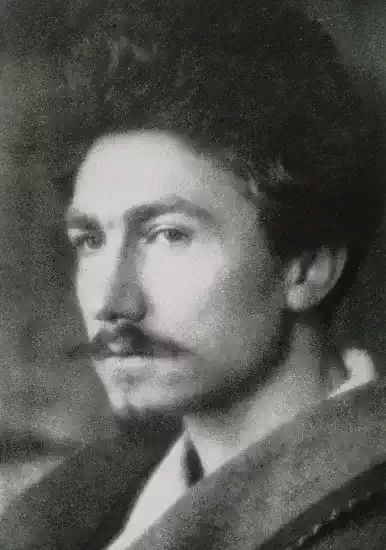
Ezra Pound
Tenzone
Tenzone
Will people accept them?
(i.e. these songs).
As a timorous wench from a centaur
(or a centurion),
Already they flee, howling in terror.
Will they be touched with the verisimilitudes?
Their virgin stupidity is untemptable.
I beg you, my friendly critics,
Do not set about to procure me an audience.
I mate with my free kind upon the crags;
the hidden recesses
Have heard the echo ofmy heels,
in the cool light,
in the darkness.
Will people accept them?
(i.e. these songs).
As a timorous wench from a centaur
(or a centurion),
Already they flee, howling in terror.
Will they be touched with the verisimilitudes?
Their virgin stupidity is untemptable.
I beg you, my friendly critics,
Do not set about to procure me an audience.
I mate with my free kind upon the crags;
the hidden recesses
Have heard the echo ofmy heels,
in the cool light,
in the darkness.
542
Ezra Pound
Sennin Poem By Kakuhaku
Sennin Poem By Kakuhaku
The red and green kingfishers
flash between the orchids and clover,
One bird casts its gleam on another.
Green vines hang through the high forest,
They weave a whole roof to the mountain,
The lone man sits with shut speech,
He purrs and pats the clear strings.
He throws his heart up through the sky,
He bites through the flower pistil
and brings up a fine fountain.
The red-pine-tree god looks at him and wonders.
He rides through the purple smoke to visit the sennin,
He takes 'Floating Hill' by the sleeve,
He claps his hand on the back of the great water sennin.
But you, you dam'd crowd of gnats,
Can you even tell the age of a turtle?
The red and green kingfishers
flash between the orchids and clover,
One bird casts its gleam on another.
Green vines hang through the high forest,
They weave a whole roof to the mountain,
The lone man sits with shut speech,
He purrs and pats the clear strings.
He throws his heart up through the sky,
He bites through the flower pistil
and brings up a fine fountain.
The red-pine-tree god looks at him and wonders.
He rides through the purple smoke to visit the sennin,
He takes 'Floating Hill' by the sleeve,
He claps his hand on the back of the great water sennin.
But you, you dam'd crowd of gnats,
Can you even tell the age of a turtle?
485
Ezra Pound
IN DURANCE
IN DURANCE
(1907)
1 am homesick after mine own kind,
Oh I know that there are folk about me, friendly faces,
But I am homesick after mine own kind.
'These sell our pictures'! Oh well,
They reach me not, touch me some edge or that,
But reach me not and all my life's become
One flame, that reaches not beyond
My heart's own hearth,
Or hides among the ashes there for thee.
Thee'? Oh, 'Thee' is who cometh first
Out of mine own soul-kin,
For I am homesick after mine own kind
And ordinary people touch me not.
And I am homesick
After mine own kind that know, and feel
And have some breath for beauty and the arts.
Aye, I am wistful for my kin of the spirit
And have none about me save in the shadows
When come they, surging of power, 'DAEMON,'
'Quasi KALOUN.' S.T. says Beauty is most that, a
'calling to the soul'.
Well then, so call they, the swirlers out of the mist of my soul,
They that come mewards, bearing old magic.
But for all that, I am homesick after mine own kind
And would meet kindred even as I am,
Flesh-shrouded bearing the secret.
'All they that with strange sadness'
Have the earth in mockery, and are kind to all,
My fellows, aye I know the glory
Of th' unbounded ones, but ye, that hide
As I hide most the while
And burst forth to the windows only whiles or whiles
For love, or hope or beauty or for power,
Then smoulder, with the lids half closed
And are untouched by echoes of the world.
Oh ye, my fellows: with the seas between us some be,
Purple and sapphire for the silver shafts
Of sun and spray all shattered at the bows;
And some the hills hold off,
The little hills to east of us, though here we
Have damp and plain to be our shutting in.
And yet my soul sings ‘Up!' and we are one.
Yea thou, and Thou, and THOU, and all my kin
To whom my breast and arms are ever warm,
For that I love ye as the wind the trees
That holds their blossoms and their leaves in cure
And calls the utmost singing from the boughs
That Hhout him, save the aspen, were as dumb
Still shade, and bade no whisper speak the birds of how
'Beyond, beyond, beyond, there lies . . .'
(1907)
1 am homesick after mine own kind,
Oh I know that there are folk about me, friendly faces,
But I am homesick after mine own kind.
'These sell our pictures'! Oh well,
They reach me not, touch me some edge or that,
But reach me not and all my life's become
One flame, that reaches not beyond
My heart's own hearth,
Or hides among the ashes there for thee.
Thee'? Oh, 'Thee' is who cometh first
Out of mine own soul-kin,
For I am homesick after mine own kind
And ordinary people touch me not.
And I am homesick
After mine own kind that know, and feel
And have some breath for beauty and the arts.
Aye, I am wistful for my kin of the spirit
And have none about me save in the shadows
When come they, surging of power, 'DAEMON,'
'Quasi KALOUN.' S.T. says Beauty is most that, a
'calling to the soul'.
Well then, so call they, the swirlers out of the mist of my soul,
They that come mewards, bearing old magic.
But for all that, I am homesick after mine own kind
And would meet kindred even as I am,
Flesh-shrouded bearing the secret.
'All they that with strange sadness'
Have the earth in mockery, and are kind to all,
My fellows, aye I know the glory
Of th' unbounded ones, but ye, that hide
As I hide most the while
And burst forth to the windows only whiles or whiles
For love, or hope or beauty or for power,
Then smoulder, with the lids half closed
And are untouched by echoes of the world.
Oh ye, my fellows: with the seas between us some be,
Purple and sapphire for the silver shafts
Of sun and spray all shattered at the bows;
And some the hills hold off,
The little hills to east of us, though here we
Have damp and plain to be our shutting in.
And yet my soul sings ‘Up!' and we are one.
Yea thou, and Thou, and THOU, and all my kin
To whom my breast and arms are ever warm,
For that I love ye as the wind the trees
That holds their blossoms and their leaves in cure
And calls the utmost singing from the boughs
That Hhout him, save the aspen, were as dumb
Still shade, and bade no whisper speak the birds of how
'Beyond, beyond, beyond, there lies . . .'
481
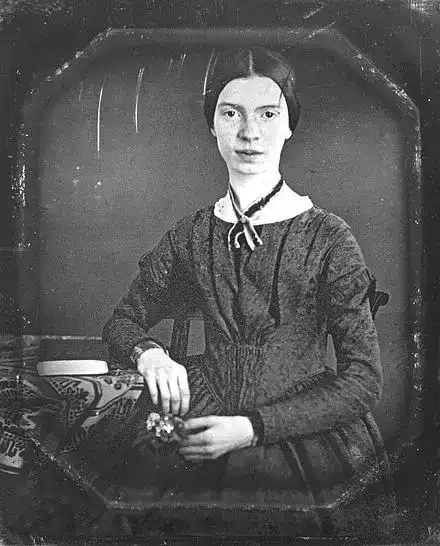
Emily Dickinson
Too little way the House must lie
Too little way the House must lie
911
Too little way the House must lie
From every Human Heart
That holds in undisputed Lease
A white inhabitant-
Too narrow is the Right between-
Too imminent the chance-
Each Consciousness must emigrate
And lose its neighbor once-
911
Too little way the House must lie
From every Human Heart
That holds in undisputed Lease
A white inhabitant-
Too narrow is the Right between-
Too imminent the chance-
Each Consciousness must emigrate
And lose its neighbor once-
263
Emily Dickinson
There's something quieter than sleep
There's something quieter than sleep
45
There's something quieter than sleep
Within this inner room!
It wears a sprig upon its breast-
And will not tell its name.
Some touch it, and some kiss it-
Some chafe its idle hand-
It has a simple gravity
I do not understand!
I would not weep if I were they-
How rude in one to sob!
Might scare the quiet fairy
Back to her native wood!
While simple-hearted neighbors
Chat of the "Early dead"We-
prone to periphrasis
Remark that Birds have fled!
45
There's something quieter than sleep
Within this inner room!
It wears a sprig upon its breast-
And will not tell its name.
Some touch it, and some kiss it-
Some chafe its idle hand-
It has a simple gravity
I do not understand!
I would not weep if I were they-
How rude in one to sob!
Might scare the quiet fairy
Back to her native wood!
While simple-hearted neighbors
Chat of the "Early dead"We-
prone to periphrasis
Remark that Birds have fled!
296
Emily Dickinson
The Loneliness One dare not sound
The Loneliness One dare not sound
777
The Loneliness One dare not sound-
And would as soon surmise
As in its Grave go plumbing
To ascertain the size-
The Loneliness whose worst alarm
Is lest itself should see-
And perish from before itself
For just a scrutiny-
The Horror not to be surveyed-
But skirted in the Dark-
With Consciousness suspended-
And Being under Lock-
I fear me this-is Loneliness-
The Maker of the soul
Its Caverns and its Corridors
Illuminate-or seal-
777
The Loneliness One dare not sound-
And would as soon surmise
As in its Grave go plumbing
To ascertain the size-
The Loneliness whose worst alarm
Is lest itself should see-
And perish from before itself
For just a scrutiny-
The Horror not to be surveyed-
But skirted in the Dark-
With Consciousness suspended-
And Being under Lock-
I fear me this-is Loneliness-
The Maker of the soul
Its Caverns and its Corridors
Illuminate-or seal-
278
Emily Dickinson
It is a lonesome Glee
It is a lonesome Glee
774
It is a lonesome Glee-
Yet sanctifies the Mind-
With fair association-
Afar upon the Wind
A Bird to overhear
Delight without a Cause-
Arrestless as invisible-
A matter of the Skies.
774
It is a lonesome Glee-
Yet sanctifies the Mind-
With fair association-
Afar upon the Wind
A Bird to overhear
Delight without a Cause-
Arrestless as invisible-
A matter of the Skies.
318
Emily Dickinson
I'm nobody! Who are you?
I'm nobody! Who are you?
I'm nobody! Who are you?
Are you nobody, too?
Then there's a pair of us -- don't tell!
They'd banish -- you know!
How dreary to be somebody!
How public like a frog
To tell one's name the livelong day
To an admiring bog!
I'm nobody! Who are you?
Are you nobody, too?
Then there's a pair of us -- don't tell!
They'd banish -- you know!
How dreary to be somebody!
How public like a frog
To tell one's name the livelong day
To an admiring bog!
234
Emily Dickinson
I was the slightest in the House
I was the slightest in the House
486
I was the slightest in the House-
I took the smallest Room-
At night, my little Lamp, and Book-
And one Geranium-
So stationed I could catch the Mint
That never ceased to fall-
And just my Basket-
Let me think-I'm sure-
That this was all-
I never spoke-unless addressed-
And then, 'twas brief and low-
I could not bear to live-aloud-
The Racket shamed me so-
And if it had not been so far-
And any one I knew
Were going-I had often thought
How noteless-I could die-
486
I was the slightest in the House-
I took the smallest Room-
At night, my little Lamp, and Book-
And one Geranium-
So stationed I could catch the Mint
That never ceased to fall-
And just my Basket-
Let me think-I'm sure-
That this was all-
I never spoke-unless addressed-
And then, 'twas brief and low-
I could not bear to live-aloud-
The Racket shamed me so-
And if it had not been so far-
And any one I knew
Were going-I had often thought
How noteless-I could die-
296
Emily Dickinson
I hide myself within my flower
I hide myself within my flower
903
I hide myself within my flower,
That fading from your Vase,
You, unsuspecting, feel for me-
Almost a loneliness.
903
I hide myself within my flower,
That fading from your Vase,
You, unsuspecting, feel for me-
Almost a loneliness.
255