

Poems in this theme
Betrayal and Disappointment

Robert Browning
Lost Leader, The
Lost Leader, The
I.
Just for a handful of silver he left us,
Just for a riband to stick in his coat---
Found the one gift of which fortune bereft us,
Lost all the others she lets us devote;
They, with the gold to give, doled him out silver,
So much was theirs who so little allowed:
How all our copper had gone for his service!
Rags---were they purple, his heart had been proud!
We that had loved him so, followed him, honoured him,
Lived in his mild and magnificent eye,
Learned his great language, caught his clear accents,
Made him our pattern to live and to die!
Shakespeare was of us, Milton was for us,
Burns, Shelley, were with us,---they watch from their graves!
He alone breaks from the van and the free-men,
---He alone sinks to the rear and the slaves!
II.
We shall march prospering,---not thro' his presence;
Songs may inspirit us,---not from his lyre;
Deeds will be done,---while he boasts his quiescence,
Still bidding crouch whom the rest bade aspire:
Blot out his name, then, record one lost soul more,
One task more declined, one more foot-path untrod,
One more devils'-triumph and sorrow for angels,
One wrong more to man, one more insult to God!
Life's night begins: let him never come back to us!
There would be doubt, hesitation and pain,
Forced praise on our part---the glimmer of twilight,
Never glad confident morning again!
Best fight on well, for we taught him---strike gallantly,
Menace our heart ere we master his own;
Then let him receive the new knowledge and wait us,
Pardoned in heaven, the first by the throne!
I.
Just for a handful of silver he left us,
Just for a riband to stick in his coat---
Found the one gift of which fortune bereft us,
Lost all the others she lets us devote;
They, with the gold to give, doled him out silver,
So much was theirs who so little allowed:
How all our copper had gone for his service!
Rags---were they purple, his heart had been proud!
We that had loved him so, followed him, honoured him,
Lived in his mild and magnificent eye,
Learned his great language, caught his clear accents,
Made him our pattern to live and to die!
Shakespeare was of us, Milton was for us,
Burns, Shelley, were with us,---they watch from their graves!
He alone breaks from the van and the free-men,
---He alone sinks to the rear and the slaves!
II.
We shall march prospering,---not thro' his presence;
Songs may inspirit us,---not from his lyre;
Deeds will be done,---while he boasts his quiescence,
Still bidding crouch whom the rest bade aspire:
Blot out his name, then, record one lost soul more,
One task more declined, one more foot-path untrod,
One more devils'-triumph and sorrow for angels,
One wrong more to man, one more insult to God!
Life's night begins: let him never come back to us!
There would be doubt, hesitation and pain,
Forced praise on our part---the glimmer of twilight,
Never glad confident morning again!
Best fight on well, for we taught him---strike gallantly,
Menace our heart ere we master his own;
Then let him receive the new knowledge and wait us,
Pardoned in heaven, the first by the throne!
324
Robert Browning
Laboratory, The
Laboratory, The
ANCIEN RGIME.
I.
Now that I, tying thy glass mask tightly,
May gaze thro' these faint smokes curling whitely,
As thou pliest thy trade in this devil's-smithy---
Which is the poison to poison her, prithee?
II.
He is with her, and they know that I know
Where they are, what they do: they believe my tears flow
While they laugh, laugh at me, at me fled to the drear
Empty church, to pray God in, for them!---I am here.
III.
Grind away, moisten and mash up thy paste,
Pound at thy powder,---I am not in haste!
Better sit thus, and observe thy strange things,
Than go where men wait me and dance at the King's.
IV.
That in the mortar---you call it a gum?
Ah, the brave tree whence such gold oozings come!
And yonder soft phial, the exquisite blue,
Sure to taste sweetly,---is that poison too?
V.
Had I but all of them, thee and thy treasures,
What a wild crowd of invisible pleasures!
To carry pure death in an earring, a casket,
A signet, a fan-mount, a filigree basket!
VI.
Soon, at the King's, a mere lozenge to give,
And Pauline should have just thirty minutes to live!
But to light a pastile, and Elise, with her head
And her breast and her arms and her hands, should drop dead!
VII.
Quick---is it finished? The colour's too grim!
Why not soft like the phial's, enticing and dim?
Let it brighten her drink, let her turn it and stir,
And try it and taste, ere she fix and prefer!
VIII.
What a drop! She's not little, no minion like me!
That's why she ensnared him: this never will free
The soul from those masculine eyes,---Say, ``no!''
To that pulse's magnificent come-and-go.
IX.
For only last night, as they whispered, I brought
My own eyes to bear on her so, that I thought
Could I keep them one half minute fixed, she would fall
Shrivelled; she fell not; yet this does it all!
X.
Not that I bid you spare her the pain;
Let death be felt and the proof remain:
Brand, burn up, bite into its grace---
He is sure to remember her dying face!
XI.
Is it done? Take my mask off! Nay, be not morose;
It kills her, and this prevents seeing it close;
The delicate droplet, my whole fortune's fee!
If it hurts her, beside, can it ever hurt me?
XII.
Now, take all my jewels, gorge gold to your fill,
You may kiss me, old man, on my mouth if you will!
But brush this dust off me, lest horror it brings
Ere I know it---next moment I dance at the King's!
ANCIEN R
I.
Now that I, tying thy glass mask tightly,
May gaze thro' these faint smokes curling whitely,
As thou pliest thy trade in this devil's-smithy---
Which is the poison to poison her, prithee?
II.
He is with her, and they know that I know
Where they are, what they do: they believe my tears flow
While they laugh, laugh at me, at me fled to the drear
Empty church, to pray God in, for them!---I am here.
III.
Grind away, moisten and mash up thy paste,
Pound at thy powder,---I am not in haste!
Better sit thus, and observe thy strange things,
Than go where men wait me and dance at the King's.
IV.
That in the mortar---you call it a gum?
Ah, the brave tree whence such gold oozings come!
And yonder soft phial, the exquisite blue,
Sure to taste sweetly,---is that poison too?
V.
Had I but all of them, thee and thy treasures,
What a wild crowd of invisible pleasures!
To carry pure death in an earring, a casket,
A signet, a fan-mount, a filigree basket!
VI.
Soon, at the King's, a mere lozenge to give,
And Pauline should have just thirty minutes to live!
But to light a pastile, and Elise, with her head
And her breast and her arms and her hands, should drop dead!
VII.
Quick---is it finished? The colour's too grim!
Why not soft like the phial's, enticing and dim?
Let it brighten her drink, let her turn it and stir,
And try it and taste, ere she fix and prefer!
VIII.
What a drop! She's not little, no minion like me!
That's why she ensnared him: this never will free
The soul from those masculine eyes,---Say, ``no!''
To that pulse's magnificent come-and-go.
IX.
For only last night, as they whispered, I brought
My own eyes to bear on her so, that I thought
Could I keep them one half minute fixed, she would fall
Shrivelled; she fell not; yet this does it all!
X.
Not that I bid you spare her the pain;
Let death be felt and the proof remain:
Brand, burn up, bite into its grace---
He is sure to remember her dying face!
XI.
Is it done? Take my mask off! Nay, be not morose;
It kills her, and this prevents seeing it close;
The delicate droplet, my whole fortune's fee!
If it hurts her, beside, can it ever hurt me?
XII.
Now, take all my jewels, gorge gold to your fill,
You may kiss me, old man, on my mouth if you will!
But brush this dust off me, lest horror it brings
Ere I know it---next moment I dance at the King's!
334
Robert Browning
Count Gismond--Aix in Provence
Count Gismond--Aix in Provence
Christ God who savest man, save most
Of men Count Gismond who saved me!
Count Gauthier, when he chose his post,
Chose time and place and company
To suit it; when he struck at length
My honour, 't was with all his strength.
And doubtlessly, ere he could draw
All points to one, he must have schemed!
That miserable morning saw
Few half so happy as I seemed,
While being dressed in queen's array
To give our tourney prize away.
I thought they loved me, did me grace
To please themselves; 't was all their deed;
God makes, or fair or foul, our face;
If showing mine so caused to bleed
My cousins' hearts, they should have dropped
A word, and straight the play had stopped.
They, too, so beauteous! Each a queen
By virtue of her brow and breast;
Not needing to be crowned, I mean,
As I do. E'en when I was dressed,
Had either of them spoke, instead
Of glancing sideways with still head!
But no: they let me laugh, and sing
My birthday song quite through, adjust
The last rose in my garland, fling
A last look on the mirror, trust
My arms to each an arm of theirs,
And so descend the castle-stairs-
And come out on the morning troop
Of merry friends who kissed my cheek,
And called me queen, and made me stoop
Under the canopy-(a streak
That pierced it, of the outside sun,
Powdered with gold its gloom's soft dun)-
And they could let me take my state
And foolish throne amid applause
Of all come there to celebrate
My queen's-day-Oh I think the cause
Of much was, they forgot no crowd
Makes up for parents in their shroud!
However that be, all eyes were bent
Upon me, when my cousins cast
Theirs down; 't was time I should present
The victor's crown, but ... there, 't will last
No long time ... the old mist again
Blinds me as then it did. How vain!
See! Gismond's at the gate, in talk
With his two boys: I can proceed.
Well, at that moment, who should stalk
Forth boldly-to my face, indeed-
But Gauthier? and he thundered "Stay!"
And all stayed. "Bring no crowns, I say!
"Bring torches! Wind the penance-sheet
"About her! Let her shun the chaste,
"Or lay herself before their feet!
"Shall she, whose body I embraced
"A night long, queen it in the day?
"For honour's sake no crowns, I say!"
I? What I answered? As I live,
I never fancied such a thing
As answer possible to give.
What says the body when they spring
Some monstrous torture-engine's whole
Strength on it? No more says the soul.
Till out strode Gismond; then I knew
That I was saved. I never met
His face before, but, at first view,
I felt quite sure that God had set
Himself to Satan; would who spend
A minute's mistrust on the end?
He strode to Gauthier, in his throat
Gave him the lie, then struck his mouth
With one back-handed blow that wrote
In blood men's verdict there. North, South,
East, West, I looked. The lie was dead,
And damned, and truth stood up instead.
This glads me most, that I enjoyed
The heart o' the joy, with my content
In watching Gismond unalloyed
By any doubt of the event:
God took that on him-I was bid
Watch Gismond for my part: I did.
Did I not watch him while he let
His armourer just brace his greaves,
Rivet his hauberk, on the fret
The while! His foot ... my memory leaves
No least stamp out nor how anon
He pulled his ringing gauntlets on.
And e'en before the trumpet's sound
Was finished, prone lay the false knight,
Prone as his lie, upon the ground:
Gismond flew at him, used no sleight
O' the sword, but open-breasted drove,
Cleaving till out the truth he clove.
Which done, he dragged him to my feet
And said, "Here die, but end thy breath
"In full confession, lest thou fleet
"From my first, to God's second death!
"Say, hast thou lied? "And, "I have lied
"To God and her,"he said, and died.
Then Gismond, kneeling to me, asked
-What safe my heart holds, though no word
Could I repeat now, if I tasked
My powers for ever, to a third
Dear even as you are. Pass the rest
Until I sank upon his breast.
Over my head his arm he flung
Against the world; and scarce I felt
His sword (that dripped by me and swung)
A little shifted in its belt:
For he began to say the while
How South our home lay many a mile.
So, 'mid the shouting multitude
We two walked forth to never more
Return. My cousins have pursued
Their life, untroubled as before
I vexed them. Gauthier's dwelling-place
God lighten! May his soul find grace!
Our elder boy has got the clear
Great brow, tho' when his brother's black
Full eye shows scorn, it ... Gismond here?
And have you brought my tercel back?
I was just telling Adela
How many birds it struck since May.
Christ God who savest man, save most
Of men Count Gismond who saved me!
Count Gauthier, when he chose his post,
Chose time and place and company
To suit it; when he struck at length
My honour, 't was with all his strength.
And doubtlessly, ere he could draw
All points to one, he must have schemed!
That miserable morning saw
Few half so happy as I seemed,
While being dressed in queen's array
To give our tourney prize away.
I thought they loved me, did me grace
To please themselves; 't was all their deed;
God makes, or fair or foul, our face;
If showing mine so caused to bleed
My cousins' hearts, they should have dropped
A word, and straight the play had stopped.
They, too, so beauteous! Each a queen
By virtue of her brow and breast;
Not needing to be crowned, I mean,
As I do. E'en when I was dressed,
Had either of them spoke, instead
Of glancing sideways with still head!
But no: they let me laugh, and sing
My birthday song quite through, adjust
The last rose in my garland, fling
A last look on the mirror, trust
My arms to each an arm of theirs,
And so descend the castle-stairs-
And come out on the morning troop
Of merry friends who kissed my cheek,
And called me queen, and made me stoop
Under the canopy-(a streak
That pierced it, of the outside sun,
Powdered with gold its gloom's soft dun)-
And they could let me take my state
And foolish throne amid applause
Of all come there to celebrate
My queen's-day-Oh I think the cause
Of much was, they forgot no crowd
Makes up for parents in their shroud!
However that be, all eyes were bent
Upon me, when my cousins cast
Theirs down; 't was time I should present
The victor's crown, but ... there, 't will last
No long time ... the old mist again
Blinds me as then it did. How vain!
See! Gismond's at the gate, in talk
With his two boys: I can proceed.
Well, at that moment, who should stalk
Forth boldly-to my face, indeed-
But Gauthier? and he thundered "Stay!"
And all stayed. "Bring no crowns, I say!
"Bring torches! Wind the penance-sheet
"About her! Let her shun the chaste,
"Or lay herself before their feet!
"Shall she, whose body I embraced
"A night long, queen it in the day?
"For honour's sake no crowns, I say!"
I? What I answered? As I live,
I never fancied such a thing
As answer possible to give.
What says the body when they spring
Some monstrous torture-engine's whole
Strength on it? No more says the soul.
Till out strode Gismond; then I knew
That I was saved. I never met
His face before, but, at first view,
I felt quite sure that God had set
Himself to Satan; would who spend
A minute's mistrust on the end?
He strode to Gauthier, in his throat
Gave him the lie, then struck his mouth
With one back-handed blow that wrote
In blood men's verdict there. North, South,
East, West, I looked. The lie was dead,
And damned, and truth stood up instead.
This glads me most, that I enjoyed
The heart o' the joy, with my content
In watching Gismond unalloyed
By any doubt of the event:
God took that on him-I was bid
Watch Gismond for my part: I did.
Did I not watch him while he let
His armourer just brace his greaves,
Rivet his hauberk, on the fret
The while! His foot ... my memory leaves
No least stamp out nor how anon
He pulled his ringing gauntlets on.
And e'en before the trumpet's sound
Was finished, prone lay the false knight,
Prone as his lie, upon the ground:
Gismond flew at him, used no sleight
O' the sword, but open-breasted drove,
Cleaving till out the truth he clove.
Which done, he dragged him to my feet
And said, "Here die, but end thy breath
"In full confession, lest thou fleet
"From my first, to God's second death!
"Say, hast thou lied? "And, "I have lied
"To God and her,"he said, and died.
Then Gismond, kneeling to me, asked
-What safe my heart holds, though no word
Could I repeat now, if I tasked
My powers for ever, to a third
Dear even as you are. Pass the rest
Until I sank upon his breast.
Over my head his arm he flung
Against the world; and scarce I felt
His sword (that dripped by me and swung)
A little shifted in its belt:
For he began to say the while
How South our home lay many a mile.
So, 'mid the shouting multitude
We two walked forth to never more
Return. My cousins have pursued
Their life, untroubled as before
I vexed them. Gauthier's dwelling-place
God lighten! May his soul find grace!
Our elder boy has got the clear
Great brow, tho' when his brother's black
Full eye shows scorn, it ... Gismond here?
And have you brought my tercel back?
I was just telling Adela
How many birds it struck since May.
355
Robert Browning
Confessional, The
Confessional, The
[SPAIN.]
I.
It is a lie---their Priests, their Pope,
Their Saints, their ... all they fear or hope
Are lies, and lies---there! through my door
And ceiling, there! and walls and floor,
There, lies, they lie---shall still be hurled
Till spite of them I reach the world!
II.
You think Priests just and holy men!
Before they put me in this den
I was a human creature too,
With flesh and blood like one of you,
A girl that laughed in beauty's pride
Like lilies in your world outside.
III.
I had a lover---shame avaunt!
This poor wrenched body, grim and gaunt,
Was kissed all over till it burned,
By lips the truest, love e'er turned
His heart's own tint: one night they kissed
My soul out in a burning mist.
IV.
So, next day when the accustomed train
Of things grew round my sense again,
``That is a sin,'' I said: and slow
With downcast eyes to church I go,
And pass to the confession-chair,
And tell the old mild father there.
V.
But when I falter Beltran's name,
``Ha?'' quoth the father; ``much I blame
``The sin; yet wherefore idly grieve?
``Despair not---strenuously retrieve!
``Nay, I will turn this love of thine
``To lawful love, almost divine;
VI.
``For he is young, and led astray,
``This Beltran, and he schemes, men say,
``To change the laws of church and state
``So, thine shall be an angel's fate,
``Who, ere the thunder breaks, should roll
``Its cloud away and save his soul.
VII.
``For, when he lies upon thy breast,
``Thou mayst demand and be possessed
``Of all his plans, and next day steal
``To me, and all those plans reveal,
``That I and every priest, to purge
``His soul, may fast and use the scourge.''
VIII.
That father's beard was long and white,
With love and truth his brow seemed bright;
I went back, all on fire with joy,
And, that same evening, bade the boy
Tell me, as lovers should, heart-free,
Something to prove his love of me.
IX.
He told me what he would not tell
For hope of heaven or fear of hell;
And I lay listening in such pride!
And, soon as he had left my side,
Tripped to the church by morning-light
To save his soul in his despite.
X.
I told the father all his schemes,
Who were his comrades, what their dreams;
``And now make haste,'' I said, ``to pray
``The one spot from his soul away;
``To-night he comes, but not the same
``Will look!'' At night he never came.
XI.
Nor next night: on the after-morn,
I went forth with a strength new-born.
The church was empty; something drew
My steps into the street; I knew
It led me to the market-place:
Where, lo, on high, the father's face!
XII.
That horrible black scaffold dressed,
That stapled block ... God sink the rest!
That head strapped back, that blinding vest,
Those knotted hands and naked breast,
Till near one busy hangman pressed,
And, on the neck these arms caressed ...
XIII.
No part in aught they hope or fear!
No heaven with them, no hell!---and here,
No earth, not so much space as pens
My body in their worst of dens
But shall bear God and man my cry,
Lies---lies, again---and still, they lie!
[SPAIN.]
I.
It is a lie---their Priests, their Pope,
Their Saints, their ... all they fear or hope
Are lies, and lies---there! through my door
And ceiling, there! and walls and floor,
There, lies, they lie---shall still be hurled
Till spite of them I reach the world!
II.
You think Priests just and holy men!
Before they put me in this den
I was a human creature too,
With flesh and blood like one of you,
A girl that laughed in beauty's pride
Like lilies in your world outside.
III.
I had a lover---shame avaunt!
This poor wrenched body, grim and gaunt,
Was kissed all over till it burned,
By lips the truest, love e'er turned
His heart's own tint: one night they kissed
My soul out in a burning mist.
IV.
So, next day when the accustomed train
Of things grew round my sense again,
``That is a sin,'' I said: and slow
With downcast eyes to church I go,
And pass to the confession-chair,
And tell the old mild father there.
V.
But when I falter Beltran's name,
``Ha?'' quoth the father; ``much I blame
``The sin; yet wherefore idly grieve?
``Despair not---strenuously retrieve!
``Nay, I will turn this love of thine
``To lawful love, almost divine;
VI.
``For he is young, and led astray,
``This Beltran, and he schemes, men say,
``To change the laws of church and state
``So, thine shall be an angel's fate,
``Who, ere the thunder breaks, should roll
``Its cloud away and save his soul.
VII.
``For, when he lies upon thy breast,
``Thou mayst demand and be possessed
``Of all his plans, and next day steal
``To me, and all those plans reveal,
``That I and every priest, to purge
``His soul, may fast and use the scourge.''
VIII.
That father's beard was long and white,
With love and truth his brow seemed bright;
I went back, all on fire with joy,
And, that same evening, bade the boy
Tell me, as lovers should, heart-free,
Something to prove his love of me.
IX.
He told me what he would not tell
For hope of heaven or fear of hell;
And I lay listening in such pride!
And, soon as he had left my side,
Tripped to the church by morning-light
To save his soul in his despite.
X.
I told the father all his schemes,
Who were his comrades, what their dreams;
``And now make haste,'' I said, ``to pray
``The one spot from his soul away;
``To-night he comes, but not the same
``Will look!'' At night he never came.
XI.
Nor next night: on the after-morn,
I went forth with a strength new-born.
The church was empty; something drew
My steps into the street; I knew
It led me to the market-place:
Where, lo, on high, the father's face!
XII.
That horrible black scaffold dressed,
That stapled block ... God sink the rest!
That head strapped back, that blinding vest,
Those knotted hands and naked breast,
Till near one busy hangman pressed,
And, on the neck these arms caressed ...
XIII.
No part in aught they hope or fear!
No heaven with them, no hell!---and here,
No earth, not so much space as pens
My body in their worst of dens
But shall bear God and man my cry,
Lies---lies, again---and still, they lie!
495
Robert Browning
A Light Woman
A Light Woman
I.
So far as our story approaches the end,
Which do you pity the most of us three?---
My friend, or the mistress of my friend
With her wanton eyes, or me?
II.
My friend was already too good to lose,
And seemed in the way of improvement yet,
When she crossed his path with her hunting-noose
And over him drew her net.
III.
When I saw him tangled in her toils,
A shame, said I, if she adds just him
To her nine-and-ninety other spoils,
The hundredth for a whim!
IV.
And before my friend be wholly hers,
How easy to prove to him, I said,
An eagle's the game her pride prefers,
Though she snaps at a wren instead!
V.
So, I gave her eyes my own eyes to take,
My hand sought hers as in earnest need,
And round she turned for my noble sake,
And gave me herself indeed.
VI.
The eagle am I, with my fame in the world,
The wren is he, with his maiden face.
---You look away and your lip is curled?
Patience, a moment's space!
VII.
For see, my friend goes shaling and white;
He eyes me as the basilisk:
I have turned, it appears, his day to night,
Eclipsing his sun's disk.
VIII.
And I did it, he thinks, as a very thief:
``Though I love her---that, he comprehends---
``One should master one's passions, (love, in chief)
``And be loyal to one's friends!''
IX.
And she,---she lies in my hand as tame
As a pear late basking over a wall;
Just a touch to try and off it came;
'Tis mine,---can I let it fall?
X.
With no mind to eat it, that's the worst!
Were it thrown in the road, would the case assist?
'Twas quenching a dozen blue-flies' thirst
When I gave its stalk a twist.
XI.
And I,---what I seem to my friend, you see:
What I soon shall seem to his love, you guess:
What I seem to myself, do you ask of me?
No hero, I confess.
XII.
'Tis an awkward thing to play with souls,
And matter enough to save one's own:
Yet think of my friend, and the burning coals
He played with for bits of stone!
XIII.
One likes to show the truth for the truth;
That the woman was light is very true:
But suppose she says,---Never mind that youth!
What wrong have I done to you?
XIV.
Well, any how, here the story stays,
So far at least as I understand;
And, Robert Browning, you writer of plays,
Here's a subject made to your hand!
I.
So far as our story approaches the end,
Which do you pity the most of us three?---
My friend, or the mistress of my friend
With her wanton eyes, or me?
II.
My friend was already too good to lose,
And seemed in the way of improvement yet,
When she crossed his path with her hunting-noose
And over him drew her net.
III.
When I saw him tangled in her toils,
A shame, said I, if she adds just him
To her nine-and-ninety other spoils,
The hundredth for a whim!
IV.
And before my friend be wholly hers,
How easy to prove to him, I said,
An eagle's the game her pride prefers,
Though she snaps at a wren instead!
V.
So, I gave her eyes my own eyes to take,
My hand sought hers as in earnest need,
And round she turned for my noble sake,
And gave me herself indeed.
VI.
The eagle am I, with my fame in the world,
The wren is he, with his maiden face.
---You look away and your lip is curled?
Patience, a moment's space!
VII.
For see, my friend goes shaling and white;
He eyes me as the basilisk:
I have turned, it appears, his day to night,
Eclipsing his sun's disk.
VIII.
And I did it, he thinks, as a very thief:
``Though I love her---that, he comprehends---
``One should master one's passions, (love, in chief)
``And be loyal to one's friends!''
IX.
And she,---she lies in my hand as tame
As a pear late basking over a wall;
Just a touch to try and off it came;
'Tis mine,---can I let it fall?
X.
With no mind to eat it, that's the worst!
Were it thrown in the road, would the case assist?
'Twas quenching a dozen blue-flies' thirst
When I gave its stalk a twist.
XI.
And I,---what I seem to my friend, you see:
What I soon shall seem to his love, you guess:
What I seem to myself, do you ask of me?
No hero, I confess.
XII.
'Tis an awkward thing to play with souls,
And matter enough to save one's own:
Yet think of my friend, and the burning coals
He played with for bits of stone!
XIII.
One likes to show the truth for the truth;
That the woman was light is very true:
But suppose she says,---Never mind that youth!
What wrong have I done to you?
XIV.
Well, any how, here the story stays,
So far at least as I understand;
And, Robert Browning, you writer of plays,
Here's a subject made to your hand!
472
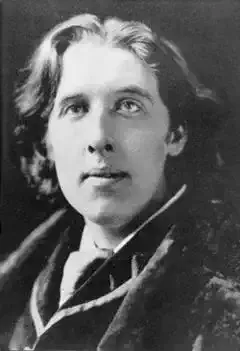
Oscar Wilde
On the Sale by Auction of Keat's Love-Letters
On the Sale by Auction of Keat's Love-Letters
These are the letters which Endymion wrote
To one he loved in secret and apart,
And now the brawlers of the auction-mart
Bargain and bid for each poor blotted note,
Aye! for each separate pulse of passion quote
The merchant's price! I think they love not art
Who break the crystal of a poet's heart,
That small and sickly eyes may glare or gloat.
Is it not said, that many years ago,
In a far Eastern town some soldiers ran
With torches through the midnight, and began
To wrangle for mean raiment, and to throw
Dice for the garments of a wretched man,
Not knowing the God's wonder, or his woe?
These are the letters which Endymion wrote
To one he loved in secret and apart,
And now the brawlers of the auction-mart
Bargain and bid for each poor blotted note,
Aye! for each separate pulse of passion quote
The merchant's price! I think they love not art
Who break the crystal of a poet's heart,
That small and sickly eyes may glare or gloat.
Is it not said, that many years ago,
In a far Eastern town some soldiers ran
With torches through the midnight, and began
To wrangle for mean raiment, and to throw
Dice for the garments of a wretched man,
Not knowing the God's wonder, or his woe?
209

Nazim Hikmet
A Sad State Of Freedom
A Sad State Of Freedom
You waste the attention of your eyes,
the glittering labour of your hands,
and knead the dough enough for dozens of loaves
of which you'll taste not a morsel;
you are free to slave for others--
you are free to make the rich richer.
The moment you're born
they plant around you
mills that grind lies
lies to last you a lifetime.
You keep thinking in your great freedom
a finger on your temple
free to have a free conscience.
Your head bent as if half-cut from the nape,
your arms long, hanging,
your saunter about in your great freedom:
you're free
with the freedom of being unemployed.
You love your country
as the nearest, most precious thing to you.
But one day, for example,
they may endorse it over to America,
and you, too, with your great freedom--
you have the freedom to become an air-base.
You may proclaim that one must live
not as a tool, a number or a link
but as a human being--
then at once they handcuff your wrists.
You are free to be arrested, imprisoned
and even hanged.
There's neither an iron, wooden
nor a tulle curtain
in your life;
there's no need to choose freedom:
you are free.
But this kind of freedom
is a sad affair under the stars.
Translated by Taner Baybars
You waste the attention of your eyes,
the glittering labour of your hands,
and knead the dough enough for dozens of loaves
of which you'll taste not a morsel;
you are free to slave for others--
you are free to make the rich richer.
The moment you're born
they plant around you
mills that grind lies
lies to last you a lifetime.
You keep thinking in your great freedom
a finger on your temple
free to have a free conscience.
Your head bent as if half-cut from the nape,
your arms long, hanging,
your saunter about in your great freedom:
you're free
with the freedom of being unemployed.
You love your country
as the nearest, most precious thing to you.
But one day, for example,
they may endorse it over to America,
and you, too, with your great freedom--
you have the freedom to become an air-base.
You may proclaim that one must live
not as a tool, a number or a link
but as a human being--
then at once they handcuff your wrists.
You are free to be arrested, imprisoned
and even hanged.
There's neither an iron, wooden
nor a tulle curtain
in your life;
there's no need to choose freedom:
you are free.
But this kind of freedom
is a sad affair under the stars.
Translated by Taner Baybars
366

Kazi Nazrul Islam
Coward
Coward
I know,
Why you do not look back
You have left your abode
For the temple of God
To while away the time
With the dolls.
And to flitter the self away
Oh dear,
Not knowing that playing with heart:
Leads up to endless tears.
So great is the debt
When the eyes meet, |
And the moments smack.
I know,
Why you do not look back.
I know,
Why you do not look back.
When the eyes get lost In the eyes.
And the word slowly dies..
When you are all alone.
In the sanctum of your home
There is collyrium In your bright eyes
And not the tears.
No deceit rings
In the anklets you wear.
As you walk,
I know,
Why you do hot look back
I know,
Why you do not look back,
When no creepers
On your feet roll
As you stroll,
In the wilderness.
You plucked flowers
In sheer absent mindness,
Without hurting your fingers.
Not knowing the truth either
That, with the garlands
The heart also withers.
Not knowing that
Behind a scurrilous mouth,
A loneliness lurks.
I know,
Why you do not look back.
I am conscious
Of your deceitfulness and skill
But you never knew, indeed
That on your cheeks,
There is a hue
Of pomegranate seeds.
Never knew that,
The timid hearts of women,
Like a creeper laden with a bee,
For those untold words and the denials
Shiver in agony.
And as much as the eye wails
The modesty prevails;
I know you coward,
Why your own image
That you unwittingly fear.
Of man, you have known,
And he is a stone
To whom you never bowed.
You have desired
A pair of covetous hands
And bowed to touch the feet,
Not knowing though
A heart becomes a touch-stone
With another touch on it.
I know coward
Why you wander.
I know what is your fear
When the desires of the heart
In the two shores of body whisper.
The fragrance of
A blooming heart
The petals can never thwart.
However much you wish to hide,
It breaks far and wide.
All the secret words
Have gathered in you dear
I know what is your fear.
I know,
Why you cannot say openly:
The nightingale has carried
The message secretly.
The words you wanted to hear,
How did she know of it, oh dear?
The same words
The bride murmured
Gently raising her eyes:
Who knew that in her cruel fingers
Such magic lies.
I know,
Why you cannot say openly.
I know,
Why no ornaments you wear
The flame of agony
Has burnt your flesh Into gold oh dear!
To adorn a doll
Of clay with attire?
Why should gold
Mere gold desire?
Leaving the shores of the body
The mind seeks purity.
The agony of mine, oh dear.
Now adorns your beauty
I know,
Why no ornament you wear.
I know
They will not abide;
The maiden
Who slept in the night
Woke up as a bride.
She swims with the foam
Not really knowing
The oyster's home.
The pearl you have found
But the shell of the eyes
In the tears got drowned
When the burden
Is too heavy to bear,
The heart also sinks
In utter despair.
Oh unlucky woman!
How shall you make it clear?
[Original: Bhiru; Translation: Syed Mujibul Huq]
I know,
Why you do not look back
You have left your abode
For the temple of God
To while away the time
With the dolls.
And to flitter the self away
Oh dear,
Not knowing that playing with heart:
Leads up to endless tears.
So great is the debt
When the eyes meet, |
And the moments smack.
I know,
Why you do not look back.
I know,
Why you do not look back.
When the eyes get lost In the eyes.
And the word slowly dies..
When you are all alone.
In the sanctum of your home
There is collyrium In your bright eyes
And not the tears.
No deceit rings
In the anklets you wear.
As you walk,
I know,
Why you do hot look back
I know,
Why you do not look back,
When no creepers
On your feet roll
As you stroll,
In the wilderness.
You plucked flowers
In sheer absent mindness,
Without hurting your fingers.
Not knowing the truth either
That, with the garlands
The heart also withers.
Not knowing that
Behind a scurrilous mouth,
A loneliness lurks.
I know,
Why you do not look back.
I am conscious
Of your deceitfulness and skill
But you never knew, indeed
That on your cheeks,
There is a hue
Of pomegranate seeds.
Never knew that,
The timid hearts of women,
Like a creeper laden with a bee,
For those untold words and the denials
Shiver in agony.
And as much as the eye wails
The modesty prevails;
I know you coward,
Why your own image
That you unwittingly fear.
Of man, you have known,
And he is a stone
To whom you never bowed.
You have desired
A pair of covetous hands
And bowed to touch the feet,
Not knowing though
A heart becomes a touch-stone
With another touch on it.
I know coward
Why you wander.
I know what is your fear
When the desires of the heart
In the two shores of body whisper.
The fragrance of
A blooming heart
The petals can never thwart.
However much you wish to hide,
It breaks far and wide.
All the secret words
Have gathered in you dear
I know what is your fear.
I know,
Why you cannot say openly:
The nightingale has carried
The message secretly.
The words you wanted to hear,
How did she know of it, oh dear?
The same words
The bride murmured
Gently raising her eyes:
Who knew that in her cruel fingers
Such magic lies.
I know,
Why you cannot say openly.
I know,
Why no ornaments you wear
The flame of agony
Has burnt your flesh Into gold oh dear!
To adorn a doll
Of clay with attire?
Why should gold
Mere gold desire?
Leaving the shores of the body
The mind seeks purity.
The agony of mine, oh dear.
Now adorns your beauty
I know,
Why no ornament you wear.
I know
They will not abide;
The maiden
Who slept in the night
Woke up as a bride.
She swims with the foam
Not really knowing
The oyster's home.
The pearl you have found
But the shell of the eyes
In the tears got drowned
When the burden
Is too heavy to bear,
The heart also sinks
In utter despair.
Oh unlucky woman!
How shall you make it clear?
[Original: Bhiru; Translation: Syed Mujibul Huq]
660

Joyce Kilmer
The White Ships and the Red
The White Ships and the Red
(For Alden March)
With drooping sail and pennant
That never a wind may reach,
They float in sunless waters
Beside a sunless beach.
Their mighty masts and funnels
Are white as driven snow,
And with a pallid radiance
Their ghostly bulwarks glow.
Here is a Spanish galleon
That once with gold was gay,
Here is a Roman trireme
Whose hues outshone the day.
But Tyrian dyes have faded,
And prows that once were bright
With rainbow stains wear only
Death's livid, dreadful white.
White as the ice that clove her
That unforgotten day,
Among her pallid sisters
The grim Titanic lay.
And through the leagues above her
She looked aghast, and said:
"What is this living ship that comes
Where every ship is dead?"
The ghostly vessels trembled
From ruined stern to prow;
What was this thing of terror
That broke their vigil now?
Down through the startled ocean
A mighty vessel came,
Not white, as all dead ships must be,
But red, like living flame!
The pale green waves about her
Were swiftly, strangely dyed,
By the great scarlet stream that flowed
From out her wounded side.
And all her decks were scarlet
And all her shattered crew.
She sank among the white ghost ships
And stained them through and through.
The grim Titanic greeted her
"And who art thou?" she said;
"Why dost thou join our ghostly fleet
Arrayed in living red?
We are the ships of sorrow
Who spend the weary night,
Until the dawn of Judgment Day,
Obscure and still and white."
"Nay," said the scarlet visitor,
"Though I sink through the sea,
A ruined thing that was a ship,
I sink not as did ye.
For ye met with your destiny
By storm or rock or fight,
So through the lagging centuries
Ye wear your robes of white.
"But never crashing iceberg
Nor honest shot of foe,
Nor hidden reef has sent me
The way that I must go.
My wound that stains the waters,
My blood that is like flame,
Bear witness to a loathly deed,
A deed without a name.
"I went not forth to battle,
I carried friendly men,
The children played about my decks,
The women sang -- and then --
And then -- the sun blushed scarlet
And Heaven hid its face,
The world that God created
Became a shameful place!
"My wrong cries out for vengeance,
The blow that sent me here
Was aimed in Hell. My dying scream
Has reached Jehovah's ear.
Not all the seven oceans
Shall wash away that stain;
Upon a brow that wears a crown
I am the brand of Cain."
When God's great voice assembles
The fleet on Judgment Day,
The ghosts of ruined ships will rise
In sea and strait and bay.
Though they have lain for ages
Beneath the changeless flood,
They shall be white as silver,
But one -- shall be like blood.
(For Alden March)
With drooping sail and pennant
That never a wind may reach,
They float in sunless waters
Beside a sunless beach.
Their mighty masts and funnels
Are white as driven snow,
And with a pallid radiance
Their ghostly bulwarks glow.
Here is a Spanish galleon
That once with gold was gay,
Here is a Roman trireme
Whose hues outshone the day.
But Tyrian dyes have faded,
And prows that once were bright
With rainbow stains wear only
Death's livid, dreadful white.
White as the ice that clove her
That unforgotten day,
Among her pallid sisters
The grim Titanic lay.
And through the leagues above her
She looked aghast, and said:
"What is this living ship that comes
Where every ship is dead?"
The ghostly vessels trembled
From ruined stern to prow;
What was this thing of terror
That broke their vigil now?
Down through the startled ocean
A mighty vessel came,
Not white, as all dead ships must be,
But red, like living flame!
The pale green waves about her
Were swiftly, strangely dyed,
By the great scarlet stream that flowed
From out her wounded side.
And all her decks were scarlet
And all her shattered crew.
She sank among the white ghost ships
And stained them through and through.
The grim Titanic greeted her
"And who art thou?" she said;
"Why dost thou join our ghostly fleet
Arrayed in living red?
We are the ships of sorrow
Who spend the weary night,
Until the dawn of Judgment Day,
Obscure and still and white."
"Nay," said the scarlet visitor,
"Though I sink through the sea,
A ruined thing that was a ship,
I sink not as did ye.
For ye met with your destiny
By storm or rock or fight,
So through the lagging centuries
Ye wear your robes of white.
"But never crashing iceberg
Nor honest shot of foe,
Nor hidden reef has sent me
The way that I must go.
My wound that stains the waters,
My blood that is like flame,
Bear witness to a loathly deed,
A deed without a name.
"I went not forth to battle,
I carried friendly men,
The children played about my decks,
The women sang -- and then --
And then -- the sun blushed scarlet
And Heaven hid its face,
The world that God created
Became a shameful place!
"My wrong cries out for vengeance,
The blow that sent me here
Was aimed in Hell. My dying scream
Has reached Jehovah's ear.
Not all the seven oceans
Shall wash away that stain;
Upon a brow that wears a crown
I am the brand of Cain."
When God's great voice assembles
The fleet on Judgment Day,
The ghosts of ruined ships will rise
In sea and strait and bay.
Though they have lain for ages
Beneath the changeless flood,
They shall be white as silver,
But one -- shall be like blood.
119

Jonathan Swift
On Gold
On Gold
All-ruling tyrant of the earth,
To vilest slaves I owe my birth,
How is the greatest monarch blest,
When in my gaudy livery drest!
No haughty nymph has power to run
From me; or my embraces shun.
Stabb'd to the heart, condemn'd to flame,
My constancy is still the same.
The favourite messenger of Jove,
And Lemnian god, consulting strove
To make me glorious to the sight
Of mortals, and the gods' delight.
Soon would their altar's flame expire
If I refused to lend them fire.
By fate exalted high in place,
Lo, here I stand with double face:
Superior none on earth I find;
But see below me all mankind
Yet, as it oft attends the great,
I almost sink with my own weight.
At every motion undertook,
The vulgar all consult my look.
I sometimes give advice in writing,
But never of my own inditing.
I am a courtier in my way;
For those who raised me, I betray;
And some give out that I entice
To lust, to luxury, and dice.
Who punishments on me inflict,
Because they find their pockets pickt.
By riding post, I lose my health,
And only to get others wealth.
All-ruling tyrant of the earth,
To vilest slaves I owe my birth,
How is the greatest monarch blest,
When in my gaudy livery drest!
No haughty nymph has power to run
From me; or my embraces shun.
Stabb'd to the heart, condemn'd to flame,
My constancy is still the same.
The favourite messenger of Jove,
And Lemnian god, consulting strove
To make me glorious to the sight
Of mortals, and the gods' delight.
Soon would their altar's flame expire
If I refused to lend them fire.
By fate exalted high in place,
Lo, here I stand with double face:
Superior none on earth I find;
But see below me all mankind
Yet, as it oft attends the great,
I almost sink with my own weight.
At every motion undertook,
The vulgar all consult my look.
I sometimes give advice in writing,
But never of my own inditing.
I am a courtier in my way;
For those who raised me, I betray;
And some give out that I entice
To lust, to luxury, and dice.
Who punishments on me inflict,
Because they find their pockets pickt.
By riding post, I lose my health,
And only to get others wealth.
268
Jonathan Swift
Mrs Frances Haris's Petition
Mrs Frances Haris's Petition
To their Excellencies the Lords Justices of Ireland,
The humble petition of Frances Harris,
Who must starve and die a maid if it miscarries;
Humble sheweth, that I went to warm myself in Lady Betty's chamber, because I
was cold;
And I had in a purse seven pounds, four shillings, and sixpence, (besides
farthings) in money and gold;
So because I had been buying things for my lady last night,
I was resolved to tell my money, to see if it was right.
Now, you must know, because my trunk has a very bad lock,
Therefore all the money I have, which, God knows, is a very small stock,
I keep in my pocket, tied about my middle, next my smock.
So when I went to put up my purse, as God would have it, my smock was unripped,
And instead of putting it into my pocket, down it slipped;
Then the bell rung, and I went down to put my lady to bed;
And, God knows, I thought my money was as safe as my maidenhead.
So, when I came up again, I found my pocket feel very light;
But when I searched, and missed my purse, Lord! I thought I should have sunk
outright.
'Lord! madam,' says Mary, 'how d'ye do?' -'Indeed,' says I, 'never worse:
But pray, Mary, can you tell what I have done with my purse?'
'Lord help me!' says Mary, 'I never stirred out of this place!'
'Nay,' said I, 'I had it in Lady Betty's chamber, that's a plain case.'
So Mary got me to bed, and covered me up warm:
However, she stole away my garters, that I might do myself no harm.
So I tumbled and tossed all night, as you may very well think,
But hardly ever set my eyes together, or slept a wink.
So I was a-dreamed, methought, that I went and searched the folks round,
And in a corner of Mrs Duke's box, tied in a rag, the money was found.
So next morning we told Whittle, and he fell a swearing:
Then my dame Wadgar came, and she, you know, is thick of hearing.
'Dame,' says I, as loud as I could bawl, 'do you know what a loss I have had?'
'Nay,' says she, 'my Lord Colway's folks are all very sad:
For my Lord Dromedary comes a Tuesday without fail.'
'Pugh!' said I, 'but that's not the business that I ail.'
Says Cary, says he, 'I have been a servant this five and twenty years come
spring,
And in all the places I lived I never heard of such a thing.'
'Yes,' says the steward, 'I remember when I was at my Lord Shrewsbury's,
Such a thing as this happened, just about the time of gooseberries.'
So I went to the party suspected, and I found her full of grief:
(Now, you must know, of all things in the world I hate a thief:)
However, I was resolved to bring the discourse slily about:
'Mrs Duke,' said I, 'here's an ugly accident has happened out:
'Tis not that I value the money three skips of a louse:
But the thing I stand upon is the credit of the house.
'Tis true, seven pounds, four shillings, and sixpence makes a great hole in my
wages:
Besides, as they say, service is no inheritance in these ages.
Now, Mrs Duke, you know, and everybody understands,
That though 'tis hard to judge, yet money can't go without hands.'
'The devil take me!' said she, (blessing herself,) 'if ever I saw't!'
So she roared like a bedlam, as though I had called her all to naught.
So, you know, what could I say to her any more?
I e'en left her, and came away as wise as I was before.
Well; but then they would have had me gone to the cunning man:
'No,' said I, ''tis the same thing, the CHAPLAIN will be here anon.'
So the Chaplain came in. Now the servants say he is my sweetheart,
Because he's always in my chamber, and I always take his part.
So, as the devil would have it, before I was aware, out I blundered,
'Parson,' said I, 'can you cast a nativity, when a body's plundered?'
(Now you must know, he hates to be called Parson, like the devil!)
'Truly,' says he, 'Mrs Nab, it might become you to be more civil;
If your money be gone, as a learned Divine says, d'ye see,
You are no text for my handling; so take that from me:
I was never taken for a Conjurer before, I'd have you to know.'
'Lord!' said I, 'don't be angry, I am sure I never thought you so;
You know I honour the cloth; I design to be a Parson's wife;
I never took one in your coat for a conjurer in all my life.'
With that he twisted his girdle at me like a rope, as who should say,
`Now you may go hang yourself for me!' and so went away.
Well: I thought I should have swooned. 'Lord!' said I, 'what shall I do?
I have lost my money, and shall lose my true love too!'
Then my lord called me: 'Harry,' said my lord, 'don't cry;
I'll give you something toward thy loss: 'And,' says my lady, 'so will I.'
Oh! but, said I, what if, after all, the Chaplain won't come to?
For that, he said (an't please your Excellencies), I must petition you.
The premisses tenderly considered, I desire your Excellencies' protection,
And that I may have a share in next Sunday's collection;
And, over and above, that I may have your Excellencies' letter,
With an order for the Chaplain aforesaid, or, instead of him, a better:
And then your poor petitioner, both night and day,
Or the Chaplain (for 'tis his trade,) as in duty bound, shall ever pray.
To their Excellencies the Lords Justices of Ireland,
The humble petition of Frances Harris,
Who must starve and die a maid if it miscarries;
Humble sheweth, that I went to warm myself in Lady Betty's chamber, because I
was cold;
And I had in a purse seven pounds, four shillings, and sixpence, (besides
farthings) in money and gold;
So because I had been buying things for my lady last night,
I was resolved to tell my money, to see if it was right.
Now, you must know, because my trunk has a very bad lock,
Therefore all the money I have, which, God knows, is a very small stock,
I keep in my pocket, tied about my middle, next my smock.
So when I went to put up my purse, as God would have it, my smock was unripped,
And instead of putting it into my pocket, down it slipped;
Then the bell rung, and I went down to put my lady to bed;
And, God knows, I thought my money was as safe as my maidenhead.
So, when I came up again, I found my pocket feel very light;
But when I searched, and missed my purse, Lord! I thought I should have sunk
outright.
'Lord! madam,' says Mary, 'how d'ye do?' -'Indeed,' says I, 'never worse:
But pray, Mary, can you tell what I have done with my purse?'
'Lord help me!' says Mary, 'I never stirred out of this place!'
'Nay,' said I, 'I had it in Lady Betty's chamber, that's a plain case.'
So Mary got me to bed, and covered me up warm:
However, she stole away my garters, that I might do myself no harm.
So I tumbled and tossed all night, as you may very well think,
But hardly ever set my eyes together, or slept a wink.
So I was a-dreamed, methought, that I went and searched the folks round,
And in a corner of Mrs Duke's box, tied in a rag, the money was found.
So next morning we told Whittle, and he fell a swearing:
Then my dame Wadgar came, and she, you know, is thick of hearing.
'Dame,' says I, as loud as I could bawl, 'do you know what a loss I have had?'
'Nay,' says she, 'my Lord Colway's folks are all very sad:
For my Lord Dromedary comes a Tuesday without fail.'
'Pugh!' said I, 'but that's not the business that I ail.'
Says Cary, says he, 'I have been a servant this five and twenty years come
spring,
And in all the places I lived I never heard of such a thing.'
'Yes,' says the steward, 'I remember when I was at my Lord Shrewsbury's,
Such a thing as this happened, just about the time of gooseberries.'
So I went to the party suspected, and I found her full of grief:
(Now, you must know, of all things in the world I hate a thief:)
However, I was resolved to bring the discourse slily about:
'Mrs Duke,' said I, 'here's an ugly accident has happened out:
'Tis not that I value the money three skips of a louse:
But the thing I stand upon is the credit of the house.
'Tis true, seven pounds, four shillings, and sixpence makes a great hole in my
wages:
Besides, as they say, service is no inheritance in these ages.
Now, Mrs Duke, you know, and everybody understands,
That though 'tis hard to judge, yet money can't go without hands.'
'The devil take me!' said she, (blessing herself,) 'if ever I saw't!'
So she roared like a bedlam, as though I had called her all to naught.
So, you know, what could I say to her any more?
I e'en left her, and came away as wise as I was before.
Well; but then they would have had me gone to the cunning man:
'No,' said I, ''tis the same thing, the CHAPLAIN will be here anon.'
So the Chaplain came in. Now the servants say he is my sweetheart,
Because he's always in my chamber, and I always take his part.
So, as the devil would have it, before I was aware, out I blundered,
'Parson,' said I, 'can you cast a nativity, when a body's plundered?'
(Now you must know, he hates to be called Parson, like the devil!)
'Truly,' says he, 'Mrs Nab, it might become you to be more civil;
If your money be gone, as a learned Divine says, d'ye see,
You are no text for my handling; so take that from me:
I was never taken for a Conjurer before, I'd have you to know.'
'Lord!' said I, 'don't be angry, I am sure I never thought you so;
You know I honour the cloth; I design to be a Parson's wife;
I never took one in your coat for a conjurer in all my life.'
With that he twisted his girdle at me like a rope, as who should say,
`Now you may go hang yourself for me!' and so went away.
Well: I thought I should have swooned. 'Lord!' said I, 'what shall I do?
I have lost my money, and shall lose my true love too!'
Then my lord called me: 'Harry,' said my lord, 'don't cry;
I'll give you something toward thy loss: 'And,' says my lady, 'so will I.'
Oh! but, said I, what if, after all, the Chaplain won't come to?
For that, he said (an't please your Excellencies), I must petition you.
The premisses tenderly considered, I desire your Excellencies' protection,
And that I may have a share in next Sunday's collection;
And, over and above, that I may have your Excellencies' letter,
With an order for the Chaplain aforesaid, or, instead of him, a better:
And then your poor petitioner, both night and day,
Or the Chaplain (for 'tis his trade,) as in duty bound, shall ever pray.
257
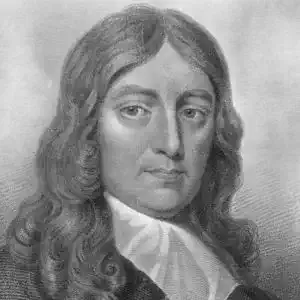
John Milton
Samson Agonistes (excerpts)
Samson Agonistes (excerpts)
[Samson's Opening Speech]
A little onward lend thy guiding hand
To these dark steps, a little further on;
For yonder bank hath choice of sun or shade,
There I am wont to sit, when any chance
Relieves me from my task of servile toil,
Daily in the common prison else enjoin'd me,
Where I a prisoner chain'd, scarce freely draw
The air imprison'd also, close and damp,
Unwholesome draught: but here I feel amends,
The breath of Heav'n fresh-blowing, pure and sweet,
With day-spring born; here leave me to respire.
This day a solemn feast the people hold
To Dagon, their sea-idol, and forbid
Laborious works; unwillingly this rest
Their superstition yields me; hence with leave
Retiring from the popular noise, I seek
This unfrequented place to find some ease;
Ease to the body some, none to the mind
From restless thoughts, that like a deadly swarm
Of hornets arm'd, no sooner found alone,
But rush upon me thronging, and present
Times past, what once I was, and what am now.
O wherefore was my birth from Heaven foretold
Twice by an angel, who at last in sight
Of both my parents all in flames ascended
From off the altar, where an off'ring burn'd,
As in a fiery column charioting
His godlike presence, and from some great act
Of benefit reveal'd to Abraham's race?
Why was my breeding order'd and prescrib'd
As of a person separate to God,
Design'd for great exploits; if I must die
Betray'd, captiv'd, and both my eyes put out,
Made of my enemies the scorn and gaze;
To grind in brazen fetters under task
With this Heav'n-gifted strength? O glorious strength
Put to the labour of a beast, debas'd
Lower than bondslave! Promise was that I
Should Israel from Philistian yoke deliver;
Ask for this great deliverer now, and find him
Eyeless in Gaza at the mill with slaves,
Himself in bonds under Philistian yoke.
Yet stay, let me not rashly call in doubt
Divine prediction; what if all foretold
Had been fulfill'd but through mine own default,
Whom have I to complain of but myself?
Who this high gift of strength committed to me,
In what part lodg'd, how easily bereft me,
Under the seal of silence could not keep,
But weakly to a woman must reveal it
O'ercome with importunity and tears.
O impotence of mind, in body strong!
But what is strength without a double share
Of wisdom? vast, unwieldy, burdensome,
Proudly secure, yet liable to fall
By weakest subtleties, not made to rule,
But to subserve where wisdom bears command.
God, when he gave me strength, to show withal
How slight the gift was, hung it in my hair.
But peace, I must not quarrel with the will
Of highest dispensation, which herein
Haply had ends above my reach to know:
Suffices that to me strength is my bane,
And proves the source of all my miseries;
So many, and so huge, that each apart
Would ask a life to wail, but chief of all,
O loss of sight, of thee I most complain!
Blind among enemies, O worse than chains,
Dungeon, or beggary, or decrepit age!
Light, the prime work of God, to me is extinct,
And all her various objects of delight
Annull'd, which might in part my grief have eas'd,
Inferior to the vilest now become
Of man or worm; the vilest here excel me:
They creep, yet see, I, dark in light, expos'd
To daily fraud, contempt, abuse, and wrong,
Within doors, or without, still as a fool,
In power of others, never in my own;
Scarce half I seem to live, dead more than half.
O dark, dark, dark, amid the blaze of noon,
Irrecoverably dark, total eclipse
Without all hope of day!
O first created Beam, and thou great Word,
"Let there be light, and light was over all,"
Why am I thus bereav'd thy prime decree?
The sun to me is dark
And silent as the moon,
When she deserts the night,
Hid in her vacant interlunar cave.
Since light so necessary is to life,
And almost life itself, if it be true
That light is in the soul,
She all in every part, why was the sight
To such a tender ball as th' eye confin'd?
So obvious and so easy to be quench'd,
And not as feeling through all parts diffus'd,
That she might look at will through every pore?
Then had I not been thus exil'd from light,
As in the land of darkness, yet in light,
To live a life half dead, a living death,
And buried; but O yet more miserable!
Myself my sepulchre, a moving grave;
Buried, yet not exempt
By privilege of death and burial
From worst of other evils, pains and wrongs;
But made hereby obnoxious more
To all the miseries of life,
Life in captivity
Among inhuman foes.
But who are these? for with joint pace I hear
The tread of many feet steering this way;
Perhaps my enemies who come to stare
At my affliction, and perhaps to insult,
Their daily practice to afflict me more.
...
[Chorus, Manoah, Samson]
CHORUS.
Just are the ways of God,
And justifiable to men;
Unless there be who think not God at all:
If any be, they walk obscure;
For of such doctrine never was there school,
But the heart of the fool,
And no man therein doctor but himself.
Yet more there be who doubt his ways not just,
As to his own edicts found contradicting,
Then give the reins to wand'ring thought,
Regardless of his glory's diminution;
Till by their own perplexities involv'd
They ravel more, still less resolv'd,
But never find self-satisfying solution.
As if they would confine th' interminable,
And tie him to his own prescript,
Who made our laws to bind us, not himself,
And hath full right to exempt
Whom so it pleases him by choice
From national obstriction, without taint
Of sin, or legal debt;
For with his own laws he can best dispense.
He would not else, who never wanted means,
Nor in respect of the enemy just cause
To set his people free,
Have prompted this heroic Nazarite,
Against his vow of strictest purity,
To seek in marriage that fallacious bride,
Unclean, unchaste.
Down, Reason, then; at least vain reasonings down;
Though Reason here aver
That moral verdit quits her of unclean:
Unchaste was subsequent, her stain, not his.
But see, here comes thy reverend sire,
With careful step, locks white as down,
Old Manoa: advise
Forthwith how thou ought'st to receive him.
SAMSON.
Ay me, another inward grief awak'd,
With mention of that name renews th' assault.
MANOA.
Brethren and men of Dan, for such ye seem,
Though in this uncouth place; if old respect,
As I suppose, towards your once gloried friend,
My son, now captive, hither hath inform'd
Your younger feet, while mine cast back with age
Came lagging after; say if he be here.
CHORUS.
As signal now in low dejected state,
As erst in highest, behold him where he lies.
MANOA.
O miserable change! is this the man,
That invincible Samson, far renown'd,
The dread of Israel's foes, who with a strength
Equivalent to angels' walk'd their streets,
None offering fight; who single combatant
Duell'd their armies rank'd in proud array,
Himself an army, now unequal match
To save himself against a coward arm'd
At one spear's length. O ever failing trust
In mortal strength! and oh, what not in man
Deceivable and vain! Nay what thing good
Pray'd for, but often proves our woe, our bane?
I pray'd for children, and thought barrenness
In wedlock a reproach; I gain'd a son,
And such a son as all men hail'd me happy;
Who would be now a father in my stead?
O wherefore did God grant me my request,
And as a blessing with such pomp adorn'd?
Why are his gifts desirable, to tempt
Our earnest prayers, then giv'n with solemn hand
As graces, draw a scorpion's tail behind?
For this did the Angel twice descend? for this
Ordain'd thy nurture holy, as of a plant;
Select, and sacred, glorious for a while,
The miracle of men: then in an hour
Ensnar'd, assaulted, overcome, led bound,
Thy foes' derision, captive, poor, and blind,
Into a dungeon thrust, to work with slaves?
Alas! methinks whom God hath chosen once
To worthiest deeds, if he through frailty err
He should not so o'erwhelm, and as a thrall
Subject him to so foul indignities,
Be it but for honour's sake of former deeds.
...
[Chorus, Manoh, Samson, Dalilah]
SAMSON.
His pardon I implore; but as for life,
To what end should I seek it? when in strength
All mortals I excell'd, and great in hopes
With youthful courage and magnanimous thoughts
Of birth from Heav'n foretold and high exploits,
Full of divine instinct, after some proof
Of acts indeed heroic, far beyond
The sons of Anak, famous now and blaz'd,
Fearless of danger, like a petty god
I walk'd about, admir'd of all, and dreaded
On hostile ground, none daring my affront.
Then swoll'n with pride into the snare I fell
Of fair fallacious looks, venereal trains,
Softn'd with pleasure and voluptuous life;
At length to lay my head and hallow'd pledge
Of all my strength in the lascivious lap
Of a deceitful concubine who shore me
Like a tame wether, all my precious fleece,
Then turn'd me out ridiculous, despoil'd,
Shav'n, and disarm'd among my enemies.
CHORUS.
Desire of wine and all delicious drinks,
Which many a famous warrior overturns,
Thou couldst repress, nor did the dancing ruby
Sparkling out-pour'd, the flavour, or the smell,
Or taste that cheers the heart of gods and men,
Allure thee from the cool crystalline stream.
SAMSON.
Wherever fountain or fresh current flow'd
Against the eastern ray, translucent, pure,
With touch ætherial of Heav'n's fiery rod
I drank, from the clear milky juice allaying
Thirst, and refresh'd; nor envied them the grape
Whose heads that turbulent liquor fills with fumes.
CHORUS.
O madness, to think use of strongest wines
And strongest drinks our chief support of health,
When God with these forbidd'n made choice to rear
His mighty champion, strong above compare,
Whose drink was only from the liquid brook.
SAMSON.
But what avail'd this temperance, not complete
Against another object more enticing?
What boots it at one gate to make defence,
And at another to let in the foe,
Effeminately vanquish'd? by which means,
Now blind, disheartn'd, sham'd, dishonour'd, quell'd,
To what can I be useful, wherein serve
My nation, and the work from Heav'n impos'd,
But to sit idle on the household hearth,
A burdenous drone; to visitants a gaze,
Or pitied object, these redundant locks
Robustious to no purpose clust'ring down,
Vain monument of strength; till length of years
And sedentary numbness craze my limbs
To a contemptible old age obscure?
Here rather let me drudge and earn my bread,
Till vermin or the draff of servile food
Consume me, and oft-invocated death
Hast'n the welcome end of all my pains.
MANOA.
Wilt thou then serve the Philistines with that gift
Which was expressly giv'n thee to annoy them?
Better at home lie bed-rid, not only idle,
Inglorious, unemploy'd, with age out-worn.
But God, who caus'd a fountain at thy prayer
From the dry ground to spring, thy thirst to allay
After the brunt of battle, can as easy
Cause light again within thy eyes to spring,
Wherewith to serve him better than thou hast;
And I persuade me so; why else this strength
Miraculous yet remaining in those locks?
His might continues in thee not for naught,
Nor shall his wondrous gifts be frustrate thus.
SAMSON.
All otherwise to me my thoughts portend,
That these dark orbs no more shall treat with light,
Nor th' other light of life continue long,
But yield to double darkness nigh at hand:
So much I feel my genial spirits droop,
My hopes all flat; Nature within me seems
In all her functions weary of herself;
My race of glory run, and race of shame,
And I shall shortly be with them that rest.
MANOA.
Believe not these suggestions which proceed
From anguish of the mind and humours black,
That mingle with thy fancy. I however
Must not omit a father's timely care
To prosecute the means of thy deliverance
By ransom or how else: meanwhile be calm,
And healing words from these thy friends admit.
SAMSON.
O that torment should not be confin'd
To the body's wounds and sores,
With maladies innumerable
In heart, head, breast, and reins;
But must secret passage find
To th' inmost mind,
There exercise all his fierce accidents,
And on her purest spirits prey,
As on entrails, joints, and limbs,
With answerable pains, but more intense,
Though void of corporal sense.
My griefs not only pain me
As a ling'ring disease,
But finding no redress, ferment and rage,
Nor less than wounds immedicable
Rankle, and fester, and gangrene,
To black mortification.
Thoughts, my tormentors, arm'd with deadly stings
Mangle my apprehensive tenderest parts,
Exasperate, exulcerate, and raise
Dire inflammation which no cooling herb
Or med'cinal liquor can assuage,
Nor breath of vernal air from snowy Alp.
Sleep hath forsook and giv'n me o'er
To death's benumbing opium as my only cure;
Thence faintings, swoonings of despair,
And sense of Heav'n's desertion.
I was his nursling once and choice delight,
His destin'd from the womb,
Promis'd by heavenly message twice descending.
Under his special eye
Abstemious I grew up and thriv'd amain;
He led me on to mightiest deeds
Above the nerve of mortal arm
Against the uncircumcis'd, our enemies;
But now hath cast me off as never known,
And to those cruel enemies,
Whom I by his appointment had provok'd,
Left me all helpless with th' irreparable loss
Of sight, reserv'd alive to be repeated
The subject of their cruelty, or scorn.
Nor am I in the list of them that hope;
Hopeless are all my evils, all remediless;
This one prayer yet remains, might I be heard,
No long petition, speedy death,
The close of all my miseries, and the balm.
CHORUS.
Many are the sayings of the wise
In ancient and in modern books enroll'd,
Extolling patience as the truest fortitude;
And to the bearing well of all calamities,
All chances incident to man's frail life
Consolatories writ
With studied argument, and much persuasion sought,
Lenient of grief and anxious thought;
But with th' afflicted in his pangs their sound
Little prevails, or rather seems a tune
Harsh, and of dissonant mood from his complaint,
Unless he feel within
Some source of consolation from above;
Secret refreshings, that repair his strength,
And fainting spirits uphold.
God of our Fathers, what is man!
That thou towards him with hand so various,
Or might I say contrarious,
Temper'st thy providence through his short course:
Not evenly, as thou rul'st
The Angelic orders and inferior creatures mute,
Irrational and brute.
Nor do I name of men the common rout,
That wand'ring loose about
Grow up and perish, as the summer fly,
Heads without name no more remember'd;
But such as thou has solemnly elected,
With gifts and graces eminently adorn'd
To some great work, thy glory,
And people's safety, which in part they effect:
Yet toward these thus dignifi'd, thou oft
Amidst their highth of noon,
Changest thy countenance, and thy hand with no regard
Of highest favours past
From thee on them, or them to thee of service.
Nor only dost degrade them, or remit
To life obscur'd, which were a fair dismission,
But throw'st them lower than thou didst exalt them high,
Unseemly falls in human eye,
Too grievous for the trespass or omission,
Oft leav'st them to the hostile sword
Of heathen and profane, their carcasses
To dogs and fowls a prey, or else captiv'd:
Or to the unjust tribunals, under change of times,
And condemnation of the ingrateful multitude.
If these they scape, perhaps in poverty
With sickness and disease thou bow'st them down,
Painful diseases and deform'd,
In crude old age;
Though not disordinate, yet causeless suff'ring
The punishment of dissolute days: in fine,
Just or unjust, alike seem miserable,
For oft alike both come to evil end.
So deal not with this once thy glorious champion,
The image of thy strength, and mighty minister.
What do I beg? how hast thou dealt already?
Behold him in this state calamitous, and turn
His labours, for thou canst, to peaceful end.
But who is this, what thing of sea or land?
Female of sex it seems,
That so bedeck'd, ornate, and gay,
Comes this way sailing
Like a stately ship
Of Tarsus, bound for th' isles
Of Javan or Gadire
With all her bravery on, and tackle trim,
Sails fill'd, and streamers waving,
Courted by all the winds that hold them play,
An amber scent of odorous perfume
Her harbinger, a damsel train behind;
Some rich Philistian matron she may seem,
And now at nearer view, no other certain
Than Dalila thy wife.
SAMSON.
My wife! my traitress! let her not come near me.
CHORUS.
Yet on she moves, now stands and eyes thee fix'd,
About t' have spoke, but now, with head declin'd
Like a fair flower surcharg'd with dew, she weeps,
And words address'd seem into tears dissolv'd,
Wetting the borders of her silk'n veil;
But now again she makes address to speak.
DALILAH.
With doubtful feet and wavering resolution
I came, still dreading thy displeasure, Samson,
Which to have merited, without excuse,
I cannot but acknowledge; yet if tears
May expiate (though the fact more evil drew
In the perverse event than I foresaw)
My penance hath not slack'n'd, though my pardon
No way assur'd. But conjugal affection
Prevailing over fear, and timorous doubt
Hath led me on desirous to behold
Once more thy face, and know of thy estate.
If aught in my ability may serve
To light'n what thou suffer'st, and appease
Thy mind with what amends is in my power,
Though late, yet in some part to recompense
My rash but more unfortunate misdeed.
SAMSON.
Out, out hyena! these are thy wonted arts,
And arts of every woman false like thee,
To break all faith, all vows, deceive, betray,
Then as repentant to submit, beseech,
And reconcilement move with feign'd remorse,
Confess, and promise wonders in her change,
Not truly penitent, but chief to try
Her husband, how far urg'd his patience bears,
His virtue or weakness which way to assail:
Then with more cautious and instructed skill
Again transgresses, and again submits;
That wisest and best men, full oft beguil'd,
With goodness principl'd not to reject
The penitent, but ever to forgive,
Are drawn to wear out miserable days,
Entangl'd with a pois'nous bosom-snake,
If not by quick destruction soon cut off
As I by thee, to ages an example.
...
[Chorus, Harapha, Samson]
CHORUS.
Look now for no enchanting voice, nor fear
The bait of honied words; a rougher tongue
Draws hitherward, I know him by his stride,
The giant Harapha of Gath, his look
Haughty as is his pile high-built and proud.
Comes he in peace? What wind hath blown him hither
I less conjecture than when first I saw
The sumptuous Dalila floating this way:
His habit carries peace, his brow defiance.
SAMSON.
Or peace or not, alike to me he comes.
CHORUS.
His fraught we soon shall know, he now arrives.
HARAPHA.
I come not Samson, to condole thy chance,
As these perhaps, yet wish it had not been,
Though for no friendly intent. I am of Gath;
Men call me Harapha, of stock renown'd
As Og, or Anak, and the Emims old
That Kiriathaim held: thou knowst me now
If thou at all art known. Much I have heard
Of thy prodigious might and feats perform'd
Incredible to me, in this displeas'd,
That I was never present on the place
Of those encounters, where we might have tri'd
Each other's force in camp or listed field;
And now am come to see of whom such noise
Hath walk'd about, and each limb to survey,
If thy appearance answer loud report.
SAMSON.
The way to know were not to see but taste.
HARAPHA.
Dost thou already single me; I thought
Gyves and the mill had tam'd thee? O that fortune
Had brought me to the field where thou art fam'd
To have wrought such wonders with an ass's jaw;
I should have forc'd thee soon wish other arms,
Or left thy carcase where the ass lay thrown:
So had the glory of prowess been recover'd
To Palestine, won by a Philistine
From the unforeskinn'd race, of whom thou bear'st
The highest name for valiant acts; that honour
Certain to have won by mortal duel from thee,
I lose, prevented by thy eyes put out.
SAMSON.
Boast not of what thou would'st have done, but do
What then thou would'st, thou seest it in thy hand.
HARAPHA.
To combat with a blind man I disdain,
And thou hast need much washing to be touch'd.
SAMSON.
Such usage as your honourable lords
Afford me, assassinated and betray'd,
Who durst not with their whole united powers
In fight withstand me single and unarm'd,
Nor in the house with chamber ambushes
Close-banded durst attack me, no not sleeping,
Till they had hir'd a woman with their gold,
Breaking her marriage faith to circumvent me.
Therefore without feign'd shifts let be assign'd
Some narrow place enclos'd, where sight may give thee,
Or rather flight, no great advantage on me;
Then put on all thy gorgeous arms, thy helmet
And brigandine of brass, thy broad habergeon,
Vant-brass and greaves, and gauntlet, add thy spear,
A weaver's beam, and seven-times-folded shield:
I only with an oak'n staff will meet thee,
And raise such outcries on thy clatter'd iron,
Which long shall not withhold me from thy head,
That in a little time, while breath remains thee,
Thou oft shalt wish thyself at Gath to boast
Again in safety what thou would'st have done
To Samson, but shalt never see Gath more.
HARAPHA.
Thou durst not thus disparage glorious arms
Which greatest heroes have in battle worn,
Their ornament and safety, had not spells
And black enchantments, some magician's art
Arm'd thee or charm'd thee strong, which thou from Heaven
Feign'dst at thy birth was giv'n thee in thy hair,
Where strength can least abide, though all thy hairs
Were bristles rang'd like those that ridge the back
Of chaf'd wild boars, or ruffl'd porcupines.
SAMSON.
I know no spells, use no forbidden arts;
My trust is in the living God who gave me
At my nativity this strength, diffus'd
No less through all my sinews, joints and bones,
Than thine, while I preserv'd these locks unshorn,
The pledge of my unviolated vow.
For proof hereof, if Dagon be thy god,
Go to his temple, invocate his aid
With solemnest devotion, spread before him
How highly it concerns his glory now
To frustrate and dissolve these magic spells,
Which I to be the power of Israel's God
Avow, and challenge Dagon to the test,
Offering to combat thee his champion bold,
With th' utmost of his godhead seconded:
Then thou shalt see, or rather to thy sorrow
Soon feel, whose God is strongest, thine or mine.
HARAPHA.
Presume not on thy God, whate'er he be,
Thee he regards not, owns not, hath cut off
Quite from his people, and delivered up
Into thy enemies' hand, permitted them
To put out both thine eyes, and fetter'd send thee
Into the common prison, there to grind
Among the slaves and asses thy comrades,
As good for nothing else, no better service
With those thy boist'rous locks, no worthy match
For valour to assail, nor by the sword
Of noble warrior, so to stain his honour,
But by the barber's razor best subdu'd.
SAMSON.
All these indignities, for such they are
From thine, these evils I deserve and more,
Acknowledge them from God inflicted on me
Justly, yet despair not of his final pardon
Whose ear is ever open; and his eye
Gracious to re-admit the suppliant;
In confidence whereof I once again
Defy thee to the trial of mortal fight,
By combat to decide whose god is God,
Thine or whom I with Israel's sons adore.
HARAPHA.
Fair honour that thou dost thy God, in trusting
He will accept thee to defend his cause,
A murtherer, a revolter, and a robber.
SAMSON.
Tongue-doughty giant, how dost thou prove me
these?
HARAPHA.
Is not thy nation subject to our lords?
Their magistrates confess'd it, when they took thee
As a league-breaker and deliver'd bound
Into our hands: for had'st thou not committed
Notorious murder on those thirty men
At Askalon, who never did thee harm,
Then like a robber stripp'dst them of their robes?
The Philistines, when thou hadst broke the league,
Went up with armed powers thee only seeking,
To others did no violence nor spoil.
SAMSON.
Among the daughters of the Philistines
I chose a wife, which argu'd me no foe;
And in your city held my nuptial feast:
But your ill-meaning politician lords,
Under pretence of bridal friends and guests,
Appointed to await me thirty spies,
Who threat'ning cruel death, constrain'd the bride
To wring from me and tell to them my secret,
That solv'd the riddle which I had propos'd.
When I perceiv'd all set on enmity,
As on my enemies, wherever chanc'd,
I us'd hostility, and took their spoil
To pay my underminers in their coin.
My nation was subjected to your lords?
It was the force of conquest; force with force
Is well ejected when the conquer'd can.
But I a private person, whom my country
As a league-breaker gave up bound, presum'd
Single rebellion and did hostile acts.
I was no private but a person rais'd
With strength sufficient and command from Heav'n
To free my country; if their servile minds
Me their deliverer sent would not receive,
But to their masters gave me up for nought,
Th' unworthier they; whence to this day they serve.
I was to do my part from Heav'n assign'd,
And had perform'd it if my known offence
Had not disabl'd me, not all your force:
These shifts refuted, answer thy appellant,
Though by his blindness maim'd for high attempts,
Who now defies thee thrice to single fight,
As a petty enterprise of small enforce.
HARAPHA.
With thee, a man condemn'd, a slave enroll'd,
Due by the law to capital punishment?
To fight with thee no man of arms will deign.
SAMSON.
Cam'st thou for this, vain boaster, to survey me,
To descant on my strength, and give thy verdit?
Come nearer, part not hence so slight inform'd;
But take good heed my hand survey not thee.
HARAPHA.
O Baal-zebub! can my ears unus'd
Hear these dishonours, and not render death?
SAMSON.
No man withholds thee, nothing from thy hand
Fear I incurable; bring up thy van,
My heels are fetter'd, but my fist is free.
HARAPHA.
This insolence other kind of answer fits.
SAMSON.
Go baffl'd coward, lest I run upon thee,
Though in these chains, bulk without spirit vast,
And with one buffet lay thy structure low,
Or swing thee in the air, then dash thee down
To the hazard of thy brains and shatter'd sides.
HARAPHA.
By Astaroth, ere long thou shalt lament
These braveries, in irons loaden on thee.
CHORUS.
His giantship is gone somewhat crestfall'n,
Stalking with less unconsci'nable strides,
And lower looks, but in a sultry chafe.
SAMSON.
I dread him not, nor all his giant-brood,
Though fame divulge him father of five sons
All of gigantic size, Goliah chief.
CHORUS.
He will directly to the lords, I fear,
And with malicious counsel stir them up
Some way or other yet further to afflict thee.
SAMSON.
He must allege some cause, and offer'd fight
Will not dare mention, lest a question rise
Whether he durst accept the offer or not,
And that he durst not plain enough appear'd.
Much more affliction than already felt
They cannot well impose, nor I sustain;
If they intend advantage of my labours,
The work of many hands, which earns my keeping
With no small profit daily to my owners.
But come what will, my deadliest foe will prove
My speediest friend, by death to rid me hence,
The worst that he can give, to me the best.
Yet so it may fall out, because their end
Is hate, not help to me, it may with mine
Draw their own ruin who attempt the deed.
CHORUS.
Oh how comely it is and how reviving
To the spirits of just men long oppress'd,
When God into the hands of their deliverer
Puts invincible might
To quell the mighty of the Earth, th' oppressor,
The brute and boist'rous force of violent men,
Hardy and industrious to support
Tyrannic power, but raging to pursue
The righteous and all such as honour truth;
He all their ammunition
And feats of war defeats
With plain heroic magnitude of mind
And celestial vigour arm'd;
Their armouries and magazines contemns,
Renders them useless, while
With winged expedition
Swift as the lightning glance he executes
His errand on the wicked, who surpris'd
Lose their defence distracted and amaz'd.
But patience is more oft the exercise
Of saints, the trial of their fortitude,
Making them each his own deliverer,
And victor over all
That tyranny or fortune can inflict.
Either of these is in thy lot,
Samson, with might endu'd
Above the sons of men; but sight bereav'd
May chance to number thee with those
Whom patience finally must crown.
This idol's day hath been to thee no day of rest,
Labouring thy mind
More than the working day thy hands;
And yet perhaps more trouble is behind,
For I descry this way
Some other tending; in his hand
A sceptre or quaint staff he bears,
Comes on amain, speed in his look.
By his habit I discern him now
A public officer, and now at hand.
His message will be short and voluble.
OFFICER.
Ebrews, the pris'ner Samson here I seek.
CHORUS.
His manacles remark him, there he sits.
OFFICER.
Samson, to thee our lords thus bid me say;
This day to Dagon is a solemn feast,
With sacrifices, triumph, pomp, and games;
Thy strength they know surpassing human rate,
And now some public proof thereof require
To honour this great feast, and great assembly;
Rise therefore with all speed and come along,
Where I will see thee heart'n'd and fresh clad
To appear as fits before th' illustrious lords.
SAMSON.
Thou knowst I am an Ebrew, therefore tell them,
Our law forbids at their religious rites
My presence; for that cause I cannot come.
OFFICER.
This answer, be assur'd, will not content them.
SAMSON.
Have they not sword-players, and ev'ry sort
Of gymnic artists, wrestlers, riders, runners,
Jugglers and dancers, antics, mummers, mimics,
But they must pick me out with shackles tir'd,
And over-labour'd at their public mill,
To make them sport with blind activity?
Do they not seek occasion of new quarrels
On my refusal to distress me more,
Or make a game of my calamities?
Return the way thou cam'st; I will not come.
OFFICER.
Regard thyself, this will offend them highly.
SAMSON.
Myself? my conscience and internal peace.
Can they think me so broken, so debas'd
With corporal servitude, that my mind ever
Will condescend to such absurd commands?
Although their drudge, to be their fool or jester,
And in my midst of sorrow and heart-grief
To shew them feats, and play before their god
The worst of all indignities, yet on me
Join'd with extreme contempt? I will not come.
OFFICER.
My message was impos'd on me with speed,
Brooks no delay: is this thy resolution?
SAMSON.
So take it with what speed thy message needs.
OFFICER.
I am sorry what this stoutness will produce.
SAMSON.
Perhaps thou shalt have cause to sorrow indeed.
CHORUS.
Consider, Samson; matters now are strain'd
Up to the highth, whether to hold or break;
He's gone, and who knows how he may report
Thy words by adding fuel to the flame?
Expect another message more imperious,
More lordly thund'ring than thou well wilt bear.
SAMSON.
Shall I abuse this consecrated gift
Of strength, again returning with my hair
After my great transgression, so requite
Favour renew'd, and add a greater sin
By prostituting holy things to idols;
A Nazarite in place abominable
Vaunting my strength in honour to their Dagon?
Besides, how vile, contemptible, ridiculous,
What act more execrably unclean, profane?
CHORUS.
Yet with this strength thou serv'st the Philistines,
Idolatrous, uncircumcis'd, unclean.
SAMSON.
Not in their idol worship, but by labour
Honest and lawful to deserve my food
Of those who have me in their civil power.
CHORUS.
Where the heart joins not, outward acts defile not.
SAMSON.
Where outward force constrains, the sentence holds;
But who constrains me to the temple of Dagon,
Not dragging? the Philistian lords command.
Commands are no constraints. If I obey them,
I do it freely; venturing to displease
God for the fear of man, and man prefer,
Set God behind: which in his jealousy
Shall never, unrepented, find forgiveness.
Yet that he may dispense with me or thee
Present in temples at idolatrous rites
For some important cause, thou needst not doubt.
CHORUS.
How thou wilt here come off surmounts my reach.
SAMSON.
Be of good courage, I begin to feel
Some rousing motions in me which dispose
To something extraordinary my thoughts.
I with this messenger will go along,
Nothing to do, be sure, that may dishonour
Our law, or stain my vow of Nazarite.
If there be aught of presage in the mind,
This day will be remarkable in my life
By some great act, or of my days the last.
CHORUS.
In time thou hast resolv'd, the man returns.
OFFICER.
Samson, this second message from our lords
To thee I am bid say. Art thou our slave,
Our captive, at the public mill our drudge,
And dar'st thou at our sending and command
Dispute thy coming? come without delay;
Or we shall find such engines to assail
And hamper thee, as thou shalt come of force,
Though thou wert firmlier fast'nd than a rock.
SAMSON.
I could be well content to try their art,
Which to no few of them would prove pernicious;
Yet knowing their advantages too many,
Because they shall not trail me through their streets
Like a wild beast, I am content to go.
Masters' commands come with a power resistless
To such as owe them absolute subjection;
And for a life who will not change his purpose?
(So mutable are all the ways of men)
Yet this be sure, in nothing to comply
Scandalous or forbidden in our law.
OFFICER.
I praise thy resolution, doff these links:
By this compiance thou wilt win the lords
To favour, and perhaps to set thee free.
SAMSON.
Brethren farewell, your company along
I will not wish, lest it perhaps offend them
To see me girt with friends; and how the sight
Of me as of a common enemy,
So dreaded once, may now exasperate them
I know not. Lords are lordliest in their wine;
And the well-feasted priest then soonest fir'd
With zeal, if aught religion seem concern'd:
No less the people on their holy-days
Impetuous, insolent, unquenchable;
Happ'n what may, of me expect to hear
Nothing dishonourable, impure, unworthy
Our God, our law, my nation, or myself;
The last of me or no I cannot warrant.
...
[Messenger, Manoah, Chorus]
MESSENGER.
Occasions drew me early to this city,
And as the gates I enter'd with sun-rise,
The morning trumpets festival proclaim'd
Through each high street: little I had dispatch'd
When all abroad was rumour'd that this day
Samson should be brought forth to shew the people
Proof of his mighty strength in feats and games;
I sorrow'd at his captive state, but minded
Not to be absent at that spectacle.
The building was a spacious theatre
Half round on two main pillars vaulted high,
With seats where all the lords and each degree
Of sort, might sit in order to behold,
The other side was op'n, where the throng
On banks and scaffolds under sky might stand;
I among these aloof obscurely stood.
The feast and noon grew high, and sacrifice
Had fill'd their hearts with mirth, high cheer, and wine,
When to their sports they turn'd. Immediately
Was Samson as a public servant brought,
In their state livery clad; before him pipes
And timbrels, on each side went armed guards,
Both horse and foot before him and behind,
Archers, and slingers, cataphracts and spears.
At sight of him the people with a shout
Rifted the air clamouring their god with praise,
Who had made their dreadful enemy their thrall.
He patient but undaunted, where they led him
Came to the place, and what was set before him
Which without help of eye, might be assay'd,
To heave, pull, draw, or break, he still perform'd
All with incredible, stupendous force,
None daring to appear antagonist.
At length for intermission sake they led him
Between the pillars; he his guide requested
(For so from such as nearer stood we heard)
As over-tir'd to let him lean a while
With both his arms on those two massy pillars
That to the arched roof gave main support.
He unsuspicious led him; which when Samson
Felt in his arms, with head a while inclin'd,
And eyes fast fix'd he stood, as one who pray'd,
Or some great matter in his mind revolv'd.
At last with head erect thus cried aloud,
"Hitherto, Lords, what your commands impos'd
I have perform'd, as reason was, obeying,
Not without wonder or delight beheld.
Now of my own accord such other trial
I mean to show you of my strength, yet greater,
As with amaze shall strike all who behold."
This utter'd, straining all his nerves he bow'd,
As with the force of winds and waters pent,
When mountains tremble, those two massy pillars
With horrible convulsion to and fro;
He tugg'd, he shook, till down they came and drew
The whole roof after them, with burst of thunder
Upon the heads of all who sate beneath,
Lords, ladies, captains, counsellors, or priests,
Their choice nobility and flower, not only
Of this but each Philistian city round,
Met from all parts to solemnize this feast.
Samson with these immix'd, inevitably
Pull'd down the same destruction on himself;
The vulgar only scap'd who stood without.
CHORUS.
O dearly-bought revenge, yet glorious!
Living or dying thou hast fulfill'd
The work for which thou wast foretold
To Israel, and now ly'st victorious
Among thy slain self-kill'd,
Not willingly, but tangl'd in the fold
Of dire necessity, whose law in death conjoin'd
Thee with thy slaughter'd foes in number more
Than all thy life had slain before.
SEMICHORUS.
While their hearts were jocund and sublime,
Drunk with idolatry, drunk with wine,
And fat regorg'd of bulls and goats,
Chaunting their idol, and preferring
Before our living Dread who dwells
In Silo his bright sanctuary:
Among them he a spirit of phrenzy sent,
Who hurt their minds,
And urg'd them on with mad desire
To call in haste for their destroyer;
They only set on sport and play
Unweetingly importun'd
Their own destruction to come speedy upon them.
So fond are mortal men
Fall'n into wrath divine,
As their own ruin on themselves to invite,
Insensate left, or to sense reprobate,
And with blindness internal struck.
SEMICHORUS.
But he, though blind of sight,
Despis'd and thought extinguish'd quite,
With inward eyes illuminated
His fiery virtue rous'd
From under ashes into sudden flame,
And as an ev'ning dragon came,
Assailant on the perched roosts,
And nests in order rang'd
Of tame villatic fowl; but as an eagle
His cloudless thunder bolted on their heads.
So virtue giv'n for lost,
Depress'd, and overthrown, as seem'd,
Like that self-begott'n bird
In the Arabian woods embost,
That no second knows nor third,
And lay erewhile a holocaust,
From out her ashy womb now teem'd,
Revives, reflourishes, then vigorous most
When most unactive deem'd,
And though her body die, her fame survives,
A secular bird, ages of lives.
MANOA.
Come, come, no time for lamentation now,
Nor much more cause: Samson hath quit himself
Like Samson, and heroicly hath finish'd
A life heroic, on his enemies
Fully reveng'd; hath left them years of mourning,
And lamentation to the sons of Caphtor
Through all Philistian bounds; to Israel
Honour hath left, and freedom, let but them
Find courage to lay hold on this occasion;
To himself and father's house eternal fame;
And which is best and happiest yet, all this
With God not parted from him, as was fear'd,
But favouring and assisting to the end.
Nothing is here for tears, nothing to wail
Or knock the breast, no weakness, no contempt,
Dispraise, or blame, nothing but well and fair,
And what may quiet us in a death so noble.
Let us go find the body where it lies
Soak'd in his enemies' blood, and from the stream
With layers pure and cleansing herbs wash off
The clotted gore. I with what speed the while
(Gaza is not in plight to say us nay)
Will send for all my kindred, all my friends
To fetch him hence and solemnly attend
With silent obsequy and funeral train
Home to his father's house. There will I build him
A monument, and plant it round with shade
Of laurel ever green, and branching palm,
With all his trophies hung, and acts enroll'd
In copious legend, or sweet lyric song.
Thither shall all the valiant youth resort,
And from his memory inflame their breasts
To matchless valour, and adventures high;
The virgins also shall on feastful days
Visit his tomb with flowers, only bewailing
His lot unfortunate in nuptial choice,
From whence captivity and loss of eyes.
CHORUS.
All is best, though we oft doubt,
What th' unsearchable dispose
Of Highest Wisdom brings about,
And ever best found in the close.
Oft he seems to hide his face,
But unexpectedly returns
And to his faithful champion hath in place
Bore witness gloriously; whence Gaza mourns
And all that band them to resist
His uncontrollable intent.
His servants he with new acquist
Of true experience from this great event
With peace and consolation hath dismist,
And calm of mind, all passion spent.
[Samson's Opening Speech]
A little onward lend thy guiding hand
To these dark steps, a little further on;
For yonder bank hath choice of sun or shade,
There I am wont to sit, when any chance
Relieves me from my task of servile toil,
Daily in the common prison else enjoin'd me,
Where I a prisoner chain'd, scarce freely draw
The air imprison'd also, close and damp,
Unwholesome draught: but here I feel amends,
The breath of Heav'n fresh-blowing, pure and sweet,
With day-spring born; here leave me to respire.
This day a solemn feast the people hold
To Dagon, their sea-idol, and forbid
Laborious works; unwillingly this rest
Their superstition yields me; hence with leave
Retiring from the popular noise, I seek
This unfrequented place to find some ease;
Ease to the body some, none to the mind
From restless thoughts, that like a deadly swarm
Of hornets arm'd, no sooner found alone,
But rush upon me thronging, and present
Times past, what once I was, and what am now.
O wherefore was my birth from Heaven foretold
Twice by an angel, who at last in sight
Of both my parents all in flames ascended
From off the altar, where an off'ring burn'd,
As in a fiery column charioting
His godlike presence, and from some great act
Of benefit reveal'd to Abraham's race?
Why was my breeding order'd and prescrib'd
As of a person separate to God,
Design'd for great exploits; if I must die
Betray'd, captiv'd, and both my eyes put out,
Made of my enemies the scorn and gaze;
To grind in brazen fetters under task
With this Heav'n-gifted strength? O glorious strength
Put to the labour of a beast, debas'd
Lower than bondslave! Promise was that I
Should Israel from Philistian yoke deliver;
Ask for this great deliverer now, and find him
Eyeless in Gaza at the mill with slaves,
Himself in bonds under Philistian yoke.
Yet stay, let me not rashly call in doubt
Divine prediction; what if all foretold
Had been fulfill'd but through mine own default,
Whom have I to complain of but myself?
Who this high gift of strength committed to me,
In what part lodg'd, how easily bereft me,
Under the seal of silence could not keep,
But weakly to a woman must reveal it
O'ercome with importunity and tears.
O impotence of mind, in body strong!
But what is strength without a double share
Of wisdom? vast, unwieldy, burdensome,
Proudly secure, yet liable to fall
By weakest subtleties, not made to rule,
But to subserve where wisdom bears command.
God, when he gave me strength, to show withal
How slight the gift was, hung it in my hair.
But peace, I must not quarrel with the will
Of highest dispensation, which herein
Haply had ends above my reach to know:
Suffices that to me strength is my bane,
And proves the source of all my miseries;
So many, and so huge, that each apart
Would ask a life to wail, but chief of all,
O loss of sight, of thee I most complain!
Blind among enemies, O worse than chains,
Dungeon, or beggary, or decrepit age!
Light, the prime work of God, to me is extinct,
And all her various objects of delight
Annull'd, which might in part my grief have eas'd,
Inferior to the vilest now become
Of man or worm; the vilest here excel me:
They creep, yet see, I, dark in light, expos'd
To daily fraud, contempt, abuse, and wrong,
Within doors, or without, still as a fool,
In power of others, never in my own;
Scarce half I seem to live, dead more than half.
O dark, dark, dark, amid the blaze of noon,
Irrecoverably dark, total eclipse
Without all hope of day!
O first created Beam, and thou great Word,
"Let there be light, and light was over all,"
Why am I thus bereav'd thy prime decree?
The sun to me is dark
And silent as the moon,
When she deserts the night,
Hid in her vacant interlunar cave.
Since light so necessary is to life,
And almost life itself, if it be true
That light is in the soul,
She all in every part, why was the sight
To such a tender ball as th' eye confin'd?
So obvious and so easy to be quench'd,
And not as feeling through all parts diffus'd,
That she might look at will through every pore?
Then had I not been thus exil'd from light,
As in the land of darkness, yet in light,
To live a life half dead, a living death,
And buried; but O yet more miserable!
Myself my sepulchre, a moving grave;
Buried, yet not exempt
By privilege of death and burial
From worst of other evils, pains and wrongs;
But made hereby obnoxious more
To all the miseries of life,
Life in captivity
Among inhuman foes.
But who are these? for with joint pace I hear
The tread of many feet steering this way;
Perhaps my enemies who come to stare
At my affliction, and perhaps to insult,
Their daily practice to afflict me more.
...
[Chorus, Manoah, Samson]
CHORUS.
Just are the ways of God,
And justifiable to men;
Unless there be who think not God at all:
If any be, they walk obscure;
For of such doctrine never was there school,
But the heart of the fool,
And no man therein doctor but himself.
Yet more there be who doubt his ways not just,
As to his own edicts found contradicting,
Then give the reins to wand'ring thought,
Regardless of his glory's diminution;
Till by their own perplexities involv'd
They ravel more, still less resolv'd,
But never find self-satisfying solution.
As if they would confine th' interminable,
And tie him to his own prescript,
Who made our laws to bind us, not himself,
And hath full right to exempt
Whom so it pleases him by choice
From national obstriction, without taint
Of sin, or legal debt;
For with his own laws he can best dispense.
He would not else, who never wanted means,
Nor in respect of the enemy just cause
To set his people free,
Have prompted this heroic Nazarite,
Against his vow of strictest purity,
To seek in marriage that fallacious bride,
Unclean, unchaste.
Down, Reason, then; at least vain reasonings down;
Though Reason here aver
That moral verdit quits her of unclean:
Unchaste was subsequent, her stain, not his.
But see, here comes thy reverend sire,
With careful step, locks white as down,
Old Manoa: advise
Forthwith how thou ought'st to receive him.
SAMSON.
Ay me, another inward grief awak'd,
With mention of that name renews th' assault.
MANOA.
Brethren and men of Dan, for such ye seem,
Though in this uncouth place; if old respect,
As I suppose, towards your once gloried friend,
My son, now captive, hither hath inform'd
Your younger feet, while mine cast back with age
Came lagging after; say if he be here.
CHORUS.
As signal now in low dejected state,
As erst in highest, behold him where he lies.
MANOA.
O miserable change! is this the man,
That invincible Samson, far renown'd,
The dread of Israel's foes, who with a strength
Equivalent to angels' walk'd their streets,
None offering fight; who single combatant
Duell'd their armies rank'd in proud array,
Himself an army, now unequal match
To save himself against a coward arm'd
At one spear's length. O ever failing trust
In mortal strength! and oh, what not in man
Deceivable and vain! Nay what thing good
Pray'd for, but often proves our woe, our bane?
I pray'd for children, and thought barrenness
In wedlock a reproach; I gain'd a son,
And such a son as all men hail'd me happy;
Who would be now a father in my stead?
O wherefore did God grant me my request,
And as a blessing with such pomp adorn'd?
Why are his gifts desirable, to tempt
Our earnest prayers, then giv'n with solemn hand
As graces, draw a scorpion's tail behind?
For this did the Angel twice descend? for this
Ordain'd thy nurture holy, as of a plant;
Select, and sacred, glorious for a while,
The miracle of men: then in an hour
Ensnar'd, assaulted, overcome, led bound,
Thy foes' derision, captive, poor, and blind,
Into a dungeon thrust, to work with slaves?
Alas! methinks whom God hath chosen once
To worthiest deeds, if he through frailty err
He should not so o'erwhelm, and as a thrall
Subject him to so foul indignities,
Be it but for honour's sake of former deeds.
...
[Chorus, Manoh, Samson, Dalilah]
SAMSON.
His pardon I implore; but as for life,
To what end should I seek it? when in strength
All mortals I excell'd, and great in hopes
With youthful courage and magnanimous thoughts
Of birth from Heav'n foretold and high exploits,
Full of divine instinct, after some proof
Of acts indeed heroic, far beyond
The sons of Anak, famous now and blaz'd,
Fearless of danger, like a petty god
I walk'd about, admir'd of all, and dreaded
On hostile ground, none daring my affront.
Then swoll'n with pride into the snare I fell
Of fair fallacious looks, venereal trains,
Softn'd with pleasure and voluptuous life;
At length to lay my head and hallow'd pledge
Of all my strength in the lascivious lap
Of a deceitful concubine who shore me
Like a tame wether, all my precious fleece,
Then turn'd me out ridiculous, despoil'd,
Shav'n, and disarm'd among my enemies.
CHORUS.
Desire of wine and all delicious drinks,
Which many a famous warrior overturns,
Thou couldst repress, nor did the dancing ruby
Sparkling out-pour'd, the flavour, or the smell,
Or taste that cheers the heart of gods and men,
Allure thee from the cool crystalline stream.
SAMSON.
Wherever fountain or fresh current flow'd
Against the eastern ray, translucent, pure,
With touch ætherial of Heav'n's fiery rod
I drank, from the clear milky juice allaying
Thirst, and refresh'd; nor envied them the grape
Whose heads that turbulent liquor fills with fumes.
CHORUS.
O madness, to think use of strongest wines
And strongest drinks our chief support of health,
When God with these forbidd'n made choice to rear
His mighty champion, strong above compare,
Whose drink was only from the liquid brook.
SAMSON.
But what avail'd this temperance, not complete
Against another object more enticing?
What boots it at one gate to make defence,
And at another to let in the foe,
Effeminately vanquish'd? by which means,
Now blind, disheartn'd, sham'd, dishonour'd, quell'd,
To what can I be useful, wherein serve
My nation, and the work from Heav'n impos'd,
But to sit idle on the household hearth,
A burdenous drone; to visitants a gaze,
Or pitied object, these redundant locks
Robustious to no purpose clust'ring down,
Vain monument of strength; till length of years
And sedentary numbness craze my limbs
To a contemptible old age obscure?
Here rather let me drudge and earn my bread,
Till vermin or the draff of servile food
Consume me, and oft-invocated death
Hast'n the welcome end of all my pains.
MANOA.
Wilt thou then serve the Philistines with that gift
Which was expressly giv'n thee to annoy them?
Better at home lie bed-rid, not only idle,
Inglorious, unemploy'd, with age out-worn.
But God, who caus'd a fountain at thy prayer
From the dry ground to spring, thy thirst to allay
After the brunt of battle, can as easy
Cause light again within thy eyes to spring,
Wherewith to serve him better than thou hast;
And I persuade me so; why else this strength
Miraculous yet remaining in those locks?
His might continues in thee not for naught,
Nor shall his wondrous gifts be frustrate thus.
SAMSON.
All otherwise to me my thoughts portend,
That these dark orbs no more shall treat with light,
Nor th' other light of life continue long,
But yield to double darkness nigh at hand:
So much I feel my genial spirits droop,
My hopes all flat; Nature within me seems
In all her functions weary of herself;
My race of glory run, and race of shame,
And I shall shortly be with them that rest.
MANOA.
Believe not these suggestions which proceed
From anguish of the mind and humours black,
That mingle with thy fancy. I however
Must not omit a father's timely care
To prosecute the means of thy deliverance
By ransom or how else: meanwhile be calm,
And healing words from these thy friends admit.
SAMSON.
O that torment should not be confin'd
To the body's wounds and sores,
With maladies innumerable
In heart, head, breast, and reins;
But must secret passage find
To th' inmost mind,
There exercise all his fierce accidents,
And on her purest spirits prey,
As on entrails, joints, and limbs,
With answerable pains, but more intense,
Though void of corporal sense.
My griefs not only pain me
As a ling'ring disease,
But finding no redress, ferment and rage,
Nor less than wounds immedicable
Rankle, and fester, and gangrene,
To black mortification.
Thoughts, my tormentors, arm'd with deadly stings
Mangle my apprehensive tenderest parts,
Exasperate, exulcerate, and raise
Dire inflammation which no cooling herb
Or med'cinal liquor can assuage,
Nor breath of vernal air from snowy Alp.
Sleep hath forsook and giv'n me o'er
To death's benumbing opium as my only cure;
Thence faintings, swoonings of despair,
And sense of Heav'n's desertion.
I was his nursling once and choice delight,
His destin'd from the womb,
Promis'd by heavenly message twice descending.
Under his special eye
Abstemious I grew up and thriv'd amain;
He led me on to mightiest deeds
Above the nerve of mortal arm
Against the uncircumcis'd, our enemies;
But now hath cast me off as never known,
And to those cruel enemies,
Whom I by his appointment had provok'd,
Left me all helpless with th' irreparable loss
Of sight, reserv'd alive to be repeated
The subject of their cruelty, or scorn.
Nor am I in the list of them that hope;
Hopeless are all my evils, all remediless;
This one prayer yet remains, might I be heard,
No long petition, speedy death,
The close of all my miseries, and the balm.
CHORUS.
Many are the sayings of the wise
In ancient and in modern books enroll'd,
Extolling patience as the truest fortitude;
And to the bearing well of all calamities,
All chances incident to man's frail life
Consolatories writ
With studied argument, and much persuasion sought,
Lenient of grief and anxious thought;
But with th' afflicted in his pangs their sound
Little prevails, or rather seems a tune
Harsh, and of dissonant mood from his complaint,
Unless he feel within
Some source of consolation from above;
Secret refreshings, that repair his strength,
And fainting spirits uphold.
God of our Fathers, what is man!
That thou towards him with hand so various,
Or might I say contrarious,
Temper'st thy providence through his short course:
Not evenly, as thou rul'st
The Angelic orders and inferior creatures mute,
Irrational and brute.
Nor do I name of men the common rout,
That wand'ring loose about
Grow up and perish, as the summer fly,
Heads without name no more remember'd;
But such as thou has solemnly elected,
With gifts and graces eminently adorn'd
To some great work, thy glory,
And people's safety, which in part they effect:
Yet toward these thus dignifi'd, thou oft
Amidst their highth of noon,
Changest thy countenance, and thy hand with no regard
Of highest favours past
From thee on them, or them to thee of service.
Nor only dost degrade them, or remit
To life obscur'd, which were a fair dismission,
But throw'st them lower than thou didst exalt them high,
Unseemly falls in human eye,
Too grievous for the trespass or omission,
Oft leav'st them to the hostile sword
Of heathen and profane, their carcasses
To dogs and fowls a prey, or else captiv'd:
Or to the unjust tribunals, under change of times,
And condemnation of the ingrateful multitude.
If these they scape, perhaps in poverty
With sickness and disease thou bow'st them down,
Painful diseases and deform'd,
In crude old age;
Though not disordinate, yet causeless suff'ring
The punishment of dissolute days: in fine,
Just or unjust, alike seem miserable,
For oft alike both come to evil end.
So deal not with this once thy glorious champion,
The image of thy strength, and mighty minister.
What do I beg? how hast thou dealt already?
Behold him in this state calamitous, and turn
His labours, for thou canst, to peaceful end.
But who is this, what thing of sea or land?
Female of sex it seems,
That so bedeck'd, ornate, and gay,
Comes this way sailing
Like a stately ship
Of Tarsus, bound for th' isles
Of Javan or Gadire
With all her bravery on, and tackle trim,
Sails fill'd, and streamers waving,
Courted by all the winds that hold them play,
An amber scent of odorous perfume
Her harbinger, a damsel train behind;
Some rich Philistian matron she may seem,
And now at nearer view, no other certain
Than Dalila thy wife.
SAMSON.
My wife! my traitress! let her not come near me.
CHORUS.
Yet on she moves, now stands and eyes thee fix'd,
About t' have spoke, but now, with head declin'd
Like a fair flower surcharg'd with dew, she weeps,
And words address'd seem into tears dissolv'd,
Wetting the borders of her silk'n veil;
But now again she makes address to speak.
DALILAH.
With doubtful feet and wavering resolution
I came, still dreading thy displeasure, Samson,
Which to have merited, without excuse,
I cannot but acknowledge; yet if tears
May expiate (though the fact more evil drew
In the perverse event than I foresaw)
My penance hath not slack'n'd, though my pardon
No way assur'd. But conjugal affection
Prevailing over fear, and timorous doubt
Hath led me on desirous to behold
Once more thy face, and know of thy estate.
If aught in my ability may serve
To light'n what thou suffer'st, and appease
Thy mind with what amends is in my power,
Though late, yet in some part to recompense
My rash but more unfortunate misdeed.
SAMSON.
Out, out hyena! these are thy wonted arts,
And arts of every woman false like thee,
To break all faith, all vows, deceive, betray,
Then as repentant to submit, beseech,
And reconcilement move with feign'd remorse,
Confess, and promise wonders in her change,
Not truly penitent, but chief to try
Her husband, how far urg'd his patience bears,
His virtue or weakness which way to assail:
Then with more cautious and instructed skill
Again transgresses, and again submits;
That wisest and best men, full oft beguil'd,
With goodness principl'd not to reject
The penitent, but ever to forgive,
Are drawn to wear out miserable days,
Entangl'd with a pois'nous bosom-snake,
If not by quick destruction soon cut off
As I by thee, to ages an example.
...
[Chorus, Harapha, Samson]
CHORUS.
Look now for no enchanting voice, nor fear
The bait of honied words; a rougher tongue
Draws hitherward, I know him by his stride,
The giant Harapha of Gath, his look
Haughty as is his pile high-built and proud.
Comes he in peace? What wind hath blown him hither
I less conjecture than when first I saw
The sumptuous Dalila floating this way:
His habit carries peace, his brow defiance.
SAMSON.
Or peace or not, alike to me he comes.
CHORUS.
His fraught we soon shall know, he now arrives.
HARAPHA.
I come not Samson, to condole thy chance,
As these perhaps, yet wish it had not been,
Though for no friendly intent. I am of Gath;
Men call me Harapha, of stock renown'd
As Og, or Anak, and the Emims old
That Kiriathaim held: thou knowst me now
If thou at all art known. Much I have heard
Of thy prodigious might and feats perform'd
Incredible to me, in this displeas'd,
That I was never present on the place
Of those encounters, where we might have tri'd
Each other's force in camp or listed field;
And now am come to see of whom such noise
Hath walk'd about, and each limb to survey,
If thy appearance answer loud report.
SAMSON.
The way to know were not to see but taste.
HARAPHA.
Dost thou already single me; I thought
Gyves and the mill had tam'd thee? O that fortune
Had brought me to the field where thou art fam'd
To have wrought such wonders with an ass's jaw;
I should have forc'd thee soon wish other arms,
Or left thy carcase where the ass lay thrown:
So had the glory of prowess been recover'd
To Palestine, won by a Philistine
From the unforeskinn'd race, of whom thou bear'st
The highest name for valiant acts; that honour
Certain to have won by mortal duel from thee,
I lose, prevented by thy eyes put out.
SAMSON.
Boast not of what thou would'st have done, but do
What then thou would'st, thou seest it in thy hand.
HARAPHA.
To combat with a blind man I disdain,
And thou hast need much washing to be touch'd.
SAMSON.
Such usage as your honourable lords
Afford me, assassinated and betray'd,
Who durst not with their whole united powers
In fight withstand me single and unarm'd,
Nor in the house with chamber ambushes
Close-banded durst attack me, no not sleeping,
Till they had hir'd a woman with their gold,
Breaking her marriage faith to circumvent me.
Therefore without feign'd shifts let be assign'd
Some narrow place enclos'd, where sight may give thee,
Or rather flight, no great advantage on me;
Then put on all thy gorgeous arms, thy helmet
And brigandine of brass, thy broad habergeon,
Vant-brass and greaves, and gauntlet, add thy spear,
A weaver's beam, and seven-times-folded shield:
I only with an oak'n staff will meet thee,
And raise such outcries on thy clatter'd iron,
Which long shall not withhold me from thy head,
That in a little time, while breath remains thee,
Thou oft shalt wish thyself at Gath to boast
Again in safety what thou would'st have done
To Samson, but shalt never see Gath more.
HARAPHA.
Thou durst not thus disparage glorious arms
Which greatest heroes have in battle worn,
Their ornament and safety, had not spells
And black enchantments, some magician's art
Arm'd thee or charm'd thee strong, which thou from Heaven
Feign'dst at thy birth was giv'n thee in thy hair,
Where strength can least abide, though all thy hairs
Were bristles rang'd like those that ridge the back
Of chaf'd wild boars, or ruffl'd porcupines.
SAMSON.
I know no spells, use no forbidden arts;
My trust is in the living God who gave me
At my nativity this strength, diffus'd
No less through all my sinews, joints and bones,
Than thine, while I preserv'd these locks unshorn,
The pledge of my unviolated vow.
For proof hereof, if Dagon be thy god,
Go to his temple, invocate his aid
With solemnest devotion, spread before him
How highly it concerns his glory now
To frustrate and dissolve these magic spells,
Which I to be the power of Israel's God
Avow, and challenge Dagon to the test,
Offering to combat thee his champion bold,
With th' utmost of his godhead seconded:
Then thou shalt see, or rather to thy sorrow
Soon feel, whose God is strongest, thine or mine.
HARAPHA.
Presume not on thy God, whate'er he be,
Thee he regards not, owns not, hath cut off
Quite from his people, and delivered up
Into thy enemies' hand, permitted them
To put out both thine eyes, and fetter'd send thee
Into the common prison, there to grind
Among the slaves and asses thy comrades,
As good for nothing else, no better service
With those thy boist'rous locks, no worthy match
For valour to assail, nor by the sword
Of noble warrior, so to stain his honour,
But by the barber's razor best subdu'd.
SAMSON.
All these indignities, for such they are
From thine, these evils I deserve and more,
Acknowledge them from God inflicted on me
Justly, yet despair not of his final pardon
Whose ear is ever open; and his eye
Gracious to re-admit the suppliant;
In confidence whereof I once again
Defy thee to the trial of mortal fight,
By combat to decide whose god is God,
Thine or whom I with Israel's sons adore.
HARAPHA.
Fair honour that thou dost thy God, in trusting
He will accept thee to defend his cause,
A murtherer, a revolter, and a robber.
SAMSON.
Tongue-doughty giant, how dost thou prove me
these?
HARAPHA.
Is not thy nation subject to our lords?
Their magistrates confess'd it, when they took thee
As a league-breaker and deliver'd bound
Into our hands: for had'st thou not committed
Notorious murder on those thirty men
At Askalon, who never did thee harm,
Then like a robber stripp'dst them of their robes?
The Philistines, when thou hadst broke the league,
Went up with armed powers thee only seeking,
To others did no violence nor spoil.
SAMSON.
Among the daughters of the Philistines
I chose a wife, which argu'd me no foe;
And in your city held my nuptial feast:
But your ill-meaning politician lords,
Under pretence of bridal friends and guests,
Appointed to await me thirty spies,
Who threat'ning cruel death, constrain'd the bride
To wring from me and tell to them my secret,
That solv'd the riddle which I had propos'd.
When I perceiv'd all set on enmity,
As on my enemies, wherever chanc'd,
I us'd hostility, and took their spoil
To pay my underminers in their coin.
My nation was subjected to your lords?
It was the force of conquest; force with force
Is well ejected when the conquer'd can.
But I a private person, whom my country
As a league-breaker gave up bound, presum'd
Single rebellion and did hostile acts.
I was no private but a person rais'd
With strength sufficient and command from Heav'n
To free my country; if their servile minds
Me their deliverer sent would not receive,
But to their masters gave me up for nought,
Th' unworthier they; whence to this day they serve.
I was to do my part from Heav'n assign'd,
And had perform'd it if my known offence
Had not disabl'd me, not all your force:
These shifts refuted, answer thy appellant,
Though by his blindness maim'd for high attempts,
Who now defies thee thrice to single fight,
As a petty enterprise of small enforce.
HARAPHA.
With thee, a man condemn'd, a slave enroll'd,
Due by the law to capital punishment?
To fight with thee no man of arms will deign.
SAMSON.
Cam'st thou for this, vain boaster, to survey me,
To descant on my strength, and give thy verdit?
Come nearer, part not hence so slight inform'd;
But take good heed my hand survey not thee.
HARAPHA.
O Baal-zebub! can my ears unus'd
Hear these dishonours, and not render death?
SAMSON.
No man withholds thee, nothing from thy hand
Fear I incurable; bring up thy van,
My heels are fetter'd, but my fist is free.
HARAPHA.
This insolence other kind of answer fits.
SAMSON.
Go baffl'd coward, lest I run upon thee,
Though in these chains, bulk without spirit vast,
And with one buffet lay thy structure low,
Or swing thee in the air, then dash thee down
To the hazard of thy brains and shatter'd sides.
HARAPHA.
By Astaroth, ere long thou shalt lament
These braveries, in irons loaden on thee.
CHORUS.
His giantship is gone somewhat crestfall'n,
Stalking with less unconsci'nable strides,
And lower looks, but in a sultry chafe.
SAMSON.
I dread him not, nor all his giant-brood,
Though fame divulge him father of five sons
All of gigantic size, Goliah chief.
CHORUS.
He will directly to the lords, I fear,
And with malicious counsel stir them up
Some way or other yet further to afflict thee.
SAMSON.
He must allege some cause, and offer'd fight
Will not dare mention, lest a question rise
Whether he durst accept the offer or not,
And that he durst not plain enough appear'd.
Much more affliction than already felt
They cannot well impose, nor I sustain;
If they intend advantage of my labours,
The work of many hands, which earns my keeping
With no small profit daily to my owners.
But come what will, my deadliest foe will prove
My speediest friend, by death to rid me hence,
The worst that he can give, to me the best.
Yet so it may fall out, because their end
Is hate, not help to me, it may with mine
Draw their own ruin who attempt the deed.
CHORUS.
Oh how comely it is and how reviving
To the spirits of just men long oppress'd,
When God into the hands of their deliverer
Puts invincible might
To quell the mighty of the Earth, th' oppressor,
The brute and boist'rous force of violent men,
Hardy and industrious to support
Tyrannic power, but raging to pursue
The righteous and all such as honour truth;
He all their ammunition
And feats of war defeats
With plain heroic magnitude of mind
And celestial vigour arm'd;
Their armouries and magazines contemns,
Renders them useless, while
With winged expedition
Swift as the lightning glance he executes
His errand on the wicked, who surpris'd
Lose their defence distracted and amaz'd.
But patience is more oft the exercise
Of saints, the trial of their fortitude,
Making them each his own deliverer,
And victor over all
That tyranny or fortune can inflict.
Either of these is in thy lot,
Samson, with might endu'd
Above the sons of men; but sight bereav'd
May chance to number thee with those
Whom patience finally must crown.
This idol's day hath been to thee no day of rest,
Labouring thy mind
More than the working day thy hands;
And yet perhaps more trouble is behind,
For I descry this way
Some other tending; in his hand
A sceptre or quaint staff he bears,
Comes on amain, speed in his look.
By his habit I discern him now
A public officer, and now at hand.
His message will be short and voluble.
OFFICER.
Ebrews, the pris'ner Samson here I seek.
CHORUS.
His manacles remark him, there he sits.
OFFICER.
Samson, to thee our lords thus bid me say;
This day to Dagon is a solemn feast,
With sacrifices, triumph, pomp, and games;
Thy strength they know surpassing human rate,
And now some public proof thereof require
To honour this great feast, and great assembly;
Rise therefore with all speed and come along,
Where I will see thee heart'n'd and fresh clad
To appear as fits before th' illustrious lords.
SAMSON.
Thou knowst I am an Ebrew, therefore tell them,
Our law forbids at their religious rites
My presence; for that cause I cannot come.
OFFICER.
This answer, be assur'd, will not content them.
SAMSON.
Have they not sword-players, and ev'ry sort
Of gymnic artists, wrestlers, riders, runners,
Jugglers and dancers, antics, mummers, mimics,
But they must pick me out with shackles tir'd,
And over-labour'd at their public mill,
To make them sport with blind activity?
Do they not seek occasion of new quarrels
On my refusal to distress me more,
Or make a game of my calamities?
Return the way thou cam'st; I will not come.
OFFICER.
Regard thyself, this will offend them highly.
SAMSON.
Myself? my conscience and internal peace.
Can they think me so broken, so debas'd
With corporal servitude, that my mind ever
Will condescend to such absurd commands?
Although their drudge, to be their fool or jester,
And in my midst of sorrow and heart-grief
To shew them feats, and play before their god
The worst of all indignities, yet on me
Join'd with extreme contempt? I will not come.
OFFICER.
My message was impos'd on me with speed,
Brooks no delay: is this thy resolution?
SAMSON.
So take it with what speed thy message needs.
OFFICER.
I am sorry what this stoutness will produce.
SAMSON.
Perhaps thou shalt have cause to sorrow indeed.
CHORUS.
Consider, Samson; matters now are strain'd
Up to the highth, whether to hold or break;
He's gone, and who knows how he may report
Thy words by adding fuel to the flame?
Expect another message more imperious,
More lordly thund'ring than thou well wilt bear.
SAMSON.
Shall I abuse this consecrated gift
Of strength, again returning with my hair
After my great transgression, so requite
Favour renew'd, and add a greater sin
By prostituting holy things to idols;
A Nazarite in place abominable
Vaunting my strength in honour to their Dagon?
Besides, how vile, contemptible, ridiculous,
What act more execrably unclean, profane?
CHORUS.
Yet with this strength thou serv'st the Philistines,
Idolatrous, uncircumcis'd, unclean.
SAMSON.
Not in their idol worship, but by labour
Honest and lawful to deserve my food
Of those who have me in their civil power.
CHORUS.
Where the heart joins not, outward acts defile not.
SAMSON.
Where outward force constrains, the sentence holds;
But who constrains me to the temple of Dagon,
Not dragging? the Philistian lords command.
Commands are no constraints. If I obey them,
I do it freely; venturing to displease
God for the fear of man, and man prefer,
Set God behind: which in his jealousy
Shall never, unrepented, find forgiveness.
Yet that he may dispense with me or thee
Present in temples at idolatrous rites
For some important cause, thou needst not doubt.
CHORUS.
How thou wilt here come off surmounts my reach.
SAMSON.
Be of good courage, I begin to feel
Some rousing motions in me which dispose
To something extraordinary my thoughts.
I with this messenger will go along,
Nothing to do, be sure, that may dishonour
Our law, or stain my vow of Nazarite.
If there be aught of presage in the mind,
This day will be remarkable in my life
By some great act, or of my days the last.
CHORUS.
In time thou hast resolv'd, the man returns.
OFFICER.
Samson, this second message from our lords
To thee I am bid say. Art thou our slave,
Our captive, at the public mill our drudge,
And dar'st thou at our sending and command
Dispute thy coming? come without delay;
Or we shall find such engines to assail
And hamper thee, as thou shalt come of force,
Though thou wert firmlier fast'nd than a rock.
SAMSON.
I could be well content to try their art,
Which to no few of them would prove pernicious;
Yet knowing their advantages too many,
Because they shall not trail me through their streets
Like a wild beast, I am content to go.
Masters' commands come with a power resistless
To such as owe them absolute subjection;
And for a life who will not change his purpose?
(So mutable are all the ways of men)
Yet this be sure, in nothing to comply
Scandalous or forbidden in our law.
OFFICER.
I praise thy resolution, doff these links:
By this compiance thou wilt win the lords
To favour, and perhaps to set thee free.
SAMSON.
Brethren farewell, your company along
I will not wish, lest it perhaps offend them
To see me girt with friends; and how the sight
Of me as of a common enemy,
So dreaded once, may now exasperate them
I know not. Lords are lordliest in their wine;
And the well-feasted priest then soonest fir'd
With zeal, if aught religion seem concern'd:
No less the people on their holy-days
Impetuous, insolent, unquenchable;
Happ'n what may, of me expect to hear
Nothing dishonourable, impure, unworthy
Our God, our law, my nation, or myself;
The last of me or no I cannot warrant.
...
[Messenger, Manoah, Chorus]
MESSENGER.
Occasions drew me early to this city,
And as the gates I enter'd with sun-rise,
The morning trumpets festival proclaim'd
Through each high street: little I had dispatch'd
When all abroad was rumour'd that this day
Samson should be brought forth to shew the people
Proof of his mighty strength in feats and games;
I sorrow'd at his captive state, but minded
Not to be absent at that spectacle.
The building was a spacious theatre
Half round on two main pillars vaulted high,
With seats where all the lords and each degree
Of sort, might sit in order to behold,
The other side was op'n, where the throng
On banks and scaffolds under sky might stand;
I among these aloof obscurely stood.
The feast and noon grew high, and sacrifice
Had fill'd their hearts with mirth, high cheer, and wine,
When to their sports they turn'd. Immediately
Was Samson as a public servant brought,
In their state livery clad; before him pipes
And timbrels, on each side went armed guards,
Both horse and foot before him and behind,
Archers, and slingers, cataphracts and spears.
At sight of him the people with a shout
Rifted the air clamouring their god with praise,
Who had made their dreadful enemy their thrall.
He patient but undaunted, where they led him
Came to the place, and what was set before him
Which without help of eye, might be assay'd,
To heave, pull, draw, or break, he still perform'd
All with incredible, stupendous force,
None daring to appear antagonist.
At length for intermission sake they led him
Between the pillars; he his guide requested
(For so from such as nearer stood we heard)
As over-tir'd to let him lean a while
With both his arms on those two massy pillars
That to the arched roof gave main support.
He unsuspicious led him; which when Samson
Felt in his arms, with head a while inclin'd,
And eyes fast fix'd he stood, as one who pray'd,
Or some great matter in his mind revolv'd.
At last with head erect thus cried aloud,
"Hitherto, Lords, what your commands impos'd
I have perform'd, as reason was, obeying,
Not without wonder or delight beheld.
Now of my own accord such other trial
I mean to show you of my strength, yet greater,
As with amaze shall strike all who behold."
This utter'd, straining all his nerves he bow'd,
As with the force of winds and waters pent,
When mountains tremble, those two massy pillars
With horrible convulsion to and fro;
He tugg'd, he shook, till down they came and drew
The whole roof after them, with burst of thunder
Upon the heads of all who sate beneath,
Lords, ladies, captains, counsellors, or priests,
Their choice nobility and flower, not only
Of this but each Philistian city round,
Met from all parts to solemnize this feast.
Samson with these immix'd, inevitably
Pull'd down the same destruction on himself;
The vulgar only scap'd who stood without.
CHORUS.
O dearly-bought revenge, yet glorious!
Living or dying thou hast fulfill'd
The work for which thou wast foretold
To Israel, and now ly'st victorious
Among thy slain self-kill'd,
Not willingly, but tangl'd in the fold
Of dire necessity, whose law in death conjoin'd
Thee with thy slaughter'd foes in number more
Than all thy life had slain before.
SEMICHORUS.
While their hearts were jocund and sublime,
Drunk with idolatry, drunk with wine,
And fat regorg'd of bulls and goats,
Chaunting their idol, and preferring
Before our living Dread who dwells
In Silo his bright sanctuary:
Among them he a spirit of phrenzy sent,
Who hurt their minds,
And urg'd them on with mad desire
To call in haste for their destroyer;
They only set on sport and play
Unweetingly importun'd
Their own destruction to come speedy upon them.
So fond are mortal men
Fall'n into wrath divine,
As their own ruin on themselves to invite,
Insensate left, or to sense reprobate,
And with blindness internal struck.
SEMICHORUS.
But he, though blind of sight,
Despis'd and thought extinguish'd quite,
With inward eyes illuminated
His fiery virtue rous'd
From under ashes into sudden flame,
And as an ev'ning dragon came,
Assailant on the perched roosts,
And nests in order rang'd
Of tame villatic fowl; but as an eagle
His cloudless thunder bolted on their heads.
So virtue giv'n for lost,
Depress'd, and overthrown, as seem'd,
Like that self-begott'n bird
In the Arabian woods embost,
That no second knows nor third,
And lay erewhile a holocaust,
From out her ashy womb now teem'd,
Revives, reflourishes, then vigorous most
When most unactive deem'd,
And though her body die, her fame survives,
A secular bird, ages of lives.
MANOA.
Come, come, no time for lamentation now,
Nor much more cause: Samson hath quit himself
Like Samson, and heroicly hath finish'd
A life heroic, on his enemies
Fully reveng'd; hath left them years of mourning,
And lamentation to the sons of Caphtor
Through all Philistian bounds; to Israel
Honour hath left, and freedom, let but them
Find courage to lay hold on this occasion;
To himself and father's house eternal fame;
And which is best and happiest yet, all this
With God not parted from him, as was fear'd,
But favouring and assisting to the end.
Nothing is here for tears, nothing to wail
Or knock the breast, no weakness, no contempt,
Dispraise, or blame, nothing but well and fair,
And what may quiet us in a death so noble.
Let us go find the body where it lies
Soak'd in his enemies' blood, and from the stream
With layers pure and cleansing herbs wash off
The clotted gore. I with what speed the while
(Gaza is not in plight to say us nay)
Will send for all my kindred, all my friends
To fetch him hence and solemnly attend
With silent obsequy and funeral train
Home to his father's house. There will I build him
A monument, and plant it round with shade
Of laurel ever green, and branching palm,
With all his trophies hung, and acts enroll'd
In copious legend, or sweet lyric song.
Thither shall all the valiant youth resort,
And from his memory inflame their breasts
To matchless valour, and adventures high;
The virgins also shall on feastful days
Visit his tomb with flowers, only bewailing
His lot unfortunate in nuptial choice,
From whence captivity and loss of eyes.
CHORUS.
All is best, though we oft doubt,
What th' unsearchable dispose
Of Highest Wisdom brings about,
And ever best found in the close.
Oft he seems to hide his face,
But unexpectedly returns
And to his faithful champion hath in place
Bore witness gloriously; whence Gaza mourns
And all that band them to resist
His uncontrollable intent.
His servants he with new acquist
Of true experience from this great event
With peace and consolation hath dismist,
And calm of mind, all passion spent.
772
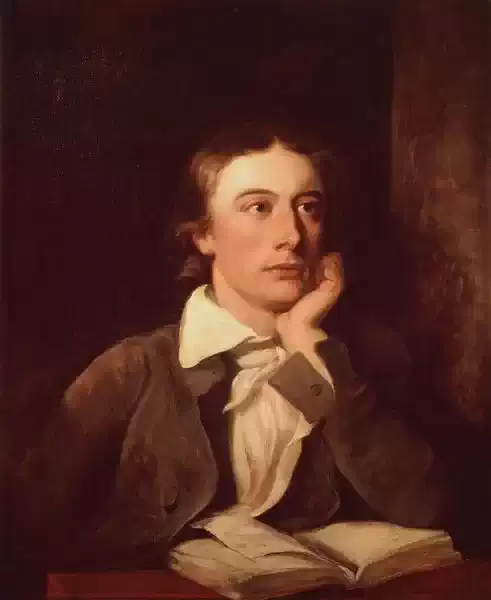
John Keats
Otho The Great - Act IV
Otho The Great - Act IV
SCENE I.
AURANTHE'S Apartment.
AURANTHE and CONRAD discovered.
Conrad. Well, well, I know what ugly jeopardy
We are cag'd in; you need not pester that
Into my ears. Prythee, let me be spared
A foolish tongue, that I may bethink me
Of remedies with some deliberation.
You cannot doubt but 'tis in Albert's power
To crush or save us?
Auranthe. No, I cannot doubt.
He has, assure yourself, by some strange means,
My secret ; which I ever hid from him,
Knowing his mawkish honesty.
Conrad. Curs'd slave!
Auranthe. Ay, I could almost curse him now myself.
Wretched impediment! Evil genius!
A glue upon my wings, that cannot spread,
When they should span the provinces! A snake,
A scorpion, sprawling on the first gold step,
Conducting to the throne, high canopied.
Conrad. You would not hear my council, when his life
Might have been trodden out, all sure and hush'd;
Now the dull animal forsooth must be
Intreated, managed! When can you contrive
The interview he demands?
Auranthe. As speedily
It must be done as my brib'd woman can
Unseen conduct him to me; but I fear
Twill be impossible, while the broad day
Comes through the panes with persecuting glare.
Methinks, if 't now were night I could intrigue
With darkness, bring the stars to second me,
And settle all this trouble.
Conrad. Nonsense! Child!
See him immediately; why not now?
Auranthe. Do you forget that even the senseless door-posts
Are on the watch and gape through all the house?
How many whispers there are about,
Hungry for evidence to ruin me ;
Men I have spurn 'd, and women I have taunted?
Besides, the foolish prince sends, minute whiles,
His pages so they tell me to enquire
After my health, entreating, if I please,
To see me.
Conrad. Well, suppose this Albert here;
What is your power with him?
Auranthe. He should be
My echo, my taught parrot! but I fear
He will be cur enough to bark at me ;
Have his own say ; read me some silly creed
'Bout shame and pity.
Conrad. What will you do then?
Auranthe. What I shall do, I know not: what L would
Cannot be done; for see, this chain her-floor
Will not yield to the pick-axe and the spade,
Here is no quiet depth of hollow ground.
Conrad. Sister, you have grown sensible and wise,
Seconding, ere I speak it, what is now,
I hope, resolv'd between us.
Auranthe. Say, what is 't?
Conrad. You need not be his sexton too: a man
May carry that with him shall make him die
Elsewhere, give that to him; pretend the while
You will to-morrow succumb to his wishes,
Be what they may, and send him from the Castle
On some fool's errand; let his latest groan
Frighten the wolves!
Auranthe. Alas! he must not die!
Conrad. Would you were both hears'd up in stifling lead!
Detested
Auranthe. Conrad, hold! I would not bear
The little thunder of your fretful tongue,
Tho; I alone were taken in these toils,
And you could free me; but remember, sir,
You live alone in my security:
So keep your wits at work, for your own sake,
Not mine, and be more mannerly.
Conrad. Thou wasp!
If my domains were emptied of these folk,
And I had thee to starve
Auranthe. O, marvellous!
But Conrad, now be gone; the Host is look'd for;
Cringe to the Emperor, entertain the Lords,
And, do ye mind, above all things, proclaim
My sickness, with a brother's sadden'd eye,
Condoling with Prince Ludolph. In fit time
Return to me.
Conrad. I leave you to your thoughts. [Exit.
Auranthe (sola) Down, down, proud temper! down,
Auranthe's pride!
Why do I anger him when I should kneel?
Conrad! Albert! help! help! What can I do?
wretched woman! lost, wreck'd, swallow'd up,
Accursed, blasted ! O, thou golden Crown,
Orbing along the serene firmament
Of a wide empire, like a glowing moon;
And thou, bright sceptre! lustrous in my eyes,
There as the fabled fair Hesperian tree,
Bearing a fruit more precious! graceful thing.
Delicate, godlike, magic! must I leave
Thee to melt in the visionary air,
Ere, by one grasp, this common hand is made
Imperial? I do not know the time
When I have wept for sorrow; but methinks
I could now sit upon the ground, and shed
Tears, tears of misery. O, the heavy day!
How shall I bear my life till Albert comes?
Ludolph! Erminia! Proofs! O heavy day!
Bring me some mourning weeds, that I may 'tire
Myself, as fits one wailing her own death:
Cut off these curls, and brand this lilly hand,
And throw these jewels from my loathing sight,
Fetch me a missal, and a string of beads,
A cup of bitter'd water, and a crust,
I will confess, O holy Abbot How!
What is this? Auranthe! thou fool, dolt,
Whimpering idiot! up! up! act and quell!
I am safe! Coward! why am I in fear?
Albert! he cannot stickle, chew the cud
In such a fine extreme, impossible!
Who knocks? [Goes to the Door, listens, and opens it.
Enter ALBERT.
Albert, I have been waiting for you here
With such an aching heart, such swooning throbs
On my poor brain, such cruel cruel sorrow,
That I should claim your pity! Art not well?
Albert. Yes, lady, well.
Auranthe. You look not so, alas!
But pale, as if you brought some heavy news.
Albert. You know full well what makes me look so pale.
Auranthe. No! Do I? Surely I am still to learn
Some horror; all I know, this present, is
I am near hustled to a dangerous gulph,
Which you can save me from, and therefore safe,
So trusting in thy love; that should not make
Thee pale, my Albert.
Albert. It doth make me freeze.
Auranthe. Why should it, love?
Albert. You should not ask me that,
But make your own heart monitor, and save
Me the great pain of telling. You must know.
Auranthe. Something has vexed you, Albert. There are times
When simplest things put on a sombre cast;
A melancholy mood will haunt a man,
Until most easy matters take the shape
Of unachievable tasks; small rivulets
Then seem impassable.
Albert. Do not cheat yourself
With hope that gloss of words, or suppliant action,
Or tears, or ravings, or self-threaten 'd death,
Can alter my resolve.
Auranthe. You make me tremble;
Not so much at your threats, as at your voice.
Untun'd. and harsh, and barren of all love.
Albert. You suffocate me! Stop this devil's parley,
And listen to me; know me once for all.
Auranthe. I thought I did. Alas! I am deceiv'd.
Albert. No, you are not deceiv'd. You took me for
A man detesting all inhuman crime;
And therefore kept from me your demon's plot
Against Erminia. Silent? Be so still;
For ever! Speak no more; but hear my words,
Thy fate. Your safety I have bought to-day
By blazoning a lie, which in the dawn
I expiate with truth.
Auranthe. O cruel traitor!
Albert. For I would not set eyes upon thy shame;
I would not see thee dragg'd to death by the hair,
Penanc'd, and taunted on a scaffolding!
To-night, upon the skirts of the blind wood
That blackens northward of these horrid towers,
I wait for you with horses. Choose your fate.
Farewell.
Auranthe. Albert, you jest; I'm sure you must.
You, an ambitious Soldier! I, a Queen,
One who could say, Here, rule these Provinces!
Take tribute from those cities for thyself!
Empty these armouries, these treasuries,
Muster thy warlike thousands at a nod !
Go! conquer Italy!
Albert. Auranthe, you have made
The whole world chaff to me. Your doom is fix'd.
Auranthe. Out, villain! dastard!
Albert. Look there to the door!
Who is it?
Auranthe. Conrad, traitor!
Albert. Let him in.
Enter CONRAD.
Do not affect amazement, hypocrite,
At seeing me in this chamber.
Conrad. Auranthe?
Albert. Talk not with eyes, but speak your curses out
Against me, who would sooner crush and grind
A brace of toads, than league with them to oppress
An innocent lady, gull an Emperor,
More generous to me than autumn's sun
To ripening harvests.
Auranthe. No more insult, sir!
Albert. Aye, clutch your scabbard; but, for prudence sake,
Draw not the sword; 'twould make an uproar, Duke,
You would not hear the end of. At nightfall
Your lady sister, if I guess aright,
Will leave this busy castle. You had best
Take farewell too of worldly vanities.
Conrad. Vassal!
Albert. To-morrow, when the Emperor sends
For loving Conrad, see you fawn on him.
Good even !
Auranthe. You'll be seen!
Albert. See the coast clear then.
Auranthe (as he goes). Remorseless Albert! Cruel,
cruel wretch!
[She lets him out.
Conrad. So, we must lick the dust?
Auranthe. I follow him.
Conrad. How? Where? The plan of your escape?
Auranthe. He waits
For me with horses by the forest-side,
Northward.
Conrad. Good, good! he dies. You go, say you?
Auranthe. Perforce.
Conrad. Be speedy, darkness! Till that comes,
Fiends keep you company! [Exit.
Auranthe. And you! And you!
And all men! Vanish!
[Retires to an inner Apartment.
SCENE II. An Apartment in the Castle.
Enter LUDOLPH and Page.
Page. Still very sick, my Lord; but now I went
Knowing my duty to so good a Prince;
And there her women in a mournful throng
Stood in the passage whispering: if any
Mov'd 'twas with careful steps and hush'd as death;
They bid me stop.
Ludolph. Good fellow, once again
Make soft enquiry; prythee be not stay'd
By any hindrance, but with gentlest force
Break through her weeping servants, till thou com'st
E'en to her chamber door, and there, fair boy,
If with thy mother's milk thou hast suck'd in
Any diviner eloquence ; woo her ears
With plaints for me more tender than the voice
Of dying Echo, echoed.
Page. Kindest master!
To know thee sad thus, will unloose my tongue
In mournful syllables. Let but my words reach
Her ears and she shall take them coupled with
Moans from my heart and sighs not counterfeit.
May I speed better! [Exit Page.
Ludolph. Auranthe! My Life!
Long have I lov'd thee, yet till now not lov'd:
Remembering, as I do, hard-hearted times
When I had heard even of thy death perhaps,
And thoughtless, suffered to pass alone
Into Elysium! now I follow thee
A substance or a shadow, wheresoe'er
Thou leadest me, whether thy white feet press,
With pleasant weight, the amorous-aching earth,
Or thro' the air thou pioneerest me,
A shade! Yet sadly I predestinate!
O unbenignest Love, why wilt thou let
Darkness steal out upon the sleepy world
So wearily; as if night's chariot wheels
Were clog'd in some thick cloud. O, changeful Love,
Let not her steeds with drowsy-footed pace
Pass the high stars, before sweet embassage
Comes from the pillow 'd beauty of that fair
Completion of all delicate nature's wit.
Pout her faint lips anew with rubious health
And with thine infant fingers lift the fringe
Of her sick eyelids ; that those eyes may glow
With wooing light upon me, ere the Morn
Peers with disrelish, grey, barren, and cold.
Enter GERSA and Courtiers.
Otho calls me his Lion should I blush
To be so tam'd, so
Gersa. Do me the courtesy
Gentlemen to pass on.
Courtier. We are your servants.
[Exeunt Courtiers.
Ludolph. It seems then, Sir, you have found out the man
You would confer with; me?
Gersa. If I break not
Too much upon your thoughtful mood, I will
Claim a brief while your patience.
Ludolph. For what cause
Soe'er I shall be honour 'd.
Gersa. I not less.
Ludolph. What may it be? No trifle can take place
Of such deliberate prologue, serious 'haviour.
But be it what it may I cannot fail
To listen with no common interest
For though so new your presence is to me,
I have a soldier's friendship for your fame
Please you explain.
Gersa. As thus for, pardon me,
I cannot in plain terms grossly assault
A noble nature ; and would faintly sketch
What your quick apprehension will fill up
So finely I esteem you.
Ludolph. I attend
Gersa. Your generous Father, most illustrious Otho,
Sits in the Banquet room among his chiefs
His wine is bitter, for you are not there
His eyes are fix'd still on the open doors,
And every passer in he frowns upon
Seeing no Ludolph comes.
Ludolph. I do neglect
Gersa. And for your absence, may I guess the cause?
Ludolph. Stay there! no guess? more princely you must be
Than to make guesses at me. ‘Tis enough,
I'm sorry I can hear no more.
Gersa. And I
As griev'd to force it on you so abrupt;
Yet one day you must know a grief whose sting
Will sharpen more the longer 'tis concealed.
Ludolph. Say it at once, sir, dead, dead, is she dead?
Gersa. Mine is a cruel task : she is not dead
And would for your sake she were innocent
Ludolph. Thou liest! thou amazest me beyond
All scope of thought; convulsest my heart's blood
To deadly churning Gersa you are young
As I am ; let me observe you face to face ;
Not grey-brow'd like the poisonous Ethelbert,
No rheumed eyes, no furrowing of age,
No wrinkles where all vices nestle in
Like crannied vermin no, but fresh and young
And hopeful featured. Ha! by heaven you weep
Tears, human tears Do you repent you then
Of a curs'd torturer's office! Why shouldst join
Tell me, the league of Devils? Confess confess
The Lie.
Gersa. Lie!- but begone all ceremonious points
Of honour battailous. I could not turn
My wrath against thee for the orbed world.
Ludolph. Your wrath, weak boy? Tremble at mine unless
Retraction follow close upon the heels
Of that late stounding insult: why has my sword
Not done already a sheer judgment on thee?
Despair, or eat thy words. Why, thou wast nigh
Whimpering away my reason: hark ye, Sir,
It is no secret; that Erminia,
Erminia, Sir, was hidden in your tent;
O bless 'd asylum! comfortable home!
Begone, I pity thee, thou art a Gull
Erminia's last new puppet
Gersa. Furious fire!
Thou mak'st me boil as hot as thou canst flame!
And in thy teeth I give thee back the lie!
Thou liest! Thou, Auranthe's fool, a wittol
Ludolph. Look! look at this bright sword;
There is no part of it to the very hilt
But shall indulge itself about thine heart
Draw but remember thou must cower thy plumes,
As yesterday the Arab made thee stoop
Gersa. Patience! not here, I would not spill thy blood
Here underneath this roof where Otho breathes,
Thy father almost mine
Ludolph. O faltering coward
Re-enter PAGE.
Stay, stay, here is one I have half a word with
Well What ails thee child?
Page. My lord,
Ludolph. Good fellow
Page. They are fled!
Ludolph. They who?
Page. When anxiously
I hasten 'd back, your grieving messenger,
I found the stairs all dark, the lamps extinct,
And not a foot or whisper to be heard.
I thought her dead, and on the lowest step
Sat listening; when presently came by
Two muffled up, one sighing heavily,
The other cursing low, whose voice I knew
For the Duke Conrad's. Close I follow'd them
Thro' the dark ways they chose to the open air;
And, as I follow'd, heard my lady speak.
Ludolph. Thy life answers the truth!
Page. The chamber's empty!
Ludolph. As I will be of mercy! So, at last,
This nail is in my temples!
Gersa. Be calm in this.
Ludolph. I am.
Gersa. And Albert too has disappeared;
Ere I met you, I sought him everywhere ;
You would not hearken.
Ludolph. Which way went they, boy?
Gersa. I'll hunt with you.
Ludolph. No, no, no. My senses are
Still whole. I have surviv'd. My arm is strong
My appetite sharp for revenge! I'll no sharer
In my feast; my injury is all my own,
And so is my revenge, my lawful chattels!
Terrier, ferret them out! Burn burn the witch!
Trace me their footsteps! Away!
[Exeunt.
SCENE I.
AURANTHE'S Apartment.
AURANTHE and CONRAD discovered.
Conrad. Well, well, I know what ugly jeopardy
We are cag'd in; you need not pester that
Into my ears. Prythee, let me be spared
A foolish tongue, that I may bethink me
Of remedies with some deliberation.
You cannot doubt but 'tis in Albert's power
To crush or save us?
Auranthe. No, I cannot doubt.
He has, assure yourself, by some strange means,
My secret ; which I ever hid from him,
Knowing his mawkish honesty.
Conrad. Curs'd slave!
Auranthe. Ay, I could almost curse him now myself.
Wretched impediment! Evil genius!
A glue upon my wings, that cannot spread,
When they should span the provinces! A snake,
A scorpion, sprawling on the first gold step,
Conducting to the throne, high canopied.
Conrad. You would not hear my council, when his life
Might have been trodden out, all sure and hush'd;
Now the dull animal forsooth must be
Intreated, managed! When can you contrive
The interview he demands?
Auranthe. As speedily
It must be done as my brib'd woman can
Unseen conduct him to me; but I fear
Twill be impossible, while the broad day
Comes through the panes with persecuting glare.
Methinks, if 't now were night I could intrigue
With darkness, bring the stars to second me,
And settle all this trouble.
Conrad. Nonsense! Child!
See him immediately; why not now?
Auranthe. Do you forget that even the senseless door-posts
Are on the watch and gape through all the house?
How many whispers there are about,
Hungry for evidence to ruin me ;
Men I have spurn 'd, and women I have taunted?
Besides, the foolish prince sends, minute whiles,
His pages so they tell me to enquire
After my health, entreating, if I please,
To see me.
Conrad. Well, suppose this Albert here;
What is your power with him?
Auranthe. He should be
My echo, my taught parrot! but I fear
He will be cur enough to bark at me ;
Have his own say ; read me some silly creed
'Bout shame and pity.
Conrad. What will you do then?
Auranthe. What I shall do, I know not: what L would
Cannot be done; for see, this chain her-floor
Will not yield to the pick-axe and the spade,
Here is no quiet depth of hollow ground.
Conrad. Sister, you have grown sensible and wise,
Seconding, ere I speak it, what is now,
I hope, resolv'd between us.
Auranthe. Say, what is 't?
Conrad. You need not be his sexton too: a man
May carry that with him shall make him die
Elsewhere, give that to him; pretend the while
You will to-morrow succumb to his wishes,
Be what they may, and send him from the Castle
On some fool's errand; let his latest groan
Frighten the wolves!
Auranthe. Alas! he must not die!
Conrad. Would you were both hears'd up in stifling lead!
Detested
Auranthe. Conrad, hold! I would not bear
The little thunder of your fretful tongue,
Tho; I alone were taken in these toils,
And you could free me; but remember, sir,
You live alone in my security:
So keep your wits at work, for your own sake,
Not mine, and be more mannerly.
Conrad. Thou wasp!
If my domains were emptied of these folk,
And I had thee to starve
Auranthe. O, marvellous!
But Conrad, now be gone; the Host is look'd for;
Cringe to the Emperor, entertain the Lords,
And, do ye mind, above all things, proclaim
My sickness, with a brother's sadden'd eye,
Condoling with Prince Ludolph. In fit time
Return to me.
Conrad. I leave you to your thoughts. [Exit.
Auranthe (sola) Down, down, proud temper! down,
Auranthe's pride!
Why do I anger him when I should kneel?
Conrad! Albert! help! help! What can I do?
wretched woman! lost, wreck'd, swallow'd up,
Accursed, blasted ! O, thou golden Crown,
Orbing along the serene firmament
Of a wide empire, like a glowing moon;
And thou, bright sceptre! lustrous in my eyes,
There as the fabled fair Hesperian tree,
Bearing a fruit more precious! graceful thing.
Delicate, godlike, magic! must I leave
Thee to melt in the visionary air,
Ere, by one grasp, this common hand is made
Imperial? I do not know the time
When I have wept for sorrow; but methinks
I could now sit upon the ground, and shed
Tears, tears of misery. O, the heavy day!
How shall I bear my life till Albert comes?
Ludolph! Erminia! Proofs! O heavy day!
Bring me some mourning weeds, that I may 'tire
Myself, as fits one wailing her own death:
Cut off these curls, and brand this lilly hand,
And throw these jewels from my loathing sight,
Fetch me a missal, and a string of beads,
A cup of bitter'd water, and a crust,
I will confess, O holy Abbot How!
What is this? Auranthe! thou fool, dolt,
Whimpering idiot! up! up! act and quell!
I am safe! Coward! why am I in fear?
Albert! he cannot stickle, chew the cud
In such a fine extreme, impossible!
Who knocks? [Goes to the Door, listens, and opens it.
Enter ALBERT.
Albert, I have been waiting for you here
With such an aching heart, such swooning throbs
On my poor brain, such cruel cruel sorrow,
That I should claim your pity! Art not well?
Albert. Yes, lady, well.
Auranthe. You look not so, alas!
But pale, as if you brought some heavy news.
Albert. You know full well what makes me look so pale.
Auranthe. No! Do I? Surely I am still to learn
Some horror; all I know, this present, is
I am near hustled to a dangerous gulph,
Which you can save me from, and therefore safe,
So trusting in thy love; that should not make
Thee pale, my Albert.
Albert. It doth make me freeze.
Auranthe. Why should it, love?
Albert. You should not ask me that,
But make your own heart monitor, and save
Me the great pain of telling. You must know.
Auranthe. Something has vexed you, Albert. There are times
When simplest things put on a sombre cast;
A melancholy mood will haunt a man,
Until most easy matters take the shape
Of unachievable tasks; small rivulets
Then seem impassable.
Albert. Do not cheat yourself
With hope that gloss of words, or suppliant action,
Or tears, or ravings, or self-threaten 'd death,
Can alter my resolve.
Auranthe. You make me tremble;
Not so much at your threats, as at your voice.
Untun'd. and harsh, and barren of all love.
Albert. You suffocate me! Stop this devil's parley,
And listen to me; know me once for all.
Auranthe. I thought I did. Alas! I am deceiv'd.
Albert. No, you are not deceiv'd. You took me for
A man detesting all inhuman crime;
And therefore kept from me your demon's plot
Against Erminia. Silent? Be so still;
For ever! Speak no more; but hear my words,
Thy fate. Your safety I have bought to-day
By blazoning a lie, which in the dawn
I expiate with truth.
Auranthe. O cruel traitor!
Albert. For I would not set eyes upon thy shame;
I would not see thee dragg'd to death by the hair,
Penanc'd, and taunted on a scaffolding!
To-night, upon the skirts of the blind wood
That blackens northward of these horrid towers,
I wait for you with horses. Choose your fate.
Farewell.
Auranthe. Albert, you jest; I'm sure you must.
You, an ambitious Soldier! I, a Queen,
One who could say, Here, rule these Provinces!
Take tribute from those cities for thyself!
Empty these armouries, these treasuries,
Muster thy warlike thousands at a nod !
Go! conquer Italy!
Albert. Auranthe, you have made
The whole world chaff to me. Your doom is fix'd.
Auranthe. Out, villain! dastard!
Albert. Look there to the door!
Who is it?
Auranthe. Conrad, traitor!
Albert. Let him in.
Enter CONRAD.
Do not affect amazement, hypocrite,
At seeing me in this chamber.
Conrad. Auranthe?
Albert. Talk not with eyes, but speak your curses out
Against me, who would sooner crush and grind
A brace of toads, than league with them to oppress
An innocent lady, gull an Emperor,
More generous to me than autumn's sun
To ripening harvests.
Auranthe. No more insult, sir!
Albert. Aye, clutch your scabbard; but, for prudence sake,
Draw not the sword; 'twould make an uproar, Duke,
You would not hear the end of. At nightfall
Your lady sister, if I guess aright,
Will leave this busy castle. You had best
Take farewell too of worldly vanities.
Conrad. Vassal!
Albert. To-morrow, when the Emperor sends
For loving Conrad, see you fawn on him.
Good even !
Auranthe. You'll be seen!
Albert. See the coast clear then.
Auranthe (as he goes). Remorseless Albert! Cruel,
cruel wretch!
[She lets him out.
Conrad. So, we must lick the dust?
Auranthe. I follow him.
Conrad. How? Where? The plan of your escape?
Auranthe. He waits
For me with horses by the forest-side,
Northward.
Conrad. Good, good! he dies. You go, say you?
Auranthe. Perforce.
Conrad. Be speedy, darkness! Till that comes,
Fiends keep you company! [Exit.
Auranthe. And you! And you!
And all men! Vanish!
[Retires to an inner Apartment.
SCENE II. An Apartment in the Castle.
Enter LUDOLPH and Page.
Page. Still very sick, my Lord; but now I went
Knowing my duty to so good a Prince;
And there her women in a mournful throng
Stood in the passage whispering: if any
Mov'd 'twas with careful steps and hush'd as death;
They bid me stop.
Ludolph. Good fellow, once again
Make soft enquiry; prythee be not stay'd
By any hindrance, but with gentlest force
Break through her weeping servants, till thou com'st
E'en to her chamber door, and there, fair boy,
If with thy mother's milk thou hast suck'd in
Any diviner eloquence ; woo her ears
With plaints for me more tender than the voice
Of dying Echo, echoed.
Page. Kindest master!
To know thee sad thus, will unloose my tongue
In mournful syllables. Let but my words reach
Her ears and she shall take them coupled with
Moans from my heart and sighs not counterfeit.
May I speed better! [Exit Page.
Ludolph. Auranthe! My Life!
Long have I lov'd thee, yet till now not lov'd:
Remembering, as I do, hard-hearted times
When I had heard even of thy death perhaps,
And thoughtless, suffered to pass alone
Into Elysium! now I follow thee
A substance or a shadow, wheresoe'er
Thou leadest me, whether thy white feet press,
With pleasant weight, the amorous-aching earth,
Or thro' the air thou pioneerest me,
A shade! Yet sadly I predestinate!
O unbenignest Love, why wilt thou let
Darkness steal out upon the sleepy world
So wearily; as if night's chariot wheels
Were clog'd in some thick cloud. O, changeful Love,
Let not her steeds with drowsy-footed pace
Pass the high stars, before sweet embassage
Comes from the pillow 'd beauty of that fair
Completion of all delicate nature's wit.
Pout her faint lips anew with rubious health
And with thine infant fingers lift the fringe
Of her sick eyelids ; that those eyes may glow
With wooing light upon me, ere the Morn
Peers with disrelish, grey, barren, and cold.
Enter GERSA and Courtiers.
Otho calls me his Lion should I blush
To be so tam'd, so
Gersa. Do me the courtesy
Gentlemen to pass on.
Courtier. We are your servants.
[Exeunt Courtiers.
Ludolph. It seems then, Sir, you have found out the man
You would confer with; me?
Gersa. If I break not
Too much upon your thoughtful mood, I will
Claim a brief while your patience.
Ludolph. For what cause
Soe'er I shall be honour 'd.
Gersa. I not less.
Ludolph. What may it be? No trifle can take place
Of such deliberate prologue, serious 'haviour.
But be it what it may I cannot fail
To listen with no common interest
For though so new your presence is to me,
I have a soldier's friendship for your fame
Please you explain.
Gersa. As thus for, pardon me,
I cannot in plain terms grossly assault
A noble nature ; and would faintly sketch
What your quick apprehension will fill up
So finely I esteem you.
Ludolph. I attend
Gersa. Your generous Father, most illustrious Otho,
Sits in the Banquet room among his chiefs
His wine is bitter, for you are not there
His eyes are fix'd still on the open doors,
And every passer in he frowns upon
Seeing no Ludolph comes.
Ludolph. I do neglect
Gersa. And for your absence, may I guess the cause?
Ludolph. Stay there! no guess? more princely you must be
Than to make guesses at me. ‘Tis enough,
I'm sorry I can hear no more.
Gersa. And I
As griev'd to force it on you so abrupt;
Yet one day you must know a grief whose sting
Will sharpen more the longer 'tis concealed.
Ludolph. Say it at once, sir, dead, dead, is she dead?
Gersa. Mine is a cruel task : she is not dead
And would for your sake she were innocent
Ludolph. Thou liest! thou amazest me beyond
All scope of thought; convulsest my heart's blood
To deadly churning Gersa you are young
As I am ; let me observe you face to face ;
Not grey-brow'd like the poisonous Ethelbert,
No rheumed eyes, no furrowing of age,
No wrinkles where all vices nestle in
Like crannied vermin no, but fresh and young
And hopeful featured. Ha! by heaven you weep
Tears, human tears Do you repent you then
Of a curs'd torturer's office! Why shouldst join
Tell me, the league of Devils? Confess confess
The Lie.
Gersa. Lie!- but begone all ceremonious points
Of honour battailous. I could not turn
My wrath against thee for the orbed world.
Ludolph. Your wrath, weak boy? Tremble at mine unless
Retraction follow close upon the heels
Of that late stounding insult: why has my sword
Not done already a sheer judgment on thee?
Despair, or eat thy words. Why, thou wast nigh
Whimpering away my reason: hark ye, Sir,
It is no secret; that Erminia,
Erminia, Sir, was hidden in your tent;
O bless 'd asylum! comfortable home!
Begone, I pity thee, thou art a Gull
Erminia's last new puppet
Gersa. Furious fire!
Thou mak'st me boil as hot as thou canst flame!
And in thy teeth I give thee back the lie!
Thou liest! Thou, Auranthe's fool, a wittol
Ludolph. Look! look at this bright sword;
There is no part of it to the very hilt
But shall indulge itself about thine heart
Draw but remember thou must cower thy plumes,
As yesterday the Arab made thee stoop
Gersa. Patience! not here, I would not spill thy blood
Here underneath this roof where Otho breathes,
Thy father almost mine
Ludolph. O faltering coward
Re-enter PAGE.
Stay, stay, here is one I have half a word with
Well What ails thee child?
Page. My lord,
Ludolph. Good fellow
Page. They are fled!
Ludolph. They who?
Page. When anxiously
I hasten 'd back, your grieving messenger,
I found the stairs all dark, the lamps extinct,
And not a foot or whisper to be heard.
I thought her dead, and on the lowest step
Sat listening; when presently came by
Two muffled up, one sighing heavily,
The other cursing low, whose voice I knew
For the Duke Conrad's. Close I follow'd them
Thro' the dark ways they chose to the open air;
And, as I follow'd, heard my lady speak.
Ludolph. Thy life answers the truth!
Page. The chamber's empty!
Ludolph. As I will be of mercy! So, at last,
This nail is in my temples!
Gersa. Be calm in this.
Ludolph. I am.
Gersa. And Albert too has disappeared;
Ere I met you, I sought him everywhere ;
You would not hearken.
Ludolph. Which way went they, boy?
Gersa. I'll hunt with you.
Ludolph. No, no, no. My senses are
Still whole. I have surviv'd. My arm is strong
My appetite sharp for revenge! I'll no sharer
In my feast; my injury is all my own,
And so is my revenge, my lawful chattels!
Terrier, ferret them out! Burn burn the witch!
Trace me their footsteps! Away!
[Exeunt.
446
John Keats
Lamia. Part II
Lamia. Part II
Love in a hut, with water and a crust,
Is—Love, forgive us!—cinders, ashes, dust;
Love in a palace is perhaps at last
More grievous torment than a hermit’s fast:—
That is a doubtful tale from faery land,
Hard for the non-elect to understand.
Had Lycius liv’d to hand his story down,
He might have given the moral a fresh frown,
Or clench’d it quite: but too short was their bliss
To breed distrust and hate, that make the soft voice hiss.
Besides, there, nightly, with terrific glare,
Love, jealous grown of so complete a pair,
Hover’d and buzz’d his wings, with fearful roar,
Above the lintel of their chamber door,
And down the passage cast a glow upon the floor.
For all this came a ruin: side by side
They were enthroned, in the even tide,
Upon a couch, near to a curtaining
Whose airy texture, from a golden string,
Floated into the room, and let appear
Unveil’d the summer heaven, blue and clear,
Betwixt two marble shafts:—there they reposed,
Where use had made it sweet, with eyelids closed,
Saving a tythe which love still open kept,
That they might see each other while they almost slept;
When from the slope side of a suburb hill,
Deafening the swallow’s twitter, came a thrill
Of trumpets—Lycius started—the sounds fled,
But left a thought, a buzzing in his head.
For the first time, since first he harbour’d in
That purple-lined palace of sweet sin,
His spirit pass’d beyond its golden bourn
Into the noisy world almost forsworn.
The lady, ever watchful, penetrant,
Saw this with pain, so arguing a want
Of something more, more than her empery
Of joys; and she began to moan and sigh
Because he mused beyond her, knowing well
That but a moment’s thought is passion’s passing bell.
“Why do you sigh, fair creature?” whisper’d he:
“Why do you think?” return’d she tenderly:
“You have deserted me;—where am I now?
“Not in your heart while care weighs on your brow:
“No, no, you have dismiss’d me; and I go
“From your breast houseless: ay, it must be so.”
He answer’d, bending to her open eyes,
Where he was mirror’d small in paradise,
“My silver planet, both of eve and morn!
“Why will you plead yourself so sad forlorn,
“While I am striving how to fill my heart
“With deeper crimson, and a double smart?
“How to entangle, trammel up and snare
“Your soul in mine, and labyrinth you there
“Like the hid scent in an unbudded rose?
“Ay, a sweet kiss—you see your mighty woes.
“My thoughts! shall I unveil them? Listen then!
“What mortal hath a prize, that other men
“May be confounded and abash’d withal,
“But lets it sometimes pace abroad majestical,
“And triumph, as in thee I should rejoice
“Amid the hoarse alarm of Corinth’s voice.
“Let my foes choke, and my friends shout afar,
“While through the thronged streets your bridal car
“Wheels round its dazzling spokes.”—The lady’s cheek
Trembled; she nothing said, but, pale and meek,
Arose and knelt before him, wept a rain
Of sorrows at his words; at last with pain
Beseeching him, the while his hand she wrung,
To change his purpose. He thereat was stung,
Perverse, with stronger fancy to reclaim
Her wild and timid nature to his aim:
Besides, for all his love, in self despite,
Against his better self, he took delight
Luxurious in her sorrows, soft and new.
His passion, cruel grown, took on a hue
Fierce and sanguineous as ’twas possible
In one whose brow had no dark veins to swell.
Fine was the mitigated fury, like
Apollo’s presence when in act to strike
The serpent—Ha, the serpent! certes, she
Was none. She burnt, she lov’d the tyranny,
And, all subdued, consented to the hour
When to the bridal he should lead his paramour.
Whispering in midnight silence, said the youth,
“Sure some sweet name thou hast, though, by my truth,
“I have not ask’d it, ever thinking thee
“Not mortal, but of heavenly progeny,
“As still I do. Hast any mortal name,
“Fit appellation for this dazzling frame?
“Or friends or kinsfolk on the citied earth,
“To share our marriage feast and nuptial mirth?”
“I have no friends,” said Lamia, “no, not one;
“My presence in wide Corinth hardly known:
“My parents’ bones are in their dusty urns
“Sepulchred, where no kindled incense burns,
“Seeing all their luckless race are dead, save me,
“And I neglect the holy rite for thee.
“Even as you list invite your many guests;
“But if, as now it seems, your vision rests
“With any pleasure on me, do not bid
“Old Apollonius—from him keep me hid.”
Lycius, perplex’d at words so blind and blank,
Made close inquiry; from whose touch she shrank,
Feigning a sleep; and he to the dull shade
Of deep sleep in a moment was betray’d.
It was the custom then to bring away
The bride from home at blushing shut of day,
Veil’d, in a chariot, heralded along
By strewn flowers, torches, and a marriage song,
With other pageants: but this fair unknown
Had not a friend. So being left alone,
(Lycius was gone to summon all his kin)
And knowing surely she could never win
His foolish heart from its mad pompousness,
She set herself, high-thoughted, how to dress
The misery in fit magnificence.
She did so, but ’tis doubtful how and whence
Came, and who were her subtle servitors.
About the halls, and to and from the doors,
There was a noise of wings, till in short space
The glowing banquet-room shone with wide-arched grace.
A haunting music, sole perhaps and lone
Supportress of the faery-roof, made moan
Throughout, as fearful the whole charm might fade.
Fresh carved cedar, mimicking a glade
Of palm and plantain, met from either side,
High in the midst, in honour of the bride:
Two palms and then two plantains, and so on,
From either side their stems branch’d one to one
All down the aisled place; and beneath all
There ran a stream of lamps straight on from wall to wall.
So canopied, lay an untasted feast
Teeming with odours. Lamia, regal drest,
Silently paced about, and as she went,
In pale contented sort of discontent,
Mission’d her viewless servants to enrich
The fretted splendour of each nook and niche.
Between the tree-stems, marbled plain at first,
Came jasper pannels; then, anon, there burst
Forth creeping imagery of slighter trees,
And with the larger wove in small intricacies.
Approving all, she faded at self-will,
And shut the chamber up, close, hush’d and still,
Complete and ready for the revels rude,
When dreadful guests would come to spoil her solitude.
The day appear’d, and all the gossip rout.
O senseless Lycius! Madman! wherefore flout
The silent-blessing fate, warm cloister’d hours,
And show to common eyes these secret bowers?
The herd approach’d; each guest, with busy brain,
Arriving at the portal, gaz’d amain,
And enter’d marveling: for they knew the street,
Remember’d it from childhood all complete
Without a gap, yet ne’er before had seen
That royal porch, that high-built fair demesne;
So in they hurried all, maz’d, curious and keen:
Save one, who look’d thereon with eye severe,
And with calm-planted steps walk’d in austere;
’Twas Apollonius: something too he laugh’d,
As though some knotty problem, that had daft
His patient thought, had now begun to thaw,
And solve and melt:—’twas just as he foresaw.
He met within the murmurous vestibule
His young disciple. “’Tis no common rule,
“Lycius,” said he, “for uninvited guest
“To force himself upon you, and infest
“With an unbidden presence the bright throng
“Of younger friends; yet must I do this wrong,
“And you forgive me.” Lycius blush’d, and led
The old man through the inner doors broad-spread;
With reconciling words and courteous mien
Turning into sweet milk the sophist’s spleen.
Of wealthy lustre was the banquet-room,
Fill’d with pervading brilliance and perfume:
Before each lucid pannel fuming stood
A censer fed with myrrh and spiced wood,
Each by a sacred tripod held aloft,
Whose slender feet wide-swerv’d upon the soft
Wool-woofed carpets: fifty wreaths of smoke
From fifty censers their light voyage took
To the high roof, still mimick’d as they rose
Along the mirror’d walls by twin-clouds odorous.
Twelve sphered tables, by silk seats insphered,
High as the level of a man’s breast rear’d
On libbard’s paws, upheld the heavy gold
Of cups and goblets, and the store thrice told
Of Ceres’ horn, and, in huge vessels, wine
Came from the gloomy tun with merry shine.
Thus loaded with a feast the tables stood,
Each shrining in the midst the image of a God.
When in an antichamber every guest
Had felt the cold full sponge to pleasure press’d,
By minist’ring slaves, upon his hands and feet,
And fragrant oils with ceremony meet
Pour’d on his hair, they all mov’d to the feast
In white robes, and themselves in order placed
Around the silken couches, wondering
Whence all this mighty cost and blaze of wealth could spring.
Soft went the music the soft air along,
While fluent Greek a vowel’d undersong
Kept up among the guests discoursing low
At first, for scarcely was the wine at flow;
But when the happy vintage touch’d their brains,
Louder they talk, and louder come the strains
Of powerful instruments:—the gorgeous dyes,
The space, the splendour of the draperies,
The roof of awful richness, nectarous cheer,
Beautiful slaves, and Lamia’s self, appear,
Now, when the wine has done its rosy deed,
And every soul from human trammels freed,
No more so strange; for merry wine, sweet wine,
Will make Elysian shades not too fair, too divine.
Soon was God Bacchus at meridian height;
Flush’d were their cheeks, and bright eyes double bright:
Garlands of every green, and every scent
From vales deflower’d, or forest-trees branch rent,
In baskets of bright osier’d gold were brought
High as the handles heap’d, to suit the thought
Of every guest; that each, as he did please,
Might fancy-fit his brows, silk-pillow’d at his ease.
What wreath for Lamia? What for Lycius?
What for the sage, old Apollonius?
Upon her aching forehead be there hung
The leaves of willow and of adder’s tongue;
And for the youth, quick, let us strip for him
The thyrsus, that his watching eyes may swim
Into forgetfulness; and, for the sage,
Let spear-grass and the spiteful thistle wage
War on his temples. Do not all charms fly
At the mere touch of cold philosophy?
There was an awful rainbow once in heaven:
We know her woof, her texture; she is given
In the dull catalogue of common things.
Philosophy will clip an Angel’s wings,
Conquer all mysteries by rule and line,
Empty the haunted air, and gnomed mine—
Unweave a rainbow, as it erewhile made
The tender-person’d Lamia melt into a shade.
By her glad Lycius sitting, in chief place,
Scarce saw in all the room another face,
Till, checking his love trance, a cup he took
Full brimm’d, and opposite sent forth a look
’Cross the broad table, to beseech a glance
From his old teacher’s wrinkled countenance,
And pledge him. The bald-head philosopher
Had fix’d his eye, without a twinkle or stir
Full on the alarmed beauty of the bride,
Brow-beating her fair form, and troubling her sweet pride.
Lycius then press’d her hand, with devout touch,
As pale it lay upon the rosy couch:
’Twas icy, and the cold ran through his veins;
Then sudden it grew hot, and all the pains
Of an unnatural heat shot to his heart.
“Lamia, what means this? Wherefore dost thou start?
“Know’st thou that man?” Poor Lamia answer’d not.
He gaz’d into her eyes, and not a jot
Own’d they the lovelorn piteous appeal:
More, more he gaz’d: his human senses reel:
Some hungry spell that loveliness absorbs;
There was no recognition in those orbs.
“Lamia!” he cried—and no soft-toned reply.
The many heard, and the loud revelry
Grew hush; the stately music no more breathes;
The myrtle sicken’d in a thousand wreaths.
By faint degrees, voice, lute, and pleasure ceased;
A deadly silence step by step increased,
Until it seem’d a horrid presence there,
And not a man but felt the terror in his hair.
“Lamia!” he shriek’d; and nothing but the shriek
With its sad echo did the silence break.
“Begone, foul dream!” he cried, gazing again
In the bride’s face, where now no azure vein
Wander’d on fair-spaced temples; no soft bloom
Misted the cheek; no passion to illume
The deep-recessed vision:—all was blight;
Lamia, no longer fair, there sat a deadly white.
“Shut, shut those juggling eyes, thou ruthless man!
“Turn them aside, wretch! or the righteous ban
“Of all the Gods, whose dreadful images
“Here represent their shadowy presences,
“May pierce them on the sudden with the thorn
“Of painful blindness; leaving thee forlorn,
“In trembling dotage to the feeblest fright
“Of conscience, for their long offended might,
“For all thine impious proud-heart sophistries,
“Unlawful magic, and enticing lies.
“Corinthians! look upon that gray-beard wretch!
“Mark how, possess’d, his lashless eyelids stretch
“Around his demon eyes! Corinthians, see!
“My sweet bride withers at their potency.”
“Fool!” said the sophist, in an under-tone
Gruff with contempt; which a death-nighing moan
From Lycius answer’d, as heart-struck and lost,
He sank supine beside the aching ghost.
“Fool! Fool!” repeated he, while his eyes still
Relented not, nor mov’d; “from every ill
“Of life have I preserv’d thee to this day,
“And shall I see thee made a serpent’s prey?
Then Lamia breath’d death breath; the sophist’s eye,
Like a sharp spear, went through her utterly,
Keen, cruel, perceant, stinging: she, as well
As her weak hand could any meaning tell,
Motion’d him to be silent; vainly so,
He look’d and look’d again a level--No!
“A Serpent!” echoed he; no sooner said,
Than with a frightful scream she vanished:
And Lycius’ arms were empty of delight,
As were his limbs of life, from that same night.
On the high couch he lay!—his friends came round--
Supported him—no pulse, or breath they found,
And, in its marriage robe, the heavy body wound.
Love in a hut, with water and a crust,
Is—Love, forgive us!—cinders, ashes, dust;
Love in a palace is perhaps at last
More grievous torment than a hermit’s fast:—
That is a doubtful tale from faery land,
Hard for the non-elect to understand.
Had Lycius liv’d to hand his story down,
He might have given the moral a fresh frown,
Or clench’d it quite: but too short was their bliss
To breed distrust and hate, that make the soft voice hiss.
Besides, there, nightly, with terrific glare,
Love, jealous grown of so complete a pair,
Hover’d and buzz’d his wings, with fearful roar,
Above the lintel of their chamber door,
And down the passage cast a glow upon the floor.
For all this came a ruin: side by side
They were enthroned, in the even tide,
Upon a couch, near to a curtaining
Whose airy texture, from a golden string,
Floated into the room, and let appear
Unveil’d the summer heaven, blue and clear,
Betwixt two marble shafts:—there they reposed,
Where use had made it sweet, with eyelids closed,
Saving a tythe which love still open kept,
That they might see each other while they almost slept;
When from the slope side of a suburb hill,
Deafening the swallow’s twitter, came a thrill
Of trumpets—Lycius started—the sounds fled,
But left a thought, a buzzing in his head.
For the first time, since first he harbour’d in
That purple-lined palace of sweet sin,
His spirit pass’d beyond its golden bourn
Into the noisy world almost forsworn.
The lady, ever watchful, penetrant,
Saw this with pain, so arguing a want
Of something more, more than her empery
Of joys; and she began to moan and sigh
Because he mused beyond her, knowing well
That but a moment’s thought is passion’s passing bell.
“Why do you sigh, fair creature?” whisper’d he:
“Why do you think?” return’d she tenderly:
“You have deserted me;—where am I now?
“Not in your heart while care weighs on your brow:
“No, no, you have dismiss’d me; and I go
“From your breast houseless: ay, it must be so.”
He answer’d, bending to her open eyes,
Where he was mirror’d small in paradise,
“My silver planet, both of eve and morn!
“Why will you plead yourself so sad forlorn,
“While I am striving how to fill my heart
“With deeper crimson, and a double smart?
“How to entangle, trammel up and snare
“Your soul in mine, and labyrinth you there
“Like the hid scent in an unbudded rose?
“Ay, a sweet kiss—you see your mighty woes.
“My thoughts! shall I unveil them? Listen then!
“What mortal hath a prize, that other men
“May be confounded and abash’d withal,
“But lets it sometimes pace abroad majestical,
“And triumph, as in thee I should rejoice
“Amid the hoarse alarm of Corinth’s voice.
“Let my foes choke, and my friends shout afar,
“While through the thronged streets your bridal car
“Wheels round its dazzling spokes.”—The lady’s cheek
Trembled; she nothing said, but, pale and meek,
Arose and knelt before him, wept a rain
Of sorrows at his words; at last with pain
Beseeching him, the while his hand she wrung,
To change his purpose. He thereat was stung,
Perverse, with stronger fancy to reclaim
Her wild and timid nature to his aim:
Besides, for all his love, in self despite,
Against his better self, he took delight
Luxurious in her sorrows, soft and new.
His passion, cruel grown, took on a hue
Fierce and sanguineous as ’twas possible
In one whose brow had no dark veins to swell.
Fine was the mitigated fury, like
Apollo’s presence when in act to strike
The serpent—Ha, the serpent! certes, she
Was none. She burnt, she lov’d the tyranny,
And, all subdued, consented to the hour
When to the bridal he should lead his paramour.
Whispering in midnight silence, said the youth,
“Sure some sweet name thou hast, though, by my truth,
“I have not ask’d it, ever thinking thee
“Not mortal, but of heavenly progeny,
“As still I do. Hast any mortal name,
“Fit appellation for this dazzling frame?
“Or friends or kinsfolk on the citied earth,
“To share our marriage feast and nuptial mirth?”
“I have no friends,” said Lamia, “no, not one;
“My presence in wide Corinth hardly known:
“My parents’ bones are in their dusty urns
“Sepulchred, where no kindled incense burns,
“Seeing all their luckless race are dead, save me,
“And I neglect the holy rite for thee.
“Even as you list invite your many guests;
“But if, as now it seems, your vision rests
“With any pleasure on me, do not bid
“Old Apollonius—from him keep me hid.”
Lycius, perplex’d at words so blind and blank,
Made close inquiry; from whose touch she shrank,
Feigning a sleep; and he to the dull shade
Of deep sleep in a moment was betray’d.
It was the custom then to bring away
The bride from home at blushing shut of day,
Veil’d, in a chariot, heralded along
By strewn flowers, torches, and a marriage song,
With other pageants: but this fair unknown
Had not a friend. So being left alone,
(Lycius was gone to summon all his kin)
And knowing surely she could never win
His foolish heart from its mad pompousness,
She set herself, high-thoughted, how to dress
The misery in fit magnificence.
She did so, but ’tis doubtful how and whence
Came, and who were her subtle servitors.
About the halls, and to and from the doors,
There was a noise of wings, till in short space
The glowing banquet-room shone with wide-arched grace.
A haunting music, sole perhaps and lone
Supportress of the faery-roof, made moan
Throughout, as fearful the whole charm might fade.
Fresh carved cedar, mimicking a glade
Of palm and plantain, met from either side,
High in the midst, in honour of the bride:
Two palms and then two plantains, and so on,
From either side their stems branch’d one to one
All down the aisled place; and beneath all
There ran a stream of lamps straight on from wall to wall.
So canopied, lay an untasted feast
Teeming with odours. Lamia, regal drest,
Silently paced about, and as she went,
In pale contented sort of discontent,
Mission’d her viewless servants to enrich
The fretted splendour of each nook and niche.
Between the tree-stems, marbled plain at first,
Came jasper pannels; then, anon, there burst
Forth creeping imagery of slighter trees,
And with the larger wove in small intricacies.
Approving all, she faded at self-will,
And shut the chamber up, close, hush’d and still,
Complete and ready for the revels rude,
When dreadful guests would come to spoil her solitude.
The day appear’d, and all the gossip rout.
O senseless Lycius! Madman! wherefore flout
The silent-blessing fate, warm cloister’d hours,
And show to common eyes these secret bowers?
The herd approach’d; each guest, with busy brain,
Arriving at the portal, gaz’d amain,
And enter’d marveling: for they knew the street,
Remember’d it from childhood all complete
Without a gap, yet ne’er before had seen
That royal porch, that high-built fair demesne;
So in they hurried all, maz’d, curious and keen:
Save one, who look’d thereon with eye severe,
And with calm-planted steps walk’d in austere;
’Twas Apollonius: something too he laugh’d,
As though some knotty problem, that had daft
His patient thought, had now begun to thaw,
And solve and melt:—’twas just as he foresaw.
He met within the murmurous vestibule
His young disciple. “’Tis no common rule,
“Lycius,” said he, “for uninvited guest
“To force himself upon you, and infest
“With an unbidden presence the bright throng
“Of younger friends; yet must I do this wrong,
“And you forgive me.” Lycius blush’d, and led
The old man through the inner doors broad-spread;
With reconciling words and courteous mien
Turning into sweet milk the sophist’s spleen.
Of wealthy lustre was the banquet-room,
Fill’d with pervading brilliance and perfume:
Before each lucid pannel fuming stood
A censer fed with myrrh and spiced wood,
Each by a sacred tripod held aloft,
Whose slender feet wide-swerv’d upon the soft
Wool-woofed carpets: fifty wreaths of smoke
From fifty censers their light voyage took
To the high roof, still mimick’d as they rose
Along the mirror’d walls by twin-clouds odorous.
Twelve sphered tables, by silk seats insphered,
High as the level of a man’s breast rear’d
On libbard’s paws, upheld the heavy gold
Of cups and goblets, and the store thrice told
Of Ceres’ horn, and, in huge vessels, wine
Came from the gloomy tun with merry shine.
Thus loaded with a feast the tables stood,
Each shrining in the midst the image of a God.
When in an antichamber every guest
Had felt the cold full sponge to pleasure press’d,
By minist’ring slaves, upon his hands and feet,
And fragrant oils with ceremony meet
Pour’d on his hair, they all mov’d to the feast
In white robes, and themselves in order placed
Around the silken couches, wondering
Whence all this mighty cost and blaze of wealth could spring.
Soft went the music the soft air along,
While fluent Greek a vowel’d undersong
Kept up among the guests discoursing low
At first, for scarcely was the wine at flow;
But when the happy vintage touch’d their brains,
Louder they talk, and louder come the strains
Of powerful instruments:—the gorgeous dyes,
The space, the splendour of the draperies,
The roof of awful richness, nectarous cheer,
Beautiful slaves, and Lamia’s self, appear,
Now, when the wine has done its rosy deed,
And every soul from human trammels freed,
No more so strange; for merry wine, sweet wine,
Will make Elysian shades not too fair, too divine.
Soon was God Bacchus at meridian height;
Flush’d were their cheeks, and bright eyes double bright:
Garlands of every green, and every scent
From vales deflower’d, or forest-trees branch rent,
In baskets of bright osier’d gold were brought
High as the handles heap’d, to suit the thought
Of every guest; that each, as he did please,
Might fancy-fit his brows, silk-pillow’d at his ease.
What wreath for Lamia? What for Lycius?
What for the sage, old Apollonius?
Upon her aching forehead be there hung
The leaves of willow and of adder’s tongue;
And for the youth, quick, let us strip for him
The thyrsus, that his watching eyes may swim
Into forgetfulness; and, for the sage,
Let spear-grass and the spiteful thistle wage
War on his temples. Do not all charms fly
At the mere touch of cold philosophy?
There was an awful rainbow once in heaven:
We know her woof, her texture; she is given
In the dull catalogue of common things.
Philosophy will clip an Angel’s wings,
Conquer all mysteries by rule and line,
Empty the haunted air, and gnomed mine—
Unweave a rainbow, as it erewhile made
The tender-person’d Lamia melt into a shade.
By her glad Lycius sitting, in chief place,
Scarce saw in all the room another face,
Till, checking his love trance, a cup he took
Full brimm’d, and opposite sent forth a look
’Cross the broad table, to beseech a glance
From his old teacher’s wrinkled countenance,
And pledge him. The bald-head philosopher
Had fix’d his eye, without a twinkle or stir
Full on the alarmed beauty of the bride,
Brow-beating her fair form, and troubling her sweet pride.
Lycius then press’d her hand, with devout touch,
As pale it lay upon the rosy couch:
’Twas icy, and the cold ran through his veins;
Then sudden it grew hot, and all the pains
Of an unnatural heat shot to his heart.
“Lamia, what means this? Wherefore dost thou start?
“Know’st thou that man?” Poor Lamia answer’d not.
He gaz’d into her eyes, and not a jot
Own’d they the lovelorn piteous appeal:
More, more he gaz’d: his human senses reel:
Some hungry spell that loveliness absorbs;
There was no recognition in those orbs.
“Lamia!” he cried—and no soft-toned reply.
The many heard, and the loud revelry
Grew hush; the stately music no more breathes;
The myrtle sicken’d in a thousand wreaths.
By faint degrees, voice, lute, and pleasure ceased;
A deadly silence step by step increased,
Until it seem’d a horrid presence there,
And not a man but felt the terror in his hair.
“Lamia!” he shriek’d; and nothing but the shriek
With its sad echo did the silence break.
“Begone, foul dream!” he cried, gazing again
In the bride’s face, where now no azure vein
Wander’d on fair-spaced temples; no soft bloom
Misted the cheek; no passion to illume
The deep-recessed vision:—all was blight;
Lamia, no longer fair, there sat a deadly white.
“Shut, shut those juggling eyes, thou ruthless man!
“Turn them aside, wretch! or the righteous ban
“Of all the Gods, whose dreadful images
“Here represent their shadowy presences,
“May pierce them on the sudden with the thorn
“Of painful blindness; leaving thee forlorn,
“In trembling dotage to the feeblest fright
“Of conscience, for their long offended might,
“For all thine impious proud-heart sophistries,
“Unlawful magic, and enticing lies.
“Corinthians! look upon that gray-beard wretch!
“Mark how, possess’d, his lashless eyelids stretch
“Around his demon eyes! Corinthians, see!
“My sweet bride withers at their potency.”
“Fool!” said the sophist, in an under-tone
Gruff with contempt; which a death-nighing moan
From Lycius answer’d, as heart-struck and lost,
He sank supine beside the aching ghost.
“Fool! Fool!” repeated he, while his eyes still
Relented not, nor mov’d; “from every ill
“Of life have I preserv’d thee to this day,
“And shall I see thee made a serpent’s prey?
Then Lamia breath’d death breath; the sophist’s eye,
Like a sharp spear, went through her utterly,
Keen, cruel, perceant, stinging: she, as well
As her weak hand could any meaning tell,
Motion’d him to be silent; vainly so,
He look’d and look’d again a level--No!
“A Serpent!” echoed he; no sooner said,
Than with a frightful scream she vanished:
And Lycius’ arms were empty of delight,
As were his limbs of life, from that same night.
On the high couch he lay!—his friends came round--
Supported him—no pulse, or breath they found,
And, in its marriage robe, the heavy body wound.
512
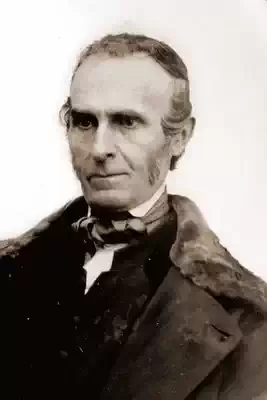
John Greenleaf Whittier
The Palatine
The Palatine
Leagues north, as fly the gull and auk,
Point Judith watches with eye of hawk;
Leagues south, thy beacon flames, Montauk!
Lonely and wind-shorn, wood-forsaken,
With never a tree for Spring to waken,
For tryst of lovers or farewells taken,
Circled by waters that never freeze,
Beaten by billow and swept by breeze,
Lieth the island of Manisees,
Set at the mouth of the Sound to hold
The coast lights up on its turret old,
Yellow with moss and sea-fog mould.
Dreary the land when gust and sleet
At its doors and windows howl and beat,
And Winter laughs at its fires of peat!
But in summer time, when pool and pond,
Held in the laps of valleys fond,
Are blue as the glimpses of sea beyond;
When the hills are sweet with the brier-rose,
And, hid in the warm, soft dells, unclose
Flowers the mainland rarely knows;
When boats to their morning fishing go,
And, held to the wind and slanting low,
Whitening and darkening the small sails show,-
Then is that lonely island fair;
And the pale health-seeker findeth there
The wine of life in its pleasant air.
No greener valleys the sun invite,
On smoother beaches no sea-birds light,
No blue waves shatter to foam more white!
There, circling ever their narrow range,
Quaint tradition and legend strange
Live on unchallenged, and know no change.
Old wives spinning their webs of tow,
Or rocking weirdly to and fro
In and out of the peat's dull glow,
And old men mending their nets of twine,
Talk together of dream and sign,
Talk of the lost ship Palatine,-
The ship that, a hundred years before,
Freighted deep with its goodly store,
In the gales of the equinox went ashore.
The eager islanders one by one
Counted the shots of her signal gun,
And heard the crash when she drove right on!
Into the teeth of death she sped
(May God forgive the hands that fed
The false lights over the rocky Head!)
O men and brothers! what sights were there!
White upturned faces, hands stretched in prayer!
Where waves had pity, could ye not spare?
Down swooped the wreckers, like birds of prey
Tearing the heart of the ship away,
And the dead had never a word to say.
And then, with ghastly shimmer and shine
Over the rocks and the seething brine,
They burned the wreck of the Palatine.
In their cruel hearts, as they homeward sped,
'The sea and the rocks are dumb,' they said
'There 'll be no reckoning with the dead.'
But the year went round, and when once more
Along their foam-white curves of shore
They heard the line-storm rave and roar,
Behold! again, with shimmer and shine,
Over the rocks and the seething brine,
The flaming wreck of the Palatine!
So, haply in fitter words than these,
Mending their nets on their patient knees
They tell the legend of Manisees.
Nor looks nor tones a doubt betray;
'It is known to us all,' they quietly say;
'We too have seen it in our day.'
Is there, then, no death for a word once spoken?
Was never a deed but left its token
Written on tables never broken?
Do the elements subtle reflections give?
Do pictures of all the ages live
On Nature's infinite negative,
Which, half in sport, in malice half,
She shows at times, with shudder or laugh,
Phantom and shadow in photograph?
For still, on many a moonless night,
From Kingston Head and from Montauk light
The spectre kindles and burns in sight.
Now low and dim, now clear and higher,
Leaps up the terrible Ghost of Fire,
Then, slowly sinking, the flames expire.
And the wise Sound skippers, though skies be fine,
Reef their sails when they see the sign
Of the blazing wreck of the Palatine!
. . . . .
'A fitter tale to scream than sing,'
The Book-man said. 'Well, fancy, then,'
The Reader answered, 'on the wing
The sea-birds shriek it, not for men,
But in the ear of wave and breeze!'
The Traveller mused: 'Your Manisees
Is fairy-land: off Narragansett shore
Who ever saw the isle or heard its name before?
''T is some strange land of Flyaway,
Whose dreamy shore the ship beguiles,
St. Brandan's in its sea-mist gray,
Or sunset loom of Fortunate Isles!'
'No ghost, but solid turf and rock
Is the good island known as Block,'
The Reader said. 'For beauty and for ease
I chose its Indian name, soft-flowing Manisees!
'But let it pass; here is a bit
Of unrhymed story, with a hint
Of the old preaching mood in it,
The sort of sidelong moral squint
Our friend objects to, which has grown,
I fear, a habit of my own.
'Twas written when the Asian plague drew near,
And the land held its breath and paled with sudden fear.'
Leagues north, as fly the gull and auk,
Point Judith watches with eye of hawk;
Leagues south, thy beacon flames, Montauk!
Lonely and wind-shorn, wood-forsaken,
With never a tree for Spring to waken,
For tryst of lovers or farewells taken,
Circled by waters that never freeze,
Beaten by billow and swept by breeze,
Lieth the island of Manisees,
Set at the mouth of the Sound to hold
The coast lights up on its turret old,
Yellow with moss and sea-fog mould.
Dreary the land when gust and sleet
At its doors and windows howl and beat,
And Winter laughs at its fires of peat!
But in summer time, when pool and pond,
Held in the laps of valleys fond,
Are blue as the glimpses of sea beyond;
When the hills are sweet with the brier-rose,
And, hid in the warm, soft dells, unclose
Flowers the mainland rarely knows;
When boats to their morning fishing go,
And, held to the wind and slanting low,
Whitening and darkening the small sails show,-
Then is that lonely island fair;
And the pale health-seeker findeth there
The wine of life in its pleasant air.
No greener valleys the sun invite,
On smoother beaches no sea-birds light,
No blue waves shatter to foam more white!
There, circling ever their narrow range,
Quaint tradition and legend strange
Live on unchallenged, and know no change.
Old wives spinning their webs of tow,
Or rocking weirdly to and fro
In and out of the peat's dull glow,
And old men mending their nets of twine,
Talk together of dream and sign,
Talk of the lost ship Palatine,-
The ship that, a hundred years before,
Freighted deep with its goodly store,
In the gales of the equinox went ashore.
The eager islanders one by one
Counted the shots of her signal gun,
And heard the crash when she drove right on!
Into the teeth of death she sped
(May God forgive the hands that fed
The false lights over the rocky Head!)
O men and brothers! what sights were there!
White upturned faces, hands stretched in prayer!
Where waves had pity, could ye not spare?
Down swooped the wreckers, like birds of prey
Tearing the heart of the ship away,
And the dead had never a word to say.
And then, with ghastly shimmer and shine
Over the rocks and the seething brine,
They burned the wreck of the Palatine.
In their cruel hearts, as they homeward sped,
'The sea and the rocks are dumb,' they said
'There 'll be no reckoning with the dead.'
But the year went round, and when once more
Along their foam-white curves of shore
They heard the line-storm rave and roar,
Behold! again, with shimmer and shine,
Over the rocks and the seething brine,
The flaming wreck of the Palatine!
So, haply in fitter words than these,
Mending their nets on their patient knees
They tell the legend of Manisees.
Nor looks nor tones a doubt betray;
'It is known to us all,' they quietly say;
'We too have seen it in our day.'
Is there, then, no death for a word once spoken?
Was never a deed but left its token
Written on tables never broken?
Do the elements subtle reflections give?
Do pictures of all the ages live
On Nature's infinite negative,
Which, half in sport, in malice half,
She shows at times, with shudder or laugh,
Phantom and shadow in photograph?
For still, on many a moonless night,
From Kingston Head and from Montauk light
The spectre kindles and burns in sight.
Now low and dim, now clear and higher,
Leaps up the terrible Ghost of Fire,
Then, slowly sinking, the flames expire.
And the wise Sound skippers, though skies be fine,
Reef their sails when they see the sign
Of the blazing wreck of the Palatine!
. . . . .
'A fitter tale to scream than sing,'
The Book-man said. 'Well, fancy, then,'
The Reader answered, 'on the wing
The sea-birds shriek it, not for men,
But in the ear of wave and breeze!'
The Traveller mused: 'Your Manisees
Is fairy-land: off Narragansett shore
Who ever saw the isle or heard its name before?
''T is some strange land of Flyaway,
Whose dreamy shore the ship beguiles,
St. Brandan's in its sea-mist gray,
Or sunset loom of Fortunate Isles!'
'No ghost, but solid turf and rock
Is the good island known as Block,'
The Reader said. 'For beauty and for ease
I chose its Indian name, soft-flowing Manisees!
'But let it pass; here is a bit
Of unrhymed story, with a hint
Of the old preaching mood in it,
The sort of sidelong moral squint
Our friend objects to, which has grown,
I fear, a habit of my own.
'Twas written when the Asian plague drew near,
And the land held its breath and paled with sudden fear.'
318
John Greenleaf Whittier
Leggett’s Monument
Leggett’s Monument
Yes, pile the marble o'er him! It is well
That ye who mocked him in his long stern strife,
And planted in the pathway of his life
The ploughshares of your hatred hot from hell,
Who clamored down the bold reformer when
He pleaded for his captive fellow-men,
Who spurned him in the market-place, and sought
Within thy walls, St. Tammany, to bind
In party chains the free and honest thought,
The angel utterance of an upright mind,
Well is it now that o'er his grave ye raise
The stony tribute of your tardy praise,
For not alone that pile shall tell to Fame
Of the brave heart beneath, but of the builders' shame!
Yes, pile the marble o'er him! It is well
That ye who mocked him in his long stern strife,
And planted in the pathway of his life
The ploughshares of your hatred hot from hell,
Who clamored down the bold reformer when
He pleaded for his captive fellow-men,
Who spurned him in the market-place, and sought
Within thy walls, St. Tammany, to bind
In party chains the free and honest thought,
The angel utterance of an upright mind,
Well is it now that o'er his grave ye raise
The stony tribute of your tardy praise,
For not alone that pile shall tell to Fame
Of the brave heart beneath, but of the builders' shame!
211
John Greenleaf Whittier
A Letter
A Letter
'TIS over, Moses! All is lost!
I hear the bells a-ringing;
Of Pharaoh and his Red Sea host
I hear the Free-Wills singing.*
We're routed, Moses, horse and foot,
If there be truth in figures,
With Federal Whigs in hot pursuit,
And Hale, and all the 'niggers.'
Alack! alas! this month or more
We've felt a sad foreboding;
Our very dreams the burden bore
Of central cliques exploding;
Before our eyes a furnace shone,
Where heads of dough were roasting,
And one we took to be your own
The traitor Hale was toasting!
Our Belknap brother* heard with awe
The Congo minstrels playing;
At Pittsfield Reuben Leavitt* saw
The ghost of Storrs a-praying;
And Carroll's woods were sad to see,
With black-winged crows a-darting;
And Black Snout looked on Ossipee,
New-glossed with Day and Martin.
We thought the 'Old Man of the Notch'
His face seemed changing wholly —
His lips seemed thick; his nose seemed flat;
His misty hair looked woolly;
And Coös teamsters, shrieking, fled
From the metamorphosed figure.
'Look there!' they said, 'the Old Stone Head
Himself is turning nigger!'
The schoolhouse* out of Canaan hauled
Seemed turning on its track again,
And like a great swamp-turtle crawled
To Canaan village back again,
Shook off the mud and settled flat
Upon its underpinning;
A nigger on its ridge-pole sat,
From ear to ear a-grinning.
Gray H—d heard o' nights the sound
Of rail-cars onward faring;
Right over Democratic ground
The iron horse came tearing.
A flag waved o'er that spectral train,
As high as Pittsfield steeple;
Its emblem was a broken chain;
Its motto: 'To the people!'
I dreamed that Charley took his bed,
With Hale for his physician;
His daily dose an old 'unread
And unreferred' petition.*
There Hayes and Tuck as nurses sat,
As near as near could be, man;
They leeched him with the 'Democrat;'
They blistered with the 'Freeman.'
Ah! grisly portents! What avail
Your terrors of forewarning?
We wake to find the nightmare Hale
Astride our breasts at morning!
From Portsmouth lights to Indian stream
Our foes their throats are trying;
The very factory-spindles seem
To mock us while they're flying.
The hills have bonfires; in our streets
Flags flout us in our faces;
The newsboys, peddling off their sheets,
Are hoarse with our disgraces.
In vain we turn, for gibing wit
And shoutings follow after,
As if old Kearsarge had split
His granite sides with laughter!
What boots it that we pelted out
The anti-slavery women,9
And bravely strewed their hall about
With tattered lace and trimming?
Was it for such a sad reverse
Our mobs became peacemakers,
And kept their tar and wooden horse
For Englishmen and Quakers?
For this did shifty Atherton
Make gag rules for the Great House?
Wiped we for this our feet upon
Petitions in our State House?
Plied we for this our axe of doom,
No stubborn traitor sparing,
Who scoffed at our opinion loom,
And took to homespun wearing?
Ah, Moses! hard it is to scan
These crooked providences,
Deducing from the wisest plan
The saddest consequences!
Strange that, in trampling as was meet
The nigger-men's petition,
We sprung a mine beneath our feet
Which opened up perdition.
How goodly, Moses, was the game
In which we've long been actors,
Supplying freedom with the name
And slavery with the practice!
Our smooth words fed the people's mouth,
Their ears our party rattle;
We kept them headed to the South,
As drovers do their cattle.
But now our game of politics
The world at large is learning;
And men grown gray in all our tricks
State's evidence are turning.
Votes and preambles subtly spun
They cram with meanings louder,
And load the Democratic gun
With abolition powder.
The ides of June! Woe worth the day
When, turning all things over,
The traitor Hale shall make his hay
From Democratic clover!
Who then shall take him in the law,
Who punish crime so flagrant?
Whose hand shall serve, whose pen shall draw,
A writ against that 'vagrant'?
Alas! no hope is left us here,
And one can only pine for
The envied place of overseer
Of slaves in Carolina!
Pray, Moses, give Calhoun the wink,
And see what pay he's giving!
We're practised long enough, we think,
To know the art of driving.
And for the faithful rank and file,
Who know their proper stations,
Perhaps it may be worth their while
To try the rice plantations.
Let Hale exult, let Wilson scoff,
To see us southward scamper;
The slaves, we know, are 'better off
Than laborers in New Hampshire!'
'TIS over, Moses! All is lost!
I hear the bells a-ringing;
Of Pharaoh and his Red Sea host
I hear the Free-Wills singing.*
We're routed, Moses, horse and foot,
If there be truth in figures,
With Federal Whigs in hot pursuit,
And Hale, and all the 'niggers.'
Alack! alas! this month or more
We've felt a sad foreboding;
Our very dreams the burden bore
Of central cliques exploding;
Before our eyes a furnace shone,
Where heads of dough were roasting,
And one we took to be your own
The traitor Hale was toasting!
Our Belknap brother* heard with awe
The Congo minstrels playing;
At Pittsfield Reuben Leavitt* saw
The ghost of Storrs a-praying;
And Carroll's woods were sad to see,
With black-winged crows a-darting;
And Black Snout looked on Ossipee,
New-glossed with Day and Martin.
We thought the 'Old Man of the Notch'
His face seemed changing wholly —
His lips seemed thick; his nose seemed flat;
His misty hair looked woolly;
And Coös teamsters, shrieking, fled
From the metamorphosed figure.
'Look there!' they said, 'the Old Stone Head
Himself is turning nigger!'
The schoolhouse* out of Canaan hauled
Seemed turning on its track again,
And like a great swamp-turtle crawled
To Canaan village back again,
Shook off the mud and settled flat
Upon its underpinning;
A nigger on its ridge-pole sat,
From ear to ear a-grinning.
Gray H—d heard o' nights the sound
Of rail-cars onward faring;
Right over Democratic ground
The iron horse came tearing.
A flag waved o'er that spectral train,
As high as Pittsfield steeple;
Its emblem was a broken chain;
Its motto: 'To the people!'
I dreamed that Charley took his bed,
With Hale for his physician;
His daily dose an old 'unread
And unreferred' petition.*
There Hayes and Tuck as nurses sat,
As near as near could be, man;
They leeched him with the 'Democrat;'
They blistered with the 'Freeman.'
Ah! grisly portents! What avail
Your terrors of forewarning?
We wake to find the nightmare Hale
Astride our breasts at morning!
From Portsmouth lights to Indian stream
Our foes their throats are trying;
The very factory-spindles seem
To mock us while they're flying.
The hills have bonfires; in our streets
Flags flout us in our faces;
The newsboys, peddling off their sheets,
Are hoarse with our disgraces.
In vain we turn, for gibing wit
And shoutings follow after,
As if old Kearsarge had split
His granite sides with laughter!
What boots it that we pelted out
The anti-slavery women,9
And bravely strewed their hall about
With tattered lace and trimming?
Was it for such a sad reverse
Our mobs became peacemakers,
And kept their tar and wooden horse
For Englishmen and Quakers?
For this did shifty Atherton
Make gag rules for the Great House?
Wiped we for this our feet upon
Petitions in our State House?
Plied we for this our axe of doom,
No stubborn traitor sparing,
Who scoffed at our opinion loom,
And took to homespun wearing?
Ah, Moses! hard it is to scan
These crooked providences,
Deducing from the wisest plan
The saddest consequences!
Strange that, in trampling as was meet
The nigger-men's petition,
We sprung a mine beneath our feet
Which opened up perdition.
How goodly, Moses, was the game
In which we've long been actors,
Supplying freedom with the name
And slavery with the practice!
Our smooth words fed the people's mouth,
Their ears our party rattle;
We kept them headed to the South,
As drovers do their cattle.
But now our game of politics
The world at large is learning;
And men grown gray in all our tricks
State's evidence are turning.
Votes and preambles subtly spun
They cram with meanings louder,
And load the Democratic gun
With abolition powder.
The ides of June! Woe worth the day
When, turning all things over,
The traitor Hale shall make his hay
From Democratic clover!
Who then shall take him in the law,
Who punish crime so flagrant?
Whose hand shall serve, whose pen shall draw,
A writ against that 'vagrant'?
Alas! no hope is left us here,
And one can only pine for
The envied place of overseer
Of slaves in Carolina!
Pray, Moses, give Calhoun the wink,
And see what pay he's giving!
We're practised long enough, we think,
To know the art of driving.
And for the faithful rank and file,
Who know their proper stations,
Perhaps it may be worth their while
To try the rice plantations.
Let Hale exult, let Wilson scoff,
To see us southward scamper;
The slaves, we know, are 'better off
Than laborers in New Hampshire!'
272
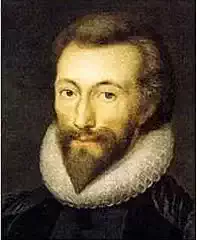
John Donne
Twickenham Garden
Twickenham Garden
BLASTED with sighs, and surrounded with tears,
Hither I come to seek the spring,
And at mine eyes, and at mine ears,
Receive such balms as else cure every thing.
But O ! self-traitor, I do bring
The spider Love, which transubstantiates all,
And can convert manna to gall ;
And that this place may thoroughly be thought
True paradise, I have the serpent brought.
'Twere wholesomer for me that winter did
Benight the glory of this place,
And that a grave frost did forbid
These trees to laugh and mock me to my face ;
But that I may not this disgrace
Endure, nor yet leave loving, Love, let me
Some senseless piece of this place be ;
Make me a mandrake, so I may grow here,
Or a stone fountain weeping out my year.
Hither with crystal phials, lovers, come,
And take my tears, which are love's wine,
And try your mistress' tears at home,
For all are false, that taste not just like mine.
Alas ! hearts do not in eyes shine,
Nor can you more judge women's thoughts by tears,
Than by her shadow what she wears.
O perverse sex, where none is true but she,
Who's therefore true, because her truth kills me.
BLASTED with sighs, and surrounded with tears,
Hither I come to seek the spring,
And at mine eyes, and at mine ears,
Receive such balms as else cure every thing.
But O ! self-traitor, I do bring
The spider Love, which transubstantiates all,
And can convert manna to gall ;
And that this place may thoroughly be thought
True paradise, I have the serpent brought.
'Twere wholesomer for me that winter did
Benight the glory of this place,
And that a grave frost did forbid
These trees to laugh and mock me to my face ;
But that I may not this disgrace
Endure, nor yet leave loving, Love, let me
Some senseless piece of this place be ;
Make me a mandrake, so I may grow here,
Or a stone fountain weeping out my year.
Hither with crystal phials, lovers, come,
And take my tears, which are love's wine,
And try your mistress' tears at home,
For all are false, that taste not just like mine.
Alas ! hearts do not in eyes shine,
Nor can you more judge women's thoughts by tears,
Than by her shadow what she wears.
O perverse sex, where none is true but she,
Who's therefore true, because her truth kills me.
351
John Donne
The Will
The Will
Before I sigh my last gasp, let me breathe,
Great Love, some legacies ; I here bequeath
Mine eyes to Argus, if mine eyes can see ;
If they be blind, then, Love, I give them thee ;
My tongue to Fame ; to ambassadors mine ears ;
To women, or the sea, my tears ;
Thou, Love, hast taught me heretofore
By making me serve her who had twenty more,
That I should give to none, but such as had too much before.
My constancy I to the planets give ;
My truth to them who at the court do live ;
My ingenuity and openness,
To Jesuits ; to buffoons my pensiveness ;
My silence to any, who abroad hath been ;
My money to a Capuchin :
Thou, Love, taught'st me, by appointing me
To love there, where no love received can be,
Only to give to such as have an incapacity.
My faith I give to Roman Catholics ;
All my good works unto the Schismatics
Of Amsterdam ; my best civility
And courtship to an University ;
My modesty I give to soldiers bare ;
My patience let gamesters share :
Thou, Love, taught'st me, by making me
Love her that holds my love disparity,
Only to give to those that count my gifts indignity.
I give my reputation to those
Which were my friends ; mine industry to foes ;
To schoolmen I bequeath my doubtfulness ;
My sickness to physicians, or excess ;
To nature all that I in rhyme have writ ;
And to my company my wit :
Thou, Love, by making me adore
Her, who begot this love in me before,
Taught'st me to make, as though I gave, when I do but restore.
To him for whom the passing-bell next tolls,
I give my physic books ; my written rolls
Of moral counsels I to Bedlam give ;
My brazen medals unto them which live
In want of bread ; to them which pass among
All foreigners, mine English tongue :
Though, Love, by making me love one
Who thinks her friendship a fit portion
For younger lovers, dost my gifts thus disproportion.
Therefore I'll give no more, but I'll undo
The world by dying, because love dies too.
Then all your beauties will be no more worth
Than gold in mines, where none doth draw it forth ;
And all your graces no more use shall have,
Than a sun-dial in a grave :
Thou, Love, taught'st me by making me
Love her who doth neglect both me and thee,
To invent, and practise this one way, to annihilate all three.
Before I sigh my last gasp, let me breathe,
Great Love, some legacies ; I here bequeath
Mine eyes to Argus, if mine eyes can see ;
If they be blind, then, Love, I give them thee ;
My tongue to Fame ; to ambassadors mine ears ;
To women, or the sea, my tears ;
Thou, Love, hast taught me heretofore
By making me serve her who had twenty more,
That I should give to none, but such as had too much before.
My constancy I to the planets give ;
My truth to them who at the court do live ;
My ingenuity and openness,
To Jesuits ; to buffoons my pensiveness ;
My silence to any, who abroad hath been ;
My money to a Capuchin :
Thou, Love, taught'st me, by appointing me
To love there, where no love received can be,
Only to give to such as have an incapacity.
My faith I give to Roman Catholics ;
All my good works unto the Schismatics
Of Amsterdam ; my best civility
And courtship to an University ;
My modesty I give to soldiers bare ;
My patience let gamesters share :
Thou, Love, taught'st me, by making me
Love her that holds my love disparity,
Only to give to those that count my gifts indignity.
I give my reputation to those
Which were my friends ; mine industry to foes ;
To schoolmen I bequeath my doubtfulness ;
My sickness to physicians, or excess ;
To nature all that I in rhyme have writ ;
And to my company my wit :
Thou, Love, by making me adore
Her, who begot this love in me before,
Taught'st me to make, as though I gave, when I do but restore.
To him for whom the passing-bell next tolls,
I give my physic books ; my written rolls
Of moral counsels I to Bedlam give ;
My brazen medals unto them which live
In want of bread ; to them which pass among
All foreigners, mine English tongue :
Though, Love, by making me love one
Who thinks her friendship a fit portion
For younger lovers, dost my gifts thus disproportion.
Therefore I'll give no more, but I'll undo
The world by dying, because love dies too.
Then all your beauties will be no more worth
Than gold in mines, where none doth draw it forth ;
And all your graces no more use shall have,
Than a sun-dial in a grave :
Thou, Love, taught'st me by making me
Love her who doth neglect both me and thee,
To invent, and practise this one way, to annihilate all three.
303
John Donne
The Legacy
The Legacy
When I died last, and, Dear, I die
As often as from thee I go,
Though it be but an hour ago,
And Lovers' hours be full eternity,
I can remember yet, that I
Something did say, and something did bestow;
Though I be dead, which sent me, I should be
Mine own executor and legacy.
I heard me say, "Tell her anon,
That myself, that is you, not I,
Did kill me," and when I felt me die,
I bid me send my heart, when I was gone,
But alas could there find none,
When I had ripp'd me, and search'd where hearts should lie;
It kill'd me again, that I who still was true,
In life, in my last will should cozen you.
Yet I found something like a heart,
But colors it, and corners had,
It was not good, it was not bad,
It was intire to none, and few had part.
As good as could be made by art
It seem'd, and therefore for our losses sad,
I meant to send this heart in stead of mine,
But oh, no man could hold it, for 'twas thine.
When I died last, and, Dear, I die
As often as from thee I go,
Though it be but an hour ago,
And Lovers' hours be full eternity,
I can remember yet, that I
Something did say, and something did bestow;
Though I be dead, which sent me, I should be
Mine own executor and legacy.
I heard me say, "Tell her anon,
That myself, that is you, not I,
Did kill me," and when I felt me die,
I bid me send my heart, when I was gone,
But alas could there find none,
When I had ripp'd me, and search'd where hearts should lie;
It kill'd me again, that I who still was true,
In life, in my last will should cozen you.
Yet I found something like a heart,
But colors it, and corners had,
It was not good, it was not bad,
It was intire to none, and few had part.
As good as could be made by art
It seem'd, and therefore for our losses sad,
I meant to send this heart in stead of mine,
But oh, no man could hold it, for 'twas thine.
457
John Donne
The Curse
The Curse
Whoever guesses, thinks, or dreams, he knows
Who is my mistress, wither by this curse ;
Him, only for his purse
May some dull whore to love dispose,
And then yield unto all that are his foes ;
May he be scorn'd by one, whom all else scorn,
Forswear to others, what to her he hath sworn,
With fear of missing, shame of getting, torn.
Madness his sorrow, gout his cramps, may he
Make, by but thinking who hath made him such ;
And may he feel no touch
Of conscience, but of fame, and be
Anguish'd, not that 'twas sin, but that 'twas she ;
Or may he for her virtue reverence
One that hates him only for impotence,
And equal traitors be she and his sense.
May he dream treason, and believe that he
Meant to perform it, and confesses, and die,
And no record tell why ;
His sons, which none of his may be,
Inherit nothing but his infamy ;
Or may he so long parasites have fed,
That he would fain be theirs whom he hath bred,
And at the last be circumcised for bread.
The venom of all stepdames, gamesters' gall,
What tyrants and their subjects interwish,
What plants, mine, beasts, fowl, fish,
Can contribute, all ill, which all
Prophets or poets spake, and all which shall
Be annex'd in schedules unto this by me,
Fall on that man ; For if it be a she
Nature beforehand hath out-cursèd me.
Whoever guesses, thinks, or dreams, he knows
Who is my mistress, wither by this curse ;
Him, only for his purse
May some dull whore to love dispose,
And then yield unto all that are his foes ;
May he be scorn'd by one, whom all else scorn,
Forswear to others, what to her he hath sworn,
With fear of missing, shame of getting, torn.
Madness his sorrow, gout his cramps, may he
Make, by but thinking who hath made him such ;
And may he feel no touch
Of conscience, but of fame, and be
Anguish'd, not that 'twas sin, but that 'twas she ;
Or may he for her virtue reverence
One that hates him only for impotence,
And equal traitors be she and his sense.
May he dream treason, and believe that he
Meant to perform it, and confesses, and die,
And no record tell why ;
His sons, which none of his may be,
Inherit nothing but his infamy ;
Or may he so long parasites have fed,
That he would fain be theirs whom he hath bred,
And at the last be circumcised for bread.
The venom of all stepdames, gamesters' gall,
What tyrants and their subjects interwish,
What plants, mine, beasts, fowl, fish,
Can contribute, all ill, which all
Prophets or poets spake, and all which shall
Be annex'd in schedules unto this by me,
Fall on that man ; For if it be a she
Nature beforehand hath out-cursèd me.
440
John Donne
Mercurius Gallo-Belgicus
Mercurius Gallo-Belgicus
Like Esop's fellow-slaves, O Mercury,
Which could do all things, thy faith is ; and I
Like Esop's self, which nothing. I confess
I should have had more faith, if thou hadst less.
Thy credit lost thy credit. 'Tis sin to do,
In this case, as thou wouldst be done unto,
To believe all. Change thy name ; thou art like
Mercury in stealing, but liest like a Greek.
Like Esop's fellow-slaves, O Mercury,
Which could do all things, thy faith is ; and I
Like Esop's self, which nothing. I confess
I should have had more faith, if thou hadst less.
Thy credit lost thy credit. 'Tis sin to do,
In this case, as thou wouldst be done unto,
To believe all. Change thy name ; thou art like
Mercury in stealing, but liest like a Greek.
303
John Donne
Holy Sonnet II: As Due By Many Titles I Resign
Holy Sonnet II: As Due By Many Titles I Resign
As due by many titles I resign
My self to Thee, O God; first I was made
By Thee, and for Thee, and when I was decayed
Thy blood bought that, the which before was Thine;
I am Thy son, made with Thy Self to shine,
Thy servant, whose pains Thou hast still repaid,
Thy sheep, thine image, and, till I betrayed
My self, a temple of Thy Spirit divine;
Why doth the devil then usurp on me?
Why doth he steal, nay ravish that's thy right?
Except thou rise and for thine own work fight,
Oh I shall soon despair, when I do see
That thou lov'st mankind well, yet wilt not choose me,
And Satan hates me, yet is loth to lose me.
As due by many titles I resign
My self to Thee, O God; first I was made
By Thee, and for Thee, and when I was decayed
Thy blood bought that, the which before was Thine;
I am Thy son, made with Thy Self to shine,
Thy servant, whose pains Thou hast still repaid,
Thy sheep, thine image, and, till I betrayed
My self, a temple of Thy Spirit divine;
Why doth the devil then usurp on me?
Why doth he steal, nay ravish that's thy right?
Except thou rise and for thine own work fight,
Oh I shall soon despair, when I do see
That thou lov'st mankind well, yet wilt not choose me,
And Satan hates me, yet is loth to lose me.
322
John Donne
Elegy XVII: On His Mistress
Elegy XVII: On His Mistress
By our first strange and fatal interview,
By all desires which thereof did ensue,
By our long starving hopes, by that remorse
Which my words masculine persuasive force
Begot in thee, and by the memory
Of hurts, which spies and rivals threaten'd me,
I calmly beg. But by thy father's wrath,
By all pains, which want and divorcement hath,
I conjure thee, and all the oaths which I
And thou have sworn to seal joint constancy,
Here I unswear, and overswear them thus ;
Thou shalt not love by ways so dangerous.
Temper, O fair love, love's impetuous rage ;
Be my true mistress still, not my feign'd page.
I'll go, and, by thy kind leave, leave behind
Thee, only worthy to nurse in my mind
Thirst to come back ; O ! if thou die before,
My soul from other lands to thee shall soar.
Thy else almighty beauty cannot move
Rage from the seas, nor thy love teach them love,
Nor tame wild Boreas' harshness ; thou hast read
How roughly he in pieces shivered
Fair Orithea, whom he swore he loved.
Fall ill or good, 'tis madness to have proved
Dangers unurged ; feed on this flattery,
That absent lovers one in th' other be.
Dissemble nothing, not a boy, nor change
Thy body's habit, nor mind ; be not strange
To thyself only. All will spy in thy face
A blushing womanly discovering grace.
Richly clothed apes are call'd apes, and as soon
Eclipsed as bright, we call the moon the moon.
Men of France, changeable chameleons,
Spitals of diseases, shops of fashions,
Love's fuellers, and the rightest company
Of players, which upon the world's stage be,
Will quickly know thee, and no less, alas !
Th' indifferent Italian, as we pass
His warm land, well content to think thee page,
Will hunt thee with such lust, and hideous rage,
As Lot's fair guests were vex'd. But none of these
Nor spongy hydroptic Dutch shall thee displease,
If thou stay here. O stay here, for for thee
England is only a worthy gallery,
To walk in expectation, till from thence
Our greatest king call thee to his presence.
When I am gone, dream me some happiness ;
Nor let thy looks our long-hid love confess ;
Nor praise, nor dispraise me, nor bless nor curse
Openly love's force, nor in bed fright thy nurse
With midnight's startings, crying out, O ! O !
Nurse, O ! my love is slain ; I saw him go
O'er the white Alps alone ; I saw him, I,
Assail'd, fight, taken, stabb'd, bleed, fall, and die.
Augur me better chance, except dread Jove
Think it enough for me to have had thy love.
By our first strange and fatal interview,
By all desires which thereof did ensue,
By our long starving hopes, by that remorse
Which my words masculine persuasive force
Begot in thee, and by the memory
Of hurts, which spies and rivals threaten'd me,
I calmly beg. But by thy father's wrath,
By all pains, which want and divorcement hath,
I conjure thee, and all the oaths which I
And thou have sworn to seal joint constancy,
Here I unswear, and overswear them thus ;
Thou shalt not love by ways so dangerous.
Temper, O fair love, love's impetuous rage ;
Be my true mistress still, not my feign'd page.
I'll go, and, by thy kind leave, leave behind
Thee, only worthy to nurse in my mind
Thirst to come back ; O ! if thou die before,
My soul from other lands to thee shall soar.
Thy else almighty beauty cannot move
Rage from the seas, nor thy love teach them love,
Nor tame wild Boreas' harshness ; thou hast read
How roughly he in pieces shivered
Fair Orithea, whom he swore he loved.
Fall ill or good, 'tis madness to have proved
Dangers unurged ; feed on this flattery,
That absent lovers one in th' other be.
Dissemble nothing, not a boy, nor change
Thy body's habit, nor mind ; be not strange
To thyself only. All will spy in thy face
A blushing womanly discovering grace.
Richly clothed apes are call'd apes, and as soon
Eclipsed as bright, we call the moon the moon.
Men of France, changeable chameleons,
Spitals of diseases, shops of fashions,
Love's fuellers, and the rightest company
Of players, which upon the world's stage be,
Will quickly know thee, and no less, alas !
Th' indifferent Italian, as we pass
His warm land, well content to think thee page,
Will hunt thee with such lust, and hideous rage,
As Lot's fair guests were vex'd. But none of these
Nor spongy hydroptic Dutch shall thee displease,
If thou stay here. O stay here, for for thee
England is only a worthy gallery,
To walk in expectation, till from thence
Our greatest king call thee to his presence.
When I am gone, dream me some happiness ;
Nor let thy looks our long-hid love confess ;
Nor praise, nor dispraise me, nor bless nor curse
Openly love's force, nor in bed fright thy nurse
With midnight's startings, crying out, O ! O !
Nurse, O ! my love is slain ; I saw him go
O'er the white Alps alone ; I saw him, I,
Assail'd, fight, taken, stabb'd, bleed, fall, and die.
Augur me better chance, except dread Jove
Think it enough for me to have had thy love.
342