

Poems in this theme
Soul
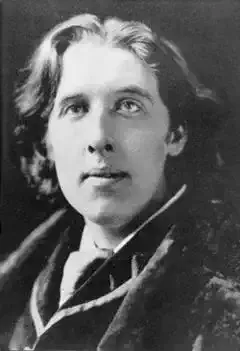
Oscar Wilde
San Miniato
See, I have climbed the mountain side
Up to this holy house of God,
Where once that Angel-Painter trod
Who saw the heavens opened wide,
And throned upon the crescent moon
The Virginal white Queen of Grace, -
Mary! could I but see thy face
Death could not come at all too soon.
O crowned by God with thorns and pain!
Mother of Christ! O mystic wife!
My heart is weary of this life
And over-sad to sing again.
O crowned by God with love and flame!
O crowned by Christ the Holy One!
O listen ere the searching sun
Show to the world my sin and shame.
Up to this holy house of God,
Where once that Angel-Painter trod
Who saw the heavens opened wide,
And throned upon the crescent moon
The Virginal white Queen of Grace, -
Mary! could I but see thy face
Death could not come at all too soon.
O crowned by God with thorns and pain!
Mother of Christ! O mystic wife!
My heart is weary of this life
And over-sad to sing again.
O crowned by God with love and flame!
O crowned by Christ the Holy One!
O listen ere the searching sun
Show to the world my sin and shame.
612
Oscar Wilde
Roses And Rue
(To L. L.)
Could we dig up this long-buried treasure,
Were it worth the pleasure,
We never could learn love's song,
We are parted too long.
Could the passionate past that is fled
Call back its dead,
Could we live it all over again,
Were it worth the pain!
I remember we used to meet
By an ivied seat,
And you warbled each pretty word
With the air of a bird;
And your voice had a quaver in it,
Just like a linnet,
And shook, as the blackbird's throat
With its last big note;
And your eyes, they were green and grey
Like an April day,
But lit into amethyst
When I stooped and kissed;
And your mouth, it would never smile
For a long, long while,
Then it rippled all over with laughter
Five minutes after.
You were always afraid of a shower,
Just like a flower:
I remember you started and ran
When the rain began.
I remember I never could catch you,
For no one could match you,
You had wonderful, luminous, fleet,
Little wings to your feet.
I remember your hair - did I tie it?
For it always ran riot -
Like a tangled sunbeam of gold:
These things are old.
I remember so well the room,
And the lilac bloom
That beat at the dripping pane
In the warm June rain;
And the colour of your gown,
It was amber-brown,
And two yellow satin bows
From your shoulders rose.
And the handkerchief of French lace
Which you held to your face -
Had a small tear left a stain?
Or was it the rain?
On your hand as it waved adieu
There were veins of blue;
In your voice as it said good-bye
Was a petulant cry,
'You have only wasted your life.'
(Ah, that was the knife!)
When I rushed through the garden gate
It was all too late.
Could we live it over again,
Were it worth the pain,
Could the passionate past that is fled
Call back its dead!
Well, if my heart must break,
Dear love, for your sake,
It will break in music, I know,
Poets' hearts break so.
But strange that I was not told
That the brain can hold
In a tiny ivory cell
God's heaven and hell.
Could we dig up this long-buried treasure,
Were it worth the pleasure,
We never could learn love's song,
We are parted too long.
Could the passionate past that is fled
Call back its dead,
Could we live it all over again,
Were it worth the pain!
I remember we used to meet
By an ivied seat,
And you warbled each pretty word
With the air of a bird;
And your voice had a quaver in it,
Just like a linnet,
And shook, as the blackbird's throat
With its last big note;
And your eyes, they were green and grey
Like an April day,
But lit into amethyst
When I stooped and kissed;
And your mouth, it would never smile
For a long, long while,
Then it rippled all over with laughter
Five minutes after.
You were always afraid of a shower,
Just like a flower:
I remember you started and ran
When the rain began.
I remember I never could catch you,
For no one could match you,
You had wonderful, luminous, fleet,
Little wings to your feet.
I remember your hair - did I tie it?
For it always ran riot -
Like a tangled sunbeam of gold:
These things are old.
I remember so well the room,
And the lilac bloom
That beat at the dripping pane
In the warm June rain;
And the colour of your gown,
It was amber-brown,
And two yellow satin bows
From your shoulders rose.
And the handkerchief of French lace
Which you held to your face -
Had a small tear left a stain?
Or was it the rain?
On your hand as it waved adieu
There were veins of blue;
In your voice as it said good-bye
Was a petulant cry,
'You have only wasted your life.'
(Ah, that was the knife!)
When I rushed through the garden gate
It was all too late.
Could we live it over again,
Were it worth the pain,
Could the passionate past that is fled
Call back its dead!
Well, if my heart must break,
Dear love, for your sake,
It will break in music, I know,
Poets' hearts break so.
But strange that I was not told
That the brain can hold
In a tiny ivory cell
God's heaven and hell.
729
Oscar Wilde
My Voice
Within this restless, hurried, modern world
We took our hearts' full pleasure - You and I,
And now the white sails of our ship are furled,
And spent the lading of our argosy.
Wherefore my cheeks before their time are wan,
For very weeping is my gladness fled,
Sorrow has paled my young mouth's vermilion,
And Ruin draws the curtains of my bed.
But all this crowded life has been to thee
No more than lyre, or lute, or subtle spell
Of viols, or the music of the sea
That sleeps, a mimic echo, in the shell.
We took our hearts' full pleasure - You and I,
And now the white sails of our ship are furled,
And spent the lading of our argosy.
Wherefore my cheeks before their time are wan,
For very weeping is my gladness fled,
Sorrow has paled my young mouth's vermilion,
And Ruin draws the curtains of my bed.
But all this crowded life has been to thee
No more than lyre, or lute, or subtle spell
Of viols, or the music of the sea
That sleeps, a mimic echo, in the shell.
655
Oscar Wilde
Madonna Mia
A lily-girl, not made for this world's pain,
With brown, soft hair close braided by her ears,
And longing eyes half veiled by slumberous tears
Like bluest water seen through mists of rain:
Pale cheeks whereon no love hath left its stain,
Red underlip drawn in for fear of love,
And white throat, whiter than the silvered dove,
Through whose wan marble creeps one purple vein.
Yet, though my lips shall praise her without cease,
Even to kiss her feet I am not bold,
Being o'ershadowed by the wings of awe,
Like Dante, when he stood with Beatrice
Beneath the flaming Lion's breast, and saw
The seventh Crystal, and the Stair of Gold.
With brown, soft hair close braided by her ears,
And longing eyes half veiled by slumberous tears
Like bluest water seen through mists of rain:
Pale cheeks whereon no love hath left its stain,
Red underlip drawn in for fear of love,
And white throat, whiter than the silvered dove,
Through whose wan marble creeps one purple vein.
Yet, though my lips shall praise her without cease,
Even to kiss her feet I am not bold,
Being o'ershadowed by the wings of awe,
Like Dante, when he stood with Beatrice
Beneath the flaming Lion's breast, and saw
The seventh Crystal, and the Stair of Gold.
760
Oscar Wilde
La Bella Donna Della Mia Mente
My limbs are wasted with a flame,
My feet are sore with travelling,
For, calling on my Lady's name,
My lips have now forgot to sing.
O Linnet in the wild-rose brake
Strain for my Love thy melody,
O Lark sing louder for love's sake,
My gentle Lady passeth by.
She is too fair for any man
To see or hold his heart's delight,
Fairer than Queen or courtesan
Or moonlit water in the night.
Her hair is bound with myrtle leaves,
(Green leaves upon her golden hair!)
Green grasses through the yellow sheaves
Of autumn corn are not more fair.
Her little lips, more made to kiss
Than to cry bitterly for pain,
Are tremulous as brook-water is,
Or roses after evening rain.
Her neck is like white melilote
Flushing for pleasure of the sun,
The throbbing of the linnet's throat
Is not so sweet to look upon.
As a pomegranate, cut in twain,
White-seeded, is her crimson mouth,
Her cheeks are as the fading stain
Where the peach reddens to the south.
O twining hands! O delicate
White body made for love and pain!
O House of love! O desolate
Pale flower beaten by the rain!
My feet are sore with travelling,
For, calling on my Lady's name,
My lips have now forgot to sing.
O Linnet in the wild-rose brake
Strain for my Love thy melody,
O Lark sing louder for love's sake,
My gentle Lady passeth by.
She is too fair for any man
To see or hold his heart's delight,
Fairer than Queen or courtesan
Or moonlit water in the night.
Her hair is bound with myrtle leaves,
(Green leaves upon her golden hair!)
Green grasses through the yellow sheaves
Of autumn corn are not more fair.
Her little lips, more made to kiss
Than to cry bitterly for pain,
Are tremulous as brook-water is,
Or roses after evening rain.
Her neck is like white melilote
Flushing for pleasure of the sun,
The throbbing of the linnet's throat
Is not so sweet to look upon.
As a pomegranate, cut in twain,
White-seeded, is her crimson mouth,
Her cheeks are as the fading stain
Where the peach reddens to the south.
O twining hands! O delicate
White body made for love and pain!
O House of love! O desolate
Pale flower beaten by the rain!
711
Oscar Wilde
In The Gold Room - A Harmony
Her ivory hands on the ivory keys
Strayed in a fitful fantasy,
Like the silver gleam when the poplar trees
Rustle their pale-leaves listlessly,
Or the drifting foam of a restless sea
When the waves show their teeth in the flying breeze.
Her gold hair fell on the wall of gold
Like the delicate gossamer tangles spun
On the burnished disk of the marigold,
Or the sunflower turning to meet the sun
When the gloom of the dark blue night is done,
And the spear of the lily is aureoled.
And her sweet red lips on these lips of mine
Burned like the ruby fire set
In the swinging lamp of a crimson shrine,
Or the bleeding wounds of the pomegranate,
Or the heart of the lotus drenched and wet
With the spilt-out blood of the rose-red wine.
Strayed in a fitful fantasy,
Like the silver gleam when the poplar trees
Rustle their pale-leaves listlessly,
Or the drifting foam of a restless sea
When the waves show their teeth in the flying breeze.
Her gold hair fell on the wall of gold
Like the delicate gossamer tangles spun
On the burnished disk of the marigold,
Or the sunflower turning to meet the sun
When the gloom of the dark blue night is done,
And the spear of the lily is aureoled.
And her sweet red lips on these lips of mine
Burned like the ruby fire set
In the swinging lamp of a crimson shrine,
Or the bleeding wounds of the pomegranate,
Or the heart of the lotus drenched and wet
With the spilt-out blood of the rose-red wine.
680
Oscar Wilde
Impression Du Matin
The Thames nocturne of blue and gold
Changed to a Harmony in grey:
A barge with ochre-coloured hay
Dropt from the wharf: and chill and cold
The yellow fog came creeping down
The bridges, till the houses' walls
Seemed changed to shadows and St. Paul's
Loomed like a bubble o'er the town.
Then suddenly arose the clang
Of waking life; the streets were stirred
With country waggons: and a bird
Flew to the glistening roofs and sang.
But one pale woman all alone,
The daylight kissing her wan hair,
Loitered beneath the gas lamps' flare,
With lips of flame and heart of stone.
Changed to a Harmony in grey:
A barge with ochre-coloured hay
Dropt from the wharf: and chill and cold
The yellow fog came creeping down
The bridges, till the houses' walls
Seemed changed to shadows and St. Paul's
Loomed like a bubble o'er the town.
Then suddenly arose the clang
Of waking life; the streets were stirred
With country waggons: and a bird
Flew to the glistening roofs and sang.
But one pale woman all alone,
The daylight kissing her wan hair,
Loitered beneath the gas lamps' flare,
With lips of flame and heart of stone.
621
Oscar Wilde
In the forest
Out of the mid-wood's twilight
Into the meadow's dawn,
Ivory limbed and brown-eyed,
Flashes my Faun!
He skips through the copses singing,
And his shadow dances along,
And I know not which I should follow,
Shadow or song!
O Hunter, snare me his shadow!
O Nightingale, catch me his strain!
Else moonstruck with music and madness
I track him in vain!
Into the meadow's dawn,
Ivory limbed and brown-eyed,
Flashes my Faun!
He skips through the copses singing,
And his shadow dances along,
And I know not which I should follow,
Shadow or song!
O Hunter, snare me his shadow!
O Nightingale, catch me his strain!
Else moonstruck with music and madness
I track him in vain!
891
Oscar Wilde
Her Voice
The wild bee reels from bough to bough
With his furry coat and his gauzy wing,
Now in a lily-cup, and now
Setting a jacinth bell a-swing,
In his wandering;
Sit closer love: it was here I trow
I made that vow,
Swore that two lives should be like one
As long as the sea-gull loved the sea,
As long as the sunflower sought the sun, -
It shall be, I said, for eternity
'Twixt you and me!
Dear friend, those times are over and done;
Love's web is spun.
Look upward where the poplar trees
Sway and sway in the summer air,
Here in the valley never a breeze
Scatters the thistledown, but there
Great winds blow fair
From the mighty murmuring mystical seas,
And the wave-lashed leas.
Look upward where the white gull screams,
What does it see that we do not see?
Is that a star? or the lamp that gleams
On some outward voyaging argosy, -
Ah! can it be
We have lived our lives in a land of dreams!
How sad it seems.
Sweet, there is nothing left to say
But this, that love is never lost,
Keen winter stabs the breasts of May
Whose crimson roses burst his frost,
Ships tempest-tossed
Will find a harbour in some bay,
And so we may.
And there is nothing left to do
But to kiss once again, and part,
Nay, there is nothing we should rue,
I have my beauty, - you your Art,
Nay, do not start,
One world was not enough for two
Like me and you.
With his furry coat and his gauzy wing,
Now in a lily-cup, and now
Setting a jacinth bell a-swing,
In his wandering;
Sit closer love: it was here I trow
I made that vow,
Swore that two lives should be like one
As long as the sea-gull loved the sea,
As long as the sunflower sought the sun, -
It shall be, I said, for eternity
'Twixt you and me!
Dear friend, those times are over and done;
Love's web is spun.
Look upward where the poplar trees
Sway and sway in the summer air,
Here in the valley never a breeze
Scatters the thistledown, but there
Great winds blow fair
From the mighty murmuring mystical seas,
And the wave-lashed leas.
Look upward where the white gull screams,
What does it see that we do not see?
Is that a star? or the lamp that gleams
On some outward voyaging argosy, -
Ah! can it be
We have lived our lives in a land of dreams!
How sad it seems.
Sweet, there is nothing left to say
But this, that love is never lost,
Keen winter stabs the breasts of May
Whose crimson roses burst his frost,
Ships tempest-tossed
Will find a harbour in some bay,
And so we may.
And there is nothing left to do
But to kiss once again, and part,
Nay, there is nothing we should rue,
I have my beauty, - you your Art,
Nay, do not start,
One world was not enough for two
Like me and you.
660
Oscar Wilde
Endymion
The apple trees are hung with gold,
And birds are loud in Arcady,
The sheep lie bleating in the fold,
The wild goat runs across the wold,
But yesterday his love he told,
I know he will come back to me.
O rising moon! O Lady moon!
Be you my lover's sentinel,
You cannot choose but know him well,
For he is shod with purple shoon,
You cannot choose but know my love,
For he a shepherd's crook doth bear,
And he is soft as any dove,
And brown and curly is his hair.
The turtle now has ceased to call
Upon her crimson-footed groom,
The grey wolf prowls about the stall,
The lily's singing seneschal
Sleeps in the lily-bell, and all
The violet hills are lost in gloom.
O risen moon! O holy moon!
Stand on the top of Helice,
And if my own true love you see,
Ah! if you see the purple shoon,
The hazel crook, the lad's brown hair,
The goat-skin wrapped about his arm,
Tell him that I am waiting where
The rushlight glimmers in the Farm.
The falling dew is cold and chill,
And no bird sings in Arcady,
The little fauns have left the hill,
Even the tired daffodil
Has closed its gilded doors, and still
My lover comes not back to me.
False moon! False moon! O waning moon!
Where is my own true lover gone,
Where are the lips vermilion,
The shepherd's crook, the purple shoon?
Why spread that silver pavilion,
Why wear that veil of drifting mist?
Ah! thou hast young Endymion
Thou hast the lips that should be kissed!
And birds are loud in Arcady,
The sheep lie bleating in the fold,
The wild goat runs across the wold,
But yesterday his love he told,
I know he will come back to me.
O rising moon! O Lady moon!
Be you my lover's sentinel,
You cannot choose but know him well,
For he is shod with purple shoon,
You cannot choose but know my love,
For he a shepherd's crook doth bear,
And he is soft as any dove,
And brown and curly is his hair.
The turtle now has ceased to call
Upon her crimson-footed groom,
The grey wolf prowls about the stall,
The lily's singing seneschal
Sleeps in the lily-bell, and all
The violet hills are lost in gloom.
O risen moon! O holy moon!
Stand on the top of Helice,
And if my own true love you see,
Ah! if you see the purple shoon,
The hazel crook, the lad's brown hair,
The goat-skin wrapped about his arm,
Tell him that I am waiting where
The rushlight glimmers in the Farm.
The falling dew is cold and chill,
And no bird sings in Arcady,
The little fauns have left the hill,
Even the tired daffodil
Has closed its gilded doors, and still
My lover comes not back to me.
False moon! False moon! O waning moon!
Where is my own true lover gone,
Where are the lips vermilion,
The shepherd's crook, the purple shoon?
Why spread that silver pavilion,
Why wear that veil of drifting mist?
Ah! thou hast young Endymion
Thou hast the lips that should be kissed!
736
Oscar Wilde
From Spring Days To Winter (For Music)
In the glad springtime when leaves were green,
O merrily the throstle sings!
I sought, amid the tangled sheen,
Love whom mine eyes had never seen,
O the glad dove has golden wings!
Between the blossoms red and white,
O merrily the throstle sings!
My love first came into my sight,
O perfect vision of delight,
O the glad dove has golden wings!
The yellow apples glowed like fire,
O merrily the throstle sings!
O Love too great for lip or lyre,
Blown rose of love and of desire,
O the glad dove has golden wings!
But now with snow the tree is grey,
Ah, sadly now the throstle sings!
My love is dead: ah! well-a-day,
See at her silent feet I lay
A dove with broken wings!
Ah, Love! ah, Love! that thou wert slain -
Fond Dove, fond Dove return again!
O merrily the throstle sings!
I sought, amid the tangled sheen,
Love whom mine eyes had never seen,
O the glad dove has golden wings!
Between the blossoms red and white,
O merrily the throstle sings!
My love first came into my sight,
O perfect vision of delight,
O the glad dove has golden wings!
The yellow apples glowed like fire,
O merrily the throstle sings!
O Love too great for lip or lyre,
Blown rose of love and of desire,
O the glad dove has golden wings!
But now with snow the tree is grey,
Ah, sadly now the throstle sings!
My love is dead: ah! well-a-day,
See at her silent feet I lay
A dove with broken wings!
Ah, Love! ah, Love! that thou wert slain -
Fond Dove, fond Dove return again!
603
Oscar Wilde
Easter Day
The silver trumpets rang across the Dome:
The people knelt upon the ground with awe:
And borne upon the necks of men I saw,
Like some great God, the Holy Lord of Rome.
Priest-like, he wore a robe more white than foam,
And, king-like, swathed himself in royal red,
Three crowns of gold rose high upon his head:
In splendour and in light the Pope passed home.
My heart stole back across wide wastes of years
To One who wandered by a lonely sea,
And sought in vain for any place of rest:
'Foxes have holes, and every bird its nest.
I, only I, must wander wearily,
And bruise my feet, and drink wine salt with tears.'
The people knelt upon the ground with awe:
And borne upon the necks of men I saw,
Like some great God, the Holy Lord of Rome.
Priest-like, he wore a robe more white than foam,
And, king-like, swathed himself in royal red,
Three crowns of gold rose high upon his head:
In splendour and in light the Pope passed home.
My heart stole back across wide wastes of years
To One who wandered by a lonely sea,
And sought in vain for any place of rest:
'Foxes have holes, and every bird its nest.
I, only I, must wander wearily,
And bruise my feet, and drink wine salt with tears.'
704
Oscar Wilde
Desespoir
The seasons send their ruin as they go,
For in the spring the narciss shows its head
Nor withers till the rose has flamed to red,
And in the autumn purple violets blow,
And the slim crocus stirs the winter snow;
Wherefore yon leafless trees will bloom again
And this grey land grow green with summer rain
And send up cowslips for some boy to mow.
But what of life whose bitter hungry sea
Flows at our heels, and gloom of sunless night
Covers the days which never more return?
Ambition, love and all the thoughts that burn
We lose too soon, and only find delight
In withered husks of some dead memory.
For in the spring the narciss shows its head
Nor withers till the rose has flamed to red,
And in the autumn purple violets blow,
And the slim crocus stirs the winter snow;
Wherefore yon leafless trees will bloom again
And this grey land grow green with summer rain
And send up cowslips for some boy to mow.
But what of life whose bitter hungry sea
Flows at our heels, and gloom of sunless night
Covers the days which never more return?
Ambition, love and all the thoughts that burn
We lose too soon, and only find delight
In withered husks of some dead memory.
1,283
Oscar Wilde
Chanson
A ring of gold and a milk-white dove
Are goodly gifts for thee,
And a hempen rope for your own love
To hang upon a tree.
For you a House of Ivory,
(Roses are white in the rose-bower)!
A narrow bed for me to lie,
(White, O white, is the hemlock flower)!
Myrtle and jessamine for you,
(O the red rose is fair to see)!
For me the cypress and the rue,
(Finest of all is rosemary)!
For you three lovers of your hand,
(Green grass where a man lies dead)!
For me three paces on the sand,
(Plant lilies at my head)!
Are goodly gifts for thee,
And a hempen rope for your own love
To hang upon a tree.
For you a House of Ivory,
(Roses are white in the rose-bower)!
A narrow bed for me to lie,
(White, O white, is the hemlock flower)!
Myrtle and jessamine for you,
(O the red rose is fair to see)!
For me the cypress and the rue,
(Finest of all is rosemary)!
For you three lovers of your hand,
(Green grass where a man lies dead)!
For me three paces on the sand,
(Plant lilies at my head)!
677
Oscar Wilde
Canzonet
I have no store
Of gryphon-guarded gold;
Now, as before,
Bare is the shepherd's fold.
Rubies nor pearls
Have I to gem thy throat;
Yet woodland girls
Have loved the shepherd's note.
Then pluck a reed
And bid me sing to thee,
For I would feed
Thine ears with melody,
Who art more fair
Than fairest fleur-de-lys,
More sweet and rare
Than sweetest ambergris.
What dost thou fear?
Young Hyacinth is slain,
Pan is not here,
And will not come again.
No horned Faun
Treads down the yellow leas,
No God at dawn
Steals through the olive trees.
Hylas is dead,
Nor will he e'er divine
Those little red
Rose-petalled lips of thine.
On the high hill
No ivory dryads play,
Silver and still
Sinks the sad autumn day.
Of gryphon-guarded gold;
Now, as before,
Bare is the shepherd's fold.
Rubies nor pearls
Have I to gem thy throat;
Yet woodland girls
Have loved the shepherd's note.
Then pluck a reed
And bid me sing to thee,
For I would feed
Thine ears with melody,
Who art more fair
Than fairest fleur-de-lys,
More sweet and rare
Than sweetest ambergris.
What dost thou fear?
Young Hyacinth is slain,
Pan is not here,
And will not come again.
No horned Faun
Treads down the yellow leas,
No God at dawn
Steals through the olive trees.
Hylas is dead,
Nor will he e'er divine
Those little red
Rose-petalled lips of thine.
On the high hill
No ivory dryads play,
Silver and still
Sinks the sad autumn day.
697
Oscar Wilde
Ave Maria Gratia Plena
Was this His coming! I had hoped to see
A scene of wondrous glory, as was told
Of some great God who in a rain of gold
Broke open bars and fell on Danae:
Or a dread vision as when Semele
Sickening for love and unappeased desire
Prayed to see God's clear body, and the fire
Caught her brown limbs and slew her utterly:
With such glad dreams I sought this holy place,
And now with wondering eyes and heart I stand
Before this supreme mystery of Love:
Some kneeling girl with passionless pale face,
An angel with a lily in his hand,
And over both the white wings of a Dove.
FLORENCE.
A scene of wondrous glory, as was told
Of some great God who in a rain of gold
Broke open bars and fell on Danae:
Or a dread vision as when Semele
Sickening for love and unappeased desire
Prayed to see God's clear body, and the fire
Caught her brown limbs and slew her utterly:
With such glad dreams I sought this holy place,
And now with wondering eyes and heart I stand
Before this supreme mystery of Love:
Some kneeling girl with passionless pale face,
An angel with a lily in his hand,
And over both the white wings of a Dove.
FLORENCE.
719
Oscar Wilde
Apologia
Is it thy will that I should wax and wane,
Barter my cloth of gold for hodden grey,
And at thy pleasure weave that web of pain
Whose brightest threads are each a wasted day?
Is it thy will - Love that I love so well -
That my Soul's House should be a tortured spot
Wherein, like evil paramours, must dwell
The quenchless flame, the worm that dieth not?
Nay, if it be thy will I shall endure,
And sell ambition at the common mart,
And let dull failure be my vestiture,
And sorrow dig its grave within my heart.
Perchance it may be better so - at least
I have not made my heart a heart of stone,
Nor starved my boyhood of its goodly feast,
Nor walked where Beauty is a thing unknown.
Many a man hath done so; sought to fence
In straitened bonds the soul that should be free,
Trodden the dusty road of common sense,
While all the forest sang of liberty,
Not marking how the spotted hawk in flight
Passed on wide pinion through the lofty air,
To where some steep untrodden mountain height
Caught the last tresses of the Sun God's hair.
Or how the little flower he trod upon,
The daisy, that white-feathered shield of gold,
Followed with wistful eyes the wandering sun
Content if once its leaves were aureoled.
But surely it is something to have been
The best beloved for a little while,
To have walked hand in hand with Love, and seen
His purple wings flit once across thy smile.
Ay! though the gorged asp of passion feed
On my boy's heart, yet have I burst the bars,
Stood face to face with Beauty, known indeed
The Love which moves the Sun and all the stars!
Barter my cloth of gold for hodden grey,
And at thy pleasure weave that web of pain
Whose brightest threads are each a wasted day?
Is it thy will - Love that I love so well -
That my Soul's House should be a tortured spot
Wherein, like evil paramours, must dwell
The quenchless flame, the worm that dieth not?
Nay, if it be thy will I shall endure,
And sell ambition at the common mart,
And let dull failure be my vestiture,
And sorrow dig its grave within my heart.
Perchance it may be better so - at least
I have not made my heart a heart of stone,
Nor starved my boyhood of its goodly feast,
Nor walked where Beauty is a thing unknown.
Many a man hath done so; sought to fence
In straitened bonds the soul that should be free,
Trodden the dusty road of common sense,
While all the forest sang of liberty,
Not marking how the spotted hawk in flight
Passed on wide pinion through the lofty air,
To where some steep untrodden mountain height
Caught the last tresses of the Sun God's hair.
Or how the little flower he trod upon,
The daisy, that white-feathered shield of gold,
Followed with wistful eyes the wandering sun
Content if once its leaves were aureoled.
But surely it is something to have been
The best beloved for a little while,
To have walked hand in hand with Love, and seen
His purple wings flit once across thy smile.
Ay! though the gorged asp of passion feed
On my boy's heart, yet have I burst the bars,
Stood face to face with Beauty, known indeed
The Love which moves the Sun and all the stars!
972
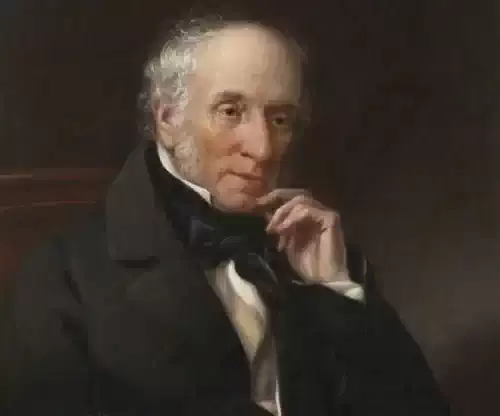
William Wordsworth
Written in Early Spring
Written in Early Spring
I heard a thousand blended notes
While in a grove I sat reclined,
In that sweet mood when pleasant thoughts
Bring sad thoughts to the mind.
To her fair works did Nature link
The human soul that through me ran;
And much it grieved my heart to think
What Man has made of Man.
Through primrose tufts, in that sweet bower,
The periwinkle trailed its wreaths;
And 'tis my faith that every flower
Enjoys the air it breathes.
The birds around me hopped and played,
Their thoughts I cannot measure -
But the least motion which they made
It seemed a thrill of pleasure.
The budding twigs spread out their fan
To catch the breezy air;
And I must think, do all I can,
That there was pleasure there.
If this belief from heaven be sent,
If such be Nature's holy plan,
Have I not reason to lament
What Man has made of Man?
I heard a thousand blended notes
While in a grove I sat reclined,
In that sweet mood when pleasant thoughts
Bring sad thoughts to the mind.
To her fair works did Nature link
The human soul that through me ran;
And much it grieved my heart to think
What Man has made of Man.
Through primrose tufts, in that sweet bower,
The periwinkle trailed its wreaths;
And 'tis my faith that every flower
Enjoys the air it breathes.
The birds around me hopped and played,
Their thoughts I cannot measure -
But the least motion which they made
It seemed a thrill of pleasure.
The budding twigs spread out their fan
To catch the breezy air;
And I must think, do all I can,
That there was pleasure there.
If this belief from heaven be sent,
If such be Nature's holy plan,
Have I not reason to lament
What Man has made of Man?
350
William Wordsworth
To The Daisy (first poem)
To The Daisy (first poem)
"Her divine skill taught me this,
That from every thing I saw
I could some instruction draw,
And raise pleasure to the height
Through the meanest objects sight.
By the murmur of a spring,
Or the least bough's rustelling;
By a Daisy whose leaves spread
Shut when Titan goes to bed;
Or a shady bush or tree;
She could more infuse in me
Than all Nature's beauties can
In some other wiser man.'
G. Wither. * His muse.
IN youth from rock to rock I went,
From hill to hill in discontent
Of pleasure high and turbulent,
Most pleased when most uneasy;
But now my own delights I make,--
My thirst at every rill can slake,
And gladly Nature's love partake,
Of Thee, sweet Daisy!
Thee Winter in the garland wears
That thinly decks his few grey hairs;
Spring parts the clouds with softest airs,
That she may sun thee;
Whole Summer-fields are thine by right;
And Autumn, melancholy Wight!
Doth in thy crimson head delight
When rains are on thee.
In shoals and bands, a morrice train,
Thou greet'st the traveller in the lane;
Pleased at his greeting thee again;
Yet nothing daunted,
Nor grieved if thou be set at nought:
And oft alone in nooks remote
We meet thee, like a pleasant thought,
When such are wanted.
Be violets in their secret mews
The flowers the wanton Zephyrs choose;
Proud be the rose, with rains and dews
Her head impearling,
Thou liv'st with less ambitious aim,
Yet hast not gone without thy fame;
Thou art indeed by many a claim
The Poet's darling.
If to a rock from rains he fly,
Or, some bright day of April sky,
Imprisoned by hot sunshine lie
Near the green holly,
And wearily at length should fare;
He needs but look about, and there
Thou art!--a friend at hand, to scare
His melancholy.
A hundred times, by rock or bower,
Ere thus I have lain couched an hour,
Have I derived from thy sweet power
Some apprehension;
Some steady love; some brief delight;
Some memory that had taken flight;
Some chime of fancy wrong or right;
Or stray invention.
If stately passions in me burn,
And one chance look to Thee should turn,
I drink out of an humbler urn
A lowlier pleasure;
The homely sympathy that heeds
The common life, our nature breeds;
A wisdom fitted to the needs
Of hearts at leisure.
Fresh-smitten by the morning ray,
When thou art up, alert and gay,
Then, cheerful Flower! my spirits play
With kindred gladness:
And when, at dusk, by dews opprest
Thou sink'st, the image of thy rest
Hath often eased my pensive breast
Of careful sadness.
And all day long I number yet,
All seasons through, another debt,
Which I, wherever thou art met,
To thee am owing;
An instinct call it, a blind sense;
A happy, genial influence,
Coming one knows not how, nor whence,
Nor whither going.
Child of the Year! that round dost run
Thy pleasant course,--when day's begun
As ready to salute the sun
As lark or leveret,
Thy long-lost praise thou shalt regain;
Nor be less dear to future men
Than in old time;--thou not in vain
Art Nature's favourite.
"Her divine skill taught me this,
That from every thing I saw
I could some instruction draw,
And raise pleasure to the height
Through the meanest objects sight.
By the murmur of a spring,
Or the least bough's rustelling;
By a Daisy whose leaves spread
Shut when Titan goes to bed;
Or a shady bush or tree;
She could more infuse in me
Than all Nature's beauties can
In some other wiser man.'
G. Wither. * His muse.
IN youth from rock to rock I went,
From hill to hill in discontent
Of pleasure high and turbulent,
Most pleased when most uneasy;
But now my own delights I make,--
My thirst at every rill can slake,
And gladly Nature's love partake,
Of Thee, sweet Daisy!
Thee Winter in the garland wears
That thinly decks his few grey hairs;
Spring parts the clouds with softest airs,
That she may sun thee;
Whole Summer-fields are thine by right;
And Autumn, melancholy Wight!
Doth in thy crimson head delight
When rains are on thee.
In shoals and bands, a morrice train,
Thou greet'st the traveller in the lane;
Pleased at his greeting thee again;
Yet nothing daunted,
Nor grieved if thou be set at nought:
And oft alone in nooks remote
We meet thee, like a pleasant thought,
When such are wanted.
Be violets in their secret mews
The flowers the wanton Zephyrs choose;
Proud be the rose, with rains and dews
Her head impearling,
Thou liv'st with less ambitious aim,
Yet hast not gone without thy fame;
Thou art indeed by many a claim
The Poet's darling.
If to a rock from rains he fly,
Or, some bright day of April sky,
Imprisoned by hot sunshine lie
Near the green holly,
And wearily at length should fare;
He needs but look about, and there
Thou art!--a friend at hand, to scare
His melancholy.
A hundred times, by rock or bower,
Ere thus I have lain couched an hour,
Have I derived from thy sweet power
Some apprehension;
Some steady love; some brief delight;
Some memory that had taken flight;
Some chime of fancy wrong or right;
Or stray invention.
If stately passions in me burn,
And one chance look to Thee should turn,
I drink out of an humbler urn
A lowlier pleasure;
The homely sympathy that heeds
The common life, our nature breeds;
A wisdom fitted to the needs
Of hearts at leisure.
Fresh-smitten by the morning ray,
When thou art up, alert and gay,
Then, cheerful Flower! my spirits play
With kindred gladness:
And when, at dusk, by dews opprest
Thou sink'st, the image of thy rest
Hath often eased my pensive breast
Of careful sadness.
And all day long I number yet,
All seasons through, another debt,
Which I, wherever thou art met,
To thee am owing;
An instinct call it, a blind sense;
A happy, genial influence,
Coming one knows not how, nor whence,
Nor whither going.
Child of the Year! that round dost run
Thy pleasant course,--when day's begun
As ready to salute the sun
As lark or leveret,
Thy long-lost praise thou shalt regain;
Nor be less dear to future men
Than in old time;--thou not in vain
Art Nature's favourite.
665
William Wordsworth
To The Daisy
To The Daisy
IN youth from rock to rock I went
From hill to hill in discontent
Of pleasure high and turbulent,
Most pleased when most uneasy;
But now my own delights I make,---
Thirst at every rill can slake,
And gladly Nature's love partake,
Of Thee, sweet Daisy!
Thee Winter in the garland wears
That thinly decks his few gray hairs;
Spring parts the clouds with softest airs,
That she may sun thee;
Whole Summer-fields are thine by right;
And Autumn, melancholy Wight!
Doth in thy crimson head delight
When rains are on thee.
In shoals and bands, a morrice train,
Thou greet'st the traveller in the lane;
Pleased at his greeting thee again;
Yet nothing daunted,
Nor grieved if thou be set at nought:
And oft alone in nooks remote
We meet thee, like a pleasant thought,
When such are wanted.
Be violets in their secret mews
The flowers the wanton Zephyrs choose;
Proud be the rose, with rains and dew
Her head impearling,
Thou liv'st with less ambitious aim,
Yet hast not gone without thy fame;
Thou art indeed by many a claim
The Poet's darling.
If to a rock from rain he fly,
Or, some bright day of April sky,
Imprisoned by hot sunshine lie
Near the green holly,
And wearily at length should fare;
He need but look about, and there
Thou art!---a friend at hand, to care
His melancholy.
A hundred times, by rock or bower,
Ere thus I have lain couched an hour,
Have I derived from thy sweet power
Some apprehension
Some steady love; some brief delight;
Some memory that had taken flight;
Some chime of fancy wrong or right;
Of stray invention.
If stately passions in me burn,
And one chance look to Thee should turn,
I drink out of an humbler urn
A lowlier pleasure;
The homely sympathy that heeds
The common life, our nature breeds;
A wisdom fitted to the needs
Of hearts at leisure.
Fresh-smitten by the morning ray,
When thou art up, alert and gay,
Then, cheerful Flower! my spirits play
With kindred gladness:
And when, at dusk, by dews opprest
Thou sink'st, the image of thy rest
Hath often eased my pensive breast
Of careful sadness.
And all day long I number yet,
All seasons through, another debt,
Which I, wherever thou art met,
To thee am owing;
An instinct call it, a blind sense;
A happy, genial influence,
Coming one knows not how, nor whence,
Nor whither going.
Child of the Year! that round dost run
Thy pleasant course,---when day's begun
As ready to salute the sun
As lark or leveret,
Thy long-lost praise thou shalt regain;
Nor be less dear to future men
Than in old time;---thou not in vain
Art Nature's favourite.
IN youth from rock to rock I went
From hill to hill in discontent
Of pleasure high and turbulent,
Most pleased when most uneasy;
But now my own delights I make,---
Thirst at every rill can slake,
And gladly Nature's love partake,
Of Thee, sweet Daisy!
Thee Winter in the garland wears
That thinly decks his few gray hairs;
Spring parts the clouds with softest airs,
That she may sun thee;
Whole Summer-fields are thine by right;
And Autumn, melancholy Wight!
Doth in thy crimson head delight
When rains are on thee.
In shoals and bands, a morrice train,
Thou greet'st the traveller in the lane;
Pleased at his greeting thee again;
Yet nothing daunted,
Nor grieved if thou be set at nought:
And oft alone in nooks remote
We meet thee, like a pleasant thought,
When such are wanted.
Be violets in their secret mews
The flowers the wanton Zephyrs choose;
Proud be the rose, with rains and dew
Her head impearling,
Thou liv'st with less ambitious aim,
Yet hast not gone without thy fame;
Thou art indeed by many a claim
The Poet's darling.
If to a rock from rain he fly,
Or, some bright day of April sky,
Imprisoned by hot sunshine lie
Near the green holly,
And wearily at length should fare;
He need but look about, and there
Thou art!---a friend at hand, to care
His melancholy.
A hundred times, by rock or bower,
Ere thus I have lain couched an hour,
Have I derived from thy sweet power
Some apprehension
Some steady love; some brief delight;
Some memory that had taken flight;
Some chime of fancy wrong or right;
Of stray invention.
If stately passions in me burn,
And one chance look to Thee should turn,
I drink out of an humbler urn
A lowlier pleasure;
The homely sympathy that heeds
The common life, our nature breeds;
A wisdom fitted to the needs
Of hearts at leisure.
Fresh-smitten by the morning ray,
When thou art up, alert and gay,
Then, cheerful Flower! my spirits play
With kindred gladness:
And when, at dusk, by dews opprest
Thou sink'st, the image of thy rest
Hath often eased my pensive breast
Of careful sadness.
And all day long I number yet,
All seasons through, another debt,
Which I, wherever thou art met,
To thee am owing;
An instinct call it, a blind sense;
A happy, genial influence,
Coming one knows not how, nor whence,
Nor whither going.
Child of the Year! that round dost run
Thy pleasant course,---when day's begun
As ready to salute the sun
As lark or leveret,
Thy long-lost praise thou shalt regain;
Nor be less dear to future men
Than in old time;---thou not in vain
Art Nature's favourite.
282
William Wordsworth
To My Sister
To My Sister
It is the first mild day of March:
Each minute sweeter than before
The redbreast sings from the tall larch
That stands beside our door.
There is a blessing in the air,
Which seems a sense of joy to yield
To the bare trees, and mountains bare,
And grass in the green field.
My sister! ('tis a wish of mine)
Now that our morning meal is done,
Make haste, your morning task resign;
Come forth and feel the sun.
Edward will come with you;--and, pray,
Put on with speed your woodland dress;
And bring no book: for this one day
We'll give to idleness.
No joyless forms shall regulate
Our living calendar:
We from to-day, my Friend, will date
The opening of the year.
Love, now a universal birth,
From heart to heart is stealing,
From earth to man, from man to earth:
--It is the hour of feeling.
One moment now may give us more
Than years of toiling reason:
Our minds shall drink at every pore
The spirit of the season.
Some silent laws our hearts will make,
Which they shall long obey:
We for the year to come may take
Our temper from to-day.
And from the blessed power that rolls
About, below, above,
We'll frame the measure of our souls:
They shall be tuned to love.
Then come, my Sister! come, I pray,
With speed put on your woodland dress;
And bring no book: for this one day
We'll give to idleness.
It is the first mild day of March:
Each minute sweeter than before
The redbreast sings from the tall larch
That stands beside our door.
There is a blessing in the air,
Which seems a sense of joy to yield
To the bare trees, and mountains bare,
And grass in the green field.
My sister! ('tis a wish of mine)
Now that our morning meal is done,
Make haste, your morning task resign;
Come forth and feel the sun.
Edward will come with you;--and, pray,
Put on with speed your woodland dress;
And bring no book: for this one day
We'll give to idleness.
No joyless forms shall regulate
Our living calendar:
We from to-day, my Friend, will date
The opening of the year.
Love, now a universal birth,
From heart to heart is stealing,
From earth to man, from man to earth:
--It is the hour of feeling.
One moment now may give us more
Than years of toiling reason:
Our minds shall drink at every pore
The spirit of the season.
Some silent laws our hearts will make,
Which they shall long obey:
We for the year to come may take
Our temper from to-day.
And from the blessed power that rolls
About, below, above,
We'll frame the measure of our souls:
They shall be tuned to love.
Then come, my Sister! come, I pray,
With speed put on your woodland dress;
And bring no book: for this one day
We'll give to idleness.
231
William Wordsworth
To a Sky-Lark
To a Sky-Lark
Up with me! up with me into the clouds!
For thy song, Lark, is strong;
Up with me, up with me into the clouds!
Singing, singing,
With clouds and sky about thee ringing,
Lift me, guide me till I find
That spot which seems so to thy mind!
I have walked through wildernesses dreary
And to-day my heart is weary;
Had I now the wings of a Faery,
Up to thee would I fly.
There is madness about thee, and joy divine
In that song of thine;
Lift me, guide me high and high
To thy banqueting-place in the sky.
Joyous as morning
Thou art laughing and scorning;
Thou hast a nest for thy love and thy rest,
And, though little troubled with sloth,
Drunken Lark! thou would'st be loth
To be such a traveller as I.
Happy, happy Liver,
With a soul as strong as a mountain river
Pouring out praise to the Almighty Giver,
Joy and jollity be with us both!
Alas! my journey, rugged and uneven,
Through prickly moors or dusty ways must wind;
But hearing thee, or others of thy kind,
As full of gladness and as free of heaven,
I, with my fate contented, will plod on,
And hope for higher raptures, when life's day is done.
Up with me! up with me into the clouds!
For thy song, Lark, is strong;
Up with me, up with me into the clouds!
Singing, singing,
With clouds and sky about thee ringing,
Lift me, guide me till I find
That spot which seems so to thy mind!
I have walked through wildernesses dreary
And to-day my heart is weary;
Had I now the wings of a Faery,
Up to thee would I fly.
There is madness about thee, and joy divine
In that song of thine;
Lift me, guide me high and high
To thy banqueting-place in the sky.
Joyous as morning
Thou art laughing and scorning;
Thou hast a nest for thy love and thy rest,
And, though little troubled with sloth,
Drunken Lark! thou would'st be loth
To be such a traveller as I.
Happy, happy Liver,
With a soul as strong as a mountain river
Pouring out praise to the Almighty Giver,
Joy and jollity be with us both!
Alas! my journey, rugged and uneven,
Through prickly moors or dusty ways must wind;
But hearing thee, or others of thy kind,
As full of gladness and as free of heaven,
I, with my fate contented, will plod on,
And hope for higher raptures, when life's day is done.
207
William Wordsworth
To M.H.
To M.H.
Our walk was far among the ancient trees:
There was no road, nor any woodman's path;
But a thick umbrage--checking the wild growth
Of weed and sapling, along soft green turf
Beneath the branches--of itself had made
A track, that brought us to a slip of lawn,
And a small bed of water in the woods.
All round this pool both flocks and herds might drink
On its firm margin, even as from a well,
Or some stone-basin which the herdsman's hand
Had shaped for their refreshment; nor did sun,
Or wind from any quarter, ever come,
But as a blessing to this calm recess,
This glade of water and this one green field.
The spot was made by Nature for herself;
The travellers know it not, and 'twill remain
Unknown to them; but it is beautiful;
And if a man should plant his cottage near,
Should sleep beneath the shelter of its trees,
And blend its waters with his daily meal,
He would so love it, that in his death-hour
Its image would survive among his thoughts:
And therefore, my sweet MARY, this still Nook,
With all its beeches, we have named from You!
Our walk was far among the ancient trees:
There was no road, nor any woodman's path;
But a thick umbrage--checking the wild growth
Of weed and sapling, along soft green turf
Beneath the branches--of itself had made
A track, that brought us to a slip of lawn,
And a small bed of water in the woods.
All round this pool both flocks and herds might drink
On its firm margin, even as from a well,
Or some stone-basin which the herdsman's hand
Had shaped for their refreshment; nor did sun,
Or wind from any quarter, ever come,
But as a blessing to this calm recess,
This glade of water and this one green field.
The spot was made by Nature for herself;
The travellers know it not, and 'twill remain
Unknown to them; but it is beautiful;
And if a man should plant his cottage near,
Should sleep beneath the shelter of its trees,
And blend its waters with his daily meal,
He would so love it, that in his death-hour
Its image would survive among his thoughts:
And therefore, my sweet MARY, this still Nook,
With all its beeches, we have named from You!
189
William Wordsworth
To A Butterfly (second poem)
To A Butterfly (second poem)
I've watched you now a full half-hour,
Self-poised upon that yellow flower;
And, little Butterfly! indeed
I know not if you sleep or feed.
How motionless!---not frozen seas
More motionless! and then
What joy awaits you, when the breeze
Hath found you out among the trees,
And calls you forth again !
This plot of orchard-ground is ours;
My trees they are, my Sister's flowers;
Here rest your wing when they are weary;
Here lodge as in a sanctuary!
Come often to us, fear no wrong;
Sit near us on the bough!
We'll talk of sunshine and of song,
And summer days, when we were young;
Sweet childish days, that were as long
As twenty days are now.
I've watched you now a full half-hour,
Self-poised upon that yellow flower;
And, little Butterfly! indeed
I know not if you sleep or feed.
How motionless!---not frozen seas
More motionless! and then
What joy awaits you, when the breeze
Hath found you out among the trees,
And calls you forth again !
This plot of orchard-ground is ours;
My trees they are, my Sister's flowers;
Here rest your wing when they are weary;
Here lodge as in a sanctuary!
Come often to us, fear no wrong;
Sit near us on the bough!
We'll talk of sunshine and of song,
And summer days, when we were young;
Sweet childish days, that were as long
As twenty days are now.
426