

Quotes in this theme
Life and Existence
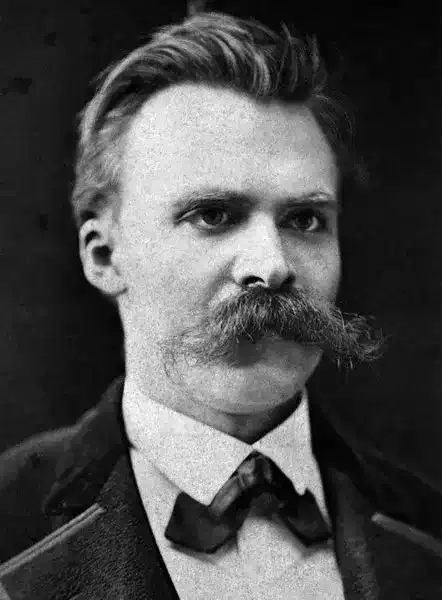
Friedrich Nietzsche
The misunderstanding of passion and reason, as if the latter were an independent entity and not rather a system of relations between various passions and desires; and as if every passion did not possess its quantum of reason
9
Friedrich Nietzsche
The end of a melody is not its goal: but nonetheless, had the melody not reached its end it would not have reached its goal either. A parable.
11
Friedrich Nietzsche
The end of a melody is not its goal: but nonetheless, had the melody not reached its end it would not have reached its goal either. A parable.
11
Friedrich Nietzsche
When one is young, one venerates and despises without that art of nuances which constitutes the best gain of life, and it is only fair that one has to pay dearly for having assaulted men and things in this manner with Yes and No. Everything is arranged so that the worst of tastes, the taste for the unconditional, should be cruelly fooled and abused until a man learns to put a little art into his feelings and rather to risk trying even what is artificial — as the real artists of life do.
9
Friedrich Nietzsche
Everyone who has ever built anywhere a new heaven first found the power thereto in his own hell.
11
Friedrich Nietzsche
There is only a perspective seeing, only a perspective "knowing"; and the more affects we allow to speak about one thing, the more eyes, different eyes, we can use to observe one thing, the more complete will our "concept" of this thing, our "objectivity," be.
11
Friedrich Nietzsche
At bottom every man knows well enough that he is a unique being, only once on this earth; and by no extraordinary chance will such a marvelously picturesque piece of diversity in unity as he is, ever be put together a second time.
10
Friedrich Nietzsche
At bottom every man knows well enough that he is a unique being, only once on this earth; and by no extraordinary chance will such a marvelously picturesque piece of diversity in unity as he is, ever be put together a second time.
10
Friedrich Nietzsche
The good life is that which succeeds in existing for the moment, without reference to past or future, without condemnation or selection, in a state of absolute lightness, and in the finished conviction that there is no difference therefore between the instant and eternity.
11
Friedrich Nietzsche
A man far oftener appears to have a decided character from persistently following his temperament than from persistently following his principles.
6
Friedrich Nietzsche
The most common sort of lie is that by which a man deceives himself: the deception of others is a relatively rare offense.
10
Friedrich Nietzsche
You are treading your path of greatness: now it must call up all your courage that there is no longer a path behind you!You are treading your path of greatness: no one shall steal after you here! Your foot itself has extinguished the path behind you, and above that path stands written: Impossibility.
11
Friedrich Nietzsche
Ah, brothers, this God which I created was human work and human madness, like all gods!He was human, and only a poor piece of man and Ego: this phantom came to me from my own fire and ashes, that is the truth! It did not come from the ‘beyond’!
9
Friedrich Nietzsche
Whatever they may think and say about their "egoism", the great majority nonetheless do nothing for their ego their whole life long: what they do is done for the phantom of their ego which has formed itself in the heads of those around them and has been communicated to them.
8
Friedrich Nietzsche
If thinking is your fate, revere this fate with divine honour and sacrifice to it the best, the most beloved
6
Friedrich Nietzsche
Character is determined more by the lack of certain experiences than by those one has had.
6
Friedrich Nietzsche
But one thing is the thought, another thing is the deed, and another thing is the idea of the deed. The wheel of causality doth not roll between them.
8
Friedrich Nietzsche
A well-constituted human being, a ‘happy one’, must perform certain actions and instinctively shrinks from other actions, he transports the order of which he is the physiological representative into his relations with other human beings and with things. In a formula: his virtue is the consequence of his happiness…Everything good is instinct—and consequently easy, necessary, free. Effort is an objection.
8