

Quotes in this theme
Society and the World
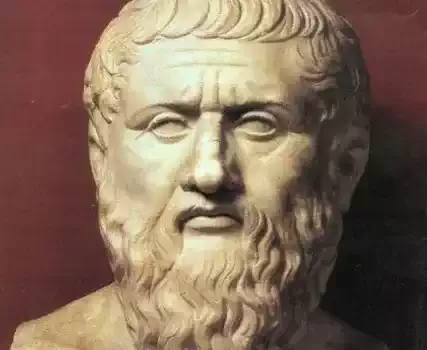
Platão
Philosophers are the ones who can reach what always stays the same in every respect, and non- philosophers the ones who cannot, who wonder among the many things that go in every direction.
10
Platão
Now actions vary according to the manner of their performance. Take, for example, that which we are now doing, drinking, singing and talking these actions are not in themselves either good or evil, but they turn out in this or that way according to the mode of performing them; and when well done they are good, and when wrongly done they are evil; and in like manner not every love, but only that which has a noble purpose, is noble and worthy of praise.
11
Platão
Old age has a great sense of calm and freedom. When the passions have relaxed their hold and have escaped, not from one master, but from many.
13
Platão
Observe that open loves are held to be more honorable than secret ones, and that the love of the noblest and highest, even if their persons are less beautiful than others, is especially honorable.
10
Platão
No tools will make a man a skilled workmen, or master of defense, or be of any use to him who has not learned how to handle them and has never bestowed any attention on them.
14
Platão
No tools will make a man a skilled workmen, or master of defense, or be of any use to him who has not learned how to handle them and has never bestowed any attention on them.
14
Platão
No one punishes the evil-doer under the notion, or for the reason, that he has done wrong. Only the unreasonable fury of a beast acts in that way. But he who desires to inflict rational punishment does not retaliate for a past wrong, for that which is done cannot be undone, but he has regard to the future, and is desirous that the man who is punished, and he who sees him punished, may be deterred from doing wrong again.
13
Platão
No one punishes the evil-doer under the notion, or for the reason, that he has done wrong. Only the unreasonable fury of a beast acts in that way. But he who desires to inflict rational punishment does not retaliate for a past wrong, for that which is done cannot be undone, but he has regard to the future, and is desirous that the man who is punished, and he who sees him punished, may be deterred from doing wrong again.
13
Platão
No intelligent man will ever be so bold as to put into language those things which his reason has contemplated.
15
Platão
No knowledge considers or prescribes for the advantage of the stronger, but for that of the weaker, which it rules
14
Platão
No knowledge considers or prescribes for the advantage of the stronger, but for that of the weaker, which it rules
14
Platão
Men say that we ought not to enquire into the supreme God and the nature of the universe, nor busy ourselves in searching out the causes of things, and that such enquiries are impious; whereas the very opposite is the truth.
12
Platão
Many men are loved by their enemies, and hated by their friends, and are the friends of their enemies, and the enemies of their friends.
12
Platão
Mankind will never see an end of trouble until lovers of wisdom come to hold political power, or the holders of power become lovers of wisdom
12
Platão
Man...is a tame or civilized animal; never the less, he requires proper instruction and a fortunate nature, and then of all animals he becomes the most divine and most civilized; but if he be insufficiently or ill- educated he is the most savage of earthly creatures.
14
Platão
Man...is a tame or civilized animal; never the less, he requires proper instruction and a fortunate nature, and then of all animals he becomes the most divine and most civilized; but if he be insufficiently or ill- educated he is the most savage of earthly creatures.
14
Platão
Mankind censure injustice fearing that they may be the victims of it, and not because they shrink from committing it.
10