

Poems in this topic
Relationships and Family
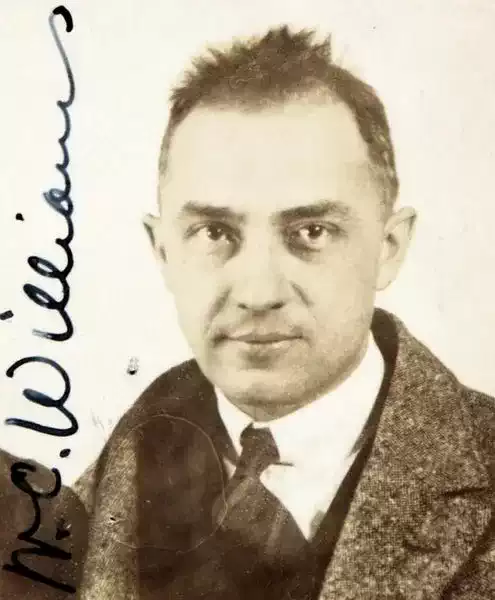
William Carlos Williams
The Young Housewife
The Young Housewife
At ten AM the young housewife
moves about in negligee behind
the wooden walls of her husband’s house.
I pass solitary in my car.
Then again she comes to the curb
to call the ice-man, fish-man, and stands
shy, uncorseted, tucking in
stray ends of hair, and I compare her
to a fallen leaf.
The noiseless wheels of my car
rush with a crackling sound over
dried leaves as I bow and pass smiling.
At ten AM the young housewife
moves about in negligee behind
the wooden walls of her husband’s house.
I pass solitary in my car.
Then again she comes to the curb
to call the ice-man, fish-man, and stands
shy, uncorseted, tucking in
stray ends of hair, and I compare her
to a fallen leaf.
The noiseless wheels of my car
rush with a crackling sound over
dried leaves as I bow and pass smiling.
365
William Carlos Williams
Thursday
Thursday
I have had my dream--like others--
and it has come to nothing, so that
I remain now carelessly
with feet planted on the ground
and look up at the sky--
feeling my clothes about me,
the weight of my body in my shoes,
the rim of my hat, air passing in and out
at my nose--and decide to dream no more.
I have had my dream--like others--
and it has come to nothing, so that
I remain now carelessly
with feet planted on the ground
and look up at the sky--
feeling my clothes about me,
the weight of my body in my shoes,
the rim of my hat, air passing in and out
at my nose--and decide to dream no more.
458
William Carlos Williams
The Thinker
The Thinker
My wife's new pink slippers
have gay pompons.
There is not a spot or a stain
on their satin toes or their sides.
All night they lie together
under her bed's edge.
Shivering I catch sight of them
and smile, in the morning.
Later I watch them
descending the stair,
hurrying through the doors
and round the table,
moving stiffly
with a shake of their gay pompons!
And I talk to them
in my secret mind
out of pure happiness.
My wife's new pink slippers
have gay pompons.
There is not a spot or a stain
on their satin toes or their sides.
All night they lie together
under her bed's edge.
Shivering I catch sight of them
and smile, in the morning.
Later I watch them
descending the stair,
hurrying through the doors
and round the table,
moving stiffly
with a shake of their gay pompons!
And I talk to them
in my secret mind
out of pure happiness.
365
William Carlos Williams
The Last Words of My English Grandmother
The Last Words of My English Grandmother
There were some dirty plates
and a glass of milk
beside her on a small table
near the rank, disheveled bed--
Wrinkled and nearly blind
she lay and snored
rousing with anger in her tones
to cry for food,
Gimme something to eat--
They're starving me--
I'm all right--I won't go
to the hospital.No, no, no
Give me something to eat!
Let me take you
to the hospital, I said
and after you are well
you can do as you please.
She smiled, Yes
you do what you please first
then I can do what I please--
Oh, oh, oh! she cried
as the ambulance men lifted
her to the stretcher--
Is this what you call
making me comfortable?
By now her mind was clear--
Oh you think you're smart
you young people,
she said, but I'll tell you
you don't know anything.
Then we started.
On the way
we passed a long row
of elms. She looked at them
awhile out of
the ambulance window and said,
What are all those
fuzzy looking things out there?
Trees?Well, I'm tired
of them and rolled her head away.
There were some dirty plates
and a glass of milk
beside her on a small table
near the rank, disheveled bed--
Wrinkled and nearly blind
she lay and snored
rousing with anger in her tones
to cry for food,
Gimme something to eat--
They're starving me--
I'm all right--I won't go
to the hospital.No, no, no
Give me something to eat!
Let me take you
to the hospital, I said
and after you are well
you can do as you please.
She smiled, Yes
you do what you please first
then I can do what I please--
Oh, oh, oh! she cried
as the ambulance men lifted
her to the stretcher--
Is this what you call
making me comfortable?
By now her mind was clear--
Oh you think you're smart
you young people,
she said, but I'll tell you
you don't know anything.
Then we started.
On the way
we passed a long row
of elms. She looked at them
awhile out of
the ambulance window and said,
What are all those
fuzzy looking things out there?
Trees?Well, I'm tired
of them and rolled her head away.
697
William Carlos Williams
The Last Words of My English Grandmother
The Last Words of My English Grandmother
There were some dirty plates
and a glass of milk
beside her on a small table
near the rank, disheveled bed--
Wrinkled and nearly blind
she lay and snored
rousing with anger in her tones
to cry for food,
Gimme something to eat--
They're starving me--
I'm all right--I won't go
to the hospital.No, no, no
Give me something to eat!
Let me take you
to the hospital, I said
and after you are well
you can do as you please.
She smiled, Yes
you do what you please first
then I can do what I please--
Oh, oh, oh! she cried
as the ambulance men lifted
her to the stretcher--
Is this what you call
making me comfortable?
By now her mind was clear--
Oh you think you're smart
you young people,
she said, but I'll tell you
you don't know anything.
Then we started.
On the way
we passed a long row
of elms. She looked at them
awhile out of
the ambulance window and said,
What are all those
fuzzy looking things out there?
Trees?Well, I'm tired
of them and rolled her head away.
There were some dirty plates
and a glass of milk
beside her on a small table
near the rank, disheveled bed--
Wrinkled and nearly blind
she lay and snored
rousing with anger in her tones
to cry for food,
Gimme something to eat--
They're starving me--
I'm all right--I won't go
to the hospital.No, no, no
Give me something to eat!
Let me take you
to the hospital, I said
and after you are well
you can do as you please.
She smiled, Yes
you do what you please first
then I can do what I please--
Oh, oh, oh! she cried
as the ambulance men lifted
her to the stretcher--
Is this what you call
making me comfortable?
By now her mind was clear--
Oh you think you're smart
you young people,
she said, but I'll tell you
you don't know anything.
Then we started.
On the way
we passed a long row
of elms. She looked at them
awhile out of
the ambulance window and said,
What are all those
fuzzy looking things out there?
Trees?Well, I'm tired
of them and rolled her head away.
697
William Carlos Williams
The Cold Night
The Cold Night
It is cold. The white moon
is up among her scattered stars--
like the bare thighs of
the Police Sergeant's wife--among
her five children . . .
No answer. Pale shadows lie upon
the frosted grass. One answer:
It is midnight, it is still
and it is cold . . . !
White thights of the sky! a
new answer out of the depths of
my male belly: In April . . .
In April I shall see again--In April!
the round and perfects thighs
of the Police Sergeant's wife
perfect still after many babies.
Oya!
It is cold. The white moon
is up among her scattered stars--
like the bare thighs of
the Police Sergeant's wife--among
her five children . . .
No answer. Pale shadows lie upon
the frosted grass. One answer:
It is midnight, it is still
and it is cold . . . !
White thights of the sky! a
new answer out of the depths of
my male belly: In April . . .
In April I shall see again--In April!
the round and perfects thighs
of the Police Sergeant's wife
perfect still after many babies.
Oya!
300
William Carlos Williams
Memory of April
Memory of April
You say love is this, love is that:
Poplar tassels, willow tendrils
the wind and the rain comb,
tinkle and drip, tinkle and drip--
branches drifting apart. Hagh!
Love has not even visited this country.
You say love is this, love is that:
Poplar tassels, willow tendrils
the wind and the rain comb,
tinkle and drip, tinkle and drip--
branches drifting apart. Hagh!
Love has not even visited this country.
340
William Carlos Williams
Nantucket
Nantucket
Flowers through the window
lavender and yellow
changed by white curtains –
Smell of cleanliness –
Sunshine of late afternoon –
On the glass tray
a glass pitcher, the tumbler
turned down, by which
a key is lying – And the
immaculate white bed
Flowers through the window
lavender and yellow
changed by white curtains –
Smell of cleanliness –
Sunshine of late afternoon –
On the glass tray
a glass pitcher, the tumbler
turned down, by which
a key is lying – And the
immaculate white bed
370
William Carlos Williams
Love Song
Love Song
I lie here thinking of you:---
the stain of love
is upon the world!
Yellow, yellow, yellow
it eats into the leaves,
smears with saffron
the horned branched the lean
heavily
against a smooth purple sky!
There is no light
only a honey-thick stain
that drips from leaf to leaf
and limb to limb
spoiling the colors
of the whole worldyou
far off there under
the wine-red selvage of the west!
I lie here thinking of you:---
the stain of love
is upon the world!
Yellow, yellow, yellow
it eats into the leaves,
smears with saffron
the horned branched the lean
heavily
against a smooth purple sky!
There is no light
only a honey-thick stain
that drips from leaf to leaf
and limb to limb
spoiling the colors
of the whole worldyou
far off there under
the wine-red selvage of the west!
423
William Carlos Williams
Epitaph
Epitaph
An old willow with hollow branches
slowly swayed his few high gright tendrils
and sang:
Love is a young green willow
shimmering at the bare wood's edge.
An old willow with hollow branches
slowly swayed his few high gright tendrils
and sang:
Love is a young green willow
shimmering at the bare wood's edge.
505
William Carlos Williams
Complaint
Complaint
They call me and I go.
It is a frozen road
past midnight, a dust
of snow caught
in the rigid wheeltracks.
The door opens.
I smile, enter and
shake off the cold.
Here is a great woman
on her side in the bed.
She is sick,
perhaps vomiting,
perhaps laboring
to give birth to
a tenth child. Joy! Joy!
Night is a room
darkened for lovers,
through the jalousies the sun
has sent one golden needle!
I pick the hair from her eyes
and watch her misery
with compassion.
They call me and I go.
It is a frozen road
past midnight, a dust
of snow caught
in the rigid wheeltracks.
The door opens.
I smile, enter and
shake off the cold.
Here is a great woman
on her side in the bed.
She is sick,
perhaps vomiting,
perhaps laboring
to give birth to
a tenth child. Joy! Joy!
Night is a room
darkened for lovers,
through the jalousies the sun
has sent one golden needle!
I pick the hair from her eyes
and watch her misery
with compassion.
431
William Carlos Williams
Après le Bain
Après le Bain
I gotta
buy me a new
girdle.
(I'll buy
you one) O.K.
(I wish
you'd wiggle
that way
for me,
I'd be
a happy man)
I GOTTA
wiggle
for this.
(You pig)
I gotta
buy me a new
girdle.
(I'll buy
you one) O.K.
(I wish
you'd wiggle
that way
for me,
I'd be
a happy man)
I GOTTA
wiggle
for this.
(You pig)
414
William Carlos Williams
Arrival
Arrival
And yet one arrives somehow,
finds himself loosening the hooks of
her dress
in a strange bedroom--
feels the autumn
dropping its silk and linen leaves
about her ankles.
The tawdry veined body emerges
twisted upon itself
like a winter wind . . . !
And yet one arrives somehow,
finds himself loosening the hooks of
her dress
in a strange bedroom--
feels the autumn
dropping its silk and linen leaves
about her ankles.
The tawdry veined body emerges
twisted upon itself
like a winter wind . . . !
391
William Carlos Williams
Libertad! Igualdad! Fraternidad!
"Libertad! Igualdad! Fraternidad!"
You sullen pig of a man
you force me into the mud
with your stinking ash-cart!
Brother!
--if we were rich
we'd stick our chests out
and hold our heads high!
It is dreams that have destroyed us.
There is no more pride
in horses or in rein holding.
We sit hunched together brooding
our fate.
Well--
all things turn bitter in the end
whether you choose the right or
the left way
and--
dreams are not a bad thing.
You sullen pig of a man
you force me into the mud
with your stinking ash-cart!
Brother!
--if we were rich
we'd stick our chests out
and hold our heads high!
It is dreams that have destroyed us.
There is no more pride
in horses or in rein holding.
We sit hunched together brooding
our fate.
Well--
all things turn bitter in the end
whether you choose the right or
the left way
and--
dreams are not a bad thing.
460
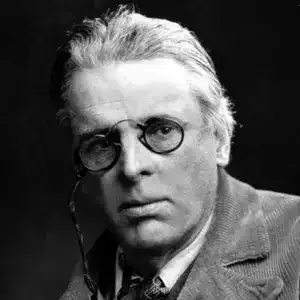
William Butler Yeats
Words For Music Perhaps
Words For Music Perhaps
I - CRAZY JANE AND THE BISHOP
BRING me to the blasted oak
That I, midnight upon the stroke,
(All find safety in the tomb.)
May call down curses on his head
Because of my dear Jack that's dead.
Coxcomb was the least he said:
The solid man and the coxcomb.
Nor was he Bishop when his ban
Banished Jack the Journeyman,
(All find safety in the tomb.)
Nor so much as parish priest,
Yet he, an old book in his fist,
Cried that we lived like beast and beast:
The solid man and the coxcomb.
The Bishop has a skin, God knows,
Wrinkled like the foot of a goose,
(All find safety in the tomb.)
Nor can he hide in holy black
The heron's hunch upon his back,
But a birch-tree stood my Jack:
The solid man and the coxcomb.
Jack had my virginity,
And bids me to the oak, for he
(all find safety in the tomb.)
Wanders out into the night
And there is shelter under it,
But should that other come, I spit:
The solid man and the coxcomb.
II - CRAZY JANE REPROVED
I CARE not what the sailors say:
All those dreadful thunder-stones,
All that storm that blots the day
Can but show that Heaven yawns;
Great Europa played the fool
That changed a lover for a bull.
Fol de rol, fol de rol.
To round that shell's elaborate whorl,
Adorning every secret track
With the delicate mother-of-pearl,
Made the joints of Heaven crack:
So never hang your heart upon
A roaring, ranting journeyman.
Fol de rol, fol de rol.
III - CRAZY JANE ON THE DAY OF JUDGMENT
'LOVE is all
Unsatisfied
That cannot take the whole
Body and soul';
And that is what Jane said.
'Take the sour
If you take me
I can scoff and lour
And scold for an hour.'
'That's certainly the case,' said he.
'Naked I lay,
The grass my bed;
Naked and hidden away,
That black day';
And that is what Jane said.
'What can be shown?
What true love be?
All could be known or shown
If Time were but gone.'
'That's certainly the case,' said he.
IV - CRAZY JANE AND JACK THE JOURNEYMAN
I KNOW, although when looks meet
I tremble to the bone,
The more I leave the door unlatched
The sooner love is gone,
For love is but a skein unwound
Between the dark and dawn.
A lonely ghost the ghost is
That to God shall come;
I -- love's skein upon the ground,
My body in the tomb --
Shall leap into the light lost
In my mother's womb.
But were I left to lie alone
In an empty bed,
The skein so bound us ghost to ghost
When he turned his head
passing on the road that night,
Mine must walk when dead.
V - CRAZY JANE ON GOD
THAT lover of a night
Came when he would,
Went in the dawning light
Whether I would or no;
Men come, men go;
All things remain in God.
Banners choke the sky;
Men-at-arms tread;
Armoured horses neigh
In the narrow pass:
All things remain in God.
Before their eyes a house
That from childhood stood
Uninhabited, ruinous,
Suddenly lit up
From door to top:
All things remain in God.
I had wild Jack for a lover;
Though like a road
That men pass over
My body makes no moan
But sings on:
All things remain in God.
VI - CRAZY JANE TALKS WITH THE BISHOP
I MET the Bishop on the road
And much said he and I.
'Those breasts are flat and fallen now,
Those veins must soon be dry;
Live in a heavenly mansion,
Not in some foul sty.'
'Fair and foul are near of kin,
And fair needs foul,' I cried.
'My friends are gone, but that's a truth
Nor grave nor bed denied,
Learned in bodily lowliness
And in the heart's pride.
'A woman can be proud and stiff
When on love intent;
But Love has pitched his mansion in
The place of excrement;
For nothing can be sole or whole
That has not been rent.'
VII - CRAZY JANE GROWN OLD LOOKS AT THE DANCERS
I FOUND that ivory image there
Dancing with her chosen youth,
But when he wound her coal-black hair
As though to strangle her, no scream
Or bodily movement did I dare,
Eyes under eyelids did so gleam;
Love is like the lion's tooth.
When She, and though some said she played
I said that she had danced heart's truth,
Drew a knife to strike him dead,
I could but leave him to his fate;
For no matter what is said
They had all that had their hate;
Love is like the lion's tooth.
Did he die or did she die?
Seemed to die or died they both?
God be with the times when I
Cared not a thraneen for what chanced
So that I had the limbs to try
Such a dance as there was danced --
Love is like the lion's tooth.
VIII - GIRL'S SONG
I WENT out alone
To sing a song or two,
My fancy on a man,
And you know who.
Another came in sight
That on a stick relied
To hold himself upright;
I sat and cried.
And that was all my song --
When everything is told,
Saw I an old man young
Or young man old?
IX - YOUNG MAN'S SONG
'SHE will change,' I cried.
'Into a withered crone.'
The heart in my side,
That so still had lain,
In noble rage replied
And beat upon the bone:
'Uplift those eyes and throw
Those glances unafraid:
She would as bravely show
Did all the fabric fade;
No withered crone I saw
Before the world was made.'
Abashed by that report,
For the heart cannot lie,
I knelt in the dirt.
And all shall bend the knee
To my offended heart
Until it pardon me.
X - HER ANXIETY
EARTH in beauty dressed
Awaits returning spring.
All true love must die,
Alter at the best
Into some lesser thing.
Prove that I lie.
Such body lovers have,
Such exacting breath,
That they touch or sigh.
Every touch they give,
Love is nearer death.
Prove that I lie.
XI - HIS CONFIDENCE
UNDYING love to buy
I wrote upon
The corners of this eye
All wrongs done.
What payment were enough
For undying love?
I broke my heart in two
So hard I struck.
What matter? for I know
That out of rock,
Out of a desolate source,
Love leaps upon its course.
XII - LOVE'S LONELINESS
OLD fathers, great-grandfathers,
Rise as kindred should.
If ever lover's loneliness
Came where you stood,
Pray that Heaven protect us
That protect your blood.
The mountain throws a shadow,
Thin is the moon's horn;
What did we remember
Under the ragged thorn?
Dread has followed longing,
And our hearts are torn.
XIII - HER DREAM
I DREAMED as in my bed I lay,
All night's fathomless wisdom come,
That I had shorn my locks away
And laid them on Love's lettered tomb:
But something bore them out of sight
In a great tumult of the air,
And after nailed upon the night
Berenice's burning hair.
XIV - HIS BARGAIN
WHO talks of Plato's spindle;
What set it whirling round?
Eternity may dwindle,
Time is unwound,
Dan and Jerry Lout
Change their loves about.
However they may take it,
Before the thread began
I made, and may not break it
When the last thread has run,
A bargain with that hair
And all the windings there.
XV - THREE THINGS
'O CRUEL Death, give three things back,'
Sang a bone upon the shore;
'A child found all a child can lack,
Whether of pleasure or of rest,
Upon the abundance of my breast':
A bone wave-whitened and dried in the wind.
'Three dear things that women know,'
Sang a bhone upon the shore;
'A man if I but held him so
When my body was alive
Found all the pleasure that life gave':
A bone wave-whitened and dried in the wind.
'The third thing that I think of yet,'
Sang a bone upon the shore,
'Is that morning when I met
Face to face my rightful man
And did after stretch and yawn':
A bone wave-whitened and dried in the wind.
XVI - LULLABY
BELOVED, may your sleep be sound
That have found it where you fed.
What were all the world's alarms
To mighty paris when he found
Sleep upon a golden bed
That first dawn in Helen's arms?
Sleep, beloved, such a sleep
As did that wild Tristram know
When, the potion's work being done,
Roe could run or doe could leap
Under oak and beechen bough,
Roe could leap or doe could run;
Such a sleep and sound as fell
Upon Eurotas' grassy bank
When the holy bird, that there
Accomplished his predestined will,
From the limbs of Leda sank
But not from her protecting care.
XVII - AFTER LONG SILENCE
SPEECH after long silence; it is right,
All other lovers being estranged or dead,
Unfriendly lamplight hid under its shade,
The curtains drawn upon unfriendly night,
That we descant and yet again descant
Upon the supreme theme of Art and Song:
Bodily decrepitude is wisdom; young
We loved each other and were ignorant.
XVIII - MAD AS THE MIST AND SNOW
BOLT and bar the shutter,
For the foul winds blow:
Our minds are at their best this night,
And I seem to know
That everything outside us is
Mad as the mist and snow.
Horace there by Homer stands,
Plato stands below,
And here is Tully's open page.
How many years ago
Were you and I unlettered lads
Mad as the mist and snow?
You ask what makes me sigh, old friend,
What makes me shudder so?
I shudder and I sigh to think
That even Cicero
And many-minded Homer were
Mad as the mist and snow.
XIX - THOSE DANCING DAYS ARE GONE
COME, let me sing into your ear;
Those dancing days are gone,
All that silk and satin gear;
Crouch upon a stone,
Wrapping that foul body up
In as foul a rag:
I carry the sun in a golden cup.
The moon in a silver bag.
Curse as you may I sing it through;
What matter if the knave
That the most could pleasure you,
The children that he gave,
Are somewhere sleeping like a top
Under a marble flag?
I carry the sun in a golden cup.
The moon in a silver bag.
I thought it out this very day.
Noon upon the clock,
A man may put pretence away
Who leans upon a stick,
May sing, and sing until he drop,
Whether to maid or hag:
I carry the sun in a golden cup,
The moon in a silver bag.
XX - 'I AM OF IRELAND'
AM of Ireland,
And the Holy Land of Ireland,
And time runs on,' cried she.
'Come out of charity,
Come dance with me in Ireland.'
One man, one man alone
In that outlandish gear,
One solitary man
Of all that rambled there
Had turned his stately head.
That is a long way off,
And time runs on,' he said,
'And the night grows rough.'
I am of Ireland,
And the Holy Land of Ireland,
And time runs on,' cried she.
'Come out of charity
And dance with me in Ireland.'
The fiddlers are all thumbs,
Or the fiddle-string accursed,
The drums and the kettledrums
And the trumpets all are burst,
And the trombone,' cried he,
'The trumpet and trombone,'
And cocked a malicious eye,
'But time runs on, runs on.'
I am of Ireland,
And the Holy Land of Ireland,
And time runs on,' cried she.
'Come out of charity
And dance with me in Ireland.'
XXI - THE DANCER AT CRUACHAN AND CRO-PATRICK
I, PROCLAIMING that there is
Among birds or beasts or men
One that is perfect or at peace.
Danced on Cruachan's windy plain,
Upon Cro-patrick sang aloud;
All that could run or leap or swim
Whether in wood, water or cloud,
Acclaiming, proclaiming, declaiming Him.
XXII - TOM THE LUNATIC
SANG old Tom the lunatic
That sleeps under the canopy:
'What change has put my thoughts astray
And eyes that had s-o keen a sight?
What has turned to smoking wick
Nature's pure unchanging light?
'Huddon and Duddon and Daniel O'Leary.
Holy Joe, the beggar-man,
Wenching, drinking, still remain
Or sing a penance on the road;
Something made these eyeballs weary
That blinked and saw them in a shroud.
'Whatever stands in field or flood,
Bird, beast, fish or man,
Mare or stallion, cock or hen,
Stands in God's unchanging eye
In all the vigour of its blood;
In that faith I live or die.'
XXIII - TOM AT CRUACHAN
ON Cruachan's plain slept he
That must sing in a rhyme
What most could shake his soul:
'The stallion Eternit
Mounted the mare of Time,
'Gat the foal of the world.'
XXIV - OLD TOM AGAIN
THINGS out of perfection sail,
And all their swelling canvas wear,
Nor shall the self-begotten fail
Though fantastic men suppose
Building-yard and stormy shore,
Winding-sheet and swaddling -- clothes.
XXV - THE DELPHIC ORACLE UPON PLOTINUS
BEHOLD that great Plotinus swim,
Buffeted by such seas;
Bland Rhadamanthus beckons him,
But the Golden Race looks dim,
Salt blood blocks his eyes.
Scattered on the level grass
Or winding through the grove
plato there and Minos pass,
There stately Pythagoras
And all the choir of Love.
I - CRAZY JANE AND THE BISHOP
BRING me to the blasted oak
That I, midnight upon the stroke,
(All find safety in the tomb.)
May call down curses on his head
Because of my dear Jack that's dead.
Coxcomb was the least he said:
The solid man and the coxcomb.
Nor was he Bishop when his ban
Banished Jack the Journeyman,
(All find safety in the tomb.)
Nor so much as parish priest,
Yet he, an old book in his fist,
Cried that we lived like beast and beast:
The solid man and the coxcomb.
The Bishop has a skin, God knows,
Wrinkled like the foot of a goose,
(All find safety in the tomb.)
Nor can he hide in holy black
The heron's hunch upon his back,
But a birch-tree stood my Jack:
The solid man and the coxcomb.
Jack had my virginity,
And bids me to the oak, for he
(all find safety in the tomb.)
Wanders out into the night
And there is shelter under it,
But should that other come, I spit:
The solid man and the coxcomb.
II - CRAZY JANE REPROVED
I CARE not what the sailors say:
All those dreadful thunder-stones,
All that storm that blots the day
Can but show that Heaven yawns;
Great Europa played the fool
That changed a lover for a bull.
Fol de rol, fol de rol.
To round that shell's elaborate whorl,
Adorning every secret track
With the delicate mother-of-pearl,
Made the joints of Heaven crack:
So never hang your heart upon
A roaring, ranting journeyman.
Fol de rol, fol de rol.
III - CRAZY JANE ON THE DAY OF JUDGMENT
'LOVE is all
Unsatisfied
That cannot take the whole
Body and soul';
And that is what Jane said.
'Take the sour
If you take me
I can scoff and lour
And scold for an hour.'
'That's certainly the case,' said he.
'Naked I lay,
The grass my bed;
Naked and hidden away,
That black day';
And that is what Jane said.
'What can be shown?
What true love be?
All could be known or shown
If Time were but gone.'
'That's certainly the case,' said he.
IV - CRAZY JANE AND JACK THE JOURNEYMAN
I KNOW, although when looks meet
I tremble to the bone,
The more I leave the door unlatched
The sooner love is gone,
For love is but a skein unwound
Between the dark and dawn.
A lonely ghost the ghost is
That to God shall come;
I -- love's skein upon the ground,
My body in the tomb --
Shall leap into the light lost
In my mother's womb.
But were I left to lie alone
In an empty bed,
The skein so bound us ghost to ghost
When he turned his head
passing on the road that night,
Mine must walk when dead.
V - CRAZY JANE ON GOD
THAT lover of a night
Came when he would,
Went in the dawning light
Whether I would or no;
Men come, men go;
All things remain in God.
Banners choke the sky;
Men-at-arms tread;
Armoured horses neigh
In the narrow pass:
All things remain in God.
Before their eyes a house
That from childhood stood
Uninhabited, ruinous,
Suddenly lit up
From door to top:
All things remain in God.
I had wild Jack for a lover;
Though like a road
That men pass over
My body makes no moan
But sings on:
All things remain in God.
VI - CRAZY JANE TALKS WITH THE BISHOP
I MET the Bishop on the road
And much said he and I.
'Those breasts are flat and fallen now,
Those veins must soon be dry;
Live in a heavenly mansion,
Not in some foul sty.'
'Fair and foul are near of kin,
And fair needs foul,' I cried.
'My friends are gone, but that's a truth
Nor grave nor bed denied,
Learned in bodily lowliness
And in the heart's pride.
'A woman can be proud and stiff
When on love intent;
But Love has pitched his mansion in
The place of excrement;
For nothing can be sole or whole
That has not been rent.'
VII - CRAZY JANE GROWN OLD LOOKS AT THE DANCERS
I FOUND that ivory image there
Dancing with her chosen youth,
But when he wound her coal-black hair
As though to strangle her, no scream
Or bodily movement did I dare,
Eyes under eyelids did so gleam;
Love is like the lion's tooth.
When She, and though some said she played
I said that she had danced heart's truth,
Drew a knife to strike him dead,
I could but leave him to his fate;
For no matter what is said
They had all that had their hate;
Love is like the lion's tooth.
Did he die or did she die?
Seemed to die or died they both?
God be with the times when I
Cared not a thraneen for what chanced
So that I had the limbs to try
Such a dance as there was danced --
Love is like the lion's tooth.
VIII - GIRL'S SONG
I WENT out alone
To sing a song or two,
My fancy on a man,
And you know who.
Another came in sight
That on a stick relied
To hold himself upright;
I sat and cried.
And that was all my song --
When everything is told,
Saw I an old man young
Or young man old?
IX - YOUNG MAN'S SONG
'SHE will change,' I cried.
'Into a withered crone.'
The heart in my side,
That so still had lain,
In noble rage replied
And beat upon the bone:
'Uplift those eyes and throw
Those glances unafraid:
She would as bravely show
Did all the fabric fade;
No withered crone I saw
Before the world was made.'
Abashed by that report,
For the heart cannot lie,
I knelt in the dirt.
And all shall bend the knee
To my offended heart
Until it pardon me.
X - HER ANXIETY
EARTH in beauty dressed
Awaits returning spring.
All true love must die,
Alter at the best
Into some lesser thing.
Prove that I lie.
Such body lovers have,
Such exacting breath,
That they touch or sigh.
Every touch they give,
Love is nearer death.
Prove that I lie.
XI - HIS CONFIDENCE
UNDYING love to buy
I wrote upon
The corners of this eye
All wrongs done.
What payment were enough
For undying love?
I broke my heart in two
So hard I struck.
What matter? for I know
That out of rock,
Out of a desolate source,
Love leaps upon its course.
XII - LOVE'S LONELINESS
OLD fathers, great-grandfathers,
Rise as kindred should.
If ever lover's loneliness
Came where you stood,
Pray that Heaven protect us
That protect your blood.
The mountain throws a shadow,
Thin is the moon's horn;
What did we remember
Under the ragged thorn?
Dread has followed longing,
And our hearts are torn.
XIII - HER DREAM
I DREAMED as in my bed I lay,
All night's fathomless wisdom come,
That I had shorn my locks away
And laid them on Love's lettered tomb:
But something bore them out of sight
In a great tumult of the air,
And after nailed upon the night
Berenice's burning hair.
XIV - HIS BARGAIN
WHO talks of Plato's spindle;
What set it whirling round?
Eternity may dwindle,
Time is unwound,
Dan and Jerry Lout
Change their loves about.
However they may take it,
Before the thread began
I made, and may not break it
When the last thread has run,
A bargain with that hair
And all the windings there.
XV - THREE THINGS
'O CRUEL Death, give three things back,'
Sang a bone upon the shore;
'A child found all a child can lack,
Whether of pleasure or of rest,
Upon the abundance of my breast':
A bone wave-whitened and dried in the wind.
'Three dear things that women know,'
Sang a bhone upon the shore;
'A man if I but held him so
When my body was alive
Found all the pleasure that life gave':
A bone wave-whitened and dried in the wind.
'The third thing that I think of yet,'
Sang a bone upon the shore,
'Is that morning when I met
Face to face my rightful man
And did after stretch and yawn':
A bone wave-whitened and dried in the wind.
XVI - LULLABY
BELOVED, may your sleep be sound
That have found it where you fed.
What were all the world's alarms
To mighty paris when he found
Sleep upon a golden bed
That first dawn in Helen's arms?
Sleep, beloved, such a sleep
As did that wild Tristram know
When, the potion's work being done,
Roe could run or doe could leap
Under oak and beechen bough,
Roe could leap or doe could run;
Such a sleep and sound as fell
Upon Eurotas' grassy bank
When the holy bird, that there
Accomplished his predestined will,
From the limbs of Leda sank
But not from her protecting care.
XVII - AFTER LONG SILENCE
SPEECH after long silence; it is right,
All other lovers being estranged or dead,
Unfriendly lamplight hid under its shade,
The curtains drawn upon unfriendly night,
That we descant and yet again descant
Upon the supreme theme of Art and Song:
Bodily decrepitude is wisdom; young
We loved each other and were ignorant.
XVIII - MAD AS THE MIST AND SNOW
BOLT and bar the shutter,
For the foul winds blow:
Our minds are at their best this night,
And I seem to know
That everything outside us is
Mad as the mist and snow.
Horace there by Homer stands,
Plato stands below,
And here is Tully's open page.
How many years ago
Were you and I unlettered lads
Mad as the mist and snow?
You ask what makes me sigh, old friend,
What makes me shudder so?
I shudder and I sigh to think
That even Cicero
And many-minded Homer were
Mad as the mist and snow.
XIX - THOSE DANCING DAYS ARE GONE
COME, let me sing into your ear;
Those dancing days are gone,
All that silk and satin gear;
Crouch upon a stone,
Wrapping that foul body up
In as foul a rag:
I carry the sun in a golden cup.
The moon in a silver bag.
Curse as you may I sing it through;
What matter if the knave
That the most could pleasure you,
The children that he gave,
Are somewhere sleeping like a top
Under a marble flag?
I carry the sun in a golden cup.
The moon in a silver bag.
I thought it out this very day.
Noon upon the clock,
A man may put pretence away
Who leans upon a stick,
May sing, and sing until he drop,
Whether to maid or hag:
I carry the sun in a golden cup,
The moon in a silver bag.
XX - 'I AM OF IRELAND'
AM of Ireland,
And the Holy Land of Ireland,
And time runs on,' cried she.
'Come out of charity,
Come dance with me in Ireland.'
One man, one man alone
In that outlandish gear,
One solitary man
Of all that rambled there
Had turned his stately head.
That is a long way off,
And time runs on,' he said,
'And the night grows rough.'
I am of Ireland,
And the Holy Land of Ireland,
And time runs on,' cried she.
'Come out of charity
And dance with me in Ireland.'
The fiddlers are all thumbs,
Or the fiddle-string accursed,
The drums and the kettledrums
And the trumpets all are burst,
And the trombone,' cried he,
'The trumpet and trombone,'
And cocked a malicious eye,
'But time runs on, runs on.'
I am of Ireland,
And the Holy Land of Ireland,
And time runs on,' cried she.
'Come out of charity
And dance with me in Ireland.'
XXI - THE DANCER AT CRUACHAN AND CRO-PATRICK
I, PROCLAIMING that there is
Among birds or beasts or men
One that is perfect or at peace.
Danced on Cruachan's windy plain,
Upon Cro-patrick sang aloud;
All that could run or leap or swim
Whether in wood, water or cloud,
Acclaiming, proclaiming, declaiming Him.
XXII - TOM THE LUNATIC
SANG old Tom the lunatic
That sleeps under the canopy:
'What change has put my thoughts astray
And eyes that had s-o keen a sight?
What has turned to smoking wick
Nature's pure unchanging light?
'Huddon and Duddon and Daniel O'Leary.
Holy Joe, the beggar-man,
Wenching, drinking, still remain
Or sing a penance on the road;
Something made these eyeballs weary
That blinked and saw them in a shroud.
'Whatever stands in field or flood,
Bird, beast, fish or man,
Mare or stallion, cock or hen,
Stands in God's unchanging eye
In all the vigour of its blood;
In that faith I live or die.'
XXIII - TOM AT CRUACHAN
ON Cruachan's plain slept he
That must sing in a rhyme
What most could shake his soul:
'The stallion Eternit
Mounted the mare of Time,
'Gat the foal of the world.'
XXIV - OLD TOM AGAIN
THINGS out of perfection sail,
And all their swelling canvas wear,
Nor shall the self-begotten fail
Though fantastic men suppose
Building-yard and stormy shore,
Winding-sheet and swaddling -- clothes.
XXV - THE DELPHIC ORACLE UPON PLOTINUS
BEHOLD that great Plotinus swim,
Buffeted by such seas;
Bland Rhadamanthus beckons him,
But the Golden Race looks dim,
Salt blood blocks his eyes.
Scattered on the level grass
Or winding through the grove
plato there and Minos pass,
There stately Pythagoras
And all the choir of Love.
343
William Butler Yeats
Under The Round Tower
Under The Round Tower
'ALTHOUGH I'd lie lapped up in linen
A deal I'd sweat and little earn
If I should live as live the neighbours,'
Cried the beggar, Billy Byrne;
'Stretch bones till the daylight come
On great-grandfather's battered tomb.'
Upon a grey old battered tombstone
In Glendalough beside the stream
Where the O'Byrnes and Byrnes are buried,
He stretched his bones and fell in a dream
Of sun and moon that a good hour
Bellowed and pranced in the round tower;
Of golden king and Silver lady,
Bellowing up and bellowing round,
Till toes mastered a sweet measure,
Mouth mastered a sweet sound,
Prancing round and prancing up
Until they pranced upon the top.
That golden king and that wild lady
Sang till stars began to fade,
Hands gripped in hands, toes close together,
Hair spread on the wind they made;
That lady and that golden king
Could like a brace of blackbirds sing.
'It's certain that my luck is broken,'
That rambling jailbird Billy said;
'Before nightfall I'll pick a pocket
And snug it in a feather bed.
I cannot find the peace of home
On great-grandfather's battered tomb.'
'ALTHOUGH I'd lie lapped up in linen
A deal I'd sweat and little earn
If I should live as live the neighbours,'
Cried the beggar, Billy Byrne;
'Stretch bones till the daylight come
On great-grandfather's battered tomb.'
Upon a grey old battered tombstone
In Glendalough beside the stream
Where the O'Byrnes and Byrnes are buried,
He stretched his bones and fell in a dream
Of sun and moon that a good hour
Bellowed and pranced in the round tower;
Of golden king and Silver lady,
Bellowing up and bellowing round,
Till toes mastered a sweet measure,
Mouth mastered a sweet sound,
Prancing round and prancing up
Until they pranced upon the top.
That golden king and that wild lady
Sang till stars began to fade,
Hands gripped in hands, toes close together,
Hair spread on the wind they made;
That lady and that golden king
Could like a brace of blackbirds sing.
'It's certain that my luck is broken,'
That rambling jailbird Billy said;
'Before nightfall I'll pick a pocket
And snug it in a feather bed.
I cannot find the peace of home
On great-grandfather's battered tomb.'
376
William Butler Yeats
Two Years Later
Two Years Later
HAS no one said those daring
Kind eyes should be more learn'd?
Or warned you how despairing
The moths are when they are burned?
I could have warned you; but you are young,
So we speak a different tongue.
O you will take whatever's offered
And dream that all the world's a friend,
Suffer as your mother suffered,
Be as broken in the end.
But I am old and you are young,
And I speak a barbarous tongue.
HAS no one said those daring
Kind eyes should be more learn'd?
Or warned you how despairing
The moths are when they are burned?
I could have warned you; but you are young,
So we speak a different tongue.
O you will take whatever's offered
And dream that all the world's a friend,
Suffer as your mother suffered,
Be as broken in the end.
But I am old and you are young,
And I speak a barbarous tongue.
431
William Butler Yeats
Under Saturn
Under Saturn
DO not because this day I have grown saturnine
Imagine that lost love, inseparable from my thought
Because I have no other youth, can make me pine;
For how should I forget the wisdom that you brought,
The comfort that you made? Although my wits have gone
On a fantastic ride, my horse's flanks are spurred
By childish memories of an old cross Pollexfen,
And of a Middleton, whose name you never heard,
And of a red-haired Yeats whose looks, although he died
Before my time, seem like a vivid memory.
You heard that labouring man who had served my people. He said
Upon the open road, near to the Sligo quay --
No, no, not said, but cried it out -- 'You have come again,
And surely after twenty years it was time to come.'
I am thinking of a child's vow sworn in vain
Never to leave that valley his fathers called their home.
DO not because this day I have grown saturnine
Imagine that lost love, inseparable from my thought
Because I have no other youth, can make me pine;
For how should I forget the wisdom that you brought,
The comfort that you made? Although my wits have gone
On a fantastic ride, my horse's flanks are spurred
By childish memories of an old cross Pollexfen,
And of a Middleton, whose name you never heard,
And of a red-haired Yeats whose looks, although he died
Before my time, seem like a vivid memory.
You heard that labouring man who had served my people. He said
Upon the open road, near to the Sligo quay --
No, no, not said, but cried it out -- 'You have come again,
And surely after twenty years it was time to come.'
I am thinking of a child's vow sworn in vain
Never to leave that valley his fathers called their home.
437
William Butler Yeats
To An Isle In The Water
To An Isle In The Water
SHY one, Shy one,
Shy one of my heart,
She moves in the firelight
pensively apart.
She carries in the dishes,
And lays them in a row.
To an isle in the water
With her would I go.
With catries in the candles,
And lights the curtained room,
Shy in the doorway
And shy in the gloom;
And shy as a rabbit,
Helpful and shy.
To an isle in the water
With her would I fly.
SHY one, Shy one,
Shy one of my heart,
She moves in the firelight
pensively apart.
She carries in the dishes,
And lays them in a row.
To an isle in the water
With her would I go.
With catries in the candles,
And lights the curtained room,
Shy in the doorway
And shy in the gloom;
And shy as a rabbit,
Helpful and shy.
To an isle in the water
With her would I fly.
295
William Butler Yeats
To be Carved On A Stone At Thoor Ballylee
To be Carved On A Stone At Thoor Ballylee
I, THE poet William Yeats,
With old mill boards and sea-green slates,
And smithy work from the Gort forge,
Restored this tower for my wife George;
And may these characters remain
When all is ruin once again.
I, THE poet William Yeats,
With old mill boards and sea-green slates,
And smithy work from the Gort forge,
Restored this tower for my wife George;
And may these characters remain
When all is ruin once again.
266
William Butler Yeats
To A Shade
To A Shade
IF you have revisited the town, thin Shade,
Whether to look upon your monument
(I wonder if the builder has been paid)
Or happier-thoughted when the day is spent
To drink of that salt breath out of the sea
When grey gulls flit about instead of men,
And the gaunt houses put on majesty:
Let these content you and be gone again;
For they are at their old tricks yet.
A man
Of your own passionate serving kind who had brought
In his full hands what, had they only known,
Had given their children's children loftier thought,
Sweeter emotion, working in their veins
Like gentle blood, has been driven from the place,
And instilt heaped upon him for his pains,
And for his open-handedness, disgrace;
Your enemy, an old fotil mouth, had set
The pack upon him.
Go, unquiet wanderer,
And gather the Glasnevin coverlet
About your head till the dust stops your ear,
The time for you to taste of that Salt breath
And listen at the corners has not come;
You had enough of sorrow before death --
Away, away! You are safer in the tomb.
IF you have revisited the town, thin Shade,
Whether to look upon your monument
(I wonder if the builder has been paid)
Or happier-thoughted when the day is spent
To drink of that salt breath out of the sea
When grey gulls flit about instead of men,
And the gaunt houses put on majesty:
Let these content you and be gone again;
For they are at their old tricks yet.
A man
Of your own passionate serving kind who had brought
In his full hands what, had they only known,
Had given their children's children loftier thought,
Sweeter emotion, working in their veins
Like gentle blood, has been driven from the place,
And instilt heaped upon him for his pains,
And for his open-handedness, disgrace;
Your enemy, an old fotil mouth, had set
The pack upon him.
Go, unquiet wanderer,
And gather the Glasnevin coverlet
About your head till the dust stops your ear,
The time for you to taste of that Salt breath
And listen at the corners has not come;
You had enough of sorrow before death --
Away, away! You are safer in the tomb.
412
William Butler Yeats
The Wanderings of Oisin: Book I
The Wanderings of Oisin: Book I
S. Patrick. You who are bent, and bald, and blind,
With a heavy heart and a wandering mind,
Have known three centuries, poets sing,
Of dalliance with a demon thing.
Oisin. Sad to remember, sick with years,
The swift innumerable spears,
The horsemen with their floating hair,
And bowls of barley, honey, and wine,
Those merry couples dancing in tune,
And the white body that lay by mine;
But the tale, though words be lighter than air.
Must live to be old like the wandering moon.
Caoilte, and Conan, and Finn were there,
When we followed a deer with our baying hounds.
With Bran, Sceolan, and Lomair,
And passing the Firbolgs' burial-motmds,
Came to the cairn-heaped grassy hill
Where passionate Maeve is stony-still;
And found On the dove-grey edge of the sea
A pearl-pale, high-born lady, who rode
On a horse with bridle of findrinny;
And like a sunset were her lips,
A stormy sunset on doomed ships;
A citron colour gloomed in her hair,
But down to her feet white vesture flowed,
And with the glimmering crimson glowed
Of many a figured embroidery;
And it was bound with a pearl-pale shell
That wavered like the summer streams,
As her soft bosom rose and fell.
S. Patrick. You are still wrecked among heathen dreams.
Oisin. 'Why do you wind no horn?' she said
'And every hero droop his head?
The hornless deer is not more sad
That many a peaceful moment had,
More sleek than any granary mouse,
In his own leafy forest house
Among the waving fields of fern:
The hunting of heroes should be glad.'
'O pleasant woman,' answered Finn,
'We think on Oscar's pencilled urn,
And on the heroes lying slain
On Gabhra's raven-covered plain;
But where are your noble kith and kin,
And from what country do you ride?'
'My father and my mother are
Aengus and Edain, my own name
Niamh, and my country far
Beyond the tumbling of this tide.'
'What dream came with you that you came
Through bitter tide on foam-wet feet?
Did your companion wander away
From where the birds of Aengus wing?'
Thereon did she look haughty and sweet:
'I have not yet, war-weary king,
Been spoken of with any man;
Yet now I choose, for these four feet
Ran through the foam and ran to this
That I might have your son to kiss.'
'Were there no better than my son
That you through all that foam should run?'
'I loved no man, though kings besought,
Until the Danaan poets brought
Rhyme that rhymed upon Oisin's name,
And now I am dizzy with the thought
Of all that wisdom and the fame
Of battles broken by his hands,
Of stories builded by his words
That are like coloured Asian birds
At evening in their rainless lands.'
O Patrick, by your brazen bell,
There was no limb of mine but fell
Into a desperate gulph of love!
'You only will I wed,' I cried,
'And I will make a thousand songs,
And set your name all names above,
And captives bound with leathern thongs
Shall kneel and praise you, one by one,
At evening in my western dun.'
'O Oisin, mount by me and ride
To shores by the wash of the tremulous tide,
Where men have heaped no burial-mounds,
And the days pass by like a wayward tune,
Where broken faith has never been known
And the blushes of first love never have flown;
And there I will give you a hundred hounds;
No mightier creatures bay at the moon;
And a hundred robes of murmuring silk,
And a hundred calves and a hundred sheep
Whose long wool whiter than sea-froth flows,
And a hundred spears and a hundred bows,
And oil and wine and honey and milk,
And always never-anxious sleep;
While a hundred youths, mighty of limb,
But knowing nor tumult nor hate nor strife,
And a hundred ladies, merry as birds,
Who when they dance to a fitful measure
Have a speed like the speed of the salmon herds,
Shall follow your horn and obey your whim,
And you shall know the Danaan leisure;
And Niamh be with you for a wife.'
Then she sighed gently, 'It grows late.
Music and love and sleep await,
Where I would be when the white moon climbs,
The red sun falls and the world grows dim.'
And then I mounted and she bound me
With her triumphing arms around me,
And whispering to herself enwound me;
He shook himself and neighed three times:
Caoilte, Conan, and Finn came near,
And wept, and raised their lamenting hands,
And bid me stay, with many a tear;
But we rode out from the human lands.
In what far kingdom do you go'
Ah Fenians, with the shield and bow?
Or are you phantoms white as snow,
Whose lips had life's most prosperous glow?
O you, with whom in sloping vallcys,
Or down the dewy forest alleys,
I chased at morn the flying deer,
With whom I hurled the hurrying spear,
And heard the foemen's bucklers rattle,
And broke the heaving ranks of battle!
And Bran, Sceolan, and Lomair,
Where are you with your long rough hair?
You go not where the red deer feeds,
Nor tear the foemen from their steeds.
S. Patrick. Boast not, nor mourn with drooping head
Companions long accurst and dead,
And hounds for centuries dust and air.
Oisin. We galloped over the glossy sea:
I know not if days passed or hours,
And Niamh sang continually
Danaan songs, and their dewy showers
Of pensive laughter, unhuman sound,
Lulled weariness, and softly round
My human sorrow her white arms wound.
We galloped; now a hornless deer
Passed by us, chased by a phantom hound
All pearly white, save one red ear;
And now a lady rode like the wind
With an apple of gold in her tossing hand;
And a beautiful young man followed behind
With quenchless gaze and fluttering hair.
'Were these two born in the Danaan land,
Or have they breathed the mortal air?'
'Vex them no longer,' Niamh said,
And sighing bowed her gentle head,
And sighing laid the pearly tip
Of one long finger on my lip.
But now the moon like a white rose shone
In the pale west, and the sun'S rim sank,
And clouds atrayed their rank on rank
About his fading crimson ball:
The floor of Almhuin's hosting hall
Was not more level than the sea,
As, full of loving fantasy,
And with low murmurs, we rode on,
Where many a trumpet-twisted shell
That in immortal silence sleeps
Dreaming of her own melting hues,
Her golds, her ambers, and her blues,
Pierced with soft light the shallowing deeps.
But now a wandering land breeze came
And a far sound of feathery quires;
It seemed to blow from the dying flame,
They seemed to sing in the smouldering fires.
The horse towards the music raced,
Neighing along the lifeless waste;
Like sooty fingers, many a tree
Rose ever out of the warm sea;
And they were trembling ceaselessly,
As though they all were beating time,
Upon the centre of the sun,
To that low laughing woodland rhyme.
And, now our wandering hours were done,
We cantered to the shore, and knew
The reason of the trembling trees:
Round every branch the song-birds flew,
Or clung thereon like swarming bees;
While round the shore a million stood
Like drops of frozen rainbow light,
And pondered in a soft vain mood
Upon their shadows in the tide,
And told the purple deeps their pride,
And murmured snatches of delight;
And on the shores were many boats
With bending sterns and bending bows,
And carven figures on their prows
Of bitterns, and fish-eating stoats,
And swans with their exultant throats:
And where the wood and waters meet
We tied the horse in a leafy clump,
And Niamh blew three merry notes
Out of a little silver trump;
And then an answering whispering flew
Over the bare and woody land,
A whisper of impetuous feet,
And ever nearer, nearer grew;
And from the woods rushed out a band
Of men and ladies, hand in hand,
And singing, singing all together;
Their brows were white as fragrant milk,
Their cloaks made out of yellow silk,
And trimmed with many a crimson feather;
And when they saw the cloak I wore
Was dim with mire of a mortal shore,
They fingered it and gazed on me
And laughed like murmurs of the sea;
But Niamh with a swift distress
Bid them away and hold their peace;
And when they heard her voice they ran
And knelt there, every girl and man,
And kissed, as they would never cease,
Her pearl-pale hand and the hem of her dress.
She bade them bring us to the hall
Where Aengus dreams, from sun to sun,
A Druid dream of the end of days
When the stars are to wane and the world be done.
They led us by long and shadowy ways
Where drops of dew in myriads fall,
And tangled creepers every hour
Blossom in some new crimson flower,
And once a sudden laughter sprang
From all their lips, and once they sang
Together, while the dark woods rang,
And made in all their distant parts,
With boom of bees in honey-marts,
A rumour of delighted hearts.
And once a lady by my side
Gave me a harp, and bid me sing,
And touch the laughing silver string;
But when I sang of human joy
A sorrow wrapped each merry face,
And, patrick! by your beard, they wept,
Until one came, a tearful boy;
'A sadder creature never stept
Than this strange human bard,' he cried;
And caught the silver harp away,
And, weeping over the white strings, hurled
It down in a leaf-hid, hollow place
That kept dim waters from the sky;
And each one said, with a long, long sigh,
'O saddest harp in all the world,
Sleep there till the moon and the stars die!'
And now, still sad, we came to where
A beautiful young man dreamed within
A house of wattles, clay, and skin;
One hand upheld his beardless chin,
And one a sceptre flashing out
Wild flames of red and gold and blue,
Like to a merry wandering rout
Of dancers leaping in the air;
And men and ladies knelt them there
And showed their eyes with teardrops dim,
And with low murmurs prayed to him,
And kissed the sceptre with red lips,
And touched it with their finger-tips.
He held that flashing sceptre up.
'Joy drowns the twilight in the dew,
And fills with stars night's purple cup,
And wakes the sluggard seeds of corn,
And stirs the young kid's budding horn,
And makes the infant ferns unwrap,
And for the peewit paints his cap,
And rolls along the unwieldy sun,
And makes the little planets run:
And if joy were not on the earth,
There were an end of change and birth,
And Earth and Heaven and Hell would die,
And in some gloomy barrow lie
Folded like a frozen fly;
Then mock at Death and Time with glances
And wavering arms and wandering dances.
'Men's hearts of old were drops of flame
That from the saffron morning came,
Or drops of silver joy that fell
Out of the moon's pale twisted shell;
But now hearts cry that hearts are slaves,
And toss and turn in narrow caves;
But here there is nor law nor rule,
Nor have hands held a weary tool;
And here there is nor Change nor Death,
But only kind and merry breath,
For joy is God and God is joy.'
With one long glance for girl and boy
And the pale blossom of the moon,
He fell into a Druid swoon.
And in a wild and sudden dance
We mocked at Time and Fate and Chance
And swept out of the wattled hall
And came to where the dewdrops fall
Among the foamdrops of the sea,
And there we hushed the revelry;
And, gathering on our brows a frown,
Bent all our swaying bodies down,
And to the waves that glimmer by
That sloping green De Danaan sod
Sang, 'God is joy and joy is God,
And things that have grown sad are wicked,
And things that fear the dawn of the morrow
Or the grey wandering osprey Sorrow.'
We danced to where in the winding thicket
The damask roses, bloom on bloom,
Like crimson meteors hang in the gloom.
And bending over them softly said,
Bending over them in the dance,
With a swift and friendly glance
From dewy eyes: 'Upon the dead
Fall the leaves of other roses,
On the dead dim earth encloses:
But never, never on our graves,
Heaped beside the glimmering waves,
Shall fall the leaves of damask roses.
For neither Death nor Change comes near us,
And all listless hours fear us,
And we fear no dawning morrow,
Nor the grey wandering osprey Sorrow.'
The dance wound through the windless woods;
The ever-summered solitudes;
Until the tossing arms grew still
Upon the woody central hill;
And, gathered in a panting band,
We flung on high each waving hand,
And sang unto the starry broods.
In our raised eyes there flashed a glow
Of milky brightness to and fro
As thus our song arose: 'You stars,
Across your wandering ruby cars
Shake the loose reins: you slaves of God.
He rules you with an iron rod,
He holds you with an iron bond,
Each one woven to the other,
Each one woven to his brother
Like bubbles in a frozen pond;
But we in a lonely land abide
Unchainable as the dim tide,
With hearts that know nor law nor rule,
And hands that hold no wearisome tool,
Folded in love that fears no morrow,
Nor the grey wandering osprey Sorrow.'
O Patrick! for a hundred years
I chased upon that woody shore
The deer, the badger, and the boar.
O patrick! for a hundred years
At evening on the glimmering sands,
Beside the piled-up hunting spears,
These now outworn and withered hands
Wrestled among the island bands.
O patrick! for a hundred years
We went a-fishing in long boats
With bending sterns and bending bows,
And carven figures on their prows
Of bitterns and fish-eating stoats.
O patrick! for a hundred years
The gentle Niamh was my wife;
But now two things devour my life;
The things that most of all I hate:
Fasting and prayers.
S. Patrick. Tell on.
Oisin. Yes, yes,
For these were ancient Oisin's fate
Loosed long ago from Heaven's gate,
For his last days to lie in wait.
When one day by the tide I stood,
I found in that forgetfulness
Of dreamy foam a staff of wood
From some dead warrior's broken lance:
I tutned it in my hands; the stains
Of war were on it, and I wept,
Remembering how the Fenians stept
Along the blood-bedabbled plains,
Equal to good or grievous chance:
Thereon young Niamh softly came
And caught my hands, but spake no word
Save only many times my name,
In murmurs, like a frighted bird.
We passed by woods, and lawns of clover,
And found the horse and bridled him,
For we knew well the old was over.
I heard one say, 'His eyes grow dim
With all the ancient sorrow of men';
And wrapped in dreams rode out again
With hoofs of the pale findrinny
Over the glimmering purple sea.
Under the golden evening light,
The Immortals moved among thc fountains
By rivers and the woods' old night;
Some danced like shadows on the mountains
Some wandered ever hand in hand;
Or sat in dreams on the pale strand,
Each forehead like an obscure star
Bent down above each hooked knee,
And sang, and with a dreamy gaze
Watched where the sun in a saffron blaze
Was slumbering half in the sea-ways;
And, as they sang, the painted birds
Kept time with their bright wings and feet;
Like drops of honey came their words,
But fainter than a young lamb's bleat.
'An old man stirs the fire to a blaze,
In the house of a child, of a friend, of a brother.
He has over-lingered his welcome; the days,
Grown desolate, whisper and sigh to each other;
He hears the storm in the chimney above,
And bends to the fire and shakes with the cold,
While his heart still dreams of battle and love,
And the cry of the hounds on the hills of old.
But We are apart in the grassy places,
Where care cannot trouble the least of our days,
Or the softness of youth be gone from our faces,
Or love's first tenderness die in our gaze.
The hare grows old as she plays in the sun
And gazes around her with eyes of brightness;
Before the swift things that she dreamed of were done
She limps along in an aged whiteness;
A storm of birds in the Asian trees
Like tulips in the air a-winging,
And the gentle waves of the summer seas,
That raise their heads and wander singing,
Must murmur at last, "Unjust, unjust";
And "My speed is a weariness," falters the mouse,
And the kingfisher turns to a ball of dust,
And the roof falls in of his tunnelled house.
But the love-dew dims our eyes till the day
When God shall come from the Sea with a sigh
And bid the stars drop down from the sky,
And the moon like a pale rose wither away.'
S. Patrick. You who are bent, and bald, and blind,
With a heavy heart and a wandering mind,
Have known three centuries, poets sing,
Of dalliance with a demon thing.
Oisin. Sad to remember, sick with years,
The swift innumerable spears,
The horsemen with their floating hair,
And bowls of barley, honey, and wine,
Those merry couples dancing in tune,
And the white body that lay by mine;
But the tale, though words be lighter than air.
Must live to be old like the wandering moon.
Caoilte, and Conan, and Finn were there,
When we followed a deer with our baying hounds.
With Bran, Sceolan, and Lomair,
And passing the Firbolgs' burial-motmds,
Came to the cairn-heaped grassy hill
Where passionate Maeve is stony-still;
And found On the dove-grey edge of the sea
A pearl-pale, high-born lady, who rode
On a horse with bridle of findrinny;
And like a sunset were her lips,
A stormy sunset on doomed ships;
A citron colour gloomed in her hair,
But down to her feet white vesture flowed,
And with the glimmering crimson glowed
Of many a figured embroidery;
And it was bound with a pearl-pale shell
That wavered like the summer streams,
As her soft bosom rose and fell.
S. Patrick. You are still wrecked among heathen dreams.
Oisin. 'Why do you wind no horn?' she said
'And every hero droop his head?
The hornless deer is not more sad
That many a peaceful moment had,
More sleek than any granary mouse,
In his own leafy forest house
Among the waving fields of fern:
The hunting of heroes should be glad.'
'O pleasant woman,' answered Finn,
'We think on Oscar's pencilled urn,
And on the heroes lying slain
On Gabhra's raven-covered plain;
But where are your noble kith and kin,
And from what country do you ride?'
'My father and my mother are
Aengus and Edain, my own name
Niamh, and my country far
Beyond the tumbling of this tide.'
'What dream came with you that you came
Through bitter tide on foam-wet feet?
Did your companion wander away
From where the birds of Aengus wing?'
Thereon did she look haughty and sweet:
'I have not yet, war-weary king,
Been spoken of with any man;
Yet now I choose, for these four feet
Ran through the foam and ran to this
That I might have your son to kiss.'
'Were there no better than my son
That you through all that foam should run?'
'I loved no man, though kings besought,
Until the Danaan poets brought
Rhyme that rhymed upon Oisin's name,
And now I am dizzy with the thought
Of all that wisdom and the fame
Of battles broken by his hands,
Of stories builded by his words
That are like coloured Asian birds
At evening in their rainless lands.'
O Patrick, by your brazen bell,
There was no limb of mine but fell
Into a desperate gulph of love!
'You only will I wed,' I cried,
'And I will make a thousand songs,
And set your name all names above,
And captives bound with leathern thongs
Shall kneel and praise you, one by one,
At evening in my western dun.'
'O Oisin, mount by me and ride
To shores by the wash of the tremulous tide,
Where men have heaped no burial-mounds,
And the days pass by like a wayward tune,
Where broken faith has never been known
And the blushes of first love never have flown;
And there I will give you a hundred hounds;
No mightier creatures bay at the moon;
And a hundred robes of murmuring silk,
And a hundred calves and a hundred sheep
Whose long wool whiter than sea-froth flows,
And a hundred spears and a hundred bows,
And oil and wine and honey and milk,
And always never-anxious sleep;
While a hundred youths, mighty of limb,
But knowing nor tumult nor hate nor strife,
And a hundred ladies, merry as birds,
Who when they dance to a fitful measure
Have a speed like the speed of the salmon herds,
Shall follow your horn and obey your whim,
And you shall know the Danaan leisure;
And Niamh be with you for a wife.'
Then she sighed gently, 'It grows late.
Music and love and sleep await,
Where I would be when the white moon climbs,
The red sun falls and the world grows dim.'
And then I mounted and she bound me
With her triumphing arms around me,
And whispering to herself enwound me;
He shook himself and neighed three times:
Caoilte, Conan, and Finn came near,
And wept, and raised their lamenting hands,
And bid me stay, with many a tear;
But we rode out from the human lands.
In what far kingdom do you go'
Ah Fenians, with the shield and bow?
Or are you phantoms white as snow,
Whose lips had life's most prosperous glow?
O you, with whom in sloping vallcys,
Or down the dewy forest alleys,
I chased at morn the flying deer,
With whom I hurled the hurrying spear,
And heard the foemen's bucklers rattle,
And broke the heaving ranks of battle!
And Bran, Sceolan, and Lomair,
Where are you with your long rough hair?
You go not where the red deer feeds,
Nor tear the foemen from their steeds.
S. Patrick. Boast not, nor mourn with drooping head
Companions long accurst and dead,
And hounds for centuries dust and air.
Oisin. We galloped over the glossy sea:
I know not if days passed or hours,
And Niamh sang continually
Danaan songs, and their dewy showers
Of pensive laughter, unhuman sound,
Lulled weariness, and softly round
My human sorrow her white arms wound.
We galloped; now a hornless deer
Passed by us, chased by a phantom hound
All pearly white, save one red ear;
And now a lady rode like the wind
With an apple of gold in her tossing hand;
And a beautiful young man followed behind
With quenchless gaze and fluttering hair.
'Were these two born in the Danaan land,
Or have they breathed the mortal air?'
'Vex them no longer,' Niamh said,
And sighing bowed her gentle head,
And sighing laid the pearly tip
Of one long finger on my lip.
But now the moon like a white rose shone
In the pale west, and the sun'S rim sank,
And clouds atrayed their rank on rank
About his fading crimson ball:
The floor of Almhuin's hosting hall
Was not more level than the sea,
As, full of loving fantasy,
And with low murmurs, we rode on,
Where many a trumpet-twisted shell
That in immortal silence sleeps
Dreaming of her own melting hues,
Her golds, her ambers, and her blues,
Pierced with soft light the shallowing deeps.
But now a wandering land breeze came
And a far sound of feathery quires;
It seemed to blow from the dying flame,
They seemed to sing in the smouldering fires.
The horse towards the music raced,
Neighing along the lifeless waste;
Like sooty fingers, many a tree
Rose ever out of the warm sea;
And they were trembling ceaselessly,
As though they all were beating time,
Upon the centre of the sun,
To that low laughing woodland rhyme.
And, now our wandering hours were done,
We cantered to the shore, and knew
The reason of the trembling trees:
Round every branch the song-birds flew,
Or clung thereon like swarming bees;
While round the shore a million stood
Like drops of frozen rainbow light,
And pondered in a soft vain mood
Upon their shadows in the tide,
And told the purple deeps their pride,
And murmured snatches of delight;
And on the shores were many boats
With bending sterns and bending bows,
And carven figures on their prows
Of bitterns, and fish-eating stoats,
And swans with their exultant throats:
And where the wood and waters meet
We tied the horse in a leafy clump,
And Niamh blew three merry notes
Out of a little silver trump;
And then an answering whispering flew
Over the bare and woody land,
A whisper of impetuous feet,
And ever nearer, nearer grew;
And from the woods rushed out a band
Of men and ladies, hand in hand,
And singing, singing all together;
Their brows were white as fragrant milk,
Their cloaks made out of yellow silk,
And trimmed with many a crimson feather;
And when they saw the cloak I wore
Was dim with mire of a mortal shore,
They fingered it and gazed on me
And laughed like murmurs of the sea;
But Niamh with a swift distress
Bid them away and hold their peace;
And when they heard her voice they ran
And knelt there, every girl and man,
And kissed, as they would never cease,
Her pearl-pale hand and the hem of her dress.
She bade them bring us to the hall
Where Aengus dreams, from sun to sun,
A Druid dream of the end of days
When the stars are to wane and the world be done.
They led us by long and shadowy ways
Where drops of dew in myriads fall,
And tangled creepers every hour
Blossom in some new crimson flower,
And once a sudden laughter sprang
From all their lips, and once they sang
Together, while the dark woods rang,
And made in all their distant parts,
With boom of bees in honey-marts,
A rumour of delighted hearts.
And once a lady by my side
Gave me a harp, and bid me sing,
And touch the laughing silver string;
But when I sang of human joy
A sorrow wrapped each merry face,
And, patrick! by your beard, they wept,
Until one came, a tearful boy;
'A sadder creature never stept
Than this strange human bard,' he cried;
And caught the silver harp away,
And, weeping over the white strings, hurled
It down in a leaf-hid, hollow place
That kept dim waters from the sky;
And each one said, with a long, long sigh,
'O saddest harp in all the world,
Sleep there till the moon and the stars die!'
And now, still sad, we came to where
A beautiful young man dreamed within
A house of wattles, clay, and skin;
One hand upheld his beardless chin,
And one a sceptre flashing out
Wild flames of red and gold and blue,
Like to a merry wandering rout
Of dancers leaping in the air;
And men and ladies knelt them there
And showed their eyes with teardrops dim,
And with low murmurs prayed to him,
And kissed the sceptre with red lips,
And touched it with their finger-tips.
He held that flashing sceptre up.
'Joy drowns the twilight in the dew,
And fills with stars night's purple cup,
And wakes the sluggard seeds of corn,
And stirs the young kid's budding horn,
And makes the infant ferns unwrap,
And for the peewit paints his cap,
And rolls along the unwieldy sun,
And makes the little planets run:
And if joy were not on the earth,
There were an end of change and birth,
And Earth and Heaven and Hell would die,
And in some gloomy barrow lie
Folded like a frozen fly;
Then mock at Death and Time with glances
And wavering arms and wandering dances.
'Men's hearts of old were drops of flame
That from the saffron morning came,
Or drops of silver joy that fell
Out of the moon's pale twisted shell;
But now hearts cry that hearts are slaves,
And toss and turn in narrow caves;
But here there is nor law nor rule,
Nor have hands held a weary tool;
And here there is nor Change nor Death,
But only kind and merry breath,
For joy is God and God is joy.'
With one long glance for girl and boy
And the pale blossom of the moon,
He fell into a Druid swoon.
And in a wild and sudden dance
We mocked at Time and Fate and Chance
And swept out of the wattled hall
And came to where the dewdrops fall
Among the foamdrops of the sea,
And there we hushed the revelry;
And, gathering on our brows a frown,
Bent all our swaying bodies down,
And to the waves that glimmer by
That sloping green De Danaan sod
Sang, 'God is joy and joy is God,
And things that have grown sad are wicked,
And things that fear the dawn of the morrow
Or the grey wandering osprey Sorrow.'
We danced to where in the winding thicket
The damask roses, bloom on bloom,
Like crimson meteors hang in the gloom.
And bending over them softly said,
Bending over them in the dance,
With a swift and friendly glance
From dewy eyes: 'Upon the dead
Fall the leaves of other roses,
On the dead dim earth encloses:
But never, never on our graves,
Heaped beside the glimmering waves,
Shall fall the leaves of damask roses.
For neither Death nor Change comes near us,
And all listless hours fear us,
And we fear no dawning morrow,
Nor the grey wandering osprey Sorrow.'
The dance wound through the windless woods;
The ever-summered solitudes;
Until the tossing arms grew still
Upon the woody central hill;
And, gathered in a panting band,
We flung on high each waving hand,
And sang unto the starry broods.
In our raised eyes there flashed a glow
Of milky brightness to and fro
As thus our song arose: 'You stars,
Across your wandering ruby cars
Shake the loose reins: you slaves of God.
He rules you with an iron rod,
He holds you with an iron bond,
Each one woven to the other,
Each one woven to his brother
Like bubbles in a frozen pond;
But we in a lonely land abide
Unchainable as the dim tide,
With hearts that know nor law nor rule,
And hands that hold no wearisome tool,
Folded in love that fears no morrow,
Nor the grey wandering osprey Sorrow.'
O Patrick! for a hundred years
I chased upon that woody shore
The deer, the badger, and the boar.
O patrick! for a hundred years
At evening on the glimmering sands,
Beside the piled-up hunting spears,
These now outworn and withered hands
Wrestled among the island bands.
O patrick! for a hundred years
We went a-fishing in long boats
With bending sterns and bending bows,
And carven figures on their prows
Of bitterns and fish-eating stoats.
O patrick! for a hundred years
The gentle Niamh was my wife;
But now two things devour my life;
The things that most of all I hate:
Fasting and prayers.
S. Patrick. Tell on.
Oisin. Yes, yes,
For these were ancient Oisin's fate
Loosed long ago from Heaven's gate,
For his last days to lie in wait.
When one day by the tide I stood,
I found in that forgetfulness
Of dreamy foam a staff of wood
From some dead warrior's broken lance:
I tutned it in my hands; the stains
Of war were on it, and I wept,
Remembering how the Fenians stept
Along the blood-bedabbled plains,
Equal to good or grievous chance:
Thereon young Niamh softly came
And caught my hands, but spake no word
Save only many times my name,
In murmurs, like a frighted bird.
We passed by woods, and lawns of clover,
And found the horse and bridled him,
For we knew well the old was over.
I heard one say, 'His eyes grow dim
With all the ancient sorrow of men';
And wrapped in dreams rode out again
With hoofs of the pale findrinny
Over the glimmering purple sea.
Under the golden evening light,
The Immortals moved among thc fountains
By rivers and the woods' old night;
Some danced like shadows on the mountains
Some wandered ever hand in hand;
Or sat in dreams on the pale strand,
Each forehead like an obscure star
Bent down above each hooked knee,
And sang, and with a dreamy gaze
Watched where the sun in a saffron blaze
Was slumbering half in the sea-ways;
And, as they sang, the painted birds
Kept time with their bright wings and feet;
Like drops of honey came their words,
But fainter than a young lamb's bleat.
'An old man stirs the fire to a blaze,
In the house of a child, of a friend, of a brother.
He has over-lingered his welcome; the days,
Grown desolate, whisper and sigh to each other;
He hears the storm in the chimney above,
And bends to the fire and shakes with the cold,
While his heart still dreams of battle and love,
And the cry of the hounds on the hills of old.
But We are apart in the grassy places,
Where care cannot trouble the least of our days,
Or the softness of youth be gone from our faces,
Or love's first tenderness die in our gaze.
The hare grows old as she plays in the sun
And gazes around her with eyes of brightness;
Before the swift things that she dreamed of were done
She limps along in an aged whiteness;
A storm of birds in the Asian trees
Like tulips in the air a-winging,
And the gentle waves of the summer seas,
That raise their heads and wander singing,
Must murmur at last, "Unjust, unjust";
And "My speed is a weariness," falters the mouse,
And the kingfisher turns to a ball of dust,
And the roof falls in of his tunnelled house.
But the love-dew dims our eyes till the day
When God shall come from the Sea with a sigh
And bid the stars drop down from the sky,
And the moon like a pale rose wither away.'
478
William Butler Yeats
The Three Bushes
The Three Bushes
SAID lady once to lover,
'None can rely upon
A love that lacks its proper food;
And if your love were gone
How could you sing those songs of love?
I should be blamed, young man.
O my dear, O my dear.
Have no lit candles in your room,'
That lovely lady said,
'That I at midnight by the clock
May creep into your bed,
For if I saw myself creep in
I think I should drop dead.'
O my dear, O my dear.
'I love a man in secret,
Dear chambermaid,' said she.
'I know that I must drop down dead
If he stop loving me,
Yet what could I but drop down dead
If I lost my chastity?
O my dear, O my dear.
'So you must lie beside him
And let him think me there.
And maybe we are all the same
Where no candles are,
And maybe we are all the same
That stip the body bare.'
O my dear, O my dear.
But no dogs barked, and midnights chimed,
And through the chime she'd say,
'That was a lucky thought of mine,
My lover. looked so gay';
But heaved a sigh if the chambermaid
Looked half asleep all day.
O my dear, O my dear.
'No, not another song,' siid he,
'Because my lady came
A year ago for the first time
At midnight to my room,
And I must lie between the sheets
When the clock begins to chime.'
O my dear, O my d-ear.
'A laughing, crying, sacred song,
A leching song,' they said.
Did ever men hear such a song?
No, but that day they did.
Did ever man ride such a race?
No, not until he rode.
O my dear, O my dear.
But when his horse had put its hoof
Into a rabbit-hole
He dropped upon his head and died.
His lady saw it all
And dropped and died thereon, for she
Loved him with her soul.
O my dear, O my dear.
The chambermaid lived long, and took
Their graves into her charge,
And there two bushes planted
That when they had grown large
Seemed sprung from but a single root
So did their roses merge.
O my dear, O my dear.
When she was old and dying,
The priest came where she was;
She made a full confession.
Long looked he in her face,
And O he was a good man
And understood her case.
O my dear, O my dear.
He bade them take and bury her
Beside her lady's man,
And set a rose-tree on her grave,
And now none living can,
When they have plucked a rose there,
Know where its roots began.
O my dear, O my dear.
SAID lady once to lover,
'None can rely upon
A love that lacks its proper food;
And if your love were gone
How could you sing those songs of love?
I should be blamed, young man.
O my dear, O my dear.
Have no lit candles in your room,'
That lovely lady said,
'That I at midnight by the clock
May creep into your bed,
For if I saw myself creep in
I think I should drop dead.'
O my dear, O my dear.
'I love a man in secret,
Dear chambermaid,' said she.
'I know that I must drop down dead
If he stop loving me,
Yet what could I but drop down dead
If I lost my chastity?
O my dear, O my dear.
'So you must lie beside him
And let him think me there.
And maybe we are all the same
Where no candles are,
And maybe we are all the same
That stip the body bare.'
O my dear, O my dear.
But no dogs barked, and midnights chimed,
And through the chime she'd say,
'That was a lucky thought of mine,
My lover. looked so gay';
But heaved a sigh if the chambermaid
Looked half asleep all day.
O my dear, O my dear.
'No, not another song,' siid he,
'Because my lady came
A year ago for the first time
At midnight to my room,
And I must lie between the sheets
When the clock begins to chime.'
O my dear, O my d-ear.
'A laughing, crying, sacred song,
A leching song,' they said.
Did ever men hear such a song?
No, but that day they did.
Did ever man ride such a race?
No, not until he rode.
O my dear, O my dear.
But when his horse had put its hoof
Into a rabbit-hole
He dropped upon his head and died.
His lady saw it all
And dropped and died thereon, for she
Loved him with her soul.
O my dear, O my dear.
The chambermaid lived long, and took
Their graves into her charge,
And there two bushes planted
That when they had grown large
Seemed sprung from but a single root
So did their roses merge.
O my dear, O my dear.
When she was old and dying,
The priest came where she was;
She made a full confession.
Long looked he in her face,
And O he was a good man
And understood her case.
O my dear, O my dear.
He bade them take and bury her
Beside her lady's man,
And set a rose-tree on her grave,
And now none living can,
When they have plucked a rose there,
Know where its roots began.
O my dear, O my dear.
424
William Butler Yeats
The Song Of Wandering Aengus
The Song Of Wandering Aengus
I WENT out to the hazel wood,
Because a fire was in my head,
And cut and peeled a hazel wand,
And hooked a berry to a thread;
And when white moths were on the wing,
And moth-like stars were flickering out,
I dropped the berry in a stream
And caught a little silver trout.
When I had laid it on the floor
I went to blow the fire aflame,
But something rustled on the floor,
And some one called me by my name:
It had become a glimmering girl
With apple blossom in her hair
Who called me by my name and ran
And faded through the brightening air.
Though I am old with wandering
Through hollow lads and hilly lands.
I will find out where she has gone,
And kiss her lips and take her hands;
And walk among long dappled grass,
And pluck till time and times are done
The silver apples of the moon,
The golden apples of the sun.
I WENT out to the hazel wood,
Because a fire was in my head,
And cut and peeled a hazel wand,
And hooked a berry to a thread;
And when white moths were on the wing,
And moth-like stars were flickering out,
I dropped the berry in a stream
And caught a little silver trout.
When I had laid it on the floor
I went to blow the fire aflame,
But something rustled on the floor,
And some one called me by my name:
It had become a glimmering girl
With apple blossom in her hair
Who called me by my name and ran
And faded through the brightening air.
Though I am old with wandering
Through hollow lads and hilly lands.
I will find out where she has gone,
And kiss her lips and take her hands;
And walk among long dappled grass,
And pluck till time and times are done
The silver apples of the moon,
The golden apples of the sun.
419