

Poems in this topic
Relationships and Family
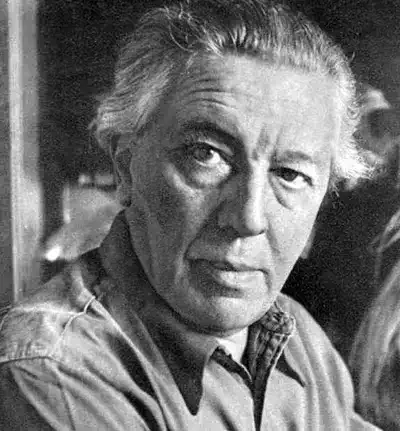
André Breton
Freedom of Love
Freedom of Love
(Translated from the French by Edouard Rodti)
My wife with the hair of a wood fire
With the thoughts of heat lightning
With the waist of an hourglass
With the waist of an otter in the teeth of a tiger
My wife with the lips of a cockade and of a bunch of stars of the last magnitude
With the teeth of tracks of white mice on the white earth
With the tongue of rubbed amber and glass
My wife with the tongue of a stabbed host
With the tongue of a doll that opens and closes its eyes
With the tongue of an unbelievable stone
My wife with the eyelashes of strokes of a child's writing
With brows of the edge of a swallow's nest
My wife with the brow of slates of a hothouse roof
And of steam on the panes
My wife with shoulders of champagne
And of a fountain with dolphin-heads beneath the ice
My wife with wrists of matches
My wife with fingers of luck and ace of hearts
With fingers of mown hay
My wife with armpits of marten and of beechnut
And of Midsummer Night
Of privet and of an angelfish nest
With arms of seafoam and of riverlocks
And of a mingling of the wheat and the mill
My wife with legs of flares
With the movements of clockwork and despair
My wife with calves of eldertree pith
My wife with feet of initials
With feet of rings of keys and Java sparrows drinking
My wife with a neck of unpearled barley
My wife with a throat of the valley of gold
Of a tryst in the very bed of the torrent
With breasts of night
My wife with breasts of a marine molehill
My wife with breasts of the ruby's crucible
With breasts of the rose's spectre beneath the dew
My wife with the belly of an unfolding of the fan of days
With the belly of a gigantic claw
My wife with the back of a bird fleeing vertically
With a back of quicksilver
With a back of light
With a nape of rolled stone and wet chalk
And of the drop of a glass where one has just been drinking
My wife with hips of a skiff
With hips of a chandelier and of arrow-feathers
And of shafts of white peacock plumes
Of an insensible pendulum
My wife with buttocks of sandstone and asbestos
My wife with buttocks of swans' backs
My wife with buttocks of spring
With the sex of an iris
My wife with the sex of a mining-placer and of a platypus
My wife with a sex of seaweed and ancient sweetmeat
My wife with a sex of mirror
My wife with eyes full of tears
With eyes of purple panoply and of a magnetic needle
My wife with savanna eyes
My wife with eyes of water to he drunk in prison
My wife with eyes of wood always under the axe
My wife with eyes of water-level of level of air earth and fire
(Translated from the French by Edouard Rodti)
My wife with the hair of a wood fire
With the thoughts of heat lightning
With the waist of an hourglass
With the waist of an otter in the teeth of a tiger
My wife with the lips of a cockade and of a bunch of stars of the last magnitude
With the teeth of tracks of white mice on the white earth
With the tongue of rubbed amber and glass
My wife with the tongue of a stabbed host
With the tongue of a doll that opens and closes its eyes
With the tongue of an unbelievable stone
My wife with the eyelashes of strokes of a child's writing
With brows of the edge of a swallow's nest
My wife with the brow of slates of a hothouse roof
And of steam on the panes
My wife with shoulders of champagne
And of a fountain with dolphin-heads beneath the ice
My wife with wrists of matches
My wife with fingers of luck and ace of hearts
With fingers of mown hay
My wife with armpits of marten and of beechnut
And of Midsummer Night
Of privet and of an angelfish nest
With arms of seafoam and of riverlocks
And of a mingling of the wheat and the mill
My wife with legs of flares
With the movements of clockwork and despair
My wife with calves of eldertree pith
My wife with feet of initials
With feet of rings of keys and Java sparrows drinking
My wife with a neck of unpearled barley
My wife with a throat of the valley of gold
Of a tryst in the very bed of the torrent
With breasts of night
My wife with breasts of a marine molehill
My wife with breasts of the ruby's crucible
With breasts of the rose's spectre beneath the dew
My wife with the belly of an unfolding of the fan of days
With the belly of a gigantic claw
My wife with the back of a bird fleeing vertically
With a back of quicksilver
With a back of light
With a nape of rolled stone and wet chalk
And of the drop of a glass where one has just been drinking
My wife with hips of a skiff
With hips of a chandelier and of arrow-feathers
And of shafts of white peacock plumes
Of an insensible pendulum
My wife with buttocks of sandstone and asbestos
My wife with buttocks of swans' backs
My wife with buttocks of spring
With the sex of an iris
My wife with the sex of a mining-placer and of a platypus
My wife with a sex of seaweed and ancient sweetmeat
My wife with a sex of mirror
My wife with eyes full of tears
With eyes of purple panoply and of a magnetic needle
My wife with savanna eyes
My wife with eyes of water to he drunk in prison
My wife with eyes of wood always under the axe
My wife with eyes of water-level of level of air earth and fire
894
André Breton
Always for the First Time
Always for the First Time
Always for the first time
Hardly do I know you by sight
You return at some hour of the night to a house at an angle to my window
A wholly imaginary house
It is there that from one second to the next
In the inviolate darkness
I anticipate once more the fascinating rift occurring
The one and only rift
In the facade and in my heart
The closer I come to you
In reality
The more the key sings at the door of the unknown room
Where you appear alone before me
At first you coalesce entirely with the brightness
The elusive angle of a curtain
It's a field of jasmine I gazed upon at dawn on a road in the vicinity of Grasse
With the diagonal slant of its girls picking
Behind them the dark falling wing of the plants stripped bare
Before them a T-square of dazzling light
The curtain invisibly raised
In a frenzy all the flowers swarm back in
It is you at grips with that too long hour never dim enough until sleep
You as though you could be
The same except that I shall perhaps never meet you
You pretend not to know I am watching you
Marvelously I am no longer sure you know
You idleness brings tears to my eyes
A swarm of interpretations surrounds each of your gestures
It's a honeydew hunt
There are rocking chairs on a deck there are branches that may well scratch you in the
forest
There are in a shop window in the rue Notre-Dame-de-Lorette
Two lovely crossed legs caught in long stockings
Flaring out in the center of a great white clover
There is a silken ladder rolled out over the ivy
There is
By my leaning over the precipice
Of your presence and your absence in hopeless fusion
My finding the secret
Of loving you
Always for the first time
Always for the first time
Hardly do I know you by sight
You return at some hour of the night to a house at an angle to my window
A wholly imaginary house
It is there that from one second to the next
In the inviolate darkness
I anticipate once more the fascinating rift occurring
The one and only rift
In the facade and in my heart
The closer I come to you
In reality
The more the key sings at the door of the unknown room
Where you appear alone before me
At first you coalesce entirely with the brightness
The elusive angle of a curtain
It's a field of jasmine I gazed upon at dawn on a road in the vicinity of Grasse
With the diagonal slant of its girls picking
Behind them the dark falling wing of the plants stripped bare
Before them a T-square of dazzling light
The curtain invisibly raised
In a frenzy all the flowers swarm back in
It is you at grips with that too long hour never dim enough until sleep
You as though you could be
The same except that I shall perhaps never meet you
You pretend not to know I am watching you
Marvelously I am no longer sure you know
You idleness brings tears to my eyes
A swarm of interpretations surrounds each of your gestures
It's a honeydew hunt
There are rocking chairs on a deck there are branches that may well scratch you in the
forest
There are in a shop window in the rue Notre-Dame-de-Lorette
Two lovely crossed legs caught in long stockings
Flaring out in the center of a great white clover
There is a silken ladder rolled out over the ivy
There is
By my leaning over the precipice
Of your presence and your absence in hopeless fusion
My finding the secret
Of loving you
Always for the first time
1,068
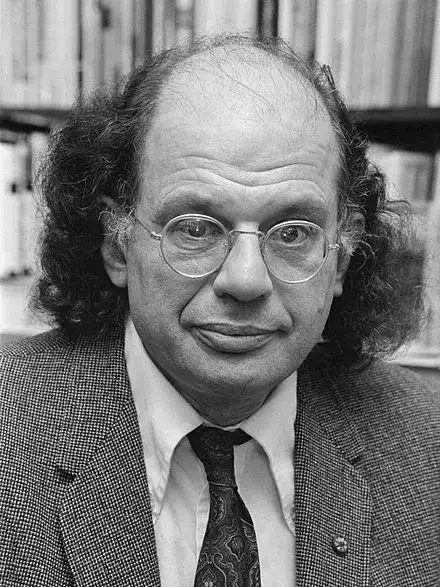
Allen Ginsberg
To Aunt Rose
To Aunt Rose
Aunt Rose—now—might I see you
with your thin face and buck tooth smile and pain
of rheumatism—and a long black heavy shoe
for your bony left leg
limping down the long hall in Newark on the running carpet
past the black grand piano
in the day room
where the parties were
and I sang Spanish loyalist songs
in a high squeaky voice
(hysterical) the committee listening
while you limped around the room
collected the money—
Aunt Honey, Uncle Sam, a stranger with a cloth arm
in his pocket
and huge young bald head
of Abraham Lincoln Brigade
—your long sad face
your tears of sexual frustration
(what smothered sobs and bony hips
under the pillows of Osborne Terrace)
—the time I stood on the toilet seat naked
and you powdered my thighs with calamine
against the poison ivy—my tender
and shamed first black curled hairs
what were you thinking in secret heart then
knowing me a man already—
and I an ignorant girl of family silence on the thin pedestal
of my legs in the bathroom—Museum of Newark.
Aunt Rose
Hitler is dead, Hitler is in Eternity; Hitler is with
Tamburlane and Emily Brontë
Though I see you walking still, a ghost on Osborne Terrace
down the long dark hall to the front door
limping a little with a pinched smile
in what must have been a silken
flower dress
welcoming my father, the Poet, on his visit to Newark
—see you arriving in the living room
dancing on your crippled leg
and clapping hands his book
had been accepted by Liveright
Hitler is dead and Liveright’s gone out of business
The Attic of the Past and Everlasting Minute are out of print
Uncle Harry sold his last silk stocking
Claire quit interpretive dancing school
Buba sits a wrinkled monument in Old
Ladies Home blinking at new babies
last time I saw you was the hospital
pale skull protruding under ashen skin
blue veined unconscious girl
in an oxygen tent
the war in Spain has ended long ago
Aunt Rose
Aunt Rose—now—might I see you
with your thin face and buck tooth smile and pain
of rheumatism—and a long black heavy shoe
for your bony left leg
limping down the long hall in Newark on the running carpet
past the black grand piano
in the day room
where the parties were
and I sang Spanish loyalist songs
in a high squeaky voice
(hysterical) the committee listening
while you limped around the room
collected the money—
Aunt Honey, Uncle Sam, a stranger with a cloth arm
in his pocket
and huge young bald head
of Abraham Lincoln Brigade
—your long sad face
your tears of sexual frustration
(what smothered sobs and bony hips
under the pillows of Osborne Terrace)
—the time I stood on the toilet seat naked
and you powdered my thighs with calamine
against the poison ivy—my tender
and shamed first black curled hairs
what were you thinking in secret heart then
knowing me a man already—
and I an ignorant girl of family silence on the thin pedestal
of my legs in the bathroom—Museum of Newark.
Aunt Rose
Hitler is dead, Hitler is in Eternity; Hitler is with
Tamburlane and Emily Brontë
Though I see you walking still, a ghost on Osborne Terrace
down the long dark hall to the front door
limping a little with a pinched smile
in what must have been a silken
flower dress
welcoming my father, the Poet, on his visit to Newark
—see you arriving in the living room
dancing on your crippled leg
and clapping hands his book
had been accepted by Liveright
Hitler is dead and Liveright’s gone out of business
The Attic of the Past and Everlasting Minute are out of print
Uncle Harry sold his last silk stocking
Claire quit interpretive dancing school
Buba sits a wrinkled monument in Old
Ladies Home blinking at new babies
last time I saw you was the hospital
pale skull protruding under ashen skin
blue veined unconscious girl
in an oxygen tent
the war in Spain has ended long ago
Aunt Rose
782
Allen Ginsberg
Song
Song
The weight of the world
is love.
Under the burden
of solitude,
under the burden
of dissatisfaction
the weight,
the weight we carry
is love.
Who can deny?
In dreams
it touches
the body,
in thought
constructs
a miracle,
in imagination
anguishes
till born
in human-looks
out of the heart
burning with purity-for
the burden of life
is love,
but we carry the weight
wearily,
and so must rest
in the arms of love
at last,
must rest in the arms
of love.
No rest
without love,
no sleep
without dreams
of love-be
mad or chill
obsessed with angels
or machines,
the final wish
is love
--cannot be bitter,
cannot deny,
cannot withhold
if denied:
the weight is too heavy
--must give
for no return
as thought
is given
in solitude
in all the excellence
of its excess.
The warm bodies
shine together
in the darkness,
the hand moves
to the center
of the flesh,
the skin trembles
in happiness
and the soul comes
joyful to the eye-
yes, yes,
that's what
I wanted,
I always wanted,
I always wanted,
to return
to the body
where I was born.
The weight of the world
is love.
Under the burden
of solitude,
under the burden
of dissatisfaction
the weight,
the weight we carry
is love.
Who can deny?
In dreams
it touches
the body,
in thought
constructs
a miracle,
in imagination
anguishes
till born
in human-looks
out of the heart
burning with purity-for
the burden of life
is love,
but we carry the weight
wearily,
and so must rest
in the arms of love
at last,
must rest in the arms
of love.
No rest
without love,
no sleep
without dreams
of love-be
mad or chill
obsessed with angels
or machines,
the final wish
is love
--cannot be bitter,
cannot deny,
cannot withhold
if denied:
the weight is too heavy
--must give
for no return
as thought
is given
in solitude
in all the excellence
of its excess.
The warm bodies
shine together
in the darkness,
the hand moves
to the center
of the flesh,
the skin trembles
in happiness
and the soul comes
joyful to the eye-
yes, yes,
that's what
I wanted,
I always wanted,
I always wanted,
to return
to the body
where I was born.
630
Allen Ginsberg
A Desolaltion
A Desolaltion
Now mind is clear
as a cloudless sky.
Time then to make a
home in wilderness.
What have I done but
wander with my eyes
in the trees? So I
will build: wife,
family, and seek
for neighbors.
Or I
perish of lonesomeness
or want of food or
lightning or the bear
(must tame the hart
and wear the bear).
And maybe make an image
of my wandering, a little
image—shrine by the
roadside to signify
to traveler that I live
here in the wilderness
awake and at home.
Now mind is clear
as a cloudless sky.
Time then to make a
home in wilderness.
What have I done but
wander with my eyes
in the trees? So I
will build: wife,
family, and seek
for neighbors.
Or I
perish of lonesomeness
or want of food or
lightning or the bear
(must tame the hart
and wear the bear).
And maybe make an image
of my wandering, a little
image—shrine by the
roadside to signify
to traveler that I live
here in the wilderness
awake and at home.
566
Allen Ginsberg
A Desolaltion
A Desolaltion
Now mind is clear
as a cloudless sky.
Time then to make a
home in wilderness.
What have I done but
wander with my eyes
in the trees? So I
will build: wife,
family, and seek
for neighbors.
Or I
perish of lonesomeness
or want of food or
lightning or the bear
(must tame the hart
and wear the bear).
And maybe make an image
of my wandering, a little
image—shrine by the
roadside to signify
to traveler that I live
here in the wilderness
awake and at home.
Now mind is clear
as a cloudless sky.
Time then to make a
home in wilderness.
What have I done but
wander with my eyes
in the trees? So I
will build: wife,
family, and seek
for neighbors.
Or I
perish of lonesomeness
or want of food or
lightning or the bear
(must tame the hart
and wear the bear).
And maybe make an image
of my wandering, a little
image—shrine by the
roadside to signify
to traveler that I live
here in the wilderness
awake and at home.
566
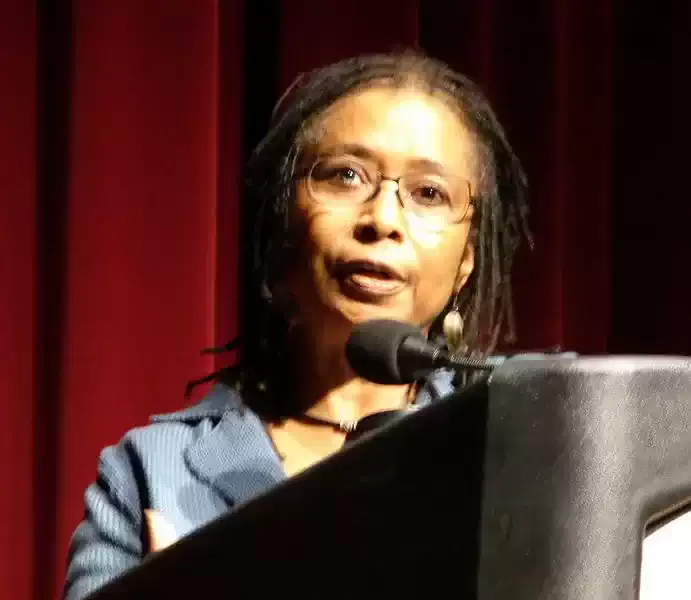
Alice Walker
Knowing you might some day come
Knowing you might some day come
Knowing you might some day come
and how unprepared I’ve always
been
like Mr. Sloppy
in Charles Dickens’
our Mutual Friend
I made a list:
not meat, vegetables, beer and pudding
but number l, warmth.
number 2, warmth.
number 3, warmth.
number 4, a good snuggler.
number 5, someone who sings
while he/she works.
number 6, a dancer.
number 7, someone who grows & is
intrigued by
the mind. And
by the spirit too.
Number 7, someone who is loved
by animals; and loves
them back without
a thought.
number 8, someone who smells
delicious.
number 9, someone whose anger
lasts no longer than mine.
number 10, someone who
stands beside me. behind me. If necessary
in front of me.
number 11, someone who
is a passable cook.
number 12, Someone who laughs
a lot, thinks I have a fine
sense
of humor
& has friends.
number 13, someone who can be
original in dress:
stylish
warlock –In silver, lapis
& black – to my witch.
Knowing you might some day come
and how unprepared I’ve always
been
like Mr. Sloppy
in Charles Dickens’
our Mutual Friend
I made a list:
not meat, vegetables, beer and pudding
but number l, warmth.
number 2, warmth.
number 3, warmth.
number 4, a good snuggler.
number 5, someone who sings
while he/she works.
number 6, a dancer.
number 7, someone who grows & is
intrigued by
the mind. And
by the spirit too.
Number 7, someone who is loved
by animals; and loves
them back without
a thought.
number 8, someone who smells
delicious.
number 9, someone whose anger
lasts no longer than mine.
number 10, someone who
stands beside me. behind me. If necessary
in front of me.
number 11, someone who
is a passable cook.
number 12, Someone who laughs
a lot, thinks I have a fine
sense
of humor
& has friends.
number 13, someone who can be
original in dress:
stylish
warlock –In silver, lapis
& black – to my witch.
260
Alice Walker
From: Poems To My Girls
From: Poems To My Girls
I
How can Humanity
look the deer
in
the face?
How can Mommy,
having erected
my fence?
I
How can Humanity
look the deer
in
the face?
How can Mommy,
having erected
my fence?
242
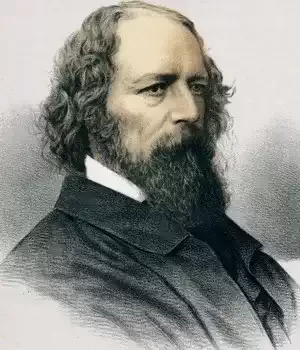
Alfred Lord Tennyson
The Ringlet
The Ringlet
'Your ringlets, your ringlets,
That look so golden-gay,
If you will give me one, but one,
To kiss it night and day,
The never chilling touch of Time
Will turn it silver-gray;
And then shall I know it is all true gold
To flame and sparkle and stream as of old.
Till all the comets in heaven are cold,
And all her stars decay.'
'Then take it, love, and put it by;
This cannot change, nor yet can I.'
'My ringlet, my ringlet,
That art so golden-gay,
Now never chilling touch of Time
Can turn thee silver-gray;
And a lad may wink, and a girl may hint,
And a fool may say his say;
For my doubts and fears were all amiss,
And I swear henceforth by this and this,
That a doubt will only come for a kiss,
And a fear to be kiss'd away.'
'Then kiss it, love, and put it by:
If this can change, why so can I.'
O Ringlet, O Ringlet,
I kiss'd you night and day,
And Ringlet, O Ringlet,
You still are golden-gay,
But Ringlet, O Ringlet,
You should be silver-gray:
For what is this which now I'm told,
I that took you for true gold,
She that gave you 's bought and sold,
Sold, sold.
O Ringlet, O Ringlet,
She blush'd a rosy red,
When Ringlet, O Ringlet
She clipt you from her head,
And Ringlet, O Ringlet,
She gave you me, and said,
'Come, kiss it, love and put it by:
If this can change, why so can I.'
O fie, you golden nothing, fie,
You golden lie.
O Ringlet, O Ringlet,
I count you much to blame,
For Ringlet, O Ringlet,
You put me much to shame,
So Ringlet, O Ringlet,
I doom you to the flame.
For what is this which now I learn,
Has given all my faith a turn?
Burn, you glossy heretic, burn,
Burn, burn.
'Your ringlets, your ringlets,
That look so golden-gay,
If you will give me one, but one,
To kiss it night and day,
The never chilling touch of Time
Will turn it silver-gray;
And then shall I know it is all true gold
To flame and sparkle and stream as of old.
Till all the comets in heaven are cold,
And all her stars decay.'
'Then take it, love, and put it by;
This cannot change, nor yet can I.'
'My ringlet, my ringlet,
That art so golden-gay,
Now never chilling touch of Time
Can turn thee silver-gray;
And a lad may wink, and a girl may hint,
And a fool may say his say;
For my doubts and fears were all amiss,
And I swear henceforth by this and this,
That a doubt will only come for a kiss,
And a fear to be kiss'd away.'
'Then kiss it, love, and put it by:
If this can change, why so can I.'
O Ringlet, O Ringlet,
I kiss'd you night and day,
And Ringlet, O Ringlet,
You still are golden-gay,
But Ringlet, O Ringlet,
You should be silver-gray:
For what is this which now I'm told,
I that took you for true gold,
She that gave you 's bought and sold,
Sold, sold.
O Ringlet, O Ringlet,
She blush'd a rosy red,
When Ringlet, O Ringlet
She clipt you from her head,
And Ringlet, O Ringlet,
She gave you me, and said,
'Come, kiss it, love and put it by:
If this can change, why so can I.'
O fie, you golden nothing, fie,
You golden lie.
O Ringlet, O Ringlet,
I count you much to blame,
For Ringlet, O Ringlet,
You put me much to shame,
So Ringlet, O Ringlet,
I doom you to the flame.
For what is this which now I learn,
Has given all my faith a turn?
Burn, you glossy heretic, burn,
Burn, burn.
497
Alfred Lord Tennyson
The Ringlet
The Ringlet
'Your ringlets, your ringlets,
That look so golden-gay,
If you will give me one, but one,
To kiss it night and day,
The never chilling touch of Time
Will turn it silver-gray;
And then shall I know it is all true gold
To flame and sparkle and stream as of old.
Till all the comets in heaven are cold,
And all her stars decay.'
'Then take it, love, and put it by;
This cannot change, nor yet can I.'
'My ringlet, my ringlet,
That art so golden-gay,
Now never chilling touch of Time
Can turn thee silver-gray;
And a lad may wink, and a girl may hint,
And a fool may say his say;
For my doubts and fears were all amiss,
And I swear henceforth by this and this,
That a doubt will only come for a kiss,
And a fear to be kiss'd away.'
'Then kiss it, love, and put it by:
If this can change, why so can I.'
O Ringlet, O Ringlet,
I kiss'd you night and day,
And Ringlet, O Ringlet,
You still are golden-gay,
But Ringlet, O Ringlet,
You should be silver-gray:
For what is this which now I'm told,
I that took you for true gold,
She that gave you 's bought and sold,
Sold, sold.
O Ringlet, O Ringlet,
She blush'd a rosy red,
When Ringlet, O Ringlet
She clipt you from her head,
And Ringlet, O Ringlet,
She gave you me, and said,
'Come, kiss it, love and put it by:
If this can change, why so can I.'
O fie, you golden nothing, fie,
You golden lie.
O Ringlet, O Ringlet,
I count you much to blame,
For Ringlet, O Ringlet,
You put me much to shame,
So Ringlet, O Ringlet,
I doom you to the flame.
For what is this which now I learn,
Has given all my faith a turn?
Burn, you glossy heretic, burn,
Burn, burn.
'Your ringlets, your ringlets,
That look so golden-gay,
If you will give me one, but one,
To kiss it night and day,
The never chilling touch of Time
Will turn it silver-gray;
And then shall I know it is all true gold
To flame and sparkle and stream as of old.
Till all the comets in heaven are cold,
And all her stars decay.'
'Then take it, love, and put it by;
This cannot change, nor yet can I.'
'My ringlet, my ringlet,
That art so golden-gay,
Now never chilling touch of Time
Can turn thee silver-gray;
And a lad may wink, and a girl may hint,
And a fool may say his say;
For my doubts and fears were all amiss,
And I swear henceforth by this and this,
That a doubt will only come for a kiss,
And a fear to be kiss'd away.'
'Then kiss it, love, and put it by:
If this can change, why so can I.'
O Ringlet, O Ringlet,
I kiss'd you night and day,
And Ringlet, O Ringlet,
You still are golden-gay,
But Ringlet, O Ringlet,
You should be silver-gray:
For what is this which now I'm told,
I that took you for true gold,
She that gave you 's bought and sold,
Sold, sold.
O Ringlet, O Ringlet,
She blush'd a rosy red,
When Ringlet, O Ringlet
She clipt you from her head,
And Ringlet, O Ringlet,
She gave you me, and said,
'Come, kiss it, love and put it by:
If this can change, why so can I.'
O fie, you golden nothing, fie,
You golden lie.
O Ringlet, O Ringlet,
I count you much to blame,
For Ringlet, O Ringlet,
You put me much to shame,
So Ringlet, O Ringlet,
I doom you to the flame.
For what is this which now I learn,
Has given all my faith a turn?
Burn, you glossy heretic, burn,
Burn, burn.
497
Alfred Lord Tennyson
The Princess: A Medley: Thy Voice is Heard
The Princess: A Medley: Thy Voice is Heard
Thy voice is heard thro' rolling drums,
That beat to battle where he stands;
Thy face across his fancy comes,
And gives the battle to his hands:
A moment, while the trumpets blow,
He sees his brood about thy knee;
The next, like fire he meets the foe,
And strikes him dead for thine and thee.
Thy voice is heard thro' rolling drums,
That beat to battle where he stands;
Thy face across his fancy comes,
And gives the battle to his hands:
A moment, while the trumpets blow,
He sees his brood about thy knee;
The next, like fire he meets the foe,
And strikes him dead for thine and thee.
445
Alfred Lord Tennyson
The Princess: A Medley: Now Sleeps the Crimson Petal
The Princess: A Medley: Now Sleeps the Crimson Petal
Now sleeps the crimson petal, now the white;
Nor waves the cypress in the palace walk;
Nor winks the gold fin in the porphyry font:
The fire-fly wakens: waken thou with me.
Now droops the milk-white peacock like a ghost,
And like a ghost she glimmers on to me.
Now lies the earth all Danaë to the stars,
And all thy heart lies open unto me.
Now slides the silent meteor on, and leaves
A shining furrow, as thy thoughts in me.
Now folds the lily all her sweetness up,
And slips into the bosom of the lake:
So fold thyself, my dearest, thou, and slip
Into my bosom and be lost in me.
Now sleeps the crimson petal, now the white;
Nor waves the cypress in the palace walk;
Nor winks the gold fin in the porphyry font:
The fire-fly wakens: waken thou with me.
Now droops the milk-white peacock like a ghost,
And like a ghost she glimmers on to me.
Now lies the earth all Danaë to the stars,
And all thy heart lies open unto me.
Now slides the silent meteor on, and leaves
A shining furrow, as thy thoughts in me.
Now folds the lily all her sweetness up,
And slips into the bosom of the lake:
So fold thyself, my dearest, thou, and slip
Into my bosom and be lost in me.
383
Alfred Lord Tennyson
The Princess: A Medley: Come down, O Maid
The Princess: A Medley: Come down, O Maid
Come down, O maid, from yonder mountain height:
What pleasure lives in height (the shepherd sang)
In height and cold, the splendour of the hills?
But cease to move so near the Heavens, and cease
To glide a sunbeam by the blasted Pine,
To sit a star upon the sparkling spire;
And come, for Love is of the valley, come,
For Love is of the valley, come thou down
And find him; by the happy threshold, he,
Or hand in hand with Plenty in the maize,
Or red with spirted purple of the vats,
Or foxlike in the vine; nor cares to walk
With Death and Morning on the silver horns,
Nor wilt thou snare him in the white ravine,
Nor find him dropt upon the firths of ice,
That huddling slant in furrow-cloven falls
To roll the torrent out of dusky doors:
But follow; let the torrent dance thee down
To find him in the valley; let the wild
Lean-headed Eagles yelp alone, and leave
The monstrous ledges there to slope, and spill
Their thousand wreaths of dangling water-smoke,
That like a broken purpose waste in air:
So waste not thou; but come; for all the vales
Await thee; azure pillars of the hearth
Arise to thee; the children call, and I
Thy shepherd pipe, and sweet is every sound,
Sweeter thy voice, but every sound is sweet;
Myriads of rivulets hurrying thro' the lawn,
The moan of doves in immemorial elms,
And murmuring of innumerable bees.
Come down, O maid, from yonder mountain height:
What pleasure lives in height (the shepherd sang)
In height and cold, the splendour of the hills?
But cease to move so near the Heavens, and cease
To glide a sunbeam by the blasted Pine,
To sit a star upon the sparkling spire;
And come, for Love is of the valley, come,
For Love is of the valley, come thou down
And find him; by the happy threshold, he,
Or hand in hand with Plenty in the maize,
Or red with spirted purple of the vats,
Or foxlike in the vine; nor cares to walk
With Death and Morning on the silver horns,
Nor wilt thou snare him in the white ravine,
Nor find him dropt upon the firths of ice,
That huddling slant in furrow-cloven falls
To roll the torrent out of dusky doors:
But follow; let the torrent dance thee down
To find him in the valley; let the wild
Lean-headed Eagles yelp alone, and leave
The monstrous ledges there to slope, and spill
Their thousand wreaths of dangling water-smoke,
That like a broken purpose waste in air:
So waste not thou; but come; for all the vales
Await thee; azure pillars of the hearth
Arise to thee; the children call, and I
Thy shepherd pipe, and sweet is every sound,
Sweeter thy voice, but every sound is sweet;
Myriads of rivulets hurrying thro' the lawn,
The moan of doves in immemorial elms,
And murmuring of innumerable bees.
431
Alfred Lord Tennyson
The Princess: A Medley: As thro' the land
The Princess: A Medley: As thro' the land
As thro' the land at eve we went,
And pluck'd the ripen'd ears,
We fell out, my wife and I,
O we fell out I know not why,
And kiss'd again with tears.
And blessings on the falling out
That all the more endears,
When we fall out with those we love
And kiss again with tears!
For when we came where lies the child
We lost in other years,
There above the little grave,
O there above the little grave,
We kiss'd again with tears.
As thro' the land at eve we went,
And pluck'd the ripen'd ears,
We fell out, my wife and I,
O we fell out I know not why,
And kiss'd again with tears.
And blessings on the falling out
That all the more endears,
When we fall out with those we love
And kiss again with tears!
For when we came where lies the child
We lost in other years,
There above the little grave,
O there above the little grave,
We kiss'd again with tears.
398
Alfred Lord Tennyson
The Princess (part 3)
The Princess (part 3)
Morn in the wake of the morning star
Came furrowing all the orient into gold.
We rose, and each by other drest with care
Descended to the court that lay three parts
In shadow, but the Muses' heads were touched
Above the darkness from their native East.
There while we stood beside the fount, and watched
Or seemed to watch the dancing bubble, approached
Melissa, tinged with wan from lack of sleep,
Or grief, and glowing round her dewy eyes
The circled Iris of a night of tears;
'And fly,' she cried, 'O fly, while yet you may!
My mother knows:' and when I asked her 'how,'
'My fault' she wept 'my fault! and yet not mine;
Yet mine in part. O hear me, pardon me.
My mother, 'tis her wont from night to night
To rail at Lady Psyche and her side.
She says the Princess should have been the Head,
Herself and Lady Psyche the two arms;
And so it was agreed when first they came;
But Lady Psyche was the right hand now,
And the left, or not, or seldom used;
Hers more than half the students, all the love.
And so last night she fell to canvass you:
~Her~ countrywomen! she did not envy her.
"Who ever saw such wild barbarians?
Girls?--more like men!" and at these words the snake,
My secret, seemed to stir within my breast;
And oh, Sirs, could I help it, but my cheek
Began to burn and burn, and her lynx eye
To fix and make me hotter, till she laughed:
"O marvellously modest maiden, you!
Men! girls, like men! why, if they had been men
You need not set your thoughts in rubric thus
For wholesale comment." Pardon, I am shamed
That I must needs repeat for my excuse
What looks so little graceful: "men" (for still
My mother went revolving on the word)
"And so they are,--very like men indeed--
And with that woman closeted for hours!"
Then came these dreadful words out one by one,
"Why--these--~are~--men:" I shuddered: "and you know it."
"O ask me nothing," I said: "And she knows too,
And she conceals it." So my mother clutched
The truth at once, but with no word from me;
And now thus early risen she goes to inform
The Princess: Lady Psyche will be crushed;
But you may yet be saved, and therefore fly;
But heal me with your pardon ere you go.'
'What pardon, sweet Melissa, for a blush?'
Said Cyril: 'Pale one, blush again: than wear
Those lilies, better blush our lives away.
Yet let us breathe for one hour more in Heaven'
He added, 'lest some classic Angel speak
In scorn of us, "They mounted, Ganymedes,
To tumble, Vulcans, on the second morn."
But I will melt this marble into wax
To yield us farther furlough:' and he went.
Melissa shook her doubtful curls, and thought
He scarce would prosper. 'Tell us,' Florian asked,
'How grew this feud betwixt the right and left.'
'O long ago,' she said, 'betwixt these two
Division smoulders hidden; 'tis my mother,
Too jealous, often fretful as the wind
Pent in a crevice: much I bear with her:
I never knew my father, but she says
(God help her) she was wedded to a fool;
And still she railed against the state of things.
She had the care of Lady Ida's youth,
And from the Queen's decease she brought her up.
But when your sister came she won the heart
Of Ida: they were still together, grew
(For so they said themselves) inosculated;
Consonant chords that shiver to one note;
One mind in all things: yet my mother still
Affirms your Psyche thieved her theories,
And angled with them for her pupil's love:
She calls her plagiarist; I know not what:
But I must go: I dare not tarry,' and light,
As flies the shadow of a bird, she fled.
Then murmured Florian gazing after her,
'An open-hearted maiden, true and pure.
If I could love, why this were she: how pretty
Her blushing was, and how she blushed again,
As if to close with Cyril's random wish:
Not like your Princess crammed with erring pride,
Nor like poor Psyche whom she drags in tow.'
'The crane,' I said, 'may chatter of the crane,
The dove may murmur of the dove, but I
An eagle clang an eagle to the sphere.
My princess, O my princess! true she errs,
But in her own grand way: being herself
Three times more noble than three score of men,
She sees herself in every woman else,
And so she wears her error like a crown
To blind the truth and me: for her, and her,
Hebes are they to hand ambrosia, mix
The nectar; but--ah she--whene'er she moves
The Samian Herè rises and she speaks
A Memnon smitten with the morning Sun.'
So saying from the court we paced, and gained
The terrace ranged along the Northern front,
And leaning there on those balusters, high
Above the empurpled champaign, drank the gale
That blown about the foliage underneath,
And sated with the innumerable rose,
Beat balm upon our eyelids. Hither came
Cyril, and yawning 'O hard task,' he cried;
'No fighting shadows here! I forced a way
Through opposition crabbed and gnarled.
Better to clear prime forests, heave and thump
A league of street in summer solstice down,
Than hammer at this reverend gentlewoman.
I knocked and, bidden, entered; found her there
At point to move, and settled in her eyes
The green malignant light of coming storm.
Sir, I was courteous, every phrase well-oiled,
As man's could be; yet maiden-meek I prayed
Concealment: she demanded who we were,
And why we came? I fabled nothing fair,
But, your example pilot, told her all.
Up went the hushed amaze of hand and eye.
But when I dwelt upon your old affiance,
She answered sharply that I talked astray.
I urged the fierce inscription on the gate,
And our three lives. True--we had limed ourselves
With open eyes, and we must take the chance.
But such extremes, I told her, well might harm
The woman's cause. "Not more than now," she said,
"So puddled as it is with favouritism."
I tried the mother's heart. Shame might befall
Melissa, knowing, saying not she knew:
Her answer was "Leave me to deal with that."
I spoke of war to come and many deaths,
And she replied, her duty was to speak,
And duty duty, clear of consequences.
I grew discouraged, Sir; but since I knew
No rock so hard but that a little wave
May beat admission in a thousand years,
I recommenced; "Decide not ere you pause.
I find you here but in the second place,
Some say the third--the authentic foundress you.
I offer boldly: we will seat you highest:
Wink at our advent: help my prince to gain
His rightful bride, and here I promise you
Some palace in our land, where you shall reign
The head and heart of all our fair she-world,
And your great name flow on with broadening time
For ever." Well, she balanced this a little,
And told me she would answer us today,
meantime be mute: thus much, nor more I gained.'
He ceasing, came a message from the Head.
'That afternoon the Princess rode to take
The dip of certain strata to the North.
Would we go with her? we should find the land
Worth seeing; and the river made a fall
Out yonder:' then she pointed on to where
A double hill ran up his furrowy forks
Beyond the thick-leaved platans of the vale.
Agreed to, this, the day fled on through all
Its range of duties to the appointed hour.
Then summoned to the porch we went. She stood
Among her maidens, higher by the head,
Her back against a pillar, her foot on one
Of those tame leopards. Kittenlike he rolled
And pawed about her sandal. I drew near;
I gazed. On a sudden my strange seizure came
Upon me, the weird vision of our house:
The Princess Ida seemed a hollow show,
Her gay-furred cats a painted fantasy,
Her college and her maidens, empty masks,
And I myself the shadow of a dream,
For all things were and were not. Yet I felt
My heart beat thick with passion and with awe;
Then from my breast the involuntary sigh
Brake, as she smote me with the light of eyes
That lent my knee desire to kneel, and shook
My pulses, till to horse we got, and so
Went forth in long retinue following up
The river as it narrowed to the hills.
I rode beside her and to me she said:
'O friend, we trust that you esteemed us not
Too harsh to your companion yestermorn;
Unwillingly we spake.' 'No--not to her,'
I answered, 'but to one of whom we spake
Your Highness might have seemed the thing you say.'
'Again?' she cried, 'are you ambassadresses
From him to me? we give you, being strange,
A license: speak, and let the topic die.'
I stammered that I knew him--could have wished-'
Our king expects--was there no precontract?
There is no truer-hearted--ah, you seem
All he prefigured, and he could not see
The bird of passage flying south but longed
To follow: surely, if your Highness keep
Your purport, you will shock him even to death,
Or baser courses, children of despair.'
'Poor boy,' she said, 'can he not read--no books?
Quoit, tennis, ball--no games? nor deals in that
Which men delight in, martial exercise?
To nurse a blind ideal like a girl,
Methinks he seems no better than a girl;
As girls were once, as we ourself have been:
We had our dreams; perhaps he mixt with them:
We touch on our dead self, nor shun to do it,
Being other--since we learnt our meaning here,
To lift the woman's fallen divinity
Upon an even pedestal with man.'
She paused, and added with a haughtier smile
'And as to precontracts, we move, my friend,
At no man's beck, but know ourself and thee,
O Vashti, noble Vashti! Summoned out
She kept her state, and left the drunken king
To brawl at Shushan underneath the palms.'
'Alas your Highness breathes full East,' I said,
'On that which leans to you. I know the Prince,
I prize his truth: and then how vast a work
To assail this gray preëminence of man!
You grant me license; might I use it? think;
Ere half be done perchance your life may fail;
Then comes the feebler heiress of your plan,
And takes and ruins all; and thus your pains
May only make that footprint upon sand
Which old-recurring waves of prejudice
Resmooth to nothing: might I dread that you,
With only Fame for spouse and your great deeds
For issue, yet may live in vain, and miss,
Meanwhile, what every woman counts her due,
Love, children, happiness?'
And she exclaimed,
'Peace, you young savage of the Northern wild!
What! though your Prince's love were like a God's,
Have we not made ourself the sacrifice?
You are bold indeed: we are not talked to thus:
Yet will we say for children, would they grew
Like field-flowers everywhere! we like them well:
But children die; and let me tell you, girl,
Howe'er you babble, great deeds cannot die;
They with the sun and moon renew their light
For ever, blessing those that look on them.
Children--that men may pluck them from our hearts,
Kill us with pity, break us with ourselves-O--
children--there is nothing upon earth
More miserable than she that has a son
And sees him err: nor would we work for fame;
Though she perhaps might reap the applause of Great,
Who earns the one POU STO whence after-hands
May move the world, though she herself effect
But little: wherefore up and act, nor shrink
For fear our solid aim be dissipated
By frail successors. Would, indeed, we had been,
In lieu of many mortal flies, a race
Of giants living, each, a thousand years,
That we might see our own work out, and watch
The sandy footprint harden into stone.'
I answered nothing, doubtful in myself
If that strange Poet-princess with her grand
Imaginations might at all be won.
And she broke out interpreting my thoughts:
'No doubt we seem a kind of monster to you;
We are used to that: for women, up till this
Cramped under worse than South-sea-isle taboo,
Dwarfs of the gynæceum, fail so far
In high desire, they know not, cannot guess
How much their welfare is a passion to us.
If we could give them surer, quicker proof--
Oh if our end were less achievable
By slow approaches, than by single act
Of immolation, any phase of death,
We were as prompt to spring against the pikes,
Or down the fiery gulf as talk of it,
To compass our dear sisters' liberties.'
She bowed as if to veil a noble tear;
And up we came to where the river sloped
To plunge in cataract, shattering on black blocks
A breadth of thunder. O'er it shook the woods,
And danced the colour, and, below, stuck out
The bones of some vast bulk that lived and roared
Before man was. She gazed awhile and said,
'As these rude bones to us, are we to her
That will be.' 'Dare we dream of that,' I asked,
'Which wrought us, as the workman and his work,
That practice betters?' 'How,' she cried, 'you love
The metaphysics! read and earn our prize,
A golden brooch: beneath an emerald plane
Sits Diotima, teaching him that died
Of hemlock; our device; wrought to the life;
She rapt upon her subject, he on her:
For there are schools for all.' 'And yet' I said
'Methinks I have not found among them all
One anatomic.' 'Nay, we thought of that,'
She answered, 'but it pleased us not: in truth
We shudder but to dream our maids should ape
Those monstrous males that carve the living hound,
And cram him with the fragments of the grave,
Or in the dark dissolving human heart,
And holy secrets of this microcosm,
Dabbling a shameless hand with shameful jest,
Encarnalize their spirits: yet we know
Knowledge is knowledge, and this matter hangs:
Howbeit ourself, foreseeing casualty,
Nor willing men should come among us, learnt,
For many weary moons before we came,
This craft of healing. Were you sick, ourself
Would tend upon you. To your question now,
Which touches on the workman and his work.
Let there be light and there was light: 'tis so:
For was, and is, and will be, are but is;
And all creation is one act at once,
The birth of light: but we that are not all,
As parts, can see but parts, now this, now that,
And live, perforce, from thought to thought, and make
One act a phantom of succession: thus
Our weakness somehow shapes the shadow, Time;
But in the shadow will we work, and mould
The woman to the fuller day.'
She spake
With kindled eyes; we rode a league beyond,
And, o'er a bridge of pinewood crossing, came
On flowery levels underneath the crag,
Full of all beauty. 'O how sweet' I said
(For I was half-oblivious of my mask)
'To linger here with one that loved us.' 'Yea,'
She answered, 'or with fair philosophies
That lift the fancy; for indeed these fields
Are lovely, lovelier not the Elysian lawns,
Where paced the Demigods of old, and saw
The soft white vapour streak the crownèd towers
Built to the Sun:' then, turning to her maids,
'Pitch our pavilion here upon the sward;
Lay out the viands.' At the word, they raised
A tent of satin, elaborately wrought
With fair Corinna's triumph; here she stood,
Engirt with many a florid maiden-cheek,
The woman-conqueror; woman-conquered there
The bearded Victor of ten-thousand hymns,
And all the men mourned at his side: but we
Set forth to climb; then, climbing, Cyril kept
With Psyche, with Melissa Florian, I
With mine affianced. Many a little hand
Glanced like a touch of sunshine on the rocks,
Many a light foot shone like a jewel set
In the dark crag: and then we turned, we wound
About the cliffs, the copses, out and in,
Hammering and clinking, chattering stony names
Of shales and hornblende, rag and trap and tuff,
Amygdaloid and trachyte, till the Sun
Grew broader toward his death and fell, and all
The rosy heights came out above the lawns.
The splendour falls on castle walls
And snowy summits old in story:
The long light shakes across the lakes,
And the wild cataract leaps in glory.
Blow, bugle, blow, set the wild echoes flying,
Blow, bugle; answer, echoes, dying, dying, dying.
O hark, O hear! how thin and clear,
And thinner, clearer, farther going!
O sweet and far from cliff and scar
The horns of Elfland faintly blowing!
Blow, let us hear the purple glens replying:
Blow, bugle; answer, echoes, dying, dying, dying.
O love, they die in yon rich sky,
They faint on hill or field or river:
Our echoes roll from soul to soul,
And grow for ever and for ever.
Blow, bugle, blow, set the wild echoes flying,
And answer, echoes, answer, dying, dying, dying.
Morn in the wake of the morning star
Came furrowing all the orient into gold.
We rose, and each by other drest with care
Descended to the court that lay three parts
In shadow, but the Muses' heads were touched
Above the darkness from their native East.
There while we stood beside the fount, and watched
Or seemed to watch the dancing bubble, approached
Melissa, tinged with wan from lack of sleep,
Or grief, and glowing round her dewy eyes
The circled Iris of a night of tears;
'And fly,' she cried, 'O fly, while yet you may!
My mother knows:' and when I asked her 'how,'
'My fault' she wept 'my fault! and yet not mine;
Yet mine in part. O hear me, pardon me.
My mother, 'tis her wont from night to night
To rail at Lady Psyche and her side.
She says the Princess should have been the Head,
Herself and Lady Psyche the two arms;
And so it was agreed when first they came;
But Lady Psyche was the right hand now,
And the left, or not, or seldom used;
Hers more than half the students, all the love.
And so last night she fell to canvass you:
~Her~ countrywomen! she did not envy her.
"Who ever saw such wild barbarians?
Girls?--more like men!" and at these words the snake,
My secret, seemed to stir within my breast;
And oh, Sirs, could I help it, but my cheek
Began to burn and burn, and her lynx eye
To fix and make me hotter, till she laughed:
"O marvellously modest maiden, you!
Men! girls, like men! why, if they had been men
You need not set your thoughts in rubric thus
For wholesale comment." Pardon, I am shamed
That I must needs repeat for my excuse
What looks so little graceful: "men" (for still
My mother went revolving on the word)
"And so they are,--very like men indeed--
And with that woman closeted for hours!"
Then came these dreadful words out one by one,
"Why--these--~are~--men:" I shuddered: "and you know it."
"O ask me nothing," I said: "And she knows too,
And she conceals it." So my mother clutched
The truth at once, but with no word from me;
And now thus early risen she goes to inform
The Princess: Lady Psyche will be crushed;
But you may yet be saved, and therefore fly;
But heal me with your pardon ere you go.'
'What pardon, sweet Melissa, for a blush?'
Said Cyril: 'Pale one, blush again: than wear
Those lilies, better blush our lives away.
Yet let us breathe for one hour more in Heaven'
He added, 'lest some classic Angel speak
In scorn of us, "They mounted, Ganymedes,
To tumble, Vulcans, on the second morn."
But I will melt this marble into wax
To yield us farther furlough:' and he went.
Melissa shook her doubtful curls, and thought
He scarce would prosper. 'Tell us,' Florian asked,
'How grew this feud betwixt the right and left.'
'O long ago,' she said, 'betwixt these two
Division smoulders hidden; 'tis my mother,
Too jealous, often fretful as the wind
Pent in a crevice: much I bear with her:
I never knew my father, but she says
(God help her) she was wedded to a fool;
And still she railed against the state of things.
She had the care of Lady Ida's youth,
And from the Queen's decease she brought her up.
But when your sister came she won the heart
Of Ida: they were still together, grew
(For so they said themselves) inosculated;
Consonant chords that shiver to one note;
One mind in all things: yet my mother still
Affirms your Psyche thieved her theories,
And angled with them for her pupil's love:
She calls her plagiarist; I know not what:
But I must go: I dare not tarry,' and light,
As flies the shadow of a bird, she fled.
Then murmured Florian gazing after her,
'An open-hearted maiden, true and pure.
If I could love, why this were she: how pretty
Her blushing was, and how she blushed again,
As if to close with Cyril's random wish:
Not like your Princess crammed with erring pride,
Nor like poor Psyche whom she drags in tow.'
'The crane,' I said, 'may chatter of the crane,
The dove may murmur of the dove, but I
An eagle clang an eagle to the sphere.
My princess, O my princess! true she errs,
But in her own grand way: being herself
Three times more noble than three score of men,
She sees herself in every woman else,
And so she wears her error like a crown
To blind the truth and me: for her, and her,
Hebes are they to hand ambrosia, mix
The nectar; but--ah she--whene'er she moves
The Samian Herè rises and she speaks
A Memnon smitten with the morning Sun.'
So saying from the court we paced, and gained
The terrace ranged along the Northern front,
And leaning there on those balusters, high
Above the empurpled champaign, drank the gale
That blown about the foliage underneath,
And sated with the innumerable rose,
Beat balm upon our eyelids. Hither came
Cyril, and yawning 'O hard task,' he cried;
'No fighting shadows here! I forced a way
Through opposition crabbed and gnarled.
Better to clear prime forests, heave and thump
A league of street in summer solstice down,
Than hammer at this reverend gentlewoman.
I knocked and, bidden, entered; found her there
At point to move, and settled in her eyes
The green malignant light of coming storm.
Sir, I was courteous, every phrase well-oiled,
As man's could be; yet maiden-meek I prayed
Concealment: she demanded who we were,
And why we came? I fabled nothing fair,
But, your example pilot, told her all.
Up went the hushed amaze of hand and eye.
But when I dwelt upon your old affiance,
She answered sharply that I talked astray.
I urged the fierce inscription on the gate,
And our three lives. True--we had limed ourselves
With open eyes, and we must take the chance.
But such extremes, I told her, well might harm
The woman's cause. "Not more than now," she said,
"So puddled as it is with favouritism."
I tried the mother's heart. Shame might befall
Melissa, knowing, saying not she knew:
Her answer was "Leave me to deal with that."
I spoke of war to come and many deaths,
And she replied, her duty was to speak,
And duty duty, clear of consequences.
I grew discouraged, Sir; but since I knew
No rock so hard but that a little wave
May beat admission in a thousand years,
I recommenced; "Decide not ere you pause.
I find you here but in the second place,
Some say the third--the authentic foundress you.
I offer boldly: we will seat you highest:
Wink at our advent: help my prince to gain
His rightful bride, and here I promise you
Some palace in our land, where you shall reign
The head and heart of all our fair she-world,
And your great name flow on with broadening time
For ever." Well, she balanced this a little,
And told me she would answer us today,
meantime be mute: thus much, nor more I gained.'
He ceasing, came a message from the Head.
'That afternoon the Princess rode to take
The dip of certain strata to the North.
Would we go with her? we should find the land
Worth seeing; and the river made a fall
Out yonder:' then she pointed on to where
A double hill ran up his furrowy forks
Beyond the thick-leaved platans of the vale.
Agreed to, this, the day fled on through all
Its range of duties to the appointed hour.
Then summoned to the porch we went. She stood
Among her maidens, higher by the head,
Her back against a pillar, her foot on one
Of those tame leopards. Kittenlike he rolled
And pawed about her sandal. I drew near;
I gazed. On a sudden my strange seizure came
Upon me, the weird vision of our house:
The Princess Ida seemed a hollow show,
Her gay-furred cats a painted fantasy,
Her college and her maidens, empty masks,
And I myself the shadow of a dream,
For all things were and were not. Yet I felt
My heart beat thick with passion and with awe;
Then from my breast the involuntary sigh
Brake, as she smote me with the light of eyes
That lent my knee desire to kneel, and shook
My pulses, till to horse we got, and so
Went forth in long retinue following up
The river as it narrowed to the hills.
I rode beside her and to me she said:
'O friend, we trust that you esteemed us not
Too harsh to your companion yestermorn;
Unwillingly we spake.' 'No--not to her,'
I answered, 'but to one of whom we spake
Your Highness might have seemed the thing you say.'
'Again?' she cried, 'are you ambassadresses
From him to me? we give you, being strange,
A license: speak, and let the topic die.'
I stammered that I knew him--could have wished-'
Our king expects--was there no precontract?
There is no truer-hearted--ah, you seem
All he prefigured, and he could not see
The bird of passage flying south but longed
To follow: surely, if your Highness keep
Your purport, you will shock him even to death,
Or baser courses, children of despair.'
'Poor boy,' she said, 'can he not read--no books?
Quoit, tennis, ball--no games? nor deals in that
Which men delight in, martial exercise?
To nurse a blind ideal like a girl,
Methinks he seems no better than a girl;
As girls were once, as we ourself have been:
We had our dreams; perhaps he mixt with them:
We touch on our dead self, nor shun to do it,
Being other--since we learnt our meaning here,
To lift the woman's fallen divinity
Upon an even pedestal with man.'
She paused, and added with a haughtier smile
'And as to precontracts, we move, my friend,
At no man's beck, but know ourself and thee,
O Vashti, noble Vashti! Summoned out
She kept her state, and left the drunken king
To brawl at Shushan underneath the palms.'
'Alas your Highness breathes full East,' I said,
'On that which leans to you. I know the Prince,
I prize his truth: and then how vast a work
To assail this gray preëminence of man!
You grant me license; might I use it? think;
Ere half be done perchance your life may fail;
Then comes the feebler heiress of your plan,
And takes and ruins all; and thus your pains
May only make that footprint upon sand
Which old-recurring waves of prejudice
Resmooth to nothing: might I dread that you,
With only Fame for spouse and your great deeds
For issue, yet may live in vain, and miss,
Meanwhile, what every woman counts her due,
Love, children, happiness?'
And she exclaimed,
'Peace, you young savage of the Northern wild!
What! though your Prince's love were like a God's,
Have we not made ourself the sacrifice?
You are bold indeed: we are not talked to thus:
Yet will we say for children, would they grew
Like field-flowers everywhere! we like them well:
But children die; and let me tell you, girl,
Howe'er you babble, great deeds cannot die;
They with the sun and moon renew their light
For ever, blessing those that look on them.
Children--that men may pluck them from our hearts,
Kill us with pity, break us with ourselves-O--
children--there is nothing upon earth
More miserable than she that has a son
And sees him err: nor would we work for fame;
Though she perhaps might reap the applause of Great,
Who earns the one POU STO whence after-hands
May move the world, though she herself effect
But little: wherefore up and act, nor shrink
For fear our solid aim be dissipated
By frail successors. Would, indeed, we had been,
In lieu of many mortal flies, a race
Of giants living, each, a thousand years,
That we might see our own work out, and watch
The sandy footprint harden into stone.'
I answered nothing, doubtful in myself
If that strange Poet-princess with her grand
Imaginations might at all be won.
And she broke out interpreting my thoughts:
'No doubt we seem a kind of monster to you;
We are used to that: for women, up till this
Cramped under worse than South-sea-isle taboo,
Dwarfs of the gynæceum, fail so far
In high desire, they know not, cannot guess
How much their welfare is a passion to us.
If we could give them surer, quicker proof--
Oh if our end were less achievable
By slow approaches, than by single act
Of immolation, any phase of death,
We were as prompt to spring against the pikes,
Or down the fiery gulf as talk of it,
To compass our dear sisters' liberties.'
She bowed as if to veil a noble tear;
And up we came to where the river sloped
To plunge in cataract, shattering on black blocks
A breadth of thunder. O'er it shook the woods,
And danced the colour, and, below, stuck out
The bones of some vast bulk that lived and roared
Before man was. She gazed awhile and said,
'As these rude bones to us, are we to her
That will be.' 'Dare we dream of that,' I asked,
'Which wrought us, as the workman and his work,
That practice betters?' 'How,' she cried, 'you love
The metaphysics! read and earn our prize,
A golden brooch: beneath an emerald plane
Sits Diotima, teaching him that died
Of hemlock; our device; wrought to the life;
She rapt upon her subject, he on her:
For there are schools for all.' 'And yet' I said
'Methinks I have not found among them all
One anatomic.' 'Nay, we thought of that,'
She answered, 'but it pleased us not: in truth
We shudder but to dream our maids should ape
Those monstrous males that carve the living hound,
And cram him with the fragments of the grave,
Or in the dark dissolving human heart,
And holy secrets of this microcosm,
Dabbling a shameless hand with shameful jest,
Encarnalize their spirits: yet we know
Knowledge is knowledge, and this matter hangs:
Howbeit ourself, foreseeing casualty,
Nor willing men should come among us, learnt,
For many weary moons before we came,
This craft of healing. Were you sick, ourself
Would tend upon you. To your question now,
Which touches on the workman and his work.
Let there be light and there was light: 'tis so:
For was, and is, and will be, are but is;
And all creation is one act at once,
The birth of light: but we that are not all,
As parts, can see but parts, now this, now that,
And live, perforce, from thought to thought, and make
One act a phantom of succession: thus
Our weakness somehow shapes the shadow, Time;
But in the shadow will we work, and mould
The woman to the fuller day.'
She spake
With kindled eyes; we rode a league beyond,
And, o'er a bridge of pinewood crossing, came
On flowery levels underneath the crag,
Full of all beauty. 'O how sweet' I said
(For I was half-oblivious of my mask)
'To linger here with one that loved us.' 'Yea,'
She answered, 'or with fair philosophies
That lift the fancy; for indeed these fields
Are lovely, lovelier not the Elysian lawns,
Where paced the Demigods of old, and saw
The soft white vapour streak the crownèd towers
Built to the Sun:' then, turning to her maids,
'Pitch our pavilion here upon the sward;
Lay out the viands.' At the word, they raised
A tent of satin, elaborately wrought
With fair Corinna's triumph; here she stood,
Engirt with many a florid maiden-cheek,
The woman-conqueror; woman-conquered there
The bearded Victor of ten-thousand hymns,
And all the men mourned at his side: but we
Set forth to climb; then, climbing, Cyril kept
With Psyche, with Melissa Florian, I
With mine affianced. Many a little hand
Glanced like a touch of sunshine on the rocks,
Many a light foot shone like a jewel set
In the dark crag: and then we turned, we wound
About the cliffs, the copses, out and in,
Hammering and clinking, chattering stony names
Of shales and hornblende, rag and trap and tuff,
Amygdaloid and trachyte, till the Sun
Grew broader toward his death and fell, and all
The rosy heights came out above the lawns.
The splendour falls on castle walls
And snowy summits old in story:
The long light shakes across the lakes,
And the wild cataract leaps in glory.
Blow, bugle, blow, set the wild echoes flying,
Blow, bugle; answer, echoes, dying, dying, dying.
O hark, O hear! how thin and clear,
And thinner, clearer, farther going!
O sweet and far from cliff and scar
The horns of Elfland faintly blowing!
Blow, let us hear the purple glens replying:
Blow, bugle; answer, echoes, dying, dying, dying.
O love, they die in yon rich sky,
They faint on hill or field or river:
Our echoes roll from soul to soul,
And grow for ever and for ever.
Blow, bugle, blow, set the wild echoes flying,
And answer, echoes, answer, dying, dying, dying.
454
Alfred Lord Tennyson
The Princess (part 1)
The Princess (part 1)
A prince I was, blue-eyed, and fair in face,
Of temper amorous, as the first of May,
With lengths of yellow ringlet, like a girl,
For on my cradle shone the Northern star.
There lived an ancient legend in our house.
Some sorcerer, whom a far-off grandsire burnt
Because he cast no shadow, had foretold,
Dying, that none of all our blood should know
The shadow from the substance, and that one
Should come to fight with shadows and to fall.
For so, my mother said, the story ran.
And, truly, waking dreams were, more or less,
An old and strange affection of the house.
Myself too had weird seizures, Heaven knows what:
On a sudden in the midst of men and day,
And while I walked and talked as heretofore,
I seemed to move among a world of ghosts,
And feel myself the shadow of a dream.
Our great court-Galen poised his gilt-head cane,
And pawed his beard, and muttered 'catalepsy'.
My mother pitying made a thousand prayers;
My mother was as mild as any saint,
Half-canonized by all that looked on her,
So gracious was her tact and tenderness:
But my good father thought a king a king;
He cared not for the affection of the house;
He held his sceptre like a pedant's wand
To lash offence, and with long arms and hands
Reached out, and picked offenders from the mass
For judgment.
Now it chanced that I had been,
While life was yet in bud and blade, bethrothed
To one, a neighbouring Princess: she to me
Was proxy-wedded with a bootless calf
At eight years old; and still from time to time
Came murmurs of her beauty from the South,
And of her brethren, youths of puissance;
And still I wore her picture by my heart,
And one dark tress; and all around them both
Sweet thoughts would swarm as bees about their queen.
But when the days drew nigh that I should wed,
My father sent ambassadors with furs
And jewels, gifts, to fetch her: these brought back
A present, a great labour of the loom;
And therewithal an answer vague as wind:
Besides, they saw the king; he took the gifts;
He said there was a compact; that was true:
But then she had a will; was he to blame?
And maiden fancies; loved to live alone
Among her women; certain, would not wed.
That morning in the presence room I stood
With Cyril and with Florian, my two friends:
The first, a gentleman of broken means
(His father's fault) but given to starts and bursts
Of revel; and the last, my other heart,
And almost my half-self, for still we moved
Together, twinned as horse's ear and eye.
Now, while they spake, I saw my father's face
Grow long and troubled like a rising moon,
Inflamed with wrath: he started on his feet,
Tore the king's letter, snowed it down, and rent
The wonder of the loom through warp and woof
From skirt to skirt; and at the last he sware
That he would send a hundred thousand men,
And bring her in a whirlwind: then he chewed
The thrice-turned cud of wrath, and cooked his spleen,
Communing with his captains of the war.
At last I spoke. 'My father, let me go.
It cannot be but some gross error lies
In this report, this answer of a king,
Whom all men rate as kind and hospitable:
Or, maybe, I myself, my bride once seen,
Whate'er my grief to find her less than fame,
May rue the bargain made.' And Florian said:
'I have a sister at the foreign court,
Who moves about the Princess; she, you know,
Who wedded with a nobleman from thence:
He, dying lately, left her, as I hear,
The lady of three castles in that land:
Through her this matter might be sifted clean.'
And Cyril whispered: 'Take me with you too.'
Then laughing 'what, if these weird seizures come
Upon you in those lands, and no one near
To point you out the shadow from the truth!
Take me: I'll serve you better in a strait;
I grate on rusty hinges here:' but 'No!'
Roared the rough king, 'you shall not; we ourself
Will crush her pretty maiden fancies dead
In iron gauntlets: break the council up.'
But when the council broke, I rose and past
Through the wild woods that hung about the town;
Found a still place, and plucked her likeness out;
Laid it on flowers, and watched it lying bathed
In the green gleam of dewy-tasselled trees:
What were those fancies? wherefore break her troth?
Proud looked the lips: but while I meditated
A wind arose and rushed upon the South,
And shook the songs, the whispers, and the shrieks
Of the wild woods together; and a Voice
Went with it, 'Follow, follow, thou shalt win.'
Then, ere the silver sickle of that month
Became her golden shield, I stole from court
With Cyril and with Florian, unperceived,
Cat-footed through the town and half in dread
To hear my father's clamour at our backs
With Ho! from some bay-window shake the night;
But all was quiet: from the bastioned walls
Like threaded spiders, one by one, we dropt,
And flying reached the frontier: then we crost
To a livelier land; and so by tilth and grange,
And vines, and blowing bosks of wilderness,
We gained the mother city thick with towers,
And in the imperial palace found the king.
His name was Gama; cracked and small his voice,
But bland the smile that like a wrinkling wind
On glassy water drove his cheek in lines;
A little dry old man, without a star,
Not like a king: three days he feasted us,
And on the fourth I spake of why we came,
And my bethrothed. 'You do us, Prince,' he said,
Airing a snowy hand and signet gem,
'All honour. We remember love ourselves
In our sweet youth: there did a compact pass
Long summers back, a kind of ceremony--
I think the year in which our olives failed.
I would you had her, Prince, with all my heart,
With my full heart: but there were widows here,
Two widows, Lady Psyche, Lady Blanche;
They fed her theories, in and out of place
Maintaining that with equal husbandry
The woman were an equal to the man.
They harped on this; with this our banquets rang;
Our dances broke and buzzed in knots of talk;
Nothing but this; my very ears were hot
To hear them: knowledge, so my daughter held,
Was all in all: they had but been, she thought,
As children; they must lose the child, assume
The woman: then, Sir, awful odes she wrote,
Too awful, sure, for what they treated of,
But all she is and does is awful; odes
About this losing of the child; and rhymes
And dismal lyrics, prophesying change
Beyond all reason: these the women sang;
And they that know such things--I sought but peace;
No critic I--would call them masterpieces:
They mastered ~me~. At last she begged a boon,
A certain summer-palace which I have
Hard by your father's frontier: I said no,
Yet being an easy man, gave it: and there,
All wild to found an University
For maidens, on the spur she fled; and more
We know not,--only this: they see no men,
Not even her brother Arac, nor the twins
Her brethren, though they love her, look upon her
As on a kind of paragon; and I
(Pardon me saying it) were much loth to breed
Dispute betwixt myself and mine: but since
(And I confess with right) you think me bound
In some sort, I can give you letters to her;
And yet, to speak the truth, I rate your chance
Almost at naked nothing.'
Thus the king;
And I, though nettled that he seemed to slur
With garrulous ease and oily courtesies
Our formal compact, yet, not less (all frets
But chafing me on fire to find my bride)
Went forth again with both my friends. We rode
Many a long league back to the North. At last
From hills, that looked across a land of hope,
We dropt with evening on a rustic town
Set in a gleaming river's crescent-curve,
Close at the boundary of the liberties;
There, entered an old hostel, called mine host
To council, plied him with his richest wines,
And showed the late-writ letters of the king.
He with a long low sibilation, stared
As blank as death in marble; then exclaimed
Averring it was clear against all rules
For any man to go: but as his brain
Began to mellow, 'If the king,' he said,
'Had given us letters, was he bound to speak?
The king would bear him out;' and at the last--
The summer of the vine in all his veins-'
No doubt that we might make it worth his while.
She once had past that way; he heard her speak;
She scared him; life! he never saw the like;
She looked as grand as doomsday and as grave:
And he, he reverenced his liege-lady there;
He always made a point to post with mares;
His daughter and his housemaid were the boys:
The land, he understood, for miles about
Was tilled by women; all the swine were sows,
And all the dogs'-
But while he jested thus,
A thought flashed through me which I clothed in act,
Remembering how we three presented Maid
Or Nymph, or Goddess, at high tide of feast,
In masque or pageant at my father's court.
We sent mine host to purchase female gear;
He brought it, and himself, a sight to shake
The midriff of despair with laughter, holp
To lace us up, till, each, in maiden plumes
We rustled: him we gave a costly bribe
To guerdon silence, mounted our good steeds,
And boldly ventured on the liberties.
We followed up the river as we rode,
And rode till midnight when the college lights
Began to glitter firefly-like in copse
And linden alley: then we past an arch,
Whereon a woman-statue rose with wings
From four winged horses dark against the stars;
And some inscription ran along the front,
But deep in shadow: further on we gained
A little street half garden and half house;
But scarce could hear each other speak for noise
Of clocks and chimes, like silver hammers falling
On silver anvils, and the splash and stir
Of fountains spouted up and showering down
In meshes of the jasmine and the rose:
And all about us pealed the nightingale,
Rapt in her song, and careless of the snare.
There stood a bust of Pallas for a sign,
By two sphere lamps blazoned like Heaven and Earth
With constellation and with continent,
Above an entry: riding in, we called;
A plump-armed Ostleress and a stable wench
Came running at the call, and helped us down.
Then stept a buxom hostess forth, and sailed,
Full-blown, before us into rooms which gave
Upon a pillared porch, the bases lost
In laurel: her we asked of that and this,
And who were tutors. 'Lady Blanche' she said,
'And Lady Psyche.' 'Which was prettiest,
Best-natured?' 'Lady Psyche.' 'Hers are we,'
One voice, we cried; and I sat down and wrote,
In such a hand as when a field of corn
Bows all its ears before the roaring East;
'Three ladies of the Northern empire pray
Your Highness would enroll them with your own,
As Lady Psyche's pupils.'
This I sealed:
The seal was Cupid bent above a scroll,
And o'er his head Uranian Venus hung,
And raised the blinding bandage from his eyes:
I gave the letter to be sent with dawn;
And then to bed, where half in doze I seemed
To float about a glimmering night, and watch
A full sea glazed with muffled moonlight, swell
On some dark shore just seen that it was rich.
As through the land at eve we went,
And plucked the ripened ears,
We fell out, my wife and I,
O we fell out I know not why,
And kissed again with tears.
And blessings on the falling out
That all the more endears,
When we fall out with those we love
And kiss again with tears!
For when we came where lies the child
We lost in other years,
There above the little grave,
O there above the little grave,
We kissed again with tears.
A prince I was, blue-eyed, and fair in face,
Of temper amorous, as the first of May,
With lengths of yellow ringlet, like a girl,
For on my cradle shone the Northern star.
There lived an ancient legend in our house.
Some sorcerer, whom a far-off grandsire burnt
Because he cast no shadow, had foretold,
Dying, that none of all our blood should know
The shadow from the substance, and that one
Should come to fight with shadows and to fall.
For so, my mother said, the story ran.
And, truly, waking dreams were, more or less,
An old and strange affection of the house.
Myself too had weird seizures, Heaven knows what:
On a sudden in the midst of men and day,
And while I walked and talked as heretofore,
I seemed to move among a world of ghosts,
And feel myself the shadow of a dream.
Our great court-Galen poised his gilt-head cane,
And pawed his beard, and muttered 'catalepsy'.
My mother pitying made a thousand prayers;
My mother was as mild as any saint,
Half-canonized by all that looked on her,
So gracious was her tact and tenderness:
But my good father thought a king a king;
He cared not for the affection of the house;
He held his sceptre like a pedant's wand
To lash offence, and with long arms and hands
Reached out, and picked offenders from the mass
For judgment.
Now it chanced that I had been,
While life was yet in bud and blade, bethrothed
To one, a neighbouring Princess: she to me
Was proxy-wedded with a bootless calf
At eight years old; and still from time to time
Came murmurs of her beauty from the South,
And of her brethren, youths of puissance;
And still I wore her picture by my heart,
And one dark tress; and all around them both
Sweet thoughts would swarm as bees about their queen.
But when the days drew nigh that I should wed,
My father sent ambassadors with furs
And jewels, gifts, to fetch her: these brought back
A present, a great labour of the loom;
And therewithal an answer vague as wind:
Besides, they saw the king; he took the gifts;
He said there was a compact; that was true:
But then she had a will; was he to blame?
And maiden fancies; loved to live alone
Among her women; certain, would not wed.
That morning in the presence room I stood
With Cyril and with Florian, my two friends:
The first, a gentleman of broken means
(His father's fault) but given to starts and bursts
Of revel; and the last, my other heart,
And almost my half-self, for still we moved
Together, twinned as horse's ear and eye.
Now, while they spake, I saw my father's face
Grow long and troubled like a rising moon,
Inflamed with wrath: he started on his feet,
Tore the king's letter, snowed it down, and rent
The wonder of the loom through warp and woof
From skirt to skirt; and at the last he sware
That he would send a hundred thousand men,
And bring her in a whirlwind: then he chewed
The thrice-turned cud of wrath, and cooked his spleen,
Communing with his captains of the war.
At last I spoke. 'My father, let me go.
It cannot be but some gross error lies
In this report, this answer of a king,
Whom all men rate as kind and hospitable:
Or, maybe, I myself, my bride once seen,
Whate'er my grief to find her less than fame,
May rue the bargain made.' And Florian said:
'I have a sister at the foreign court,
Who moves about the Princess; she, you know,
Who wedded with a nobleman from thence:
He, dying lately, left her, as I hear,
The lady of three castles in that land:
Through her this matter might be sifted clean.'
And Cyril whispered: 'Take me with you too.'
Then laughing 'what, if these weird seizures come
Upon you in those lands, and no one near
To point you out the shadow from the truth!
Take me: I'll serve you better in a strait;
I grate on rusty hinges here:' but 'No!'
Roared the rough king, 'you shall not; we ourself
Will crush her pretty maiden fancies dead
In iron gauntlets: break the council up.'
But when the council broke, I rose and past
Through the wild woods that hung about the town;
Found a still place, and plucked her likeness out;
Laid it on flowers, and watched it lying bathed
In the green gleam of dewy-tasselled trees:
What were those fancies? wherefore break her troth?
Proud looked the lips: but while I meditated
A wind arose and rushed upon the South,
And shook the songs, the whispers, and the shrieks
Of the wild woods together; and a Voice
Went with it, 'Follow, follow, thou shalt win.'
Then, ere the silver sickle of that month
Became her golden shield, I stole from court
With Cyril and with Florian, unperceived,
Cat-footed through the town and half in dread
To hear my father's clamour at our backs
With Ho! from some bay-window shake the night;
But all was quiet: from the bastioned walls
Like threaded spiders, one by one, we dropt,
And flying reached the frontier: then we crost
To a livelier land; and so by tilth and grange,
And vines, and blowing bosks of wilderness,
We gained the mother city thick with towers,
And in the imperial palace found the king.
His name was Gama; cracked and small his voice,
But bland the smile that like a wrinkling wind
On glassy water drove his cheek in lines;
A little dry old man, without a star,
Not like a king: three days he feasted us,
And on the fourth I spake of why we came,
And my bethrothed. 'You do us, Prince,' he said,
Airing a snowy hand and signet gem,
'All honour. We remember love ourselves
In our sweet youth: there did a compact pass
Long summers back, a kind of ceremony--
I think the year in which our olives failed.
I would you had her, Prince, with all my heart,
With my full heart: but there were widows here,
Two widows, Lady Psyche, Lady Blanche;
They fed her theories, in and out of place
Maintaining that with equal husbandry
The woman were an equal to the man.
They harped on this; with this our banquets rang;
Our dances broke and buzzed in knots of talk;
Nothing but this; my very ears were hot
To hear them: knowledge, so my daughter held,
Was all in all: they had but been, she thought,
As children; they must lose the child, assume
The woman: then, Sir, awful odes she wrote,
Too awful, sure, for what they treated of,
But all she is and does is awful; odes
About this losing of the child; and rhymes
And dismal lyrics, prophesying change
Beyond all reason: these the women sang;
And they that know such things--I sought but peace;
No critic I--would call them masterpieces:
They mastered ~me~. At last she begged a boon,
A certain summer-palace which I have
Hard by your father's frontier: I said no,
Yet being an easy man, gave it: and there,
All wild to found an University
For maidens, on the spur she fled; and more
We know not,--only this: they see no men,
Not even her brother Arac, nor the twins
Her brethren, though they love her, look upon her
As on a kind of paragon; and I
(Pardon me saying it) were much loth to breed
Dispute betwixt myself and mine: but since
(And I confess with right) you think me bound
In some sort, I can give you letters to her;
And yet, to speak the truth, I rate your chance
Almost at naked nothing.'
Thus the king;
And I, though nettled that he seemed to slur
With garrulous ease and oily courtesies
Our formal compact, yet, not less (all frets
But chafing me on fire to find my bride)
Went forth again with both my friends. We rode
Many a long league back to the North. At last
From hills, that looked across a land of hope,
We dropt with evening on a rustic town
Set in a gleaming river's crescent-curve,
Close at the boundary of the liberties;
There, entered an old hostel, called mine host
To council, plied him with his richest wines,
And showed the late-writ letters of the king.
He with a long low sibilation, stared
As blank as death in marble; then exclaimed
Averring it was clear against all rules
For any man to go: but as his brain
Began to mellow, 'If the king,' he said,
'Had given us letters, was he bound to speak?
The king would bear him out;' and at the last--
The summer of the vine in all his veins-'
No doubt that we might make it worth his while.
She once had past that way; he heard her speak;
She scared him; life! he never saw the like;
She looked as grand as doomsday and as grave:
And he, he reverenced his liege-lady there;
He always made a point to post with mares;
His daughter and his housemaid were the boys:
The land, he understood, for miles about
Was tilled by women; all the swine were sows,
And all the dogs'-
But while he jested thus,
A thought flashed through me which I clothed in act,
Remembering how we three presented Maid
Or Nymph, or Goddess, at high tide of feast,
In masque or pageant at my father's court.
We sent mine host to purchase female gear;
He brought it, and himself, a sight to shake
The midriff of despair with laughter, holp
To lace us up, till, each, in maiden plumes
We rustled: him we gave a costly bribe
To guerdon silence, mounted our good steeds,
And boldly ventured on the liberties.
We followed up the river as we rode,
And rode till midnight when the college lights
Began to glitter firefly-like in copse
And linden alley: then we past an arch,
Whereon a woman-statue rose with wings
From four winged horses dark against the stars;
And some inscription ran along the front,
But deep in shadow: further on we gained
A little street half garden and half house;
But scarce could hear each other speak for noise
Of clocks and chimes, like silver hammers falling
On silver anvils, and the splash and stir
Of fountains spouted up and showering down
In meshes of the jasmine and the rose:
And all about us pealed the nightingale,
Rapt in her song, and careless of the snare.
There stood a bust of Pallas for a sign,
By two sphere lamps blazoned like Heaven and Earth
With constellation and with continent,
Above an entry: riding in, we called;
A plump-armed Ostleress and a stable wench
Came running at the call, and helped us down.
Then stept a buxom hostess forth, and sailed,
Full-blown, before us into rooms which gave
Upon a pillared porch, the bases lost
In laurel: her we asked of that and this,
And who were tutors. 'Lady Blanche' she said,
'And Lady Psyche.' 'Which was prettiest,
Best-natured?' 'Lady Psyche.' 'Hers are we,'
One voice, we cried; and I sat down and wrote,
In such a hand as when a field of corn
Bows all its ears before the roaring East;
'Three ladies of the Northern empire pray
Your Highness would enroll them with your own,
As Lady Psyche's pupils.'
This I sealed:
The seal was Cupid bent above a scroll,
And o'er his head Uranian Venus hung,
And raised the blinding bandage from his eyes:
I gave the letter to be sent with dawn;
And then to bed, where half in doze I seemed
To float about a glimmering night, and watch
A full sea glazed with muffled moonlight, swell
On some dark shore just seen that it was rich.
As through the land at eve we went,
And plucked the ripened ears,
We fell out, my wife and I,
O we fell out I know not why,
And kissed again with tears.
And blessings on the falling out
That all the more endears,
When we fall out with those we love
And kiss again with tears!
For when we came where lies the child
We lost in other years,
There above the little grave,
O there above the little grave,
We kissed again with tears.
568
Alfred Lord Tennyson
The Princess (part 1)
The Princess (part 1)
A prince I was, blue-eyed, and fair in face,
Of temper amorous, as the first of May,
With lengths of yellow ringlet, like a girl,
For on my cradle shone the Northern star.
There lived an ancient legend in our house.
Some sorcerer, whom a far-off grandsire burnt
Because he cast no shadow, had foretold,
Dying, that none of all our blood should know
The shadow from the substance, and that one
Should come to fight with shadows and to fall.
For so, my mother said, the story ran.
And, truly, waking dreams were, more or less,
An old and strange affection of the house.
Myself too had weird seizures, Heaven knows what:
On a sudden in the midst of men and day,
And while I walked and talked as heretofore,
I seemed to move among a world of ghosts,
And feel myself the shadow of a dream.
Our great court-Galen poised his gilt-head cane,
And pawed his beard, and muttered 'catalepsy'.
My mother pitying made a thousand prayers;
My mother was as mild as any saint,
Half-canonized by all that looked on her,
So gracious was her tact and tenderness:
But my good father thought a king a king;
He cared not for the affection of the house;
He held his sceptre like a pedant's wand
To lash offence, and with long arms and hands
Reached out, and picked offenders from the mass
For judgment.
Now it chanced that I had been,
While life was yet in bud and blade, bethrothed
To one, a neighbouring Princess: she to me
Was proxy-wedded with a bootless calf
At eight years old; and still from time to time
Came murmurs of her beauty from the South,
And of her brethren, youths of puissance;
And still I wore her picture by my heart,
And one dark tress; and all around them both
Sweet thoughts would swarm as bees about their queen.
But when the days drew nigh that I should wed,
My father sent ambassadors with furs
And jewels, gifts, to fetch her: these brought back
A present, a great labour of the loom;
And therewithal an answer vague as wind:
Besides, they saw the king; he took the gifts;
He said there was a compact; that was true:
But then she had a will; was he to blame?
And maiden fancies; loved to live alone
Among her women; certain, would not wed.
That morning in the presence room I stood
With Cyril and with Florian, my two friends:
The first, a gentleman of broken means
(His father's fault) but given to starts and bursts
Of revel; and the last, my other heart,
And almost my half-self, for still we moved
Together, twinned as horse's ear and eye.
Now, while they spake, I saw my father's face
Grow long and troubled like a rising moon,
Inflamed with wrath: he started on his feet,
Tore the king's letter, snowed it down, and rent
The wonder of the loom through warp and woof
From skirt to skirt; and at the last he sware
That he would send a hundred thousand men,
And bring her in a whirlwind: then he chewed
The thrice-turned cud of wrath, and cooked his spleen,
Communing with his captains of the war.
At last I spoke. 'My father, let me go.
It cannot be but some gross error lies
In this report, this answer of a king,
Whom all men rate as kind and hospitable:
Or, maybe, I myself, my bride once seen,
Whate'er my grief to find her less than fame,
May rue the bargain made.' And Florian said:
'I have a sister at the foreign court,
Who moves about the Princess; she, you know,
Who wedded with a nobleman from thence:
He, dying lately, left her, as I hear,
The lady of three castles in that land:
Through her this matter might be sifted clean.'
And Cyril whispered: 'Take me with you too.'
Then laughing 'what, if these weird seizures come
Upon you in those lands, and no one near
To point you out the shadow from the truth!
Take me: I'll serve you better in a strait;
I grate on rusty hinges here:' but 'No!'
Roared the rough king, 'you shall not; we ourself
Will crush her pretty maiden fancies dead
In iron gauntlets: break the council up.'
But when the council broke, I rose and past
Through the wild woods that hung about the town;
Found a still place, and plucked her likeness out;
Laid it on flowers, and watched it lying bathed
In the green gleam of dewy-tasselled trees:
What were those fancies? wherefore break her troth?
Proud looked the lips: but while I meditated
A wind arose and rushed upon the South,
And shook the songs, the whispers, and the shrieks
Of the wild woods together; and a Voice
Went with it, 'Follow, follow, thou shalt win.'
Then, ere the silver sickle of that month
Became her golden shield, I stole from court
With Cyril and with Florian, unperceived,
Cat-footed through the town and half in dread
To hear my father's clamour at our backs
With Ho! from some bay-window shake the night;
But all was quiet: from the bastioned walls
Like threaded spiders, one by one, we dropt,
And flying reached the frontier: then we crost
To a livelier land; and so by tilth and grange,
And vines, and blowing bosks of wilderness,
We gained the mother city thick with towers,
And in the imperial palace found the king.
His name was Gama; cracked and small his voice,
But bland the smile that like a wrinkling wind
On glassy water drove his cheek in lines;
A little dry old man, without a star,
Not like a king: three days he feasted us,
And on the fourth I spake of why we came,
And my bethrothed. 'You do us, Prince,' he said,
Airing a snowy hand and signet gem,
'All honour. We remember love ourselves
In our sweet youth: there did a compact pass
Long summers back, a kind of ceremony--
I think the year in which our olives failed.
I would you had her, Prince, with all my heart,
With my full heart: but there were widows here,
Two widows, Lady Psyche, Lady Blanche;
They fed her theories, in and out of place
Maintaining that with equal husbandry
The woman were an equal to the man.
They harped on this; with this our banquets rang;
Our dances broke and buzzed in knots of talk;
Nothing but this; my very ears were hot
To hear them: knowledge, so my daughter held,
Was all in all: they had but been, she thought,
As children; they must lose the child, assume
The woman: then, Sir, awful odes she wrote,
Too awful, sure, for what they treated of,
But all she is and does is awful; odes
About this losing of the child; and rhymes
And dismal lyrics, prophesying change
Beyond all reason: these the women sang;
And they that know such things--I sought but peace;
No critic I--would call them masterpieces:
They mastered ~me~. At last she begged a boon,
A certain summer-palace which I have
Hard by your father's frontier: I said no,
Yet being an easy man, gave it: and there,
All wild to found an University
For maidens, on the spur she fled; and more
We know not,--only this: they see no men,
Not even her brother Arac, nor the twins
Her brethren, though they love her, look upon her
As on a kind of paragon; and I
(Pardon me saying it) were much loth to breed
Dispute betwixt myself and mine: but since
(And I confess with right) you think me bound
In some sort, I can give you letters to her;
And yet, to speak the truth, I rate your chance
Almost at naked nothing.'
Thus the king;
And I, though nettled that he seemed to slur
With garrulous ease and oily courtesies
Our formal compact, yet, not less (all frets
But chafing me on fire to find my bride)
Went forth again with both my friends. We rode
Many a long league back to the North. At last
From hills, that looked across a land of hope,
We dropt with evening on a rustic town
Set in a gleaming river's crescent-curve,
Close at the boundary of the liberties;
There, entered an old hostel, called mine host
To council, plied him with his richest wines,
And showed the late-writ letters of the king.
He with a long low sibilation, stared
As blank as death in marble; then exclaimed
Averring it was clear against all rules
For any man to go: but as his brain
Began to mellow, 'If the king,' he said,
'Had given us letters, was he bound to speak?
The king would bear him out;' and at the last--
The summer of the vine in all his veins-'
No doubt that we might make it worth his while.
She once had past that way; he heard her speak;
She scared him; life! he never saw the like;
She looked as grand as doomsday and as grave:
And he, he reverenced his liege-lady there;
He always made a point to post with mares;
His daughter and his housemaid were the boys:
The land, he understood, for miles about
Was tilled by women; all the swine were sows,
And all the dogs'-
But while he jested thus,
A thought flashed through me which I clothed in act,
Remembering how we three presented Maid
Or Nymph, or Goddess, at high tide of feast,
In masque or pageant at my father's court.
We sent mine host to purchase female gear;
He brought it, and himself, a sight to shake
The midriff of despair with laughter, holp
To lace us up, till, each, in maiden plumes
We rustled: him we gave a costly bribe
To guerdon silence, mounted our good steeds,
And boldly ventured on the liberties.
We followed up the river as we rode,
And rode till midnight when the college lights
Began to glitter firefly-like in copse
And linden alley: then we past an arch,
Whereon a woman-statue rose with wings
From four winged horses dark against the stars;
And some inscription ran along the front,
But deep in shadow: further on we gained
A little street half garden and half house;
But scarce could hear each other speak for noise
Of clocks and chimes, like silver hammers falling
On silver anvils, and the splash and stir
Of fountains spouted up and showering down
In meshes of the jasmine and the rose:
And all about us pealed the nightingale,
Rapt in her song, and careless of the snare.
There stood a bust of Pallas for a sign,
By two sphere lamps blazoned like Heaven and Earth
With constellation and with continent,
Above an entry: riding in, we called;
A plump-armed Ostleress and a stable wench
Came running at the call, and helped us down.
Then stept a buxom hostess forth, and sailed,
Full-blown, before us into rooms which gave
Upon a pillared porch, the bases lost
In laurel: her we asked of that and this,
And who were tutors. 'Lady Blanche' she said,
'And Lady Psyche.' 'Which was prettiest,
Best-natured?' 'Lady Psyche.' 'Hers are we,'
One voice, we cried; and I sat down and wrote,
In such a hand as when a field of corn
Bows all its ears before the roaring East;
'Three ladies of the Northern empire pray
Your Highness would enroll them with your own,
As Lady Psyche's pupils.'
This I sealed:
The seal was Cupid bent above a scroll,
And o'er his head Uranian Venus hung,
And raised the blinding bandage from his eyes:
I gave the letter to be sent with dawn;
And then to bed, where half in doze I seemed
To float about a glimmering night, and watch
A full sea glazed with muffled moonlight, swell
On some dark shore just seen that it was rich.
As through the land at eve we went,
And plucked the ripened ears,
We fell out, my wife and I,
O we fell out I know not why,
And kissed again with tears.
And blessings on the falling out
That all the more endears,
When we fall out with those we love
And kiss again with tears!
For when we came where lies the child
We lost in other years,
There above the little grave,
O there above the little grave,
We kissed again with tears.
A prince I was, blue-eyed, and fair in face,
Of temper amorous, as the first of May,
With lengths of yellow ringlet, like a girl,
For on my cradle shone the Northern star.
There lived an ancient legend in our house.
Some sorcerer, whom a far-off grandsire burnt
Because he cast no shadow, had foretold,
Dying, that none of all our blood should know
The shadow from the substance, and that one
Should come to fight with shadows and to fall.
For so, my mother said, the story ran.
And, truly, waking dreams were, more or less,
An old and strange affection of the house.
Myself too had weird seizures, Heaven knows what:
On a sudden in the midst of men and day,
And while I walked and talked as heretofore,
I seemed to move among a world of ghosts,
And feel myself the shadow of a dream.
Our great court-Galen poised his gilt-head cane,
And pawed his beard, and muttered 'catalepsy'.
My mother pitying made a thousand prayers;
My mother was as mild as any saint,
Half-canonized by all that looked on her,
So gracious was her tact and tenderness:
But my good father thought a king a king;
He cared not for the affection of the house;
He held his sceptre like a pedant's wand
To lash offence, and with long arms and hands
Reached out, and picked offenders from the mass
For judgment.
Now it chanced that I had been,
While life was yet in bud and blade, bethrothed
To one, a neighbouring Princess: she to me
Was proxy-wedded with a bootless calf
At eight years old; and still from time to time
Came murmurs of her beauty from the South,
And of her brethren, youths of puissance;
And still I wore her picture by my heart,
And one dark tress; and all around them both
Sweet thoughts would swarm as bees about their queen.
But when the days drew nigh that I should wed,
My father sent ambassadors with furs
And jewels, gifts, to fetch her: these brought back
A present, a great labour of the loom;
And therewithal an answer vague as wind:
Besides, they saw the king; he took the gifts;
He said there was a compact; that was true:
But then she had a will; was he to blame?
And maiden fancies; loved to live alone
Among her women; certain, would not wed.
That morning in the presence room I stood
With Cyril and with Florian, my two friends:
The first, a gentleman of broken means
(His father's fault) but given to starts and bursts
Of revel; and the last, my other heart,
And almost my half-self, for still we moved
Together, twinned as horse's ear and eye.
Now, while they spake, I saw my father's face
Grow long and troubled like a rising moon,
Inflamed with wrath: he started on his feet,
Tore the king's letter, snowed it down, and rent
The wonder of the loom through warp and woof
From skirt to skirt; and at the last he sware
That he would send a hundred thousand men,
And bring her in a whirlwind: then he chewed
The thrice-turned cud of wrath, and cooked his spleen,
Communing with his captains of the war.
At last I spoke. 'My father, let me go.
It cannot be but some gross error lies
In this report, this answer of a king,
Whom all men rate as kind and hospitable:
Or, maybe, I myself, my bride once seen,
Whate'er my grief to find her less than fame,
May rue the bargain made.' And Florian said:
'I have a sister at the foreign court,
Who moves about the Princess; she, you know,
Who wedded with a nobleman from thence:
He, dying lately, left her, as I hear,
The lady of three castles in that land:
Through her this matter might be sifted clean.'
And Cyril whispered: 'Take me with you too.'
Then laughing 'what, if these weird seizures come
Upon you in those lands, and no one near
To point you out the shadow from the truth!
Take me: I'll serve you better in a strait;
I grate on rusty hinges here:' but 'No!'
Roared the rough king, 'you shall not; we ourself
Will crush her pretty maiden fancies dead
In iron gauntlets: break the council up.'
But when the council broke, I rose and past
Through the wild woods that hung about the town;
Found a still place, and plucked her likeness out;
Laid it on flowers, and watched it lying bathed
In the green gleam of dewy-tasselled trees:
What were those fancies? wherefore break her troth?
Proud looked the lips: but while I meditated
A wind arose and rushed upon the South,
And shook the songs, the whispers, and the shrieks
Of the wild woods together; and a Voice
Went with it, 'Follow, follow, thou shalt win.'
Then, ere the silver sickle of that month
Became her golden shield, I stole from court
With Cyril and with Florian, unperceived,
Cat-footed through the town and half in dread
To hear my father's clamour at our backs
With Ho! from some bay-window shake the night;
But all was quiet: from the bastioned walls
Like threaded spiders, one by one, we dropt,
And flying reached the frontier: then we crost
To a livelier land; and so by tilth and grange,
And vines, and blowing bosks of wilderness,
We gained the mother city thick with towers,
And in the imperial palace found the king.
His name was Gama; cracked and small his voice,
But bland the smile that like a wrinkling wind
On glassy water drove his cheek in lines;
A little dry old man, without a star,
Not like a king: three days he feasted us,
And on the fourth I spake of why we came,
And my bethrothed. 'You do us, Prince,' he said,
Airing a snowy hand and signet gem,
'All honour. We remember love ourselves
In our sweet youth: there did a compact pass
Long summers back, a kind of ceremony--
I think the year in which our olives failed.
I would you had her, Prince, with all my heart,
With my full heart: but there were widows here,
Two widows, Lady Psyche, Lady Blanche;
They fed her theories, in and out of place
Maintaining that with equal husbandry
The woman were an equal to the man.
They harped on this; with this our banquets rang;
Our dances broke and buzzed in knots of talk;
Nothing but this; my very ears were hot
To hear them: knowledge, so my daughter held,
Was all in all: they had but been, she thought,
As children; they must lose the child, assume
The woman: then, Sir, awful odes she wrote,
Too awful, sure, for what they treated of,
But all she is and does is awful; odes
About this losing of the child; and rhymes
And dismal lyrics, prophesying change
Beyond all reason: these the women sang;
And they that know such things--I sought but peace;
No critic I--would call them masterpieces:
They mastered ~me~. At last she begged a boon,
A certain summer-palace which I have
Hard by your father's frontier: I said no,
Yet being an easy man, gave it: and there,
All wild to found an University
For maidens, on the spur she fled; and more
We know not,--only this: they see no men,
Not even her brother Arac, nor the twins
Her brethren, though they love her, look upon her
As on a kind of paragon; and I
(Pardon me saying it) were much loth to breed
Dispute betwixt myself and mine: but since
(And I confess with right) you think me bound
In some sort, I can give you letters to her;
And yet, to speak the truth, I rate your chance
Almost at naked nothing.'
Thus the king;
And I, though nettled that he seemed to slur
With garrulous ease and oily courtesies
Our formal compact, yet, not less (all frets
But chafing me on fire to find my bride)
Went forth again with both my friends. We rode
Many a long league back to the North. At last
From hills, that looked across a land of hope,
We dropt with evening on a rustic town
Set in a gleaming river's crescent-curve,
Close at the boundary of the liberties;
There, entered an old hostel, called mine host
To council, plied him with his richest wines,
And showed the late-writ letters of the king.
He with a long low sibilation, stared
As blank as death in marble; then exclaimed
Averring it was clear against all rules
For any man to go: but as his brain
Began to mellow, 'If the king,' he said,
'Had given us letters, was he bound to speak?
The king would bear him out;' and at the last--
The summer of the vine in all his veins-'
No doubt that we might make it worth his while.
She once had past that way; he heard her speak;
She scared him; life! he never saw the like;
She looked as grand as doomsday and as grave:
And he, he reverenced his liege-lady there;
He always made a point to post with mares;
His daughter and his housemaid were the boys:
The land, he understood, for miles about
Was tilled by women; all the swine were sows,
And all the dogs'-
But while he jested thus,
A thought flashed through me which I clothed in act,
Remembering how we three presented Maid
Or Nymph, or Goddess, at high tide of feast,
In masque or pageant at my father's court.
We sent mine host to purchase female gear;
He brought it, and himself, a sight to shake
The midriff of despair with laughter, holp
To lace us up, till, each, in maiden plumes
We rustled: him we gave a costly bribe
To guerdon silence, mounted our good steeds,
And boldly ventured on the liberties.
We followed up the river as we rode,
And rode till midnight when the college lights
Began to glitter firefly-like in copse
And linden alley: then we past an arch,
Whereon a woman-statue rose with wings
From four winged horses dark against the stars;
And some inscription ran along the front,
But deep in shadow: further on we gained
A little street half garden and half house;
But scarce could hear each other speak for noise
Of clocks and chimes, like silver hammers falling
On silver anvils, and the splash and stir
Of fountains spouted up and showering down
In meshes of the jasmine and the rose:
And all about us pealed the nightingale,
Rapt in her song, and careless of the snare.
There stood a bust of Pallas for a sign,
By two sphere lamps blazoned like Heaven and Earth
With constellation and with continent,
Above an entry: riding in, we called;
A plump-armed Ostleress and a stable wench
Came running at the call, and helped us down.
Then stept a buxom hostess forth, and sailed,
Full-blown, before us into rooms which gave
Upon a pillared porch, the bases lost
In laurel: her we asked of that and this,
And who were tutors. 'Lady Blanche' she said,
'And Lady Psyche.' 'Which was prettiest,
Best-natured?' 'Lady Psyche.' 'Hers are we,'
One voice, we cried; and I sat down and wrote,
In such a hand as when a field of corn
Bows all its ears before the roaring East;
'Three ladies of the Northern empire pray
Your Highness would enroll them with your own,
As Lady Psyche's pupils.'
This I sealed:
The seal was Cupid bent above a scroll,
And o'er his head Uranian Venus hung,
And raised the blinding bandage from his eyes:
I gave the letter to be sent with dawn;
And then to bed, where half in doze I seemed
To float about a glimmering night, and watch
A full sea glazed with muffled moonlight, swell
On some dark shore just seen that it was rich.
As through the land at eve we went,
And plucked the ripened ears,
We fell out, my wife and I,
O we fell out I know not why,
And kissed again with tears.
And blessings on the falling out
That all the more endears,
When we fall out with those we love
And kiss again with tears!
For when we came where lies the child
We lost in other years,
There above the little grave,
O there above the little grave,
We kissed again with tears.
568
Alfred Lord Tennyson
The Princess (part 1)
The Princess (part 1)
A prince I was, blue-eyed, and fair in face,
Of temper amorous, as the first of May,
With lengths of yellow ringlet, like a girl,
For on my cradle shone the Northern star.
There lived an ancient legend in our house.
Some sorcerer, whom a far-off grandsire burnt
Because he cast no shadow, had foretold,
Dying, that none of all our blood should know
The shadow from the substance, and that one
Should come to fight with shadows and to fall.
For so, my mother said, the story ran.
And, truly, waking dreams were, more or less,
An old and strange affection of the house.
Myself too had weird seizures, Heaven knows what:
On a sudden in the midst of men and day,
And while I walked and talked as heretofore,
I seemed to move among a world of ghosts,
And feel myself the shadow of a dream.
Our great court-Galen poised his gilt-head cane,
And pawed his beard, and muttered 'catalepsy'.
My mother pitying made a thousand prayers;
My mother was as mild as any saint,
Half-canonized by all that looked on her,
So gracious was her tact and tenderness:
But my good father thought a king a king;
He cared not for the affection of the house;
He held his sceptre like a pedant's wand
To lash offence, and with long arms and hands
Reached out, and picked offenders from the mass
For judgment.
Now it chanced that I had been,
While life was yet in bud and blade, bethrothed
To one, a neighbouring Princess: she to me
Was proxy-wedded with a bootless calf
At eight years old; and still from time to time
Came murmurs of her beauty from the South,
And of her brethren, youths of puissance;
And still I wore her picture by my heart,
And one dark tress; and all around them both
Sweet thoughts would swarm as bees about their queen.
But when the days drew nigh that I should wed,
My father sent ambassadors with furs
And jewels, gifts, to fetch her: these brought back
A present, a great labour of the loom;
And therewithal an answer vague as wind:
Besides, they saw the king; he took the gifts;
He said there was a compact; that was true:
But then she had a will; was he to blame?
And maiden fancies; loved to live alone
Among her women; certain, would not wed.
That morning in the presence room I stood
With Cyril and with Florian, my two friends:
The first, a gentleman of broken means
(His father's fault) but given to starts and bursts
Of revel; and the last, my other heart,
And almost my half-self, for still we moved
Together, twinned as horse's ear and eye.
Now, while they spake, I saw my father's face
Grow long and troubled like a rising moon,
Inflamed with wrath: he started on his feet,
Tore the king's letter, snowed it down, and rent
The wonder of the loom through warp and woof
From skirt to skirt; and at the last he sware
That he would send a hundred thousand men,
And bring her in a whirlwind: then he chewed
The thrice-turned cud of wrath, and cooked his spleen,
Communing with his captains of the war.
At last I spoke. 'My father, let me go.
It cannot be but some gross error lies
In this report, this answer of a king,
Whom all men rate as kind and hospitable:
Or, maybe, I myself, my bride once seen,
Whate'er my grief to find her less than fame,
May rue the bargain made.' And Florian said:
'I have a sister at the foreign court,
Who moves about the Princess; she, you know,
Who wedded with a nobleman from thence:
He, dying lately, left her, as I hear,
The lady of three castles in that land:
Through her this matter might be sifted clean.'
And Cyril whispered: 'Take me with you too.'
Then laughing 'what, if these weird seizures come
Upon you in those lands, and no one near
To point you out the shadow from the truth!
Take me: I'll serve you better in a strait;
I grate on rusty hinges here:' but 'No!'
Roared the rough king, 'you shall not; we ourself
Will crush her pretty maiden fancies dead
In iron gauntlets: break the council up.'
But when the council broke, I rose and past
Through the wild woods that hung about the town;
Found a still place, and plucked her likeness out;
Laid it on flowers, and watched it lying bathed
In the green gleam of dewy-tasselled trees:
What were those fancies? wherefore break her troth?
Proud looked the lips: but while I meditated
A wind arose and rushed upon the South,
And shook the songs, the whispers, and the shrieks
Of the wild woods together; and a Voice
Went with it, 'Follow, follow, thou shalt win.'
Then, ere the silver sickle of that month
Became her golden shield, I stole from court
With Cyril and with Florian, unperceived,
Cat-footed through the town and half in dread
To hear my father's clamour at our backs
With Ho! from some bay-window shake the night;
But all was quiet: from the bastioned walls
Like threaded spiders, one by one, we dropt,
And flying reached the frontier: then we crost
To a livelier land; and so by tilth and grange,
And vines, and blowing bosks of wilderness,
We gained the mother city thick with towers,
And in the imperial palace found the king.
His name was Gama; cracked and small his voice,
But bland the smile that like a wrinkling wind
On glassy water drove his cheek in lines;
A little dry old man, without a star,
Not like a king: three days he feasted us,
And on the fourth I spake of why we came,
And my bethrothed. 'You do us, Prince,' he said,
Airing a snowy hand and signet gem,
'All honour. We remember love ourselves
In our sweet youth: there did a compact pass
Long summers back, a kind of ceremony--
I think the year in which our olives failed.
I would you had her, Prince, with all my heart,
With my full heart: but there were widows here,
Two widows, Lady Psyche, Lady Blanche;
They fed her theories, in and out of place
Maintaining that with equal husbandry
The woman were an equal to the man.
They harped on this; with this our banquets rang;
Our dances broke and buzzed in knots of talk;
Nothing but this; my very ears were hot
To hear them: knowledge, so my daughter held,
Was all in all: they had but been, she thought,
As children; they must lose the child, assume
The woman: then, Sir, awful odes she wrote,
Too awful, sure, for what they treated of,
But all she is and does is awful; odes
About this losing of the child; and rhymes
And dismal lyrics, prophesying change
Beyond all reason: these the women sang;
And they that know such things--I sought but peace;
No critic I--would call them masterpieces:
They mastered ~me~. At last she begged a boon,
A certain summer-palace which I have
Hard by your father's frontier: I said no,
Yet being an easy man, gave it: and there,
All wild to found an University
For maidens, on the spur she fled; and more
We know not,--only this: they see no men,
Not even her brother Arac, nor the twins
Her brethren, though they love her, look upon her
As on a kind of paragon; and I
(Pardon me saying it) were much loth to breed
Dispute betwixt myself and mine: but since
(And I confess with right) you think me bound
In some sort, I can give you letters to her;
And yet, to speak the truth, I rate your chance
Almost at naked nothing.'
Thus the king;
And I, though nettled that he seemed to slur
With garrulous ease and oily courtesies
Our formal compact, yet, not less (all frets
But chafing me on fire to find my bride)
Went forth again with both my friends. We rode
Many a long league back to the North. At last
From hills, that looked across a land of hope,
We dropt with evening on a rustic town
Set in a gleaming river's crescent-curve,
Close at the boundary of the liberties;
There, entered an old hostel, called mine host
To council, plied him with his richest wines,
And showed the late-writ letters of the king.
He with a long low sibilation, stared
As blank as death in marble; then exclaimed
Averring it was clear against all rules
For any man to go: but as his brain
Began to mellow, 'If the king,' he said,
'Had given us letters, was he bound to speak?
The king would bear him out;' and at the last--
The summer of the vine in all his veins-'
No doubt that we might make it worth his while.
She once had past that way; he heard her speak;
She scared him; life! he never saw the like;
She looked as grand as doomsday and as grave:
And he, he reverenced his liege-lady there;
He always made a point to post with mares;
His daughter and his housemaid were the boys:
The land, he understood, for miles about
Was tilled by women; all the swine were sows,
And all the dogs'-
But while he jested thus,
A thought flashed through me which I clothed in act,
Remembering how we three presented Maid
Or Nymph, or Goddess, at high tide of feast,
In masque or pageant at my father's court.
We sent mine host to purchase female gear;
He brought it, and himself, a sight to shake
The midriff of despair with laughter, holp
To lace us up, till, each, in maiden plumes
We rustled: him we gave a costly bribe
To guerdon silence, mounted our good steeds,
And boldly ventured on the liberties.
We followed up the river as we rode,
And rode till midnight when the college lights
Began to glitter firefly-like in copse
And linden alley: then we past an arch,
Whereon a woman-statue rose with wings
From four winged horses dark against the stars;
And some inscription ran along the front,
But deep in shadow: further on we gained
A little street half garden and half house;
But scarce could hear each other speak for noise
Of clocks and chimes, like silver hammers falling
On silver anvils, and the splash and stir
Of fountains spouted up and showering down
In meshes of the jasmine and the rose:
And all about us pealed the nightingale,
Rapt in her song, and careless of the snare.
There stood a bust of Pallas for a sign,
By two sphere lamps blazoned like Heaven and Earth
With constellation and with continent,
Above an entry: riding in, we called;
A plump-armed Ostleress and a stable wench
Came running at the call, and helped us down.
Then stept a buxom hostess forth, and sailed,
Full-blown, before us into rooms which gave
Upon a pillared porch, the bases lost
In laurel: her we asked of that and this,
And who were tutors. 'Lady Blanche' she said,
'And Lady Psyche.' 'Which was prettiest,
Best-natured?' 'Lady Psyche.' 'Hers are we,'
One voice, we cried; and I sat down and wrote,
In such a hand as when a field of corn
Bows all its ears before the roaring East;
'Three ladies of the Northern empire pray
Your Highness would enroll them with your own,
As Lady Psyche's pupils.'
This I sealed:
The seal was Cupid bent above a scroll,
And o'er his head Uranian Venus hung,
And raised the blinding bandage from his eyes:
I gave the letter to be sent with dawn;
And then to bed, where half in doze I seemed
To float about a glimmering night, and watch
A full sea glazed with muffled moonlight, swell
On some dark shore just seen that it was rich.
As through the land at eve we went,
And plucked the ripened ears,
We fell out, my wife and I,
O we fell out I know not why,
And kissed again with tears.
And blessings on the falling out
That all the more endears,
When we fall out with those we love
And kiss again with tears!
For when we came where lies the child
We lost in other years,
There above the little grave,
O there above the little grave,
We kissed again with tears.
A prince I was, blue-eyed, and fair in face,
Of temper amorous, as the first of May,
With lengths of yellow ringlet, like a girl,
For on my cradle shone the Northern star.
There lived an ancient legend in our house.
Some sorcerer, whom a far-off grandsire burnt
Because he cast no shadow, had foretold,
Dying, that none of all our blood should know
The shadow from the substance, and that one
Should come to fight with shadows and to fall.
For so, my mother said, the story ran.
And, truly, waking dreams were, more or less,
An old and strange affection of the house.
Myself too had weird seizures, Heaven knows what:
On a sudden in the midst of men and day,
And while I walked and talked as heretofore,
I seemed to move among a world of ghosts,
And feel myself the shadow of a dream.
Our great court-Galen poised his gilt-head cane,
And pawed his beard, and muttered 'catalepsy'.
My mother pitying made a thousand prayers;
My mother was as mild as any saint,
Half-canonized by all that looked on her,
So gracious was her tact and tenderness:
But my good father thought a king a king;
He cared not for the affection of the house;
He held his sceptre like a pedant's wand
To lash offence, and with long arms and hands
Reached out, and picked offenders from the mass
For judgment.
Now it chanced that I had been,
While life was yet in bud and blade, bethrothed
To one, a neighbouring Princess: she to me
Was proxy-wedded with a bootless calf
At eight years old; and still from time to time
Came murmurs of her beauty from the South,
And of her brethren, youths of puissance;
And still I wore her picture by my heart,
And one dark tress; and all around them both
Sweet thoughts would swarm as bees about their queen.
But when the days drew nigh that I should wed,
My father sent ambassadors with furs
And jewels, gifts, to fetch her: these brought back
A present, a great labour of the loom;
And therewithal an answer vague as wind:
Besides, they saw the king; he took the gifts;
He said there was a compact; that was true:
But then she had a will; was he to blame?
And maiden fancies; loved to live alone
Among her women; certain, would not wed.
That morning in the presence room I stood
With Cyril and with Florian, my two friends:
The first, a gentleman of broken means
(His father's fault) but given to starts and bursts
Of revel; and the last, my other heart,
And almost my half-self, for still we moved
Together, twinned as horse's ear and eye.
Now, while they spake, I saw my father's face
Grow long and troubled like a rising moon,
Inflamed with wrath: he started on his feet,
Tore the king's letter, snowed it down, and rent
The wonder of the loom through warp and woof
From skirt to skirt; and at the last he sware
That he would send a hundred thousand men,
And bring her in a whirlwind: then he chewed
The thrice-turned cud of wrath, and cooked his spleen,
Communing with his captains of the war.
At last I spoke. 'My father, let me go.
It cannot be but some gross error lies
In this report, this answer of a king,
Whom all men rate as kind and hospitable:
Or, maybe, I myself, my bride once seen,
Whate'er my grief to find her less than fame,
May rue the bargain made.' And Florian said:
'I have a sister at the foreign court,
Who moves about the Princess; she, you know,
Who wedded with a nobleman from thence:
He, dying lately, left her, as I hear,
The lady of three castles in that land:
Through her this matter might be sifted clean.'
And Cyril whispered: 'Take me with you too.'
Then laughing 'what, if these weird seizures come
Upon you in those lands, and no one near
To point you out the shadow from the truth!
Take me: I'll serve you better in a strait;
I grate on rusty hinges here:' but 'No!'
Roared the rough king, 'you shall not; we ourself
Will crush her pretty maiden fancies dead
In iron gauntlets: break the council up.'
But when the council broke, I rose and past
Through the wild woods that hung about the town;
Found a still place, and plucked her likeness out;
Laid it on flowers, and watched it lying bathed
In the green gleam of dewy-tasselled trees:
What were those fancies? wherefore break her troth?
Proud looked the lips: but while I meditated
A wind arose and rushed upon the South,
And shook the songs, the whispers, and the shrieks
Of the wild woods together; and a Voice
Went with it, 'Follow, follow, thou shalt win.'
Then, ere the silver sickle of that month
Became her golden shield, I stole from court
With Cyril and with Florian, unperceived,
Cat-footed through the town and half in dread
To hear my father's clamour at our backs
With Ho! from some bay-window shake the night;
But all was quiet: from the bastioned walls
Like threaded spiders, one by one, we dropt,
And flying reached the frontier: then we crost
To a livelier land; and so by tilth and grange,
And vines, and blowing bosks of wilderness,
We gained the mother city thick with towers,
And in the imperial palace found the king.
His name was Gama; cracked and small his voice,
But bland the smile that like a wrinkling wind
On glassy water drove his cheek in lines;
A little dry old man, without a star,
Not like a king: three days he feasted us,
And on the fourth I spake of why we came,
And my bethrothed. 'You do us, Prince,' he said,
Airing a snowy hand and signet gem,
'All honour. We remember love ourselves
In our sweet youth: there did a compact pass
Long summers back, a kind of ceremony--
I think the year in which our olives failed.
I would you had her, Prince, with all my heart,
With my full heart: but there were widows here,
Two widows, Lady Psyche, Lady Blanche;
They fed her theories, in and out of place
Maintaining that with equal husbandry
The woman were an equal to the man.
They harped on this; with this our banquets rang;
Our dances broke and buzzed in knots of talk;
Nothing but this; my very ears were hot
To hear them: knowledge, so my daughter held,
Was all in all: they had but been, she thought,
As children; they must lose the child, assume
The woman: then, Sir, awful odes she wrote,
Too awful, sure, for what they treated of,
But all she is and does is awful; odes
About this losing of the child; and rhymes
And dismal lyrics, prophesying change
Beyond all reason: these the women sang;
And they that know such things--I sought but peace;
No critic I--would call them masterpieces:
They mastered ~me~. At last she begged a boon,
A certain summer-palace which I have
Hard by your father's frontier: I said no,
Yet being an easy man, gave it: and there,
All wild to found an University
For maidens, on the spur she fled; and more
We know not,--only this: they see no men,
Not even her brother Arac, nor the twins
Her brethren, though they love her, look upon her
As on a kind of paragon; and I
(Pardon me saying it) were much loth to breed
Dispute betwixt myself and mine: but since
(And I confess with right) you think me bound
In some sort, I can give you letters to her;
And yet, to speak the truth, I rate your chance
Almost at naked nothing.'
Thus the king;
And I, though nettled that he seemed to slur
With garrulous ease and oily courtesies
Our formal compact, yet, not less (all frets
But chafing me on fire to find my bride)
Went forth again with both my friends. We rode
Many a long league back to the North. At last
From hills, that looked across a land of hope,
We dropt with evening on a rustic town
Set in a gleaming river's crescent-curve,
Close at the boundary of the liberties;
There, entered an old hostel, called mine host
To council, plied him with his richest wines,
And showed the late-writ letters of the king.
He with a long low sibilation, stared
As blank as death in marble; then exclaimed
Averring it was clear against all rules
For any man to go: but as his brain
Began to mellow, 'If the king,' he said,
'Had given us letters, was he bound to speak?
The king would bear him out;' and at the last--
The summer of the vine in all his veins-'
No doubt that we might make it worth his while.
She once had past that way; he heard her speak;
She scared him; life! he never saw the like;
She looked as grand as doomsday and as grave:
And he, he reverenced his liege-lady there;
He always made a point to post with mares;
His daughter and his housemaid were the boys:
The land, he understood, for miles about
Was tilled by women; all the swine were sows,
And all the dogs'-
But while he jested thus,
A thought flashed through me which I clothed in act,
Remembering how we three presented Maid
Or Nymph, or Goddess, at high tide of feast,
In masque or pageant at my father's court.
We sent mine host to purchase female gear;
He brought it, and himself, a sight to shake
The midriff of despair with laughter, holp
To lace us up, till, each, in maiden plumes
We rustled: him we gave a costly bribe
To guerdon silence, mounted our good steeds,
And boldly ventured on the liberties.
We followed up the river as we rode,
And rode till midnight when the college lights
Began to glitter firefly-like in copse
And linden alley: then we past an arch,
Whereon a woman-statue rose with wings
From four winged horses dark against the stars;
And some inscription ran along the front,
But deep in shadow: further on we gained
A little street half garden and half house;
But scarce could hear each other speak for noise
Of clocks and chimes, like silver hammers falling
On silver anvils, and the splash and stir
Of fountains spouted up and showering down
In meshes of the jasmine and the rose:
And all about us pealed the nightingale,
Rapt in her song, and careless of the snare.
There stood a bust of Pallas for a sign,
By two sphere lamps blazoned like Heaven and Earth
With constellation and with continent,
Above an entry: riding in, we called;
A plump-armed Ostleress and a stable wench
Came running at the call, and helped us down.
Then stept a buxom hostess forth, and sailed,
Full-blown, before us into rooms which gave
Upon a pillared porch, the bases lost
In laurel: her we asked of that and this,
And who were tutors. 'Lady Blanche' she said,
'And Lady Psyche.' 'Which was prettiest,
Best-natured?' 'Lady Psyche.' 'Hers are we,'
One voice, we cried; and I sat down and wrote,
In such a hand as when a field of corn
Bows all its ears before the roaring East;
'Three ladies of the Northern empire pray
Your Highness would enroll them with your own,
As Lady Psyche's pupils.'
This I sealed:
The seal was Cupid bent above a scroll,
And o'er his head Uranian Venus hung,
And raised the blinding bandage from his eyes:
I gave the letter to be sent with dawn;
And then to bed, where half in doze I seemed
To float about a glimmering night, and watch
A full sea glazed with muffled moonlight, swell
On some dark shore just seen that it was rich.
As through the land at eve we went,
And plucked the ripened ears,
We fell out, my wife and I,
O we fell out I know not why,
And kissed again with tears.
And blessings on the falling out
That all the more endears,
When we fall out with those we love
And kiss again with tears!
For when we came where lies the child
We lost in other years,
There above the little grave,
O there above the little grave,
We kissed again with tears.
568
Alfred Lord Tennyson
The Princess (part 1)
The Princess (part 1)
A prince I was, blue-eyed, and fair in face,
Of temper amorous, as the first of May,
With lengths of yellow ringlet, like a girl,
For on my cradle shone the Northern star.
There lived an ancient legend in our house.
Some sorcerer, whom a far-off grandsire burnt
Because he cast no shadow, had foretold,
Dying, that none of all our blood should know
The shadow from the substance, and that one
Should come to fight with shadows and to fall.
For so, my mother said, the story ran.
And, truly, waking dreams were, more or less,
An old and strange affection of the house.
Myself too had weird seizures, Heaven knows what:
On a sudden in the midst of men and day,
And while I walked and talked as heretofore,
I seemed to move among a world of ghosts,
And feel myself the shadow of a dream.
Our great court-Galen poised his gilt-head cane,
And pawed his beard, and muttered 'catalepsy'.
My mother pitying made a thousand prayers;
My mother was as mild as any saint,
Half-canonized by all that looked on her,
So gracious was her tact and tenderness:
But my good father thought a king a king;
He cared not for the affection of the house;
He held his sceptre like a pedant's wand
To lash offence, and with long arms and hands
Reached out, and picked offenders from the mass
For judgment.
Now it chanced that I had been,
While life was yet in bud and blade, bethrothed
To one, a neighbouring Princess: she to me
Was proxy-wedded with a bootless calf
At eight years old; and still from time to time
Came murmurs of her beauty from the South,
And of her brethren, youths of puissance;
And still I wore her picture by my heart,
And one dark tress; and all around them both
Sweet thoughts would swarm as bees about their queen.
But when the days drew nigh that I should wed,
My father sent ambassadors with furs
And jewels, gifts, to fetch her: these brought back
A present, a great labour of the loom;
And therewithal an answer vague as wind:
Besides, they saw the king; he took the gifts;
He said there was a compact; that was true:
But then she had a will; was he to blame?
And maiden fancies; loved to live alone
Among her women; certain, would not wed.
That morning in the presence room I stood
With Cyril and with Florian, my two friends:
The first, a gentleman of broken means
(His father's fault) but given to starts and bursts
Of revel; and the last, my other heart,
And almost my half-self, for still we moved
Together, twinned as horse's ear and eye.
Now, while they spake, I saw my father's face
Grow long and troubled like a rising moon,
Inflamed with wrath: he started on his feet,
Tore the king's letter, snowed it down, and rent
The wonder of the loom through warp and woof
From skirt to skirt; and at the last he sware
That he would send a hundred thousand men,
And bring her in a whirlwind: then he chewed
The thrice-turned cud of wrath, and cooked his spleen,
Communing with his captains of the war.
At last I spoke. 'My father, let me go.
It cannot be but some gross error lies
In this report, this answer of a king,
Whom all men rate as kind and hospitable:
Or, maybe, I myself, my bride once seen,
Whate'er my grief to find her less than fame,
May rue the bargain made.' And Florian said:
'I have a sister at the foreign court,
Who moves about the Princess; she, you know,
Who wedded with a nobleman from thence:
He, dying lately, left her, as I hear,
The lady of three castles in that land:
Through her this matter might be sifted clean.'
And Cyril whispered: 'Take me with you too.'
Then laughing 'what, if these weird seizures come
Upon you in those lands, and no one near
To point you out the shadow from the truth!
Take me: I'll serve you better in a strait;
I grate on rusty hinges here:' but 'No!'
Roared the rough king, 'you shall not; we ourself
Will crush her pretty maiden fancies dead
In iron gauntlets: break the council up.'
But when the council broke, I rose and past
Through the wild woods that hung about the town;
Found a still place, and plucked her likeness out;
Laid it on flowers, and watched it lying bathed
In the green gleam of dewy-tasselled trees:
What were those fancies? wherefore break her troth?
Proud looked the lips: but while I meditated
A wind arose and rushed upon the South,
And shook the songs, the whispers, and the shrieks
Of the wild woods together; and a Voice
Went with it, 'Follow, follow, thou shalt win.'
Then, ere the silver sickle of that month
Became her golden shield, I stole from court
With Cyril and with Florian, unperceived,
Cat-footed through the town and half in dread
To hear my father's clamour at our backs
With Ho! from some bay-window shake the night;
But all was quiet: from the bastioned walls
Like threaded spiders, one by one, we dropt,
And flying reached the frontier: then we crost
To a livelier land; and so by tilth and grange,
And vines, and blowing bosks of wilderness,
We gained the mother city thick with towers,
And in the imperial palace found the king.
His name was Gama; cracked and small his voice,
But bland the smile that like a wrinkling wind
On glassy water drove his cheek in lines;
A little dry old man, without a star,
Not like a king: three days he feasted us,
And on the fourth I spake of why we came,
And my bethrothed. 'You do us, Prince,' he said,
Airing a snowy hand and signet gem,
'All honour. We remember love ourselves
In our sweet youth: there did a compact pass
Long summers back, a kind of ceremony--
I think the year in which our olives failed.
I would you had her, Prince, with all my heart,
With my full heart: but there were widows here,
Two widows, Lady Psyche, Lady Blanche;
They fed her theories, in and out of place
Maintaining that with equal husbandry
The woman were an equal to the man.
They harped on this; with this our banquets rang;
Our dances broke and buzzed in knots of talk;
Nothing but this; my very ears were hot
To hear them: knowledge, so my daughter held,
Was all in all: they had but been, she thought,
As children; they must lose the child, assume
The woman: then, Sir, awful odes she wrote,
Too awful, sure, for what they treated of,
But all she is and does is awful; odes
About this losing of the child; and rhymes
And dismal lyrics, prophesying change
Beyond all reason: these the women sang;
And they that know such things--I sought but peace;
No critic I--would call them masterpieces:
They mastered ~me~. At last she begged a boon,
A certain summer-palace which I have
Hard by your father's frontier: I said no,
Yet being an easy man, gave it: and there,
All wild to found an University
For maidens, on the spur she fled; and more
We know not,--only this: they see no men,
Not even her brother Arac, nor the twins
Her brethren, though they love her, look upon her
As on a kind of paragon; and I
(Pardon me saying it) were much loth to breed
Dispute betwixt myself and mine: but since
(And I confess with right) you think me bound
In some sort, I can give you letters to her;
And yet, to speak the truth, I rate your chance
Almost at naked nothing.'
Thus the king;
And I, though nettled that he seemed to slur
With garrulous ease and oily courtesies
Our formal compact, yet, not less (all frets
But chafing me on fire to find my bride)
Went forth again with both my friends. We rode
Many a long league back to the North. At last
From hills, that looked across a land of hope,
We dropt with evening on a rustic town
Set in a gleaming river's crescent-curve,
Close at the boundary of the liberties;
There, entered an old hostel, called mine host
To council, plied him with his richest wines,
And showed the late-writ letters of the king.
He with a long low sibilation, stared
As blank as death in marble; then exclaimed
Averring it was clear against all rules
For any man to go: but as his brain
Began to mellow, 'If the king,' he said,
'Had given us letters, was he bound to speak?
The king would bear him out;' and at the last--
The summer of the vine in all his veins-'
No doubt that we might make it worth his while.
She once had past that way; he heard her speak;
She scared him; life! he never saw the like;
She looked as grand as doomsday and as grave:
And he, he reverenced his liege-lady there;
He always made a point to post with mares;
His daughter and his housemaid were the boys:
The land, he understood, for miles about
Was tilled by women; all the swine were sows,
And all the dogs'-
But while he jested thus,
A thought flashed through me which I clothed in act,
Remembering how we three presented Maid
Or Nymph, or Goddess, at high tide of feast,
In masque or pageant at my father's court.
We sent mine host to purchase female gear;
He brought it, and himself, a sight to shake
The midriff of despair with laughter, holp
To lace us up, till, each, in maiden plumes
We rustled: him we gave a costly bribe
To guerdon silence, mounted our good steeds,
And boldly ventured on the liberties.
We followed up the river as we rode,
And rode till midnight when the college lights
Began to glitter firefly-like in copse
And linden alley: then we past an arch,
Whereon a woman-statue rose with wings
From four winged horses dark against the stars;
And some inscription ran along the front,
But deep in shadow: further on we gained
A little street half garden and half house;
But scarce could hear each other speak for noise
Of clocks and chimes, like silver hammers falling
On silver anvils, and the splash and stir
Of fountains spouted up and showering down
In meshes of the jasmine and the rose:
And all about us pealed the nightingale,
Rapt in her song, and careless of the snare.
There stood a bust of Pallas for a sign,
By two sphere lamps blazoned like Heaven and Earth
With constellation and with continent,
Above an entry: riding in, we called;
A plump-armed Ostleress and a stable wench
Came running at the call, and helped us down.
Then stept a buxom hostess forth, and sailed,
Full-blown, before us into rooms which gave
Upon a pillared porch, the bases lost
In laurel: her we asked of that and this,
And who were tutors. 'Lady Blanche' she said,
'And Lady Psyche.' 'Which was prettiest,
Best-natured?' 'Lady Psyche.' 'Hers are we,'
One voice, we cried; and I sat down and wrote,
In such a hand as when a field of corn
Bows all its ears before the roaring East;
'Three ladies of the Northern empire pray
Your Highness would enroll them with your own,
As Lady Psyche's pupils.'
This I sealed:
The seal was Cupid bent above a scroll,
And o'er his head Uranian Venus hung,
And raised the blinding bandage from his eyes:
I gave the letter to be sent with dawn;
And then to bed, where half in doze I seemed
To float about a glimmering night, and watch
A full sea glazed with muffled moonlight, swell
On some dark shore just seen that it was rich.
As through the land at eve we went,
And plucked the ripened ears,
We fell out, my wife and I,
O we fell out I know not why,
And kissed again with tears.
And blessings on the falling out
That all the more endears,
When we fall out with those we love
And kiss again with tears!
For when we came where lies the child
We lost in other years,
There above the little grave,
O there above the little grave,
We kissed again with tears.
A prince I was, blue-eyed, and fair in face,
Of temper amorous, as the first of May,
With lengths of yellow ringlet, like a girl,
For on my cradle shone the Northern star.
There lived an ancient legend in our house.
Some sorcerer, whom a far-off grandsire burnt
Because he cast no shadow, had foretold,
Dying, that none of all our blood should know
The shadow from the substance, and that one
Should come to fight with shadows and to fall.
For so, my mother said, the story ran.
And, truly, waking dreams were, more or less,
An old and strange affection of the house.
Myself too had weird seizures, Heaven knows what:
On a sudden in the midst of men and day,
And while I walked and talked as heretofore,
I seemed to move among a world of ghosts,
And feel myself the shadow of a dream.
Our great court-Galen poised his gilt-head cane,
And pawed his beard, and muttered 'catalepsy'.
My mother pitying made a thousand prayers;
My mother was as mild as any saint,
Half-canonized by all that looked on her,
So gracious was her tact and tenderness:
But my good father thought a king a king;
He cared not for the affection of the house;
He held his sceptre like a pedant's wand
To lash offence, and with long arms and hands
Reached out, and picked offenders from the mass
For judgment.
Now it chanced that I had been,
While life was yet in bud and blade, bethrothed
To one, a neighbouring Princess: she to me
Was proxy-wedded with a bootless calf
At eight years old; and still from time to time
Came murmurs of her beauty from the South,
And of her brethren, youths of puissance;
And still I wore her picture by my heart,
And one dark tress; and all around them both
Sweet thoughts would swarm as bees about their queen.
But when the days drew nigh that I should wed,
My father sent ambassadors with furs
And jewels, gifts, to fetch her: these brought back
A present, a great labour of the loom;
And therewithal an answer vague as wind:
Besides, they saw the king; he took the gifts;
He said there was a compact; that was true:
But then she had a will; was he to blame?
And maiden fancies; loved to live alone
Among her women; certain, would not wed.
That morning in the presence room I stood
With Cyril and with Florian, my two friends:
The first, a gentleman of broken means
(His father's fault) but given to starts and bursts
Of revel; and the last, my other heart,
And almost my half-self, for still we moved
Together, twinned as horse's ear and eye.
Now, while they spake, I saw my father's face
Grow long and troubled like a rising moon,
Inflamed with wrath: he started on his feet,
Tore the king's letter, snowed it down, and rent
The wonder of the loom through warp and woof
From skirt to skirt; and at the last he sware
That he would send a hundred thousand men,
And bring her in a whirlwind: then he chewed
The thrice-turned cud of wrath, and cooked his spleen,
Communing with his captains of the war.
At last I spoke. 'My father, let me go.
It cannot be but some gross error lies
In this report, this answer of a king,
Whom all men rate as kind and hospitable:
Or, maybe, I myself, my bride once seen,
Whate'er my grief to find her less than fame,
May rue the bargain made.' And Florian said:
'I have a sister at the foreign court,
Who moves about the Princess; she, you know,
Who wedded with a nobleman from thence:
He, dying lately, left her, as I hear,
The lady of three castles in that land:
Through her this matter might be sifted clean.'
And Cyril whispered: 'Take me with you too.'
Then laughing 'what, if these weird seizures come
Upon you in those lands, and no one near
To point you out the shadow from the truth!
Take me: I'll serve you better in a strait;
I grate on rusty hinges here:' but 'No!'
Roared the rough king, 'you shall not; we ourself
Will crush her pretty maiden fancies dead
In iron gauntlets: break the council up.'
But when the council broke, I rose and past
Through the wild woods that hung about the town;
Found a still place, and plucked her likeness out;
Laid it on flowers, and watched it lying bathed
In the green gleam of dewy-tasselled trees:
What were those fancies? wherefore break her troth?
Proud looked the lips: but while I meditated
A wind arose and rushed upon the South,
And shook the songs, the whispers, and the shrieks
Of the wild woods together; and a Voice
Went with it, 'Follow, follow, thou shalt win.'
Then, ere the silver sickle of that month
Became her golden shield, I stole from court
With Cyril and with Florian, unperceived,
Cat-footed through the town and half in dread
To hear my father's clamour at our backs
With Ho! from some bay-window shake the night;
But all was quiet: from the bastioned walls
Like threaded spiders, one by one, we dropt,
And flying reached the frontier: then we crost
To a livelier land; and so by tilth and grange,
And vines, and blowing bosks of wilderness,
We gained the mother city thick with towers,
And in the imperial palace found the king.
His name was Gama; cracked and small his voice,
But bland the smile that like a wrinkling wind
On glassy water drove his cheek in lines;
A little dry old man, without a star,
Not like a king: three days he feasted us,
And on the fourth I spake of why we came,
And my bethrothed. 'You do us, Prince,' he said,
Airing a snowy hand and signet gem,
'All honour. We remember love ourselves
In our sweet youth: there did a compact pass
Long summers back, a kind of ceremony--
I think the year in which our olives failed.
I would you had her, Prince, with all my heart,
With my full heart: but there were widows here,
Two widows, Lady Psyche, Lady Blanche;
They fed her theories, in and out of place
Maintaining that with equal husbandry
The woman were an equal to the man.
They harped on this; with this our banquets rang;
Our dances broke and buzzed in knots of talk;
Nothing but this; my very ears were hot
To hear them: knowledge, so my daughter held,
Was all in all: they had but been, she thought,
As children; they must lose the child, assume
The woman: then, Sir, awful odes she wrote,
Too awful, sure, for what they treated of,
But all she is and does is awful; odes
About this losing of the child; and rhymes
And dismal lyrics, prophesying change
Beyond all reason: these the women sang;
And they that know such things--I sought but peace;
No critic I--would call them masterpieces:
They mastered ~me~. At last she begged a boon,
A certain summer-palace which I have
Hard by your father's frontier: I said no,
Yet being an easy man, gave it: and there,
All wild to found an University
For maidens, on the spur she fled; and more
We know not,--only this: they see no men,
Not even her brother Arac, nor the twins
Her brethren, though they love her, look upon her
As on a kind of paragon; and I
(Pardon me saying it) were much loth to breed
Dispute betwixt myself and mine: but since
(And I confess with right) you think me bound
In some sort, I can give you letters to her;
And yet, to speak the truth, I rate your chance
Almost at naked nothing.'
Thus the king;
And I, though nettled that he seemed to slur
With garrulous ease and oily courtesies
Our formal compact, yet, not less (all frets
But chafing me on fire to find my bride)
Went forth again with both my friends. We rode
Many a long league back to the North. At last
From hills, that looked across a land of hope,
We dropt with evening on a rustic town
Set in a gleaming river's crescent-curve,
Close at the boundary of the liberties;
There, entered an old hostel, called mine host
To council, plied him with his richest wines,
And showed the late-writ letters of the king.
He with a long low sibilation, stared
As blank as death in marble; then exclaimed
Averring it was clear against all rules
For any man to go: but as his brain
Began to mellow, 'If the king,' he said,
'Had given us letters, was he bound to speak?
The king would bear him out;' and at the last--
The summer of the vine in all his veins-'
No doubt that we might make it worth his while.
She once had past that way; he heard her speak;
She scared him; life! he never saw the like;
She looked as grand as doomsday and as grave:
And he, he reverenced his liege-lady there;
He always made a point to post with mares;
His daughter and his housemaid were the boys:
The land, he understood, for miles about
Was tilled by women; all the swine were sows,
And all the dogs'-
But while he jested thus,
A thought flashed through me which I clothed in act,
Remembering how we three presented Maid
Or Nymph, or Goddess, at high tide of feast,
In masque or pageant at my father's court.
We sent mine host to purchase female gear;
He brought it, and himself, a sight to shake
The midriff of despair with laughter, holp
To lace us up, till, each, in maiden plumes
We rustled: him we gave a costly bribe
To guerdon silence, mounted our good steeds,
And boldly ventured on the liberties.
We followed up the river as we rode,
And rode till midnight when the college lights
Began to glitter firefly-like in copse
And linden alley: then we past an arch,
Whereon a woman-statue rose with wings
From four winged horses dark against the stars;
And some inscription ran along the front,
But deep in shadow: further on we gained
A little street half garden and half house;
But scarce could hear each other speak for noise
Of clocks and chimes, like silver hammers falling
On silver anvils, and the splash and stir
Of fountains spouted up and showering down
In meshes of the jasmine and the rose:
And all about us pealed the nightingale,
Rapt in her song, and careless of the snare.
There stood a bust of Pallas for a sign,
By two sphere lamps blazoned like Heaven and Earth
With constellation and with continent,
Above an entry: riding in, we called;
A plump-armed Ostleress and a stable wench
Came running at the call, and helped us down.
Then stept a buxom hostess forth, and sailed,
Full-blown, before us into rooms which gave
Upon a pillared porch, the bases lost
In laurel: her we asked of that and this,
And who were tutors. 'Lady Blanche' she said,
'And Lady Psyche.' 'Which was prettiest,
Best-natured?' 'Lady Psyche.' 'Hers are we,'
One voice, we cried; and I sat down and wrote,
In such a hand as when a field of corn
Bows all its ears before the roaring East;
'Three ladies of the Northern empire pray
Your Highness would enroll them with your own,
As Lady Psyche's pupils.'
This I sealed:
The seal was Cupid bent above a scroll,
And o'er his head Uranian Venus hung,
And raised the blinding bandage from his eyes:
I gave the letter to be sent with dawn;
And then to bed, where half in doze I seemed
To float about a glimmering night, and watch
A full sea glazed with muffled moonlight, swell
On some dark shore just seen that it was rich.
As through the land at eve we went,
And plucked the ripened ears,
We fell out, my wife and I,
O we fell out I know not why,
And kissed again with tears.
And blessings on the falling out
That all the more endears,
When we fall out with those we love
And kiss again with tears!
For when we came where lies the child
We lost in other years,
There above the little grave,
O there above the little grave,
We kissed again with tears.
568
Alfred Lord Tennyson
The Letters
The Letters
Still on the tower stood the vane,
A black yew gloomed the stagnant air,
I peered athwart the chancel pane
And saw the altar cold and bare.
A clog of lead was round my feet,
A band of pain across my brow;
"Cold altar, Heaven and earth shall meet
Before you hear my marriage vow."
I turned and hummed a bitter song
That mocked the wholesome human heart,
And then we met in wrath and wrong,
We met, but only met to part.
Full cold my greeting was and dry;
She faintly smiled, she hardly moved;
I saw with half-unconscious eye
She wore the colours I approved.
She took the little ivory chest,
With half a sigh she turned the key,
Then raised her head with lips comprest,
And gave my letters back to me.
And gave the trinkets and the rings,
My gifts, when gifts of mine could please;
As looks a father on the things
Of his dead son, I looked on these.
She told me all her friends had said;
I raged against the public liar;
She talked as if her love were dead,
But in my words were seeds of fire.
"No more of love; your sex is known:
I never will be twice deceived.
Henceforth I trust the man alone,
The woman cannot be believed.
Through slander, meanest spawn of Hell -
And woman's slander is the worst,
And you, whom once I loved so well,
Through you, my life will be accurst."
I spoke with heart, and heat and force,
I shook her breast with vague alarms -
Like torrents from a mountain's source
We rushed into each other's arms.
We parted: sweetly gleamed the stars,
And sweet the vapour-braided blue,
Low breezes fanned the belfry bars,
As homeward by the church I drew.
The very graves appeared to smile,
So fresh they rose in shadowed swells;
"Dark porch," I said, "and silent aisle,
There comes a sound of marriage bells."
Still on the tower stood the vane,
A black yew gloomed the stagnant air,
I peered athwart the chancel pane
And saw the altar cold and bare.
A clog of lead was round my feet,
A band of pain across my brow;
"Cold altar, Heaven and earth shall meet
Before you hear my marriage vow."
I turned and hummed a bitter song
That mocked the wholesome human heart,
And then we met in wrath and wrong,
We met, but only met to part.
Full cold my greeting was and dry;
She faintly smiled, she hardly moved;
I saw with half-unconscious eye
She wore the colours I approved.
She took the little ivory chest,
With half a sigh she turned the key,
Then raised her head with lips comprest,
And gave my letters back to me.
And gave the trinkets and the rings,
My gifts, when gifts of mine could please;
As looks a father on the things
Of his dead son, I looked on these.
She told me all her friends had said;
I raged against the public liar;
She talked as if her love were dead,
But in my words were seeds of fire.
"No more of love; your sex is known:
I never will be twice deceived.
Henceforth I trust the man alone,
The woman cannot be believed.
Through slander, meanest spawn of Hell -
And woman's slander is the worst,
And you, whom once I loved so well,
Through you, my life will be accurst."
I spoke with heart, and heat and force,
I shook her breast with vague alarms -
Like torrents from a mountain's source
We rushed into each other's arms.
We parted: sweetly gleamed the stars,
And sweet the vapour-braided blue,
Low breezes fanned the belfry bars,
As homeward by the church I drew.
The very graves appeared to smile,
So fresh they rose in shadowed swells;
"Dark porch," I said, "and silent aisle,
There comes a sound of marriage bells."
444
Alfred Lord Tennyson
The Letters
The Letters
Still on the tower stood the vane,
A black yew gloomed the stagnant air,
I peered athwart the chancel pane
And saw the altar cold and bare.
A clog of lead was round my feet,
A band of pain across my brow;
"Cold altar, Heaven and earth shall meet
Before you hear my marriage vow."
I turned and hummed a bitter song
That mocked the wholesome human heart,
And then we met in wrath and wrong,
We met, but only met to part.
Full cold my greeting was and dry;
She faintly smiled, she hardly moved;
I saw with half-unconscious eye
She wore the colours I approved.
She took the little ivory chest,
With half a sigh she turned the key,
Then raised her head with lips comprest,
And gave my letters back to me.
And gave the trinkets and the rings,
My gifts, when gifts of mine could please;
As looks a father on the things
Of his dead son, I looked on these.
She told me all her friends had said;
I raged against the public liar;
She talked as if her love were dead,
But in my words were seeds of fire.
"No more of love; your sex is known:
I never will be twice deceived.
Henceforth I trust the man alone,
The woman cannot be believed.
Through slander, meanest spawn of Hell -
And woman's slander is the worst,
And you, whom once I loved so well,
Through you, my life will be accurst."
I spoke with heart, and heat and force,
I shook her breast with vague alarms -
Like torrents from a mountain's source
We rushed into each other's arms.
We parted: sweetly gleamed the stars,
And sweet the vapour-braided blue,
Low breezes fanned the belfry bars,
As homeward by the church I drew.
The very graves appeared to smile,
So fresh they rose in shadowed swells;
"Dark porch," I said, "and silent aisle,
There comes a sound of marriage bells."
Still on the tower stood the vane,
A black yew gloomed the stagnant air,
I peered athwart the chancel pane
And saw the altar cold and bare.
A clog of lead was round my feet,
A band of pain across my brow;
"Cold altar, Heaven and earth shall meet
Before you hear my marriage vow."
I turned and hummed a bitter song
That mocked the wholesome human heart,
And then we met in wrath and wrong,
We met, but only met to part.
Full cold my greeting was and dry;
She faintly smiled, she hardly moved;
I saw with half-unconscious eye
She wore the colours I approved.
She took the little ivory chest,
With half a sigh she turned the key,
Then raised her head with lips comprest,
And gave my letters back to me.
And gave the trinkets and the rings,
My gifts, when gifts of mine could please;
As looks a father on the things
Of his dead son, I looked on these.
She told me all her friends had said;
I raged against the public liar;
She talked as if her love were dead,
But in my words were seeds of fire.
"No more of love; your sex is known:
I never will be twice deceived.
Henceforth I trust the man alone,
The woman cannot be believed.
Through slander, meanest spawn of Hell -
And woman's slander is the worst,
And you, whom once I loved so well,
Through you, my life will be accurst."
I spoke with heart, and heat and force,
I shook her breast with vague alarms -
Like torrents from a mountain's source
We rushed into each other's arms.
We parted: sweetly gleamed the stars,
And sweet the vapour-braided blue,
Low breezes fanned the belfry bars,
As homeward by the church I drew.
The very graves appeared to smile,
So fresh they rose in shadowed swells;
"Dark porch," I said, "and silent aisle,
There comes a sound of marriage bells."
444
Alfred Lord Tennyson
The Lady of Shalott (1842)
The Lady of Shalott (1842)
PART I
On either side the river lie
Long fields of barley and of rye,
That clothe the wold and meet the sky;
And thro' the field the road runs by
To many-tower'd Camelot;
And up and down the people go,
Gazing where the lilies blow
Round an island there below,
The island of Shalott.
Willows whiten, aspens quiver,
Little breezes dusk and shiver
Thro' the wave that runs for ever
By the island in the river
Flowing down to Camelot.
Four gray walls, and four gray towers,
Overlook a space of flowers,
And the silent isle imbowers
The Lady of Shalott.
By the margin, willow veil'd,
Slide the heavy barges trail'd
By slow horses; and unhail'd
The shallop flitteth silken-sail'd
Skimming down to Camelot:
But who hath seen her wave her hand?
Or at the casement seen her stand?
Or is she known in all the land,
The Lady of Shalott?
Only reapers, reaping early
In among the bearded barley,
Hear a song that echoes cheerly
From the river winding clearly,
Down to tower'd Camelot:
And by the moon the reaper weary,
Piling sheaves in uplands airy,
Listening, whispers " 'Tis the fairy
Lady of Shalott."PART II
There she weaves by night and day
A magic web with colours gay.
She has heard a whisper say,
A curse is on her if she stay
To look down to Camelot.
She knows not what the curse may be,
And so she weaveth steadily,
And little other care hath she,
The Lady of Shalott.
And moving thro' a mirror clear
That hangs before her all the year,
Shadows of the world appear.
There she sees the highway near
Winding down to Camelot:
There the river eddy whirls,
And there the surly village-churls,
And the red cloaks of market girls,
Pass onward from Shalott.
Sometimes a troop of damsels glad,
An abbot on an ambling pad,
Sometimes a curly shepherd-lad,
Or long-hair'd page in crimson clad,
Goes by to tower'd Camelot;
And sometimes thro' the mirror blue
The knights come riding two and two:
She hath no loyal knight and true,
The Lady of Shalott.
But in her web she still delights
To weave the mirror's magic sights,
For often thro' the silent nights
A funeral, with plumes and lights
And music, went to Camelot:
Or when the moon was overhead,
Came two young lovers lately wed:
"I am half sick of shadows," said
The Lady of Shalott.PART III
A bow-shot from her bower-eaves,
He rode between the barley-sheaves,
The sun came dazzling thro' the leaves,
And flamed upon the brazen greaves
Of bold Sir Lancelot.
A red-cross knight for ever kneel'd
To a lady in his shield,
That sparkled on the yellow field,
Beside remote Shalott.
The gemmy bridle glitter'd free,
Like to some branch of stars we see
Hung in the golden Galaxy.
The bridle bells rang merrily
As he rode down to Camelot:
And from his blazon'd baldric slung
A mighty silver bugle hung,
And as he rode his armour rung,
Beside remote Shalott.
All in the blue unclouded weather
Thick-jewell'd shone the saddle-leather,
The helmet and the helmet-feather
Burn'd like one burning flame together,
As he rode down to Camelot.
As often thro' the purple night,
Below the starry clusters bright,
Some bearded meteor, trailing light,
Moves over still Shalott.
His broad clear brow in sunlight glow'd;
On burnish'd hooves his war-horse trode;
From underneath his helmet flow'd
His coal-black curls as on he rode,
As he rode down to Camelot.
From the bank and from the river
He flash'd into the crystal mirror,
"Tirra lirra," by the river
Sang Sir Lancelot.
She left the web, she left the loom,
She made three paces thro' the room,
She saw the water-lily bloom,
She saw the helmet and the plume,
She look'd down to Camelot.
Out flew the web and floated wide;
The mirror crack'd from side to side;
"The curse is come upon me," cried
The Lady of Shalott.PART IV
In the stormy east-wind straining,
The pale yellow woods were waning,
The broad stream in his banks complaining,
Heavily the low sky raining
Over tower'd Camelot;
Down she came and found a boat
Beneath a willow left afloat,
And round about the prow she wrote
The Lady of Shalott.
And down the river's dim expanse
Like some bold seër in a trance,
Seeing all his own mischance-With
a glassy countenance
Did she look to Camelot.
And at the closing of the day
She loosed the chain, and down she lay;
The broad stream bore her far away,
The Lady of Shalott.
Lying, robed in snowy white
That loosely flew to left and right-The
leaves upon her falling light-Thro'
the noises of the night
She floated down to Camelot:
And as the boat-head wound along
The willowy hills and fields among,
They heard her singing her last song,
The Lady of Shalott.
Heard a carol, mournful, holy,
Chanted loudly, chanted lowly,
Till her blood was frozen slowly,
And her eyes were darken'd wholly,
Turn'd to tower'd Camelot.
For ere she reach'd upon the tide
The first house by the water-side,
Singing in her song she died,
The Lady of Shalott.
Under tower and balcony,
By garden-wall and gallery,
A gleaming shape she floated by,
Dead-pale between the houses high,
Silent into Camelot.
Out upon the wharfs they came,
Knight and burgher, lord and dame,
And round the prow they read her name,
The Lady of Shalott.
Who is this? and what is here?
And in the lighted palace near
Died the sound of royal cheer;
And they cross'd themselves for fear,
All the knights at Camelot:
But Lancelot mused a little space;
He said, "She has a lovely face;
God in his mercy lend her grace,
The Lady of Shalott."
PART I
On either side the river lie
Long fields of barley and of rye,
That clothe the wold and meet the sky;
And thro' the field the road runs by
To many-tower'd Camelot;
And up and down the people go,
Gazing where the lilies blow
Round an island there below,
The island of Shalott.
Willows whiten, aspens quiver,
Little breezes dusk and shiver
Thro' the wave that runs for ever
By the island in the river
Flowing down to Camelot.
Four gray walls, and four gray towers,
Overlook a space of flowers,
And the silent isle imbowers
The Lady of Shalott.
By the margin, willow veil'd,
Slide the heavy barges trail'd
By slow horses; and unhail'd
The shallop flitteth silken-sail'd
Skimming down to Camelot:
But who hath seen her wave her hand?
Or at the casement seen her stand?
Or is she known in all the land,
The Lady of Shalott?
Only reapers, reaping early
In among the bearded barley,
Hear a song that echoes cheerly
From the river winding clearly,
Down to tower'd Camelot:
And by the moon the reaper weary,
Piling sheaves in uplands airy,
Listening, whispers " 'Tis the fairy
Lady of Shalott."PART II
There she weaves by night and day
A magic web with colours gay.
She has heard a whisper say,
A curse is on her if she stay
To look down to Camelot.
She knows not what the curse may be,
And so she weaveth steadily,
And little other care hath she,
The Lady of Shalott.
And moving thro' a mirror clear
That hangs before her all the year,
Shadows of the world appear.
There she sees the highway near
Winding down to Camelot:
There the river eddy whirls,
And there the surly village-churls,
And the red cloaks of market girls,
Pass onward from Shalott.
Sometimes a troop of damsels glad,
An abbot on an ambling pad,
Sometimes a curly shepherd-lad,
Or long-hair'd page in crimson clad,
Goes by to tower'd Camelot;
And sometimes thro' the mirror blue
The knights come riding two and two:
She hath no loyal knight and true,
The Lady of Shalott.
But in her web she still delights
To weave the mirror's magic sights,
For often thro' the silent nights
A funeral, with plumes and lights
And music, went to Camelot:
Or when the moon was overhead,
Came two young lovers lately wed:
"I am half sick of shadows," said
The Lady of Shalott.PART III
A bow-shot from her bower-eaves,
He rode between the barley-sheaves,
The sun came dazzling thro' the leaves,
And flamed upon the brazen greaves
Of bold Sir Lancelot.
A red-cross knight for ever kneel'd
To a lady in his shield,
That sparkled on the yellow field,
Beside remote Shalott.
The gemmy bridle glitter'd free,
Like to some branch of stars we see
Hung in the golden Galaxy.
The bridle bells rang merrily
As he rode down to Camelot:
And from his blazon'd baldric slung
A mighty silver bugle hung,
And as he rode his armour rung,
Beside remote Shalott.
All in the blue unclouded weather
Thick-jewell'd shone the saddle-leather,
The helmet and the helmet-feather
Burn'd like one burning flame together,
As he rode down to Camelot.
As often thro' the purple night,
Below the starry clusters bright,
Some bearded meteor, trailing light,
Moves over still Shalott.
His broad clear brow in sunlight glow'd;
On burnish'd hooves his war-horse trode;
From underneath his helmet flow'd
His coal-black curls as on he rode,
As he rode down to Camelot.
From the bank and from the river
He flash'd into the crystal mirror,
"Tirra lirra," by the river
Sang Sir Lancelot.
She left the web, she left the loom,
She made three paces thro' the room,
She saw the water-lily bloom,
She saw the helmet and the plume,
She look'd down to Camelot.
Out flew the web and floated wide;
The mirror crack'd from side to side;
"The curse is come upon me," cried
The Lady of Shalott.PART IV
In the stormy east-wind straining,
The pale yellow woods were waning,
The broad stream in his banks complaining,
Heavily the low sky raining
Over tower'd Camelot;
Down she came and found a boat
Beneath a willow left afloat,
And round about the prow she wrote
The Lady of Shalott.
And down the river's dim expanse
Like some bold seër in a trance,
Seeing all his own mischance-With
a glassy countenance
Did she look to Camelot.
And at the closing of the day
She loosed the chain, and down she lay;
The broad stream bore her far away,
The Lady of Shalott.
Lying, robed in snowy white
That loosely flew to left and right-The
leaves upon her falling light-Thro'
the noises of the night
She floated down to Camelot:
And as the boat-head wound along
The willowy hills and fields among,
They heard her singing her last song,
The Lady of Shalott.
Heard a carol, mournful, holy,
Chanted loudly, chanted lowly,
Till her blood was frozen slowly,
And her eyes were darken'd wholly,
Turn'd to tower'd Camelot.
For ere she reach'd upon the tide
The first house by the water-side,
Singing in her song she died,
The Lady of Shalott.
Under tower and balcony,
By garden-wall and gallery,
A gleaming shape she floated by,
Dead-pale between the houses high,
Silent into Camelot.
Out upon the wharfs they came,
Knight and burgher, lord and dame,
And round the prow they read her name,
The Lady of Shalott.
Who is this? and what is here?
And in the lighted palace near
Died the sound of royal cheer;
And they cross'd themselves for fear,
All the knights at Camelot:
But Lancelot mused a little space;
He said, "She has a lovely face;
God in his mercy lend her grace,
The Lady of Shalott."
824
Alfred Lord Tennyson
The Grandmother
The Grandmother
I.
And Willy, my eldest-born, is gone, you say, little Anne?
Ruddy and white, and strong on his legs, he looks like a man.
And Willy's wife has written: she never was over-wise,
Never the wife for Willy: he would n't take my advice.
II.
For, Annie, you see, her father was not the man to save,
Had n't a head to manage, and drank himself into his grave.
Pretty enough, very pretty! but I was against it for one.
Eh!--but he would n't hear me--and Willy, you say, is gone.
III.
Willy, my beauty, my eldest-born, the flower of the flock;
Never a man could fling him: for Willy stood like a rock.
`Here's a leg for a babe of a week!' says doctor; and he would be bound,
There was not his like that year in twenty parishes round.
IV.
Strong of his hands, and strong on his legs, but still of his tongue!
I ought to have gone before him: I wonder he went so young.
I cannot cry for him, Annie: I have not long to stay;
Perhaps I shall see him the sooner, for he lived far away.
V.
Why do you look at me, Annie? you think I am hard and cold;
But all my children have gone before me, I am so old:
I cannot weep for Willy, nor can I weep for the rest;
Only at your age, Annie, I could have wept with the best.
VI.
For I remember a quarrel I had with your father, my dear,
All for a slanderous story, that cost me many a tear.
I mean your grandfather, Annie: it cost me a world of woe,
Seventy years ago, my darling, seventy years ago.
VII.
For Jenny, my cousin, had come to the place, and I knew right well
That Jenny had tript in her time: I knew, but I would not tell.
And she to be coming and slandering me, the base little liar!
But the tongue is a fire as you know, my dear, the tongue is a fire.
VIII.
And the parson made it his text that week, and he said likewise,
That a lie which is half a truth is ever the blackest of lies,
That a lie which is all a lie may be met and fought with outright,
But a lie which is part a truth is a harder matter to fight.
IX.
And Willy had not been down to the farm for a week and a day;
And all things look'd half-dead, tho' it was the middle of May.
Jenny, to slander me, who knew what Jenny had been!
But soiling another, Annie, will never make oneself clean.
X.
And I cried myself well-nigh blind, and all of an evening late
I climb'd to the top of the garth, and stood by the road at the gate.
The moon like a rick on fire was rising over the dale,
And whit, whit, whit, in the bush beside me chirrupt the nightingale.
XI.
All of a sudden he stopt: there past by the gate of the farm,
Willy,--he did n't see me,--and Jenny hung on his arm.
Out into the road I started, and spoke I scarce knew how;
Ah, there's no fool like the old one -- it makes me angry now.
XII.
Willy stood up like a man, and look'd the thing that he meant;
Jenny, the viper, made me a mocking courtesy and went.
And I said, `Let us part: in a hundred years it'll all be the same,
You cannot love me at all, if you love not my good name.'
XIII.
And he turn'd, and I saw his eyes all wet, in the sweet moonshine:
Sweetheart, I love you so well that your good name is mine.
And what do I care for Jane, let her speak of you well of ill;
But marry me out of hand: we two shall be happy still.'
XIV.
`Marry you, Willy!' said I, `but I needs must speak my mind,
And I fear you'll listen to tales, be jealous and hard and unkind.'
But he turn'd and claspt me in his arms, and answer'd, `No, love, no;'
Seventy years ago, my darling, seventy years ago.
XV.
So Willy and I were wedded: I wore a lilac gown;
And the ringers rang with a will, and he gave the ringers a crown.
But the first that ever I bare was dead before he was born,
Shadow and shine is life, little Annie, flower and thorn.
XVI.
That was the first time, too, that ever I thought of death.
There lay the sweet little body that never had drawn a breath.
I had not wept, little Anne, not since I had been a wife;
But I wept like a child that day, for the babe had fought for his life.
XVII.
His dear little face was troubled, as if with anger or pain:
I look'd at the still little body--his trouble had all been in vain.
For Willy I cannot weep, I shall see him another morn:
But I wept like a child for the child that was dead before he was born.
XVIII.
But he cheer'd me, my good man, for he seldom said me nay:
Kind, like a man, was he; like a man, too, would have his way:
Never jealous--not he: we had many a happy year;
And he died, and I could not weep--my own time seem'd so near.
XIX.
But I wish'd it had been God's will that I, too, then could have died:
I began to be tired a little, and fain had slept at his side.
And that was ten years back, or more, if I don't forget:
But as to the children, Annie, they're all about me yet.
XX.
Pattering over the boards, my Annie who left me at two,
Patter she goes, my own little Annie, an Annie like you:
Pattering over the boards, she comes and goes at her will,
While Harry is in the five-acre and Charlie ploughing the hill.
XXI.
And Harry and Charlie, I hear them too--they sing to their team:
Often they come to the door in a pleasant kind of a dream.
They come and sit by my chair, they hover about my bed--
I am not always certain if they be alive or dead.
XXII.
And yet I know for a truth, there's none of them left alive;
For Harry went at sixty, your father at sixty- five:
And Willy, my eldest born, at nigh threescore and ten;
I knew them all as babies, and now they're elderly men.
XXIII.
For mine is a time of peace, it is not often I grieve;
I am oftener sitting at home in my father's farm at eve:
And the neighbors come and laugh and gossip, and so do I;
I find myself often laughing at things that have long gone by.
XXIV.
To be sure the preacher says, our sins should make us sad:
But mine is a time of peace, and there is Grace to be had;
And God, not man, is the Judge of us all when life shall cease;
And in this Book, little Annie, the message is one of Peace.
XXV.
And age is a time of peace, so it be free from pain,
And happy has been my life; but I would not live it again.
I seem to be tired a little, that's all, and long for rest;
Only at your age, Annie, I could have wept with the best.
XXVI.
So Willy has gone, my beauty, my eldest-born, my flower;
But how can I weep for Willy, he has but gone for an hour,--
Gone for a minute, my son, from this room into the next;
I, too, shall go in a minute. What time have I to be vext?
XXVII.
And Willy's wife has written, she never was over-wise.
Get me my glasses, Annie: thank God that I keep my eyes.
There is but a trifle left you, when I shall have past away.
But stay with the old woman now: you cannot have long to stay.
I.
And Willy, my eldest-born, is gone, you say, little Anne?
Ruddy and white, and strong on his legs, he looks like a man.
And Willy's wife has written: she never was over-wise,
Never the wife for Willy: he would n't take my advice.
II.
For, Annie, you see, her father was not the man to save,
Had n't a head to manage, and drank himself into his grave.
Pretty enough, very pretty! but I was against it for one.
Eh!--but he would n't hear me--and Willy, you say, is gone.
III.
Willy, my beauty, my eldest-born, the flower of the flock;
Never a man could fling him: for Willy stood like a rock.
`Here's a leg for a babe of a week!' says doctor; and he would be bound,
There was not his like that year in twenty parishes round.
IV.
Strong of his hands, and strong on his legs, but still of his tongue!
I ought to have gone before him: I wonder he went so young.
I cannot cry for him, Annie: I have not long to stay;
Perhaps I shall see him the sooner, for he lived far away.
V.
Why do you look at me, Annie? you think I am hard and cold;
But all my children have gone before me, I am so old:
I cannot weep for Willy, nor can I weep for the rest;
Only at your age, Annie, I could have wept with the best.
VI.
For I remember a quarrel I had with your father, my dear,
All for a slanderous story, that cost me many a tear.
I mean your grandfather, Annie: it cost me a world of woe,
Seventy years ago, my darling, seventy years ago.
VII.
For Jenny, my cousin, had come to the place, and I knew right well
That Jenny had tript in her time: I knew, but I would not tell.
And she to be coming and slandering me, the base little liar!
But the tongue is a fire as you know, my dear, the tongue is a fire.
VIII.
And the parson made it his text that week, and he said likewise,
That a lie which is half a truth is ever the blackest of lies,
That a lie which is all a lie may be met and fought with outright,
But a lie which is part a truth is a harder matter to fight.
IX.
And Willy had not been down to the farm for a week and a day;
And all things look'd half-dead, tho' it was the middle of May.
Jenny, to slander me, who knew what Jenny had been!
But soiling another, Annie, will never make oneself clean.
X.
And I cried myself well-nigh blind, and all of an evening late
I climb'd to the top of the garth, and stood by the road at the gate.
The moon like a rick on fire was rising over the dale,
And whit, whit, whit, in the bush beside me chirrupt the nightingale.
XI.
All of a sudden he stopt: there past by the gate of the farm,
Willy,--he did n't see me,--and Jenny hung on his arm.
Out into the road I started, and spoke I scarce knew how;
Ah, there's no fool like the old one -- it makes me angry now.
XII.
Willy stood up like a man, and look'd the thing that he meant;
Jenny, the viper, made me a mocking courtesy and went.
And I said, `Let us part: in a hundred years it'll all be the same,
You cannot love me at all, if you love not my good name.'
XIII.
And he turn'd, and I saw his eyes all wet, in the sweet moonshine:
Sweetheart, I love you so well that your good name is mine.
And what do I care for Jane, let her speak of you well of ill;
But marry me out of hand: we two shall be happy still.'
XIV.
`Marry you, Willy!' said I, `but I needs must speak my mind,
And I fear you'll listen to tales, be jealous and hard and unkind.'
But he turn'd and claspt me in his arms, and answer'd, `No, love, no;'
Seventy years ago, my darling, seventy years ago.
XV.
So Willy and I were wedded: I wore a lilac gown;
And the ringers rang with a will, and he gave the ringers a crown.
But the first that ever I bare was dead before he was born,
Shadow and shine is life, little Annie, flower and thorn.
XVI.
That was the first time, too, that ever I thought of death.
There lay the sweet little body that never had drawn a breath.
I had not wept, little Anne, not since I had been a wife;
But I wept like a child that day, for the babe had fought for his life.
XVII.
His dear little face was troubled, as if with anger or pain:
I look'd at the still little body--his trouble had all been in vain.
For Willy I cannot weep, I shall see him another morn:
But I wept like a child for the child that was dead before he was born.
XVIII.
But he cheer'd me, my good man, for he seldom said me nay:
Kind, like a man, was he; like a man, too, would have his way:
Never jealous--not he: we had many a happy year;
And he died, and I could not weep--my own time seem'd so near.
XIX.
But I wish'd it had been God's will that I, too, then could have died:
I began to be tired a little, and fain had slept at his side.
And that was ten years back, or more, if I don't forget:
But as to the children, Annie, they're all about me yet.
XX.
Pattering over the boards, my Annie who left me at two,
Patter she goes, my own little Annie, an Annie like you:
Pattering over the boards, she comes and goes at her will,
While Harry is in the five-acre and Charlie ploughing the hill.
XXI.
And Harry and Charlie, I hear them too--they sing to their team:
Often they come to the door in a pleasant kind of a dream.
They come and sit by my chair, they hover about my bed--
I am not always certain if they be alive or dead.
XXII.
And yet I know for a truth, there's none of them left alive;
For Harry went at sixty, your father at sixty- five:
And Willy, my eldest born, at nigh threescore and ten;
I knew them all as babies, and now they're elderly men.
XXIII.
For mine is a time of peace, it is not often I grieve;
I am oftener sitting at home in my father's farm at eve:
And the neighbors come and laugh and gossip, and so do I;
I find myself often laughing at things that have long gone by.
XXIV.
To be sure the preacher says, our sins should make us sad:
But mine is a time of peace, and there is Grace to be had;
And God, not man, is the Judge of us all when life shall cease;
And in this Book, little Annie, the message is one of Peace.
XXV.
And age is a time of peace, so it be free from pain,
And happy has been my life; but I would not live it again.
I seem to be tired a little, that's all, and long for rest;
Only at your age, Annie, I could have wept with the best.
XXVI.
So Willy has gone, my beauty, my eldest-born, my flower;
But how can I weep for Willy, he has but gone for an hour,--
Gone for a minute, my son, from this room into the next;
I, too, shall go in a minute. What time have I to be vext?
XXVII.
And Willy's wife has written, she never was over-wise.
Get me my glasses, Annie: thank God that I keep my eyes.
There is but a trifle left you, when I shall have past away.
But stay with the old woman now: you cannot have long to stay.
469
Alfred Lord Tennyson
The Grandmother
The Grandmother
I.
And Willy, my eldest-born, is gone, you say, little Anne?
Ruddy and white, and strong on his legs, he looks like a man.
And Willy's wife has written: she never was over-wise,
Never the wife for Willy: he would n't take my advice.
II.
For, Annie, you see, her father was not the man to save,
Had n't a head to manage, and drank himself into his grave.
Pretty enough, very pretty! but I was against it for one.
Eh!--but he would n't hear me--and Willy, you say, is gone.
III.
Willy, my beauty, my eldest-born, the flower of the flock;
Never a man could fling him: for Willy stood like a rock.
`Here's a leg for a babe of a week!' says doctor; and he would be bound,
There was not his like that year in twenty parishes round.
IV.
Strong of his hands, and strong on his legs, but still of his tongue!
I ought to have gone before him: I wonder he went so young.
I cannot cry for him, Annie: I have not long to stay;
Perhaps I shall see him the sooner, for he lived far away.
V.
Why do you look at me, Annie? you think I am hard and cold;
But all my children have gone before me, I am so old:
I cannot weep for Willy, nor can I weep for the rest;
Only at your age, Annie, I could have wept with the best.
VI.
For I remember a quarrel I had with your father, my dear,
All for a slanderous story, that cost me many a tear.
I mean your grandfather, Annie: it cost me a world of woe,
Seventy years ago, my darling, seventy years ago.
VII.
For Jenny, my cousin, had come to the place, and I knew right well
That Jenny had tript in her time: I knew, but I would not tell.
And she to be coming and slandering me, the base little liar!
But the tongue is a fire as you know, my dear, the tongue is a fire.
VIII.
And the parson made it his text that week, and he said likewise,
That a lie which is half a truth is ever the blackest of lies,
That a lie which is all a lie may be met and fought with outright,
But a lie which is part a truth is a harder matter to fight.
IX.
And Willy had not been down to the farm for a week and a day;
And all things look'd half-dead, tho' it was the middle of May.
Jenny, to slander me, who knew what Jenny had been!
But soiling another, Annie, will never make oneself clean.
X.
And I cried myself well-nigh blind, and all of an evening late
I climb'd to the top of the garth, and stood by the road at the gate.
The moon like a rick on fire was rising over the dale,
And whit, whit, whit, in the bush beside me chirrupt the nightingale.
XI.
All of a sudden he stopt: there past by the gate of the farm,
Willy,--he did n't see me,--and Jenny hung on his arm.
Out into the road I started, and spoke I scarce knew how;
Ah, there's no fool like the old one -- it makes me angry now.
XII.
Willy stood up like a man, and look'd the thing that he meant;
Jenny, the viper, made me a mocking courtesy and went.
And I said, `Let us part: in a hundred years it'll all be the same,
You cannot love me at all, if you love not my good name.'
XIII.
And he turn'd, and I saw his eyes all wet, in the sweet moonshine:
Sweetheart, I love you so well that your good name is mine.
And what do I care for Jane, let her speak of you well of ill;
But marry me out of hand: we two shall be happy still.'
XIV.
`Marry you, Willy!' said I, `but I needs must speak my mind,
And I fear you'll listen to tales, be jealous and hard and unkind.'
But he turn'd and claspt me in his arms, and answer'd, `No, love, no;'
Seventy years ago, my darling, seventy years ago.
XV.
So Willy and I were wedded: I wore a lilac gown;
And the ringers rang with a will, and he gave the ringers a crown.
But the first that ever I bare was dead before he was born,
Shadow and shine is life, little Annie, flower and thorn.
XVI.
That was the first time, too, that ever I thought of death.
There lay the sweet little body that never had drawn a breath.
I had not wept, little Anne, not since I had been a wife;
But I wept like a child that day, for the babe had fought for his life.
XVII.
His dear little face was troubled, as if with anger or pain:
I look'd at the still little body--his trouble had all been in vain.
For Willy I cannot weep, I shall see him another morn:
But I wept like a child for the child that was dead before he was born.
XVIII.
But he cheer'd me, my good man, for he seldom said me nay:
Kind, like a man, was he; like a man, too, would have his way:
Never jealous--not he: we had many a happy year;
And he died, and I could not weep--my own time seem'd so near.
XIX.
But I wish'd it had been God's will that I, too, then could have died:
I began to be tired a little, and fain had slept at his side.
And that was ten years back, or more, if I don't forget:
But as to the children, Annie, they're all about me yet.
XX.
Pattering over the boards, my Annie who left me at two,
Patter she goes, my own little Annie, an Annie like you:
Pattering over the boards, she comes and goes at her will,
While Harry is in the five-acre and Charlie ploughing the hill.
XXI.
And Harry and Charlie, I hear them too--they sing to their team:
Often they come to the door in a pleasant kind of a dream.
They come and sit by my chair, they hover about my bed--
I am not always certain if they be alive or dead.
XXII.
And yet I know for a truth, there's none of them left alive;
For Harry went at sixty, your father at sixty- five:
And Willy, my eldest born, at nigh threescore and ten;
I knew them all as babies, and now they're elderly men.
XXIII.
For mine is a time of peace, it is not often I grieve;
I am oftener sitting at home in my father's farm at eve:
And the neighbors come and laugh and gossip, and so do I;
I find myself often laughing at things that have long gone by.
XXIV.
To be sure the preacher says, our sins should make us sad:
But mine is a time of peace, and there is Grace to be had;
And God, not man, is the Judge of us all when life shall cease;
And in this Book, little Annie, the message is one of Peace.
XXV.
And age is a time of peace, so it be free from pain,
And happy has been my life; but I would not live it again.
I seem to be tired a little, that's all, and long for rest;
Only at your age, Annie, I could have wept with the best.
XXVI.
So Willy has gone, my beauty, my eldest-born, my flower;
But how can I weep for Willy, he has but gone for an hour,--
Gone for a minute, my son, from this room into the next;
I, too, shall go in a minute. What time have I to be vext?
XXVII.
And Willy's wife has written, she never was over-wise.
Get me my glasses, Annie: thank God that I keep my eyes.
There is but a trifle left you, when I shall have past away.
But stay with the old woman now: you cannot have long to stay.
I.
And Willy, my eldest-born, is gone, you say, little Anne?
Ruddy and white, and strong on his legs, he looks like a man.
And Willy's wife has written: she never was over-wise,
Never the wife for Willy: he would n't take my advice.
II.
For, Annie, you see, her father was not the man to save,
Had n't a head to manage, and drank himself into his grave.
Pretty enough, very pretty! but I was against it for one.
Eh!--but he would n't hear me--and Willy, you say, is gone.
III.
Willy, my beauty, my eldest-born, the flower of the flock;
Never a man could fling him: for Willy stood like a rock.
`Here's a leg for a babe of a week!' says doctor; and he would be bound,
There was not his like that year in twenty parishes round.
IV.
Strong of his hands, and strong on his legs, but still of his tongue!
I ought to have gone before him: I wonder he went so young.
I cannot cry for him, Annie: I have not long to stay;
Perhaps I shall see him the sooner, for he lived far away.
V.
Why do you look at me, Annie? you think I am hard and cold;
But all my children have gone before me, I am so old:
I cannot weep for Willy, nor can I weep for the rest;
Only at your age, Annie, I could have wept with the best.
VI.
For I remember a quarrel I had with your father, my dear,
All for a slanderous story, that cost me many a tear.
I mean your grandfather, Annie: it cost me a world of woe,
Seventy years ago, my darling, seventy years ago.
VII.
For Jenny, my cousin, had come to the place, and I knew right well
That Jenny had tript in her time: I knew, but I would not tell.
And she to be coming and slandering me, the base little liar!
But the tongue is a fire as you know, my dear, the tongue is a fire.
VIII.
And the parson made it his text that week, and he said likewise,
That a lie which is half a truth is ever the blackest of lies,
That a lie which is all a lie may be met and fought with outright,
But a lie which is part a truth is a harder matter to fight.
IX.
And Willy had not been down to the farm for a week and a day;
And all things look'd half-dead, tho' it was the middle of May.
Jenny, to slander me, who knew what Jenny had been!
But soiling another, Annie, will never make oneself clean.
X.
And I cried myself well-nigh blind, and all of an evening late
I climb'd to the top of the garth, and stood by the road at the gate.
The moon like a rick on fire was rising over the dale,
And whit, whit, whit, in the bush beside me chirrupt the nightingale.
XI.
All of a sudden he stopt: there past by the gate of the farm,
Willy,--he did n't see me,--and Jenny hung on his arm.
Out into the road I started, and spoke I scarce knew how;
Ah, there's no fool like the old one -- it makes me angry now.
XII.
Willy stood up like a man, and look'd the thing that he meant;
Jenny, the viper, made me a mocking courtesy and went.
And I said, `Let us part: in a hundred years it'll all be the same,
You cannot love me at all, if you love not my good name.'
XIII.
And he turn'd, and I saw his eyes all wet, in the sweet moonshine:
Sweetheart, I love you so well that your good name is mine.
And what do I care for Jane, let her speak of you well of ill;
But marry me out of hand: we two shall be happy still.'
XIV.
`Marry you, Willy!' said I, `but I needs must speak my mind,
And I fear you'll listen to tales, be jealous and hard and unkind.'
But he turn'd and claspt me in his arms, and answer'd, `No, love, no;'
Seventy years ago, my darling, seventy years ago.
XV.
So Willy and I were wedded: I wore a lilac gown;
And the ringers rang with a will, and he gave the ringers a crown.
But the first that ever I bare was dead before he was born,
Shadow and shine is life, little Annie, flower and thorn.
XVI.
That was the first time, too, that ever I thought of death.
There lay the sweet little body that never had drawn a breath.
I had not wept, little Anne, not since I had been a wife;
But I wept like a child that day, for the babe had fought for his life.
XVII.
His dear little face was troubled, as if with anger or pain:
I look'd at the still little body--his trouble had all been in vain.
For Willy I cannot weep, I shall see him another morn:
But I wept like a child for the child that was dead before he was born.
XVIII.
But he cheer'd me, my good man, for he seldom said me nay:
Kind, like a man, was he; like a man, too, would have his way:
Never jealous--not he: we had many a happy year;
And he died, and I could not weep--my own time seem'd so near.
XIX.
But I wish'd it had been God's will that I, too, then could have died:
I began to be tired a little, and fain had slept at his side.
And that was ten years back, or more, if I don't forget:
But as to the children, Annie, they're all about me yet.
XX.
Pattering over the boards, my Annie who left me at two,
Patter she goes, my own little Annie, an Annie like you:
Pattering over the boards, she comes and goes at her will,
While Harry is in the five-acre and Charlie ploughing the hill.
XXI.
And Harry and Charlie, I hear them too--they sing to their team:
Often they come to the door in a pleasant kind of a dream.
They come and sit by my chair, they hover about my bed--
I am not always certain if they be alive or dead.
XXII.
And yet I know for a truth, there's none of them left alive;
For Harry went at sixty, your father at sixty- five:
And Willy, my eldest born, at nigh threescore and ten;
I knew them all as babies, and now they're elderly men.
XXIII.
For mine is a time of peace, it is not often I grieve;
I am oftener sitting at home in my father's farm at eve:
And the neighbors come and laugh and gossip, and so do I;
I find myself often laughing at things that have long gone by.
XXIV.
To be sure the preacher says, our sins should make us sad:
But mine is a time of peace, and there is Grace to be had;
And God, not man, is the Judge of us all when life shall cease;
And in this Book, little Annie, the message is one of Peace.
XXV.
And age is a time of peace, so it be free from pain,
And happy has been my life; but I would not live it again.
I seem to be tired a little, that's all, and long for rest;
Only at your age, Annie, I could have wept with the best.
XXVI.
So Willy has gone, my beauty, my eldest-born, my flower;
But how can I weep for Willy, he has but gone for an hour,--
Gone for a minute, my son, from this room into the next;
I, too, shall go in a minute. What time have I to be vext?
XXVII.
And Willy's wife has written, she never was over-wise.
Get me my glasses, Annie: thank God that I keep my eyes.
There is but a trifle left you, when I shall have past away.
But stay with the old woman now: you cannot have long to stay.
469